
Count Cards
- Lab Skill
- v1.0.3
- Business reporting
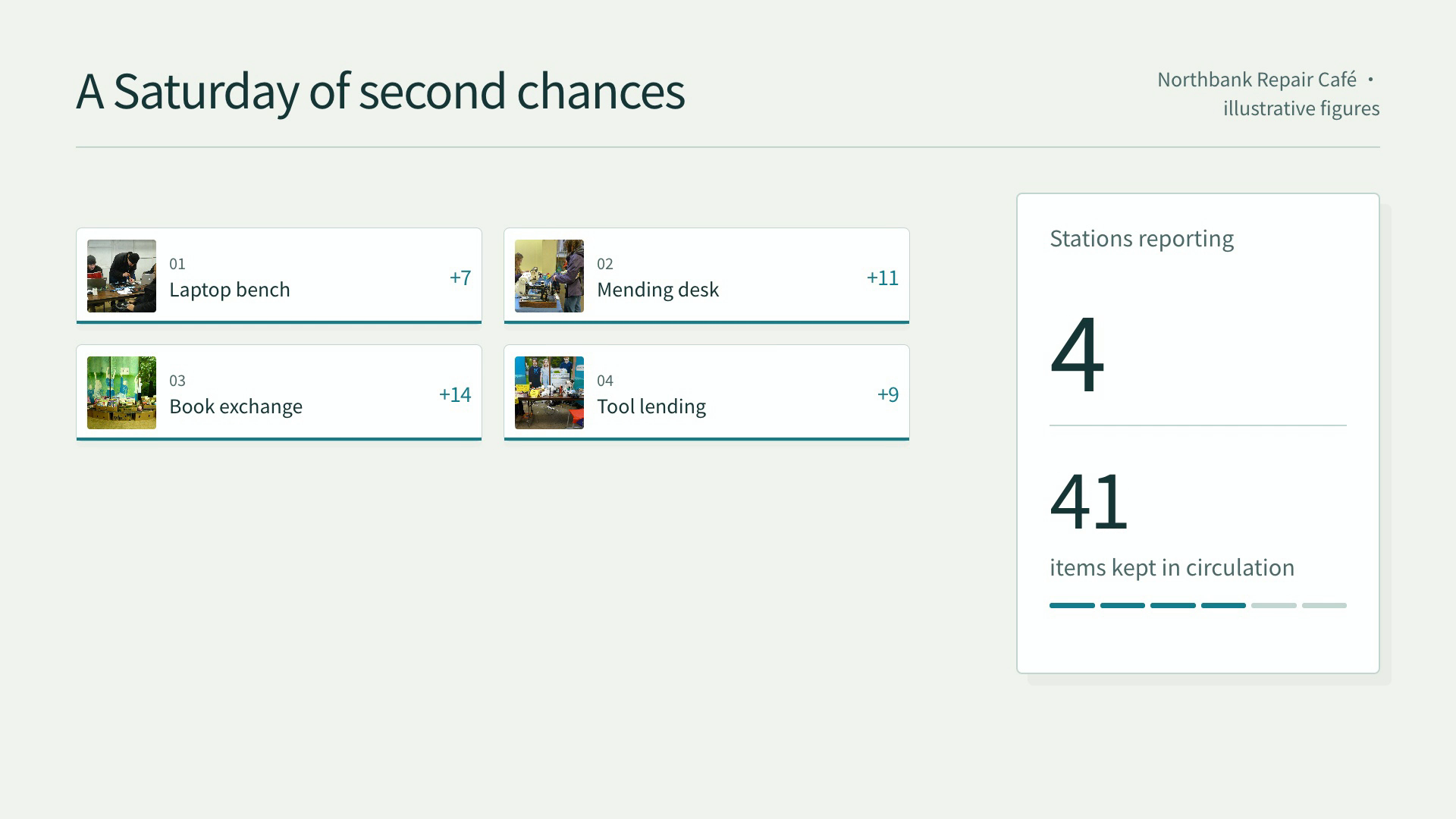
Reveal a sequence of illustrated records while the item tally and numeric total rise together.
Beispiele · 2
Online ausführen
Führen Sie das Beispiel von Count Cards in einem SandBase Sandbox aus und sehen Sie das Ergebnis direkt hier.
So funktioniert es
- 01
Write the brief
Write a JSON brief with a header, a stamp line for context or an illustrative-data disclosure, a tally caption, the meaning of the sum, a closing statement and one to eight entries. Each entry has a caption of up to 40 characters, an amount from 0 to 999,999 with at most two decimals and a local photo file name. Unknown fields are rejected.
- 02
Prepare photos and compose
Supply licensed or personally owned PNG, JPEG or WebP photos beside the brief, and pick a visual: ceramic, ink, linen or silver. Run npm ci --ignore-scripts, then node scripts/compose.mjs brief.json project with Node.js 22 or newer. The project gets its own images, fonts, editable HTML, motion code and audio timeline. Each record's amount joins the running sum.
- 03
Render and listen
node scripts/render.mjs project film.mp4 renders locally with HyperFrames 0.8.30, FFmpeg and a compatible Chrome; no credentials or model calls are needed. The default soundtrack is an original synthesized bell pattern. Review frames at each addition and at the end, check the arithmetic, then play and listen at normal speed.
FAQ
What does Count Cards make?
Count Cards makes a compact 1920×1080 film from local photos and numeric records. Each record arrives as a card that stays visible, its amount joins a running total, and a record tally advances as each card settles. A closing statement appears after the last arrival, followed by a reading hold of at least 1.5 seconds.
How many records can Count Cards show?
Count Cards shows one to eight records per film. Each has a caption of up to 40 characters, an amount from 0 to 999,999 with at most two decimals, and a local photo. The film lasts at least 6.8 seconds and grows with the number of entries, the cadence and the final hold.
Does Count Cards include photos?
No. Count Cards ships no demonstration films or topic photographs; you supply licensed or personally owned PNG, JPEG or WebP files. Keep each photo's author, source and permissions with the project. Remote URLs are rejected, and files whose content does not match their extension are refused.
What sound does Count Cards add?
Count Cards adds an original procedural bell pattern by default, with a short tone on each arrival and a longer consonant chord at the resolution. Edit audio-timeline.json and run score.mjs to regenerate the mix, or set audio to false for a silent project. It is a simple synthesized score, not a recorded performance.
Can I change the look of Count Cards?
Yes, within four visuals: ceramic is light teal, ink is dark blue, linen is light berry and silver is neutral dark. All share the same motion. The cadence between additions can be 0.4 to 1 second and the final hold 1.5 to 4 seconds. Larger layout changes mean editing the generated HTML.
Does Count Cards need an API key?
No. Count Cards renders locally with Node.js 22 or newer, FFmpeg, ffprobe, HyperFrames 0.8.30 and a compatible Chrome, which npx hyperframes browser ensure can install. Neither API credentials nor model calls are required. Automated probes do not establish audiovisual approval, so watch and listen to the final film.
Weitere Skills
Alle Business reporting Skills →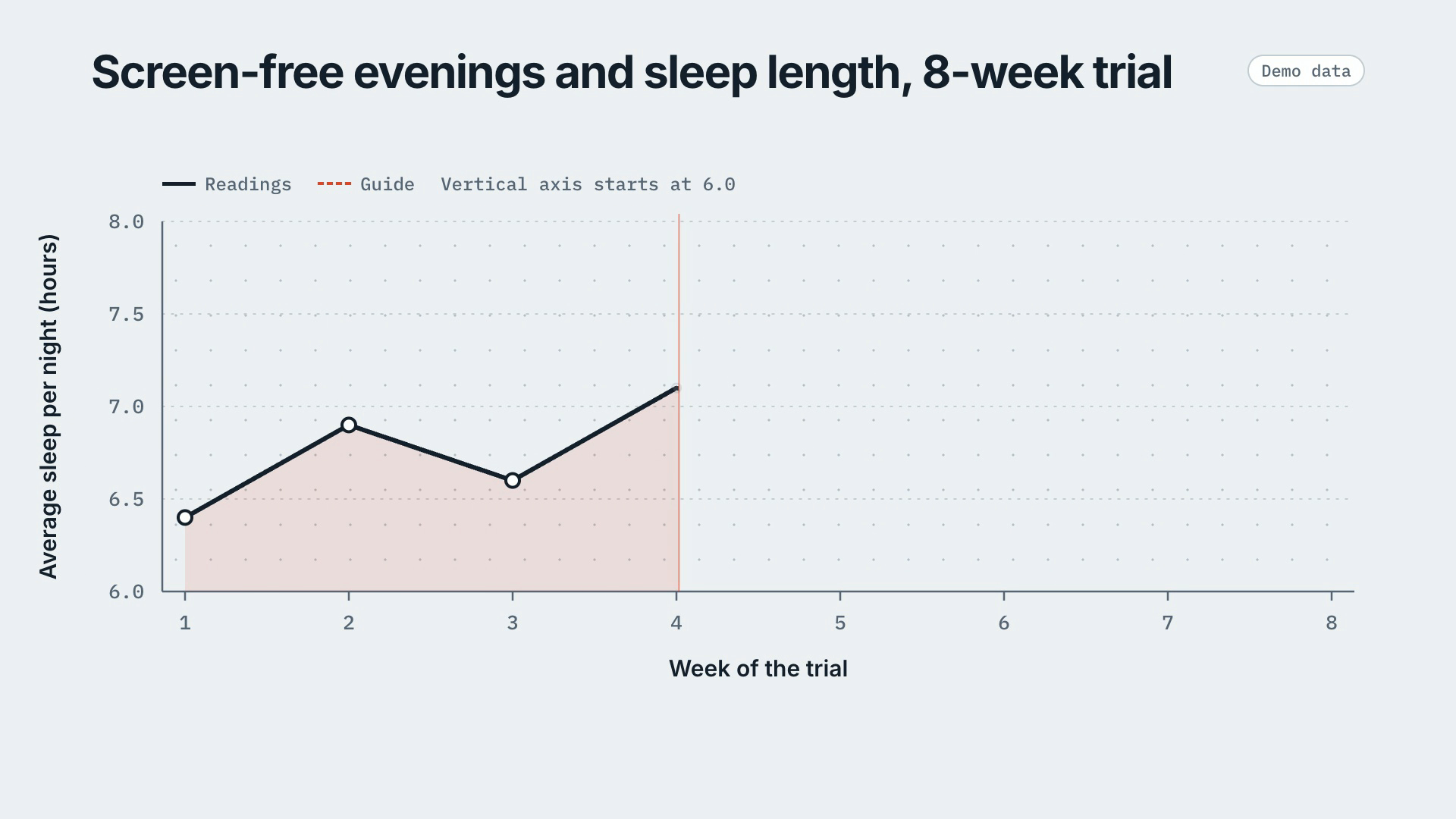
Trend Line
Reveal measured readings, a separate dashed guide and a final takeaway on an editable chart.
Advisory Thread Slides
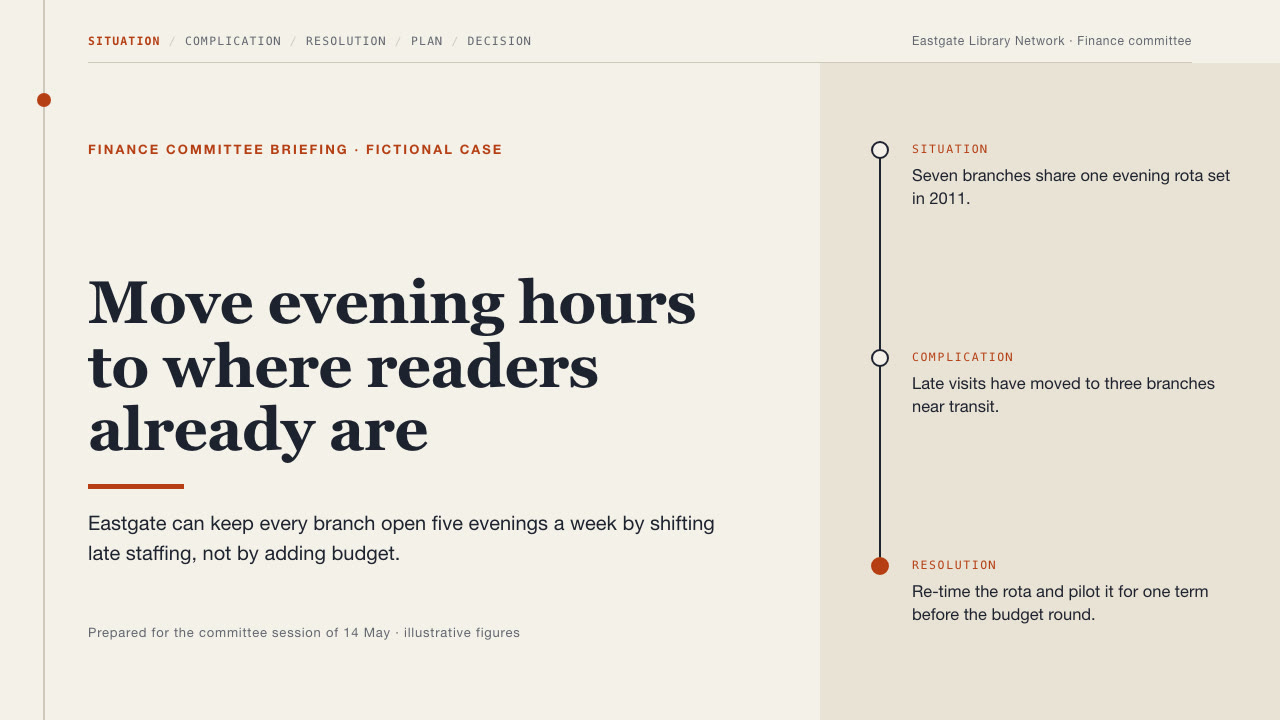
Argue one recommendation to a committee or board with action titles, a storyline tracker, evidence charts and a bounded decision ask.
Civic Bars Slides
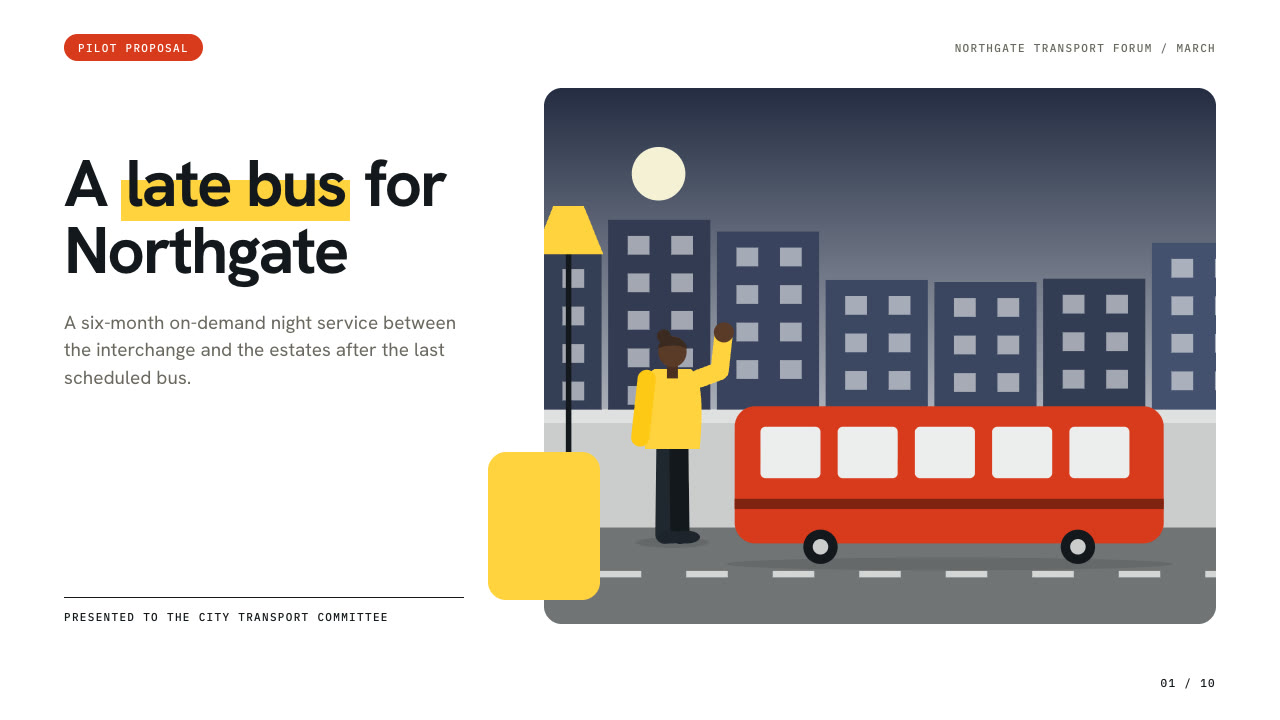
Make the case for a public or community service decision with picture cards, thin bar charts, stat tiles and a clear ask.
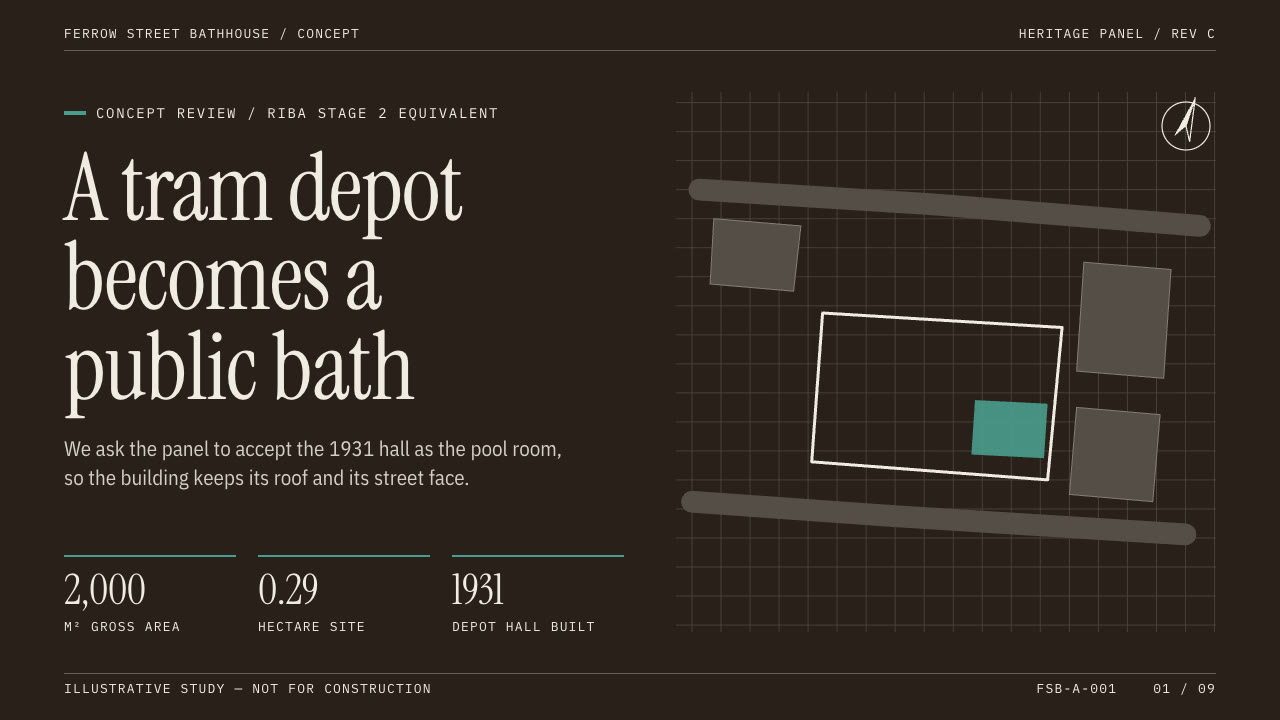
Site Sequence Slides
Take an architecture or site-design proposal to a review panel like a drawing sheet: site, massing, plan and section, program, phasing and one clear decision.

Deepframe Company Slides
Present a company, practice or member organisation calmly: white pages, offset colour blocks behind pictures, service cards, ring figures, value bars and a portrait row.
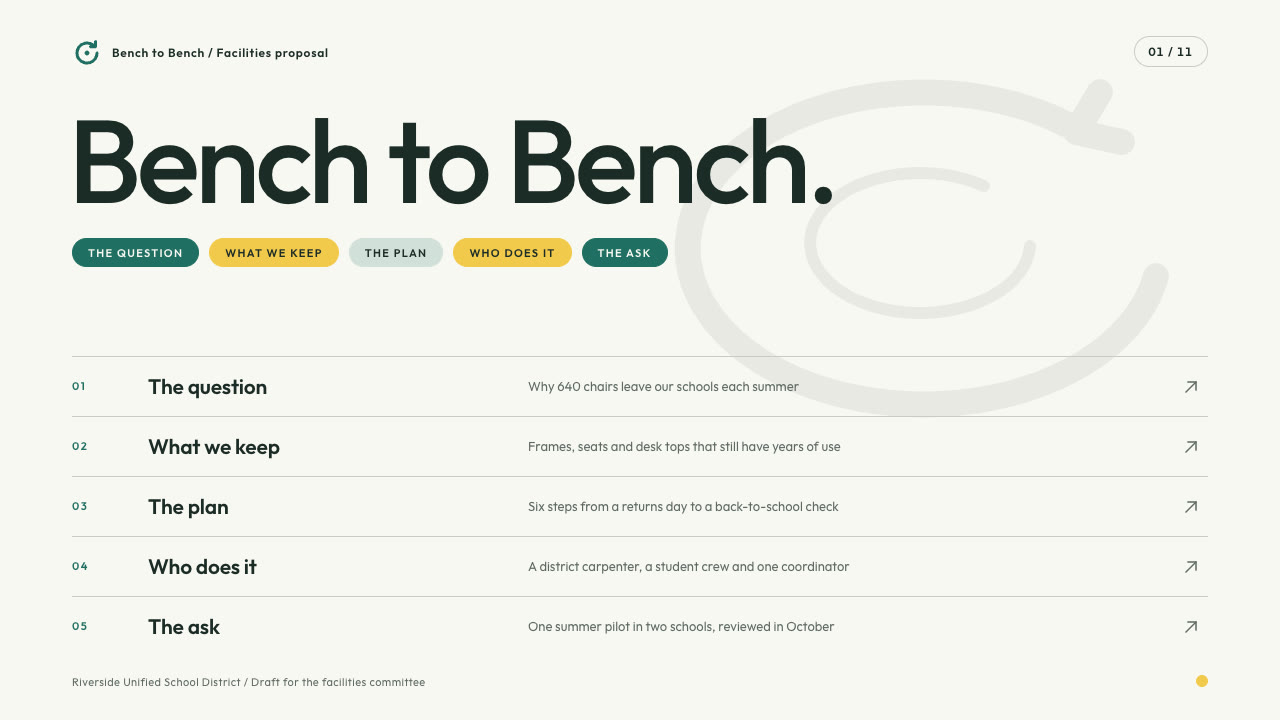
Circular Module Slides
Propose a repair, reuse or take-back step in a light modular deck: rounded cards and pill capsules, an open-ring motif, notched principle cards, a six-step grid and a capsule bar chart.