
Substack About Audit
- Lab Skill
- v0.1.1
- Substack
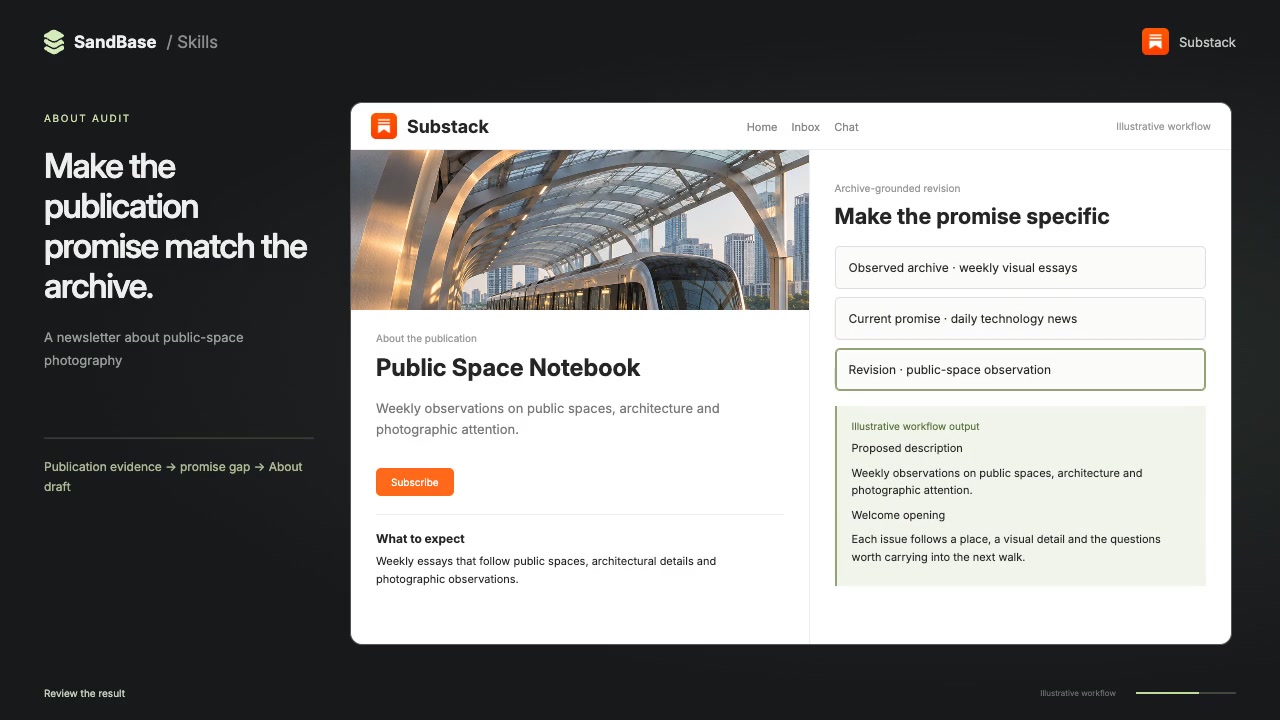
Check whether a Substack description and author bio match what the publication actually publishes, and rewrite them from the archive.
Cover
Was Sie erhalten
Bring the publication, plus any credential, price or schedule you want stated. The Skill returns topic mix, rhythm and free/paid split from the last 20 posts, the gaps in the current text, three new descriptions, a bio, an About page draft and a welcome-email opening.
So funktioniert es
- 01
Read the current text and archive
The Agent reads the publication's last twenty posts through SandBase and takes the current one-line description, payment status, author name and author bio. From all posts it takes each topic, from title and subtitle, whether it is paid, reactions, restacks, comments and word count.
- 02
Measure what is actually published
The topic mix counts posts per topic, and the rhythm gives posts per week over the covered days and the dates of recurring series. Twenty posts cover a few weeks of a frequent publication or several months of a slow one, and the audit says which. Paid posts' public reactions are not treated as a fair measure of their value.
- 03
Rewrite the description and bio
The description and bio are tested against the archive and rewritten to match what the publication actually publishes. Any credential, price or schedule you want stated comes from you; none is invented. The new text appears on the home page, profile, subscribe prompts and in Substack search.
FAQ
What does Substack About Audit check?
Substack About Audit checks whether a Substack publication's one-line description and author bio match what it actually publishes, by reading the last twenty posts. It then rewrites both to fit the archive, using only facts you supply. It works on the publication's public pages.
Why does the description matter?
Substack About Audit notes that the description and bio appear on the home page, profile, subscribe prompts and in Substack search. A description that promises something the archive does not deliver can cost subscribers who arrive expecting it. The rewrite keeps it accurate.
How is the archive read billed?
Substack About Audit uses the SandBase Substack posts tool, which is billed by provider-reported usage and scales with the number of posts returned. Twenty posts is the default read. The Agent inspects the tool first to show its pricing basis before the call; see https://www.sandbase.ai/pricing.
Will it add credentials to my bio?
Only ones you give it. Substack About Audit never invents a credential, price or schedule. If you want your bio to mention experience or a posting rhythm, supply the facts and it will state them as given. Planned plans stay as plans.
How many posts does it read?
Substack About Audit reads the last twenty posts, which may span a few weeks or several months depending on how often the publication posts. It states the period covered, so the topic mix is read in context. Recurring series are dated.
Weitere Skills
Alle Substack Skills →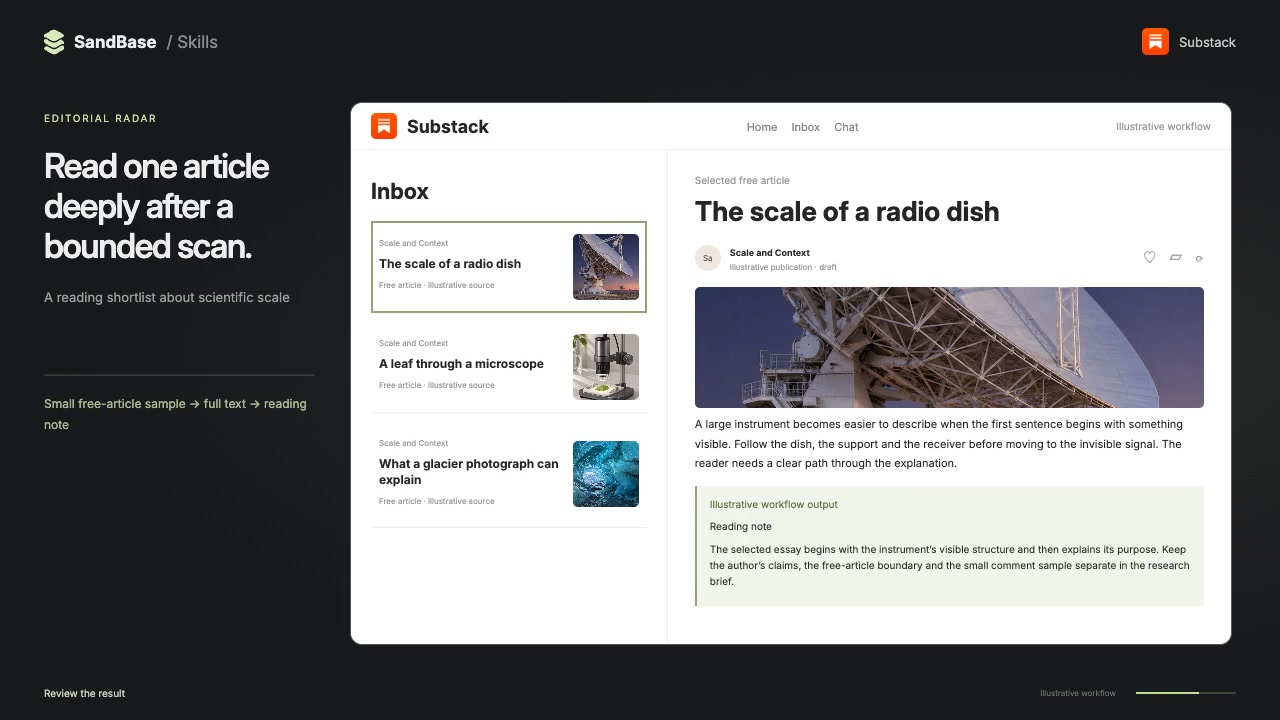
Substack Editorial Radar
Explore Substack articles and discussion samples to plan an editorial reading radar.
Substack Headline Pack
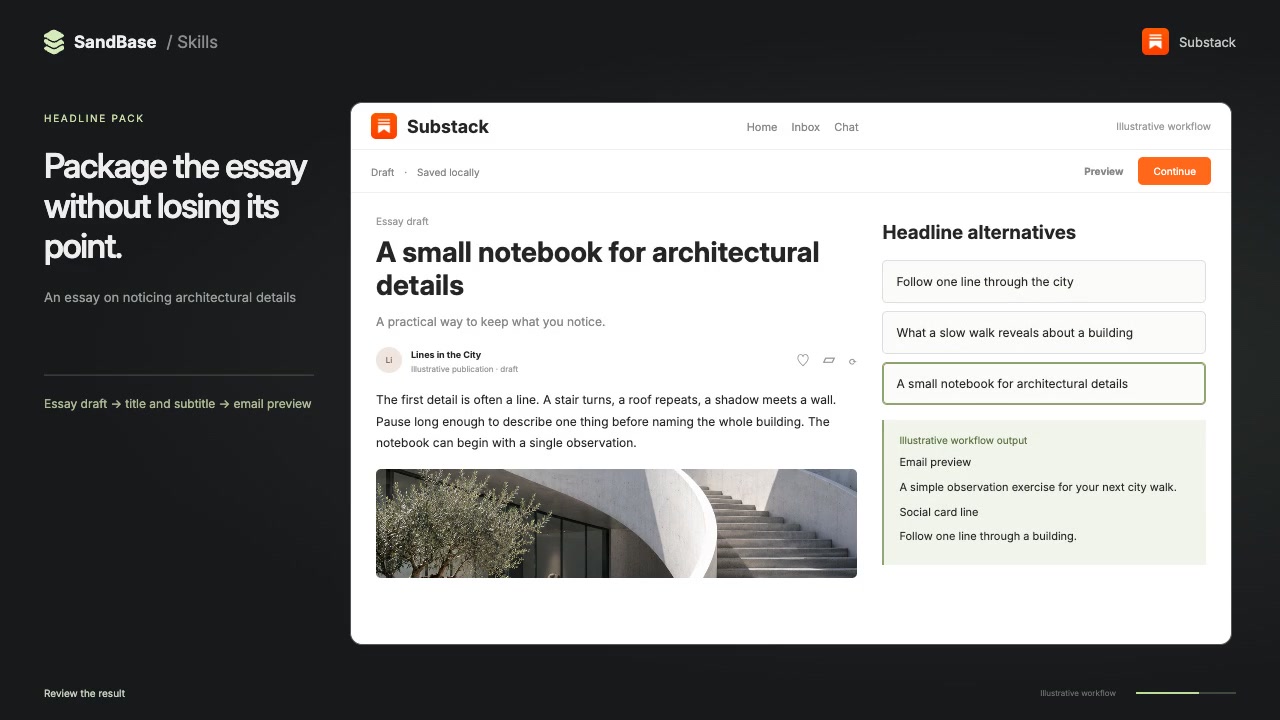
Choose a Substack title type from what a publication’s readers actually restack, then write every line a post shows before it is opened.
Substack Notes Writer
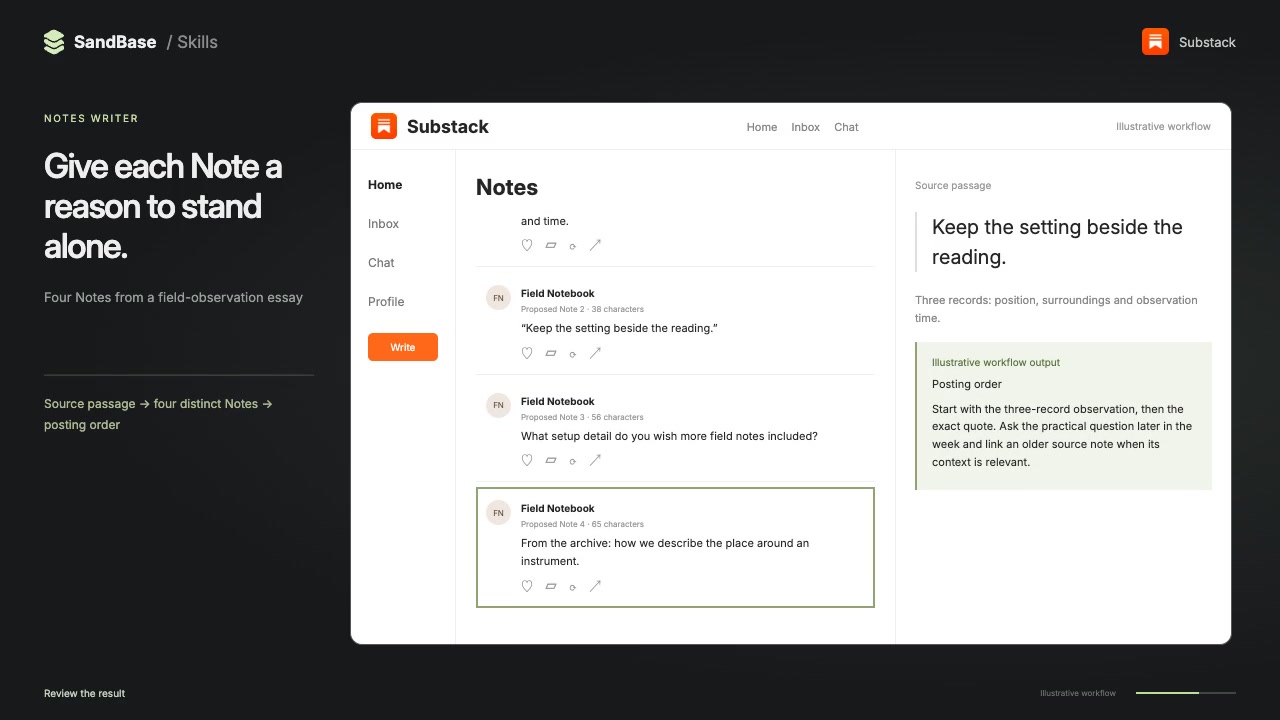
Turn a published Substack post into a week of Notes that can be restacked on their own, without inventing a single fact.
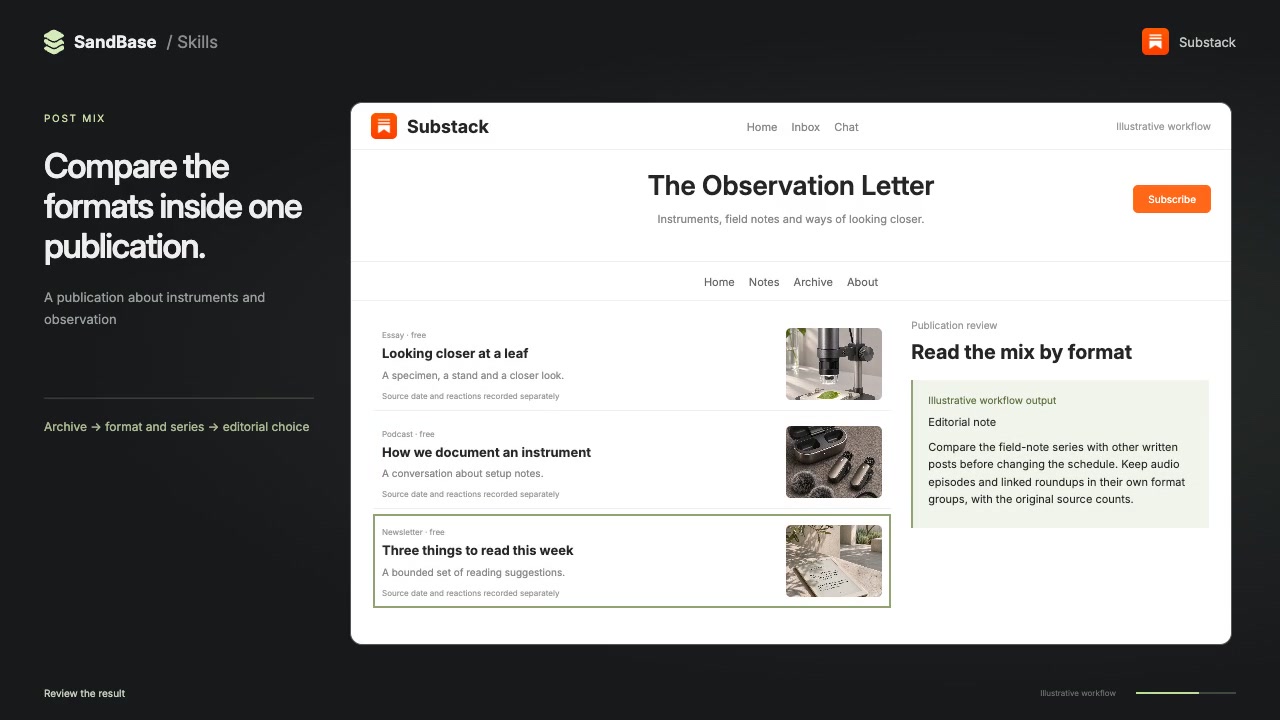
Substack Post Mix
Compare a Substack publication’s own formats to see which ones readers react to and what to publish more or less of.