
Drum Seismograph
- Skill de Lab
- v1.0.1
- Interactive 3D
A clockwork drum seismograph recording onto helical paper. One damped oscillator driven by a signal model traces microseisms, teleseisms and calibration pulses.
Ejemplo
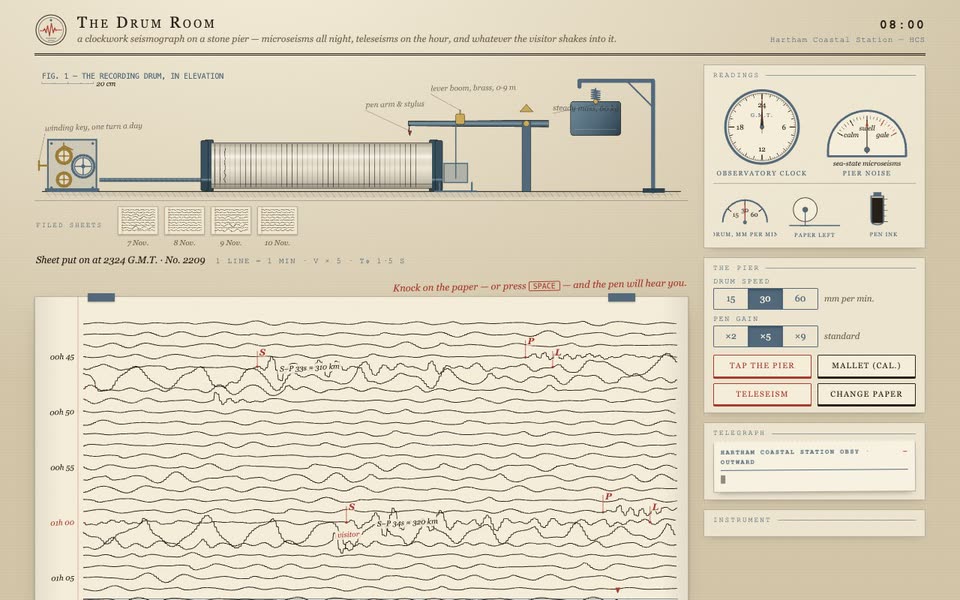
Drum Seismograph observatory recorder
El ejemplo se ejecuta en un marco aislado, sin acceso a esta página.
Ejecutar en línea
Ejecuta en un sandbox de SandBase y consulta los resultados en Lab.
Abrir en Lab ↗Qué obtienes
Bring a seismic signal model and the drum to record on. The Skill returns a downloadable Skill and a runnable seismograph.
Cómo funciona
- 01
Pick a station brief
Drum Seismograph reads its copy from assets/briefs/*.json: document title, station name, dial labels, control names, telegraph formats, the about notice and the time format. The mechanism lives in src/recorder.js and the observatory plate in src/index.template.html. A prompt such as "Use drum-seismograph to build a recording instrument on an ocean swell model" points the agent at the signal model to swap.
- 02
Build and drive the drum
Run npm install and npm run build to produce one bilingual HTML file with both briefs embedded, then npm run demo to open it on localhost port 63120. One damped oscillator inks a helical trace on ruled paper. Space or a tap knocks the pier, a drag shakes the trace, and the rail offers tap, mallet, teleseism and change-paper actions plus three drum speeds and three pen gains.
- 03
Verify the readings
npm run shoot runs 17 offline checks in a headless browser: microseisms breathe, a knock rings down, the drum lays 7 lines a minute at x30, minute ticks stamp, and a teleseism lands P, S and L flags in order. The reference case reads an S minus P gap of 36 seconds as 330 km and magnitude 5.4. Check that the ledger row and the telegraph slip show those values.
Preguntas frecuentes
What does Drum Seismograph show?
Drum Seismograph shows a clockwork observatory seismograph recording onto a helical paper sheet. A sprung-mass pen traces microseisms, seeded teleseisms and your own knocks on the pier. The page also carries an elevation drawing of the machine, five brass dials, a telegraph slip that types each analysed shock and a night ledger with a pinned notice on how to read it.
Is the Drum Seismograph trace really simulated?
Yes. Drum Seismograph integrates a damped oscillator at a step of 1/240 rather than drawing a curve. The pen is driven by six microseism harmonics under a sea-state envelope, P, S and surface wave packets for each teleseism, and the impulses from visitor knocks. A reading that exceeds the pen limit is clipped and recorded as pen off scale.
How does Drum Seismograph estimate distance and magnitude?
Drum Seismograph multiplies the S minus P time in seconds by 9.3 to get a distance in kilometres. It then applies log10 A plus 2.76 times log10 d minus 2.48 to class the magnitude. The analyser writes both values back as a marginal note, flag letters on the sheet and a row in the ledger.
Does Drum Seismograph need a key or model calls?
No. Drum Seismograph runs offline and makes no model calls at runtime, so opening or recording the scene is not billed.
Can Drum Seismograph record something other than earthquakes?
Yes. Drum Seismograph keeps its wave shapes in one function, evWave, and its picking rule in the analyser. Swap the packets for infrasound, ocean swell or machinery vibration and the same drum, pen and sheet record them. Swap the analyser and the sheet still writes its own notes and ledger rows.
Why do Drum Seismograph knocks appear separately in the ledger?
Drum Seismograph logs visitor knocks as local disturbance entries, kept apart from the Earth's events. A second, stiffer recorder traces the building's own motion, so a shake from the pier reads differently from a teleseism. That separation is one of the 17 checks that npm run shoot asserts.
Más Skills
Todos los Skills de Interactive 3D →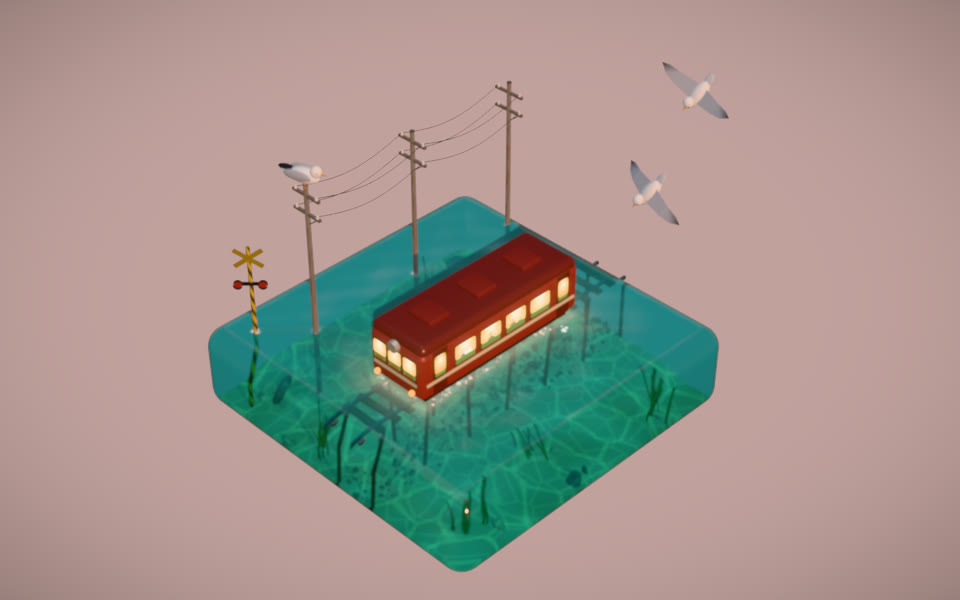
Resin Diorama
Live 3D resin-block dioramas in your browser: send a little tram across a clear turquoise sea, or ripple the bay of a cliff island. Synthesized sound, and every scene can be tuned.
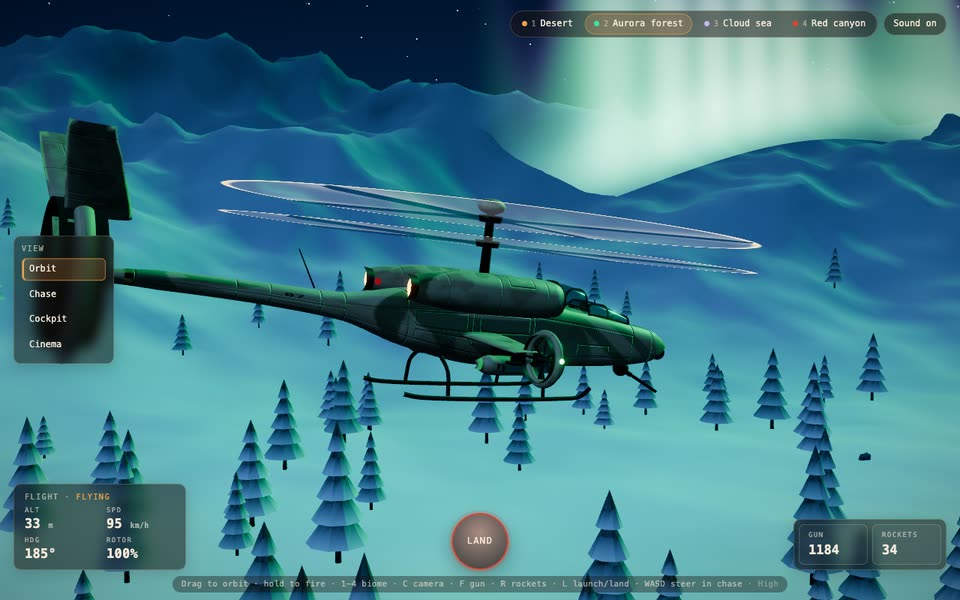
3D Vehicle Worlds
Explore interactive 3D vehicle worlds in your browser, with varied terrain, camera controls and driving effects. Choose a playable example to begin.
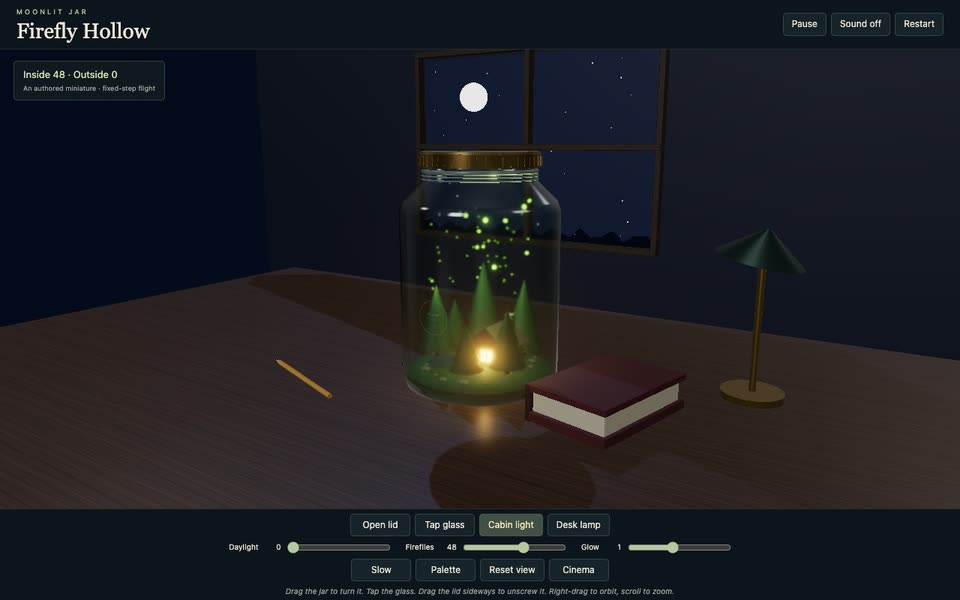
3D Firefly Terrariums
Turn a thick glass miniature, scatter glowing fireflies and open its brass lid. Actual particles leave through the neck and return before it seals. A moonlit cabin, forest and real local lights in one offline HTML.
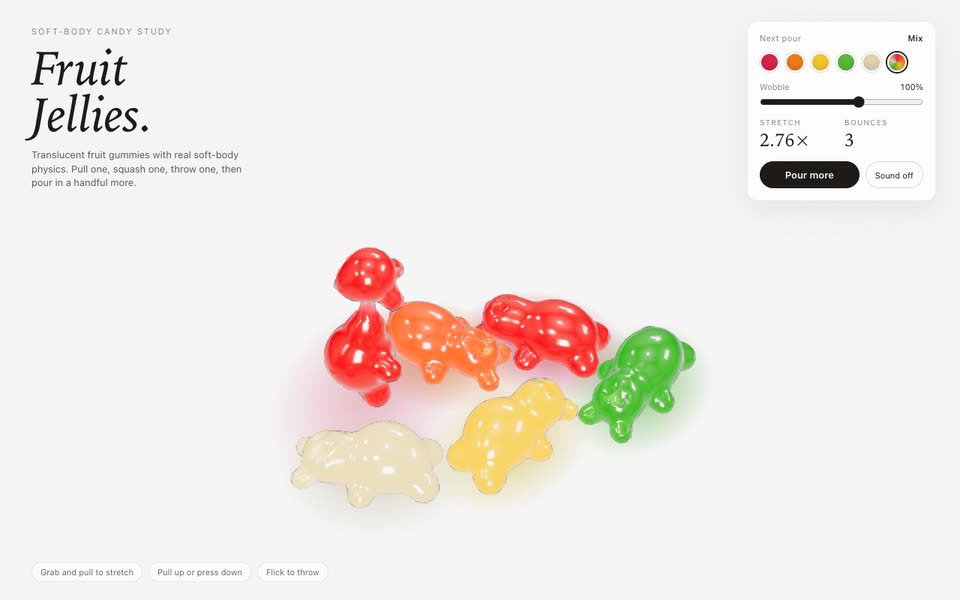
Jelly Candy: Fruit Bears
Six translucent fruit gummies on a white table. Grab any part and pull, lift a head until the neck stretches thin, press one flat until it springs back, flick one across the pile or pour in more. Fixed-step soft-body physics and a marching-cubes skin in one offline HTML.
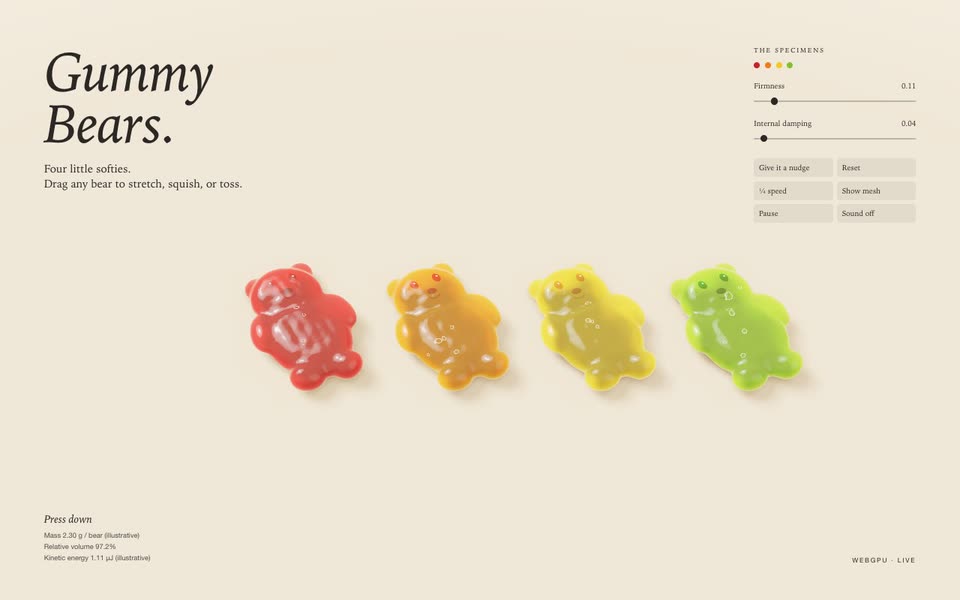
WebGPU Soft-Body Gummy Bears
Four translucent gummy bears on an ivory floor, rendered with native WebGPU. A deterministic 36-second choreography stretches, presses, flips and tumbles them before they settle back to the exact rest pose. Drag any bear to stretch, squish or toss it. A fixed-step tetrahedral XPBD solver in one offline HTML.
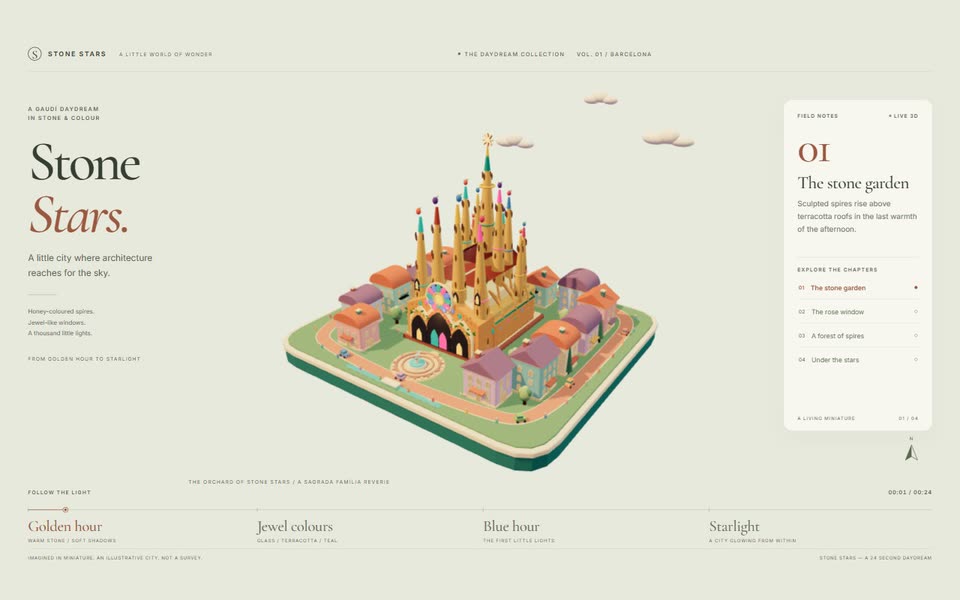
Stone Stars: 3D Miniature Landmark City
Turn a city into a storybook 3D island around one landmark, with chapters, a daylight-to-starlight slider, street life and a matching scored 24-second film. Sample: a Gaudí-style basilica.