
Kestrelwick Tally
- Skill de Lab
- v0.1.2
- Interactive 3D
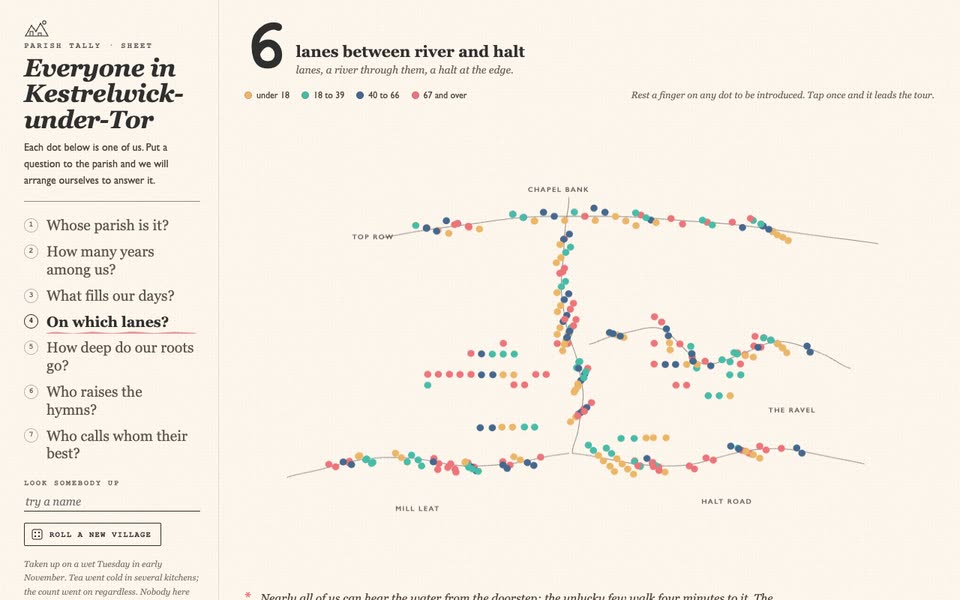
A seeded census of three hundred fictional villagers as a unit chart — seven questions rearrange the dots between a phyllotaxis cluster, a pyramid, occupation groups and a lane map.
Ejemplo
Kestrelwick Tally
El ejemplo se ejecuta en un marco aislado, sin acceso a esta página.
Ejecutar en línea
Ejecuta en un sandbox de SandBase y consulta los resultados en Lab.
Abrir en Lab ↗Qué obtienes
Bring a village census and the questions to ask it. The Skill returns a downloadable Skill and a runnable tally.
Cómo funciona
- 01
Seed the village census
Kestrelwick Tally builds a census from a brief in assets/briefs: the English kestrelwick-en for Kestrelwick-under-Tor or the Chinese kestrelwick-zh. makeVillage(seed, brief) generates exactly 300 fictional villagers with households, ages, arrival years, occupations, a 34-voice choir and best-friend links. A prompt such as 'Use kestrelwick-tally to census a fishing hamlet as a rearranging unit chart' sets the theme.
- 02
Ask questions to rearrange dots
Seven plain-language questions move the same dots between a phyllotaxis household cluster, a population pyramid, occupation groups, a lane map, an arrival-year beeswarm, choir risers with an audience and a friendship ring. Each dot flies on its own quadratic Bezier with a household-ordered delay and an under-damped spring. Hover meets a person, click pins them, search fades non-matches and re-roll draws a new village.
- 03
Build and assert the census
npm run build writes dist/index.html and npm run build:zh builds the Chinese brief; the page runs fully offline. npm run shoot passes 13 assertions: 300 people in 113 households over 6 lanes, a deterministic census for one seed, seven distinct layouts, 176 mutual and 124 unrequited ring links, 296 dots mid-flight during a transition and zero external requests.
Preguntas frecuentes
What does Kestrelwick Tally visualise?
Kestrelwick Tally visualises one fictional parish census as a unit chart of 300 dots, each a named person in a household on a lane. Asking a question rearranges all of them into a new chart while the headline number counts up or down. It suits teaching unit charts and showing how one dataset answers several questions.
Is the Kestrelwick Tally village real data?
No. Kestrelwick Tally generates a seeded fictional parish with invented names, lanes and stories, such as a bell-ringer and two rival bakers. The same seed always gives the same census, and re-roll creates a new village from a new seed.
Do the Kestrelwick Tally charts always add up?
Yes. Kestrelwick Tally draws the same 300 villagers in all seven views, so each chart sums to the whole parish. The check confirms roles of 75 children, 135 adults and 90 elders, and a choir of 34 above a grey audience.
Can I put my own village into Kestrelwick Tally?
Yes. Kestrelwick Tally reads a brief with title, seed, six streets and per-lane household quotas in streetN, choir voices, name and surname lists, and seven views with question, count, sub and insight. The count, sub and insight fields are arrow-function source strings the page compiles.
Does Kestrelwick Tally cost anything or need a key?
No. Kestrelwick Tally generates its census with a seeded generator in the page and records zero external requests, so no model or paid API is involved. You only need npm to build it and a static server such as python3 -m http.server to view dist/.
Does Kestrelwick Tally respect reduced motion?
Yes. Kestrelwick Tally switches to a cross-fade between layouts when reduced motion is requested, instead of flying every dot along its Bezier path. Hover, pin and search work the same either way.
Más Skills
Todos los Skills de Interactive 3D →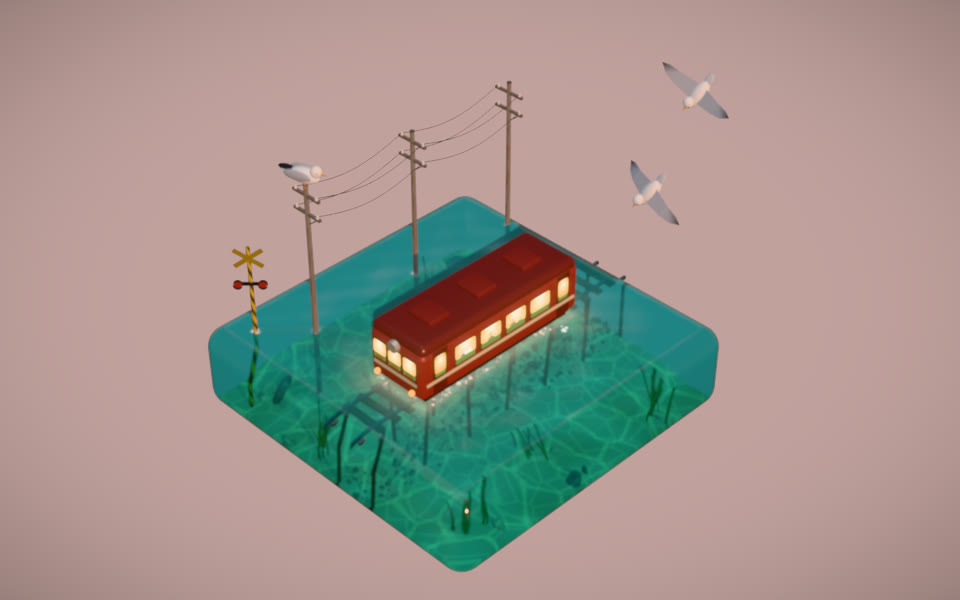
Resin Diorama
Live 3D resin-block dioramas in your browser: send a little tram across a clear turquoise sea, or ripple the bay of a cliff island. Synthesized sound, and every scene can be tuned.

3D Vehicle Worlds
Explore interactive 3D vehicle worlds in your browser, with varied terrain, camera controls and driving effects. Choose a playable example to begin.
3D Firefly Terrariums
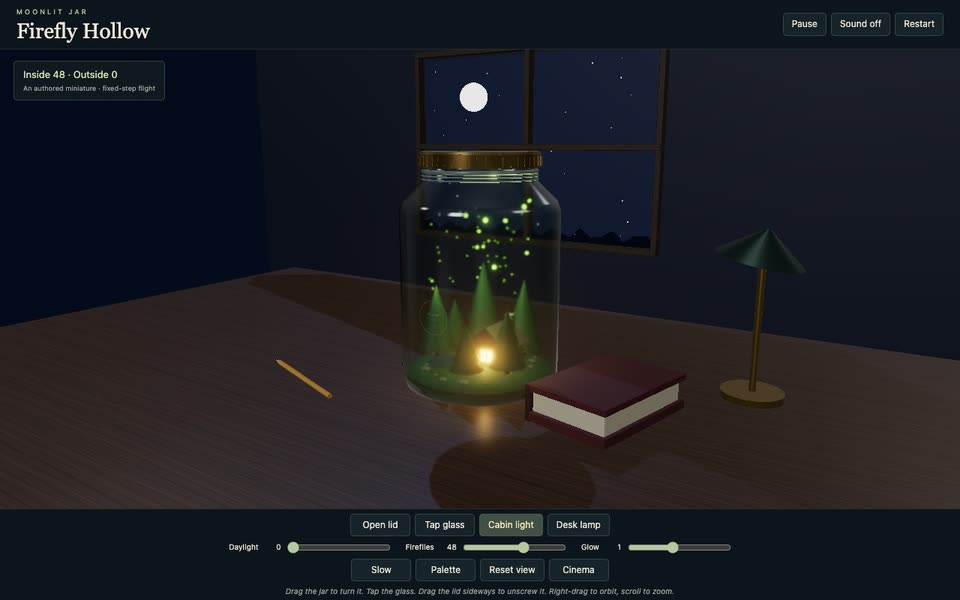
Turn a thick glass miniature, scatter glowing fireflies and open its brass lid. Actual particles leave through the neck and return before it seals. A moonlit cabin, forest and real local lights in one offline HTML.
Jelly Candy: Fruit Bears
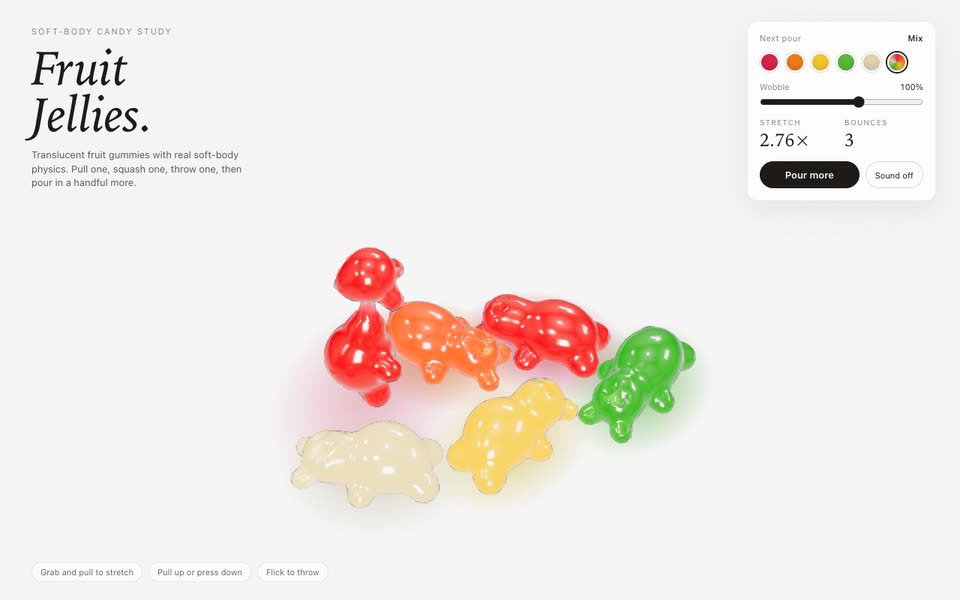
Six translucent fruit gummies on a white table. Grab any part and pull, lift a head until the neck stretches thin, press one flat until it springs back, flick one across the pile or pour in more. Fixed-step soft-body physics and a marching-cubes skin in one offline HTML.
WebGPU Soft-Body Gummy Bears
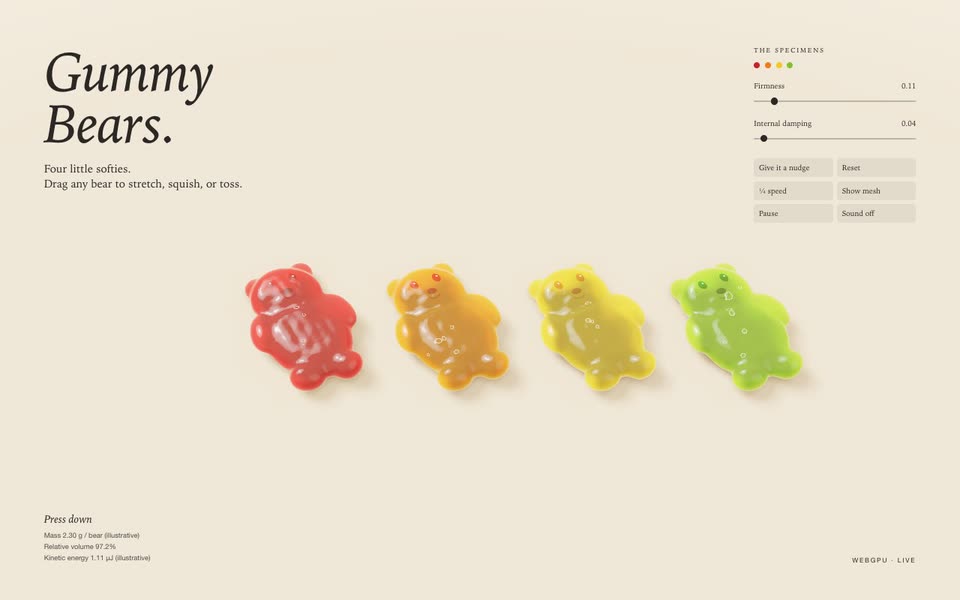
Four translucent gummy bears on an ivory floor, rendered with native WebGPU. A deterministic 36-second choreography stretches, presses, flips and tumbles them before they settle back to the exact rest pose. Drag any bear to stretch, squish or toss it. A fixed-step tetrahedral XPBD solver in one offline HTML.
Stone Stars: 3D Miniature Landmark City
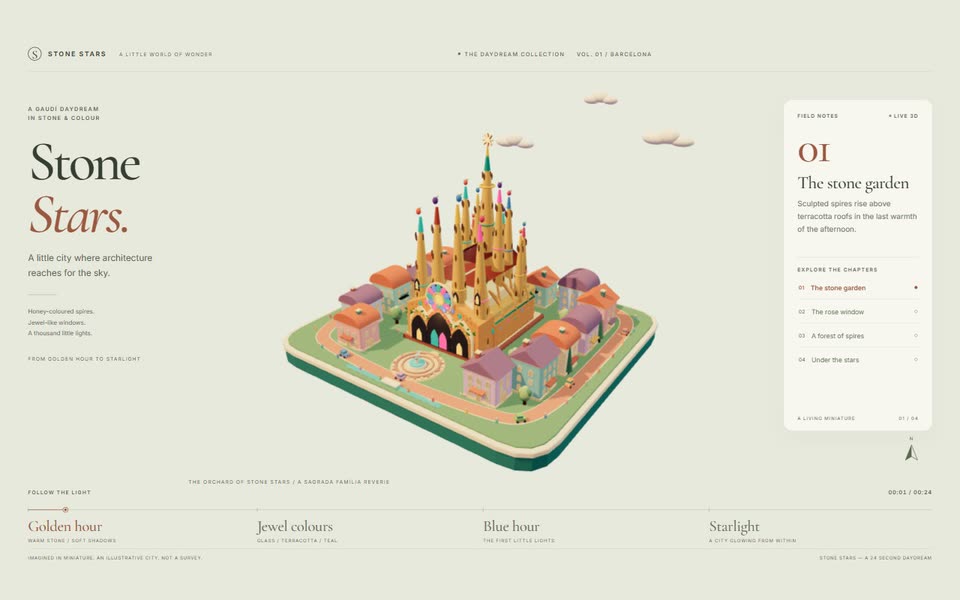
Turn a city into a storybook 3D island around one landmark, with chapters, a daylight-to-starlight slider, street life and a matching scored 24-second film. Sample: a Gaudí-style basilica.