
Chronicle · Every City Has a Life Story
- Skill Lab
- v0.4.5
- Education
A city's life story in 3D: from the globe into its real buildings, then its history played on them as light, era by era, with every caption fact-checked.
Exemples · 4
Lancer en ligne
Exécutez l’exemple de Chronicle · Every City Has a Life Story dans un sandbox SandBase et voyez le résultat ici.
Ce que vous obtenez
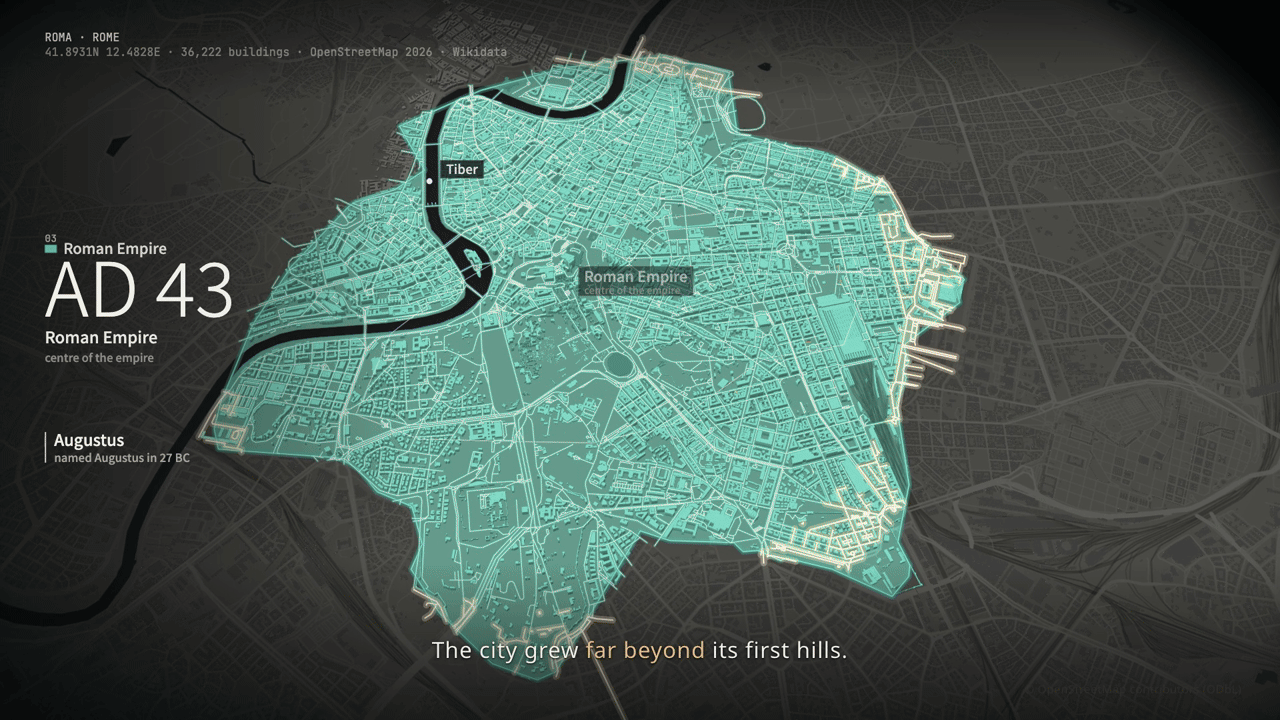
A fact-checked life-story film of any city in 3D. The globe turns to the city and the camera flies into its real buildings, every OpenStreetMap footprint at its height. Time first runs back to the beginning, then the city's history plays on the model as light, era by era: the first settlement at the river, each new extent growing out of the last, walls rising and dissolving, fires that bring buildings down and rebuild them, bridges linking districts, landmarks rising on their Wikidata year and the modern skyline growing outwards. Every caption is bound to claims cross-checked across publishers before anything renders.
Fonctionnement
- 01
Research and check the facts
Create a project outside the Skill with new-project.mjs, then run chronicle.mjs all, which stops whenever you must write something. Save source pages and write atomic claims with verbatim excerpts; the fact engine keeps a line only when two publishers agree, one of them a reference institution. For a city, geo.mjs reads coordinates from Wikidata and rivers, roads and buildings from OpenStreetMap.
- 02
Write the script and scenes
Write the shot list onto the theme's fixed sections, with one short caption per shot; the script gate checks every caption against the claims. Then write the scene code: the ink scroll, Roman atlas or 3D city model style draws every frame from code and map data. The text model that runs the Skill does all writing; it never calls an image, video, voice or music model.
- 03
Render, check and report
chronicle.mjs renders the film segment by segment in Chrome through HyperFrames 0.8.30, so each segment can be fixed before moving on, then renders the full film at 1920×1080 and 30 fps, 120 to 180 seconds long, with the code-synthesized series theme mixed to minus 14 LUFS. The film carries an AI-generated badge, an end card and AIGC metadata.
FAQ
What does Chronicle Ink make?
Chronicle Ink makes a fact-checked two to three minute knowledge film whose pictures are drawn by code. For a city's life story, the model style flies from the globe into the real city in 3D, with every OpenStreetMap building at its height, and plays its history on it as light, era by era. Ink scroll and Roman atlas styles serve people and landmarks.
Are the Chronicle Ink city outlines real?
No. In Chronicle Ink the old city outlines are the Agent's approximate polygons for each era, not surveyed maps, and they are tagged as AI illustration. The buildings are today's OpenStreetMap footprints; landmarks rise on their Wikidata year, so the history is projected onto today's city.
How are facts checked in Chronicle Ink?
Chronicle Ink keeps a fact only when two publishers agree, one of them a reference institution such as Britannica or UNESCO. Lines with a single source must be hedged, as in Records say, and are limited to two per film, and every number and name in a caption must appear in its claims.
Does Chronicle Ink call image or video models?
No. Chronicle Ink draws every frame by code from map data and synthesises every sound. Only narration and a music track can be generated through SandBase, with MiniMax speech and music models, and only when you ask for them; that usage is billed to your account, and prices are at https://www.sandbase.ai/pricing. Otherwise the only model is the text model running the Skill.
Which formats does Chronicle Ink produce?
Chronicle Ink renders 16:9 at 1920×1080 and 30 fps by default, with 9:16 at 1080×1920 optional, and films of 120, 150 or 180 seconds. The brief's language can be any language tag, with English the default and Chinese first class. Rendering always uses the CPU path, so canvas output is identical on every machine.
Does Chronicle Ink need narration?
No. By default Chronicle Ink has no voice: each shot carries one short caption saying what the picture shows, bound to verified claims, over a code-synthesized series theme at 88 BPM. A voice-over can be added on request, one clip per caption that says exactly the caption.
Plus de Skills
Tous les Skills Education →
Science MV
Explain science through visible causes, transformations and results.
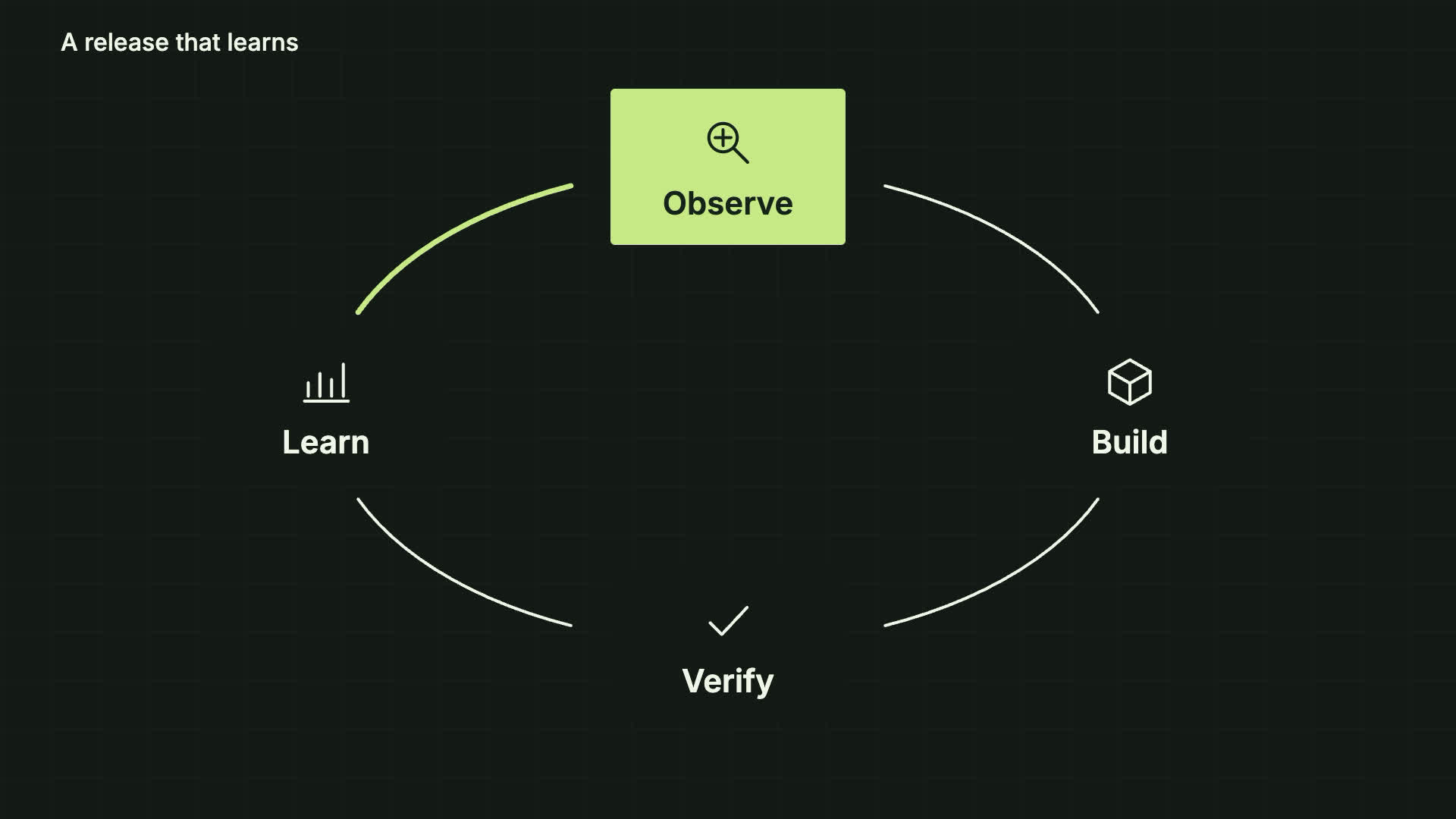
Loop Story
Explain a cycle: build each stage, close the loop, then reveal the takeaway.
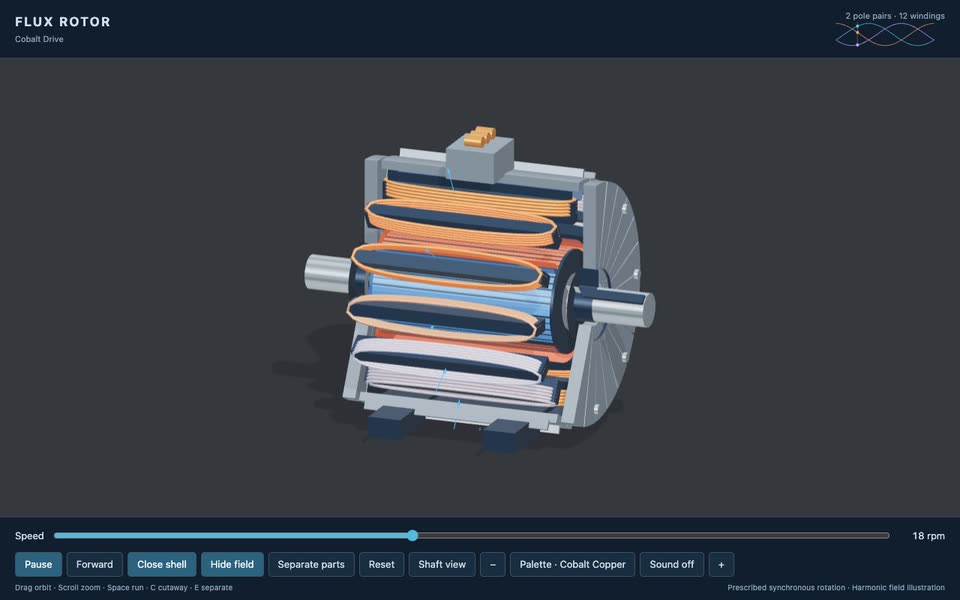
Flux Rotor: Cobalt Drive
Inspect an original motor with real winding groups, alternating magnet sectors and a keyed shaft. Balanced phase currents drive prescribed synchronous rotation, material colors and spatial harmonic markers. Open the actual cutaway and separate six components offline. This display does not solve torque, efficiency or magnetic finite elements.
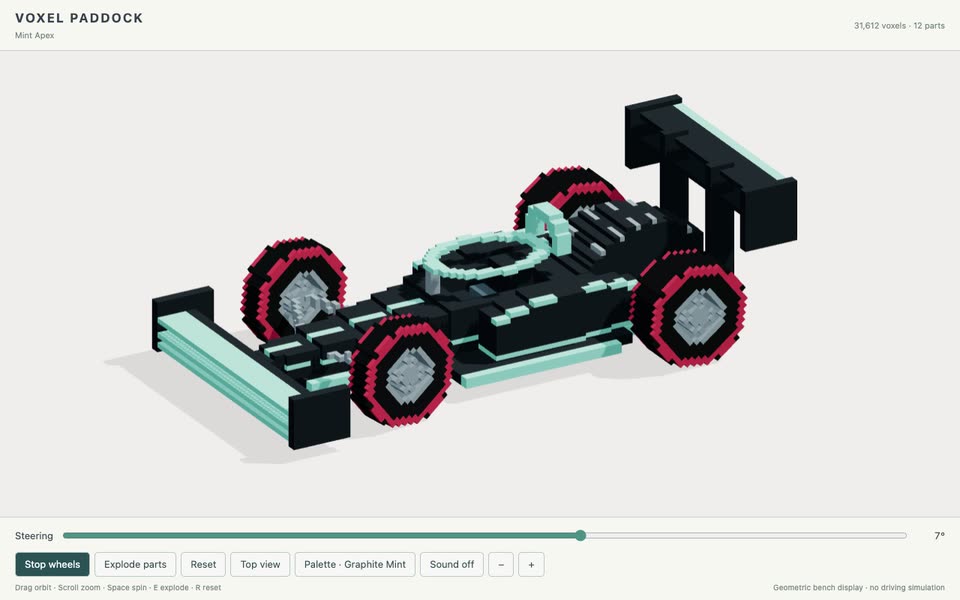
Voxel Paddock: Mint Apex
Inspect an original open-wheel vehicle built from procedural cubes. Spin actual wheels on a stationary display, turn nominal geometric steering and separate twelve component groups. Edit bounded dimensions, voxel density and three palettes offline. This is not a driving or aerodynamics simulation.
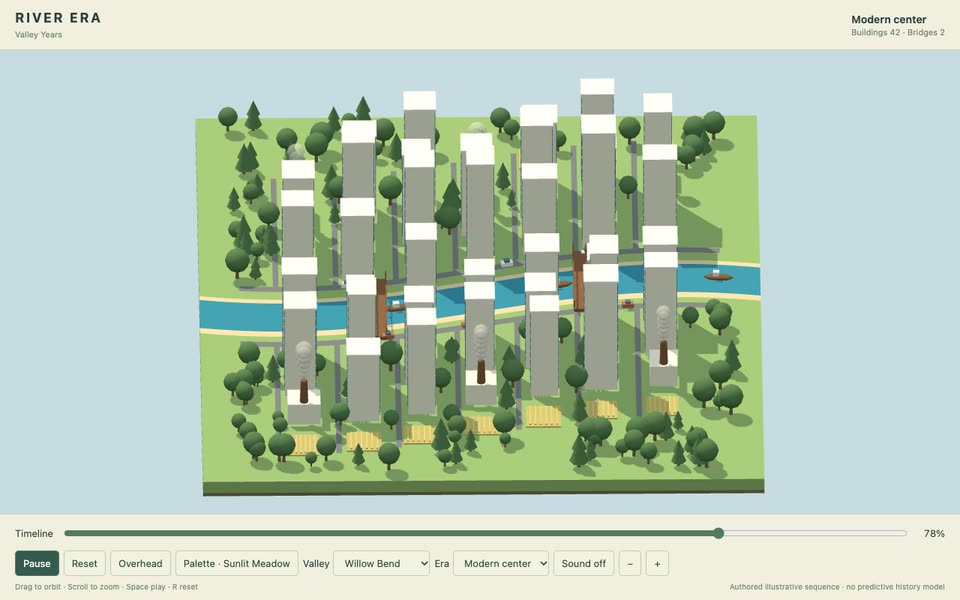
River Era: Valley Years
Scrub an authored river settlement timeline from camp and farms to town, workshops and speculative towers. Actual seeded geometry changes reversibly; boats and vehicles follow the same river and bank equations. This is an illustrative sequence rather than predictive history.
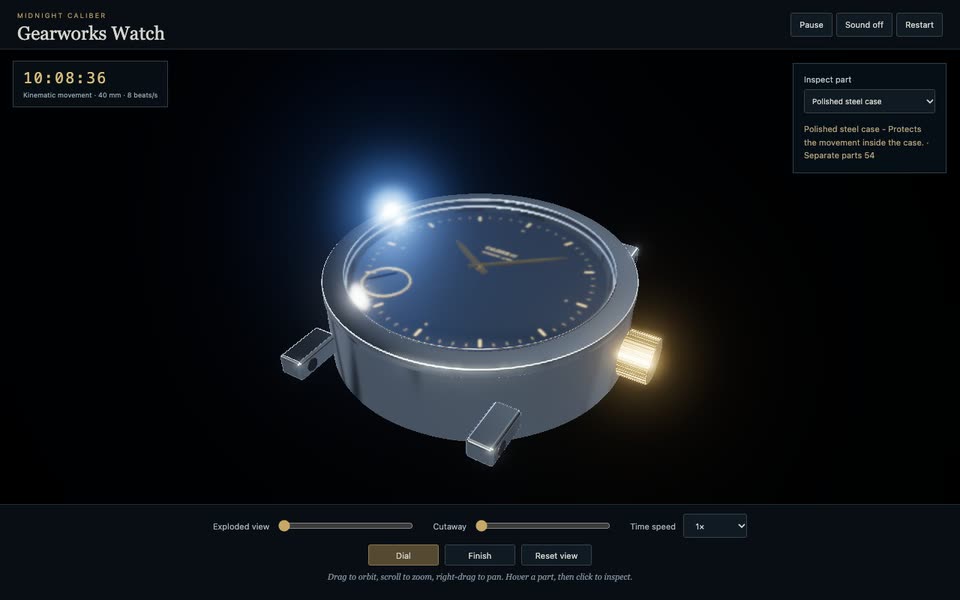
3D Mechanical Watch Explorer
Inspect a kinematic mechanical watch with actual meshed tooth ratios, 54 components, axial explosion, material cutaway and bilingual mouse/touch controls. One offline HTML with optional synthesized tones.