
Rose Glazing
- Skill Lab
- v1.0.1
- Interactive 3D
A seeded rose window in a stone wall leads and glazes itself from the centre out, and a movable sun throws its coloured light across the paved floor.
Exemple
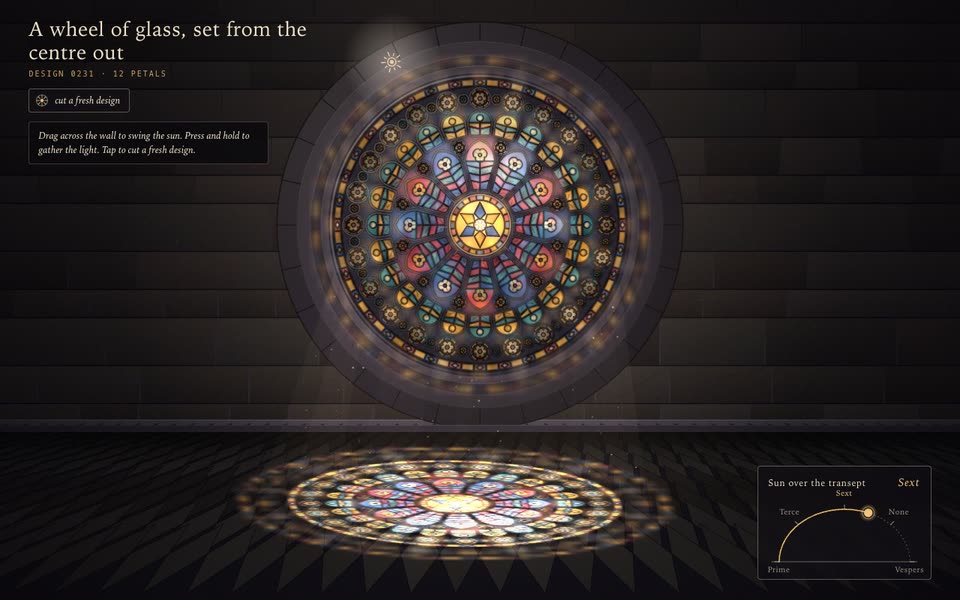
Rose Glazing stained-glass window
L’exemple s’exécute dans un cadre sandbox sans accès à cette page.
Exécuter en ligne
Exécutez-le dans un sandbox SandBase et consultez vos résultats dans Lab.
Ouvrir dans Lab ↗Ce que vous obtenez
Bring a design number and an hour of light. The Skill returns a downloadable Skill and a runnable stained-glass scene.
Fonctionnement
- 01
Seed a rose window design
Rose Glazing turns one seeded design number into a full window through design(opus) in src/tracery.js. The number picks the petal order of 8, 10, 12 or 16, one of seven colourways and the head shape, then lays out five zones: an oculus with a star or foil, chevron-banded lancet petals, spandrel medallions, a ring of small lancets and medallions, and a rim of quarries.
- 02
Build the bilingual page locally
Run npm install, which fetches playwright-core for the checks only, then npm run build for a bilingual dist/index.html, or npm run build:zh for a Chinese-only page. Everything is Canvas 2D on your machine with no image assets and no network requests. The Glazier schedule strikes leads from the centre out and sets glass zone by zone, so the window assembles within the first second.
- 03
Shoot the mechanism and verify
npm run shoot runs headless Chrome with the network blocked and asserts 12 petals and five zones in the first design, centre-to-rim leading, n-fold petal mates, top and bottom balance and a light gain at or above 0.6 across the dial. It writes dist/shoot-report.json and shoot-glaze.png. Then node assets/wheel/scripts/verify.mjs proves five live interactions under the sandbox CSP.
FAQ
What does Rose Glazing draw?
Rose Glazing draws a round stained-glass window set in a deep stepped embrasure of coursed ashlar, above a floor of lozenge flags. The window leads and glazes itself, then its coloured light falls through a dusty shaft with drifting motes into a pool on the floor that moves with the sun. Each pane carries its own shade, mottles, a seed bubble and matting.
How do I move the light in Rose Glazing?
Rose Glazing moves the sun when you drag across the wall or use the arrow keys. The sun dial at the bottom right takes a drag on its bead or arrow keys once focused, and left alone the sun walks across it slowly. Press and hold the stage to gather a brighter shaft, and tap, press N or use the top-left chip for a new design.
Does Rose Glazing need a key or a paid service?
No. Rose Glazing paints the glass, stone and light in Canvas 2D code and makes no runtime model call or network request. The only install is playwright-core, used by the headless checks, so generating new designs by tapping costs nothing on SandBase. It is a download-only scene with no hosted run.
Can the glass in Rose Glazing go dark at night?
No. Rose Glazing multiplies the set glass by the light of the current hour but never lets the gain fall below 0.64, so every hour on the dial keeps the window lit. When you cut a new design, the old glass stays lit underneath while the new leads go in, then fades out.
Is the Rose Glazing floor pool a real caustic?
No. Rose Glazing maps a small copy of the lit window onto the floor by an affine projection, so the pool is soft rather than sharp-edged like a ray-traced caustic. A colour spill on the wall uses the window's average colour.
Can Rose Glazing be recorded frame by frame?
Yes. Rose Glazing exposes window.__scene with ready, cover settings, script(t), step(n, dt), inspect(), state(), newDesign, setSun, gather and lightAt. Adding ?capture=1 stops the animation loop so a recorder can drive frames.
Plus de Skills
Tous les Skills Interactive 3D →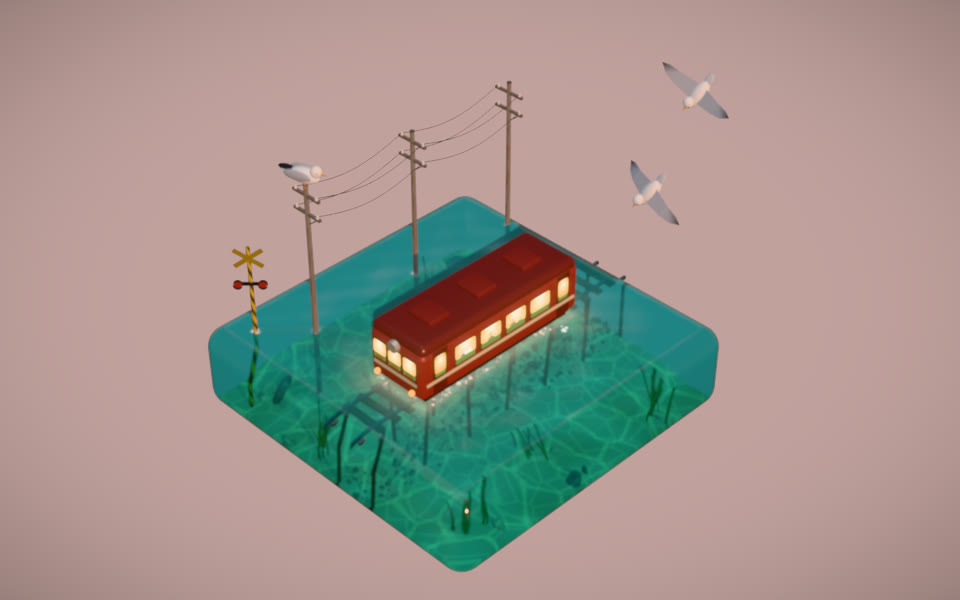
Resin Diorama
Live 3D resin-block dioramas in your browser: send a little tram across a clear turquoise sea, or ripple the bay of a cliff island. Synthesized sound, and every scene can be tuned.

3D Vehicle Worlds
Explore interactive 3D vehicle worlds in your browser, with varied terrain, camera controls and driving effects. Choose a playable example to begin.
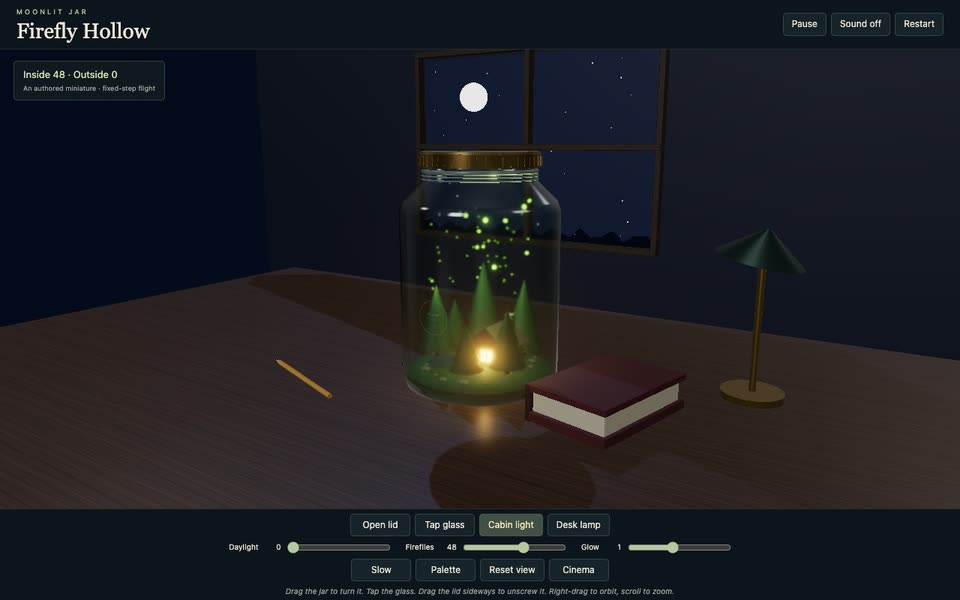
3D Firefly Terrariums
Turn a thick glass miniature, scatter glowing fireflies and open its brass lid. Actual particles leave through the neck and return before it seals. A moonlit cabin, forest and real local lights in one offline HTML.
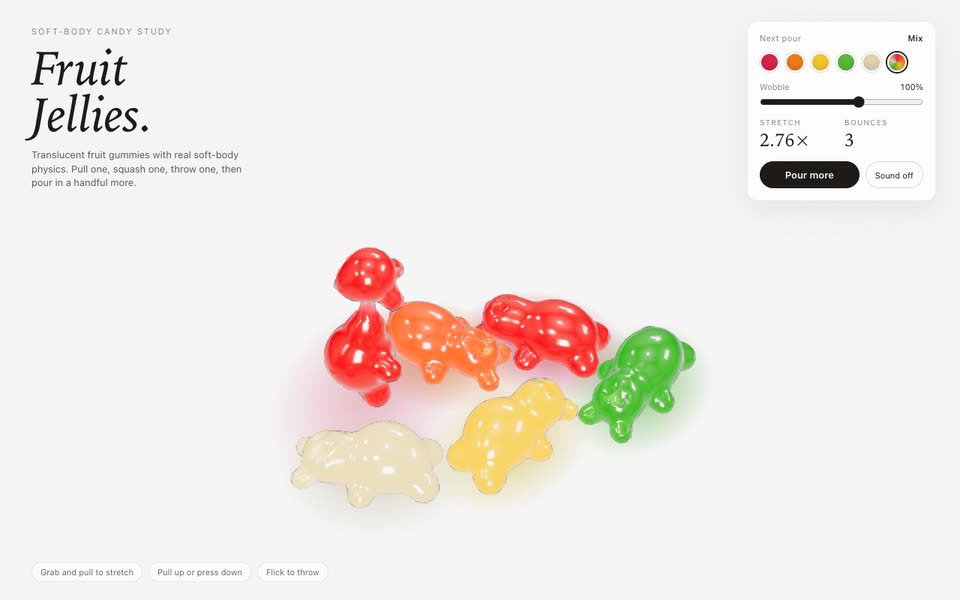
Jelly Candy: Fruit Bears
Six translucent fruit gummies on a white table. Grab any part and pull, lift a head until the neck stretches thin, press one flat until it springs back, flick one across the pile or pour in more. Fixed-step soft-body physics and a marching-cubes skin in one offline HTML.
WebGPU Soft-Body Gummy Bears
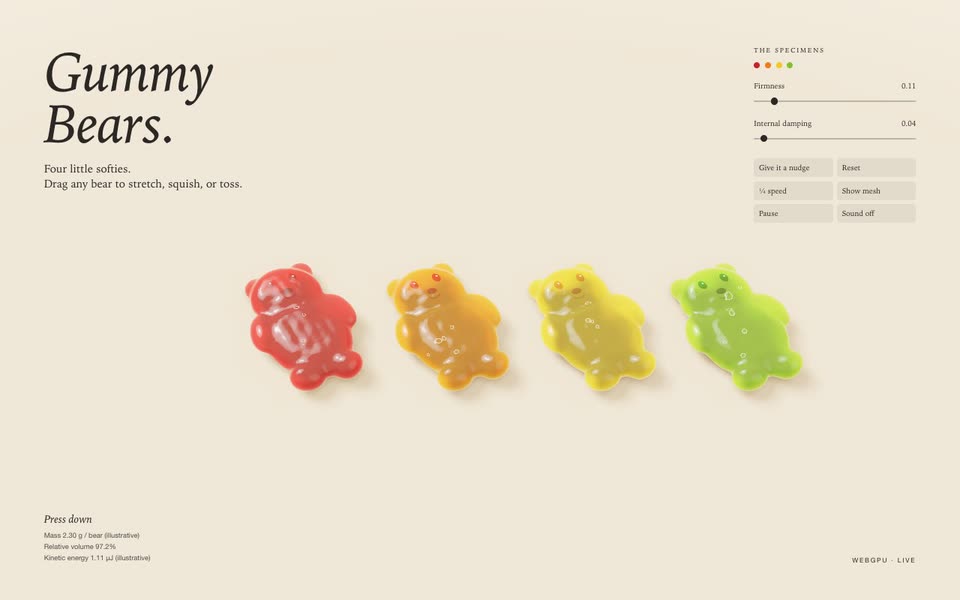
Four translucent gummy bears on an ivory floor, rendered with native WebGPU. A deterministic 36-second choreography stretches, presses, flips and tumbles them before they settle back to the exact rest pose. Drag any bear to stretch, squish or toss it. A fixed-step tetrahedral XPBD solver in one offline HTML.
Stone Stars: 3D Miniature Landmark City
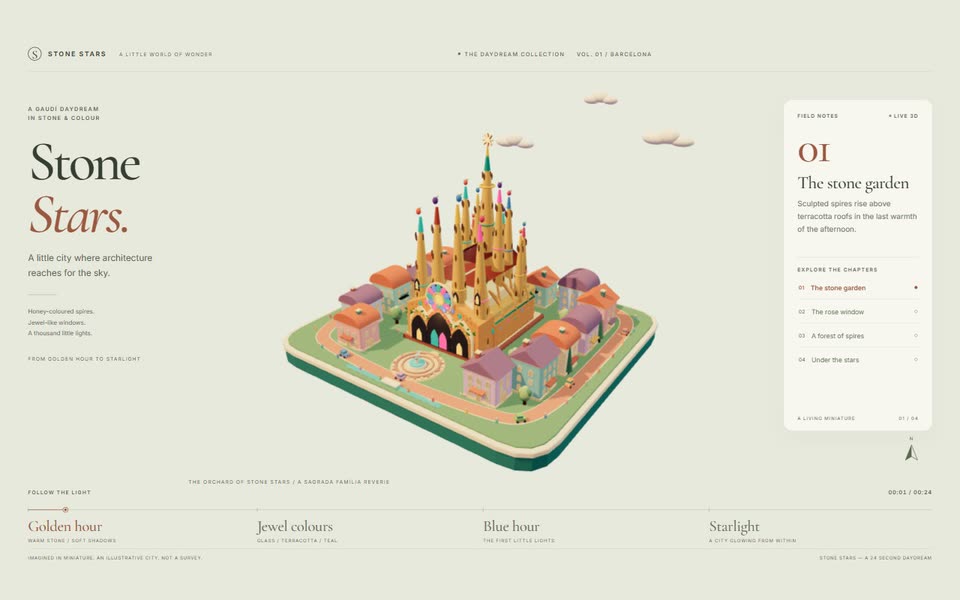
Turn a city into a storybook 3D island around one landmark, with chapters, a daylight-to-starlight slider, street life and a matching scored 24-second film. Sample: a Gaudí-style basilica.