
Chladni Particle Modes
- Lab Skill
- v1.0.0
- Education
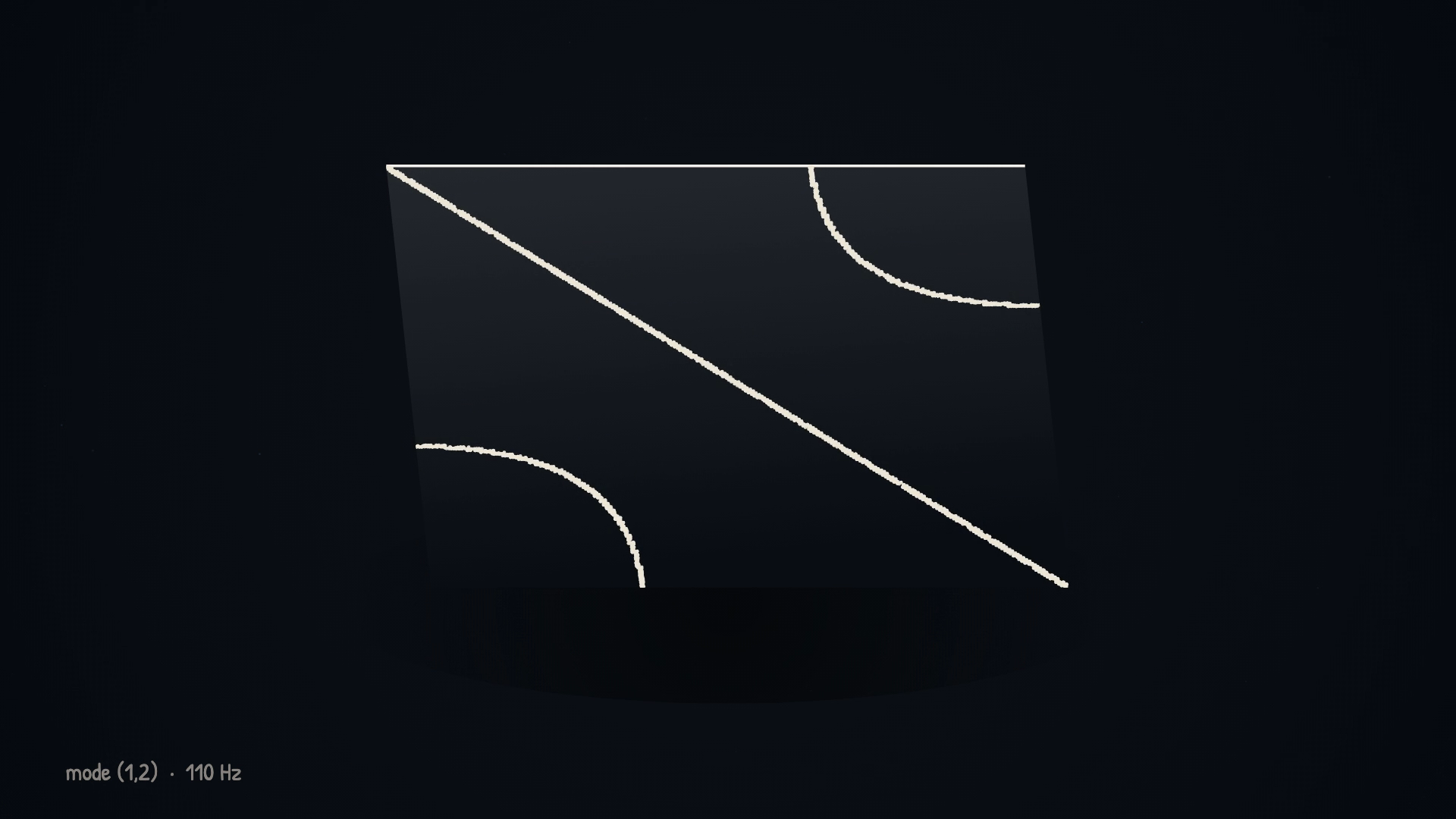
Sand grains on a tilted plate swarm onto standing-wave nodal lines, scatter, and re-form as the mode changes — a silent, deterministic Chladni film.
उदाहरण · 2
ऑनलाइन चलाएँ
SandBase sandbox में Chladni Particle Modes के उदाहरण को चलाएँ और परिणाम यहीं देखें।
यह कैसे काम करता है
- 01
Write the mode sheet
Chladni Particle Modes reads one sheet.json: size, frame rate, seed, language and duration, a background, accent, title and caption, and 1 to 24 vibration modes, each with m and n from 1 to 12, two wave amplitudes and a frequency label. Particle count runs from 200 to 6000.
- 02
Settle the sand
A square plate sits in a dark room, tilted toward the camera, with thousands of grains scattered on it. For each mode the runtime walks every particle toward the nearest nodal line where the standing wave cancels, so the sand swarms into the mode's pattern, then scatters and re-forms when the mode changes.
- 03
Render
After each settle the nodal lines can tremble slightly, and a frequency readout labels the mode. The silent film renders at 1920 by 1080 and 30 fps through a paused GSAP timeline in HyperFrames. Both sheets, a slate plate in English and gold modes in Chinese, were rendered from a fresh unzip.
FAQ
What does Chladni Particle Modes show?
Chladni Particle Modes shows sand grains on a tilted plate swarming onto standing-wave nodal lines, scattering and re-forming as the vibration mode changes. It suits physics explainers, science communication, music-adjacent title sequences and museum visuals about resonance. Each mode change scatters the grains before they settle again.
Is Chladni Particle Modes physically correct?
Chladni Particle Modes moves particles toward the nodal lines of the standing-wave patterns defined by each mode's m, n and amplitudes, which is how real Chladni figures form. Settle timing and plate tilt are artistic choices; the frequency shown is a label from the sheet, not a measurement.
How many modes can Chladni Particle Modes play?
Chladni Particle Modes accepts 1 to 24 modes, evenly spaced over the duration unless a mode sets its own start time. Each settles over a set time, 2.2 seconds by default, before the next begins. Particle count changes how dense the lines look.
Does Chladni Particle Modes need any key?
No. Chladni Particle Modes needs Node.js, FFmpeg and a local HyperFrames install, and uses no keys, model calls or paid services. The same sheet and seed always produce the same particle motion. Particles are simulated in the page from the sheet's modes, so nothing is fetched or generated remotely.
Is Chladni Particle Modes silent?
Yes. Chladni Particle Modes renders a silent film. A frequency readout labels each mode on screen, so a tone track at those frequencies can be added afterwards if the piece wants sound. Both samples are silent renders, one on a slate plate and one in gold.
और Skills
सभी Education Skills →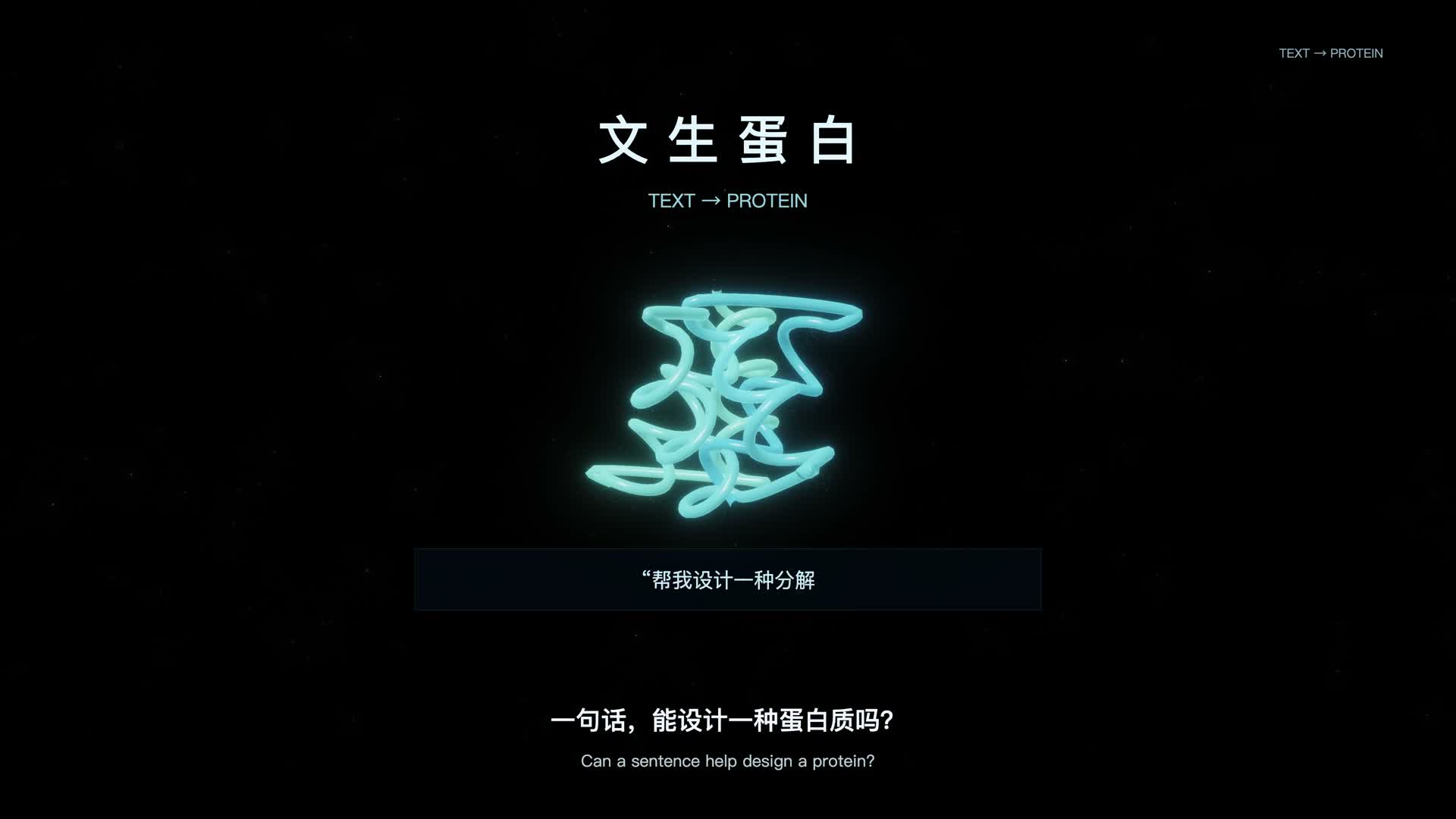
Science MV
Explain science through visible causes, transformations and results.
Loop Story
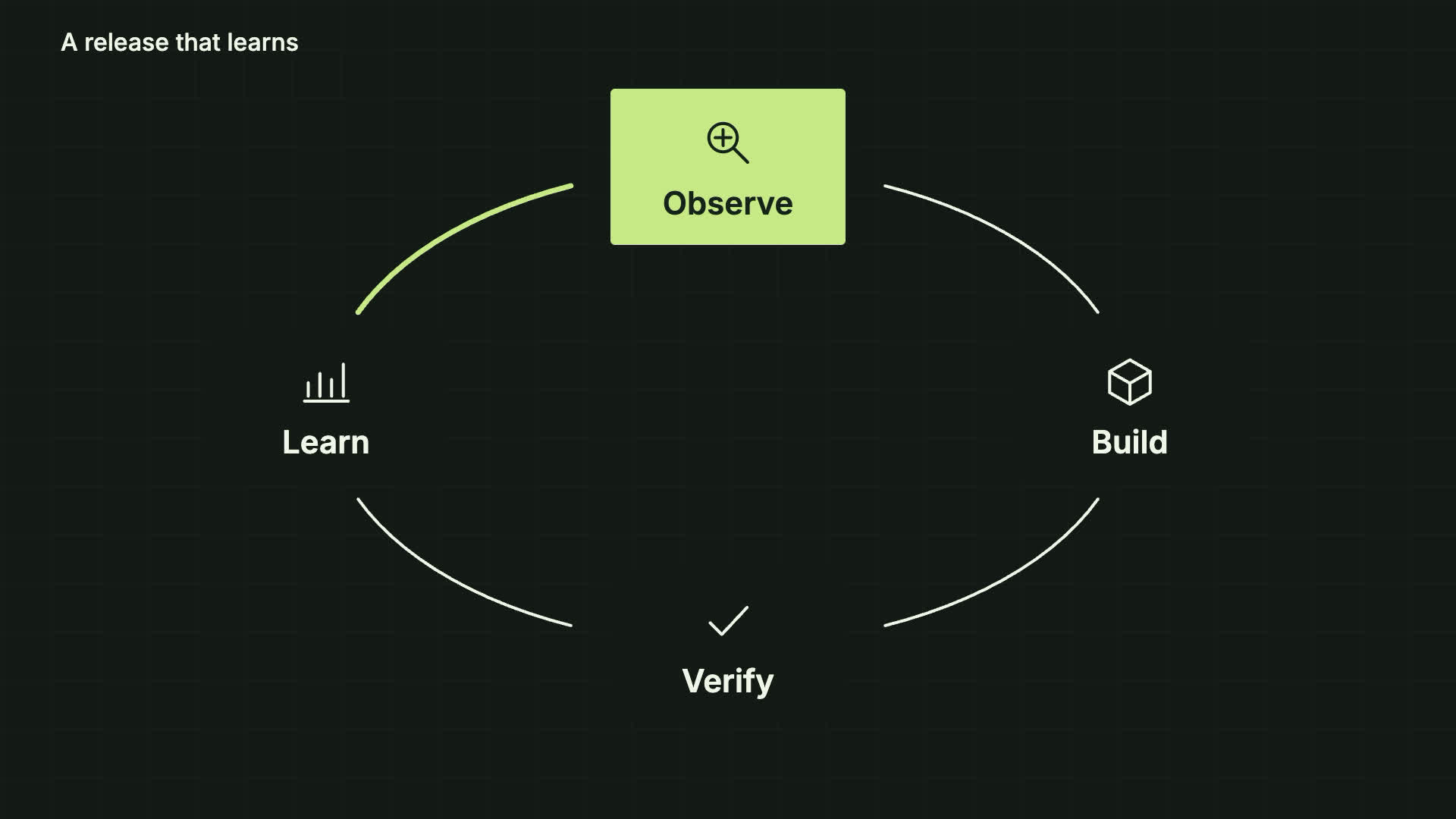
Explain a cycle: build each stage, close the loop, then reveal the takeaway.
Flux Rotor: Cobalt Drive
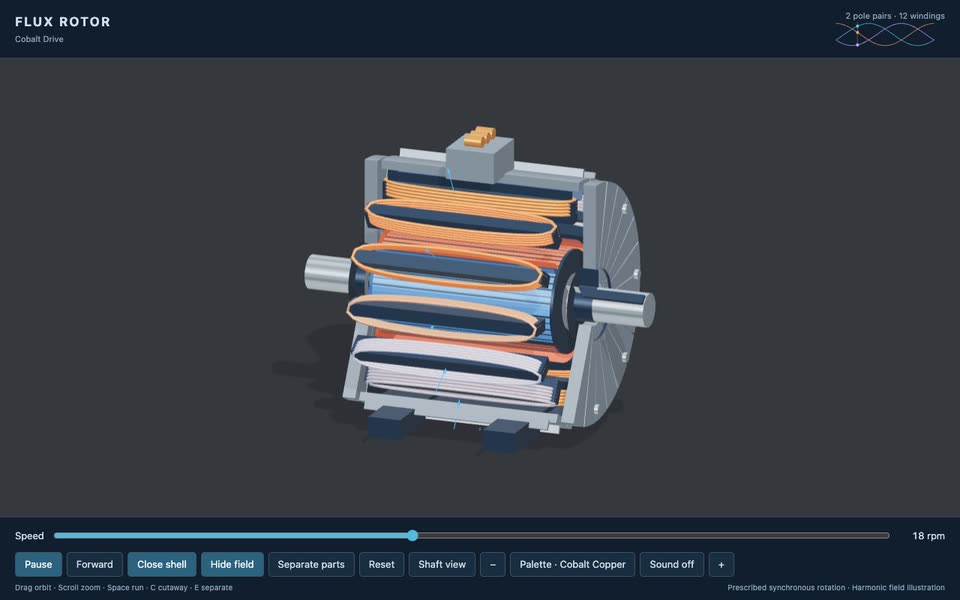
Inspect an original motor with real winding groups, alternating magnet sectors and a keyed shaft. Balanced phase currents drive prescribed synchronous rotation, material colors and spatial harmonic markers. Open the actual cutaway and separate six components offline. This display does not solve torque, efficiency or magnetic finite elements.
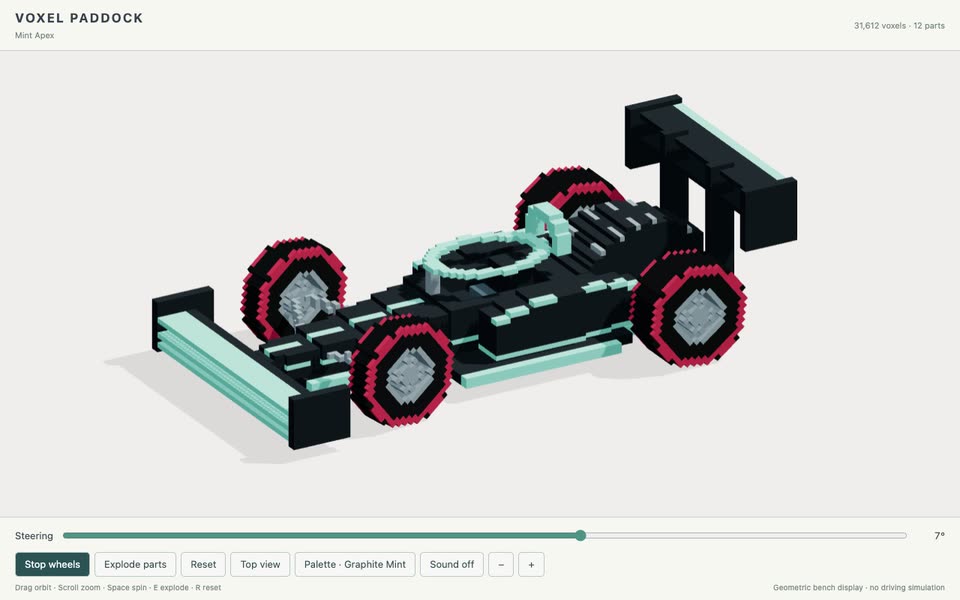
Voxel Paddock: Mint Apex
Inspect an original open-wheel vehicle built from procedural cubes. Spin actual wheels on a stationary display, turn nominal geometric steering and separate twelve component groups. Edit bounded dimensions, voxel density and three palettes offline. This is not a driving or aerodynamics simulation.
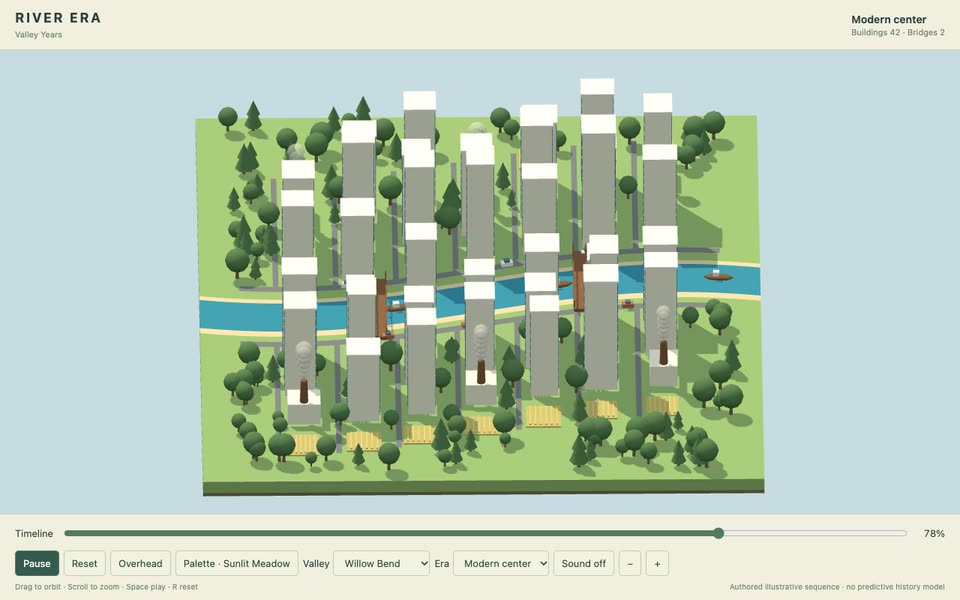
River Era: Valley Years
Scrub an authored river settlement timeline from camp and farms to town, workshops and speculative towers. Actual seeded geometry changes reversibly; boats and vehicles follow the same river and bank equations. This is an illustrative sequence rather than predictive history.
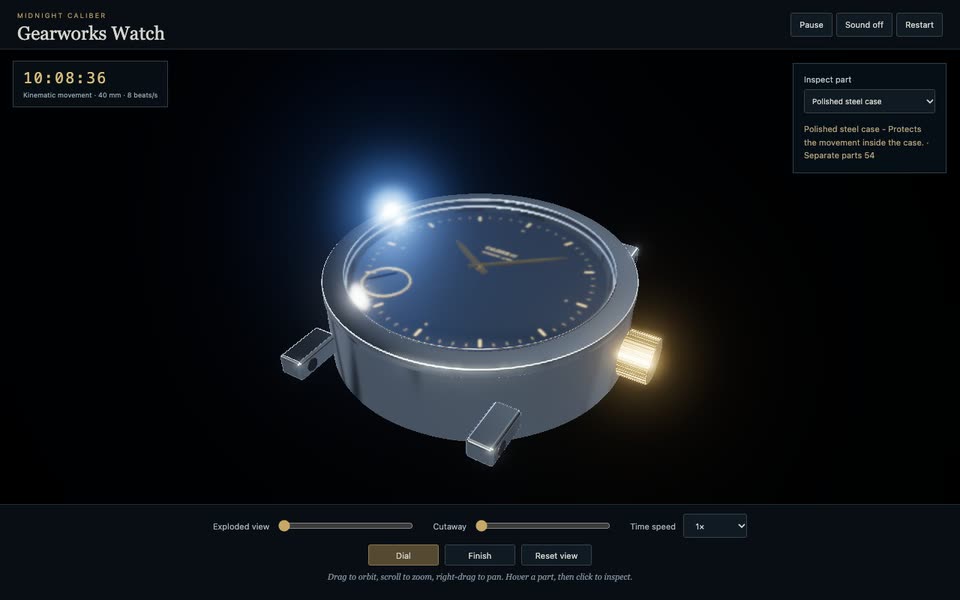
3D Mechanical Watch Explorer
Inspect a kinematic mechanical watch with actual meshed tooth ratios, 54 components, axial explosion, material cutaway and bilingual mouse/touch controls. One offline HTML with optional synthesized tones.