
CRT Terminal Boot
- Lab Skill
- v1.0.0
- Motion
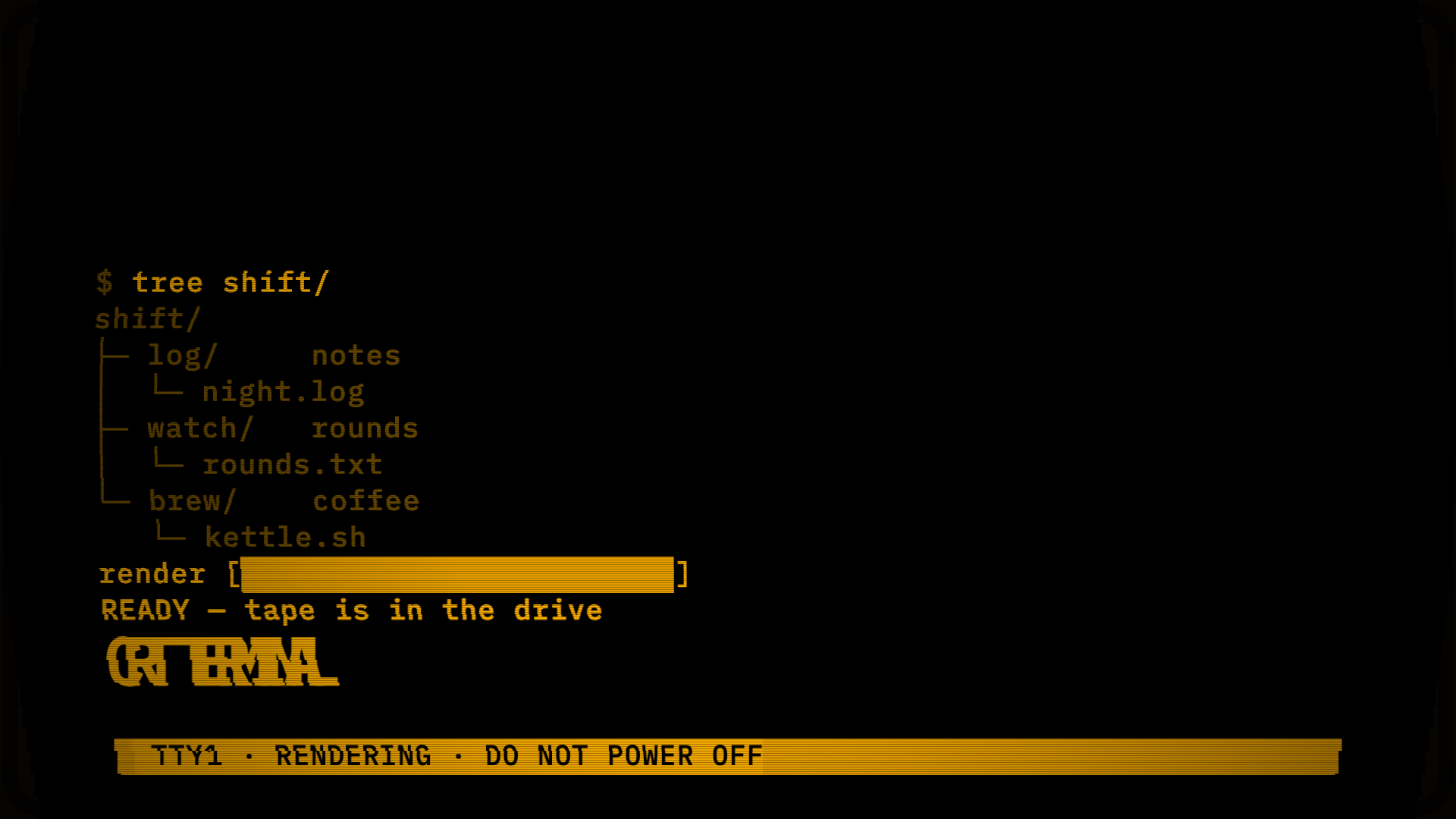
A film that is one monochrome CRT terminal: real characters on a fixed grid typed at machine or human cadence, line-by-line log scrolls, a 530 ms blinking block cursor, phosphor afterglow decaying as exp(-dt/tau), scanlines, bloom, barrel curvature and a power supply that collapses the picture to a line and a dot — with a synthesized mains-hum and detuned-arp score.
उदाहरण · 2
ऑनलाइन चलाएँ
SandBase sandbox में CRT Terminal Boot के उदाहरण को चलाएँ और परिणाम यहीं देखें।
आपको क्या मिलेगा
Render a film that is one monochrome CRT terminal: real characters on a fixed grid, machine output typing at machine cadence, a human typing unevenly and pausing mid-thought, logs scrolling the screen line by line, a block cursor blinking at 530 ms, and phosphor afterglow decaying as exp(-dt/tau). Amber P3 or green P1/P39, per-frame flicker, additive bloom, scanlines, barrel curvature, a rounded glass frame, and a power supply that collapses the picture to a line and a dot. A synthesized mains-hum and detuned-arp score accompanies it.
यह कैसे काम करता है
- 01
Write the session sheet
CRT Terminal Boot reads one sheet.json: size, frame rate, seed, language, duration, an amber or green phosphor, a column and row grid, an ops timeline of boot, type, banner, log, progress, status, clear, power, wait and bleep with times and cadence, and a beat-grid score.
- 02
Schedule real characters
A scheduler expands the ops once into per-cell on and off events on a fixed monospace grid; the engine draws cells, never pictures. Machine output types at machine cadence, a human types unevenly and pauses, logs scroll line by line and a block cursor blinks at 530 milliseconds.
- 03
Model the tube and render
The tube is modelled with phosphor afterglow decaying exponentially, per-frame flicker, bloom, scanlines, barrel curvature, a rounded glass frame and a power supply that collapses the picture to a line and a dot. A synthesised mains hum and detuned arpeggio score accompany the 1920 by 1080 film at 30 fps.
FAQ
What does CRT Terminal Boot make?
CRT Terminal Boot makes a film of one terminal session on a monochrome CRT: real characters typed and scrolled on a fixed grid, phosphor afterglow, scanlines, curvature and a power-off collapse to a dot, with a synthesised hum score. It suits terminal-boot shorts, hacker-film interstitials and sysadmin title moments.
Which phosphors does CRT Terminal Boot support?
CRT Terminal Boot supports amber P3 and green P1 or P39 phosphors. Each has its own colour and afterglow, which decays exponentially when a character switches off. The phosphor is a single setting in the sheet. Both have flicker, bloom and scanlines on top.
Does CRT Terminal Boot draw images?
No. CRT Terminal Boot draws only characters in its fixed monospace grid, so banners and progress bars are made of real cells. That keeps every frame looking like a terminal rather than graphics laid over one. The engine expands ops into per-cell events once.
Does CRT Terminal Boot need any paid service?
No. CRT Terminal Boot renders the tube and synthesises its hum and arpeggio score locally with Chrome, FFmpeg and HyperFrames, with no model or paid API. A film costs only render time on your machine. Typing foley and hum are synthesised, not sampled.
Can CRT Terminal Boot show Chinese text?
Yes. CRT Terminal Boot supports English and Chinese sessions, set by the sheet's language. The demos are an English night shift and a Chinese print-shop night shift, both rendered from a fresh extraction. Set the language in the sheet before writing the ops.
और Skills
सभी Motion Skills →
Image Blaster
Turn one frozen moment into a camera-orbit concept video.
Sketchbook Film
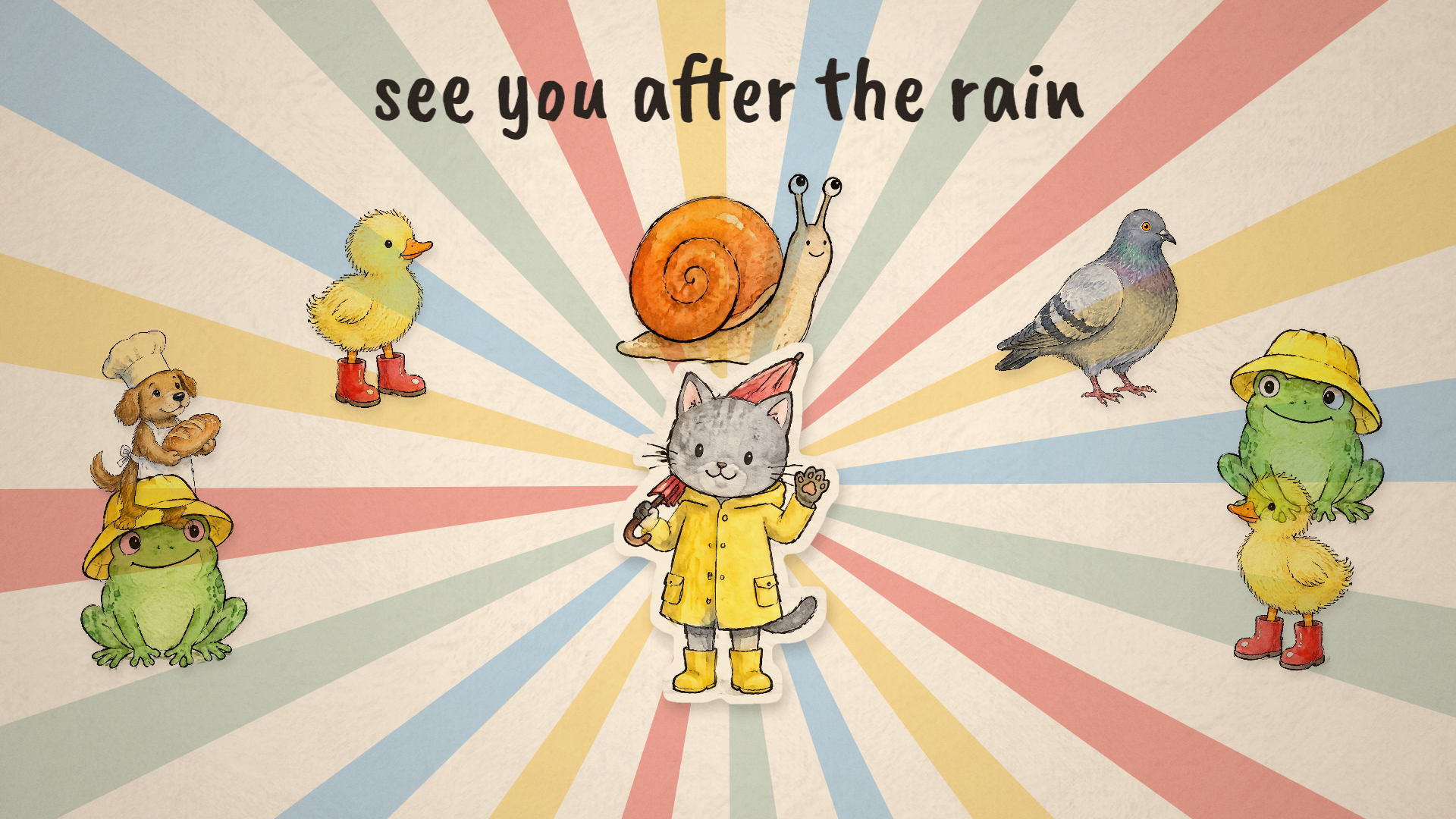
Bring photographed sketchbook drawings to life as a short film with cut-out characters, ink lettering and a score.

SVG Paint Stages
Show a picture being painted: construction marks, contours, flat colour and finer patches, as a layered SVG and a short film.
Network Tally
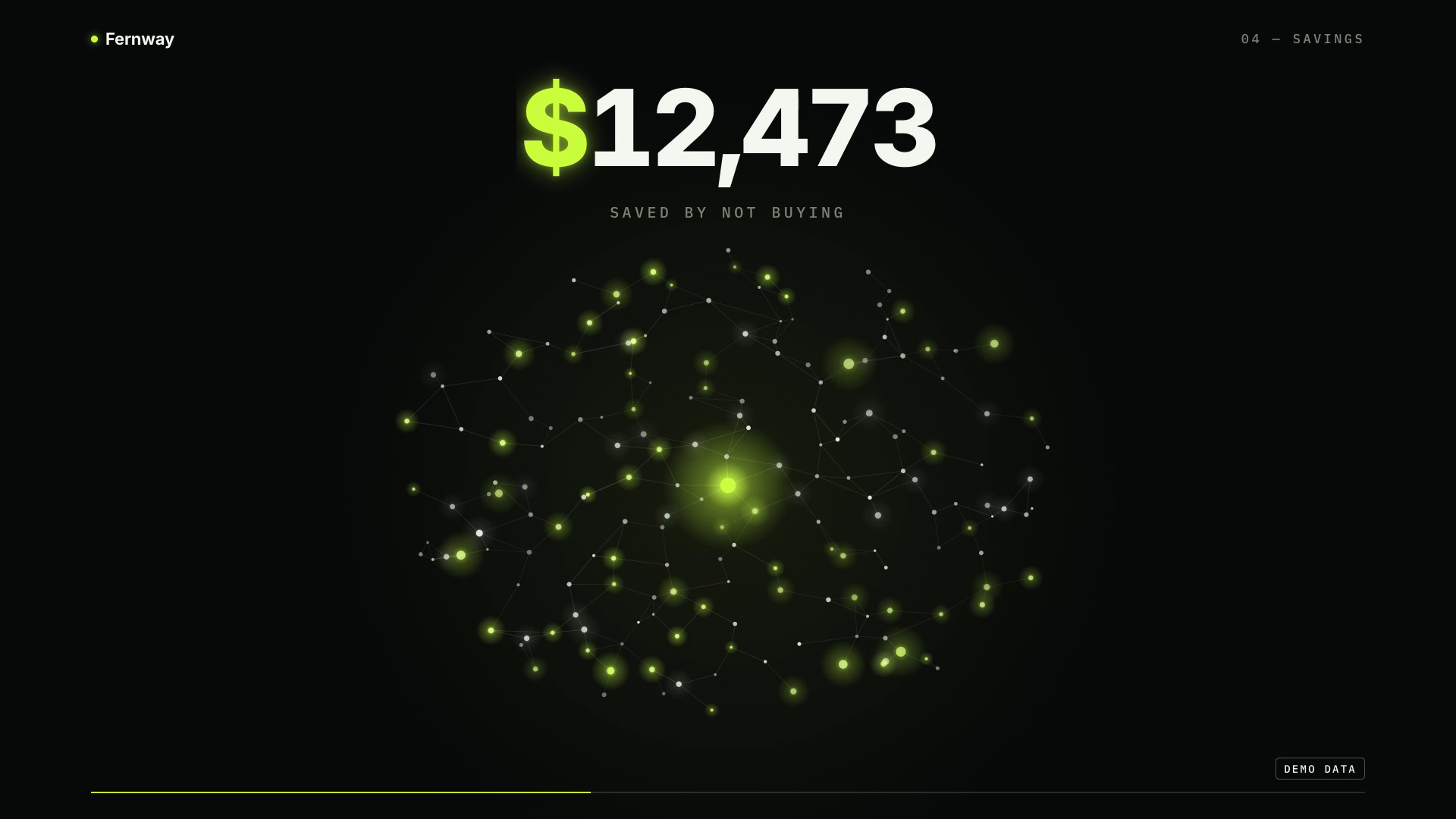
Tell a growth story with real numbers: one node network grows with each counter, flashes, dims behind a spike chart and closes on an end card.
Radiograph Reel: Bumble Ledger
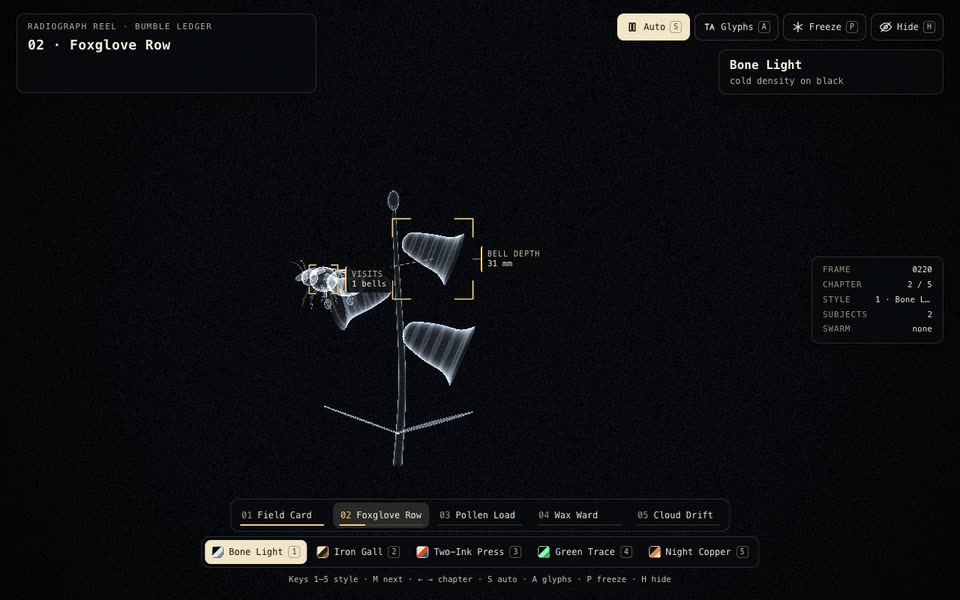
A specimen film reel: procedural bees, flowers and a wax comb glow as X-ray density, print in five switchable film styles with tracking labels, and a swarm morphs between formations.
Festival Grid Slides
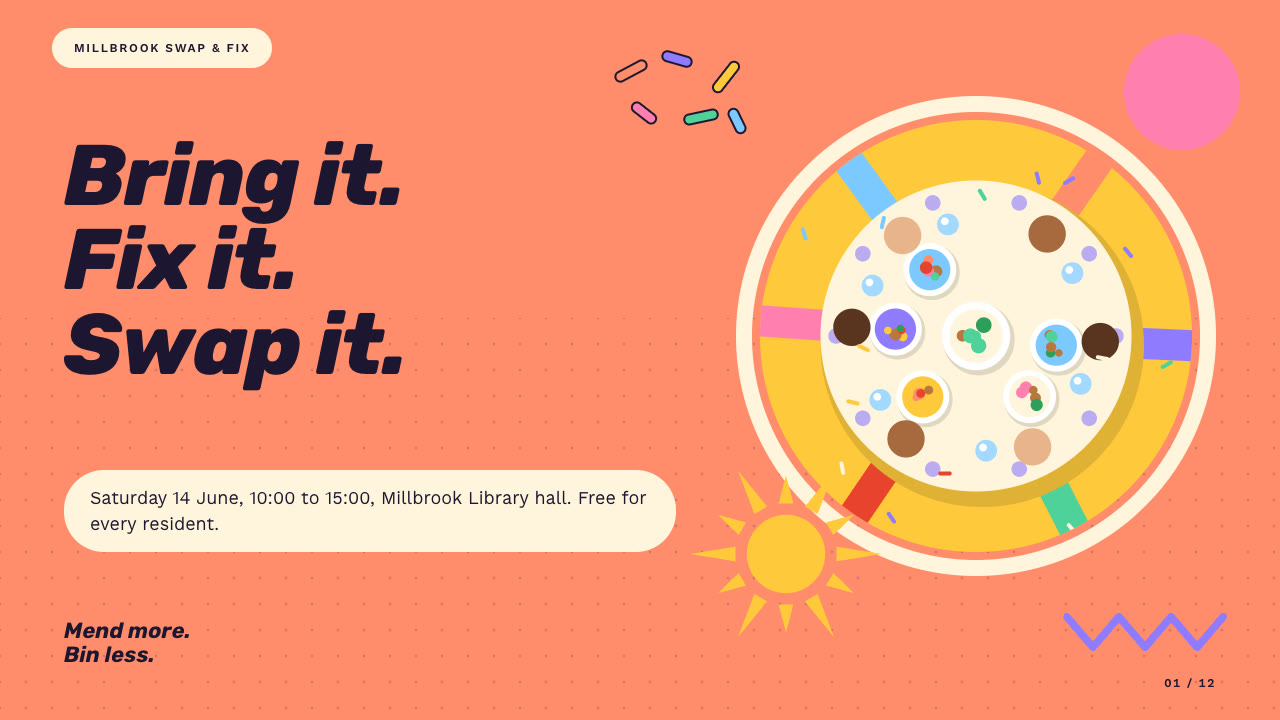
Invite people to a fair, open day or club season, or pitch one, in a bright festival deck: whole-page colour fields with a fine dot grid, heavy slanted headlines, cream cards and tickets, round pictures, and suns, rosettes, rings, bunting and sprinkles.