
Figure First Slides
- Lab Skill
- v1.0.0
- Research
Make figure-led research talks such as paper summaries, journal clubs, lab and reading-group reviews and evidence briefings: every content page is built around one figure, chart or table with its caption and source underneath, numbers carry their comparator and interval, and a limits page states what the work can and cannot claim.
उदाहरण · 2
आपको क्या मिलेगा
Bring the paper or study, the audience, the figures and numbers to use exactly and the page count; figures optional. The Skill returns one offline HTML deck that edits in the browser and exports editable PowerPoint.
यह कैसे काम करता है
- 01
Check the paper before outlining
Figure First slides takes the paper or a complete extract, the audience, talk length, slide count, language and the figures you may reuse. Your Agent checks title, authors, method, results, limitations and equations against the source and never invents a number. It then orders twelve layouts problem to method to evidence to limits to conclusion, choosing each page's figure before its text.
- 02
Fill charts from real values
Chart pages carry a chart object with values, and python3 scripts/chart-fill.py plan.json --out plan.filled.json turns them into dot heights, interval spans, bar lengths and tick labels. Schematics, maps or scatter plots without paper figures come from plate-art.py as label-free plates. kit.py compose and apply-palette.py --palette slate-journal then produce deck.json. Captions take two parts, such as Figure 4. plus what the dots show.
- 03
Build and audit captions and sources
make-deck.py writes presentation.html and verify-deck.py reports leftover sample strings. Your Agent confirms in a browser that every caption and source line sits directly under its figure, tick and value labels read correctly and the legend matches the dots. It also tests editing and presenting. A PowerPoint export is checked with verify-pptx.py, then opened in your own app to compare wraps.
FAQ
What is Figure First slides built for?
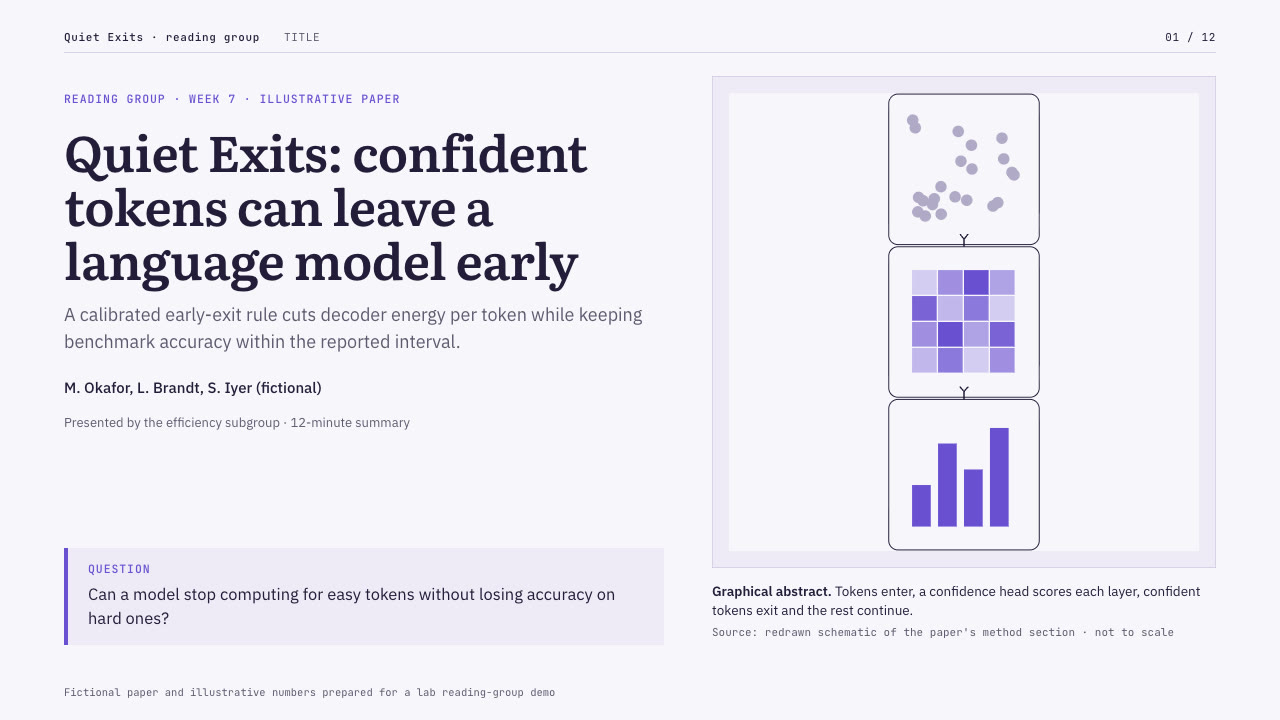
Figure First slides is built for paper summaries, journal clubs, lab and reading-group reviews, conference talks and evidence briefings. Every content page centres on one figure, chart or table, with its caption and source line directly underneath, and a limits page states what the work can and cannot claim. The demos are Quiet Exits, a 12-page early-exit decoding paper, and Shade Ledger, a 9-page street-tree heat briefing.
Which chart types can Figure First slides draw natively?
Figure First slides draws four native chart types: dot-and-interval charts with up to 4 groups of 2 series, paired horizontal bars in 2 panels of 4 rows, diverging bars with 5 rows, and a tested-range bar on the limits page. Line charts, stacked bars and other forms must come in as a picture, from your own figure or from the generator.
Can Figure First slides redraw a figure from my paper?
No. Figure First slides does not rebuild a paper's figure from data it was not given. Its plate-art.py draws schematic, label-free plates; data you pass is drawn as given, and anything generated from a seed is illustrative and must be labelled so. Reused paper figures keep their original aspect ratio and are not cropped or recoloured in ways that change their meaning.
Does Figure First slides send my paper to a model?
No. Figure First slides fills its charts with chart-fill.py and draws plates with plate-art.py, both local Python scripts that contact no model or image service, so producing a research talk is not billed. Your Agent reads the paper with its own model while planning. The python-pptx package is needed only by verify-pptx.py.
How does Figure First slides handle numbers and colour?
Figure First slides keeps every number with its unit, comparator, sample size and interval, and a lone key number always sits next to the sentence saying what it compares. Colours have jobs: the accent marks the work presented, compare marks baselines, risk marks caveats and the gap number, and plate frames the figures. Paper figures are never recoloured.
What can break a Figure First slides PowerPoint file?
An ampersand or angle bracket in document.company. Figure First slides writes that settings.json field into the PowerPoint unescaped, so the &, < or > characters stop the file from opening. Also install Literata, IBM Plex Sans and JetBrains Mono for exact wrapping, because PowerPoint otherwise substitutes a plain face and a line can break between a number and its unit.
और Skills
सभी Research Skills →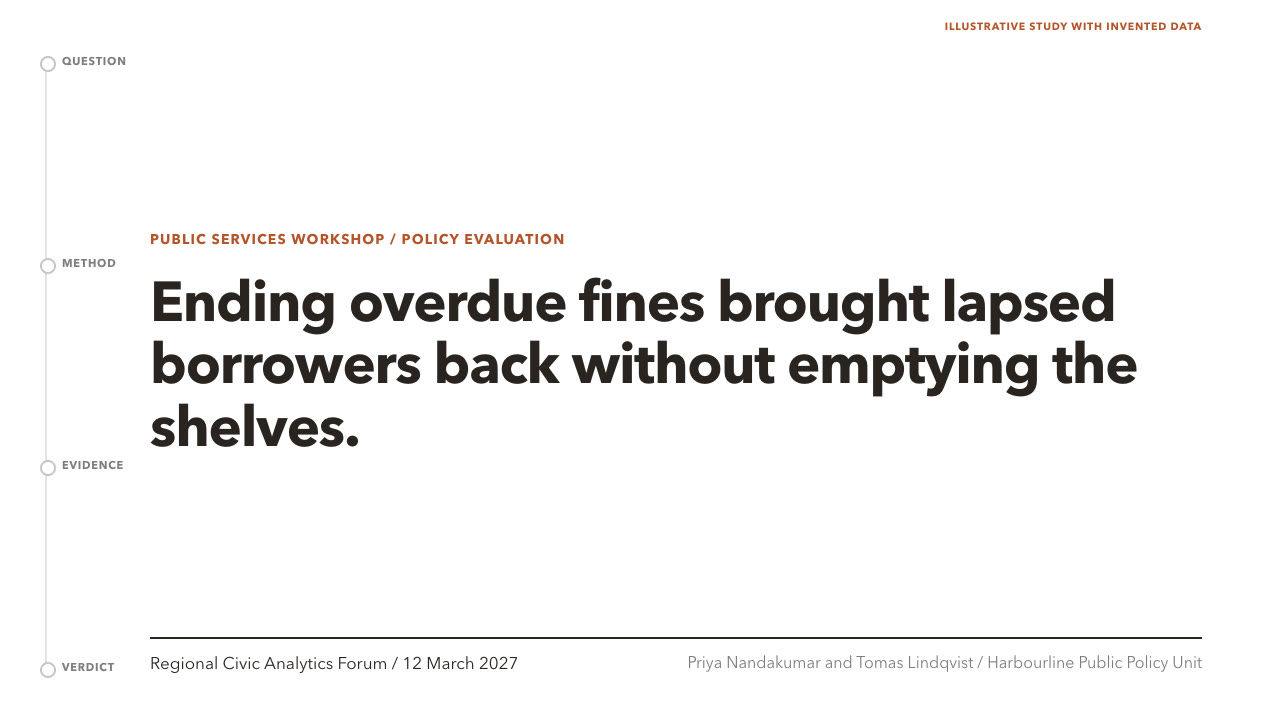
Thesis Spine Slides
Build a research talk whose titles, read in order, argue one claim from question to verdict, with one cited exhibit per evidence page.
Reading Digest Slides
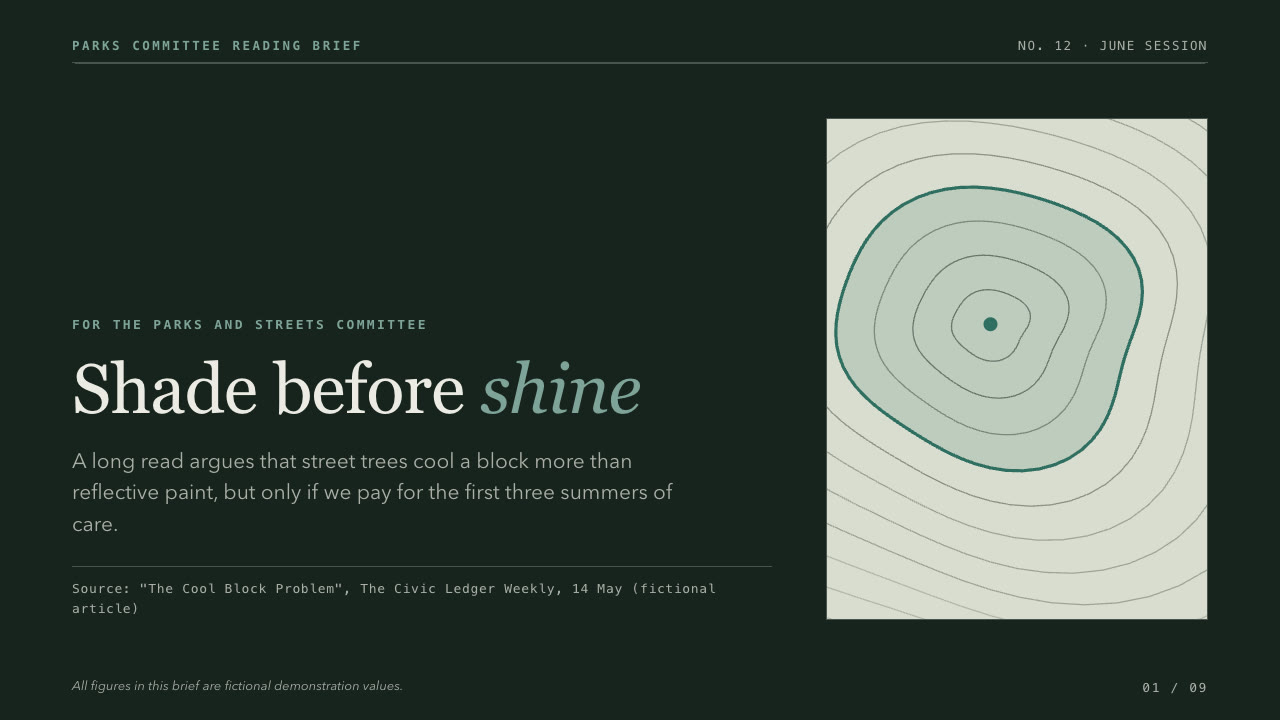
Turn one long read, essay or report into a reading brief a committee can decide on: a masthead, argument beats on a rail, a headline figure, bar charts and a source ledger that keep checked facts, assumptions and open questions apart, two readings, discussion prompts and the decision asked.
Cloudpane Slides
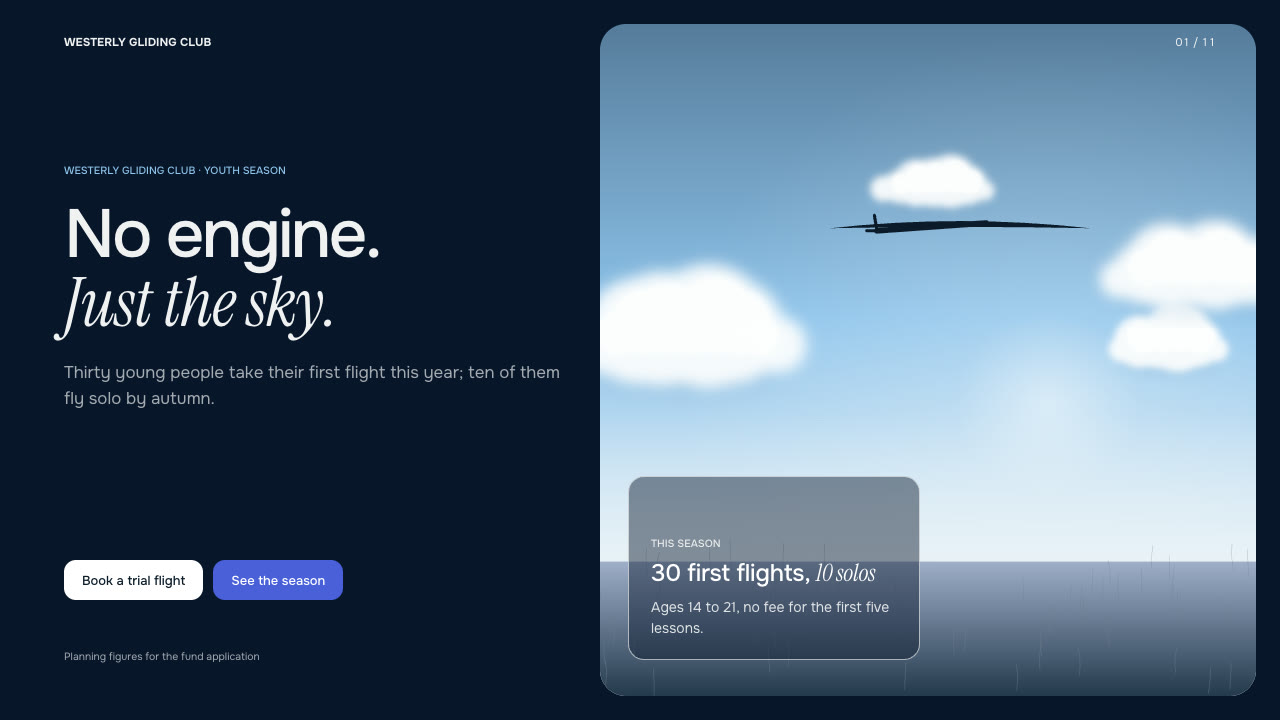
Make explainer and proposal decks that make a public subject feel approachable: open-sky pictures, clear optical glass and anonymous figures, thin-edged translucent glass cards over the pictures, broad mist-white pages, three deep night pages and headings with an italic serif accent.
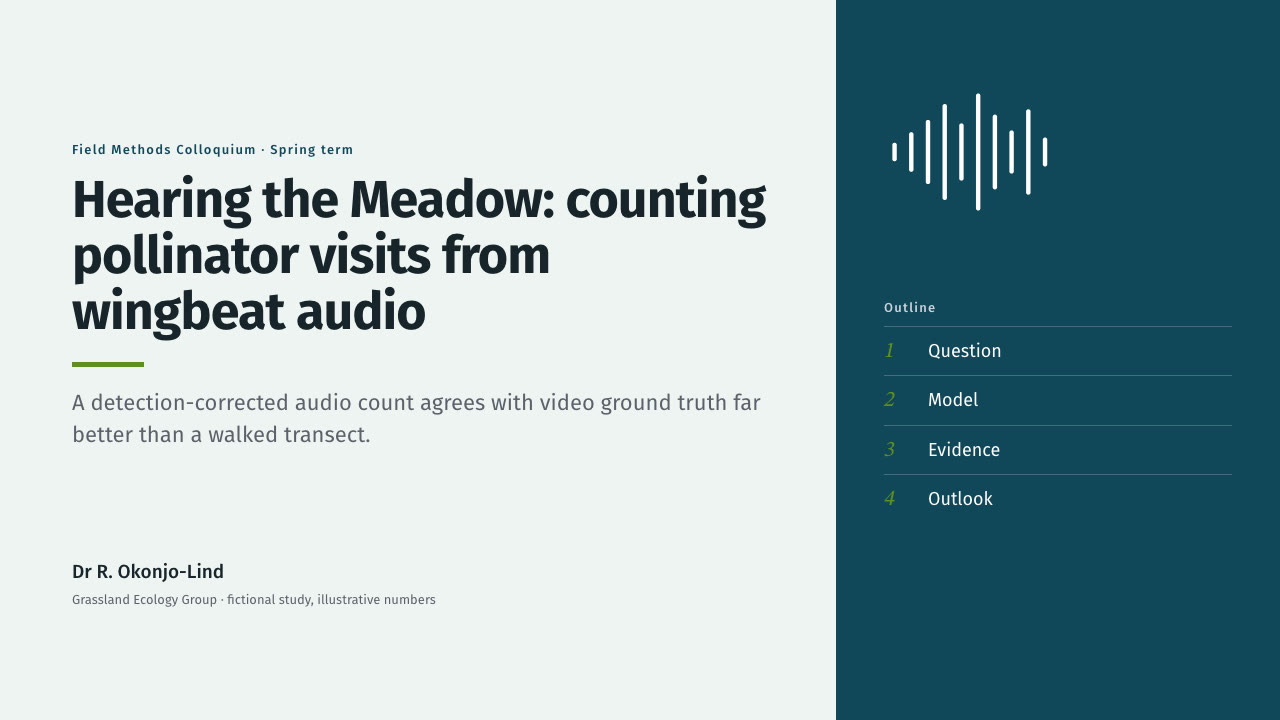
Seminar Math Slides
Turn a paper, thesis chapter or research notes into a projection-ready 16:9 talk for seminars, colloquia, defences and conference sessions: a section strip with the current section lit, equations with spoken readings and term glosses, a method pipeline, a proof sketch, native result bars and tables, plots drawn from data and a progress bar with frame counters.
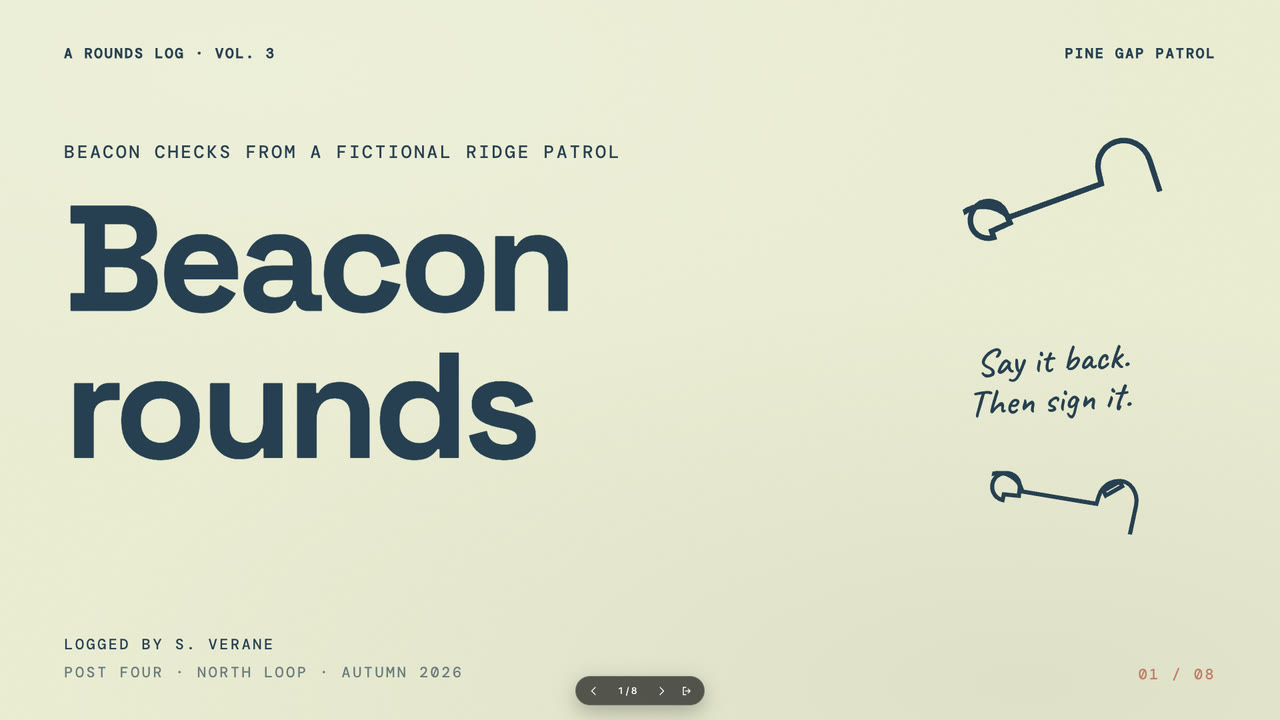
Yellowpad Fieldnotes Slides
Make decks that read like pinned field notes: saturated yellow legal-pad paper, cobalt ink, hand-drawn safety pins, cream pinned cards, handwritten marginalia, mono archival tags and rotated red stamps.
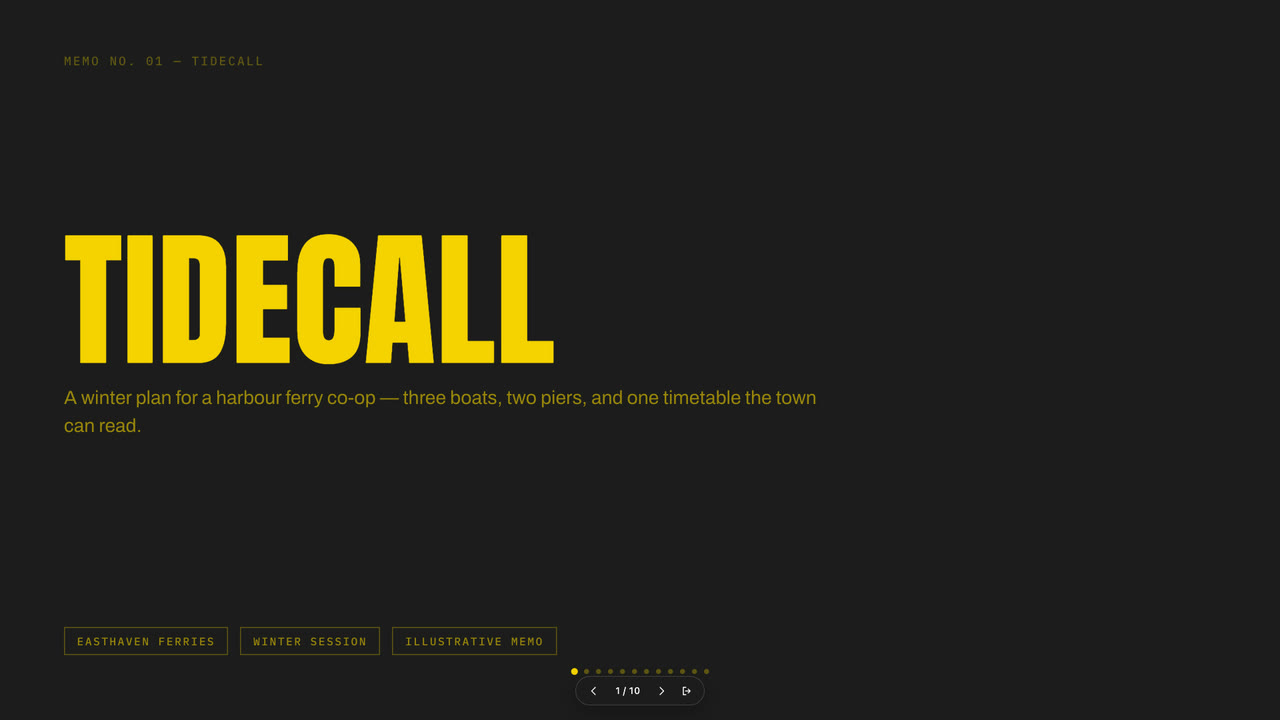
Volt Brief Slides
Make decks that read like high-voltage two-register briefs: near-black ink pages or full volt-yellow pages, uppercase condensed grotesk titles, mono chrome labels, em-dash bullets, stepped bar charts and hairline-framed drawn panels.