
Capacity Lens
- Skill Lab
- v1.0.1
- Motion
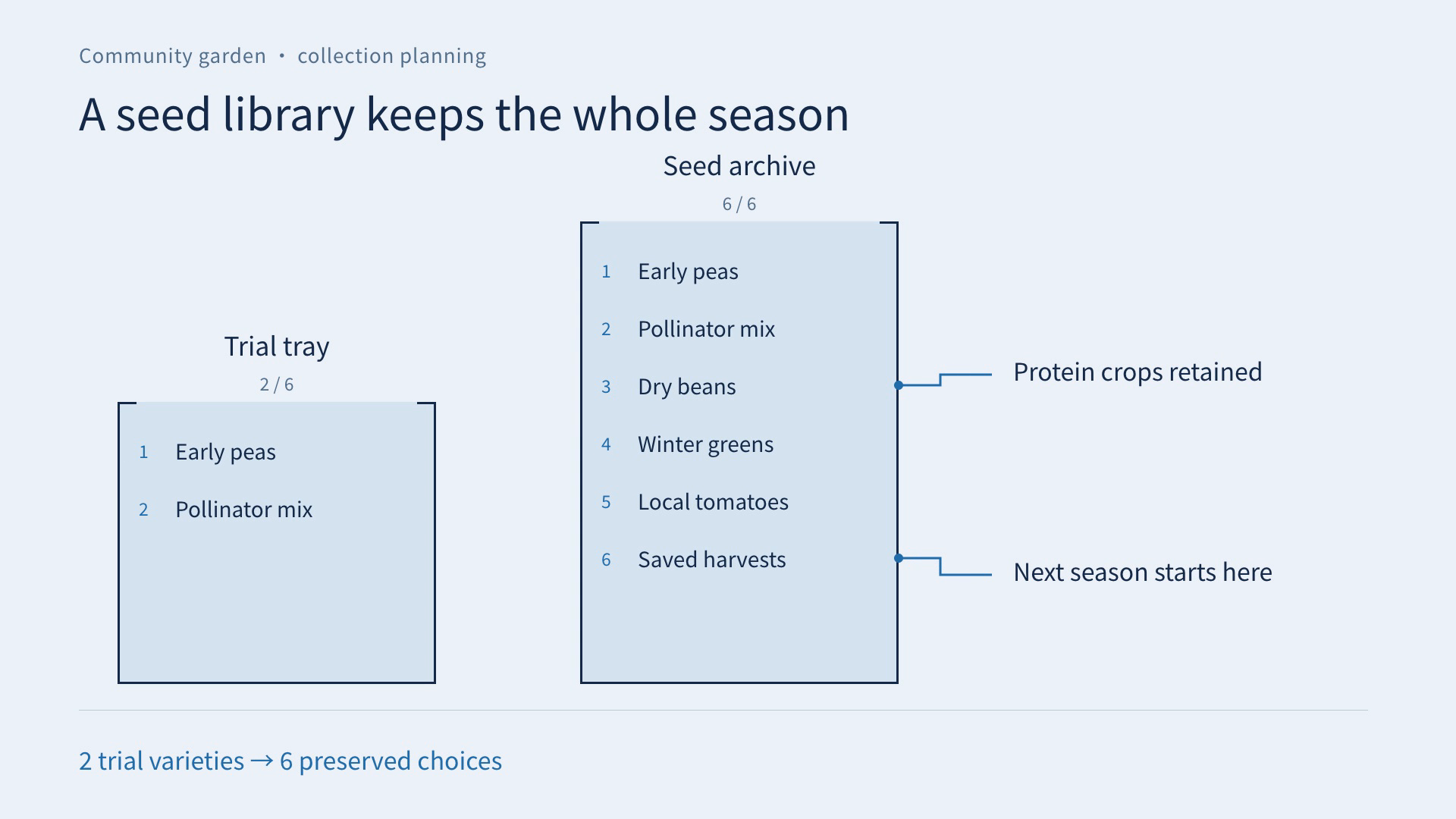
Compare unequal accumulation in two bounded spaces, then connect explanatory notes to selected rows.
Contoh · 2
Jalankan online
Jalankan contoh Capacity Lens di SandBase sandbox dan lihat hasilnya langsung di sini.
Cara kerjanya
- 01
Write the brief
Capacity Lens takes a JSON brief with a headline, context, names for a compact and an expanded space, four to seven short entries, a compact limit of one to three that is smaller than the entry count, one or two notes targeted at chosen rows, and a conclusion. Invalid limits, missing fields and overlong text fail before a project is made.
- 02
Fill two bounded spaces
compose.mjs writes an editable 1920 by 1080 motion diagram in one of four palettes. Two vessels establish their capacities, then entries arrive in order: the compact one fills and overflows its limit while the expanded one holds every entry. After the comparison settles, external notes connect to the rows they explain.
- 03
Inspect and render
Run the HyperFrames inspect command, then render at 30 fps in strict mode. The two samples, seed preservation and inspection records, are silent renders from the standalone package. Local installation carries one unresolved moderate advisory across five dependency entries, described in the report.
FAQ
What does Capacity Lens compare?
Capacity Lens compares how the same entries accumulate in two bounded spaces, a compact one that runs out of room and an expanded one that holds them all, then attaches notes to specific rows. It suits capacity comparisons and evidence notes tied to individual items, such as seed collections or inspection records.
Why must the compact limit be smaller in Capacity Lens?
Capacity Lens requires the compact limit, one to three, to be smaller than the number of entries, four to seven, because the film's point is the overflow. If everything fit in both spaces there would be no comparison to show, so the generator rejects that brief.
Does Capacity Lens need a hosted service?
No. Capacity Lens runs from its standalone local package with no hosted runtime, model or paid API. Install with npm, then render locally. Read the report's note on the one moderate dependency advisory before installing. Dependencies are fixed in its package file.
How are notes placed in Capacity Lens?
Capacity Lens attaches one or two notes to chosen rows by index, drawing a connector from each note to its entry after the comparison is complete. An out-of-range row anchor fails before the project is created, so notes always point at a real entry.
Is Capacity Lens silent?
Yes. Capacity Lens renders silent 1080p films. Keep the complete shot list with each project, and keep per-brief films and any private evidence outside the reusable package so it stays clean for the next brief. Notes connect only after the comparison settles, a natural point for a cue.
Lebih Banyak Skills
Semua Skills Motion →
Image Blaster
Turn one frozen moment into a camera-orbit concept video.

Sketchbook Film
Bring photographed sketchbook drawings to life as a short film with cut-out characters, ink lettering and a score.

SVG Paint Stages
Show a picture being painted: construction marks, contours, flat colour and finer patches, as a layered SVG and a short film.
Network Tally
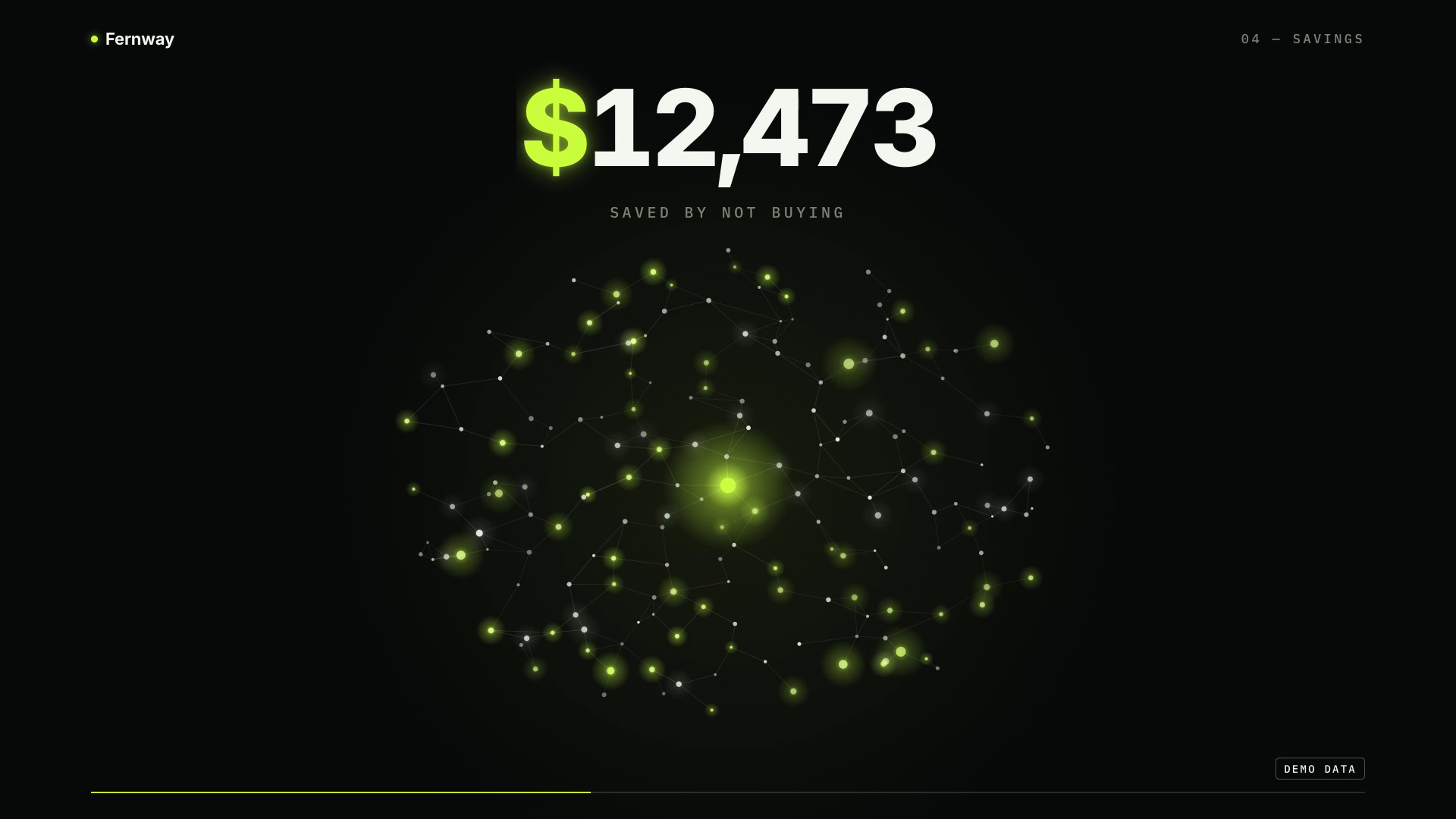
Tell a growth story with real numbers: one node network grows with each counter, flashes, dims behind a spike chart and closes on an end card.
Radiograph Reel: Bumble Ledger
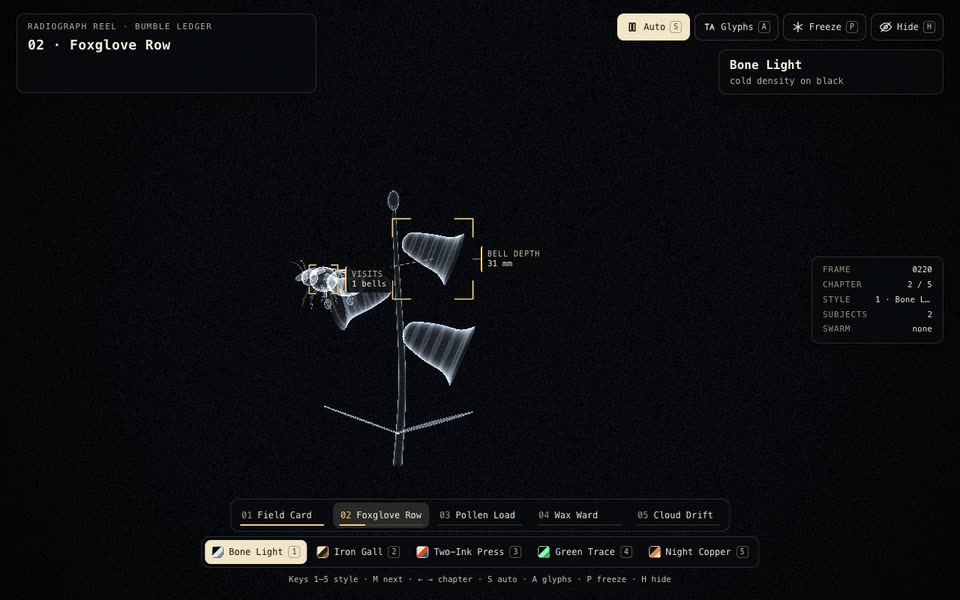
A specimen film reel: procedural bees, flowers and a wax comb glow as X-ray density, print in five switchable film styles with tracking labels, and a swarm morphs between formations.

Festival Grid Slides
Invite people to a fair, open day or club season, or pitch one, in a bright festival deck: whole-page colour fields with a fine dot grid, heavy slanted headlines, cream cards and tickets, round pictures, and suns, rosettes, rings, bunting and sprinkles.