
Glass Weather: Valley Vitrine
- Skill z Lab
- v0.1.0
- Interactive 3D
A weather toy in a glass box: squeeze a cloud to rain, shake it for lightning, drag the sun and turn the seasons, let snow and mist pile up and brush them away with the wind.
Przykład
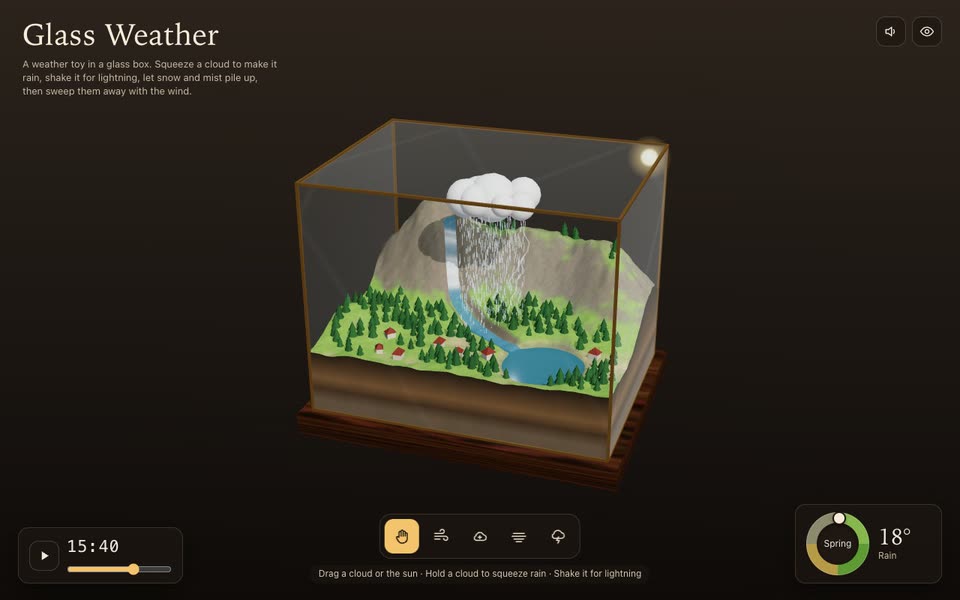
Glass Weather interactive weather scene
Przykład działa w odizolowanej ramce bez dostępu do tej strony.
Uruchom online
Uruchom w sandboxie SandBase i zobacz wyniki w Lab.
Otwórz w Lab ↗Co otrzymasz
Bring a landscape, its weather rules and an optional palette. The Skill returns a downloadable Skill, an interactive demo and an example video.
Jak to działa
- 01
Fill the vitrine prompt
Glass Weather fills its prompt with node scripts/fill-prompt.mjs --slots assets/prompts/examples/valley-vitrine.json --out prompt.md, then node scripts/new-project.mjs --out my-weather and npm ci. Terrain recipe, flora, seasons, clock, clouds, rain, cover mask and lightning limits live in src/weather.json. The dune-oasis example swaps in terraced mesas with palms without code changes. Copy lives in src/i18n/strings.json.
- 02
Play with the weather
A mountain valley with river, lake, 160 trees and 7 cottages sits in a glass box on a plinth. Drag the sun to set the hour, drag clouds, hold one still to squeeze rain, and wiggle it fast for lightning. Tools add clouds, paint mist and wipe snow with a wind brush, and Storm makes every cloud rain. A season dial changes temperature, so rain can fall as snow.
- 03
Build and run the checks
npm run build:single writes the single HTML file and npm run shoot -- --file dist-single/index.html runs the checks in references/verification.md, with Node 22.4 or newer and a local Chrome. The release recorded 6 strikes, snow in winter, a wipe that cleared the cover, a flash rate capped at 2 per second and a deterministic replay. Invalid data fails with weather_ codes.
FAQ
Is Glass Weather a real weather model?
No. Glass Weather is an illustrative toy. src/sim.mjs advances a seeded state machine in fixed 1/60 s ticks: clock, season, clouds with squeeze and rain timers, a shake detector, lightning with a cooldown, a storm scheduler and a cover mask for snow, mist and wet ground. Restarting the page restores the authored seed.
Can I change the Glass Weather landscape?
Yes. Glass Weather reads the terrain recipe and flora from src/weather.json, and the renderer, state machine and browser checks accept any validated file. Edit the data, then run the shoot again to check it. The bundled dune-oasis files show a desert variant built this way.
Does Glass Weather call a model or need credentials?
No. Glass Weather needs no credentials, paid calls or uploads, and the Skill itself calls no model. A coding agent may use its own authorized model to edit the project. The built page loads no external assets.
How does Glass Weather stay fast in software WebGL?
Glass Weather draws with plain three.js inside a software-WebGL budget: one shadow map, a Fresnel glass shader without a transmission pass, instanced trees, houses and cloud puffs, and a 256 px mask texture. Precipitation is capped at 3000 particles on the high tier and 1500 on the low tier.
Is Glass Weather accessible?
Glass Weather is designed toward WCAG 2.2 AA. Controls are buttons, a range input and a slider dial with visible focus, keyboard alternatives and localized labels. Keys 1 to 4 pick tools, 5 starts a storm and S shakes the selected cloud. Full conformance still needs assistive-technology testing and expert review.
What are the Glass Weather limits?
Glass Weather's box itself does not move or shake, and there is no fullscreen button because the hosted frame does not allow it. Optional synthesized rain, wind and thunder start muted and need a gesture. Reduced motion removes the whole-box flash, cloud drift and any automatic clock, while the bolt still fades.
Więcej Skills
Wszystkie Skills dla Interactive 3D →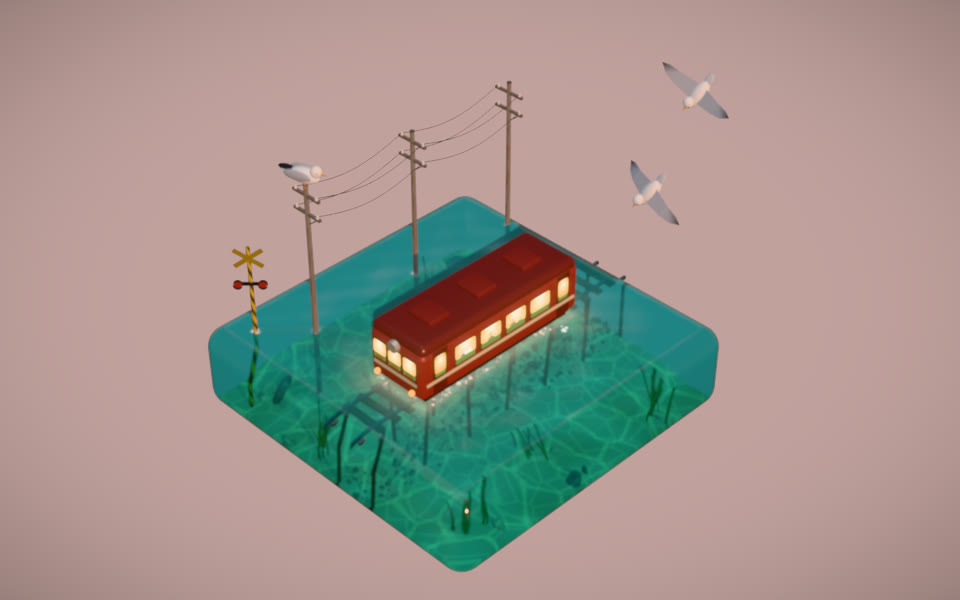
Resin Diorama
Live 3D resin-block dioramas in your browser: send a little tram across a clear turquoise sea, or ripple the bay of a cliff island. Synthesized sound, and every scene can be tuned.
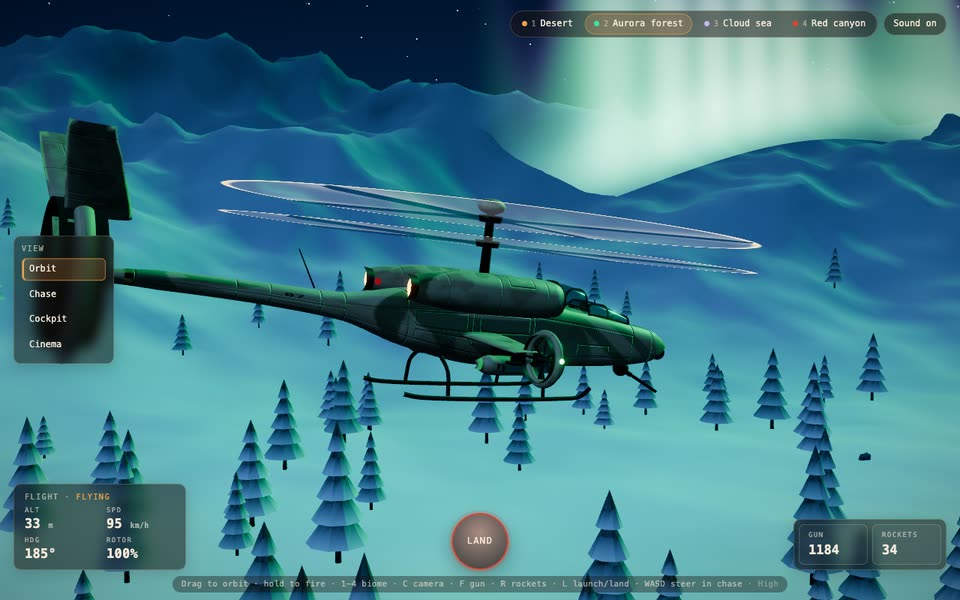
3D Vehicle Worlds
Explore interactive 3D vehicle worlds in your browser, with varied terrain, camera controls and driving effects. Choose a playable example to begin.
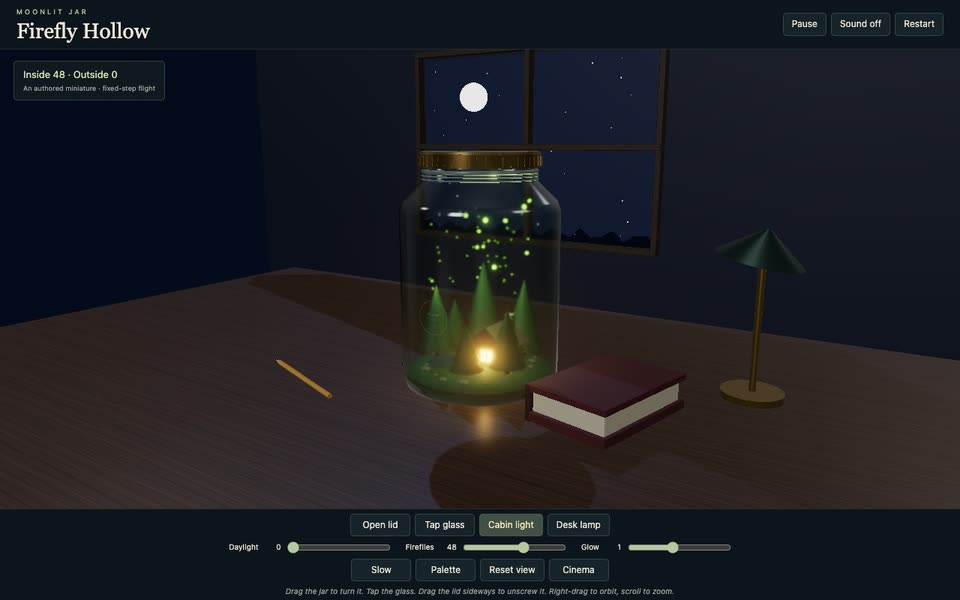
3D Firefly Terrariums
Turn a thick glass miniature, scatter glowing fireflies and open its brass lid. Actual particles leave through the neck and return before it seals. A moonlit cabin, forest and real local lights in one offline HTML.
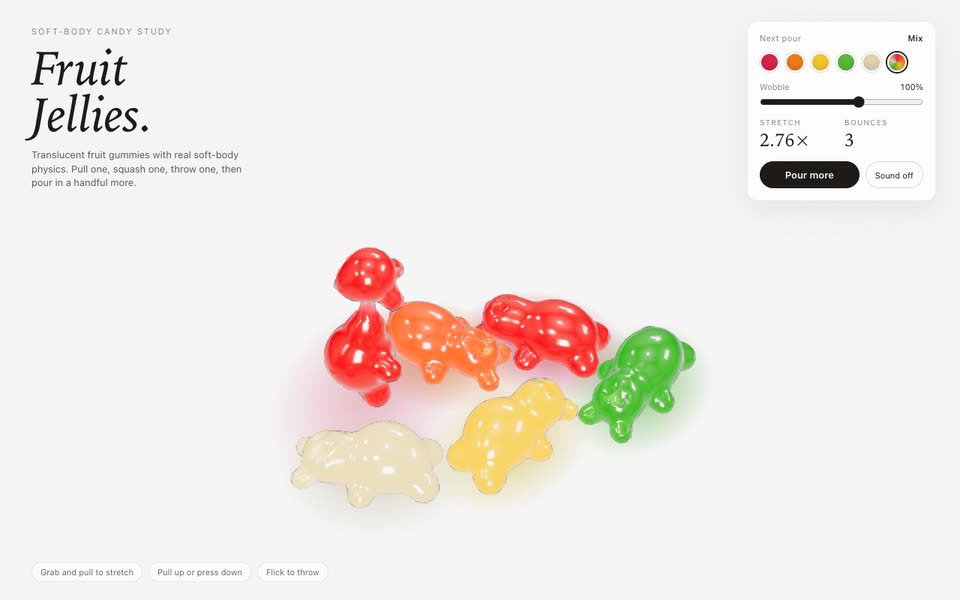
Jelly Candy: Fruit Bears
Six translucent fruit gummies on a white table. Grab any part and pull, lift a head until the neck stretches thin, press one flat until it springs back, flick one across the pile or pour in more. Fixed-step soft-body physics and a marching-cubes skin in one offline HTML.
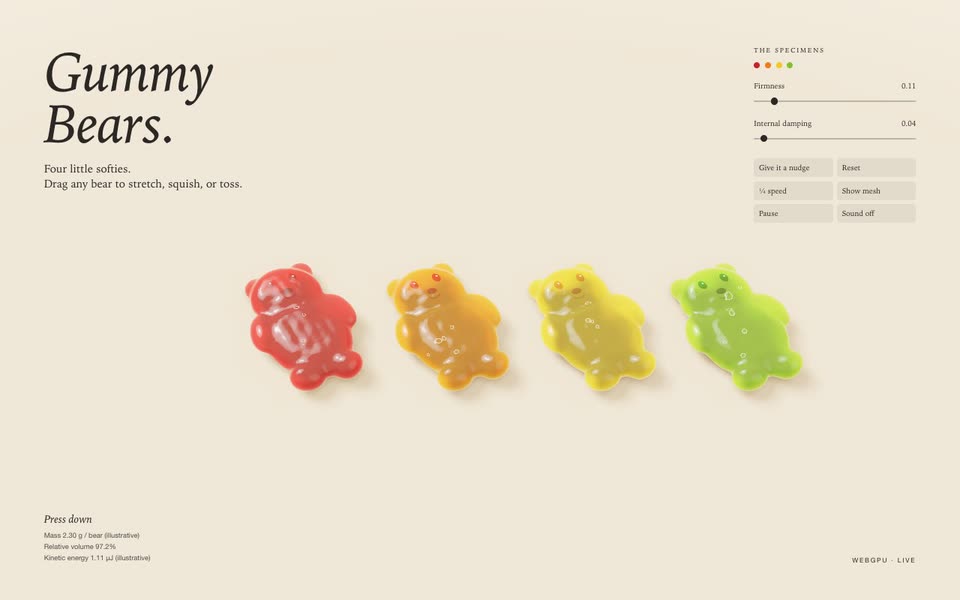
WebGPU Soft-Body Gummy Bears
Four translucent gummy bears on an ivory floor, rendered with native WebGPU. A deterministic 36-second choreography stretches, presses, flips and tumbles them before they settle back to the exact rest pose. Drag any bear to stretch, squish or toss it. A fixed-step tetrahedral XPBD solver in one offline HTML.
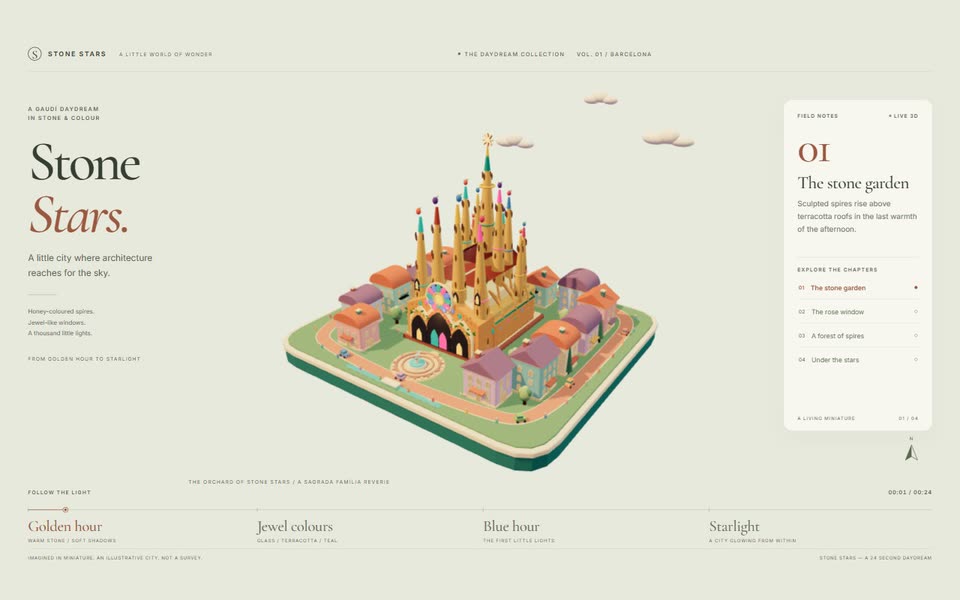
Stone Stars: 3D Miniature Landmark City
Turn a city into a storybook 3D island around one landmark, with chapters, a daylight-to-starlight slider, street life and a matching scored 24-second film. Sample: a Gaudí-style basilica.