
Scroll Assemble: a One-Screen Product Website That Comes Apart as You Scroll
- Skill do Lab
- v0.3.2
- Web design
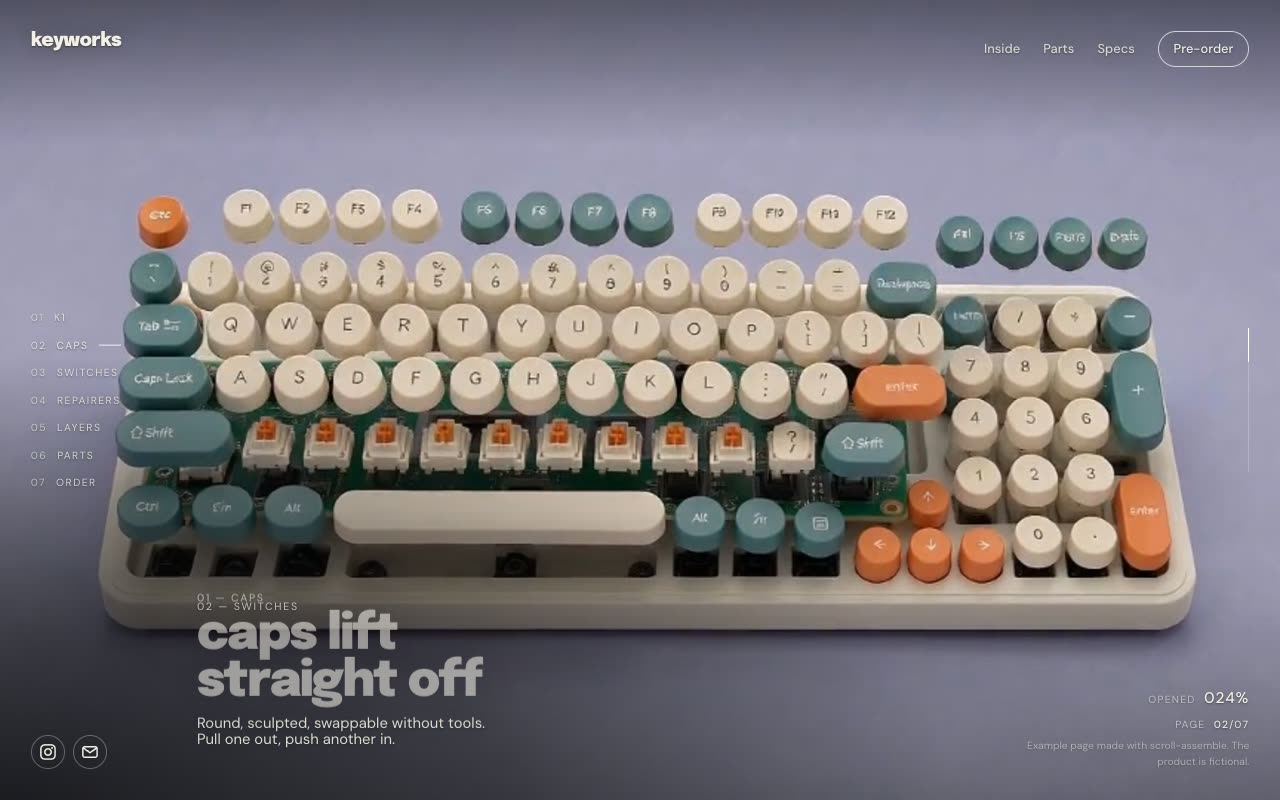
A one-screen product website where the product separates into an exploded view as visitors scroll: SandBase generates a studio picture and an exploded-view clip, mapped to the measured change. The clip fills the window on a canvas; the wheel, a swipe or the arrow keys open it through pages that change in place (chapters, a repairer's quote, a spare-parts list, order), with leader-line callouts on the parts.
Exemplos · 2
Executa em um frame isolado, sem acesso a esta página.
Executar online
Execute em um sandbox do SandBase e veja seus resultados no Lab.
Abrir no Lab ↗O que você recebe
Bring a product with visible parts (or your own picture), the captions for each stage, brand, links and language. The Skill returns a static one-screen product site (index.html) with its runtime, fonts and the analysed clip, and colours taken from the picture.
Como funciona
- 01
Write the site and preview free
Scroll Assemble's agent asks for the subject, brand, copy, links and language, en or zh-CN, and writes site.json as described in references/guide.md. node scripts/sample.mjs keycap-board --site site.json --out preview, then node scripts/serve.mjs preview, builds a free page from a ready-made clip. The two shipped clips are a cream keyboard with retro keycaps and a leather rangefinder camera.
- 02
Generate and analyse the exploded clip
generate.mjs --subject prints a plan and estimate, and --confirm-real makes SandBase draw a gpt-image-2 studio picture and a 6 second Seedance 2.0 mini clip of it separating into layers. analyze.mjs measures frame-to-frame change and builds a progress-to-frame table, refusing clips with cuts or too little change. Node.js 18+, ffmpeg and ffprobe run locally.
- 03
Scrub the seven pages and hand over
build-web.mjs re-encodes the clip with a keyframe every 12 frames and motion-compensated in-betweens, and scrub-video.js paints the nearest frame on a canvas. The page never scrolls: wheel, touch or keys move through seven pages with leader-line callouts and an opened-share readout. Check run/clip-sheet.jpg and the settled stops, then hand over run/site/ with index.html and section.html.
FAQ
What does Scroll Assemble build?
Scroll Assemble builds a one-screen product website where the product comes apart into an exploded view as visitors scroll. The clip fills the window, and the wheel, a trackpad, a swipe or the arrow keys open it through seven pages: the product, caps, switches, a repairer's quote, layers, spare parts and an order page, with callouts on the separating parts.
How much does Scroll Assemble charge to make a clip?
Scroll Assemble bills each generation attempt, which calls gpt-image-2 for the picture and Seedance 2.0 mini for the clip, to your SandBase account. generate.mjs prints the plan and estimate first, spends only with --confirm-real and accepts --budget-usd as a cap; rates are at https://www.sandbase.ai/pricing. A refused clip still costs an attempt, so the agent states the cost before each retry.
Does the finished Scroll Assemble page call a model?
No. Scroll Assemble's finished page is static: HTML, scrub-video.js, site.js, bundled fonts and one clip in media. Models are used only when generate.mjs makes a new clip, and re-running resumes without resubmitting a paid run on its own.
Can I use my own picture or clip with Scroll Assemble?
Yes. Scroll Assemble's generate.mjs accepts --image with a file or URL to skip the picture step, and analyze.mjs plus build-web.mjs turn your own locked-off clip into a page for free. A local file passed to --image is uploaded through sandbase upload, which makes it public, so the agent asks first.
Why was my Scroll Assemble clip refused?
Scroll Assemble exits with code 2 when the clip was generated but failed analysis, usually because it has a cut or too little change. The message gives the reason and the guide says what to change. Products with real layers, such as keyboards, cameras, speakers and watches, with empty space above them for the parts to lift, give the clearest results.
Is the Scroll Assemble exploded view accurate?
No. Scroll Assemble's parts are imagined by the video model, so part counts and layouts differ from the real product. Treat it as a visual, not a correct disassembly, and never use it for repair instructions. Captions should describe what the reader sees rather than claim engineering facts.
How heavy is a Scroll Assemble page?
Scroll Assemble's scrub clip is 2.5 to 5.5 MB, encoded at CRF 20 and 1280 px, and is read into memory when the page opens. The site opens on keyframes and fills in all frames within about 3 to 6 seconds. The model renders 720p, so the full-screen picture looks soft on large screens.
Mais Skills
Todas as Skills de Web design →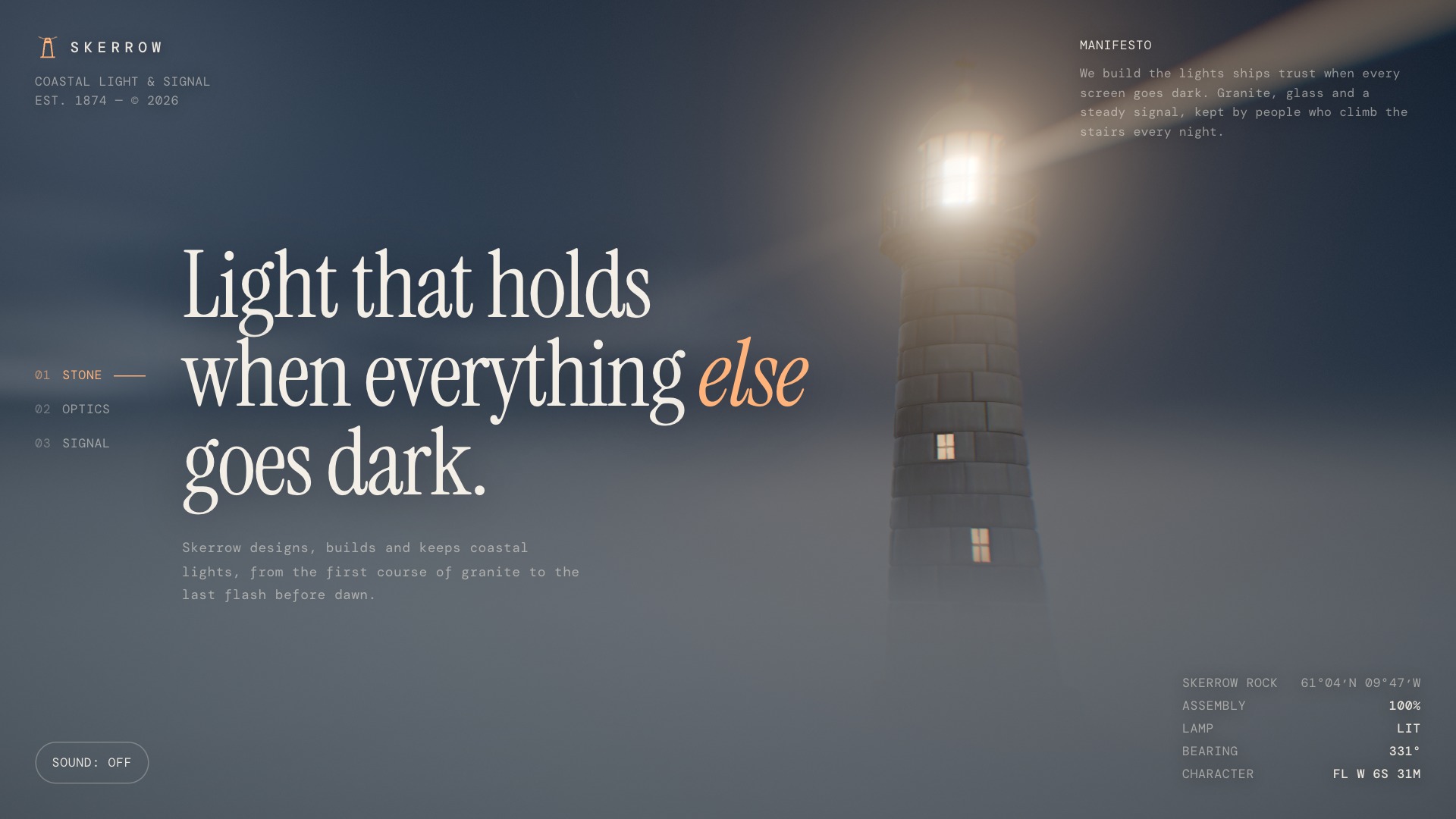
Baked 3D Story Site
A three-page 3D story site with baked light, scroll stops that loop and a shader cut between pages, in one offline file.
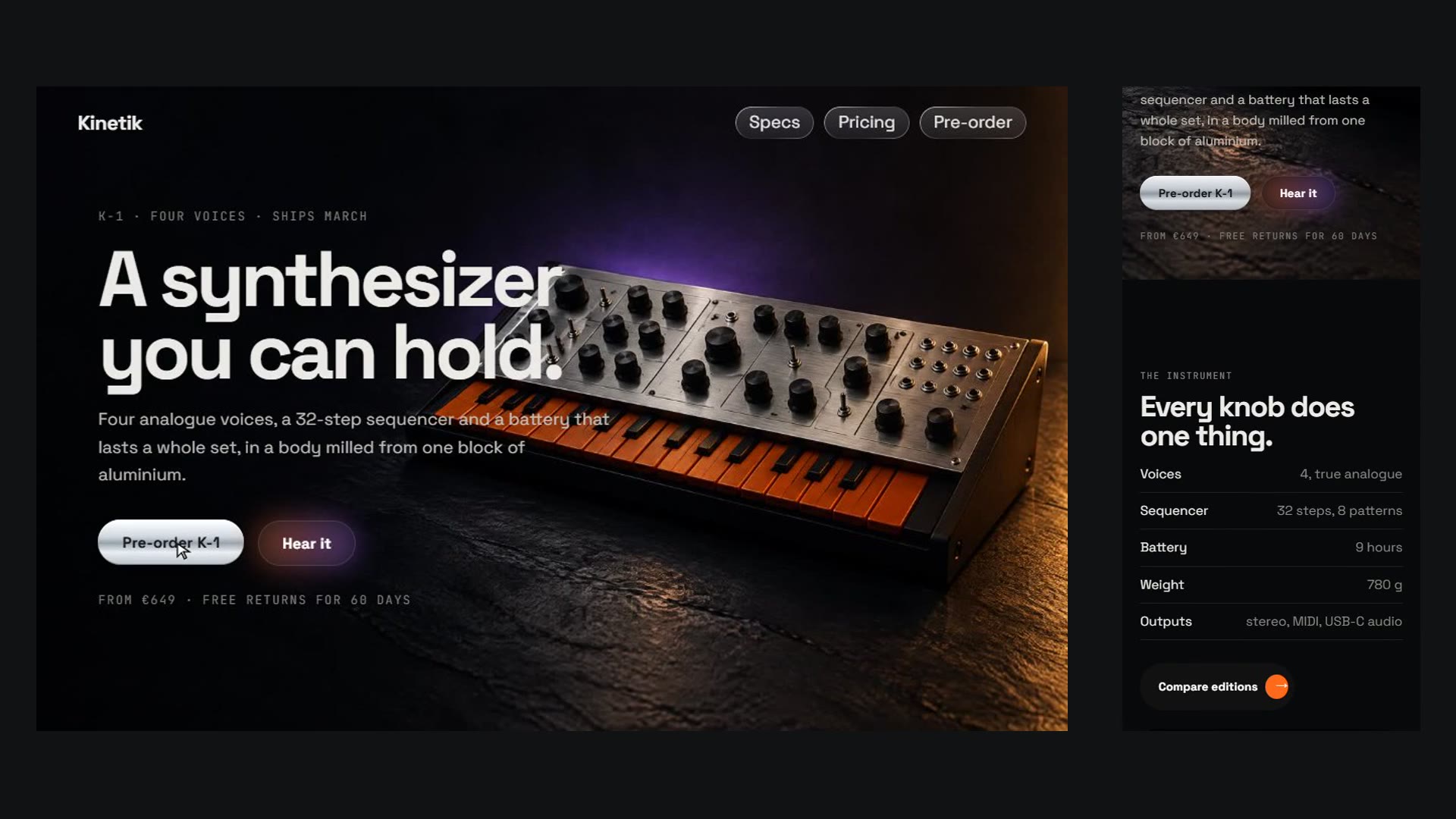
UI Finishes
Metal, jewel, halo, roll, fill, offset and ring buttons, media cards, glass and textures, each checked in rest, hover, focus and pressed for real contrast.
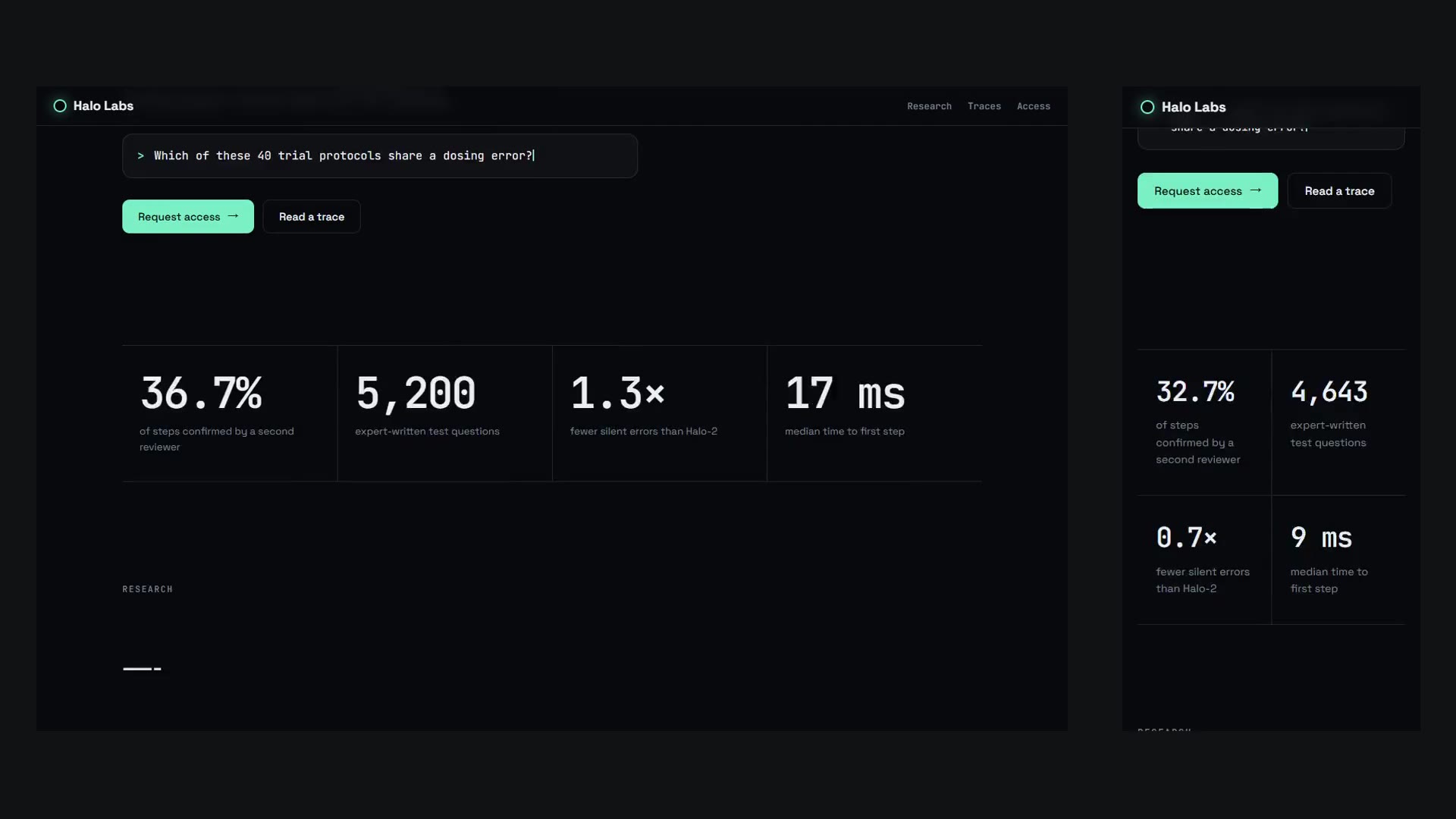
Headline Motion
Headlines, labels and numbers that rise, decode, type, rotate, count and draw themselves without moving the layout, measured in a real browser.
Scroll Chapters
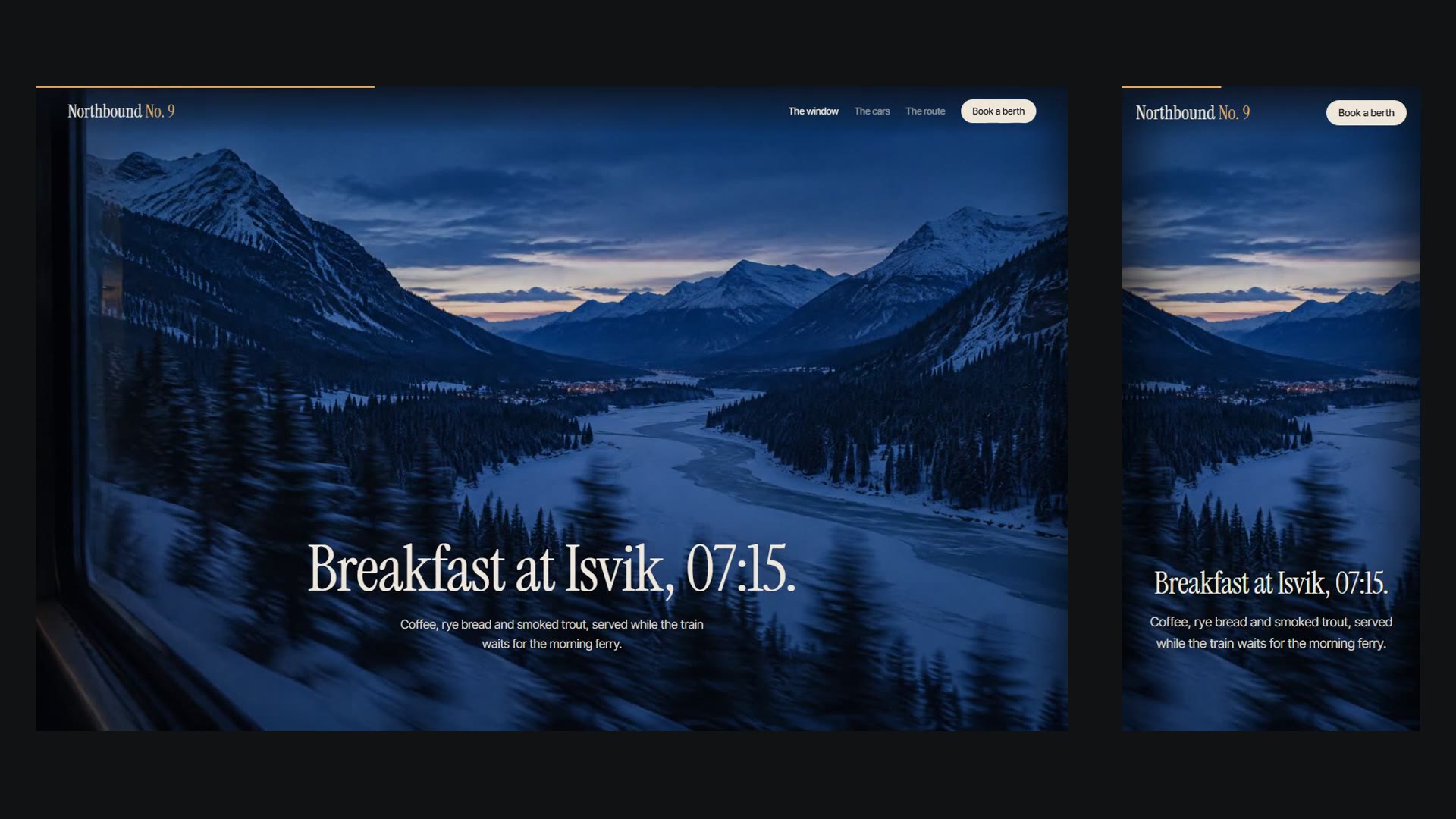
Long pages told chapter by chapter: a pinned stage, sliding panels, a text crawl, lit paragraphs, stacking cards and drifting columns, checked in a real browser for dead scroll.
Scroll 3D Product Site
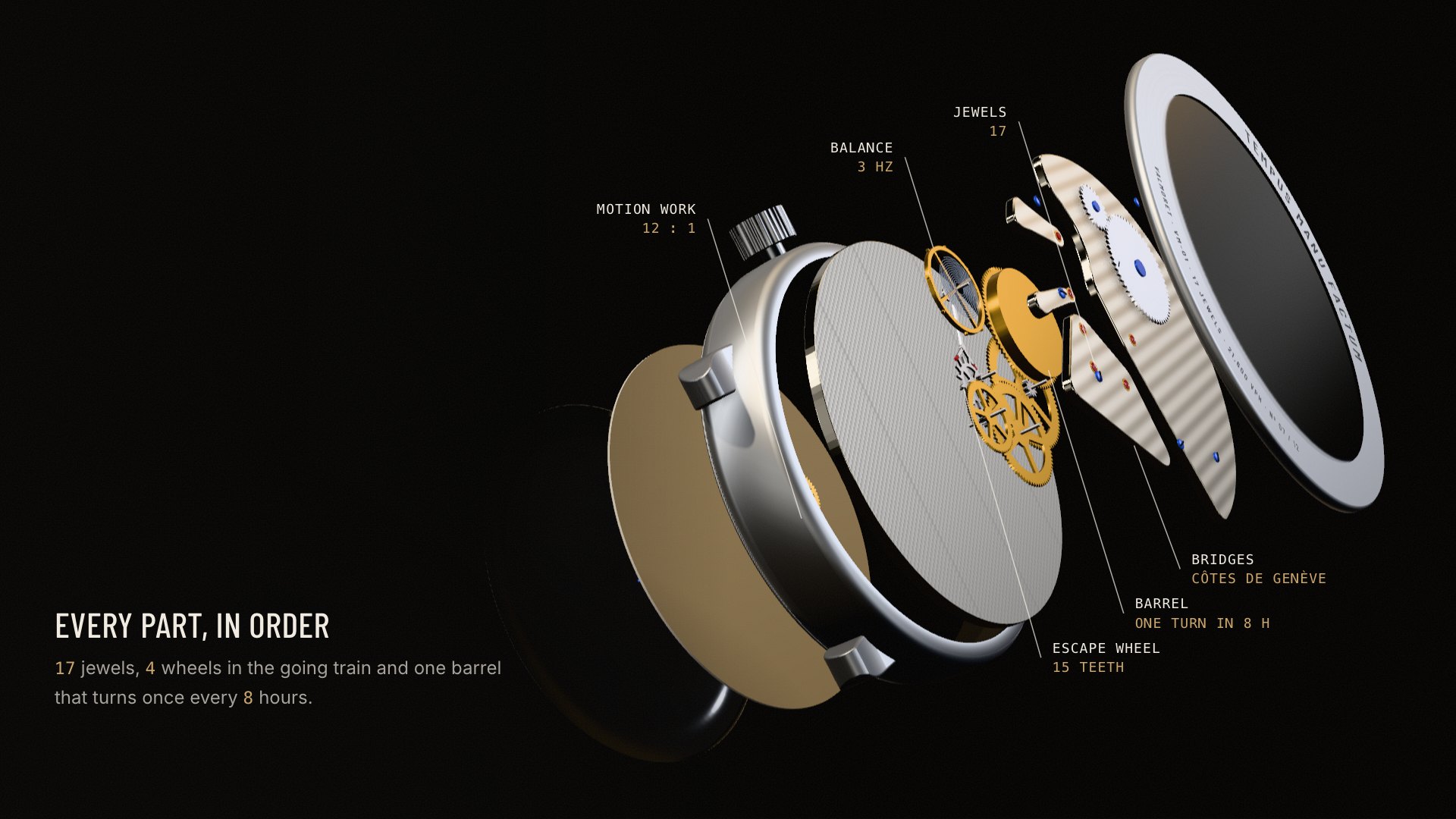
A complete product website where scroll turns, opens and takes apart a live 3D model, with every video and image rendered from that model, in one offline file.
Landing Page System
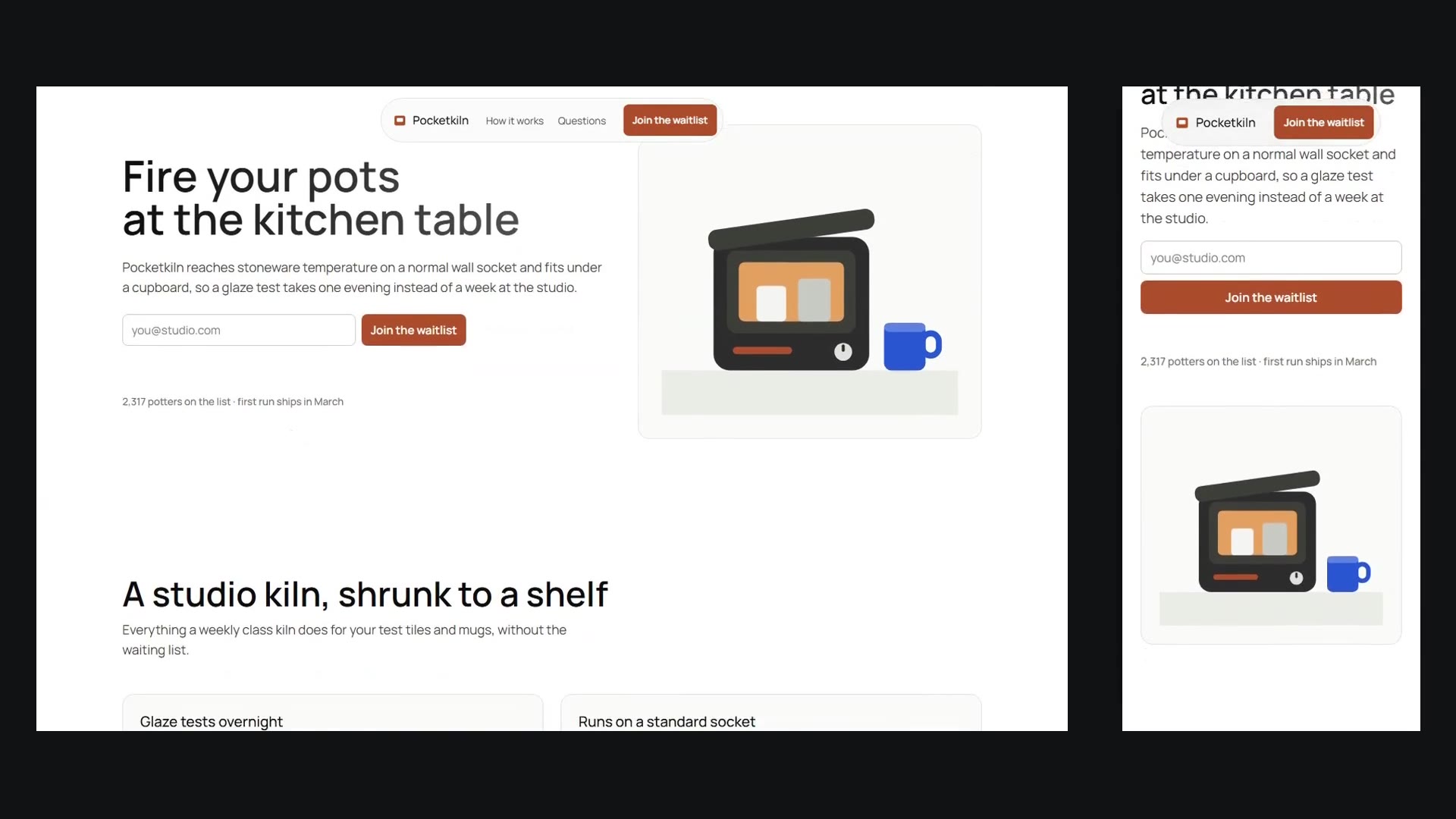
A complete single-file landing page with a conversion structure and a shared visual system, checked by a rendered-page audit before delivery.