
Substack Editorial Radar
- Навык Lab
- v0.1.0
- Substack
Explore Substack articles and discussion samples to plan an editorial reading radar.
Обложка
Что вы получите
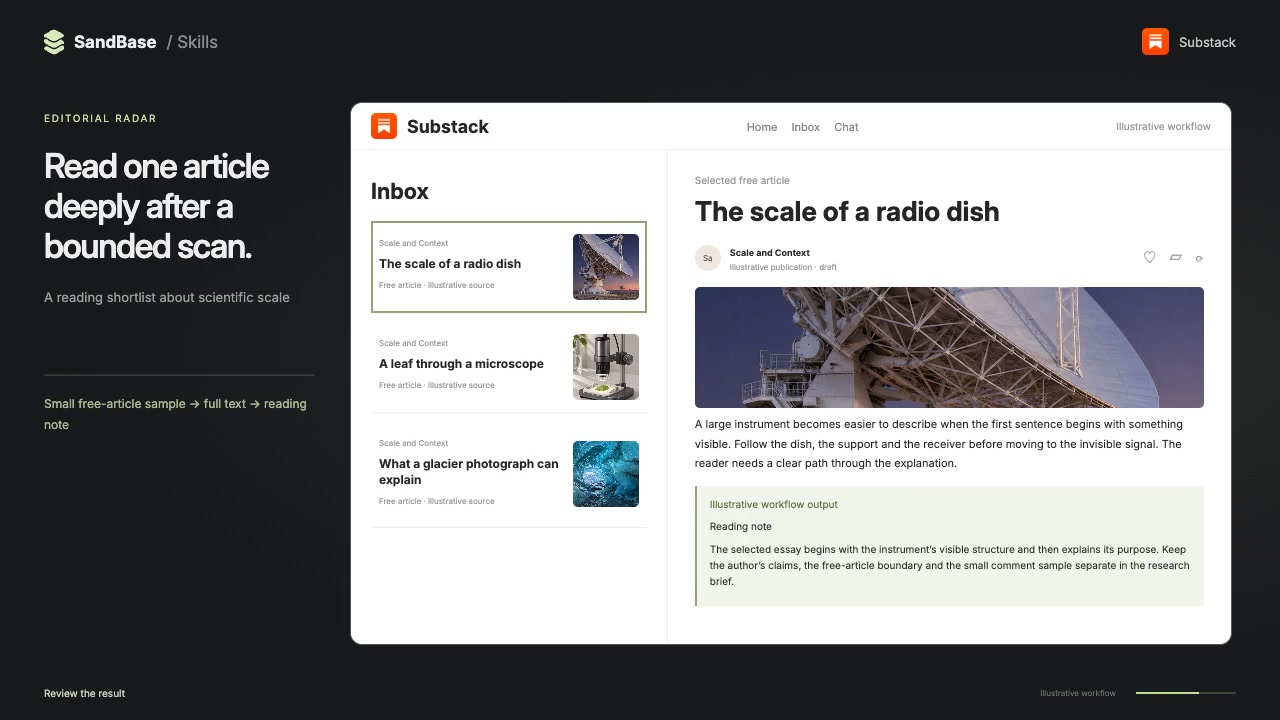
Bring a publication or article URL and your reading interests. The Skill returns an editorial brief with selected articles, discussion themes and sample boundaries.
Как это работает
- 01
Pick the sample size
From a publication URL, your editorial question and a small sample size, the Agent inspects the SandBase Substack posts tool, which is billed per returned post, so the size is chosen before the call. It starts with metadata for about three recent free articles, without content.
- 02
Compare and choose one article
Posts are deduplicated by ID and the sample's date span recorded. Reactions, comments and restacks are compared separately, never merged into one score. One article is chosen by combining that metadata with how well its title and subtitle fit your question.
- 03
Read the chosen article
The chosen article is read through the free-only, full-content mode with at most five comments for the initial read. The brief gives the reading shortlist, the selected article with its fit, and the limits: metadata engagement cannot establish subscriber numbers or readership.
FAQ
What does Substack Editorial Radar produce?
Substack Editorial Radar produces an editorial reading shortlist from a small sample of a Substack publication's recent public articles, then reads one chosen free article and a few of its comments. It helps decide which piece to read for a research or editorial brief.
Why keep the sample small?
Substack Editorial Radar starts small because the Substack posts tool is billed per returned post. Three recent free articles give enough to choose one, and the sample size is set before the call so usage does not grow unexpectedly. You can widen it later.
How is the call billed?
Substack Editorial Radar uses the SandBase Substack posts tool, billed per returned post through provider-reported usage. Metadata is read before content. The Agent inspects the tool before any call so the pricing basis is visible, and chooses the sample size first; see https://www.sandbase.ai/pricing.
Can it tell how many people read a post?
No. Substack Editorial Radar reads reactions, comments and restacks, which are public. Subscriber counts and opens are not exposed. The metadata helps choose an article, but it cannot establish readership. Reactions and comments are kept separate, so a post with lively comments is not mistaken for one with many readers.
Does it read paid posts?
No. Substack Editorial Radar's follow-up read uses the free-only mode, so it reads free articles. A paid article would be cut off for a non-subscriber, which would make any summary of it incomplete. Choose a free article if you want the full text read and summarised.
Больше Skills
Все Skills Substack →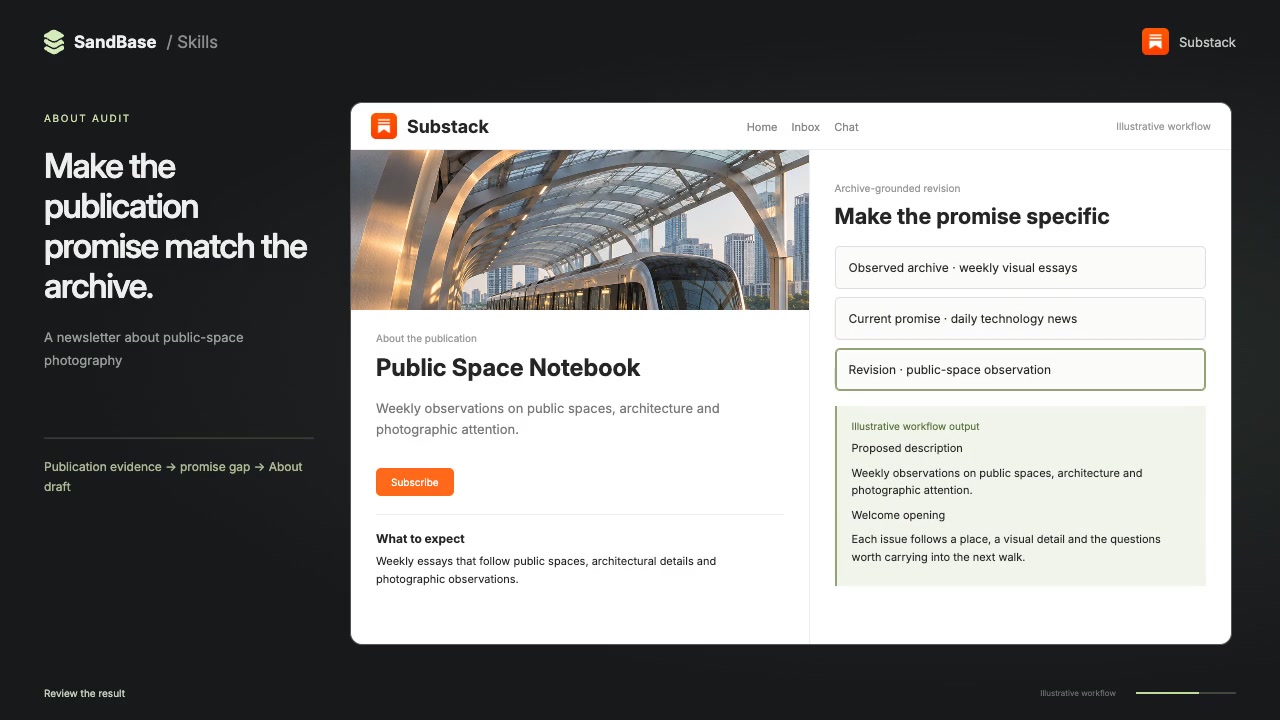
Substack About Audit
Check whether a Substack description and author bio match what the publication actually publishes, and rewrite them from the archive.
Substack Headline Pack
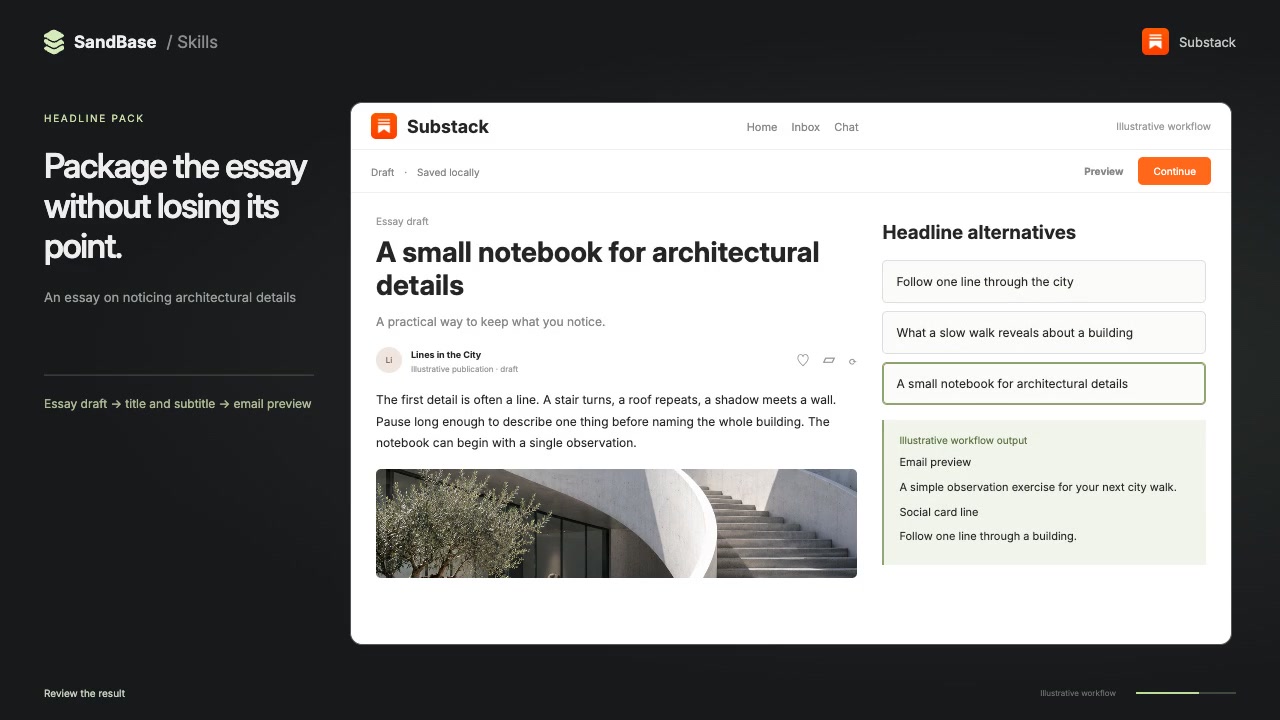
Choose a Substack title type from what a publication’s readers actually restack, then write every line a post shows before it is opened.
Substack Notes Writer
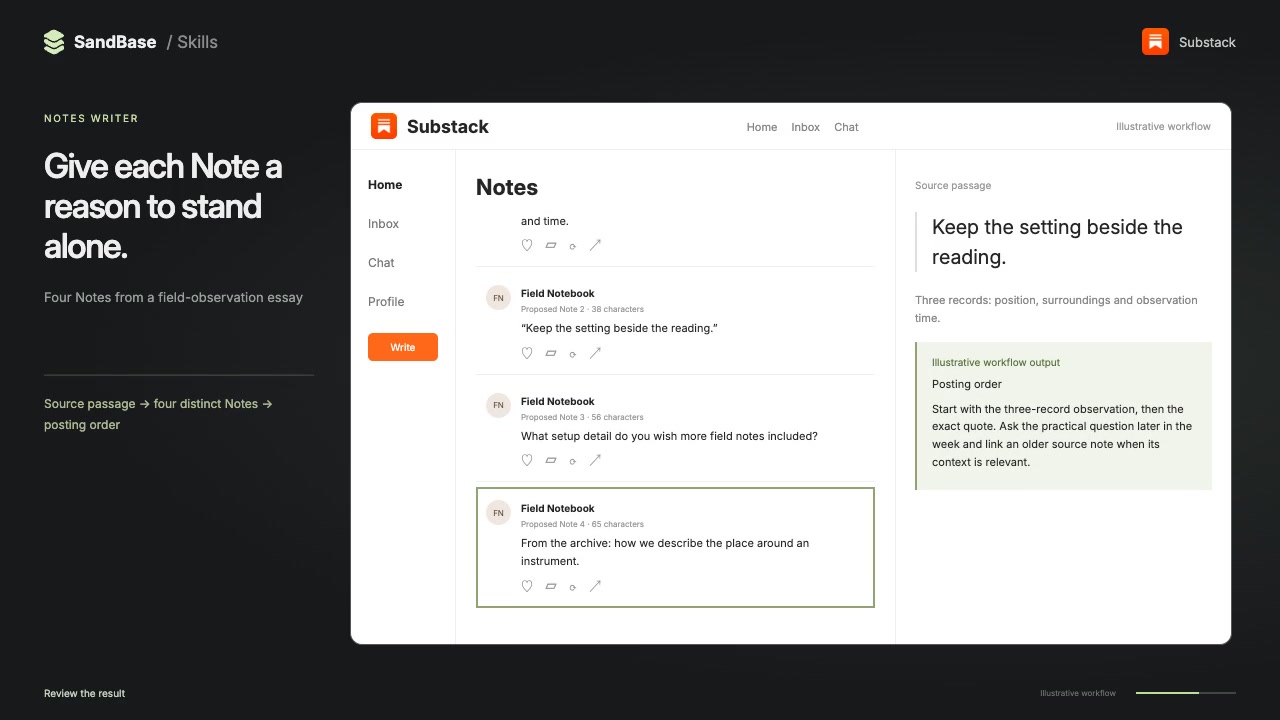
Turn a published Substack post into a week of Notes that can be restacked on their own, without inventing a single fact.
Substack Post Mix
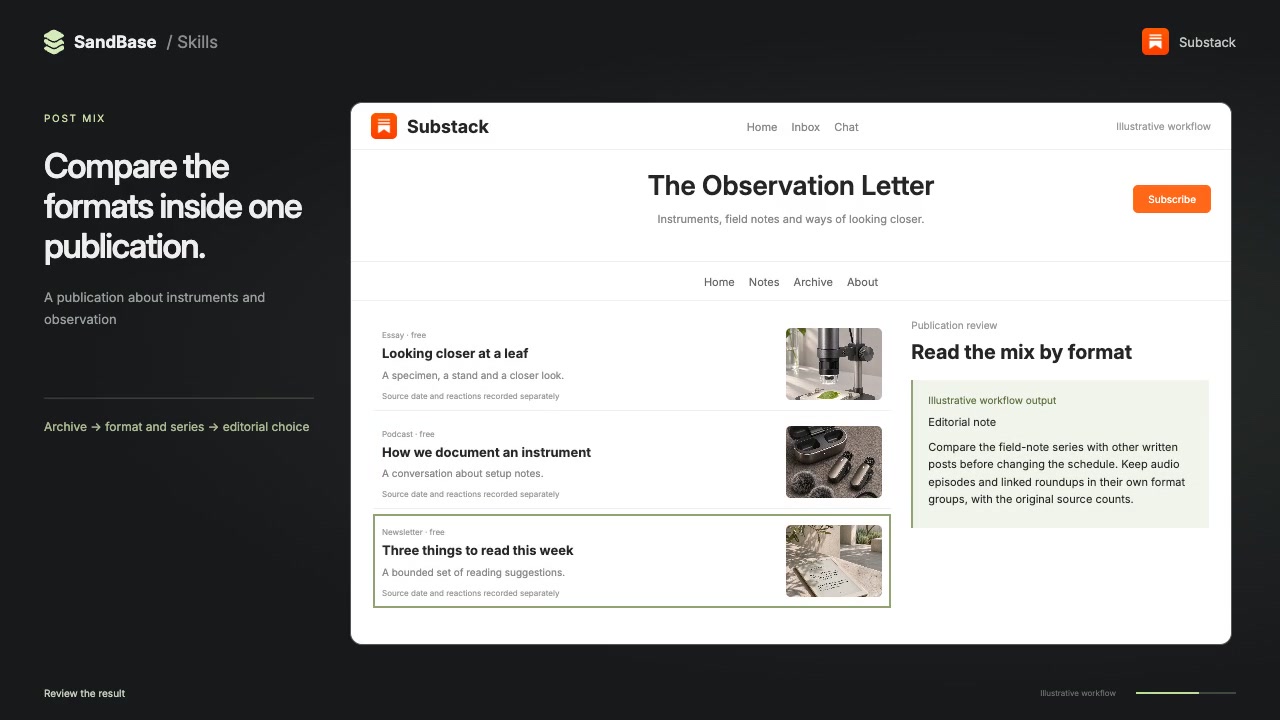
Compare a Substack publication’s own formats to see which ones readers react to and what to publish more or less of.