Pelican Model Launch
Turn a new model release into a film with original pelican SVG tests against three current models.
How it works
Find verified release material and run the same static and animated prompts.
Collect original SVGs and build a film around the supplied reference.
Render and check the complete film, keeping sources and limitations clear.
Frequently asked questions
Is this tied to DeepSeek?
No. Choose a target model for each project. Model IDs, SVGs and release media are kept outside the reusable Skill.
What do these examples show?
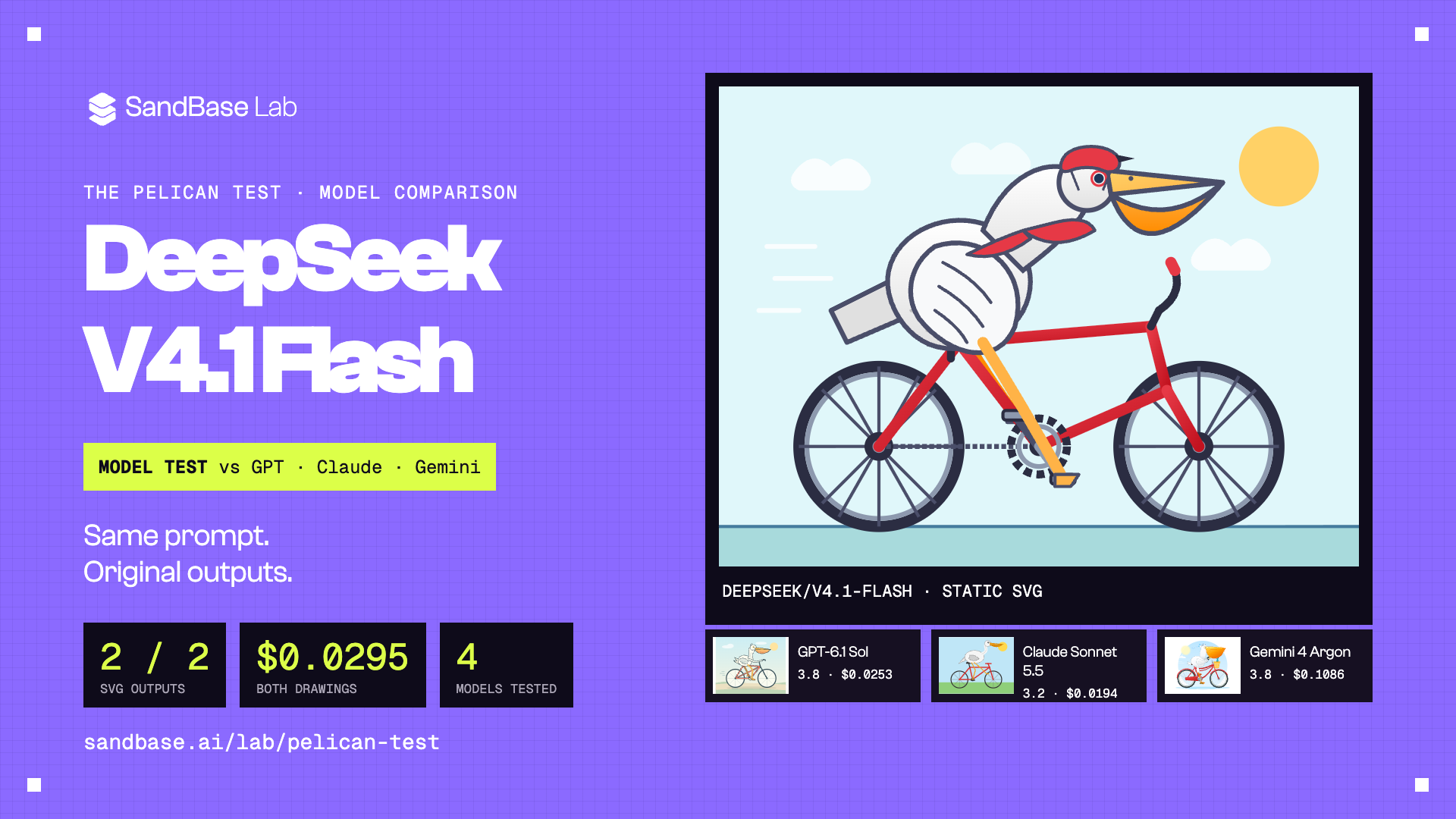
Four full launch films feature DeepSeek V4.1 Flash, Claude Opus 5.5, GPT-6.1 Sol and Gemini 4 Argon. Each follows the same storyboard with its own lead model. DeepSeek uses an official still; the others use exact-model official X video excerpts. The test interface is a labeled local page replay of original SVGs. Successful results are reused across films, with Opus added separately through the API; there is no shared judge for all models. Audio is user-supplied. Example media stays outside the reusable Skill.
Does it search for release footage?
The Agent searches X for verified material for the exact target model, or uses your supplied material. Missing trailers are disclosed; the renderer does not search.
Does it run automatically?
No. Supply the target model and authorize a run. Tests use authenticated SandBase access and may incur model costs. No monitoring is enabled.
How are cost and time estimated?
For each full example, sum the recorded charges for all model calls needed for its four-model static and animated test, including available judging fees, then average these totals across the four examples. Shared results are priced as a fresh rerun estimate, not as repeated payments. This excludes unmetered editing, local rendering and unrecorded Agent charges. Actual cost depends on models, token usage and retries. Average video length is 44.97 seconds; it is not generation time.