
Fare Shift: A Taxi Shift on Real Manhattan Streets
- Lab Skill
- v0.1.1
- Game creation
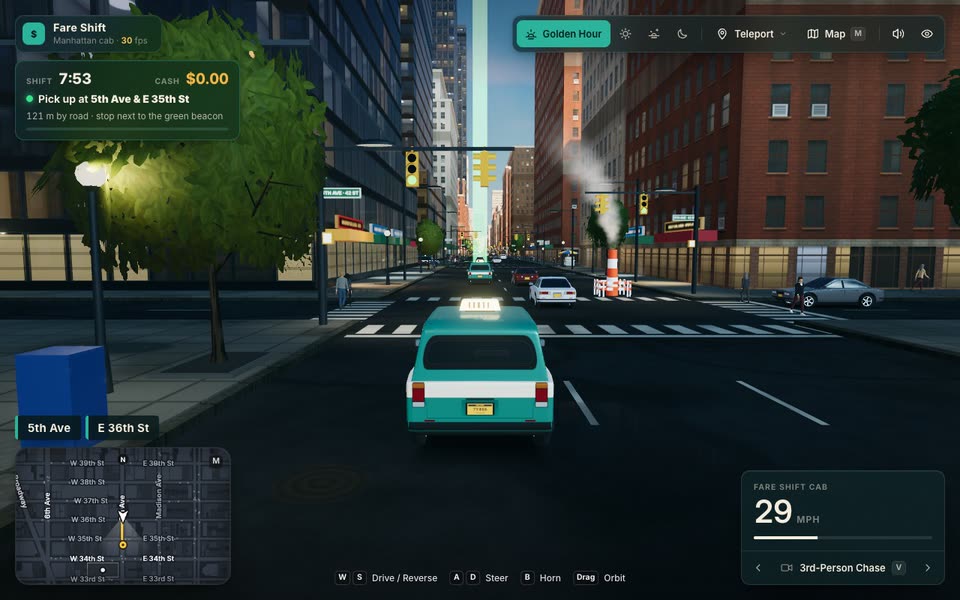
Drive an eight-minute taxi shift through Manhattan, in one offline HTML file: passengers hail at the kerb, a GPS routes you over the real street grid, the meter pays by distance, arriving on time and without bumps earns the tip, and a summary card lists every fare. Real street names and landmarks, 200 cars and 340 people in traffic, four times of day, rendered with WebGPU.
ตัวอย่าง
Fare Shift taxi game in Manhattan
ตัวอย่างนี้ทำงานในเฟรมแบบ sandbox ที่ไม่มีสิทธิ์เข้าถึงหน้านี้
รันออนไลน์
รันใน SandBase sandbox และดูผลลัพธ์ของคุณใน Lab
เปิดใน Lab ↗สิ่งที่คุณจะได้รับ
Bring the city, the cab and the fare rules, and optionally the look, HUD and shift length. The Skill returns a downloadable Skill (the driving-game project, a customize guide, headless verification) and one playable example shift.
วิธีการทำงาน
- 01
Set up the cab project
Fare Shift starts with node scripts/new-project.mjs --out my-cab and npm ci, which pulls pinned Vite and playwright-core; three.js r187dev stays vendored in vendor/three/. A prompt such as "Use fare-shift to make a driving game in Manhattan where the player runs night airport fares" sets the job. references/customize.md covers fares and timing, destinations, time of day, beacons, HUD, cab, signs and traffic.
- 02
Drive an eight-minute shift
Press Enter and a green beacon marks a hail at the kerb. Stop beside it and the passenger names a destination and a time limit, routed by A* over 2740 real road nodes to one of 13 named destinations. W and S drive, A and D steer, M opens the full map and V switches to the cockpit. Bumps during a ride cost tip and late arrival costs fare.
- 03
Build and verify on a GPU
npm run build:single writes dist-single/index.html, about 2.8 MiB, for Chrome or Edge 113+ or Safari 26+ with WebGPU. npm run shoot needs local Chrome with a real GPU, since software rendering takes minutes per frame. It plays a start, a pickup, a bump, the map, a drop-off, the cockpit camera, night and the end card. Check shots/report.json lists every fare.
คำถามที่พบบ่อย
What is Fare Shift?
Fare Shift is a taxi game on real Manhattan streets at golden hour. You drive a teal-and-cream cab among 200 cars and 340 people, pick up hails at green beacons, follow the GPS and get paid at yellow beacons. When the 480-second shift ends, a summary card lists every fare. Four times of day and procedural city sound are included.
Does Fare Shift call a model or need a key?
No. Fare Shift calls no model and needs no API key; an agent edits the code locally, so a shift is never billed. Only npm ci reaches the network to fetch packages.
Which browsers can run Fare Shift?
Fare Shift needs WebGPU: Chrome or Edge 113 or newer, or Safari 26 or newer. Without WebGPU the page shows a message instead of loading. The first load compiles about 600 shader batches. Phones without WebGPU and WebGL-only browsers are out of scope, and touch play has only been checked in emulation.
Can Fare Shift use a city other than Manhattan?
No. Fare Shift generates its street grid, buildings and boroughs from Manhattan data, and config cannot swap them. You can change fares, destinations, time of day, colour grade, beacons, the cab, signs and the HUD. Street and landmark names stay real, while shop signs and billboards carry invented names instead of real brands.
How does the Fare Shift GPS handle missed turns?
Fare Shift re-plans the route from the cab every second and a half, so a missed turn gets a new route rather than a dead end. The fare is metered on the planned route, not the distance driven, so detours cost time but not money. A destination in a park or on the water snaps to the nearest road node.
Why does the Fare Shift check park the cab automatically?
Fare Shift verification uses parkAtTarget to keep checks deterministic, and every shift is seeded so the same seed gives the same hails and destinations. In real play you drive yourself and stop within a few metres of the beacon.
Skills เพิ่มเติม
Skills ทั้งหมดสำหรับ Game creation →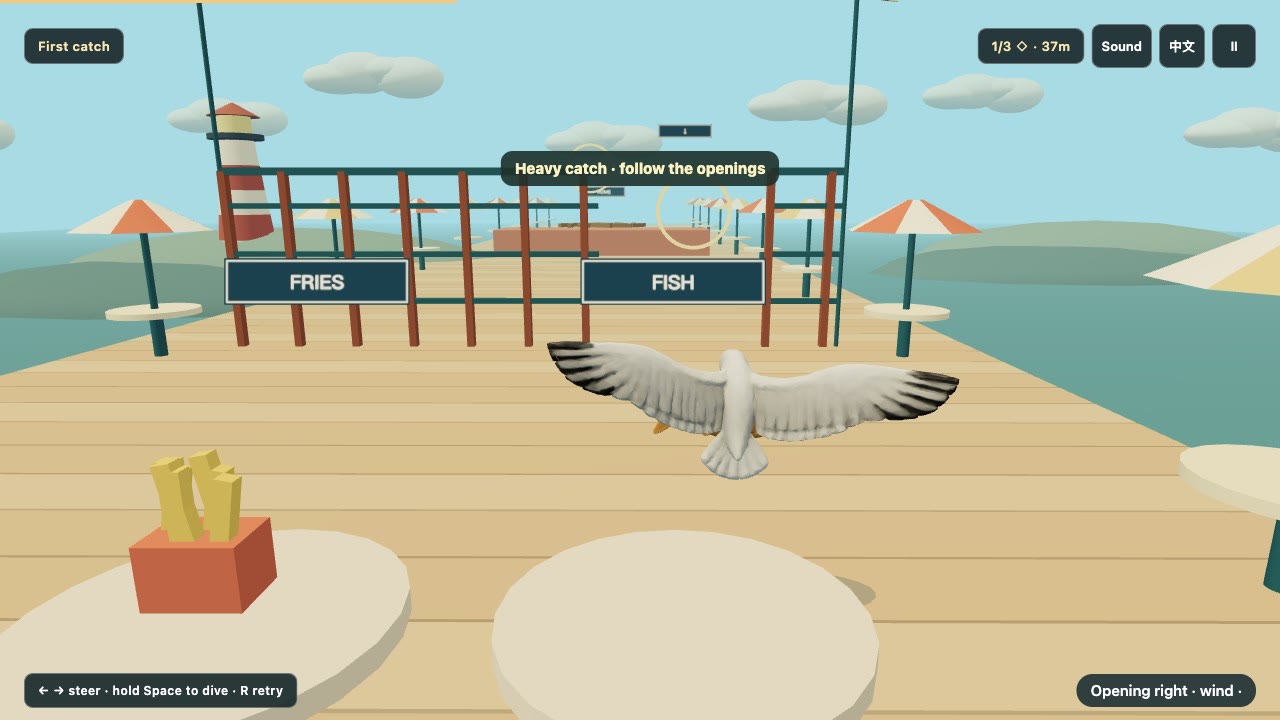
Seagull Swoop
Build a 3D flight-and-delivery game with light fries, heavy fish, crosswinds and optional ring routes. The gull must bring lunch home; cargo weight changes which openings it can safely reach.
Wedding Cake Wobble
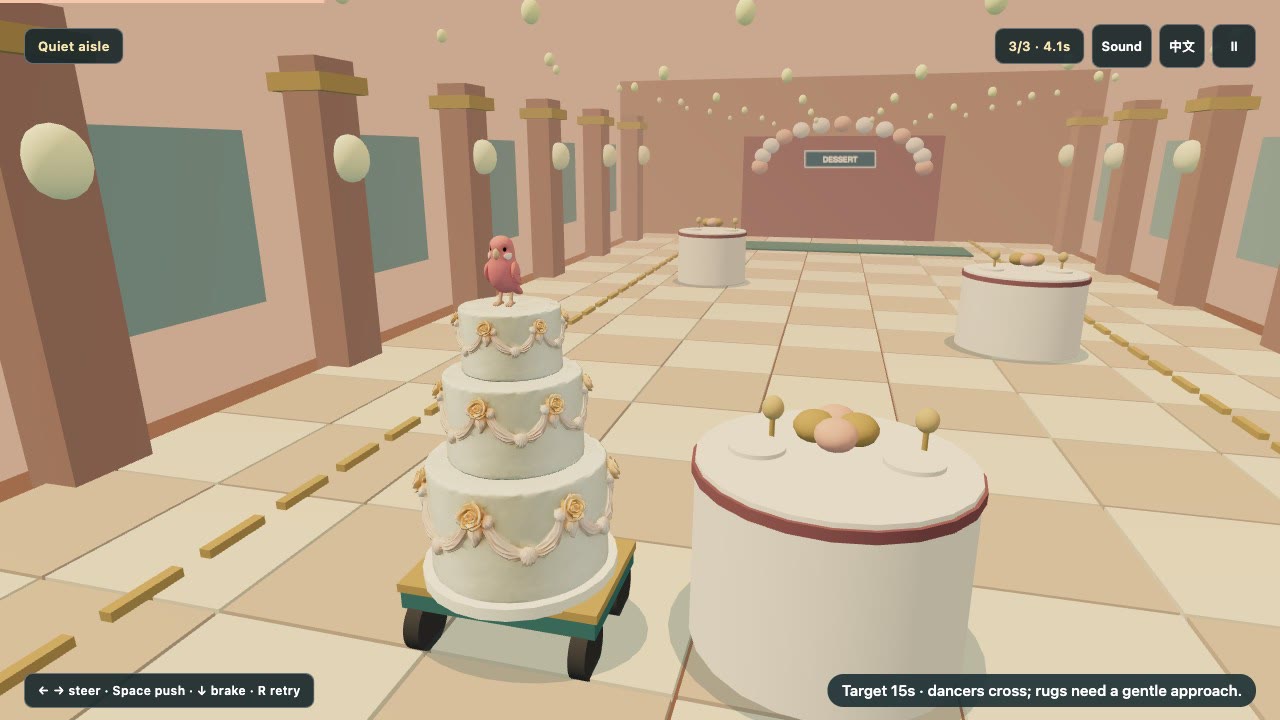
Build a 3D fragile-cargo delivery game around a wobbling wedding cake. Brake before turns, avoid crossing guests and steer around tables. Lost tiers change the score, while a partial delivery can still succeed.
Hermit Tide
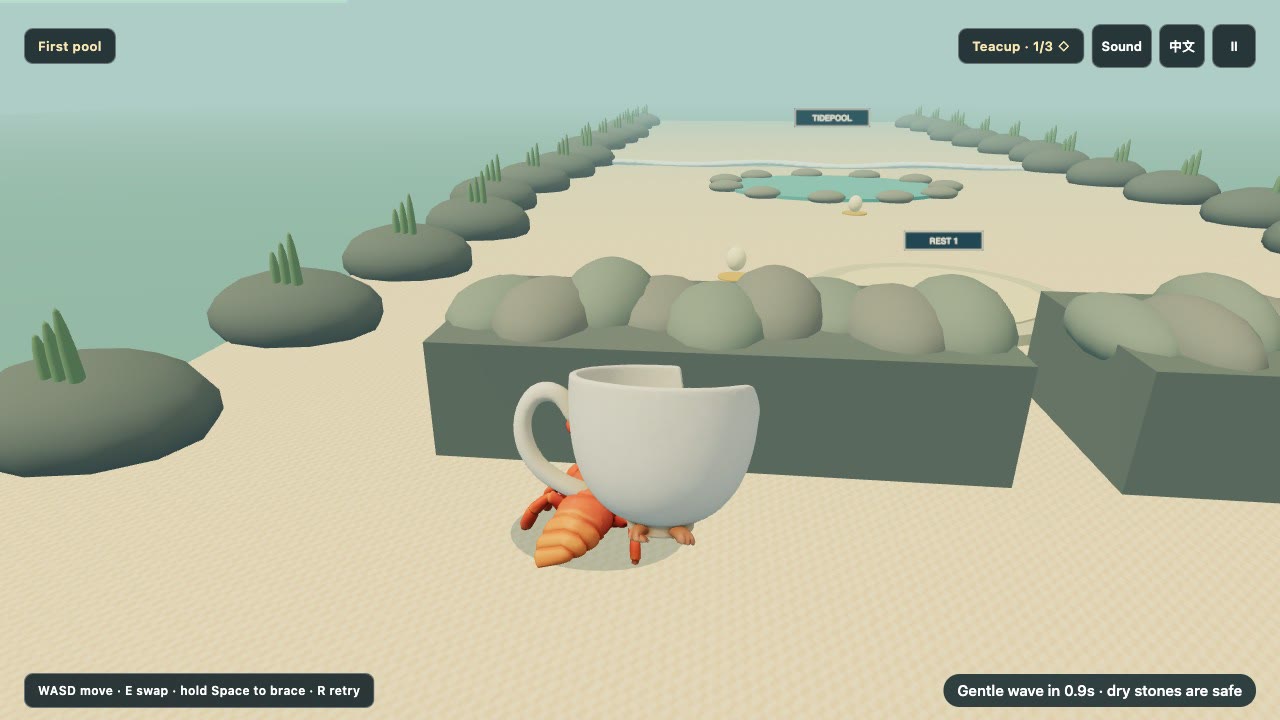
Build a 3D route-and-timing game where a hermit crab changes shells to cross a tidal shore. Narrow gaps favour the cap, stronger shells resist waves, and dry stones provide shelter and checkpoints.
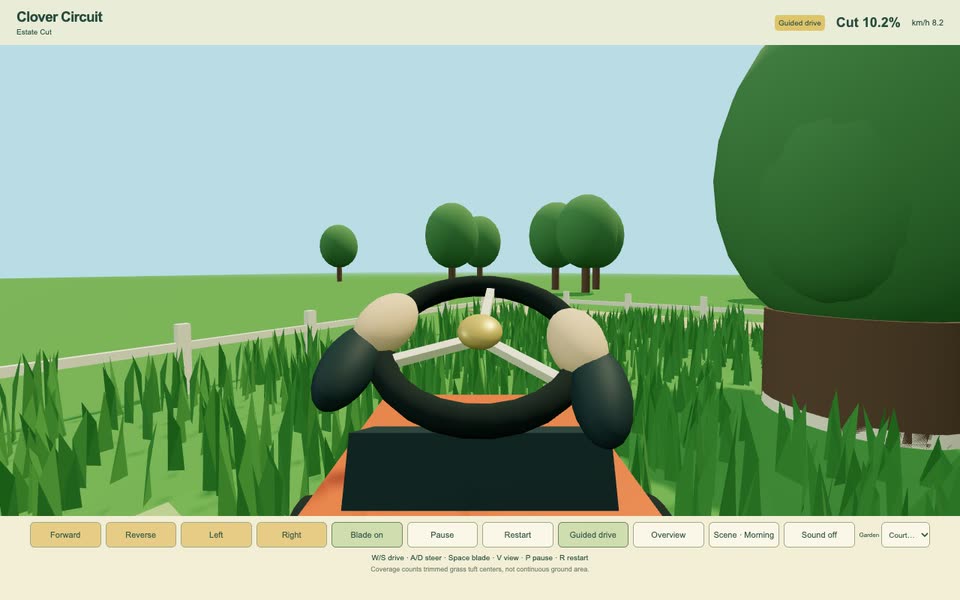
Clover Circuit: Estate Cut
Drive a coral ride-on mower through a fenced estate garden. Steering, braking and the moving blade cut actual grass tufts; Overview reveals the genuine trail. Edit three gardens and three scene palettes offline. Coverage counts trimmed tuft centers rather than continuous ground area.
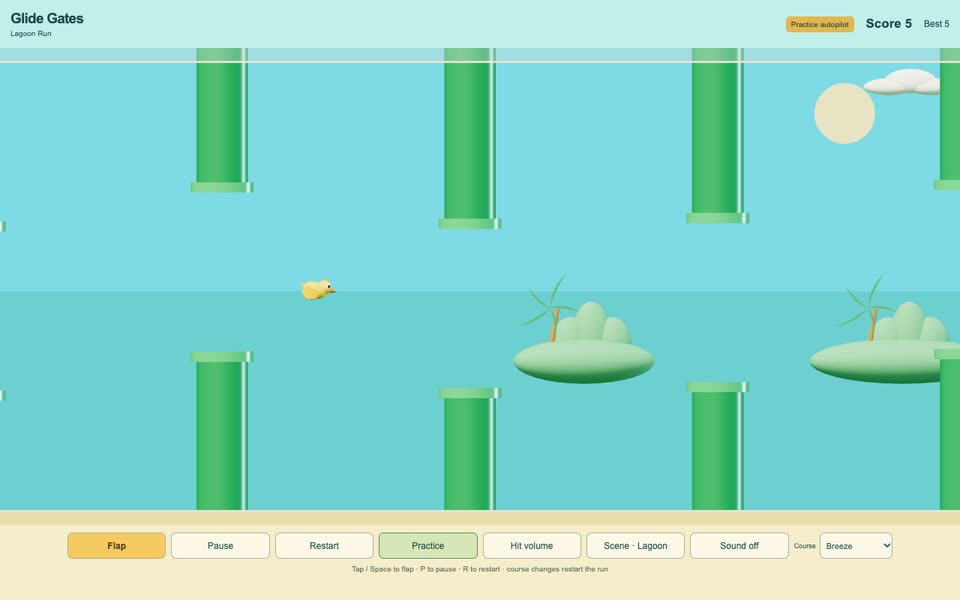
Glide Gates: Lagoon Run
Flap a golden bird through emerald pipe pairs above a turquoise lagoon. Actual fixed-step gravity, swept circle contacts and full-gate scoring power both manual flight and clearly labeled practice. Edit three courses and three scene palettes offline.
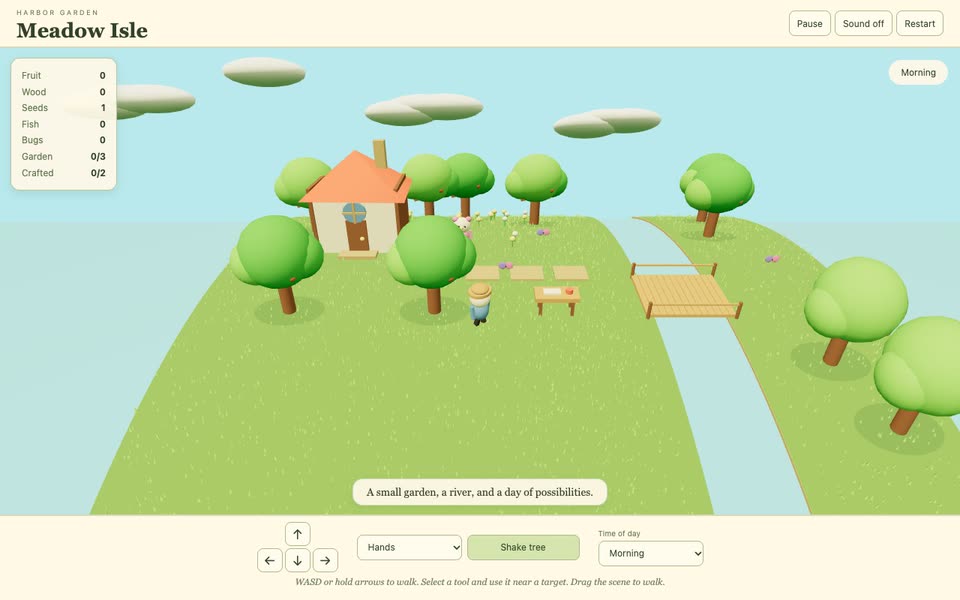
3D Interactive Garden Islands
Walk a curved garden, harvest fruit, share gifts, catch butterflies, fish, grow flowers and craft furniture. Four lighting states and one offline HTML with bilingual keyboard and touch controls.