
Scale Dive
- Lab Yetenek
- v0.1.0
- Education
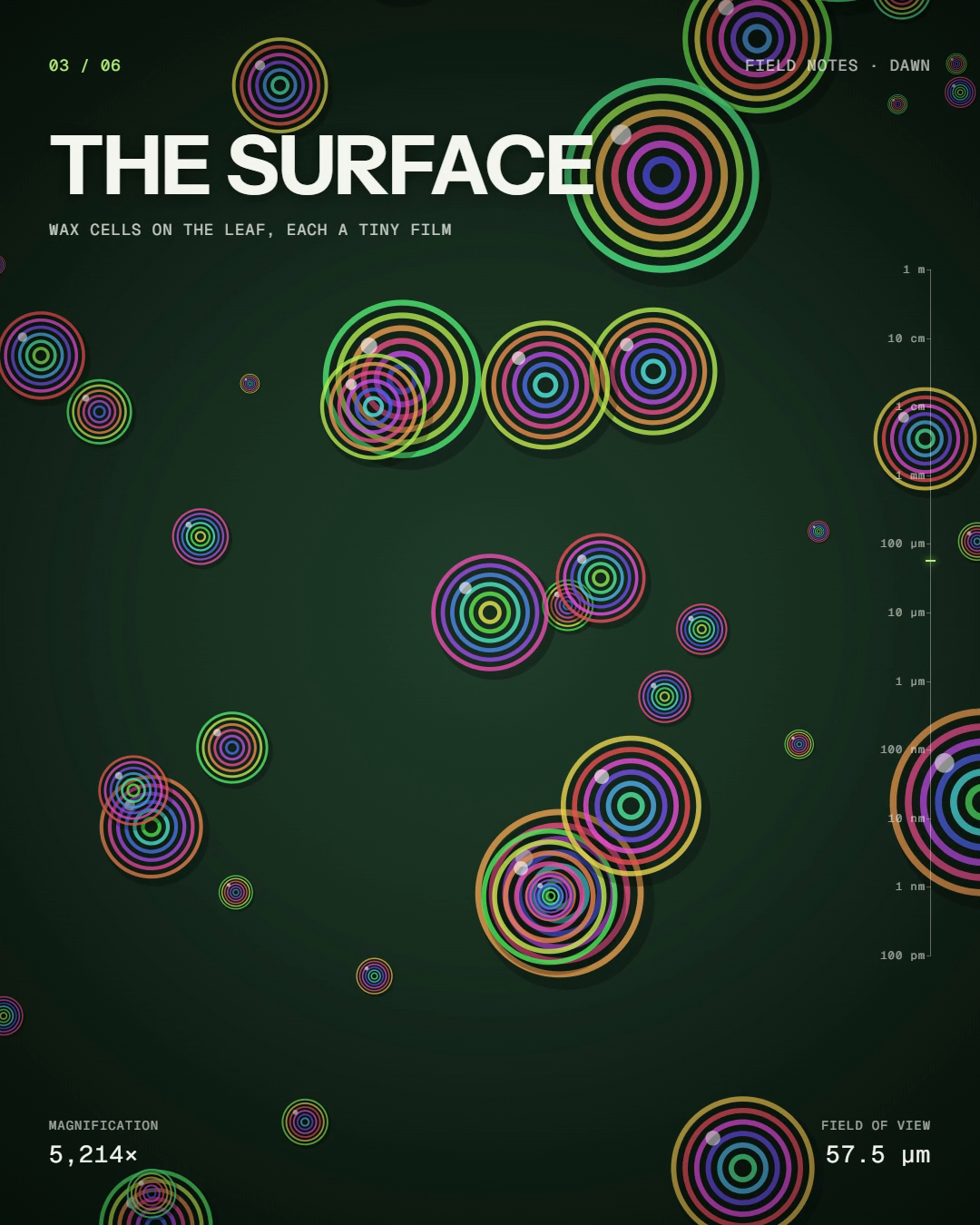
Dives from an everyday scene down through ever smaller levels with real sizes on screen, each level opening from the centre of the last, under a live magnification and field-of-view HUD, then pulls back so the film loops.
Örnekler · 2
Çevrimiçi çalıştır
Scale Dive örneğini bir SandBase sandbox'ında çalıştırın ve sonucu burada görün.
Nasıl çalışır
- 01
List the levels
Scale Dive reads one sheet.json with three to twelve levels ordered from largest to smallest. Each level names one of six procedural layer kinds, a title of up to 28 characters, a one-line subtitle, a real field of view such as 30 cm or 3 nm, four colours, and hold and travel seconds. HUD labels and the return time complete the sheet.
- 02
Zoom into the centre
The camera only zooms in, one level at a time. The next level already waits in the centre of the frame and opens through a soft radial mask while the current one blows past the edges. A thin HUD shows the chapter number, title, subtitle, live magnification and field of view, and a slow creep during holds keeps anything from freezing.
- 03
Return, score and render
After the smallest level the camera pulls back to the first so the film loops. build.mjs writes the page and a procedural cue track whose drone drops a semitone per decade, ticks at each power of ten and chimes on arrival. render.mjs runs HyperFrames with strict lint, then probes and fully decodes the film.
SSS
What does Scale Dive make?
Scale Dive makes a looping dive from an everyday scene down through ever smaller levels, with real sizes on screen. The demos go from a leaf down to two dew molecules in 4:5 and from a night wave down to one flash of light in 16:9, in Chinese. It suits science explainers and hero loops about materials or cells.
Is the Scale Dive magnification real?
Scale Dive computes magnification as the first level's field of view divided by the current one, so it is a true ratio of the sizes you write. The film shows those sizes on screen, so keep them plausible for what each level depicts. The pictures illustrate each scale; they are not simulations.
Can Scale Dive use microscope photos?
No. Scale Dive draws every level with one of six fixed procedural kinds: bokeh, orb, rings, bands, lattice and pair. Photos, footage and real microscopy are not used, and a new kind means new code in the dive script. The camera also stays centred, with no pans or rotations.
Which formats does Scale Dive support?
Scale Dive renders any even size whose short side is at least 480 pixels, and 4:5, 9:16 and 16:9 all work. English and Chinese fonts ship with it; other scripts need their own fonts. The cue track can be skipped with a flag when you want a silent film.
Is Scale Dive billed when I render?
Scale Dive needs Node 22 or later and FFmpeg, and states that it uses no keys, model calls or paid services. Its levels and cue track are generated from your sheet on your computer, so renders carry no charge. The first run installs HyperFrames' own headless Chrome.
Daha Fazla Skill
Tüm Education Skills →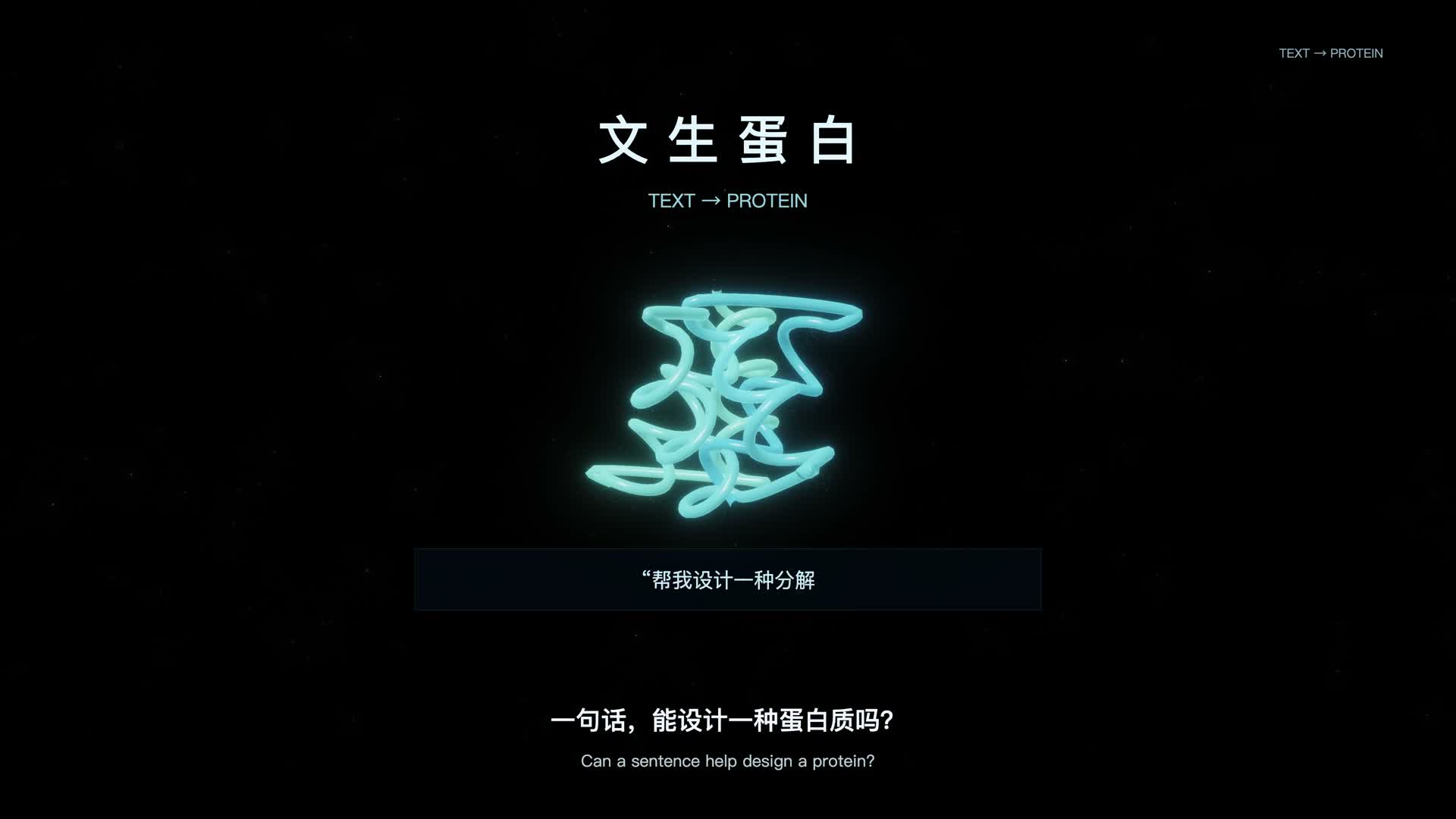
Science MV
Explain science through visible causes, transformations and results.
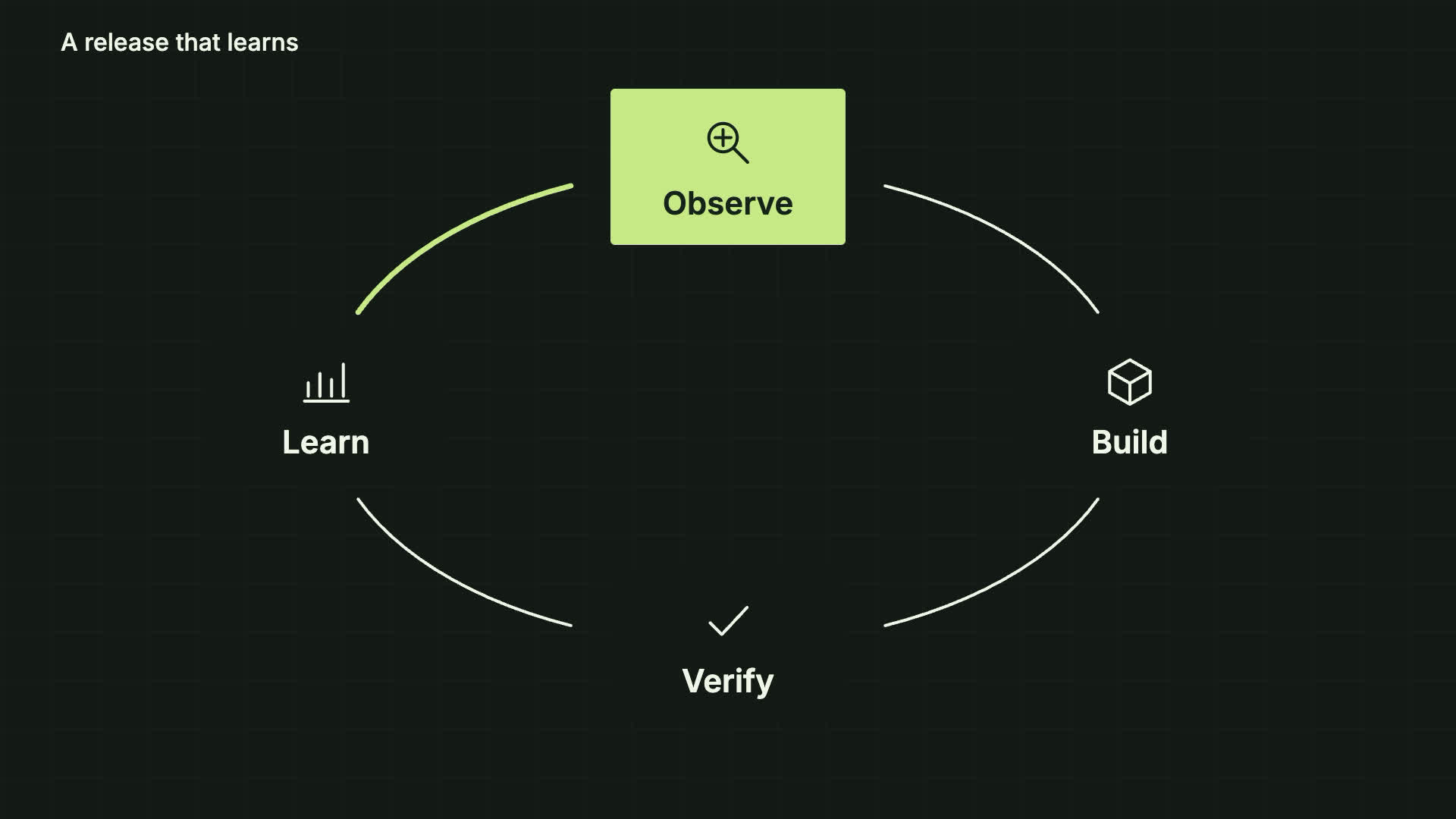
Loop Story
Explain a cycle: build each stage, close the loop, then reveal the takeaway.
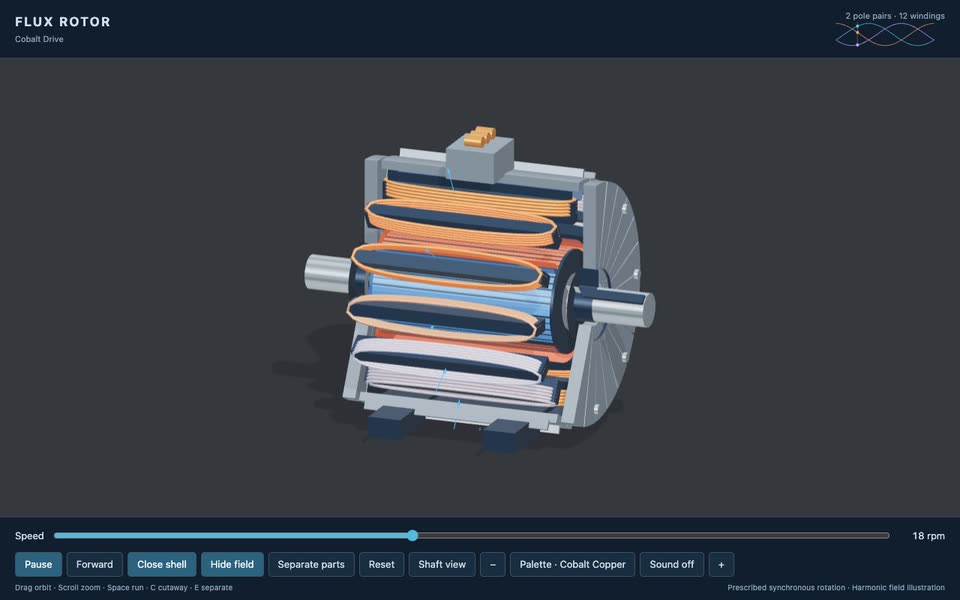
Flux Rotor: Cobalt Drive
Inspect an original motor with real winding groups, alternating magnet sectors and a keyed shaft. Balanced phase currents drive prescribed synchronous rotation, material colors and spatial harmonic markers. Open the actual cutaway and separate six components offline. This display does not solve torque, efficiency or magnetic finite elements.
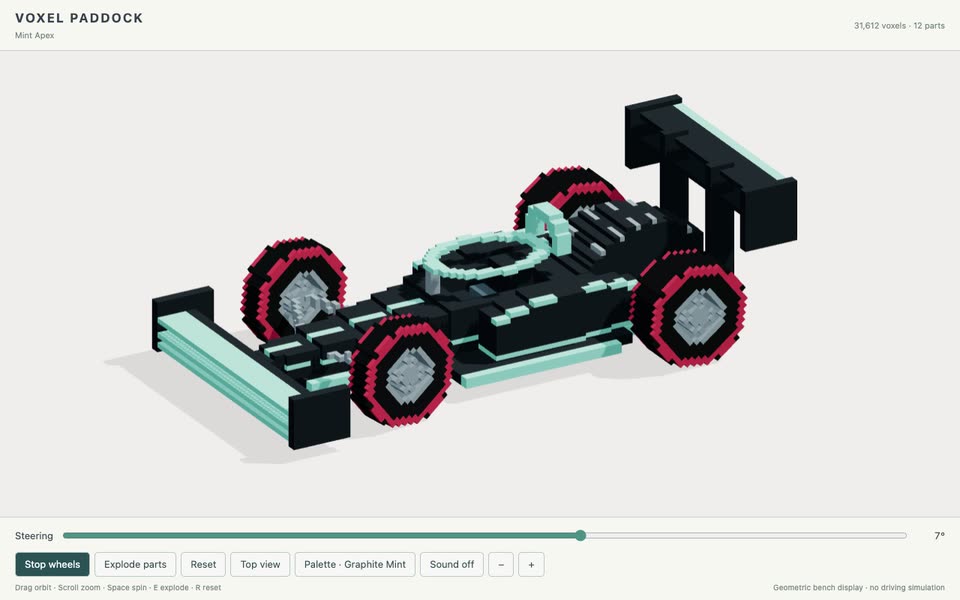
Voxel Paddock: Mint Apex
Inspect an original open-wheel vehicle built from procedural cubes. Spin actual wheels on a stationary display, turn nominal geometric steering and separate twelve component groups. Edit bounded dimensions, voxel density and three palettes offline. This is not a driving or aerodynamics simulation.
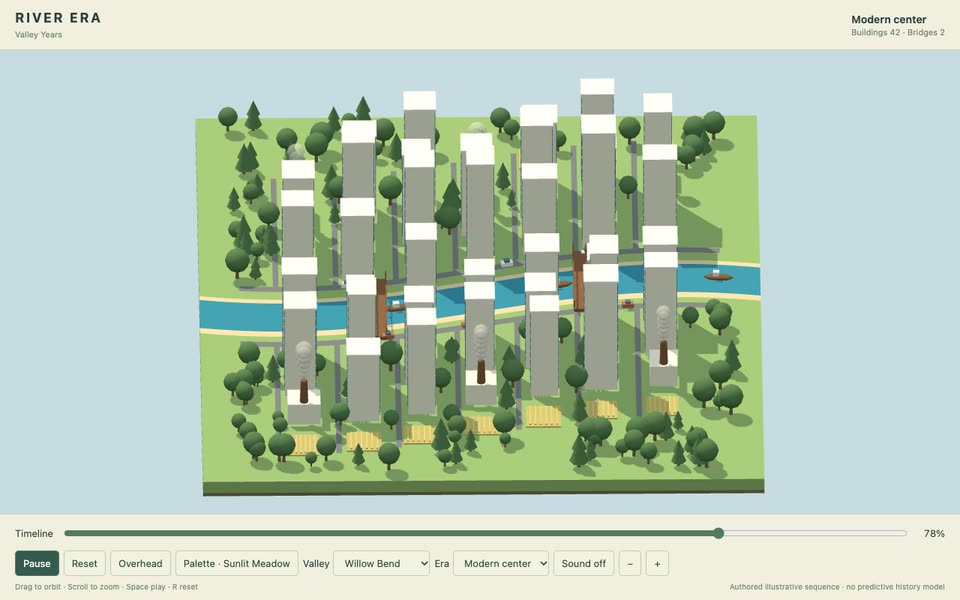
River Era: Valley Years
Scrub an authored river settlement timeline from camp and farms to town, workshops and speculative towers. Actual seeded geometry changes reversibly; boats and vehicles follow the same river and bank equations. This is an illustrative sequence rather than predictive history.
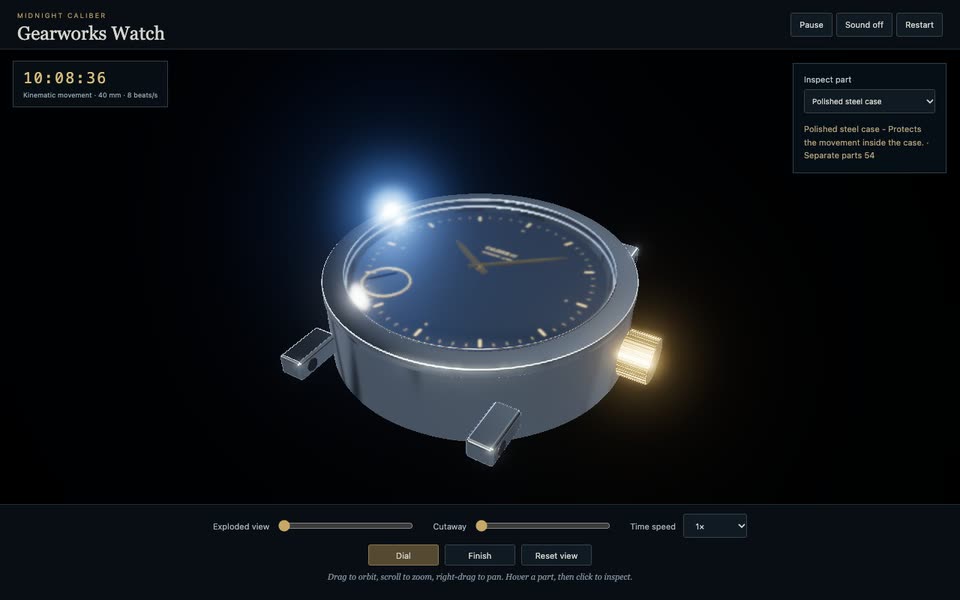
3D Mechanical Watch Explorer
Inspect a kinematic mechanical watch with actual meshed tooth ratios, 54 components, axial explosion, material cutaway and bilingual mouse/touch controls. One offline HTML with optional synthesized tones.