
Rubric vellum cider house and producer site
- Lab Yetenek
- v0.1.0
- Web design
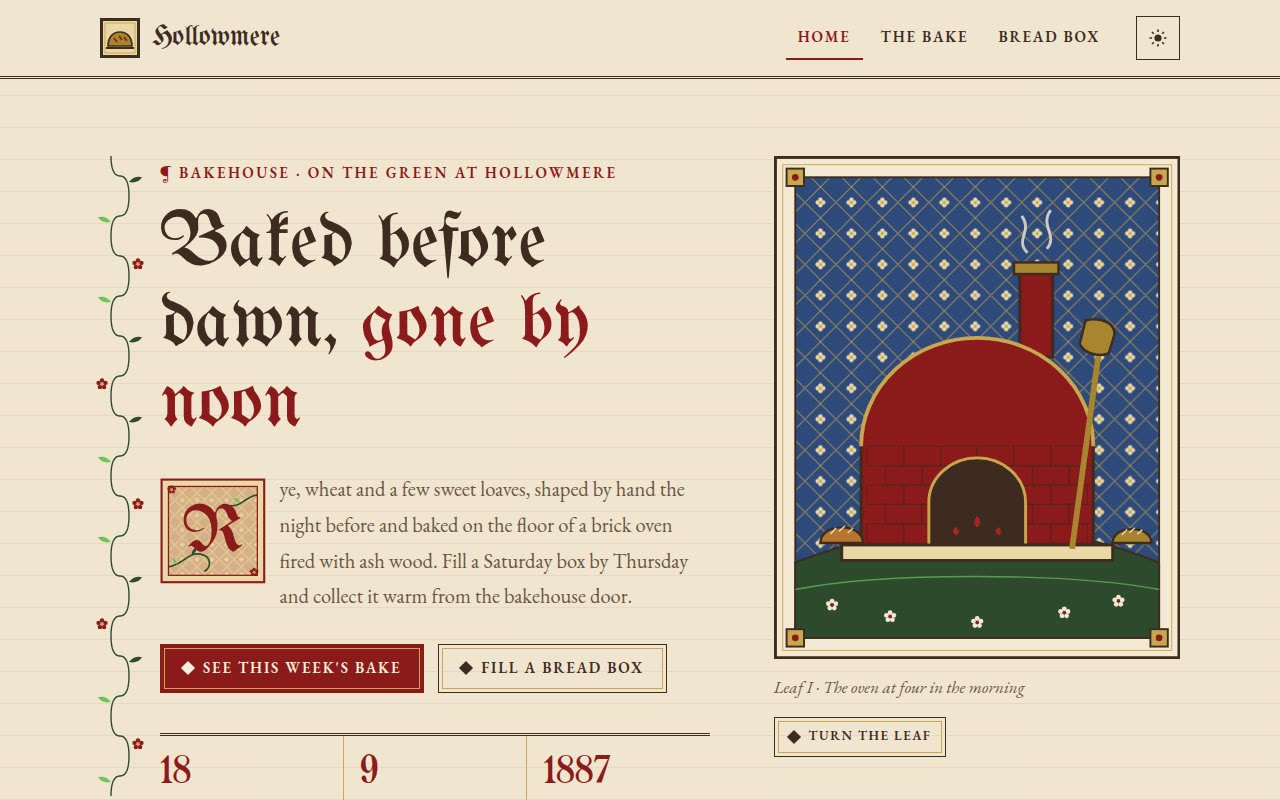
Present a cider house, bakery, brewery, apiary or other small producer on ruled vellum with blackletter headings, red pilcrow labels, gold-ruled frames, drawn initials and diapered panels drawn in code, so visitors can browse the goods, plan a tasting or a box and read the working year.
Örnek
English site
Örnek, bu sayfaya erişimi olmayan sandbox'lanmış bir çerçevede çalışır.
Çevrimiçi çalıştır
Rubric vellum cider house and producer site örneğini bir SandBase sandbox'ında çalıştırın ve sonucu burada görün.
Neler elde edersiniz
Bring the producer and its visitors, the goods with kinds and amounts, what a tasting or box includes, the months of the working year, opening days and the page language. The Skill returns one offline HTML file with code-drawn vellum-style artwork, a hash-routed goods view with filters, an optional tasting or box estimate with a note dialog, an optional twelve-month calendar, day and candlelight palettes, bundled Latin fonts and a validator report.
Nasıl çalışır
- 01
Describe the producer and its year
Tell the agent what the place makes, who visits, which goods it sells and how its year turns. The agent copies the working template and bundled fonts into a local folder, picks the page language and replaces the fictional cider house. The published example turns it into a village bakehouse with nine loaves, a Saturday bread box and a wood-fired brick oven.
- 02
Rewrite the data and redraw the panels
The agent rewrites the script data: goods with their kinds and tones, the hero panels, the estimate bounds and extras, the twelve months and every interface string. The tasting estimate and the calendar are optional views and can be deleted whole. Every picture is drawn in code from framed panels, lozenge grounds, vines and roundels, and the subject drawings change to suit the goods, such as loaves, jars or hives.
- 03
Build one file and check every view
The bundled builder embeds the fonts into one HTML file. The agent runs the browser validator, which opens every route and clicks every visible control, then looks at each view at phone, tablet and desktop widths in both palettes. It checks the filters, the leaf turner, steppers, totals, the note dialog and the mobile menu, and delivers the page with the validation report and any limits.
SSS
What kind of site does Rubric Vellum Cellar Site make?
It makes a small multi-view website for a cider house, winery, bakery, brewery, apiary or similar producer that sells a short list of goods and opens its doors on set days. The sample content is a fictional cider house and is meant to be replaced. The published example is a village bakehouse, and the Chinese proof is a hillside honey farm that keeps the calendar and drops the estimate.
Does the tasting estimate take an order or a booking?
No. The estimate adds up the chosen goods, the seats or boxes and the extras inside the page, and the note form opens a dialog with a summary the visitor copies into their own email. Nothing is sent, stored or reserved. A real order or booking flow needs a separate service and its own testing.
What runs on my machine when I build a page?
Your coding agent edits the HTML and the script data, and Node.js runs the bundled asset builder and validator. The browser checks also need Chrome or Chromium. The template makes no model or API calls, and every picture is drawn in code from frames, lozenge grounds, vines and simple shapes. Your coding agent may have its own usage terms.
Can the finished website work offline?
Yes. The delivered HTML embeds its blackletter and serif fonts and draws its artwork in script, and it makes no external requests. Routing, filters, the estimate, the calendar and the note dialog all work inside the file. Only the chosen palette is remembered between visits. Chinese text uses installed CJK fonts unless you bundle a suitably licensed font and repeat the visual checks.
How much text fits in the blackletter headings?
Blackletter is wide and dense, so short headings read best. Keep the hero headline under about forty Latin characters, entry names under about twenty-four and visitor notes under about ninety. Each lead paragraph opens with a drawn initial, so start it with a plain letter. Longer or translated text works, but needs a fresh look at every width.
Can I translate it or change the views?
Yes. Translate the script data, the markup, form labels, accessible names, toasts and SVG labels together. The tasting estimate and the twelve-month calendar are optional and can be deleted as whole views, and their menu entries, links and card buttons leave with them. Home, the goods list and the not-found view stay, along with the shared ids the package validator requires.
How should I check a finished page?
Run the package validator with browser checks, then look at every view at 390, 768 and 1440 pixels in day and candlelight palettes. Turn the hero leaf through every panel, use each filter, fill the estimate, push the stepper past both limits, toggle the extra and check the total by hand, submit the note empty and then valid, pick several months and try the mobile menu and Escape.
Daha Fazla Skill
Tüm Web design Skills →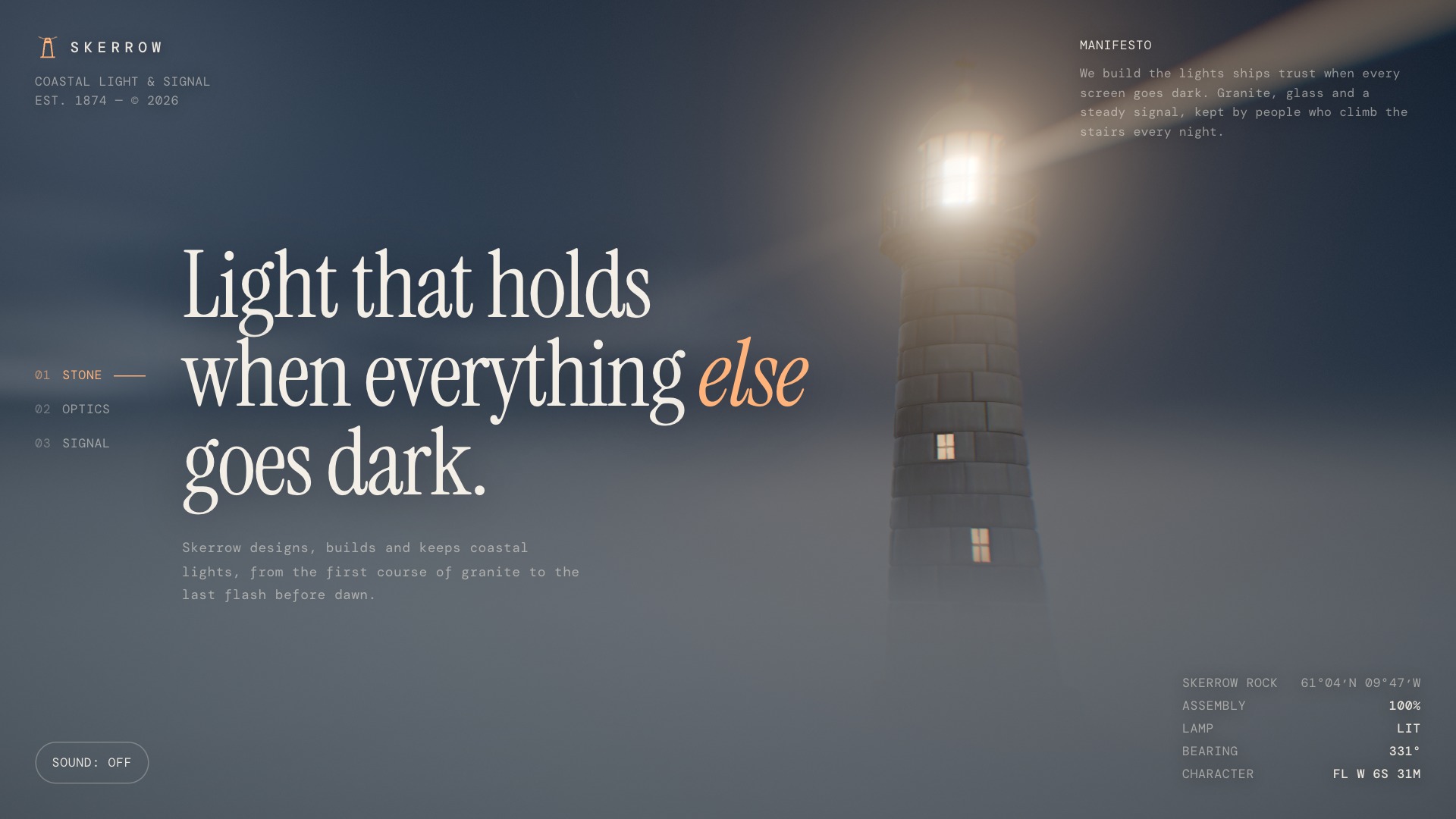
Baked 3D Story Site
A three-page 3D story site with baked light, scroll stops that loop and a shader cut between pages, in one offline file.
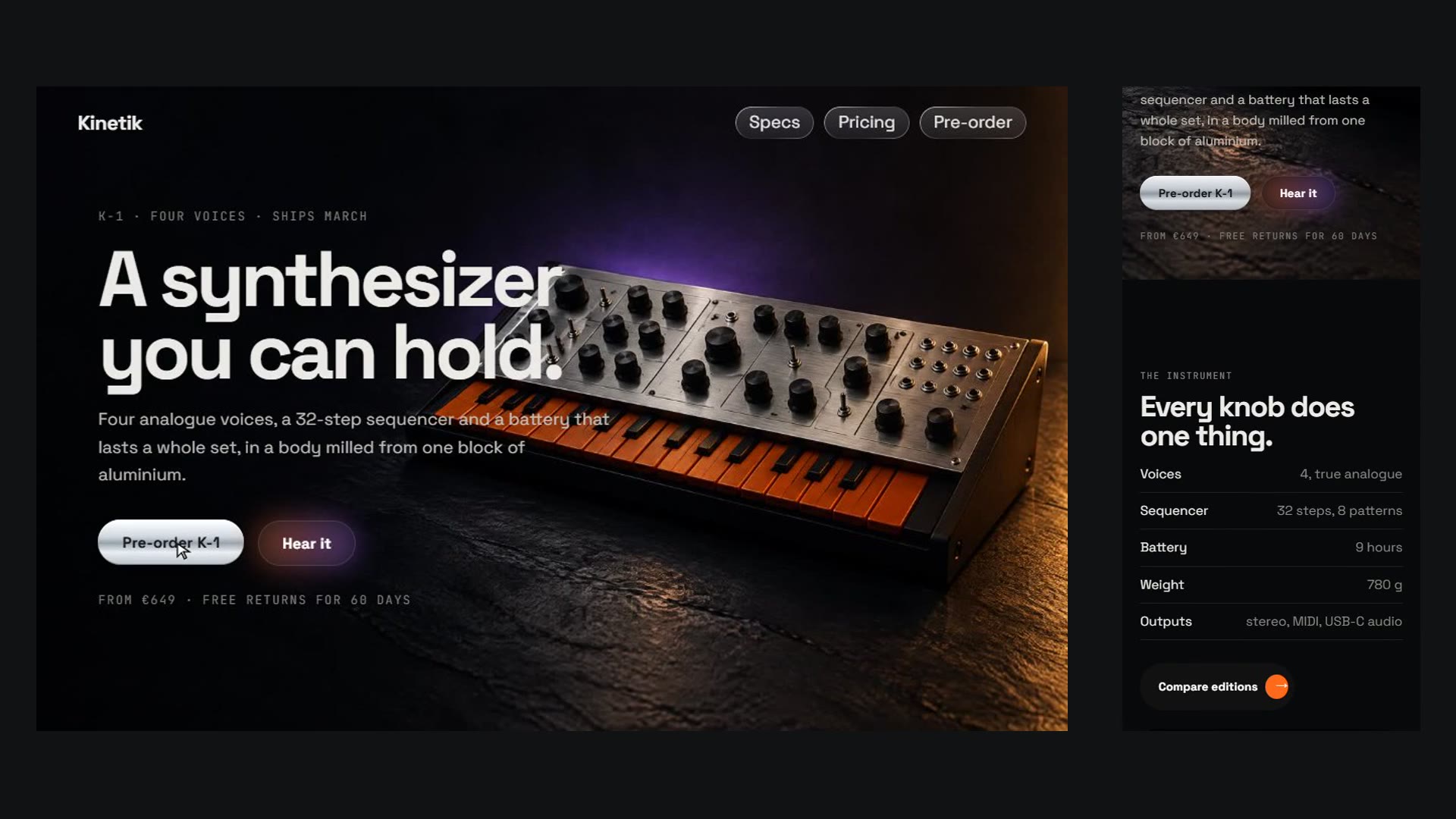
UI Finishes
Metal, jewel, halo, roll, fill, offset and ring buttons, media cards, glass and textures, each checked in rest, hover, focus and pressed for real contrast.
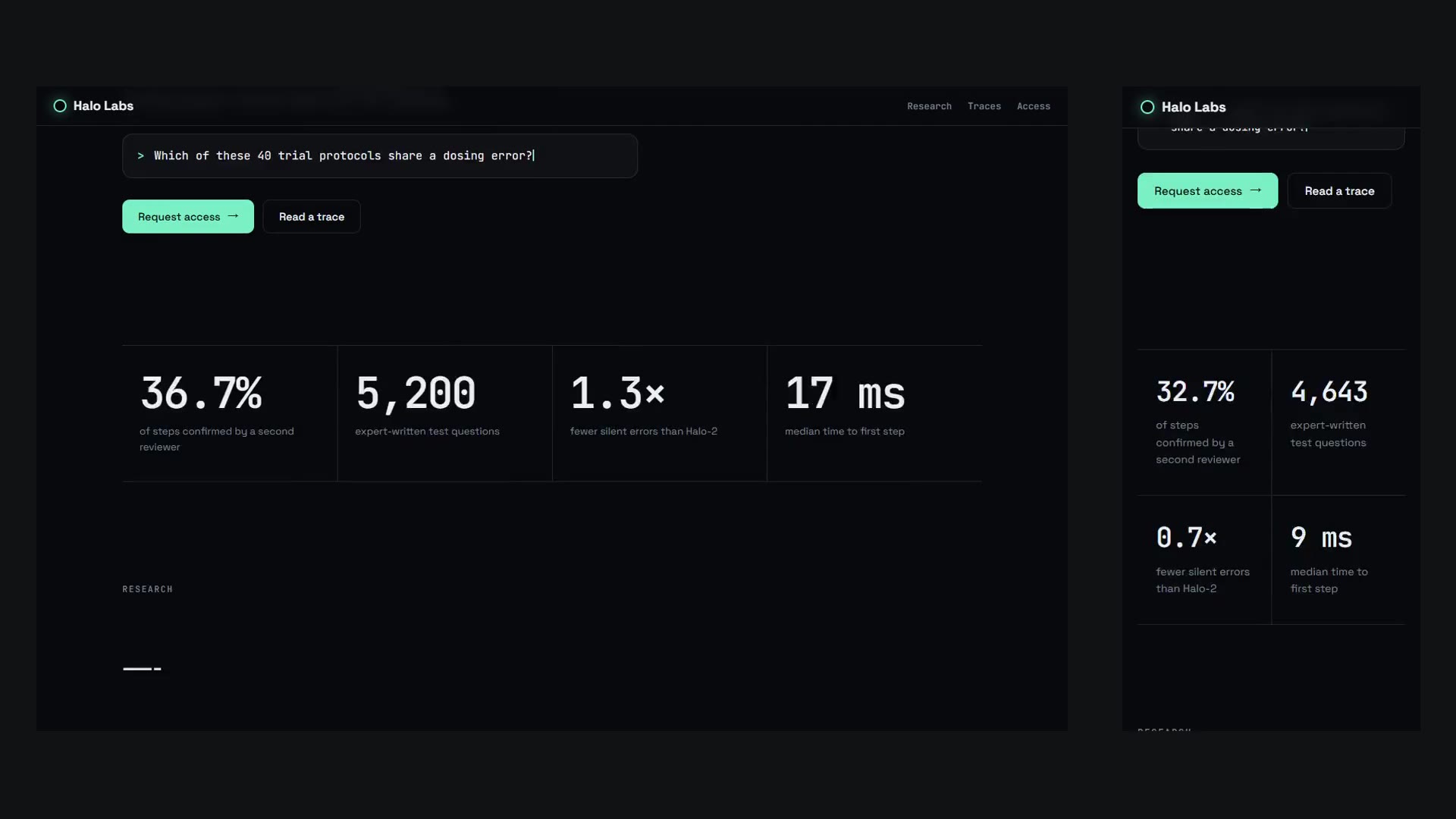
Headline Motion
Headlines, labels and numbers that rise, decode, type, rotate, count and draw themselves without moving the layout, measured in a real browser.
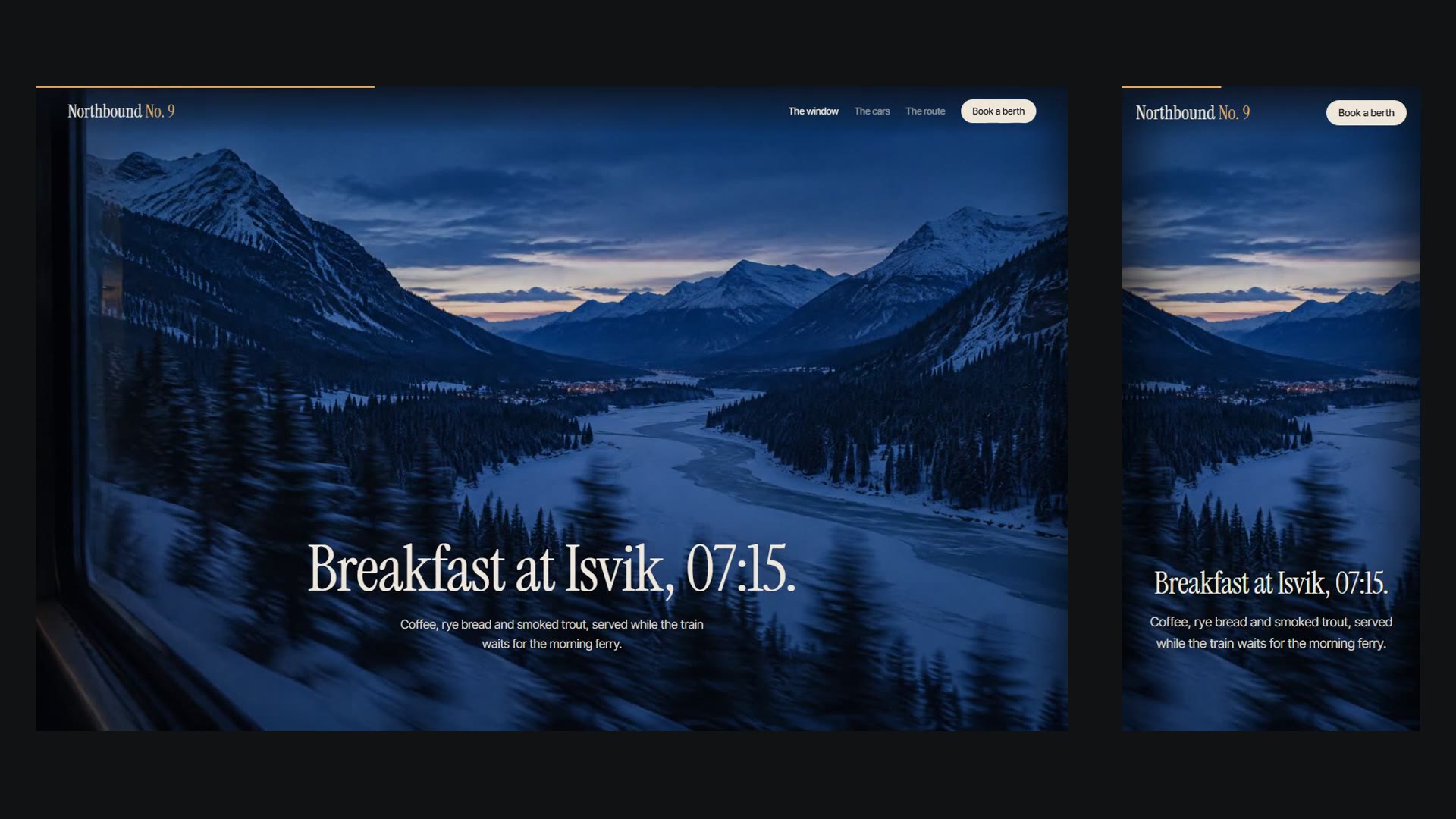
Scroll Chapters
Long pages told chapter by chapter: a pinned stage, sliding panels, a text crawl, lit paragraphs, stacking cards and drifting columns, checked in a real browser for dead scroll.
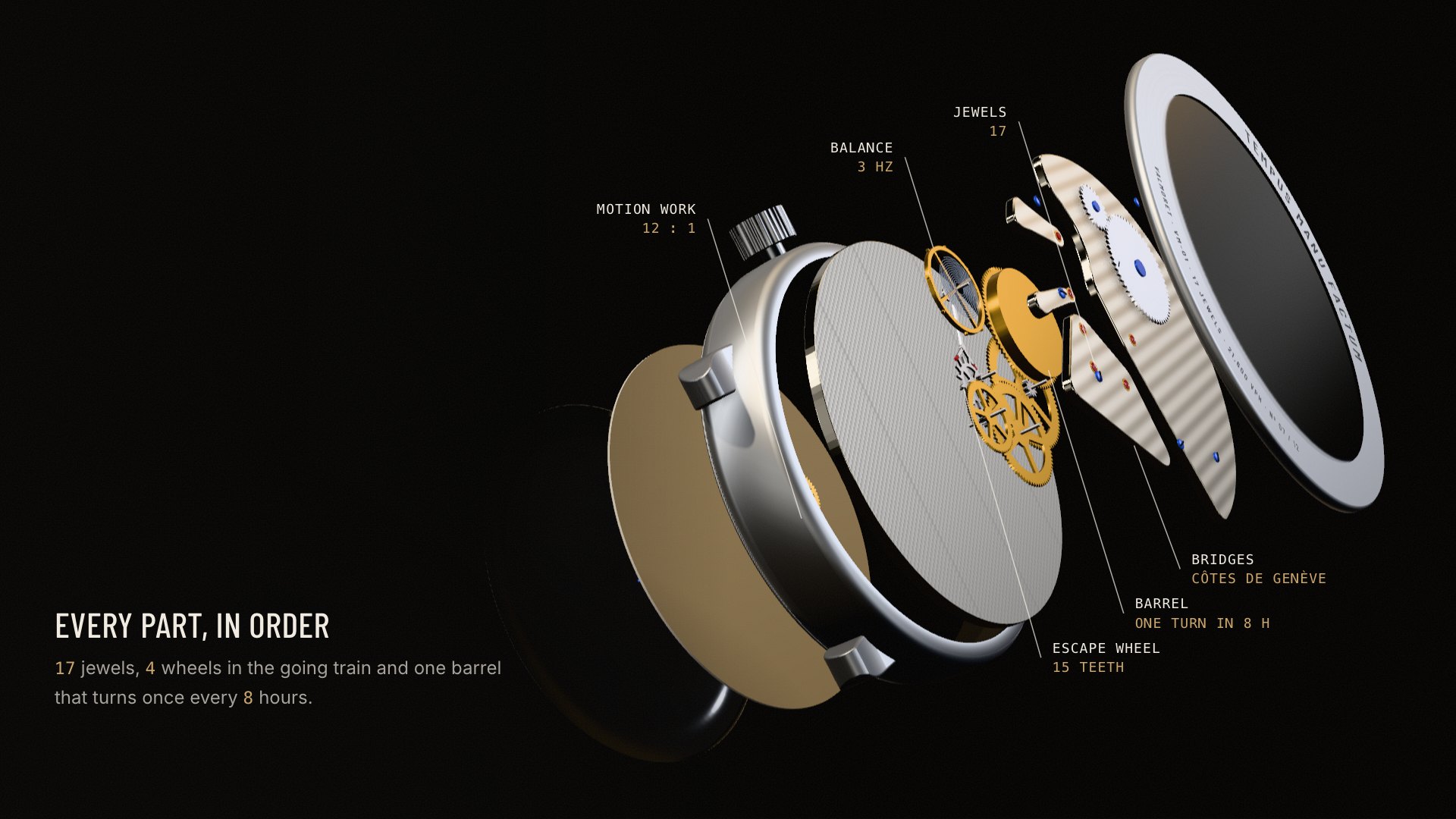
Scroll 3D Product Site
A complete product website where scroll turns, opens and takes apart a live 3D model, with every video and image rendered from that model, in one offline file.
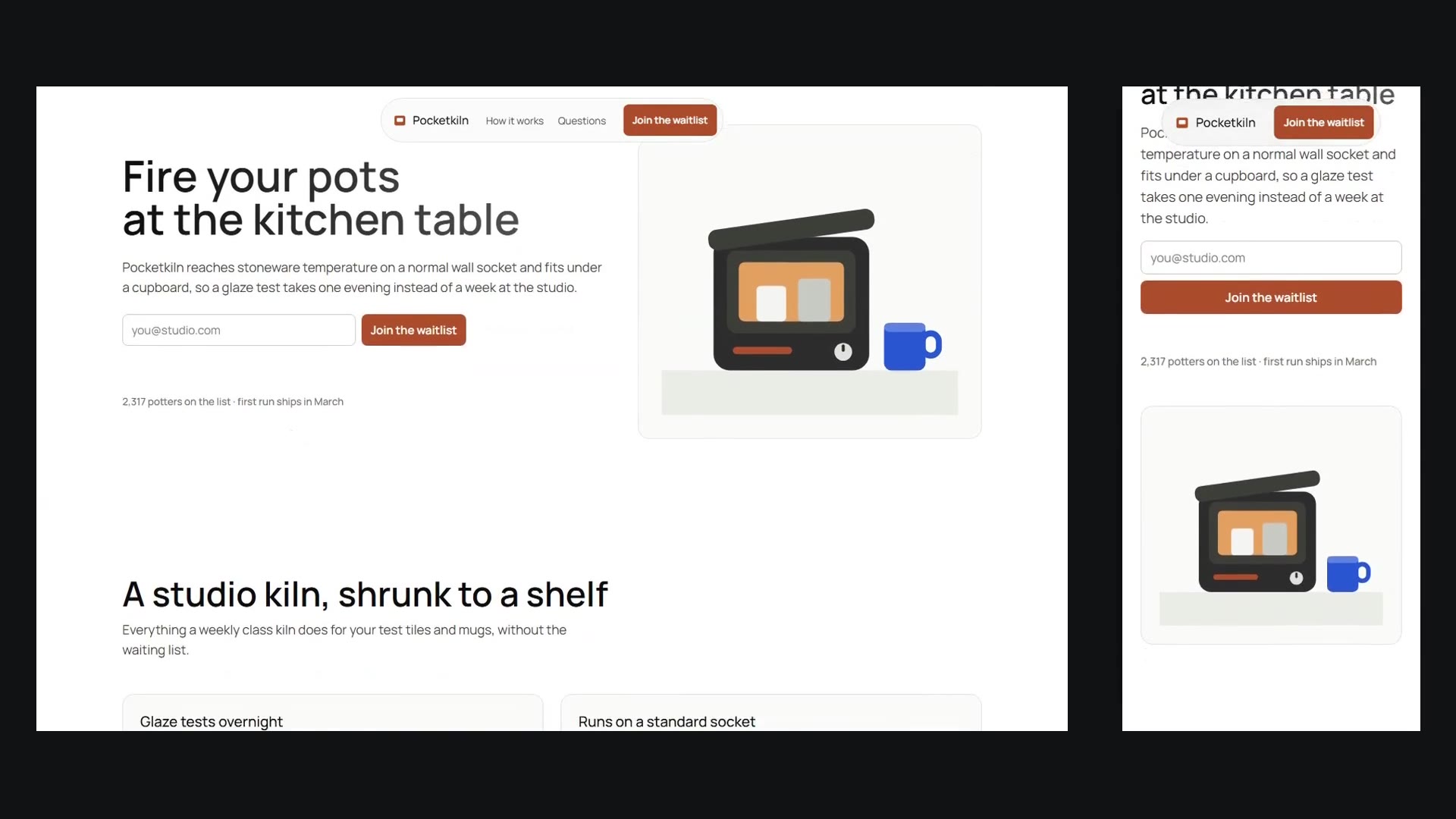
Landing Page System
A complete single-file landing page with a conversion structure and a shared visual system, checked by a rendered-page audit before delivery.