
Modular Signal Motion
- Lab Skill
- v0.2.3
- Motion
Animate grid cells through reproducible propagation, state changes and identity-preserving rearrangement.
Ví dụ · 2
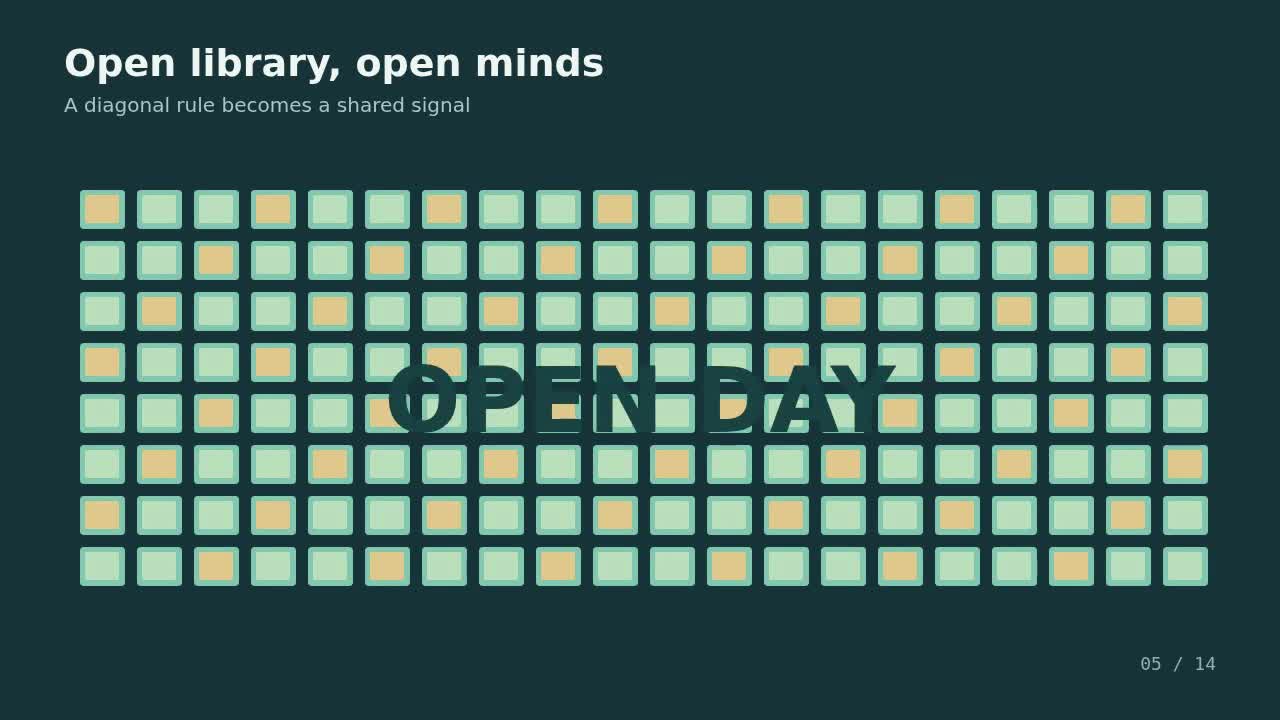
Chạy trực tuyến
Chạy ví dụ của Modular Signal Motion trong SandBase sandbox và xem kết quả ngay tại đây.
Cách hoạt động
- 01
Define the grid and rules
Modular Signal Motion is an Agent authoring workflow. The Agent collects a module grid, signal rules and meaningful state changes, then defines grid coordinates, cell state and a propagation rule before any styling. Delays come from distance, row or dependency.
- 02
Build the propagation
The Agent writes new HTML and GSAP scene code. For reordering, each cell keeps its ID and its target slot is solved, so identity survives rearrangement. One example lights a library-day pattern with a diagonal cell wave, then switches the cells off in reverse order.
- 03
Render and verify
The Agent renders through the pinned toolchain, inspects frames and plays the full film. Cells must stay aligned, rearrangement must preserve identities and count, propagation must follow the stated rule, and other aspect ratios must keep readable spacing. The second example reorders 24 numbered cells to make room in a schedule.
Câu hỏi thường gặp
What does Modular Signal Motion make?
Modular Signal Motion makes grid animations where cells light up by reproducible propagation, change state and rearrange while keeping their identity. It suits web design, brand identity and social media pieces, such as a library-day pattern spreading as a diagonal wave.
How does Modular Signal Motion keep cells identifiable?
Modular Signal Motion keeps each cell's ID through every rearrangement and solves where it must go, rather than redrawing a new grid. Numbered cells in the schedule example can be followed from start to end, and the count never changes.
What is a propagation rule in Modular Signal Motion?
A propagation rule in Modular Signal Motion decides each cell's delay from its distance, row or dependency on other cells. Writing the rule before styling means the wave or cascade is reproducible and can be checked against the rule.
Does Modular Signal Motion need a key?
No. Modular Signal Motion runs with Node.js, Git, Chrome and FFmpeg and a renderer pinned to a fixed revision, and needs no key. Image or footage generation is not part of the workflow.
Is Modular Signal Motion automatic?
No. In Modular Signal Motion the Agent writes and checks new scene code for each grid and set of rules. Arbitrary text does not become a film by itself, and a failed check is reported with the cause.
Thêm Skills
Tất cả Skills Motion →
Image Blaster
Turn one frozen moment into a camera-orbit concept video.

Sketchbook Film
Bring photographed sketchbook drawings to life as a short film with cut-out characters, ink lettering and a score.

SVG Paint Stages
Show a picture being painted: construction marks, contours, flat colour and finer patches, as a layered SVG and a short film.
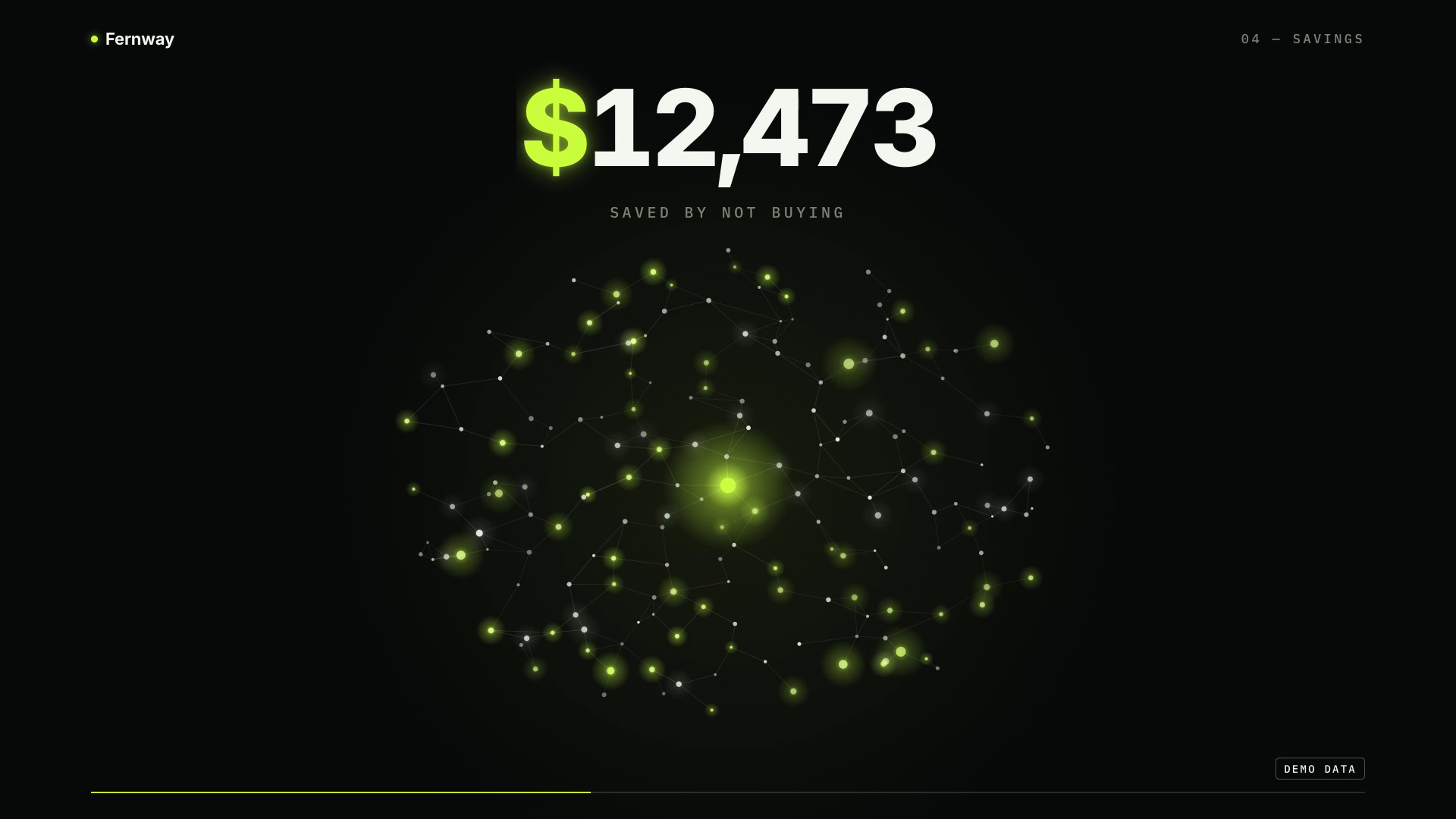
Network Tally
Tell a growth story with real numbers: one node network grows with each counter, flashes, dims behind a spike chart and closes on an end card.
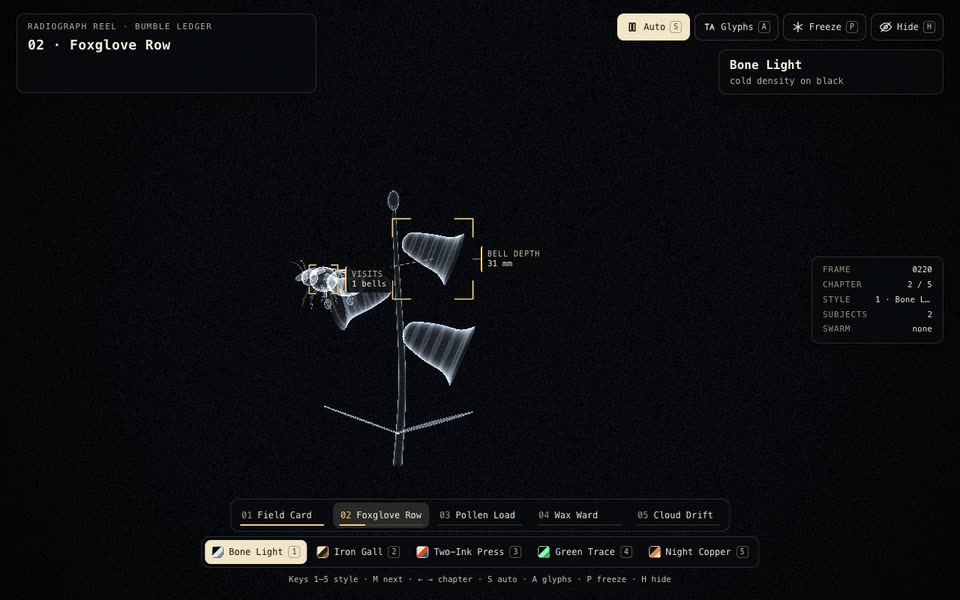
Radiograph Reel: Bumble Ledger
A specimen film reel: procedural bees, flowers and a wax comb glow as X-ray density, print in five switchable film styles with tracking labels, and a swarm morphs between formations.

Festival Grid Slides
Invite people to a fair, open day or club season, or pitch one, in a bright festival deck: whole-page colour fields with a fine dot grid, heavy slanted headlines, cream cards and tickets, round pictures, and suns, rosettes, rings, bunting and sprinkles.