
Gilt Briefing Slides
- Lab Skill
- v0.1.0
- Research
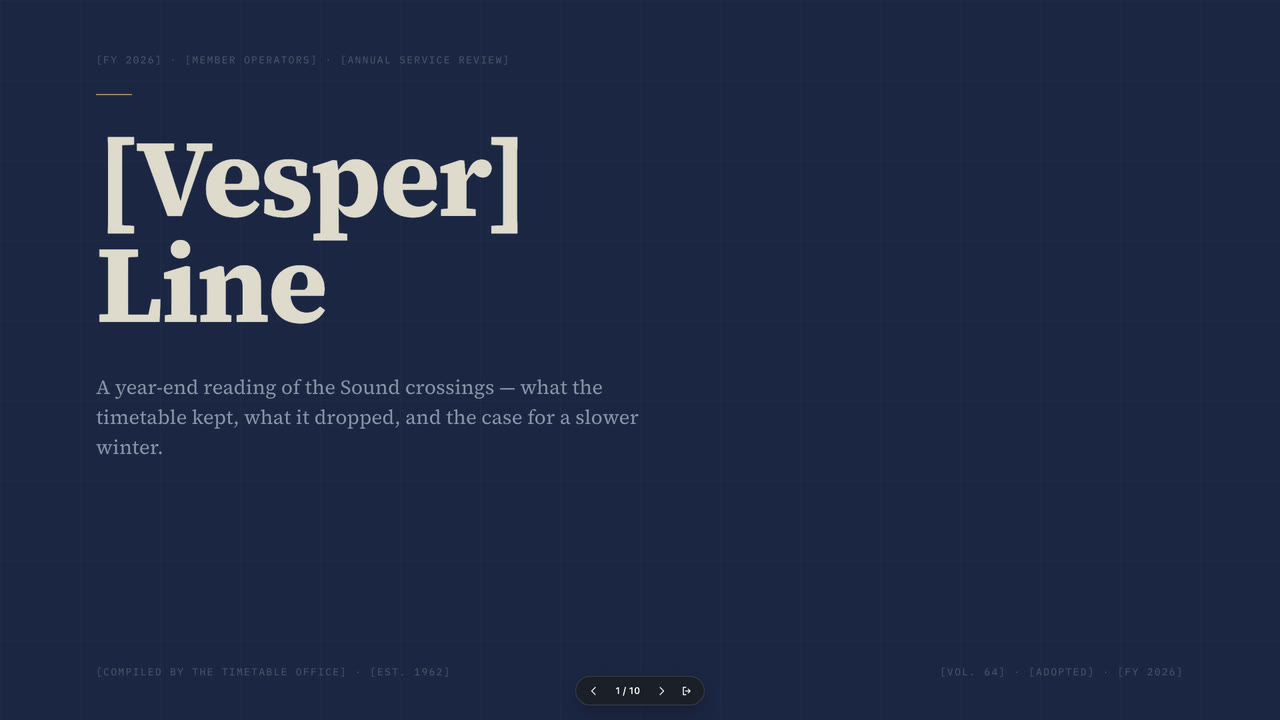
Make decks that read as institutional briefings or considered board documents: deep editorial navy and warm cream as interchangeable fields, antique-gold punctuation only, a near-invisible 80px grid texture on every dark page, and hairline mono chrome — transitional serif display against mono datelines.
Ví dụ · 2
Bạn nhận được gì
Bring the subject of the briefing, the audience, the figures to use exactly, the page count and content language. The Skill returns one offline HTML deck that edits in the browser and exports editable PowerPoint.
Cách hoạt động
- 01
Define the briefing claim
Gilt Briefing slides asks for the topic, the one claim to land, the audience, the figures you stand behind, page count, language and any pictures you own. It suits sober argued documents, not bright pitches. The default arc runs cover, chapter, statement, split, stats, quote, list, compare, editorial, chart, pie, vtimeline and end, kept sparse so the navy field keeps its negative space.
- 02
Pass split runs into the plan
Your Agent copies a palette such as Slate or Harbour into the swatch, with accent as the single antique gold. plan.json fills text by node id, sets chart bar heights in css and passes stat values and headline em words as parts, for example ["94","%"]. The donut takes labels for its centre value and caption. python3 scripts/kit.py compose writes deck.json.
- 03
Build and inspect the gilt details
make-deck.py writes presentation.html and verify-deck.py checks it. Your Agent opens the file over python3 -m http.server and confirms the 80px grid texture on every dark page, the bracket device on the cover, gold italic em words, em-dash bullets, the one gold chart bar and the donut's gold leading segment. PowerPoint output is checked with verify-pptx.py.
Câu hỏi thường gặp
What does Gilt Briefing slides look like?
Gilt Briefing slides uses deep editorial navy as the default field and warm cream as a tonal break on the split and list pages. Antique gold appears only as punctuation: short rules, italic em words in serif headlines, stat numerals, kickers, em-dash bullets, one chart bar and the quote mark. A near-invisible 80px grid sits on every dark page. It suits institutional briefings, quarterly reviews and board documents.
Does Gilt Briefing slides support Chinese text?
No. Gilt Briefing slides is Latin-script only in this release. Its Brief Serif, Brief Text and Brief Mono families are renamed Source Serif 4, DM Sans and IBM Plex Mono, and they cover Latin only; CJK needs a bundled serif before the register survives translation. Brief Serif is a roman variable font, so the gold italic renders as a synthesised oblique.
Can Gilt Briefing slides add illustrations or photos?
Only your own photos, on one layout. Gilt Briefing slides places user pictures in the single hairline-framed s-img void on the split page, and keeps the bordered void with a mono label when there is none. It has no image grid, no full-bleed photo layout and no drawn illustration; the bar chart and donut are its only data art.
Is there a cost to building with Gilt Briefing slides?
No. Gilt Briefing slides draws no pictures and its engine makes no network calls, since every path from plan.json to presentation.html is local. A briefing deck therefore adds nothing to your bill. The PowerPoint check, verify-pptx.py, is the only step that needs python-pptx installed.
Can I build a light deck with Gilt Briefing slides?
No. Gilt Briefing slides is dark-first: cream pages are tonal breaks, used with s-light on split and list only, one or two per deck. The kit warns against a light-first build. Dividers stay 1px hairlines, and cream type floats on the field with no cards or panels around it, so the register depends on the navy ground.
Why does Gilt Briefing slides reject my stat values?
Gilt Briefing slides treats stat numerals and headline em words as parts slots with rich markup, not colour flags. Pass the split runs, such as the number and the percent sign as two strings, rather than one string. Stat cells, log rows, timeline rows, legend items, bar columns and compare panels have fixed counts, so rewrite their text instead of adding or removing them.
Thêm Skills
Tất cả Skills Research →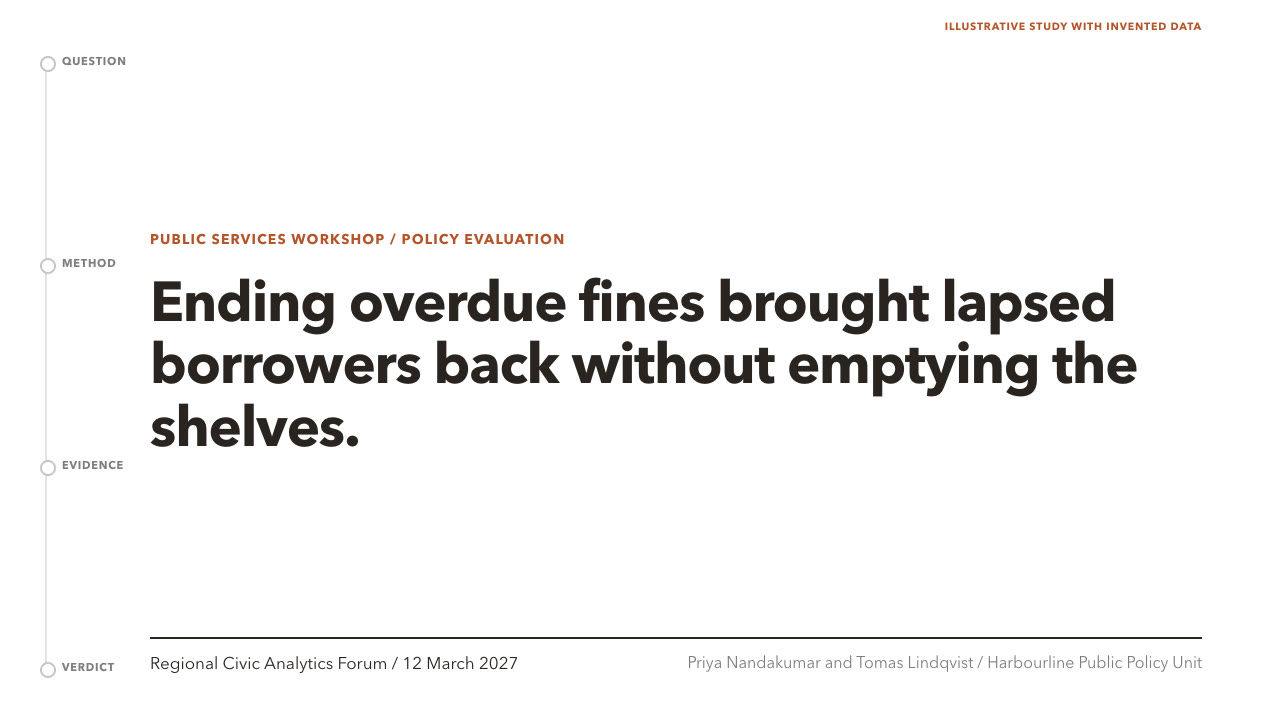
Thesis Spine Slides
Build a research talk whose titles, read in order, argue one claim from question to verdict, with one cited exhibit per evidence page.
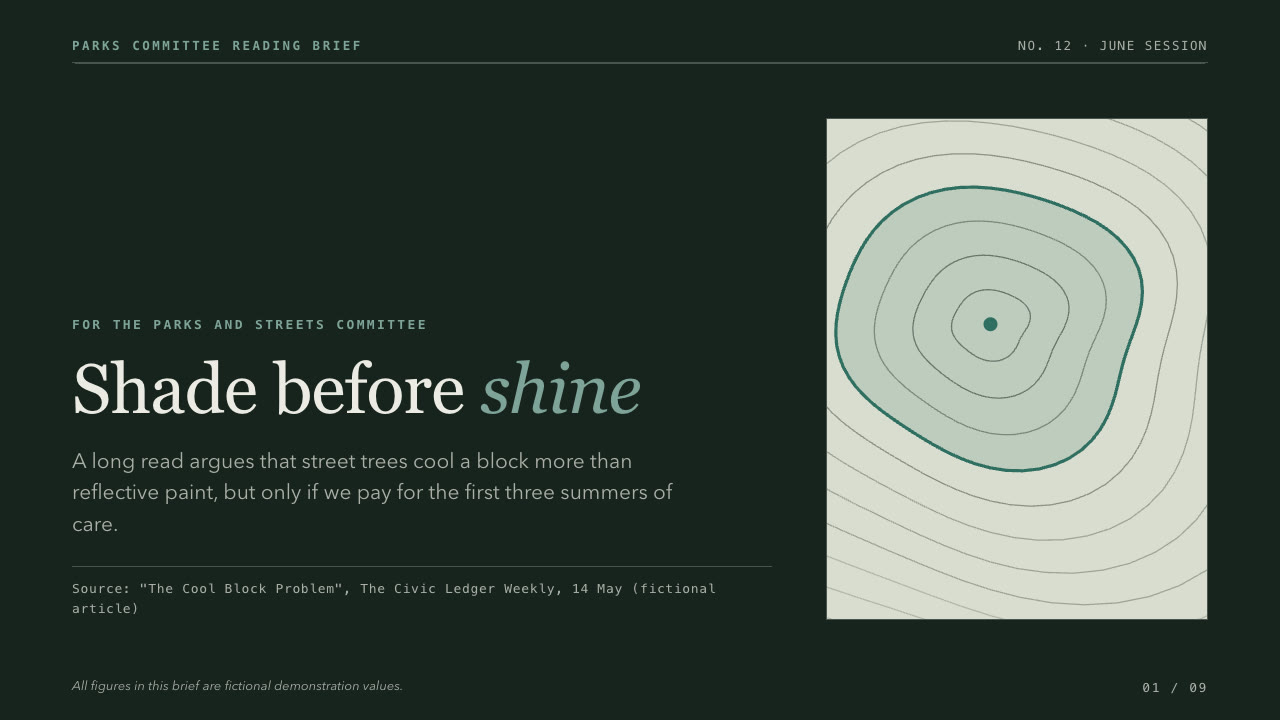
Reading Digest Slides
Turn one long read, essay or report into a reading brief a committee can decide on: a masthead, argument beats on a rail, a headline figure, bar charts and a source ledger that keep checked facts, assumptions and open questions apart, two readings, discussion prompts and the decision asked.
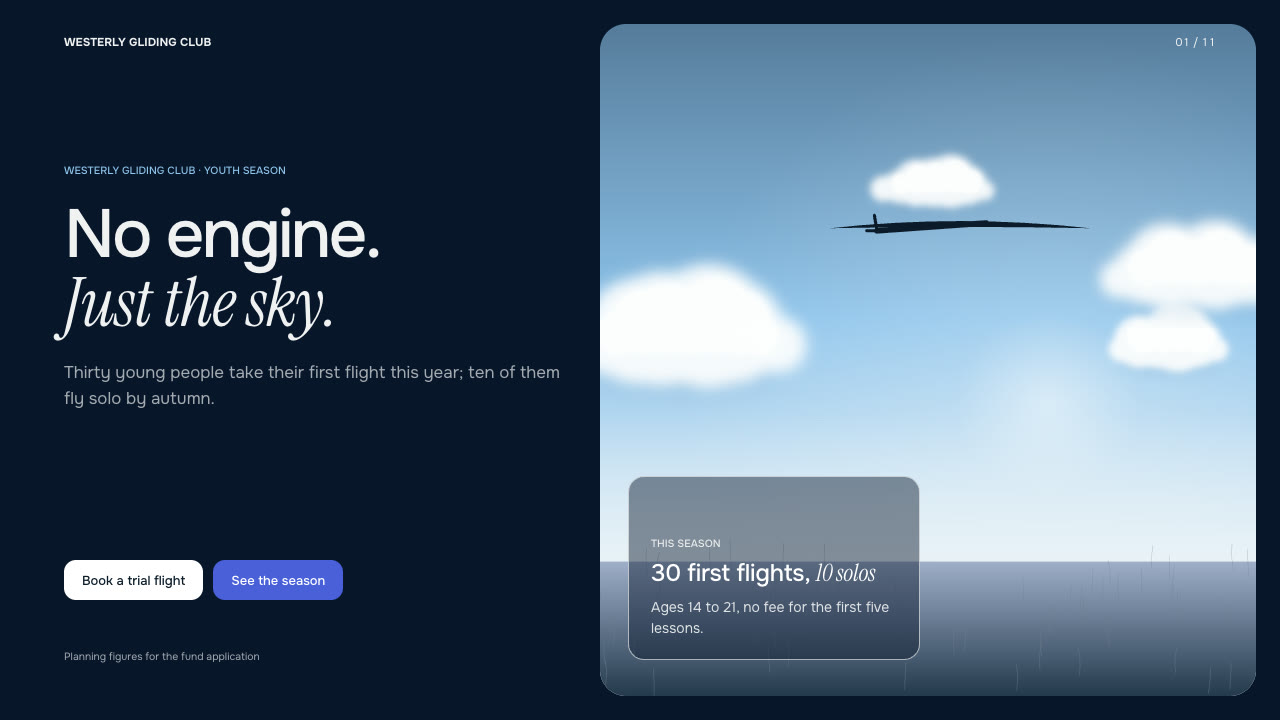
Cloudpane Slides
Make explainer and proposal decks that make a public subject feel approachable: open-sky pictures, clear optical glass and anonymous figures, thin-edged translucent glass cards over the pictures, broad mist-white pages, three deep night pages and headings with an italic serif accent.
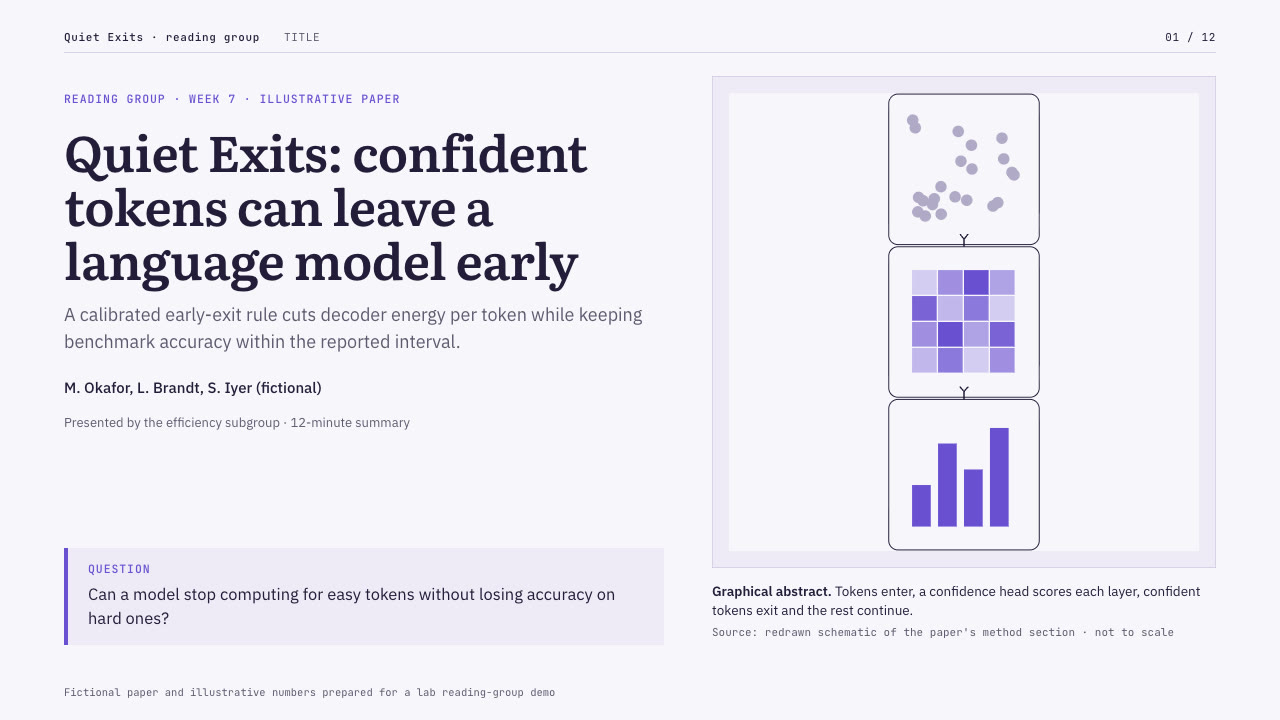
Figure First Slides
Make figure-led research talks such as paper summaries, journal clubs, lab and reading-group reviews and evidence briefings: every content page is built around one figure, chart or table with its caption and source underneath, numbers carry their comparator and interval, and a limits page states what the work can and cannot claim.
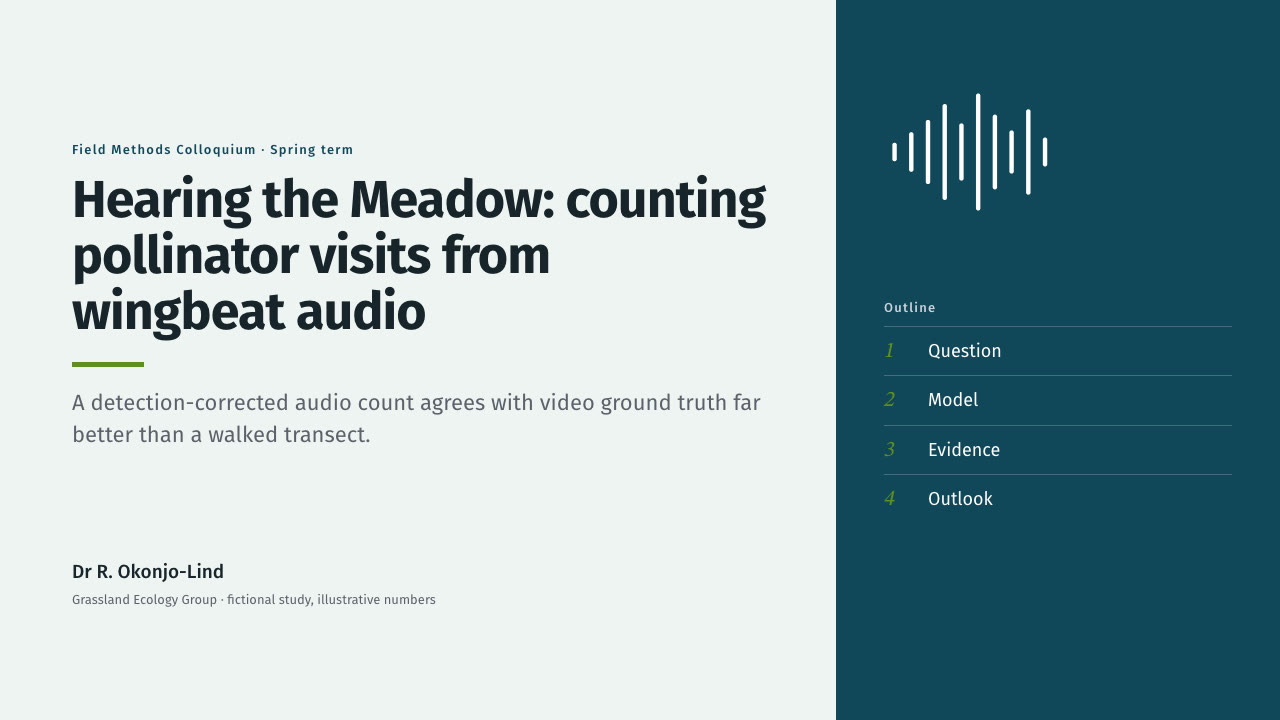
Seminar Math Slides
Turn a paper, thesis chapter or research notes into a projection-ready 16:9 talk for seminars, colloquia, defences and conference sessions: a section strip with the current section lit, equations with spoken readings and term glosses, a method pipeline, a proof sketch, native result bars and tables, plots drawn from data and a progress bar with frame counters.
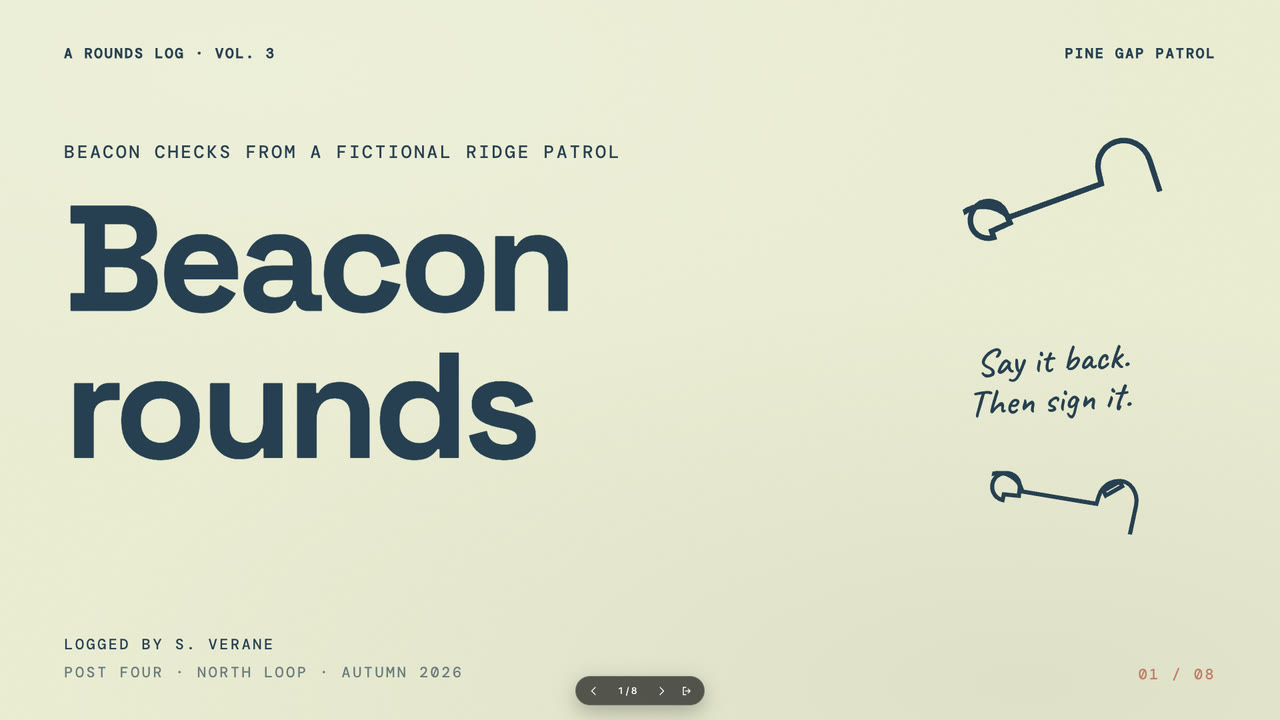
Yellowpad Fieldnotes Slides
Make decks that read like pinned field notes: saturated yellow legal-pad paper, cobalt ink, hand-drawn safety pins, cream pinned cards, handwritten marginalia, mono archival tags and rotated red stamps.