
Line-Art Stage Story
- Skill de Lab
- v1.0.0
- Motion
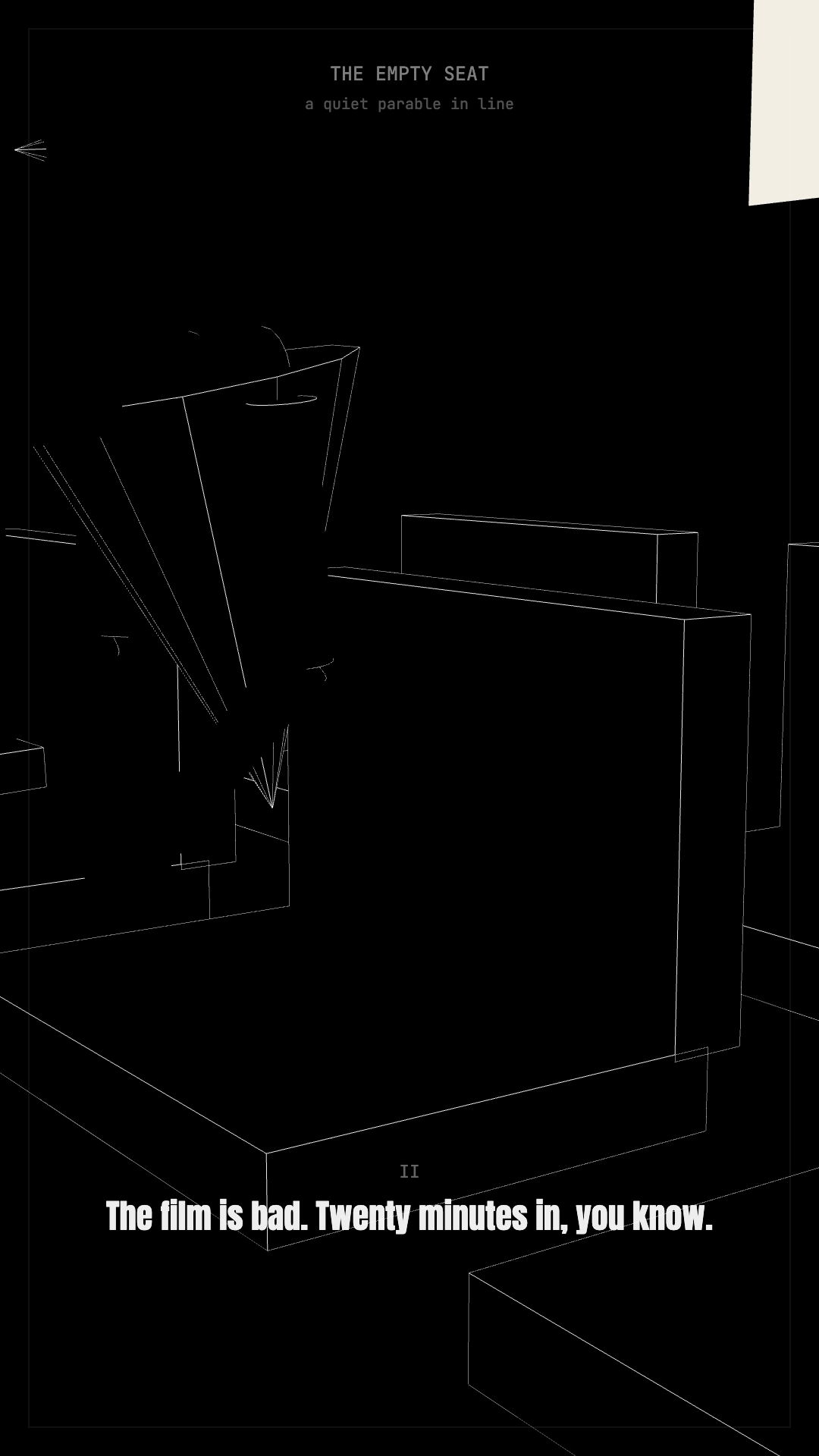
White-line-on-black staged storytelling — outlined primitives build the set, a poseable little figure walks its beats, and one caption lands per shot. A silent portrait film from a single JSON sheet.
Ejemplos · 2
Ejecutar online
Ejecuta el ejemplo de Line-Art Stage Story en un Sandbox de SandBase y mira el resultado aquí mismo.
Cómo funciona
- 01
Write the sheet
Write a JSON sheet with the set as outlined props (box, cylinder, cone, sphere, torus, plane or a free polyline), little puppet figures with a walk path and poses such as sitting, leaning or head turns, camera shots with a slow push-in or key list, and one caption line at a time. Two examples ship: a cinema parable in English and an unsent letter in Chinese.
- 02
Build and check stills
Run npm install, then node scripts/build.mjs assets/examples/empty-seat-en.json --out build. The build writes a self-contained page with vendored three.js, GSAP and inlined fonts, and no network use. node scripts/stills.mjs --build build --at 3,10,17,23,31 gives a quick look. Keep sets sparse, because dense props clutter into wire mush.
- 03
Render the film
node scripts/render.mjs --build build --out film.mp4 renders a silent portrait 1080×1920 H.264 film at the sheet's frame rate. Everything is black with glowing white outlines, figure poses, walks and camera moves are closed-form in time, and the same sheet renders the same film. The bundled films run about 35 seconds each.
Preguntas frecuentes
What does Line-art Stage Story make?
Line-art Stage Story makes a quiet vertical micro-story in white line on black: a minimal stage built from outlined shapes, one small poseable figure, slow camera shots and one caption line at a time, in the register of a storyboard told aloud. It renders a deterministic silent 1080×1920 film.
Does Line-art Stage Story need an API key?
No. Line-art Stage Story builds its stage from outlined three.js shapes on your machine, so it needs no API key and makes no model calls. Line-art Stage Story bundles three.js, GSAP and its fonts into a self-contained page with no network use, and every pose and camera move is computed from time, so renders are reproducible.
How do figures move in Line-art Stage Story?
In Line-art Stage Story figures are puppets: they walk along a keyed path with a stylized leg swing, not inverse kinematics, and ease between poses such as sitting, leaning, head down, head turn and arm forward. Keep motion small and slow to match the quiet register.
Can Line-art Stage Story show text in the scene?
No. Line-art Stage Story does not support in-scene text; letters are either line props or overlay captions. Captions appear small and low on the frame, one at a time, with an optional kicker line. A prop can glow as a lit plane, such as a screen, doorway or lamp.
Does Line-art Stage Story work in landscape?
Partly. Line-art Stage Story is portrait-first: landscape sizes work through width and height, but the staging grammar is built for vertical frames. Sizes from 320 to 3840 pixels and 12 to 60 fps are accepted. The film is silent; score and voice belong in the edit.
Más Skills
Todos los Skills de Motion →
Image Blaster
Turn one frozen moment into a camera-orbit concept video.
Sketchbook Film
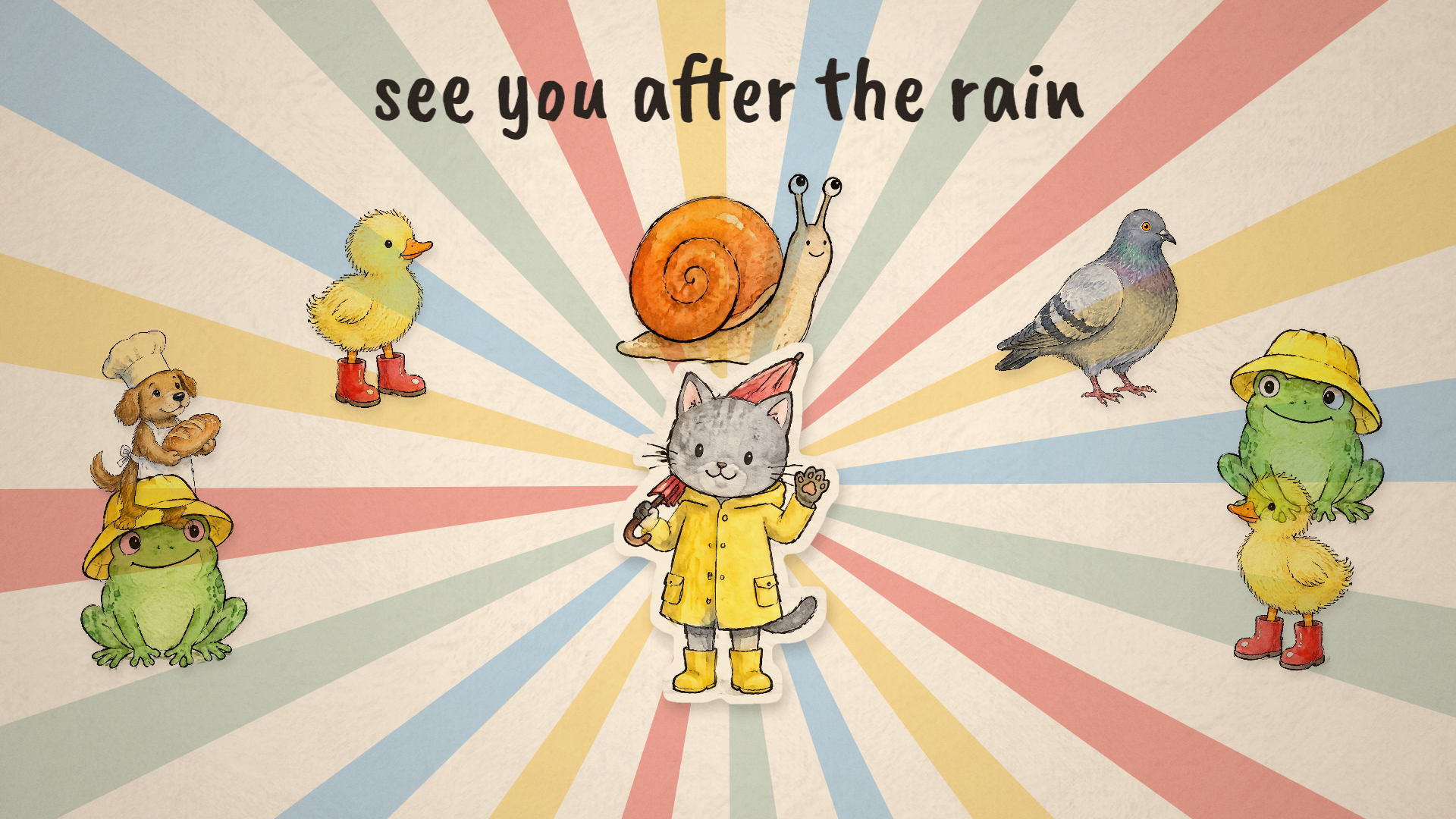
Bring photographed sketchbook drawings to life as a short film with cut-out characters, ink lettering and a score.
SVG Paint Stages
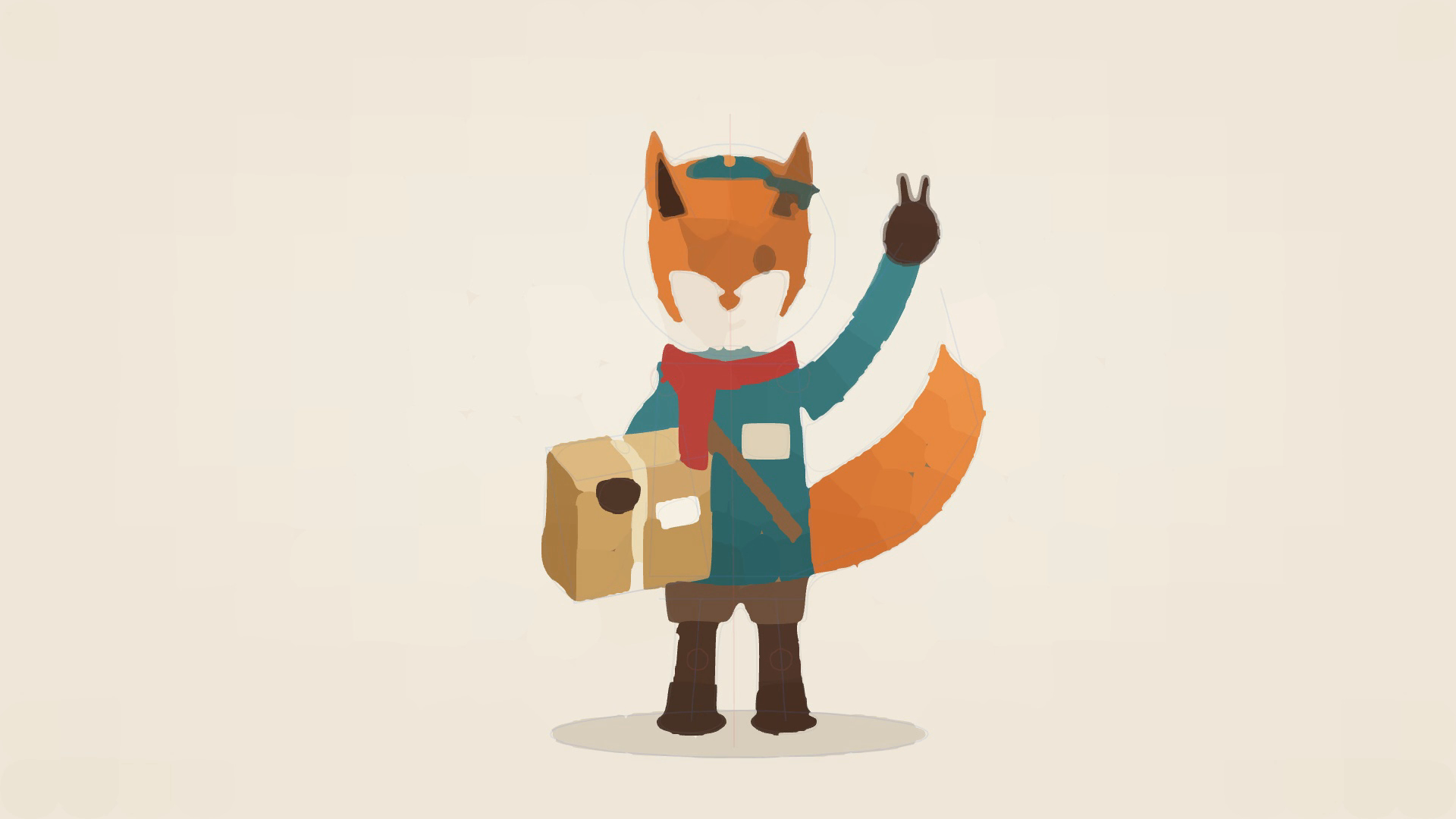
Show a picture being painted: construction marks, contours, flat colour and finer patches, as a layered SVG and a short film.
Network Tally
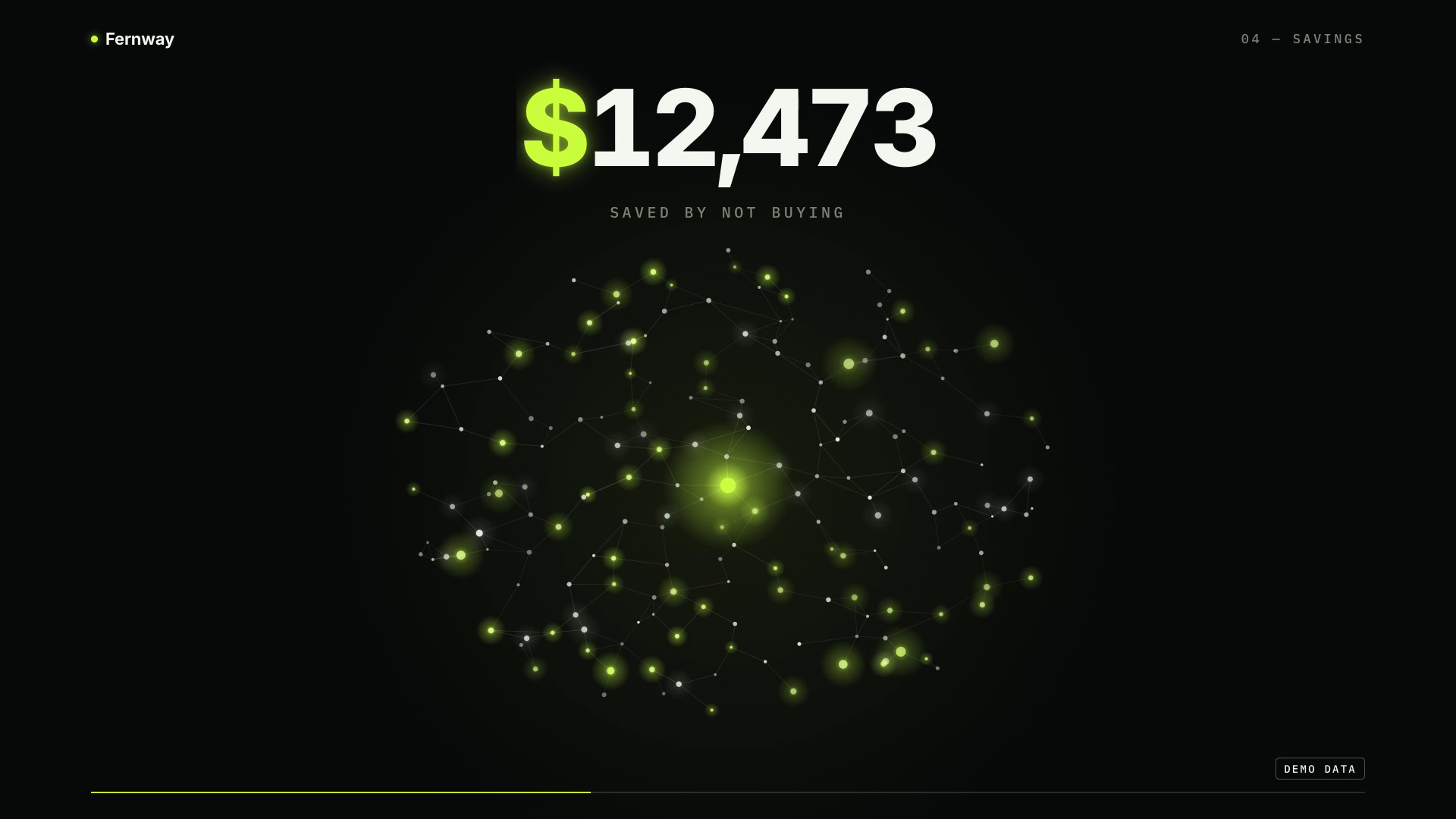
Tell a growth story with real numbers: one node network grows with each counter, flashes, dims behind a spike chart and closes on an end card.
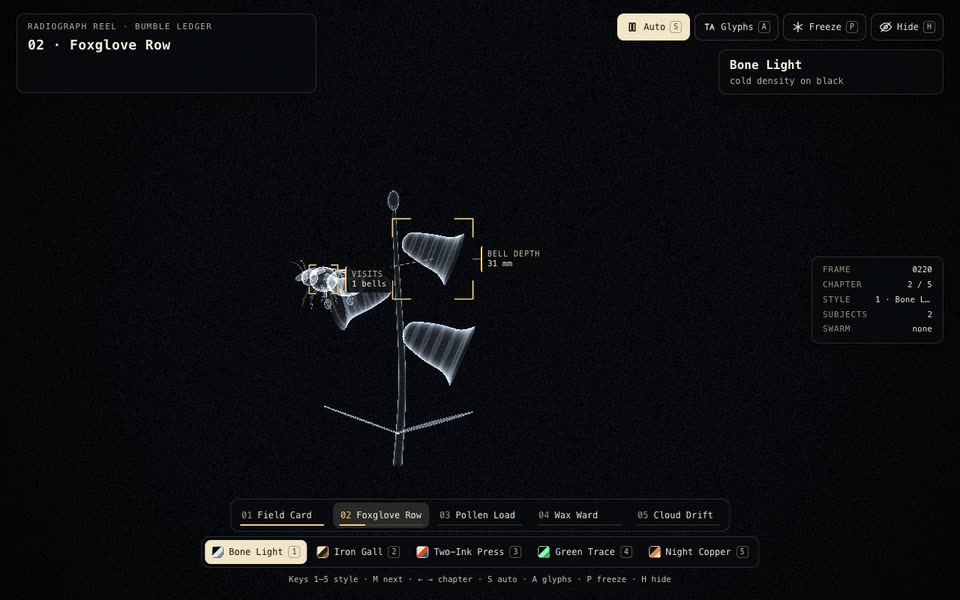
Radiograph Reel: Bumble Ledger
A specimen film reel: procedural bees, flowers and a wax comb glow as X-ray density, print in five switchable film styles with tracking labels, and a swarm morphs between formations.
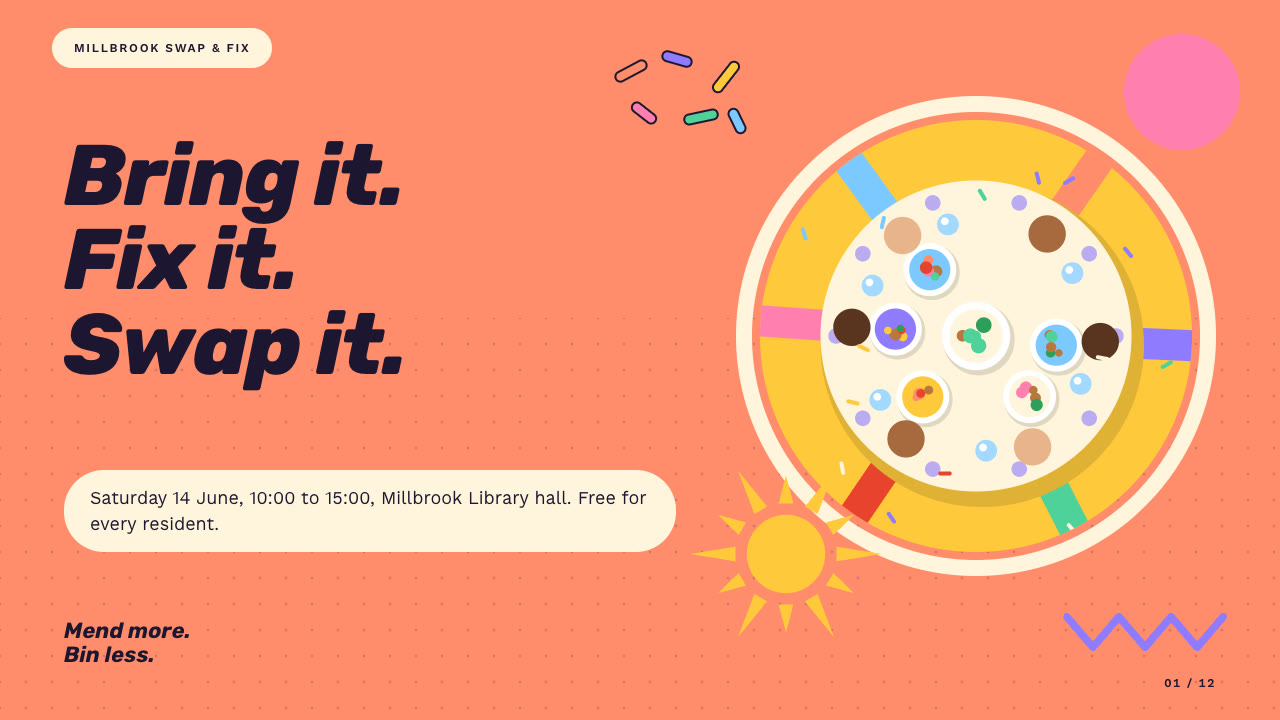
Festival Grid Slides
Invite people to a fair, open day or club season, or pitch one, in a bright festival deck: whole-page colour fields with a fine dot grid, heavy slanted headlines, cream cards and tickets, round pictures, and suns, rosettes, rings, bunting and sprinkles.