
Thesis Spine Slides
- Skill z Lab
- v1.0.5
- Research
Build a research talk whose titles, read in order, argue one claim from question to verdict, with one cited exhibit per evidence page.
Przykłady · 2
Co otrzymasz
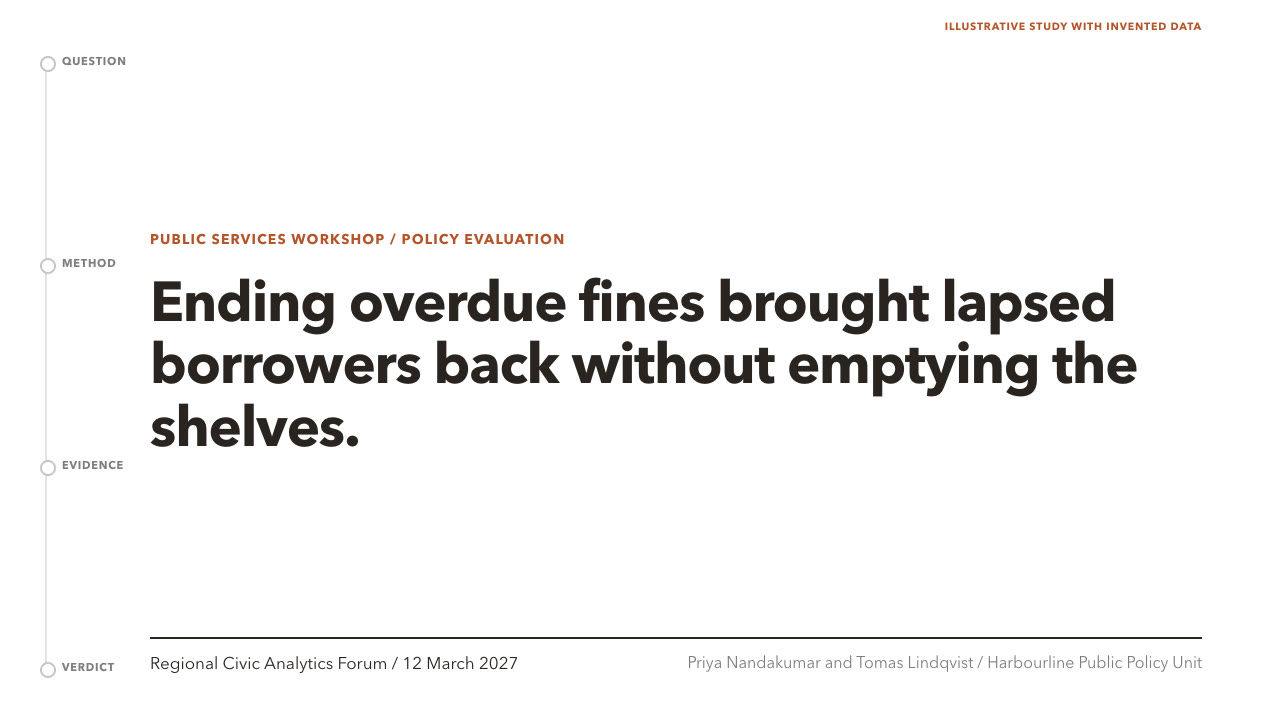
Bring your claim, research question and evidence with uncertainty, citations and limitations. The Skill returns one offline HTML deck that edits in the browser and exports editable PowerPoint.
Jak to działa
- 01
Write the argument as titles
Thesis Spine Slides starts from your central claim, your research question, methods, numbers with uncertainty, citations and limitations. Your Agent picks a spine, such as situation-complication-resolution, funnel-to-answer or answer-first, and writes a full-sentence action title for every content page. Read alone, those titles must carry the whole argument. It pauses to ask when a number or reference has no checkable origin.
- 02
Map pages to spine stops
Each page gets one recipe from the ten layouts, and each content recipe marks one stop on the left-edge spine: Question, Method, Evidence or Verdict. The Agent writes plan.json with text per node id, bar widths, dropped slots, two to four speaker-note points, a swatch from the three locked palettes and lang. It runs locally on Python 3 standard library only, with no paid service.
- 03
Compose, build and inspect
The Agent runs python3 scripts/kit.py compose --kit references/spine-kit.json --plan plan.json --out deck.json, then make-deck.py to write talk.html and verify-deck.py for the page count and leftover sample strings. Open talk.html over local HTTP and check wrapping, chart labels, table rows, the spine stop and the citation on every page. The deck should end on the verdict, then sources and appendix.
FAQ
What kind of talk is Thesis Spine Slides for?
Thesis Spine Slides is for seminars, thesis defences, conference talks, grant briefings and policy evaluations where the audience judges reasoning and evidence. It is not for pitch or marketing decks or photo-led storytelling, because it uses bar exhibits, tables and text with no decorative imagery. The demos are a fictional policy evaluation of fine-free libraries over 9 pages and a 10-page sorghum thesis defence.
Does Thesis Spine Slides invent results for my study?
No. Thesis Spine Slides uses only the evidence you can stand behind and never invents results for a real study. The Agent pauses before building when a number or reference has no checkable origin, when no single sentence states what the talk proves, or when the requested emphasis would overstate the findings. Say whether your data are real or illustrative in the brief.
Is Thesis Spine Slides free to run?
Yes. Thesis Spine Slides builds, edits, presents and exports offline with Python 3 and a browser, and its scripts call no model or paid service. That means a defence deck costs nothing to rebuild after each round of committee comments. Only the PowerPoint check, verify-pptx.py, needs an extra Python package.
Can Thesis Spine Slides make an editable PowerPoint for a defence?
Yes. Thesis Spine Slides exports a .pptx in which titles, findings and labels are native text boxes, limits and appendix pages are native tables and bars are native shapes, with speaker notes on every slide. Bars are shapes rather than chart objects, so you change a value by resizing the bar. Run verify-pptx.py on talk.pptx against deck.json.
Which fonts does Thesis Spine Slides use?
Thesis Spine Slides sets Avenir Next first, with Segoe UI or Helvetica Neue as fallbacks, and PingFang SC or another system font for Chinese. It bundles no fonts. On a machine without them the presentation app substitutes a face and line breaks can move, so check wraps on the presenting computer. Set contentLocale in the plan for Chinese, Japanese or Korean decks.
How many slides should a Thesis Spine Slides talk have?
Thesis Spine Slides budgets at most one slide per minute and aims to finish a minute or two early. Secondary results move to clearly labelled appendix pages. Each evidence slide carries one exhibit shown before its interpretation, with the finding beside it and the source on the same page. The verdict slide stays up during questions, and there is no thank-you slide.
Więcej Skills
Wszystkie Skills dla Research →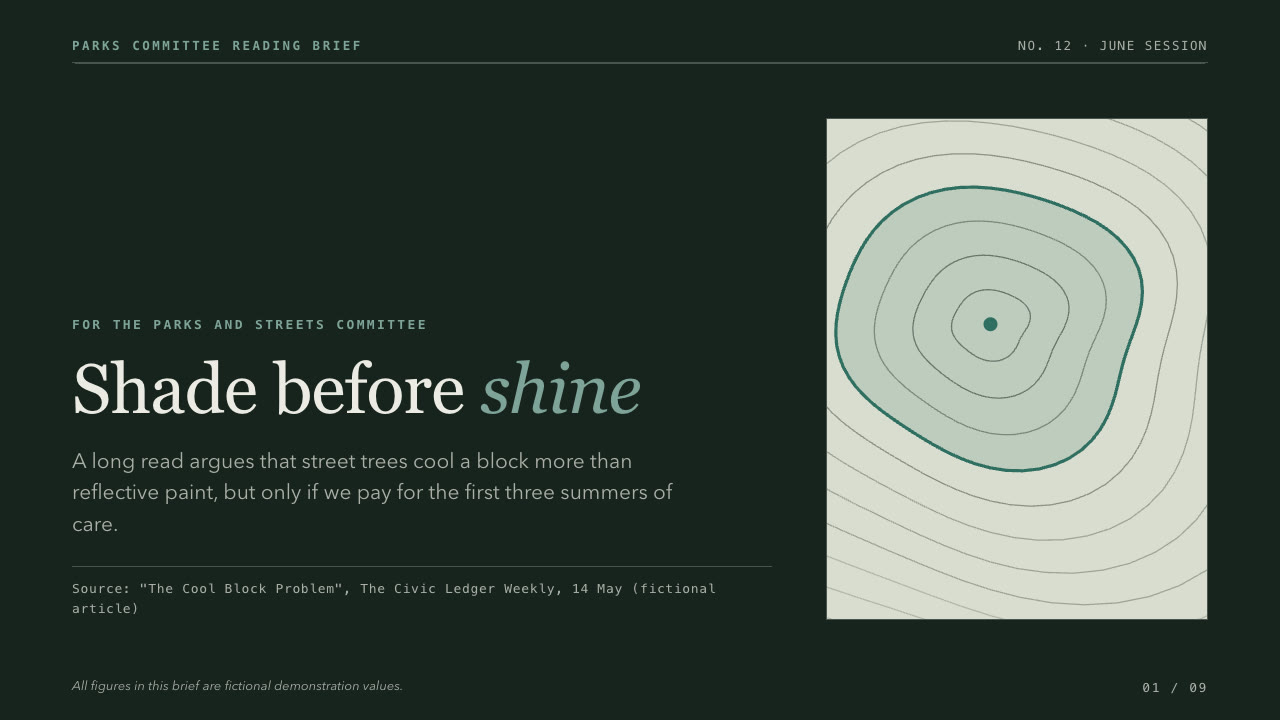
Reading Digest Slides
Turn one long read, essay or report into a reading brief a committee can decide on: a masthead, argument beats on a rail, a headline figure, bar charts and a source ledger that keep checked facts, assumptions and open questions apart, two readings, discussion prompts and the decision asked.
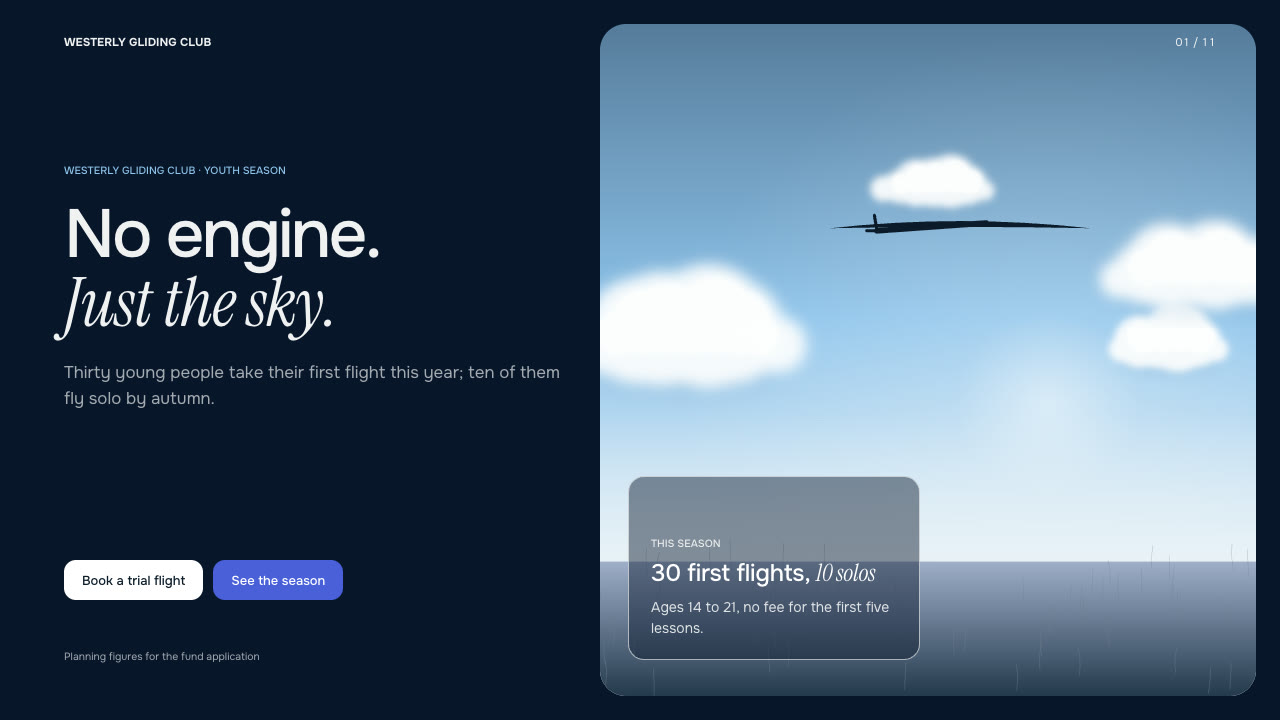
Cloudpane Slides
Make explainer and proposal decks that make a public subject feel approachable: open-sky pictures, clear optical glass and anonymous figures, thin-edged translucent glass cards over the pictures, broad mist-white pages, three deep night pages and headings with an italic serif accent.
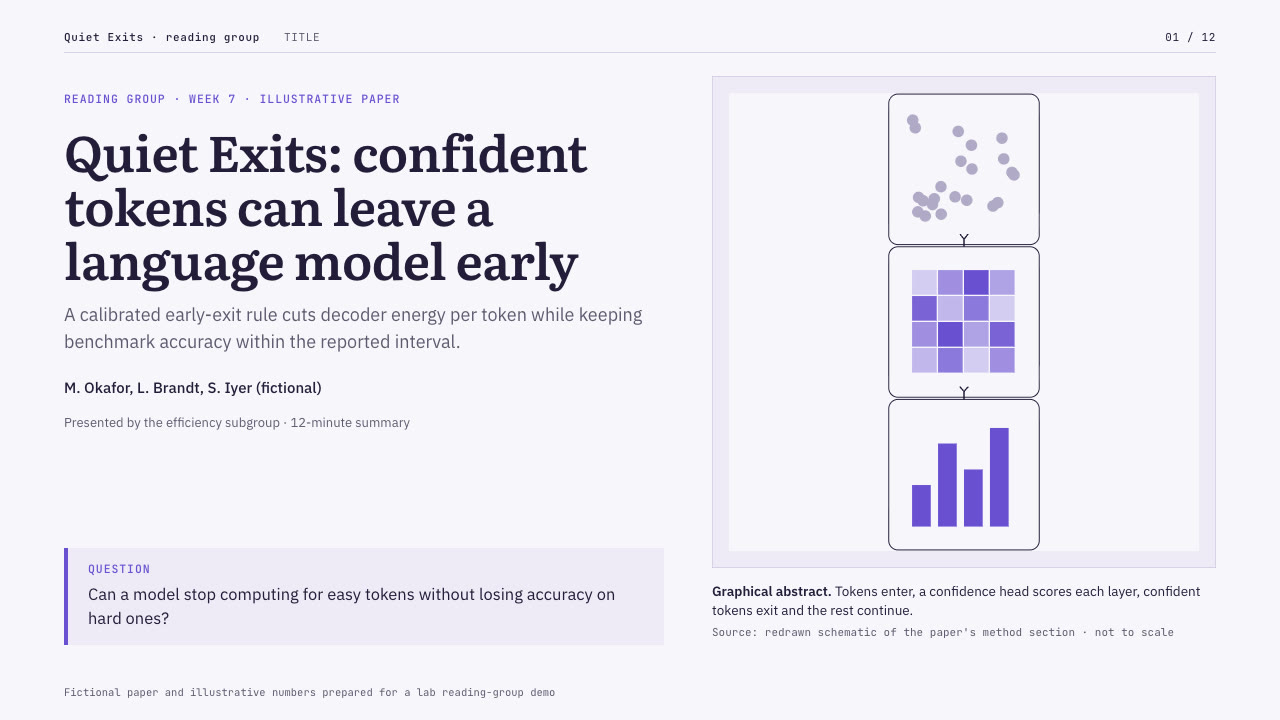
Figure First Slides
Make figure-led research talks such as paper summaries, journal clubs, lab and reading-group reviews and evidence briefings: every content page is built around one figure, chart or table with its caption and source underneath, numbers carry their comparator and interval, and a limits page states what the work can and cannot claim.
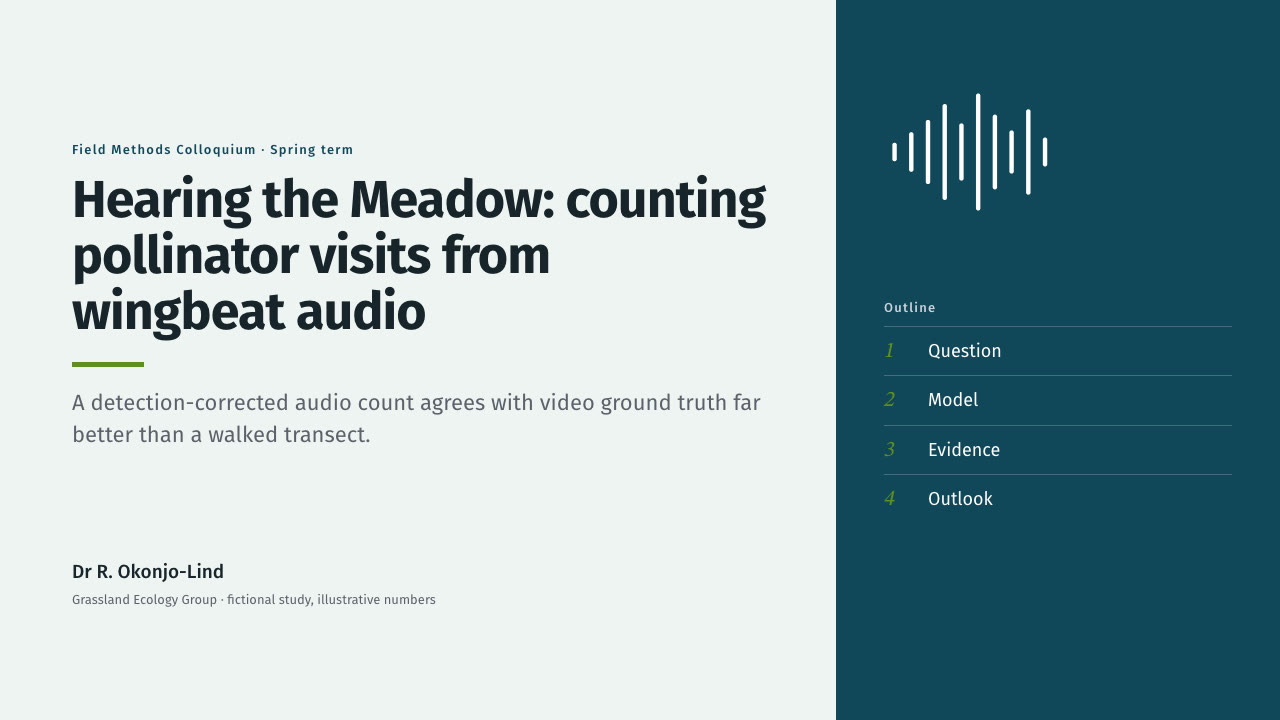
Seminar Math Slides
Turn a paper, thesis chapter or research notes into a projection-ready 16:9 talk for seminars, colloquia, defences and conference sessions: a section strip with the current section lit, equations with spoken readings and term glosses, a method pipeline, a proof sketch, native result bars and tables, plots drawn from data and a progress bar with frame counters.
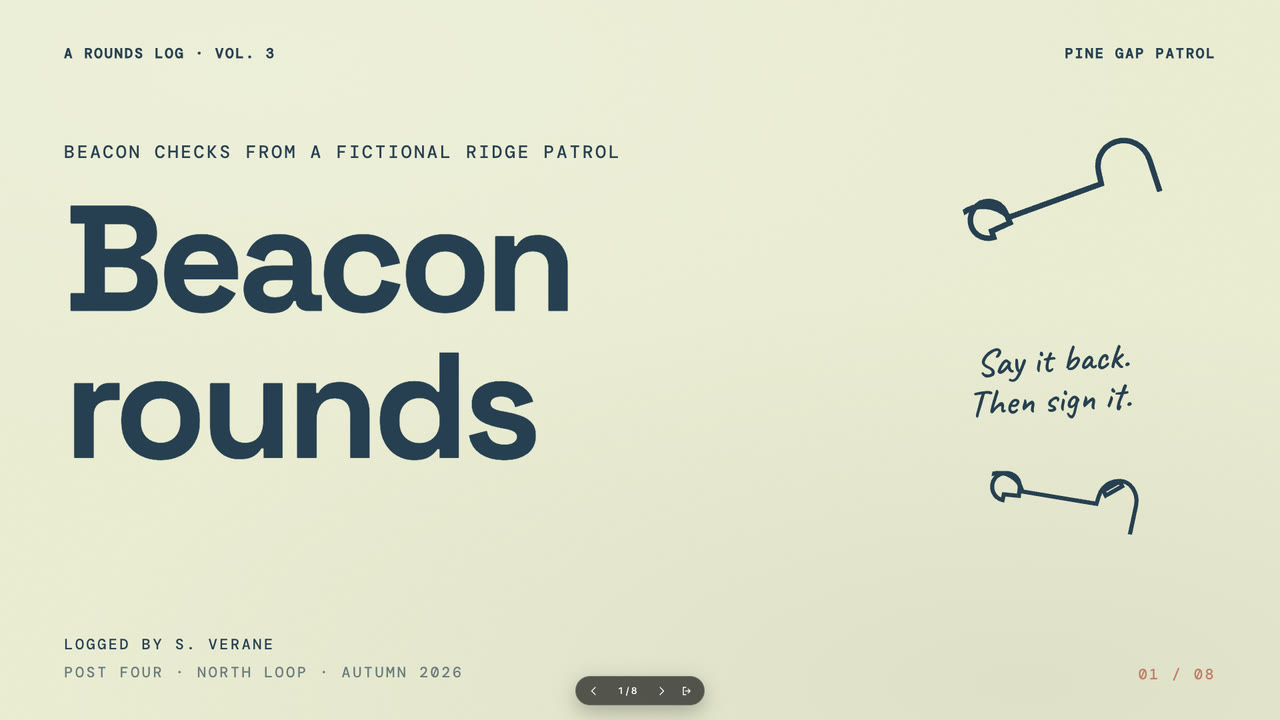
Yellowpad Fieldnotes Slides
Make decks that read like pinned field notes: saturated yellow legal-pad paper, cobalt ink, hand-drawn safety pins, cream pinned cards, handwritten marginalia, mono archival tags and rotated red stamps.
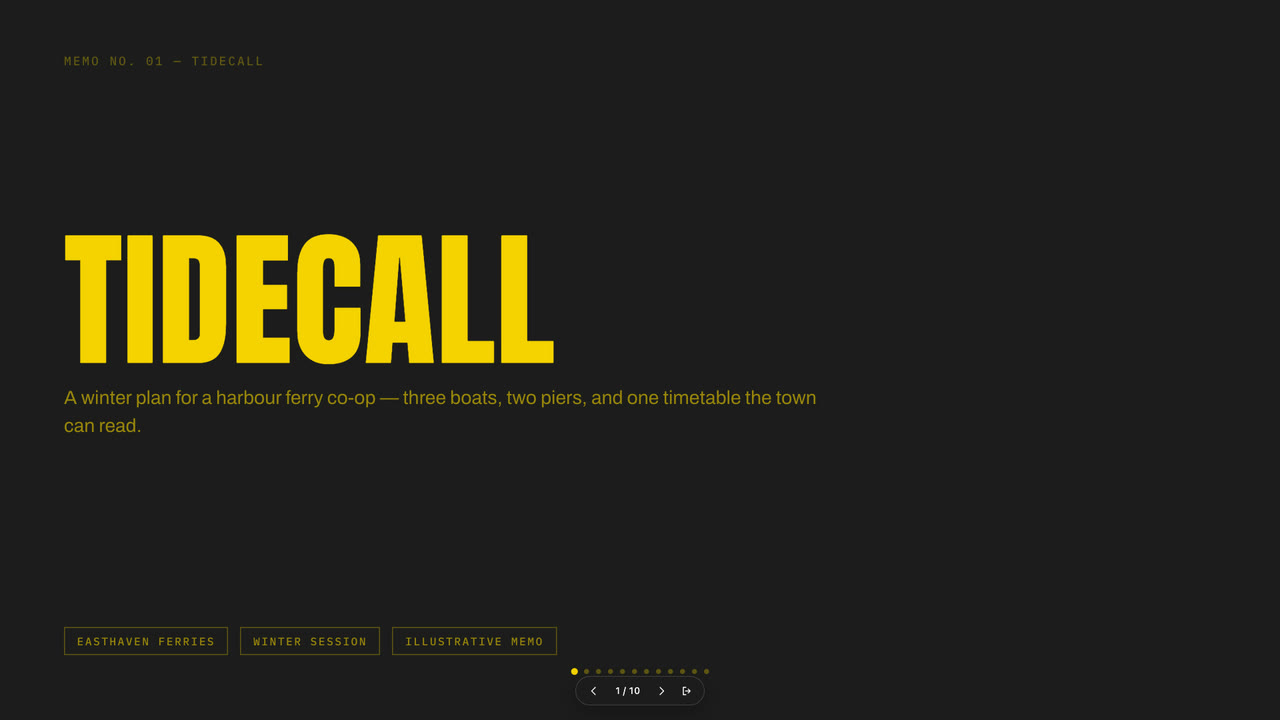
Volt Brief Slides
Make decks that read like high-voltage two-register briefs: near-black ink pages or full volt-yellow pages, uppercase condensed grotesk titles, mono chrome labels, em-dash bullets, stepped bar charts and hairline-framed drawn panels.