
Step-Print Light Trails
- Lab Skill
- v1.0.0
- Motion
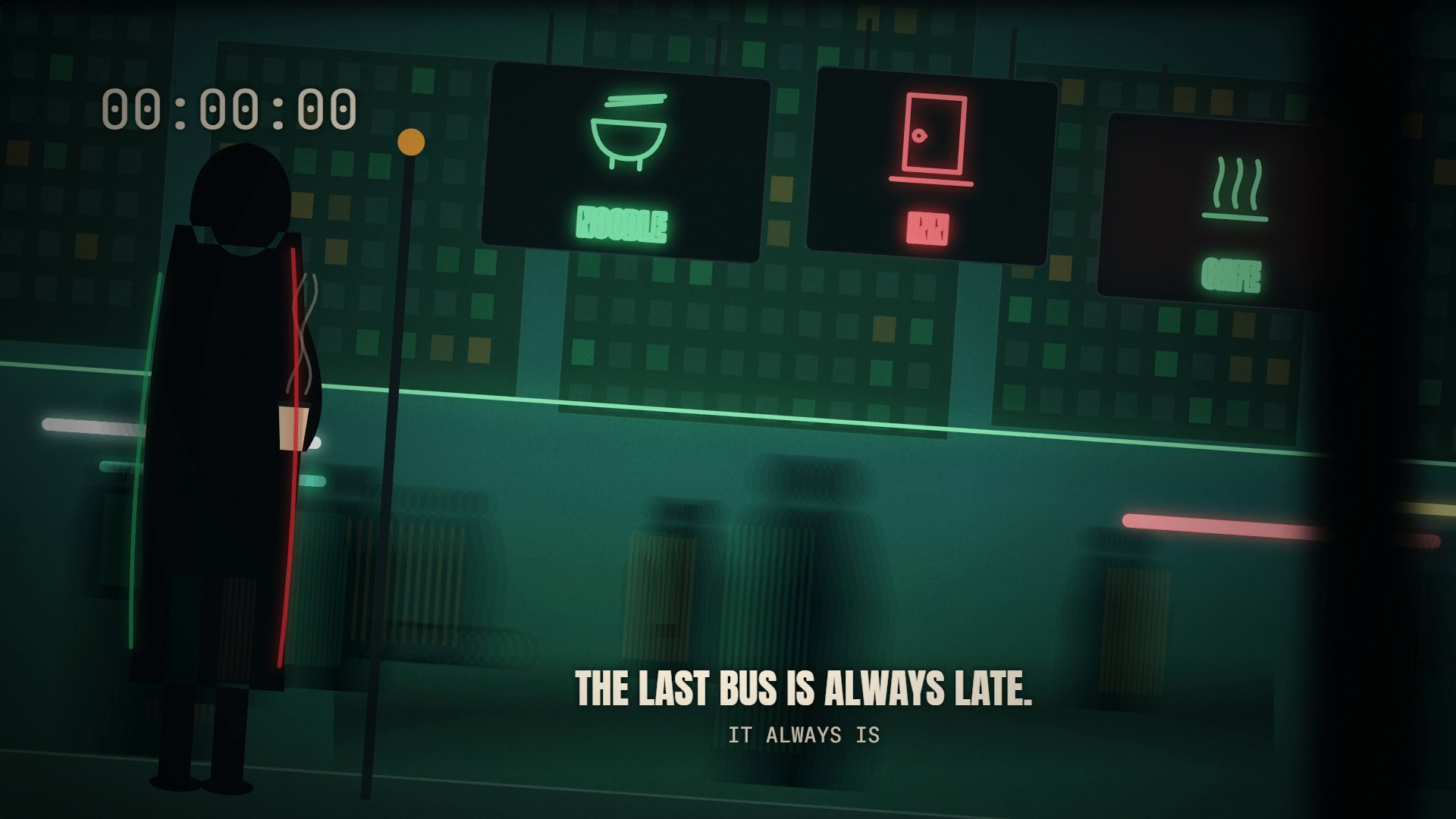
A neon night street on two clocks: a low-rate clock where every frame is a long exposure averaged from sub-samples — the crowd, rain and traffic smear into light trails while the still subject stays sharp — and a clean slow-gaze clock for contrast. Signs ignite in sequence, a flip-digit clock ticks, captions stay razor-sharp, and shots end on a whipped smear-out or a held freeze exposure.
示例 · 2
在线运行
在 SandBase sandbox 中运行 Step-Print Light Trails 的示例,并在这里查看结果。
工作原理
- 01
Write the shot sheet
Step-Print Light Trails reads a small JSON sheet: shots on two clocks, palette roles, walkers and light-trail ribbons, sign ignition cues, a still subject, a flip-digit clock and captions. Each shot names its clock, so you decide which beats smear and which stay calm. Alternate the two; a film that is all step-print reads as wallpaper.
- 02
Smear on the step clock
On the step clock the frame samples at about 8 fps, and each sample is a long exposure averaged from sub-frames spanning roughly a 432-degree shutter. The crowd, rain and traffic smear into light trails while the still subject in rim light stays sharp. On the slow clock every frame is drawn fresh, with world time scaled down for a quiet memory beat.
- 03
Ignite, end and render
Neon signs ignite in sequence, the flip-digit clock ticks and captions stay razor-sharp over the smear. Shots end on a whipped smear-out or a held freeze exposure. render.mjs needs FFmpeg and Chrome, and probes and decodes the silent 1920 by 1080, 24 fps MP4; stills.mjs builds a contact sheet without rendering video.
常见问题
What does Step-Print Light Trails make?
Step-Print Light Trails makes a silent neon night-street film where hurry smears into light trails and a still figure stays sharp. The demos show a late local train waiting under neon and night rain at a clay-pot food stall in Chinese. It suits music-film textures, city openers, late-night food promos and melancholy travel cuts.
What are the two clocks in Step-Print Light Trails?
Step-Print Light Trails runs a step clock, where each low-rate frame averages many sub-frames into one long exposure, and a slow clock, where frames are drawn cleanly with world time slowed. The contrast is the signature: smeared motion against a calm, sharp beat.
Why do Step-Print Light Trails captions stay sharp?
Step-Print Light Trails draws captions and the flip-digit clock outside the long-exposure averaging, so text stays razor-sharp while the street behind it smears. That keeps information readable even in the busiest shot, and it makes the still subject feel deliberately held.
How do Step-Print Light Trails shots end?
Step-Print Light Trails ends each shot either on a whipped smear-out, where the whole frame streaks away, or on a held freeze exposure that stops time on one image. Choose per shot in the sheet to set the rhythm between hurried and remembered moments.
Does Step-Print Light Trails cost anything?
Step-Print Light Trails draws its street, trails and signs in code and renders through local Chrome and FFmpeg. There is no model or API involved, so rendering is not billed. Both demo sheets were rendered from a fresh extraction of the published package.
更多 Skills
所有 Motion Skills →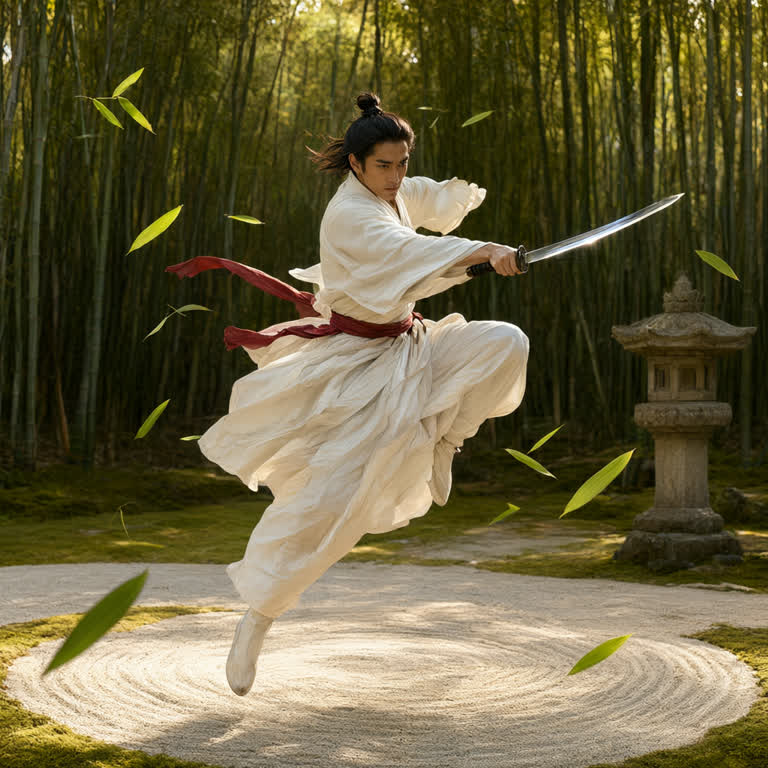
Image Blaster
Turn one frozen moment into a camera-orbit concept video.
Sketchbook Film
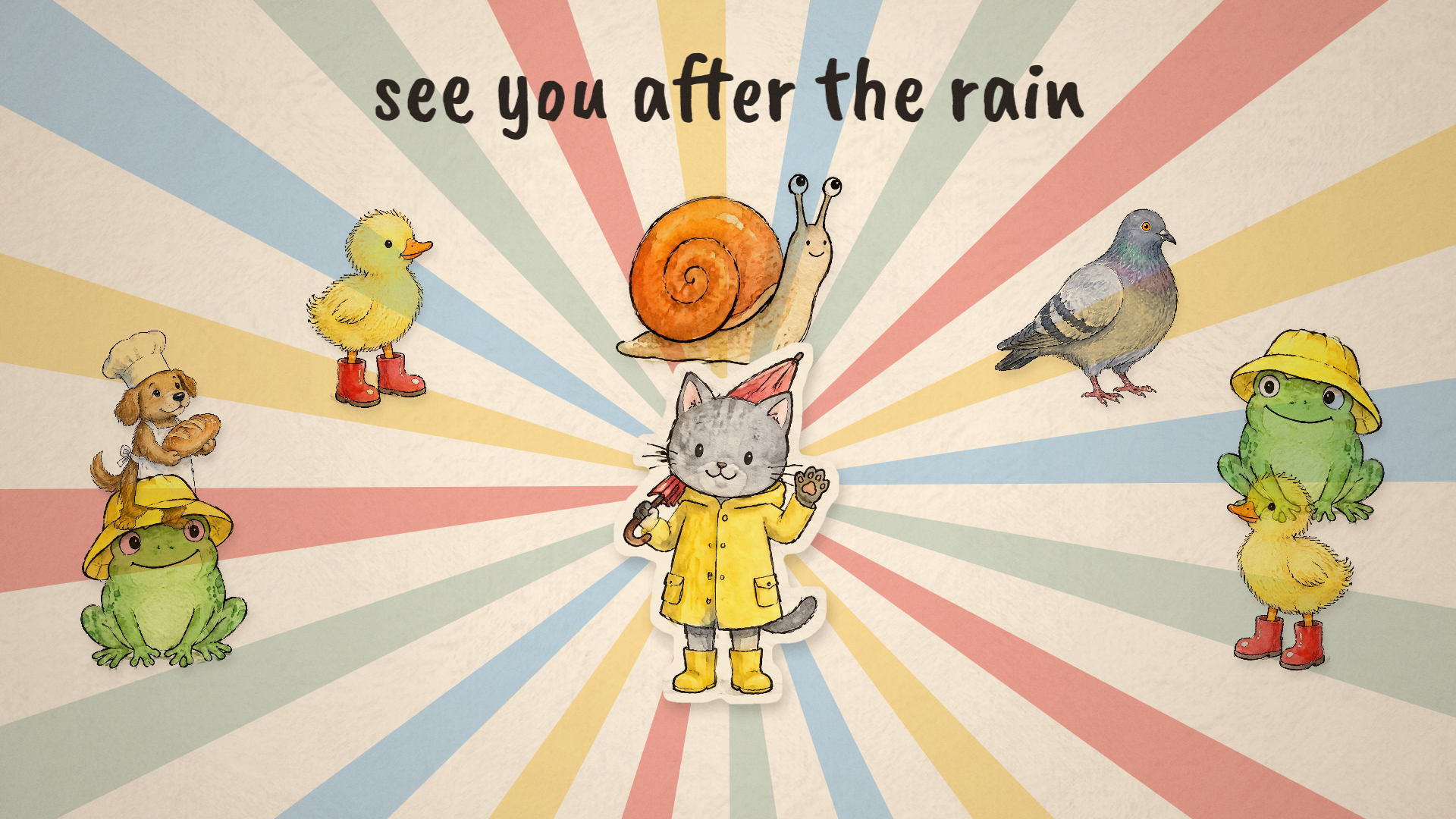
Bring photographed sketchbook drawings to life as a short film with cut-out characters, ink lettering and a score.

SVG Paint Stages
Show a picture being painted: construction marks, contours, flat colour and finer patches, as a layered SVG and a short film.
Network Tally
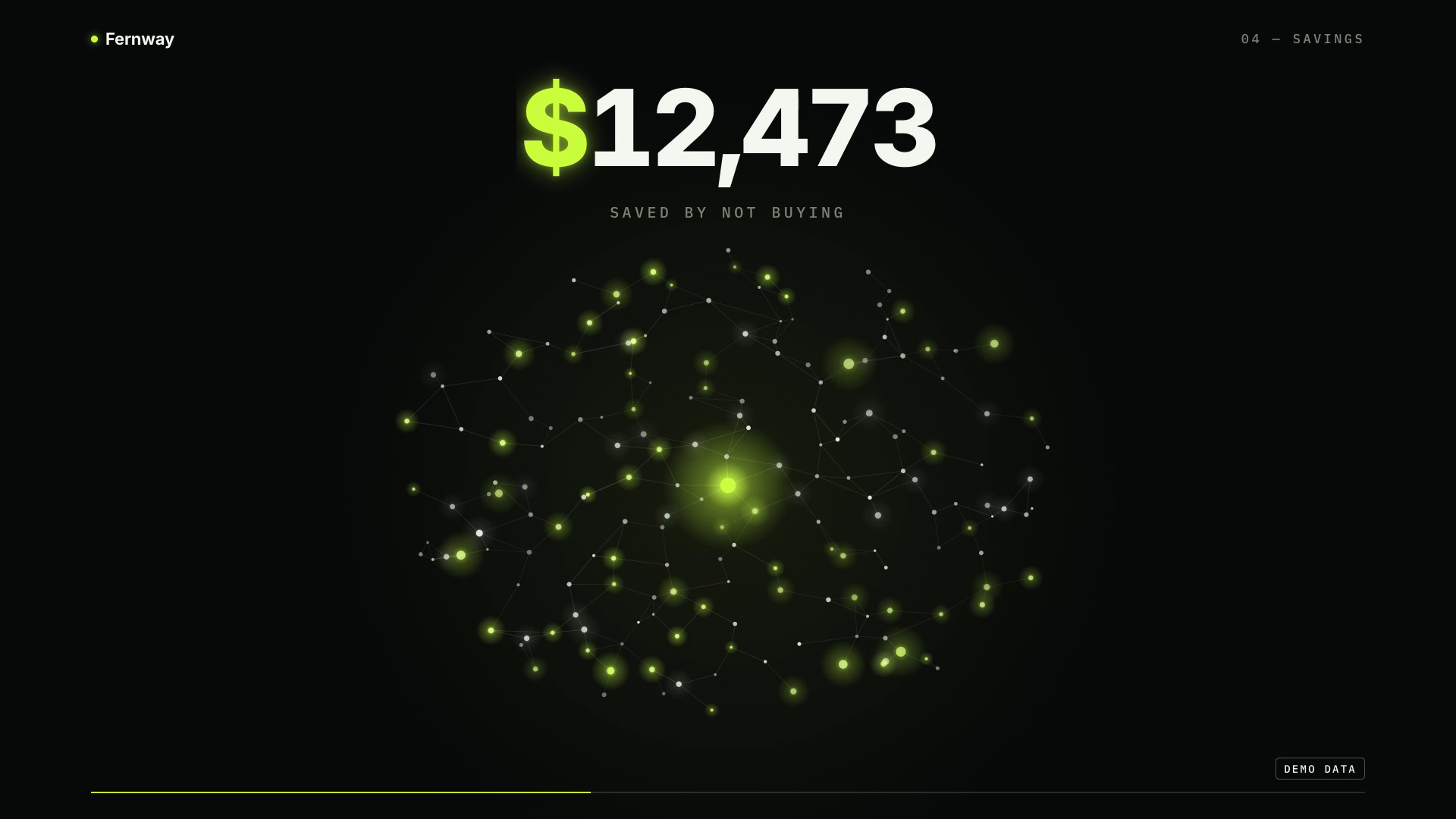
Tell a growth story with real numbers: one node network grows with each counter, flashes, dims behind a spike chart and closes on an end card.
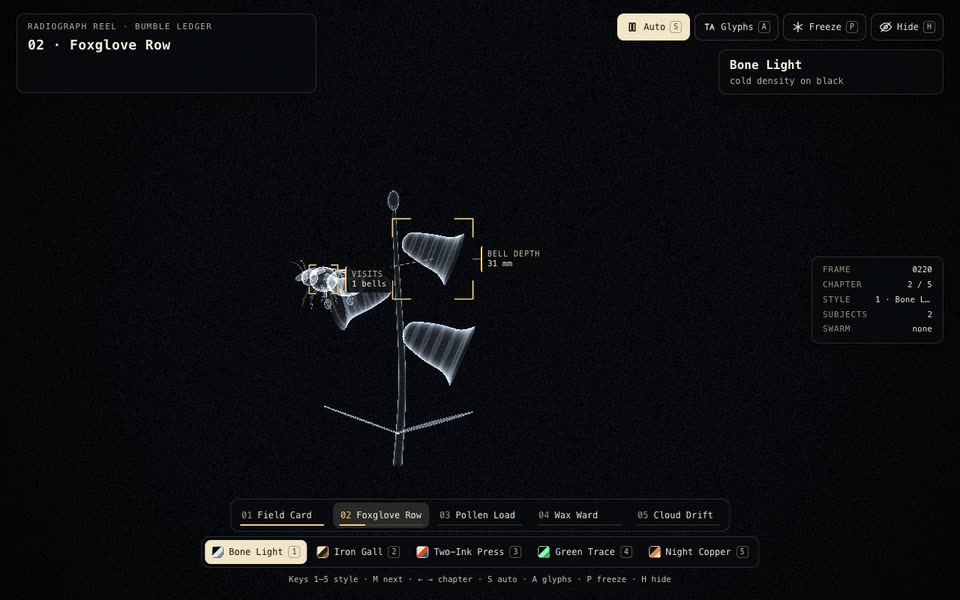
Radiograph Reel: Bumble Ledger
A specimen film reel: procedural bees, flowers and a wax comb glow as X-ray density, print in five switchable film styles with tracking labels, and a swarm morphs between formations.
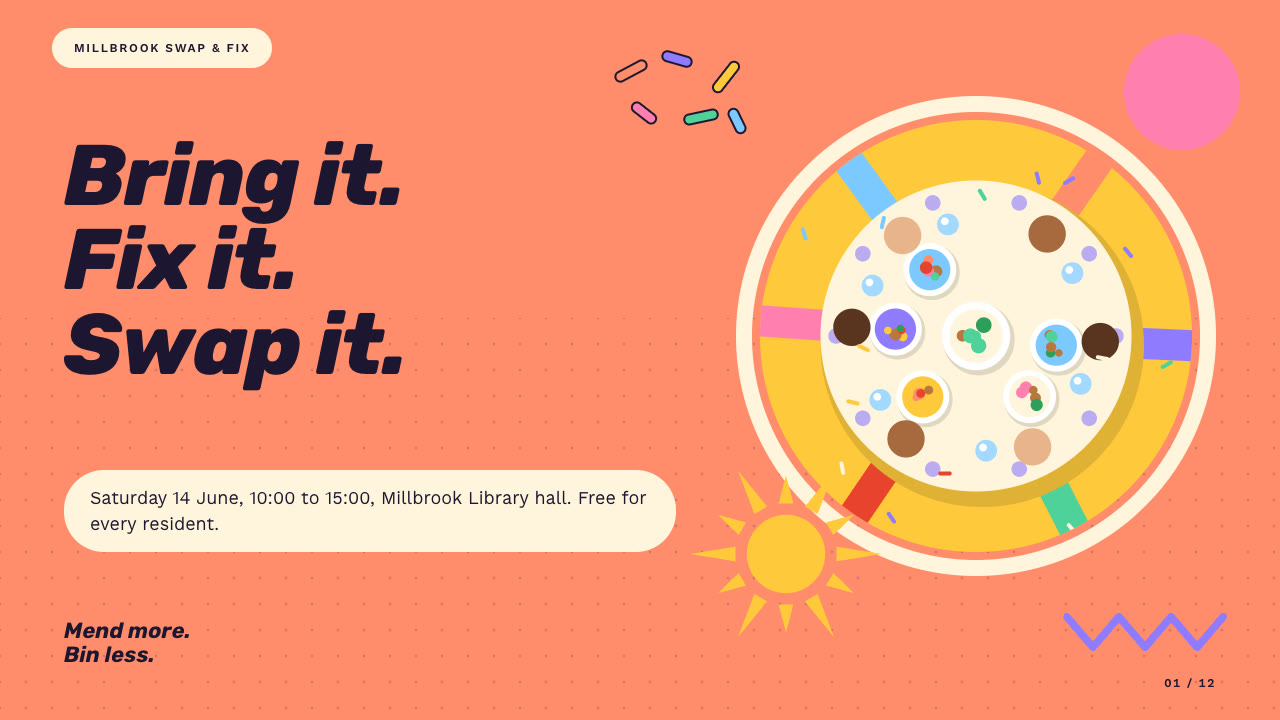
Festival Grid Slides
Invite people to a fair, open day or club season, or pitch one, in a bright festival deck: whole-page colour fields with a fine dot grid, heavy slanted headlines, cream cards and tickets, round pictures, and suns, rosettes, rings, bunting and sprinkles.