
Presentations
Pitch, plan and board decks your agent writes from a brief: one offline HTML deck that edits in the browser and exports editable PowerPoint.
Explore Presentations ↗Investigate markets and evidence, and communicate research findings.
瀏覽 Skills ↓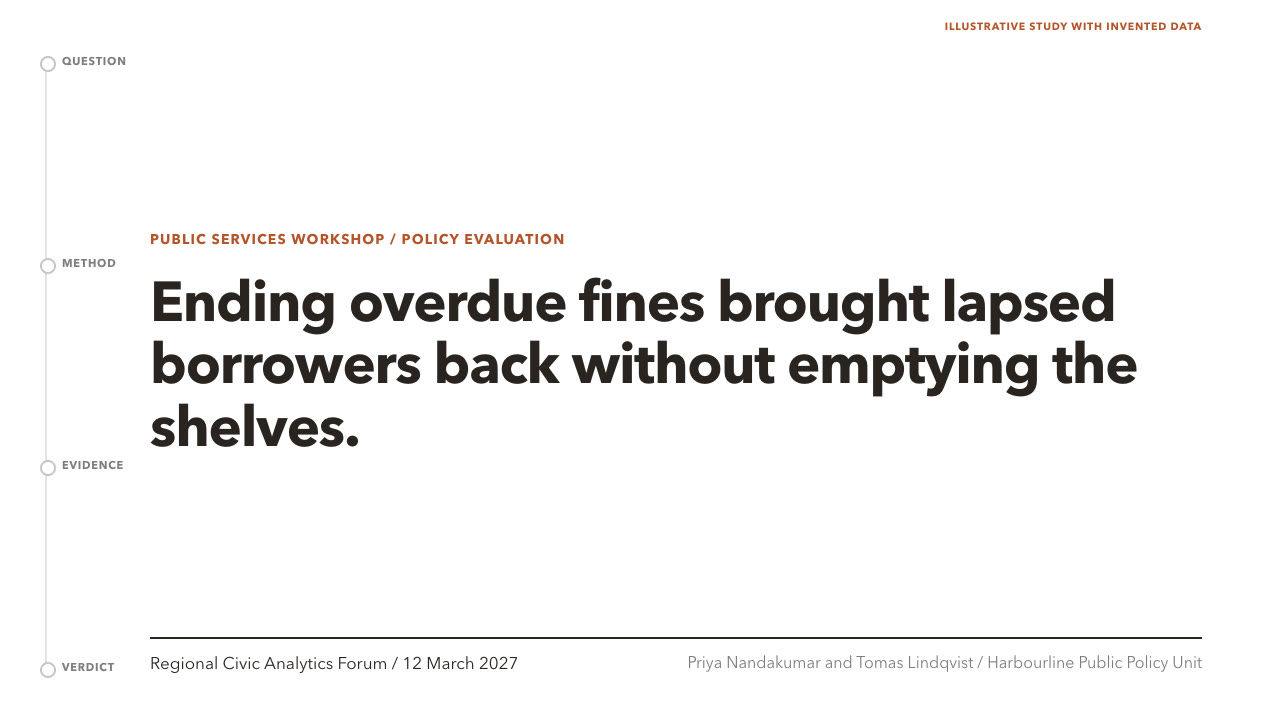
Build a research talk whose titles, read in order, argue one claim from question to verdict, with one cited exhibit per evidence page.
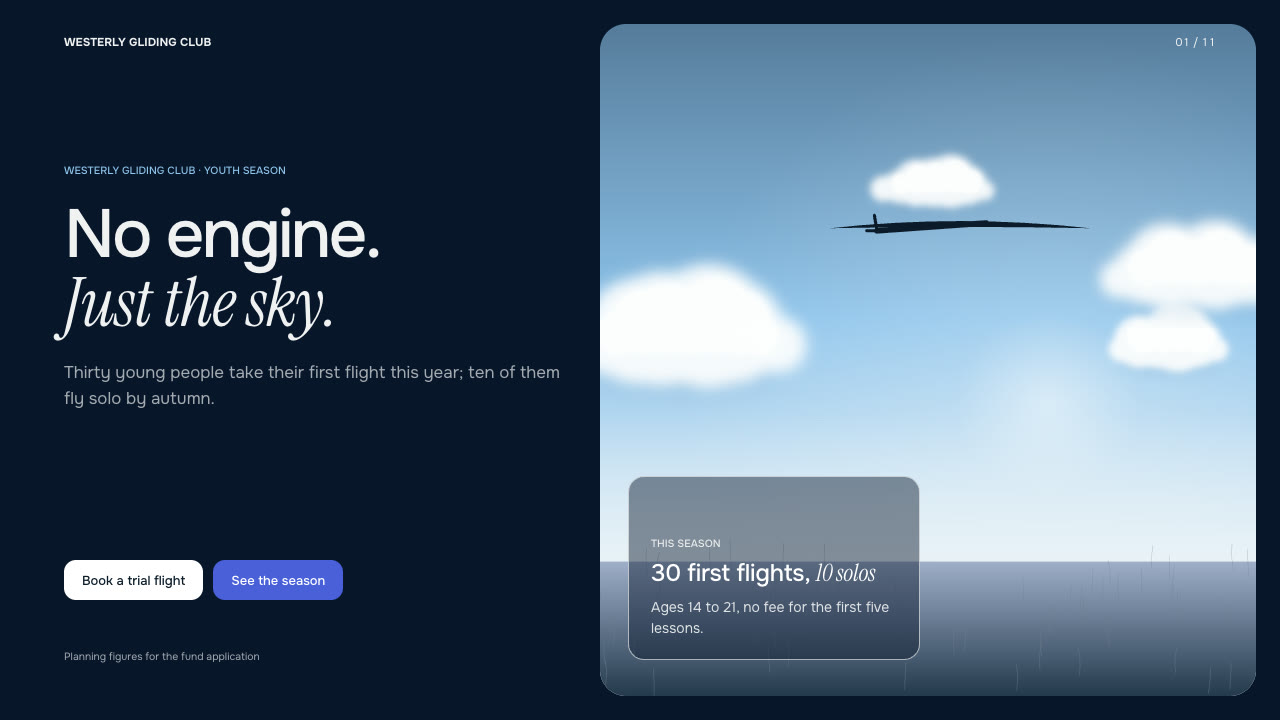
Make explainer and proposal decks that make a public subject feel approachable: open-sky pictures, clear optical glass and anonymous figures, thin-edged translucent glass cards over the pictures, broad mist-white pages, three deep night pages and headings with an italic serif accent.
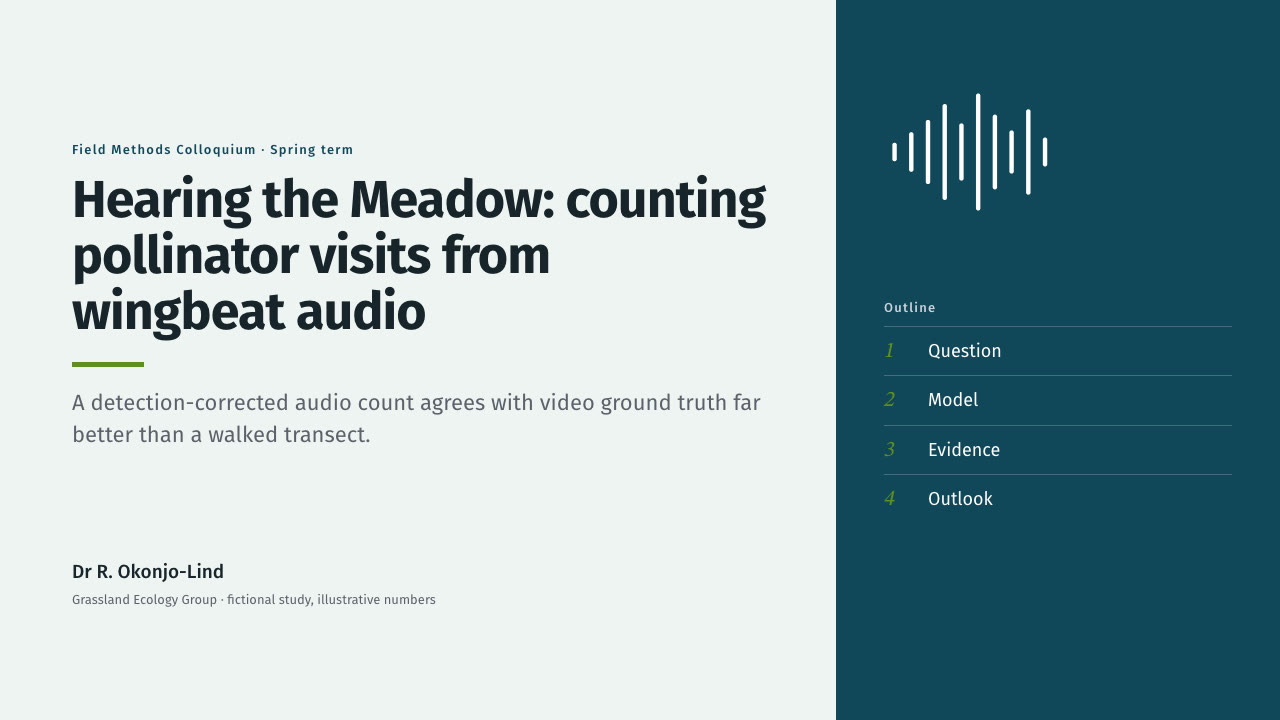
Turn a paper, thesis chapter or research notes into a projection-ready 16:9 talk for seminars, colloquia, defences and conference sessions: a section strip with the current section lit, equations with spoken readings and term glosses, a method pipeline, a proof sketch, native result bars and tables, plots drawn from data and a progress bar with frame counters.
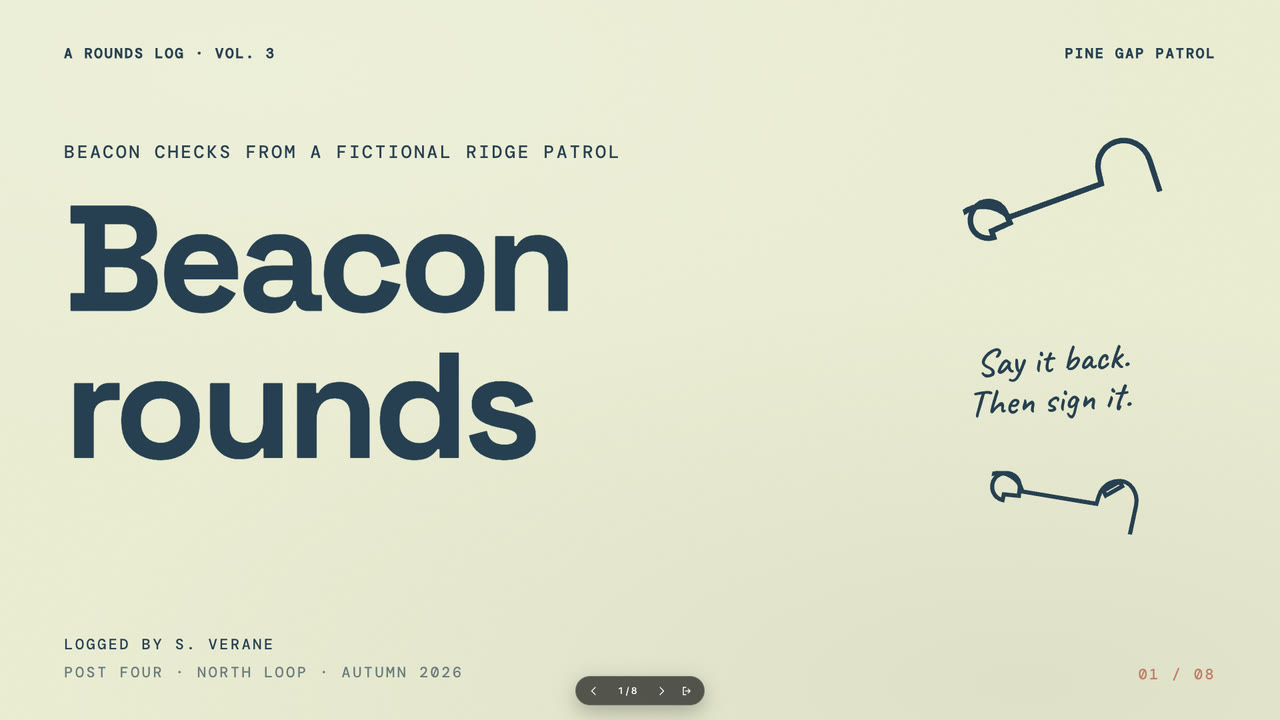
Make decks that read like pinned field notes: saturated yellow legal-pad paper, cobalt ink, hand-drawn safety pins, cream pinned cards, handwritten marginalia, mono archival tags and rotated red stamps.
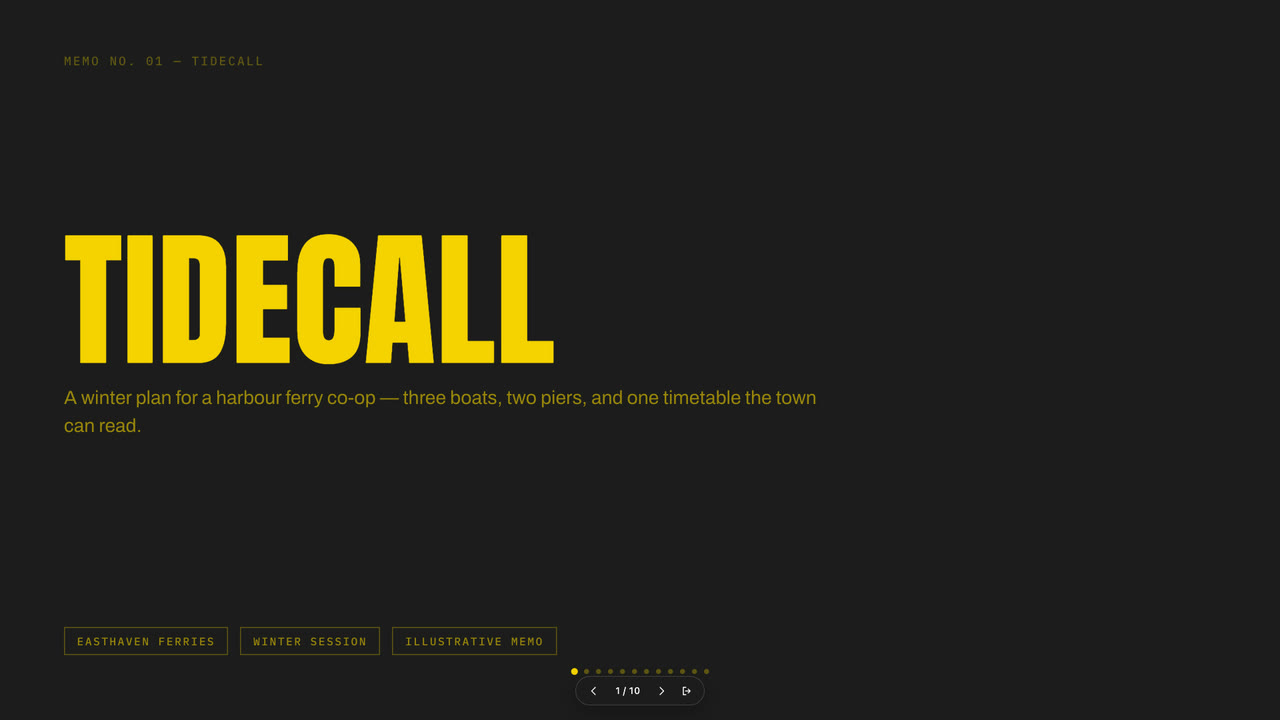
Make decks that read like high-voltage two-register briefs: near-black ink pages or full volt-yellow pages, uppercase condensed grotesk titles, mono chrome labels, em-dash bullets, stepped bar charts and hairline-framed drawn panels.

Make decks that read like nocturnal editorial issues: a single near-black velvet canvas, pearl-paper type with one hot-pink accent, serif display numerals, mono masthead chrome and framed line-art plates.
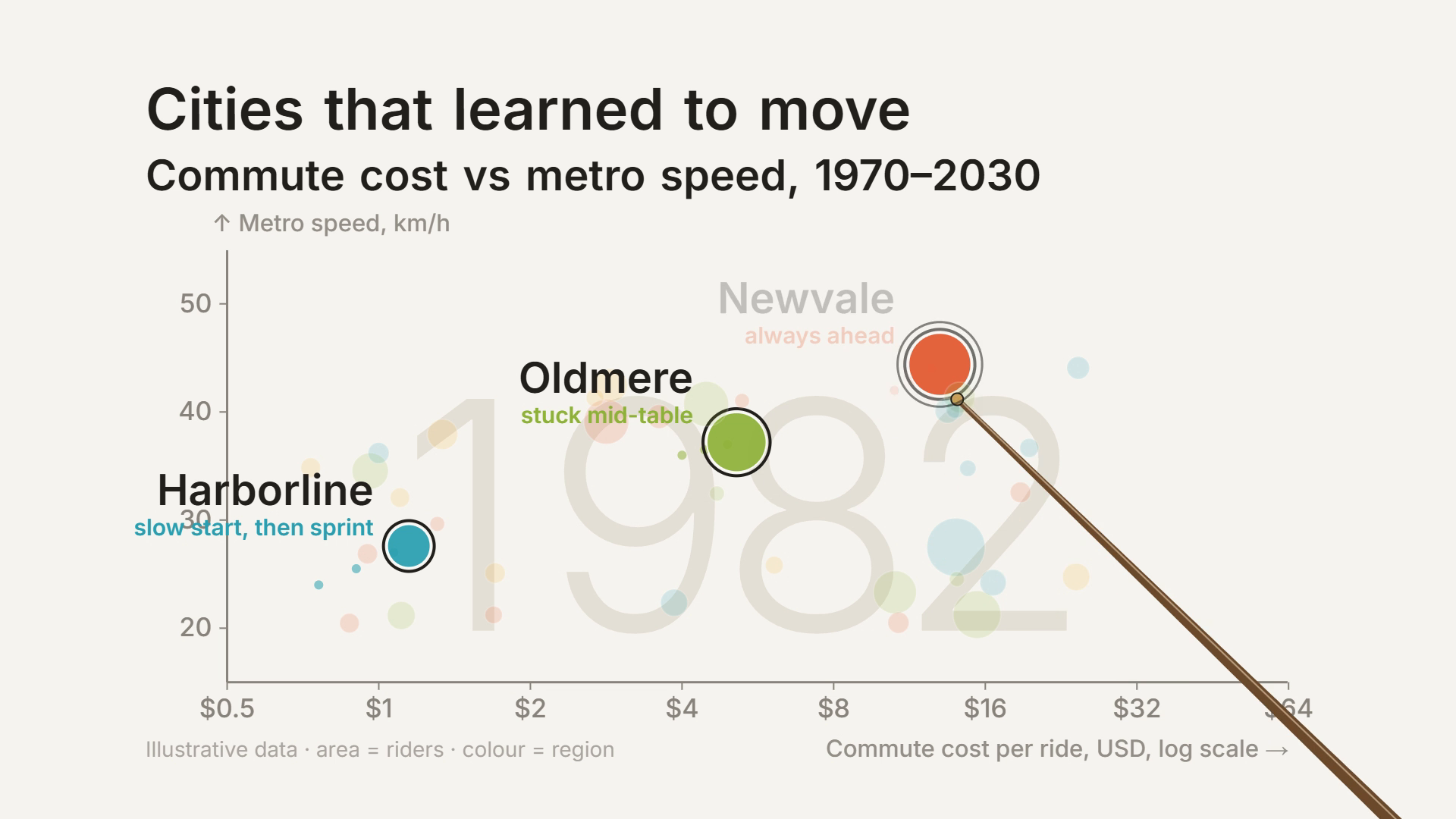
A narrated bubble-chart sting. One scatter plot is the whole stage: a giant year odometer rolls behind the bubbles while a piecewise time map races, eases into holds and rewinds. A wooden pointer stick reaches in and taps the narrated bubbles — they keep ink rings and dotted trails while everything else dims — and the ending rewinds time once more while the axes rescale into the story's range. Silent, deterministic, frame-seekable.
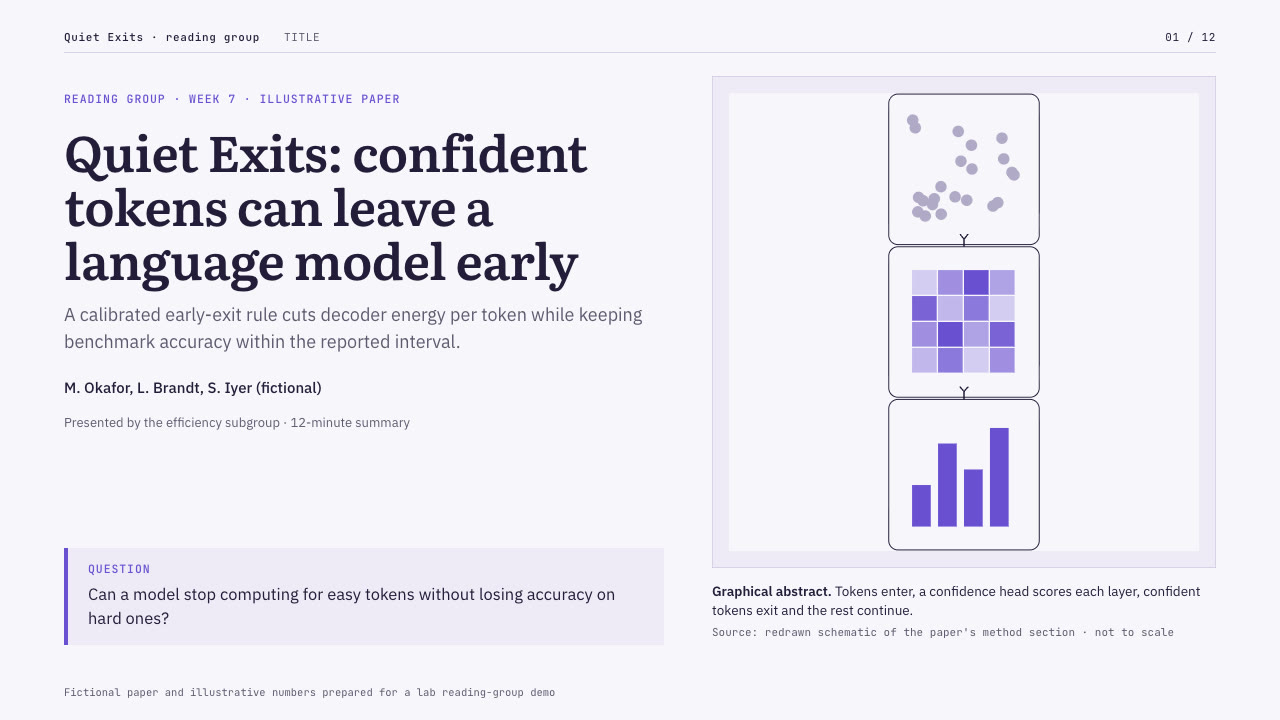
Make figure-led research talks such as paper summaries, journal clubs, lab and reading-group reviews and evidence briefings: every content page is built around one figure, chart or table with its caption and source underneath, numbers carry their comparator and interval, and a limits page states what the work can and cannot claim.
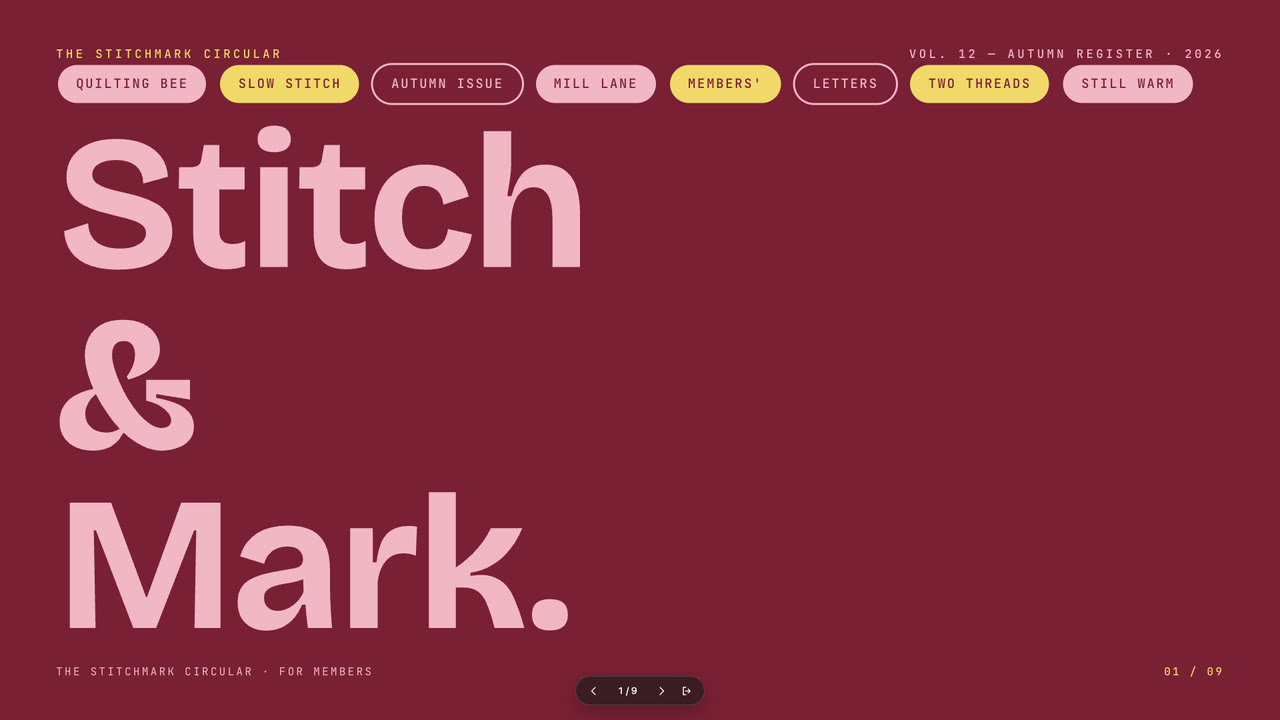
Make decks that read like three-ink seasonal gazettes: berry surface, butter accent and ink type on Bricolage Grotesque and Instrument Serif — a chip-row cover, principle grid, headline figure and colophon.

Make decks that read like paper-cut field manuals: cream ledger paper, black stencil condensed titles, two accent inks, blob agenda chips, three-column consults, stepped counts, reach matrices and call cards.
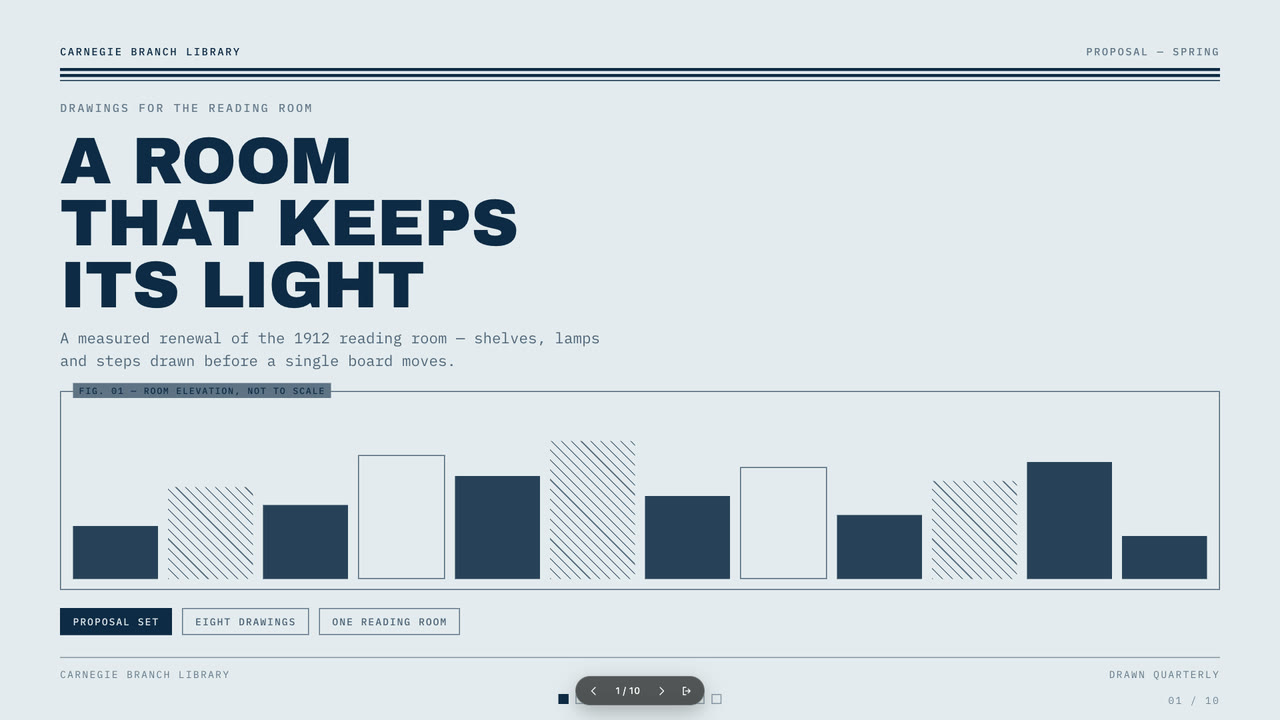
Make decks that read like printed drawing sheets: cream paper pages beside near-black plate pages, a double-rule masthead, uppercase display type, monospace ledger copy, fig.-tagged wireframe figures, hatched fills, X-cross placeholders and dashed checklists.

Make decks that read as a printed quarterly or an editorial year-in-review: a three-tone register of deep forest green, dusty pink and oat cream, a tall literary serif with mono chrome, monogram-circle page numbers, mixed filled and outlined tile grids and paired bar charts on a colour field.
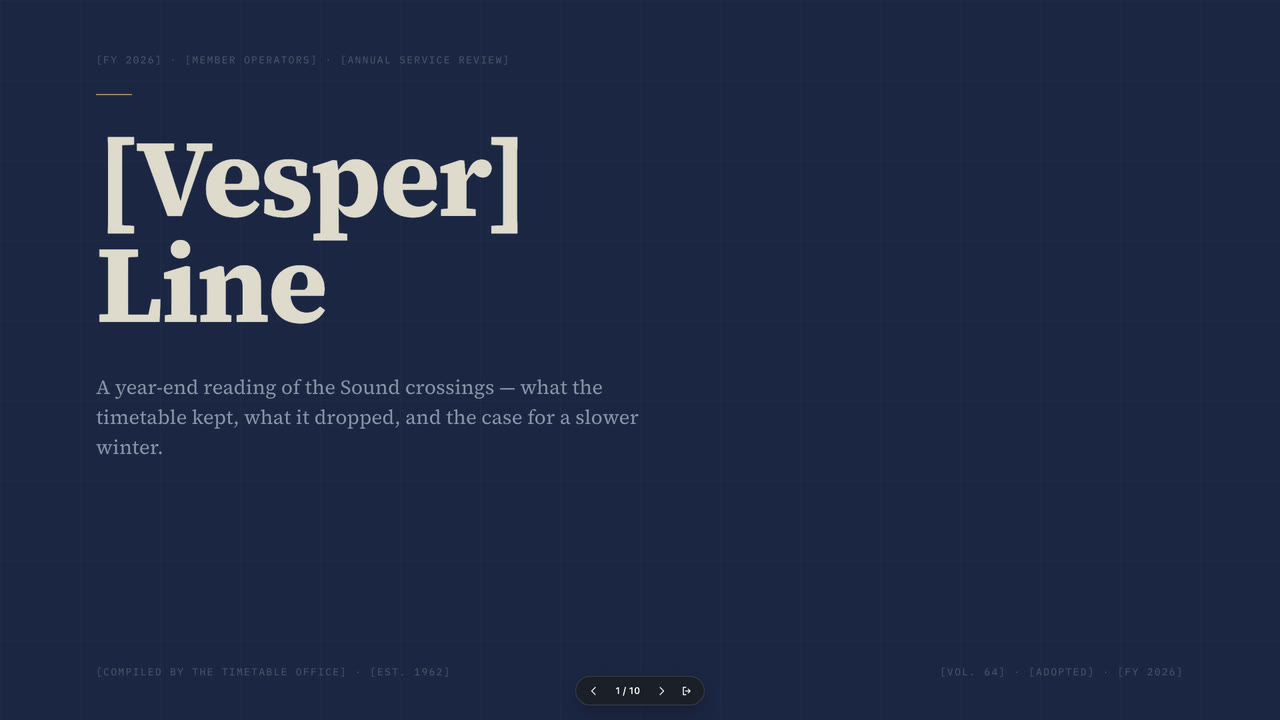
Make decks that read as institutional briefings or considered board documents: deep editorial navy and warm cream as interchangeable fields, antique-gold punctuation only, a near-invisible 80px grid texture on every dark page, and hairline mono chrome — transitional serif display against mono datelines.
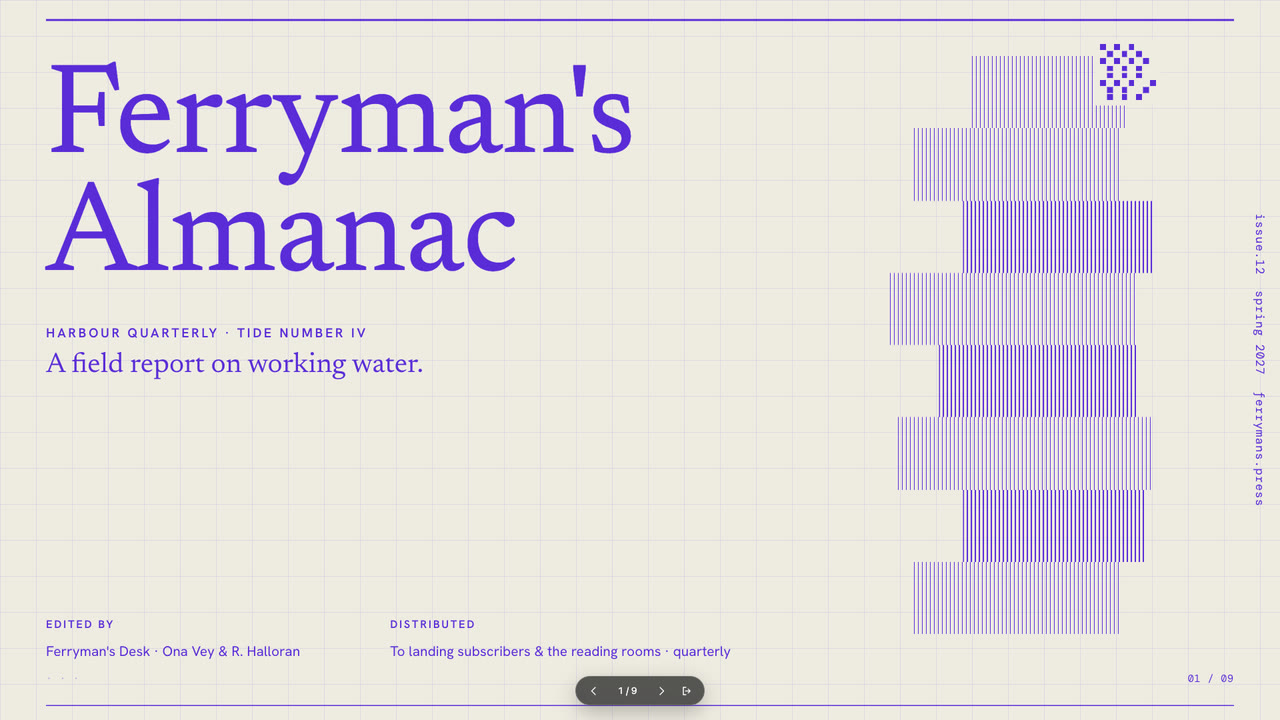
Make decks that read as trend indices or editorial ledgers: warm cream paper with a permanent graph-paper grid, a single electric-cobalt ink for every headline, rule, chart and chrome element, pixel-glitch scanline columns, QR mosaic patches, ledger tables and pixel-stack bars.
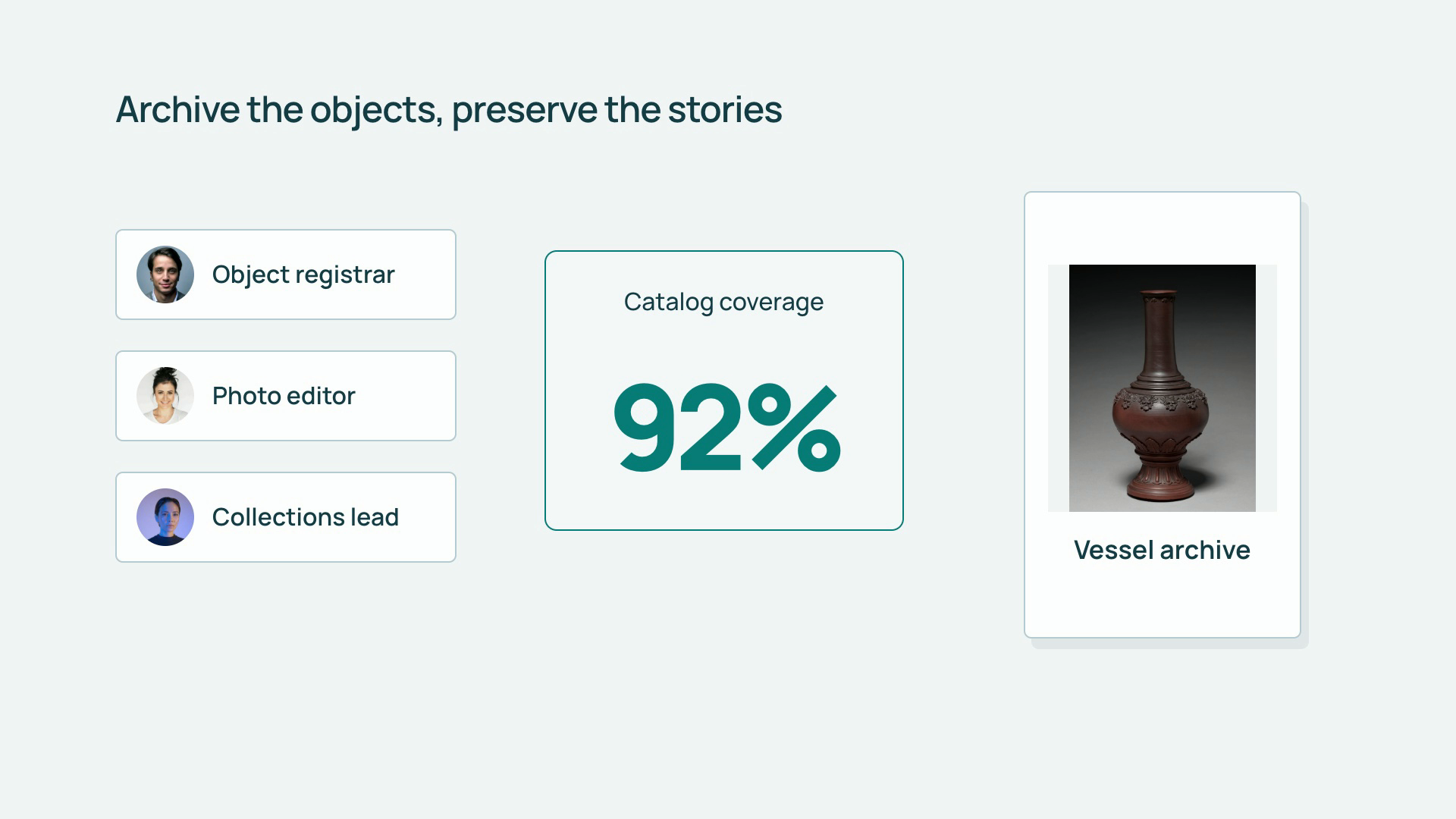
Keep three portrait roles and one object still while a percentage changes, crosses a threshold and holds for reading.
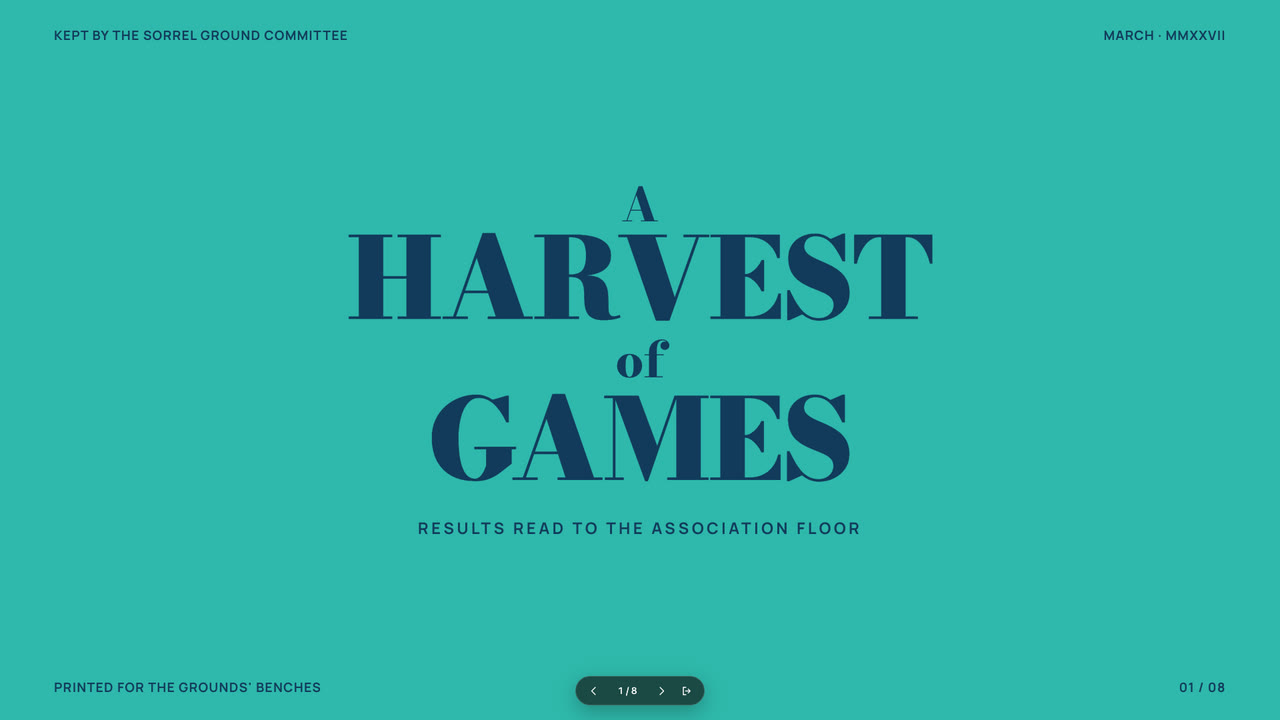
Make decks that read as bright editorial playbills: a saturated emerald canvas, one deep-navy ink for every text, rule and inverse panel, oat-paper alt tiles, a heavy display serif at theatrical scale and the signature double-rule ornament.

Make decks that read as dark literary monographs: a deep forest canvas with warm bone Playfair serif, Jost-light body, mono hairline chrome, a single terracotta accent as kicker/rule/italic-em/quote-mark/highlight-bar punctuation, ghost watermark numerals, rotated sidebars and parchment light-mode pages.
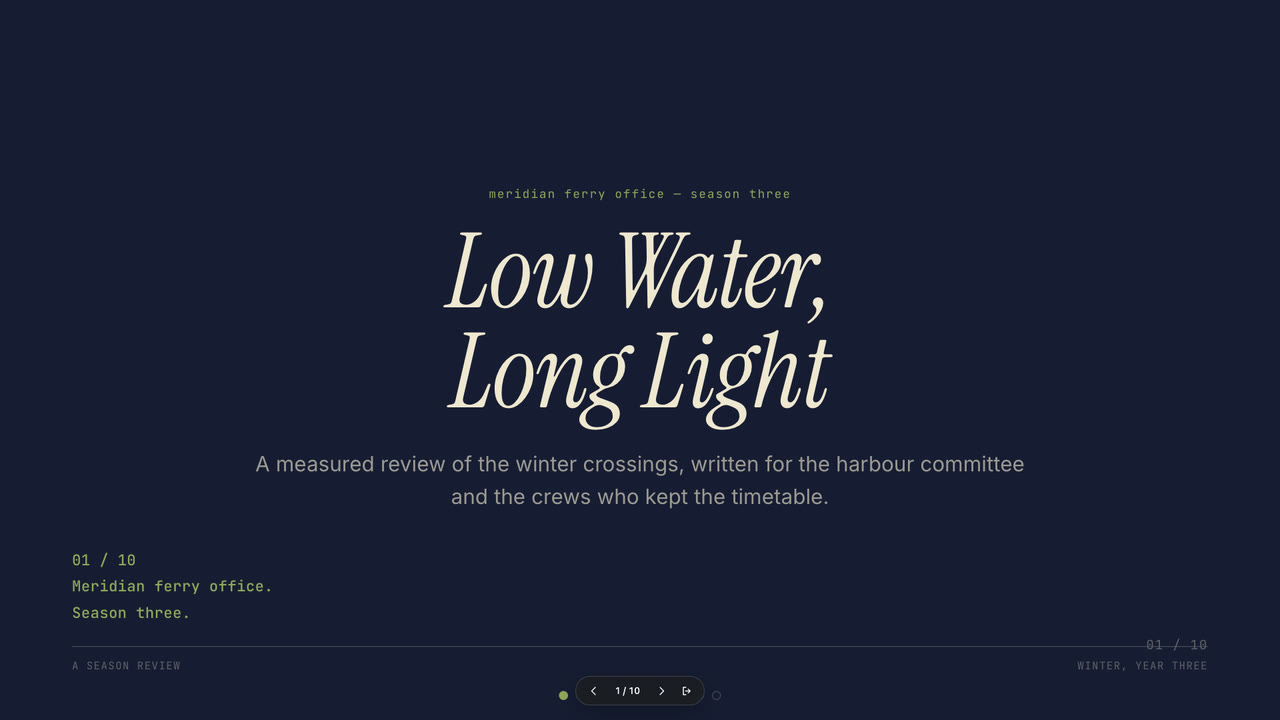
Make decks that read as quiet scholarly essays: one deep indigo register throughout, an italic literary serif for every headline, quiet sans body, typed mono chrome, and a pin-note of small mint mono lines pinned at the bottom-left of every page.
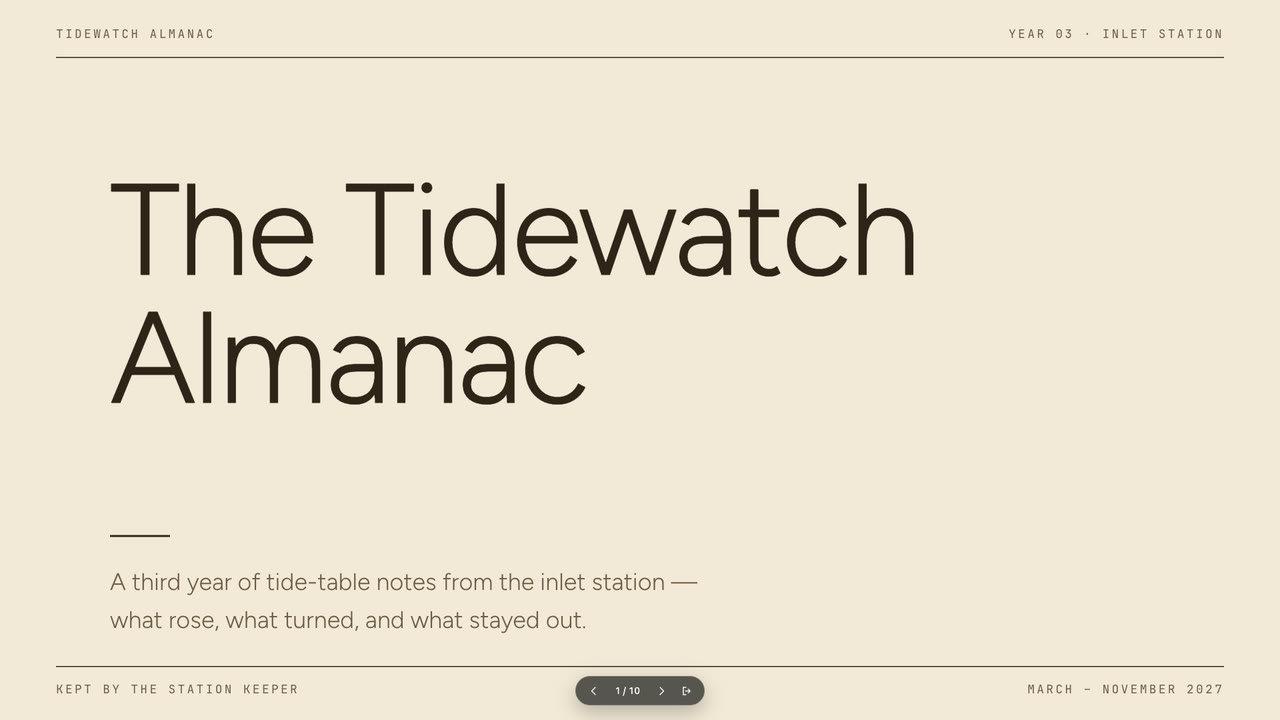
Make decks that read as monochrome field journals: ink on ivory paper, ultra-thin Figtree display headlines, italic Newsreader quotes, mono chrome rows above and below a hairline rule, em-dash marks, framed specimen plates and ruled stat columns.

Turn one long read, essay or report into a reading brief a committee can decide on: a masthead, argument beats on a rail, a headline figure, bar charts and a source ledger that keep checked facts, assumptions and open questions apart, two readings, discussion prompts and the decision asked.
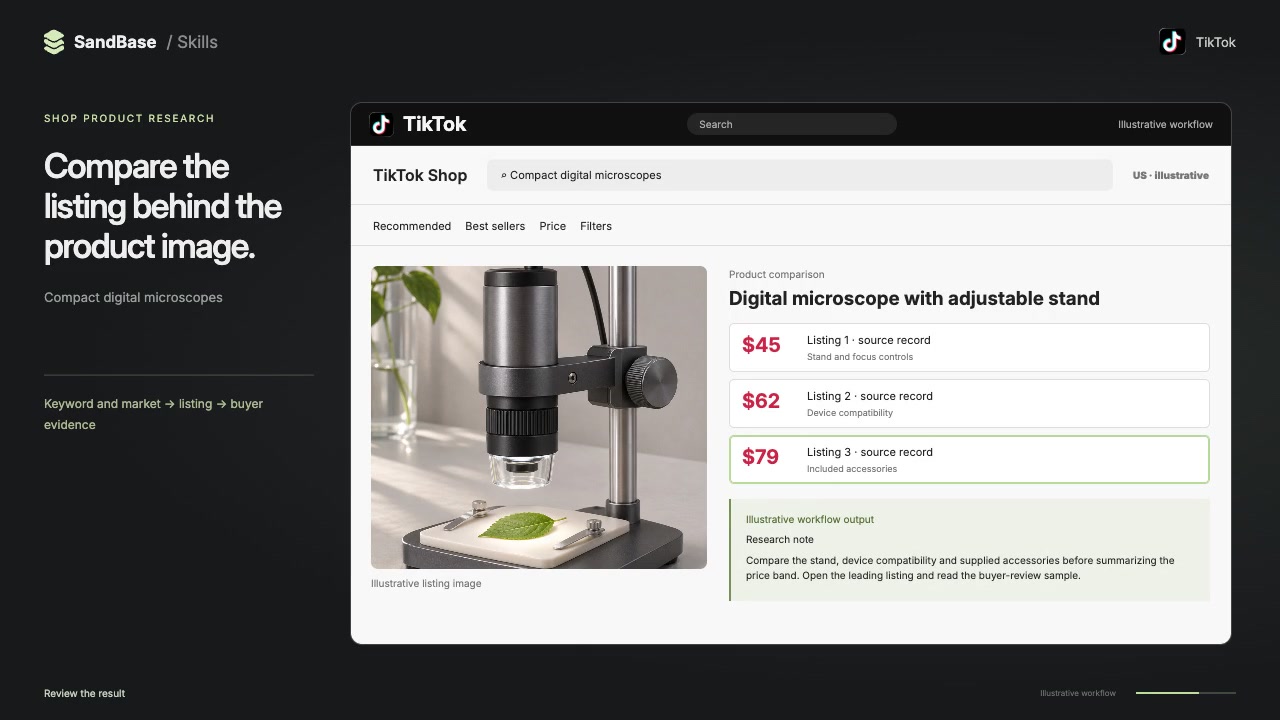
See what sells on TikTok Shop for a product, at what price and from whom, and why buyers like the leader.
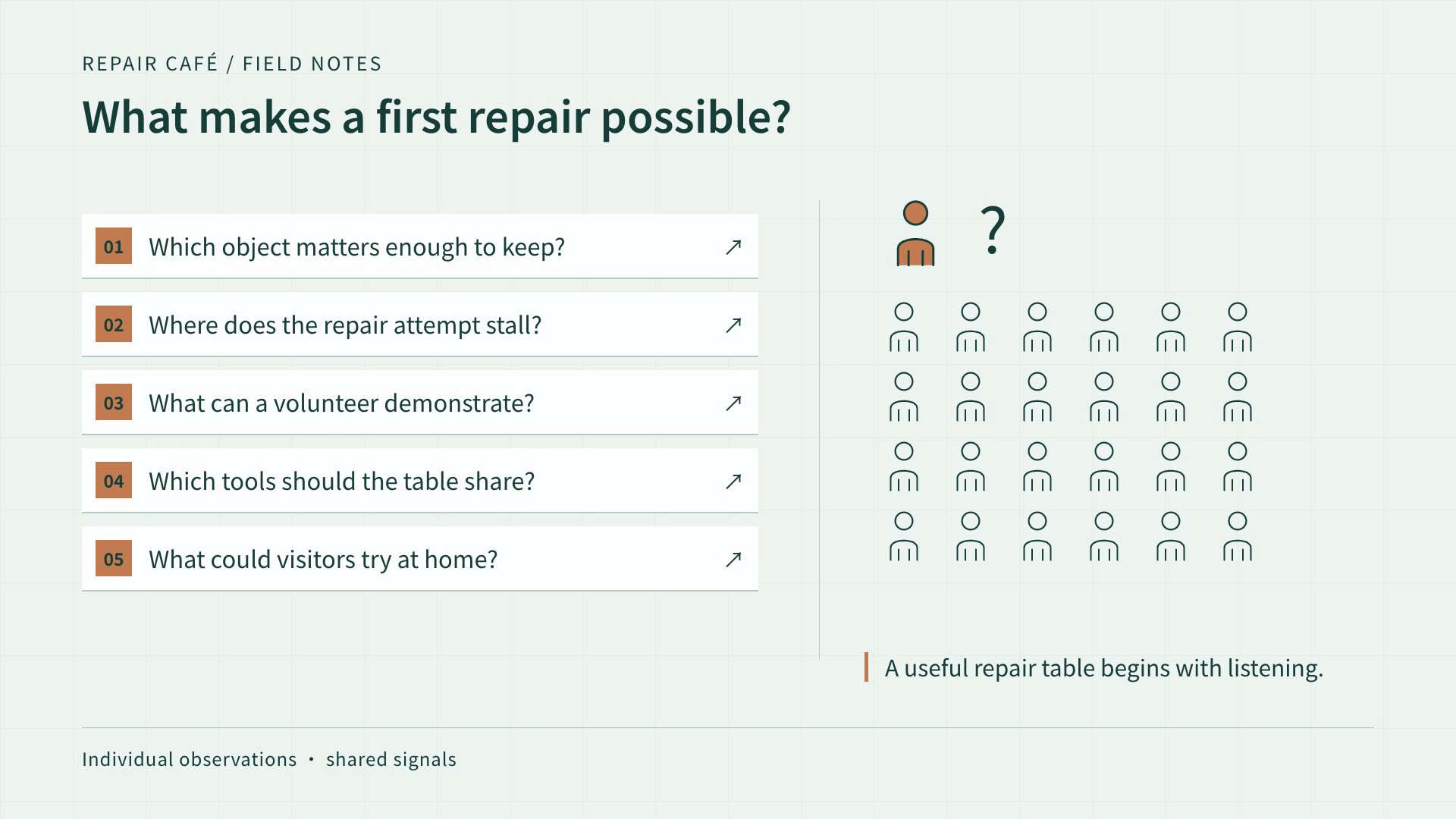
Turn a short research checklist into a growing community diagram with editable HTML, SVG and GSAP motion.
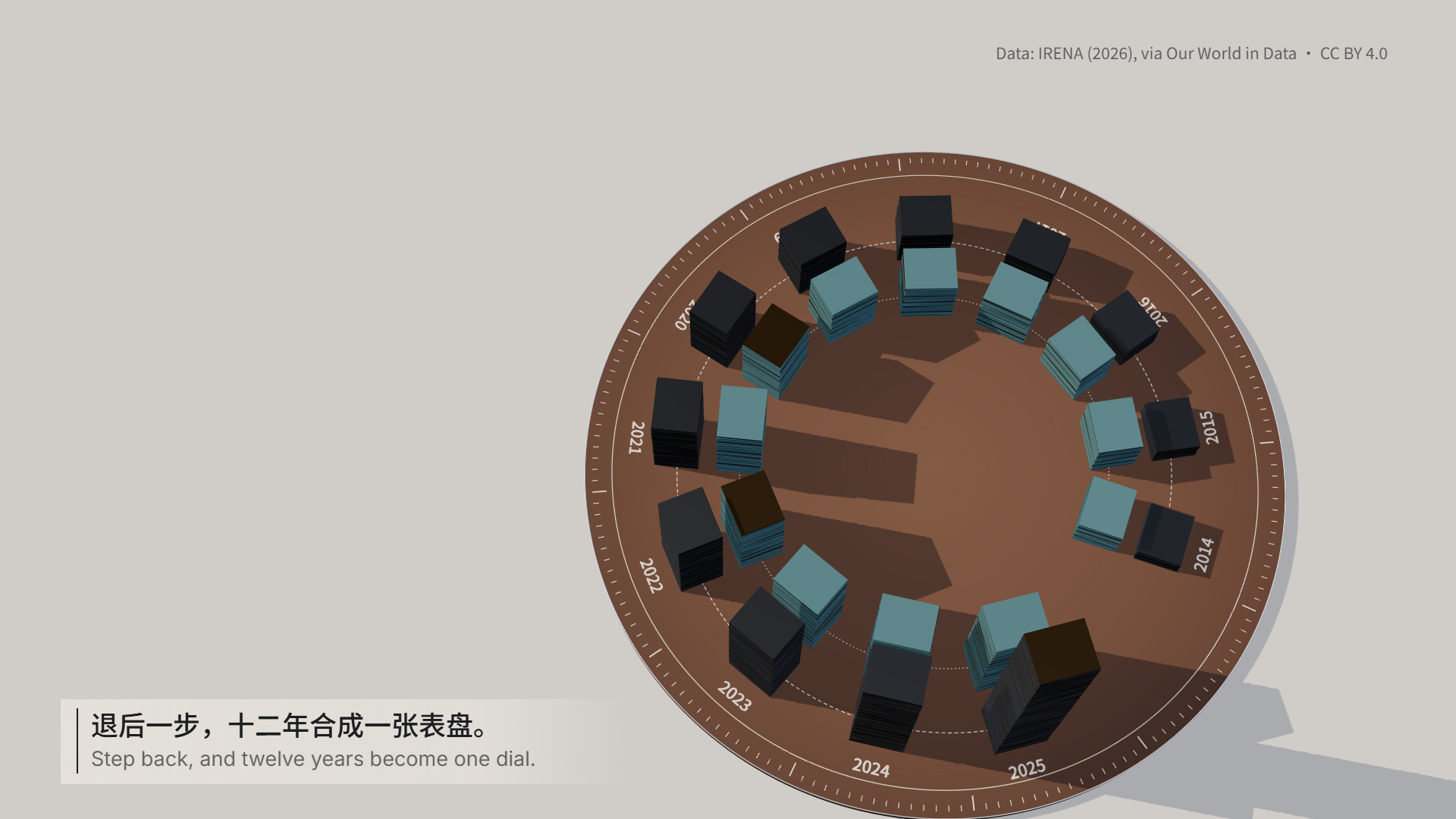
A data-physicalization film — two numeric series are built plate-by-plate into stacked unit sculptures on a walnut dial, ending in an engraved brass puck showing their ratio.
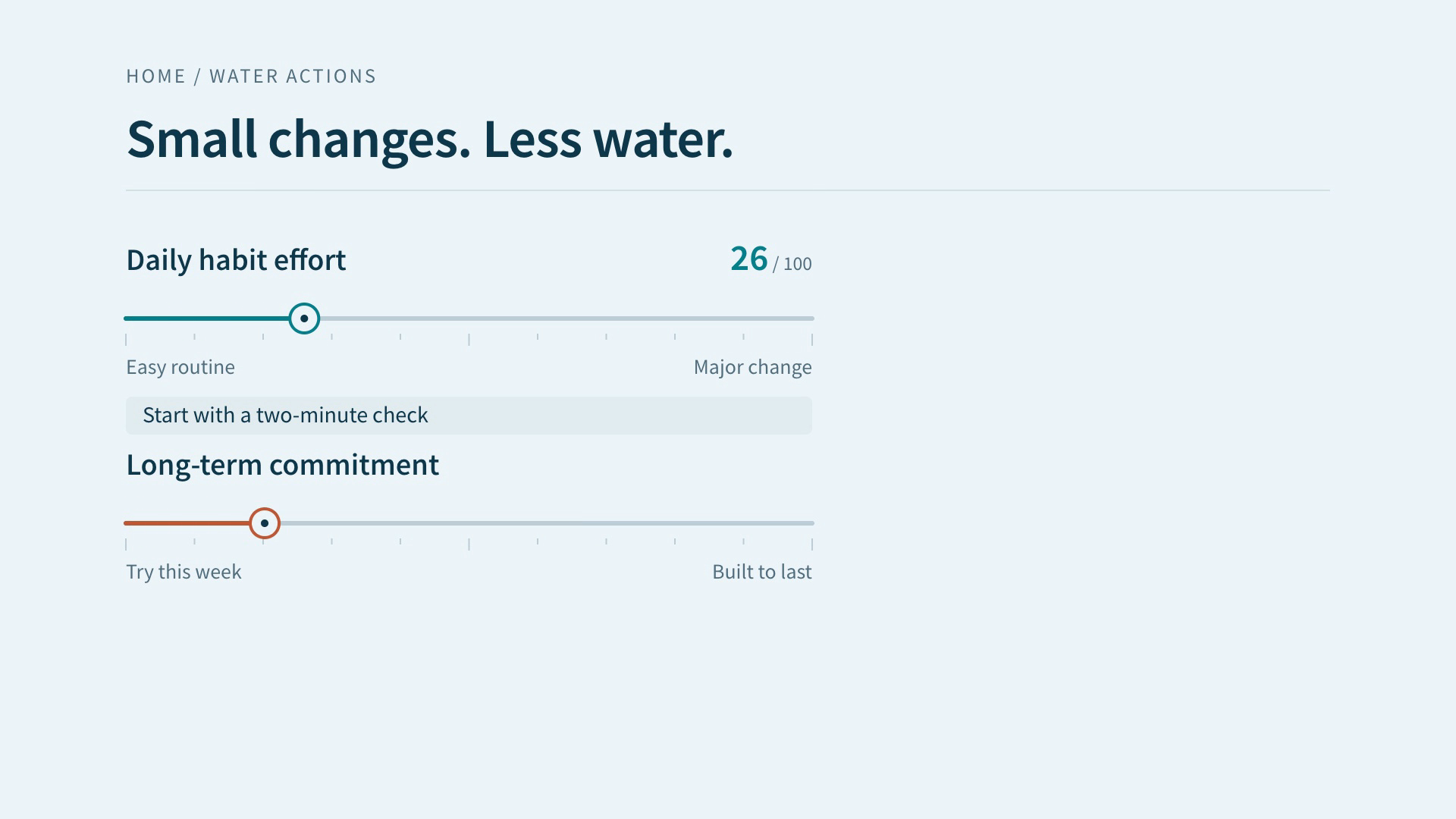
Move two numeric scales in sync and connect their readings to contextual symbols.
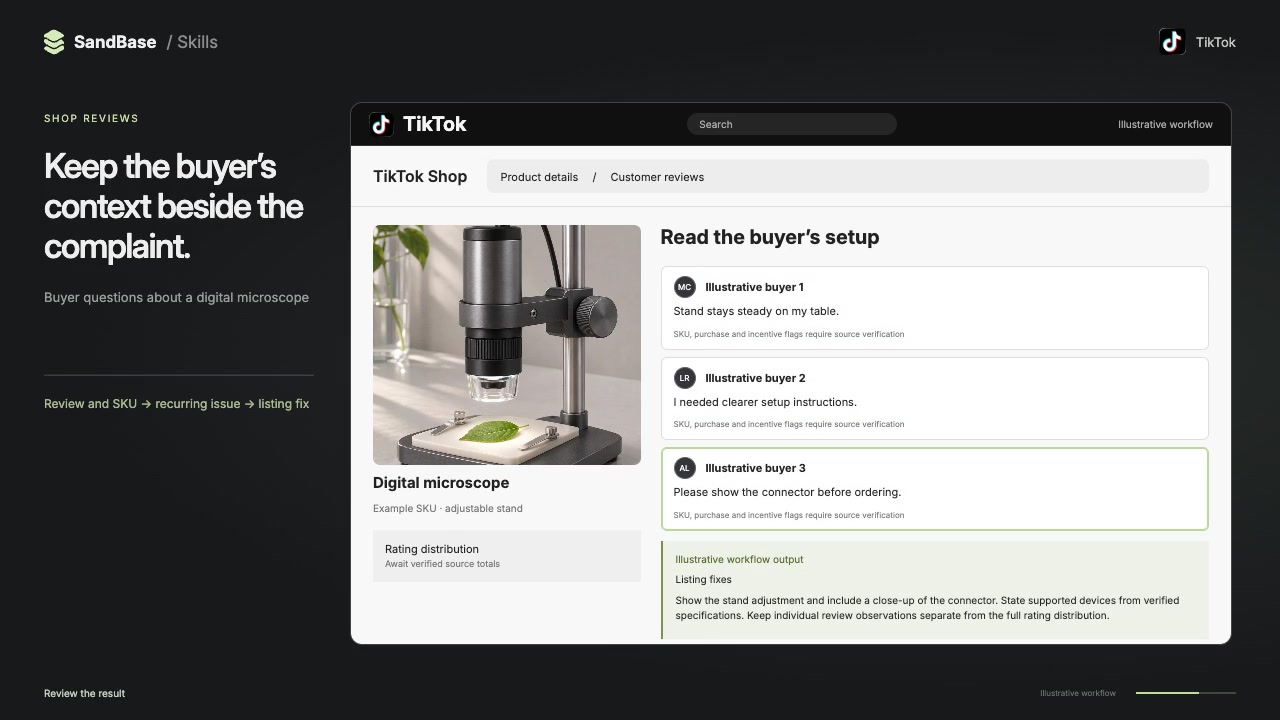
Read a TikTok Shop product’s reviews to see what buyers complain about and praise before you sell or promote it.
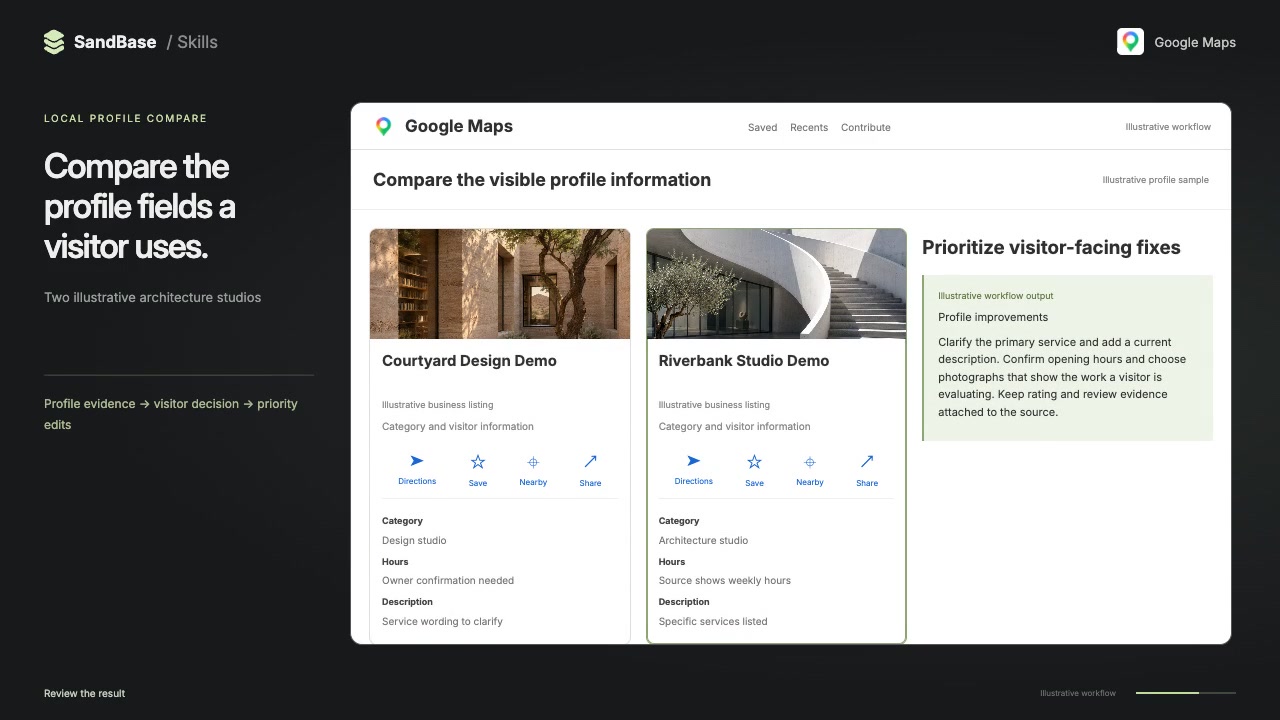
Put a Google Business Profile next to the competitors that outrank it and list the changes that close the gap.
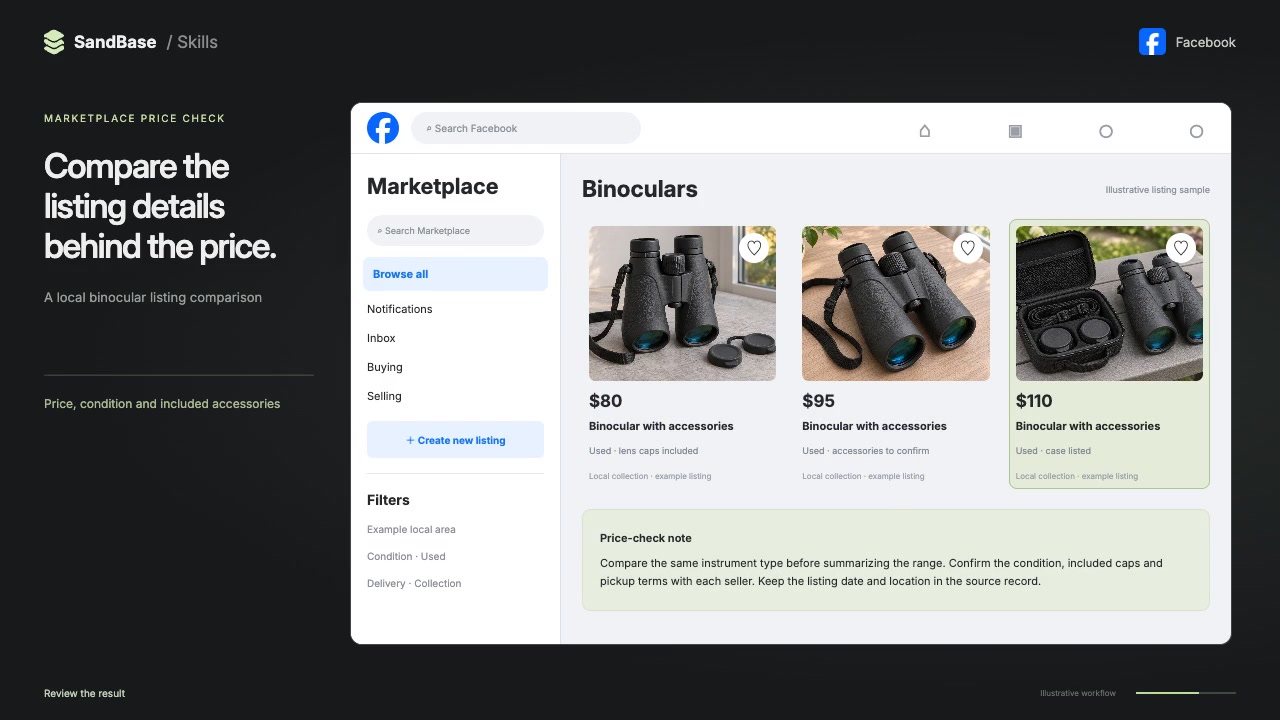
Find out what an item sells for on Facebook Marketplace near you, so you can price a listing or spot a good deal.
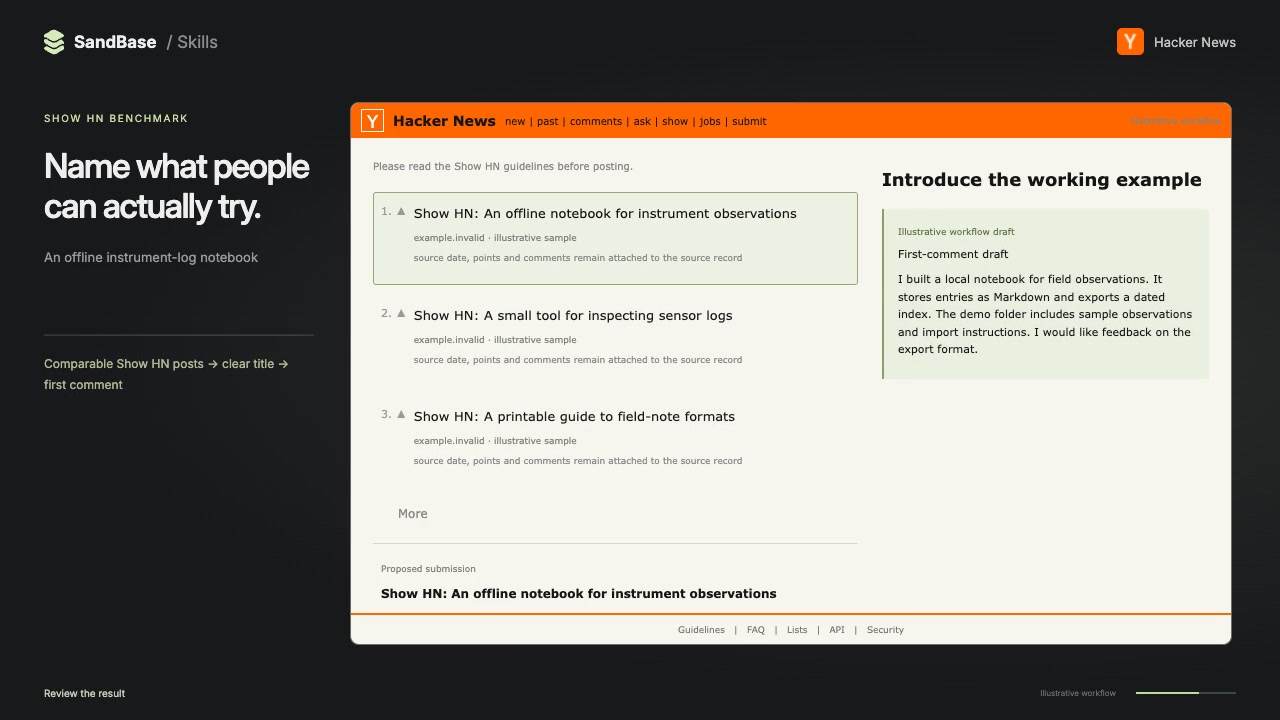
Before you post a Show HN, learn from the Show HN posts that did best: which kinds collect points, which start discussion, and how they were titled.
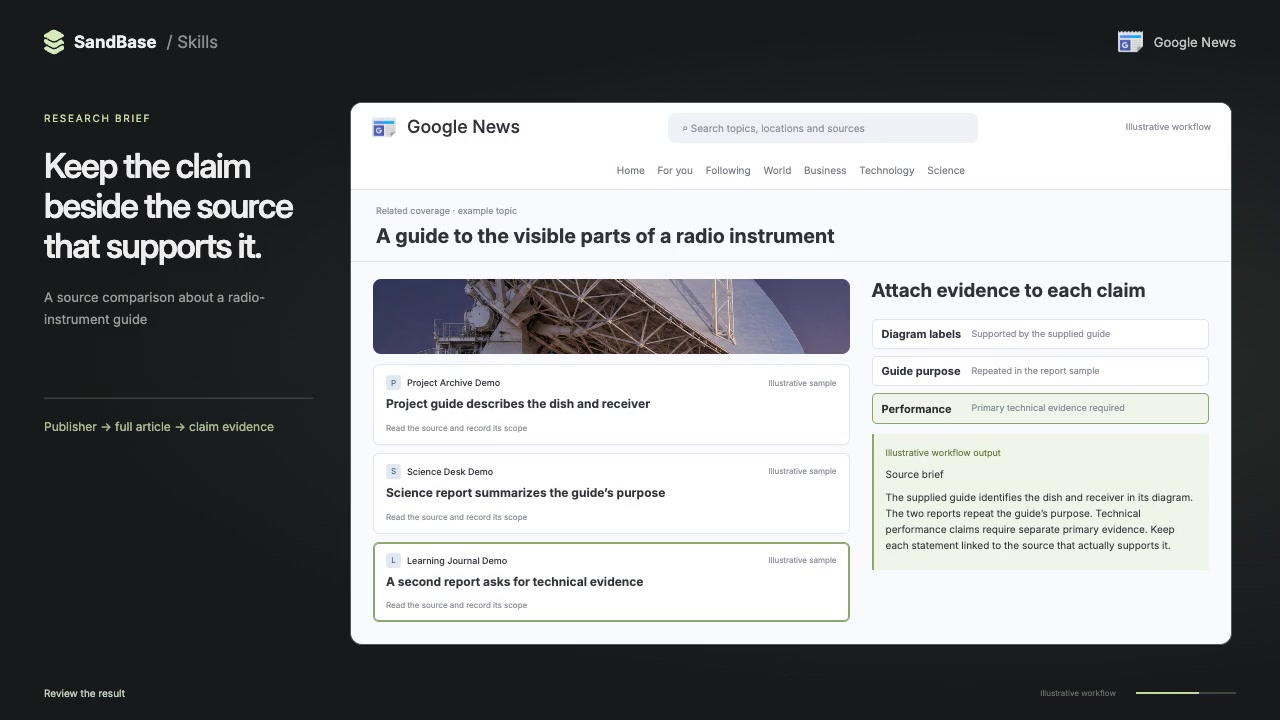
Find out what has been reported on a news question, who reported it and which claims are confirmed, with a link for every line.
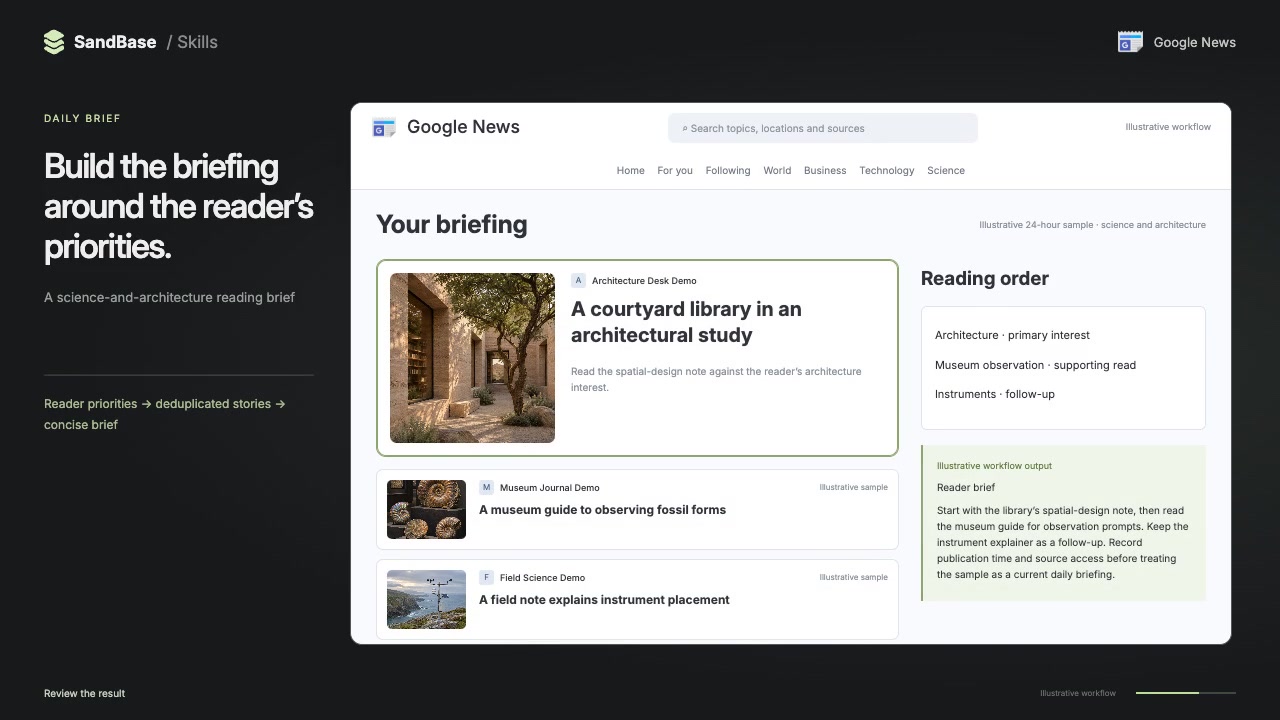
Get a short ranked digest of the past day’s news on your topics, with a score and reason for every story and a count of what was left out.
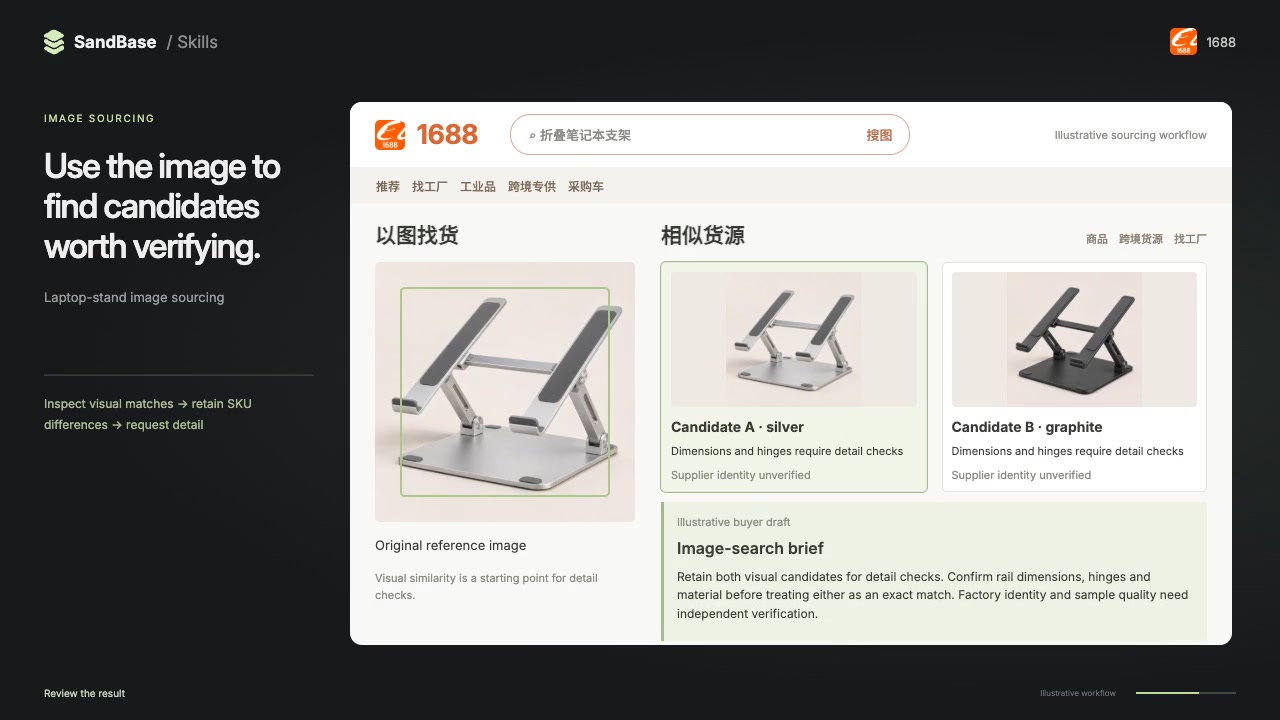
Start from one product photo and find who sells the same style on 1688, at which quantity tiers — then pick the most likely factory.
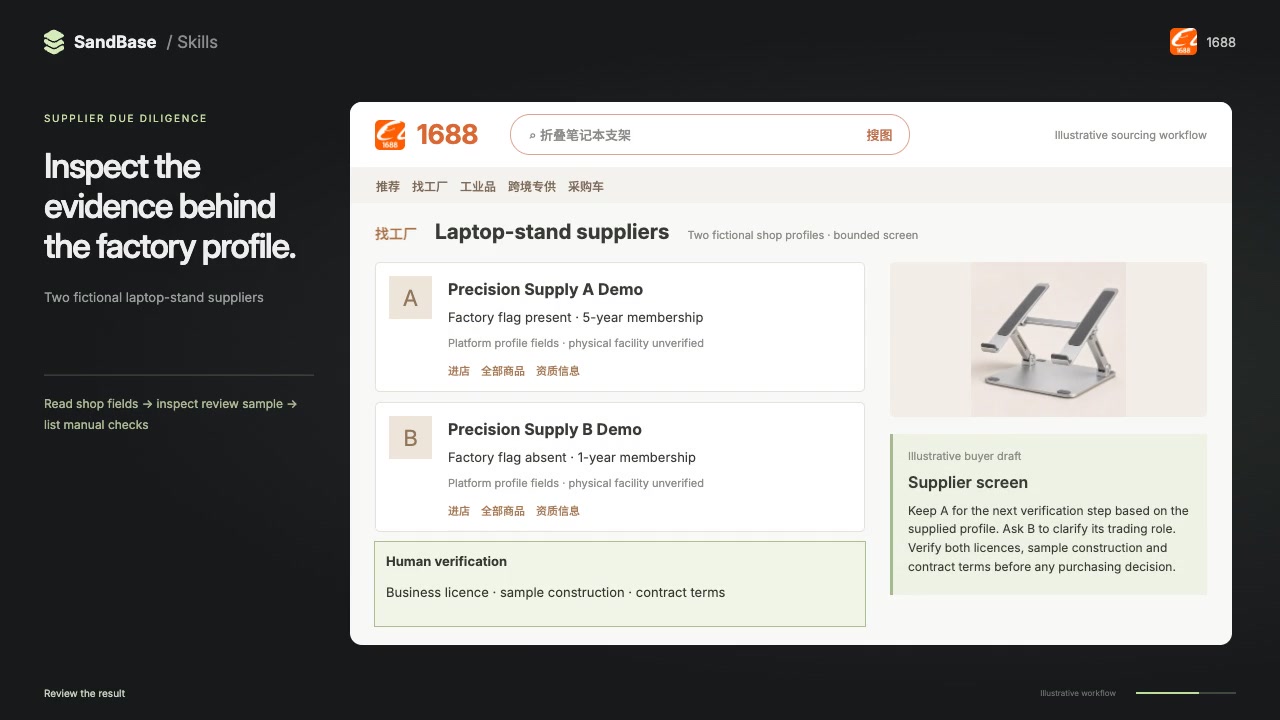
Screen candidate 1688 suppliers before you contact anyone — a documented first-pass check with platform ratings, factory flags, red flags and the manual checks that remain.
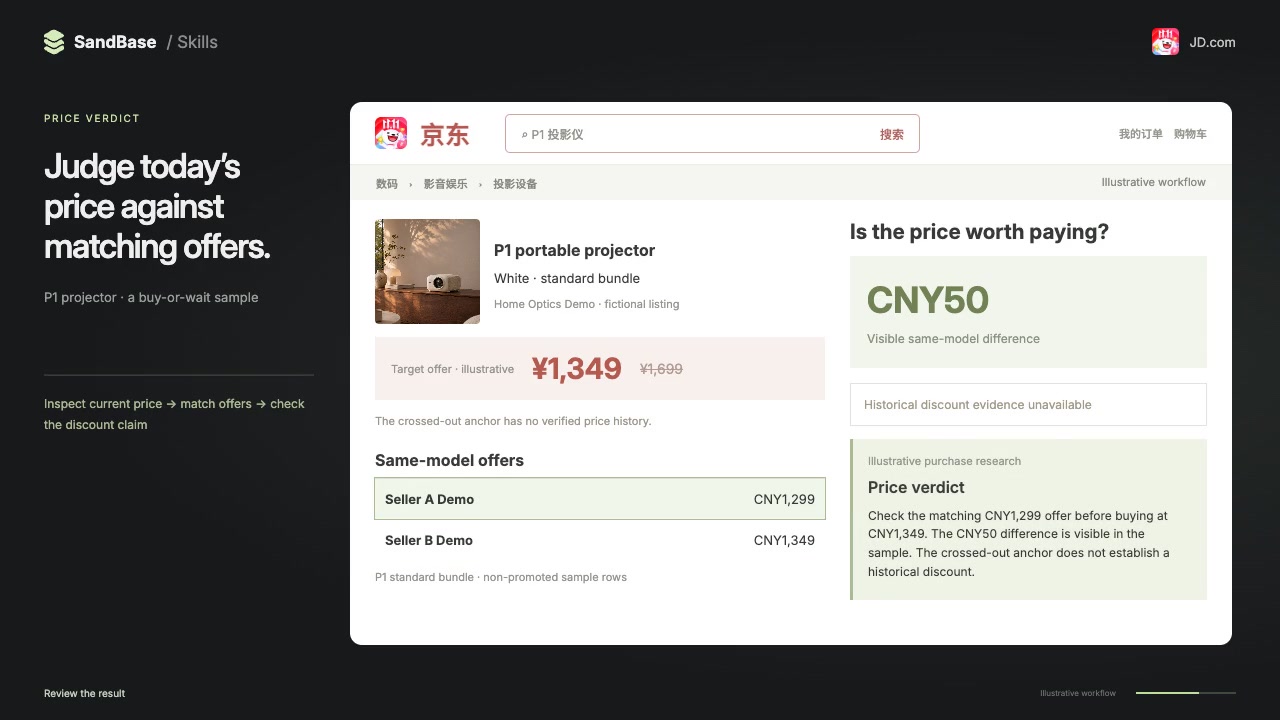
Is this JD.com price worth paying? One-line buy-or-wait verdict backed by today's price position, a fake-discount check and what recent buyers say.
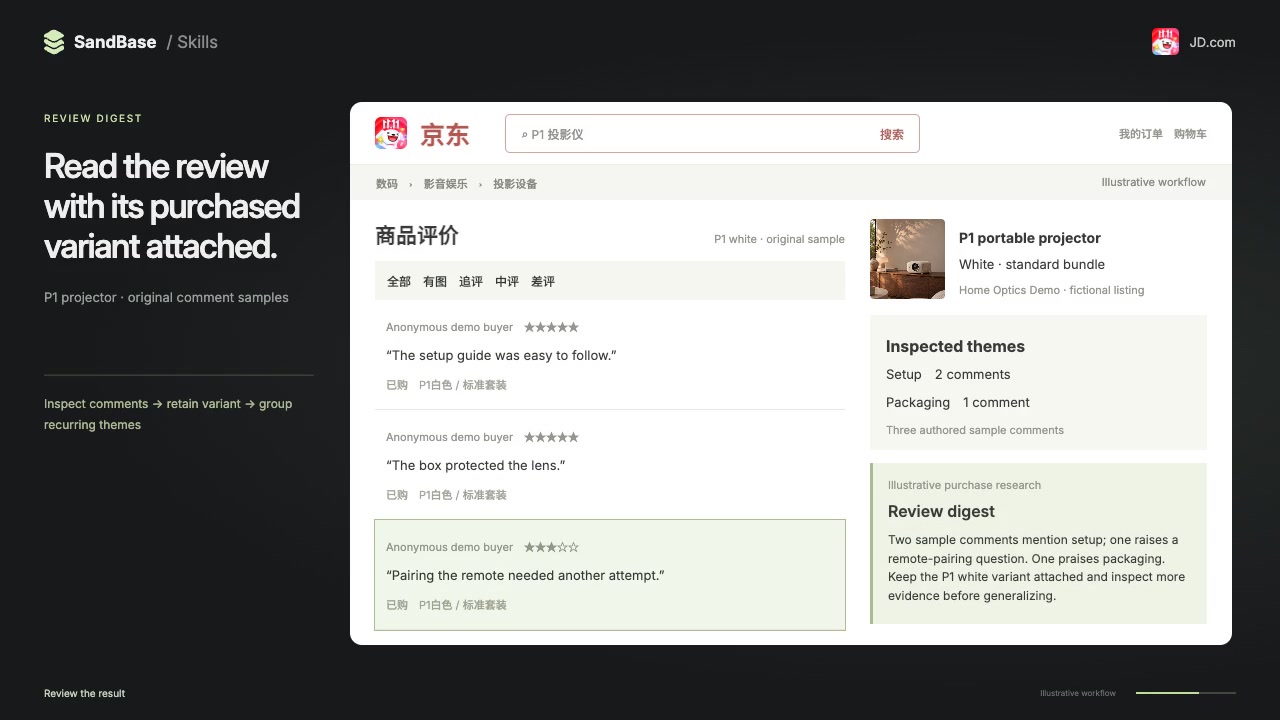
What do a JD listing's thousands of reviews actually say — clustered into themes with the score band and variant each complaint names?
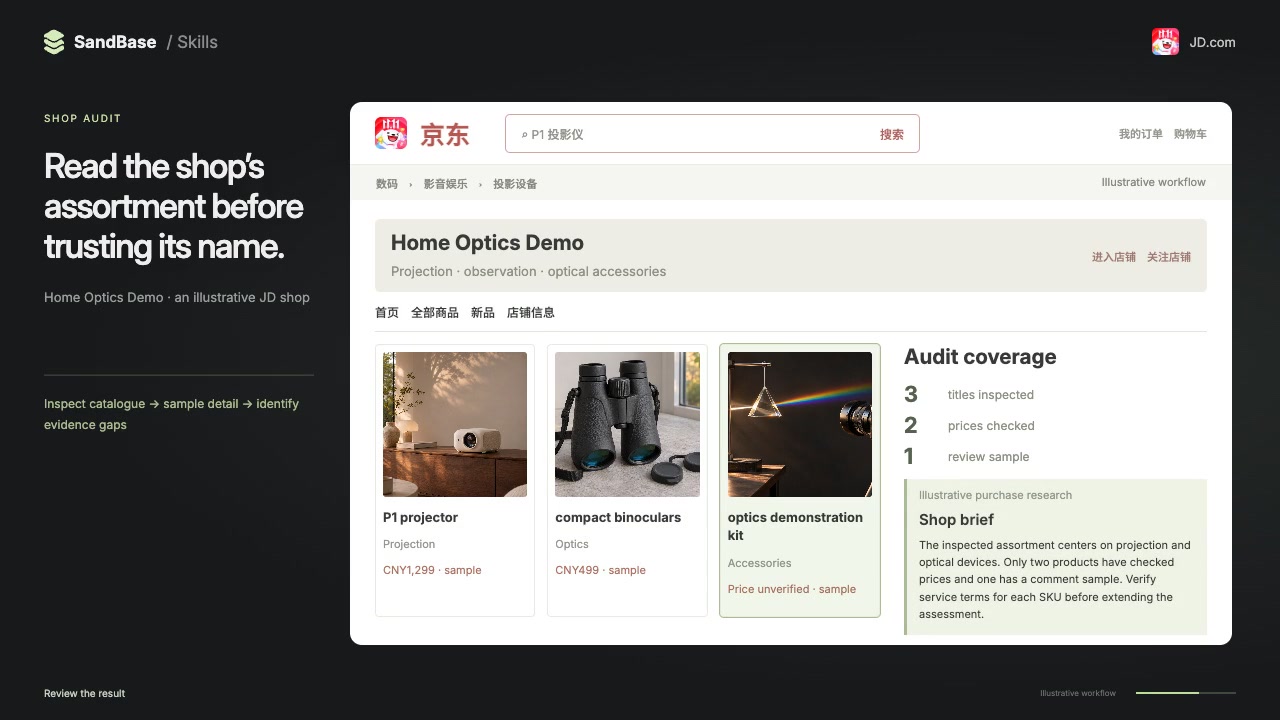
What does a JD shop actually sell and how does its own review record hold up — before you buy or partner with it?
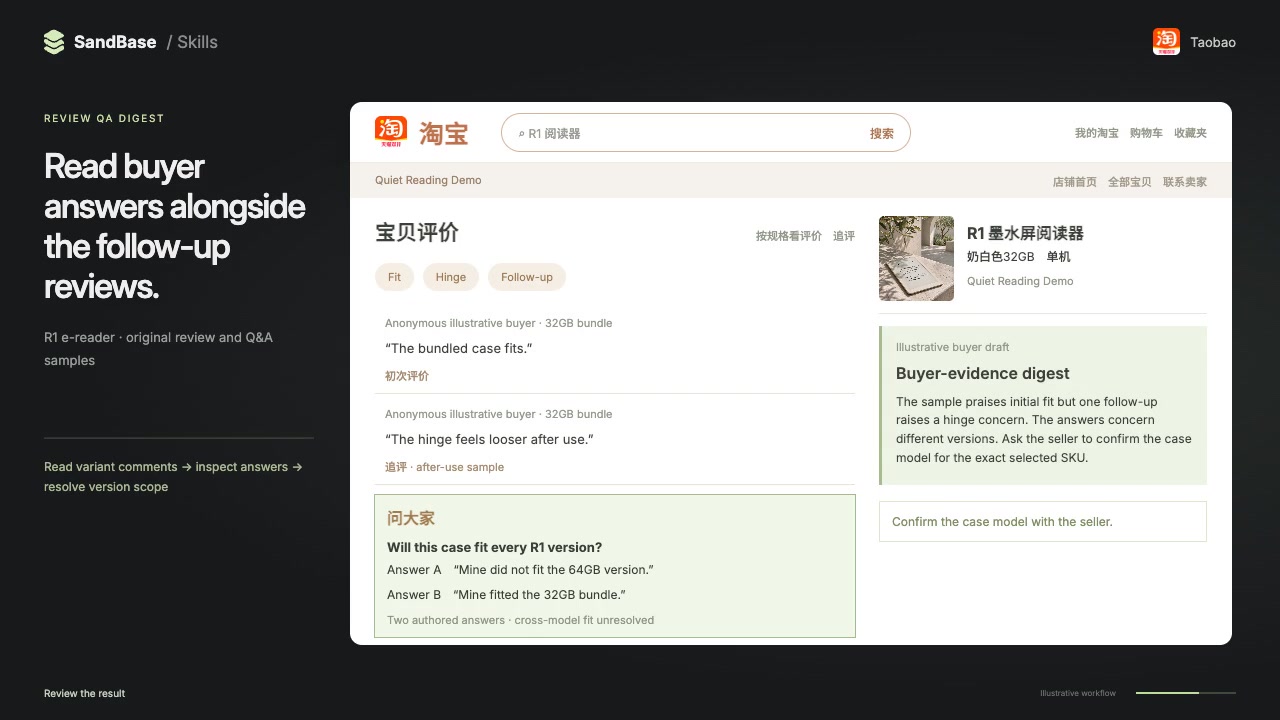
What do a Taobao listing's reviews and 问大家 answers actually say — the praise mass, the complaint tags, and where the crowd contradicts the listing?
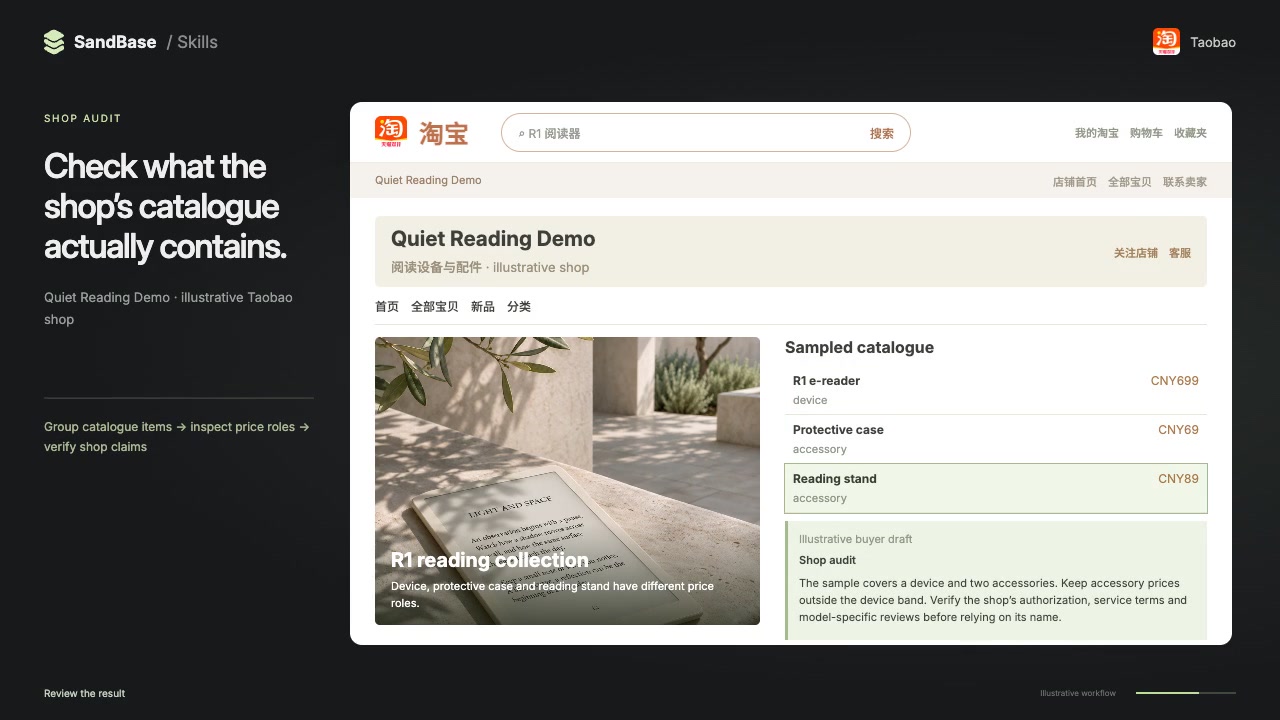
What does a Taobao shop's own data say — scores, assortment, price band, whether its buyers' reviews match what it sells?
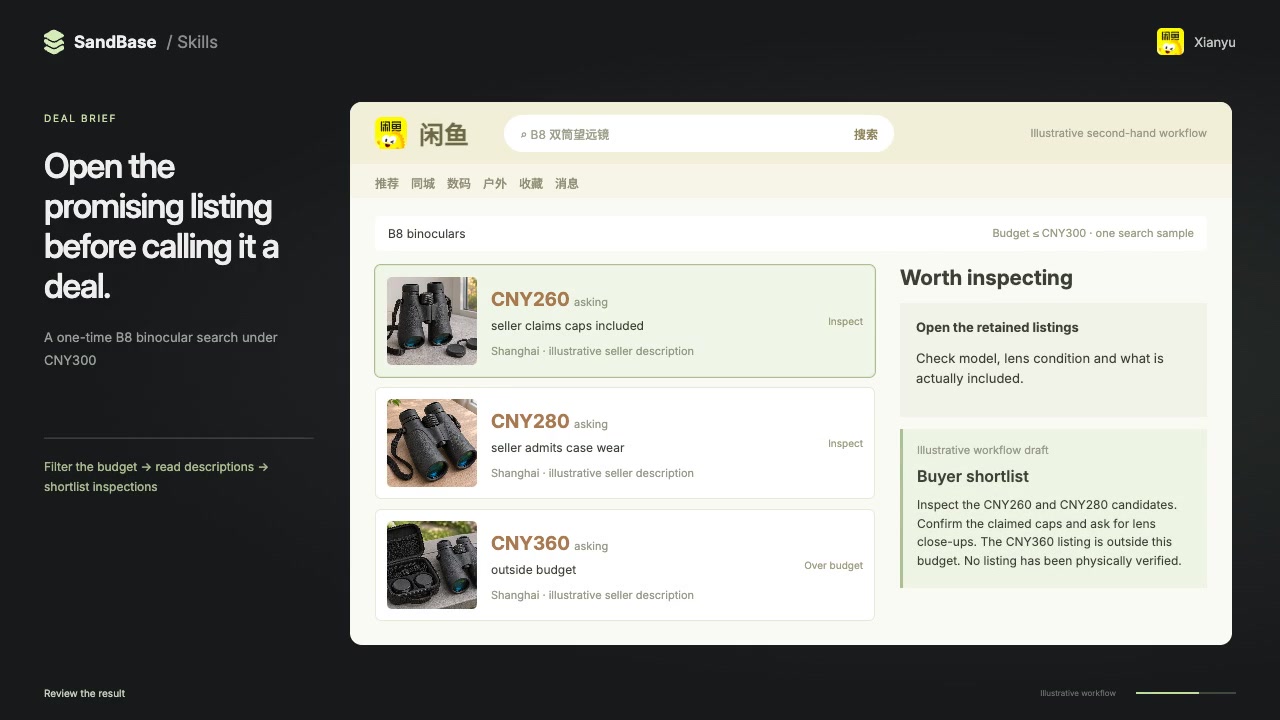
Find underpriced second-hand listings on Xianyu once — a ranked shortlist with asking price, condition signals and why each is worth opening.
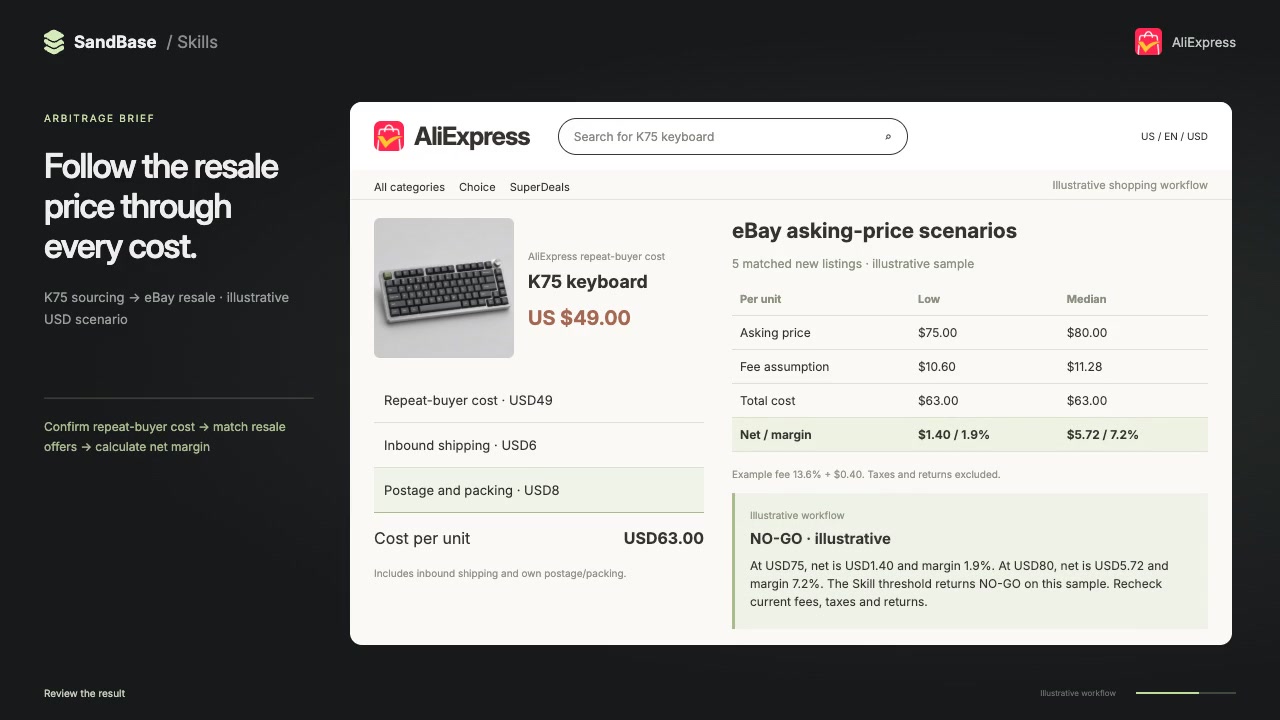
Find out whether buying on AliExpress and reselling on eBay actually leaves a margin — after the real unit cost, shipping and eBay's final value fee.
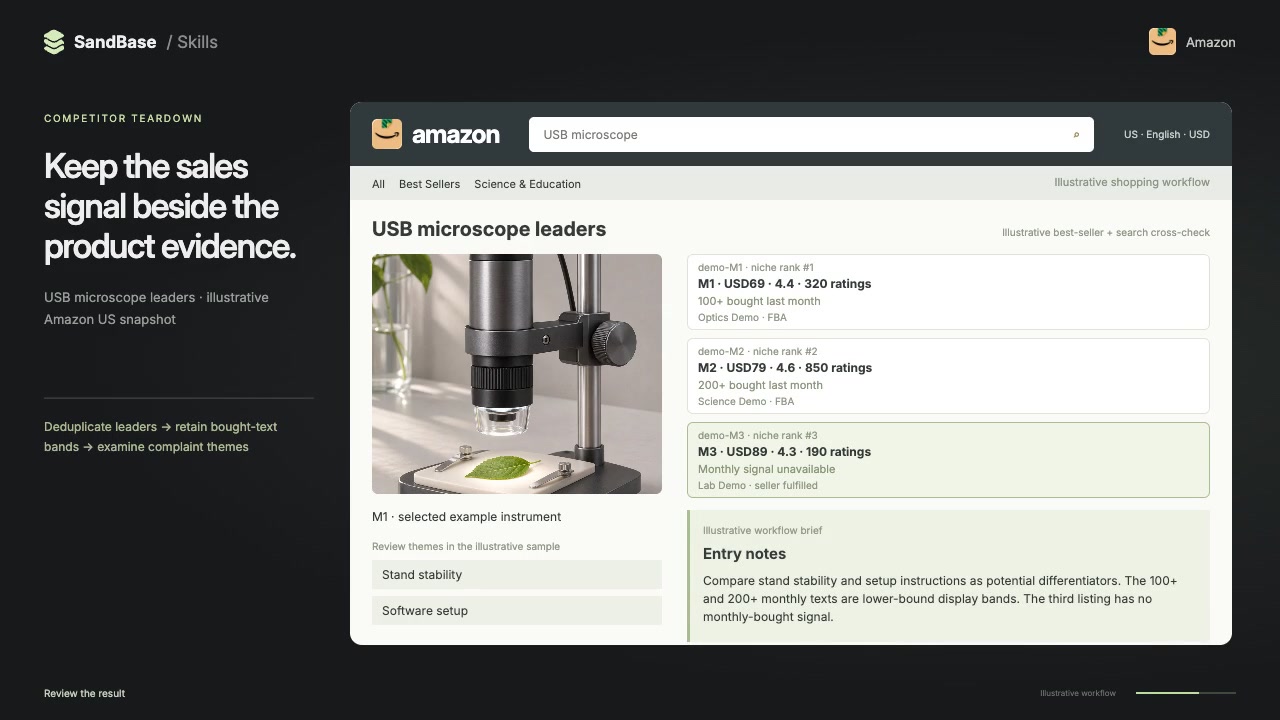
See who actually leads an Amazon niche — their prices, ratings, review moats, sellers and sales signals — and where a new seller could enter.
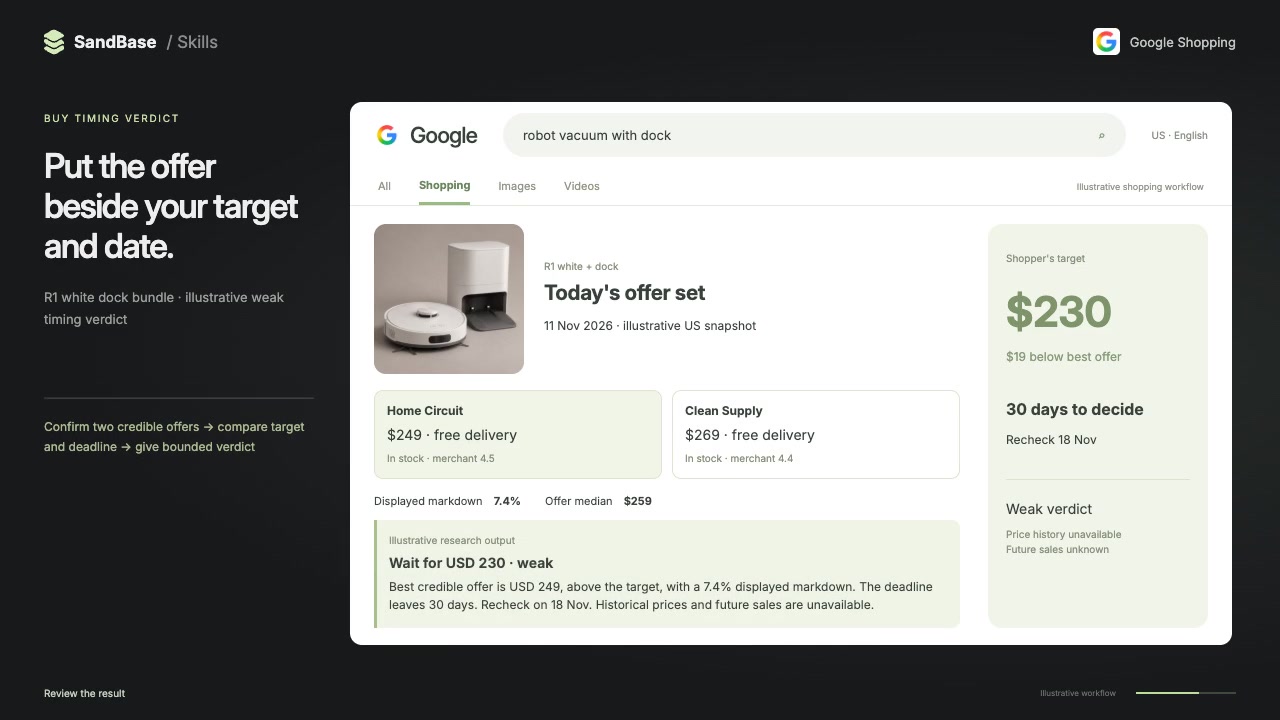
Answer 'buy now or wait?' for one product from today's Google Shopping offers — always labelled weak, since there is no price history.
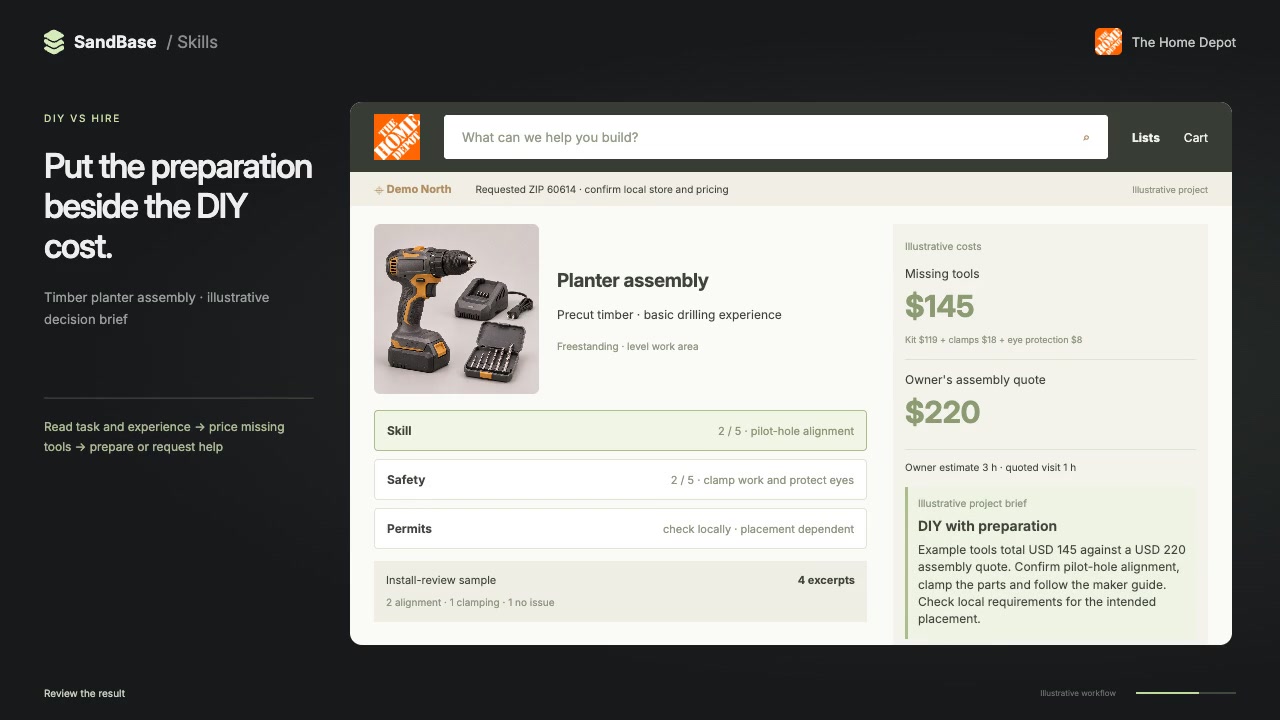
Decide whether to do a home repair yourself — rate skill, safety, permits, time and cost, price the DIY parts live, and read what buyers say about installing it.
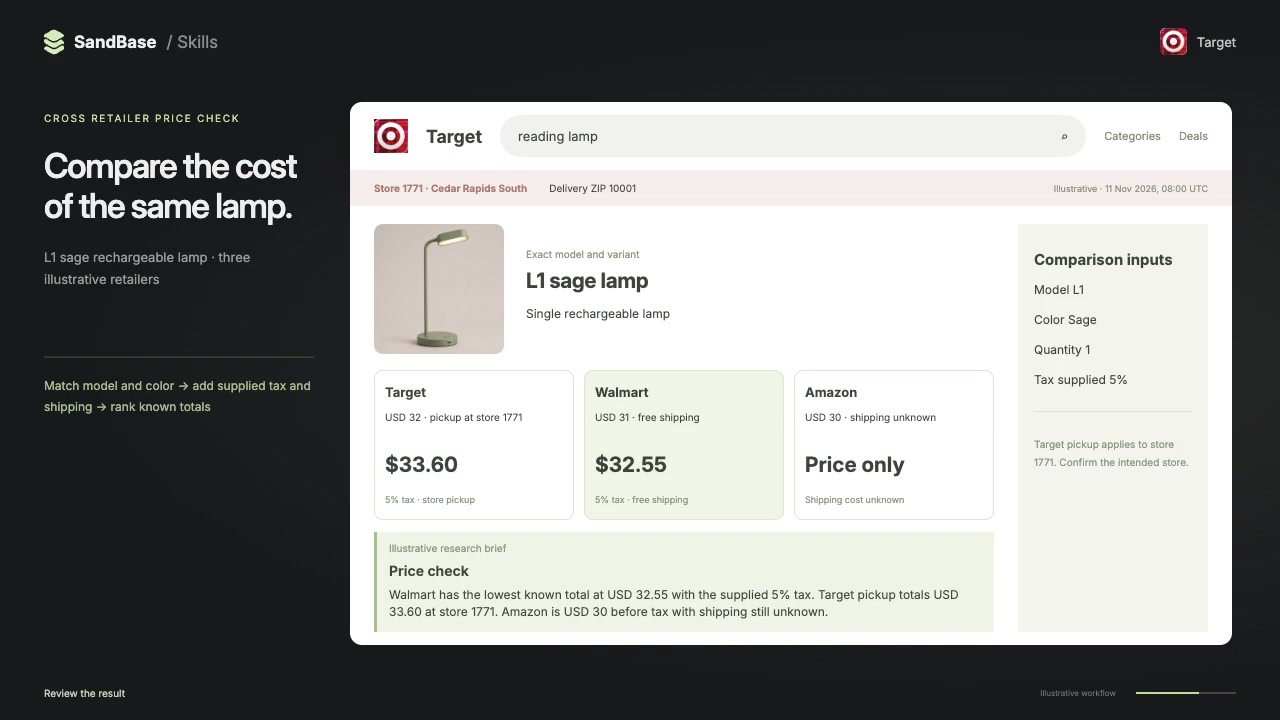
Work out what one item actually costs at Target against Walmart and Amazon — price plus how it reaches you — with every unknown left visible.
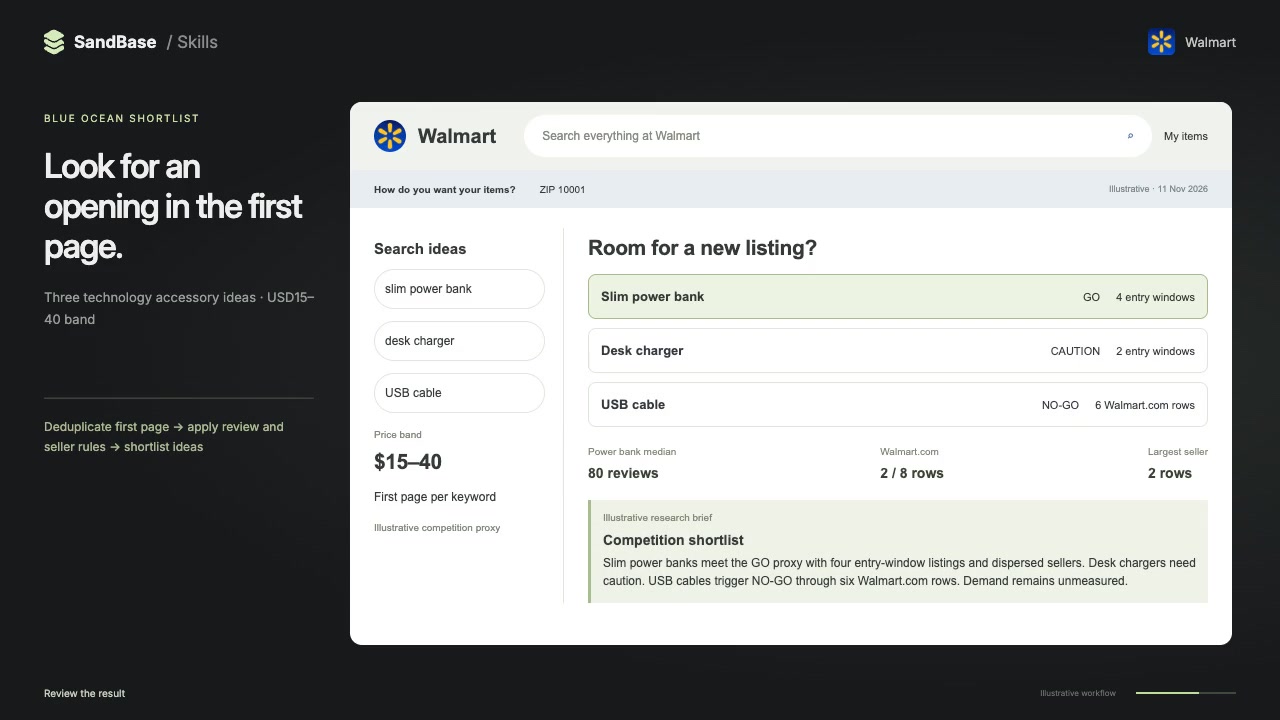
Compare a few product ideas by how crowded their Walmart first page looks — review depth, seller mix, Walmart's own share and price pressure — marked GO, CAUTION or NO-GO.
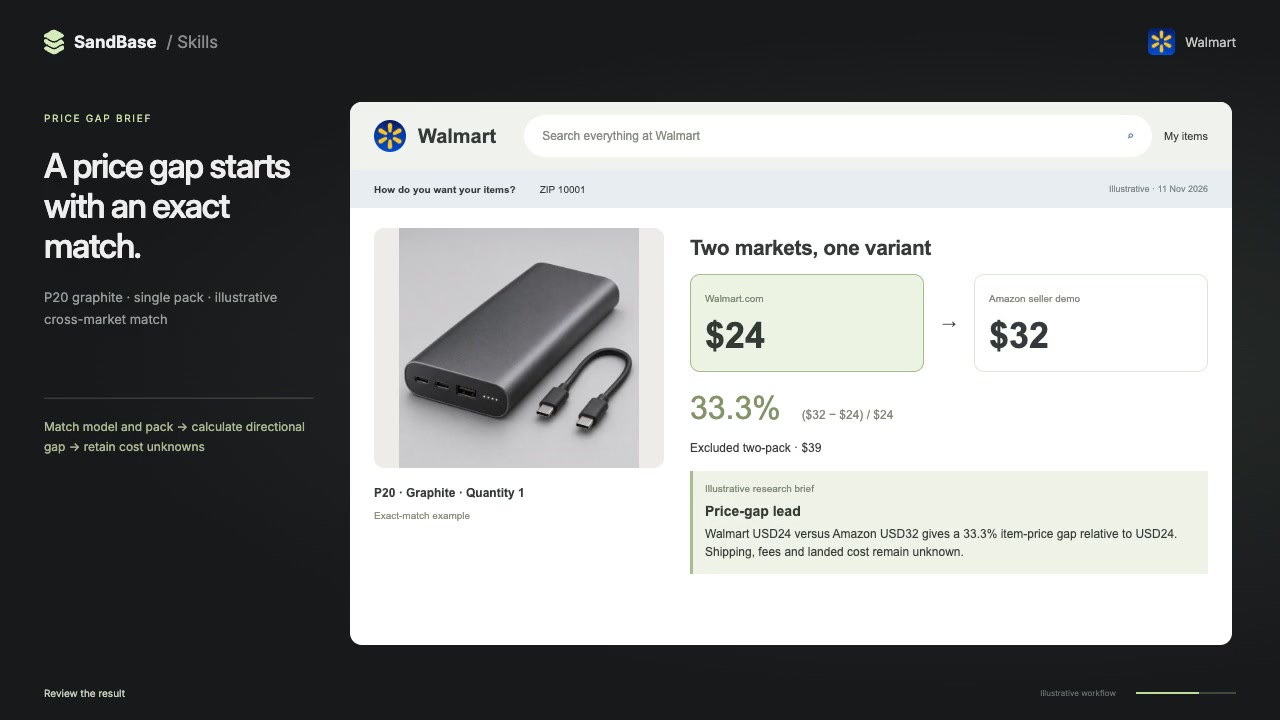
Find the same products priced far apart on Walmart and other retailers — every gap of 30% or more listed as a seller opportunity with its direction.
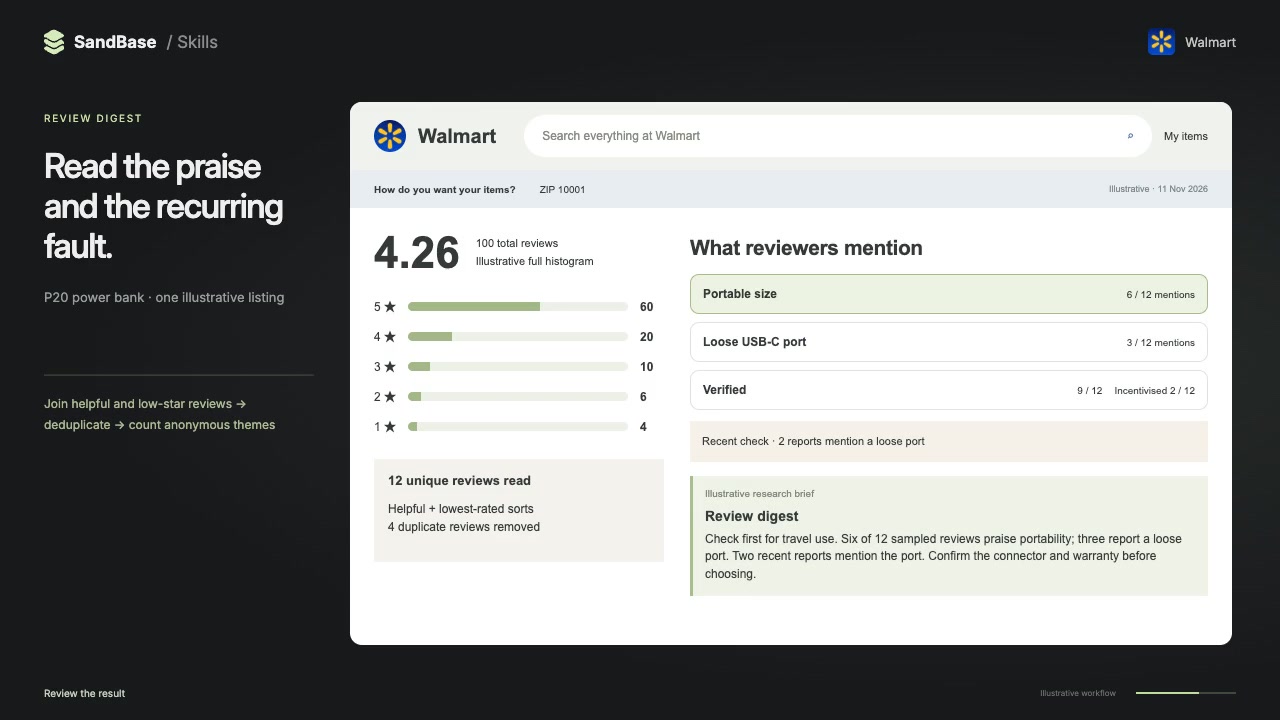
Turn one Walmart listing's reviews into themes you can act on — with counts, short quotes and a buy / check / skip note, reviewers never named.
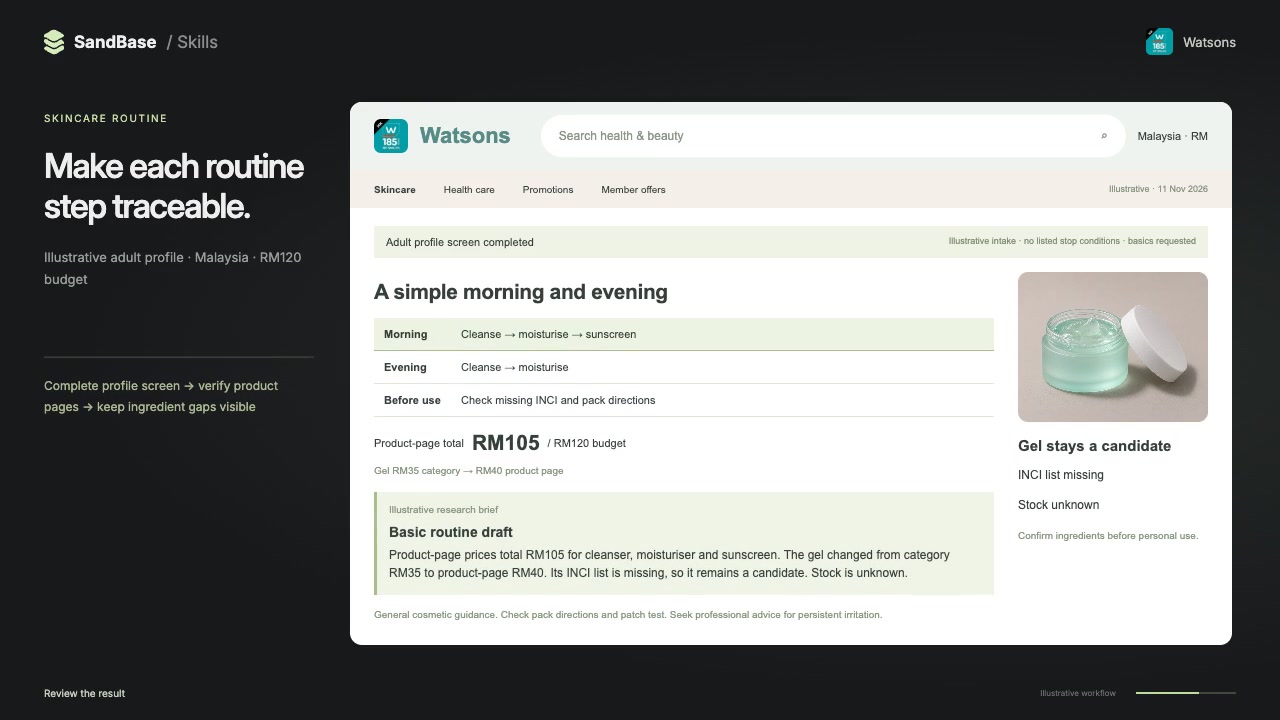
Build a morning and evening routine from products Watsons sells now — with a blocking safety screen first, and not medical advice.
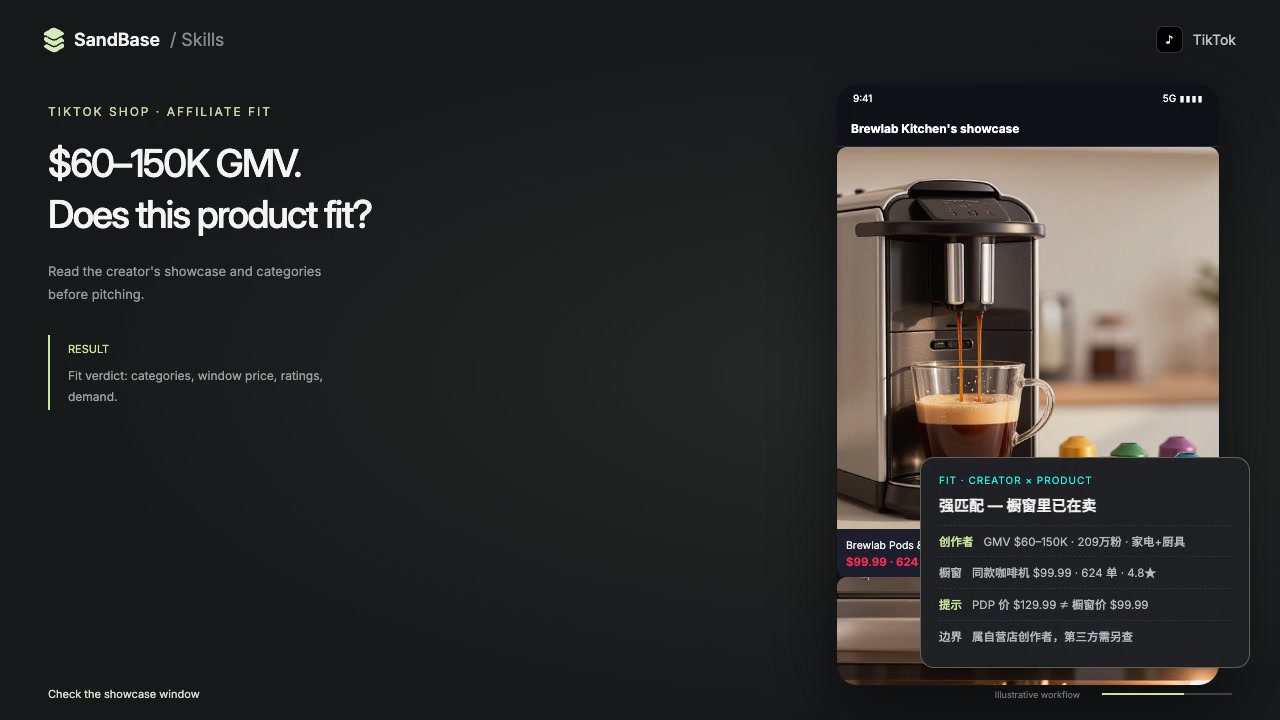
Judge whether a creator fits a TikTok Shop product — the creator's GMV band, categories, audience and what their showcase already sells, against the product's listing.
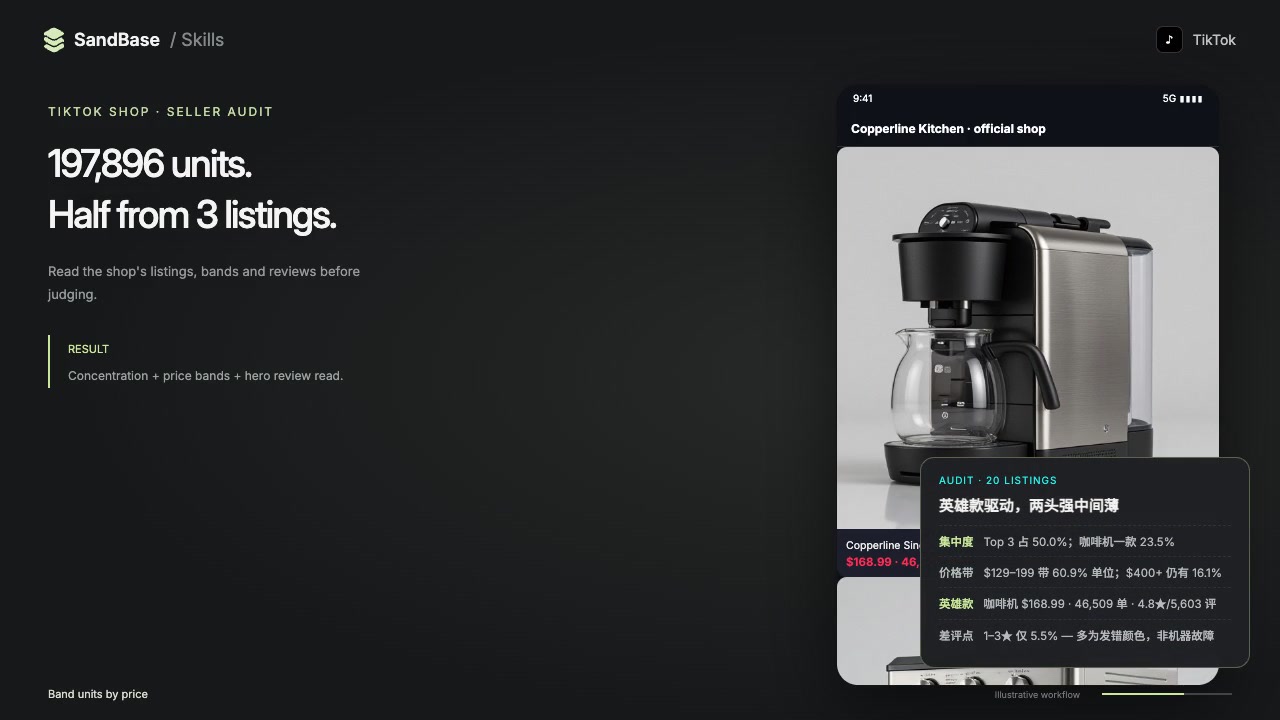
Audit a whole TikTok Shop seller — catalogue shape, price bands, sales concentration and what buyers say about the listings that carry it.
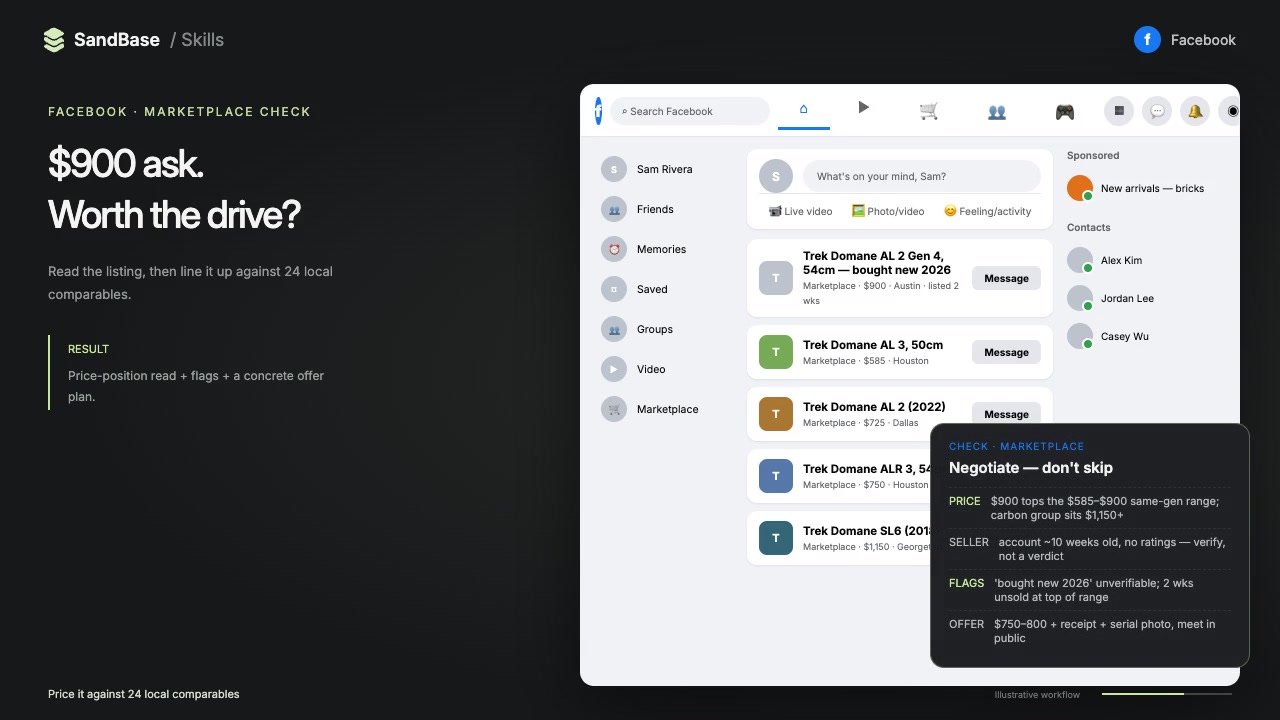
Someone sent you a Marketplace listing — verify the item, the price and the seller before driving across town.
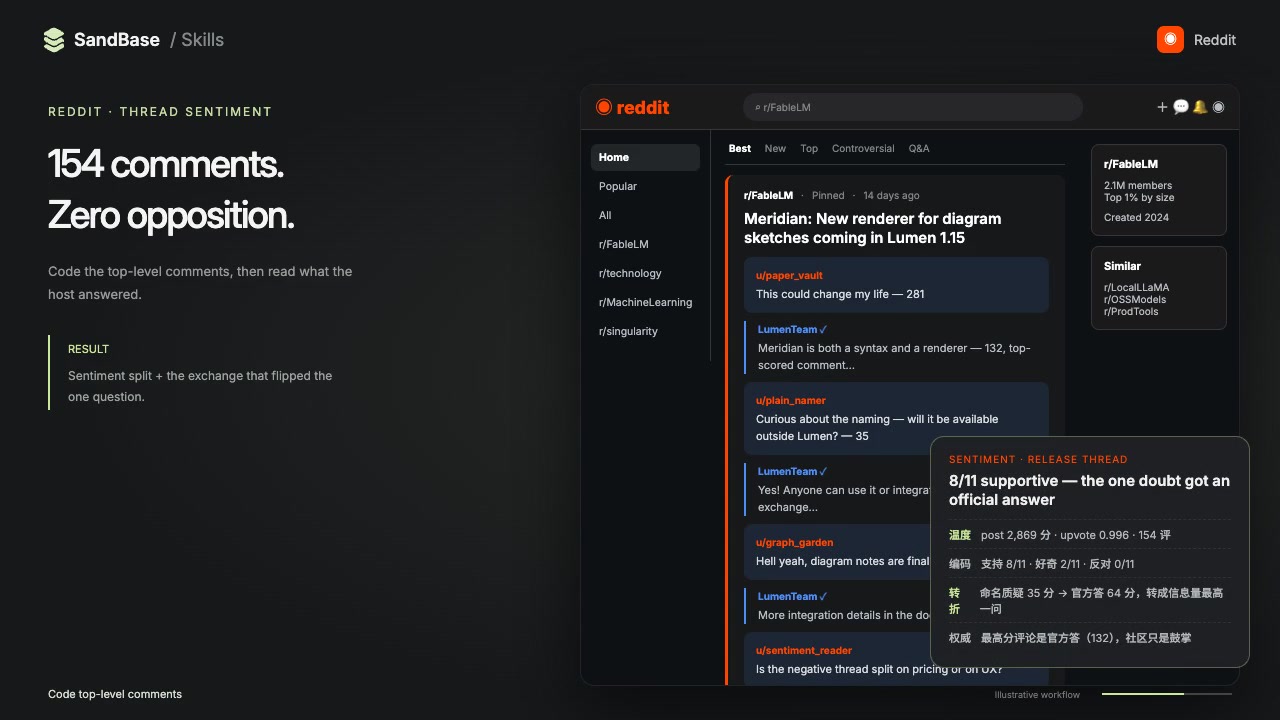
Read how a community actually received one post — the split, the turns, the exchanges that mattered.
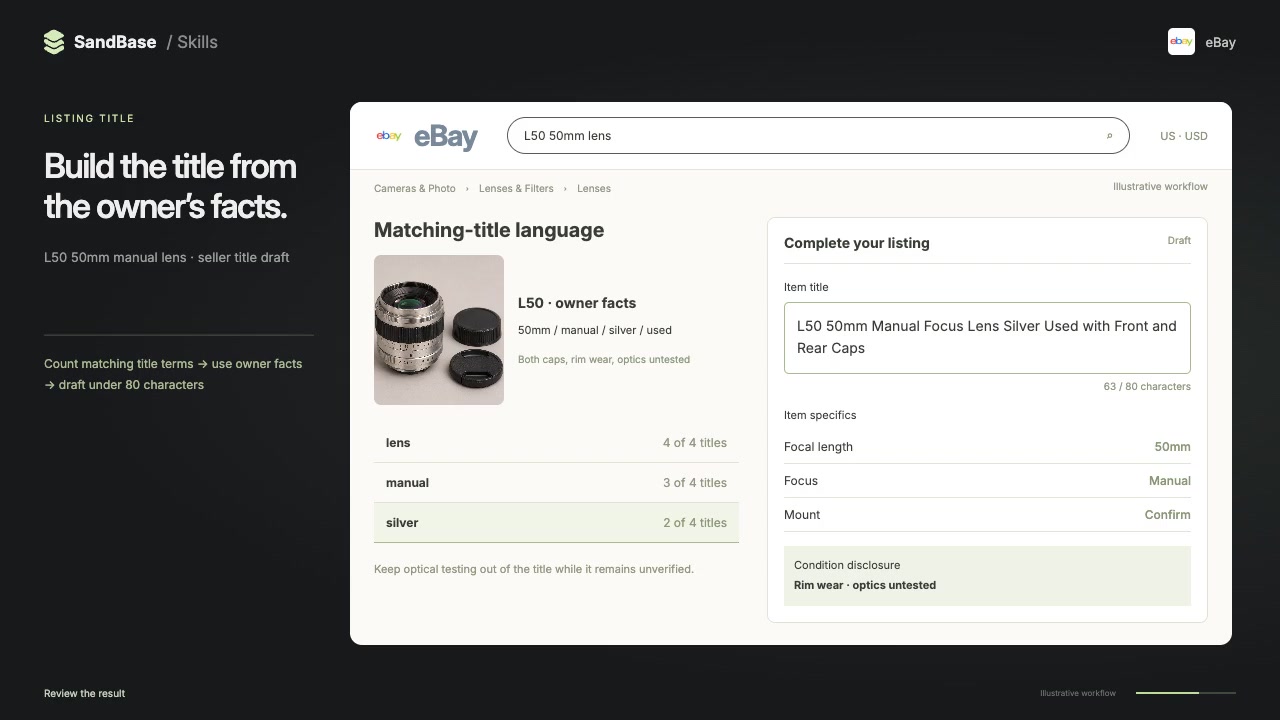
Write an eBay title for the item you are selling from the words that already sell the same item.
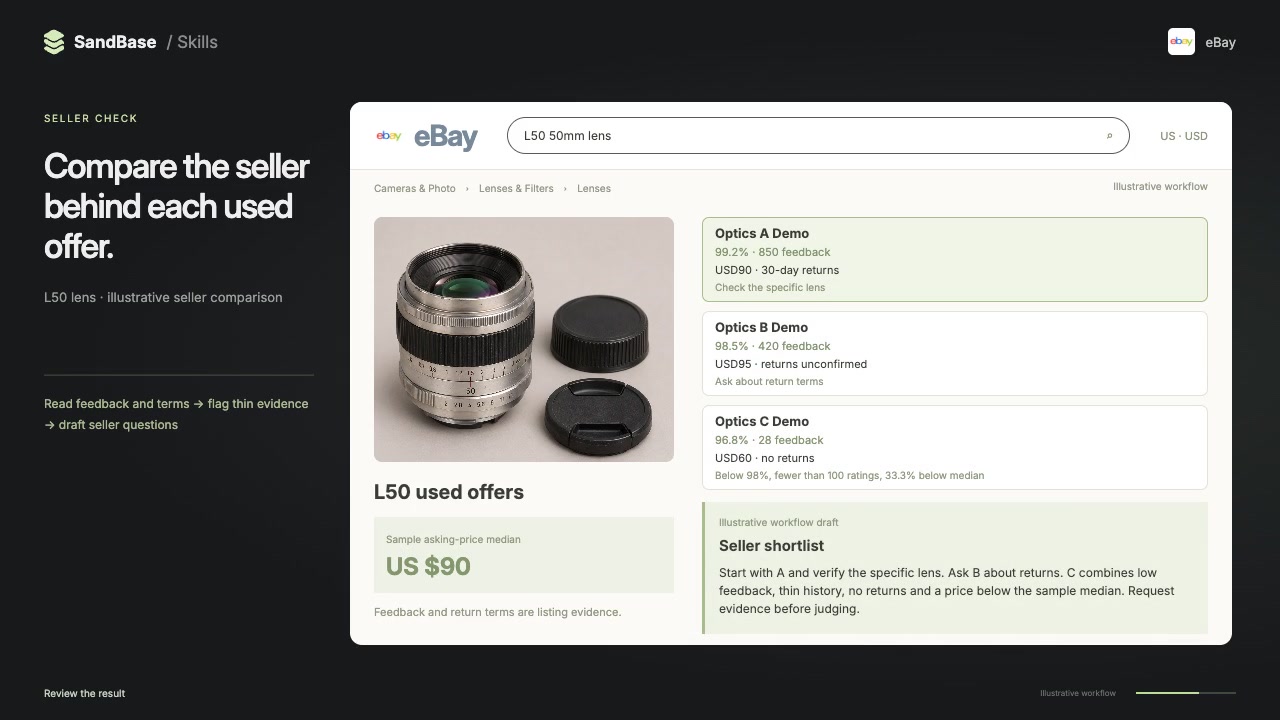
Pick a seller for a used item on eBay by comparing feedback, history, returns and price, not just the lowest price.
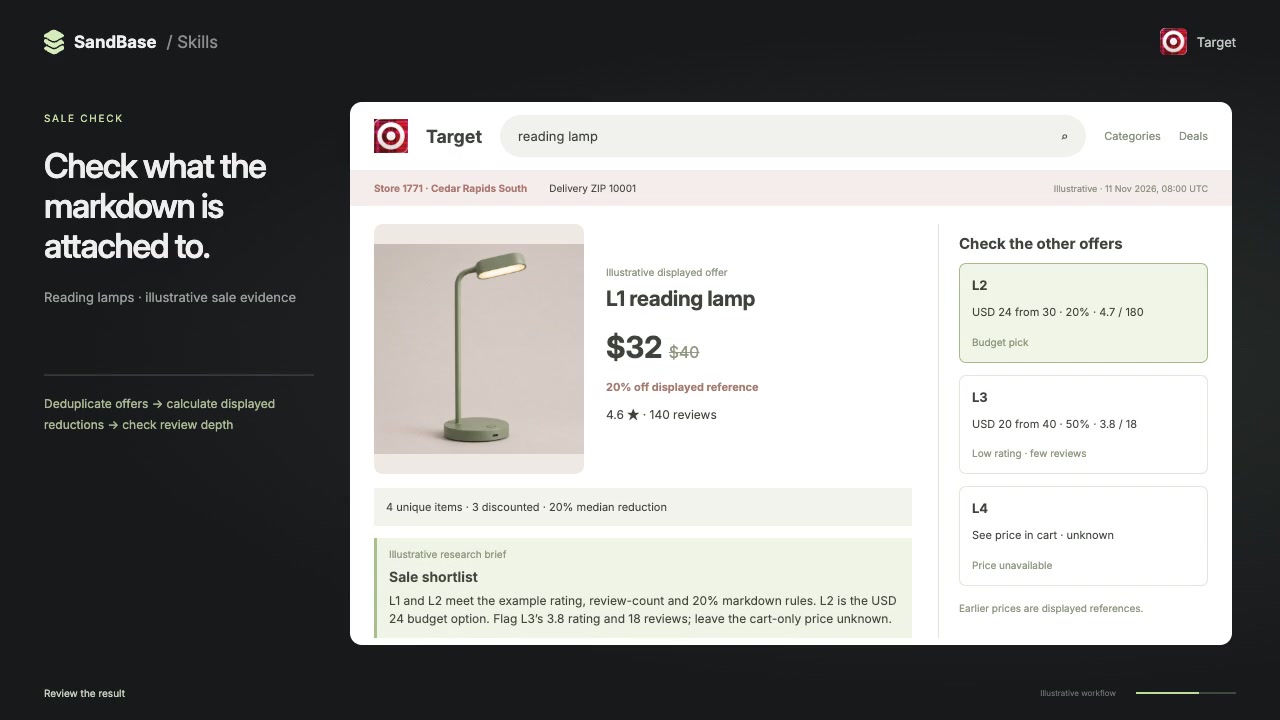
See which Target sale prices are on products people actually rate well, and which discounts to skip.
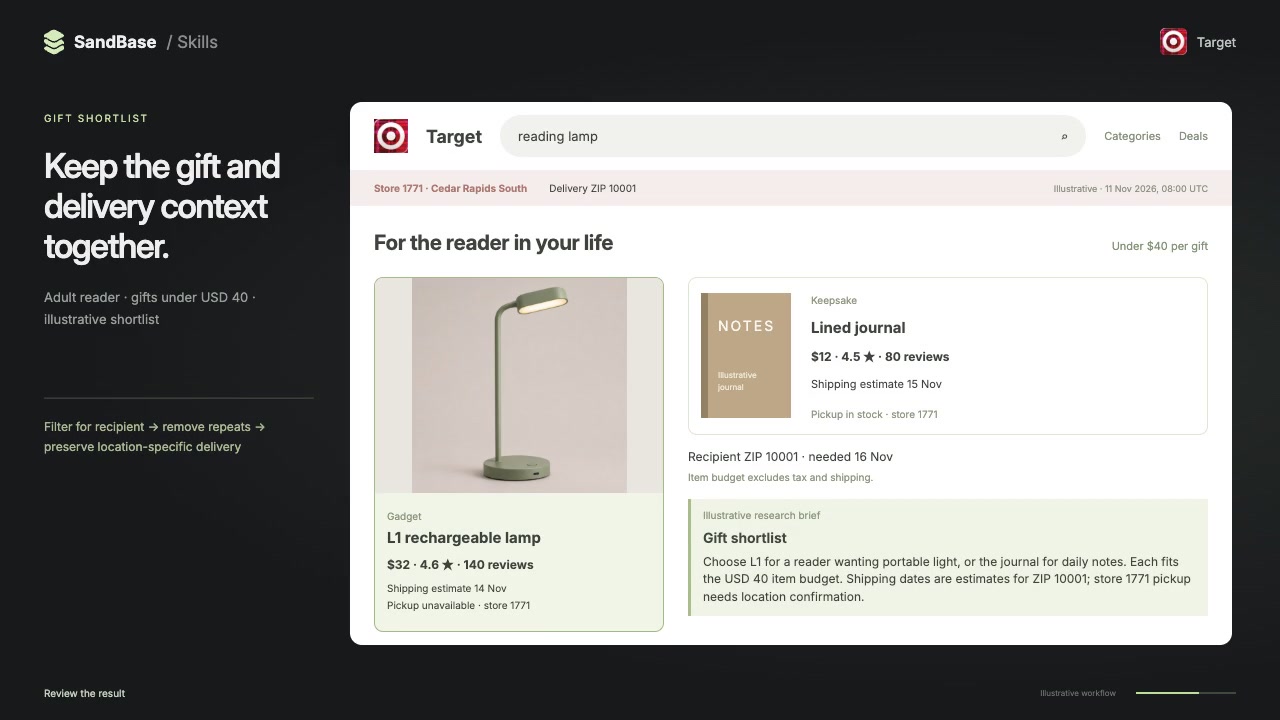
Build a gift shortlist at Target for one person and a budget, keeping only items people have rated.
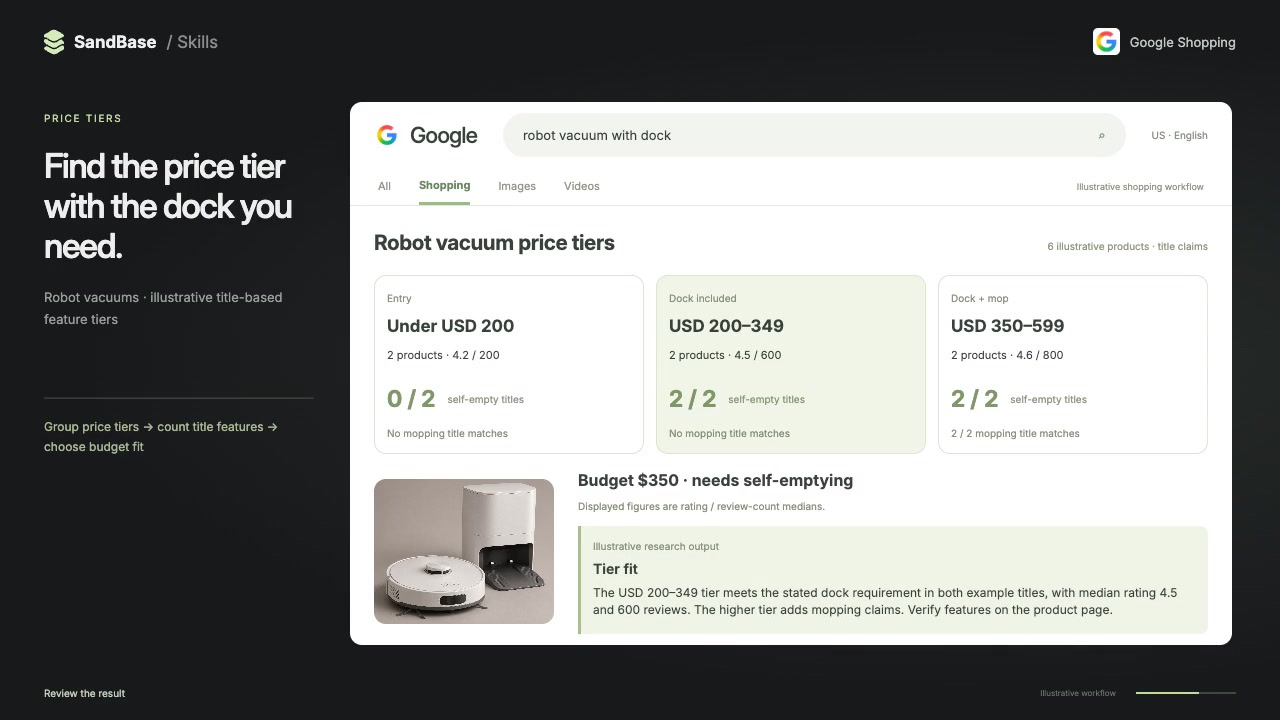
See what each price range buys for a product type on Google Shopping, and where spending more starts to pay.
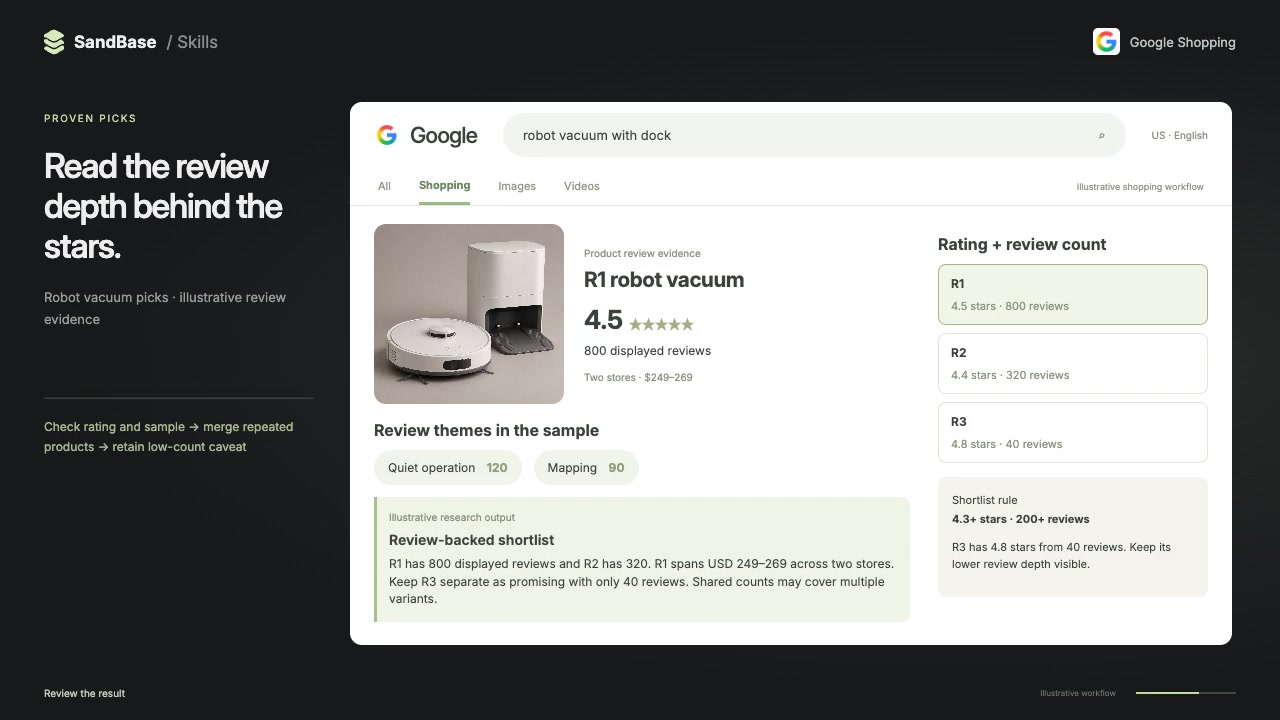
Choose products on Google Shopping whose ratings rest on many reviews, and find the same product cheaper at another store.
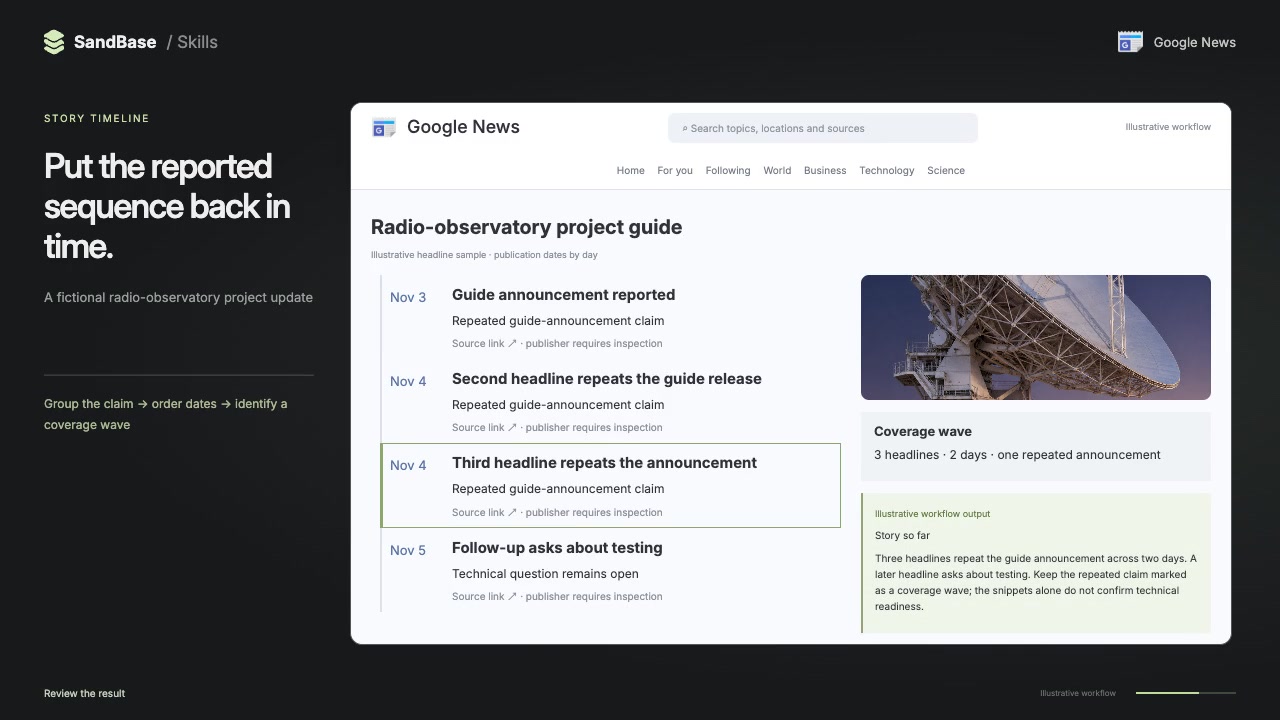
Turn a news search into a dated timeline of how a story developed, and see when many headlines repeat one claim.
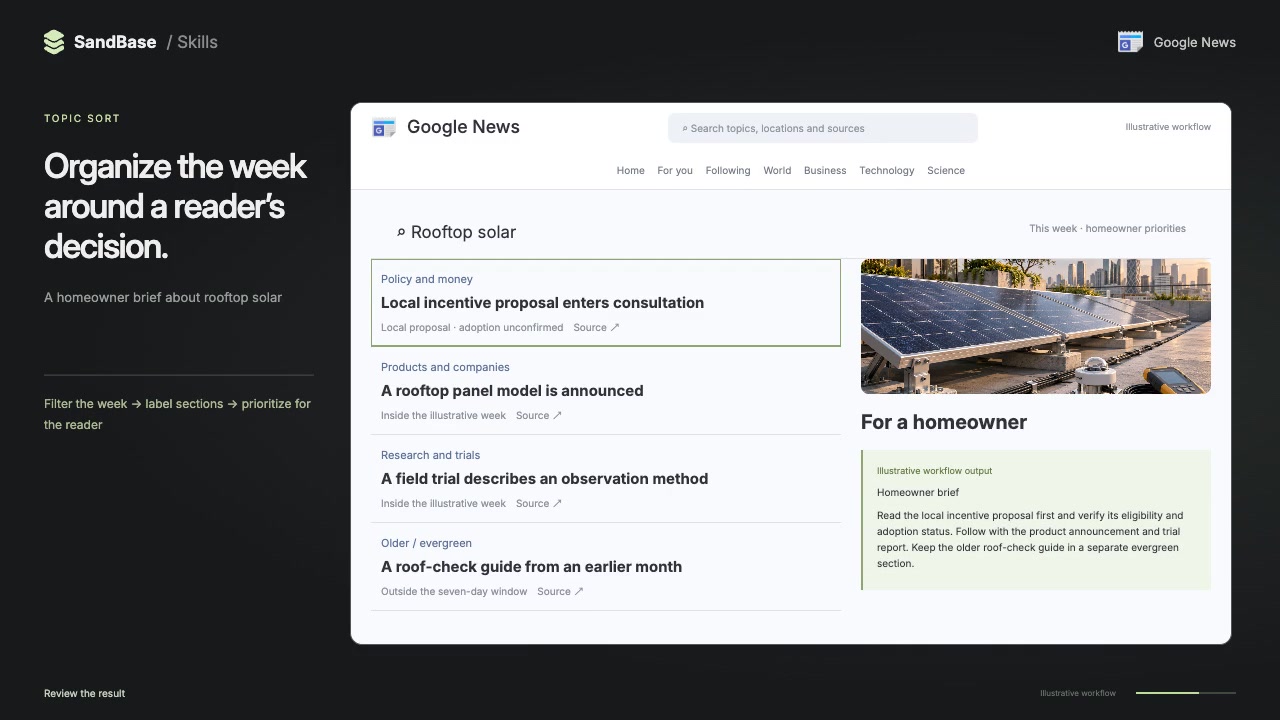
Sort this week’s news on a topic into sections a reader can use, and write the newsletter section.
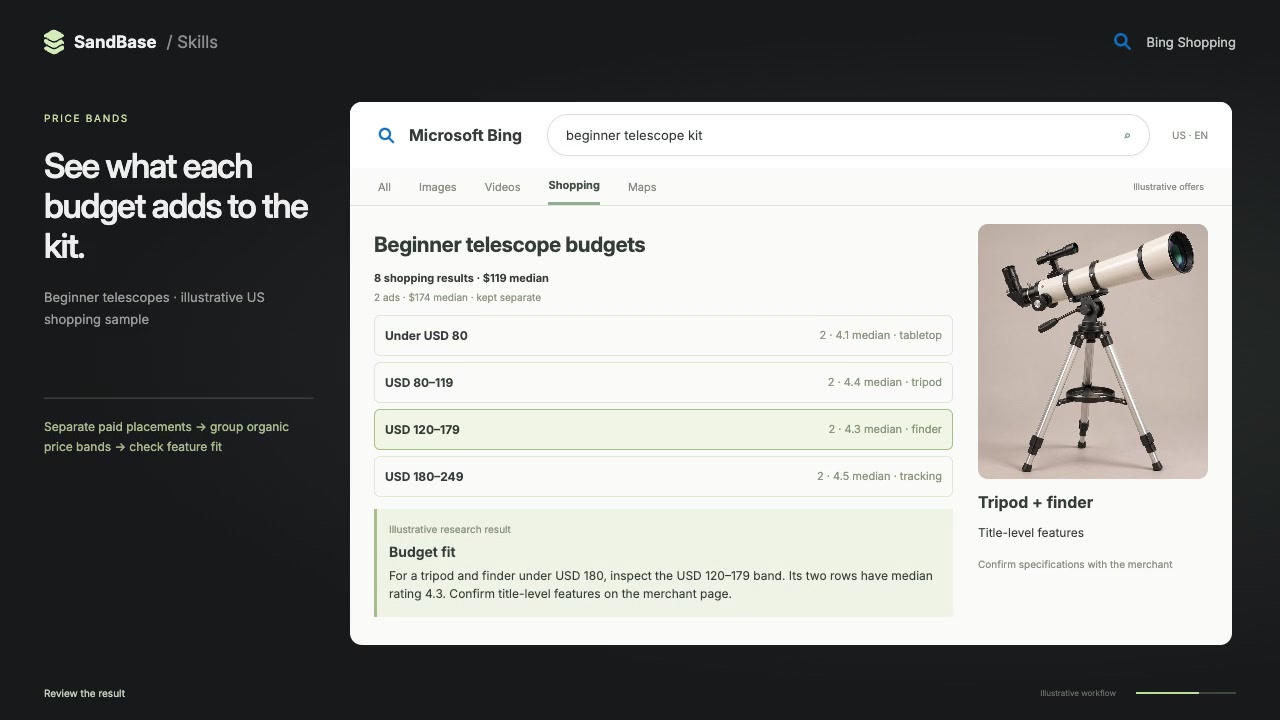
See what each price band buys for a product type on Bing Shopping, with paid ads kept apart.
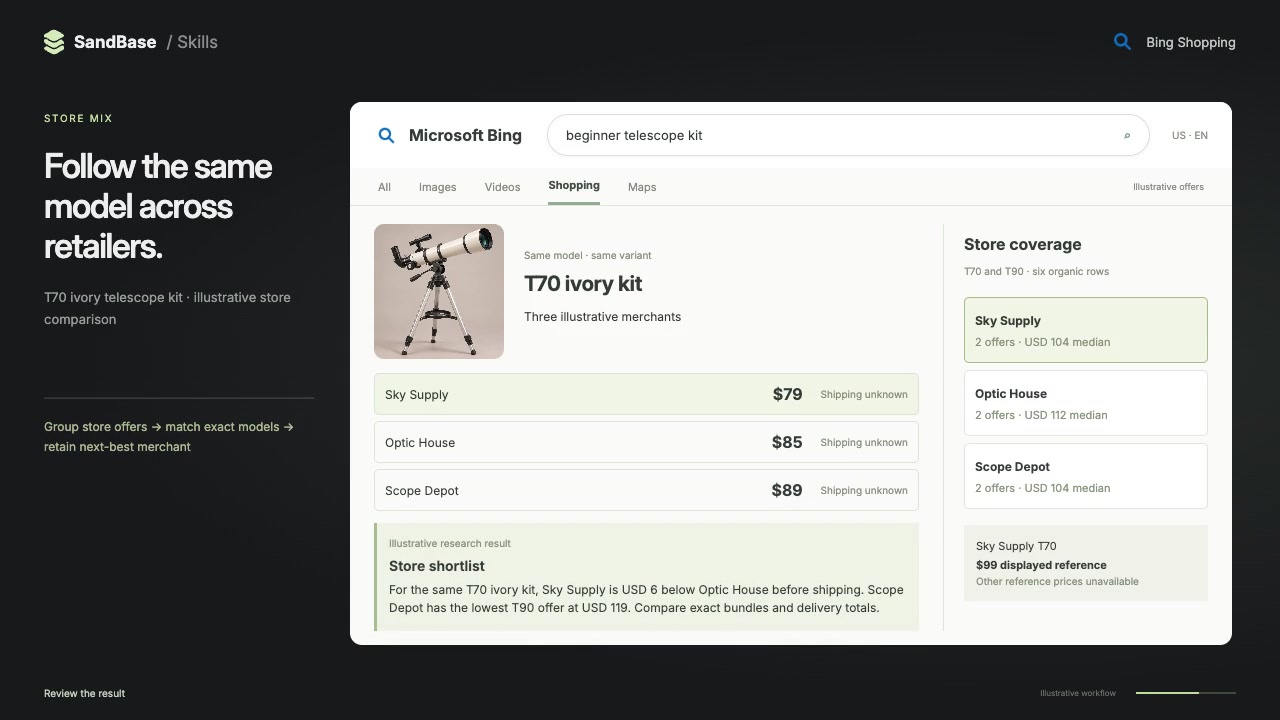
Find which stores sell a product line on Bing Shopping and where each model on your shortlist is cheapest today.
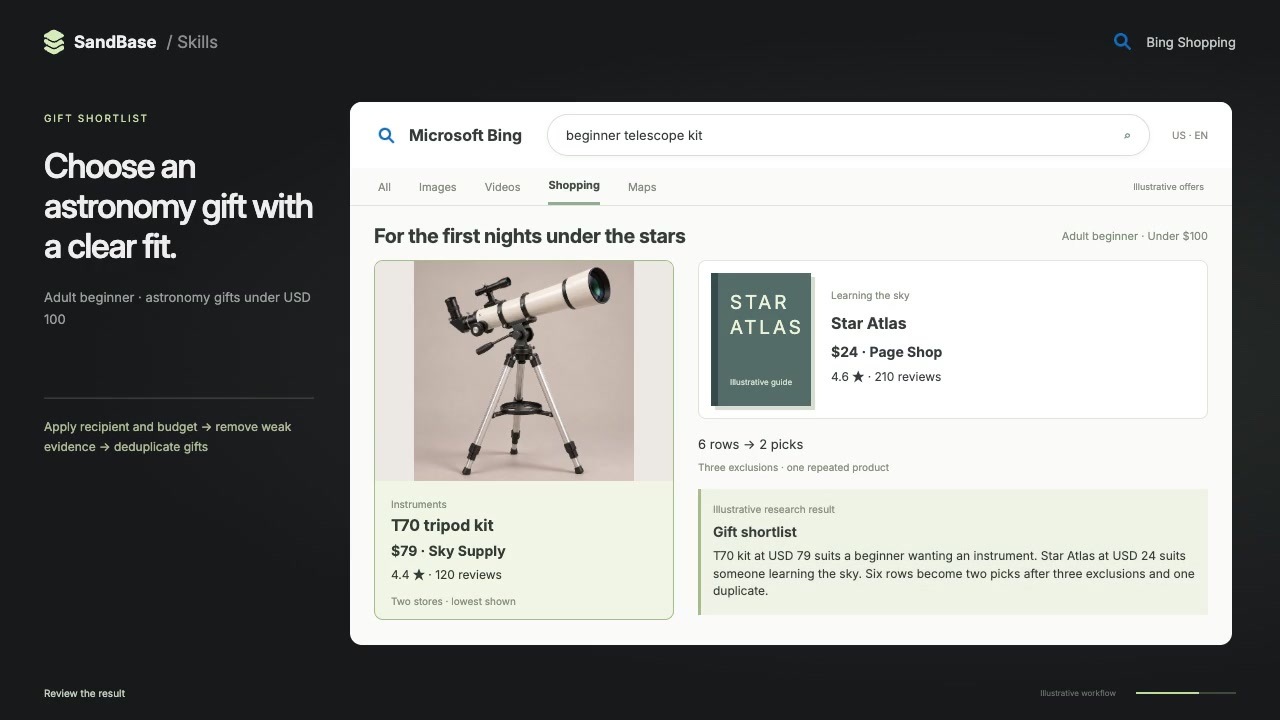
Build a gift shortlist across many retailers on Bing Shopping, without unrated listings, doubled "was" prices or the same box at six stores.
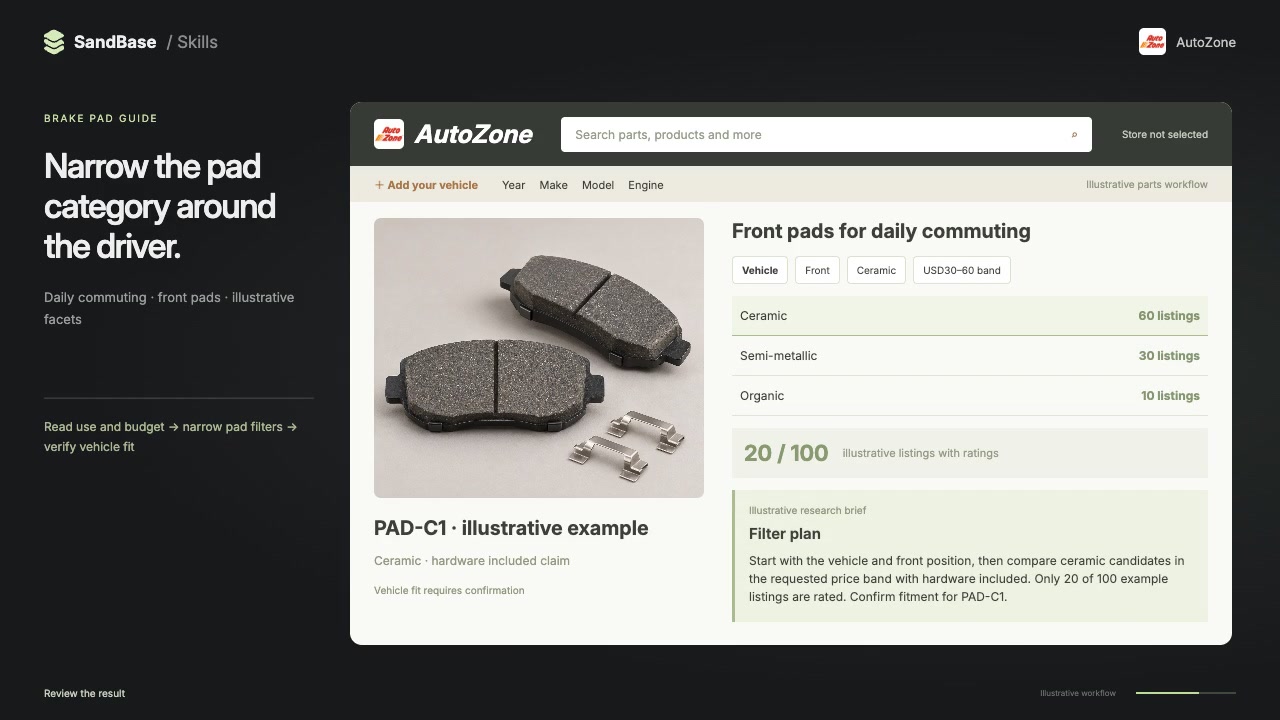
Work out which brake pad type, price band and filters to use at AutoZone before entering a vehicle.
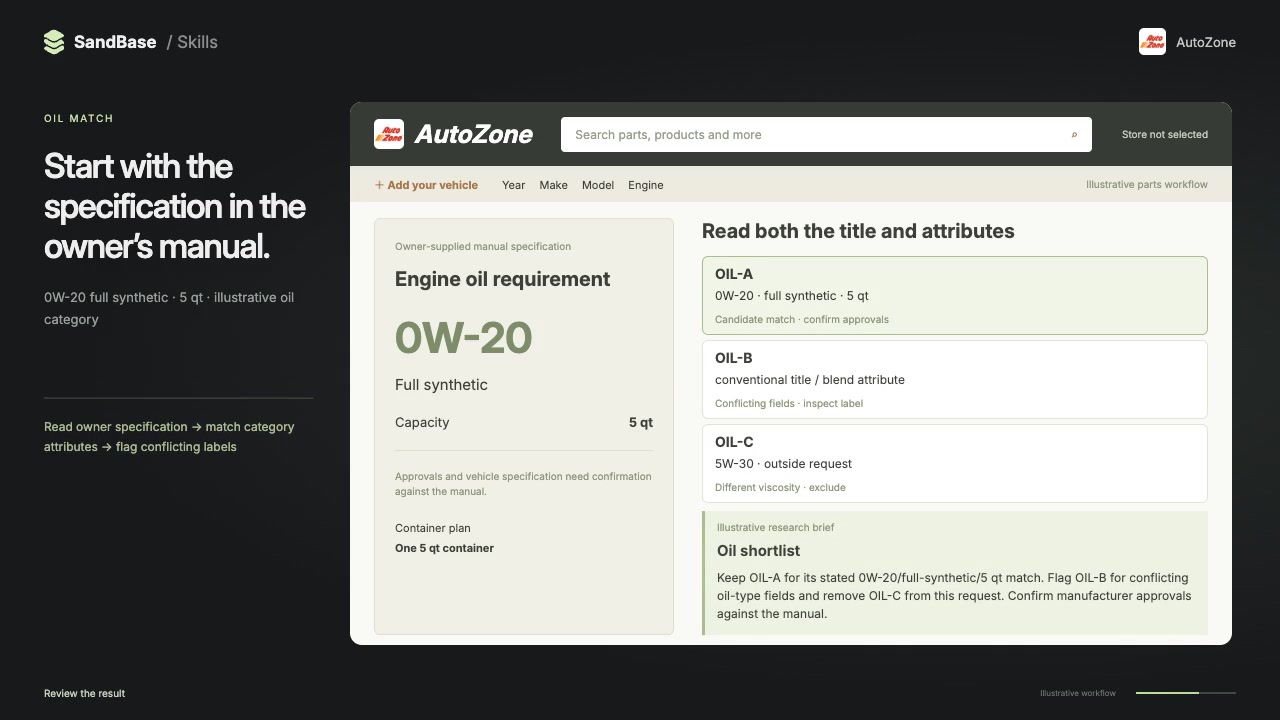
Go from the viscosity in your owner’s manual to a short list of motor oils at AutoZone.
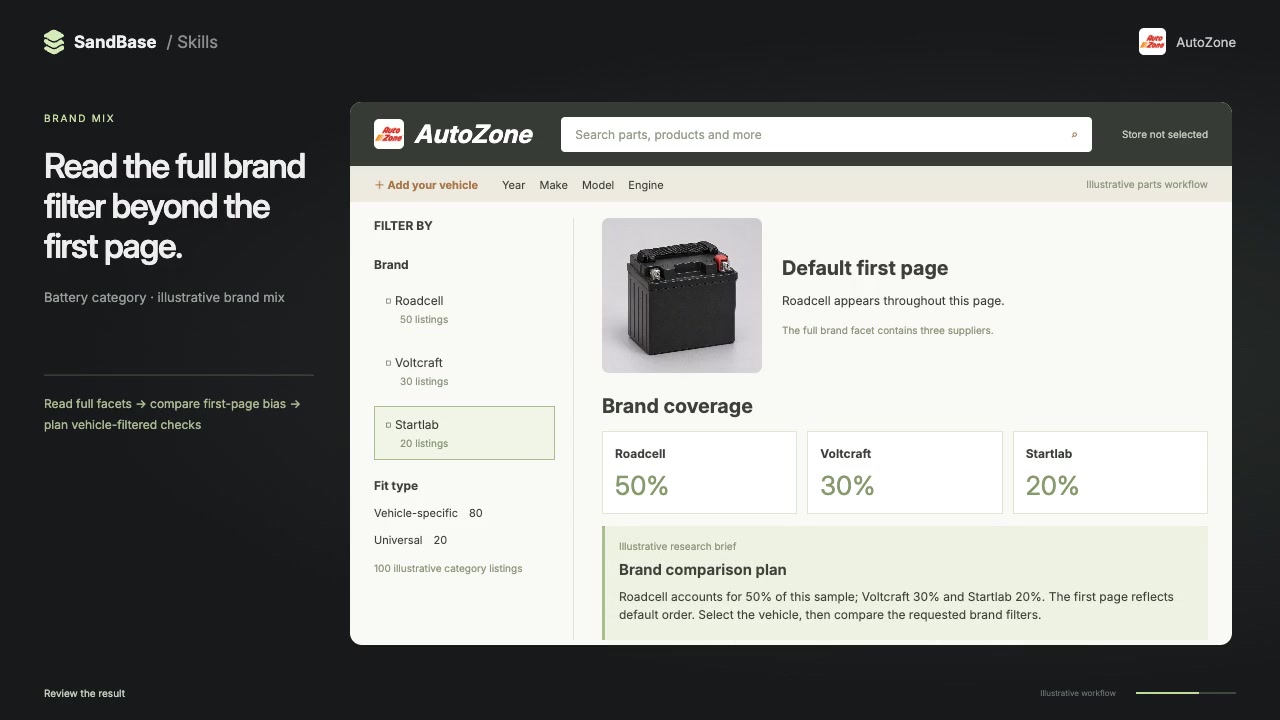
See which brands supply an AutoZone parts category before picking one, and why the first page looks like one brand.
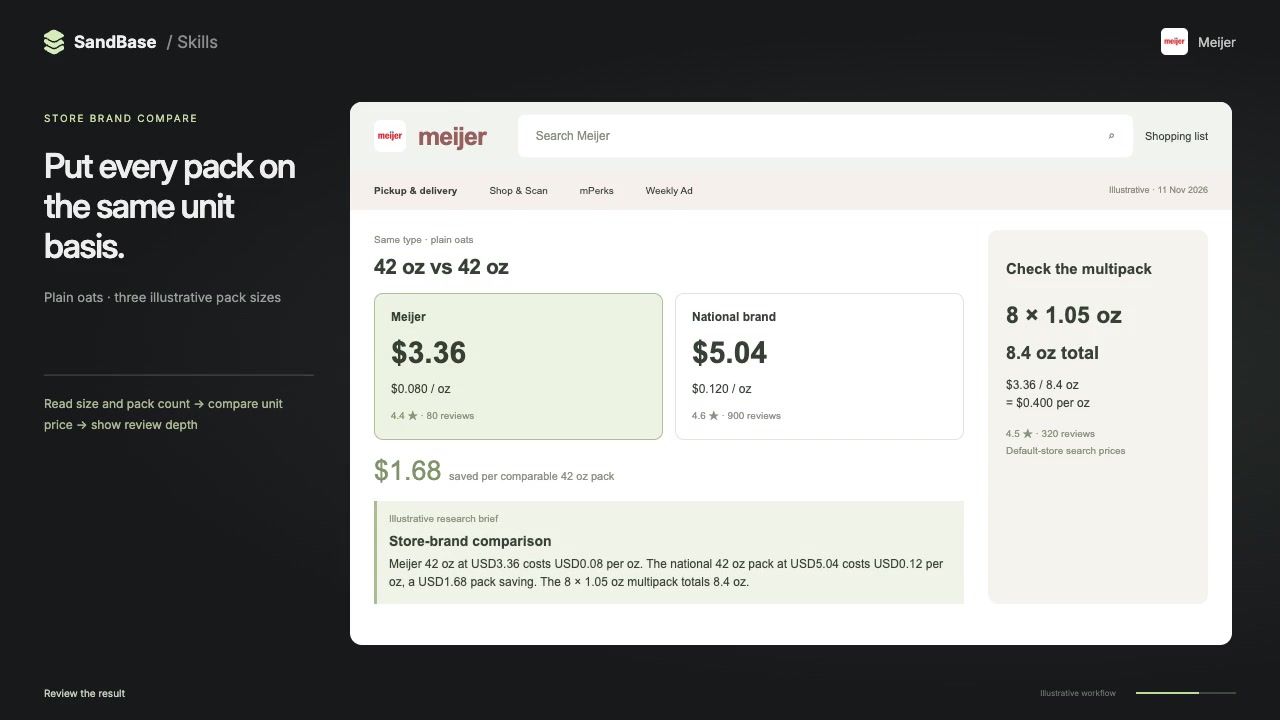
Find out whether Meijer’s own brand is worth it for one grocery item by comparing price per ounce with the national brands.
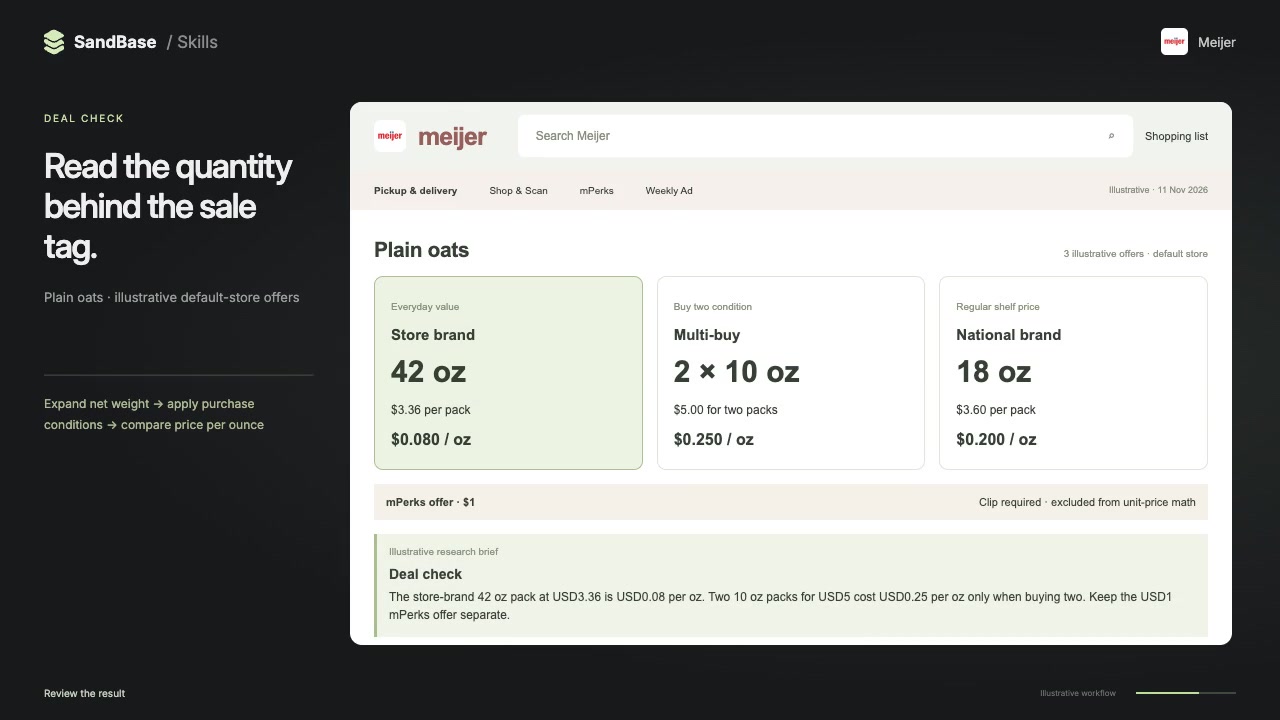
Check which sale tags on a Meijer search page actually save money once you compare price per ounce.
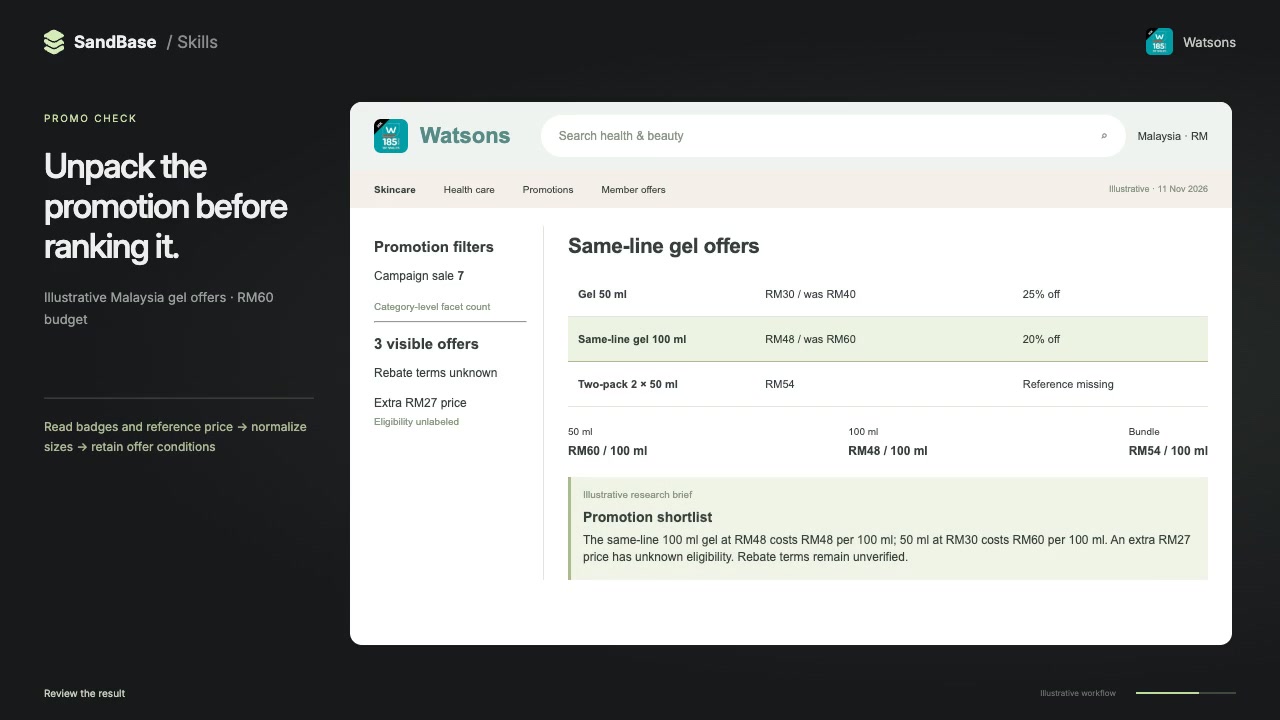
Sort out which offers on a Watsons Malaysia category page are worth it during a sale such as 11.11.
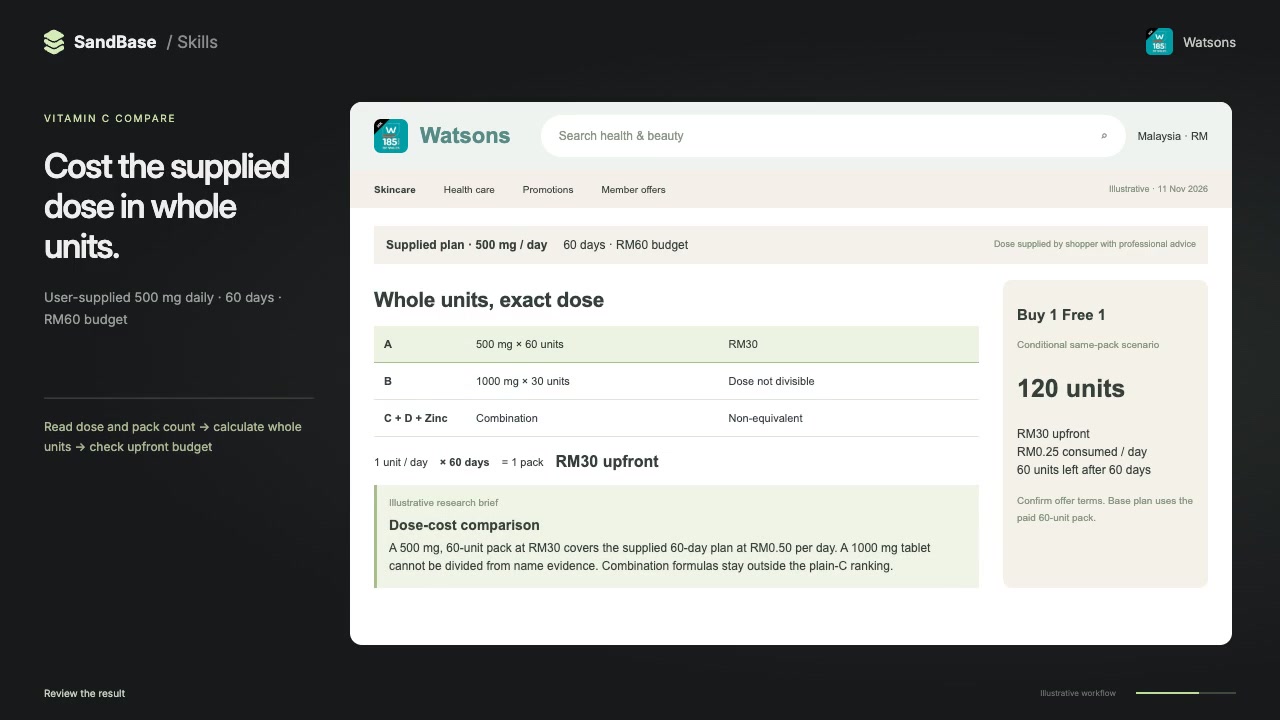
Compare vitamin C packs on Watsons Malaysia by what your daily dose costs, with and without Buy 1 Free 1.
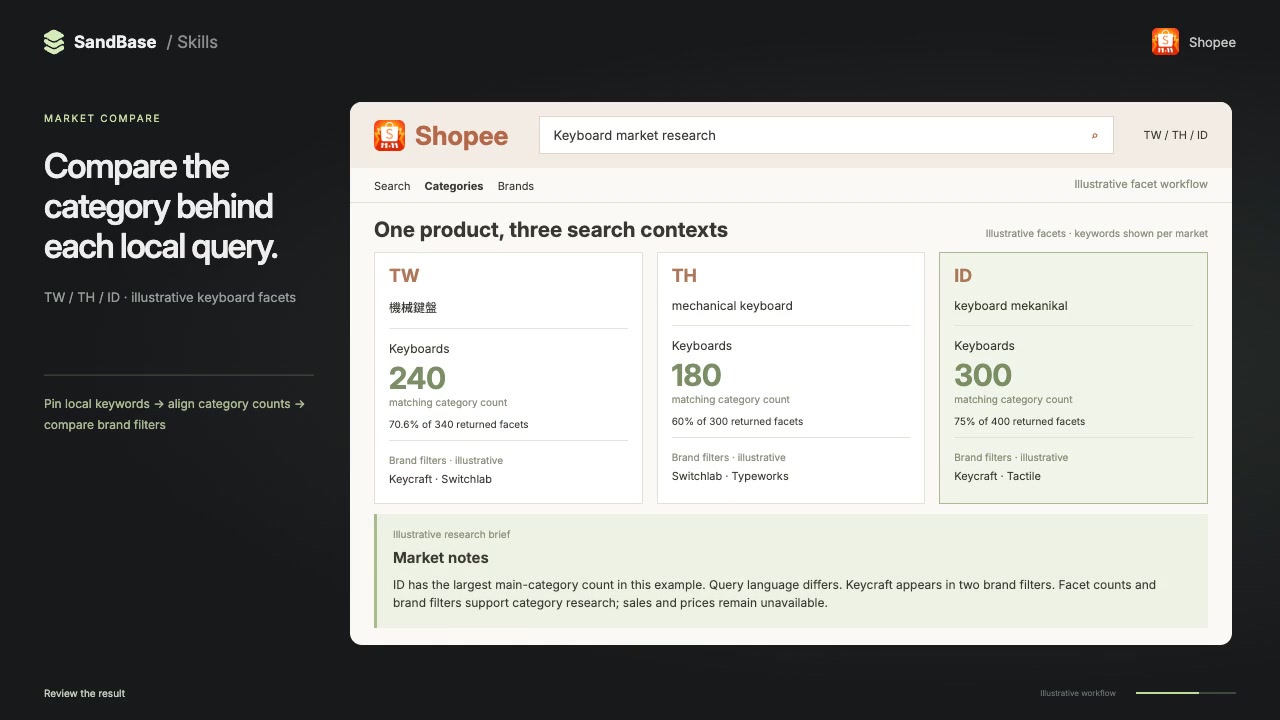
Compare one product across Shopee Taiwan, Thailand and Indonesia before choosing which market to sell in.
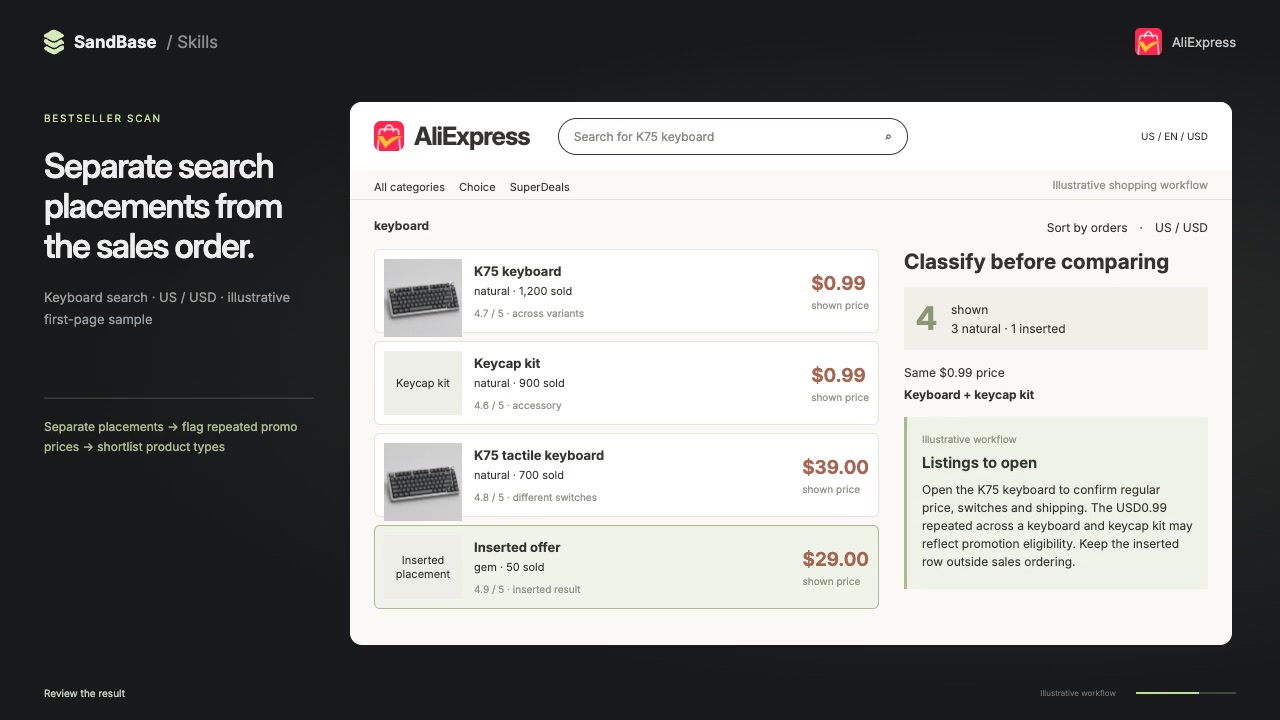
Read a sales-sorted AliExpress search without being misled by shared promo prices and inserted listings.
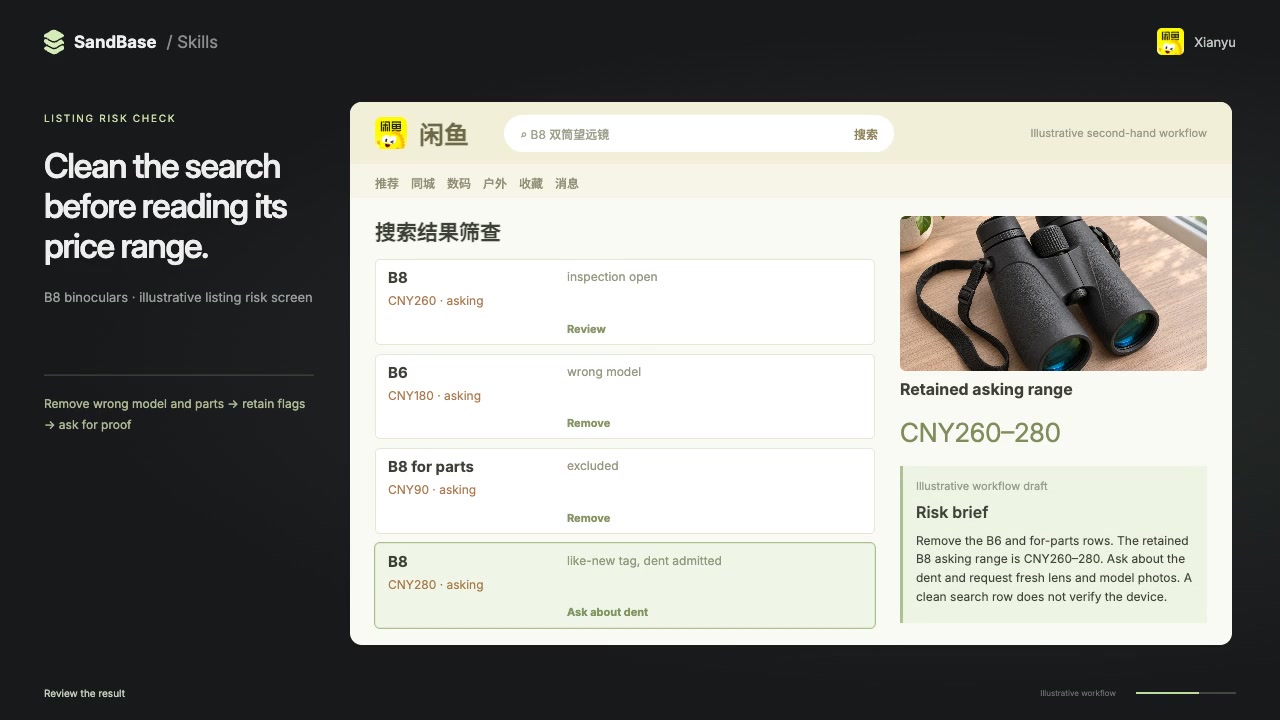
Screen Xianyu listings for a used device before messaging sellers, and get a fair price range from the clean ones.
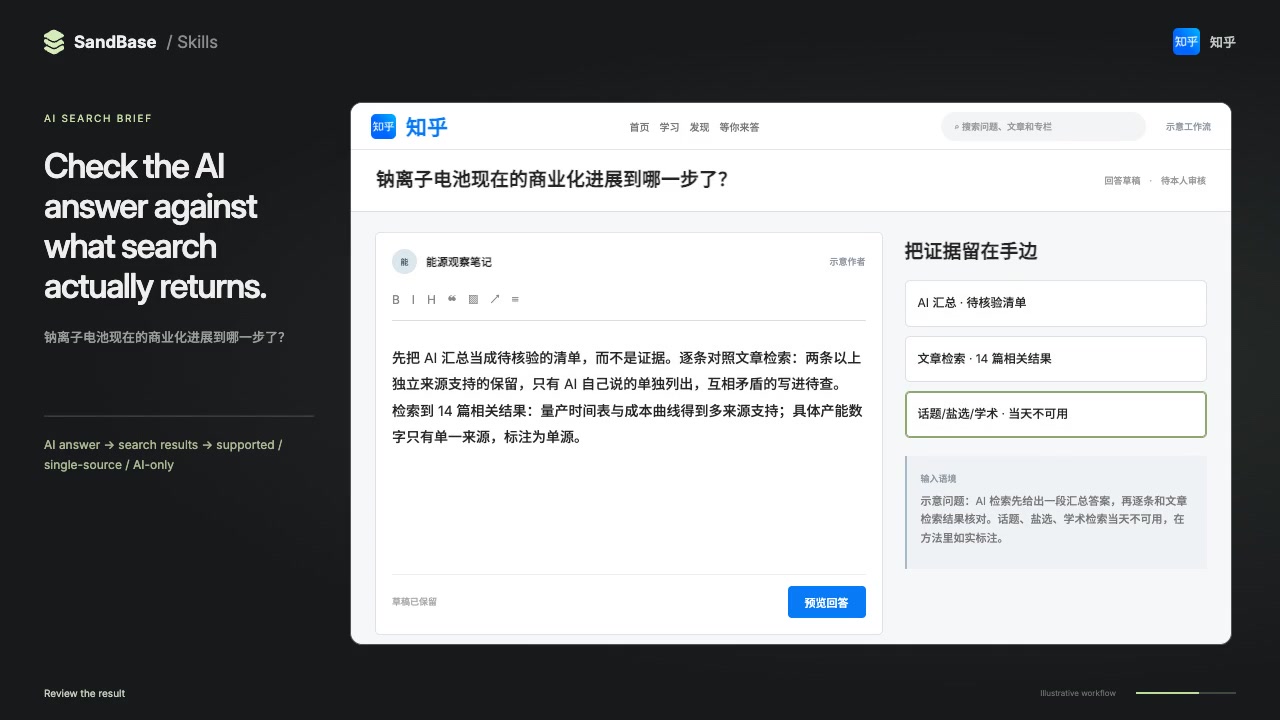
Find out what Zhihu actually knows about a question — check Zhihu's AI search answer against articles, answers, topics, Salt titles and papers before you write.
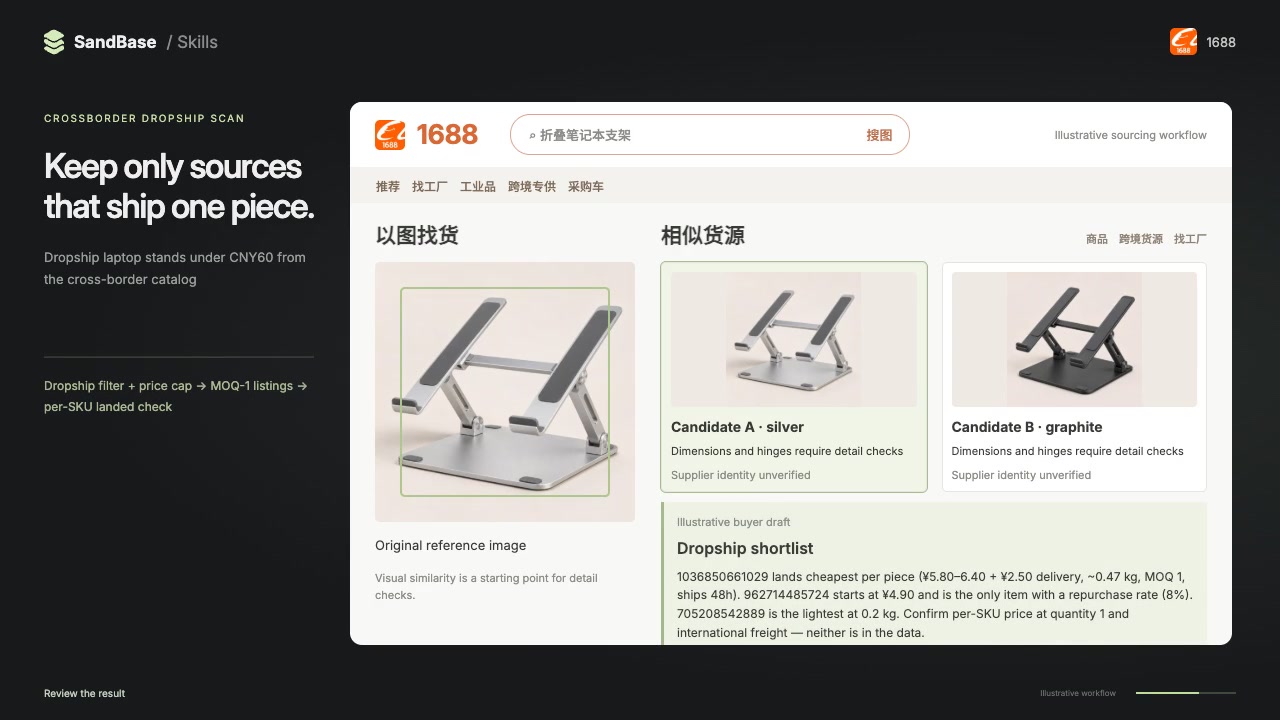
Find 1688 sources you can dropship one piece at a time.
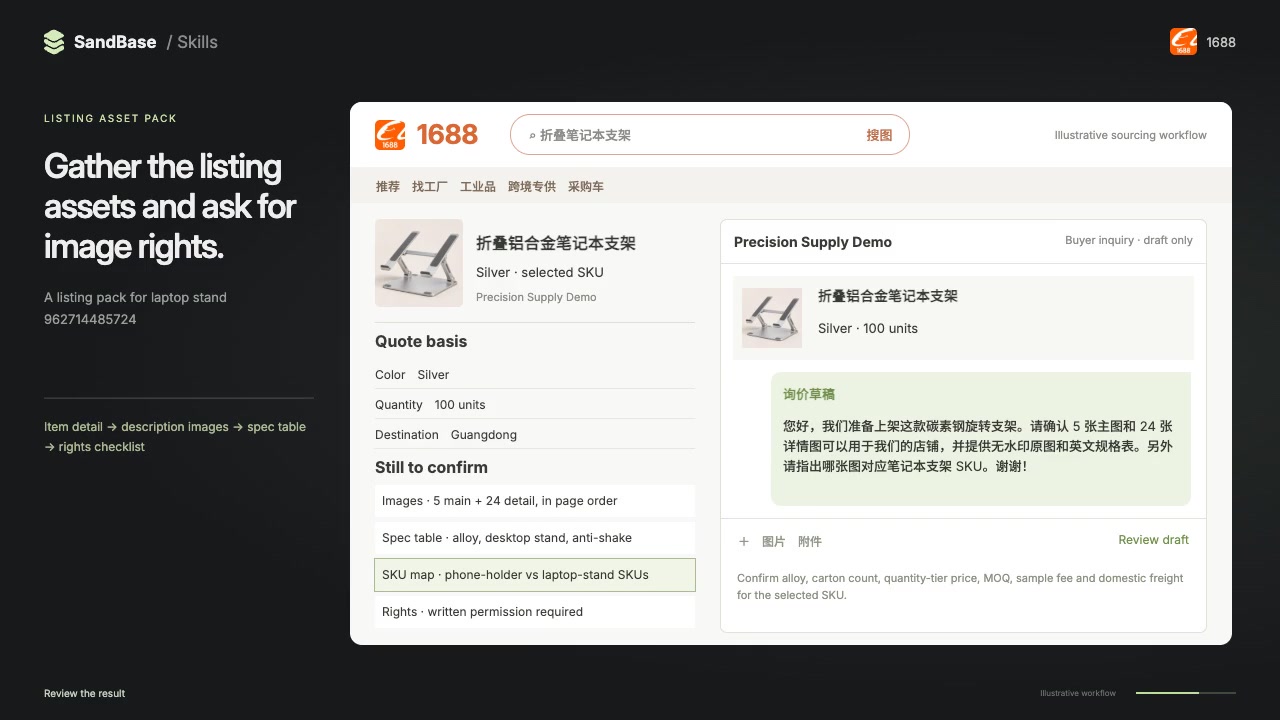
Gather what a new listing needs from a chosen 1688 product.
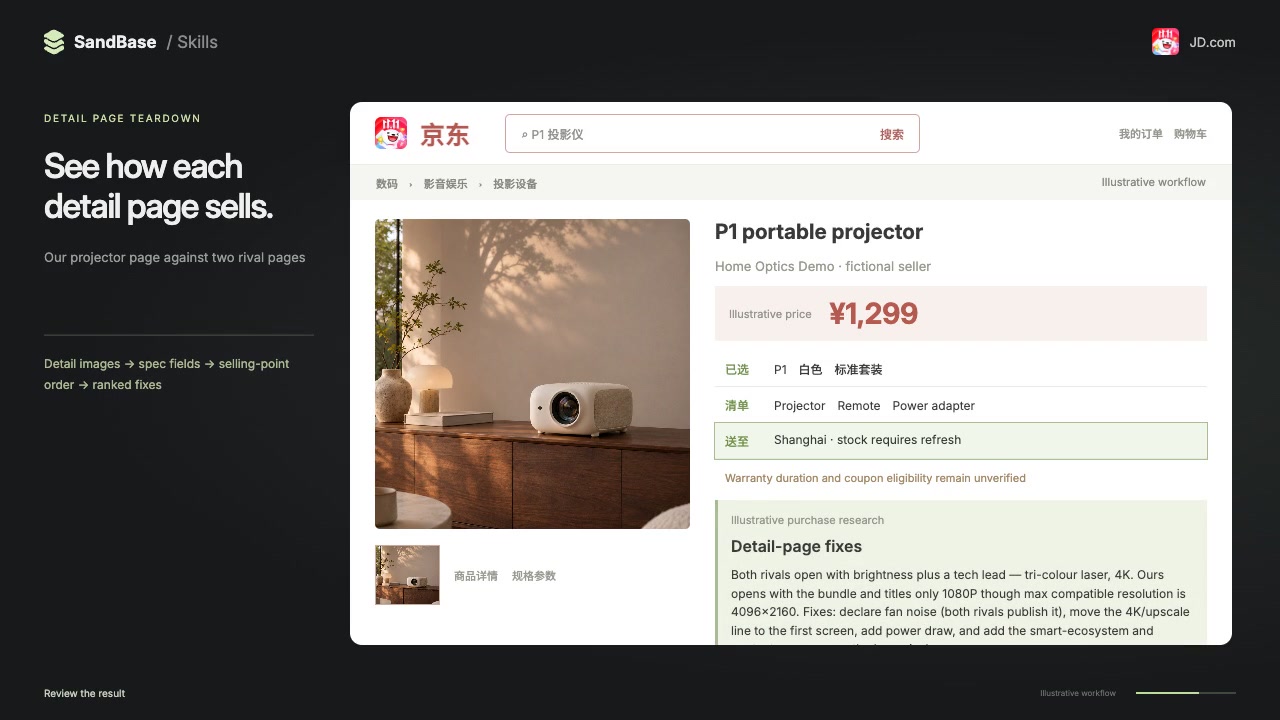
See how competing JD detail pages sell and what yours is missing.
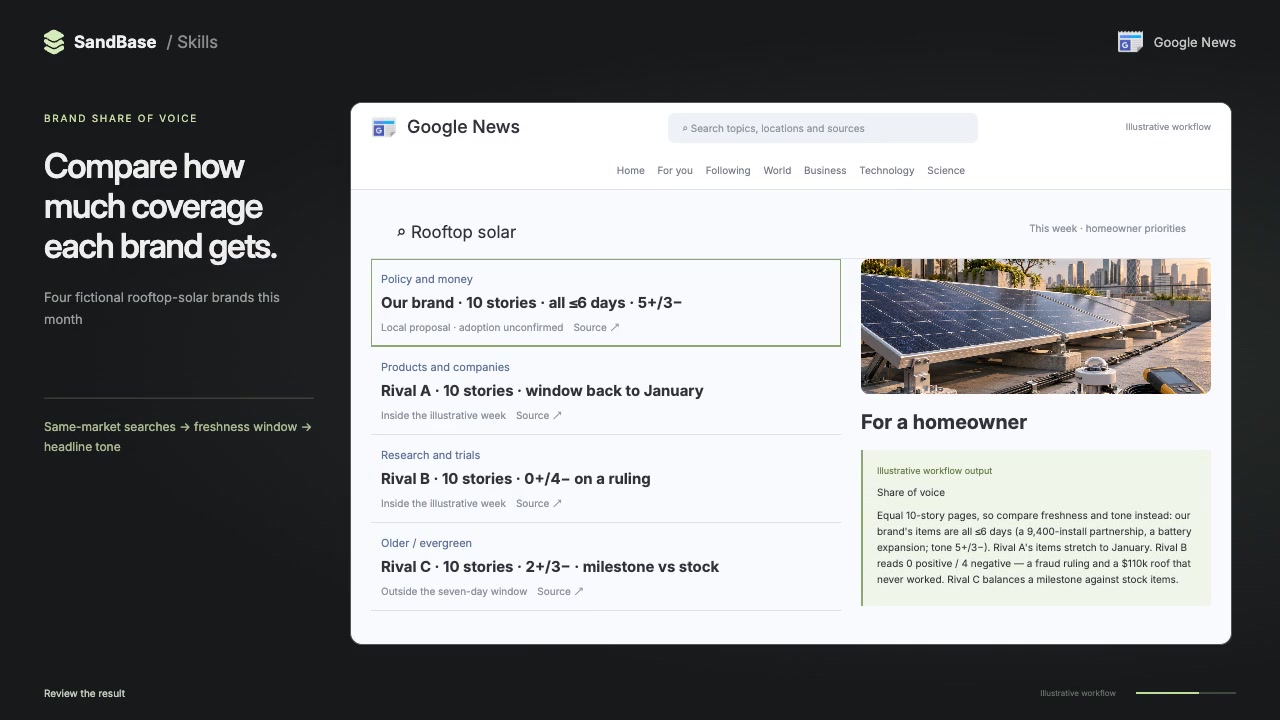
Compare how much news coverage your brand gets against competitors.
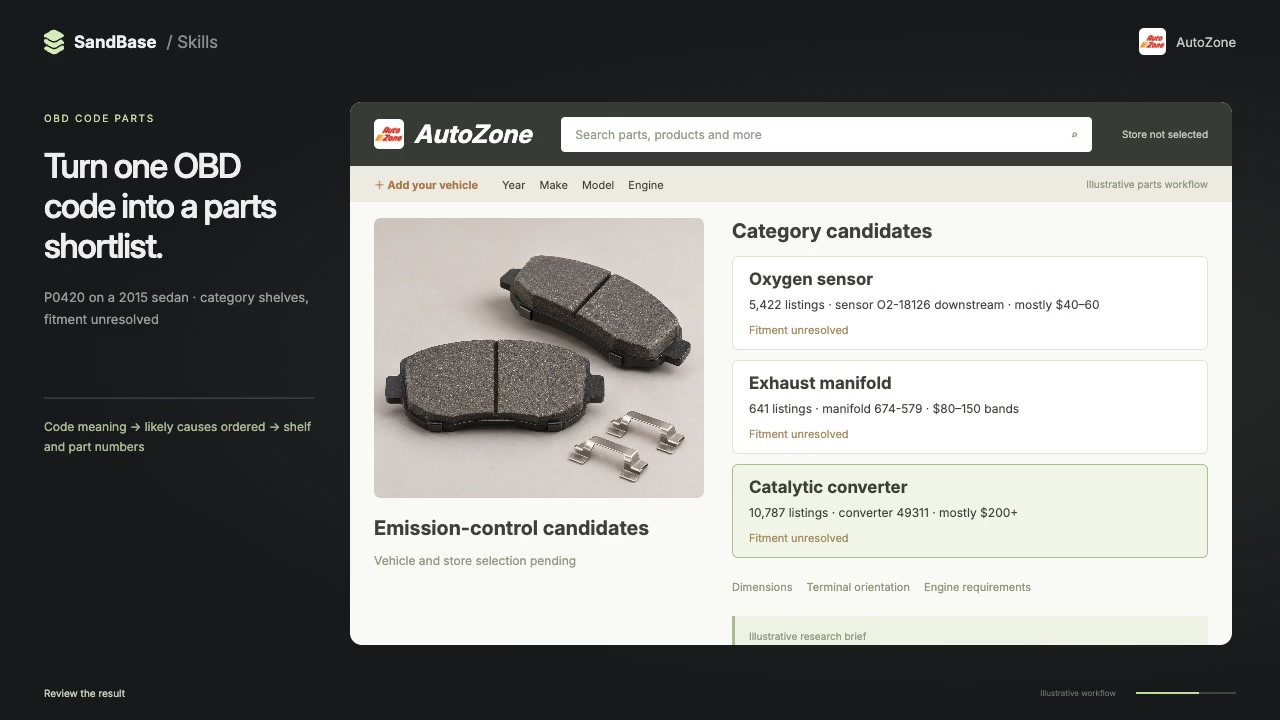
Turn a check-engine code into a plan and the parts to look at.
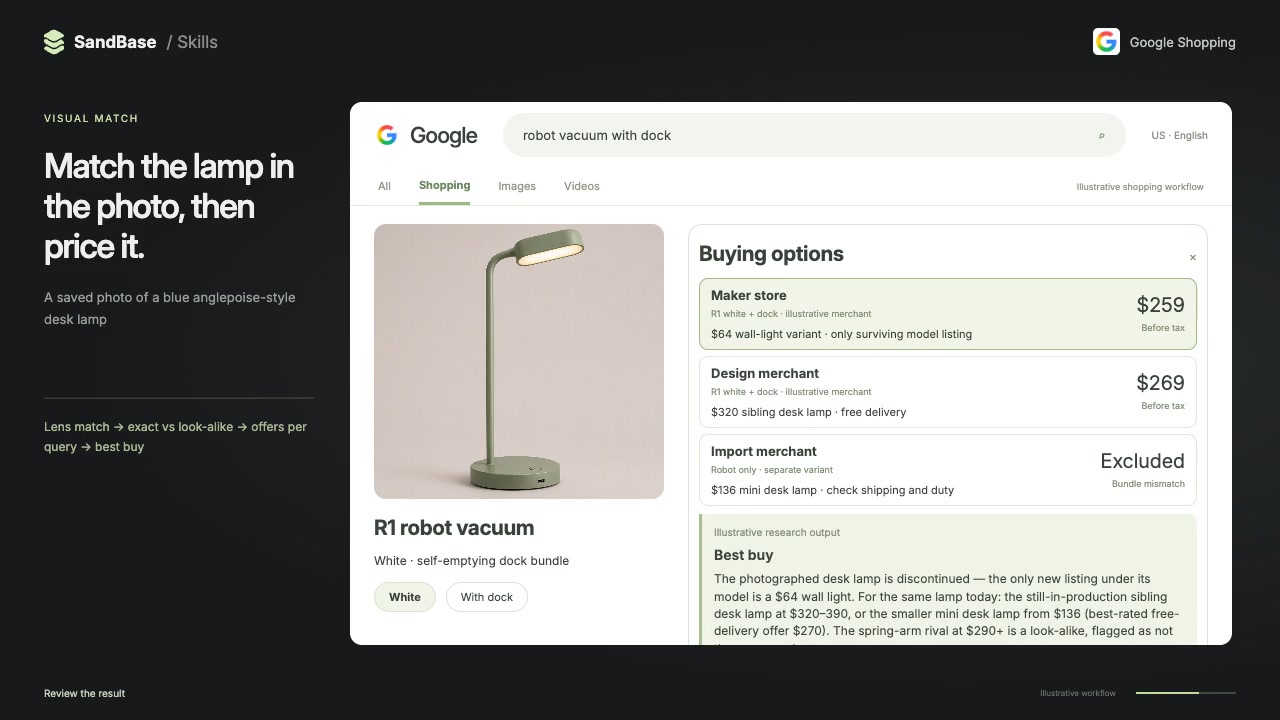
Find out what the item in a photo is and where to buy it.
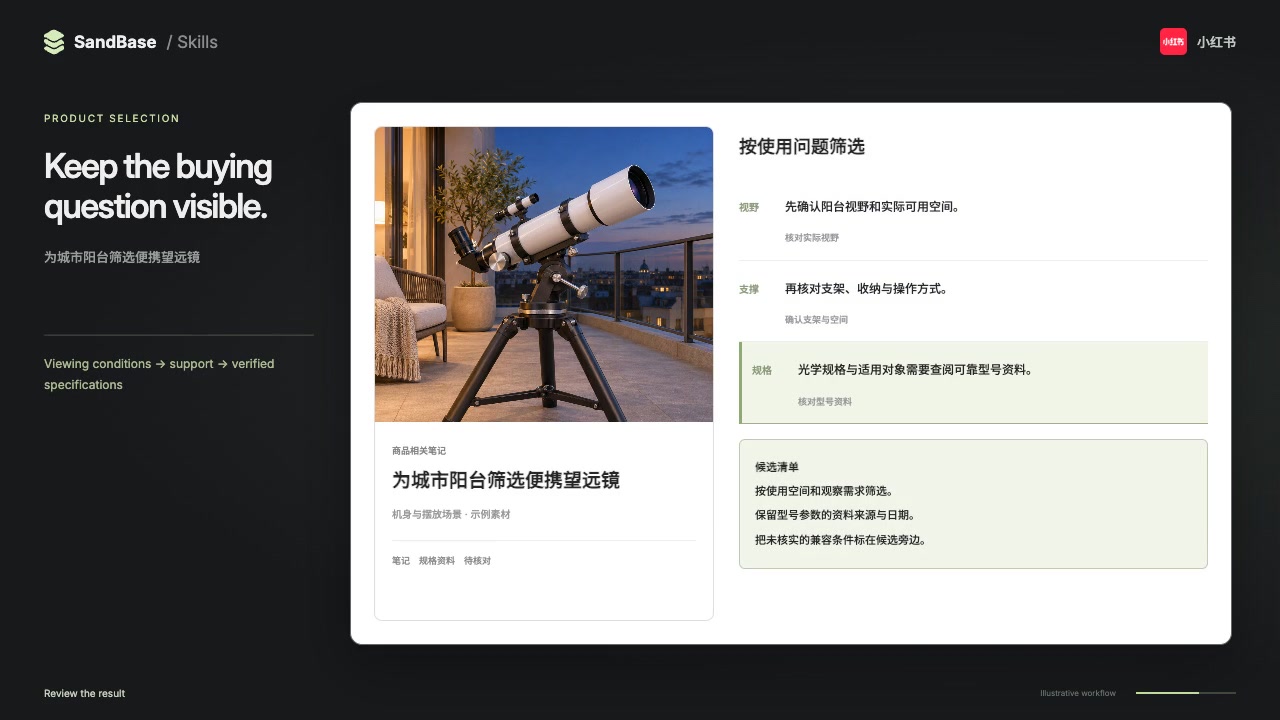
Compare product fit and unit contribution before committing to a pilot.
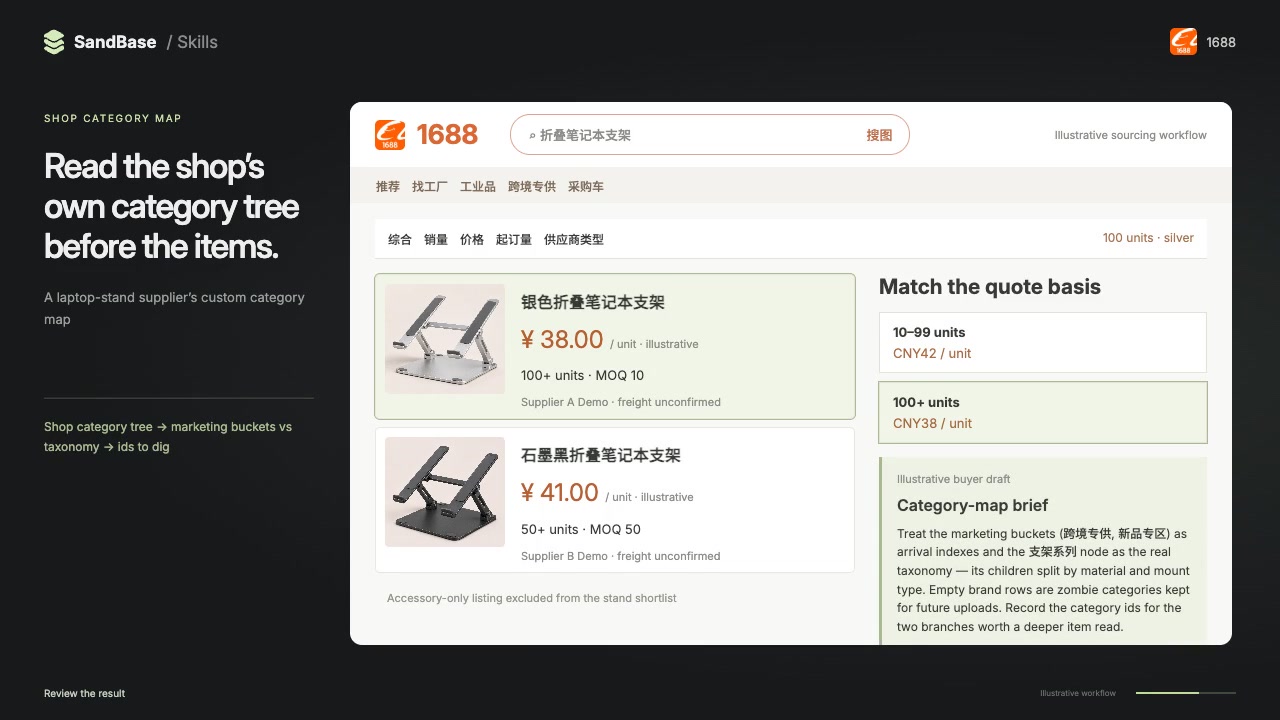
Map one 1688 shop's self-defined category tree through SandBase
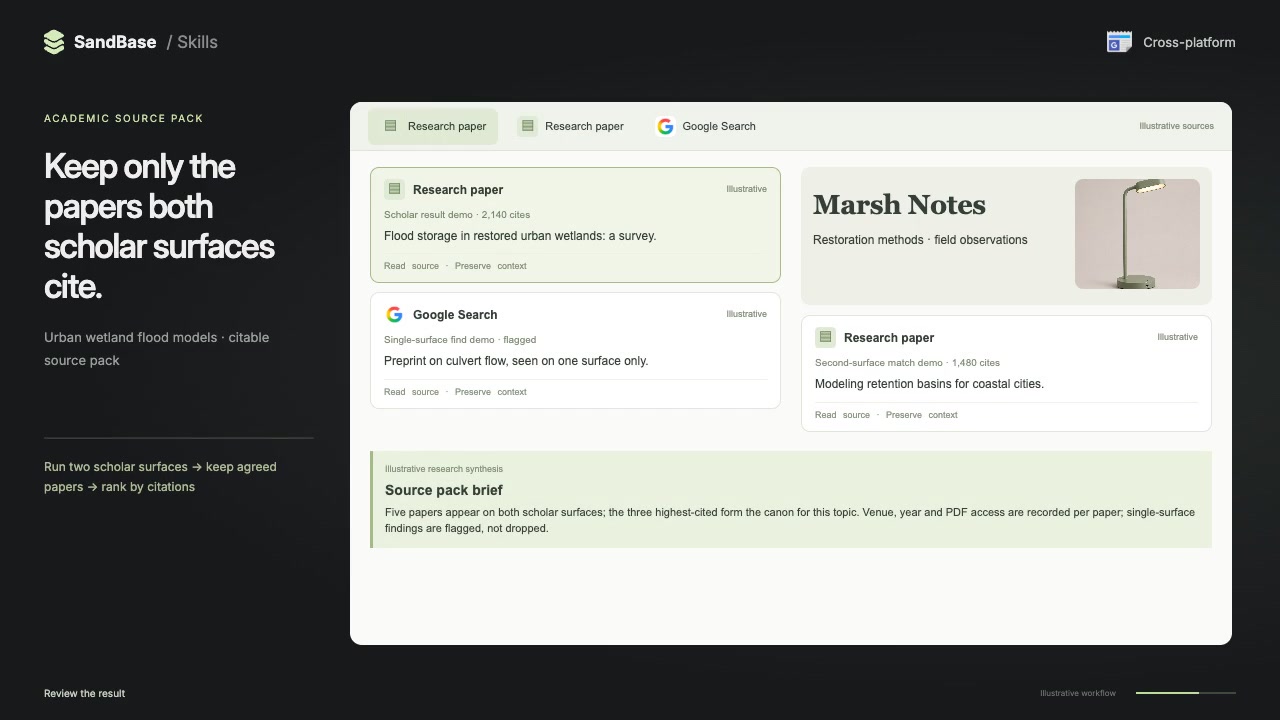
Assemble a citable academic source pack for a topic through SandBase
Air-quality watch brief for a city through SandBase
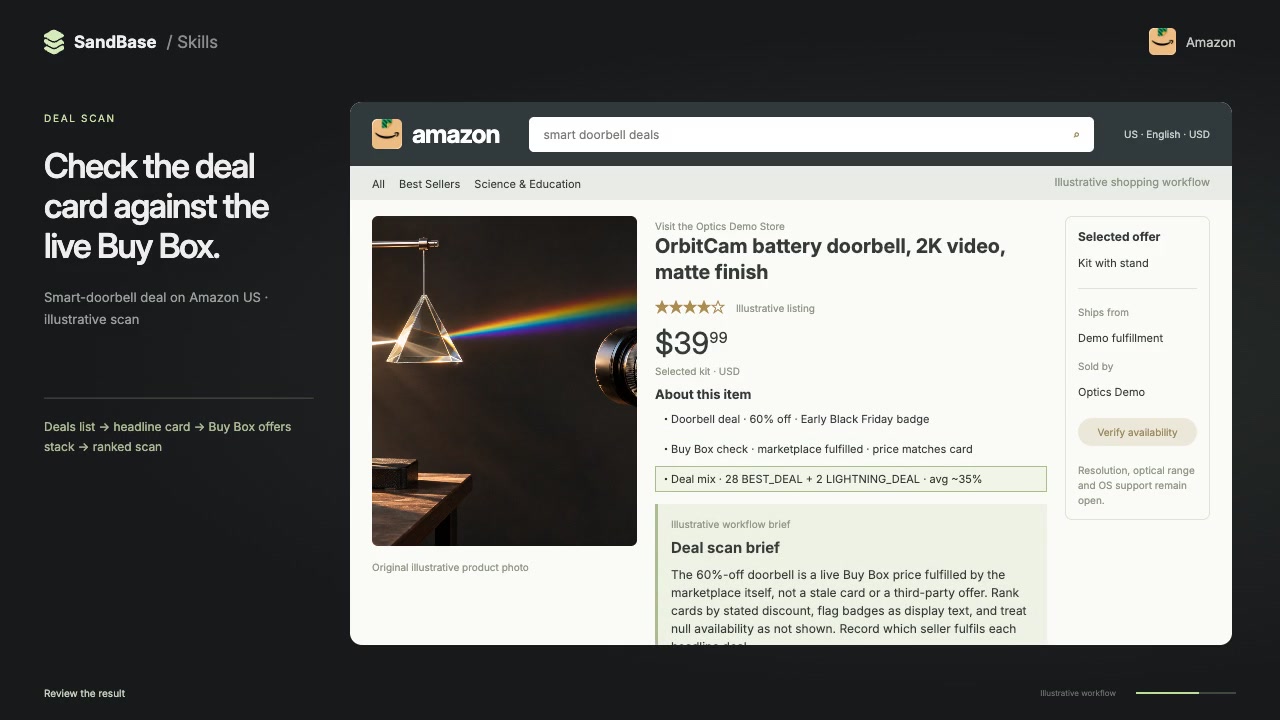
Scan one Amazon marketplace's live discount surfaces through SandBase
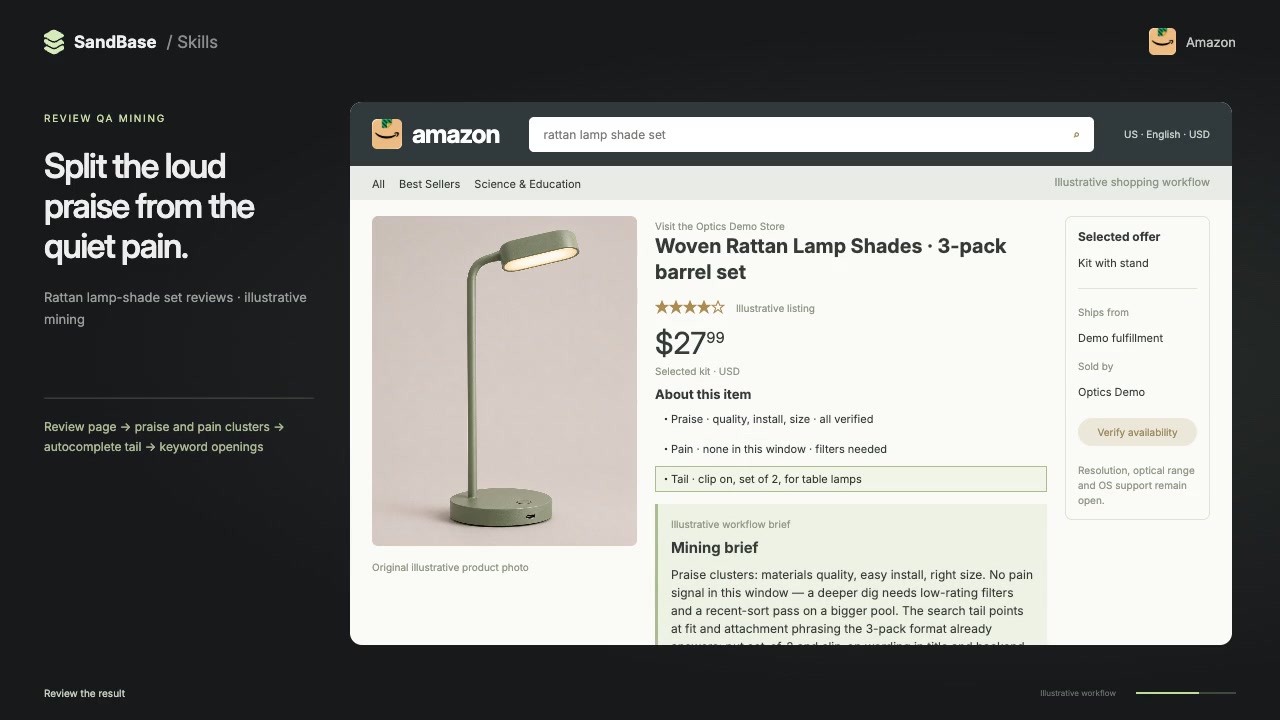
Mine the pain and praise inside Amazon reviews plus the search-autocomplete signal through SandBase
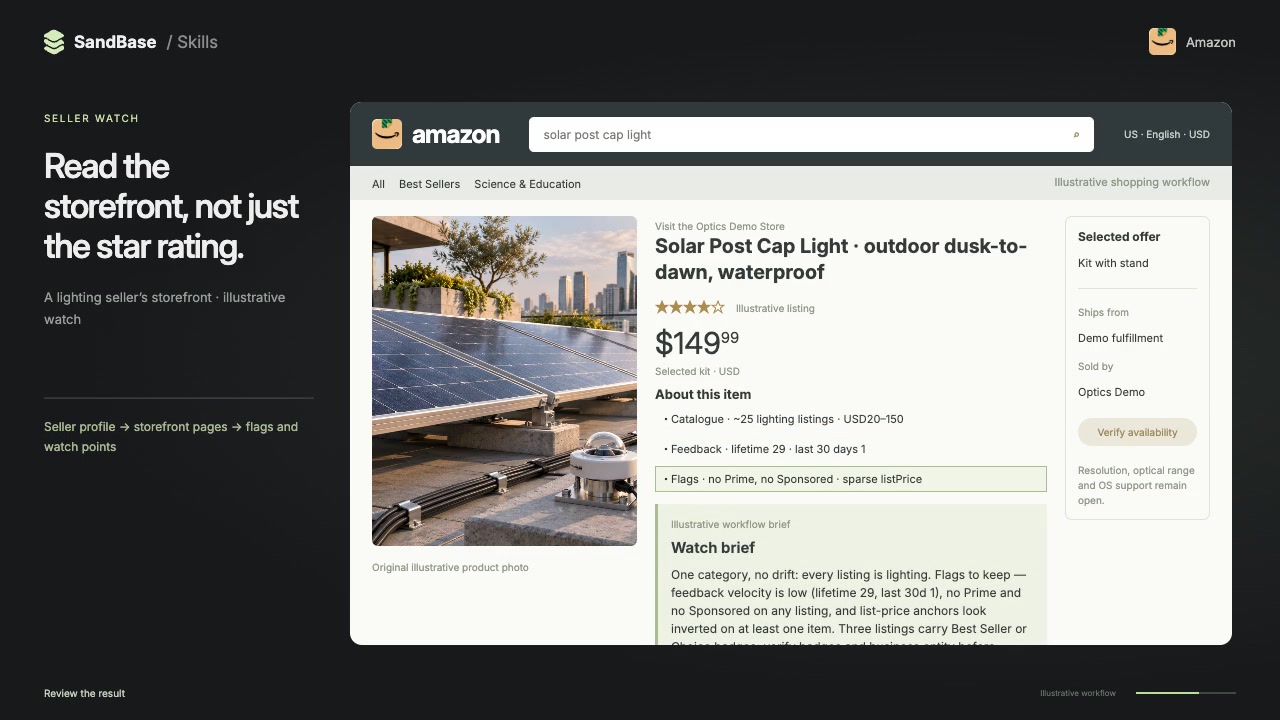
Watch one Amazon seller through SandBase
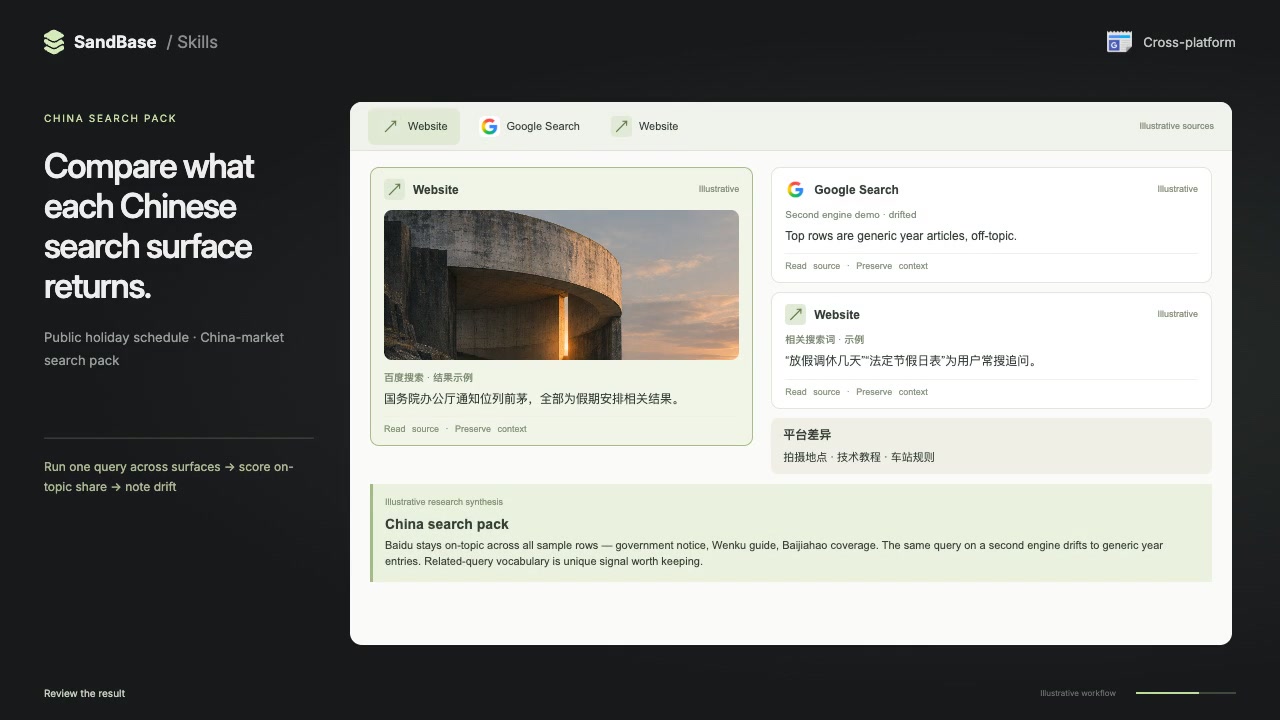
Assemble a Chinese-web search pack for a query through SandBase
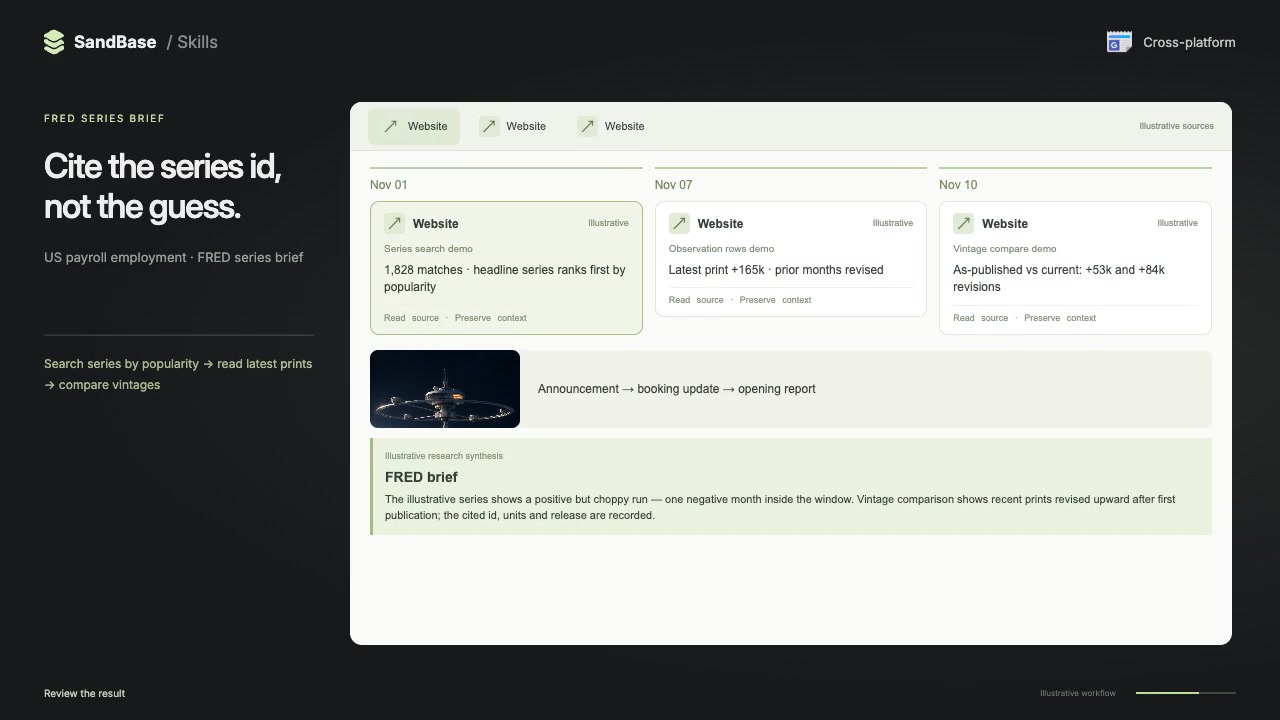
Find the right FRED series for an economic topic through SandBase FRED series search, then read the latest observations, month-over-month changes, release…
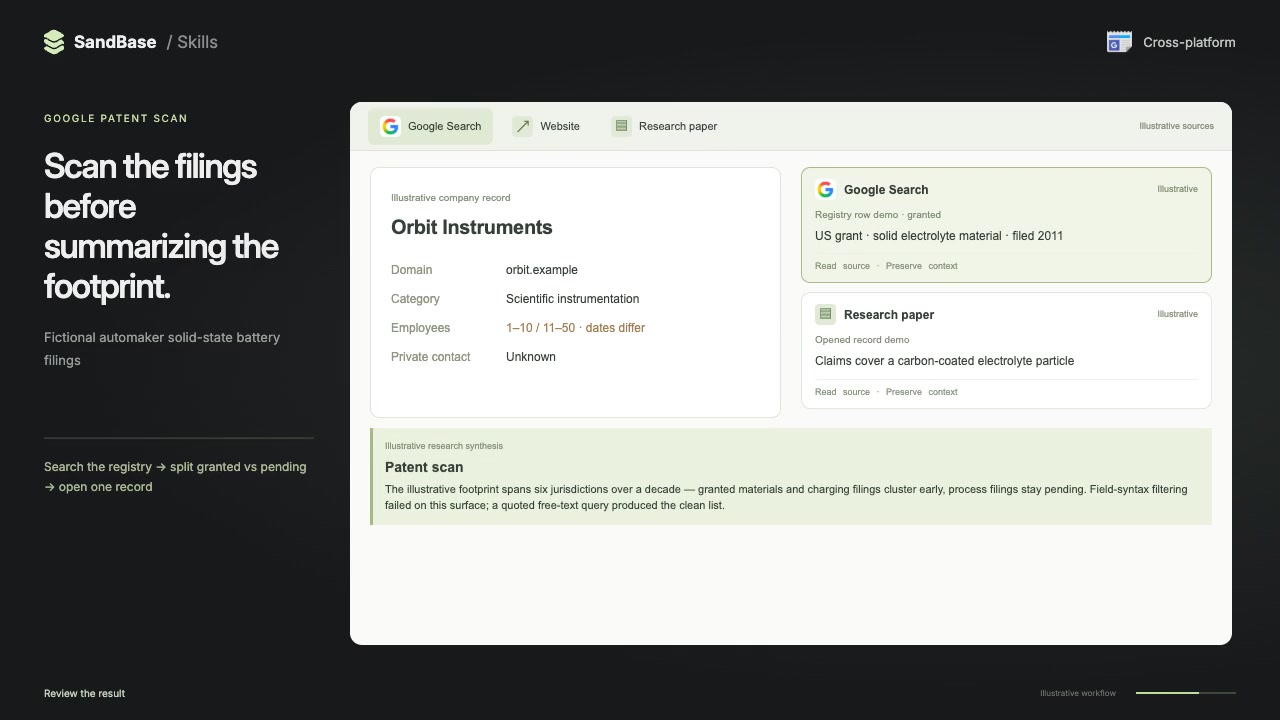
Scan a company's or technology's patent footprint through SandBase Google Patents
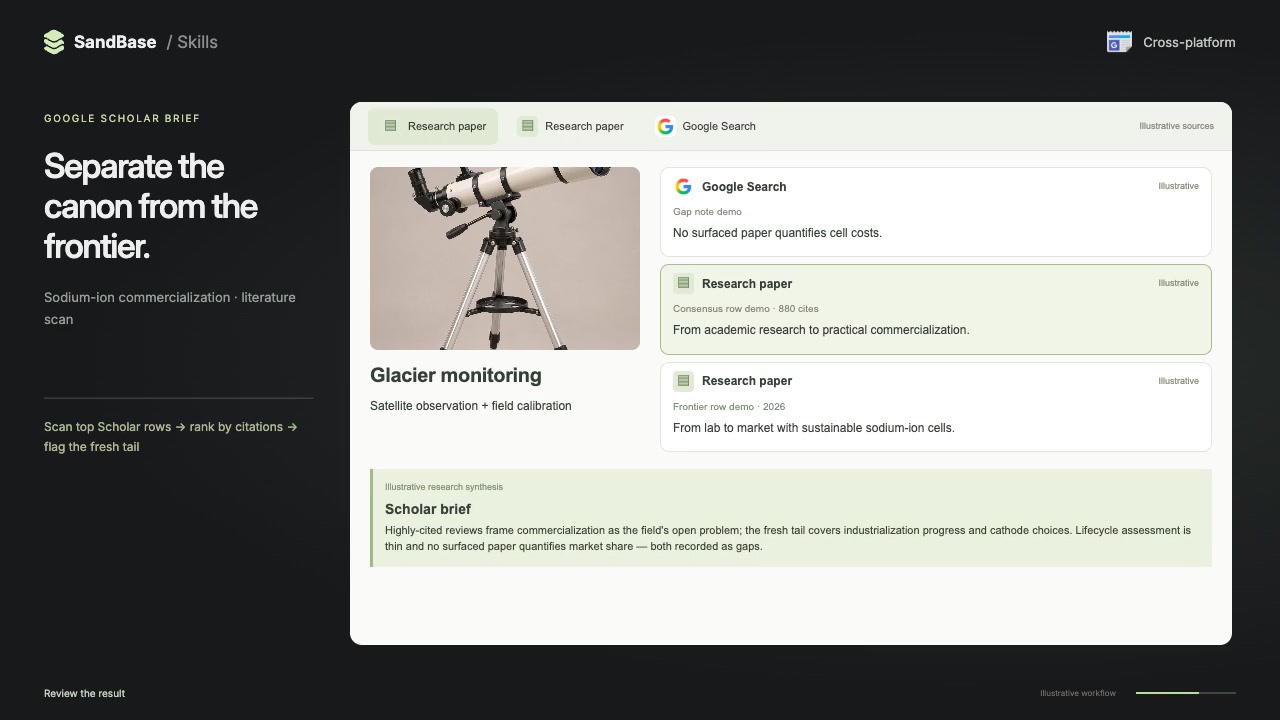
Fast literature scan of a topic through SandBase Google Scholar
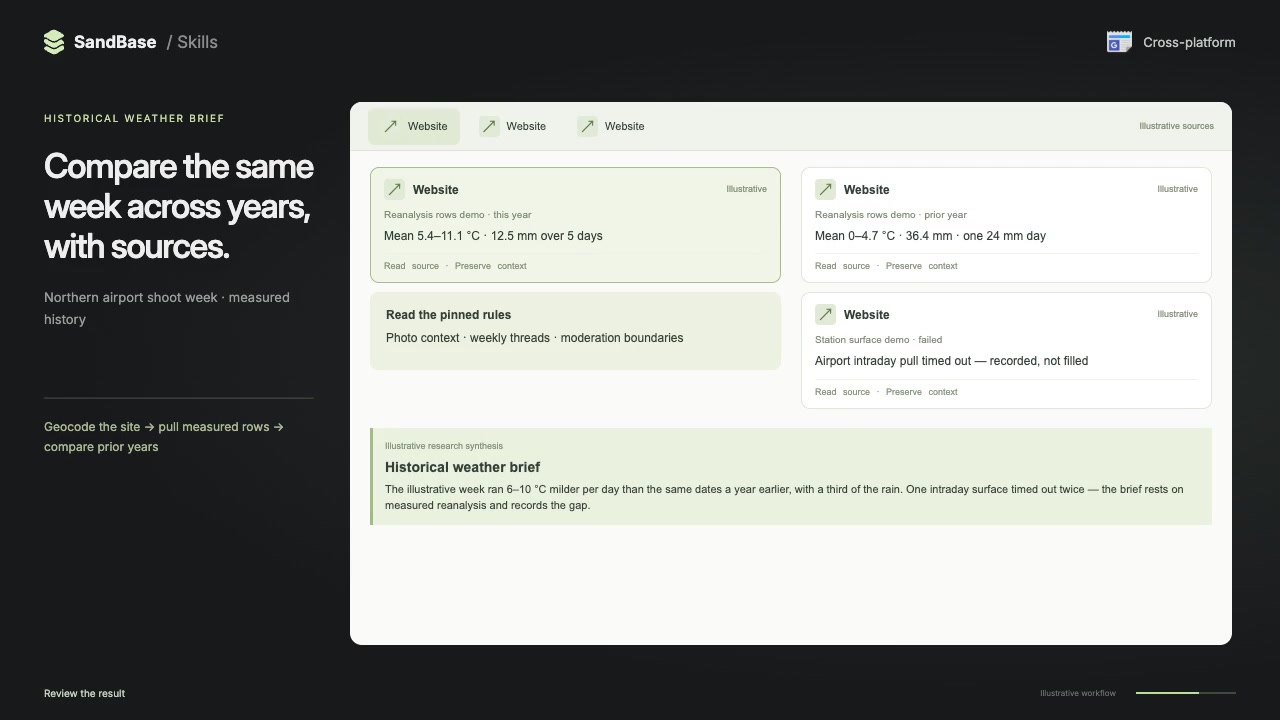
Build a historical temperature and precipitation brief for a place through SandBase
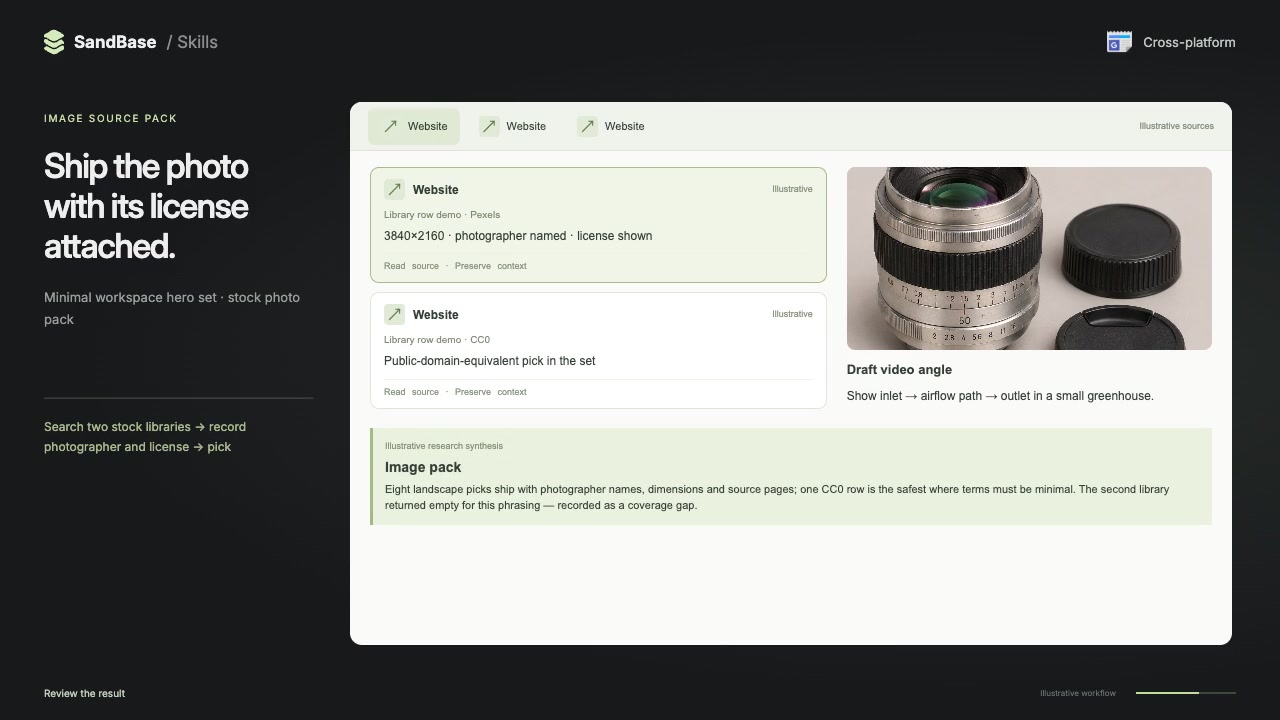
Assemble a usable commercially-safe image pack for a topic through SandBase
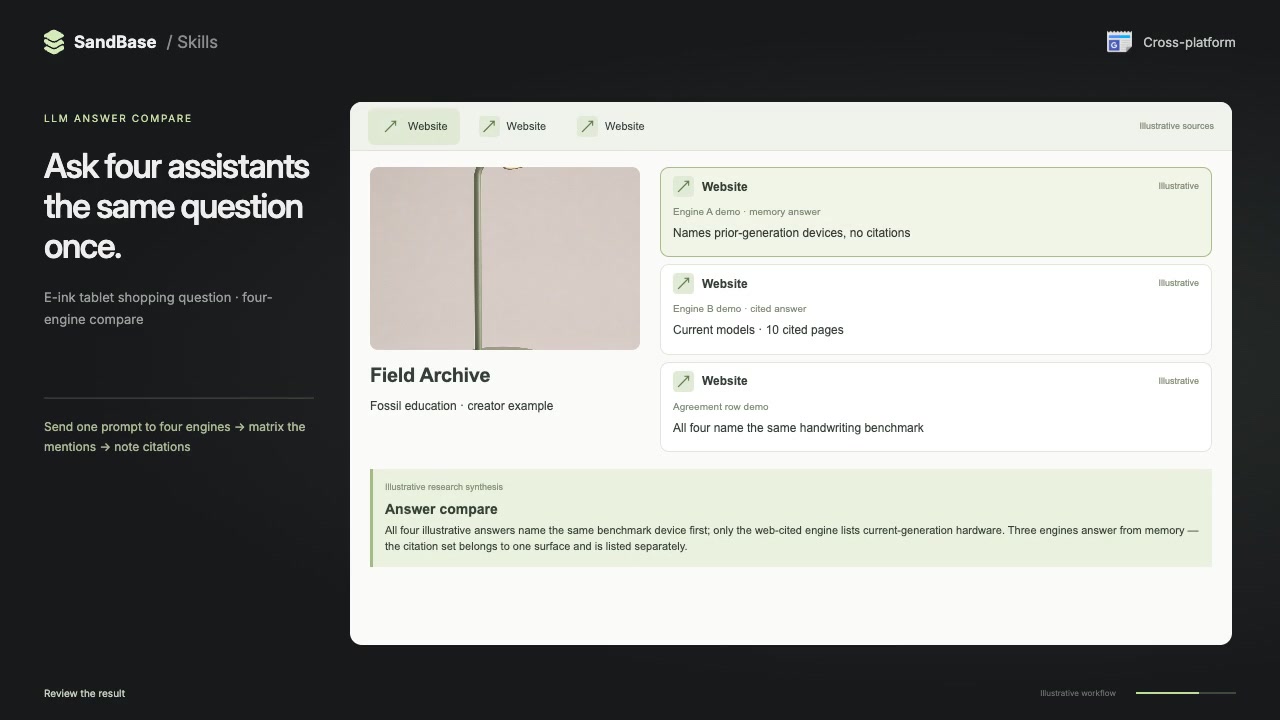
Ask one question to four frontier LLMs
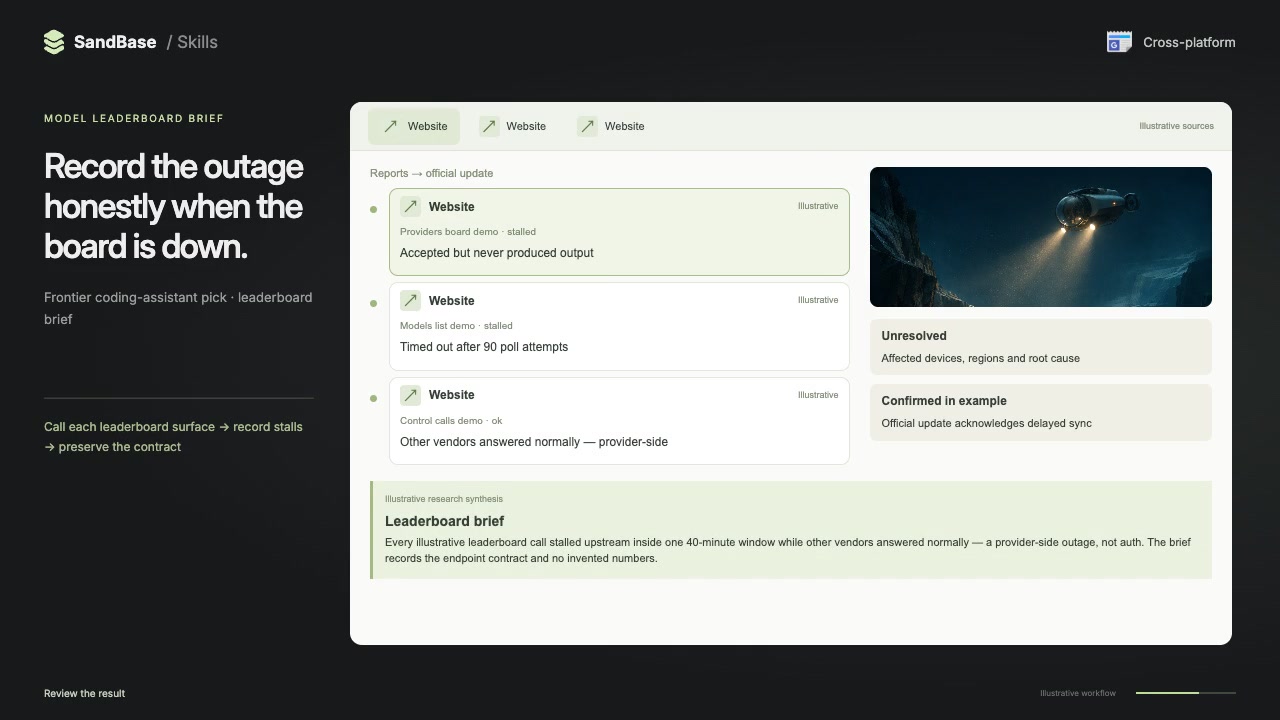
Compare frontier LLMs on the main public leaderboards through SandBase
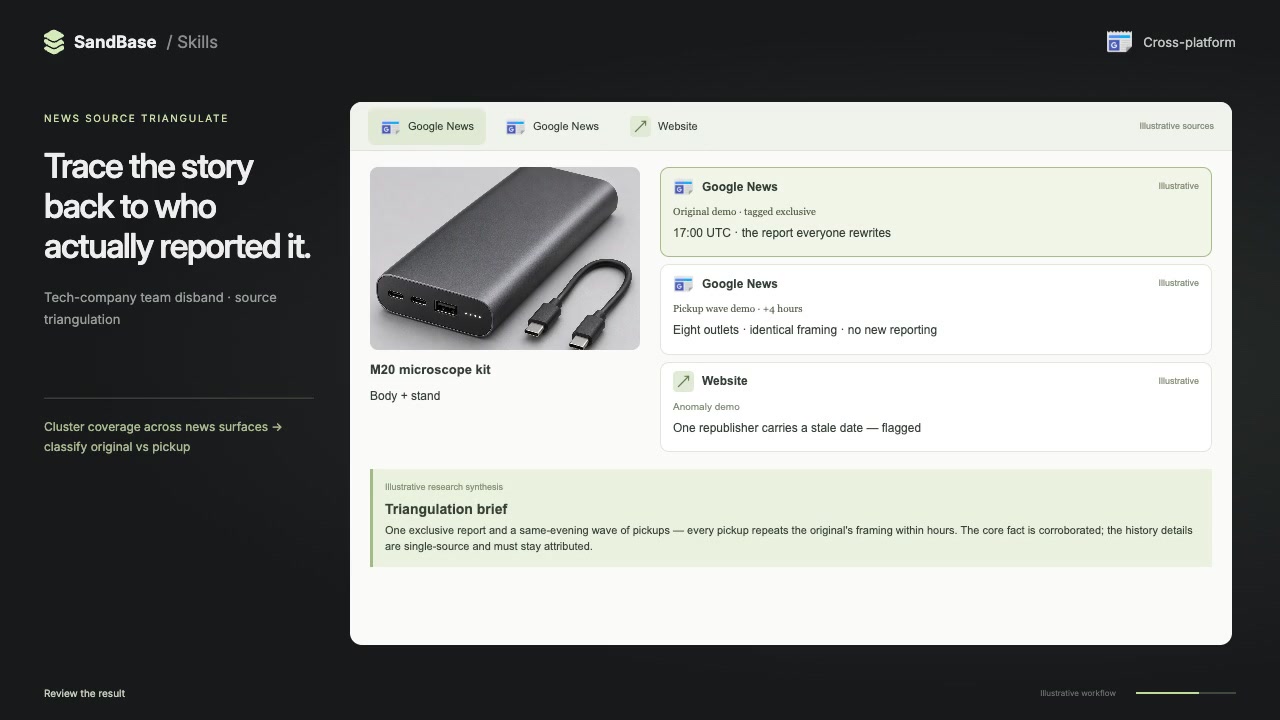
Triangulate one news event across independent search surfaces through SandBase
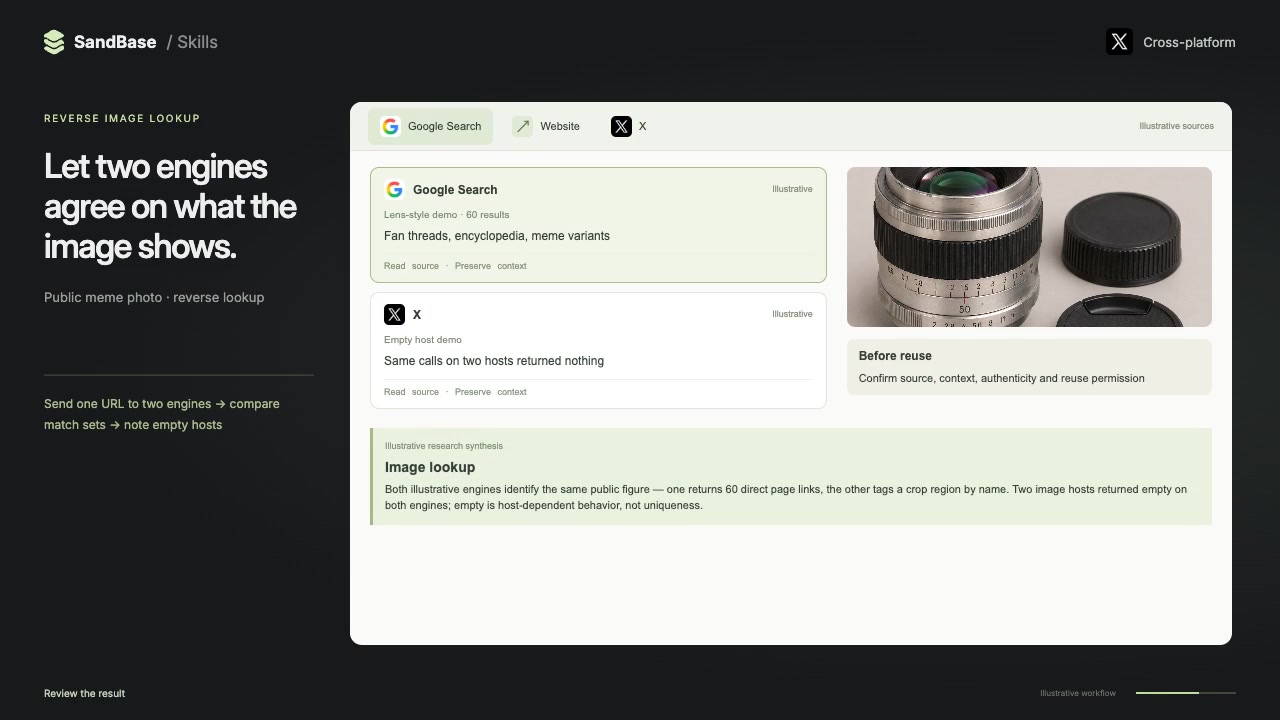
Run a reverse image lookup through SandBase
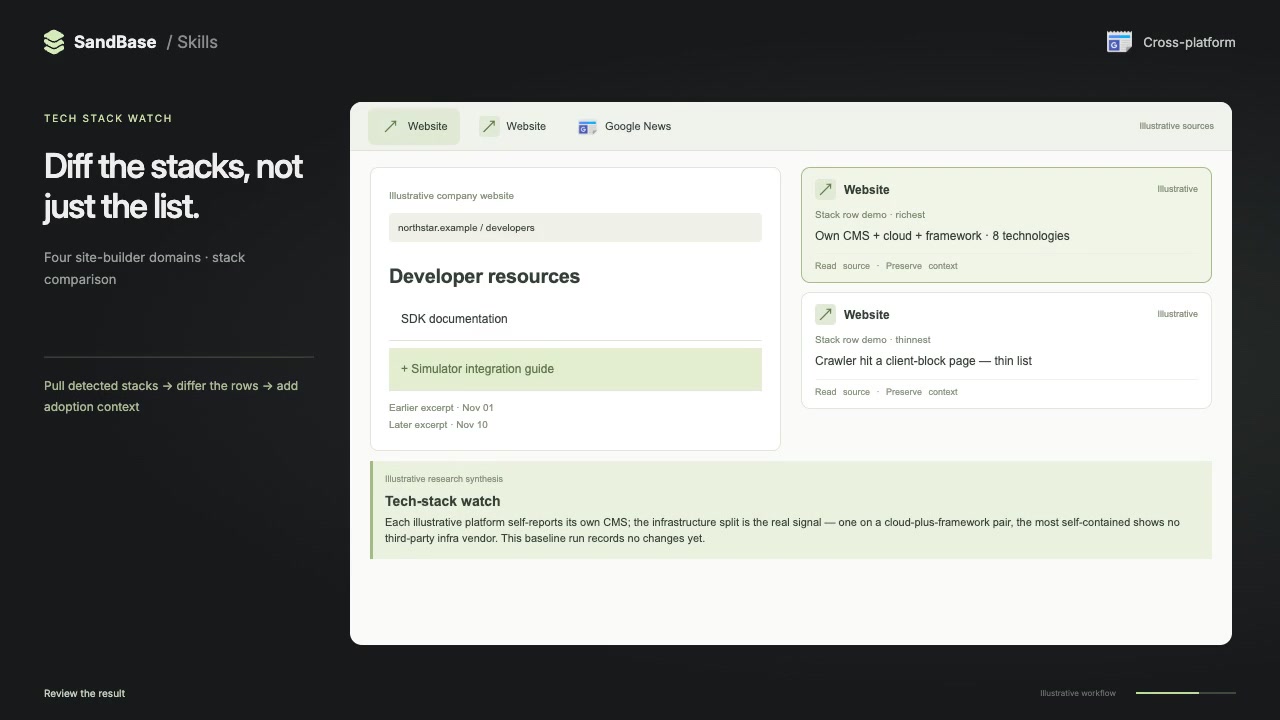
Watch and compare the technology stacks of a set of competitor domains through SandBase's DataForSEO surfaces
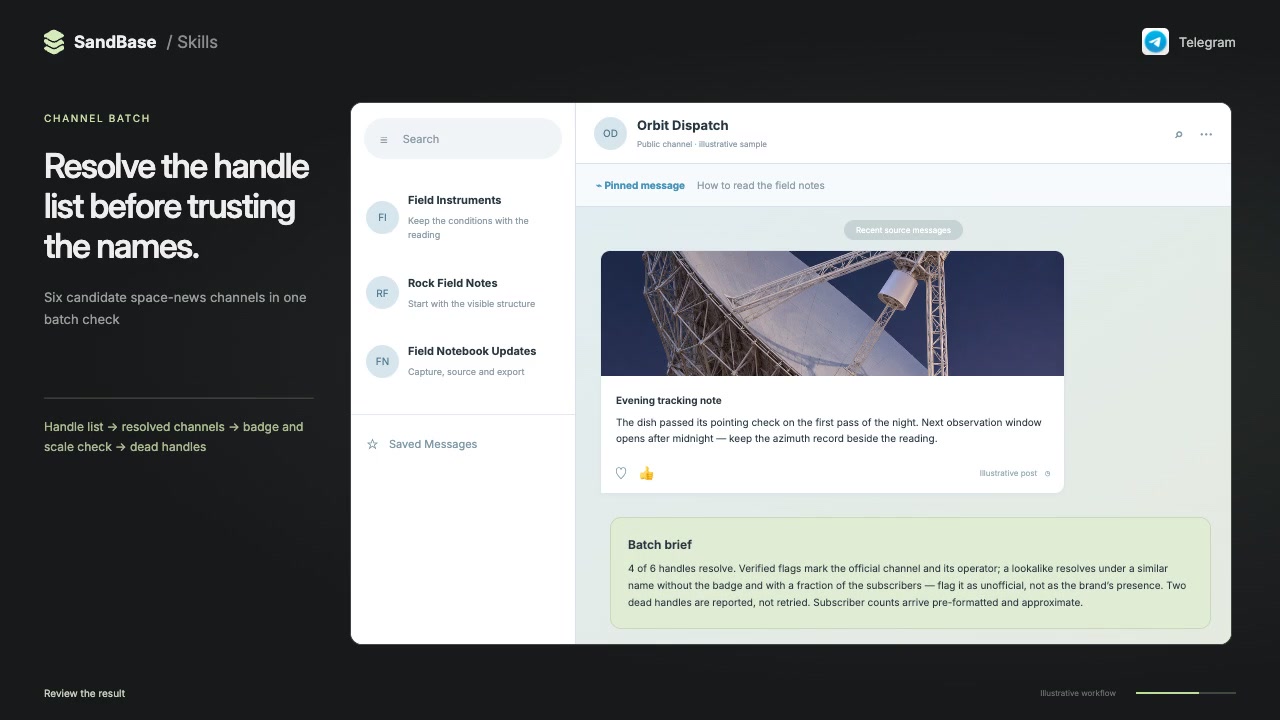
Check a batch of public Telegram channel usernames in one call through SandBase
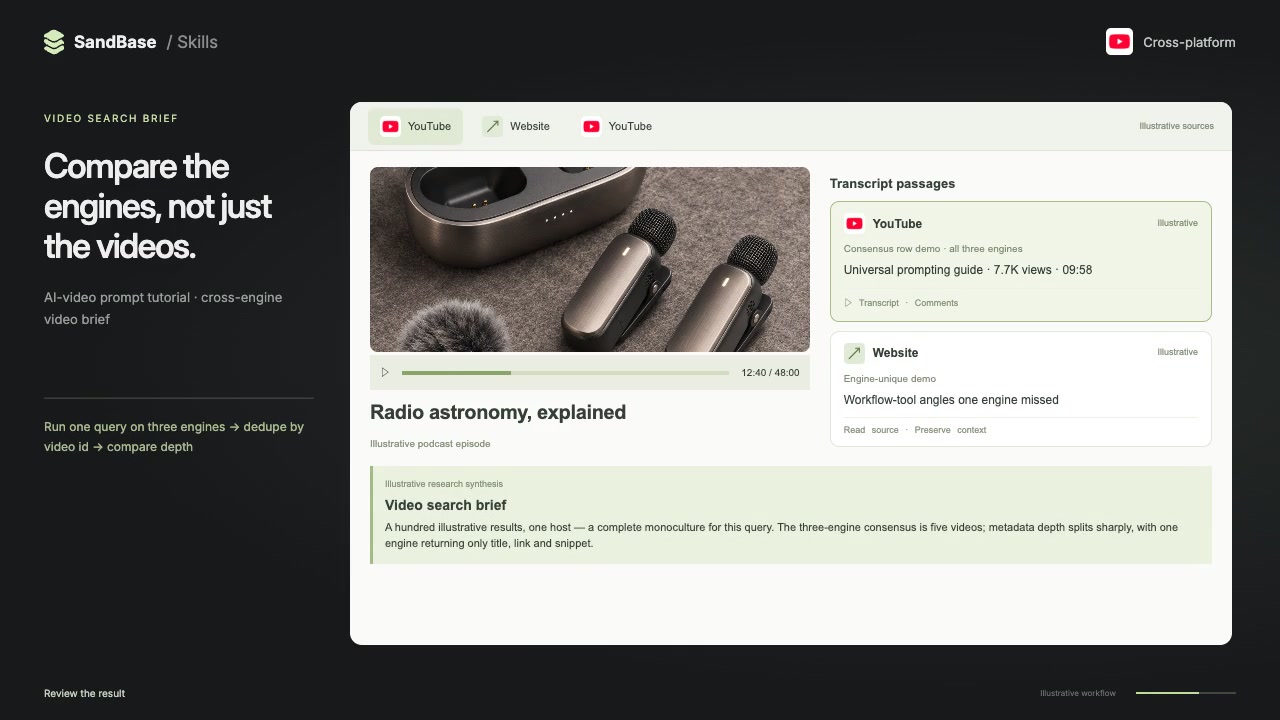
Build a video-search brief for a query through SandBase
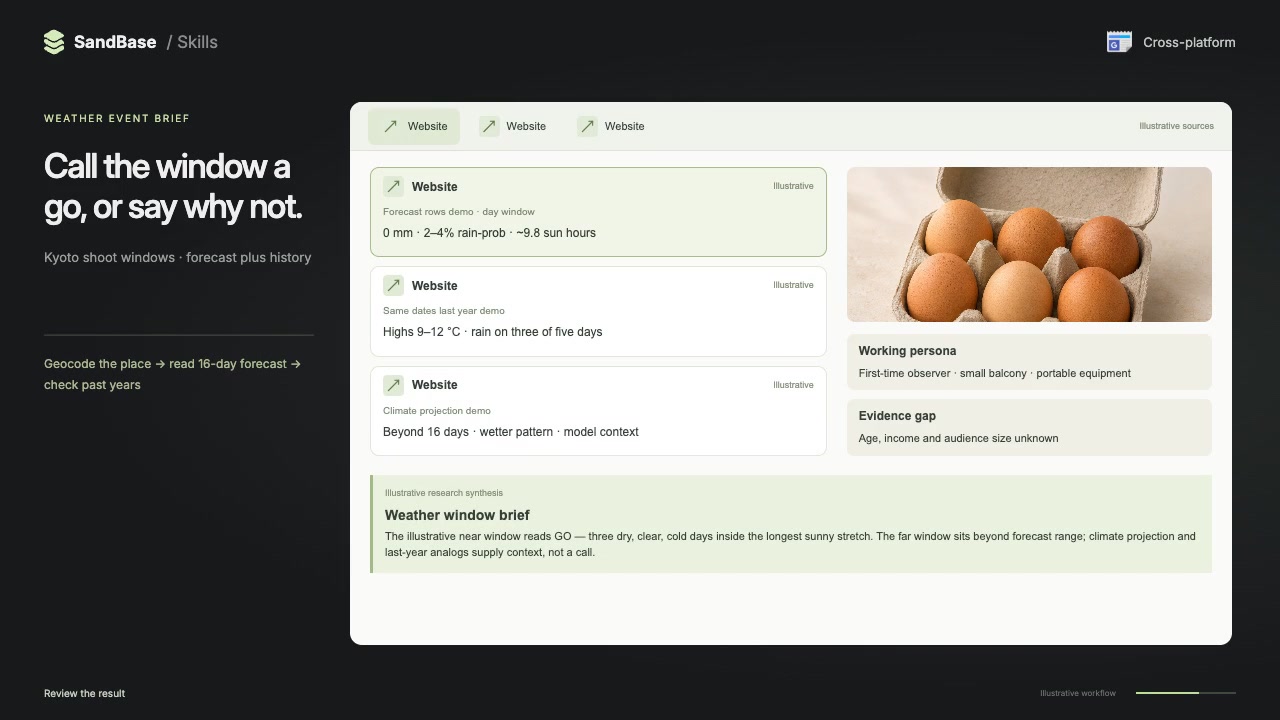
Plan a weather window for an event, shoot or trip through SandBase Open-Meteo
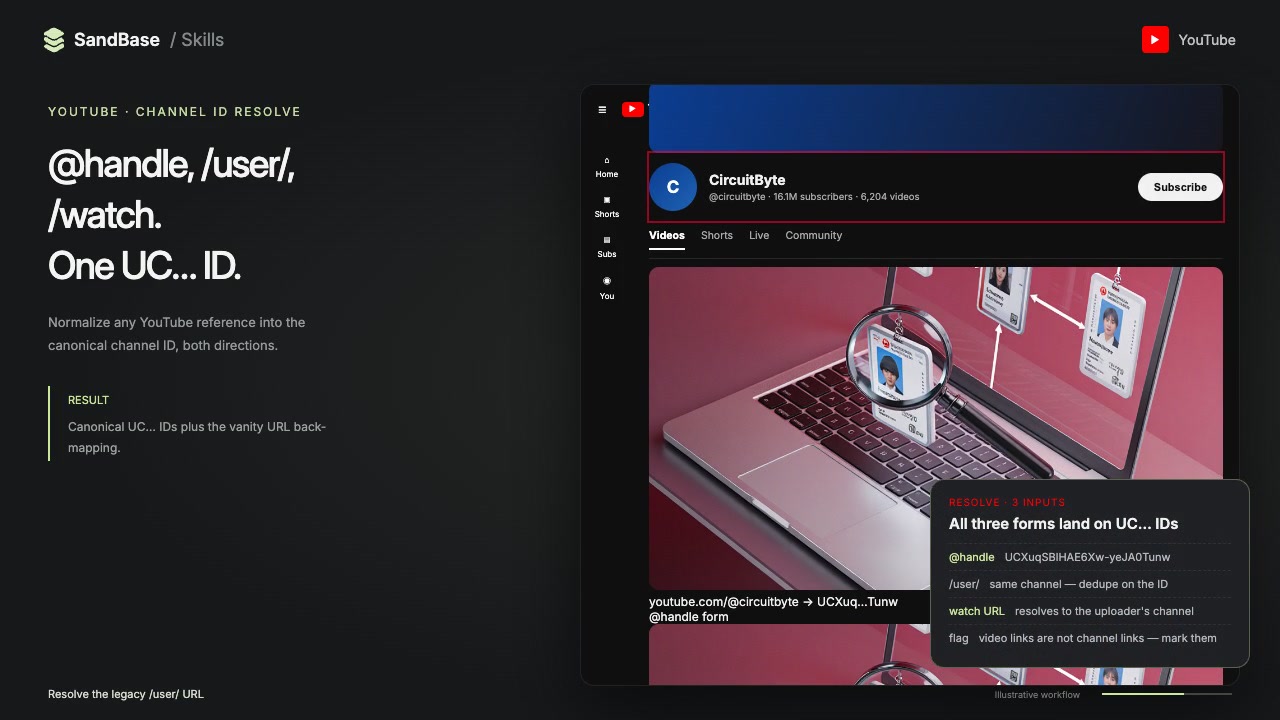
Resolve any YouTube channel reference
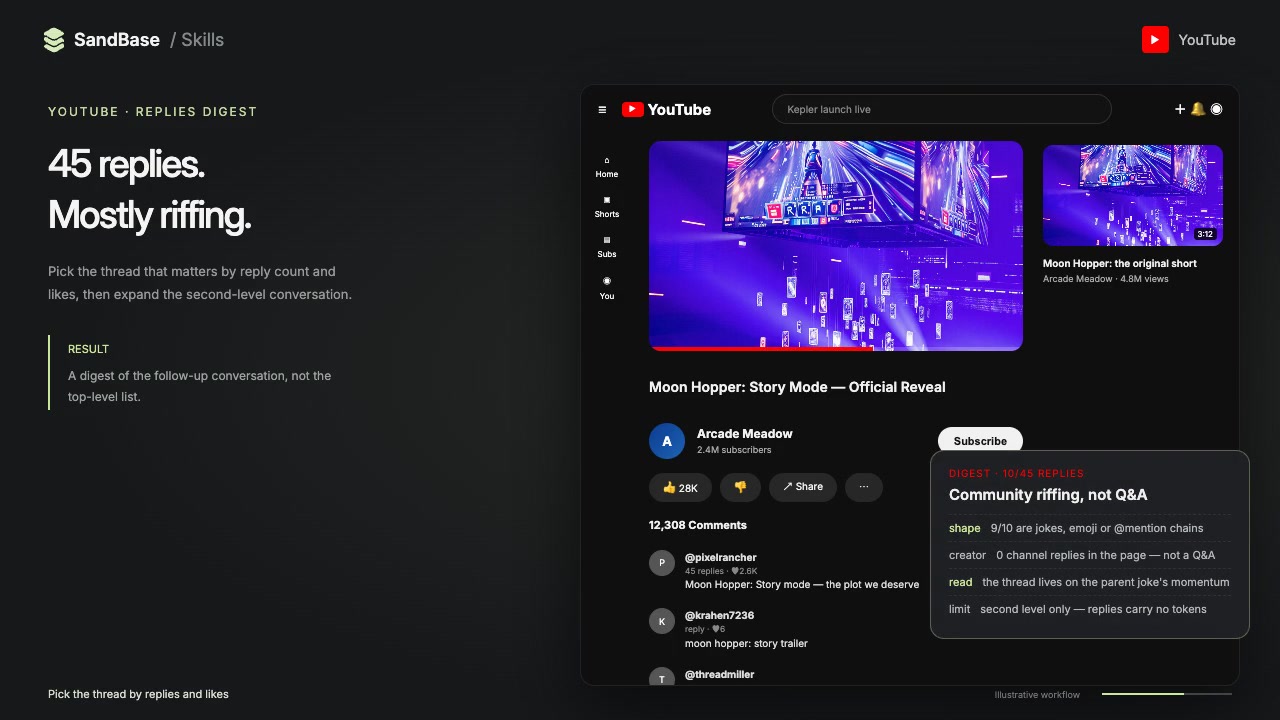
Digest the second-level replies under a YouTube comment through SandBase
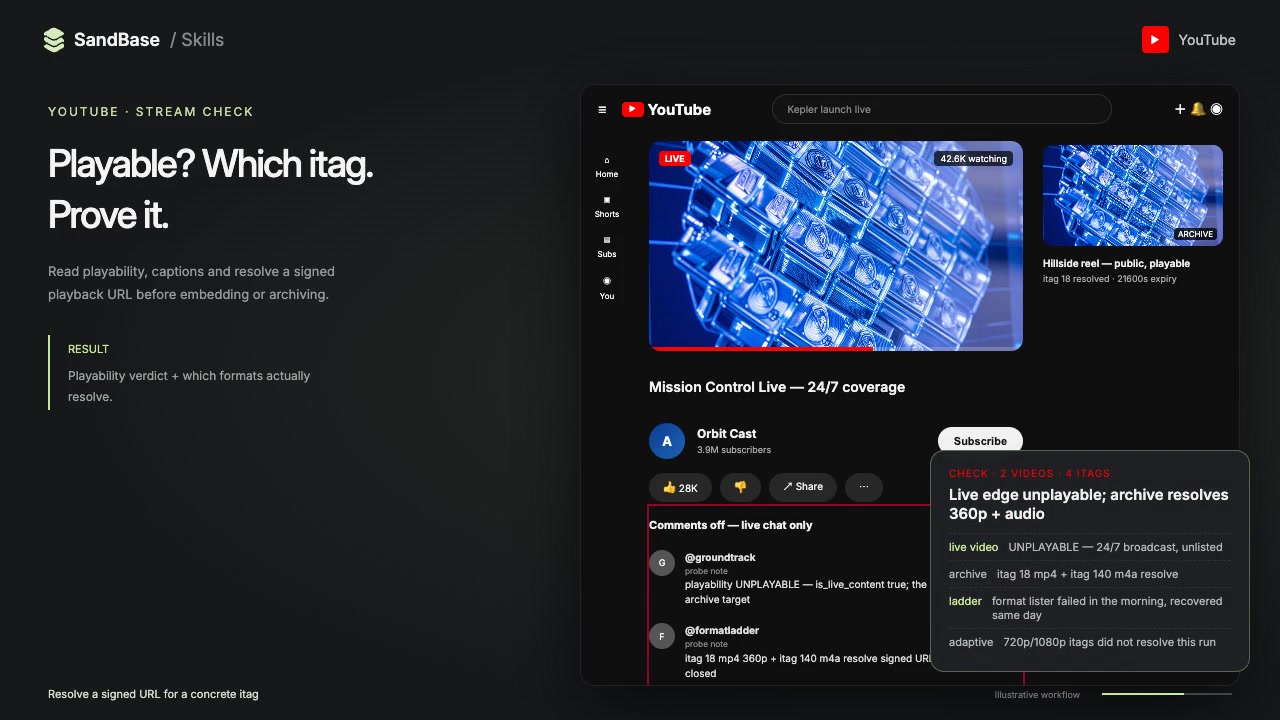
Check a YouTube video's stream/playback facts through SandBase
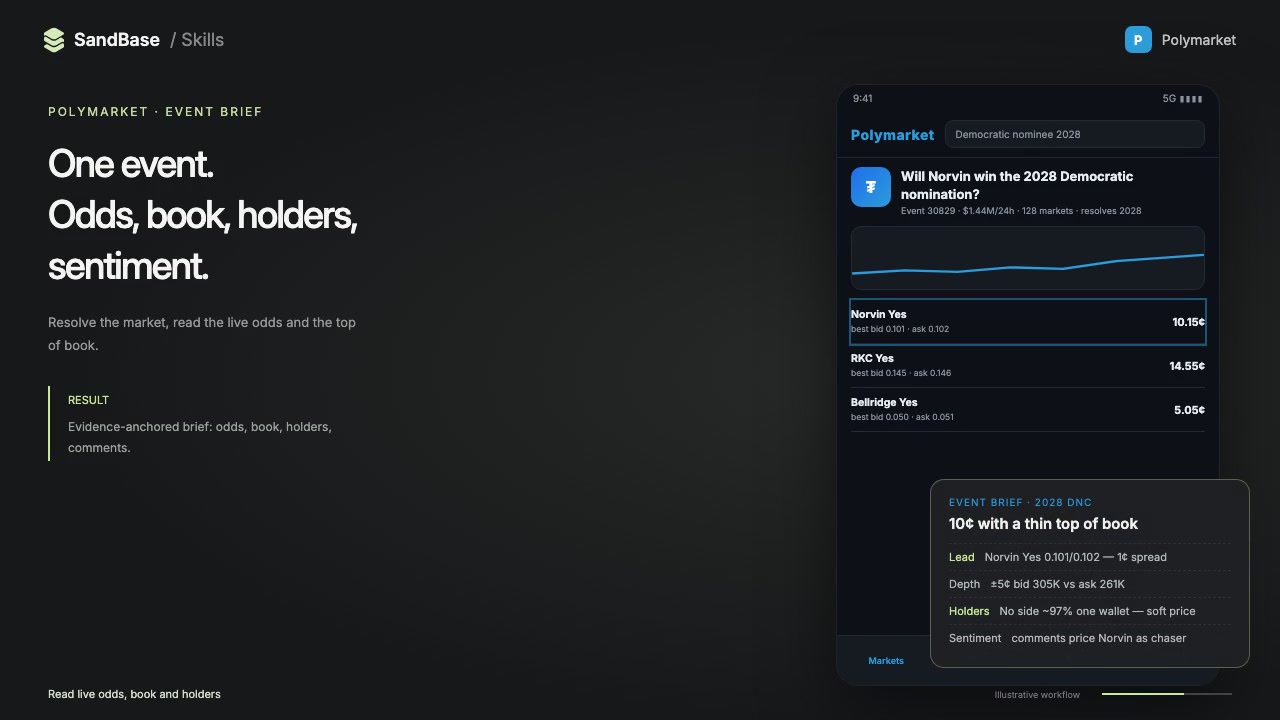
Brief one Polymarket event through SandBase — odds, book, history, holders and comments in one evidence-anchored brief
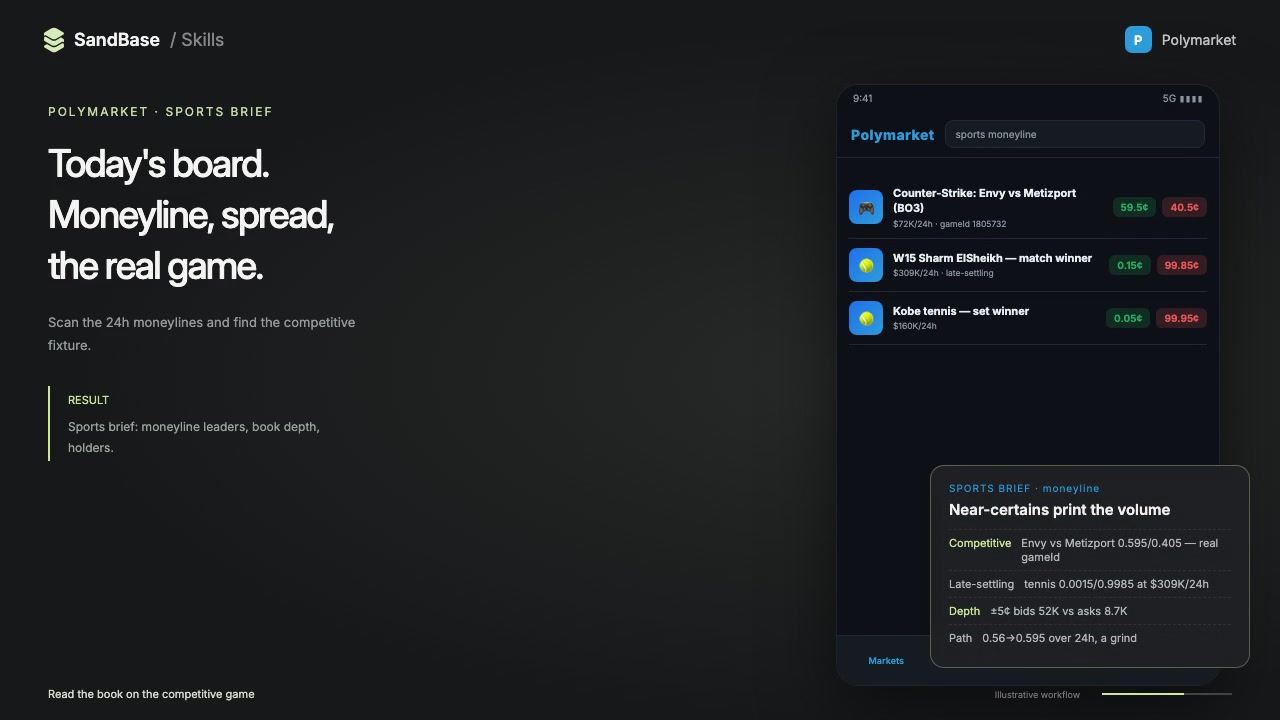
Brief Polymarket sports markets through SandBase — fixtures, odds quality, book depth and who holds each side
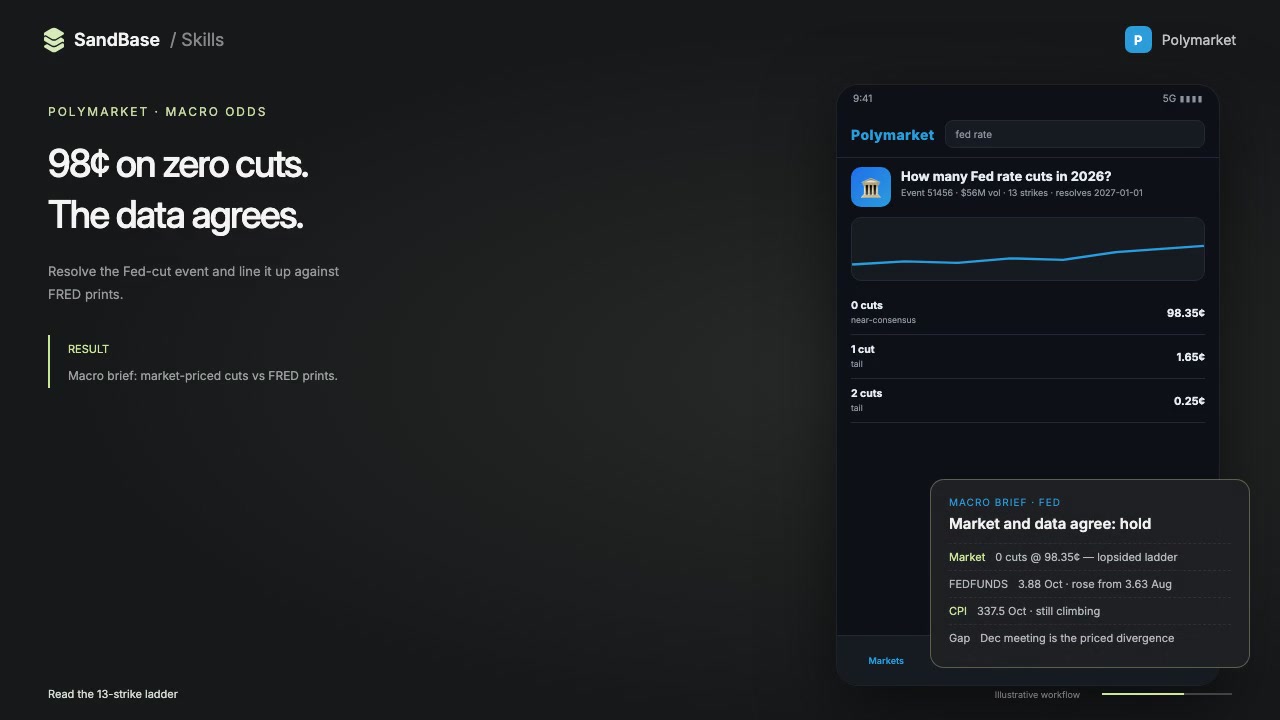
Brief a macro question on Polymarket against actual macro data through SandBase — market odds cross-checked with FRED series
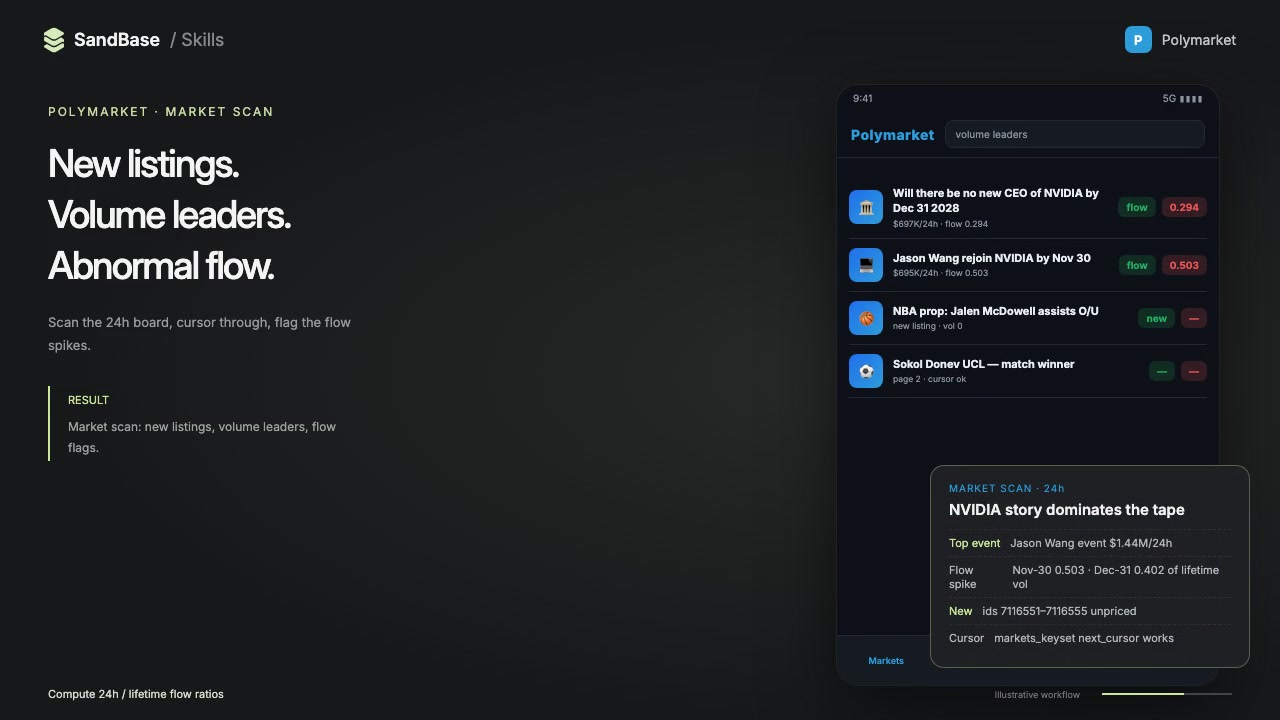
Scan Polymarket markets through SandBase for what is new, moving and abnormally hot
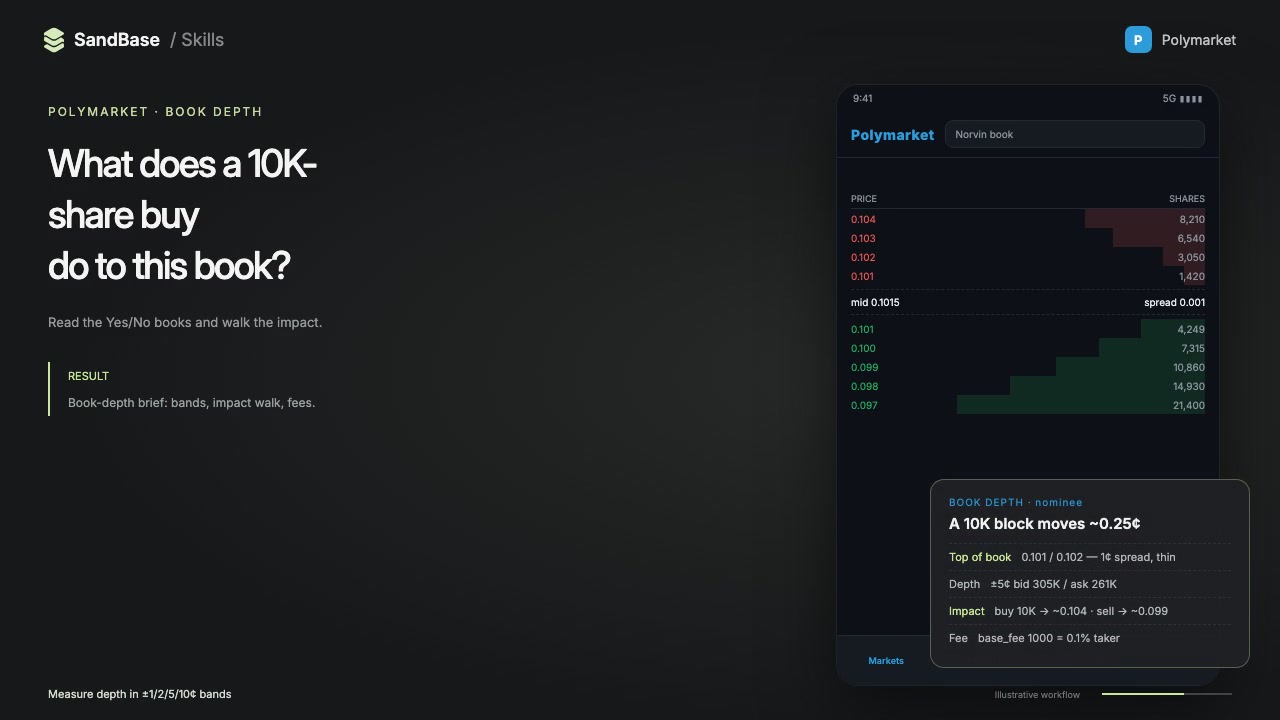
Read the live order book of one Polymarket market through SandBase — spread, depth bands and a walk-the-book impact estimate
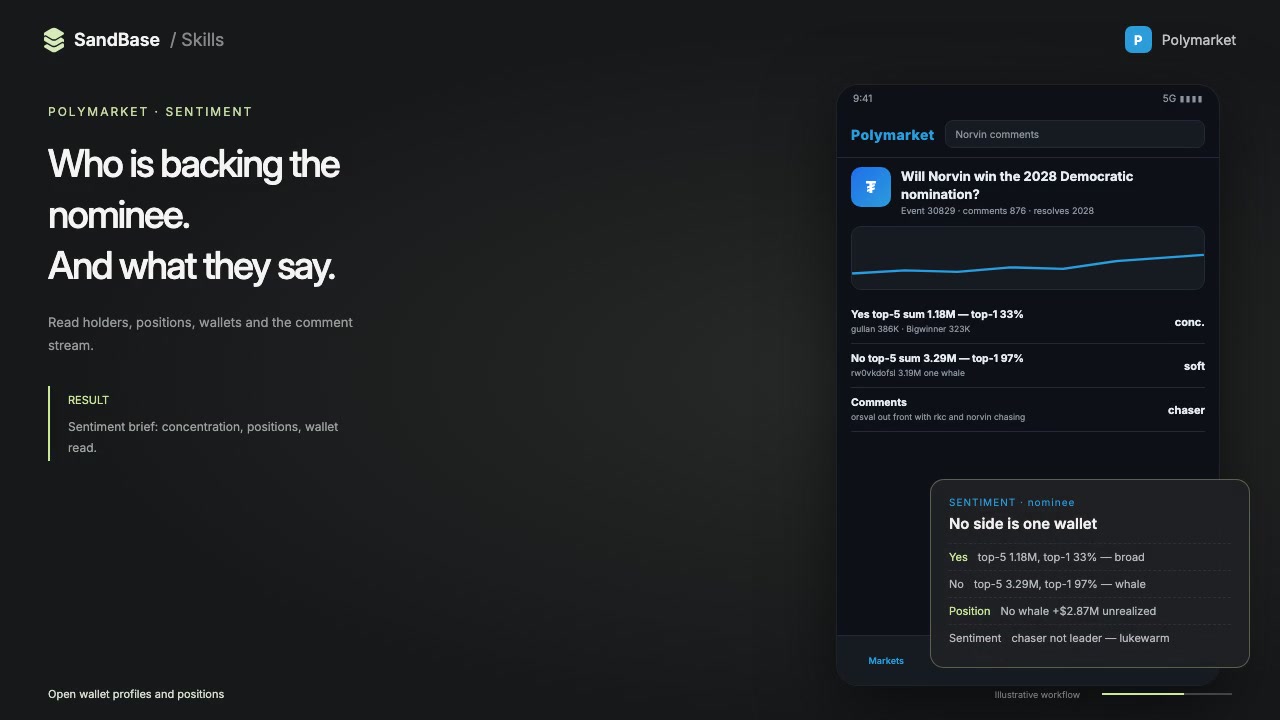
Read the crowd behind one Polymarket market through SandBase — comments, holder concentration and wallet track records
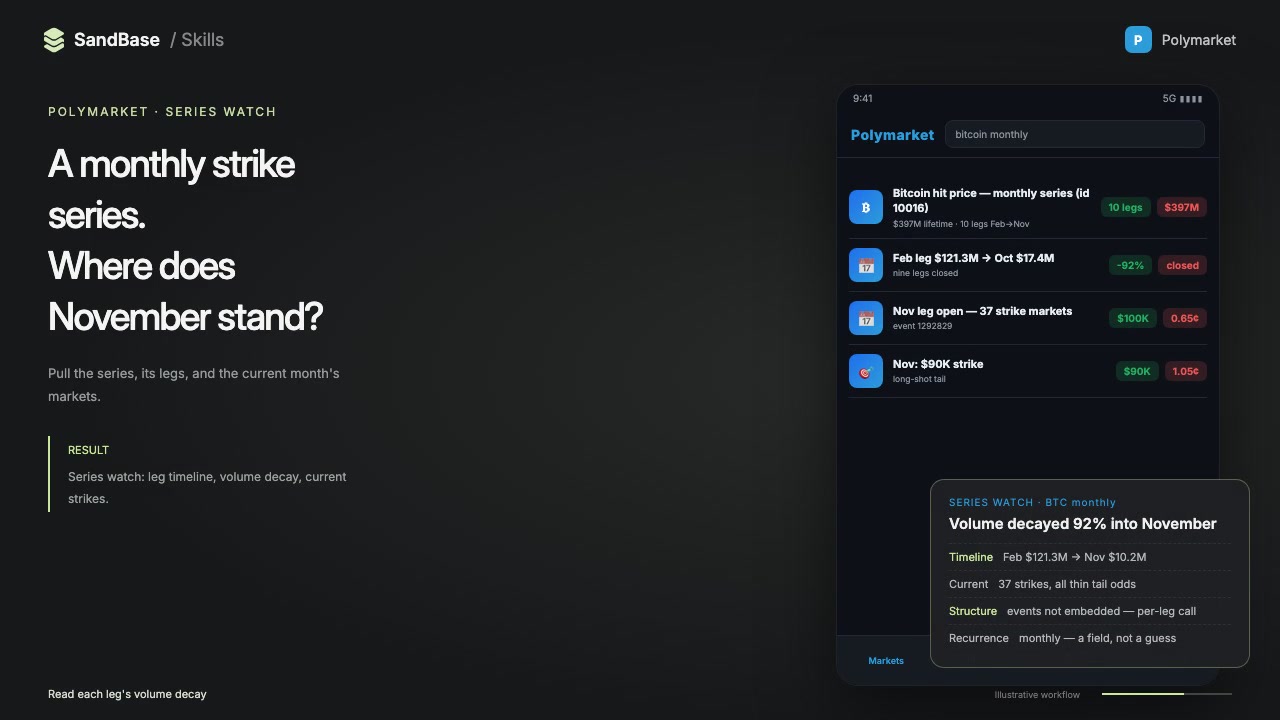
Track a Polymarket series through SandBase — recurring theme families across legs
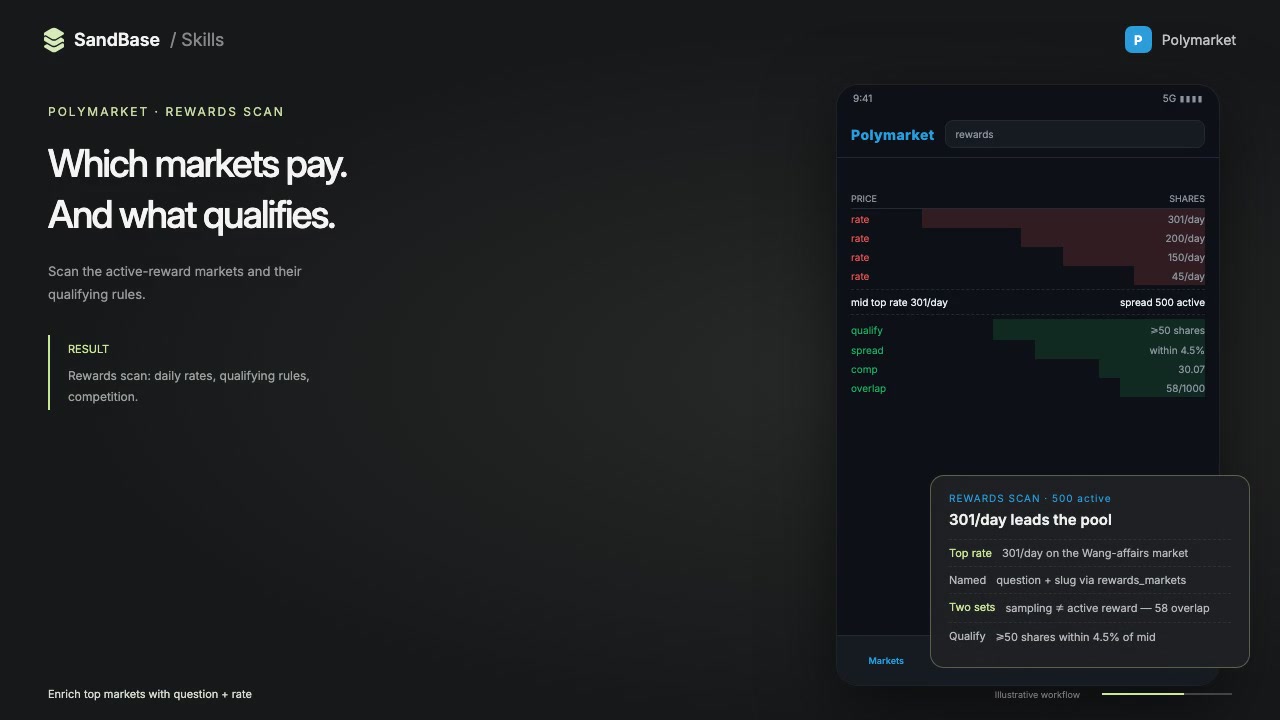
Scan Polymarket's liquidity-rewards and sampling-eligible markets through SandBase
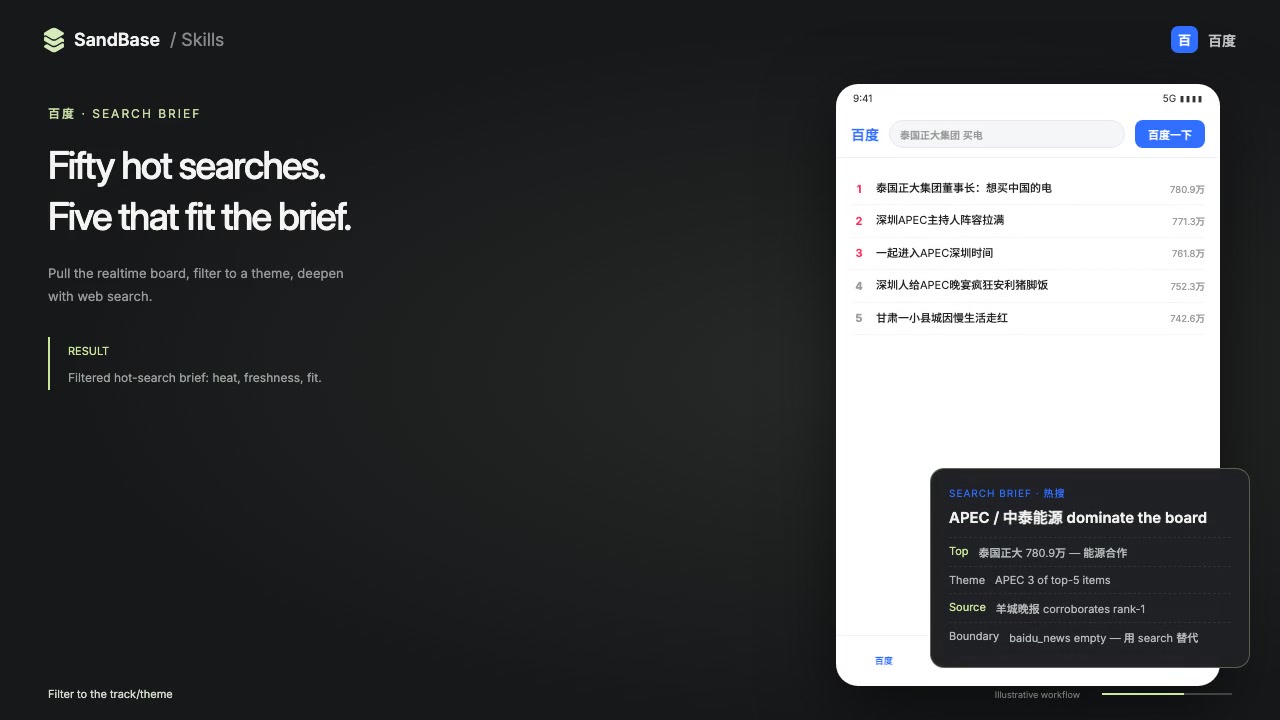
Brief one Baidu hot-search topic through SandBase with the realtime board and corroborating organic results
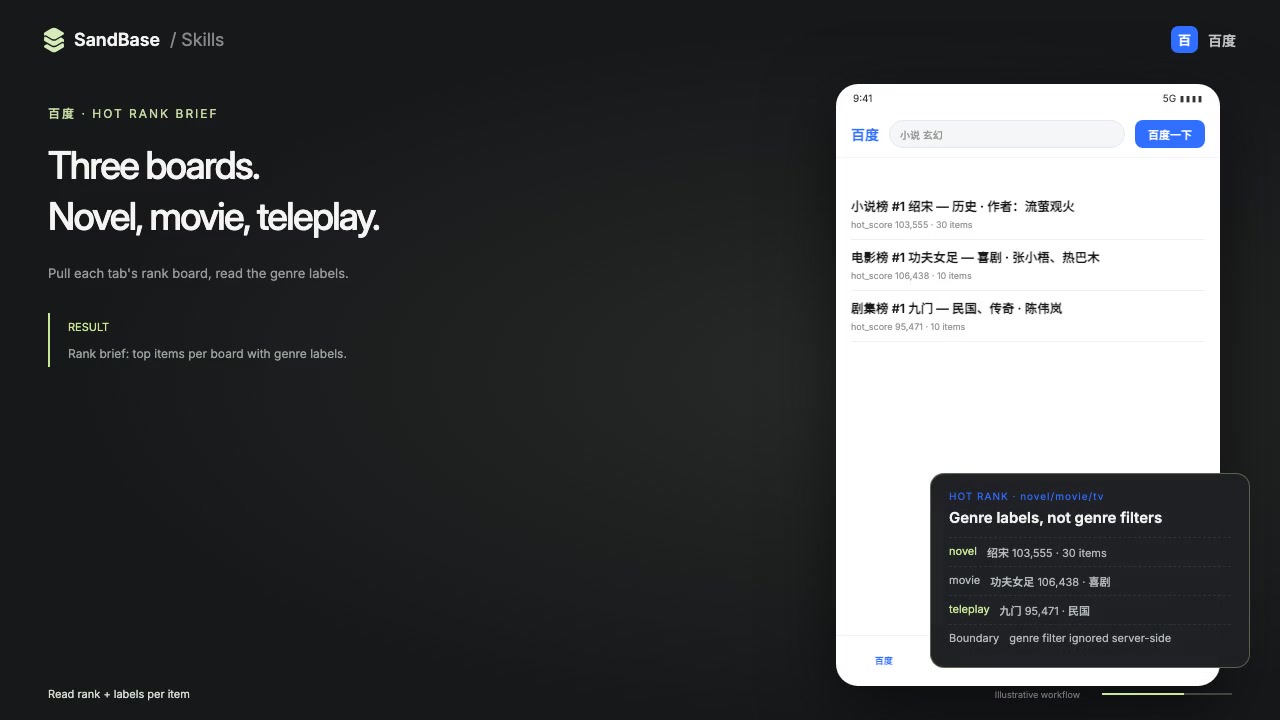
Digest Baidu's novel, movie and teleplay hot boards through SandBase
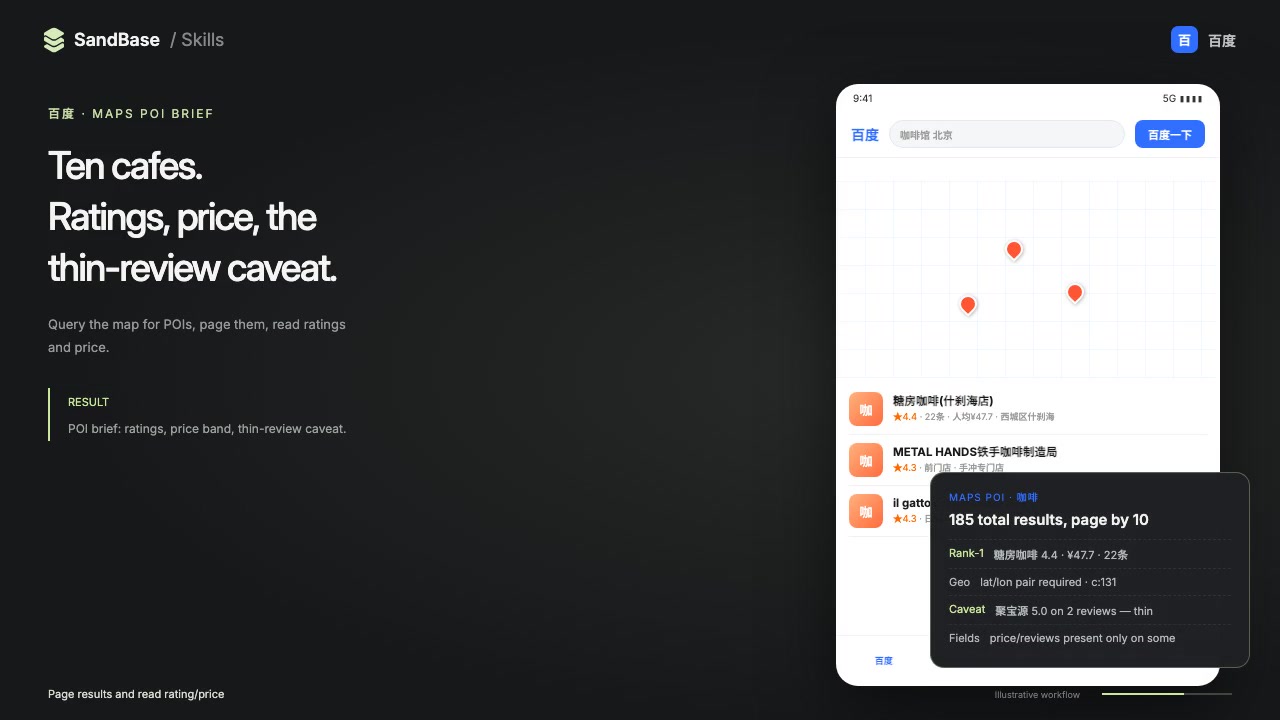
Profile POI density and quality around a place through SandBase Baidu Maps
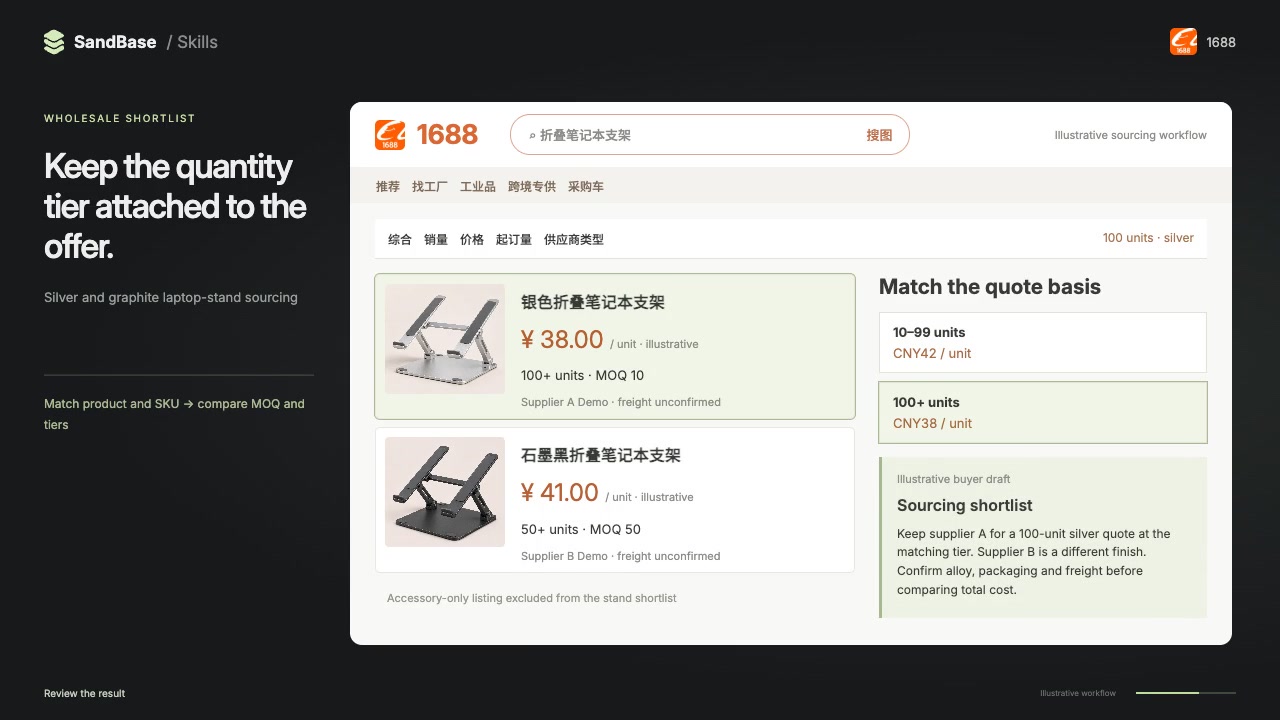
Compare sourcing candidates before asking for a quote.
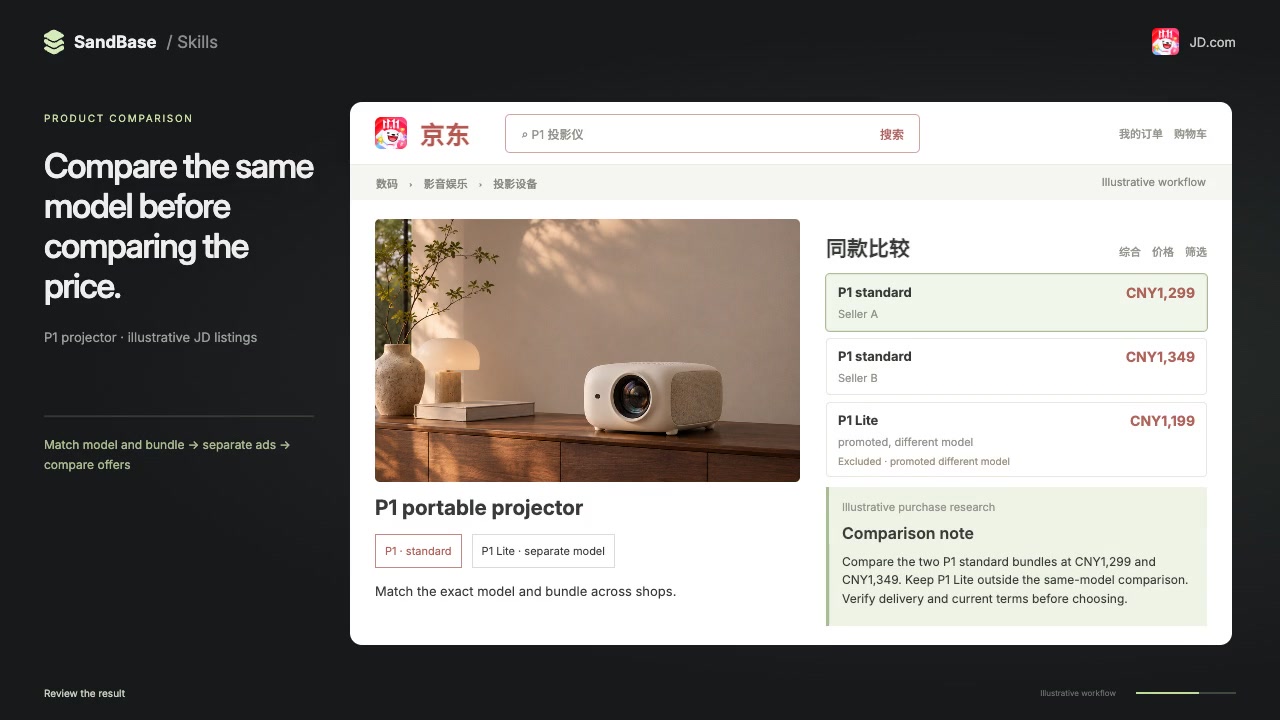
Compare JD.com listings by the exact product and variant.
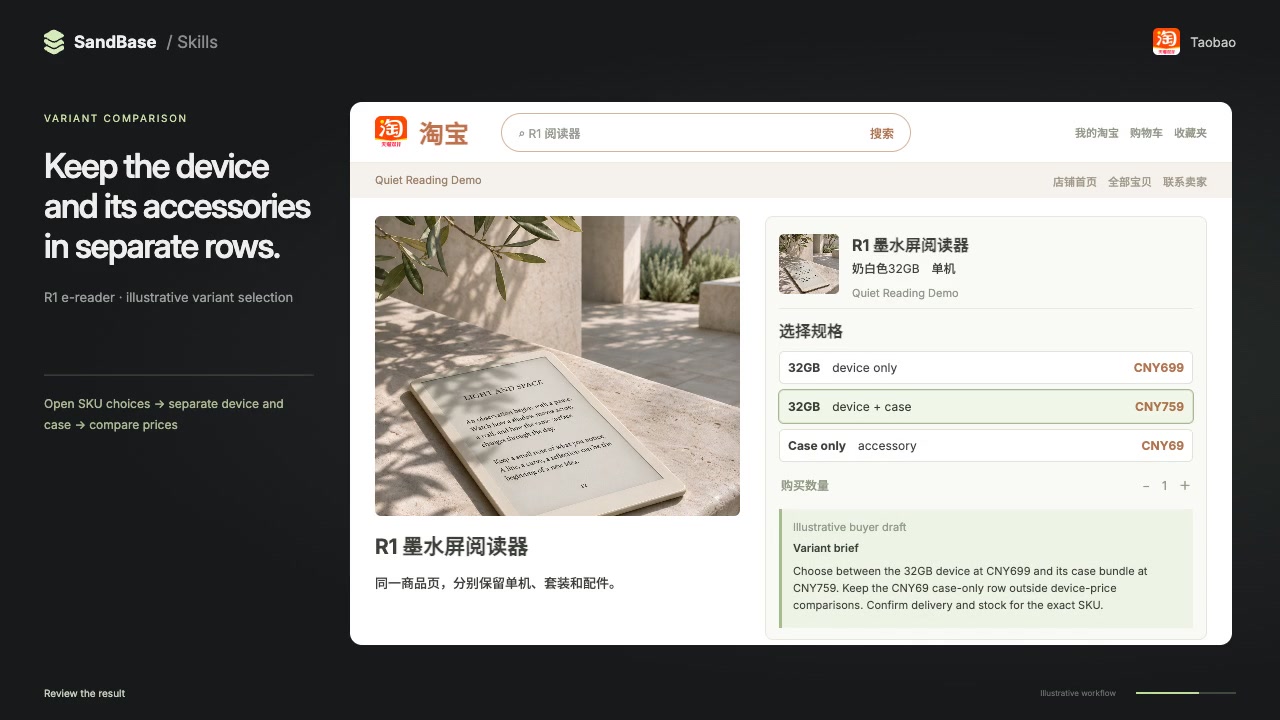
Separate Taobao product variants and comparable prices.
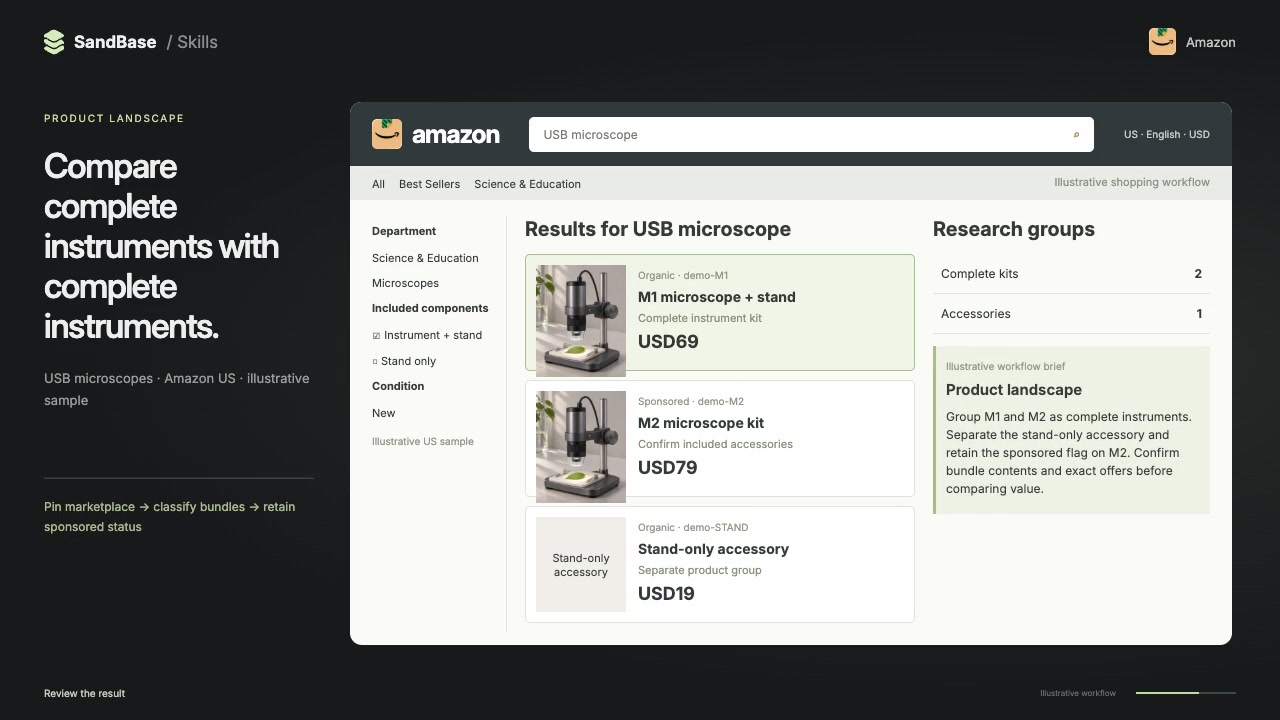
Map comparable Amazon products within one marketplace.
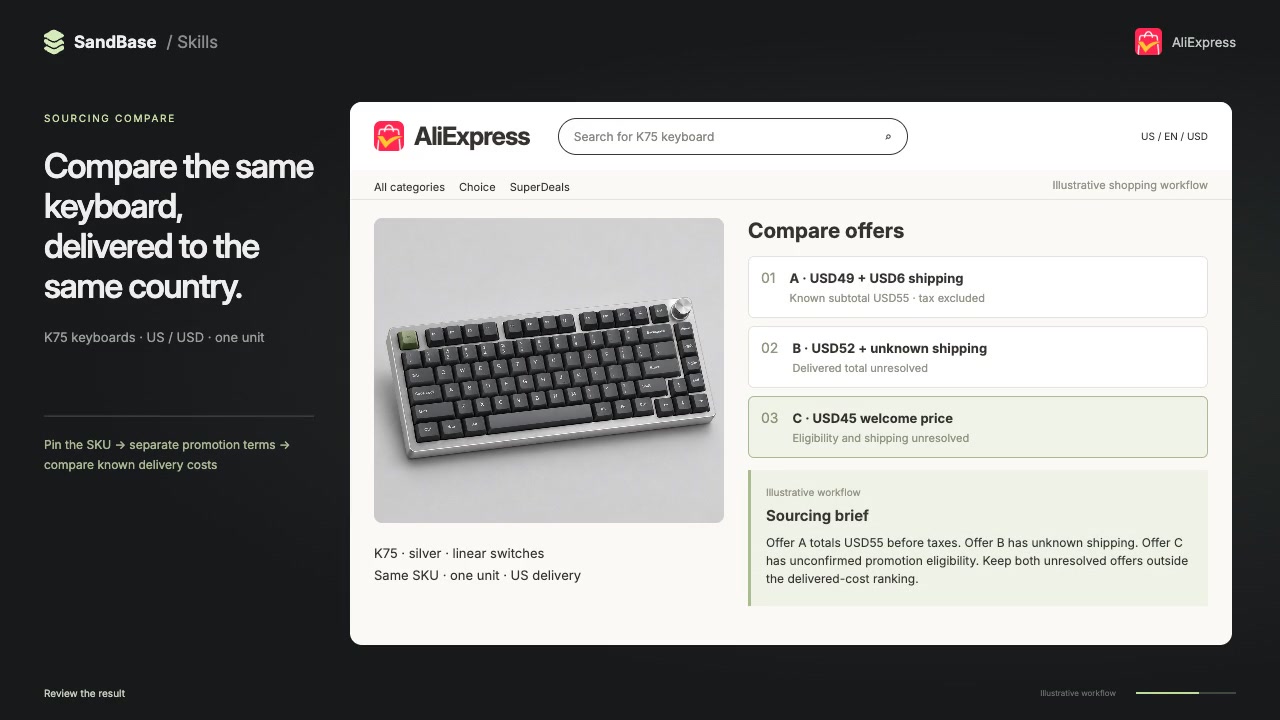
Compare AliExpress sourcing candidates within one region and currency.
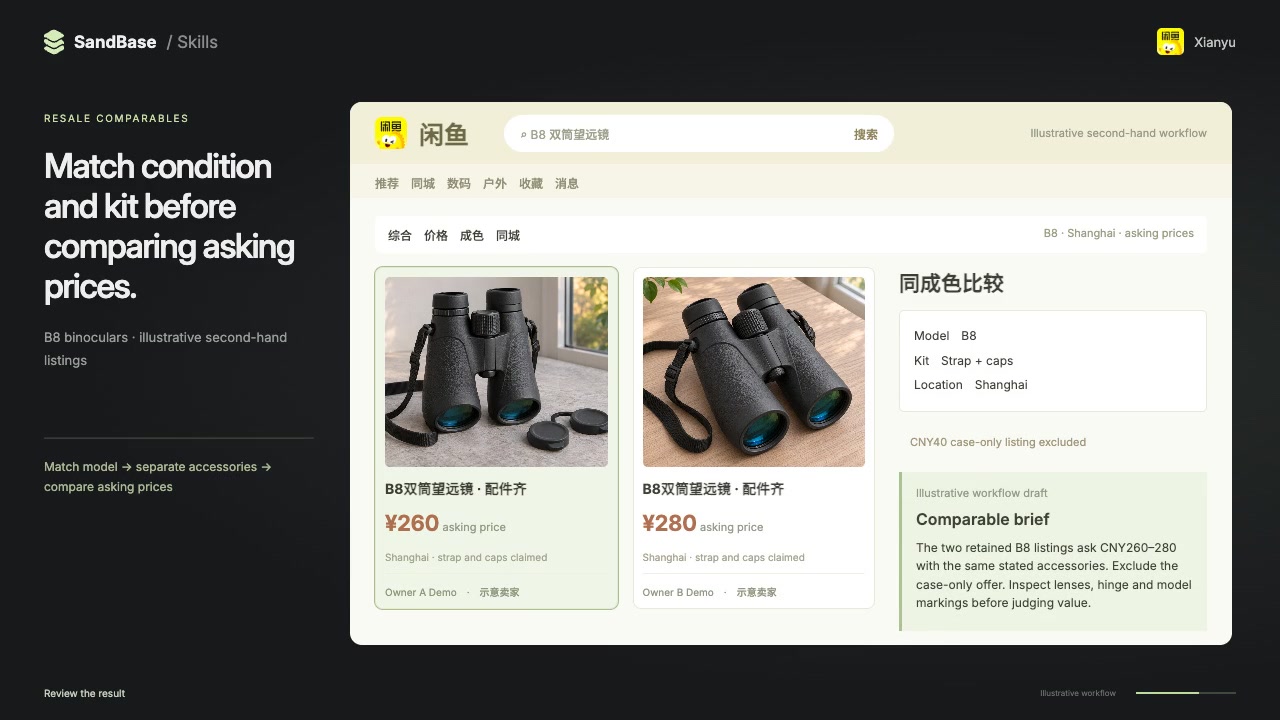
Compare second-hand listings with matching condition and location.
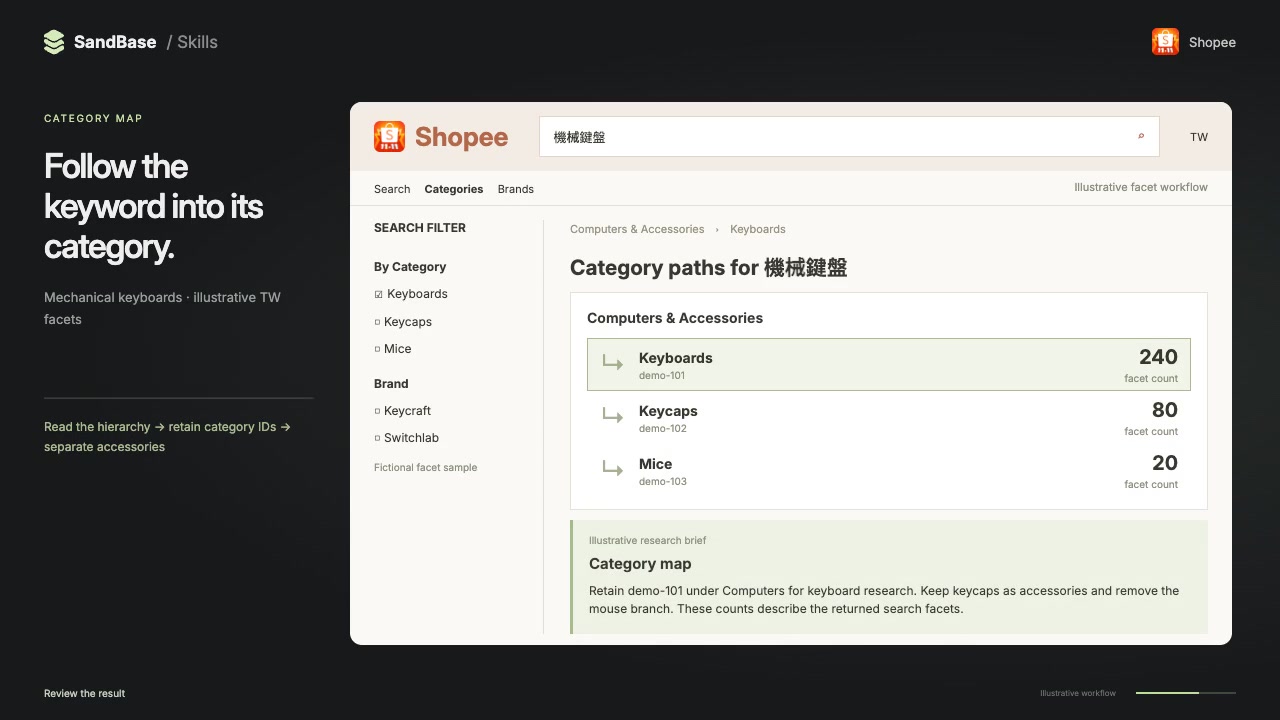
Map a product keyword to Shopee category facets.
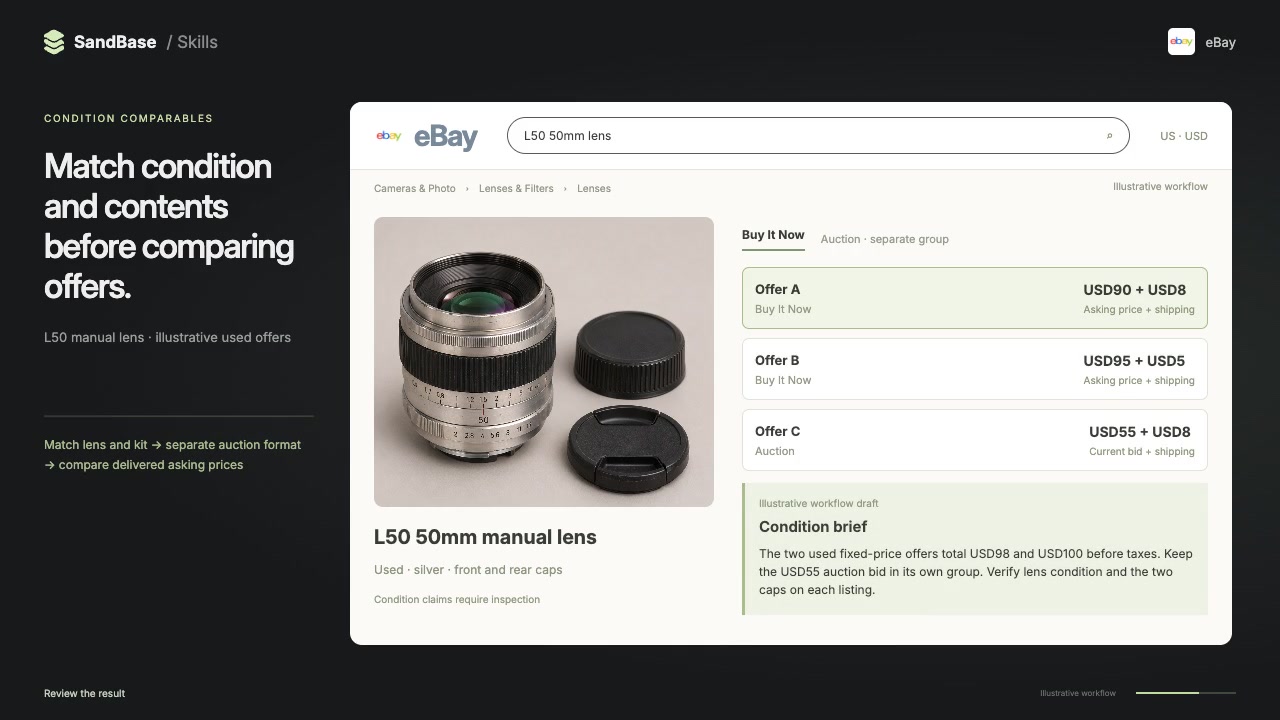
Build an eBay comparison by condition and bundle contents.
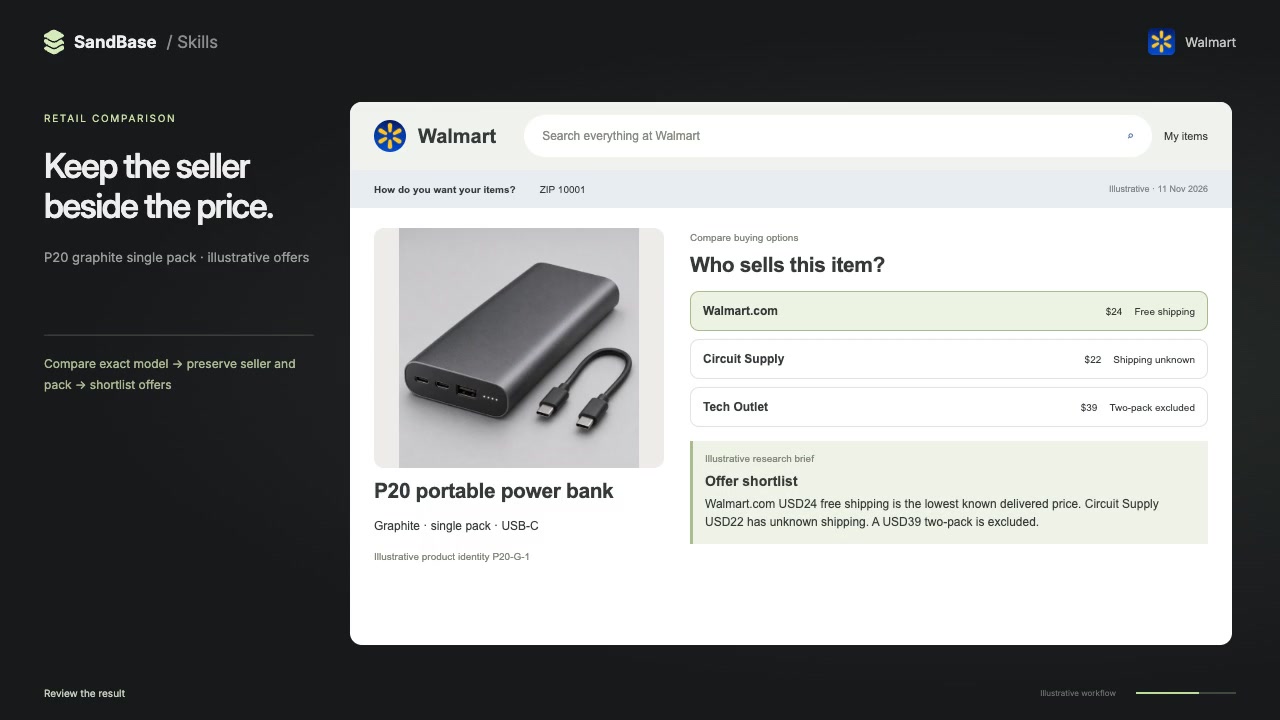
Compare Walmart offers with seller and fulfillment context.
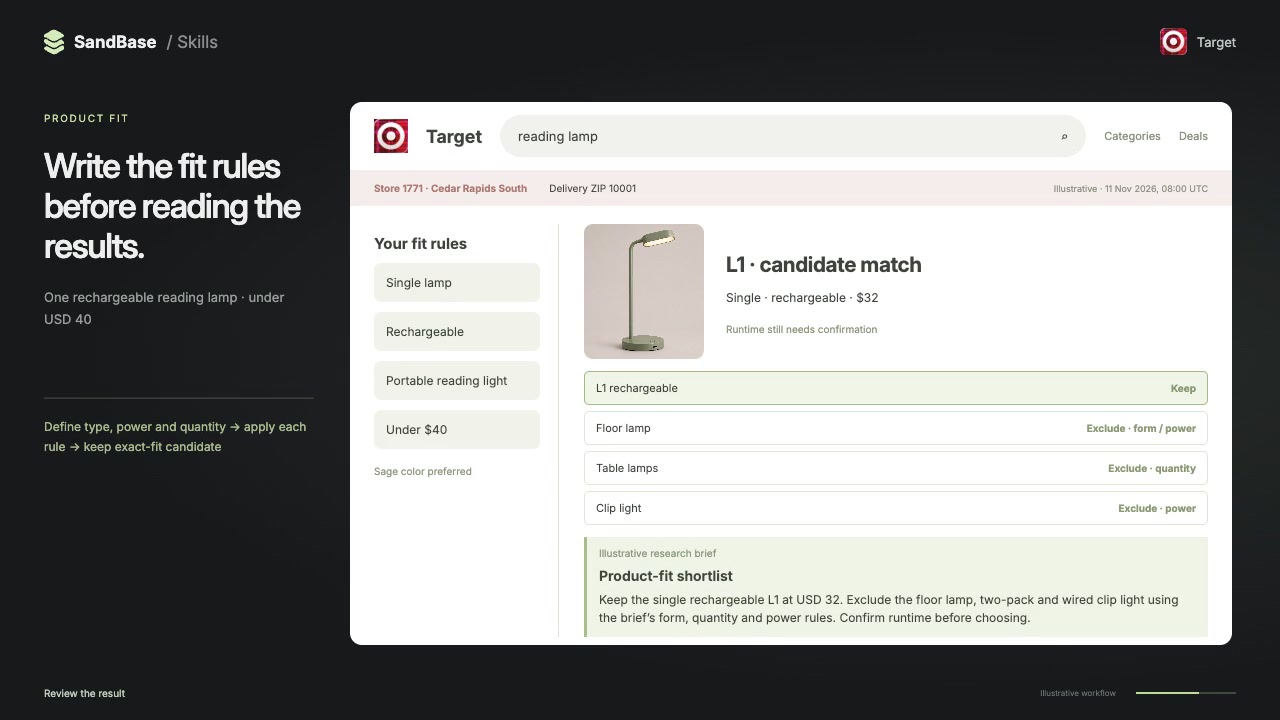
Filter Target search results to the requested product type.
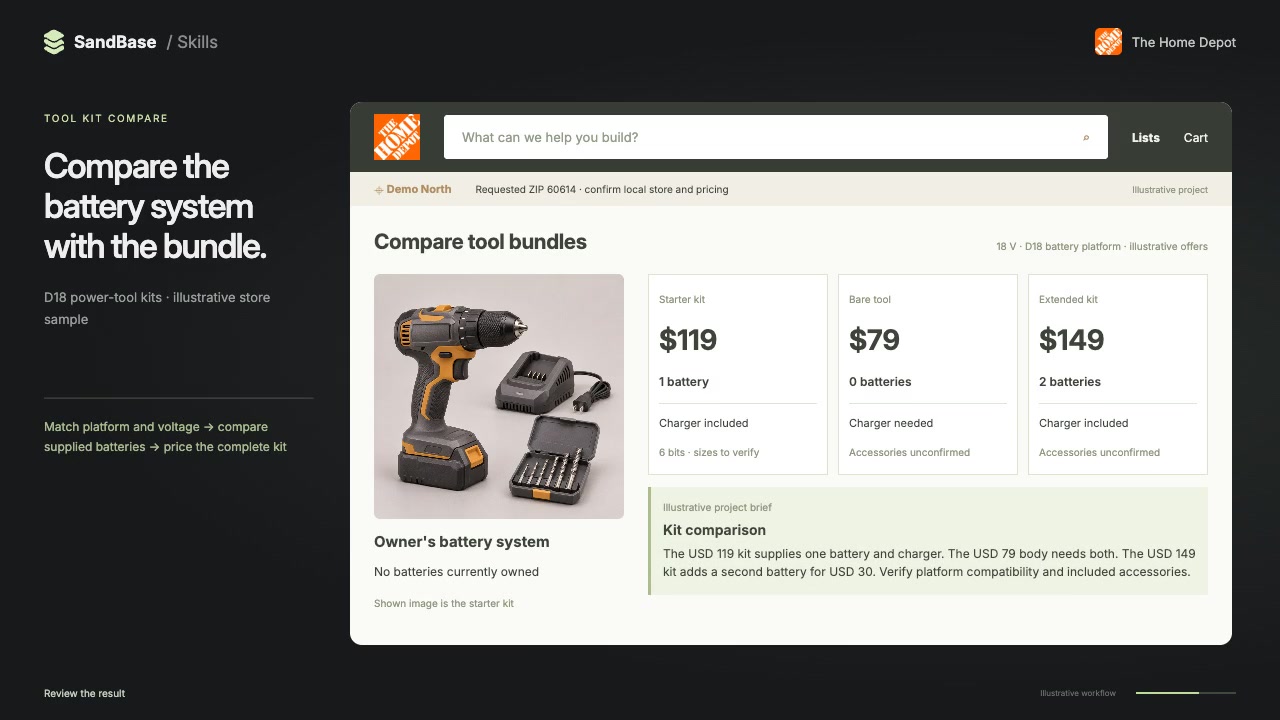
Compare Home Depot power-tool kits by their contents.
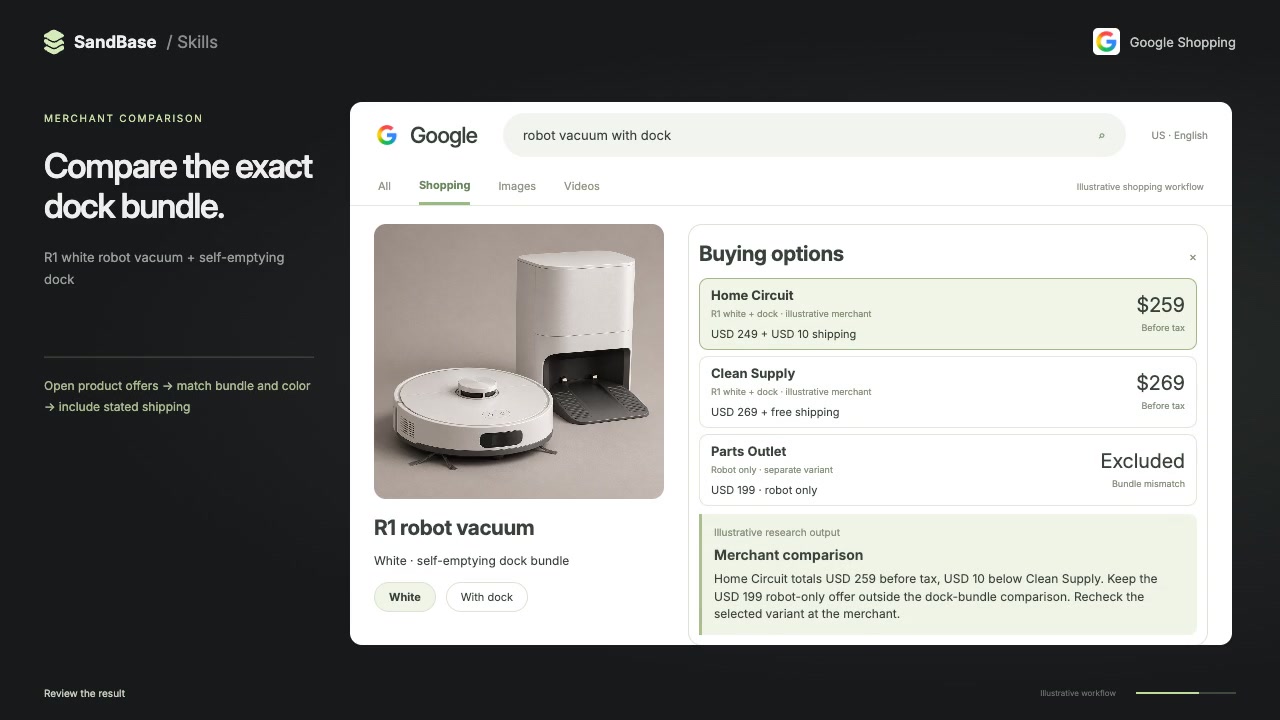
Compare merchant offers for an exact product variant.
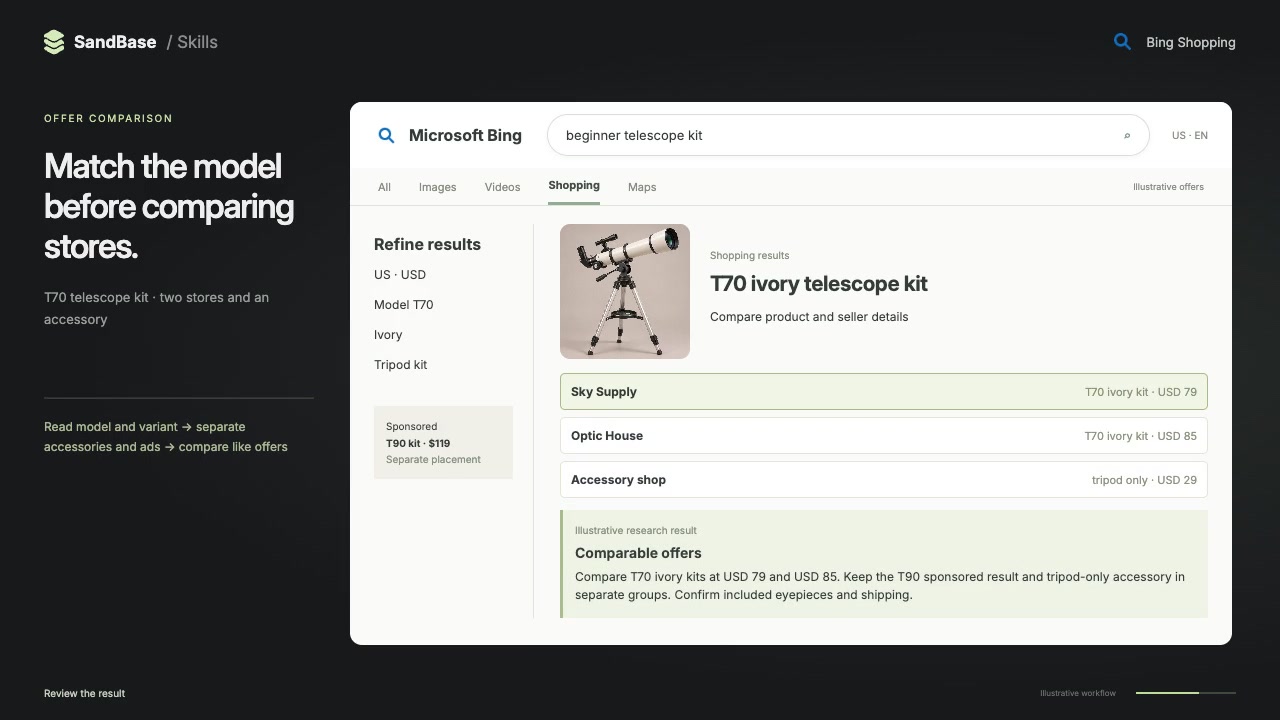
Separate Bing Shopping offers by exact model and seller.
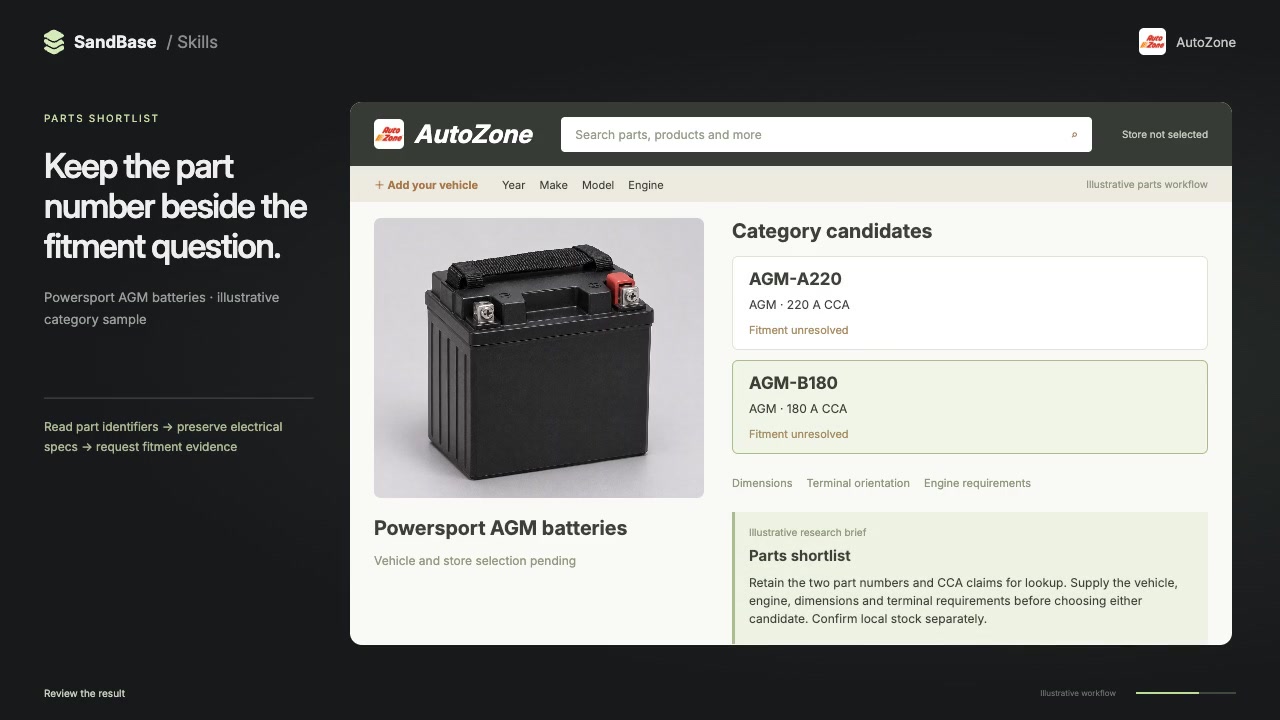
Build a parts shortlist without guessing vehicle compatibility.
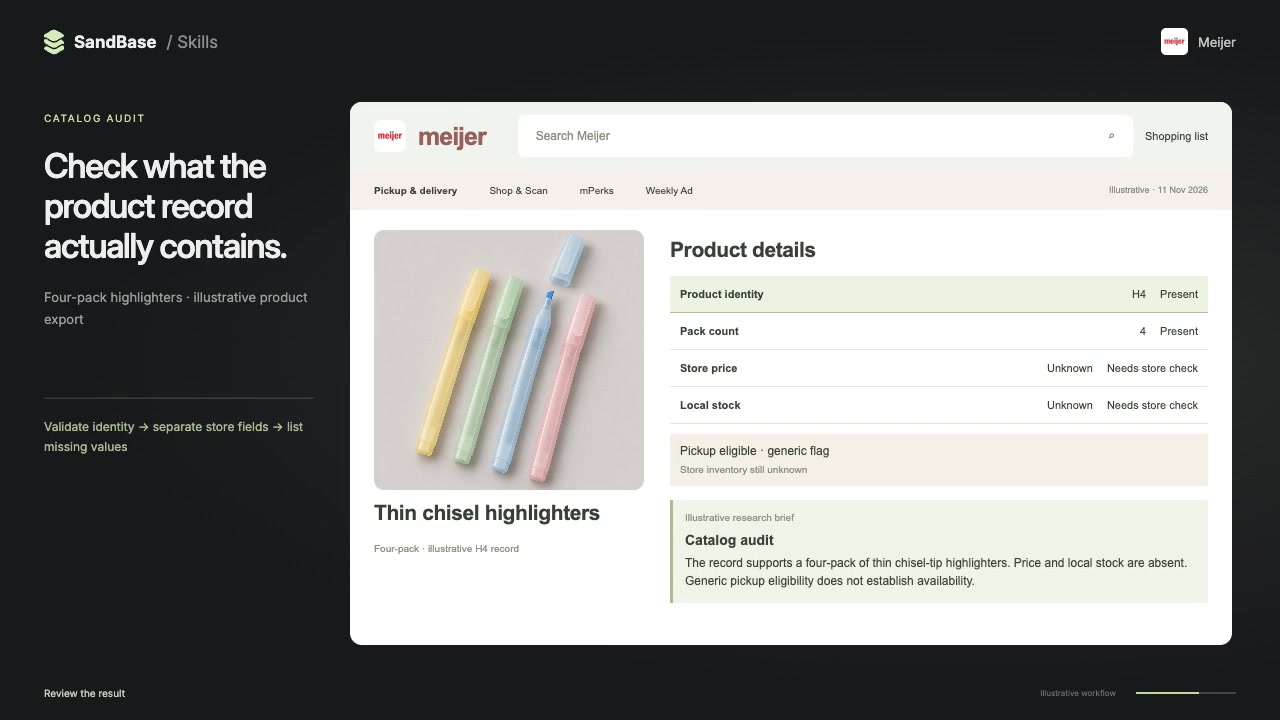
Check a Meijer product record for missing purchasing fields.
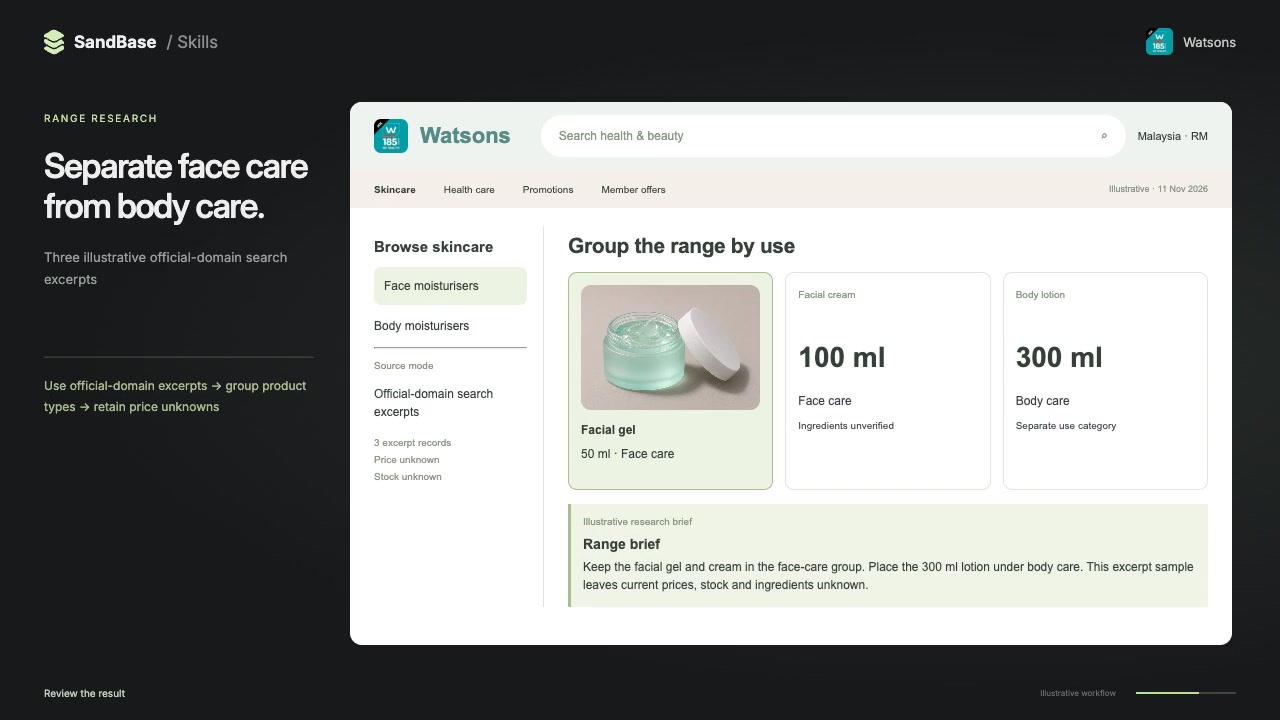
Research a Watsons product range from traceable public sources.
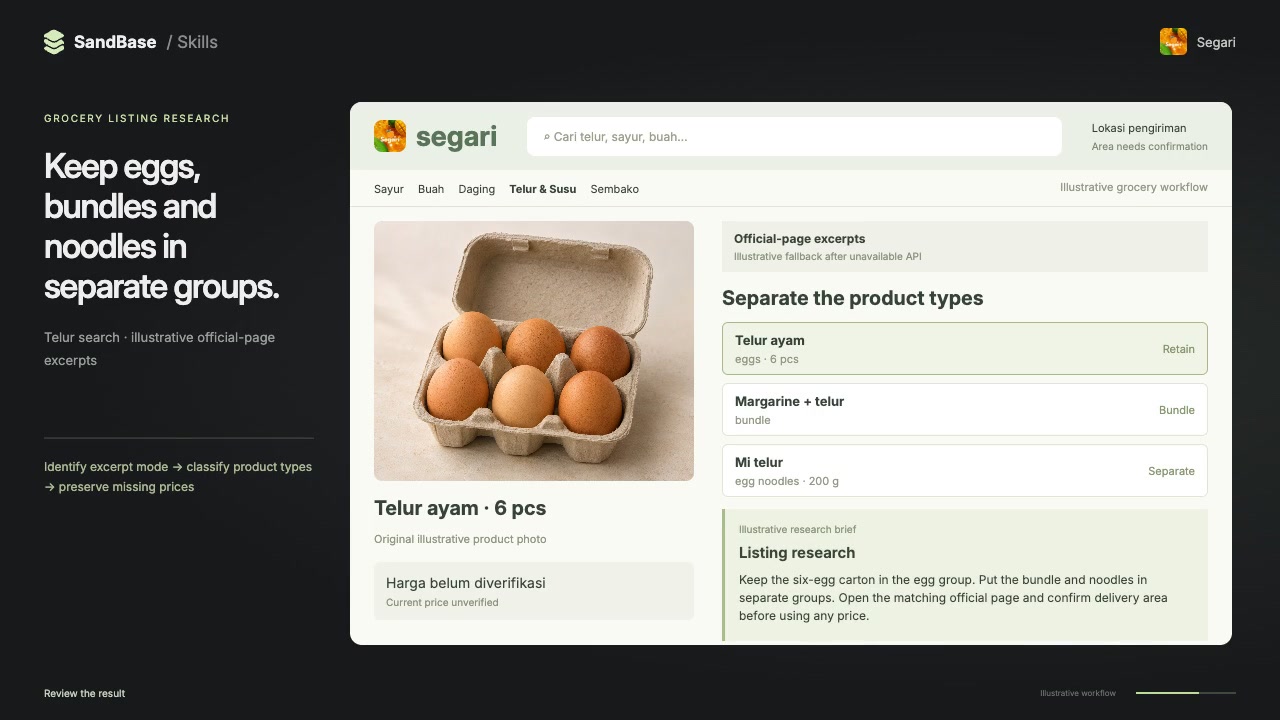
Research Segari grocery listings while separating bundles and product types.
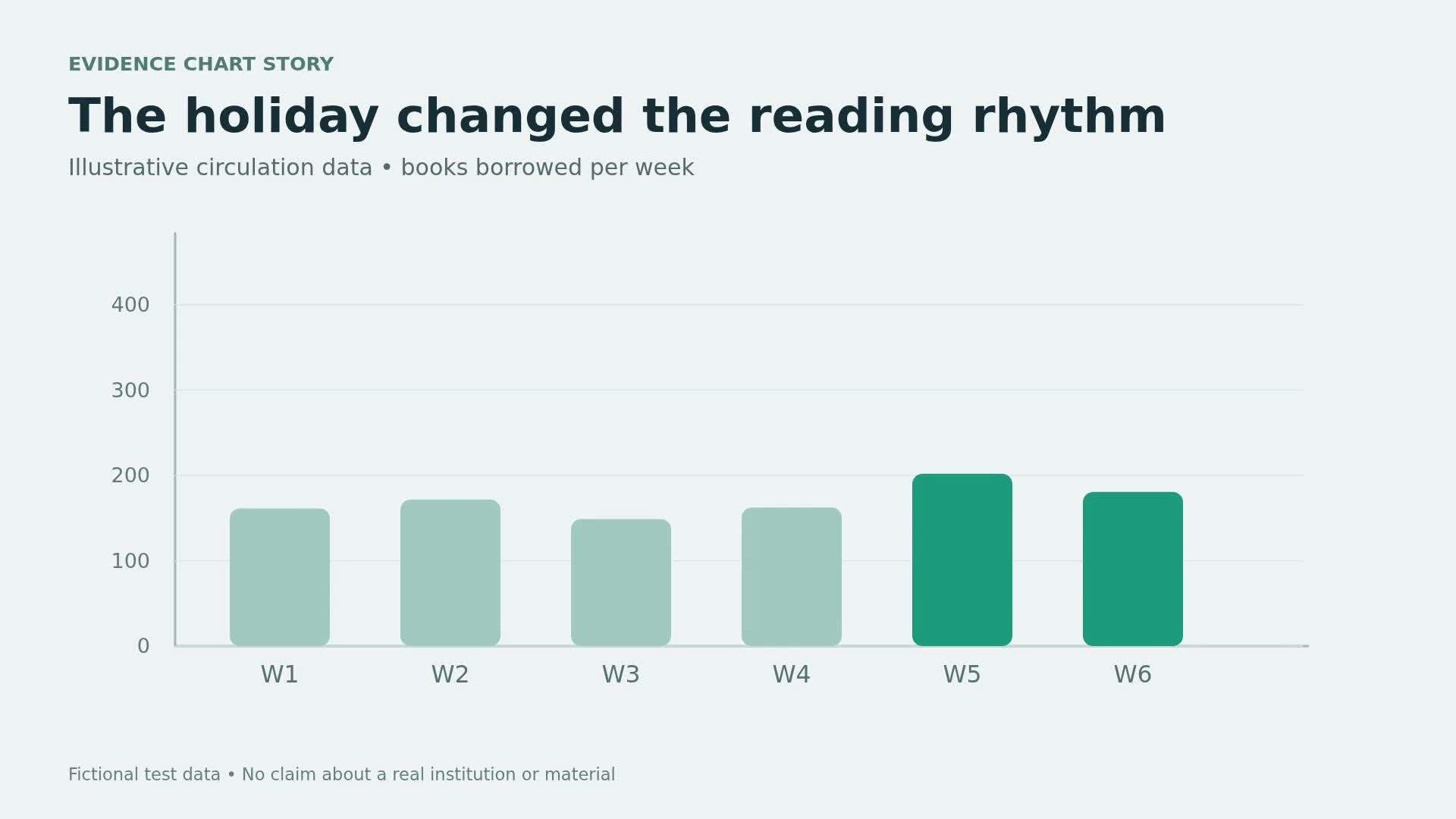
Turn verifiable data into an animated question, comparison and conclusion with consistent scales and data identity.
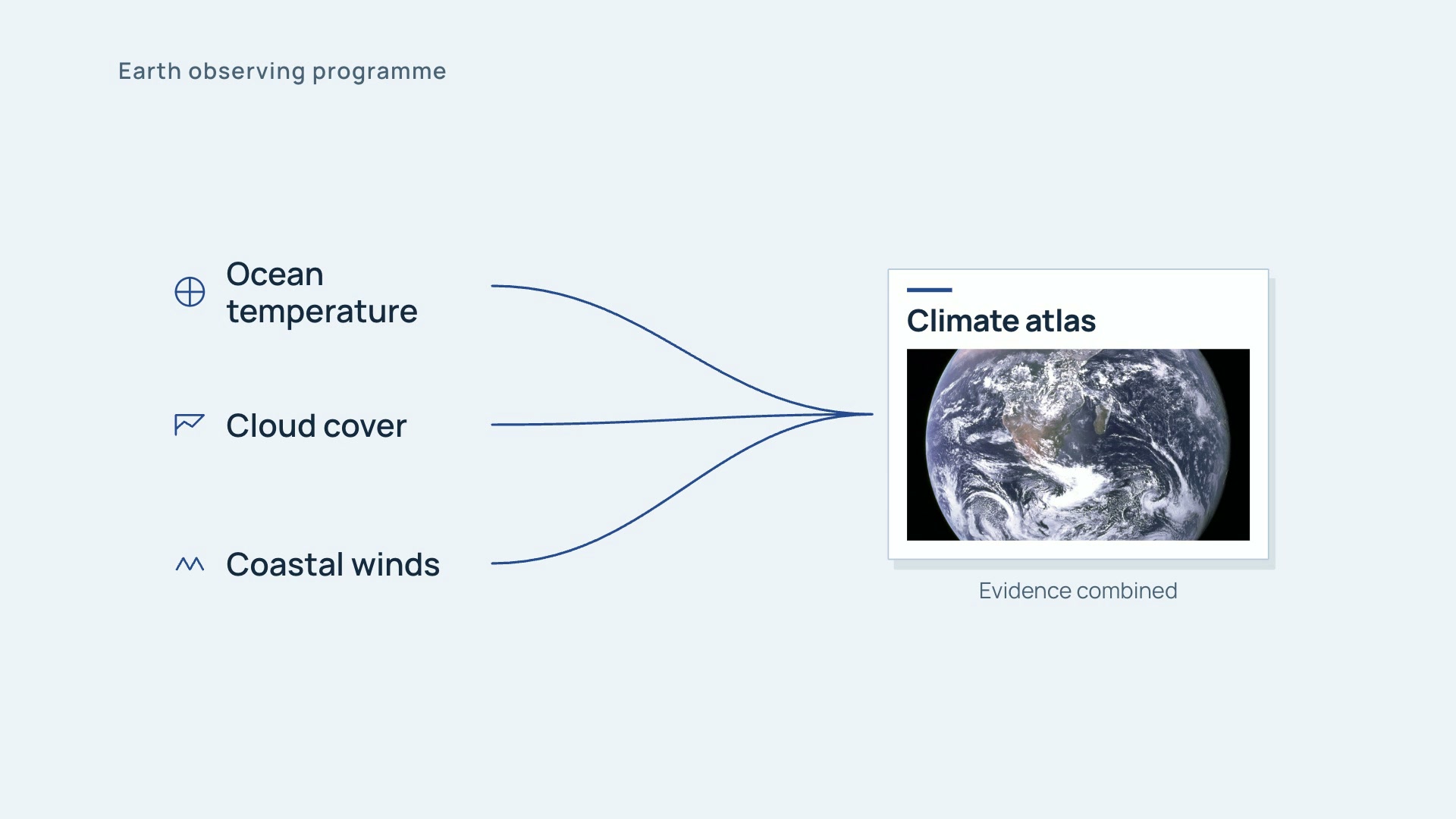
Bring named evidence streams together into a photographic result,with editable connectors,arrival emphasis and a closing contraction.
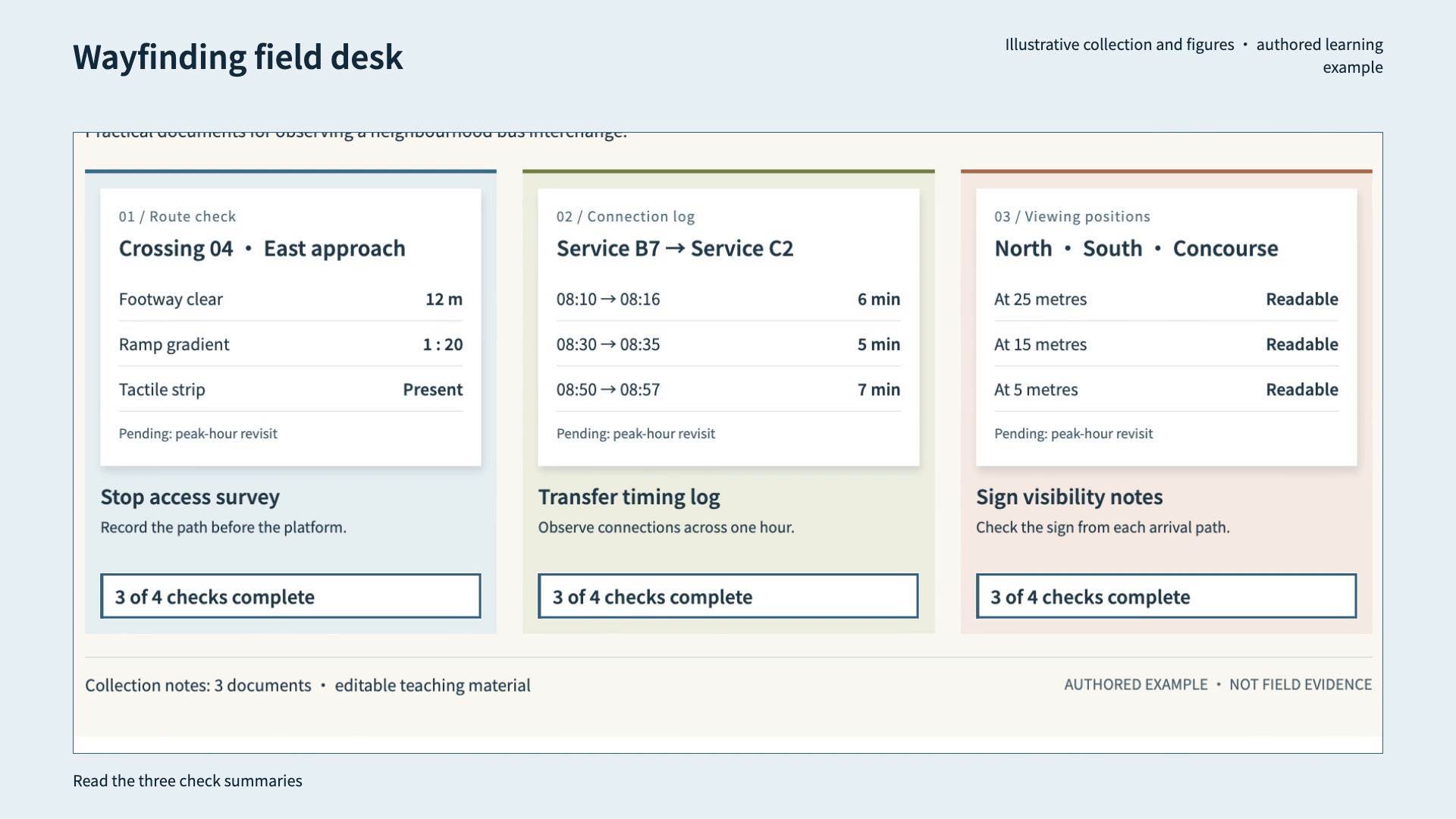
Finish an illustrative collection-level count, clear the overlay and descend into authored documents with evidence borders in reading order.
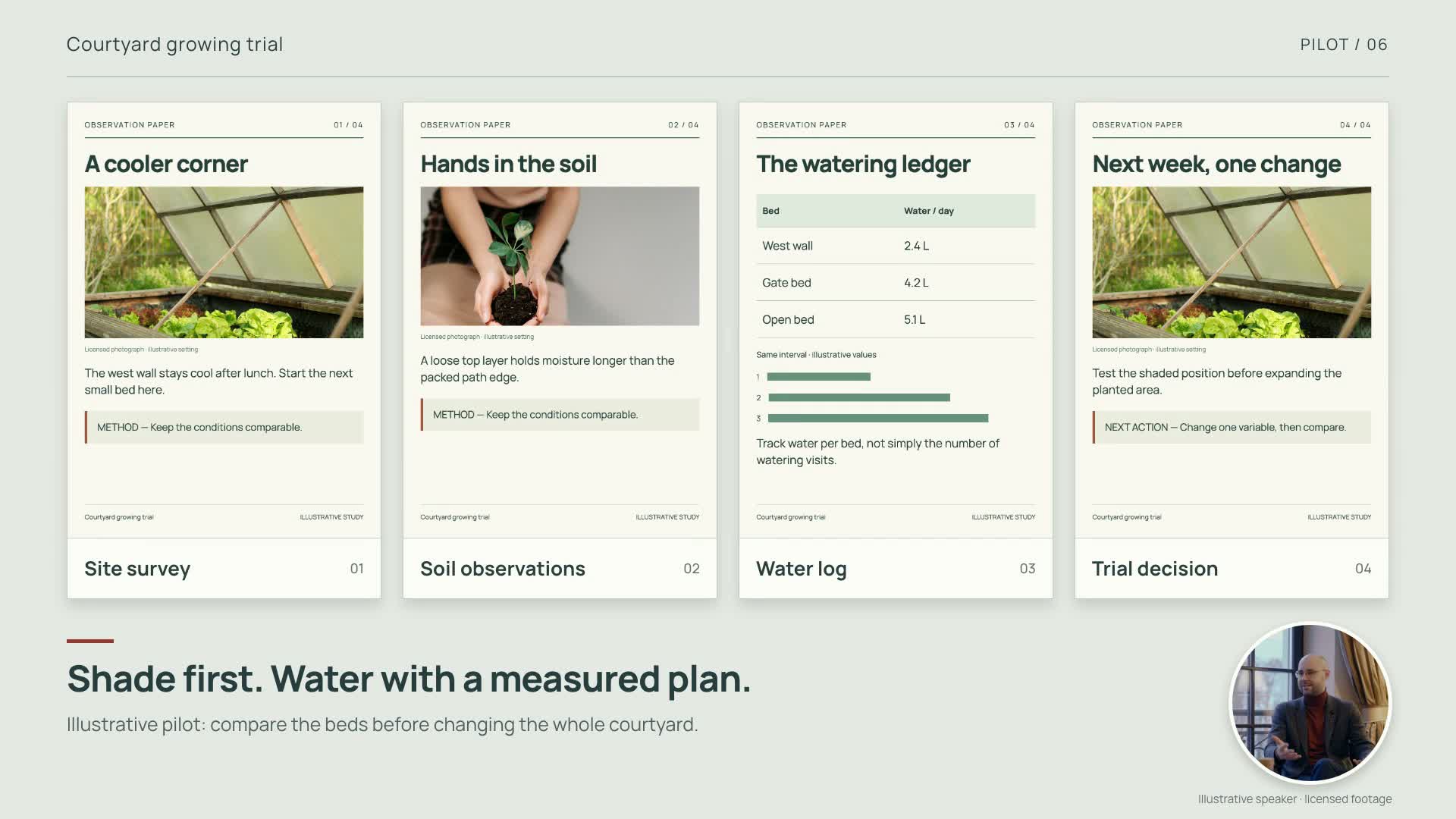
Present four documentary images before revealing a short conclusion and a late circular speaker window.
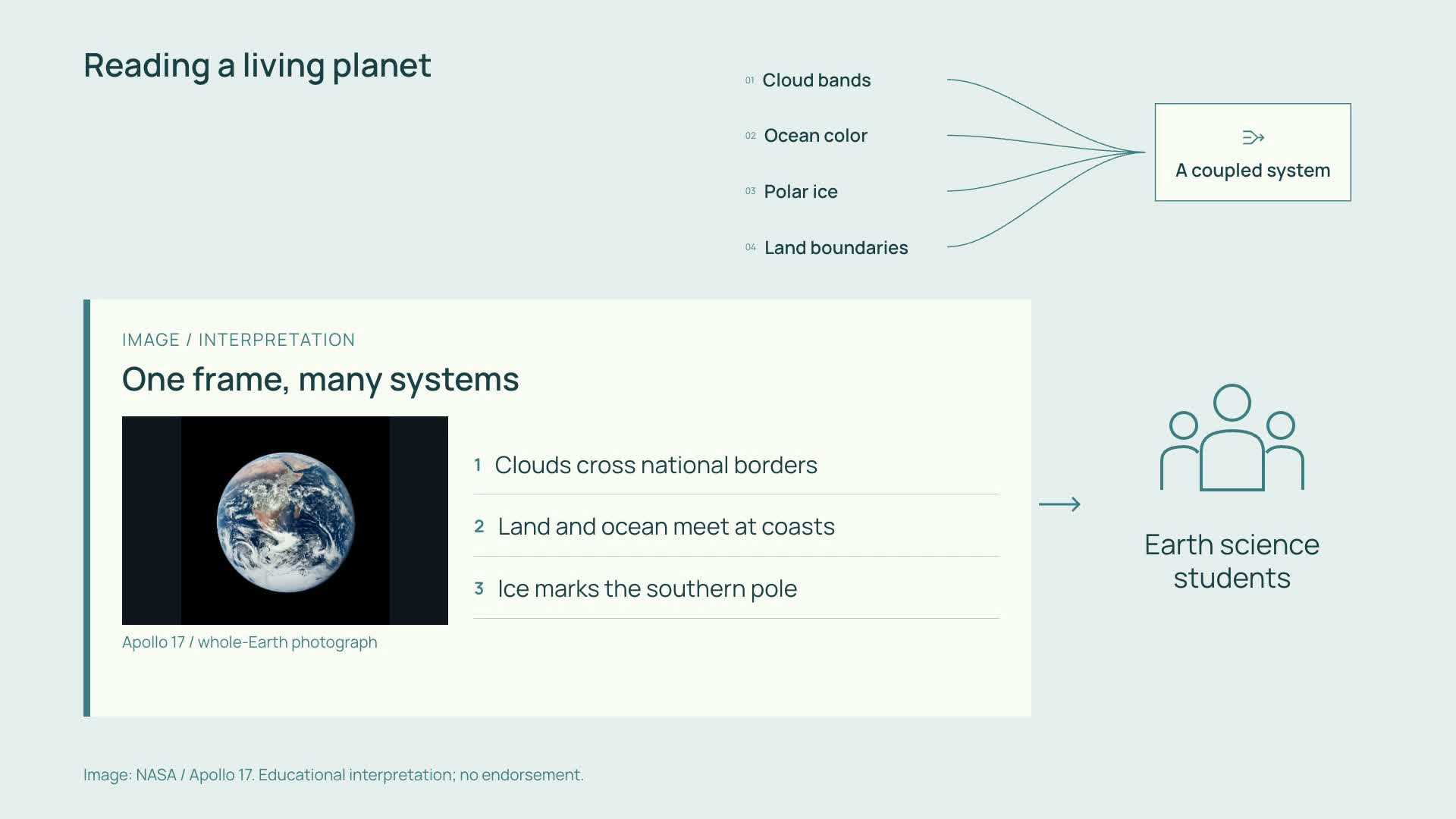
Animate several observations into a synthesis, then open a photographic evidence page and identify its readers.
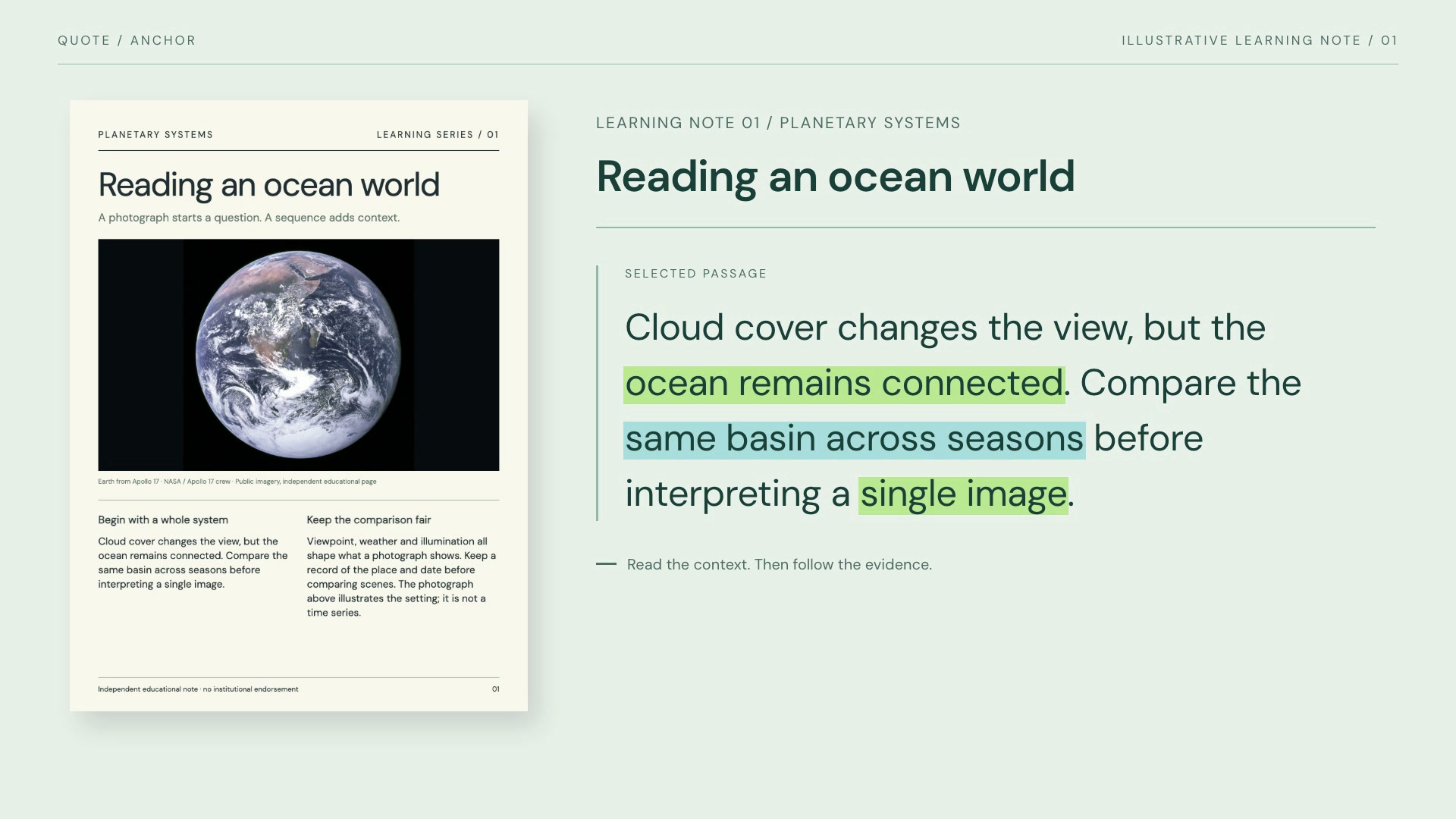
Turn a document page and a short passage into an editable evidence-reading film with a persistent citation, an enlarged excerpt and line-aware marker sweeps.
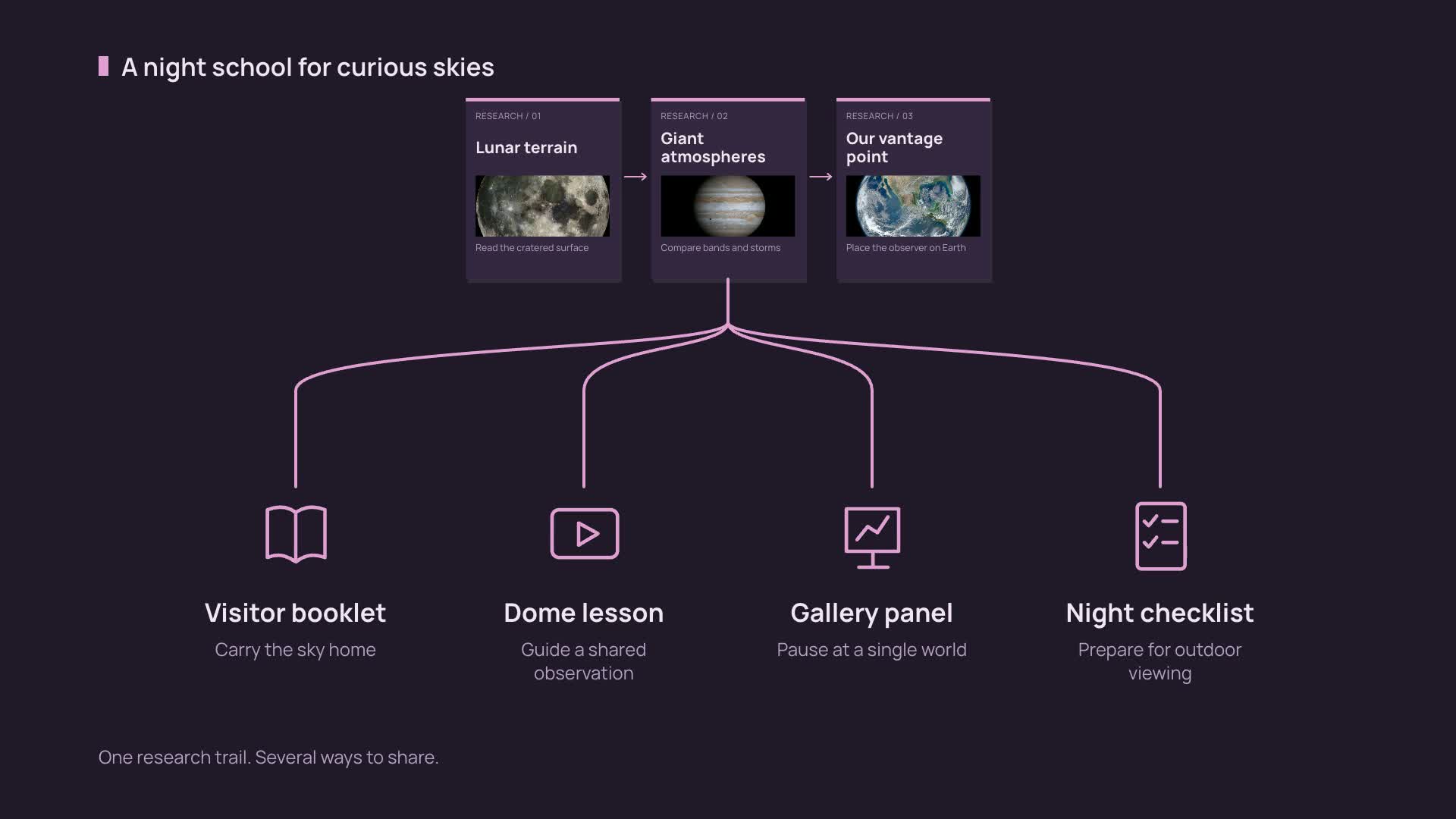
Animate a research chain that contracts into a header and distributes into several editorial formats.
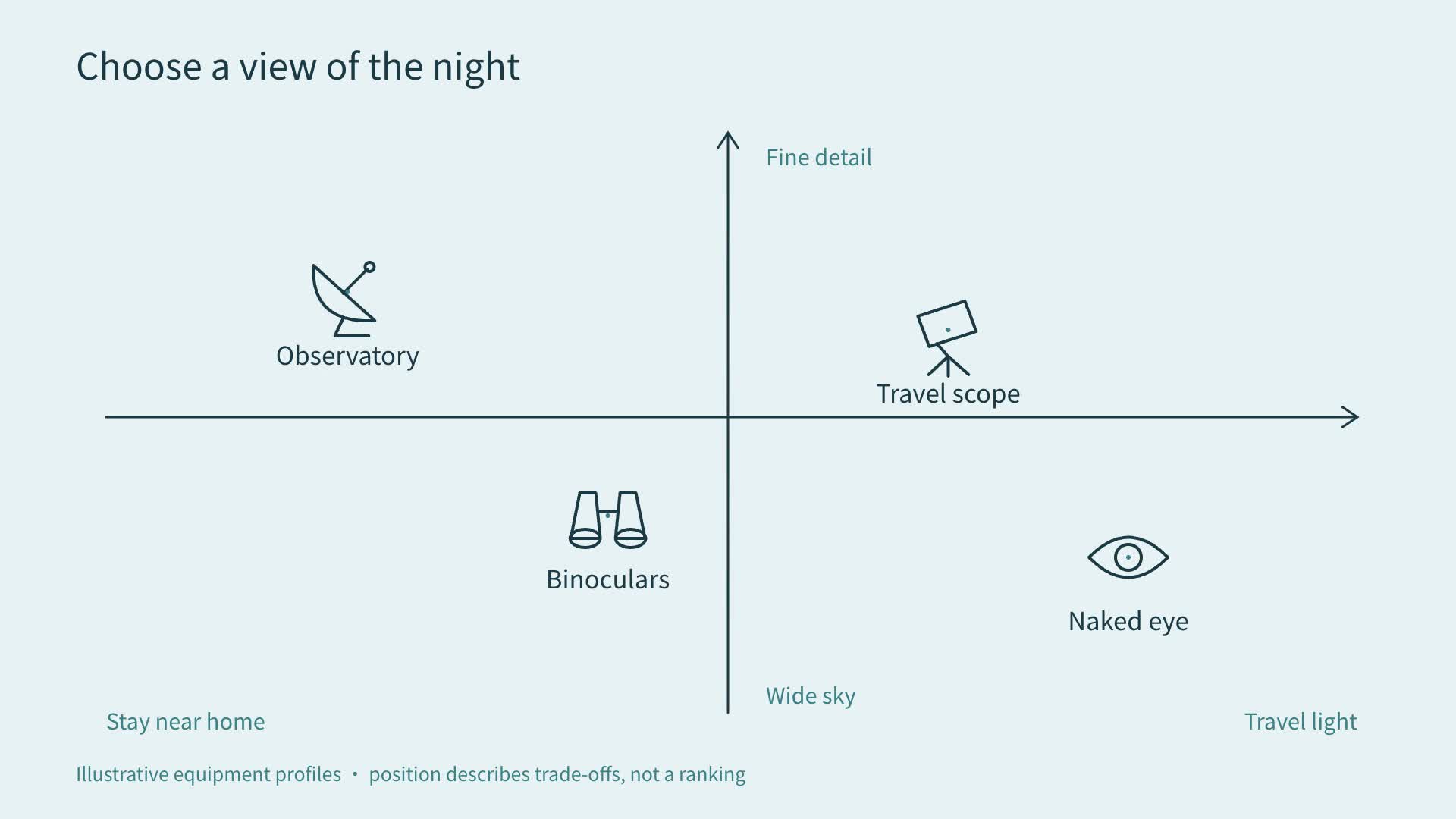
Place recognizable symbols at literal coordinates on two continuous dimensions, then reveal them for comparison.
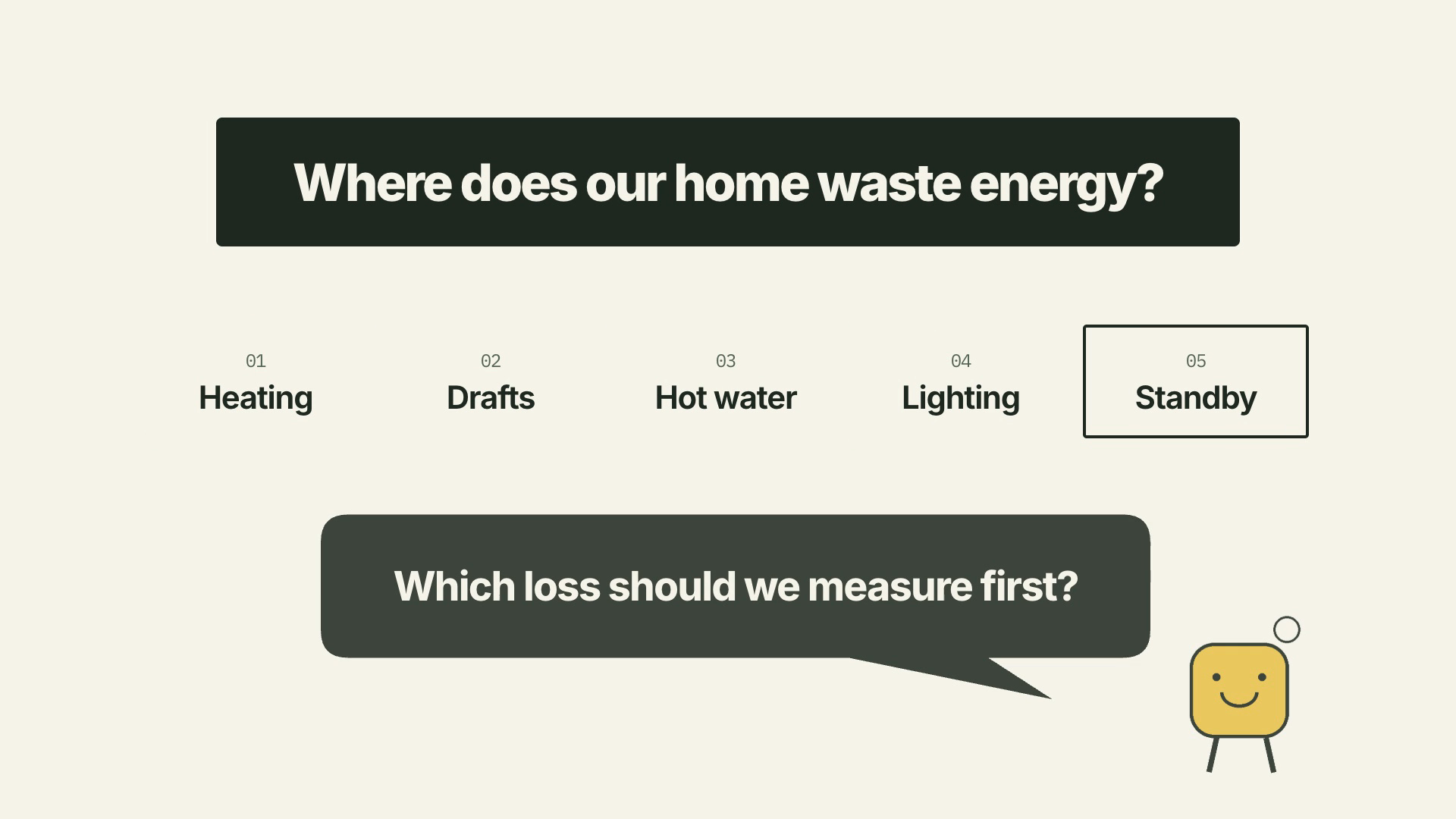
Break one question into dimensions, scan each one and resolve into a focused next question.
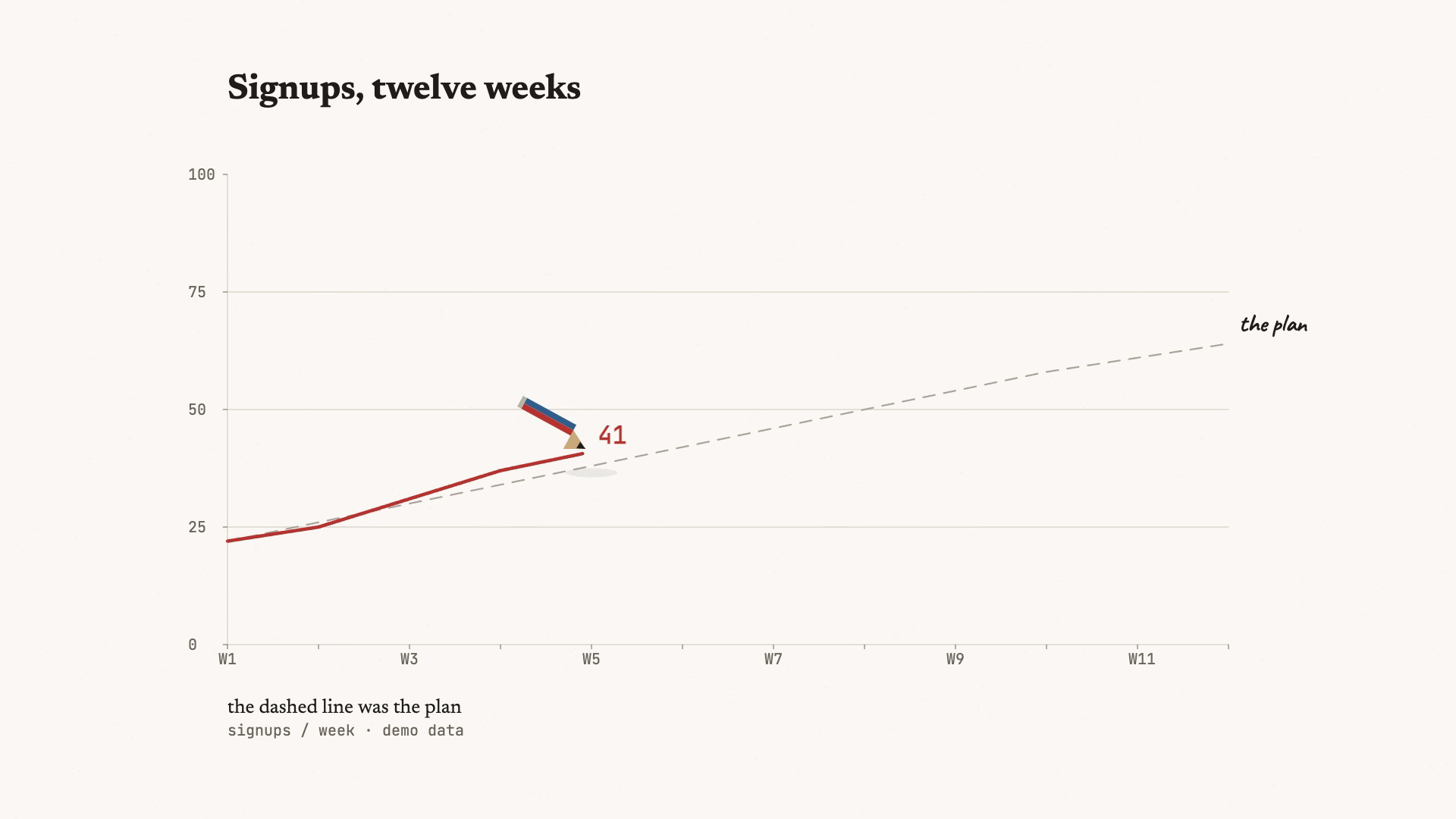
A silent editorial data-story film on cream paper: the chart first draws the guess — a grey dashed expected curve, held on screen — then lets the real line draw through it in signal colour at a linear rate, while handwritten notes pin themselves to the data points the line passes. A red-blue pencil leads the stroke, and the axis can re-range in two beats, carrying its annotations with it.
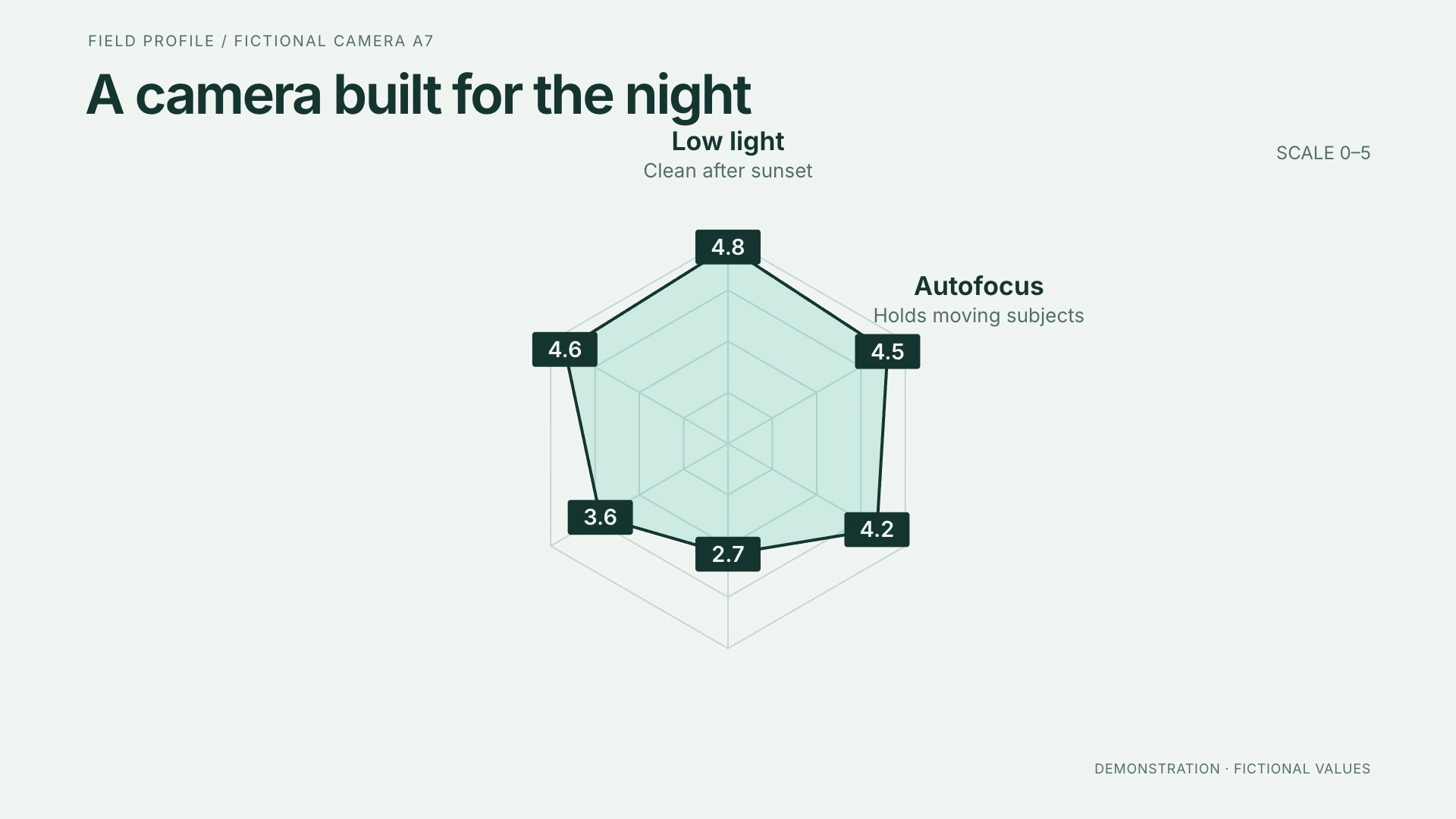
Reveal a profile in three steps: shape, values, then the explanation behind each dimension.
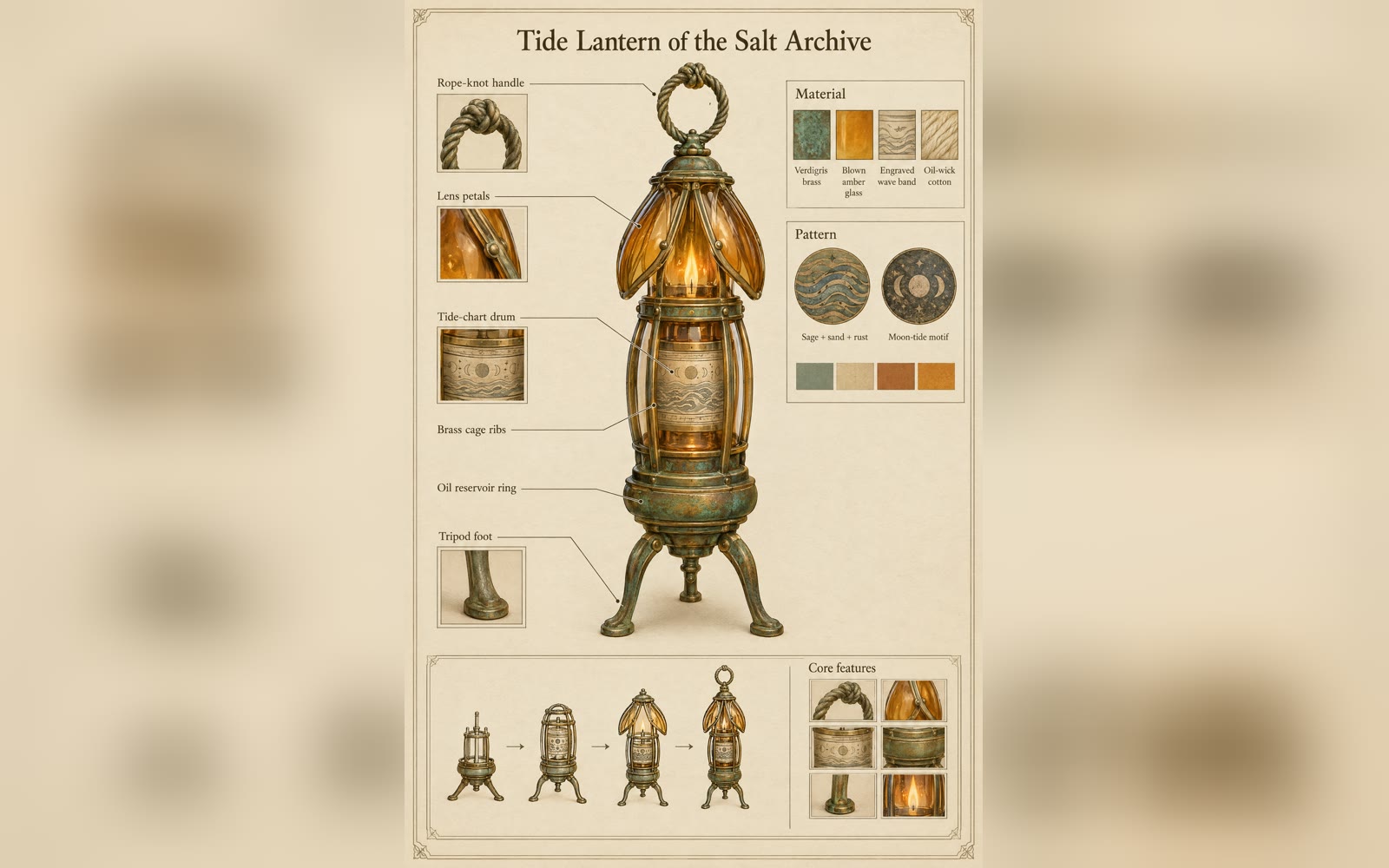
Turns a fictional heritage object into a museum-catalog specimen plate with labelled parts.
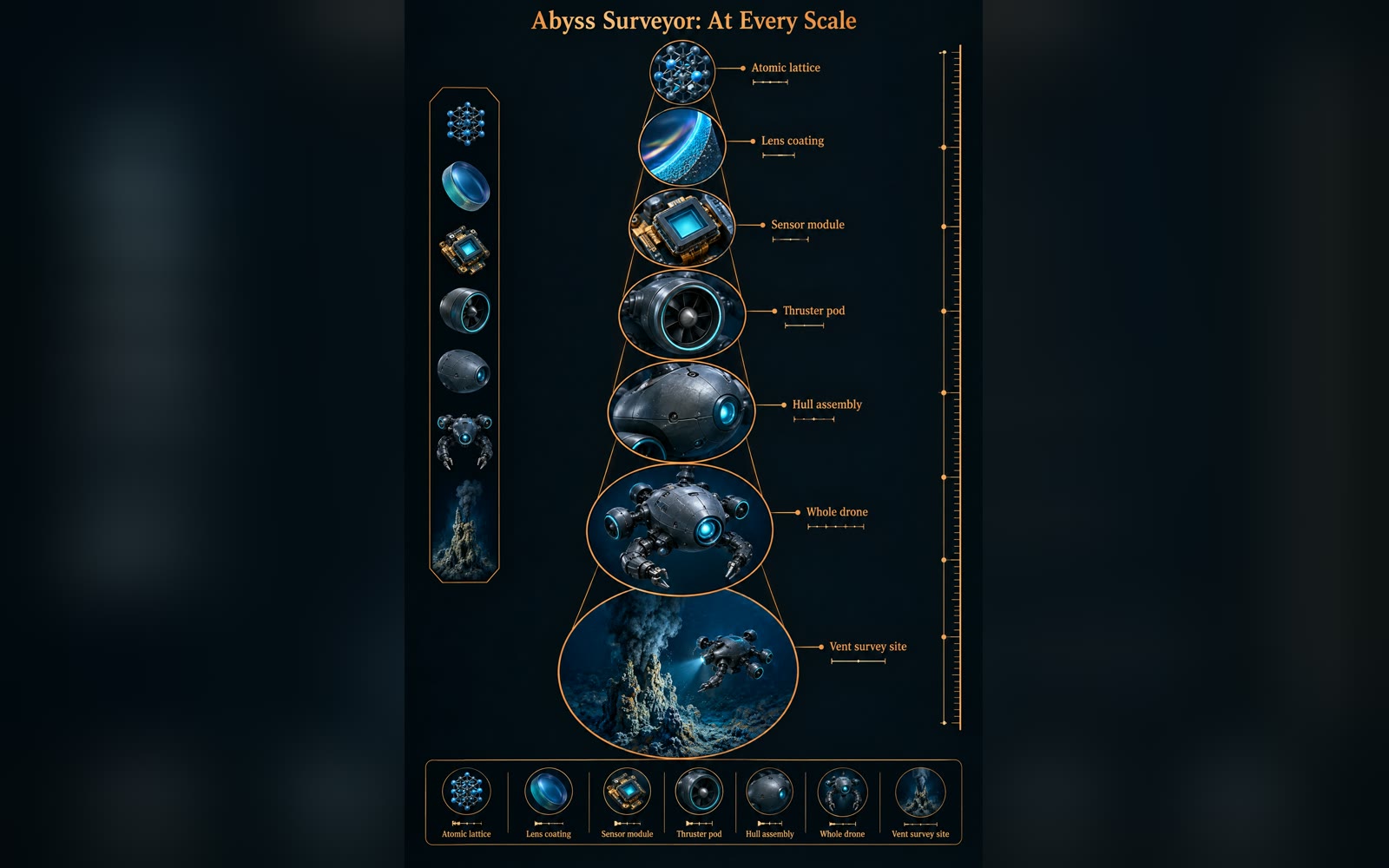
Turns a fictional subject into a zoom-ladder infographic that magnifies it at every scale.
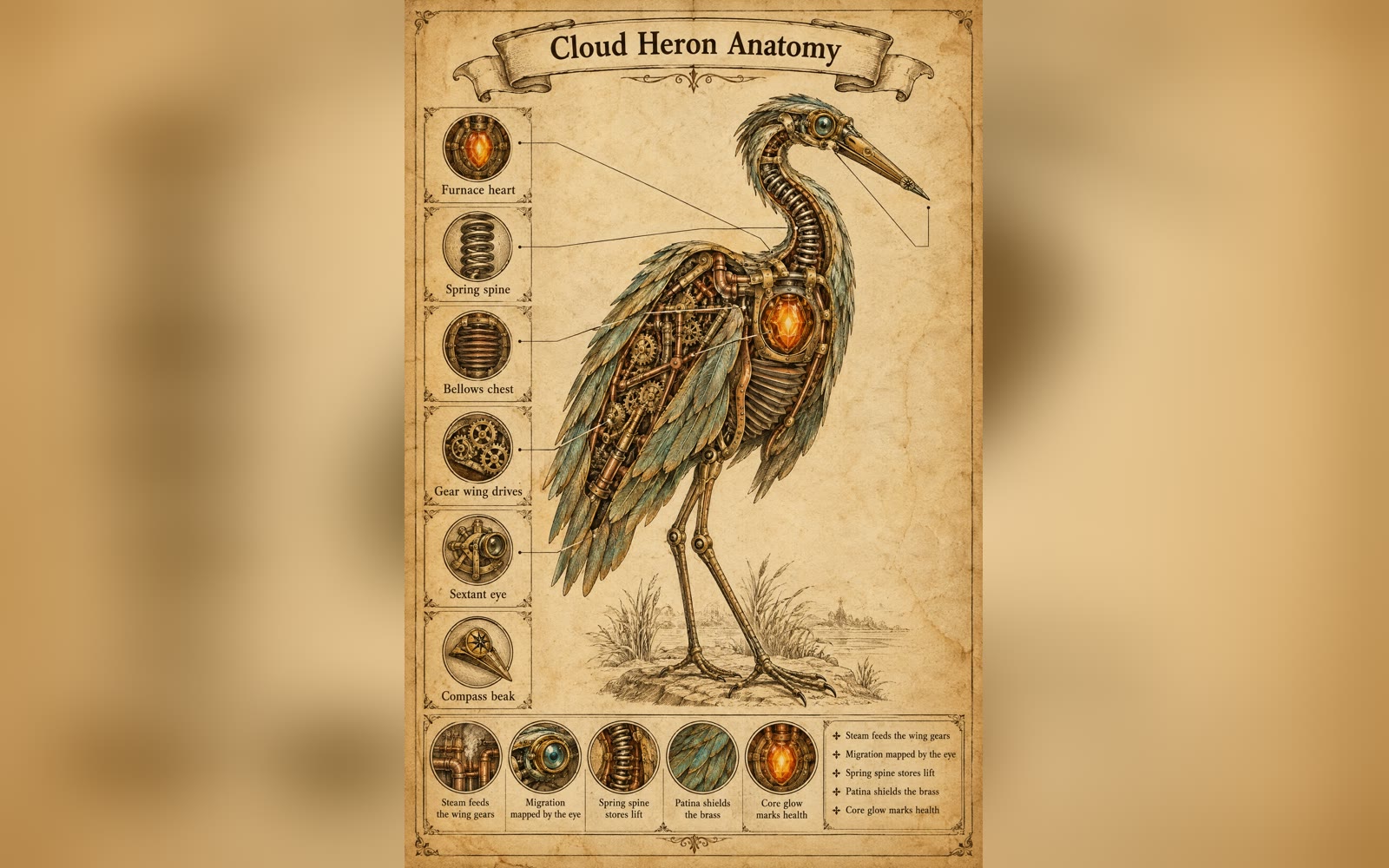
Turn a fictional creature or machine into a vintage engraved anatomy plate: a cutaway subject on aged paper with a banner title, legend modules and a findings strip.
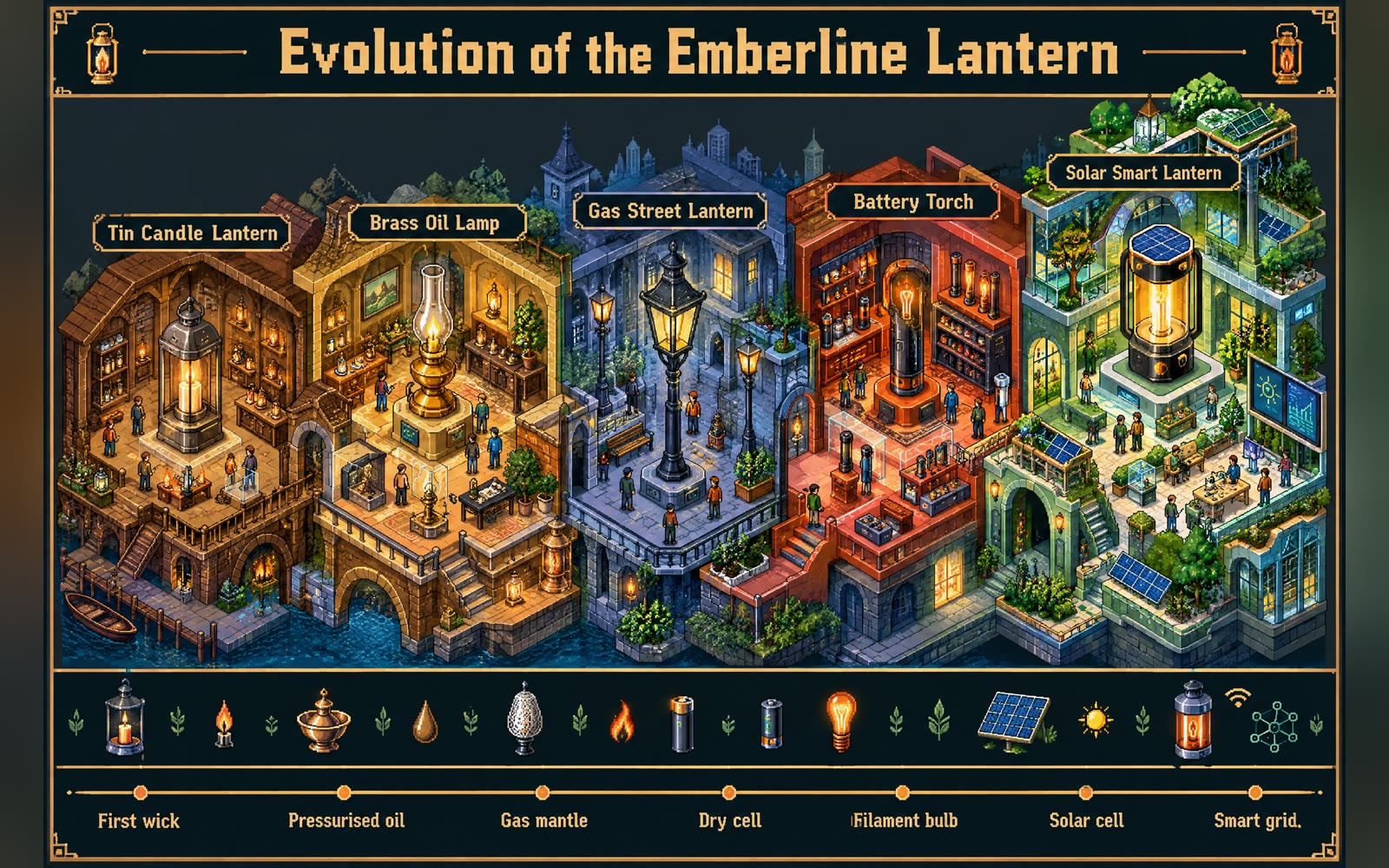
Turn a fictional progression into an isometric pixel-art museum poster: a left-to-right row of pavilion zones, one per stage, with a pixel title and a milestone timeline.
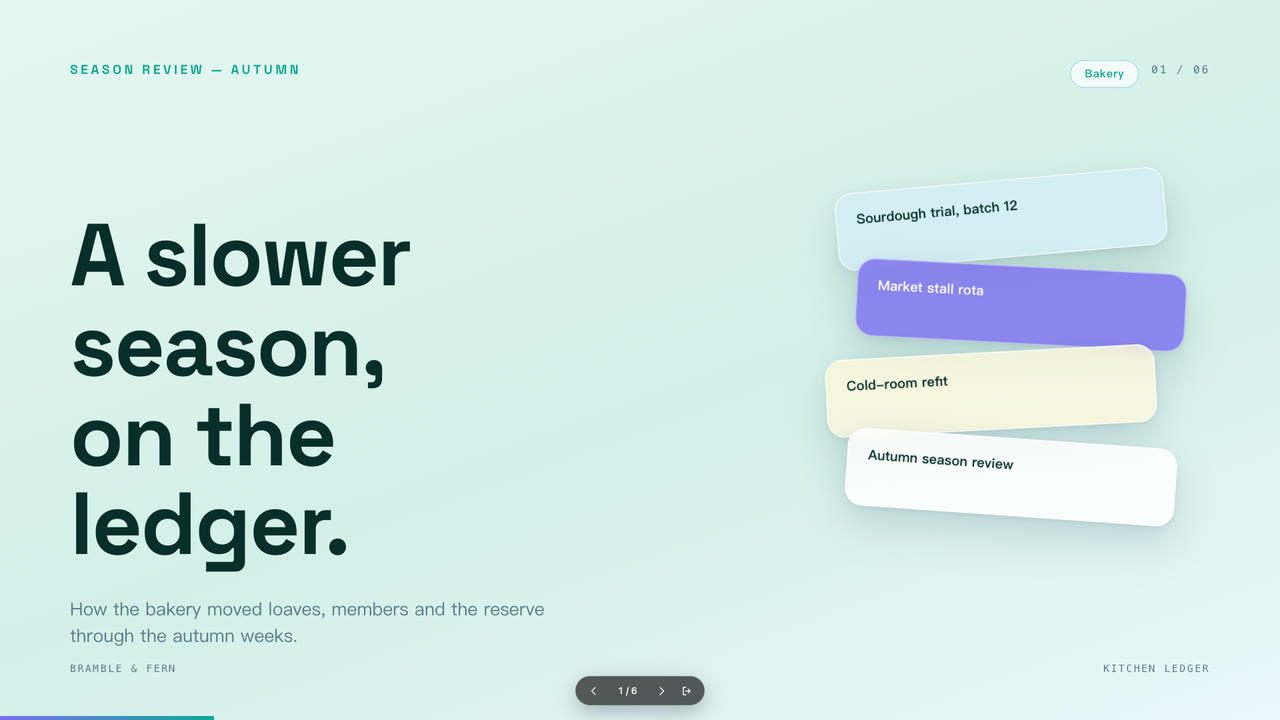
Make operating reports and status reviews that float: translucent glass cards on a sky-blue gradient, cyan kickers and a violet/gold accent plate for retros and channel reviews.
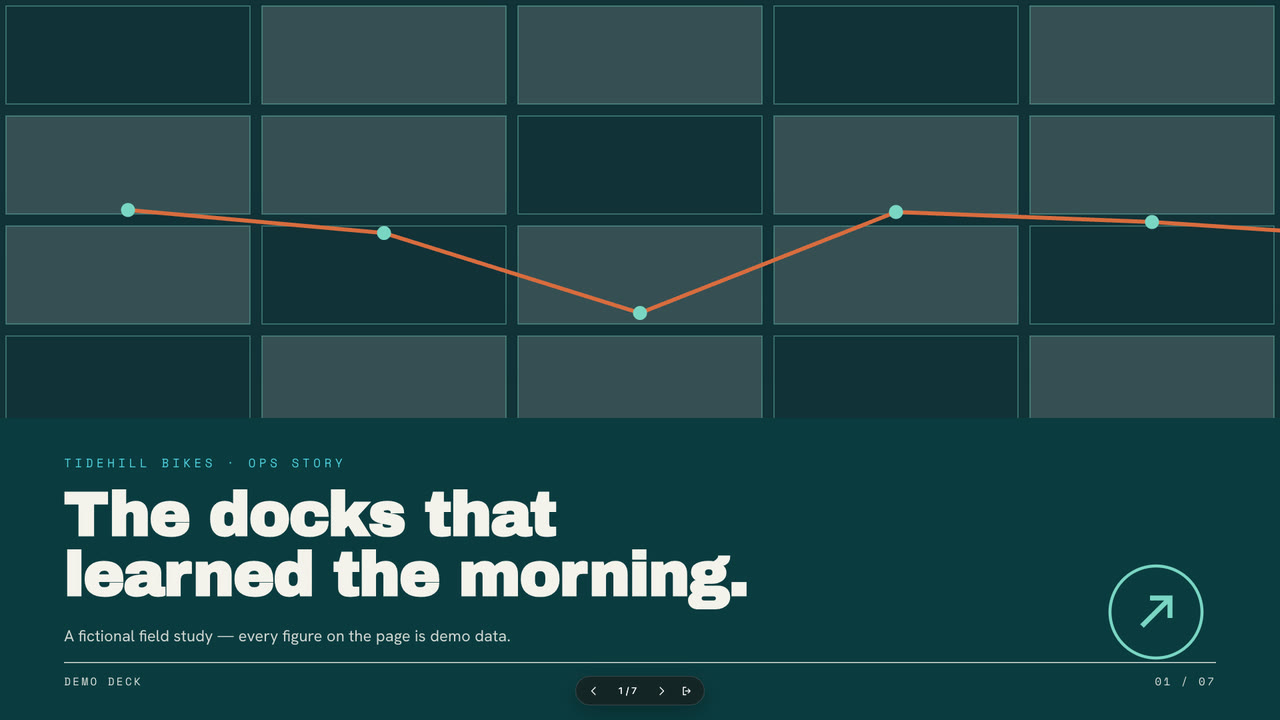
Make single-case study decks with editorial weight: alternating deep-teal and cream pages, giant numbered findings and one burnt-orange accent for project outcomes and research results.
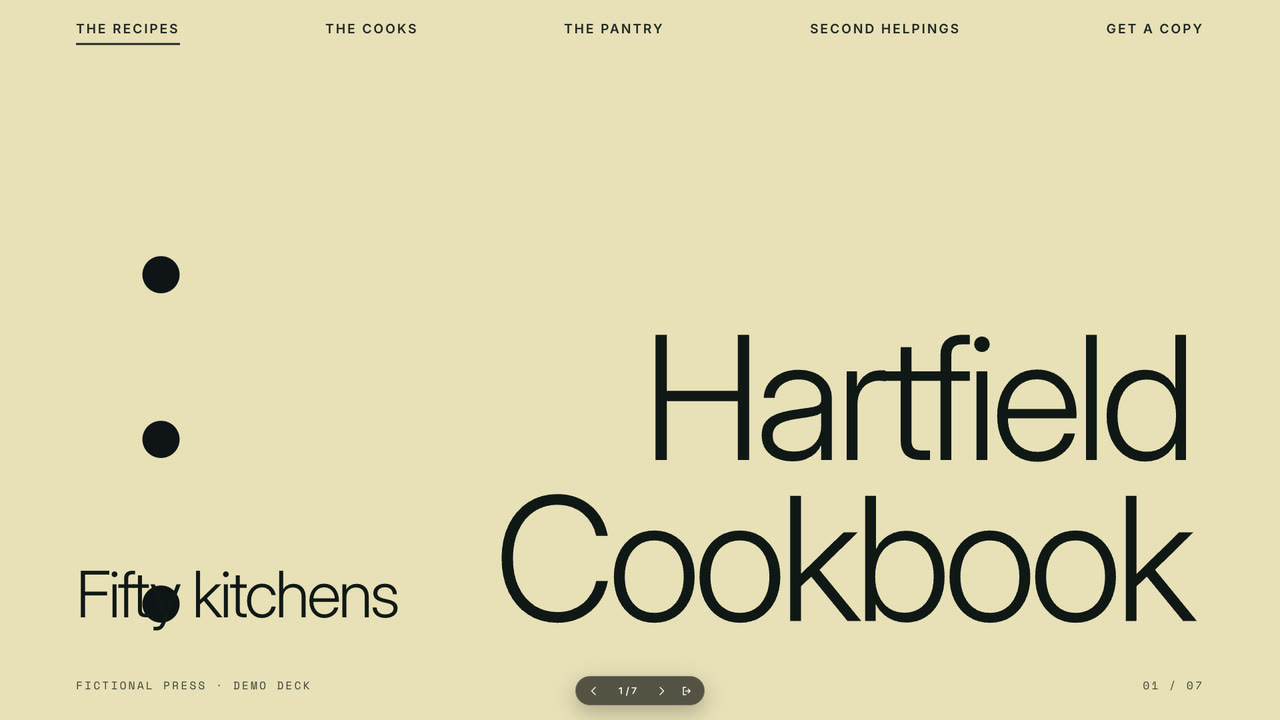
Make decks with a magazine rhythm: rotating pastel page fields, a masthead top nav, bottom folio bar and grayscale photo-card plates for indie-press and editorial briefs.
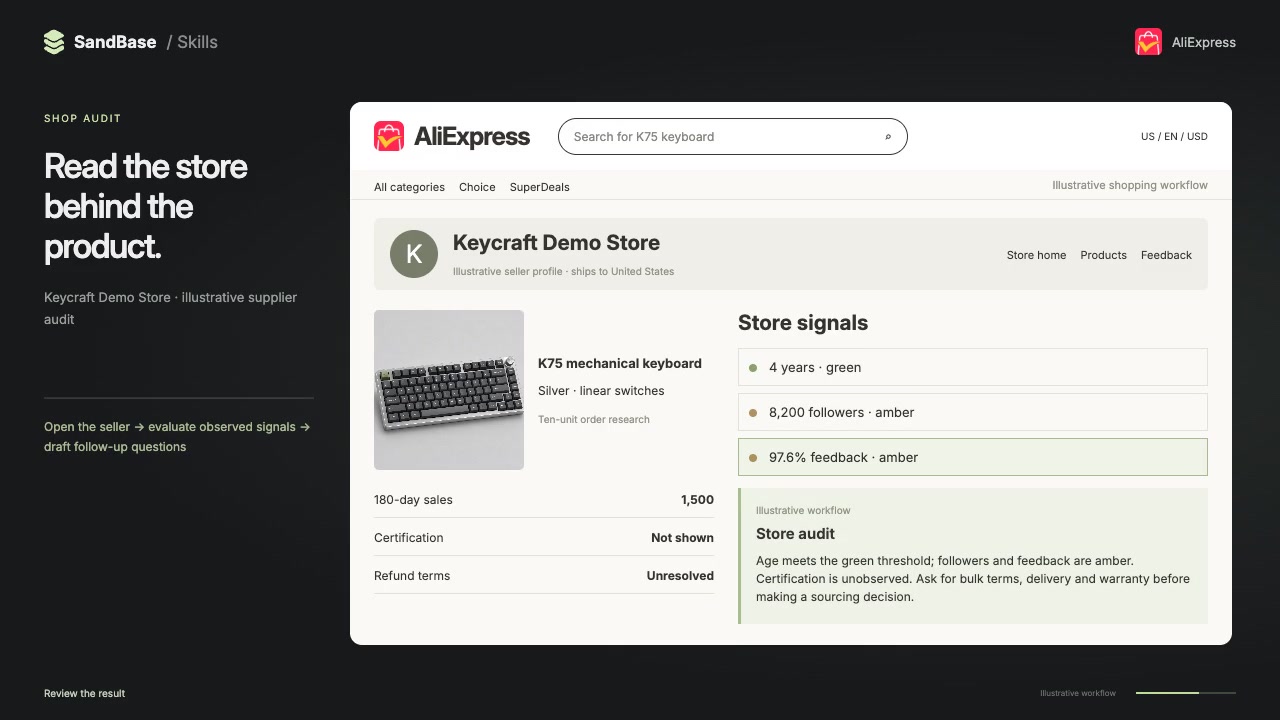
Check whether the store behind an AliExpress listing can be trusted before you order from it — especially before a bulk order.
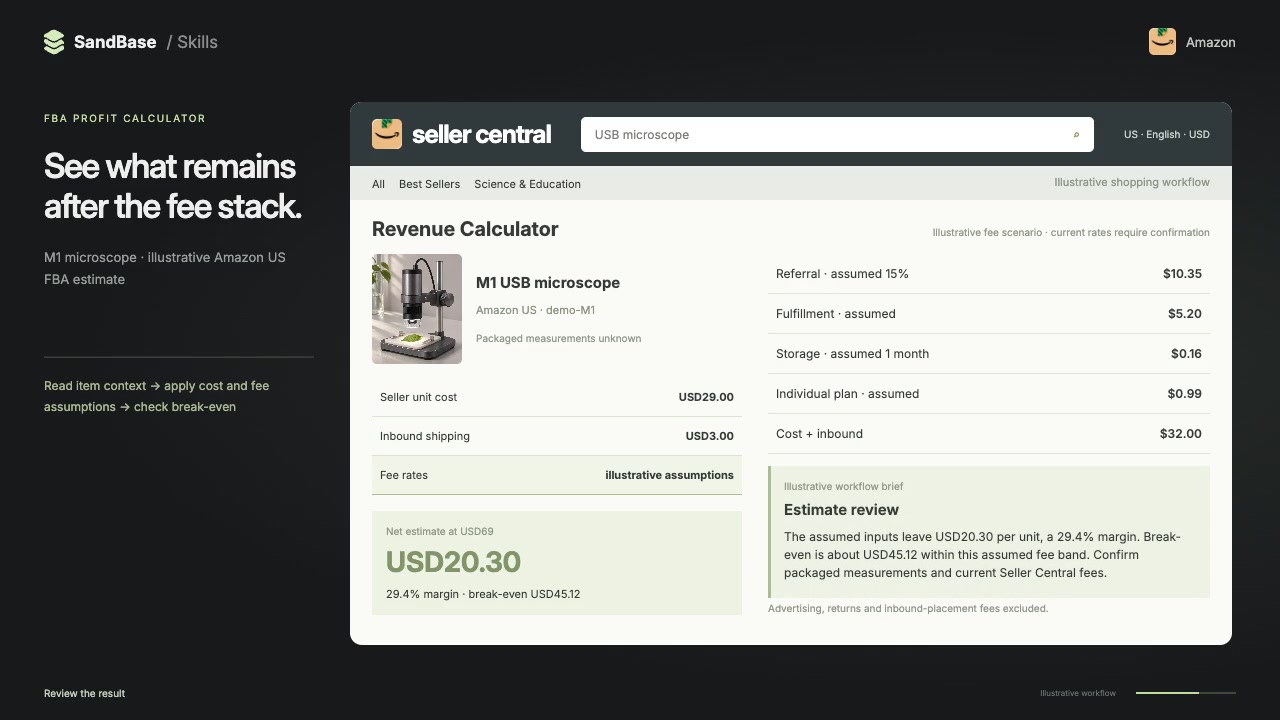
See what's actually left per unit on an Amazon US listing after referral, FBA fulfillment and storage fees — before you commit to selling it.
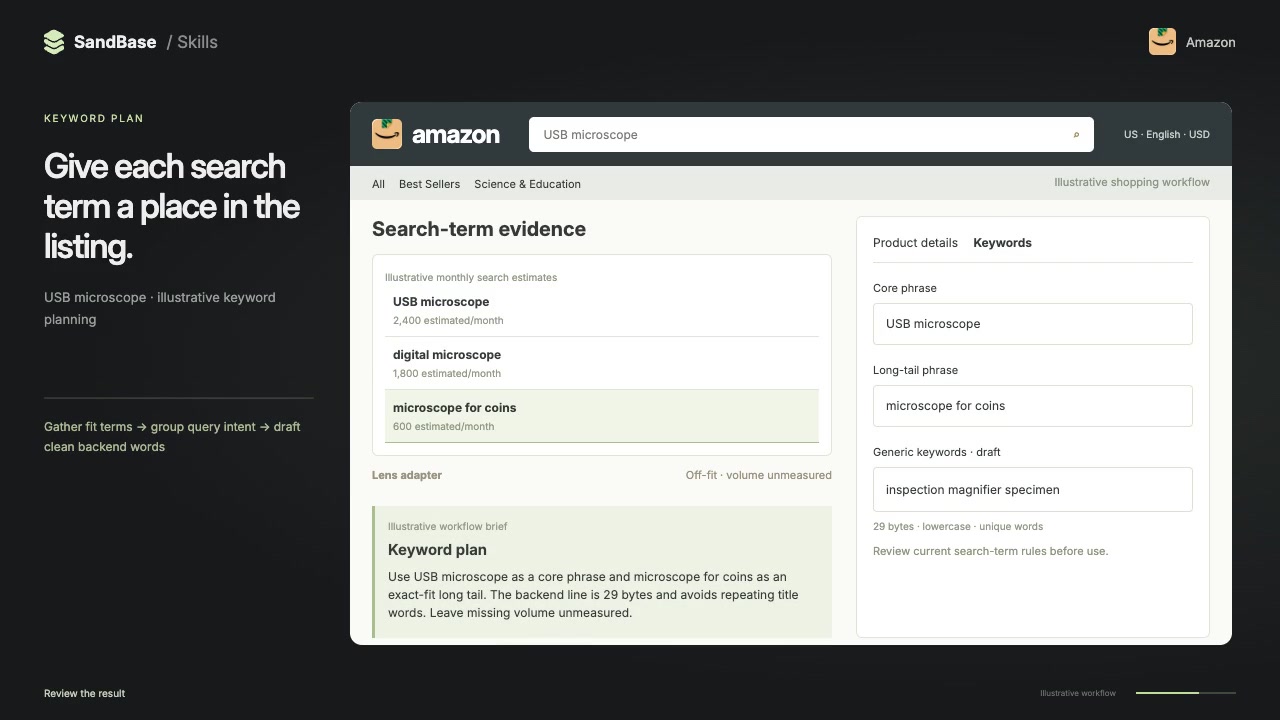
Know which search terms a listing should target — with real Amazon search volumes, what a competing ASIN already ranks on, and a backend line that follows Amazon's own rules.
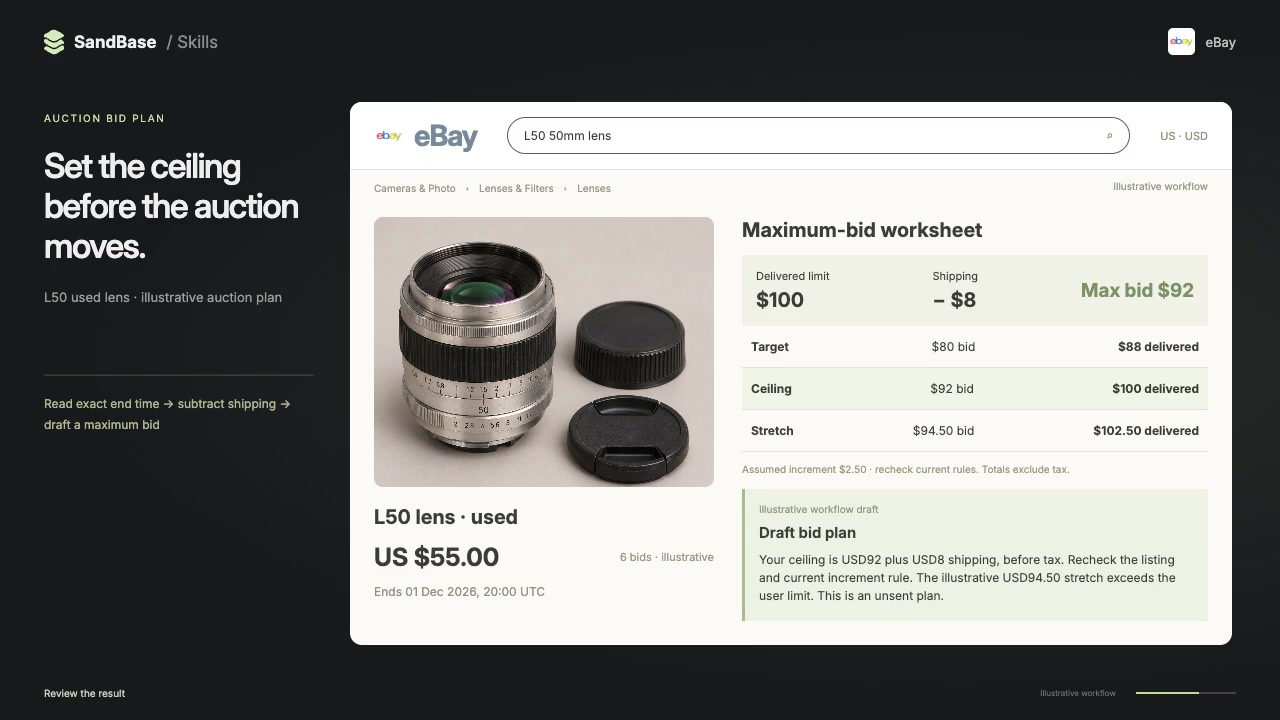
Know your maximum bid and landed cost on an eBay auction before you bid — so excitement, not math, never sets the ceiling.
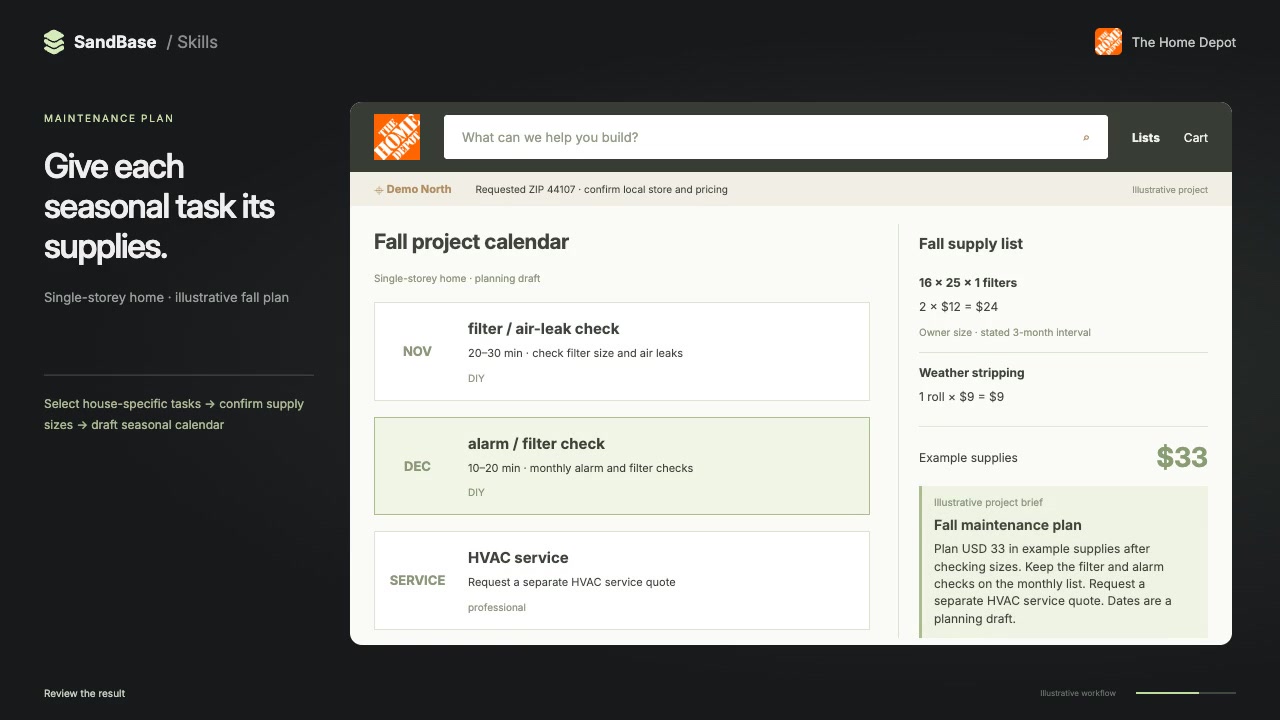
A seasonal home maintenance calendar with the supplies priced live at Home Depot — what to do each month, why, and what to buy.
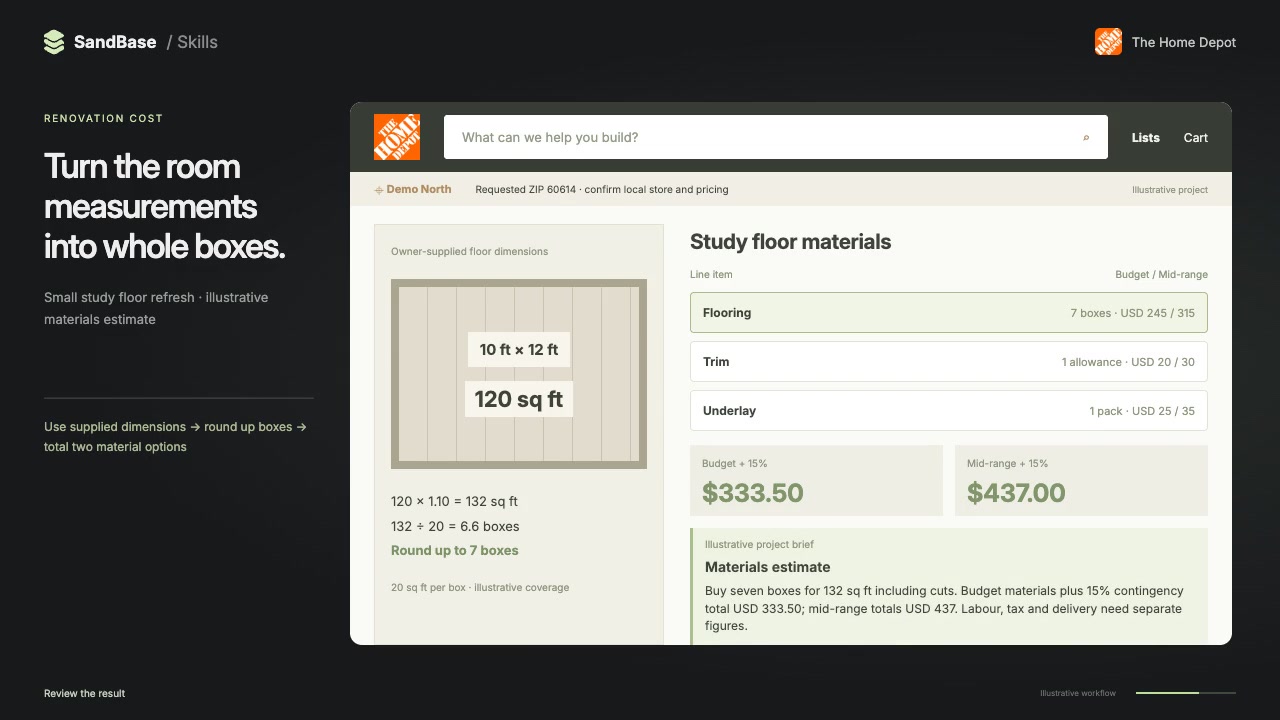
Turn a room renovation scope into a priced estimate — two ways, budget and mid-range — built from live Home Depot prices, never a fixed price table.
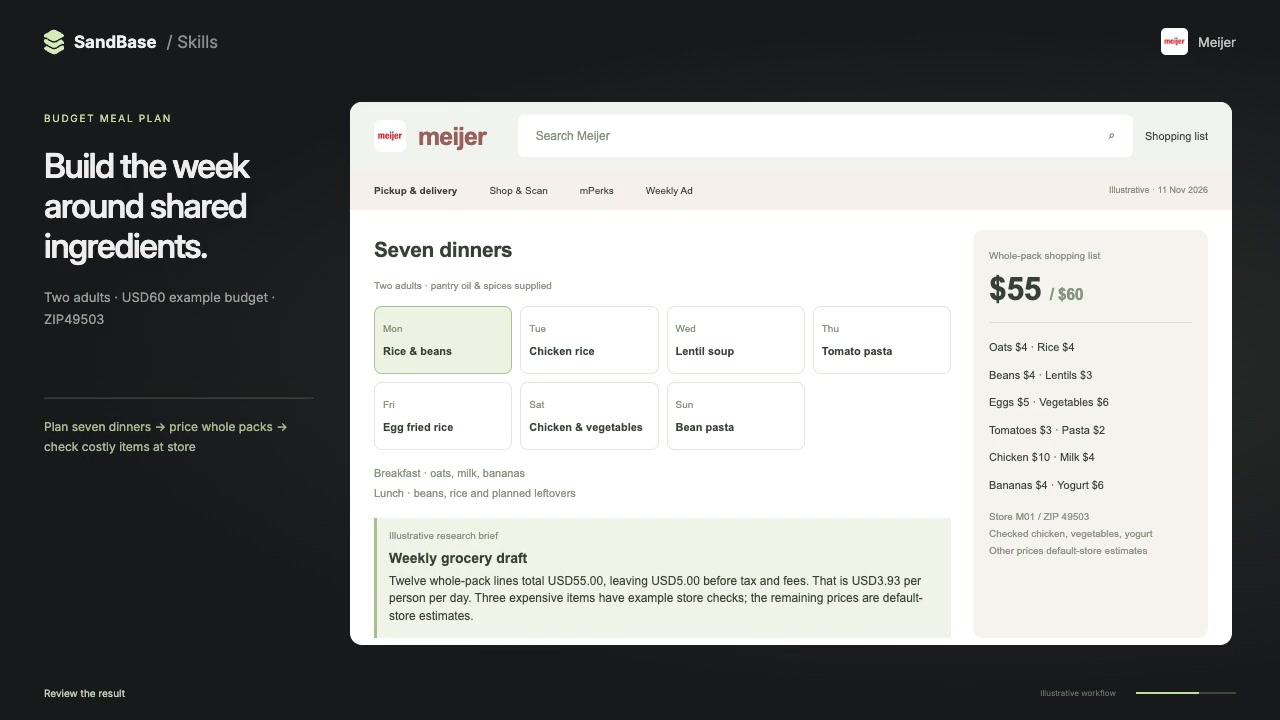
Plan a week of meals to a grocery budget with live Meijer prices — a menu, a priced shopping list, and swaps if it runs over.
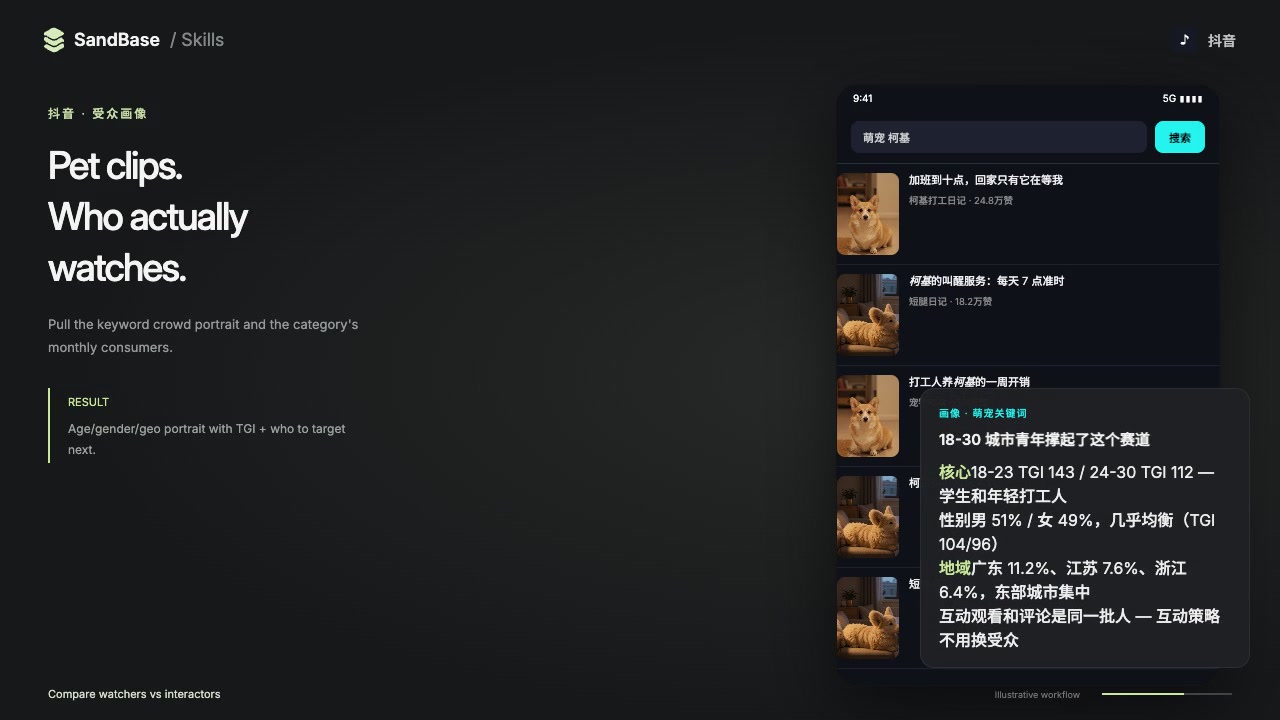
Answer "who is on the other side of the screen" for a Douyin topic, category or account — age, gender, provinces with TGI — and turn it into content guidance.
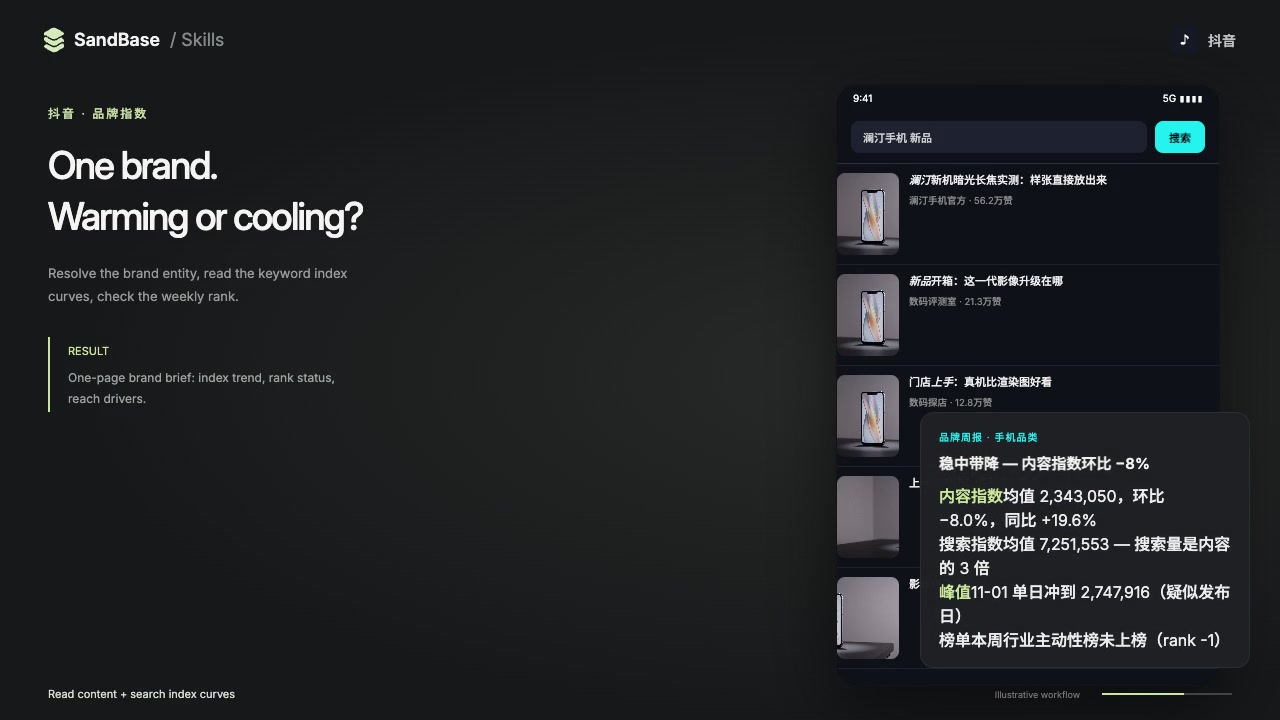
Read how a brand is doing on Douyin: resolve the entity, pull its keyword heat curve, weekly board rank and the videos driving reach.
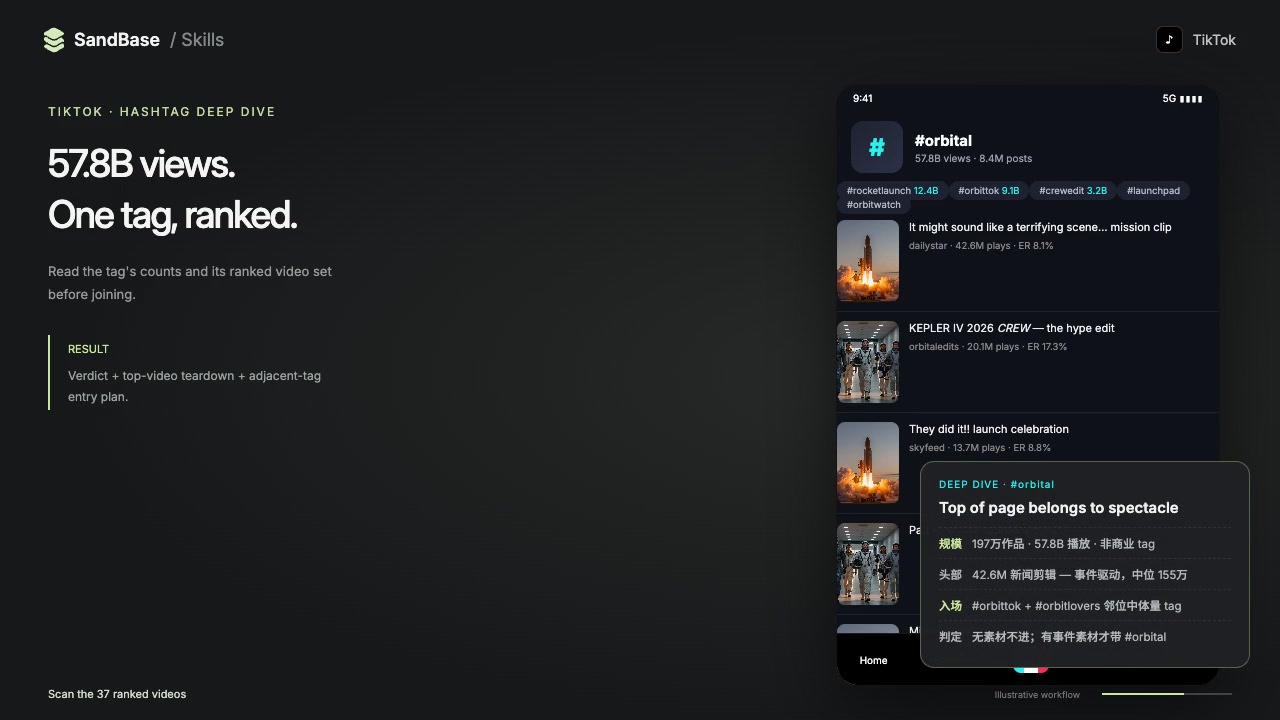
Open up one hashtag — its size, the videos winning on it, the spread between top and median — and get a plain verdict on whether to post under it.
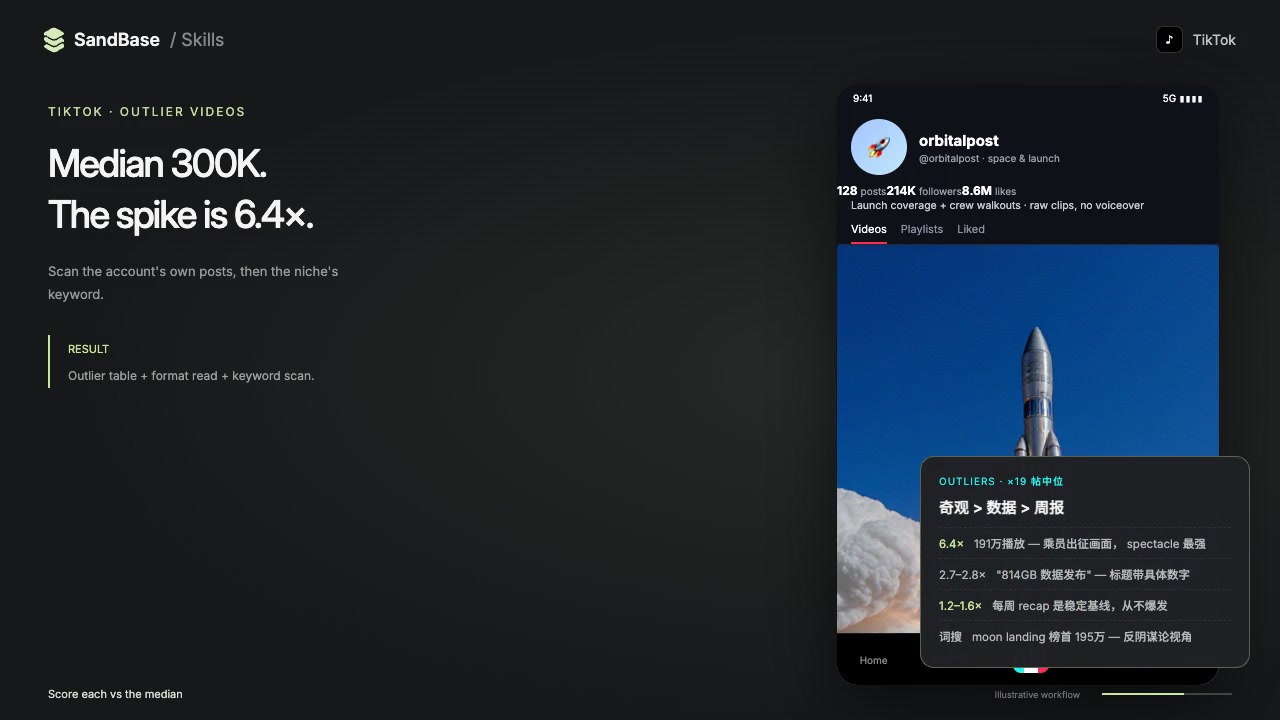
Find the videos that far out-perform their own account's median in a niche, and the formats they share.
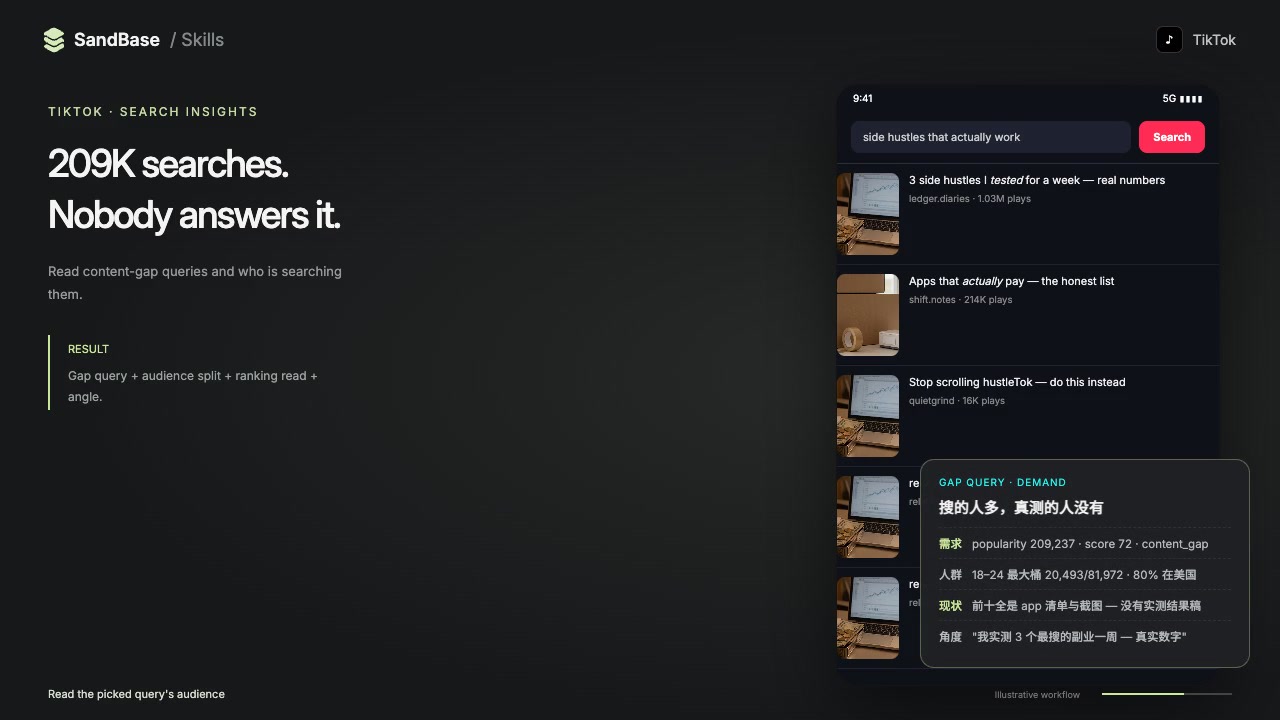
See what TikTok users actually search for — including the content-gap queries TikTok flags as under-served — before deciding what to make.
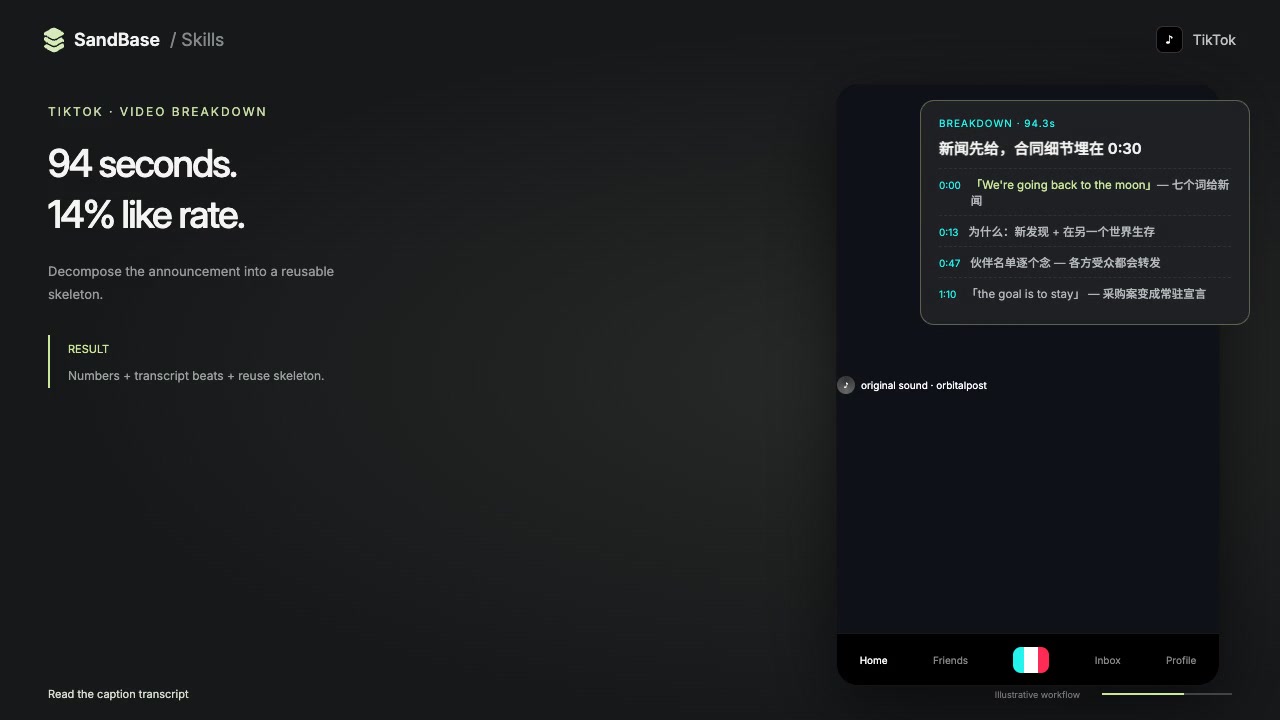
Tear down one TikTok video — numbers, transcript, script structure and comments — into a skeleton you can reuse.
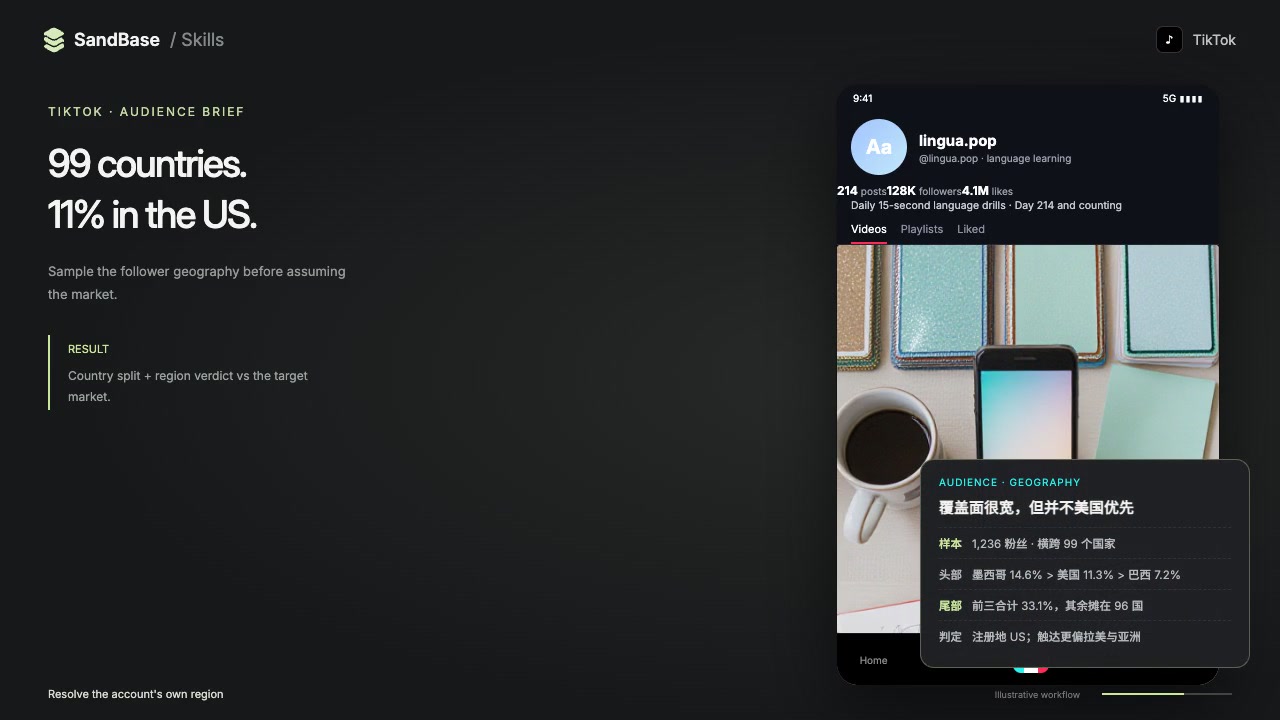
Read where a TikTok account's audience is — the follower country breakdown and the account's own region, turned into a who-and-where brief.
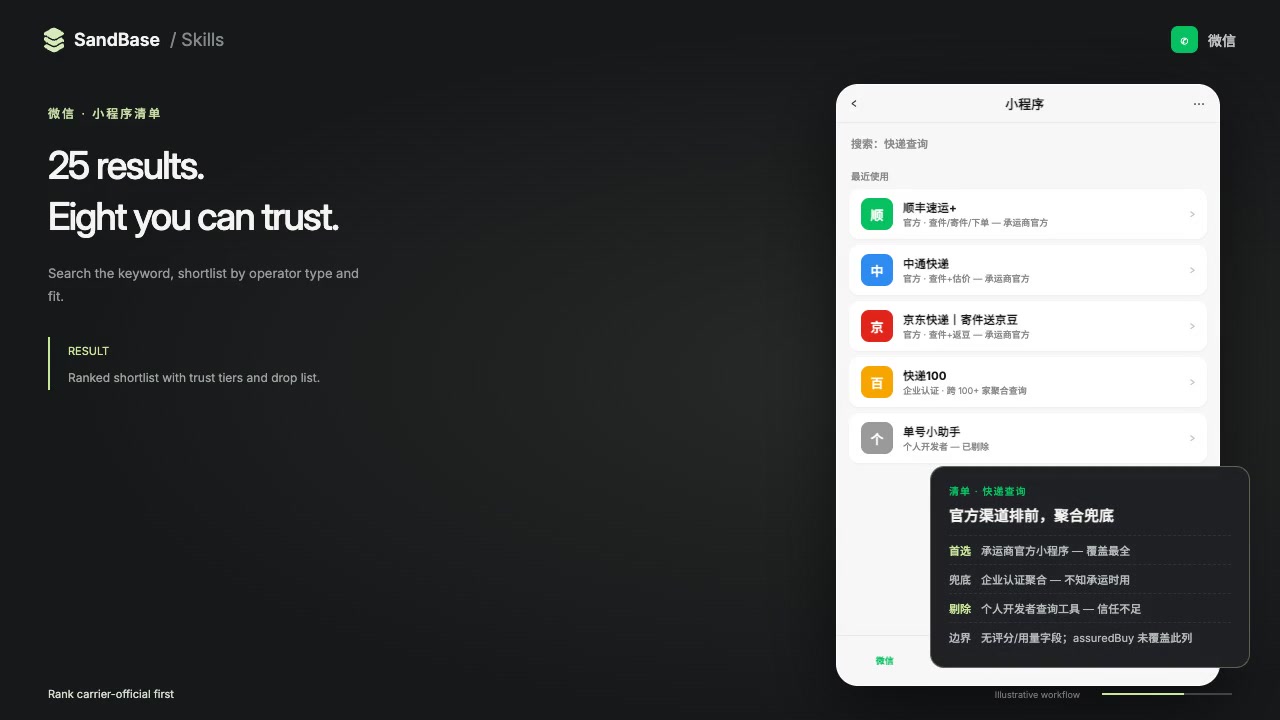
Find and rank 小程序 options for a task — official channels, verified operators and entry points, research only.
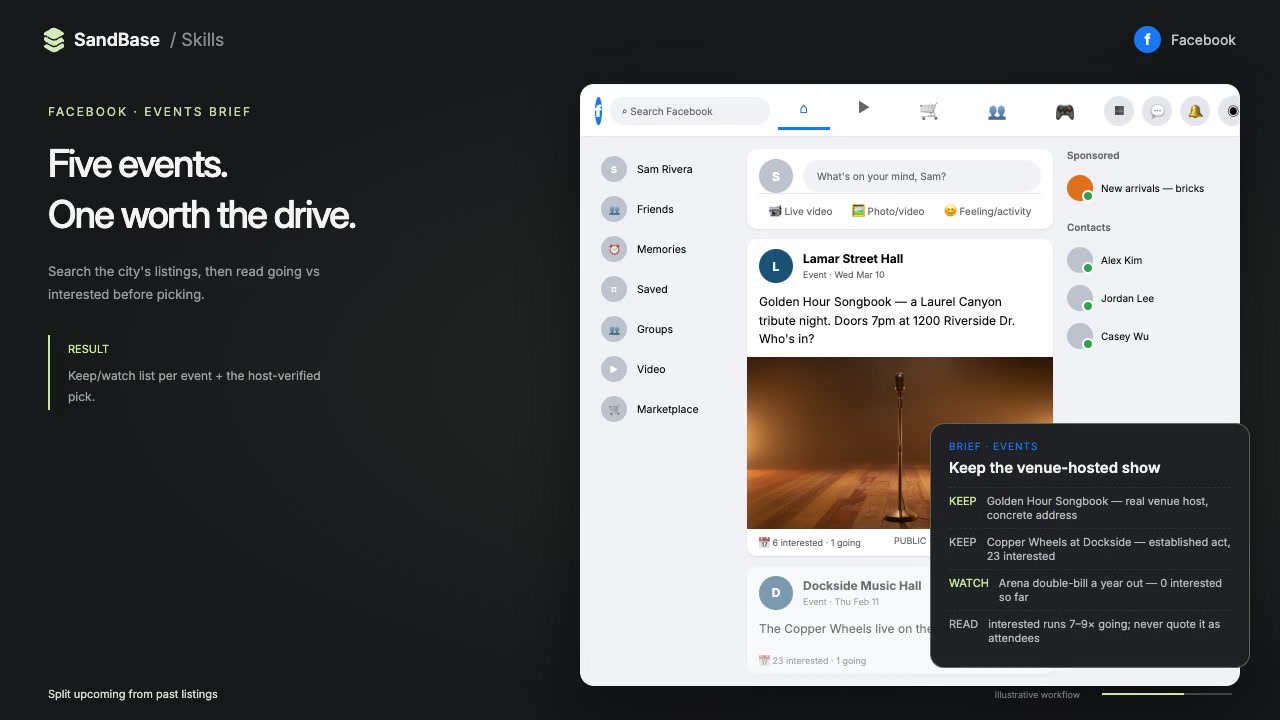
See which public Facebook events on a topic or in a place are coming up — and which are actually worth your time.
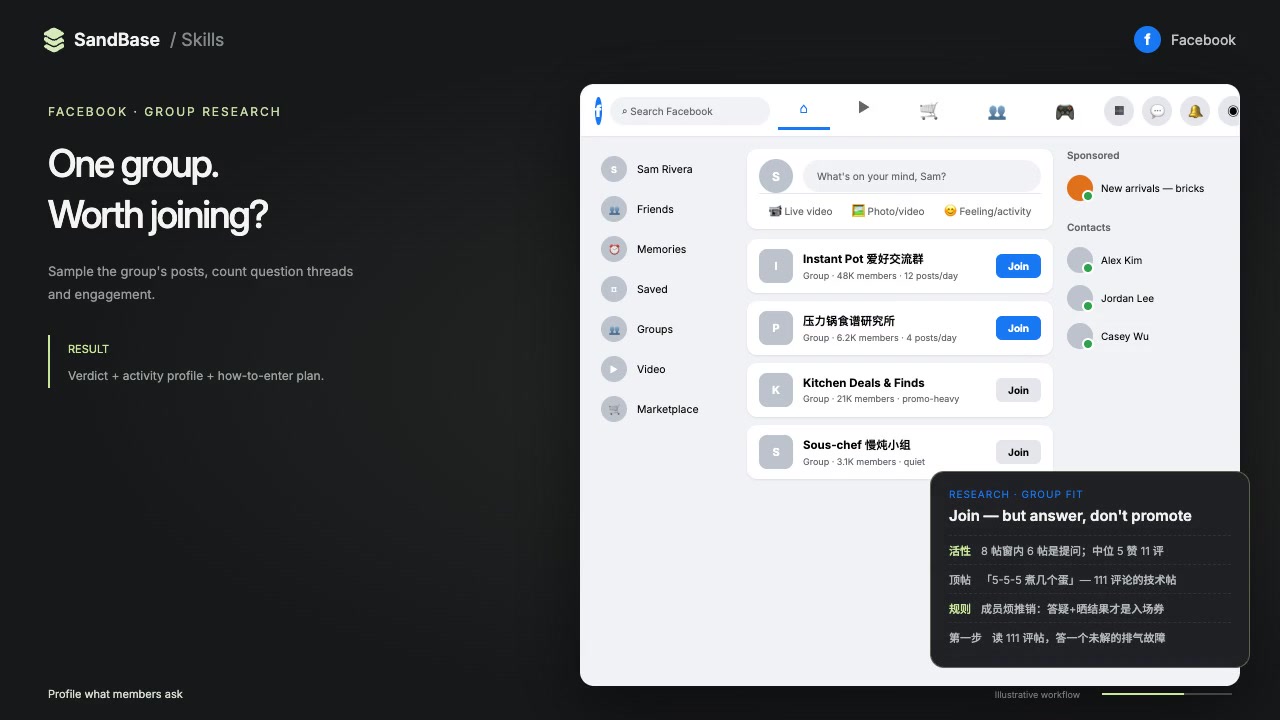
Decide whether a public Facebook Group is worth joining — how active it is, what members post and ask, and what it rewards.
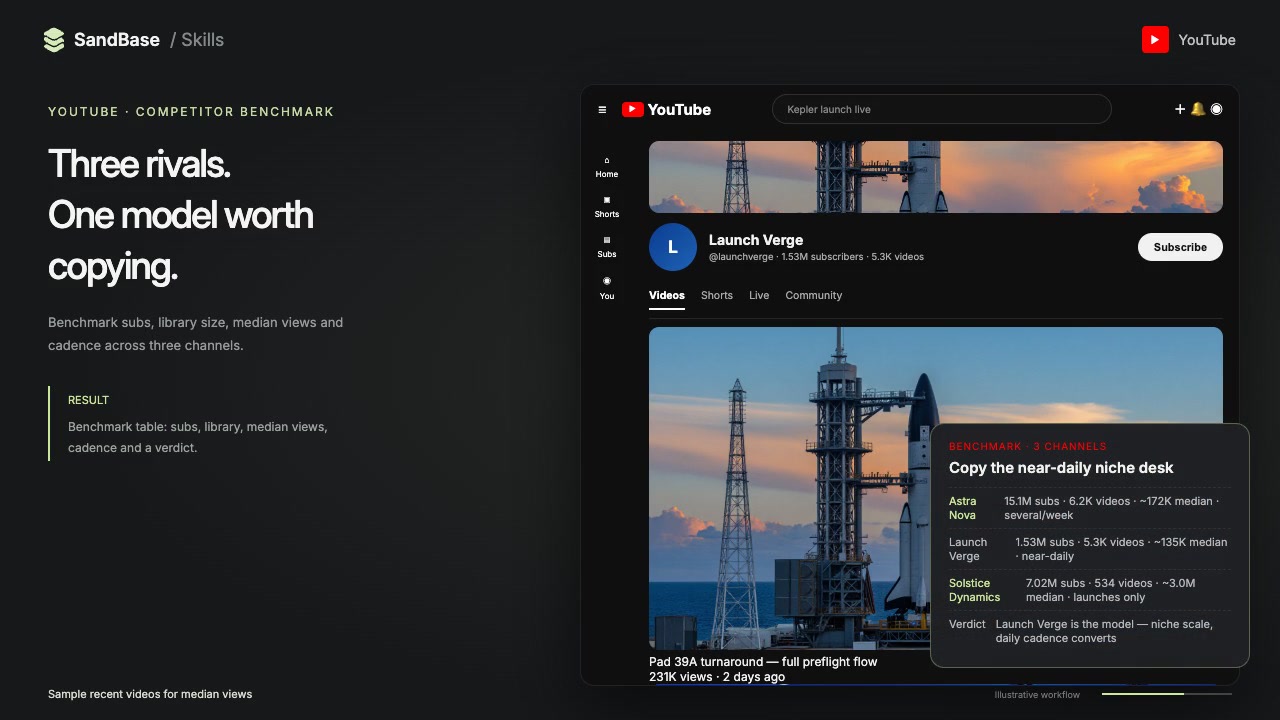
Put 2–4 channels side by side — subscribers, cadence, recent views and best formats — in one comparison table.
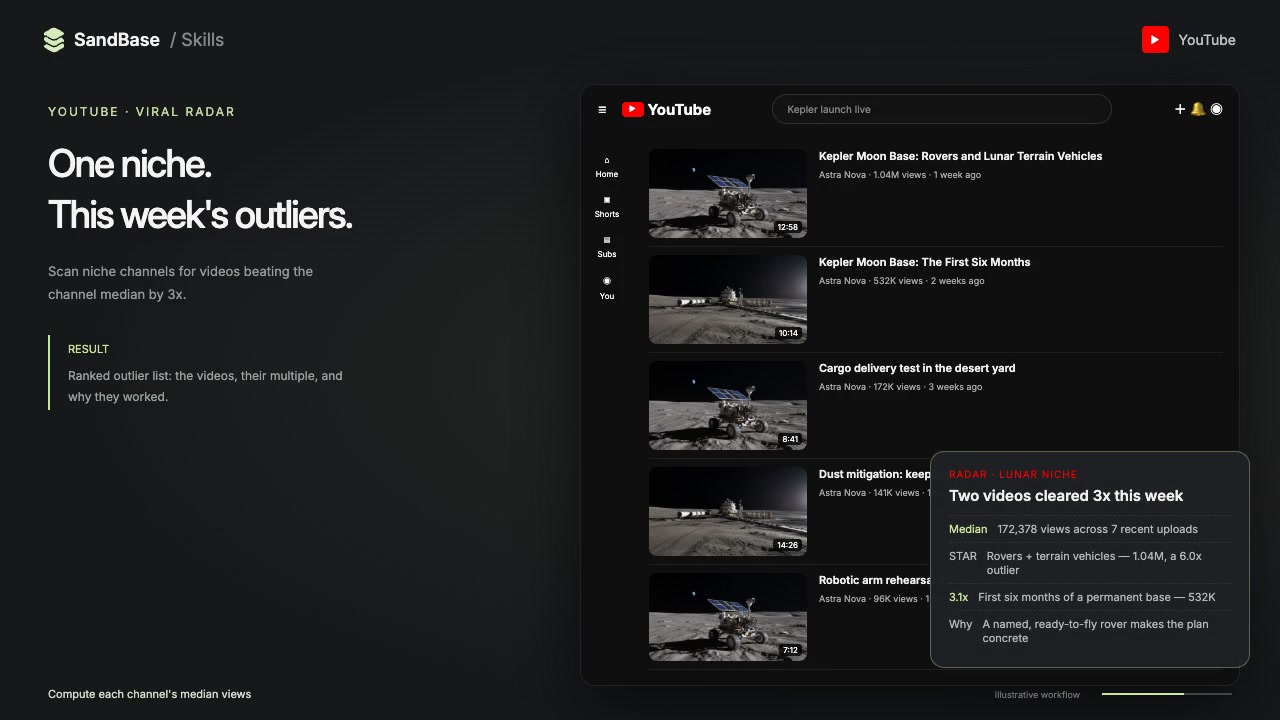
See which ideas are actually beating each channel's normal in your niche this week — not just raw view counts.
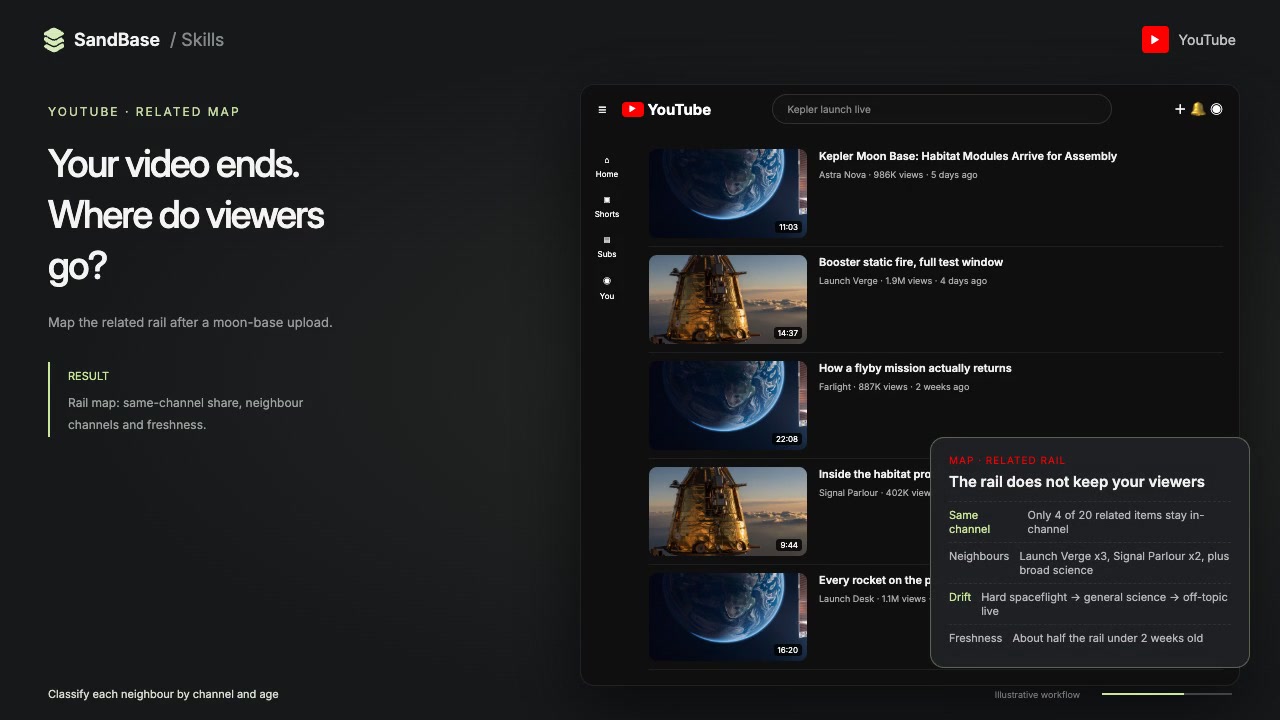
See what YouTube actually recommends next from one video — the real related-videos rail, mapped.
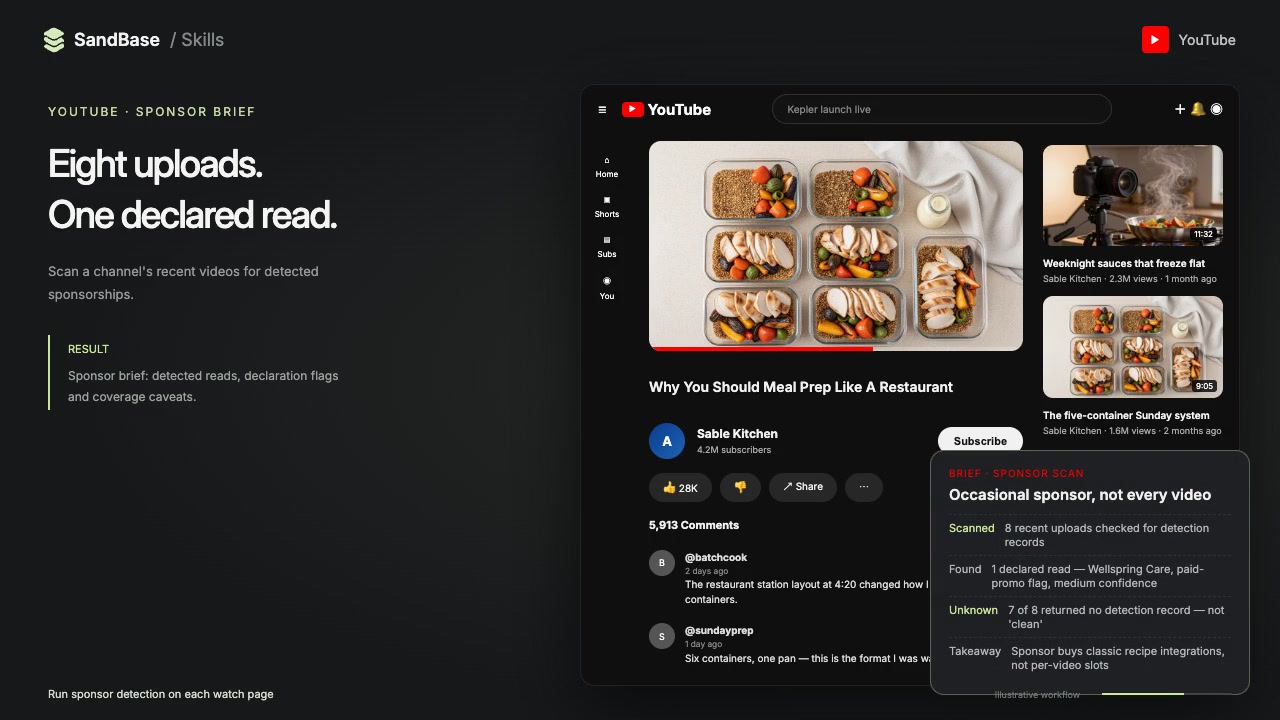
See which parts of a channel's videos are sponsored and by whom — declared promotions and detected reads alike.
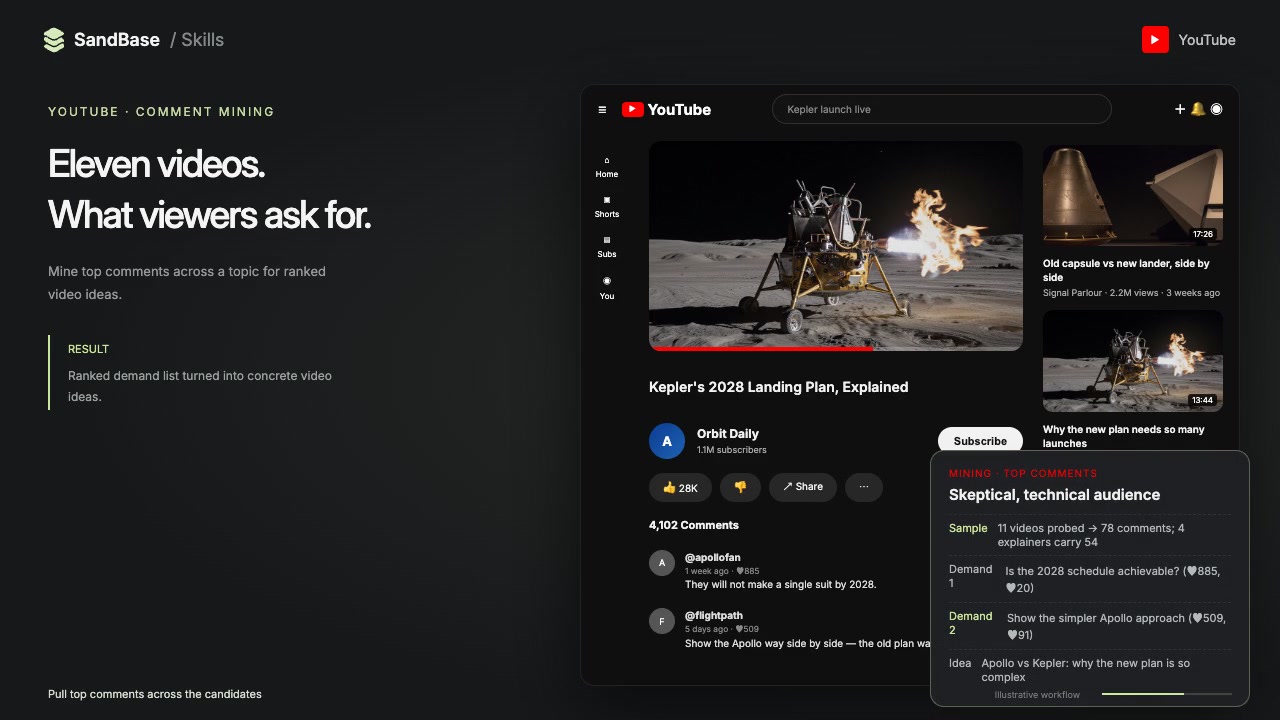
Mine a topic's top-video comment sections for what the audience is really asking, struggling with and willing to pay for.
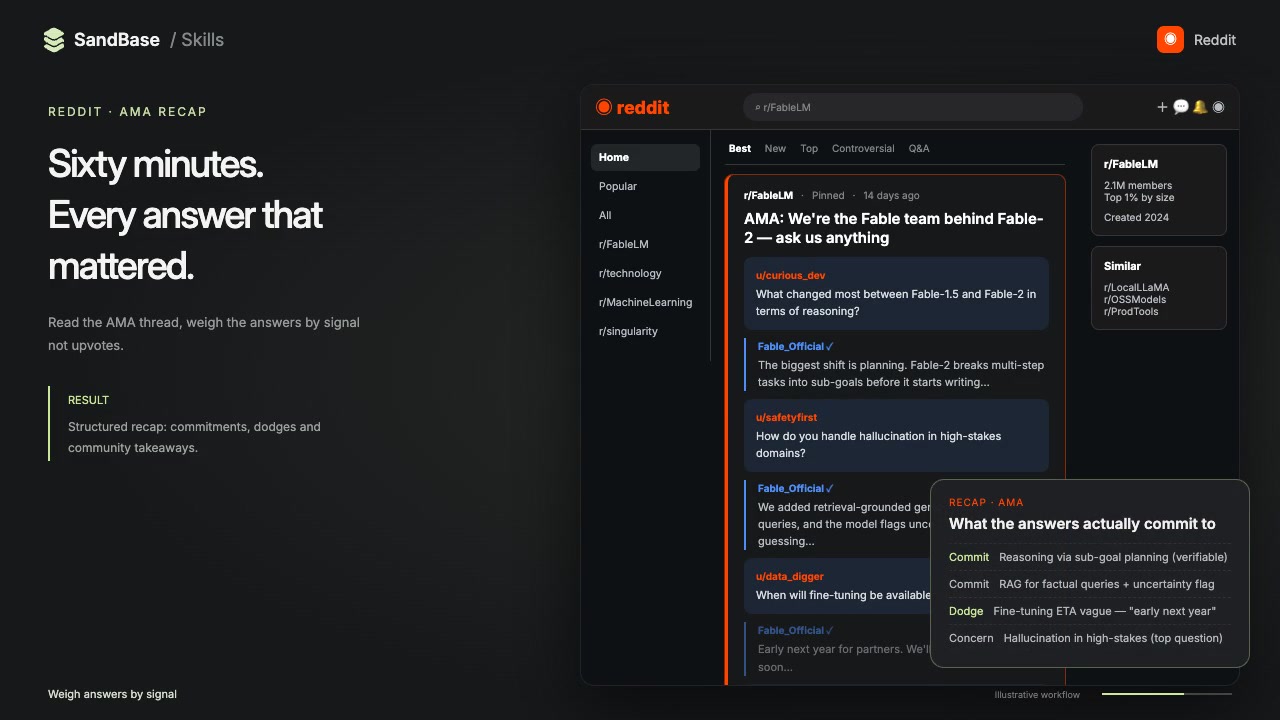
Review a finished AMA: what was asked, what got answered, and what to do differently next time.
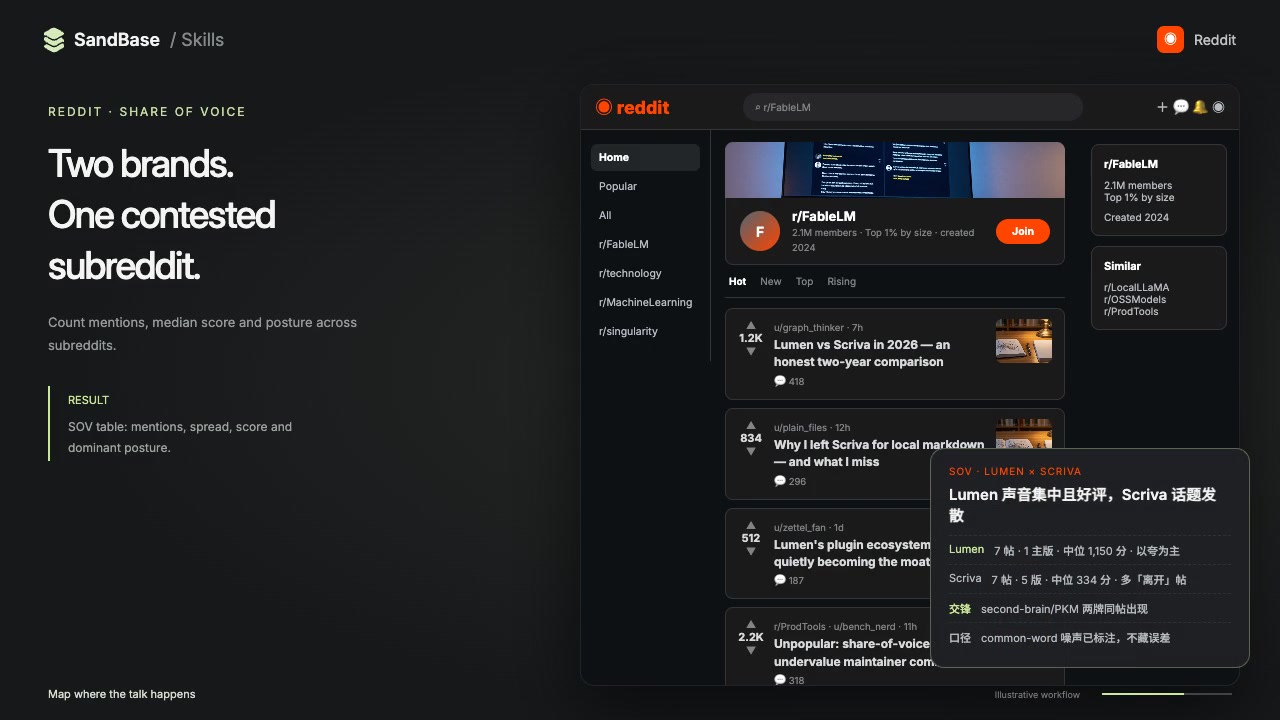
Compare how 2–4 rival brands are talked about on Reddit — who is mentioned more, and how.
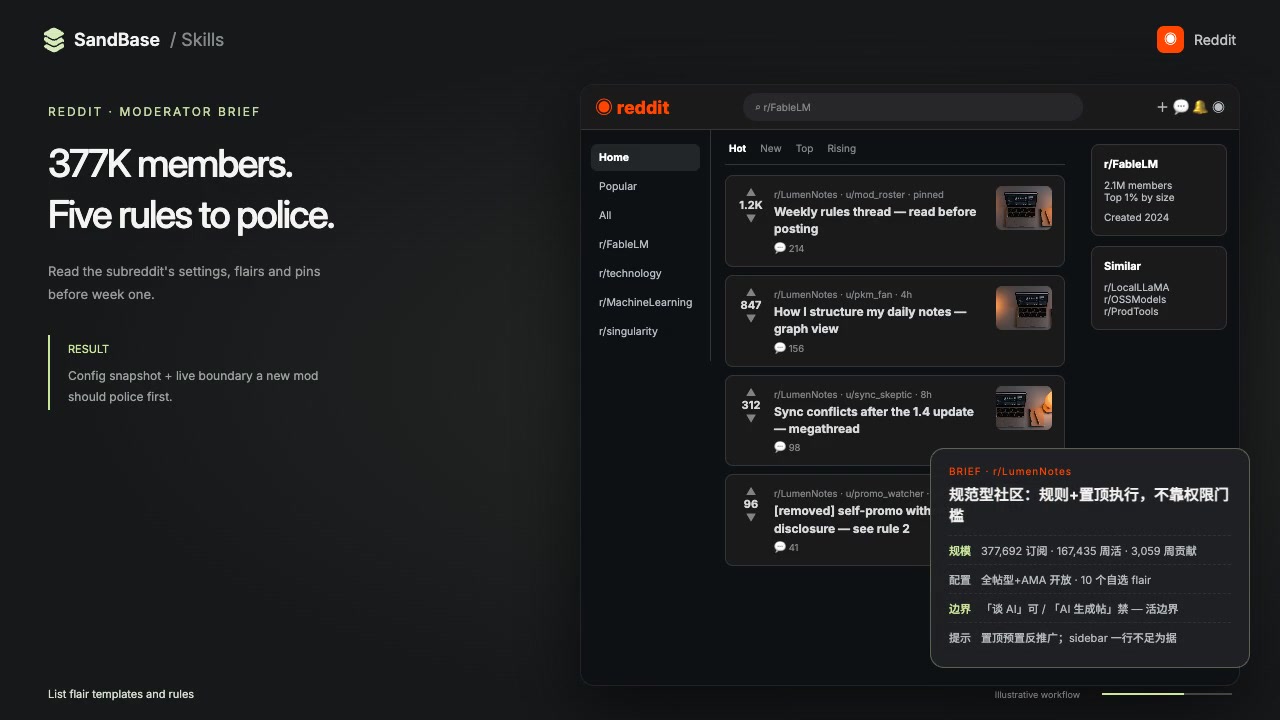
Give a new mod or community owner a one-run read of a subreddit's configuration and pulse.
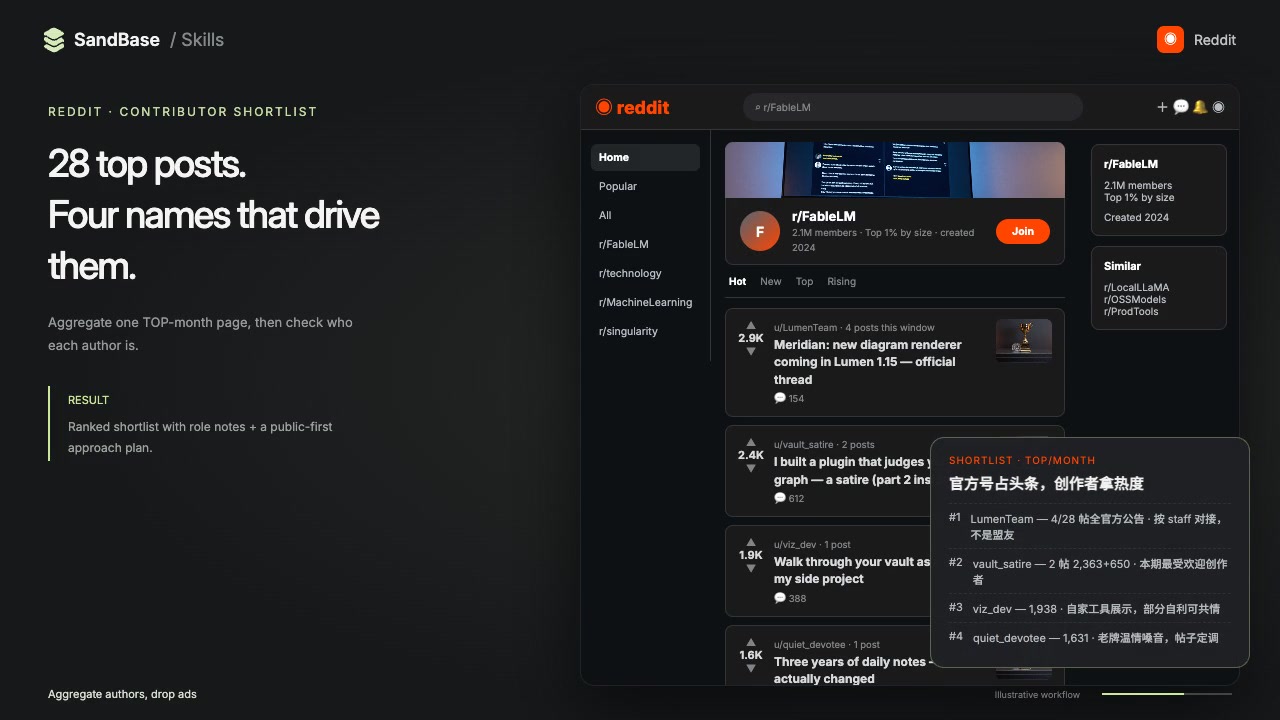
Find who actually drives a subreddit and who is worth engaging first.
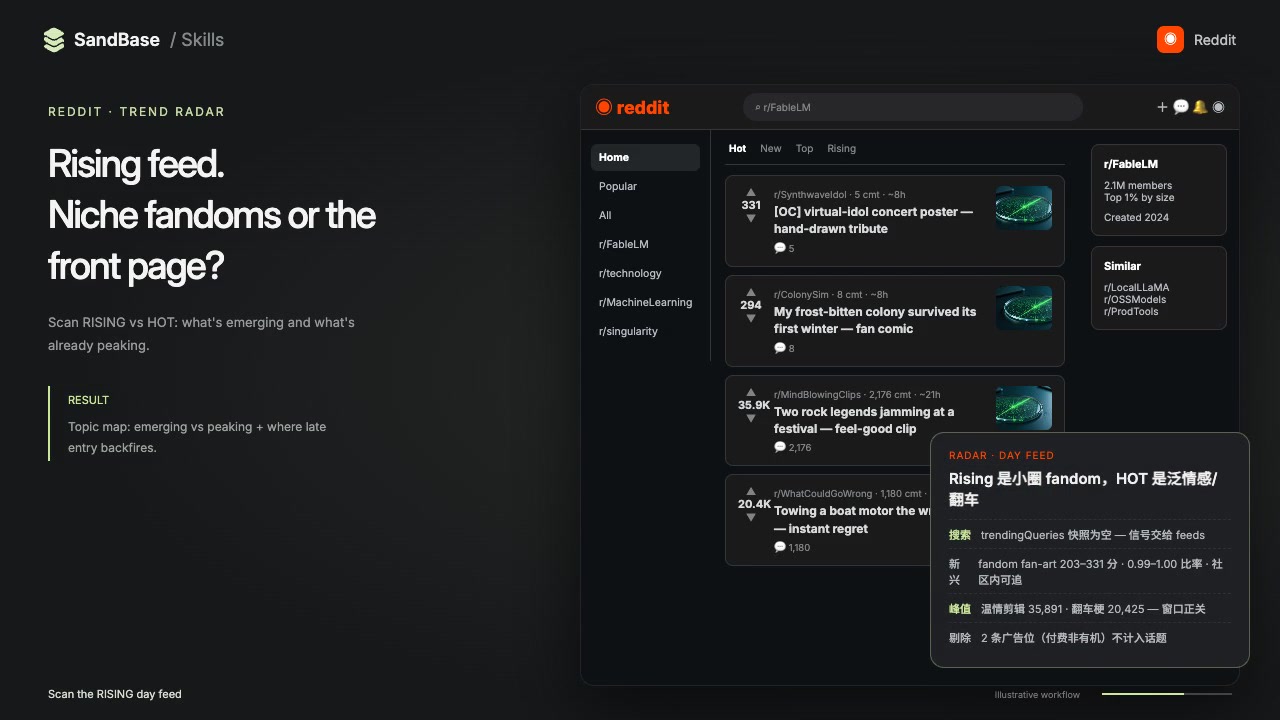
See what Reddit is talking about right now and which themes are still early enough to join.
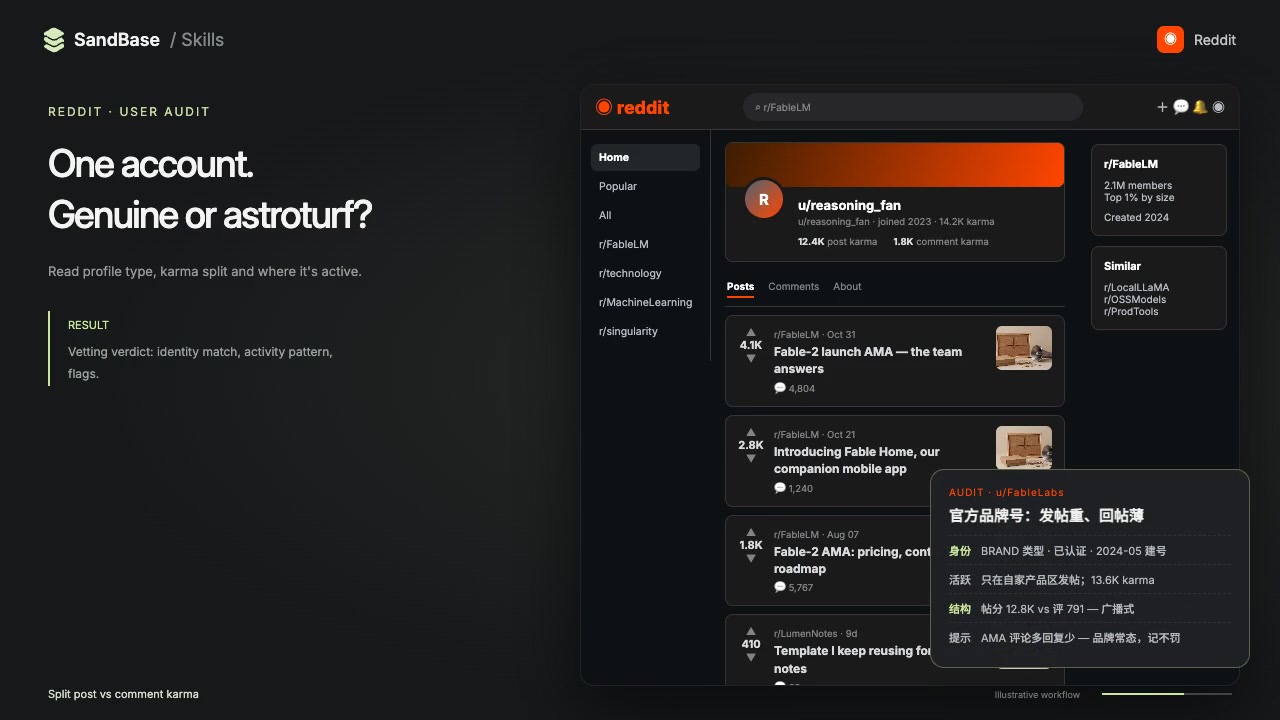
Vet a public Reddit account before outreach, a partnership or an AMA.
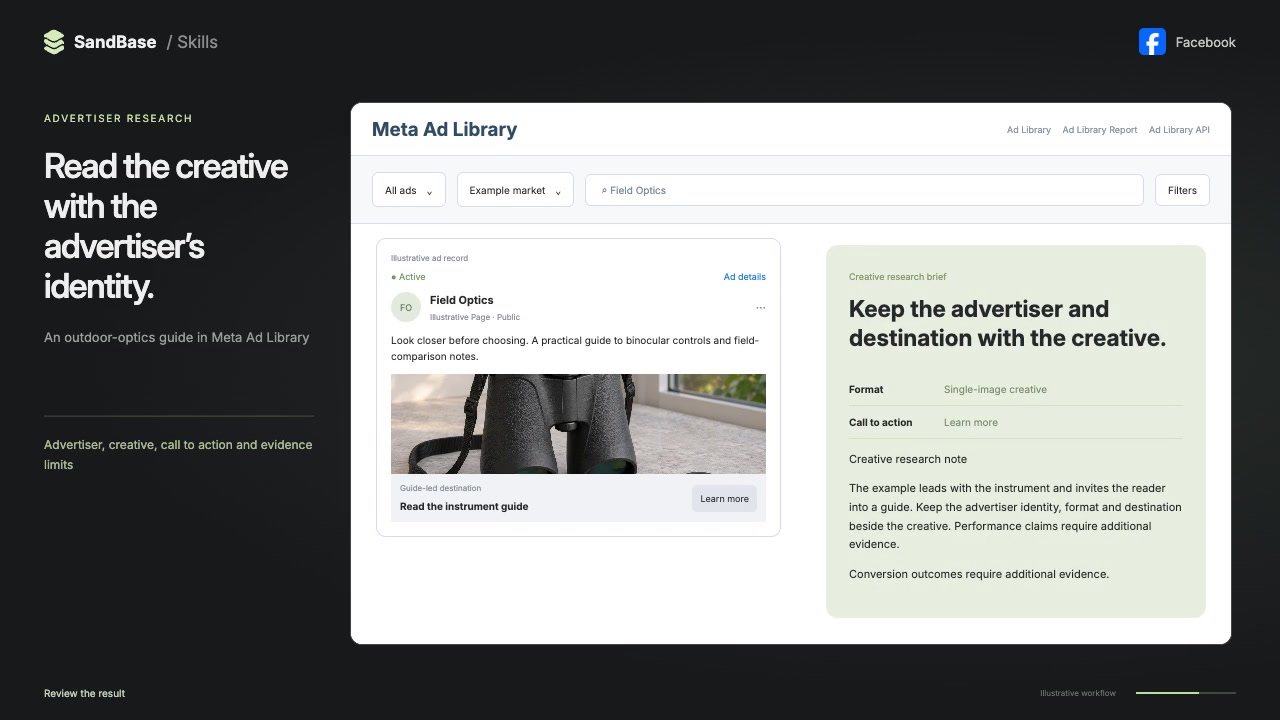
Explore Facebook ad-library results and compare advertiser creative patterns.
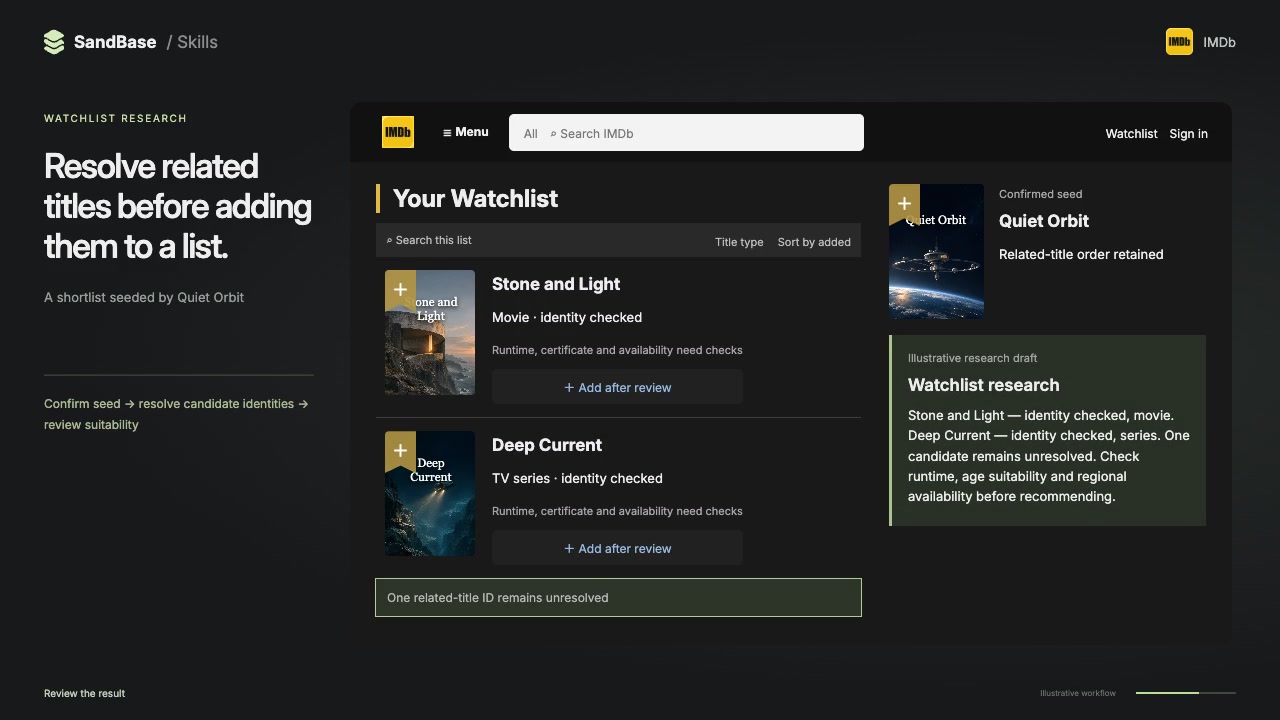
Explore related IMDb titles and verify details to build a watchlist around a film.
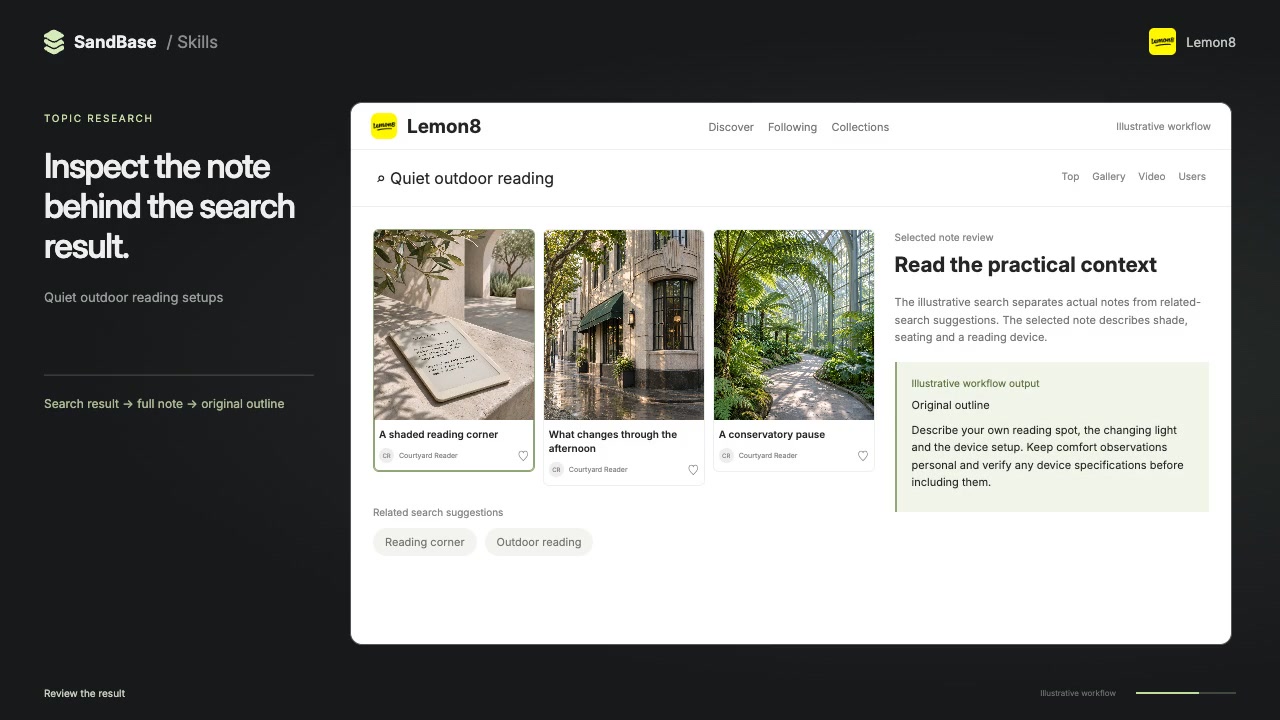
Explore Lemon8 topics and compare public posts before planning your next content idea.
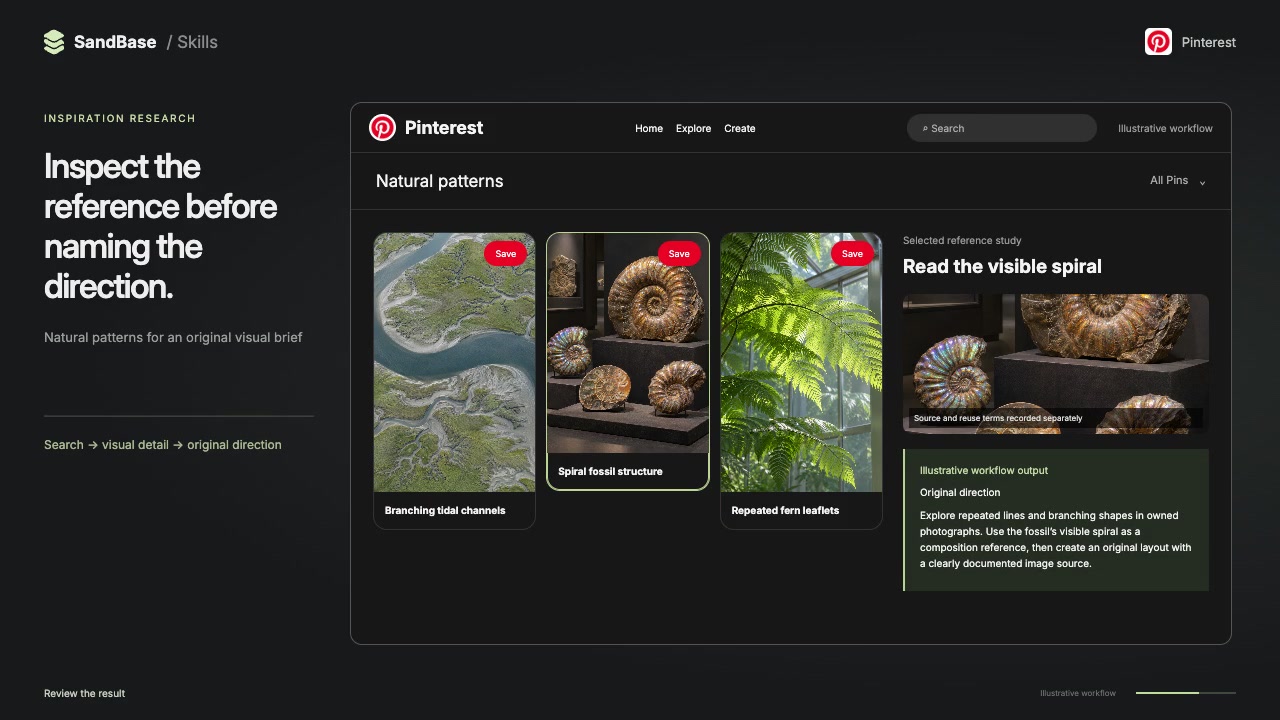
Find Pinterest references and turn verified pin metadata into an inspiration brief.
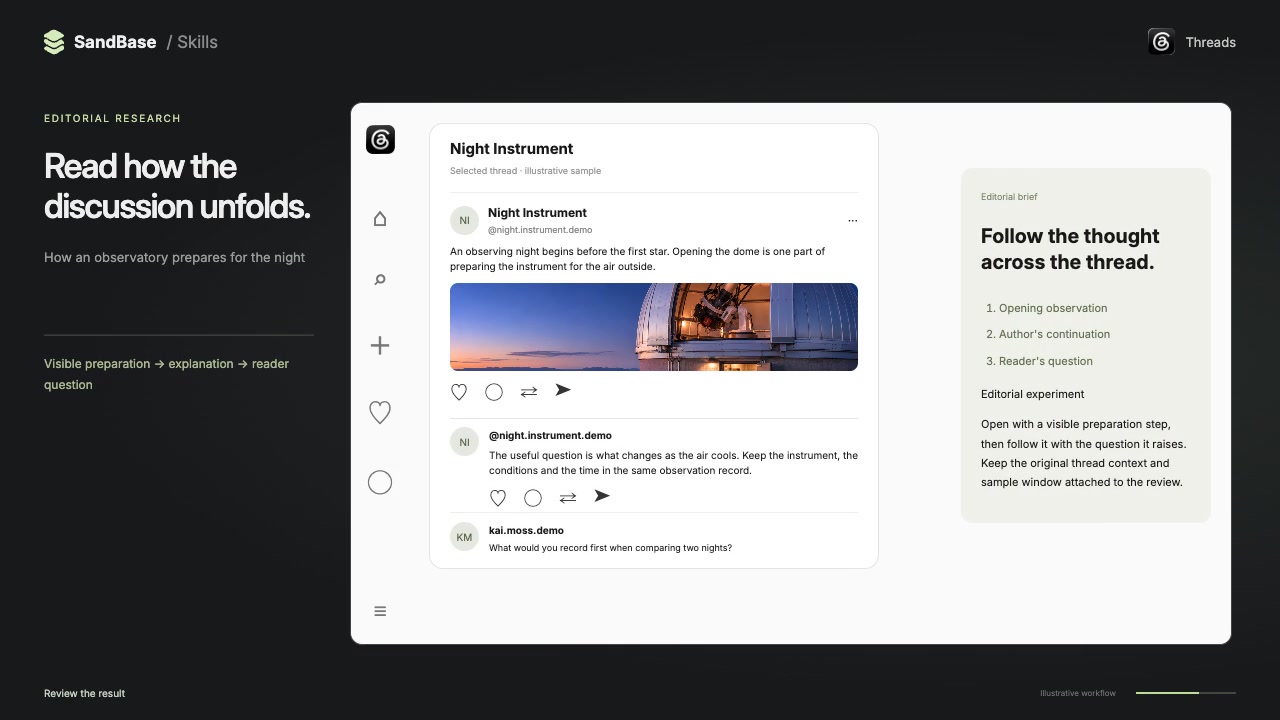
Review public Threads posts to identify editorial patterns and possible follow-up topics.
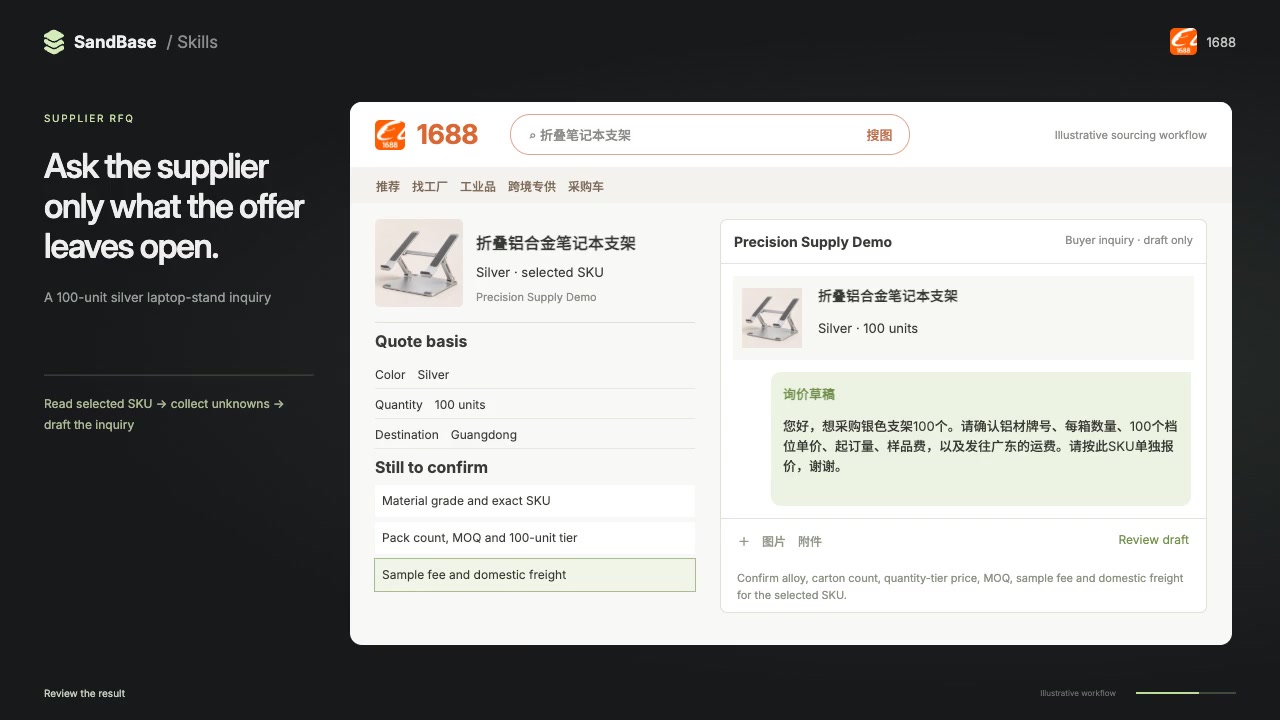
Turn the sourcing shortlist into precise supplier questions.
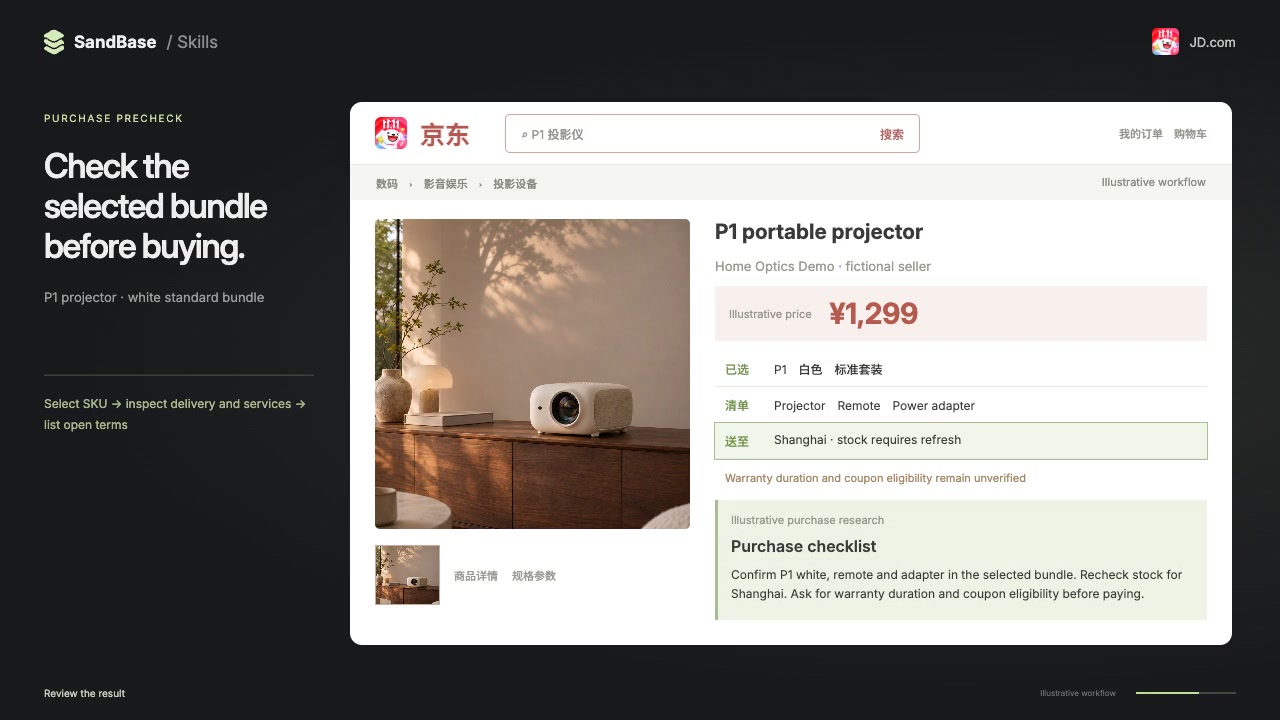
Identify the details still needed before buying a JD.com product.
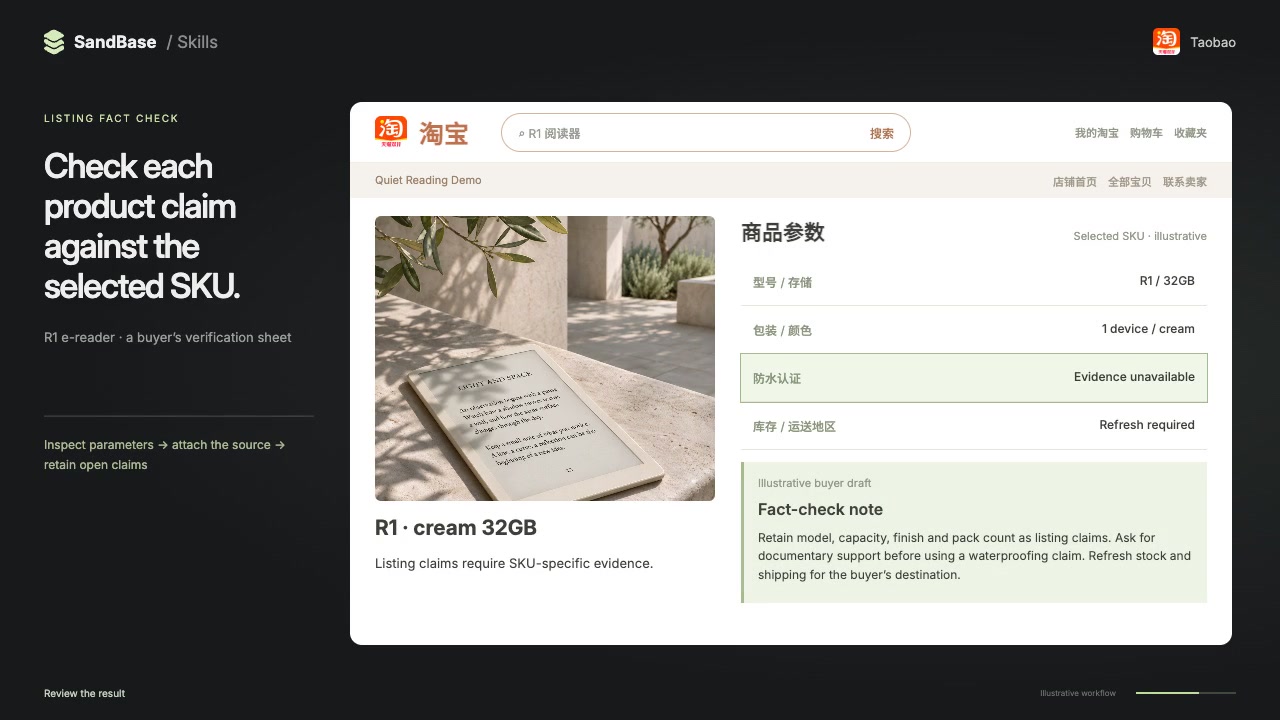
Turn Taobao listing facts into a buyer verification checklist.
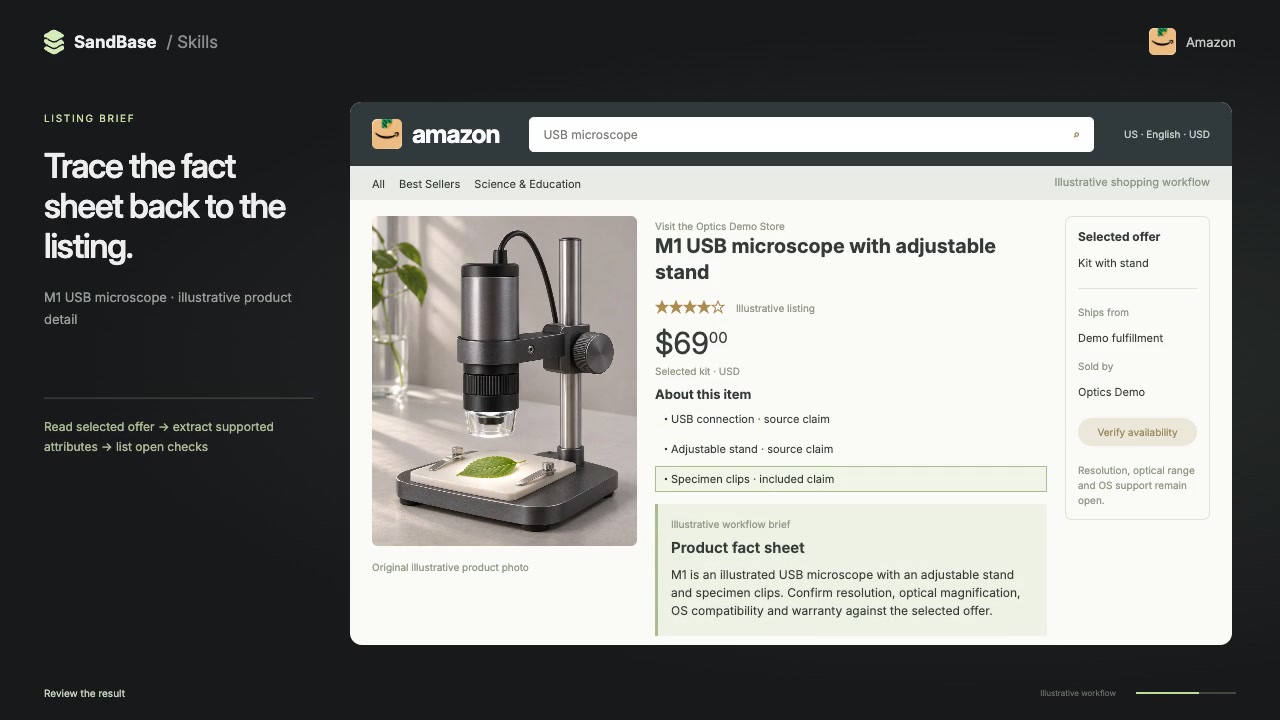
Write a concise, source-linked Amazon product fact sheet.
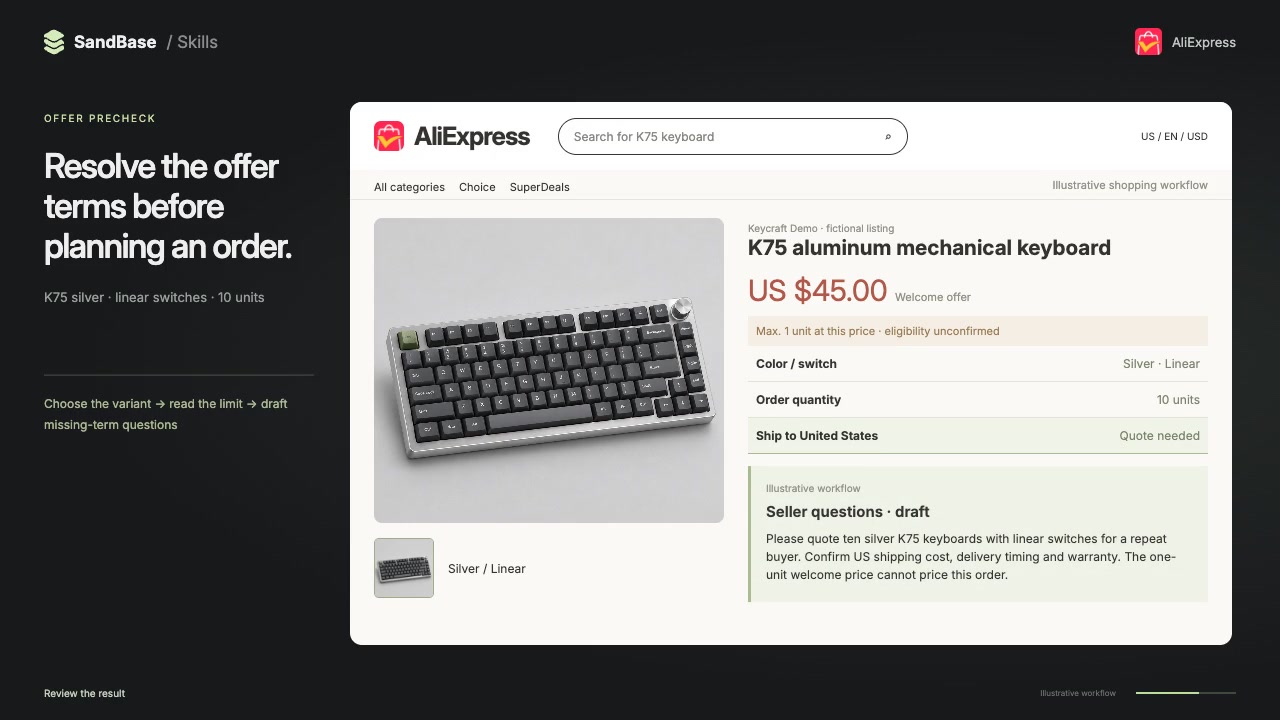
List the terms to verify before using an AliExpress offer.
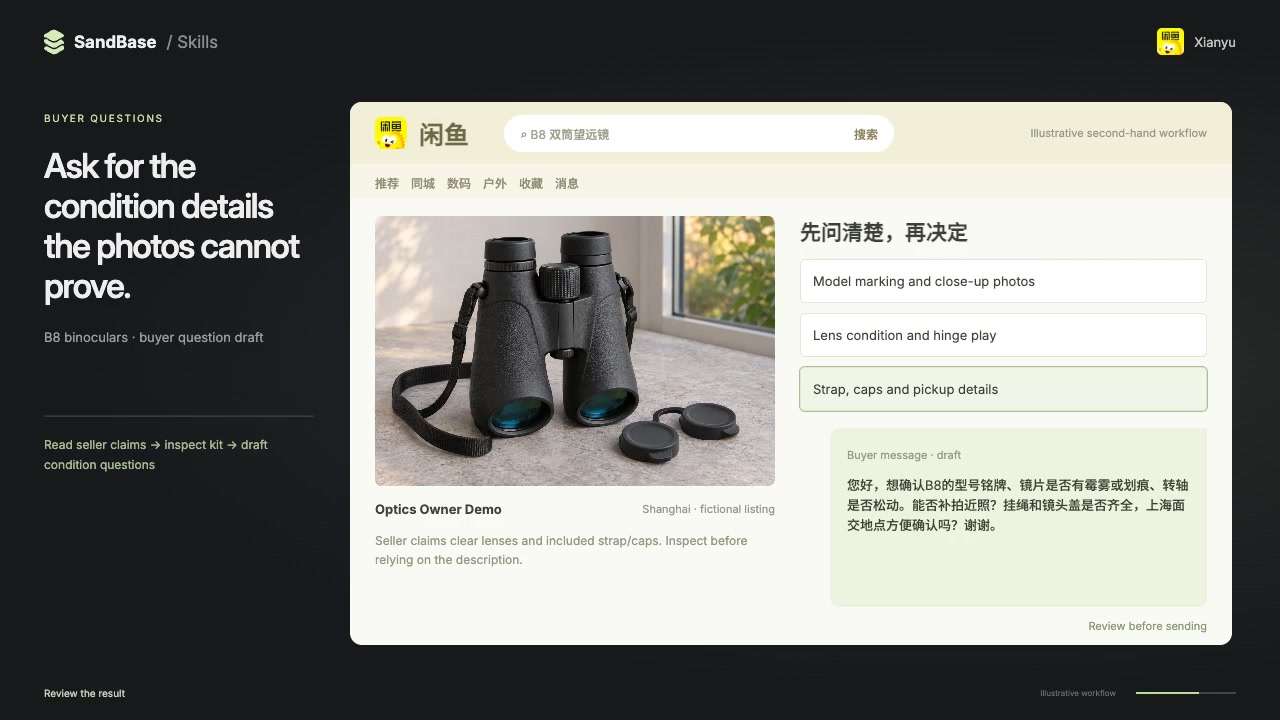
Prepare condition and collection questions for a second-hand listing.
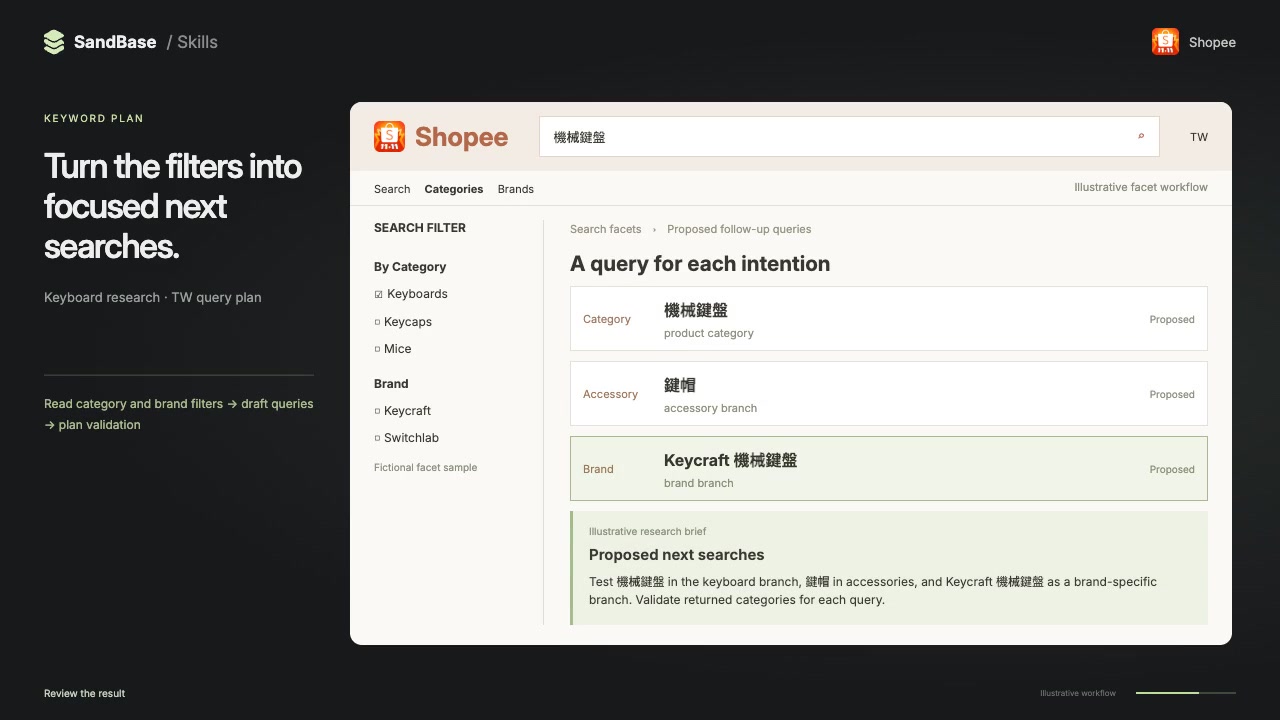
Prepare a category-aware Shopee keyword research plan.
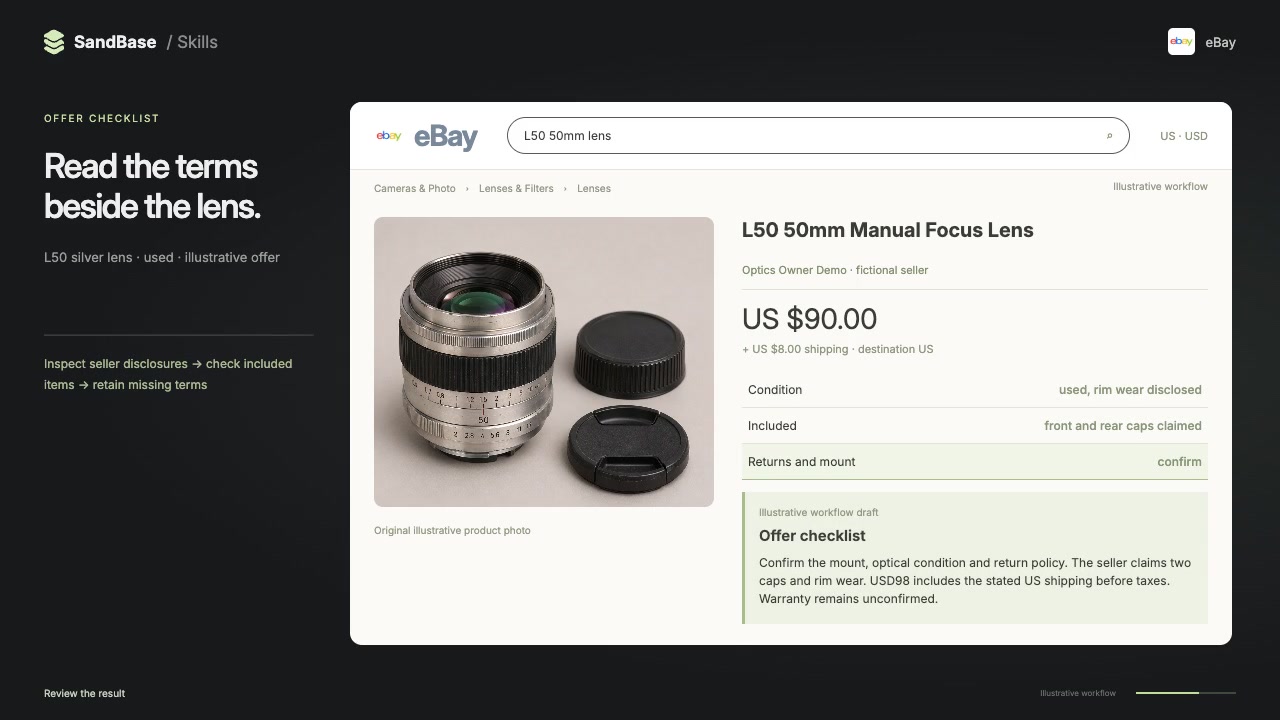
Prepare an eBay offer review before purchase.
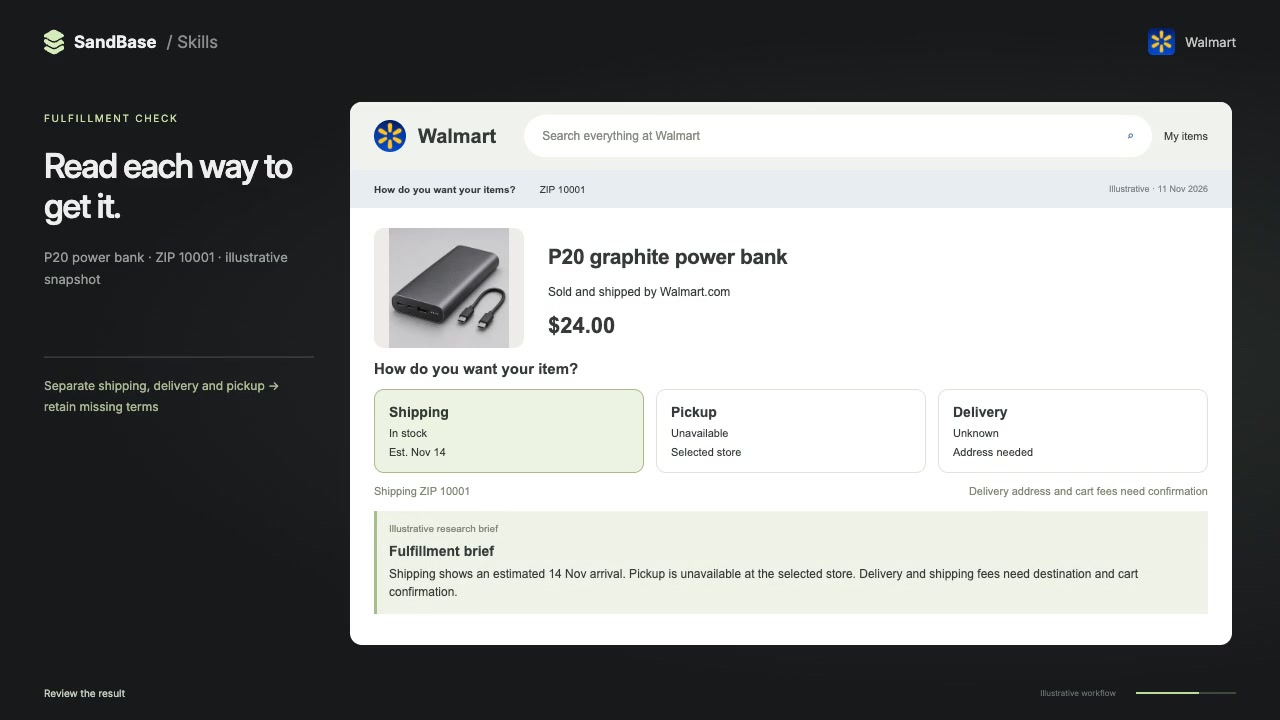
Check the missing fulfillment terms of a Walmart shortlist.
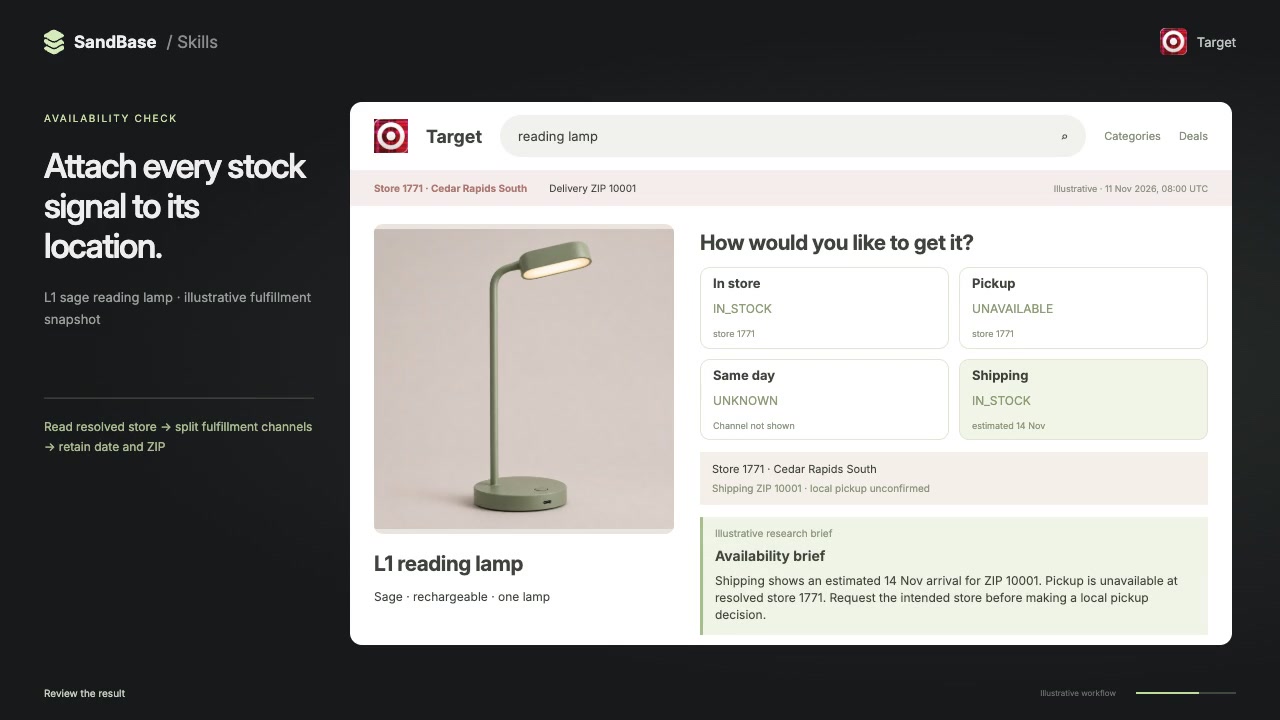
Review Target pickup and shipping availability in context.
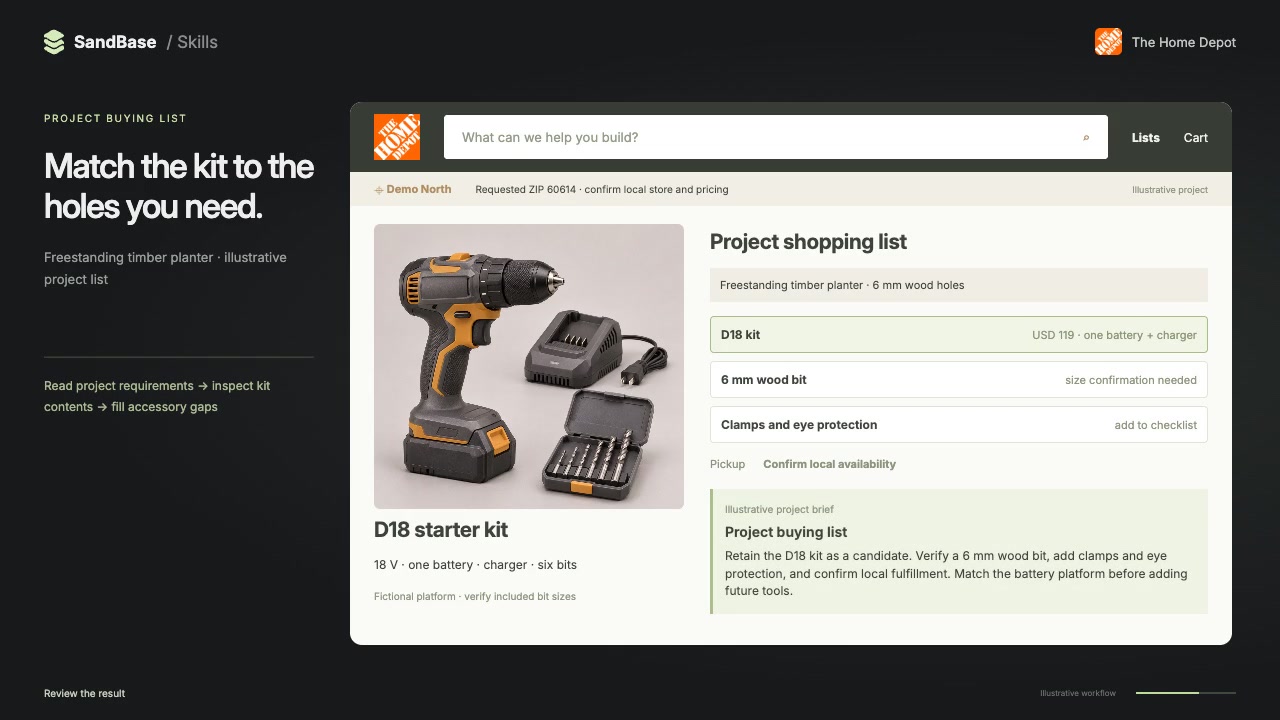
Turn a tool shortlist into a project purchasing checklist.
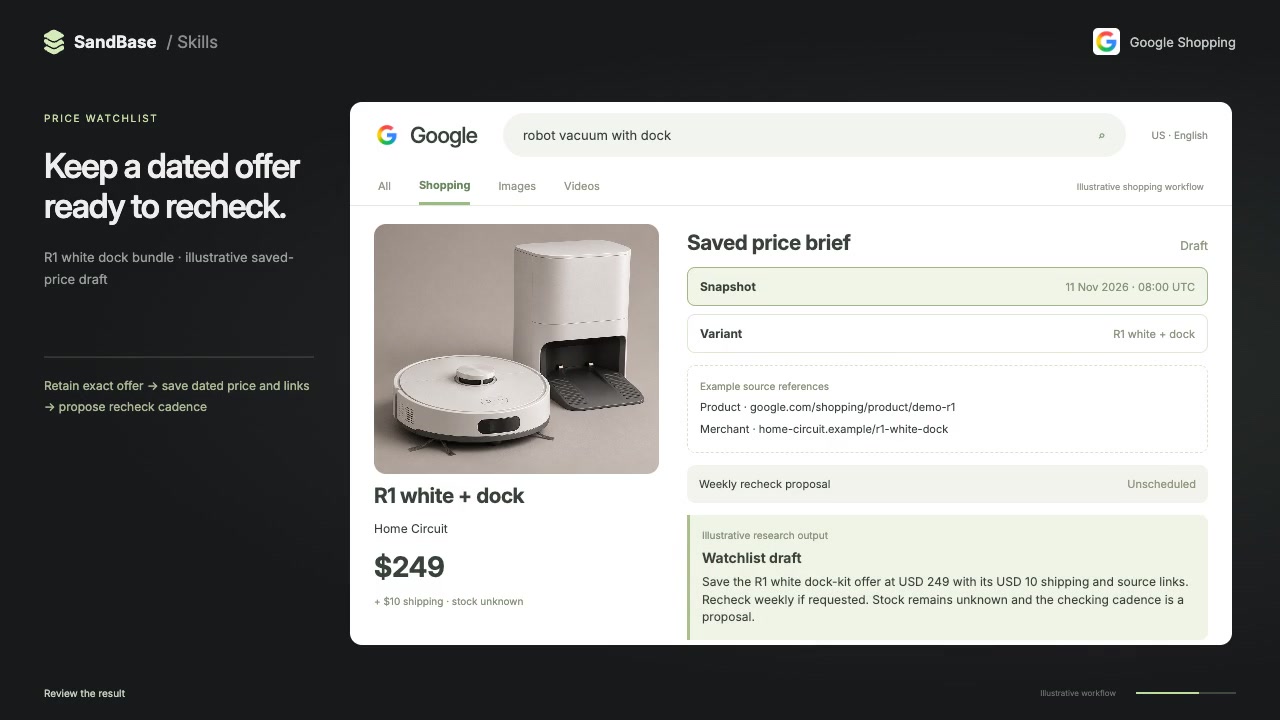
Prepare a source-linked product price watchlist.
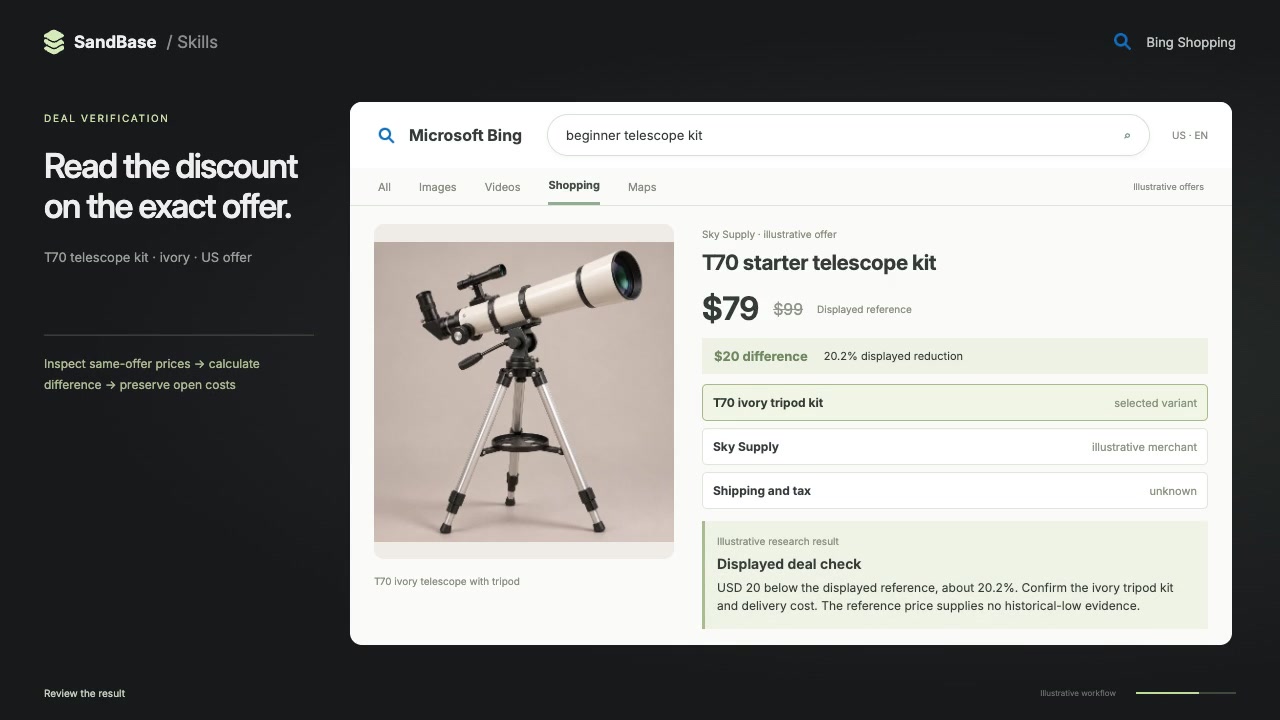
Check the evidence behind a displayed shopping discount.
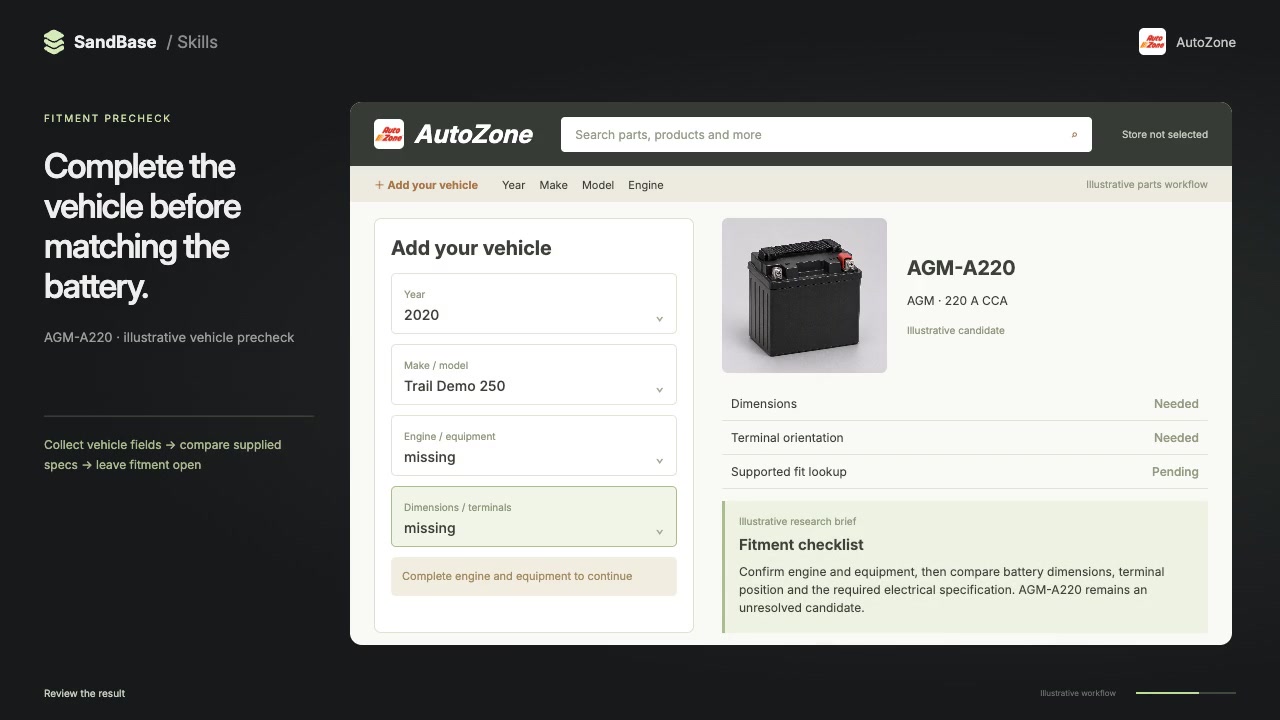
Prepare the information needed to verify an AutoZone part.
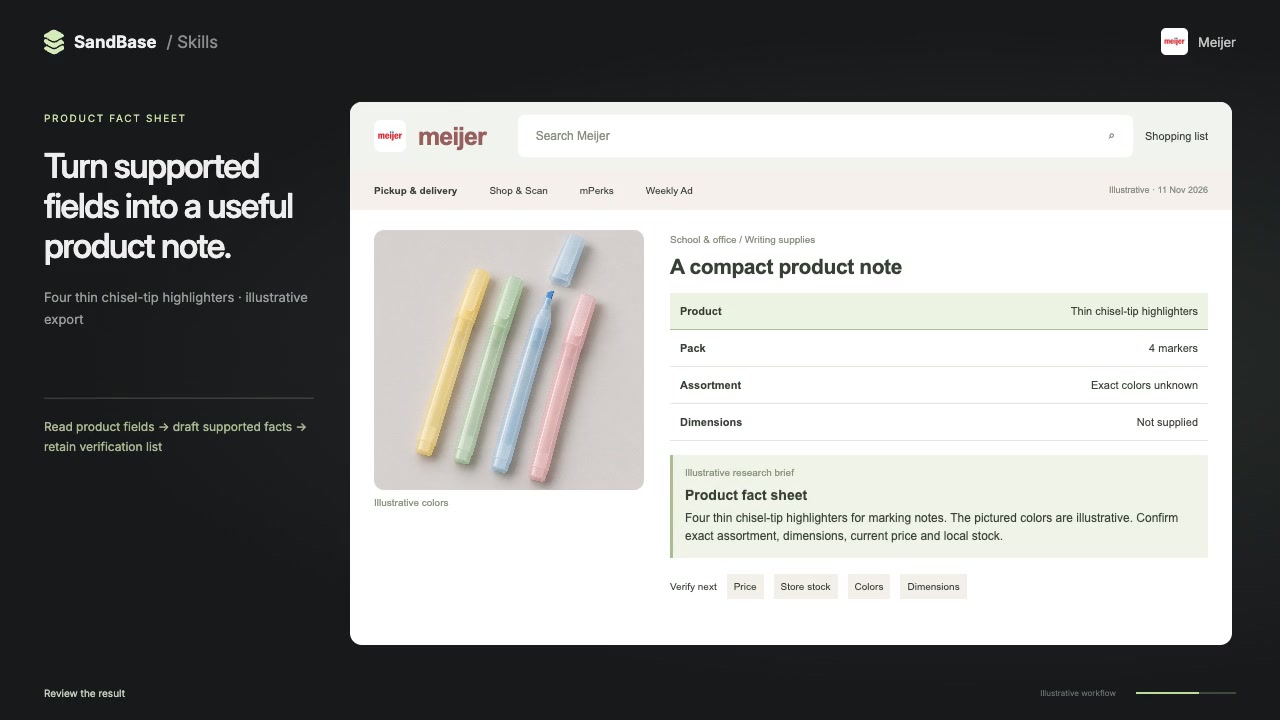
Write a compact fact sheet from verified Meijer product fields.
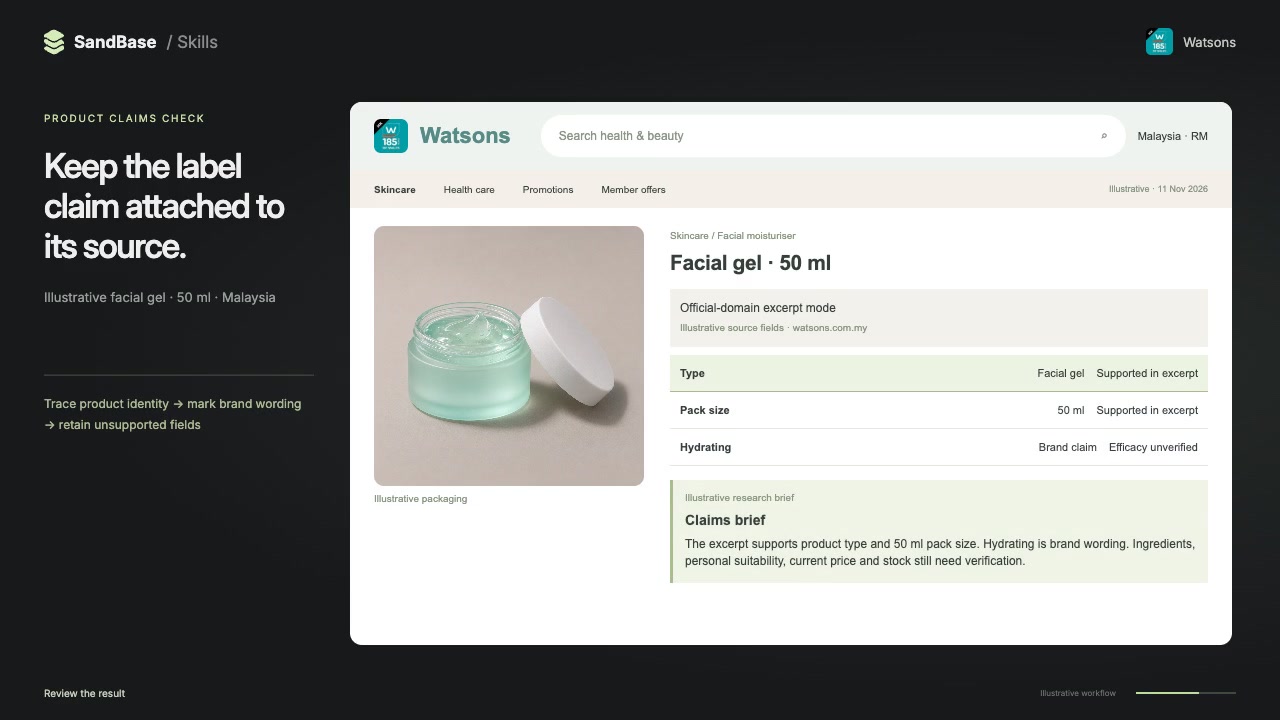
Review the factual claims available for a Watsons product.
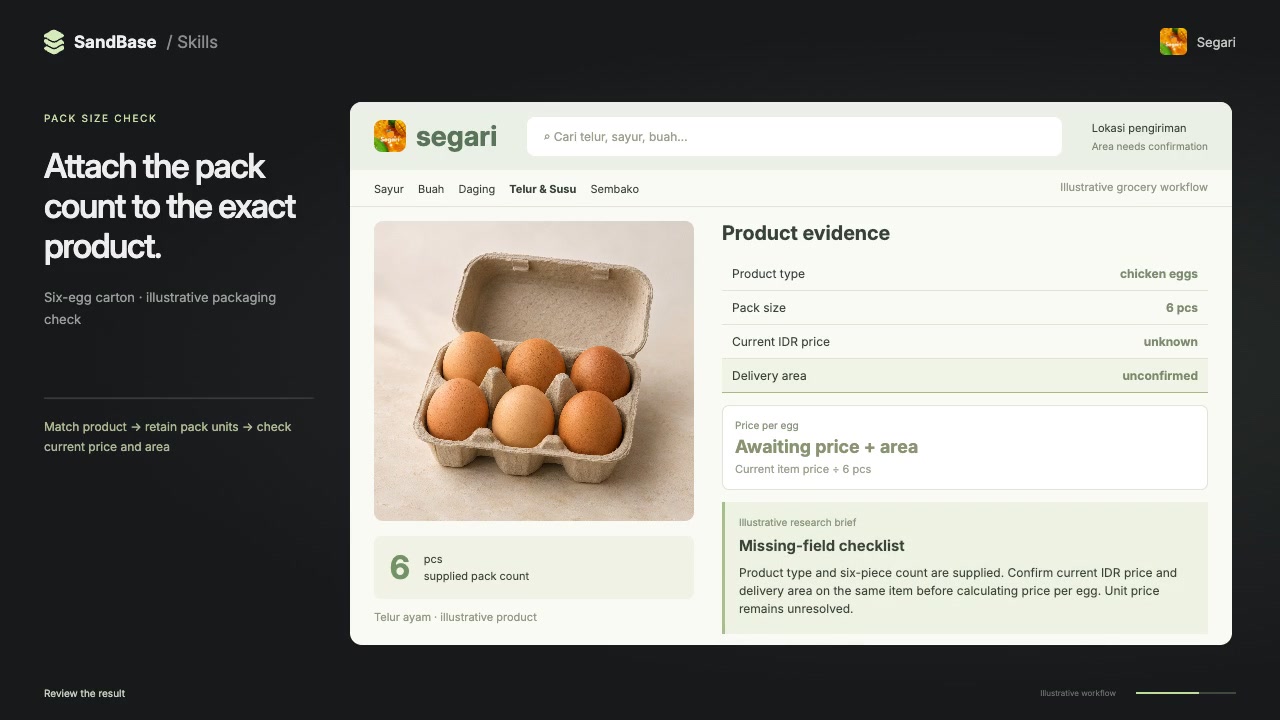
Check the evidence needed for a Segari grocery unit-price comparison.
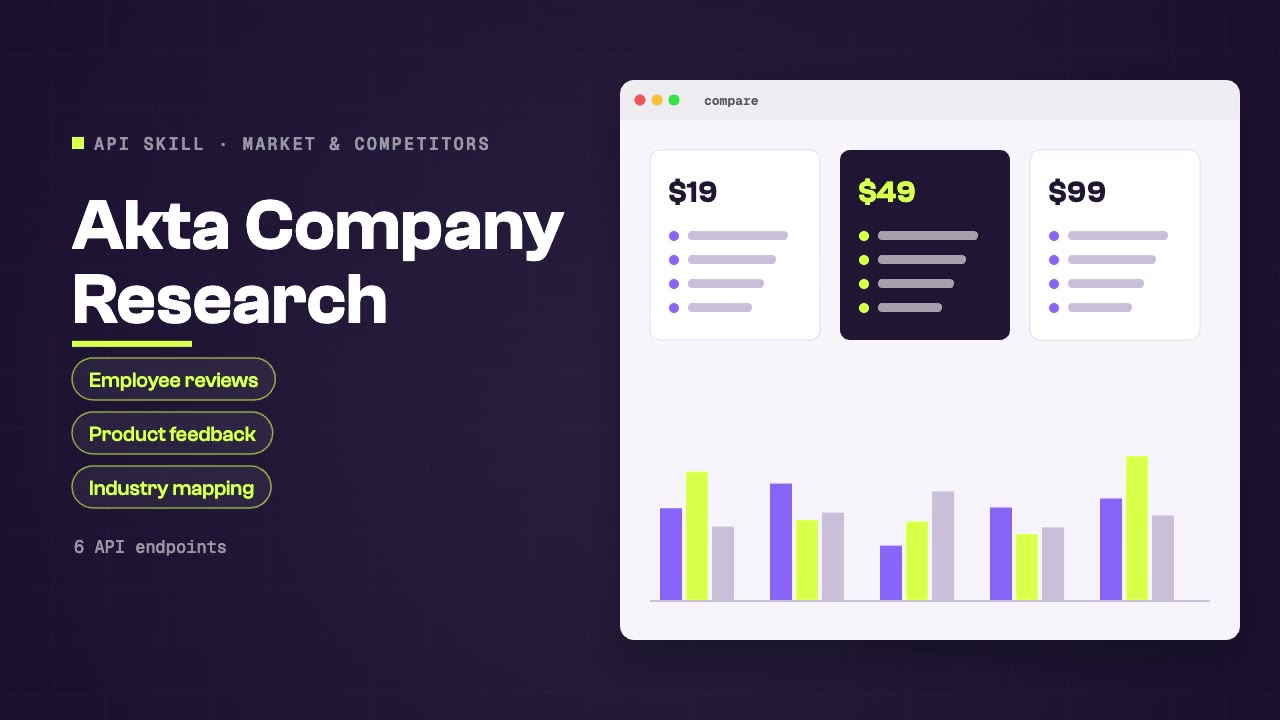
Research companies with employee reviews, product reviews, industry classification, and competitive landscape through Akta. Covers company enrichment, employee satisfaction signals, product feedback, industry mapping, and news monitoring.
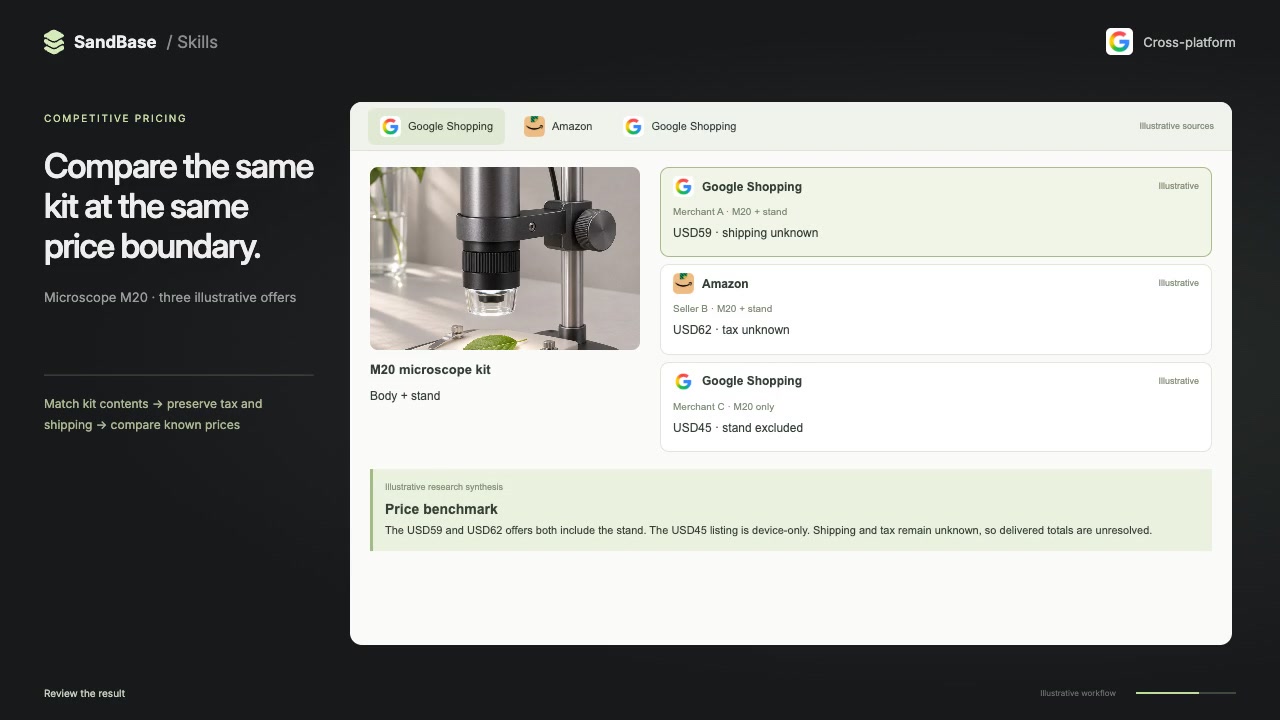
Research competitor pricing strategies by extracting pricing pages, comparing product listings on Google Shopping and Amazon, and analyzing market positioning. Produces pricing benchmarks, tier comparisons, and feature-per-price analysis.
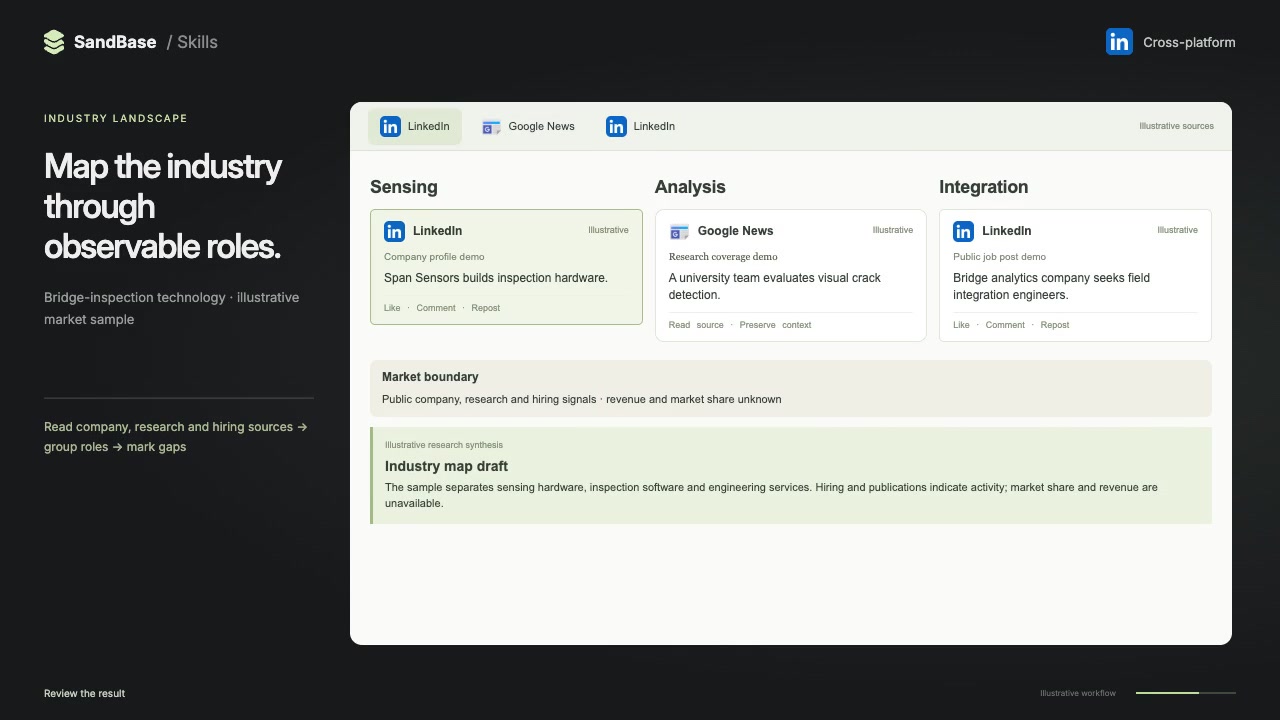
Map any industry's competitive landscape using company databases, academic research, news coverage, LinkedIn activity, and job market signals. Produces industry overviews with key players, market segments, growth indicators, and emerging disruptors.
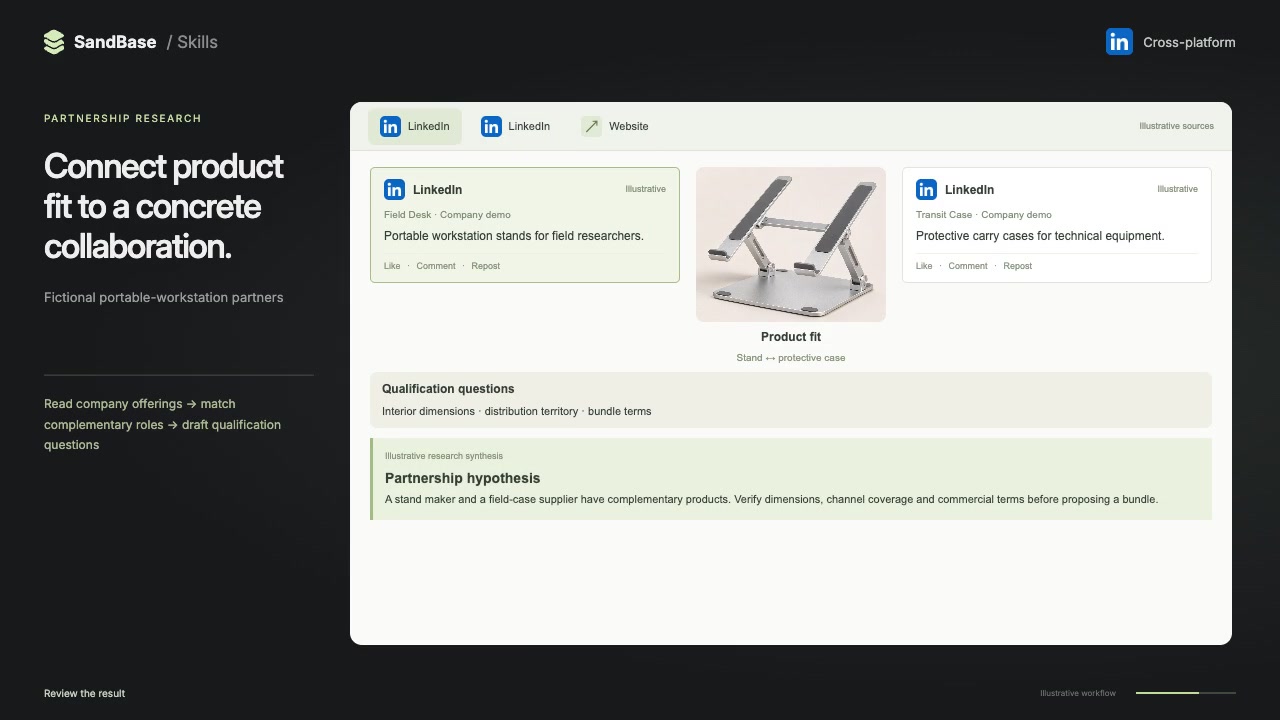
Research potential partners by analyzing company profiles, product fit, market positioning, team background, and mutual connections. Combines firmographic data, content analysis, and social signals for partnership qualification and relationship mapping.
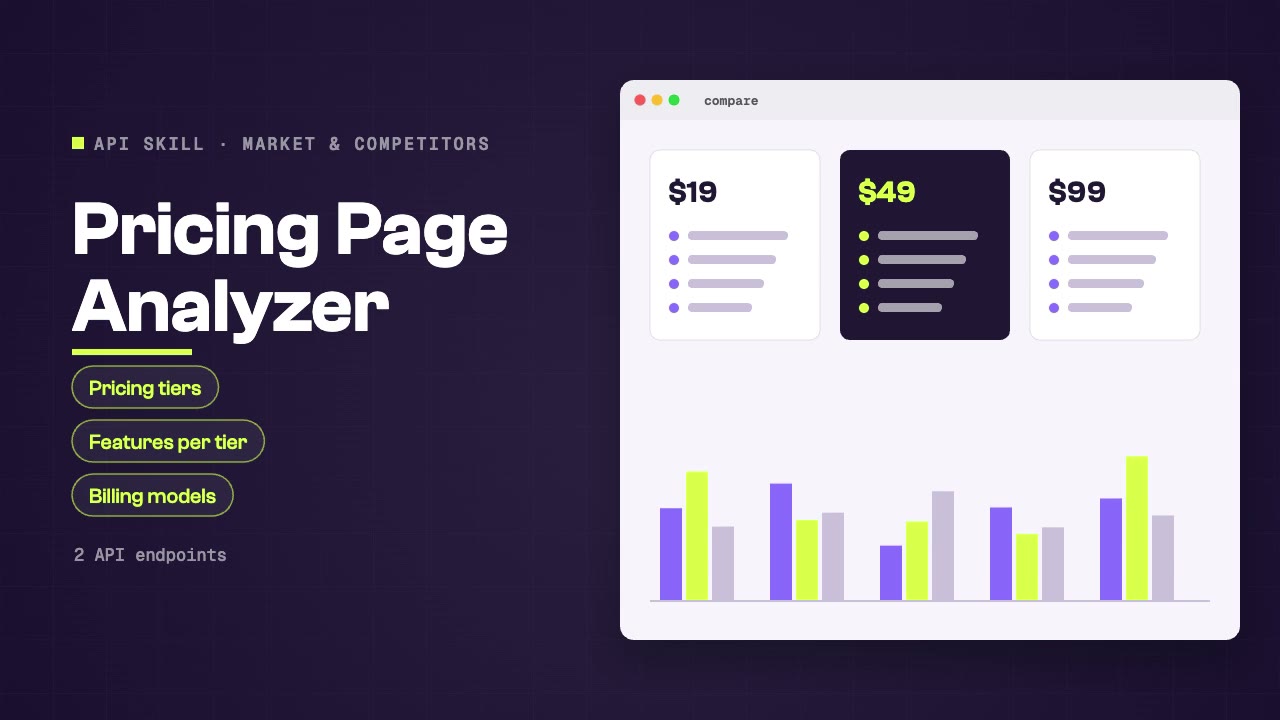
Extract and analyze pricing information from competitor websites. Identifies pricing tiers, features per tier, billing models, and positioning relative to market alternatives. Ideal for competitive pricing strategy and market positioning research.
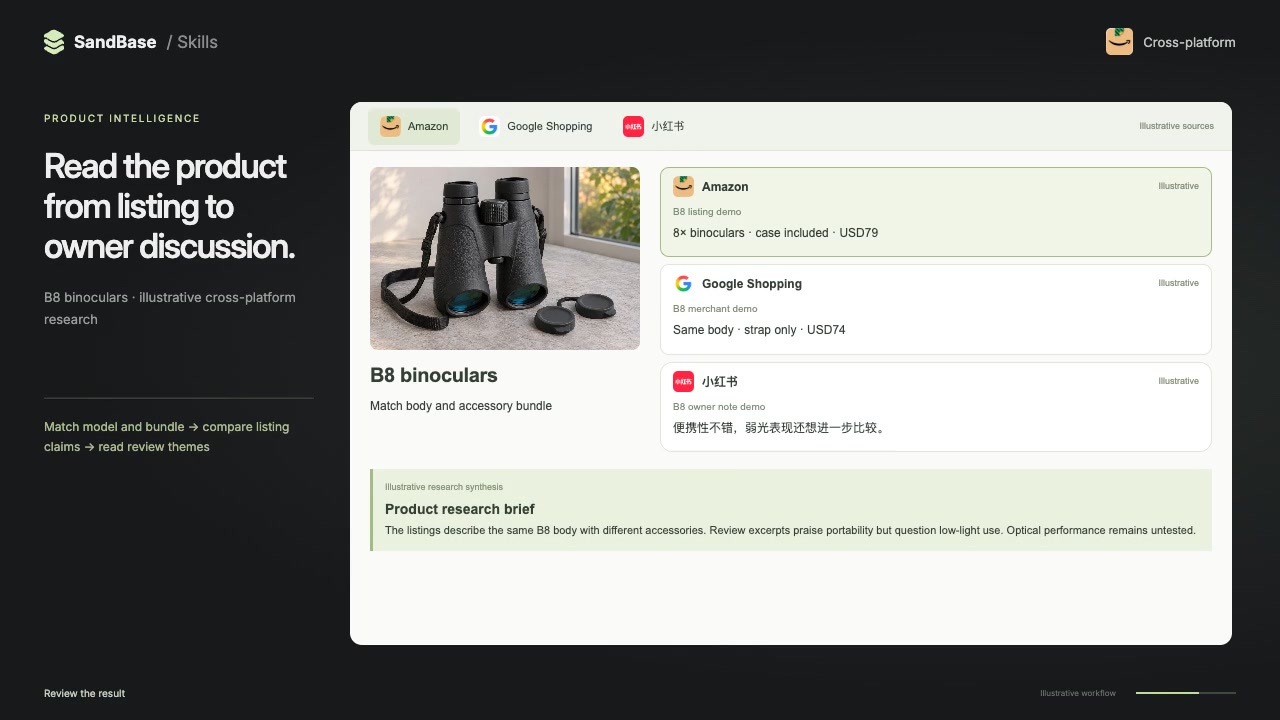
Research products across Amazon, Google Shopping, and Xiaohongshu to understand pricing, reviews, market positioning, and consumer sentiment. Covers competitive product analysis, pricing benchmarks, feature comparison, and customer satisfaction signals.
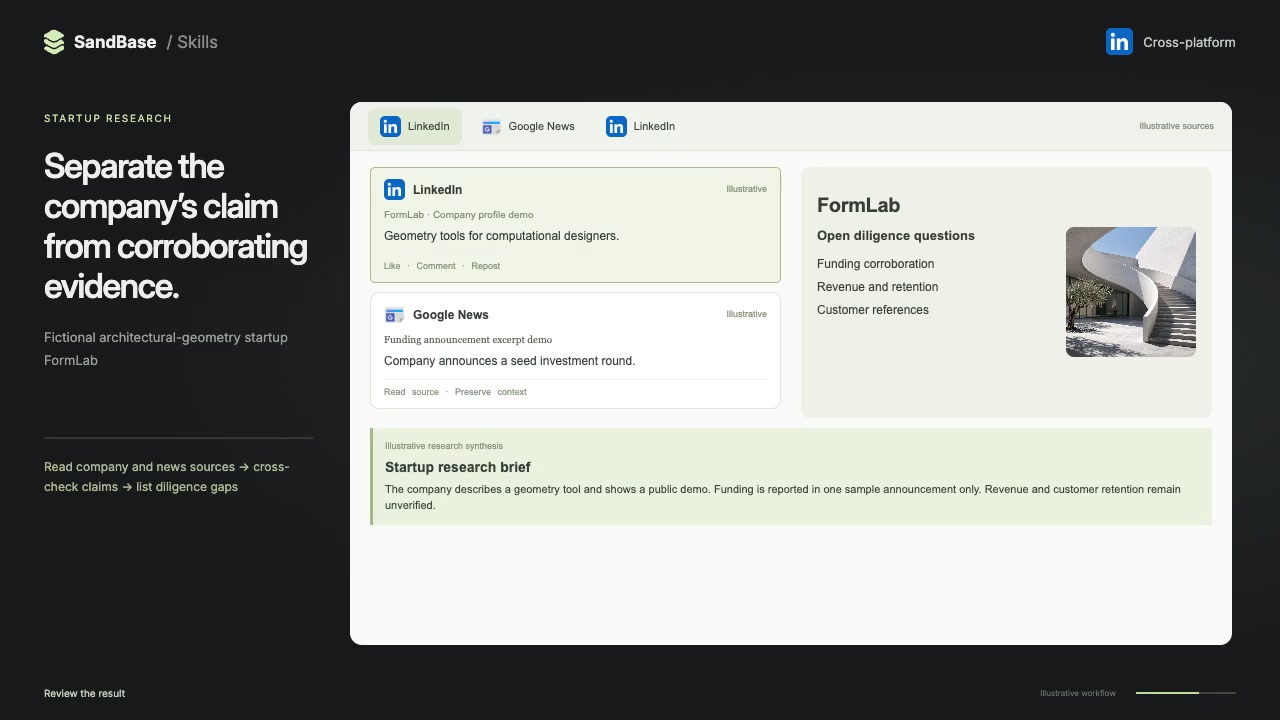
Research startups and emerging companies with funding data, team composition, product positioning, market traction, and news coverage. Combines Apollo firmographics, LinkedIn team data, and web intelligence for comprehensive startup due diligence.
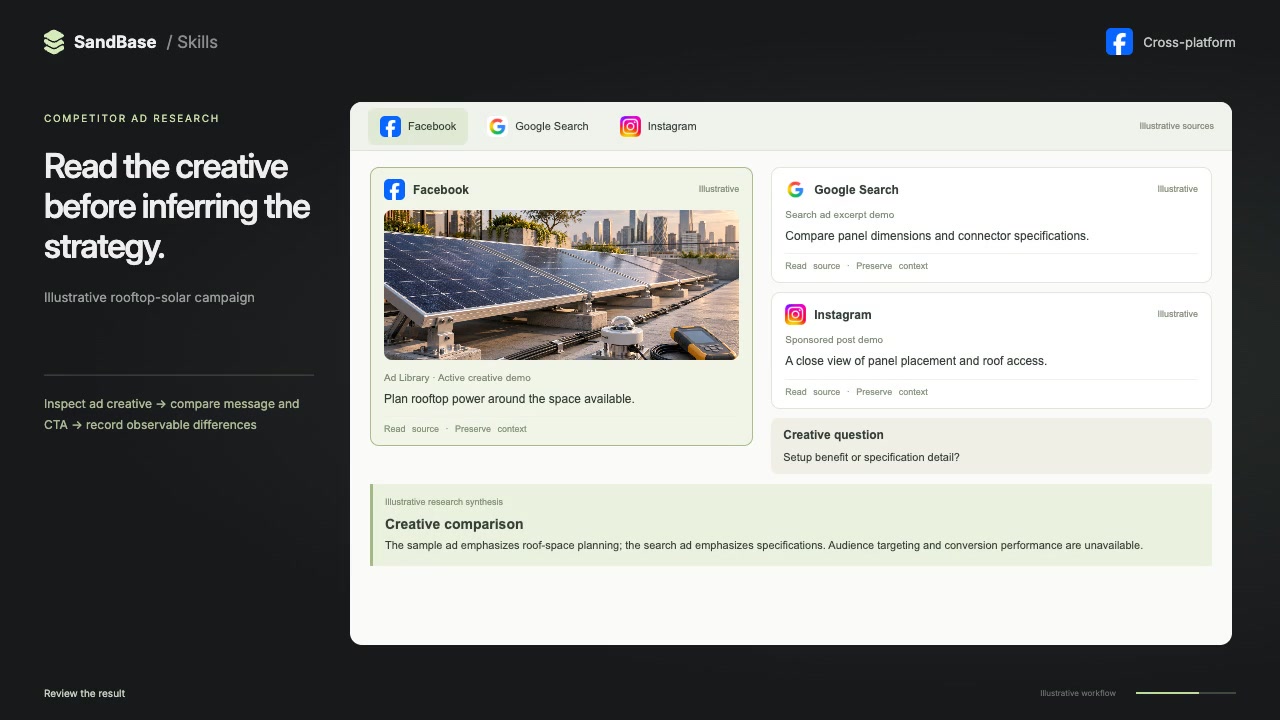
Research competitor advertising strategies through Facebook Ad Library, Google SERP ads, and social media sponsored content. Covers creative analysis, messaging patterns, targeting signals, and campaign frequency for competitive marketing intelligence.
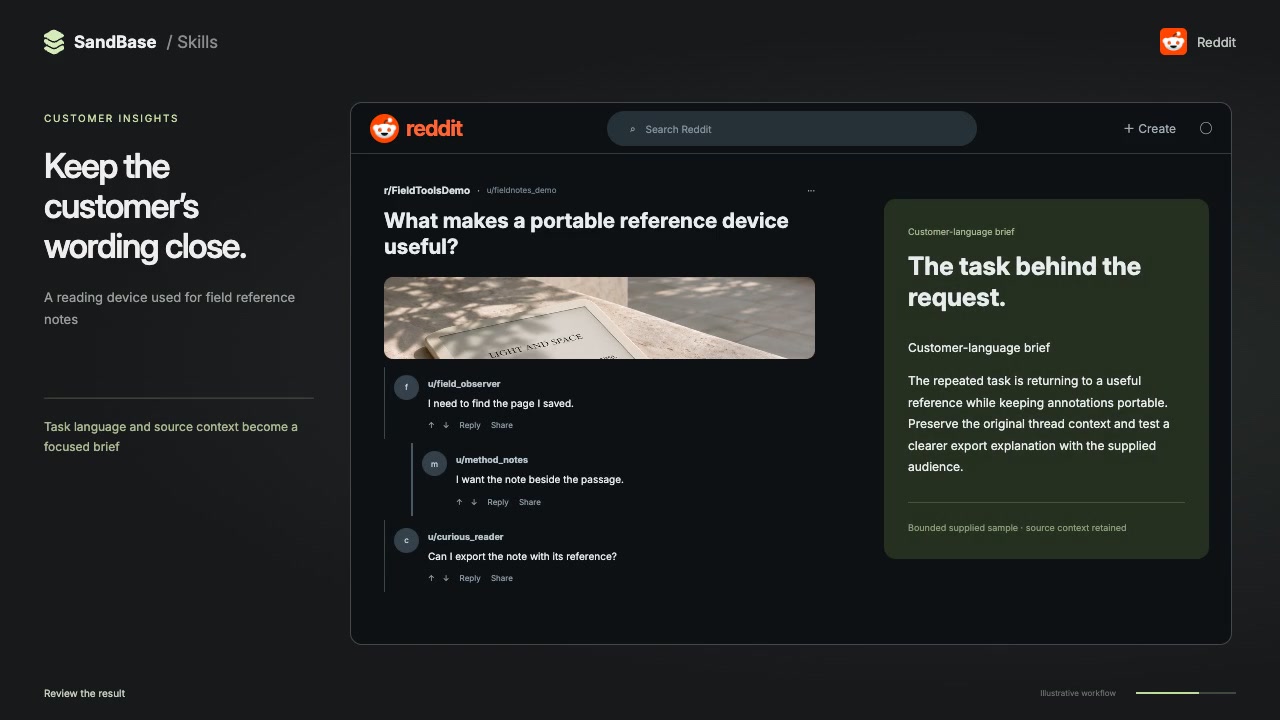
Discover evidence-backed customer language, pain points, objections, and buying triggers from relevant Reddit communities. Use when asked for Reddit research, voice-of-customer analysis, audience pain points, product feedback, or community-led content opportunities.
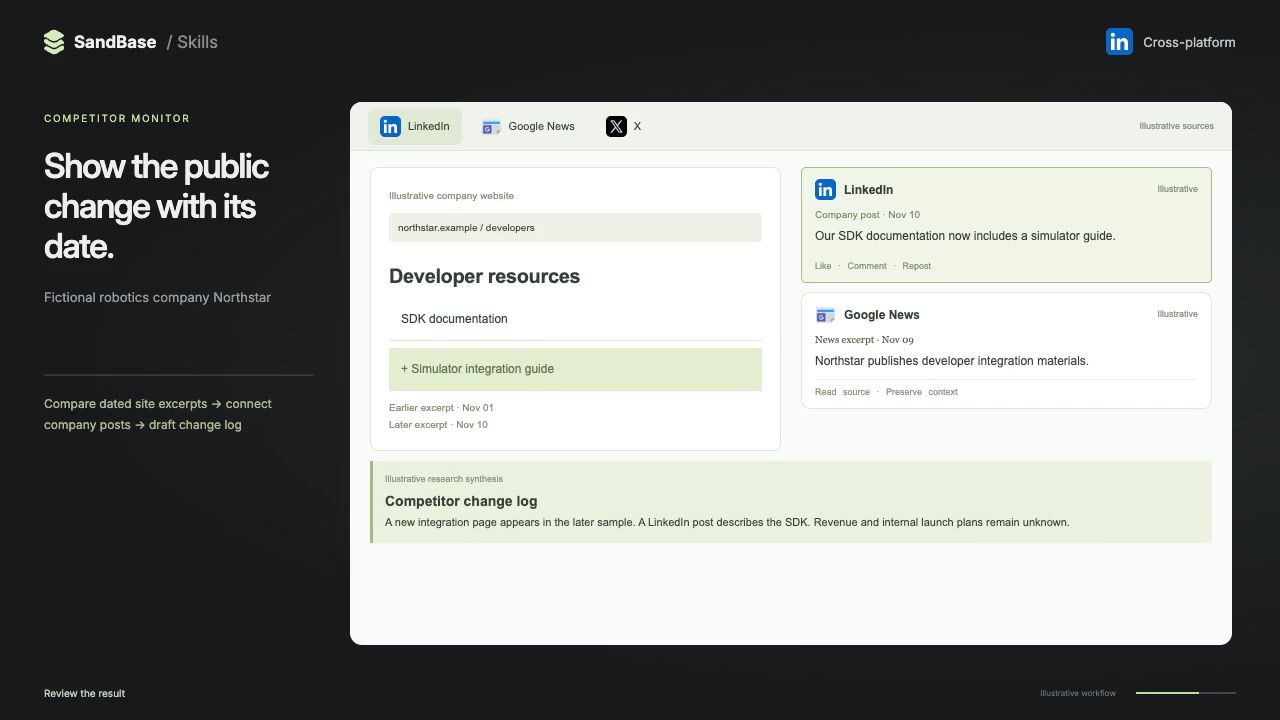
Monitor competitor websites, content changes, social activity, and market positioning through SandBase. Use when asked for competitive intelligence, competitor tracking, market positioning research, or competitive content monitoring.
Search academic papers, scholarly articles, and research publications through SandBase. Use when asked for literature review, academic citations, scholarly research, paper discovery, or scientific evidence gathering.
Research emerging academic trends by combining scholarly databases, web sources, and news to identify rising research areas, breakthrough papers, and shifting scientific consensus. Ideal for R&D teams tracking frontier science.
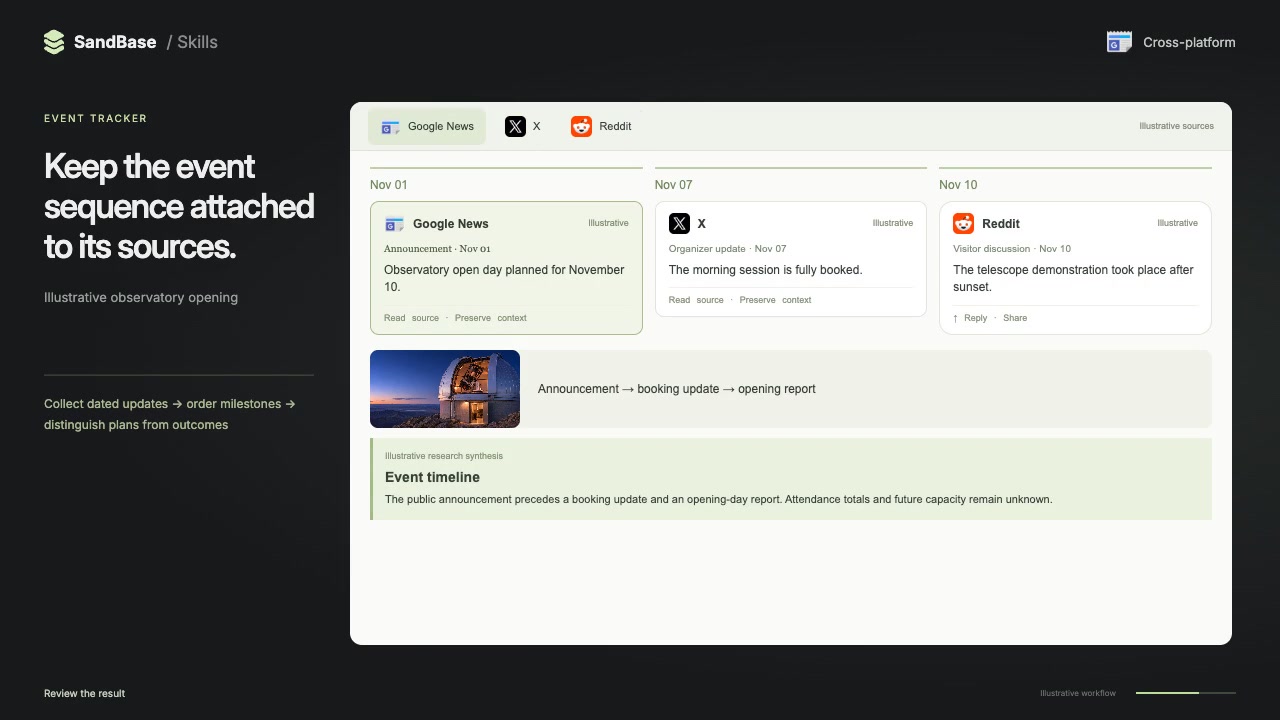
Track real-time events, announcements, and breaking developments across Twitter, Reddit, news outlets, and web search. Monitors event progression, public reaction, key moments, and aftermath coverage for crisis response and opportunity detection.
Search, extract, and compare high-quality public sources with Exa through SandBase. Use when asked for deep web research, source discovery, current evidence, topic investigation, company research, or citation-ready findings.
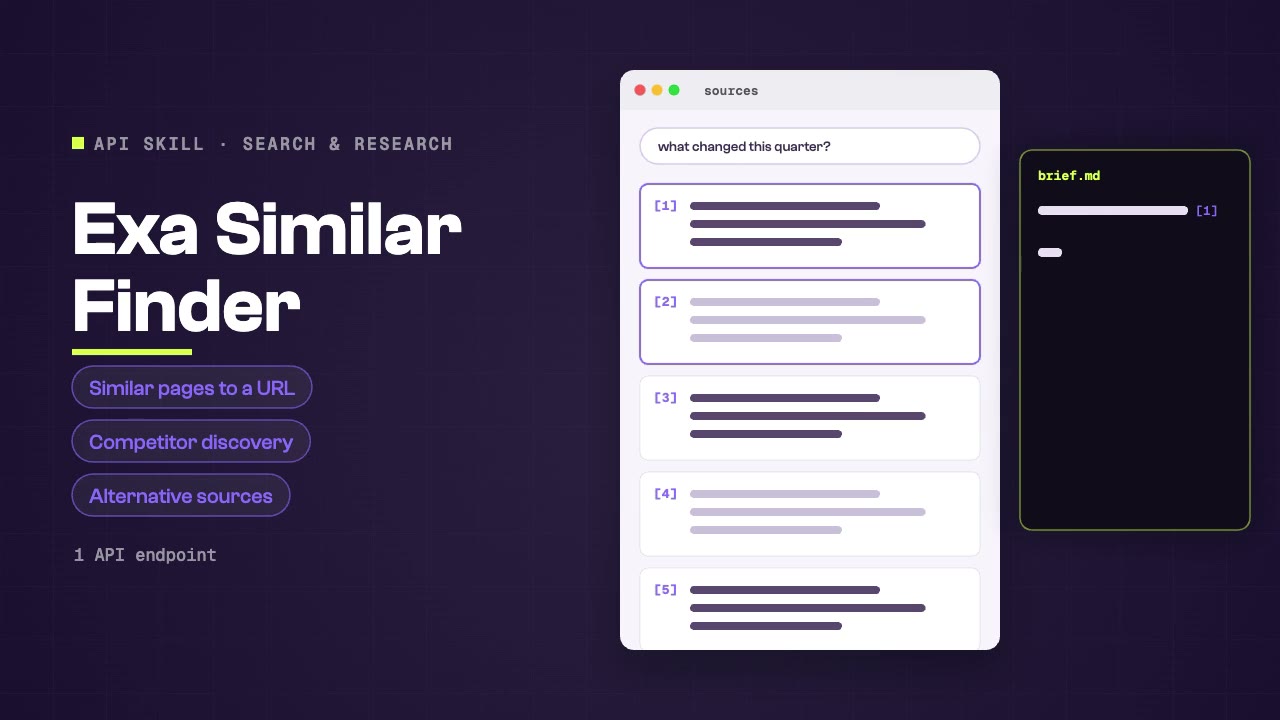
Find web pages and content similar to a given URL using Exa's neural similarity search. Ideal for competitor discovery, alternative source finding, related content research, and expanding research beyond known sources.
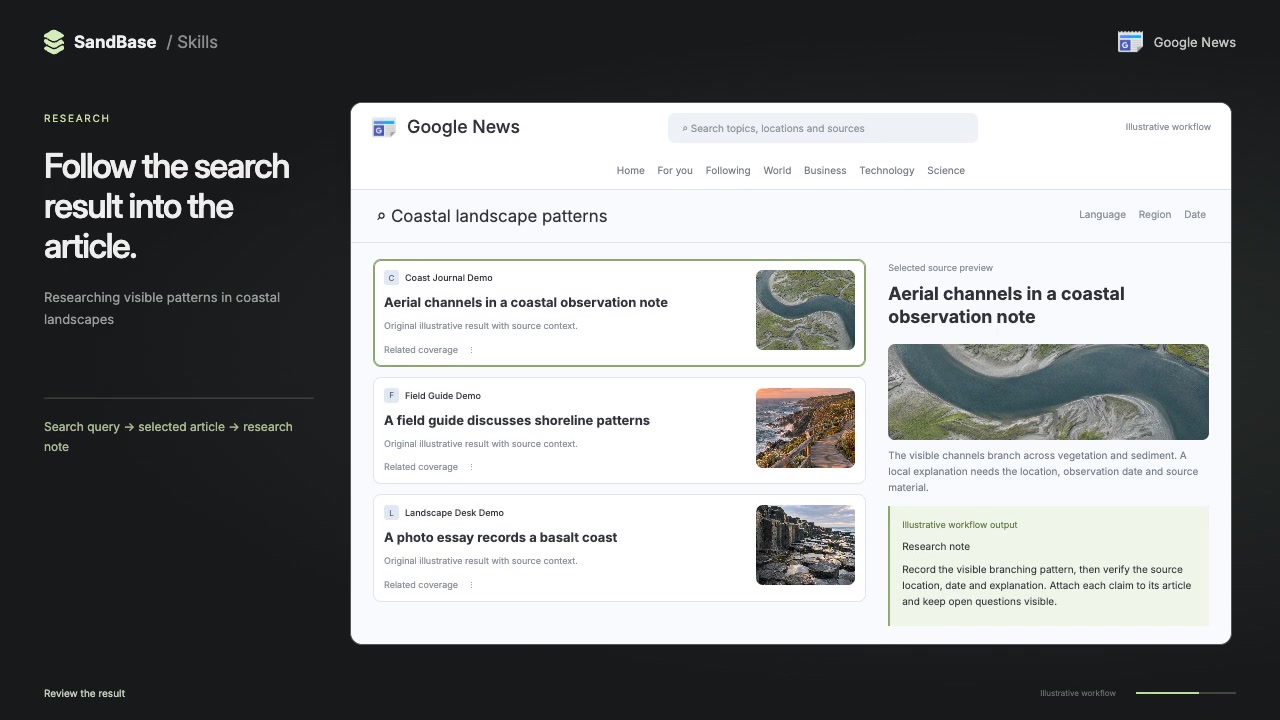
Search and monitor news articles across Google News through SandBase. Use when asked for news monitoring, current events research, news coverage analysis, or media tracking.
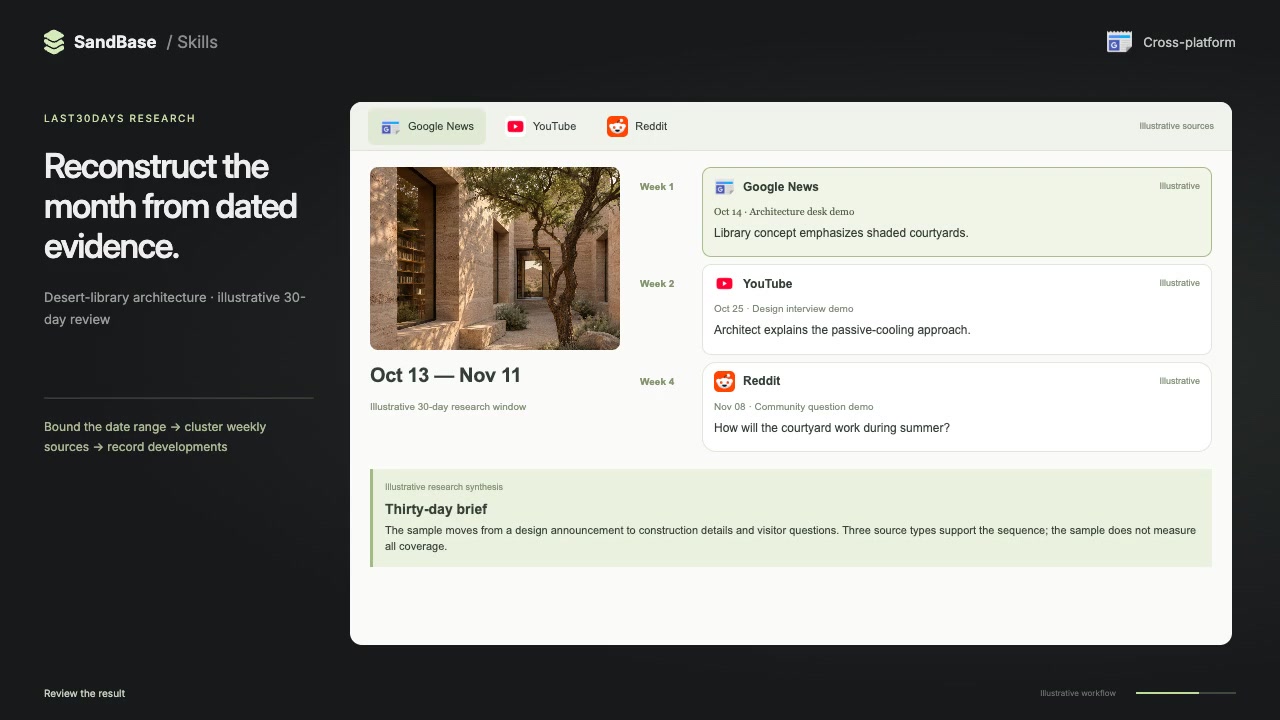
Research any topic across the last 30 days using Reddit, Twitter, YouTube, Hacker News, web search, and news sources through SandBase. Use when asked for recent trends, launch reactions, competitor activity, person/company profiles, or current event analysis.
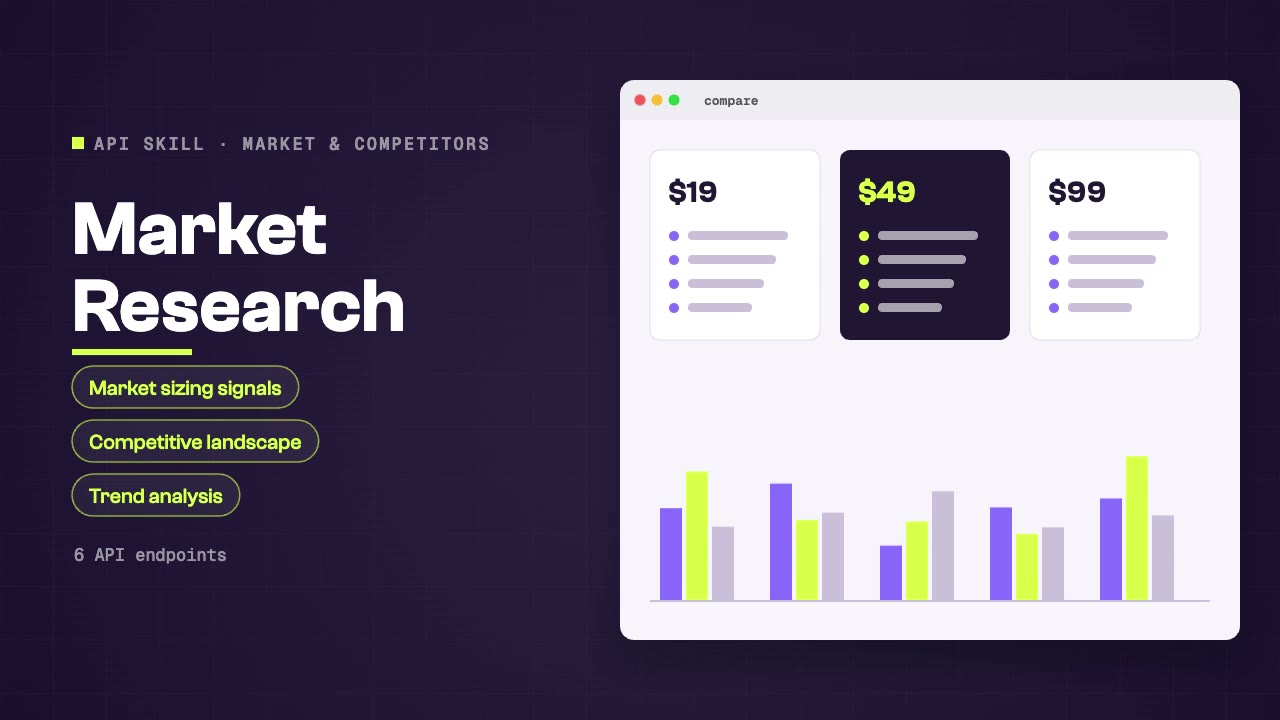
Conduct comprehensive market research combining web search, academic sources, news coverage, and industry data. Produces market sizing signals, competitive landscape overviews, trend analysis, and evidence-backed market opportunity assessments.
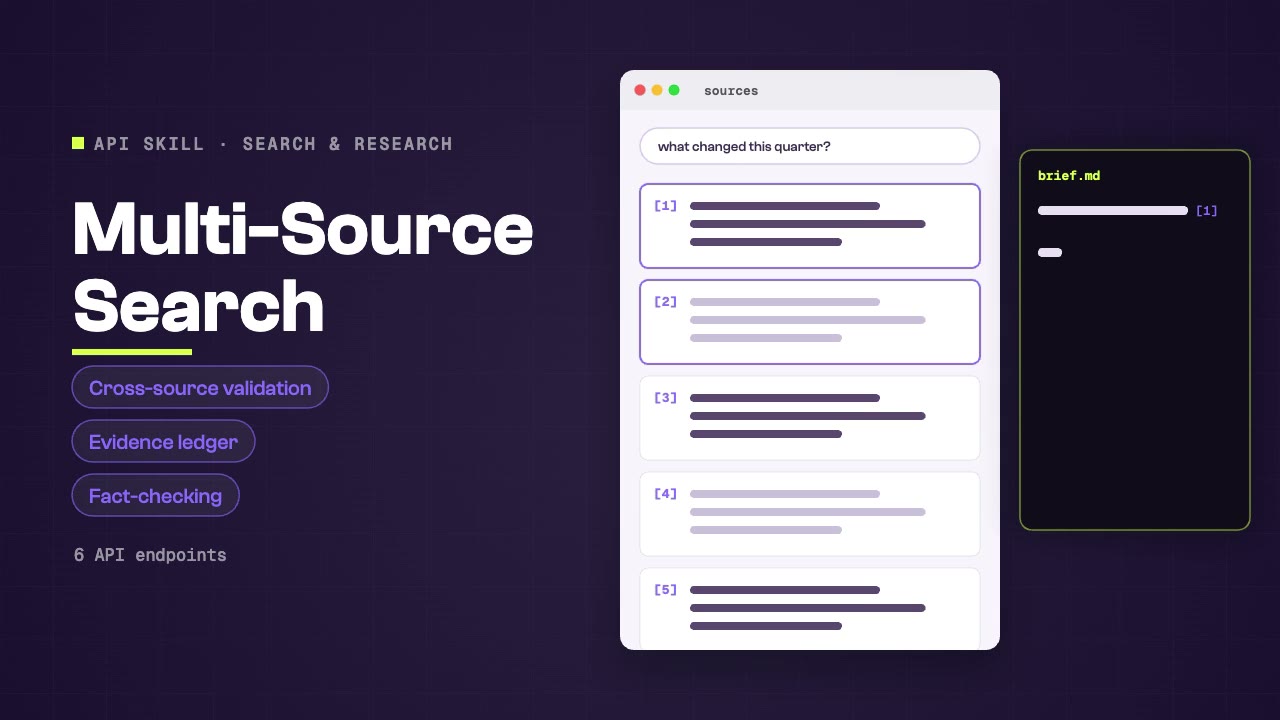
Portable multi-source research with cross-source validation and an offline evidence ledger. Use for fact-checking, comprehensive research, or any question requiring multiple independent perspectives; work with the host agent's search tools and optionally add SandBase Tavily, Exa, Scholar, and Cloudsway coverage.
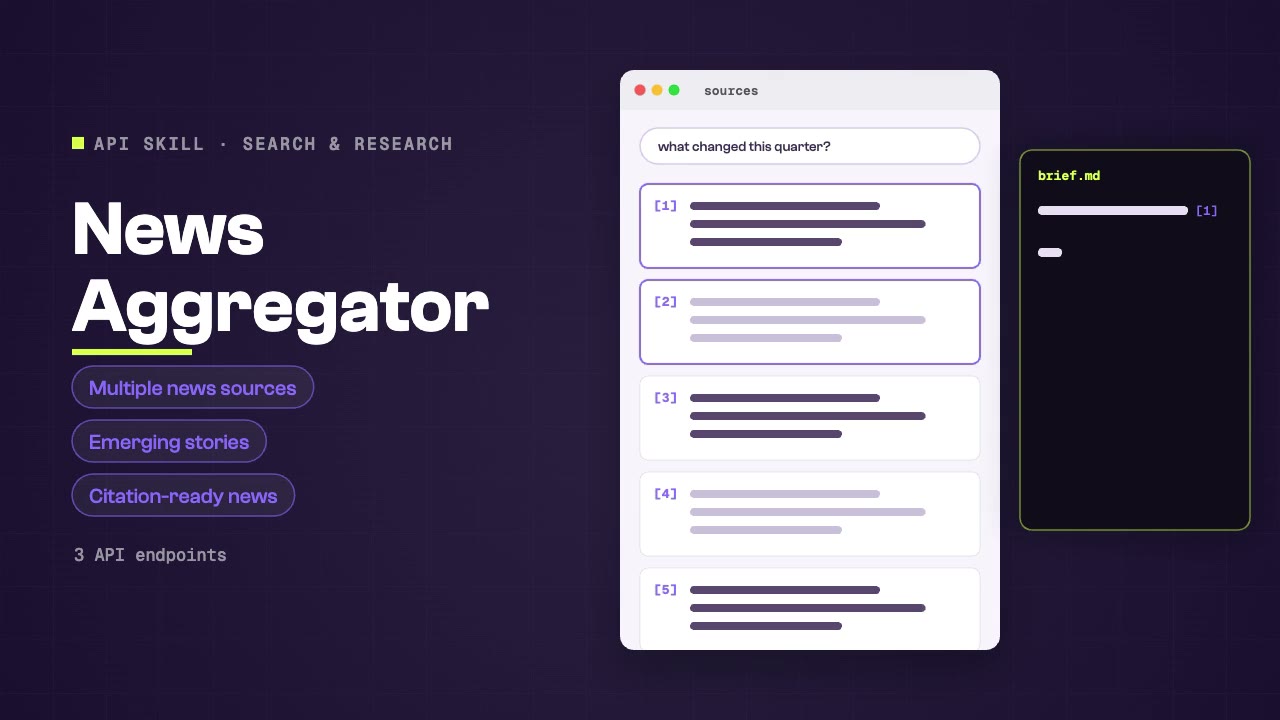
Aggregate news from Google News, Tavily, and Exa to get comprehensive coverage of any topic. Cross-references multiple news sources, identifies publication velocity, detects emerging stories, and provides citation-ready news intelligence.
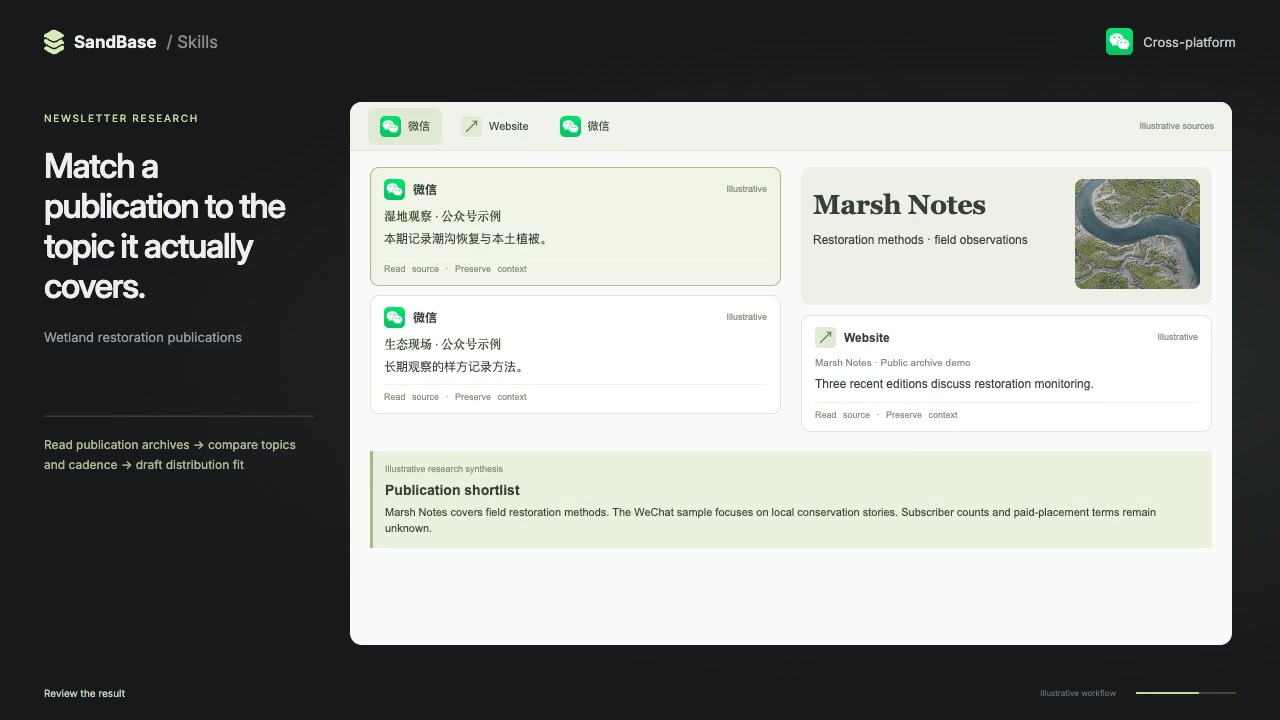
Research industry newsletters, email publications, and WeChat articles to discover content leaders, track topics, and identify distribution opportunities. Covers newsletter discovery, content analysis, audience research, and partnership prospecting.
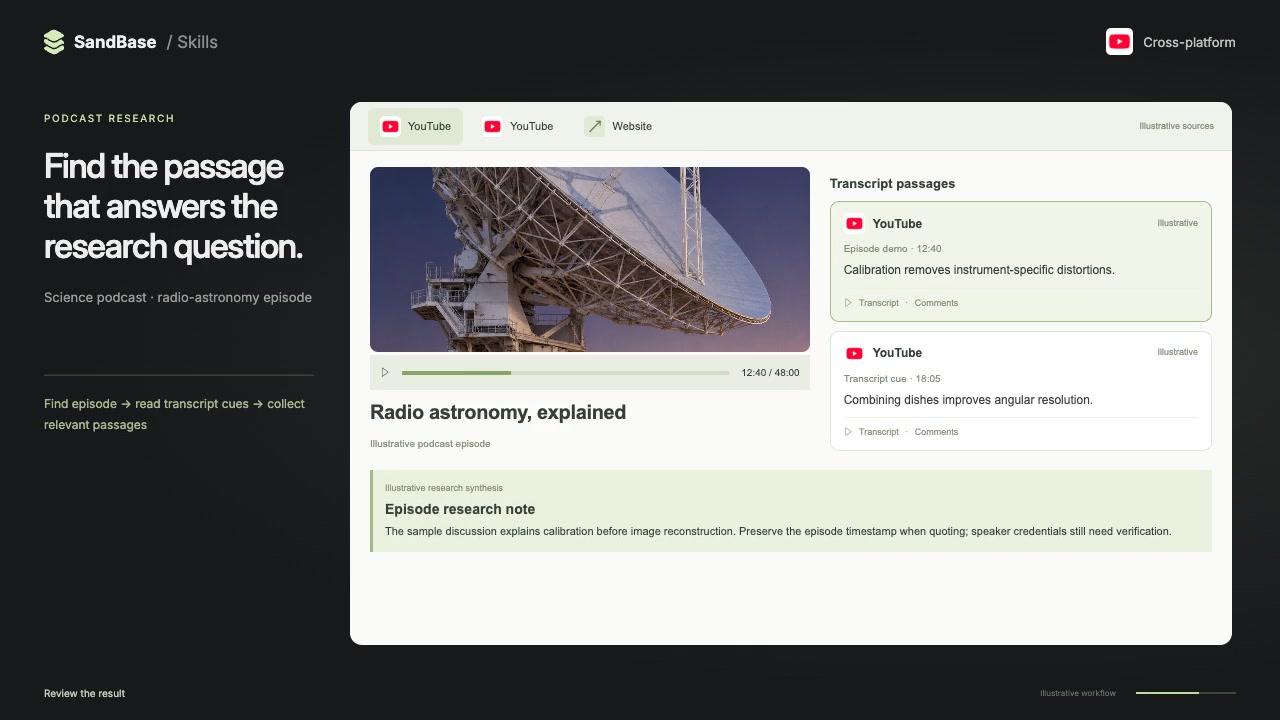
Research podcasts, episodes, and audio content by searching YouTube (where most podcasts crosspost), web sources, and transcript databases. Discover relevant shows, track guest appearances, and analyze topic coverage in the podcast ecosystem.
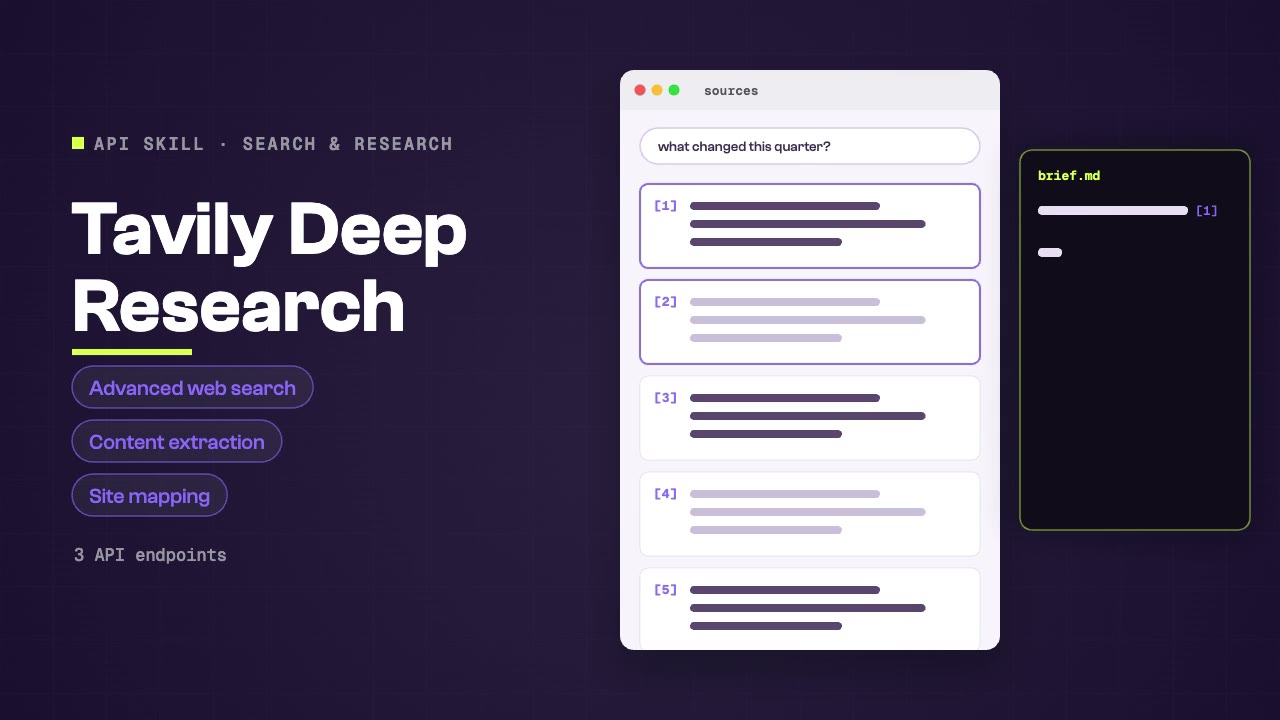
Advanced web search, content extraction, and site mapping through Tavily via SandBase. Use when asked for web research, URL content extraction, full article reading, news search, or site structure discovery.
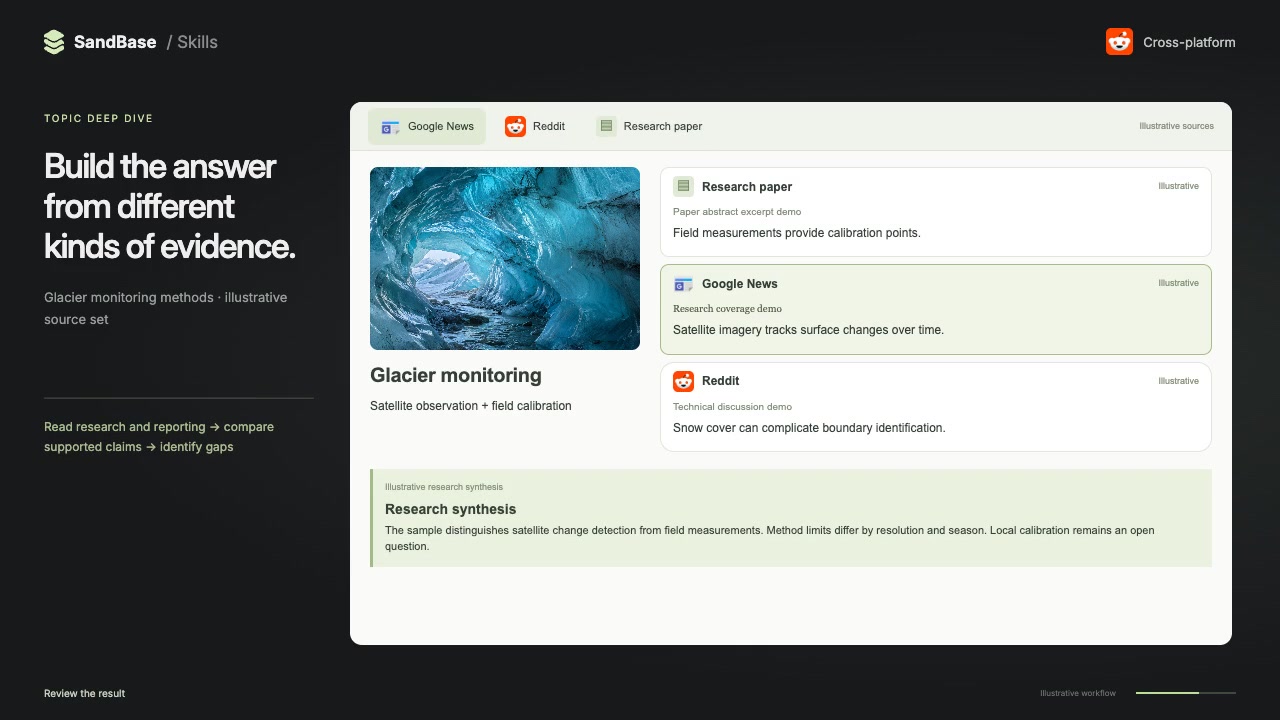
Research any topic in exhaustive depth by combining web search, academic papers, social discussions, and community conversations. Produces comprehensive briefings with evidence from every available source type, confidence scoring, and identified knowledge gaps.
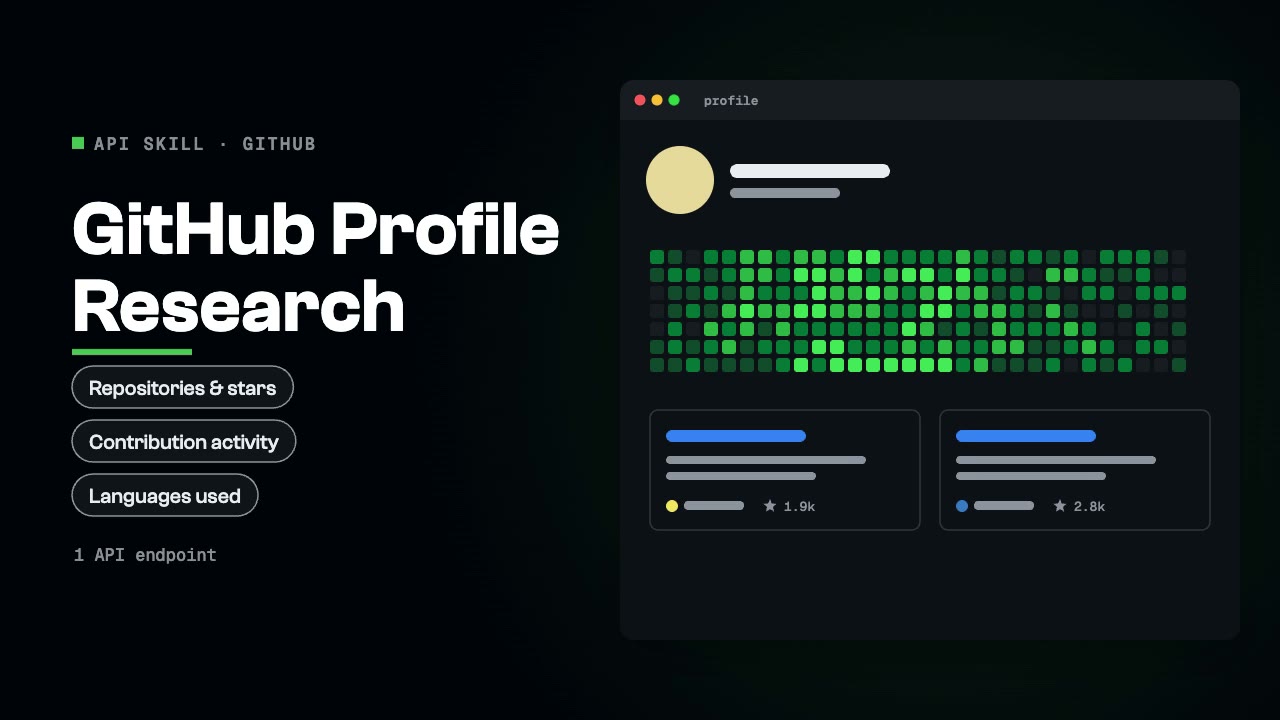
Research GitHub user profiles including repositories, contributions, languages, stars, and activity patterns. Useful for developer talent sourcing, open-source community research, and technical due diligence on engineering teams.
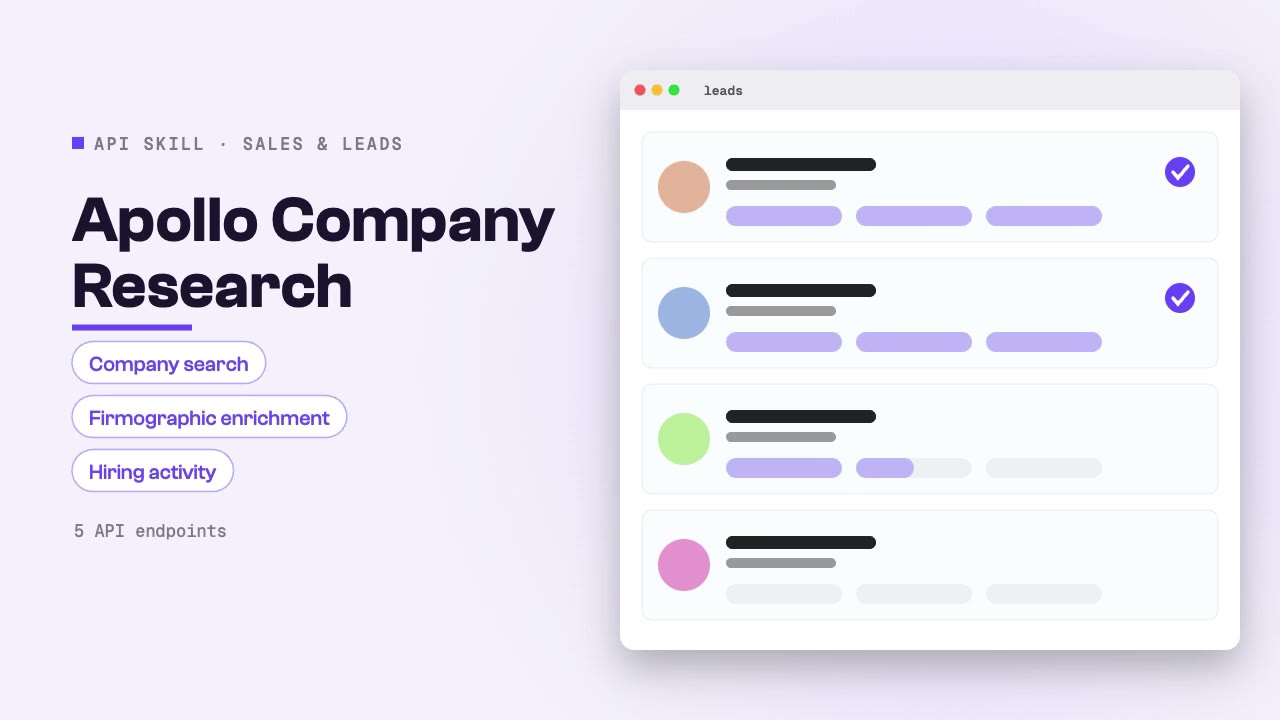
Search companies, enrich profiles with firmographic data, find job postings, and track company news through Apollo. Covers company search, detailed enrichment (industry, size, funding, tech stack), hiring activity, and news monitoring for B2B sales intelligence.
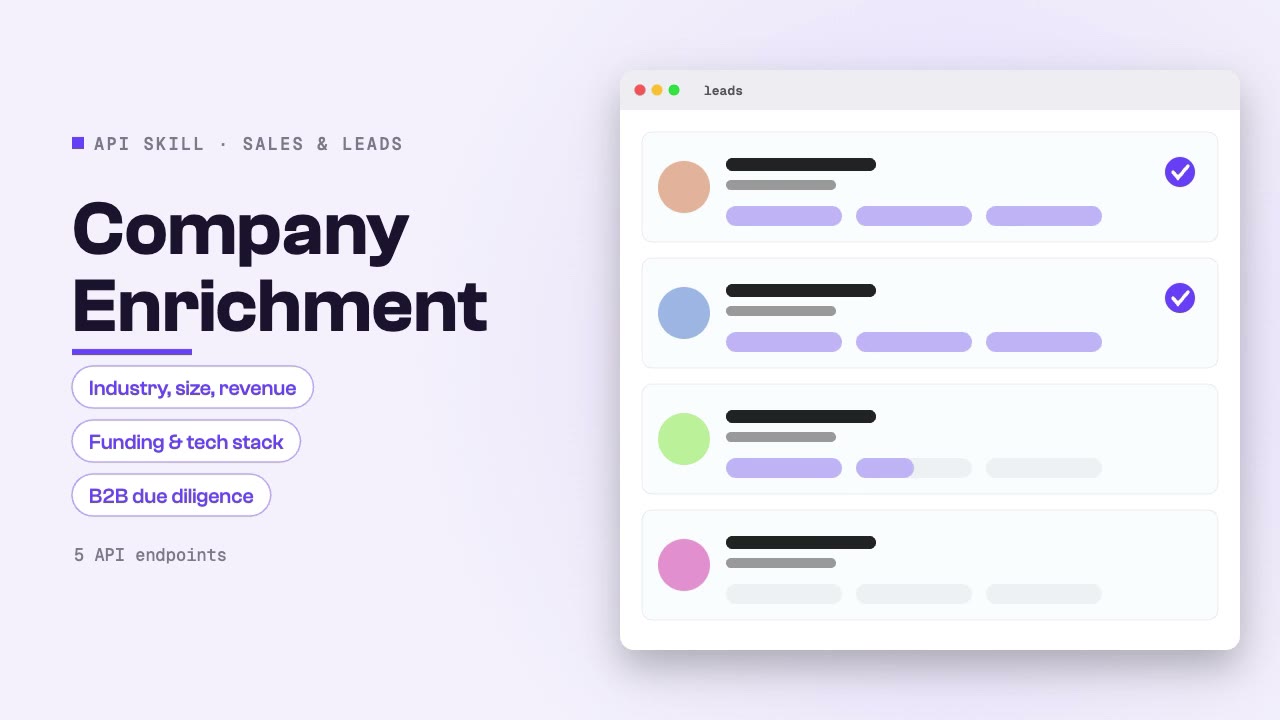
Enrich any company with comprehensive firmographic data including industry, size, revenue, funding, tech stack, beneficial ownership, and regulatory status. Combines multiple data sources for complete B2B company intelligence and due diligence.
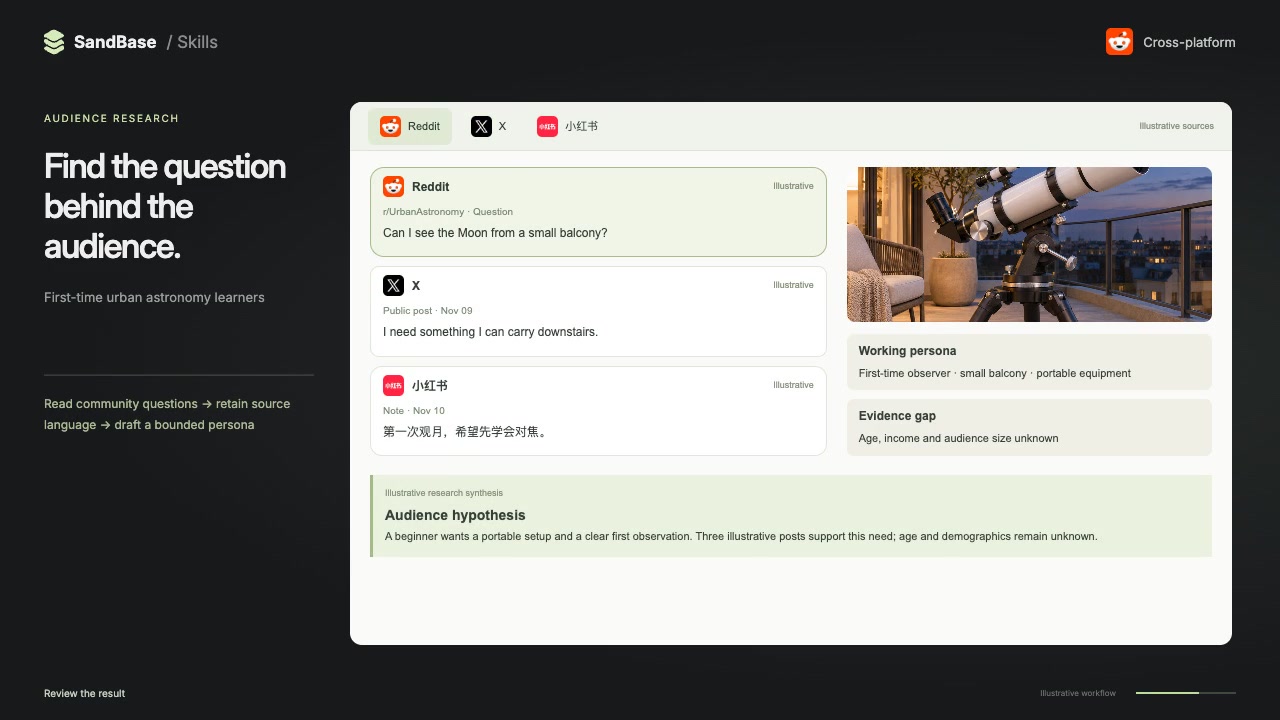
Research target audiences across Reddit, Twitter, Instagram, and Xiaohongshu to understand demographics, interests, pain points, language patterns, and content preferences. Produces audience personas backed by real community data.
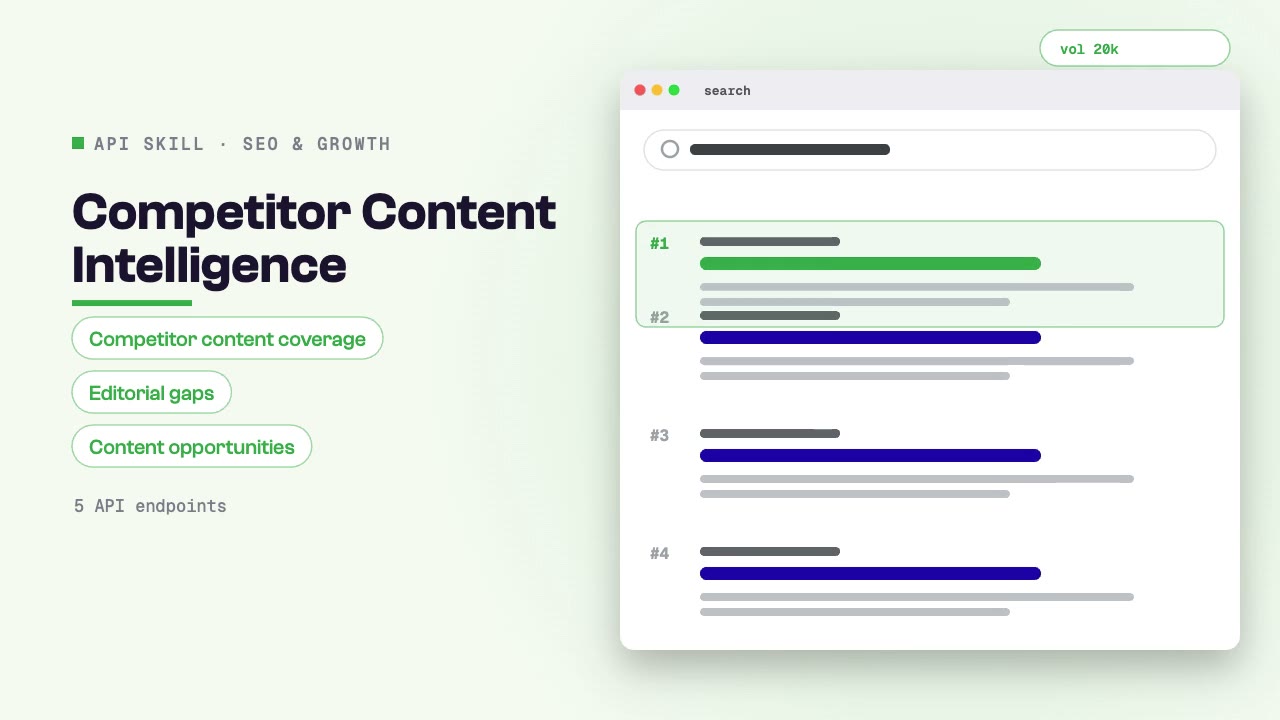
Analyze competitor content coverage and uncover differentiated content opportunities using web search, page extraction, and DataForSEO content analysis. Use when asked for competitor content research, editorial gap analysis, content brief inputs, or topic whitespace.
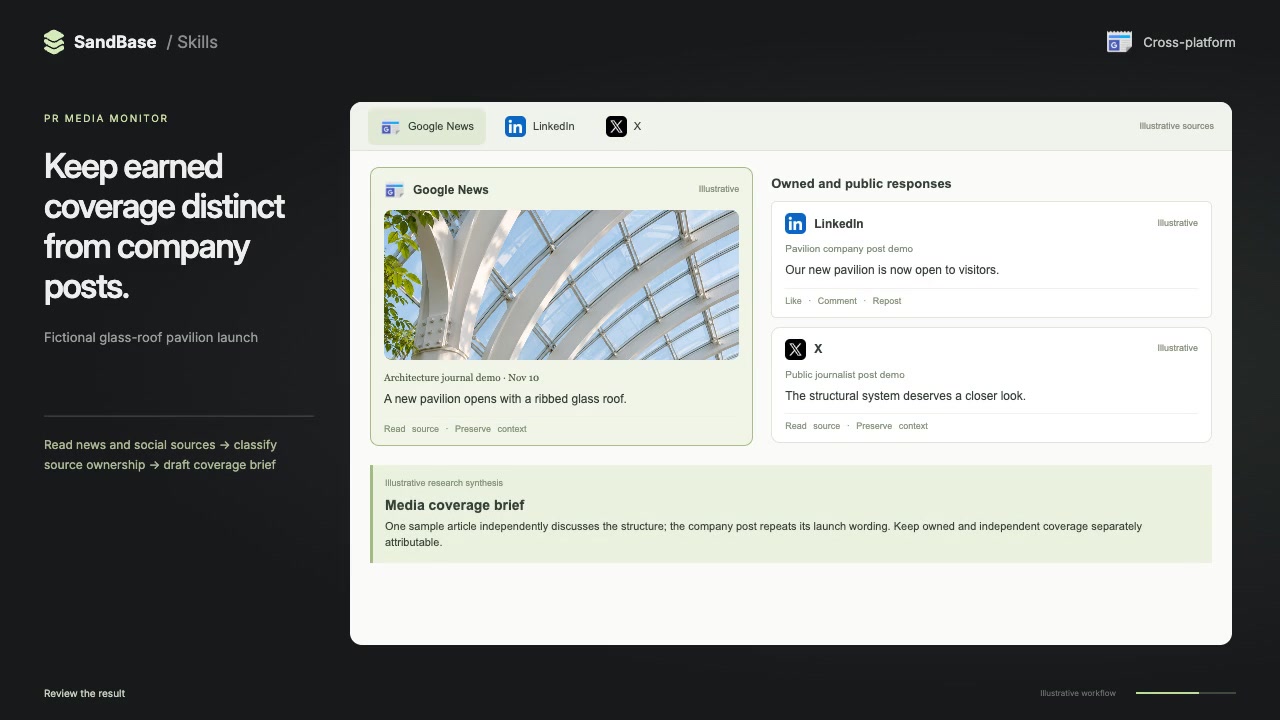
Track media coverage, press mentions, journalist activity, and industry narrative across news outlets, Twitter, and LinkedIn. Ideal for PR teams monitoring earned media, tracking campaign impact, and identifying journalist relationships.
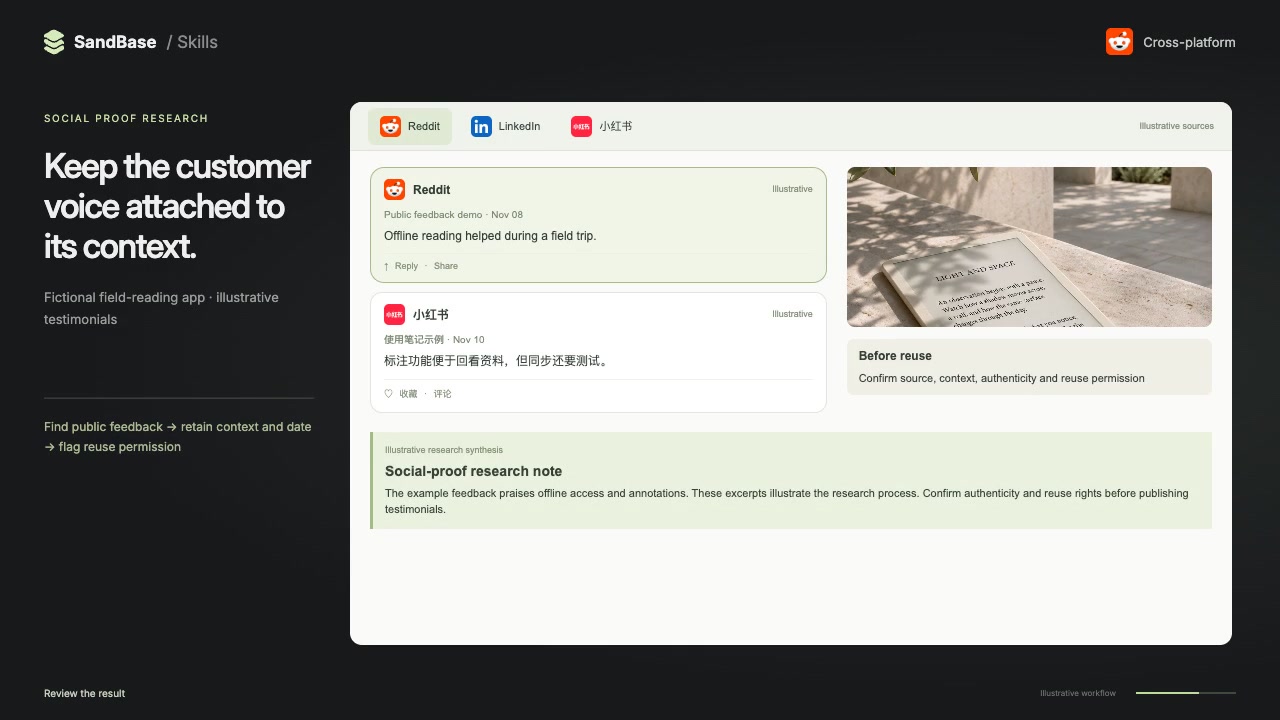
Research and collect social proof — testimonials, case studies, user reviews, social mentions, and community endorsements across platforms. Useful for marketing teams building trust content, landing pages, and sales collateral from authentic customer voices.
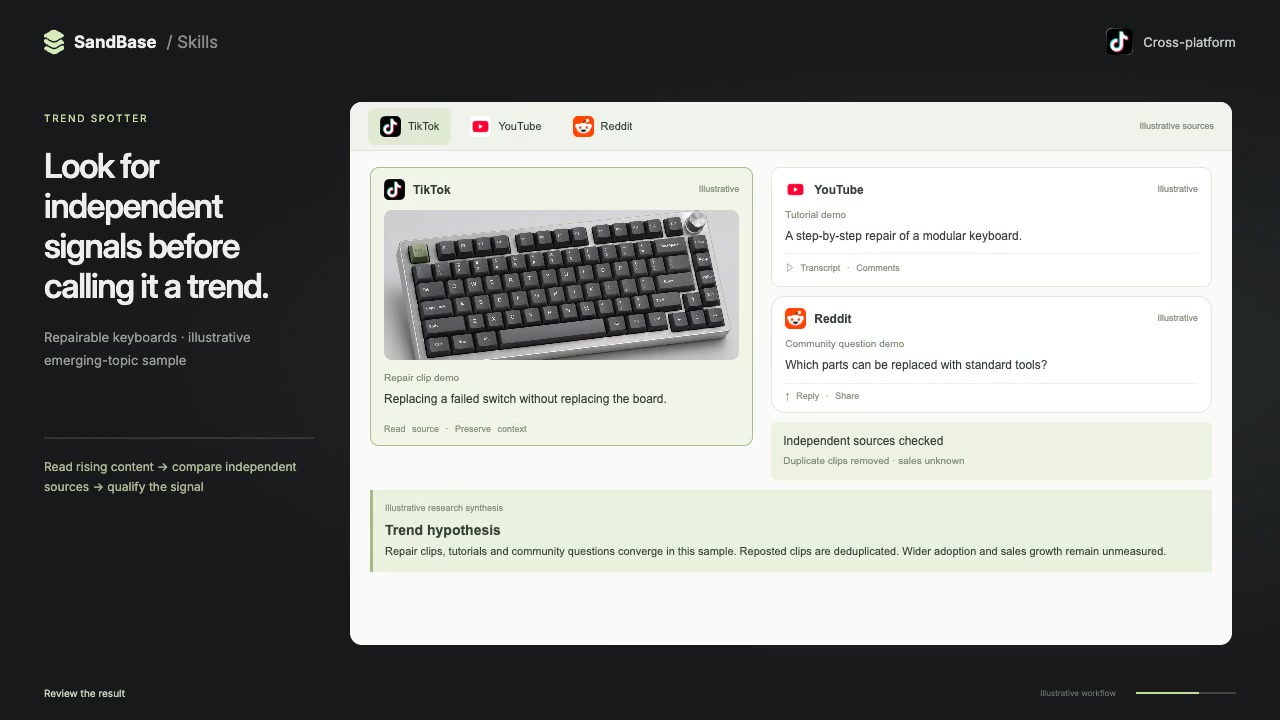
Identify emerging trends early by monitoring signals across Twitter trending, TikTok viral content, YouTube rising videos, Google News velocity, and Reddit community buzz. Combines platform-specific trend indicators into a unified trend confidence score.
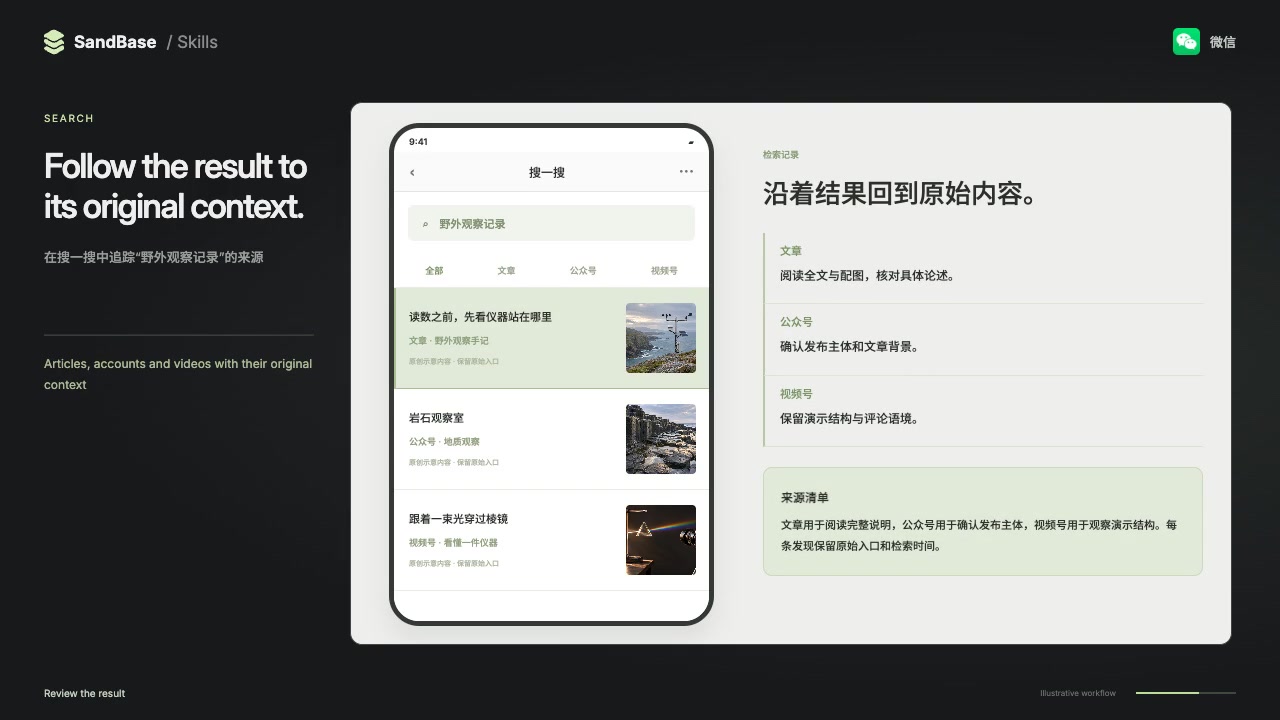
Search articles, videos, and content within the WeChat ecosystem. Covers cross-content-type search including Official Account articles, video channels, and mini-programs — the gateway to China's largest private-traffic platform.
Investigate markets and evidence, and communicate research findings.
Choose a workflow by its inputs and deliverables. The detail page tells you what to prepare and how to run it.
Start with a task, then explore the possibilities.
Pitch, plan and board decks your agent writes from a brief: one offline HTML deck that edits in the browser and exports editable PowerPoint.
Explore Presentations ↗Films, motion graphics and photo effects your agent renders from a brief, a photo or a script, with every step already planned.
Explore Video ↗Compare the inputs and deliverables before you begin.
| What you have | What to look for | Next step |
|---|---|---|
| A clear brief | Investigate markets and evidence, and communicate research findings. | Browse this collection ↗ |
| Source material | Check the chosen Skill’s required inputs and which details it can preserve. | Read the Skills guide ↗ |
| A different output | Translate evidence and findings into diagrams, data stories and presentations. | Researcher ↗ |
Compare the example, inputs and deliverables against your brief.
Investigate markets and evidence, and communicate research findings.
Follow the Skill’s instructions and check the output in its intended context.
Investigate markets and evidence, and communicate research findings. Compare the actual example and deliverables with your intended result.
Investigate markets and evidence, and communicate research findings.
This depends on the Skill. Check whether it delivers source files, rendered media or an interactive artifact, and which tools are needed to edit it.
Review the Skill license, the model’s terms and the rights to your input media. A public example is not a blanket commercial license.