10 Best Open-Source AI Agent Frameworks in 2026 (Ranked)
A ranked, opinionated guide to the 10 best open-source AI agent frameworks in 2026, with honest trade-offs, ideal use cases, and what each one gets wrong.
TL;DR — There’s no single best AI agent framework — there’s the best one for your constraints. LangGraph wins on production control. OpenClaw and Hermes own the self-hosted personal-agent space. CrewAI is fastest to a working multi-agent demo. AutoGen is in maintenance mode (pick it carefully). Below: 10 frameworks ranked, with the honest trade-offs nobody puts in the README.
How I Ranked These
The best open-source AI agent framework depends entirely on what you’re building. A solo dev wiring a personal assistant has nothing in common with a team shipping a governed multi-agent system to enterprise. So this isn’t a single leaderboard — it’s a ranked list with explicit “pick this if” guidance.
I weighted four things: production-readiness (does it survive contact with real traffic), developer experience (how fast to a working agent), community momentum (is it alive and maintained), and flexibility (can you bend it to your needs). Star counts are noted but deliberately not the ranking criterion — popularity and production-fitness are different axes, and conflating them is how teams end up with the wrong tool.
The Rankings
| # | Framework | Best For | Language | Watch Out For |
|---|---|---|---|---|
| 1 | LangGraph | Production multi-step workflows | Python/JS | Steeper learning curve |
| 2 | OpenClaw | Self-hosted multi-channel assistant | TypeScript | Light safety scaffolding |
| 3 | Hermes Agent | Self-improving personal agent | Python | Cold start (no day-1 benefit) |
| 4 | CrewAI | Fast role-based multi-agent | Python | Less control at scale |
| 5 | OpenAI Agents SDK | Simplest starting point | Python/JS | OpenAI-centric defaults |
| 6 | Smolagents | Minimal code-first agents | Python | Few batteries included |
| 7 | AutoGen | Research-style multi-agent | Python | Maintenance mode |
| 8 | LlamaIndex Agents | RAG-heavy agents | Python | Retrieval-first mindset |
| 9 | Pydantic AI | Type-safe agents | Python | Younger ecosystem |
| 10 | Semantic Kernel | .NET / enterprise | C#/Python | Microsoft-stack gravity |
1. LangGraph — The Production Default
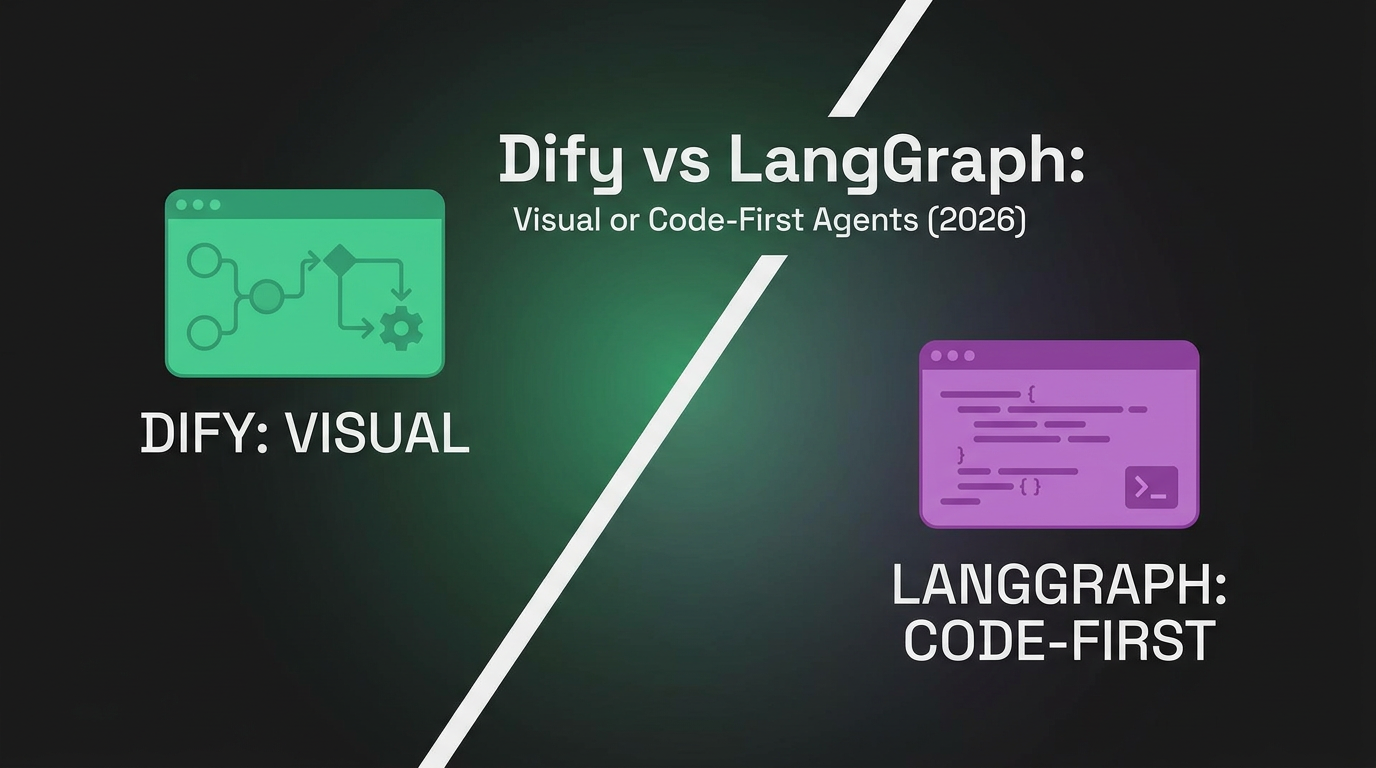
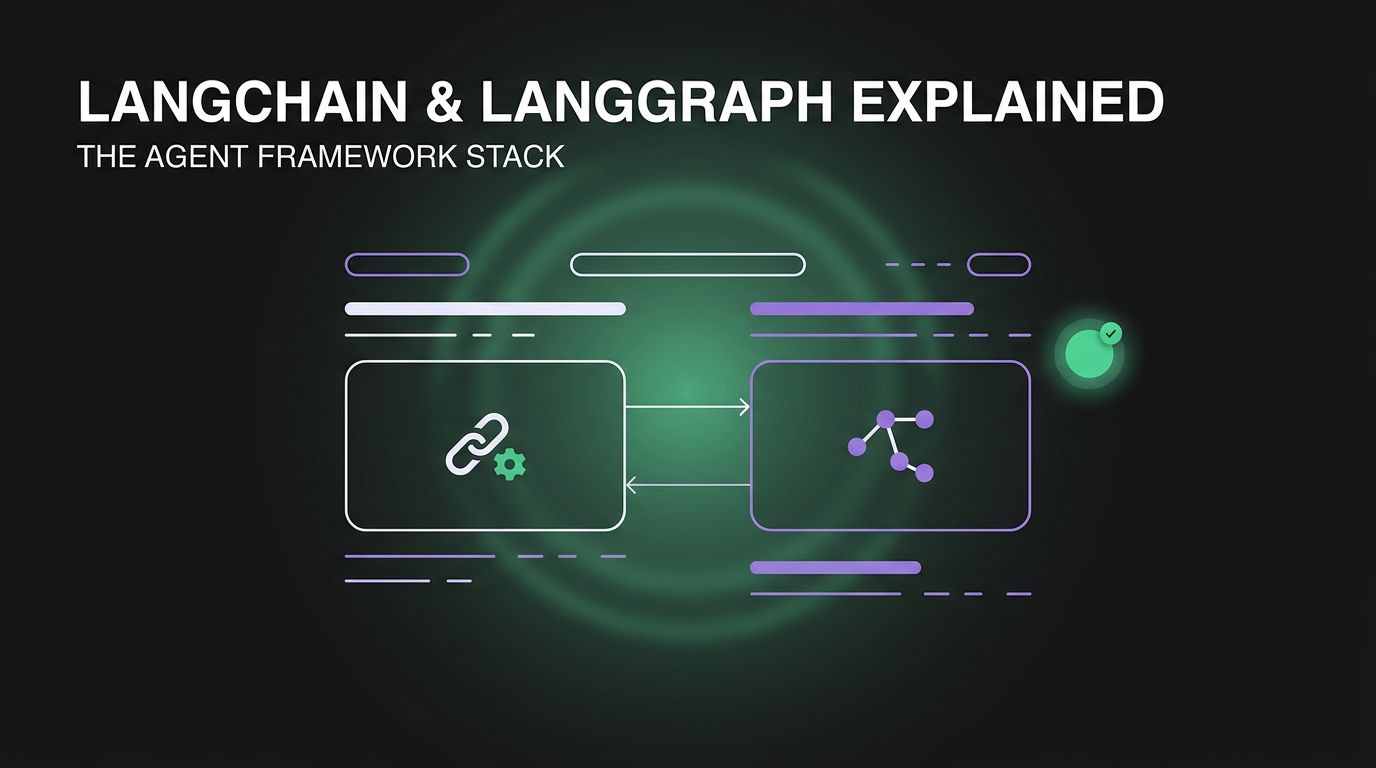
LangGraph models agents as state graphs: nodes do work, edges control flow. That graph abstraction is more work upfront than a “just call this function” API, but it pays off when you need durable, resumable, observable workflows. It’s the framework most teams reach for when an agent has to survive real production traffic — community benchmarks cite 200-500ms LLM-call latency and ~1.2GB median memory footprints in orchestration setups.
Pick this if: you’re building stateful, multi-step agent workflows that need debugging, checkpointing, and human-in-the-loop control.
Watch out for: the learning curve. The graph model is powerful but not intuitive on day one.
2. OpenClaw — The Self-Hosted Phenomenon
250K+ stars in 60 days. OpenClaw is a self-hosted gateway connecting chat platforms (WhatsApp, Slack, Telegram, Discord, and more) to an agent runtime. Its three-layer architecture and seven-stage agentic loop make it the clearest reference implementation of how agents actually work — I broke down the internals in our OpenClaw architecture teardown.
Pick this if: you want a personal AI assistant accessible from the chat apps you already use, running on your own hardware.
Watch out for: light safety scaffolding. You’re responsible for sandboxing and auth.
3. Hermes Agent — The One That Learns
Nous Research’s Hermes is the most credible “agent that gets better over time” — it extracts reusable skills from solved problems and carries memory across sessions. The catch is the benefit is zero on day one and compounds over weeks. Here’s how the self-improving loop actually works.
Pick this if: your work is recurring and you want an agent that stops re-solving the same problems.
Watch out for: cold start. Don’t evaluate it after one session.
4. CrewAI — Fastest to a Demo
CrewAI’s role-based paradigm (“you’re the researcher, you’re the writer”) is the most intuitive way to spin up a multi-agent team. It pulls millions of monthly downloads for good reason: you go from idea to working crew in an afternoon. CrewAI 1.0 hit GA in 2026.
Pick this if: you want a multi-agent system working today and value speed over fine-grained control.
Watch out for: you trade control for convenience. Complex orchestration eventually pushes you toward LangGraph.
5. OpenAI Agents SDK — The Simple Start
The lowest-friction entry point if you’re already in the OpenAI ecosystem. Clean primitives for tools, handoffs, and guardrails. Less opinionated than the others, which is both a feature and a limitation.
Pick this if: you want minimal abstraction and a gentle on-ramp.
Watch out for: OpenAI-centric defaults. Routing through an OpenAI-compatible gateway frees you to use other models.
6. Smolagents — Minimalism as a Feature
Hugging Face’s sub-1,000-LOC framework for code-first agents. If you find the big frameworks bloated, Smolagents is a breath of fresh air — agents that write and run code, with almost no ceremony.
Pick this if: you want to understand every line and dislike heavy abstractions.
Watch out for: few batteries included. You’ll build more yourself.
7. AutoGen — Powerful but Slowing
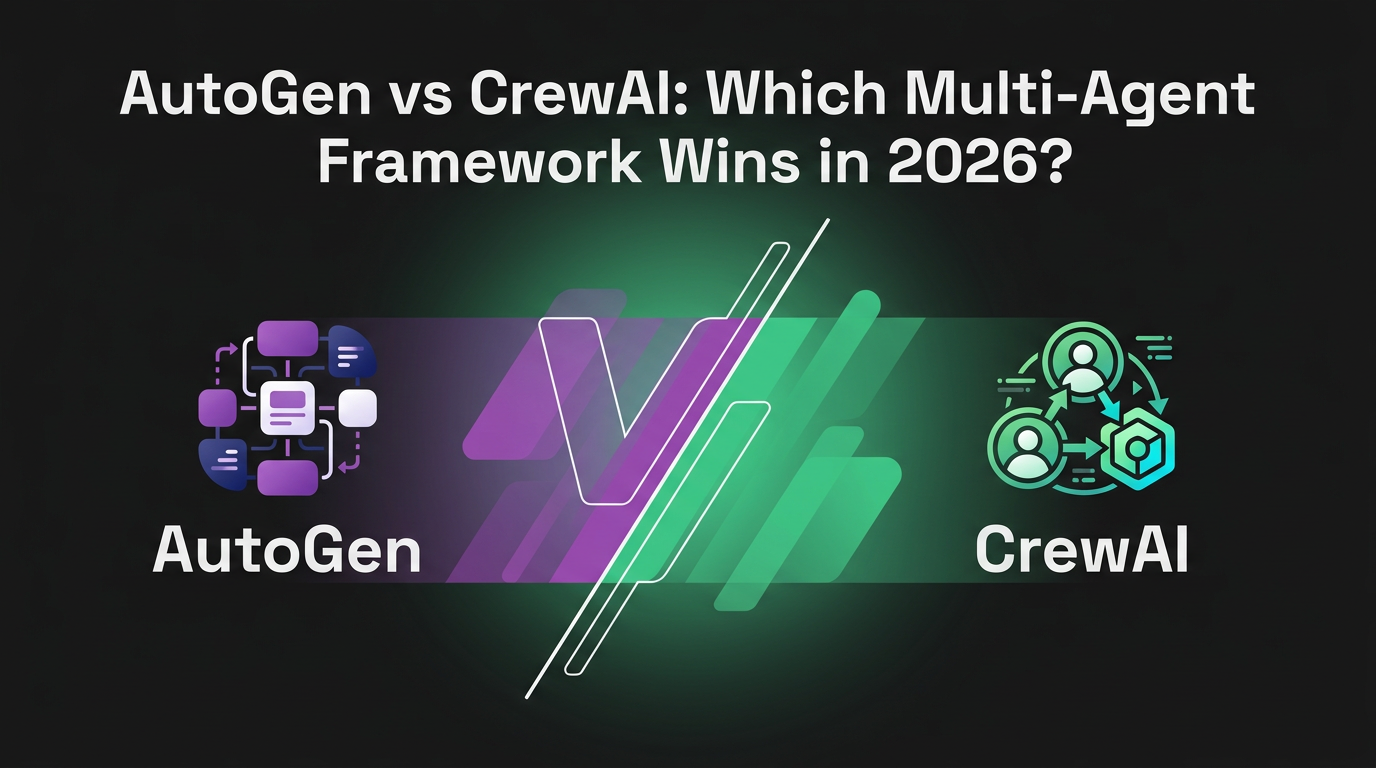
Microsoft’s AutoGen pioneered conversational multi-agent patterns and still powers enterprise deployments. But as of 2026 it’s effectively in maintenance mode, with development energy shifting elsewhere. Great architecture, uncertain trajectory.
Pick this if: you have an existing AutoGen investment or need its specific conversation patterns.
Watch out for: maintenance mode. Check recent commit activity before committing.
8. LlamaIndex Agents — RAG-First
If your agent’s primary job is reasoning over your documents, LlamaIndex’s retrieval-first design is purpose-built for it. Agents are a layer on top of best-in-class RAG.
Pick this if: retrieval and document Q&A are the core of your agent.
Watch out for: the retrieval-first mindset can feel heavy if RAG isn’t your main use case.
9. Pydantic AI — Type Safety First
Built by the Pydantic team, this brings real type safety and structured outputs to agents. If you’ve been burned by agents returning malformed JSON, the validation-first approach is refreshing.
Pick this if: you value type safety and structured, validated outputs.
Watch out for: younger ecosystem, fewer integrations than the incumbents.
10. Semantic Kernel — The Enterprise .NET Option
Microsoft’s SDK for embedding agents into .NET (and Python) enterprise apps. If you live in the Microsoft stack, this is the path of least resistance.
Pick this if: you’re a .NET shop or deep in the Microsoft ecosystem.
Watch out for: Microsoft-stack gravity — it pulls you toward Azure defaults.
The Model Layer: The Choice Underneath the Choice
Here’s the thing every one of these frameworks has in common: they all need an LLM backend, and they all support OpenAI-compatible APIs. That means your framework choice and your model choice are independent decisions.
Routing any of these through a gateway like SandBase gives you 300+ models behind one endpoint, automatic fallback, and the ability to mix models by task — a strong model for planning, a cheap one for routine work. You’re never locked into one provider’s pricing or uptime.
# Works with LangGraph, CrewAI, OpenAI Agents SDK, etc.
from openai import OpenAI

client = OpenAI(
    base_url="https://api.sandbase.ai/v1",
    api_key="your-sandbase-api-key"
)
# Now any framework using this client can reach 300+ models
My Honest Recommendation
If you’re starting fresh and want production-grade: LangGraph. If you want a personal assistant you control: OpenClaw or Hermes (read our head-to-head to choose). If you want a multi-agent demo by end of day: CrewAI. Everything else on this list is a good fit for specific niches, not a default.
FAQ
Q: Which AI agent framework is best for beginners?
CrewAI or the OpenAI Agents SDK. Both get you to a working agent fastest with the least conceptual overhead. LangGraph is more powerful but steeper.
Q: Is OpenClaw better than LangGraph?
They solve different problems. OpenClaw is a self-hosted personal assistant gateway. LangGraph is a workflow orchestration library you embed in your own app. Comparing them is like comparing a car to an engine.
Q: Should I avoid AutoGen because it’s in maintenance mode?
Not necessarily — the code still works. But for a new project, prefer something with active development. Check the repo’s recent commits before deciding.
Q: Do these frameworks lock me into a specific LLM?
No. All major frameworks support OpenAI-compatible APIs, so you can use any provider or a router like SandBase. Your framework and model choices are independent.
Q: What’s the most production-ready option in 2026?
LangGraph, by consensus. It’s designed for durable, observable, resumable workflows and has the strongest enterprise track record. CrewAI 1.0 and Semantic Kernel are also solid production choices depending on your stack.