Best AI Sandboxes for Agent Development in 2026
A comparison of AI sandboxes for agent development in 2026: E2B, Modal, Daytona, and self-hosted options. Cold-start latency, isolation, and pricing.
TL;DR — If your agent runs code it generated, you need a sandbox. The real choice is the isolation model (container vs microVM), cold-start latency (200ms to several seconds), and whether you self-host or use a managed service. E2B and Modal lead the managed space; gVisor and Firecracker underpin the serious isolation. Pick by how fast you need cold starts and how hostile you assume the code is.
Why You Can’t Skip This
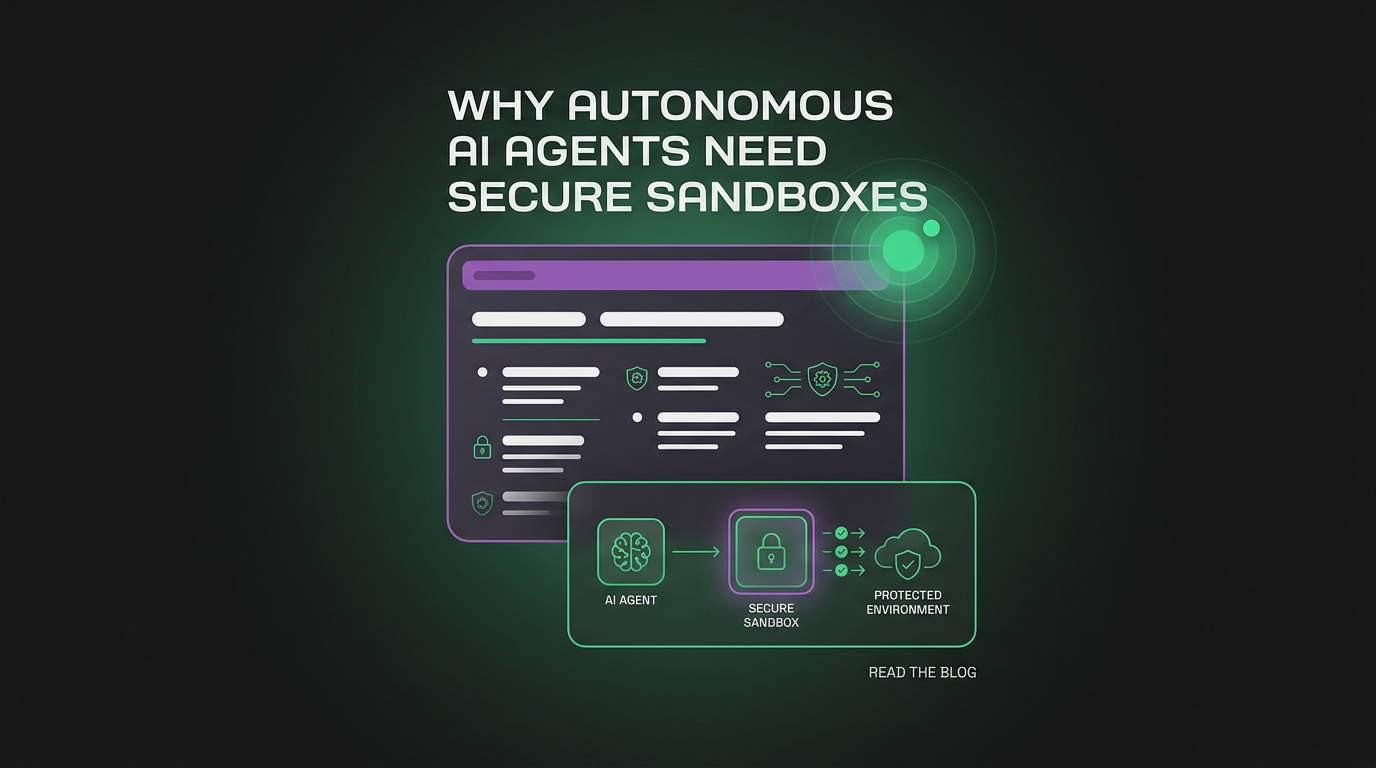
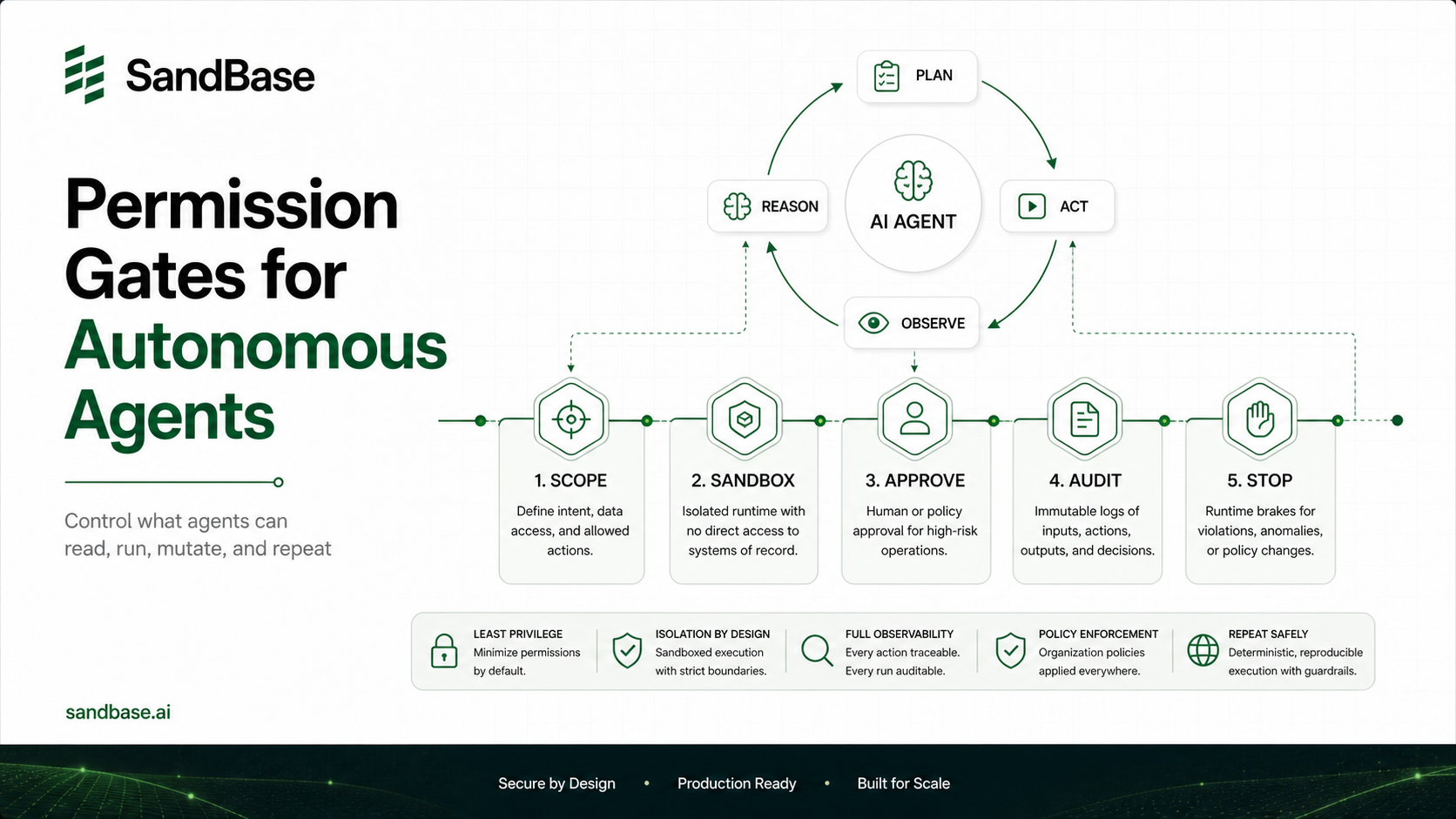
An AI agent that writes and runs code is running untrusted code on a machine — full stop. The model has no concept of consequences, and a prompt injection can turn it into an attacker’s shell. We argued the full case in why autonomous agents need secure sandboxes; this article assumes you’re sold and asks the next question: which sandbox?
The market matured fast in 2025-2026. There are now real options with different trade-offs, not just “run it in Docker and hope.” Here’s how they actually compare when you’re building agents.
The Three Isolation Models
Everything reduces to how strongly the sandbox isolates the guest from the host.
Containers (Docker, plain). Process-level isolation via namespaces and cgroups. Fast to start, low overhead, but the kernel is shared. A kernel exploit escapes the container. Fine for trusted-ish code, risky for fully arbitrary agent-generated code.
Sandboxed runtimes (gVisor). A user-space kernel intercepts syscalls, giving stronger isolation than plain containers without full VM overhead. Google uses gVisor for exactly this. Slightly higher syscall latency, much smaller attack surface.
MicroVMs (Firecracker). Each sandbox is a real, tiny virtual machine with its own kernel. This is the strongest practical isolation — a guest kernel compromise doesn’t reach the host. Firecracker, which powers AWS Lambda, boots a microVM in ~125ms. This is the gold standard for running genuinely untrusted code.
| Isolation model | Boot time | Isolation strength | Overhead |
|---|---|---|---|
| Plain container | 50-200ms | Weak (shared kernel) | Lowest |
| gVisor | 100-300ms | Strong (syscall filter) | Low-medium |
| Firecracker microVM | ~125ms-1s | Strongest (own kernel) | Medium |
The counterintuitive bit: microVMs boot nearly as fast as containers now. Firecracker’s ~125ms boot demolished the old assumption that VMs are too slow for per-request isolation. For agents, this means you can afford strong isolation without killing latency.
The Managed Options
Most teams shouldn’t build sandbox infrastructure from scratch. The managed services:
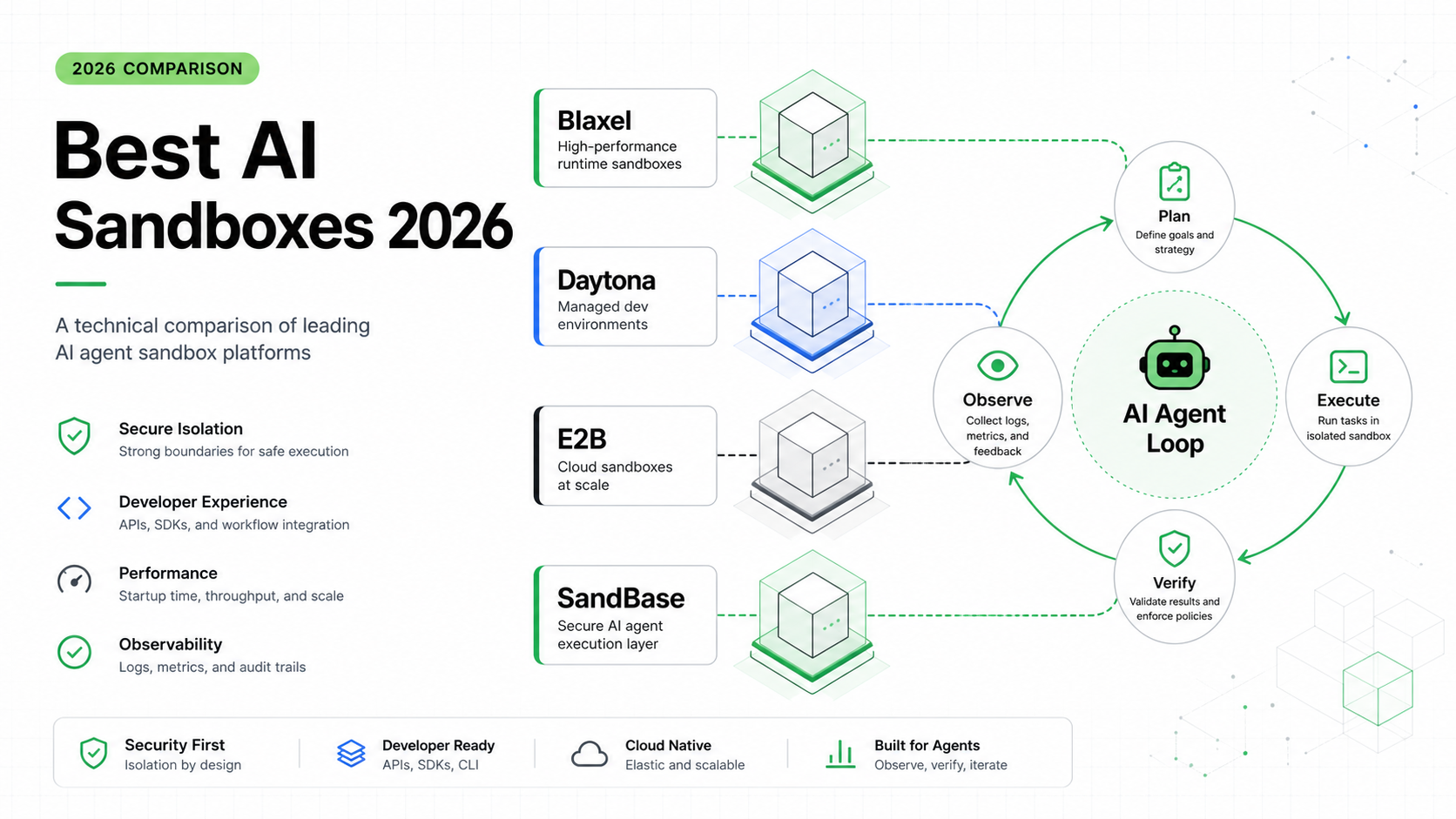
E2B. Purpose-built for AI agents. Gives you a sandboxed cloud environment (built on Firecracker) with an SDK to run code, manage files, and stream output. Sub-second cold starts, designed around the agent code-execution loop. The closest thing to a default choice for agent developers. (E2B is open-source.)
# E2B sandbox - run agent-generated code in isolation
from e2b import Sandbox

sandbox = Sandbox()
result = sandbox.run_code("print(sum(range(100)))")
print(result.logs)  # output from the isolated environment
sandbox.kill()
Modal. Broader serverless compute platform, not agent-specific, but widely used to run agent workloads. Strong for GPU-backed tasks and batch jobs. More general than E2B, which means more setup for the pure agent-execution case.
Daytona and others. A growing field of dev-environment and sandbox providers. Daytona targets fast, disposable dev environments that map well to agent workspaces.
Self-hosted (Firecracker / gVisor directly). Maximum control and lowest per-run cost at scale, but you own the orchestration, snapshotting, and security hardening. Worth it only when volume justifies the engineering, or compliance forbids third-party execution.
Cold Start Is the Metric That Bites
For interactive agents, cold-start latency is the number that determines user experience. An agent that pauses 4 seconds to spin up a sandbox before every code execution feels broken.
The leaders solve this with pre-warmed pools and snapshotting: keep sandboxes ready, or snapshot a booted environment and restore it in milliseconds. When you evaluate a provider, ignore the marketing and measure your cold start with your dependencies installed. A clean Python sandbox booting in 200ms means little if your agent needs numpy, pandas, and three system packages that add 3 seconds of install time on every cold start.
The fix most providers offer is custom snapshots: bake your dependencies into the base image once, restore the whole thing fast. This is the same pattern OpenHands uses with its runtime images — see the coding agent teardown for how that runtime fits the action-observation loop.
How to Choose
Use E2B when:
- You’re building agents and want the fastest path to safe code execution
- You need sub-second cold starts and an agent-shaped SDK
- You don’t want to operate infrastructure
Use Modal when:
- Your workload includes GPU tasks or heavy batch compute, not just code snippets
- You’re already using it for other serverless work
- You need more general compute than a pure execution sandbox
Self-host Firecracker/gVisor when:
- Your volume is high enough that per-run managed pricing hurts
- Compliance requires code execution stay in your infrastructure
- You have the engineering capacity to own orchestration and hardening
Plain Docker is acceptable only when:
- The code is semi-trusted (your own templates, not arbitrary model output)
- You accept the shared-kernel risk
- It’s a prototype, not production handling untrusted input
The Trade-off Nobody Likes
Stronger isolation, faster cold starts, lower cost, less operational burden — you get three of four. Managed Firecracker services (E2B) give you strong isolation, fast starts, and low ops burden, but you pay per run. Self-hosting gives you isolation, speed, and low marginal cost, but you own the ops. Plain Docker gives you speed, low cost, and low ops, but sacrifices isolation. Choose which one you’re willing to give up based on your threat model and scale.
FAQ
Do I really need a microVM, or is Docker enough?
If the code is arbitrary model output that an attacker could influence via prompt injection, you want microVM-level isolation (Firecracker) or at least gVisor. Plain Docker shares the host kernel, so a kernel exploit escapes. Docker is acceptable only for semi-trusted code in non-production contexts.
Is E2B or Modal better for agents?
E2B is purpose-built for the agent code-execution loop, with an SDK shaped around running snippets, managing files, and streaming output, plus sub-second cold starts. Modal is a broader serverless platform that’s better when you also need GPU or heavy batch compute. For pure agent execution, E2B is the more direct fit.
How much does cold start actually matter?
A lot for interactive agents, little for async ones. If a user waits for the agent’s response, a multi-second cold start per execution ruins the experience. For background agents that run for minutes, cold start is noise. Measure cold start with your real dependencies installed, not a clean image.
Can I run a sandbox on my own servers?
Yes, with Firecracker or gVisor directly. You get maximum control and the lowest per-run cost at scale, but you take on orchestration, snapshotting, and security hardening. It’s worth it at high volume or under compliance constraints, overkill otherwise.
What about just using a serverless function?
Serverless functions (Lambda, Cloud Functions) are sandboxes — Lambda runs on Firecracker. They work for stateless execution but are awkward for the stateful, interactive loop agents need (persistent filesystem across steps, long sessions). Agent-specific sandboxes handle that state better.
Key Takeaways
- If your agent runs generated code, a sandbox is mandatory. The choice is which isolation model, not whether.
- The three models are plain containers (weak, fast), gVisor (strong syscall filtering), and Firecracker microVMs (strongest, own kernel). MicroVMs now boot in ~125ms, so strong isolation no longer means slow.
- E2B is the most direct fit for agent code execution; Modal suits broader/GPU workloads; self-hosting Firecracker pays off at scale or under compliance needs.
- Cold start is the metric that decides UX. Measure it with your real dependencies, and use custom snapshots to keep it fast.