Best AI Sandboxes for Agents in 2026
Compare Blaxel, Daytona, E2B, and SandBase for AI agent sandboxing in 2026, from code execution to runtime policy.
TL;DR - The best AI sandbox in 2026 depends on what you mean by “sandbox.” Use E2B when you need a clean code-execution sandbox API. Use Daytona when the sandbox is closer to a governed developer workspace. Use Blaxel when you want a broader agent platform around sandboxes, functions, and deployments. Use SandBase when sandboxing needs to sit next to model access, tool execution, MCP-style boundaries, and production runtime policy.
AI agent builders keep using the same word for four different problems: sandbox.
Sometimes a sandbox means “run this Python snippet safely.” Sometimes it means “give my coding agent a full workspace.” Sometimes it means “deploy an agent service with isolated execution.” And sometimes it means “put every model and tool action behind a production boundary.”
Those are related, but they are not the same buying decision.
This comparison focuses on four platforms that are showing up in the 2026 agent infrastructure conversation: Blaxel, Daytona, E2B, and SandBase. It is narrower than our earlier guide to AI sandboxes for agent development, which covered isolation models such as containers, gVisor, Firecracker, and self-hosted options. Here we are comparing managed platforms from the perspective of a team building production agents.
Quick Comparison
| Platform | Best fit | The sandbox is mostly | Strongest when | Watch out for |
|---|---|---|---|---|
| Blaxel | Agent platform teams | Agent runtime and execution platform | You want hosting, sandboxes, jobs, and agent deployment in one platform | May be more platform than you need for simple code execution |
| Daytona | Coding agents and dev environments | Secure development workspace | You need repo-aware environments, longer sessions, and developer-style workflows | Heavier than an ephemeral code sandbox |
| E2B | Code execution inside agents | Cloud code sandbox | You need a direct API for running generated code safely | You still assemble the surrounding agent runtime and policy layer |
| SandBase | Production agent infrastructure | Runtime boundary around models, tools, and sandboxed execution | You want model access, tool execution, MCP boundaries, and operational controls together | Best fit when you care about the whole agent runtime, not just one execution primitive |
The short version: E2B is the sharpest primitive, Daytona is the workspace-first option, Blaxel is the agent-platform option, and SandBase is the runtime-boundary option.
What Should an AI Sandbox Do in 2026?
For a production agent, “sandbox” should mean more than an isolated container. At minimum, it should help with five things:
- Isolation. Agent-generated code, tool calls, files, and network access need boundaries.
- Repeatability. The environment should be reproducible enough for debugging.
- State control. Some tasks need short-lived sandboxes; others need a persistent workspace.
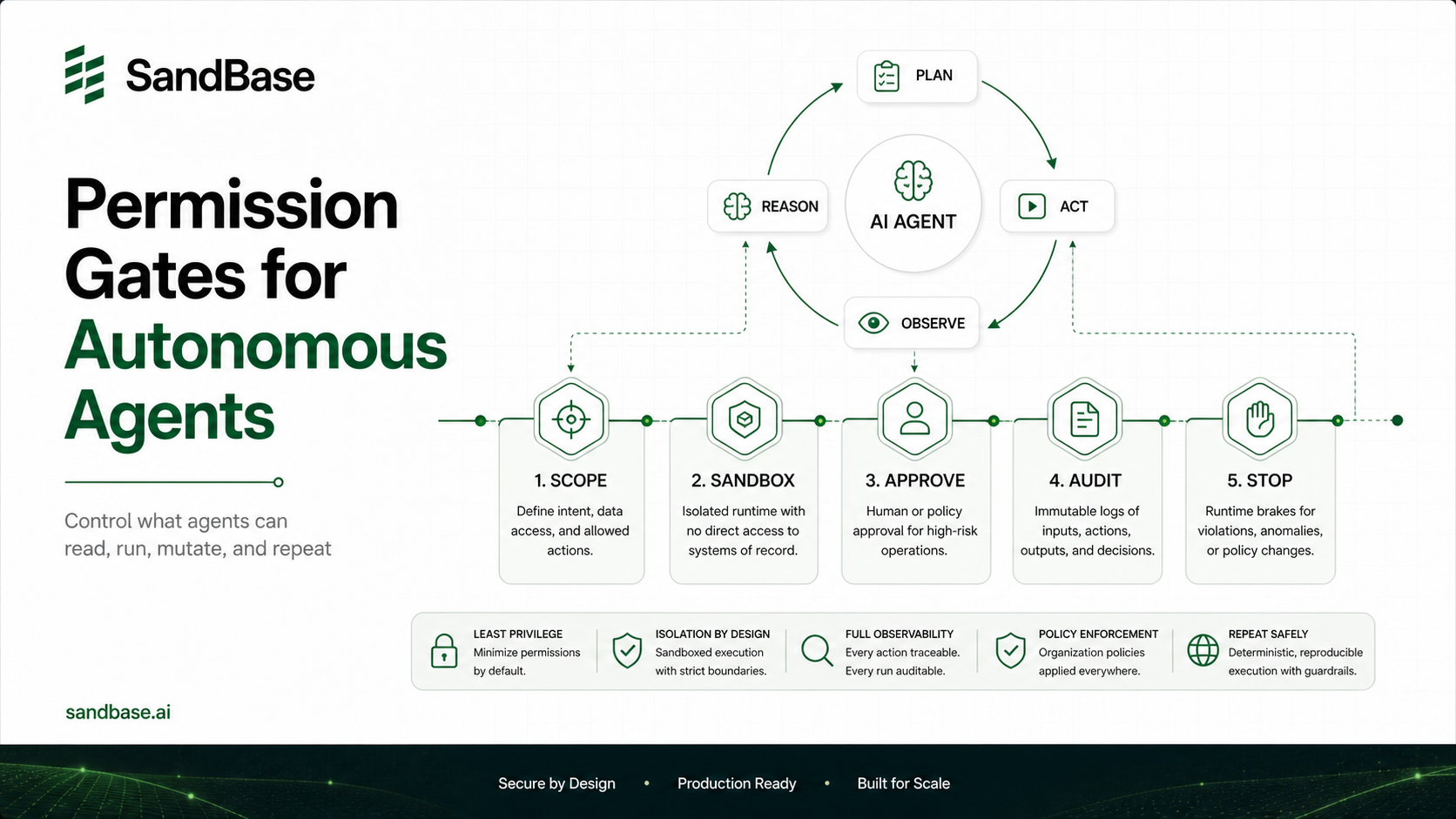
- Policy enforcement. The system should know what the agent is allowed to do before it acts.
- Observability. Logs, outputs, failures, cost, and tool activity should be visible after the run.
The platforms below emphasize different parts of that stack. That is good. A code interpreter, a coding-agent workspace, and a production runtime should not all look identical.
E2B: Best for Direct Code Execution
E2B is the easiest platform to explain: it gives AI applications a cloud sandbox for running code. If your agent generates Python, JavaScript, shell commands, data-analysis scripts, or small programs, E2B is built for that loop.
That makes it a strong default for product teams building:
- code interpreters
- data-analysis agents
- coding copilots
- evaluation pipelines that execute generated code
- user-facing agents that need temporary file and process isolation
The product shape is API-first. You create a sandbox, run code, manage files, capture output, and shut the sandbox down. That directness is a feature. Many teams do not need a full agent platform; they need a reliable execution boundary that can plug into their existing app.
The trade-off is that E2B is mainly the execution primitive. You still need to decide how your agent stores memory, how tool permissions are approved, how model routing works, how runs are audited, and how the full action loop is governed. For many teams, that is fine. They want a specialized sandbox and they will build the rest.
Choose E2B when the core sentence is: “My agent needs to run generated code safely.”
Daytona: Best for Agent Workspaces
Daytona is closer to the developer-environment side of the market. Instead of thinking only about a snippet of code, Daytona is useful when the agent needs something that resembles a workspace: a repository, dependencies, a filesystem, a longer session, and a place where code can evolve across steps.
That is a different use case from “run this one Python cell.” Coding agents often need to inspect a repo, modify files, run tests, read logs, and continue from previous context. In that world, the sandbox is not just a process boundary. It is the agent’s working room.
Daytona is attractive for teams building:
- coding agents that operate on repositories
- internal developer assistants
- AI pair-programming workflows
- governed cloud development environments
- agents that need repeatable workspace setup
The trade-off is weight. A workspace-oriented environment can be more than you need for fast, stateless execution. If your agent only needs a quick sandbox to calculate something, parse a file, or run a small generated script, a dedicated code-execution API may feel simpler.
Choose Daytona when the core sentence is: “My agent needs a secure workspace, not just a process.”
Blaxel: Best for Agent Platform Builders
Blaxel sits closer to the agent-platform category. Its public positioning is not just “sandbox this command”; it is about infrastructure for deploying and running agents, with sandboxes as part of a broader platform surface.
That matters because many teams do not want to stitch together separate pieces for agents, functions, model access, scheduled jobs, and runtime hosting. They want a higher-level platform that can carry more of the agent lifecycle.
Blaxel is worth evaluating if you are building:
- hosted agents
- agent APIs or services
- background jobs driven by agents
- multi-component agent systems
- teams that prefer a managed agent platform over composing primitives
The trade-off is scope. If your only problem is “run untrusted code for 500 milliseconds,” a broader agent platform may add concepts you do not need. But if you are turning agent prototypes into deployed services, the broader surface can be useful.
Choose Blaxel when the core sentence is: “I want a platform for running agents, and sandboxing is part of that platform.”
SandBase: Best for Runtime Boundaries Around Agents
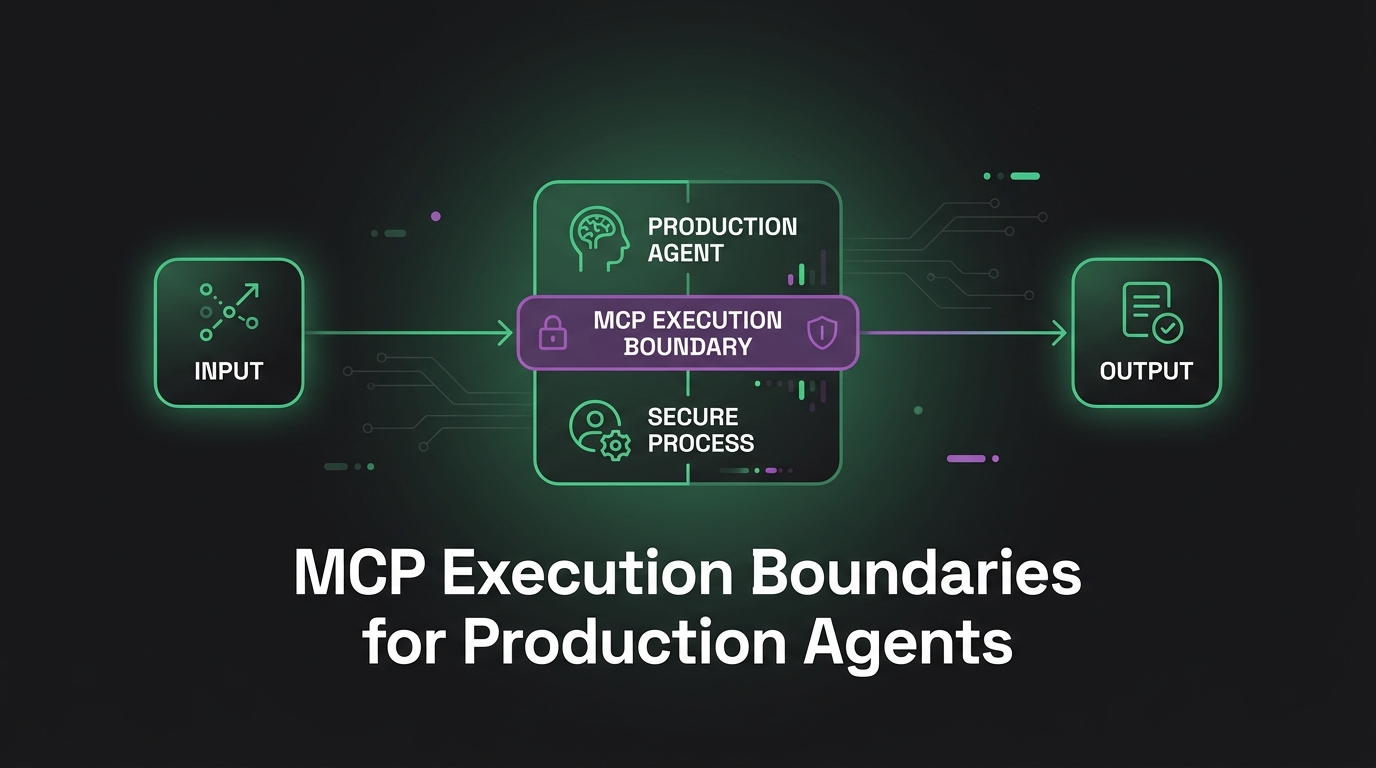
SandBase approaches the problem from the production-runtime side. A sandbox is necessary, but it is not enough. Production agents also need model access, tool execution boundaries, MCP-style integration control, pre-action authorization, logs, status visibility, and a way to reason about what happened after the agent acts.
That is the difference between a sandbox and a runtime boundary.
For example, a production agent may need to:
- call a model
- choose a tool
- request permission before a sensitive action
- run code in a sandbox
- capture logs and outputs
- expose enough status for operators to trust the system
If each of those pieces lives in a separate platform, the engineering team has to build the policy layer between them. SandBase is designed for teams that want those boundaries closer together.
SandBase is a strong fit for:
- production AI agents with tool use
- teams adopting MCP and tool protocols
- apps that need model access plus execution controls
- agent platforms that need auditability and operational visibility
- teams that want sandboxing as part of the broader runtime, not a bolt-on
The trade-off is fit. If all you need is a single low-level execution primitive, a narrower sandbox API may be enough. SandBase makes the most sense when the sandbox is one part of a larger agent control plane.
Choose SandBase when the core sentence is: “My agent needs model, tool, and execution boundaries in one runtime layer.”
Decision Guide
Here is the practical decision tree:
| If your main need is… | Start with… | Why |
|---|---|---|
| Execute generated code safely | E2B | It is the cleanest direct sandbox API for code execution |
| Give a coding agent a repo-aware workspace | Daytona | It is closer to a managed development environment |
| Deploy and host agent services | Blaxel | It treats sandboxing as part of a broader agent platform |
| Govern model calls, tools, MCP, and sandboxed actions together | SandBase | It focuses on runtime boundaries for production agents |
| Learn the lower-level security model | Firecracker, gVisor, containers | Useful when deciding how much isolation you need |
If you are still early, do not over-optimize. Pick the platform that matches the first bottleneck:
- If users wait on generated code, optimize cold start and execution output.
- If agents edit repos, optimize workspace reproducibility.
- If agents are becoming services, optimize deployment and lifecycle.
- If agents touch real tools, optimize permissions, audit trails, and boundaries.
The Evaluation Checklist
Before choosing any AI sandbox provider, run the same checklist:
Isolation. What is the isolation model? Is it a container, sandboxed runtime, microVM, or platform-level boundary?
Cold start. How fast does a real environment start with your dependencies installed?
State model. Is the sandbox ephemeral, persistent, snapshot-based, or workspace-based?
Network controls. Can you restrict outbound access, secrets, and external calls?
File controls. Can you inspect, persist, export, or destroy files cleanly?
Tool policy. Can you approve or block actions before they run?
Observability. Can you see logs, command output, tool calls, failures, cost, and run history?
Developer experience. Does it fit your stack and deployment path?
Pricing shape. Are you paying for runs, sessions, compute time, storage, seats, or platform usage?
The best platform is not the one with the longest feature list. It is the one whose boundaries match your agent’s risk.
Where the Market Is Going
The sandbox market is moving up the stack.
In 2024, the question was often: “How do I keep generated code from escaping Docker?” In 2026, the question is broader: “How do I let agents act without giving them unlimited authority?”
That is why the category now includes code sandboxes, developer workspaces, hosted agent platforms, and runtime control layers. The agent loop is no longer only model output. It is model output plus execution, tools, files, network, verification, and observability.
That trend also explains why MCP execution boundaries and pre-action authorization matter. The more capable the agent becomes, the more important it is to define what can happen before the action actually runs.
FAQ
What is the best AI sandbox for agents in 2026?
There is no single best sandbox for every team. E2B is a strong default for code execution, Daytona fits workspace-heavy coding agents, Blaxel fits teams looking for a broader agent platform, and SandBase fits teams that want model, tool, and execution boundaries in one runtime layer.
Is E2B better than Daytona?
They optimize for different jobs. E2B is more direct for running generated code in a cloud sandbox. Daytona is more natural when the agent needs a repository-aware workspace and longer developer-style sessions.
Is SandBase a replacement for E2B or Daytona?
Not exactly. SandBase is focused on the production runtime boundary around agents. For some teams it can reduce the need to stitch together separate model, tool, and execution systems. For teams that only need a narrow code sandbox, a specialized provider can still be the right choice.
Should I build my own sandbox?
Only if isolation, cost, compliance, or scale justify the engineering work. Self-hosting gives control, but you inherit orchestration, patching, snapshots, monitoring, and security hardening. Most teams should start with managed infrastructure and move lower only when the business case is clear.
Bottom Line
If you are comparing AI sandboxes in 2026, do not start with vendor names. Start with the job:
- code execution: E2B
- secure agent workspace: Daytona
- agent platform: Blaxel
- production runtime boundaries: SandBase
The winning architecture is rarely “one sandbox to rule them all.” It is the smallest boundary that keeps the agent useful, observable, and safe.