
Google News Research Brief
- Lab Skill
- v0.1.1
- Google News
Find out what has been reported on a news question, who reported it and which claims are confirmed, with a link for every line.
Cover
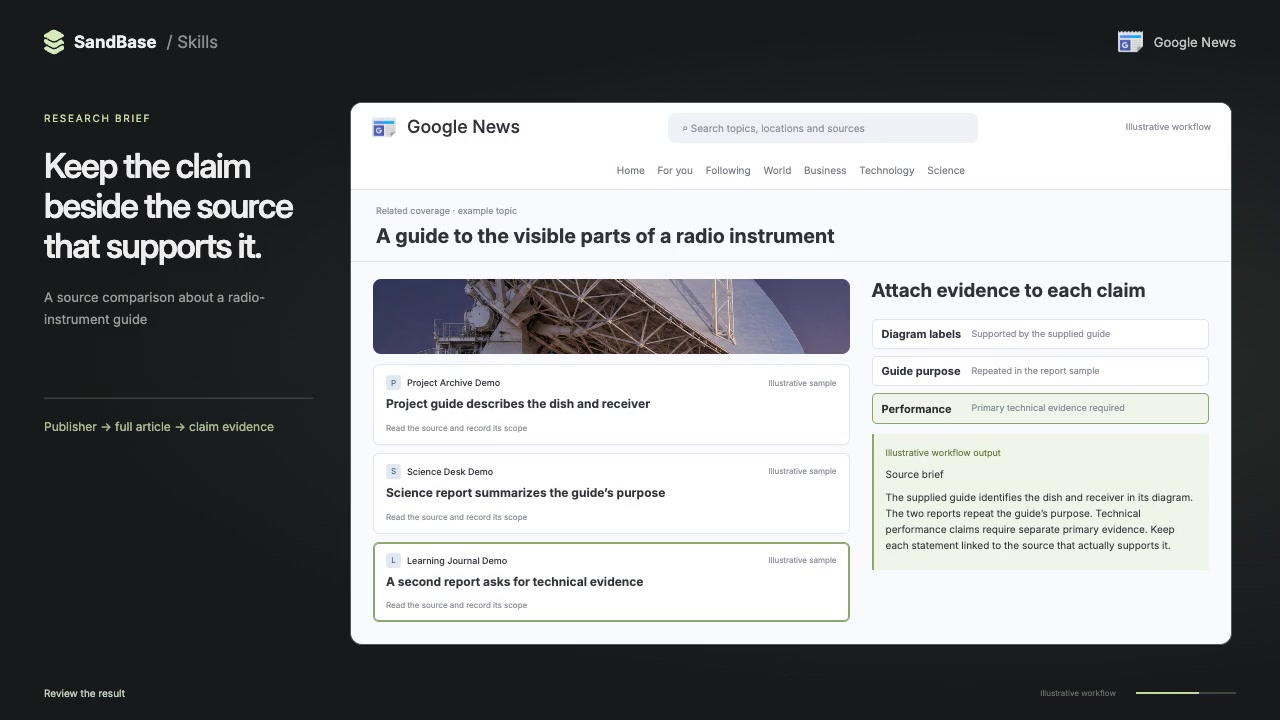
What you get
Bring the question, the region and language, and the period to cover. The Skill returns claims grouped from the coverage and marked primary source, corroborated, single report or contested, how publishers differ, open questions and a source list with publisher and time.
How it works
- 01
Scope and search
The Agent sets the region and language codes and turns your period into a date filter. It runs two to four Google News searches: the plain topic, the same sorted by date, and exact names or phrases from your question in quotes. Each call returns at most ten results, and repeated titles are dropped.
- 02
Find publishers and read
Result links point through google.com, so one request that does not follow redirects reveals each publisher. The five to ten most relevant results are fetched in one content call. Paywalled or blocking sites may not be readable; those claims rest on headline and snippet and are marked.
- 03
Group claims and label them
Articles reporting the same event or figure are grouped into claims, noting who reports each and the primary source they rely on. Each claim is labelled: primary means a source actually read, and corroborated means reported independently. Several outlets resting on one press release is repetition, not corroboration. Article dates stay separate from event dates.
FAQ
What does Google News Research Brief answer?
Google News Research Brief answers one news question with a short sourced brief: what was reported, by whom, which claims rest on a primary source or several independent publishers, and what is still unclear. It suits checking a story before writing about it.
What does corroborated mean here?
Google News Research Brief uses corroborated to mean reported independently by more than one publisher, not proven. Several outlets repeating one study or one press release counts as repetition. Primary is reserved for sources the Agent actually read. The brief shows which applies to each claim.
Are the search and reading calls billed?
Google News Research Brief calls the SandBase DataForSEO Google News search two to four times and the Exa contents tool once for several links. Each call is billed, including searches with no results. Inspect runs on the search and reading tools before any call; see https://www.sandbase.ai/pricing.
Does Google rank by accuracy?
No. Google News Research Brief notes that Google ranks by relevance, not by importance or accuracy. The top result is not necessarily the most reliable. The brief weighs claims by their sources rather than by rank. Relevance can favour older or broader stories, which is why several searches are run.
How current is the brief?
Google News Research Brief covers what the searches returned on the run date, and results change from hour to hour. A fresh article about an old study is labelled as such, because article dates and event dates are kept separate.
More Skills
All Google News Skills →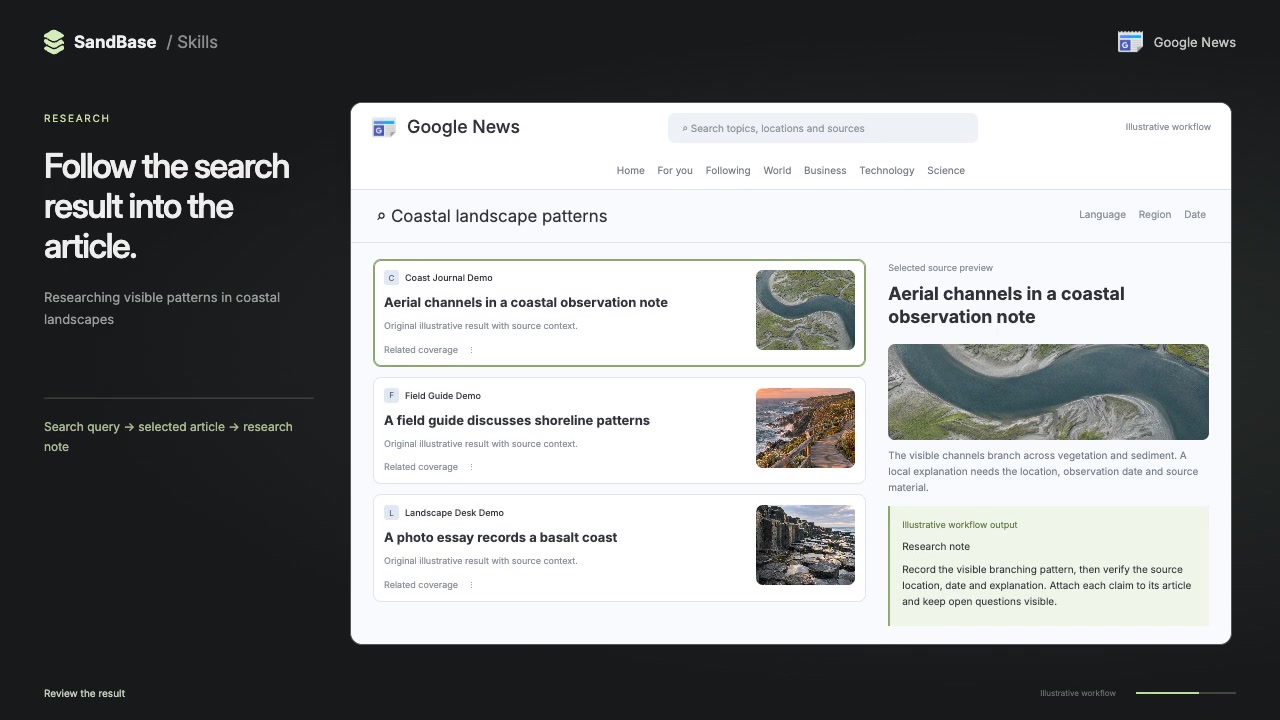
Google News Research
Search and monitor news articles across Google News through SandBase. Use when asked for news monitoring, current events research, news coverage analysis, or media tracking.
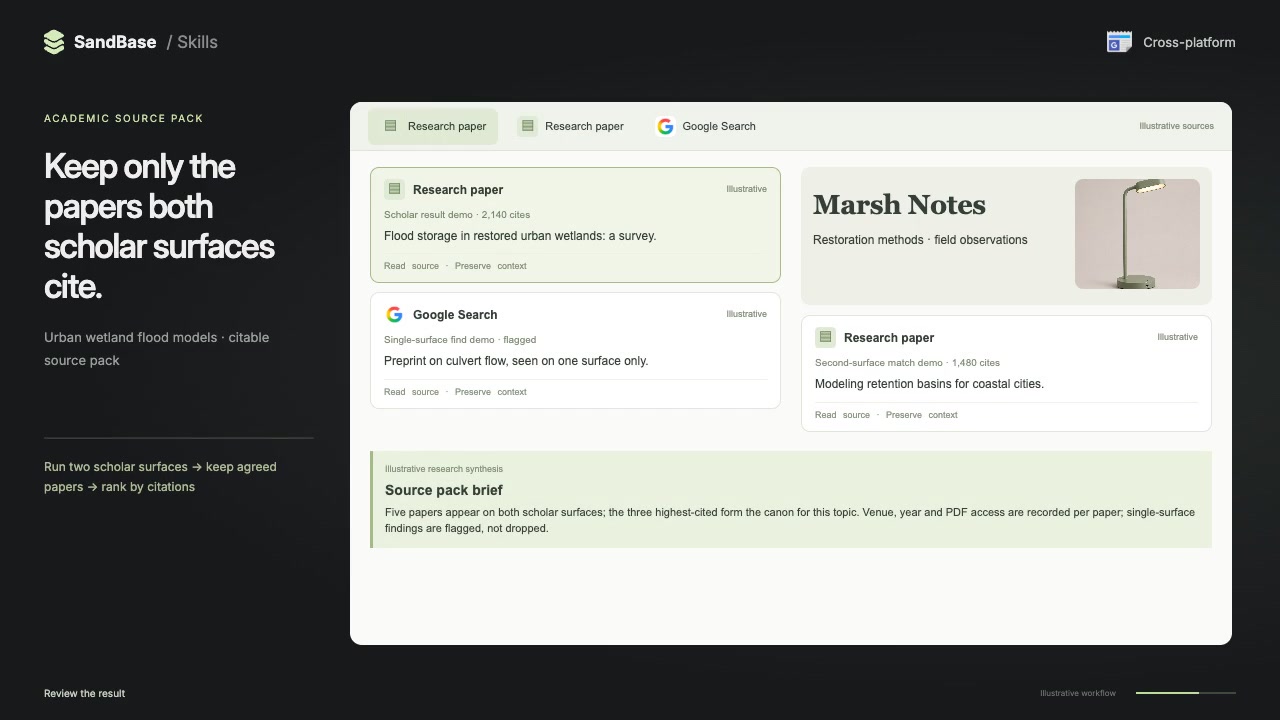
Academic Source Pack
Assemble a citable academic source pack for a topic through SandBase
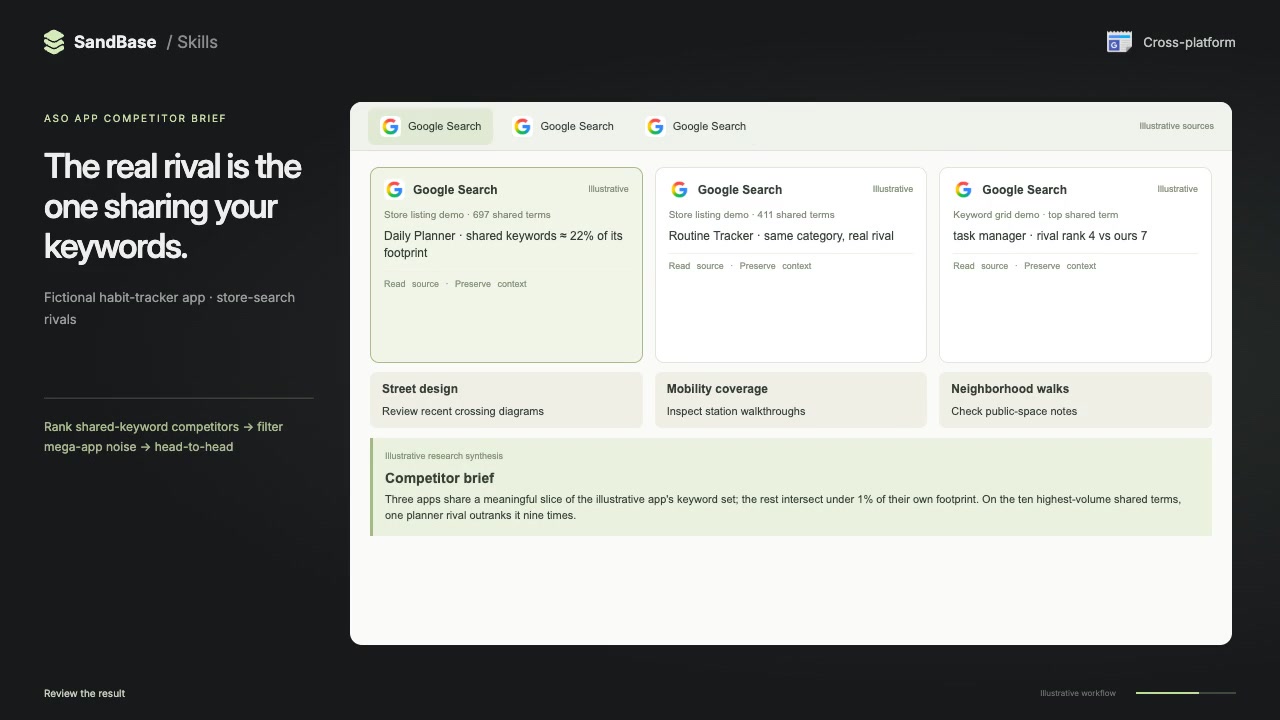
ASO App Competitor Brief
Map the App Store / Google Play apps that genuinely compete with one app through SandBase
ASO Keyword Brief
Build an App Store Optimization keyword brief through SandBase
Backlink Profile Teardown
Tear down a domain's backlink profile through SandBase
China Search Pack
Assemble a Chinese-web search pack for a query through SandBase