30 Days to Make an AI Infrastructure Startup Discoverable
A practical recap of how SandBase used 30 days to build public presence, technical content, open-source assets, and the first search visibility baseline.
TL;DR — We spent 30 days doing the unglamorous work behind developer distribution: publishing technical articles, cleaning up public profiles, building open-source assets, joining relevant conversations, and checking whether SandBase could be discovered through search. The result is not a victory lap. It is a clearer public foundation, a reusable operating system, and an honest next step: turn presence into search visibility and developer adoption.
SandBase is infrastructure for developers building production AI agents. That category is still forming. People are searching for agent runtimes, secure execution, sandboxed code runs, MCP tooling, loop engineering, and production guardrails, often using different words for the same underlying need.
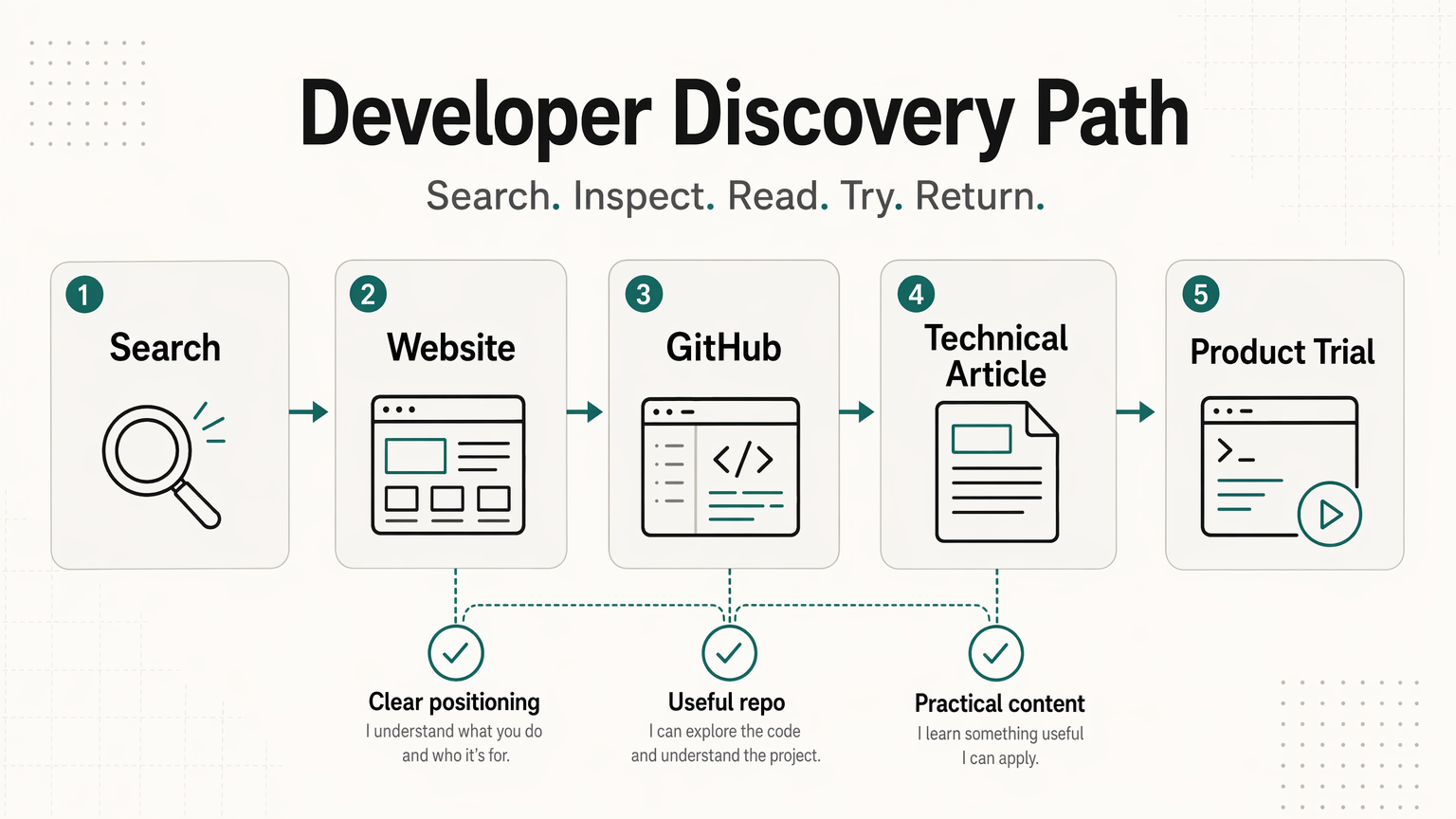
For the first month, we deliberately did not optimize for a launch spike. We optimized for something more basic: if a developer hears about SandBase, can they find the product, understand what it is, inspect the technical point of view, and follow the open-source trail?
That sounds simple. In practice, it meant building the boring surface area that makes a young infrastructure project legible.
What we built before asking for attention
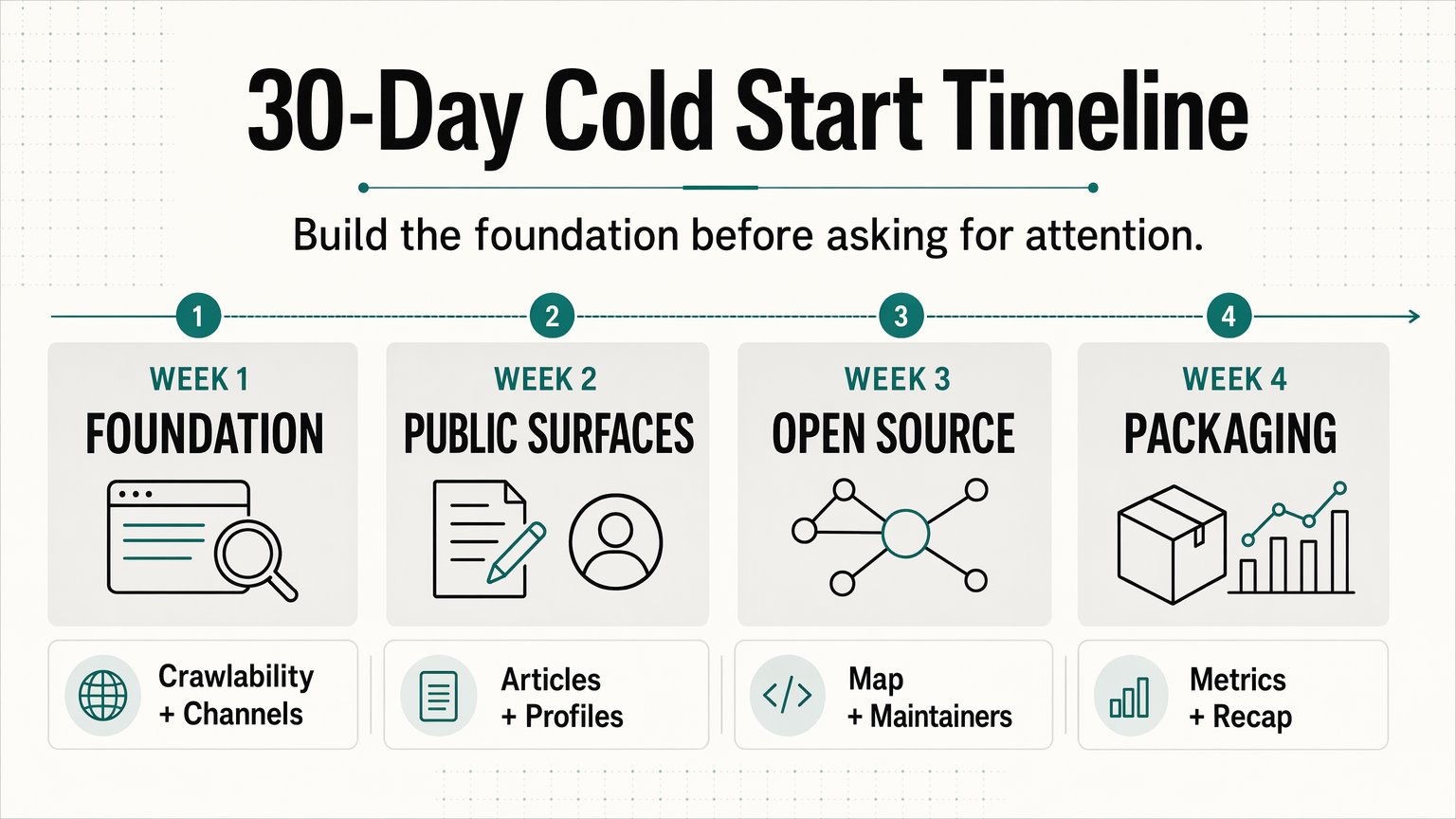
The 30-day sprint covered five workstreams.
First, we made the core narrative sharper. SandBase is not another agent framework. The product sits closer to the execution layer: running agent code in controlled environments, exposing model and tool APIs, and helping teams move from demos to production-grade agent workflows.
Second, we published technical content around the problems developers already recognize:
- why production agents need a runtime layer
- what secure sandboxes mean for autonomous agents
- how loop engineering changes the infrastructure requirement
- why MCP and tool protocols need durable execution and isolation underneath them
Third, we built open-source entry points. The strongest one is Awesome Agent Runtime, a curated map of 500 projects across agent infrastructure, runtimes, sandboxes, MCP, orchestration, evaluation, observability, and developer environments. We also prepared practical materials such as Agent Sandbox Cookbook for people who want concrete sandbox patterns instead of another abstract agent diagram.
Fourth, we connected the public channels: the website, blog, GitHub organization, LinkedIn, X, DEV Community, Discord, and profile pages. These channels should not all say the exact same thing, but they should point to the same center of gravity.
Fifth, we started measuring the part that matters most at this stage: discoverability.
The important metric was not likes
Early public metrics are usually small, and that is normal. A new infrastructure project should not pretend that one month of posting creates durable demand.
So we separated signal from vanity.
The useful question was not: “Did every post perform?”
The useful question was: “Can someone find SandBase through the paths a real developer would use?”
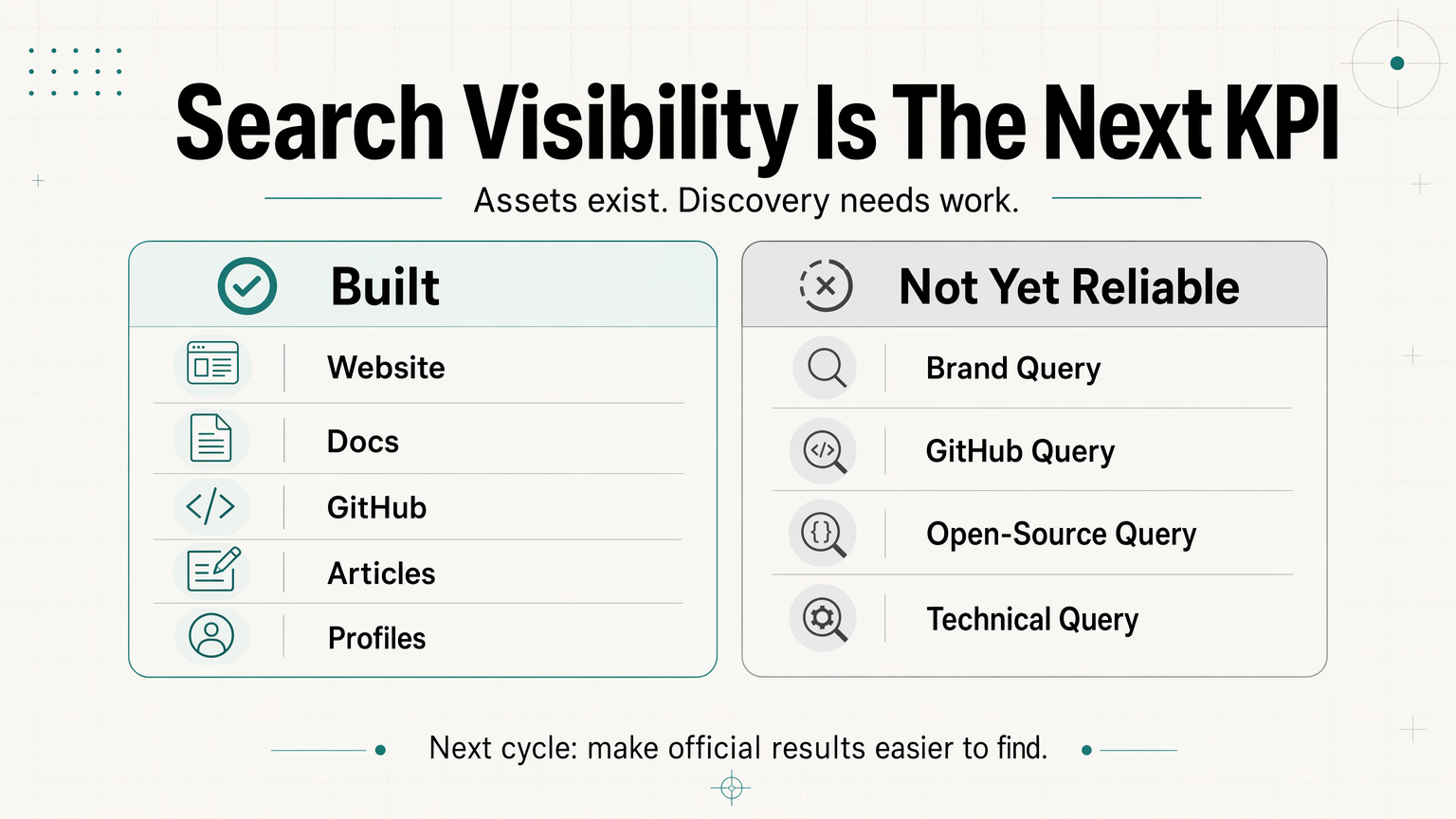
We checked branded and semi-branded searches such as:
SandBaseAI"SandBase.ai""sandbaseai" "github""awesome-agent-runtime"site:sandbase.ai SandBasesite:github.com/sandbaseai SandBasesite:dev.to/sandbaseai SandBase
The result was sobering but useful. The public assets exist, but search visibility is not yet stable enough. That gives the next 30 days a clear KPI: make official SandBase surfaces easier for search engines and developers to connect.
What changed by the end of the month
The main win is that SandBase now has a public system instead of scattered posts.
We have a blog with technical articles, open-source repositories with a clearer role, public social profiles, a repeatable daily operating workflow, and a topic map around production AI agent infrastructure.
The strongest content themes were:
- Runtime layer: frameworks decide what the agent does next; runtimes decide where it executes, how it resumes, and what limits it obeys.
- Secure execution: autonomous agents need a controlled environment when they generate and run code.
- Loop engineering: as the industry moves from prompts to loops, infrastructure becomes the difference between useful automation and expensive chaos.
- Developer discovery: technical founders need search, GitHub, docs, and community participation to reinforce one another.
The strongest open-source asset is still Awesome Agent Runtime. It gives us a reason to participate in the ecosystem without forcing every interaction into a product pitch. That matters. Developers can smell a thin backlink campaign from across the room.
What we learned
Developer distribution is less like shouting and more like leaving good trail markers.
One article is not enough. One GitHub repository is not enough. One LinkedIn post is not enough. But if all of them point to the same technical worldview, they start to compound.
The most important lesson from this month is that public presence and search presence are different.
Public presence means the assets exist. Search presence means the assets are consistently indexed, linked, named, and returned for the queries that matter. We made real progress on the first. The second is the next operating focus.
The next 30 days
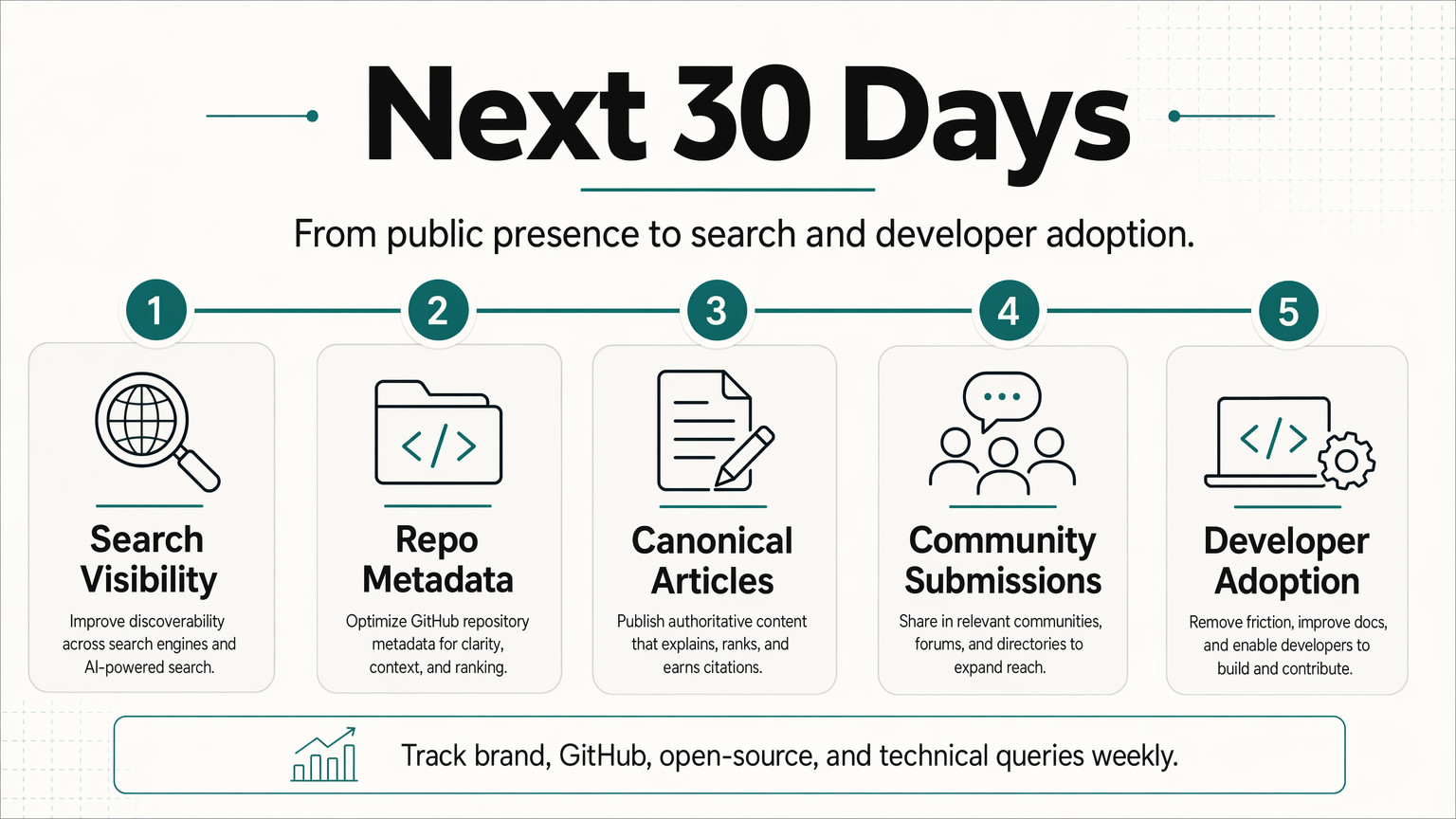
The next month is about converting the foundation into a stronger developer loop:
- Publish fewer, better technical pieces around runtime infrastructure, loop engineering, secure sandboxes, MCP execution, and production agent operations.
- Improve GitHub metadata, repo descriptions, topics, contribution paths, and cross-links.
- Keep expanding and maintaining Awesome Agent Runtime as a useful ecosystem map, not just a SandBase asset.
- Turn search checks into a weekly dashboard: branded terms, repo terms, blog URLs, and competitor-adjacent queries.
- Use social channels for visual summaries and discussion, while keeping the canonical explanations on the SandBase blog.
The goal is simple: when developers look for the infrastructure underneath serious AI agents, SandBase should appear as a useful, credible, technically grounded option.
That does not happen in a single launch day. It happens by making the project easier to find, easier to understand, easier to inspect, and easier to trust week after week.
That is what the first 30 days were for.