
Business reporting
Communicate results, proposals and decisions to clients and teams.
Explore Business reporting ↗Communicate recommendations with structured reports, visual evidence and presentations.
Skills durchsuchen ↓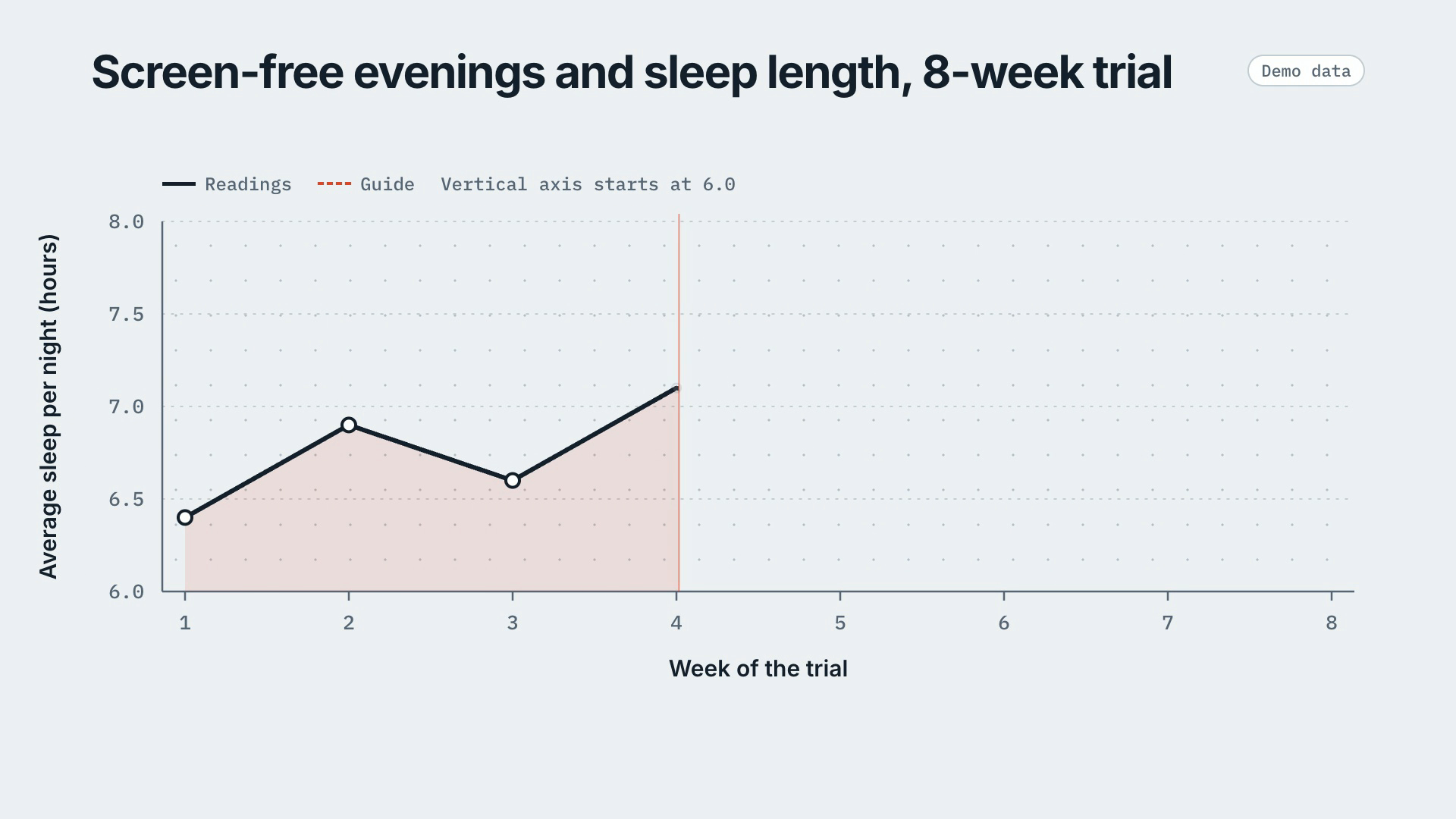
Reveal measured readings, a separate dashed guide and a final takeaway on an editable chart.
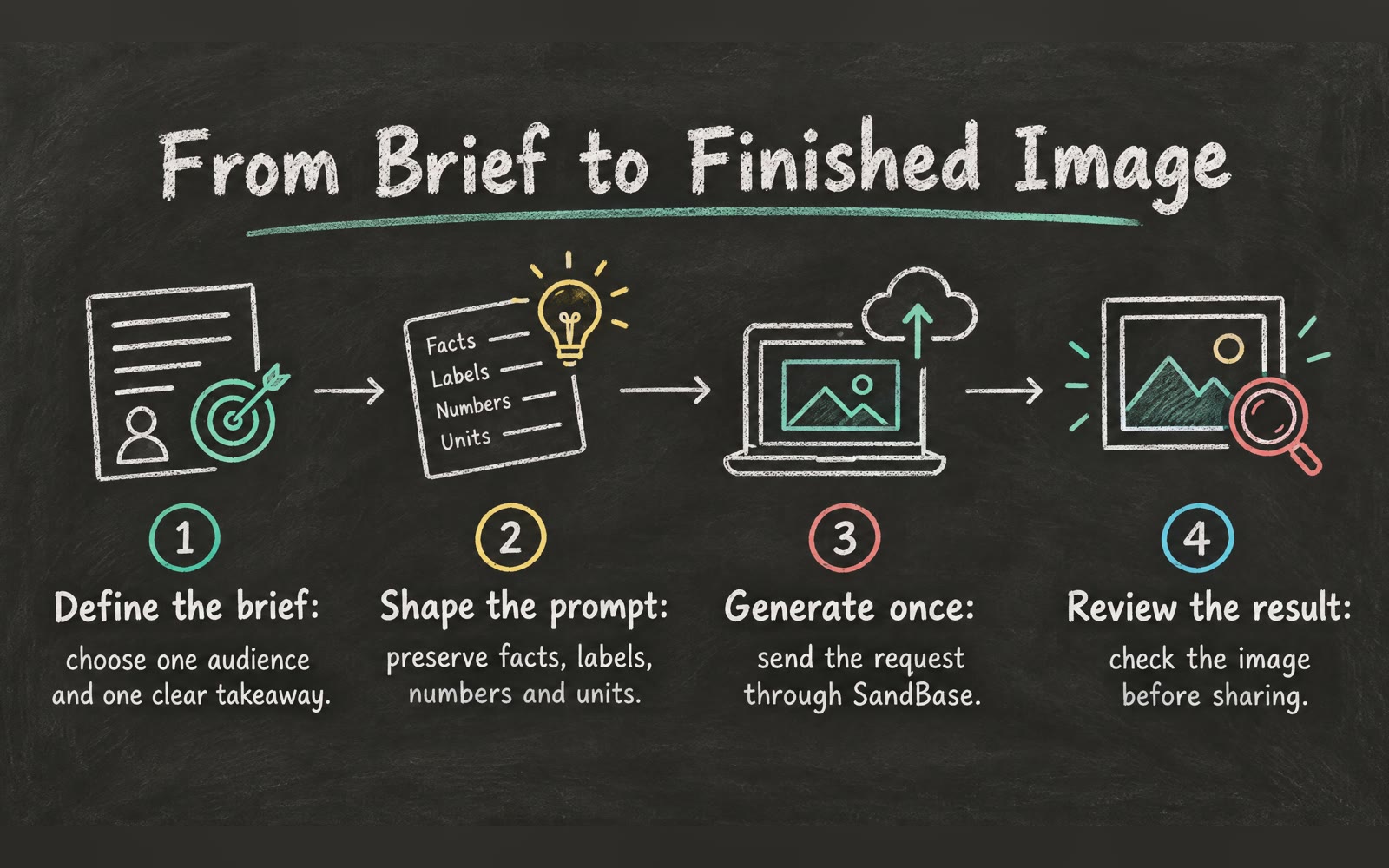
Turn a topic and a few verified facts into a hand-drawn visual explanation.
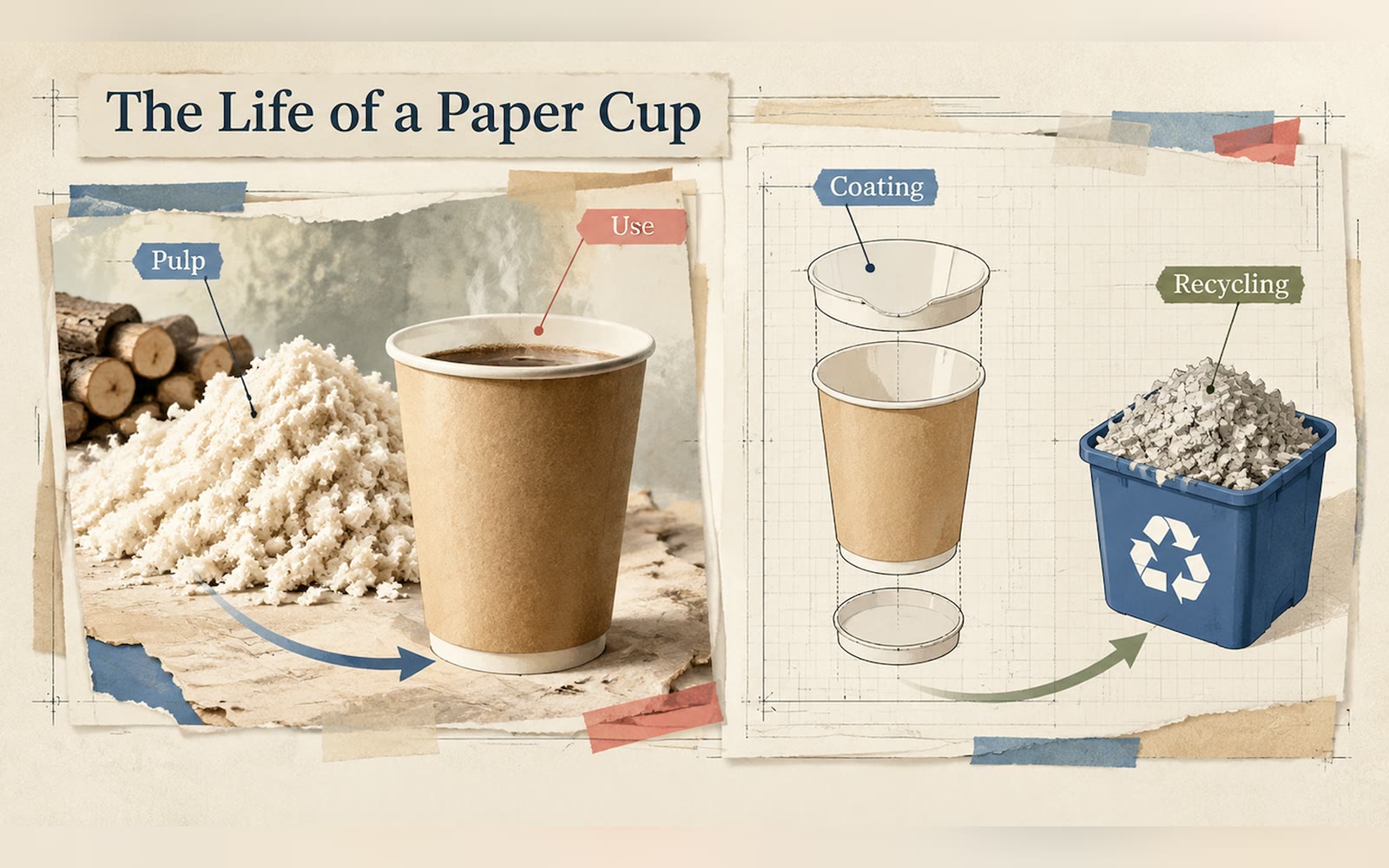
Turn one topic into a 16:9 research collage: a grounded view beside an isometric reconstruction, archival study marks, a title and three to five exact labels.
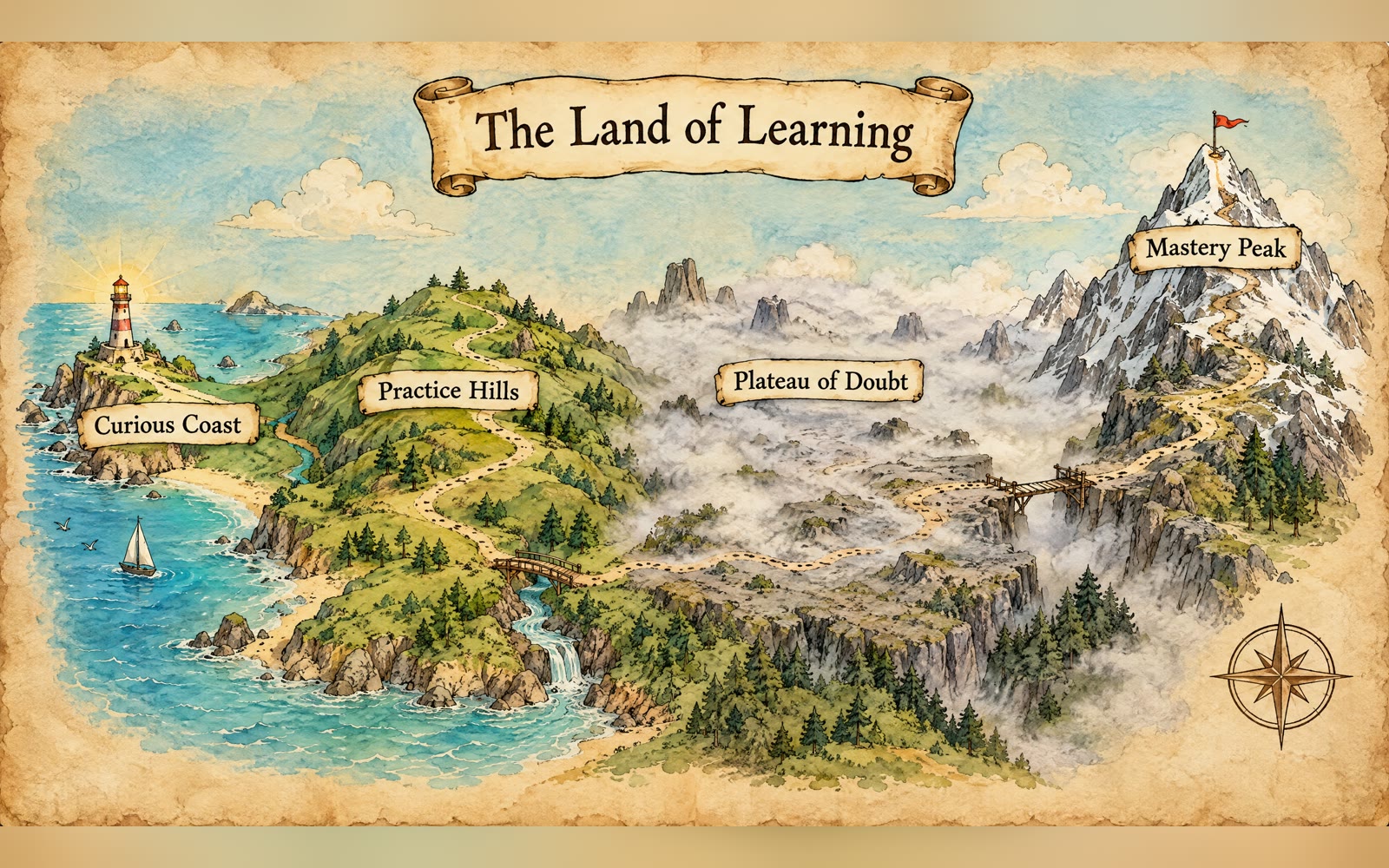
Turn an abstract theme into a 16:9 illustrated fantasy map: three to five named regions on one route, landmarks and a title cartouche.
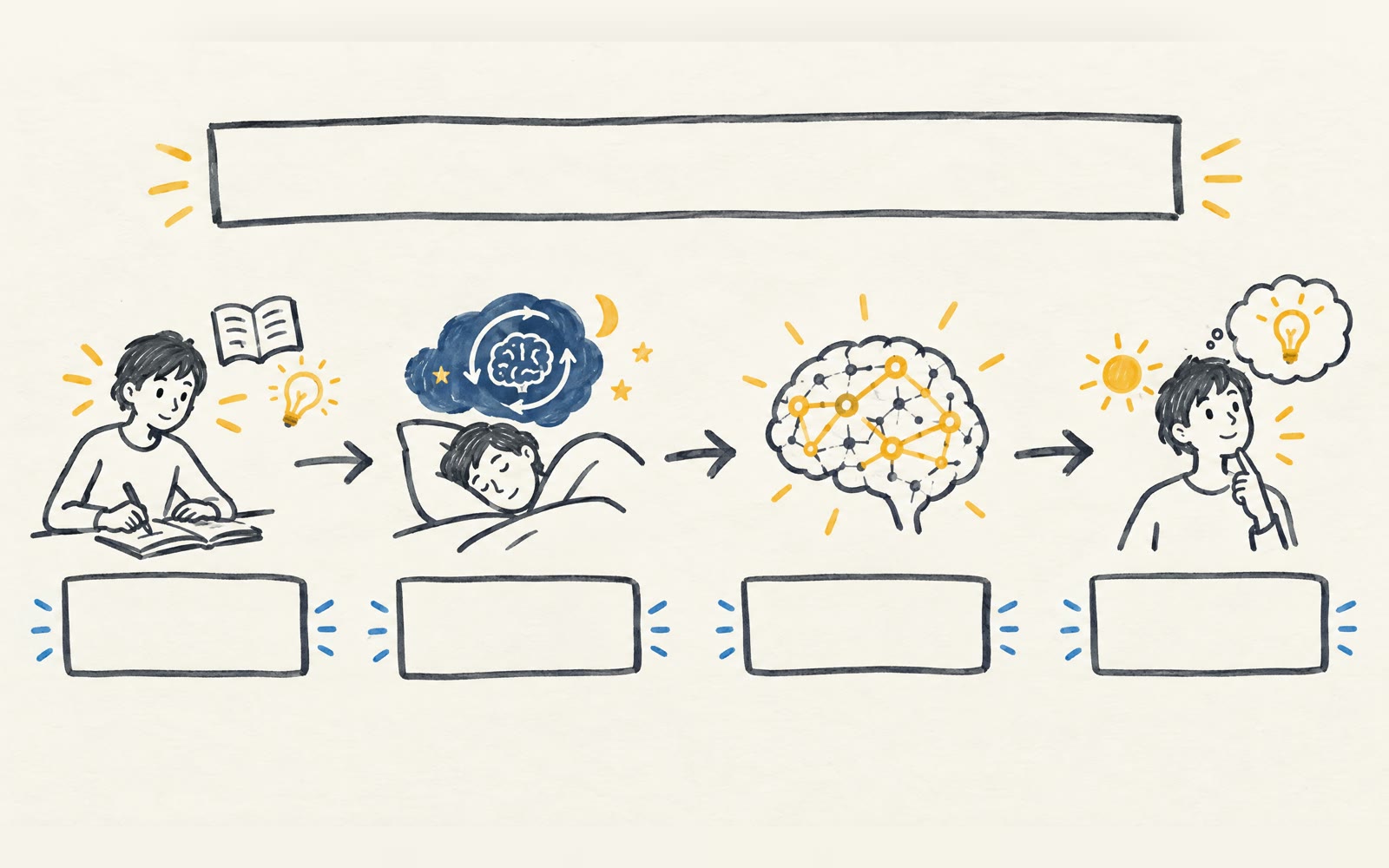
Turn a teaching claim into a text-free 16:9 marker-drawn infographic base with organic lines, original sketches and three to five empty evidence blocks.
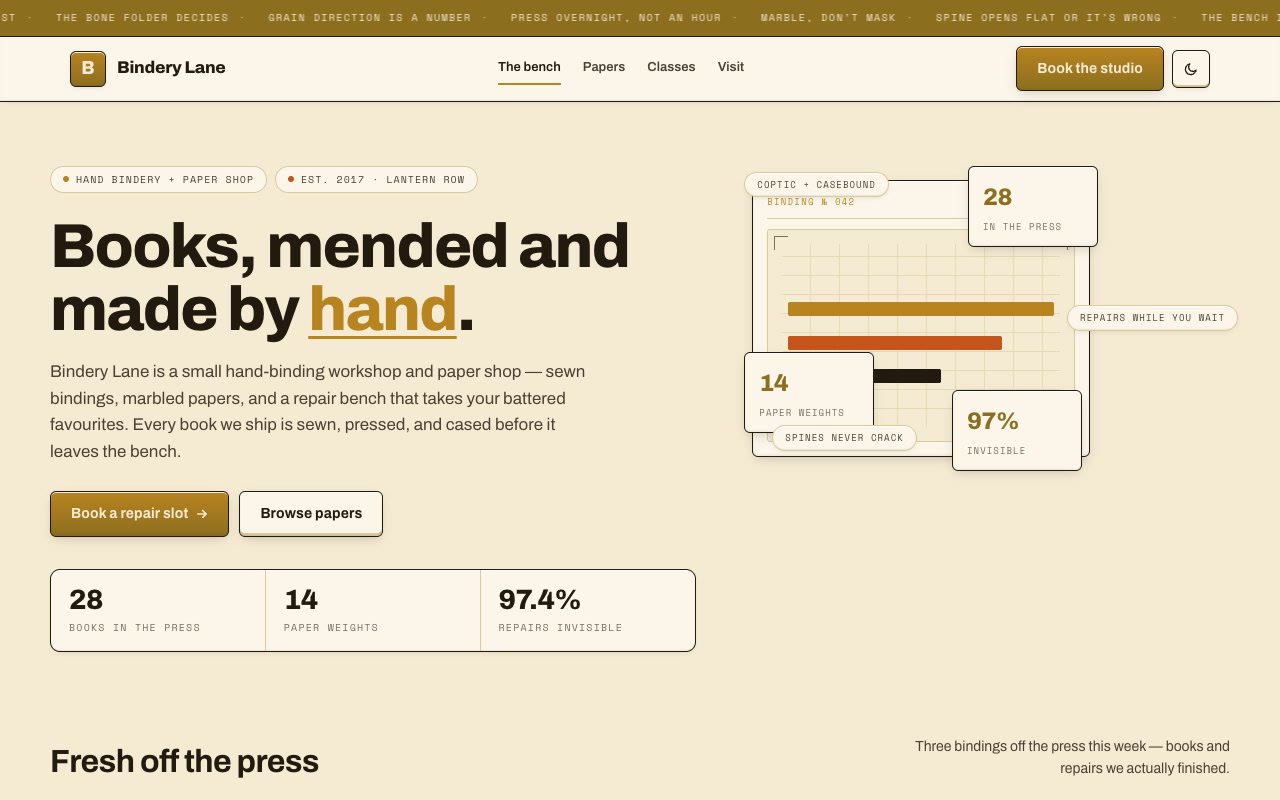
Turn a brief for a precision design studio, print house or editorial office into a site with clean typography, industrial grids, precise measurements and refined minimalist chrome.
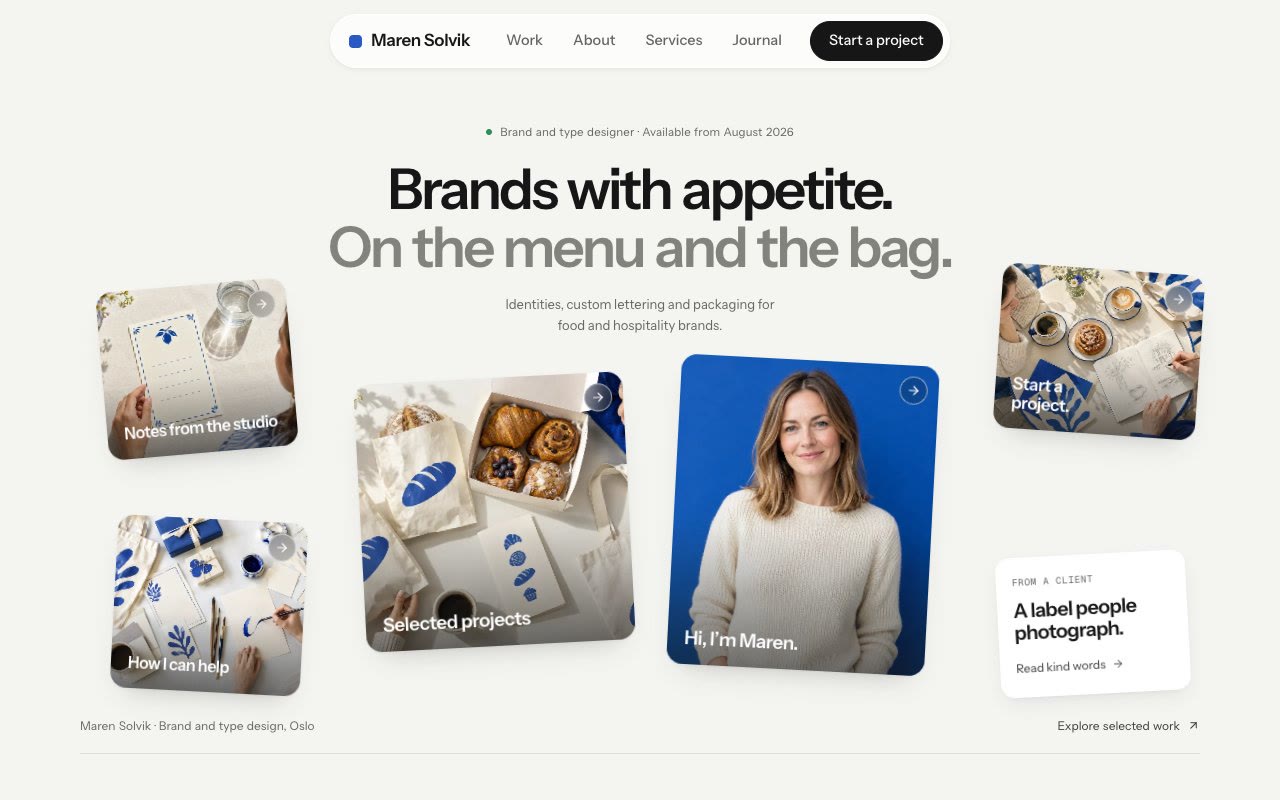
Turn a designer's bio and projects into a single-file bento-grid portfolio with a page for every case study.

Turn a freelancer brief into a single-file site with services, packages, selected work, case studies and booking.
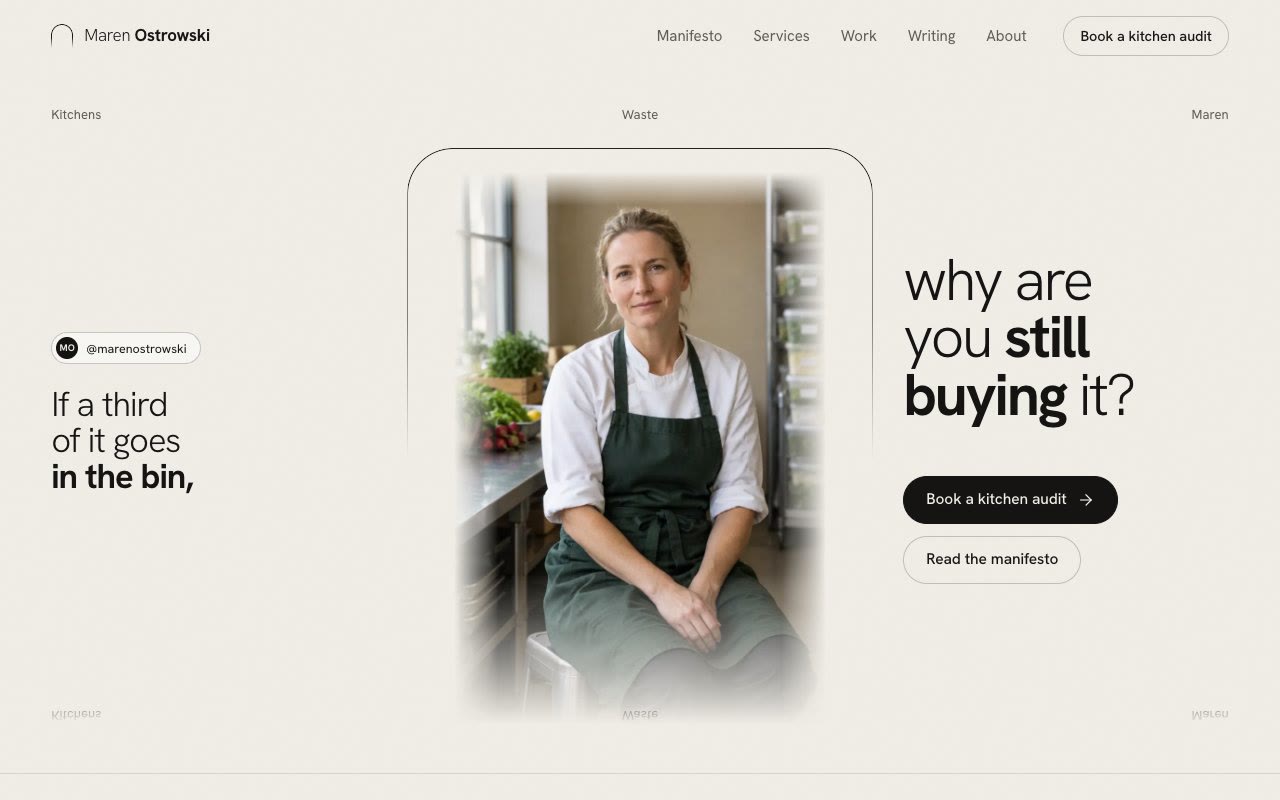
Turn a consultant's positioning into a single-file editorial personal brand site with a manifesto, services and case pages.
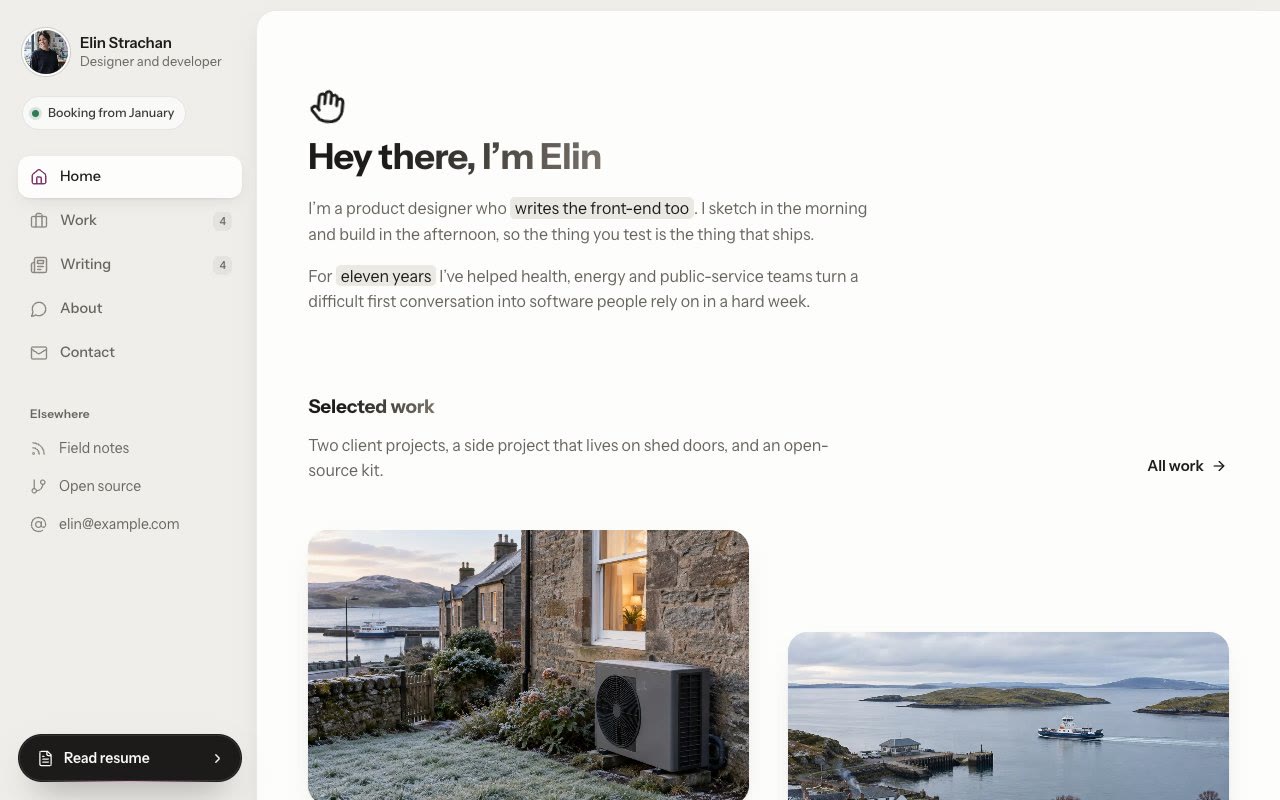
Turn a designer brief into a single-file portfolio with a sidebar, selected work, writing, about and contact.
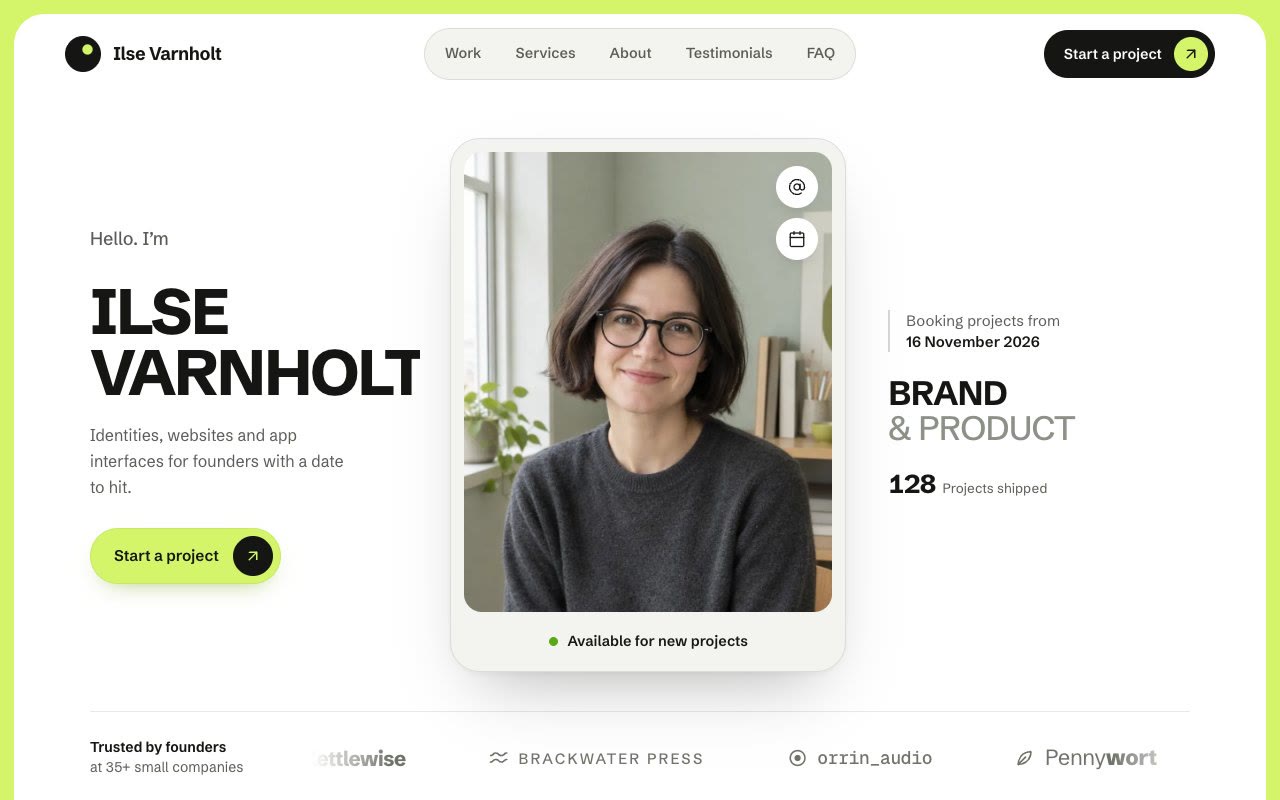
Turn a designer brief into a single-file portfolio with selected work, case studies, services, testimonials and a booking form.
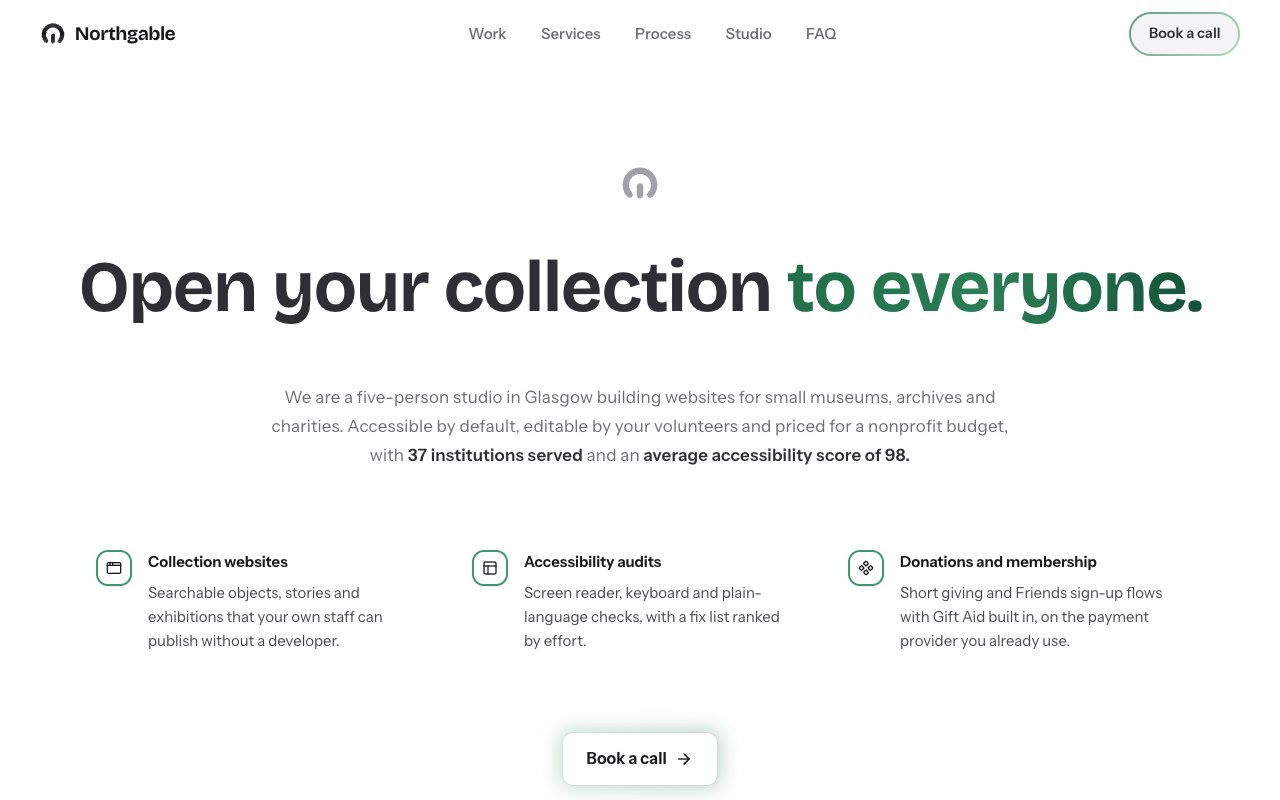
Turn an agency brief into a single-file landing page with services, selected work, process, pricing and contact.
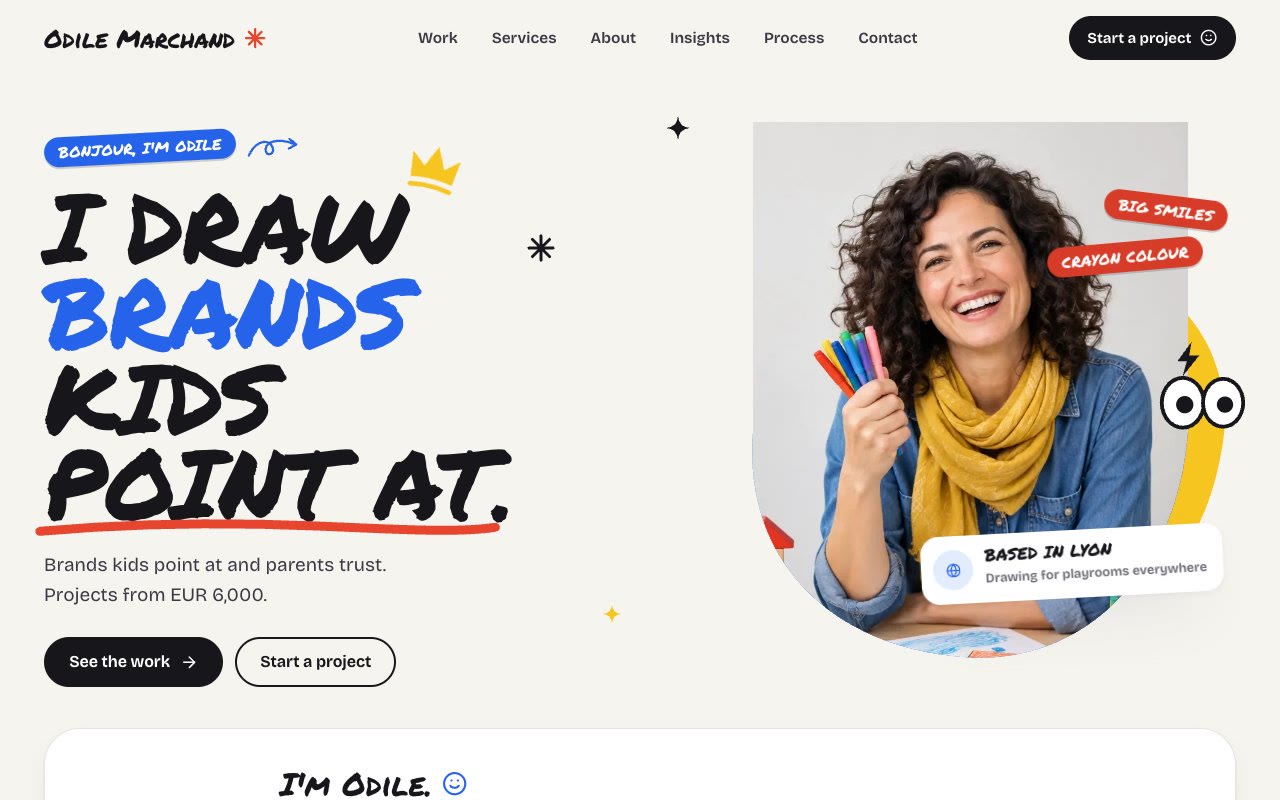
Turn a studio brief into a single-file hand-drawn brand studio site with work, services and detail pages.
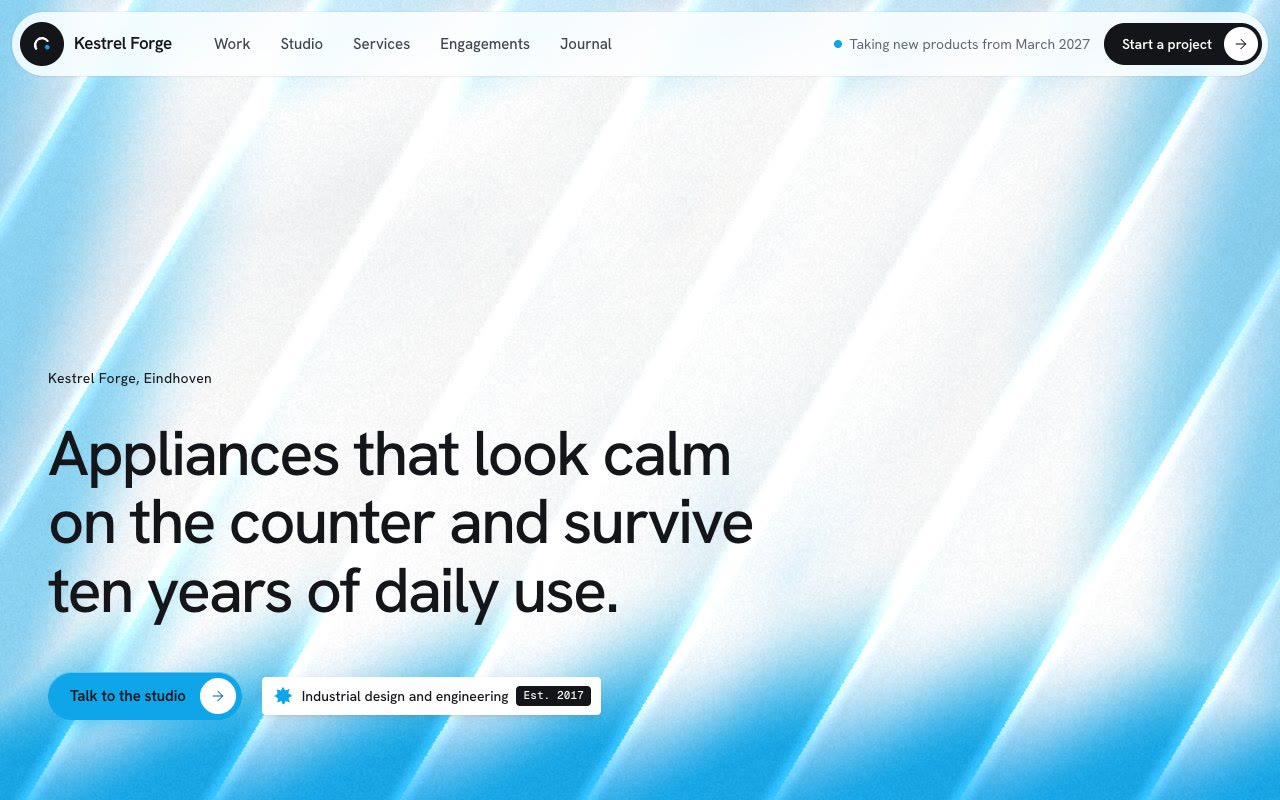
Turn a design studio brief into a single-file site with a case study, an article and legal pages, in a molten-glass look.
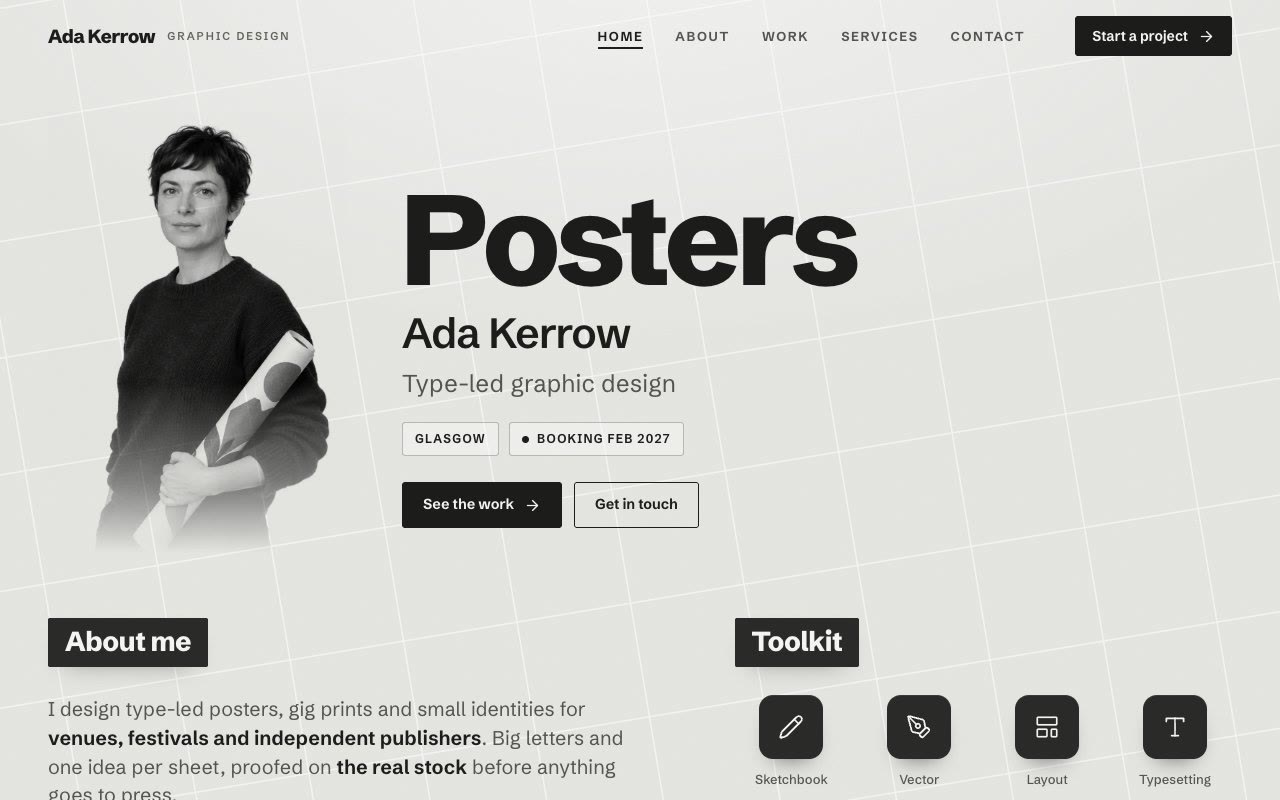
Turn a designer brief into a type-led single-file portfolio with work, project detail, about, services and contact.
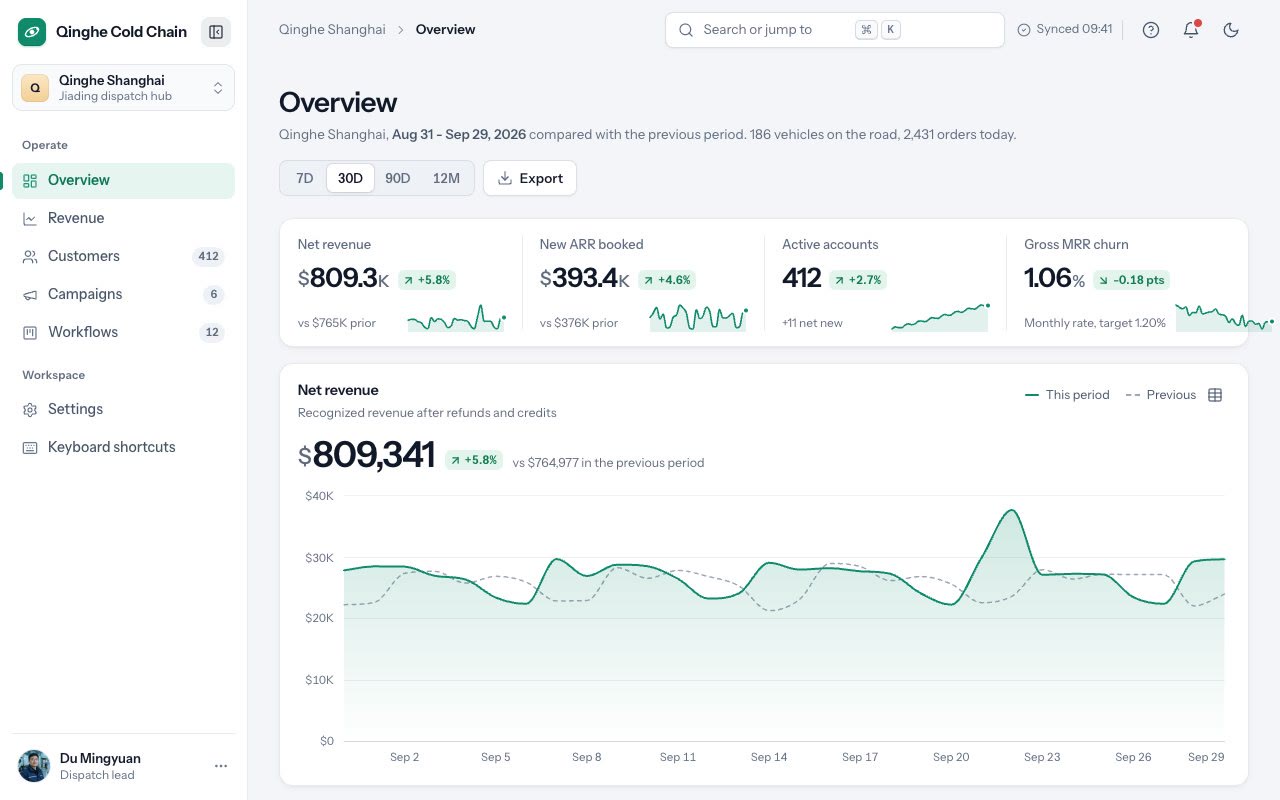
Turn your metrics into a single-file operations dashboard with revenue, customers, campaigns and workflow views.
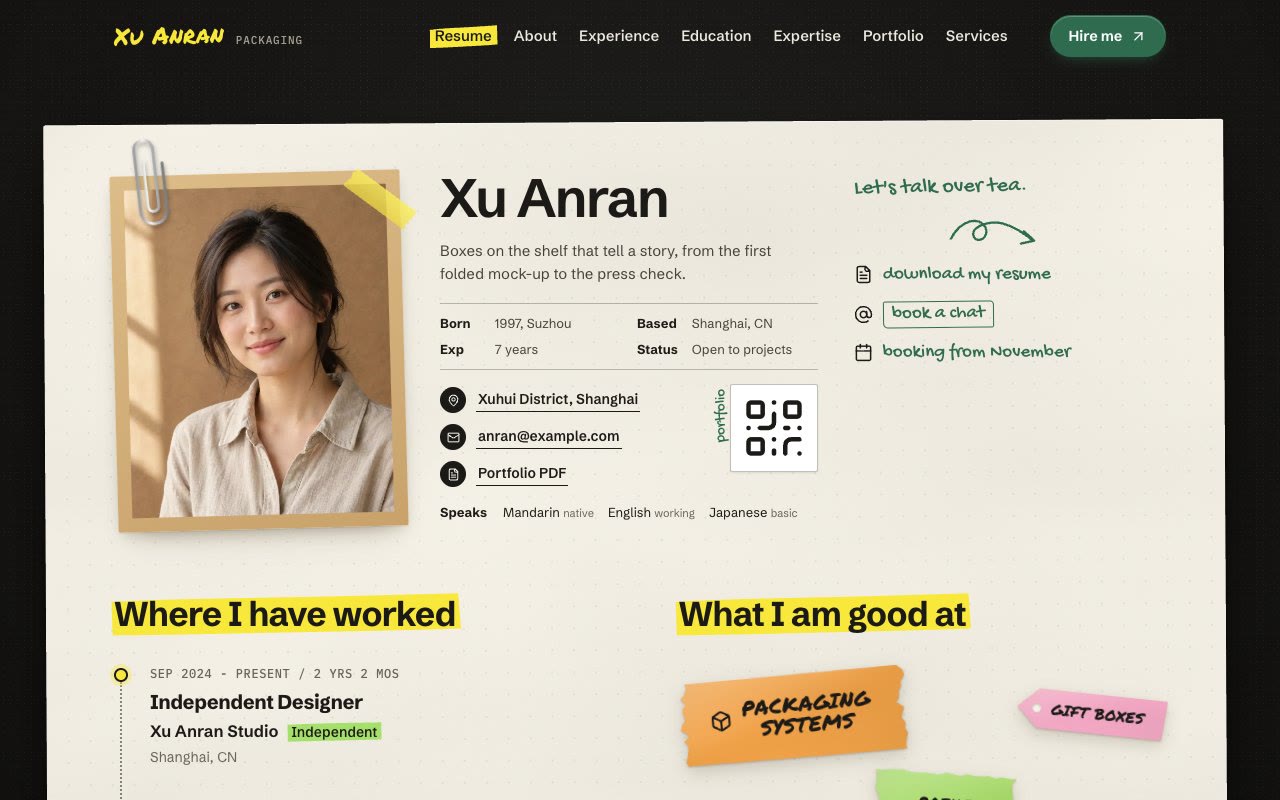
Turn a resume into a single-file designer site on a paper-texture look, with experience, skills, projects and contact.
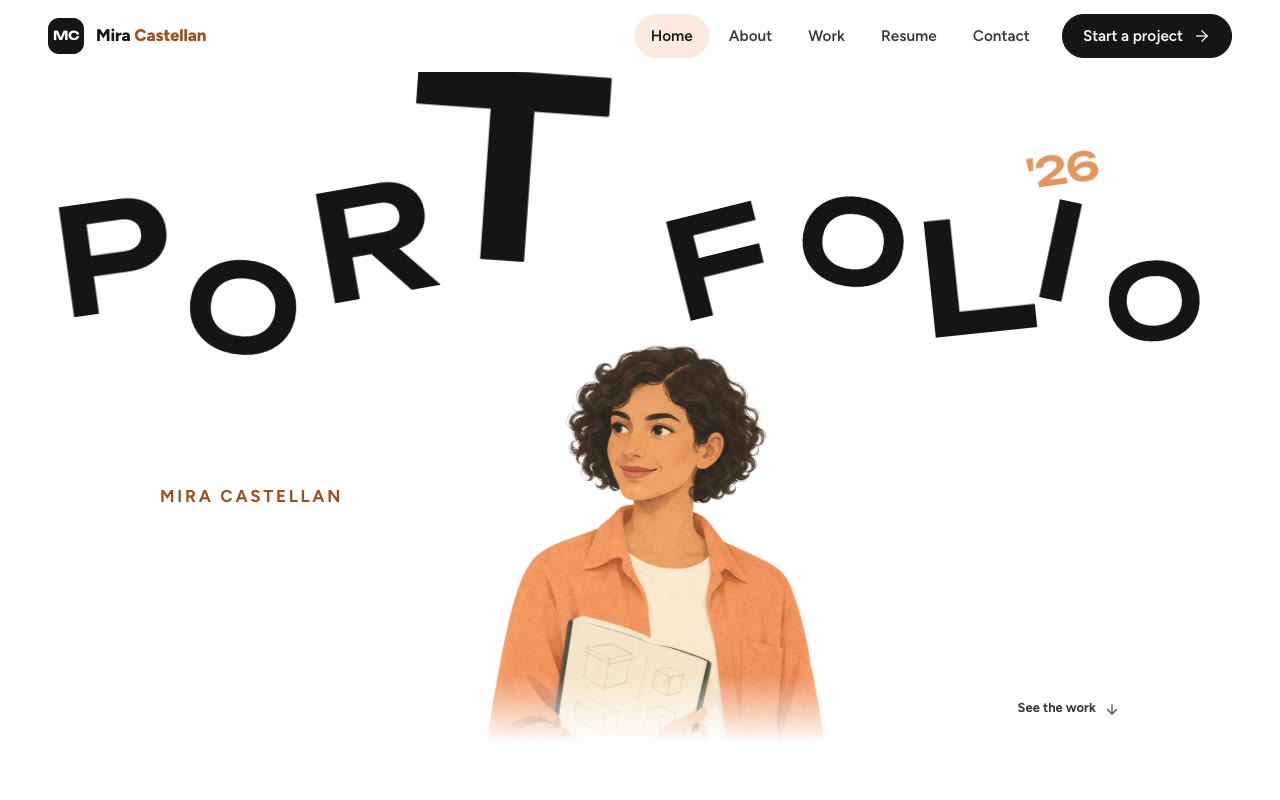
Turn a designer brief into a bold single-file portfolio with work, about, resume and contact.
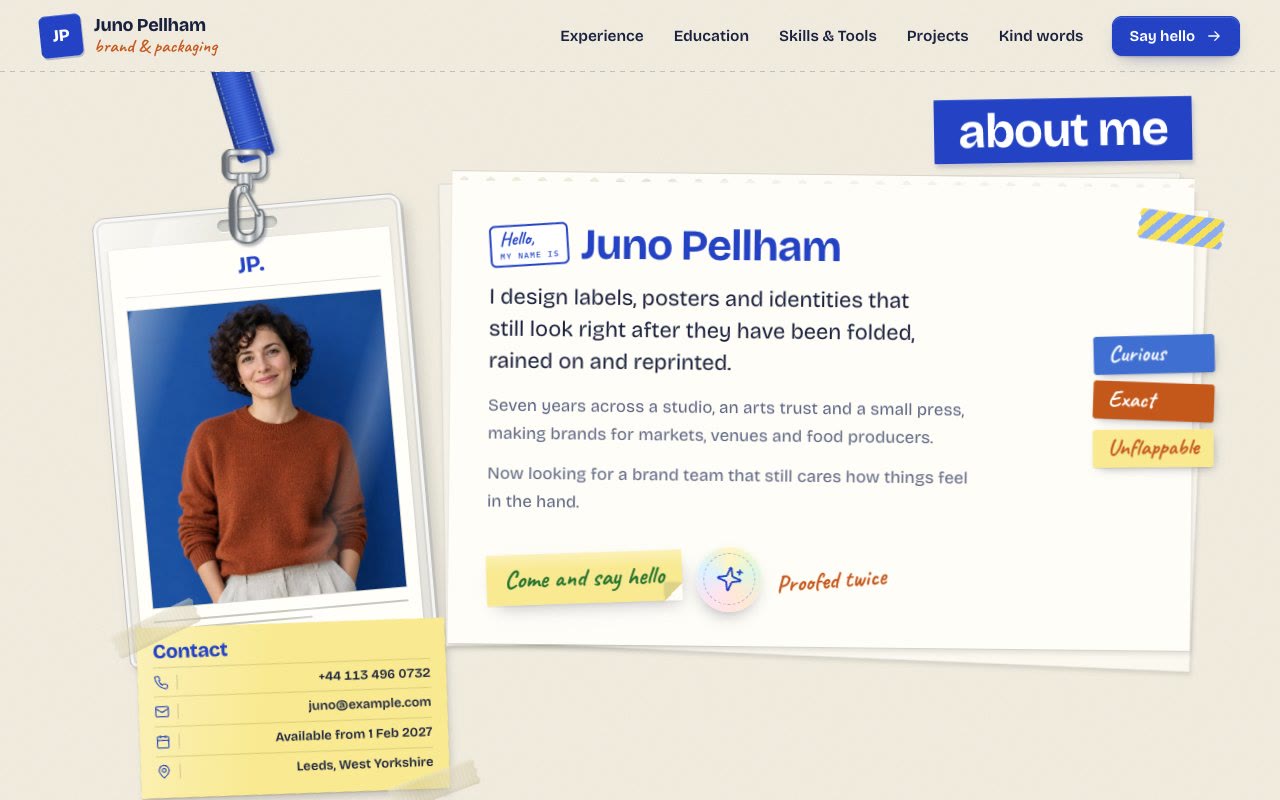
Turn a resume into a playful single-file scrapbook site with experience, education, skills, projects and contact.
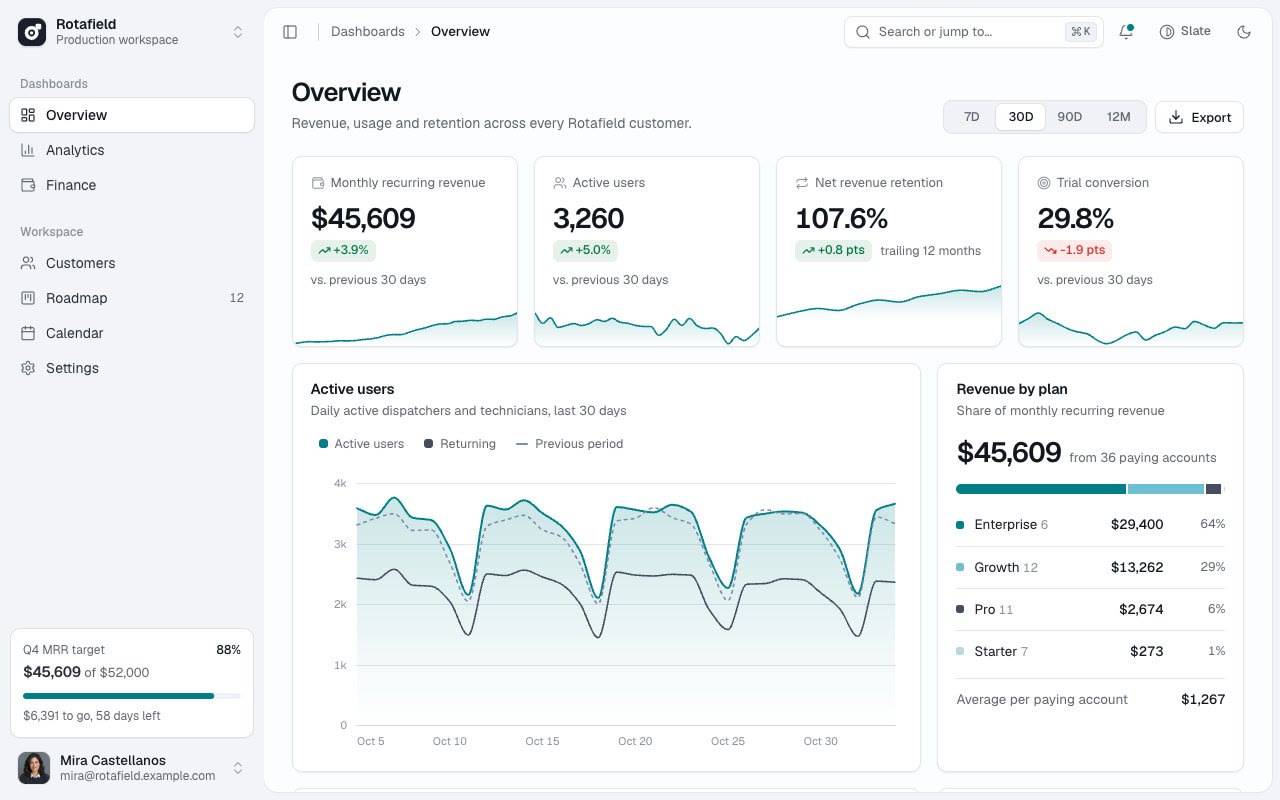
Turn a product brief into a single-file admin console with overview, analytics, finance, customers, roadmap, calendar and settings.
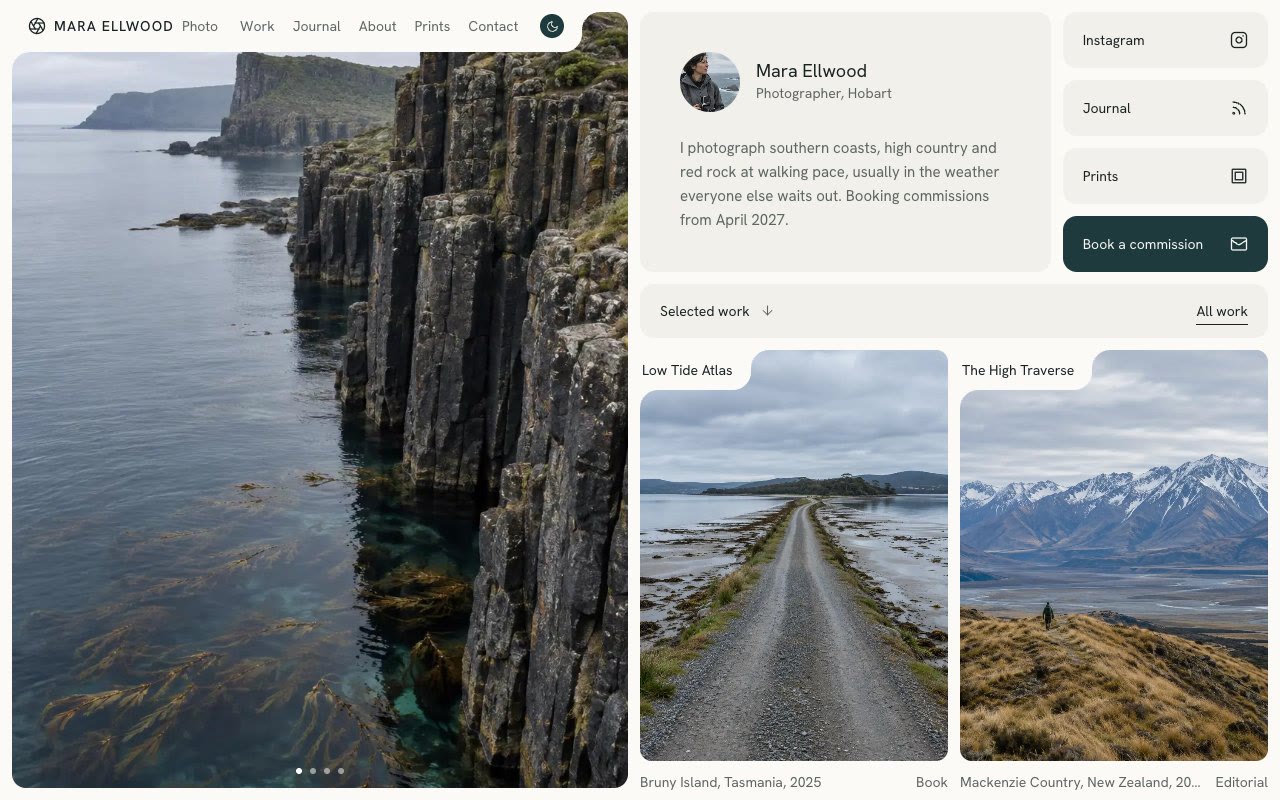
Turn a photographer brief into a single-file portfolio with a split-screen layout, selected work, journal, prints and booking.
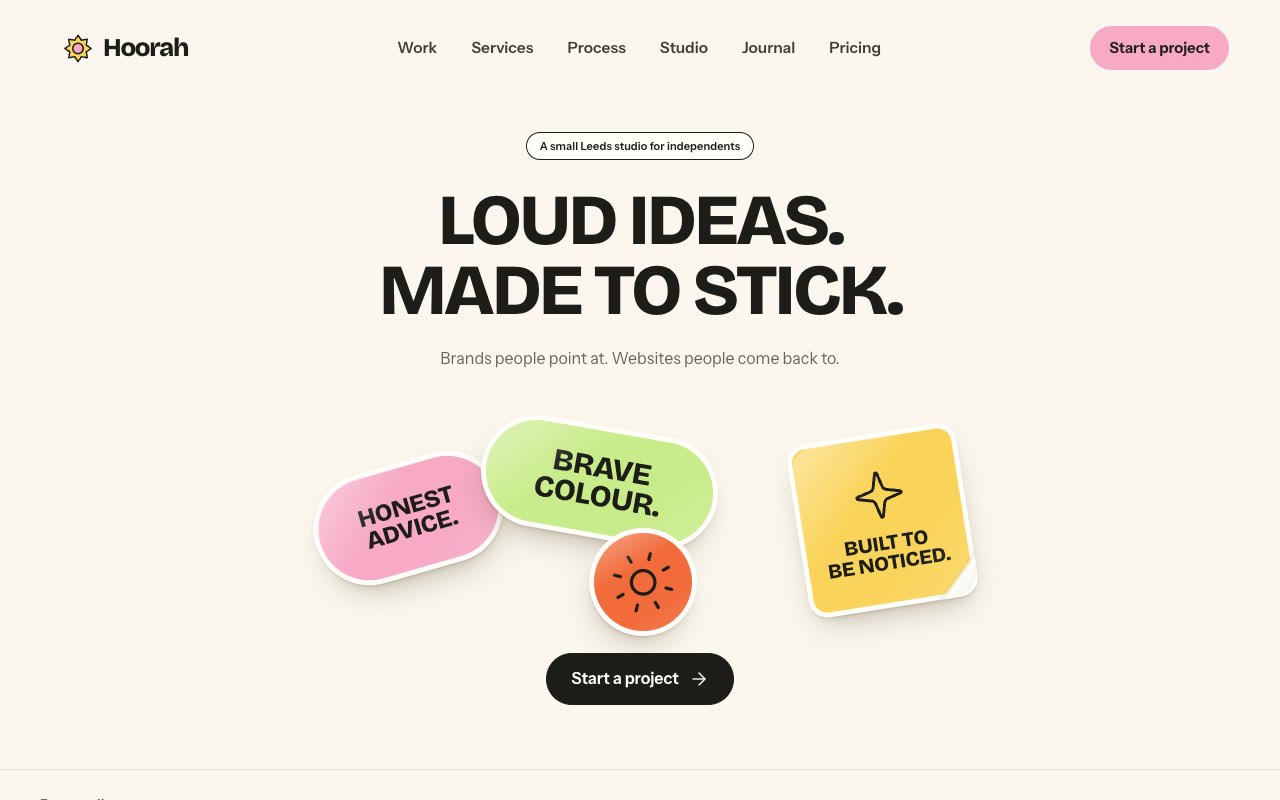
Turn a studio brief into a playful single-file site with work, case studies, sectors, services, process, journal and pricing.
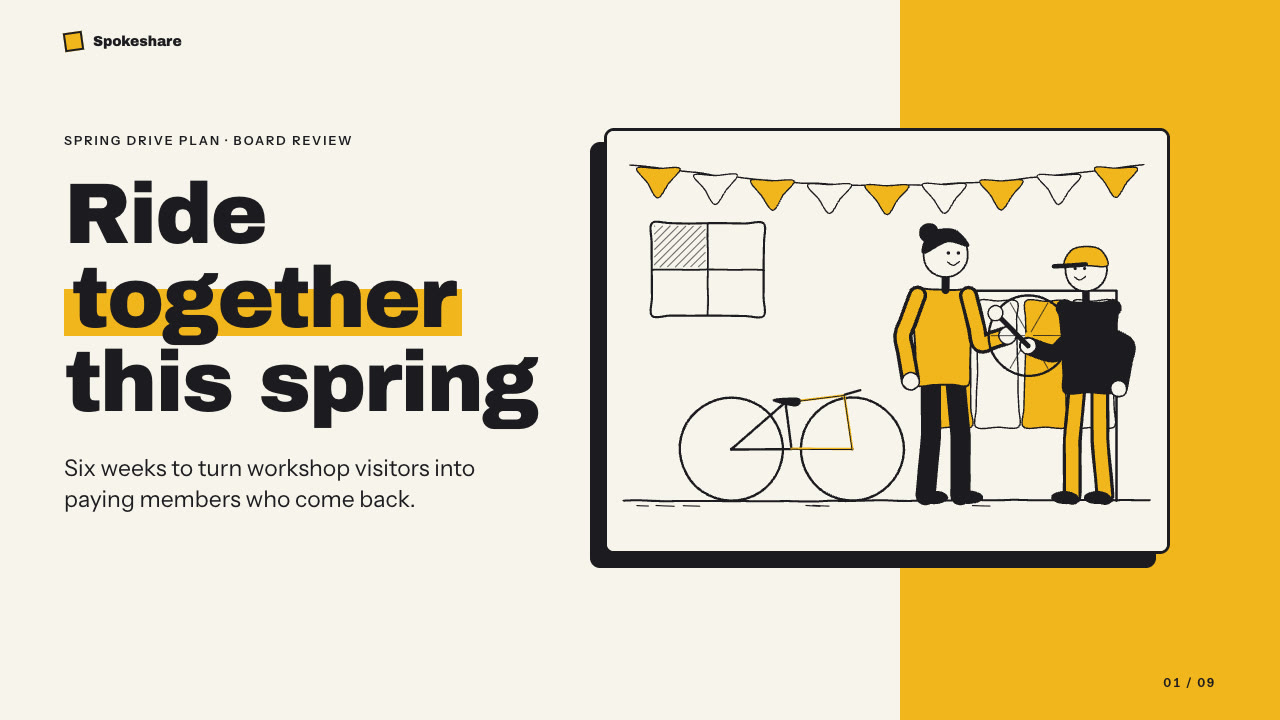
Turn a campaign or launch plan into a hand-drawn ink deck that asks for one decision.
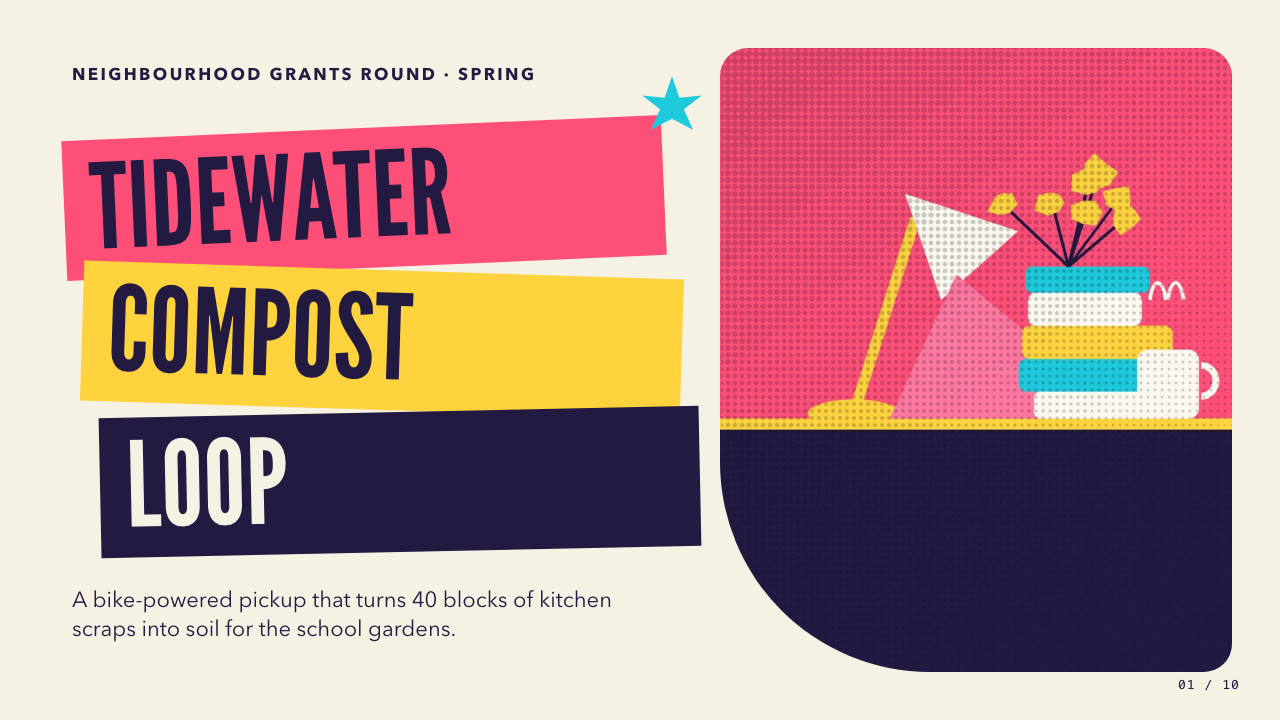
Turn a pitch or proposal into a loud fluorescent screen-print deck with tall headlines and rising bars.
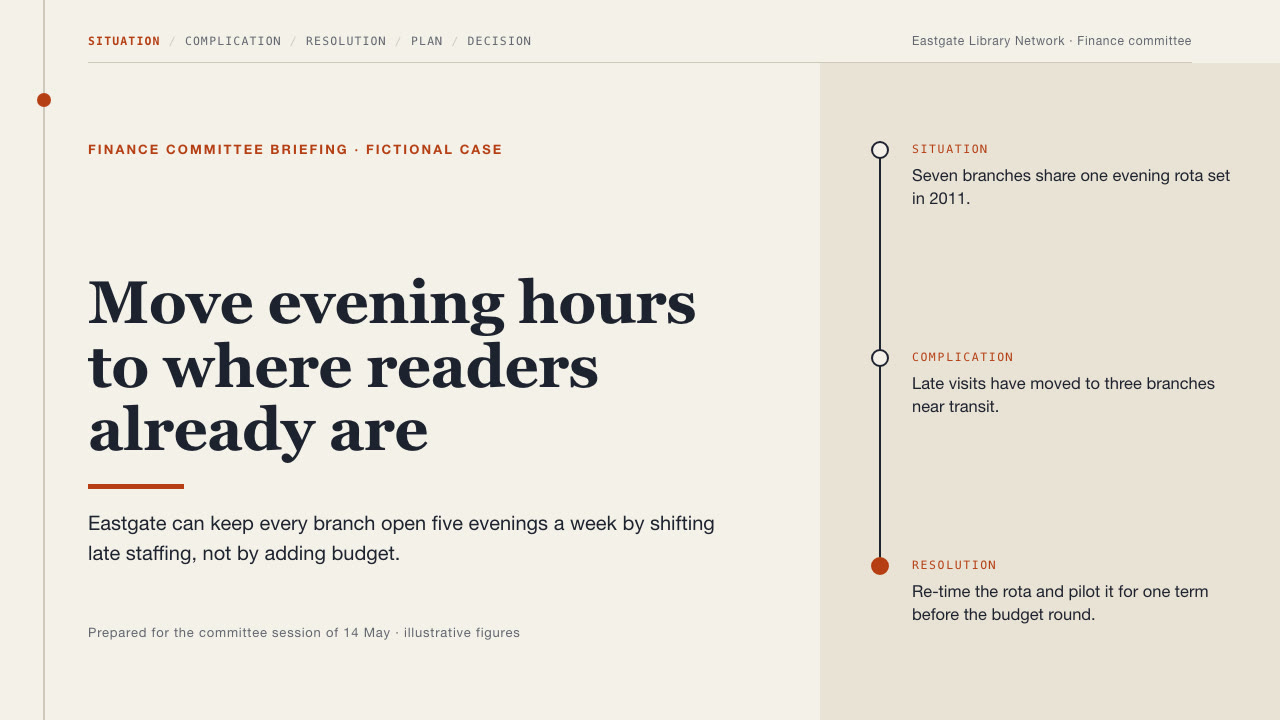
Argue one recommendation to a committee or board with action titles, a storyline tracker, evidence charts and a bounded decision ask.
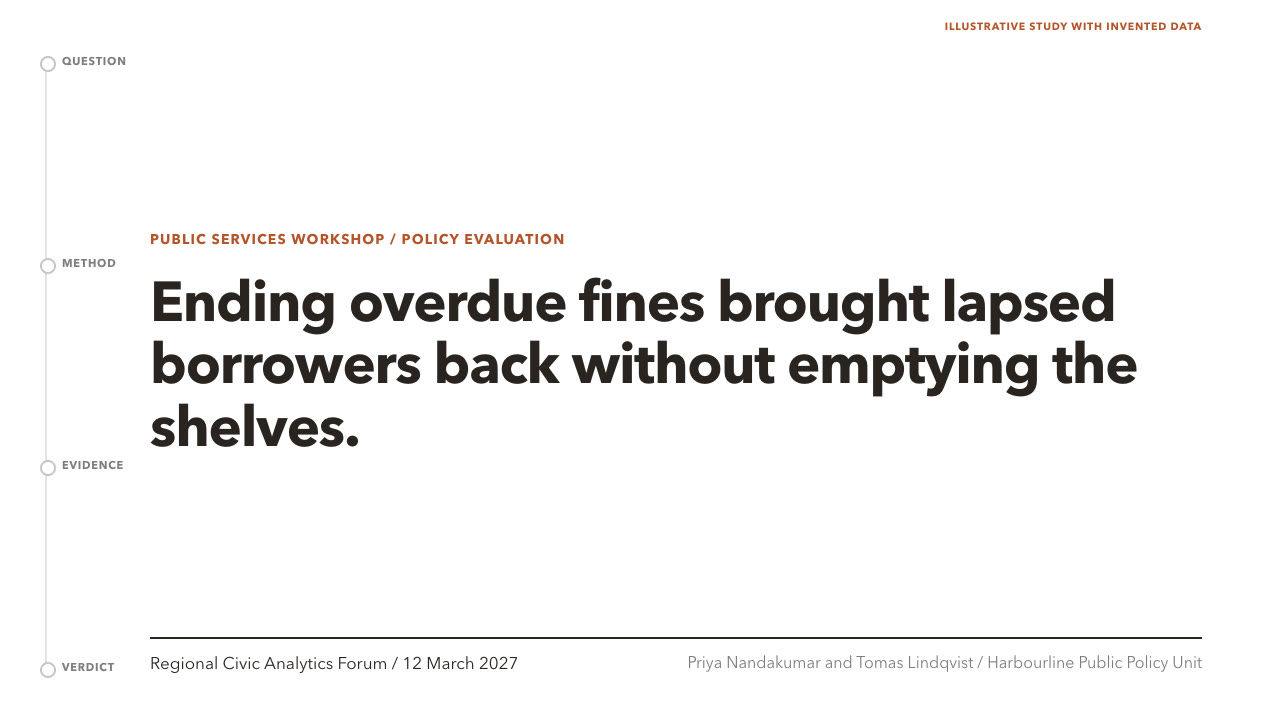
Build a research talk whose titles, read in order, argue one claim from question to verdict, with one cited exhibit per evidence page.
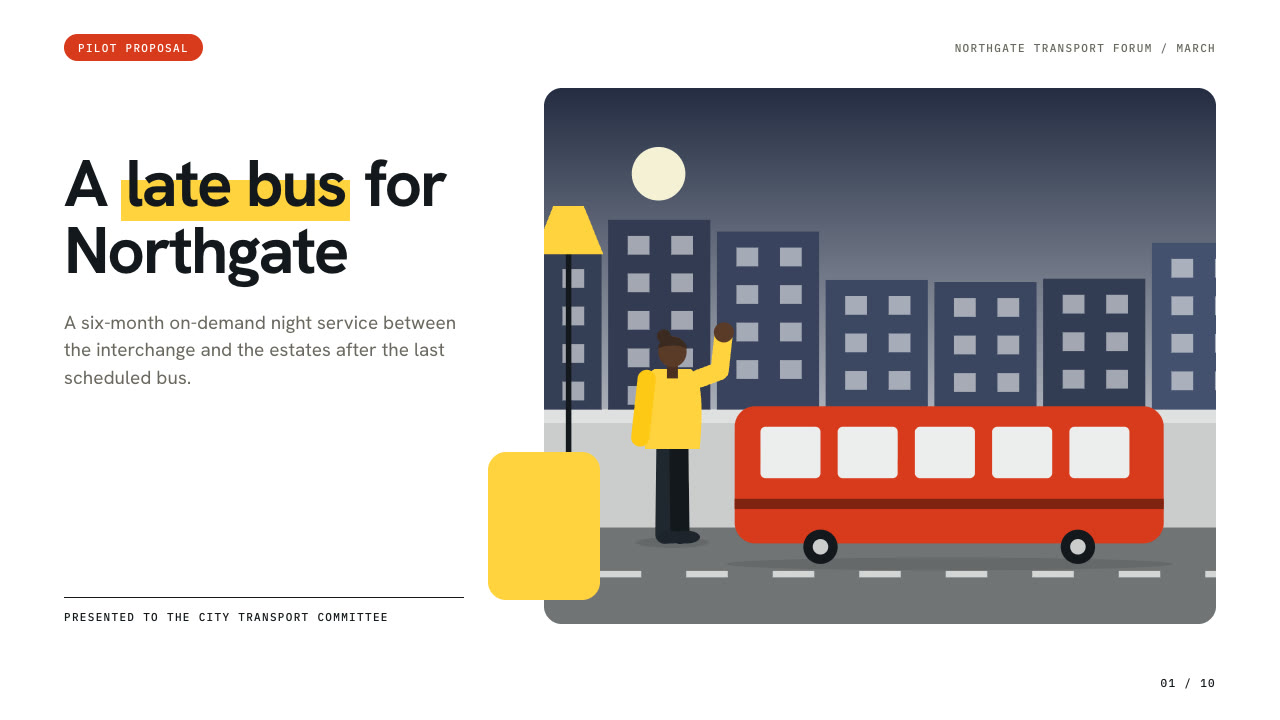
Make the case for a public or community service decision with picture cards, thin bar charts, stat tiles and a clear ask.
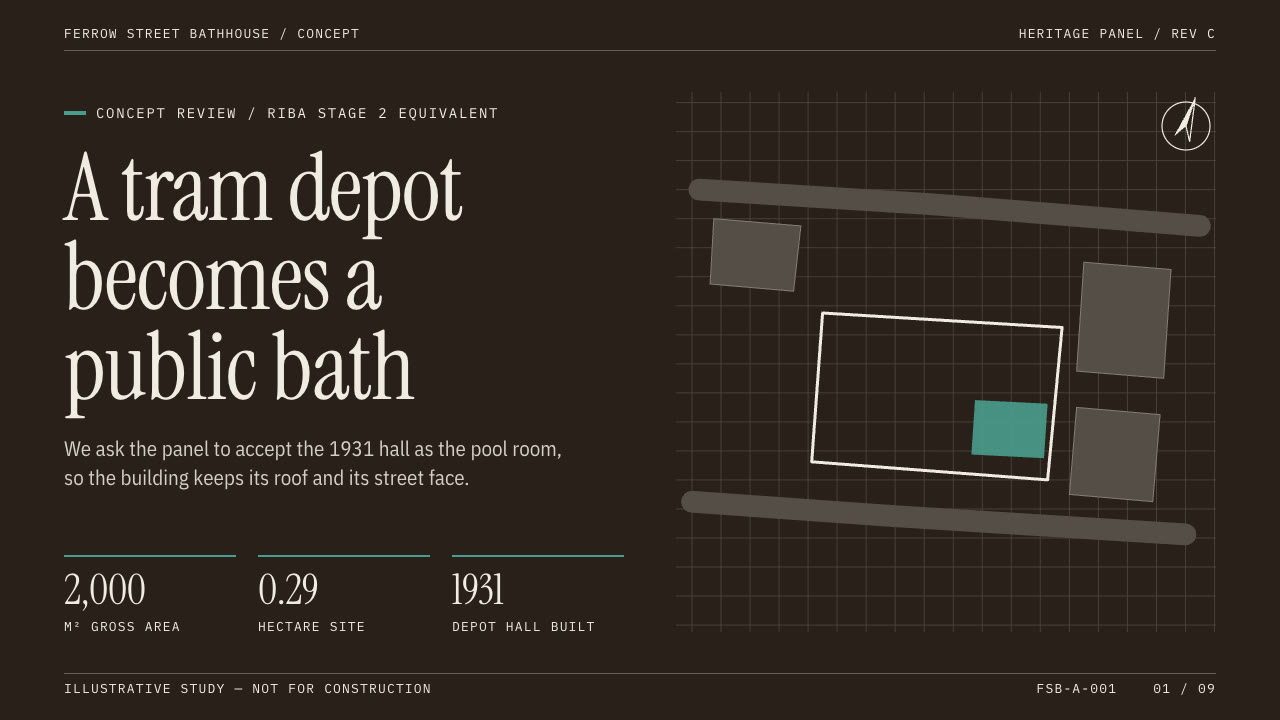
Take an architecture or site-design proposal to a review panel like a drawing sheet: site, massing, plan and section, program, phasing and one clear decision.
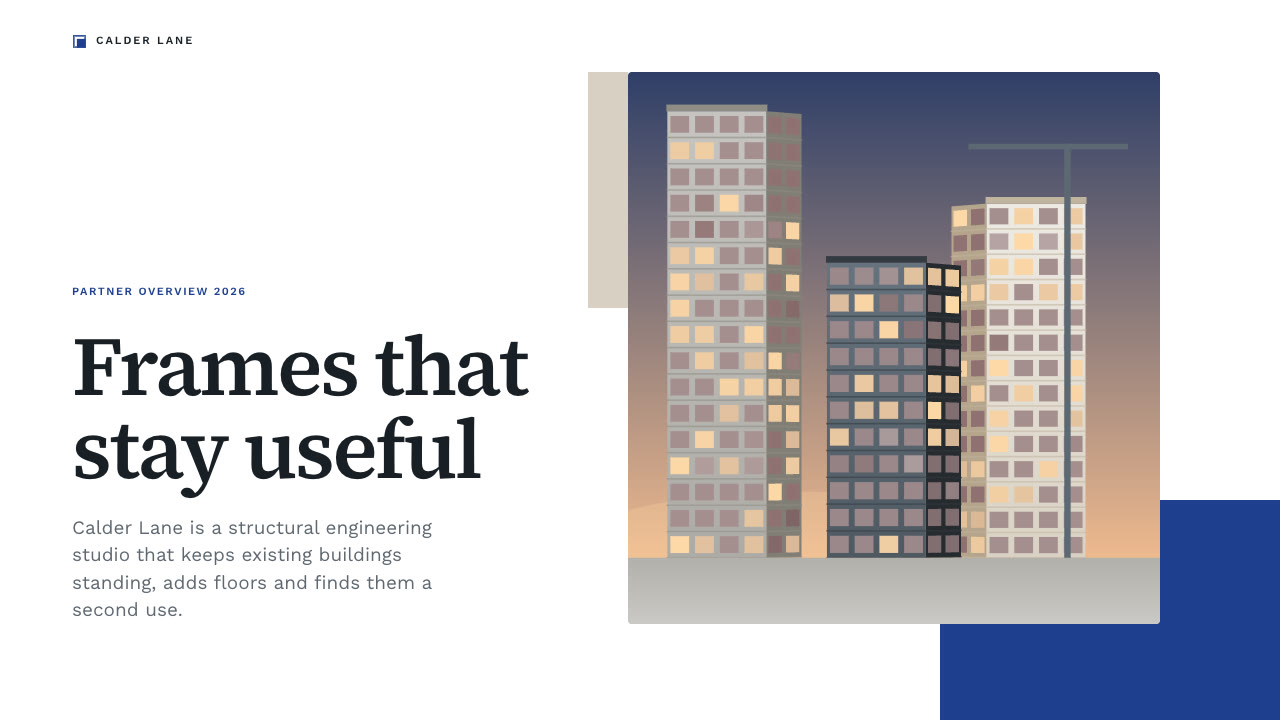
Present a company, practice or member organisation calmly: white pages, offset colour blocks behind pictures, service cards, ring figures, value bars and a portrait row.

Get a launch, season or budget plan approved with a calm dark deck: large serif headlines, one glowing crescent, edge-bleed pictures, a roadmap, quiet bar charts and a scorecard.
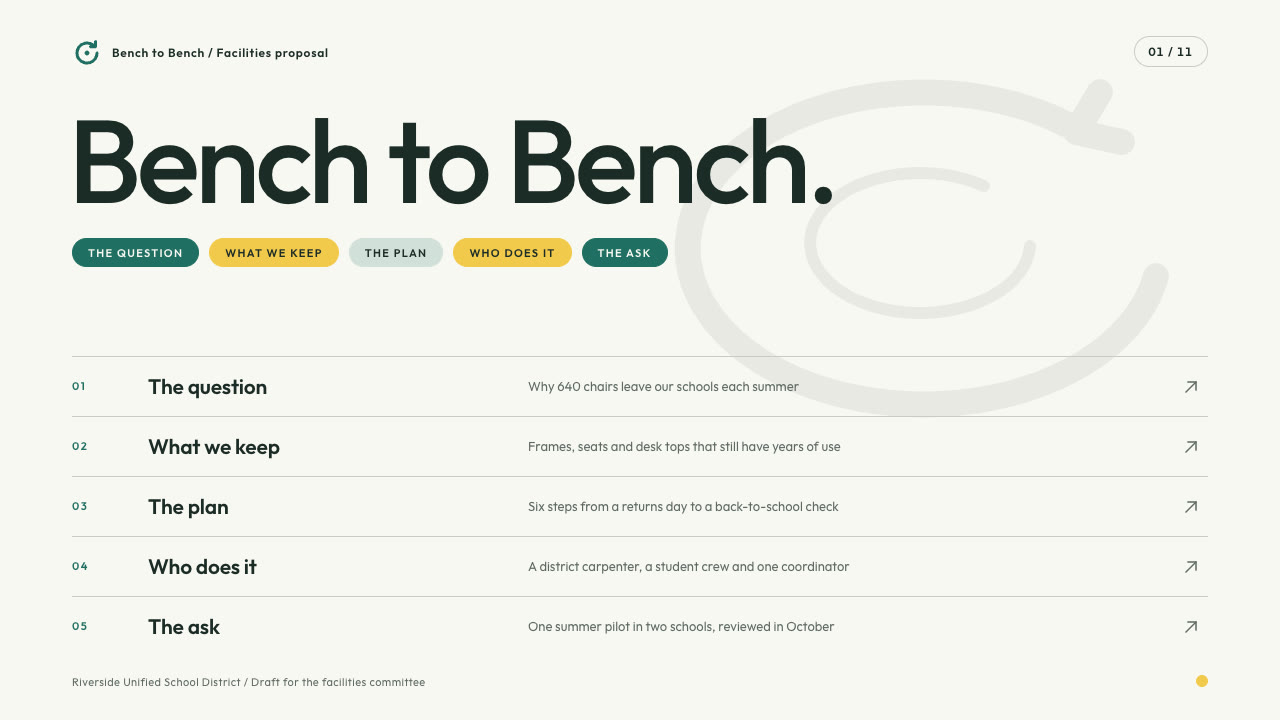
Propose a repair, reuse or take-back step in a light modular deck: rounded cards and pill capsules, an open-ring motif, notched principle cards, a six-step grid and a capsule bar chart.

Pitch a product or startup on near-black pages crossed by a band of light: big grotesk headlines, framed product screens, a bar chart, one light roadmap page, sliced team portraits and a contact card.

Run a workshop, retro, volunteer evening or listening circle with a cut-paper deck: a coloured board under two paper sheets, heavy grotesk headlines, monospace sentences with one highlighter run, capsule and round picture windows, numbered paper stickers and small cut-out accents.
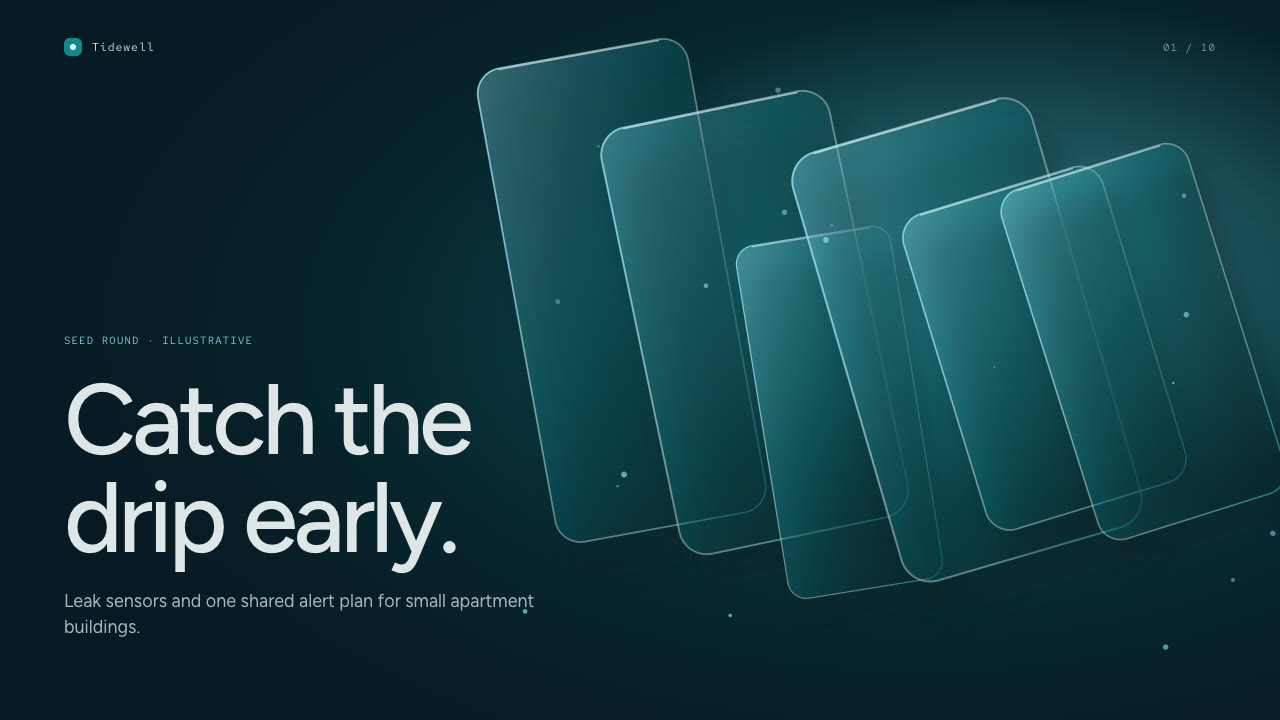
Ask for a round, a grant or a budget with a frosted-glass pitch deck: translucent glass slabs on deep night pages, airy light pages, rounded picture windows, one accent card per page, a native bar-chart card, a use-of-funds table and a stepped roadmap.
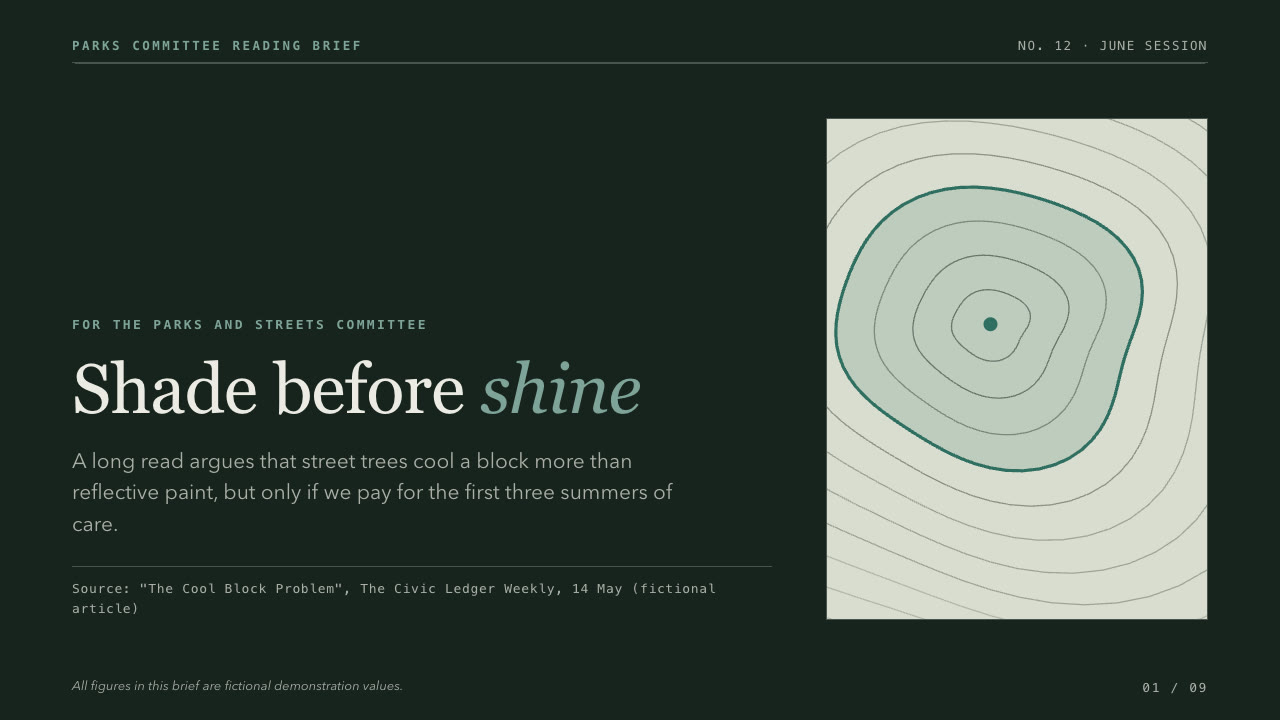
Turn one long read, essay or report into a reading brief a committee can decide on: a masthead, argument beats on a rail, a headline figure, bar charts and a source ledger that keep checked facts, assumptions and open questions apart, two readings, discussion prompts and the decision asked.
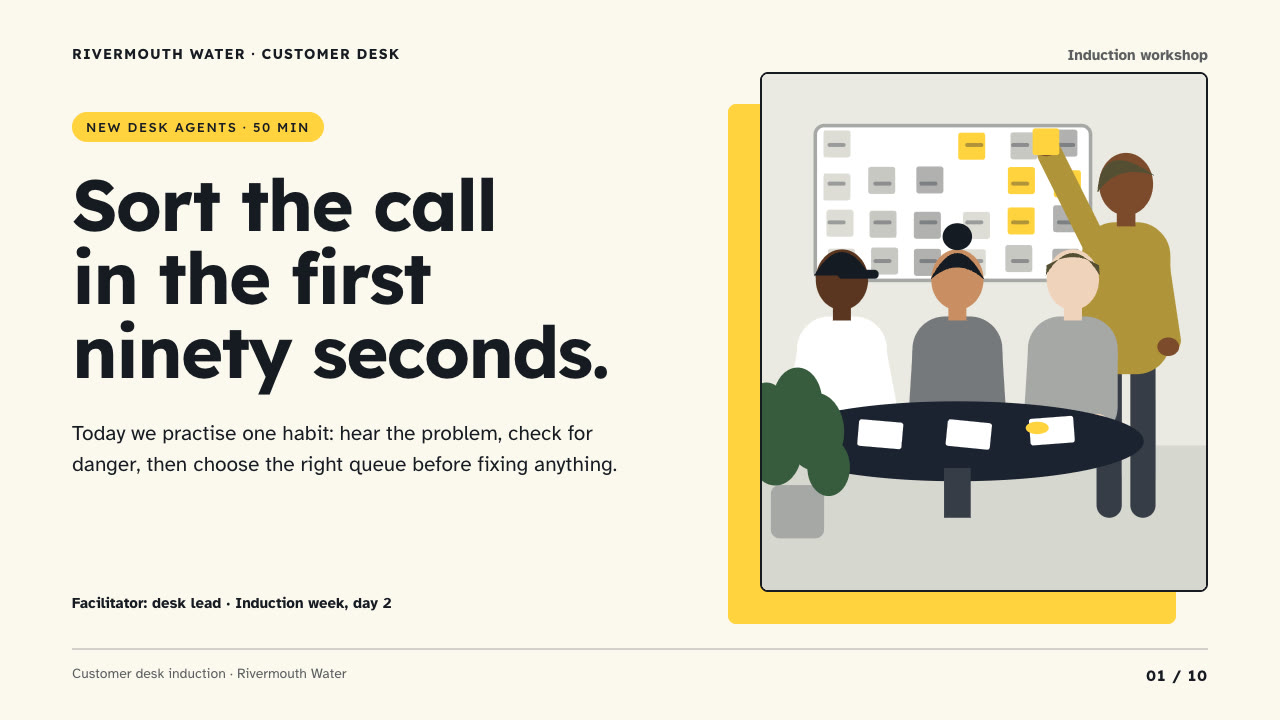
Run a training or workshop where the room does the work: observable outcomes, a real situation to decide on, a small method, votes and timed exercises, a tempting answer beside a stronger one and a written commitment, with a Frame / Try / Reflect strip on every page.
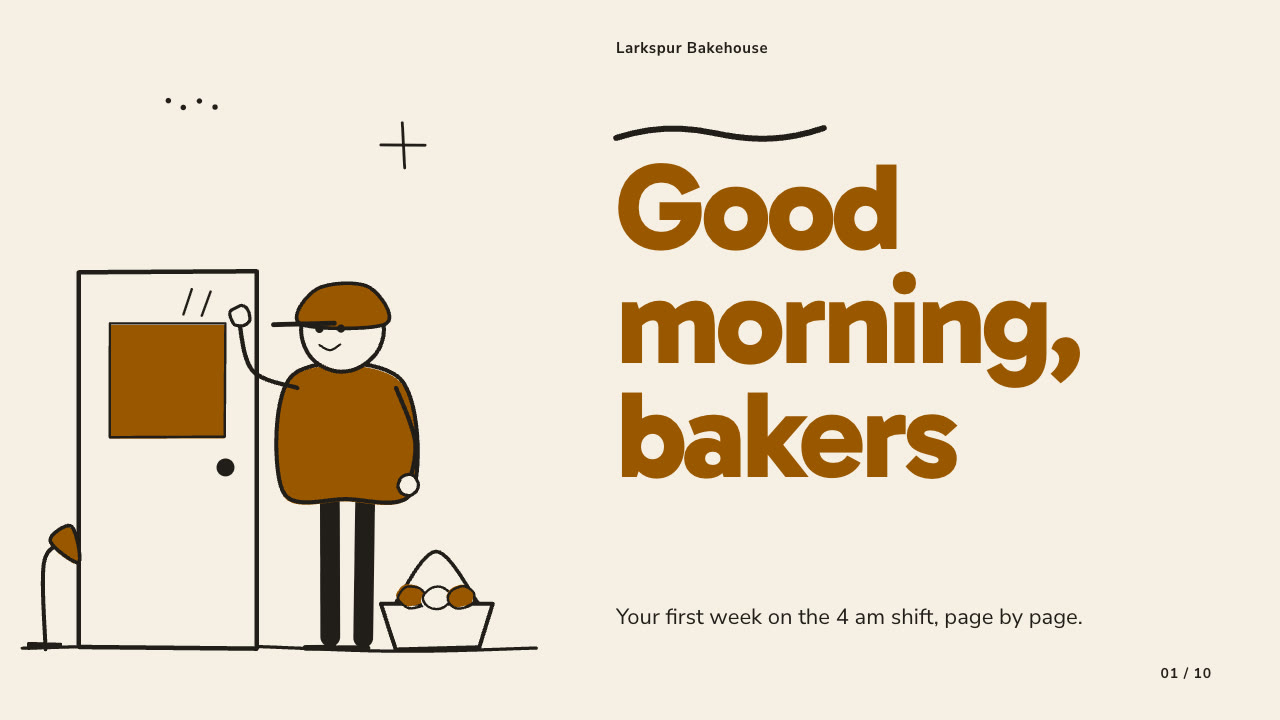
Make onboarding sessions, kickoffs, pilot updates and team plans feel friendly and plain-spoken: one oversized colour headline per page, loose black-marker cartoon people and props, warm paper pages, a few tinted accent pages, timelines, number discs and a simple bar chart.
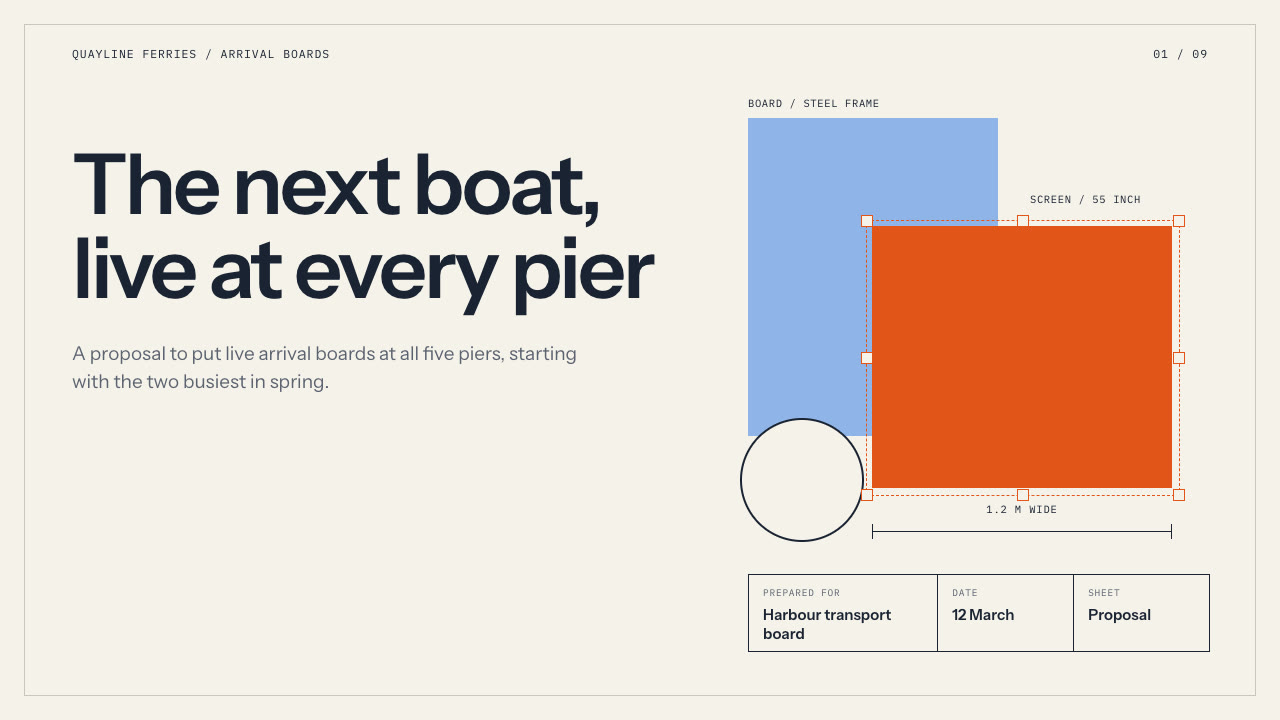
Make budget, strategy, launch and handoff decks that stay fully editable in PowerPoint: a technical-drawing look with paper sheets, a thin frame, a cover title block, dimension lines, mono object tags, native bars and tables, and an object ledger that proves no slide is a screenshot.
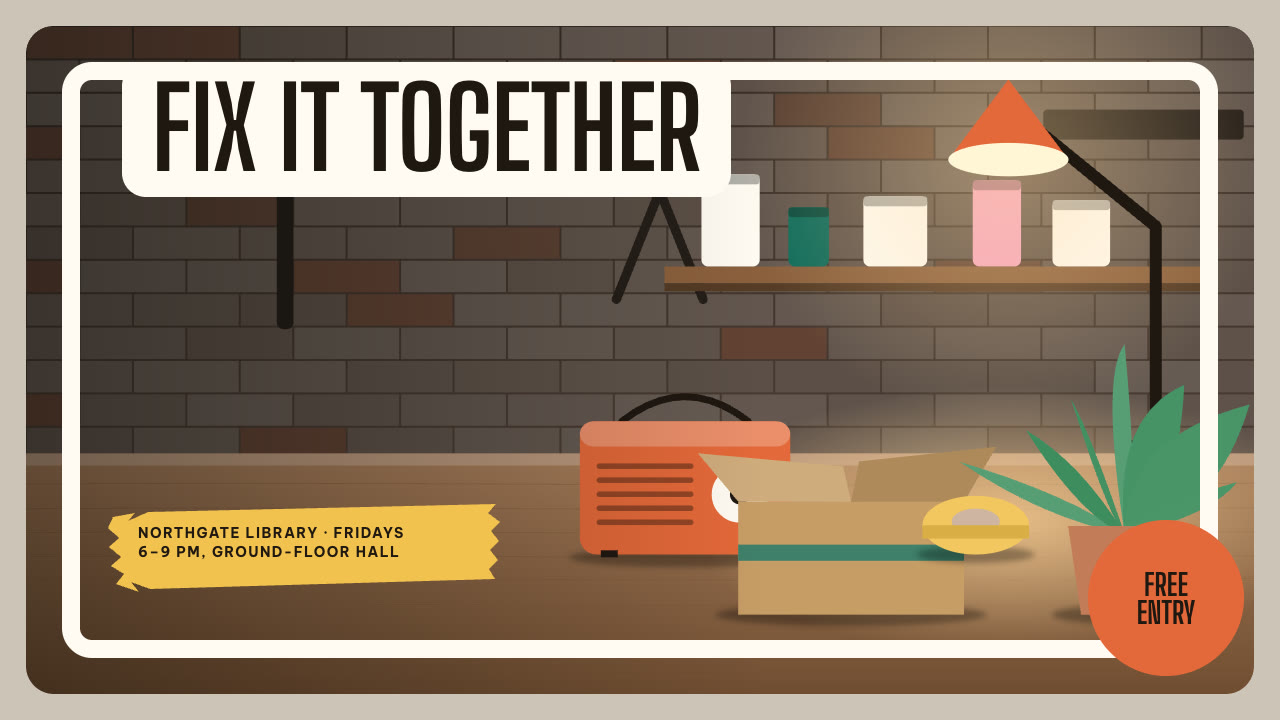
Invite people to hands-on sessions such as repair evenings, prototyping mornings and maker camps: one rounded plate per page whose colour shows the page role, condensed poster capitals, tape labels, sticker badges, highlighted chips, count tiles, time bars and drawn workbench pictures.
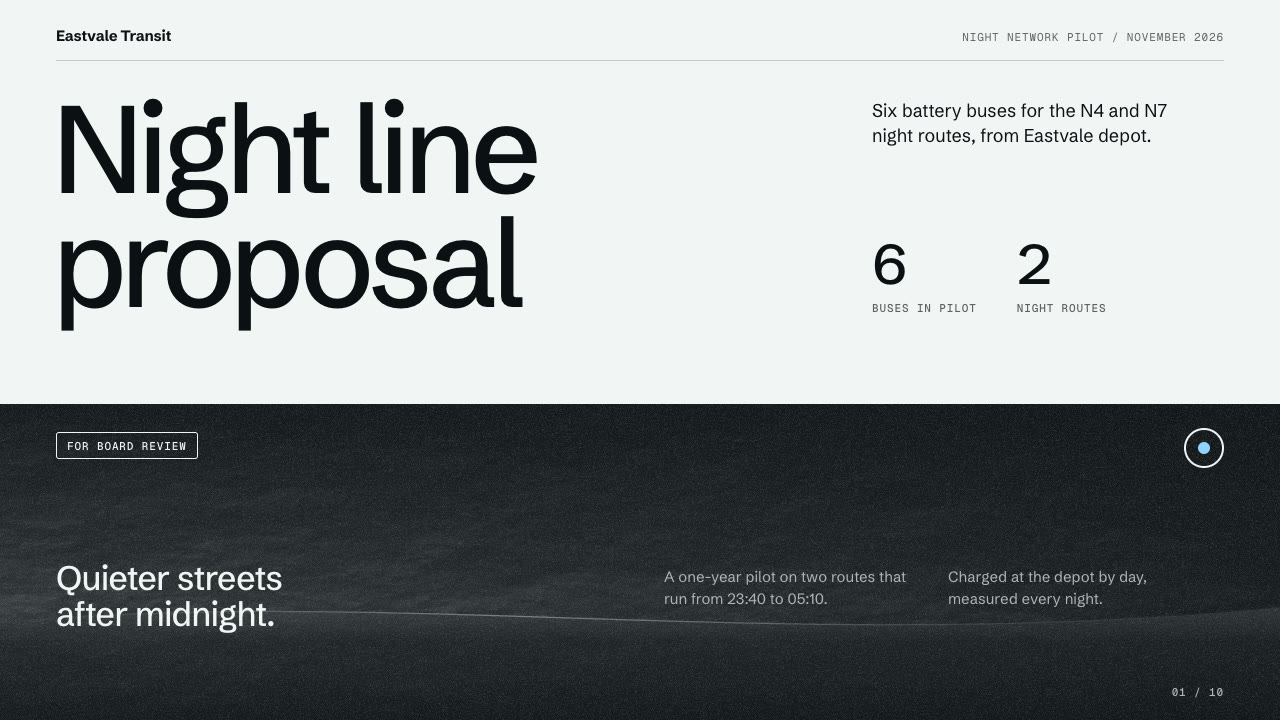
Make monochrome proposal decks that ask for a decision, such as a pilot for a board, a room for trustees or a service for a client: near-white paper, very large tightly tracked grotesk headlines, short copy in small columns, mono labels and chips, rounded grey, dark and accent cards and drawn material pictures.
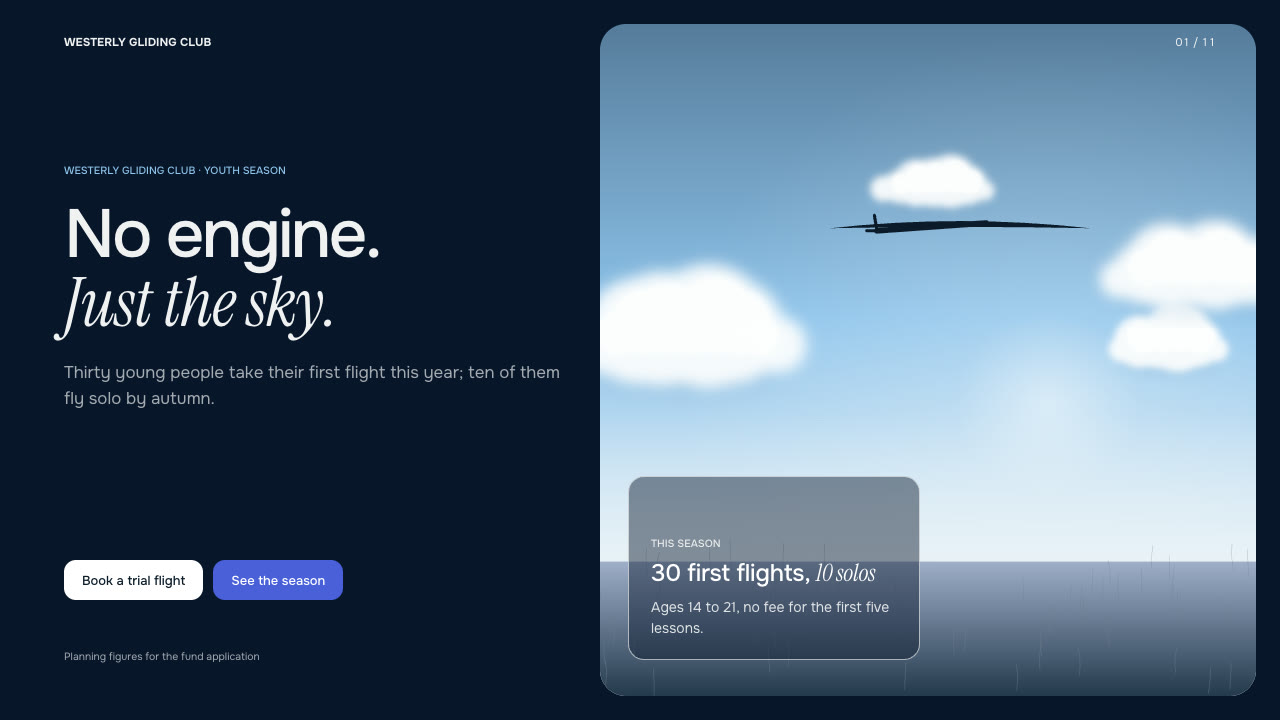
Make explainer and proposal decks that make a public subject feel approachable: open-sky pictures, clear optical glass and anonymous figures, thin-edged translucent glass cards over the pictures, broad mist-white pages, three deep night pages and headings with an italic serif accent.
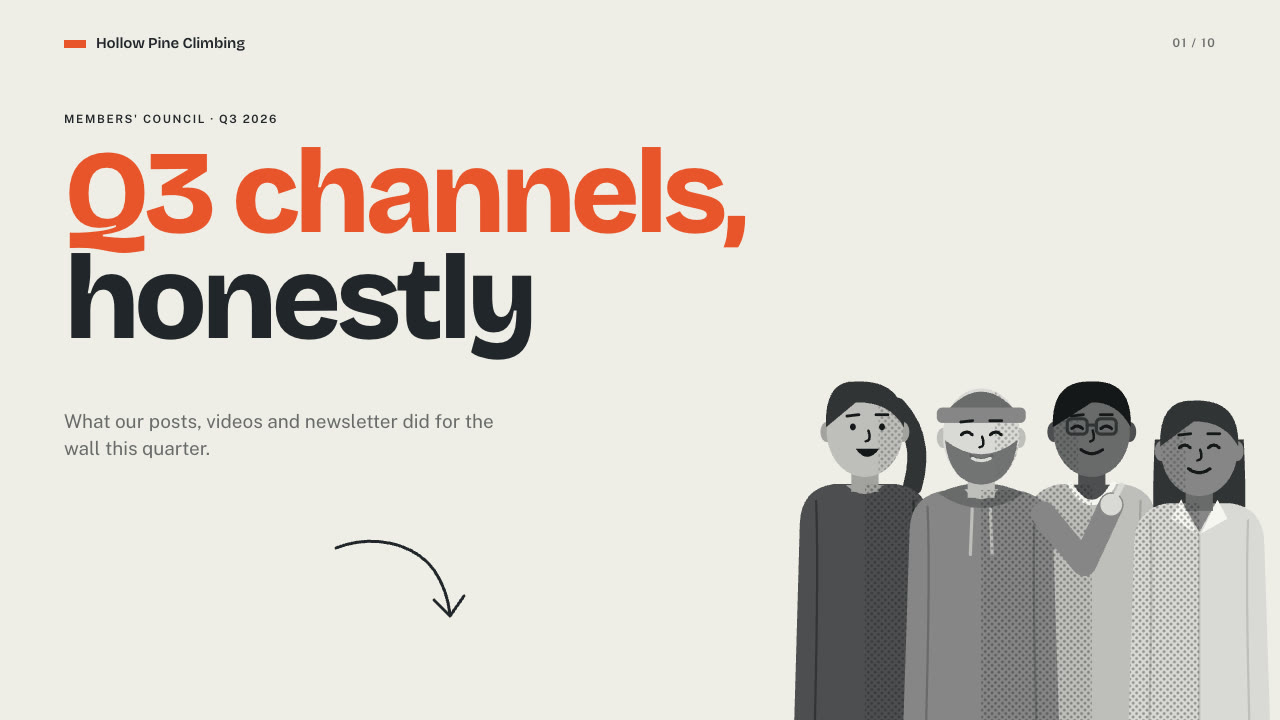
Make report decks for teams that review their channels, such as quarterly social and video reviews, newsletter or podcast seasons and community updates: heavy two-tone headlines on warm paper, screen-print groups of people at the page edge, tilted agenda tabs, stat rows, bars, an A/B/C top three, a native comparison table and a weekly column chart.

Make calm profile decks for organisations that introduce themselves, such as company and co-operative profiles, partner or client onboarding and team introductions: rounded paper panels on full colour fields, pictures with one large arched corner, metric cards, service cards, a native standards table, a timeline and contact rows.

Make training decks for front-line service teams, such as desk inductions, shift handovers, opening routines and volunteer counters: calm light pages with faint contour lines, two dark pages for the service standard and the handover, check rows, habit cards, journey rings, say-instead cards and drawn service interiors.
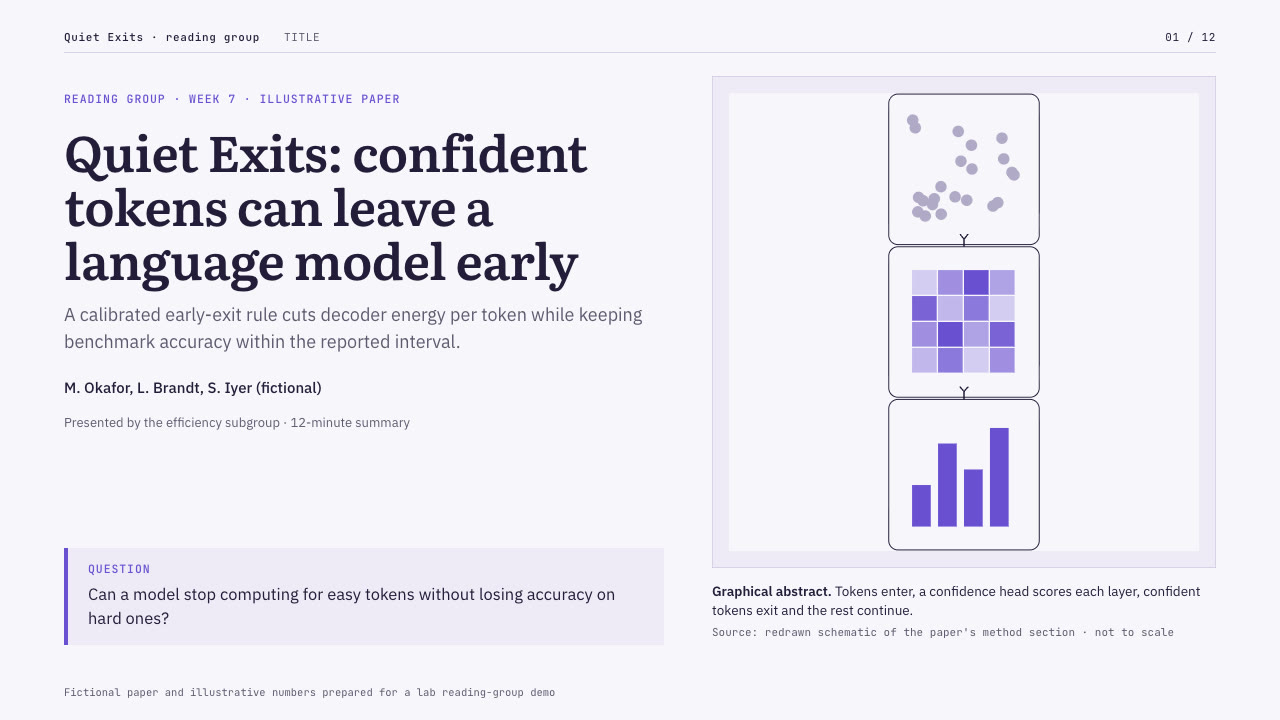
Make figure-led research talks such as paper summaries, journal clubs, lab and reading-group reviews and evidence briefings: every content page is built around one figure, chart or table with its caption and source underneath, numbers carry their comparator and interval, and a limits page states what the work can and cannot claim.
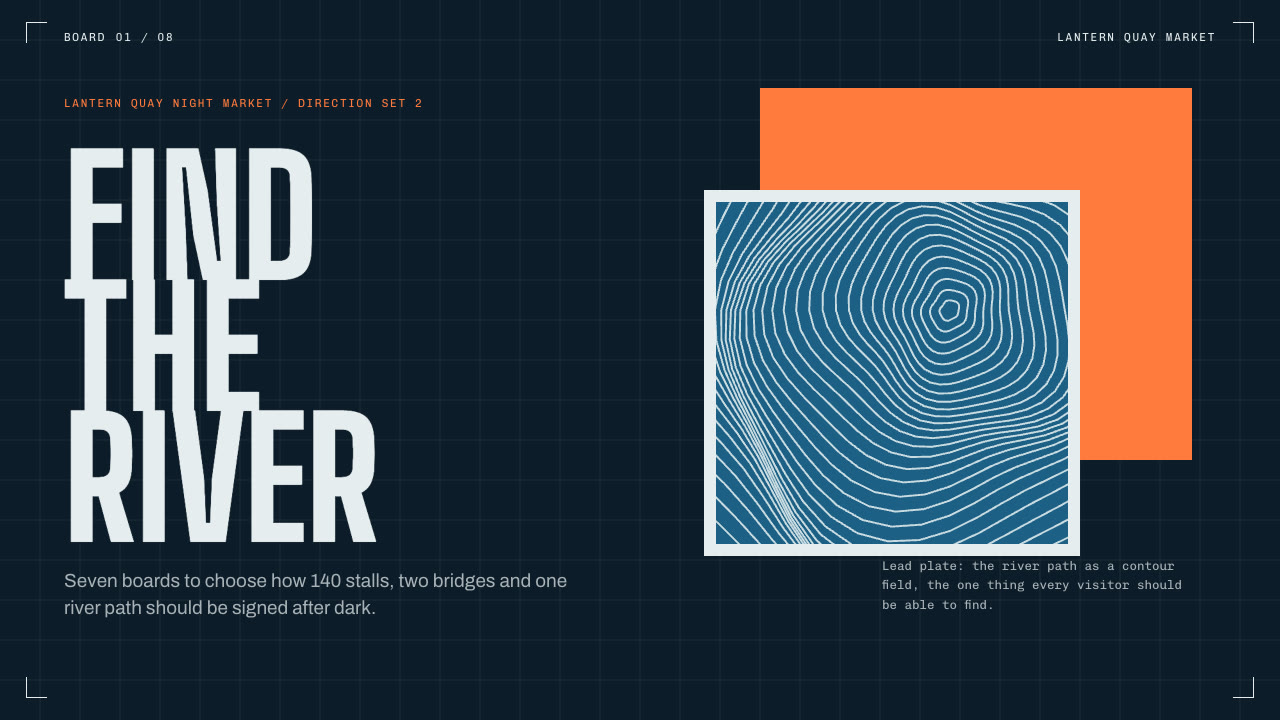
Make exploratory boards for creative direction, workshop synthesis, concept pitches and visual research: each page is an addressed board on a faint drafting grid with crop marks, condensed capitals, staggered specimen plates, a signal field, a verdict with evidence and a pinboard of stage cards, so feedback can name a board and replace or branch it.
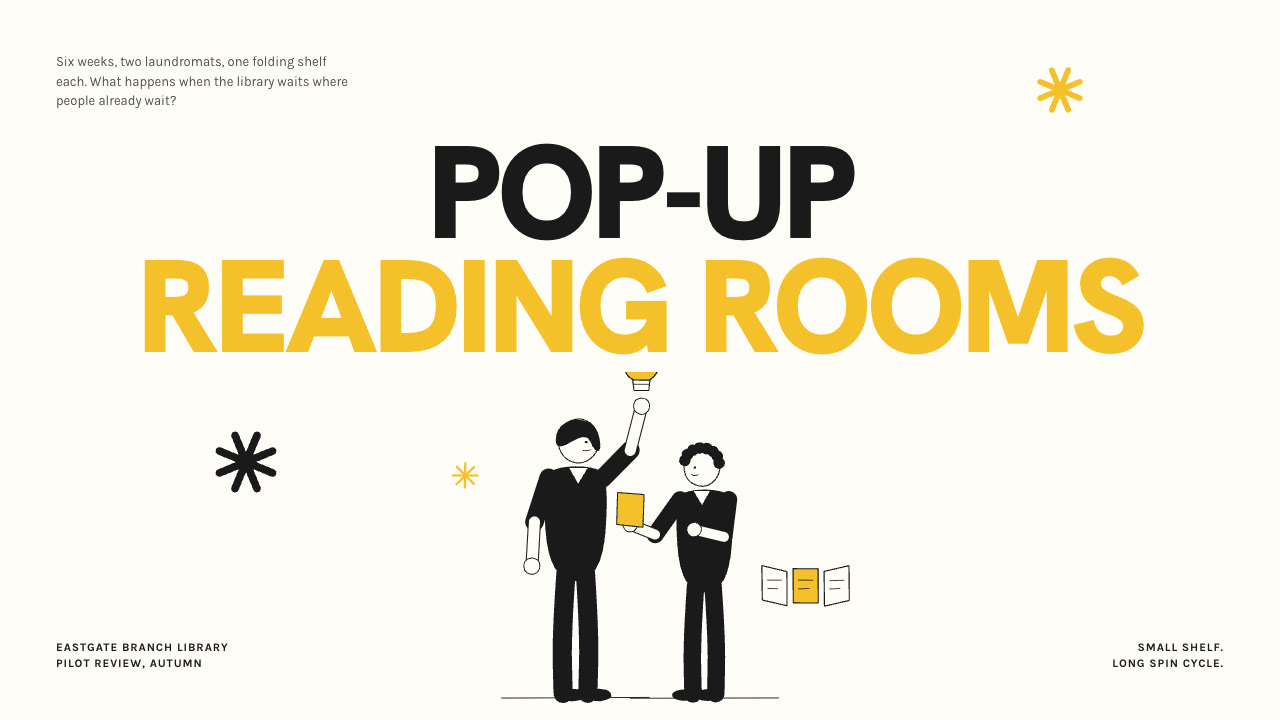
Make bold notebook-style decks for pilot reviews, team experiments, proposals and programme readouts: paper-white pages, heavy capitals with one highlighted phrase, small copy in asymmetric islands, loose asterisks, a fine-pen figure on every page and a native results table.

Invite people into a workshop, programme or public meeting with a warm cut-paper deck: cream pages, broad colour bands, offset paper cards and a collage picture on every image page.
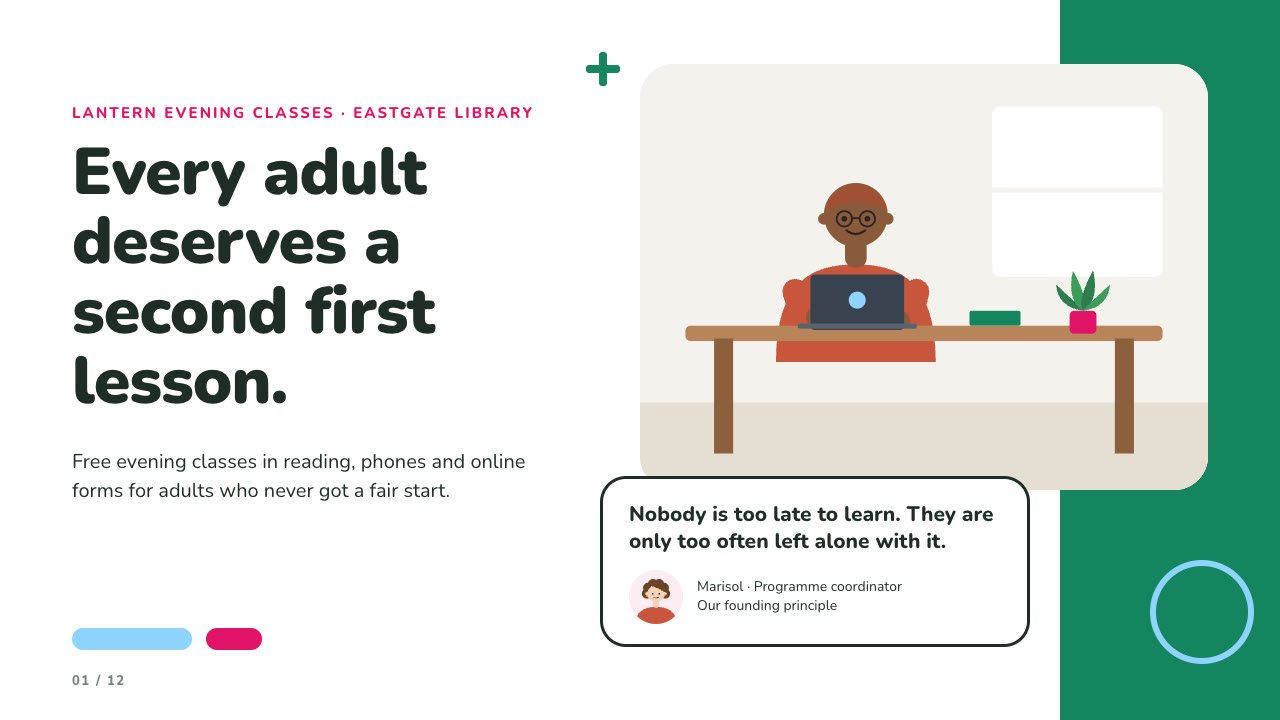
Make bright, friendly decks for learning programmes such as evening schools, cohorts, courses, residencies and onboarding: heavy rounded headings, round portraits on offset colour discs, rounded picture windows, colour-block splits, capsules, rings and plus marks.
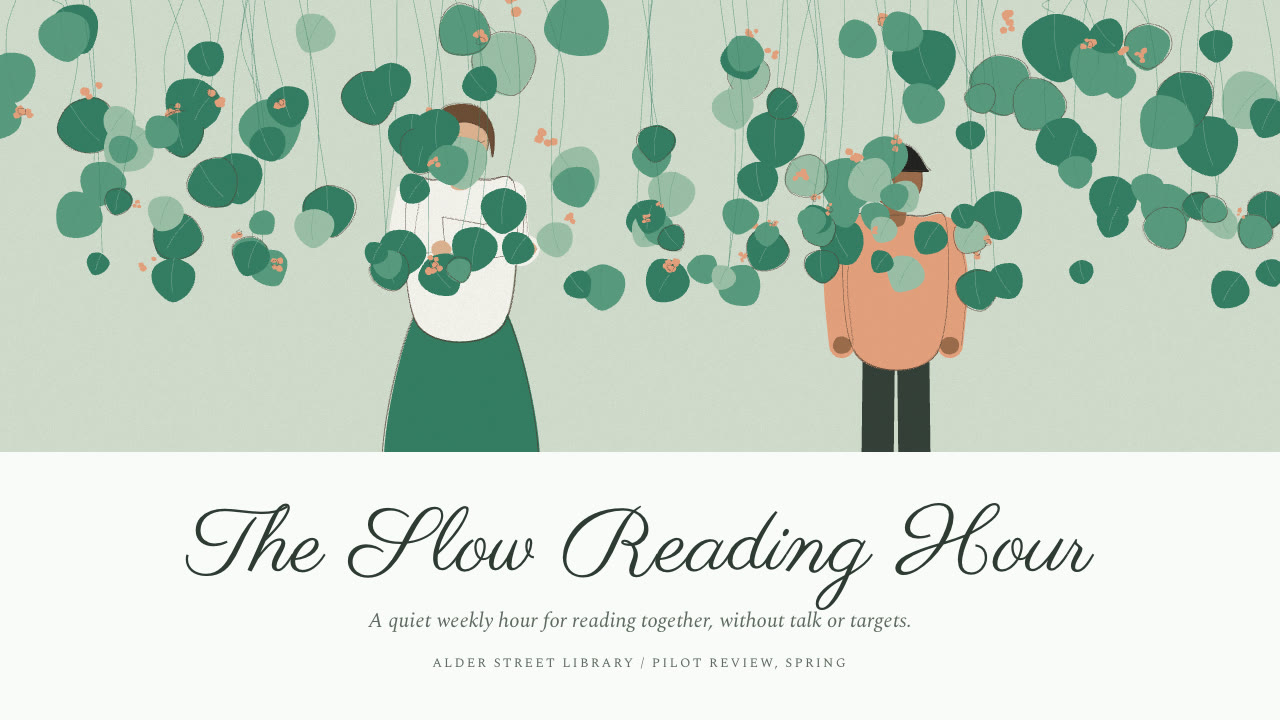
Make calm, illustrated decks for talks that ask people to slow down and look, such as library and reading programmes, garden and nature projects, community learning and seasonal reports: flat leaf-and-figure illustrations, script titles over a plain serif and one small idea per page.
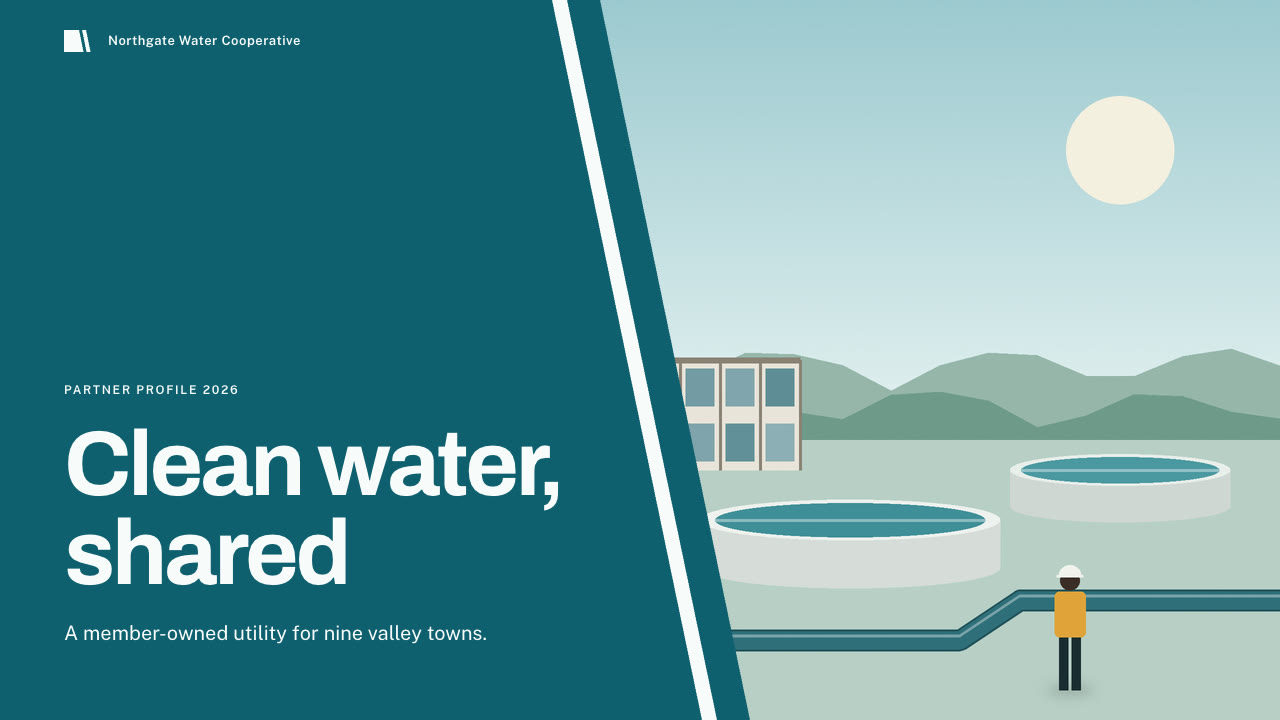
Make organisation profiles such as partner briefings, company or cooperative introductions, investor updates and onboarding decks: light pages with one strong colour, titles in a banner with a slanted cut, slope-cut pictures to the page edge, figures, a process, a bar chart and a native table.
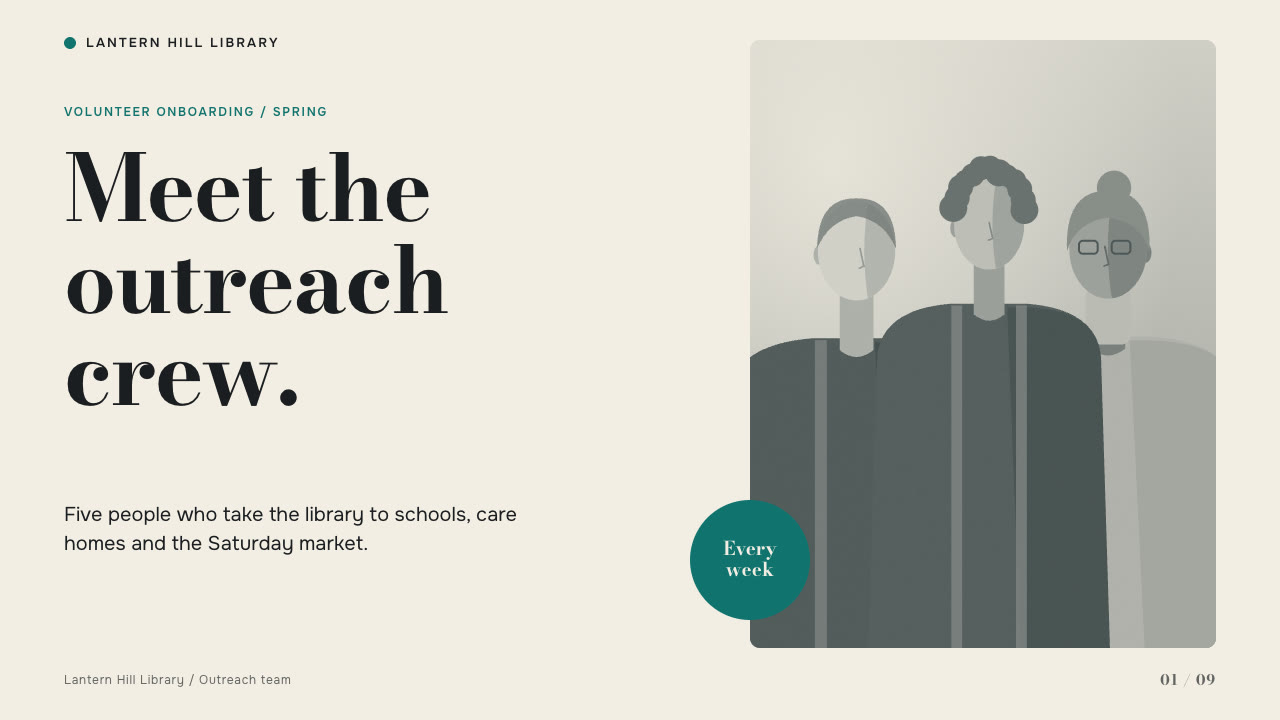
Make team introduction decks that read like a staff feature in a printed magazine: who the people are, what each of them looks after, how work moves between them, what they achieved and the habits they share, with Bodoni Moda headlines, warm paper pages, round stamps and soft-cornered portraits.
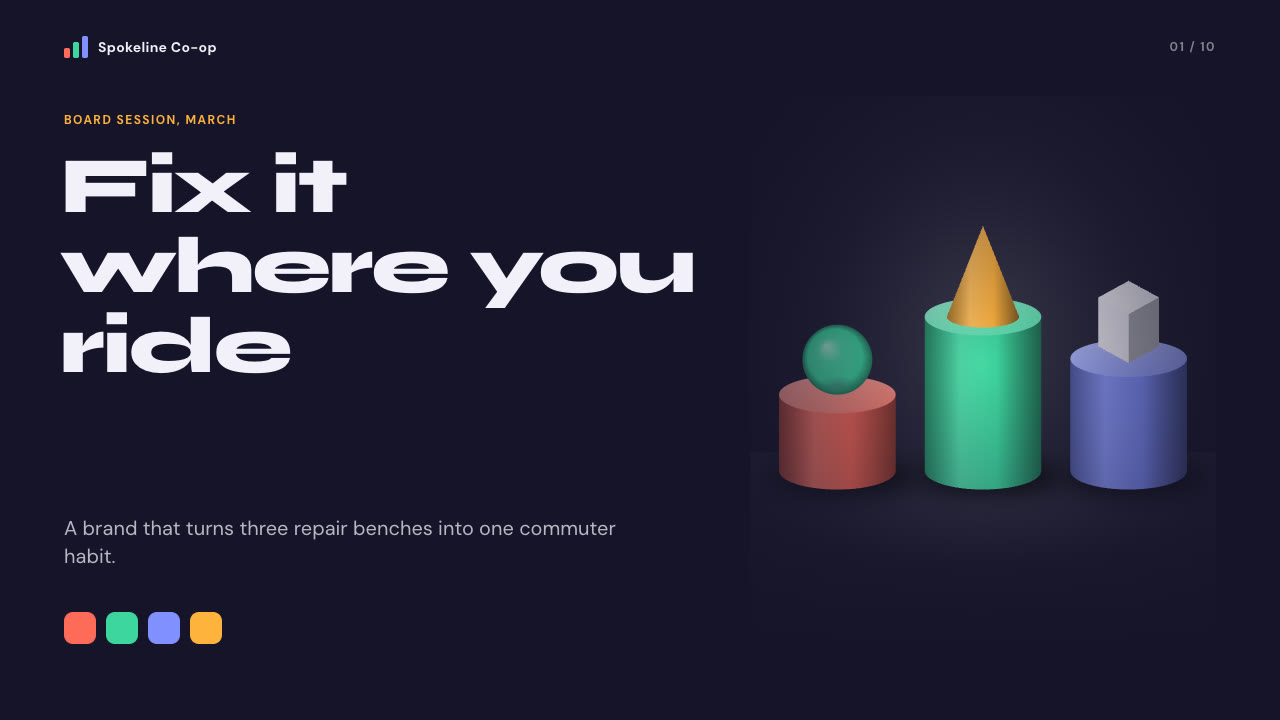
Make dark, decision-led brand positioning and strategy decks, such as a board approving a rebrand, partners joining a relaunch or a team choosing a focus audience: short, very heavy headlines, content in rounded tiles with one shared corner radius, one coloured tile per page, a perceptual positioning map and small 3D still lifes of coloured solids.
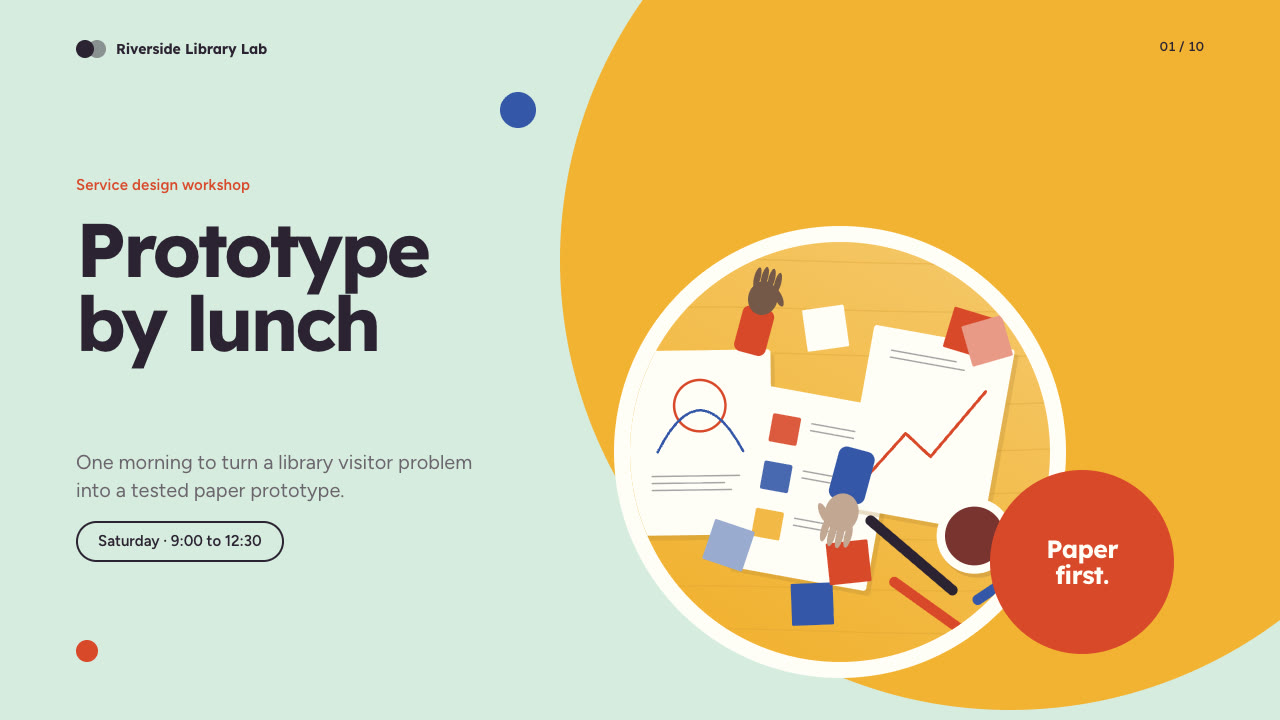
Make cheerful decks for sessions run with a group, such as design and prototyping workshops, volunteer and staff trainings, kick-offs and onboarding mornings, where colour is carried by circles: a giant sun disc on the cover with a round picture and badge, coloured corner discs, round icon badges, round picture windows and outlined pills for times and contacts.

Make operations report decks, such as quarterly operations reviews, service performance updates and programme status for a board or committee: cover and close on a strong theme colour, a tall drawn building whose corner is notched around a round arrow, bright utility cards with one big figure, short capsule tags, editable index bars and growing stage circles, with Urbanist headlines.
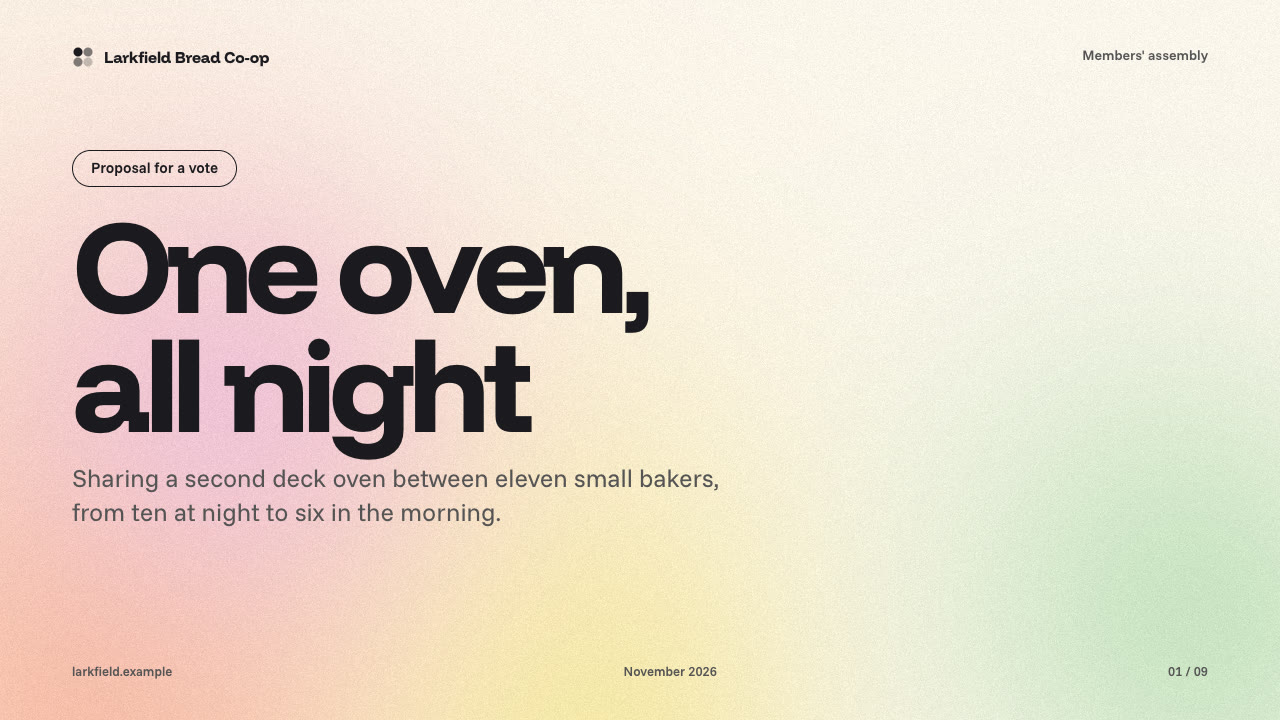
Make calm, light decks for proposals, reviews, member meetings and programme updates where colour lives only in the backgrounds: each page gets one of three painted washes (warm Orchard, cool Tide, muted Haze), soft colour fields with a fine film grain, or a plain paper page, and a rhythm rule keeps the same wash off three pages in a row. Headlines are large, tight Funnel Display in black.
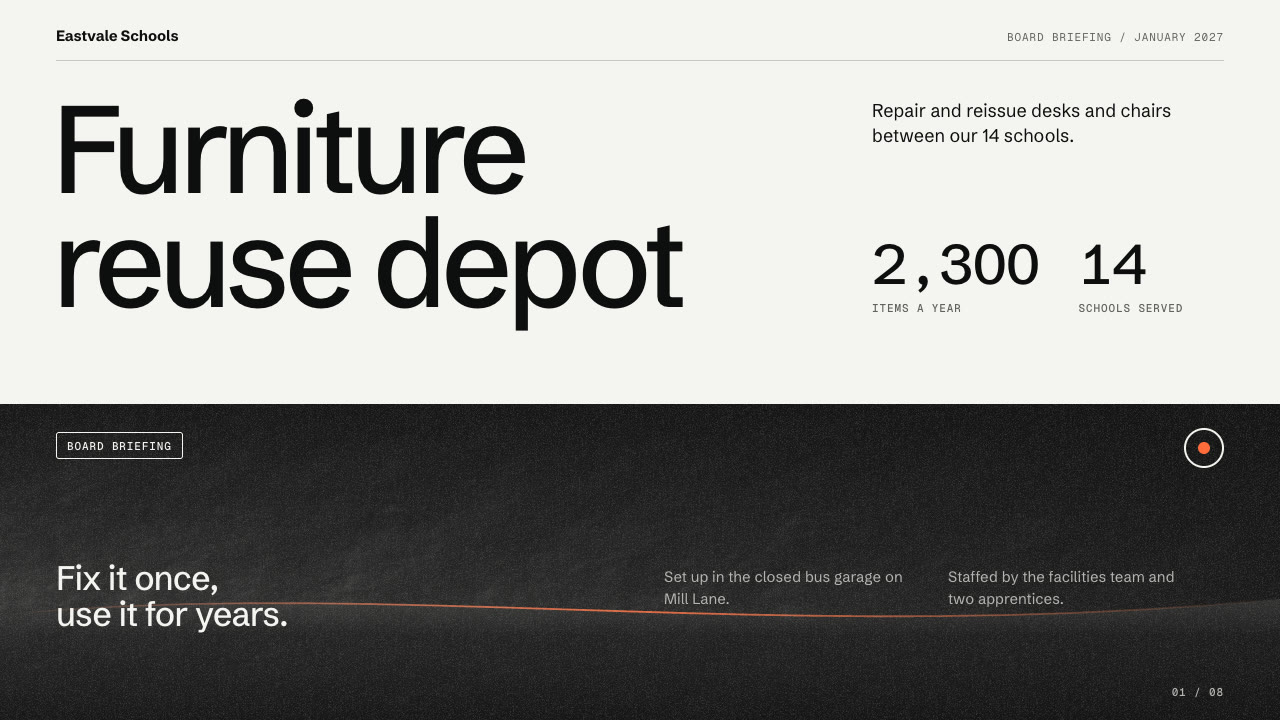
Turn a report, article or idea into a deck people can listen to, on top of a presentation style Skill you already have: the style draws the pages, this Skill writes a spoken script into every page's speaker notes, quotes the voice cost, and after you approve records one take per page and adds a listening bar with play, seek, speed, auto-advance and a script panel.
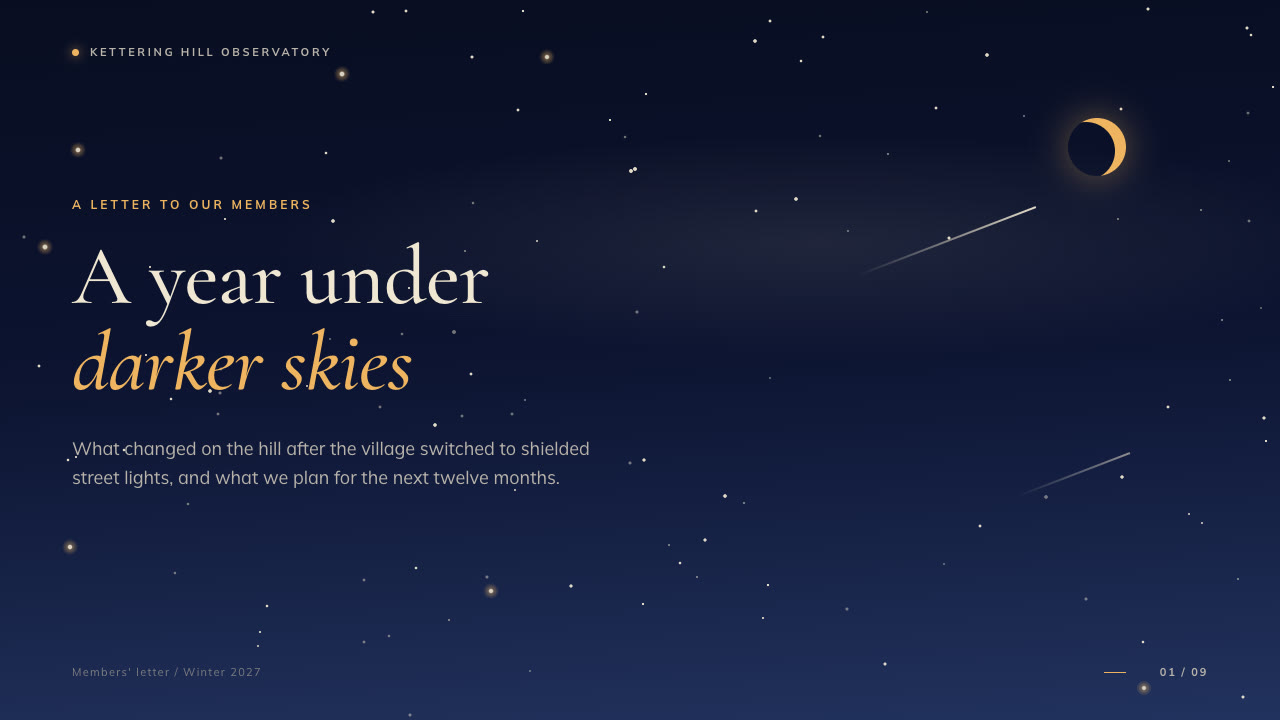
Make decks that read like a letter read aloud after dark, such as an observatory writing to its members, a founder looking back on a year or a night service reporting to its board: every page sits under one night sky with generated star layers, a lamp-coloured horizon glow, shooting-star streaks and a crescent on the cover, with large Cormorant Garamond headlines whose second line is a lamp-lit italic.
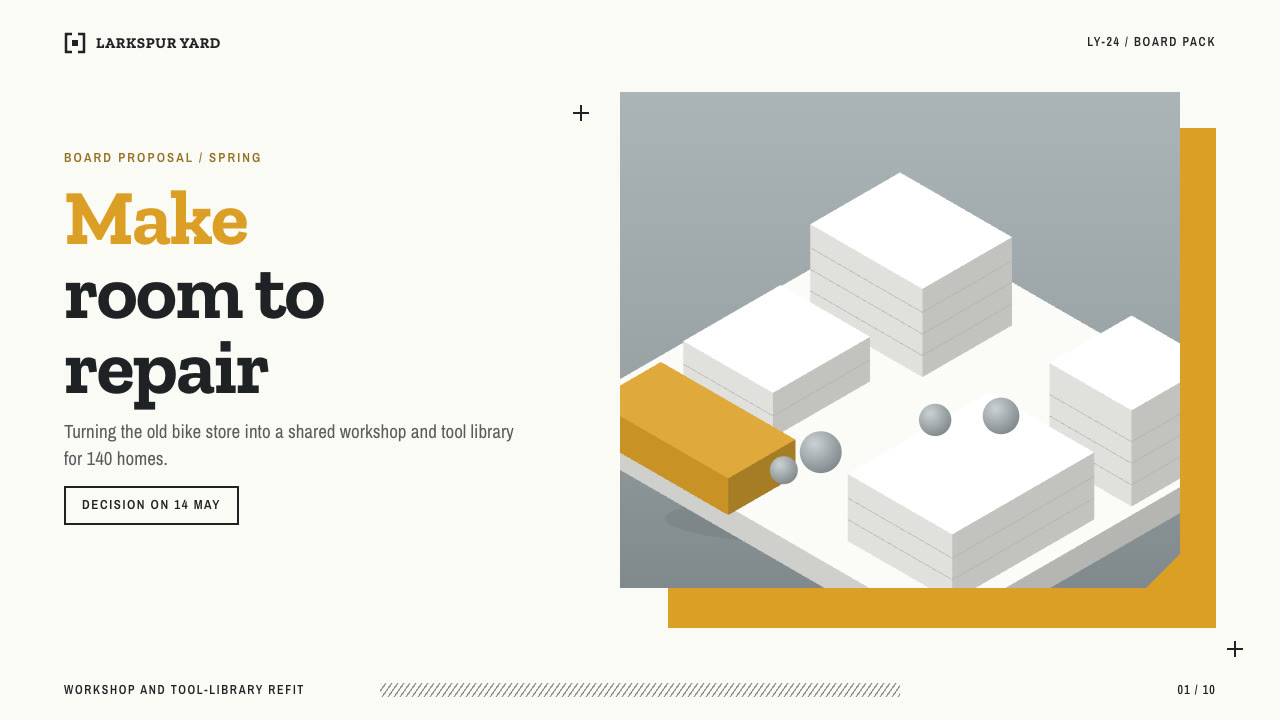
Make dense site-dossier decks for building work, such as refits, retrofits, renovation programmes, board packs and briefings for residents or parents: Zilla Slab headlines with an accent lead word, small spaced capital labels, picture frames with one cut corner, mustard, clay or lichen panels and a full accent field page, graphite side panels, a hatched footer rule and plus registration marks.
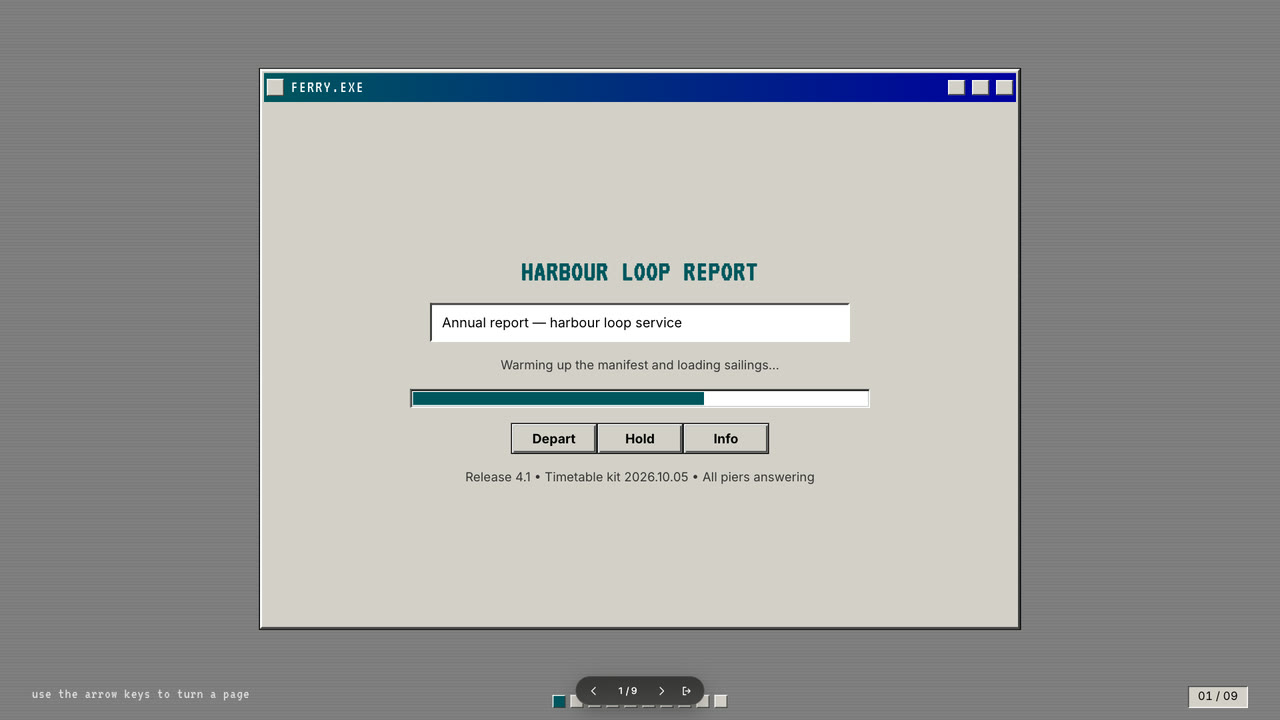
Make decks that read like a mid-90s workstation: every page a document window on a flat gray desktop, with a navy title bar, beveled chrome, group boxes, sunken wells, chunky progress bars and pixel-accent type.
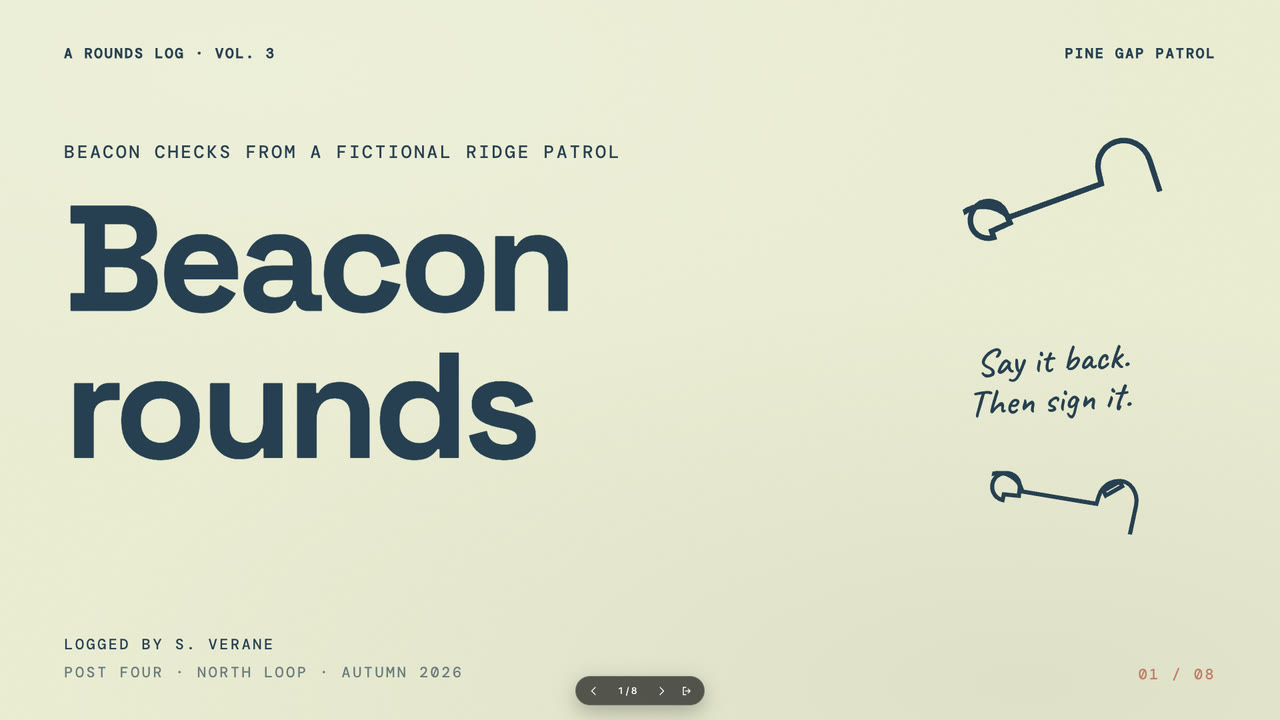
Make decks that read like pinned field notes: saturated yellow legal-pad paper, cobalt ink, hand-drawn safety pins, cream pinned cards, handwritten marginalia, mono archival tags and rotated red stamps.
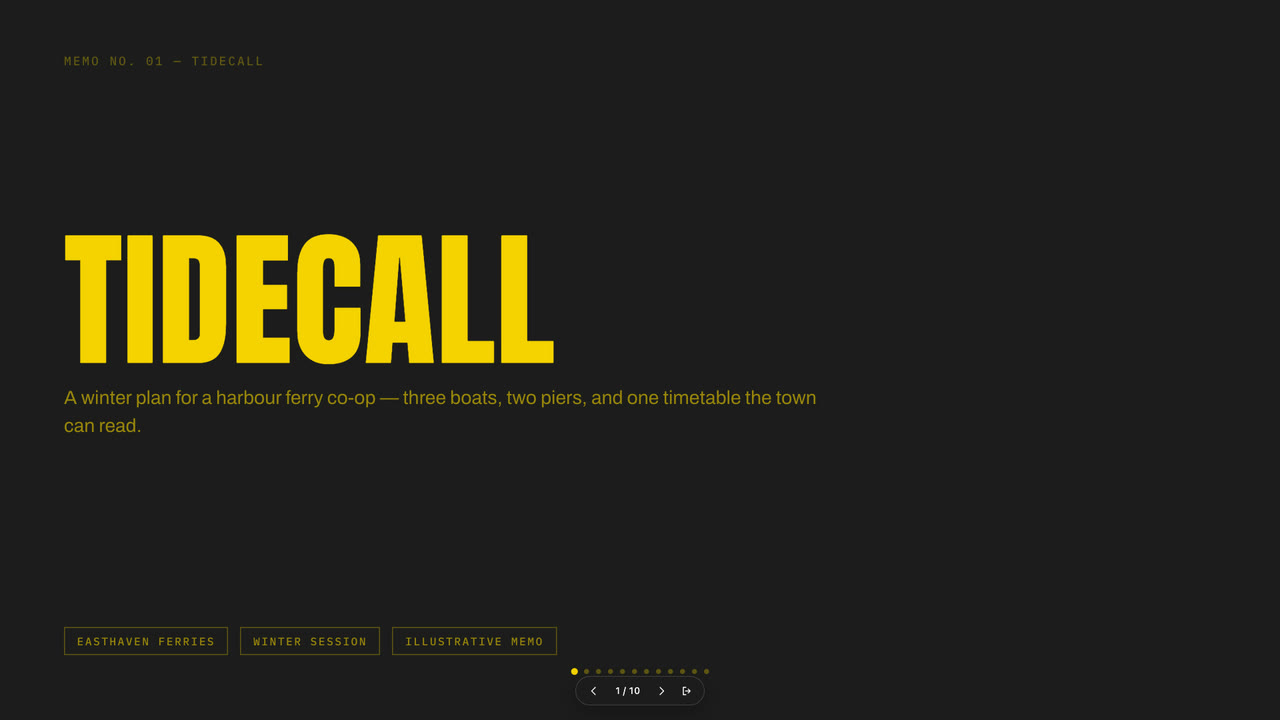
Make decks that read like high-voltage two-register briefs: near-black ink pages or full volt-yellow pages, uppercase condensed grotesk titles, mono chrome labels, em-dash bullets, stepped bar charts and hairline-framed drawn panels.
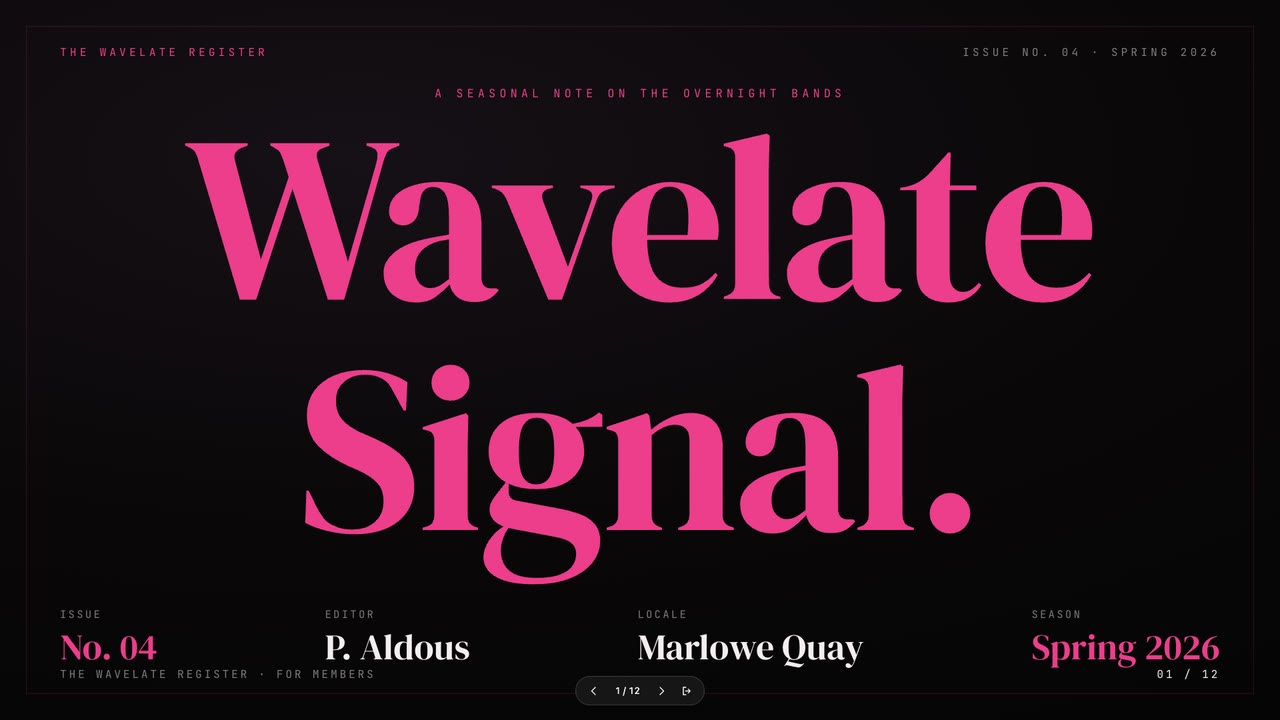
Make decks that read like nocturnal editorial issues: a single near-black velvet canvas, pearl-paper type with one hot-pink accent, serif display numerals, mono masthead chrome and framed line-art plates.
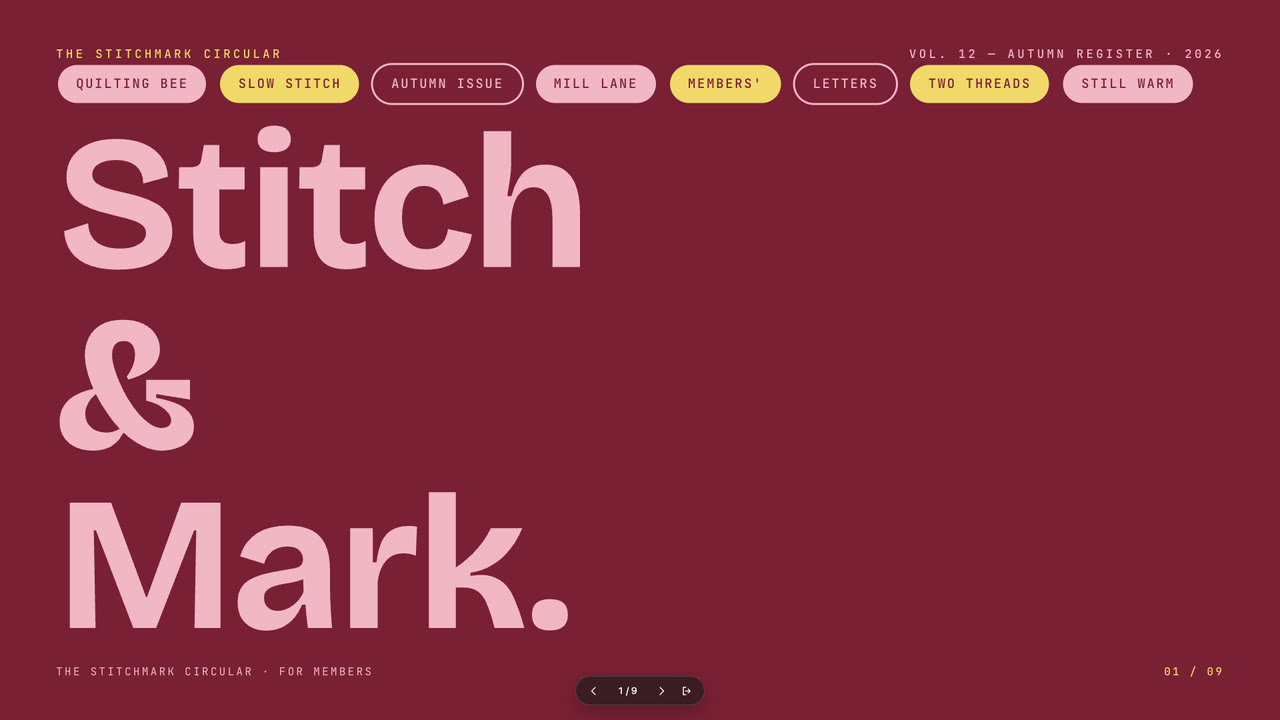
Make decks that read like three-ink seasonal gazettes: berry surface, butter accent and ink type on Bricolage Grotesque and Instrument Serif — a chip-row cover, principle grid, headline figure and colophon.
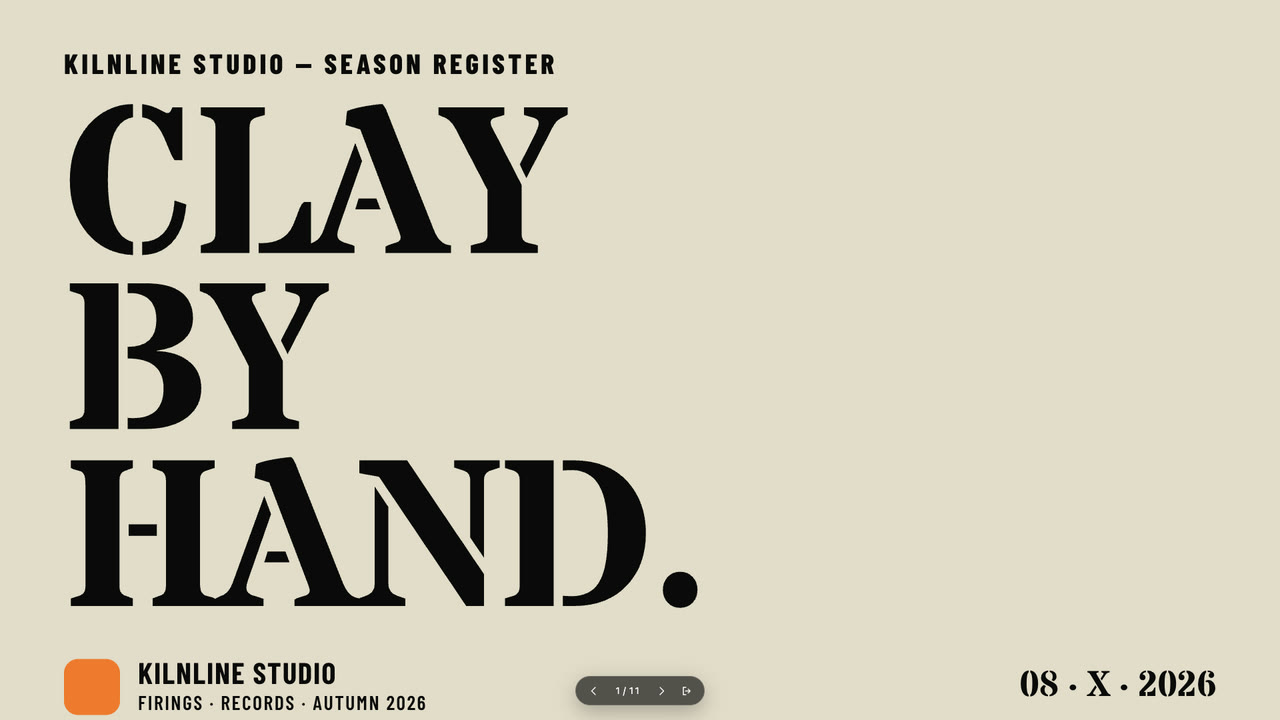
Make decks that read like paper-cut field manuals: cream ledger paper, black stencil condensed titles, two accent inks, blob agenda chips, three-column consults, stepped counts, reach matrices and call cards.
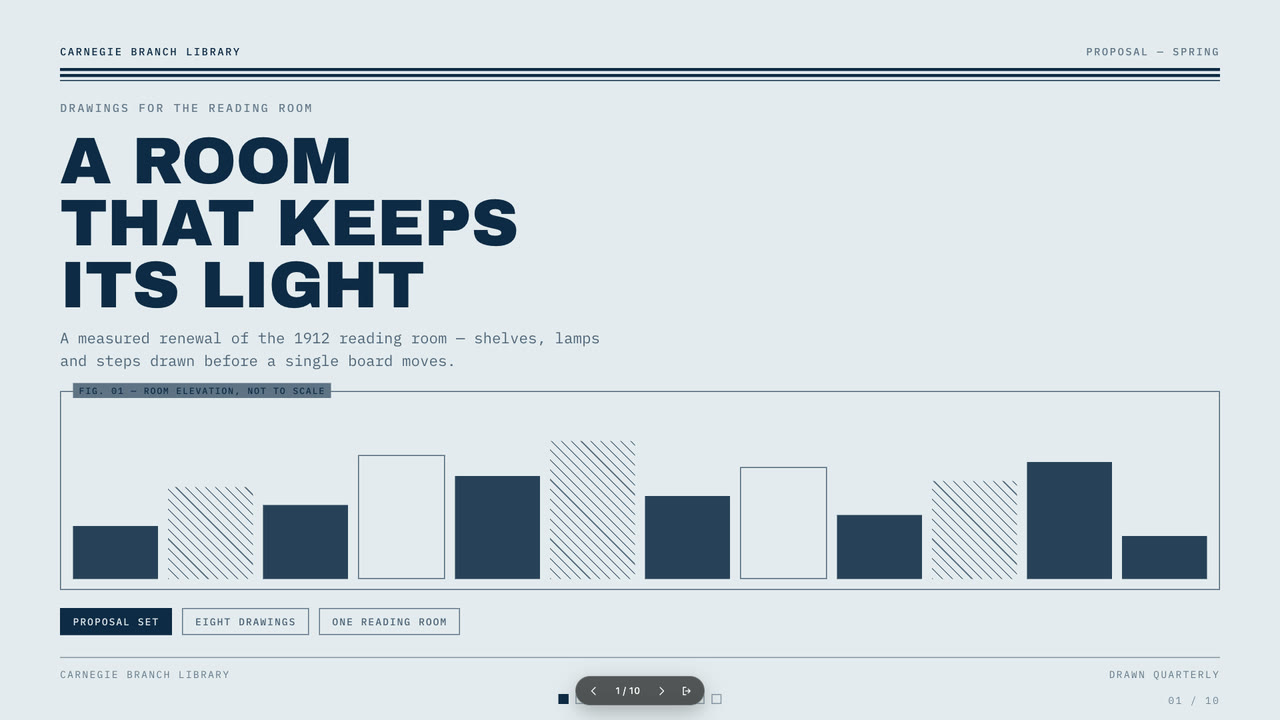
Make decks that read like printed drawing sheets: cream paper pages beside near-black plate pages, a double-rule masthead, uppercase display type, monospace ledger copy, fig.-tagged wireframe figures, hatched fills, X-cross placeholders and dashed checklists.
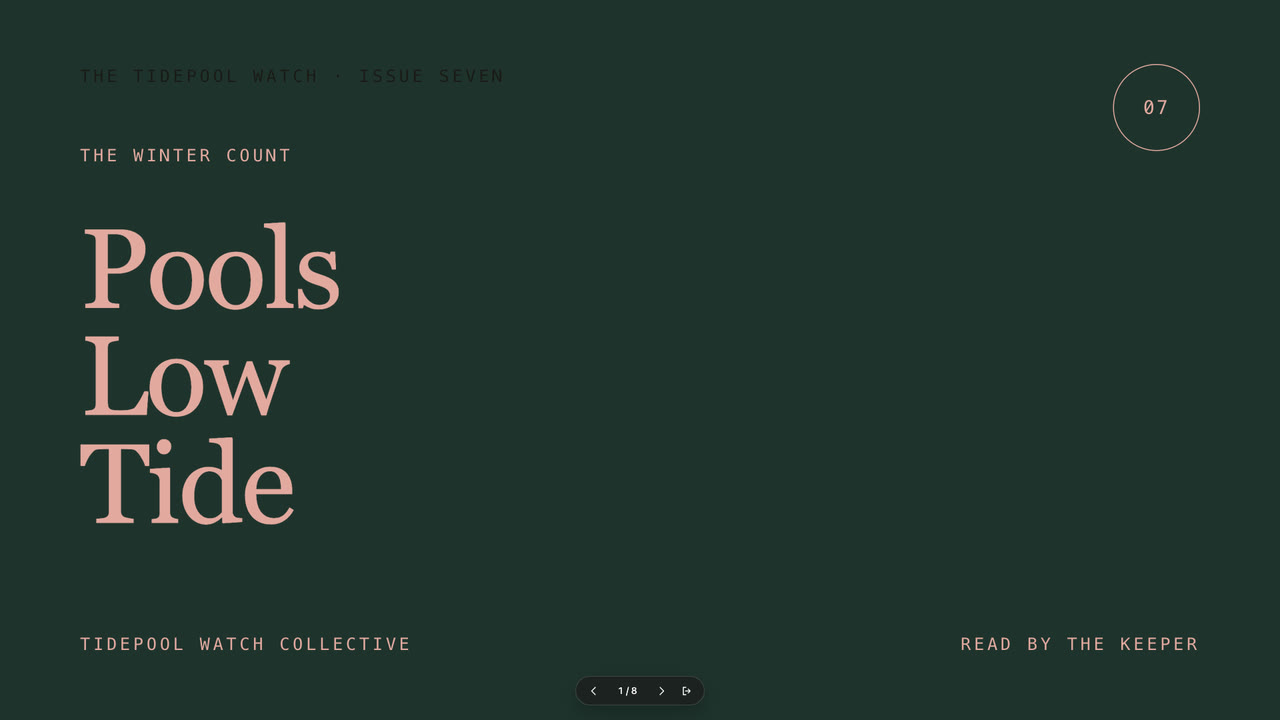
Make decks that read as a printed quarterly or an editorial year-in-review: a three-tone register of deep forest green, dusty pink and oat cream, a tall literary serif with mono chrome, monogram-circle page numbers, mixed filled and outlined tile grids and paired bar charts on a colour field.
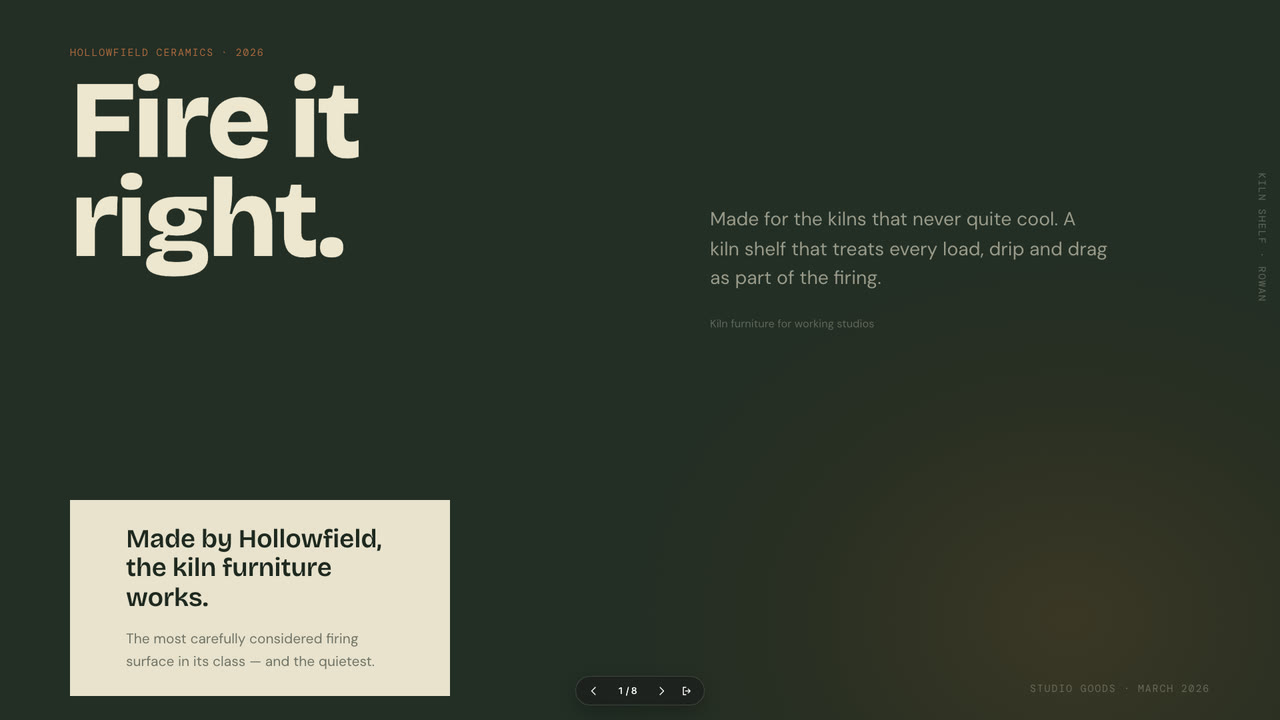
Make decks that read as design-studio credentials or considered advisory deliverables: a deep forest-green field warmed by a wood-brown radial glow on every dark page, cream type floating directly on the field with no cards, a single burnt-orange accent as punctuation, cream info-card insets and 1px hairline rules.
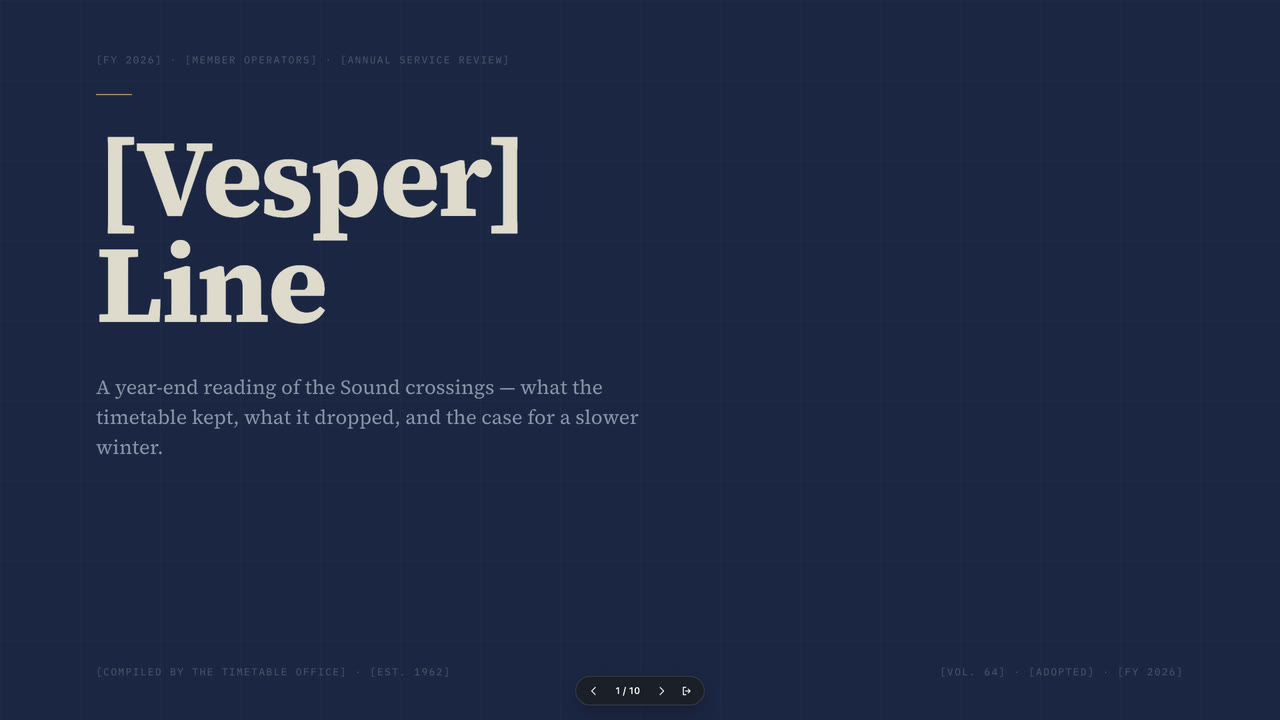
Make decks that read as institutional briefings or considered board documents: deep editorial navy and warm cream as interchangeable fields, antique-gold punctuation only, a near-invisible 80px grid texture on every dark page, and hairline mono chrome — transitional serif display against mono datelines.
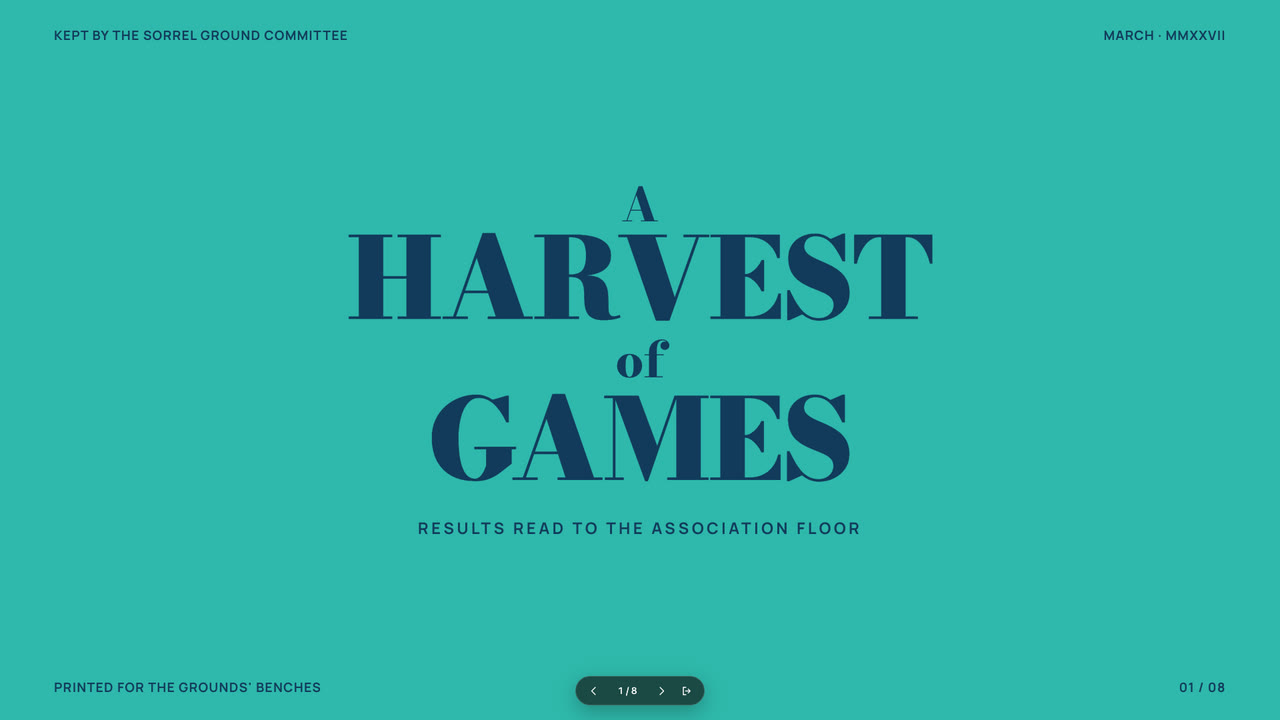
Make decks that read as bright editorial playbills: a saturated emerald canvas, one deep-navy ink for every text, rule and inverse panel, oat-paper alt tiles, a heavy display serif at theatrical scale and the signature double-rule ornament.
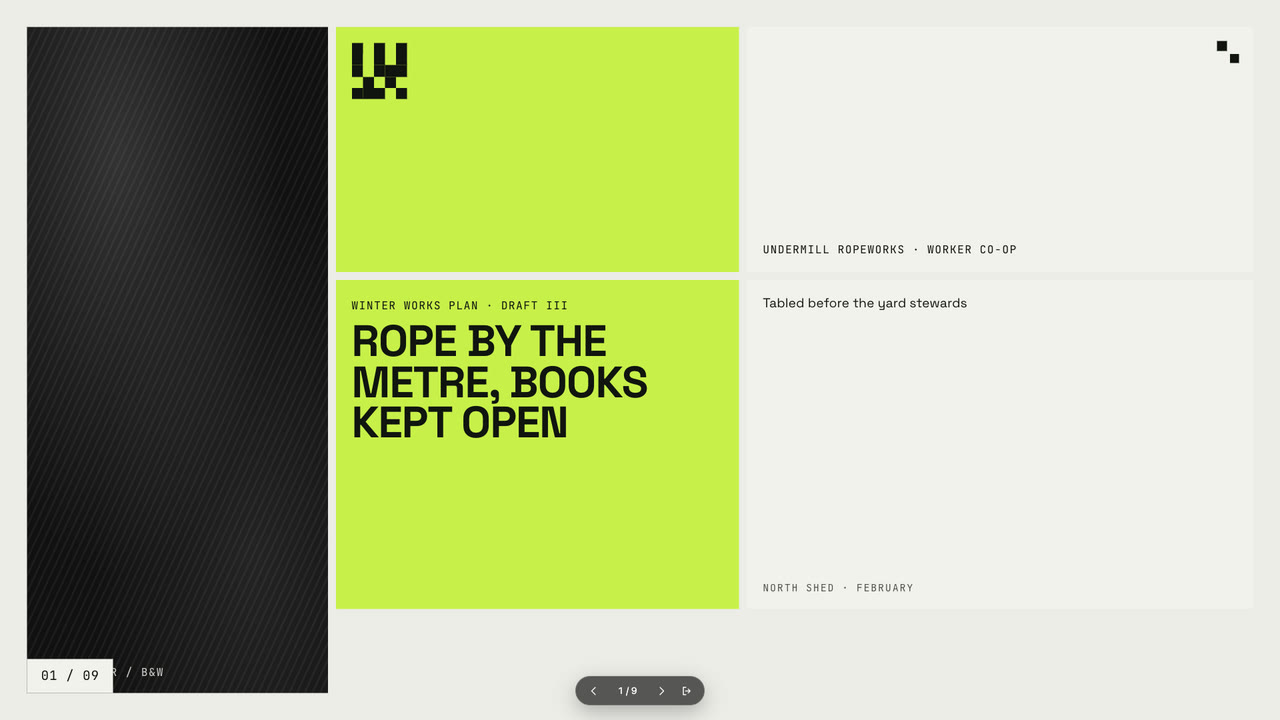
Make brutalist board-pack decks on a 12×8 cell grid: putty passe-partout frame, paper/ink/neon-lemon panel chess, all-caps grotesk poster display, mono chrome, mark-swatch and em-colour emphasis, block-stamp marks and pill tri-state matrices.
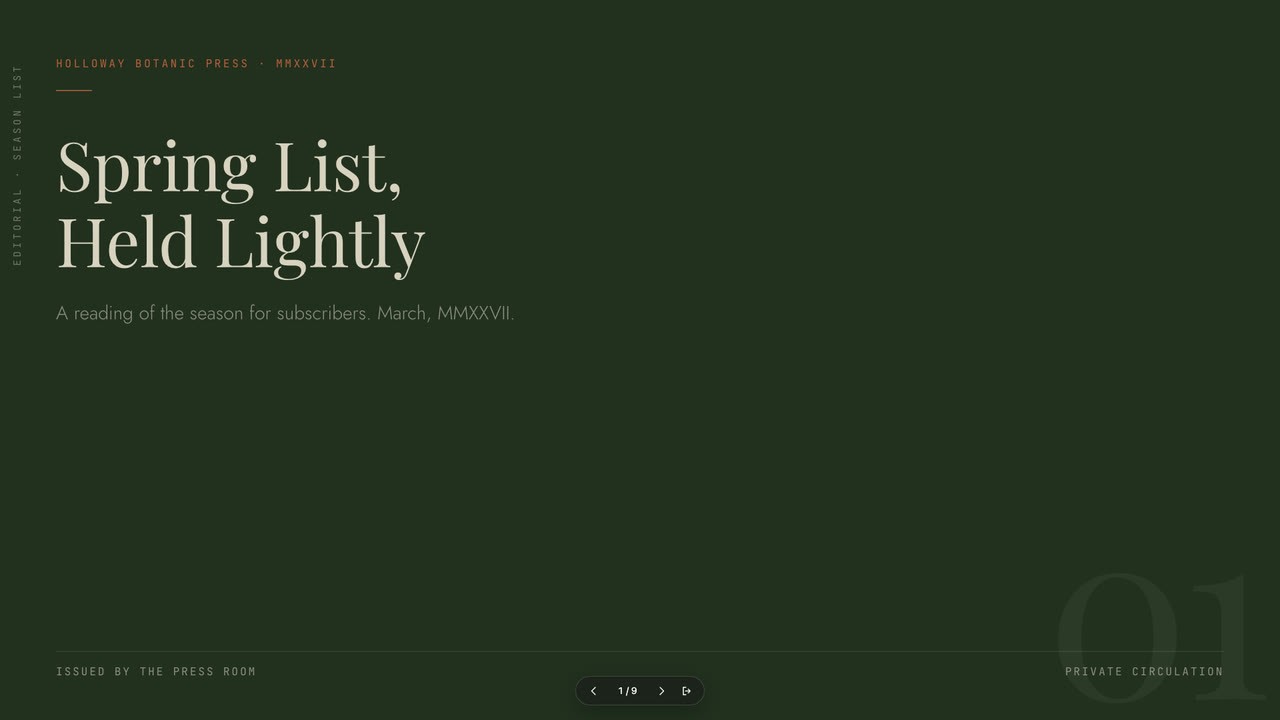
Make decks that read as dark literary monographs: a deep forest canvas with warm bone Playfair serif, Jost-light body, mono hairline chrome, a single terracotta accent as kicker/rule/italic-em/quote-mark/highlight-bar punctuation, ghost watermark numerals, rotated sidebars and parchment light-mode pages.
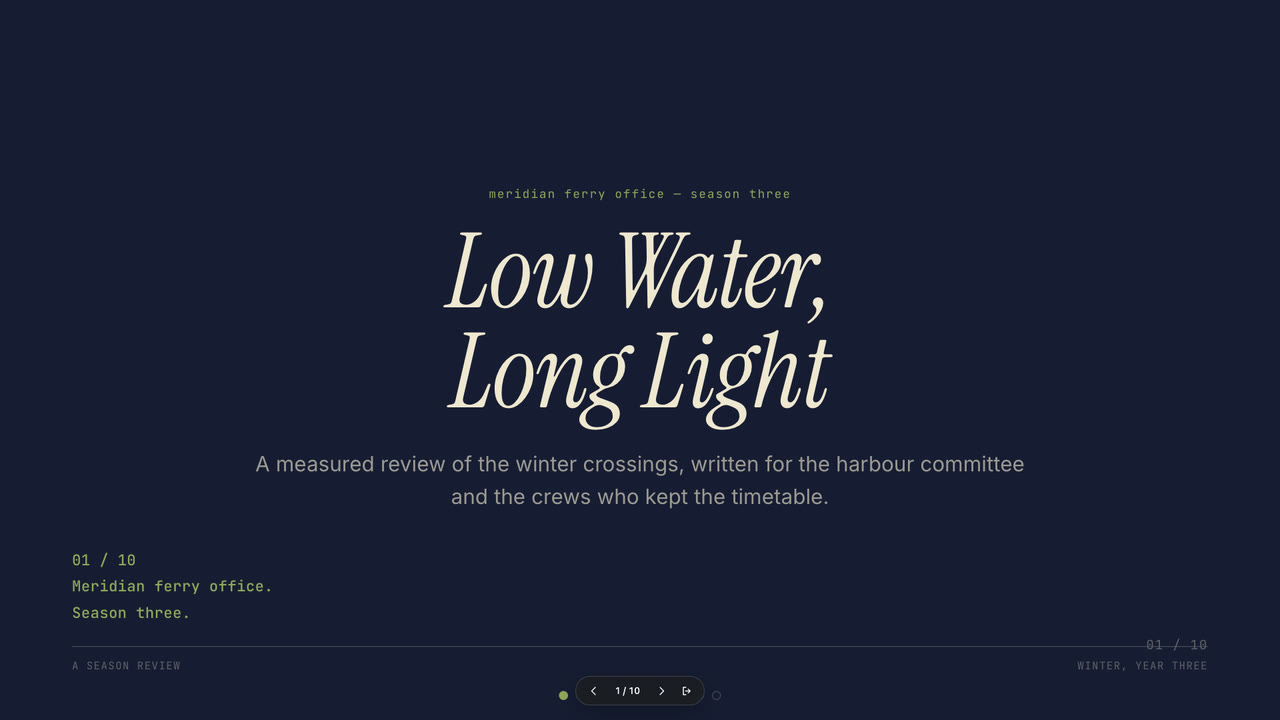
Make decks that read as quiet scholarly essays: one deep indigo register throughout, an italic literary serif for every headline, quiet sans body, typed mono chrome, and a pin-note of small mint mono lines pinned at the bottom-left of every page.
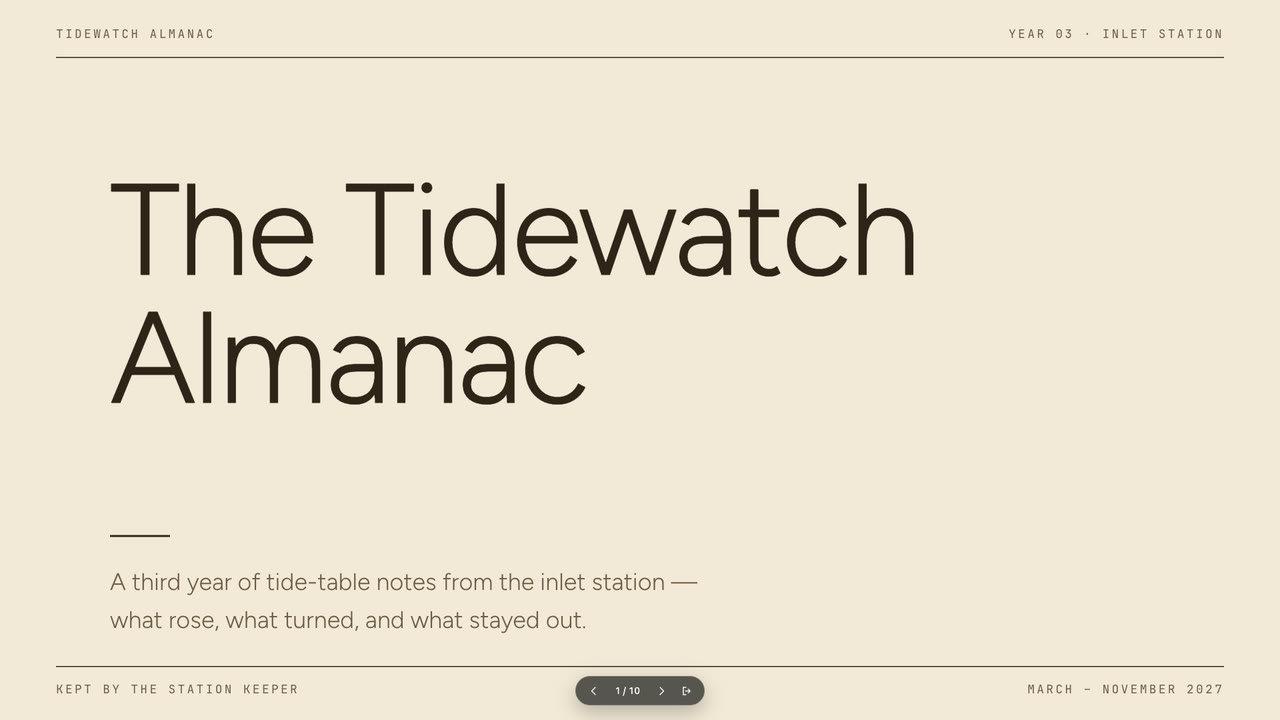
Make decks that read as monochrome field journals: ink on ivory paper, ultra-thin Figtree display headlines, italic Newsreader quotes, mono chrome rows above and below a hairline rule, em-dash marks, framed specimen plates and ruled stat columns.
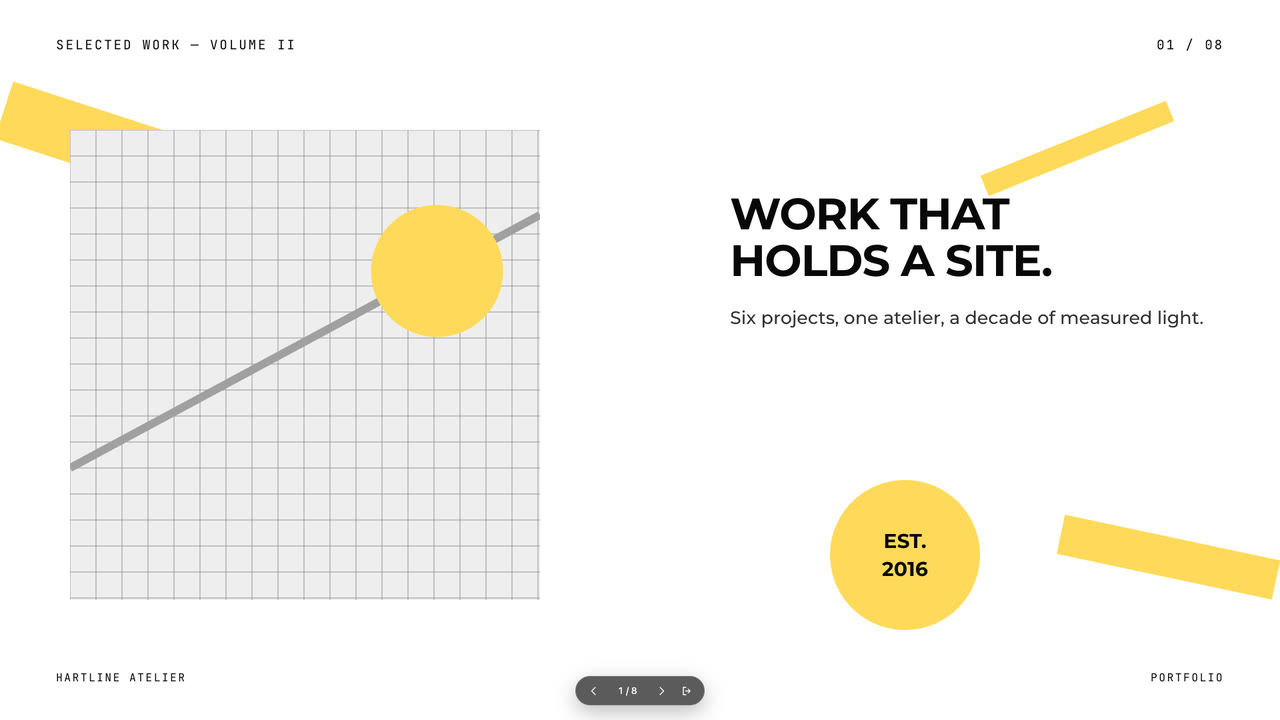
Make decks that read as architecture-portfolio presentations: a white paper field with a single warm-yellow accent, rotated bars and big circles, yellow label blocks, drafting-grid and site-plan photo plates, and -0N- agenda numerals with mini-rules.
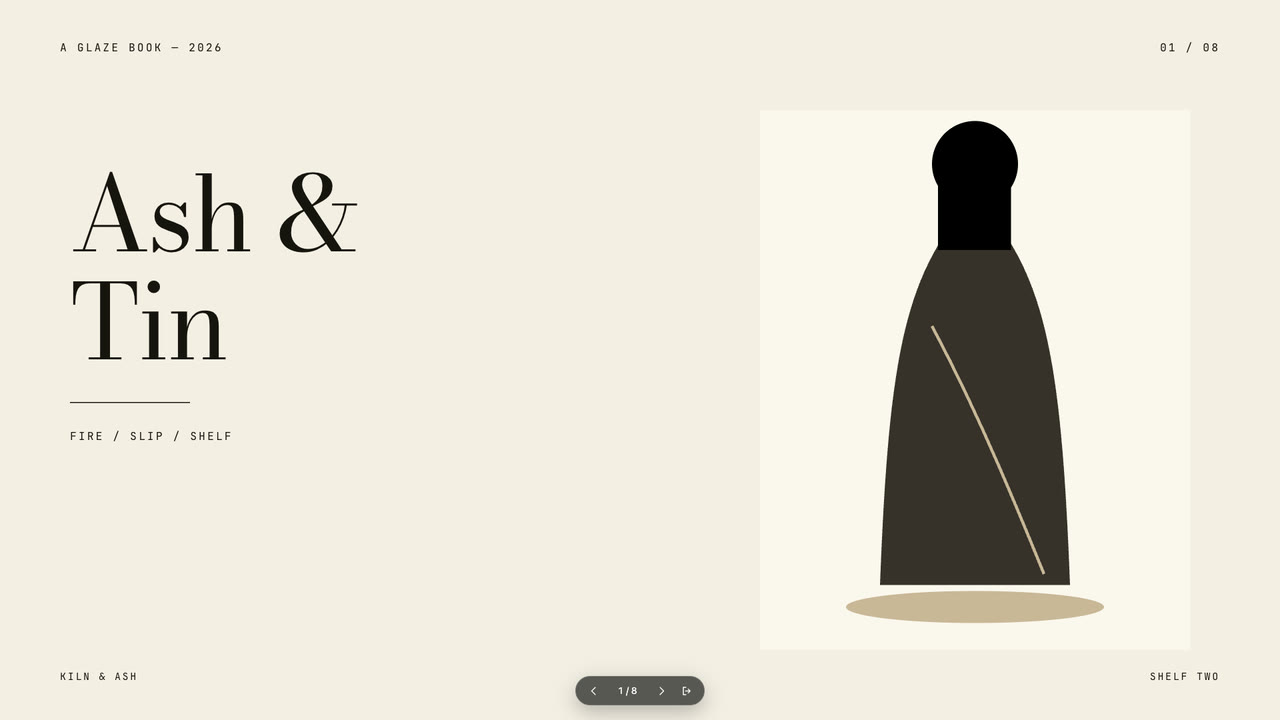
Make decks that read as quiet editorial lookbooks: warm off-white paper, huge Bodoni didone display lines, small-caps kickers, photo and swatch plates, garment-outline schematics and sparse black statement pages.
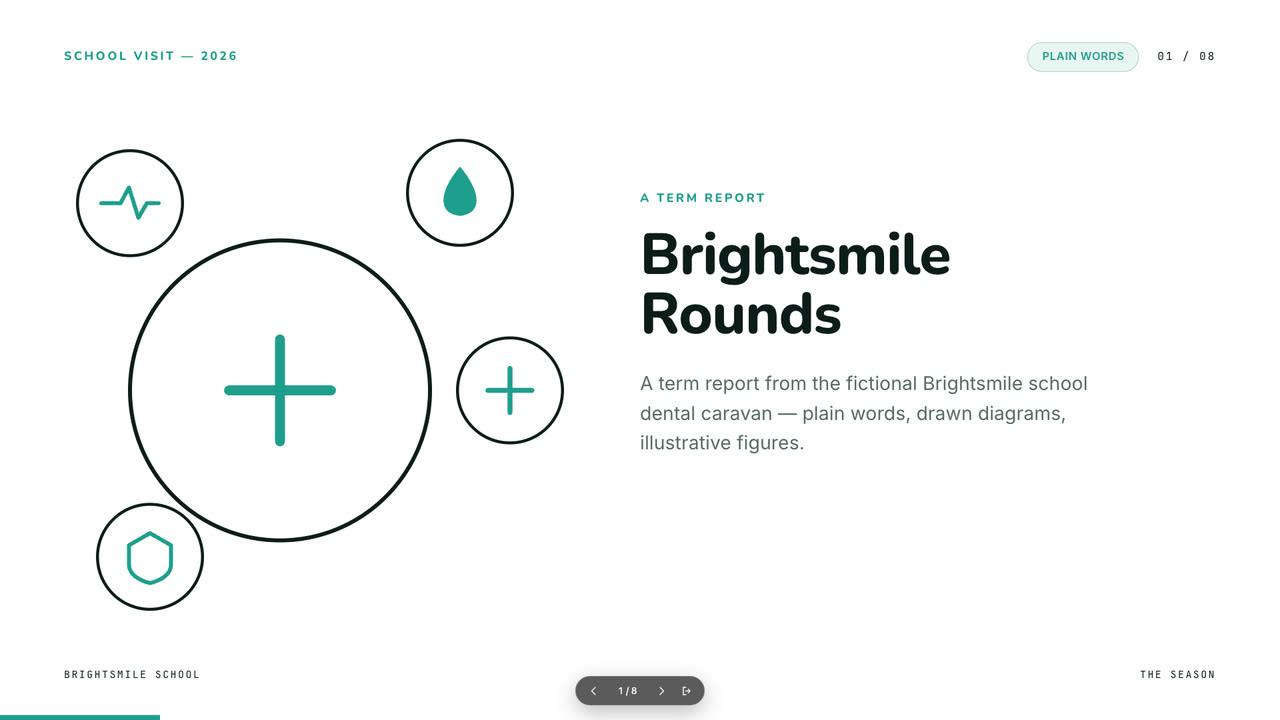
Make decks that read as clinical infographic summaries: pure white field, black ink rings and rules, pale blue panels, a single sky-blue accent, numbered circular callouts, pill progress bars and rounded cards.
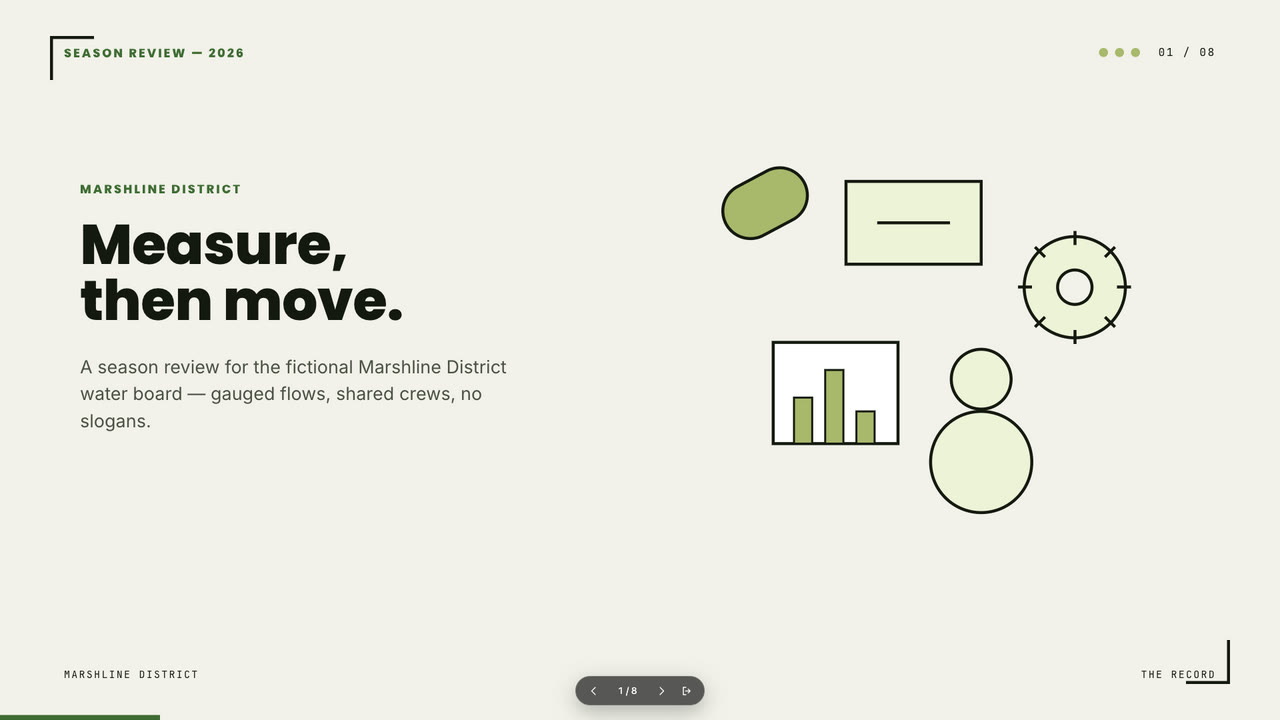
Make decks that read as sustainability annual reviews: cream field, black ink frames and rules, leaf-green accent fills, deep-green numerals and kickers, mint panels, corner brackets, hard-shadow score cards and line-art ecology clusters.
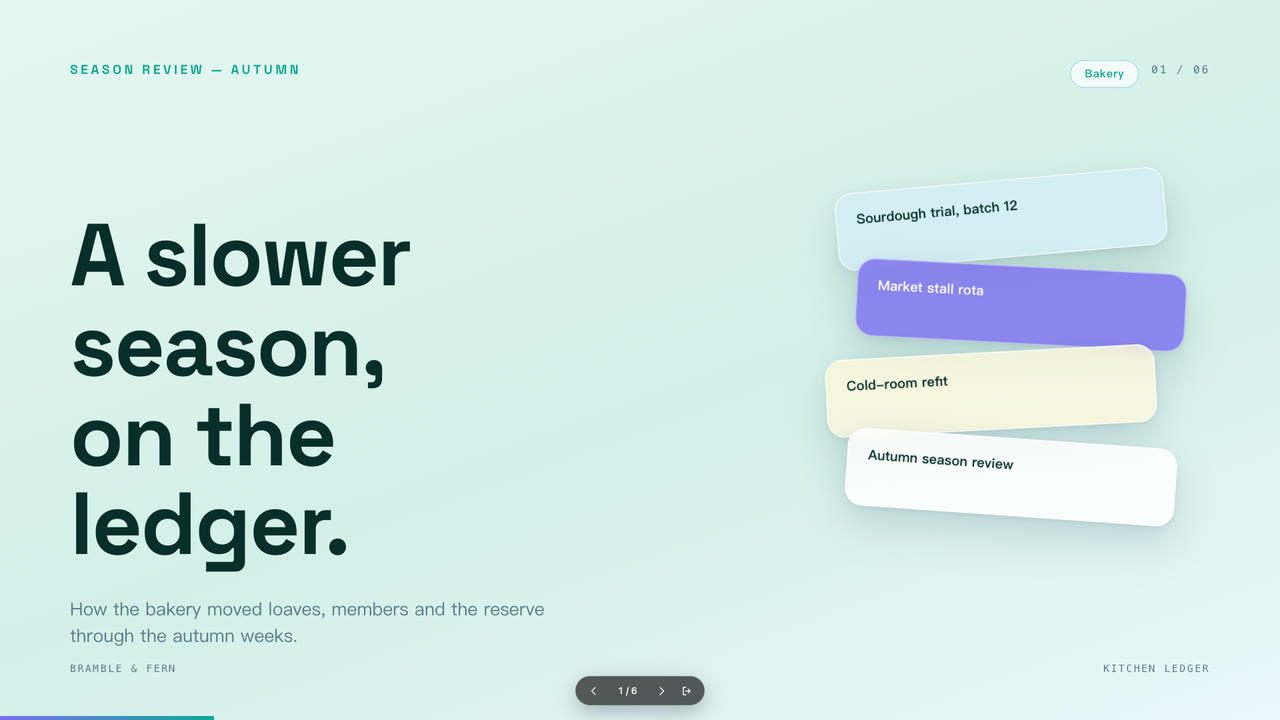
Make operating reports and status reviews that float: translucent glass cards on a sky-blue gradient, cyan kickers and a violet/gold accent plate for retros and channel reviews.
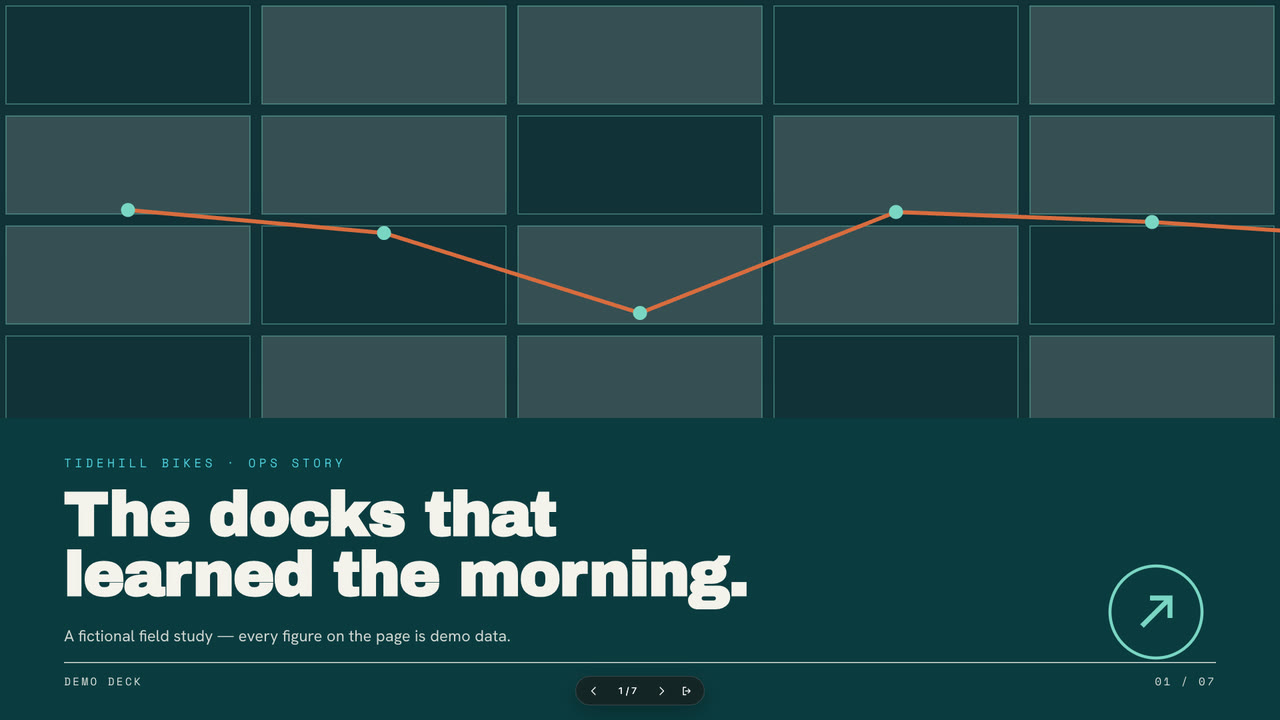
Make single-case study decks with editorial weight: alternating deep-teal and cream pages, giant numbered findings and one burnt-orange accent for project outcomes and research results.
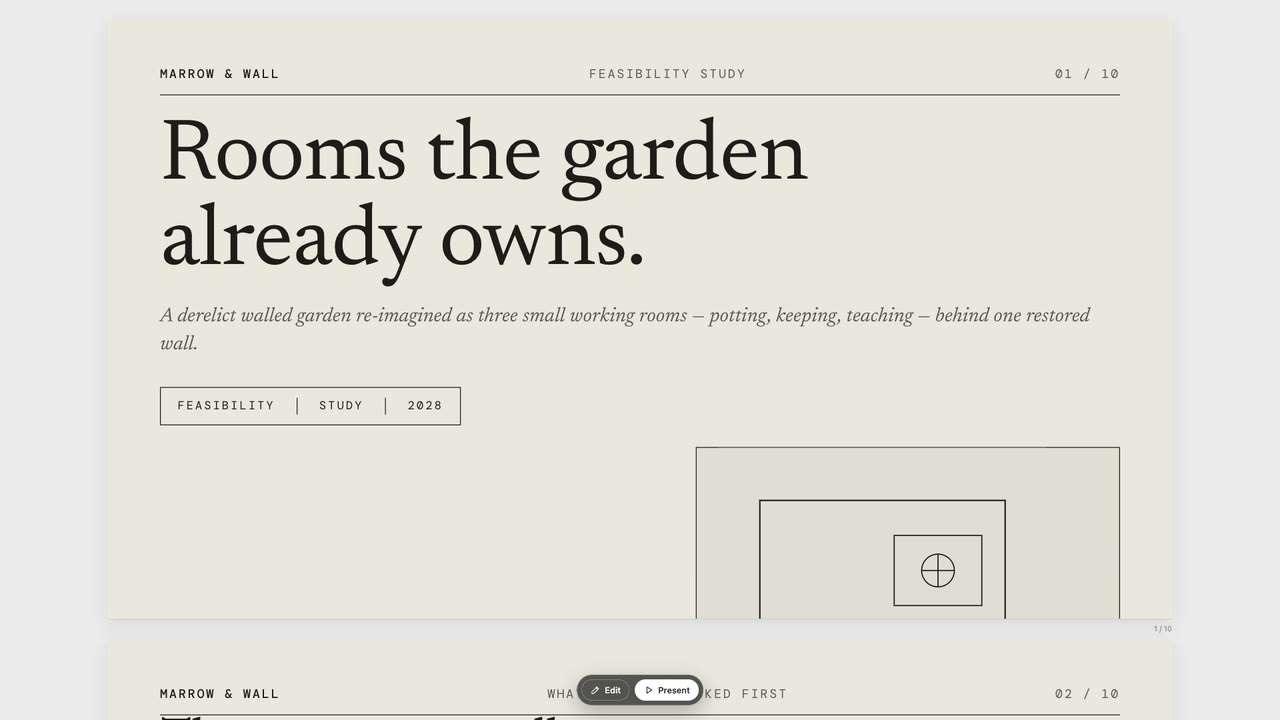
Make interior and spatial proposals with monochrome discipline: one warm-paper field, hairline grids, serif display and code-drawn room-study plates for design directions and material studies.
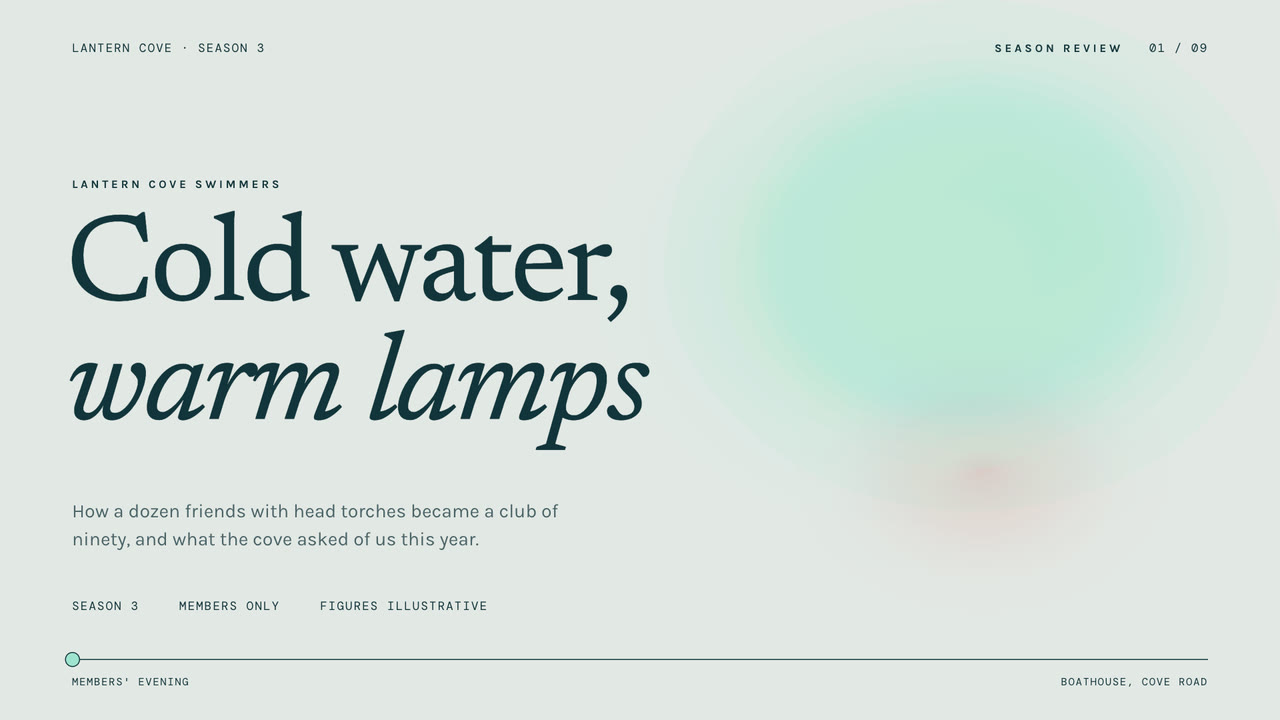
Make calm almanac-style decks: a warm parchment field, deep indigo serif titles, soft citron haze, one highlighted phrase per page and a sun dot riding the foot rule, for seasonal reports and members' meetings.
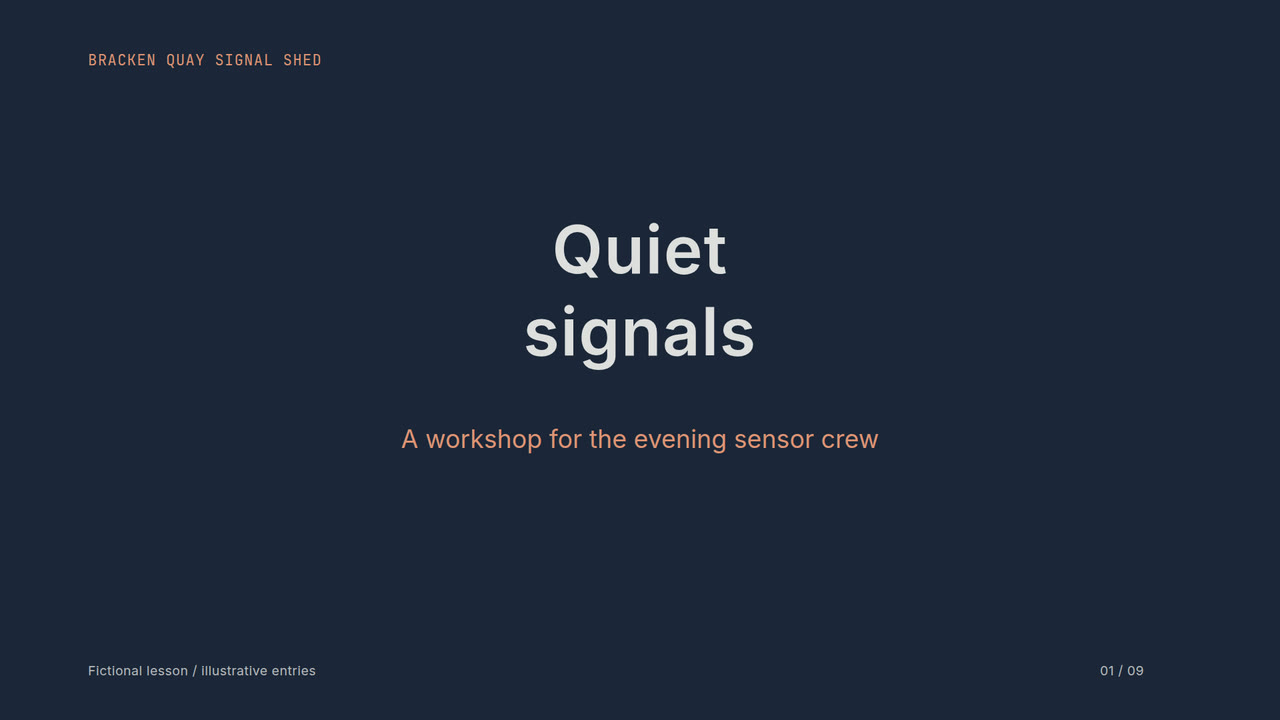
Teach a practical lesson on a midnight canvas with calm sans headings, warm emphasis, charcoal notation wells and editable registers.
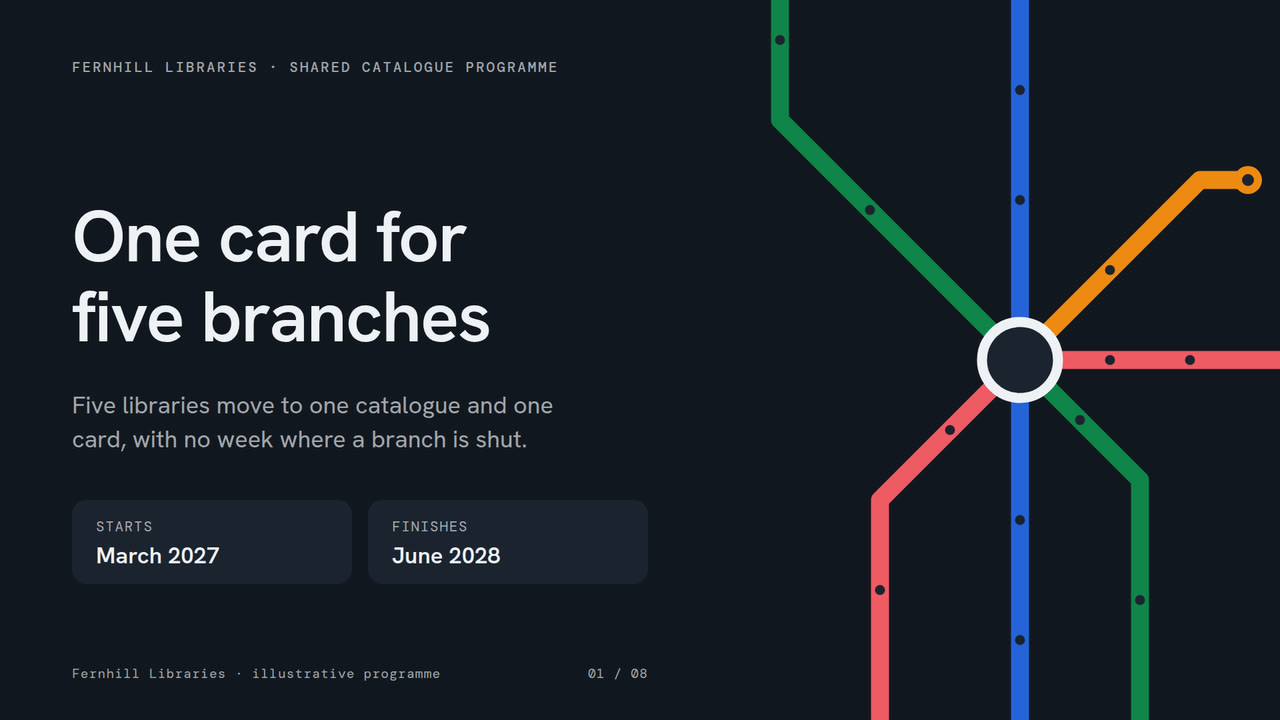
Present a programme or roadmap as a transit line map, with coloured workstream lines, ringed milestone stops, interchanges, a departure-board table and service notices.
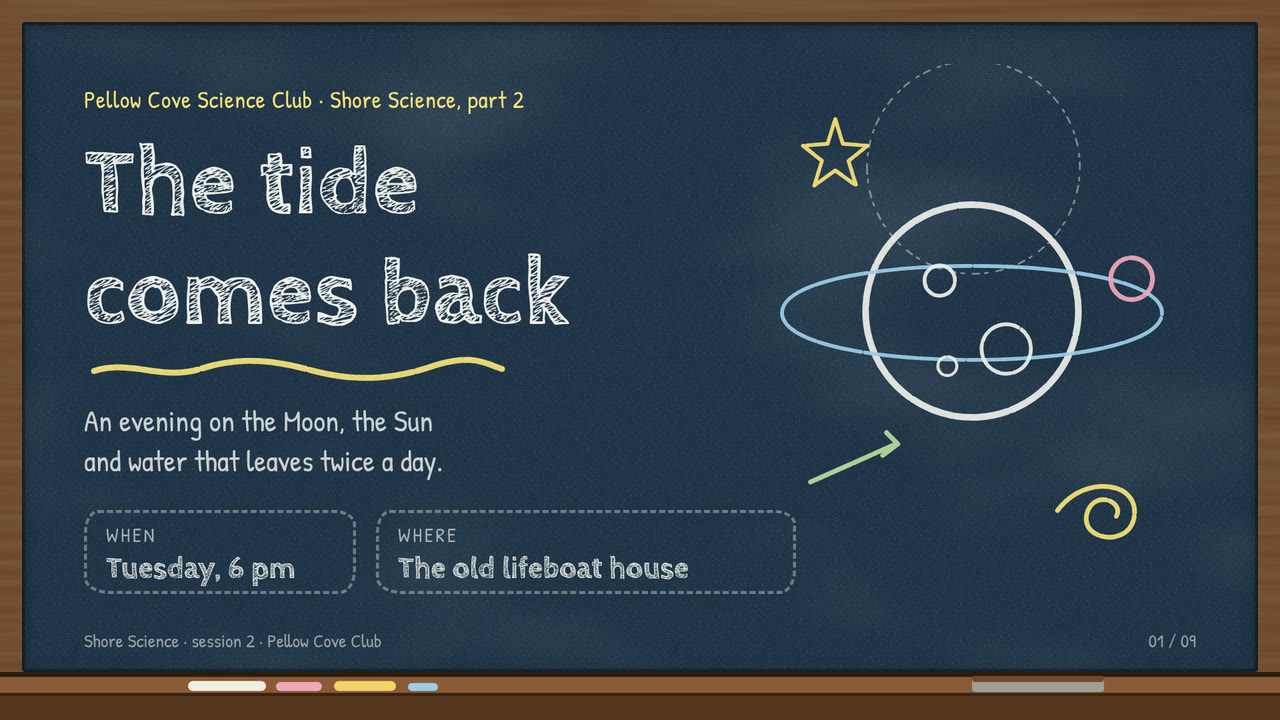
Teach a class, workshop or club session on a chalk slate board, with hand-lettered chalk headings, a wooden frame and chalk tray, dashed chalk boxes, ringed steps, hatched chalk bars and drawn diagram plates.
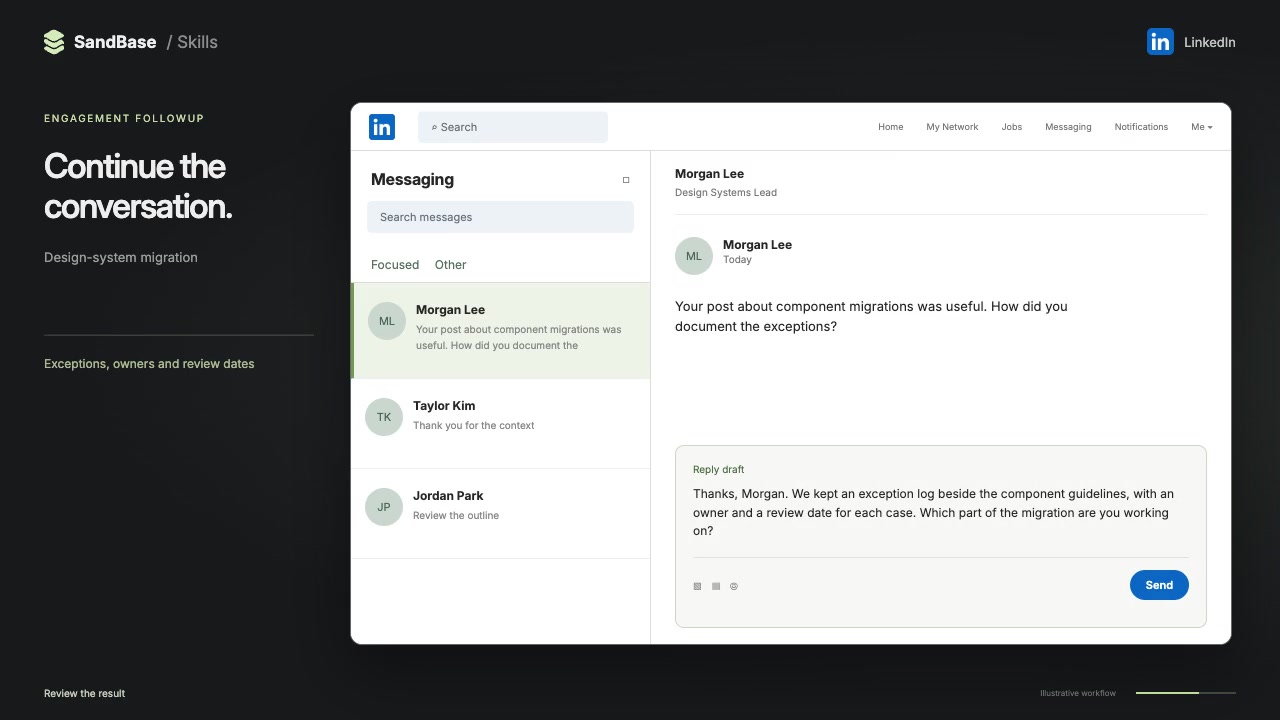
Identify useful conversations in a post’s comments and draft replies that address what people actually said.
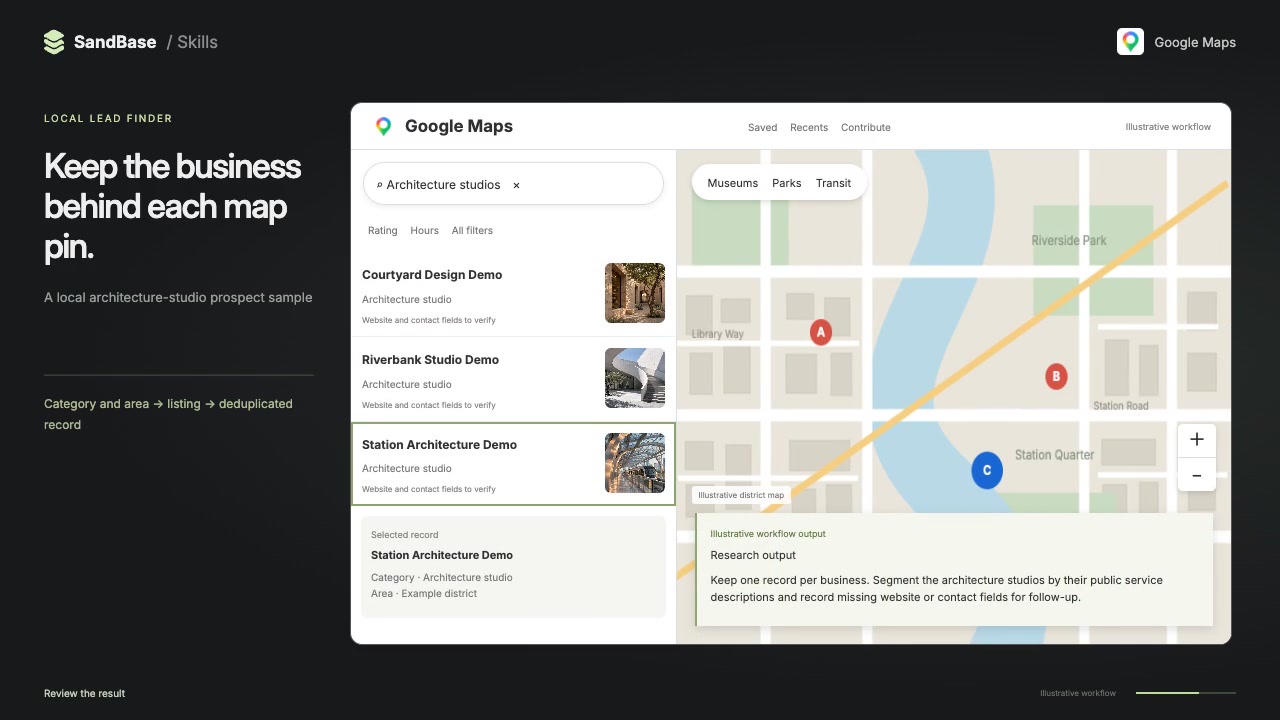
Build a clean, segmented list of local businesses of one category around a point from Google Maps listings.
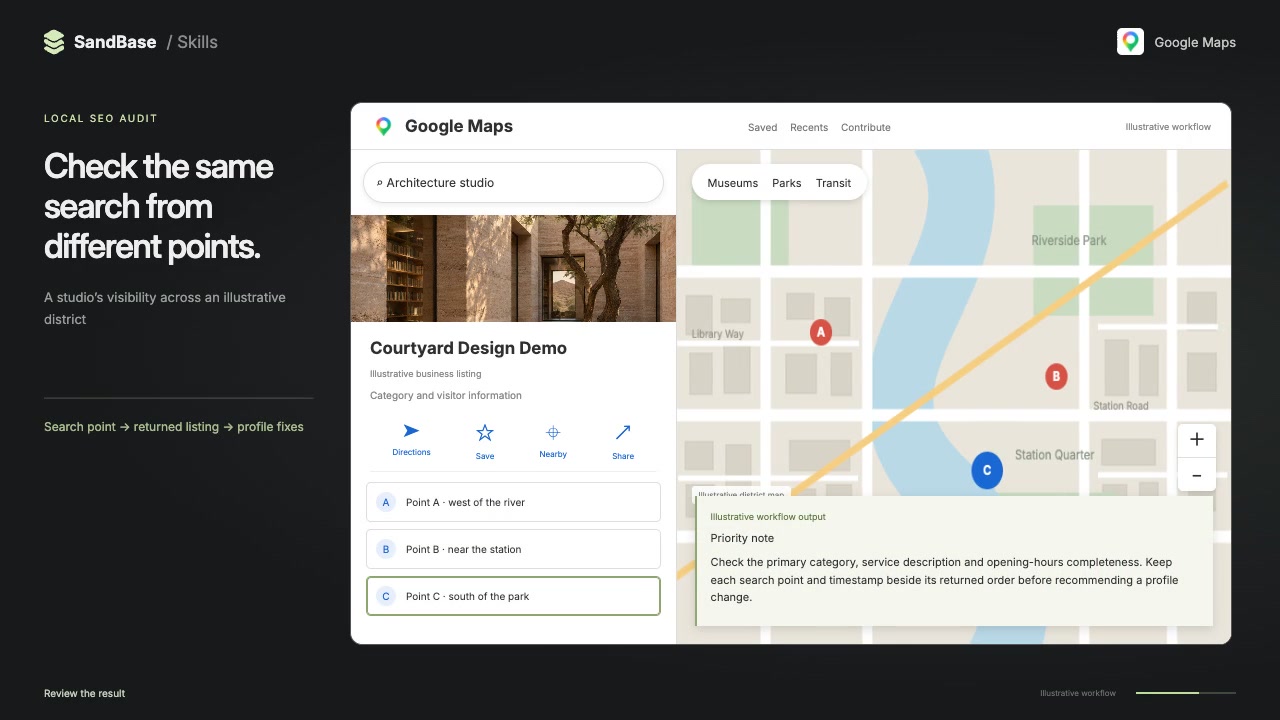
Find out why a business does or does not show up on Google Maps for a search term, point by point around it.
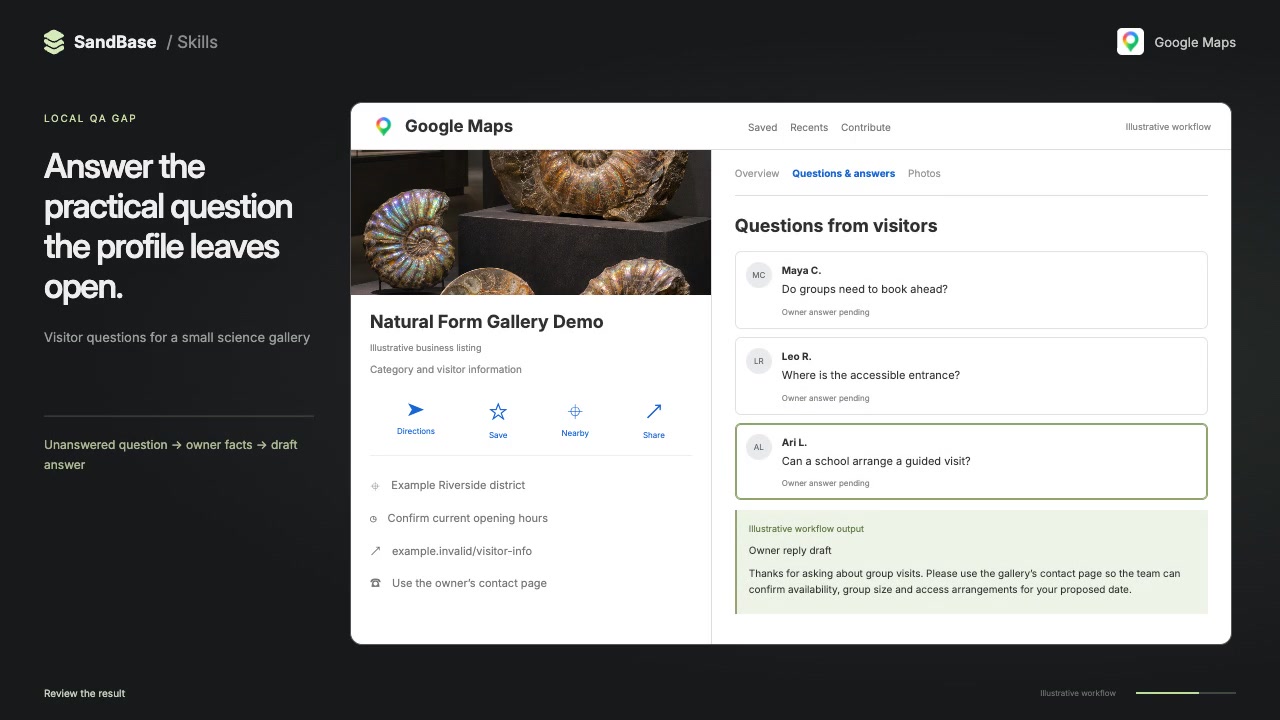
Find the Google Business Profile questions nobody from the business answered, compare with competitors, and draft owner Q&As.
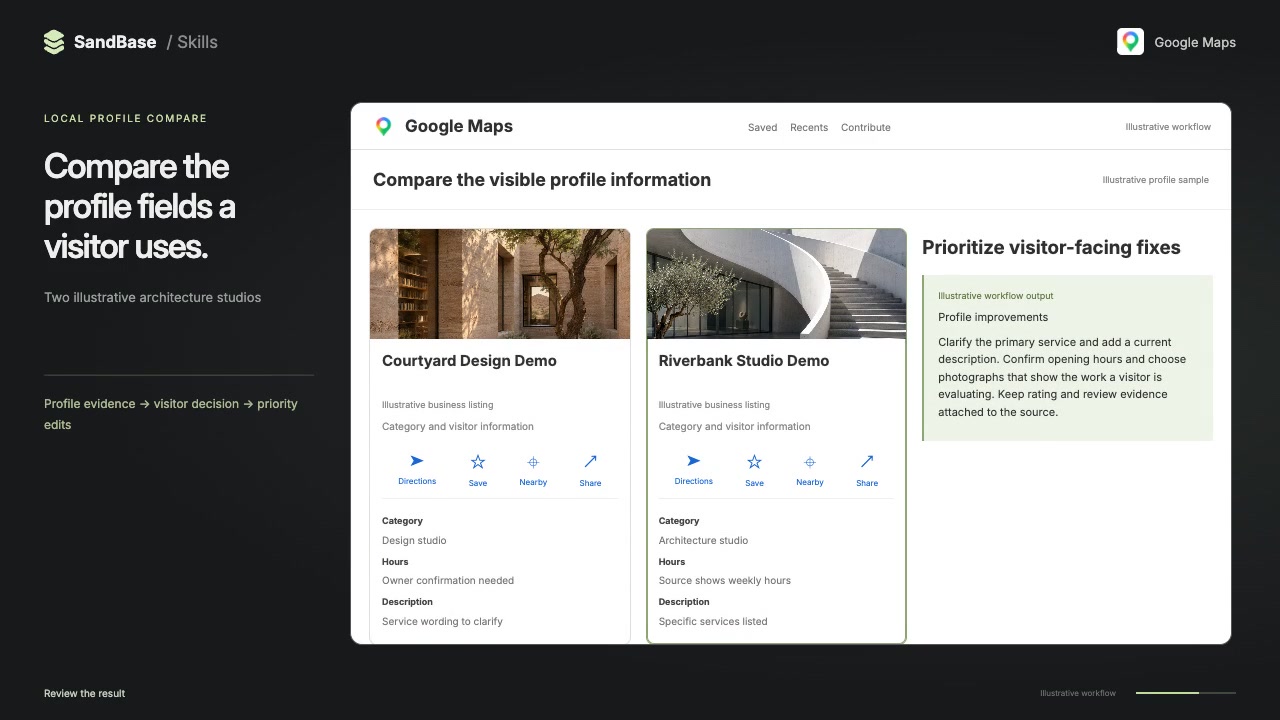
Put a Google Business Profile next to the competitors that outrank it and list the changes that close the gap.
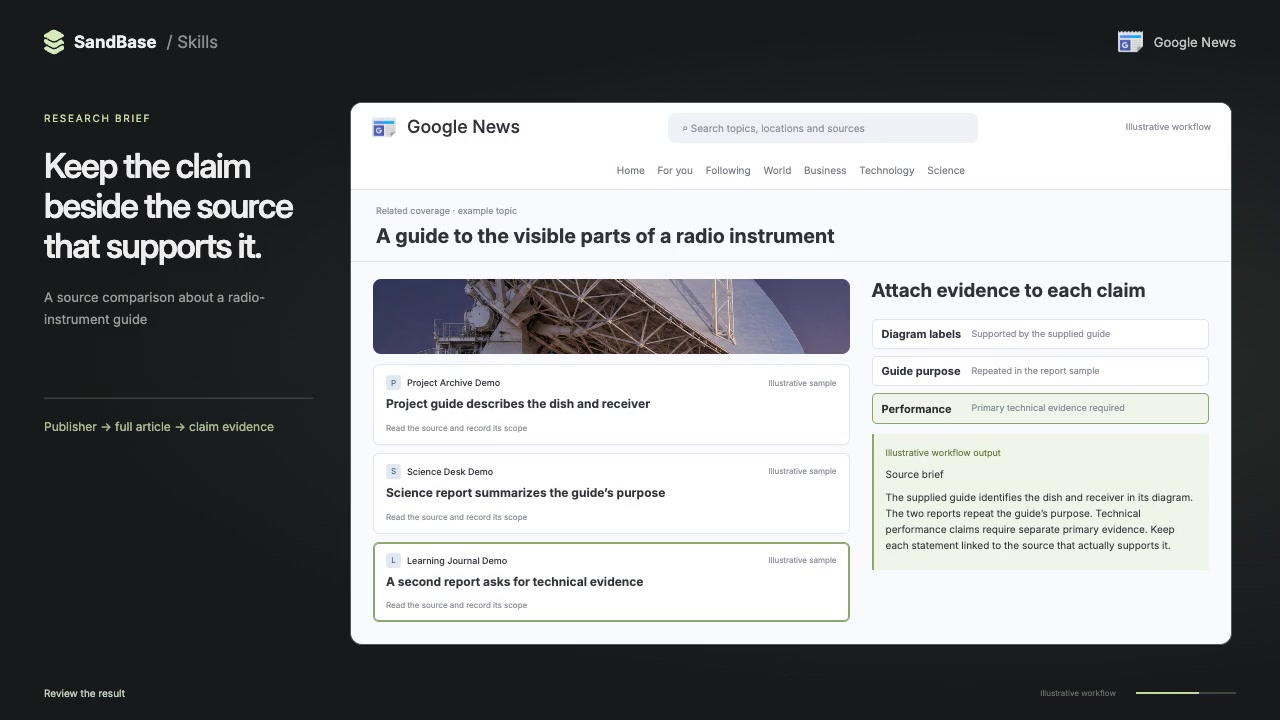
Find out what has been reported on a news question, who reported it and which claims are confirmed, with a link for every line.
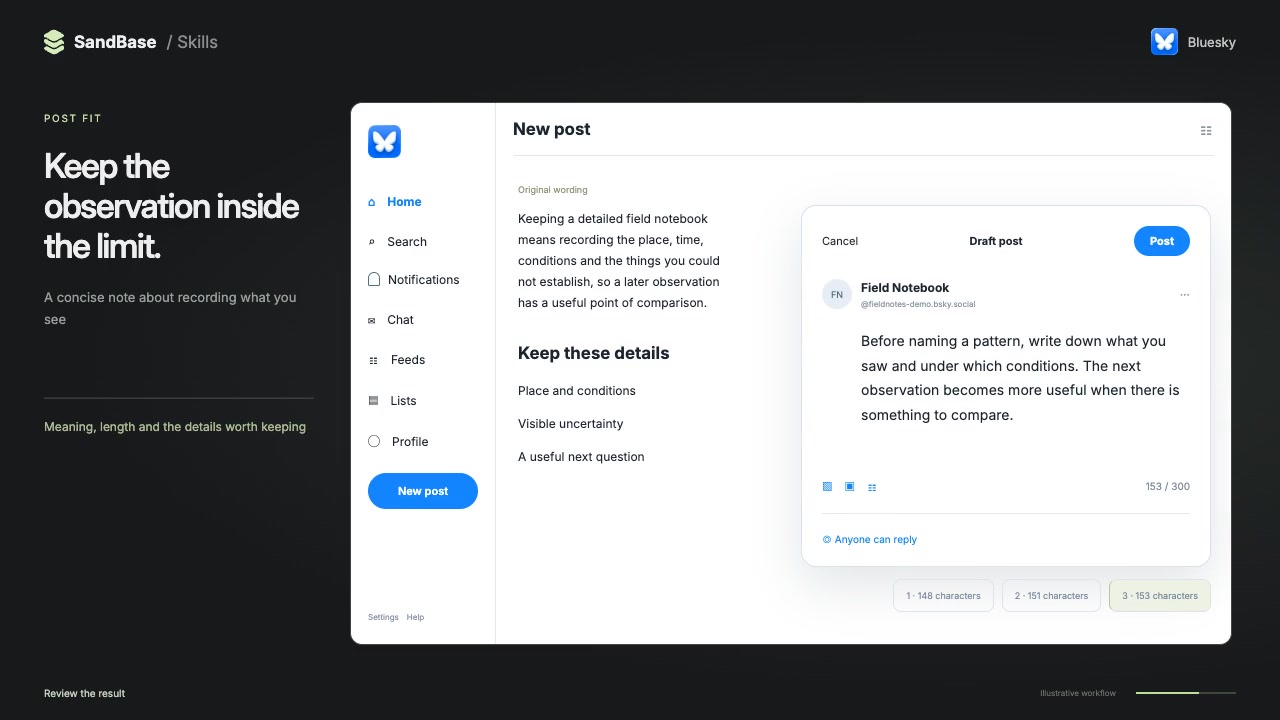
Turn a long draft written for somewhere else into one Bluesky post that fits 300 characters — and shows exactly what was cut.
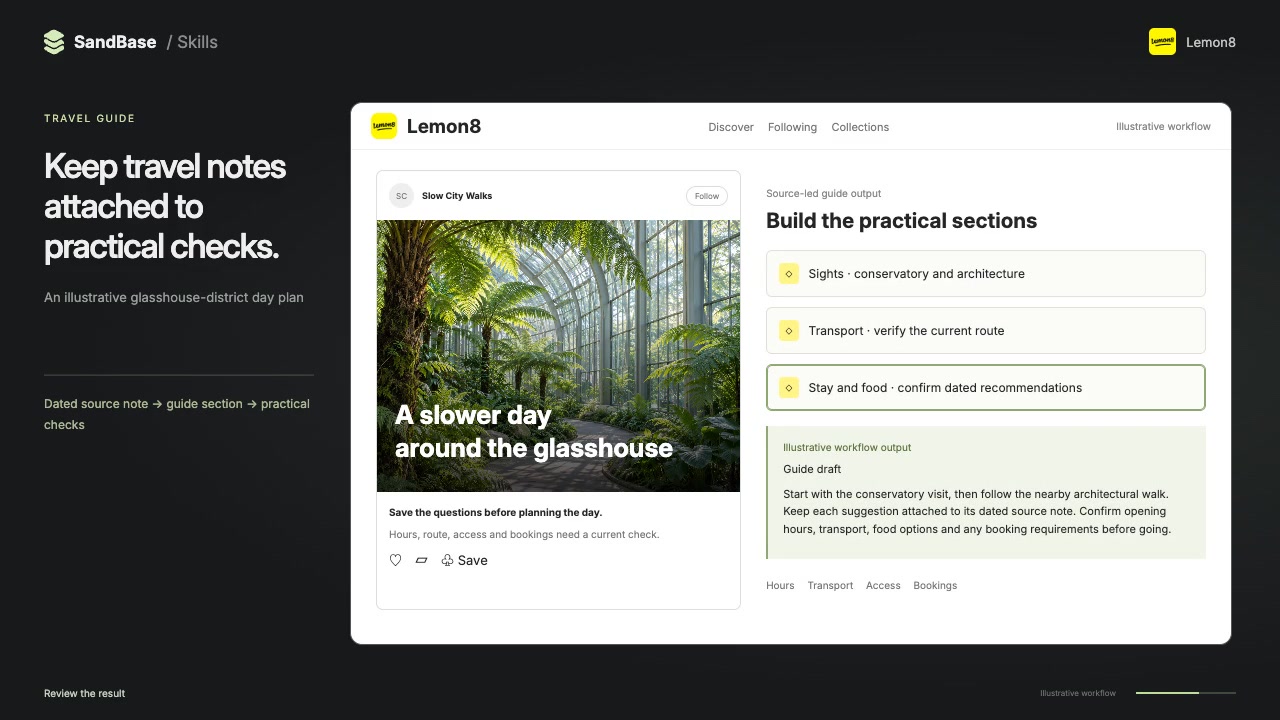
Turn what Lemon8 posters actually wrote about a destination into a guide you can use, with every line linked to the post it came from.
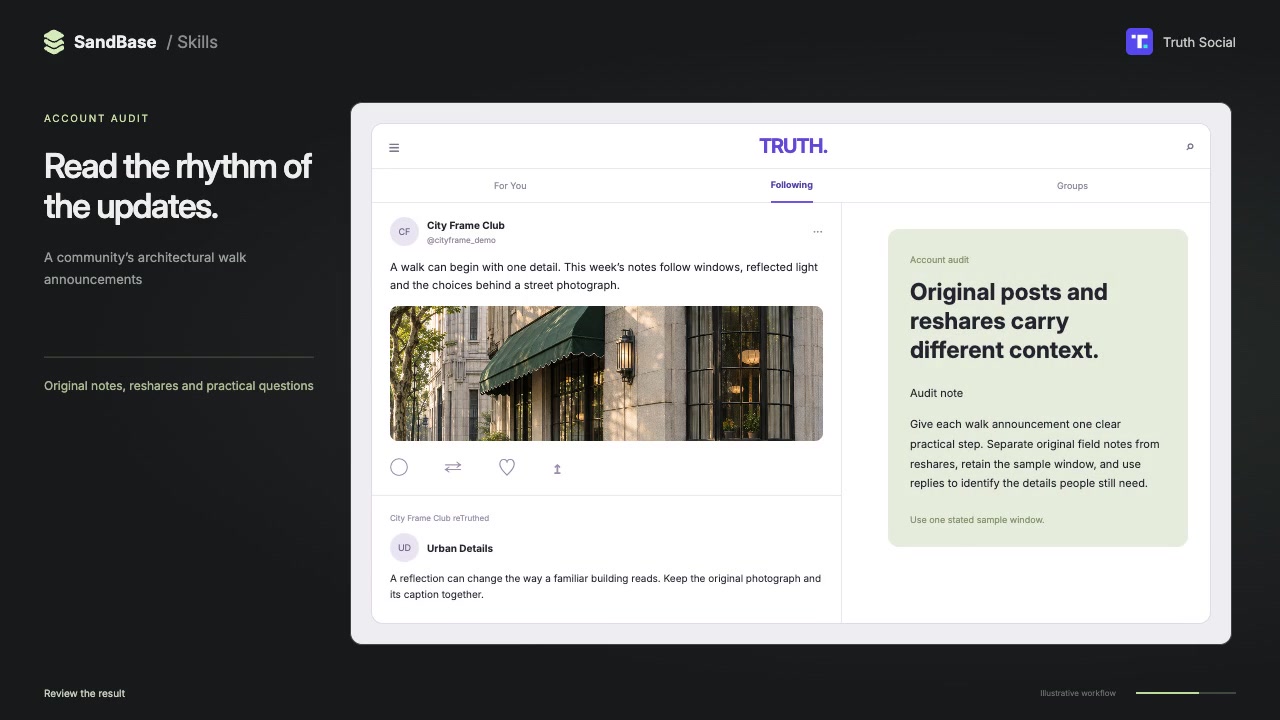
Measure how a Truth Social account's own posts perform — medians, best and weakest, cadence — and get five fixes tied to the numbers.
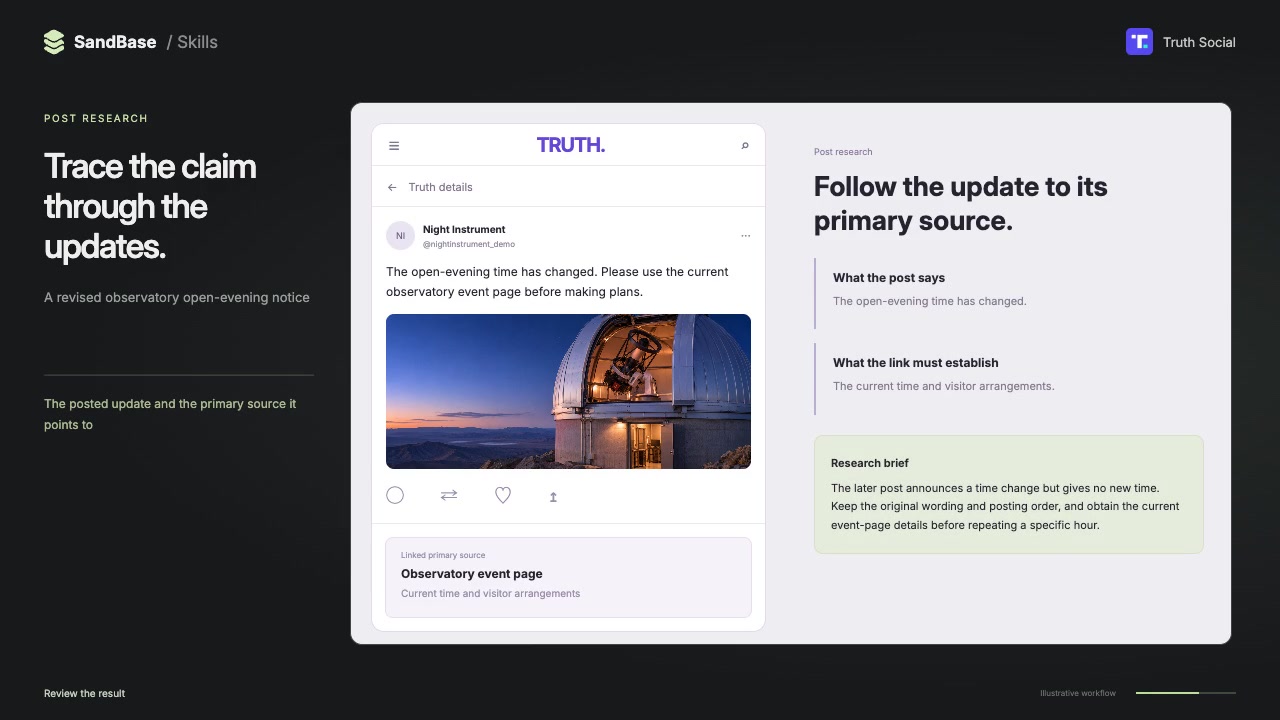
Get a sourced one-page brief on a single Truth Social post — the text as written, the author, the context, the link it carries and what still needs a primary source.
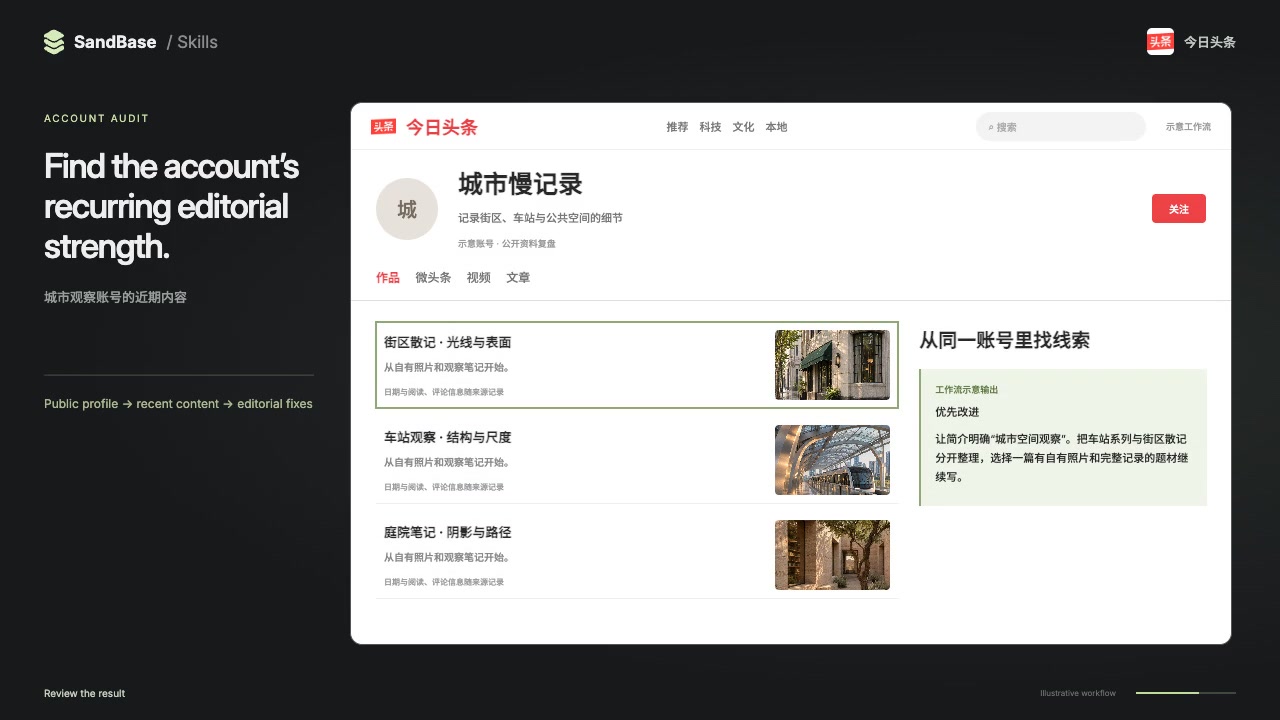
A quick health check of a public Toutiao account from what anyone can see — profile numbers, posting rhythm, and which posts actually worked.
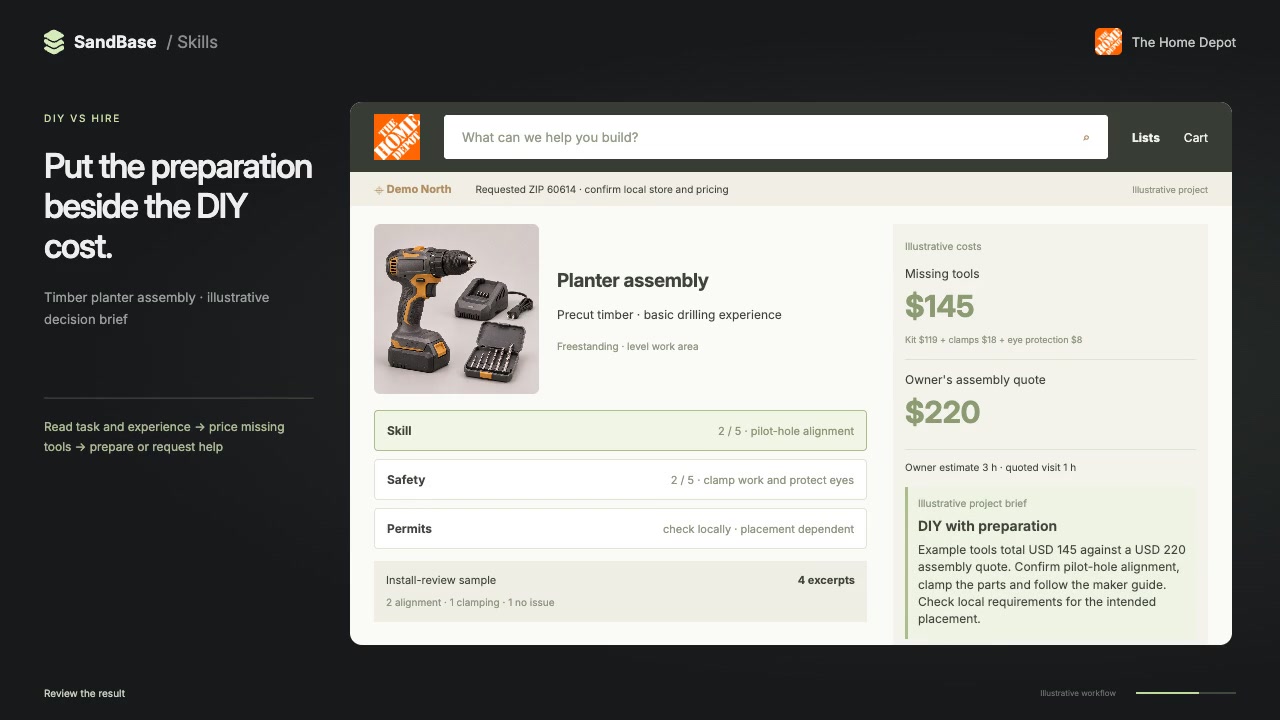
Decide whether to do a home repair yourself — rate skill, safety, permits, time and cost, price the DIY parts live, and read what buyers say about installing it.
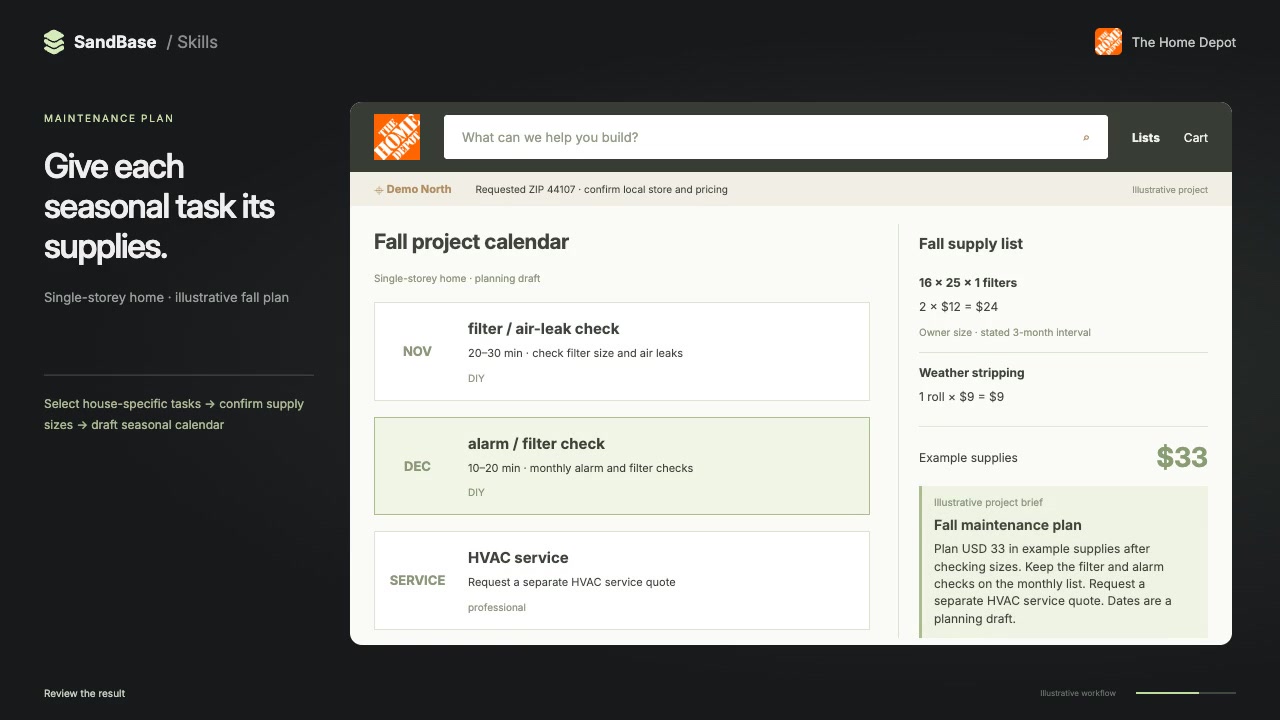
A seasonal home maintenance calendar with the supplies priced live at Home Depot — what to do each month, why, and what to buy.
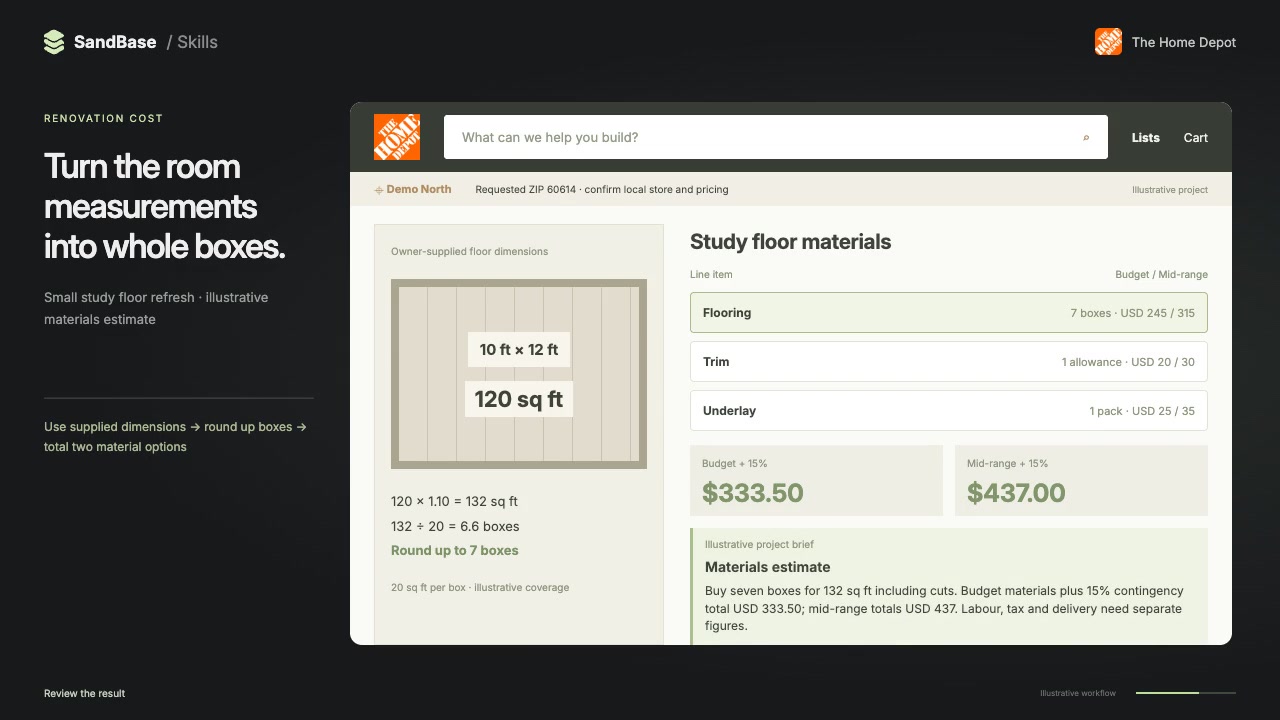
Turn a room renovation scope into a priced estimate — two ways, budget and mid-range — built from live Home Depot prices, never a fixed price table.
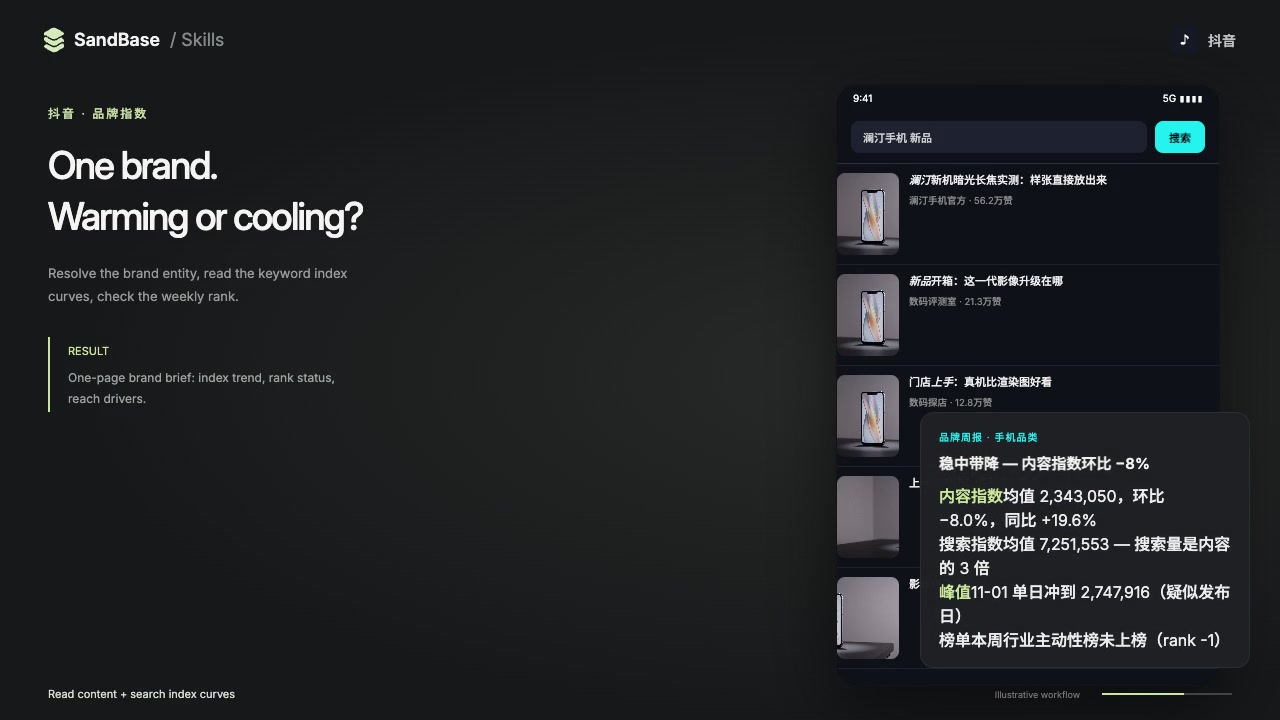
Read how a brand is doing on Douyin: resolve the entity, pull its keyword heat curve, weekly board rank and the videos driving reach.
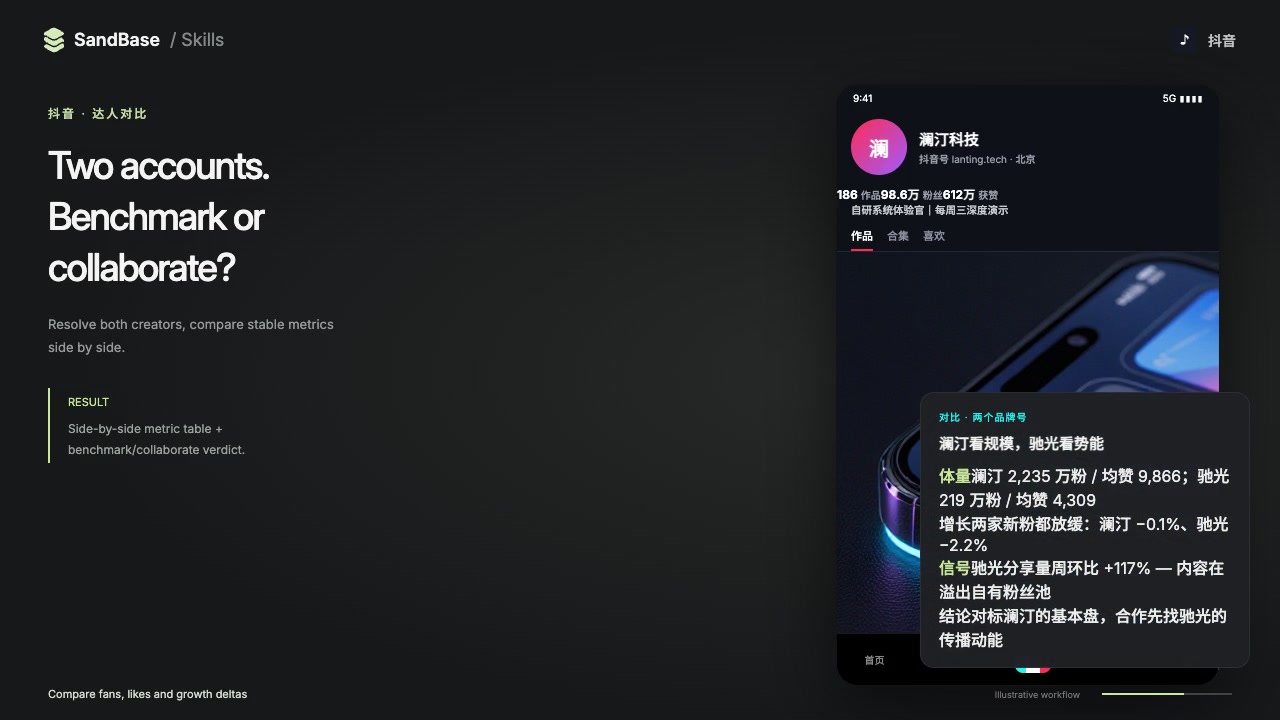
Put 2–4 Douyin creators in one table — fans, posts, average engagement, growth deltas, fan portrait, top videos — and say who to benchmark or contact.
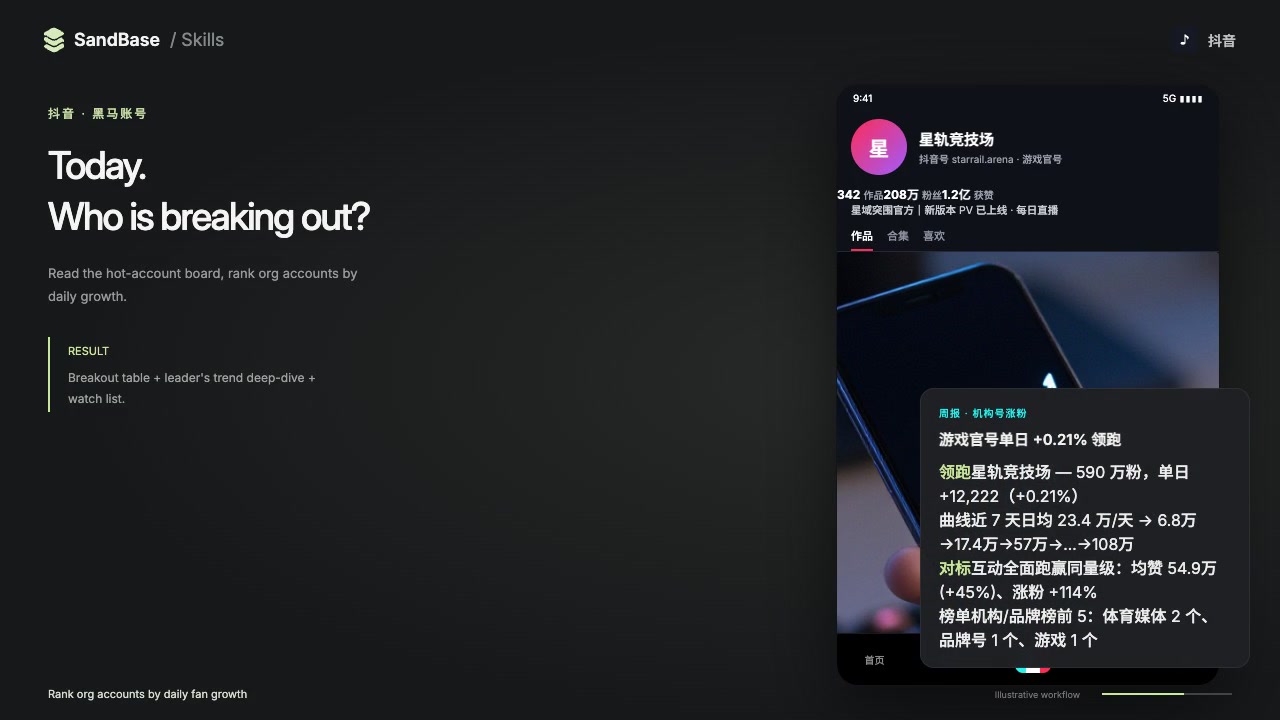
Find which Douyin accounts are gaining followers fastest right now — the breakout board plus per-account trend and peer comparison — before everyone else notices.
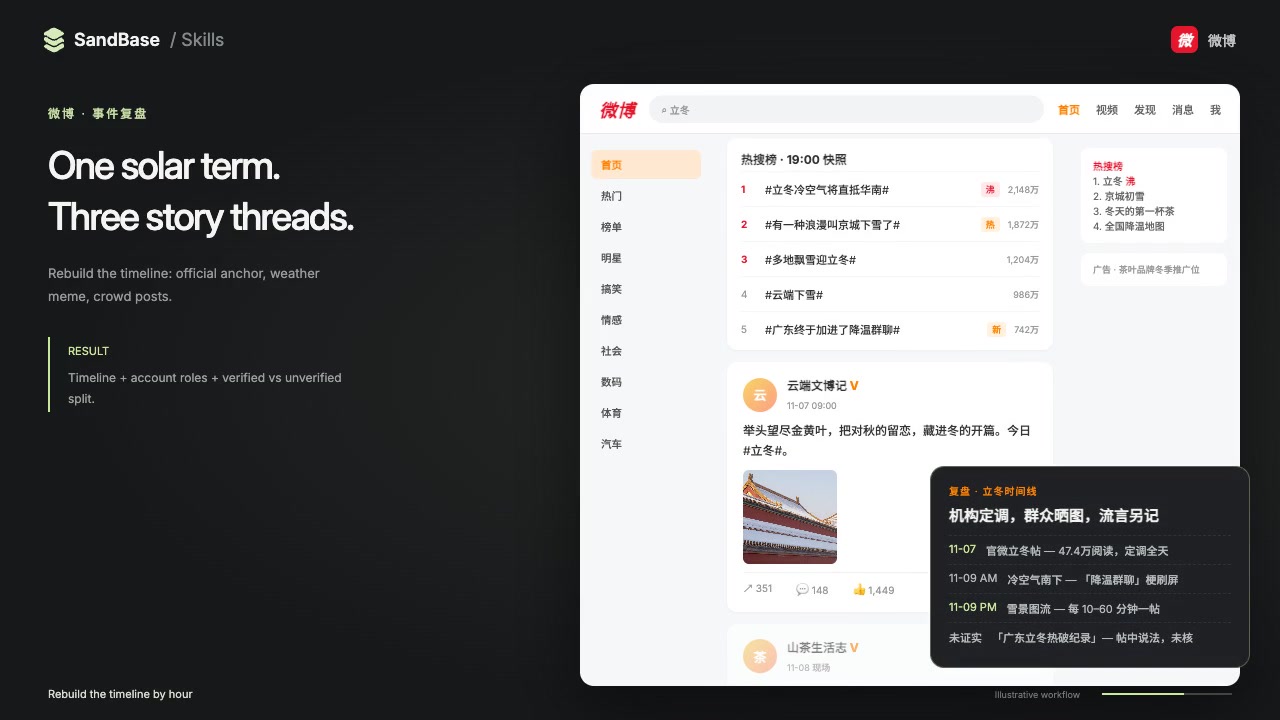
Rebuild what happened on Weibo around an event: its hot-list footprint, a timed post-stream slice, anchor posts and comment temperature — all cited.
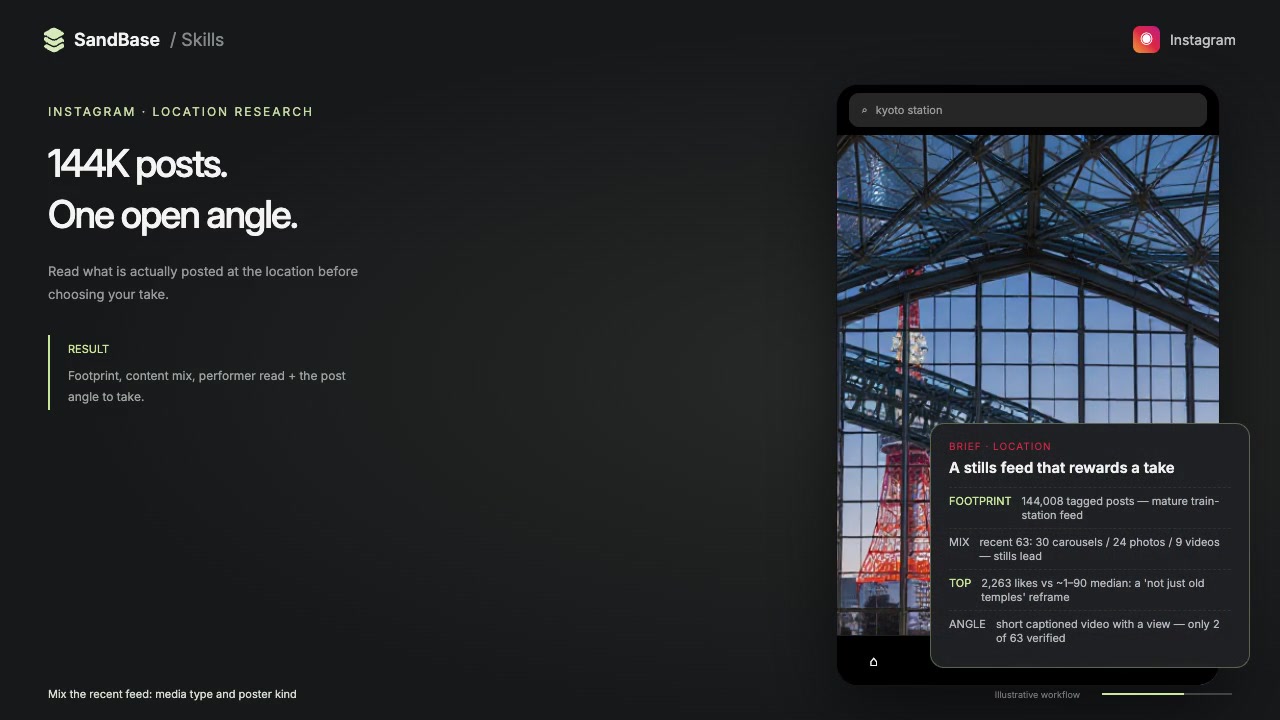
Research what people actually post at a real Instagram location — the post mix, formats, who posts and what performs — to brief a local content plan or a venue's own posts.
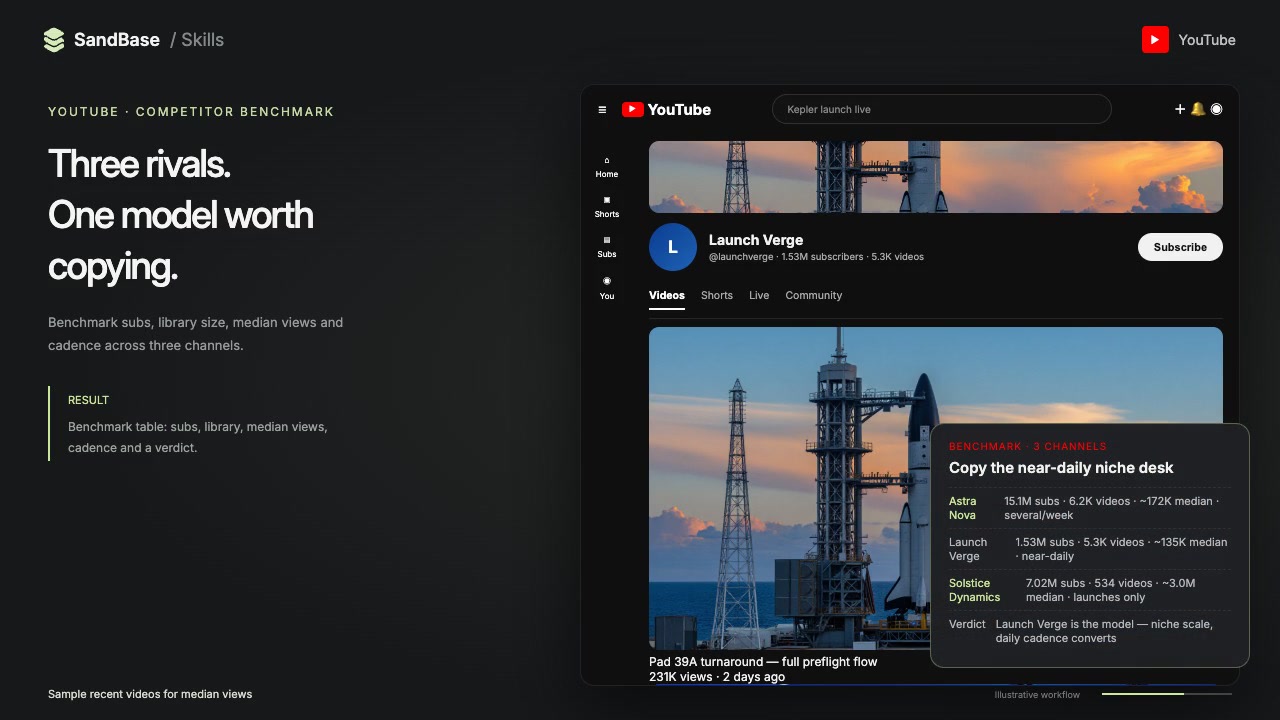
Put 2–4 channels side by side — subscribers, cadence, recent views and best formats — in one comparison table.
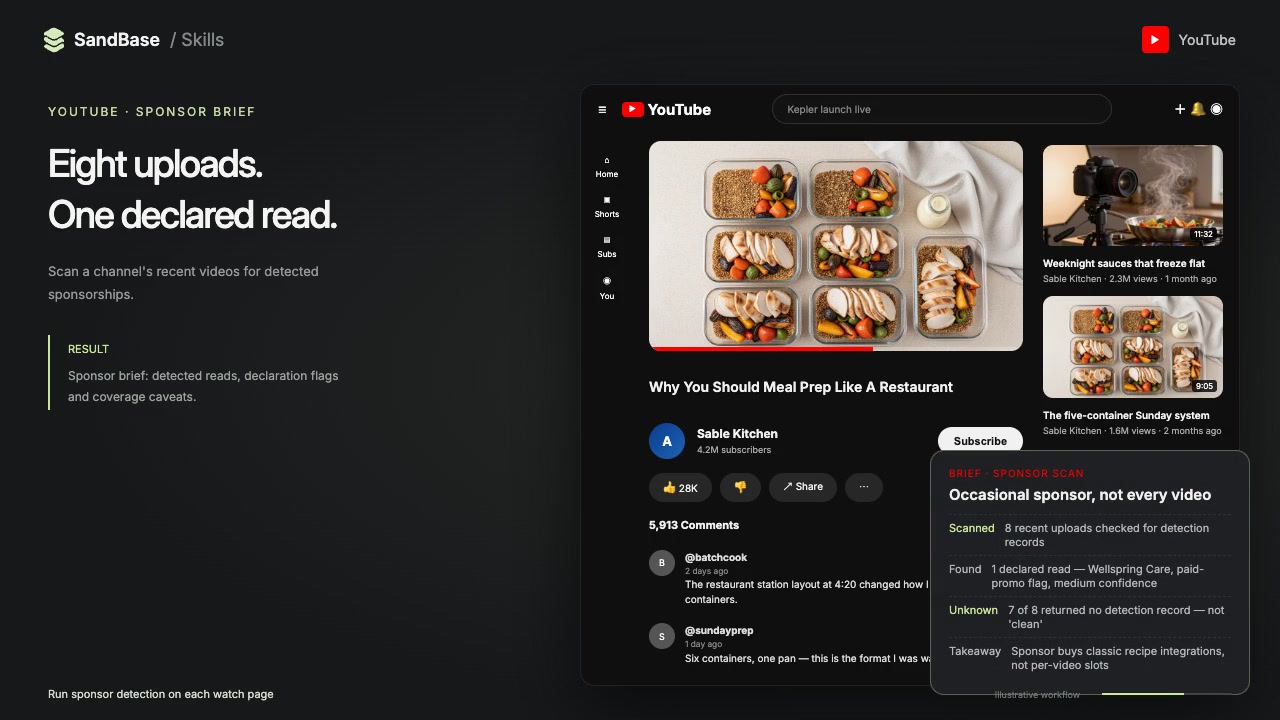
See which parts of a channel's videos are sponsored and by whom — declared promotions and detected reads alike.
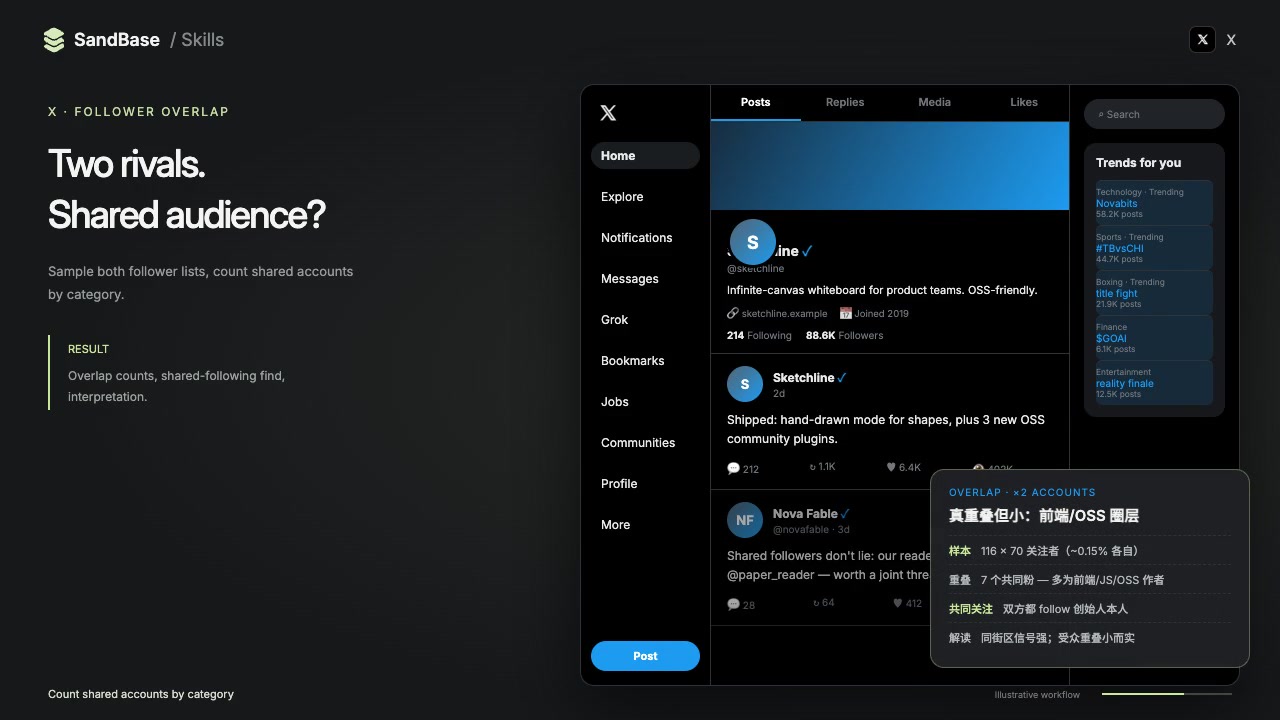
Whether two accounts share an audience is a guess until you compare their followers.
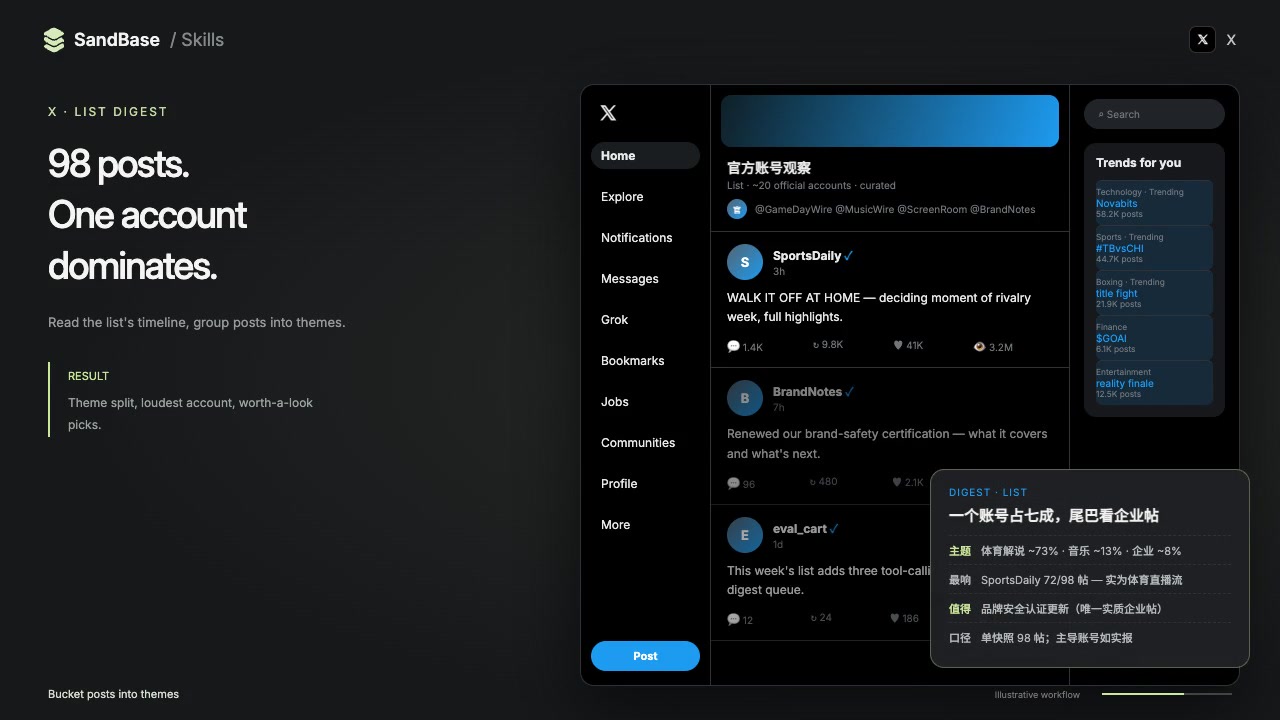
An X List is only useful if you can read what its members are actually talking about.
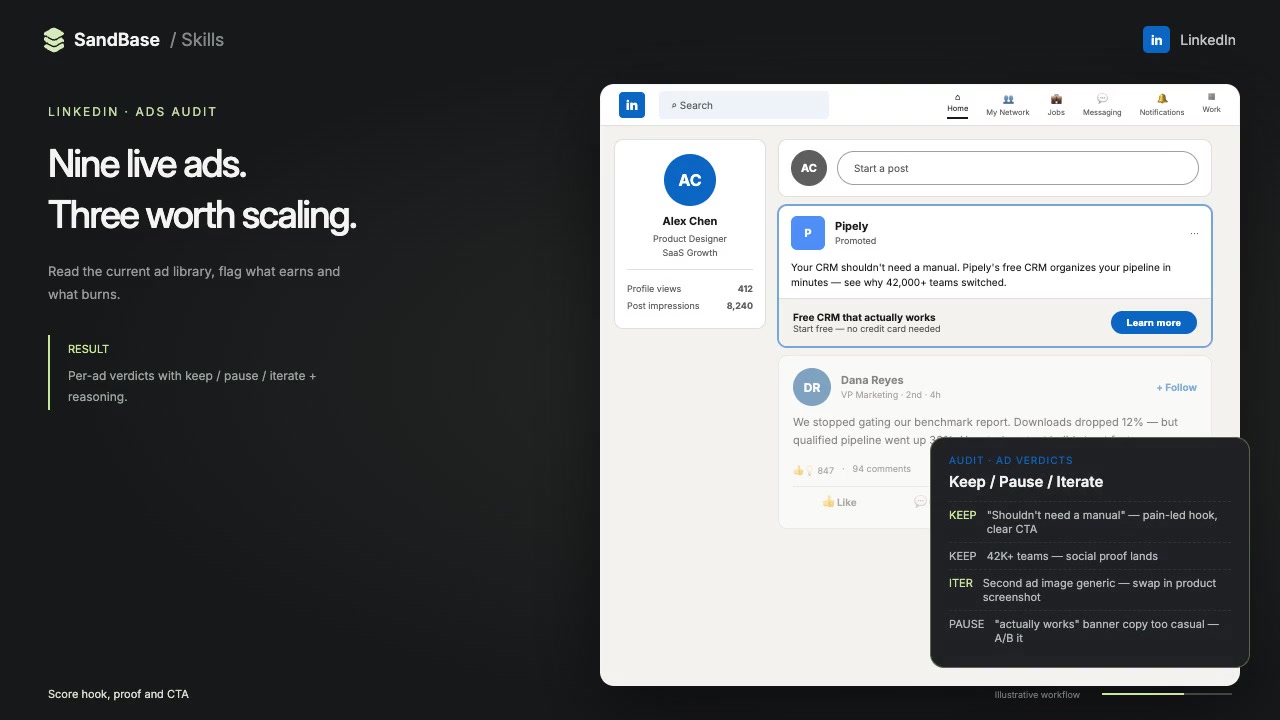
Read what an advertiser is really running on LinkedIn — the creative copy, formats, CTAs and landing pages — and sharpen the creative.
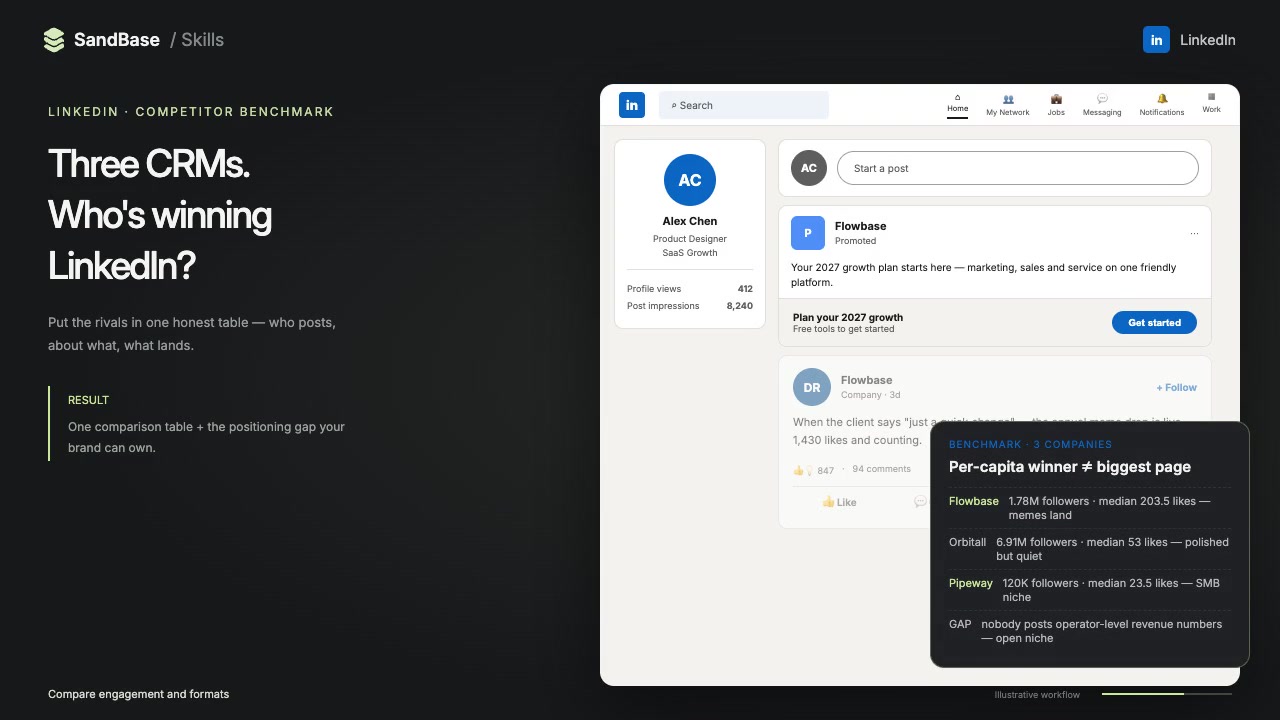
See who is actually winning on LinkedIn among 2–4 rivals — posting cadence, themes, formats and engagement — and where the gap is.
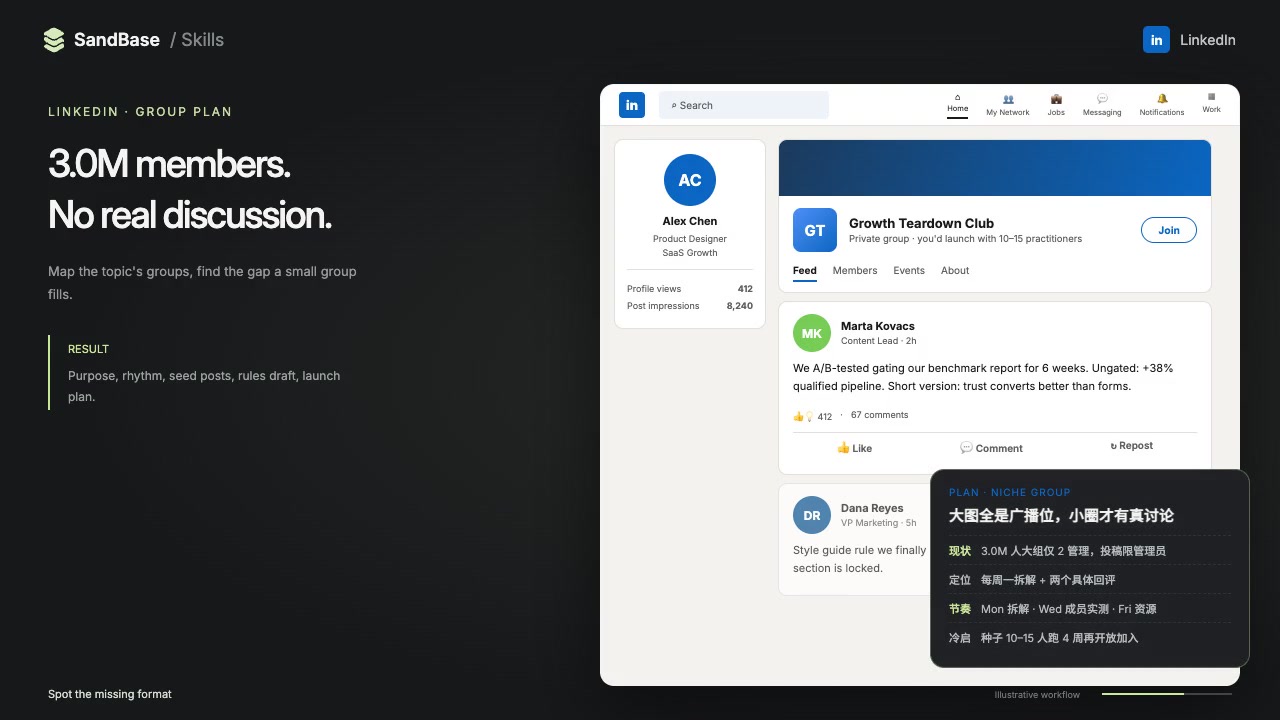
Plan a LinkedIn Group on real landscape data — what competing groups exist, how active they are, what their rules look like — then design around the gap.
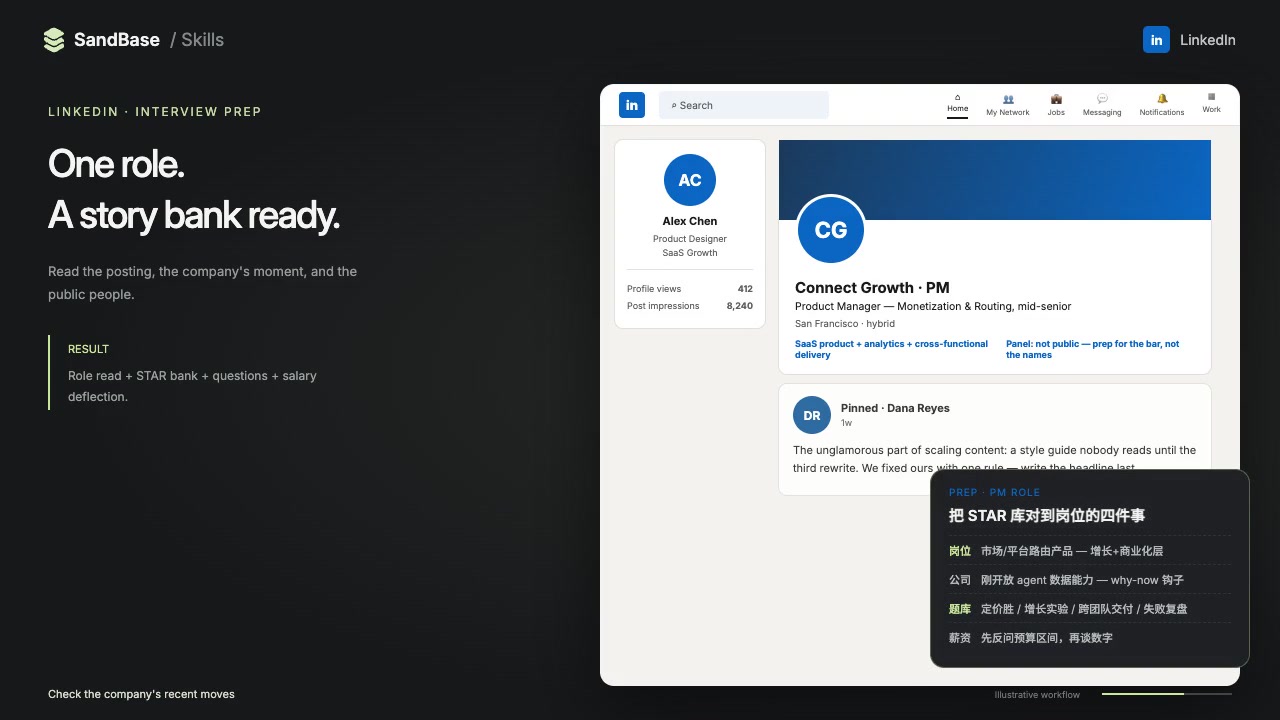
Walk into a confirmed interview with real company data and rehearsed evidence instead of improvising.
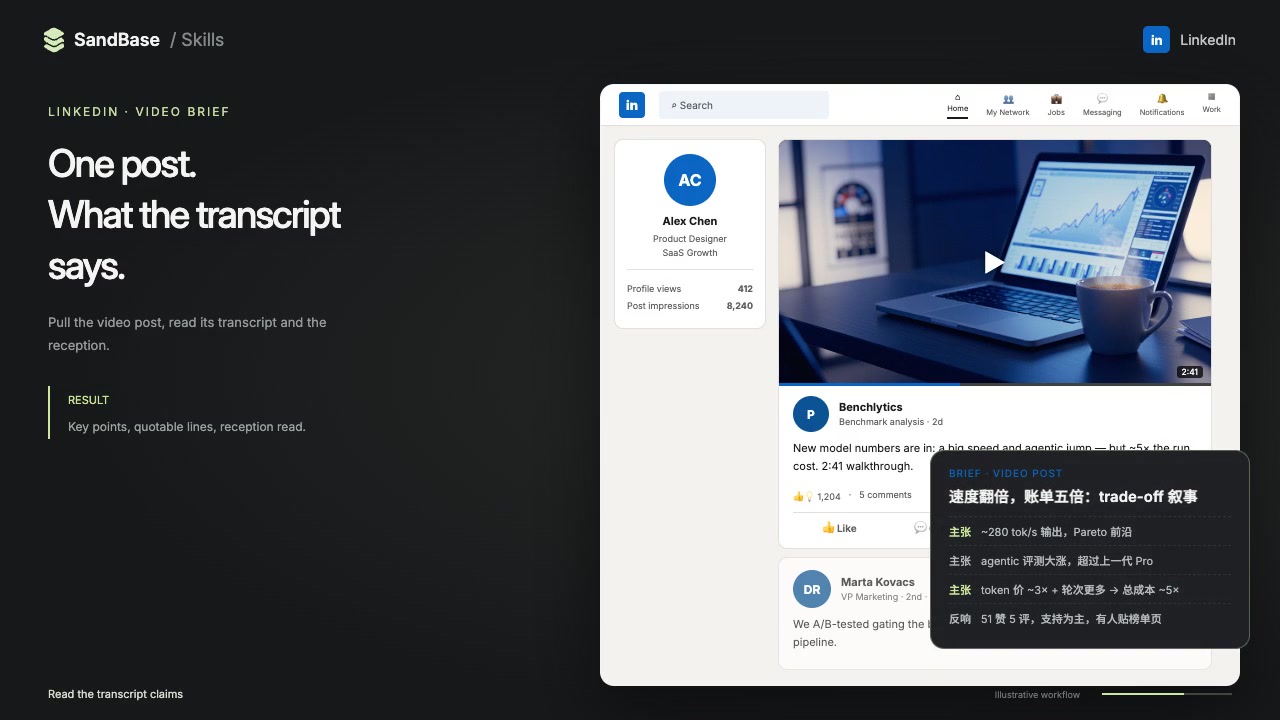
Get the substance of a LinkedIn video post without watching it — what was said, the key points, and the most quotable lines.
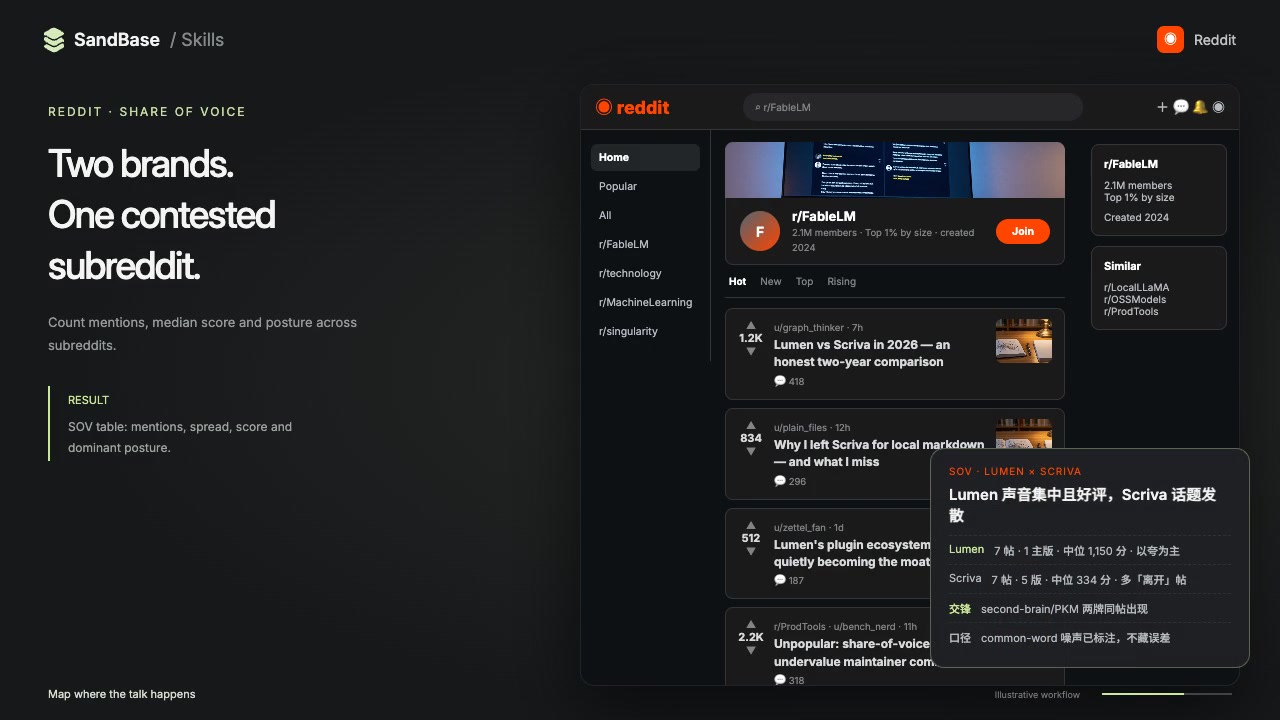
Compare how 2–4 rival brands are talked about on Reddit — who is mentioned more, and how.
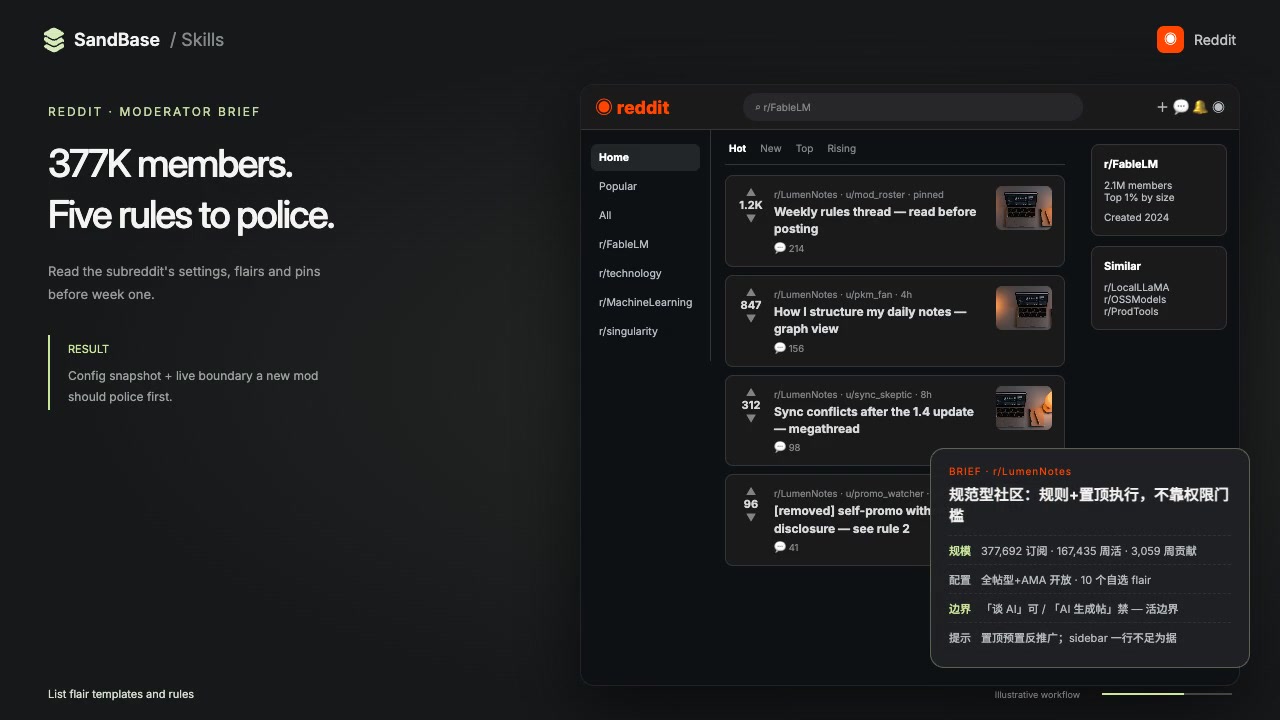
Give a new mod or community owner a one-run read of a subreddit's configuration and pulse.
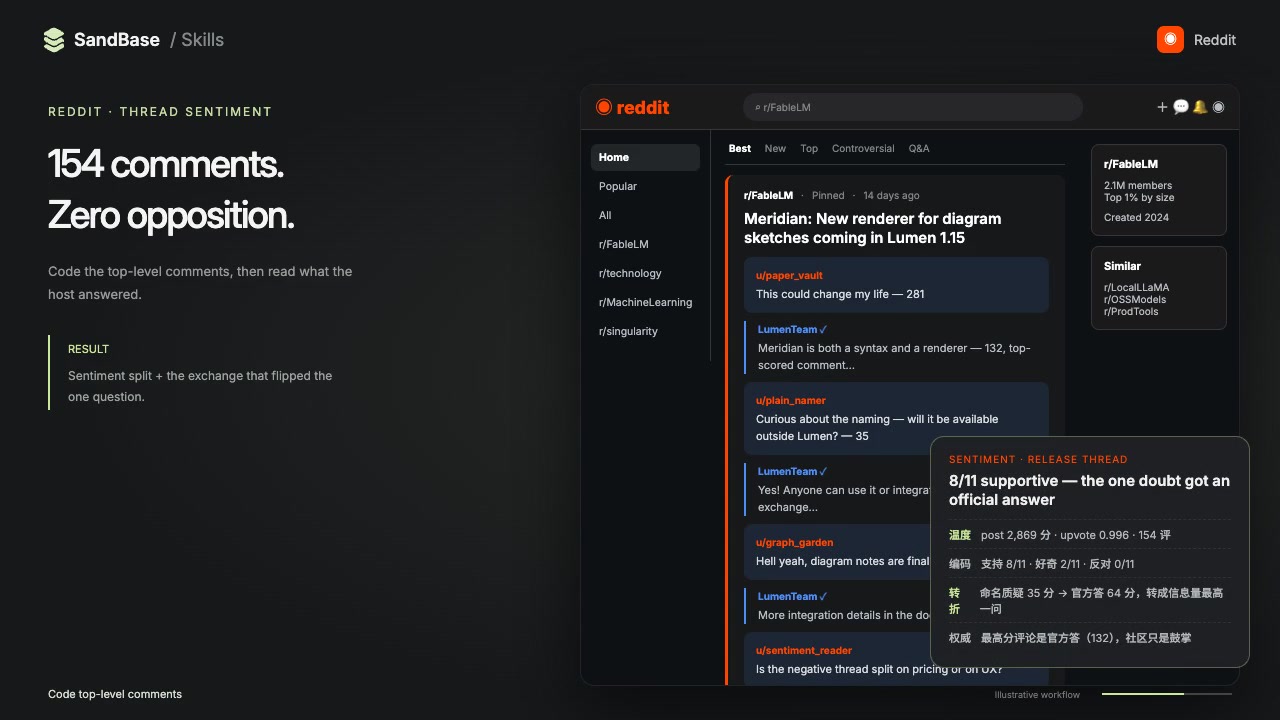
Read how a community actually received one post — the split, the turns, the exchanges that mattered.
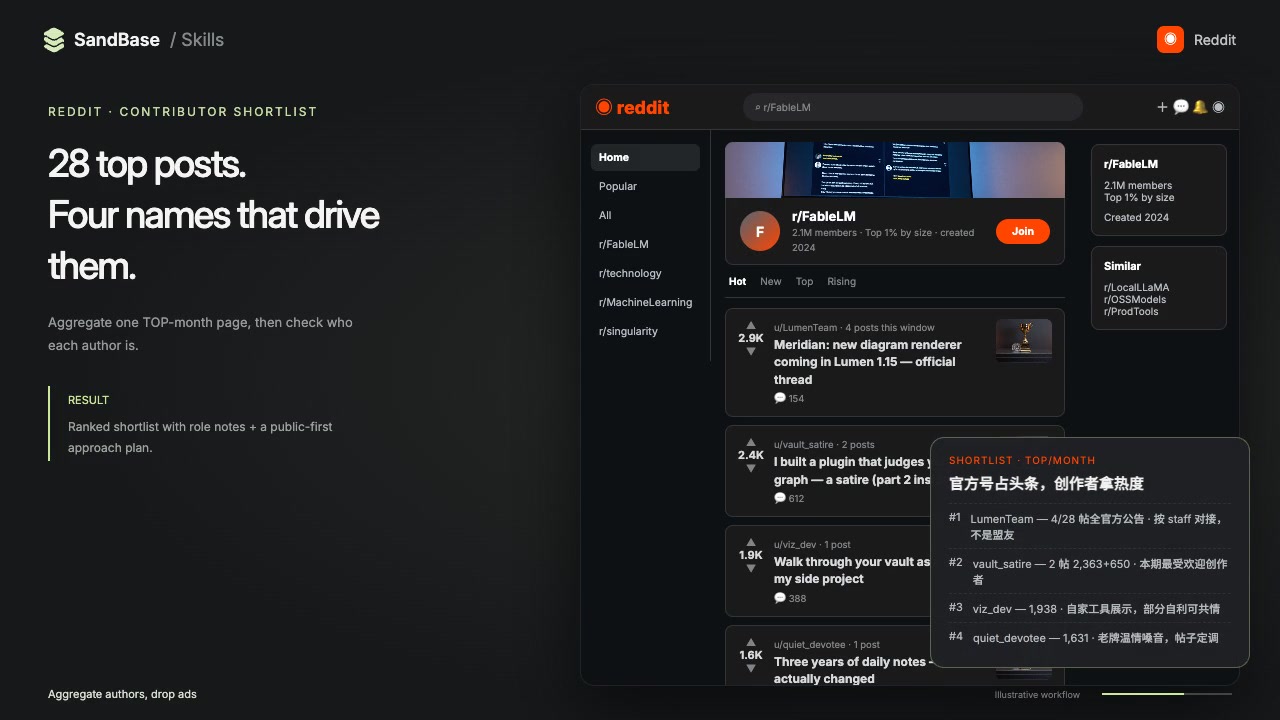
Find who actually drives a subreddit and who is worth engaging first.
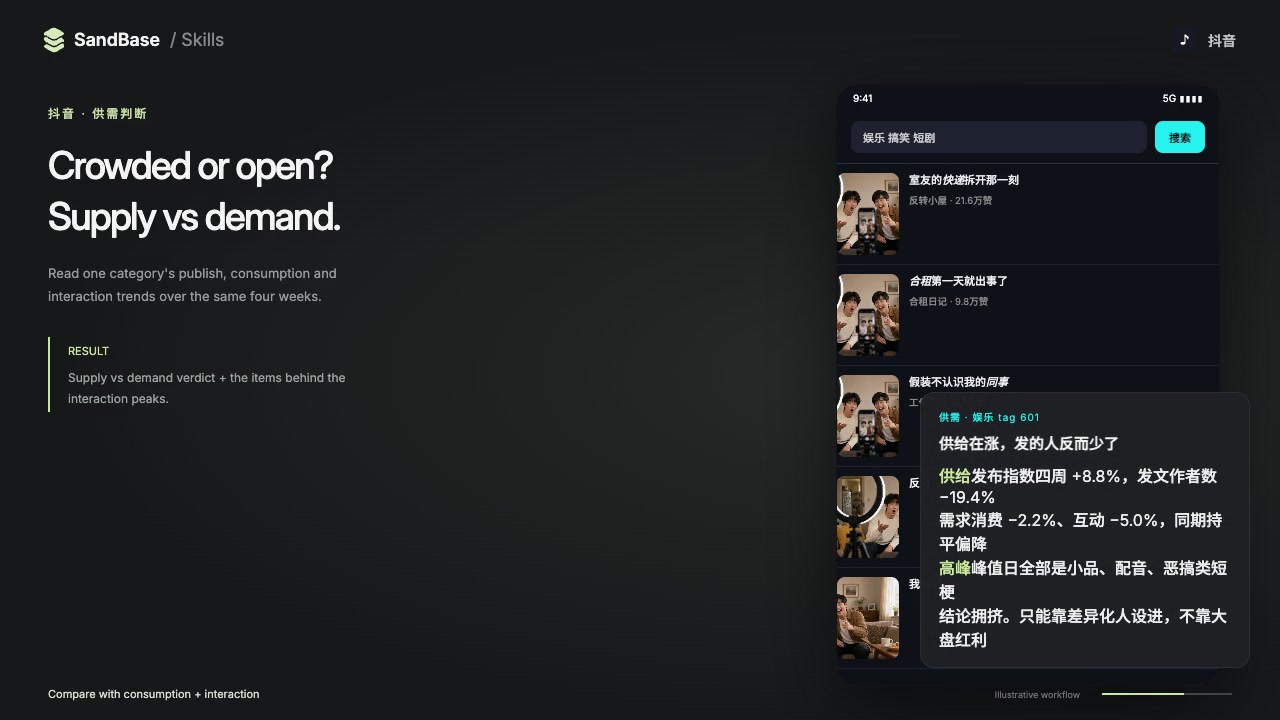
Find out whether a Douyin category is crowded or still under-supplied before you enter it.
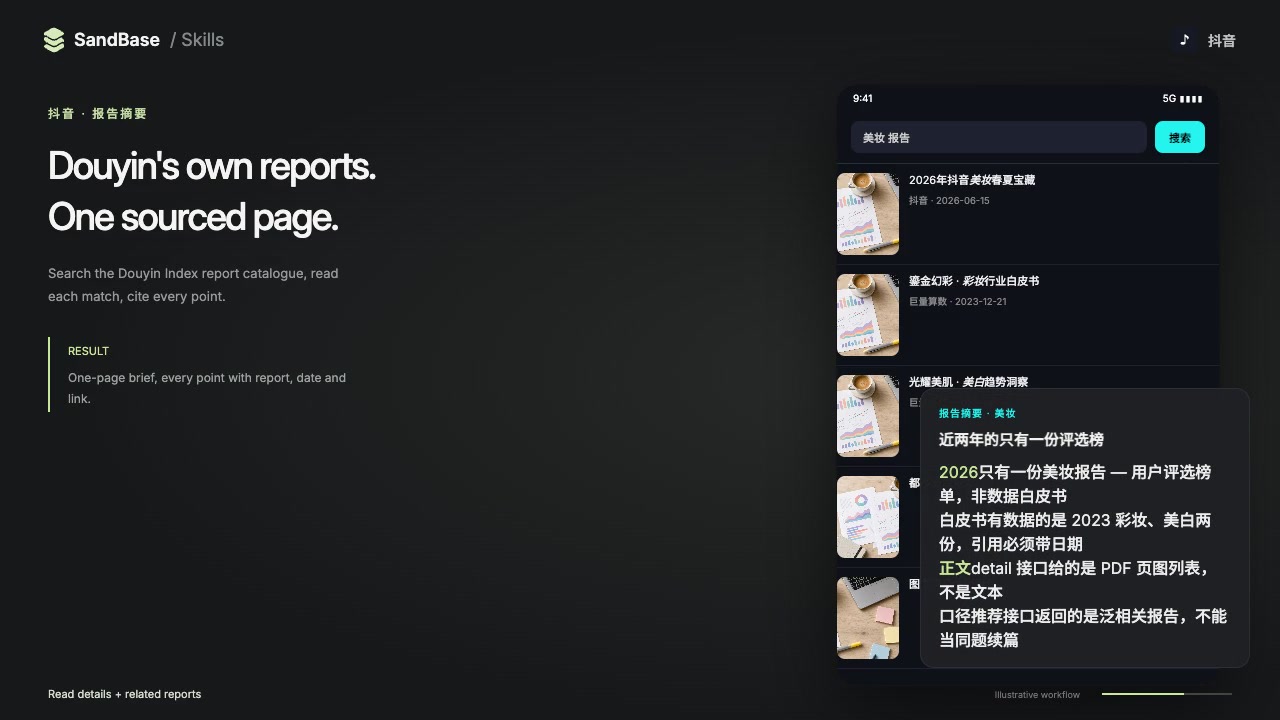
Condense Douyin Index’s official industry reports into one sourced page.
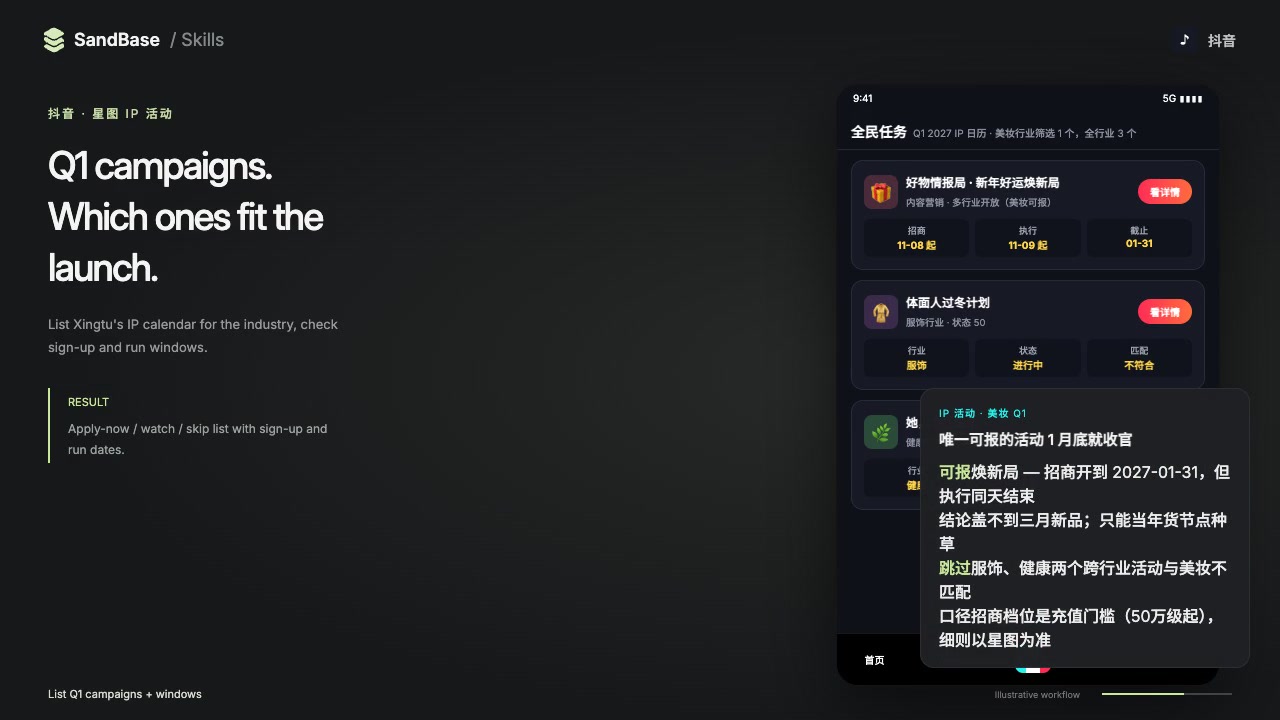
Find the Xingtu IP campaigns a brand could join in a period, with sign-up and run dates.
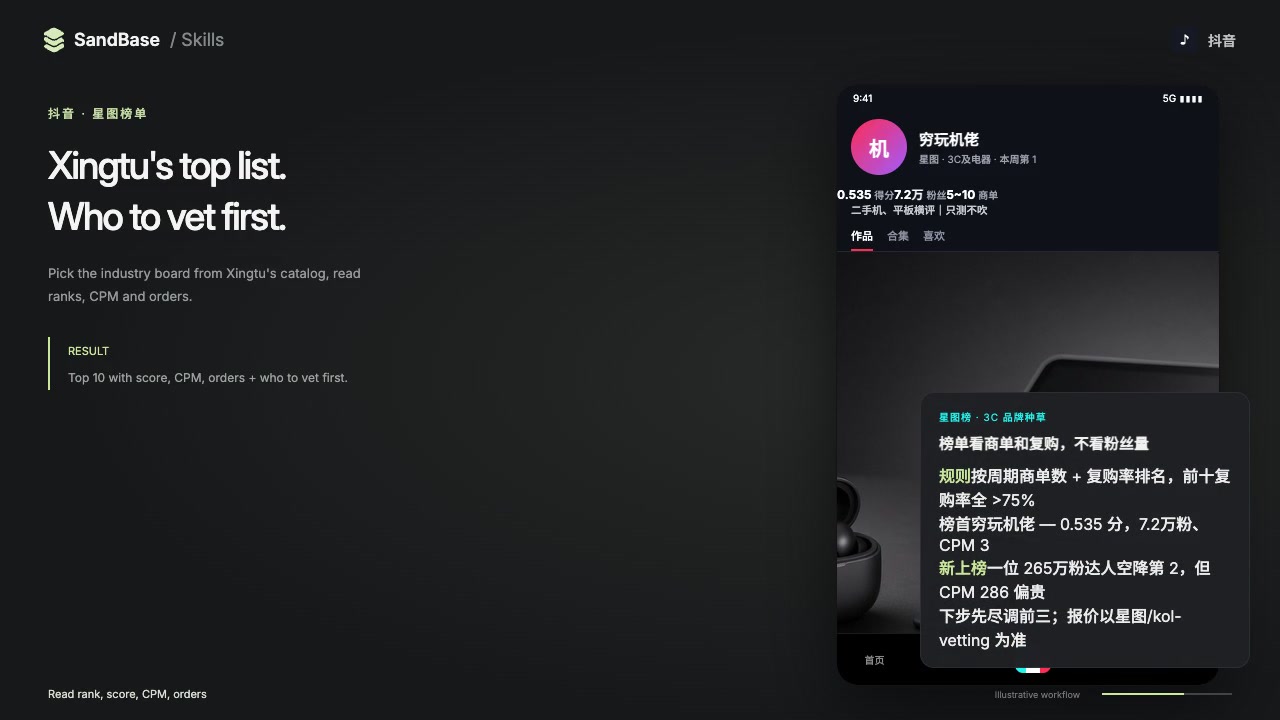
Get the commercial top creators for an industry from Xingtu’s official boards.
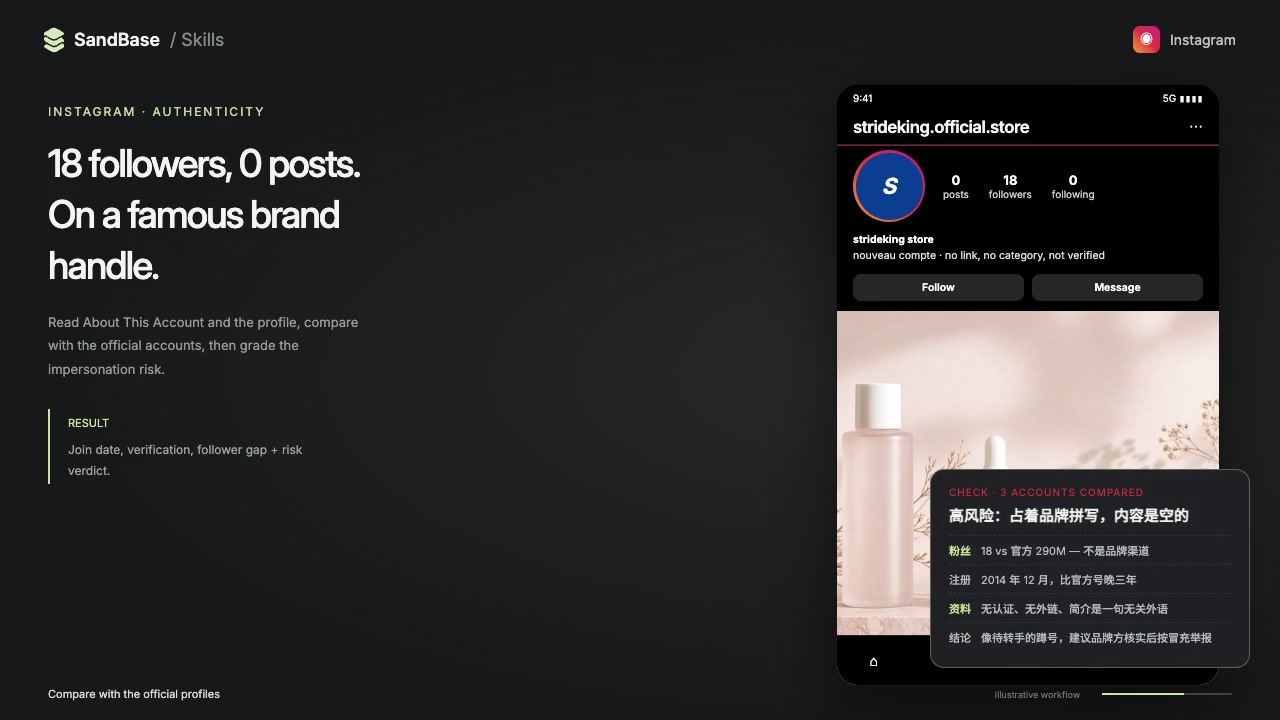
Check whether an Instagram account is who it claims to be.
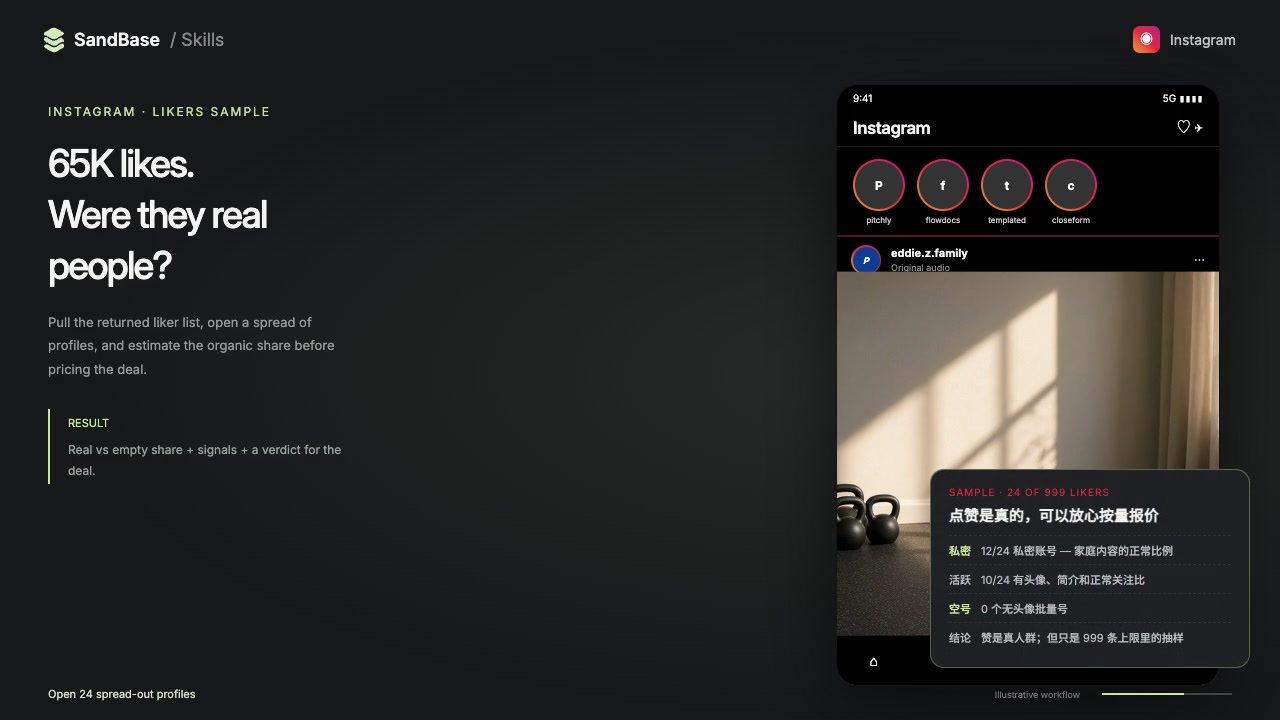
Check whether a post's likes come from real active accounts.
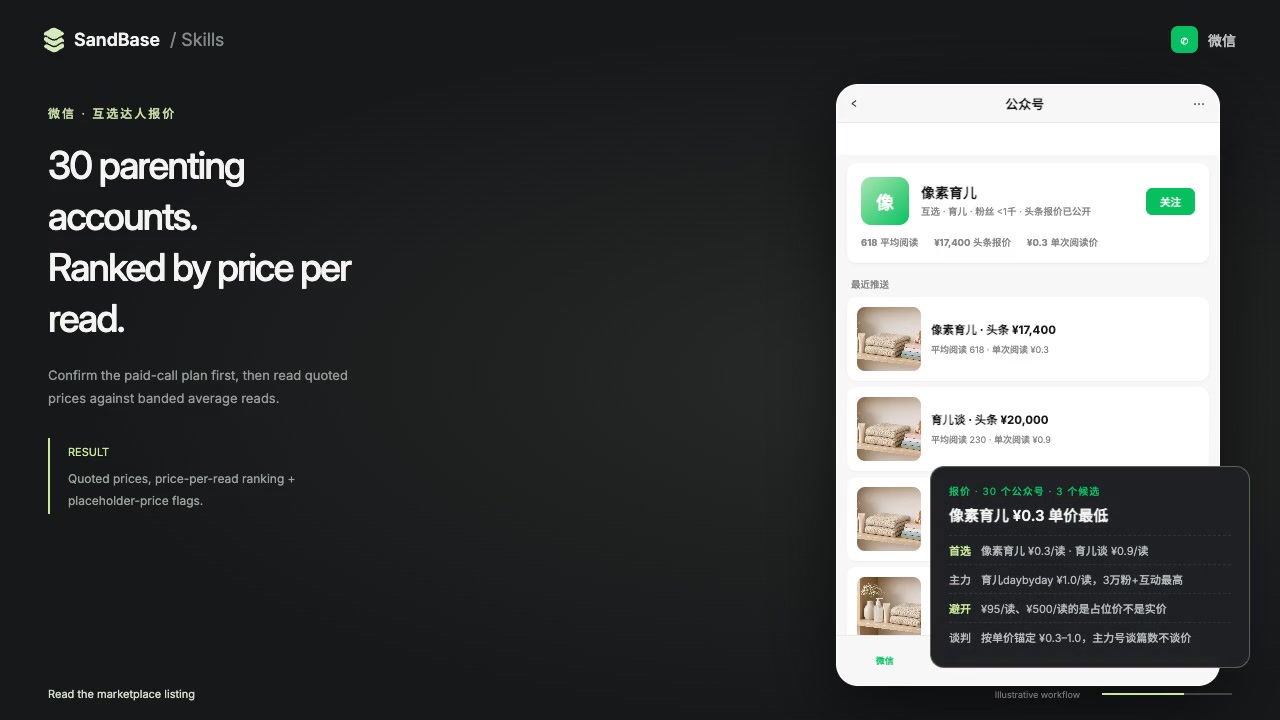
Price a WeChat creator buy from Huxuan marketplace quotes.
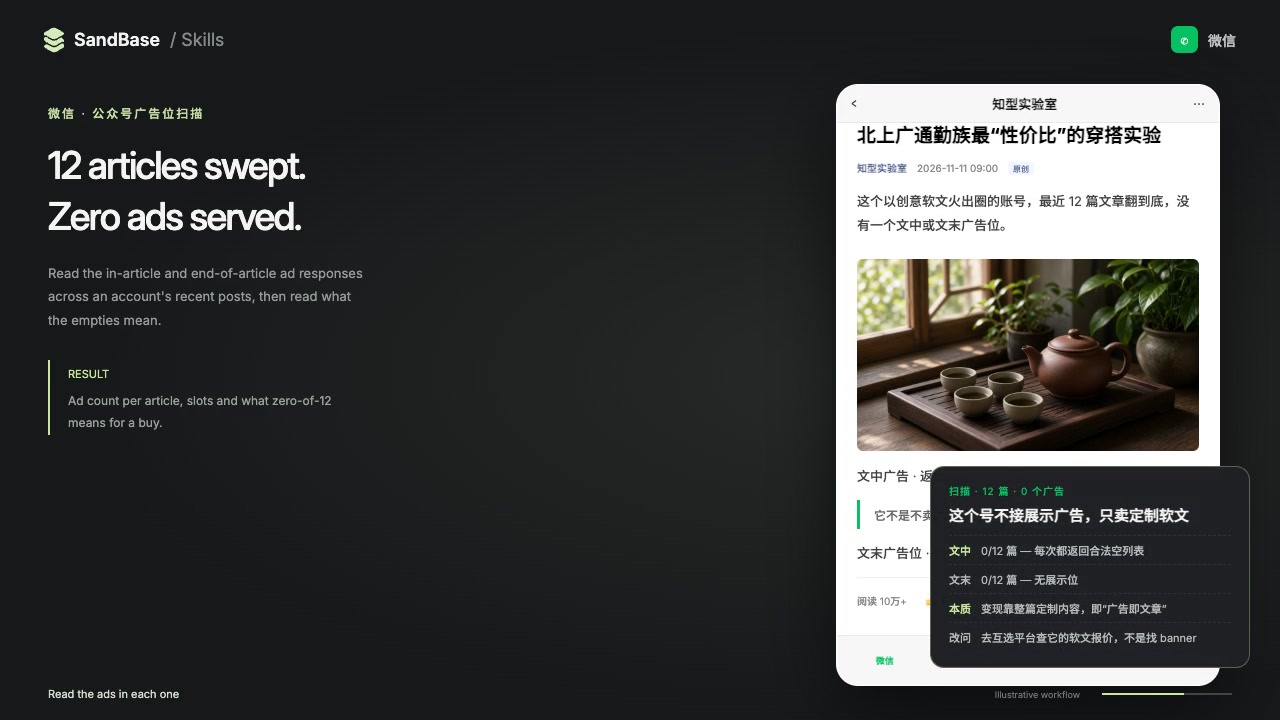
See who advertises in a WeChat Official Account, and how often, before you buy.
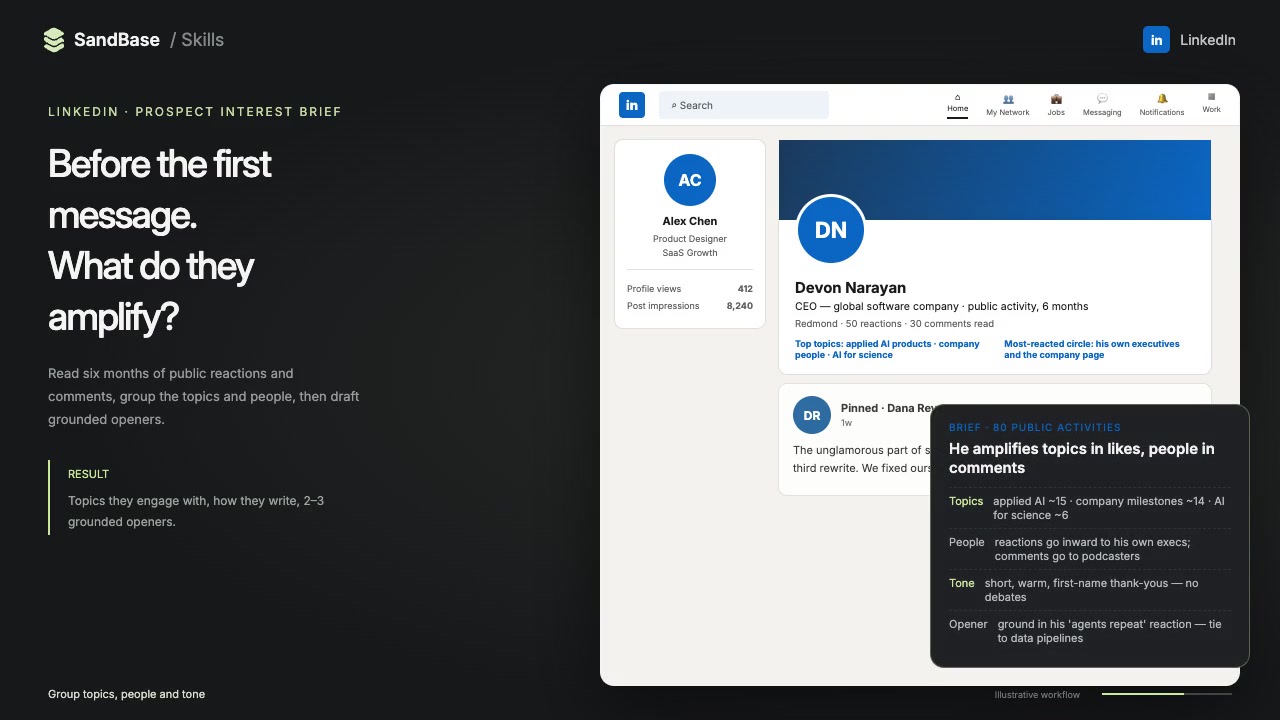
Know what a prospect cares about before your first LinkedIn message.
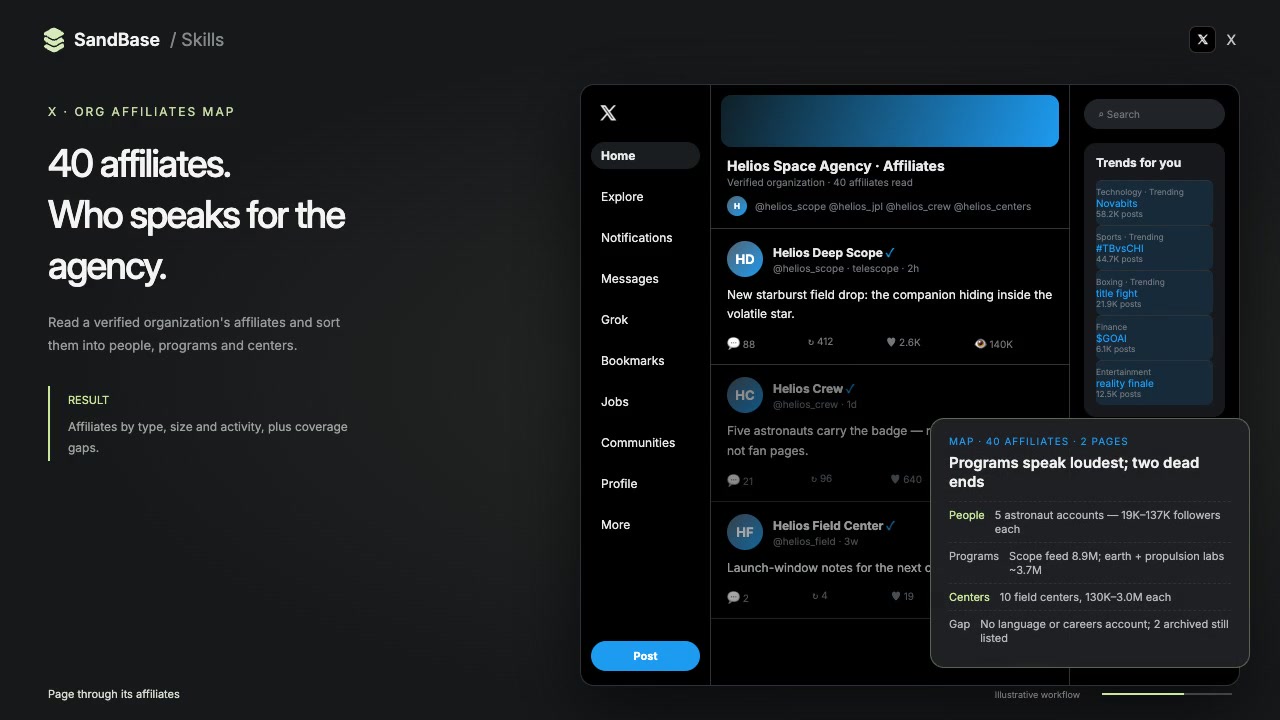
See which accounts a verified X organization links under its badge.
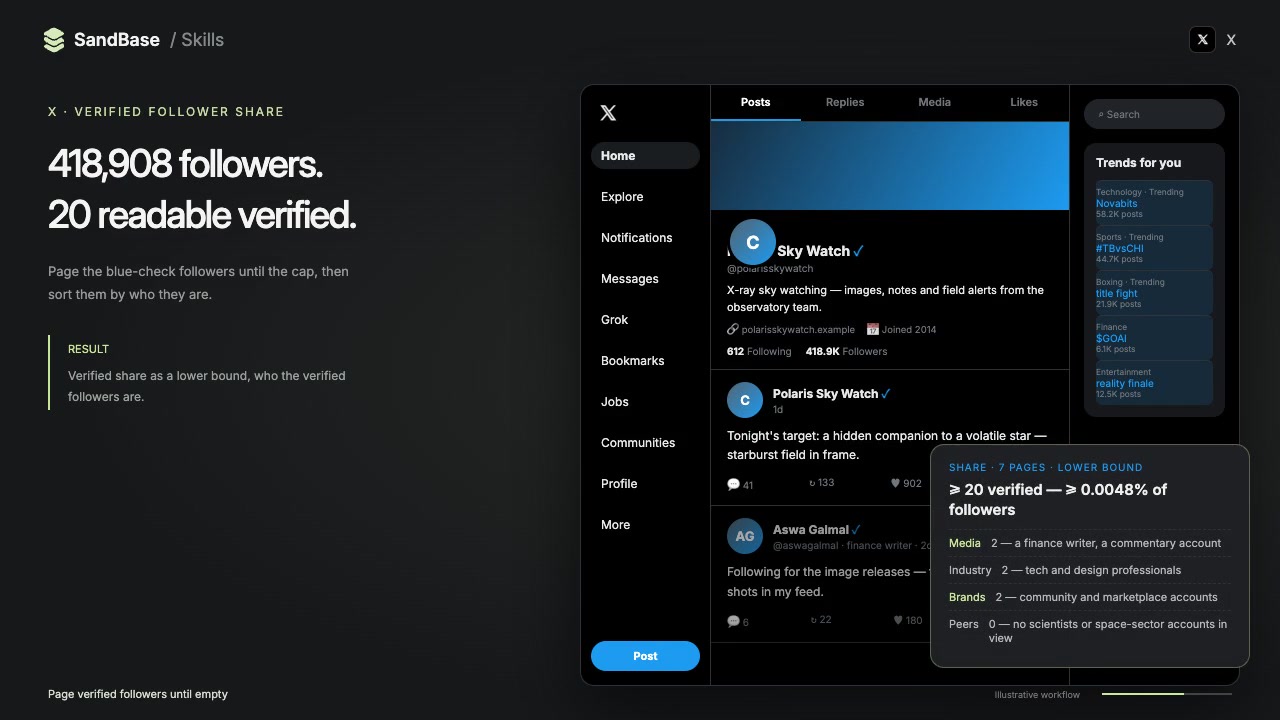
Measure an X account's verified followers and who they are.
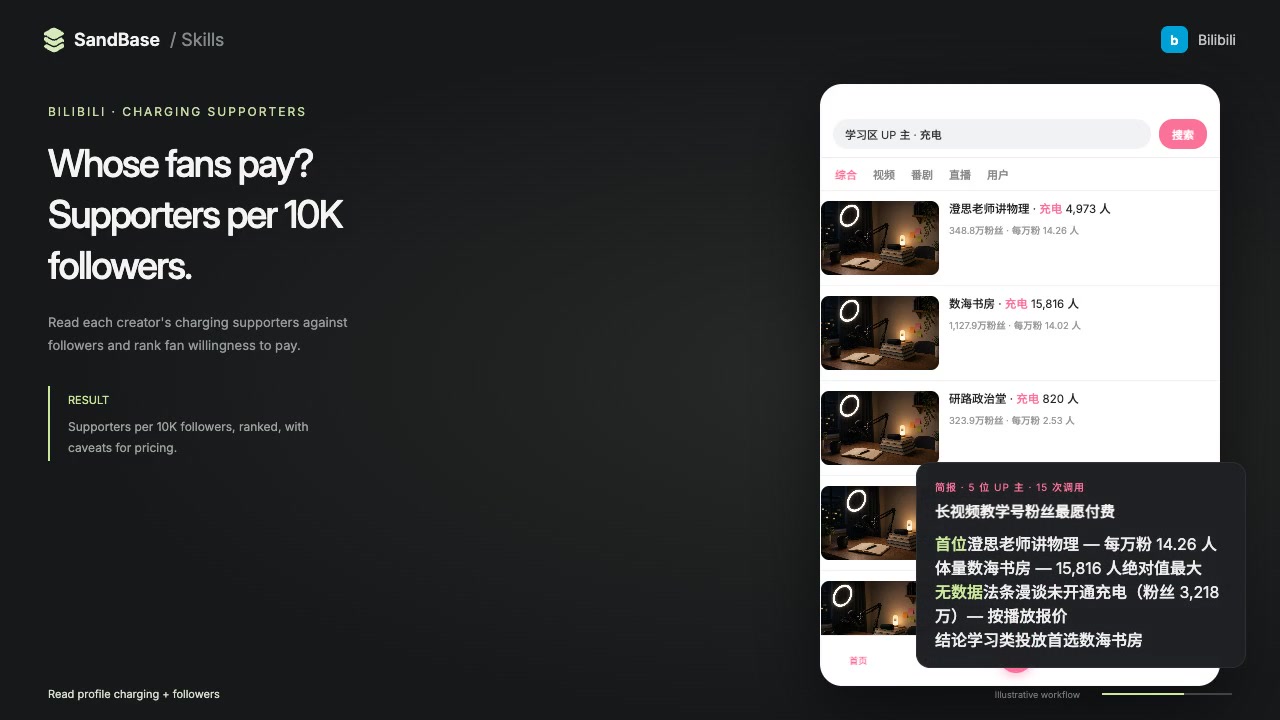
Compare how willing Bilibili creators' fans are to pay.
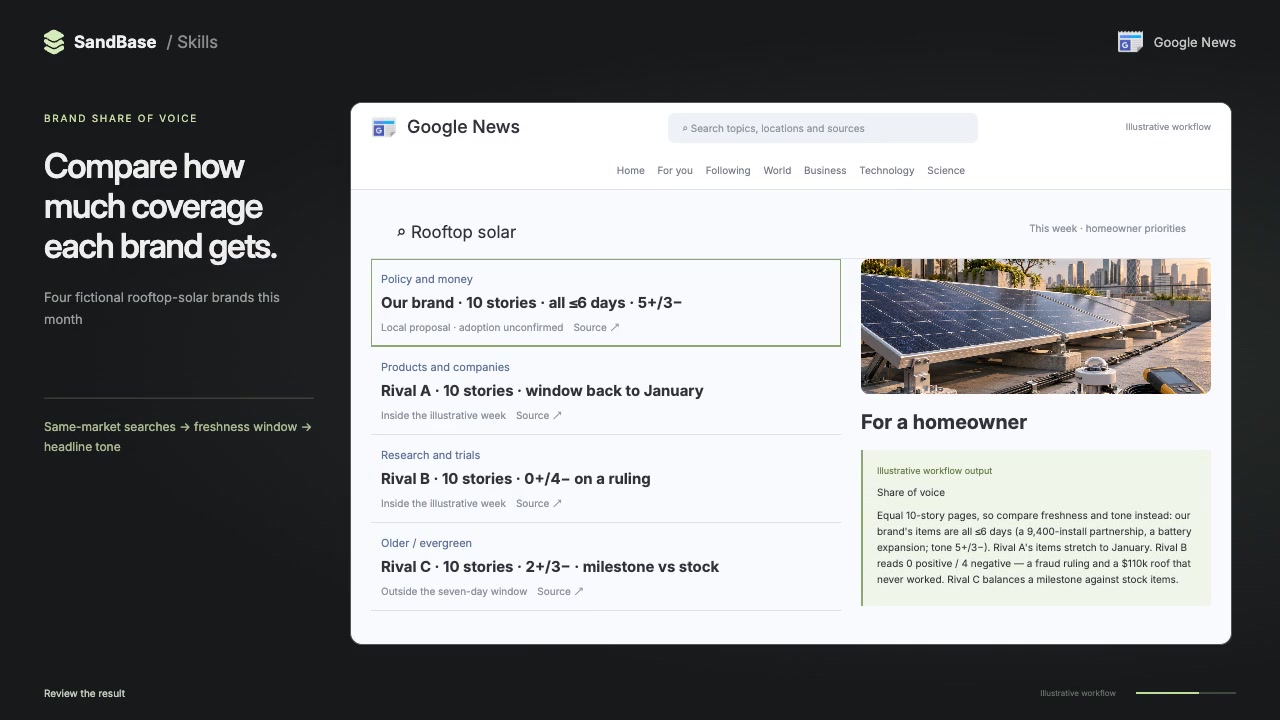
Compare how much news coverage your brand gets against competitors.
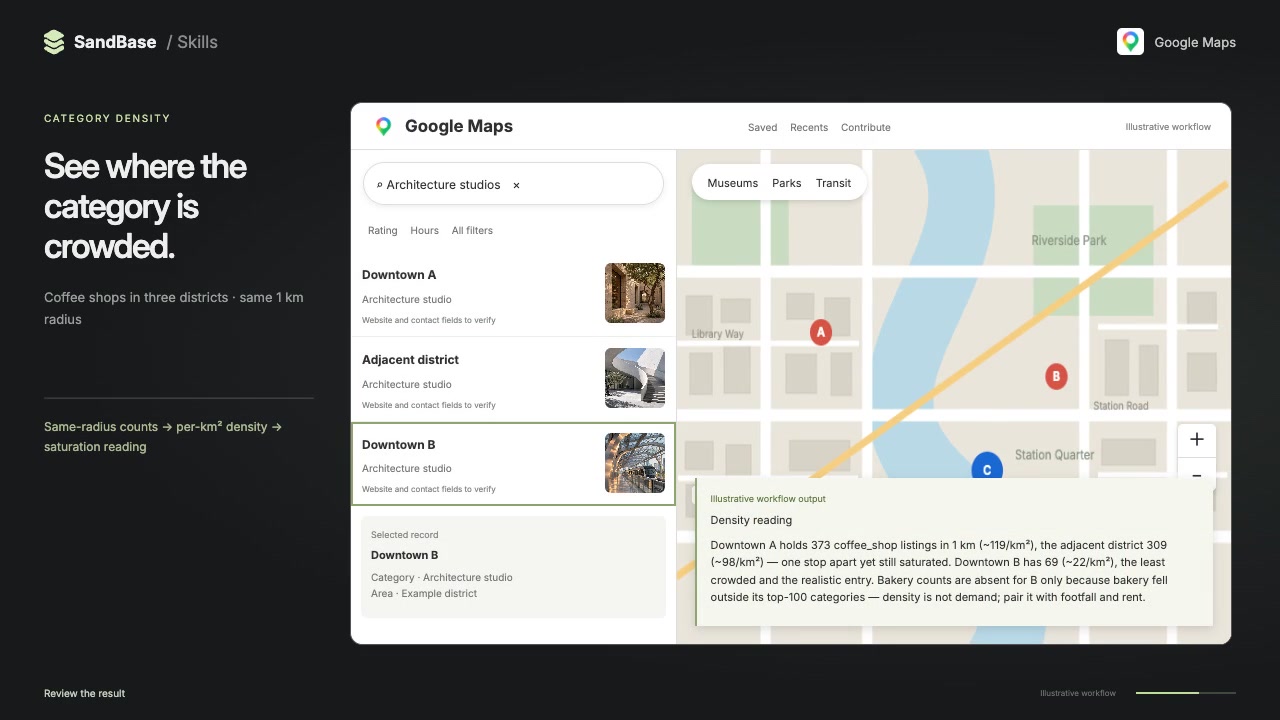
See how crowded a business category is across a few areas.
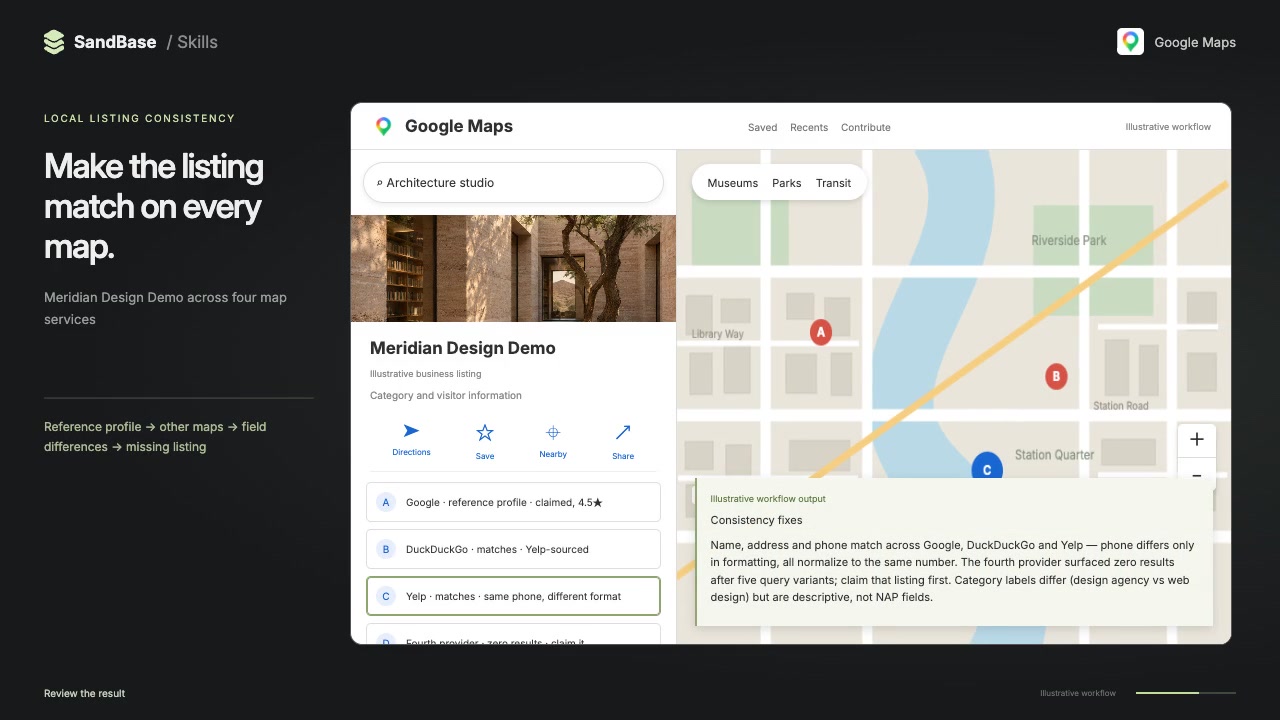
Check that your business name, address and phone match across map services.
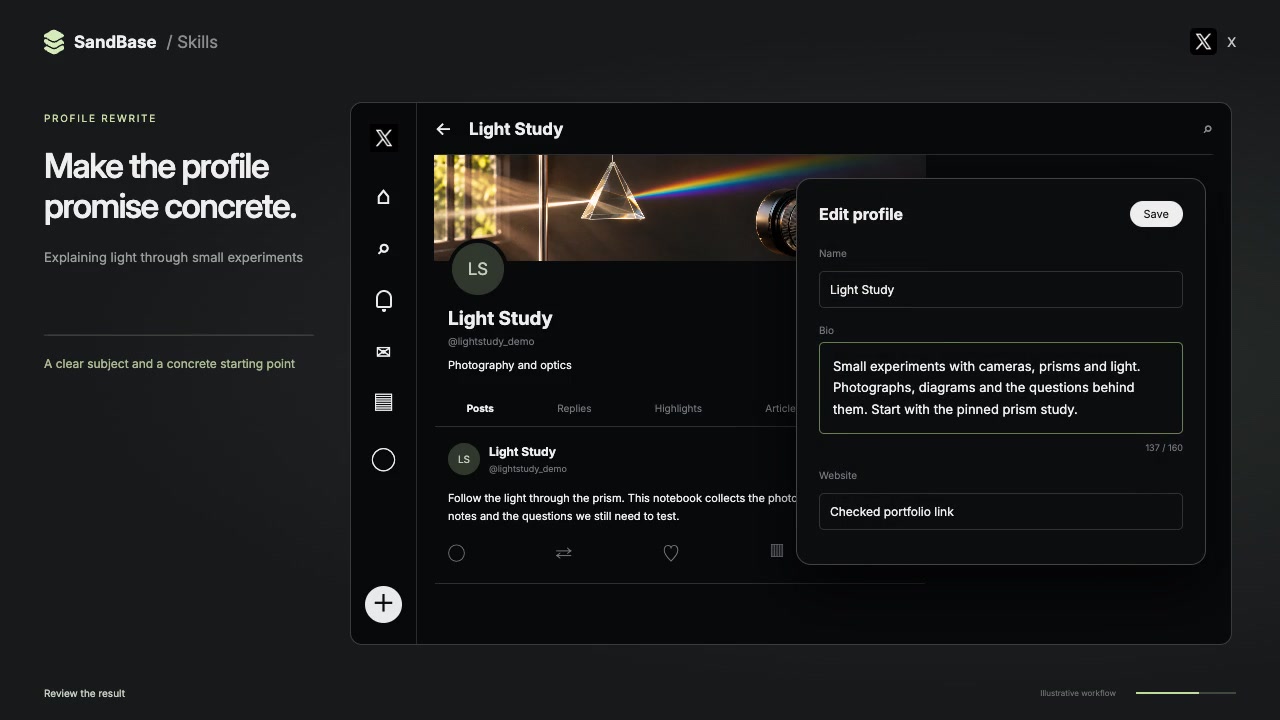
Your X bio, name and pinned post do not tell a new visitor who you help or why to follow.
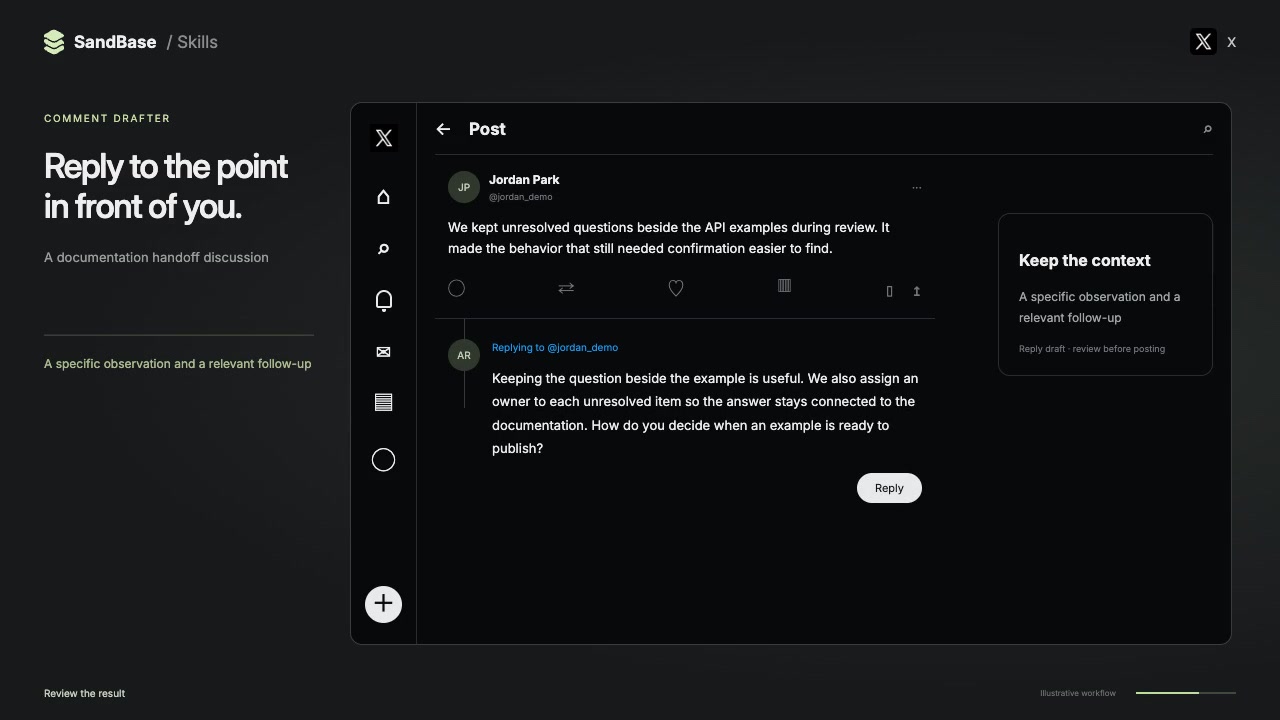
You want to reply to a post in your field with something that adds to it, not another "great point".
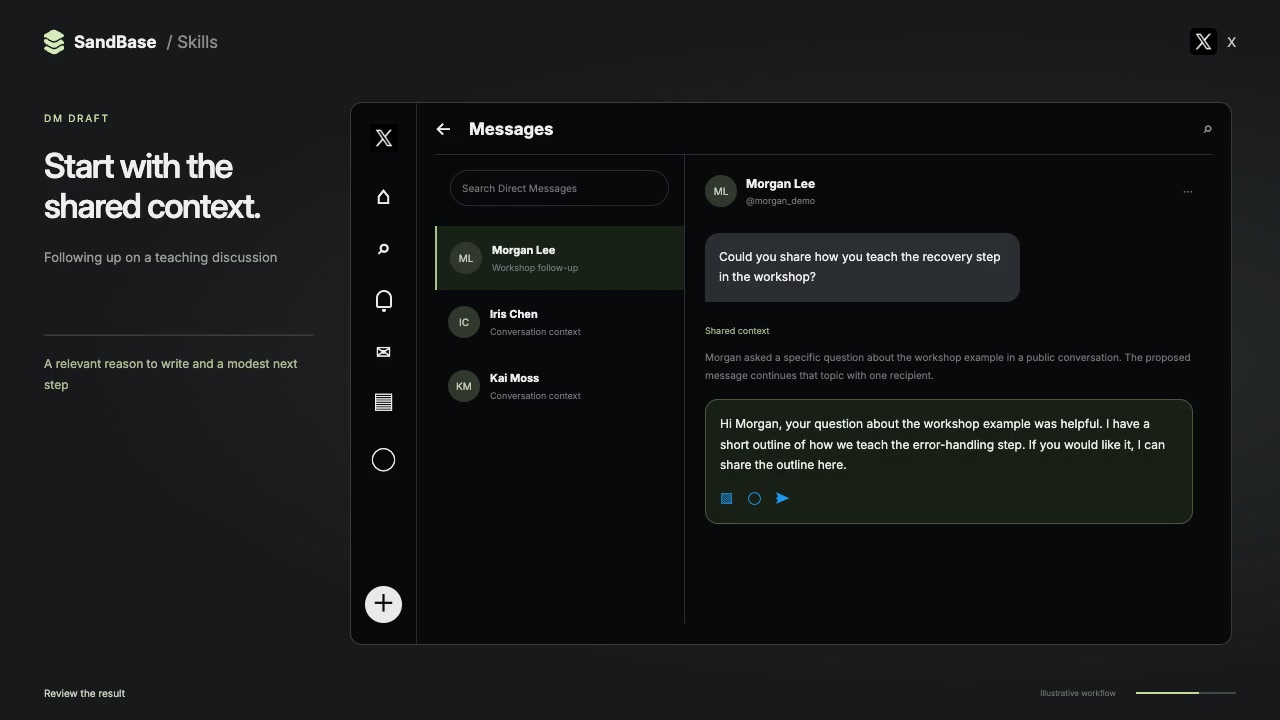
You want to message someone on X you have talked with in public, without it reading like a cold pitch.
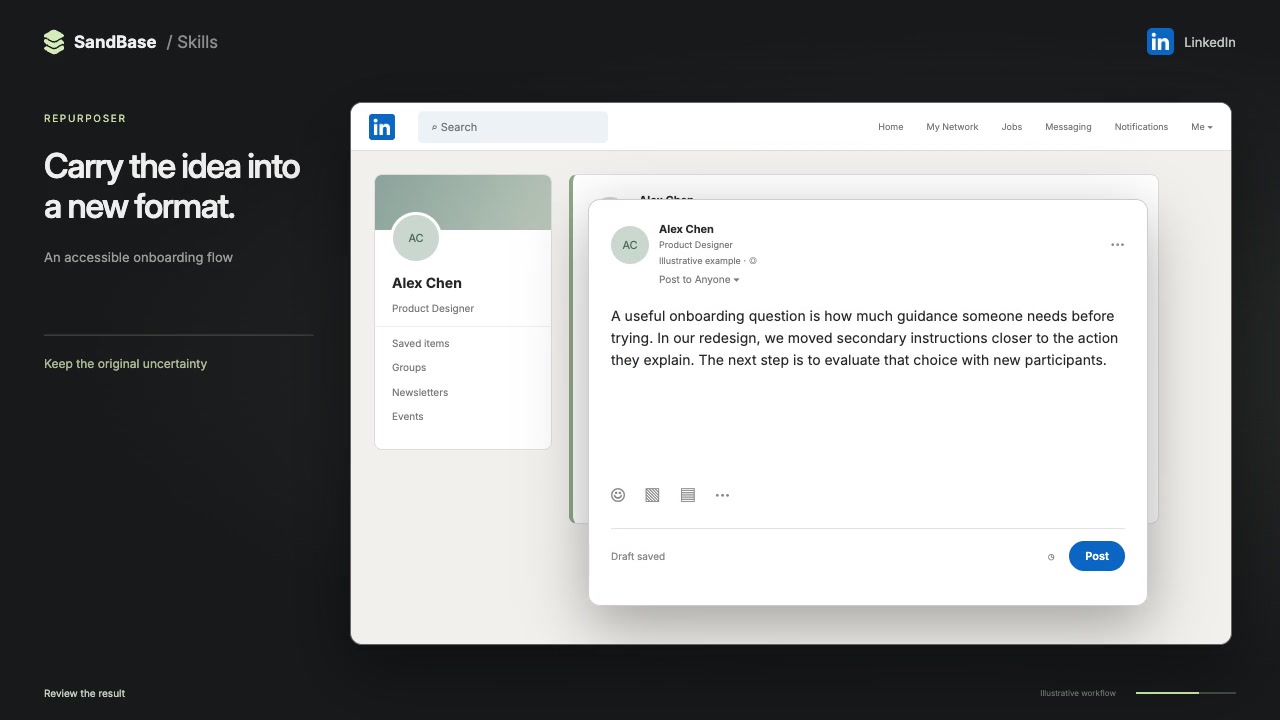
Adapt longer material into one post while keeping its numbers and qualifiers.
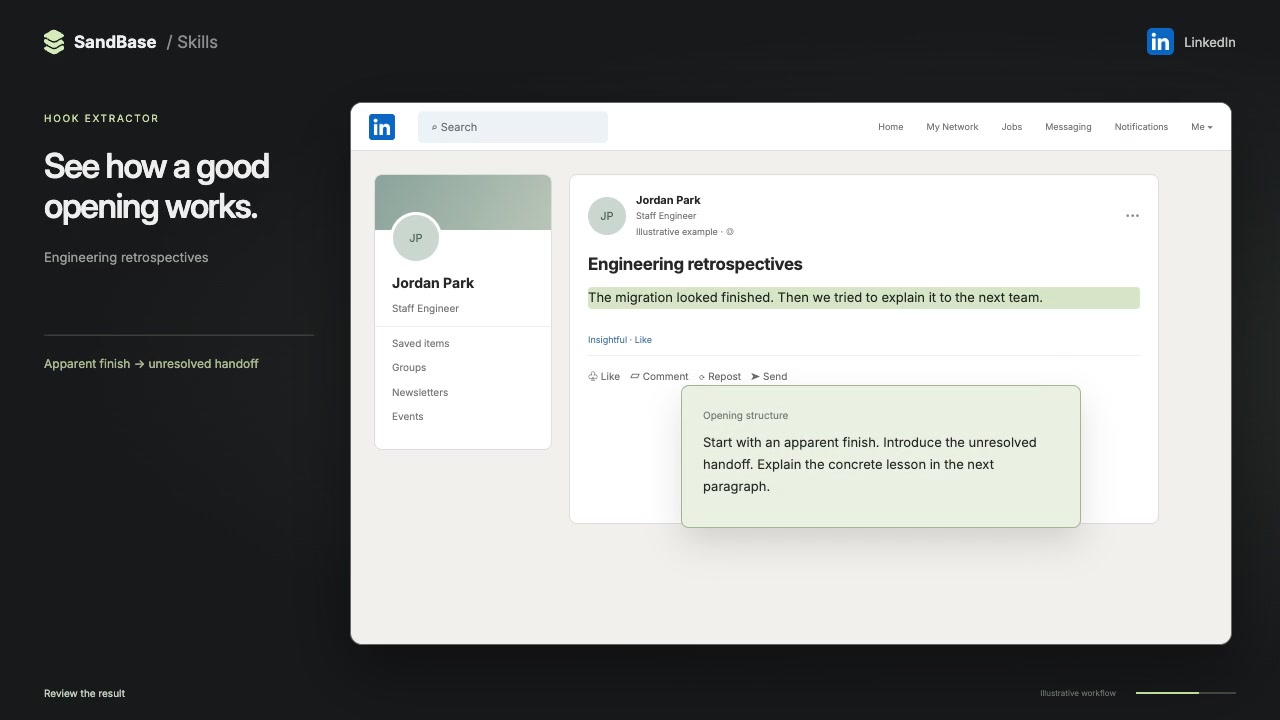
Identify what a supplied opening does and turn it into an honest fill-in template.
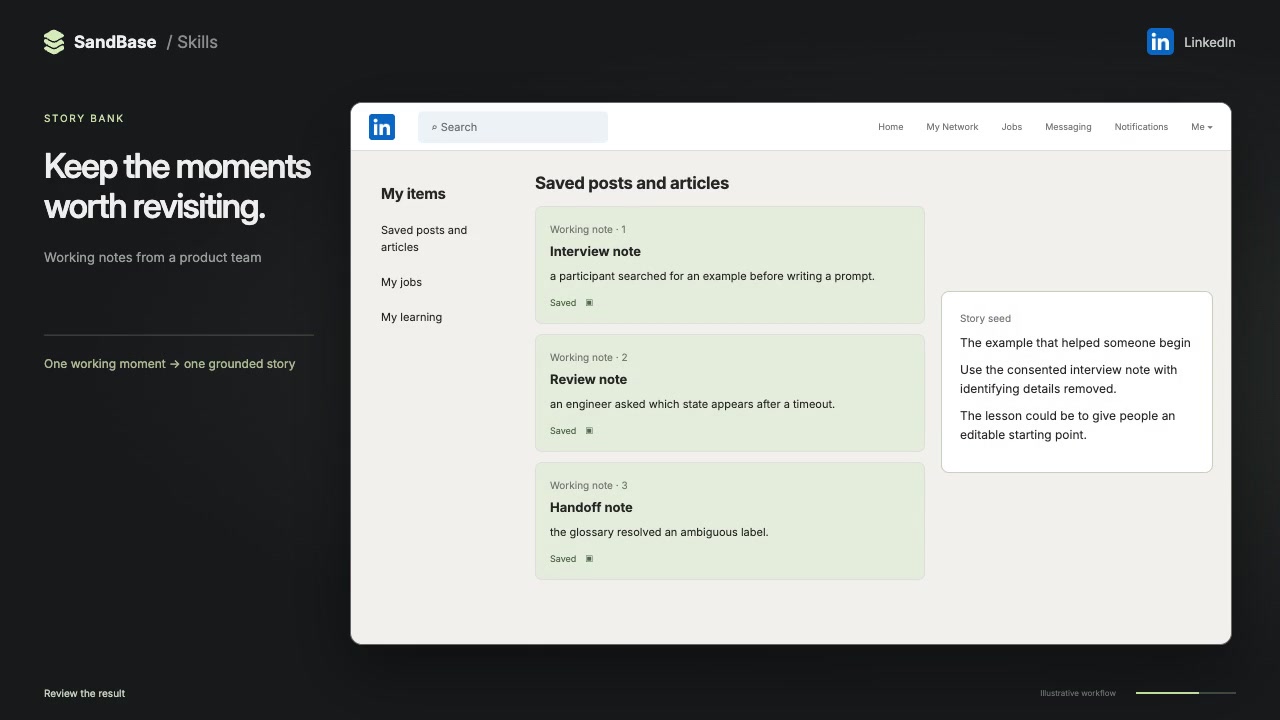
Organise interview material with source, verification and consent status.
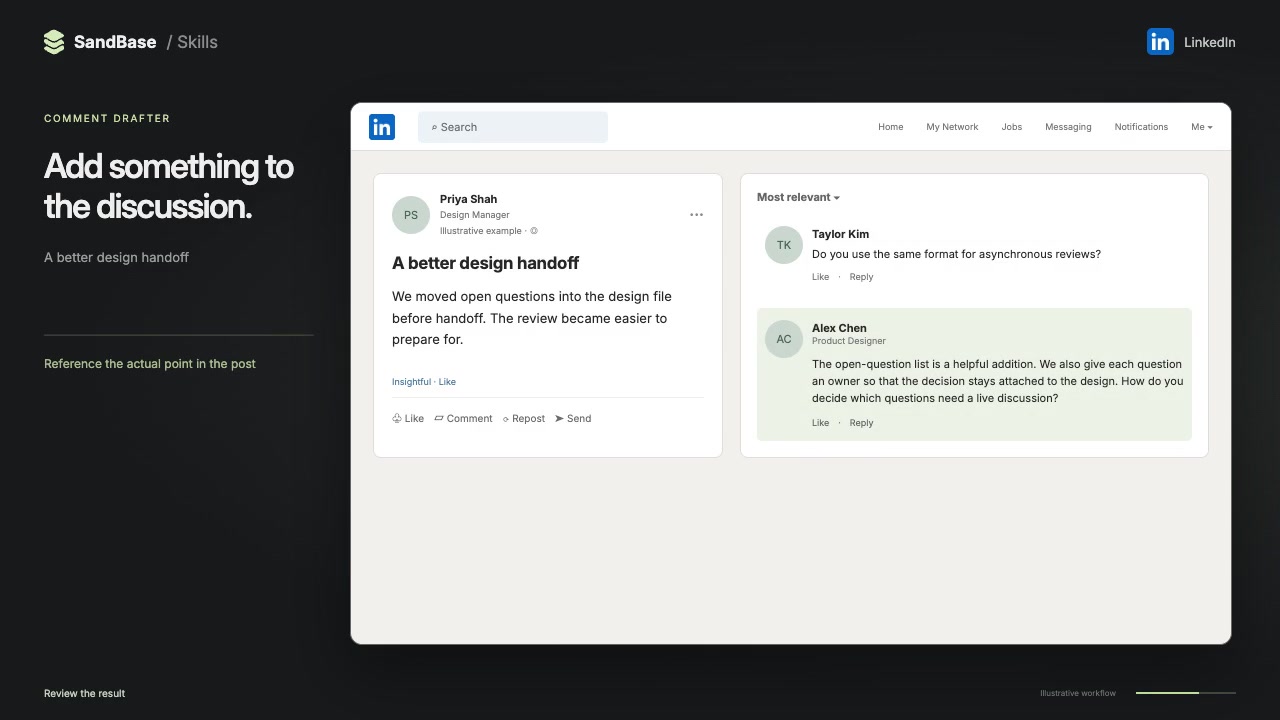
Write a specific comment using only the post and what you can support.
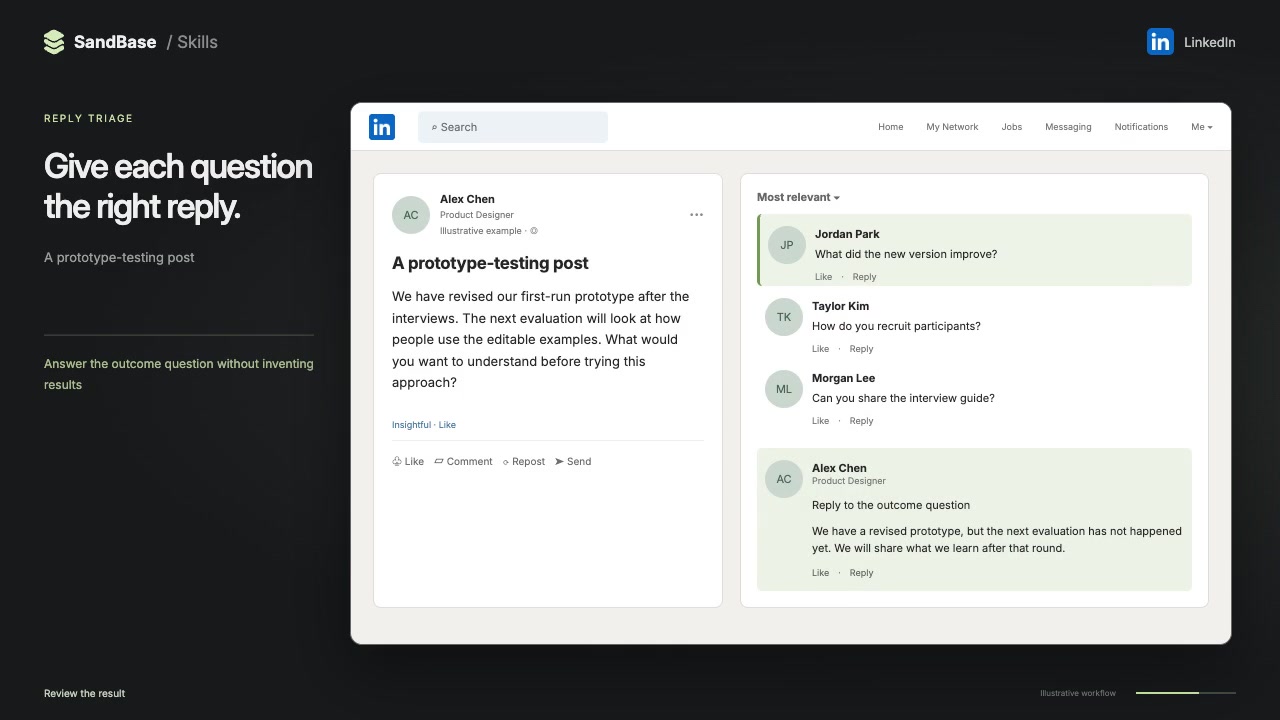
Sort replies to your comments by what needs an answer and when.
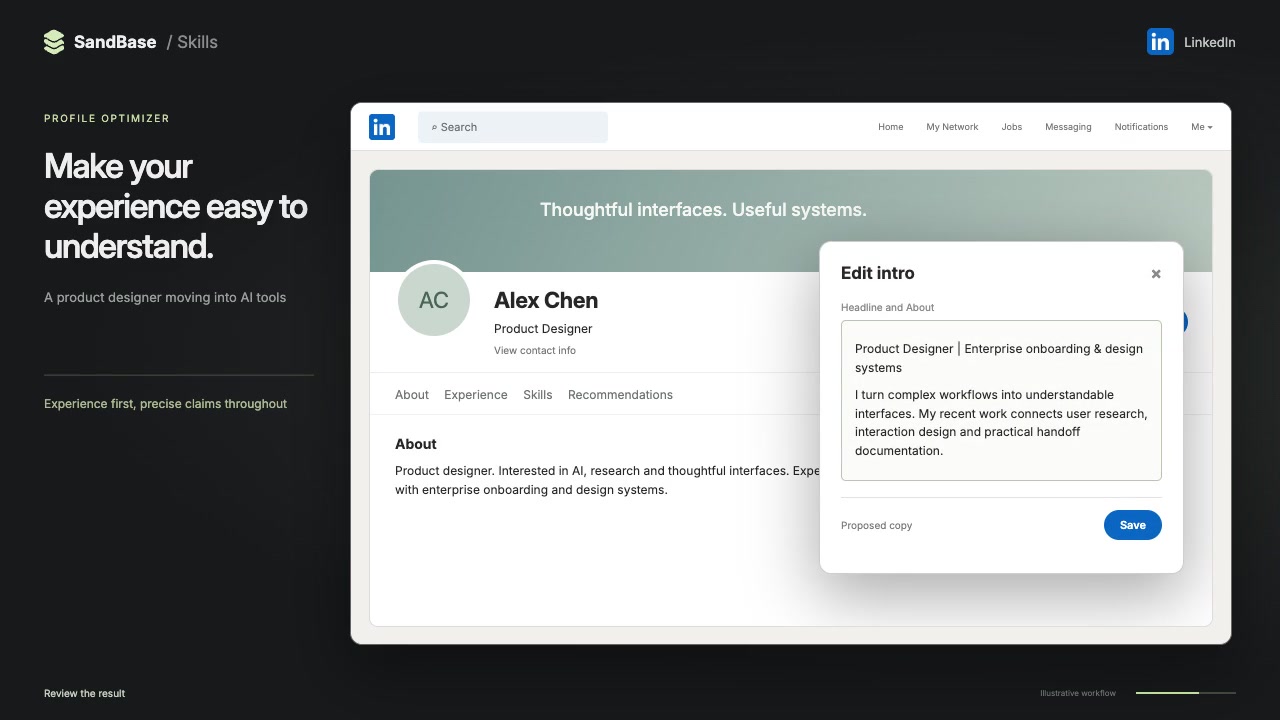
Review supplied sections while keeping future plans distinct from current work.
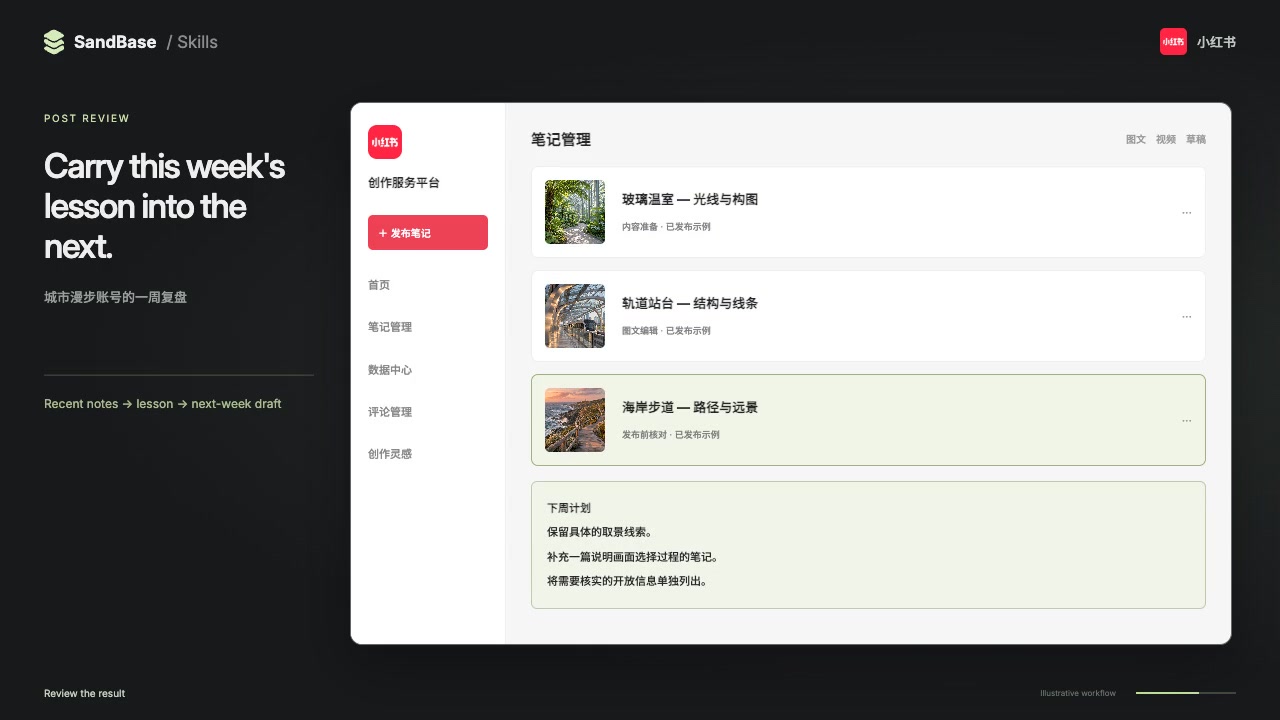
Check whether a posting period really did worse than the one before, then plan next week with one test.
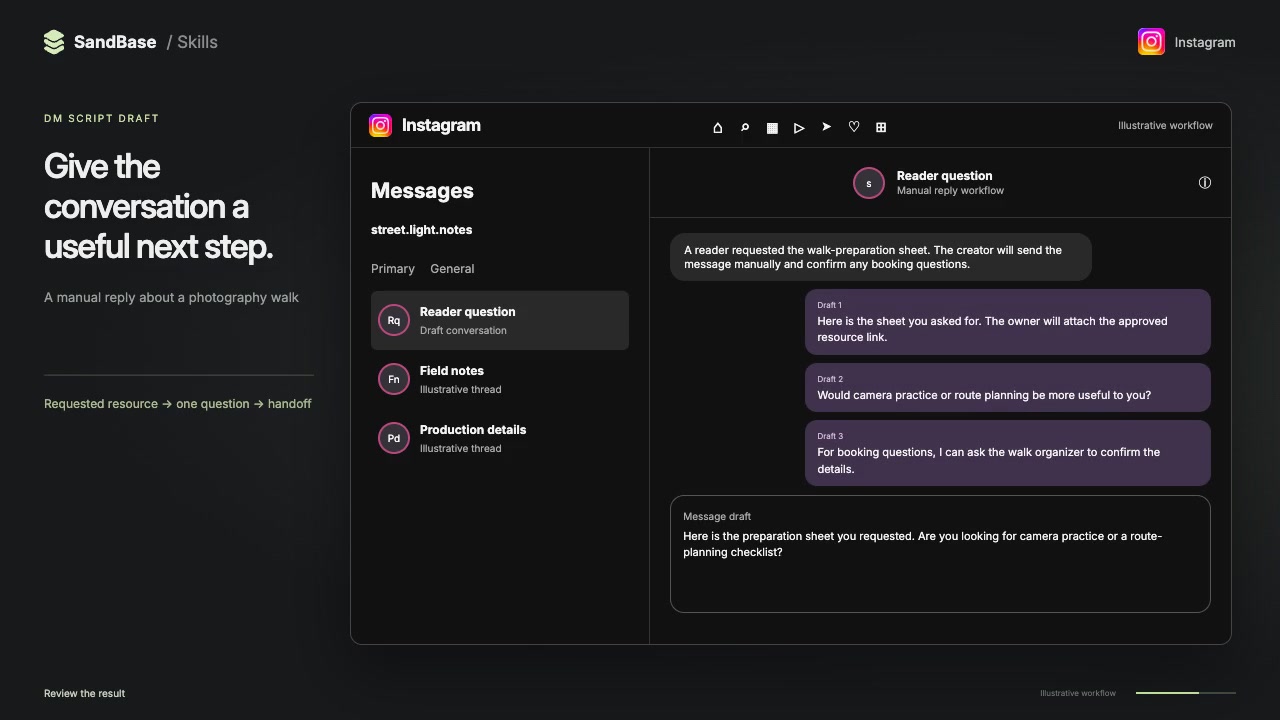
People ask for your resource in comments or Story replies, and you need a short message flow that delivers it and asks one useful question.
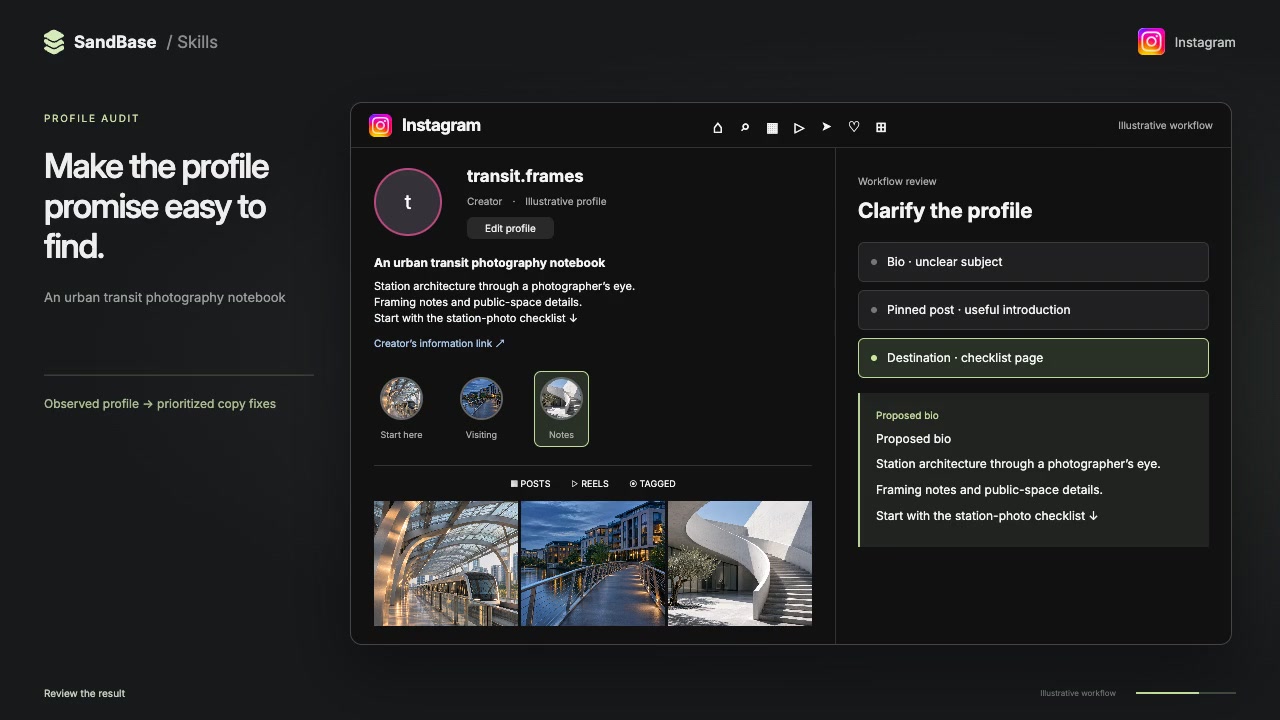
Your Instagram profile does not make clear what you offer or what a visitor should do next.
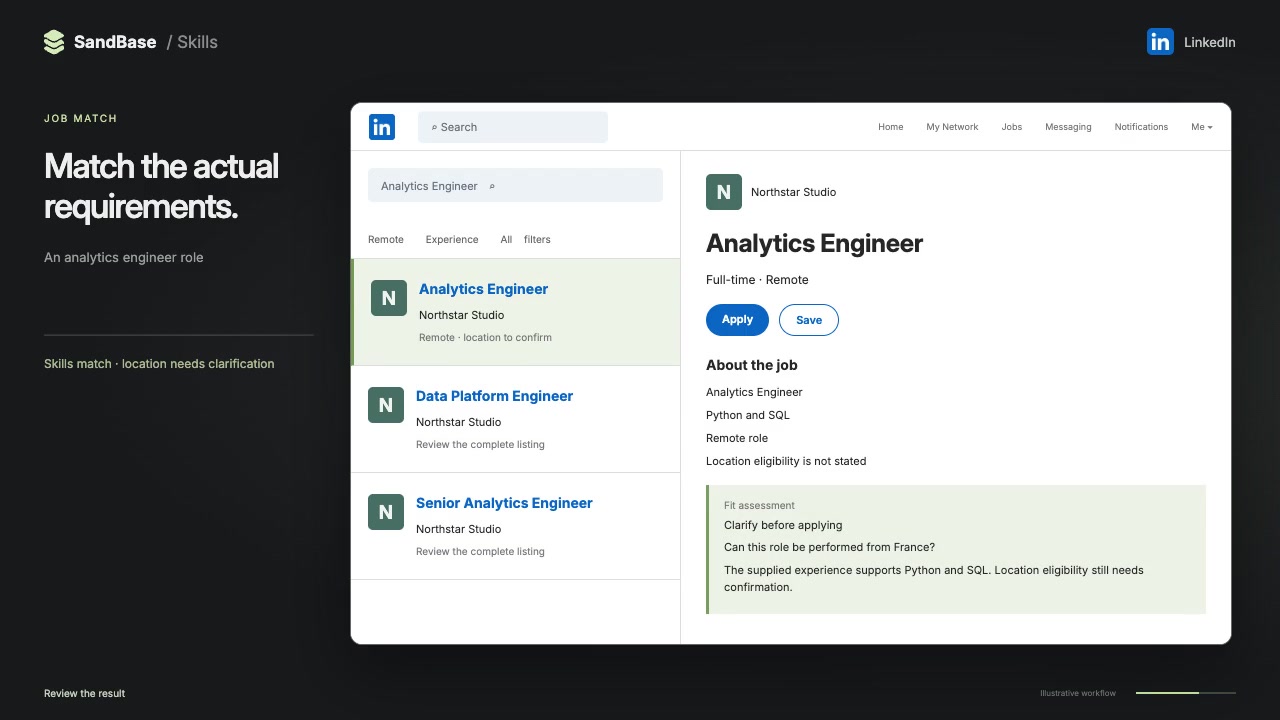
Compare actual listings with your constraints and preserve what remains unknown.
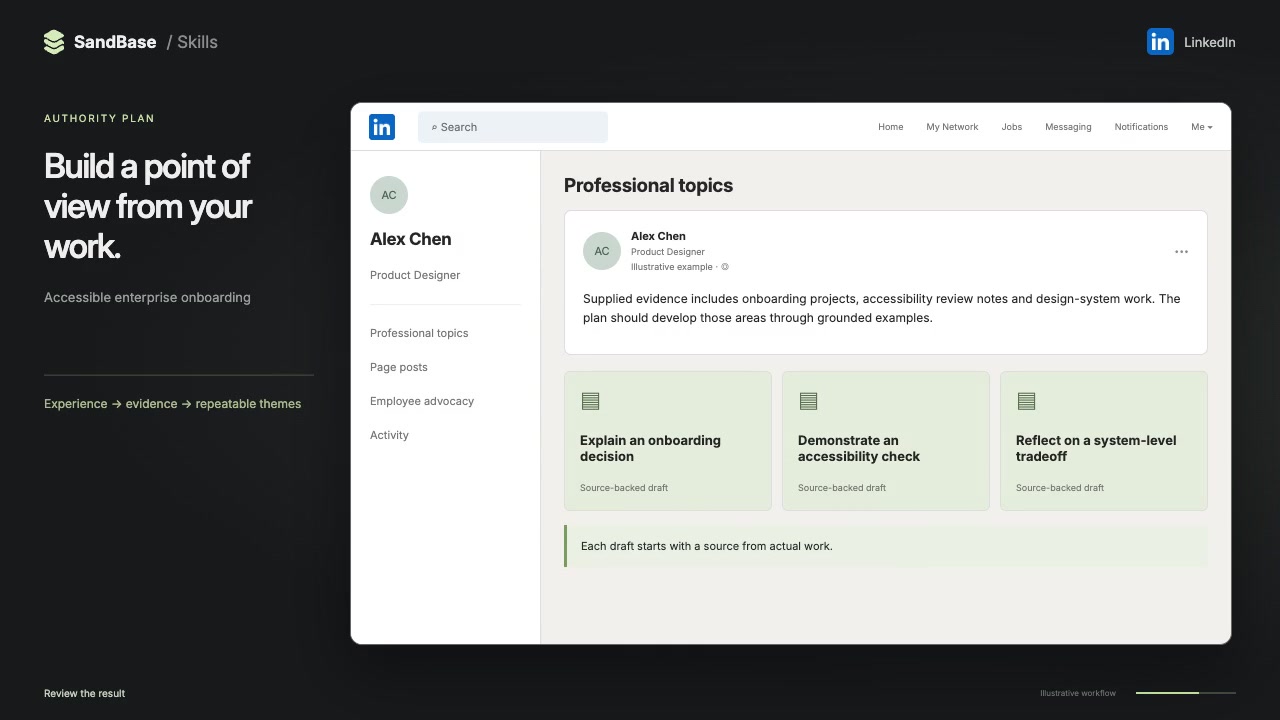
Make your professional experience credible and understandable to a chosen audience.
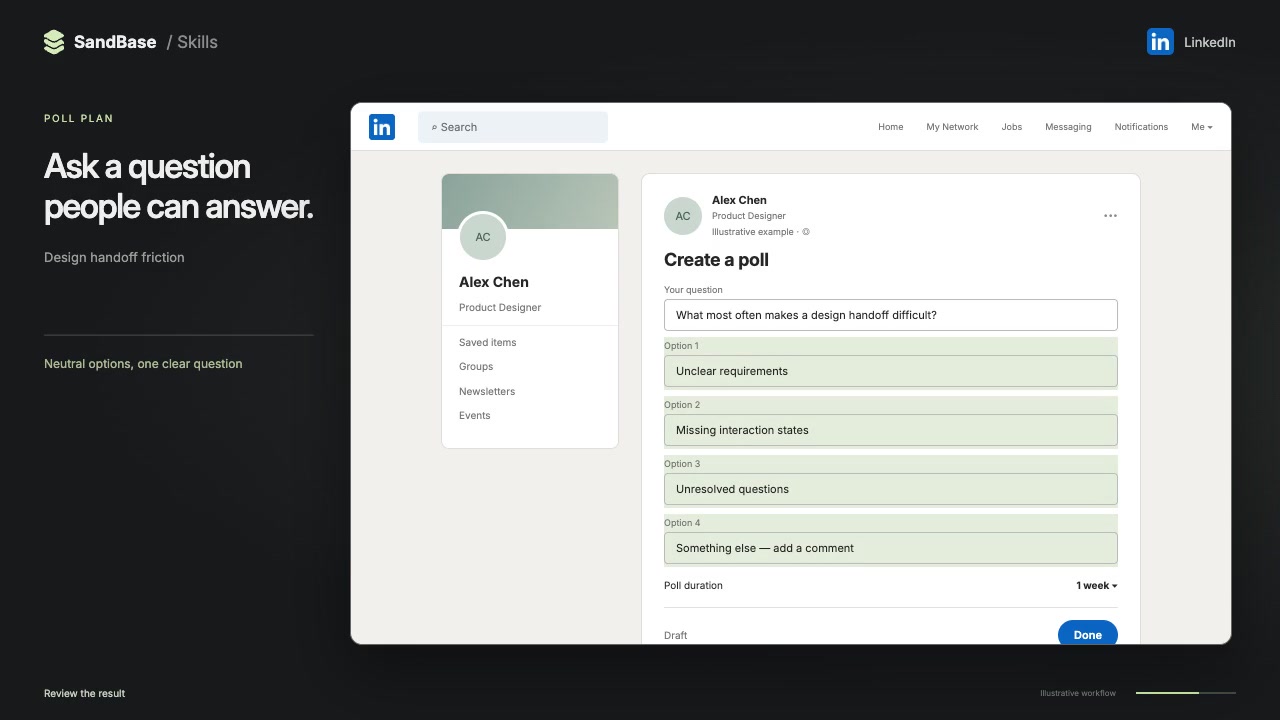
Use a professional poll to prioritize a concrete next step.
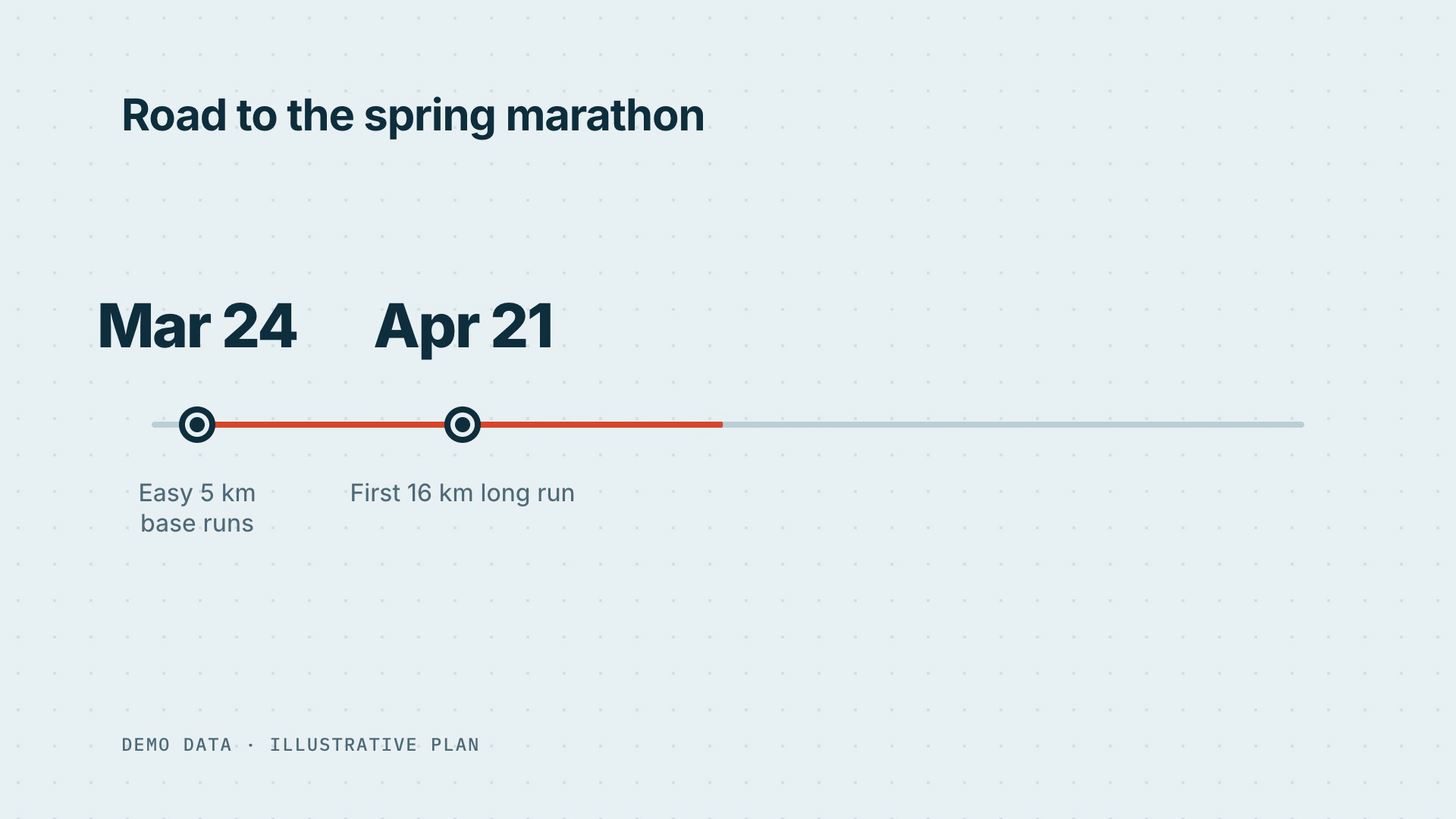
Draw a track and land dated stops in order, then hold the complete plan.
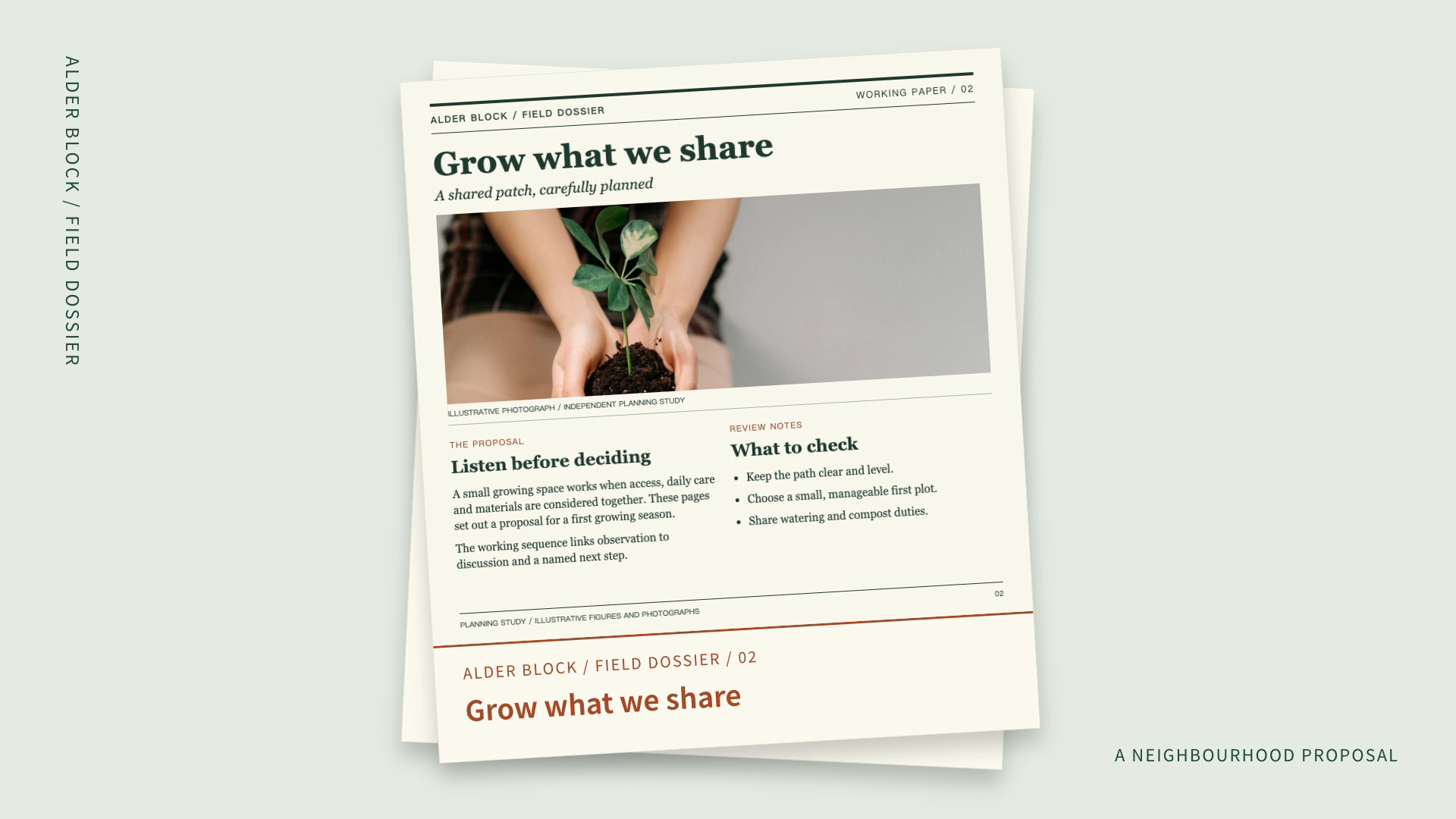
Build a readable stack of raster documents and close with a decision stamp.
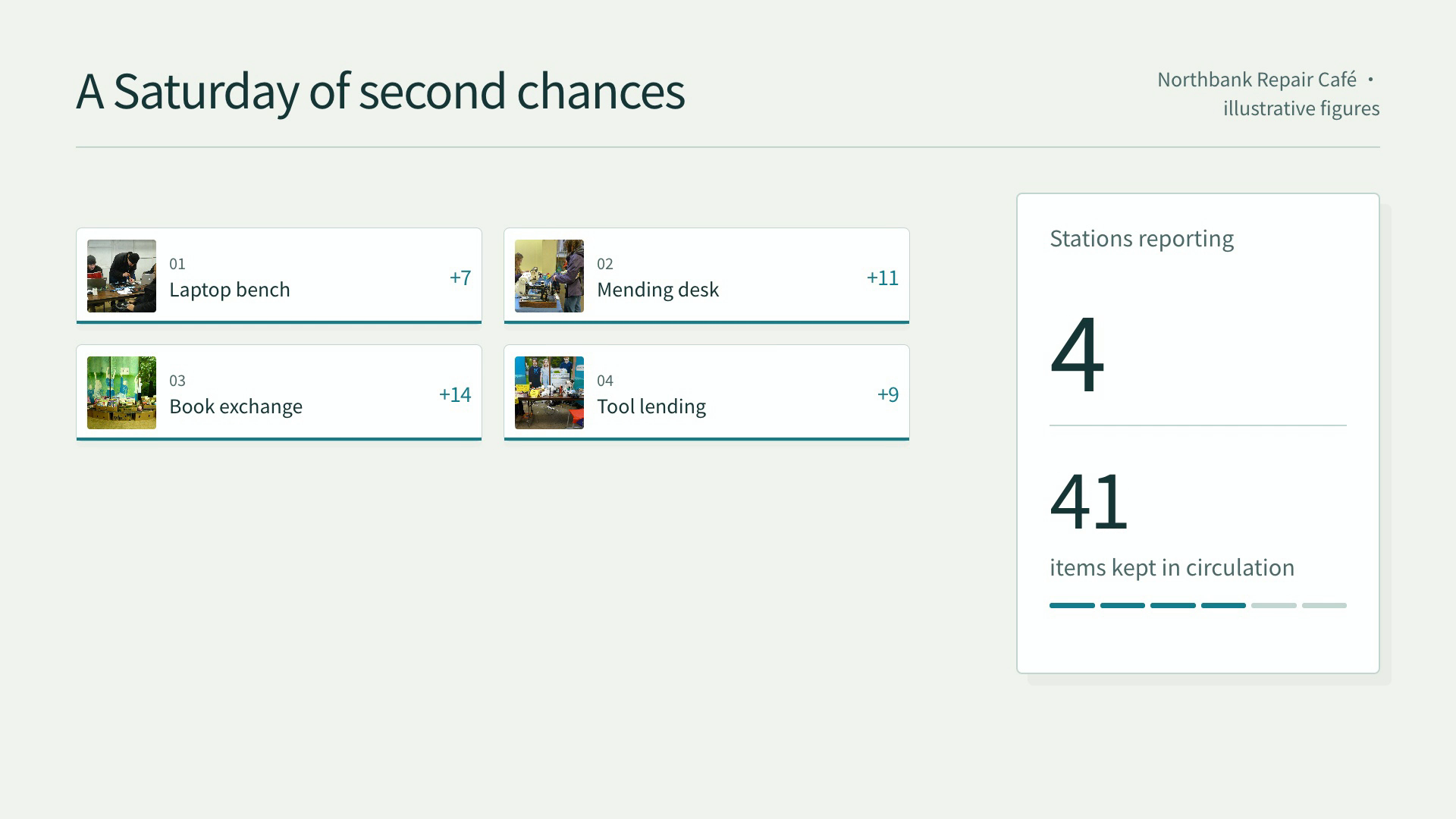
Reveal a sequence of illustrated records while the item tally and numeric total rise together.
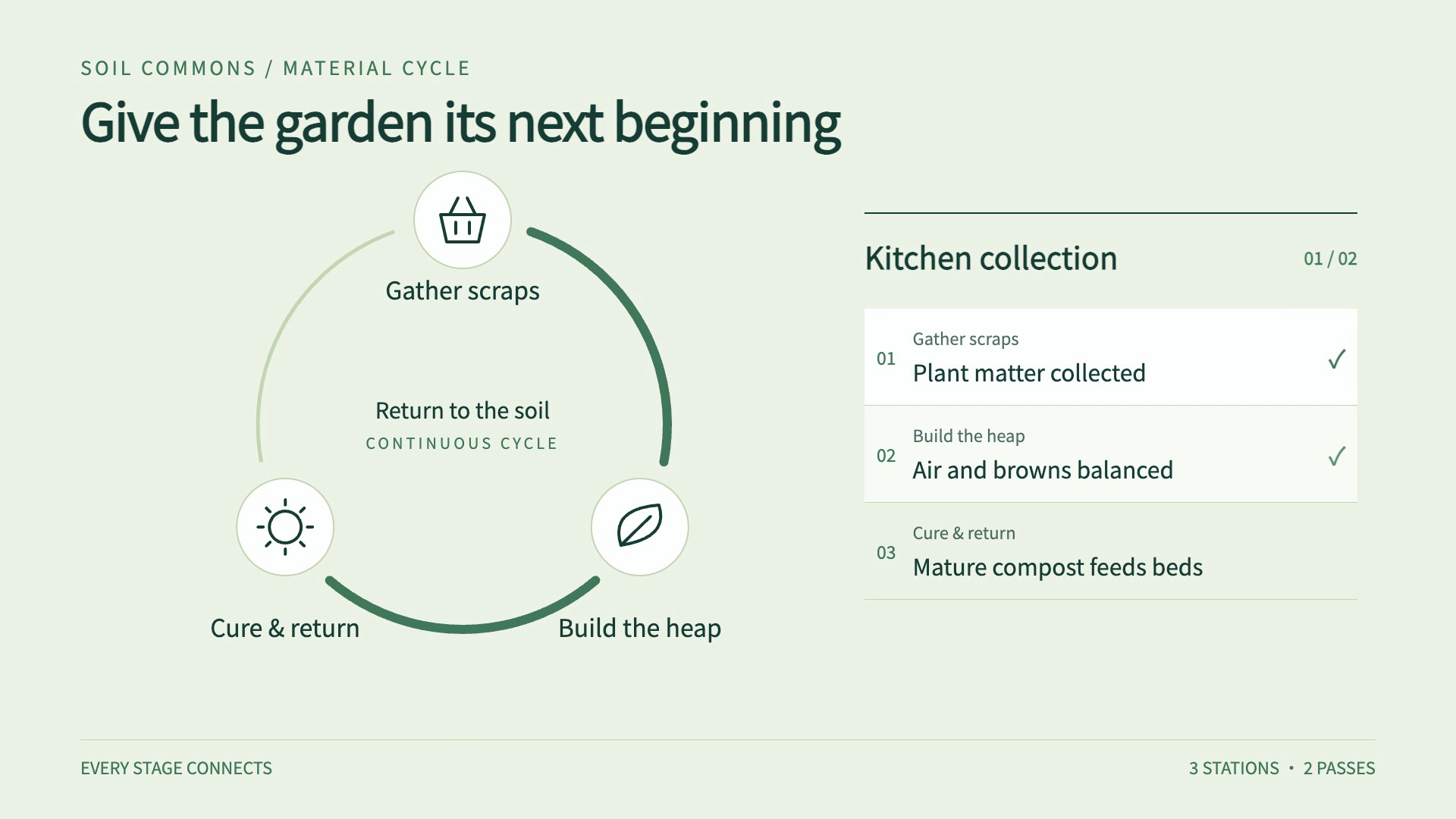
Advance through persistent stations, close the route and confirm completion in a synchronized ledger.
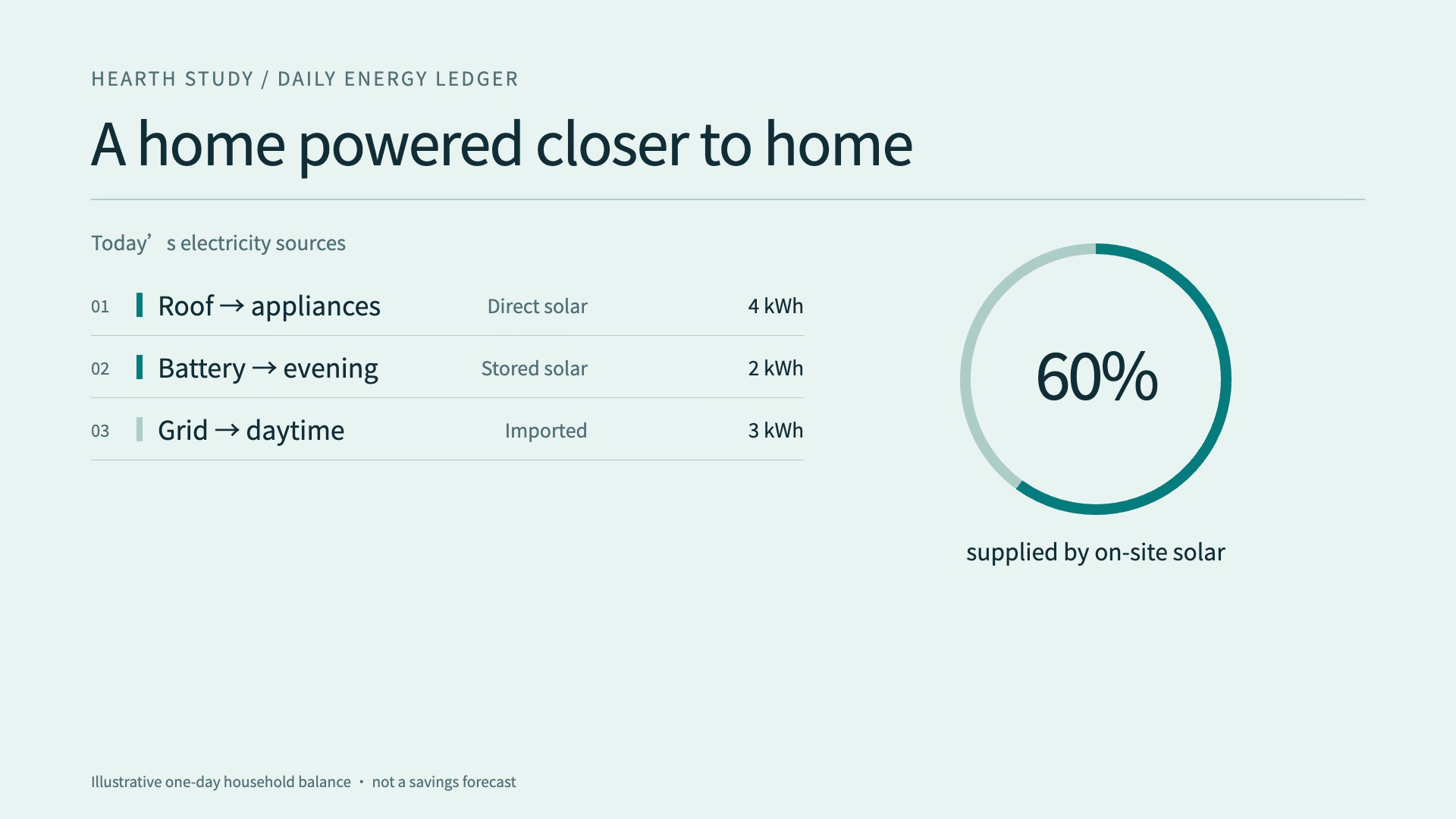
Turn a weighted ledger into a circular statistic and two readable findings.
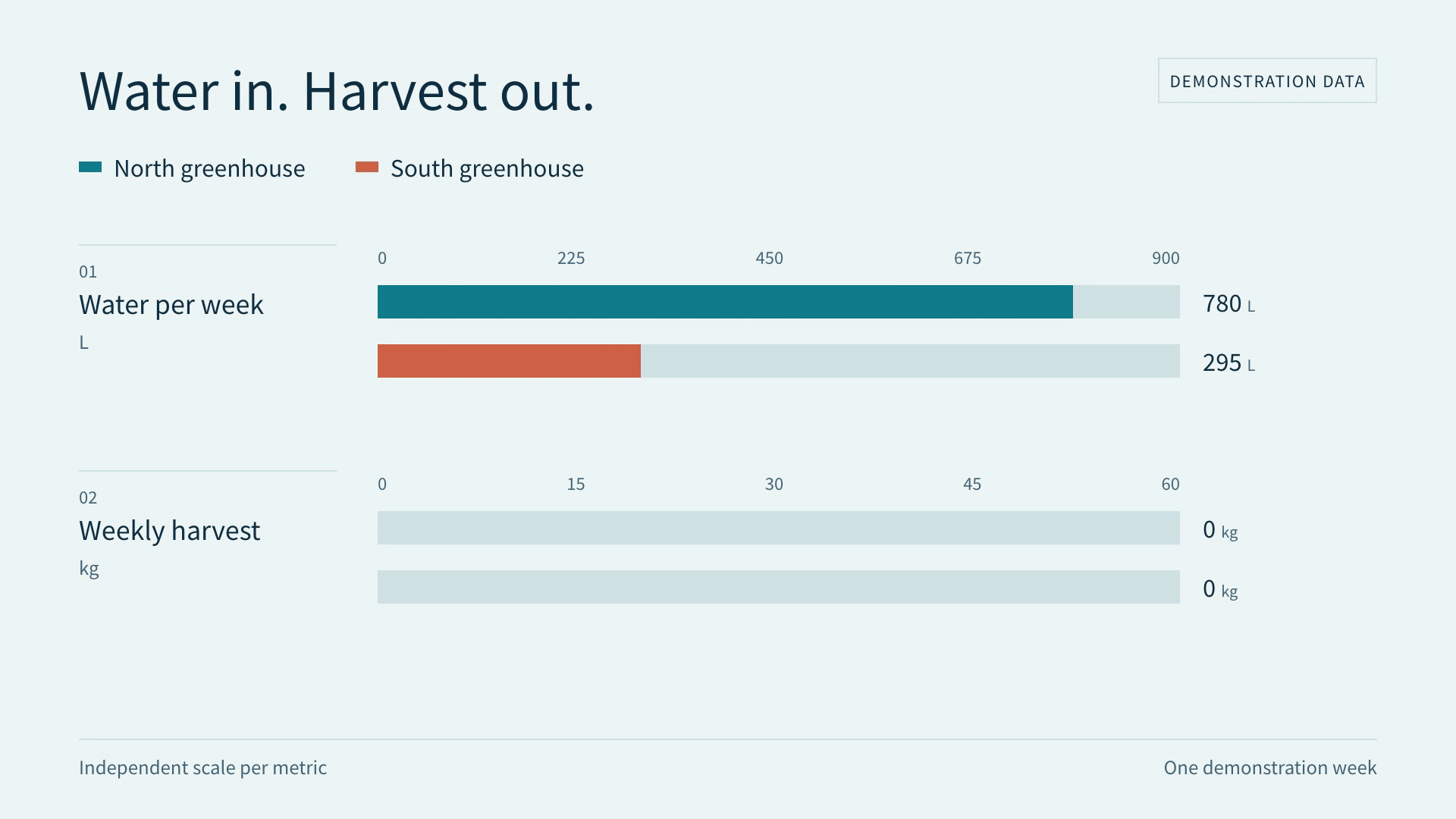
Compare two alternatives across two measures using independent bar scales and synchronized value counters.
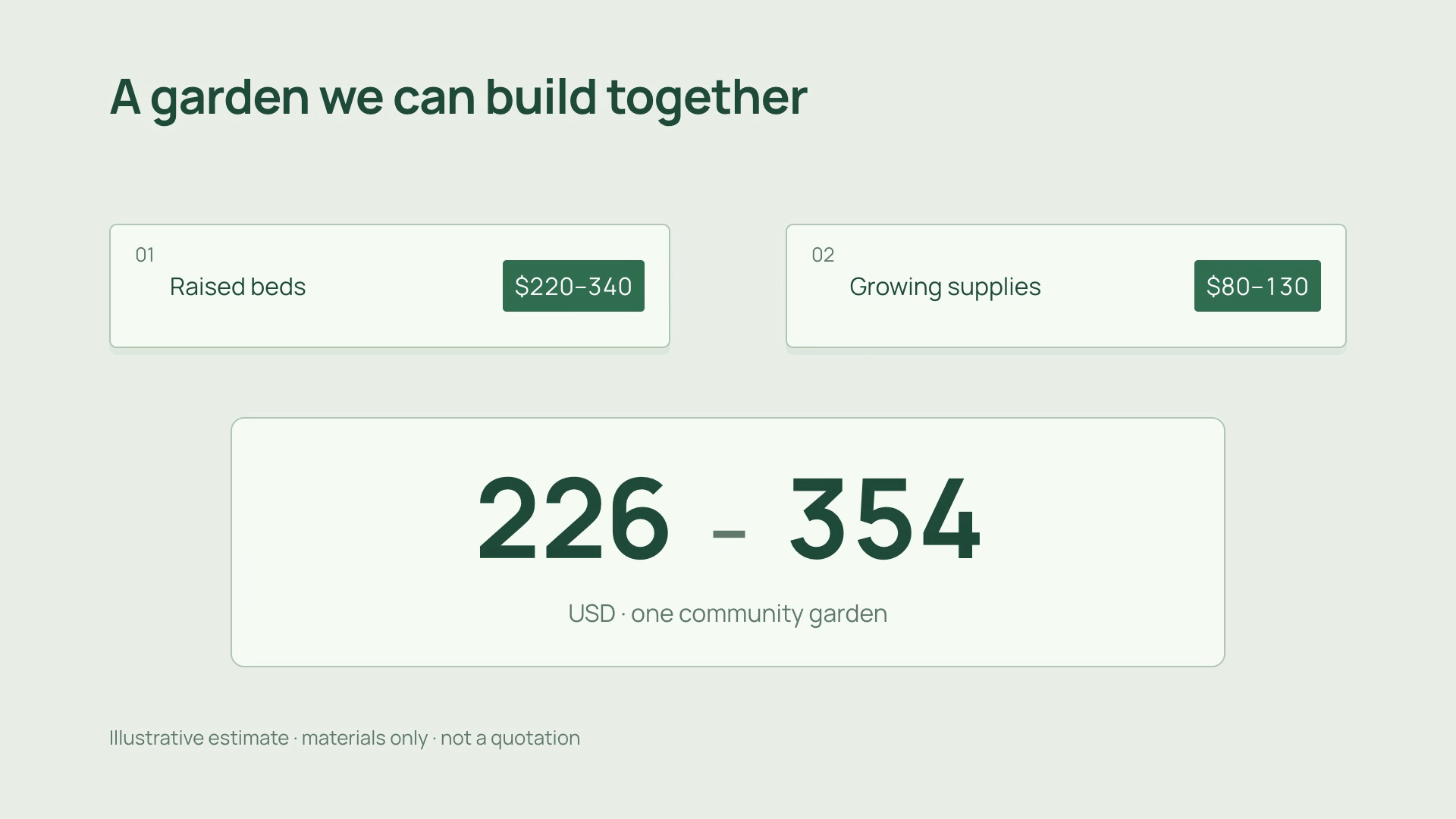
Reveal two estimate receipts, then count the lower and upper bounds together.
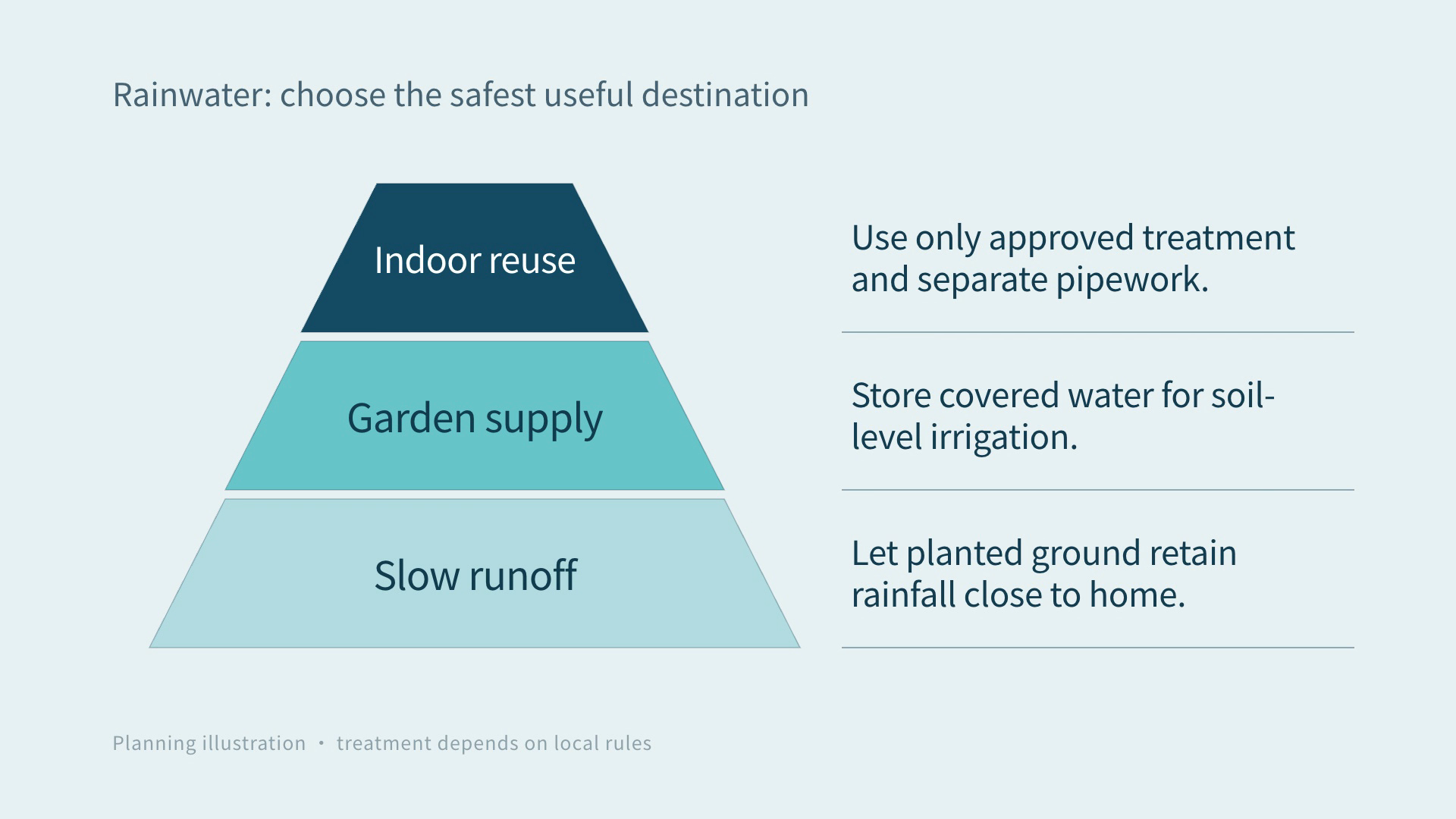
Build an ordered trapezoid hierarchy with paced headings and aligned explanatory notes.
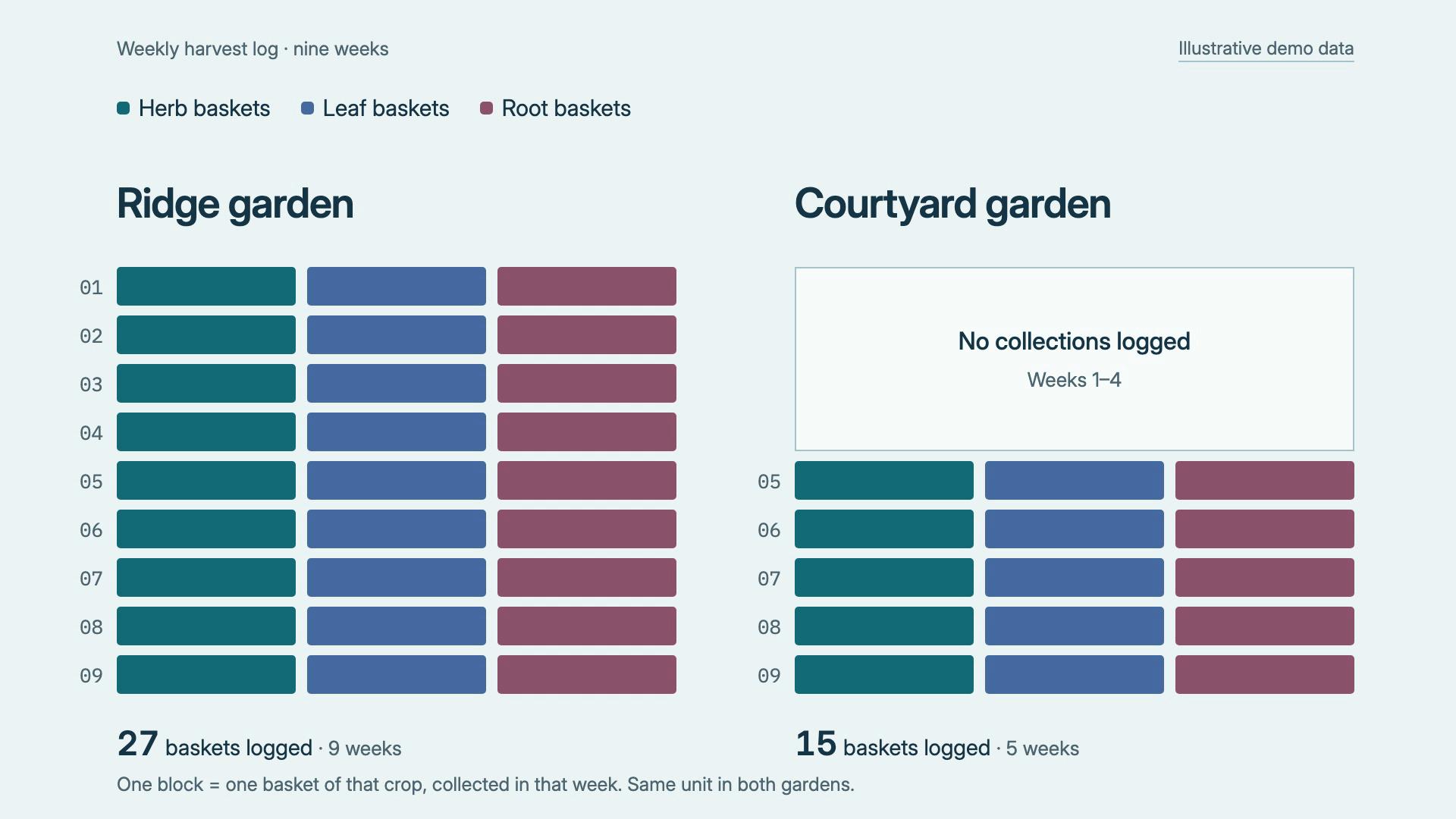
Compare two weekly histories with recurring blocks, a delayed second history and a highlighted missing interval.
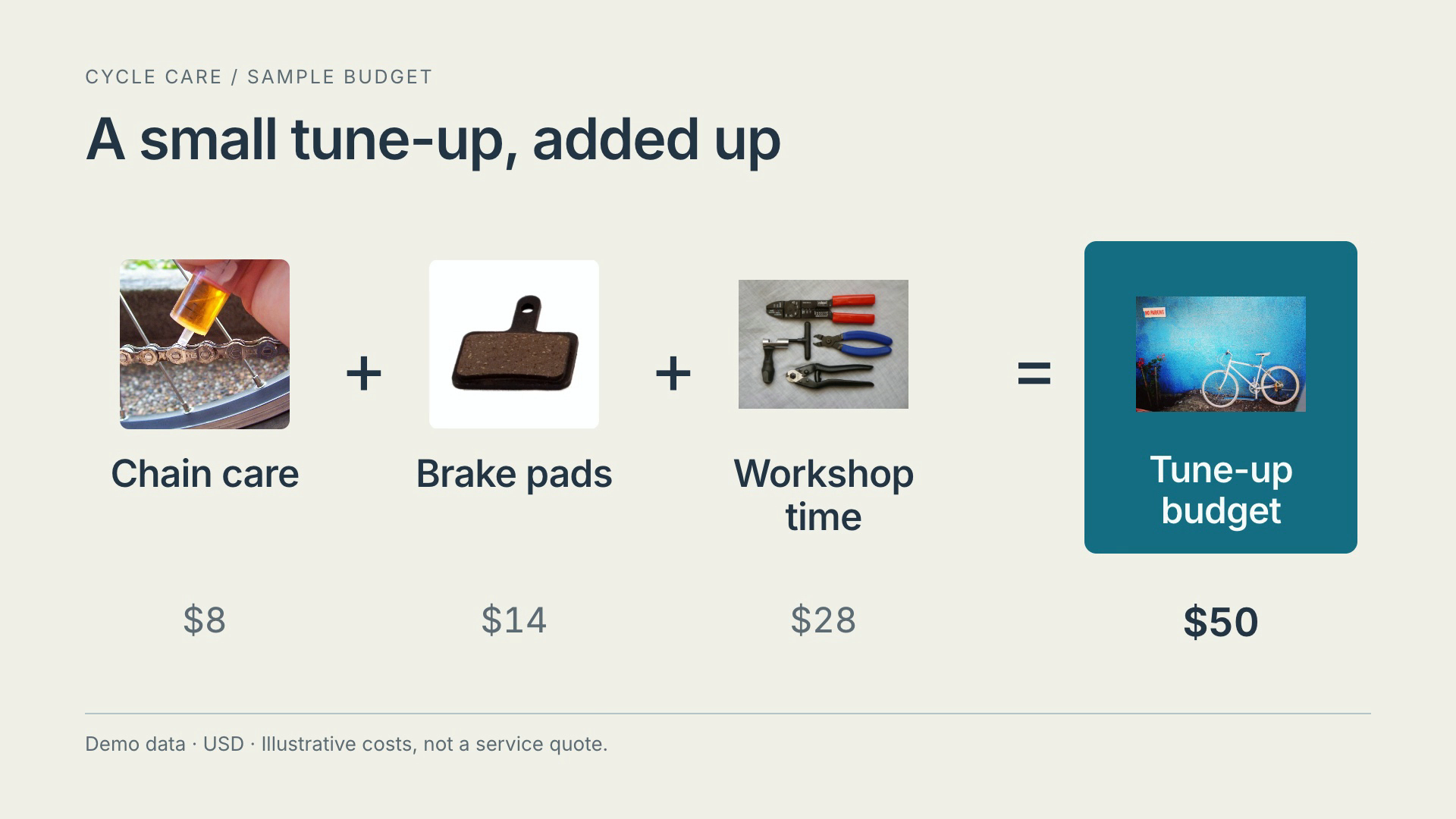
Assemble photographed parts with plus and equals signs, then reveal their quantities and total.
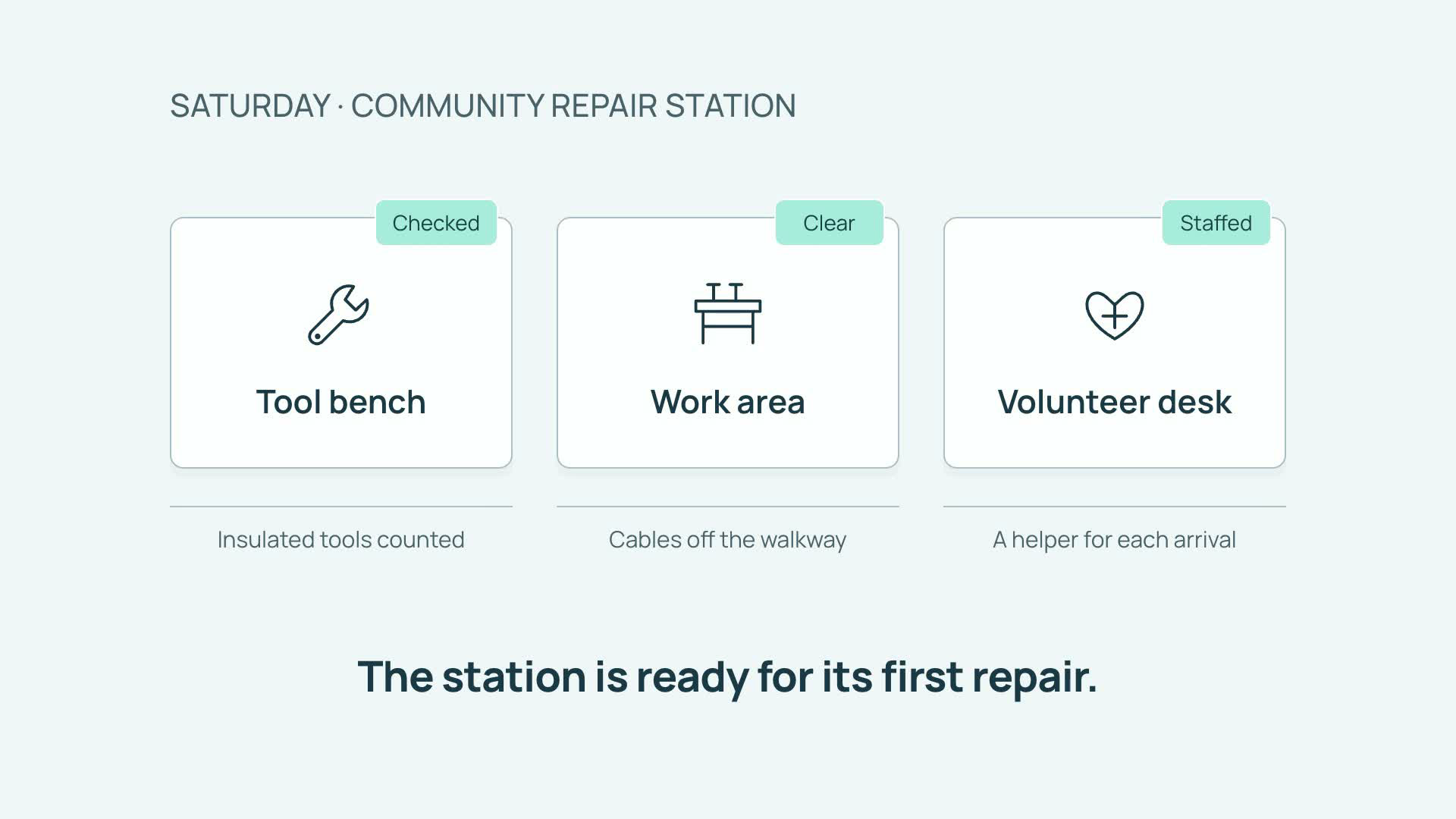
Confirm three stationary illustrated cards with arriving corner seals, supporting details and a shared closing statement.
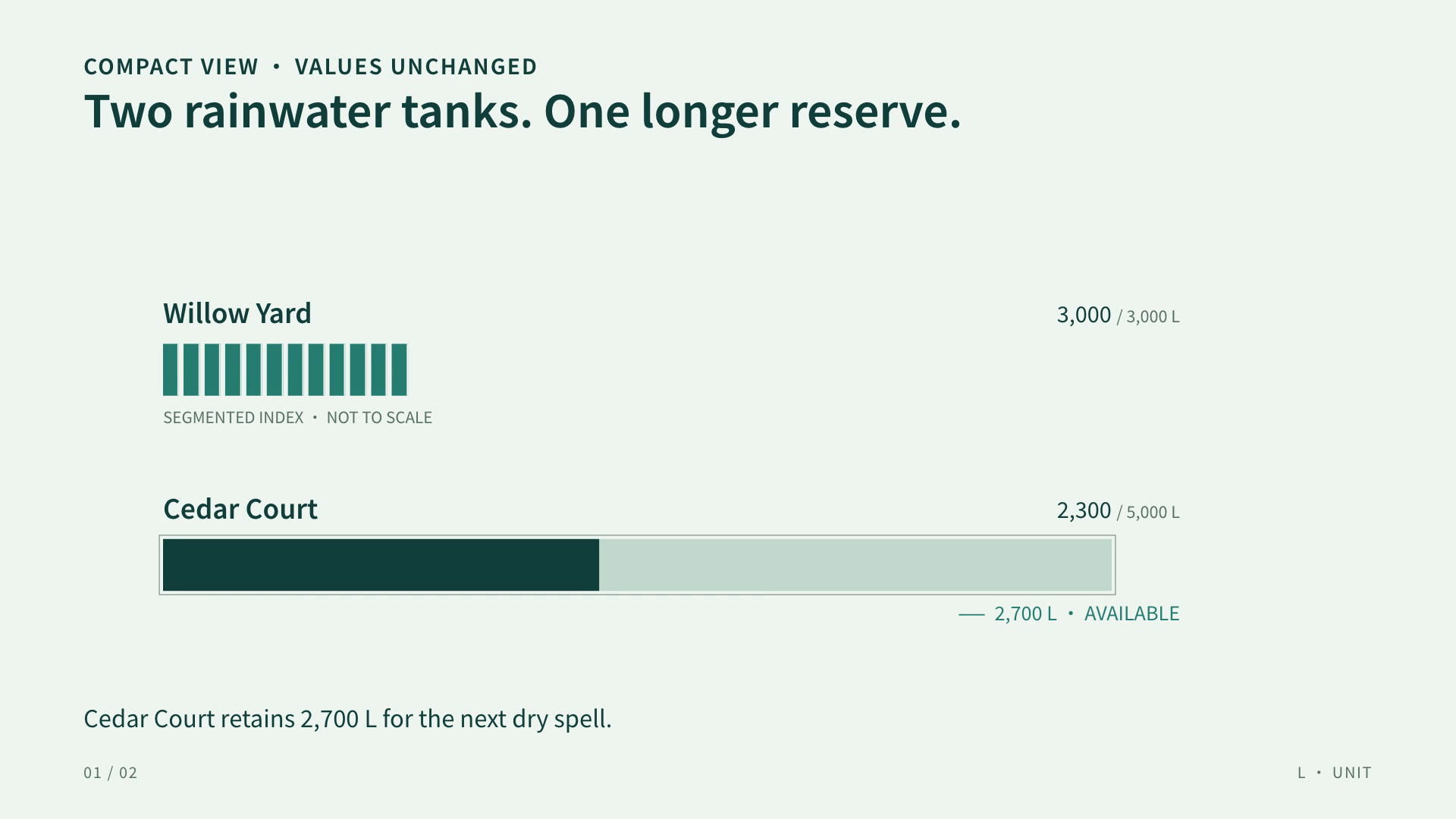
Compare two capacity readings, then switch the full band to an explicitly non-quantitative compact index while keeping values and spare room visible.
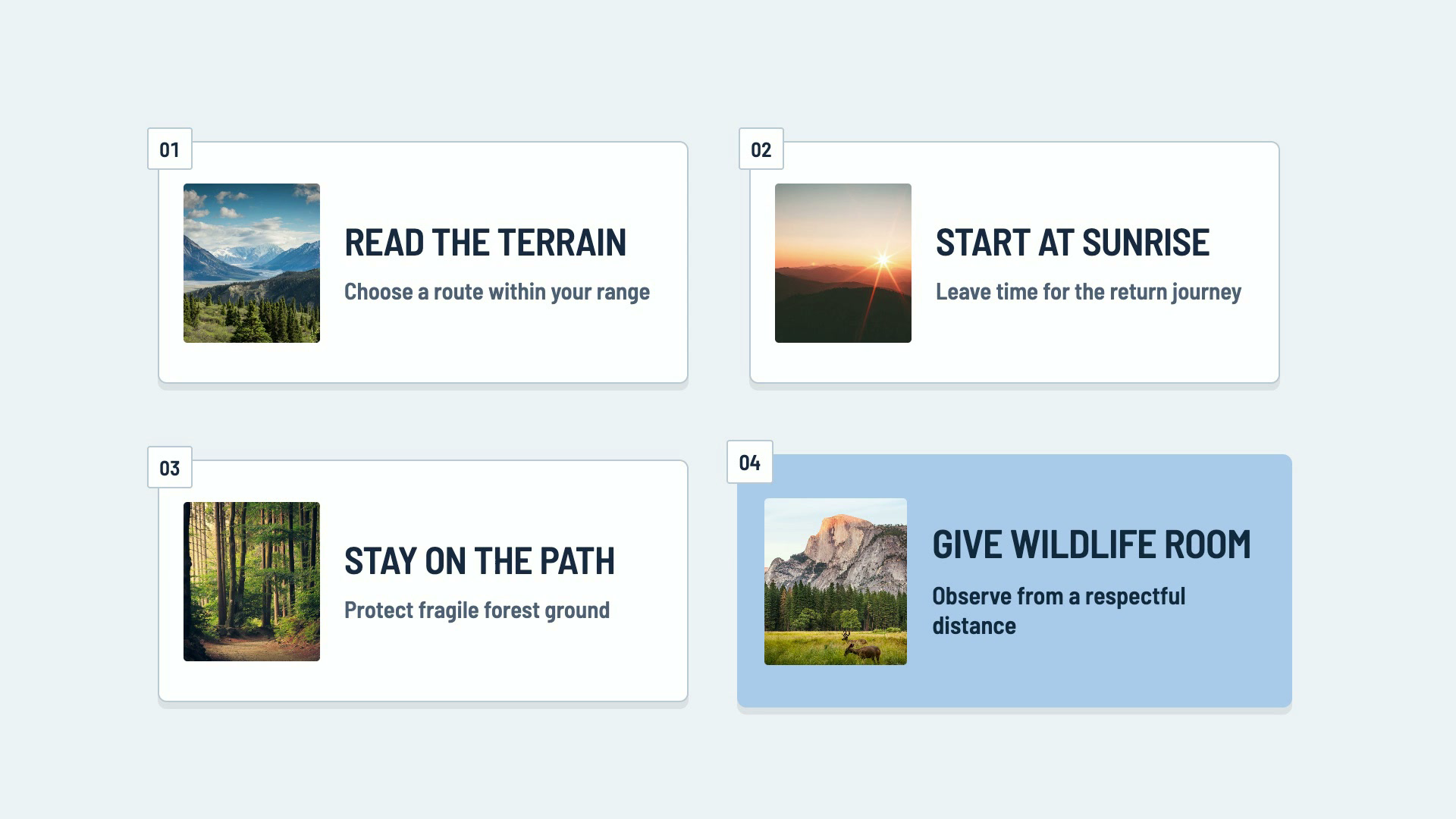
Establish three photo panels, complete a label, then reveal a chosen priority that stays gently enlarged through the ending.
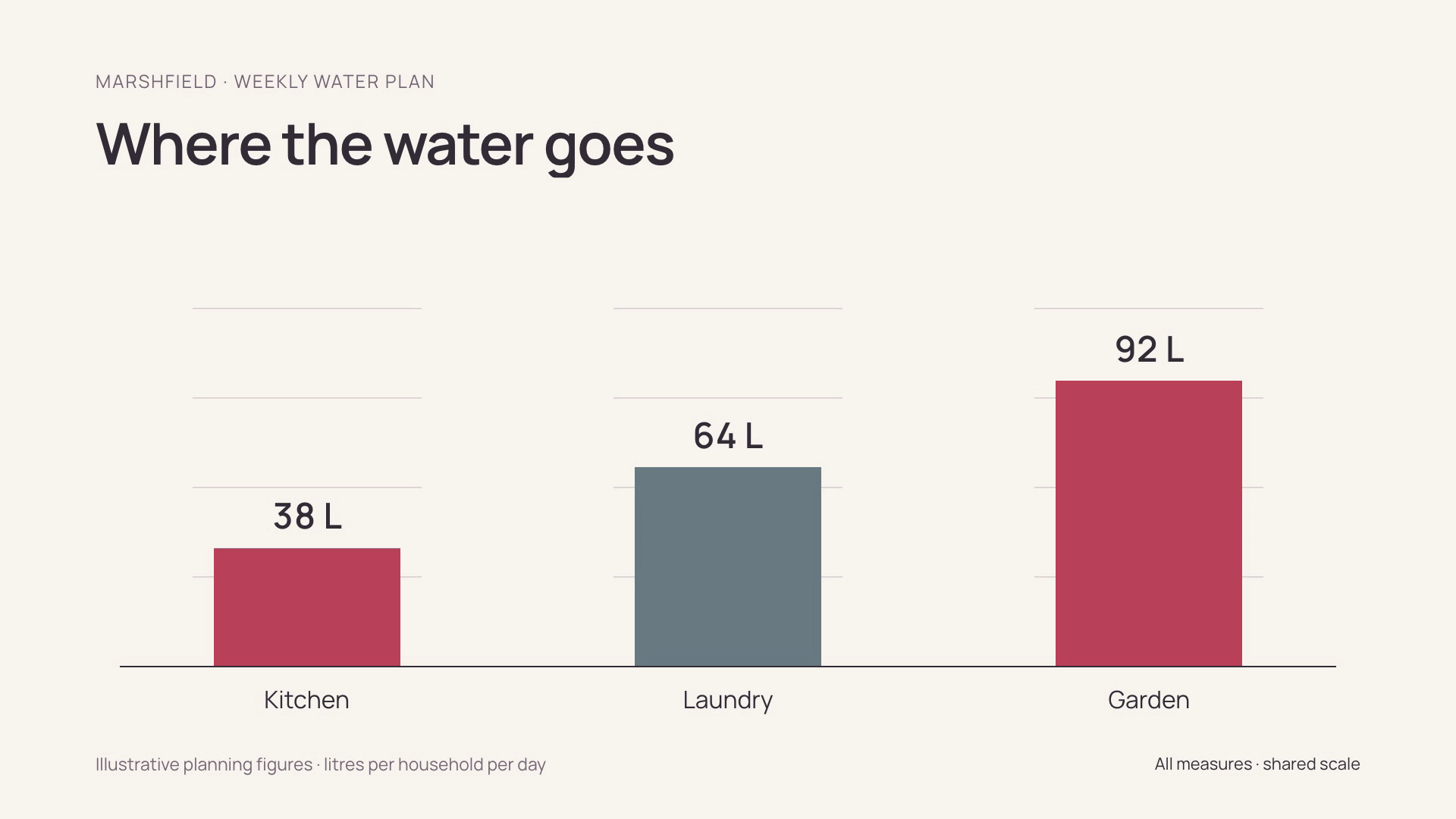
Visit each chart column with a focus band, grow height and counter together, then restore the complete shared-scale comparison.
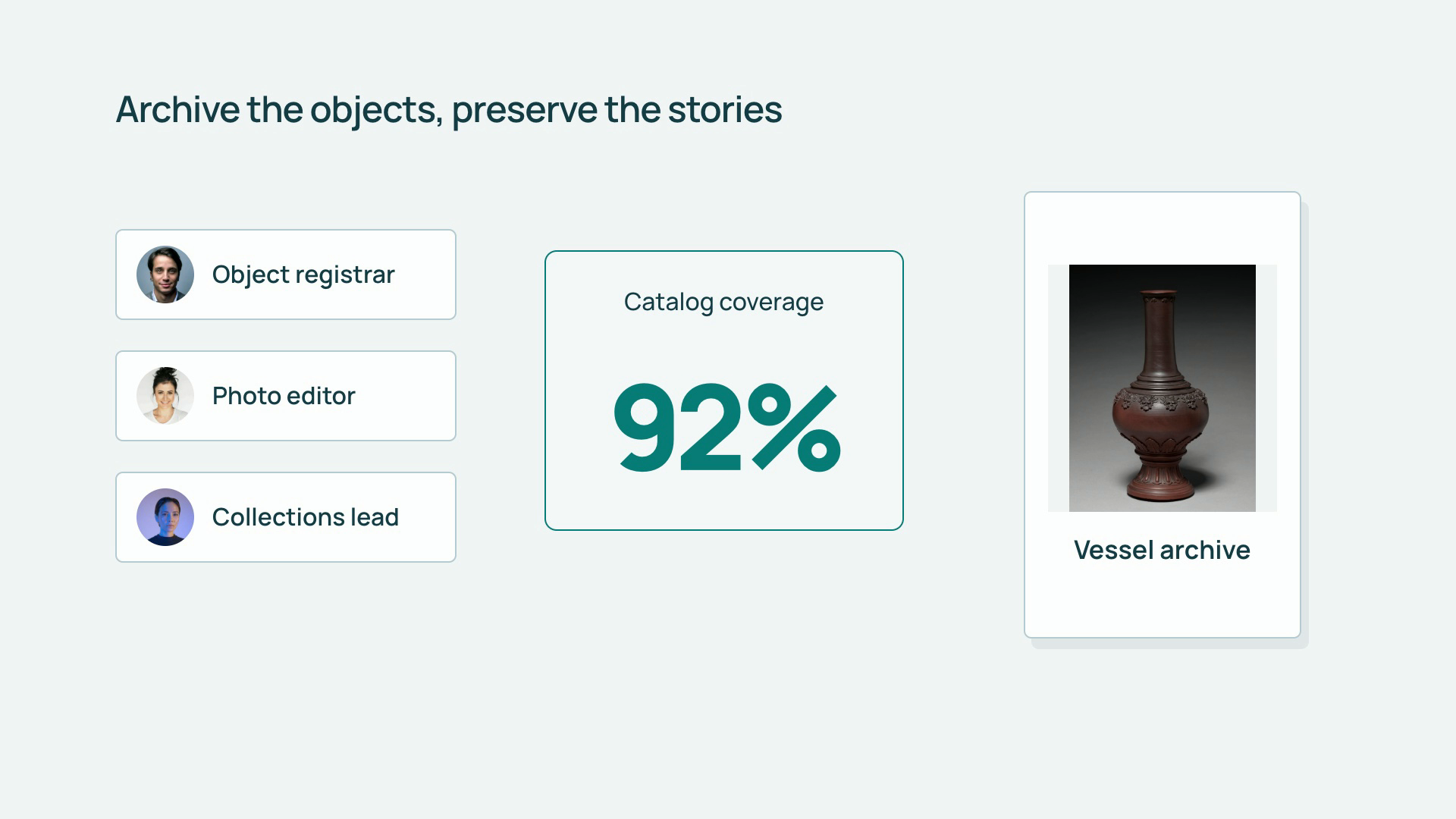
Keep three portrait roles and one object still while a percentage changes, crosses a threshold and holds for reading.
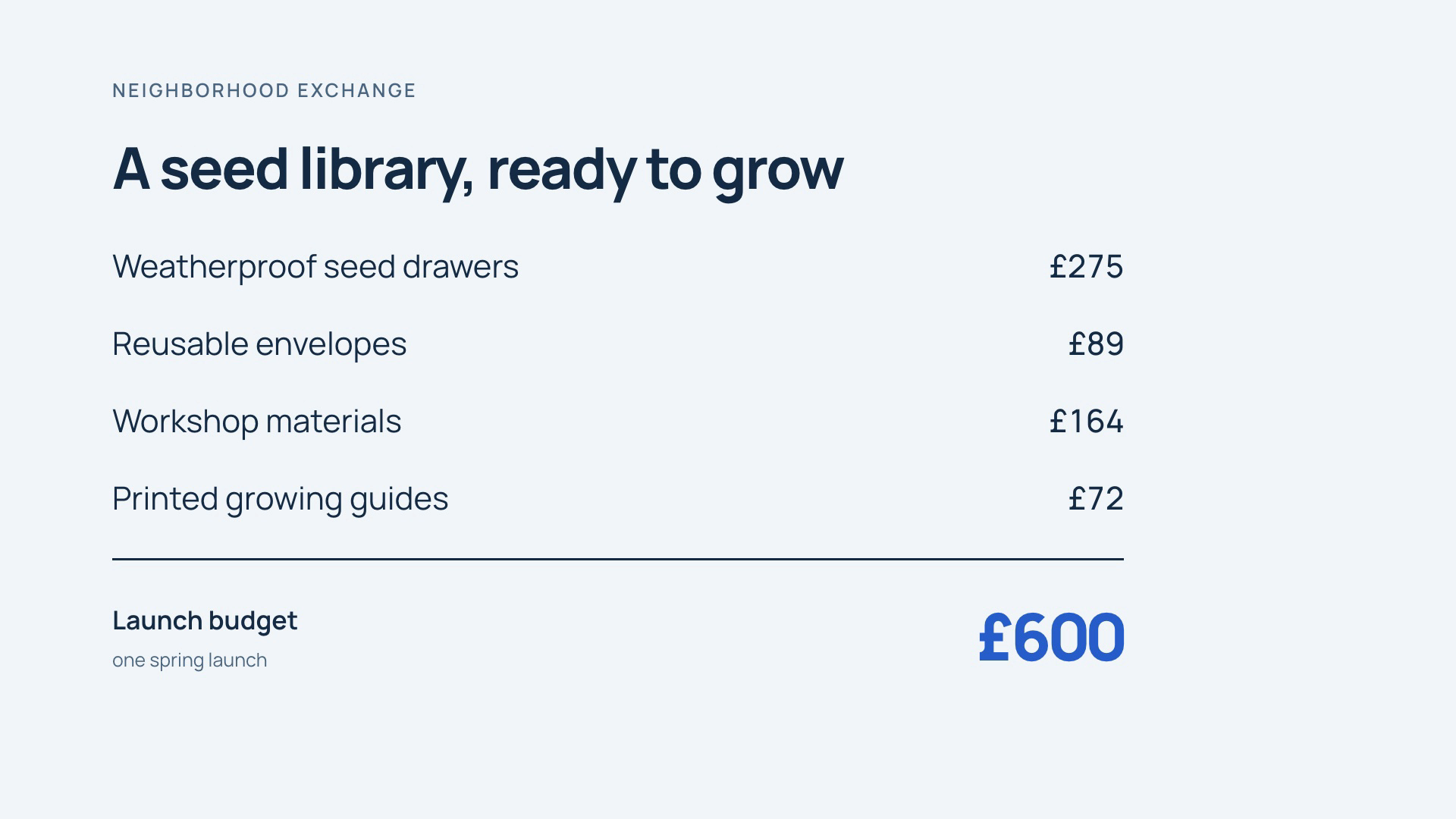
Reveal itemized expenses, draw the divider and count to an exact total, with an optional licensed continuous speaker inset.
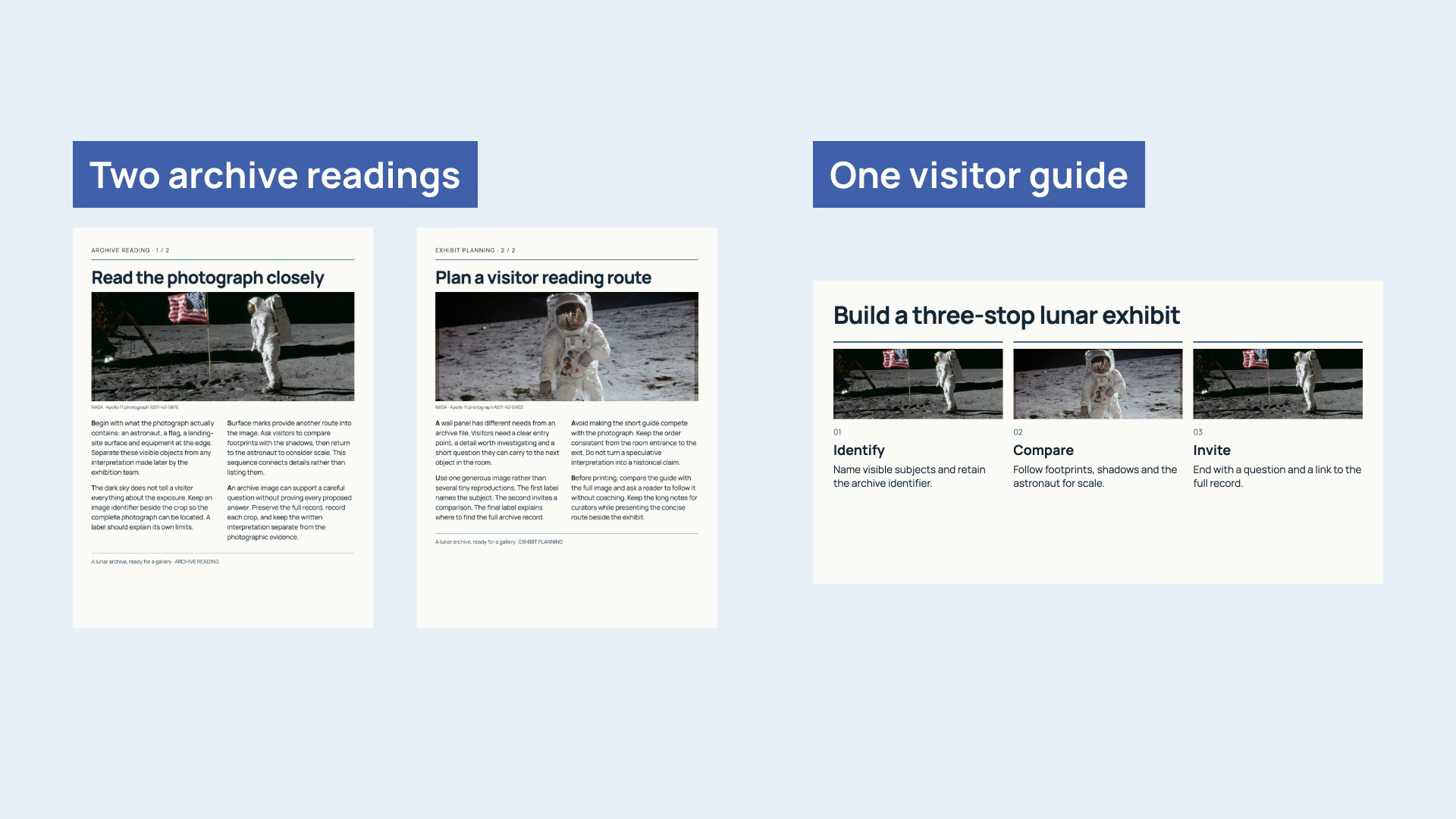
Bring two detailed document images together, then reveal a short landscape digest.
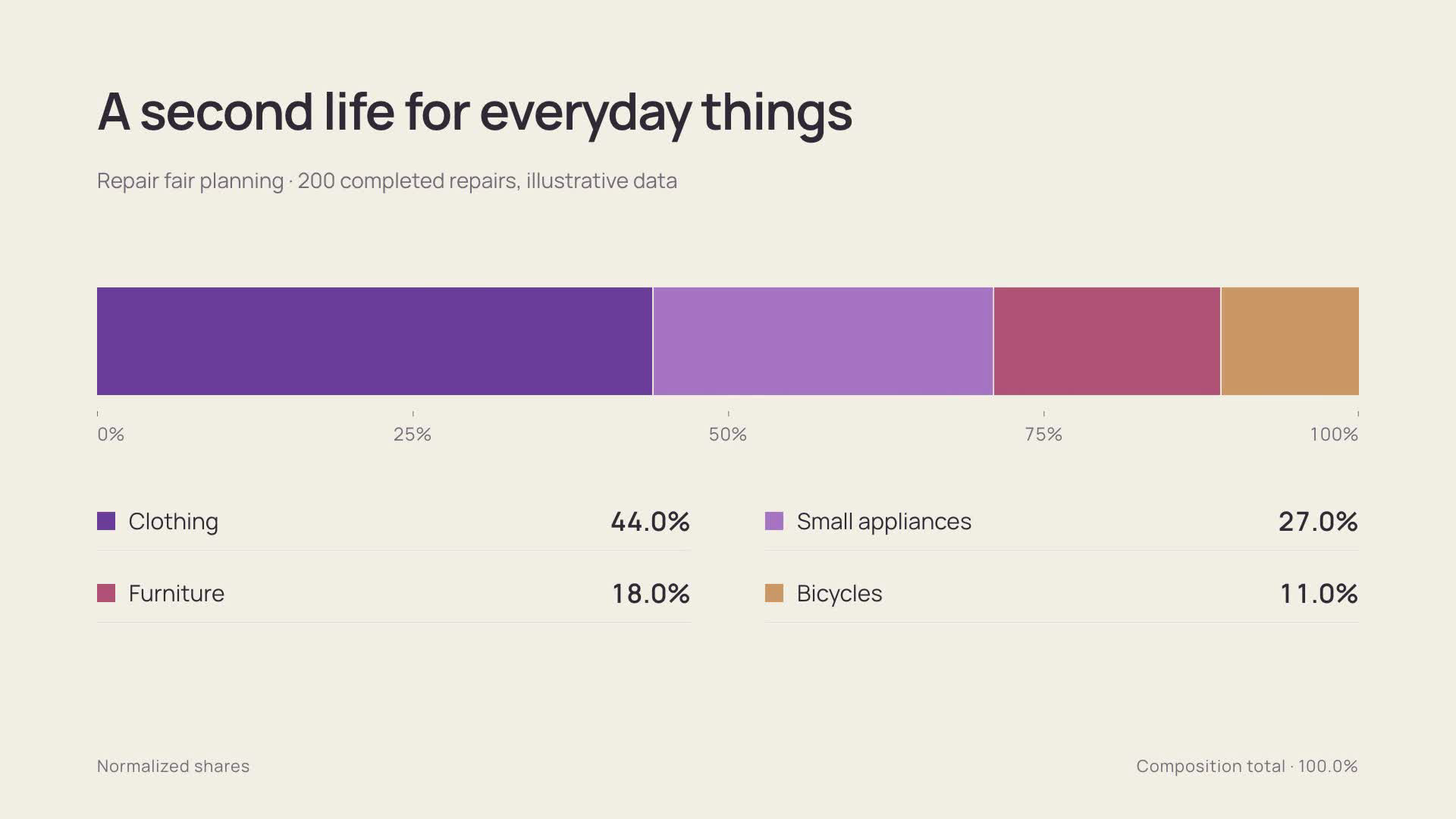
Reveal proportional pieces of one whole in order, followed by their matching labels.
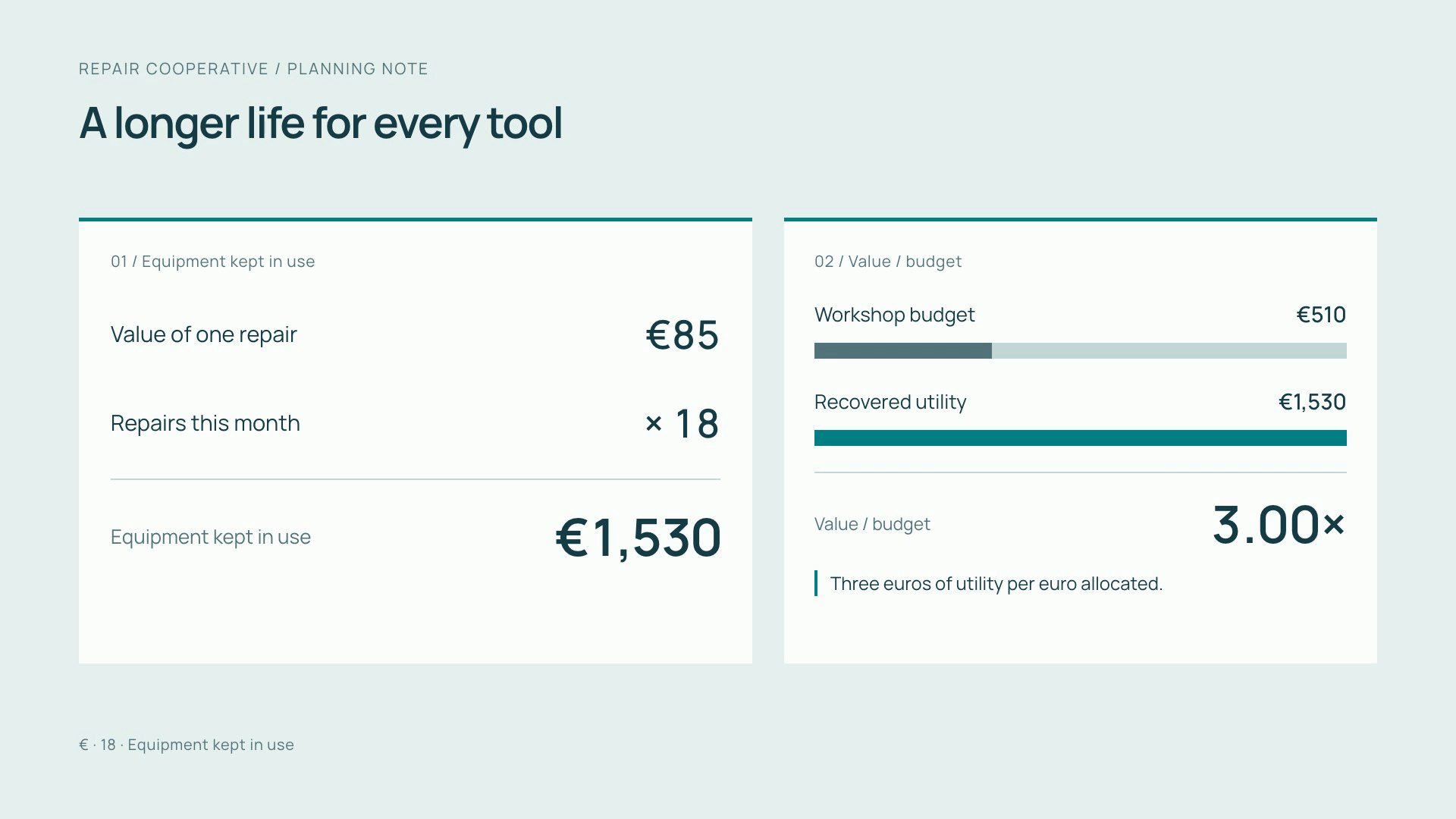
Build a product from a unit value and quantity, then compare the result with a budget on one scale.
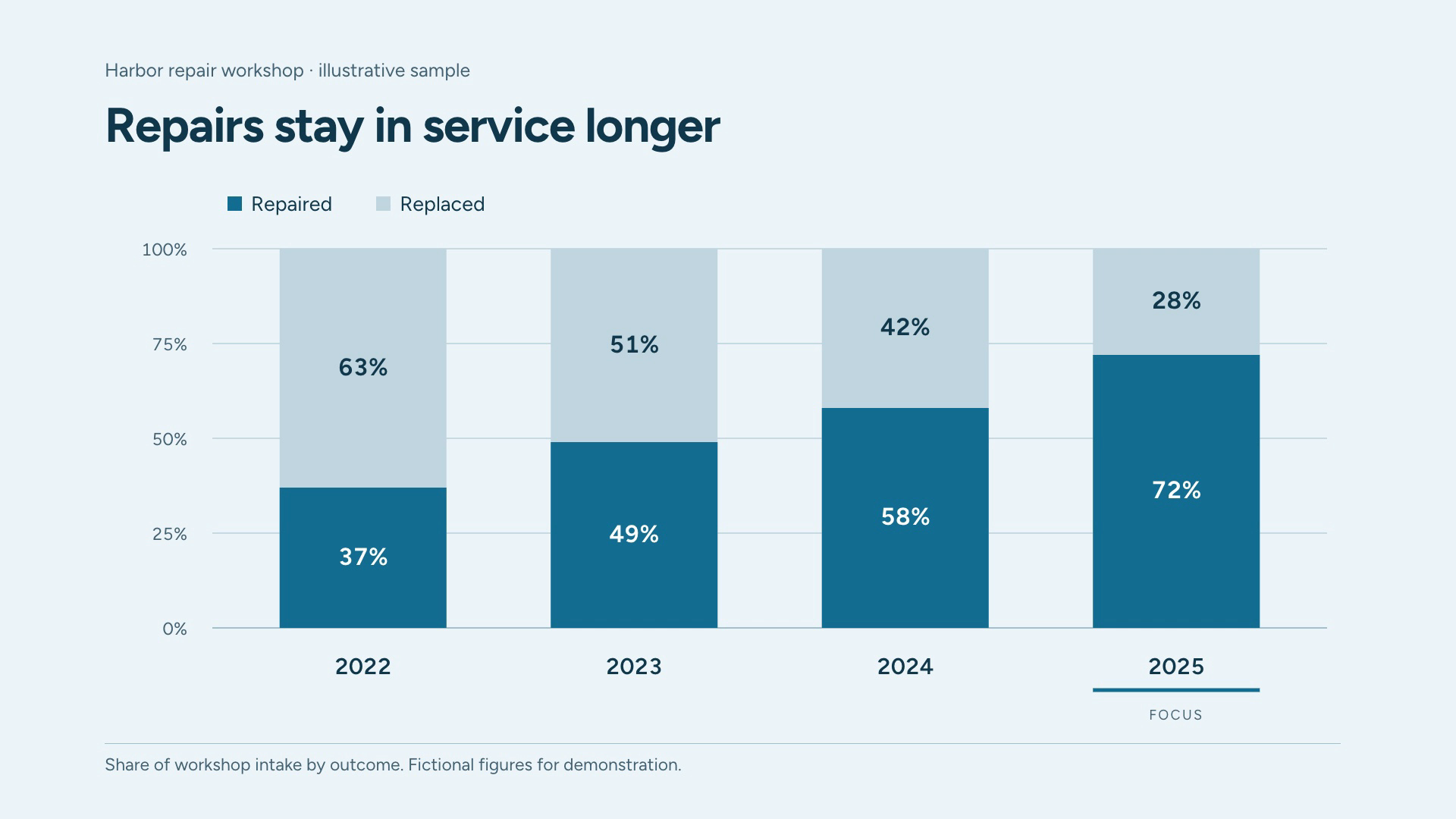
Establish a selected percentage split, then reveal the surrounding observations on one100% scale.
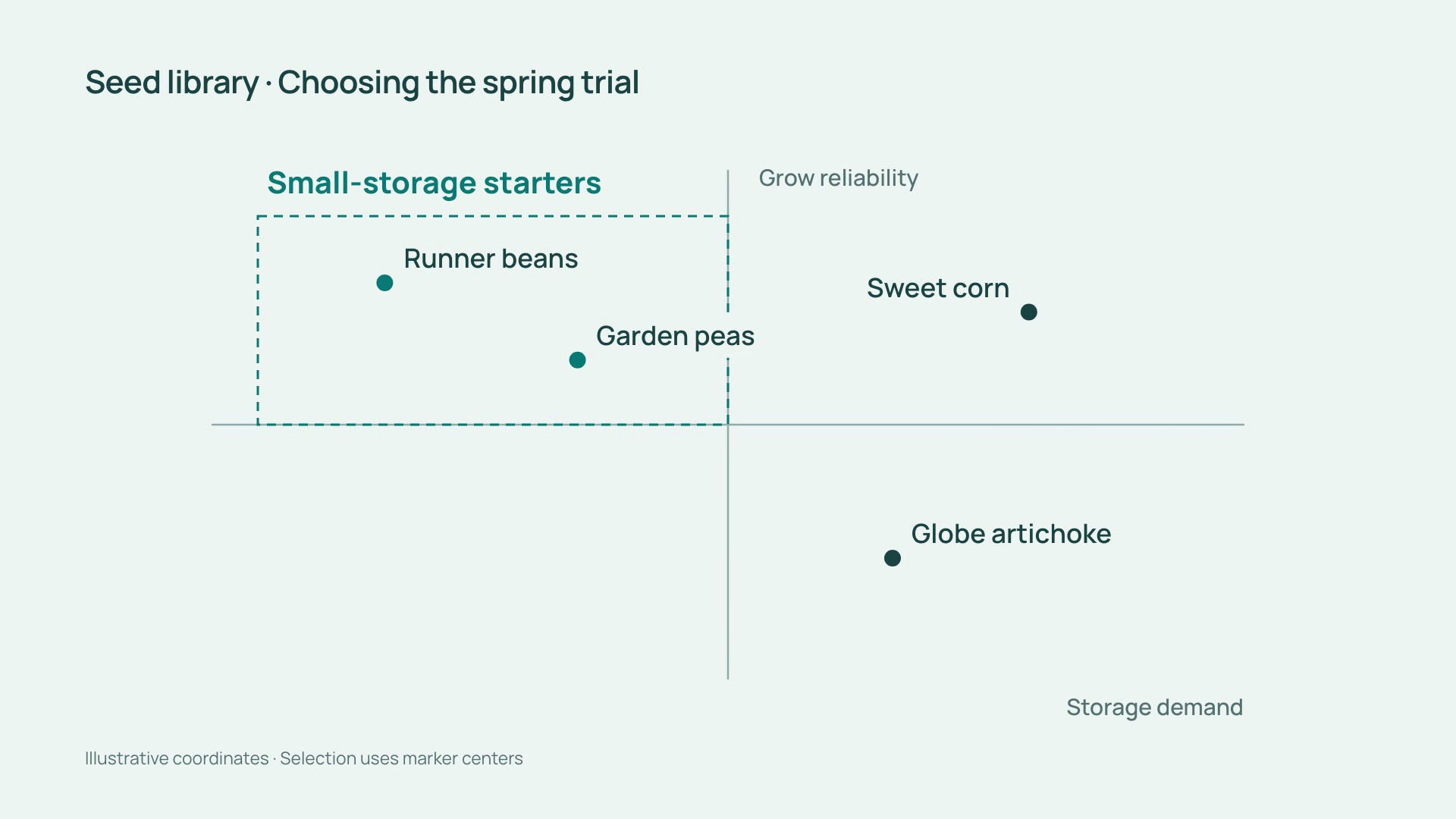
Reveal observations on fixed coordinates, then show which marker centers fall inside a rectangular decision region.
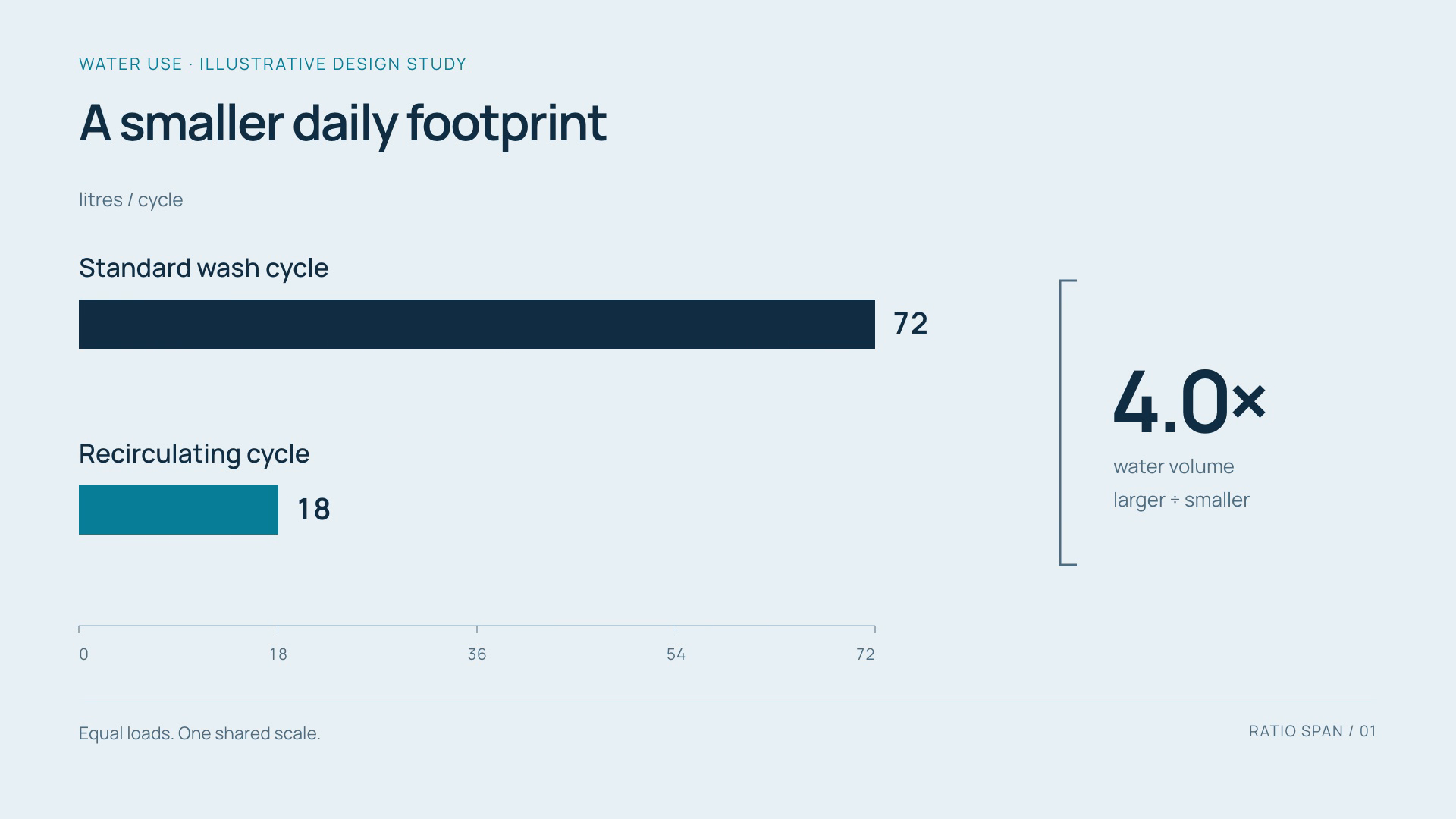
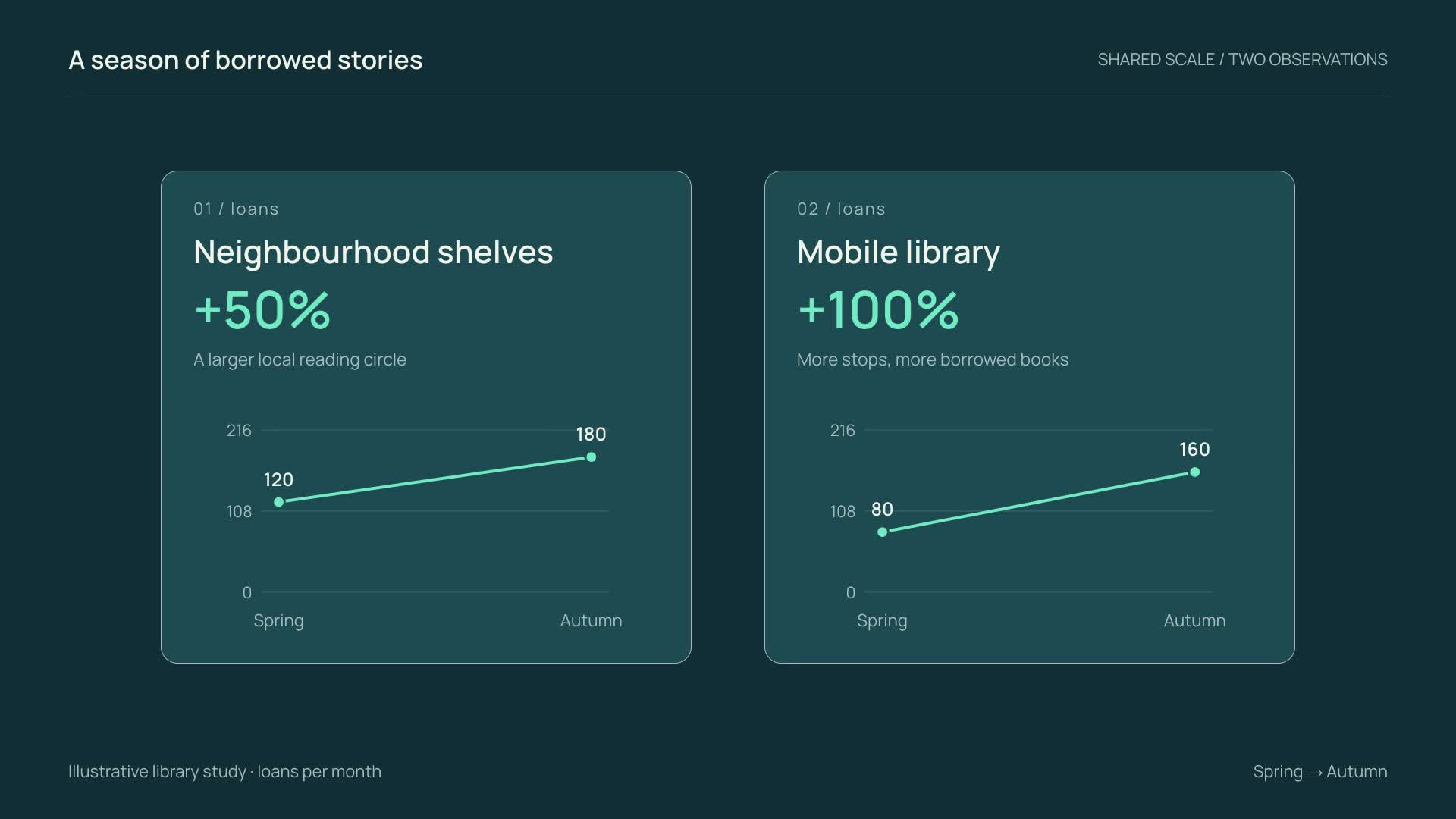
Grow two values on one shared scale,then reveal their larger-to-smaller ratio.
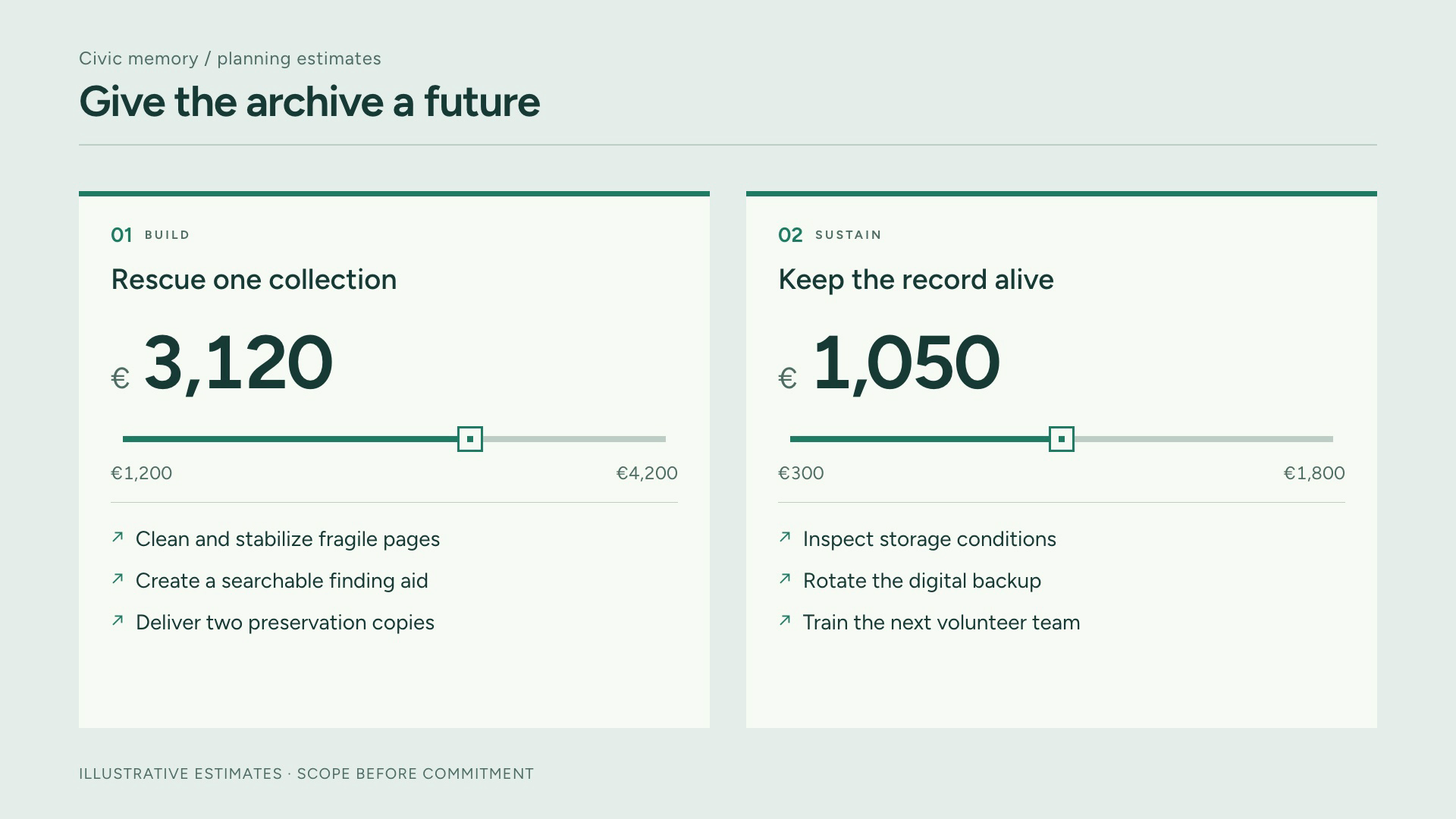
Reveal two scoped estimates with synchronized amount tracks and staged inclusions.
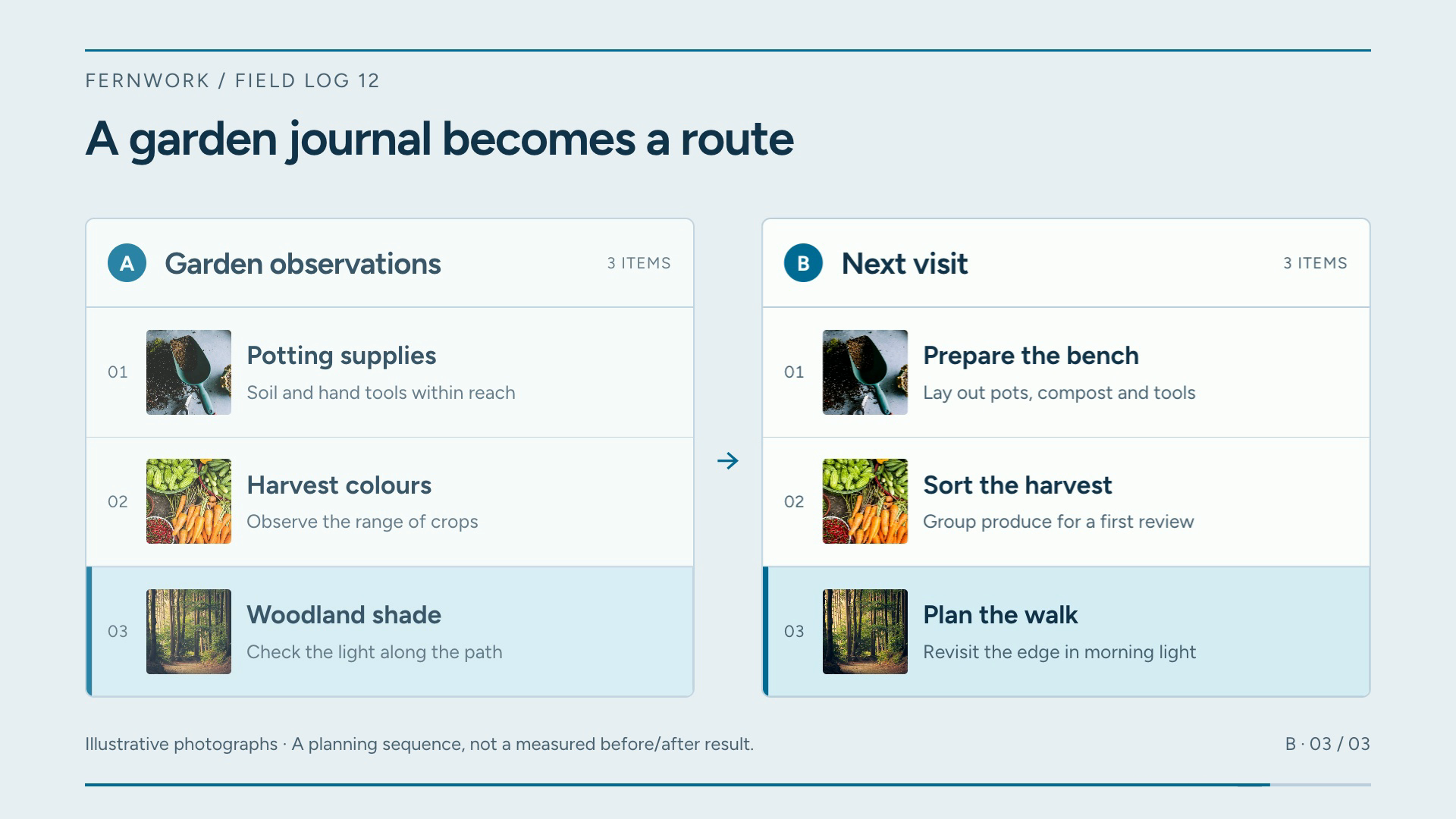
Move a reading highlight through two photo ledgers,then hand attention from the first board to the second.
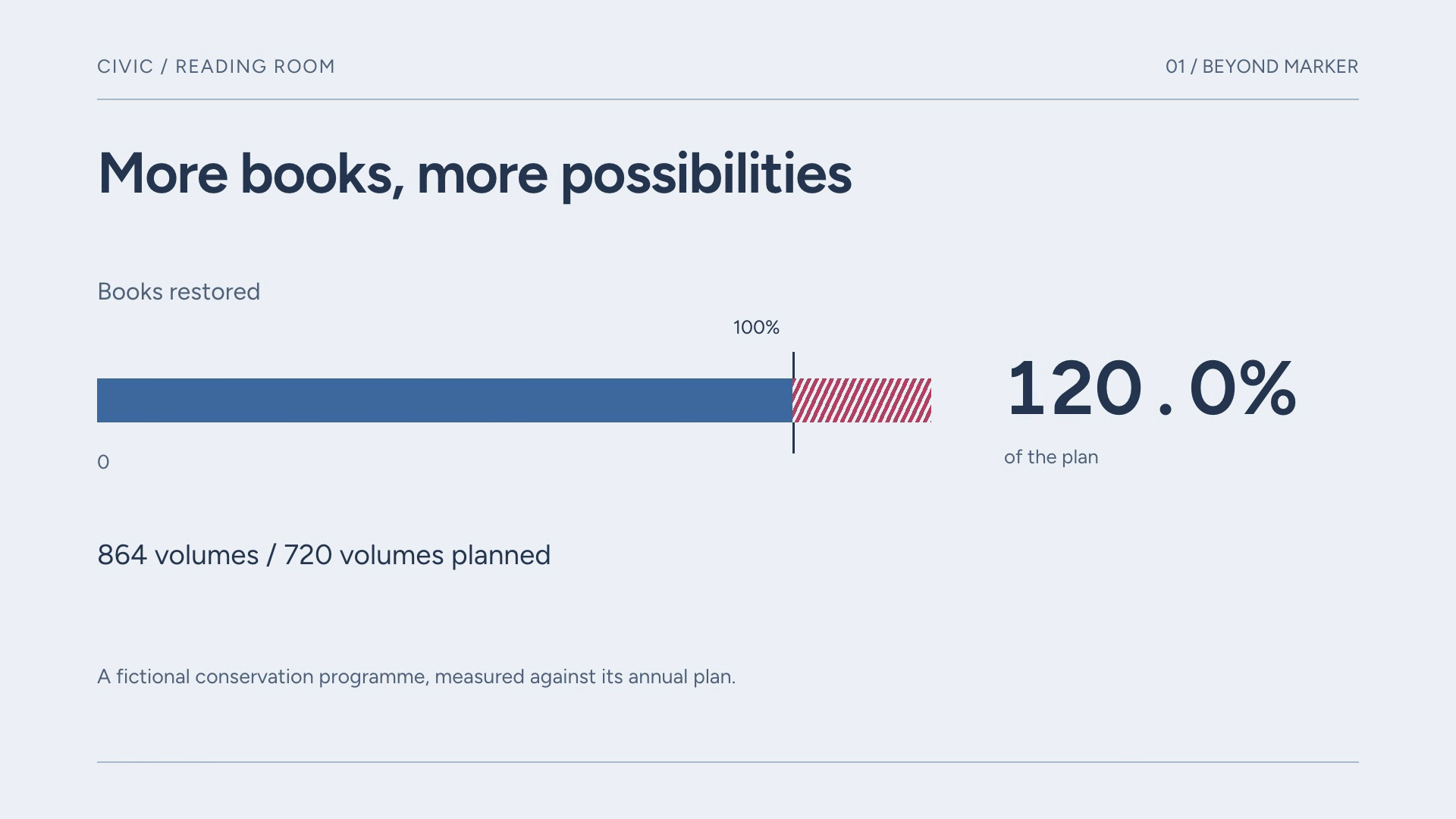
Grow toward a fixed goal,then distinguish the measured excess with a patterned segment and explicit fine-detail scale.
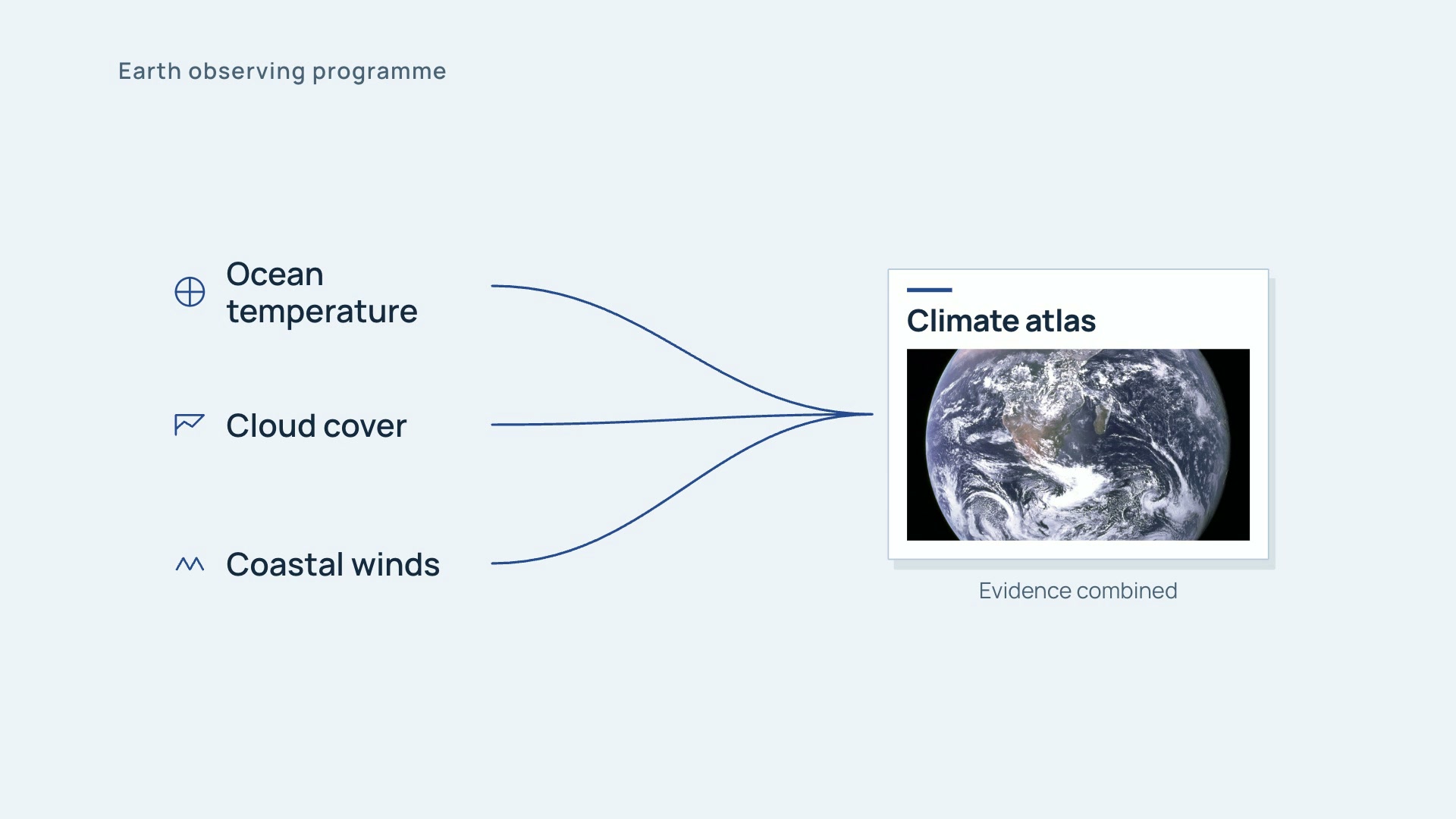
Bring named evidence streams together into a photographic result,with editable connectors,arrival emphasis and a closing contraction.
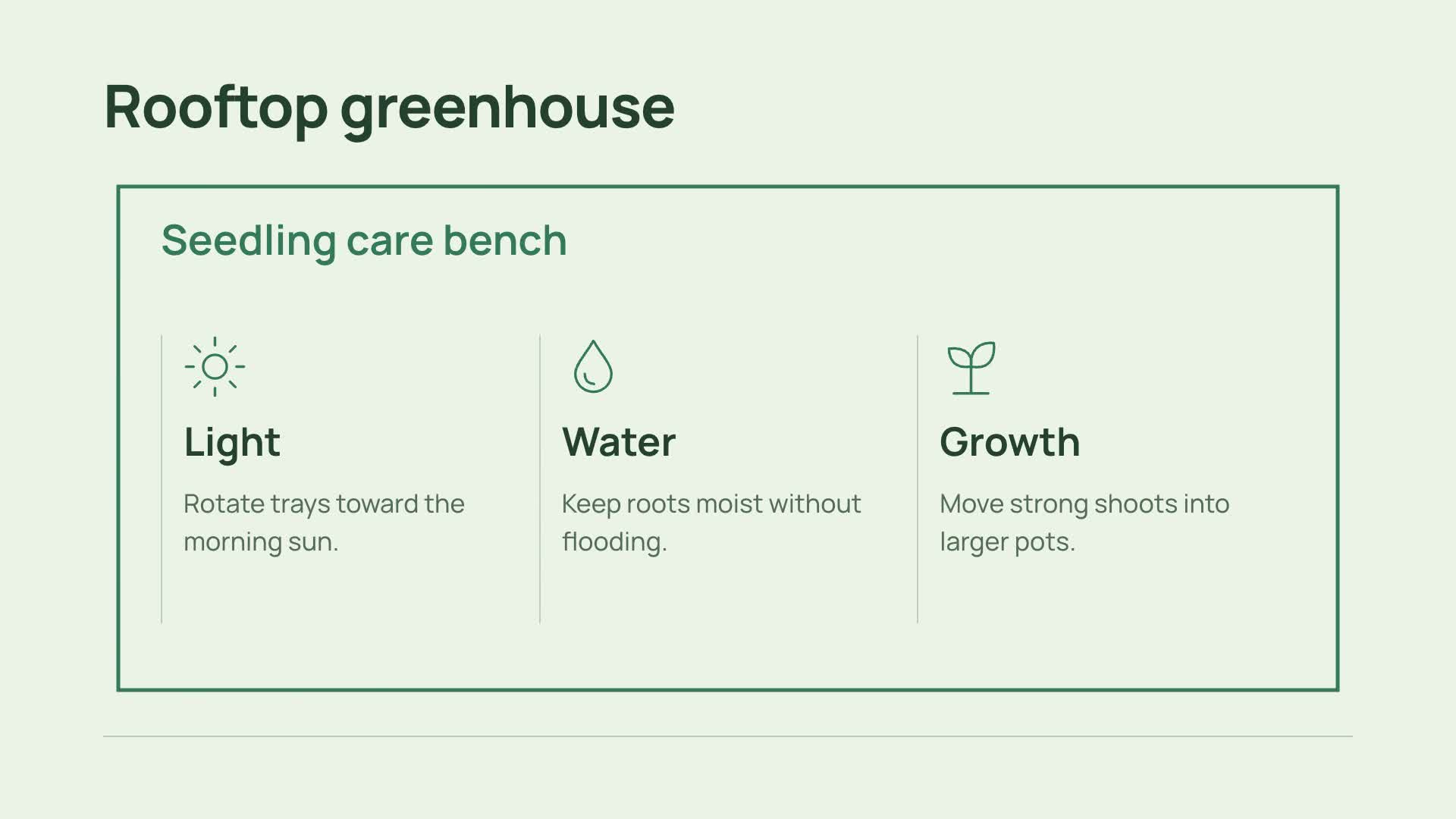
Reveal meaningful activity columns inside a named area, then draw one boundary that makes their shared membership clear.
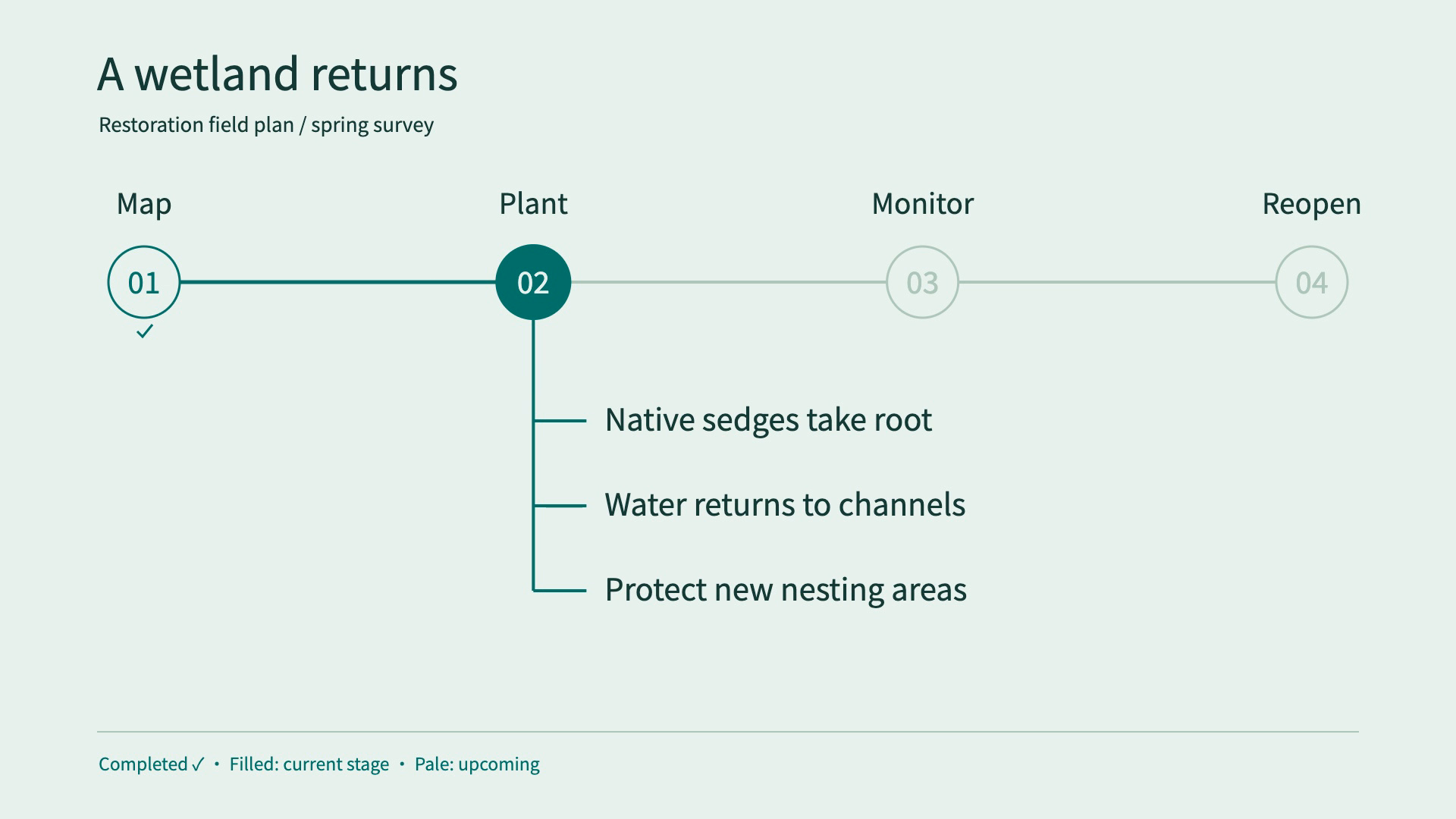
Follow a numbered process and connect the selected stage to readable details through a continuous stem and branches.
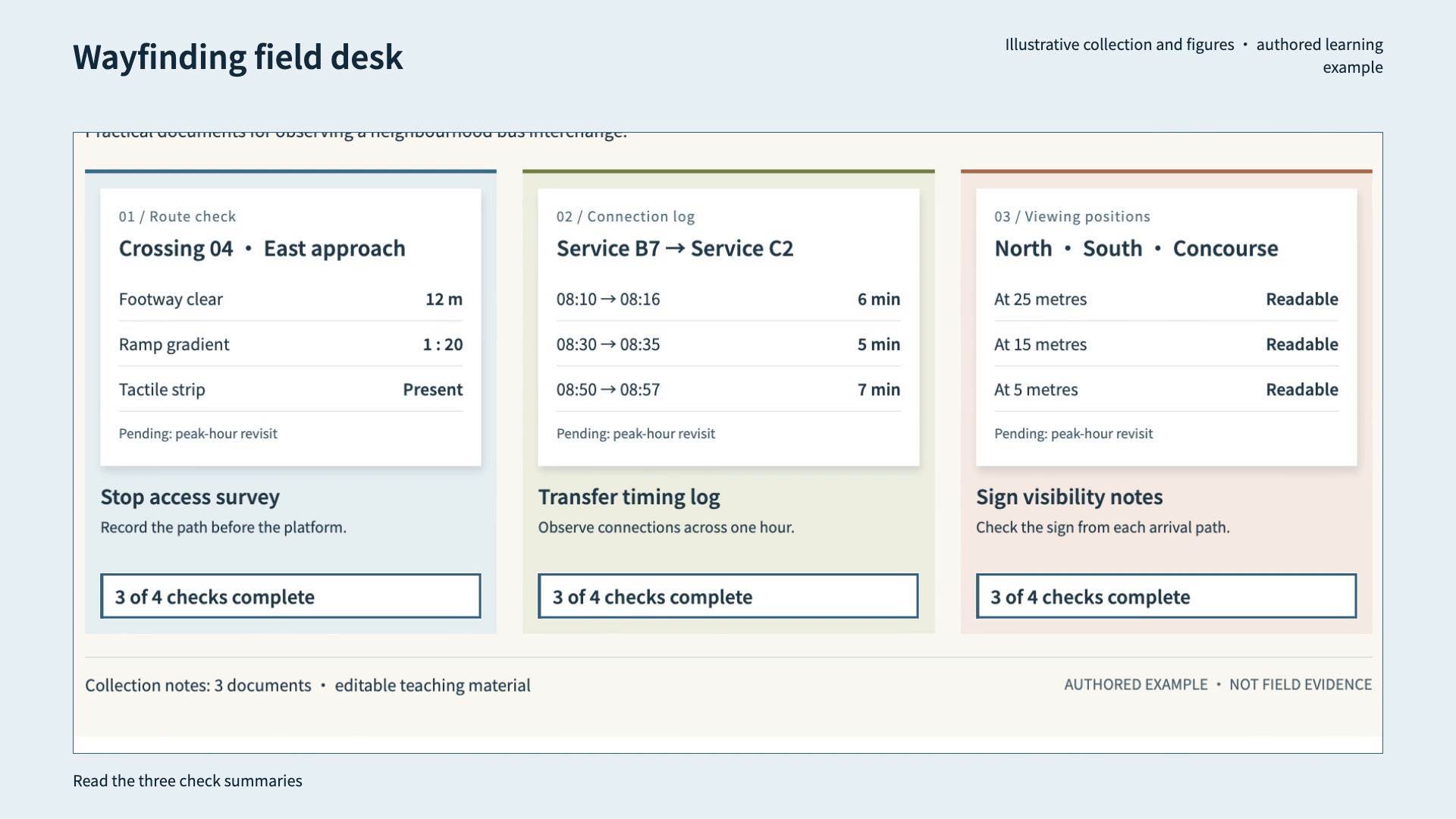
Finish an illustrative collection-level count, clear the overlay and descend into authored documents with evidence borders in reading order.
Make an editable two-series trend film with a continuous camera tour and a shared numerical scale.
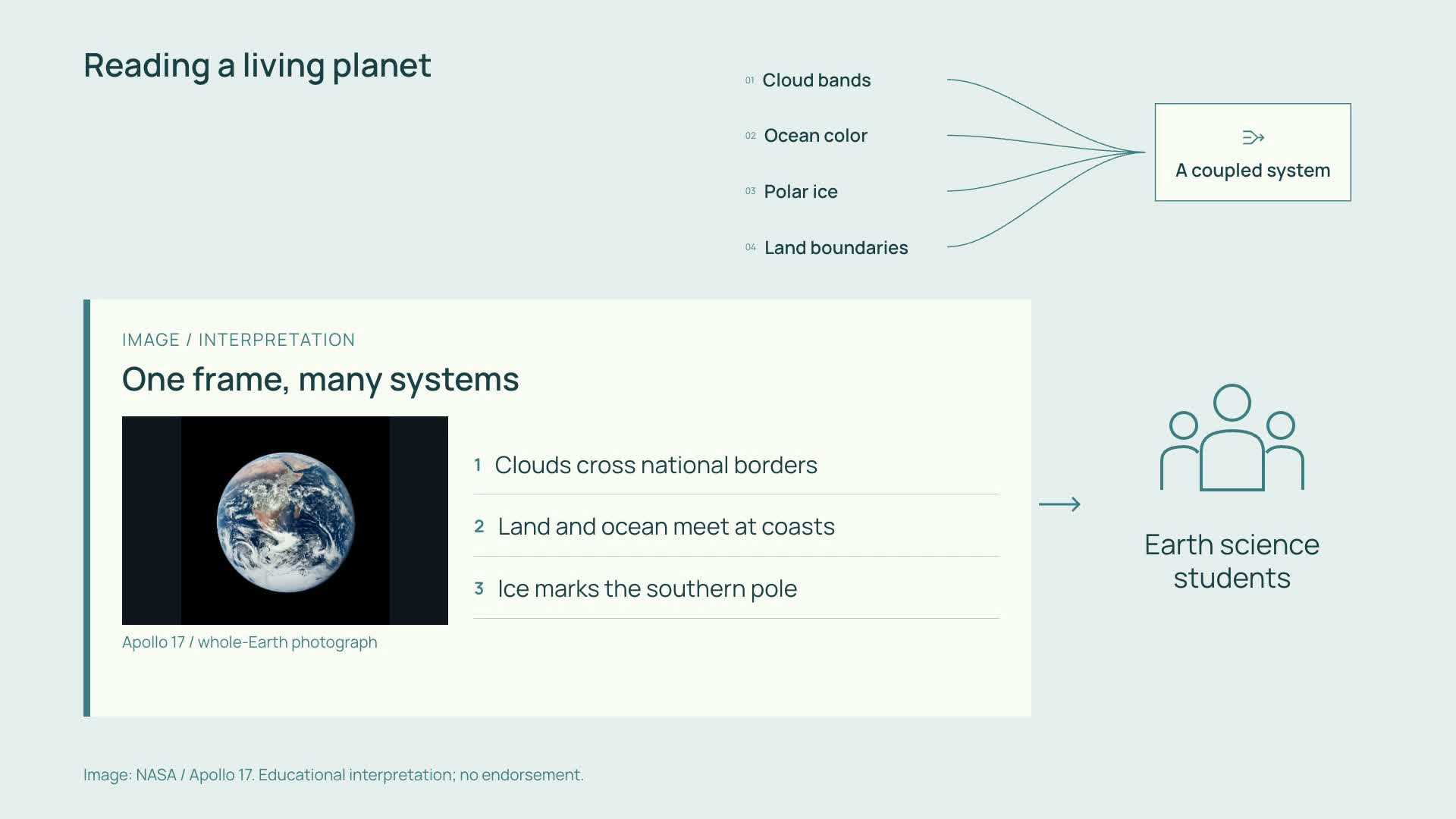
Animate several observations into a synthesis, then open a photographic evidence page and identify its readers.
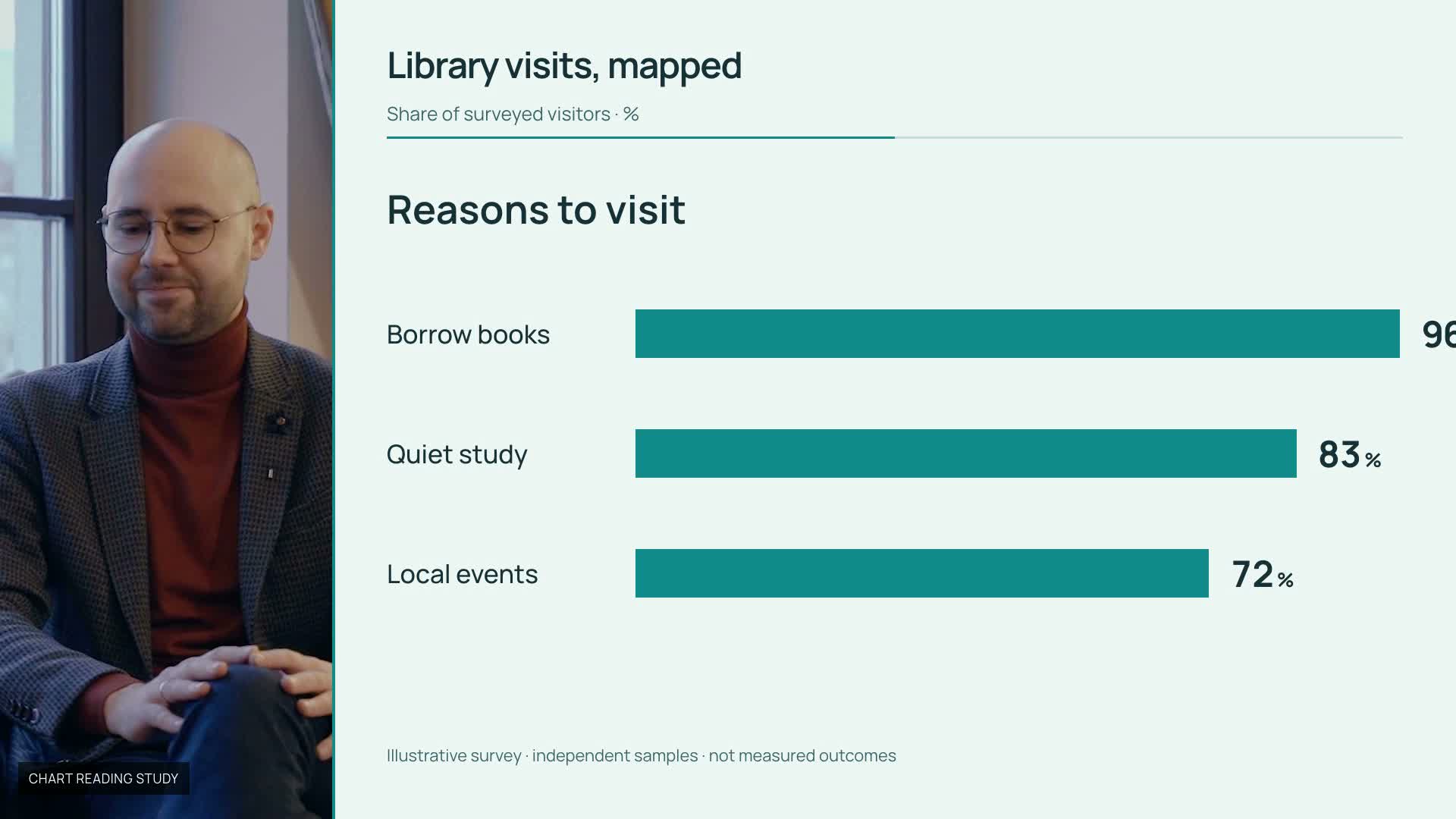
Produce an editable presenter-and-chart film that travels across two groups of percentage bars.
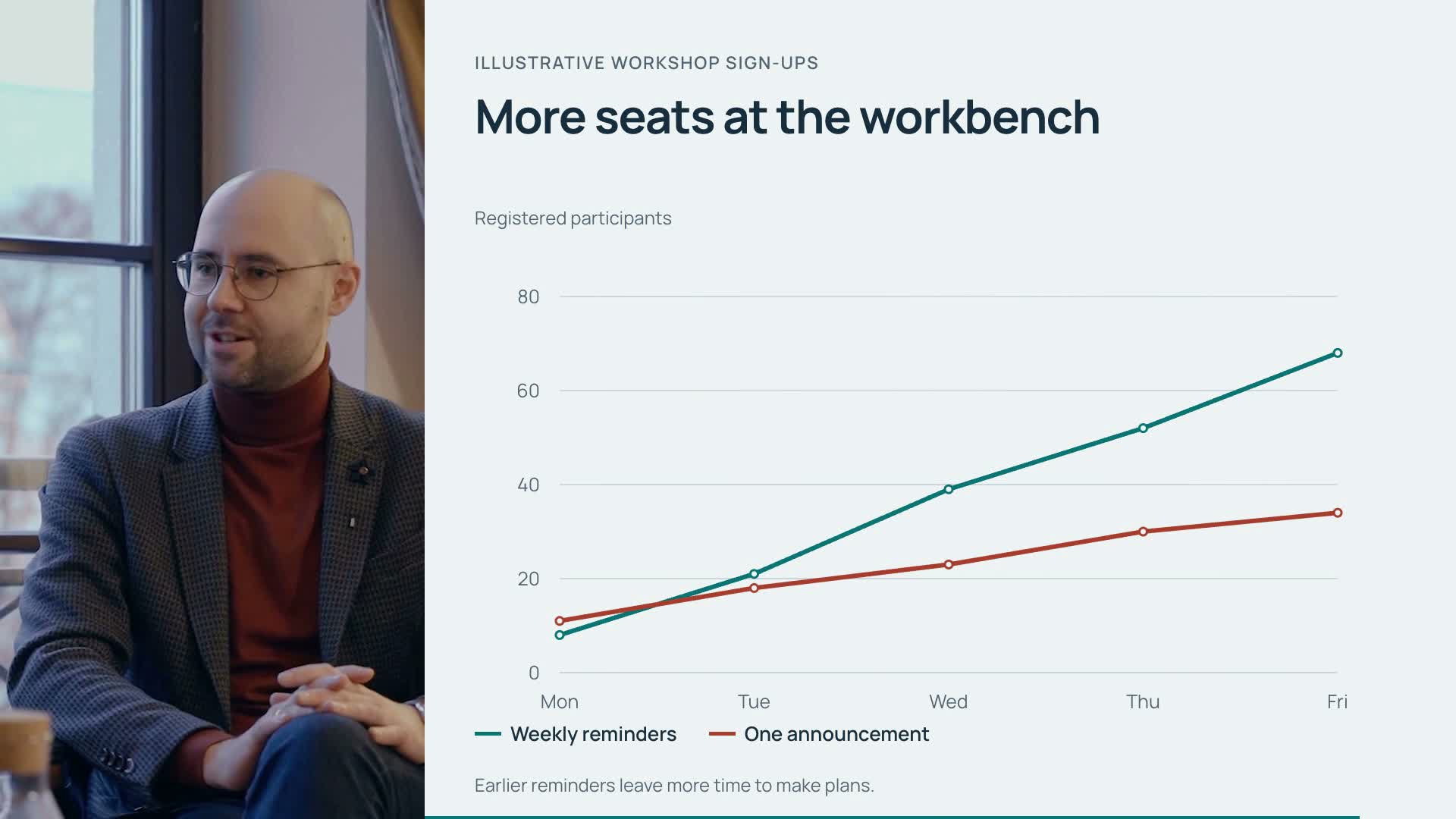
Compose an editable two-series comparison with a continuous speaker shot and coordinated exchanges of the speaker and chart regions.
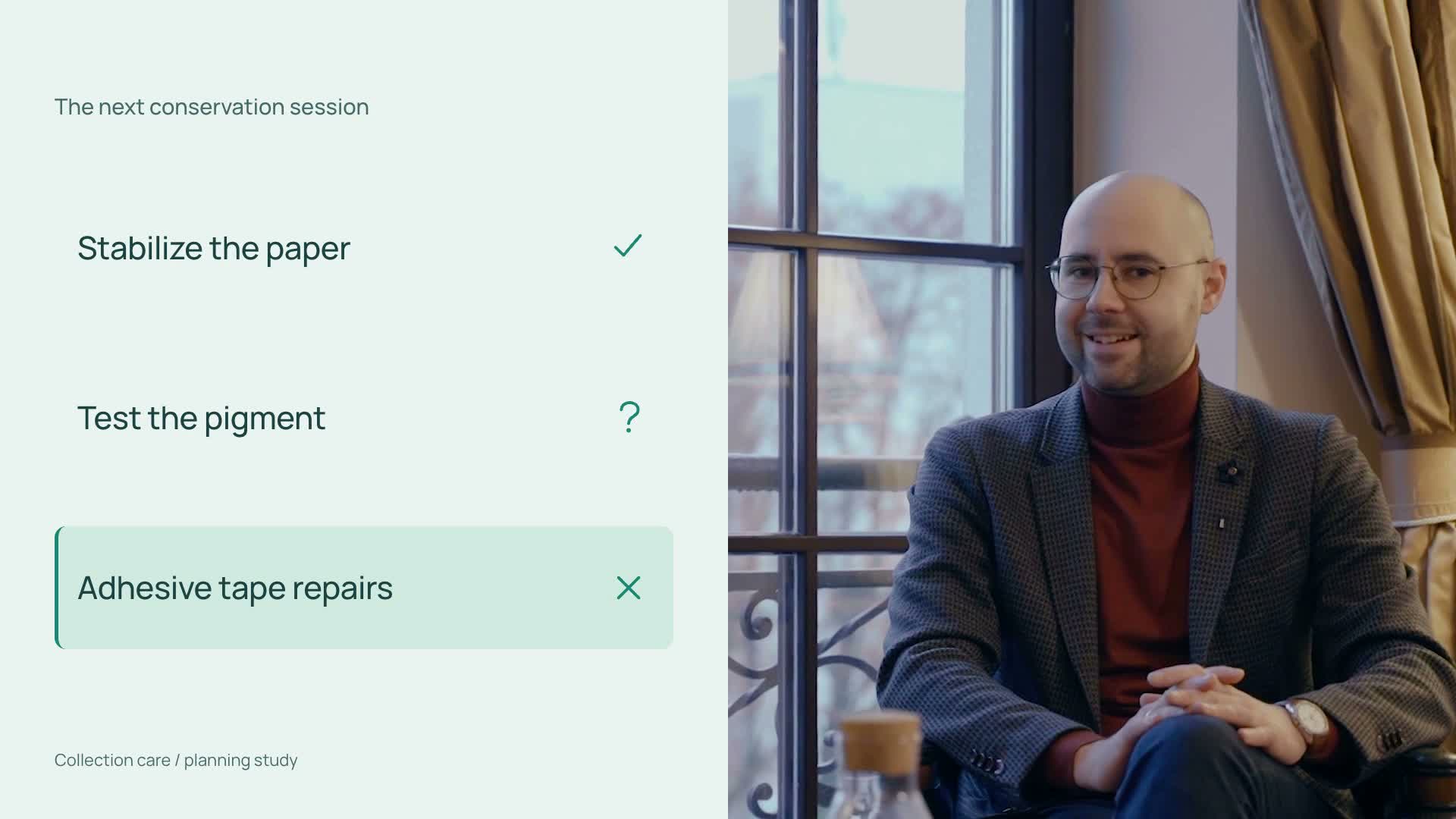
Compose an editable presenter film whose moving focus plate resolves three decisions one at a time.
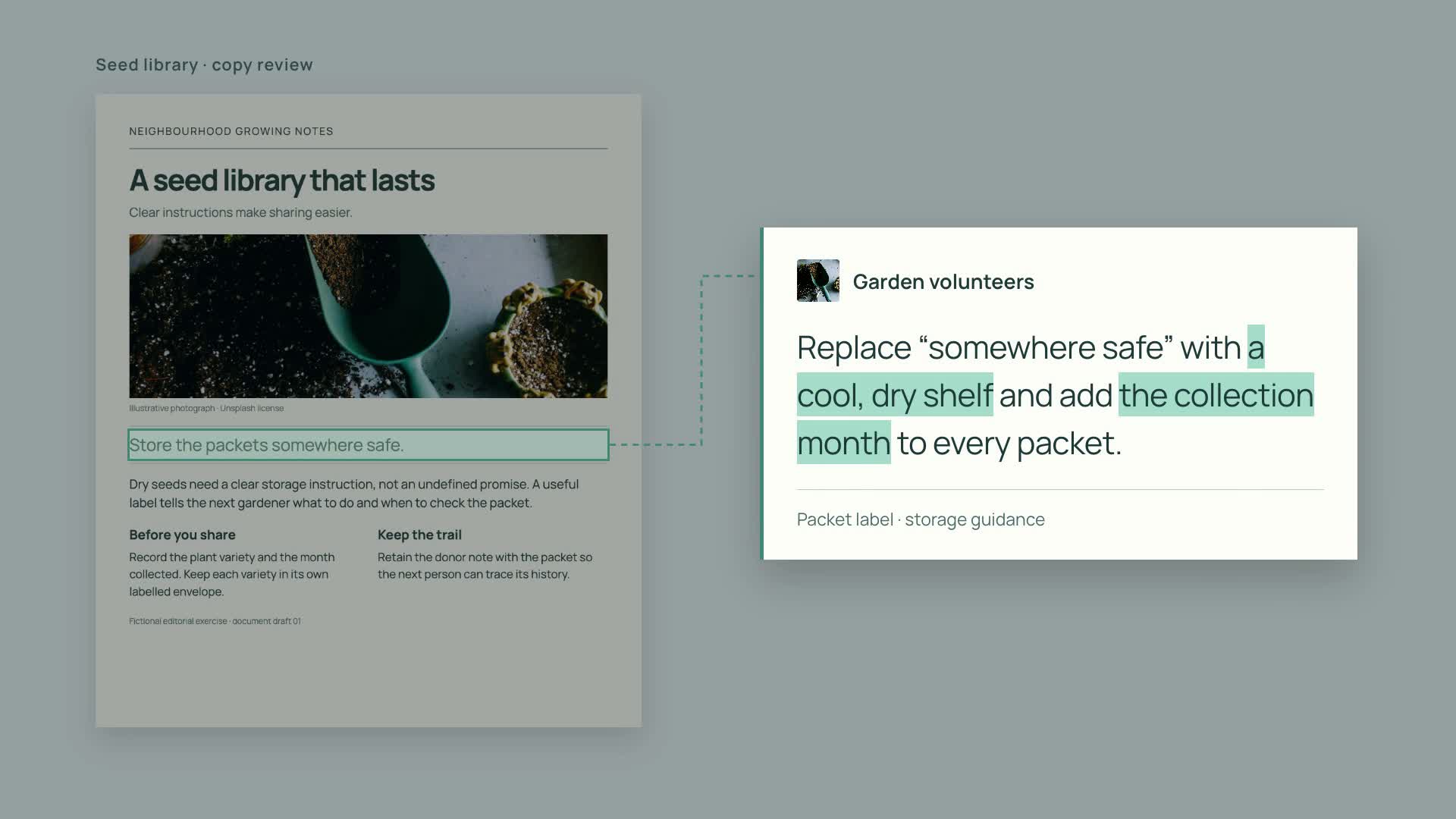
Turn a document review into a precise editorial motion clip: select the referenced passage, lift a nearby comment, and sweep two phrases in reading order.
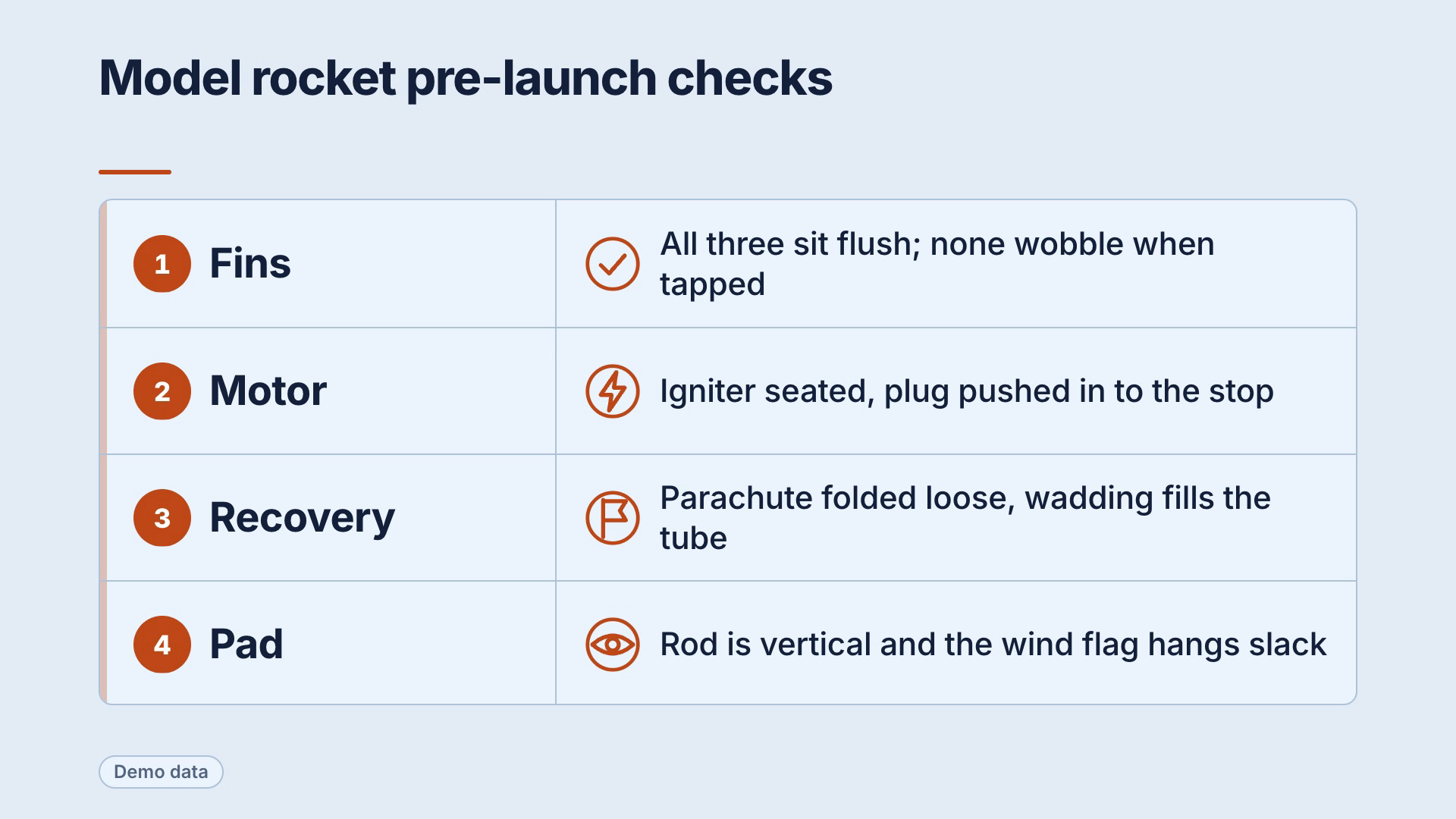
Slide a ruled two-column table into view, then fill it row by row, a short lead cell first and its matching proof cell right after, ending on a calm hold. 1920x1080 HyperFrames video, 2-5 rows, optional synthesised cue sounds.
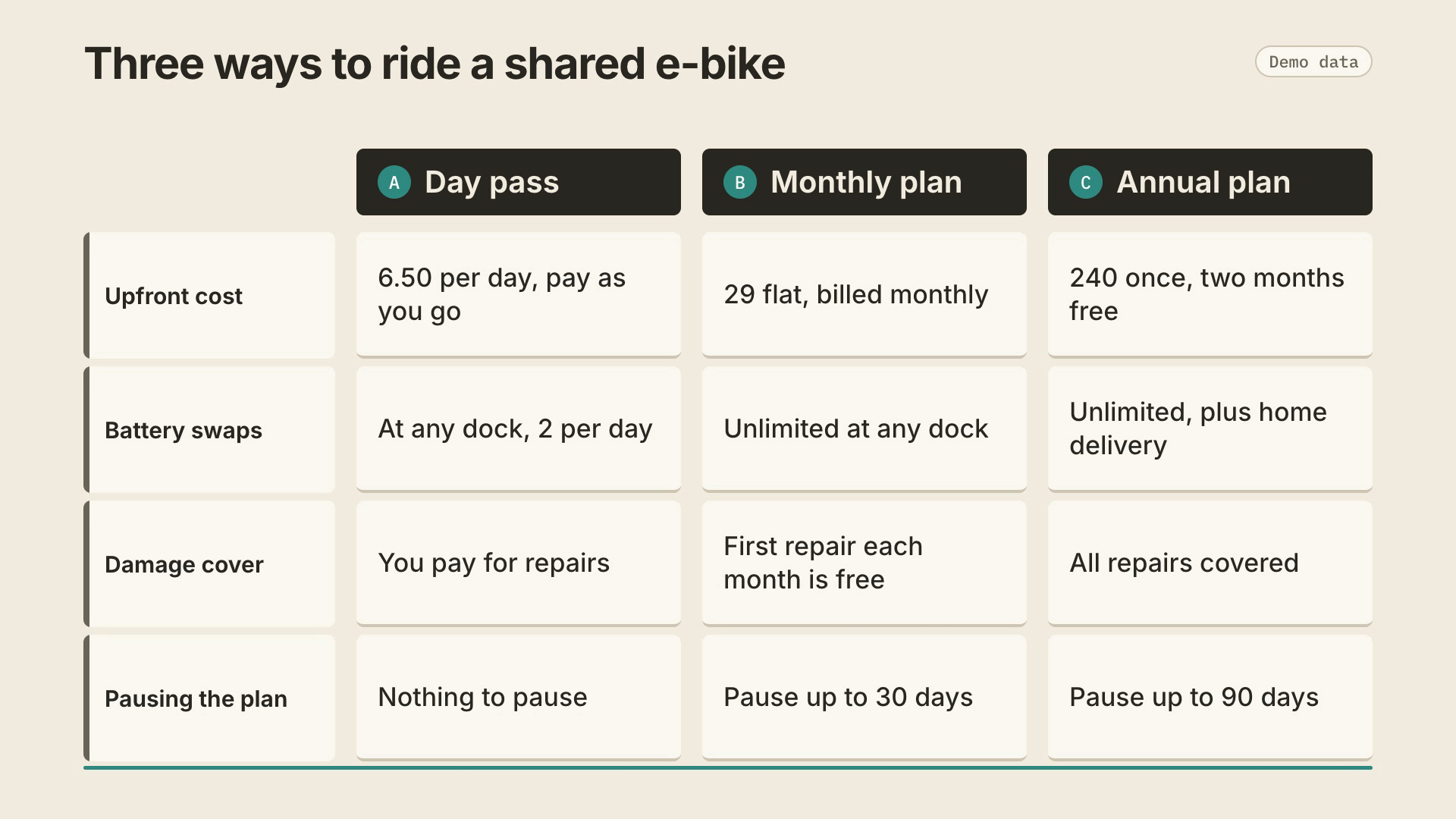
Turn a two- or three-way comparison into a 1920x1080 side-by-side grid video. Contender strips open first, then every criterion label lands and its answers sweep in left to right, row by row. HyperFrames render with optional synthesised cue sounds.
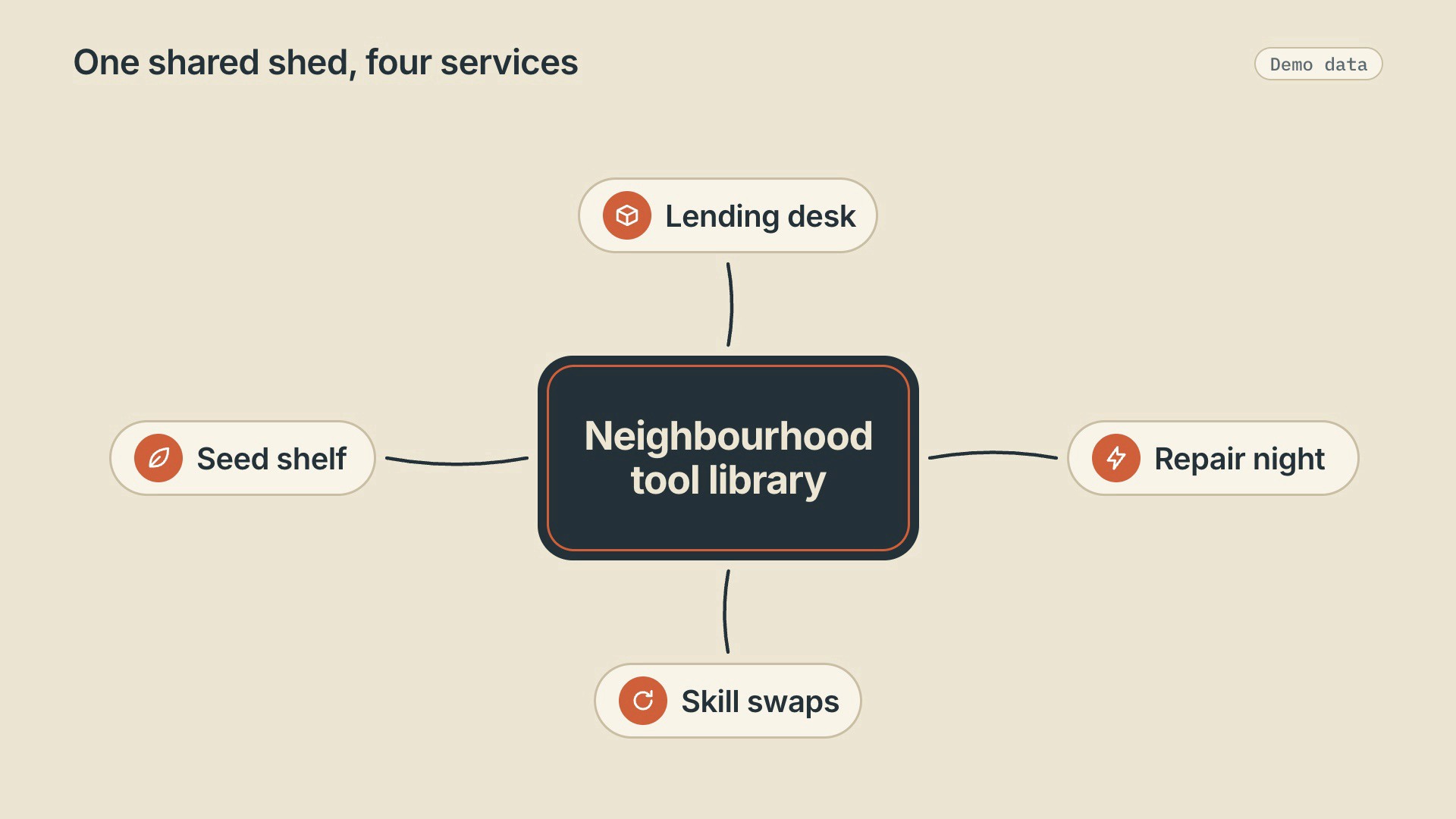
Show one central idea and 3-6 related parts as a 1920x1080 hub-and-spoke film. The hub resolves first, then each route draws out and its node lands, in order. HyperFrames render with optional synthesised cue sounds.
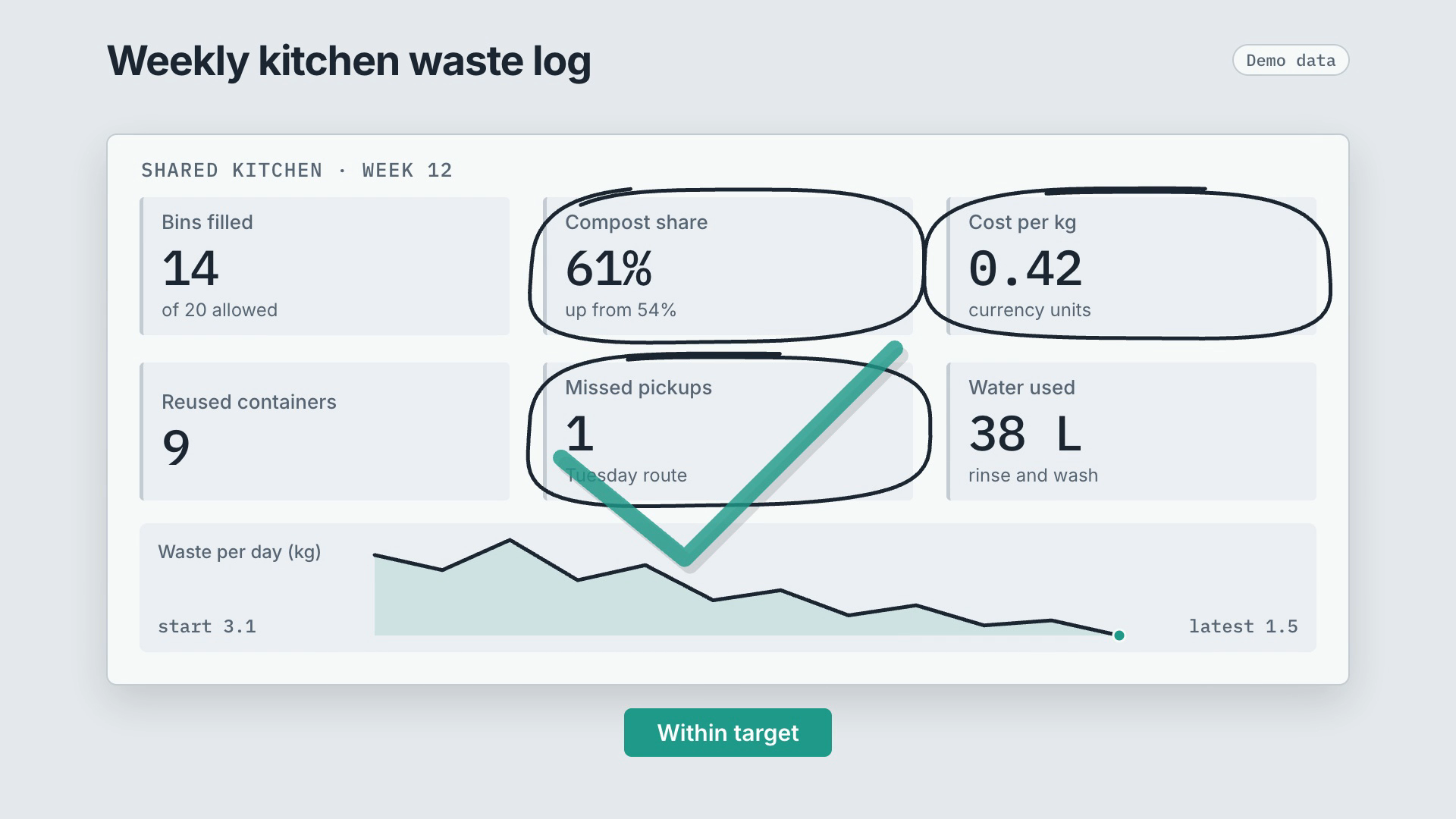
Review a data panel figure by figure. Pen-style loops close around the numbers you pick, one after another, then a single large check stroke and a status tag confirm the review. 1920x1080 HyperFrames video with optional synthesised cue sounds.
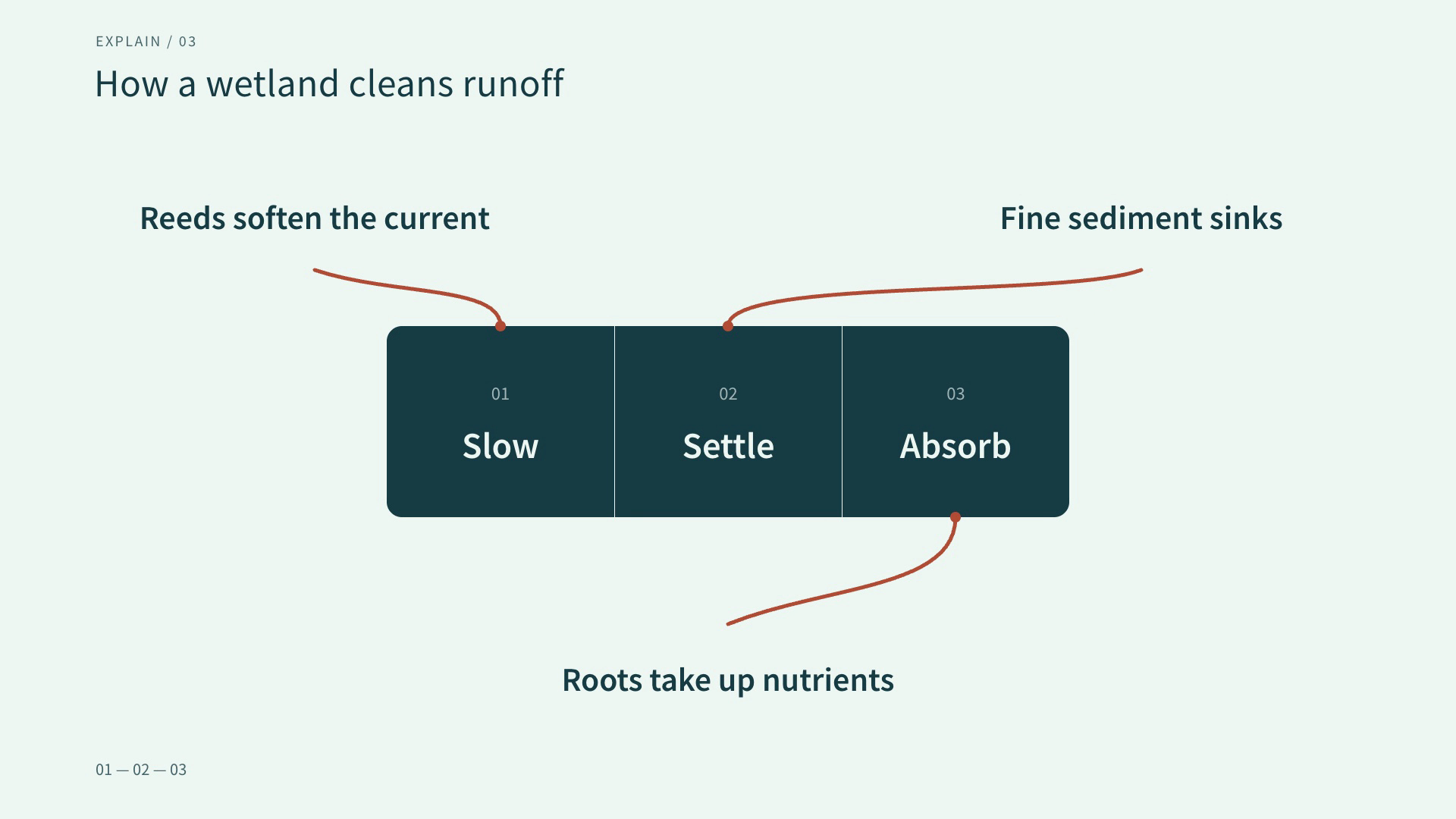
Build a concise annotated process film with three fixed segments and sequential curved explanations.
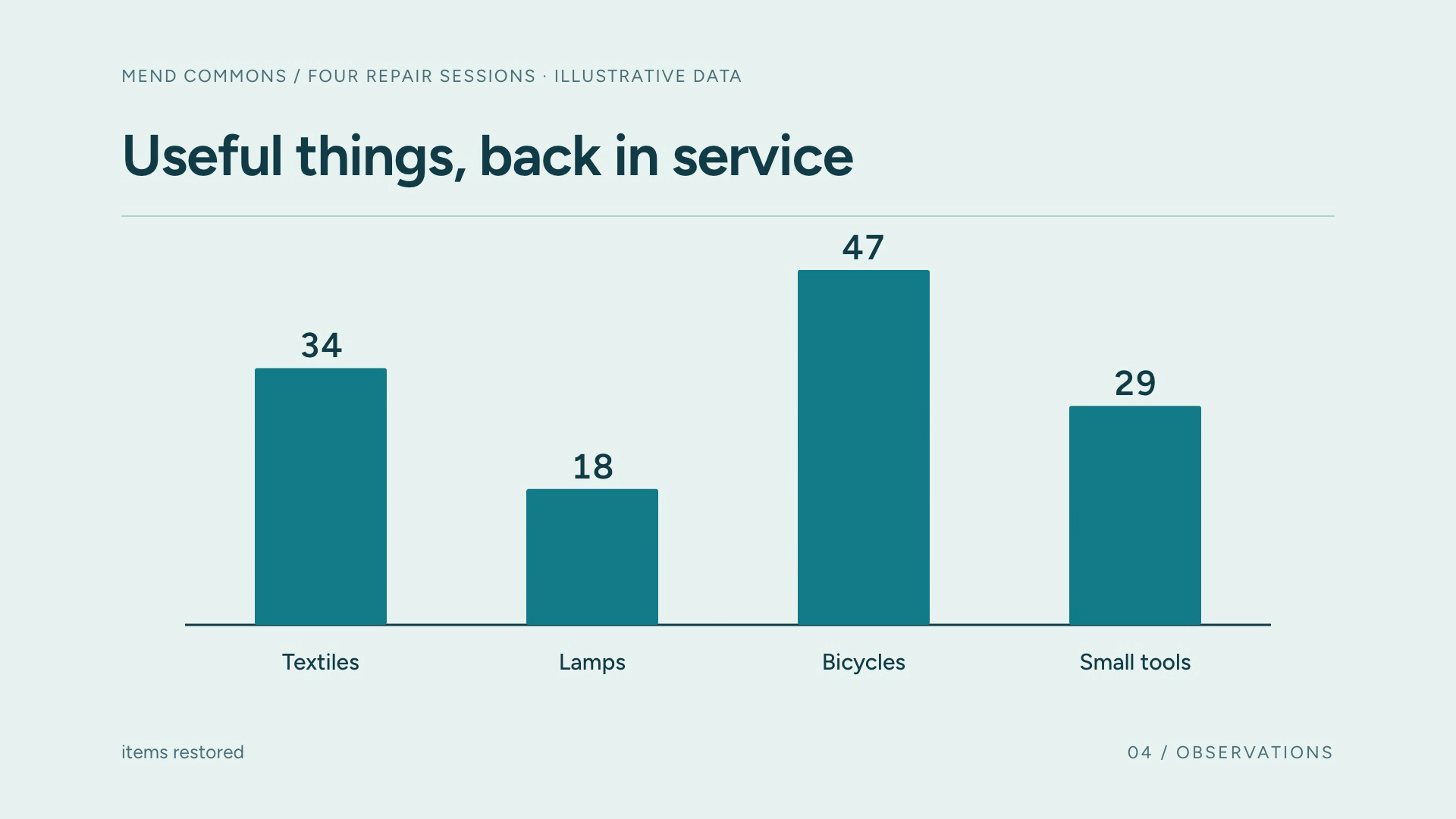
Make editable ordered column comparisons with synchronized endpoint numbers using GSAP and HyperFrames.
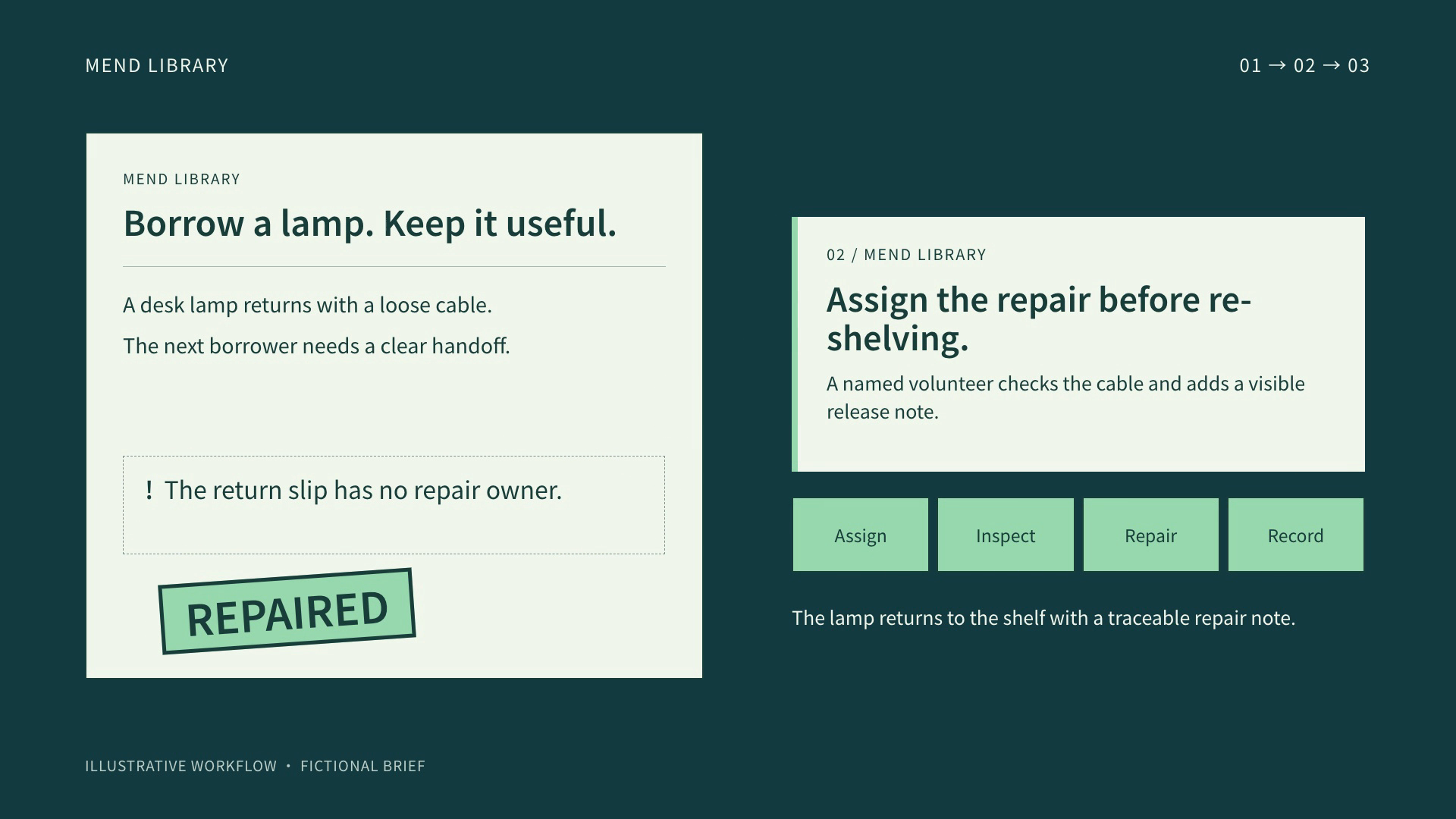
Turn a documented gap into a clear remedy, sequential checks and a completion stamp in an editable ten-second film.
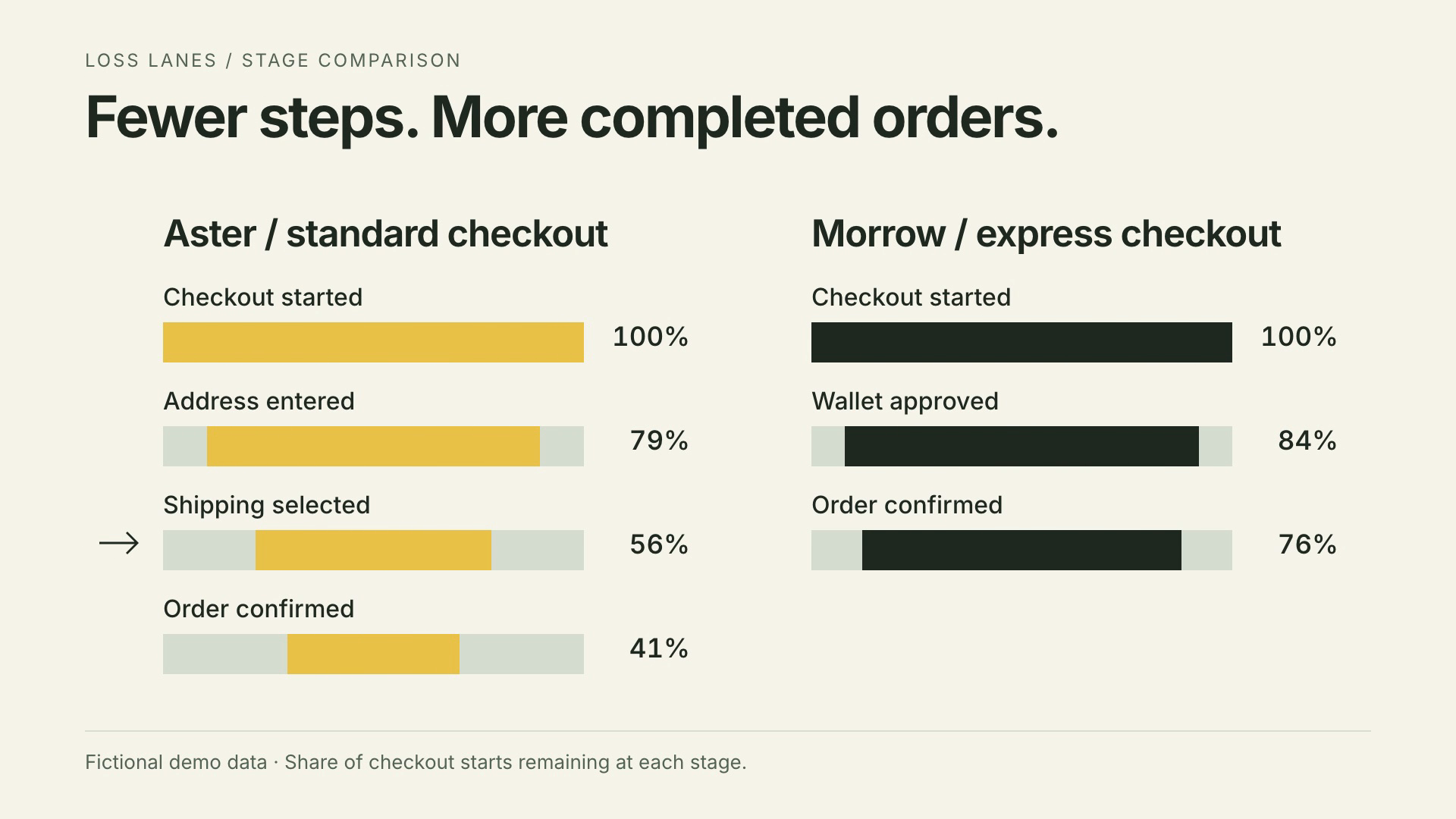
Compare two retention paths with centered stage bars and precise downstream markers.
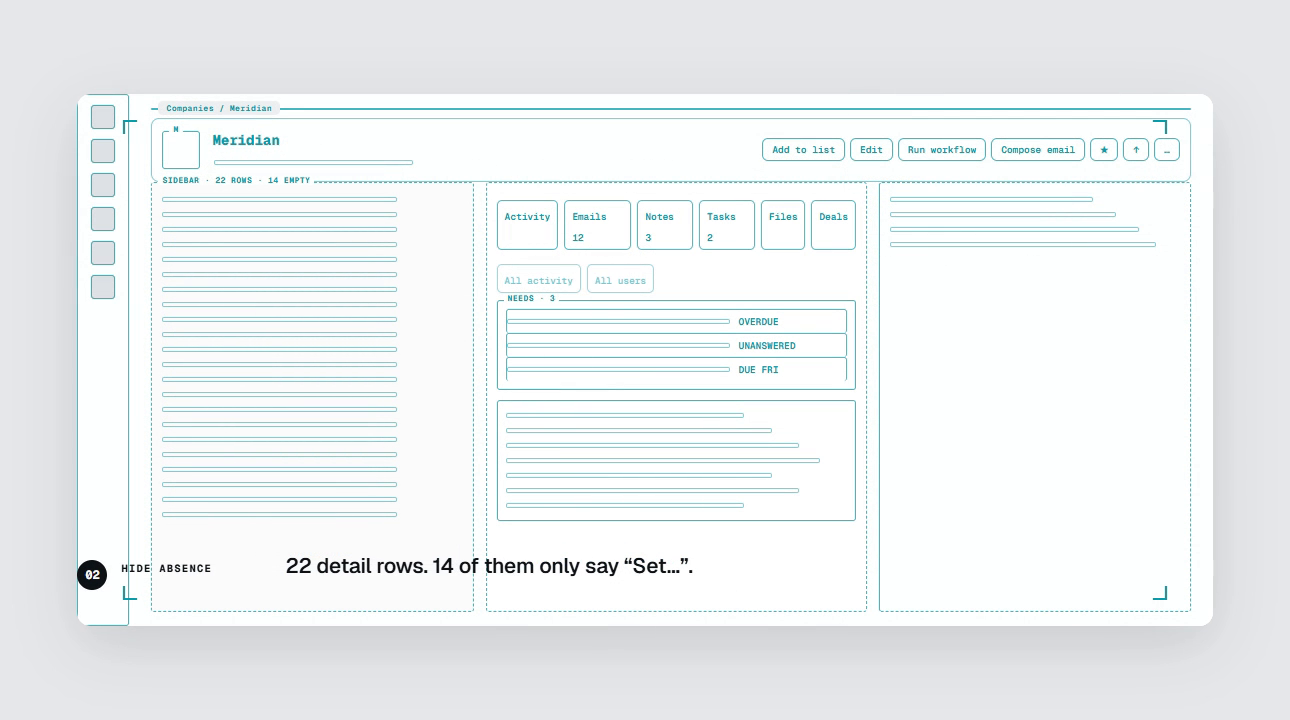
A UX-decision film authored in one sheet.json — a parameterized SaaS record page alternates between its solid render and a generated blueprint x-ray twin; a teal ring frames the region each decision is about, mono spec callouts read out counts and dimensions, and a numbered caption chip states each rationale, rendered deterministically by HyperFrames.
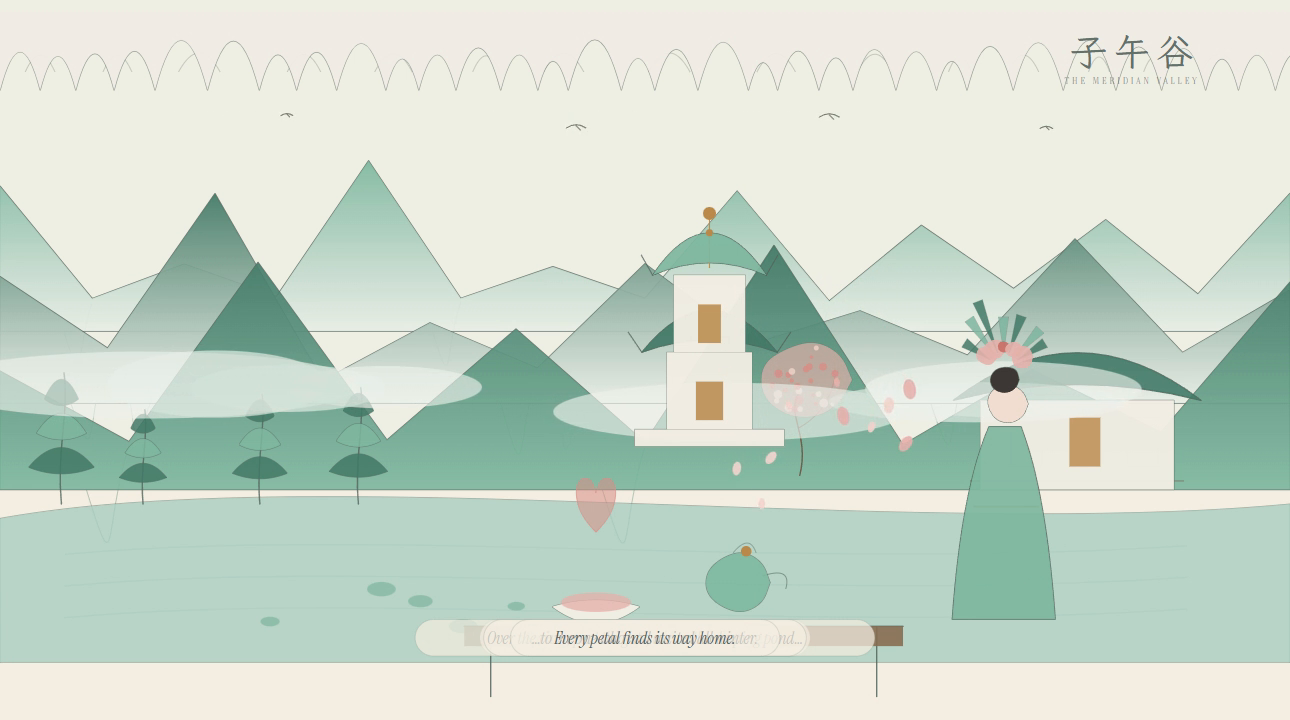
A scroll-painting film authored in one sheet.json — a layered illustrated valley (ridges, scalloped clouds, pines, a blossom tree, pagoda, water, a tea table and a kimono figure) draws itself in ink lines, fills with watercolor washes back-to-front, then keeps breathing with drifting petals, birds and mist while verse captions cycle, rendered deterministically by HyperFrames.
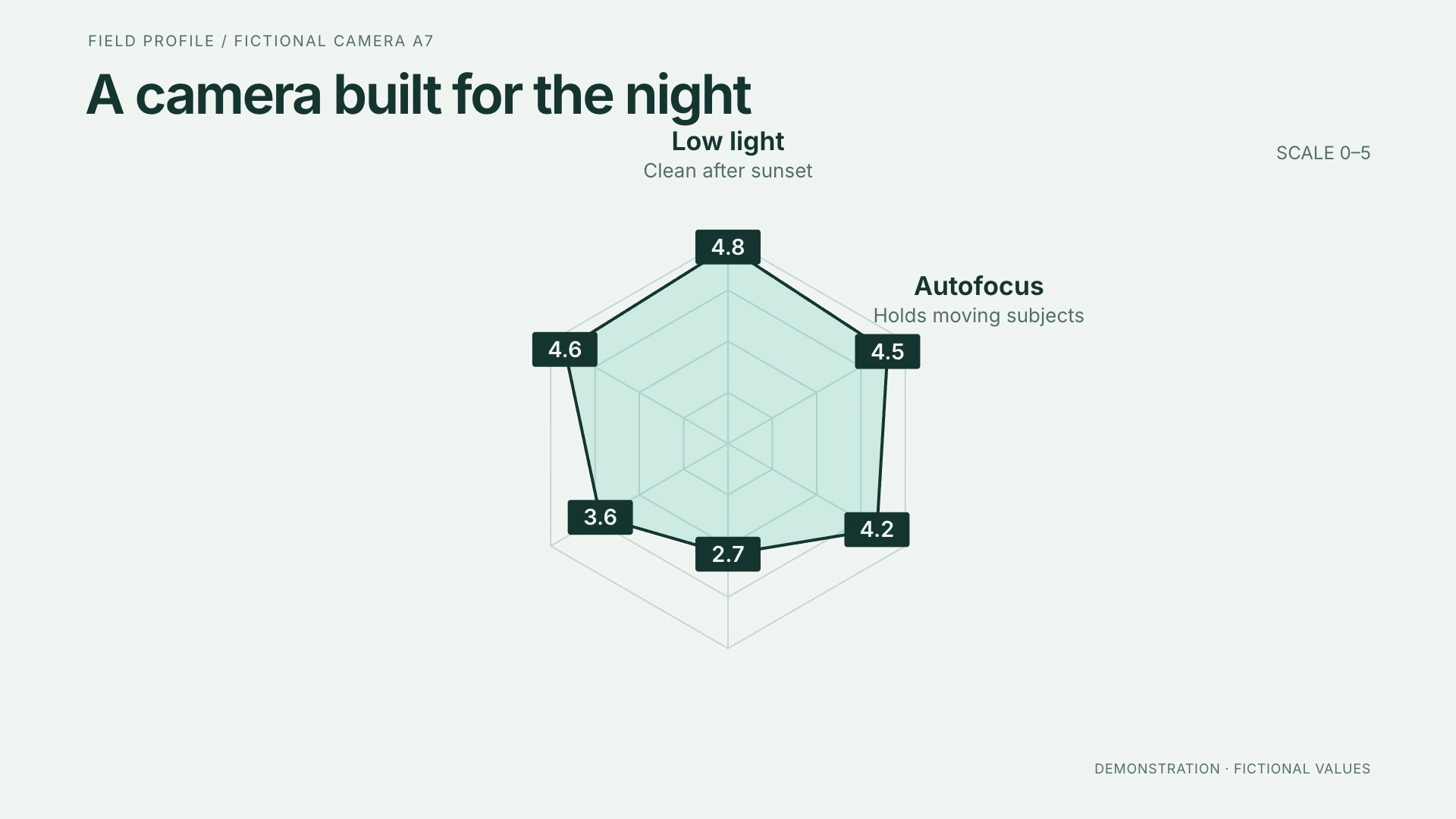
Reveal a profile in three steps: shape, values, then the explanation behind each dimension.
Communicate recommendations with structured reports, visual evidence and presentations.
Prepare your recommendation, supporting evidence and the intended decision-maker.
Start with a task, then explore the possibilities.
Communicate results, proposals and decisions to clients and teams.
Explore Business reporting ↗Explain knowledge, history and scientific mechanisms.
Explore Education ↗Investigate markets and evidence, and communicate research findings.
Explore Research ↗Create marks, visual identities and brand expressions.
Explore Branding ↗Compare the inputs and deliverables before you begin.
| What you have | What to look for | Next step |
|---|---|---|
| A clear brief | Prepare your recommendation, supporting evidence and the intended decision-maker. | Browse this collection ↗ |
| Source material | Check the chosen Skill’s required inputs and which details it can preserve. | Read the Skills guide ↗ |
| A different output | Communicate results, proposals and decisions to clients and teams. | Business reporting ↗ |
Compare the example, inputs and deliverables against your brief.
Prepare your recommendation, supporting evidence and the intended decision-maker.
Follow the Skill’s instructions and check the output in its intended context.
Communicate recommendations with structured reports, visual evidence and presentations. Compare the actual example and deliverables with your intended result.
Prepare your recommendation, supporting evidence and the intended decision-maker.
This depends on the Skill. Check whether it delivers source files, rendered media or an interactive artifact, and which tools are needed to edit it.
Review the Skill license, the model’s terms and the rights to your input media. A public example is not a blanket commercial license.