
Business reporting
Communicate results, proposals and decisions to clients and teams.
Explore Business reporting ↗Translate evidence and findings into diagrams, data stories and presentations.
Skills 둘러보기 ↓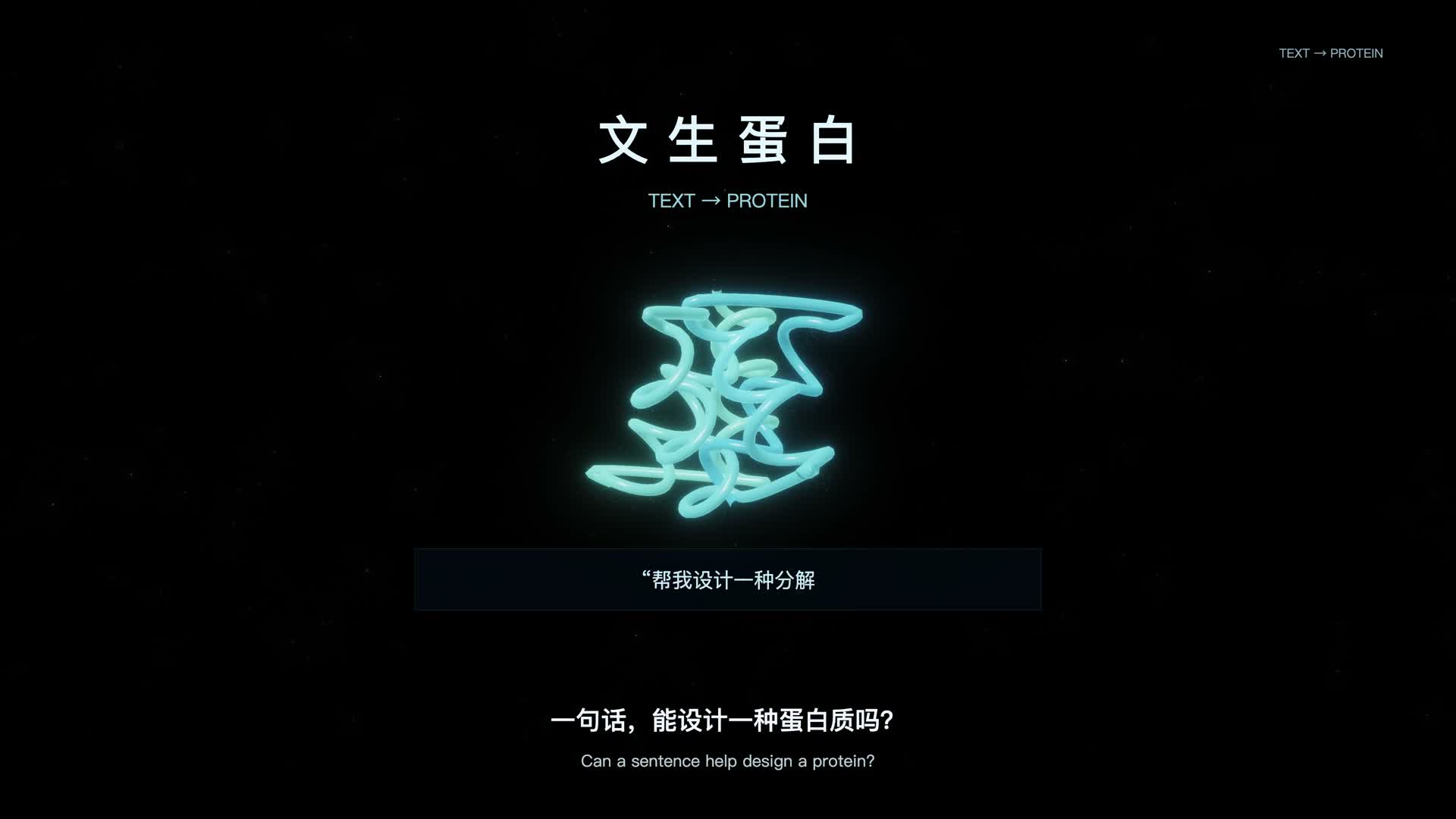
Explain science through visible causes, transformations and results.
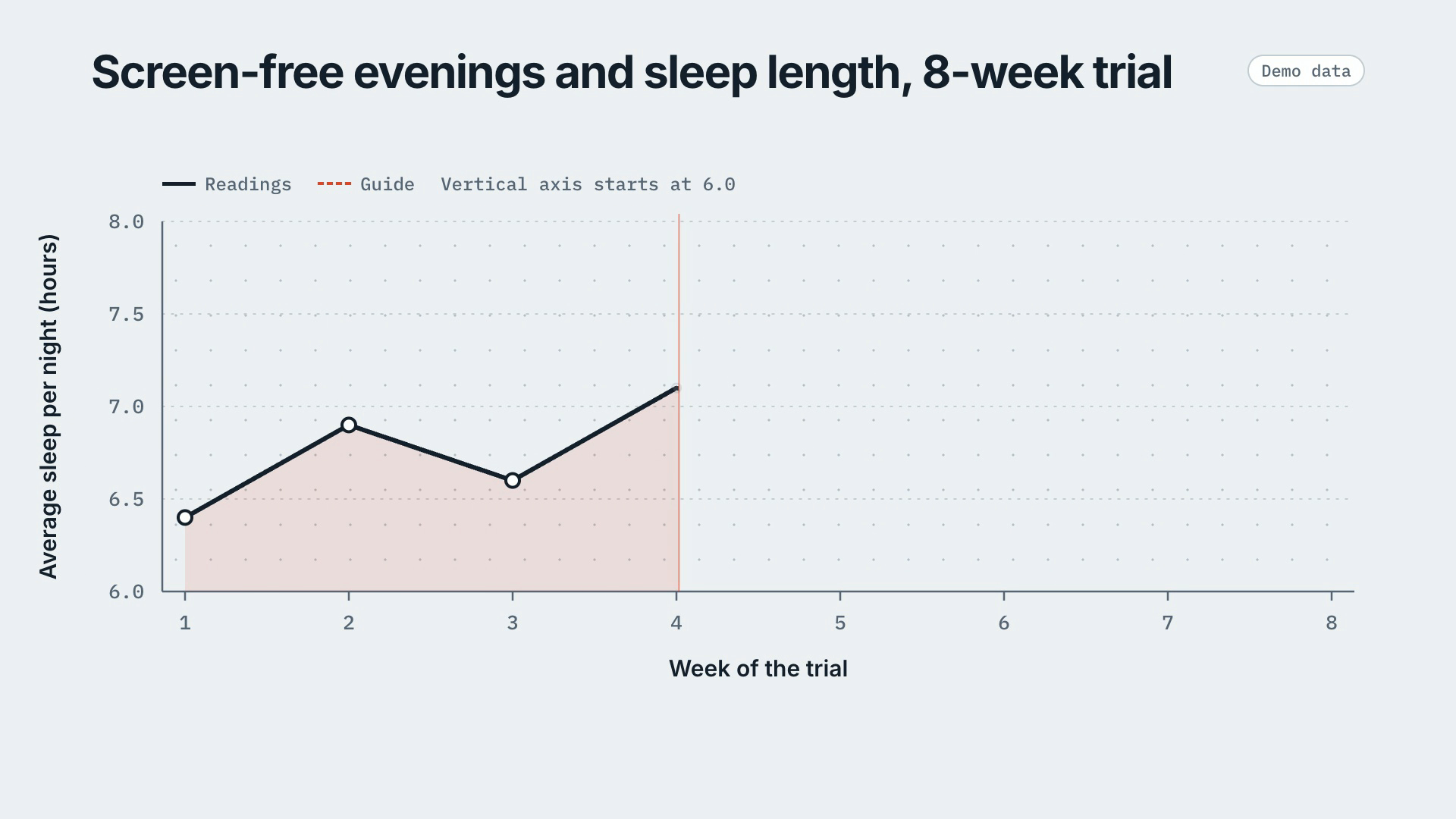
Reveal measured readings, a separate dashed guide and a final takeaway on an editable chart.
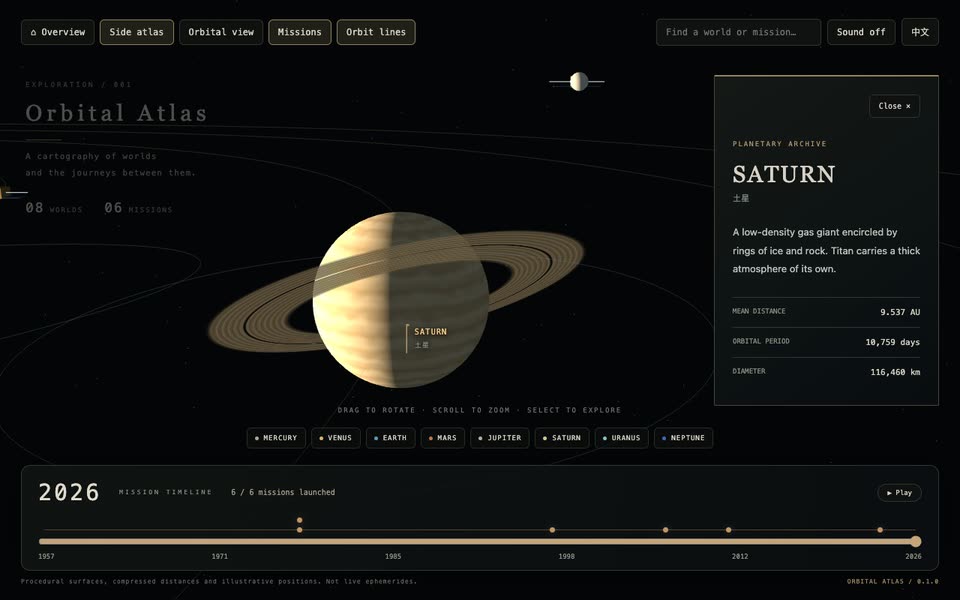
Explore worlds and spacecraft missions in an interactive 3D atlas with focus cameras, orbital views and a launch timeline.
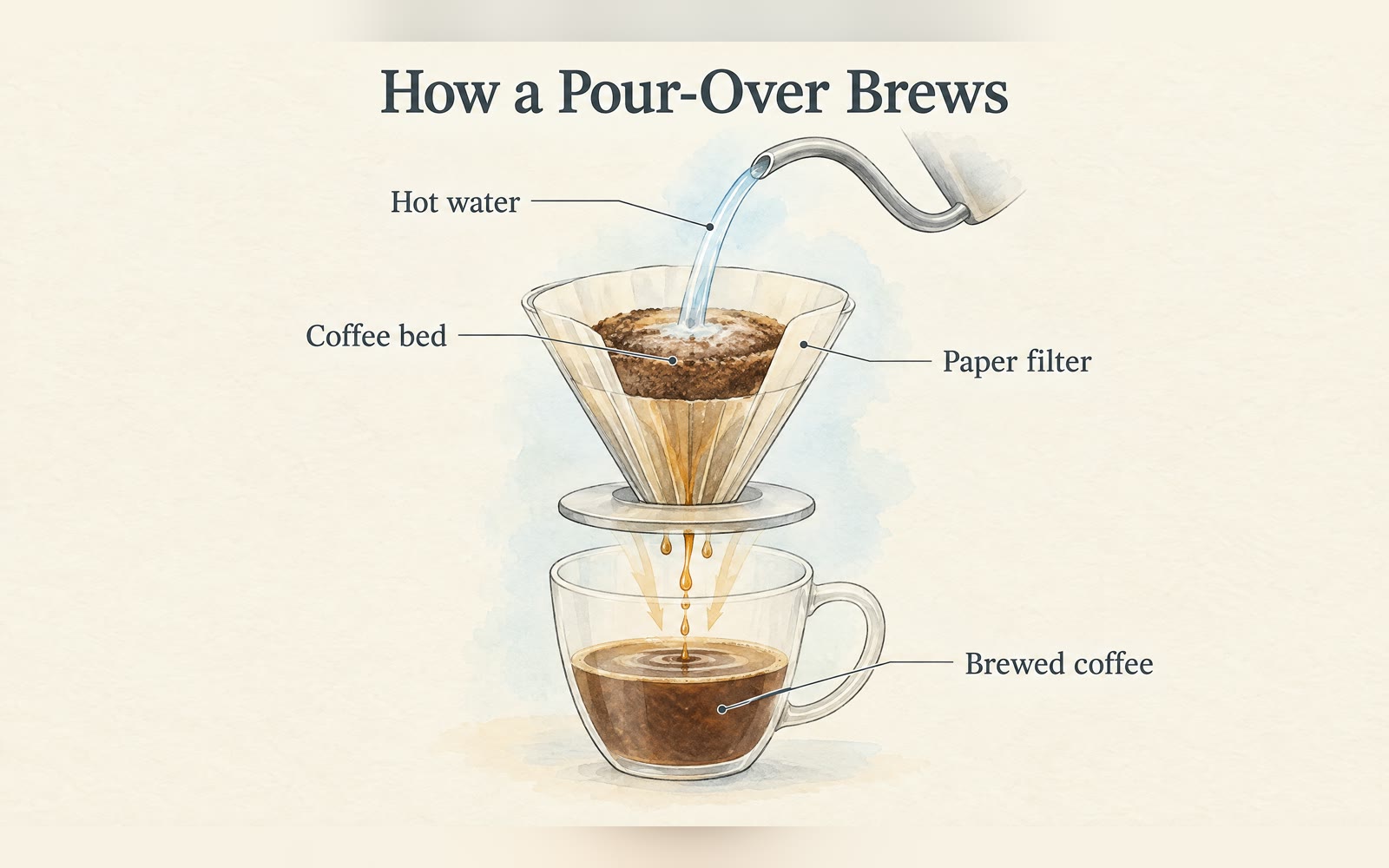
Turn a verified mechanism into an approachable 16:9 concept diagram: translucent color washes, fine linework, a title and three to five exact labels.
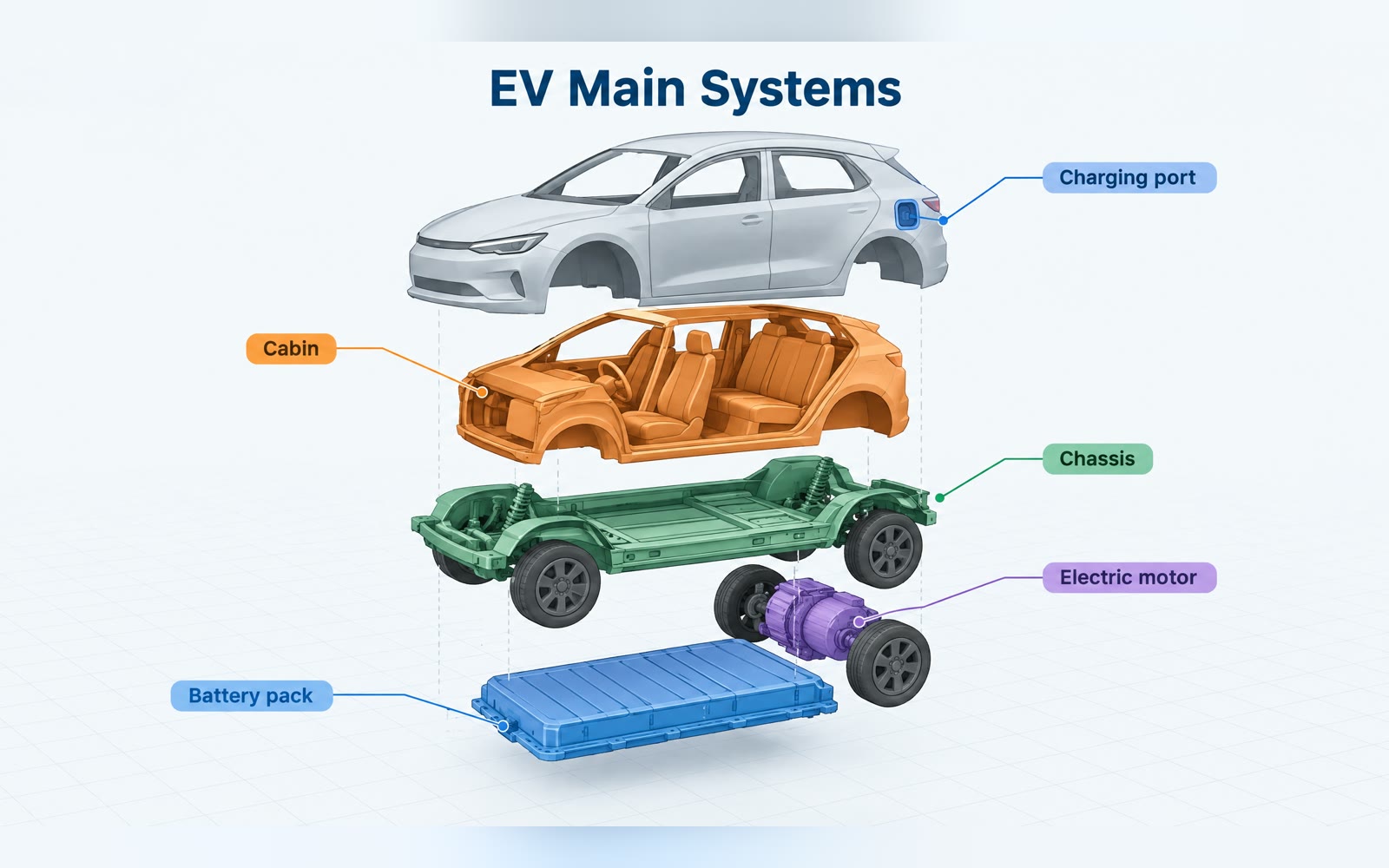
Turn a fictional electric vehicle into a 16:9 isometric exploded view of its major systems, color-coded, with a title and three to five exact labels.
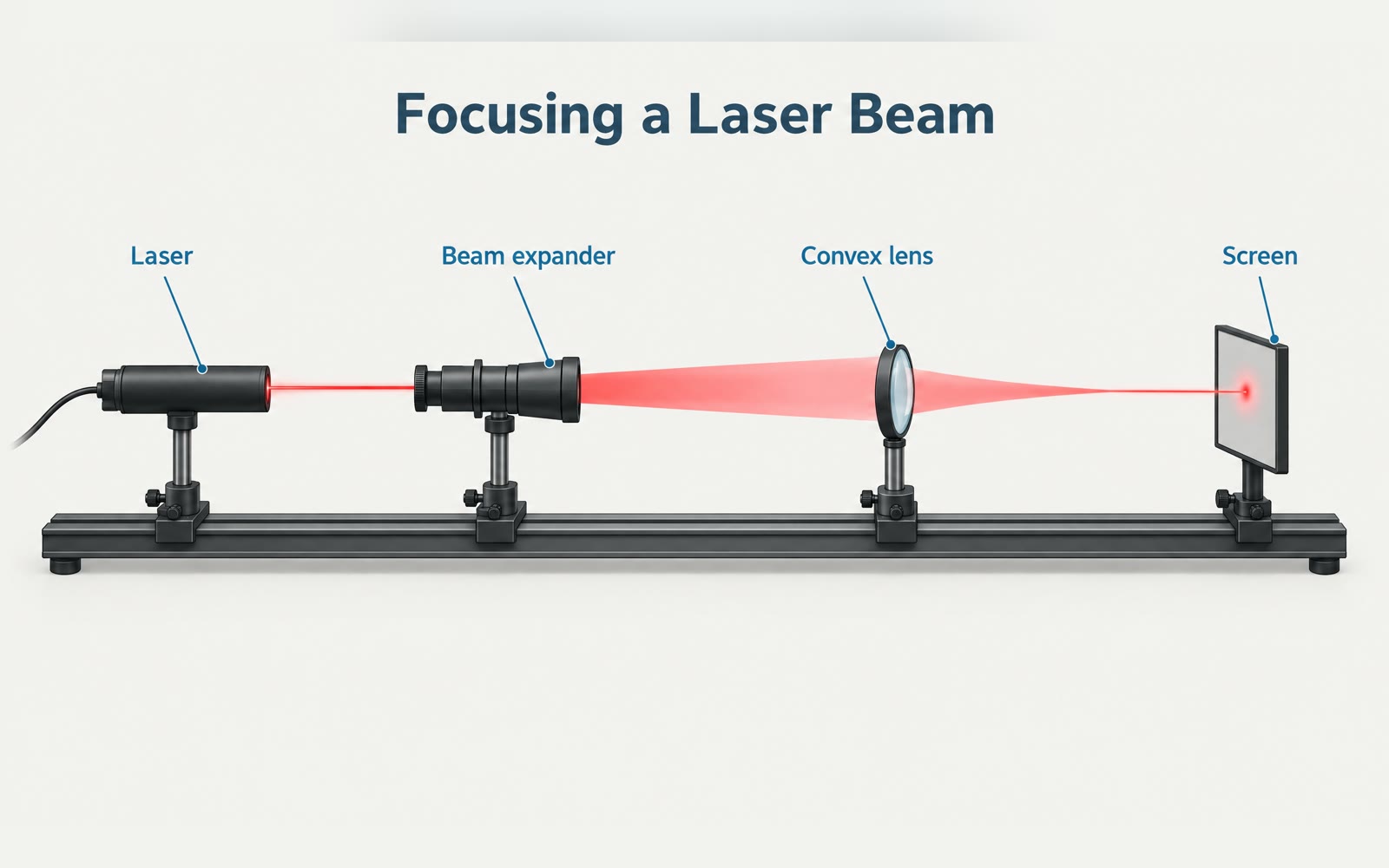
Turn a verified optical setup into a 16:9 bench diagram: components in strict left-to-right order, one clear beam path, a title and three to five exact labels.
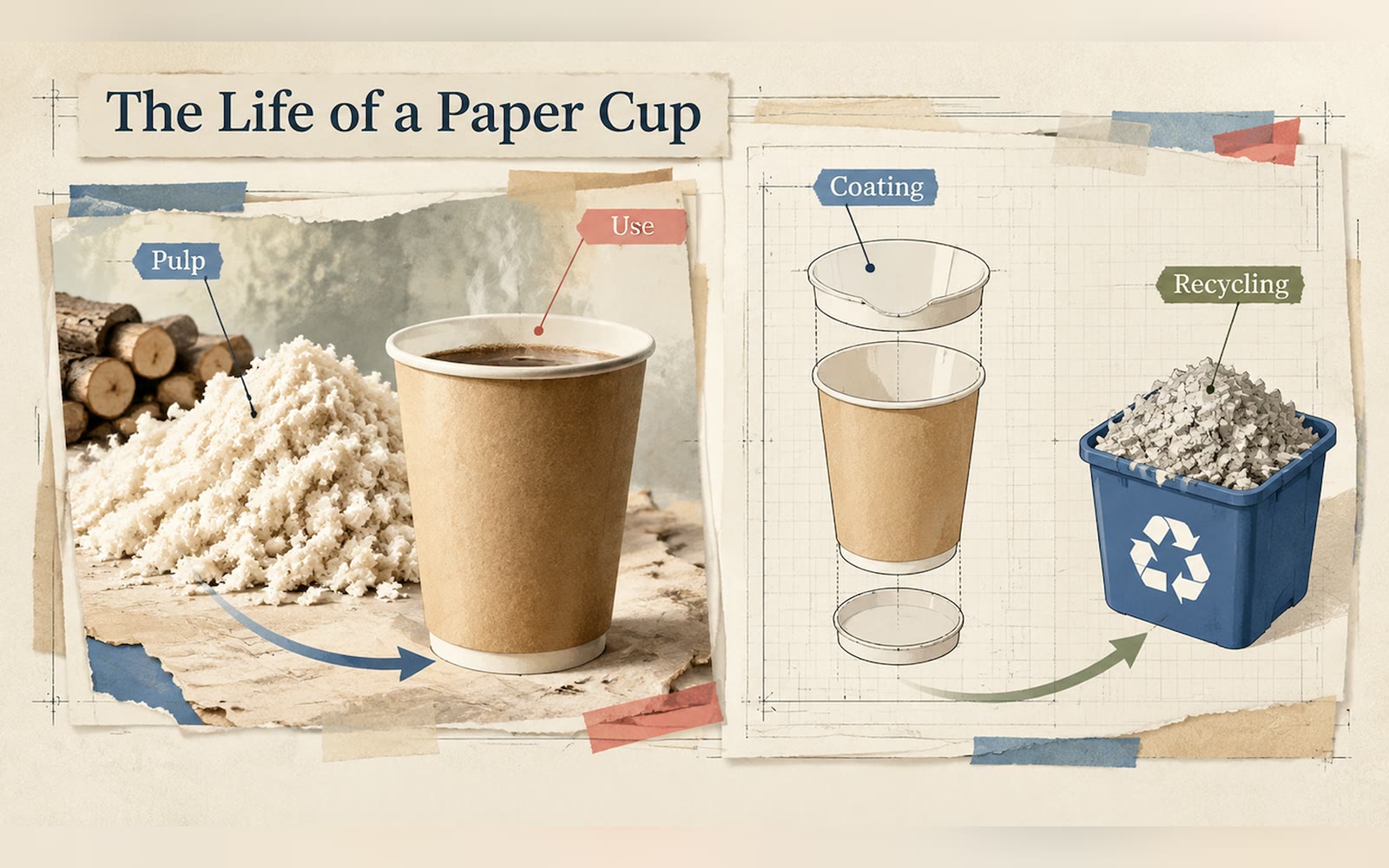
Turn one topic into a 16:9 research collage: a grounded view beside an isometric reconstruction, archival study marks, a title and three to five exact labels.
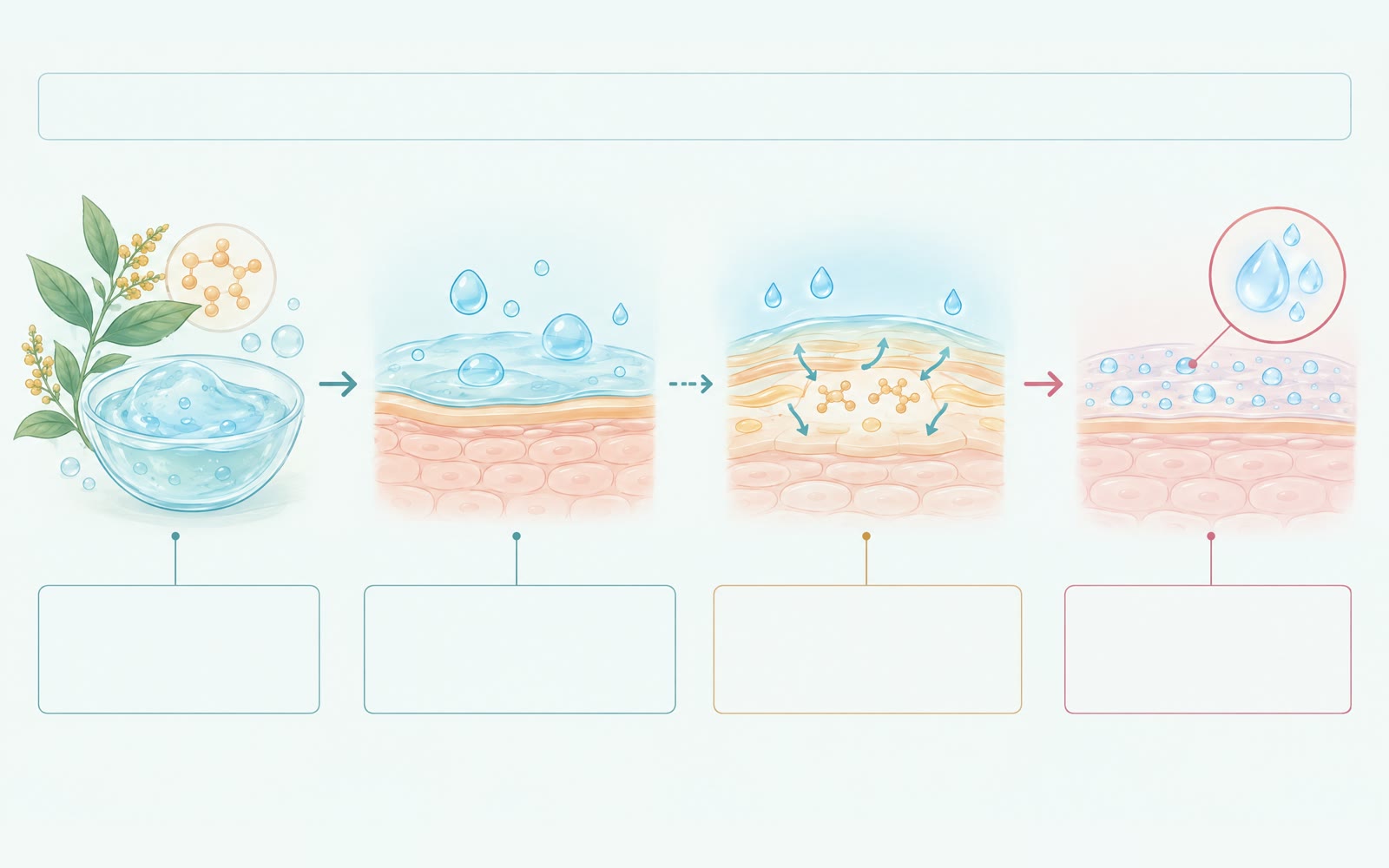
Turn an ingredient pathway into a text-free 16:9 poster base image with left-to-right lanes, evidence-status arrows and three to five blank annotation areas.
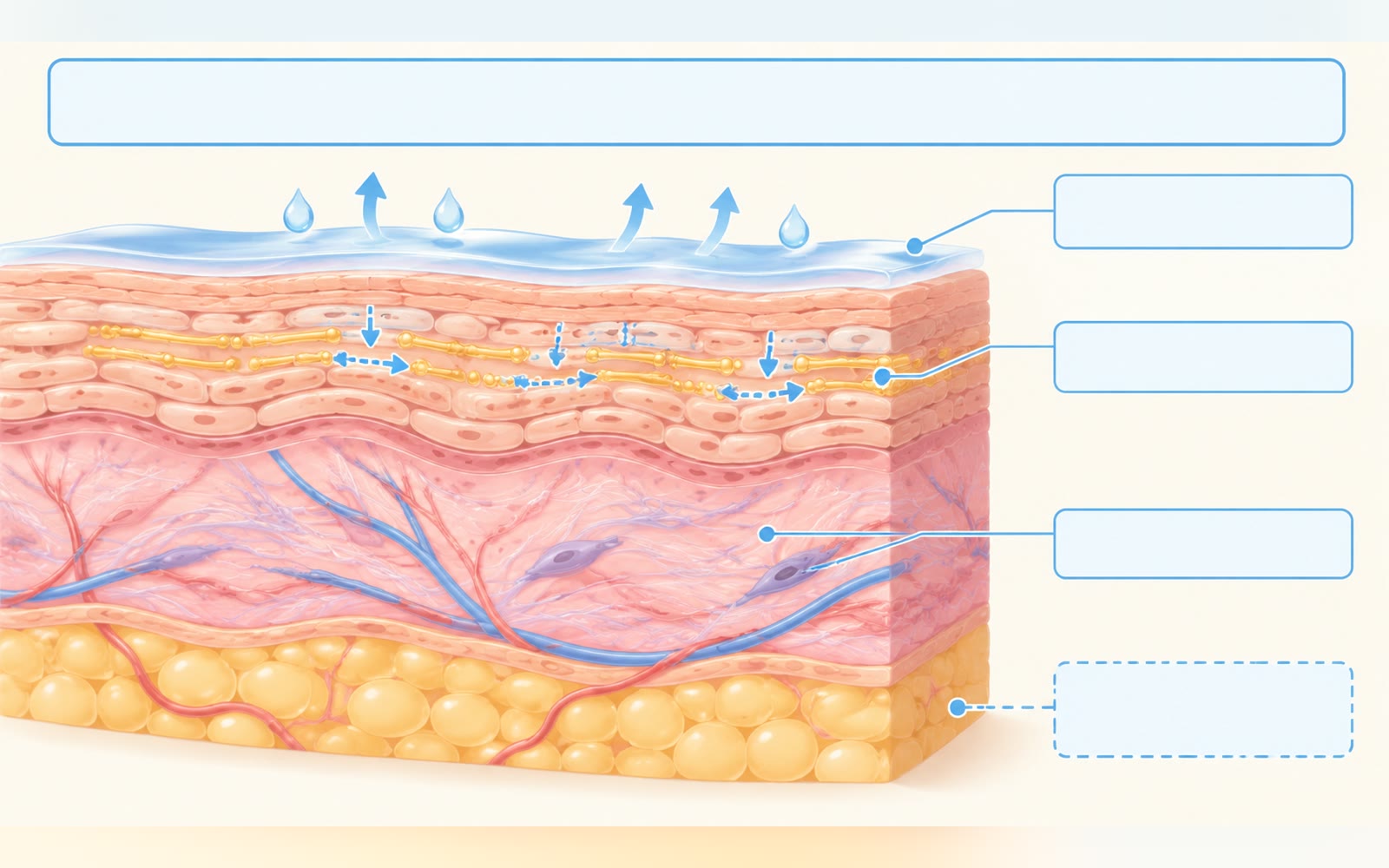
Turn an approved skin mechanism into a text-free 16:9 cross-section base image with claim-status arrows and three to five blank annotation areas.
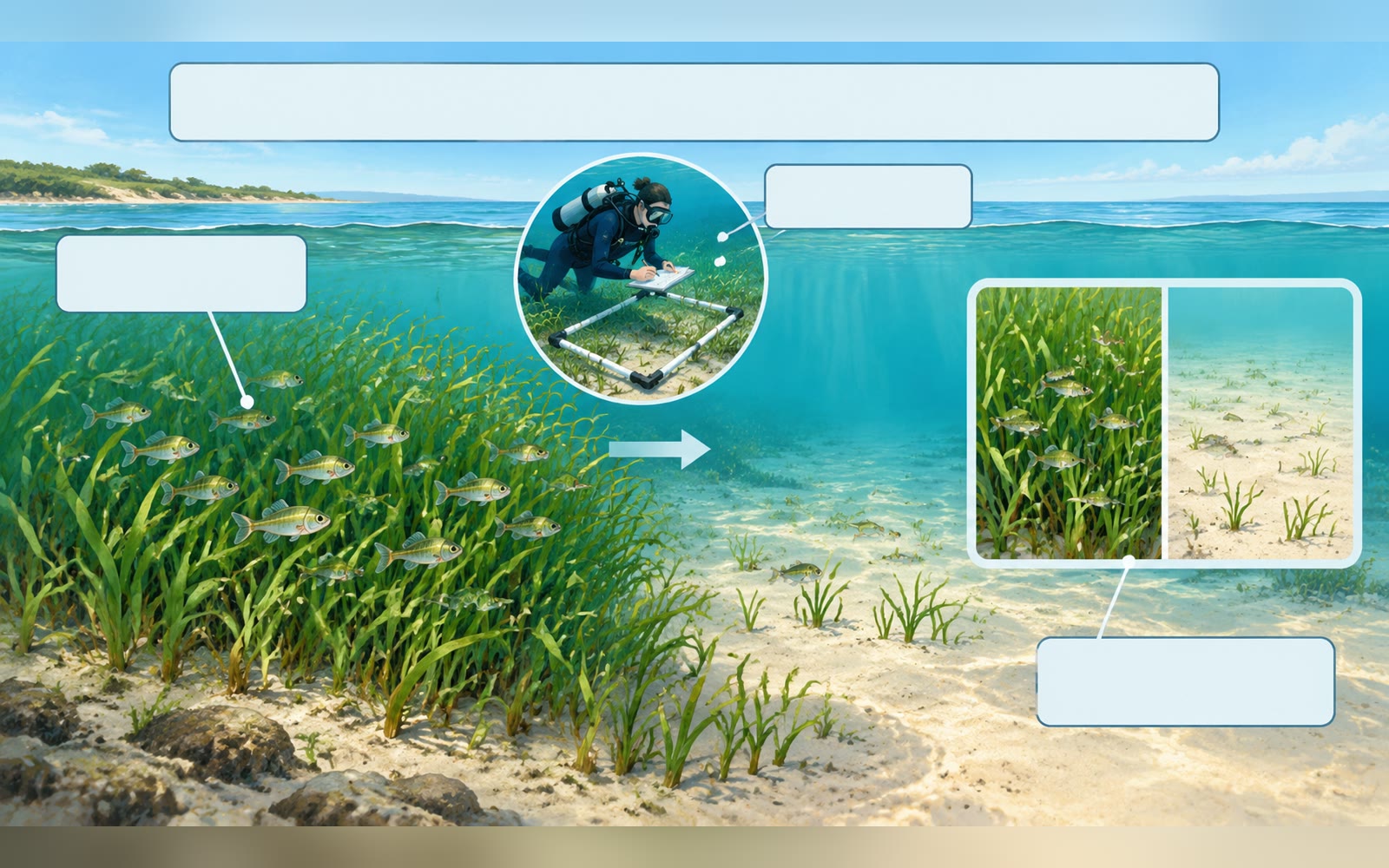
Turn verified marine findings into a text-free 16:9 poster base image: habitat, species, method and observation in one reading order, with three to five blank annotation areas.
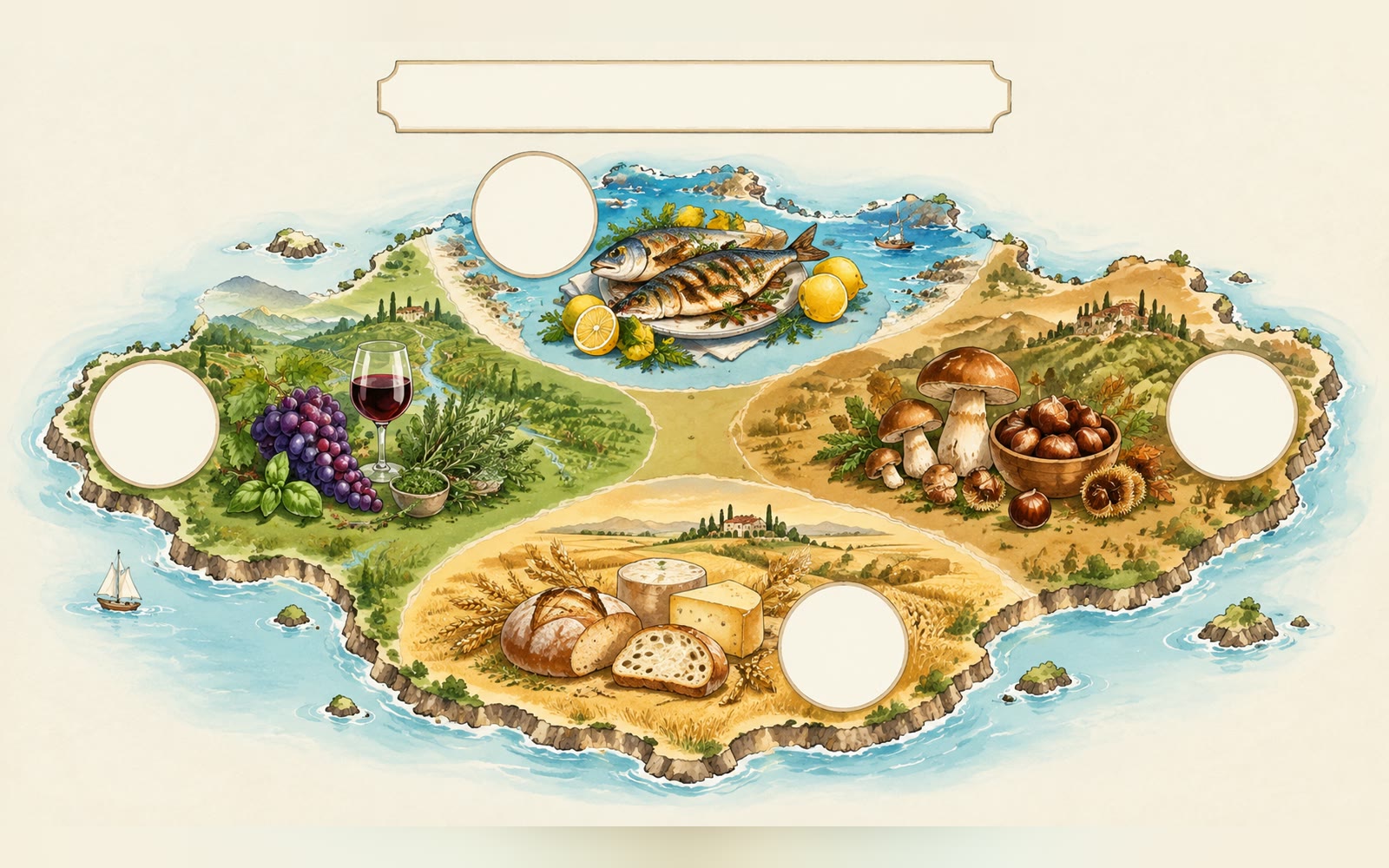
Turn a region's food areas into a text-free 16:9 flavor map base image with restrained geography, ingredient clusters and three to five empty profile badges.
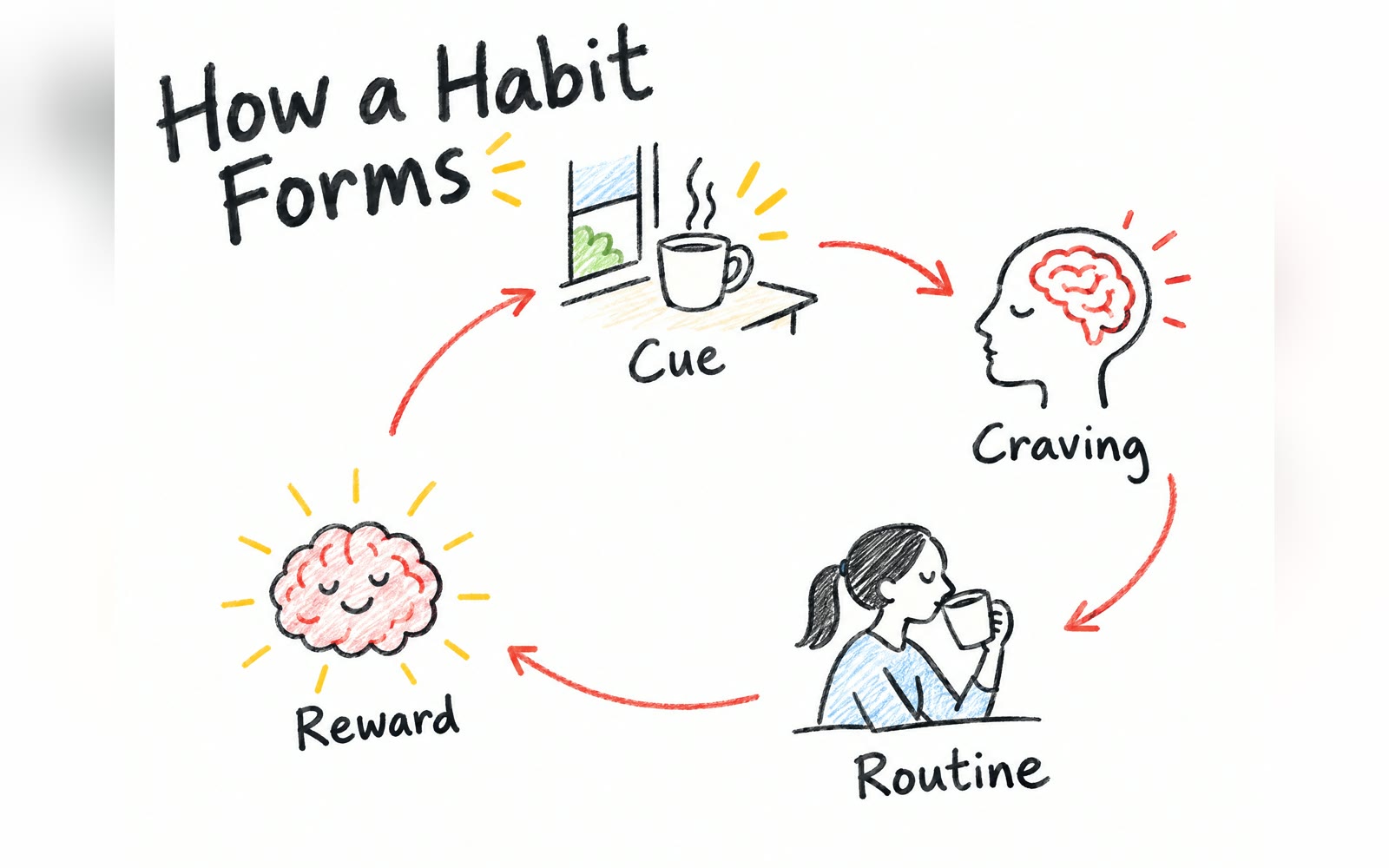
Turn source text into one 4:3 hand-drawn sketchnote: illustrated nodes, thin pencil lines, sparse color, a large title and three to five exact labels.
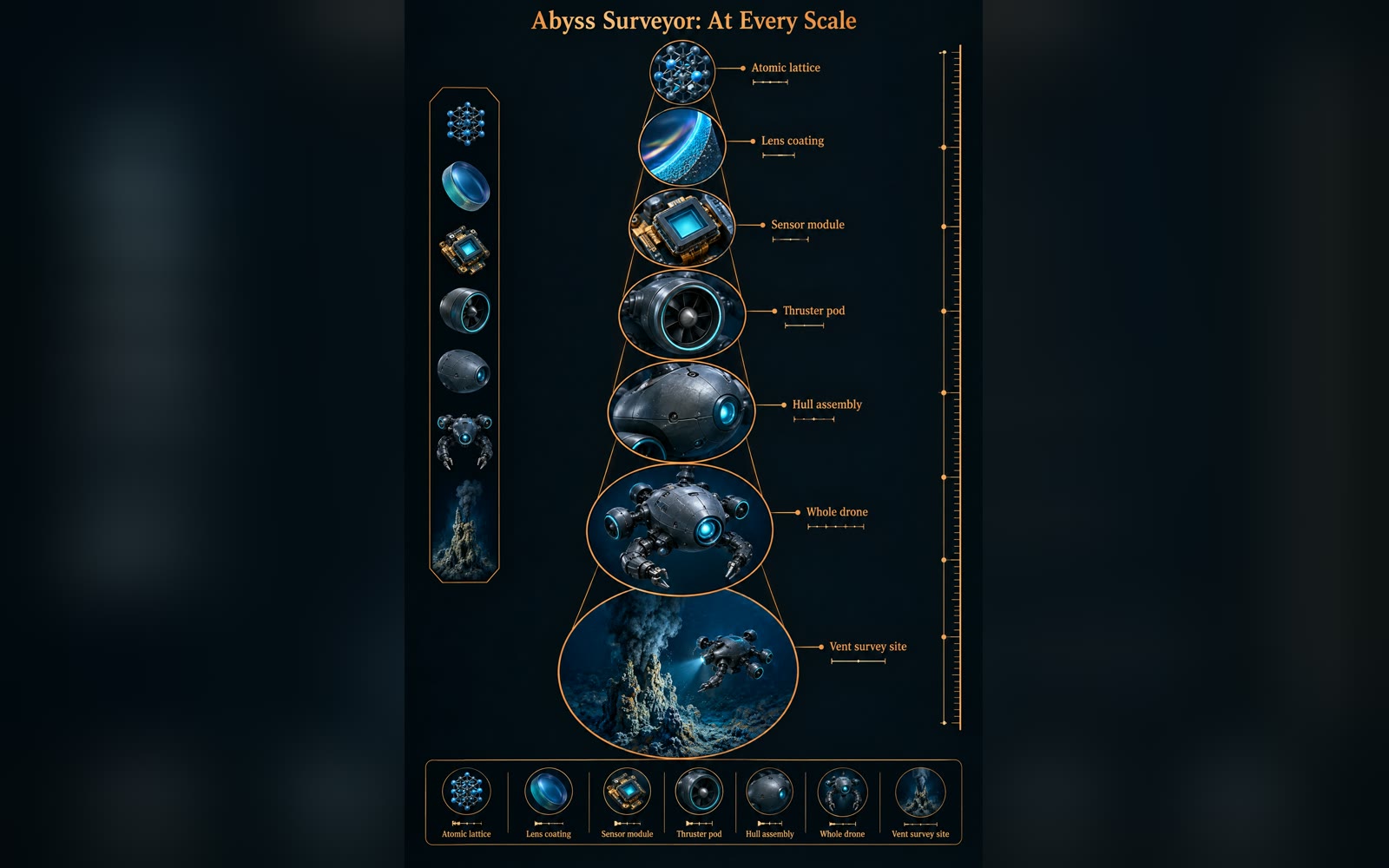
Turns a fictional subject into a zoom-ladder infographic that magnifies it at every scale.
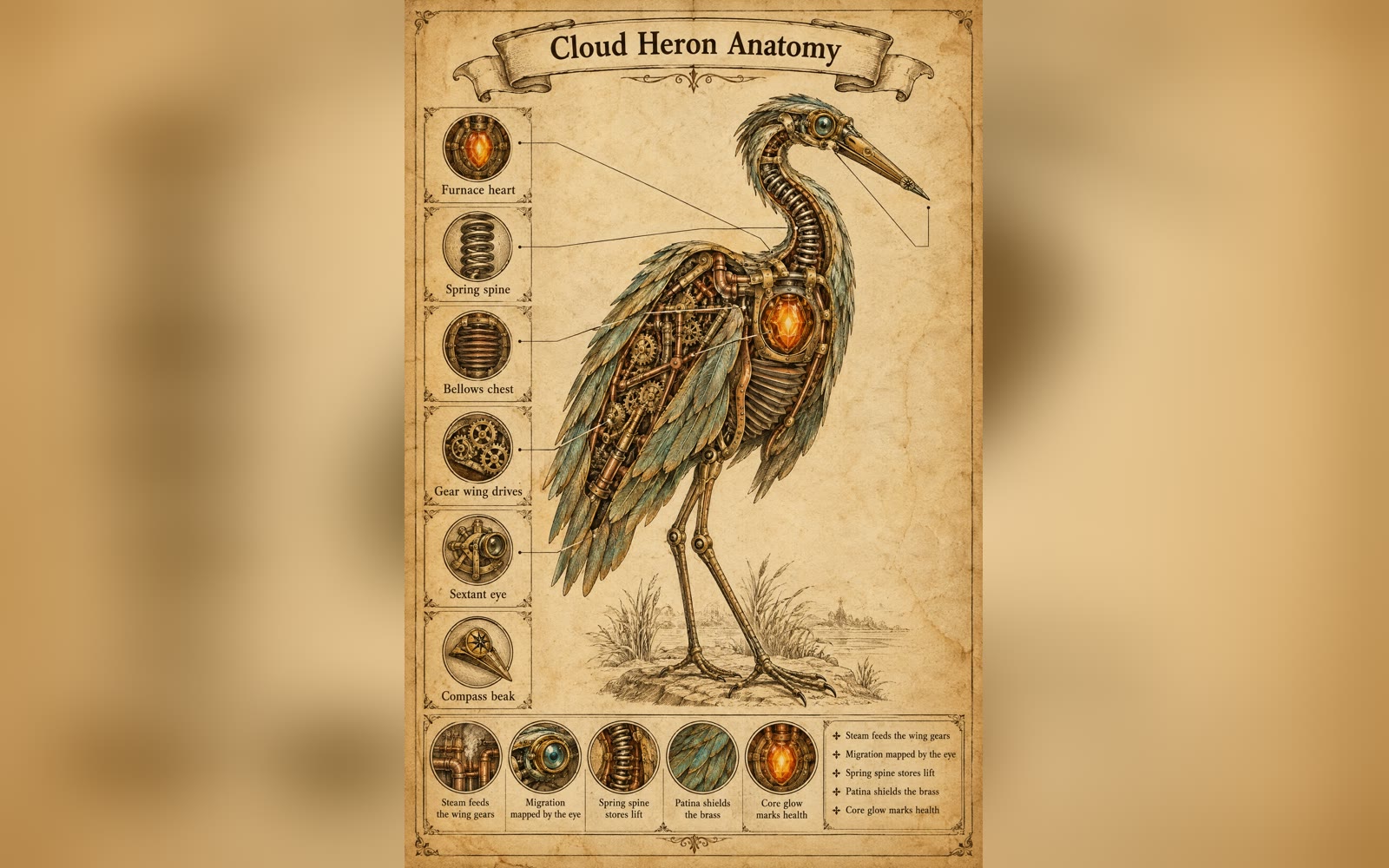
Turn a fictional creature or machine into a vintage engraved anatomy plate: a cutaway subject on aged paper with a banner title, legend modules and a findings strip.
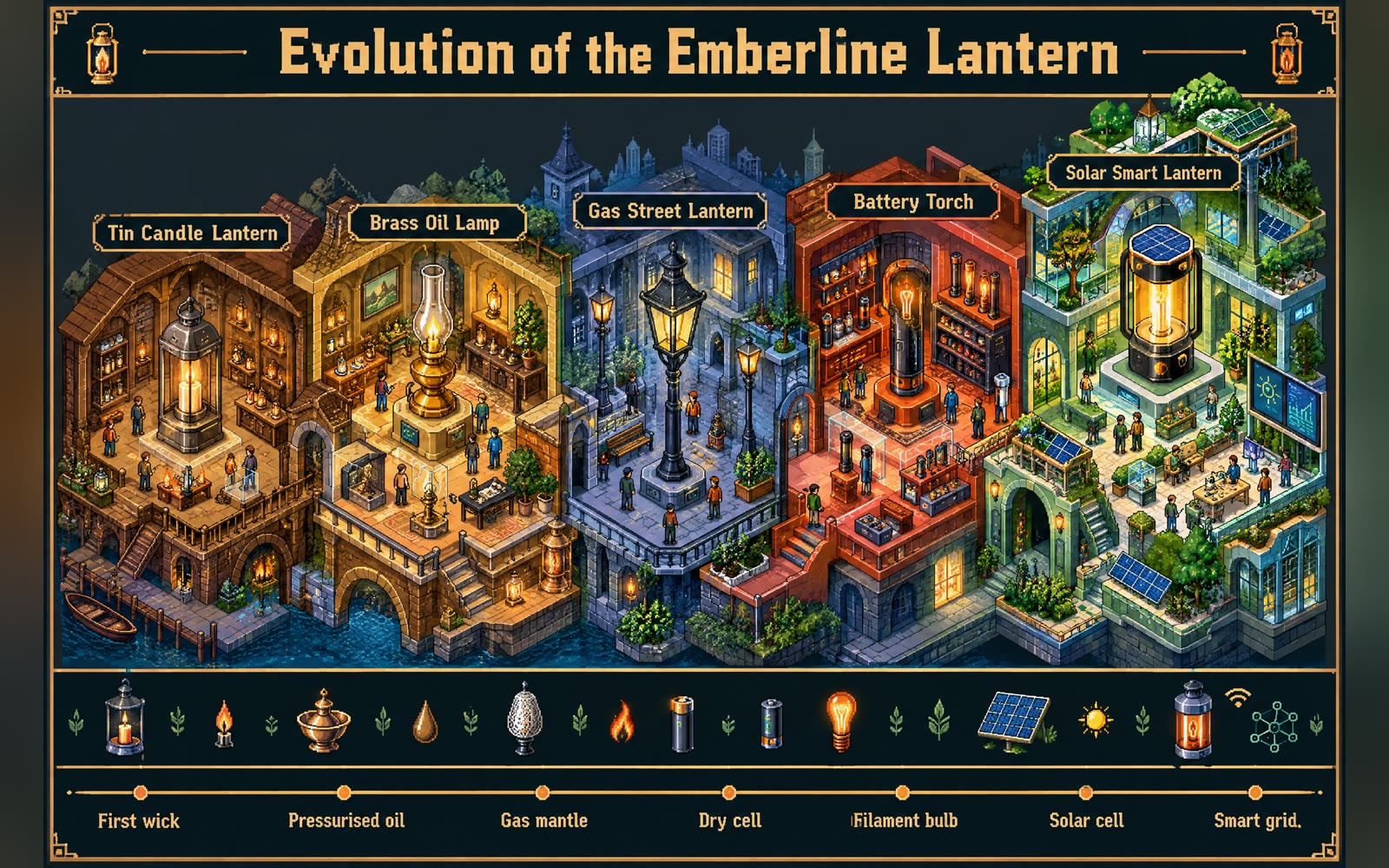
Turn a fictional progression into an isometric pixel-art museum poster: a left-to-right row of pavilion zones, one per stage, with a pixel title and a milestone timeline.
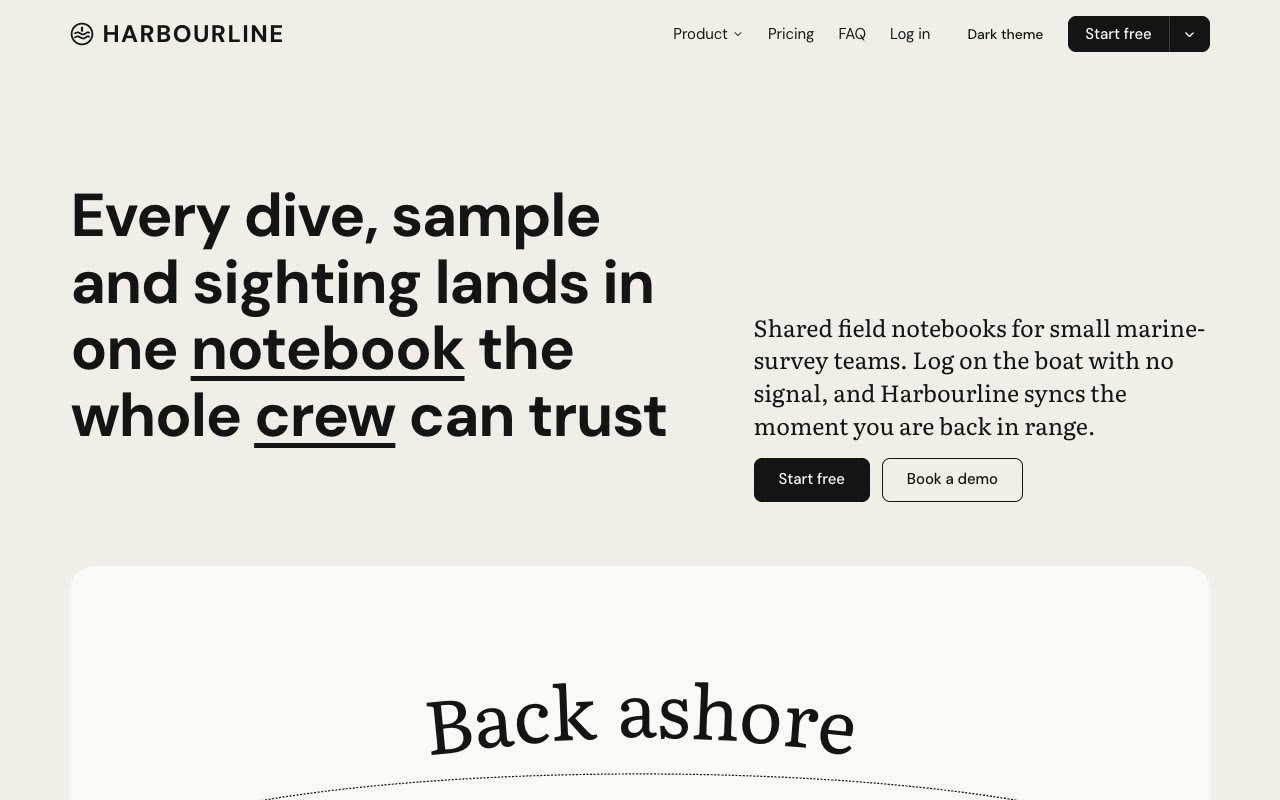
Restyle a site, or build a new one, in an oat paper style: bold sans headlines with underlined keywords, serif body text and warm cards.
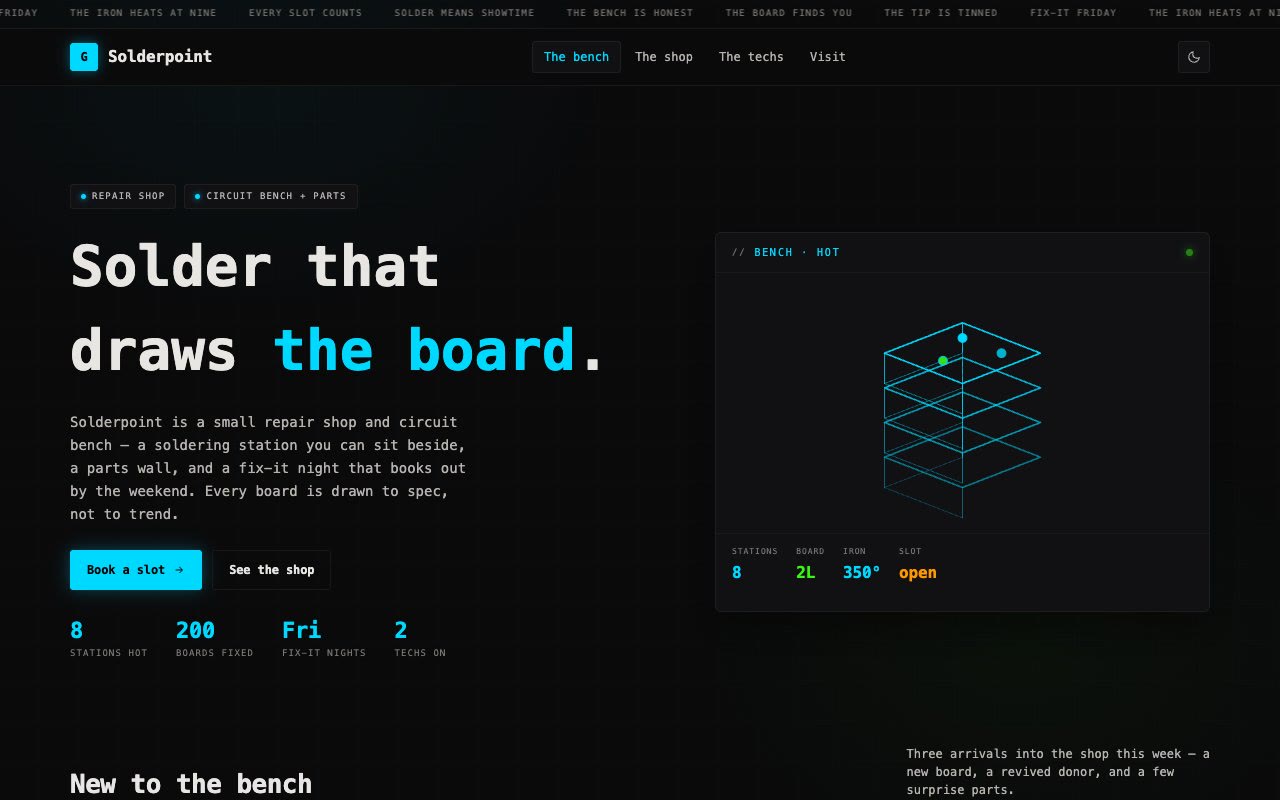
Turn a brief for a dev tool, data dashboard or technical documentation site into a site with monospace terminal aesthetics, green-on-black chrome, geometric grids, isometric diagrams and technical typography.
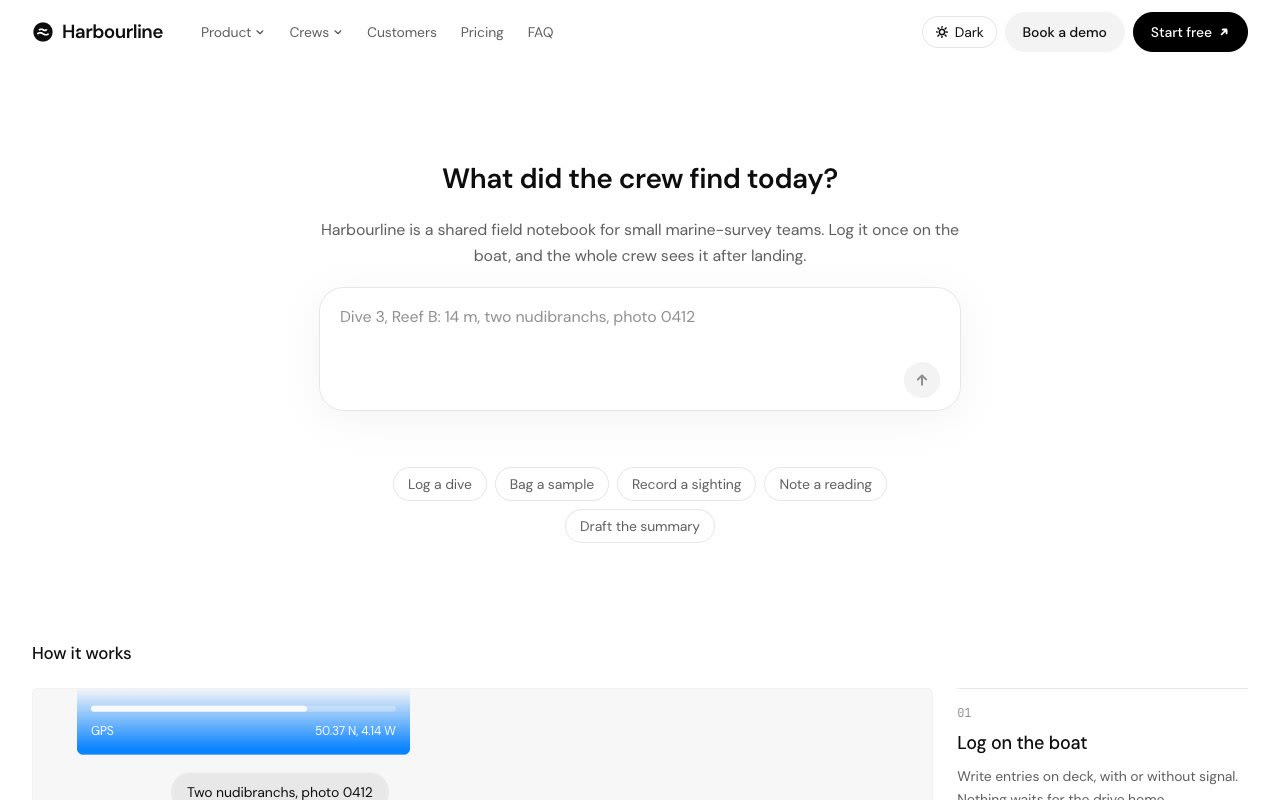
Restyle a site, or build a new one, in a quiet minimal style: one grotesk typeface, black pill buttons and colour kept to soft gradient media.
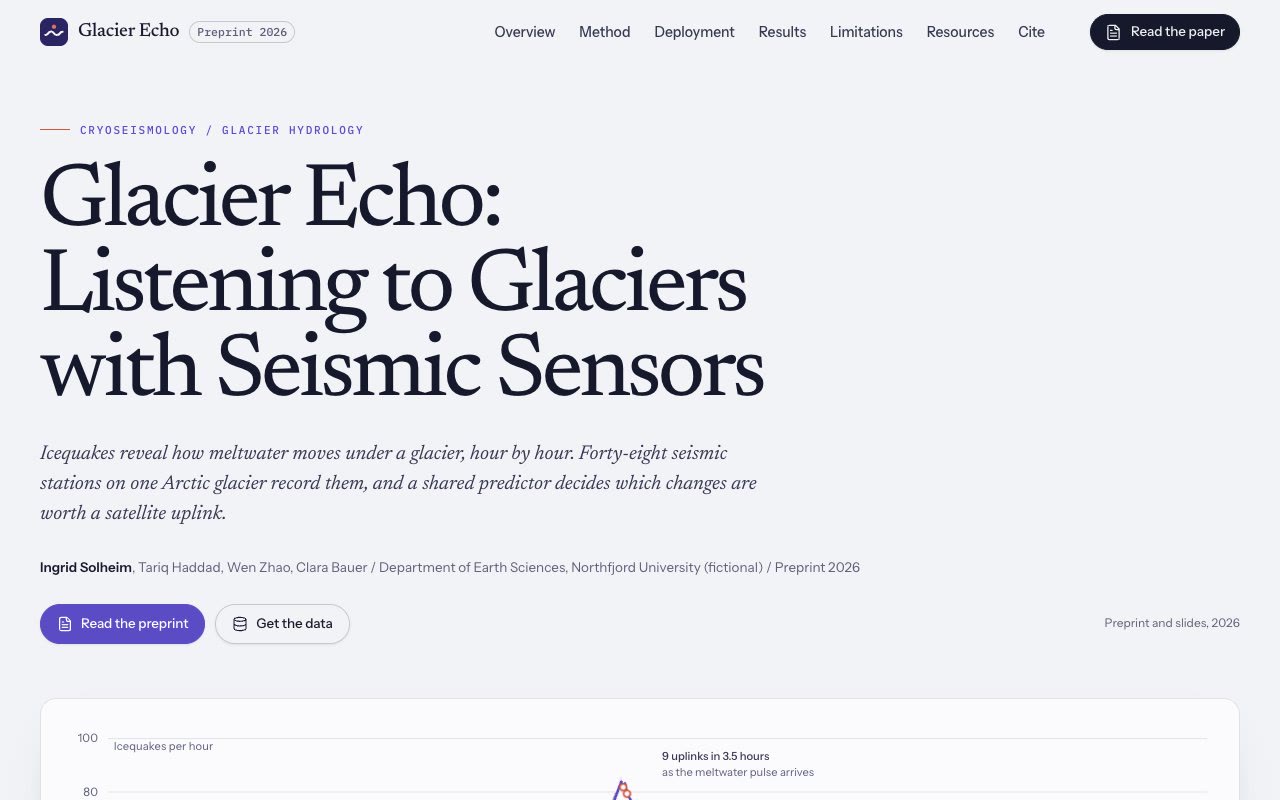
Turn a paper into a single-file project homepage with the abstract, results, paper, code and data pages.
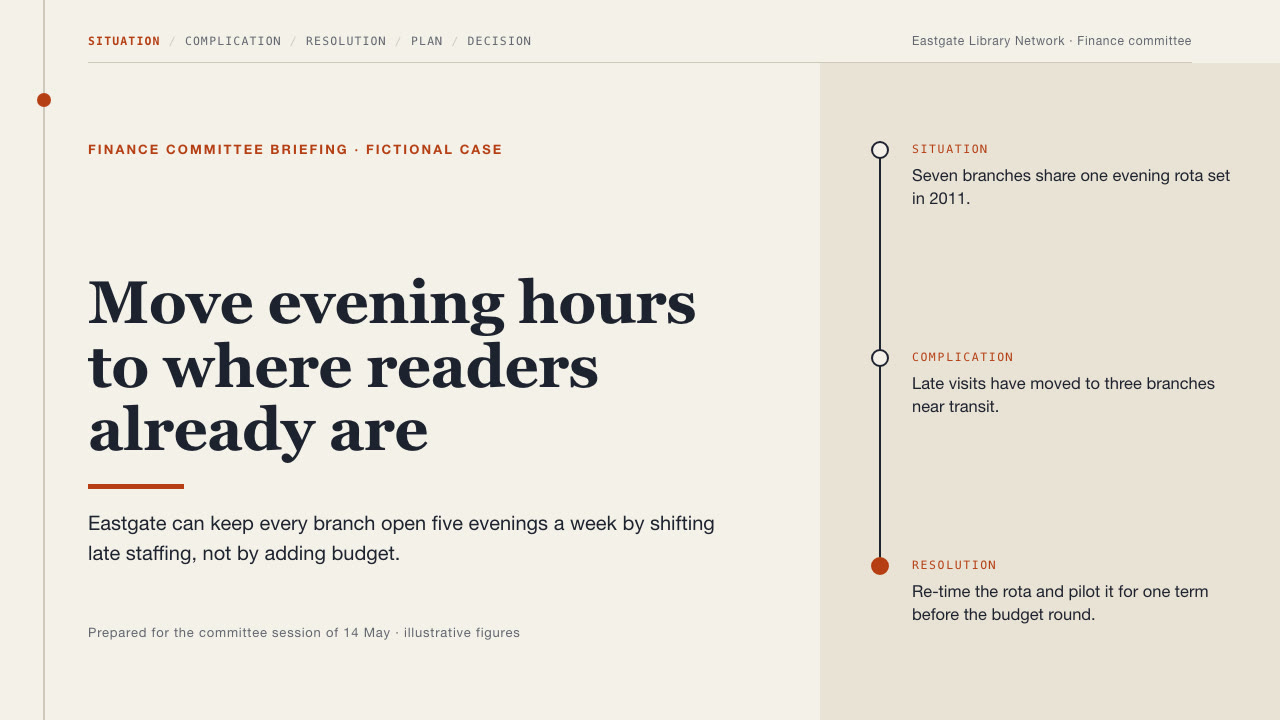
Argue one recommendation to a committee or board with action titles, a storyline tracker, evidence charts and a bounded decision ask.
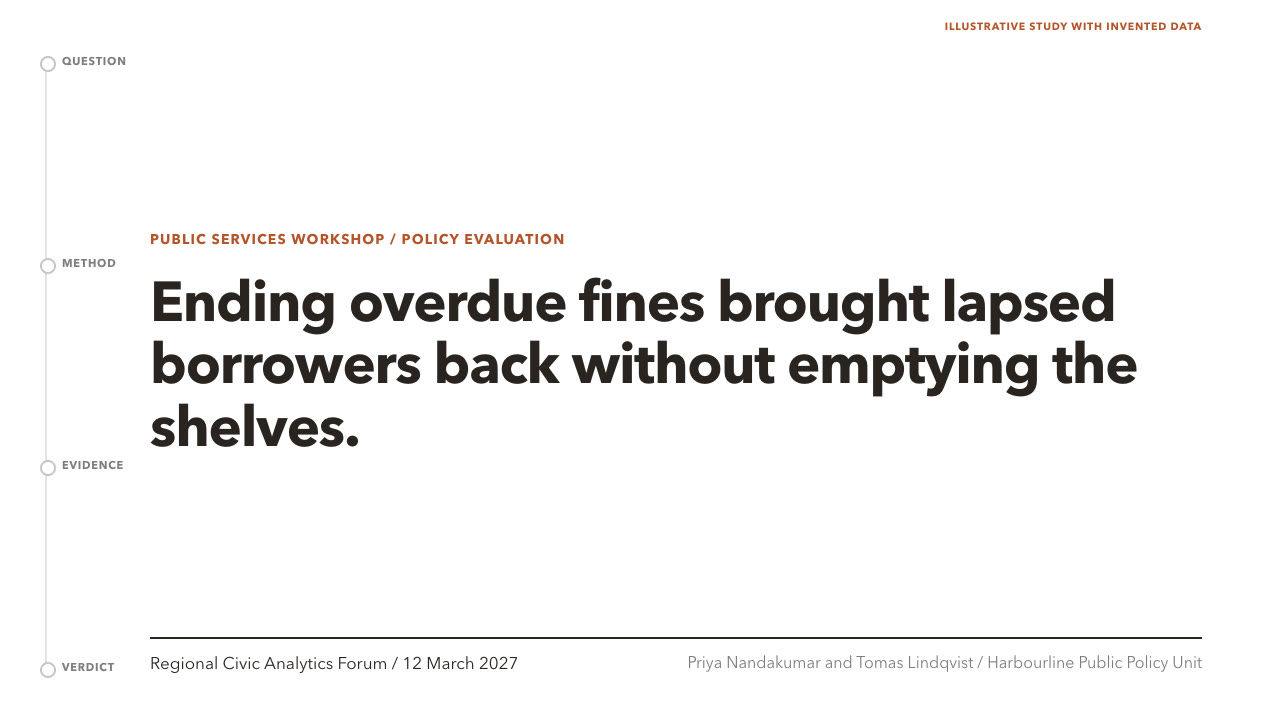
Build a research talk whose titles, read in order, argue one claim from question to verdict, with one cited exhibit per evidence page.
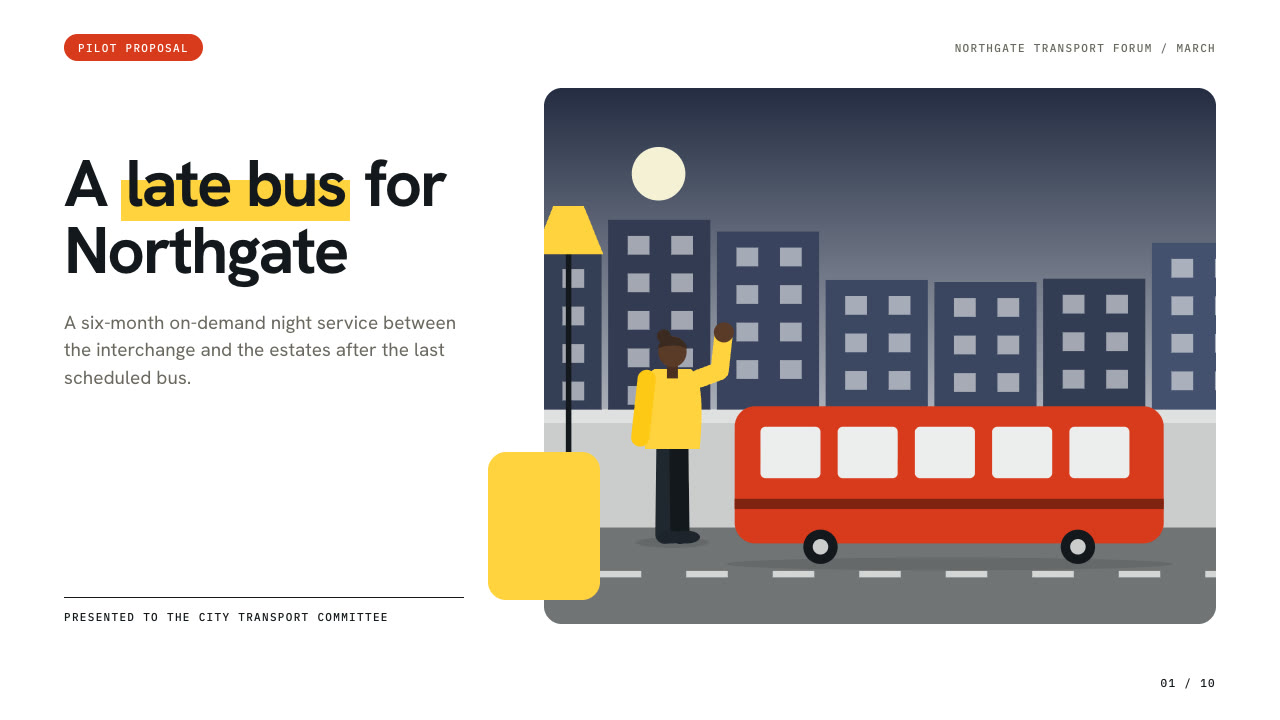
Make the case for a public or community service decision with picture cards, thin bar charts, stat tiles and a clear ask.
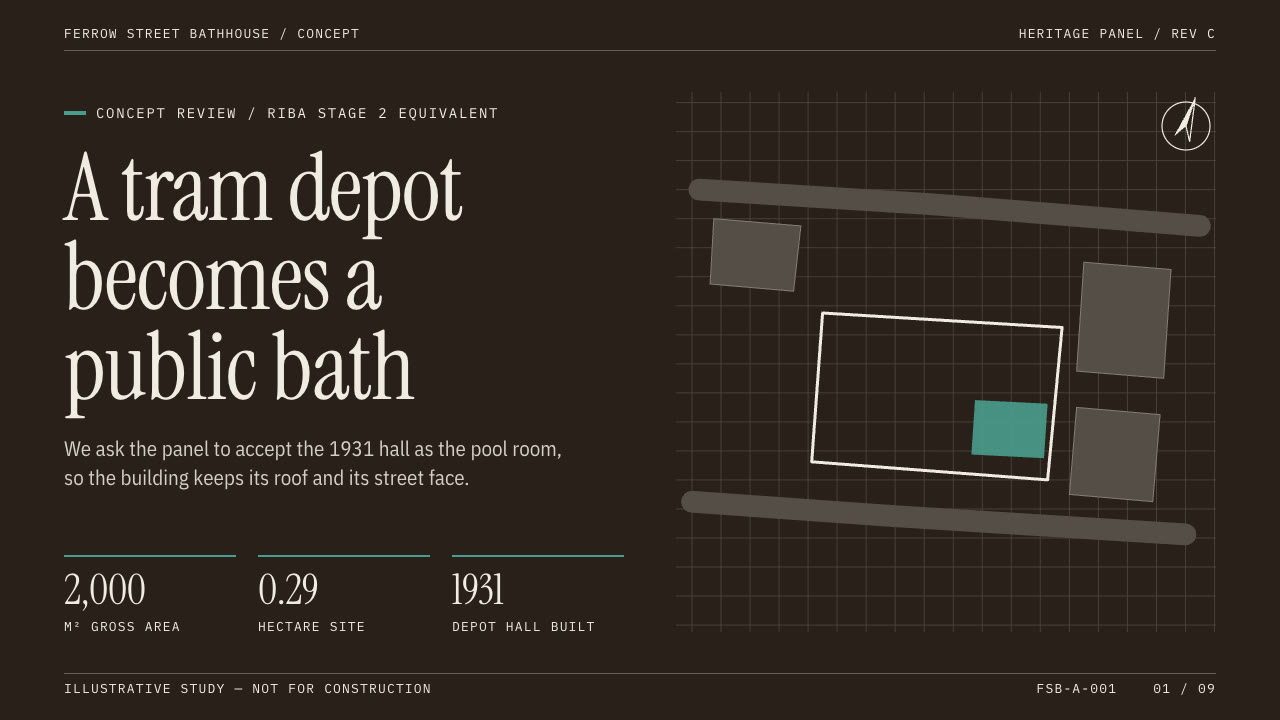
Take an architecture or site-design proposal to a review panel like a drawing sheet: site, massing, plan and section, program, phasing and one clear decision.
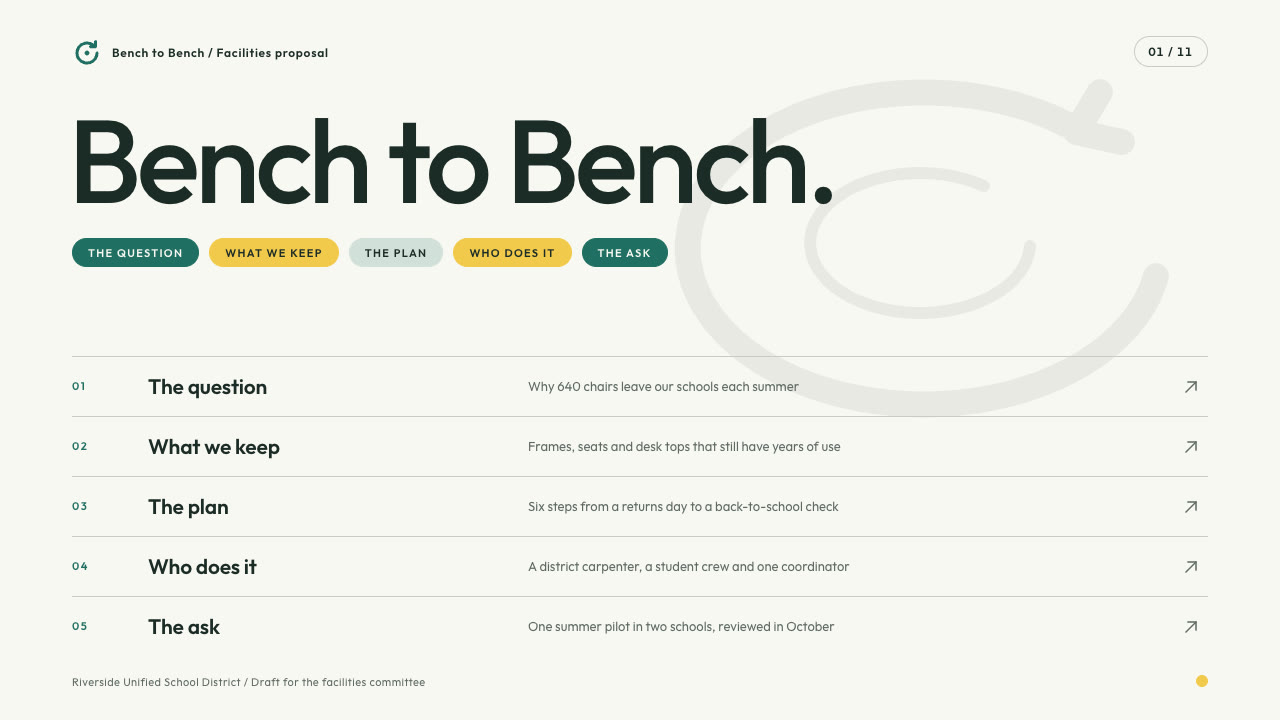
Propose a repair, reuse or take-back step in a light modular deck: rounded cards and pill capsules, an open-ring motif, notched principle cards, a six-step grid and a capsule bar chart.

Turn one long read, essay or report into a reading brief a committee can decide on: a masthead, argument beats on a rail, a headline figure, bar charts and a source ledger that keep checked facts, assumptions and open questions apart, two readings, discussion prompts and the decision asked.
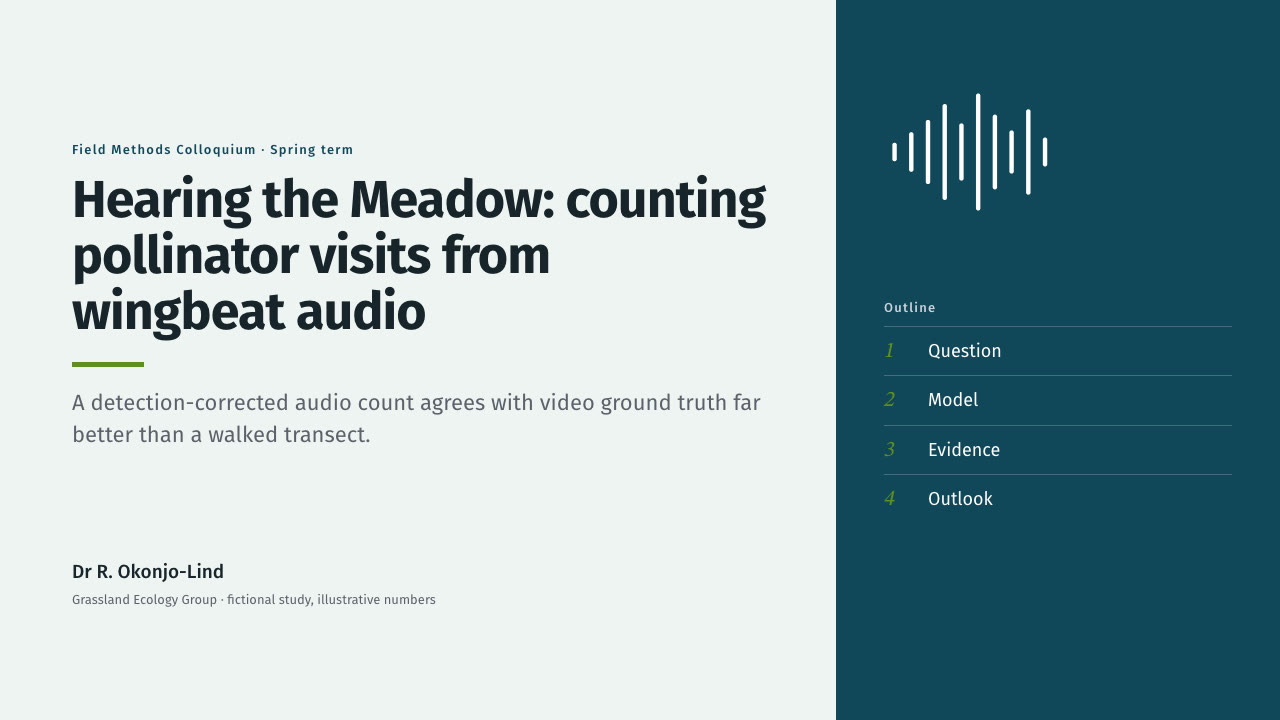
Turn a paper, thesis chapter or research notes into a projection-ready 16:9 talk for seminars, colloquia, defences and conference sessions: a section strip with the current section lit, equations with spoken readings and term glosses, a method pipeline, a proof sketch, native result bars and tables, plots drawn from data and a progress bar with frame counters.

Make decks that look like pages from a naturalist's notebook, for nature, neighbourhood and community projects: warm paper, flowing script headings with one phrase in blue, small sans copy, and a pen-hatched study of birds, sprigs, nests, bird houses, water dishes or planters on a dry-brush ground for every page, with editable tags, numbered markers, connector lines and data bars.
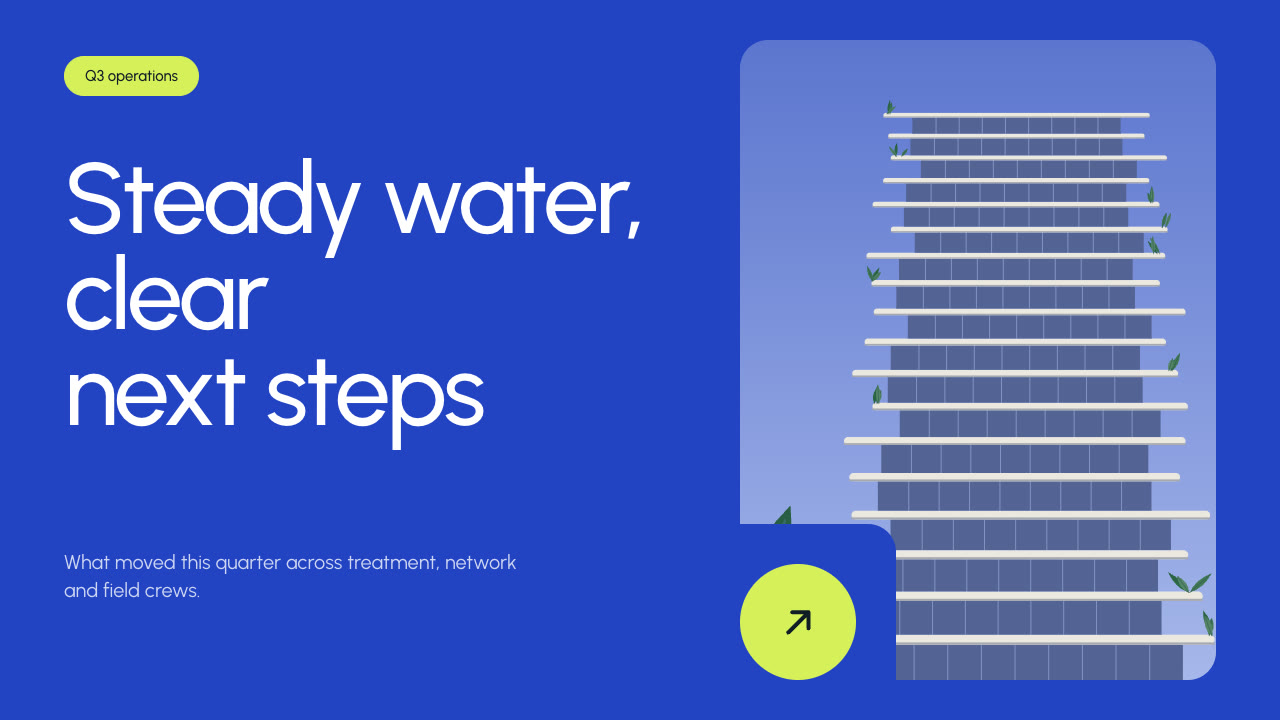
Make operations report decks, such as quarterly operations reviews, service performance updates and programme status for a board or committee: cover and close on a strong theme colour, a tall drawn building whose corner is notched around a round arrow, bright utility cards with one big figure, short capsule tags, editable index bars and growing stage circles, with Urbanist headlines.
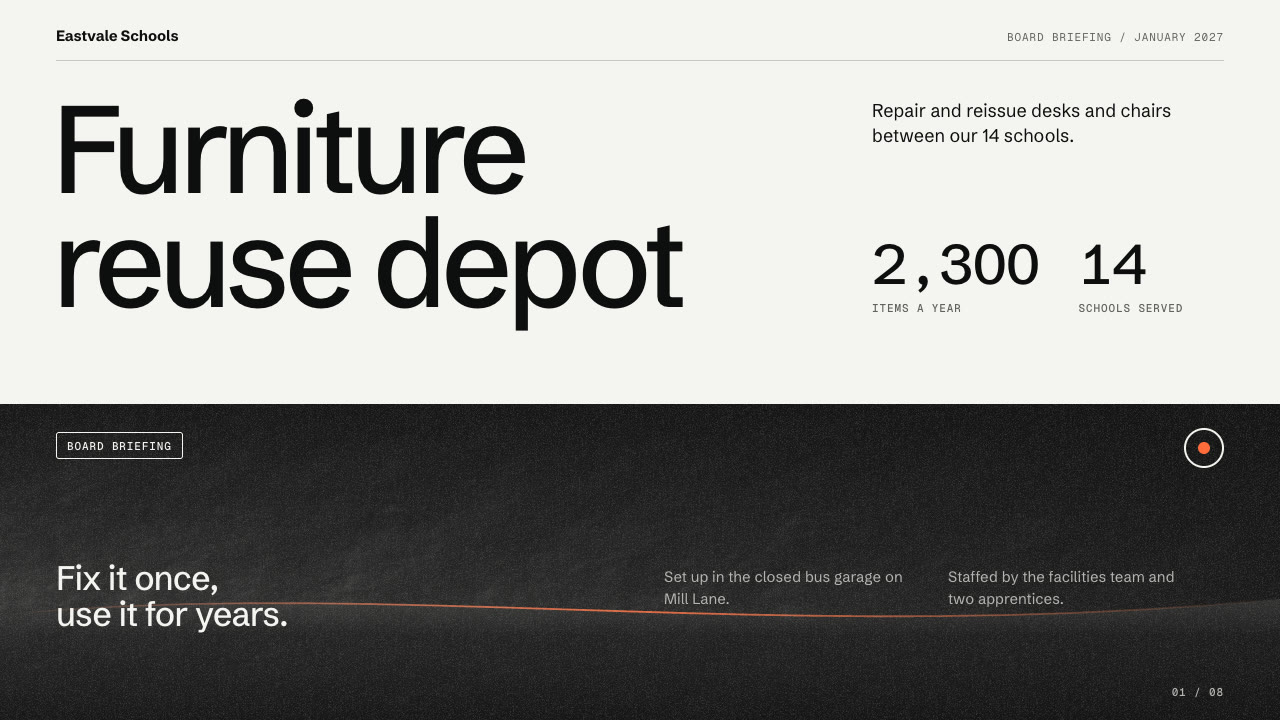
Turn a report, article or idea into a deck people can listen to, on top of a presentation style Skill you already have: the style draws the pages, this Skill writes a spoken script into every page's speaker notes, quotes the voice cost, and after you approve records one take per page and adds a listening bar with play, seek, speed, auto-advance and a script panel.
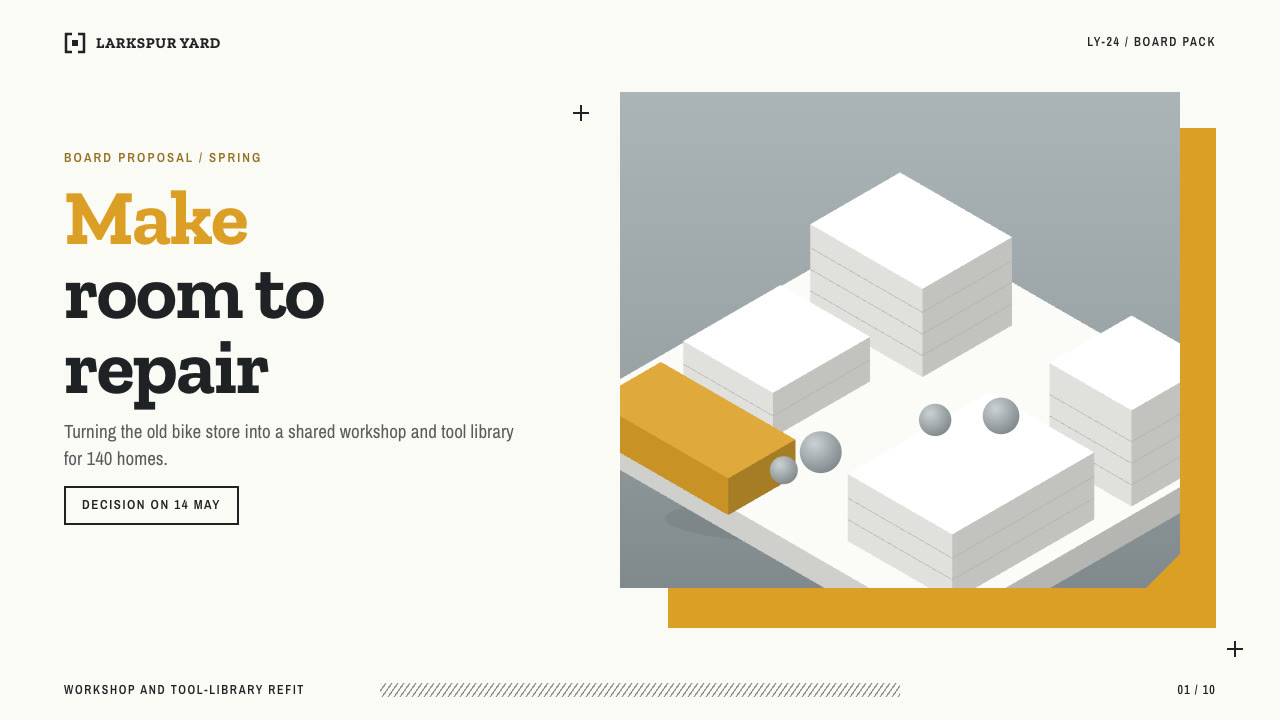
Make dense site-dossier decks for building work, such as refits, retrofits, renovation programmes, board packs and briefings for residents or parents: Zilla Slab headlines with an accent lead word, small spaced capital labels, picture frames with one cut corner, mustard, clay or lichen panels and a full accent field page, graphite side panels, a hatched footer rule and plus registration marks.
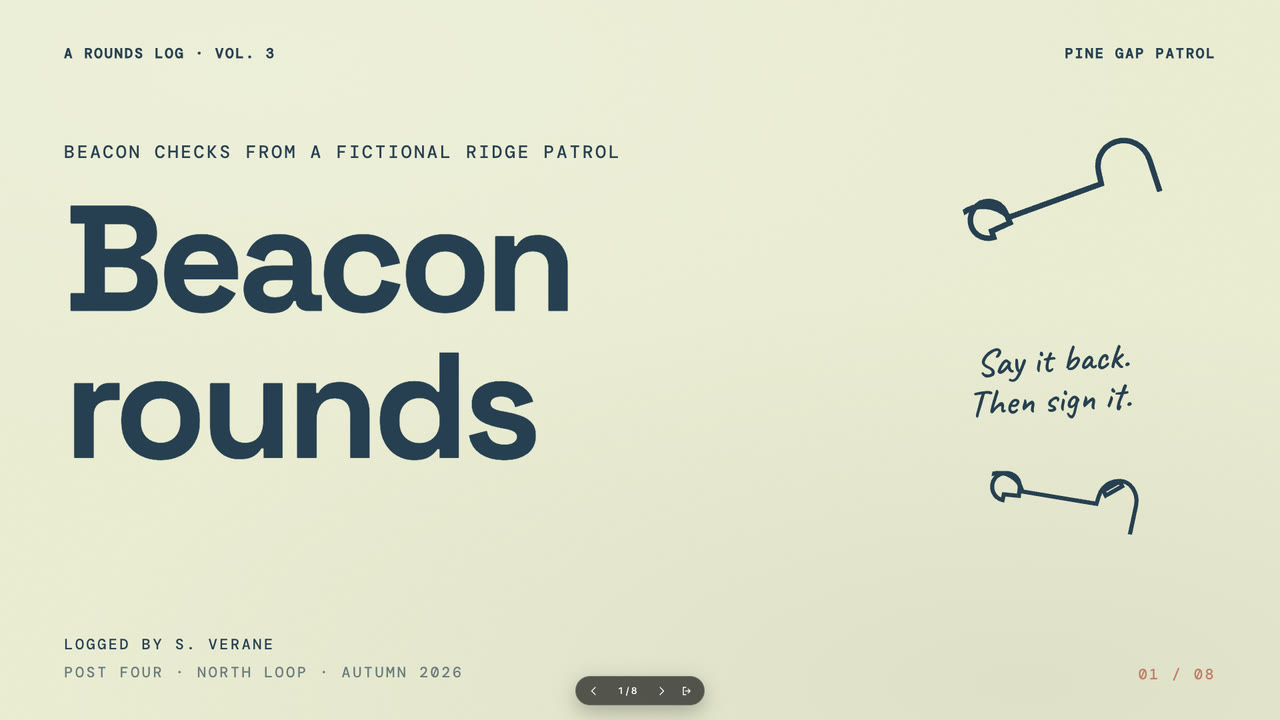
Make decks that read like pinned field notes: saturated yellow legal-pad paper, cobalt ink, hand-drawn safety pins, cream pinned cards, handwritten marginalia, mono archival tags and rotated red stamps.
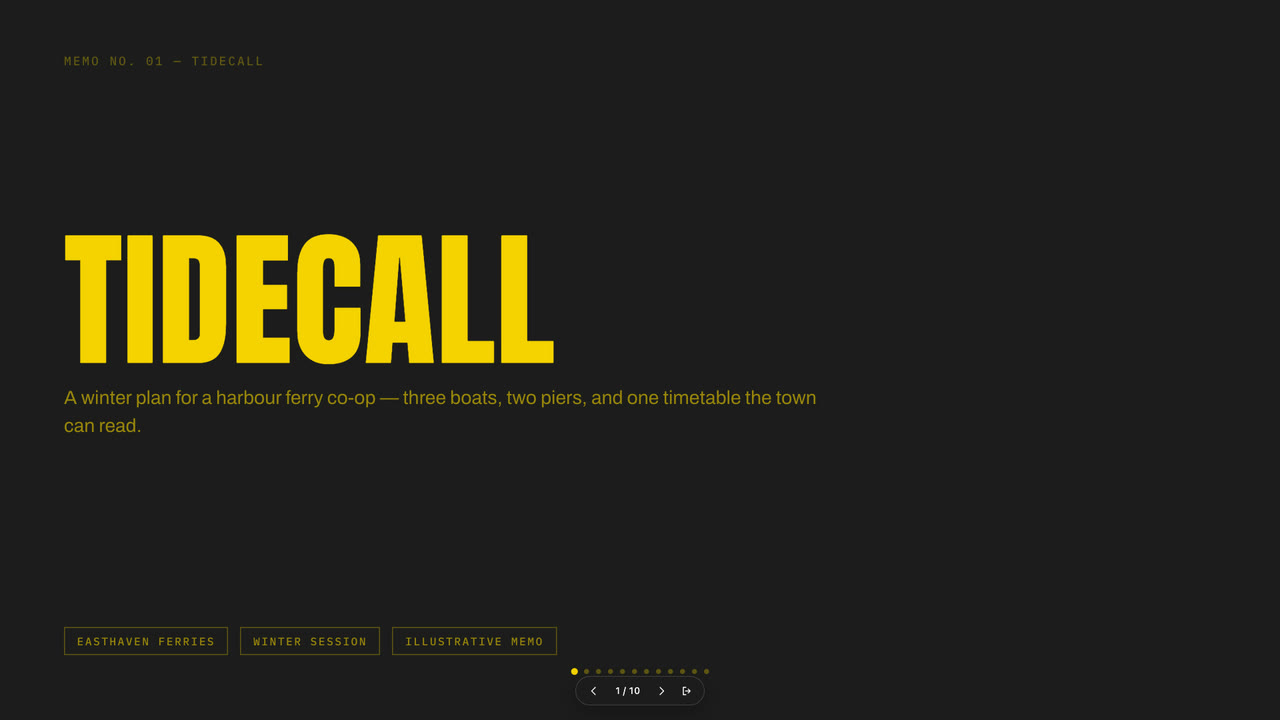
Make decks that read like high-voltage two-register briefs: near-black ink pages or full volt-yellow pages, uppercase condensed grotesk titles, mono chrome labels, em-dash bullets, stepped bar charts and hairline-framed drawn panels.

Make decks that read like nocturnal editorial issues: a single near-black velvet canvas, pearl-paper type with one hot-pink accent, serif display numerals, mono masthead chrome and framed line-art plates.
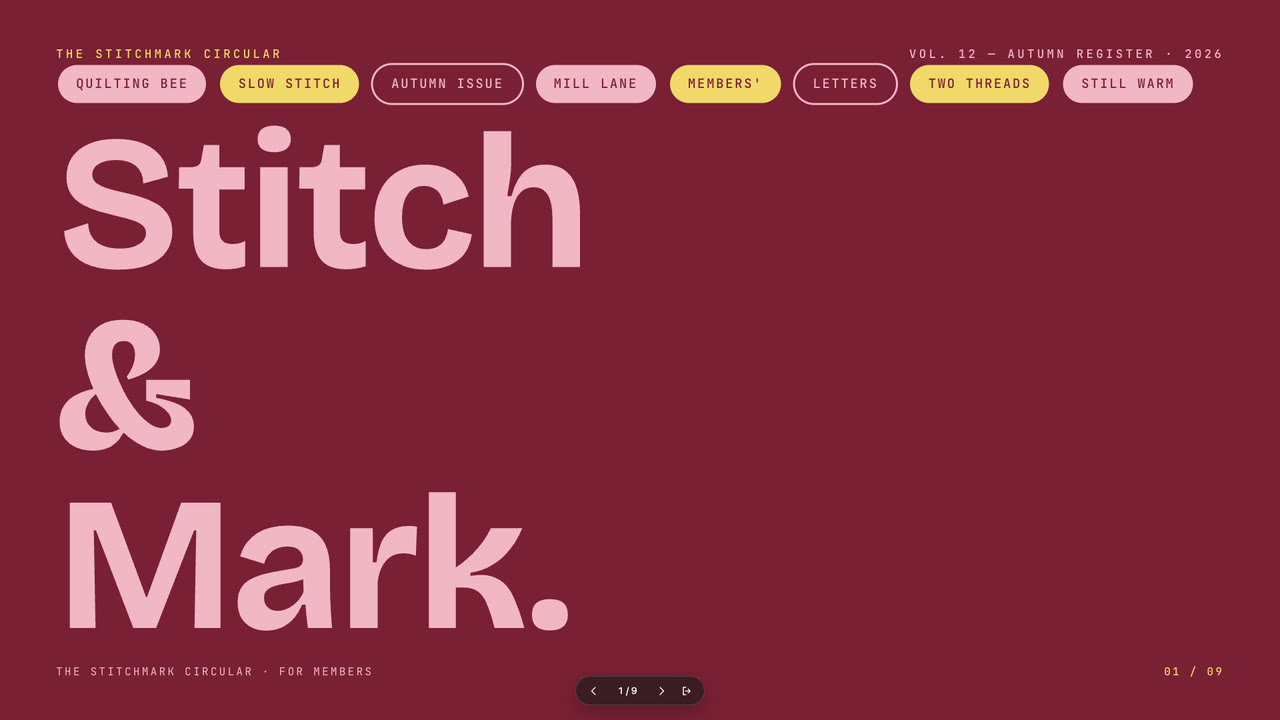
Make decks that read like three-ink seasonal gazettes: berry surface, butter accent and ink type on Bricolage Grotesque and Instrument Serif — a chip-row cover, principle grid, headline figure and colophon.

Make decks that read like paper-cut field manuals: cream ledger paper, black stencil condensed titles, two accent inks, blob agenda chips, three-column consults, stepped counts, reach matrices and call cards.
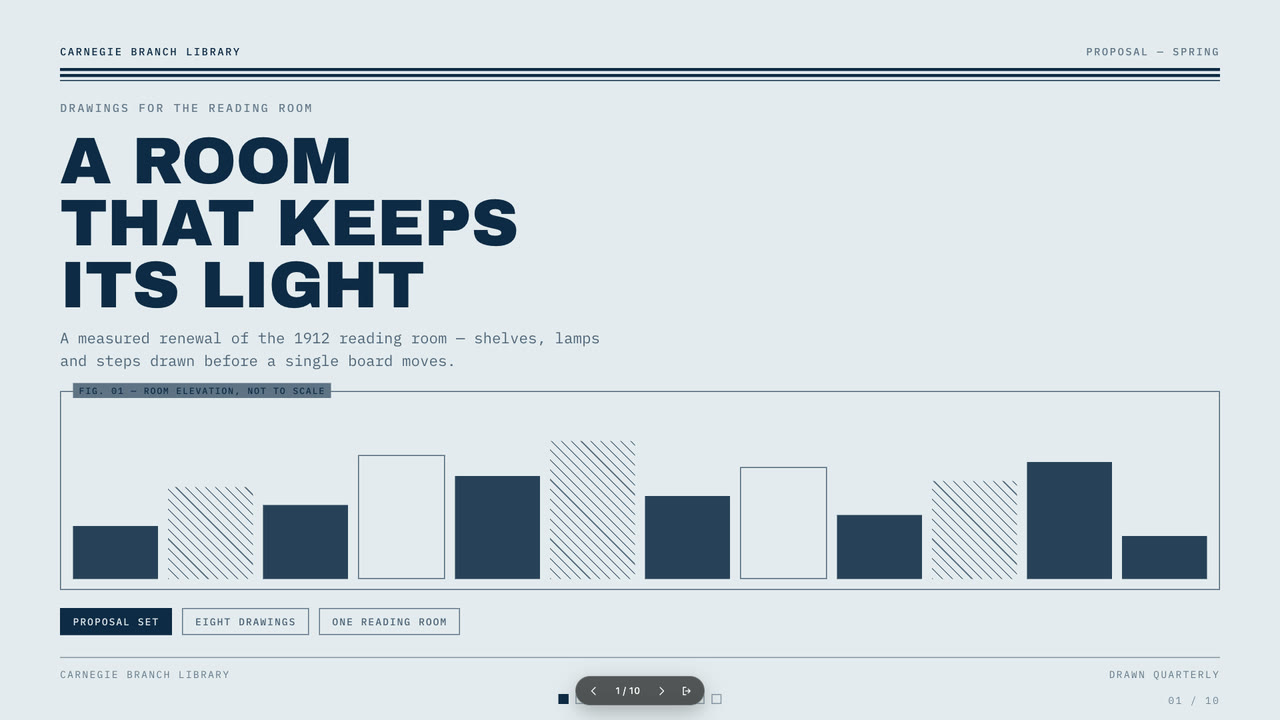
Make decks that read like printed drawing sheets: cream paper pages beside near-black plate pages, a double-rule masthead, uppercase display type, monospace ledger copy, fig.-tagged wireframe figures, hatched fills, X-cross placeholders and dashed checklists.
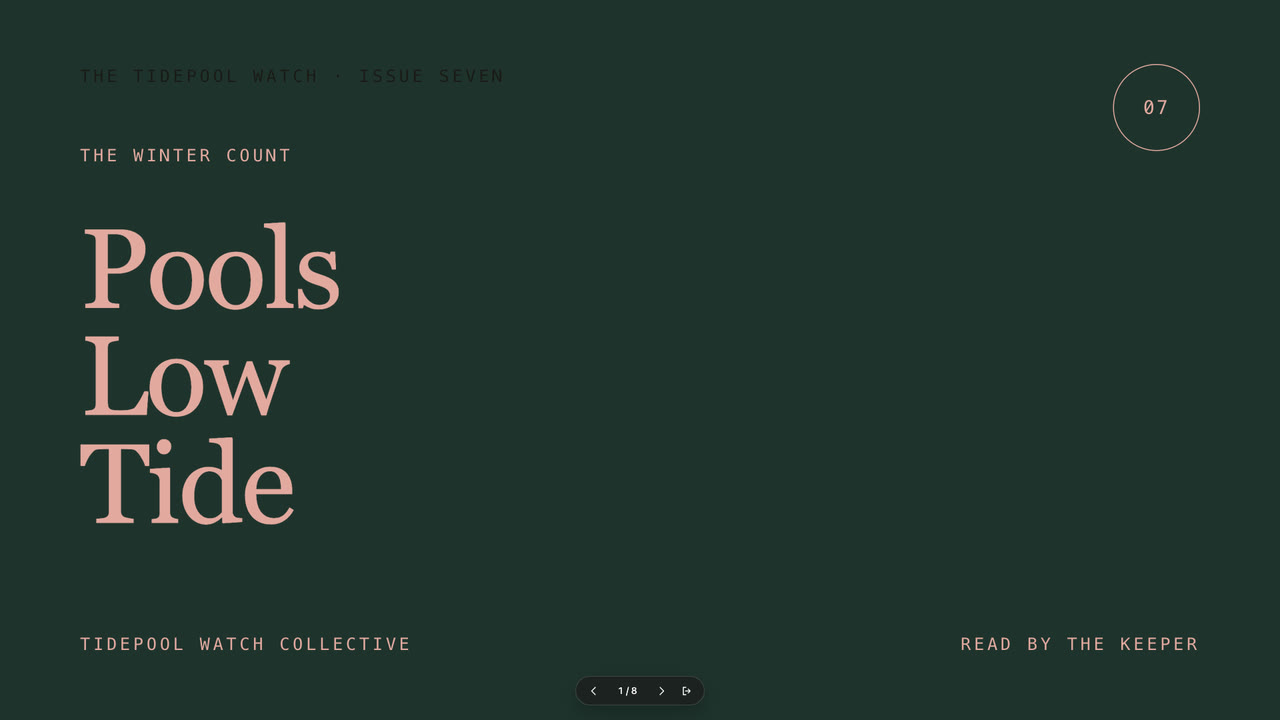
Make decks that read as a printed quarterly or an editorial year-in-review: a three-tone register of deep forest green, dusty pink and oat cream, a tall literary serif with mono chrome, monogram-circle page numbers, mixed filled and outlined tile grids and paired bar charts on a colour field.
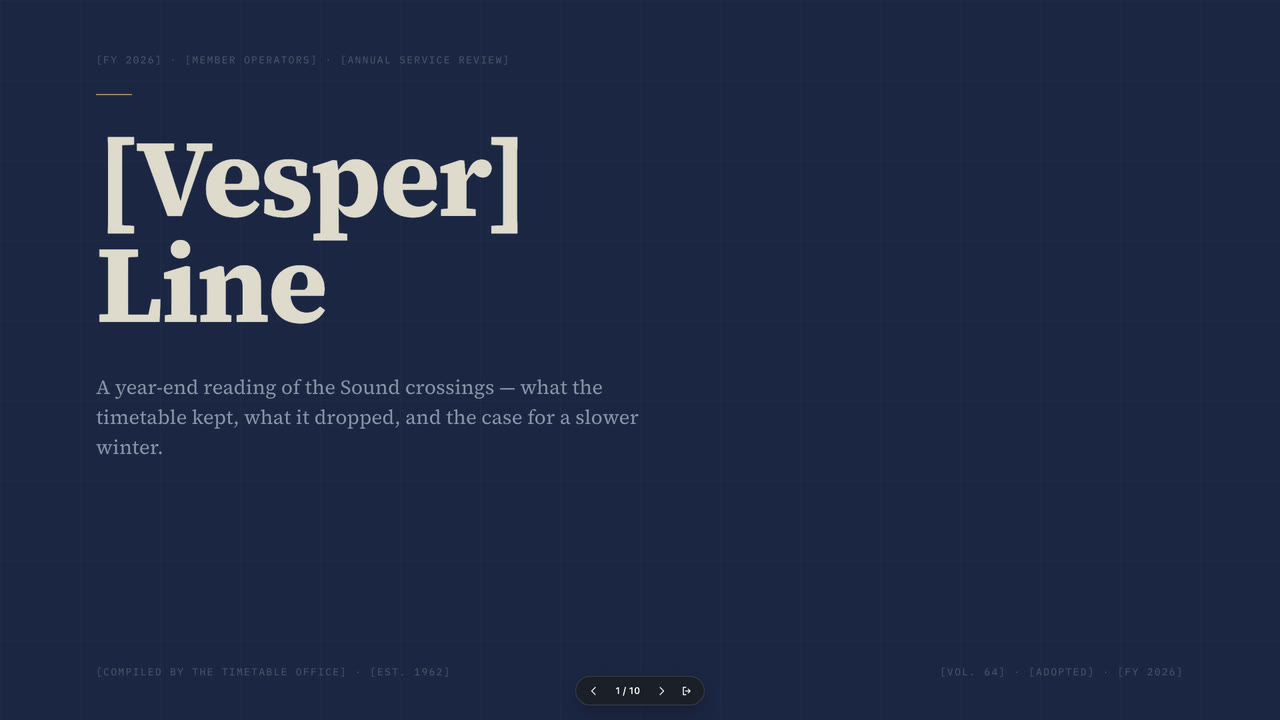
Make decks that read as institutional briefings or considered board documents: deep editorial navy and warm cream as interchangeable fields, antique-gold punctuation only, a near-invisible 80px grid texture on every dark page, and hairline mono chrome — transitional serif display against mono datelines.
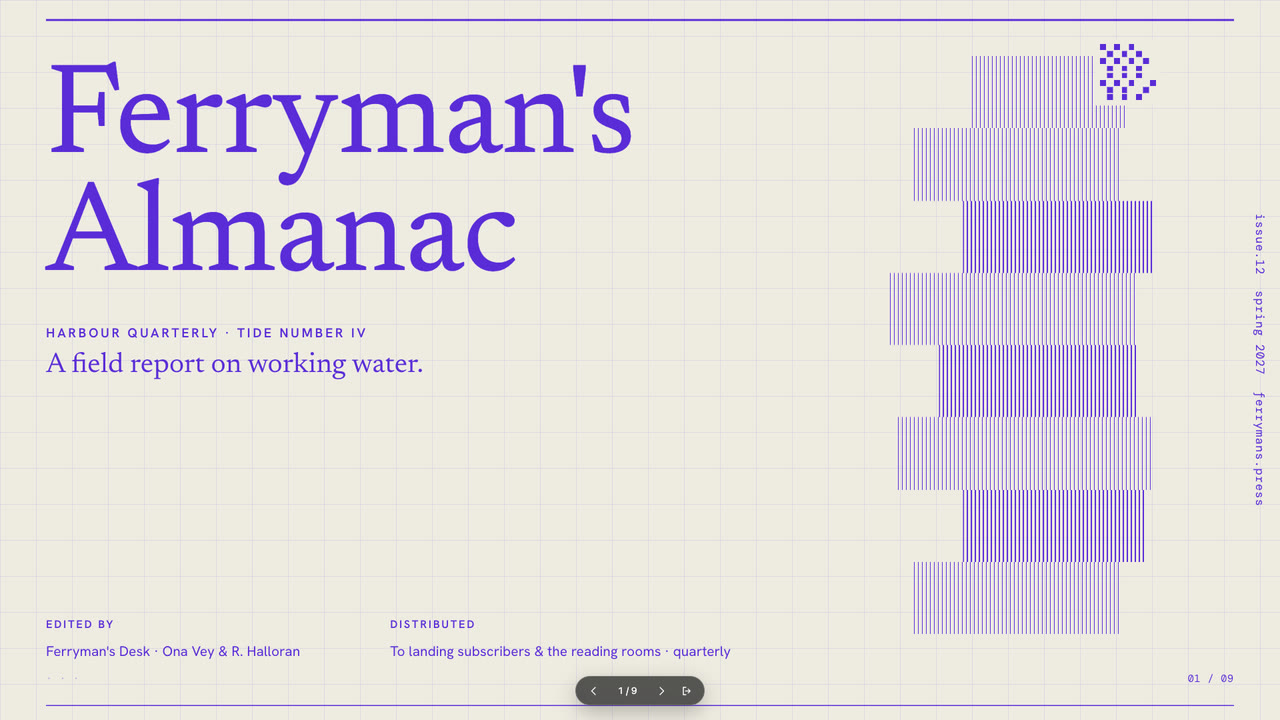
Make decks that read as trend indices or editorial ledgers: warm cream paper with a permanent graph-paper grid, a single electric-cobalt ink for every headline, rule, chart and chrome element, pixel-glitch scanline columns, QR mosaic patches, ledger tables and pixel-stack bars.
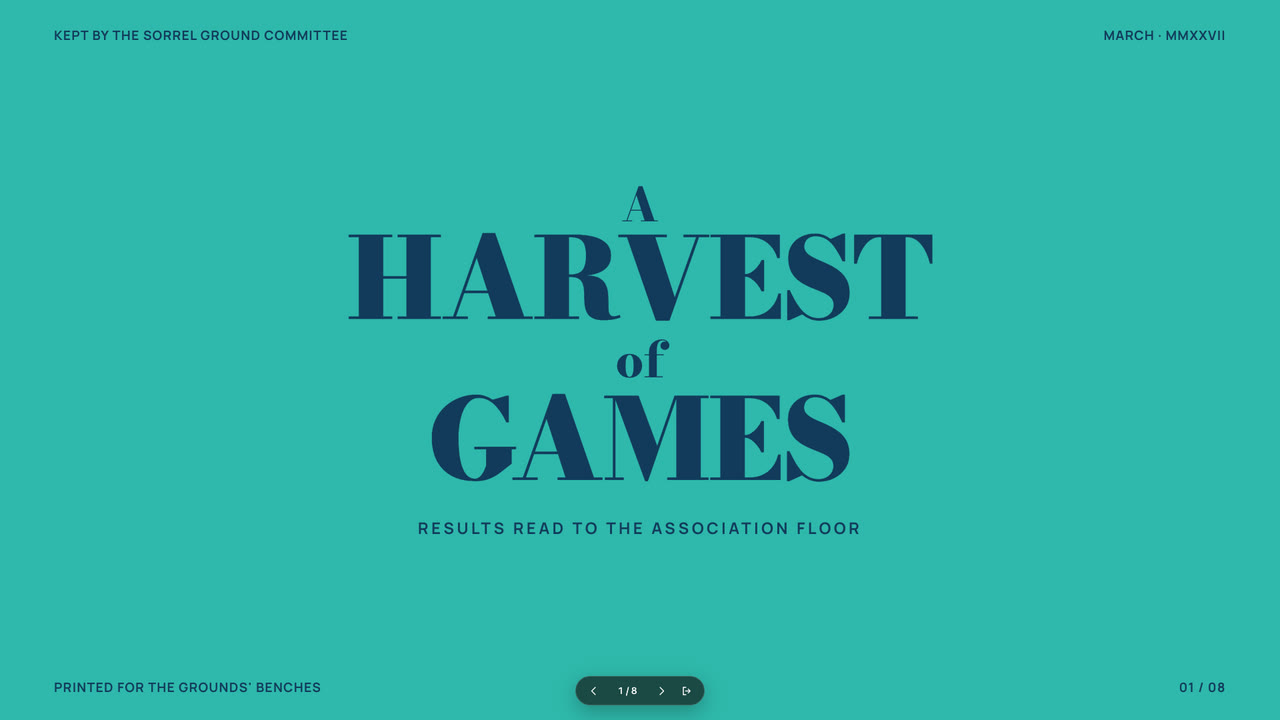
Make decks that read as bright editorial playbills: a saturated emerald canvas, one deep-navy ink for every text, rule and inverse panel, oat-paper alt tiles, a heavy display serif at theatrical scale and the signature double-rule ornament.

Make decks that read as dark literary monographs: a deep forest canvas with warm bone Playfair serif, Jost-light body, mono hairline chrome, a single terracotta accent as kicker/rule/italic-em/quote-mark/highlight-bar punctuation, ghost watermark numerals, rotated sidebars and parchment light-mode pages.
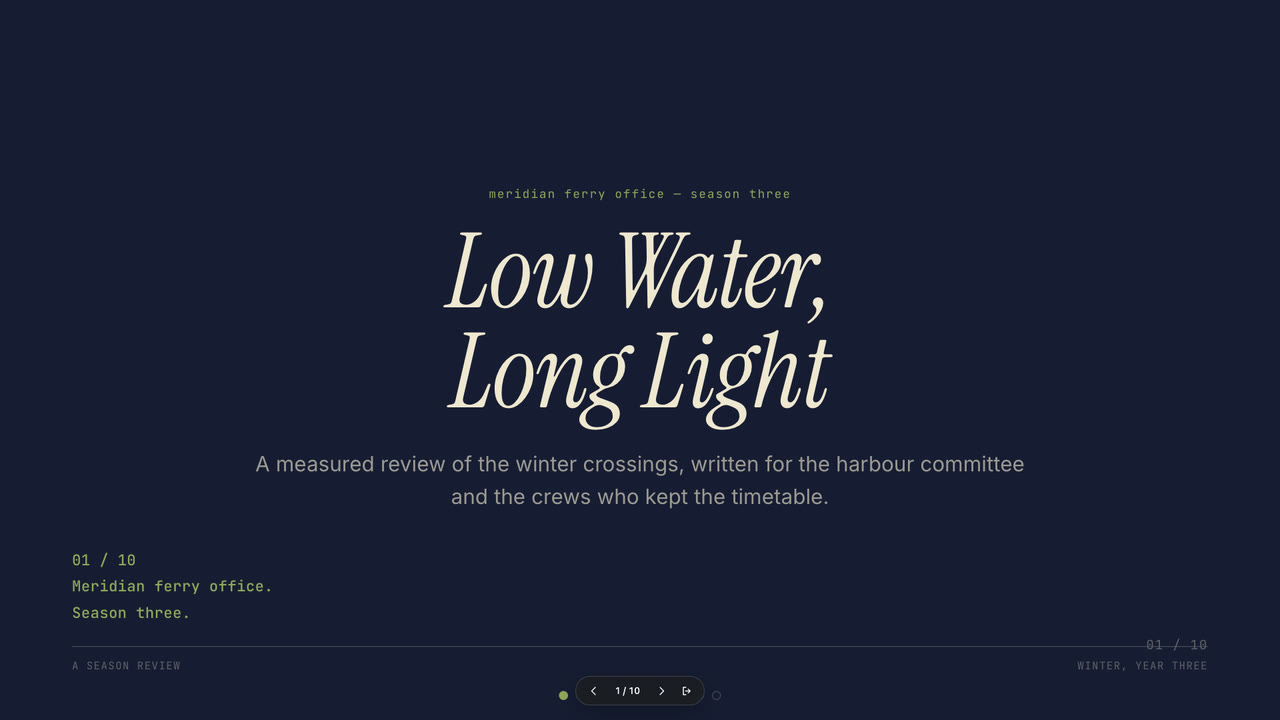
Make decks that read as quiet scholarly essays: one deep indigo register throughout, an italic literary serif for every headline, quiet sans body, typed mono chrome, and a pin-note of small mint mono lines pinned at the bottom-left of every page.
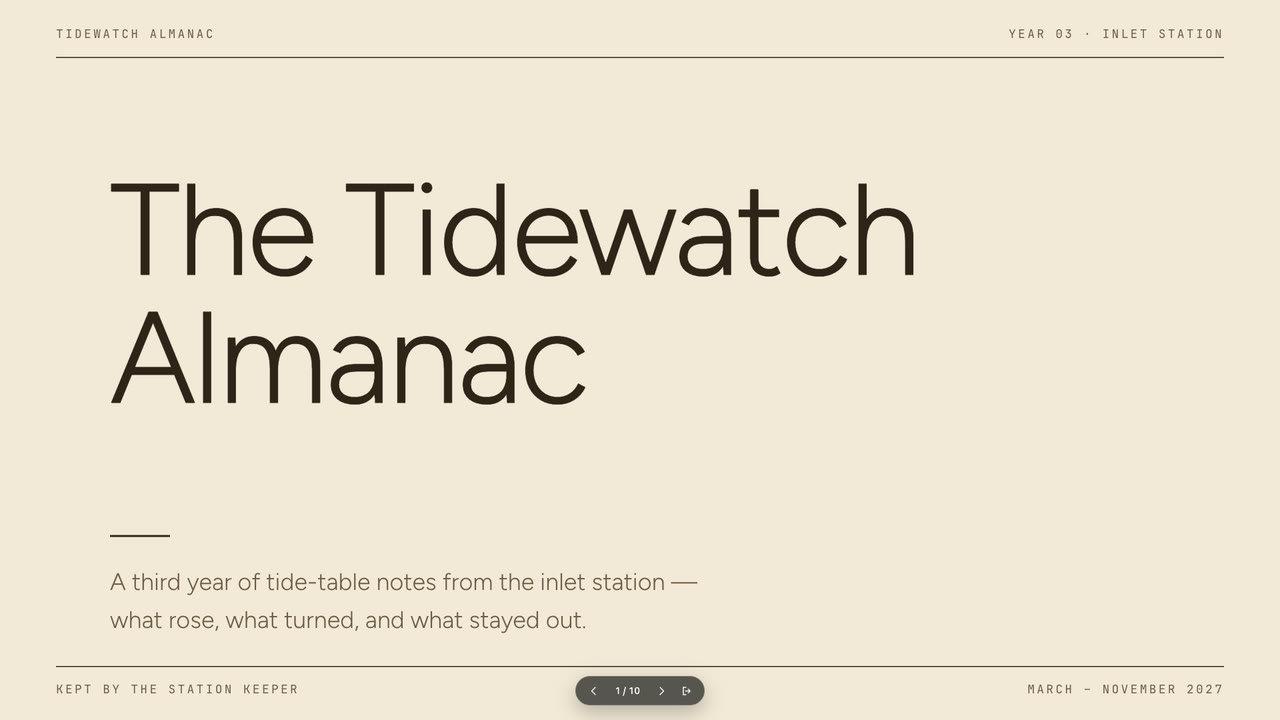
Make decks that read as monochrome field journals: ink on ivory paper, ultra-thin Figtree display headlines, italic Newsreader quotes, mono chrome rows above and below a hairline rule, em-dash marks, framed specimen plates and ruled stat columns.

Make decks that read as Bauhaus workshop manuals: warm cream paper under near-black ink with flat red, blue and yellow circles, squares, triangles, quarter-discs, rings and dot-grids, Archivo Black caps, Hanken Grotesk body and Space Mono spaced-caps chrome.
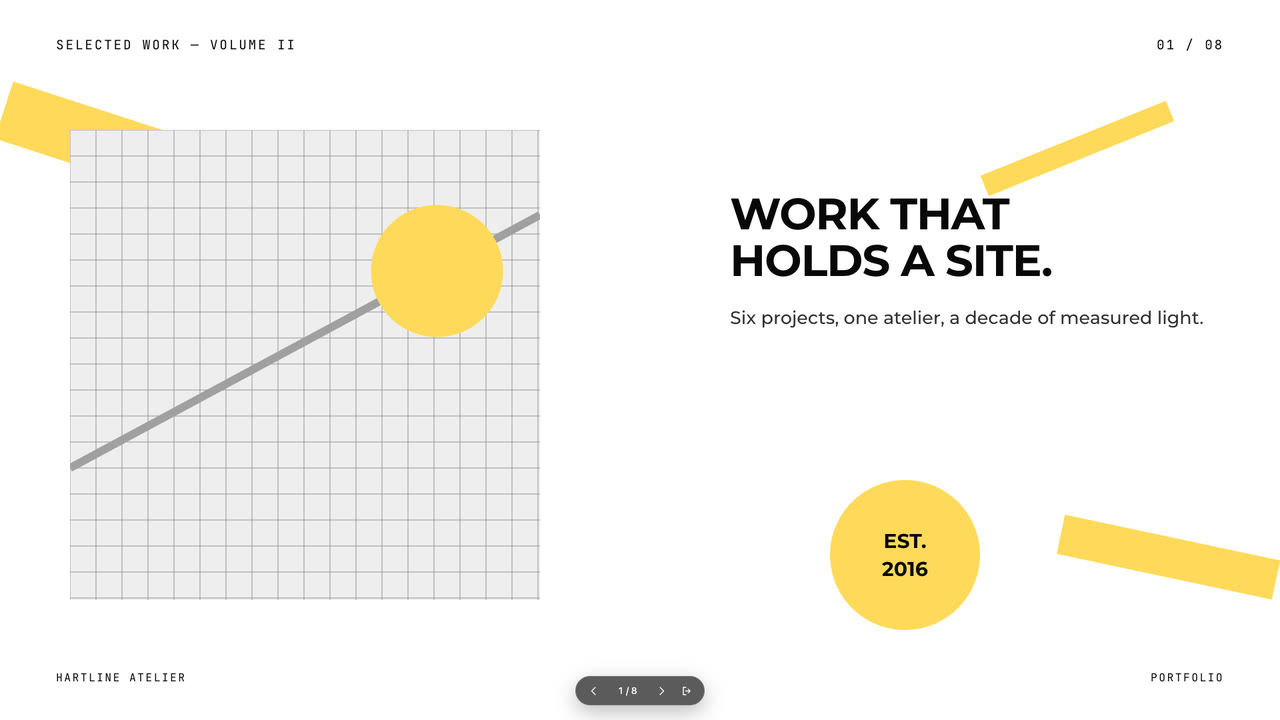
Make decks that read as architecture-portfolio presentations: a white paper field with a single warm-yellow accent, rotated bars and big circles, yellow label blocks, drafting-grid and site-plan photo plates, and -0N- agenda numerals with mini-rules.
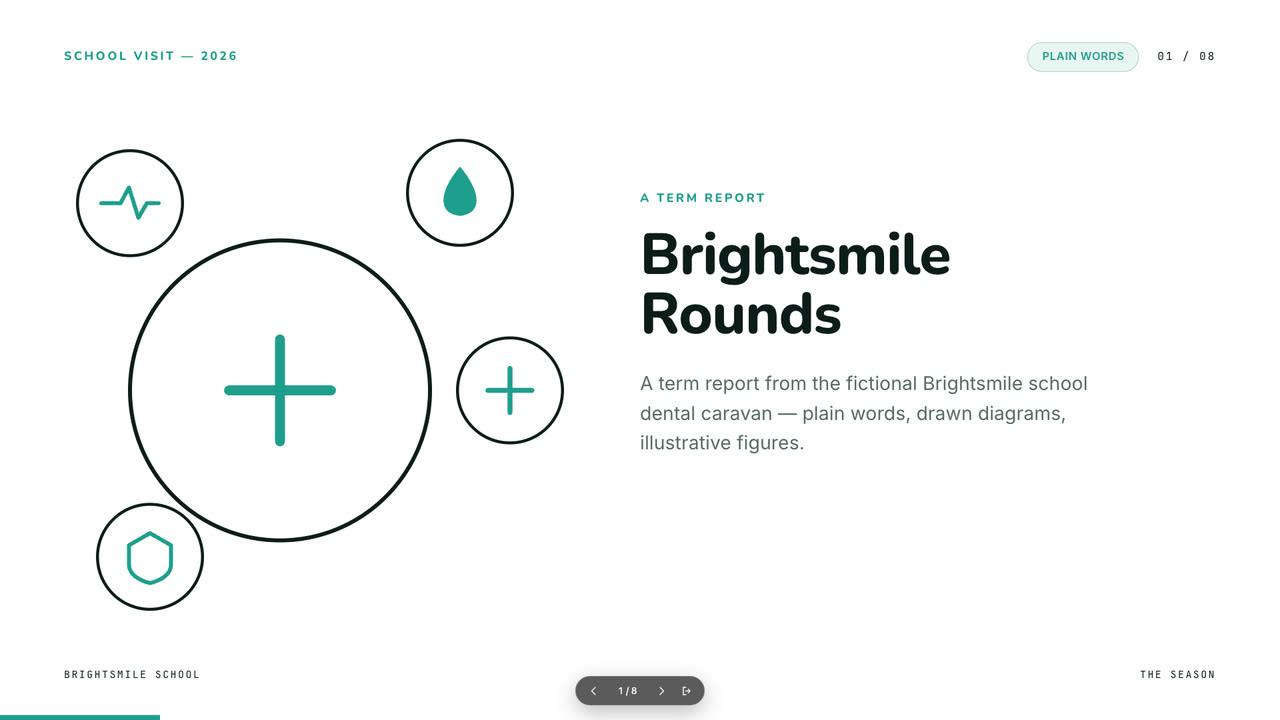
Make decks that read as clinical infographic summaries: pure white field, black ink rings and rules, pale blue panels, a single sky-blue accent, numbered circular callouts, pill progress bars and rounded cards.
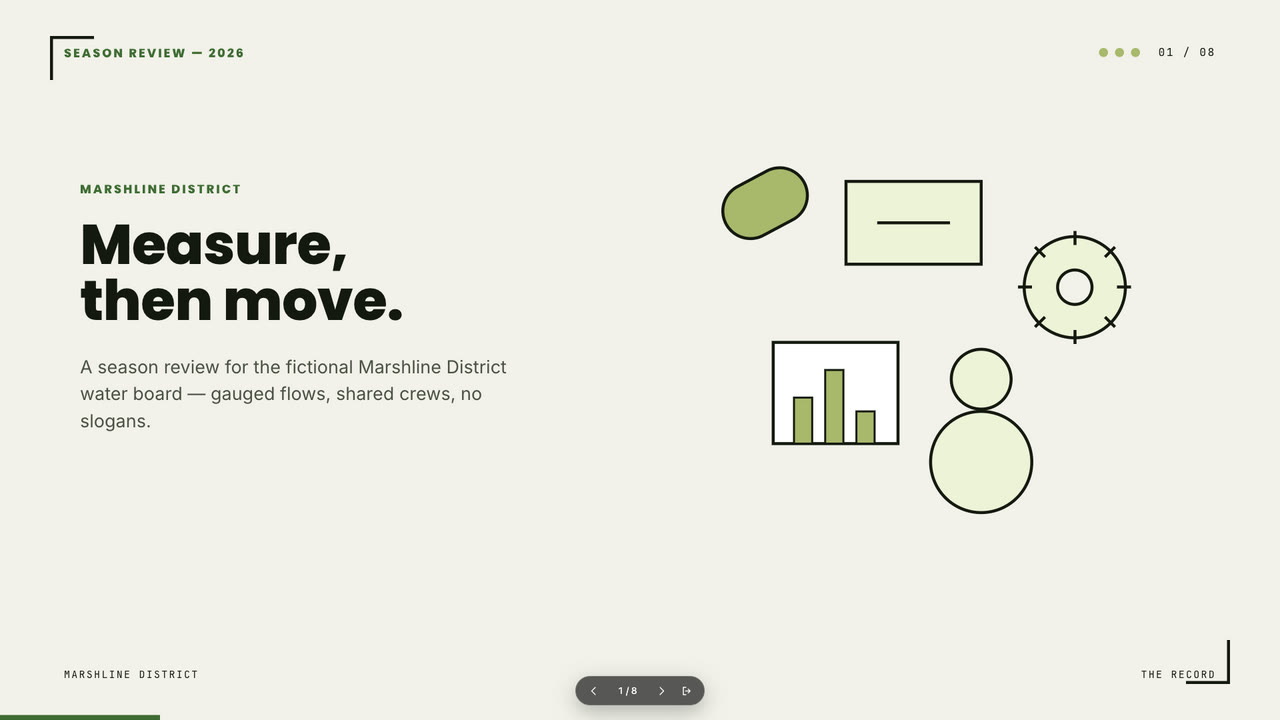
Make decks that read as sustainability annual reviews: cream field, black ink frames and rules, leaf-green accent fills, deep-green numerals and kickers, mint panels, corner brackets, hard-shadow score cards and line-art ecology clusters.
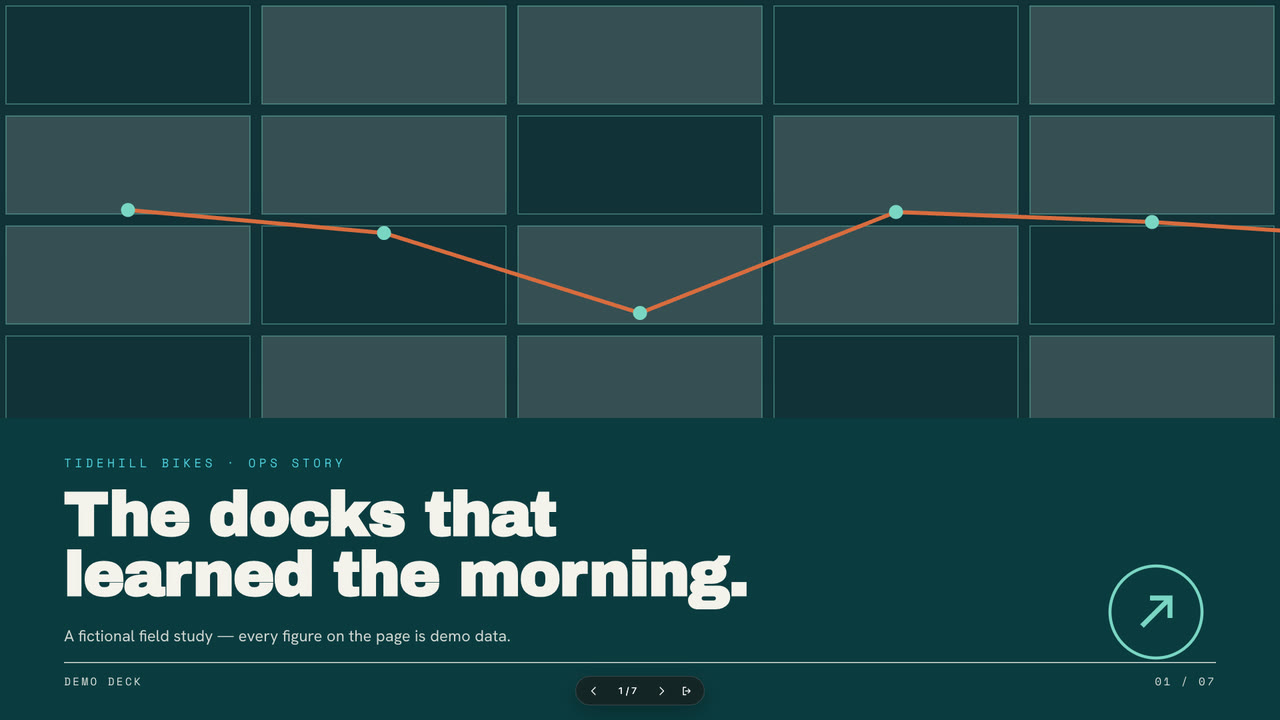
Make single-case study decks with editorial weight: alternating deep-teal and cream pages, giant numbered findings and one burnt-orange accent for project outcomes and research results.
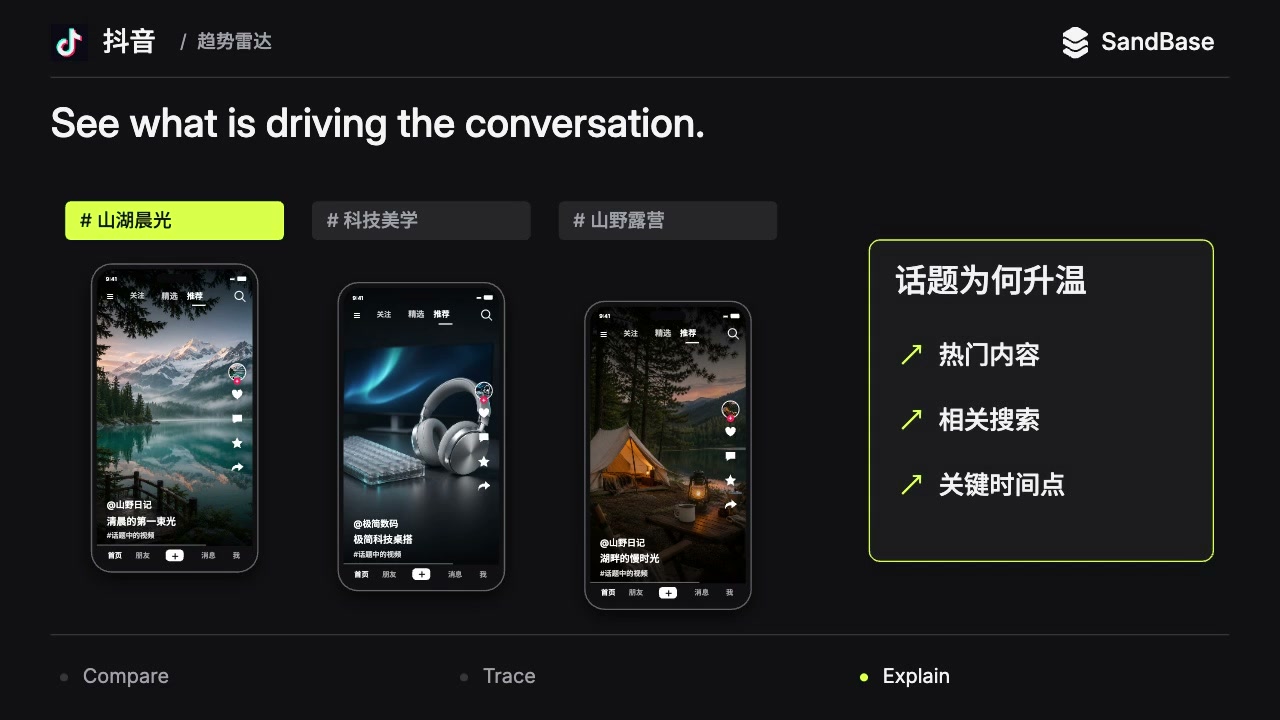
Tell whether a topic is heating up on Douyin, how fast and why, from the platform’s own boards and keyword index.
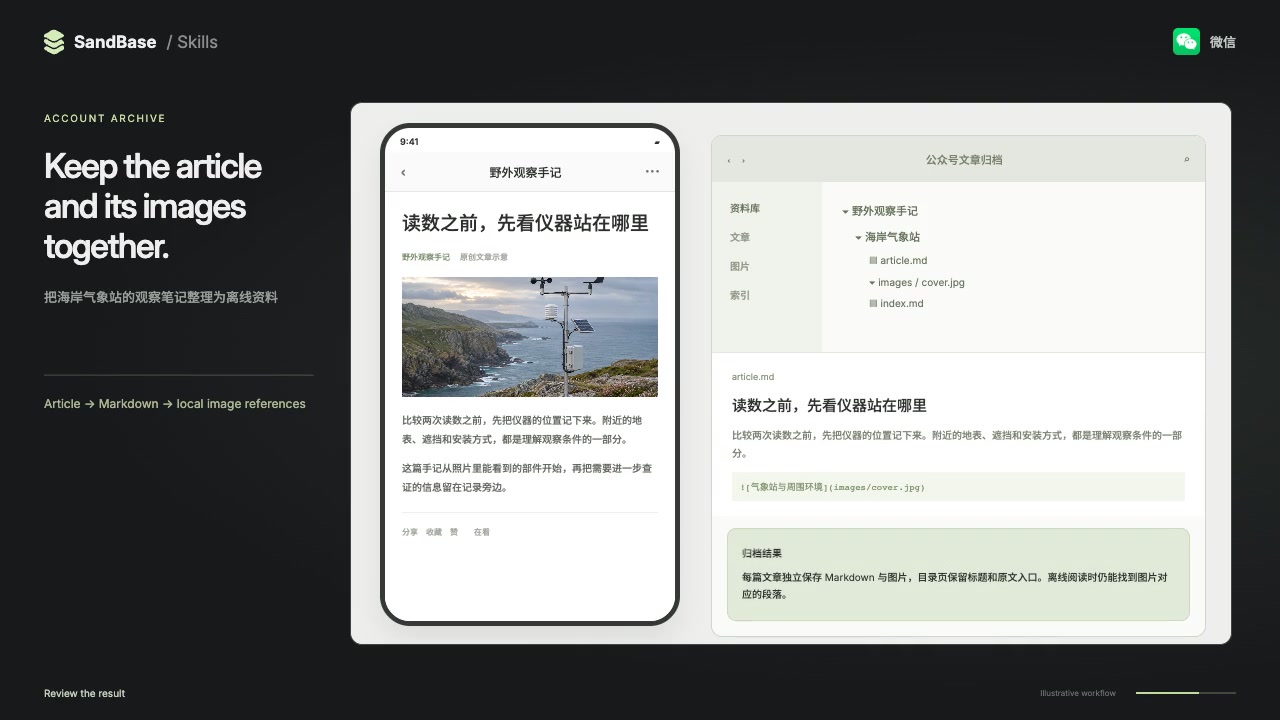
Save a 公众号’s articles as local Markdown with their images, so they still read offline or after deletion.
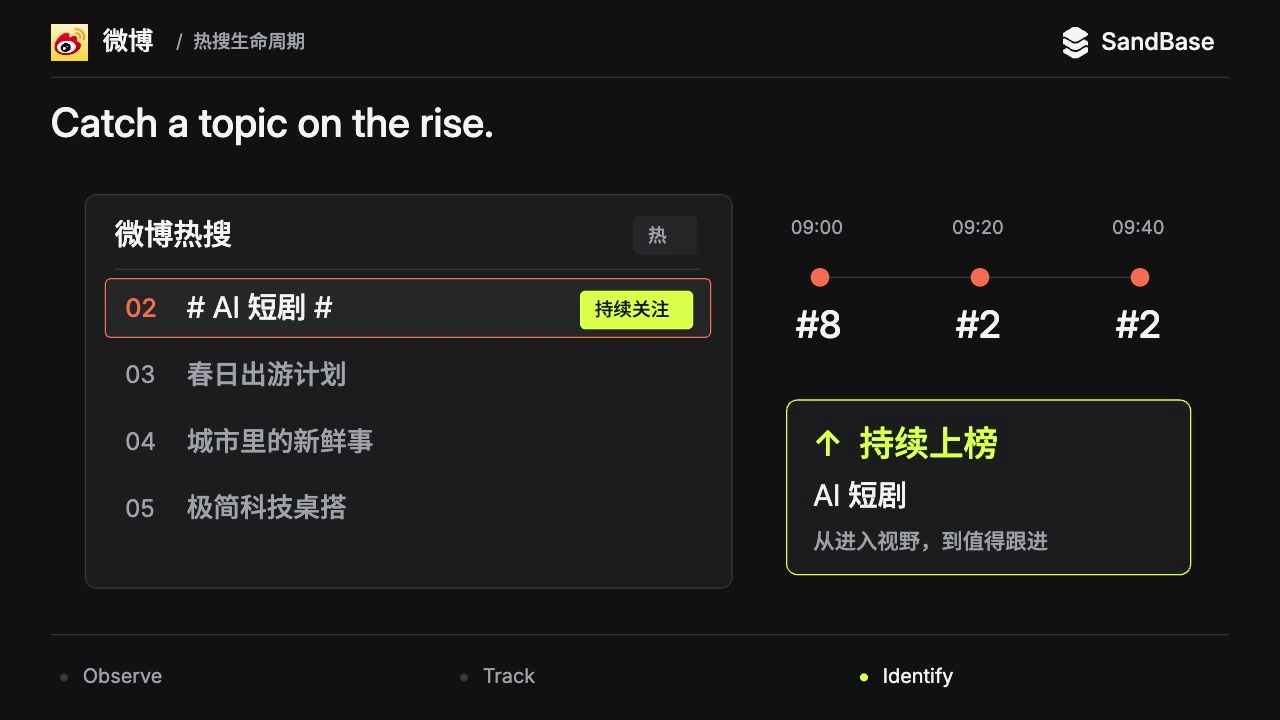
Tell which Weibo hot-search topics are rising, peaking or fading by comparing repeated snapshots.
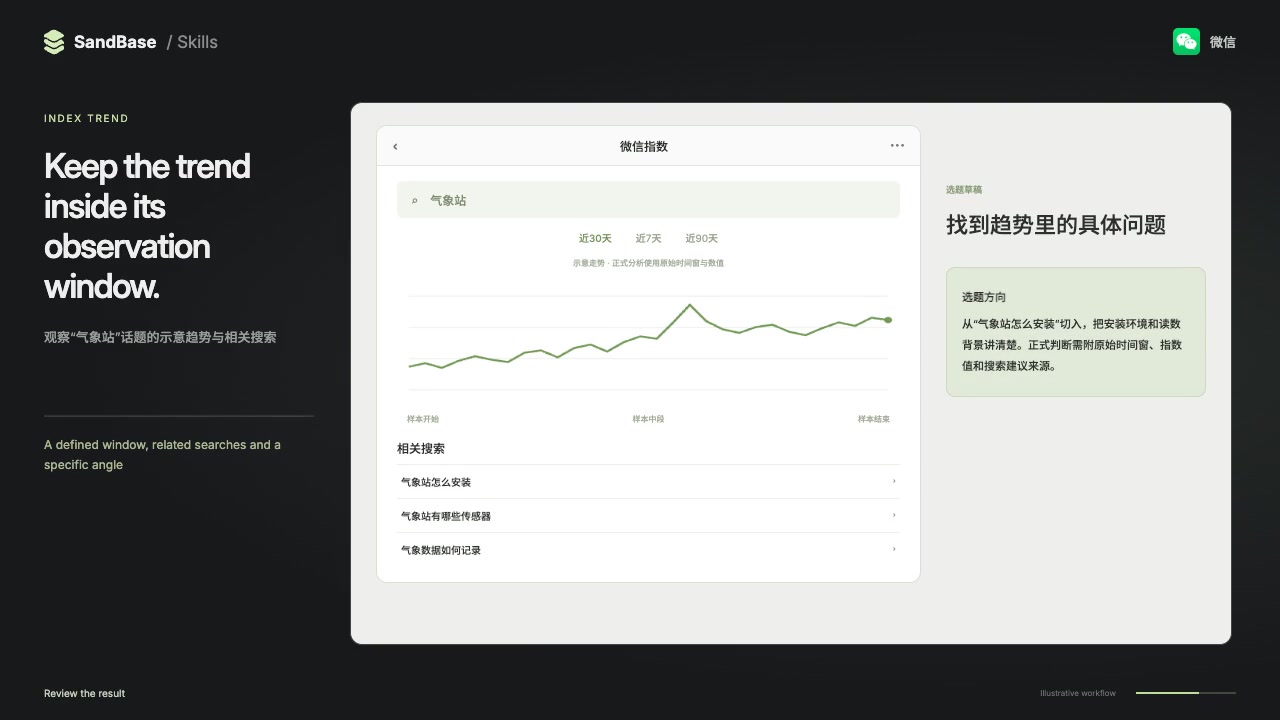
See whether a topic is rising or cooling inside WeChat, and how people phrase it, before you write about it.
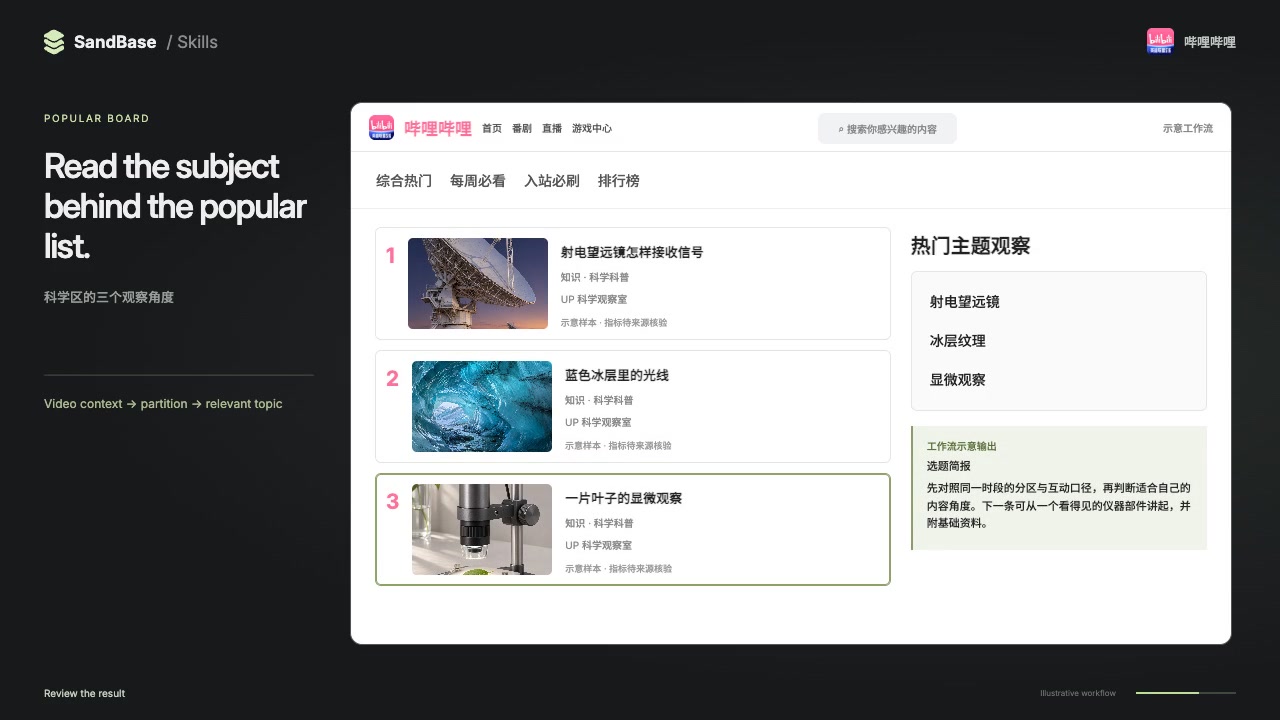
See what is on Bilibili’s popular list today, which kinds of video get the most engaged viewers, and which hot words you can join.
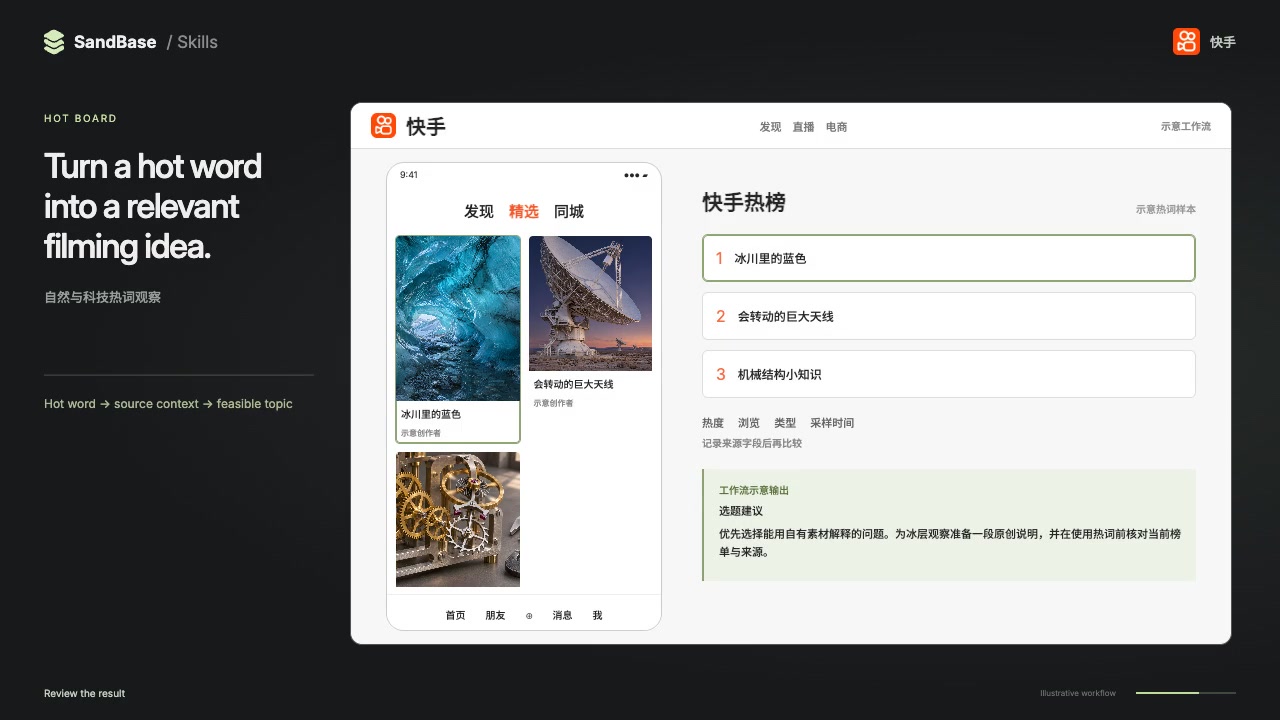
See what is hot on Kuaishou today and which hot words people actually open more than their rank suggests.
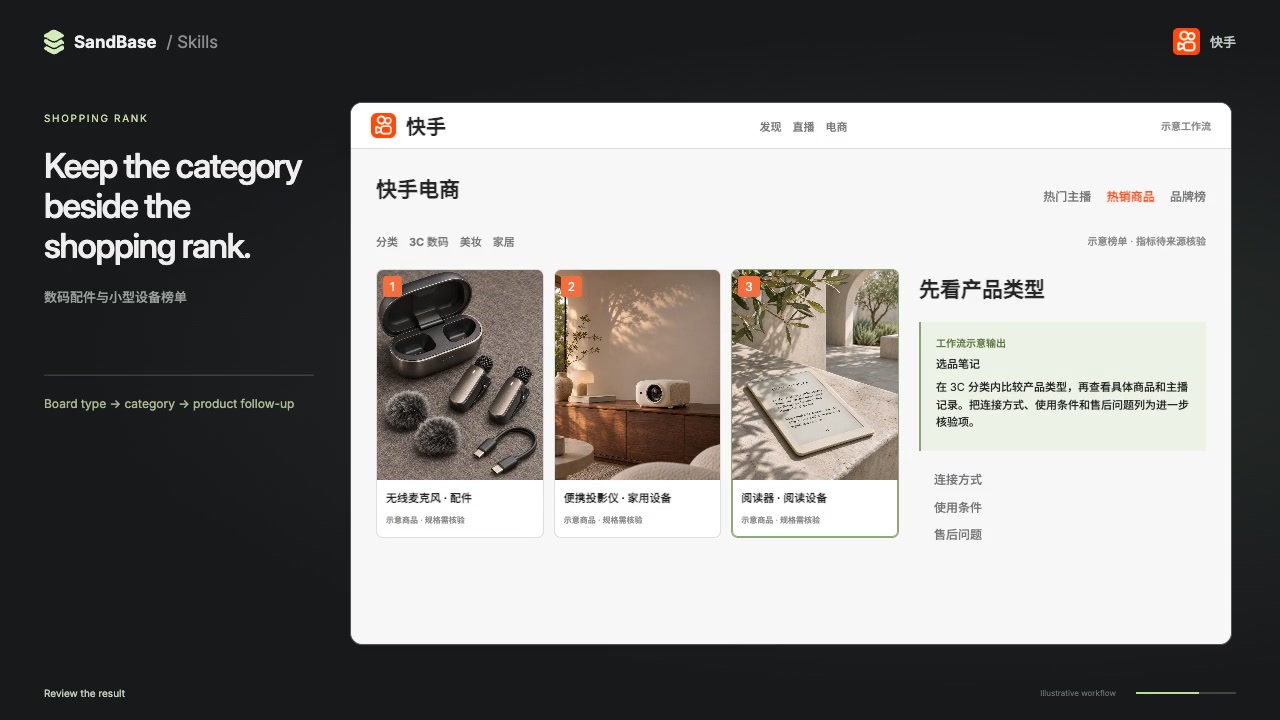
See who sells on Kuaishou, how much depends on a few big streamers, and what kinds of product move, before a sale such as 双11.
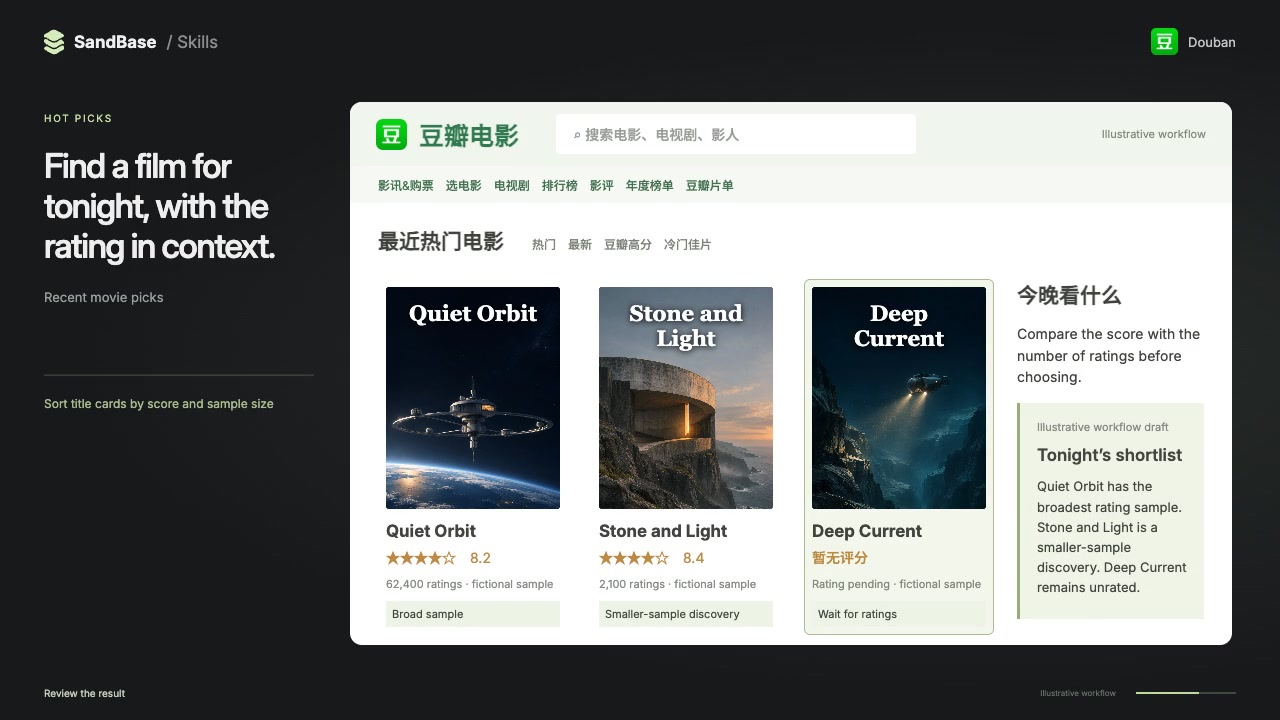
Sort Douban’s hot movies and series into what is worth watching or reviewing this week, by score and number of ratings.
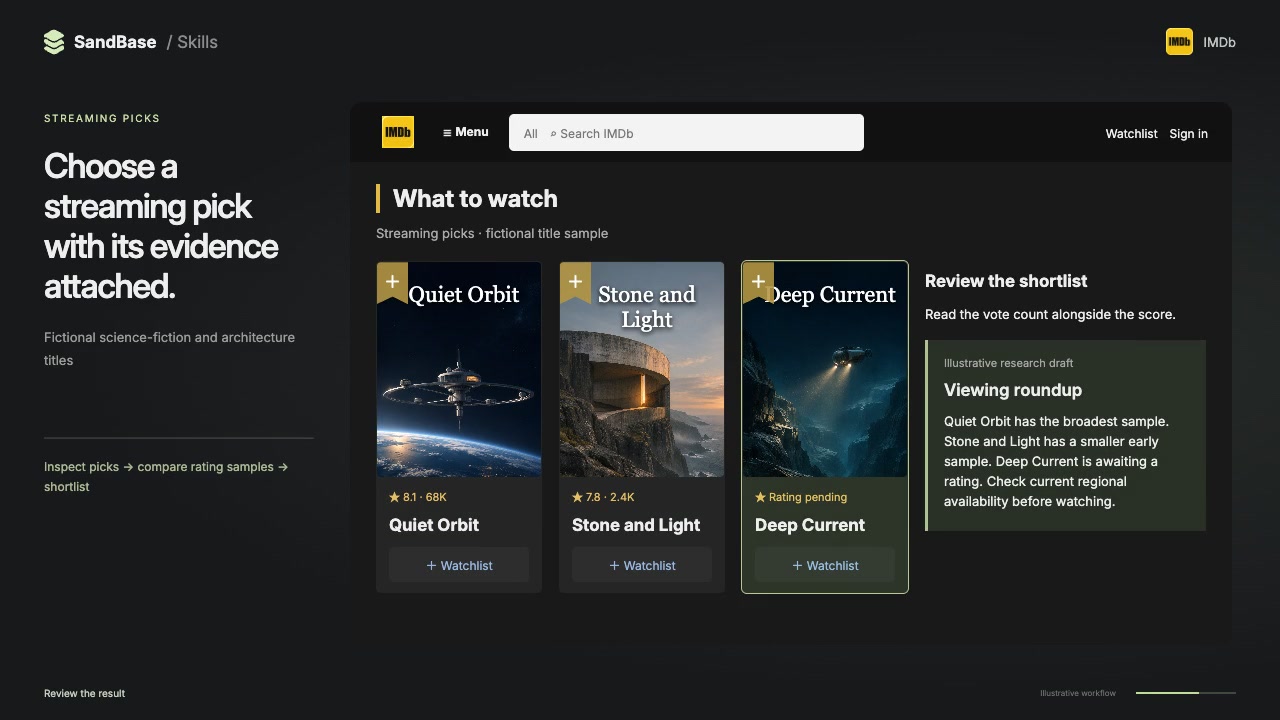
Check IMDb’s streaming picks against IMDb’s own ratings before you recommend any of them.
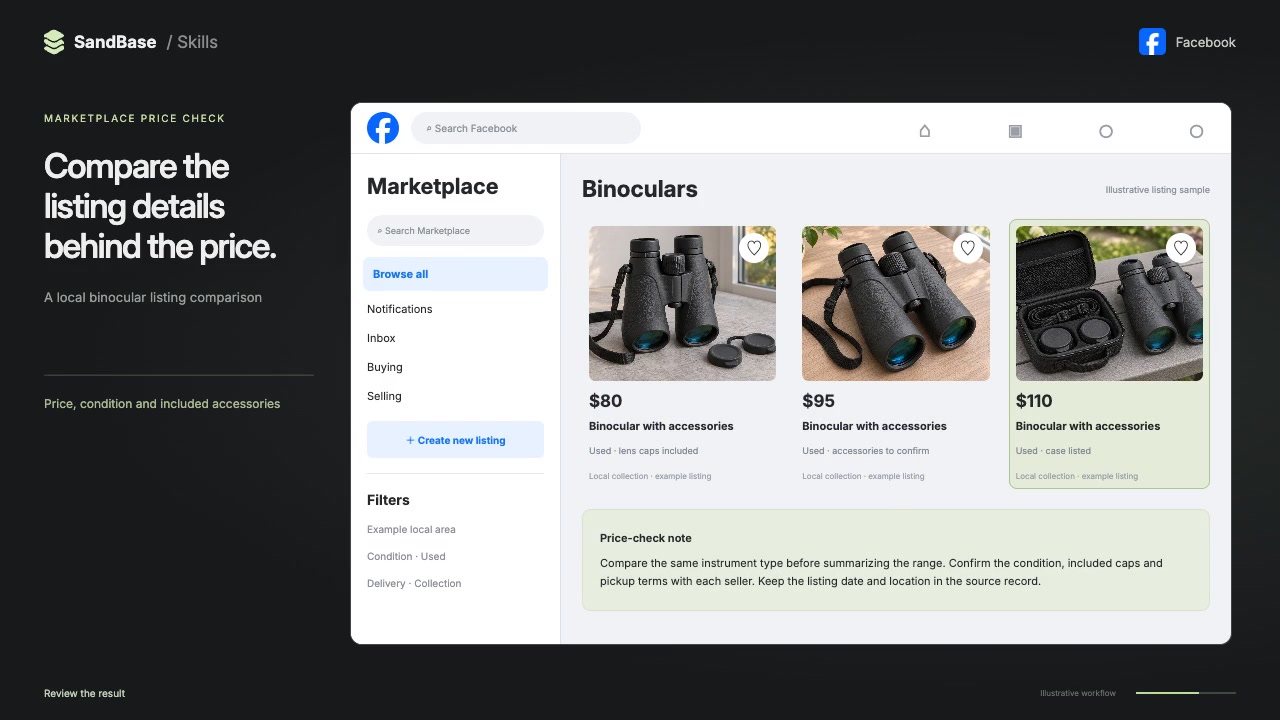
Find out what an item sells for on Facebook Marketplace near you, so you can price a listing or spot a good deal.
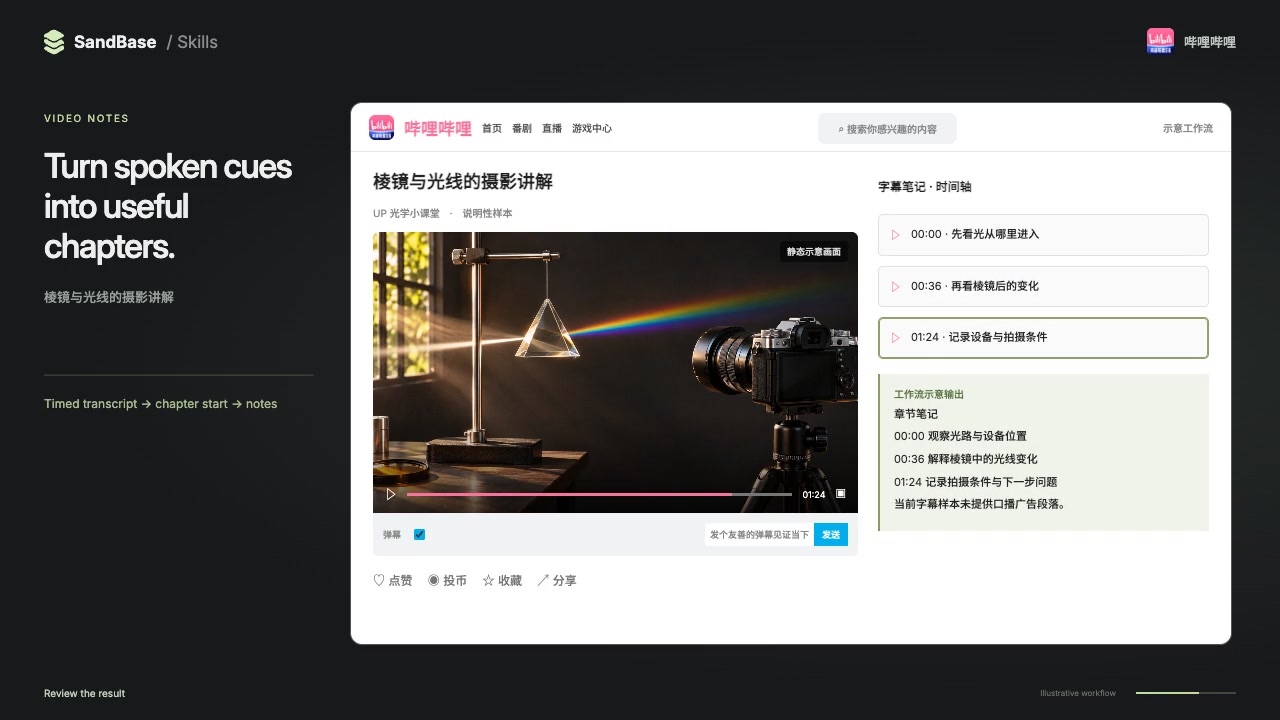
Turn a long Bilibili video into chapters with start times, sponsor-read times and key points, so you know which part to watch or clip.
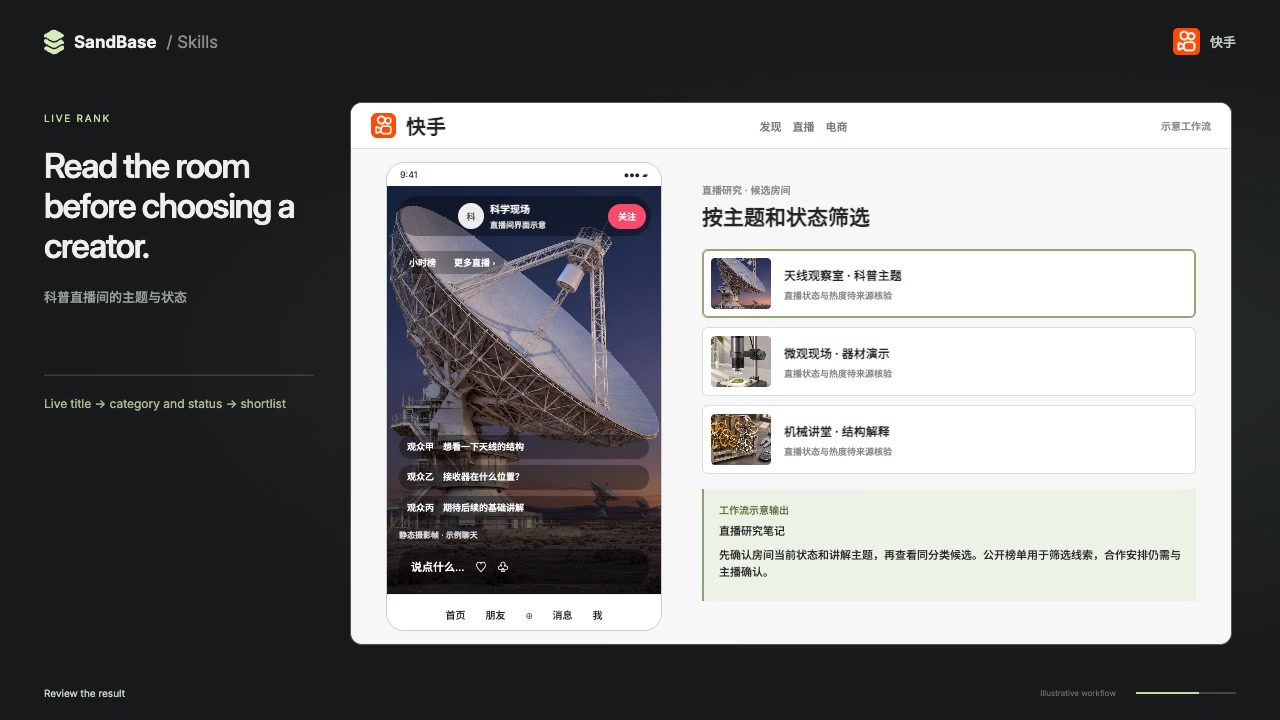
See who is big on Kuaishou live right now, how concentrated live attention is, and which creator families dominate the boards.
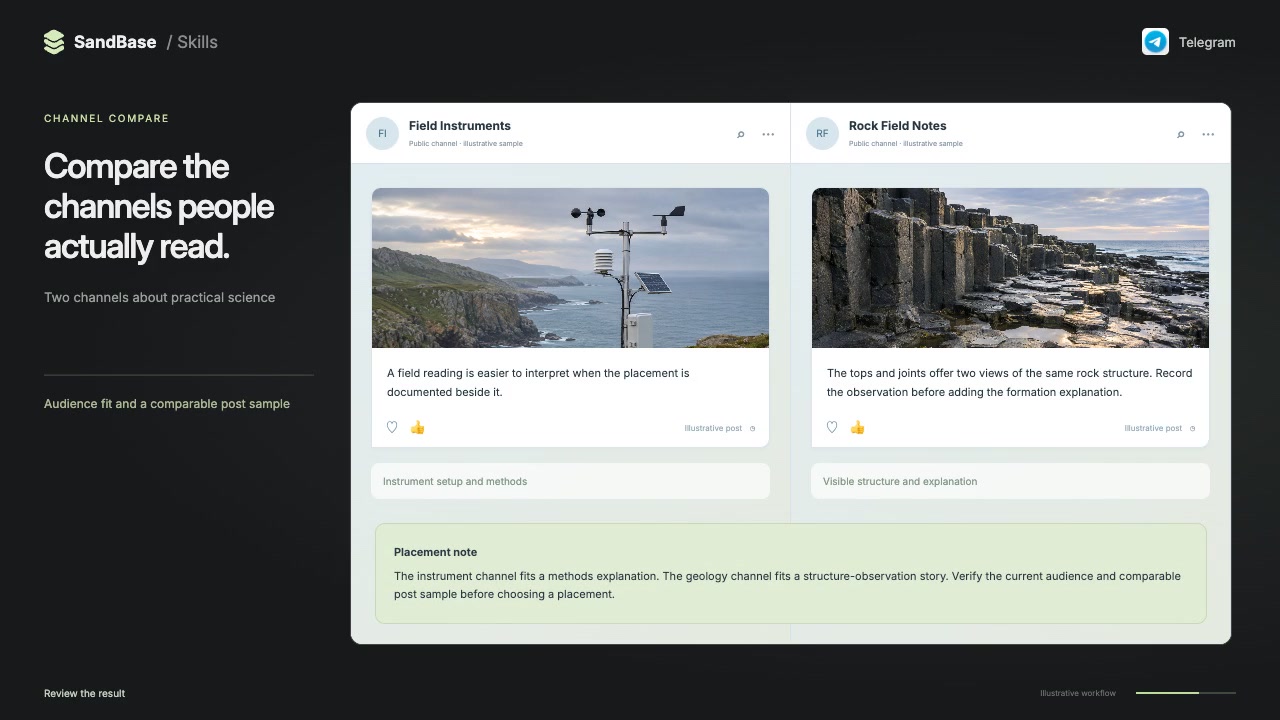
Compare Telegram channels by how many subscribers actually read a post, before you buy a post or set a benchmark.
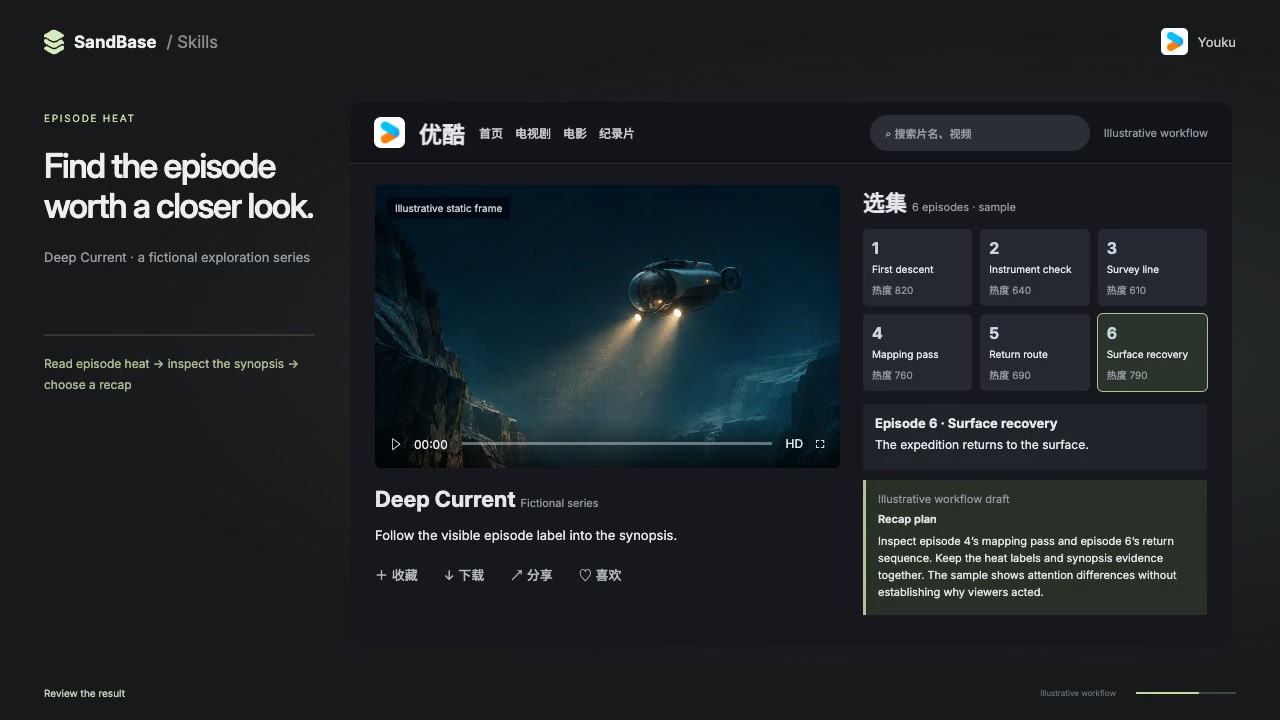
Draw a Youku series’ attention curve episode by episode to see where viewers drop, where it bumps up, and which episodes to clip or recap.
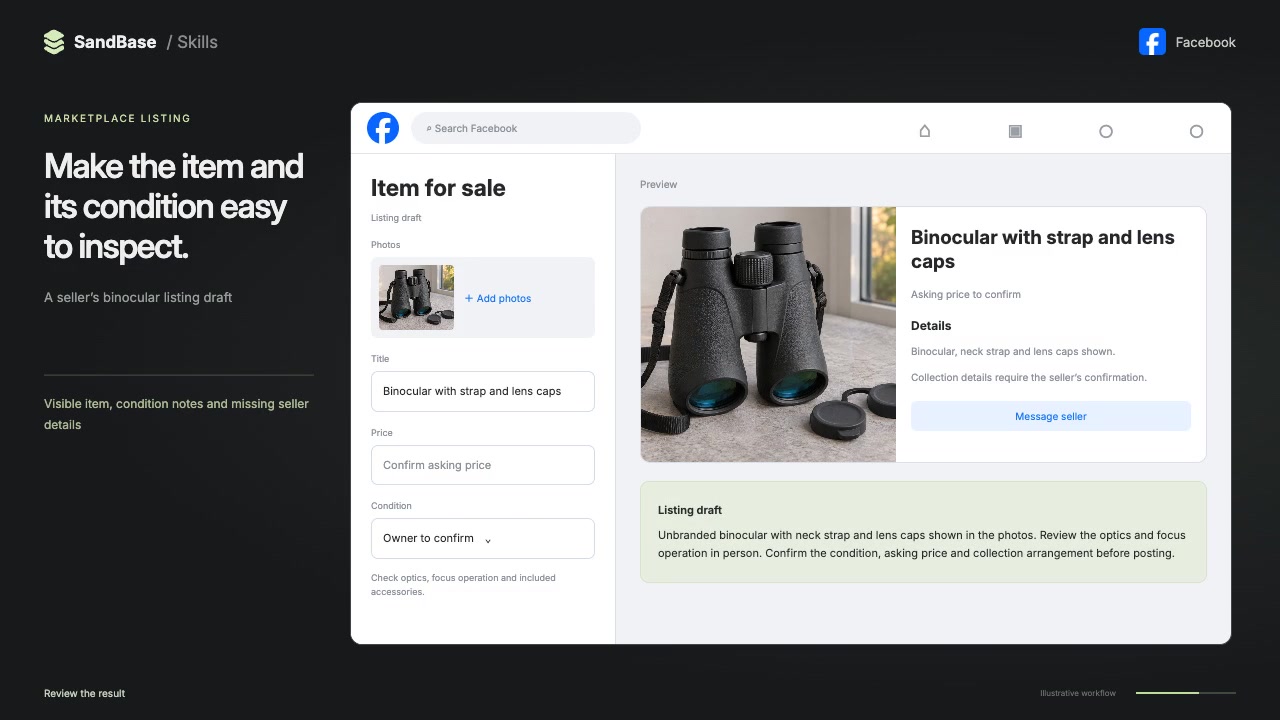
Price an item from real local listings and write a Facebook Marketplace listing that gets messages.
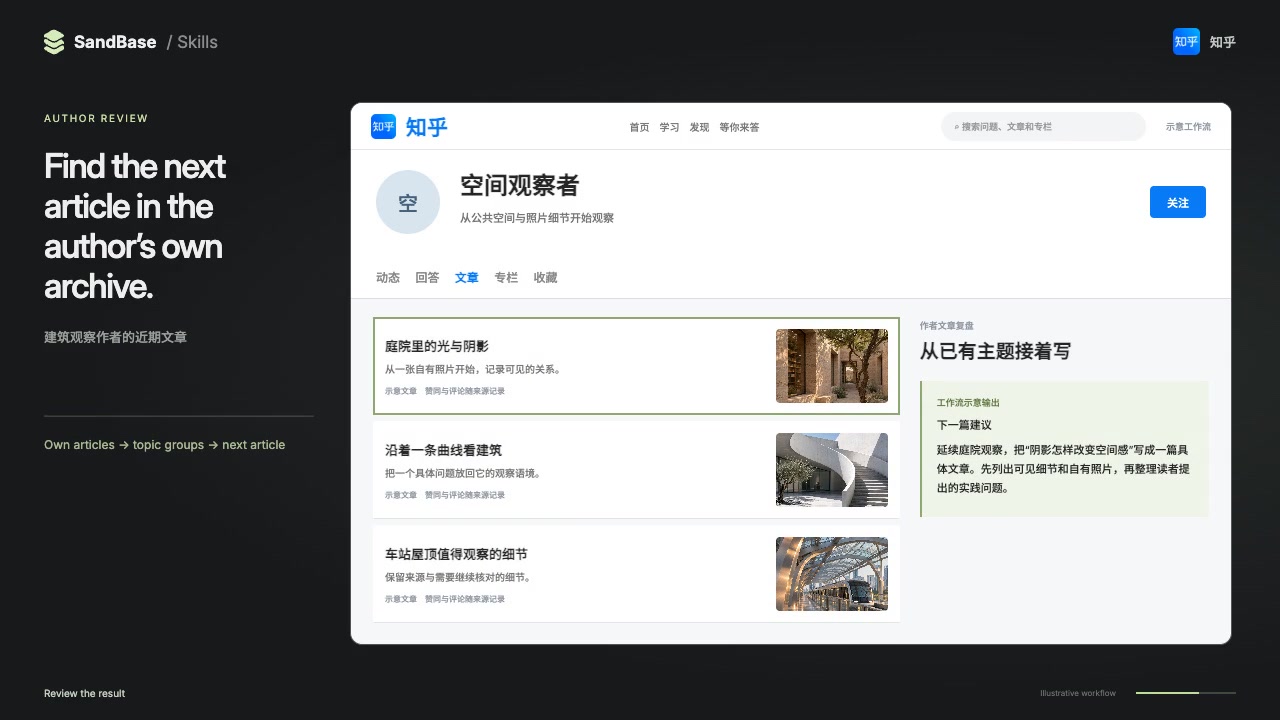
See which of a Zhihu writer’s topics and series readers reward, and plan the next articles from that.
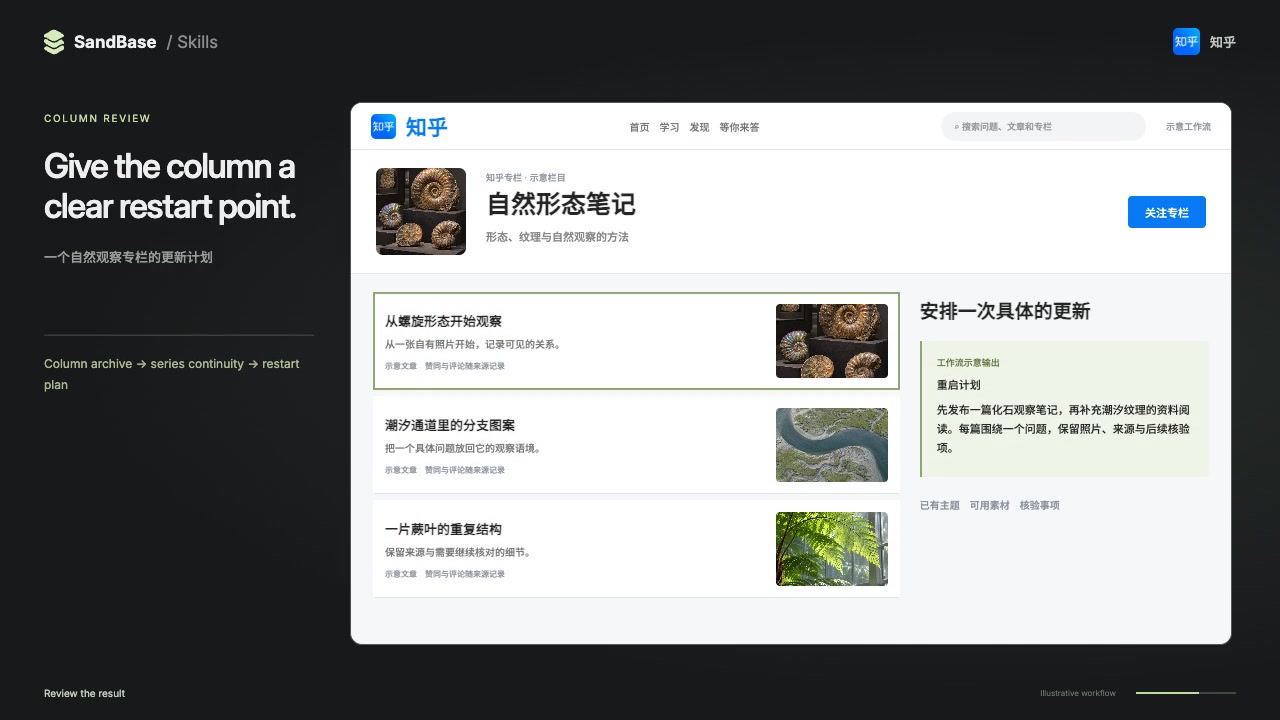
Find out why a Zhihu column stalled or which titles and series work, and plan its next pieces.
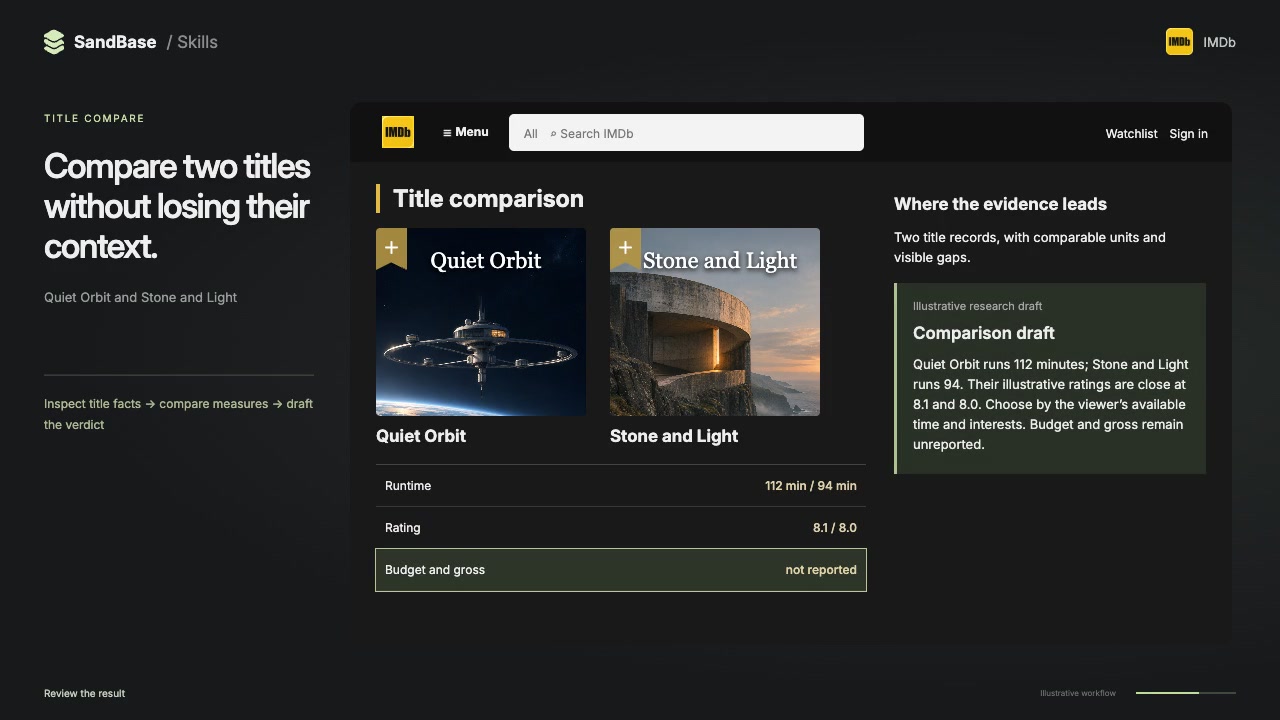
Compare two films or series from the same IMDb data on the same day, and write only what the numbers support.
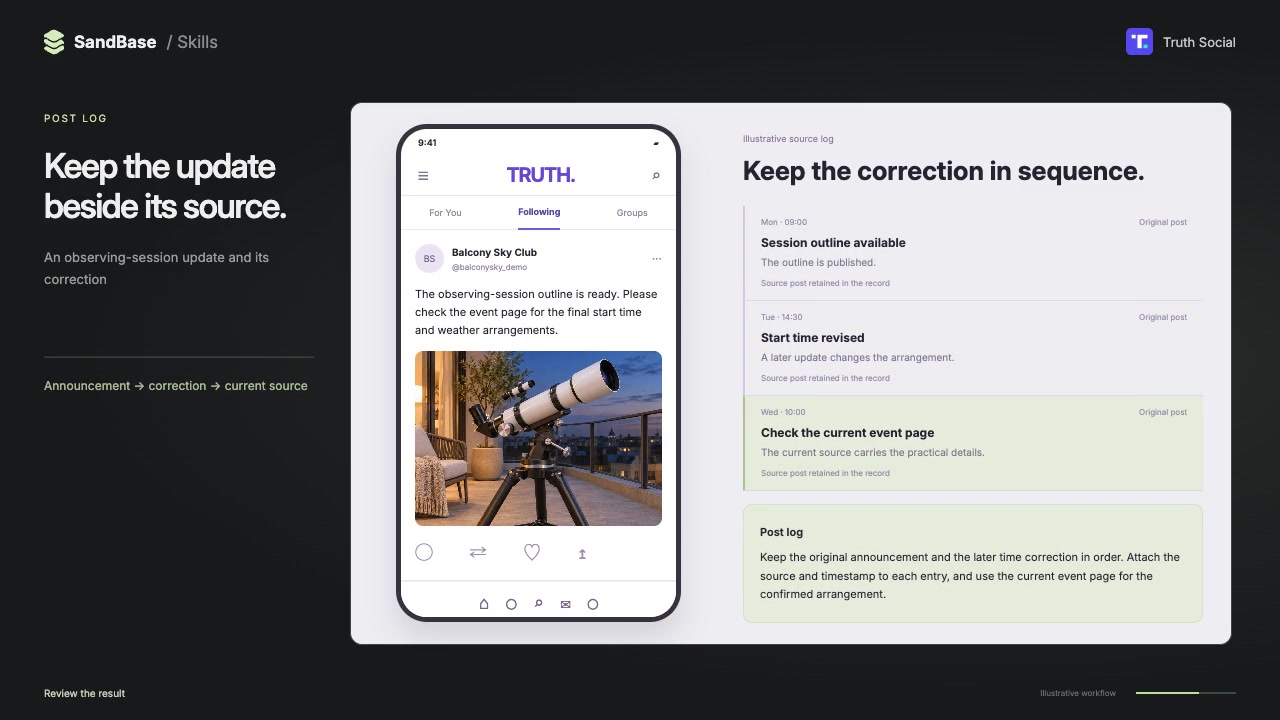
Keep a dated, linked record of what a Truth Social account posted, sorted into own posts, quotes and reposts, without interpreting it.
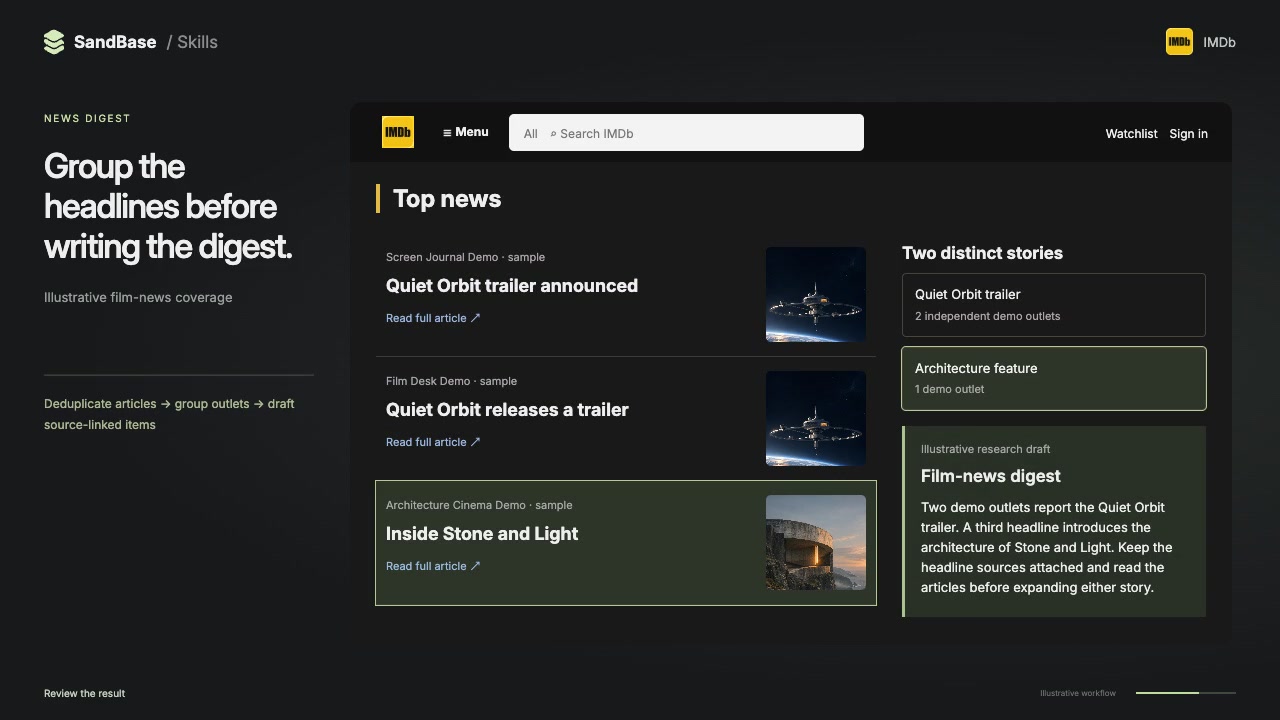
Turn IMDb’s film and TV news feeds into a short digest of the stories most outlets covered, with every number tied to its source.
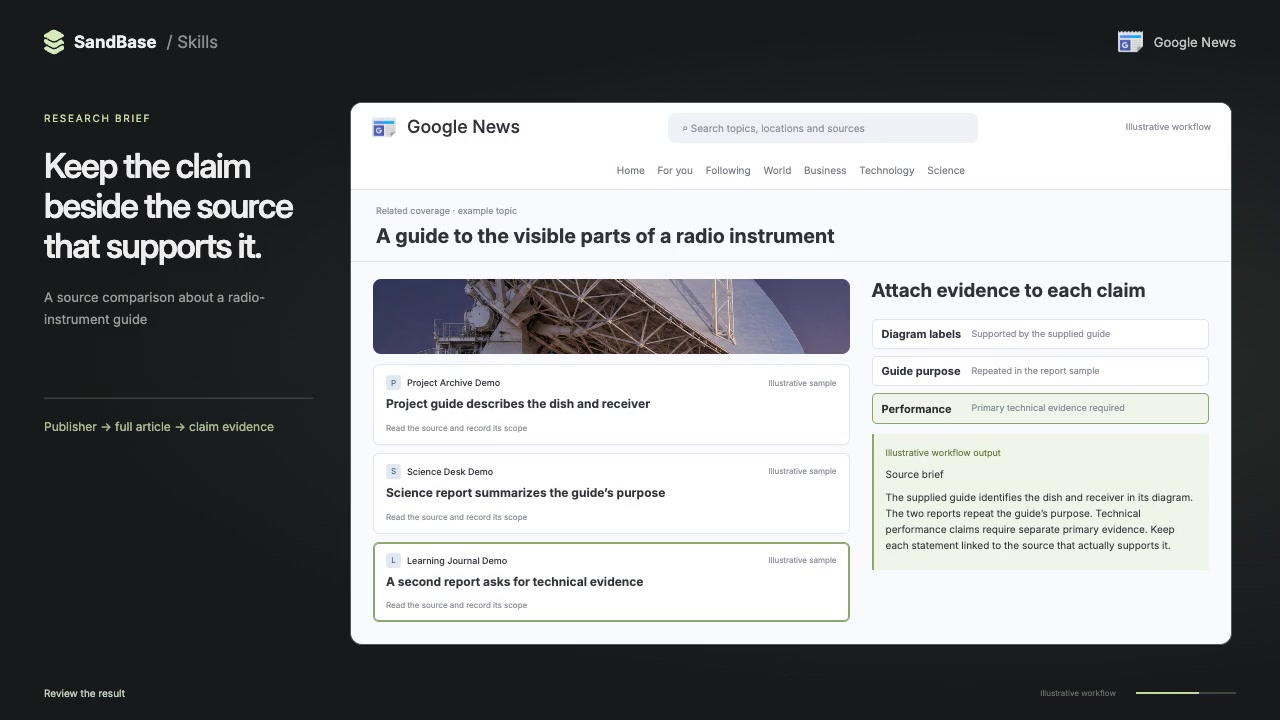
Find out what has been reported on a news question, who reported it and which claims are confirmed, with a link for every line.
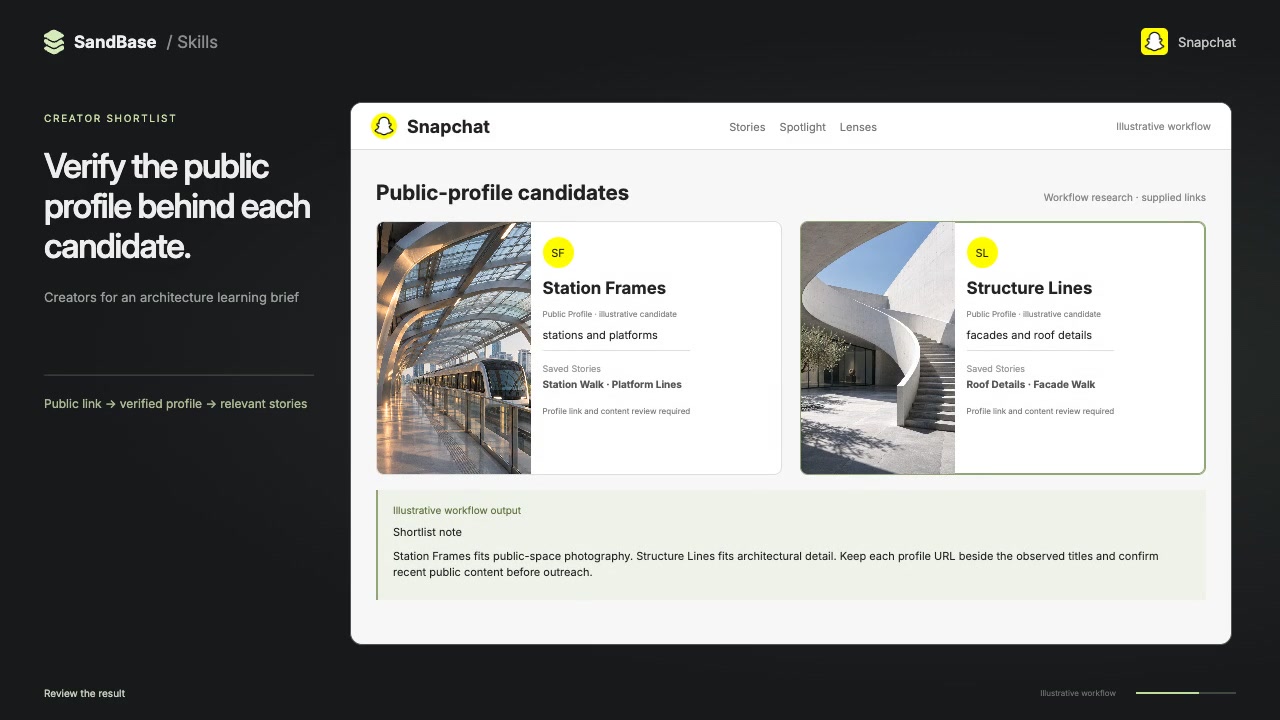
Find Snapchat accounts that are actually alive — web-found candidates are verified one by one, and the empty shells get dropped.
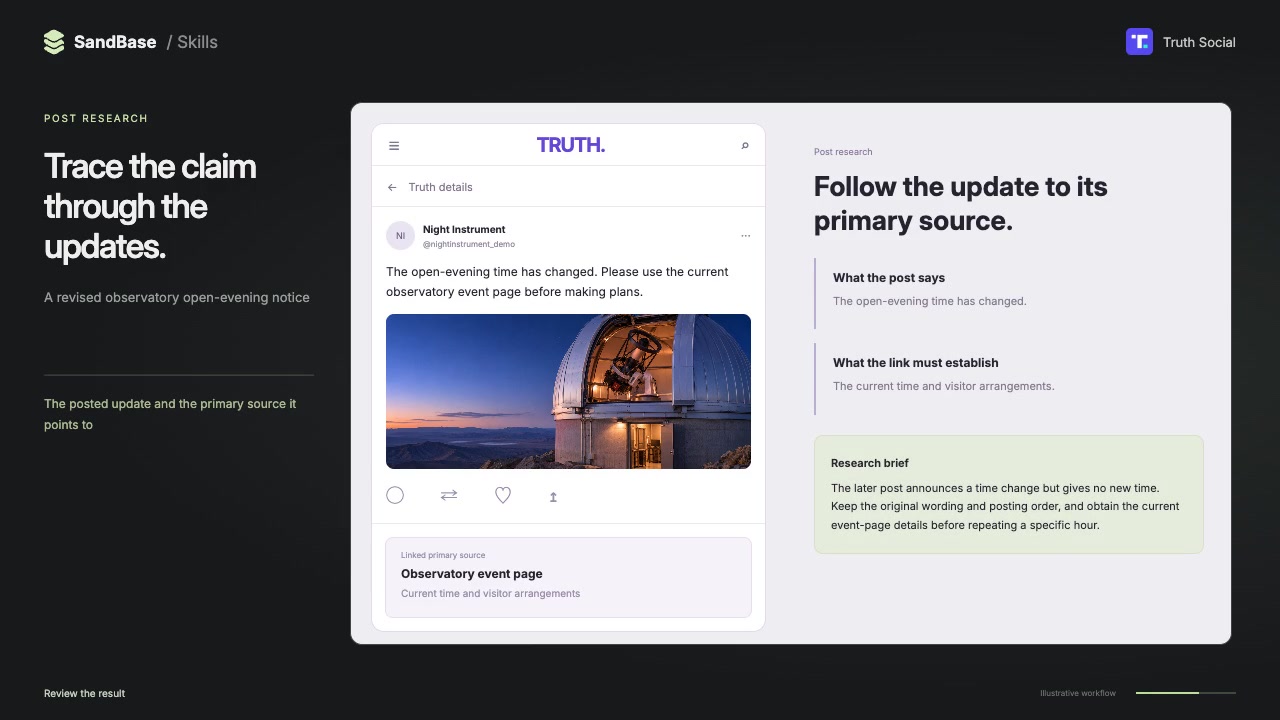
Get a sourced one-page brief on a single Truth Social post — the text as written, the author, the context, the link it carries and what still needs a primary source.
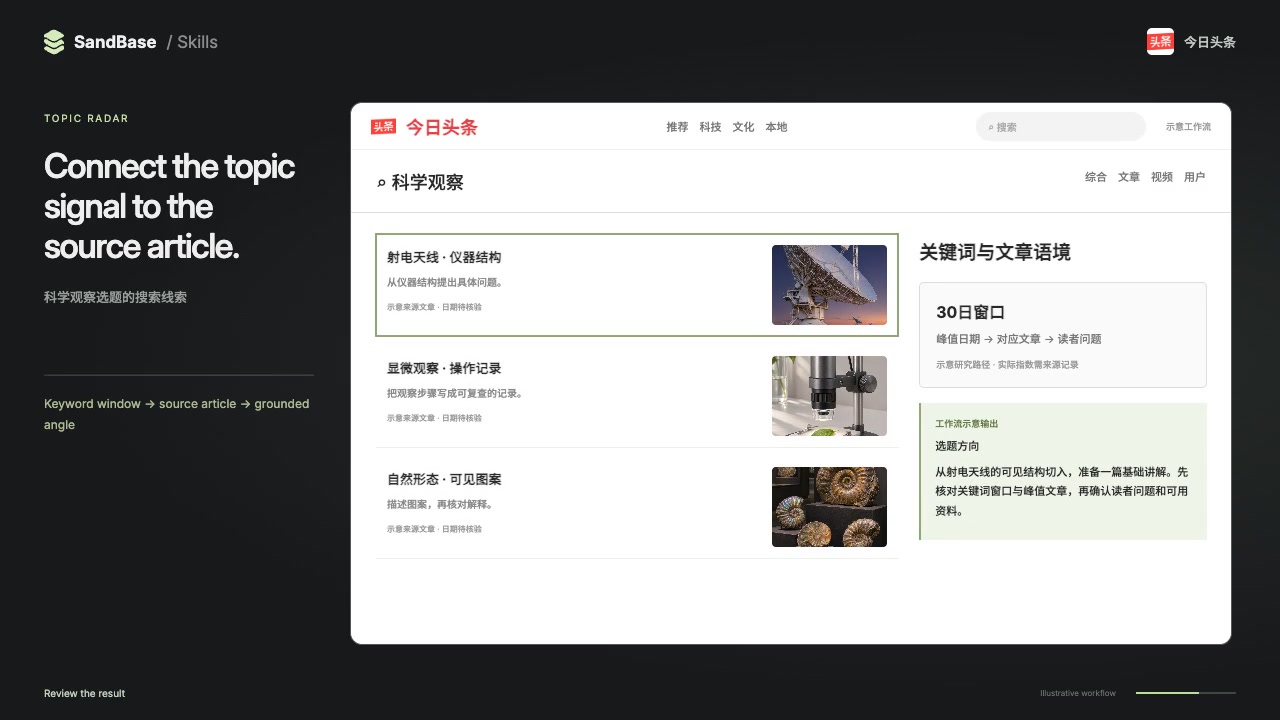
See whether your topic is rising on Toutiao, what drove its peaks, and which angles are worth writing — with the evidence for each.
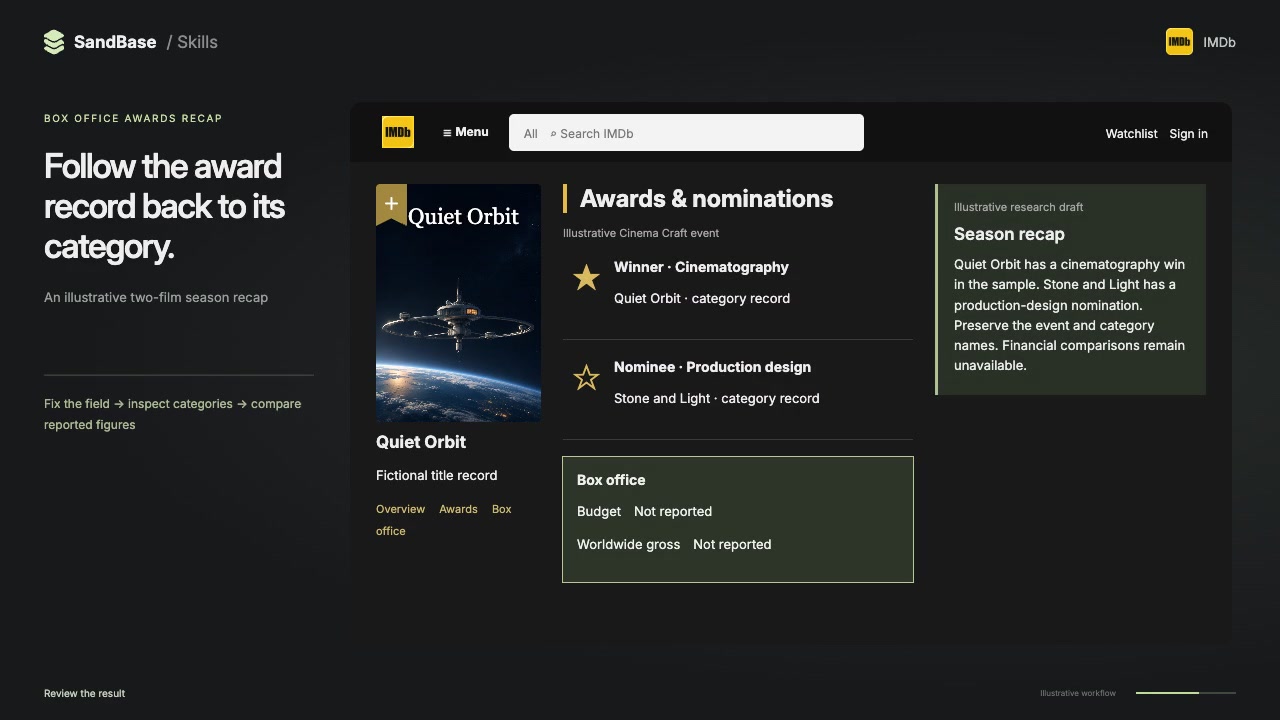
Recap a film year or awards season with real numbers — what each film cost, earned and won — without assembling the table by hand.
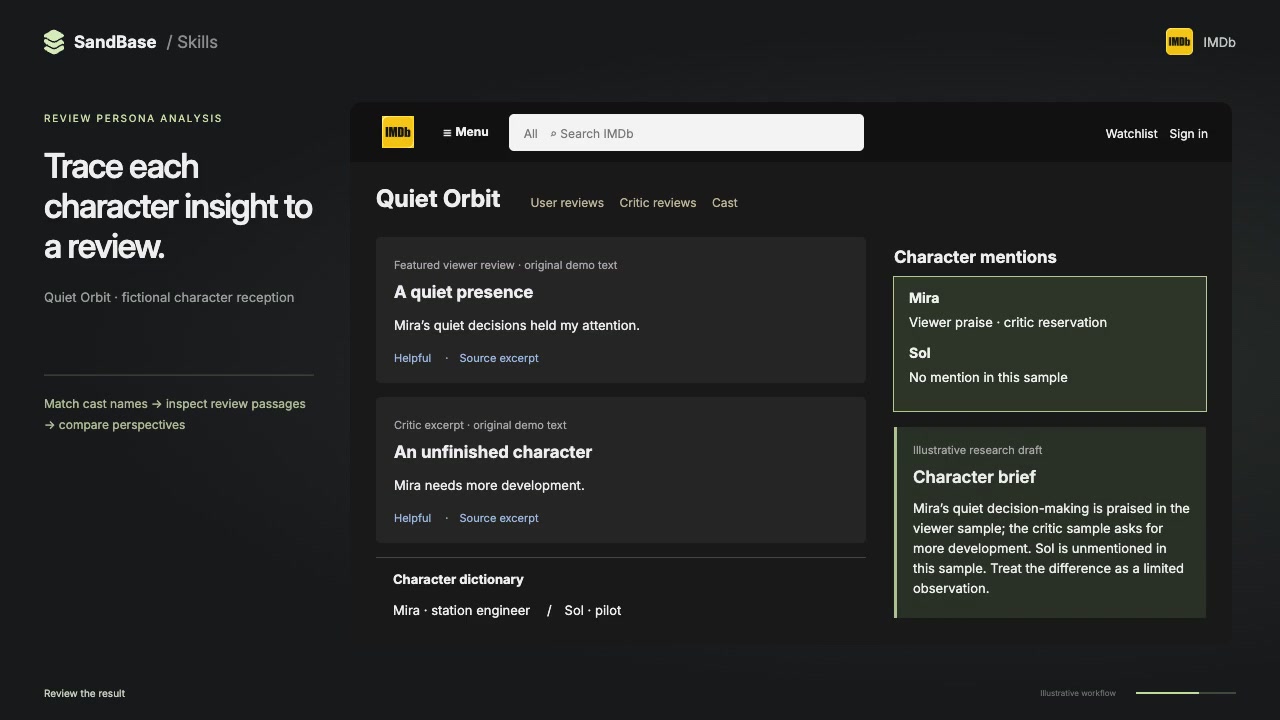
Find out which characters and actors a film's IMDb reviews actually talk about, in what tone, and where audiences and critics disagree.
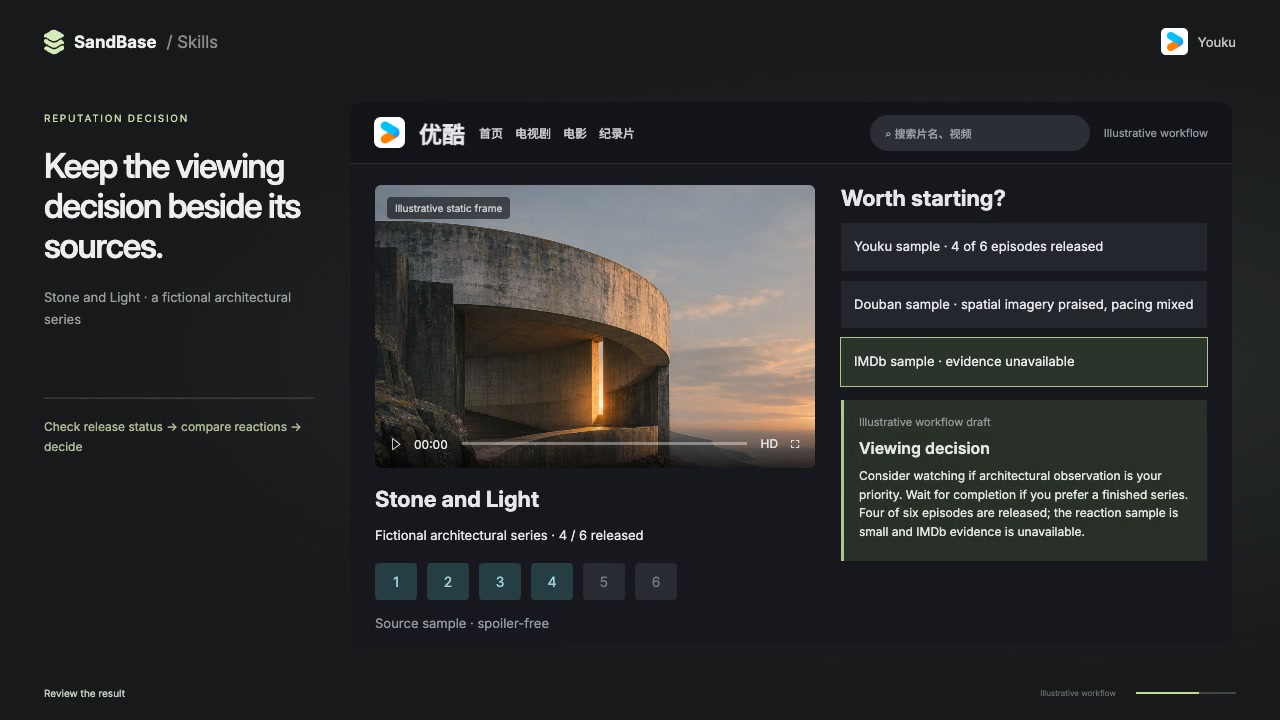
Decide whether a Youku series is worth watching, from its public ratings and spoiler-free review consensus.
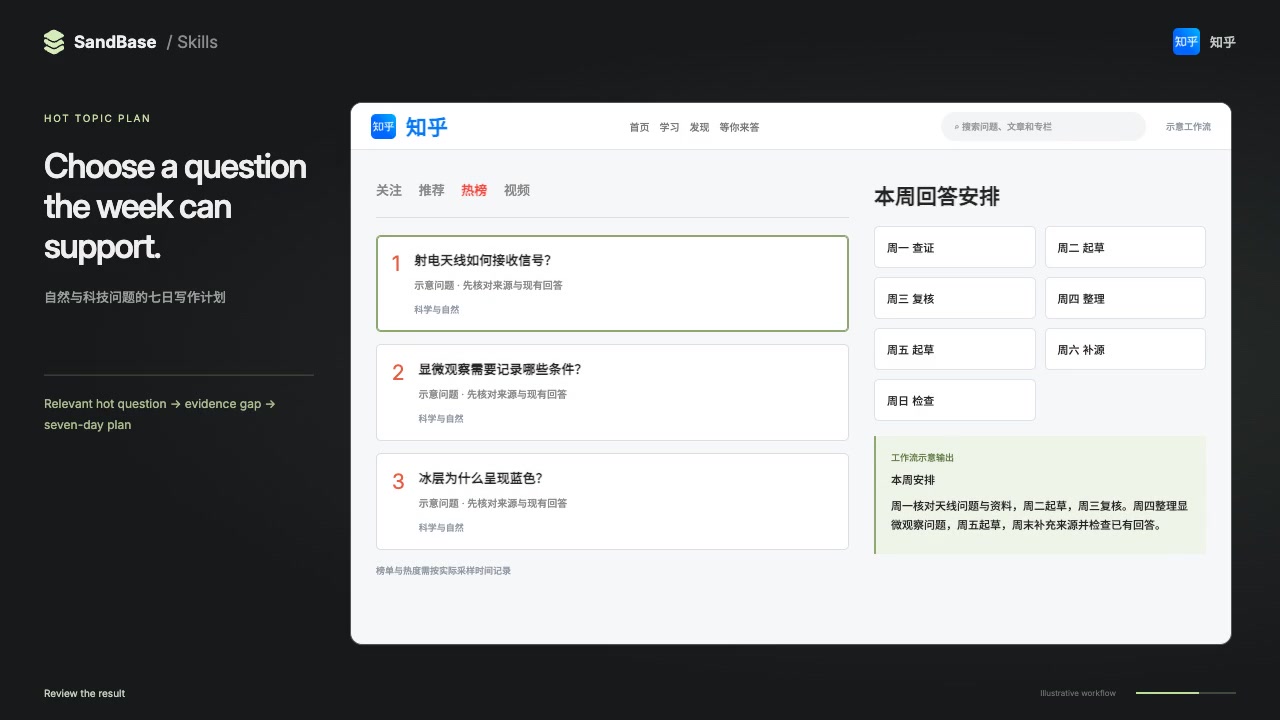
Pick this week's Zhihu answers from the hot list — which questions fit your beat, are still answerable, and have an open angle.
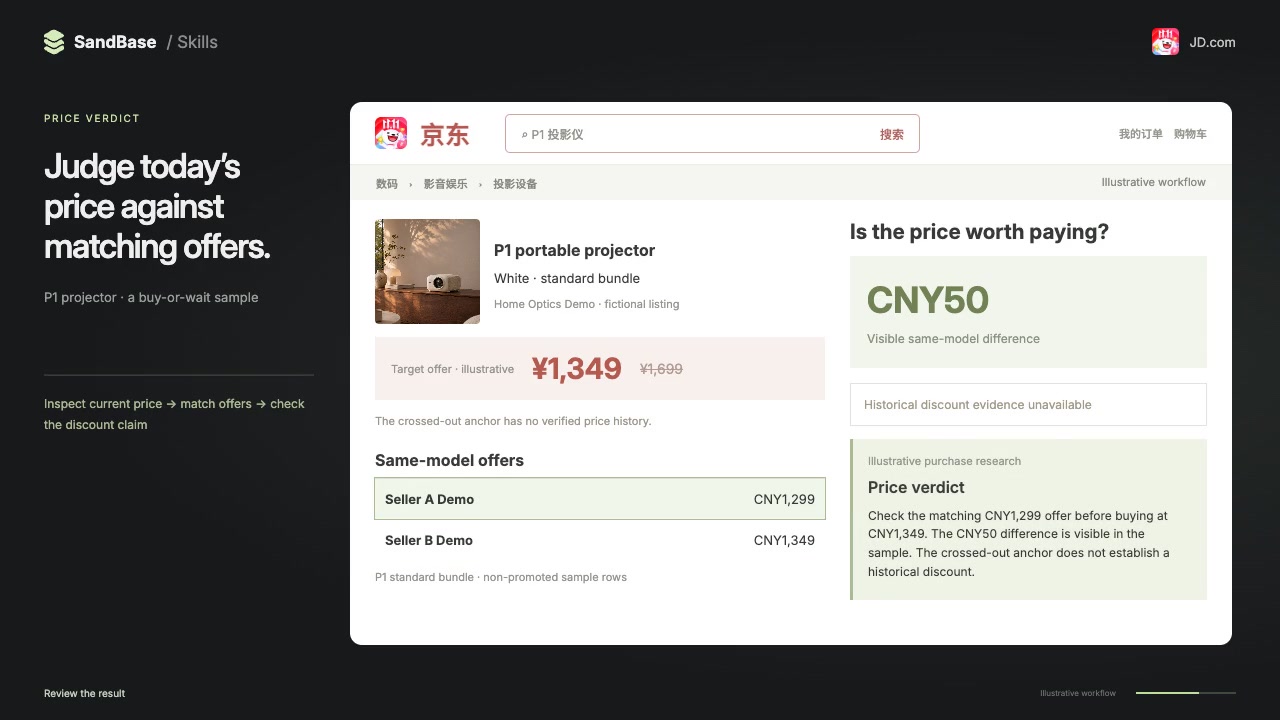
Is this JD.com price worth paying? One-line buy-or-wait verdict backed by today's price position, a fake-discount check and what recent buyers say.
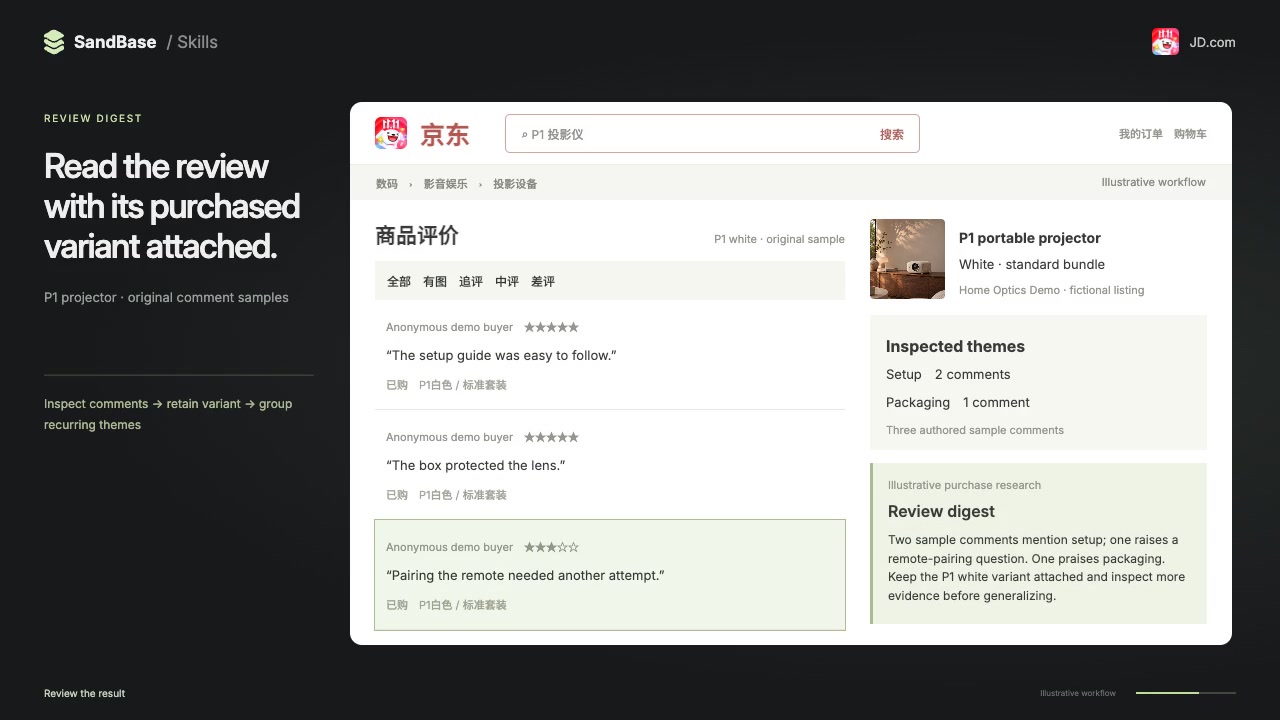
What do a JD listing's thousands of reviews actually say — clustered into themes with the score band and variant each complaint names?
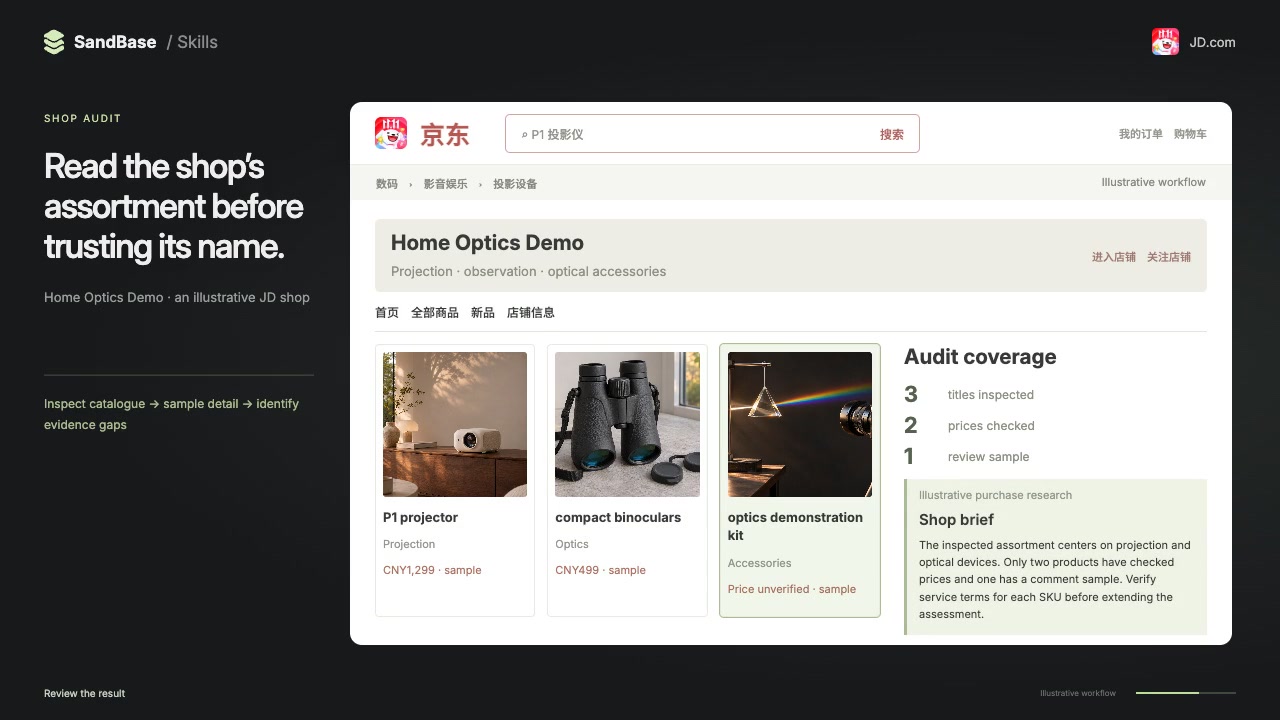
What does a JD shop actually sell and how does its own review record hold up — before you buy or partner with it?
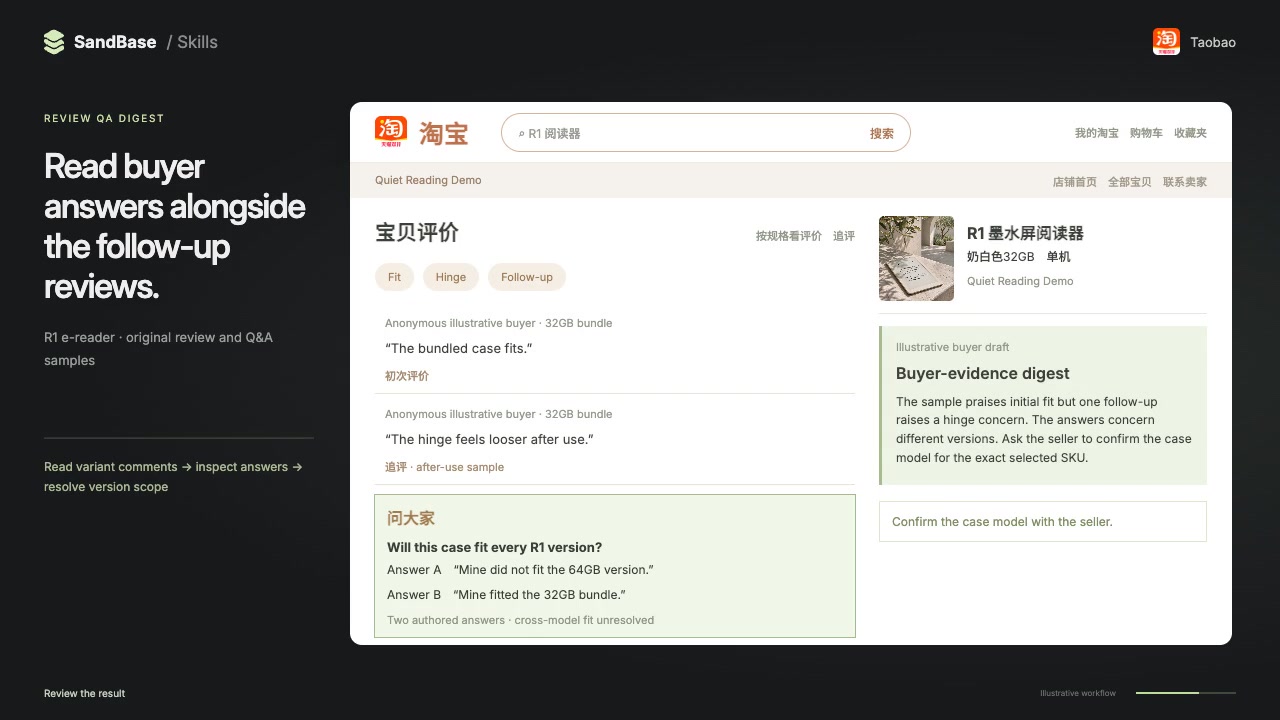
What do a Taobao listing's reviews and 问大家 answers actually say — the praise mass, the complaint tags, and where the crowd contradicts the listing?
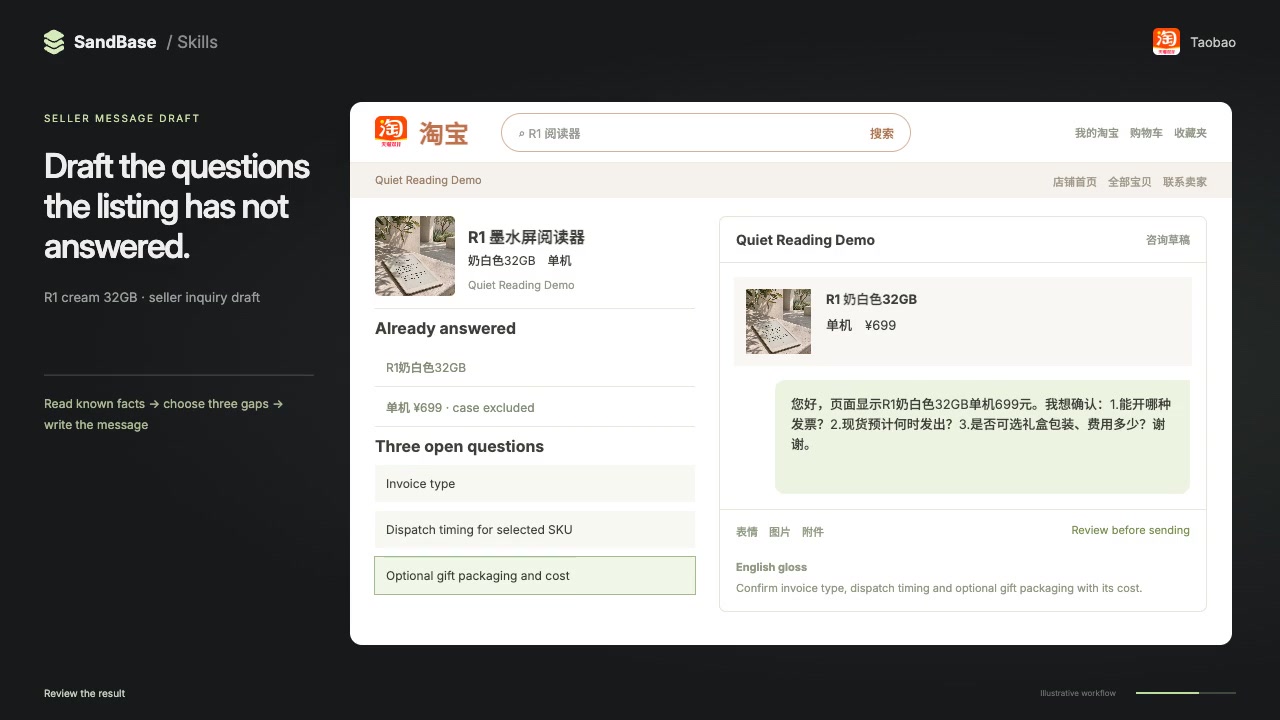
Write the Chinese message to send a Taobao seller — anchored in the listing's real variant names, asking only what the data leaves open.
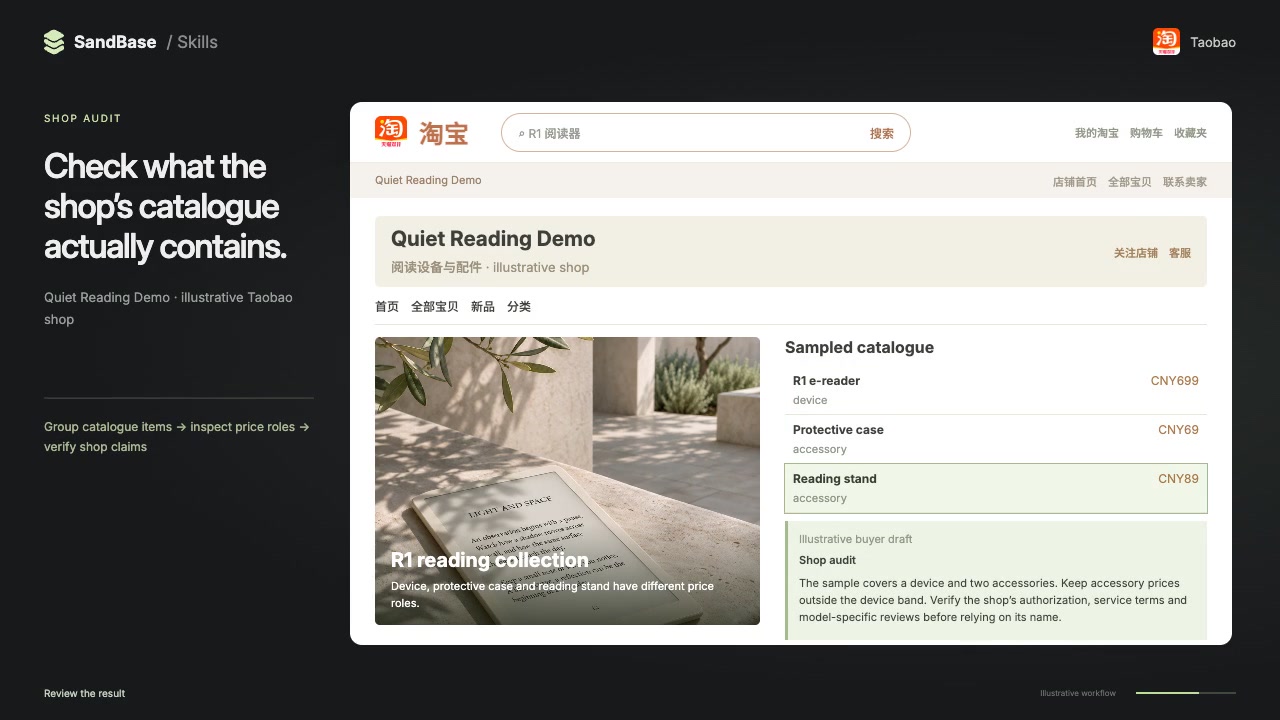
What does a Taobao shop's own data say — scores, assortment, price band, whether its buyers' reviews match what it sells?
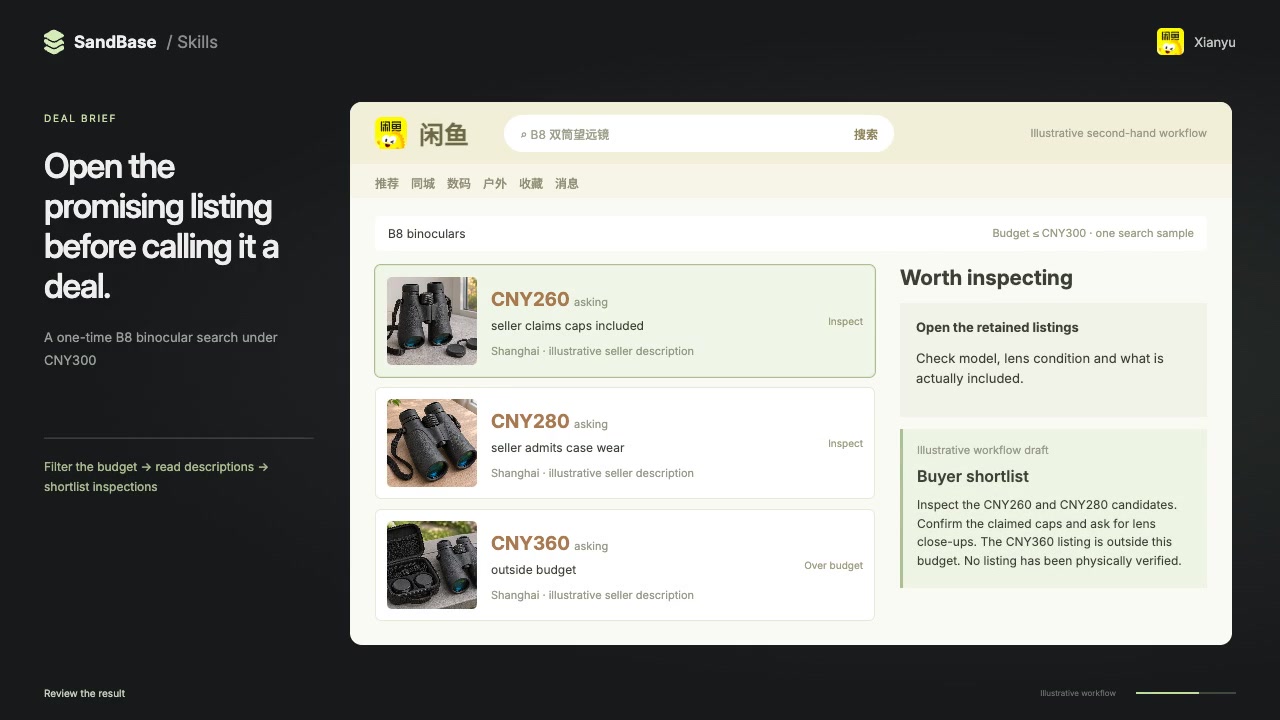
Find underpriced second-hand listings on Xianyu once — a ranked shortlist with asking price, condition signals and why each is worth opening.
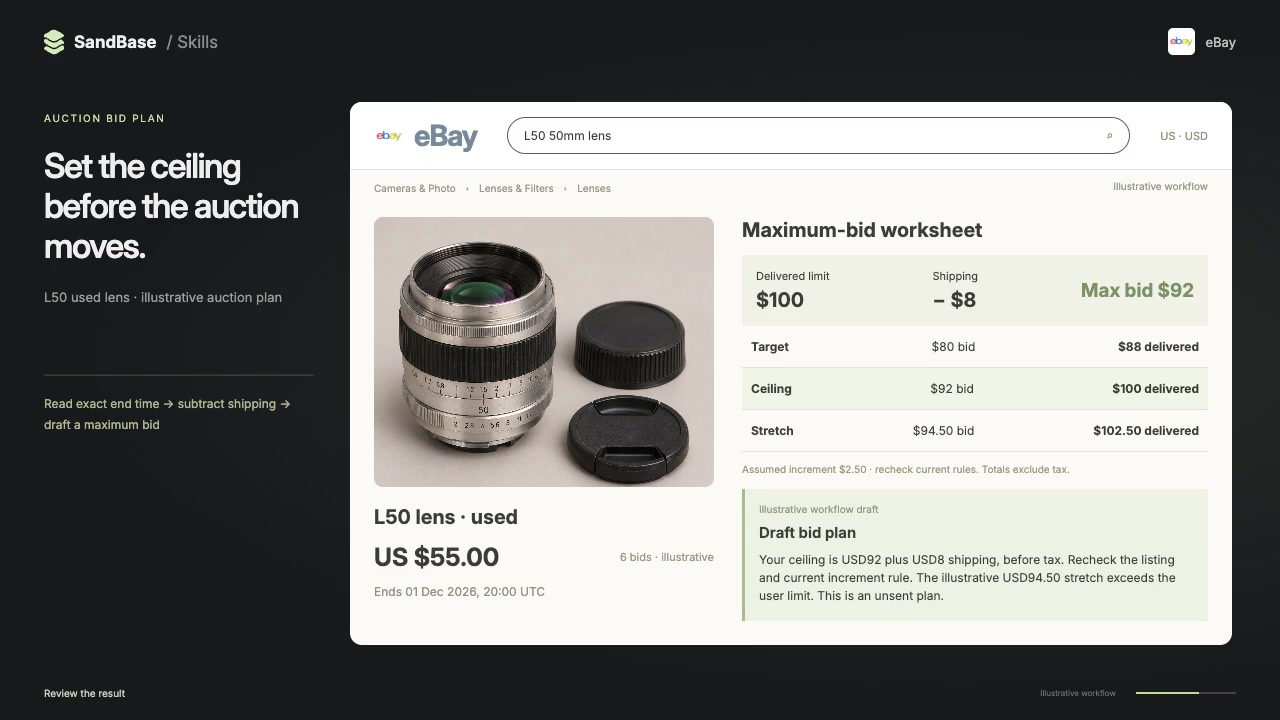
Know your maximum bid and landed cost on an eBay auction before you bid — so excitement, not math, never sets the ceiling.
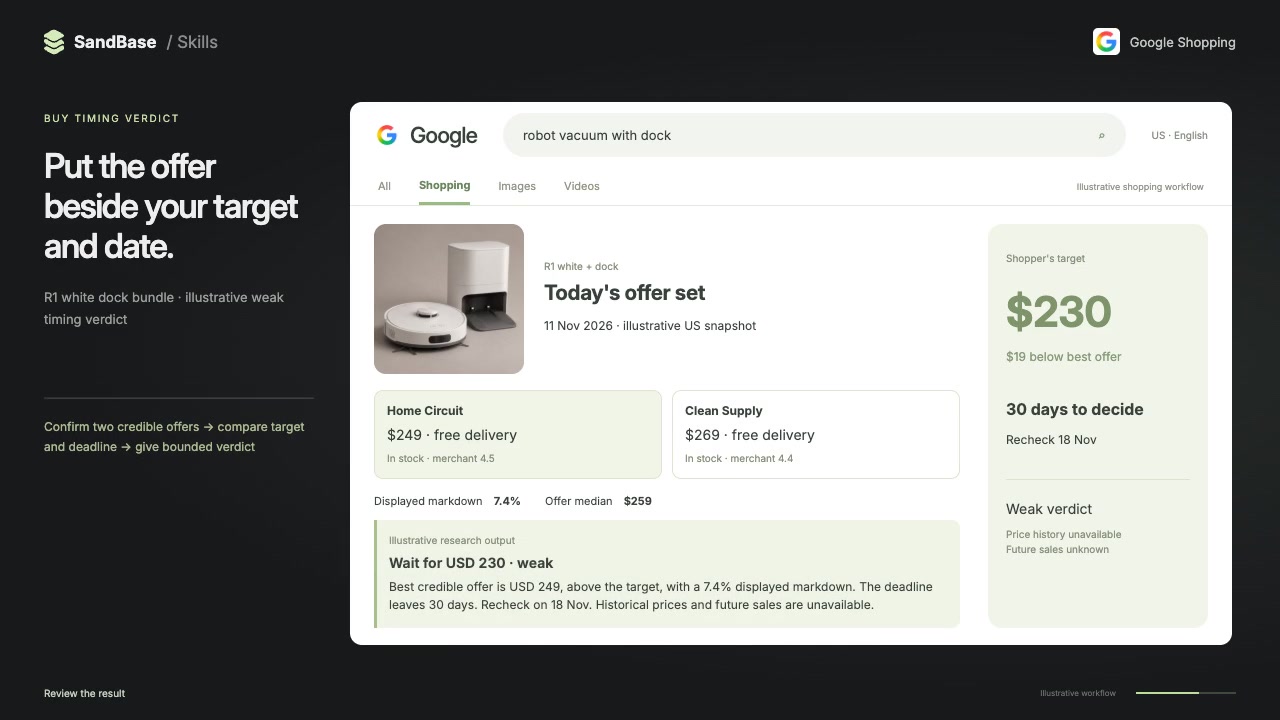
Answer 'buy now or wait?' for one product from today's Google Shopping offers — always labelled weak, since there is no price history.
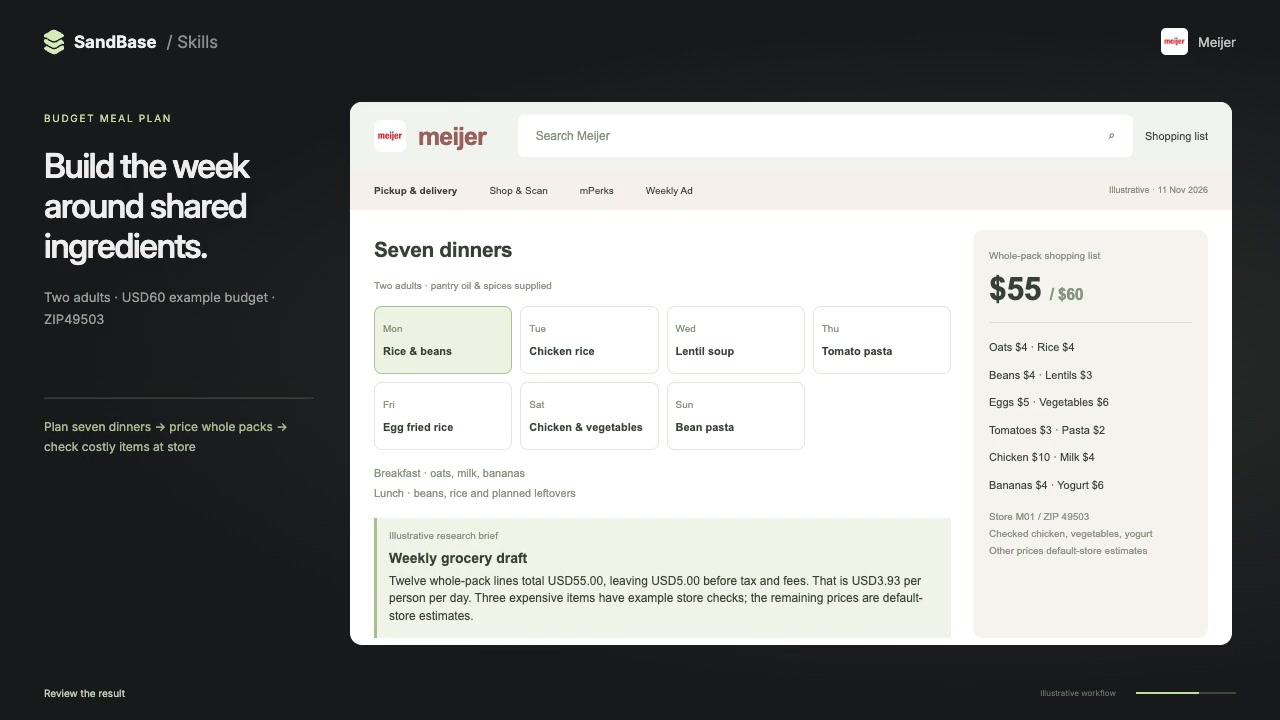
Plan a week of meals to a grocery budget with live Meijer prices — a menu, a priced shopping list, and swaps if it runs over.
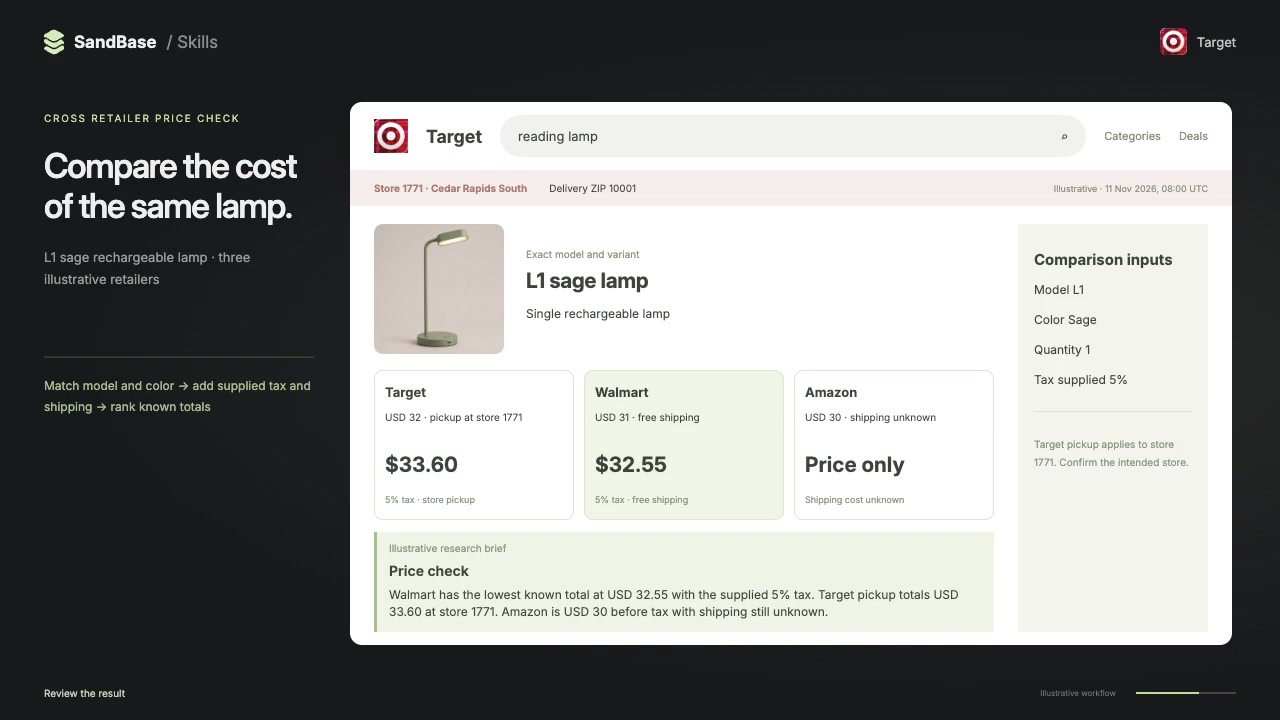
Work out what one item actually costs at Target against Walmart and Amazon — price plus how it reaches you — with every unknown left visible.
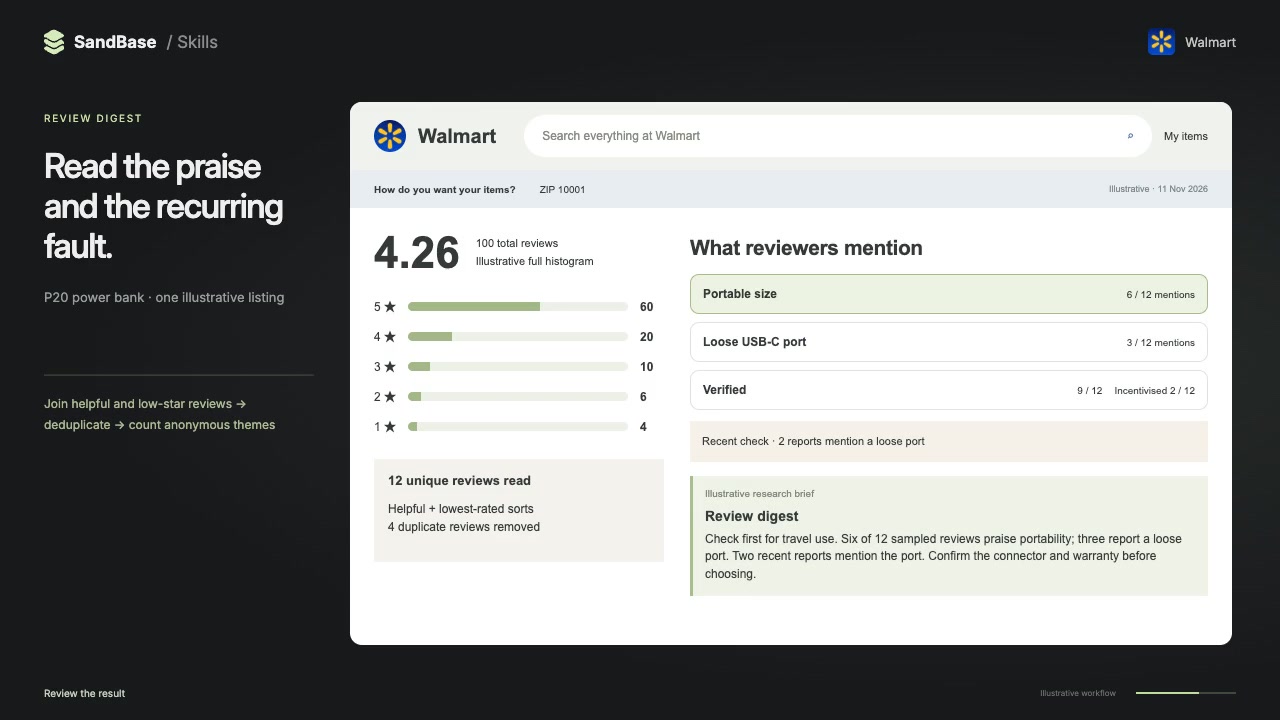
Turn one Walmart listing's reviews into themes you can act on — with counts, short quotes and a buy / check / skip note, reviewers never named.
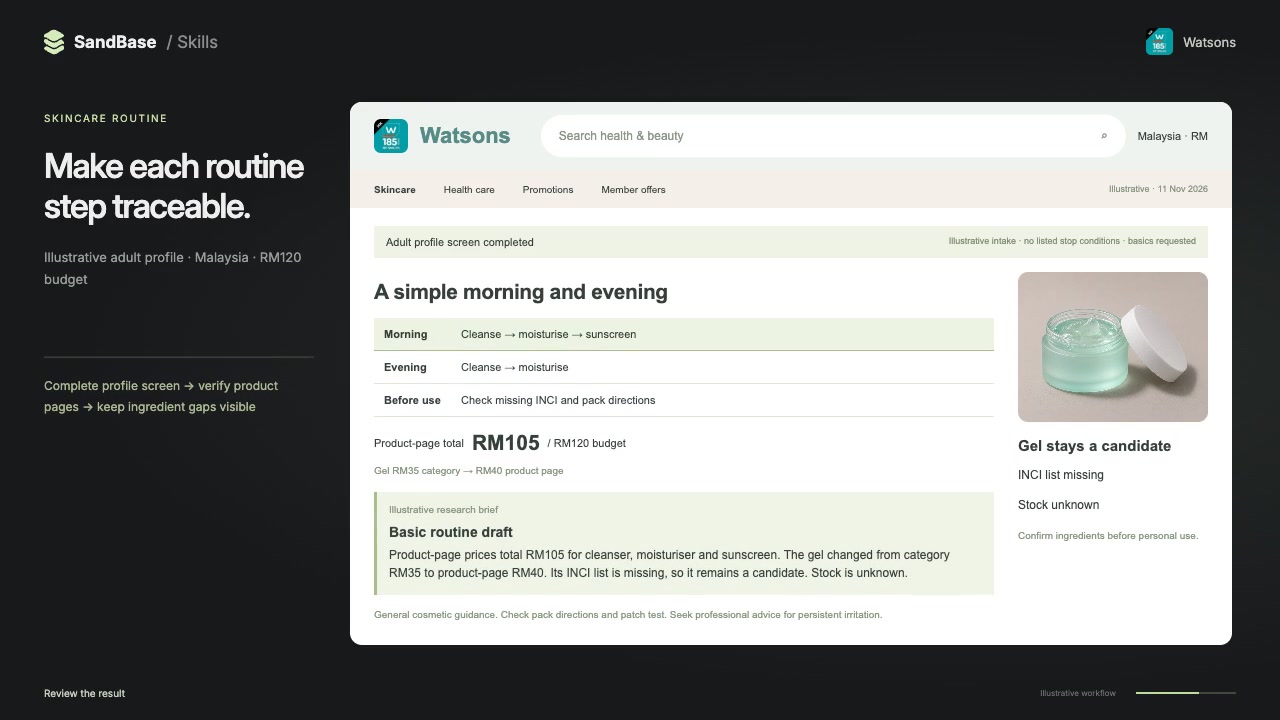
Build a morning and evening routine from products Watsons sells now — with a blocking safety screen first, and not medical advice.
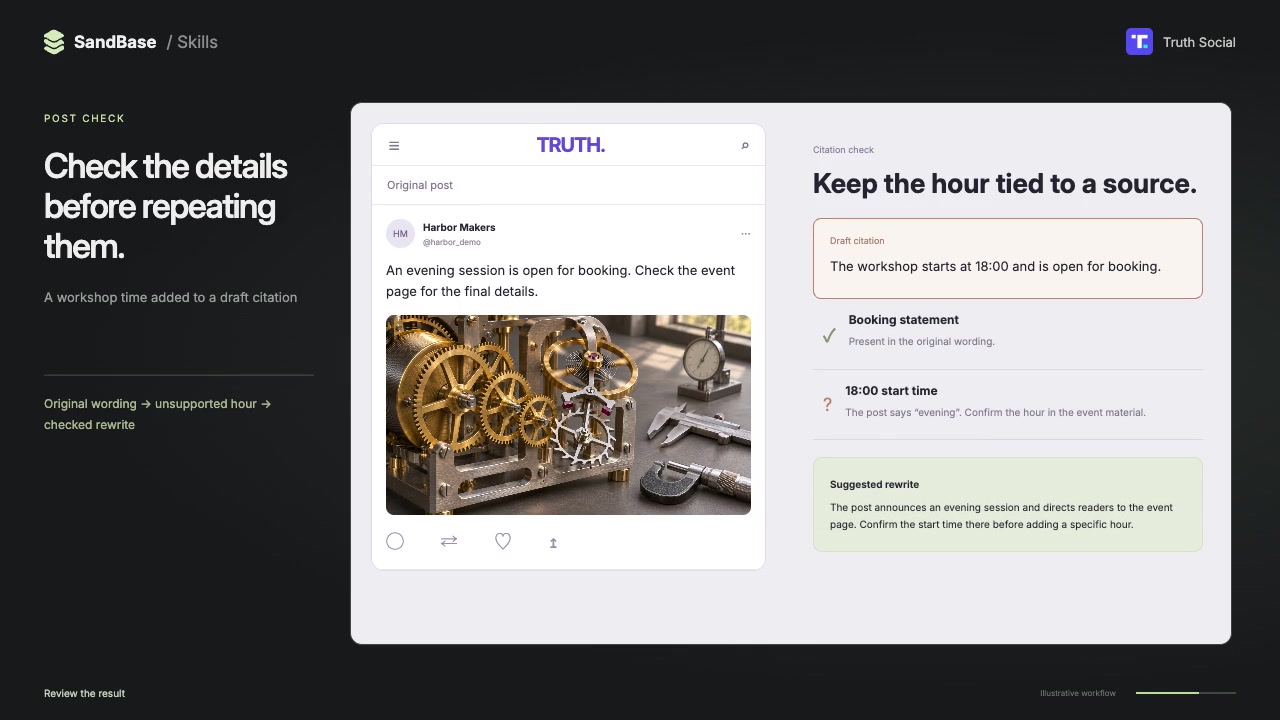
Check a sentence that quotes or describes Truth Social posts against the posts themselves before you publish it.
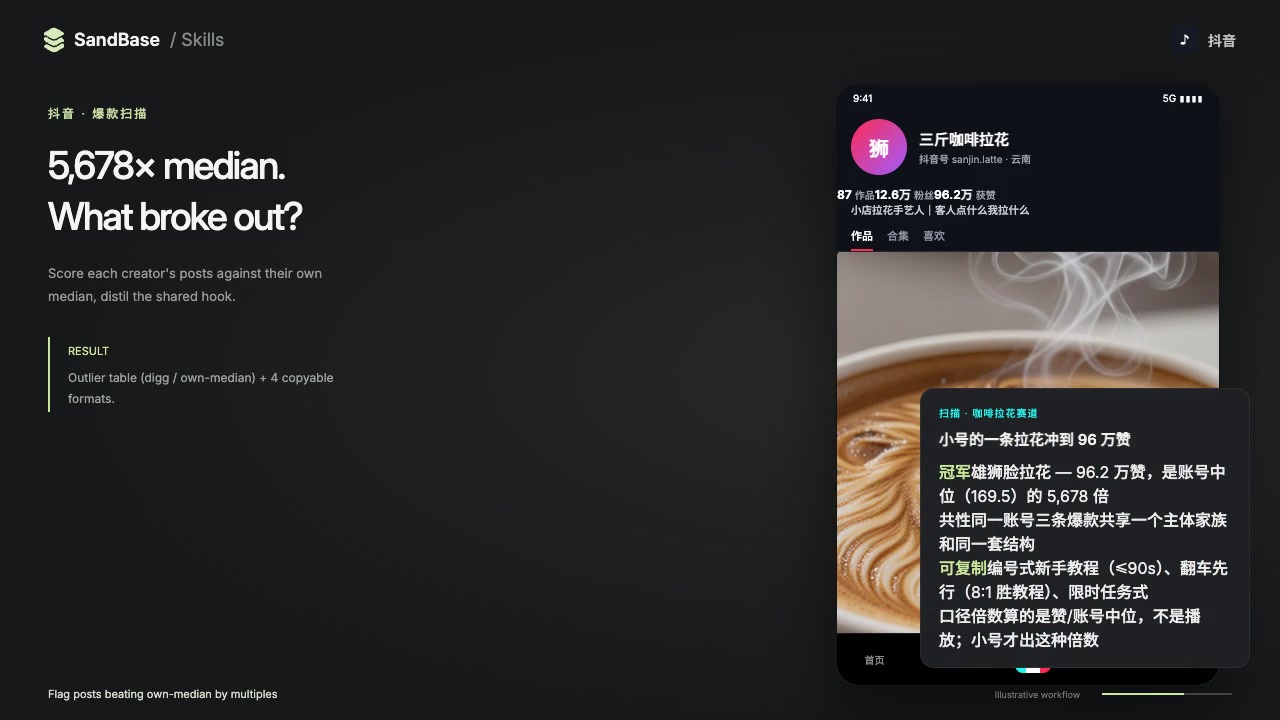
Find the videos beating their own account's baseline by a wide multiple in a Douyin niche, and the formats behind them.
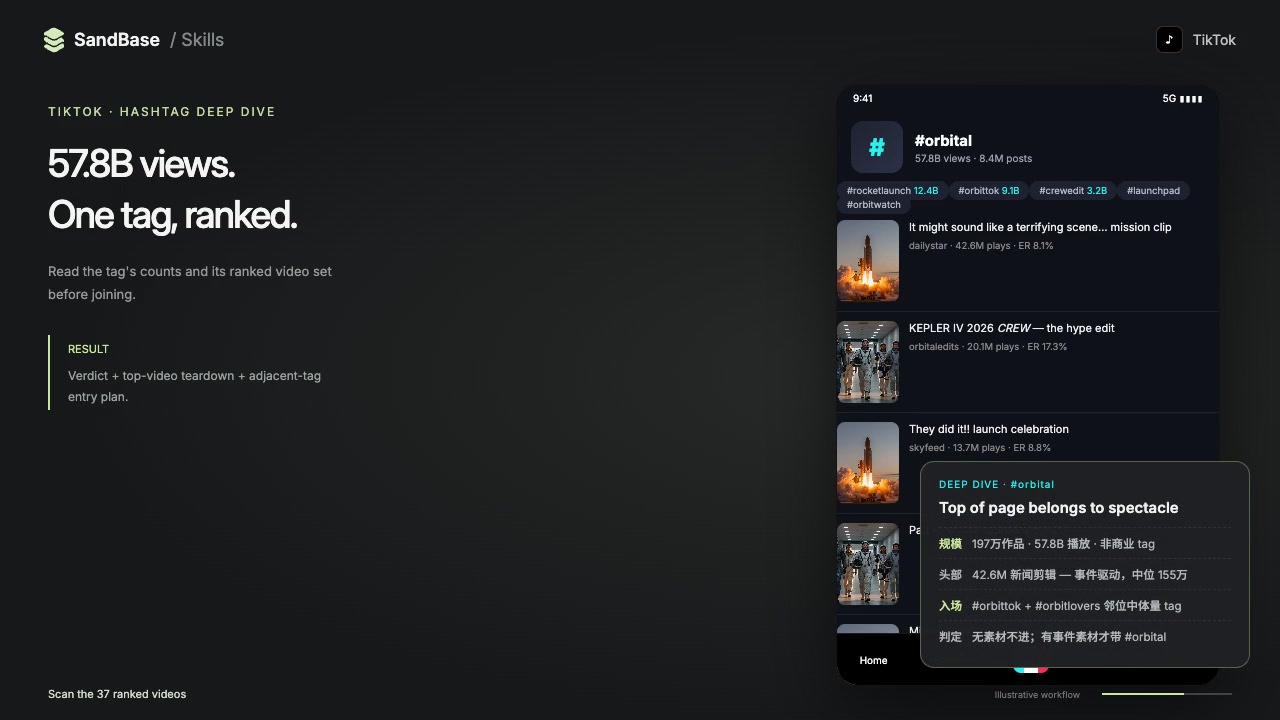
Open up one hashtag — its size, the videos winning on it, the spread between top and median — and get a plain verdict on whether to post under it.
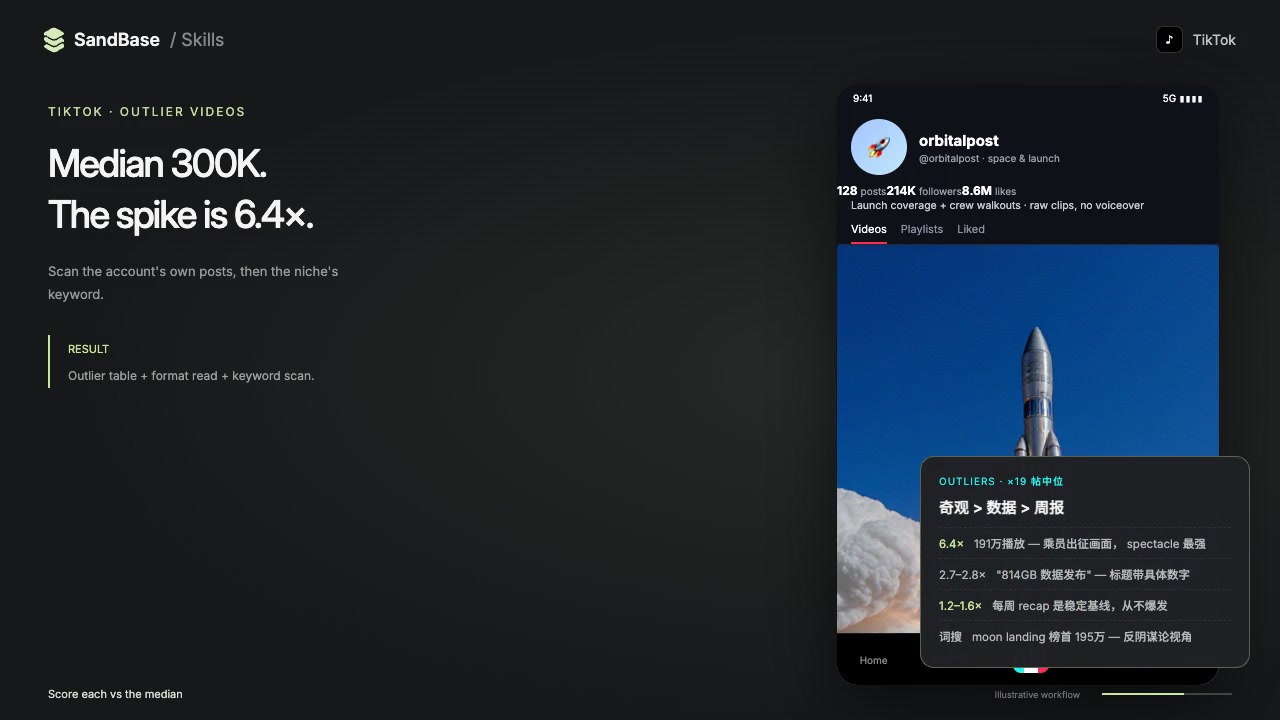
Find the videos that far out-perform their own account's median in a niche, and the formats they share.
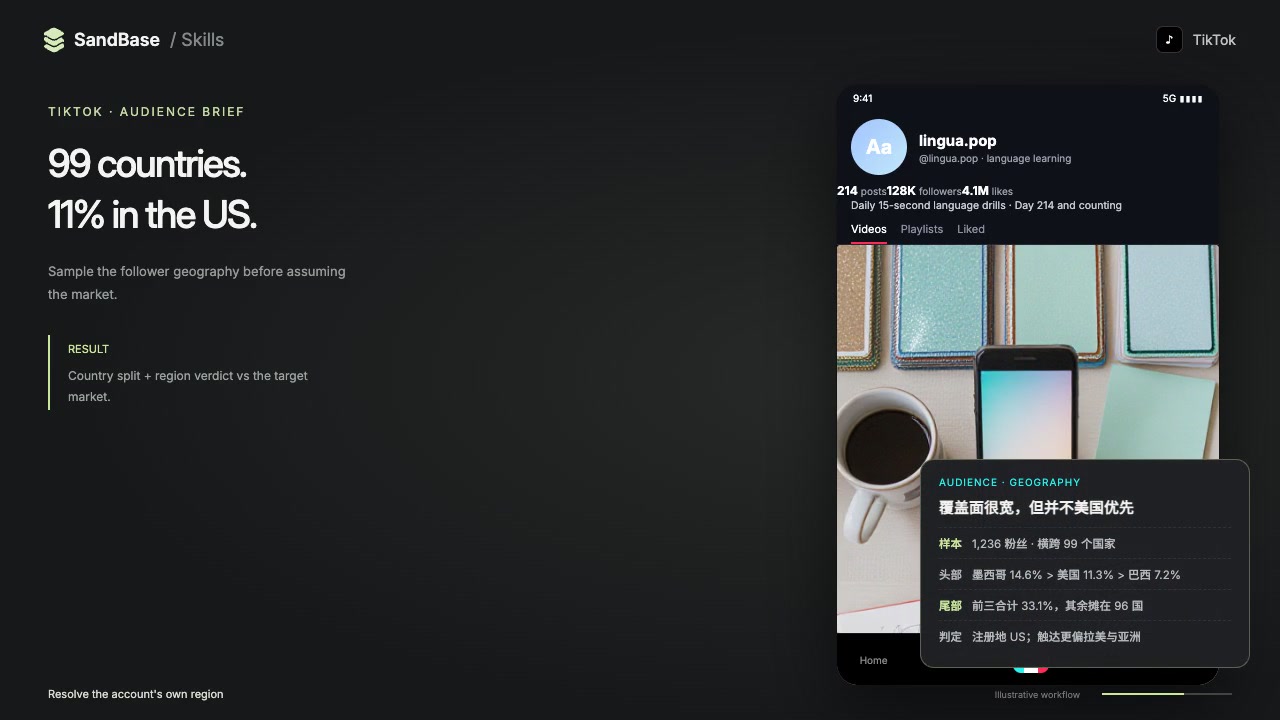
Read where a TikTok account's audience is — the follower country breakdown and the account's own region, turned into a who-and-where brief.
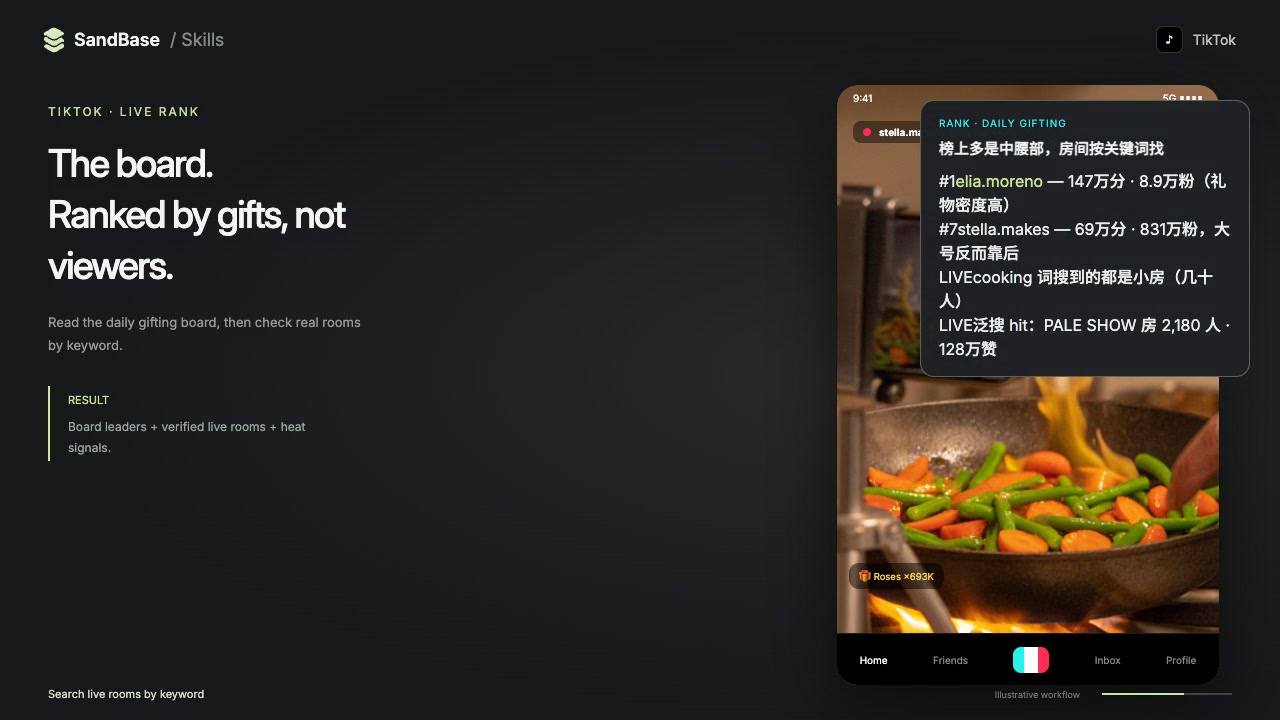
See who is live on TikTok right now and how hot they are — the LIVE leaderboards plus a per-room read of viewers, likes and host.
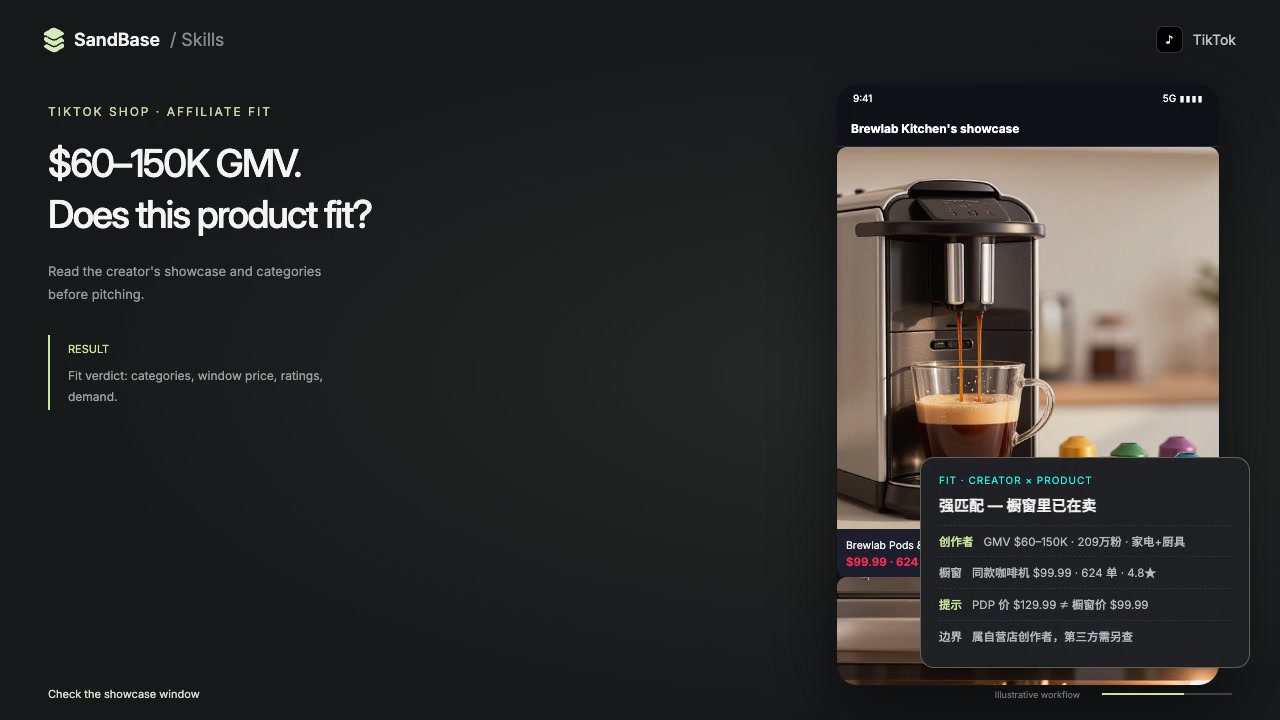
Judge whether a creator fits a TikTok Shop product — the creator's GMV band, categories, audience and what their showcase already sells, against the product's listing.
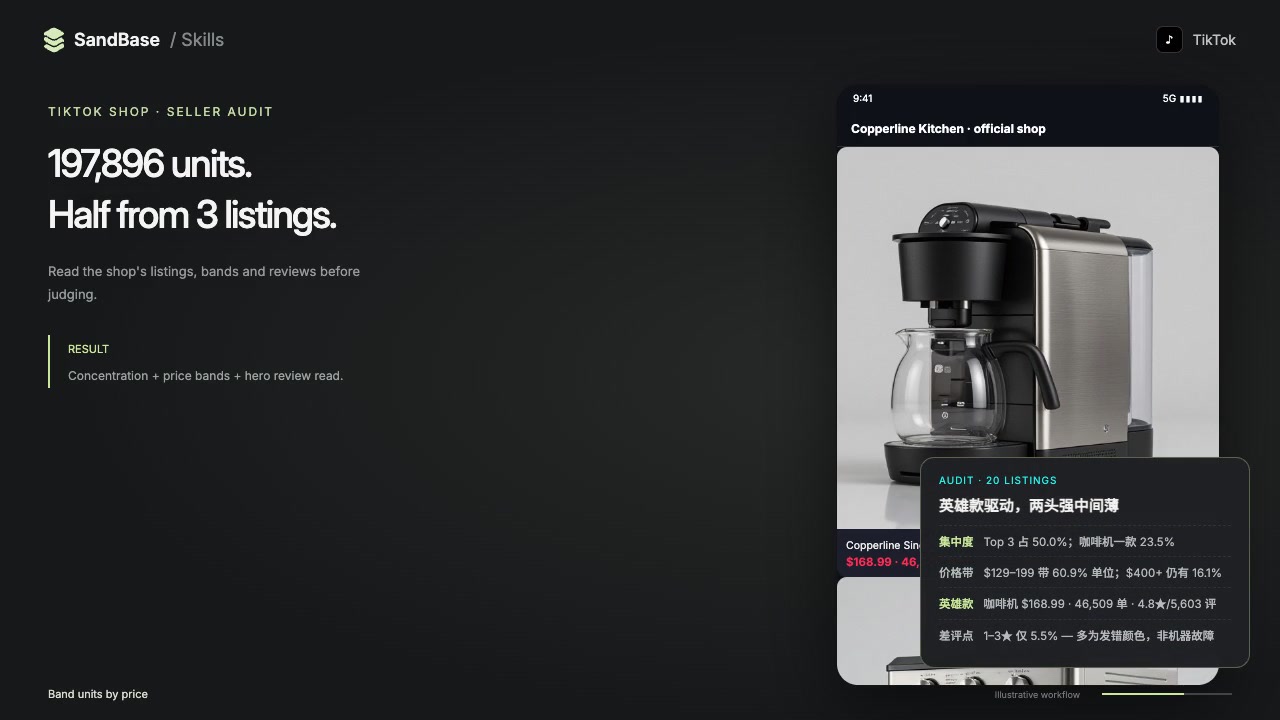
Audit a whole TikTok Shop seller — catalogue shape, price bands, sales concentration and what buyers say about the listings that carry it.
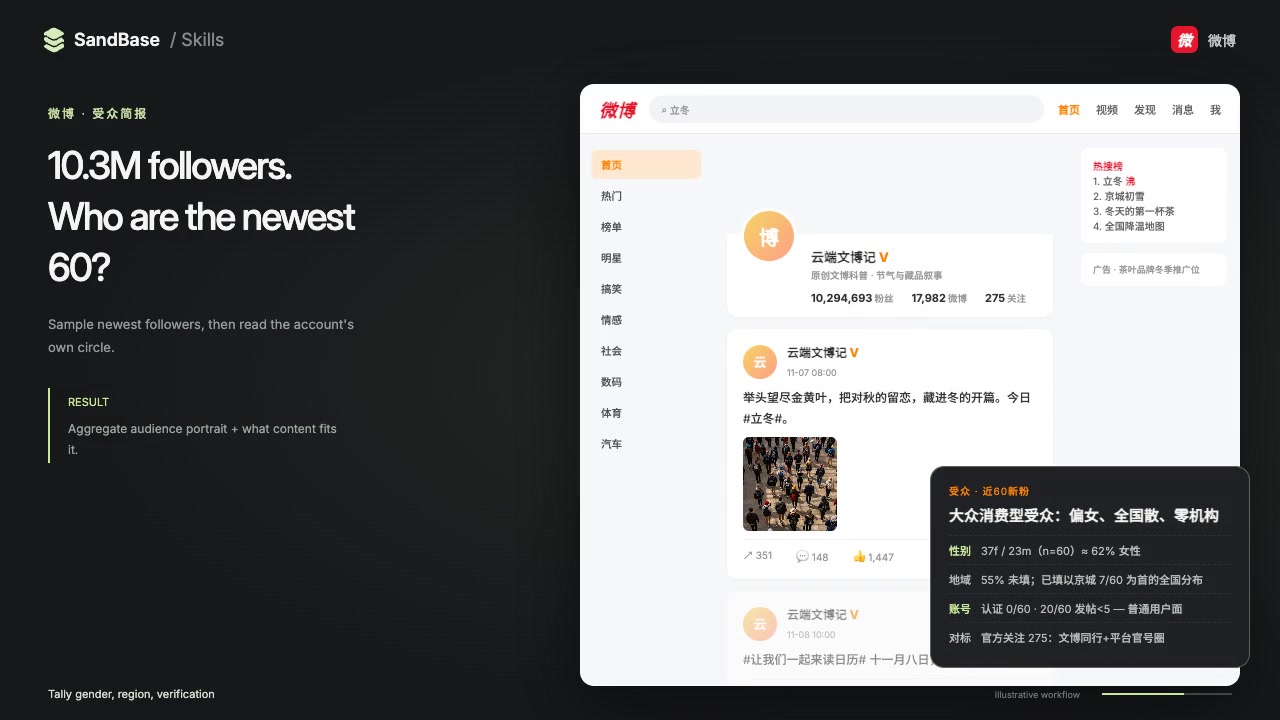
Profile one Weibo account's audience from a sampled slice of its public follower list — aggregate gender, region, verification and activity signals.
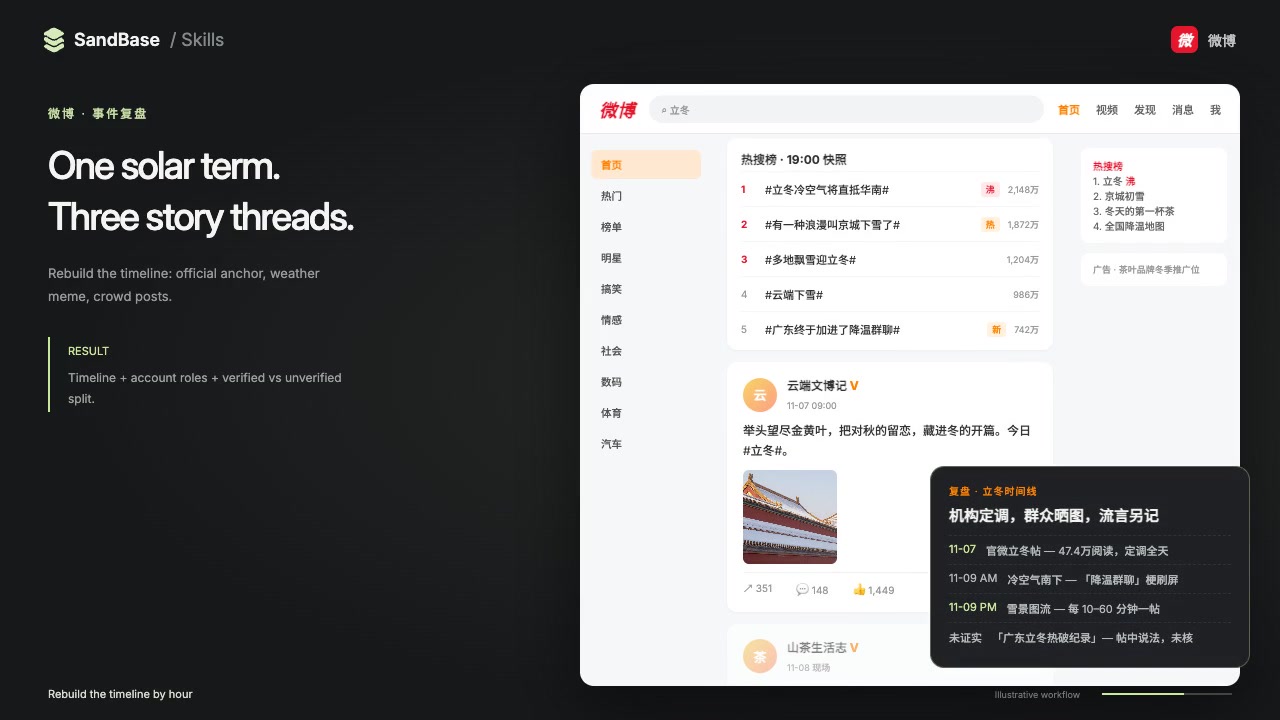
Rebuild what happened on Weibo around an event: its hot-list footprint, a timed post-stream slice, anchor posts and comment temperature — all cited.
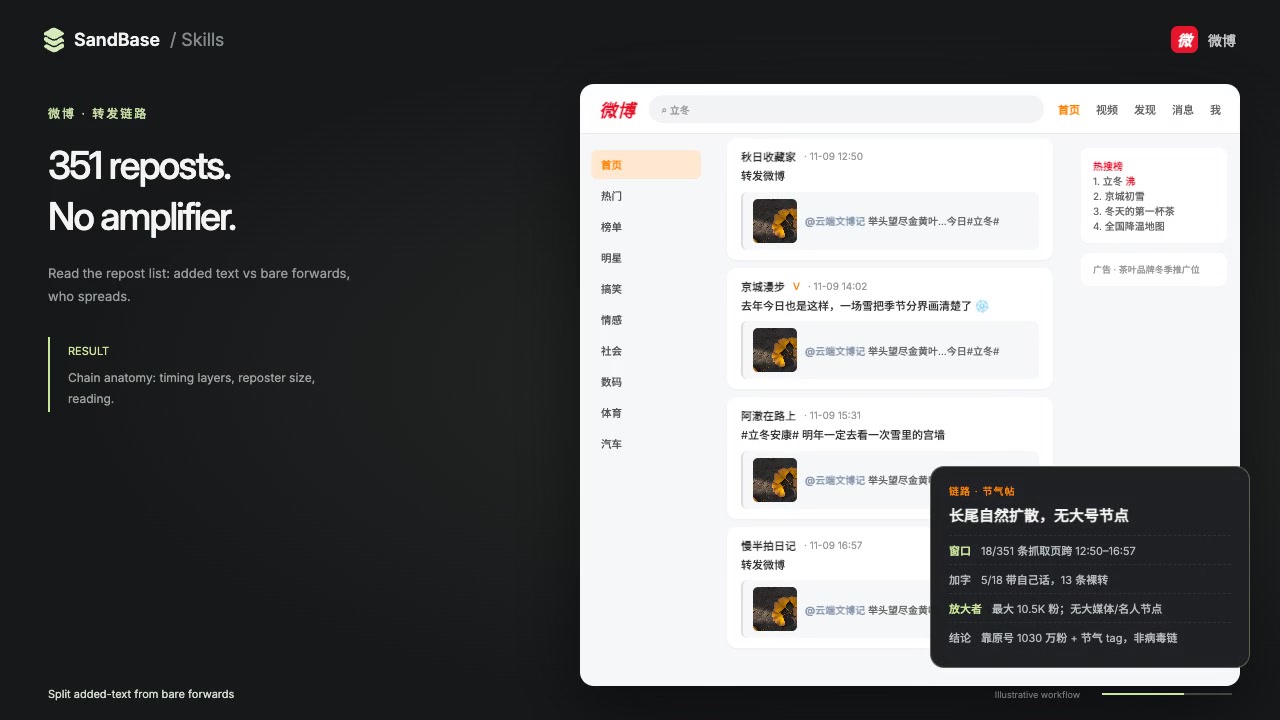
Trace how one Weibo post spread: the public repost list, who amplified it, which layers carried the reach and how comments reacted.
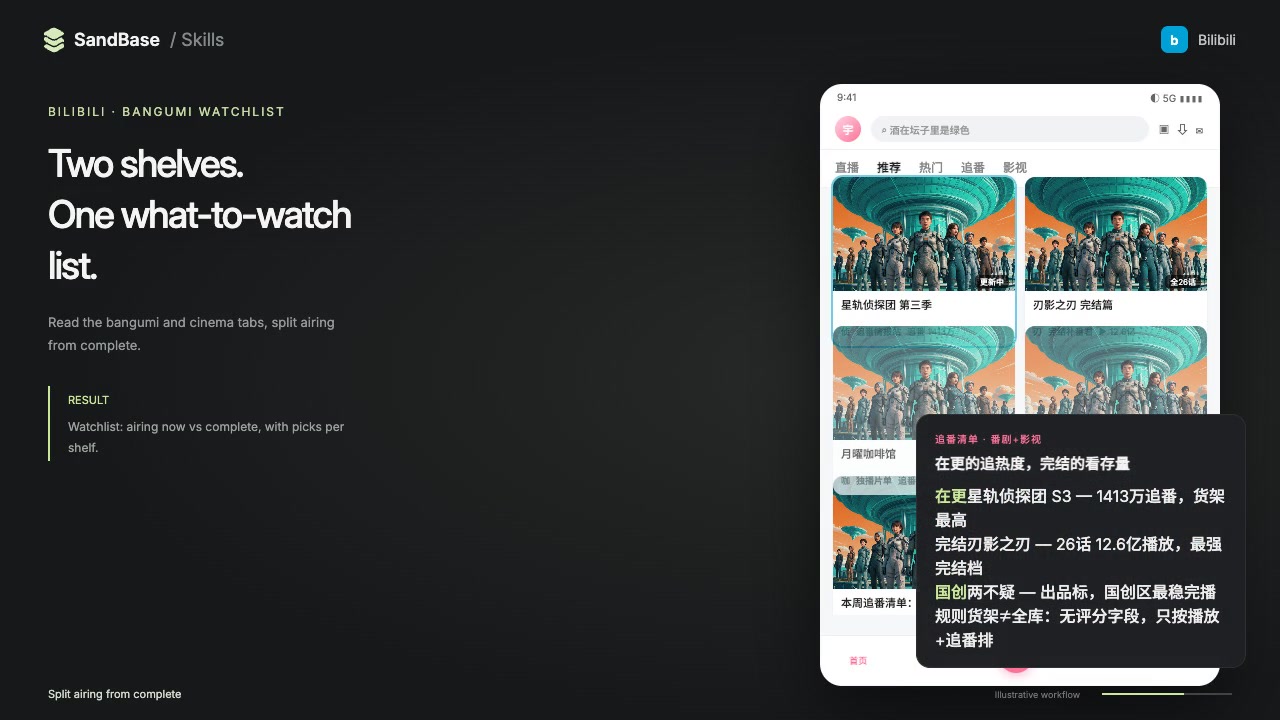
Build a what-to-watch list from Bilibili's own anime and cinema shelves — update text, views, follows, badges — split into airing vs complete.
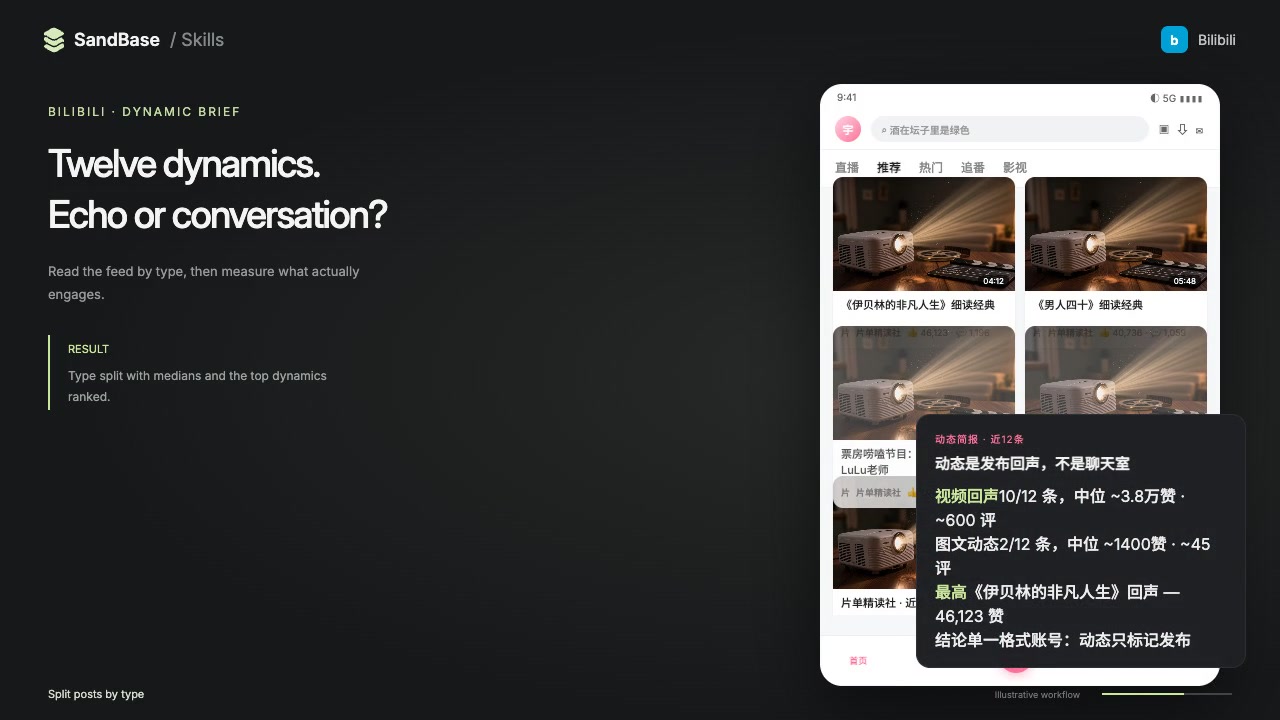
Read an UP主's dynamic feed — the posts between videos — and say which pull real conversation versus which are just release echoes.
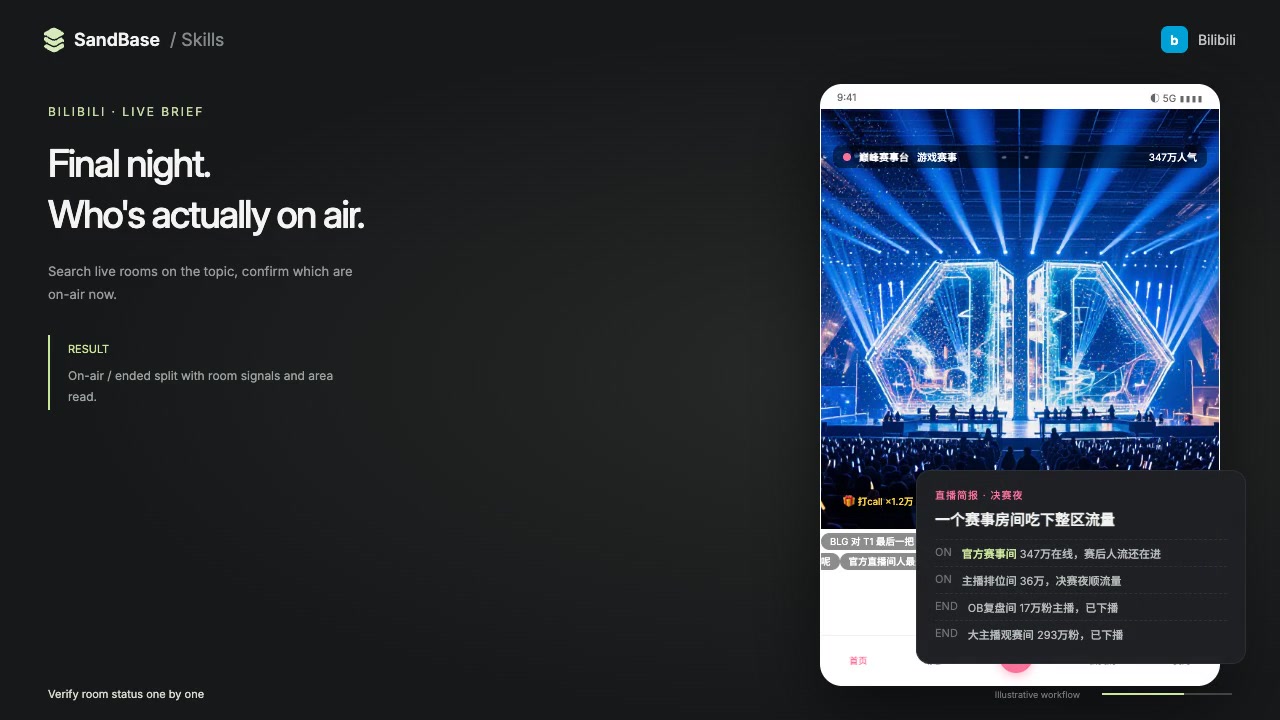
Answer which Bilibili live rooms are worth watching right now — per area, with online counts and anchor followings — not a static directory.
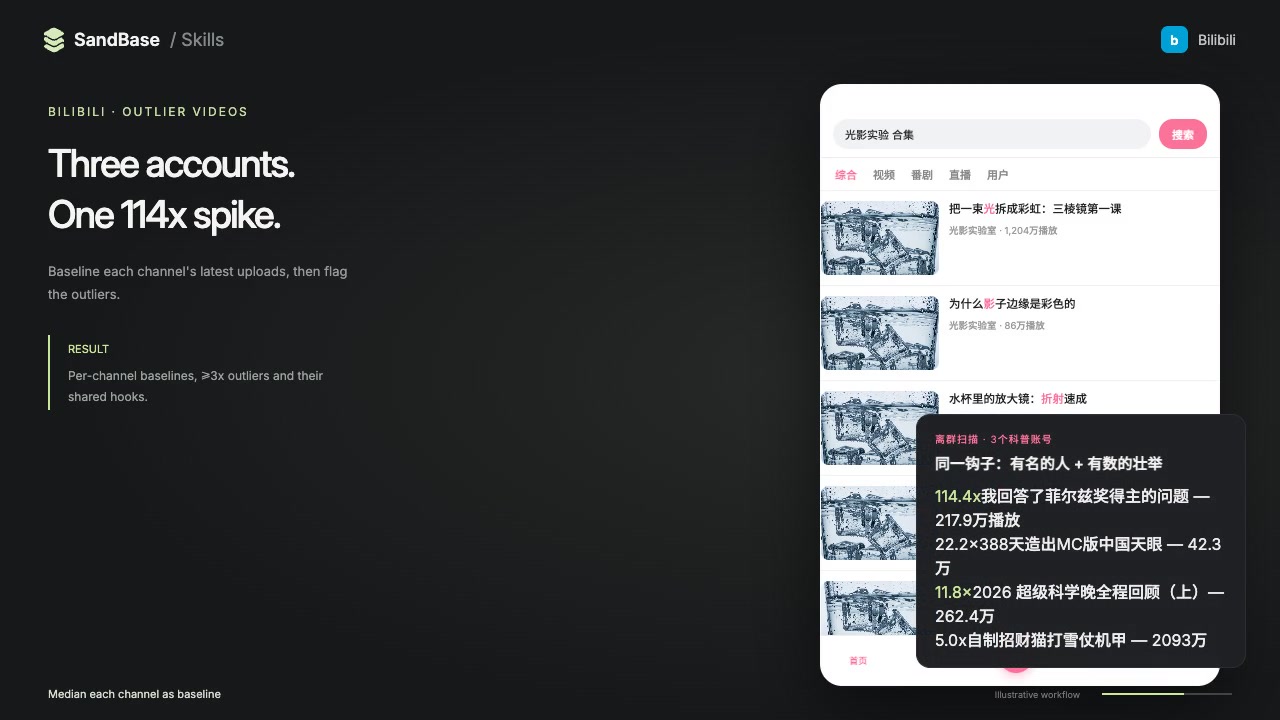
Find the videos that far outperformed their own channel's median — and name the hooks they share — instead of comparing raw view counts across channels.
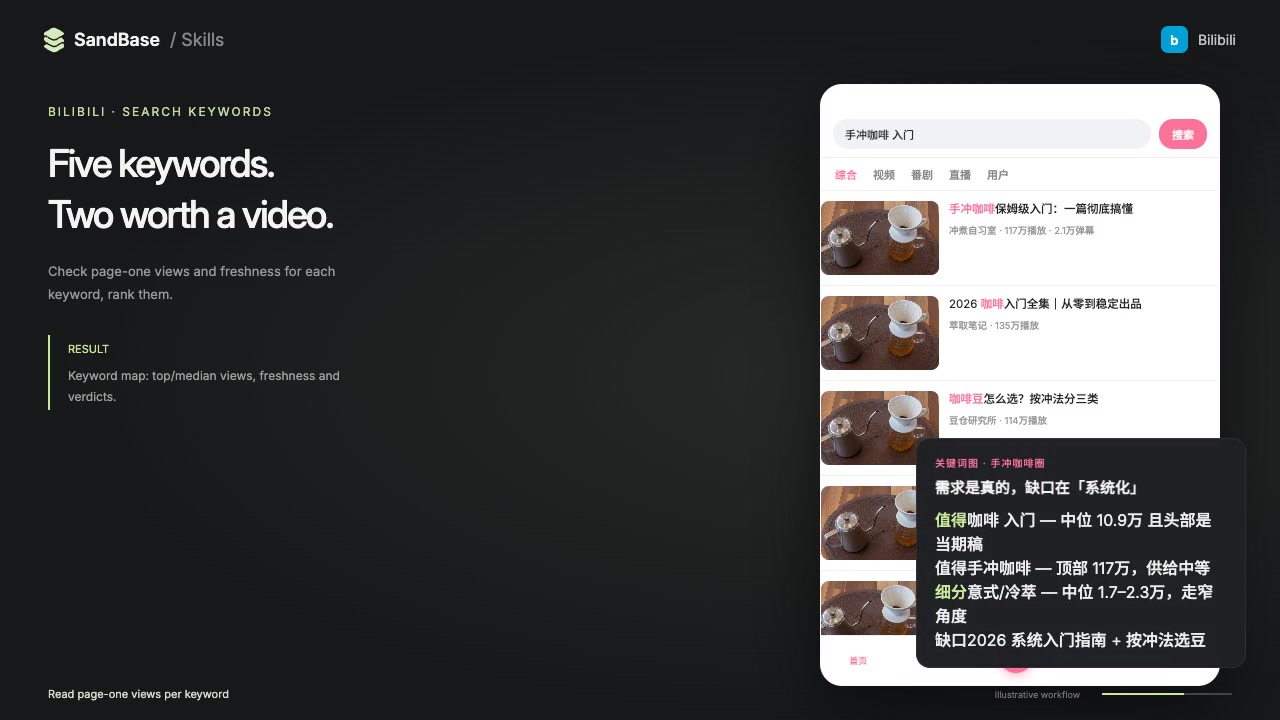
Map a niche's keyword landscape — which words have real demand but weak first-page supply — instead of picking a title by feel.
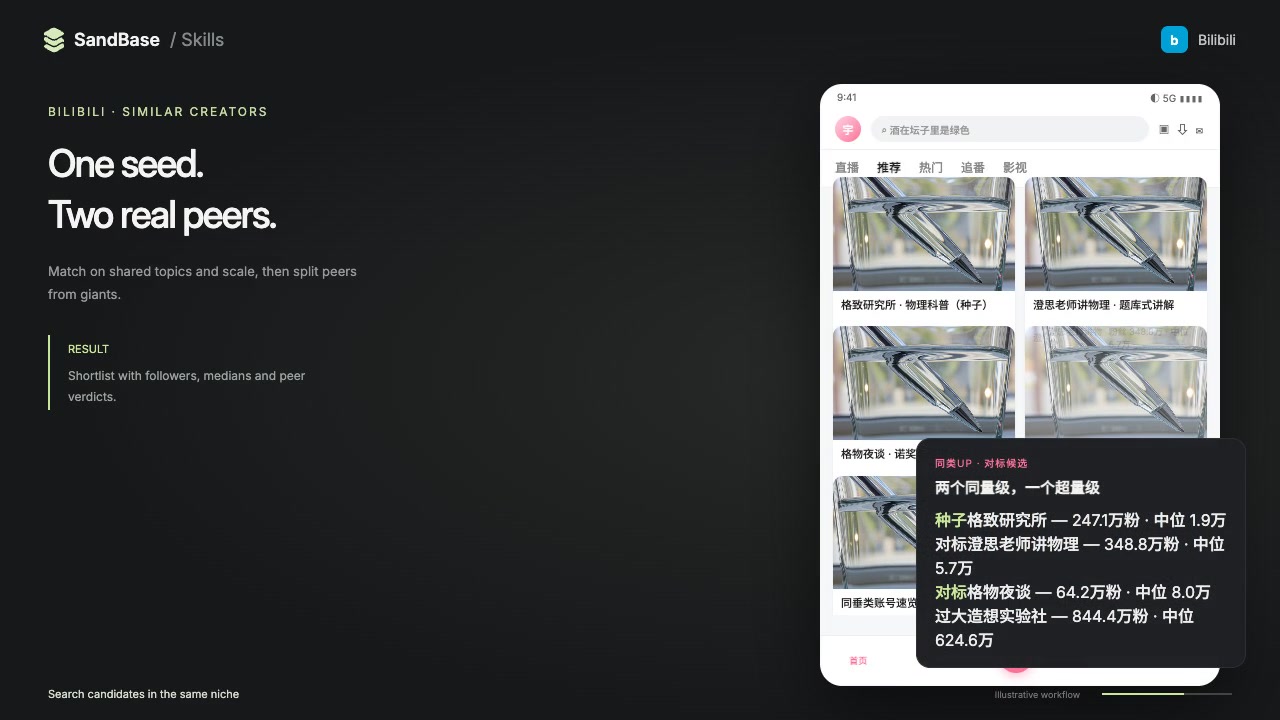
Find UP主 who make similar content at a comparable scale — scored on recent-title overlap plus follower and per-video-median distance — not just whoever shares the niche name.
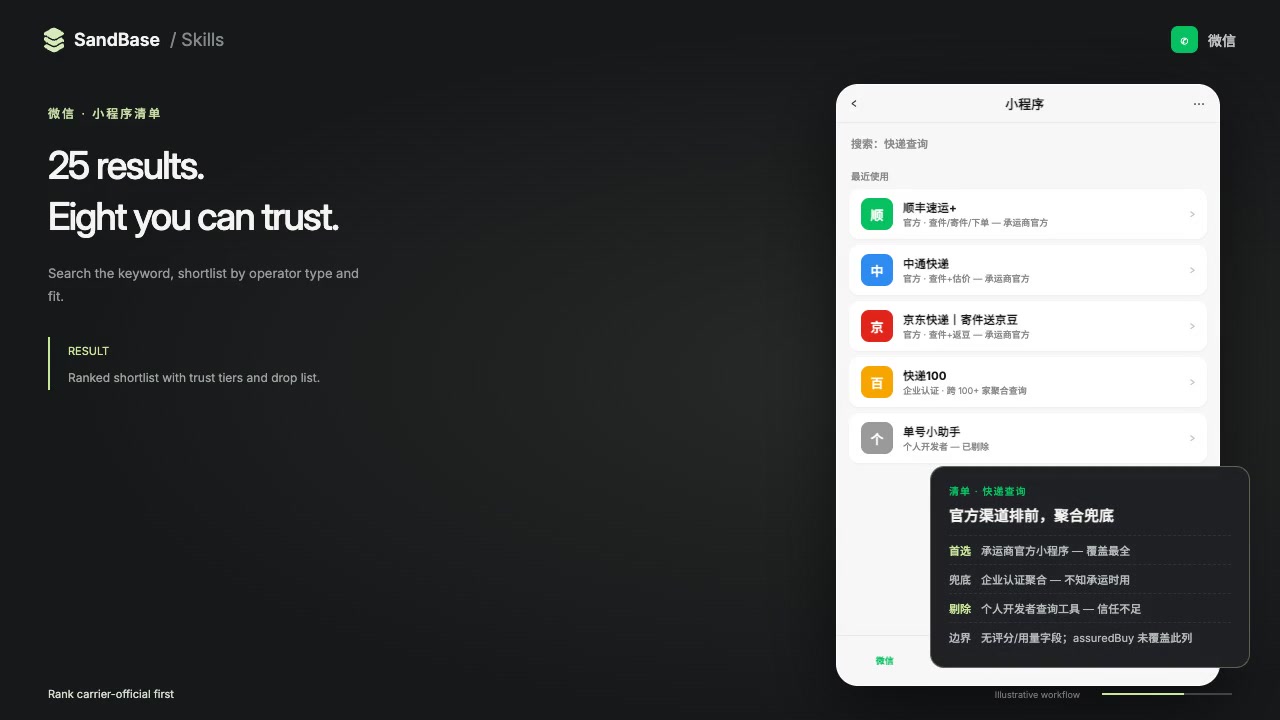
Find and rank 小程序 options for a task — official channels, verified operators and entry points, research only.
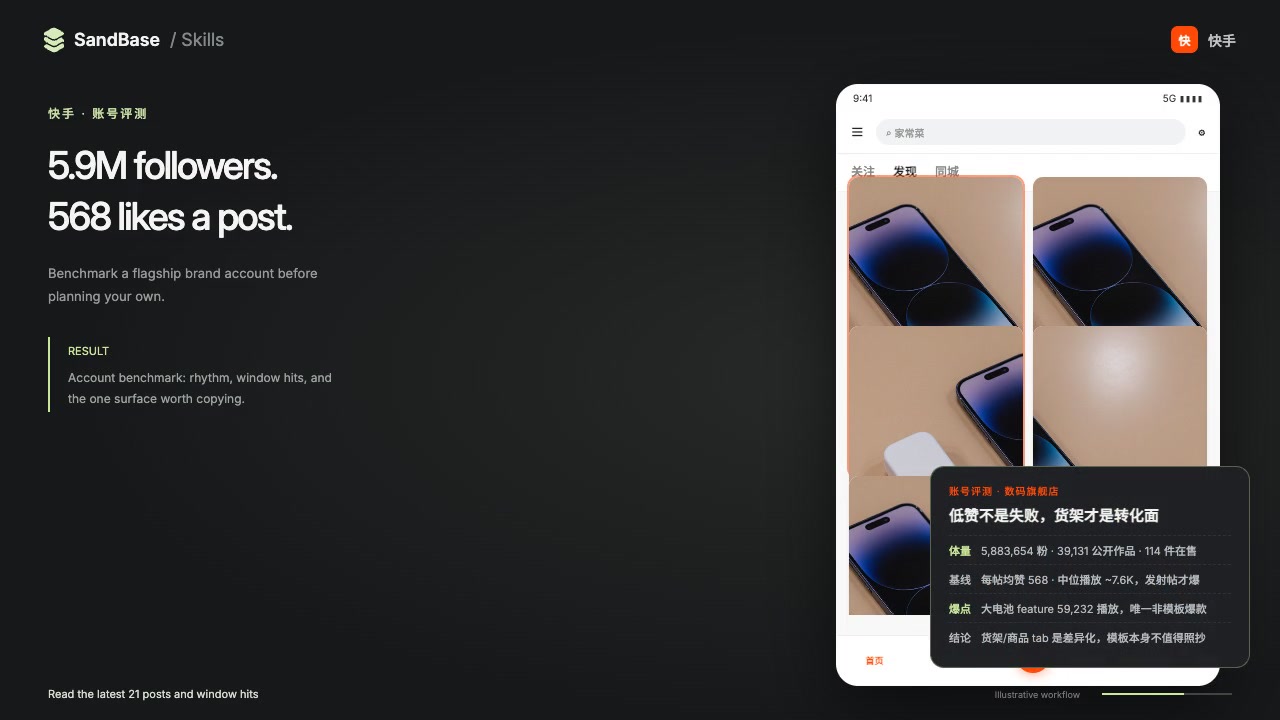
Read one Kuaishou creator's profile totals, recent window and top posts, and see what is actually worth benchmarking or partnering on.
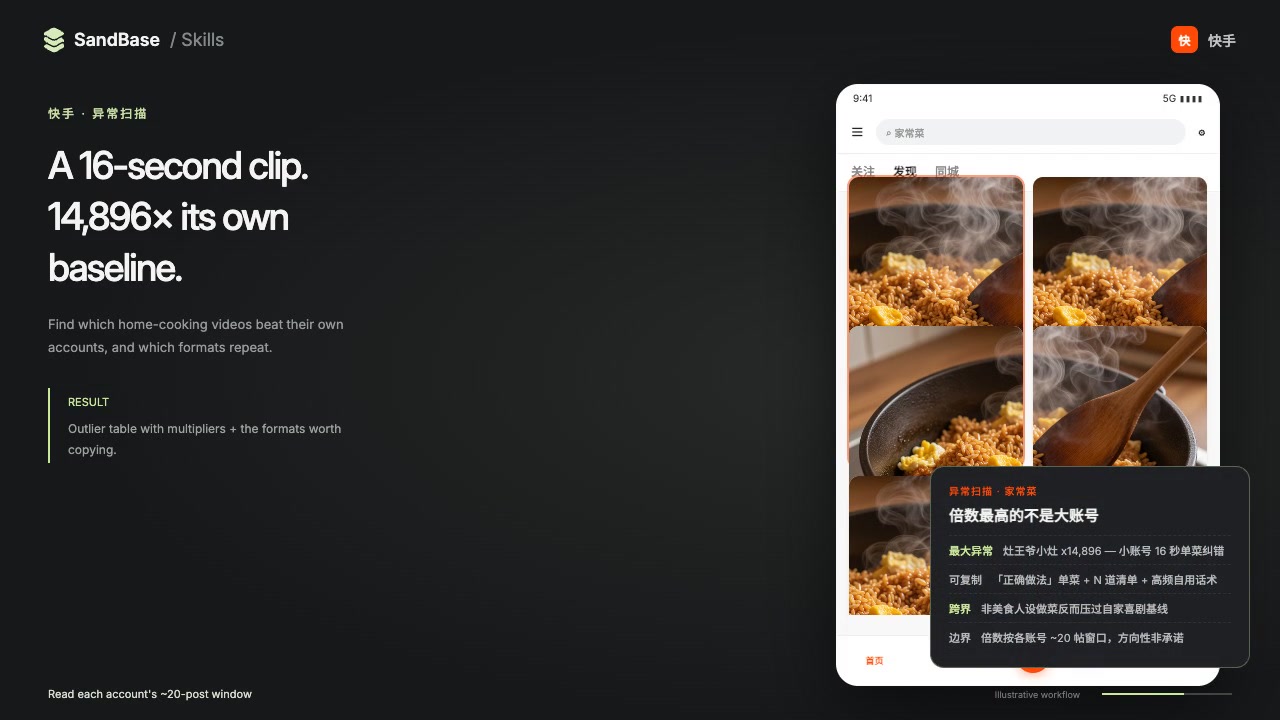
Find the Kuaishou videos that ran far above their own account's median in a niche, and name the formats worth copying.
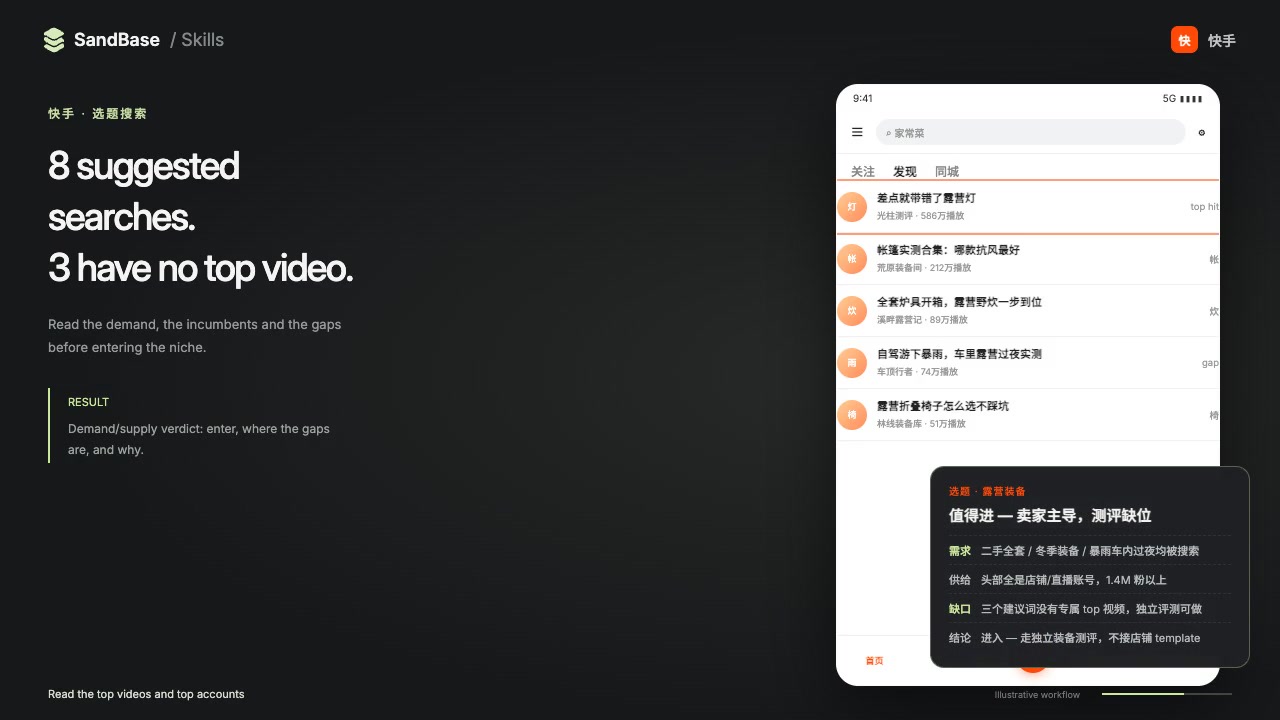
See what Kuaishou users actually search for a topic, what already ranks, and where the supply gap is before filming.
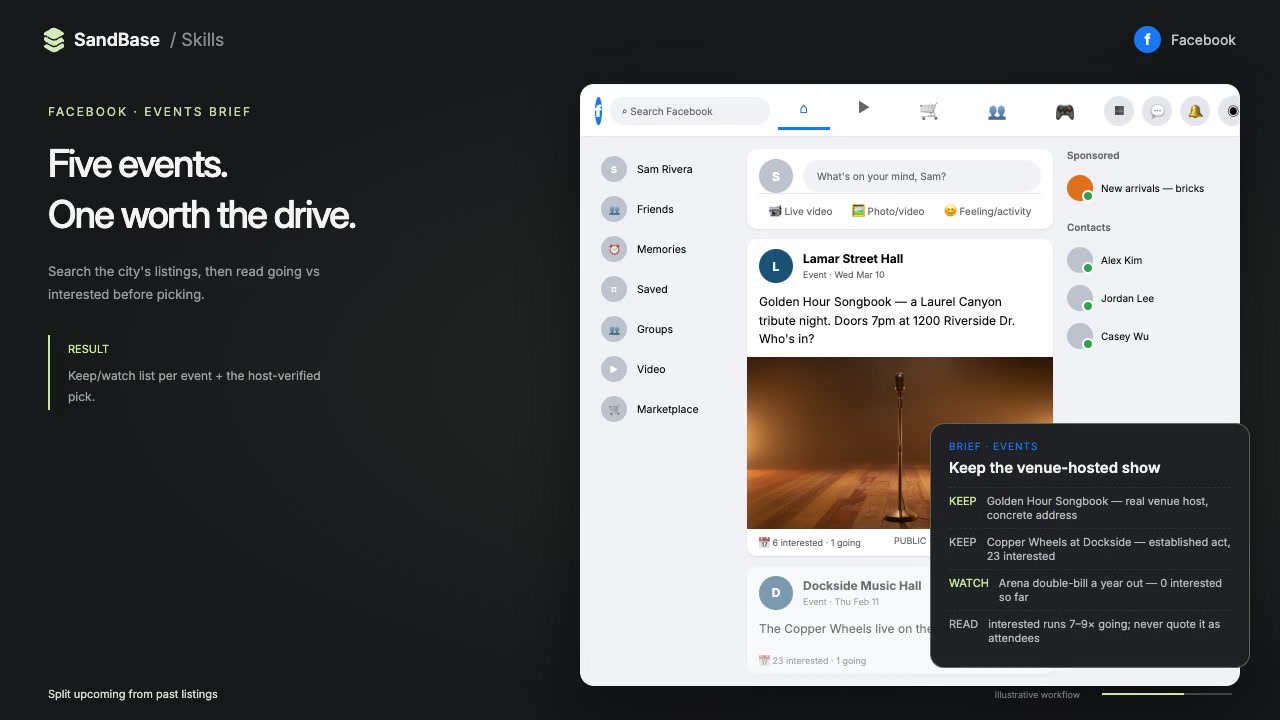
See which public Facebook events on a topic or in a place are coming up — and which are actually worth your time.
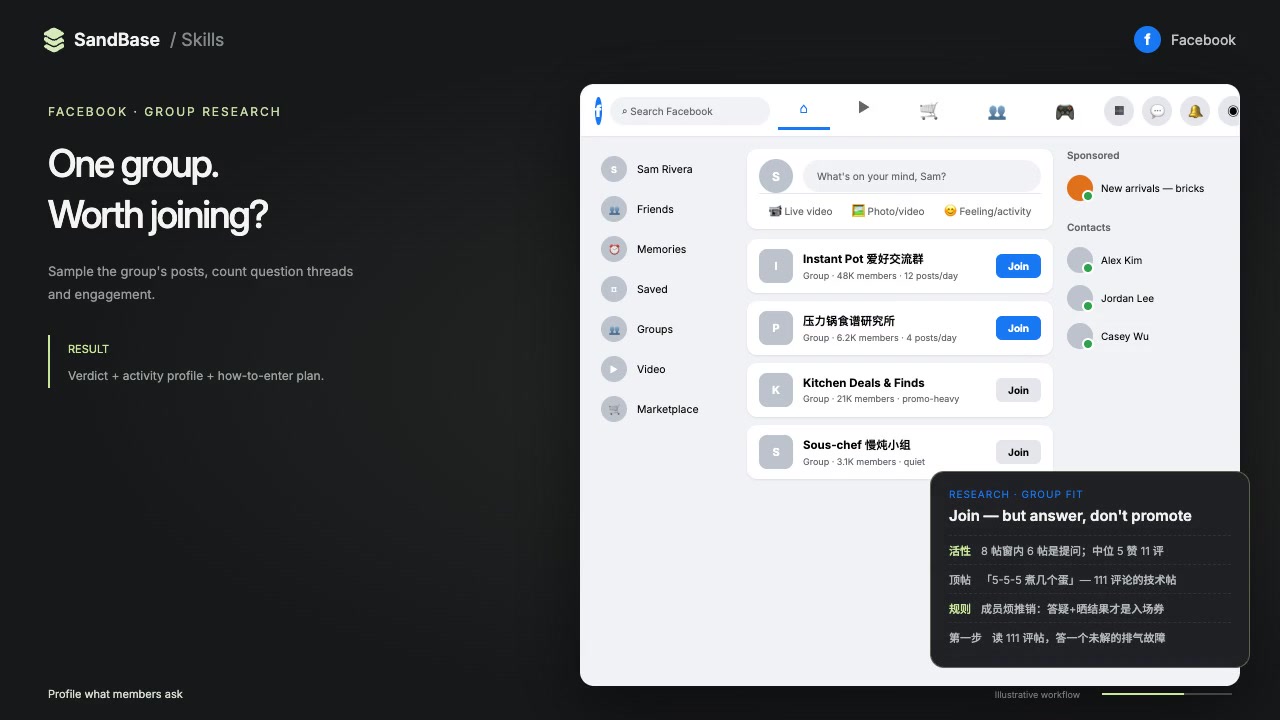
Decide whether a public Facebook Group is worth joining — how active it is, what members post and ask, and what it rewards.
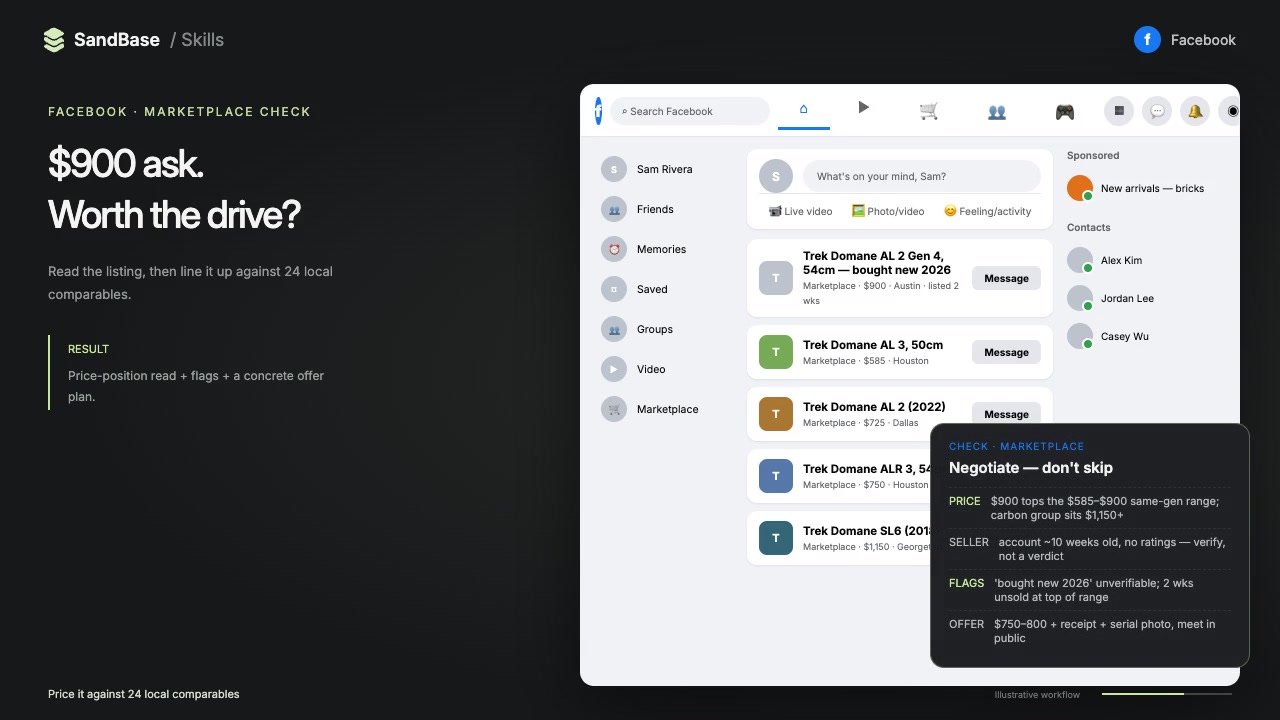
Someone sent you a Marketplace listing — verify the item, the price and the seller before driving across town.
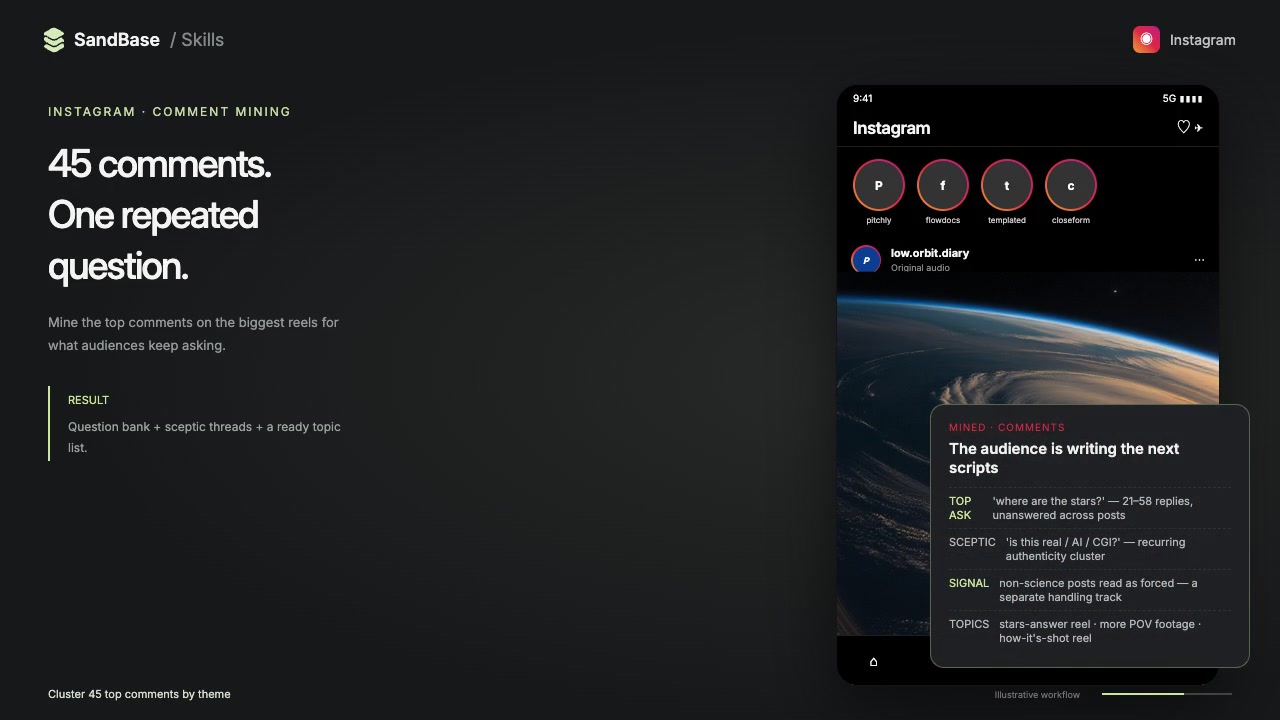
Mine the comments across a niche's top posts into a question bank, pain-point list and next-topic ideas — aggregating many posts' audiences, not replying to one comment.
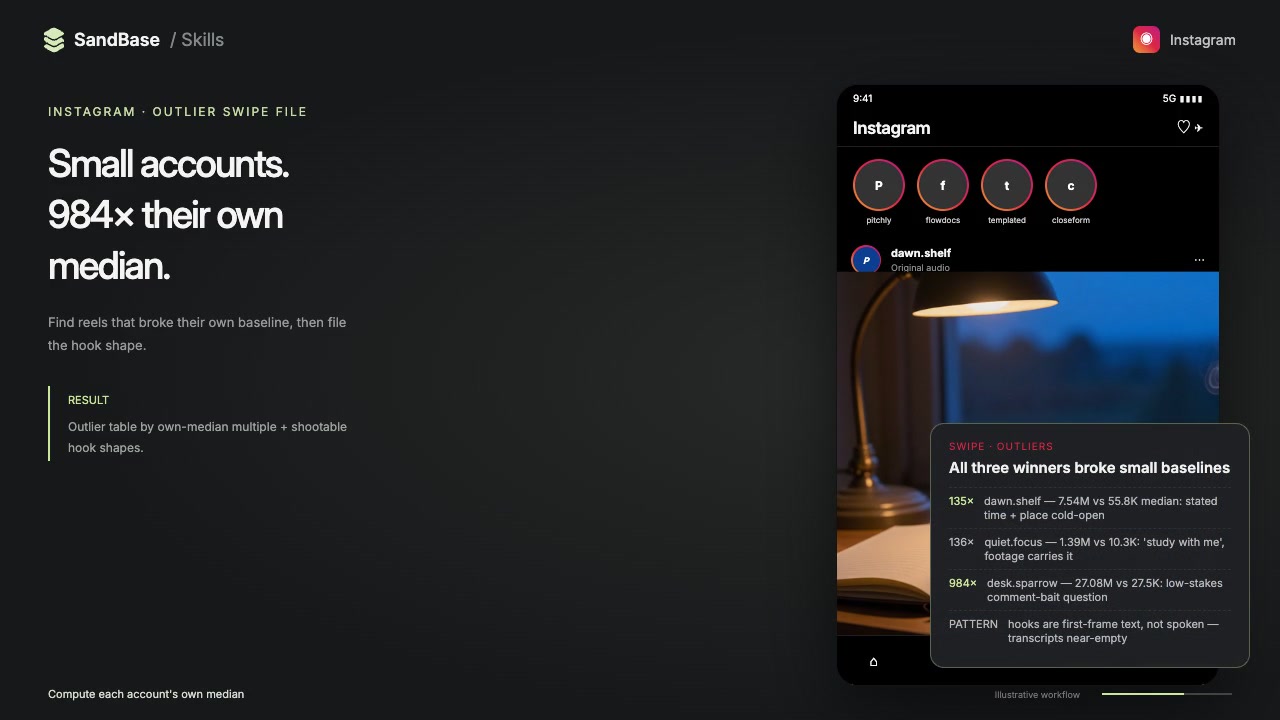
Find the Reels in a niche that far beat their own account's baseline — not the biggest raw numbers — and name each hook shape so the user can copy the format.
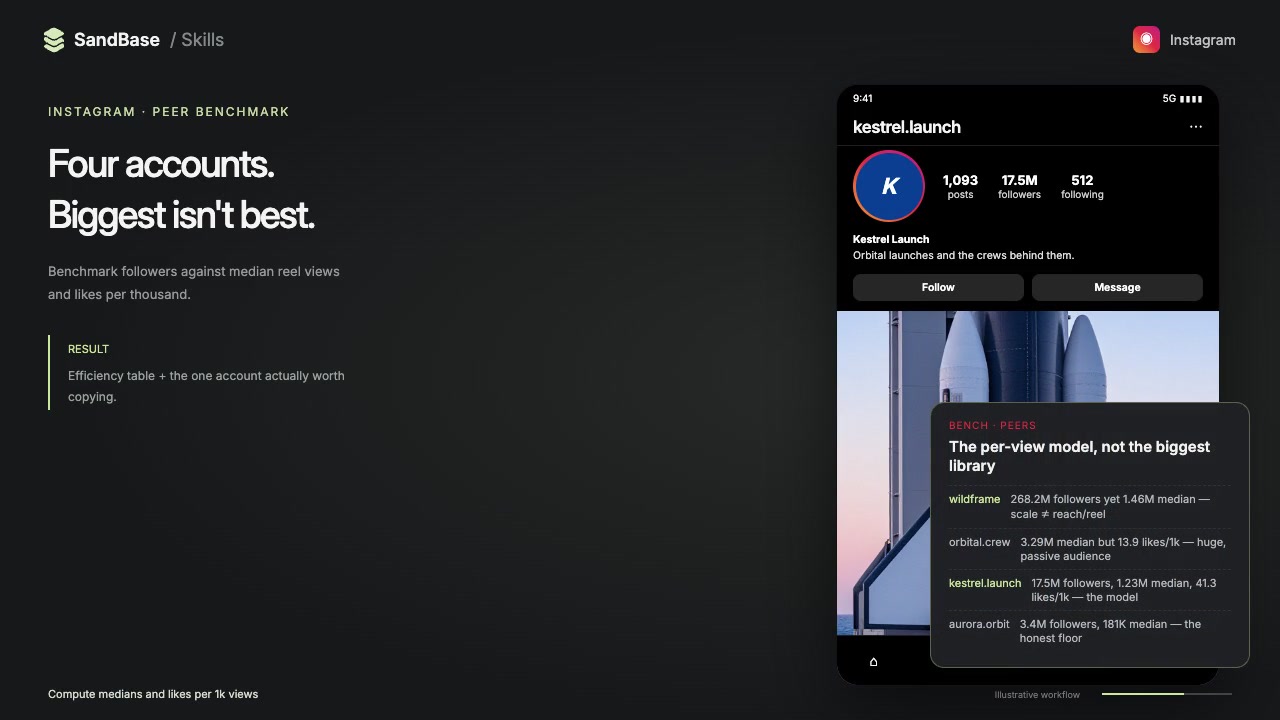
Put two to four Instagram accounts side by side in one table — followers, volume, Reel median views and per-view engagement — to see who is actually worth benchmarking.
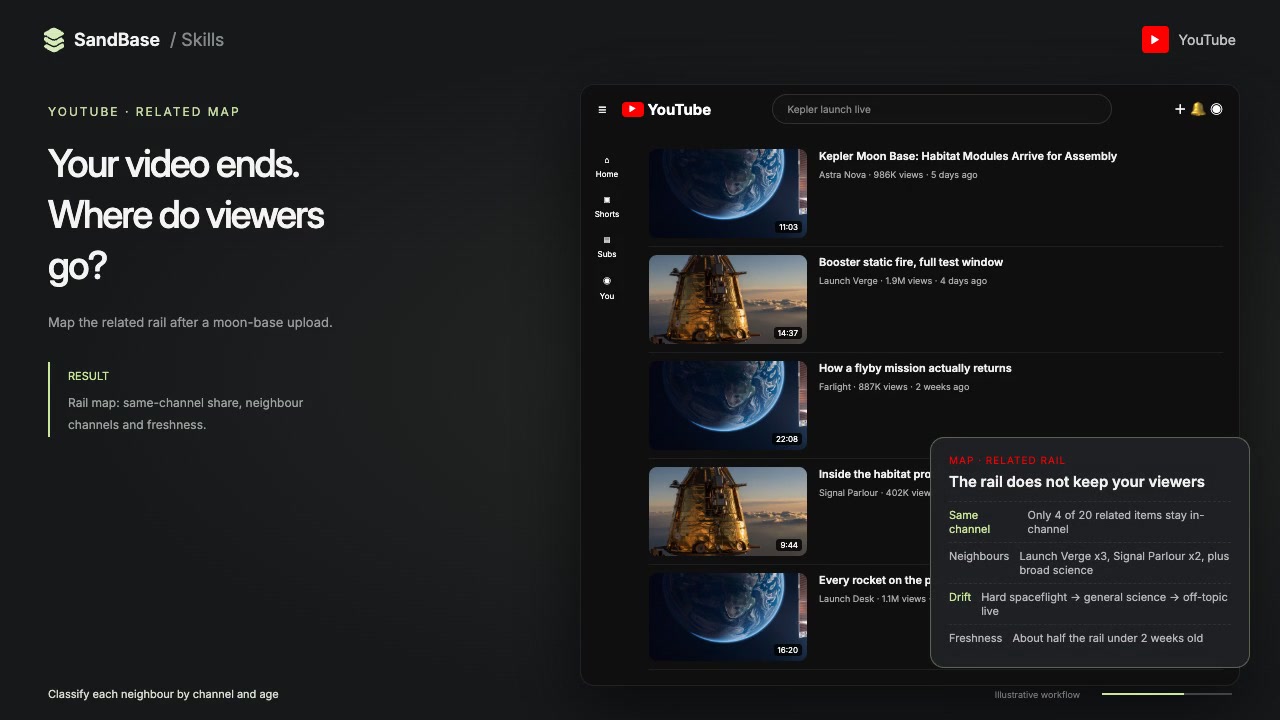
See what YouTube actually recommends next from one video — the real related-videos rail, mapped.
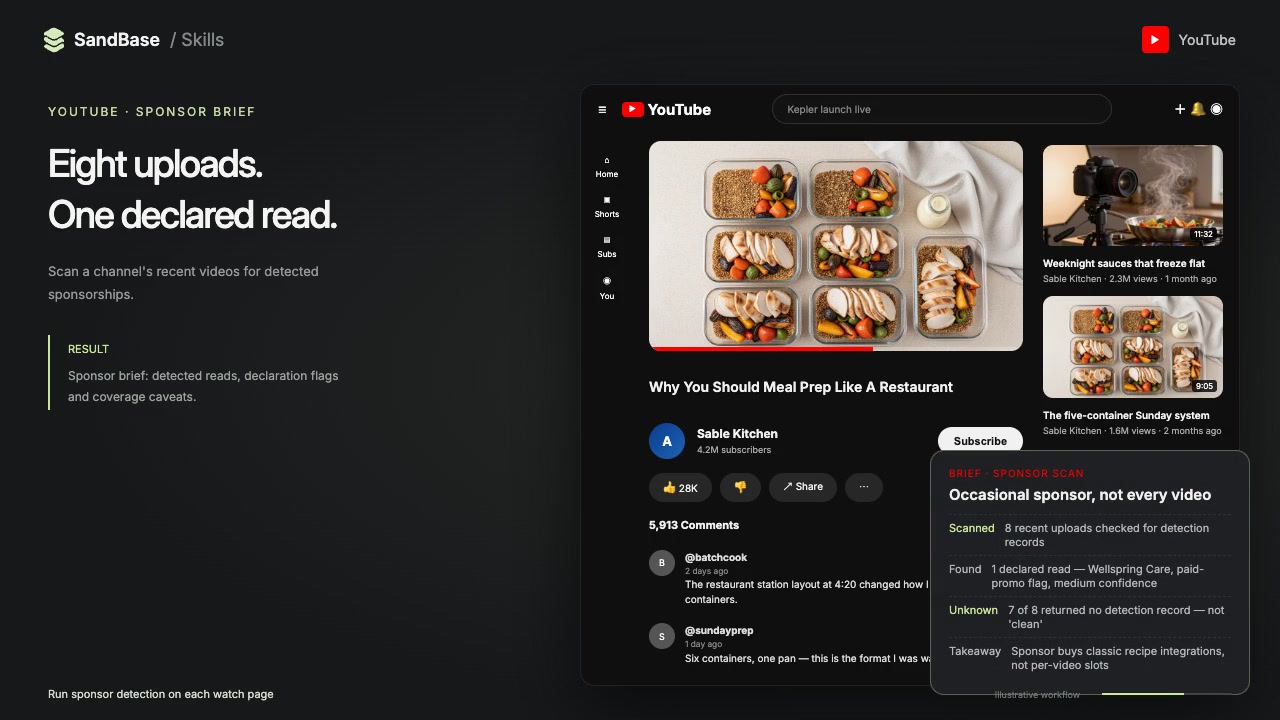
See which parts of a channel's videos are sponsored and by whom — declared promotions and detected reads alike.
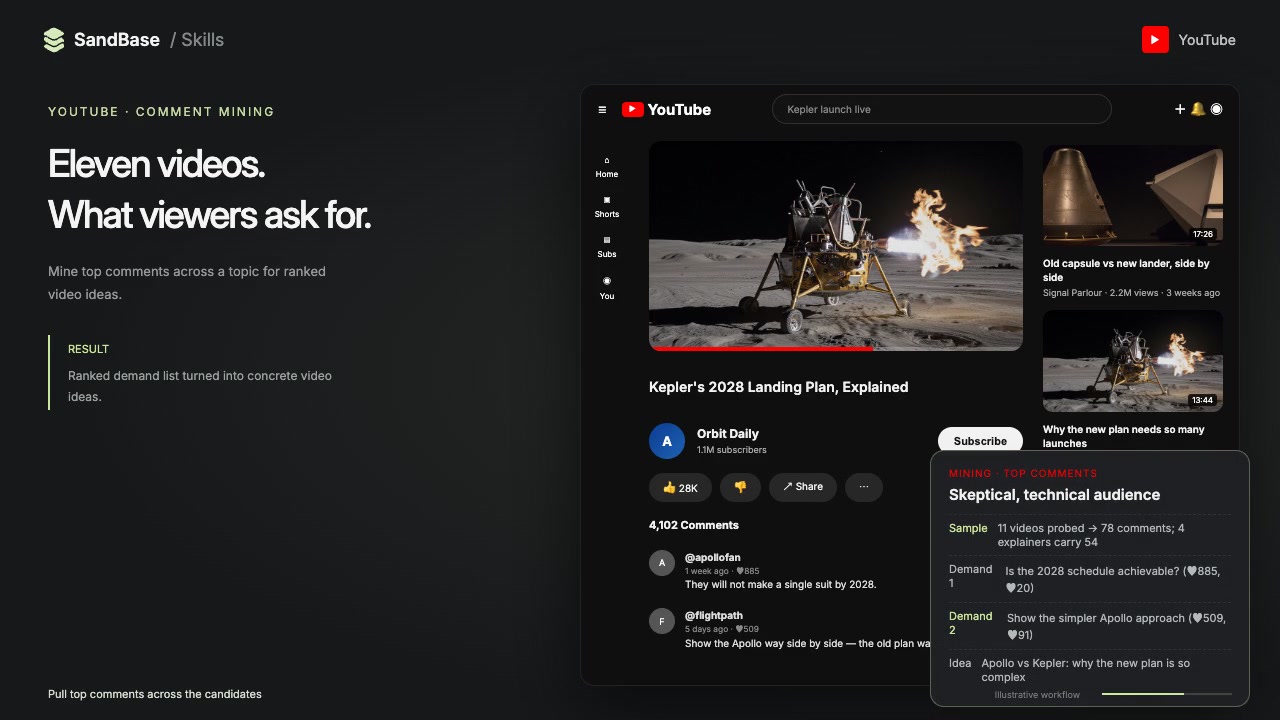
Mine a topic's top-video comment sections for what the audience is really asking, struggling with and willing to pay for.
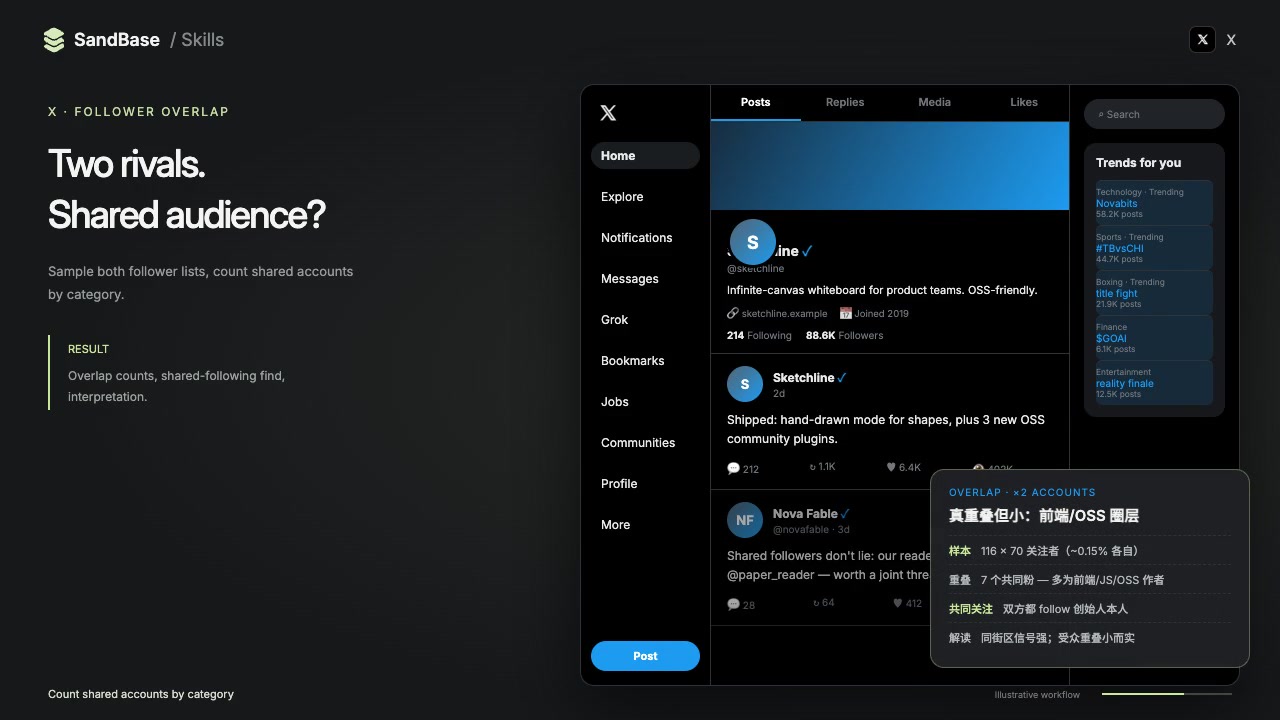
Whether two accounts share an audience is a guess until you compare their followers.
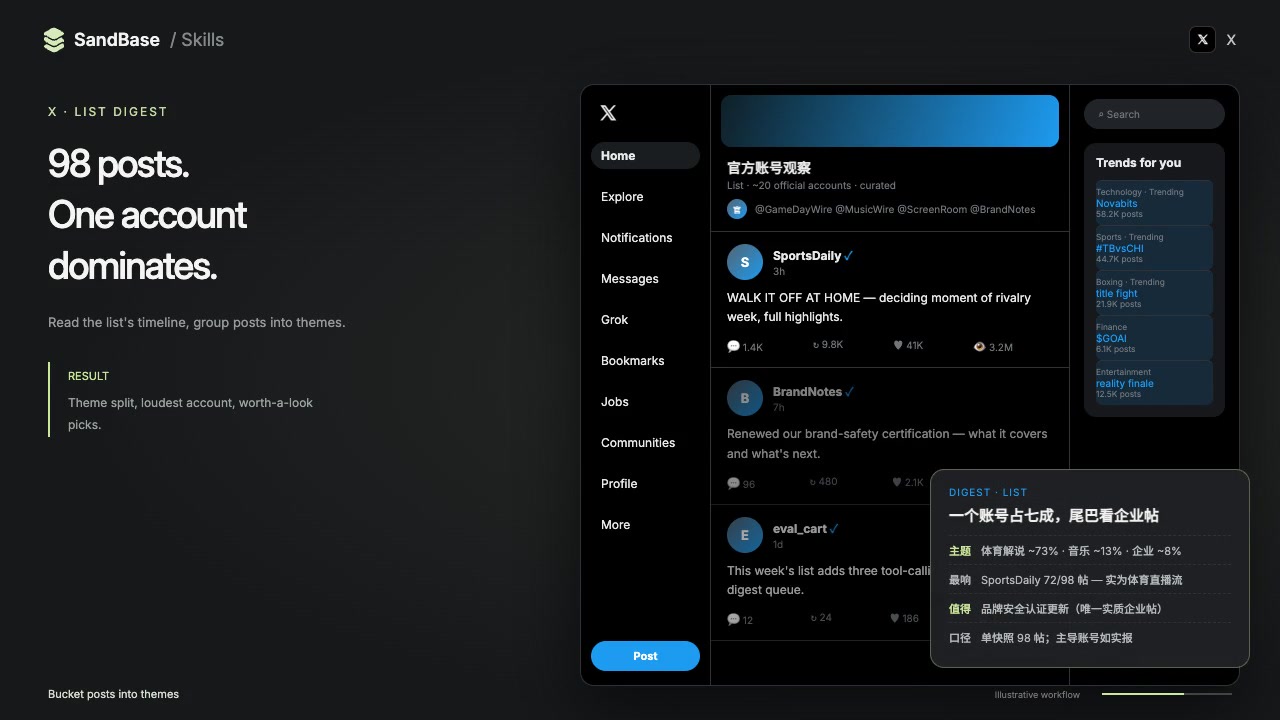
An X List is only useful if you can read what its members are actually talking about.
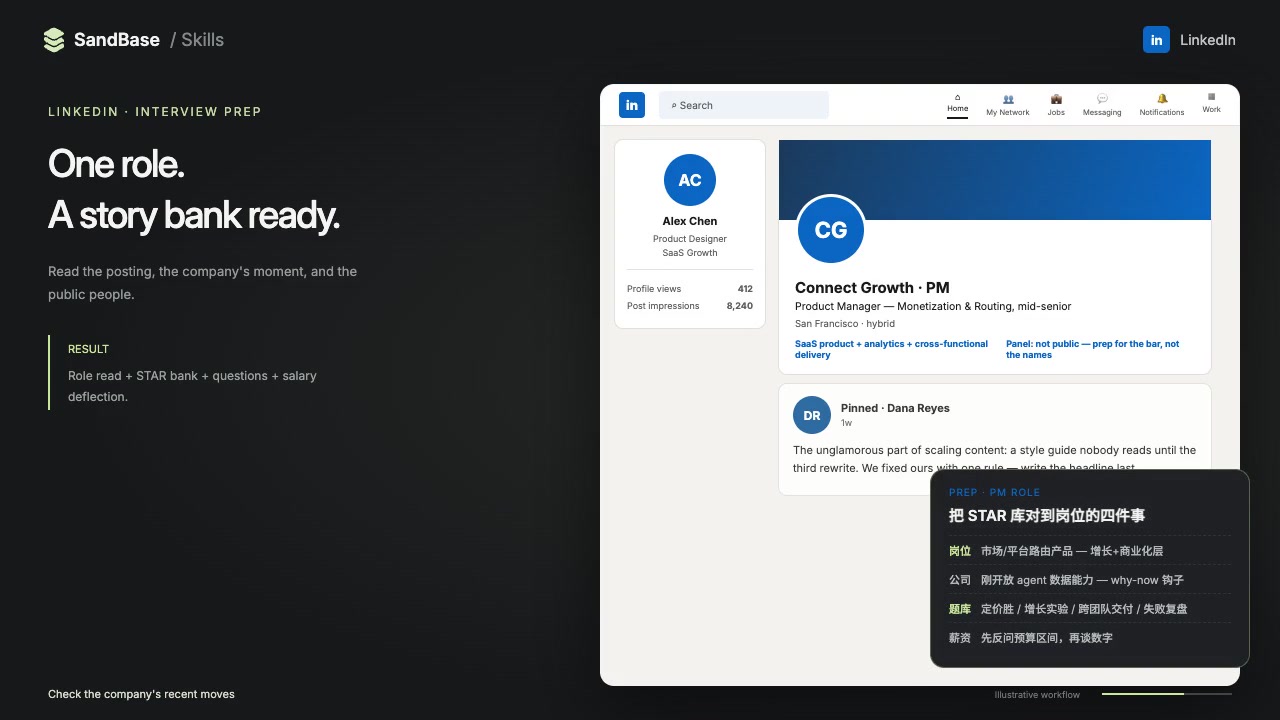
Walk into a confirmed interview with real company data and rehearsed evidence instead of improvising.
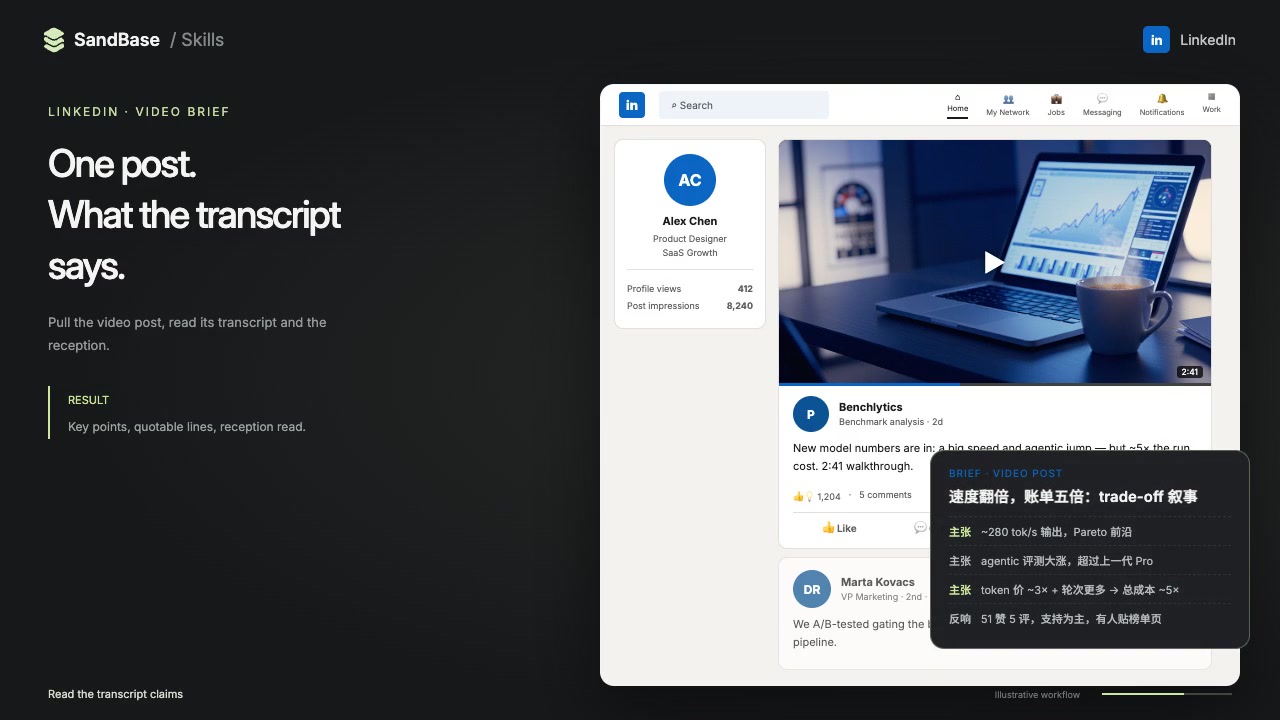
Get the substance of a LinkedIn video post without watching it — what was said, the key points, and the most quotable lines.
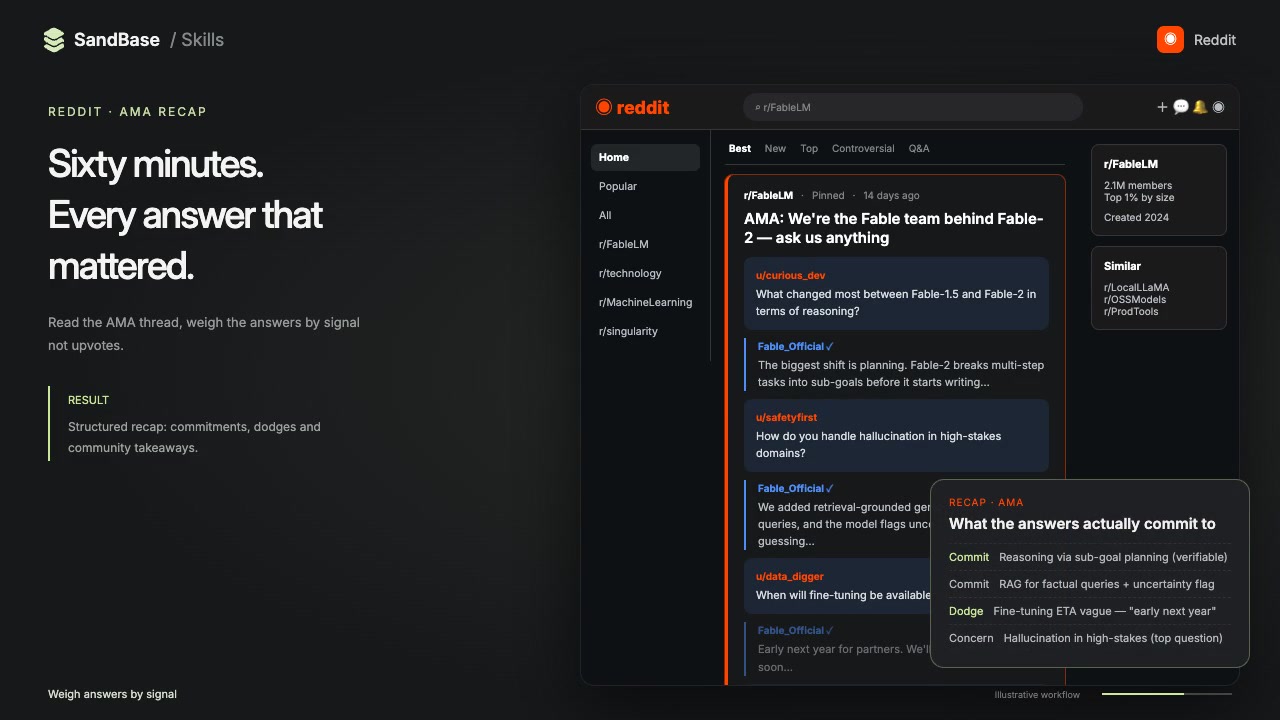
Review a finished AMA: what was asked, what got answered, and what to do differently next time.
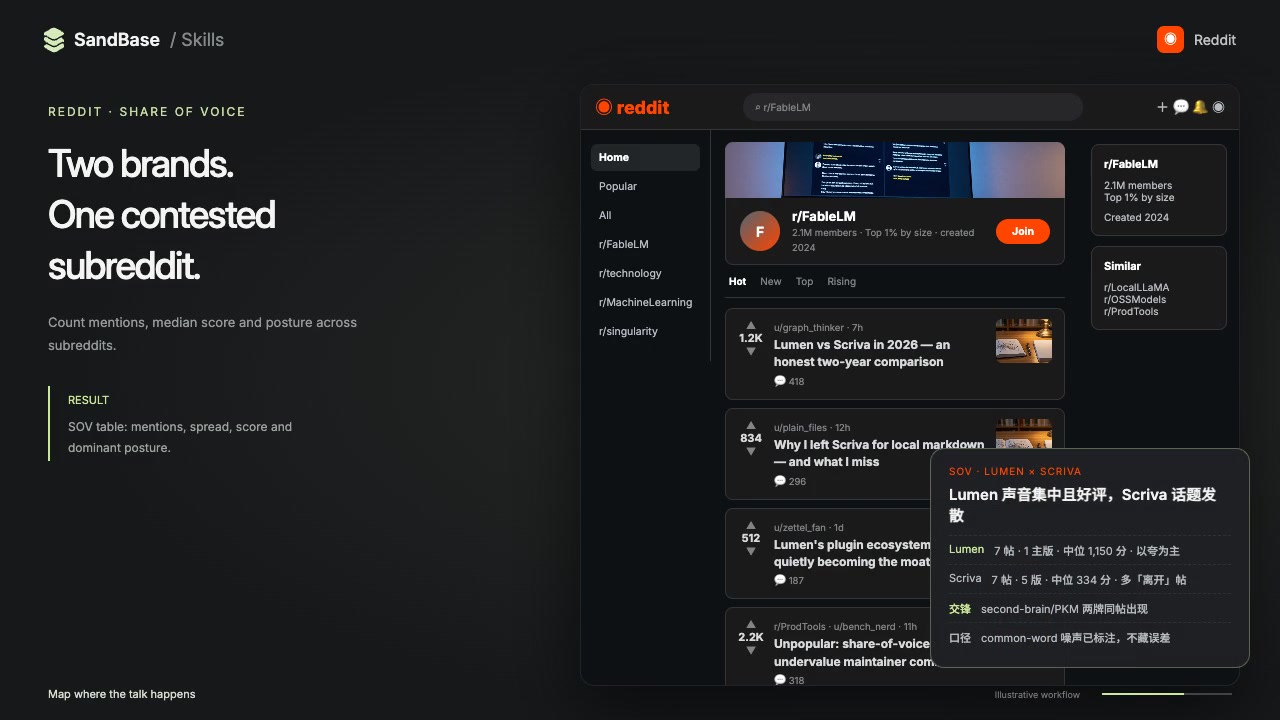
Compare how 2–4 rival brands are talked about on Reddit — who is mentioned more, and how.
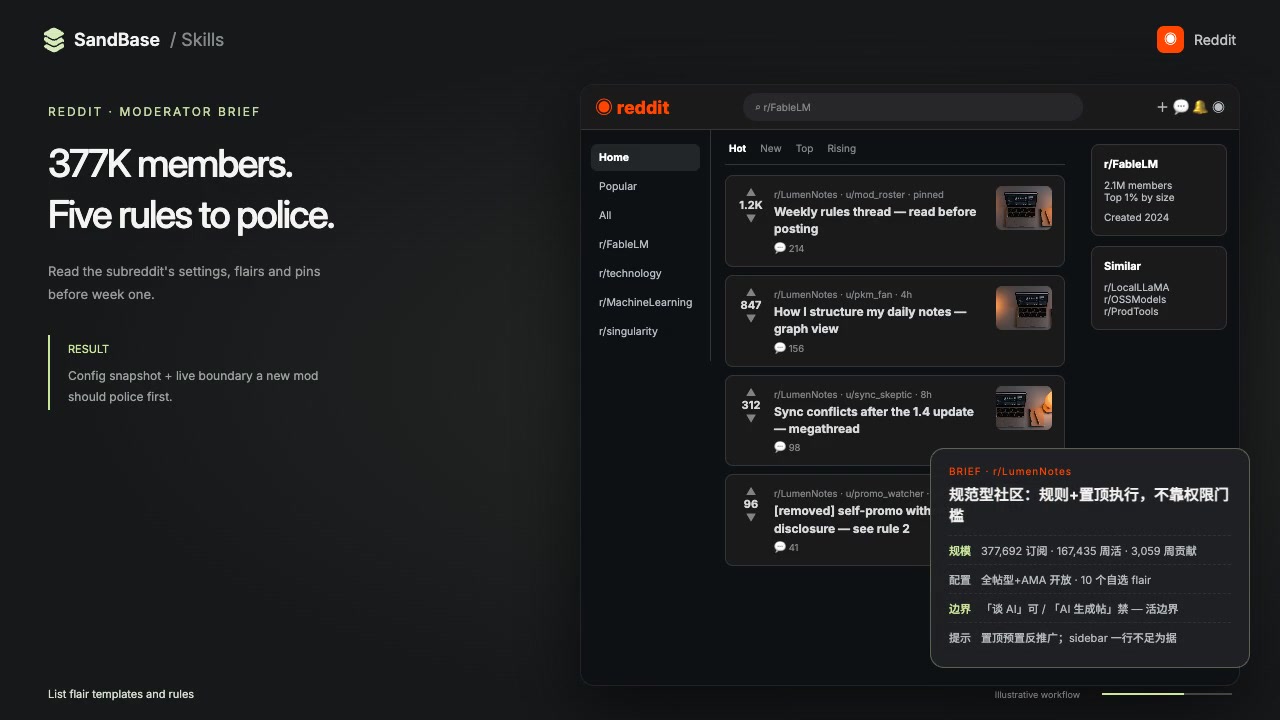
Give a new mod or community owner a one-run read of a subreddit's configuration and pulse.
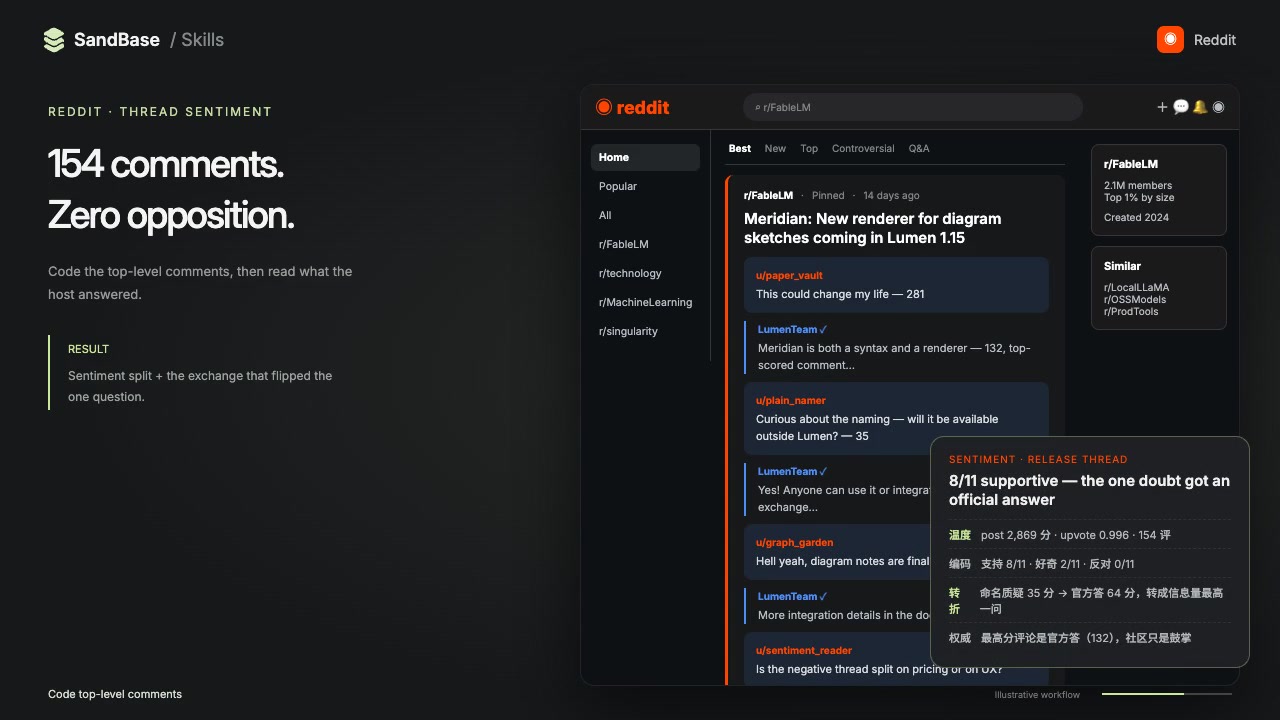
Read how a community actually received one post — the split, the turns, the exchanges that mattered.
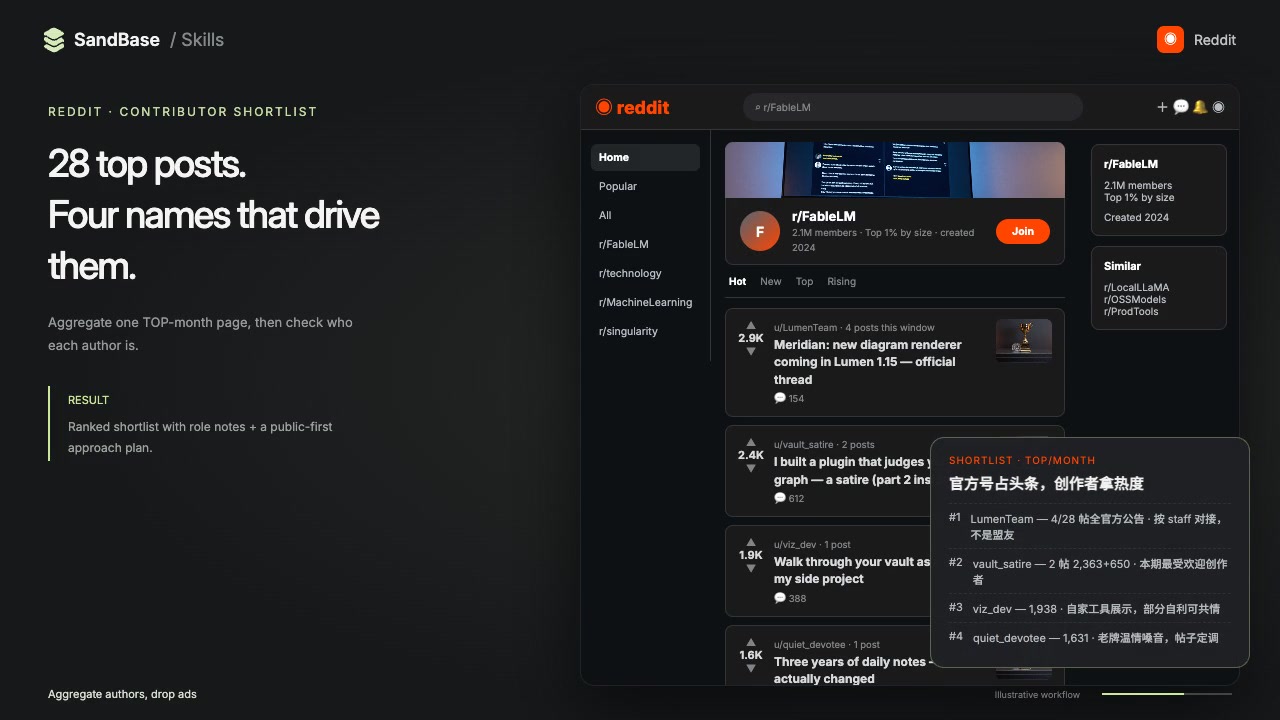
Find who actually drives a subreddit and who is worth engaging first.
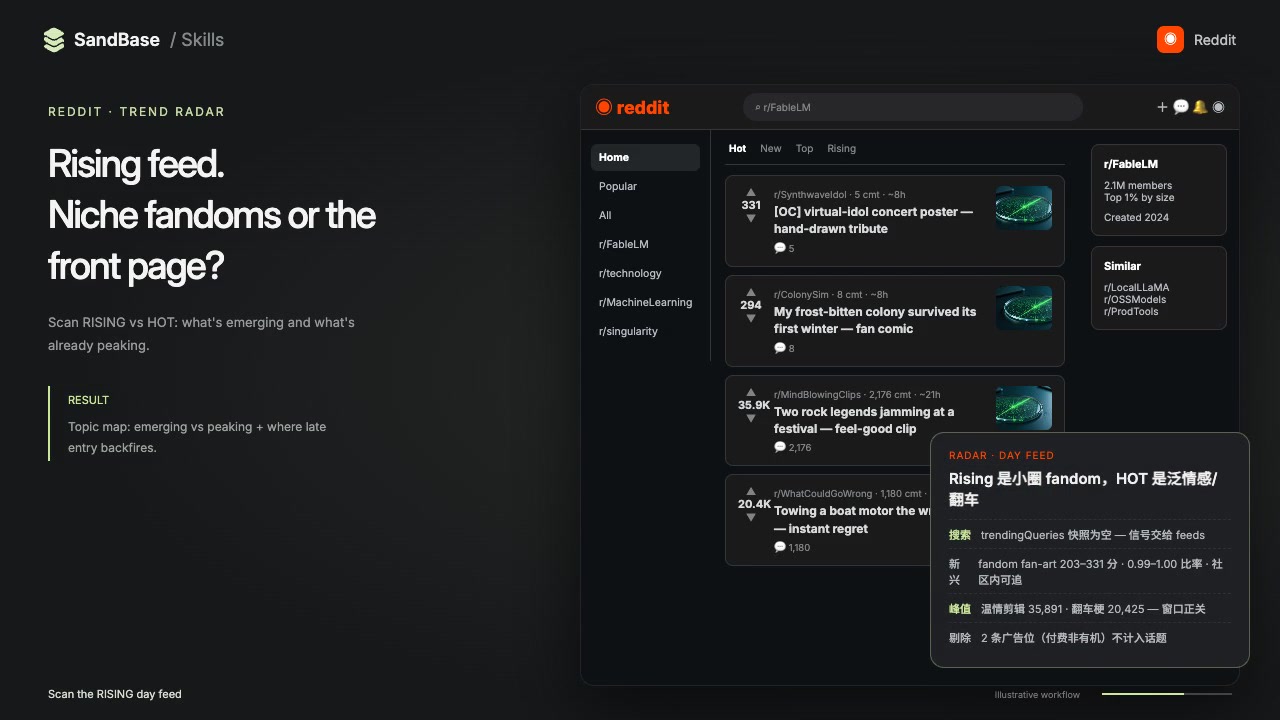
See what Reddit is talking about right now and which themes are still early enough to join.
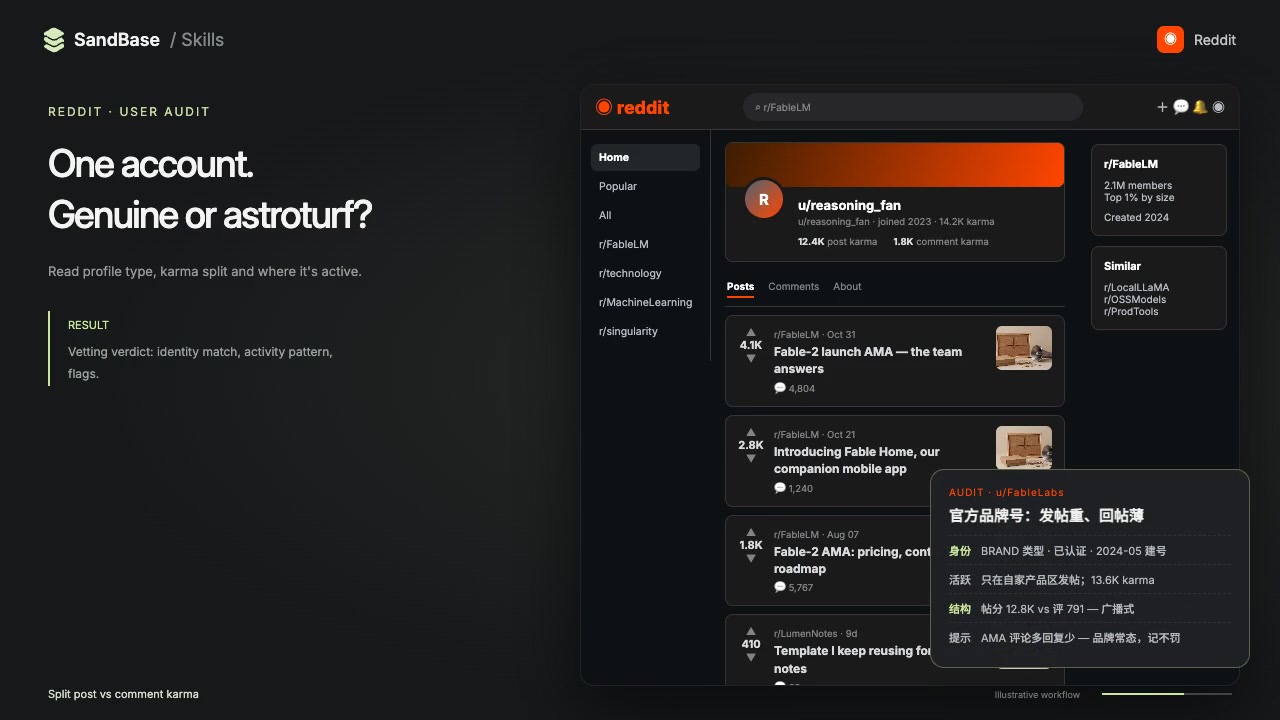
Vet a public Reddit account before outreach, a partnership or an AMA.
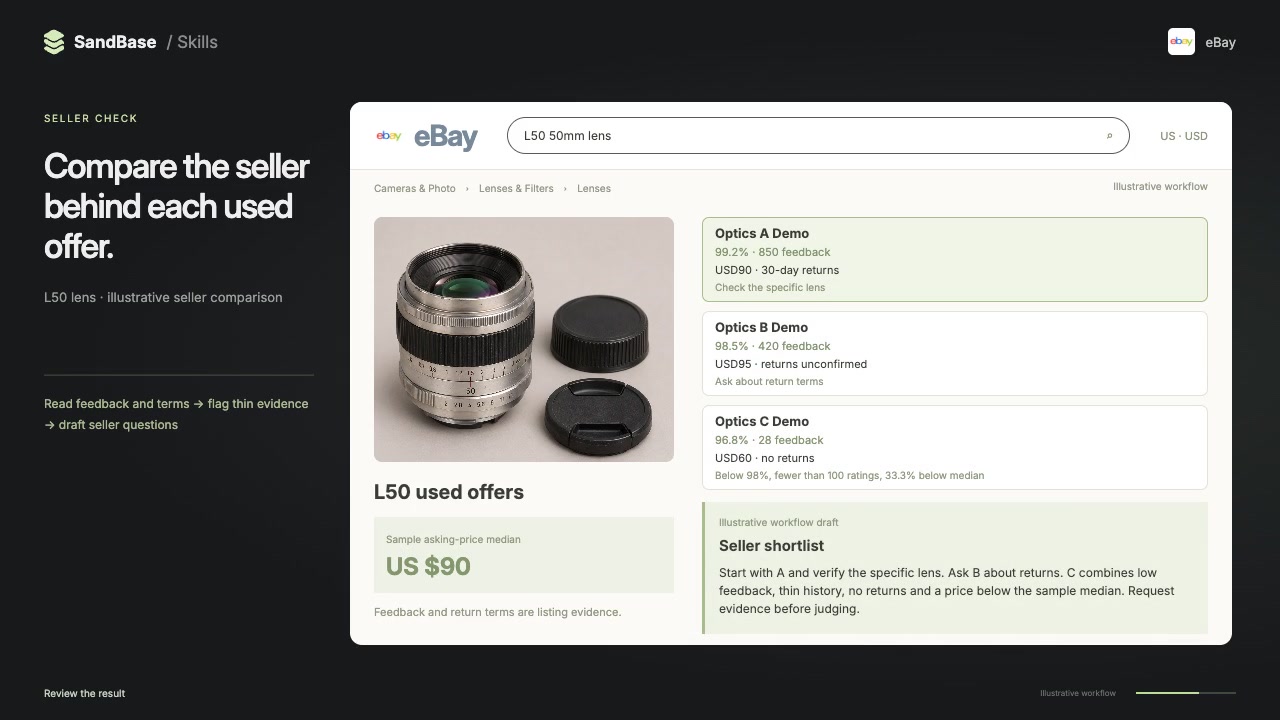
Pick a seller for a used item on eBay by comparing feedback, history, returns and price, not just the lowest price.
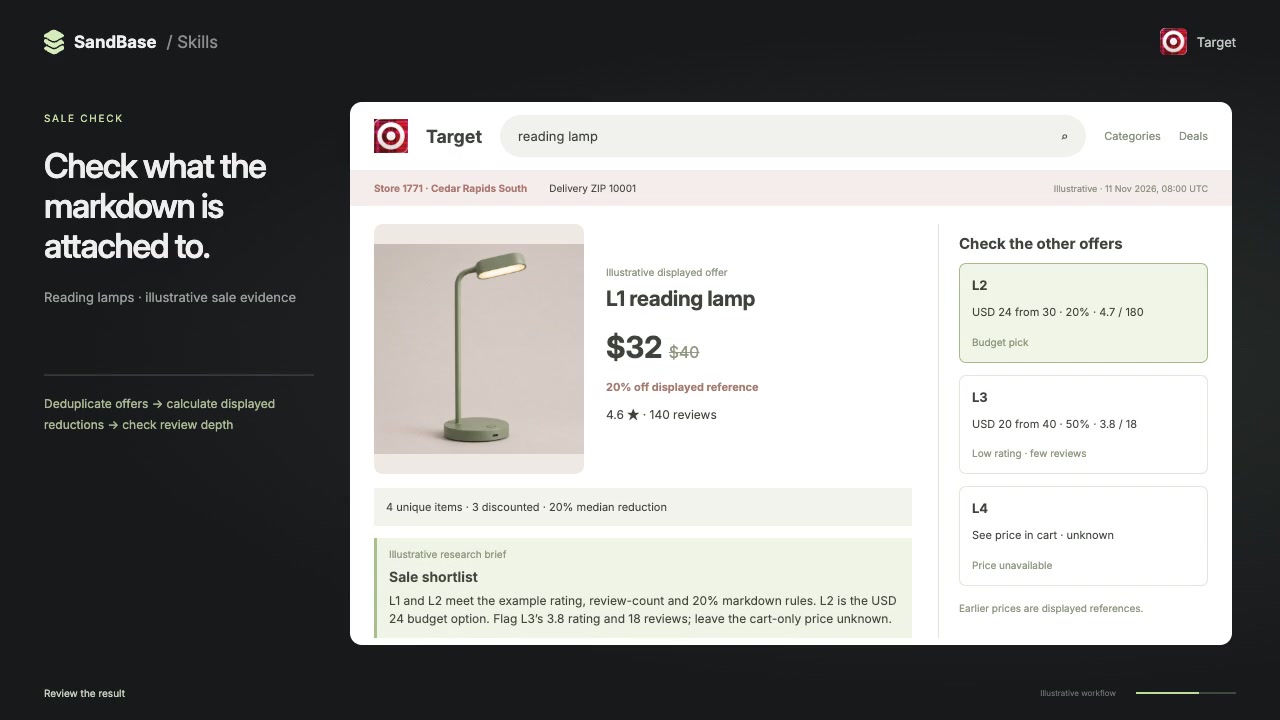
See which Target sale prices are on products people actually rate well, and which discounts to skip.
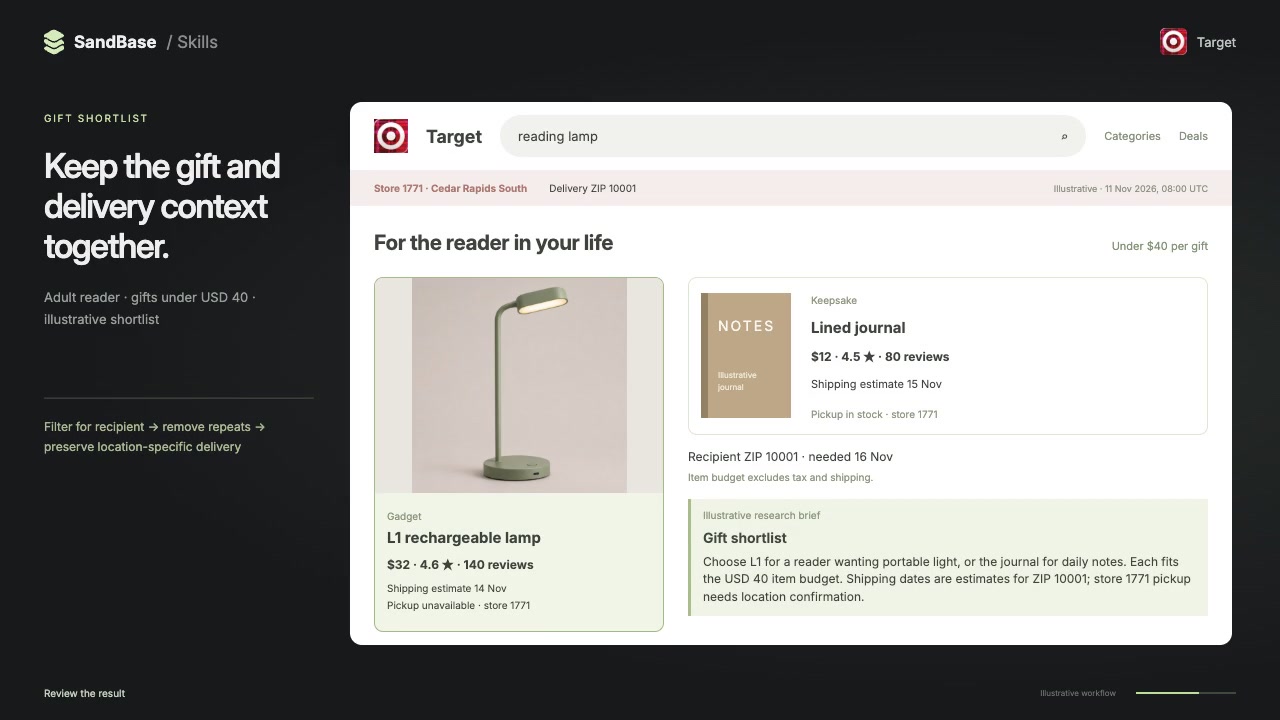
Build a gift shortlist at Target for one person and a budget, keeping only items people have rated.
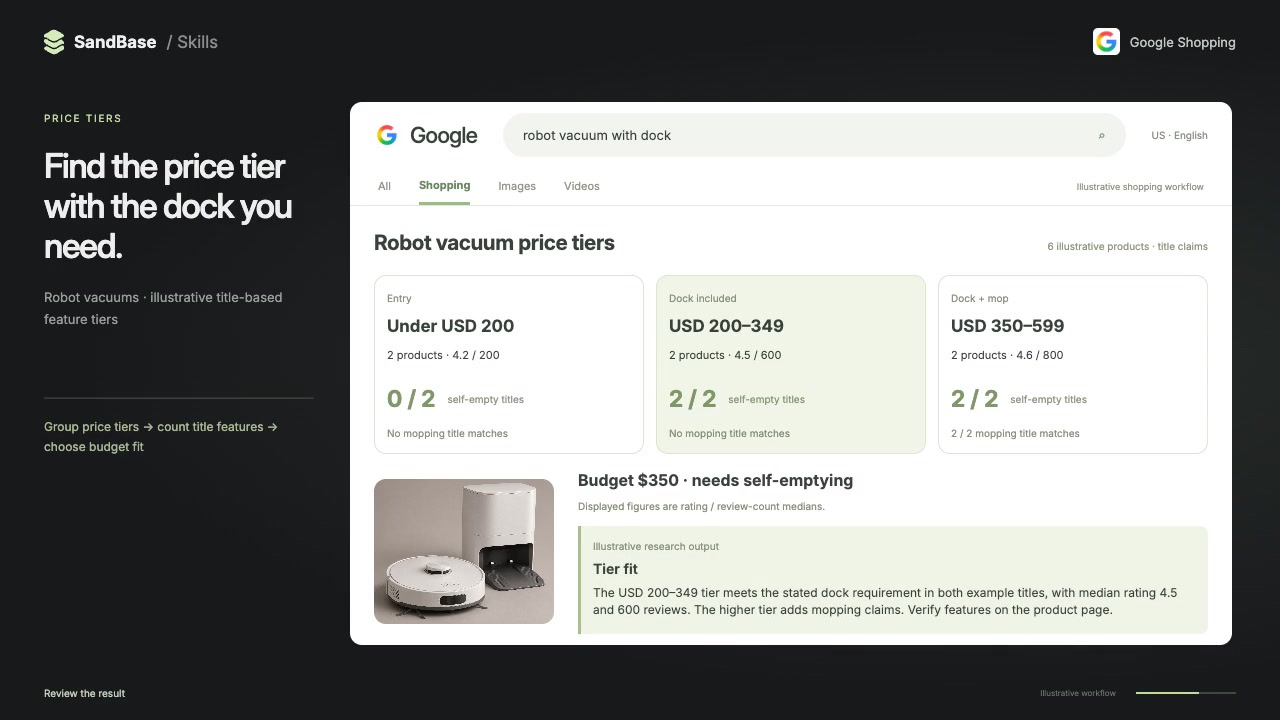
See what each price range buys for a product type on Google Shopping, and where spending more starts to pay.
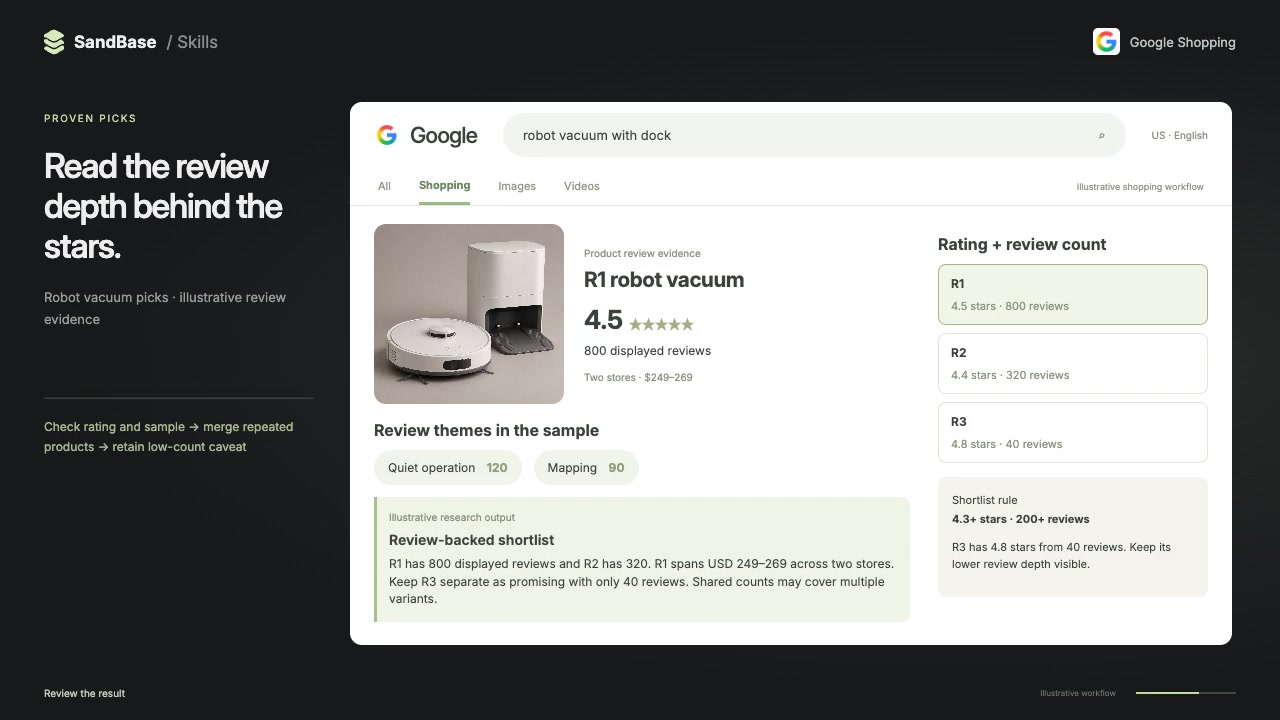
Choose products on Google Shopping whose ratings rest on many reviews, and find the same product cheaper at another store.
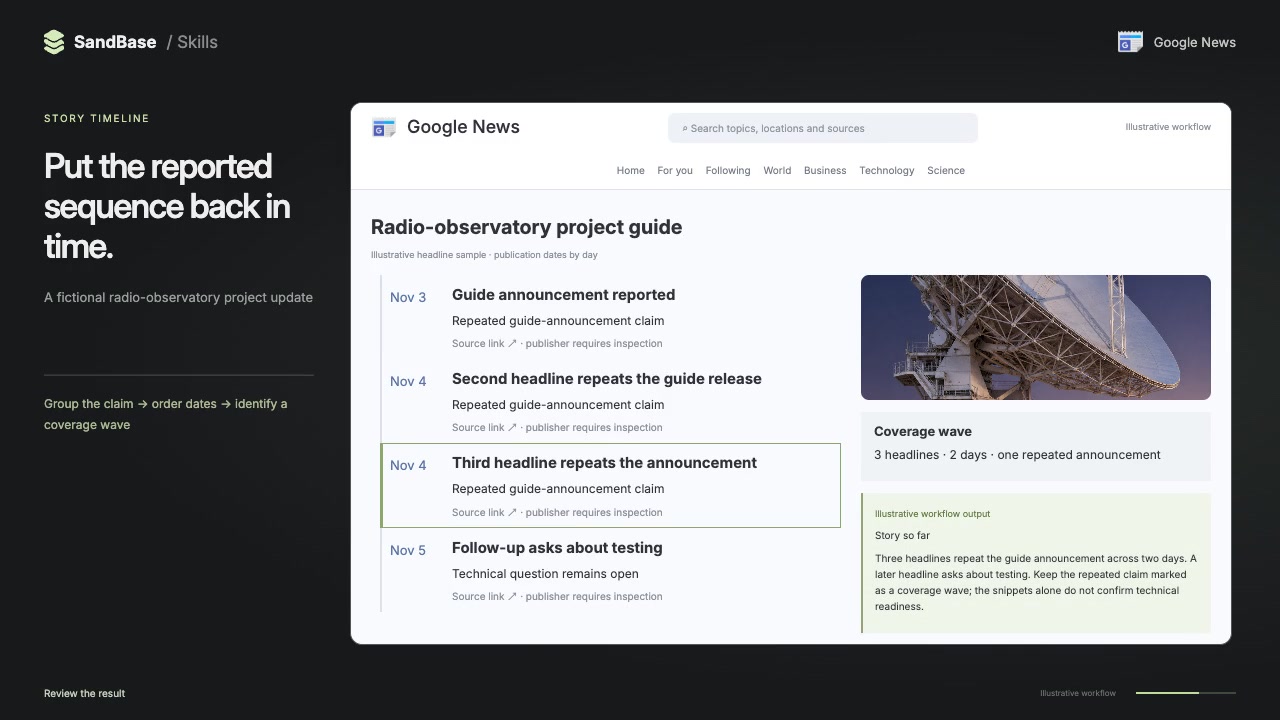
Turn a news search into a dated timeline of how a story developed, and see when many headlines repeat one claim.
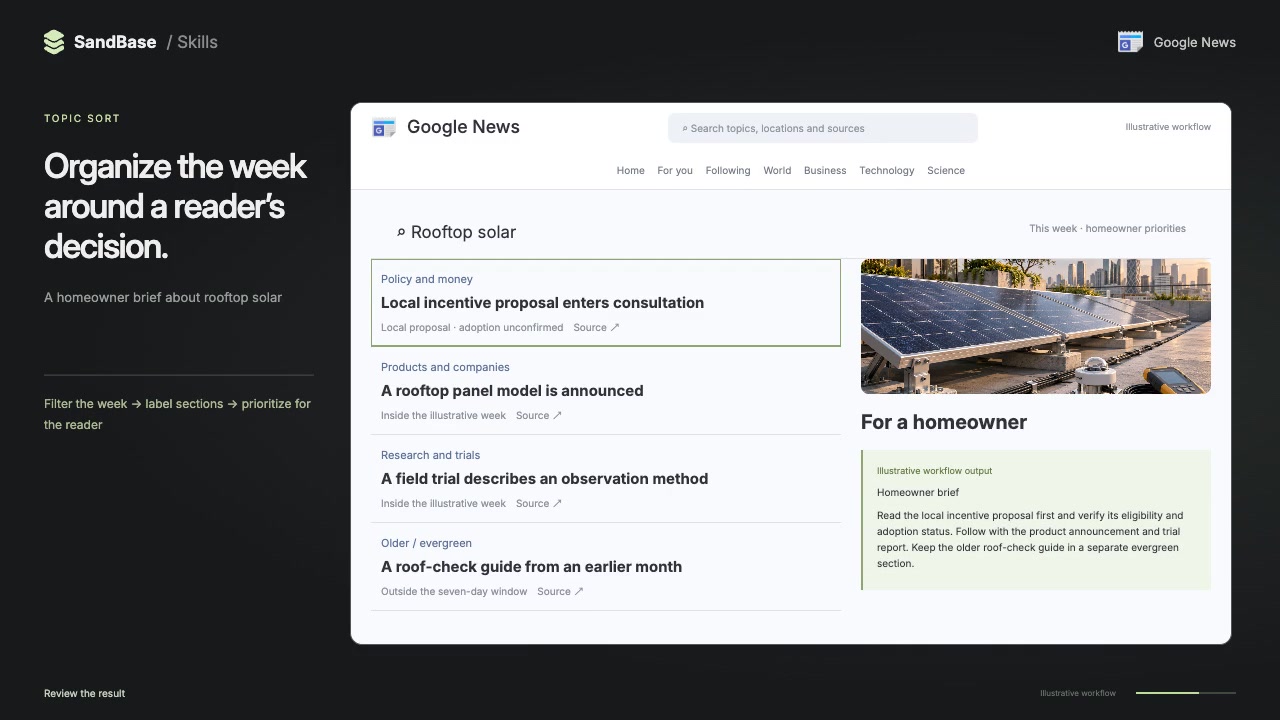
Sort this week’s news on a topic into sections a reader can use, and write the newsletter section.
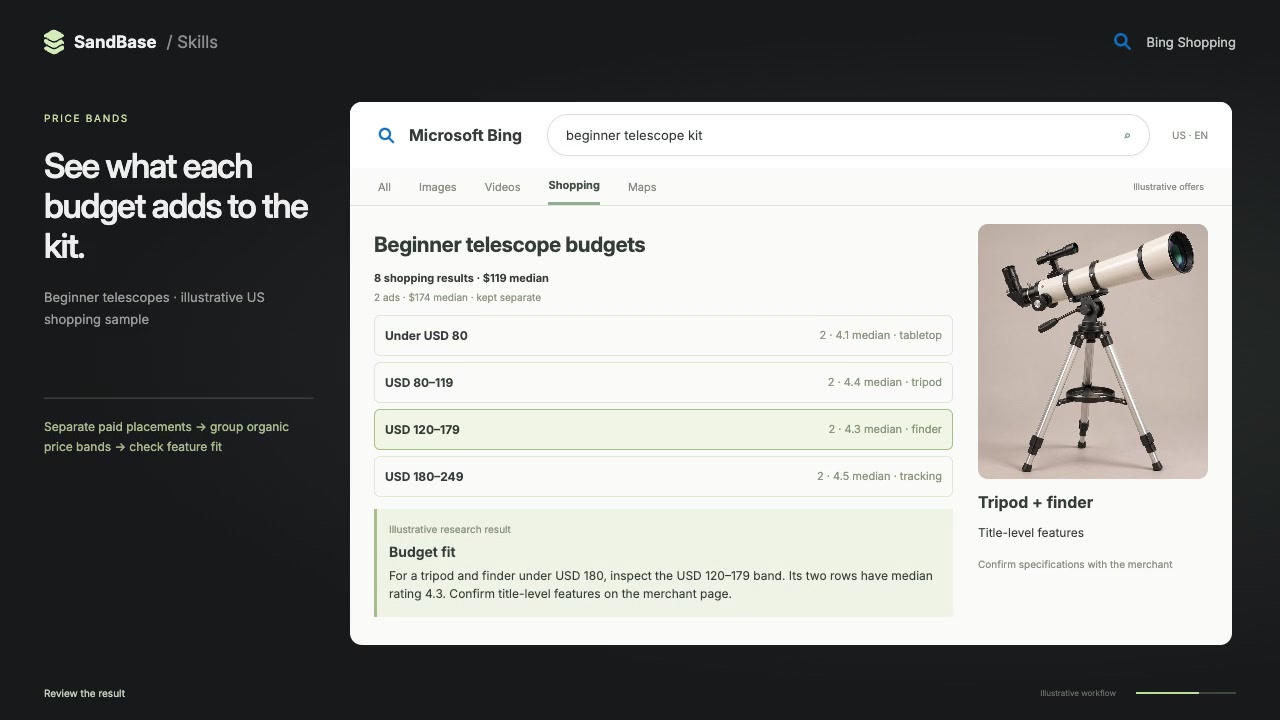
See what each price band buys for a product type on Bing Shopping, with paid ads kept apart.
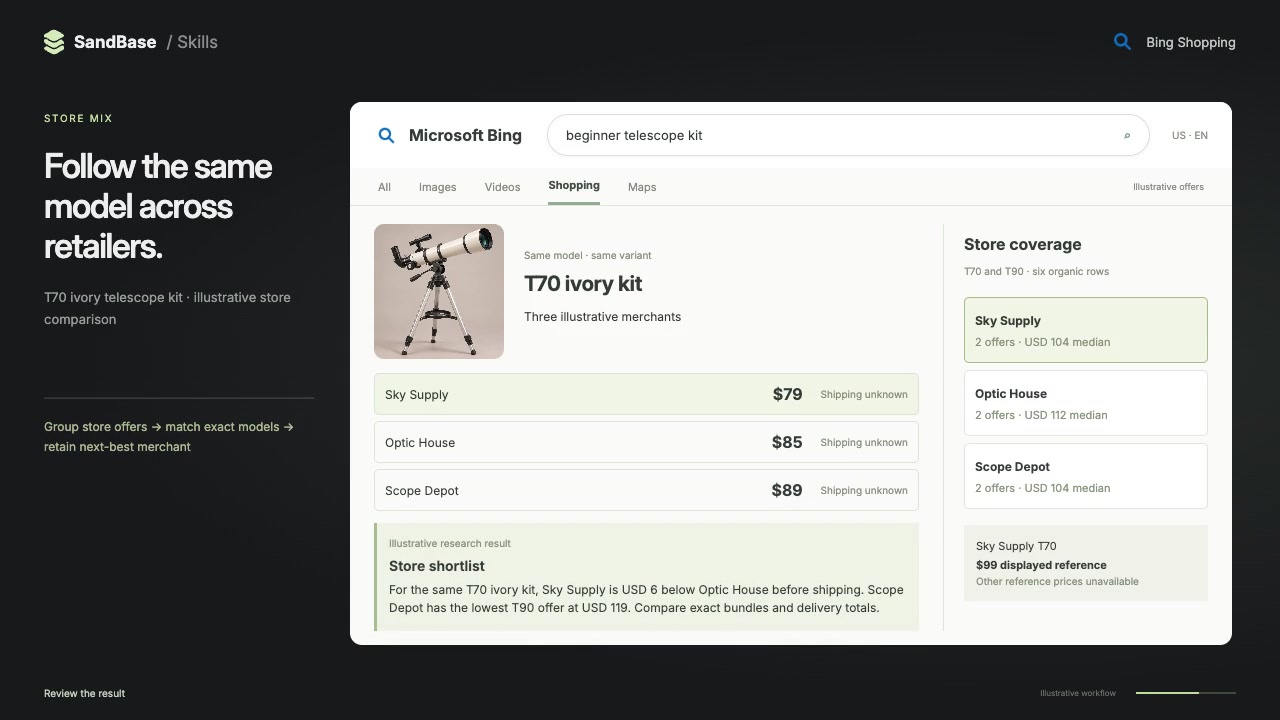
Find which stores sell a product line on Bing Shopping and where each model on your shortlist is cheapest today.
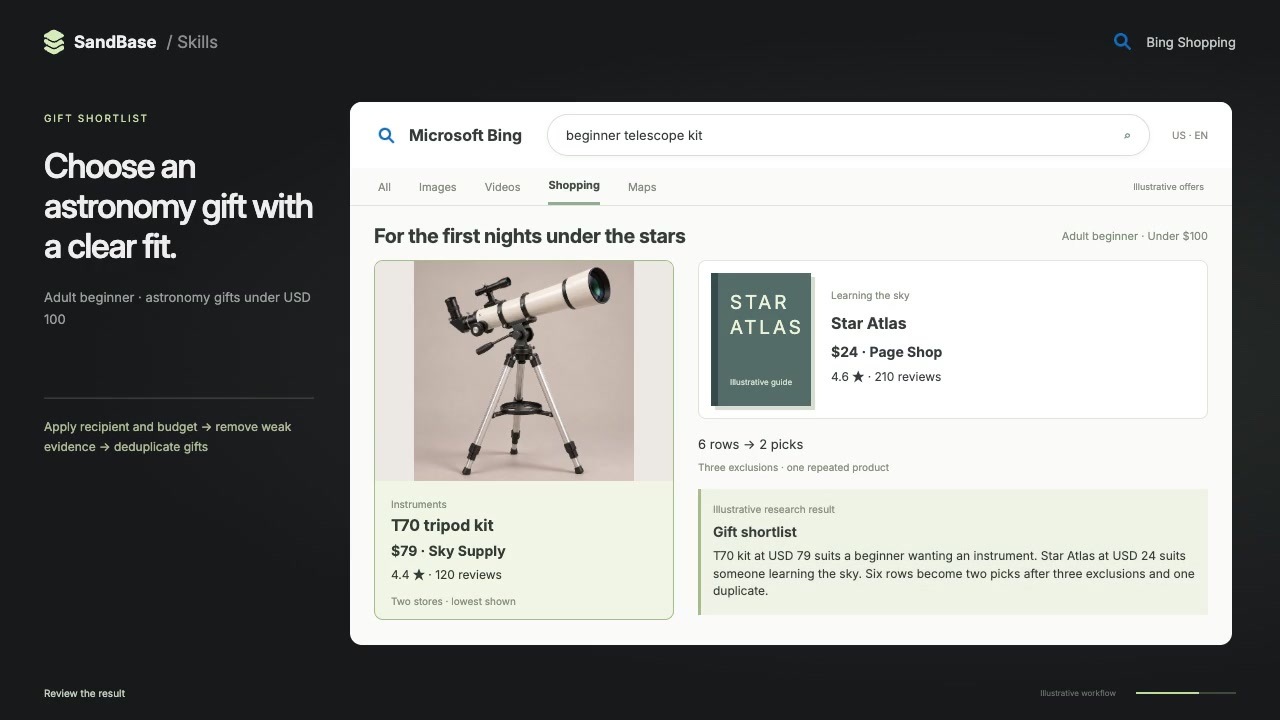
Build a gift shortlist across many retailers on Bing Shopping, without unrated listings, doubled "was" prices or the same box at six stores.
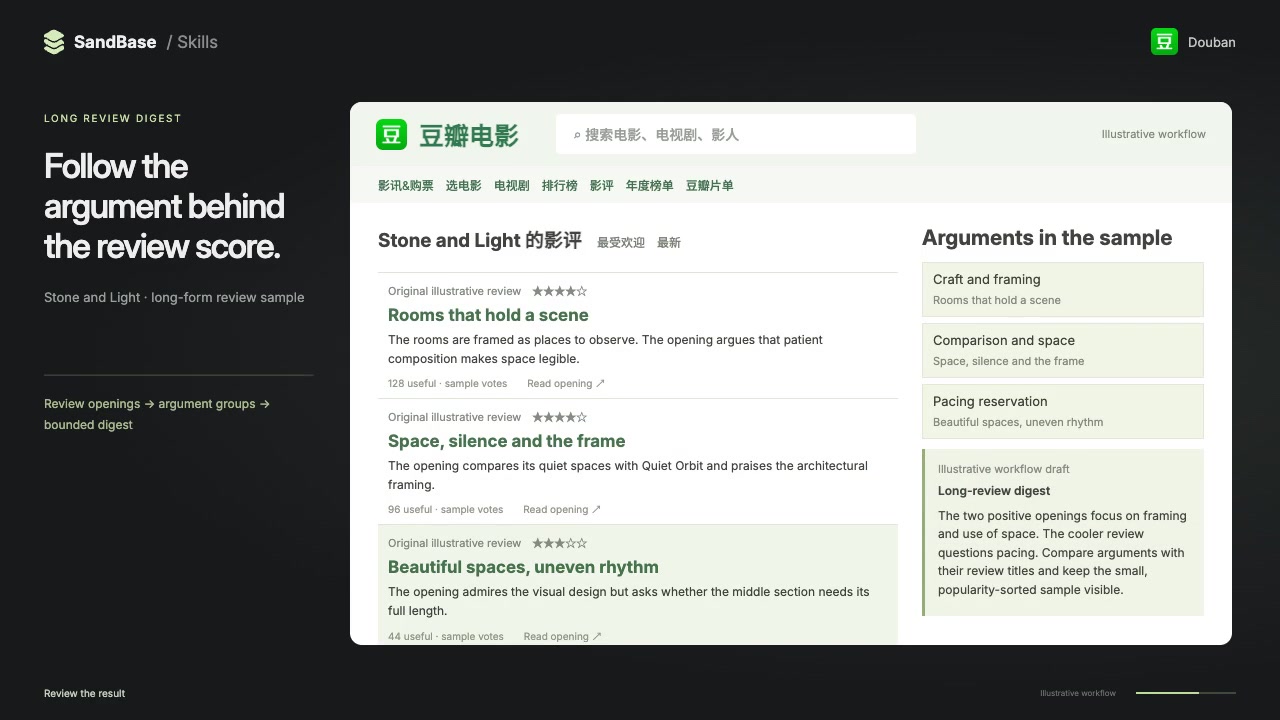
Find out what Douban’s long-form reviewers argue about a film or series, and where the cooler reviews disagree.
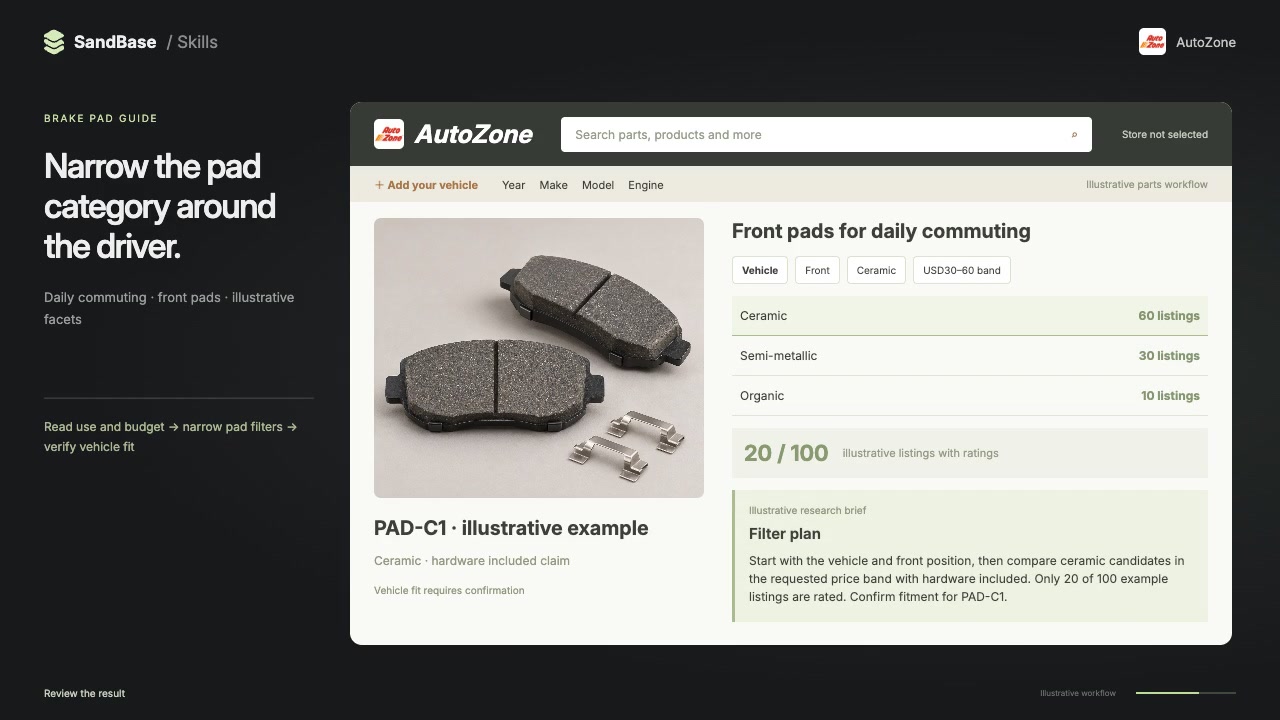
Work out which brake pad type, price band and filters to use at AutoZone before entering a vehicle.
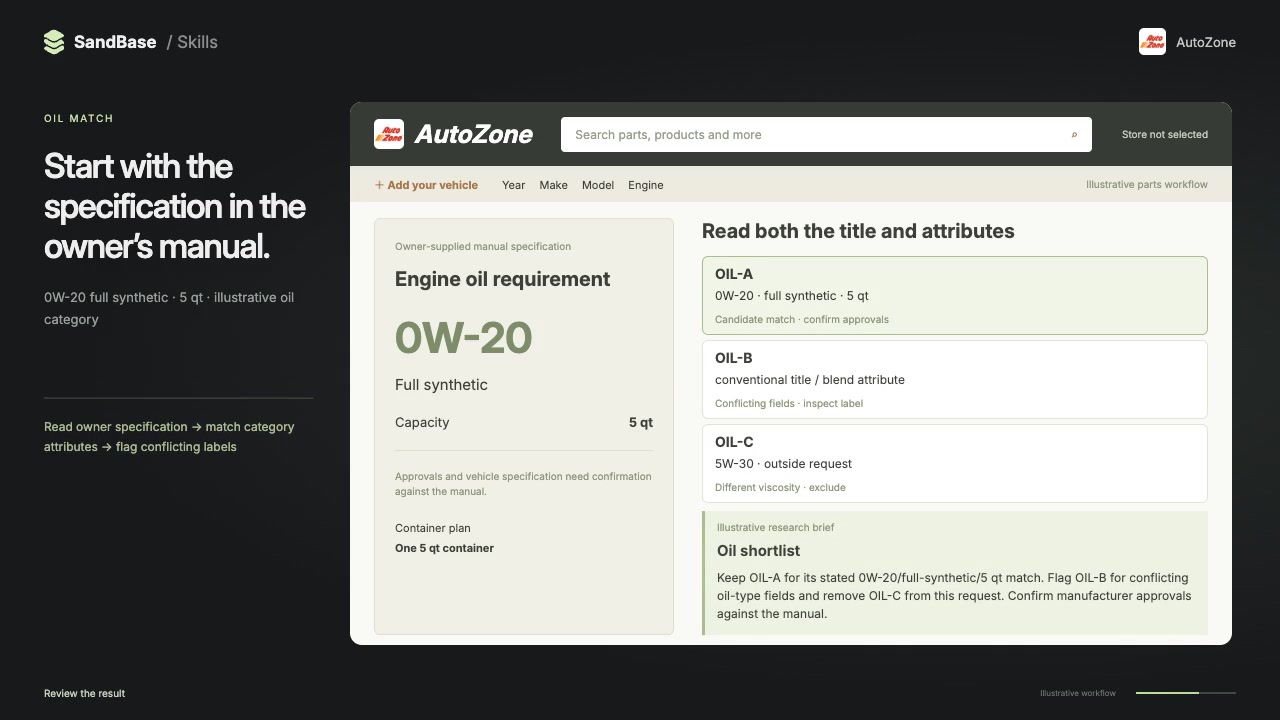
Go from the viscosity in your owner’s manual to a short list of motor oils at AutoZone.
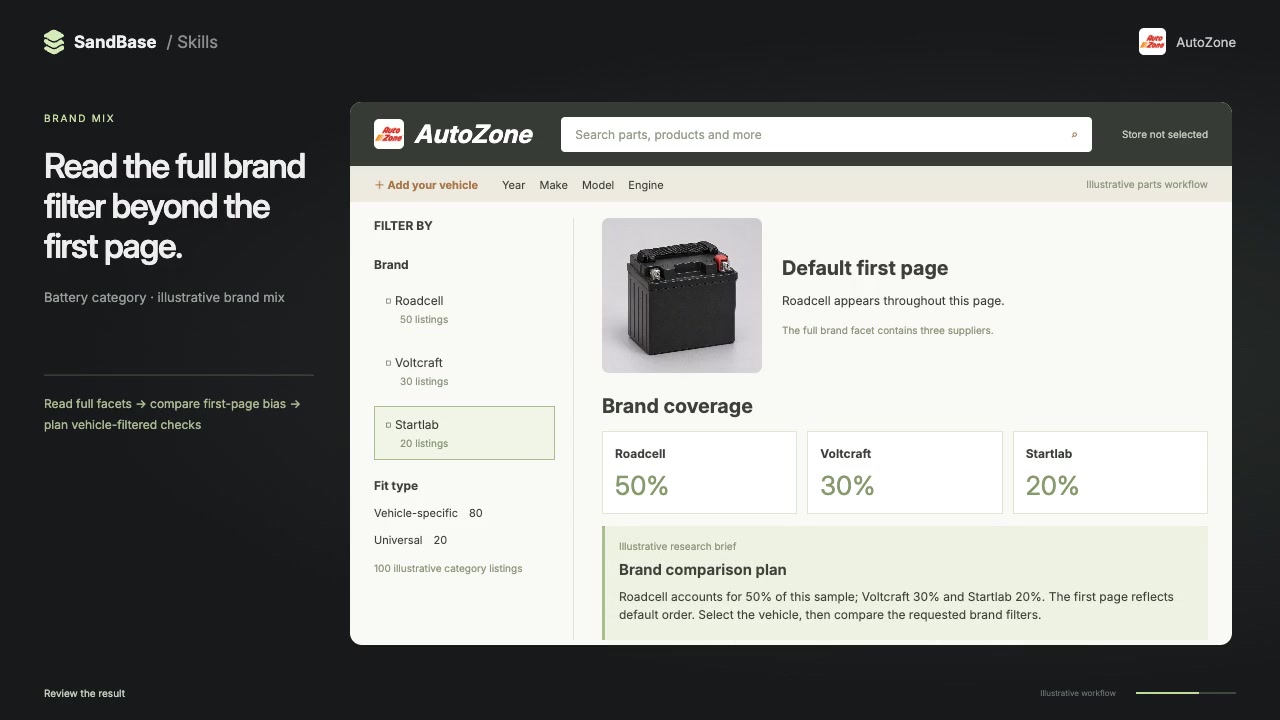
See which brands supply an AutoZone parts category before picking one, and why the first page looks like one brand.
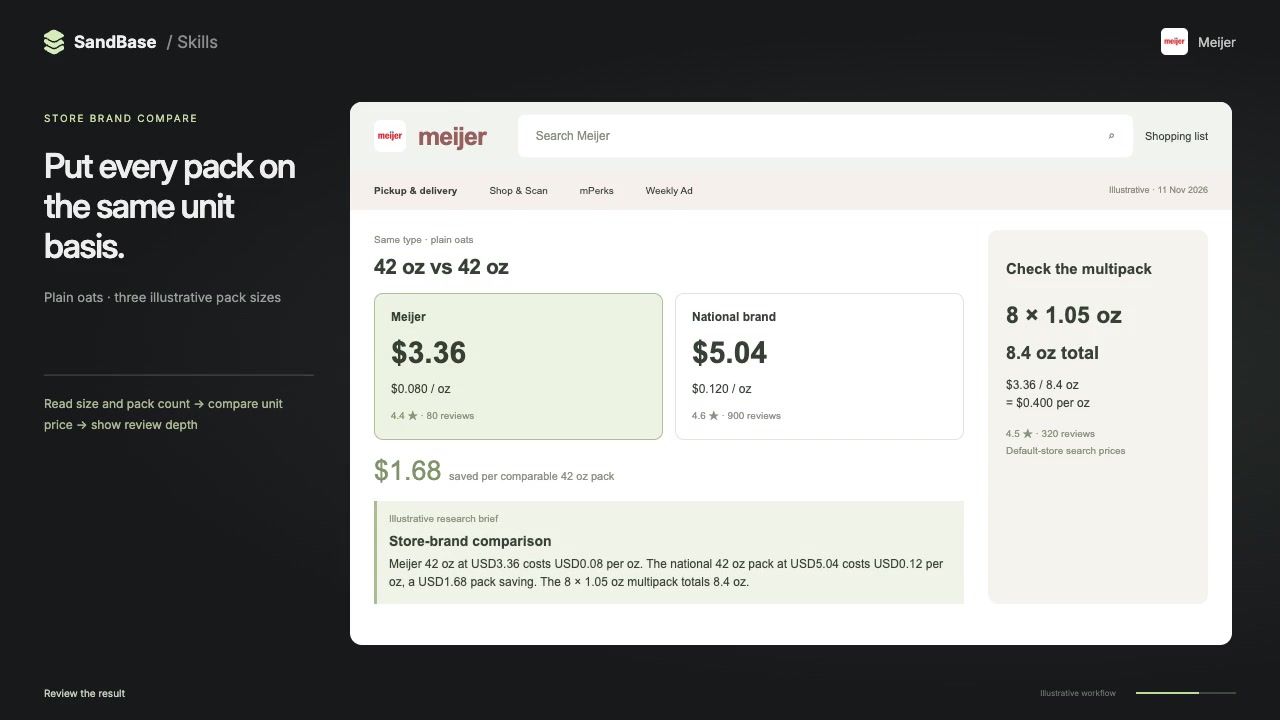
Find out whether Meijer’s own brand is worth it for one grocery item by comparing price per ounce with the national brands.
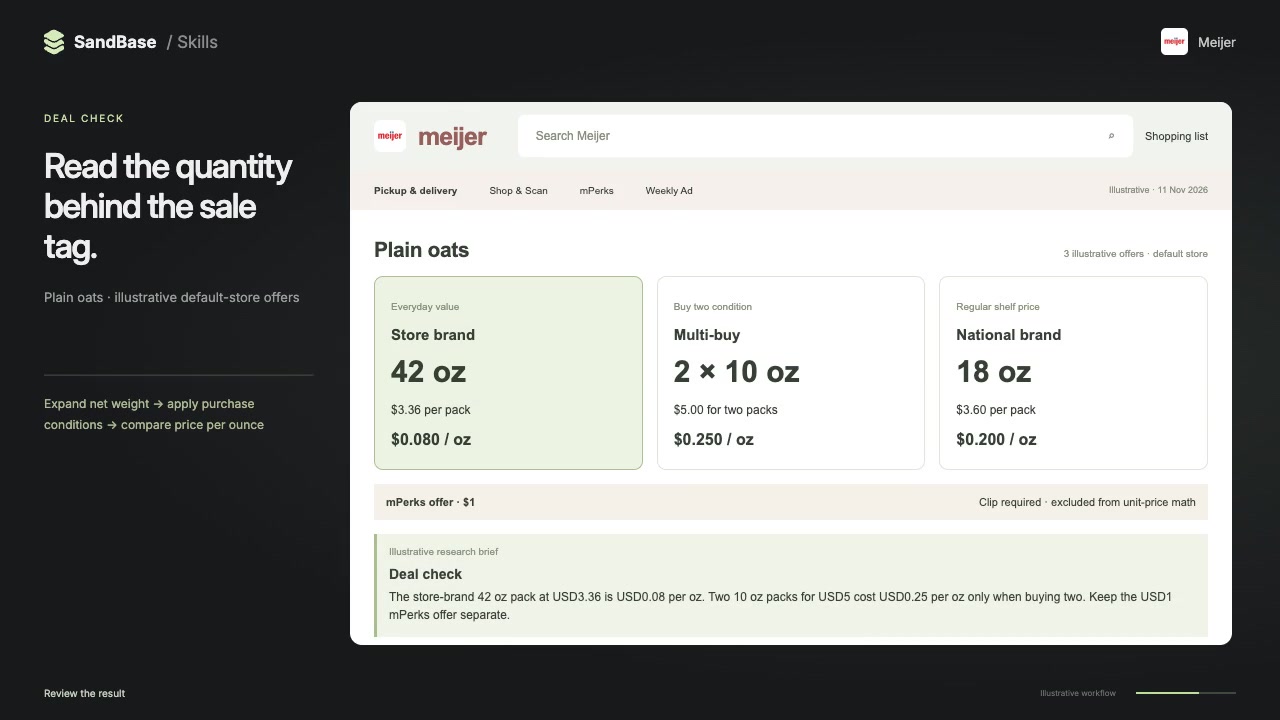
Check which sale tags on a Meijer search page actually save money once you compare price per ounce.
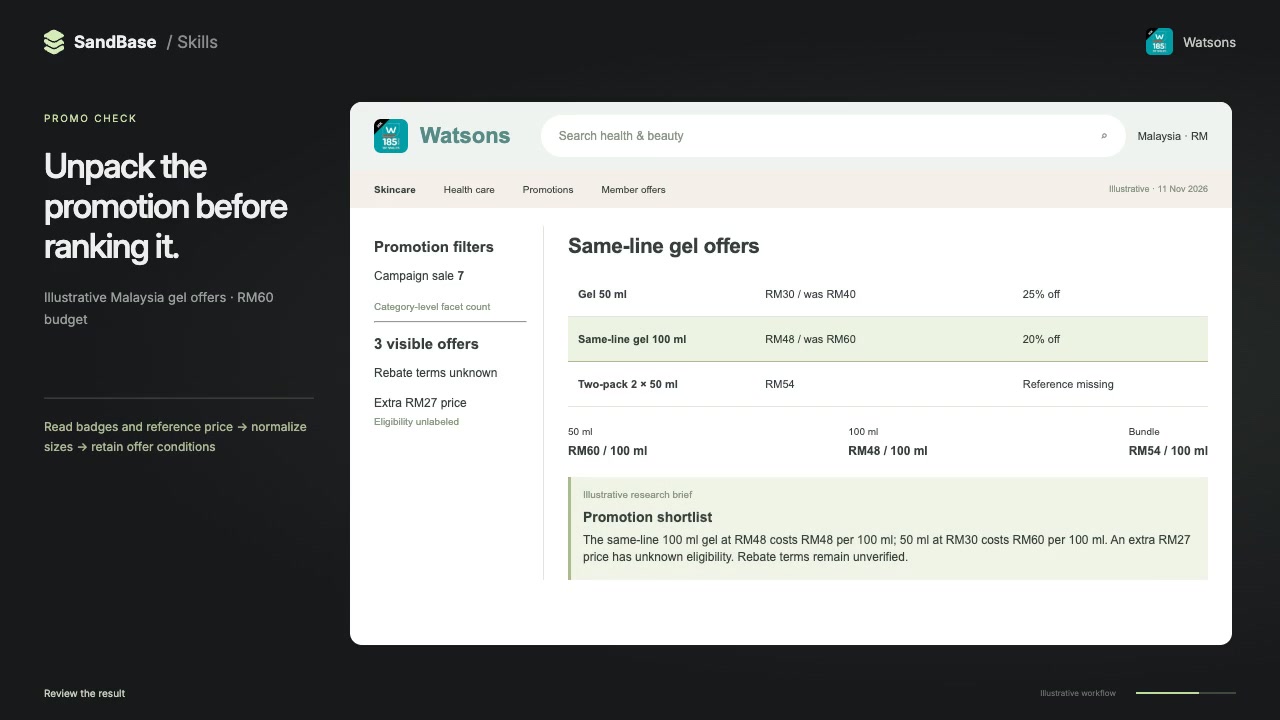
Sort out which offers on a Watsons Malaysia category page are worth it during a sale such as 11.11.
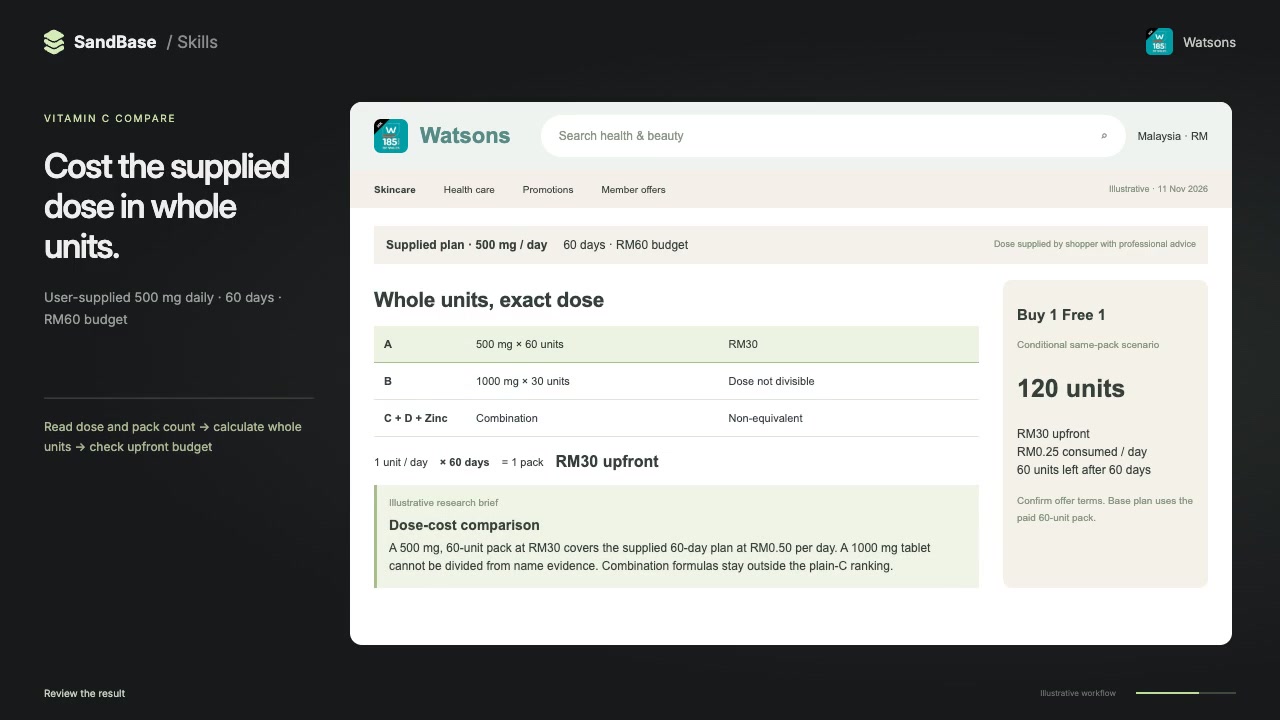
Compare vitamin C packs on Watsons Malaysia by what your daily dose costs, with and without Buy 1 Free 1.
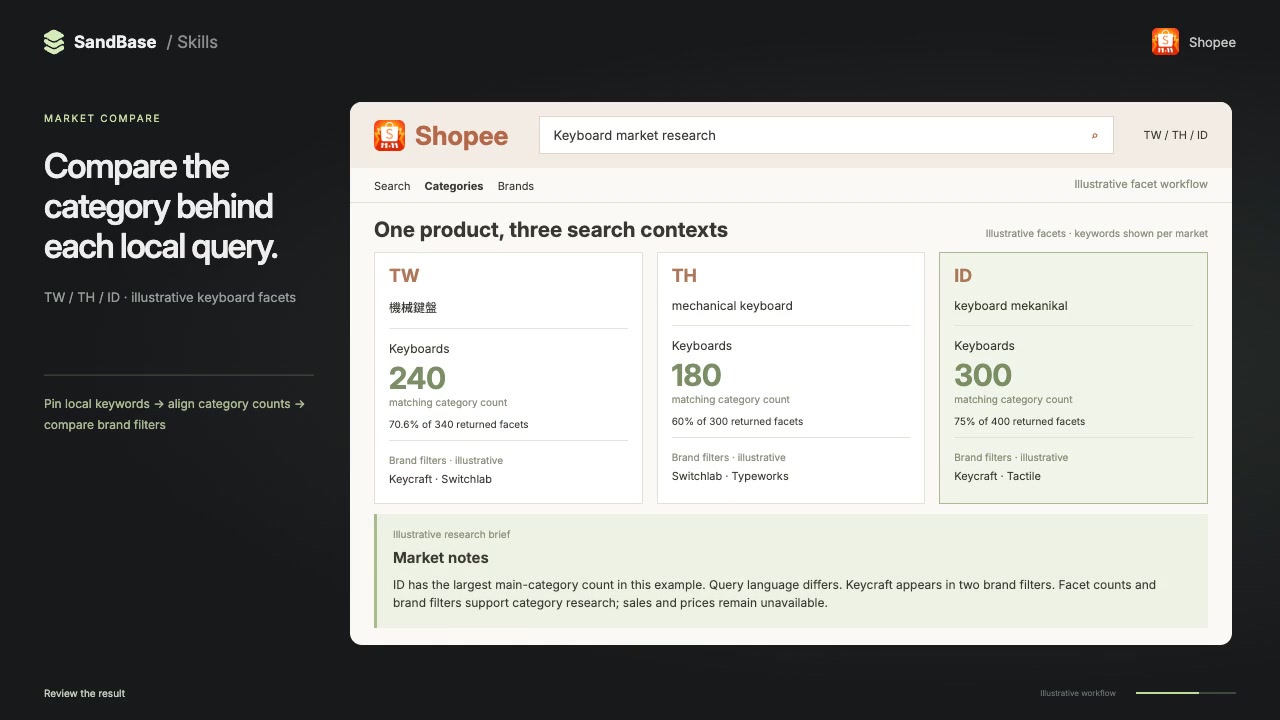
Compare one product across Shopee Taiwan, Thailand and Indonesia before choosing which market to sell in.
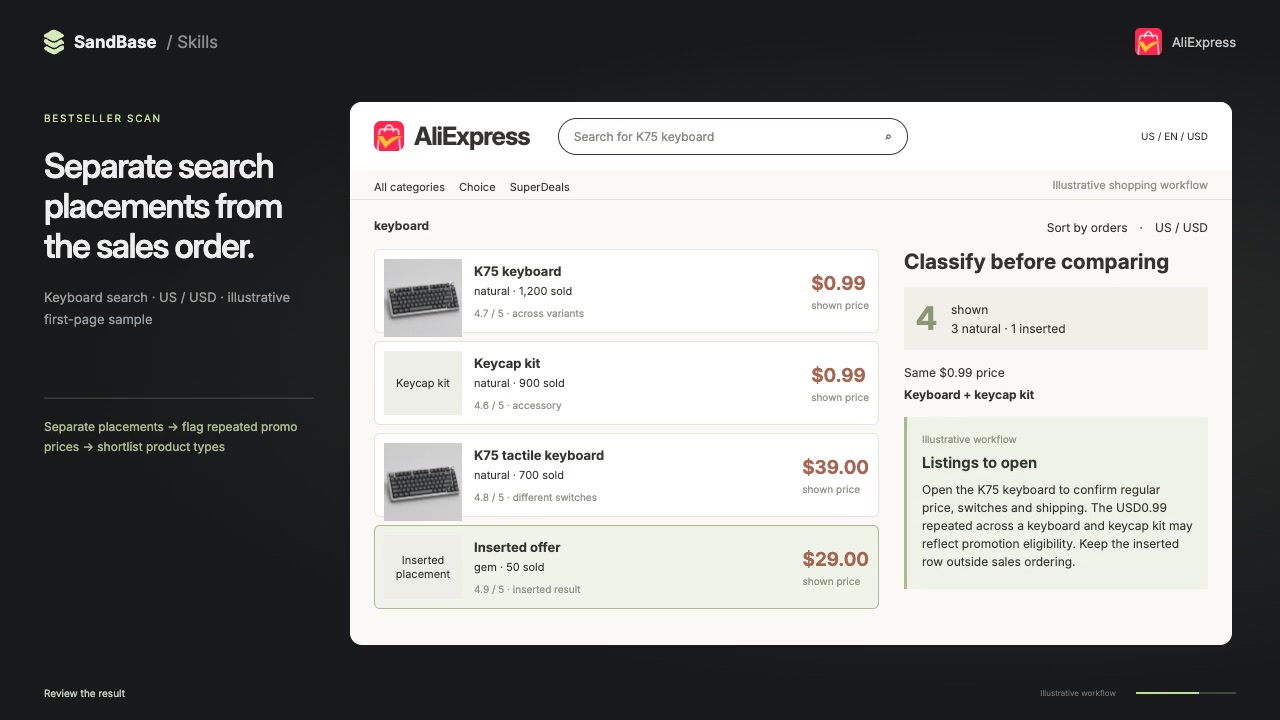
Read a sales-sorted AliExpress search without being misled by shared promo prices and inserted listings.
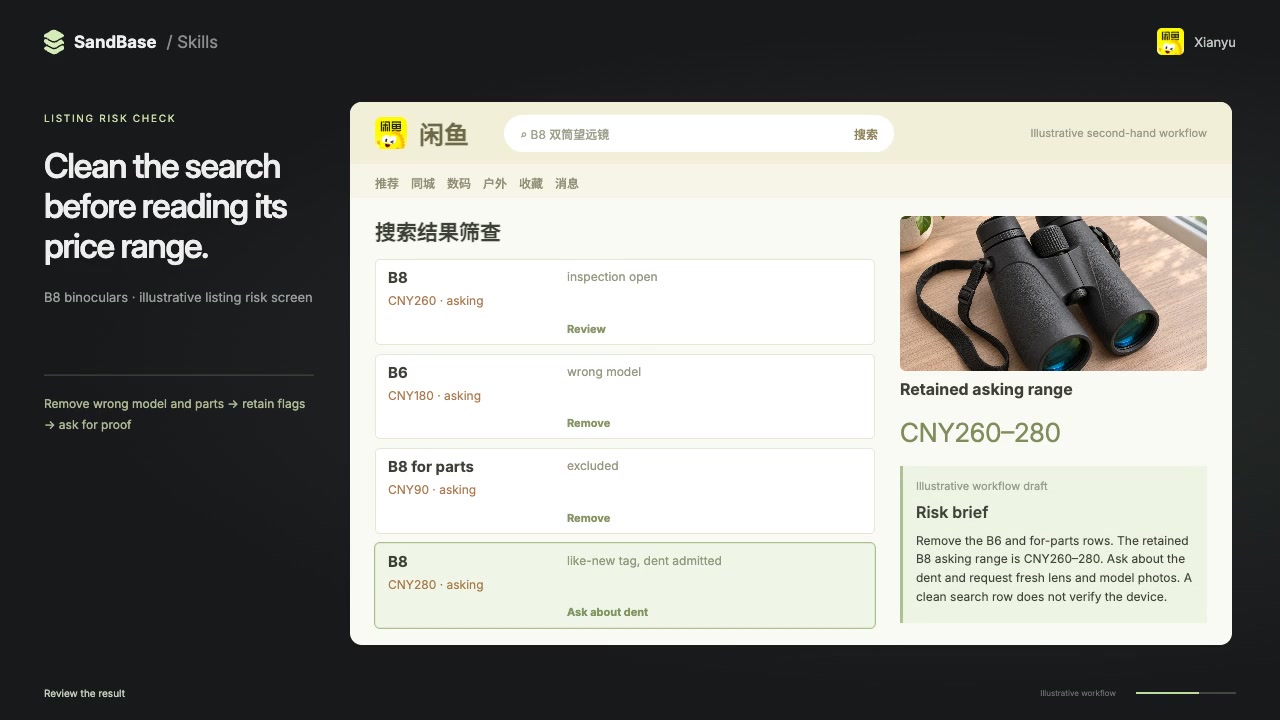
Screen Xianyu listings for a used device before messaging sellers, and get a fair price range from the clean ones.
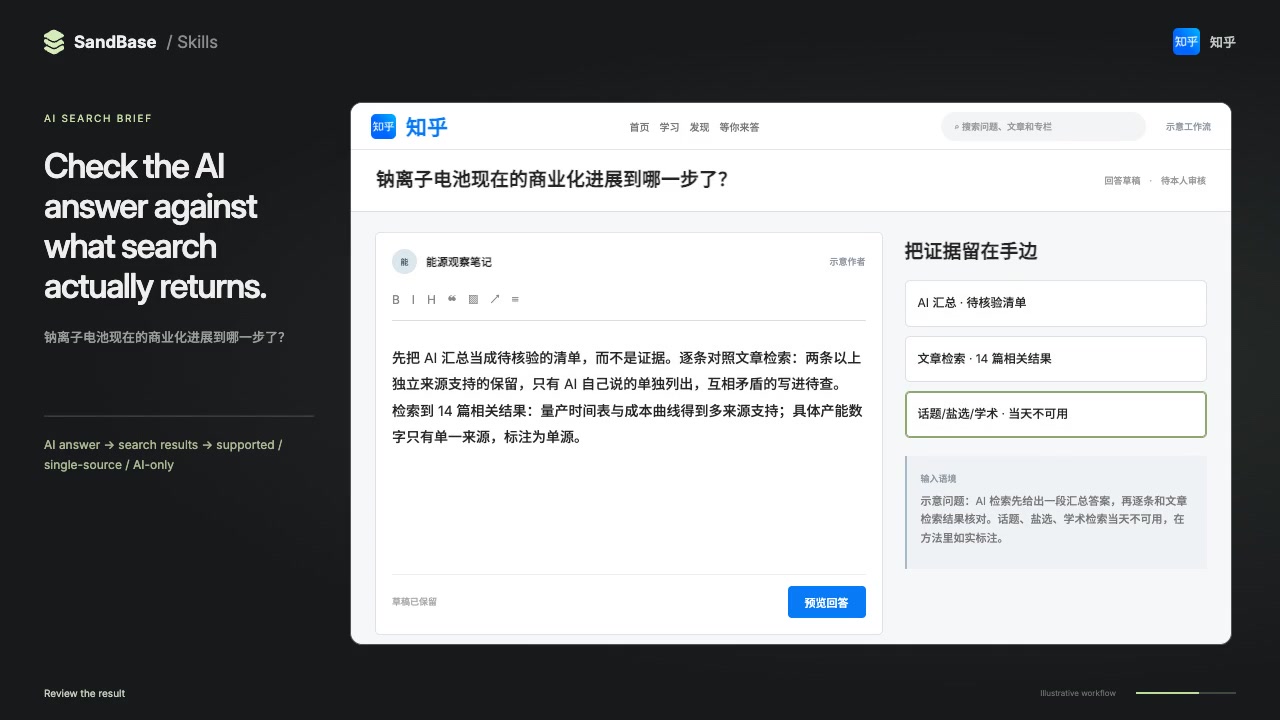
Find out what Zhihu actually knows about a question — check Zhihu's AI search answer against articles, answers, topics, Salt titles and papers before you write.
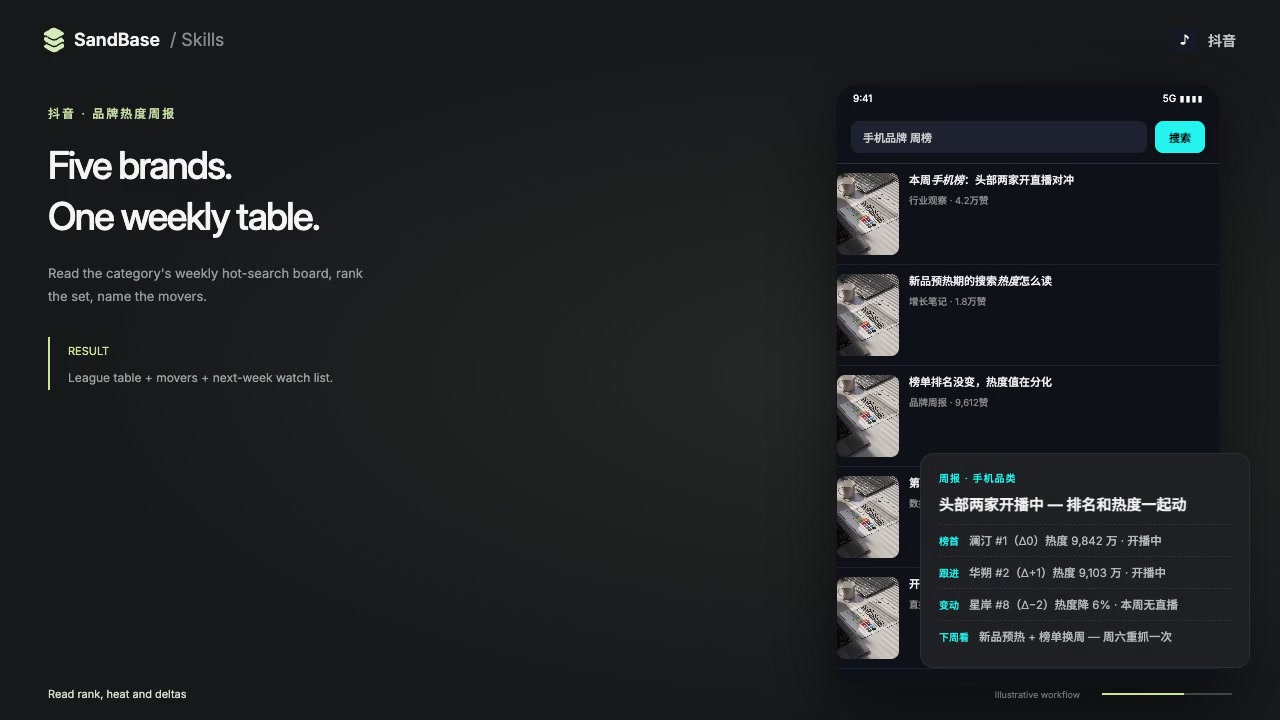
Put several brands in one Douyin league table each week and see who rose, who fell and who dropped off the board.
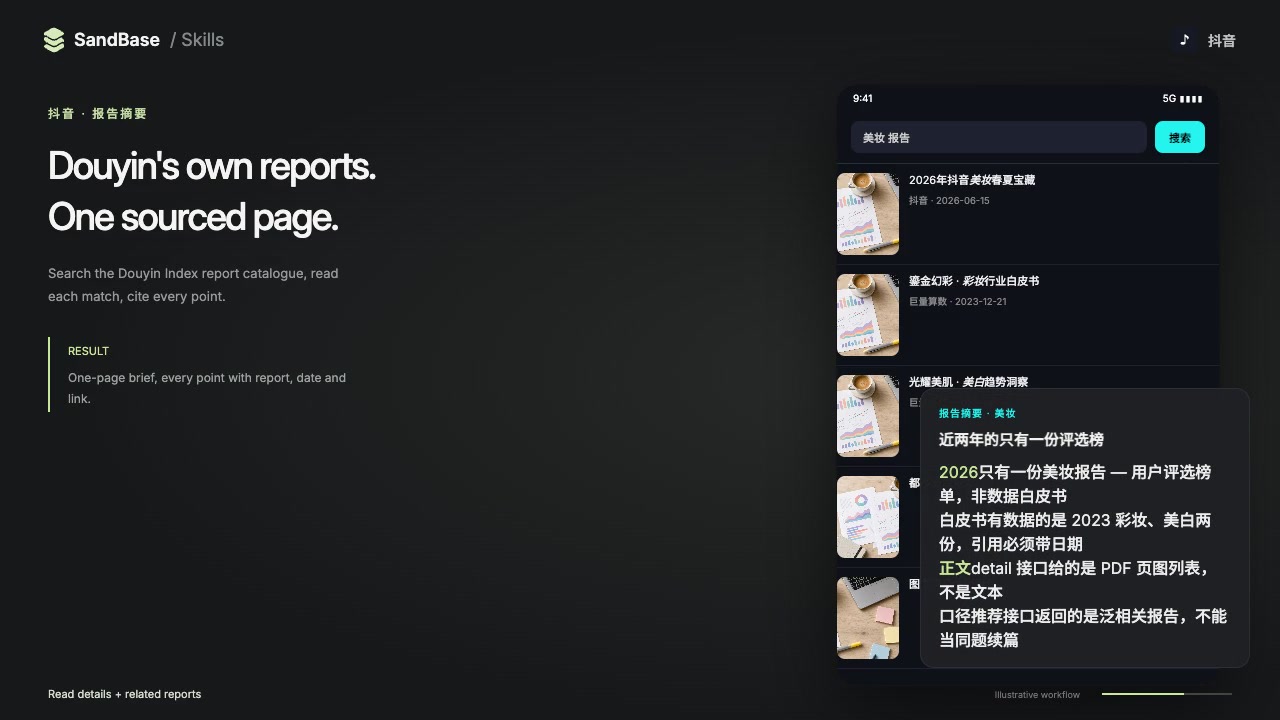
Condense Douyin Index’s official industry reports into one sourced page.
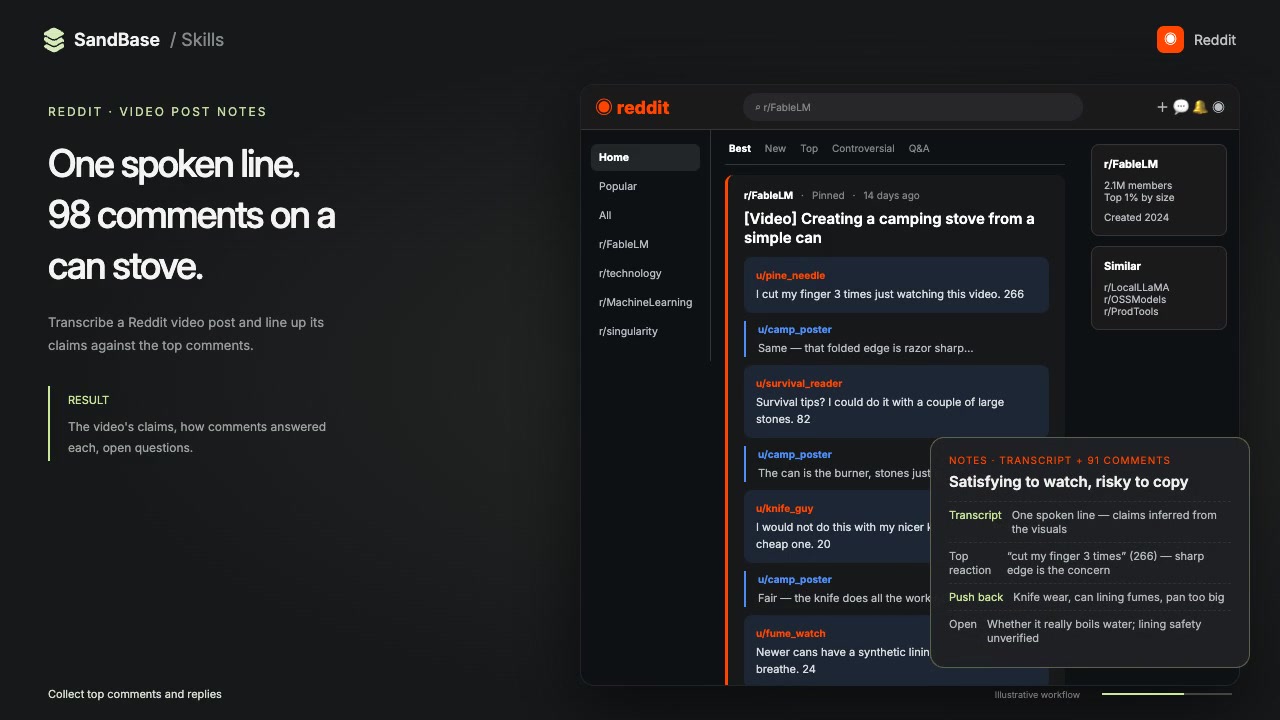
Know what a Reddit video says and how the community answered it.
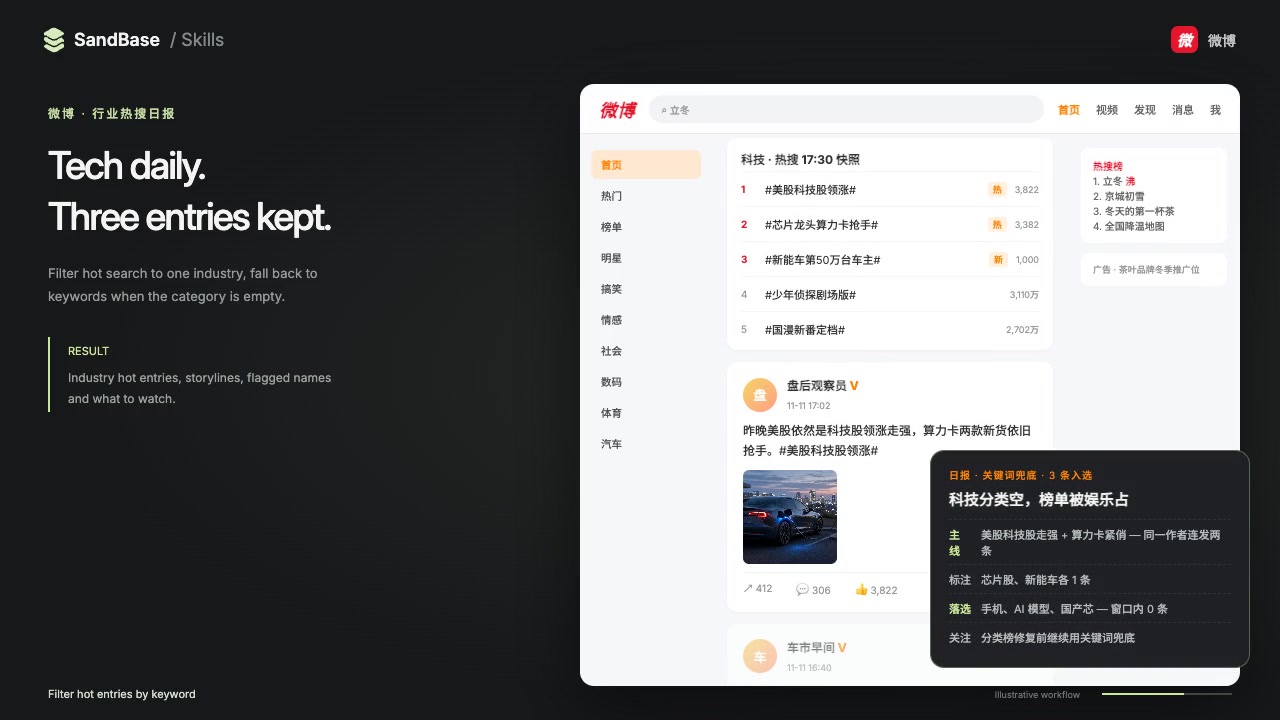
Get today's Weibo hot search for one industry.
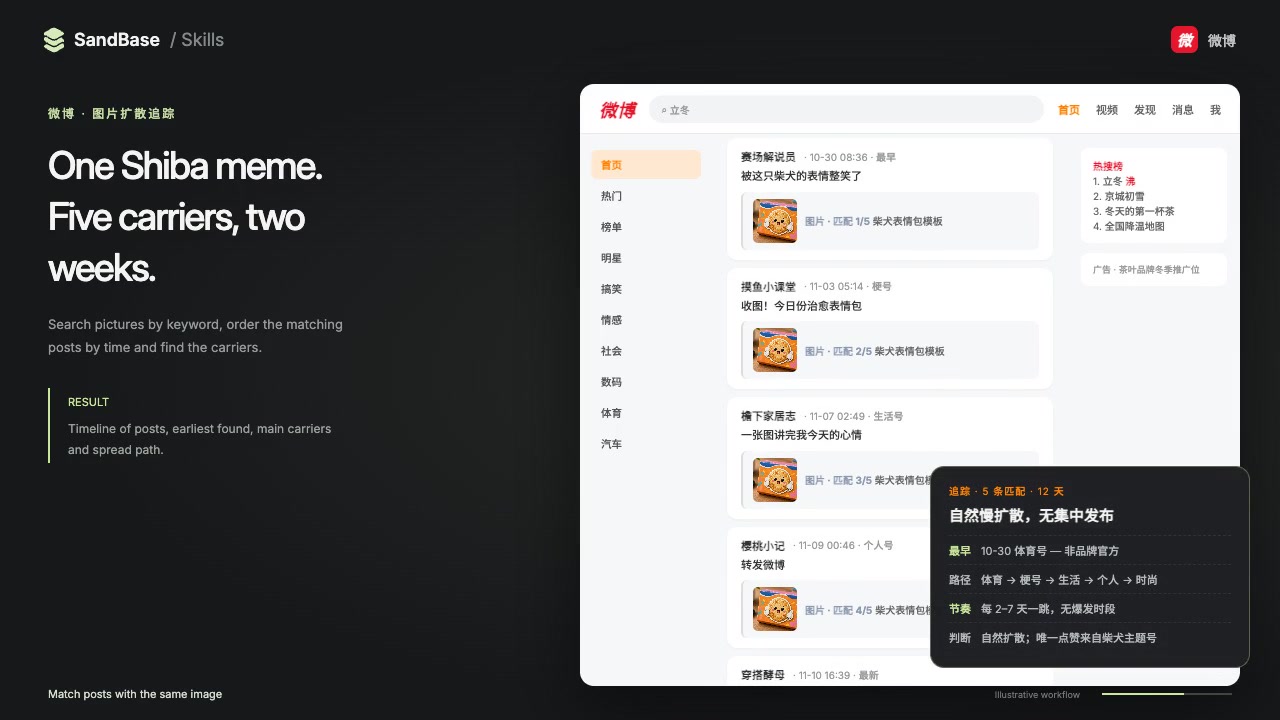
Find where an image started on Weibo and who spread it.
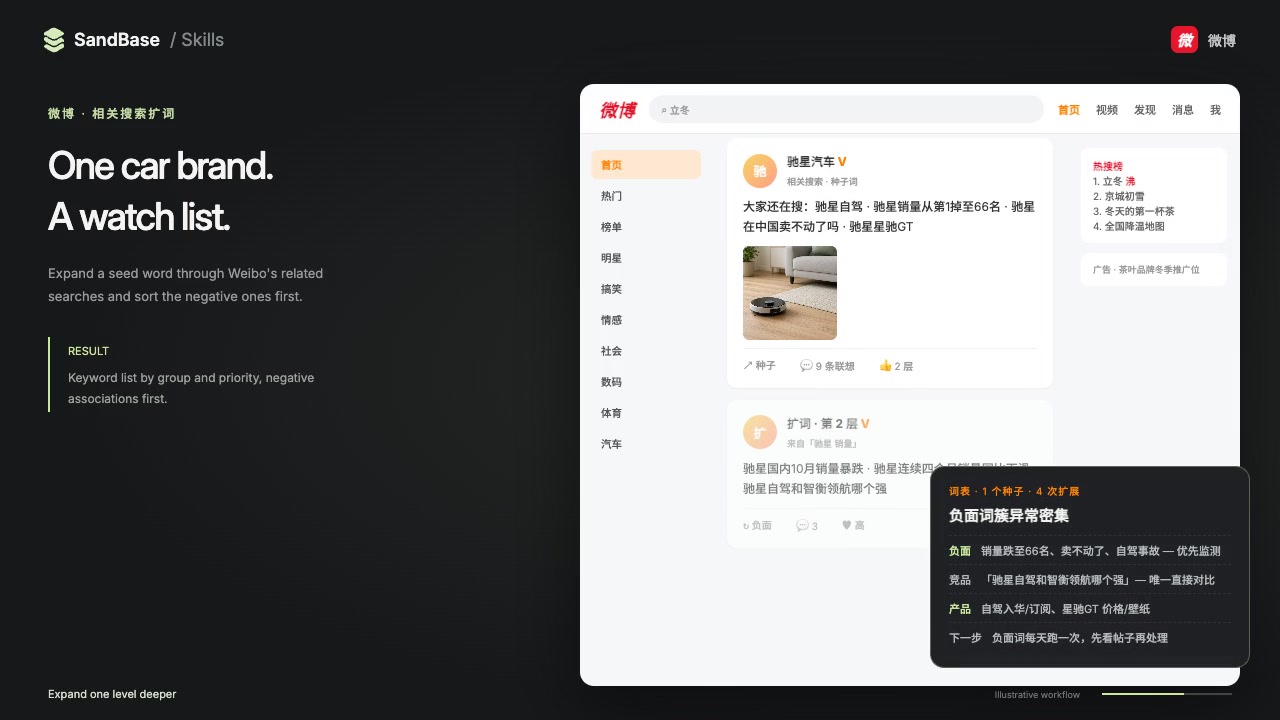
Turn a brand or event word into a Weibo monitoring keyword list.
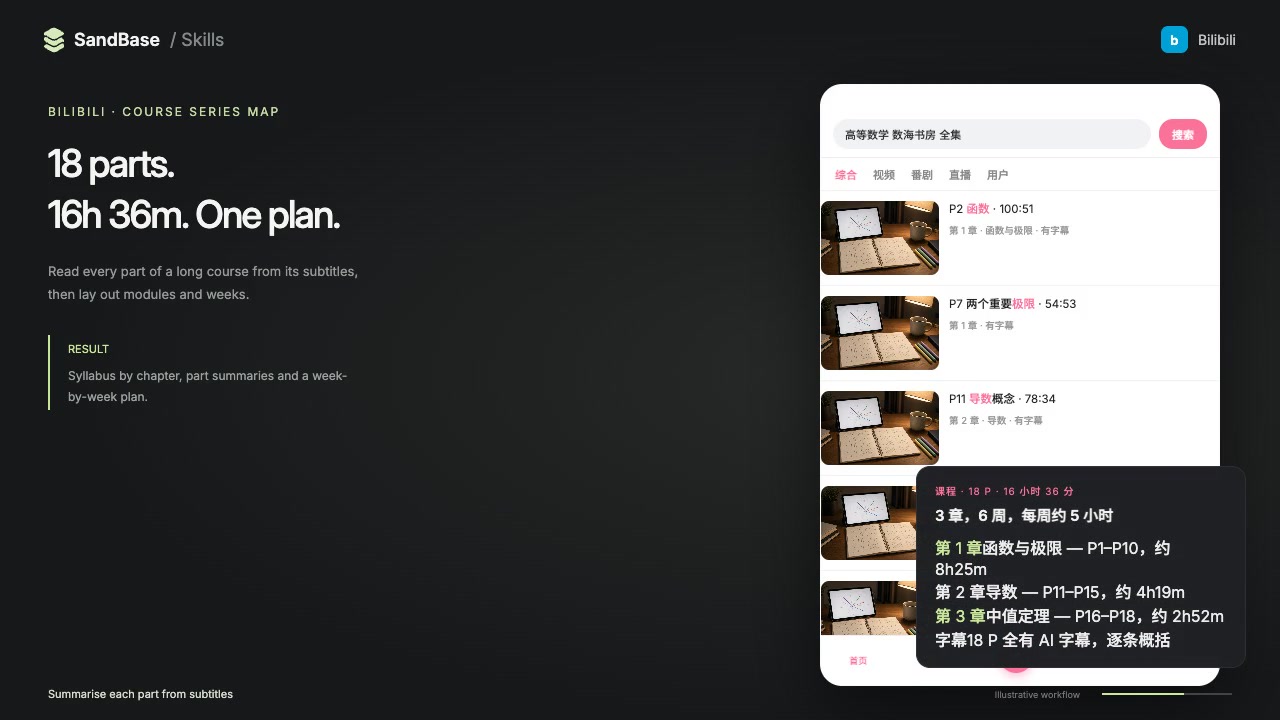
Turn a long multi-part Bilibili course into a study plan.
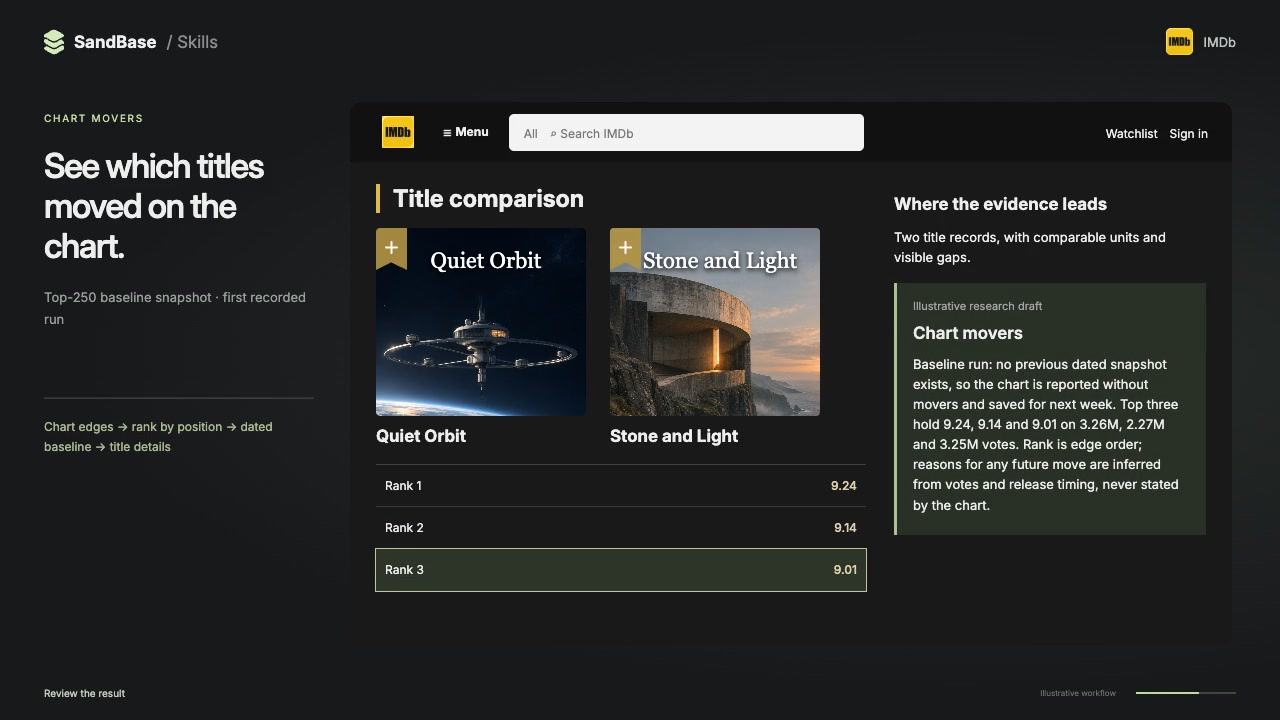
See which titles rose, fell, entered or left an IMDb chart.
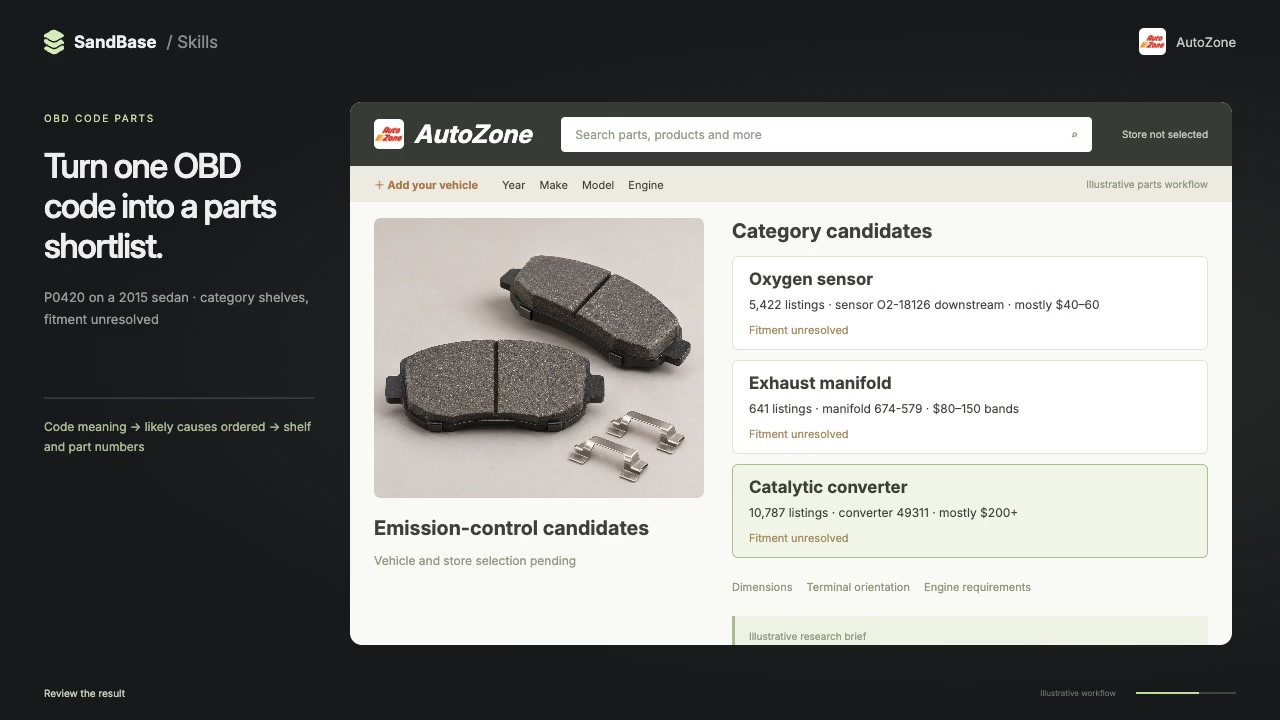
Turn a check-engine code into a plan and the parts to look at.
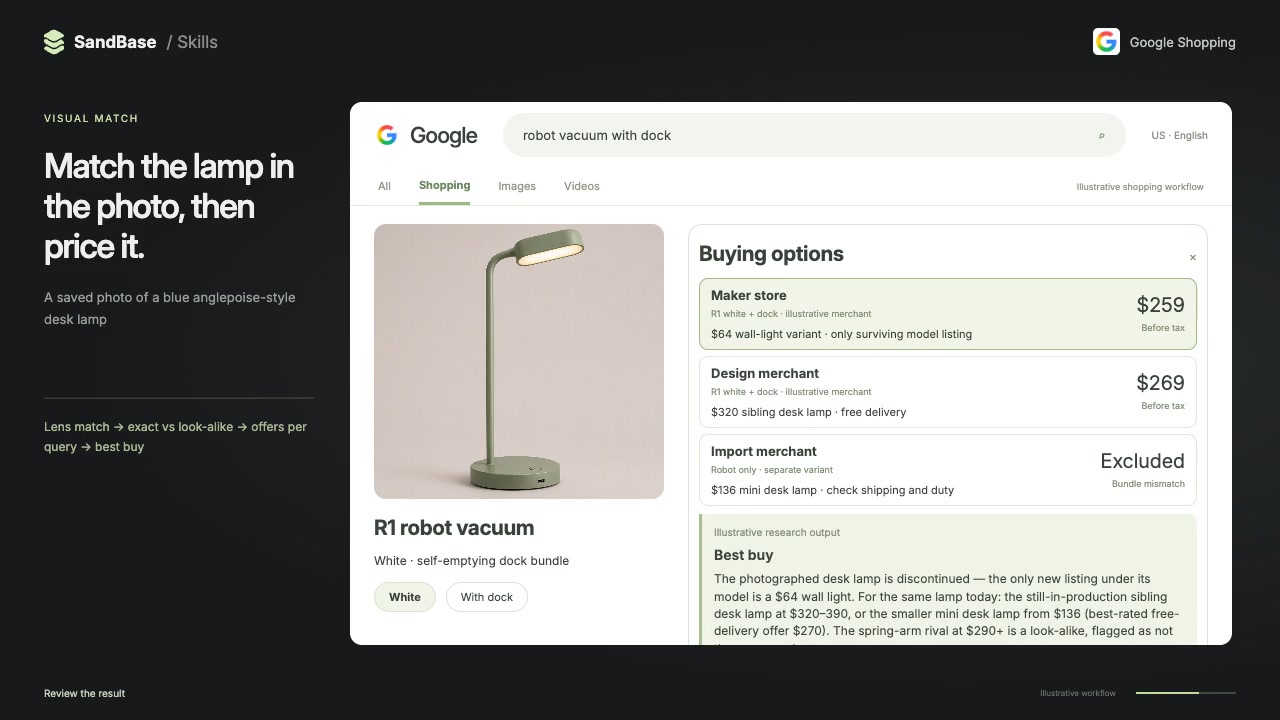
Find out what the item in a photo is and where to buy it.
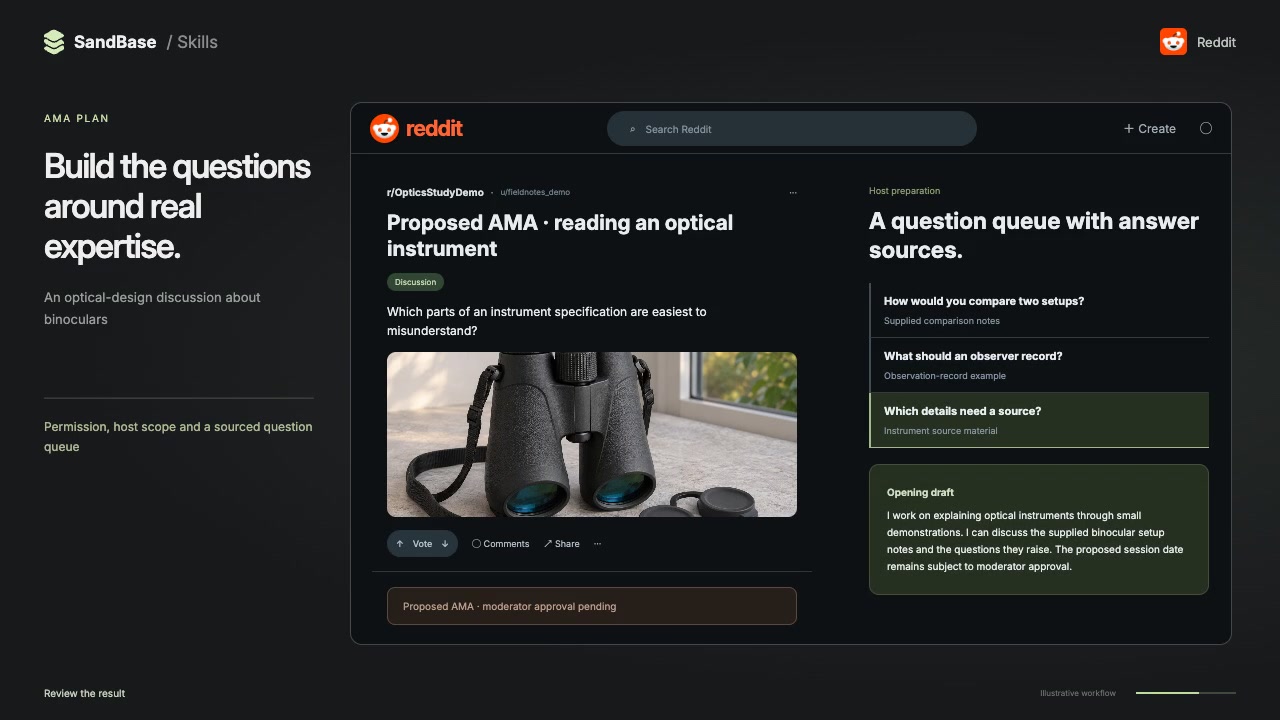
Prepare an AMA that fits the community's approval rules and lead time before you ask the moderators or post anything.
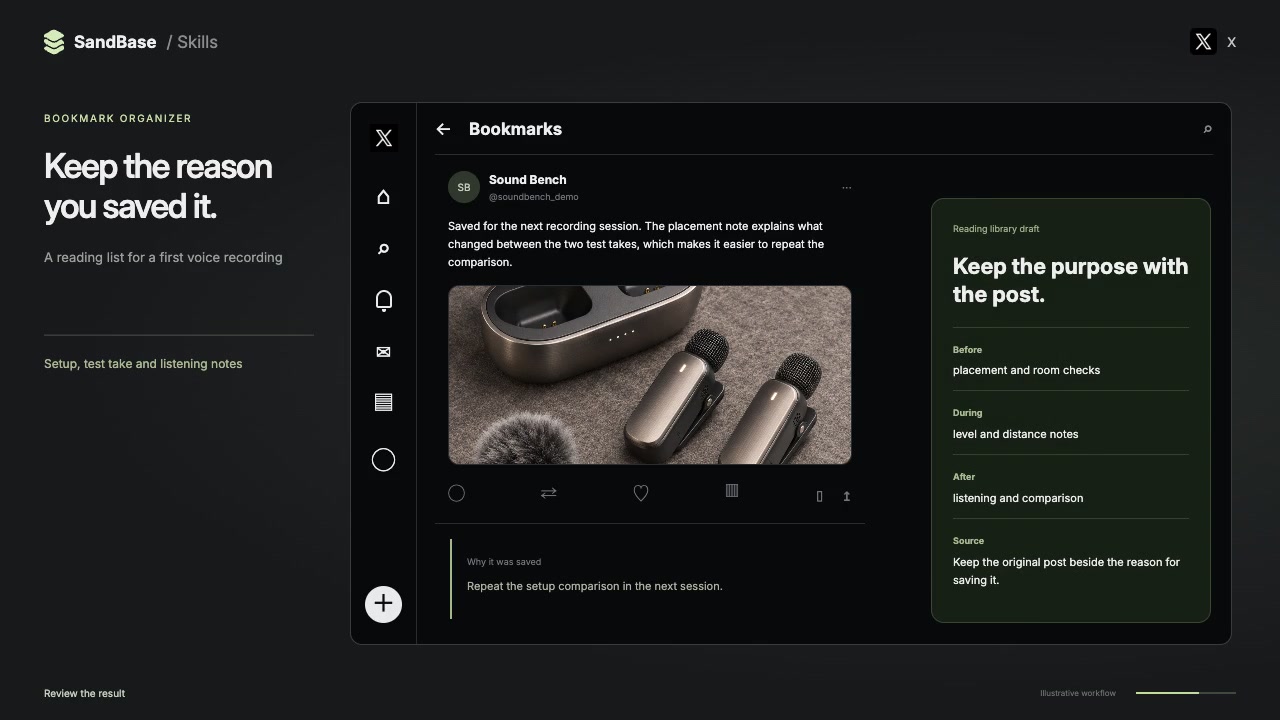
Turn saved posts into a topic archive and a useful next-action queue.
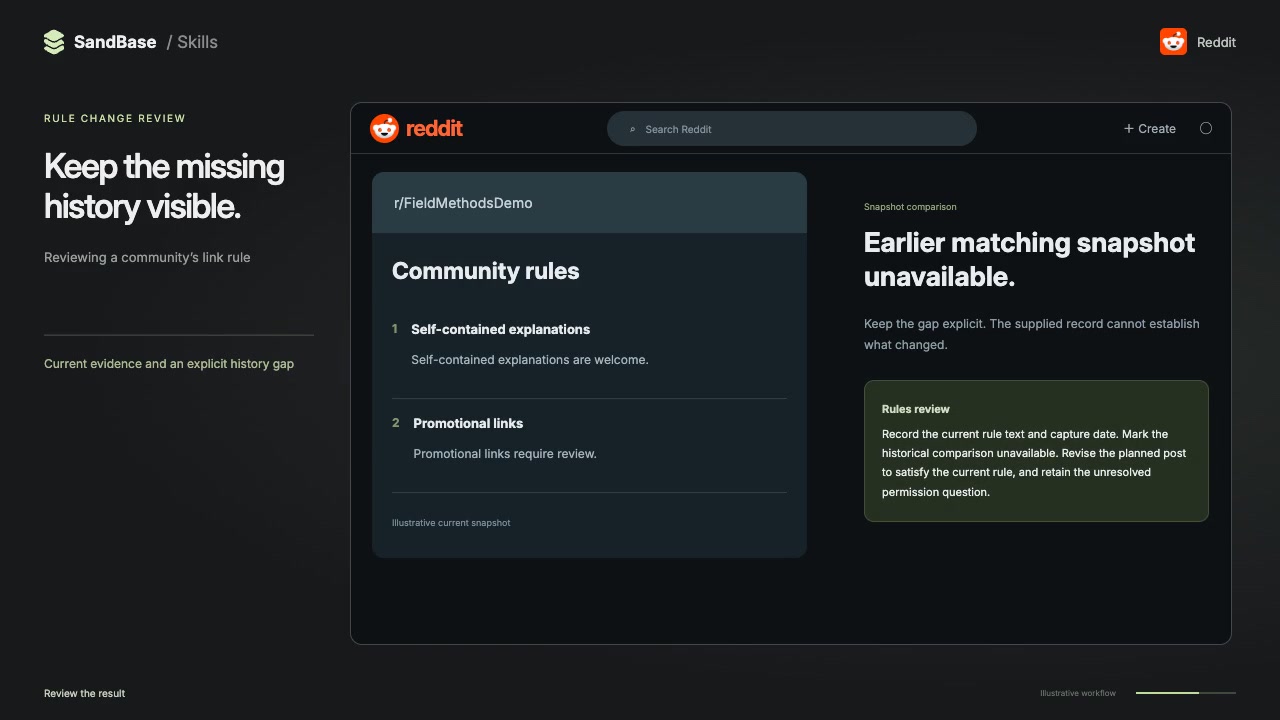
Compare saved rule snapshots and see which drafts need revision.
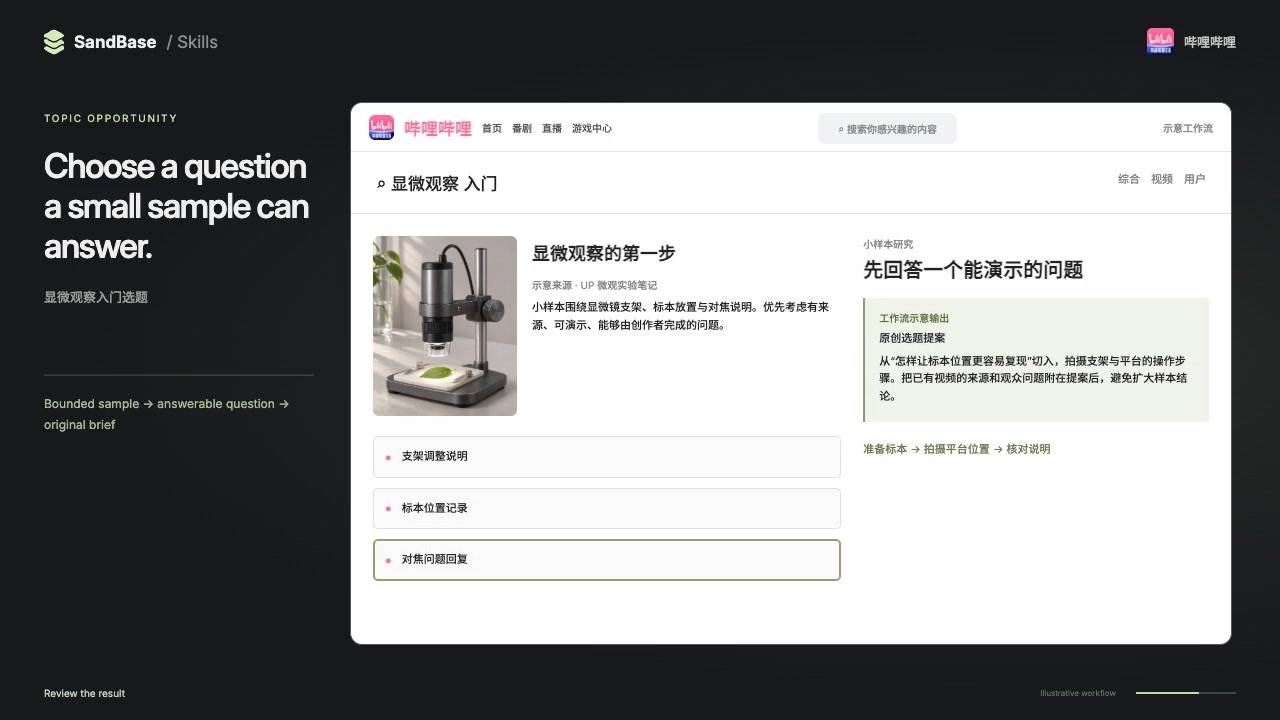
Research video topics and compare public performance to plan your next Bilibili tutorial.
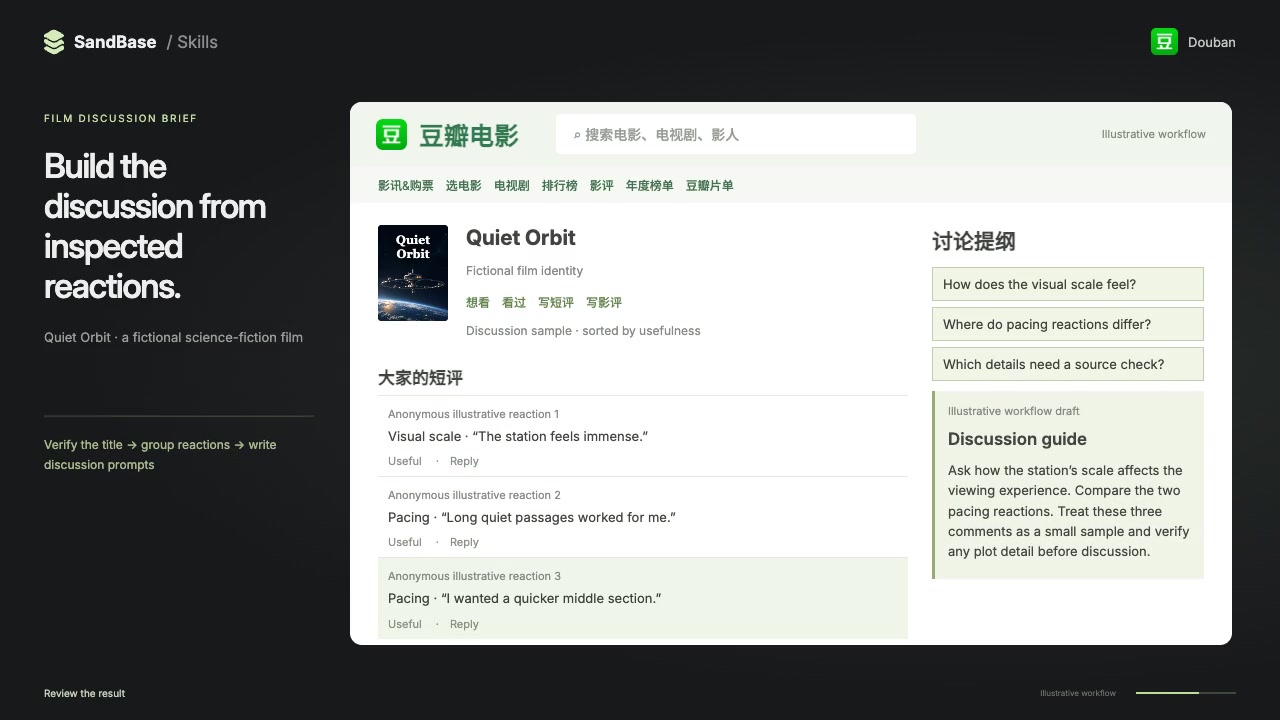
Verify Douban film metadata and assess which public discussion evidence is available.
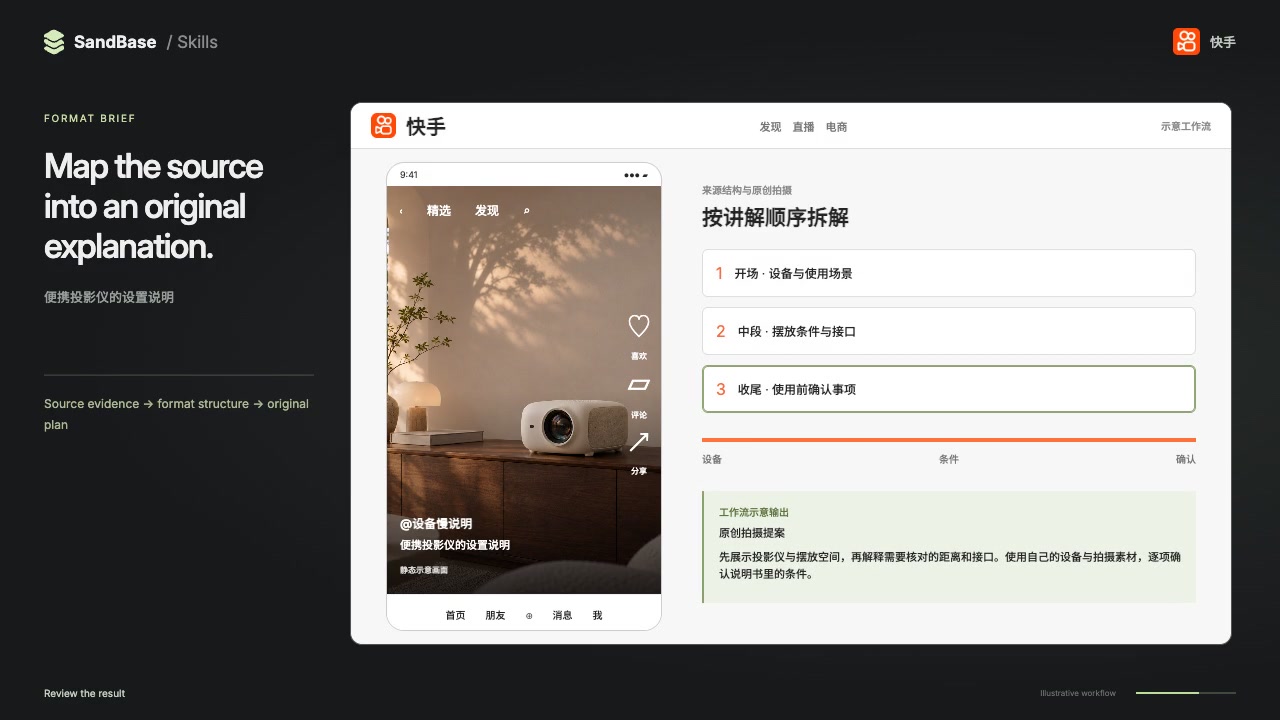
Turn public Kuaishou video details into a practical format brief for your next creation.
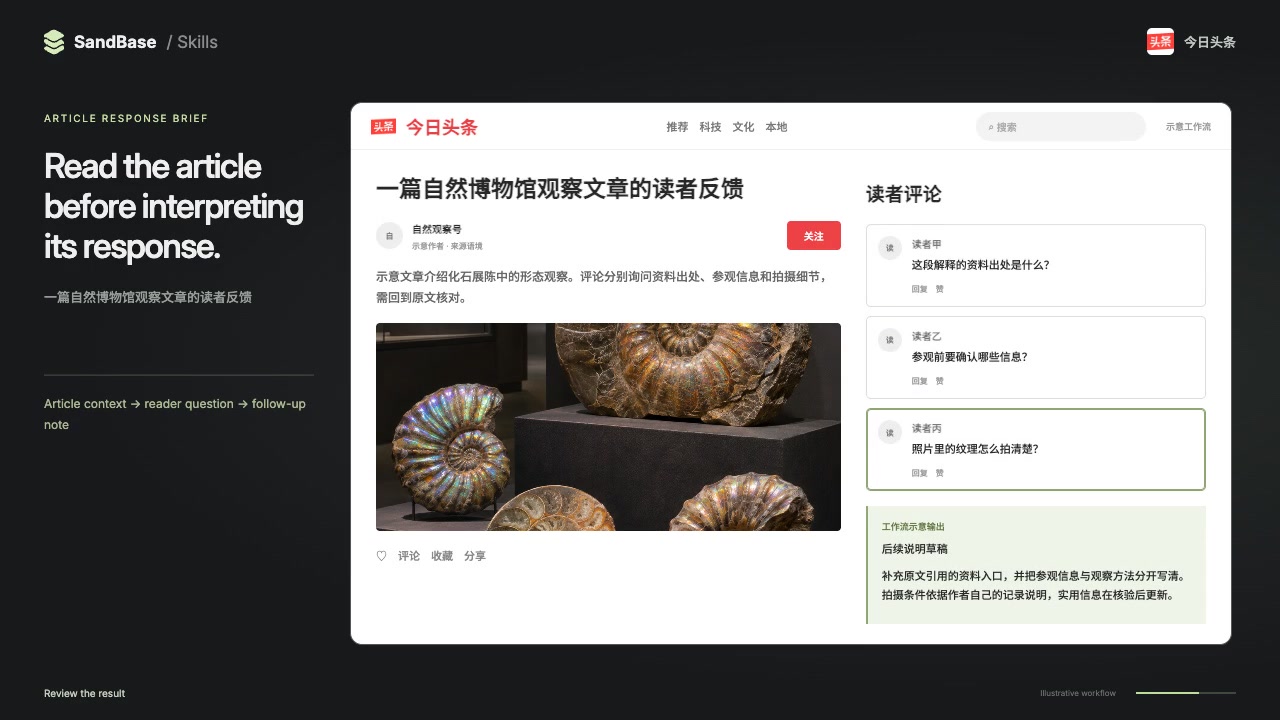
Review a Toutiao article and public responses to prepare an informed follow-up.
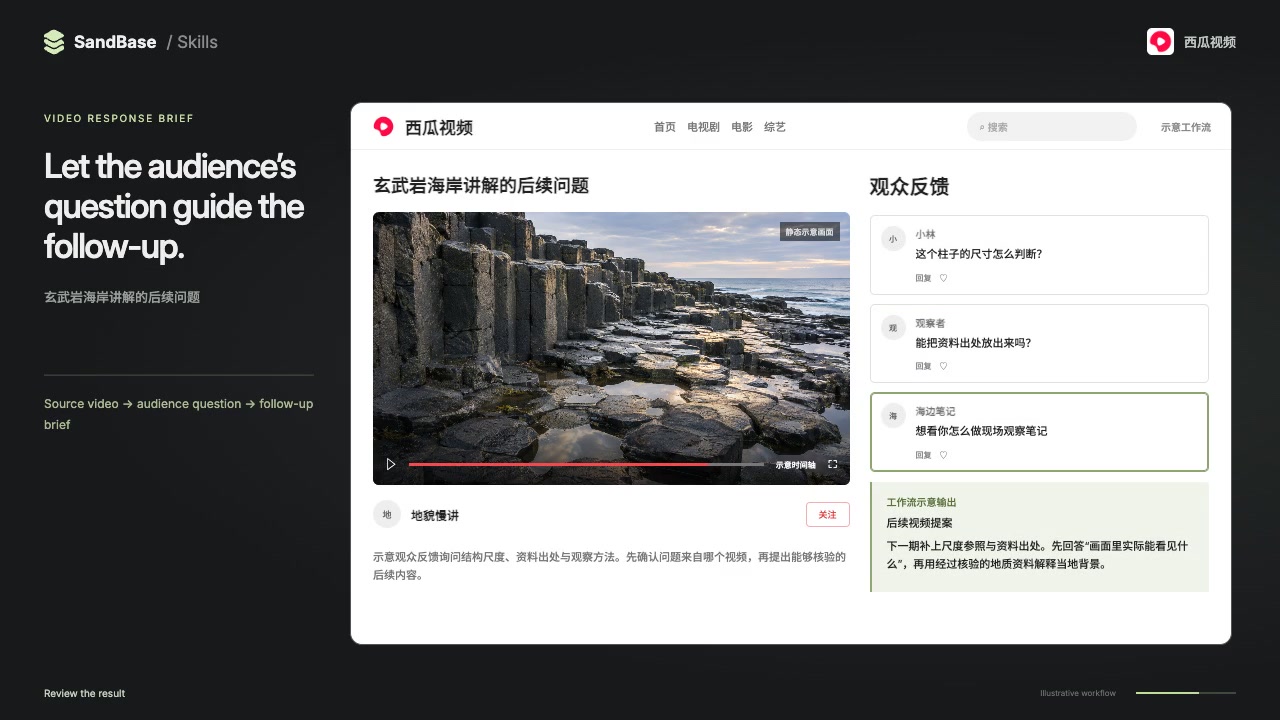
Read a Xigua video and its public comments to plan a useful response.
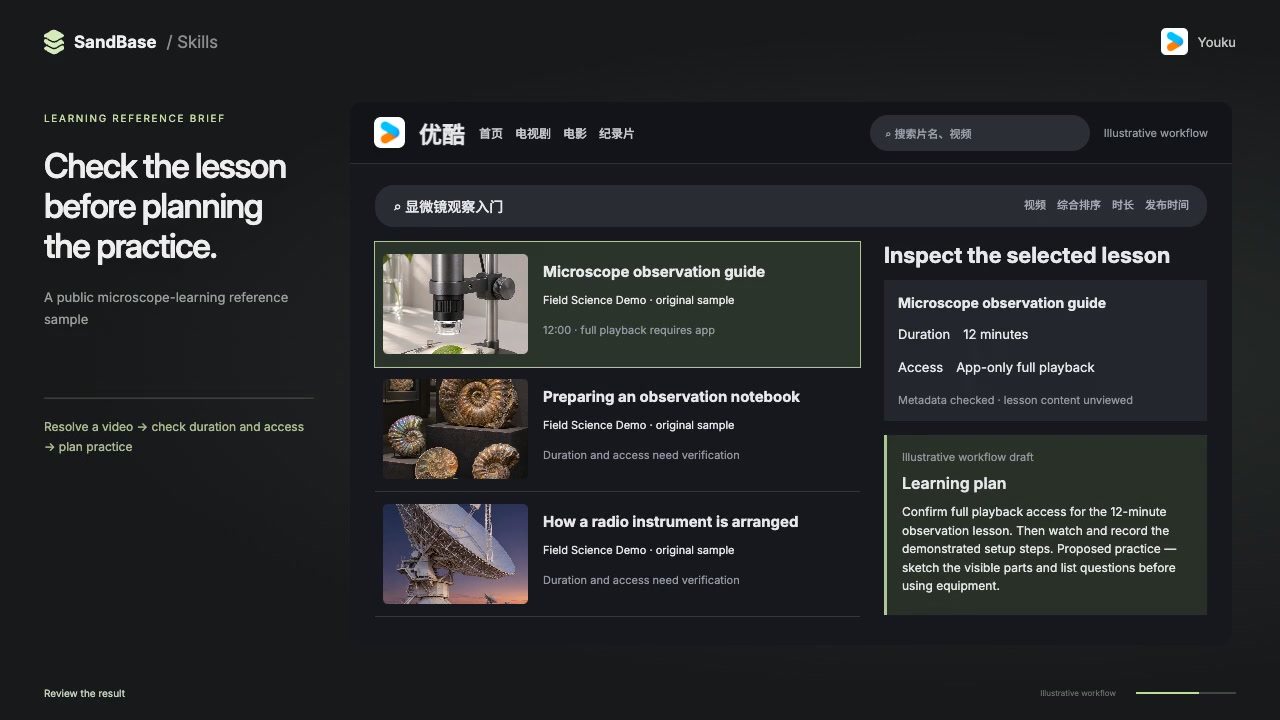
Find Youku learning references and verify selected video metadata before building a lesson plan.
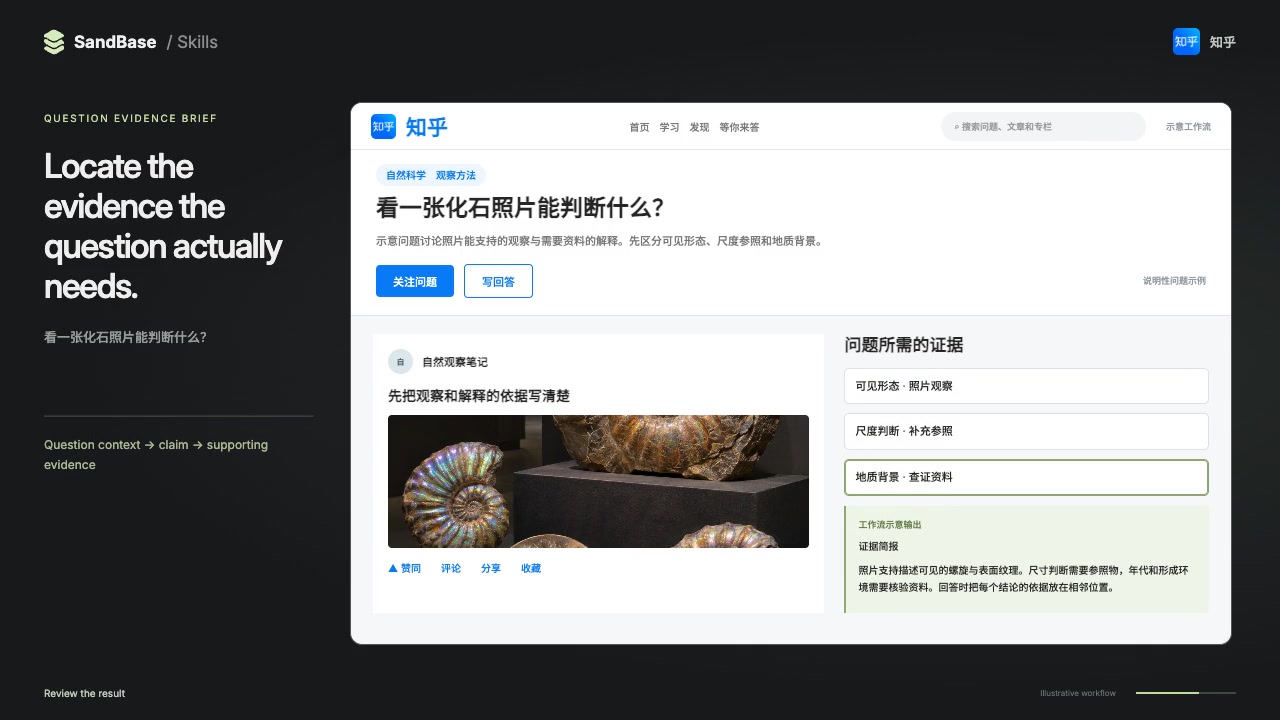
Explore Zhihu questions and compare answers to build an evidence-backed editorial brief.
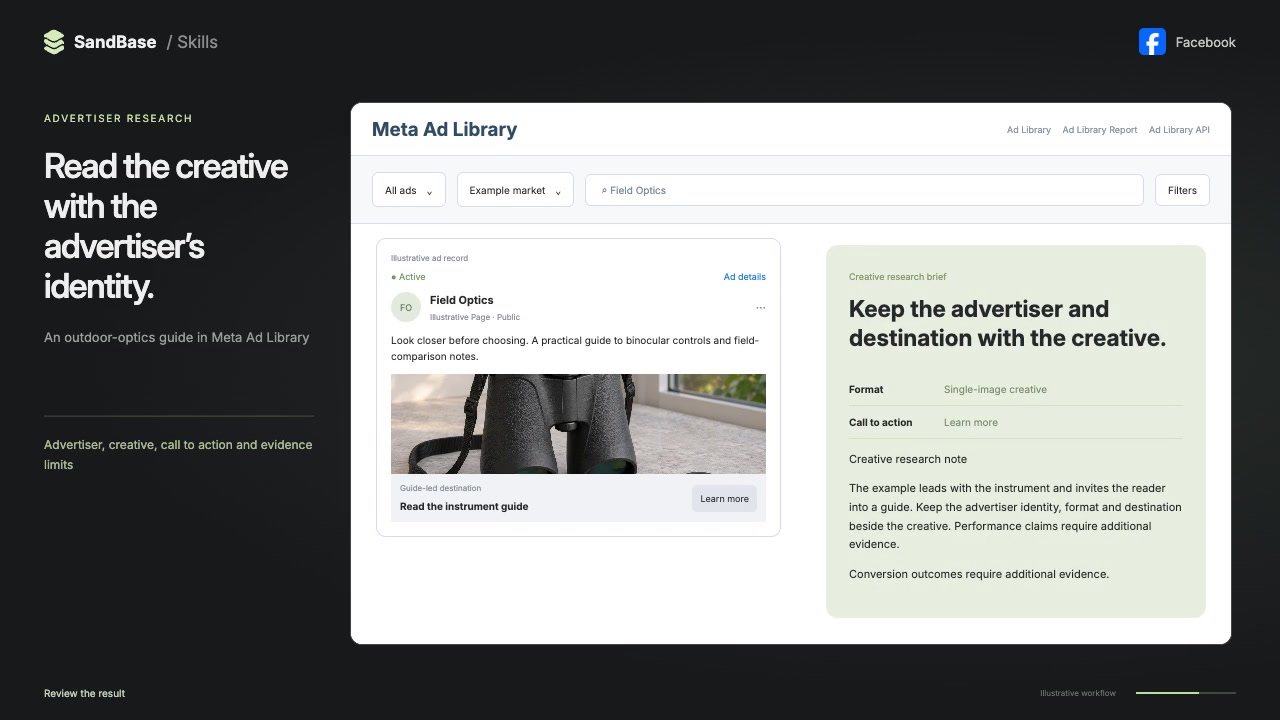
Explore Facebook ad-library results and compare advertiser creative patterns.
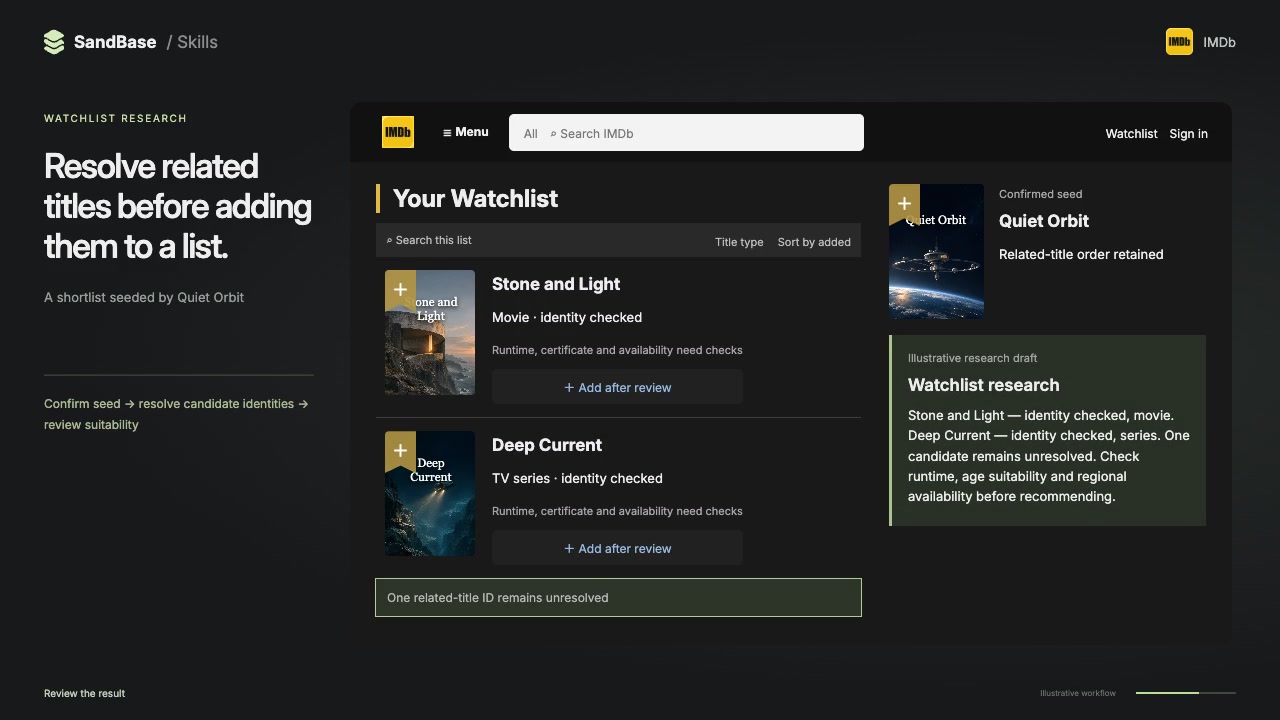
Explore related IMDb titles and verify details to build a watchlist around a film.
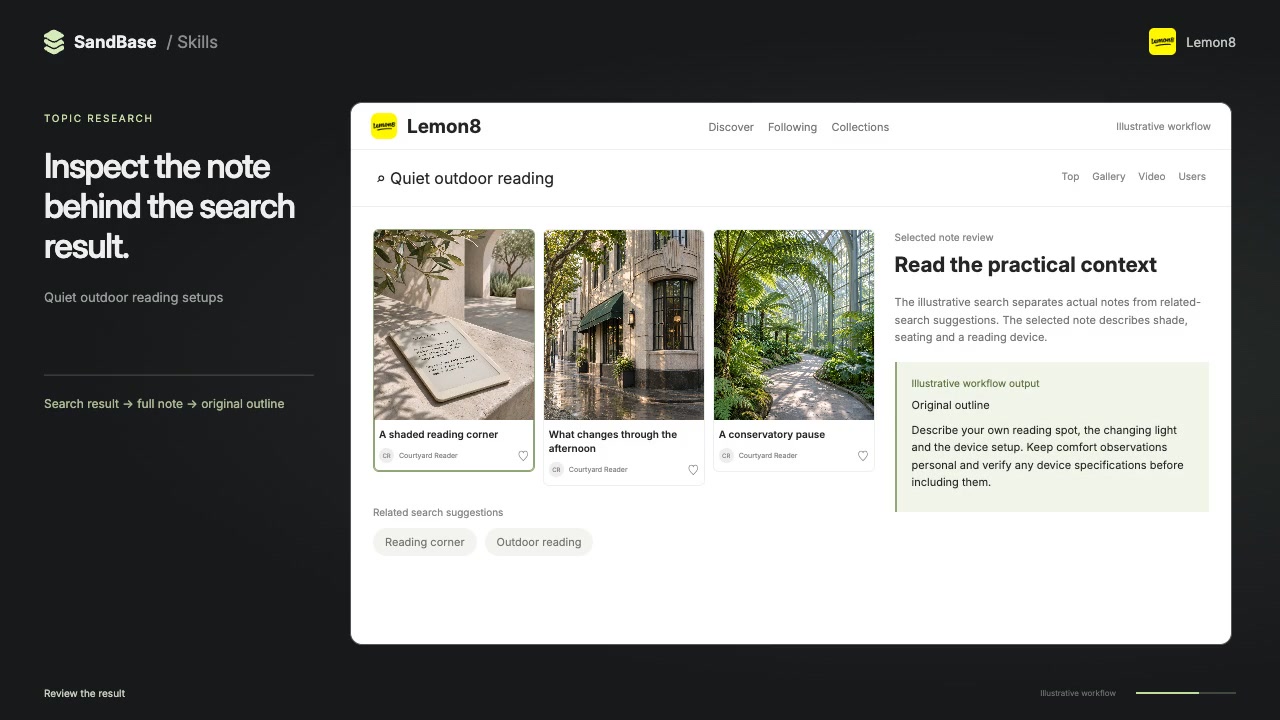
Explore Lemon8 topics and compare public posts before planning your next content idea.
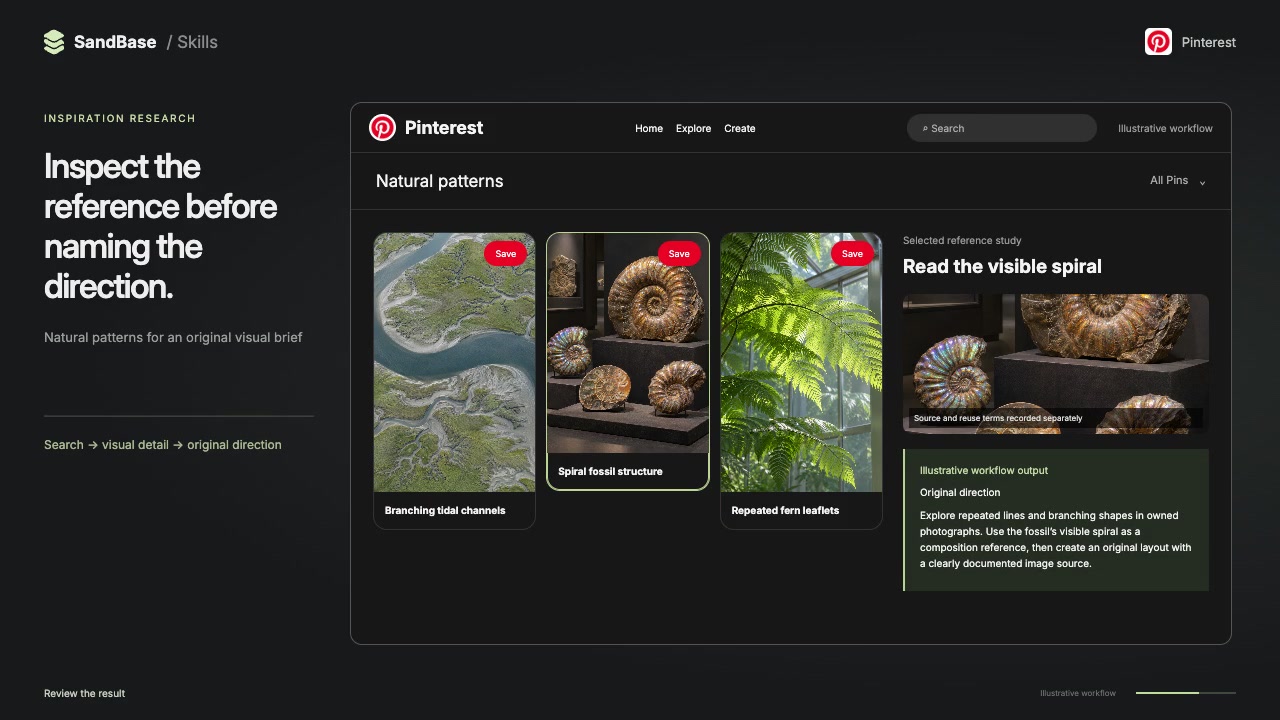
Find Pinterest references and turn verified pin metadata into an inspiration brief.
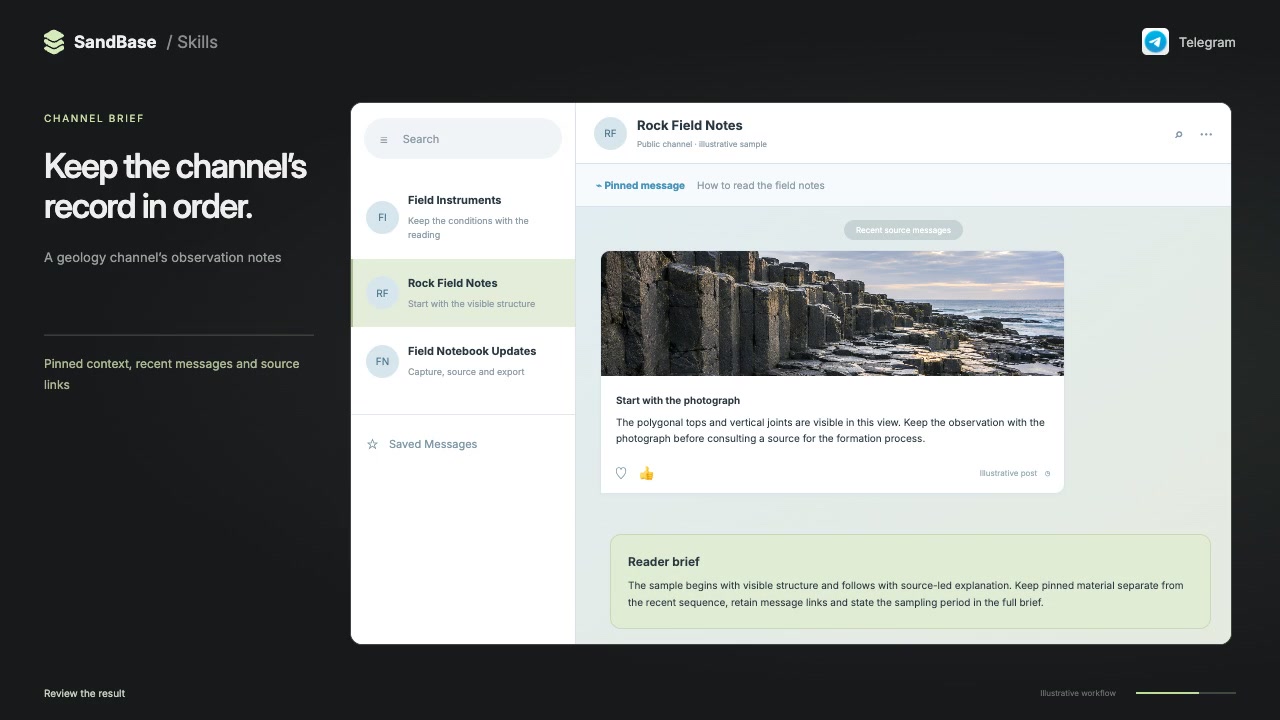
Review public Telegram channel samples and turn them into a source-linked channel brief.
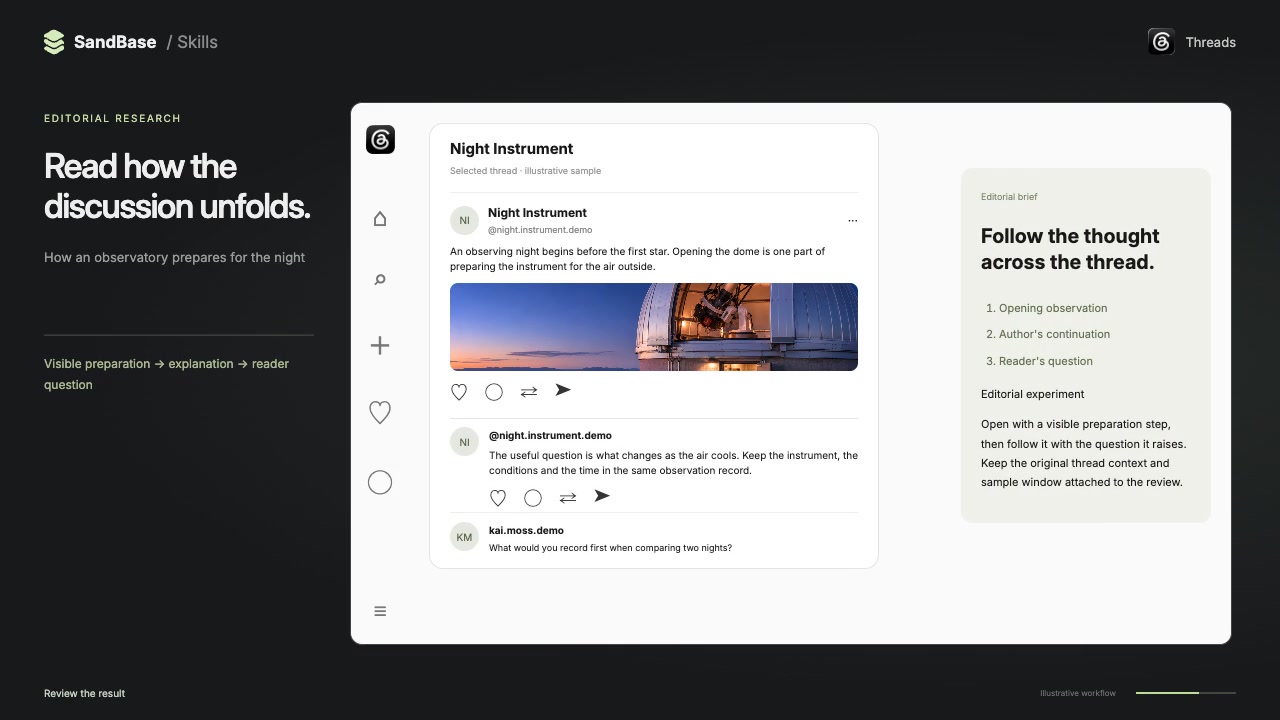
Review public Threads posts to identify editorial patterns and possible follow-up topics.
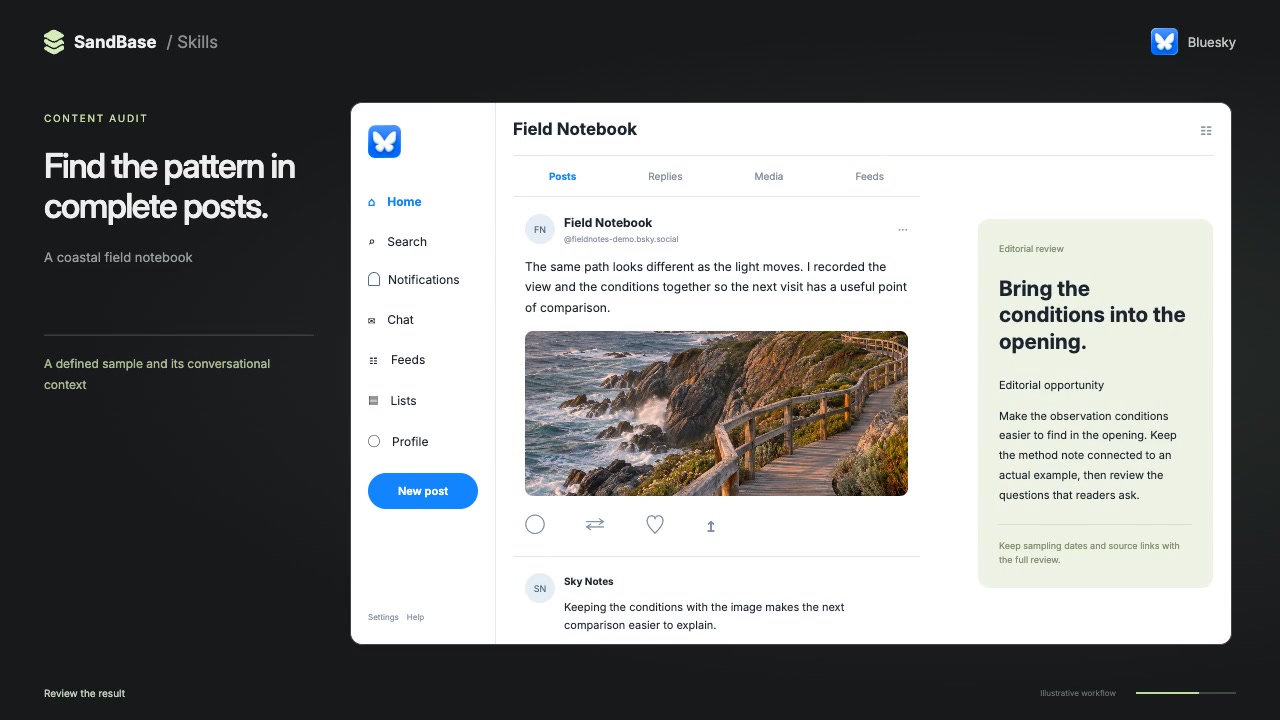
Audit a public Bluesky feed while separating owned posts, reposts and pinned history.
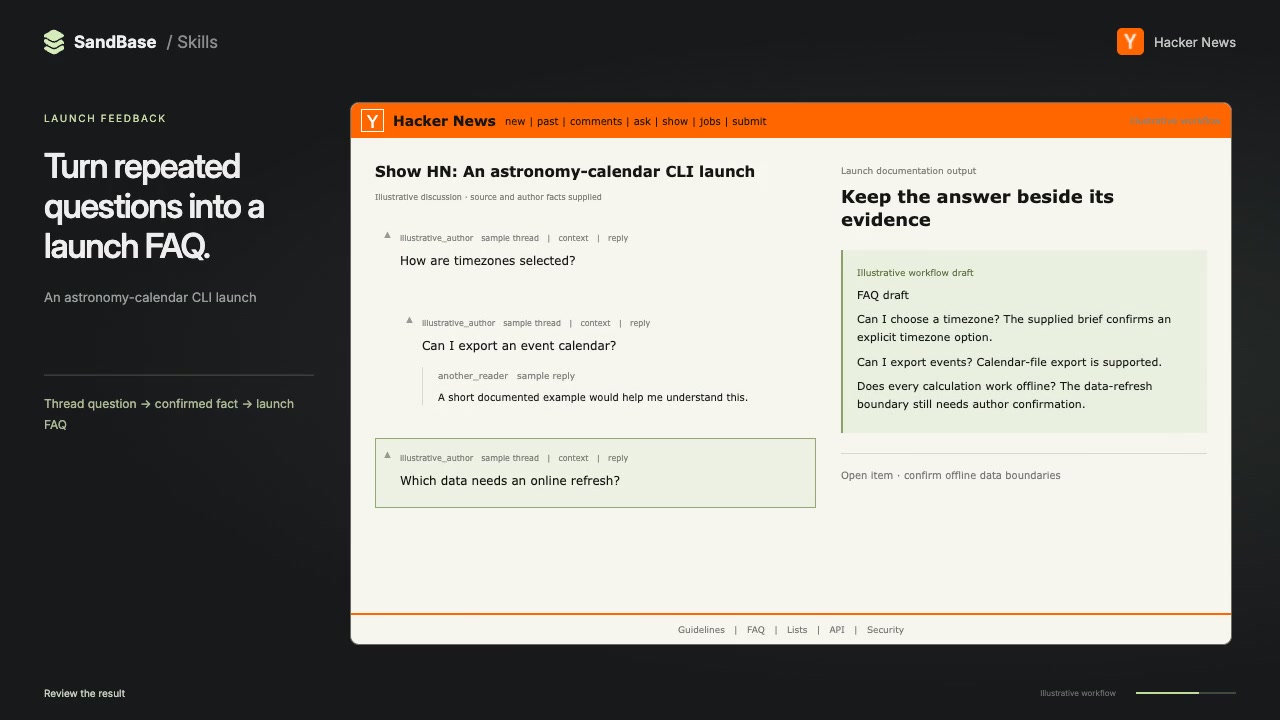
Research Hacker News launch discussions to find questions and useful product feedback.
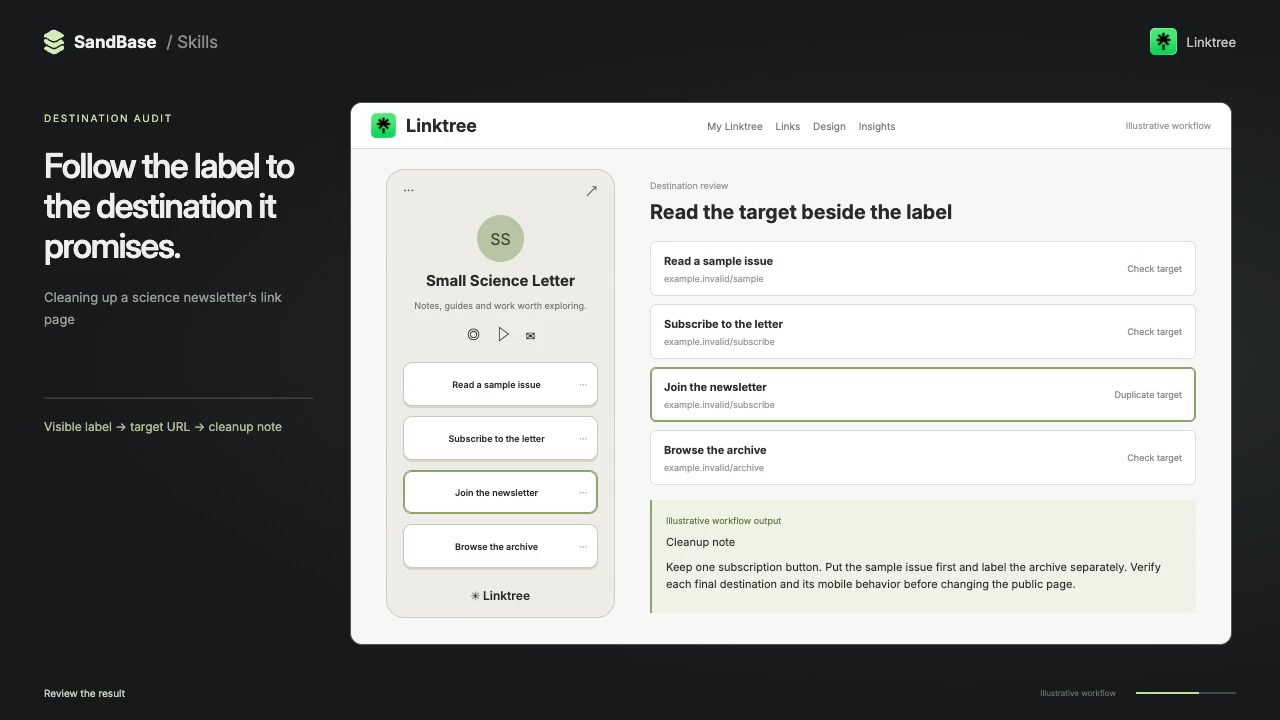
Audit a public Linktree page to understand its destinations and visitor journey.
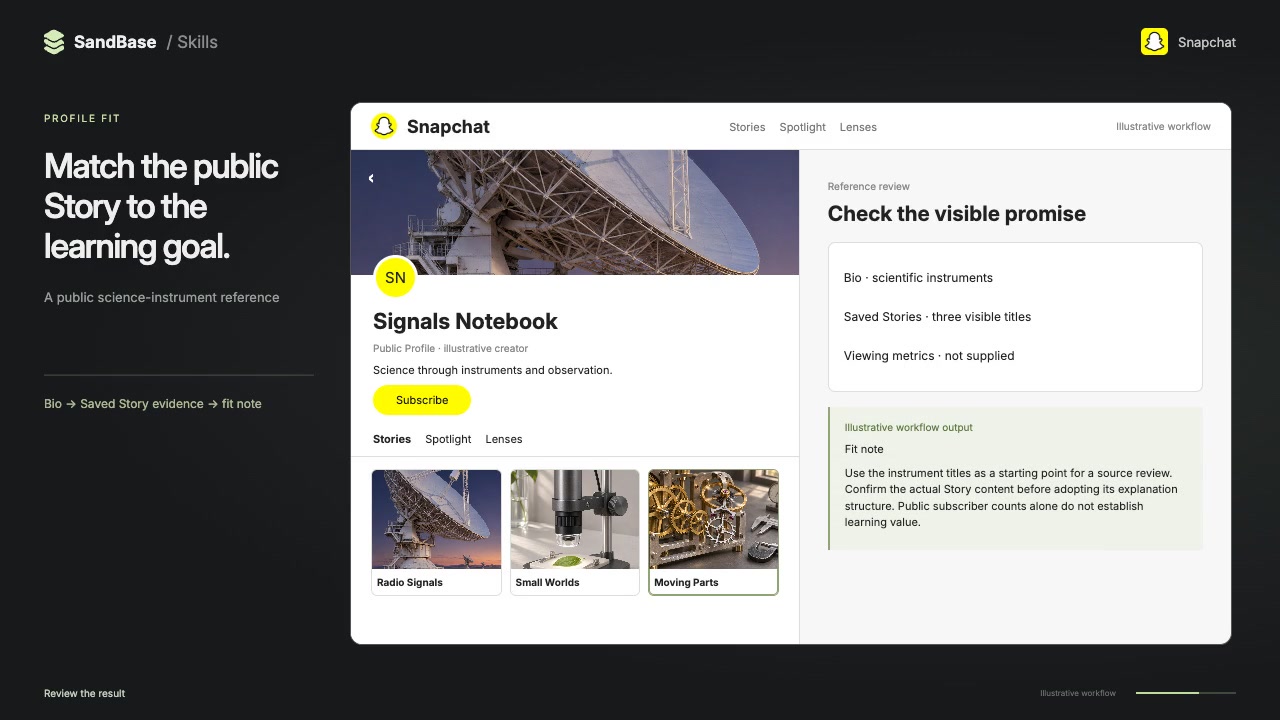
Check a public Snapchat profile for audience and content fit using available profile metadata.
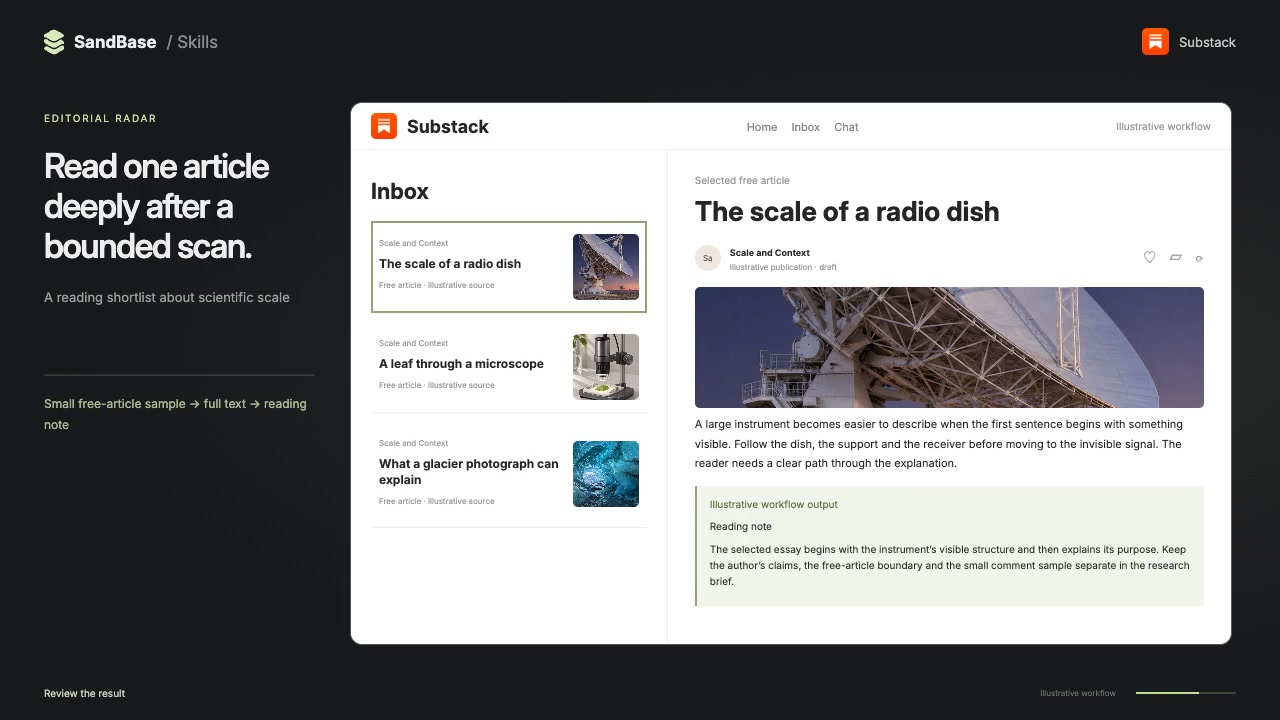
Explore Substack articles and discussion samples to plan an editorial reading radar.
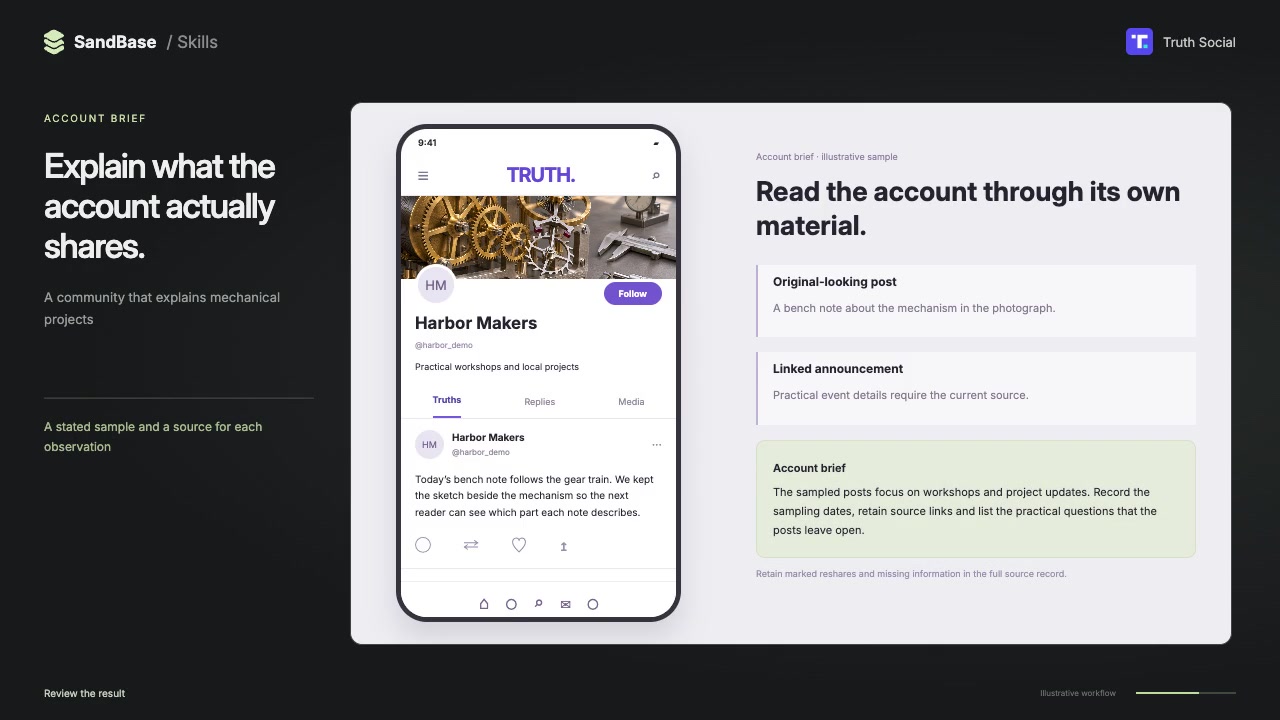
Summarize a public Truth Social account and distinguish original entries from marked reshares.
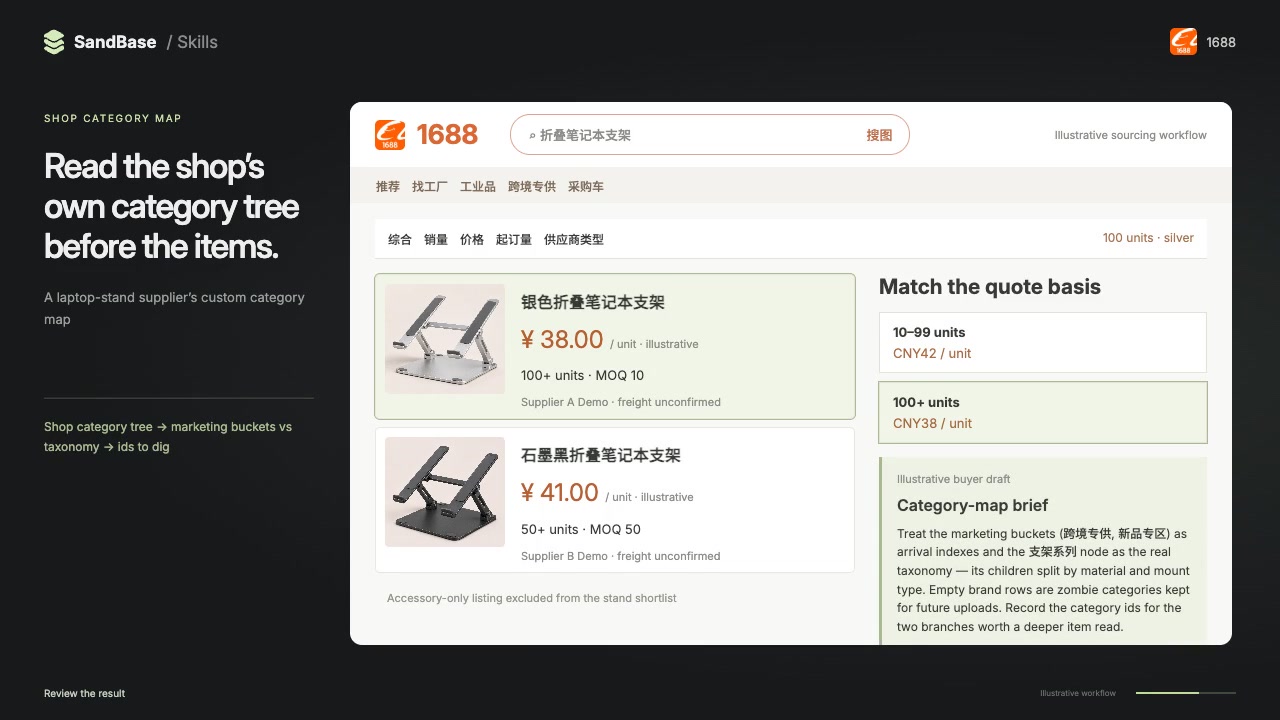
Map one 1688 shop's self-defined category tree through SandBase
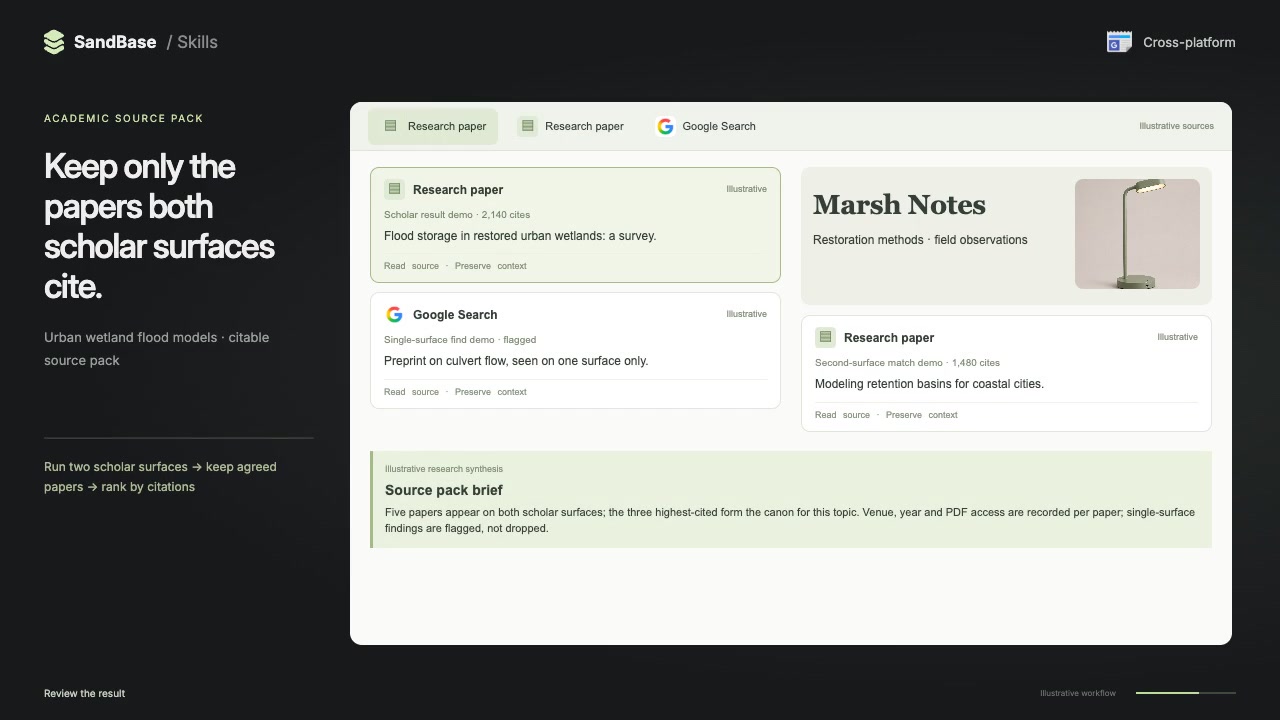
Assemble a citable academic source pack for a topic through SandBase
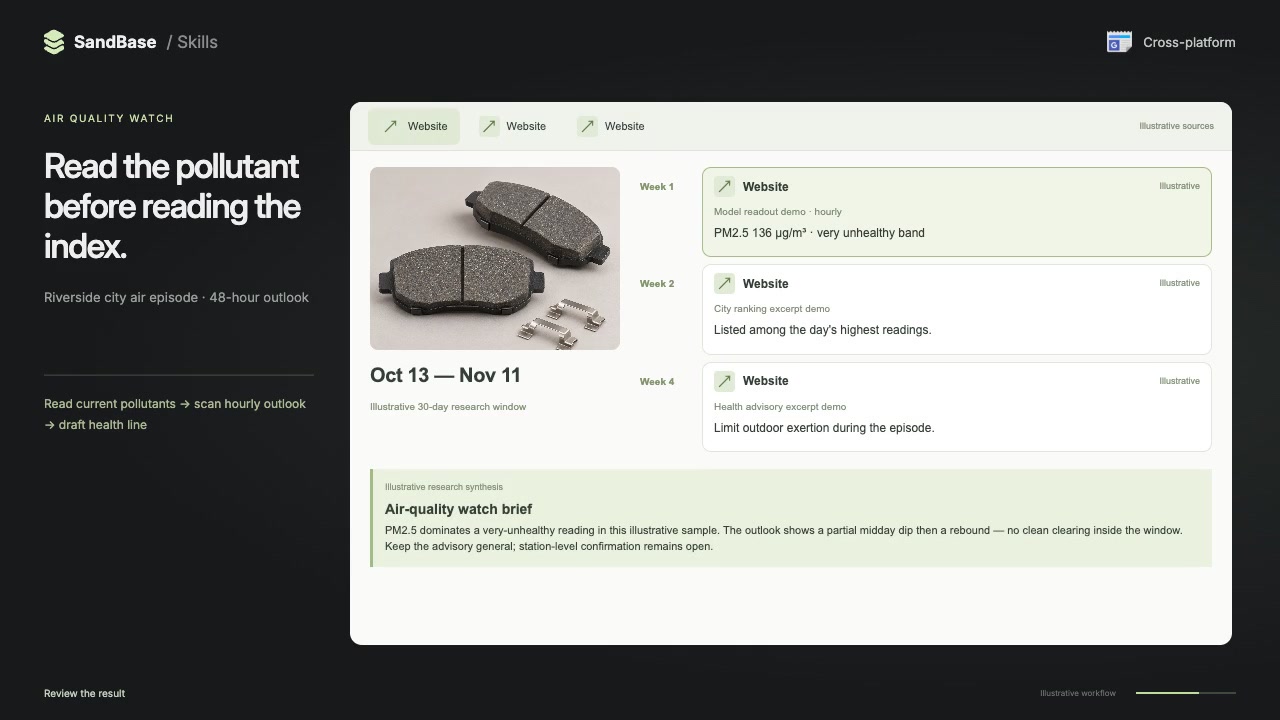
Air-quality watch brief for a city through SandBase
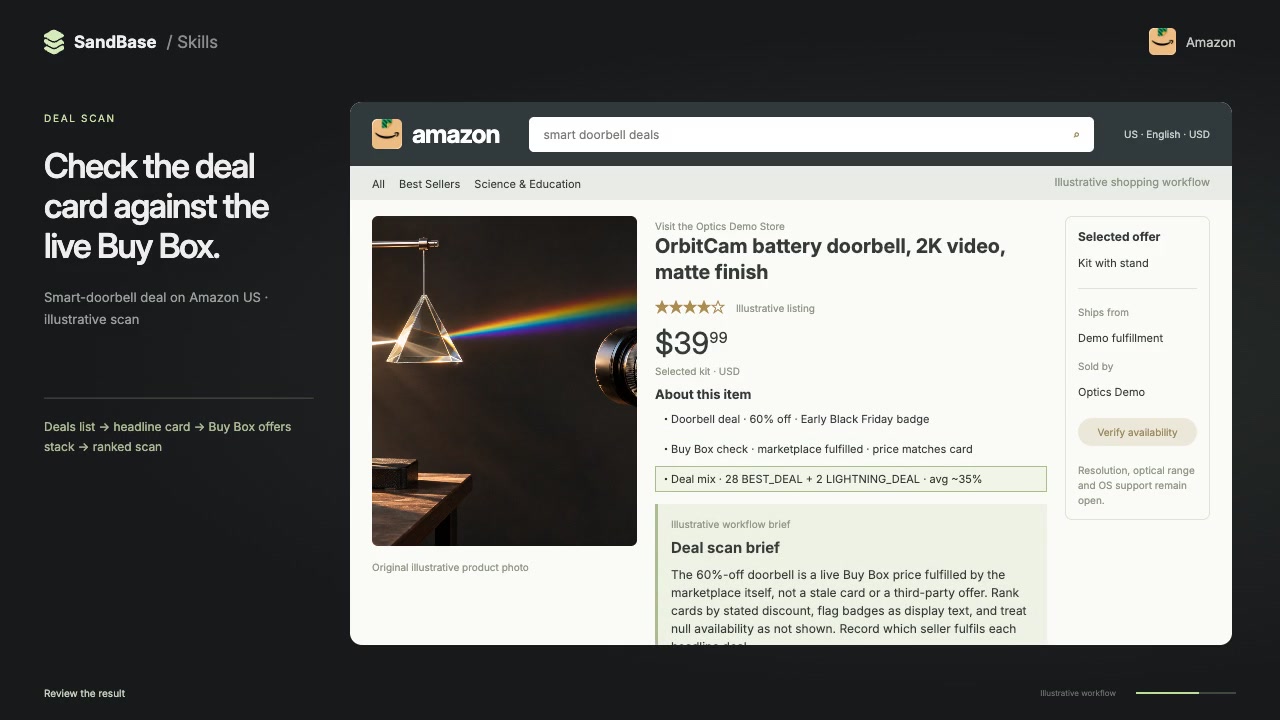
Scan one Amazon marketplace's live discount surfaces through SandBase
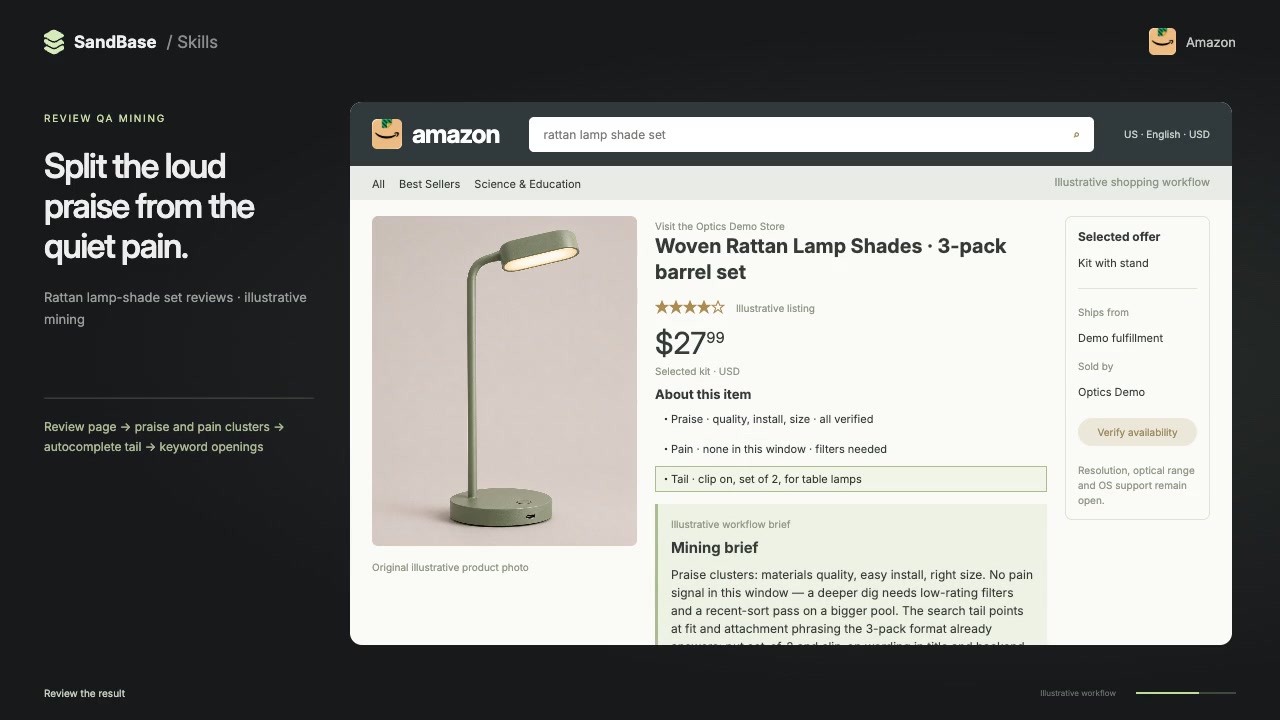
Mine the pain and praise inside Amazon reviews plus the search-autocomplete signal through SandBase
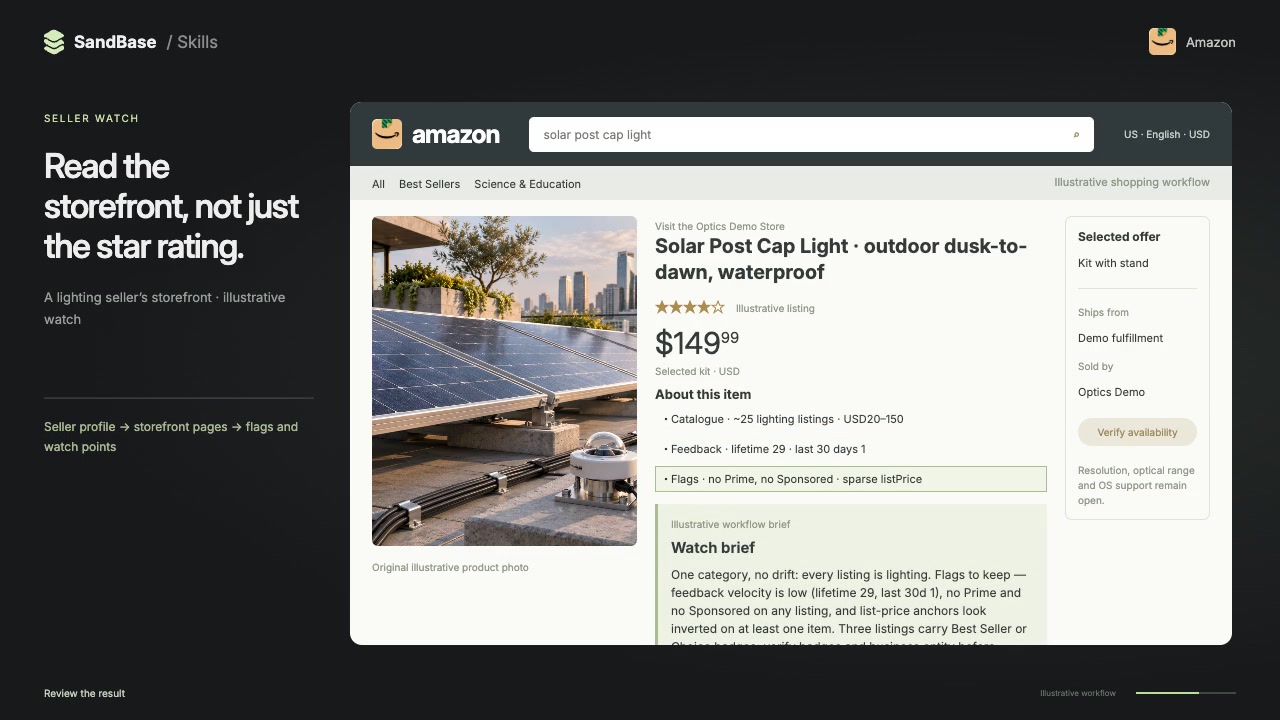
Watch one Amazon seller through SandBase
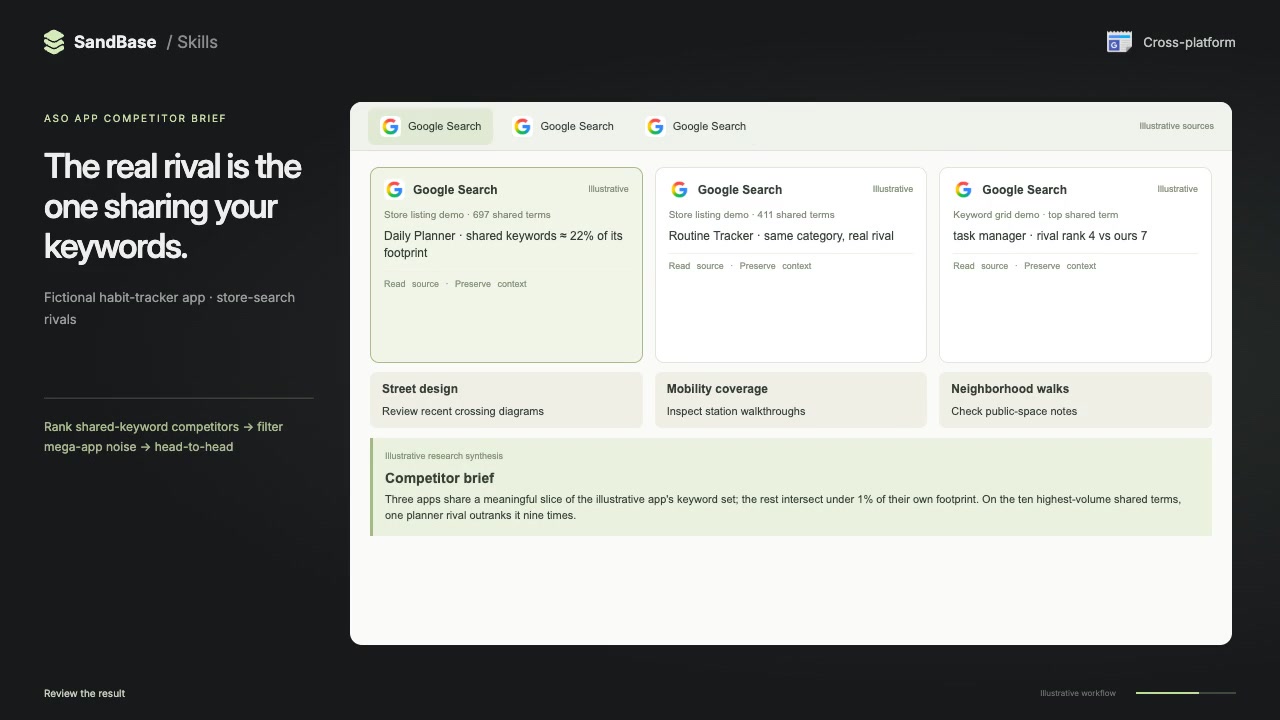
Map the App Store / Google Play apps that genuinely compete with one app through SandBase
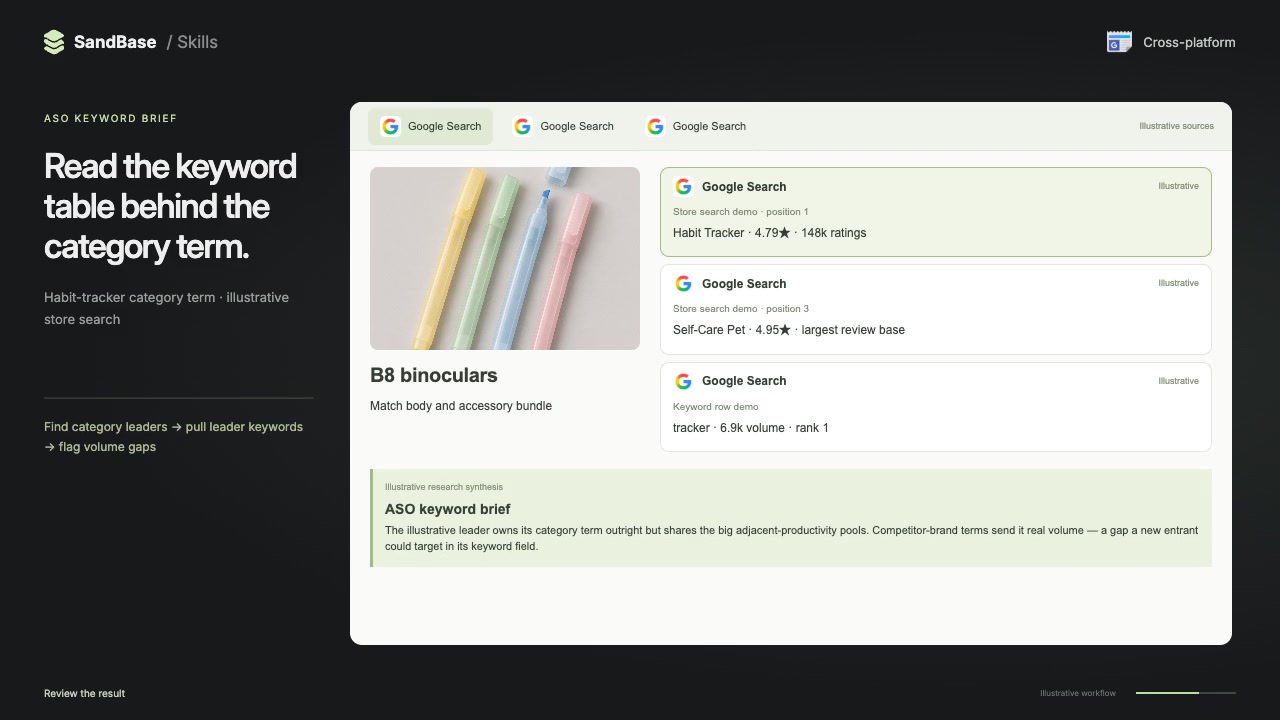
Build an App Store Optimization keyword brief through SandBase
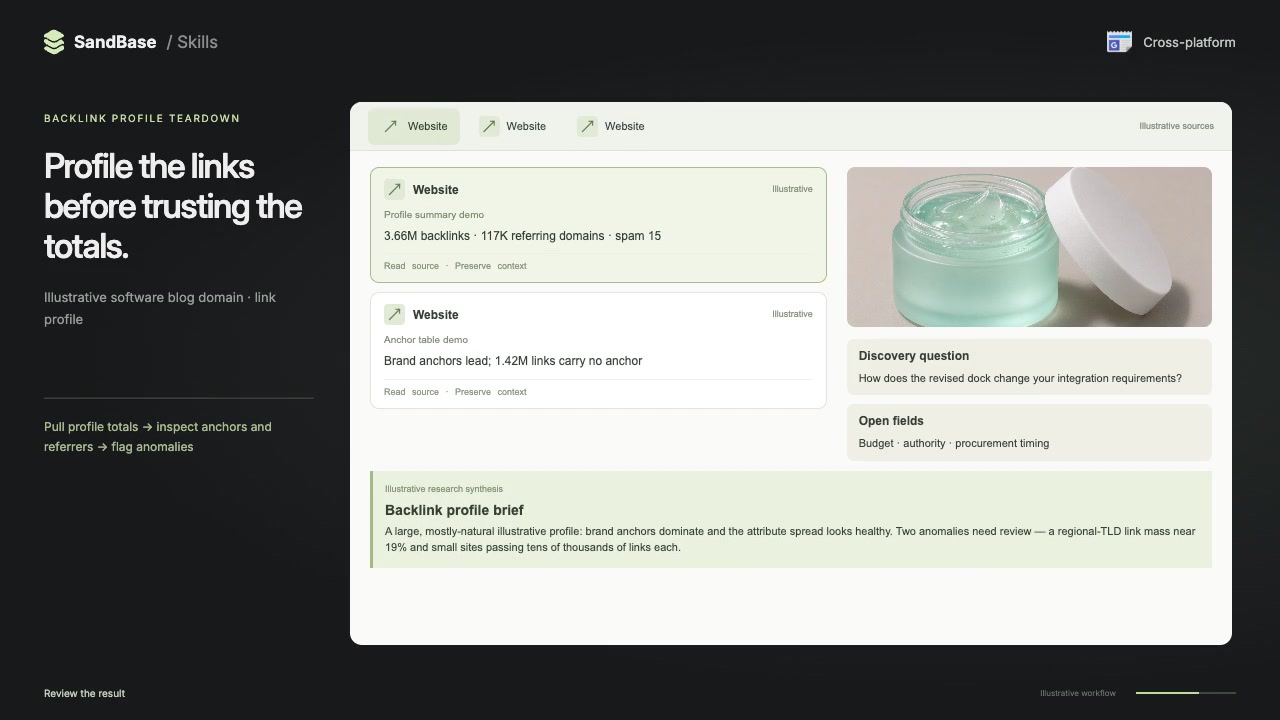
Tear down a domain's backlink profile through SandBase
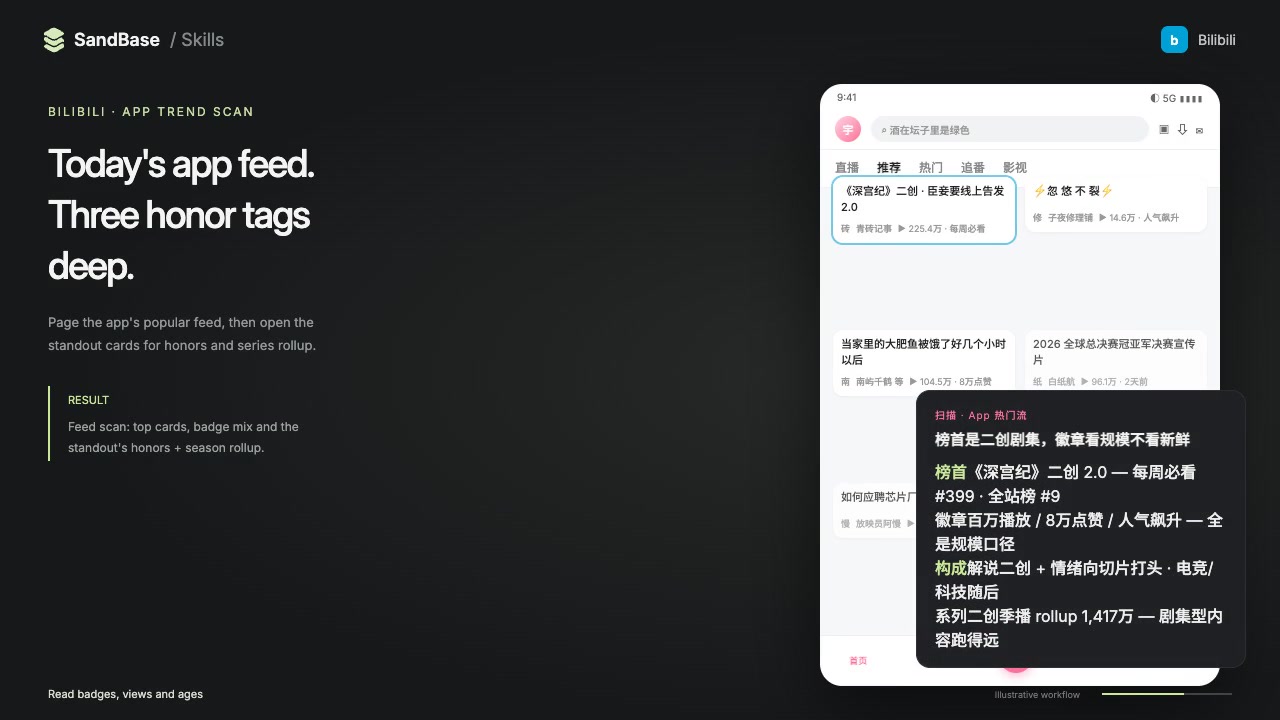
Scan what the Bilibili app's popular feed is serving right now through SandBase
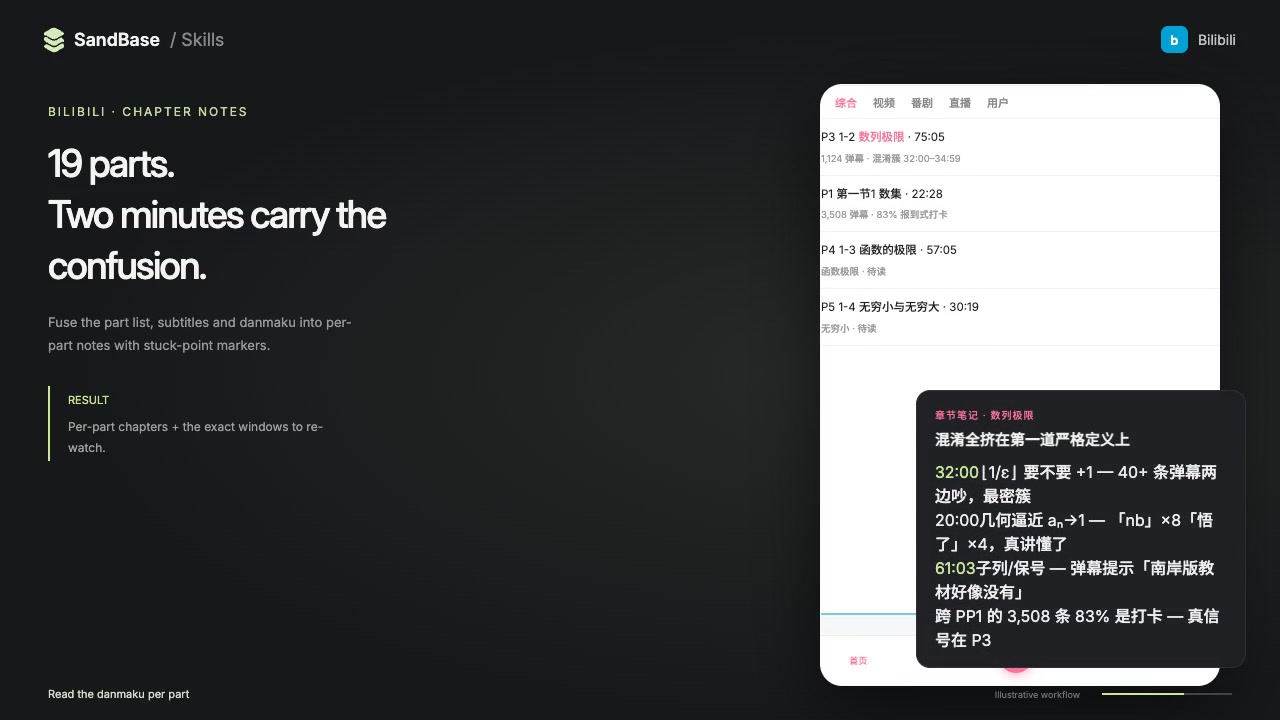
Build study notes for a multi-part Bilibili lecture or long video through SandBase by fusing three signals
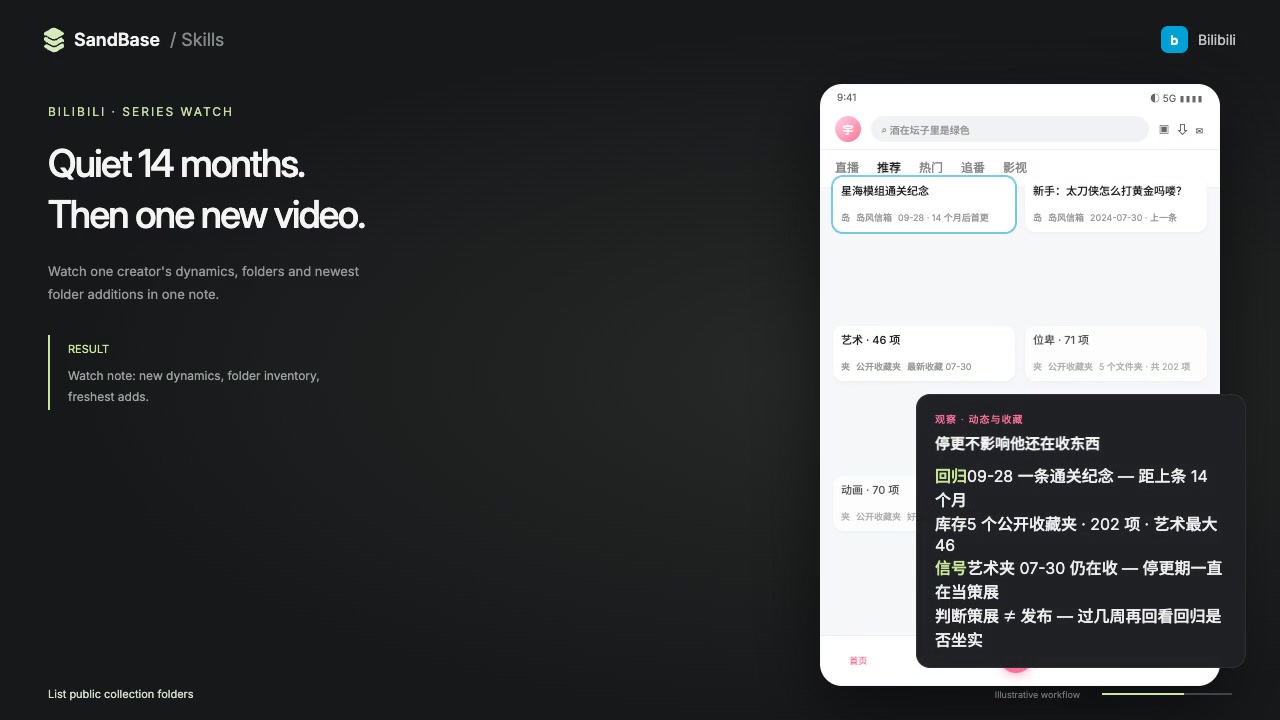
Watch what a Bilibili UP主 publishes and curates
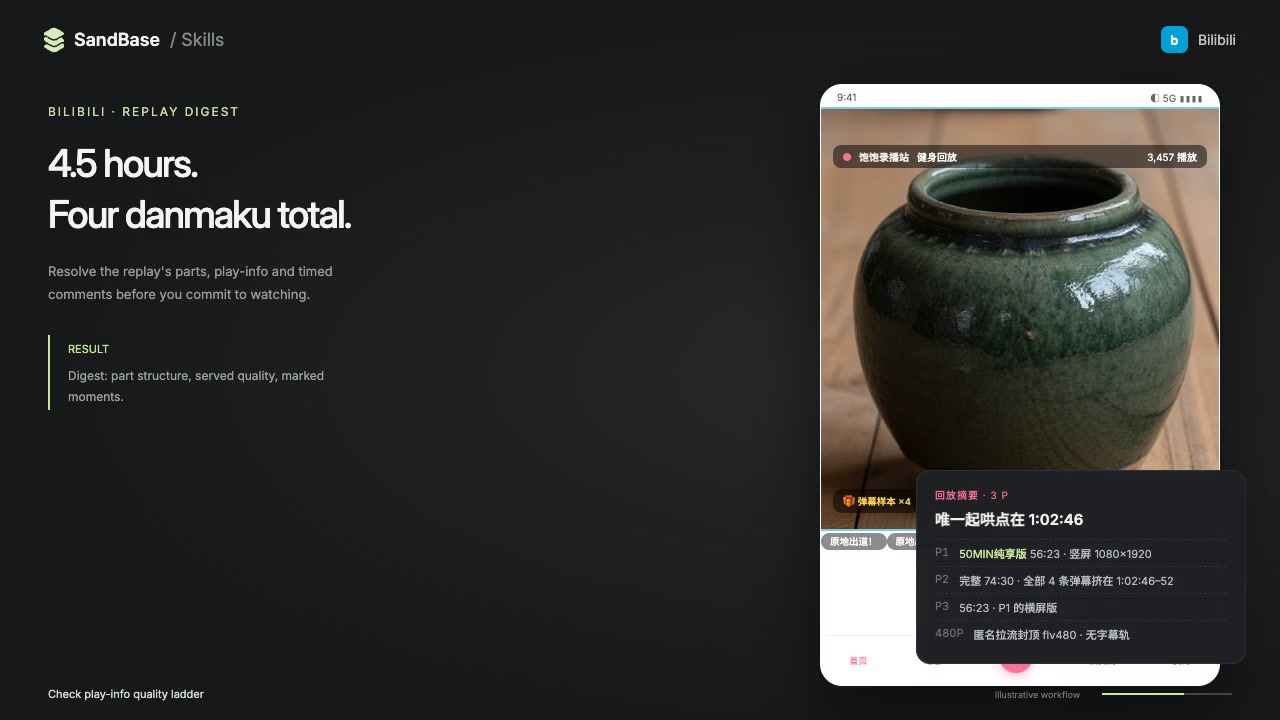
Digest a Bilibili live-replay upload (直播回放录播) through SandBase
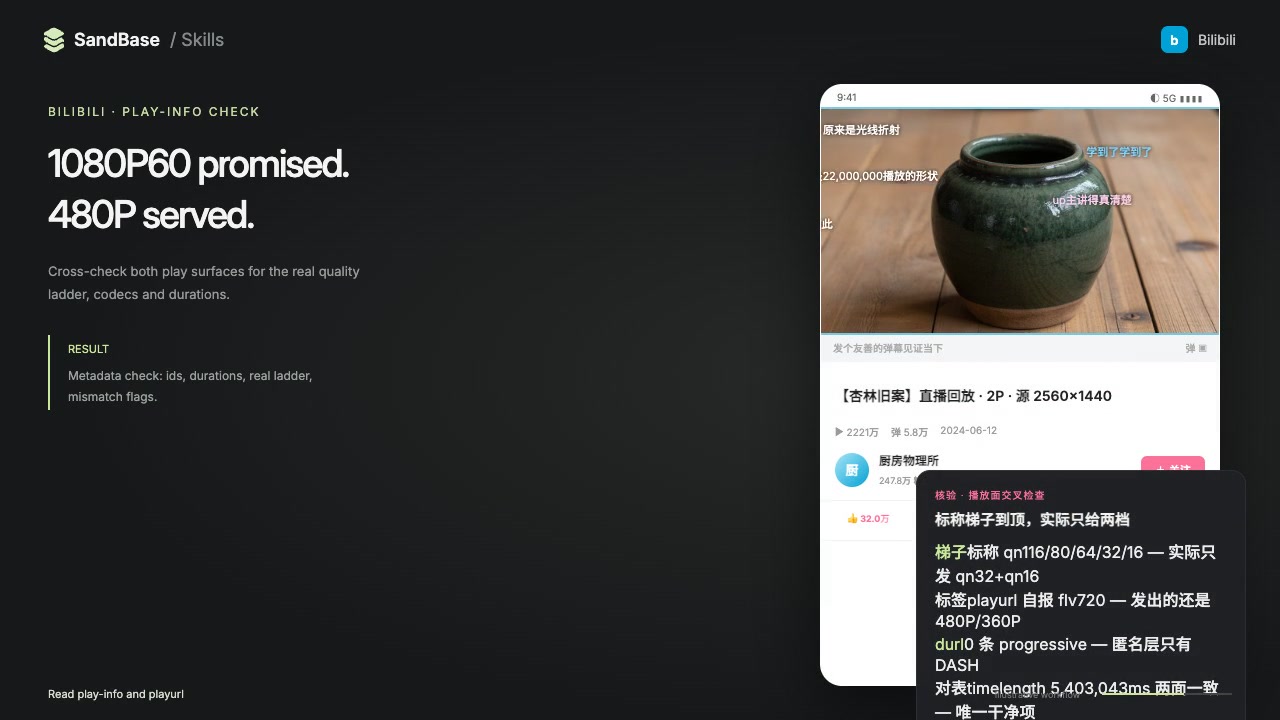
Verify a Bilibili video's technical playback facts through SandBase
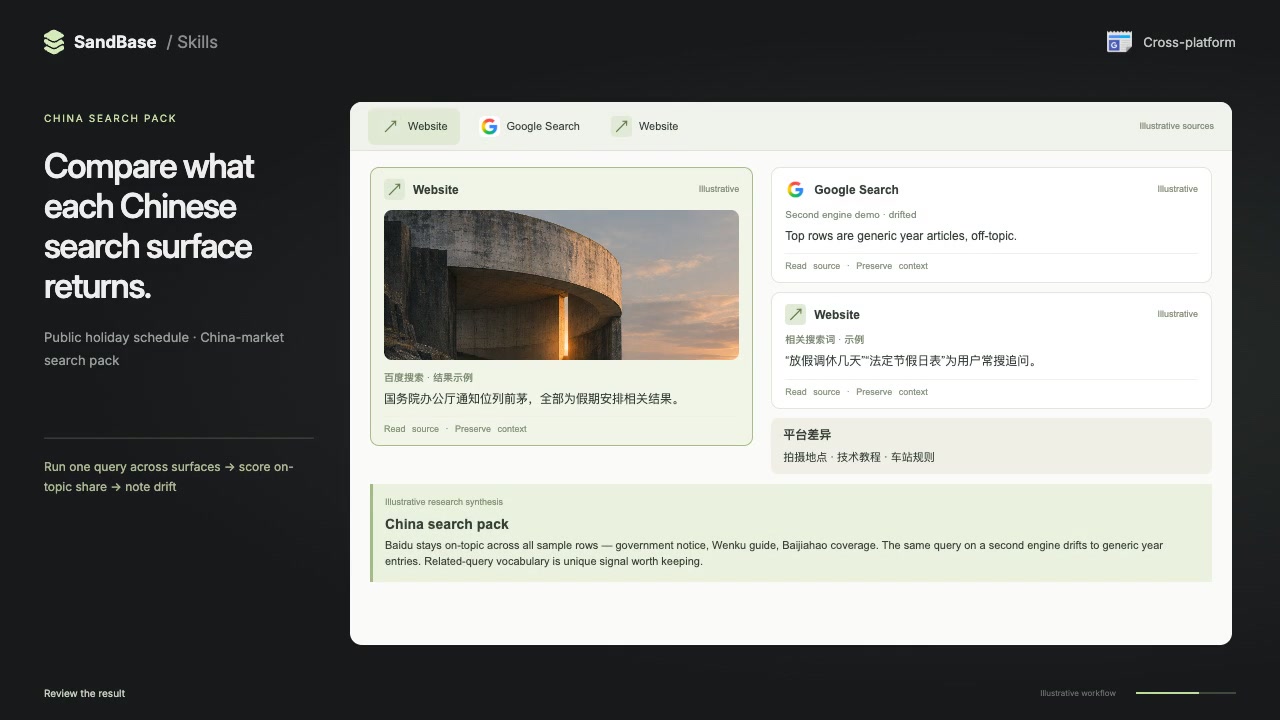
Assemble a Chinese-web search pack for a query through SandBase
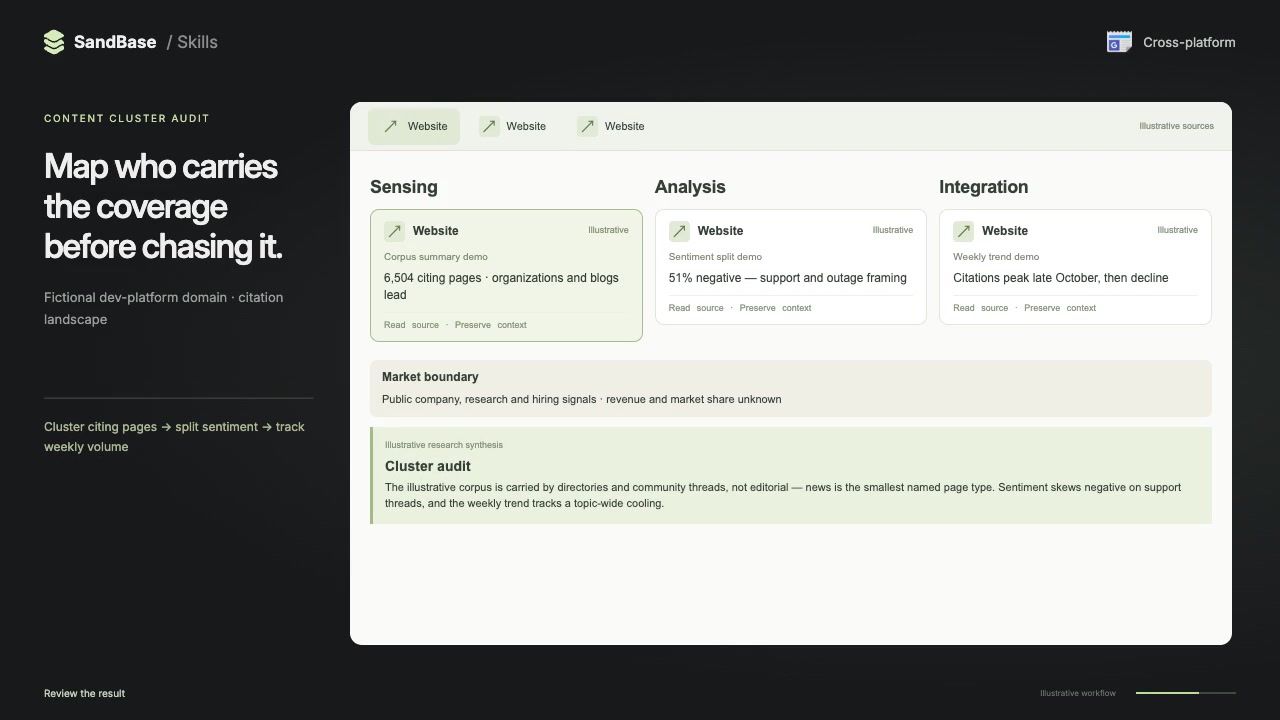
Audit how web content about one domain or keyword clusters
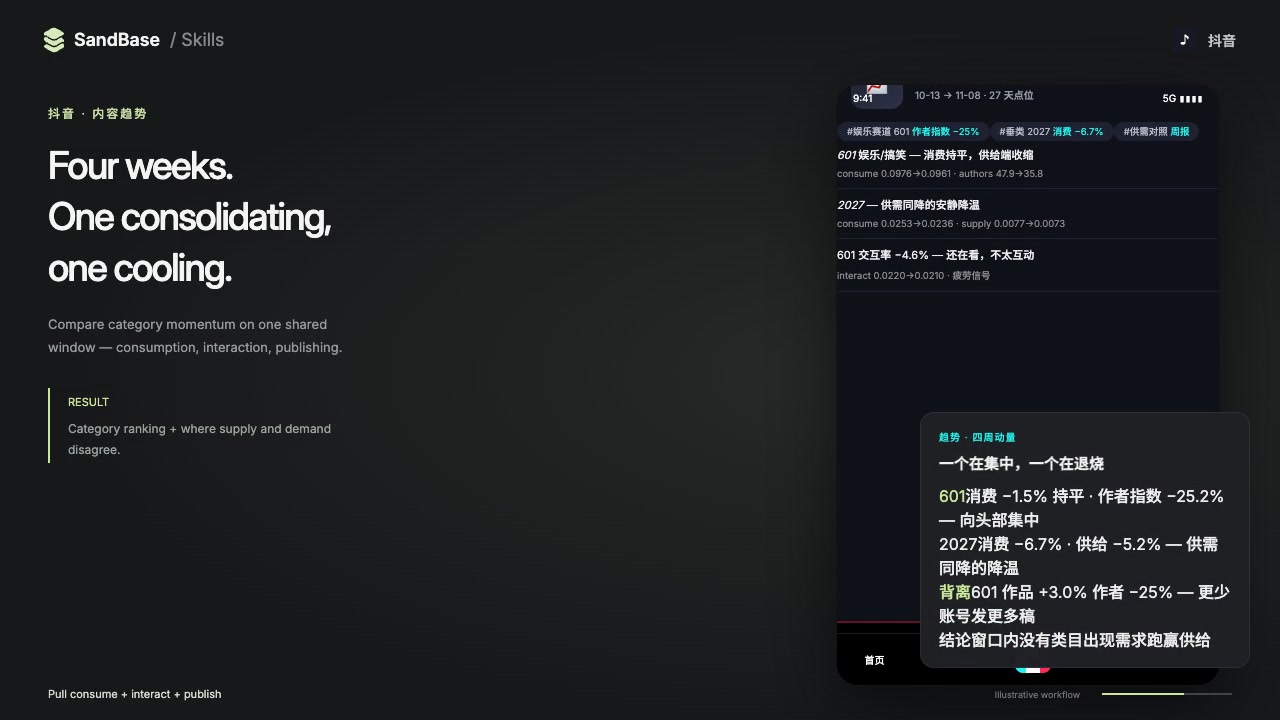
Compare how Douyin content categories are moving
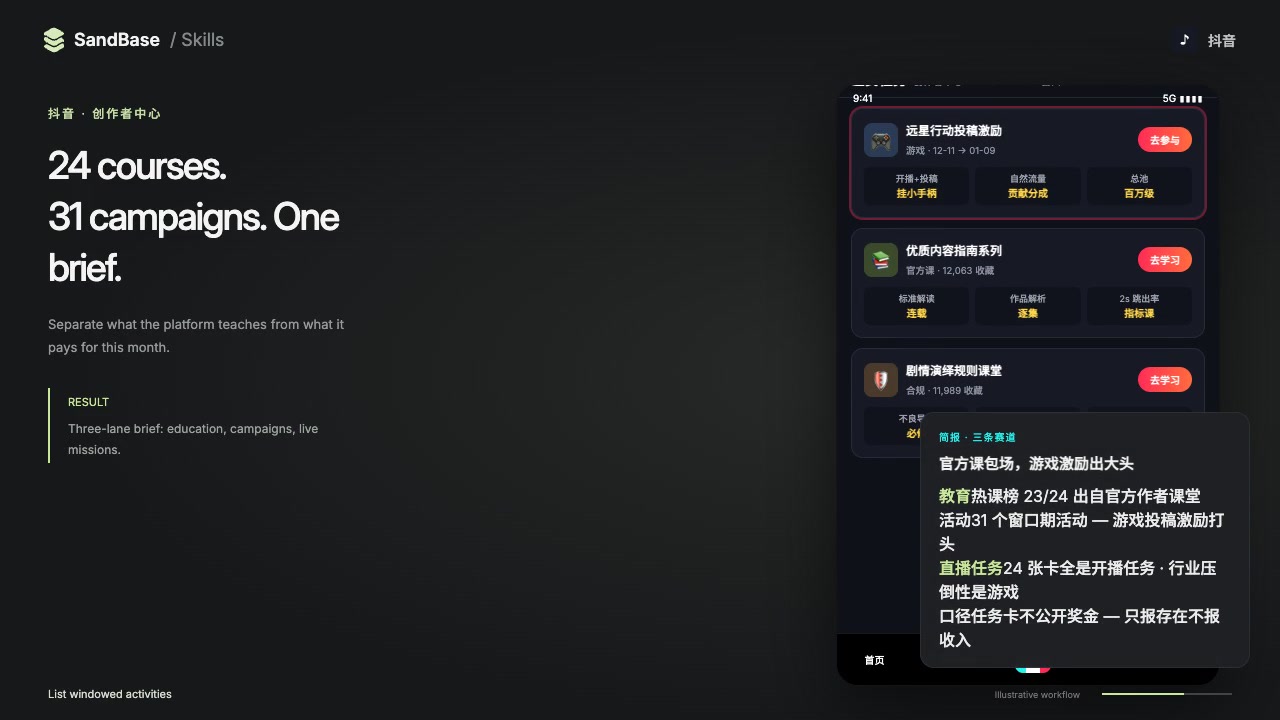
Scan the Douyin creator centre (创作者中心) for what the platform is teaching and incentivising right now through SandBase
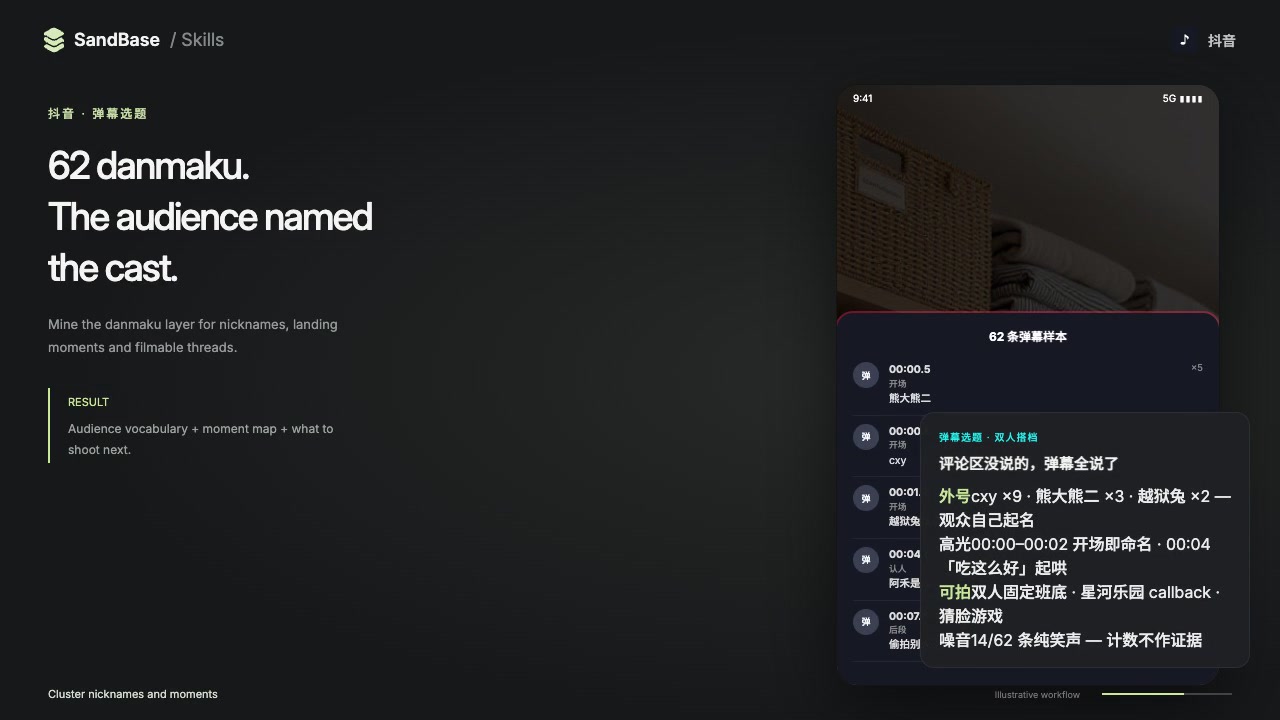
Mine the danmaku (弹幕) layer of a Douyin video through SandBase for the nicknames viewers invent, the moments they react to, and the filmable topics hiding in…
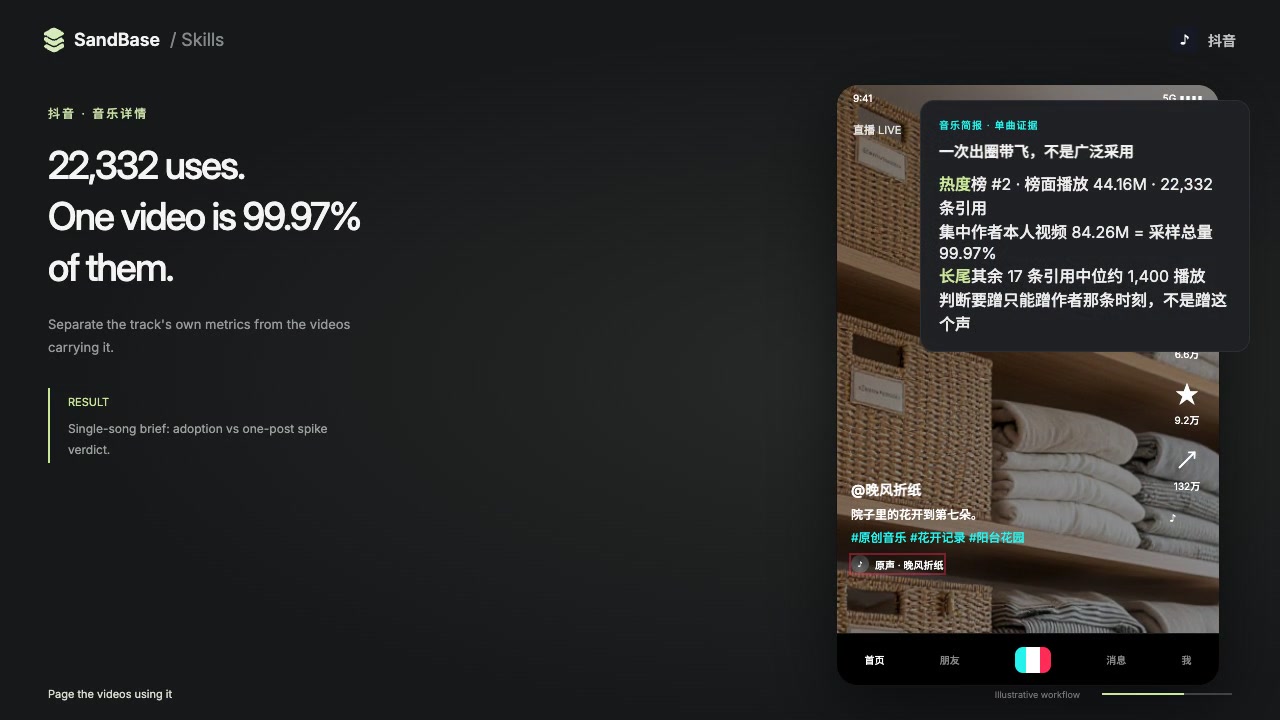
Build a single-song evidence brief for one Douyin music track through SandBase
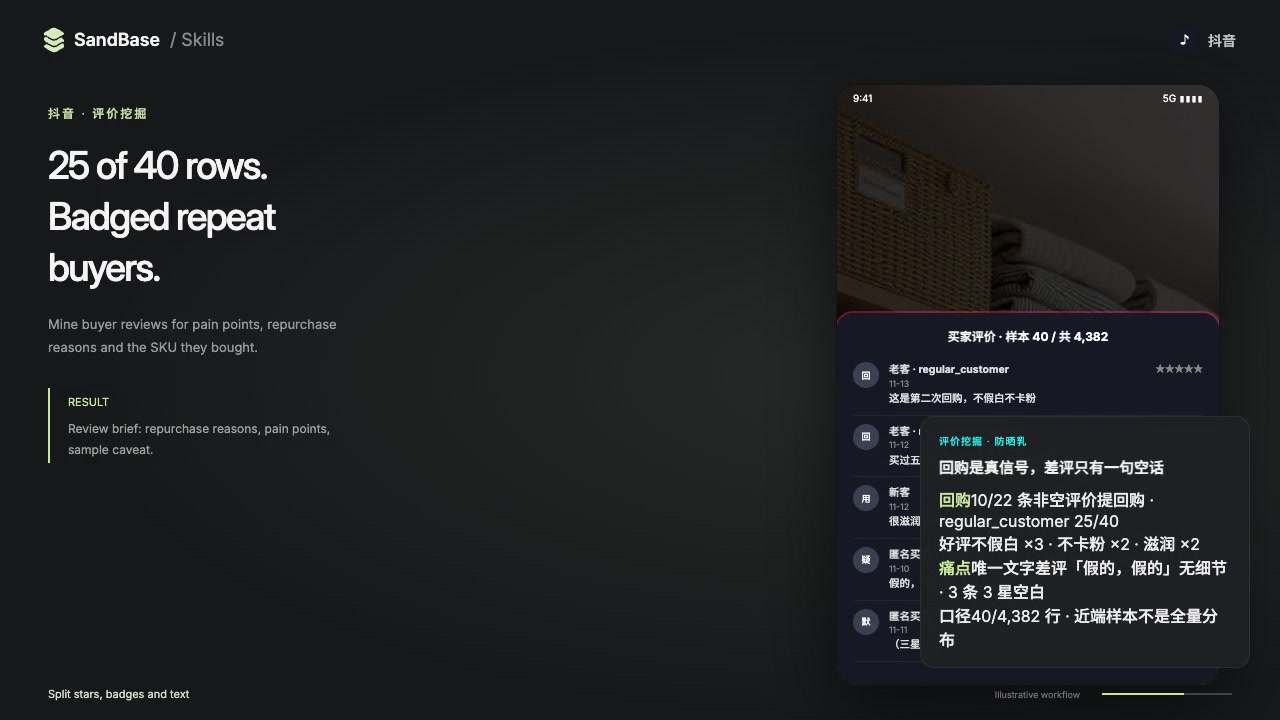
Mine a Douyin shop product's buyer reviews through SandBase for pain points and repurchase reasons
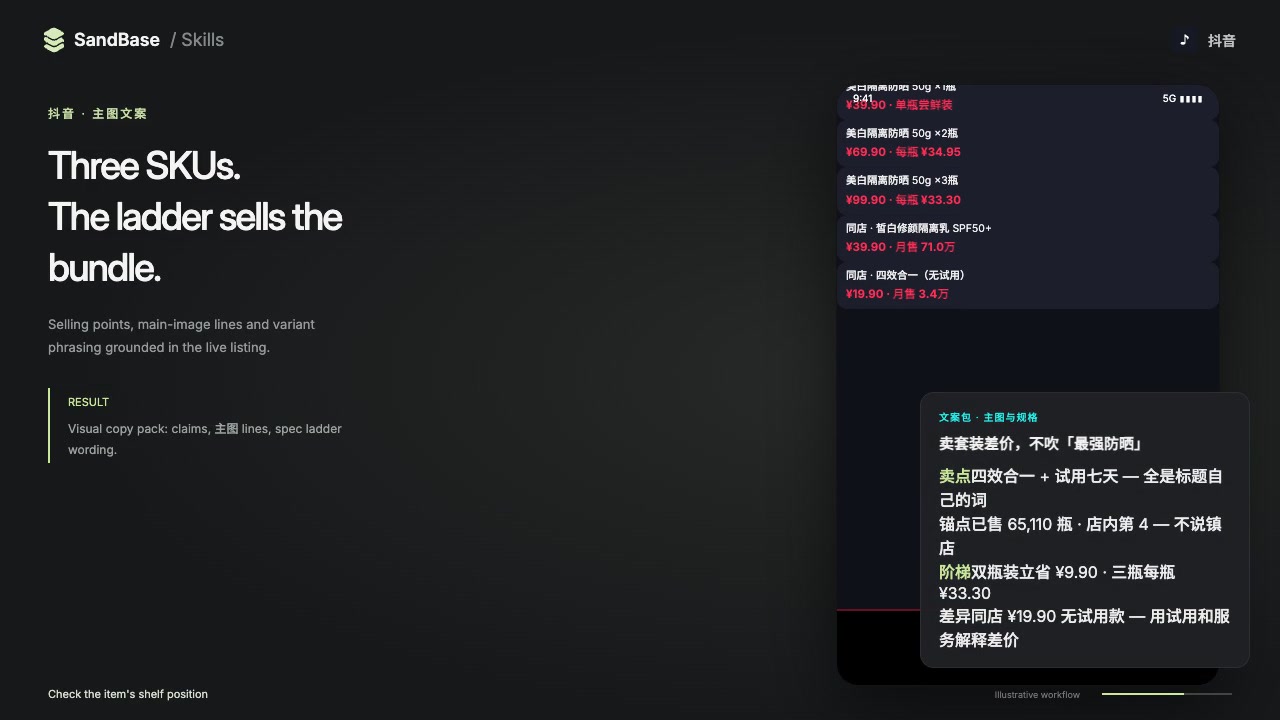
Build a visual copy pack for a Douyin shop product through SandBase
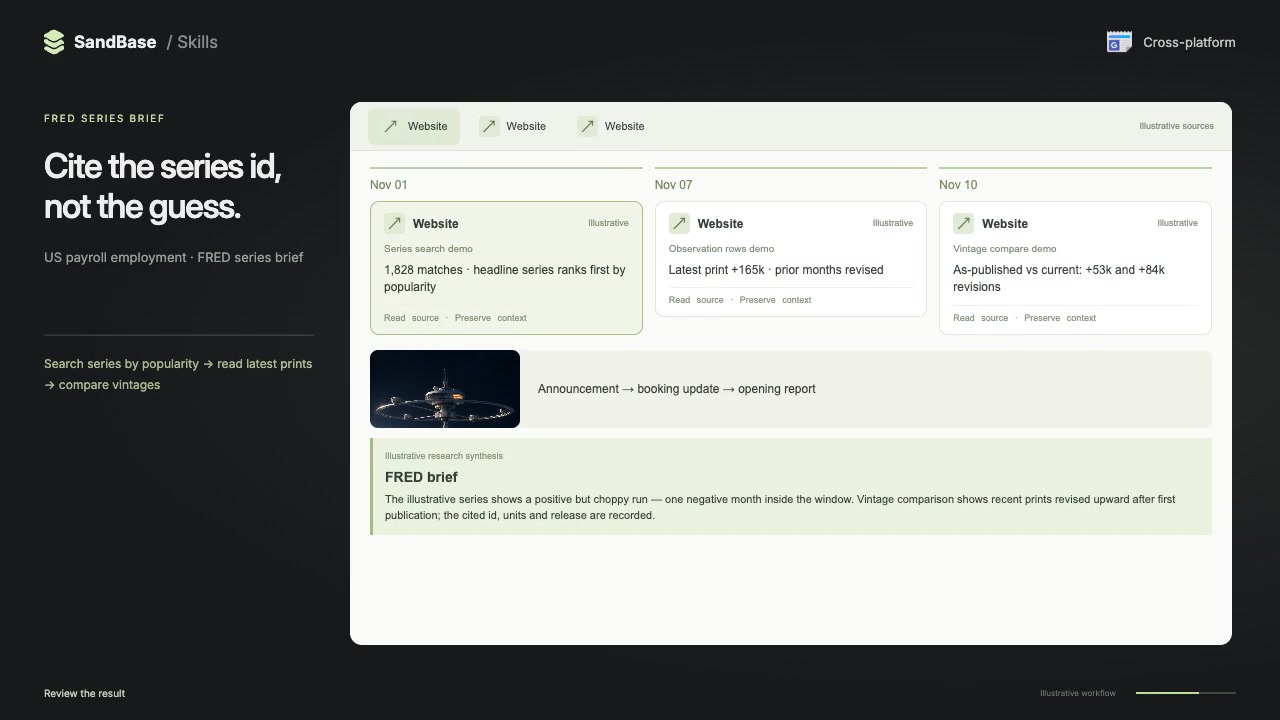
Find the right FRED series for an economic topic through SandBase FRED series search, then read the latest observations, month-over-month changes, release…
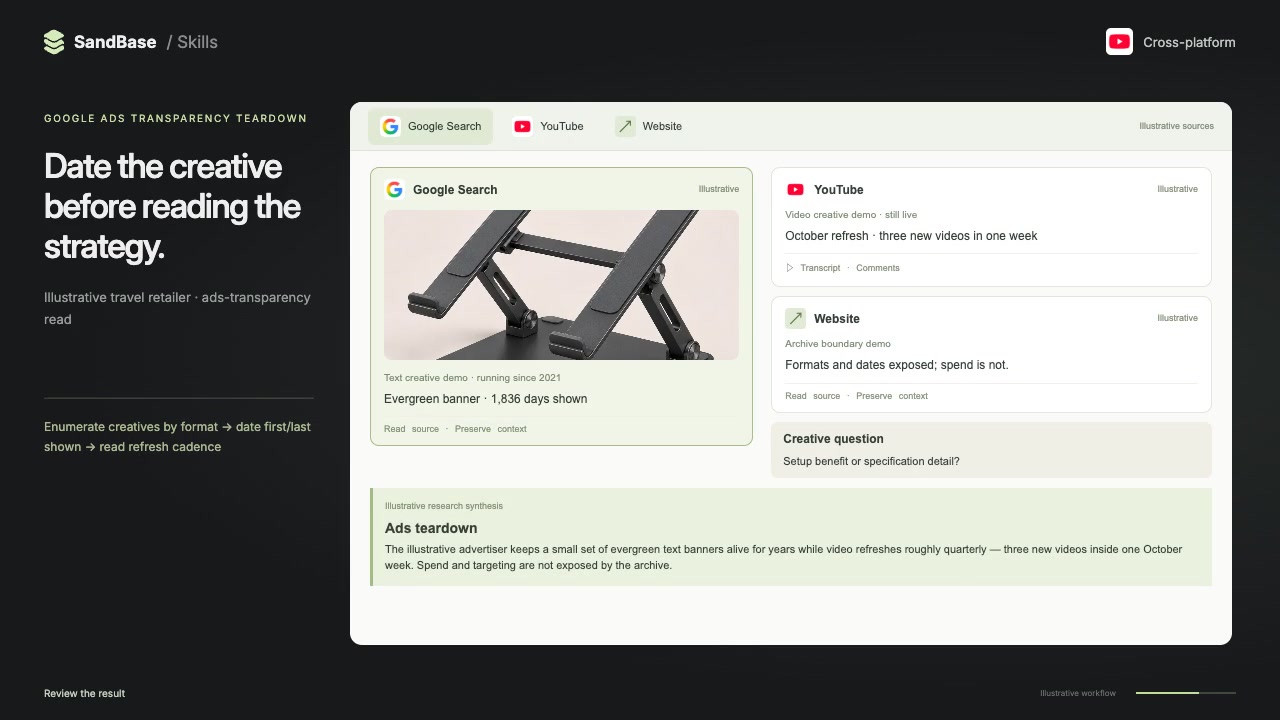
Teardown of one advertiser's live Google ads through SandBase's Ads Transparency Center read
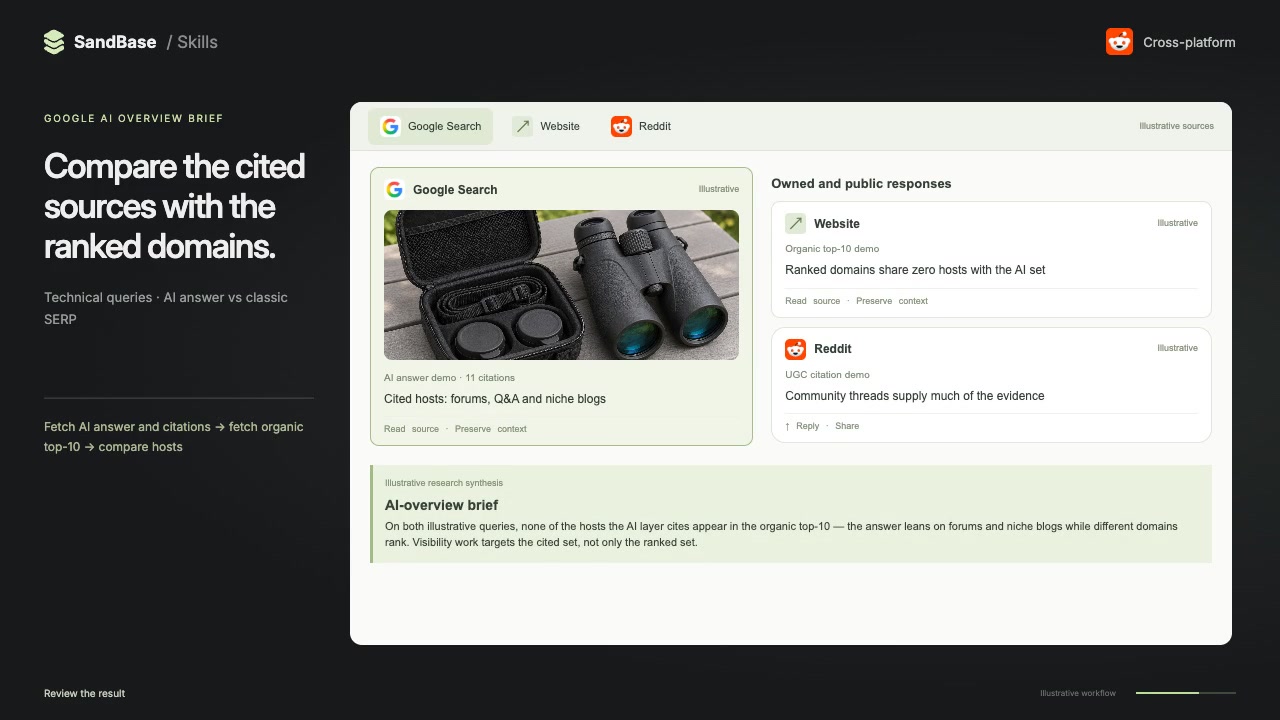
Compare how a query is presented inside Google's AI surfaces versus the classic SERP through SandBase
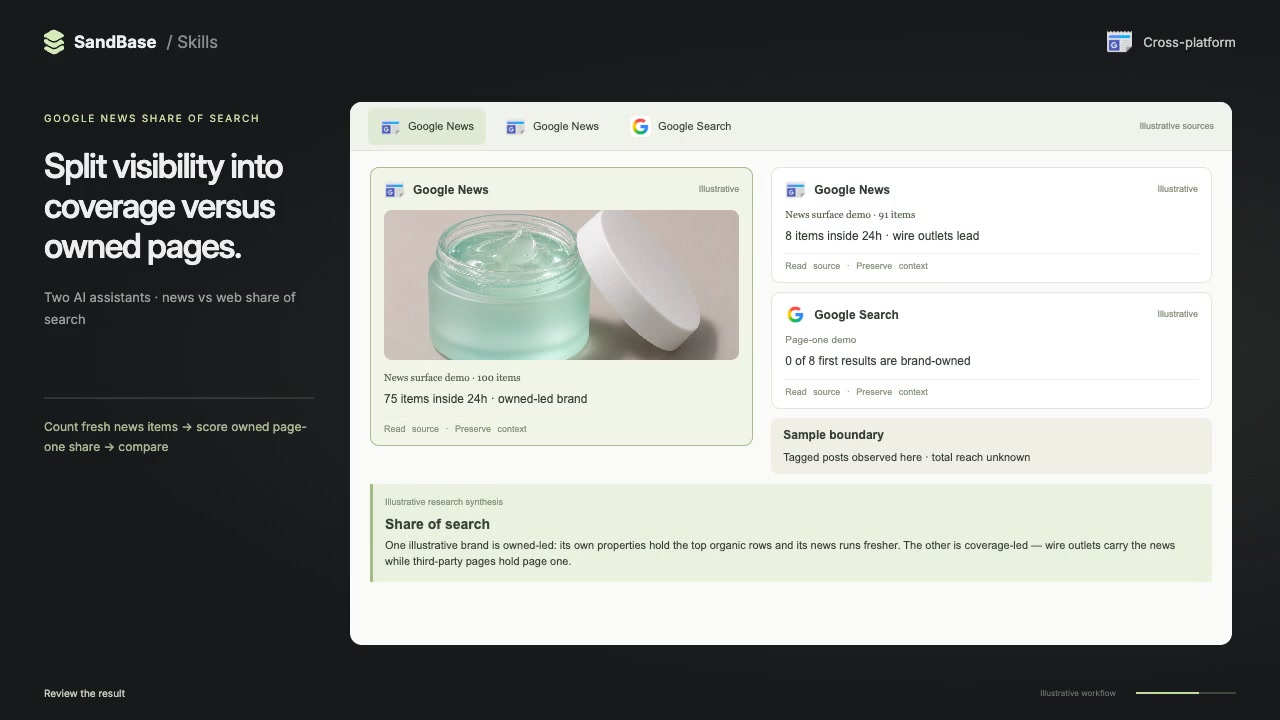
Measure how a brand's Google visibility splits between news and web search through SandBase
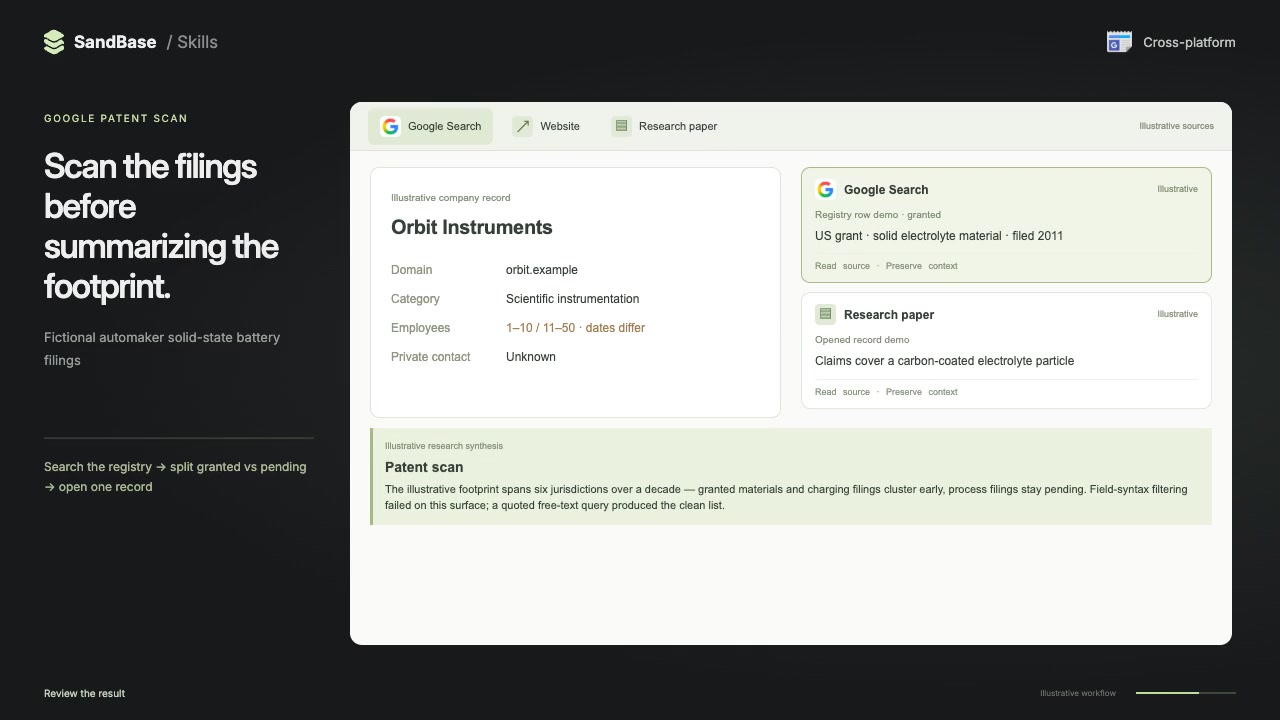
Scan a company's or technology's patent footprint through SandBase Google Patents
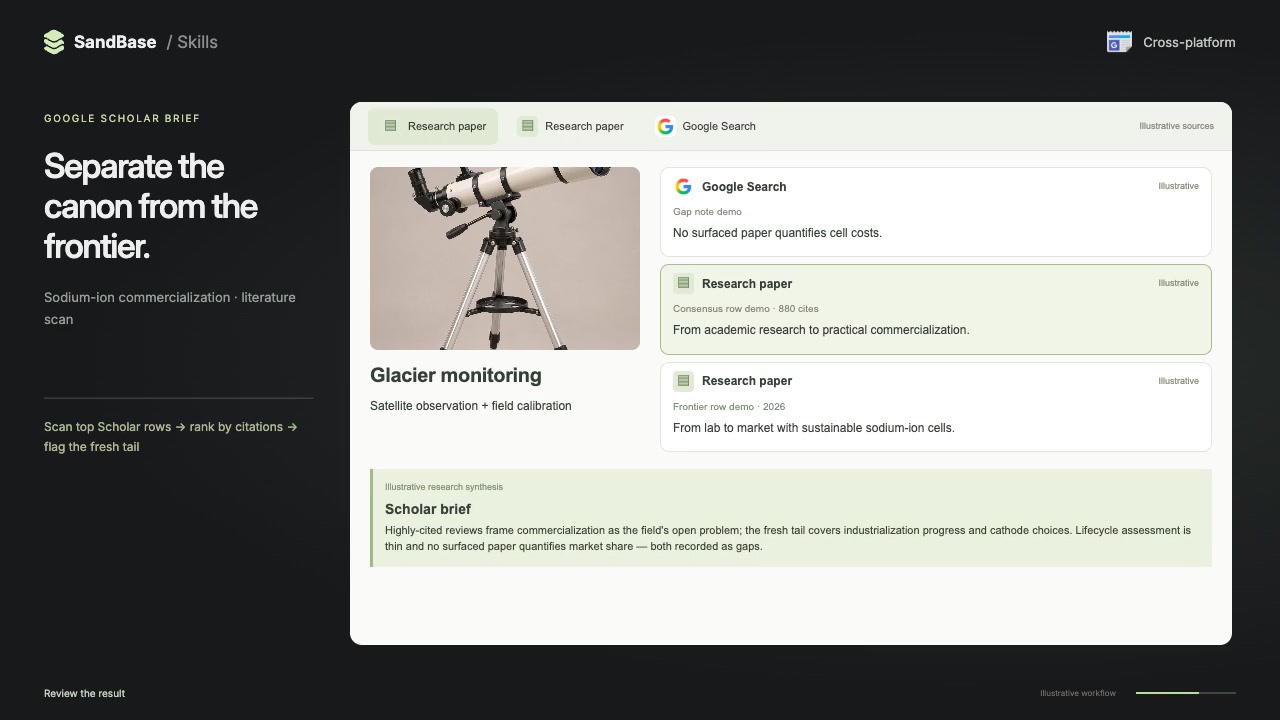
Fast literature scan of a topic through SandBase Google Scholar
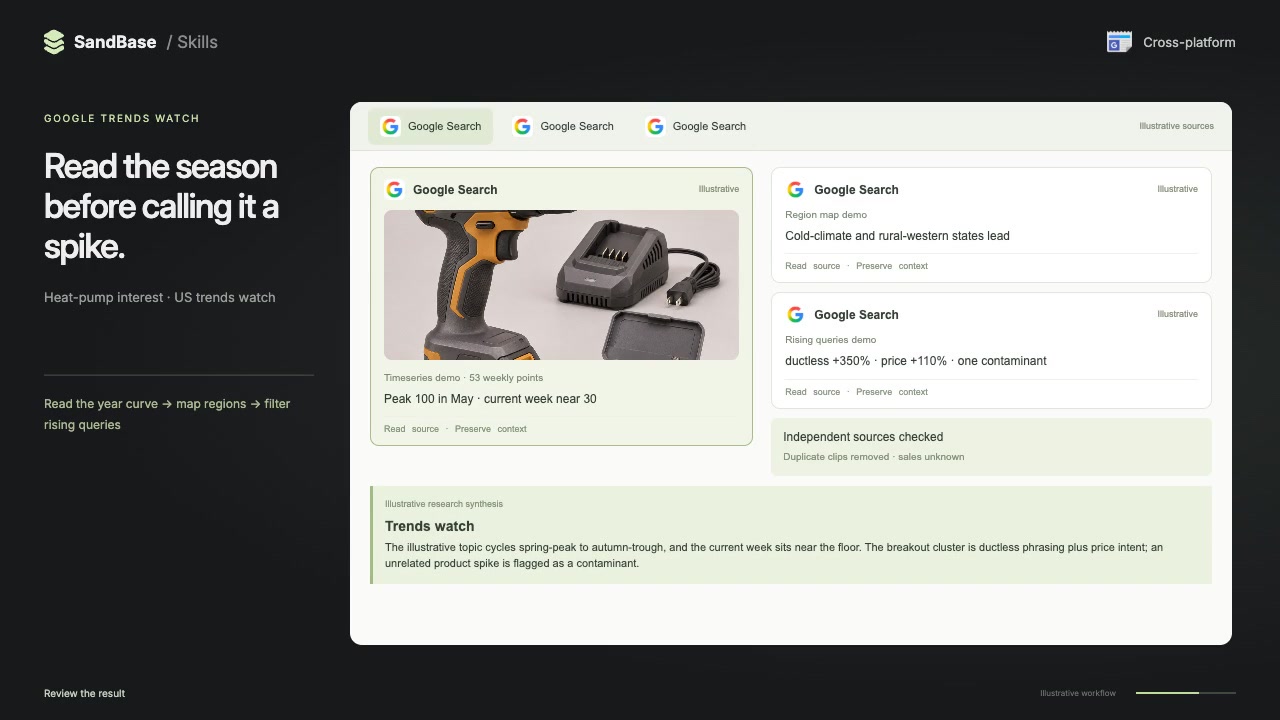
Read Google Trends for a topic through SandBase
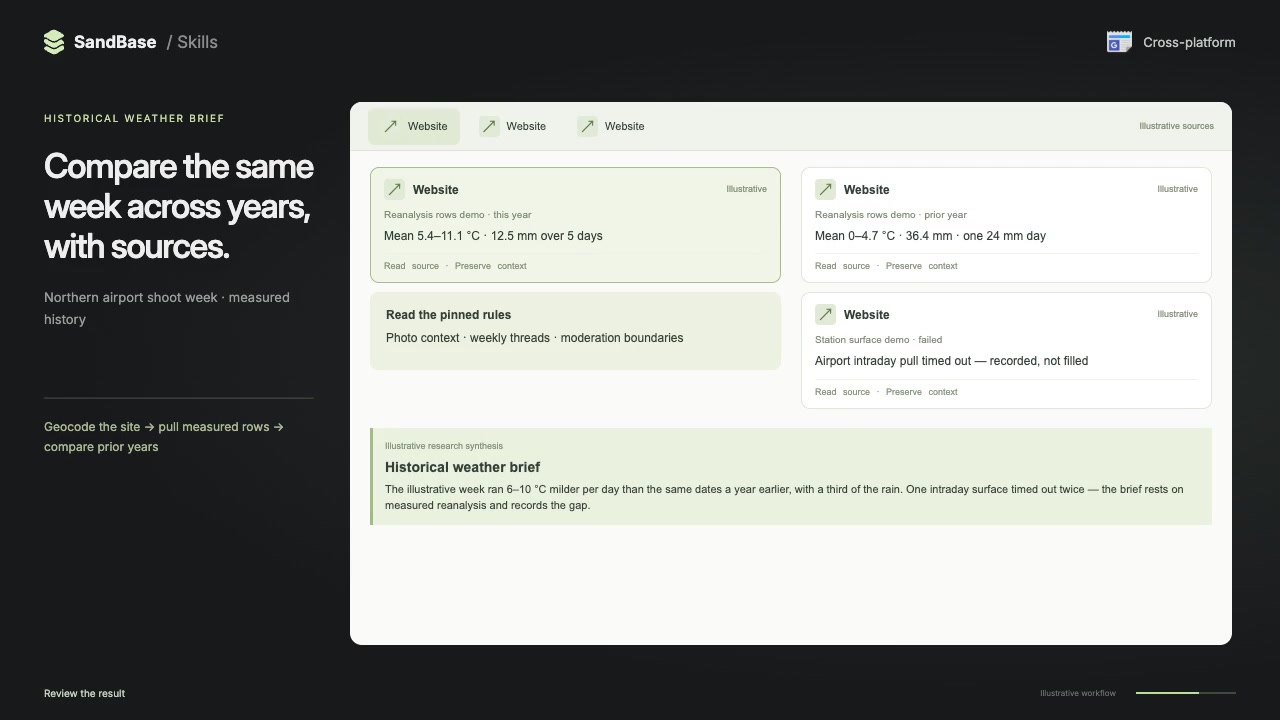
Build a historical temperature and precipitation brief for a place through SandBase
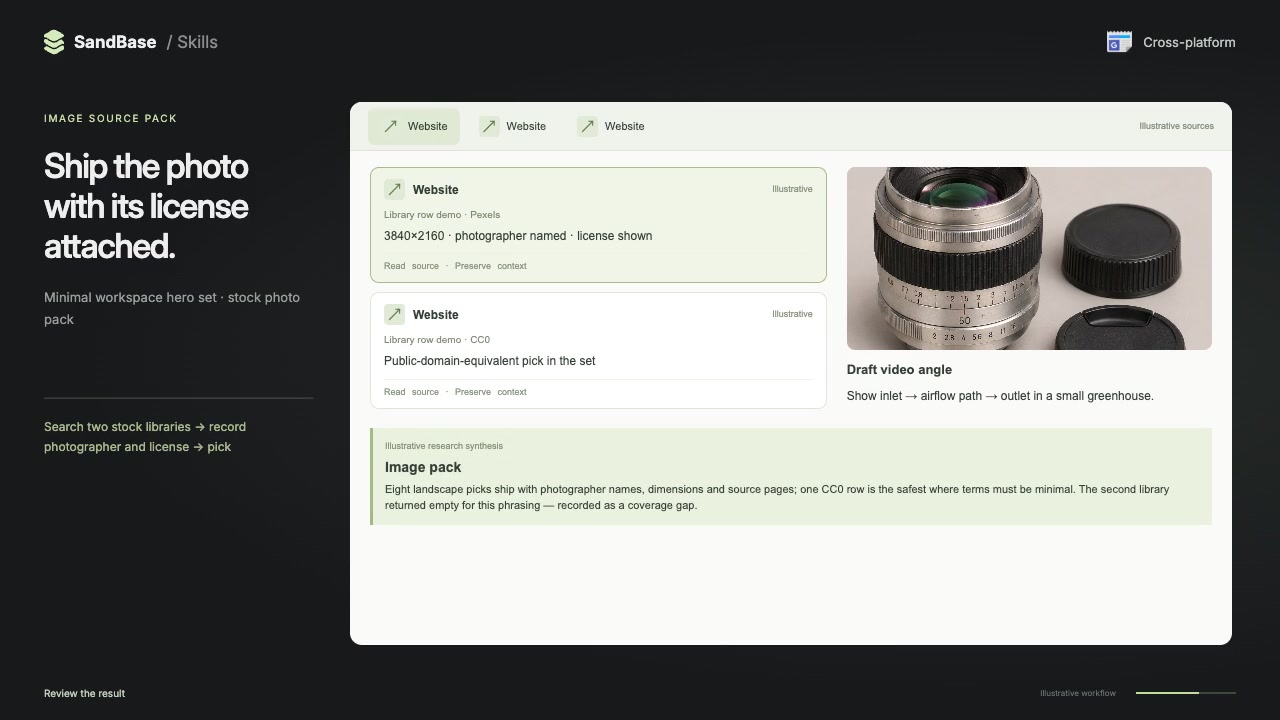
Assemble a usable commercially-safe image pack for a topic through SandBase
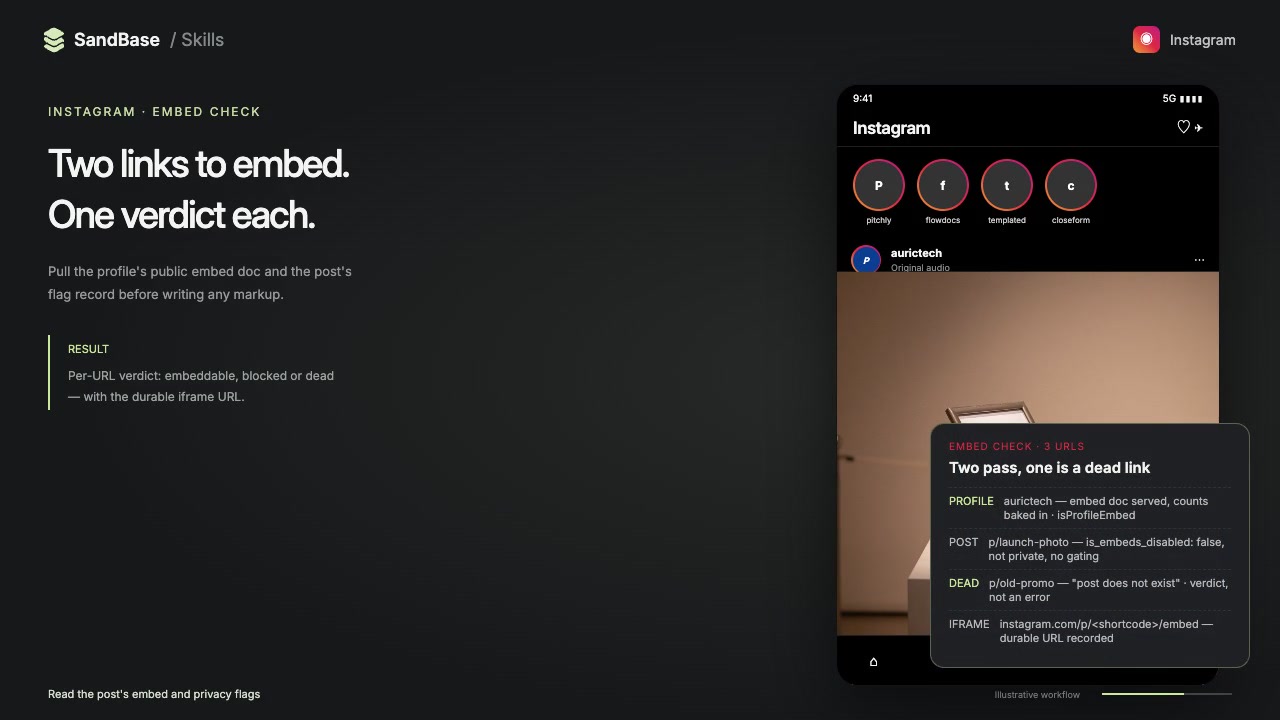
Check whether Instagram content can be embedded and fetch its embed material through SandBase
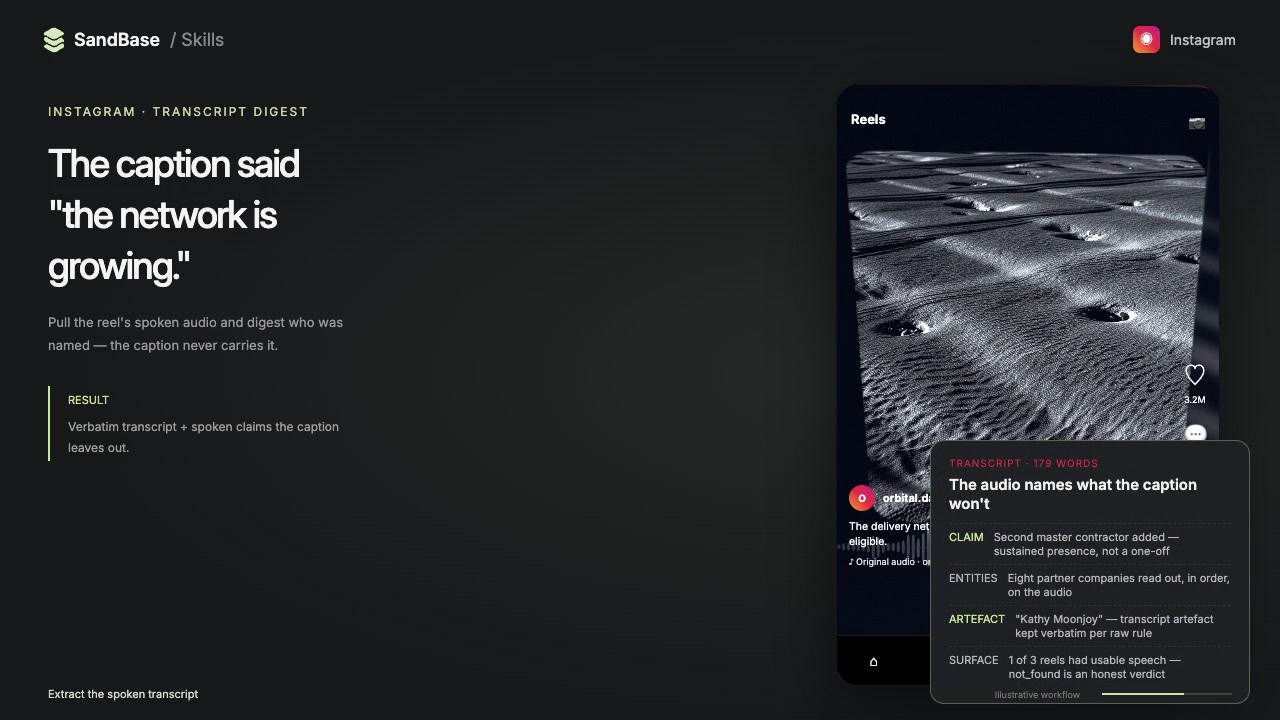
Extract the spoken-audio transcript of an Instagram reel or video post through SandBase, then digest what is actually said
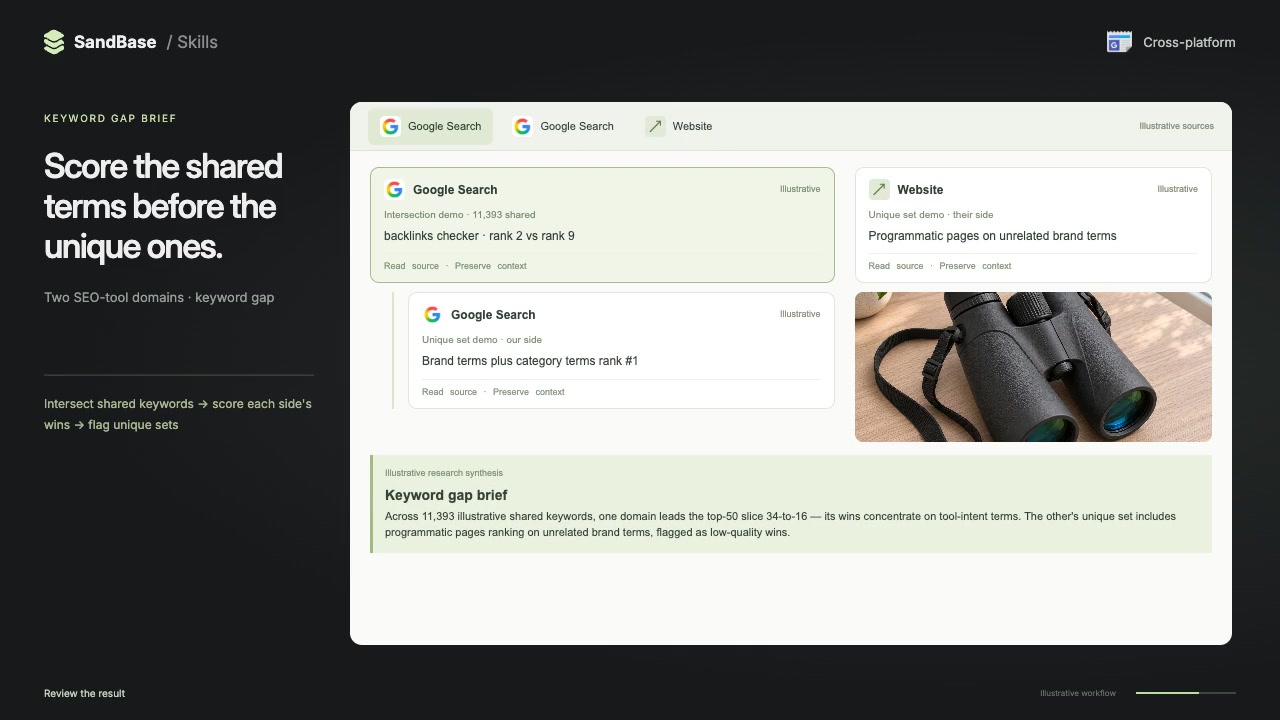
Build a keyword-gap brief between two domains through SandBase
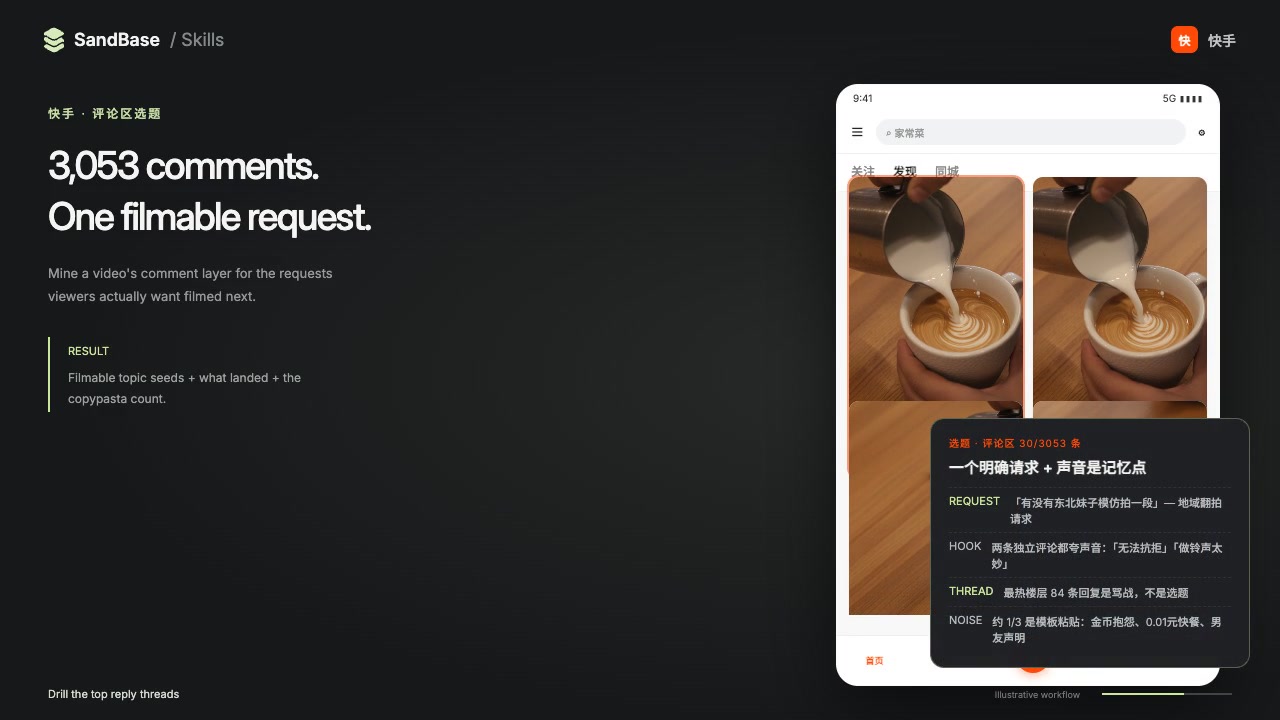
Extract filmable topics from a Kuaishou video's comment layer through SandBase
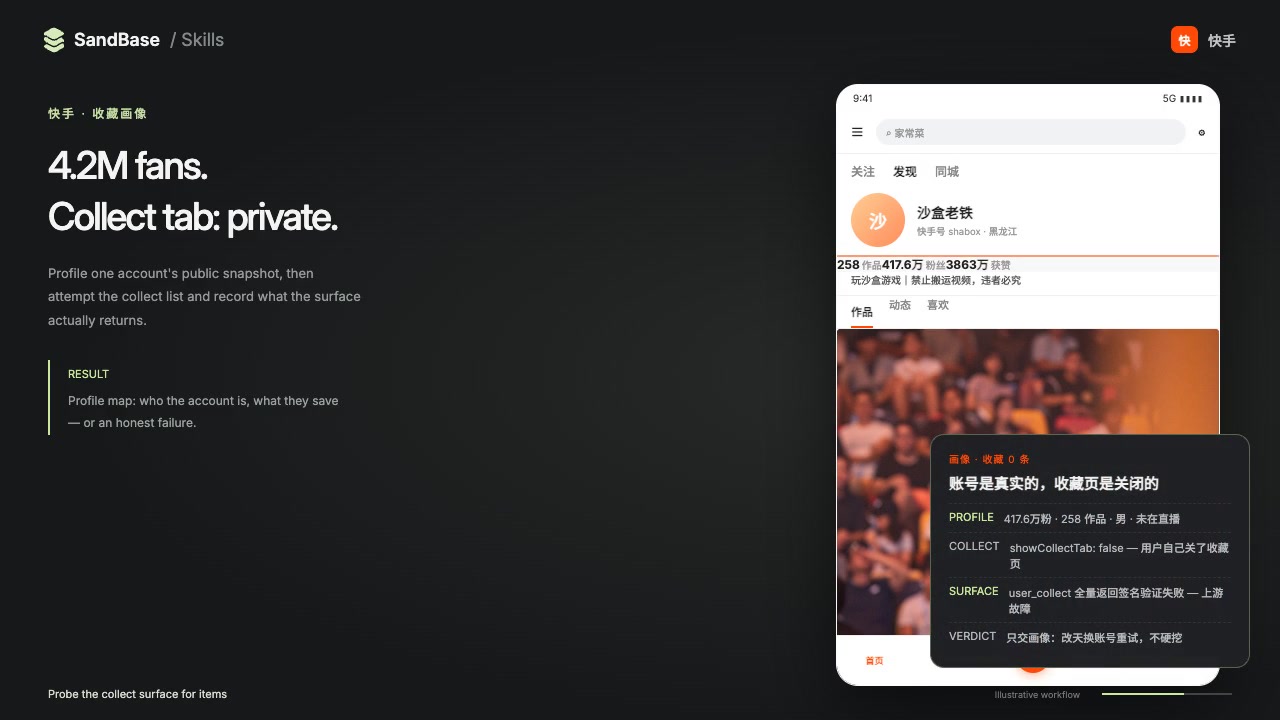
Profile one Kuaishou user's saved/collect list through SandBase
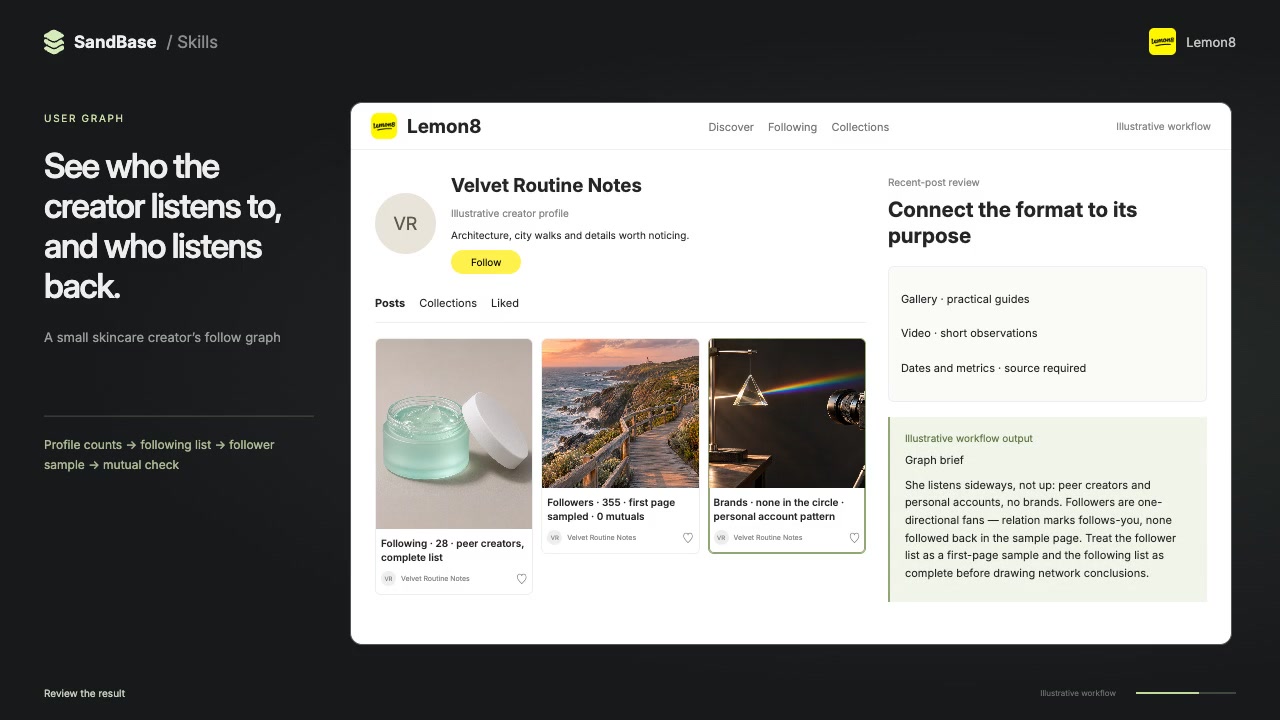
Map one Lemon8 account's follow graph through SandBase
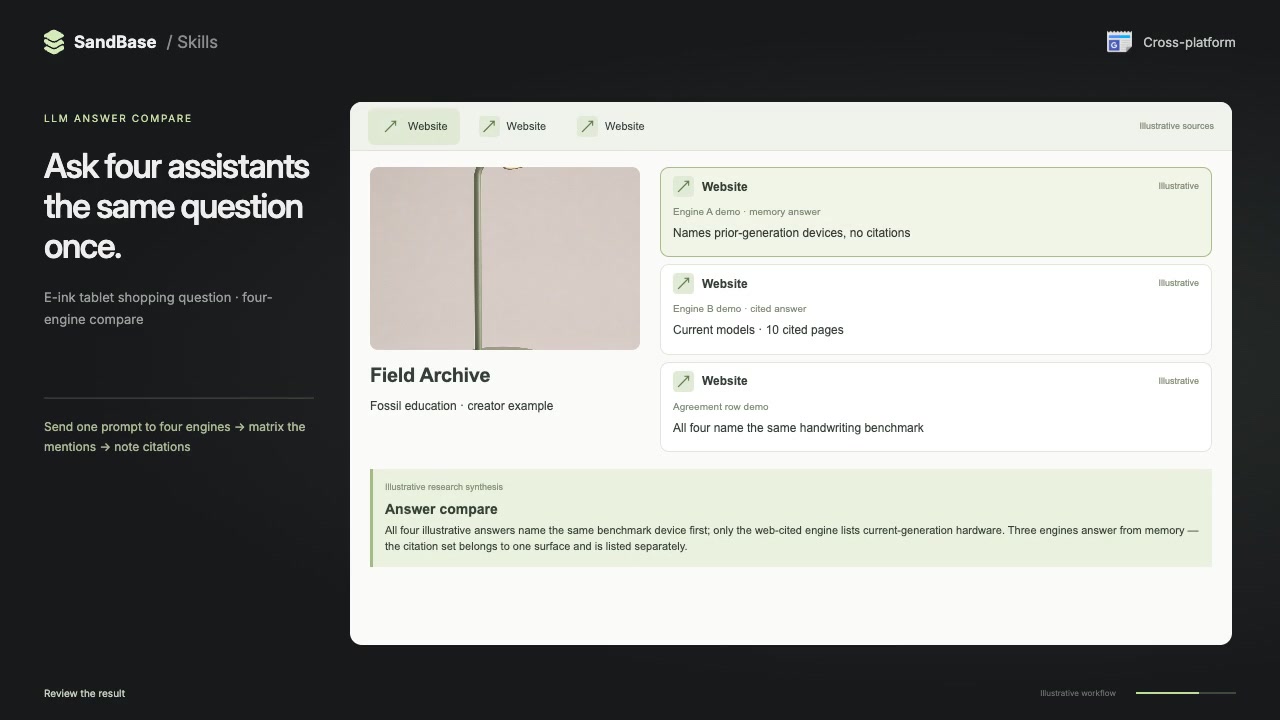
Ask one question to four frontier LLMs
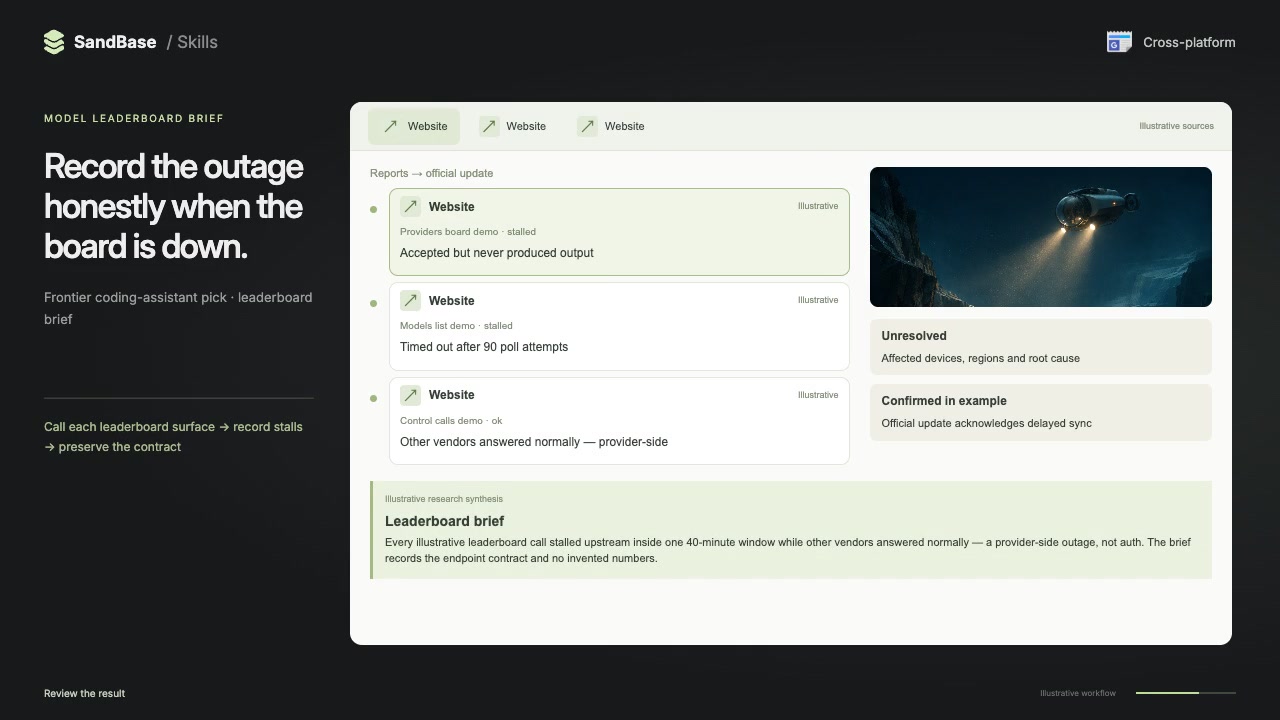
Compare frontier LLMs on the main public leaderboards through SandBase
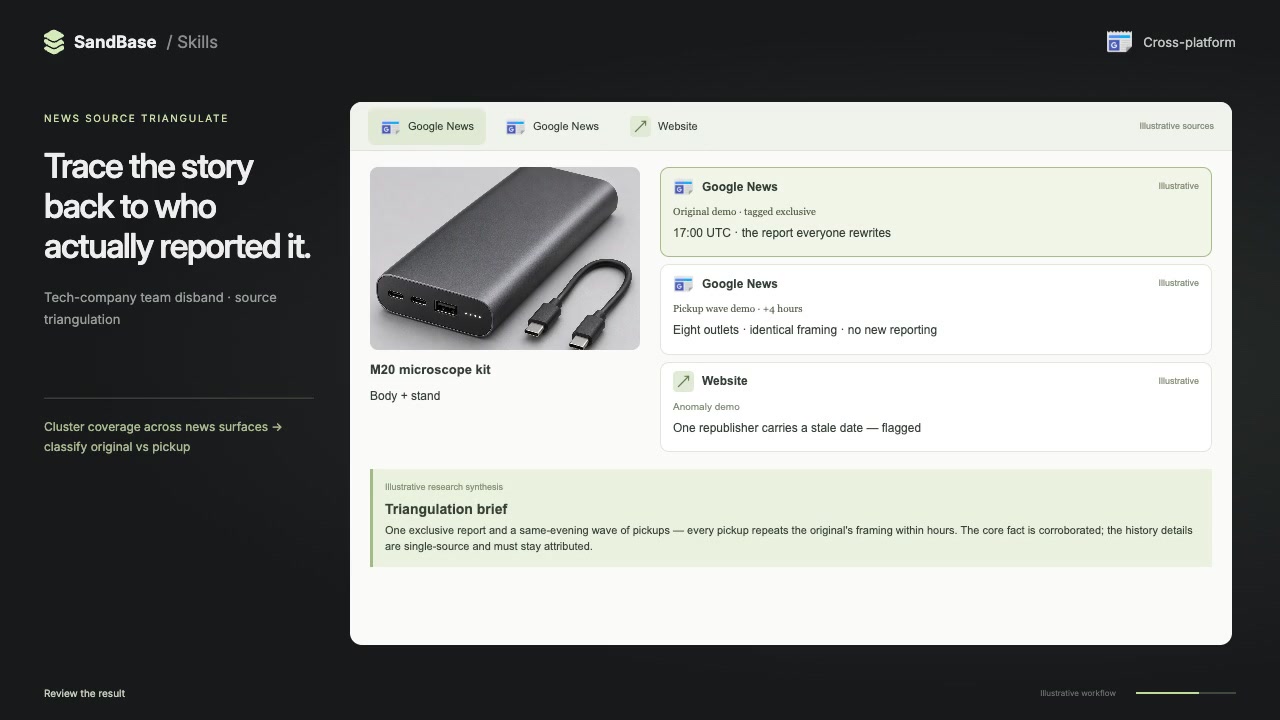
Triangulate one news event across independent search surfaces through SandBase
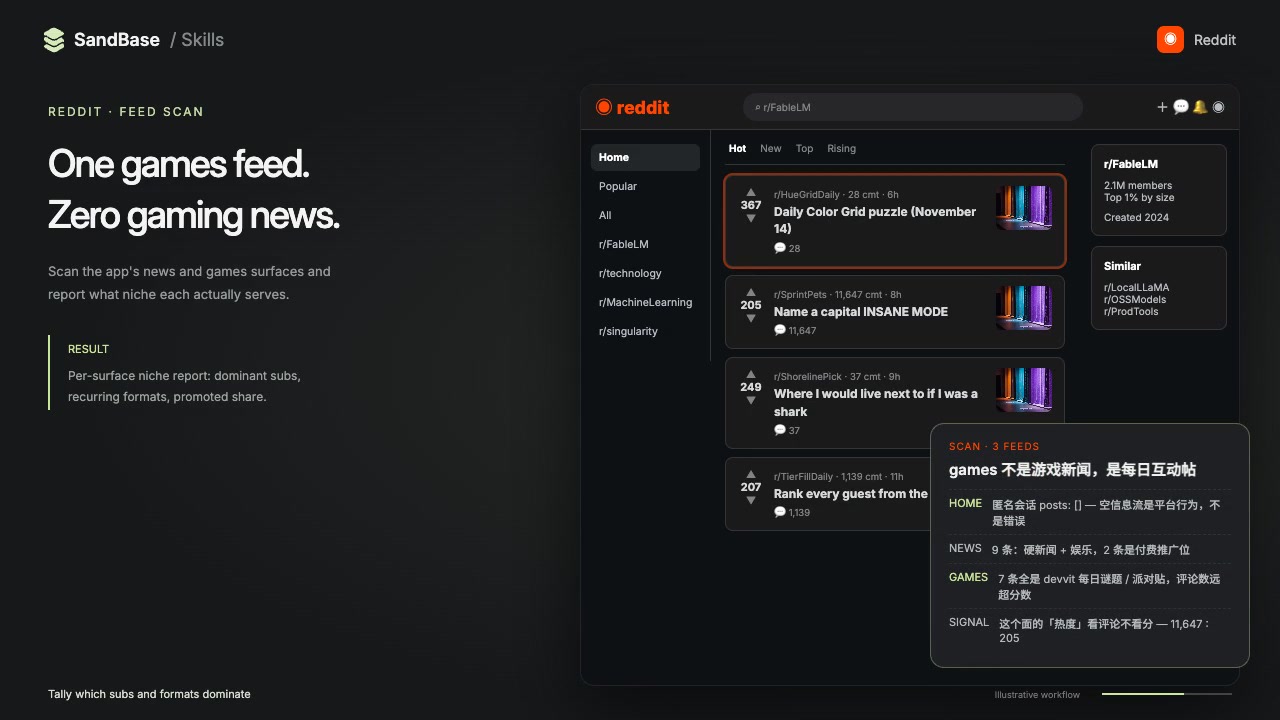
Scan Reddit's mobile-app feeds (home, news, games) through SandBase and report what niche content each surface is actually serving
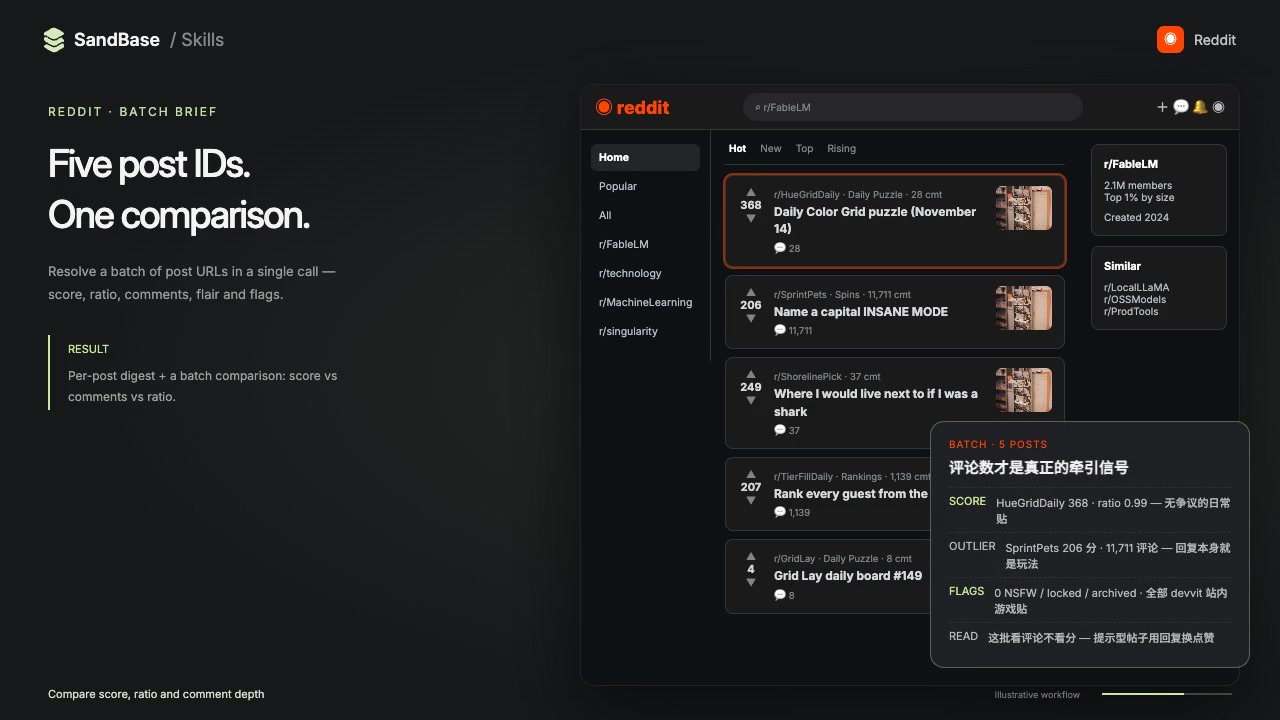
Brief a batch of up to five Reddit posts in one call through SandBase
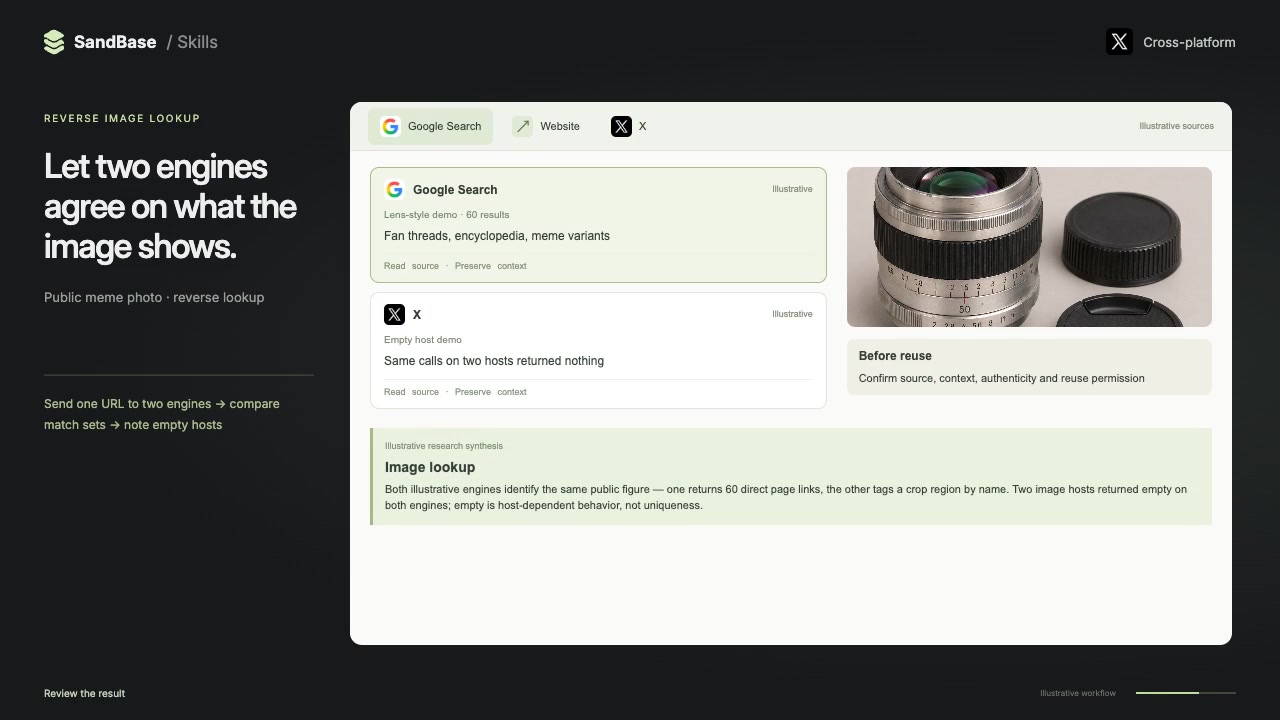
Run a reverse image lookup through SandBase
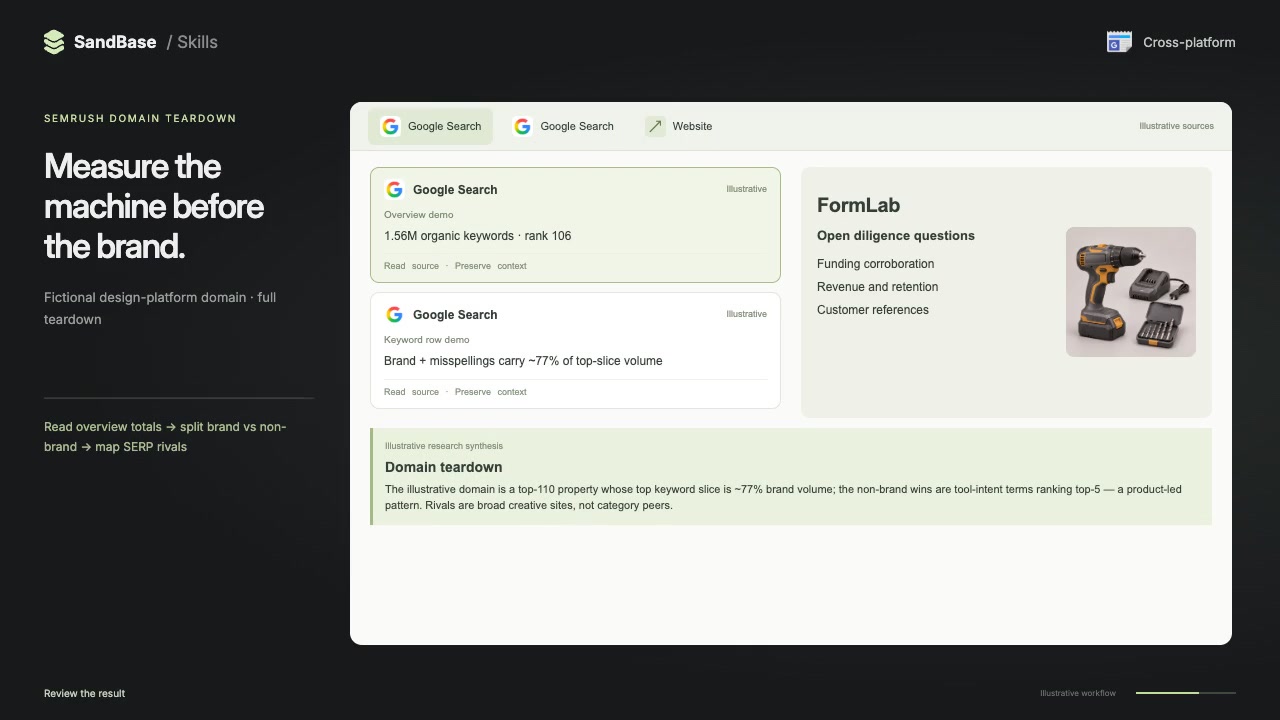
Tear down a domain's whole search presence through SandBase's Semrush surfaces
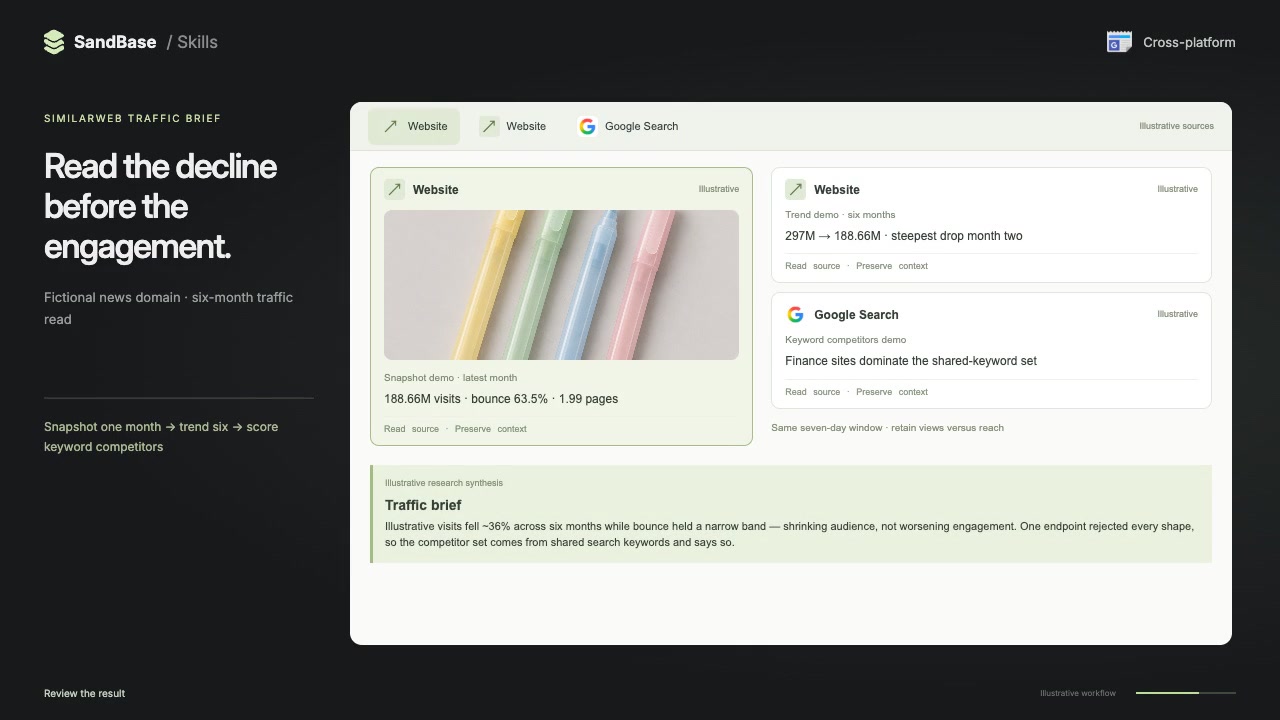
Build a paid SimilarWeb traffic brief for one domain through SandBase
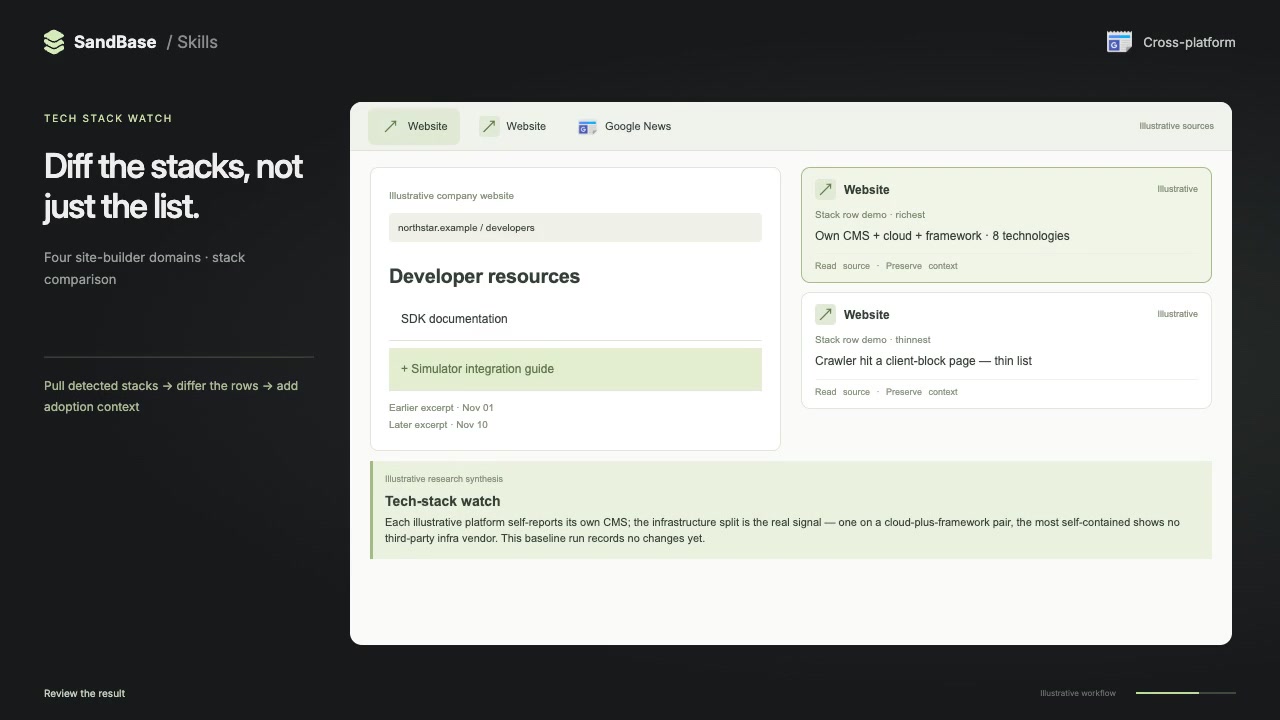
Watch and compare the technology stacks of a set of competitor domains through SandBase's DataForSEO surfaces
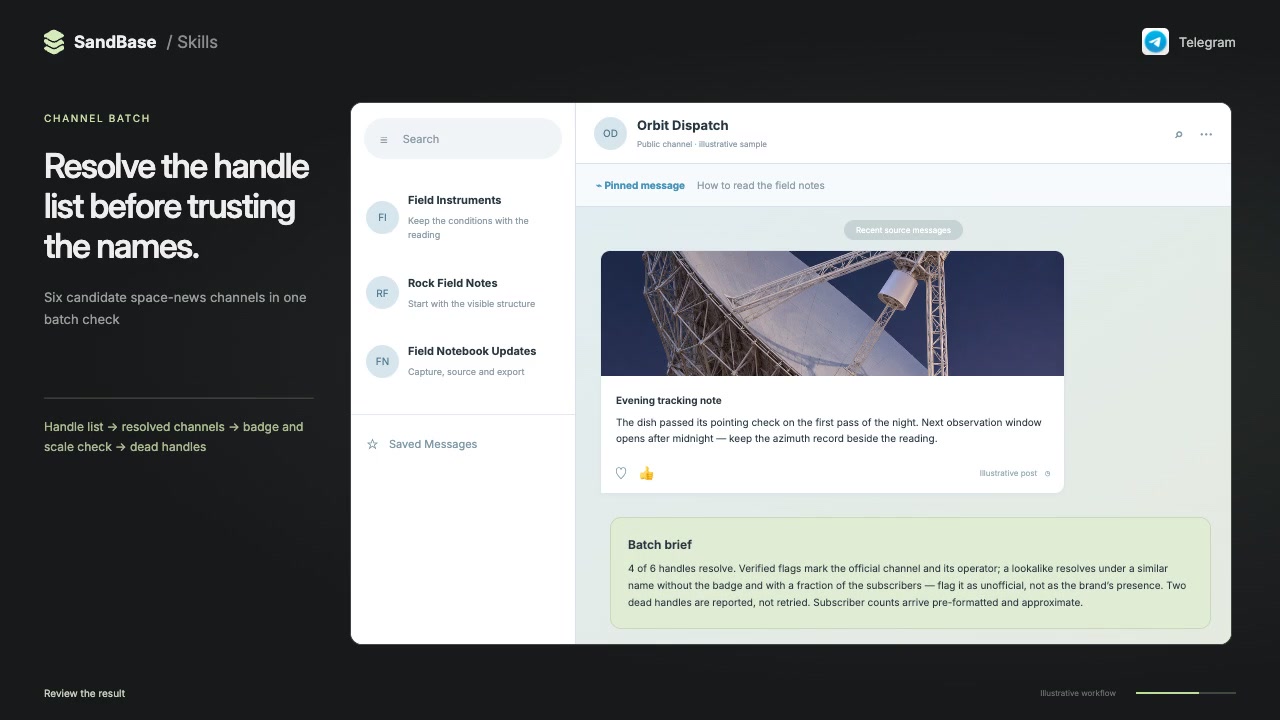
Check a batch of public Telegram channel usernames in one call through SandBase
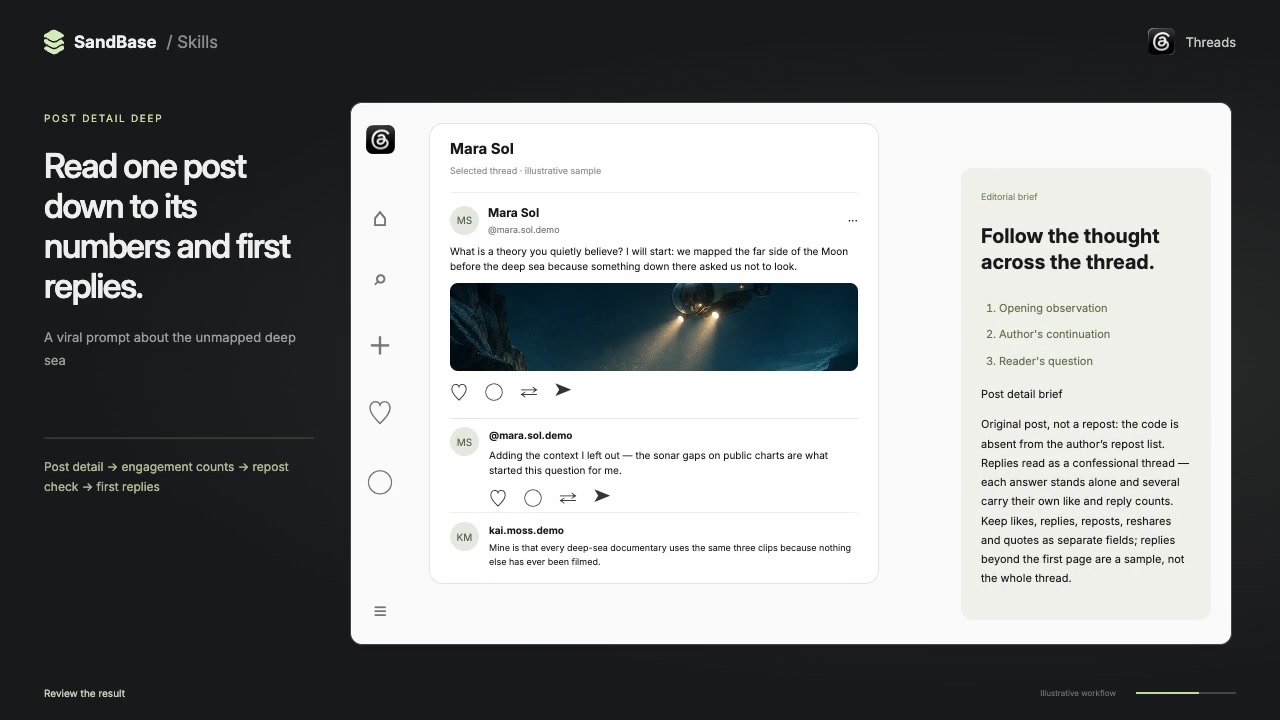
Read one Threads post in depth through SandBase
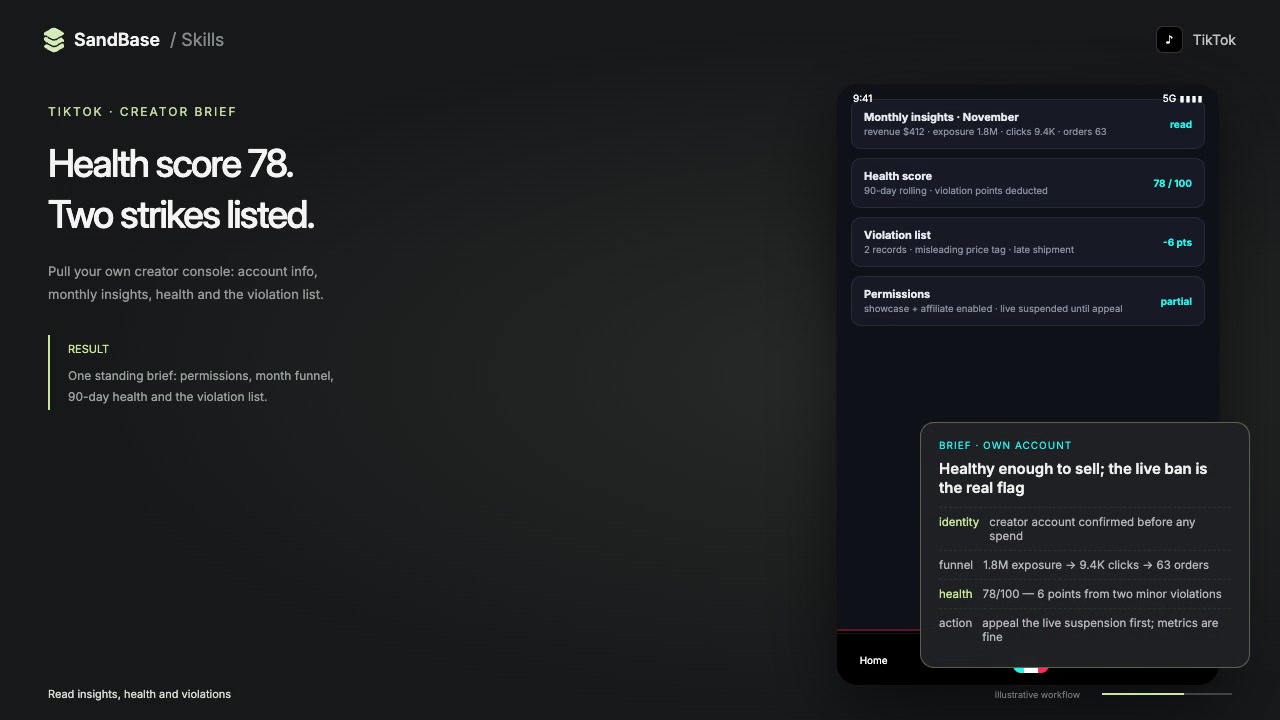
Assemble an account-health and performance brief for your own TikTok Shop creator account through SandBase
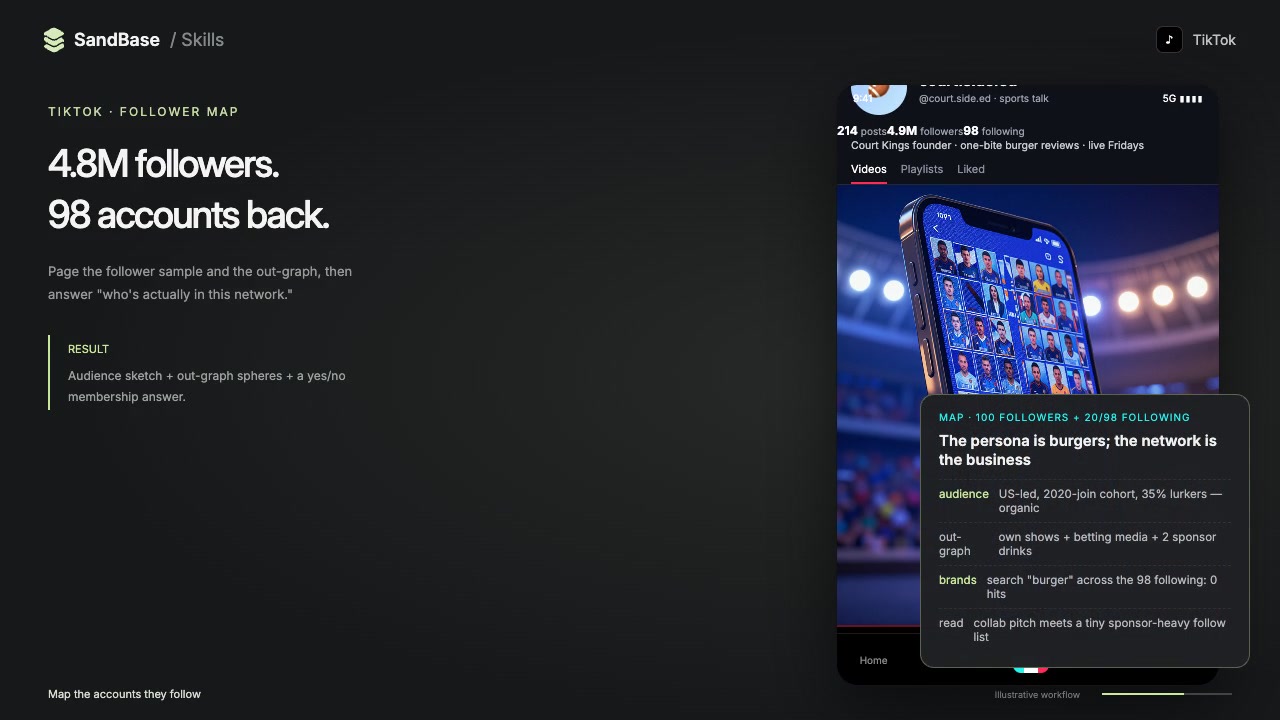
Sketch the social graph of a TikTok account through SandBase
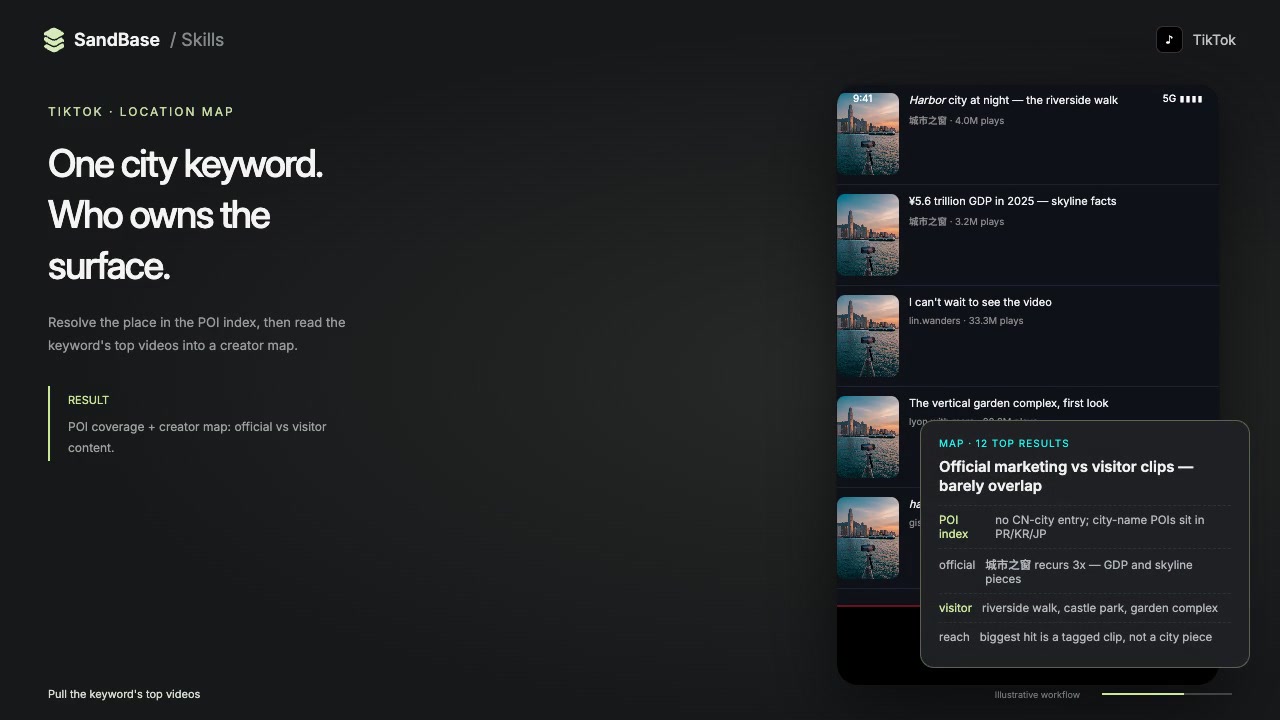
Map the content and creator surface of a city or place on TikTok through SandBase
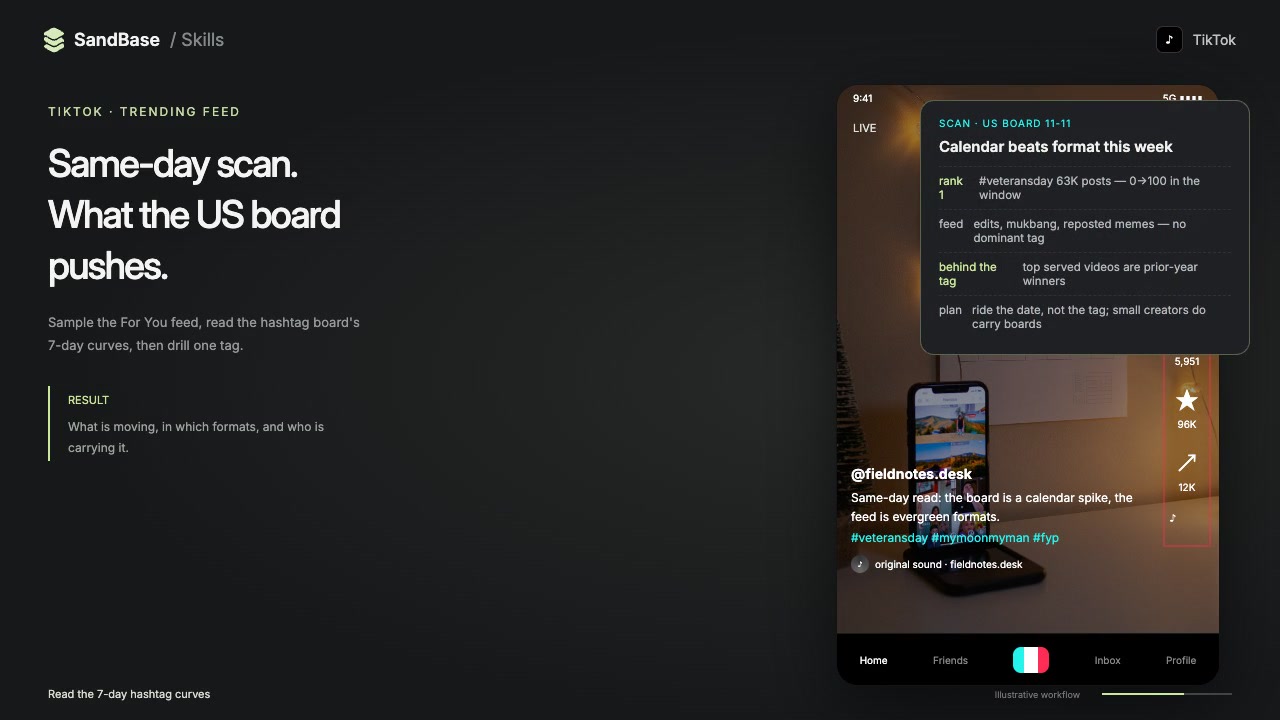
Read what TikTok is serving right now through SandBase
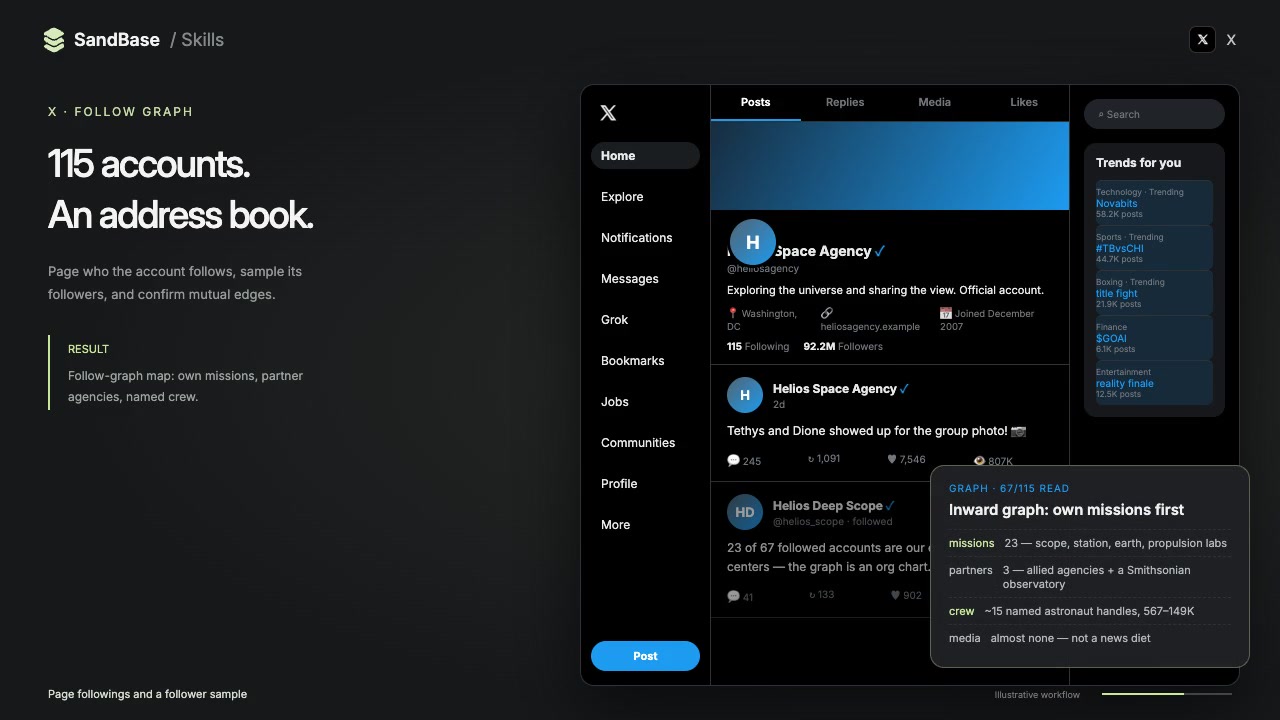
Map one X (Twitter) account's follow graph through SandBase
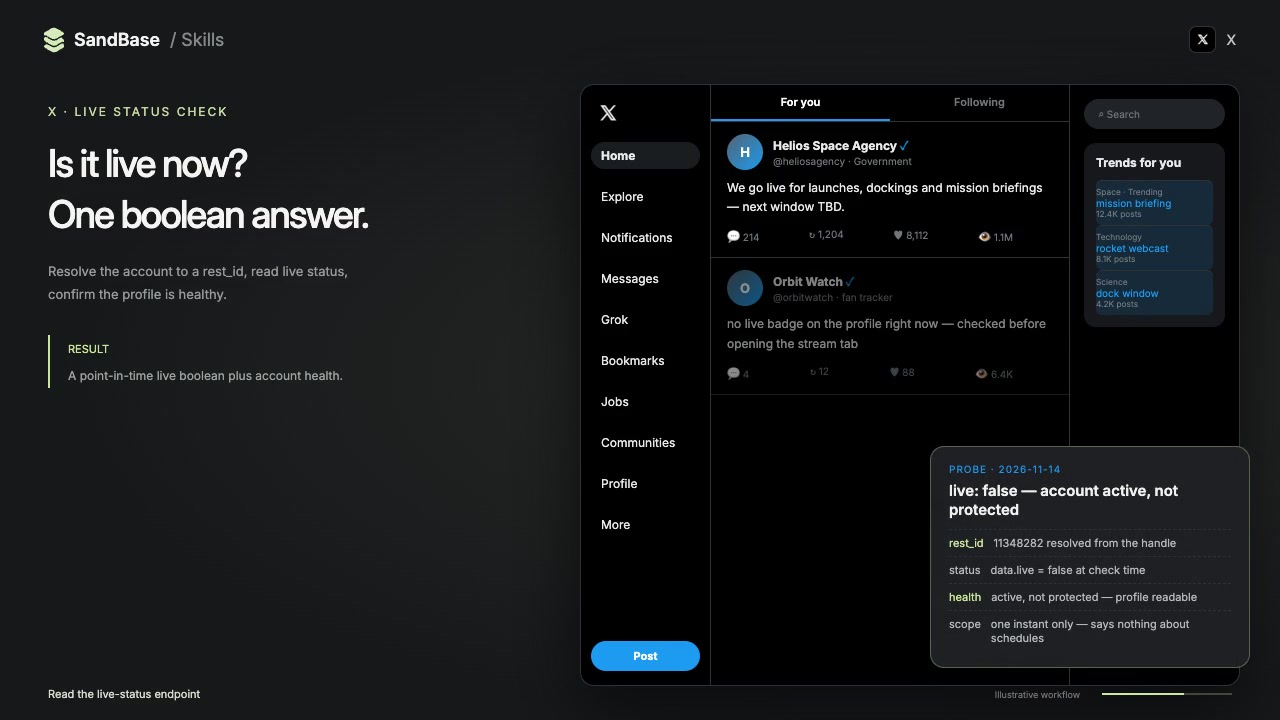
Check whether an X (Twitter) account is currently live (broadcasting) through SandBase
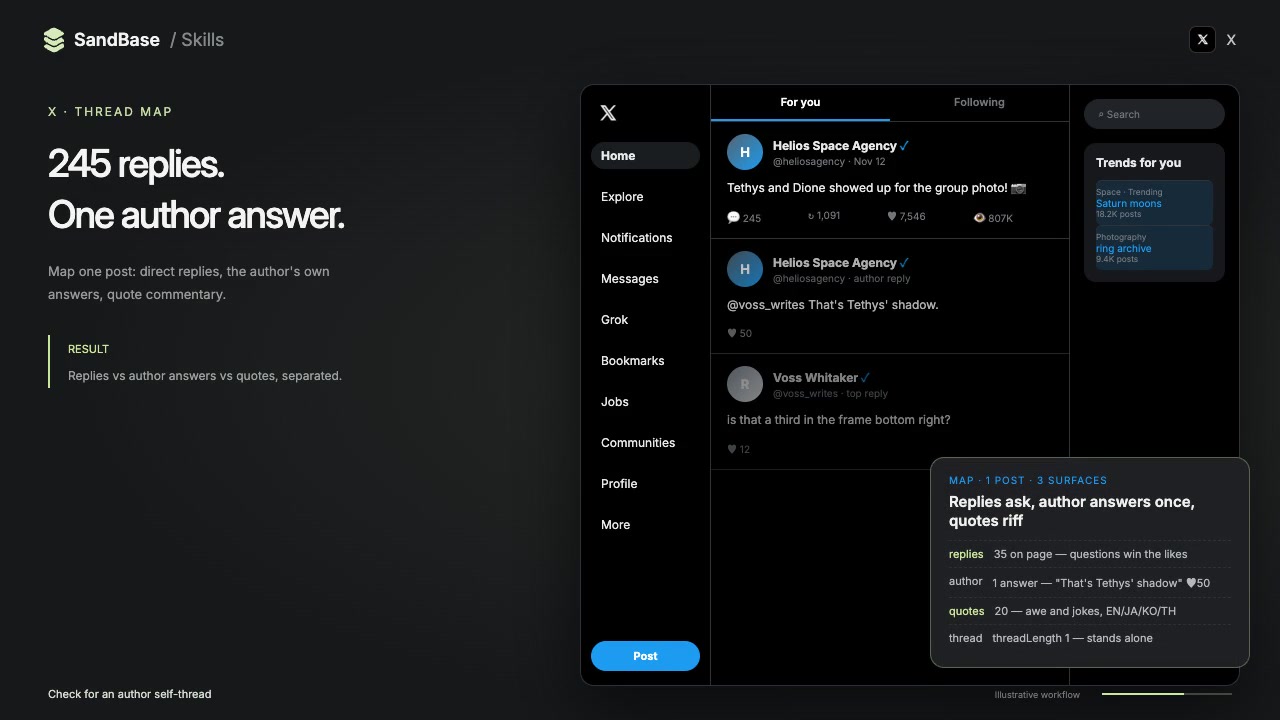
Map the conversation around one X (Twitter) post through SandBase
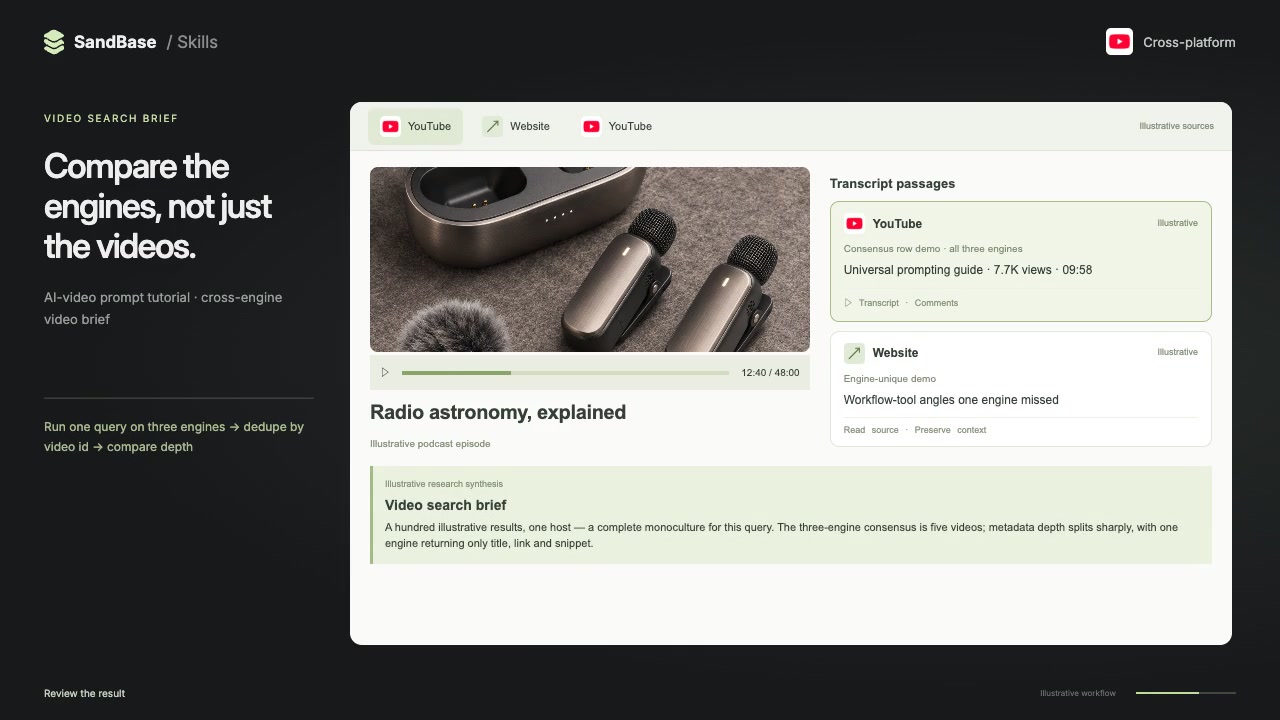
Build a video-search brief for a query through SandBase
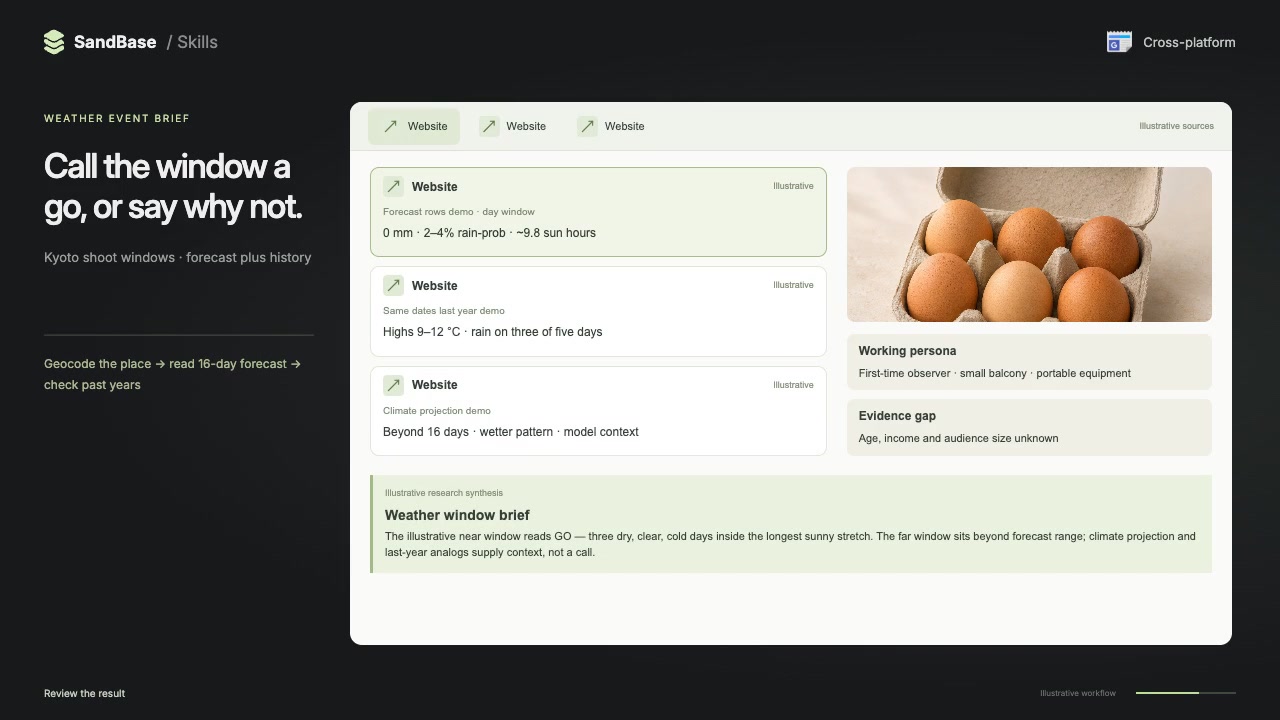
Plan a weather window for an event, shoot or trip through SandBase Open-Meteo
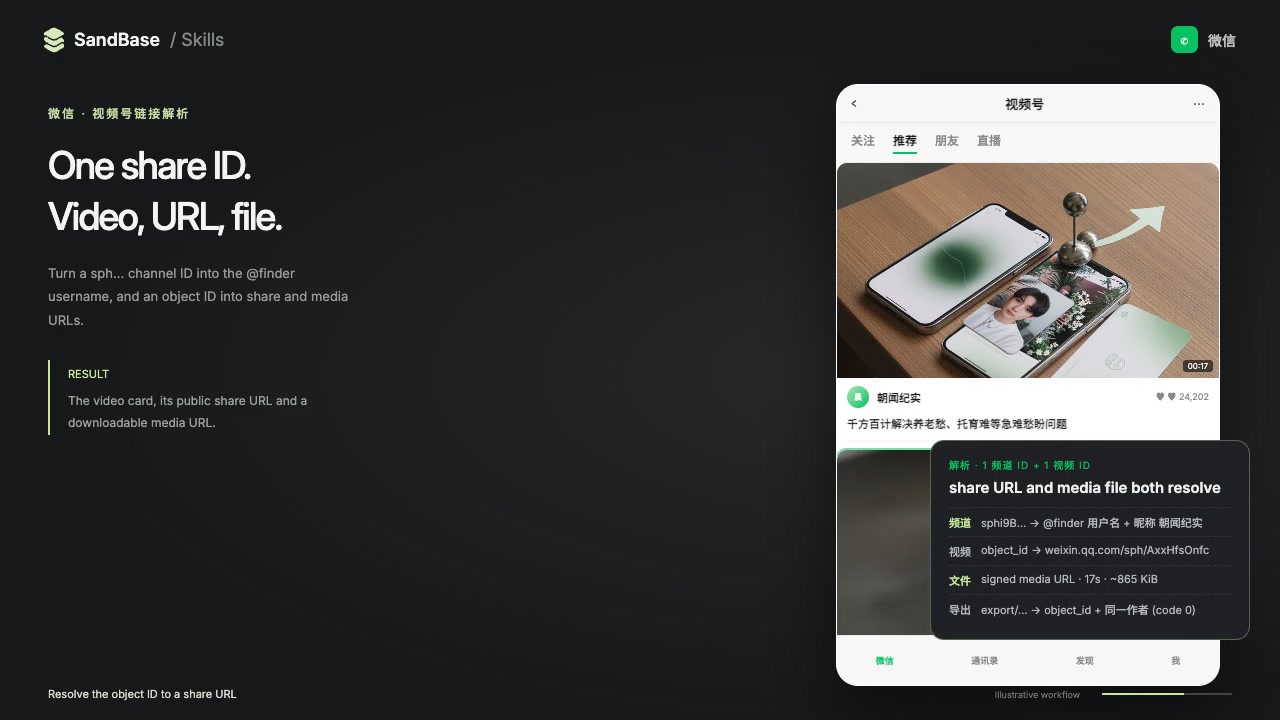
Resolve a WeChat Channels (视频号) share identifier through SandBase
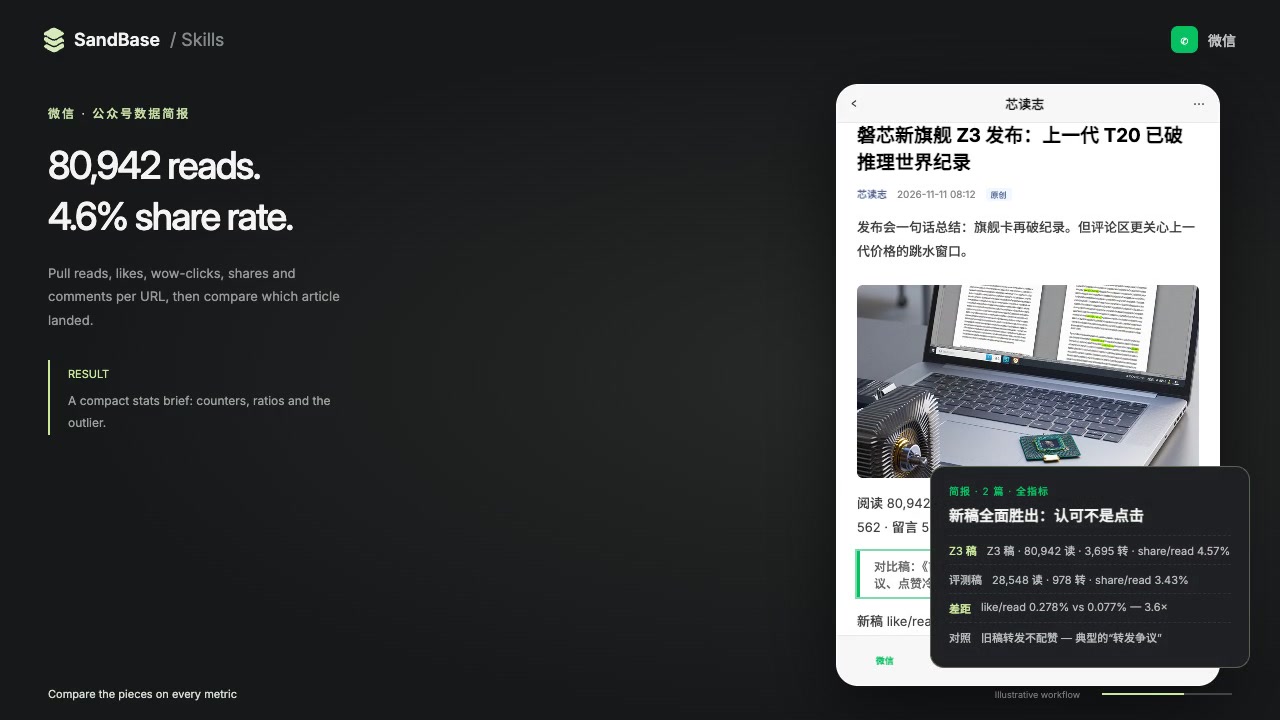
Pull the engagement numbers for WeChat Official Account (公众号) articles through SandBase
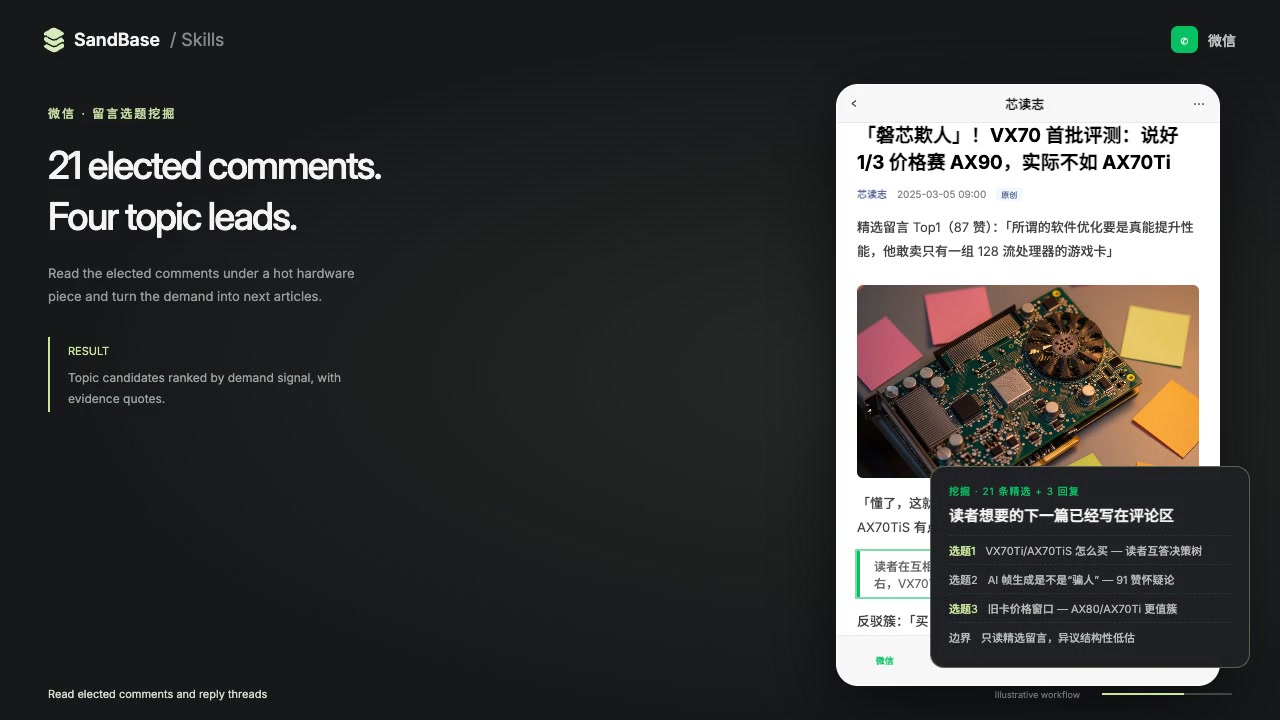
Mine the elected comment section of WeChat Official Account articles through SandBase
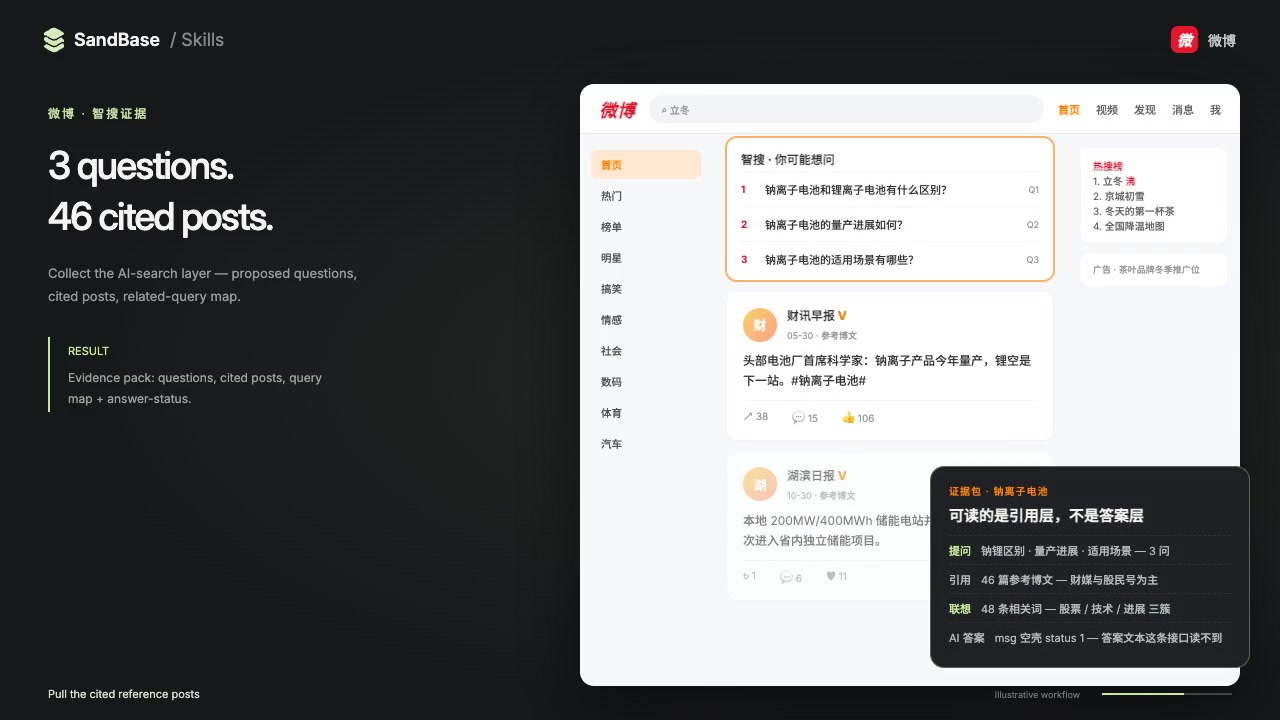
Build an evidence pack for an issue or topic from Weibo's intelligent-search (智搜) surfaces through SandBase
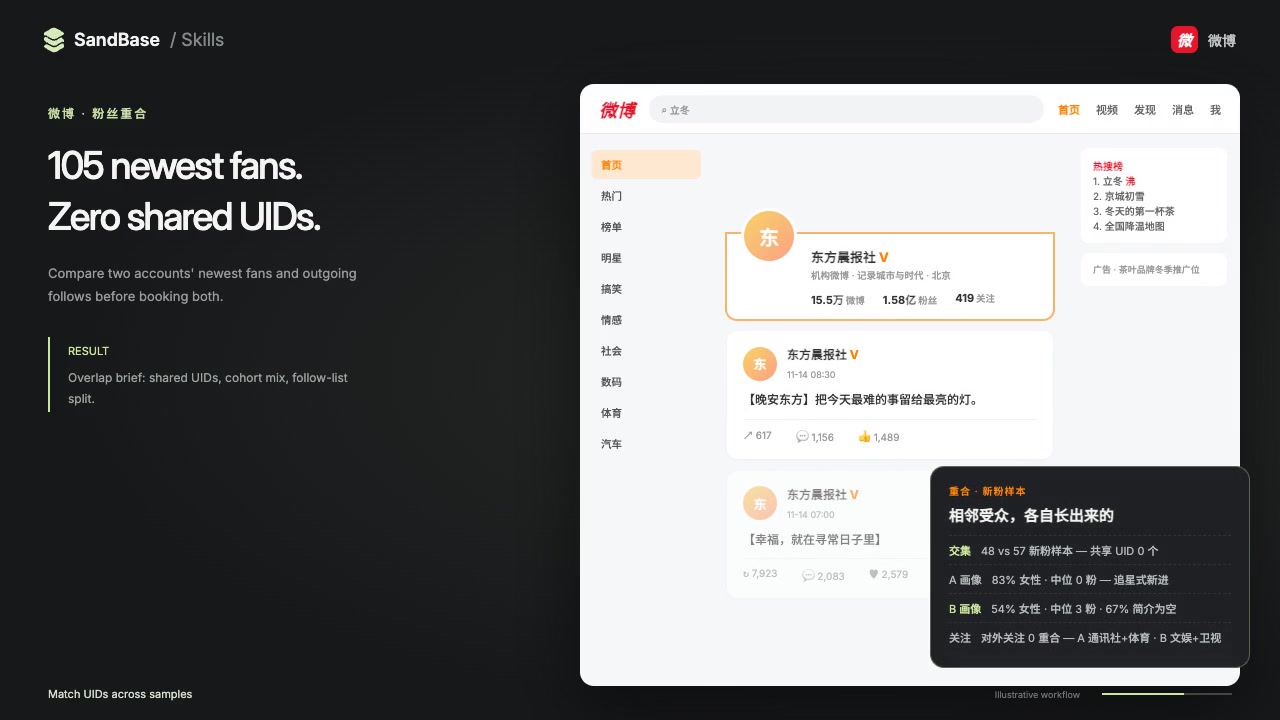
Compare two Weibo accounts' audiences through SandBase
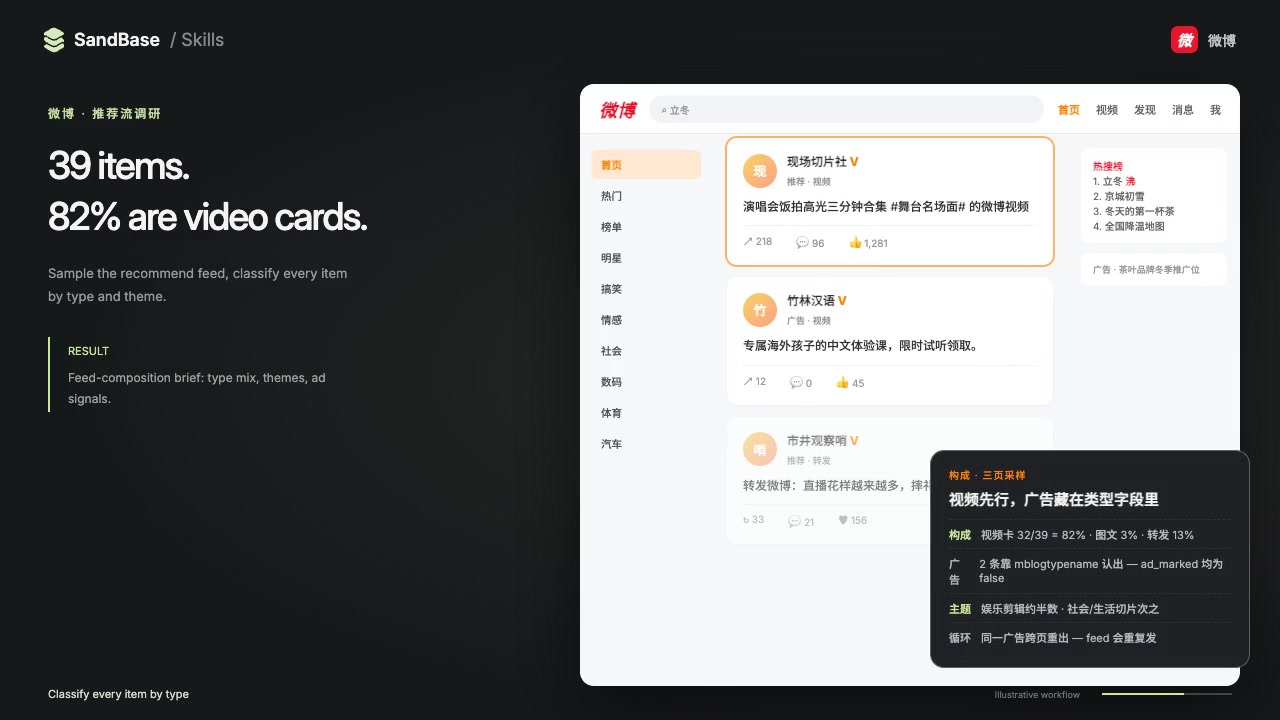
Sample what Weibo's recommendation engine is actually serving through SandBase
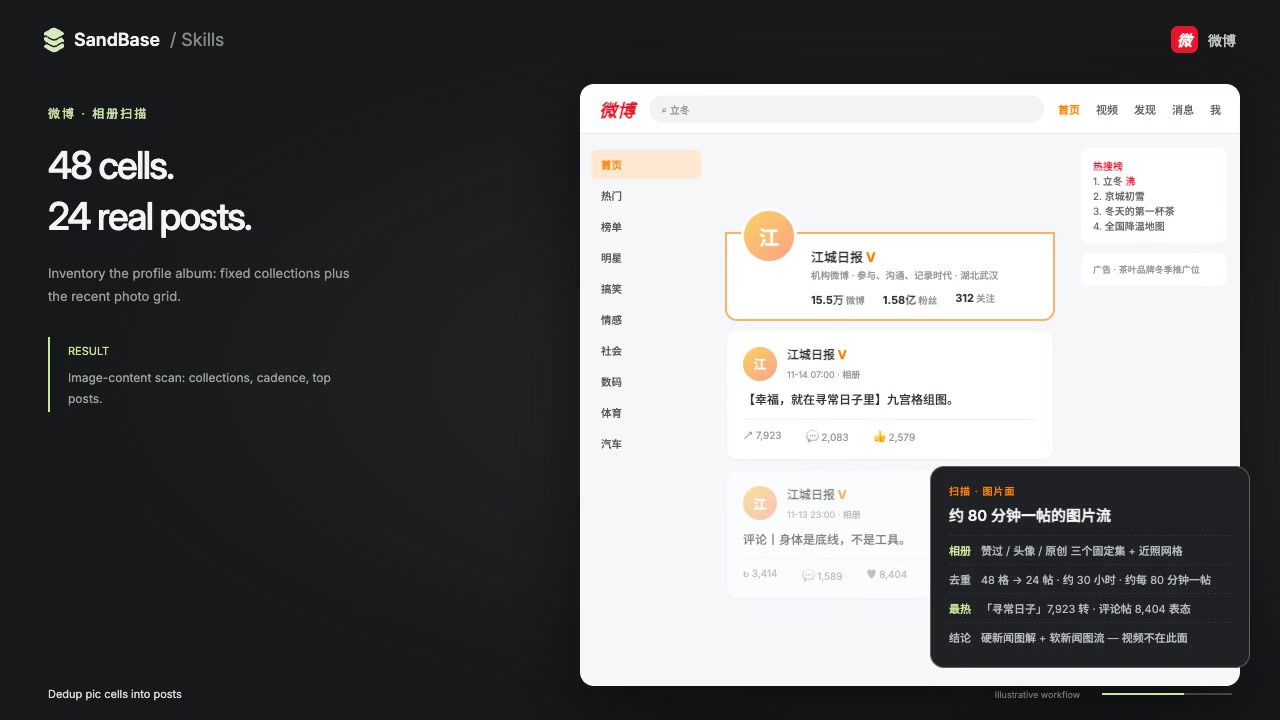
Inventory a Weibo account's photo/media surface through SandBase
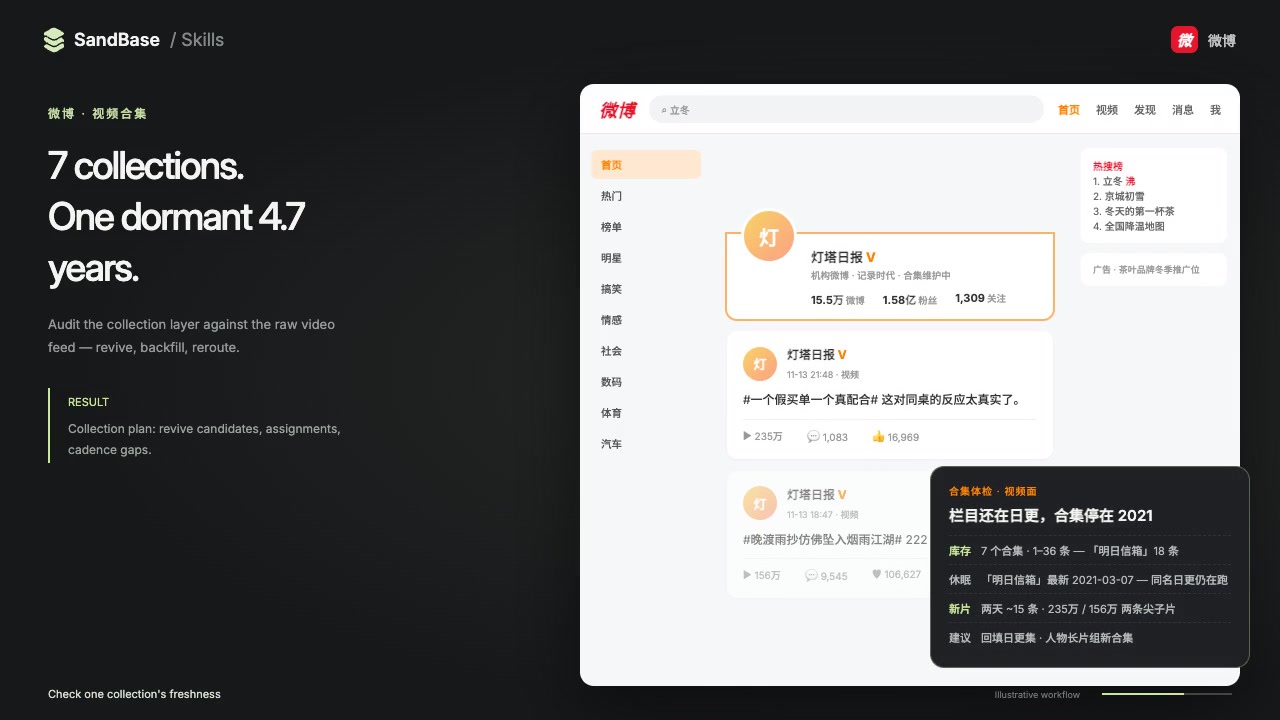
Plan or audit a Weibo account's video-collections (视频合集) strategy through SandBase
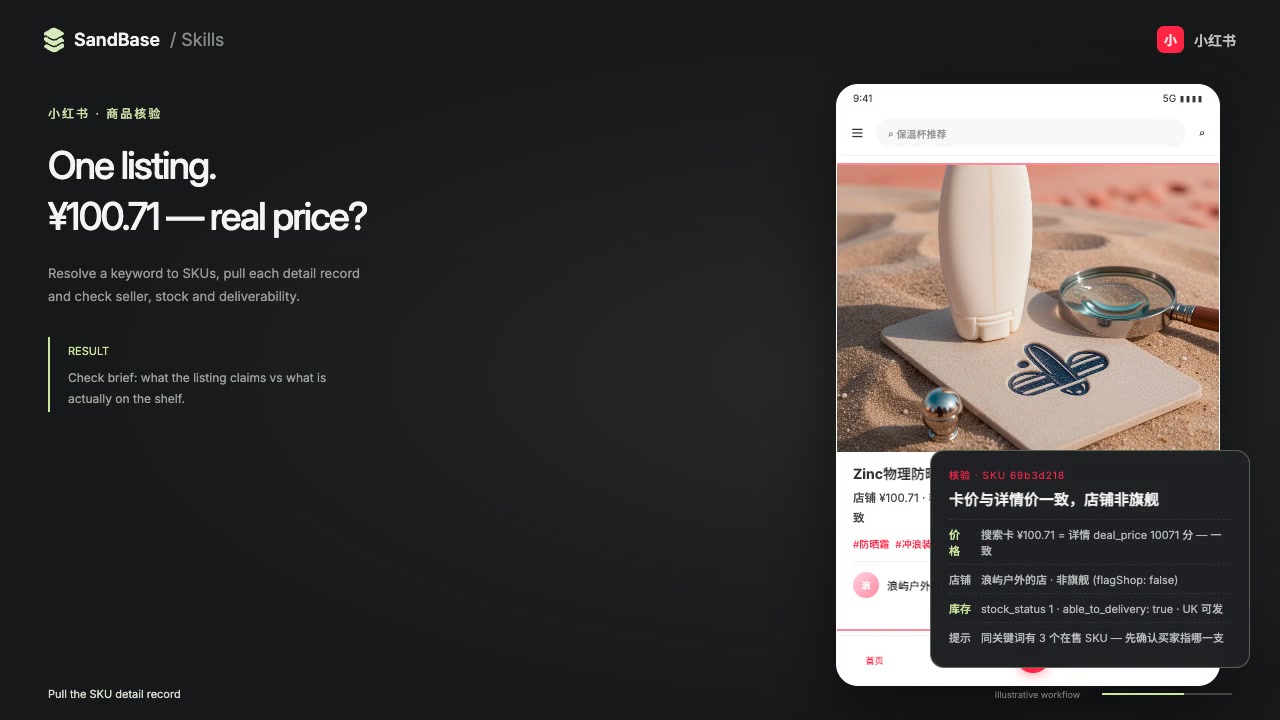
Verify one or a few Xiaohongshu (小红书 / RedNote) shop listings through SandBase
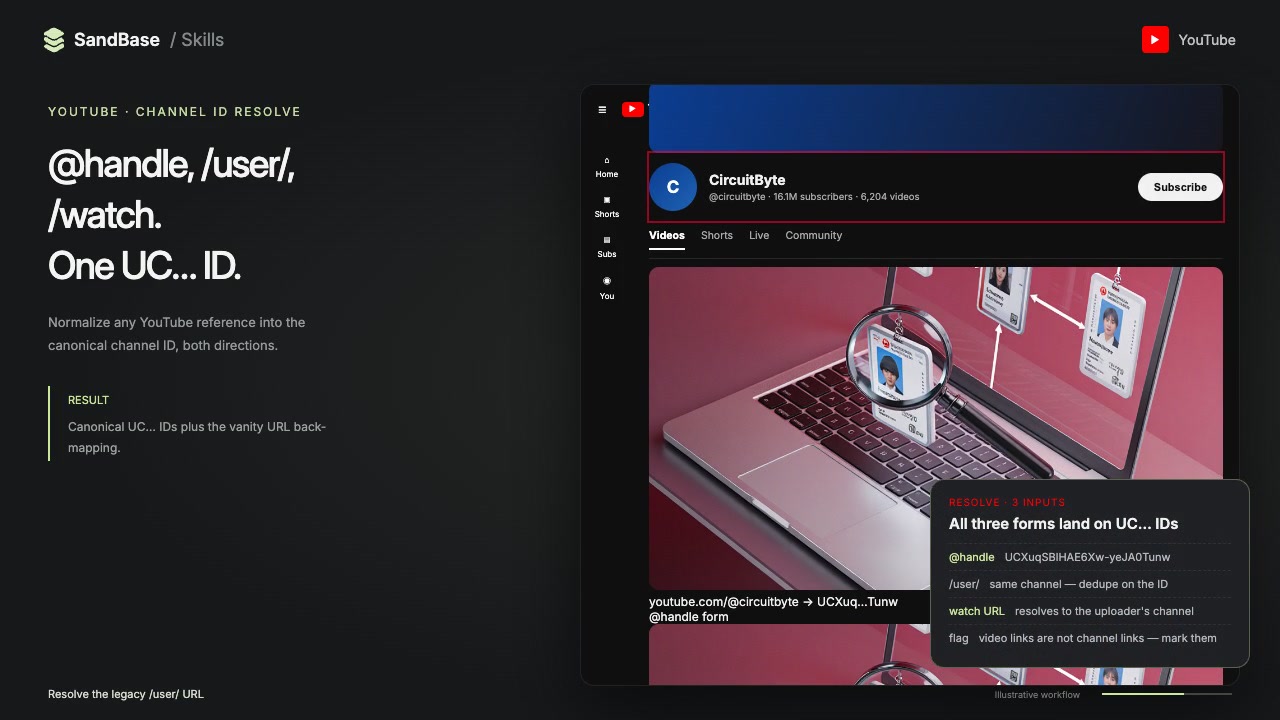
Resolve any YouTube channel reference
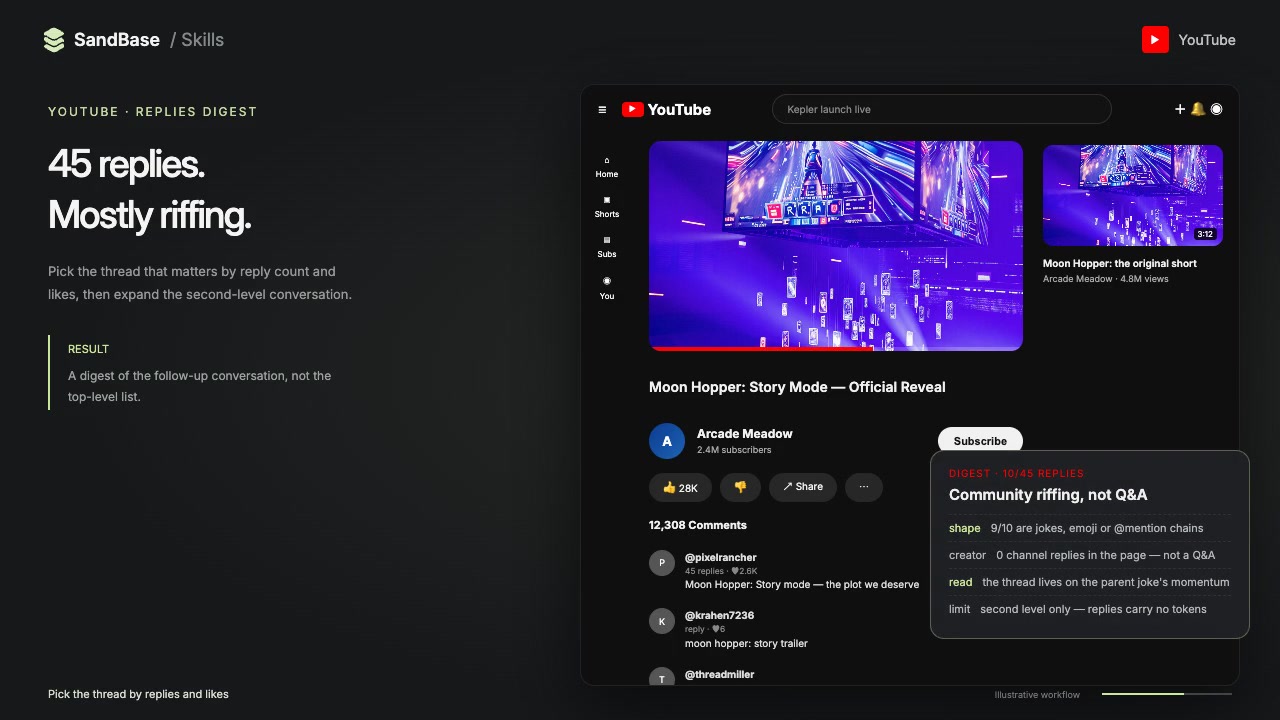
Digest the second-level replies under a YouTube comment through SandBase
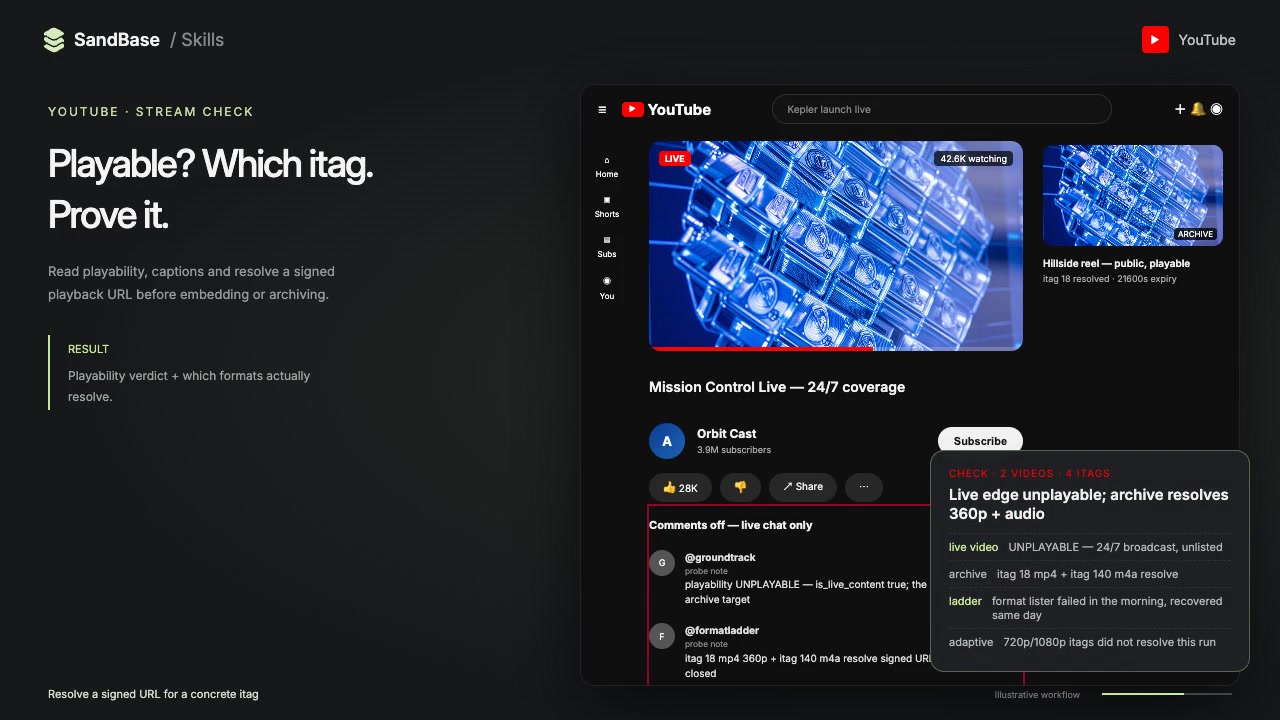
Check a YouTube video's stream/playback facts through SandBase
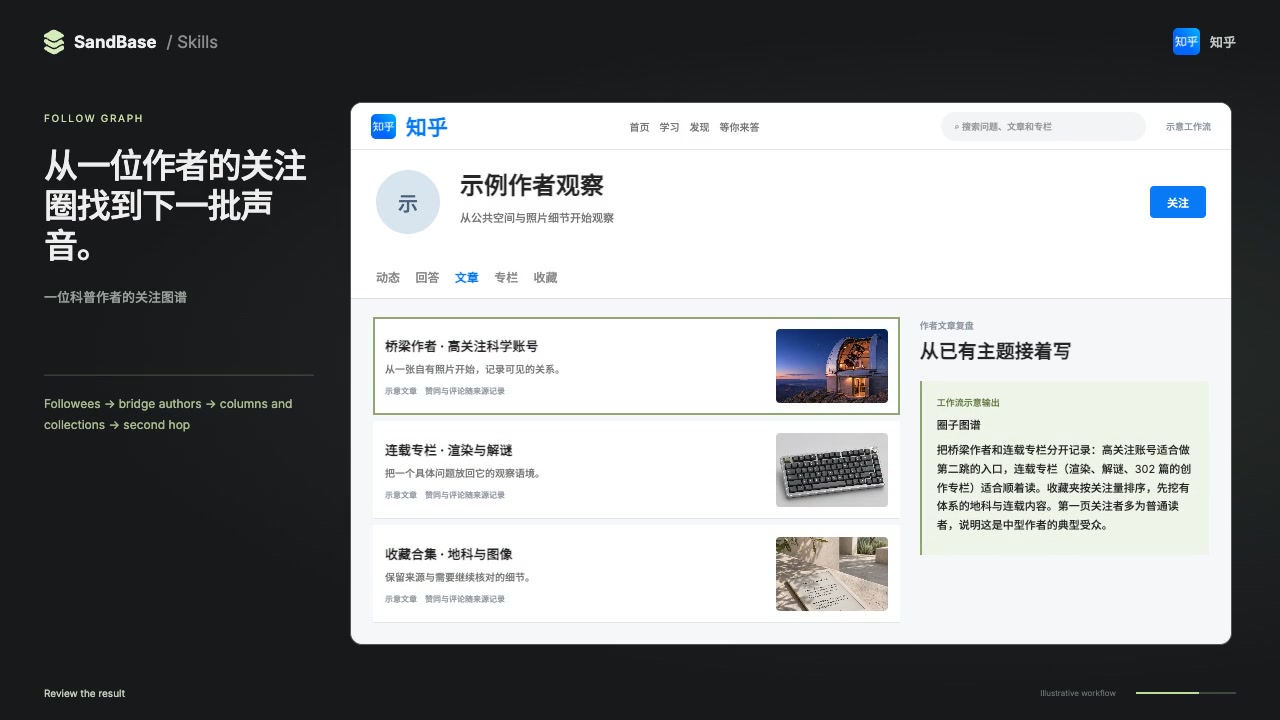
Map one Zhihu (知乎) author's follow graph through SandBase
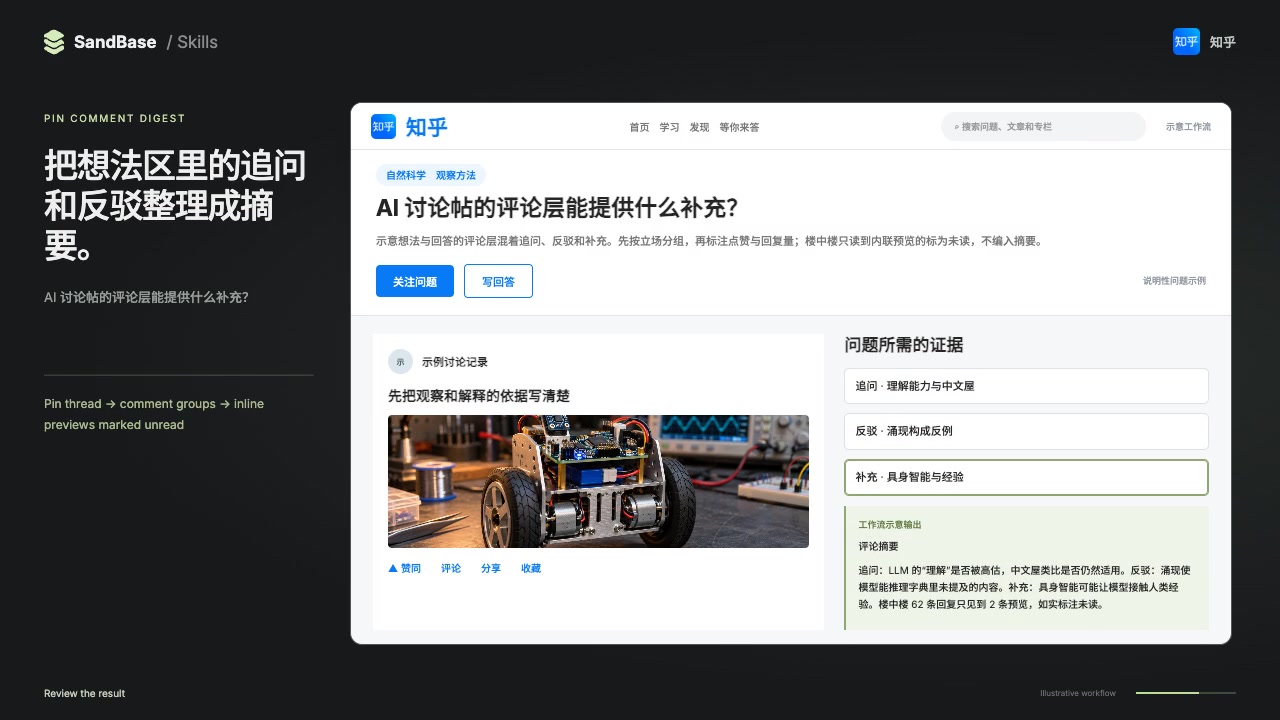
Mine Zhihu (知乎) pins (想法) and their comment threads through SandBase for follow-up questions and rebuttals that answers and columns do not cover
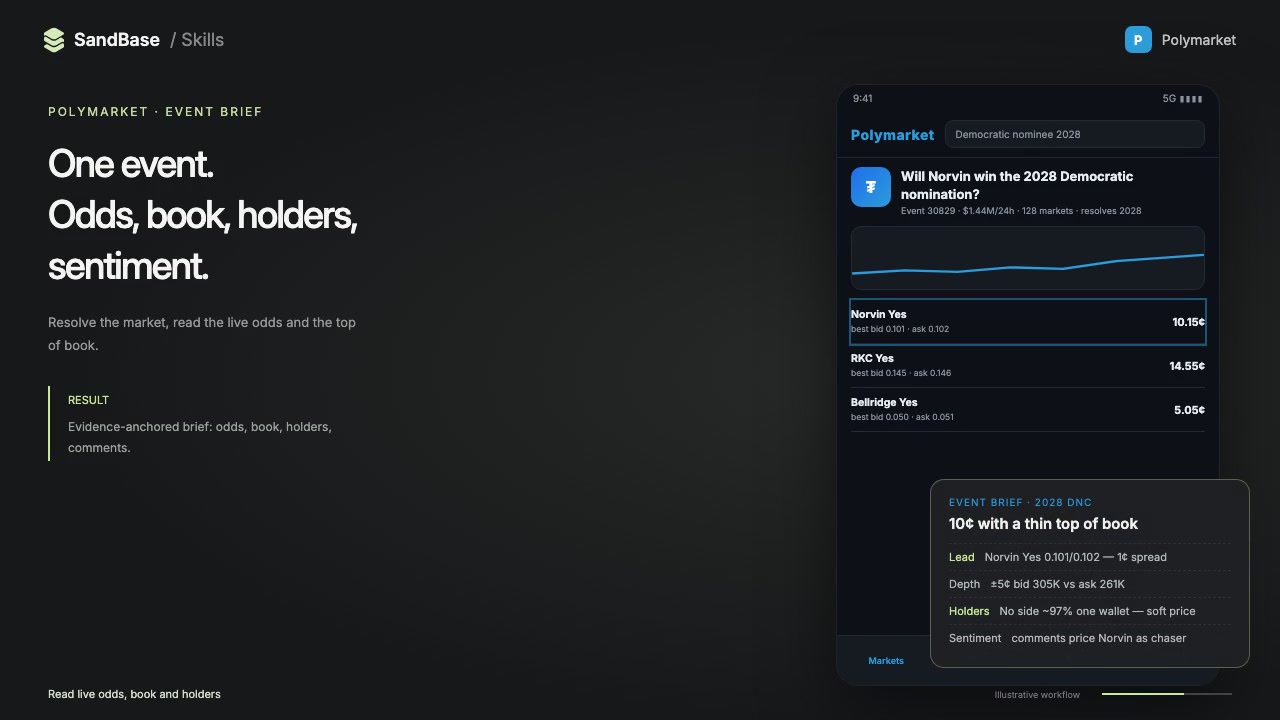
Brief one Polymarket event through SandBase — odds, book, history, holders and comments in one evidence-anchored brief
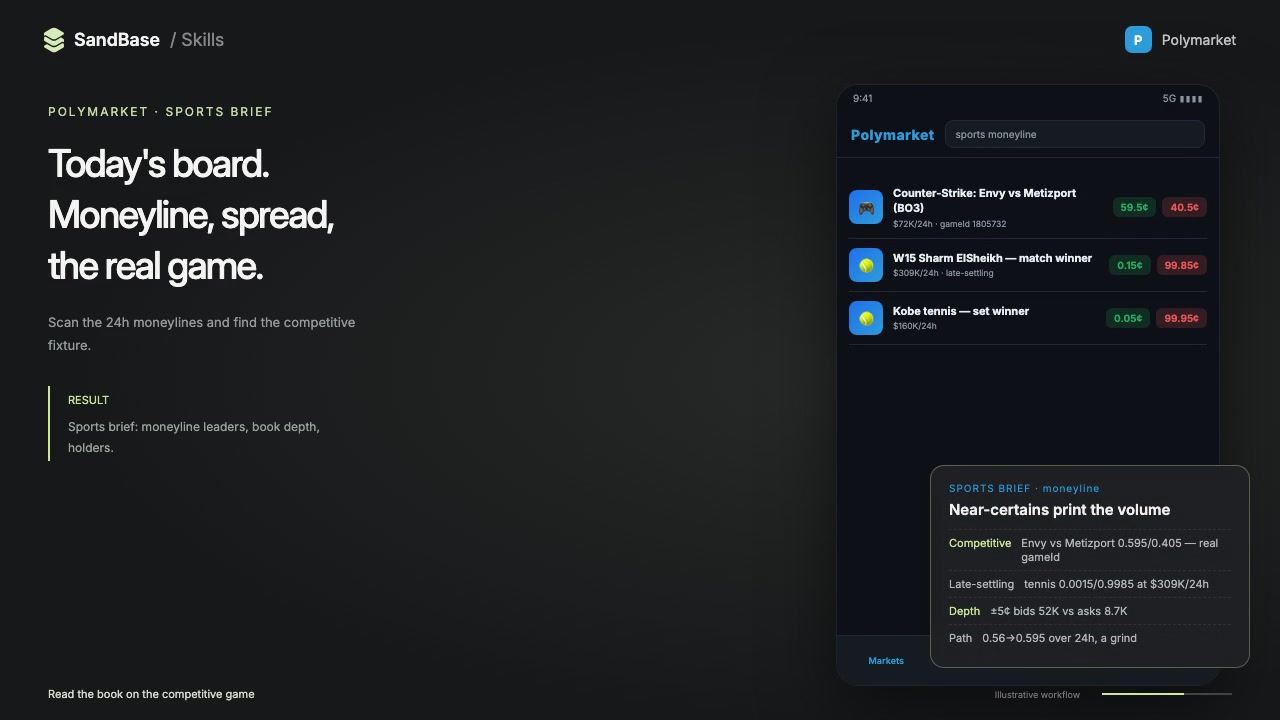
Brief Polymarket sports markets through SandBase — fixtures, odds quality, book depth and who holds each side
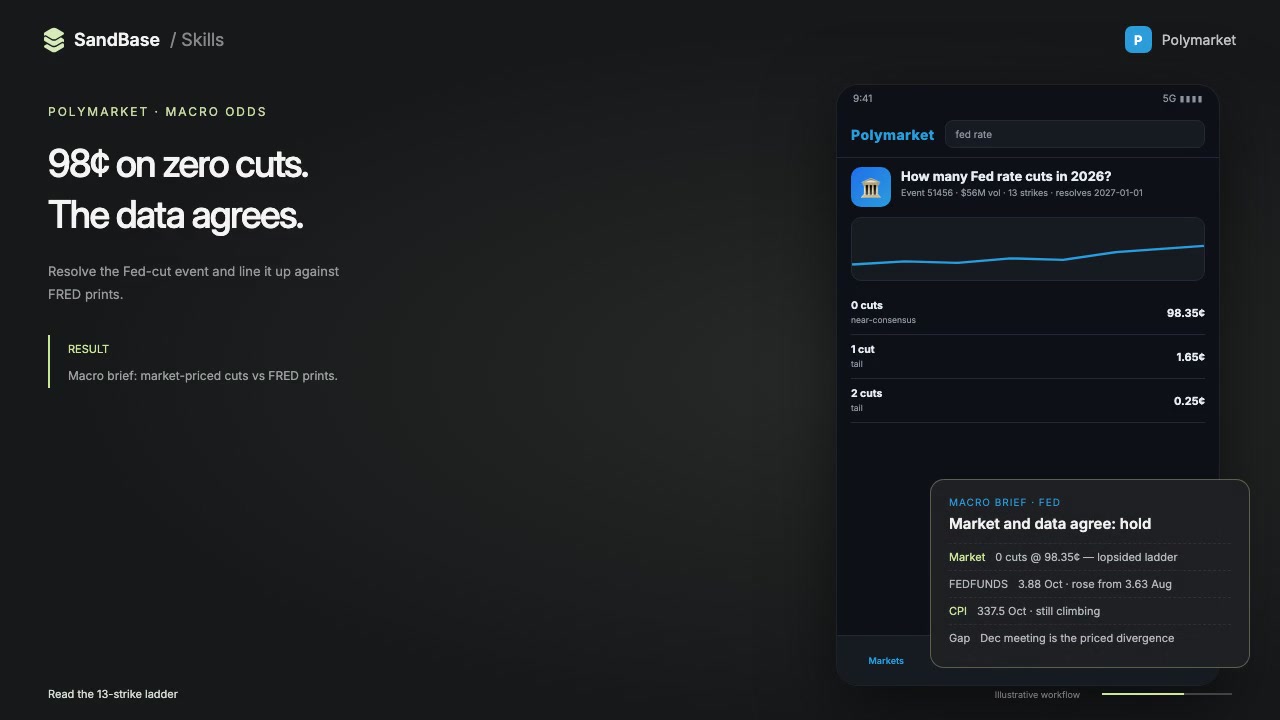
Brief a macro question on Polymarket against actual macro data through SandBase — market odds cross-checked with FRED series
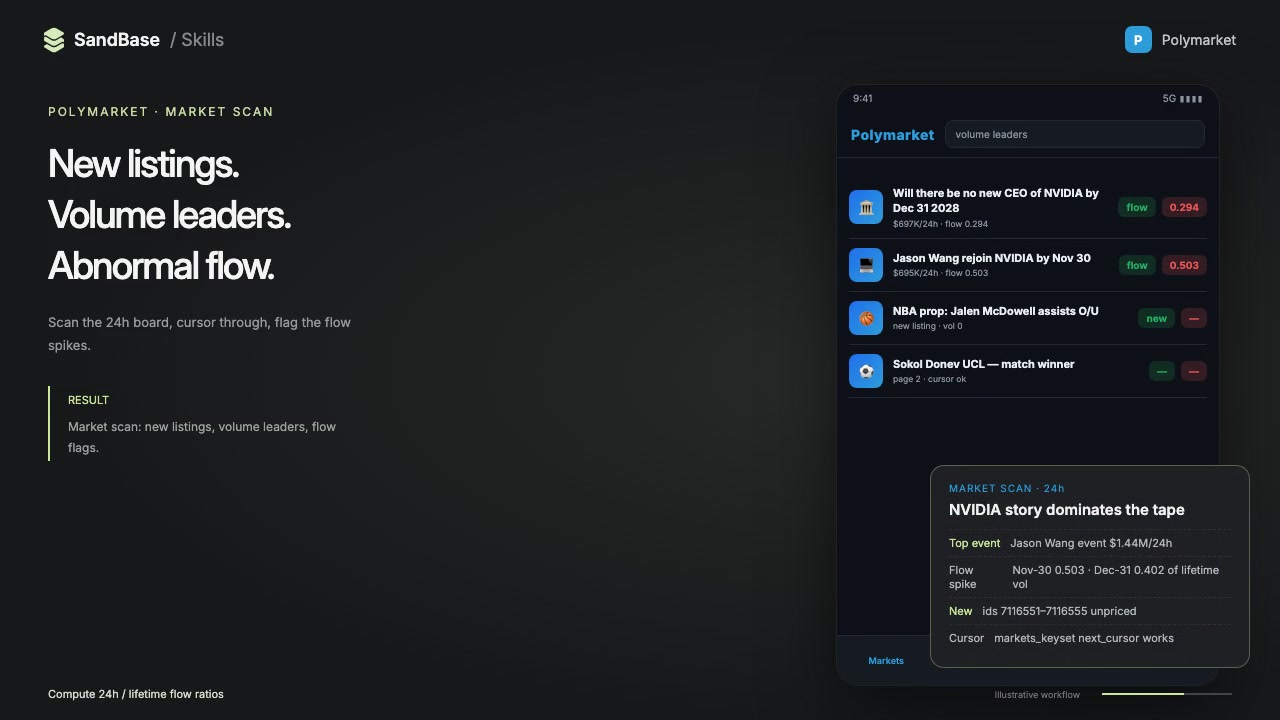
Scan Polymarket markets through SandBase for what is new, moving and abnormally hot
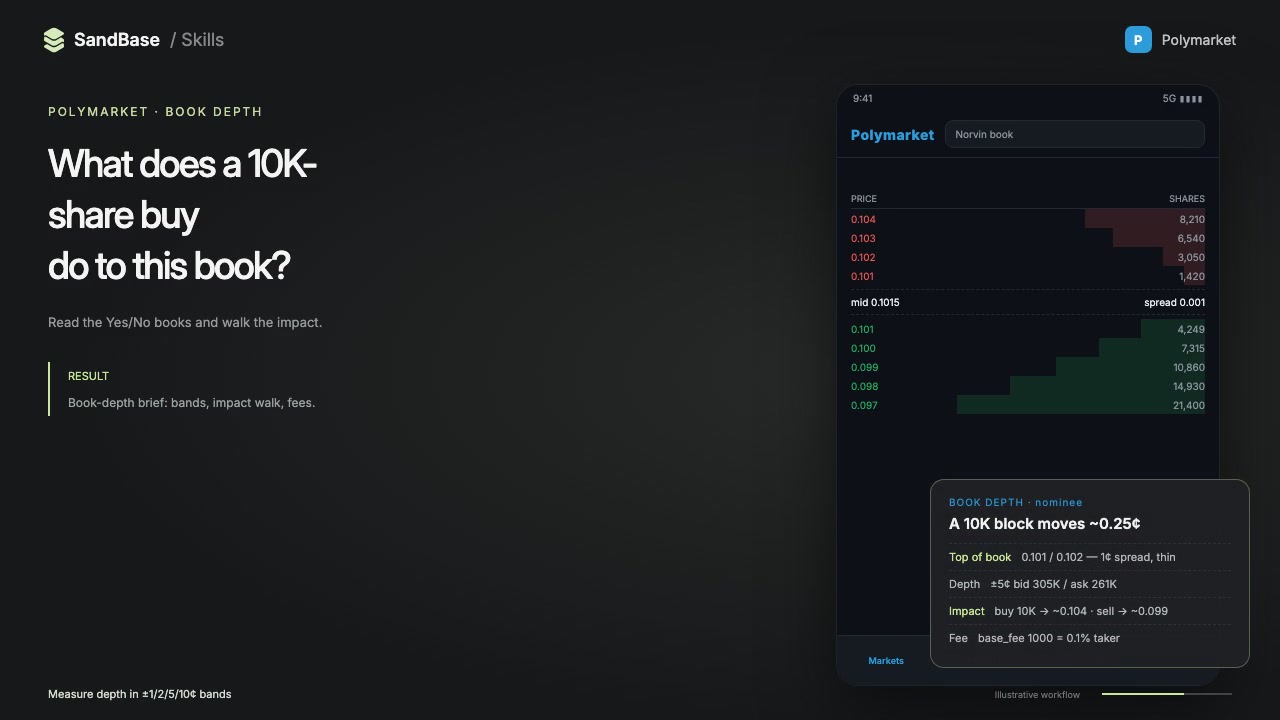
Read the live order book of one Polymarket market through SandBase — spread, depth bands and a walk-the-book impact estimate
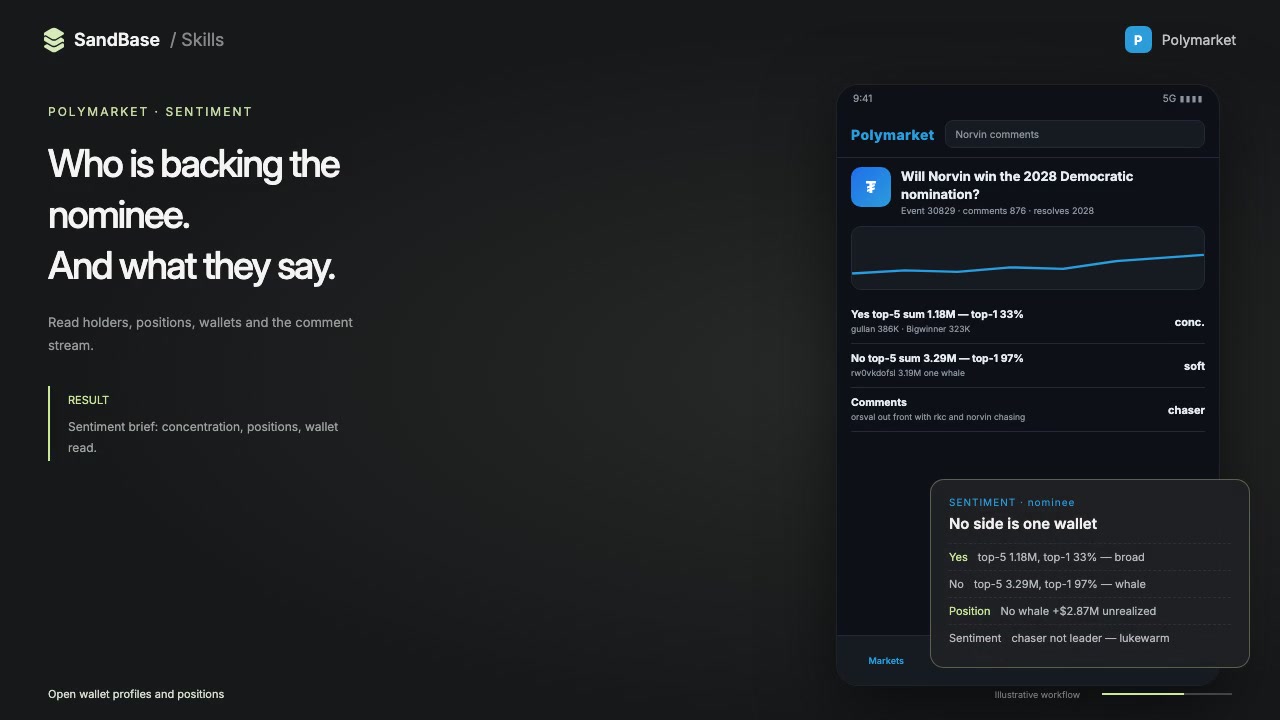
Read the crowd behind one Polymarket market through SandBase — comments, holder concentration and wallet track records
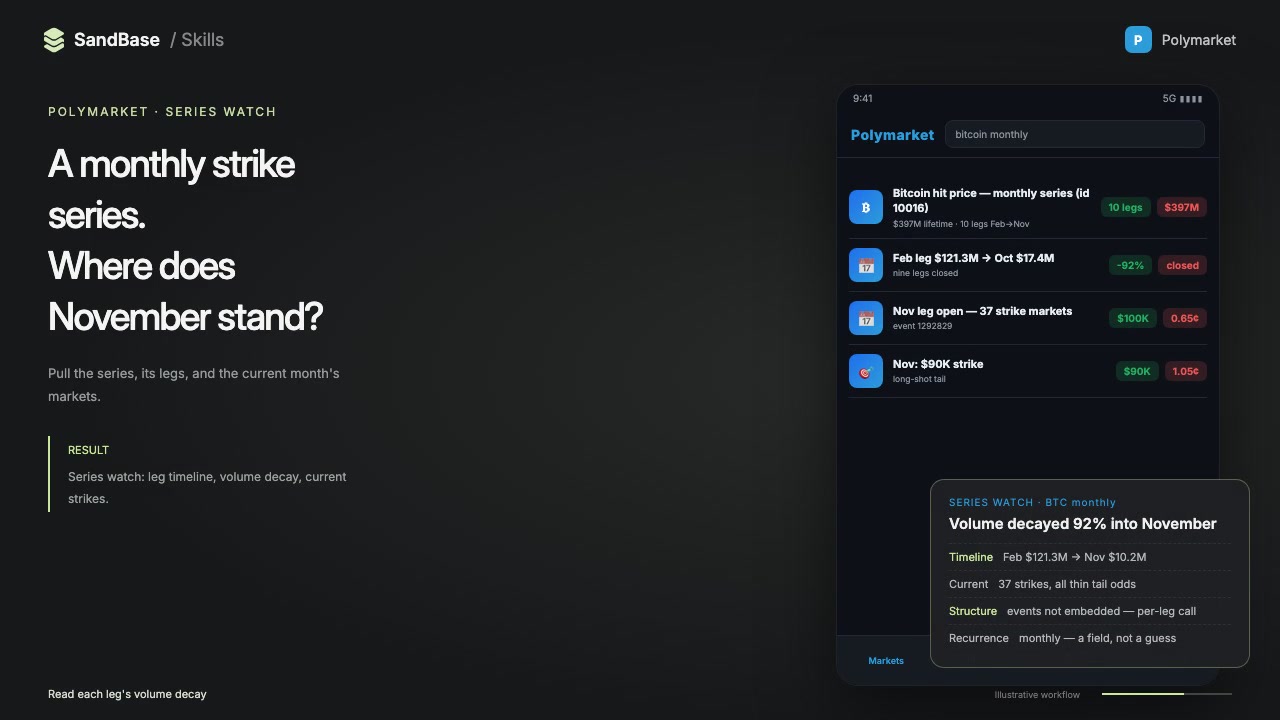
Track a Polymarket series through SandBase — recurring theme families across legs
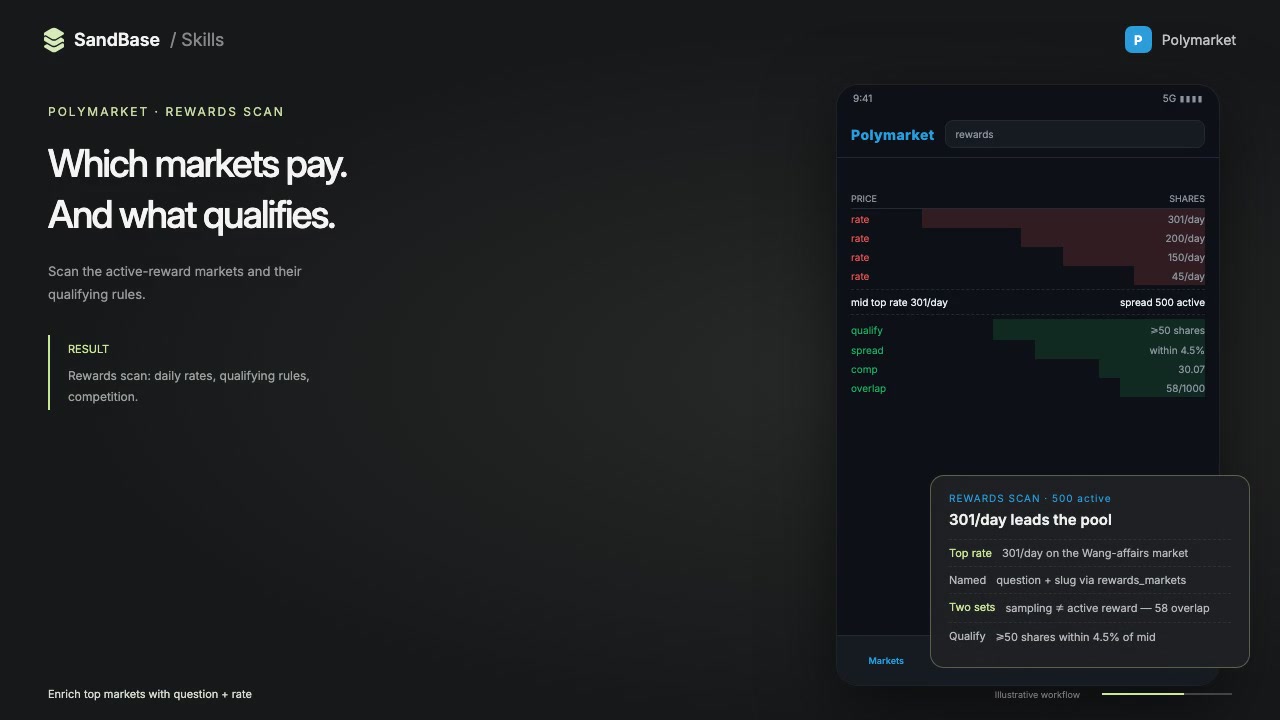
Scan Polymarket's liquidity-rewards and sampling-eligible markets through SandBase
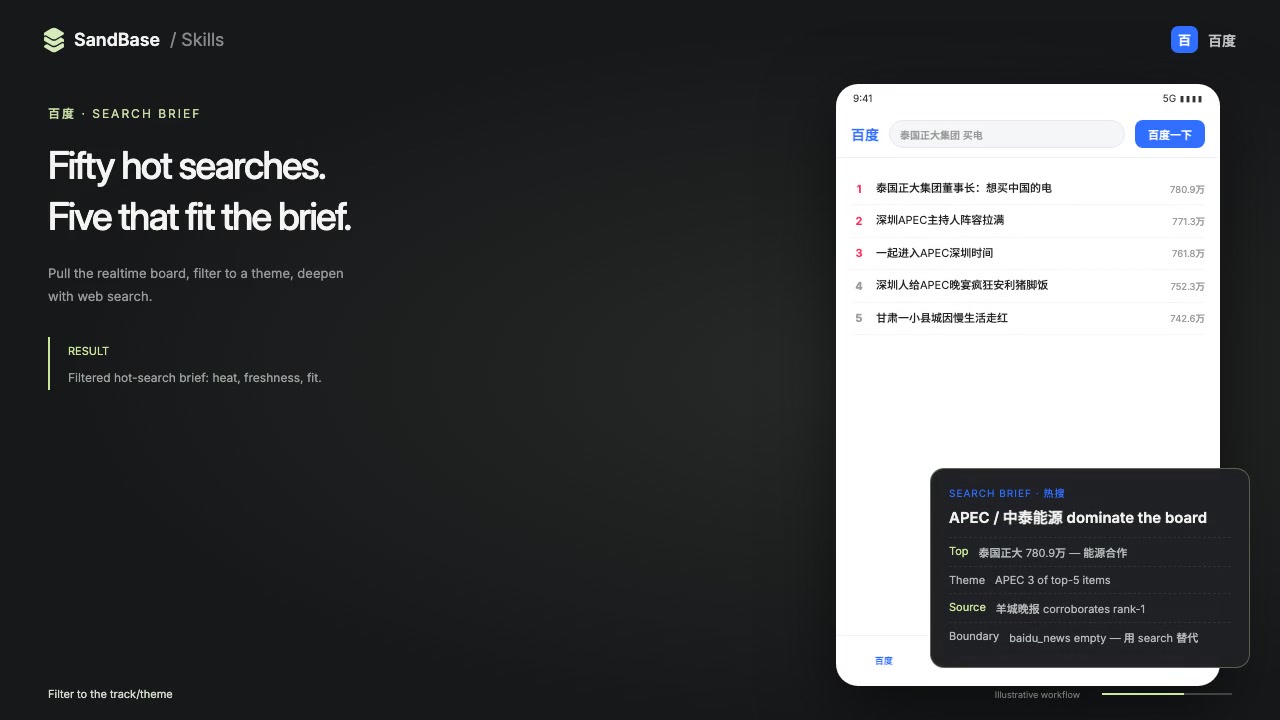
Brief one Baidu hot-search topic through SandBase with the realtime board and corroborating organic results
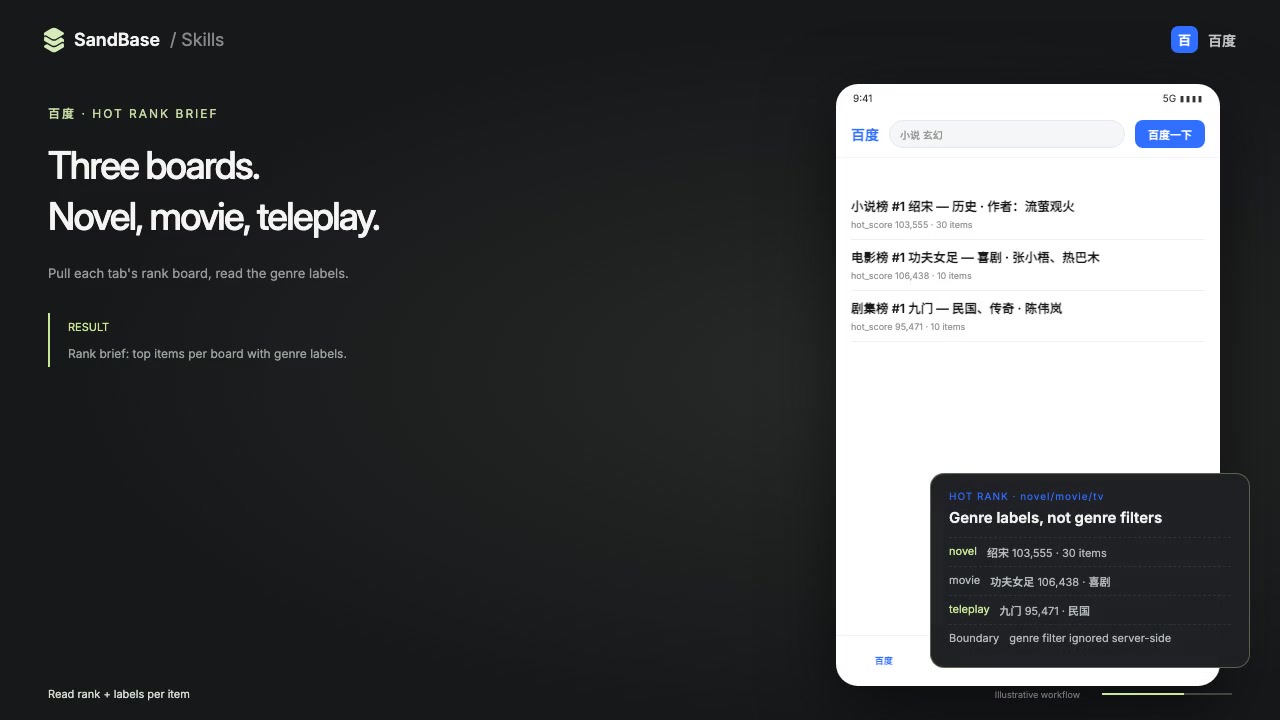
Digest Baidu's novel, movie and teleplay hot boards through SandBase
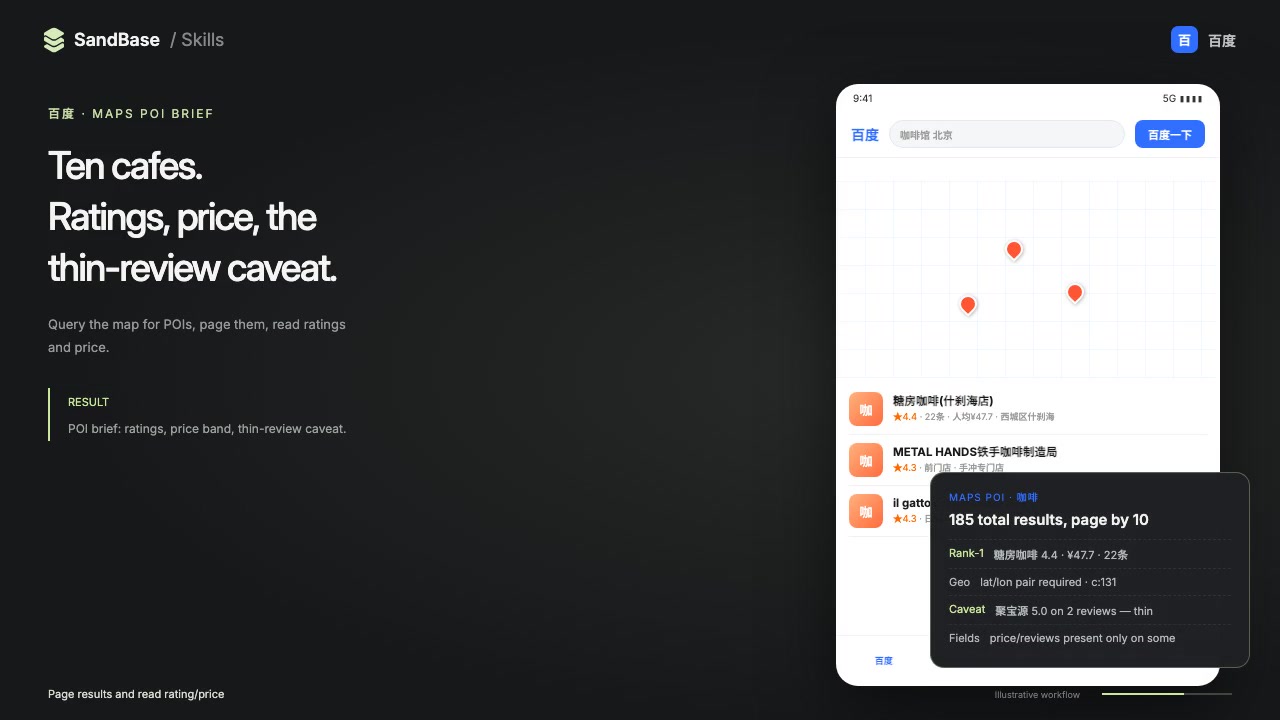
Profile POI density and quality around a place through SandBase Baidu Maps
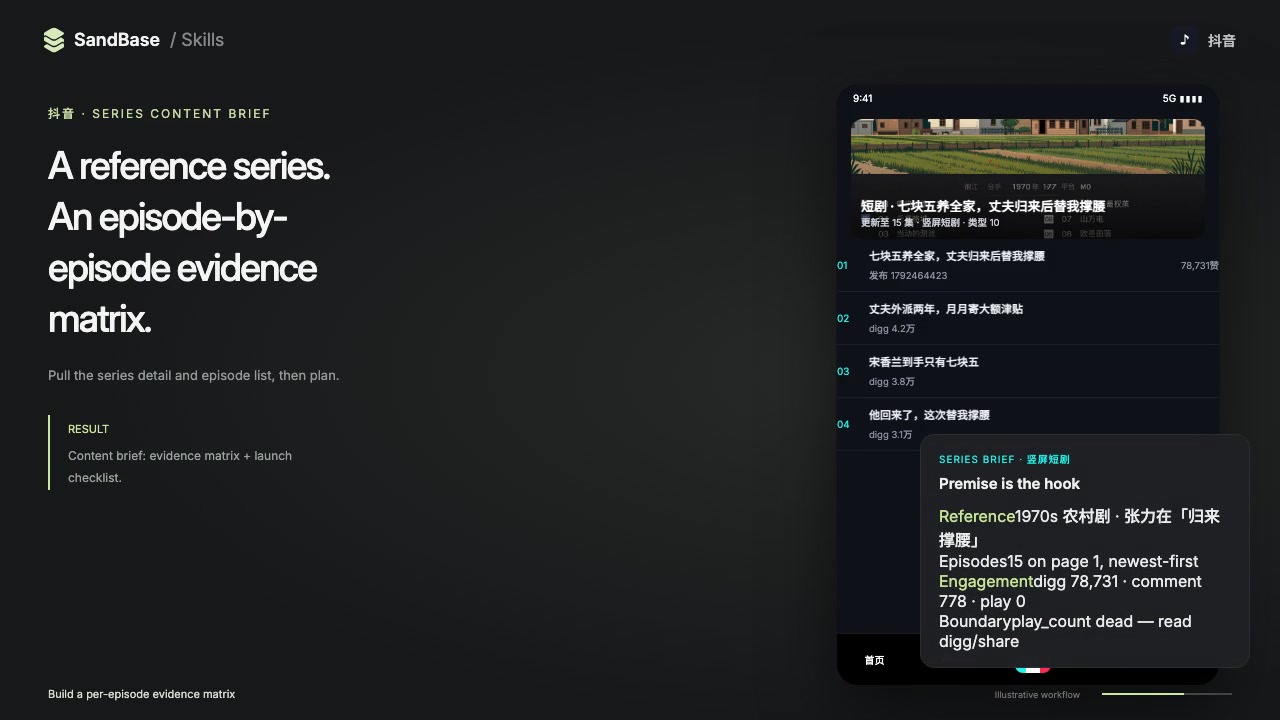
Build an evidence-backed content plan for a Douyin series through SandBase
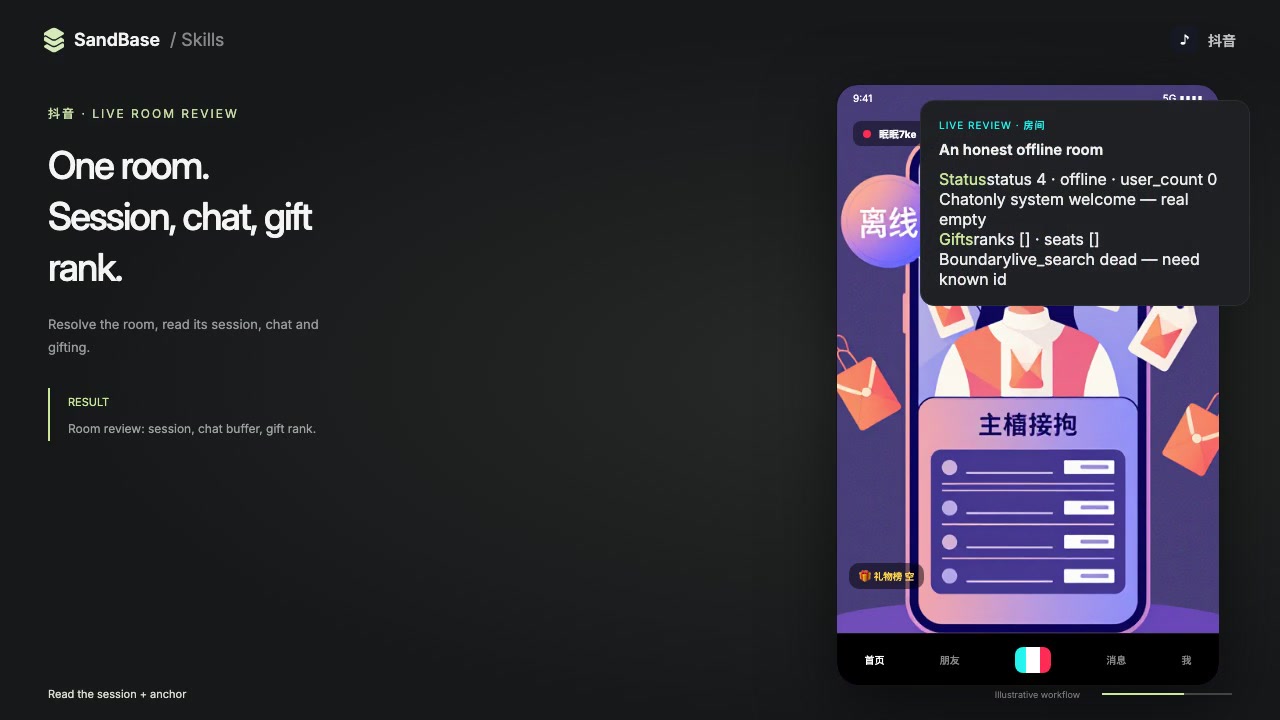
Review one Douyin live room through SandBase — room card, chat feed and gift ranking into a five-axis replay brief
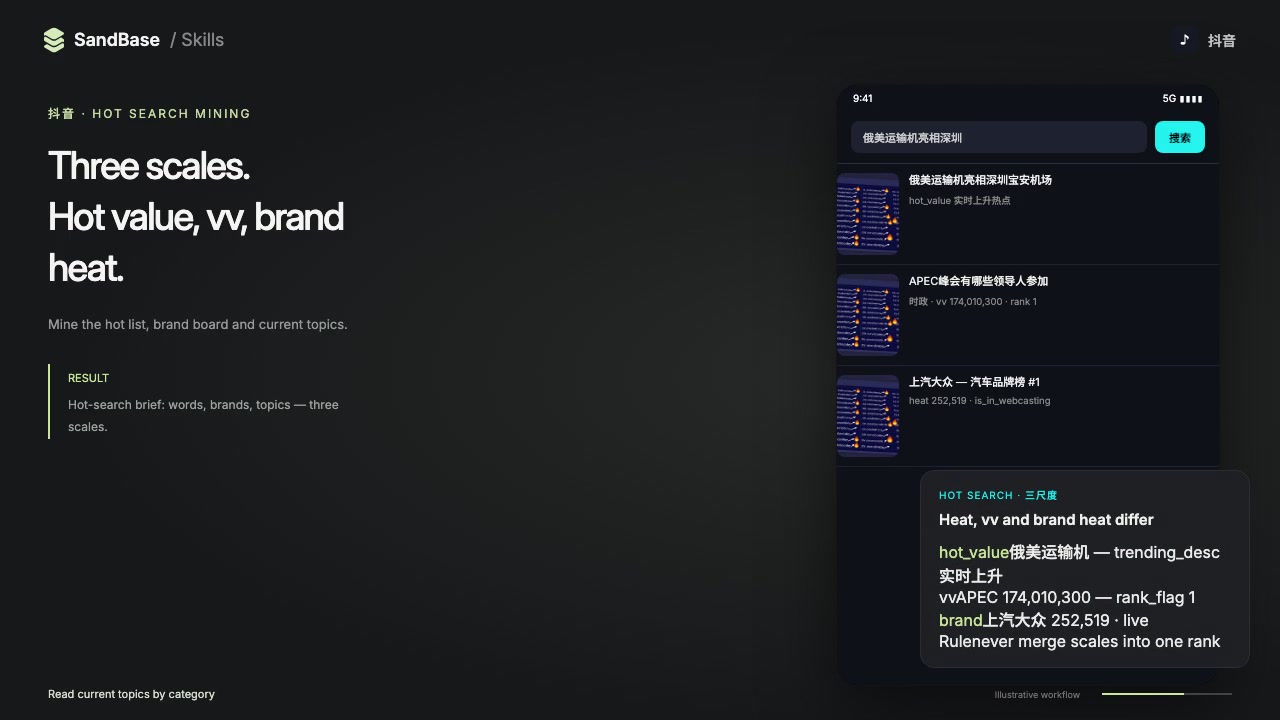
Mine Douyin's hot-search ecosystem through SandBase — hot list, brand boards by category and the current-hot-topic index
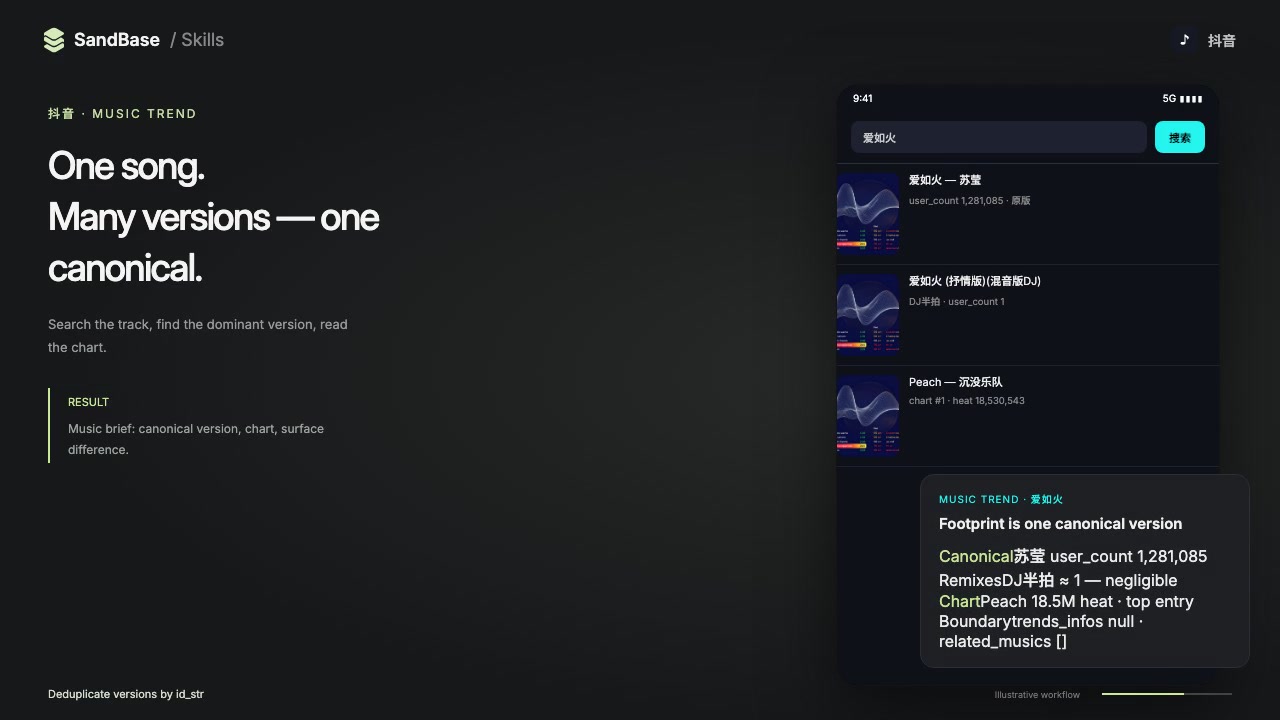
Analyse a Douyin music track's trend through SandBase — version-level usage counts and the hot-music chart
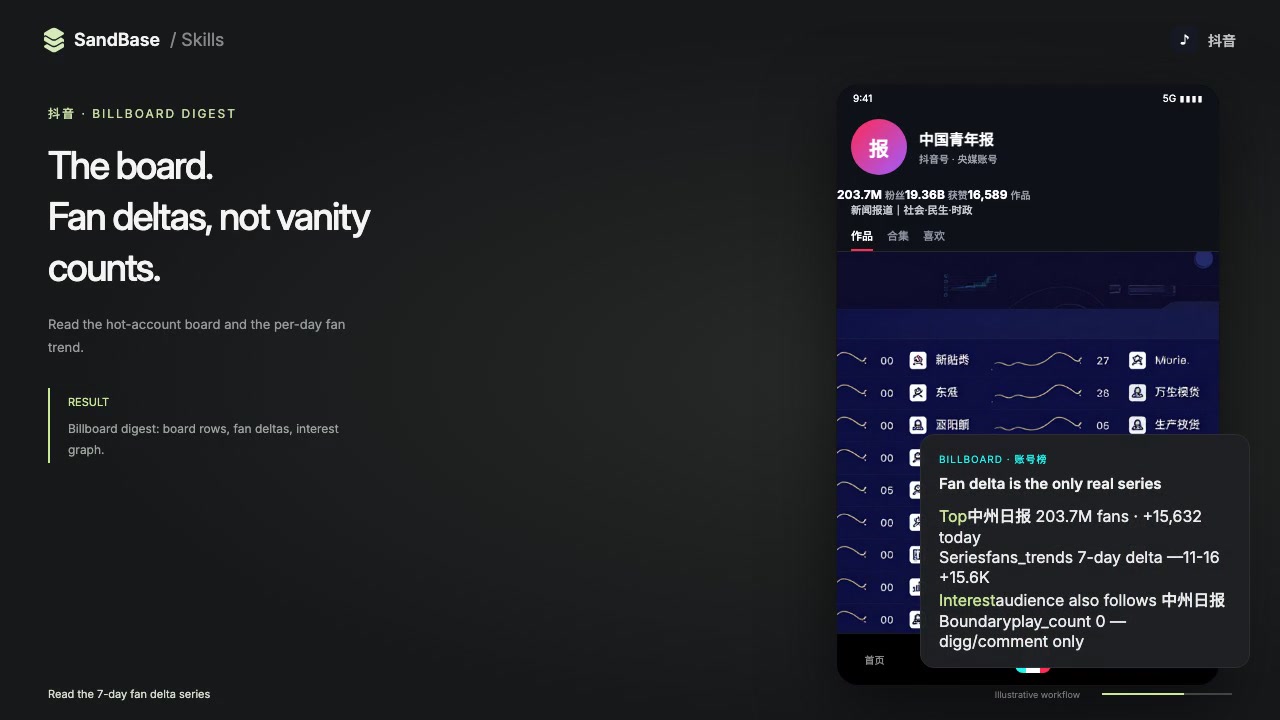
Compile a Douyin category/regional digest through SandBase — city list, content-tag taxonomy, hot-account board and fans-interest surfaces
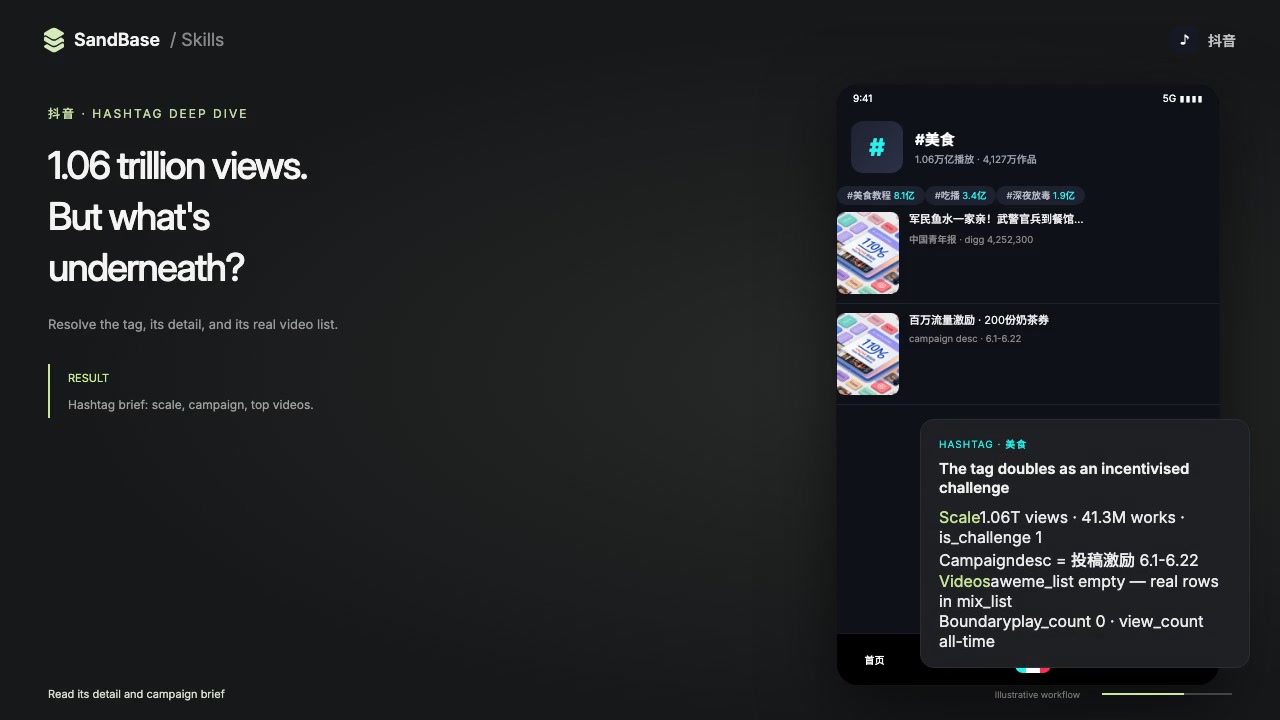
Deep-dive one Douyin hashtag/challenge through SandBase — scale, top-video patterns and challenge status
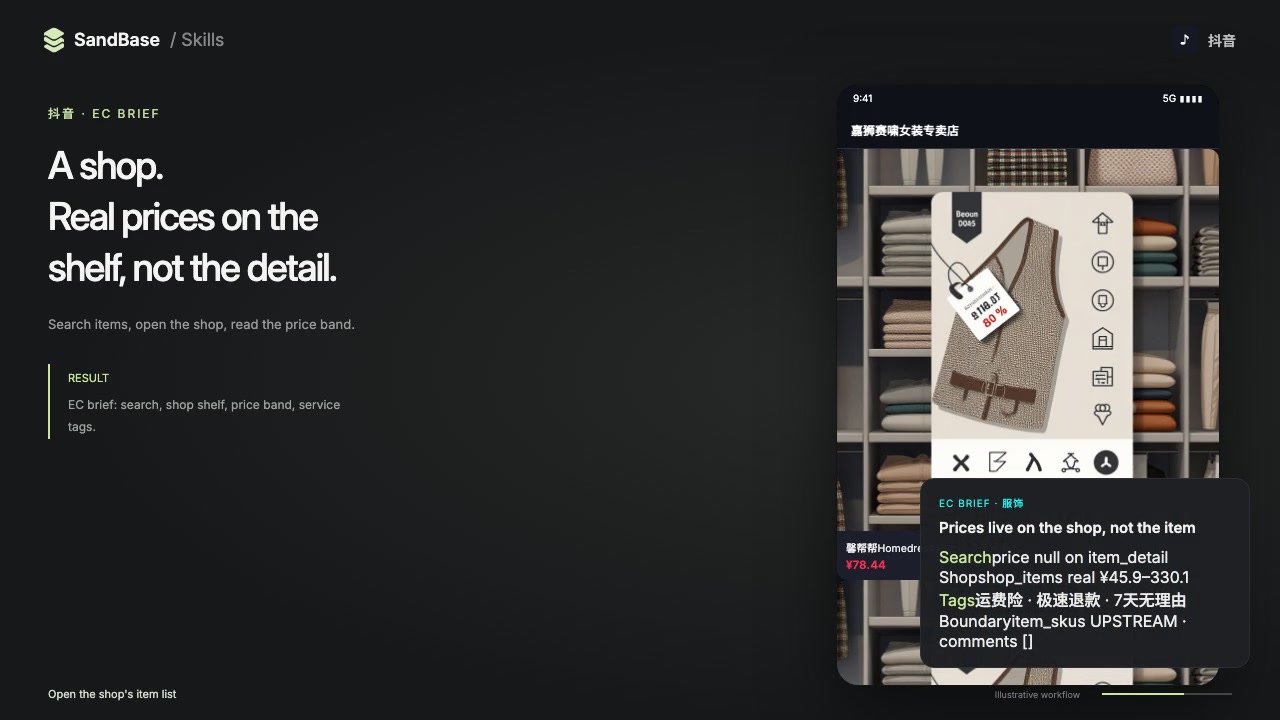
Compile a Douyin e-commerce market brief through SandBase — product search, shop price bands and buyer comments
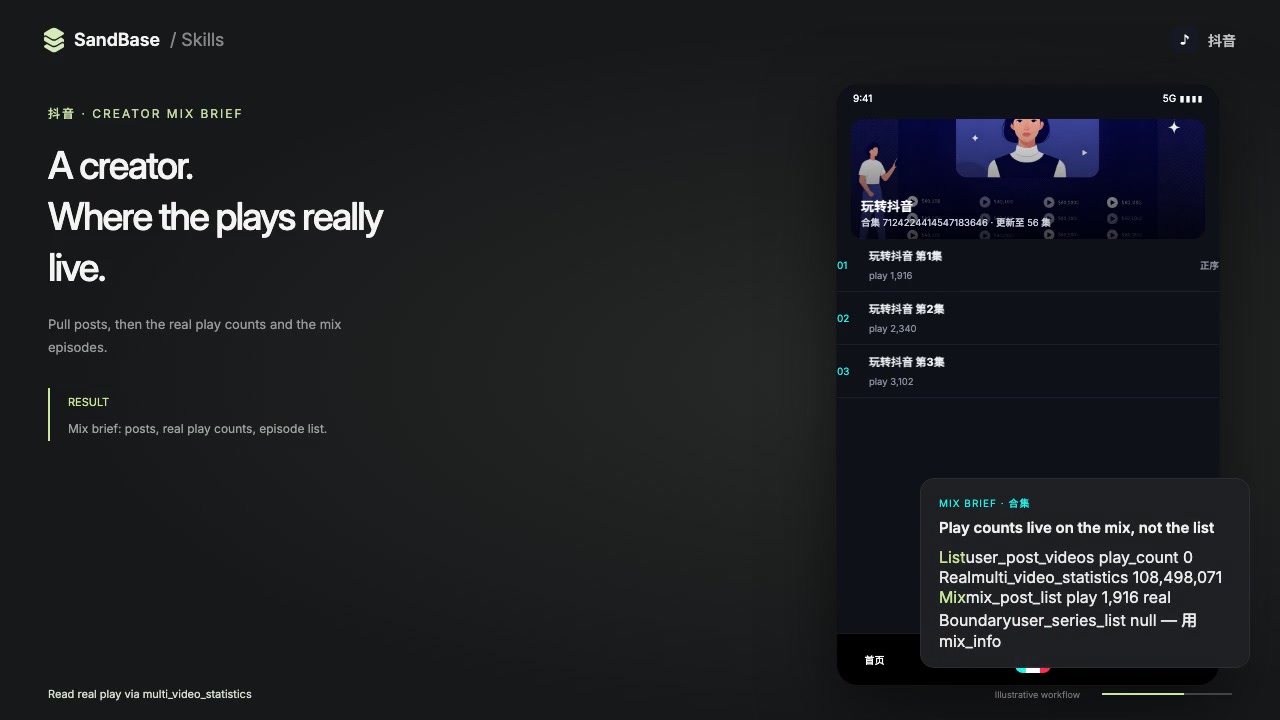
Compile a creator output-and-collection brief through SandBase — post list, real stats and mix/合集 structure
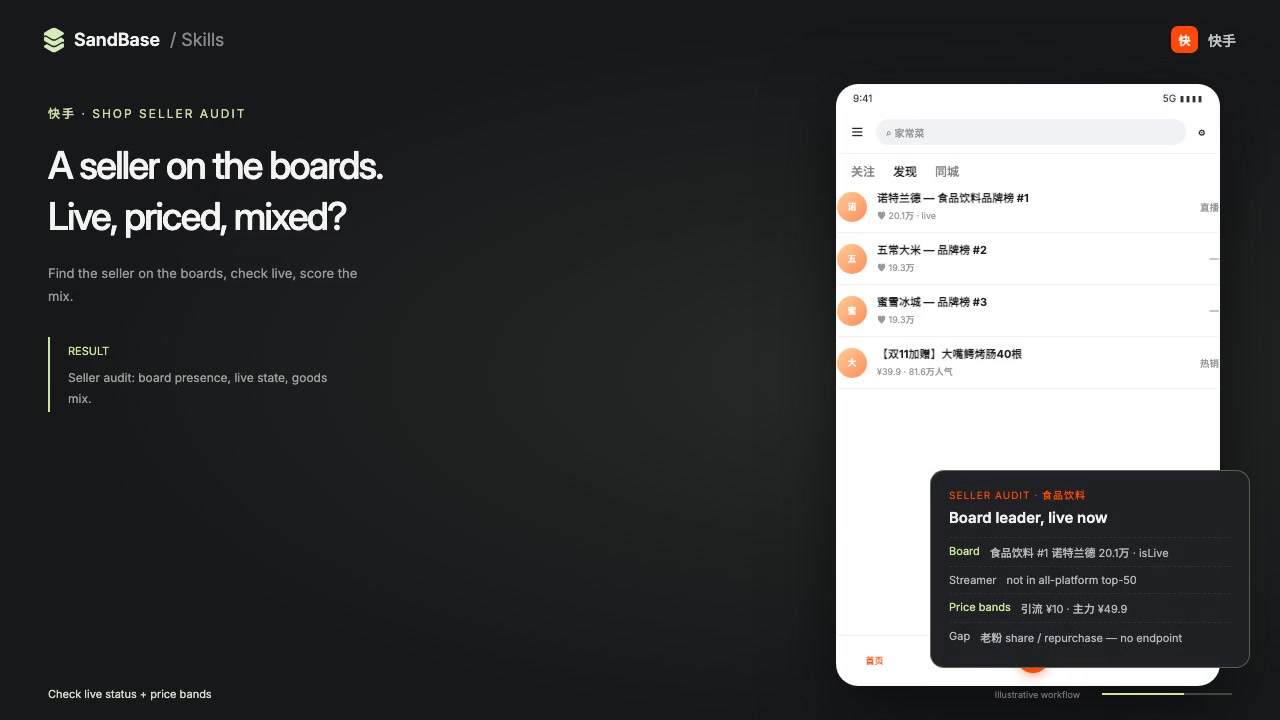
Audit one Kuaishou seller's board-visible goods mix and live status through SandBase
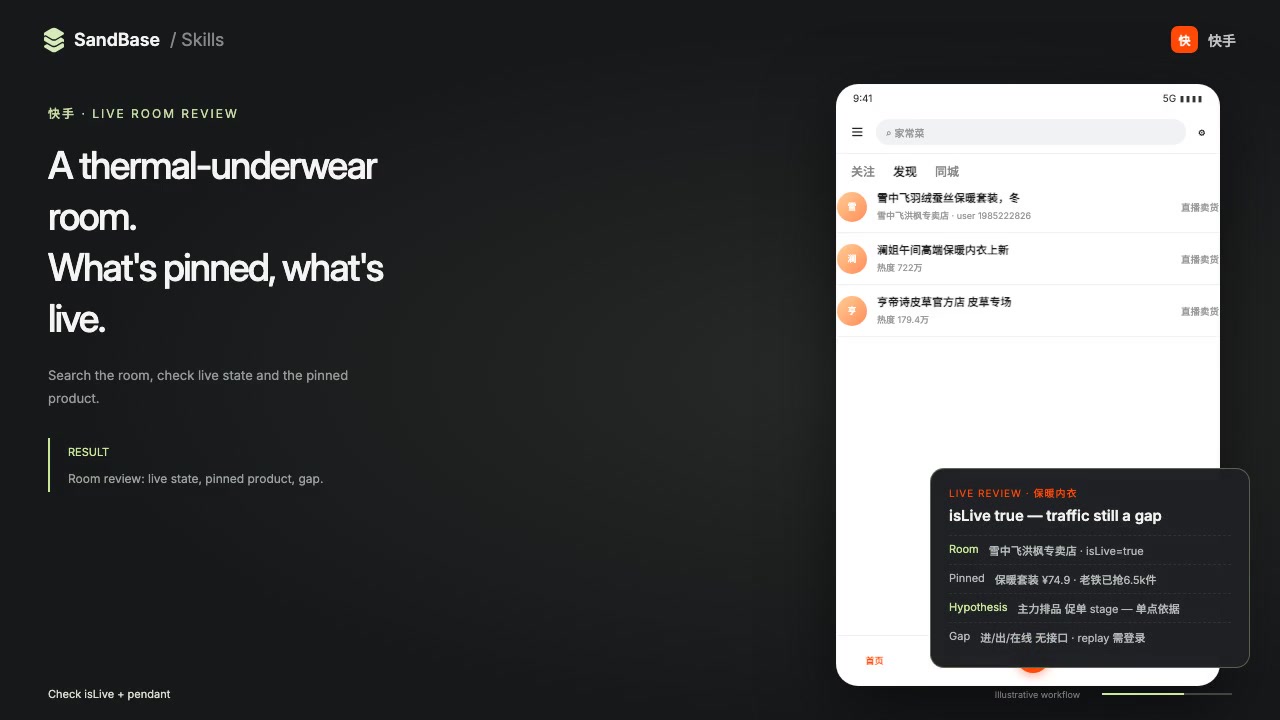
Review one Kuaishou live room through SandBase with an evidence-only replay skeleton
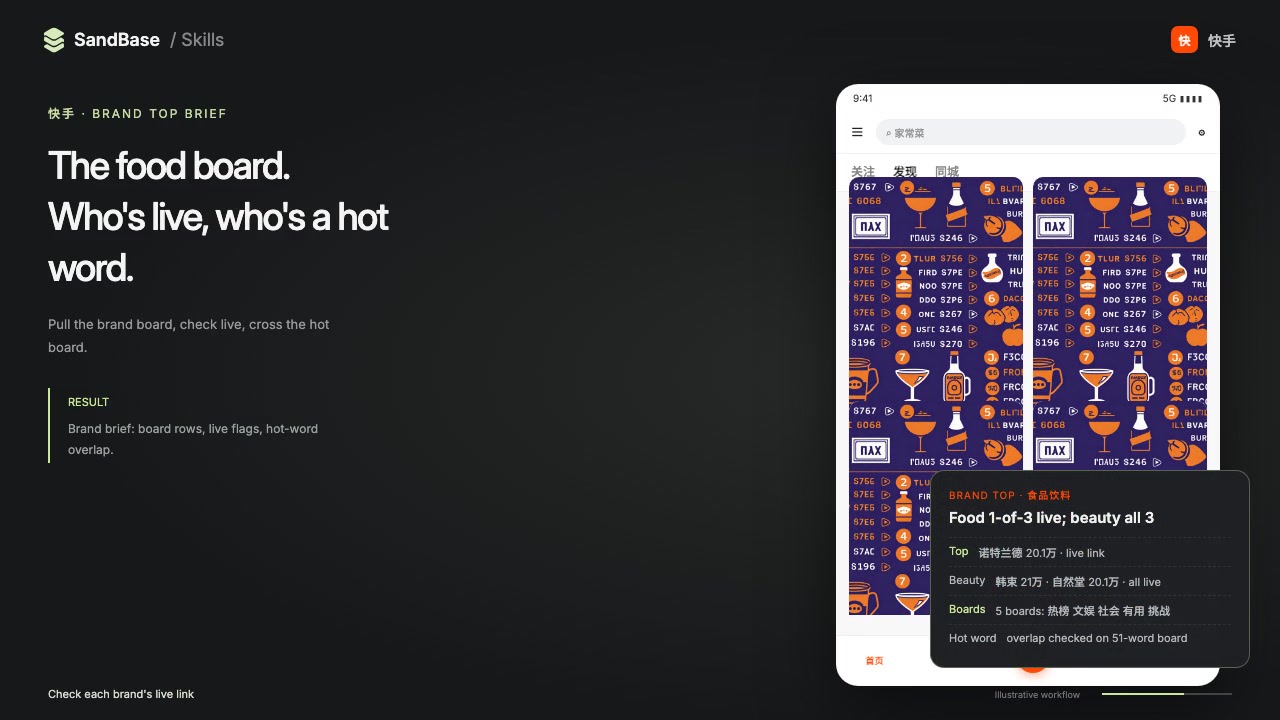
Digest Kuaishou's brand leaderboards through SandBase
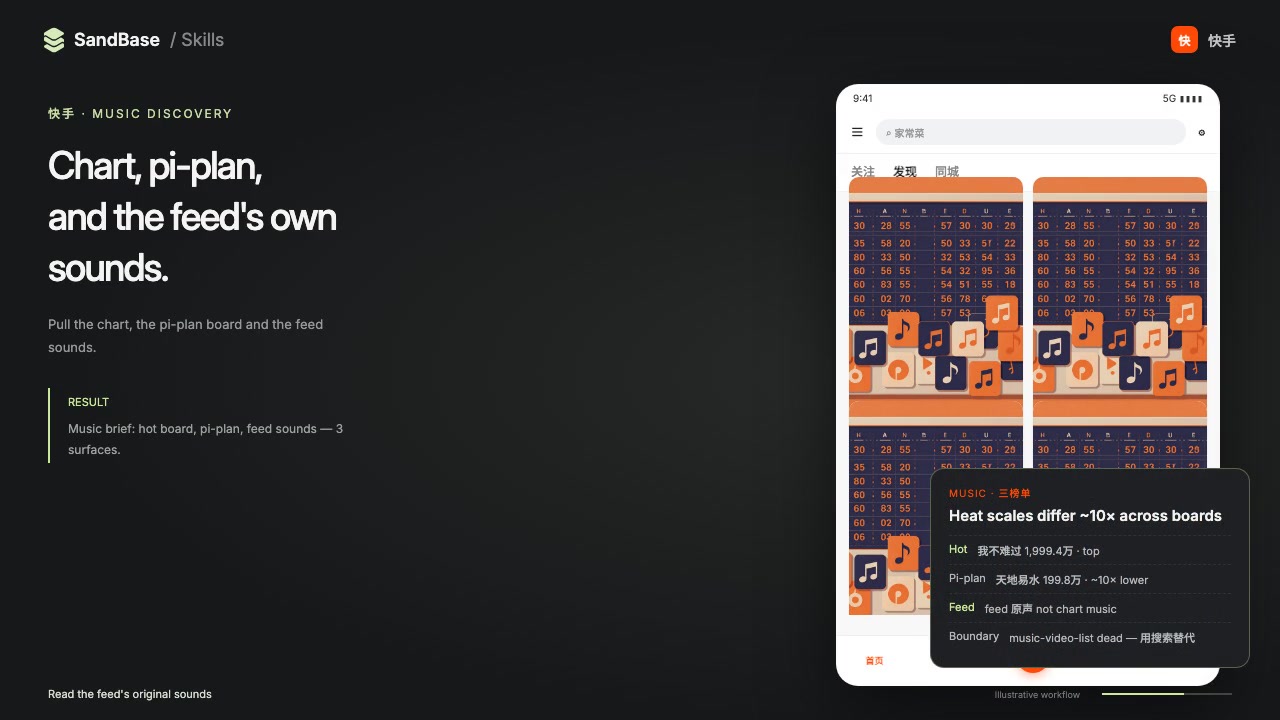
Build a cross-board music discovery shortlist for Kuaishou through SandBase
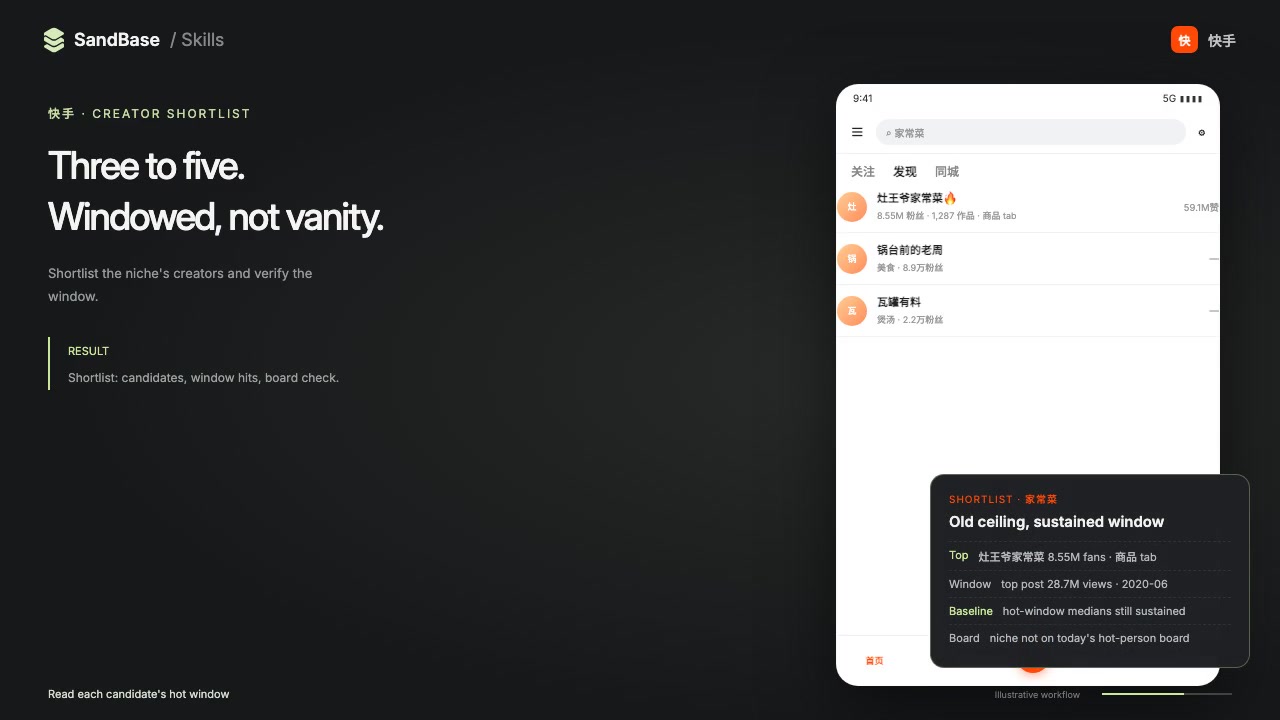
Build a vetted shortlist of Kuaishou creators for a niche through SandBase
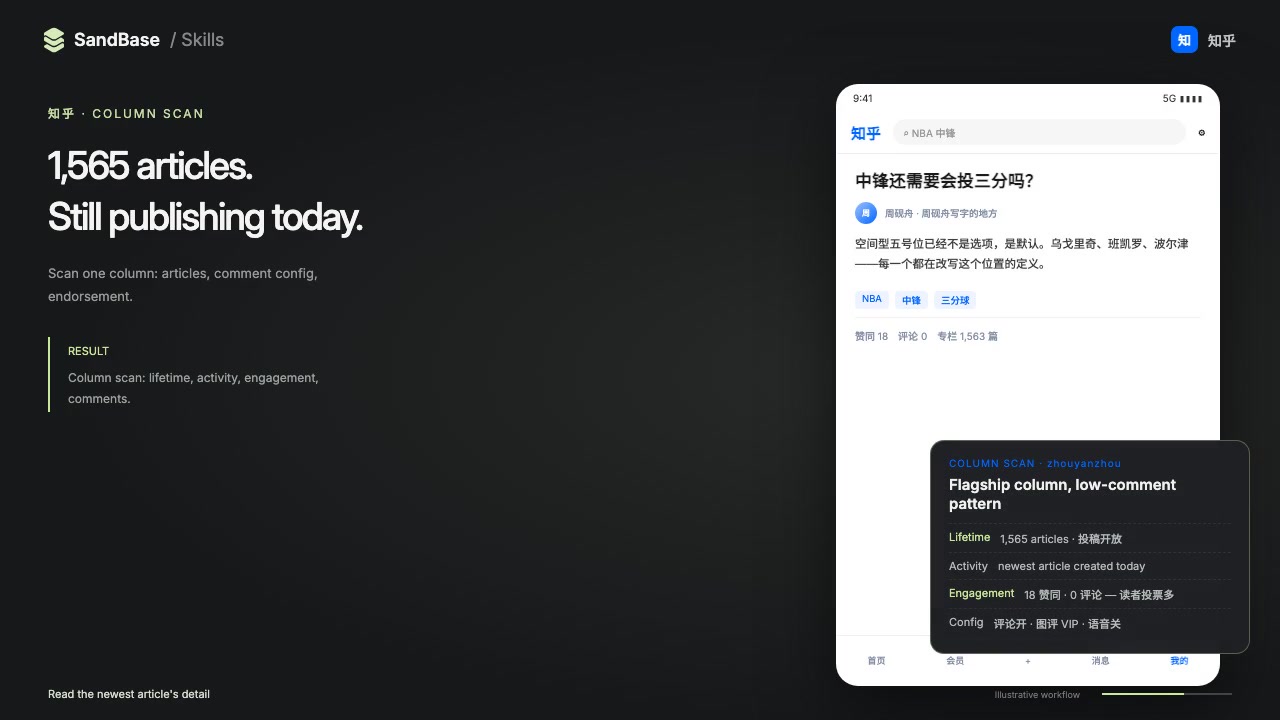
Audit a known Zhihu column's health through SandBase — lifetime totals, cadence, engagement and comment permissions
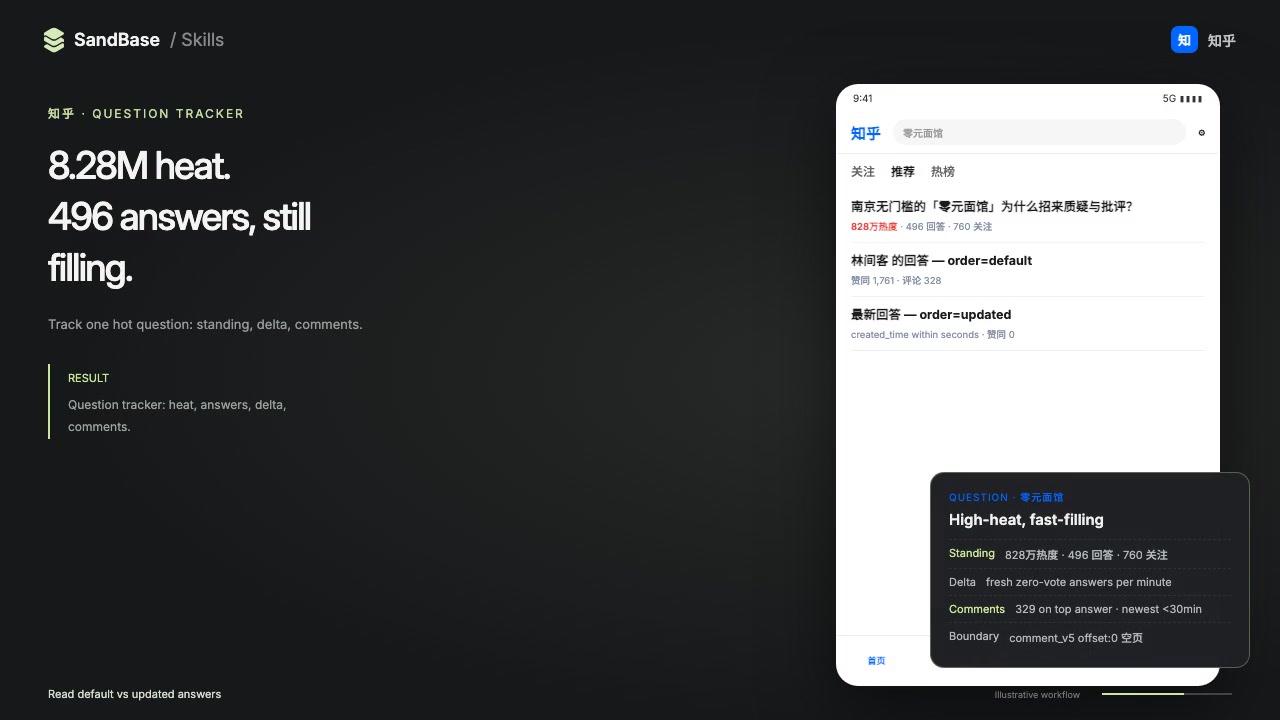
Track activity on a known Zhihu question through SandBase — standing, fresh answers and moving comments
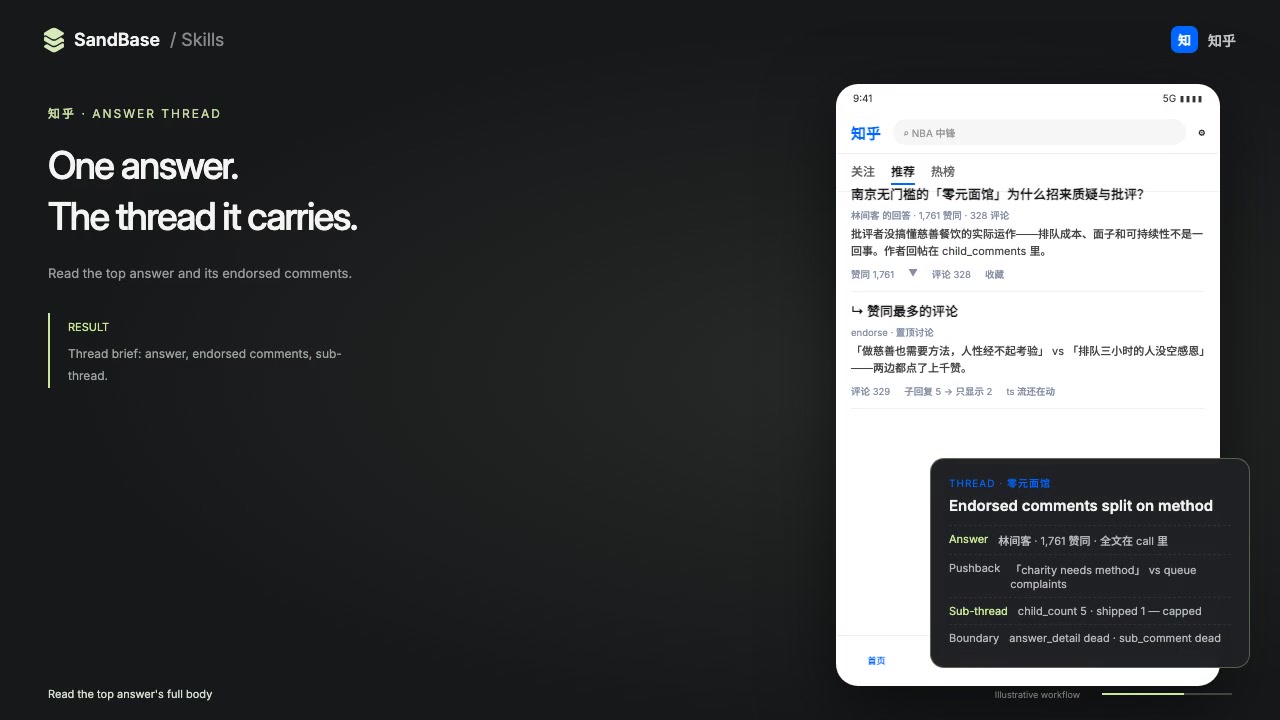
Digest one Zhihu answer's full text and comment sub-threads through SandBase
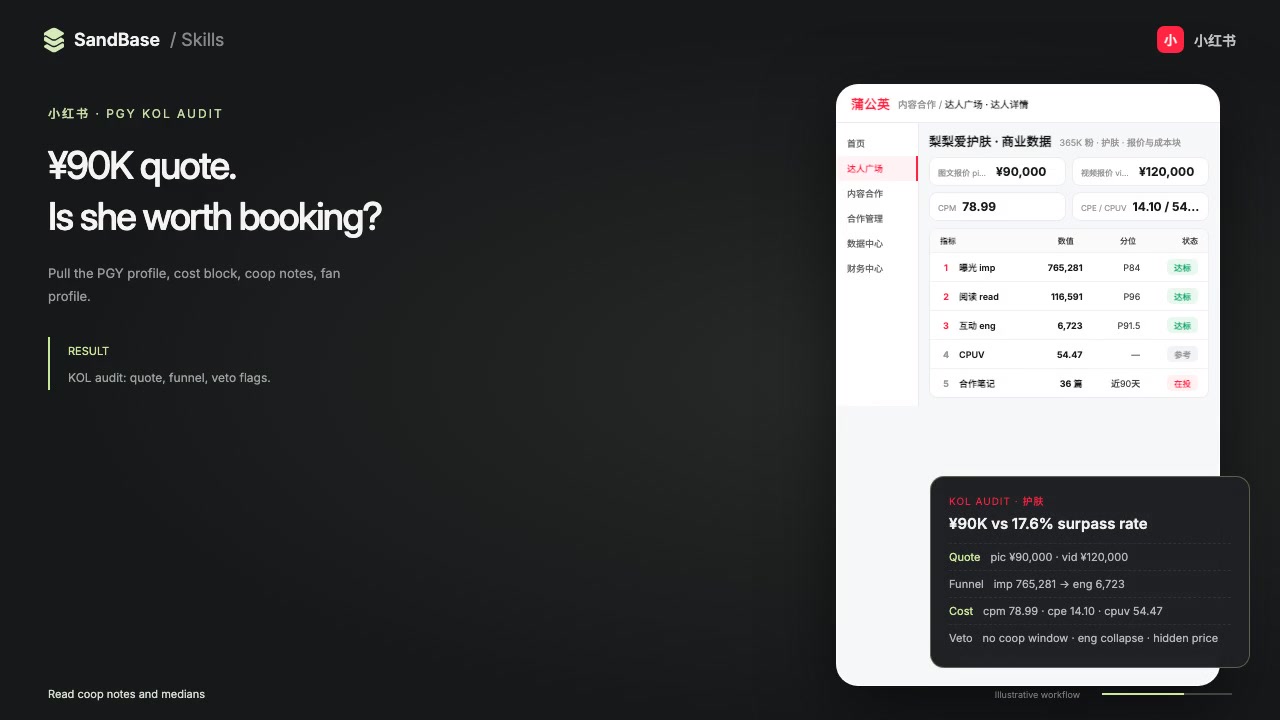
Audit one Xiaohongshu 蒲公英 (PGY) creator's commercial value through SandBase — quote, cost-effectiveness, delivery medians and fan profile
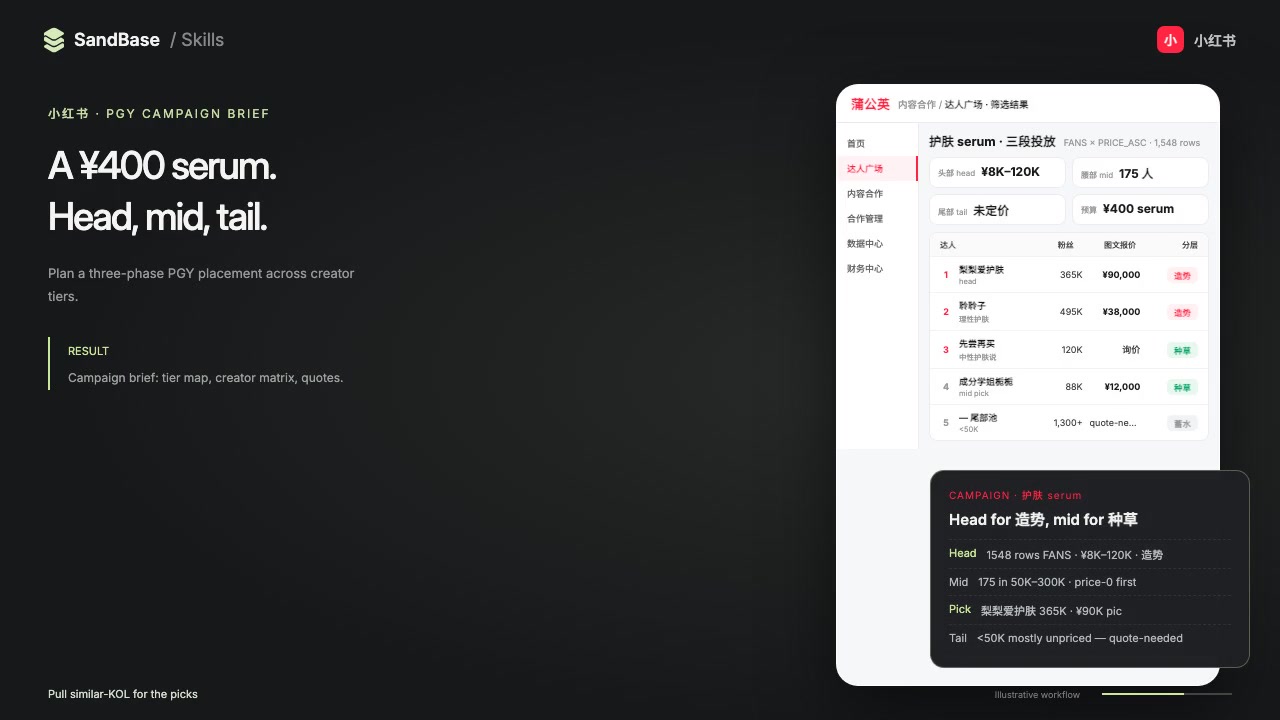
Build a phased Xiaohongshu 蒲公英 (PGY) 投放 plan through SandBase — tier the niche's bookable creators and lay out phase roles
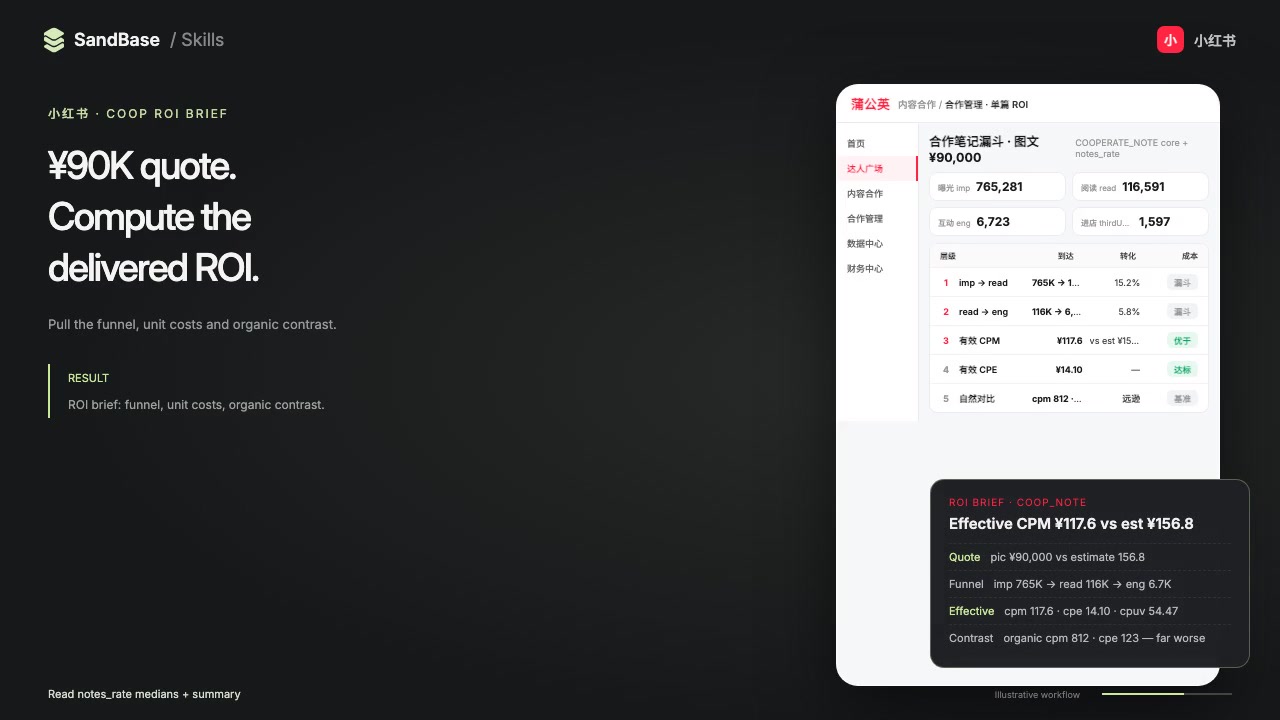
Build a cooperation-ROI brief for a Xiaohongshu PGY deal through SandBase — the daily funnel and unit economics on the quote
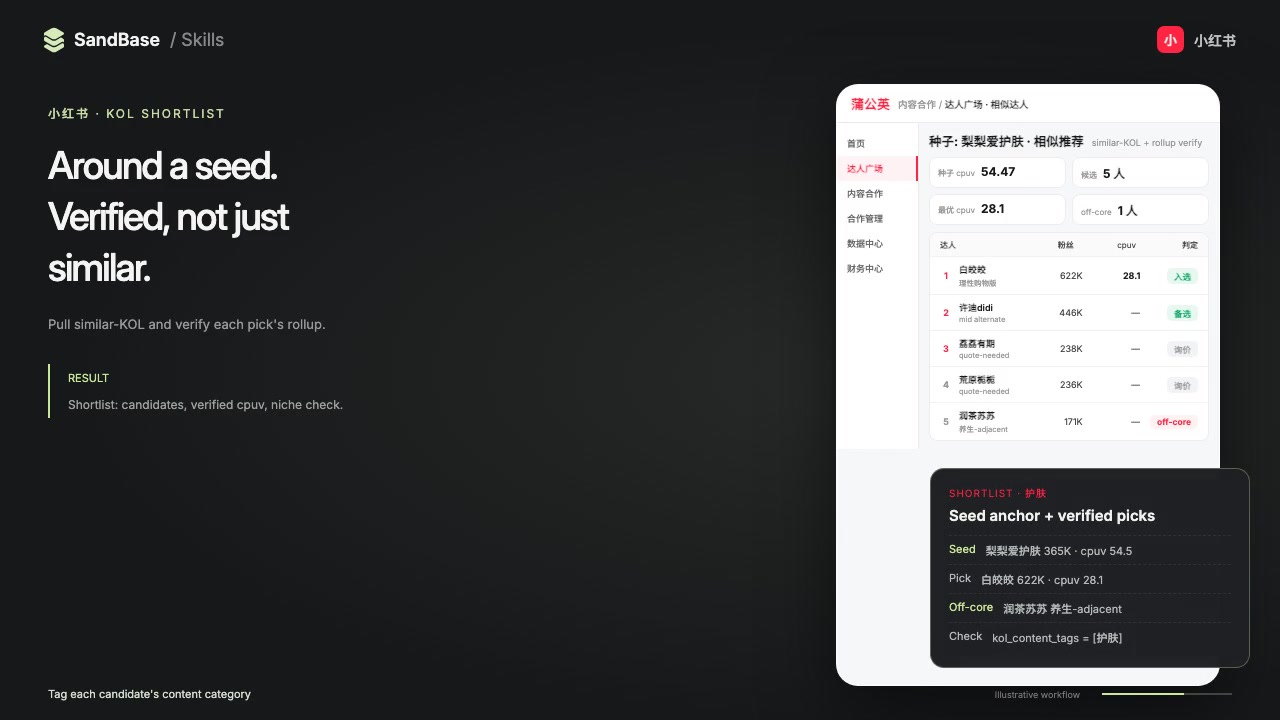
Build a vetted shortlist of Xiaohongshu PGY creators around a known seed through SandBase
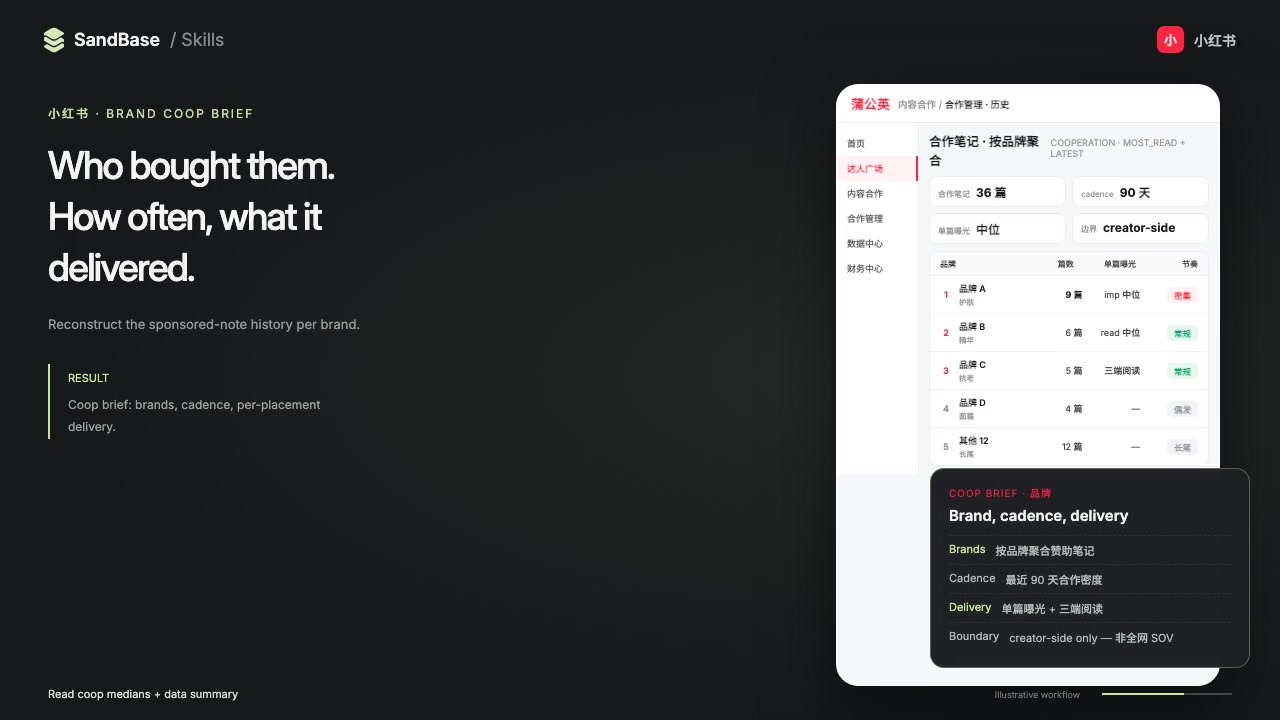
Research a Xiaohongshu creator's brand-cooperation history through SandBase
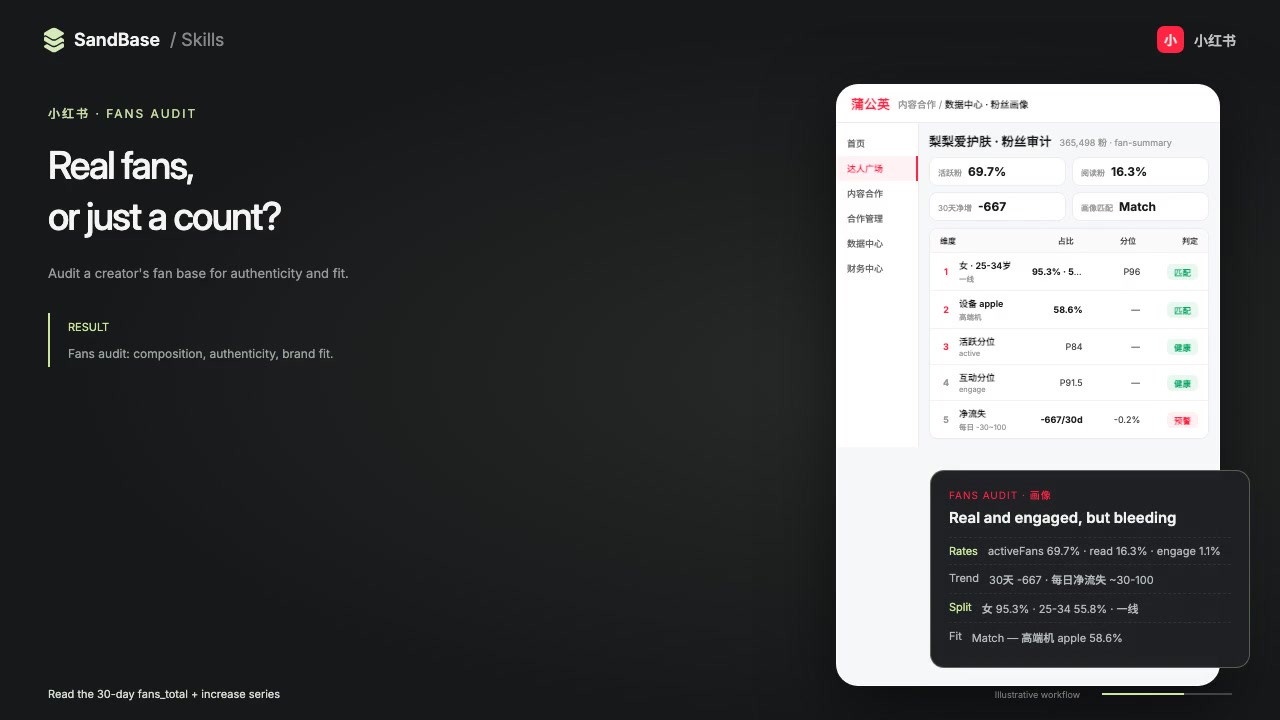
Audit a Xiaohongshu creator's follower base through SandBase — rates, 30-day trend and demographics
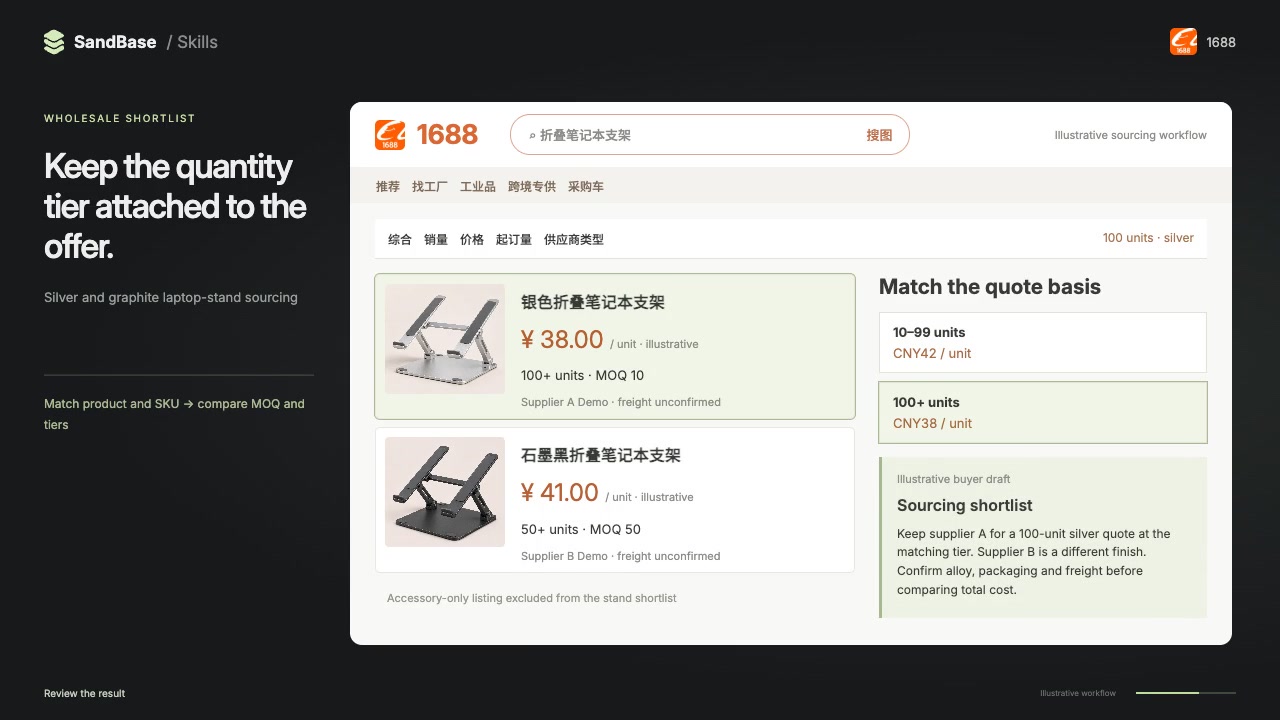
Compare sourcing candidates before asking for a quote.
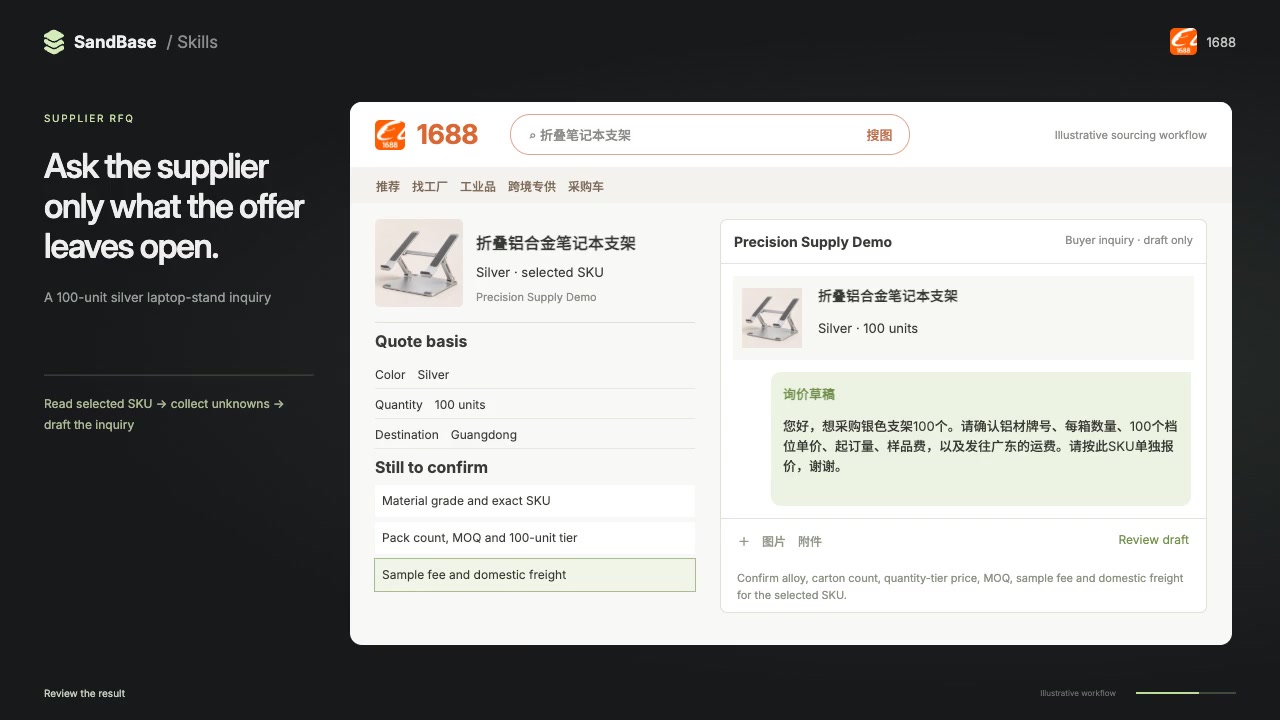
Turn the sourcing shortlist into precise supplier questions.
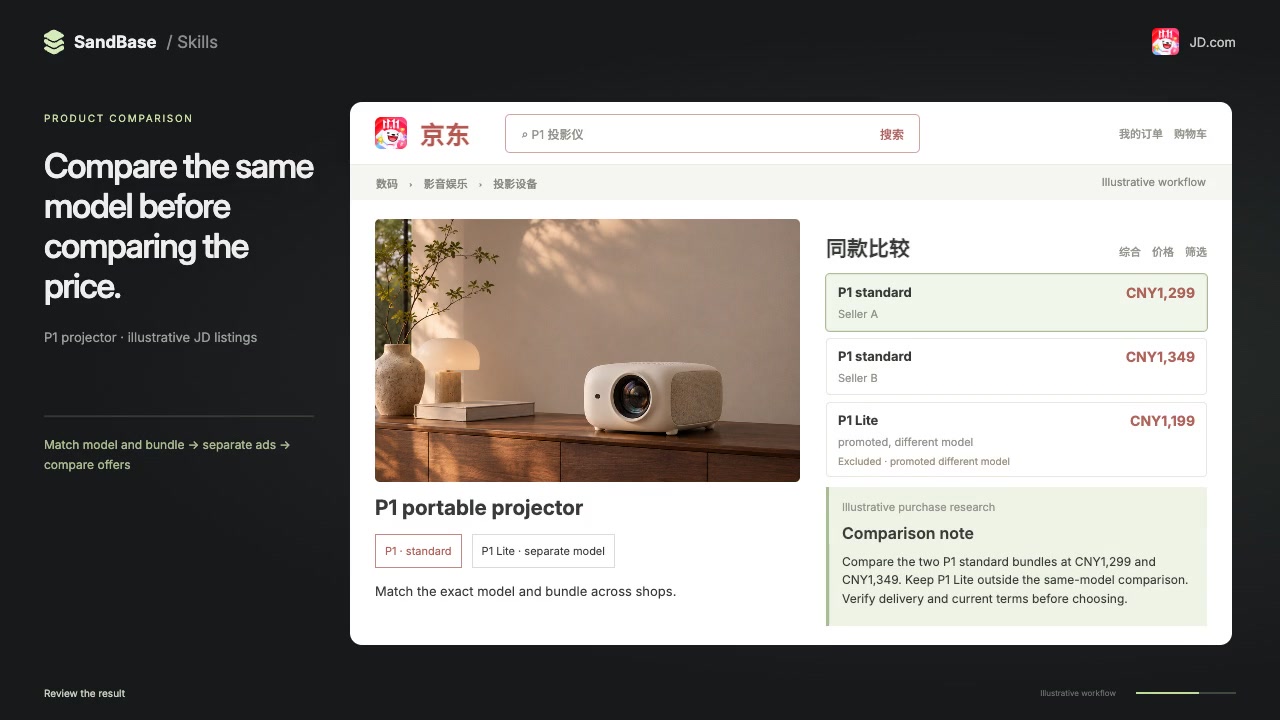
Compare JD.com listings by the exact product and variant.
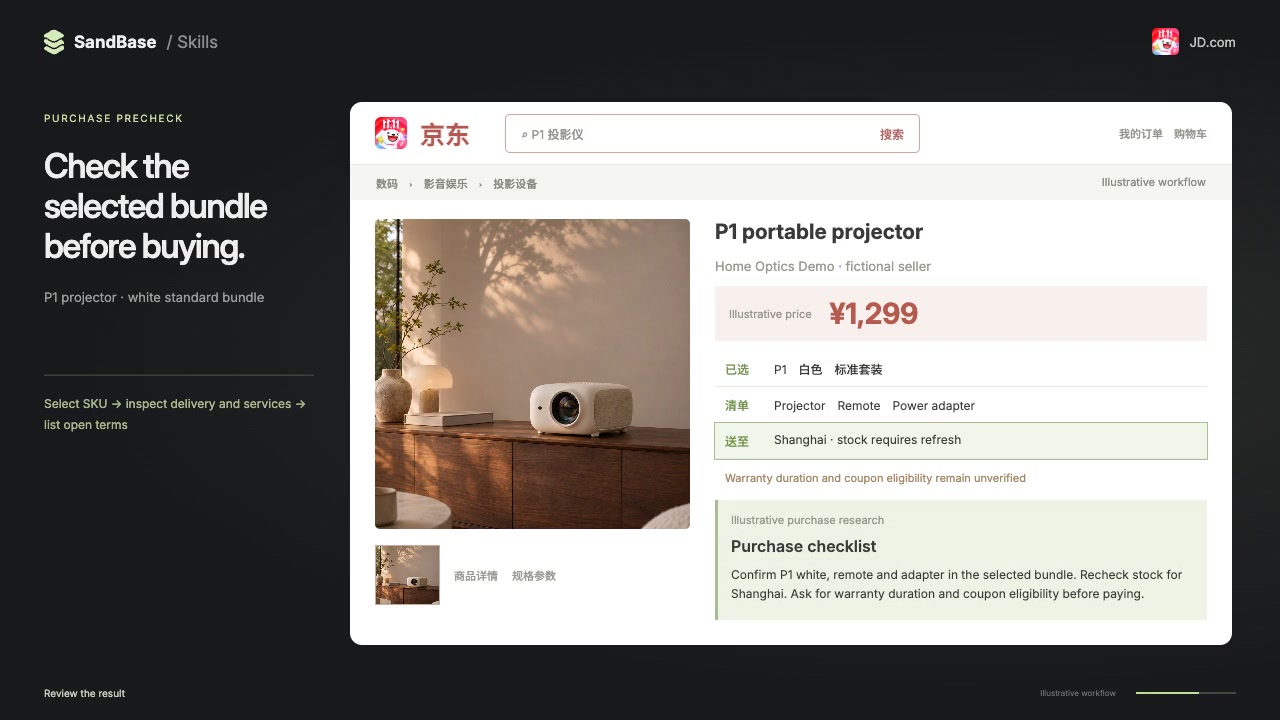
Identify the details still needed before buying a JD.com product.
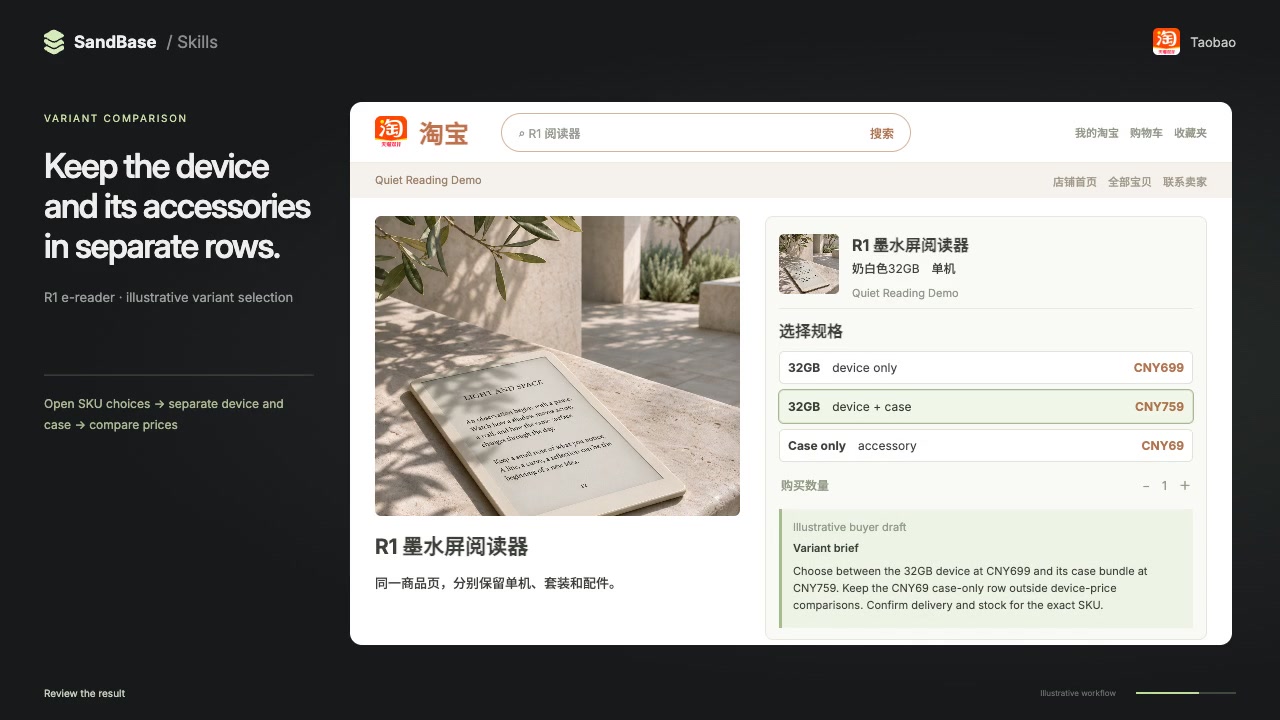
Separate Taobao product variants and comparable prices.
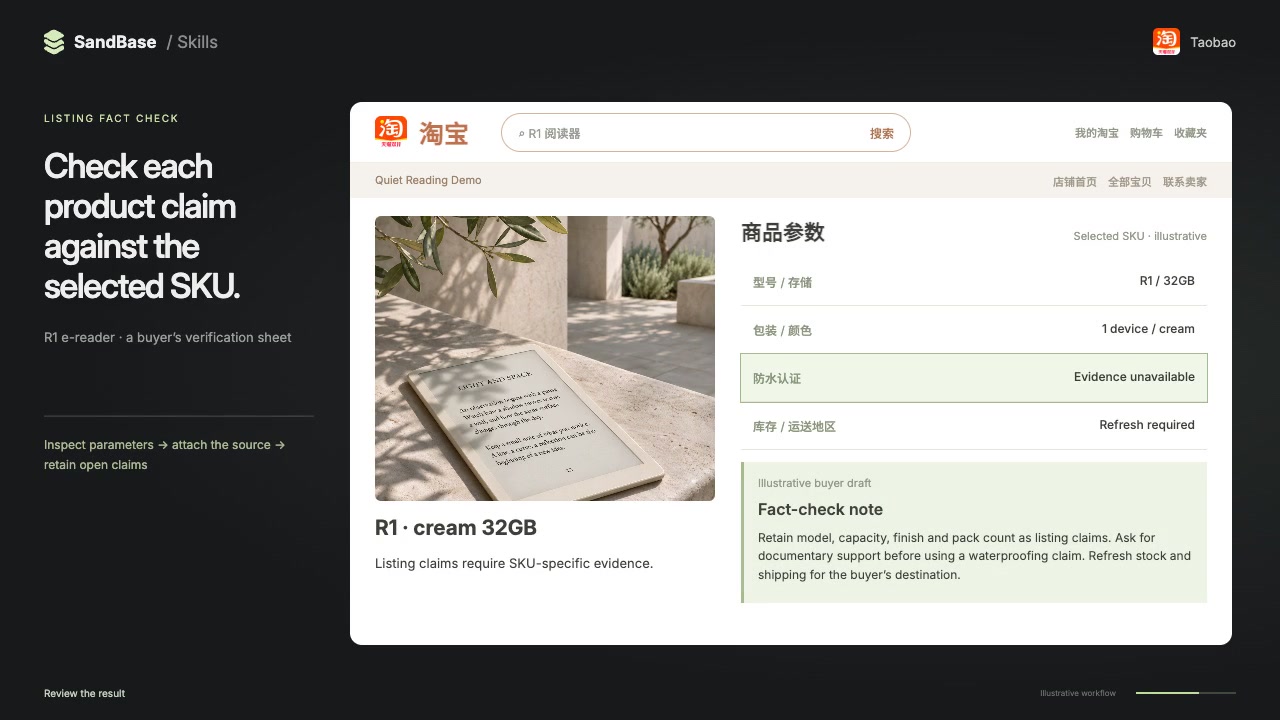
Turn Taobao listing facts into a buyer verification checklist.
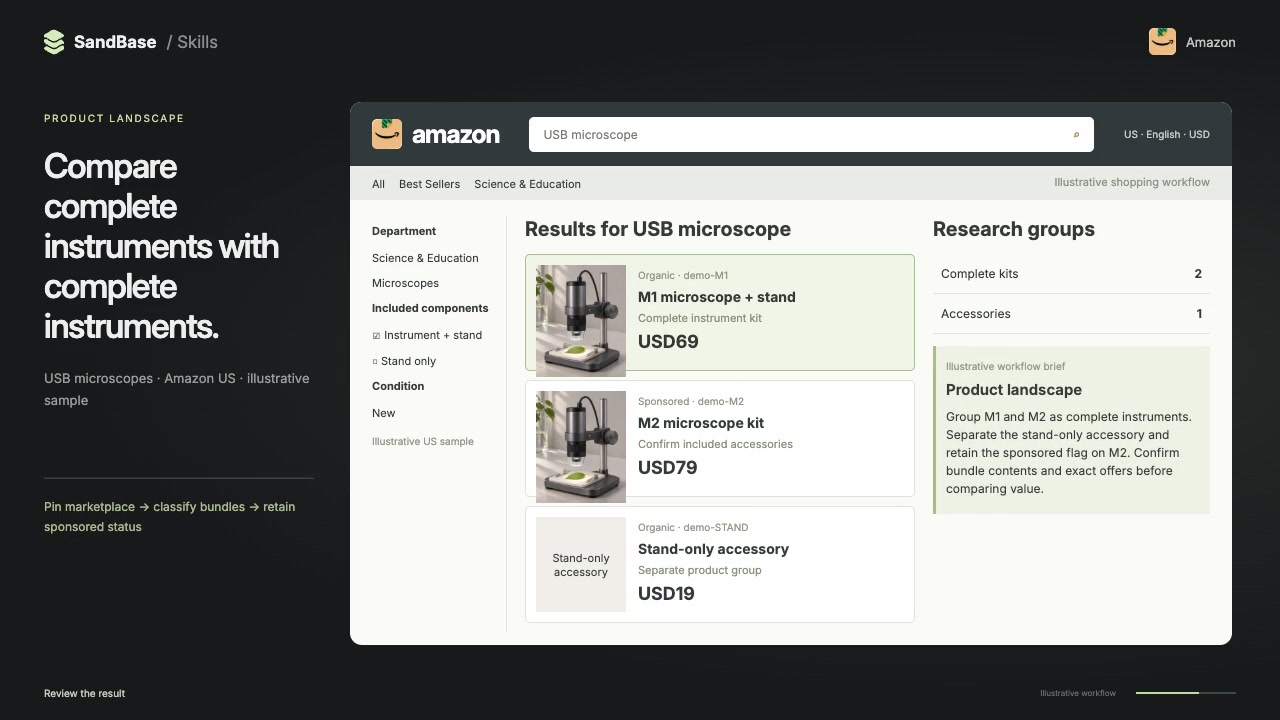
Map comparable Amazon products within one marketplace.
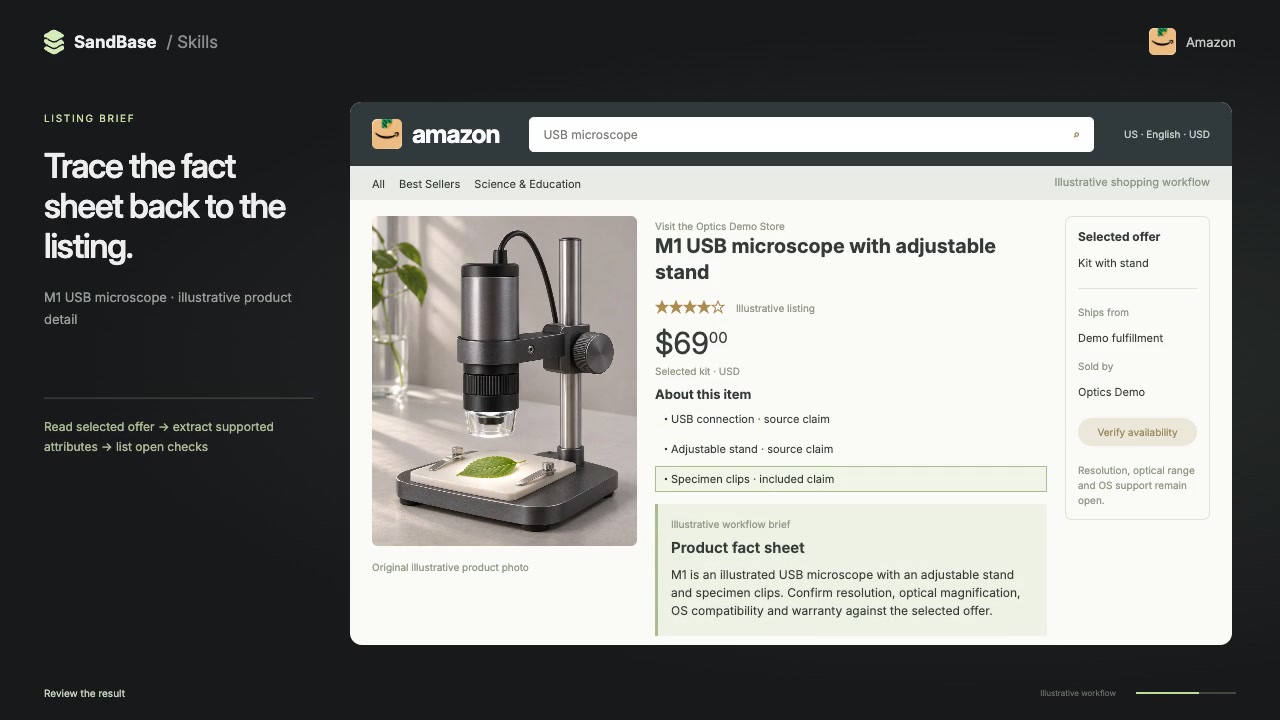
Write a concise, source-linked Amazon product fact sheet.
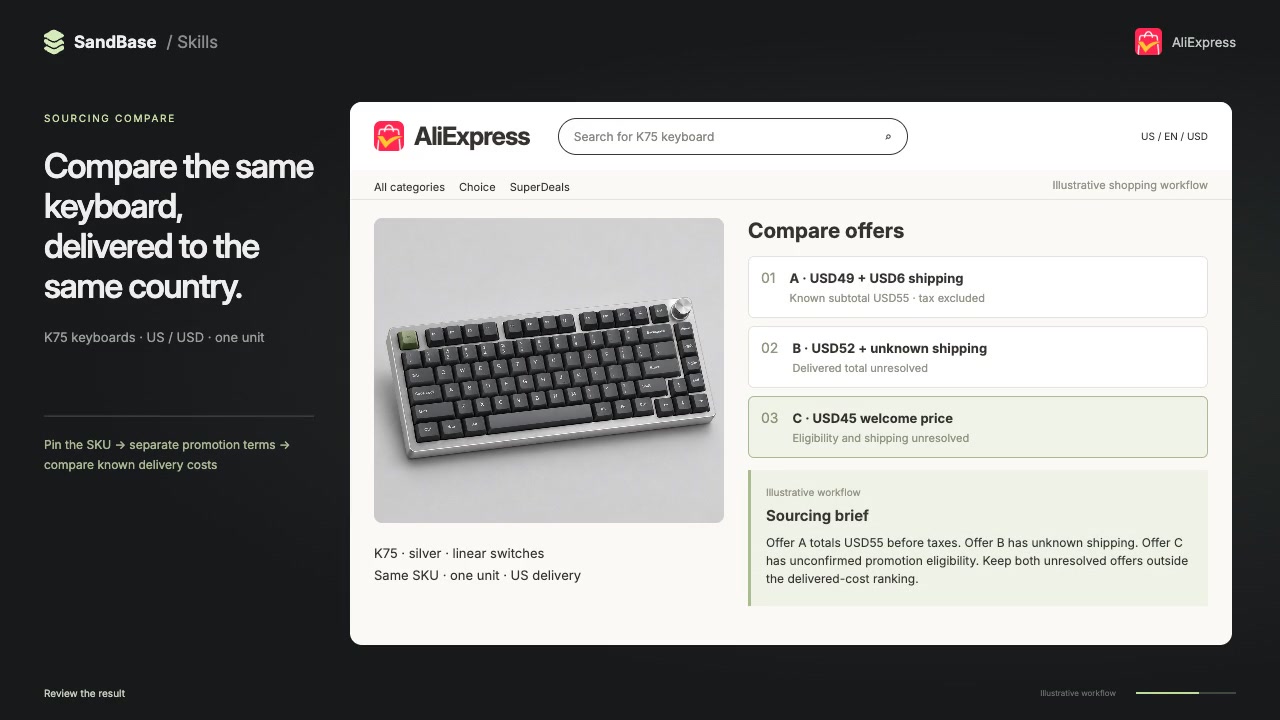
Compare AliExpress sourcing candidates within one region and currency.
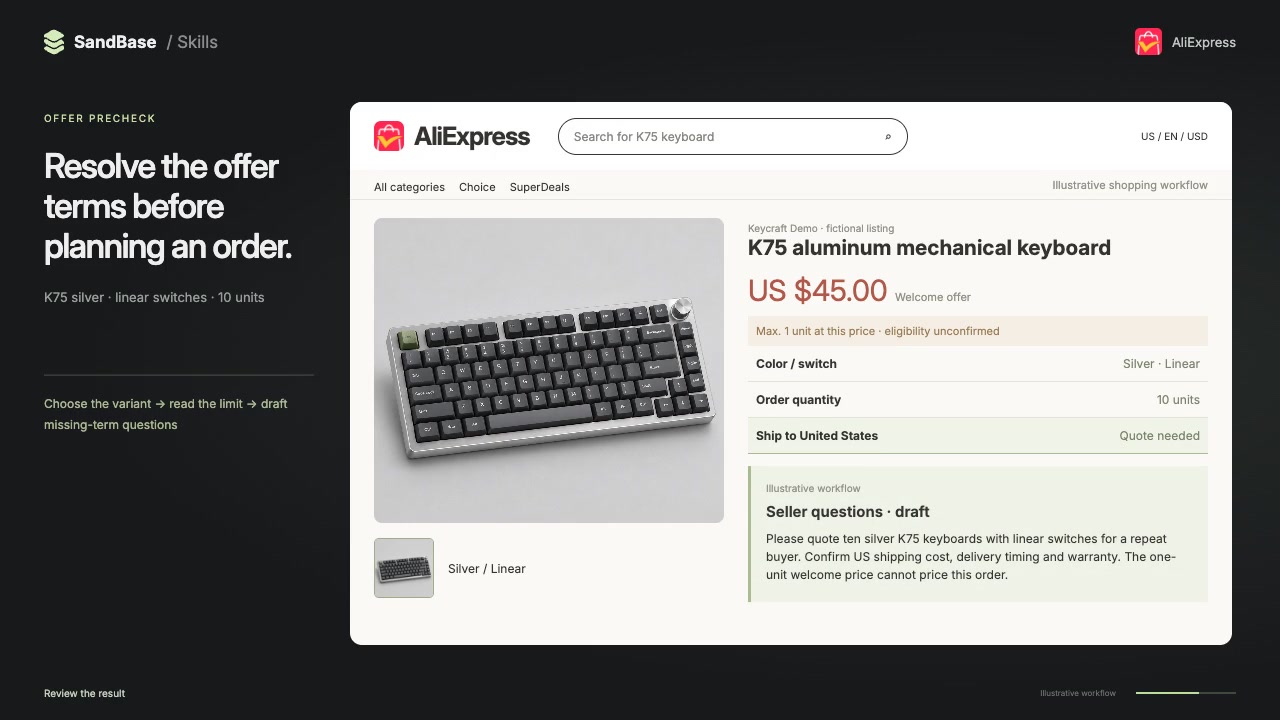
List the terms to verify before using an AliExpress offer.
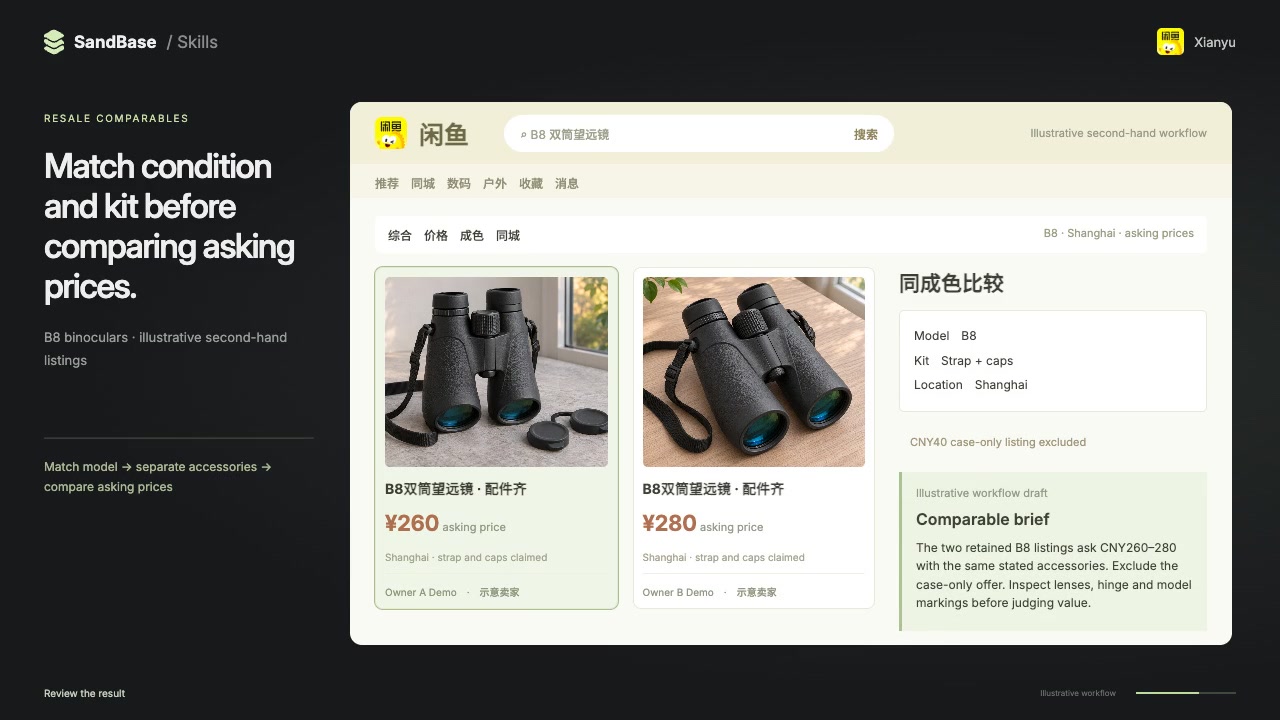
Compare second-hand listings with matching condition and location.
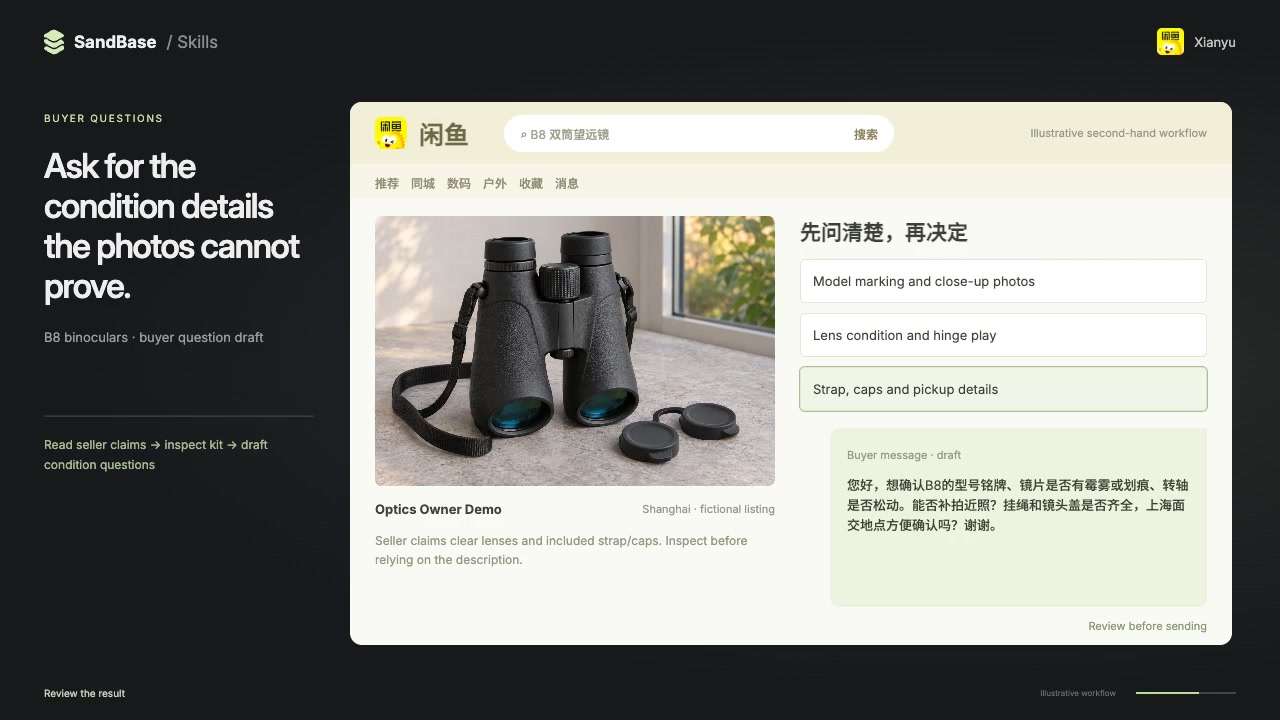
Prepare condition and collection questions for a second-hand listing.
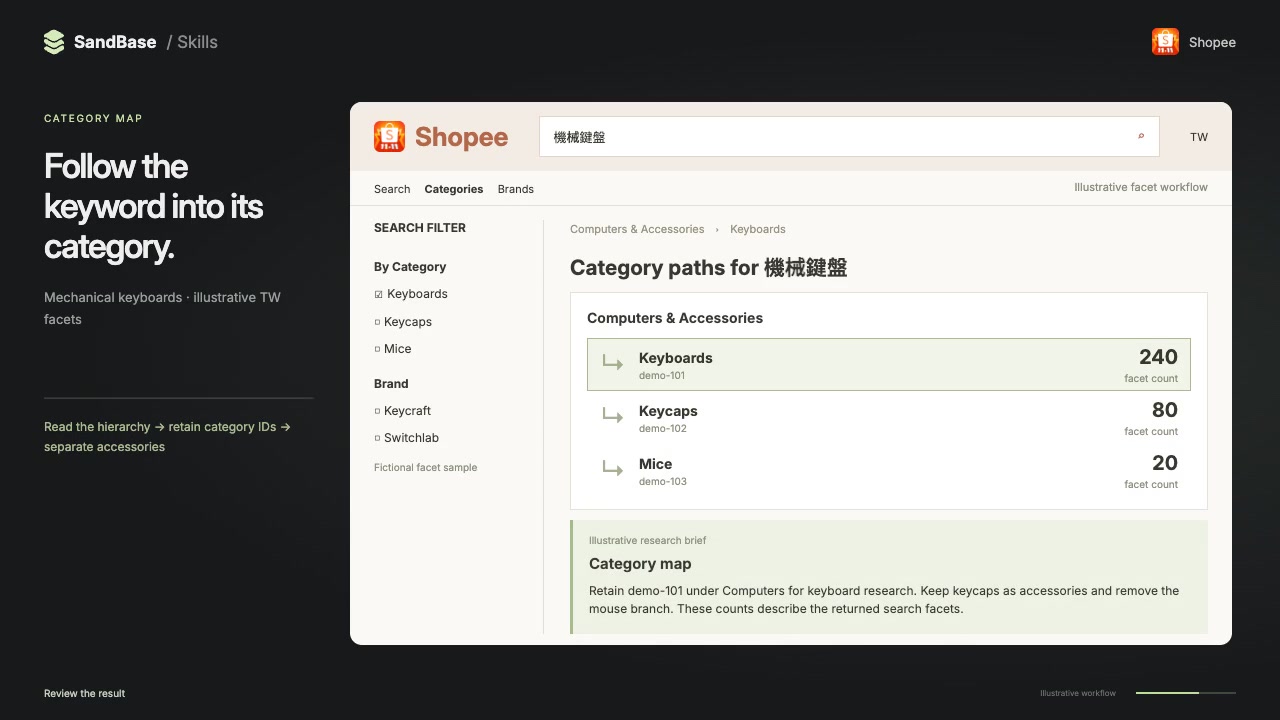
Map a product keyword to Shopee category facets.
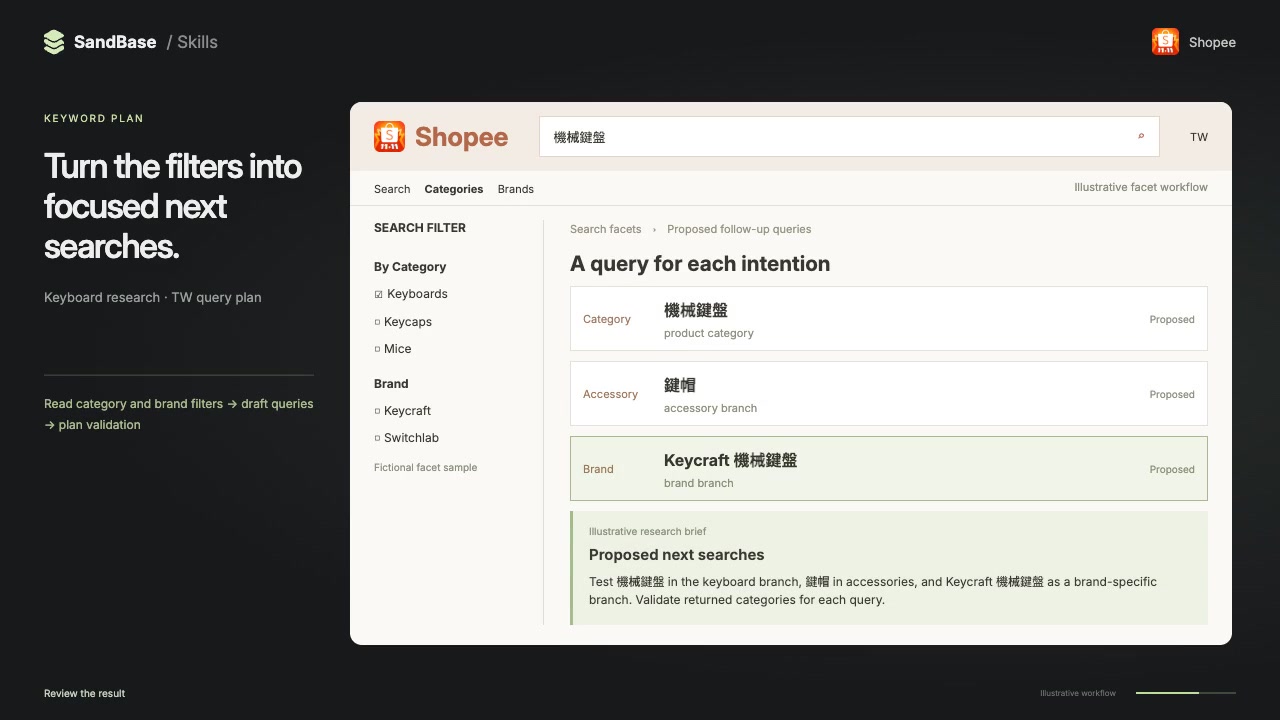
Prepare a category-aware Shopee keyword research plan.
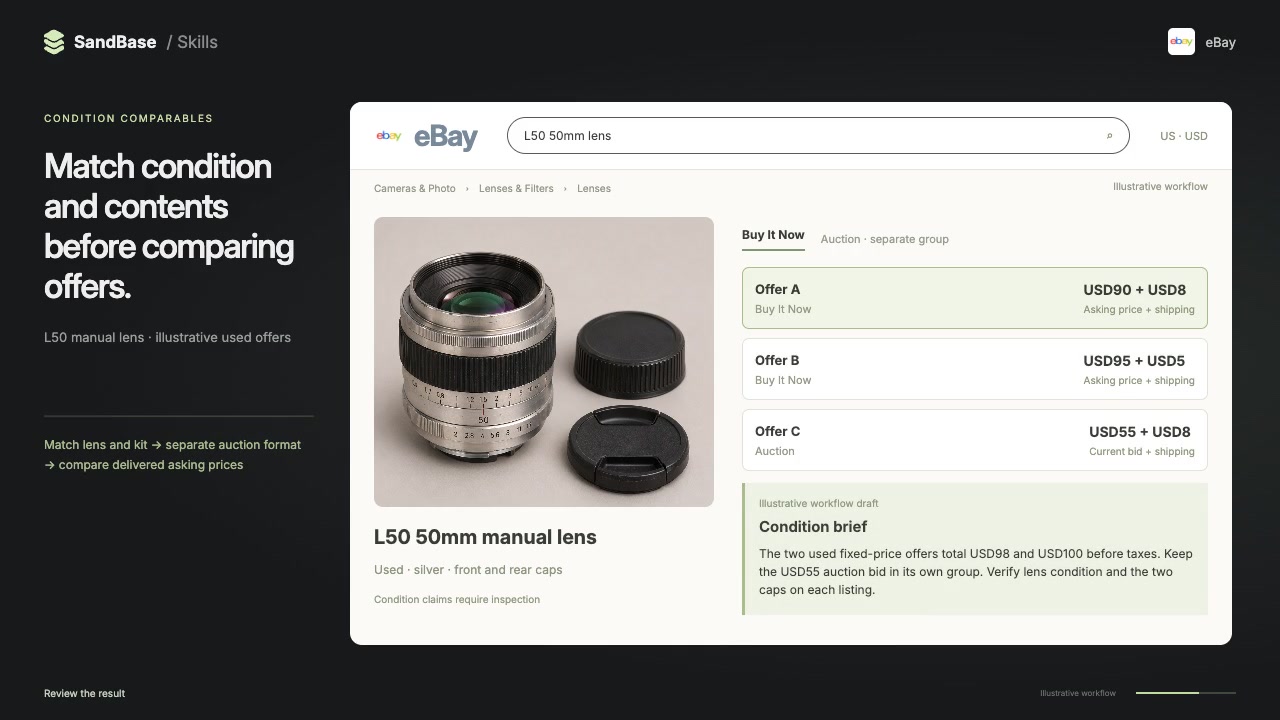
Build an eBay comparison by condition and bundle contents.
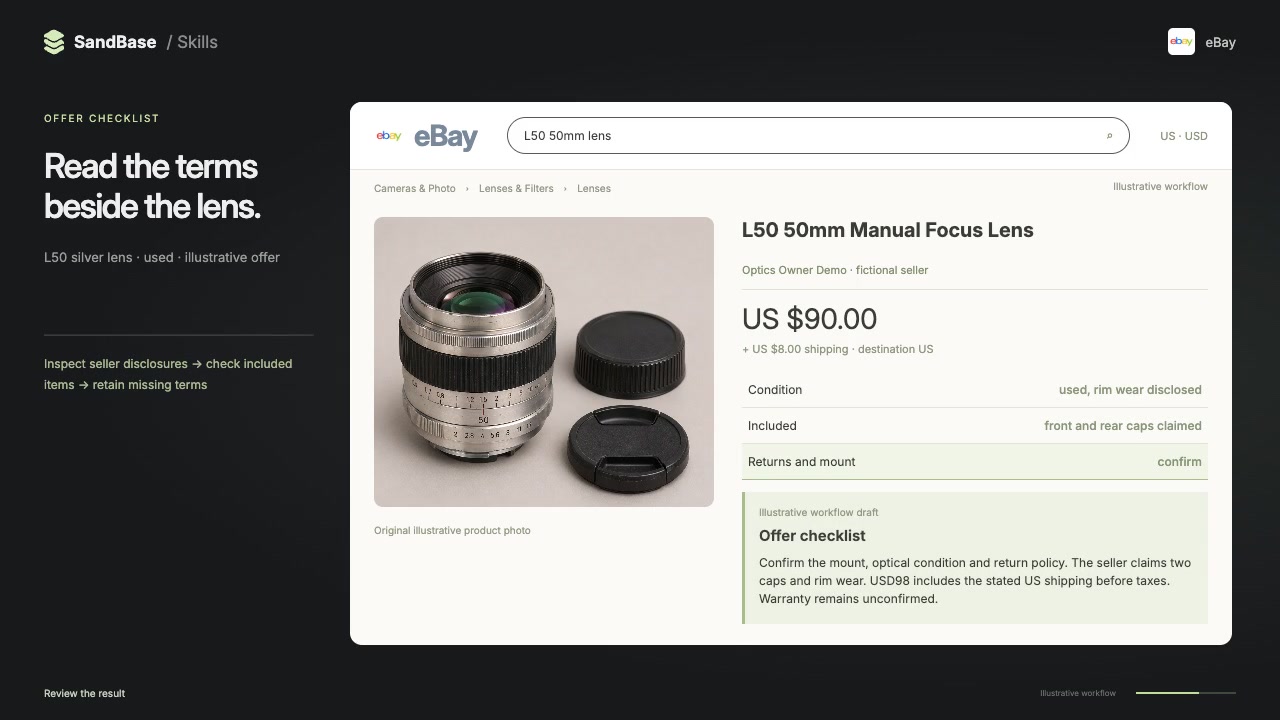
Prepare an eBay offer review before purchase.
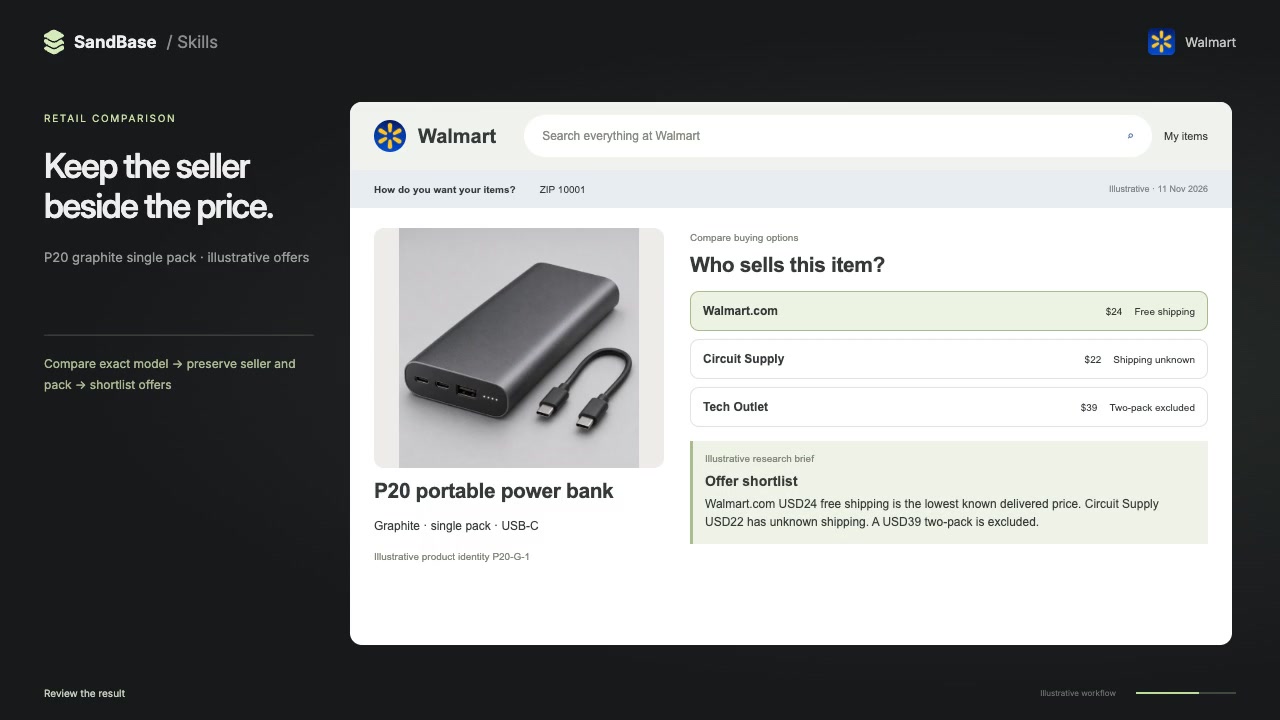
Compare Walmart offers with seller and fulfillment context.
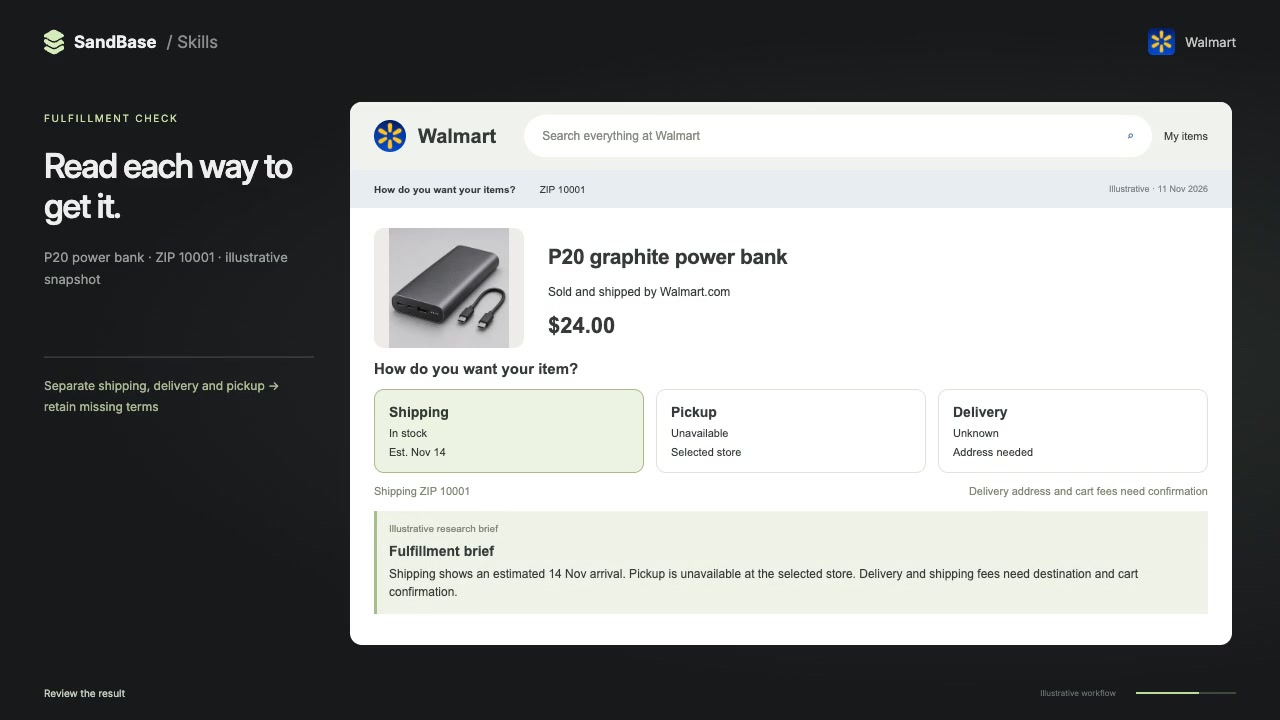
Check the missing fulfillment terms of a Walmart shortlist.
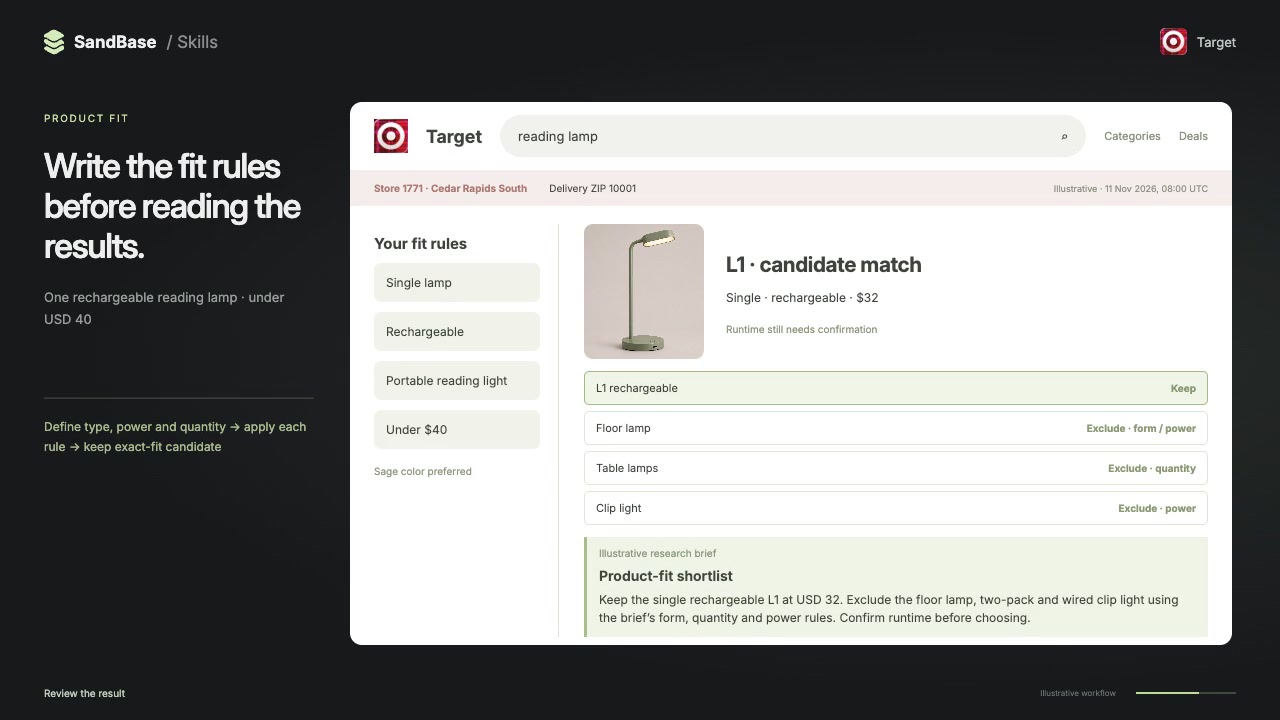
Filter Target search results to the requested product type.
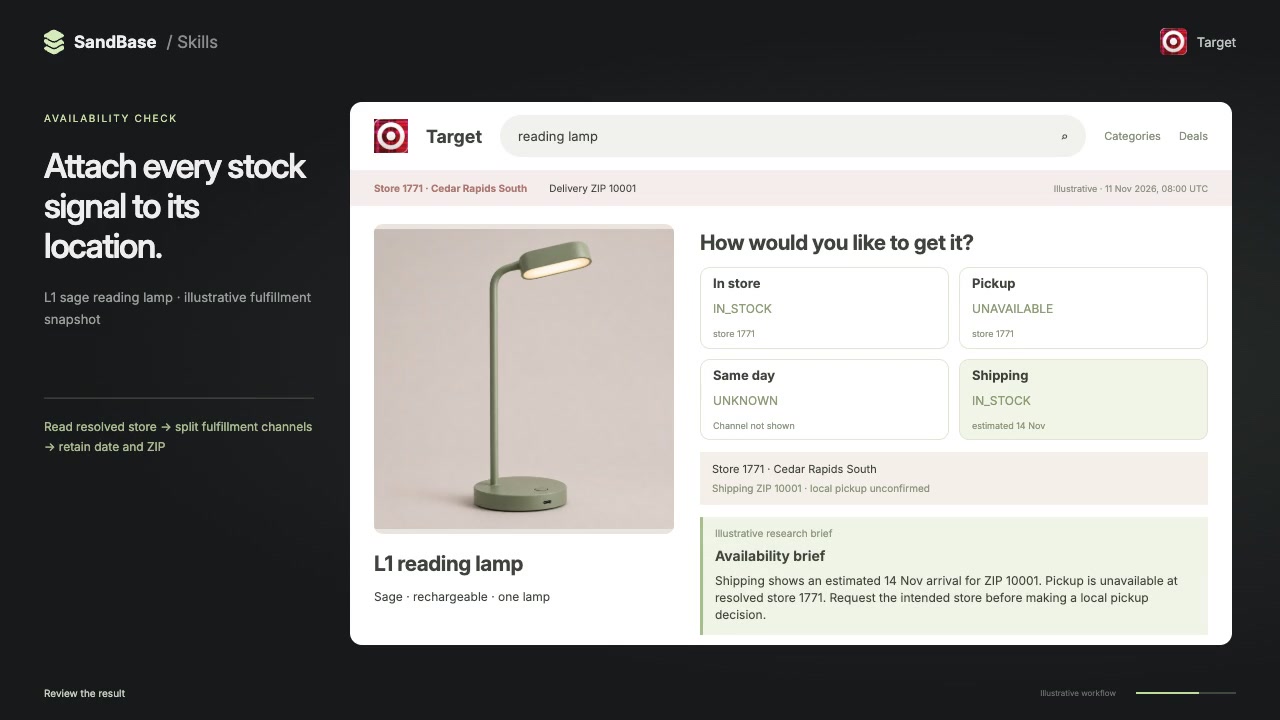
Review Target pickup and shipping availability in context.
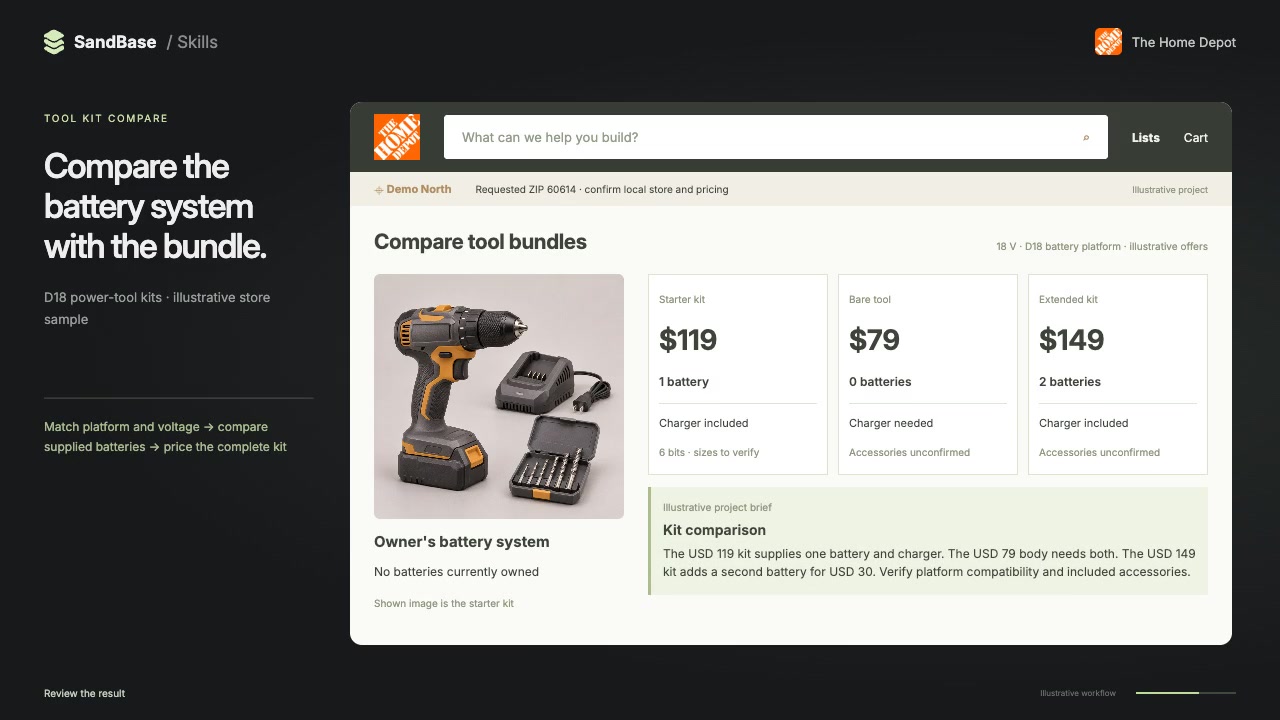
Compare Home Depot power-tool kits by their contents.
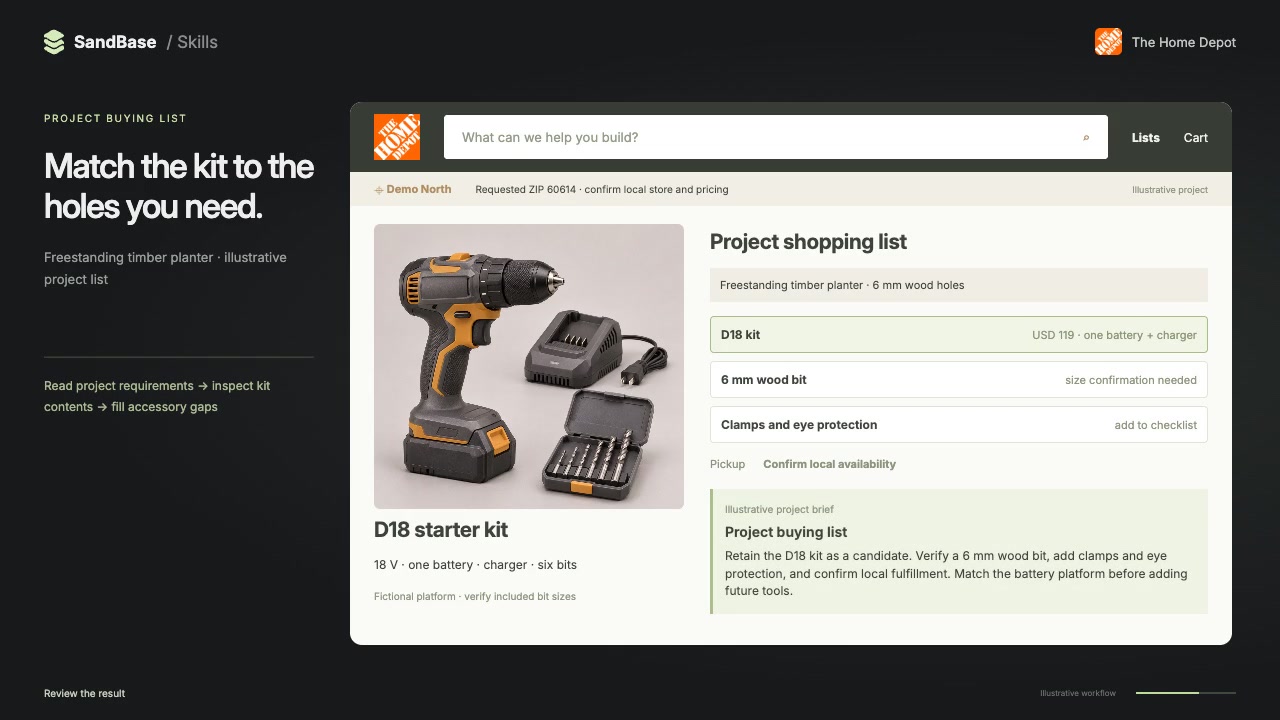
Turn a tool shortlist into a project purchasing checklist.
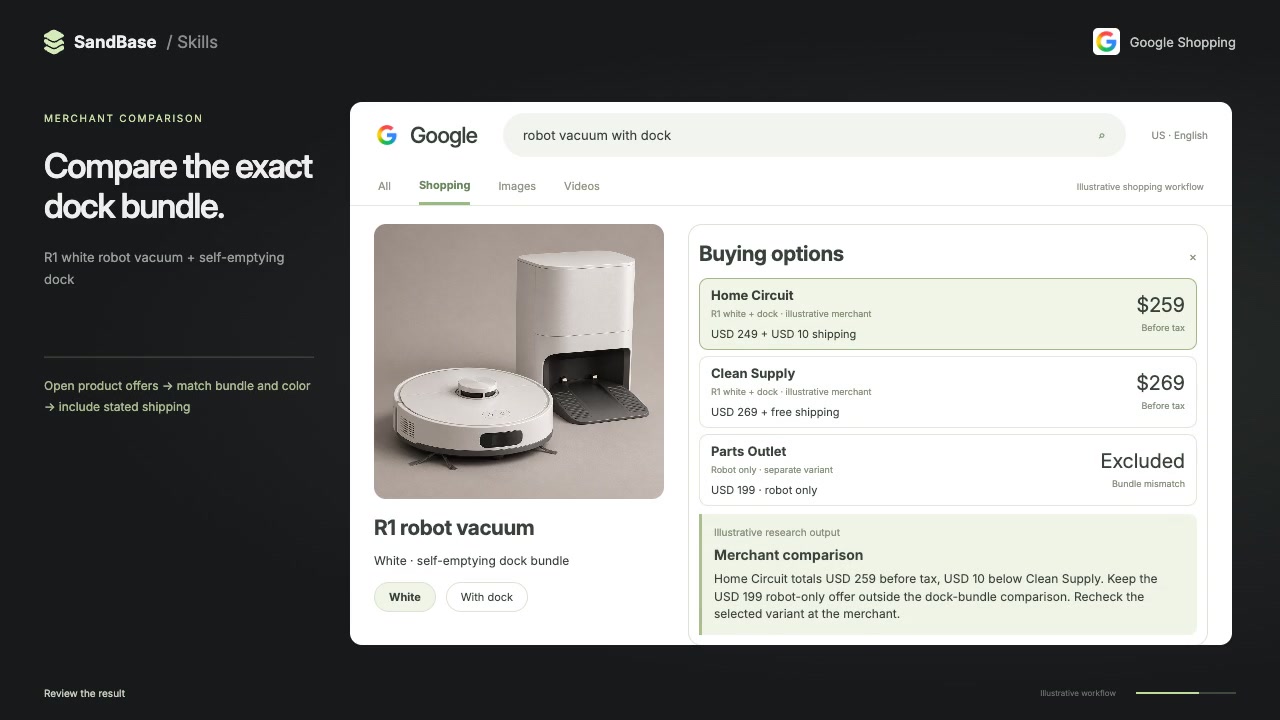
Compare merchant offers for an exact product variant.
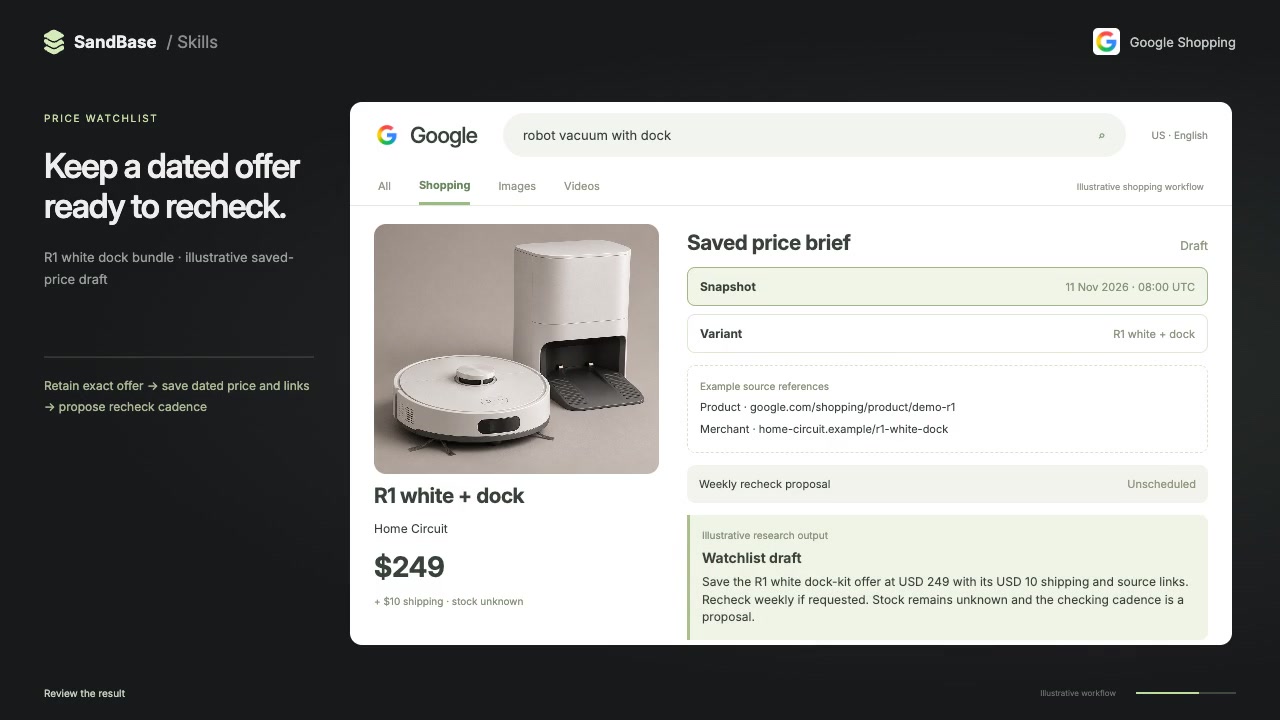
Prepare a source-linked product price watchlist.
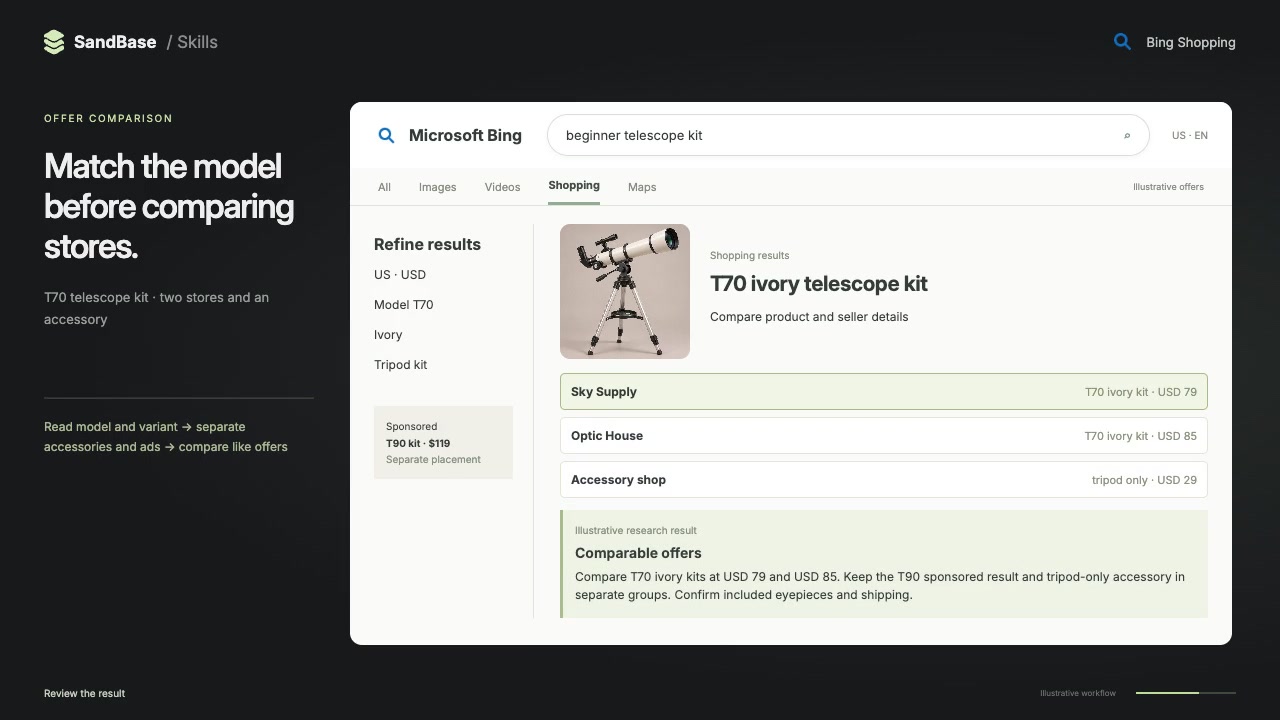
Separate Bing Shopping offers by exact model and seller.
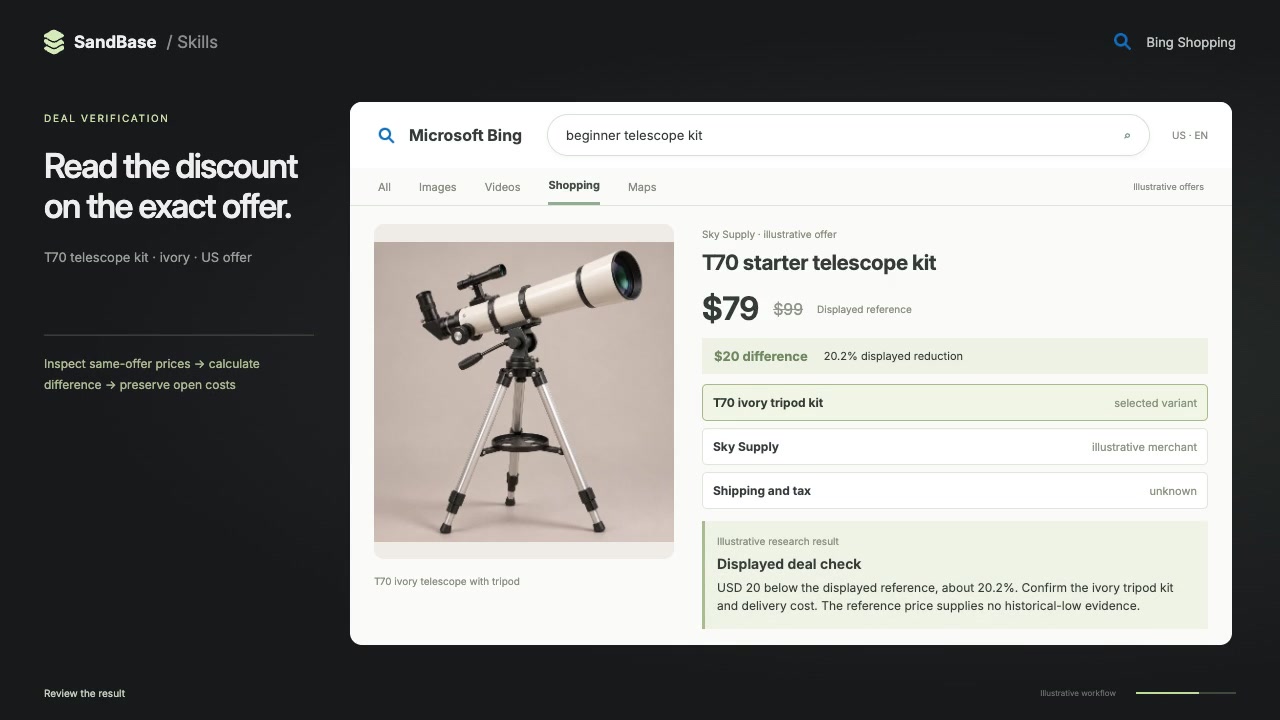
Check the evidence behind a displayed shopping discount.
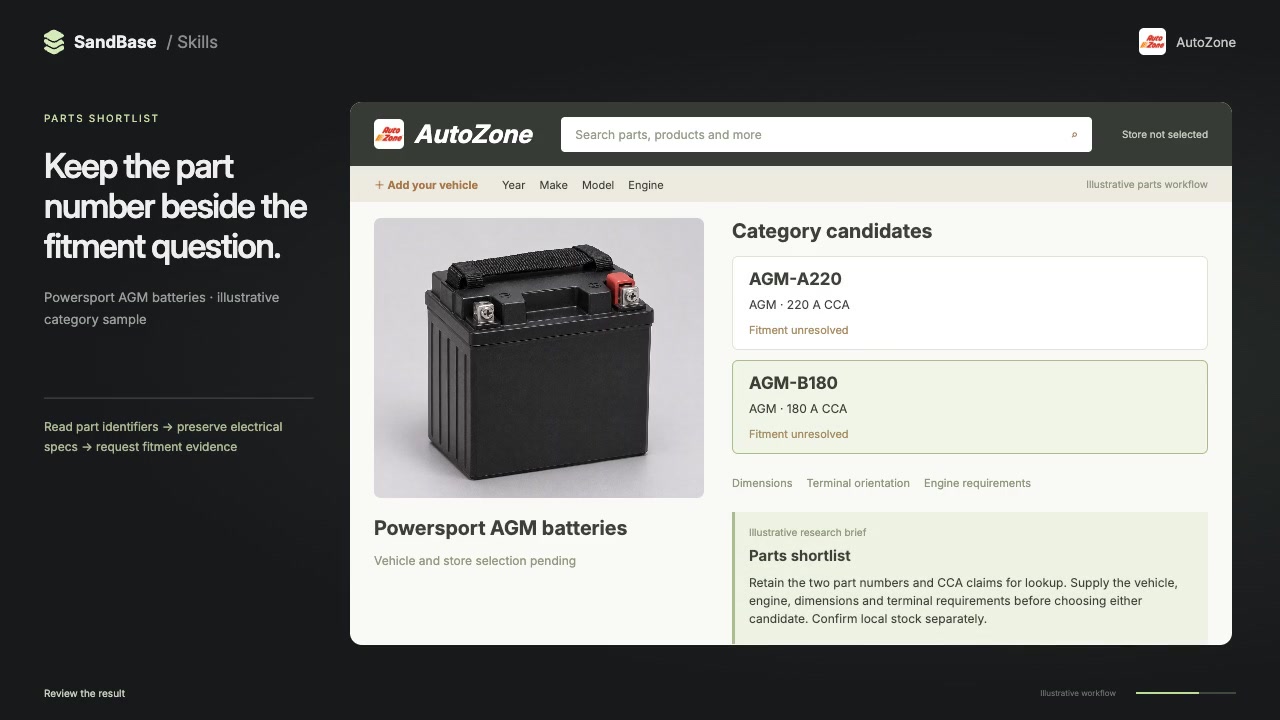
Build a parts shortlist without guessing vehicle compatibility.
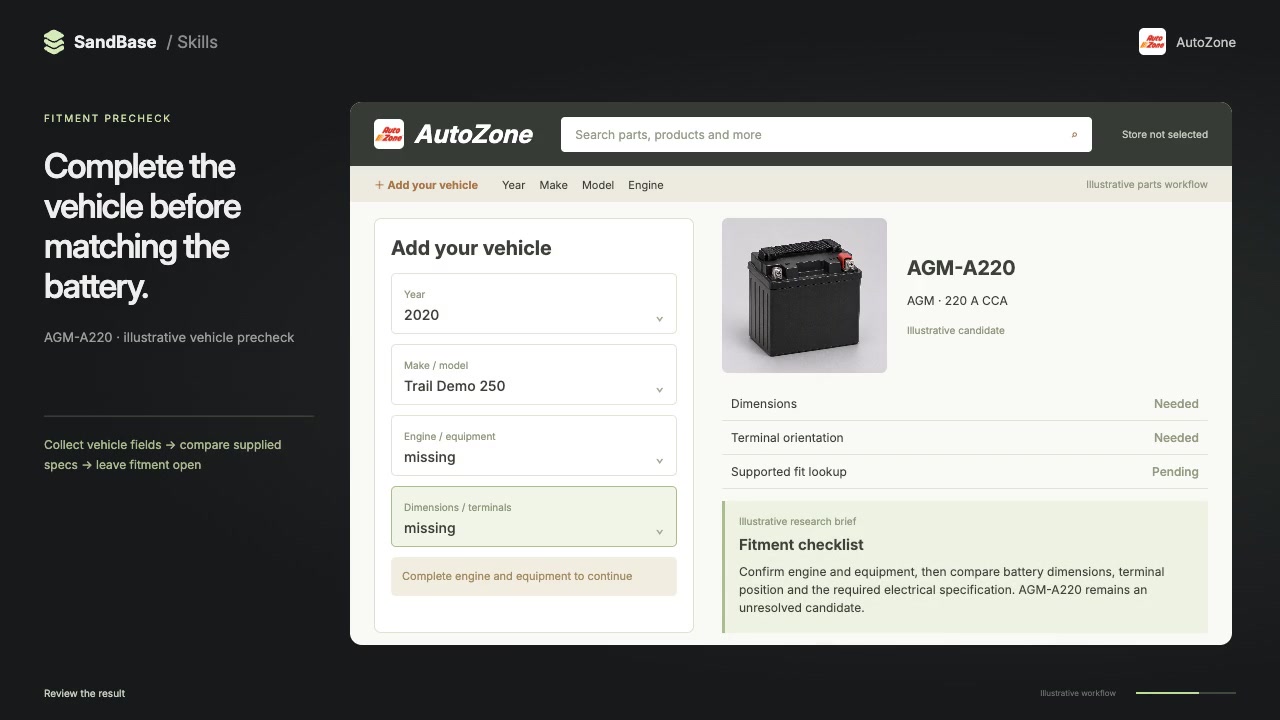
Prepare the information needed to verify an AutoZone part.
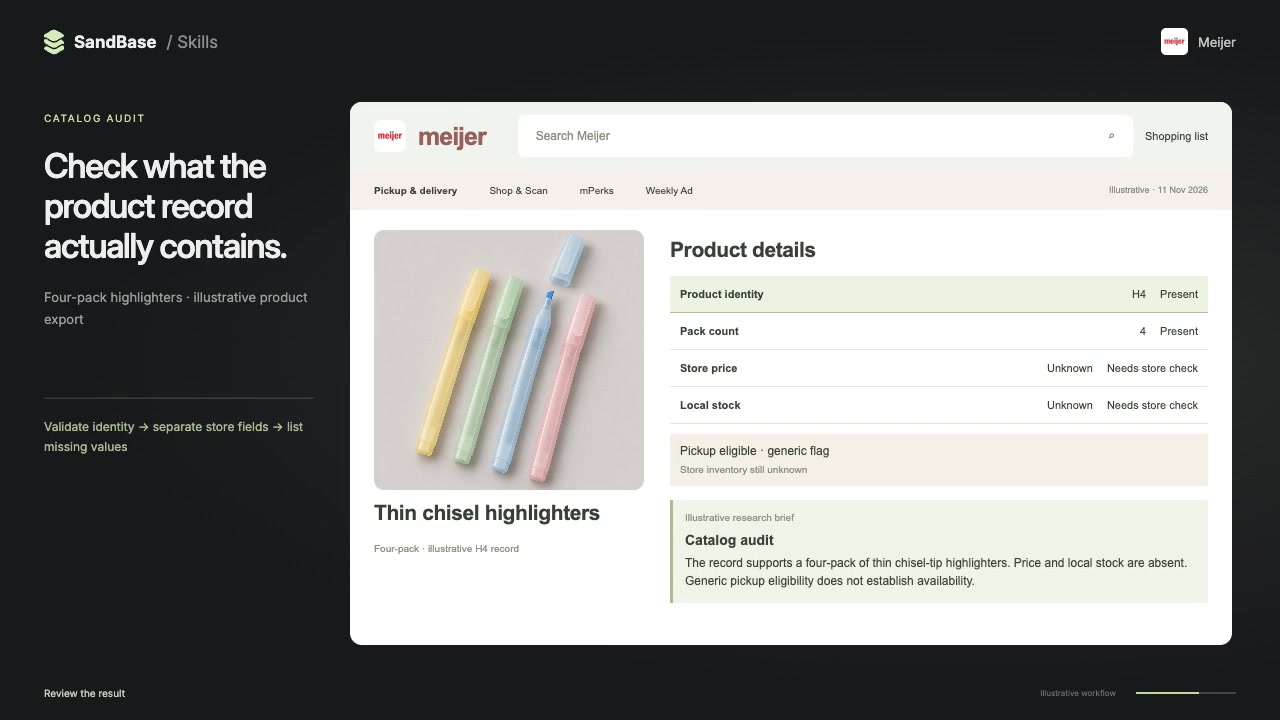
Check a Meijer product record for missing purchasing fields.
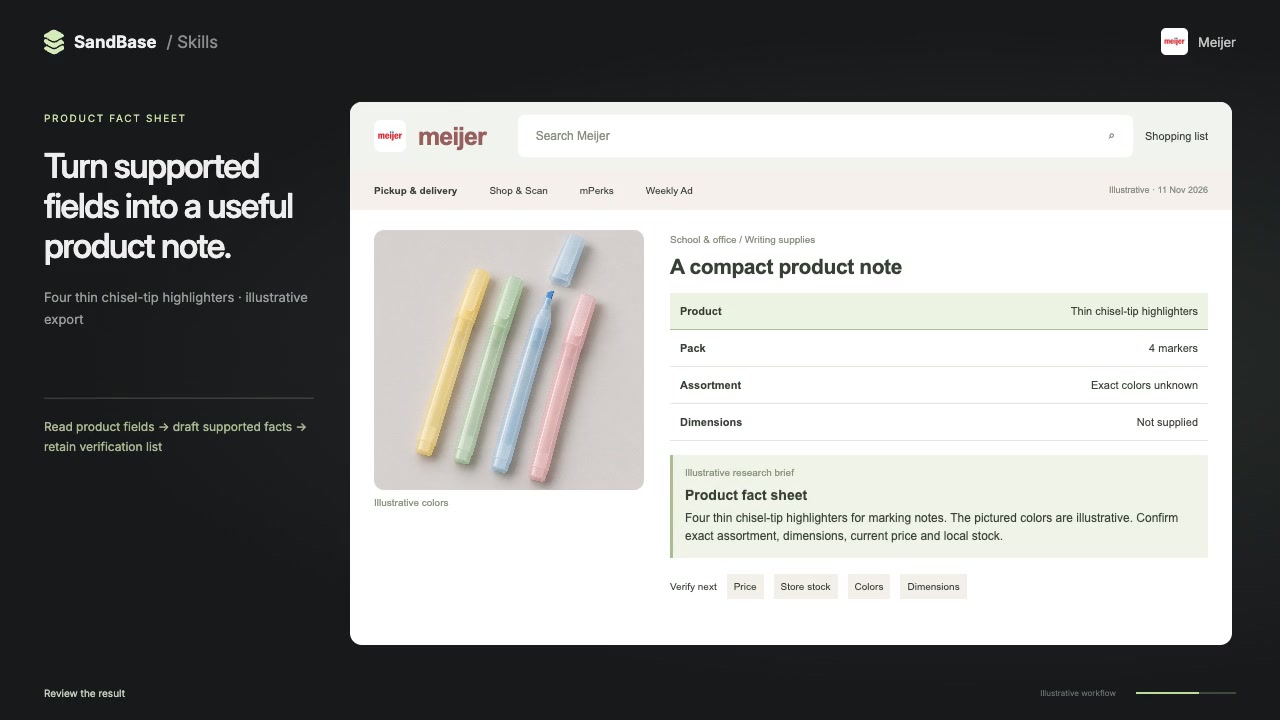
Write a compact fact sheet from verified Meijer product fields.
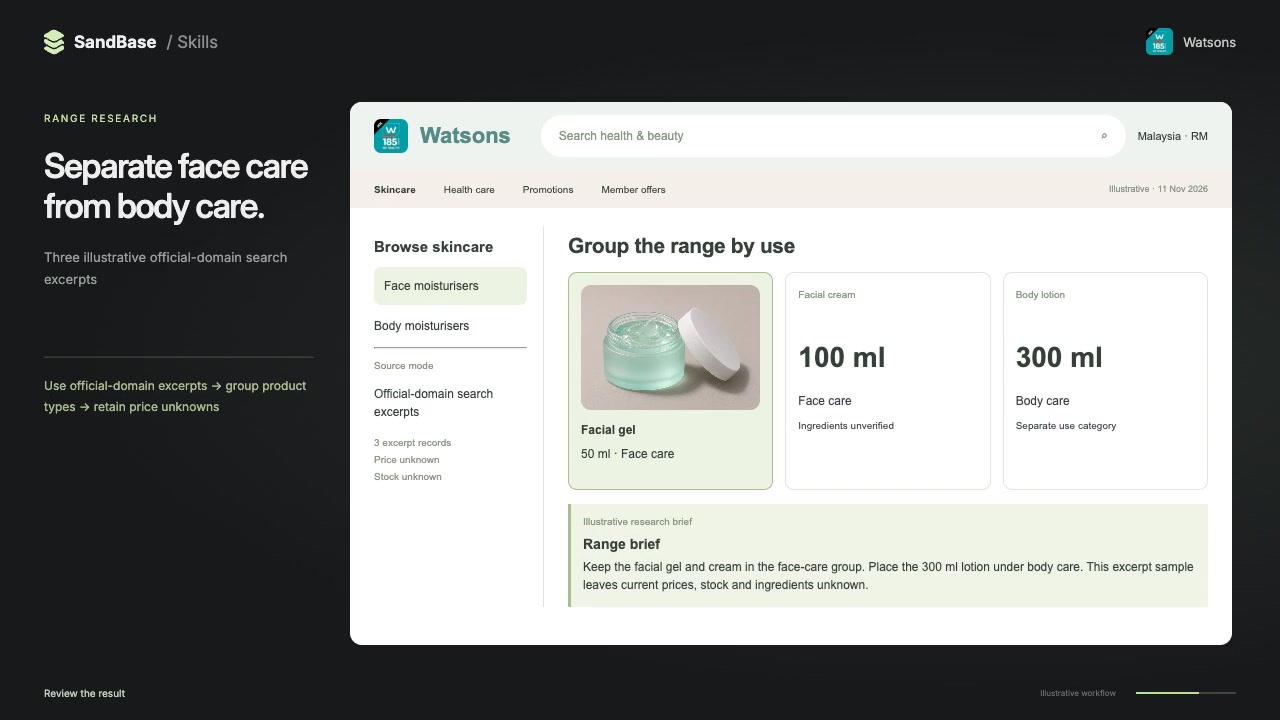
Research a Watsons product range from traceable public sources.
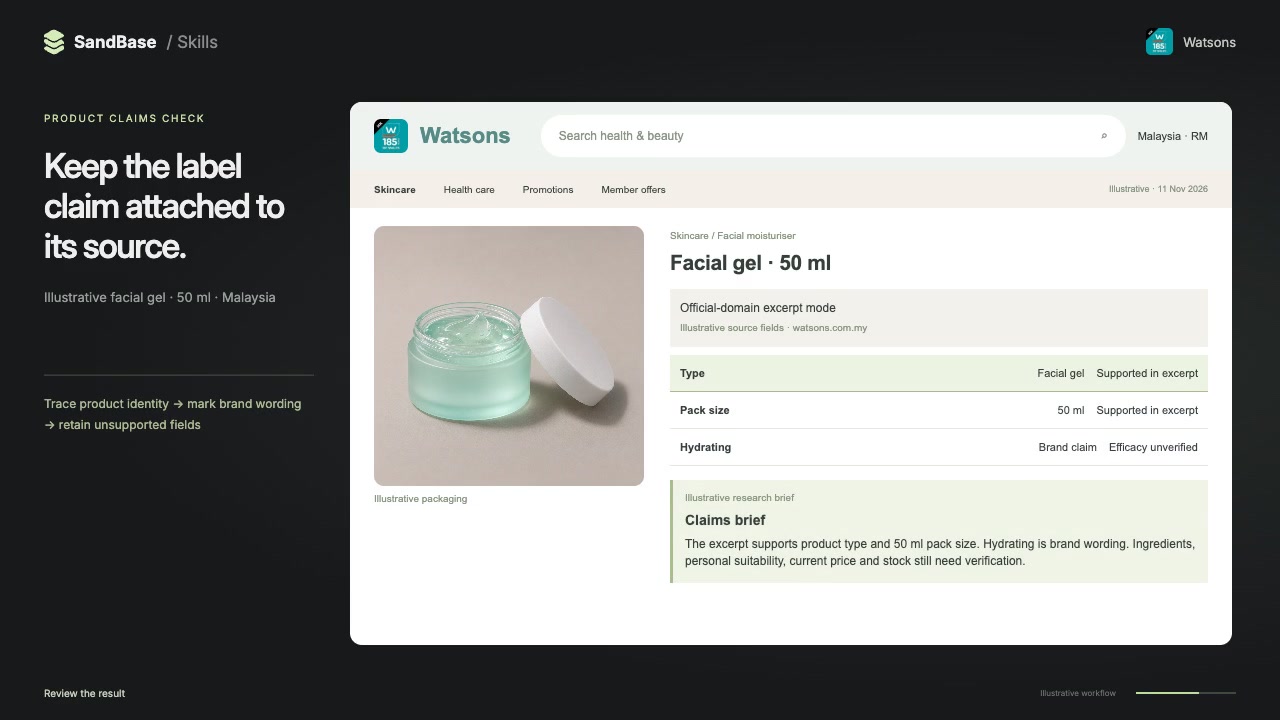
Review the factual claims available for a Watsons product.
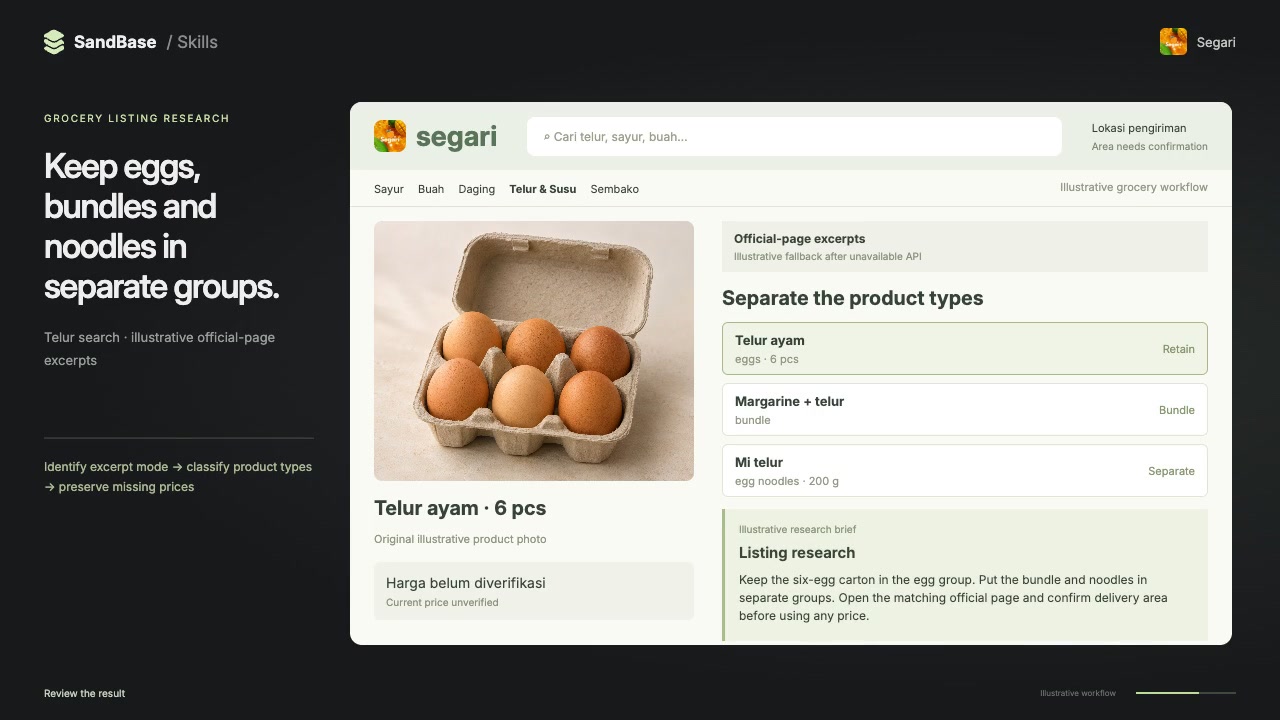
Research Segari grocery listings while separating bundles and product types.
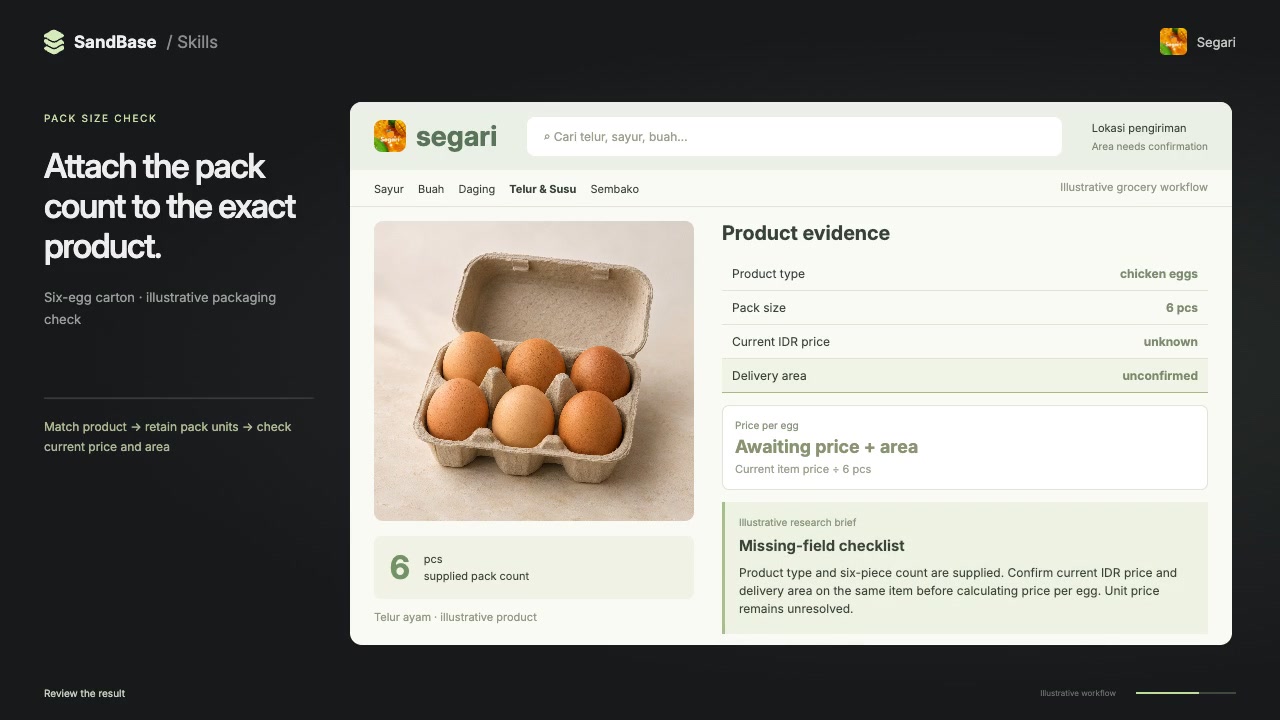
Check the evidence needed for a Segari grocery unit-price comparison.
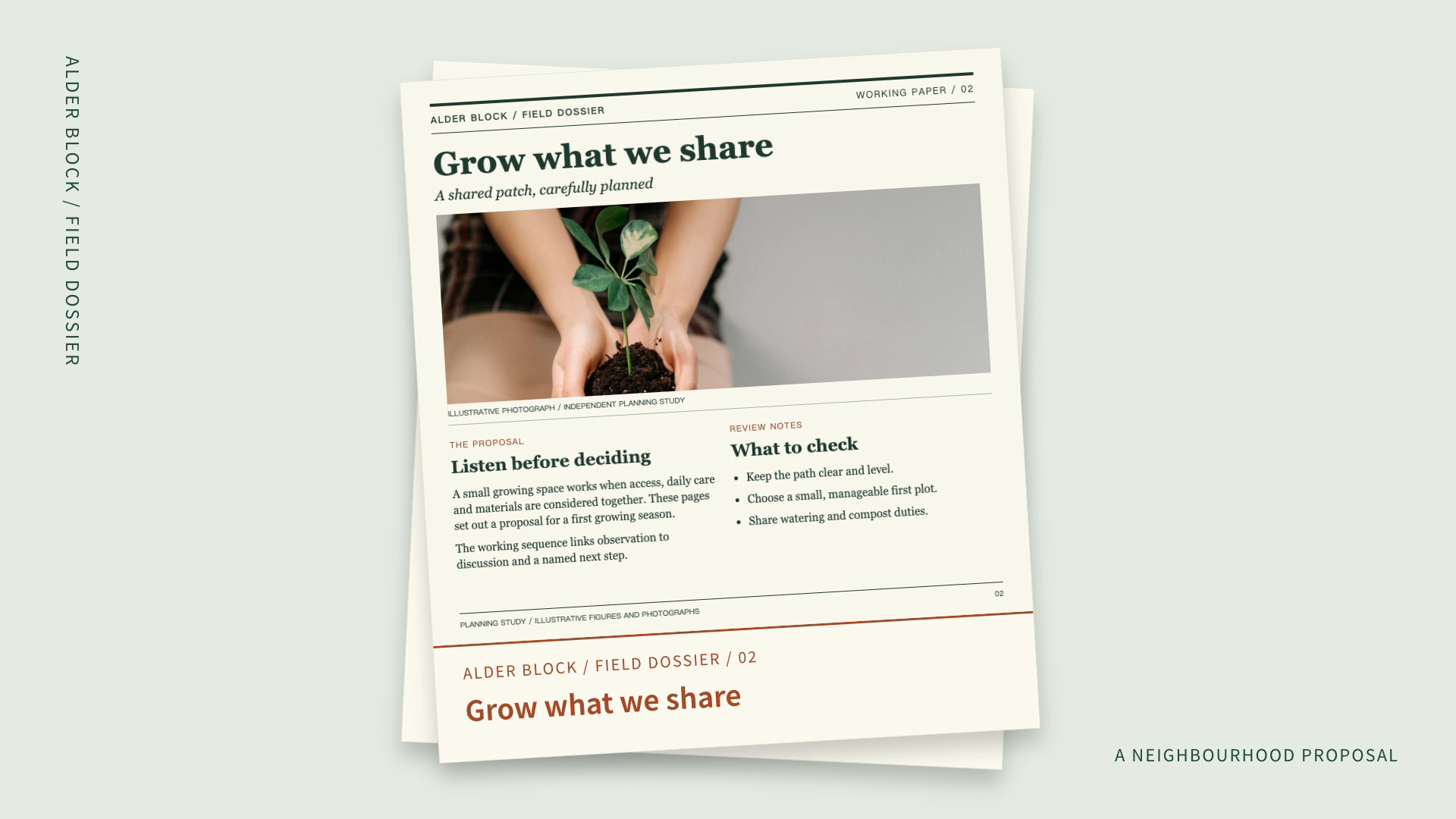
Build a readable stack of raster documents and close with a decision stamp.
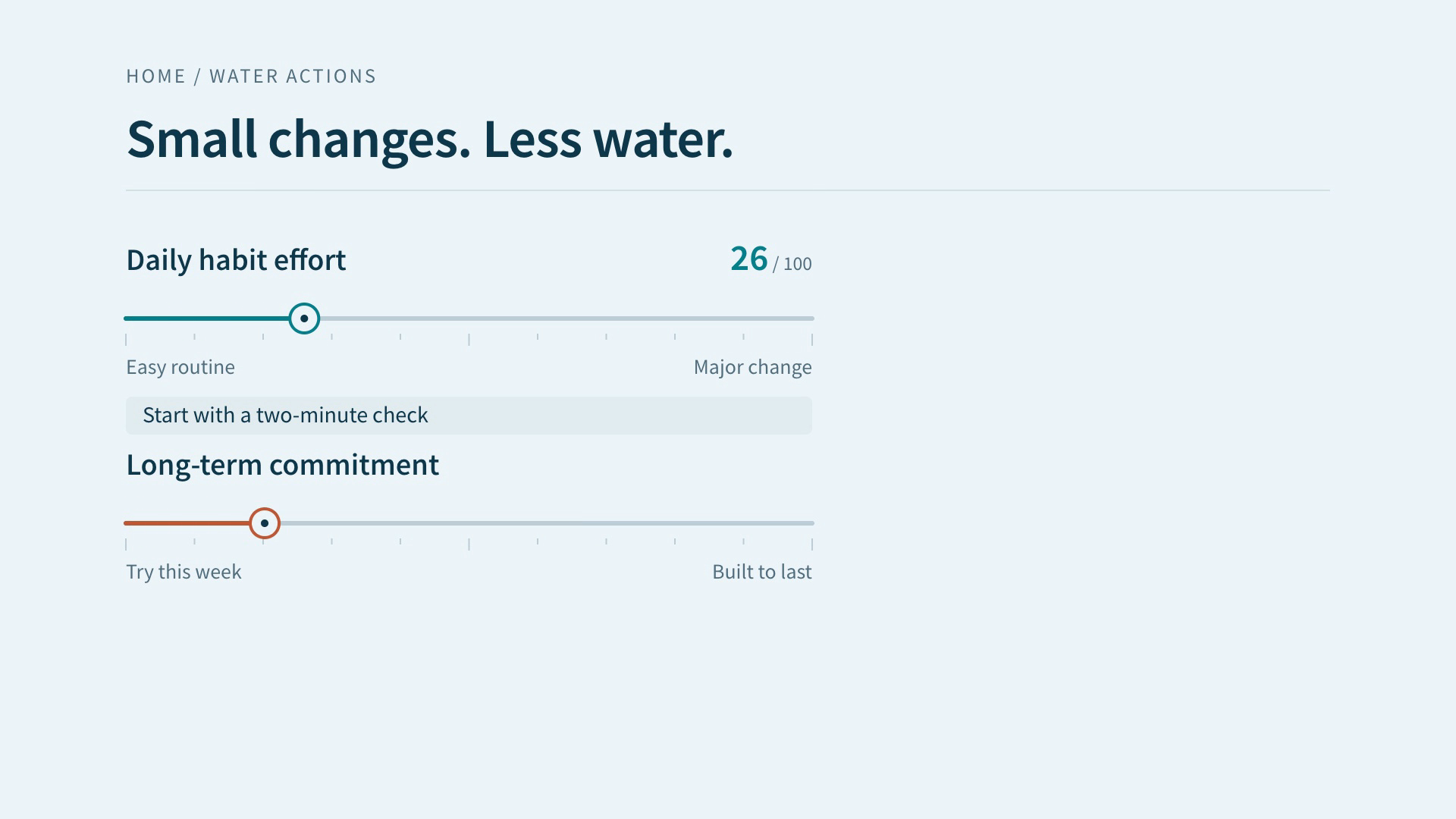
Move two numeric scales in sync and connect their readings to contextual symbols.
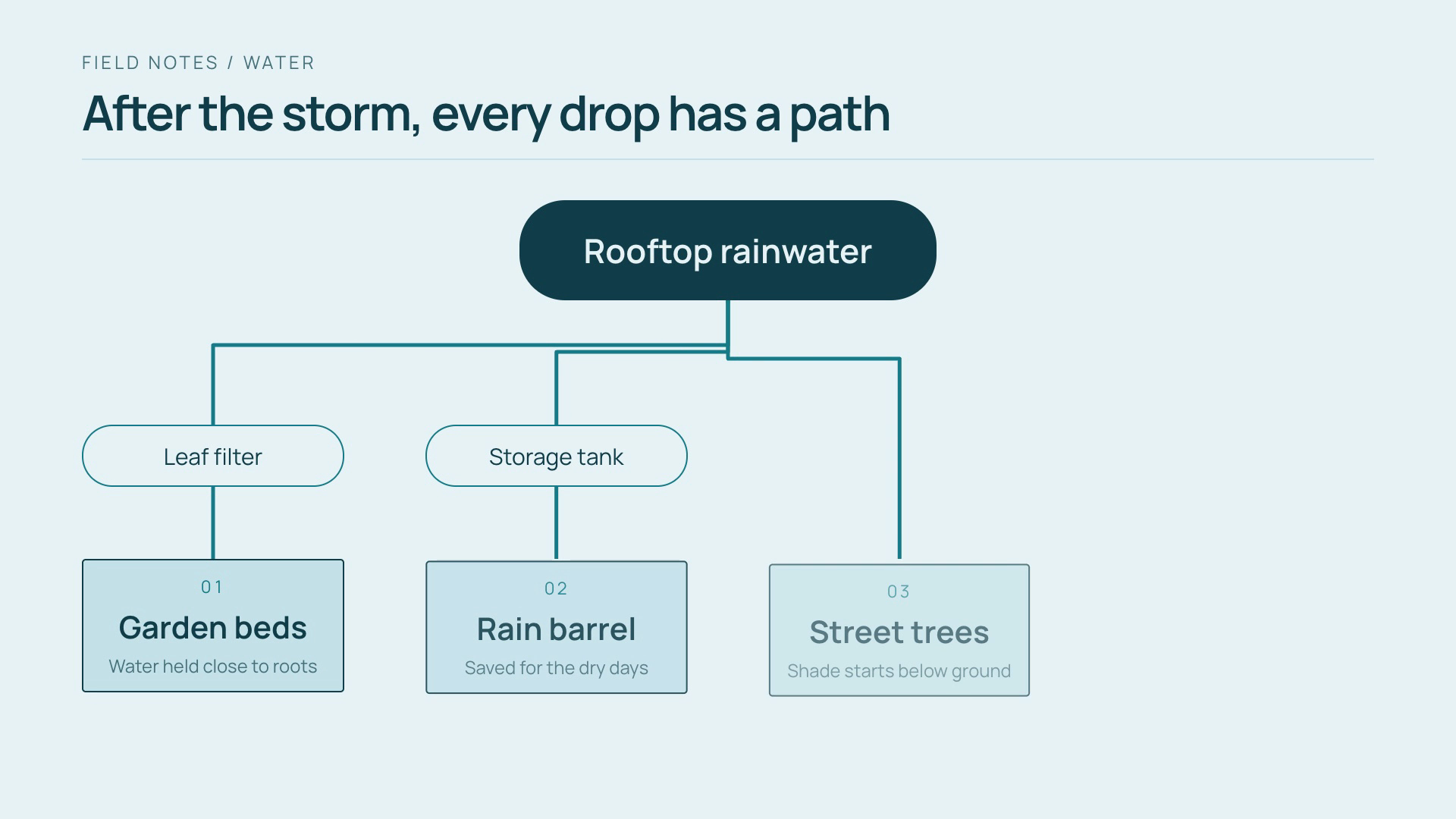
Reveal causal routes from one or two origins through processing stops to clear outcomes.
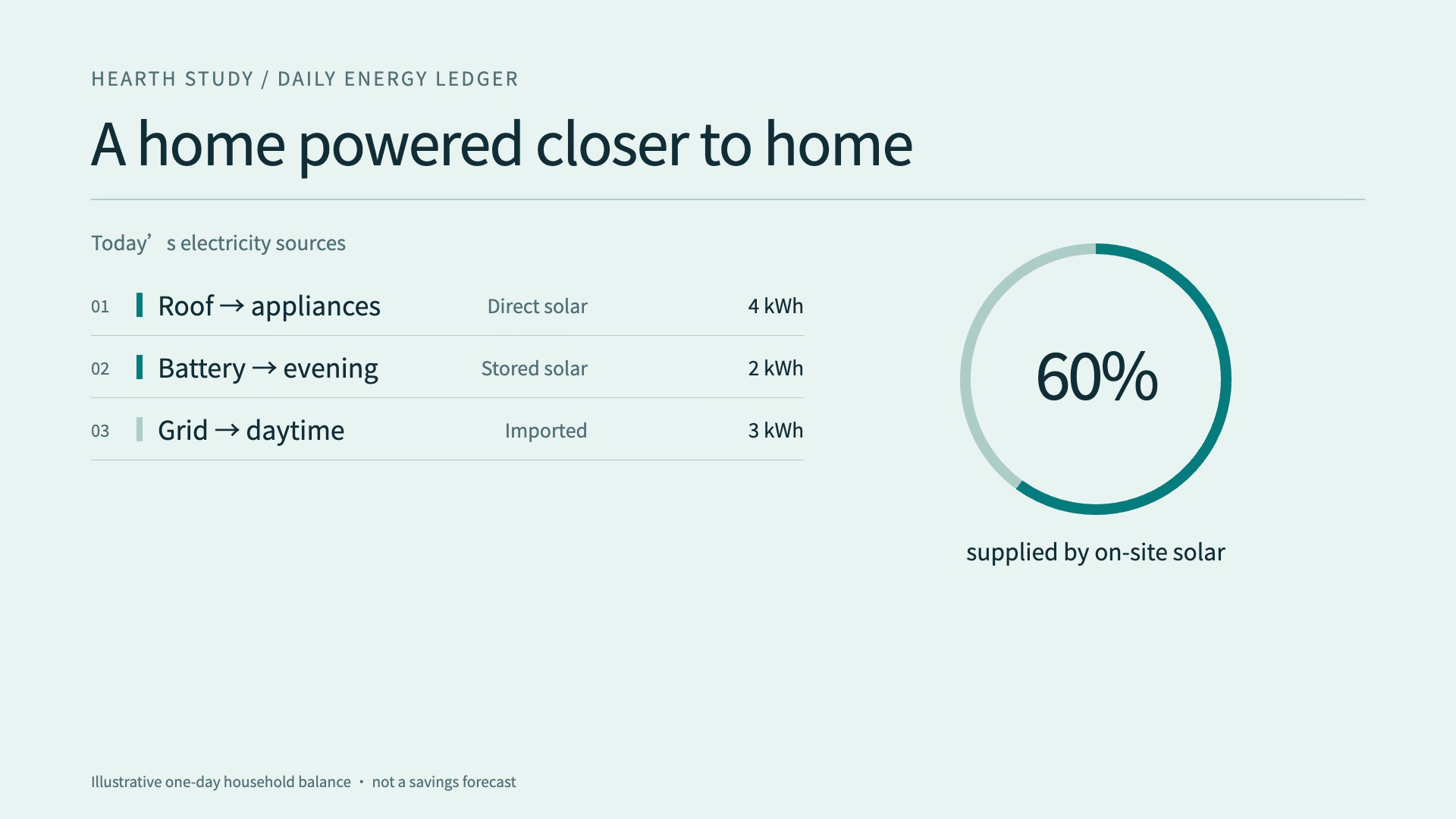
Turn a weighted ledger into a circular statistic and two readable findings.
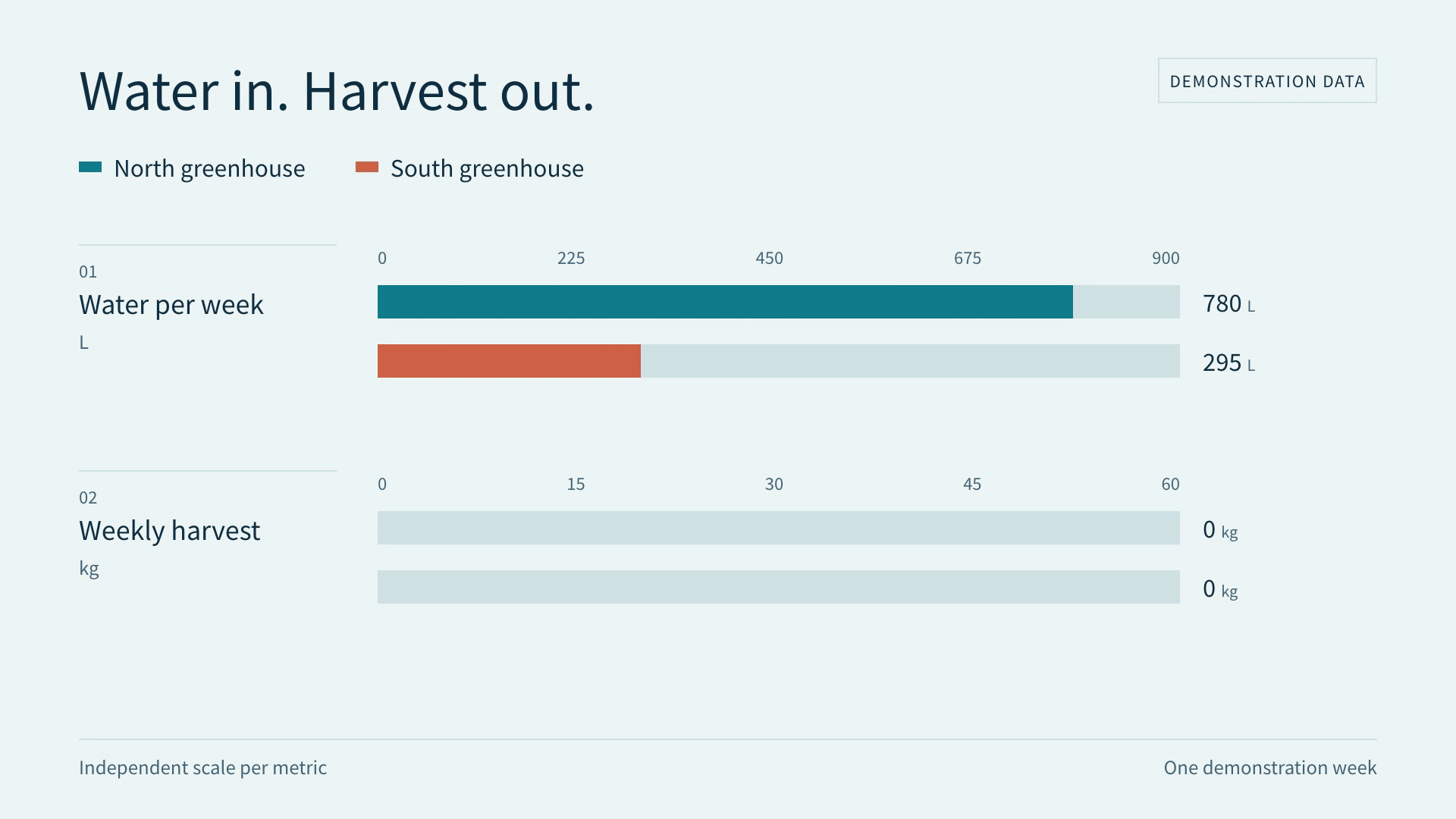
Compare two alternatives across two measures using independent bar scales and synchronized value counters.
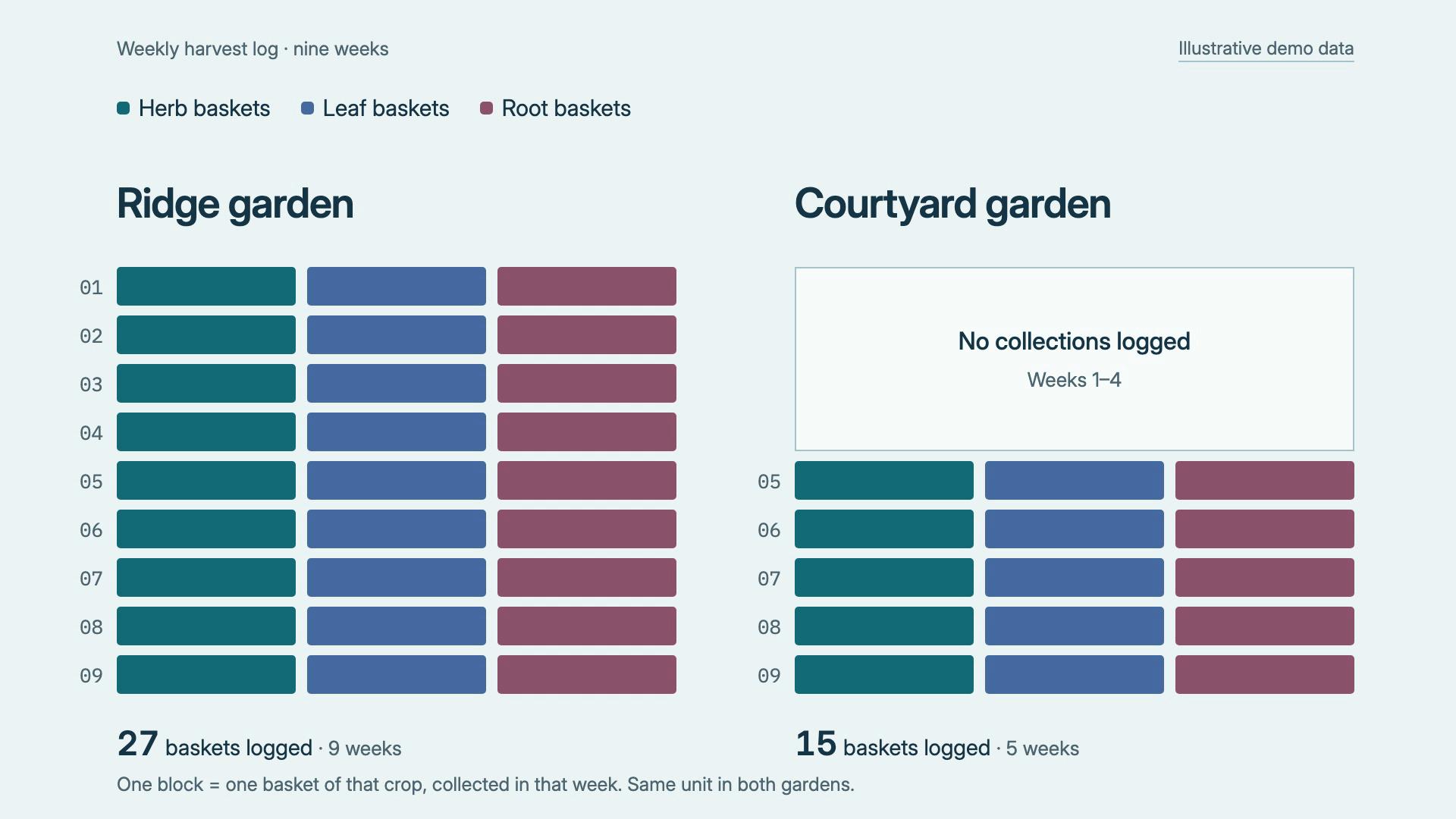
Compare two weekly histories with recurring blocks, a delayed second history and a highlighted missing interval.
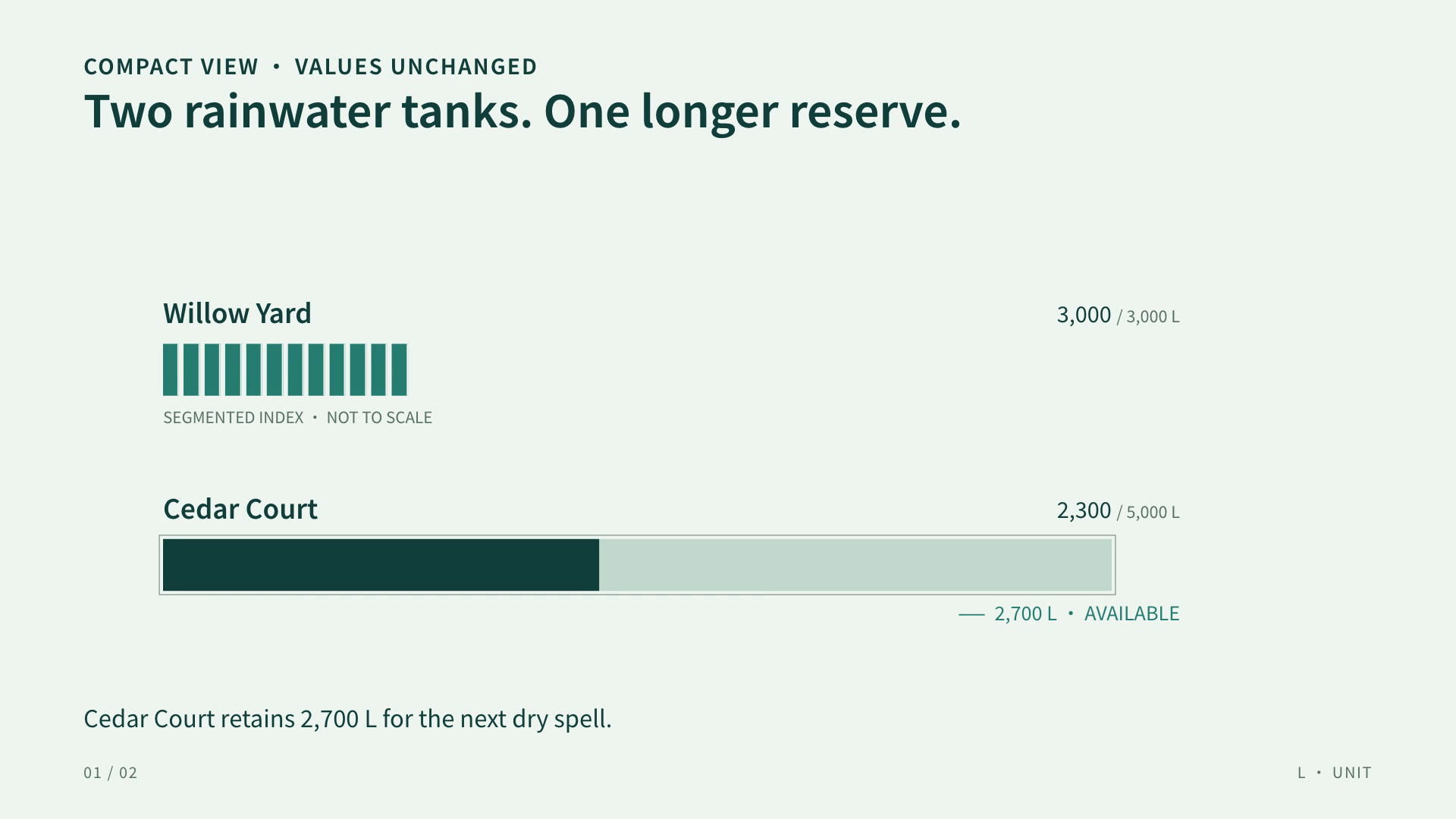
Compare two capacity readings, then switch the full band to an explicitly non-quantitative compact index while keeping values and spare room visible.
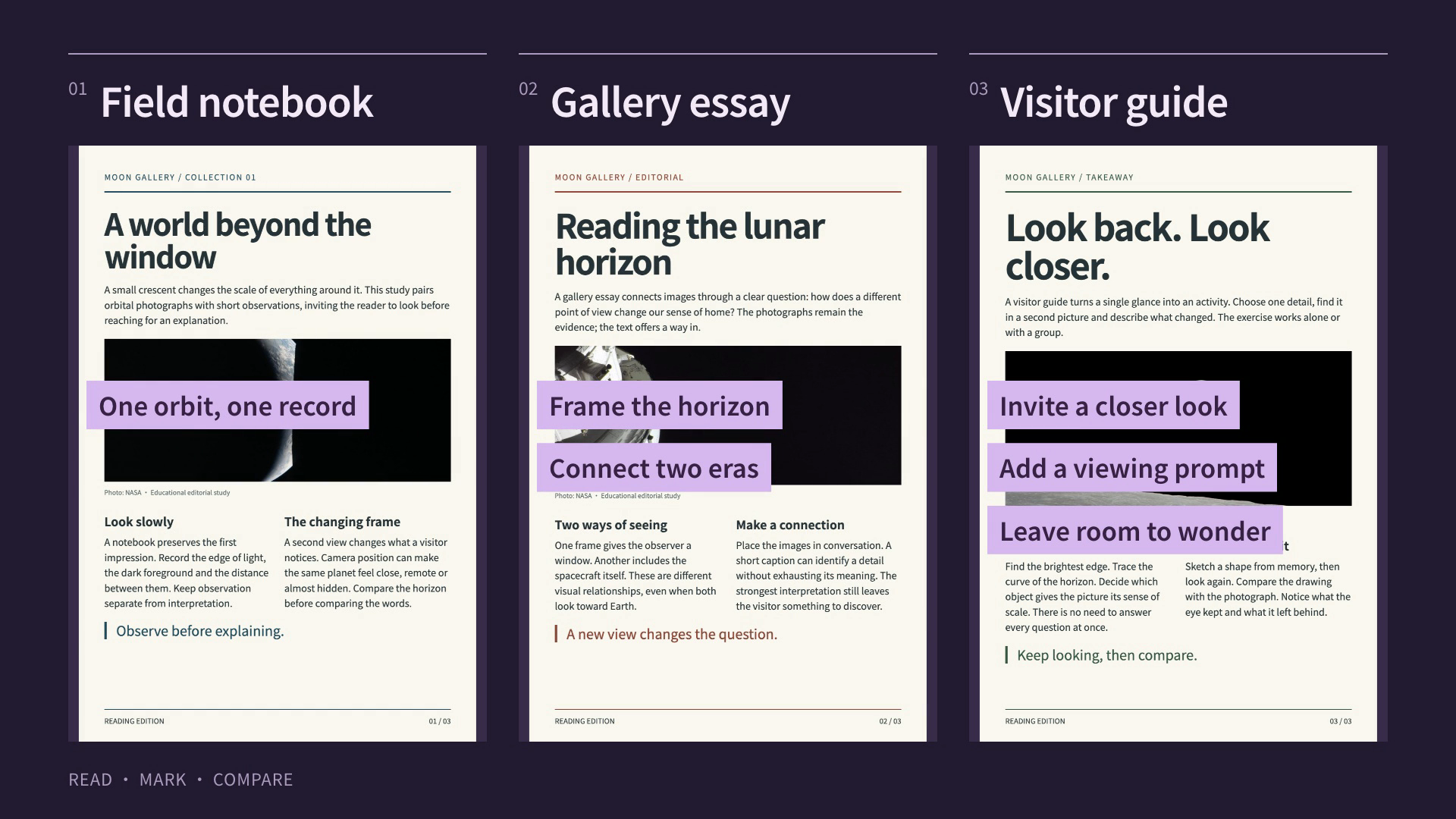
Keep three illustrated pages aligned as focus moves between them, accumulate reading marks, then restore every page for comparison.
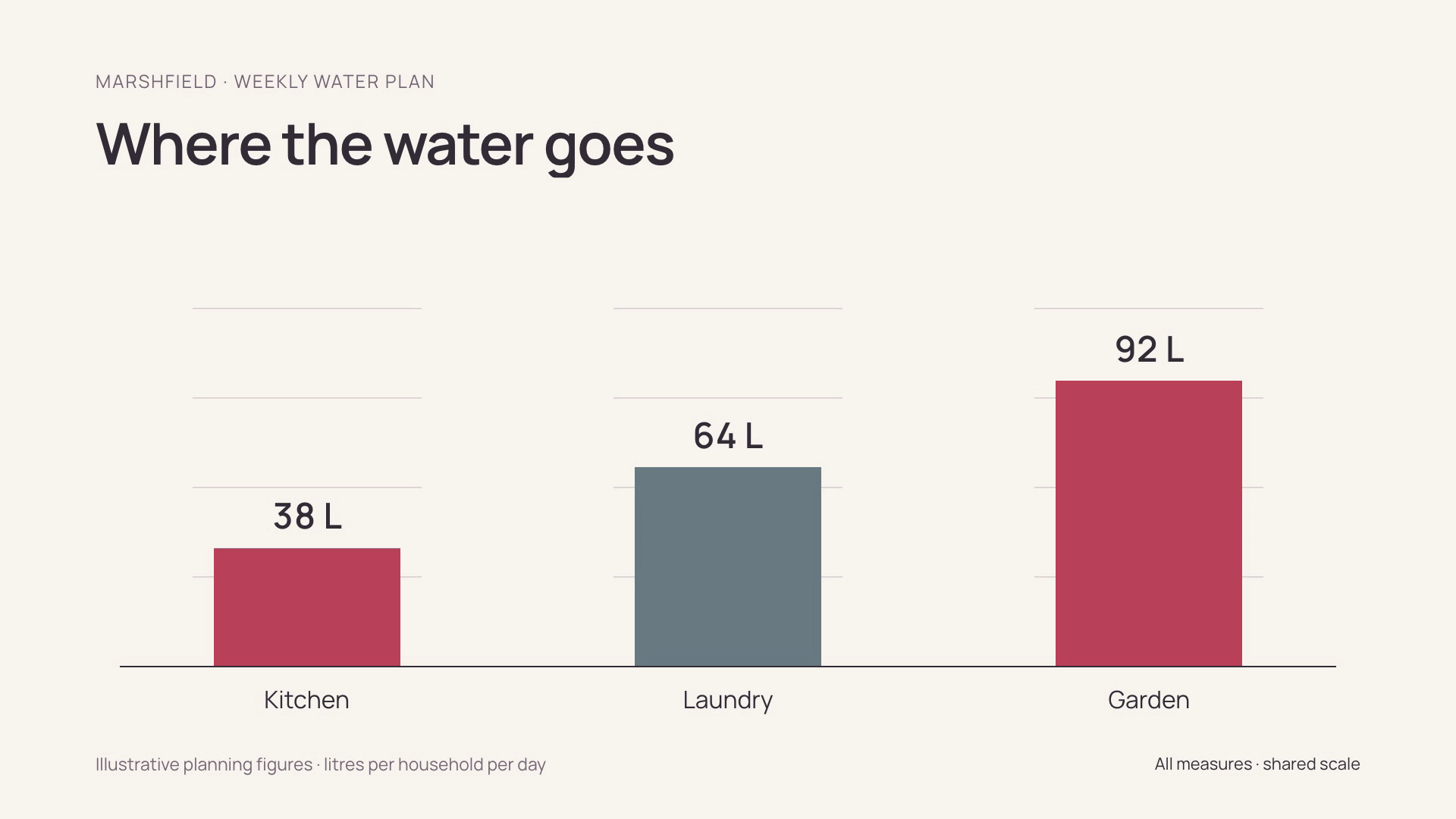
Visit each chart column with a focus band, grow height and counter together, then restore the complete shared-scale comparison.
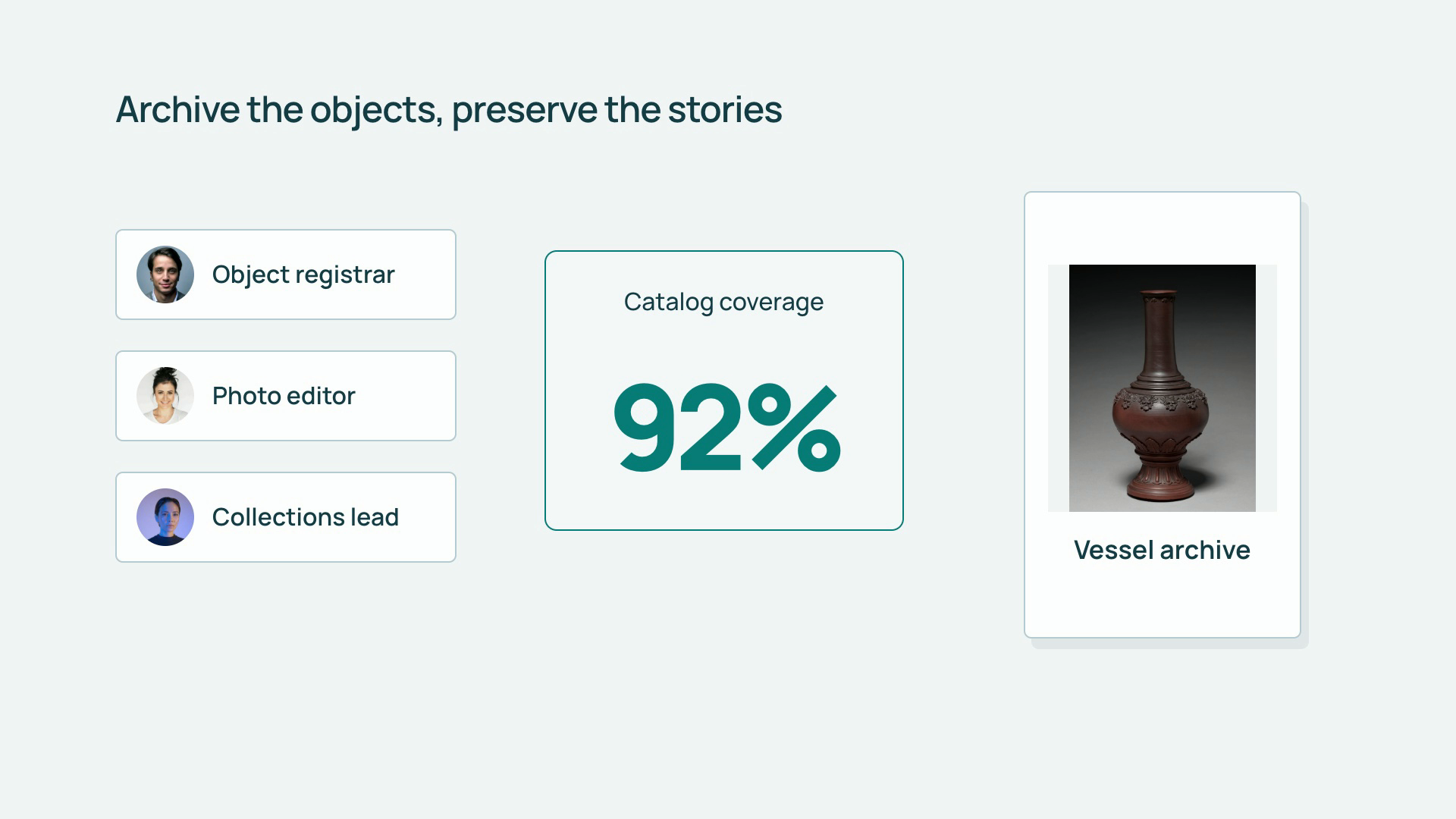
Keep three portrait roles and one object still while a percentage changes, crosses a threshold and holds for reading.
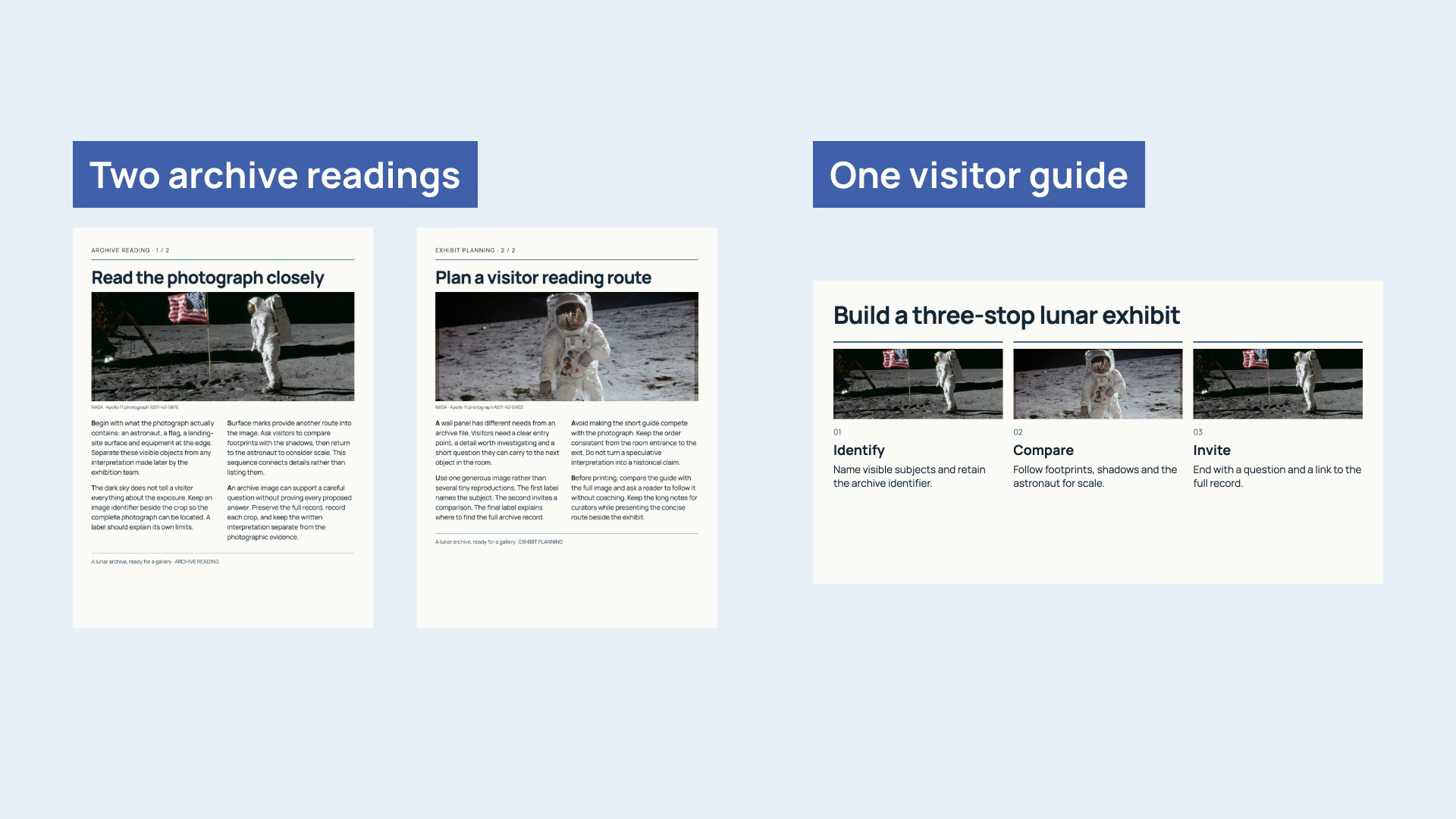
Bring two detailed document images together, then reveal a short landscape digest.
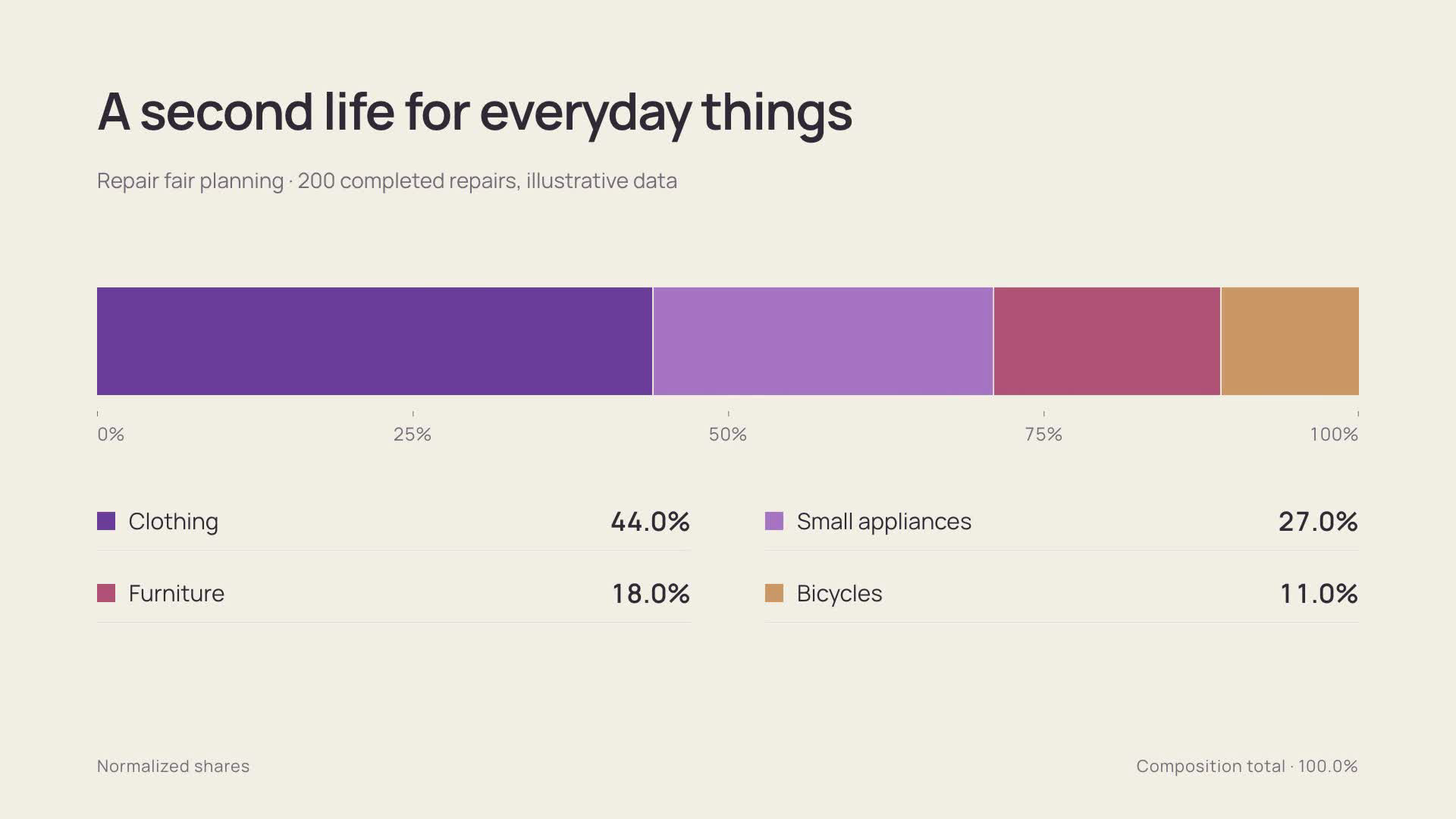
Reveal proportional pieces of one whole in order, followed by their matching labels.
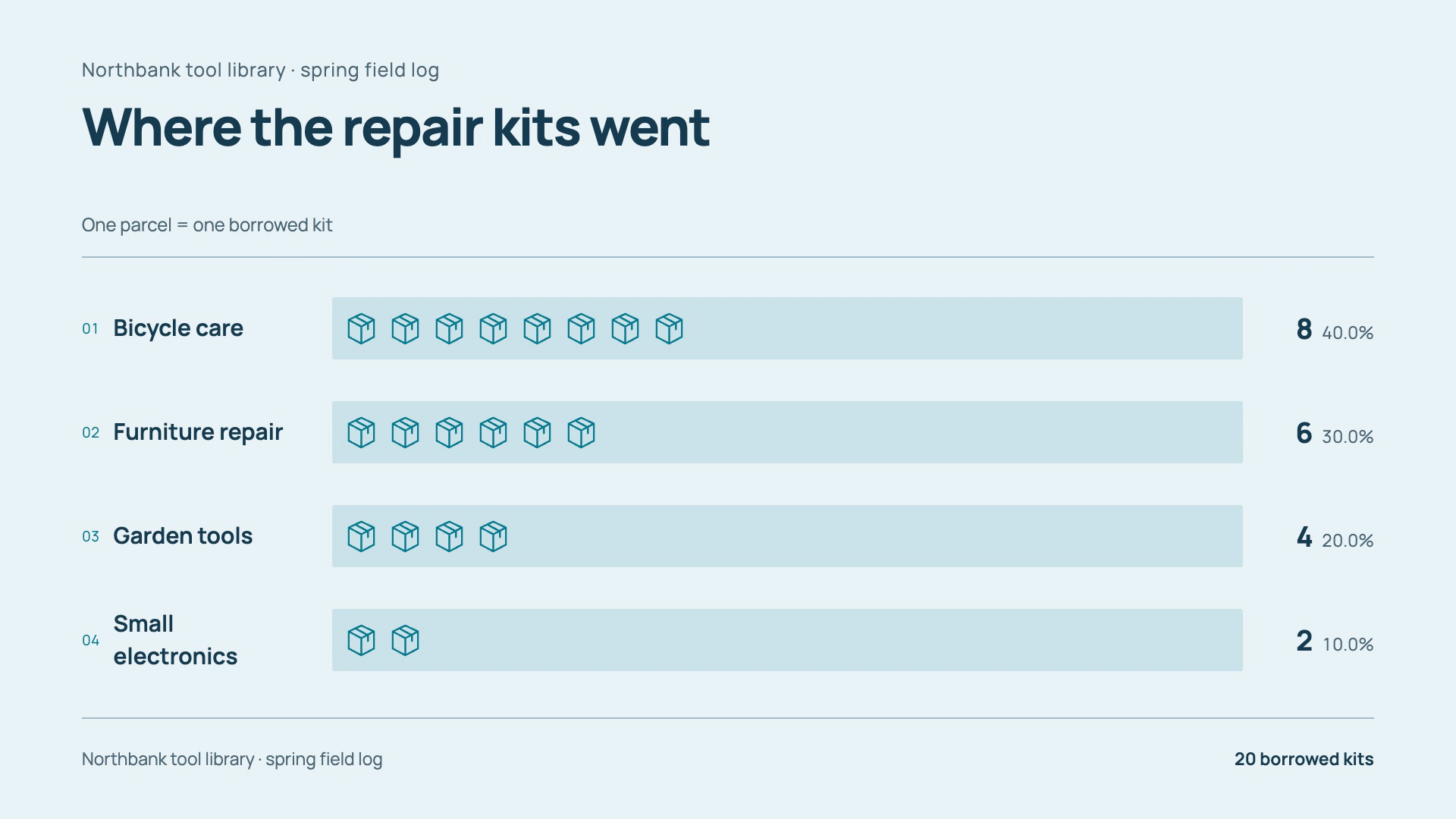
Fill one category with countable icons, follow the ledger downward, then reveal the complete distribution.
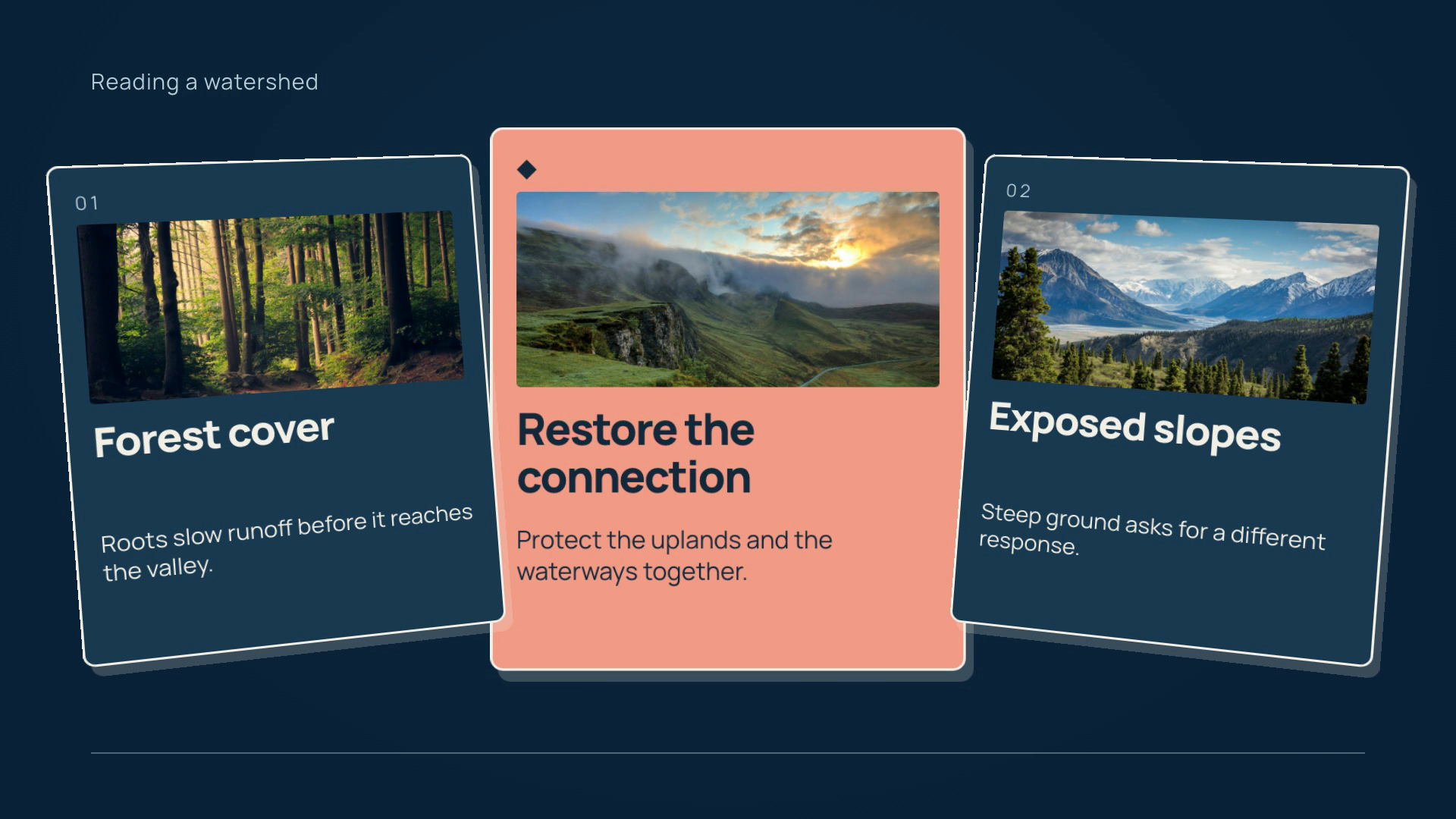
Inspect two photographic panels, split them apart, then advance a conclusion into view.
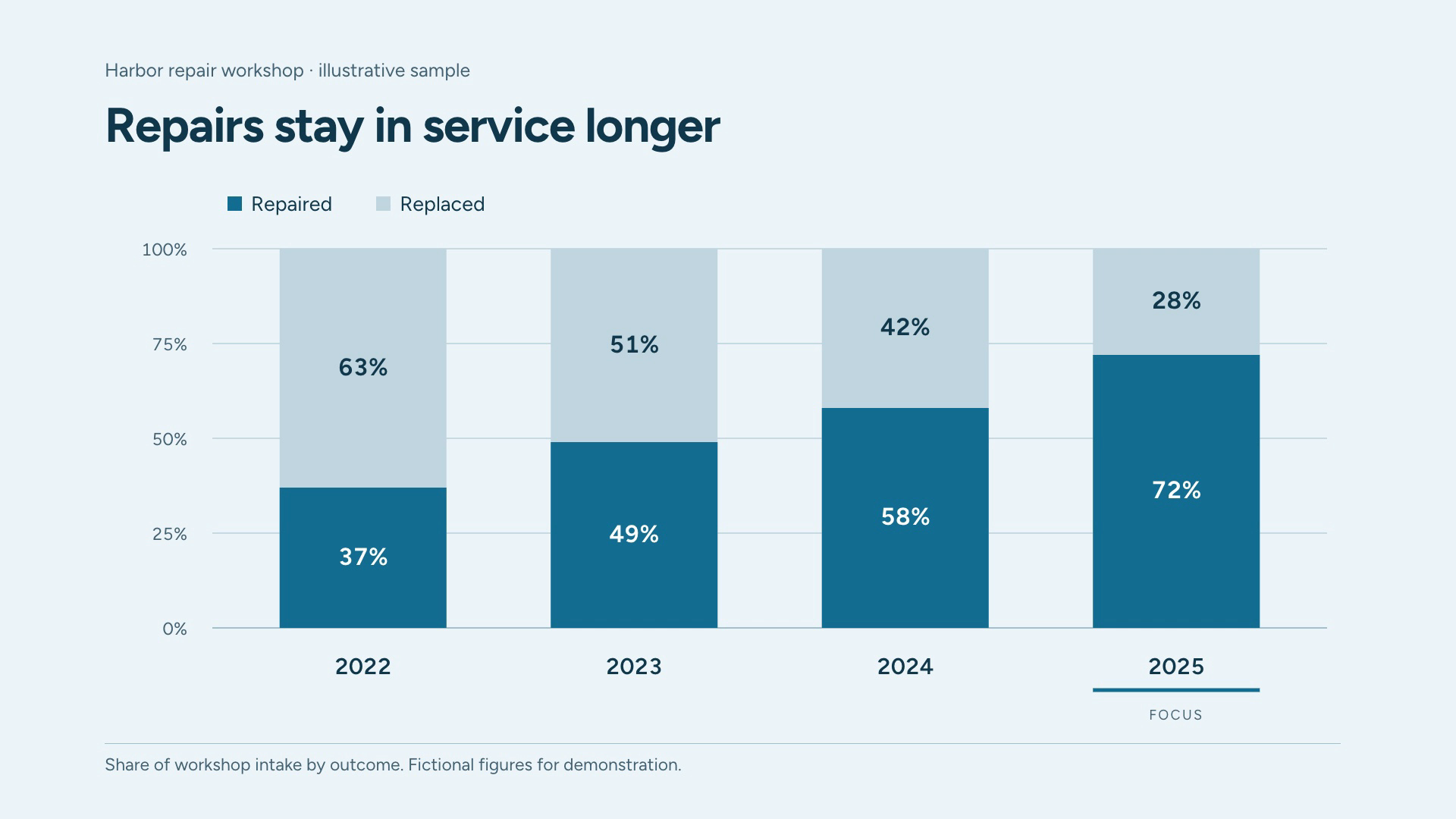
Establish a selected percentage split, then reveal the surrounding observations on one100% scale.
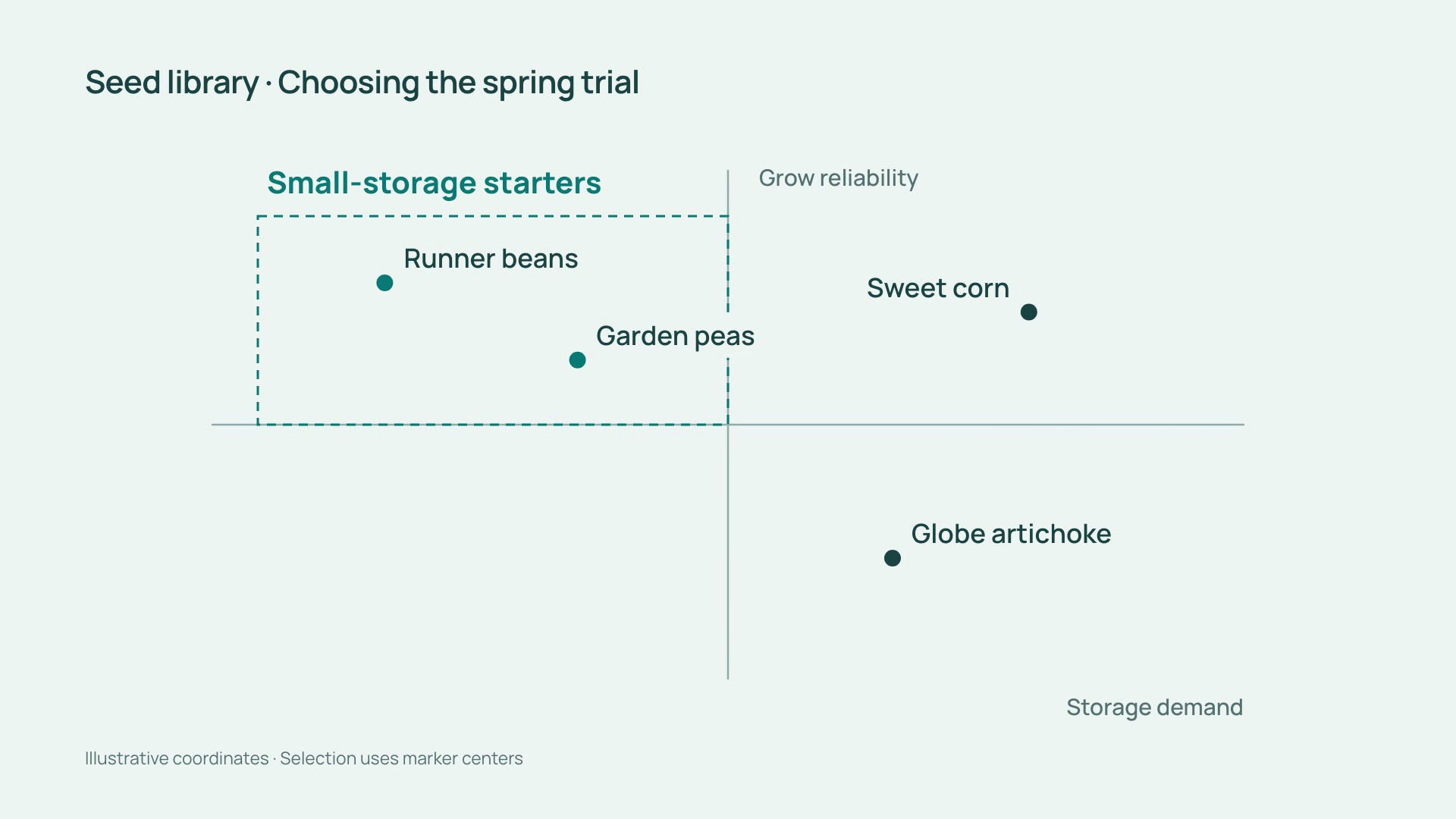
Reveal observations on fixed coordinates, then show which marker centers fall inside a rectangular decision region.
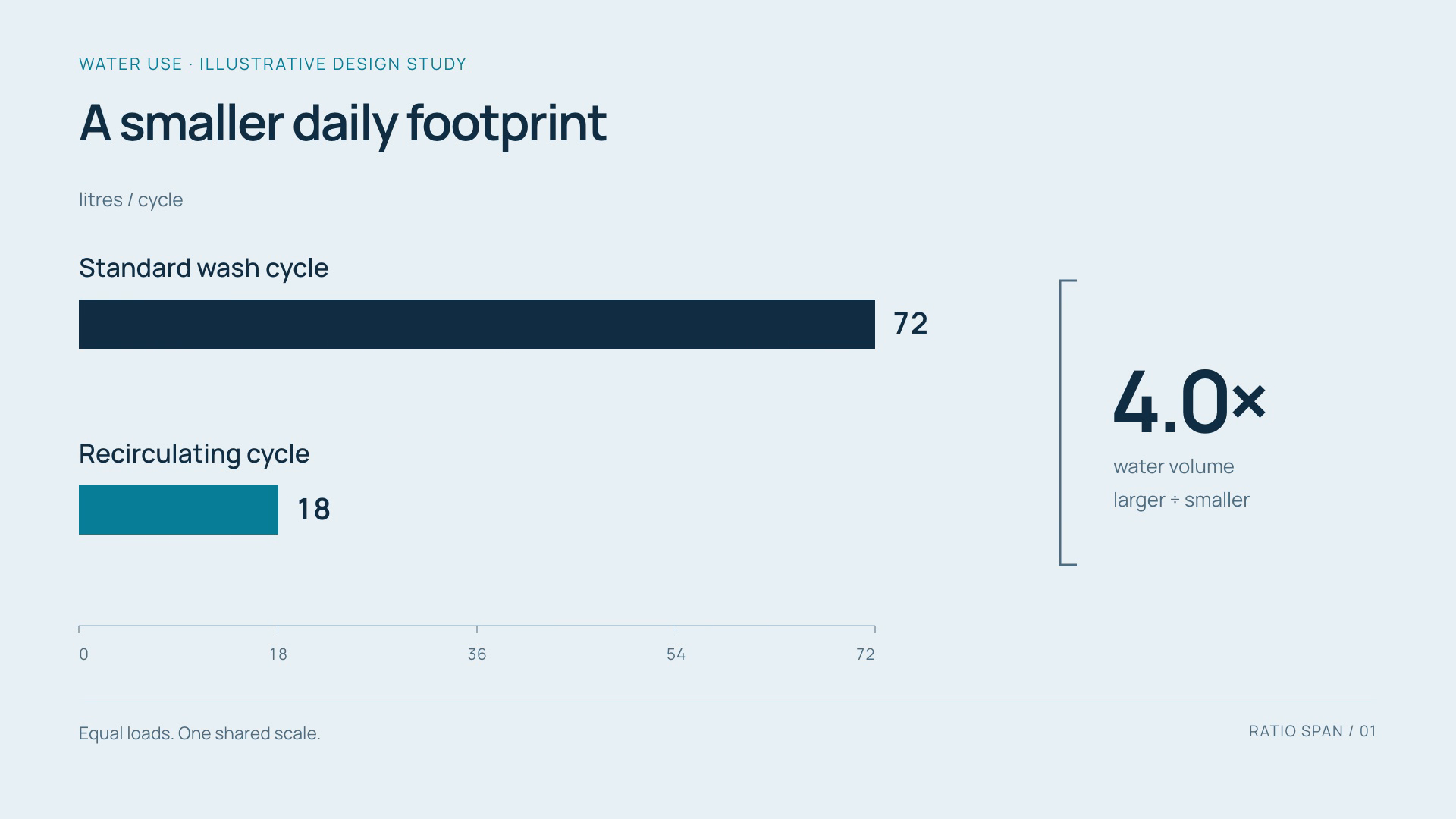
Grow two values on one shared scale,then reveal their larger-to-smaller ratio.
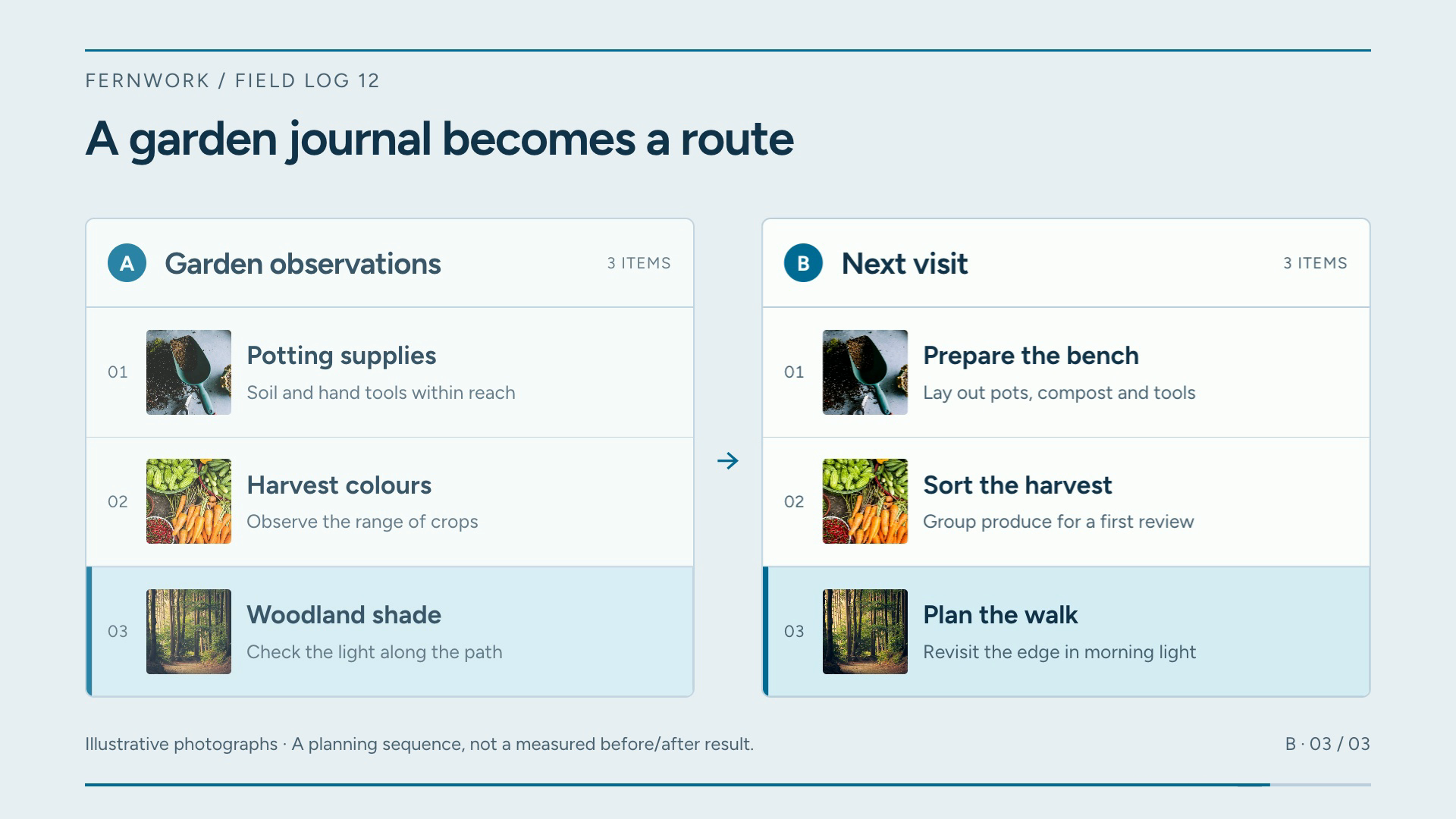
Move a reading highlight through two photo ledgers,then hand attention from the first board to the second.
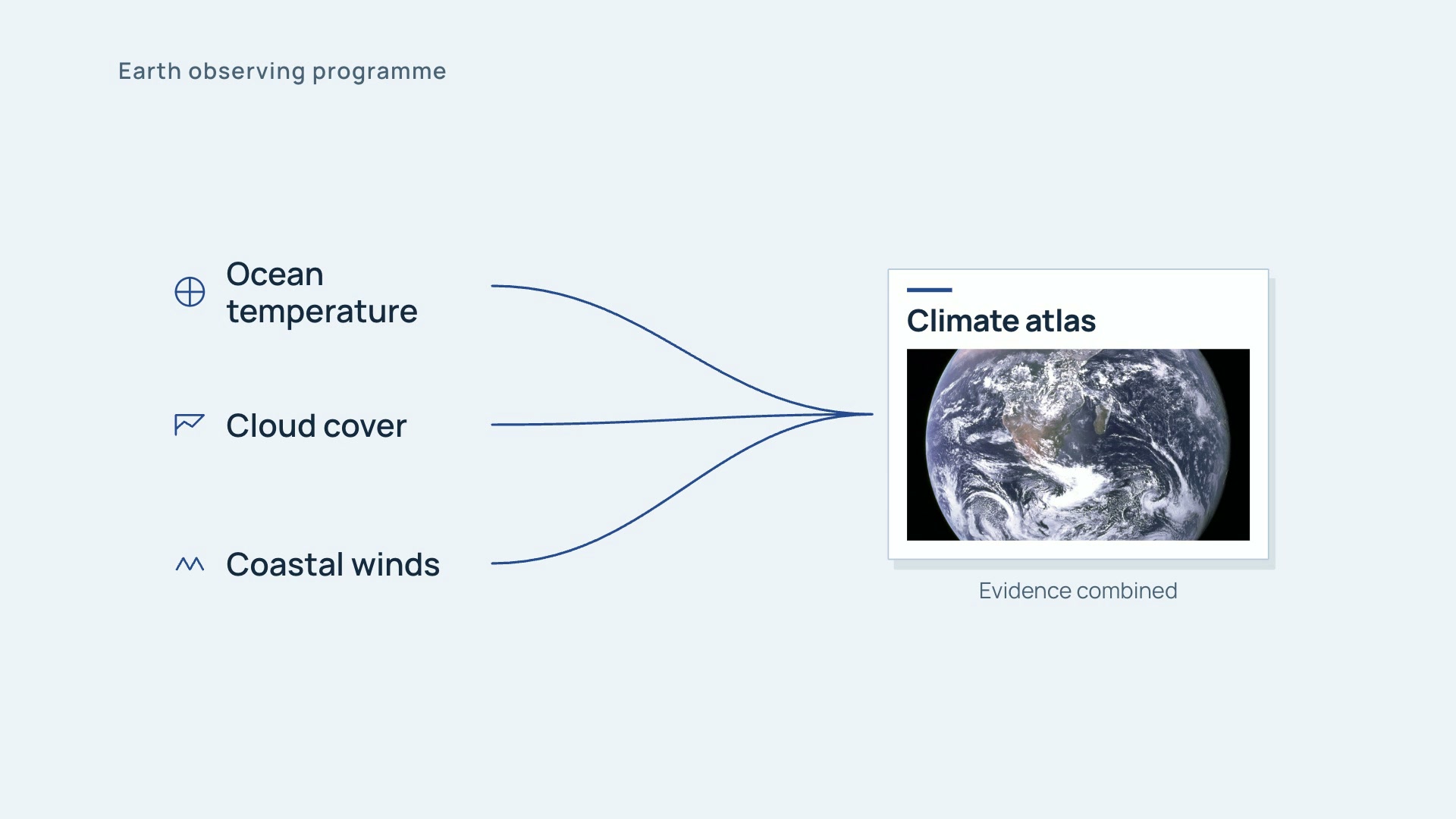
Bring named evidence streams together into a photographic result,with editable connectors,arrival emphasis and a closing contraction.
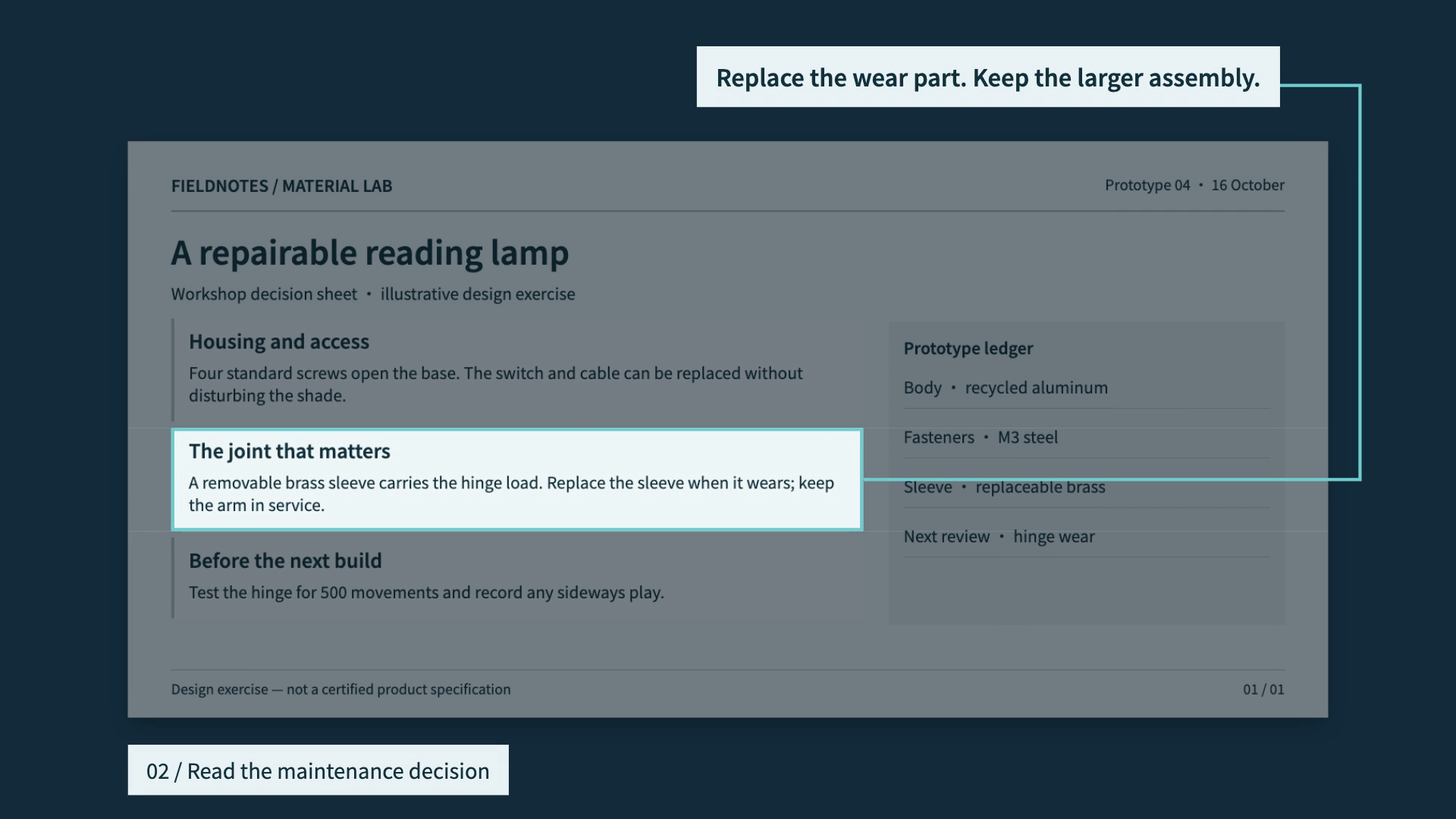
Read an authored fictional design document, push into one selected paragraph with connected notes, then restore the complete context.
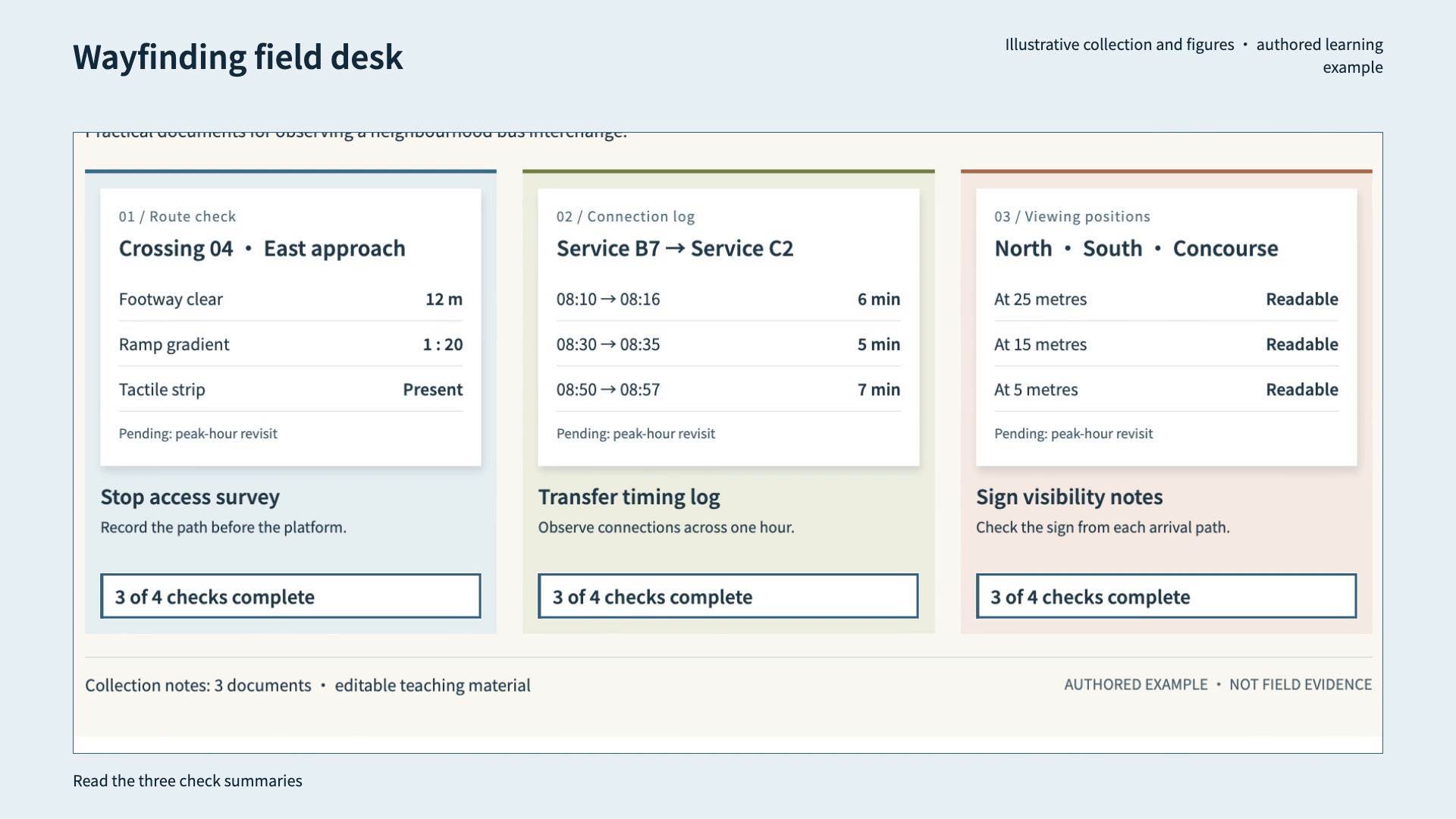
Finish an illustrative collection-level count, clear the overlay and descend into authored documents with evidence borders in reading order.
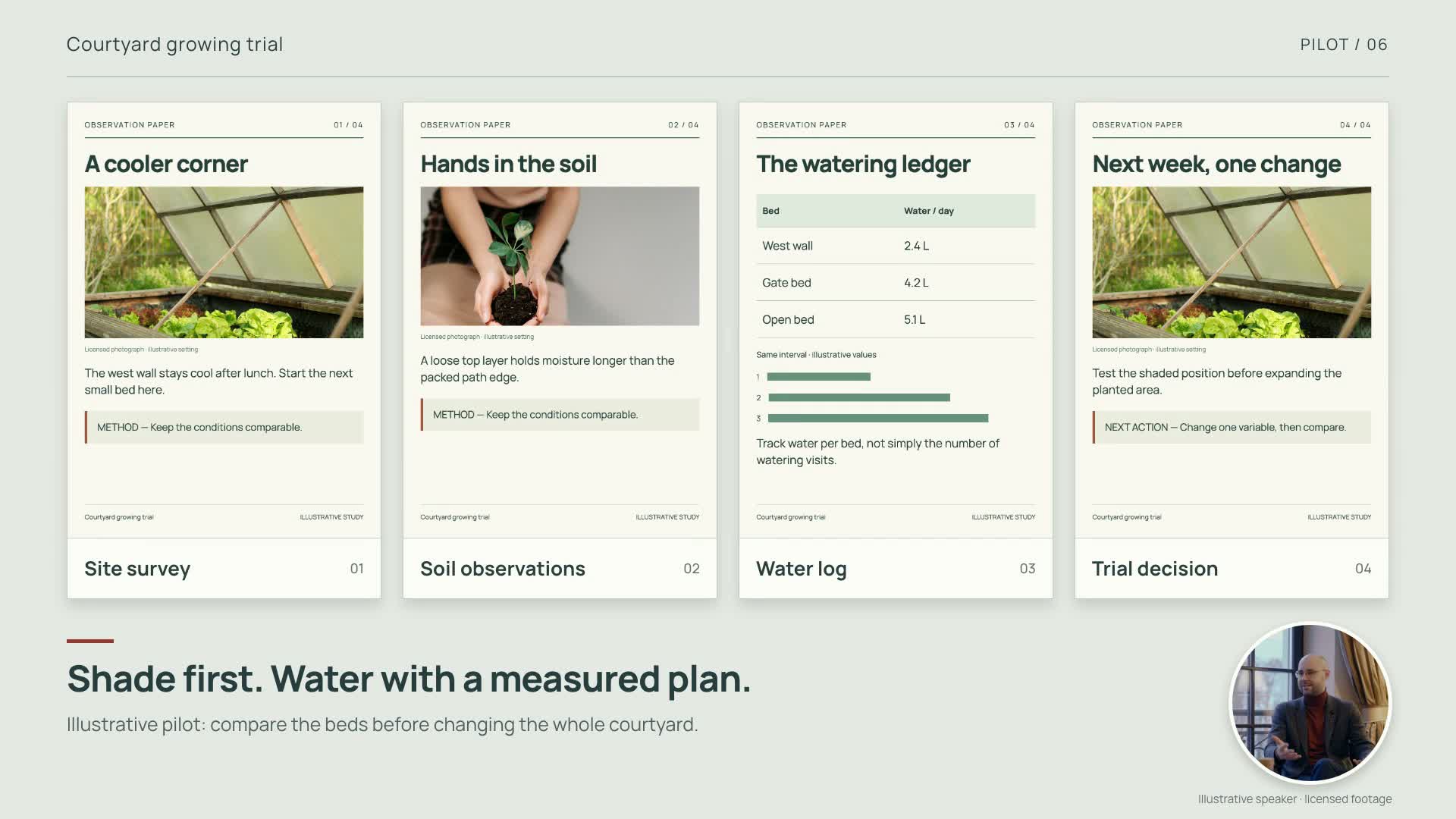
Present four documentary images before revealing a short conclusion and a late circular speaker window.
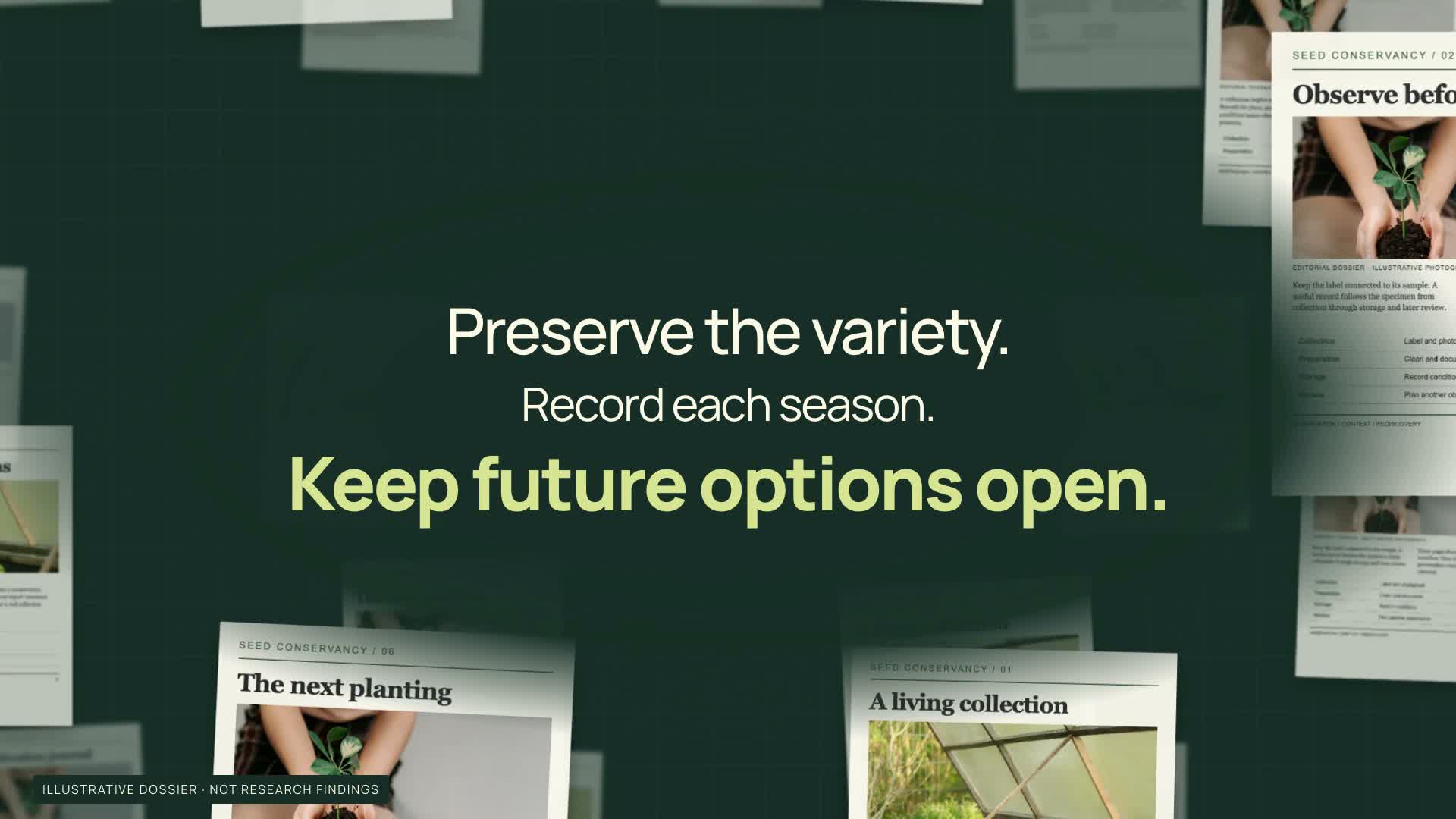
Compose a photographic document volume with three depth speeds and a readable conclusion in editable HTML and GSAP, then encode with HyperFrames.
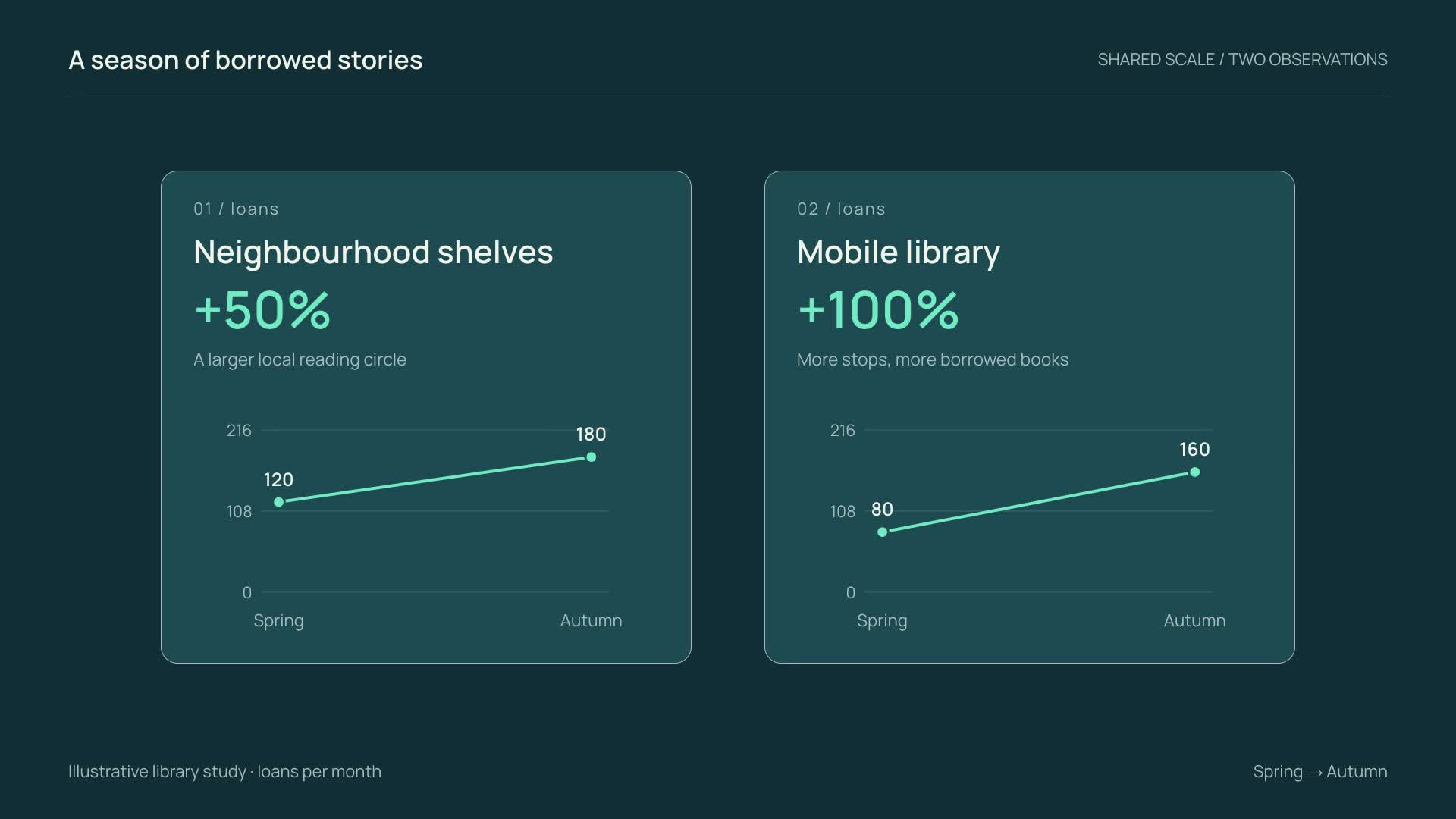
Make an editable two-series trend film with a continuous camera tour and a shared numerical scale.
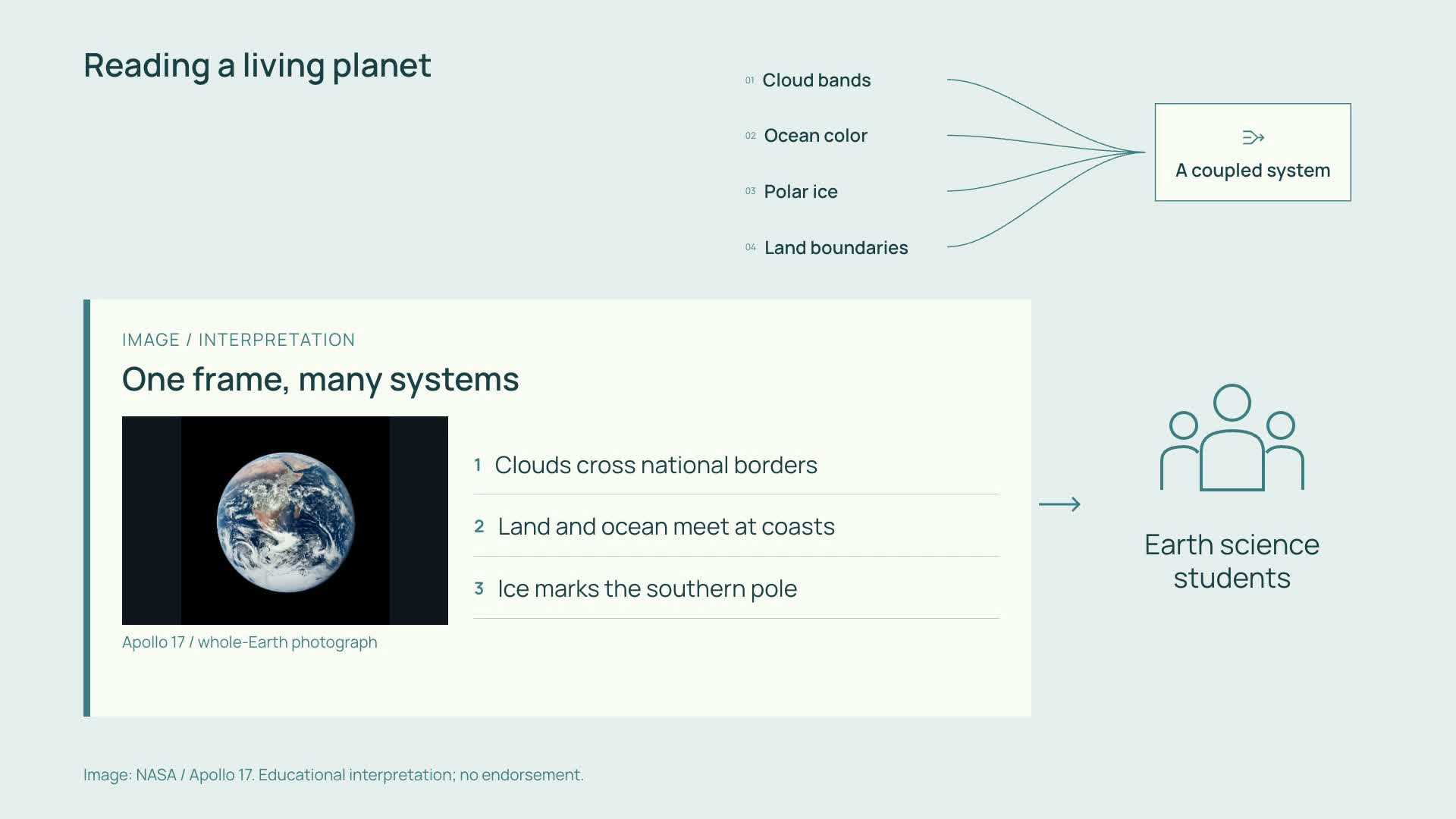
Animate several observations into a synthesis, then open a photographic evidence page and identify its readers.
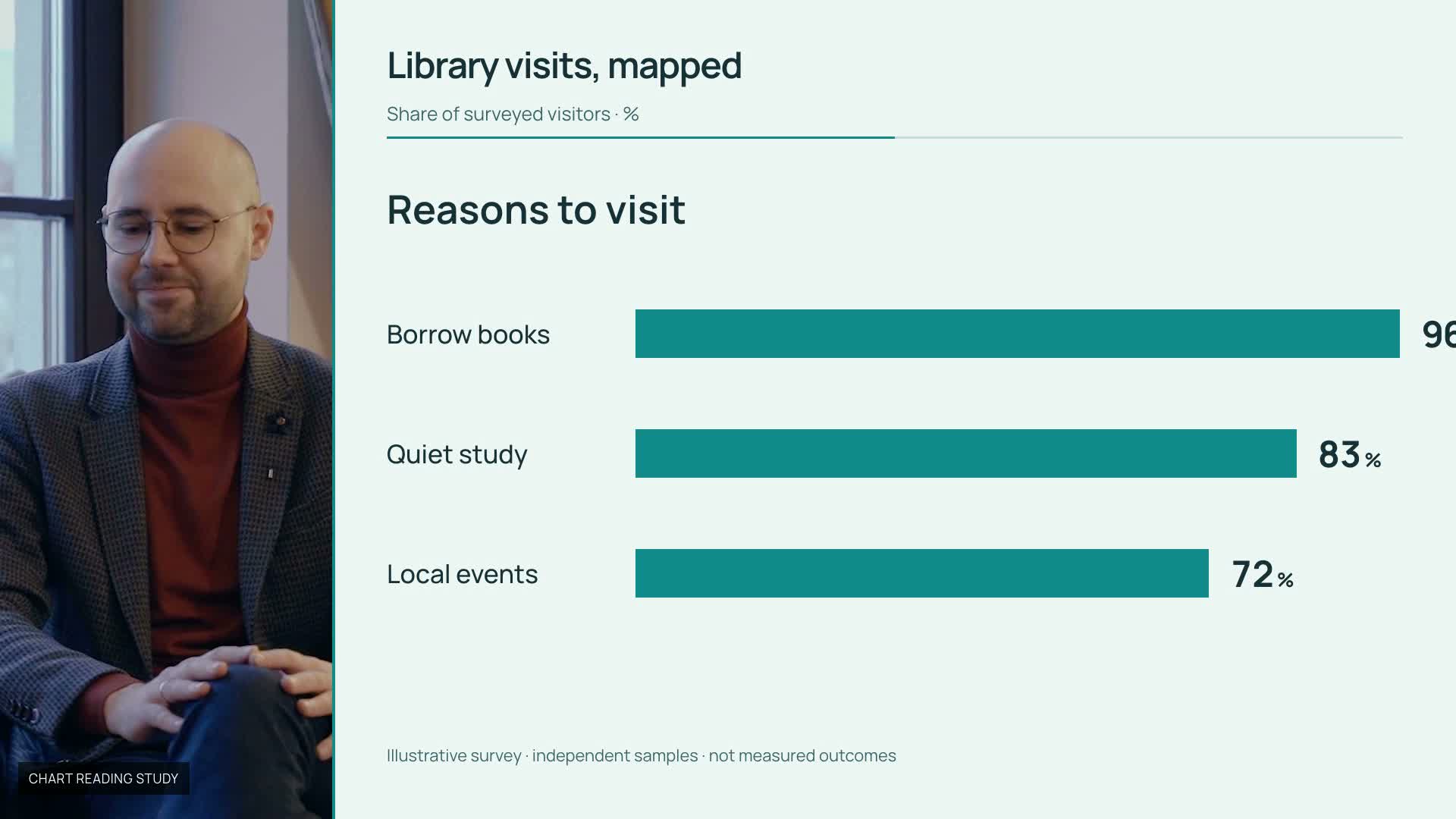
Produce an editable presenter-and-chart film that travels across two groups of percentage bars.
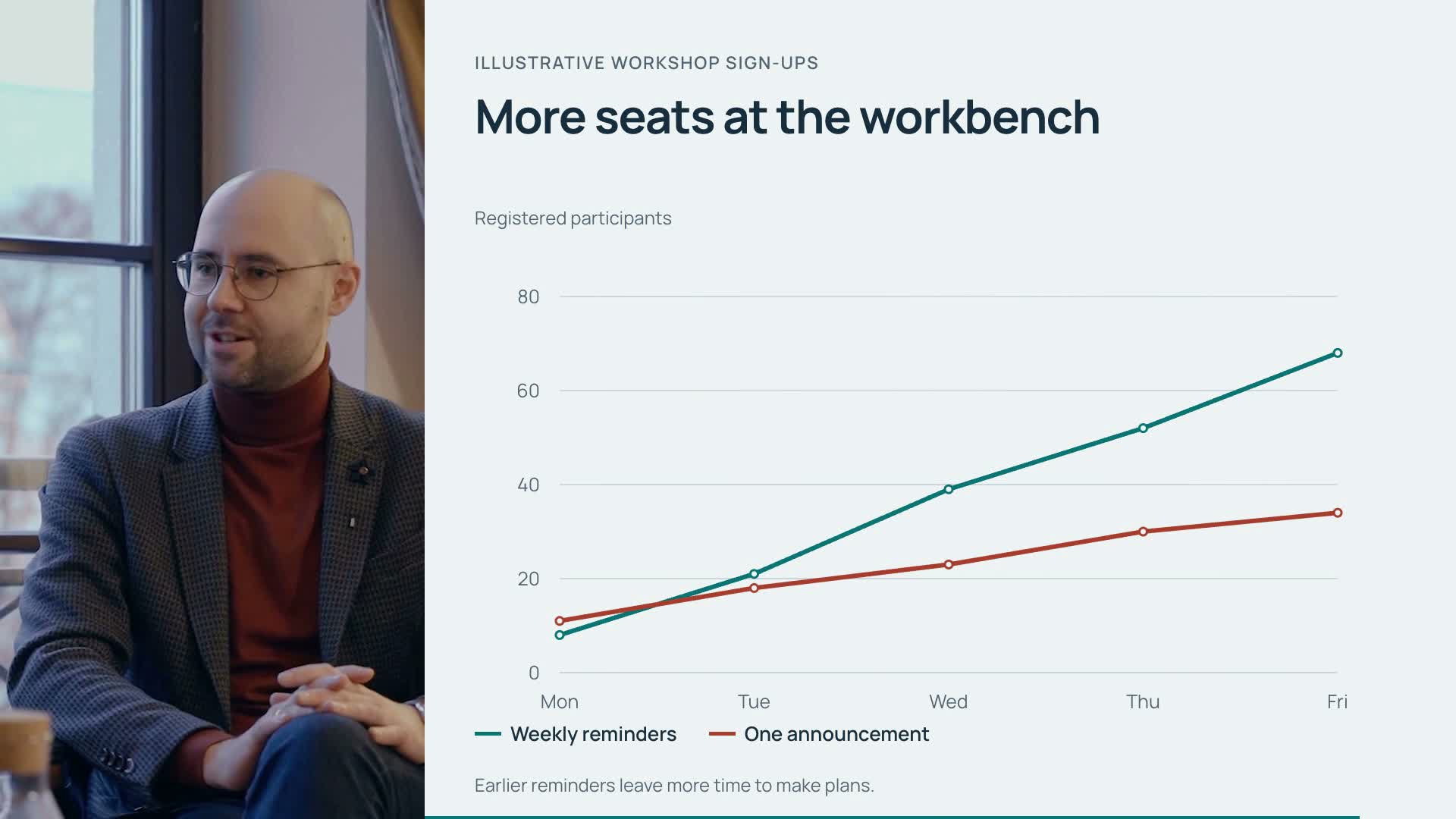
Compose an editable two-series comparison with a continuous speaker shot and coordinated exchanges of the speaker and chart regions.
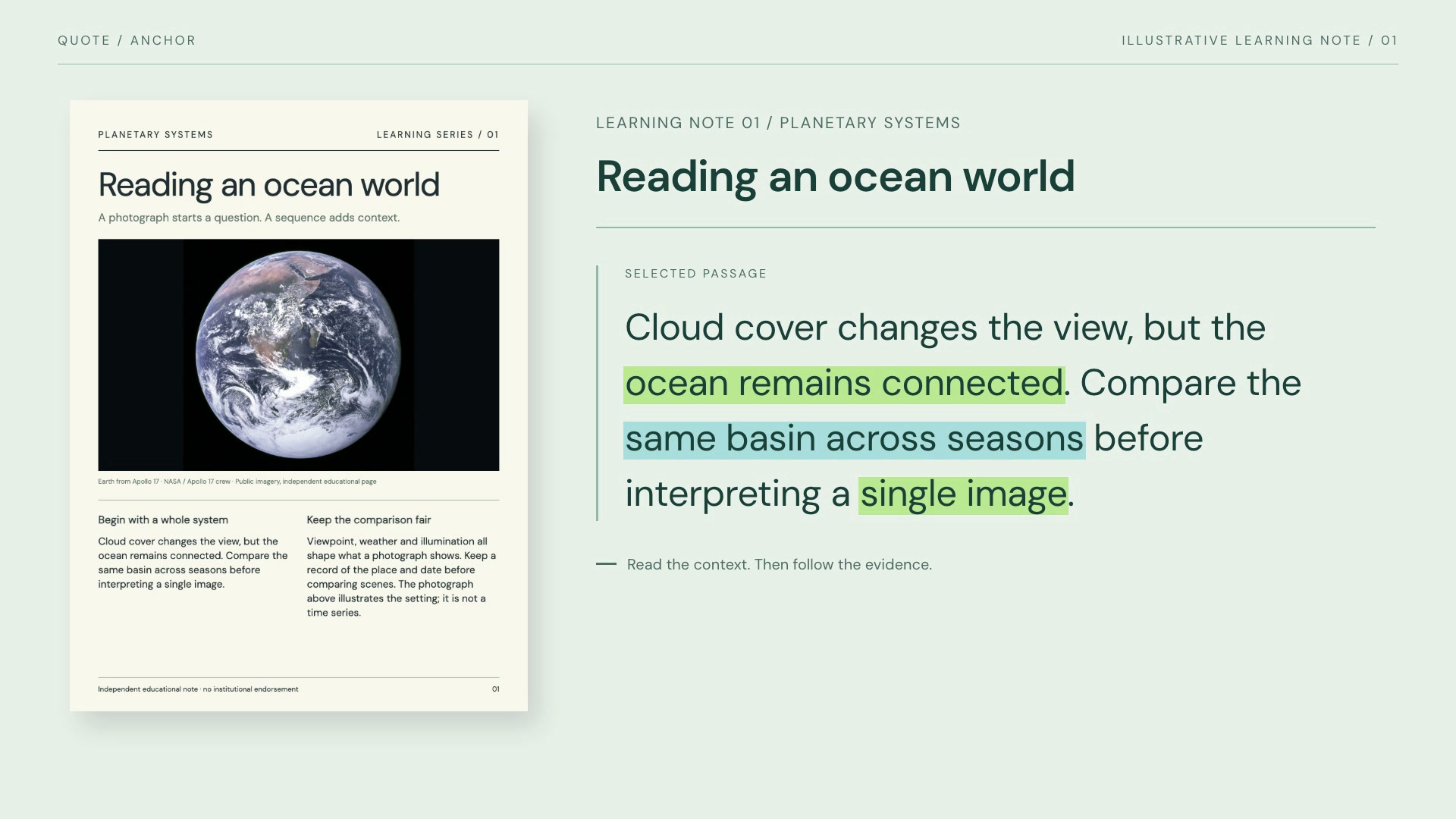
Turn a document page and a short passage into an editable evidence-reading film with a persistent citation, an enlarged excerpt and line-aware marker sweeps.
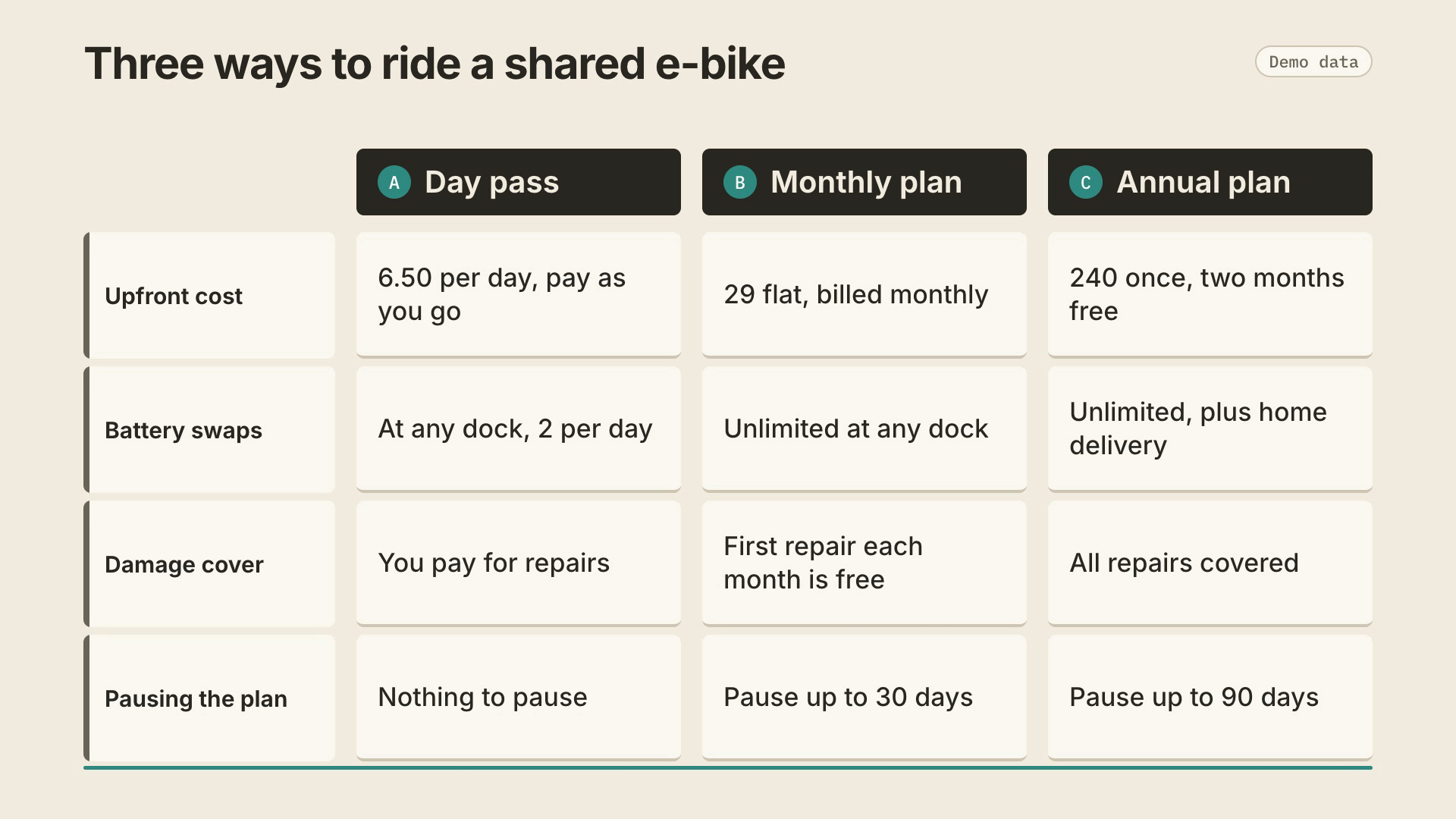
Turn a two- or three-way comparison into a 1920x1080 side-by-side grid video. Contender strips open first, then every criterion label lands and its answers sweep in left to right, row by row. HyperFrames render with optional synthesised cue sounds.
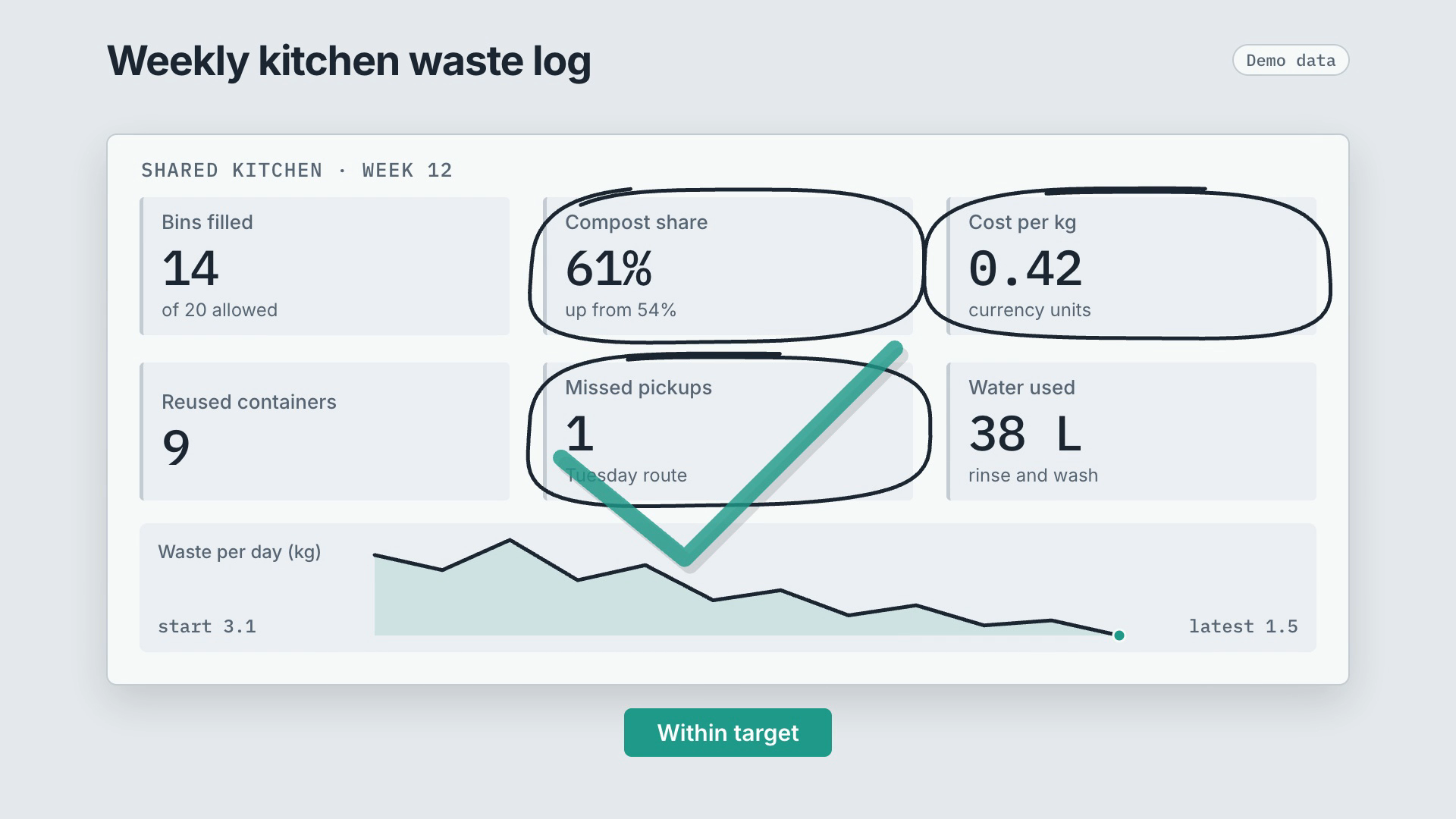
Review a data panel figure by figure. Pen-style loops close around the numbers you pick, one after another, then a single large check stroke and a status tag confirm the review. 1920x1080 HyperFrames video with optional synthesised cue sounds.
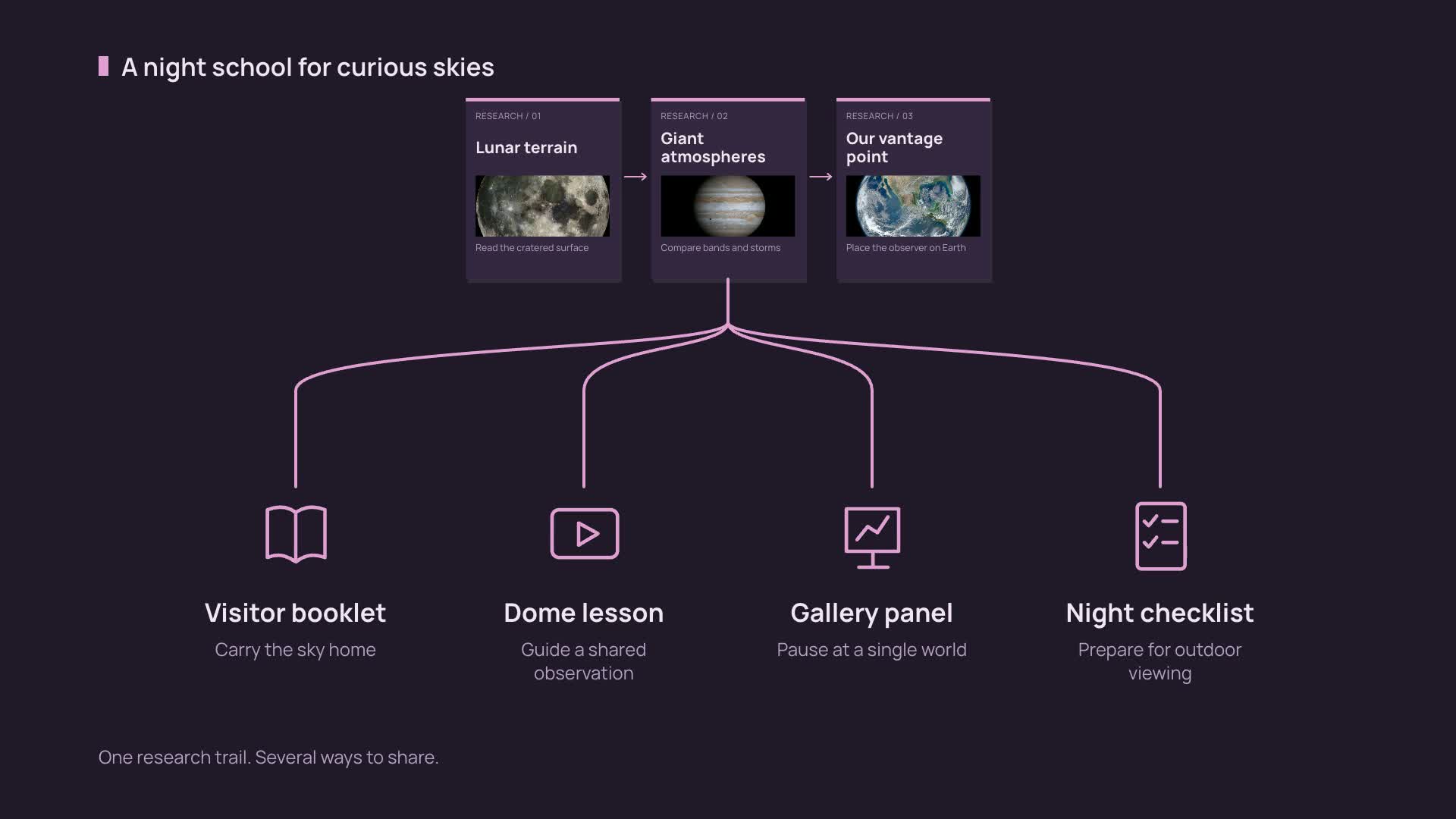
Animate a research chain that contracts into a header and distributes into several editorial formats.
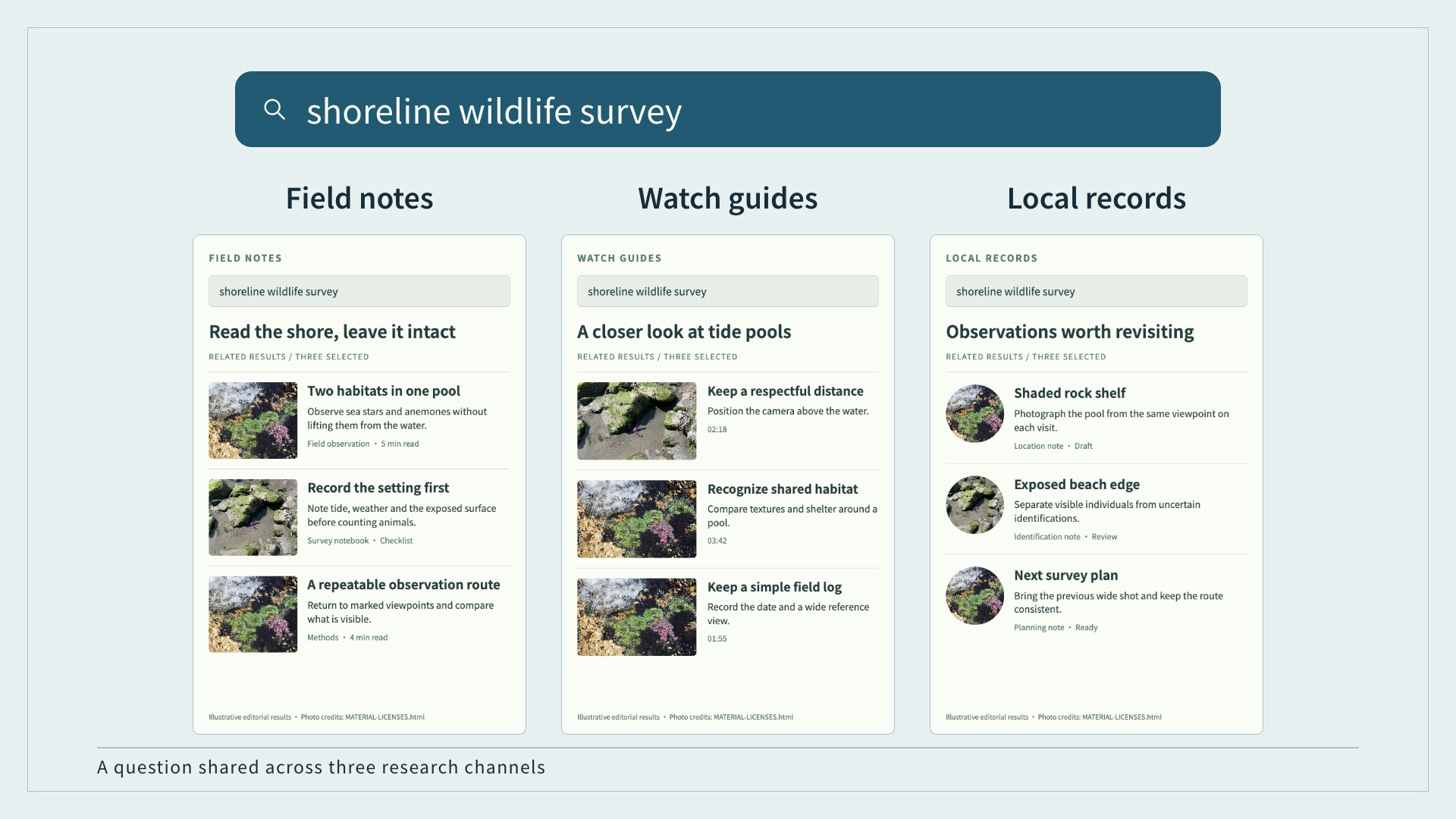
Animate one query into two to four image-rich result panels with editable HTML, SVG, GSAP and HyperFrames.
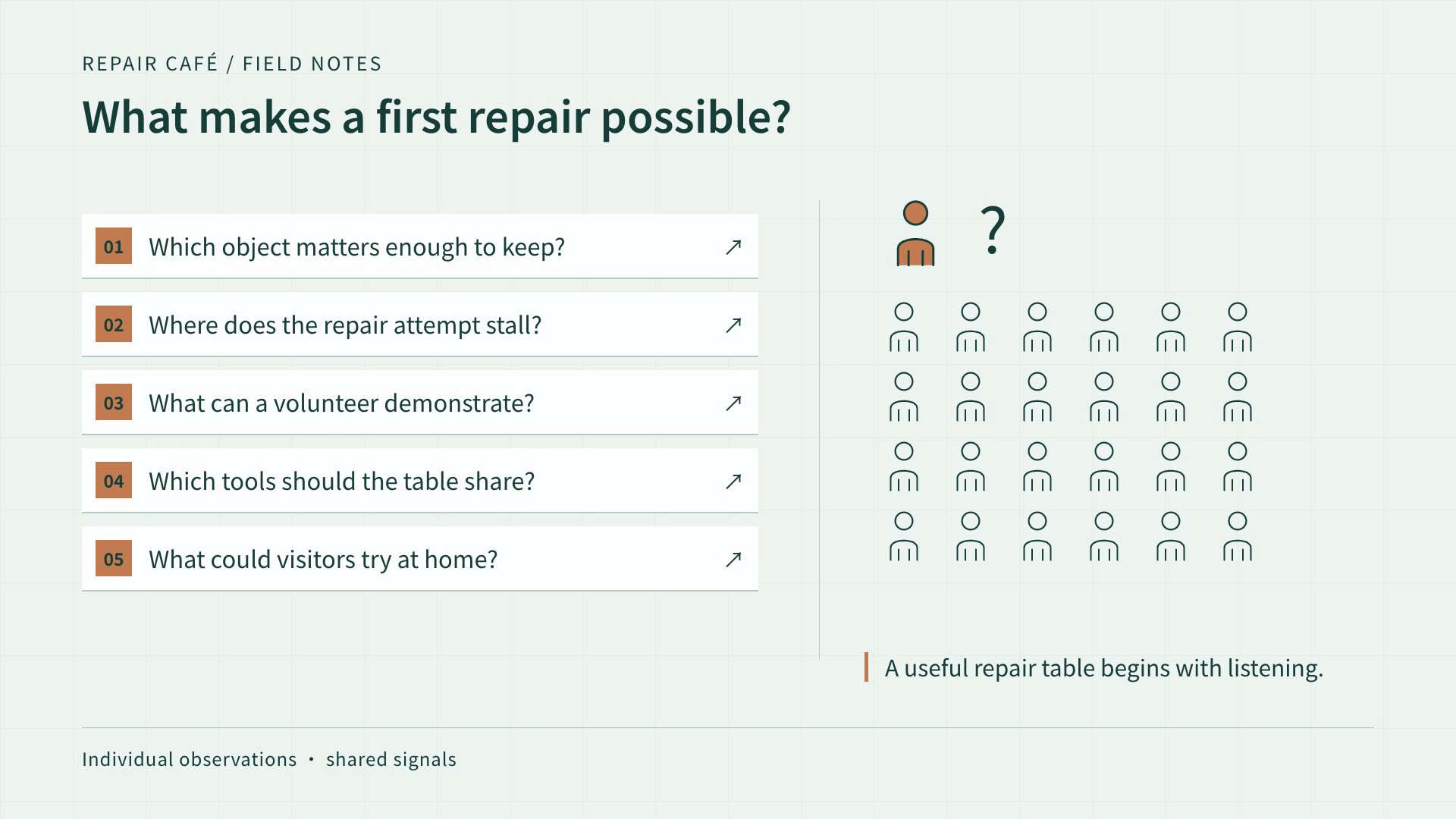
Turn a short research checklist into a growing community diagram with editable HTML, SVG and GSAP motion.
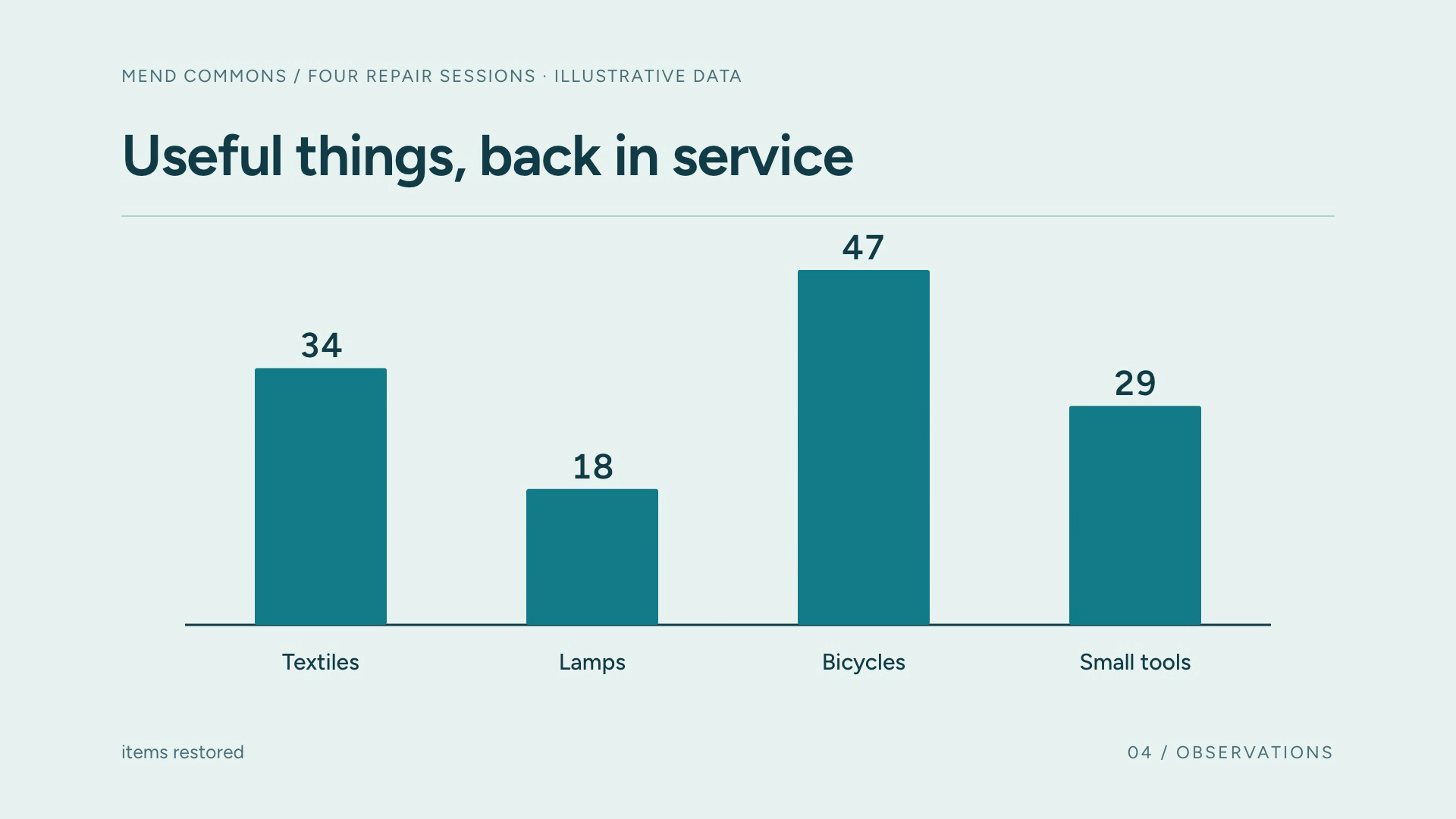
Make editable ordered column comparisons with synchronized endpoint numbers using GSAP and HyperFrames.

Explore science archives through real tool inputs, perspective screen walls, photographic iris glitches and animated glyph fields.
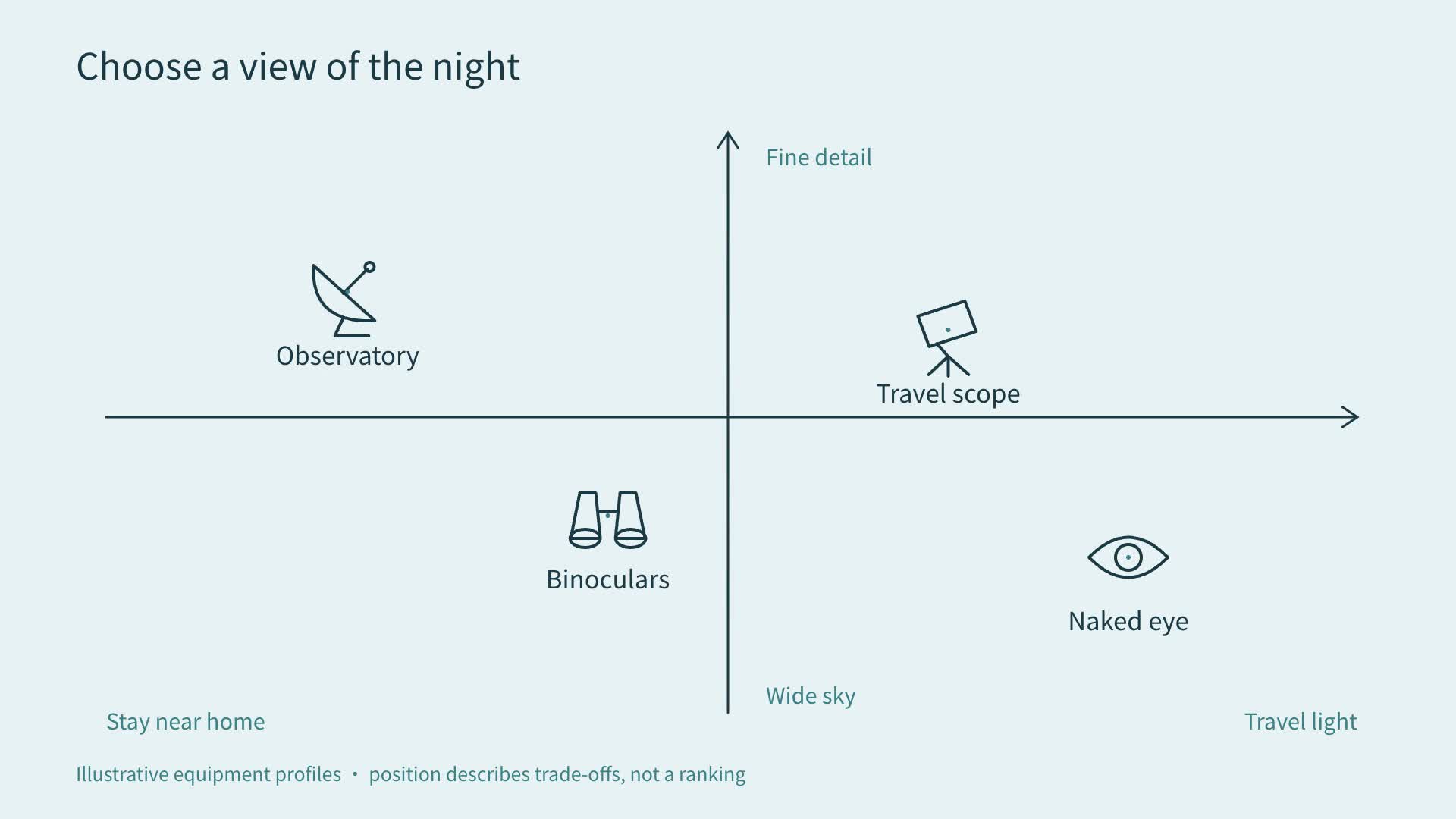
Place recognizable symbols at literal coordinates on two continuous dimensions, then reveal them for comparison.
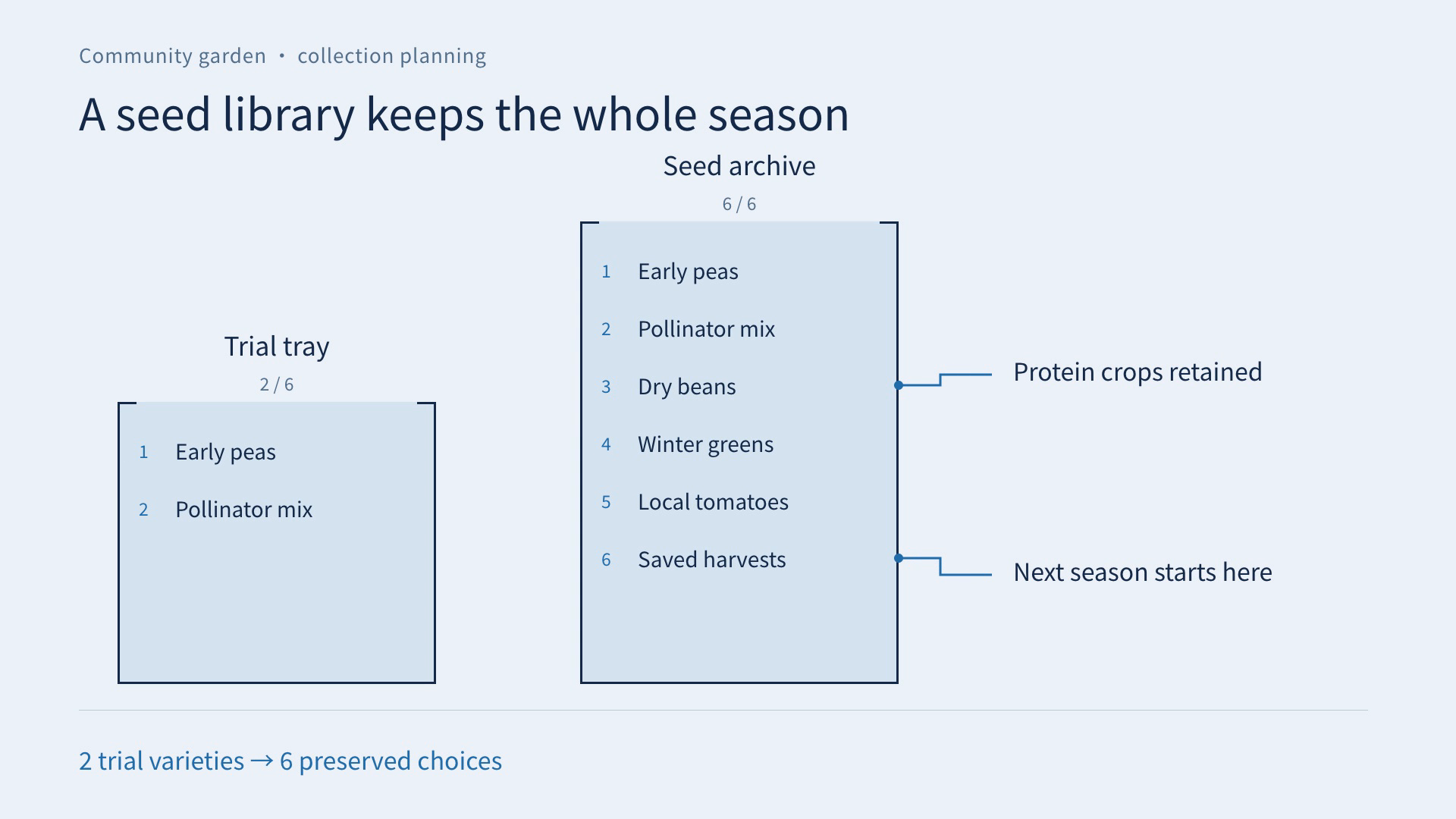
Compare unequal accumulation in two bounded spaces, then connect explanatory notes to selected rows.
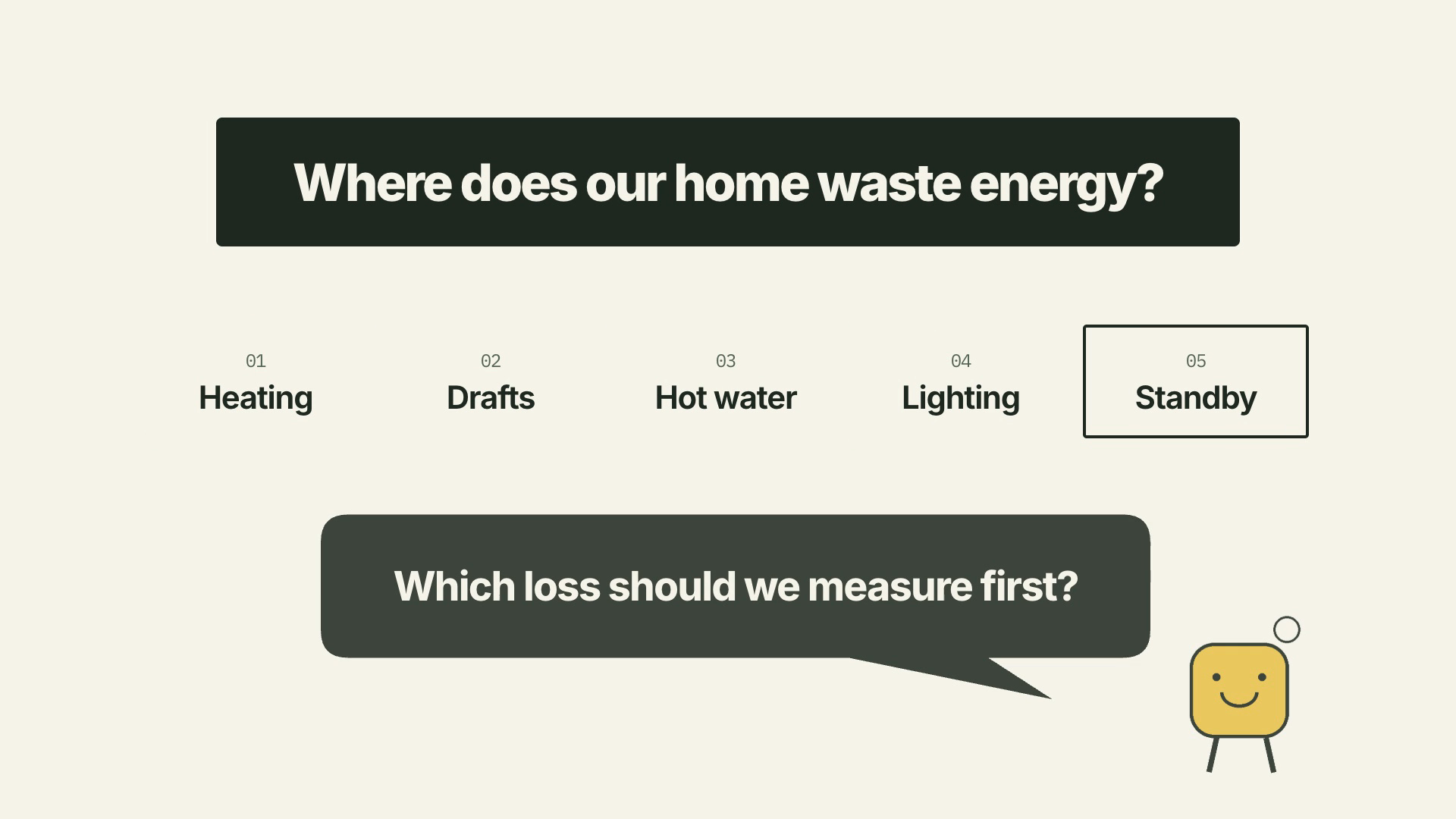
Break one question into dimensions, scan each one and resolve into a focused next question.
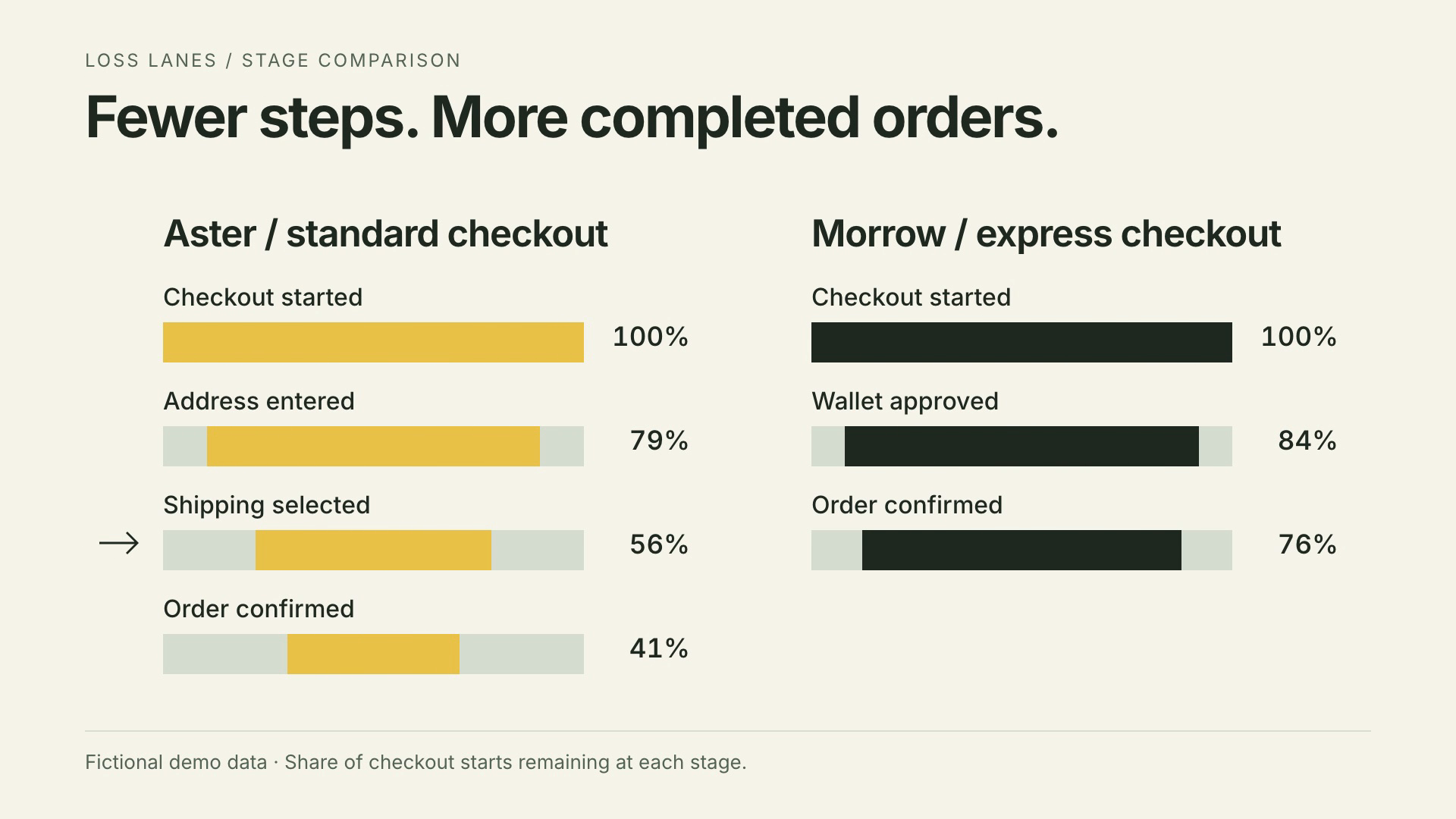
Compare two retention paths with centered stage bars and precise downstream markers.
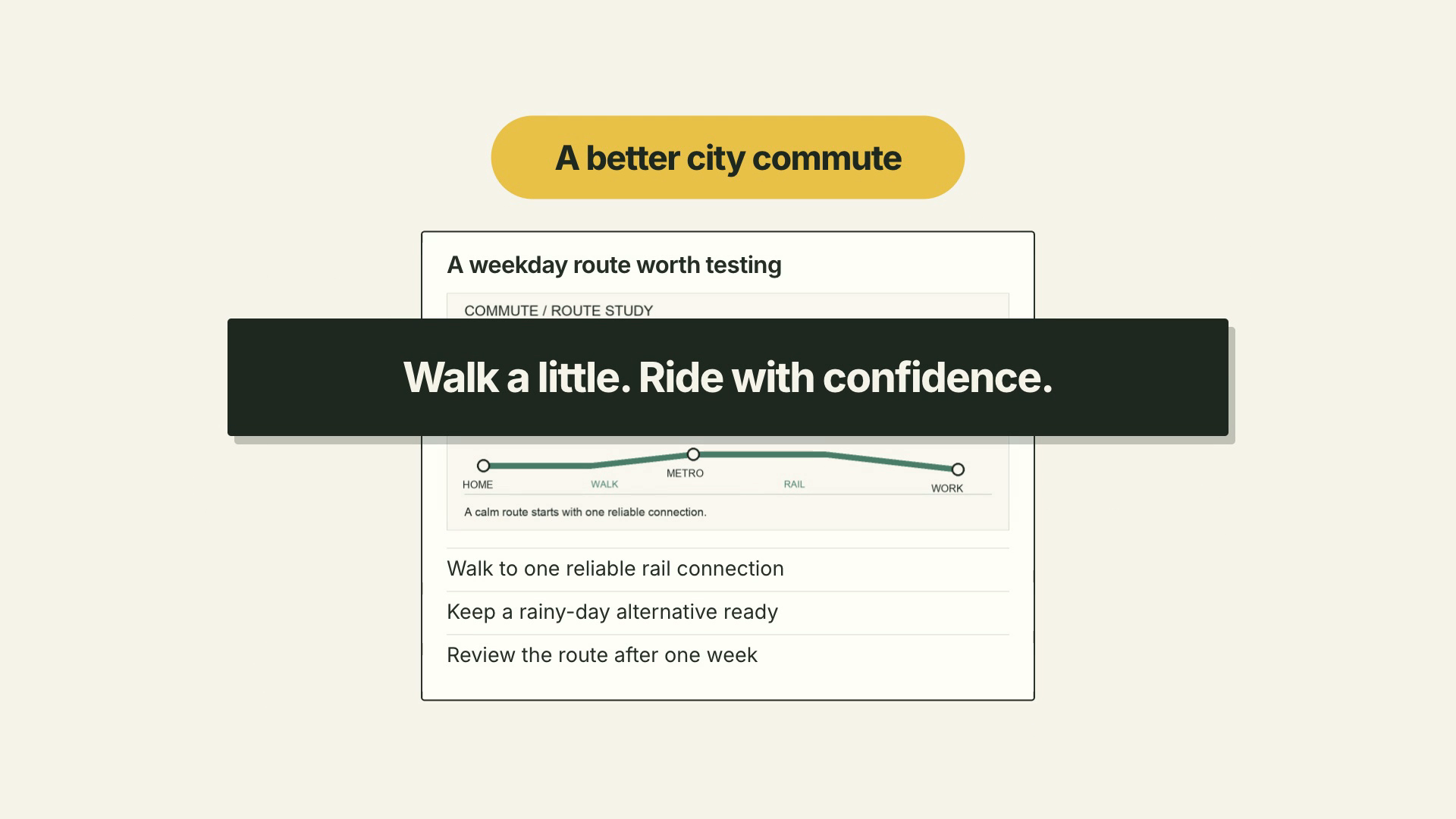
Gather related terms into a clear takeaway and a supporting evidence card.
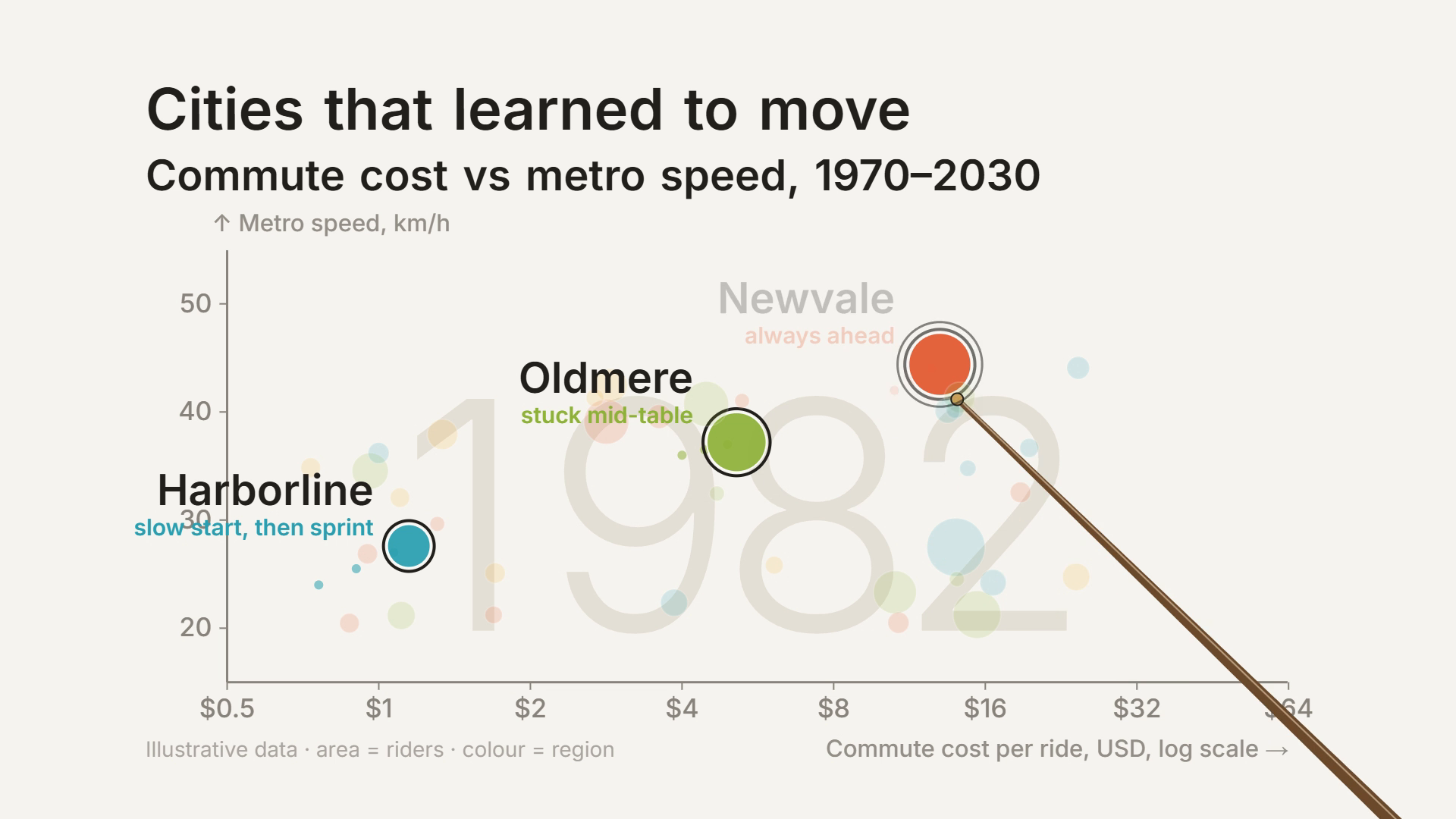
A narrated bubble-chart sting. One scatter plot is the whole stage: a giant year odometer rolls behind the bubbles while a piecewise time map races, eases into holds and rewinds. A wooden pointer stick reaches in and taps the narrated bubbles — they keep ink rings and dotted trails while everything else dims — and the ending rewinds time once more while the axes rescale into the story's range. Silent, deterministic, frame-seekable.

Dives from an everyday scene down through ever smaller levels with real sizes on screen, each level opening from the centre of the last, under a live magnification and field-of-view HUD, then pulls back so the film loops.

A pure-white massing model of a district sits on a plinth in a dark room while a projector paints data onto it as light, one layer at a time.
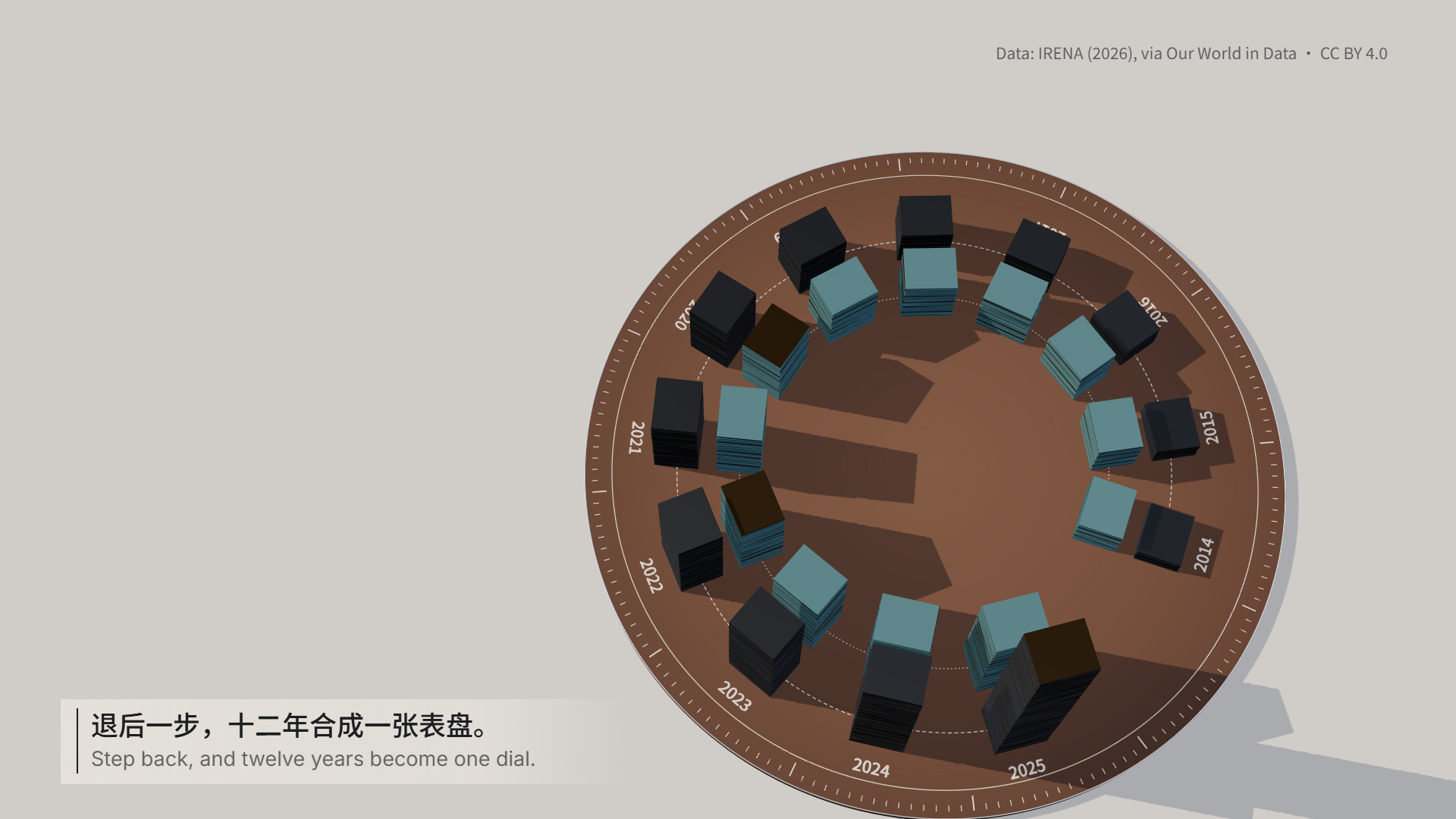
A data-physicalization film — two numeric series are built plate-by-plate into stacked unit sculptures on a walnut dial, ending in an engraved brass puck showing their ratio.
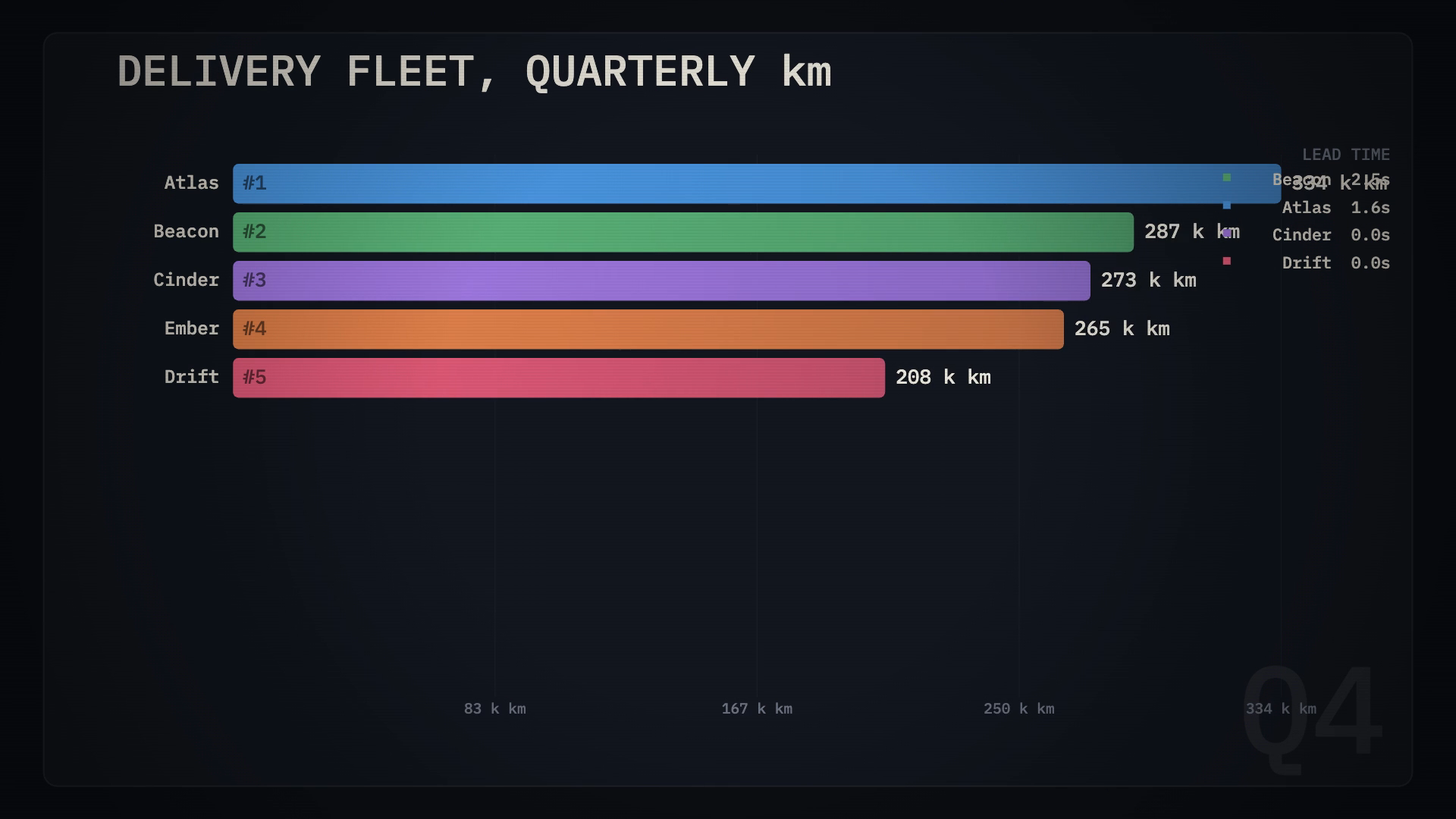
An animated bar-chart race film: sparse data rows are interpolated so values flow, bars glide past each other as ranks change, and a corner ticker tracks how long each item has led. Silent 1080p.

A step-by-step derivation film: LaTeX steps morph into one another — terms that persist glide to their new slot while unmatched terms fade. Silent 1080p.
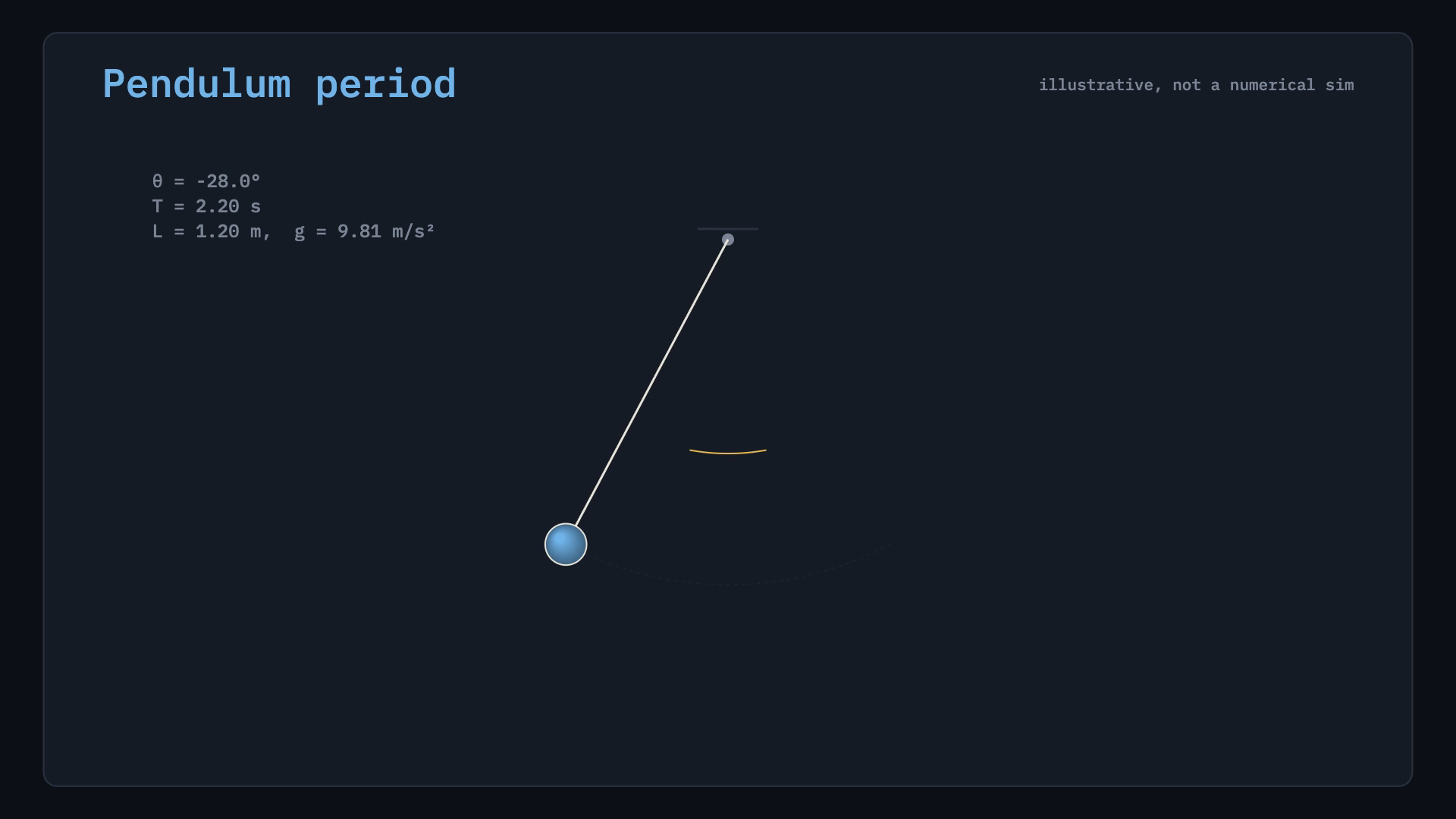
A deterministic physics diagram film: pick pendulum, projectile, travelling wave or field — each is a closed-form model evaluated at t, painted on Canvas2D with title, readouts and a qualitative disclaimer. Silent 1080p.
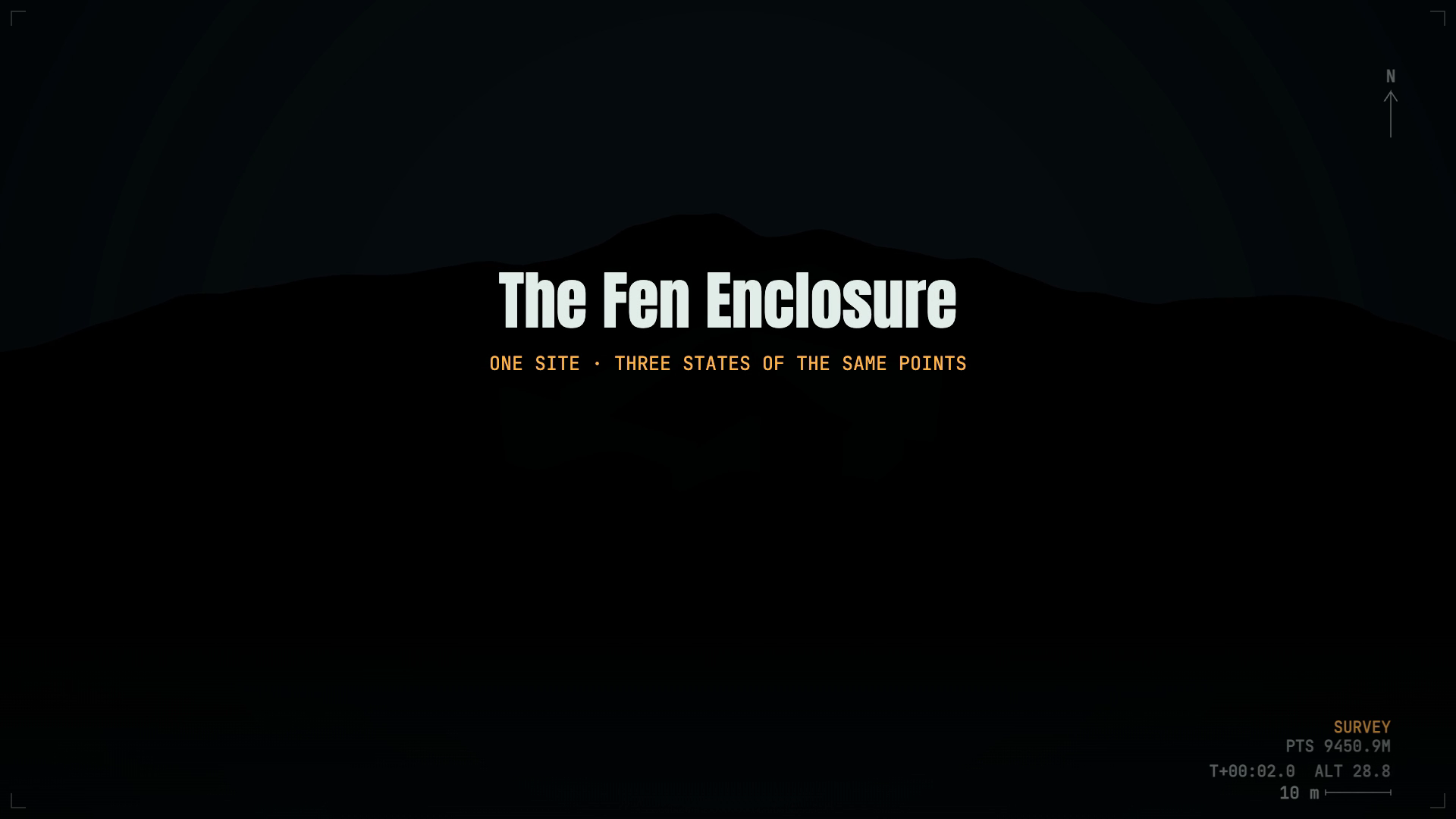
A generated site revealed as one point cloud — the scan front welds points into lit geometry, a cutting plane lifts the canopy, and hairline measures read live.
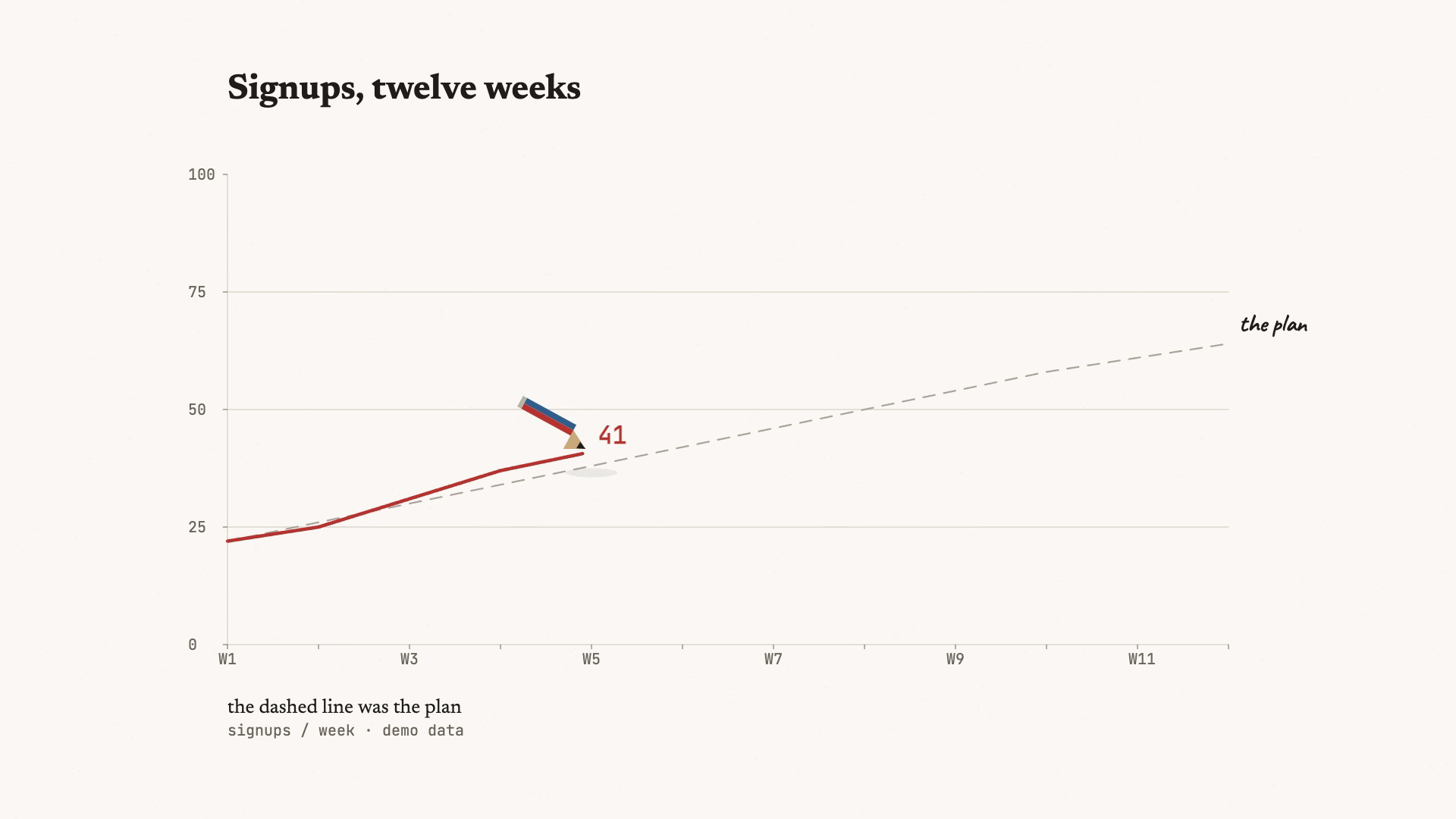
A silent editorial data-story film on cream paper: the chart first draws the guess — a grey dashed expected curve, held on screen — then lets the real line draw through it in signal colour at a linear rate, while handwritten notes pin themselves to the data points the line passes. A red-blue pencil leads the stroke, and the axis can re-range in two beats, carrying its annotations with it.
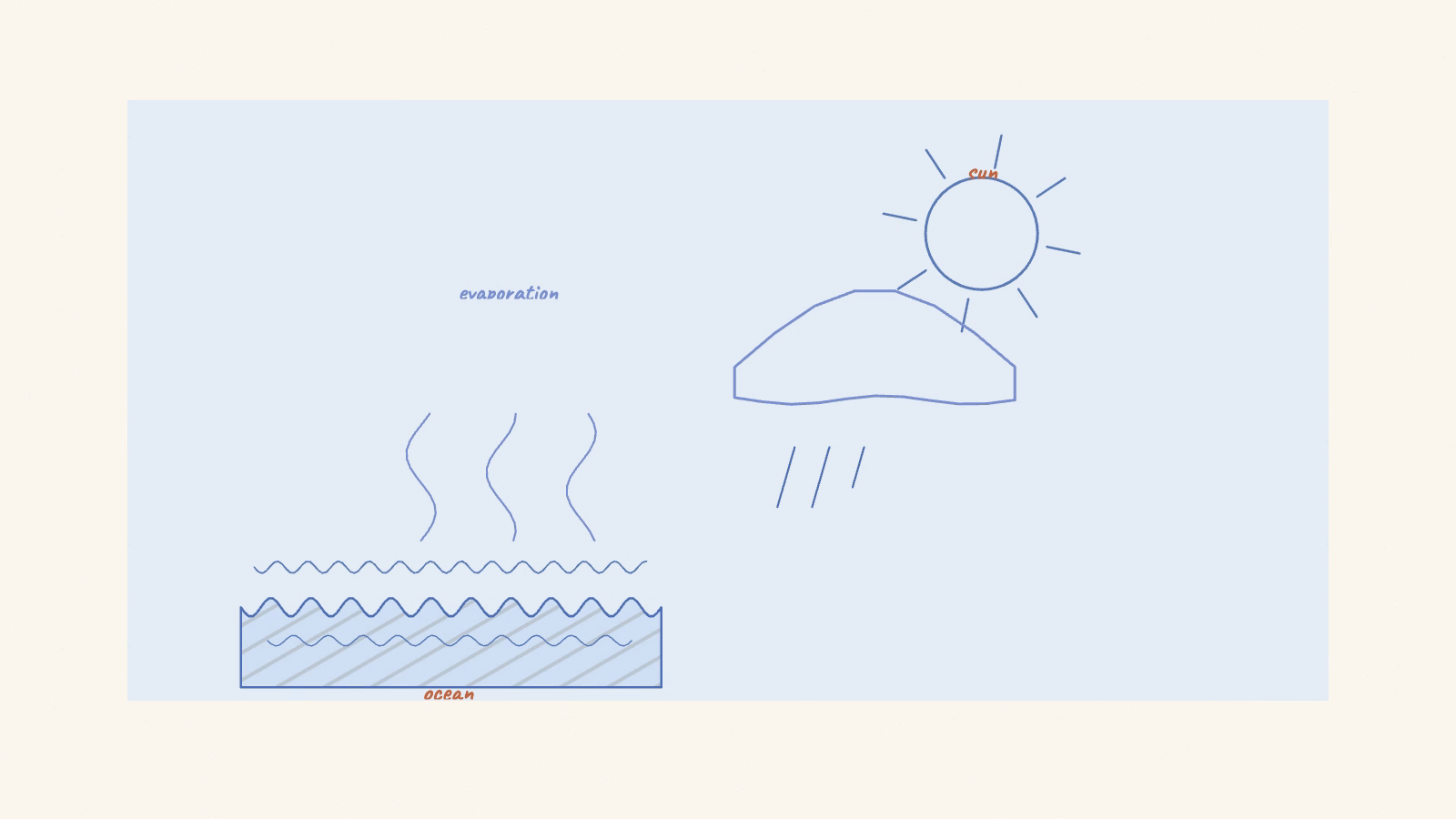
A typeset paragraph with marked words reads, greys, then every glyph spins and shrinks into the box where a hand-drawn diagram paints itself stroke by stroke — text becomes picture.
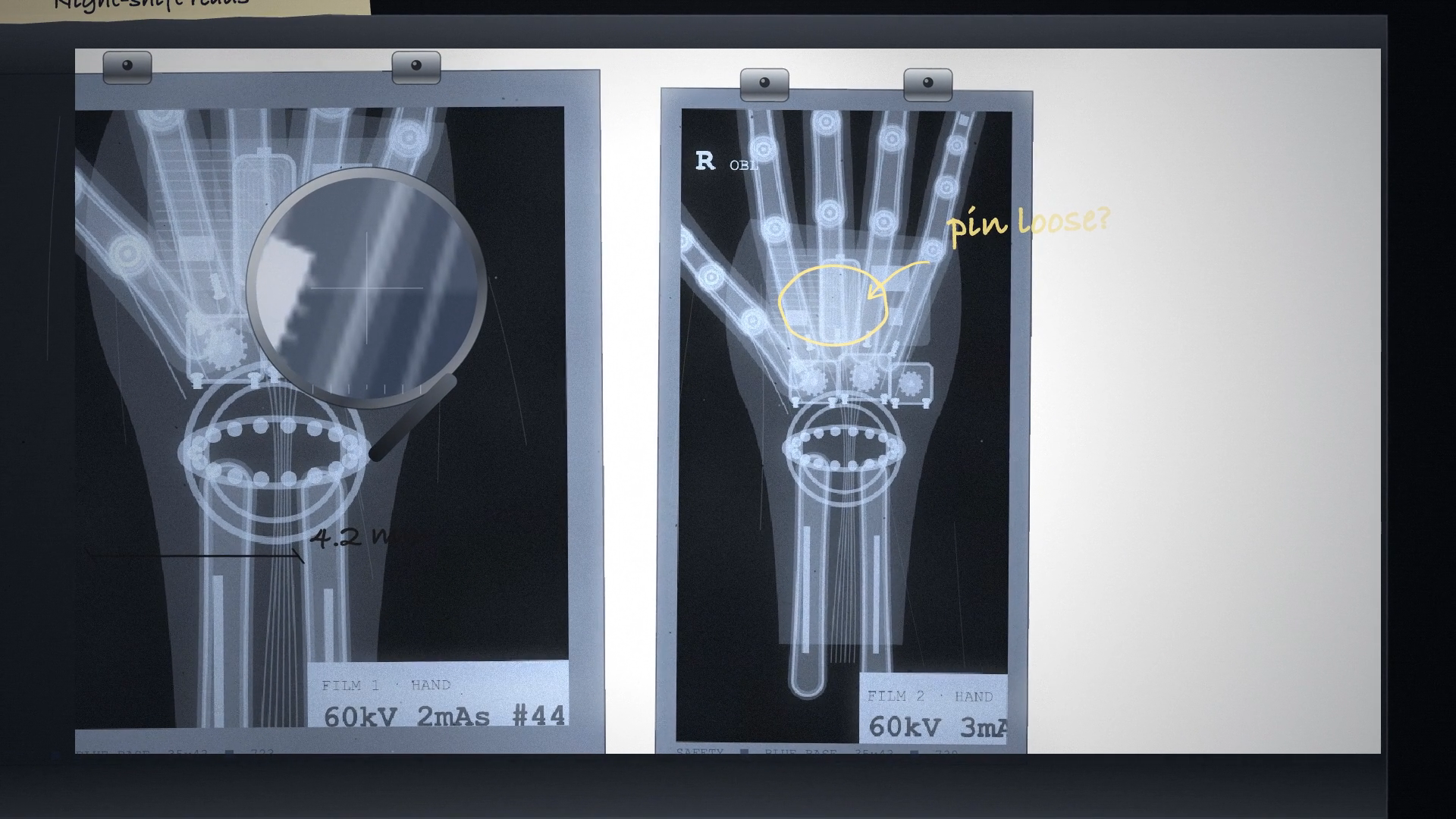
Read films on a glowing lightbox: sheets drop in on spring clips, radiographs develop out of milky fog, a rimmed loupe magnifies density, and grease-pencil circles and measures annotate the read.
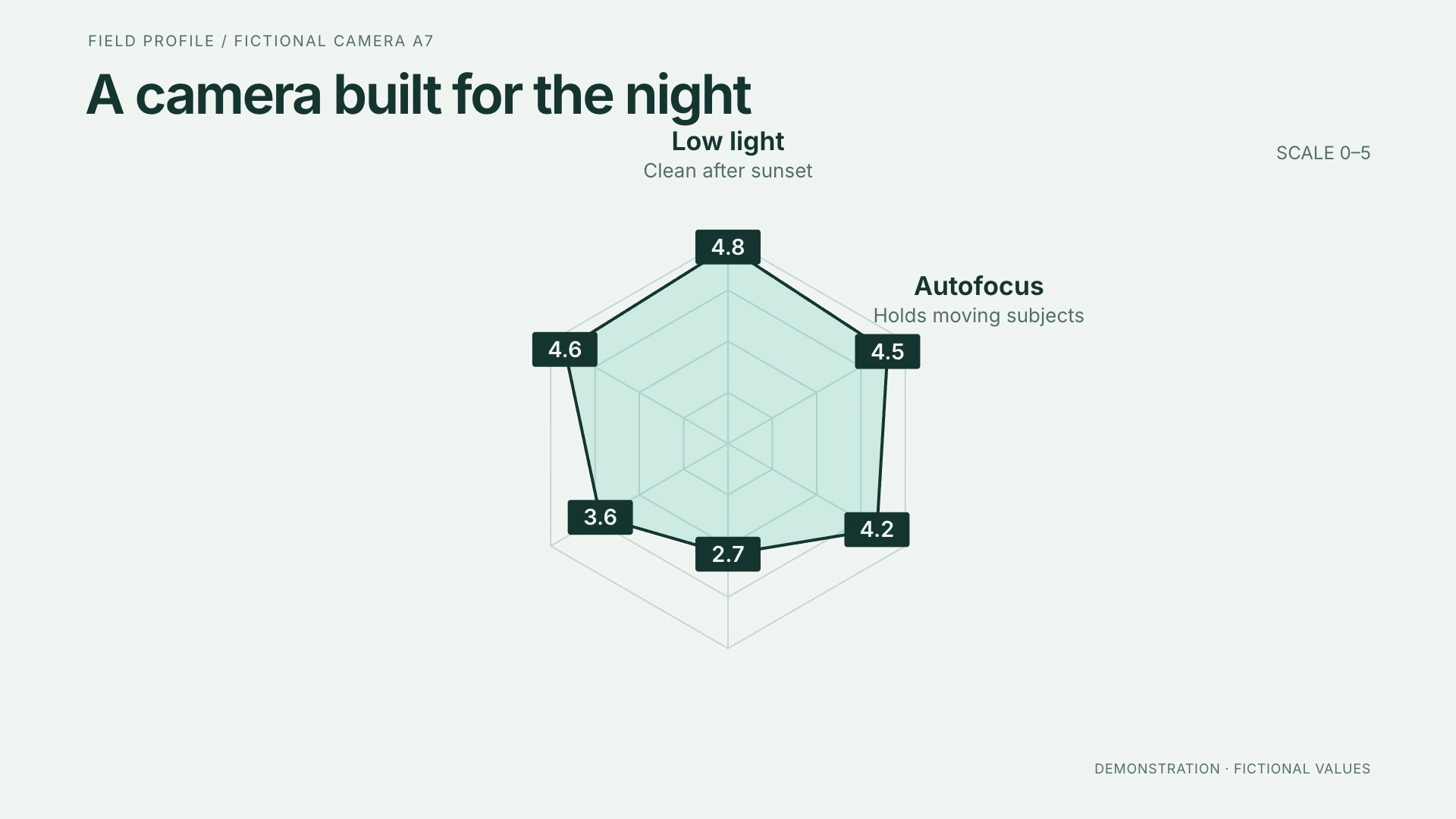
Reveal a profile in three steps: shape, values, then the explanation behind each dimension.
Translate evidence and findings into diagrams, data stories and presentations.
Prepare traceable sources, methods, units and the limitations of your findings.
Start with a task, then explore the possibilities.
Communicate results, proposals and decisions to clients and teams.
Explore Business reporting ↗Research audiences, plan content and manage social workflows.
Explore Social media ↗Investigate markets and evidence, and communicate research findings.
Explore Research ↗Explain knowledge, history and scientific mechanisms.
Explore Education ↗Compare the inputs and deliverables before you begin.
| What you have | What to look for | Next step |
|---|---|---|
| A clear brief | Prepare traceable sources, methods, units and the limitations of your findings. | Browse this collection ↗ |
| Source material | Check the chosen Skill’s required inputs and which details it can preserve. | Read the Skills guide ↗ |
| A different output | Films, motion graphics and photo effects your agent renders from a brief, a photo or a script, with every step already planned. | Video ↗ |
Compare the example, inputs and deliverables against your brief.
Prepare traceable sources, methods, units and the limitations of your findings.
Follow the Skill’s instructions and check the output in its intended context.
Translate evidence and findings into diagrams, data stories and presentations. Compare the actual example and deliverables with your intended result.
Prepare traceable sources, methods, units and the limitations of your findings.
This depends on the Skill. Check whether it delivers source files, rendered media or an interactive artifact, and which tools are needed to edit it.
Review the Skill license, the model’s terms and the rights to your input media. A public example is not a blanket commercial license.