
Social media
Research audiences, plan content and manage social workflows.
Explore Social media ↗Turn your next idea into images, films and stories with a repeatable creative workflow.
Skills'e Göz Atın ↓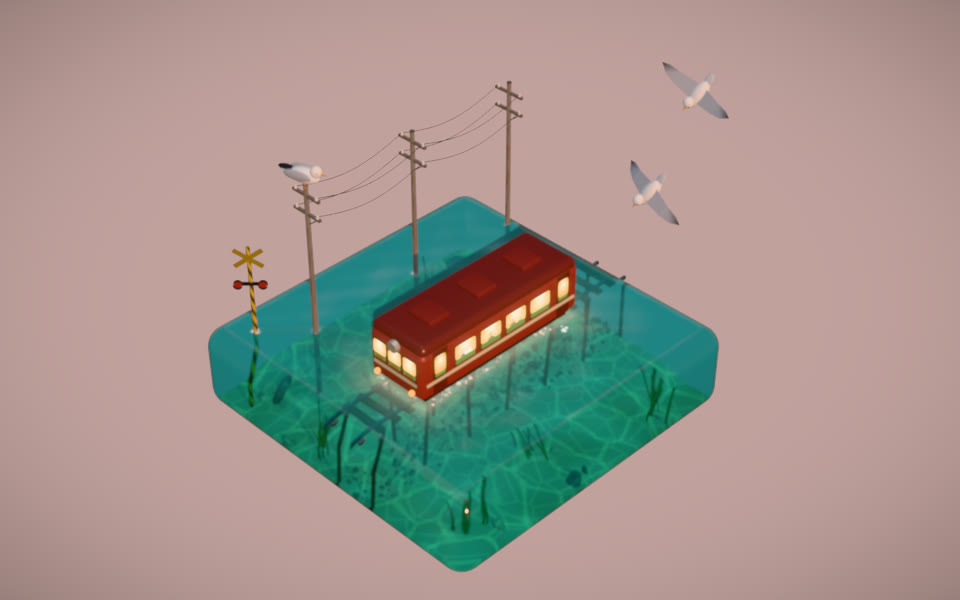
Live 3D resin-block dioramas in your browser: send a little tram across a clear turquoise sea, or ripple the bay of a cliff island. Synthesized sound, and every scene can be tuned.
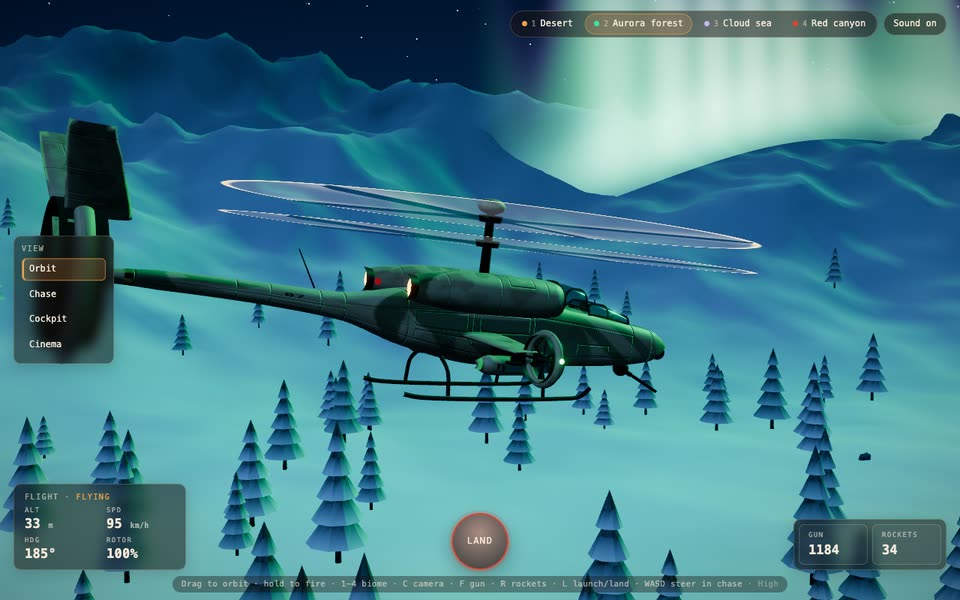
Explore interactive 3D vehicle worlds in your browser, with varied terrain, camera controls and driving effects. Choose a playable example to begin.
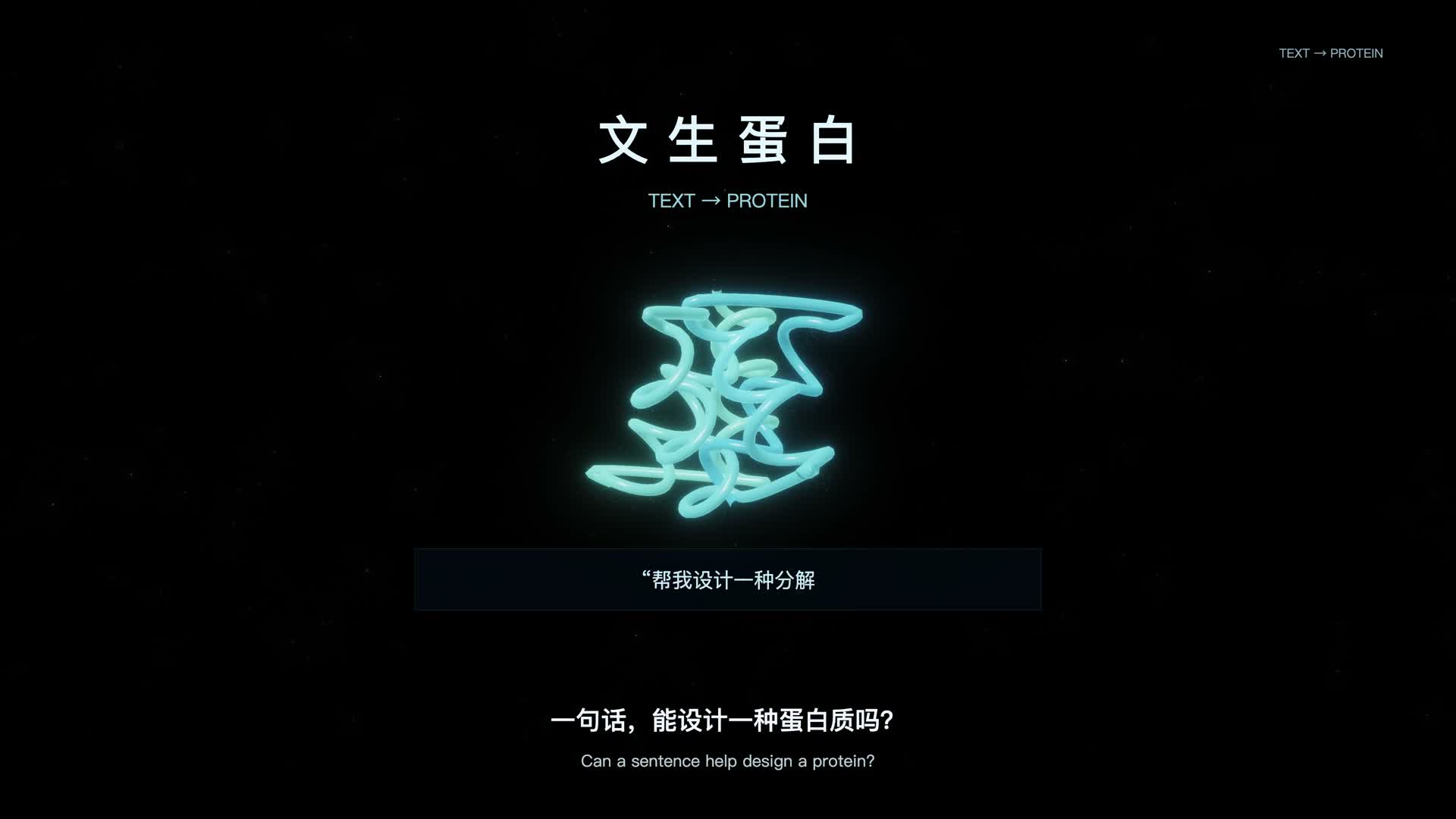
Explain science through visible causes, transformations and results.

Turn one frozen moment into a camera-orbit concept video.
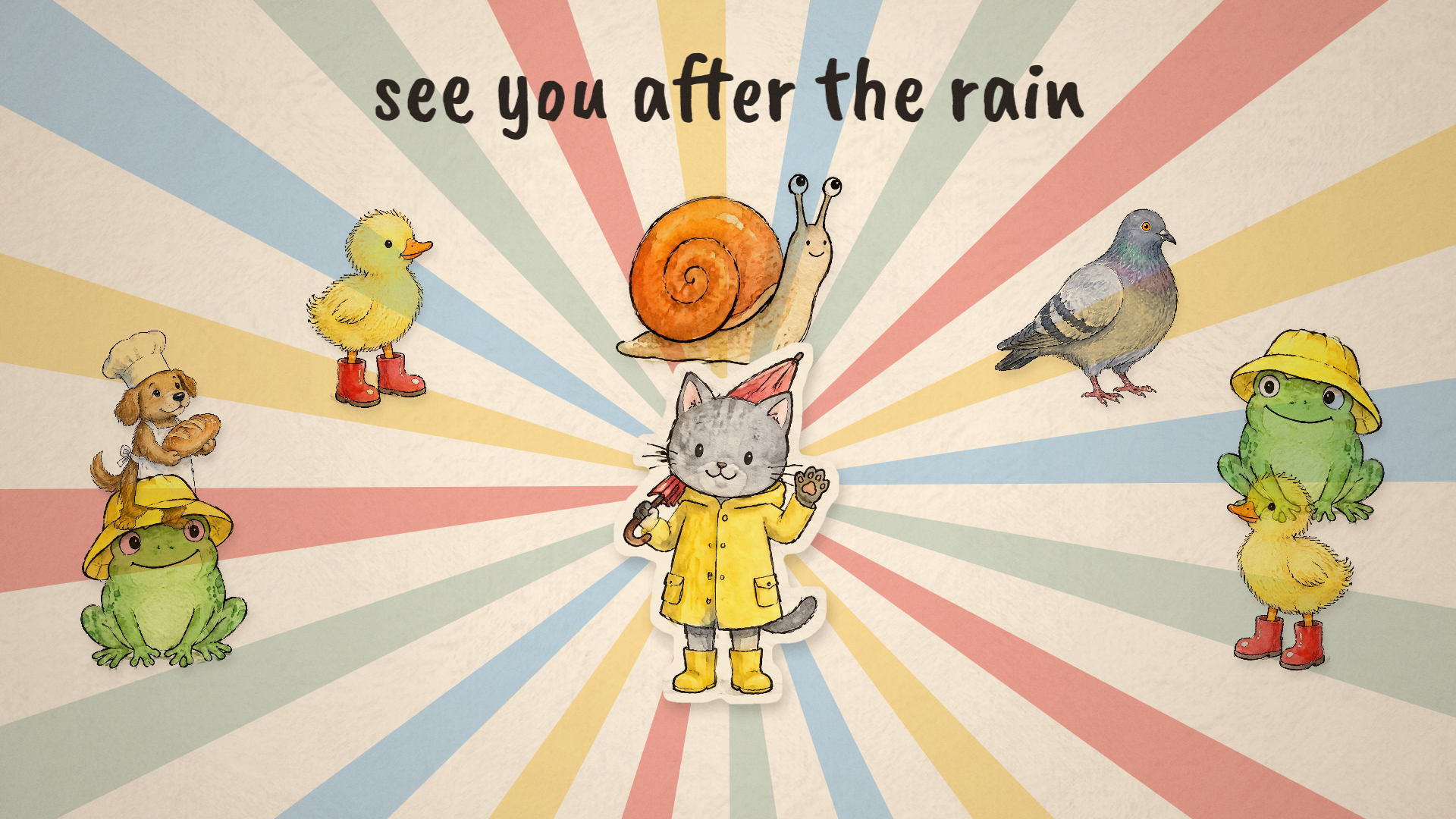
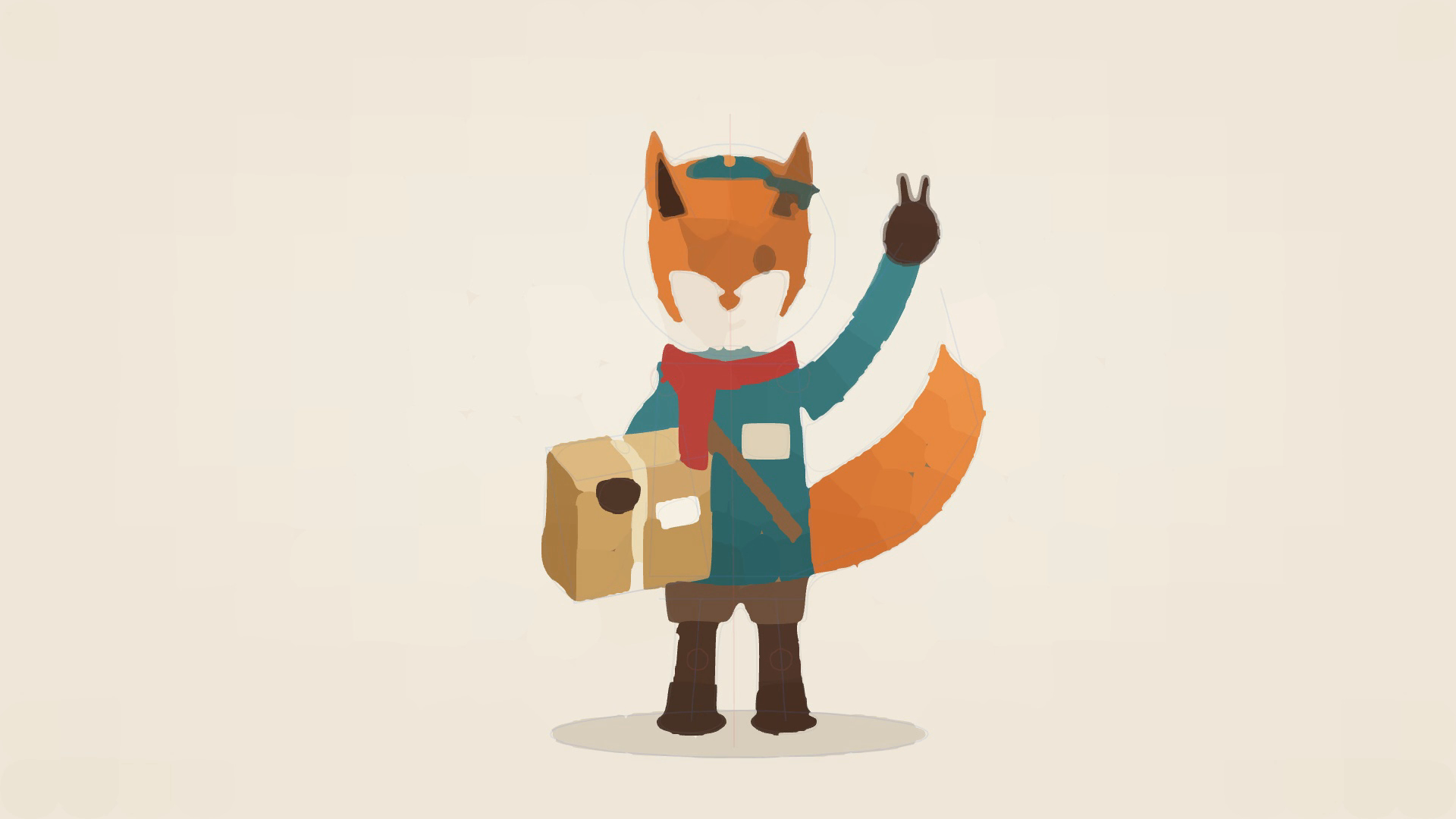
Bring photographed sketchbook drawings to life as a short film with cut-out characters, ink lettering and a score.
Show a picture being painted: construction marks, contours, flat colour and finer patches, as a layered SVG and a short film.
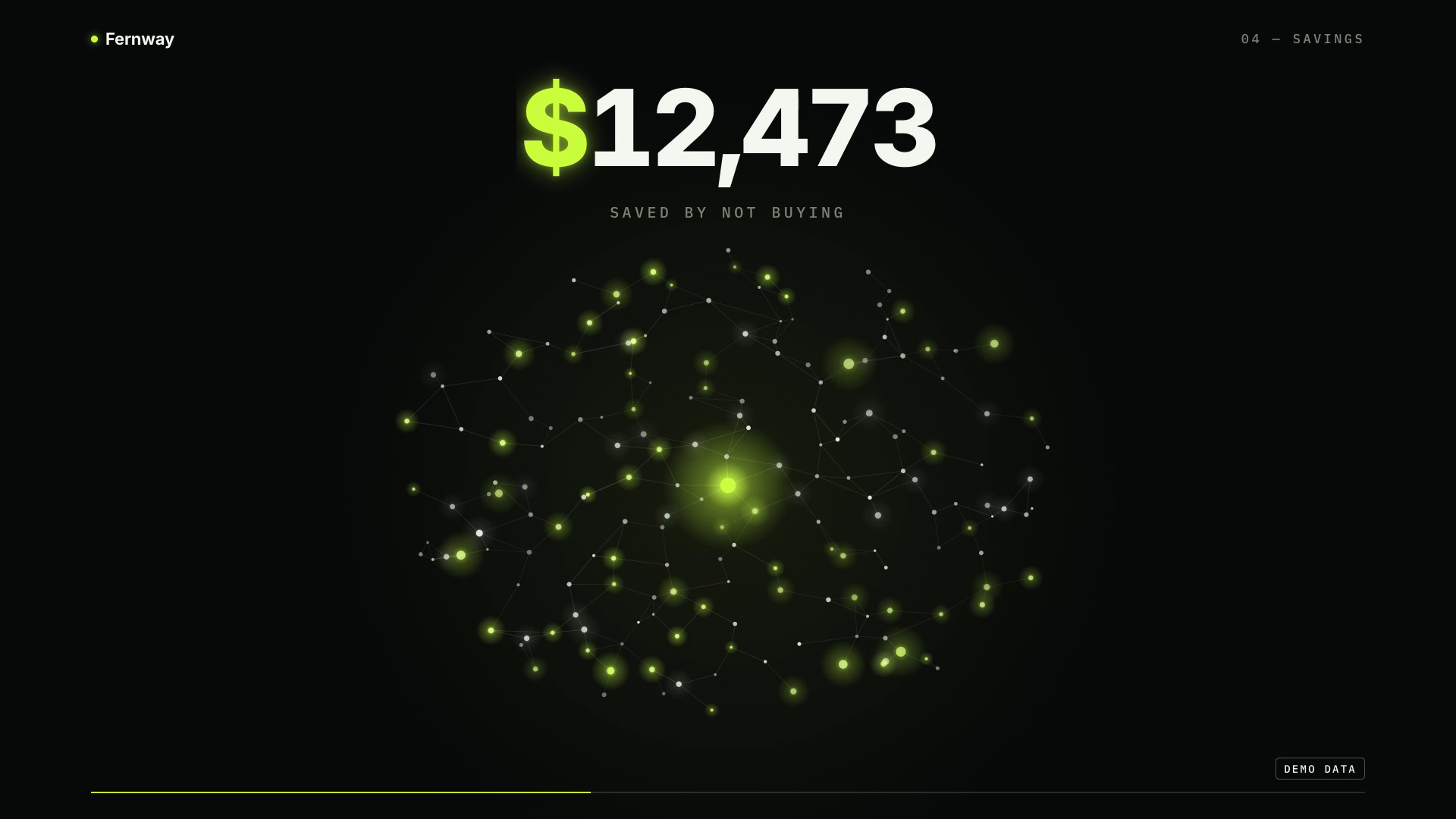
Tell a growth story with real numbers: one node network grows with each counter, flashes, dims behind a spike chart and closes on an end card.
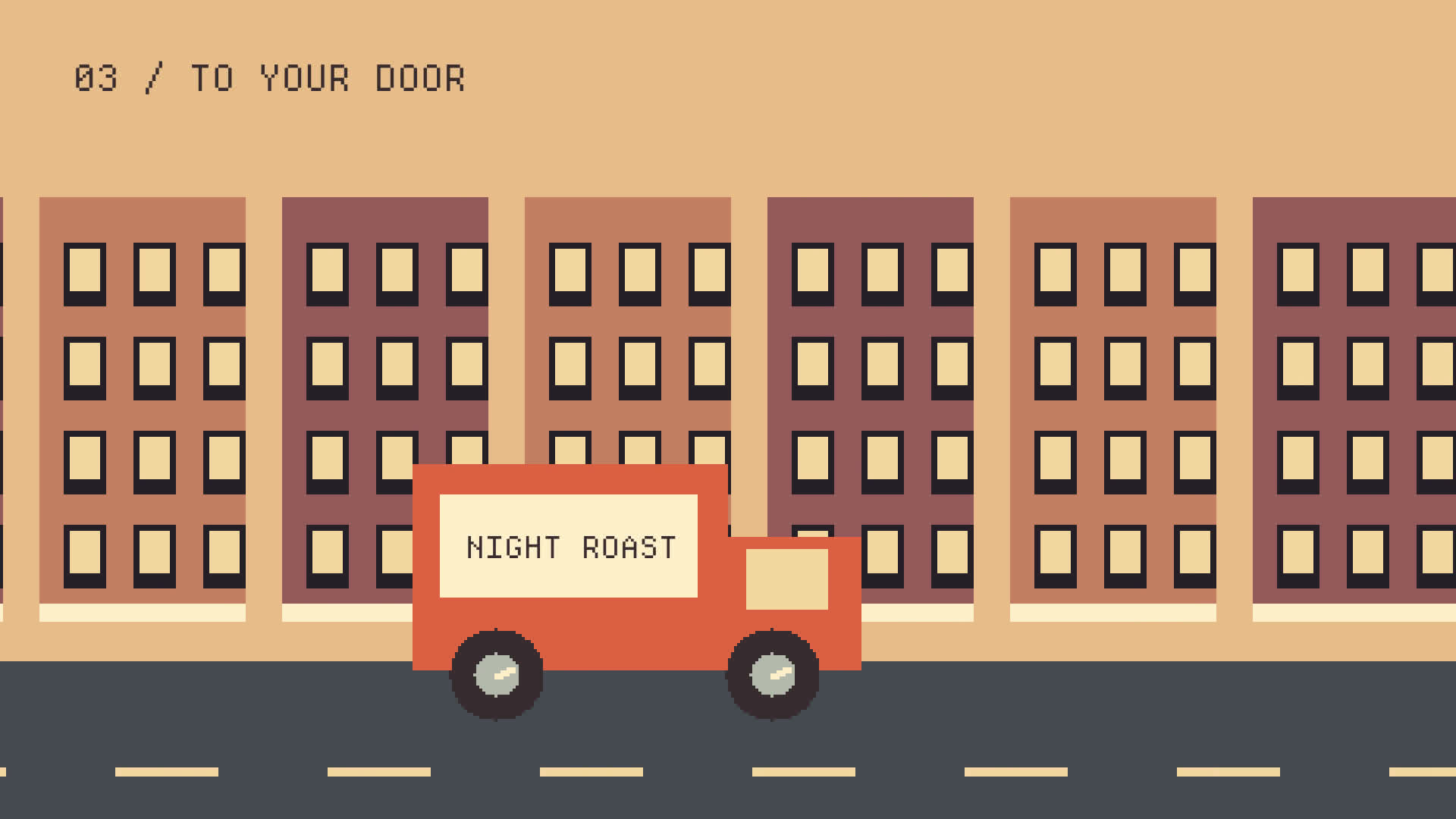
Turn a product brief into a pixel film with clear actions, scene traversal and a memorable payoff.
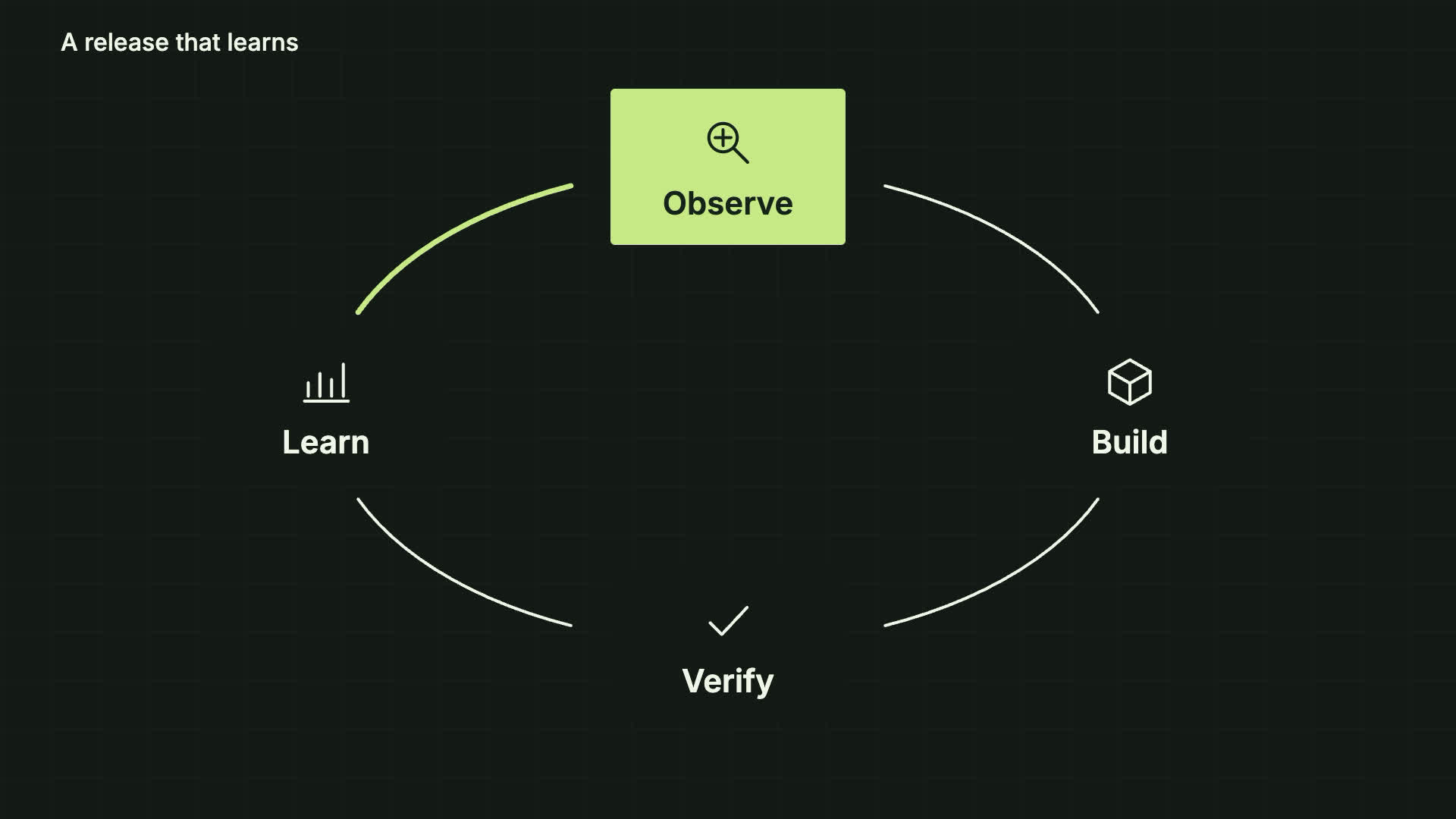
Explain a cycle: build each stage, close the loop, then reveal the takeaway.
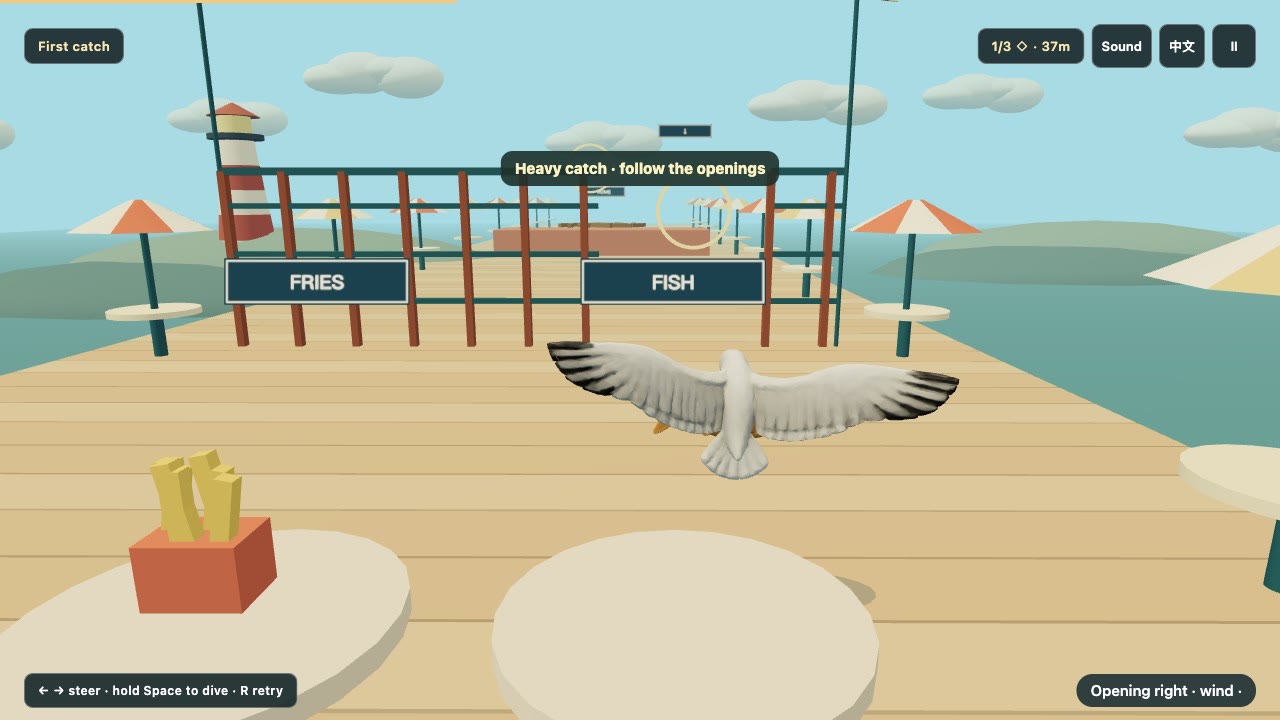
Build a 3D flight-and-delivery game with light fries, heavy fish, crosswinds and optional ring routes. The gull must bring lunch home; cargo weight changes which openings it can safely reach.
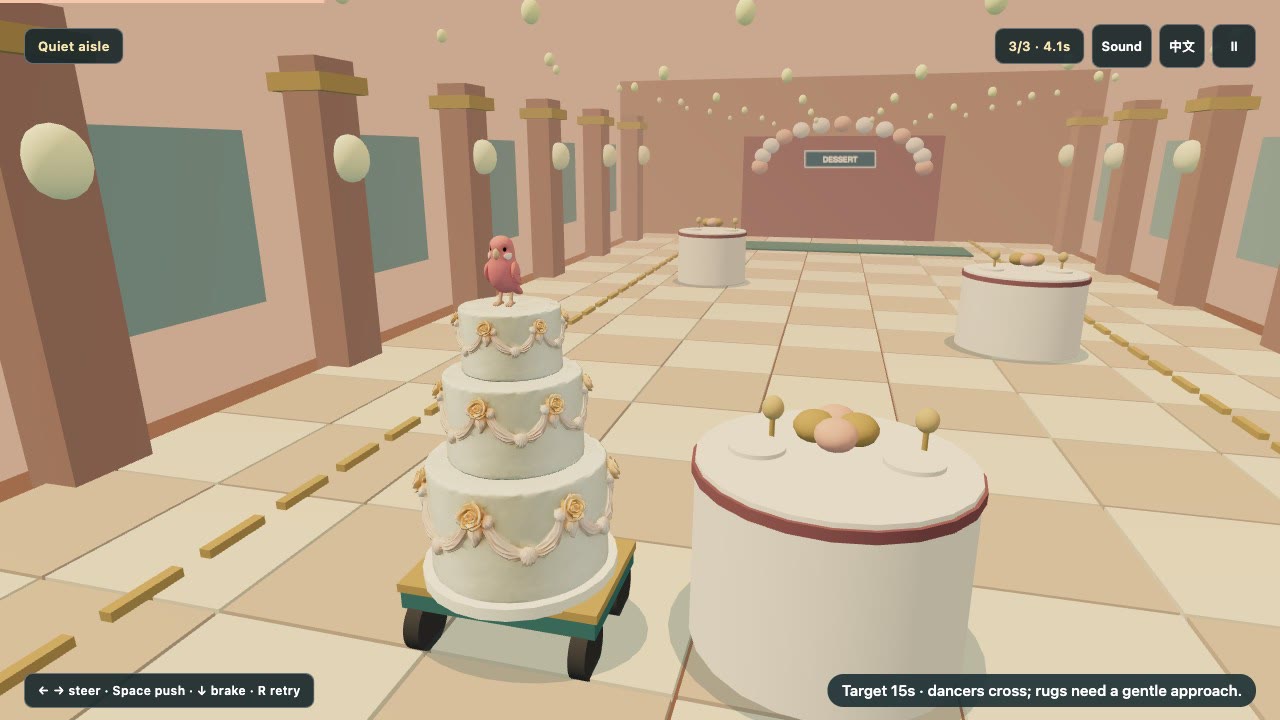
Build a 3D fragile-cargo delivery game around a wobbling wedding cake. Brake before turns, avoid crossing guests and steer around tables. Lost tiers change the score, while a partial delivery can still succeed.
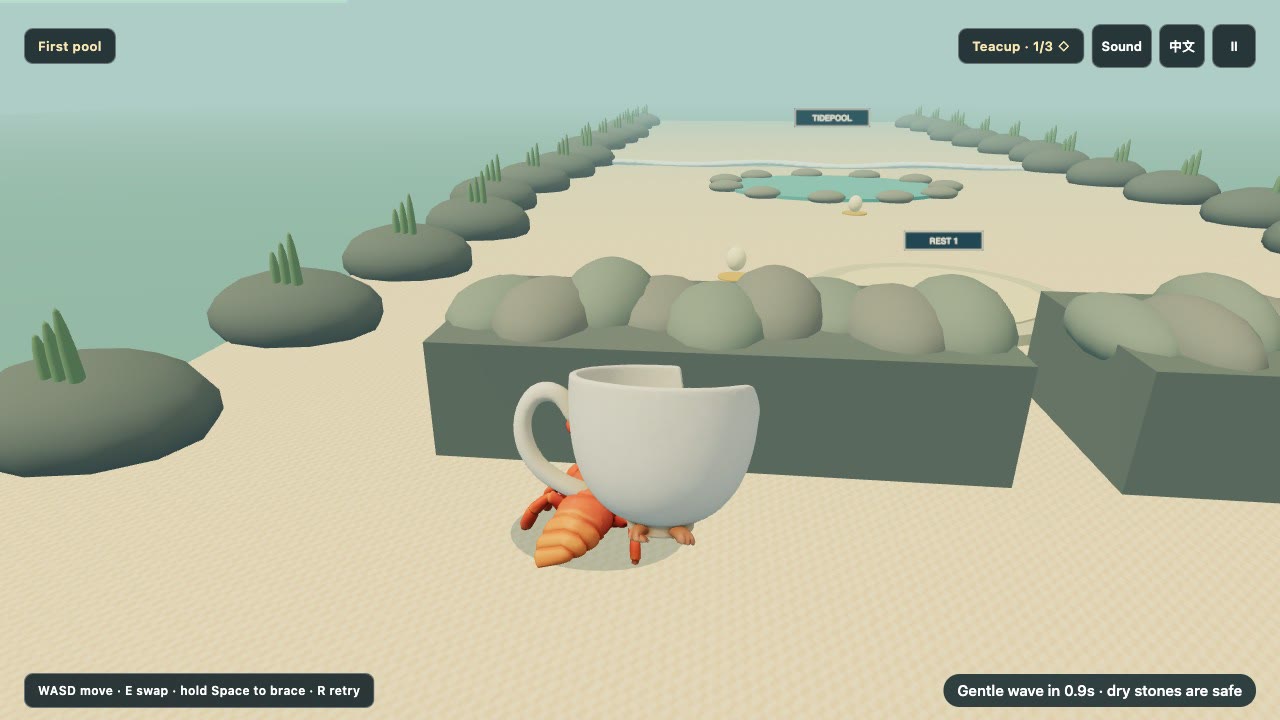
Build a 3D route-and-timing game where a hermit crab changes shells to cross a tidal shore. Narrow gaps favour the cap, stronger shells resist waves, and dry stones provide shelter and checkpoints.
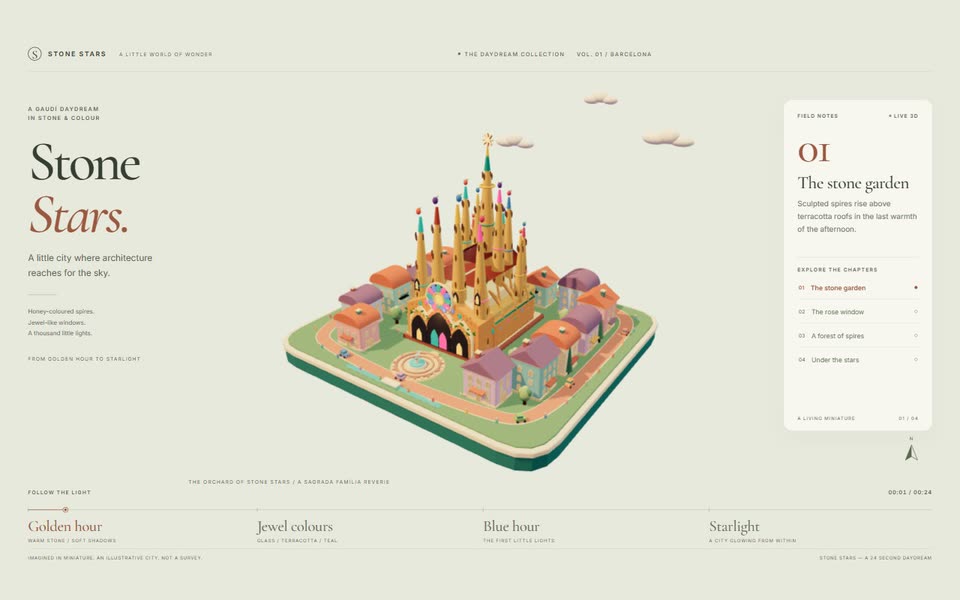
Turn a city into a storybook 3D island around one landmark, with chapters, a daylight-to-starlight slider, street life and a matching scored 24-second film. Sample: a Gaudí-style basilica.
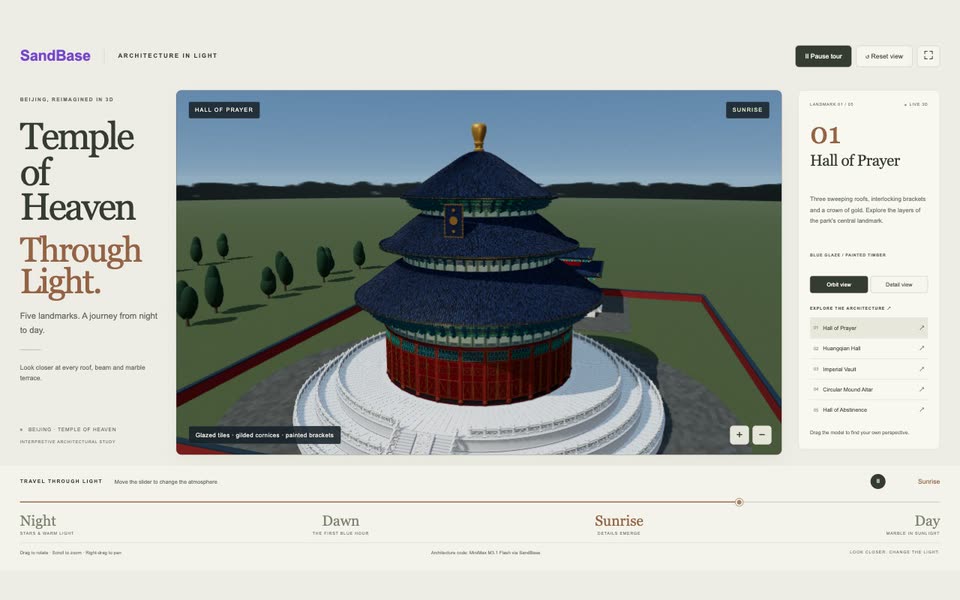
Turn any architectural site into a detailed 3D scene with a night-to-day light slider and a matching 20-second film. Sample: the Temple of Heaven.
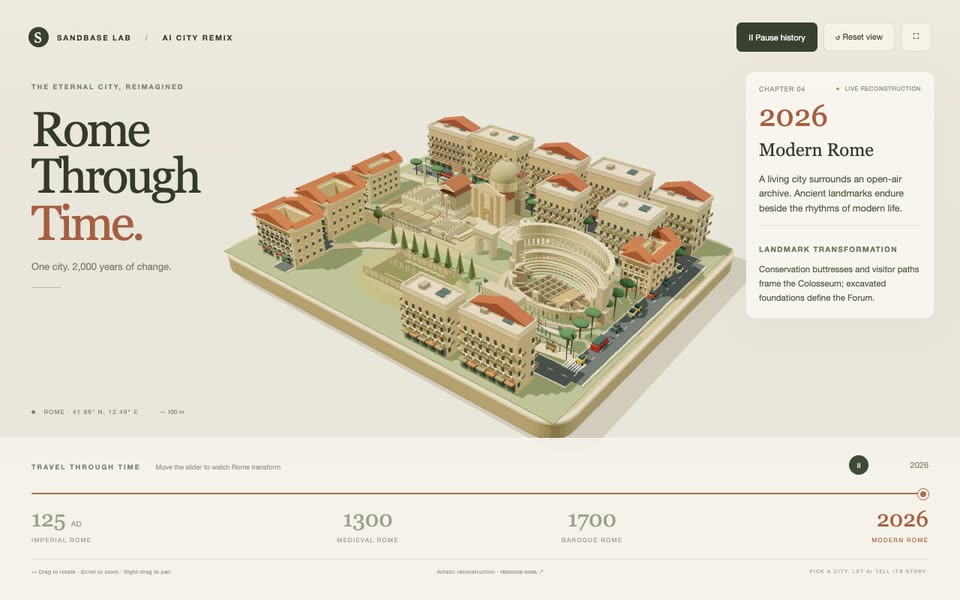
Watch one 3D city change year by year across two thousand years: ruins, reuse, rebuilding and modern streets, with a narration card and a matching 25-second film. Sample: Rome.
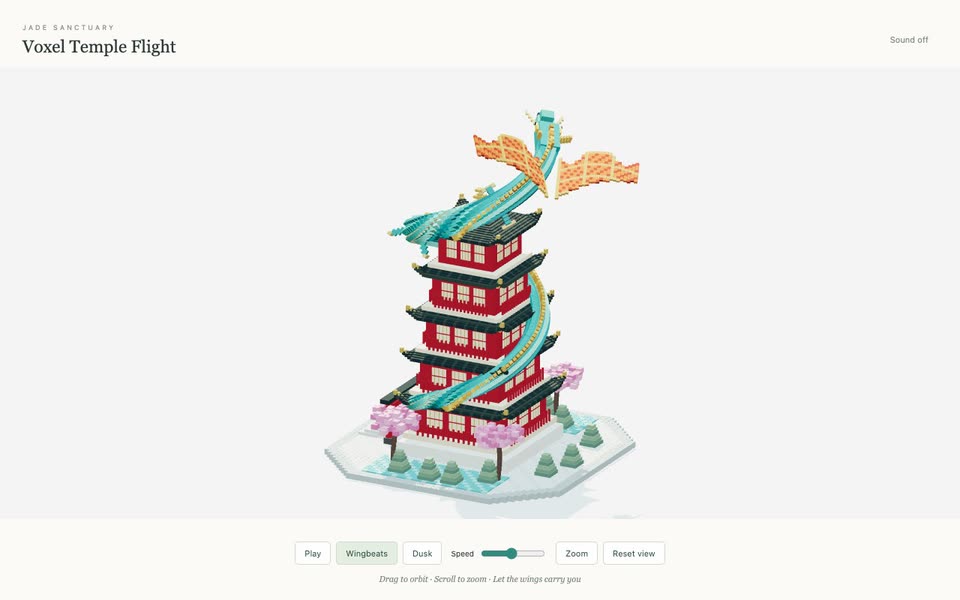
Explore a procedural voxel dragon circling a crimson pagoda, with articulated wings and a live orbit camera.
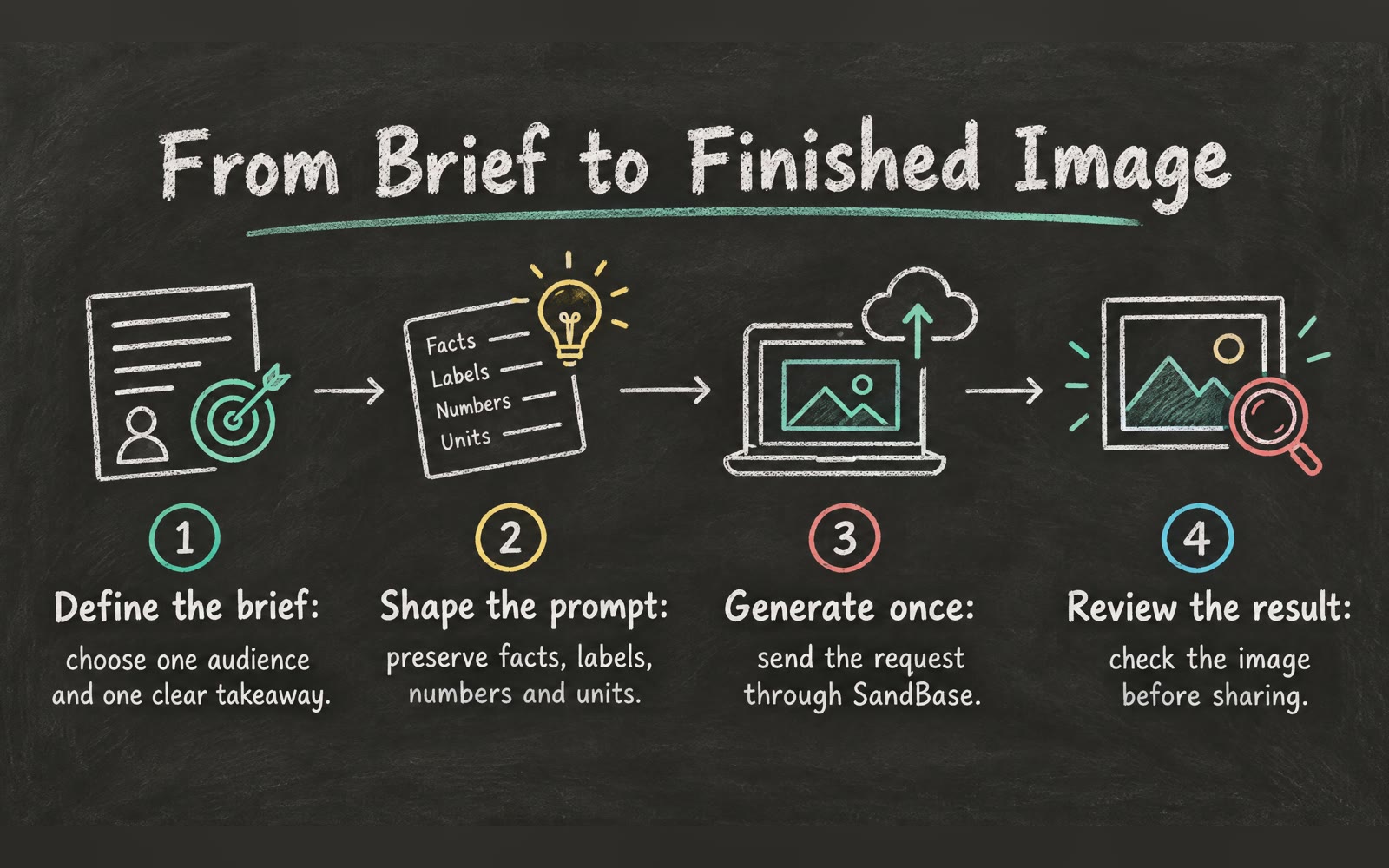
Turn a topic and a few verified facts into a hand-drawn visual explanation.
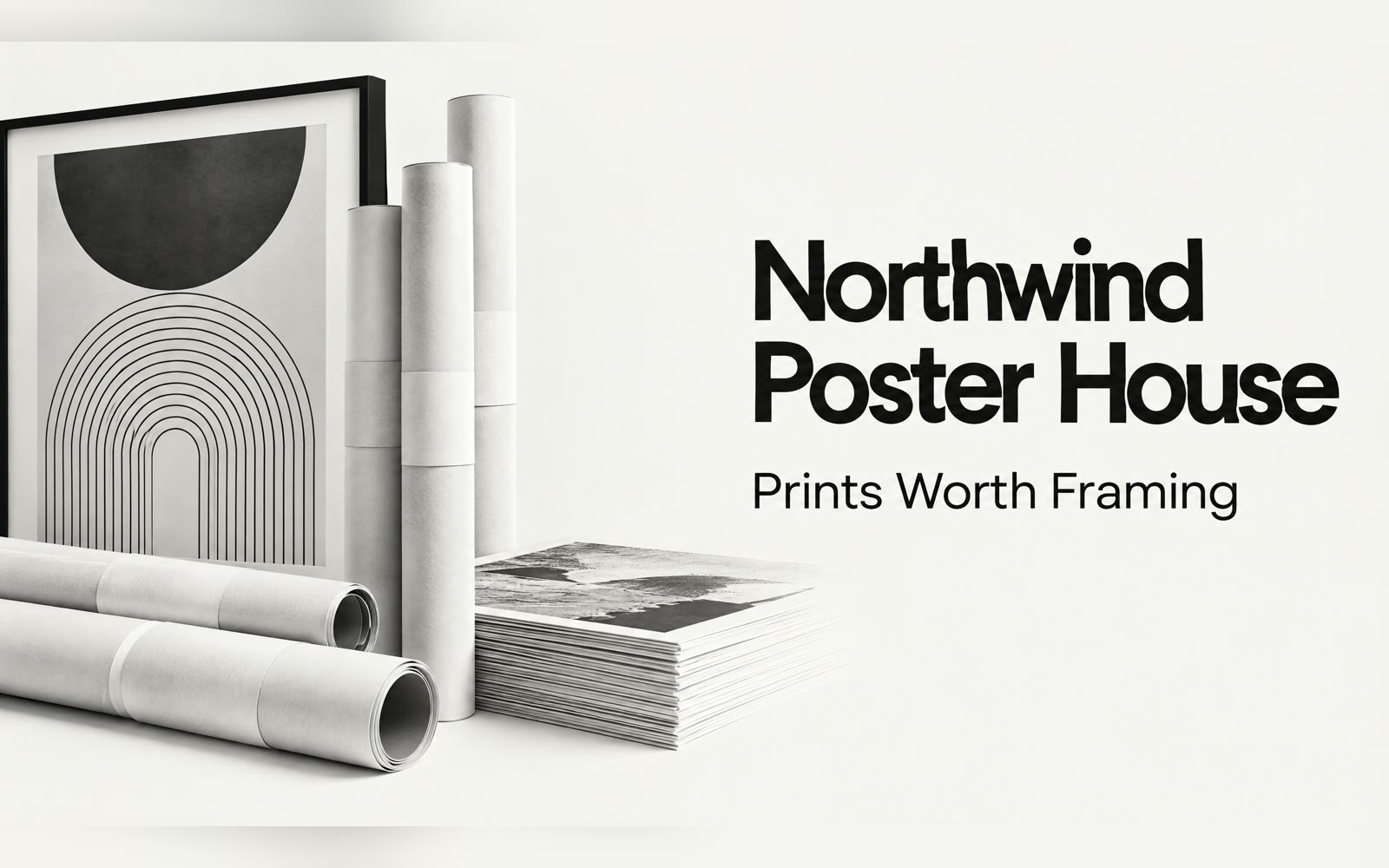
Turn a brand, one headline and context into a high-key monochrome editorial card.
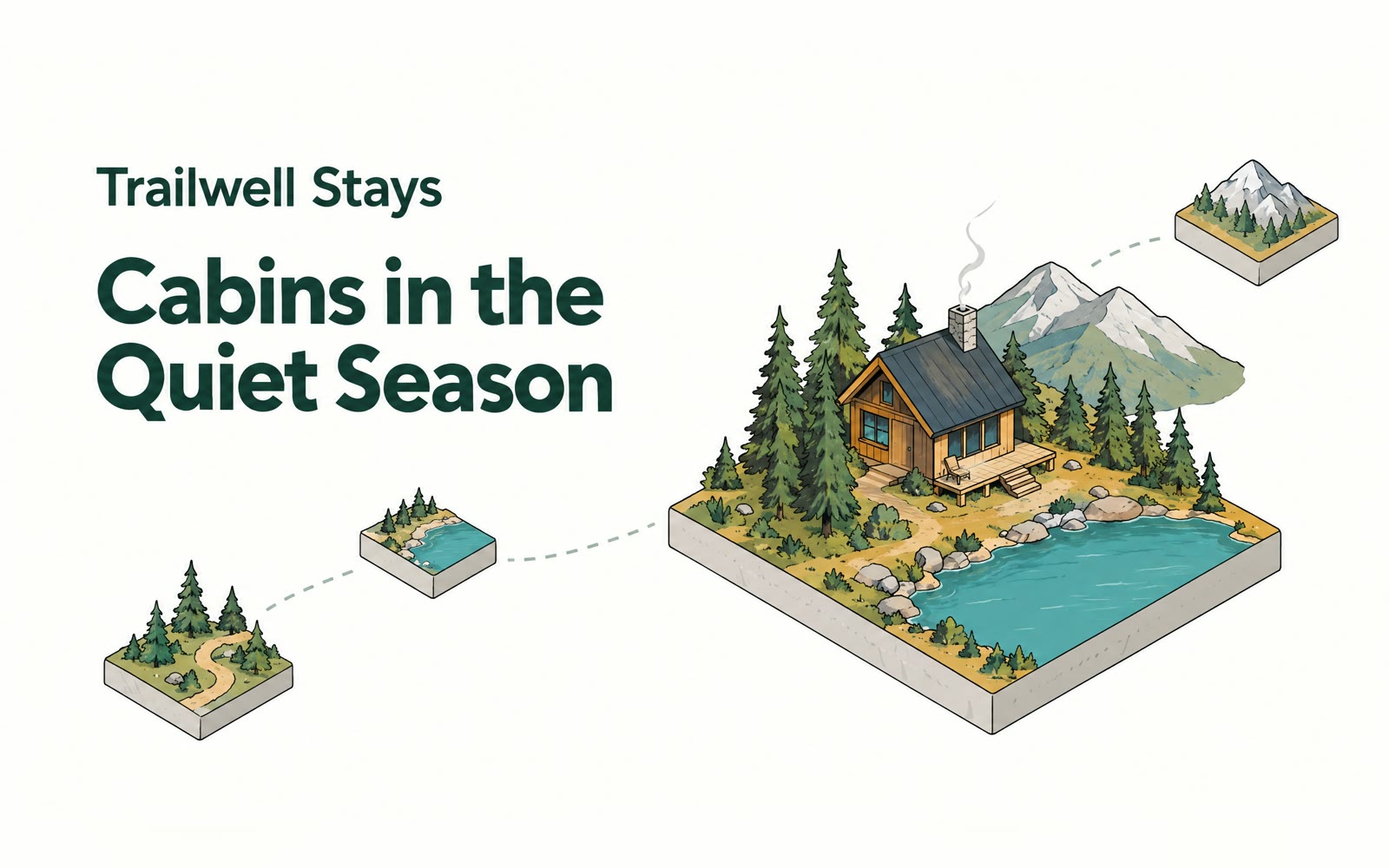
Turn a brand, one headline and context into a modular isometric card.

Turn a brand, one headline and context into a precise line-convergence card.
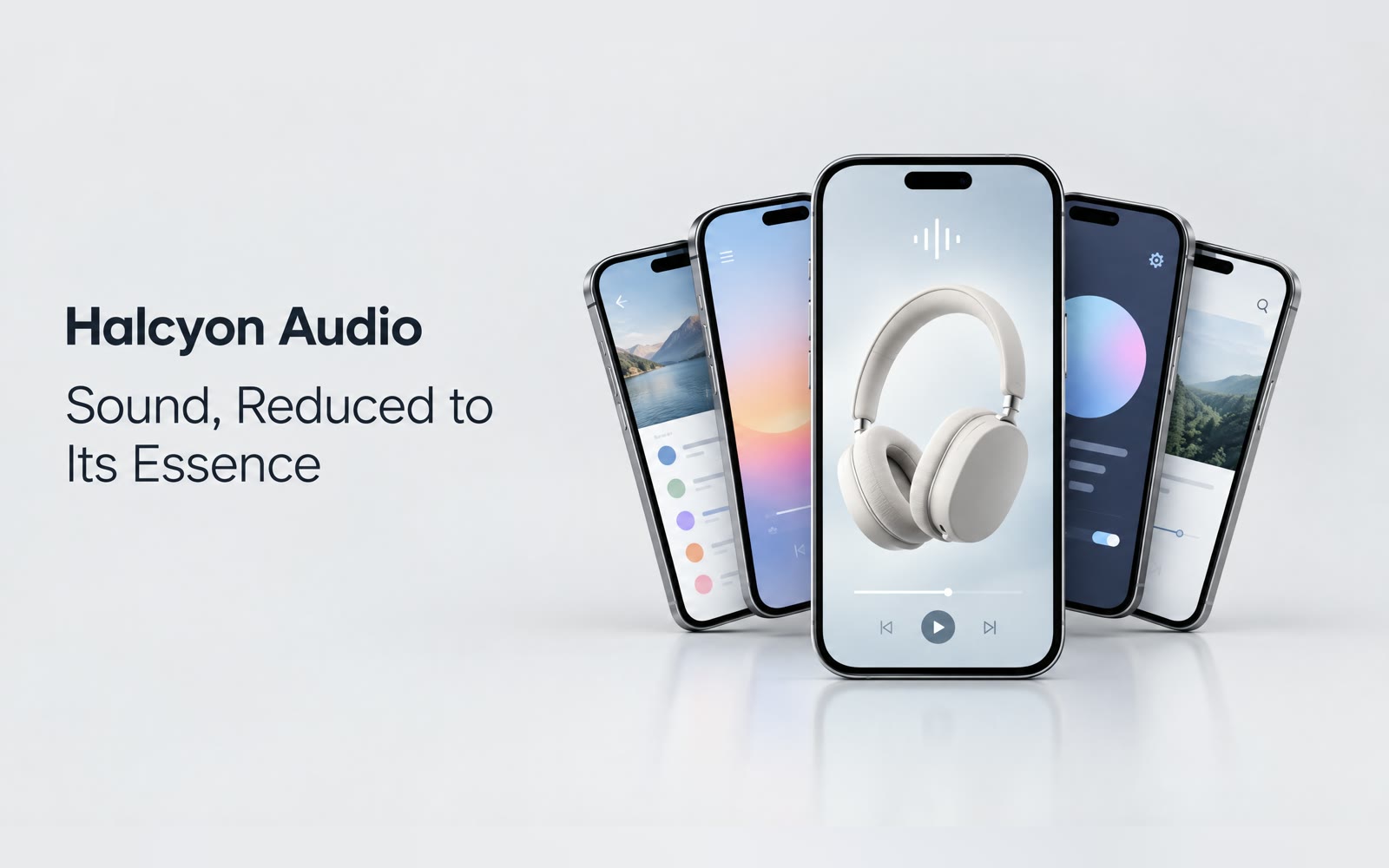
Turn a brand, one headline and context into a calm device-showcase card.

Turn a brand, one headline and context into a warm gradient-horizon card.

Turn a brand, one headline and context into a layered security-blueprint card.

Turn a brand, one headline and context into a modern finance-product card.

Turn a brand, one headline and context into a scheduling-flow card.
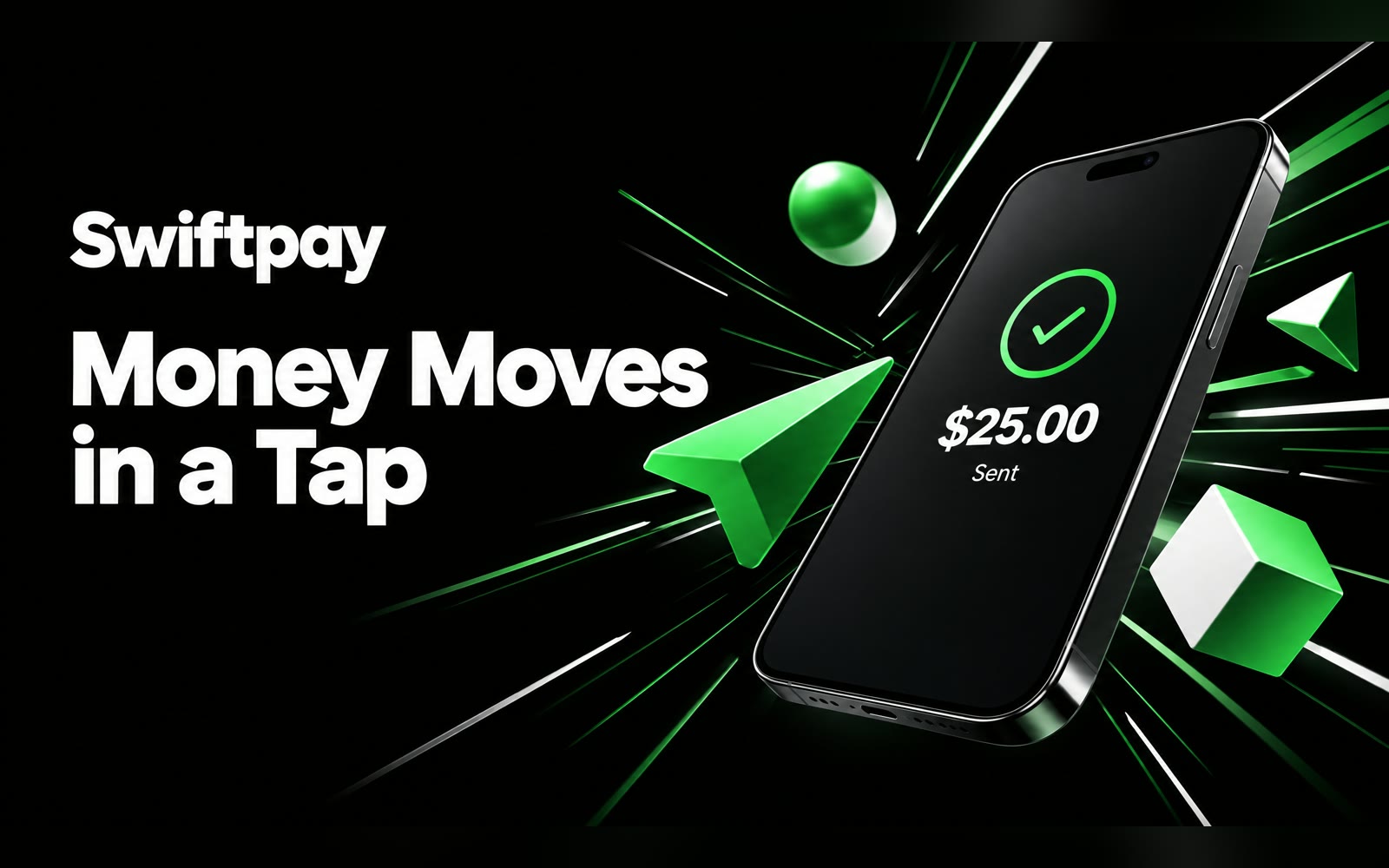
Turn a brand, one headline and context into a kinetic fintech card.

Turn a brand, one headline and context into a community-chat card.
Turn a brand, one headline and context into a cheerful candy-color celebration card.

Turn a brand, one headline and context into a collaborative UI-collage card with a swarm of labeled cursors.
Turn a brand, one headline and context into a dark-field card with a glowing medallion and neon symbols.
Turn a brand, one headline and context into a bright cyan card with a tablet, a stylus and playful hand-drawn doodles.

Turn a brand, one headline and context into a warm-ivory card with floating phone screens and playful, friendly doodles.

Turn a brand, one headline and context into a fashion-forward card: a tight editorial crop under violet striped light with a large pink label plaque.
Turn a brand, one headline and context into a playful messenger card: a bold headline with thick black doodle outlines, cyan blobs, sparkles and motion ticks around original chat bubbles.

Turn a brand, one headline and context into a dark ambient card: an original dashboard window lifted by soft glow and drop shadow over a blurred coral, blue and amber gradient.

Turn a brand, one headline and context into a deep-green poster card: flat magenta, orange and cobalt silhouettes around an oversized centered white wordmark.

Turn a brand, one headline and context into a cream split-layout card: bold black copy on one side, an original product window on the other, with a circular presenter bubble overlapping the lower right.

Turn a brand, one headline and context into a saturated-yellow card: loose black hand-drawn ink linework where an oversized hand threads through a browser-like frame filled with abstract people, flowers, grids and smoky textures.

Turn a brand, one headline and context into a strict half-and-half card: a midnight-navy typographic panel with oversized white sans-serif type beside a close-up handheld phone photo carrying cyan map accents.
Turn a brand, one headline and context into a gouache-abstraction card: broad green painted arcs and rectangular color blocks surrounding a centered black geometric monogram on a pale mint paper-textured field.
Turn a brand, one headline and context into a cinematic starfield card: a bright centered identity floating above a dark observation deck where tiny viewers face oversized, realistic planets against deep navy space.

Turn a brand, one headline and context into a split-column card: a narrow charcoal brand column anchoring a large white analytics dashboard that floats across a vivid violet gradient field.

Turn a brand, one headline and context into a high-energy sports collage card: a tightly cropped runner cutting through a track photograph while broad pink, orange, blue and cream organic shapes weave behind and across the body.
Turn a brand, one headline and context into a minimal monochrome card: sparse black typography on an off-white field opposite a friendly hand-drawn line-art reader, with a tiny outlined mark in the upper-left.
Turn a brand, one headline and context into a painterly card: a centered white identity floating over a full-bleed field of broad coral and pink brushwork crossed by energetic turquoise, gray and ochre strokes.

Turn a brand, one headline and context into an abstract-technology card: a warped white wireframe forming a deep blue-to-mint tunnel around a large gradient disc and a small centered geometric mark.
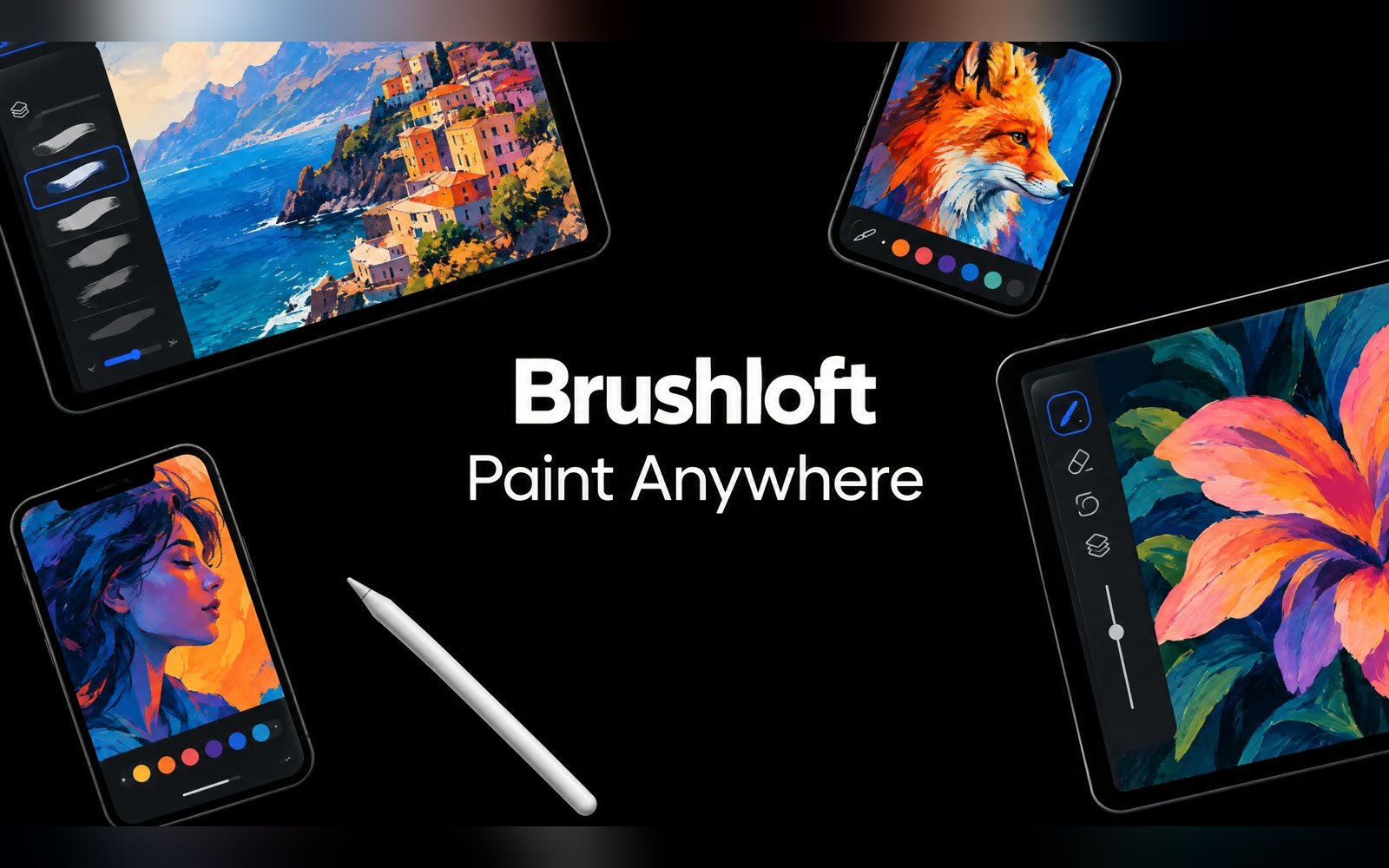
Turn a brand, one headline and context into a black-canvas card: multiple original tablets and phones cropping in around a central brand word, each screen showing saturated creative artwork and dark tool panels.

Turn a brand, one headline and context into a restrained charcoal card: a left brand lockup beside a layered desktop dashboard, phone and physical card extending beyond the right edge.
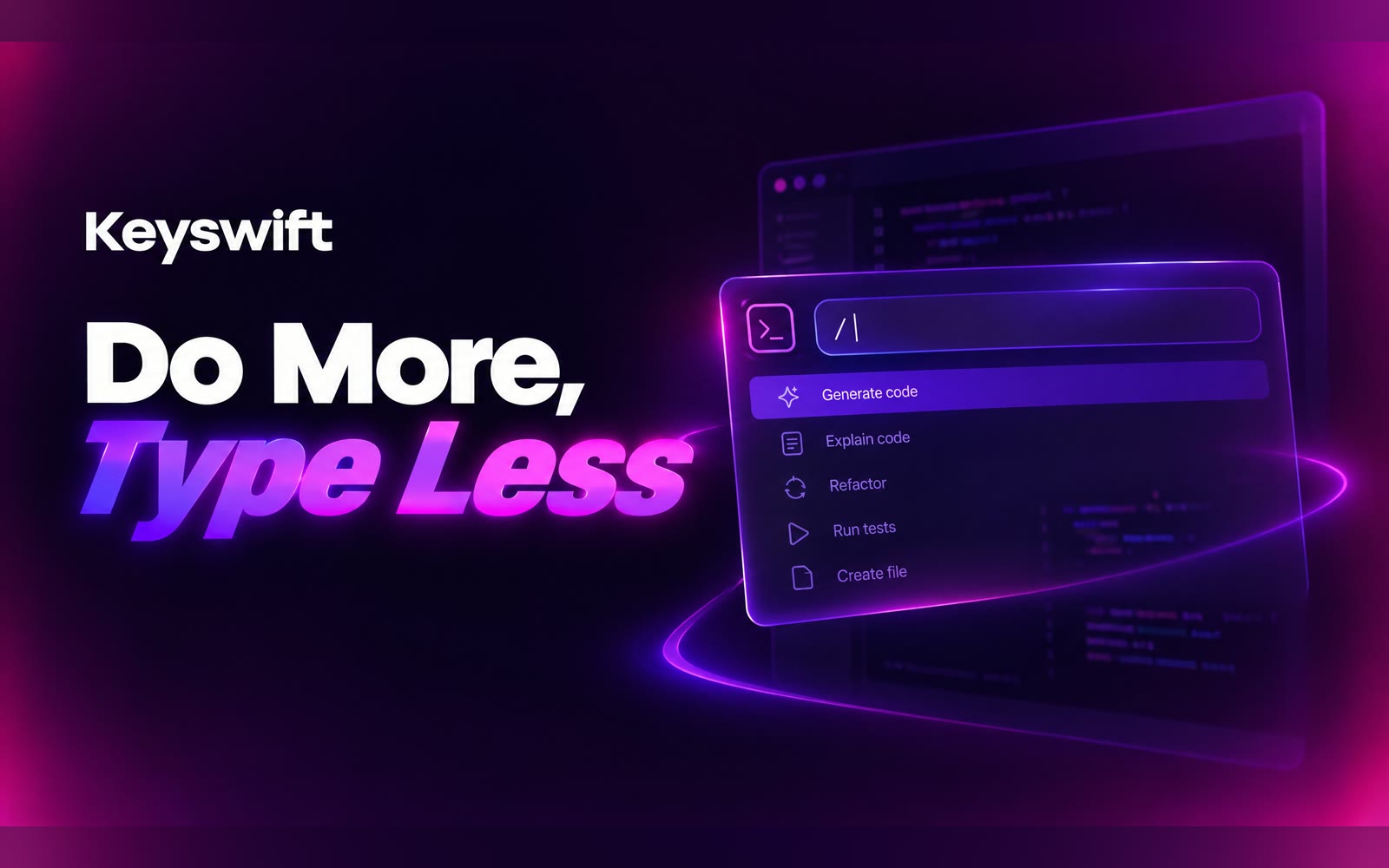
Turn a brand, one headline and context into a dark neon card: a purple-red glow framing a translucent command interface while a giant italic gradient word overlaps heavy white display type.

Turn a brand, one headline and context into a technical gradient card: a violet-to-blue backdrop with faint code texture supporting an oversized white browser-builder interface rising from the lower edge.

Turn a brand, one headline and context into a bright white studio card: a centered black brand line and gray promise floating above a large angled smartphone and a cyan-to-magenta payment card with soft contact shadows.
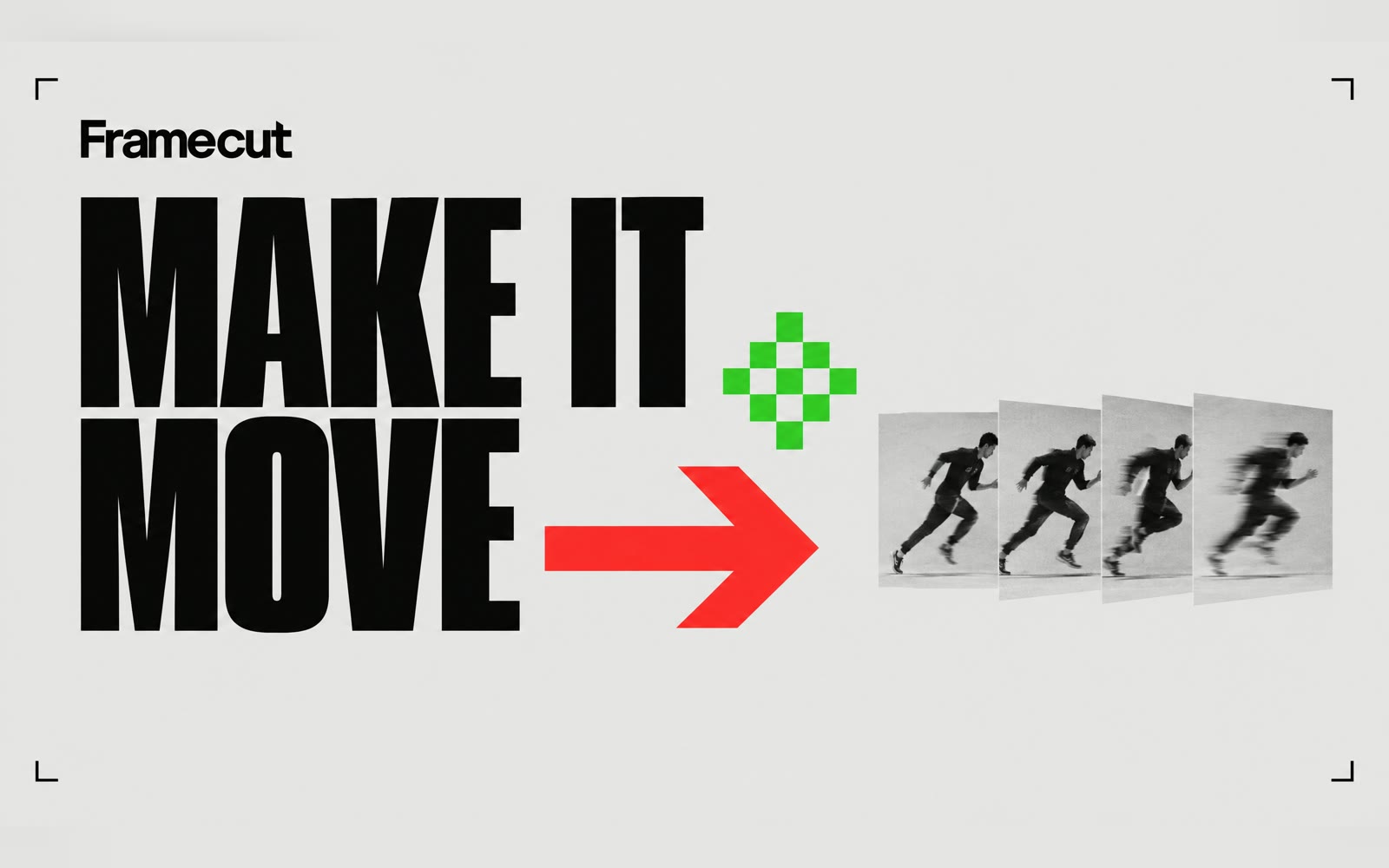
Turn a brand, one headline and context into a brutalist typography card: huge condensed black uppercase words on a pale gray poster, punctuated by a pixel-like green symbol, a red arrow and tiny corner marks.

Turn a brand, one headline and context into an editorial infographic card: heavy black copy in the lower-left of a pale technical grid while a huge cyan globe and thin violet route arcs dominate the right.

Turn a brand, one headline and context into a deep-plum card: an original phone overlapping a large desktop workspace on a two-tone background, with crisp white panels, compact avatars and colorful interface accents.
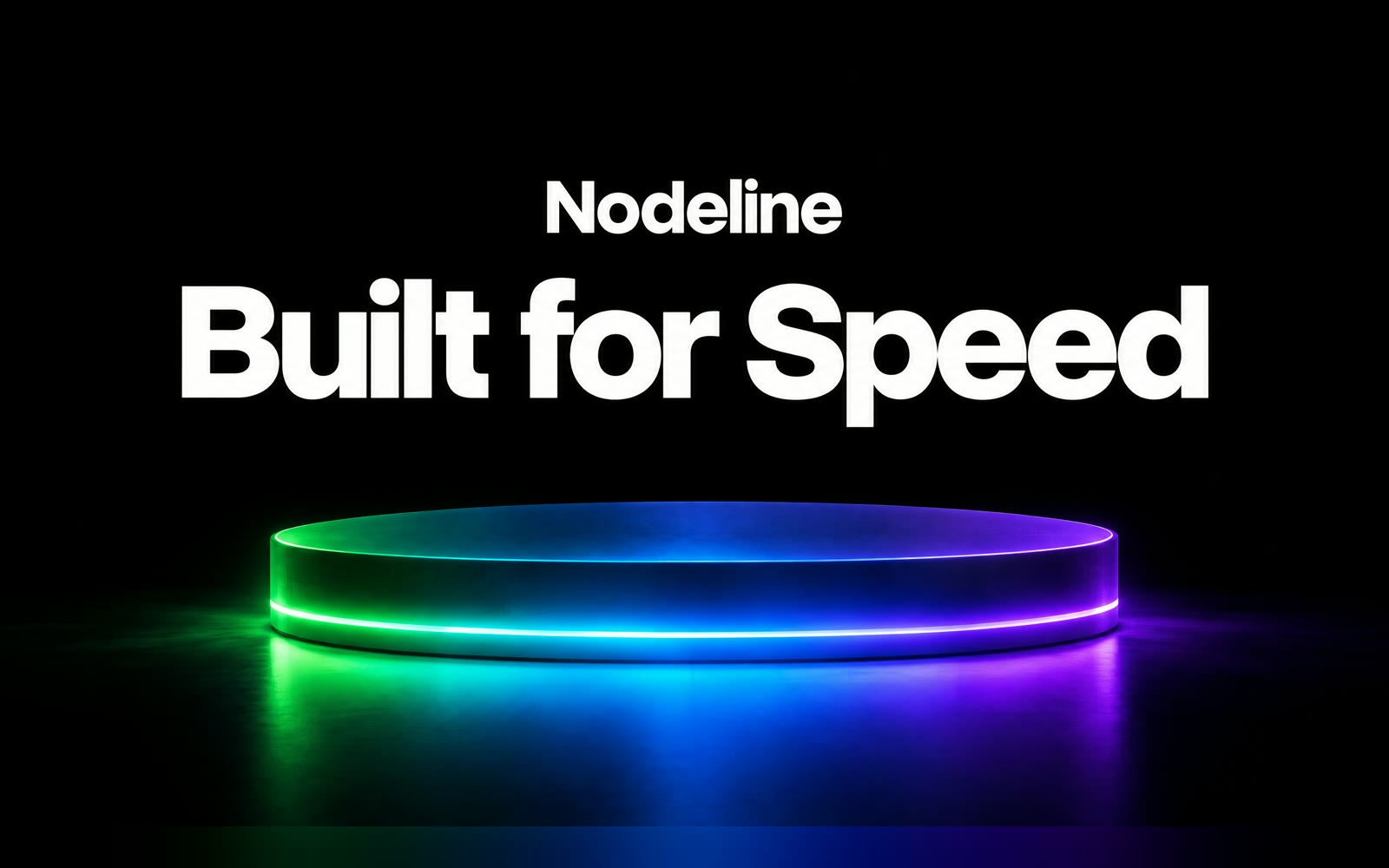
Turn a brand, one headline and context into a black-stage card: an oversized white launch title and compact all-caps callout above a low 3D pedestal glowing from green through cyan to violet.

Turn a brand, one headline and context into a bold recruitment card: a close editorial portrait of an original person wearing headphones filling the right half, with huge airy white copy on a saturated red left field.

Turn a brand, one headline and context into a documentary craft card: a warm full-bleed workshop photograph of an original craftsperson at work, overlaid with huge white words broken into staggered blocks around the body.

Turn a brand, one headline and context into a luminous gradient card: a bold white lowercase identity centered over sweeping orange, pink, lavender and blue light bands with subtle painted grain.
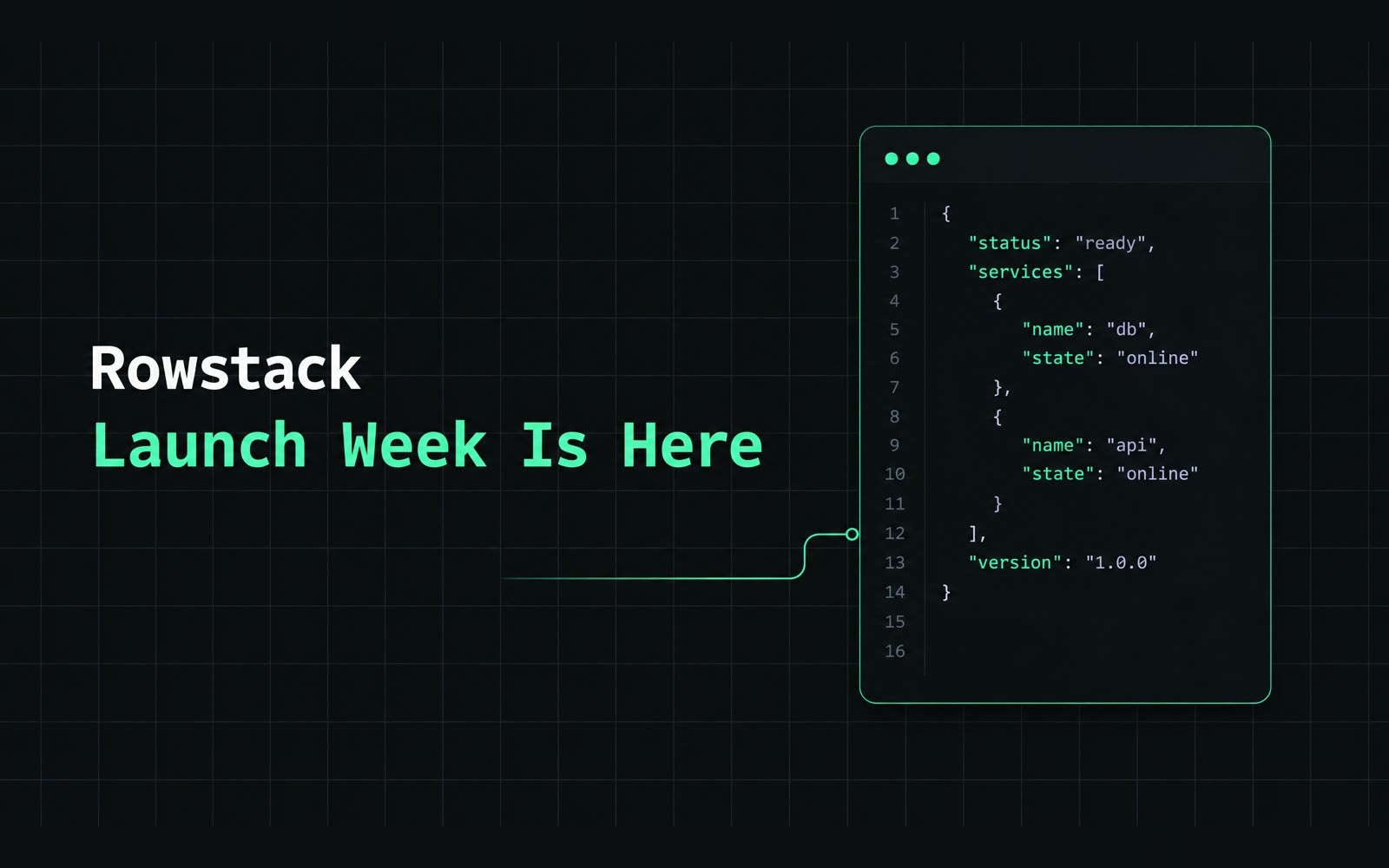
Turn a brand, one headline and context into a dark-grid card: sparse event copy at left and a tall rounded code-response ticket at right with monospace text and green syntax accents.
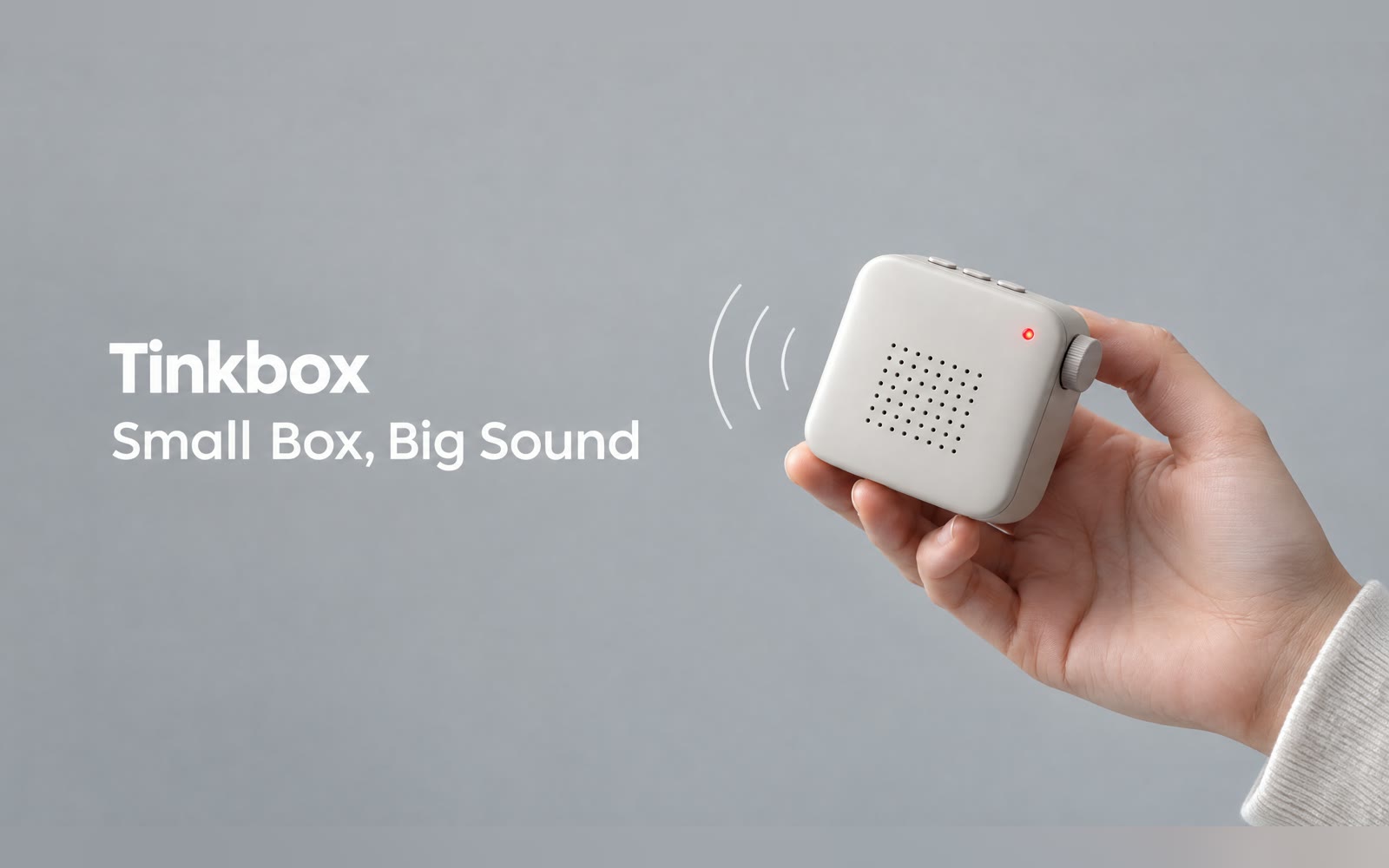
Turn a brand, one headline and context into a high-key studio card: a softly lit hand holding an original compact pale device against a seamless gray background, with broad empty space and a tiny red light as the only accent.
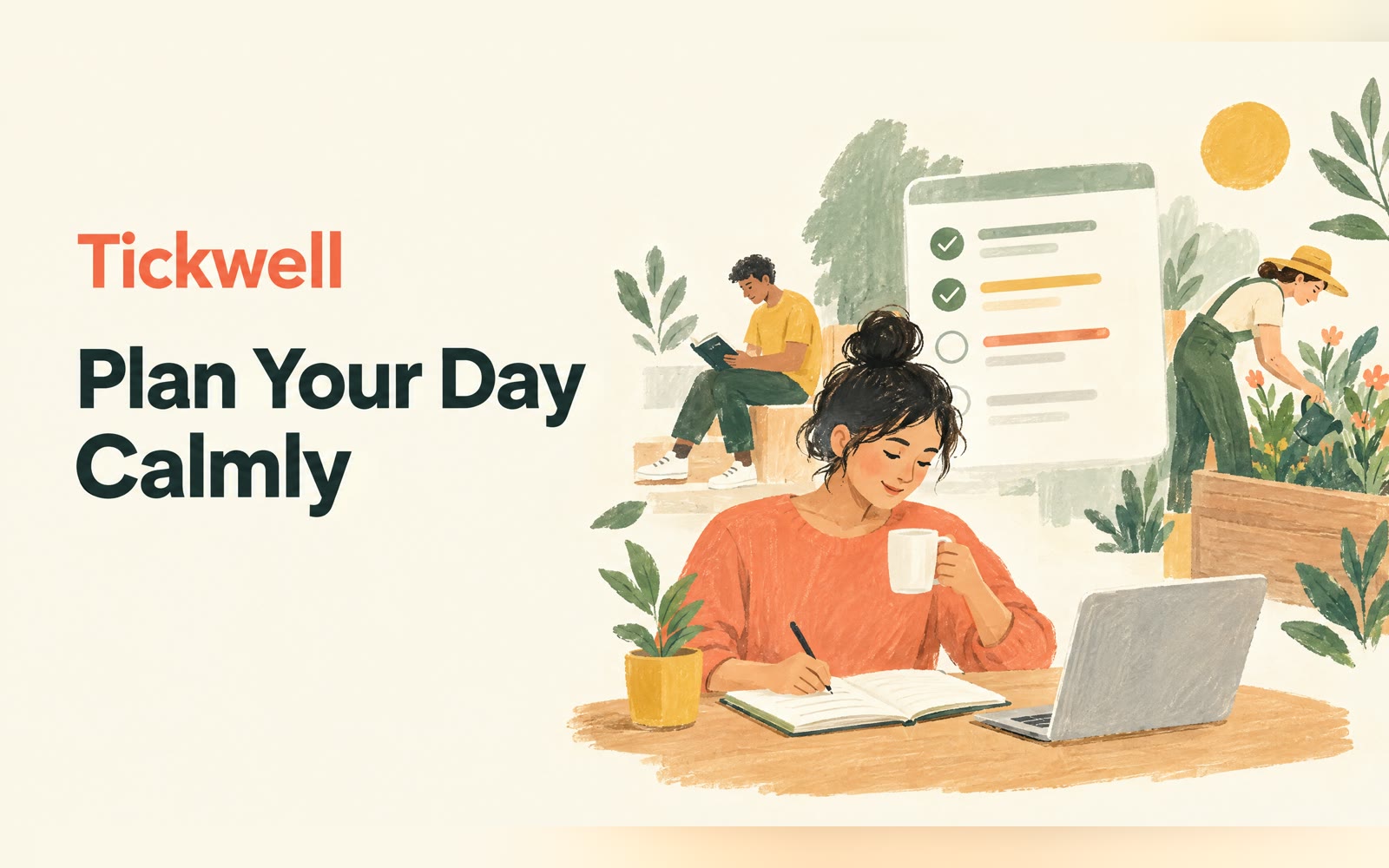
Turn a brand, one headline and context into a warm-cream card: bold left-aligned product copy beside a lively gouache-and-pencil illustration of people working, reading and tending plants in coral, mustard, sage and black.

Turn a brand, one headline and context into a signal-green split card: large white left-aligned copy beside a pale rounded panel holding a circular wreath of colorful flat characters linked by gestures and work objects.
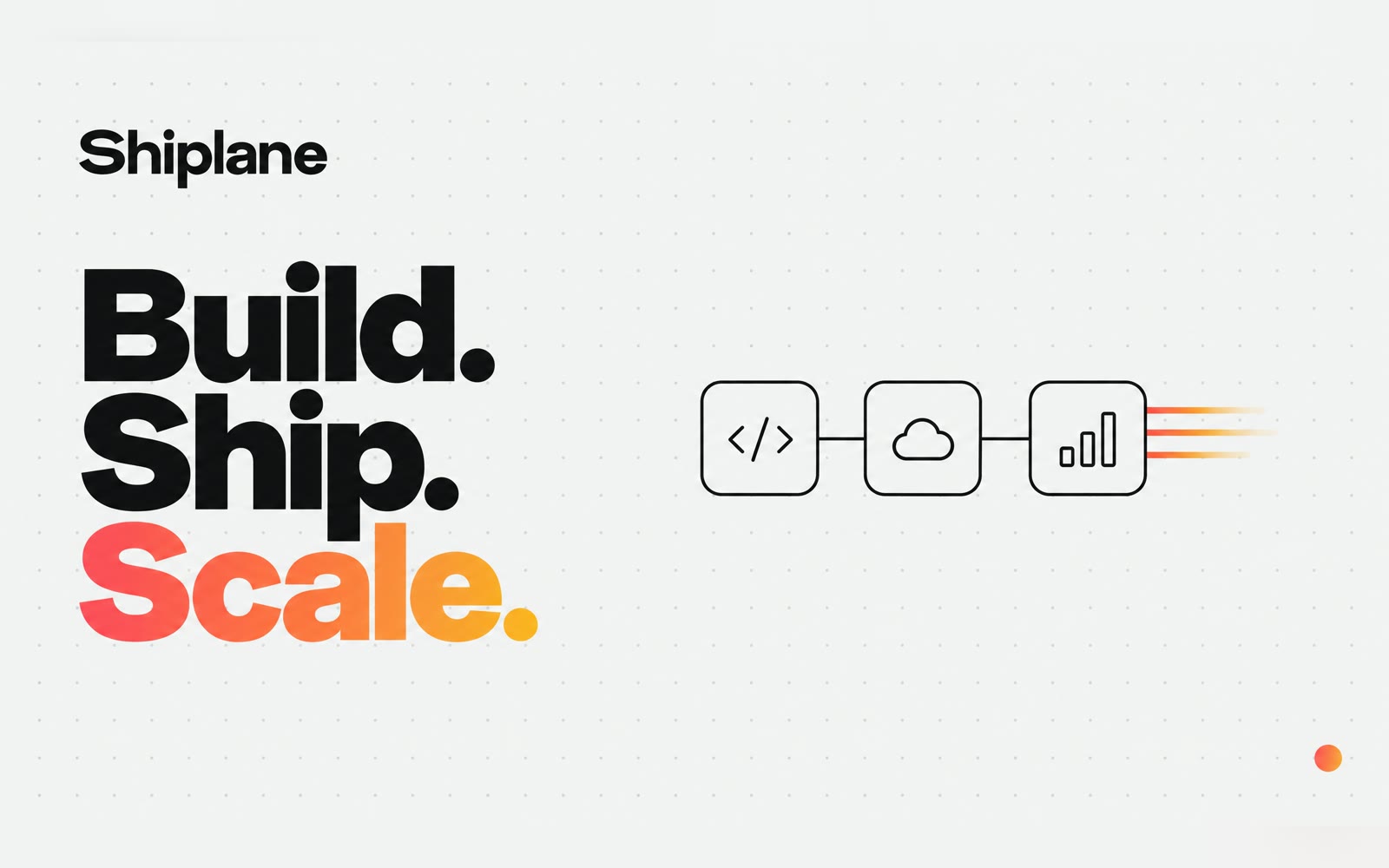
Turn a brand, one headline and context into an oversized-grotesk card: giant tightly stacked black action words on a faint gray dot grid, with one lower word shifting to a coral-to-amber gradient and a tiny geometric corner mark.

Turn a brand, one headline and context into an airy minimal card: pale-lilac geometric modules and thin cobalt interface icons scattered around a compact central wordmark on an expansive white field.
Turn a brand, one headline and context into a radical-minimal card: a single electric-lime field filled by an enormous near-black wordmark and a bold abstract glyph, flat and high-contrast with no supporting imagery.
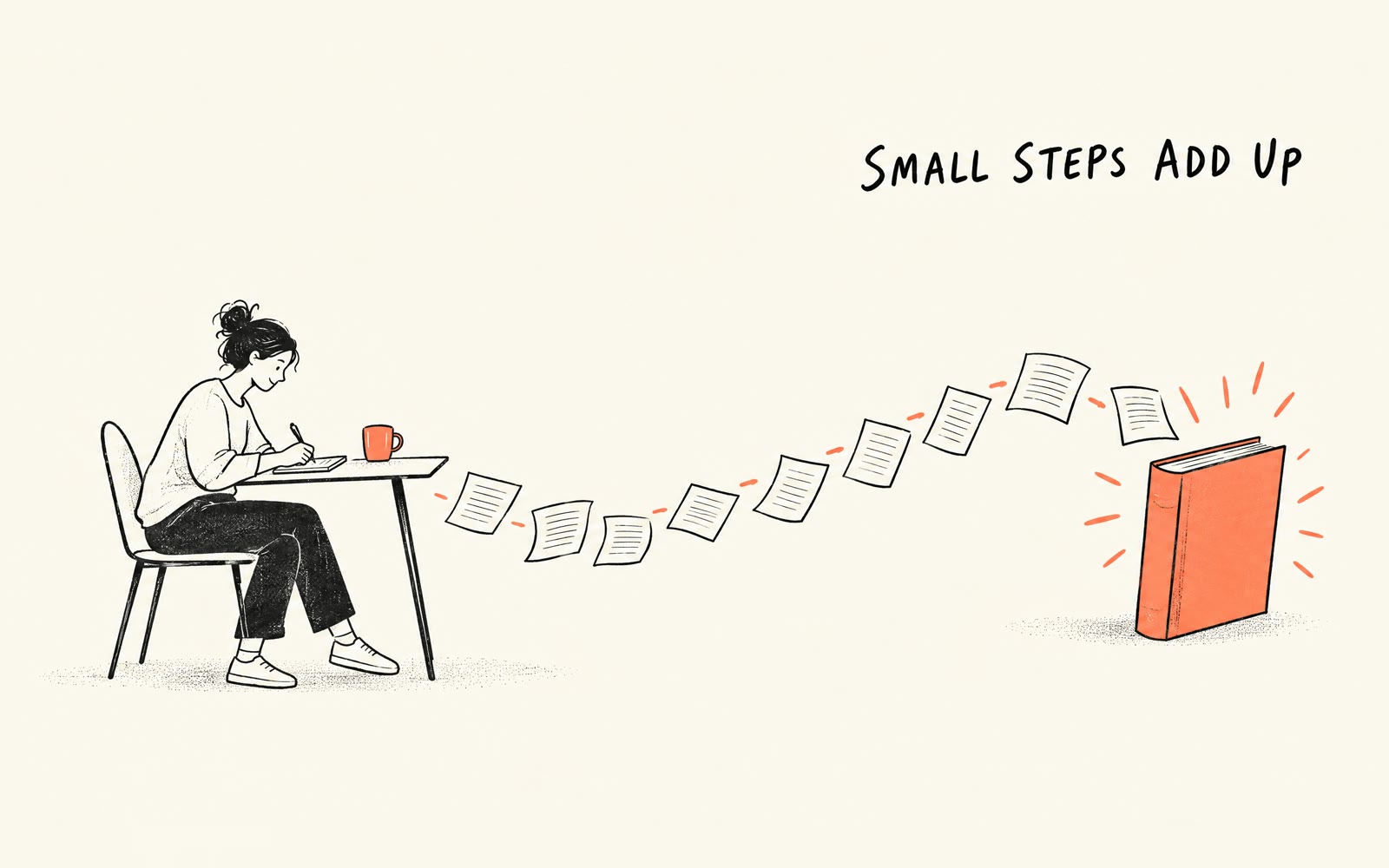
Turn one message into an airy 16:9 editorial illustration: black ink outlines, light halftone texture, lots of white space and a single accent color.
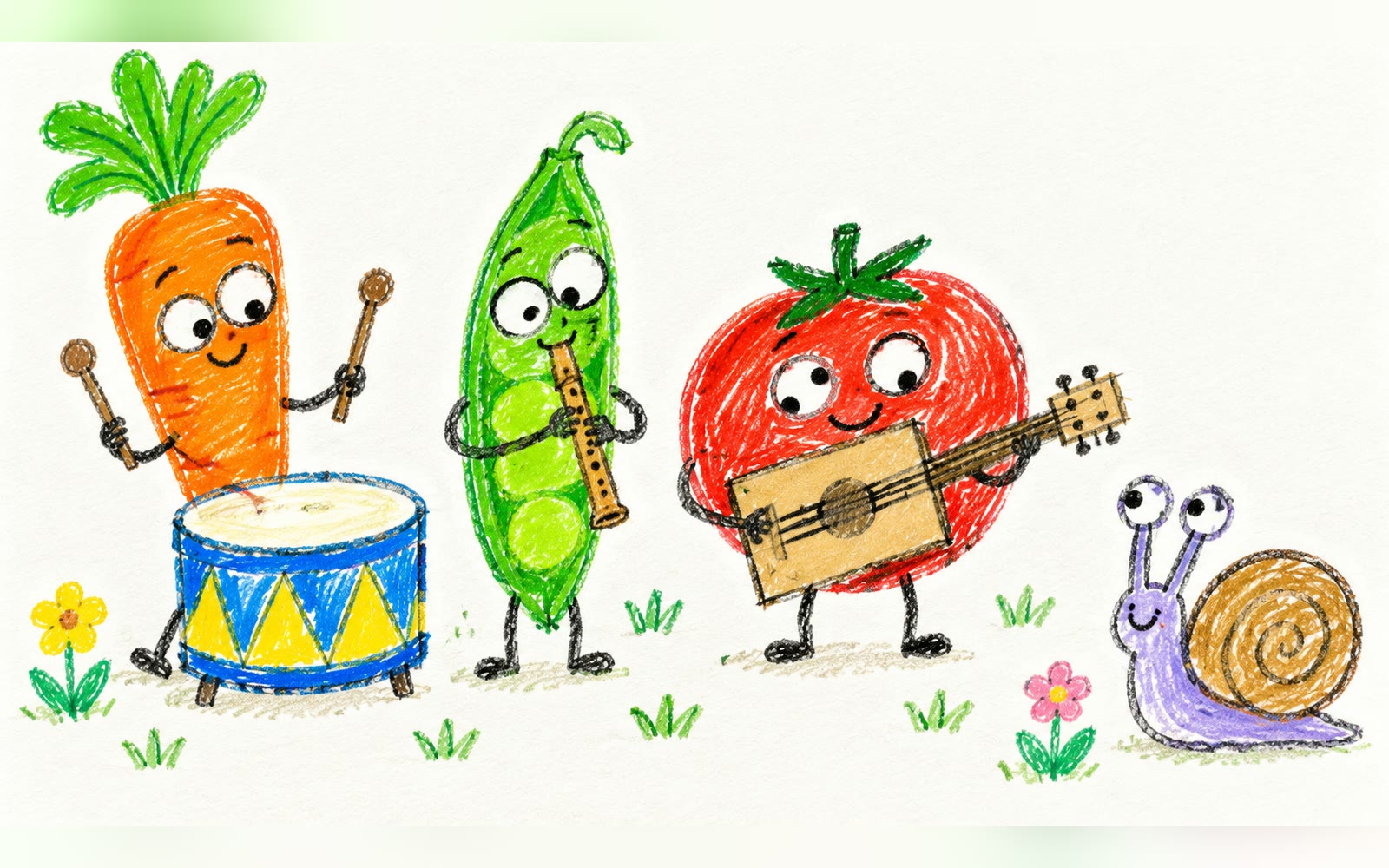
Turn a small scene into a lovably clumsy 16:9 crayon-and-colored-pencil drawing: wobbly outlines, scribbled fills and cheerful original characters on white paper.
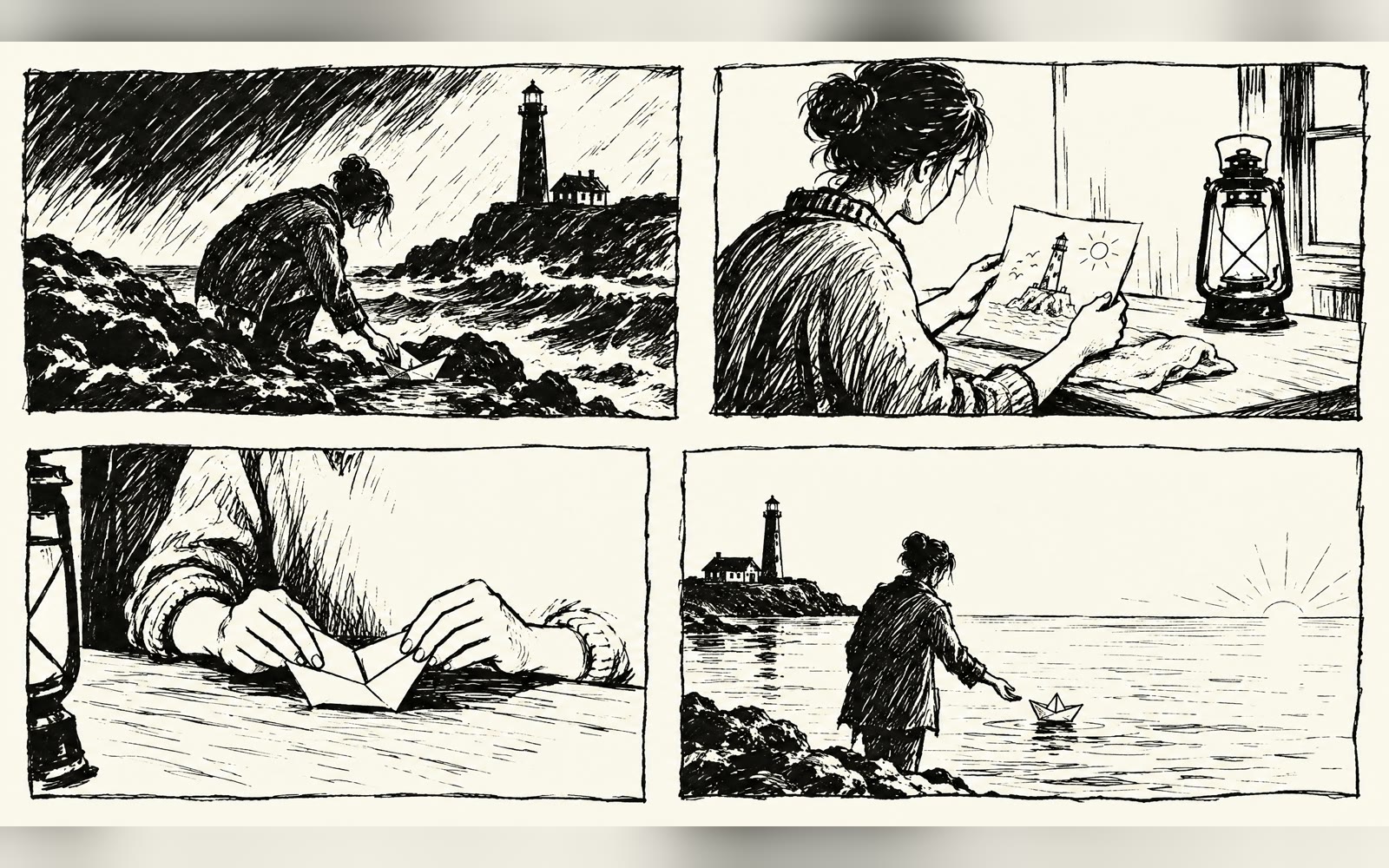
Turn a short story into one 16:9 storyboard page in raw black ink: four or six irregular panels with rough open lines and lots of negative space.
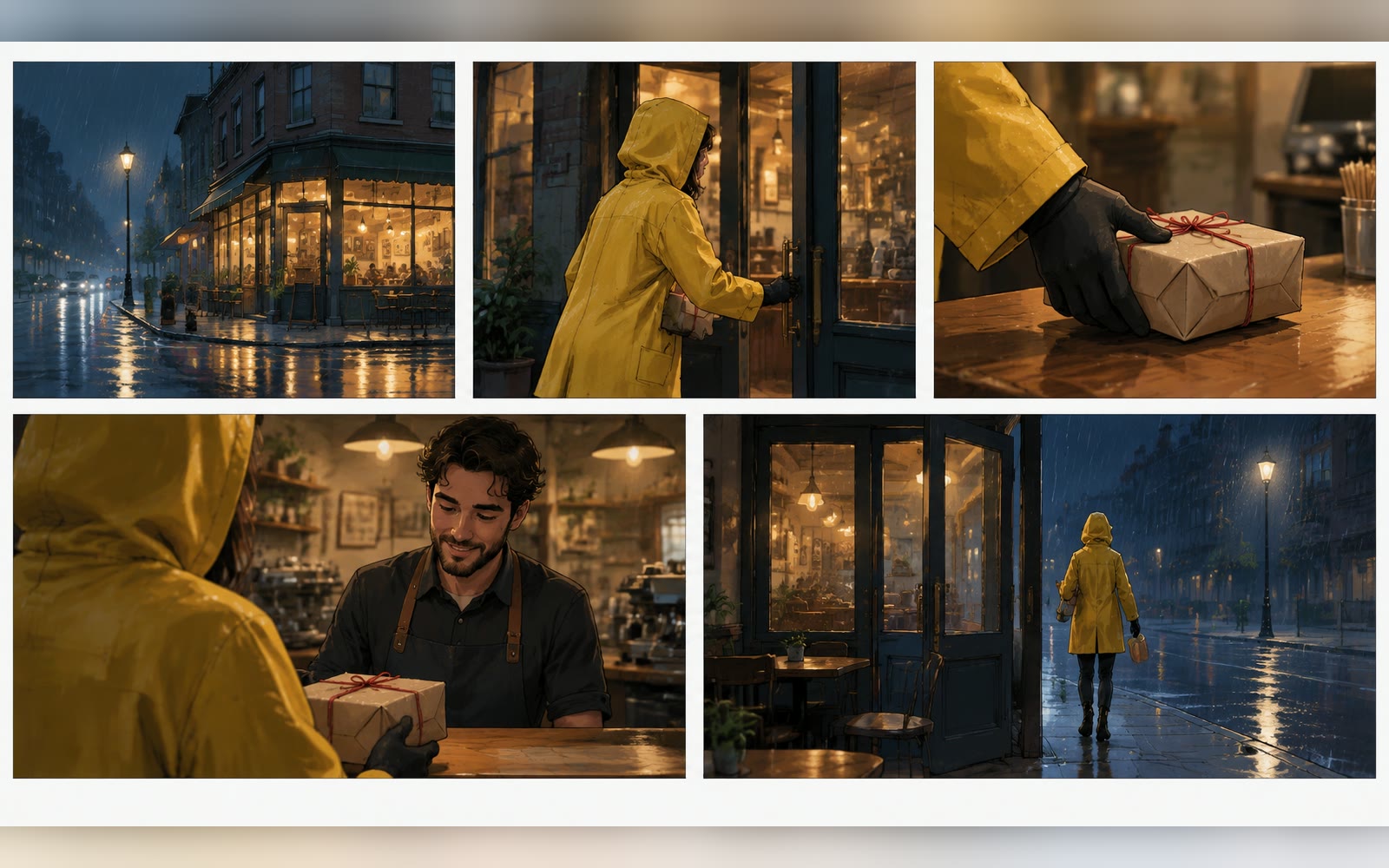
Turn four to six scene beats into one 16:9 storyboard contact sheet with varied shot sizes and angles and consistent wardrobe, props and screen direction.
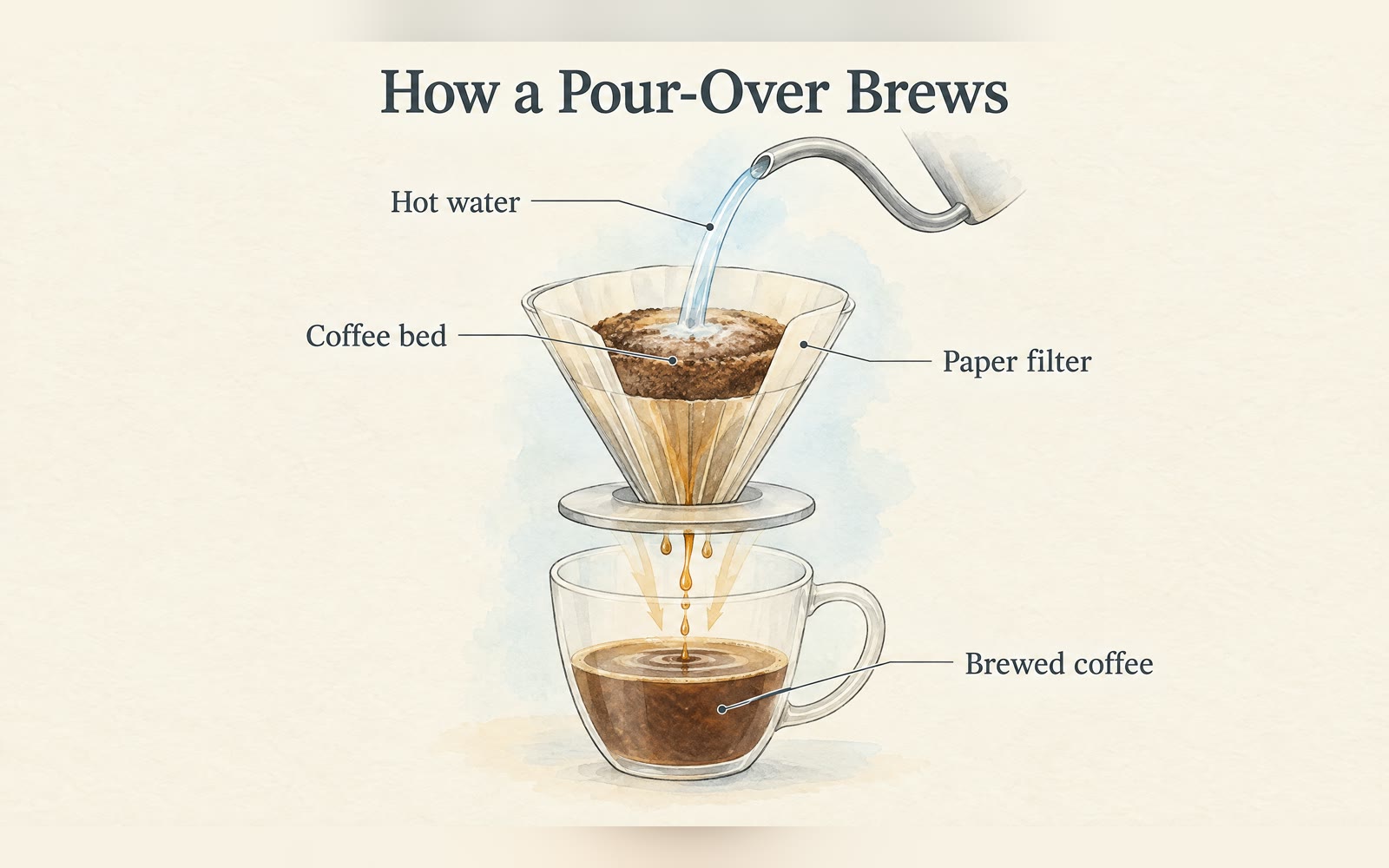
Turn a verified mechanism into an approachable 16:9 concept diagram: translucent color washes, fine linework, a title and three to five exact labels.
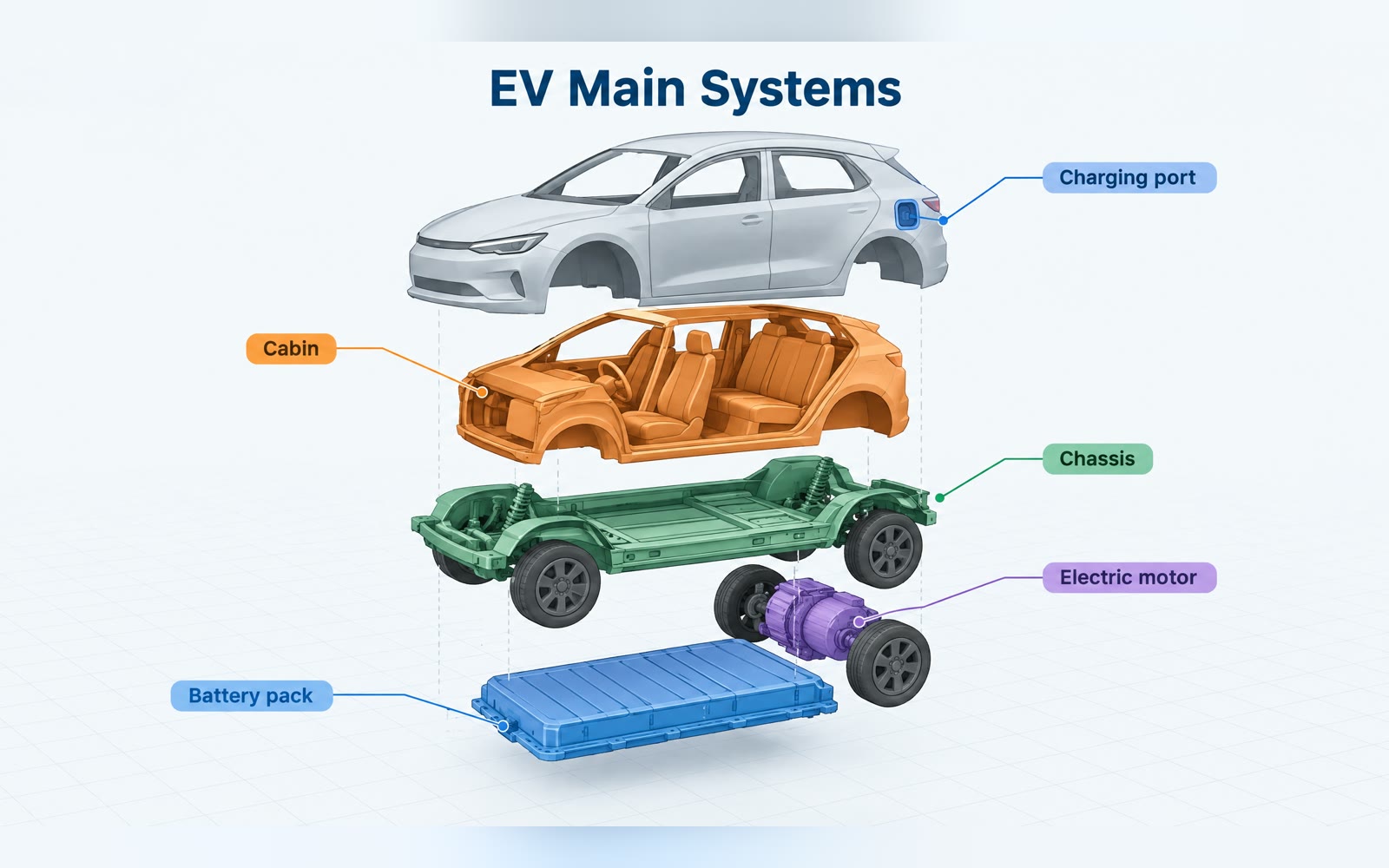
Turn a fictional electric vehicle into a 16:9 isometric exploded view of its major systems, color-coded, with a title and three to five exact labels.
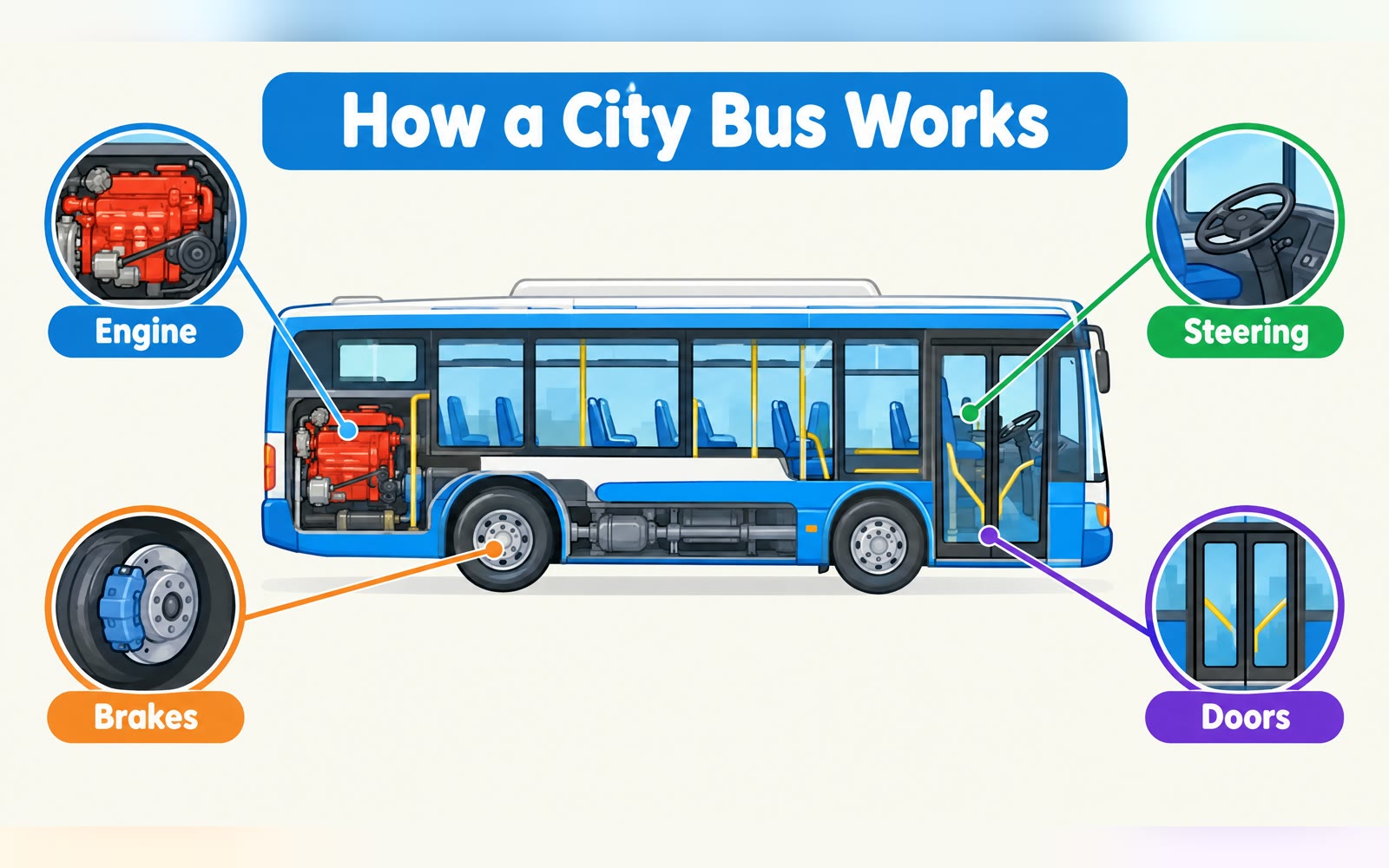
Turn a fictional vehicle into a classroom-ready 16:9 anatomy poster: a side-profile cutaway with tidy detail windows, a title and three to five exact labels.
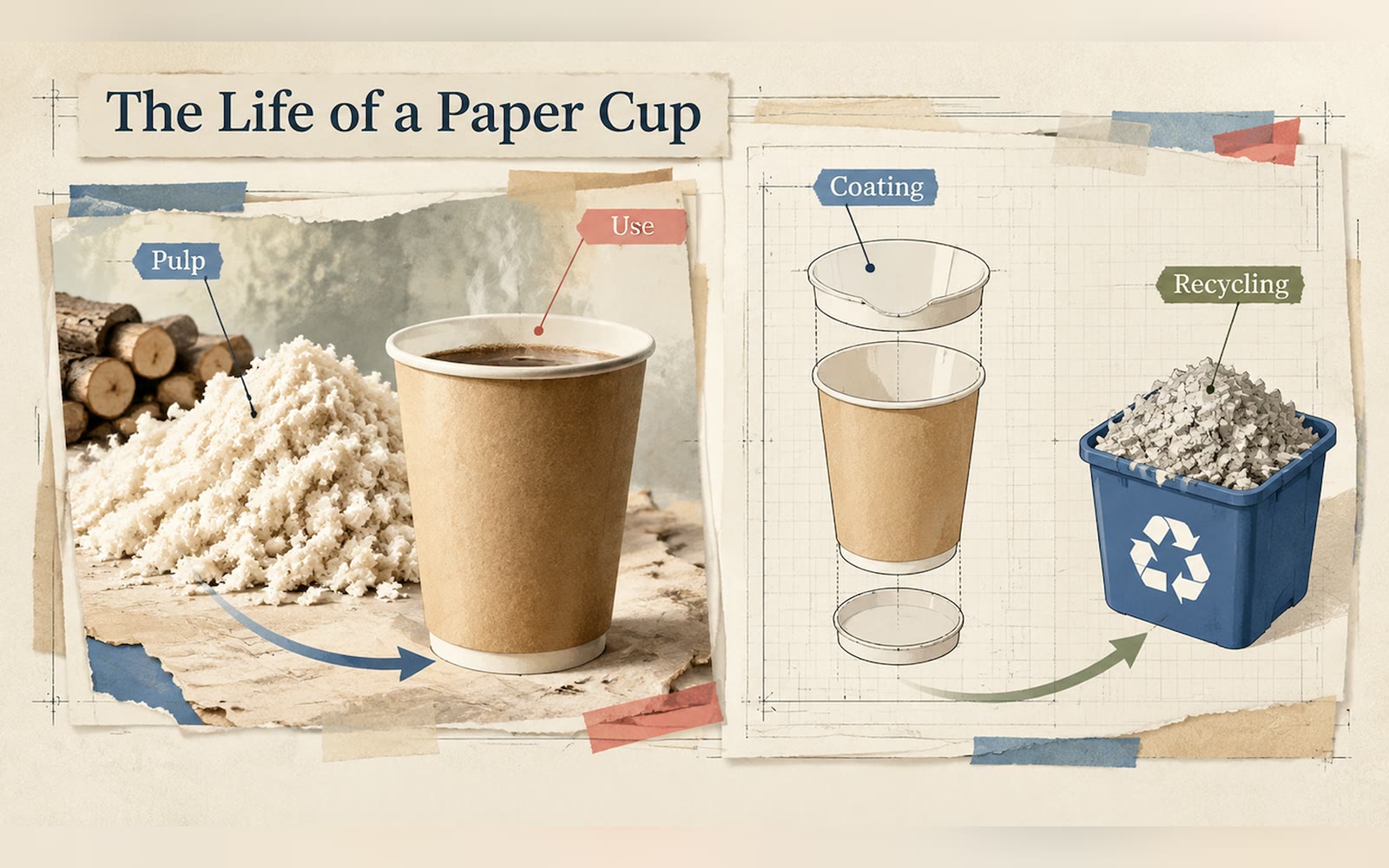
Turn one topic into a 16:9 research collage: a grounded view beside an isometric reconstruction, archival study marks, a title and three to five exact labels.
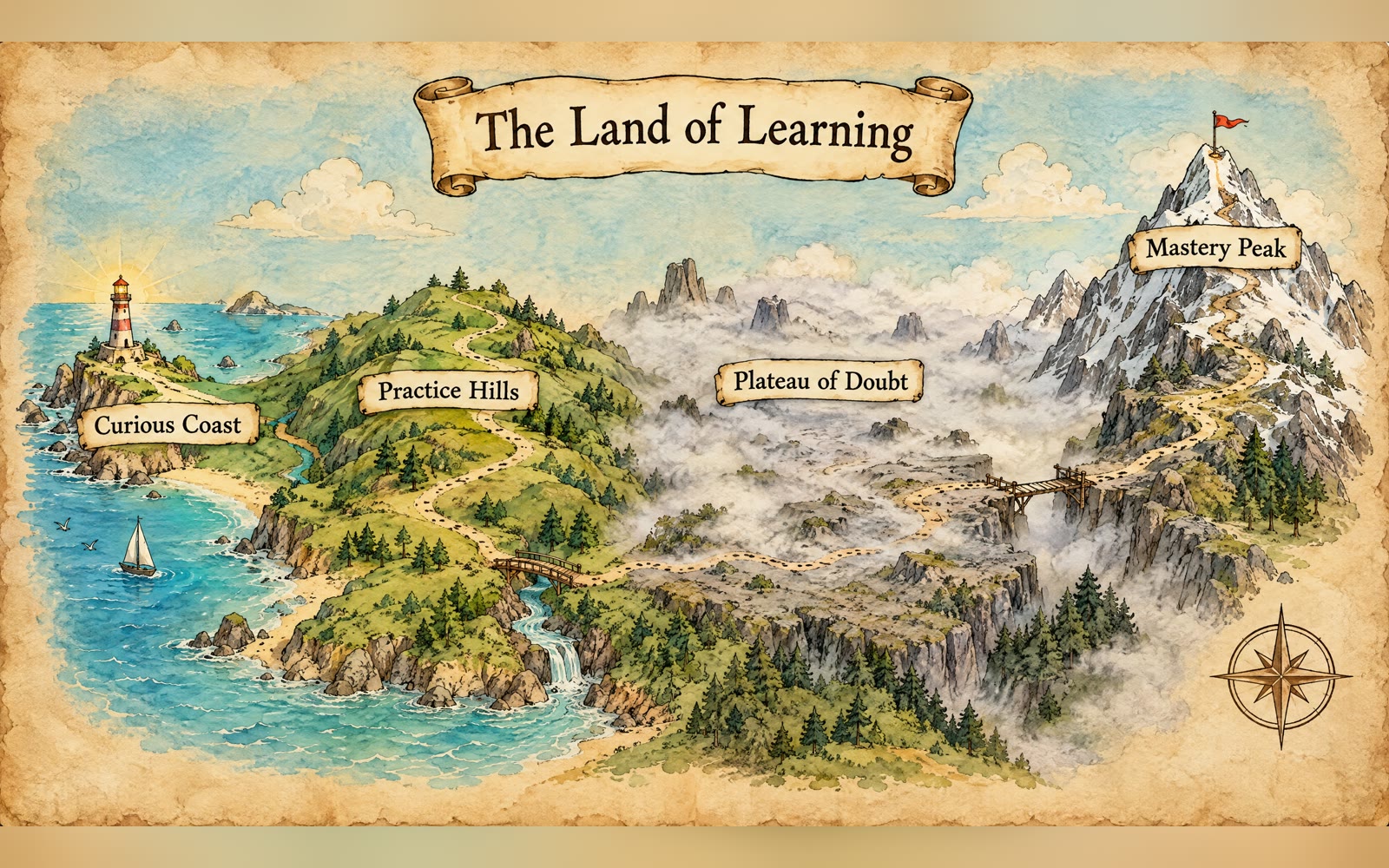
Turn an abstract theme into a 16:9 illustrated fantasy map: three to five named regions on one route, landmarks and a title cartouche.
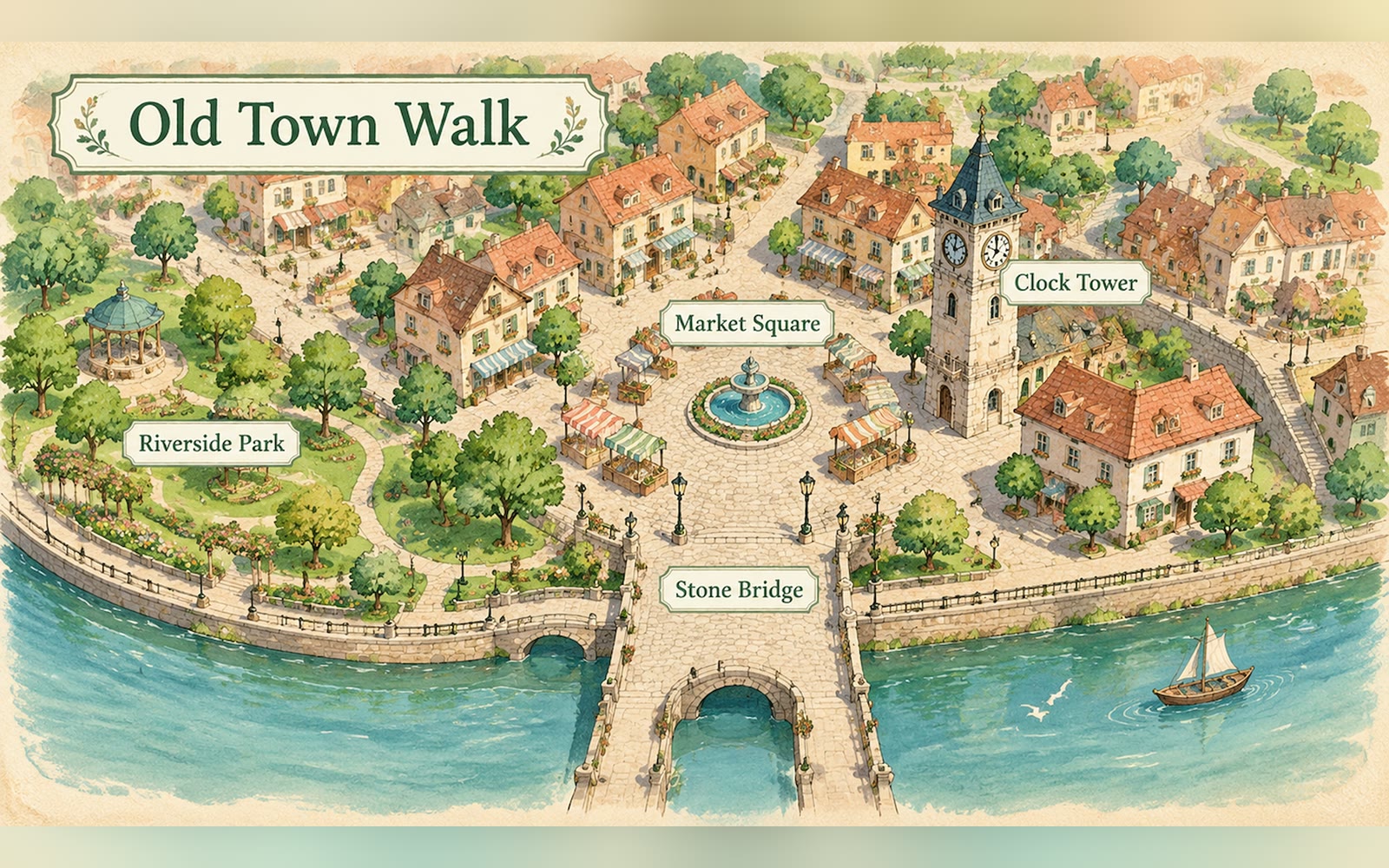
Turn an area and a few landmarks into a decorative 16:9 illustrated street-map scene with a title and three to five exact landmark labels.
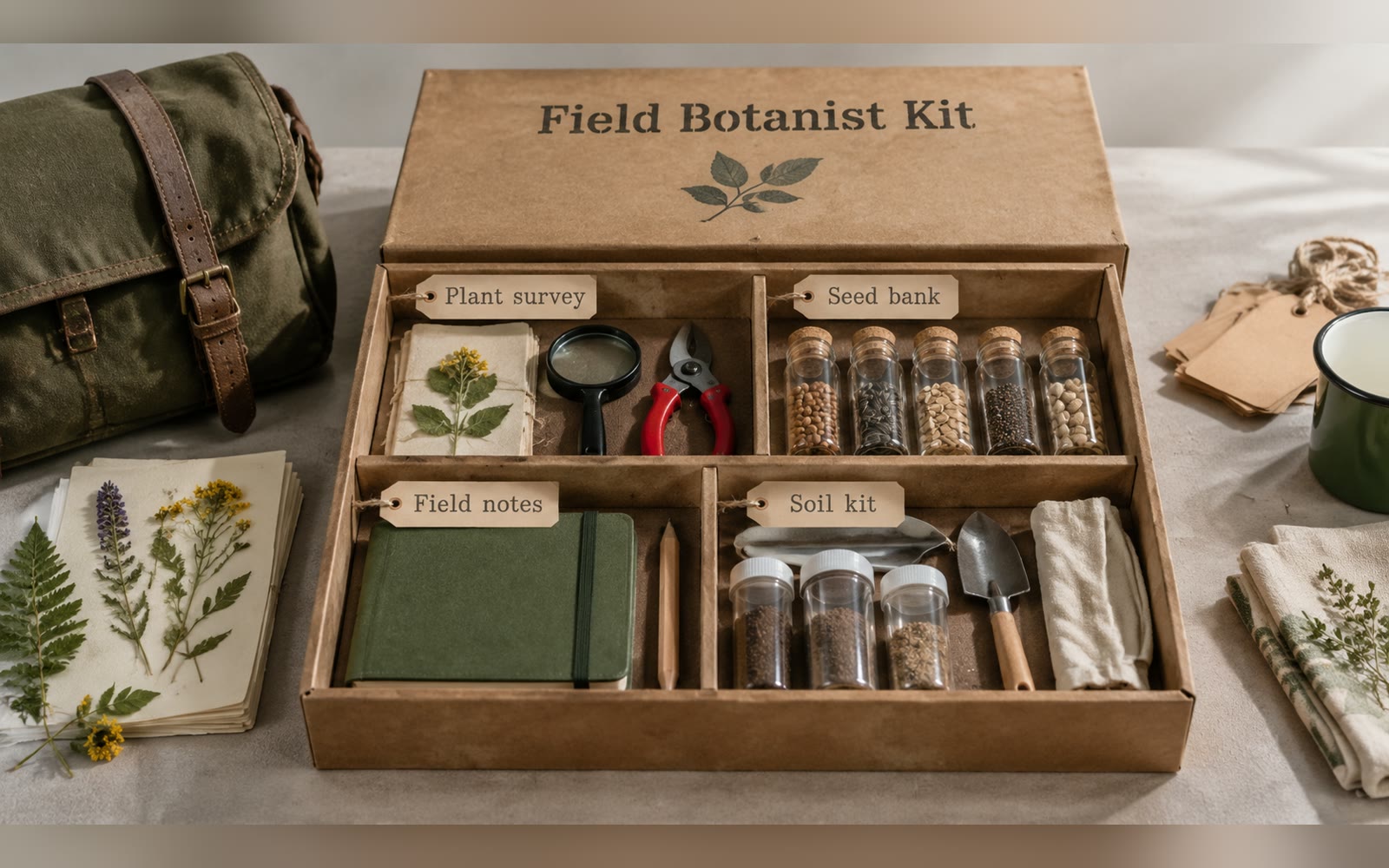
Turn a fictional professional profile into a 16:9 tactile archive object with a stenciled title and three to five exact tag labels, and no codes.
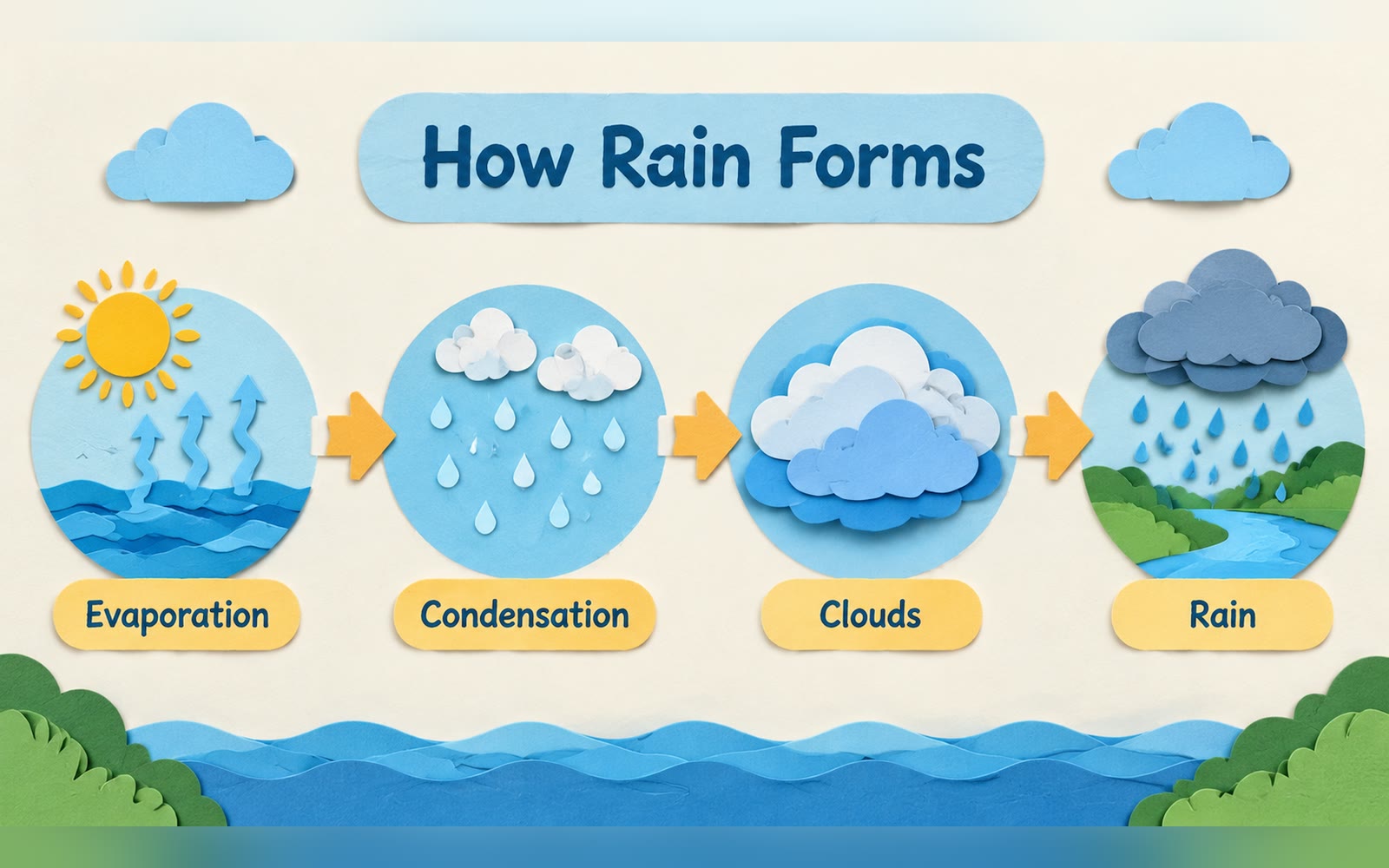
Turn one verified scientific process into a 16:9 layered paper-cut explainer: three to five stages in soft shadowed paper, with a title and exact stage labels.
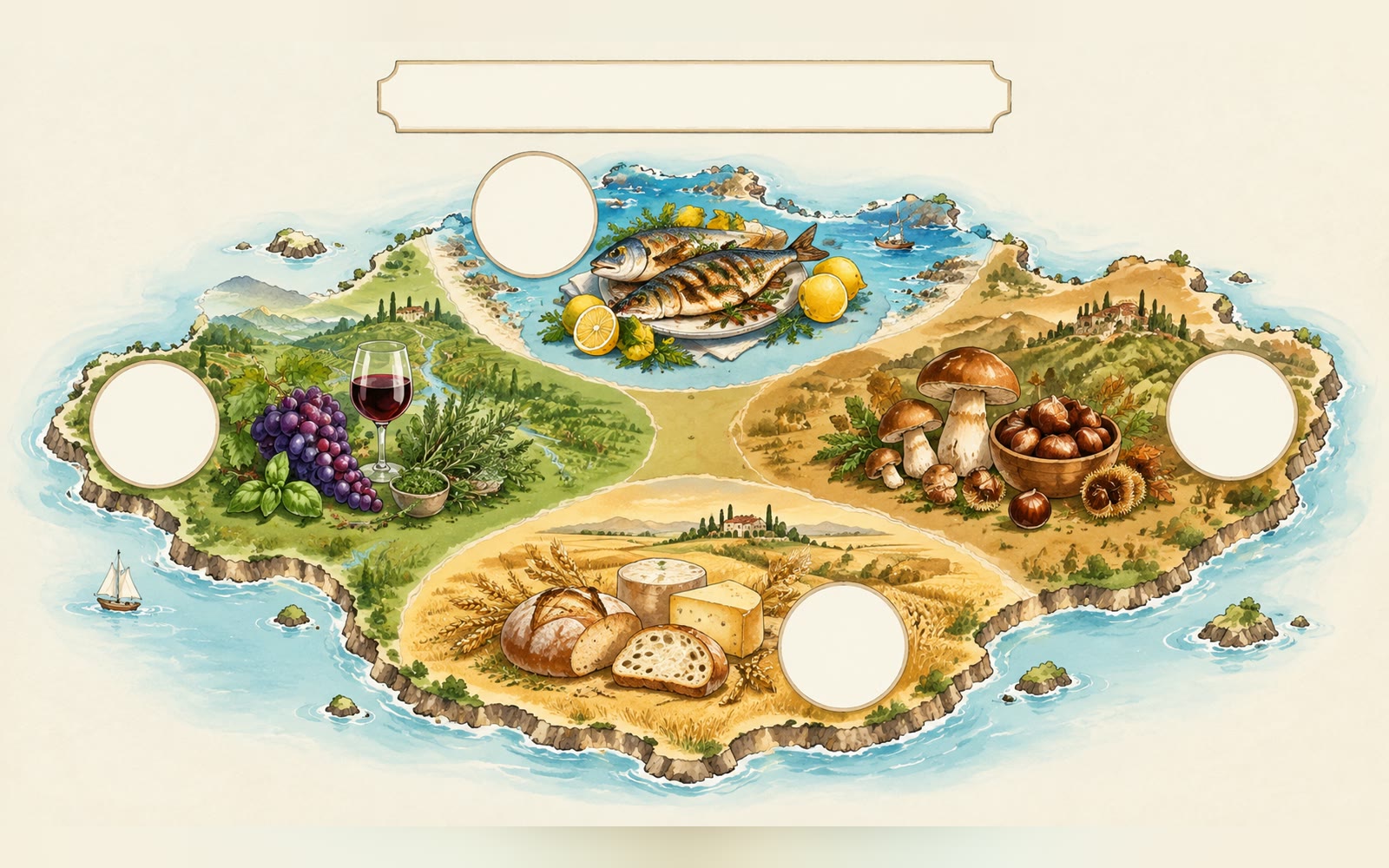
Turn a region's food areas into a text-free 16:9 flavor map base image with restrained geography, ingredient clusters and three to five empty profile badges.
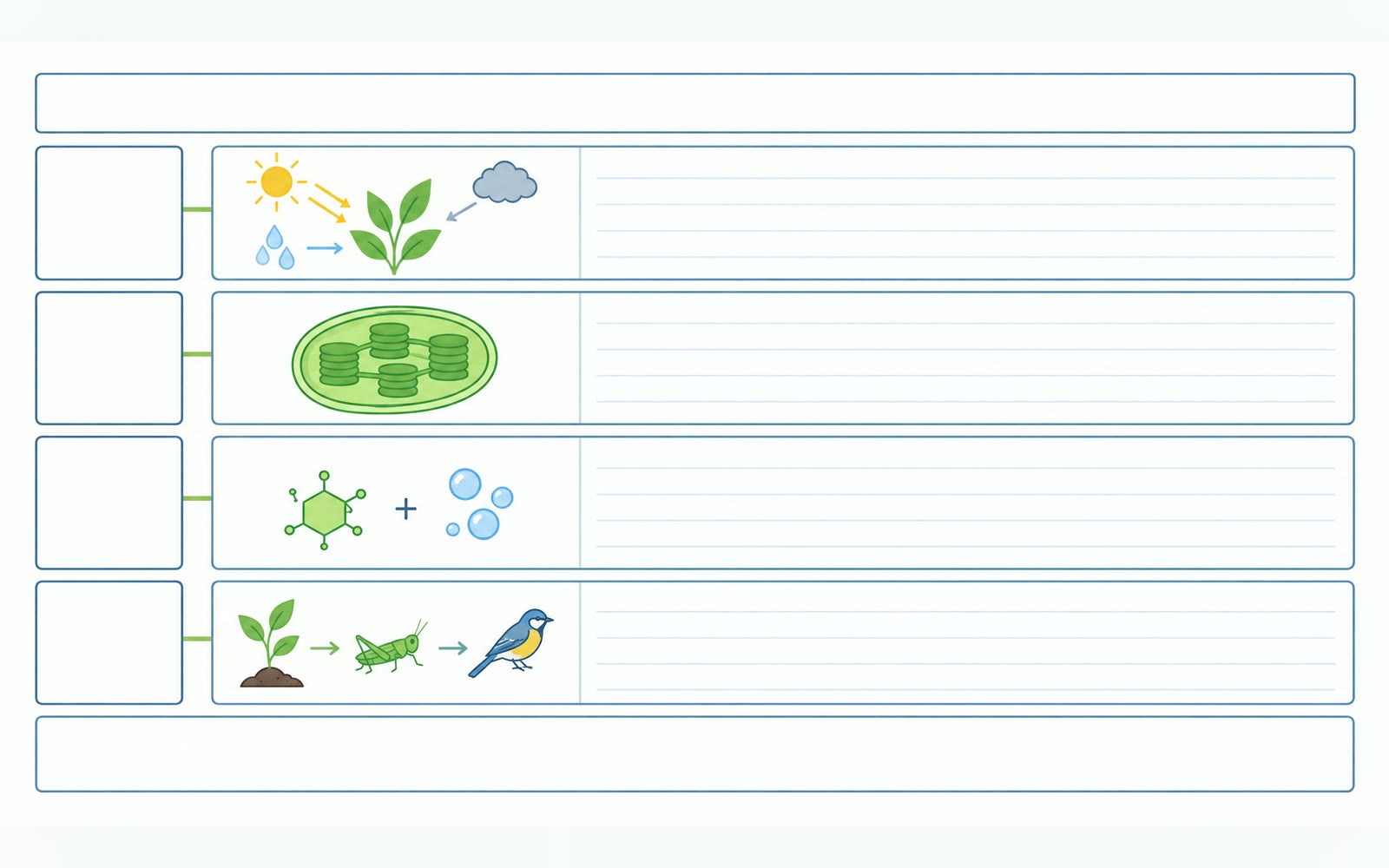
Turn one topic into a text-free 16:9 study sheet layout: a cue column, matching note modules with simple visuals, a summary band and a title band, all blank.
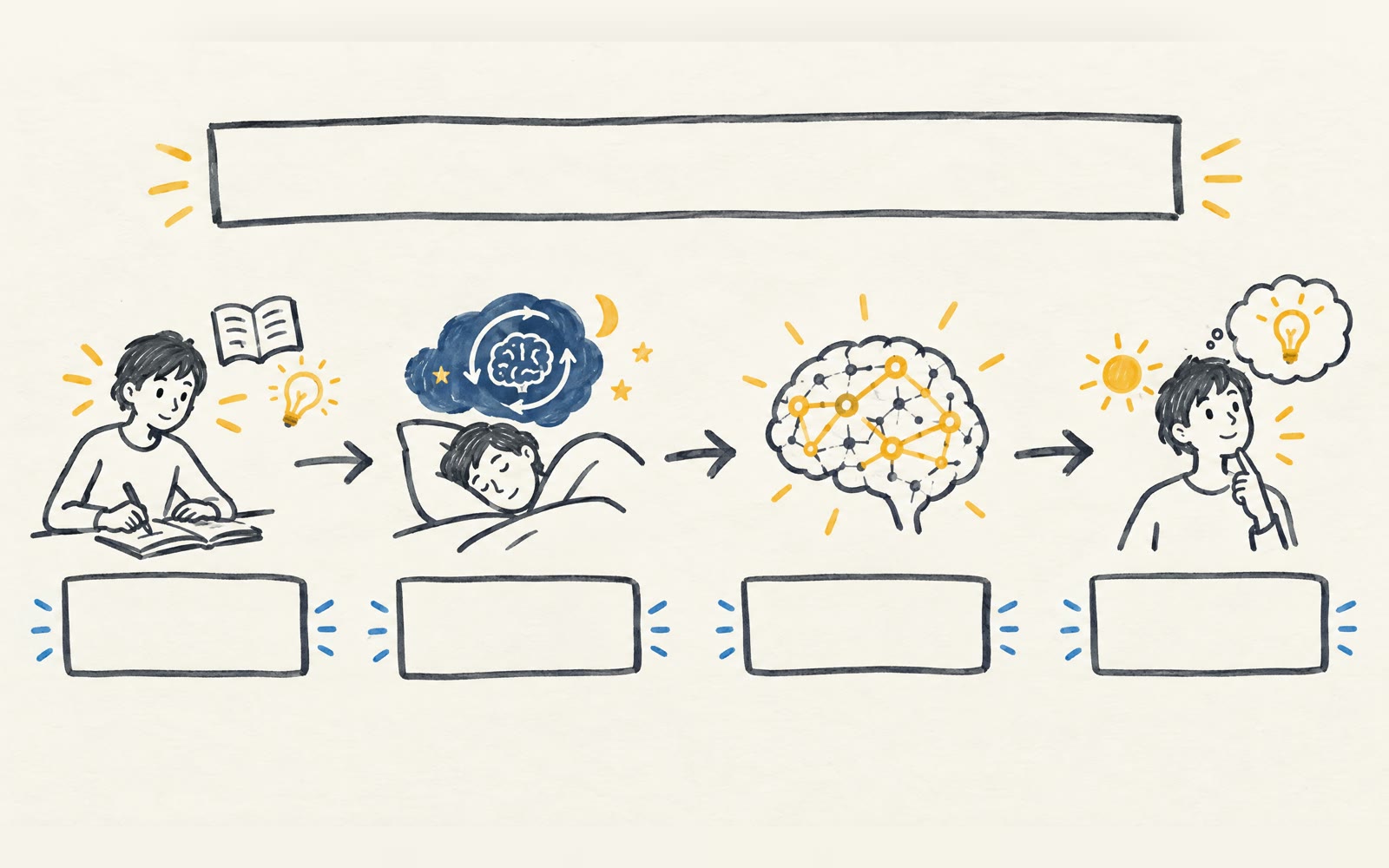
Turn a teaching claim into a text-free 16:9 marker-drawn infographic base with organic lines, original sketches and three to five empty evidence blocks.
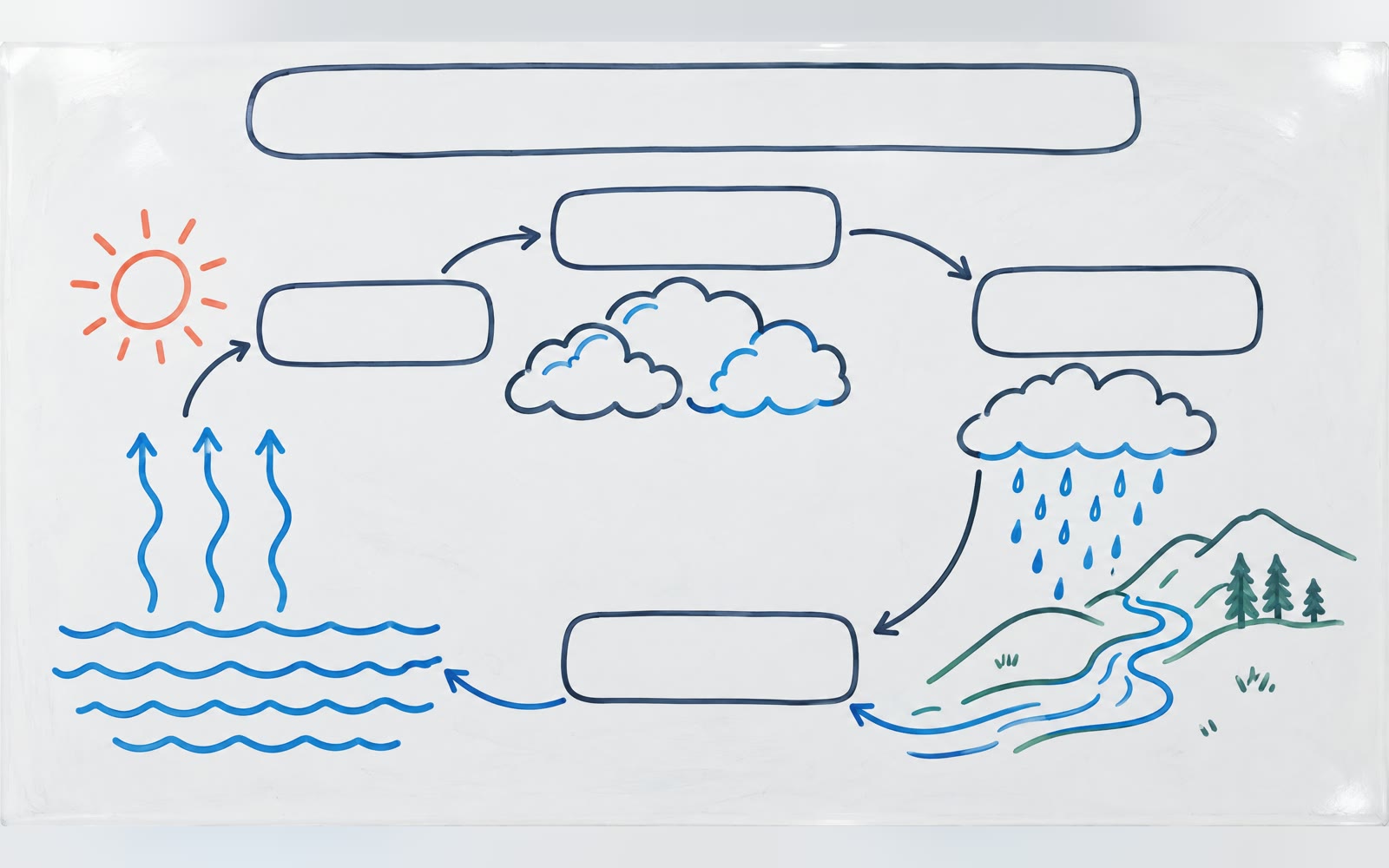
Turn a lesson into a text-free 16:9 whiteboard sketch: one central drawing, three to five empty callout boxes joined by arrows and an empty title area.
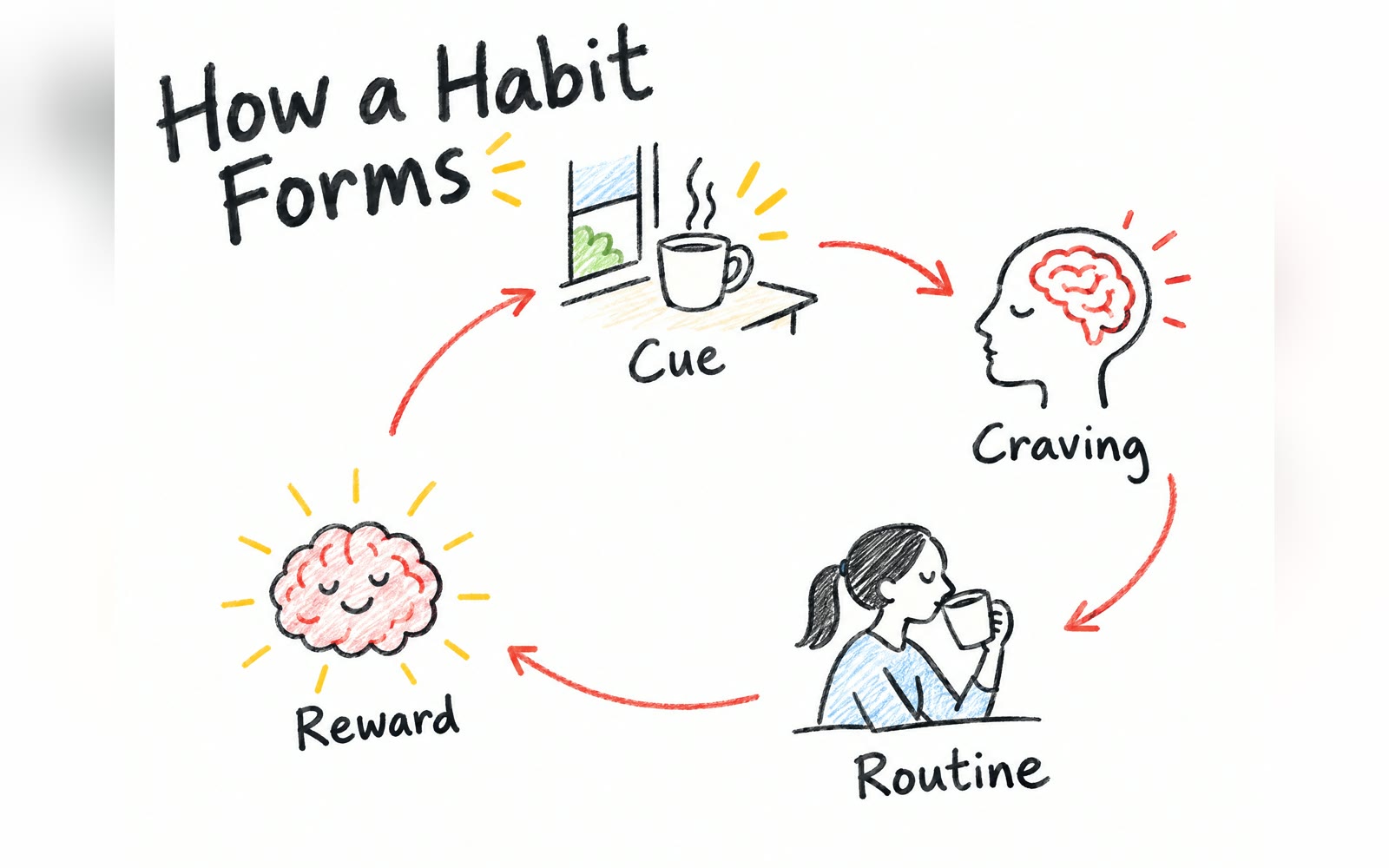
Turn source text into one 4:3 hand-drawn sketchnote: illustrated nodes, thin pencil lines, sparse color, a large title and three to five exact labels.
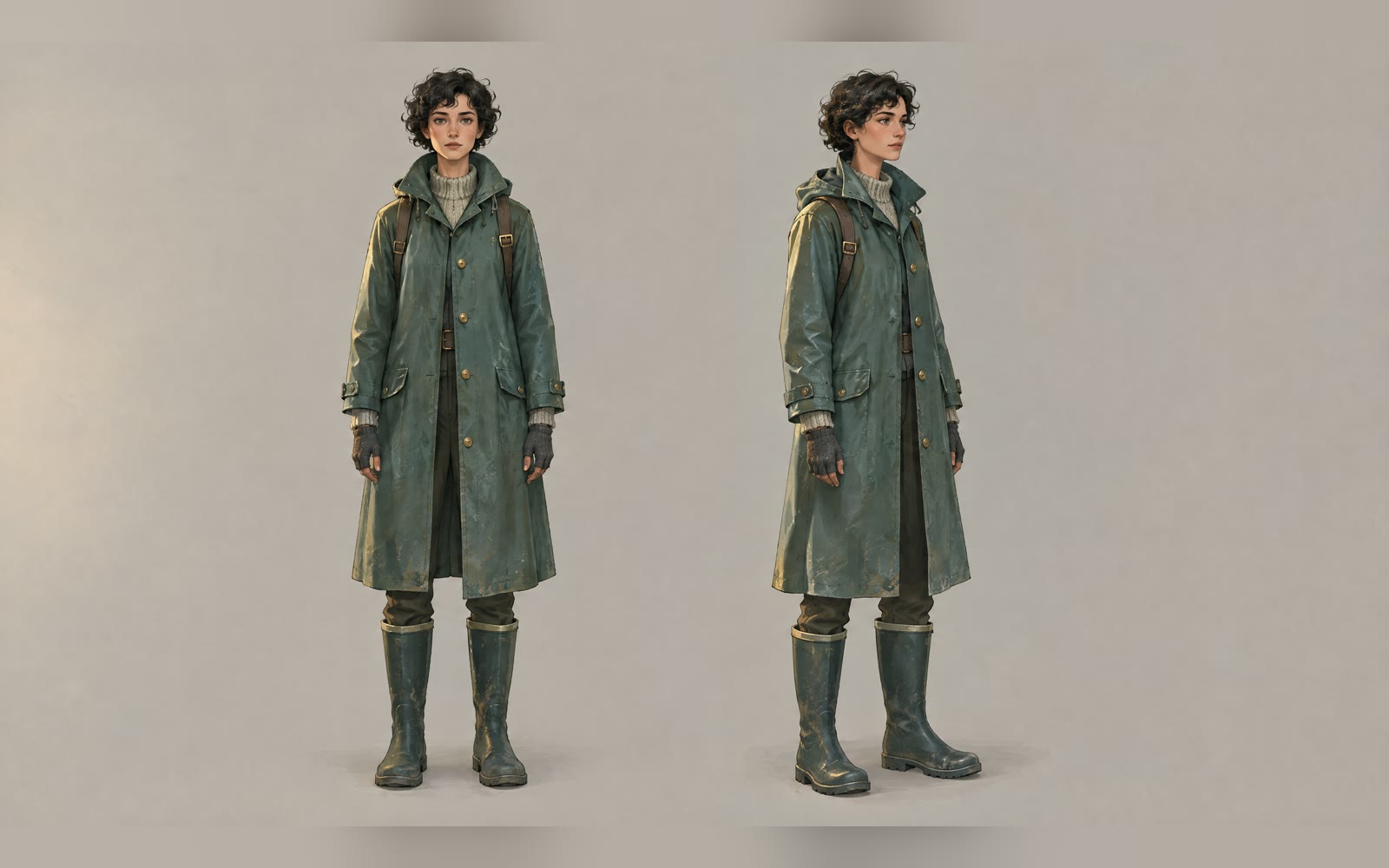
Turn one continuity bible into three matching 16:9 studies of an invented world: a character, a prop and an environment with one palette, shape language, scale and light.
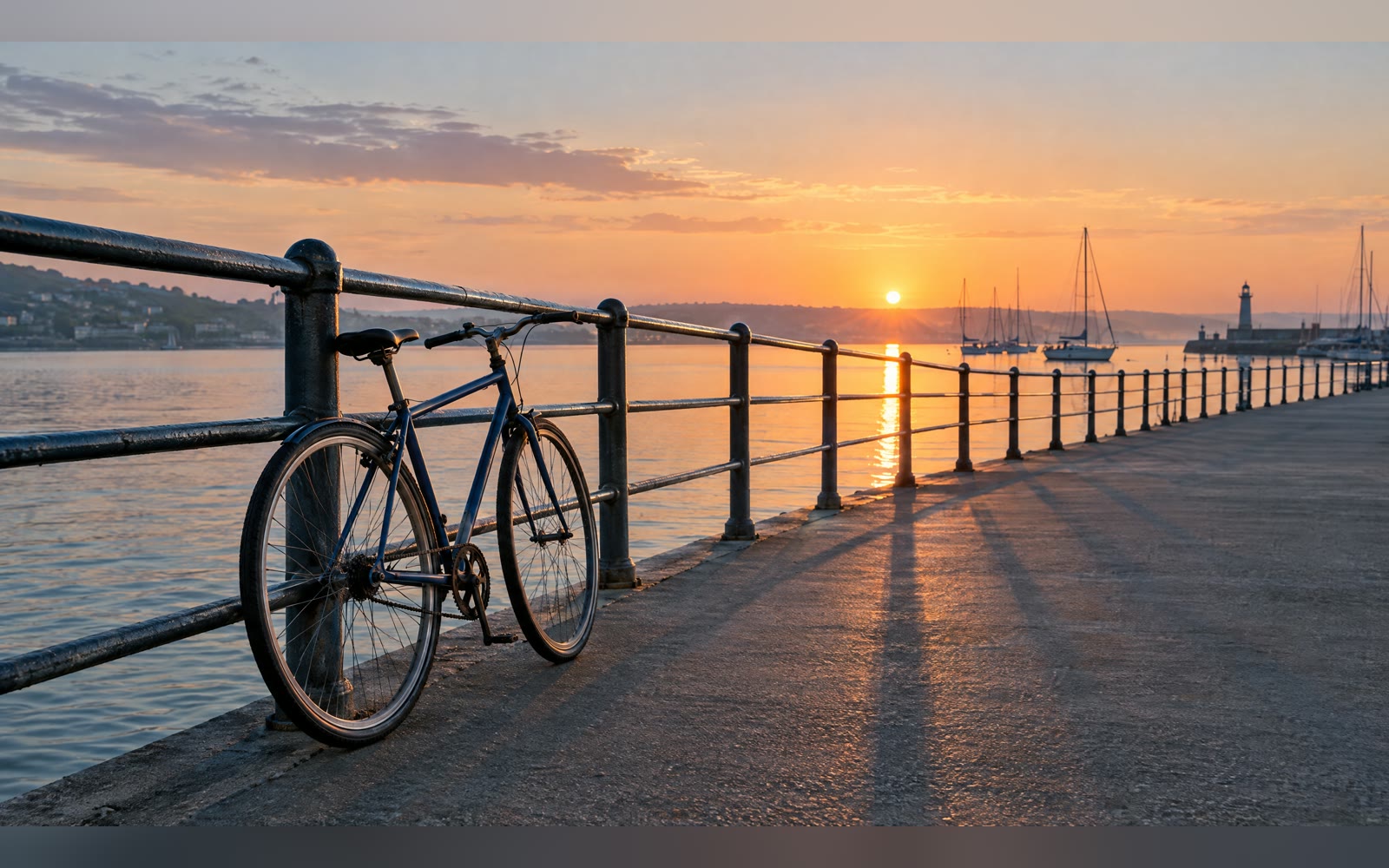
Turn one subject and three composition principles into three photographic 16:9 studies with the same setup, so you can compare how composition changes the feeling.

Turn one idea into a square editorial illustration: one readable metaphor in loose black monoline and off-white cut shapes on a flat muted color.

Turn a character description into a square soft-vinyl toy avatar: oversized rounded head, molded hair, matte material and two capsule eyes.
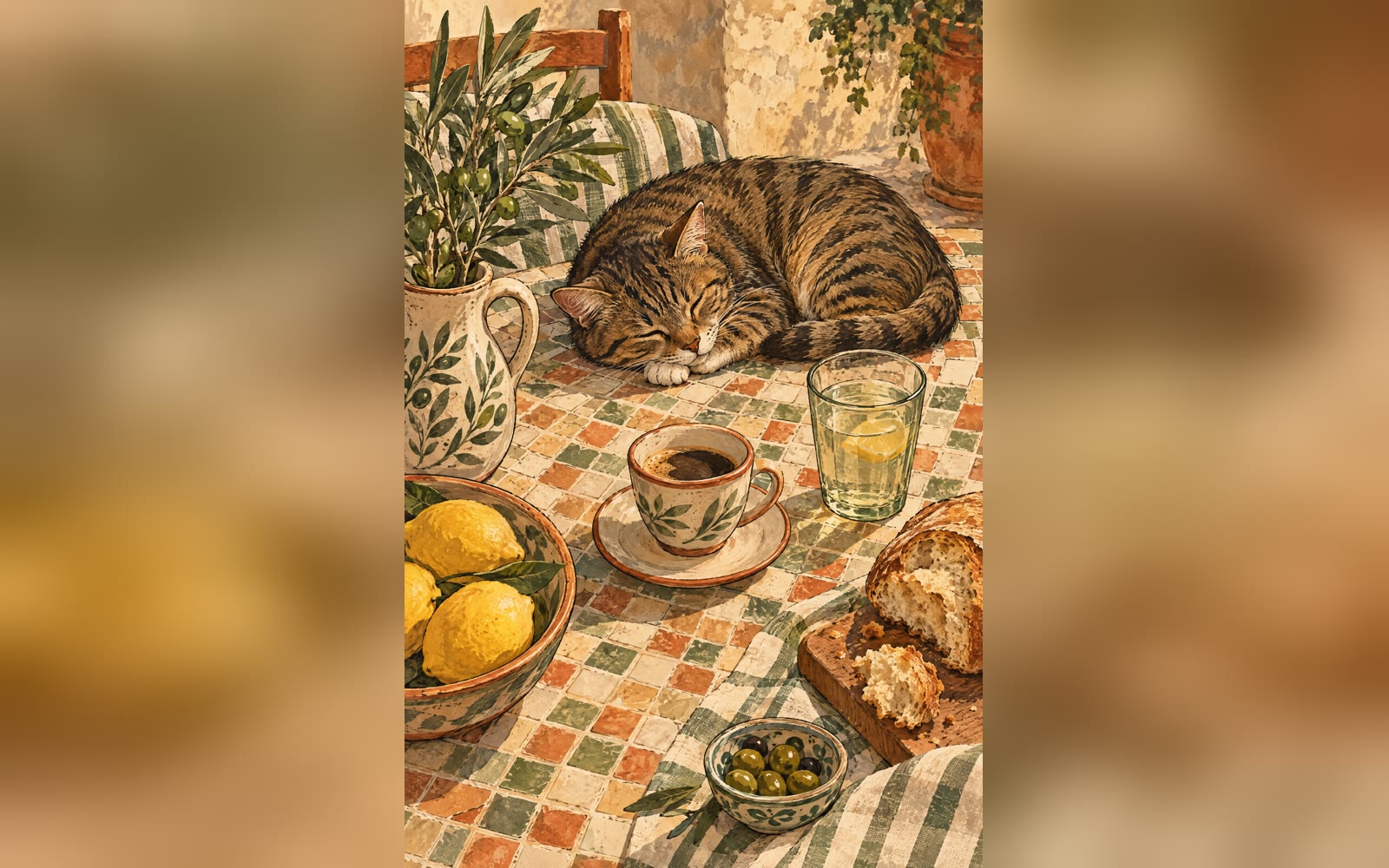
Turn a palette, a scene and an animal into a portrait 2:3 still life: glazed mosaic-tile surfaces, painterly objects and a cozy animal companion.
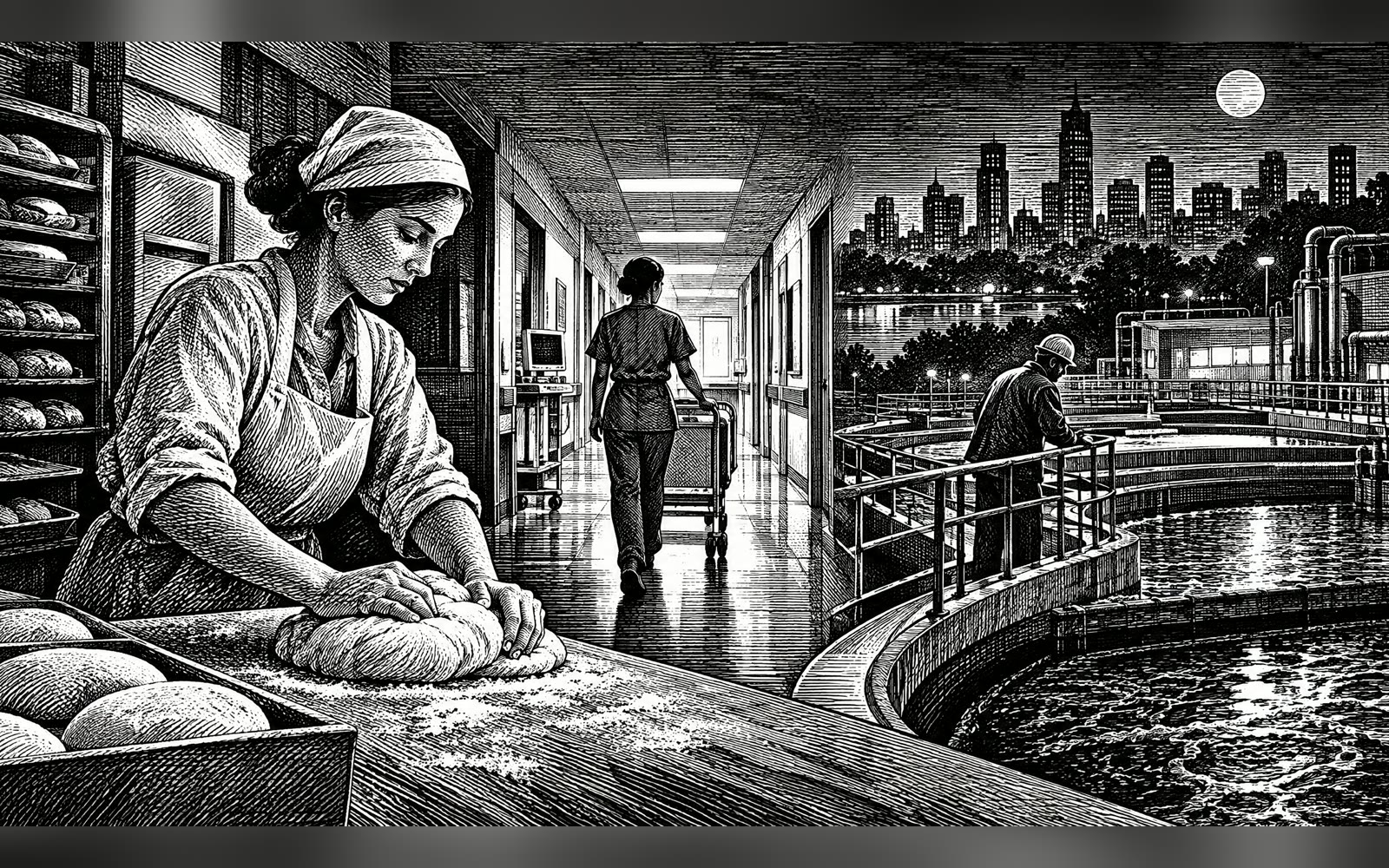
Turn an article into a text-free 16:9 editorial cover: one surreal allegory for its central claim, drawn as a continuous black-ink engraving.
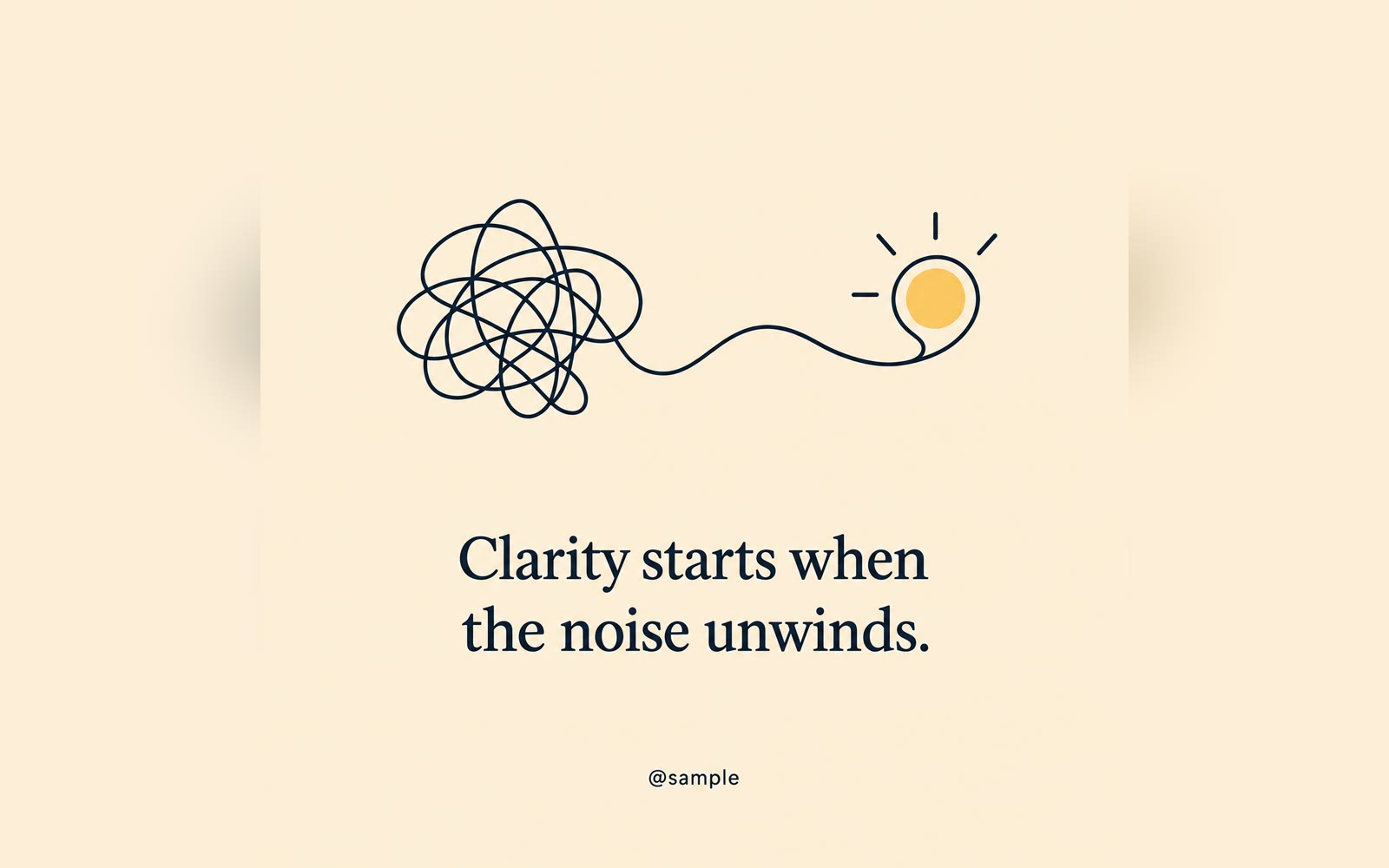
Turn one short idea into a square 1:1 social card: a flat warm background, one continuous line motif and your exact words.
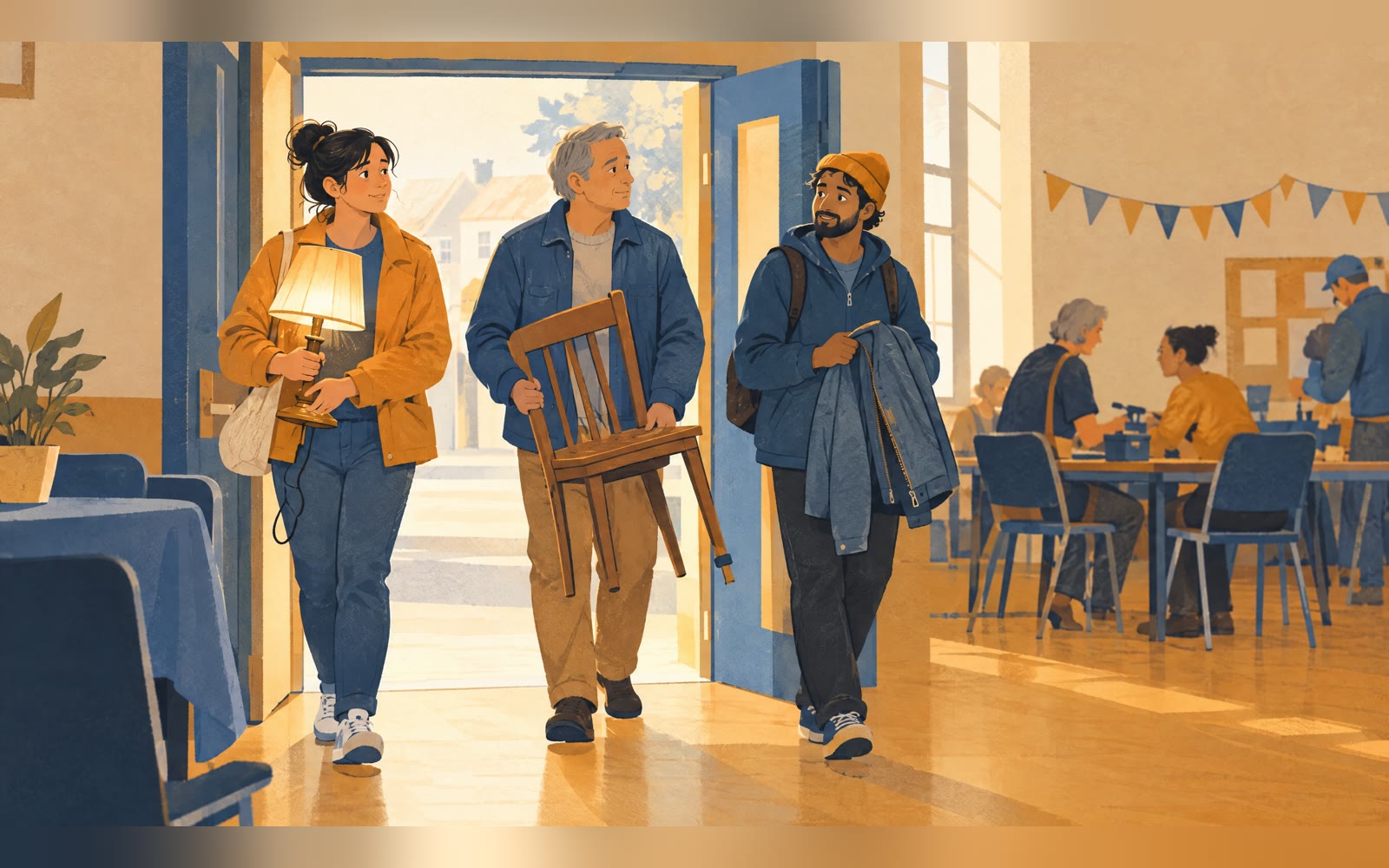
Turn one article into three matching 16:9 illustrations, one per beat you choose, sharing one medium, palette and recurring characters, with no words on the images.

Turn one consented photo into a calm black-and-white 16:9 studio half portrait with soft directional light and quiet negative space.
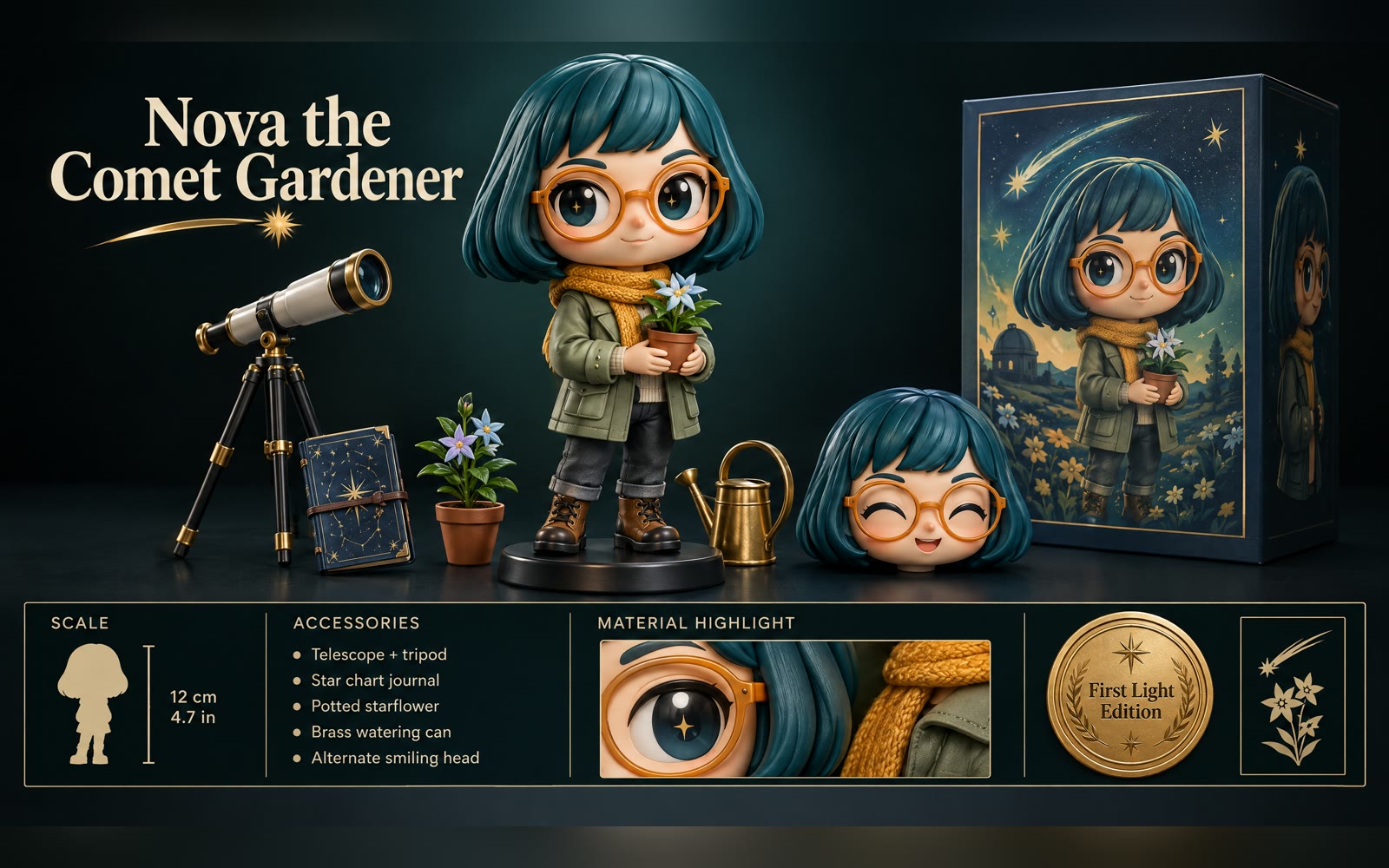
Turns a fictional designer figure into a premium drop board for a collectible release.
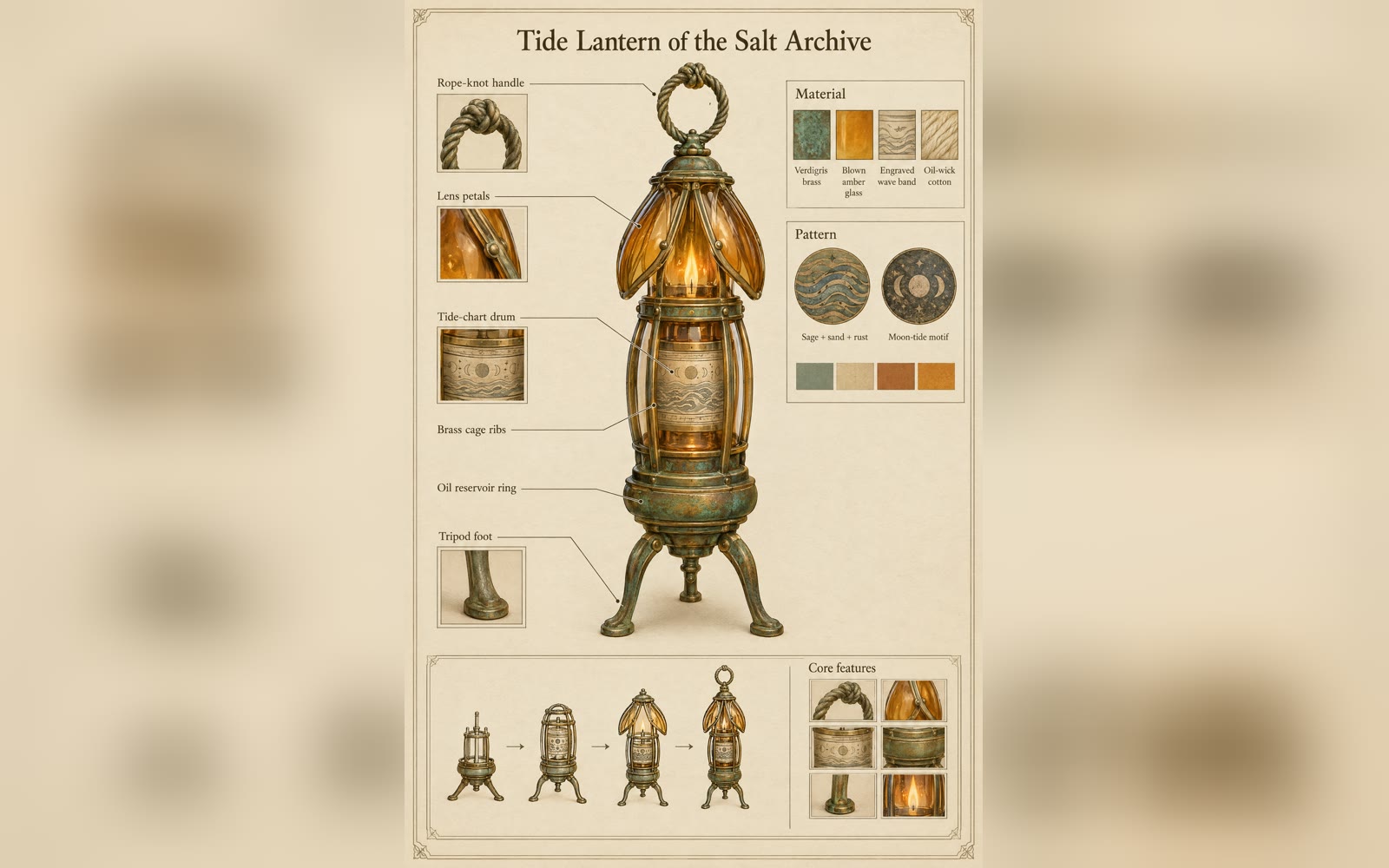
Turns a fictional heritage object into a museum-catalog specimen plate with labelled parts.
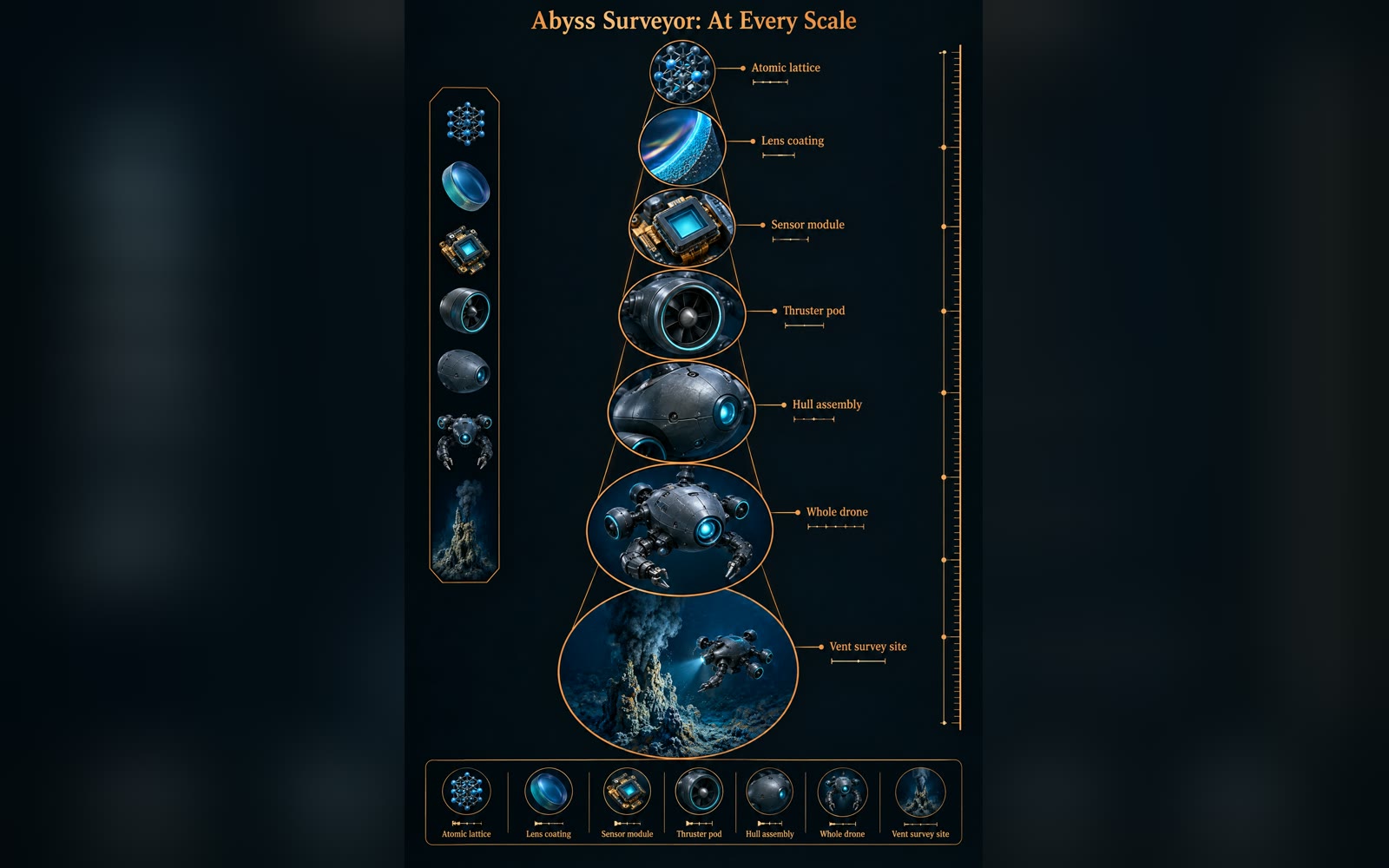
Turns a fictional subject into a zoom-ladder infographic that magnifies it at every scale.
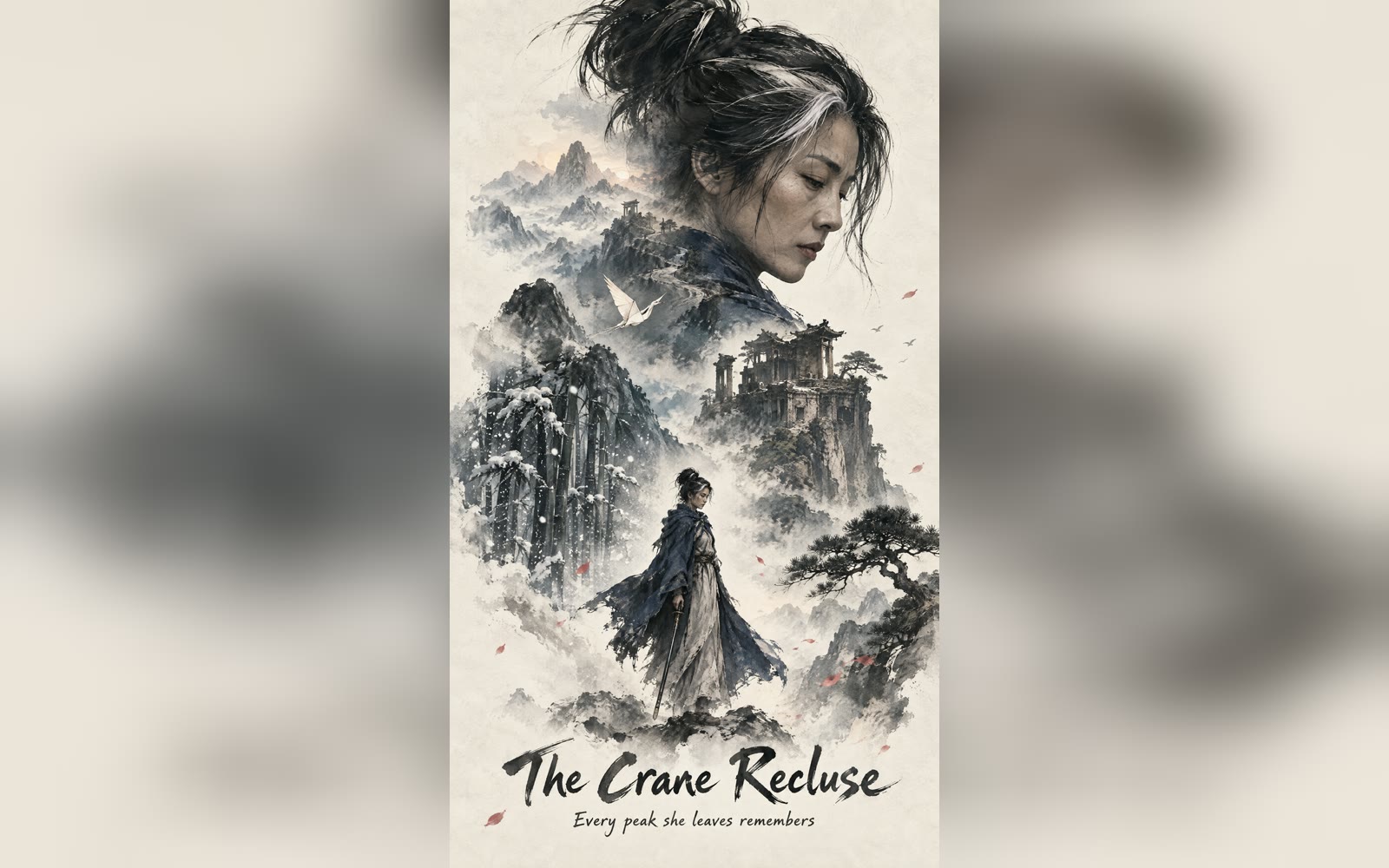
Turns a fictional hero into a vertical ink-wash double-exposure poster.
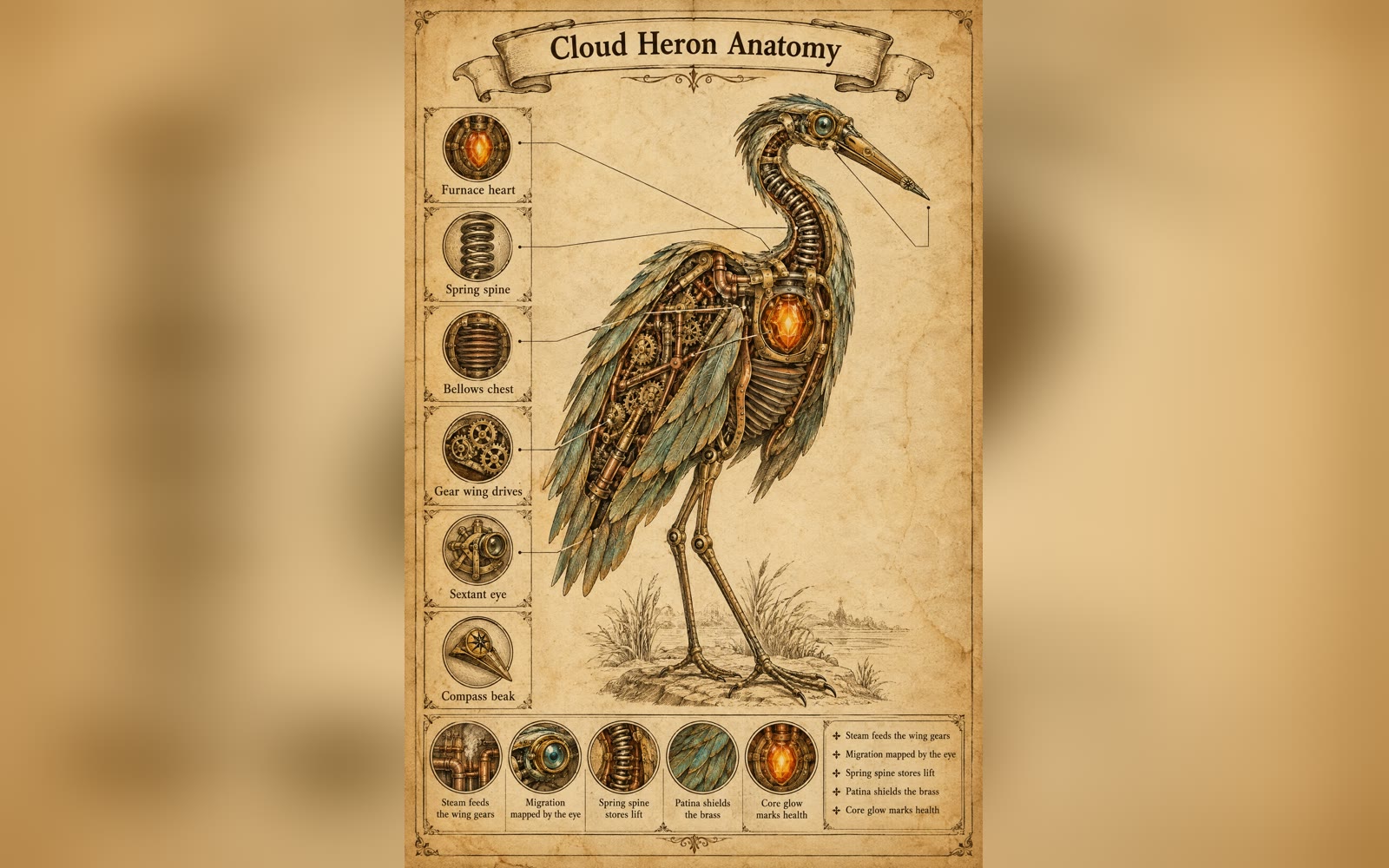
Turn a fictional creature or machine into a vintage engraved anatomy plate: a cutaway subject on aged paper with a banner title, legend modules and a findings strip.
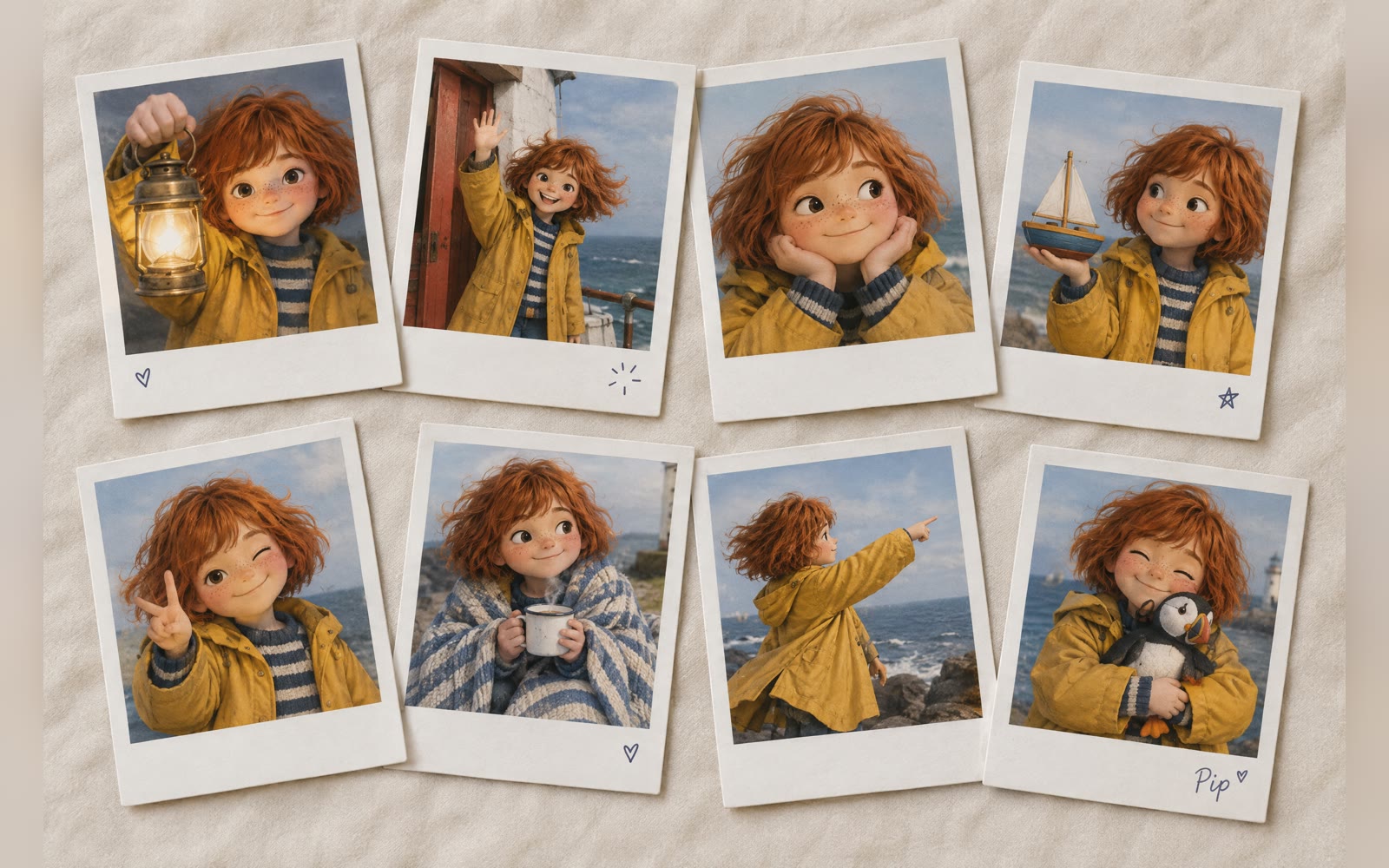
Turn one fictional character into a flat-lay photograph of instant-photo prints — the same subject across several white-bordered cards scattered on a soft surface.
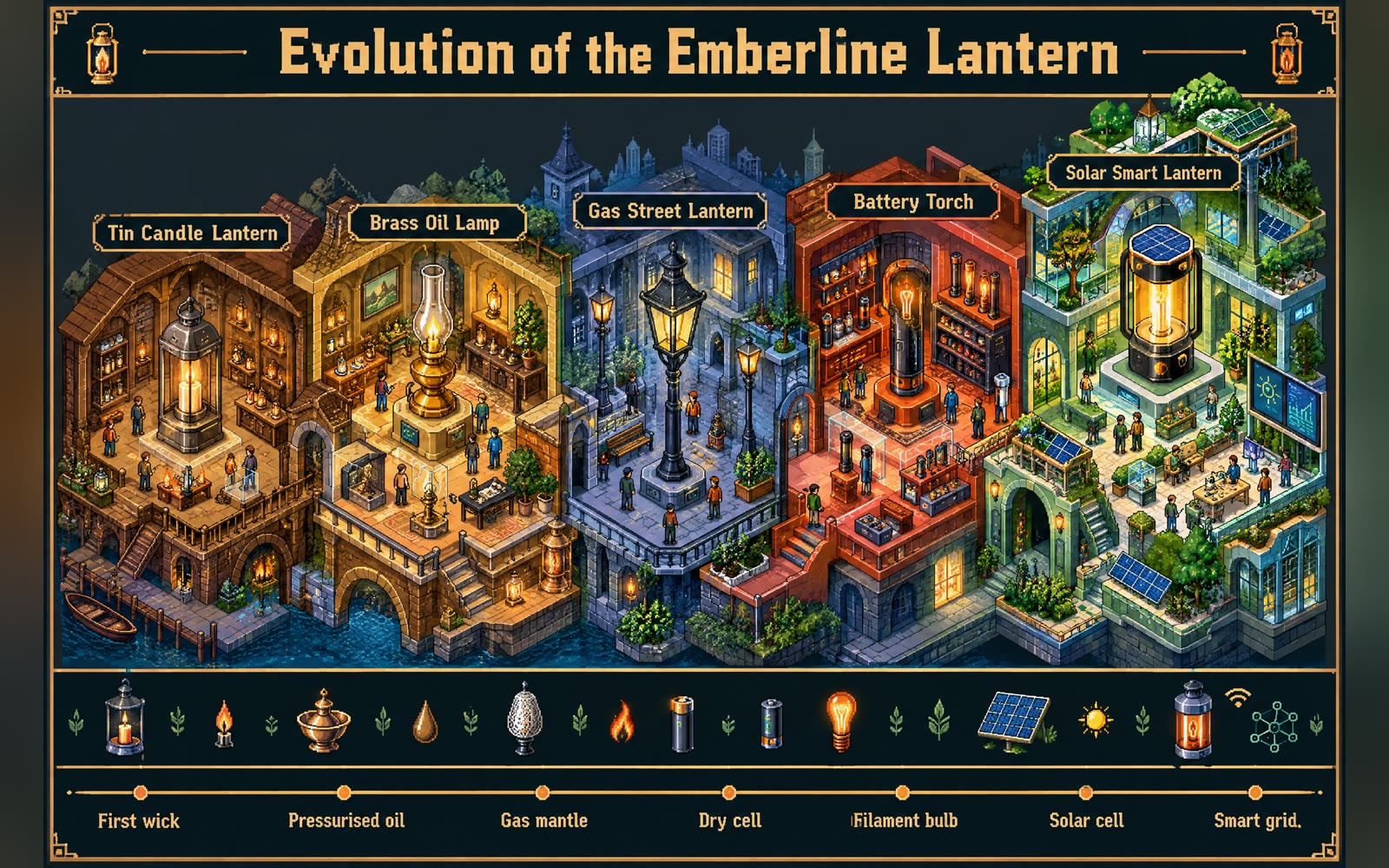
Turn a fictional progression into an isometric pixel-art museum poster: a left-to-right row of pavilion zones, one per stage, with a pixel title and a milestone timeline.
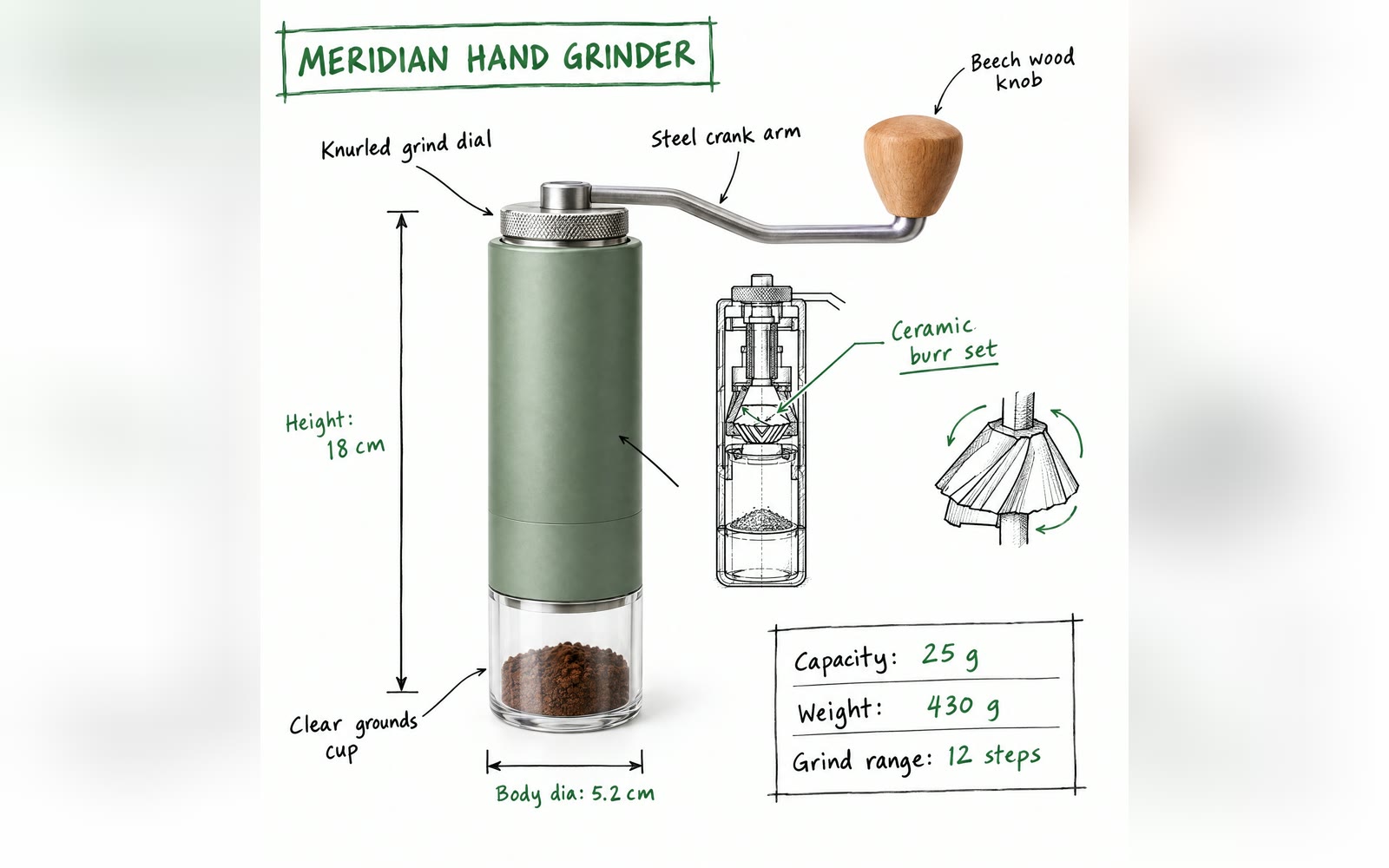
Turn a fictional object into a square studio technical sketch: a photoreal render on white overlaid with ink callouts, a section inset, dimension marks and a hand-drawn title box.
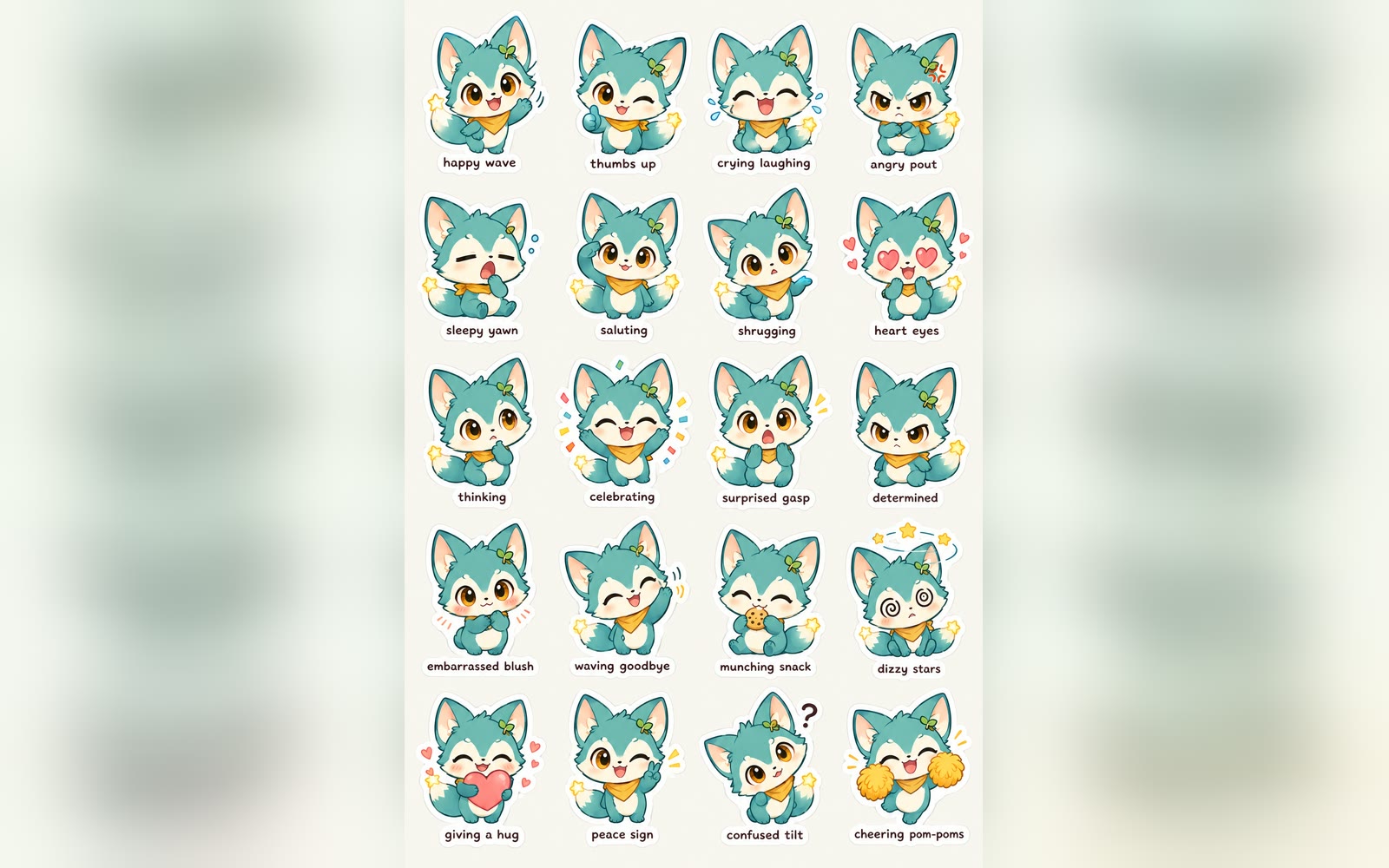
One original mascot becomes a whole sheet of die-cut chibi stickers.
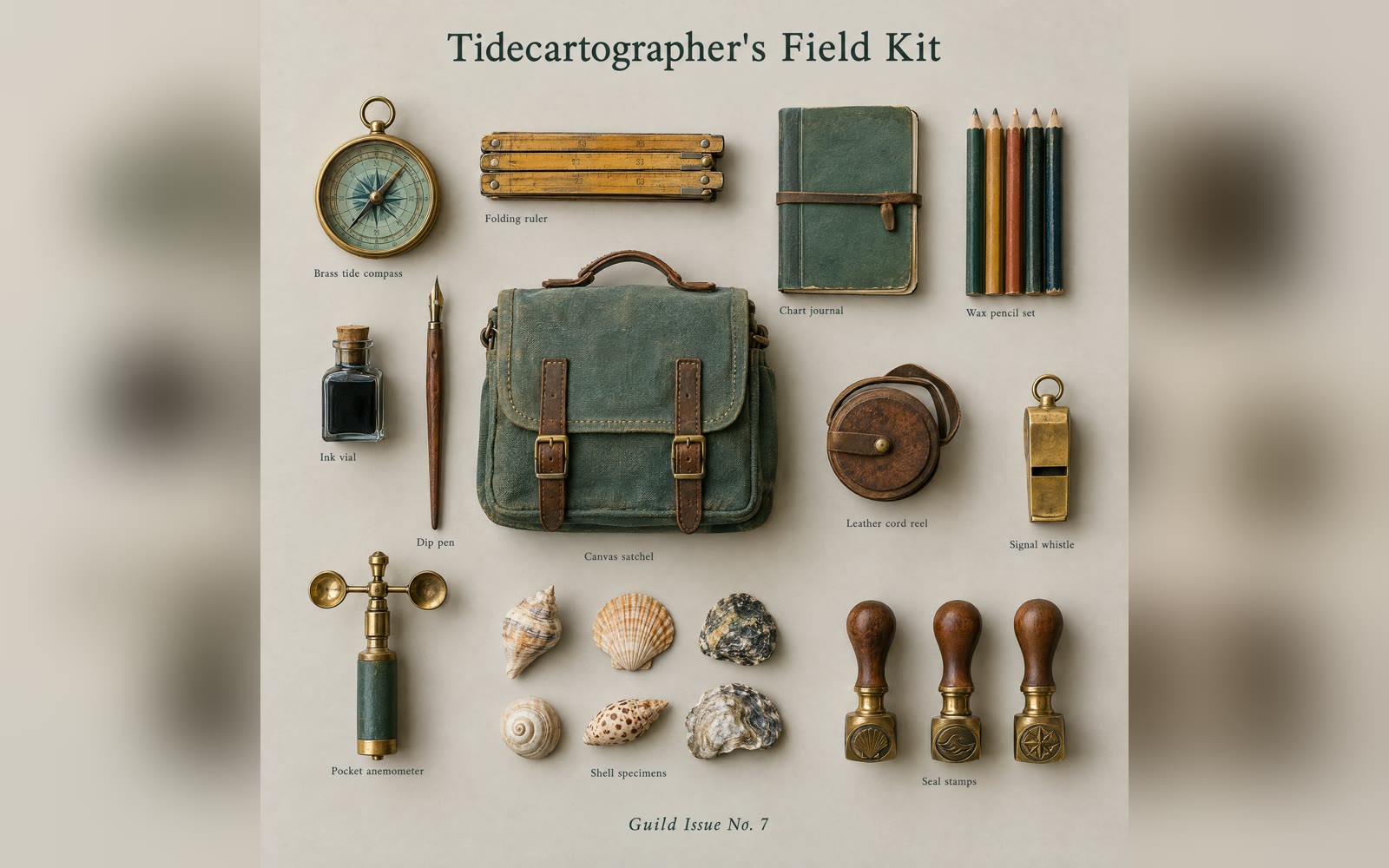
An invented kit, photographed top-down in perfect right-angle order.
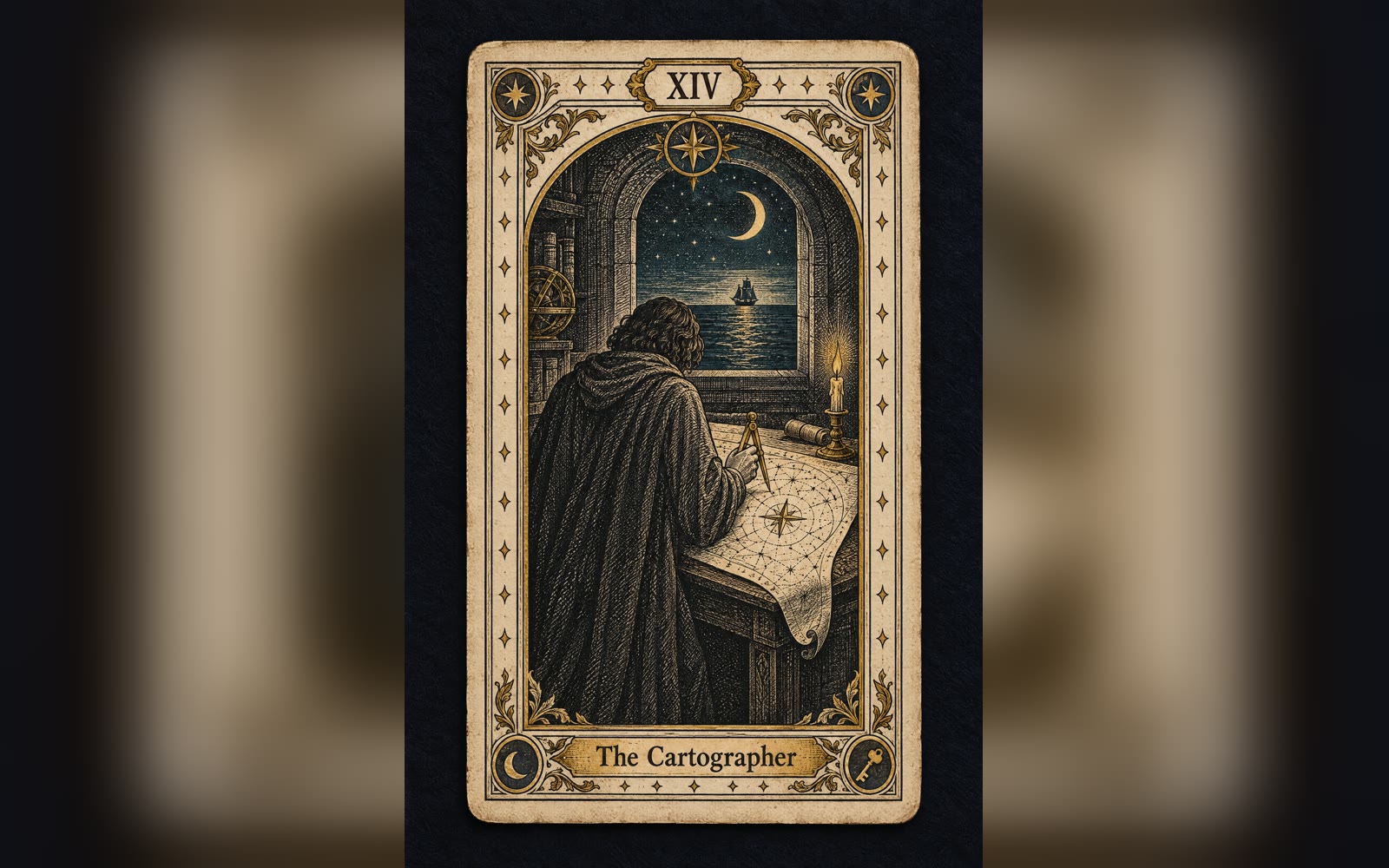
One invented arcana becomes an ornate engraved card face.
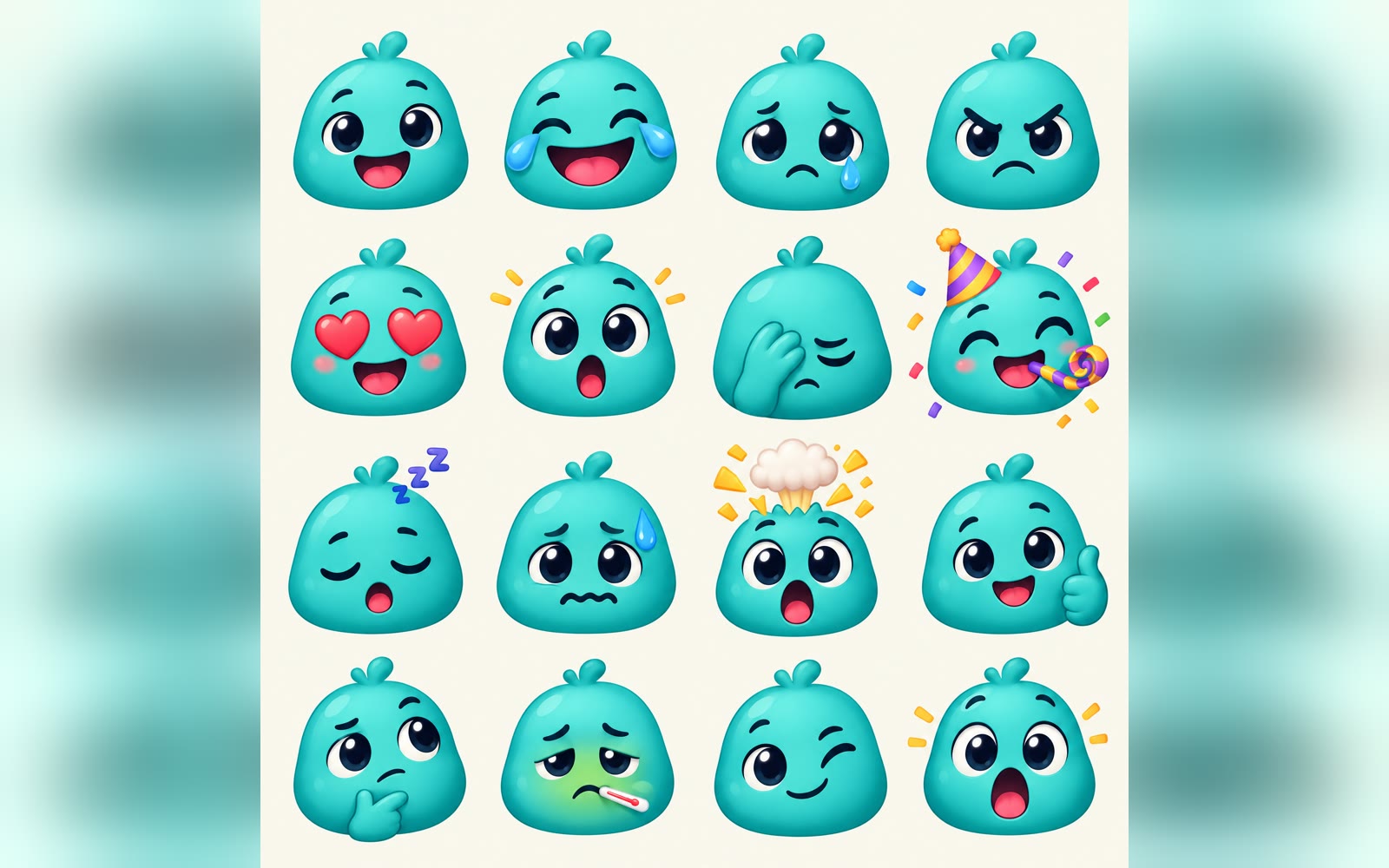
Turn one fictional character into a full grid of matching emoji faces.
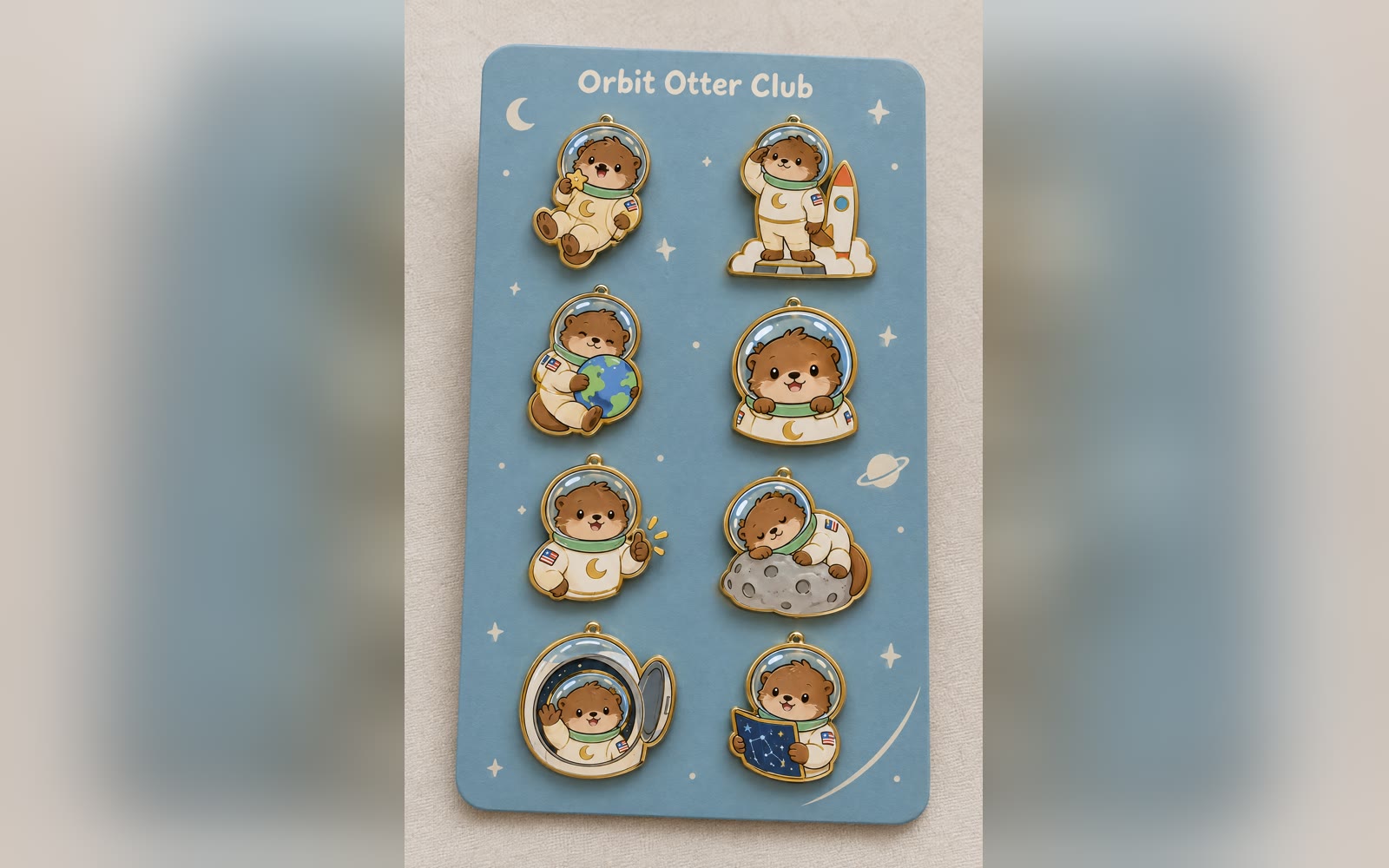
Show one character as a collector pin set on a printed backing card.
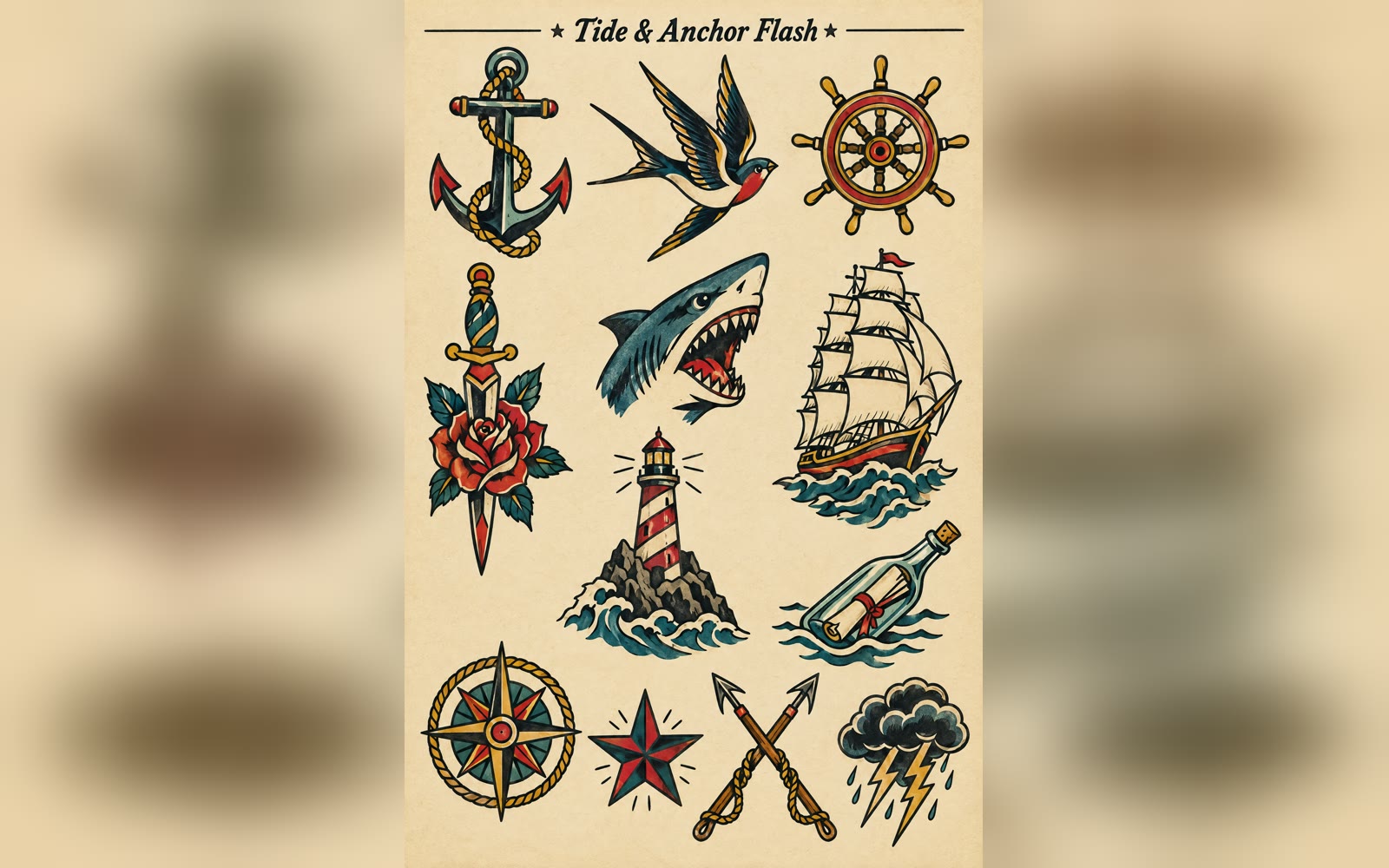
Fill one aged-paper board with a matching set of traditional tattoo motifs.
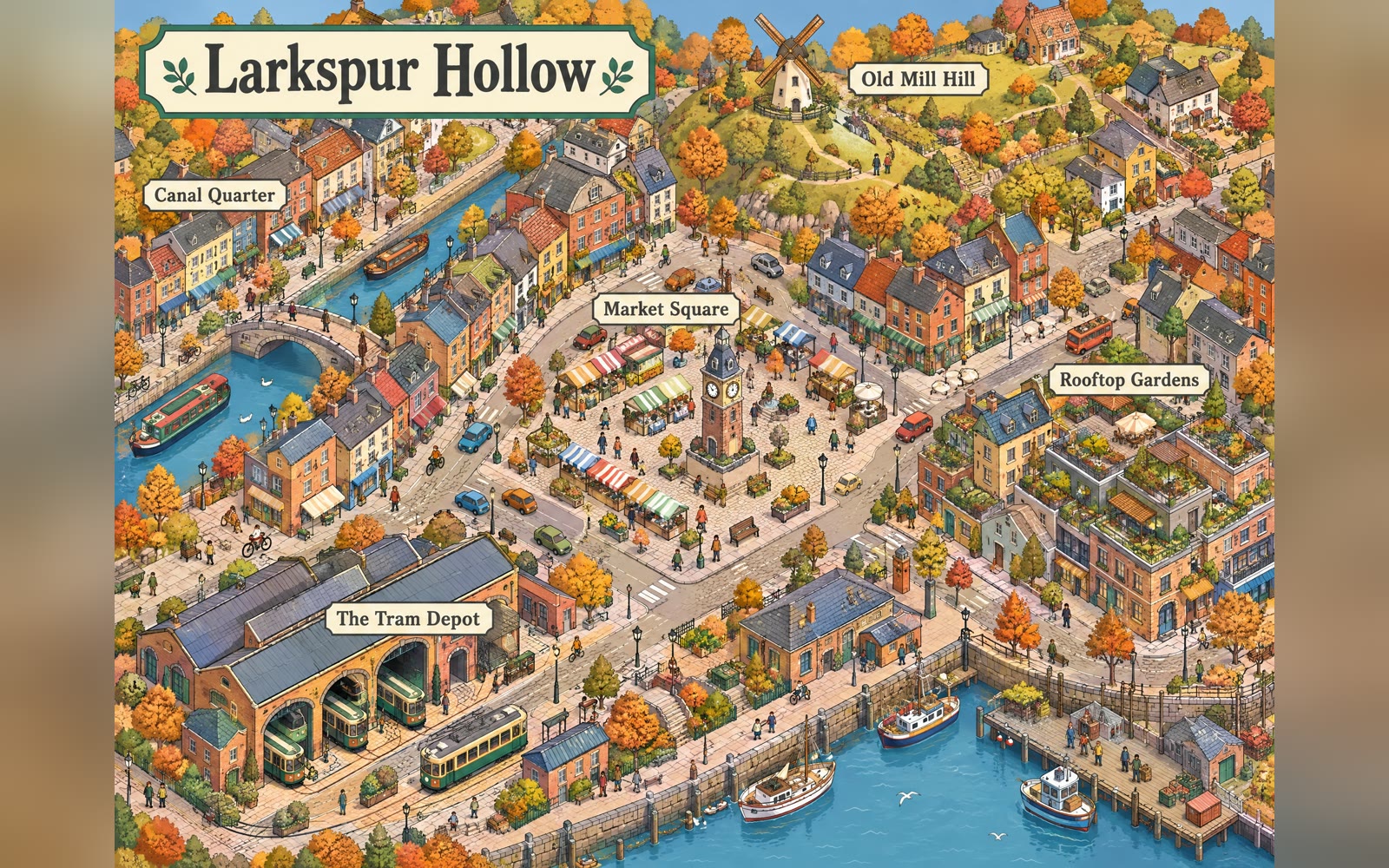
Draw a fictional town as one charming isometric cartoon map.
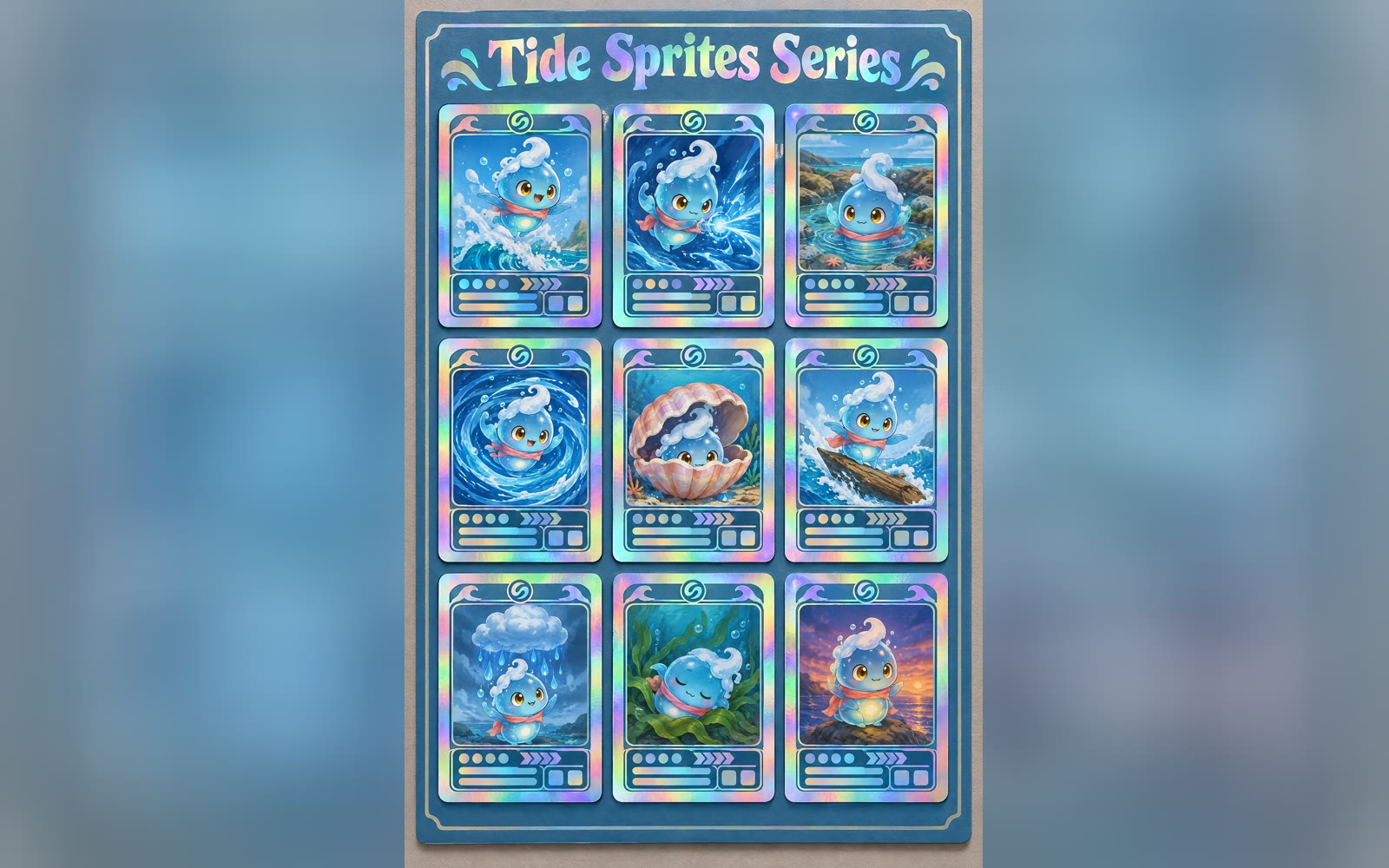
Reveal one invented character as a 3×3 set of collector game cards on a printed board.
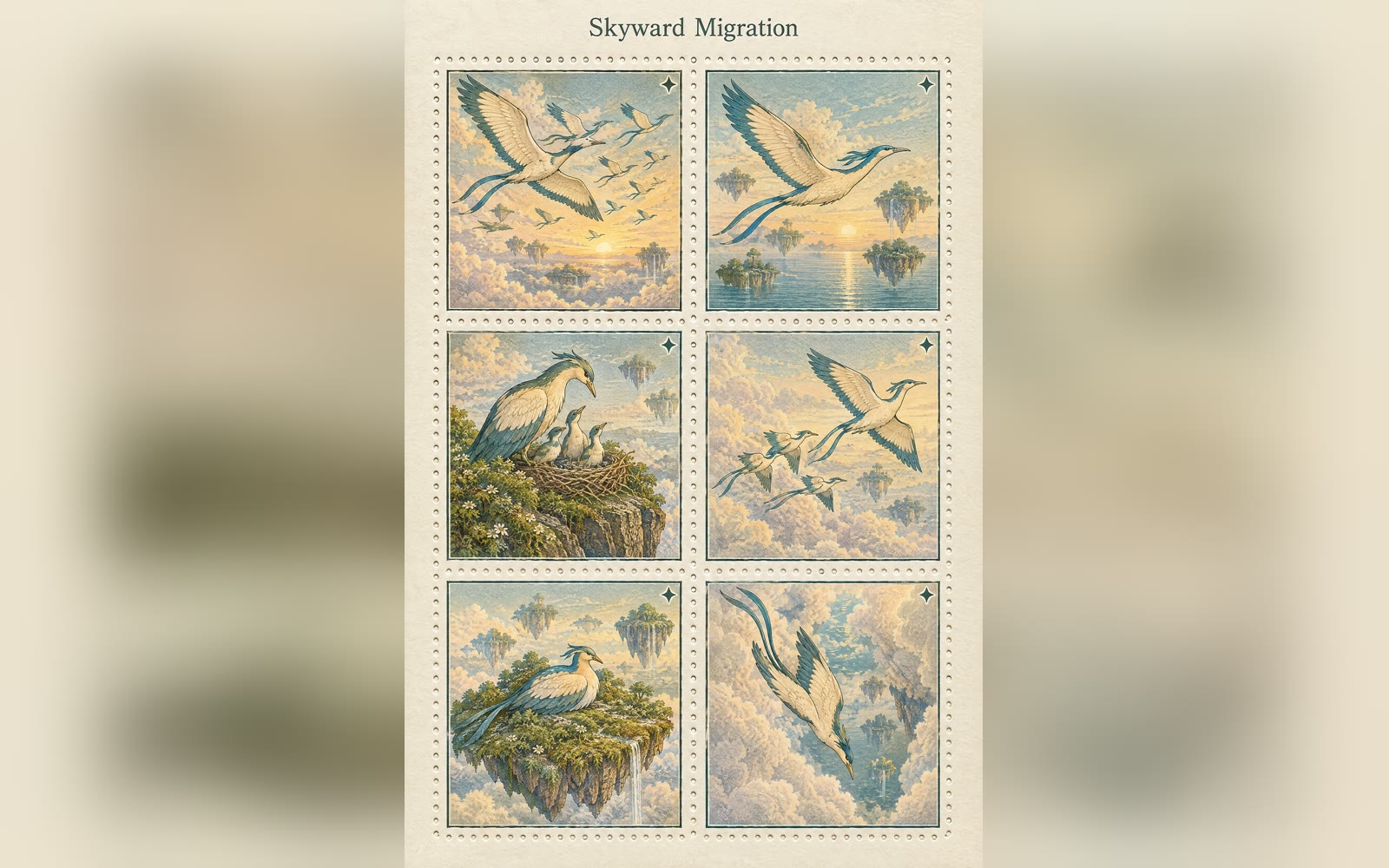
Turn one invented theme into a block of illustrated postage stamps on gummed paper.
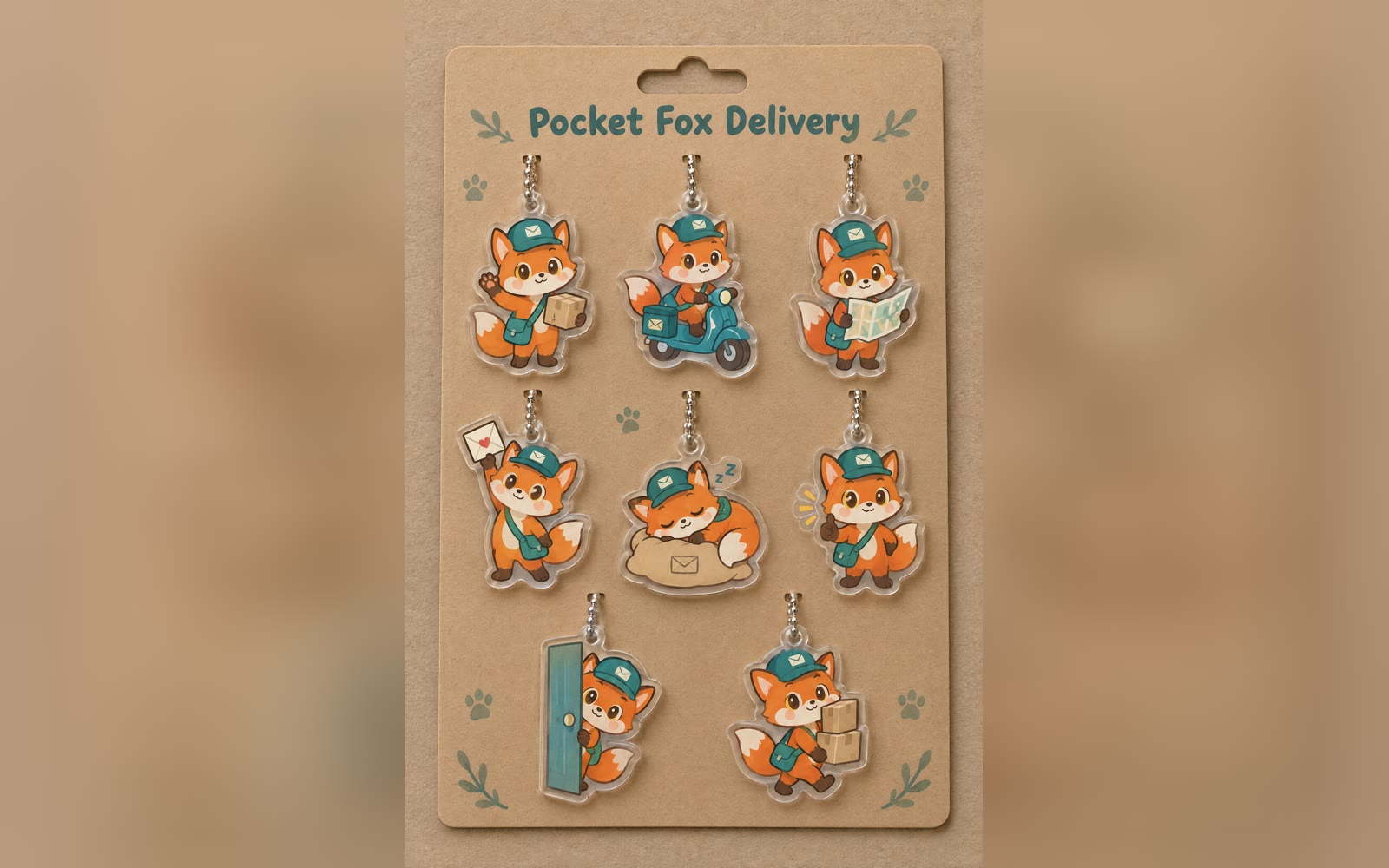
Show one invented character as a keychain set hanging on a printed display card.
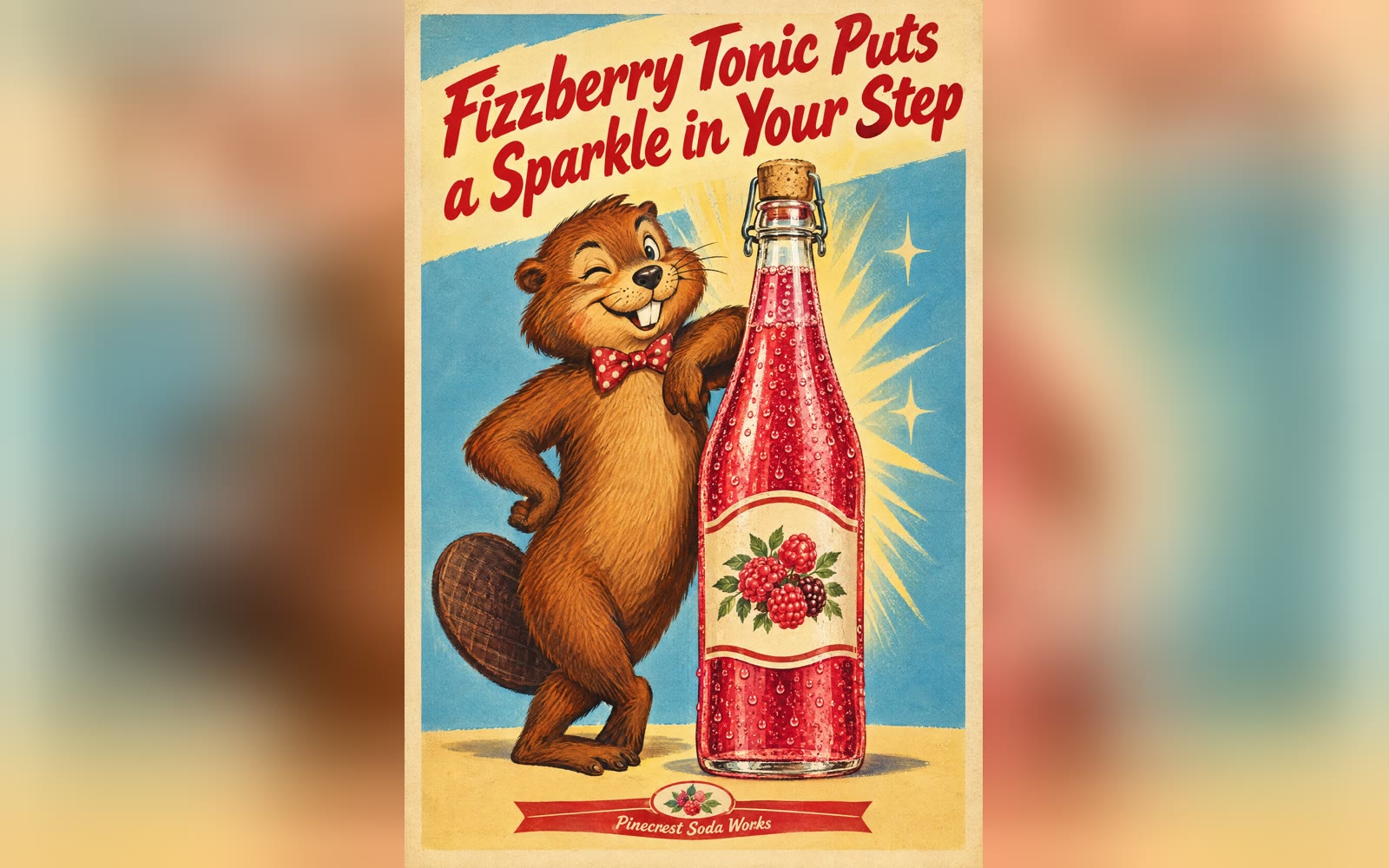
Advertise one invented product as a mid-century painted magazine ad.

Paint one invented animal as a loose, keepsake-style watercolor portrait.
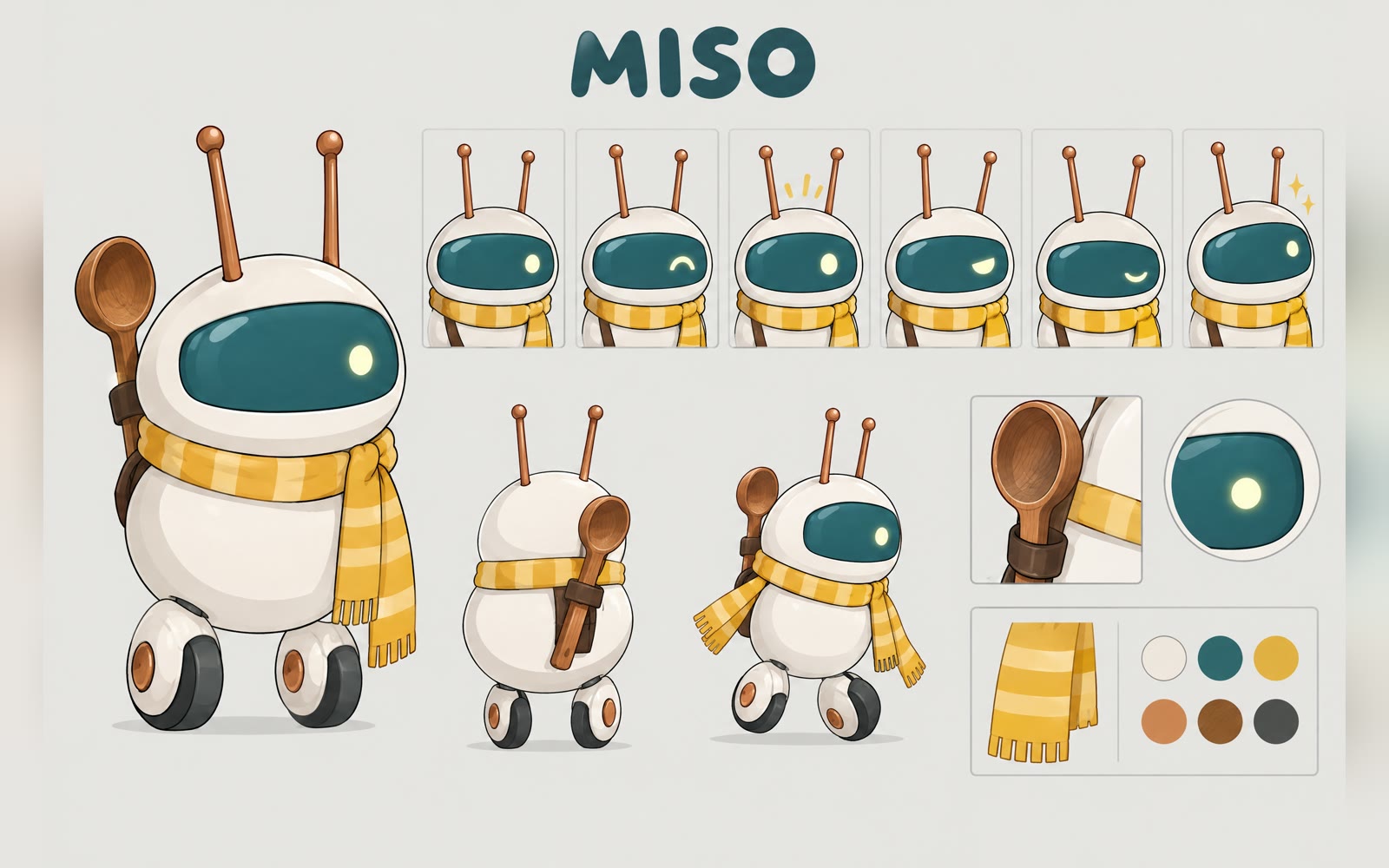
Pin down one invented character on a single model sheet for consistent reuse.
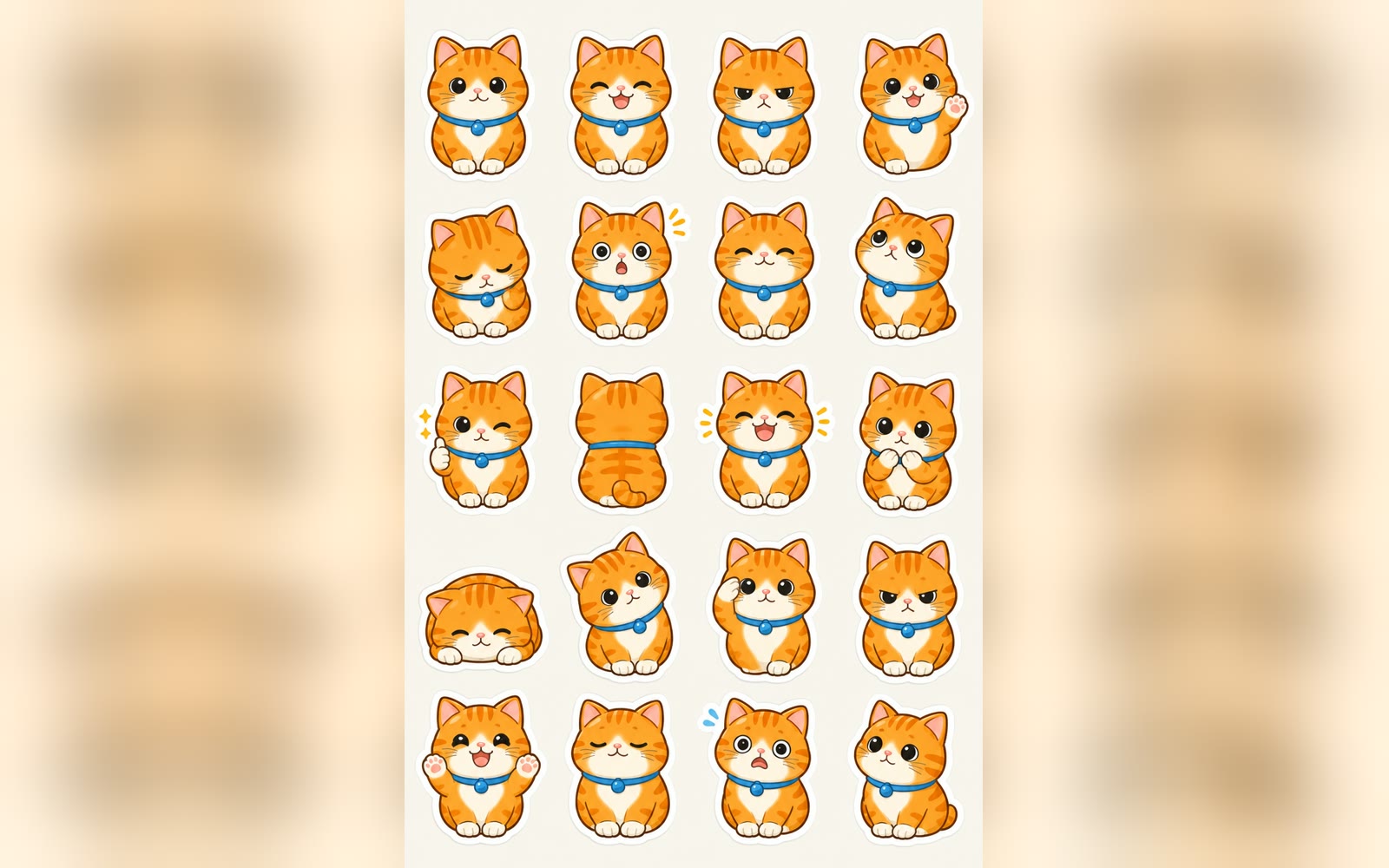
Turn one consented photo of a pet, plush, mascot or object into a 2:3 sheet of twenty die-cut chibi stickers with thick outlines and white peel-off borders.
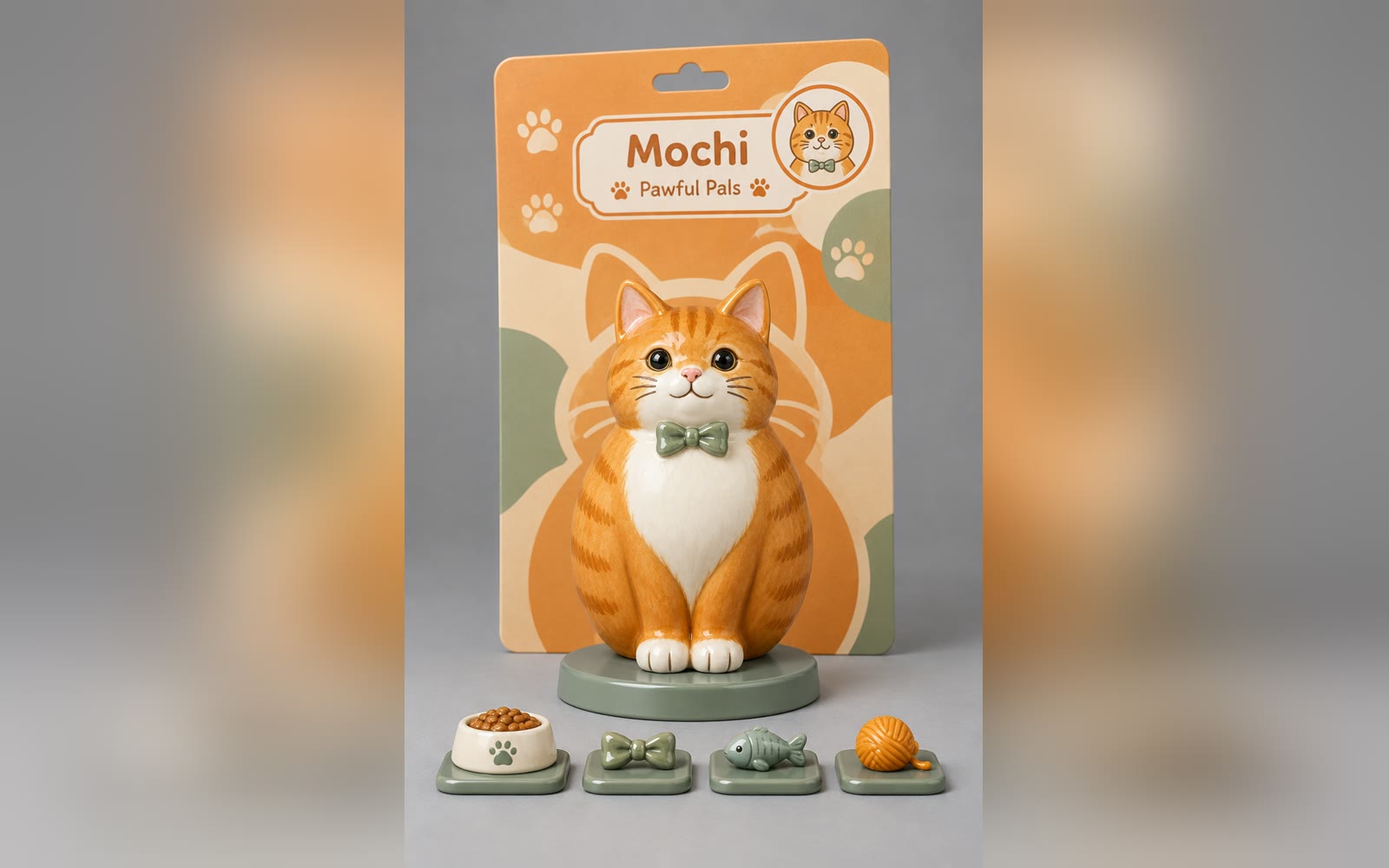
Re-imagine one consented photo of a pet, plush, mascot or object as a 2:3 collectible action-figure launch board with a backing card, invented nameplate and accessory tiles.
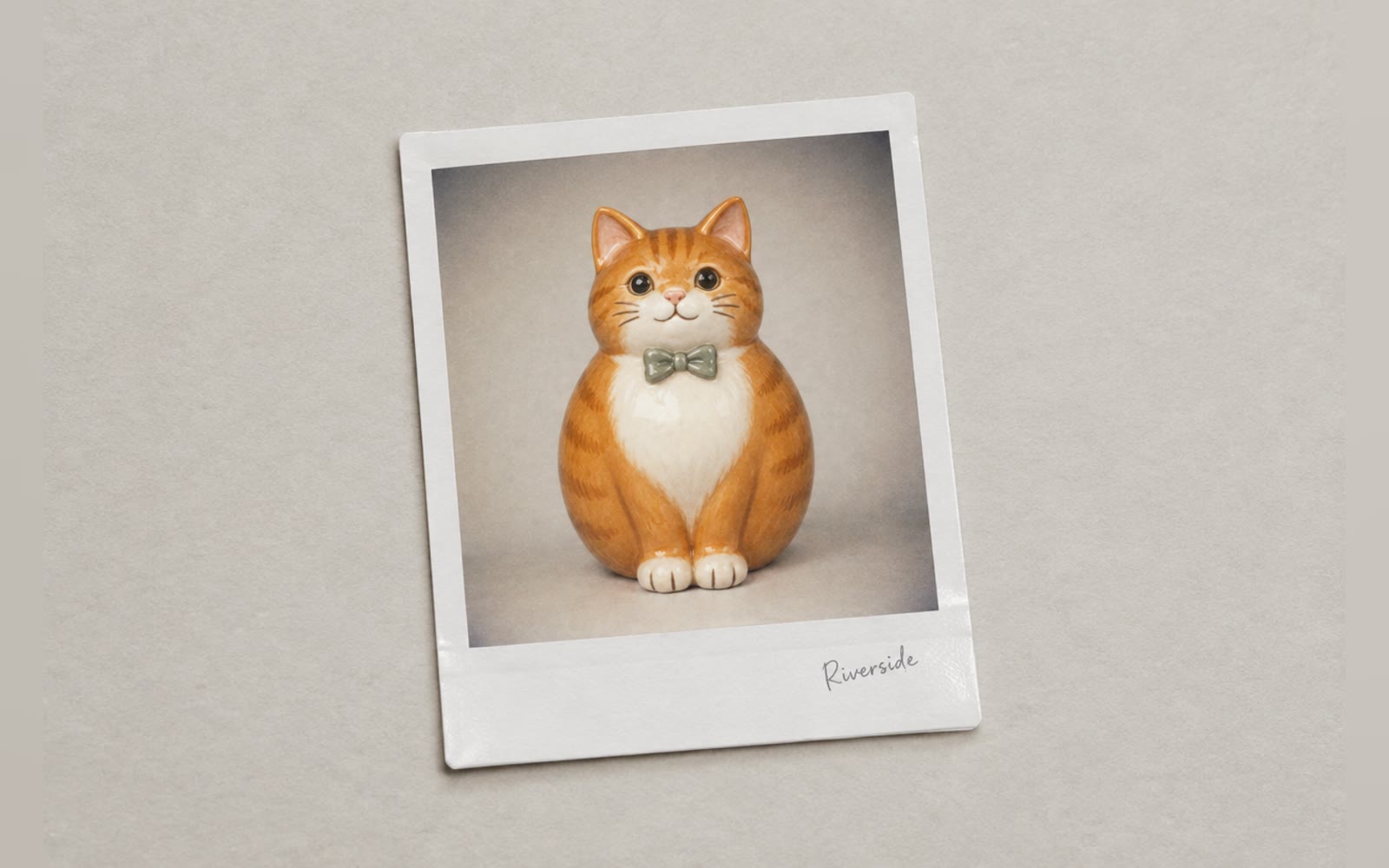
Develop one consented photo into a 3:2 instant-film print on a quiet surface — white frame with the thicker bottom band, flash-lit faded colours and analog grain, with an optional scattered multi-print layout.
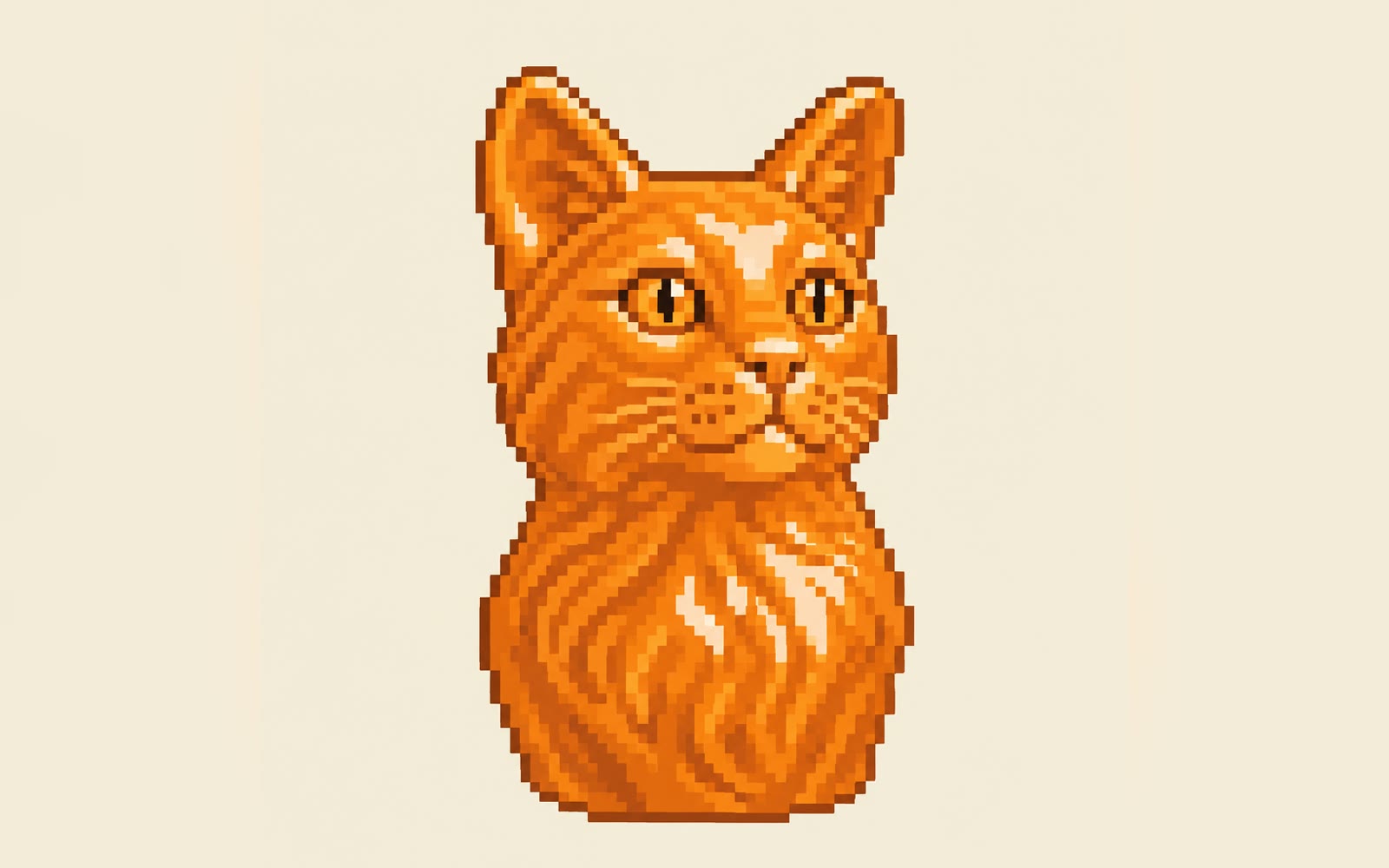
Redraw one consented photo of a person, pet, plush or object as a square pixel-art avatar with chunky pixels, a limited palette and a clean bust silhouette.
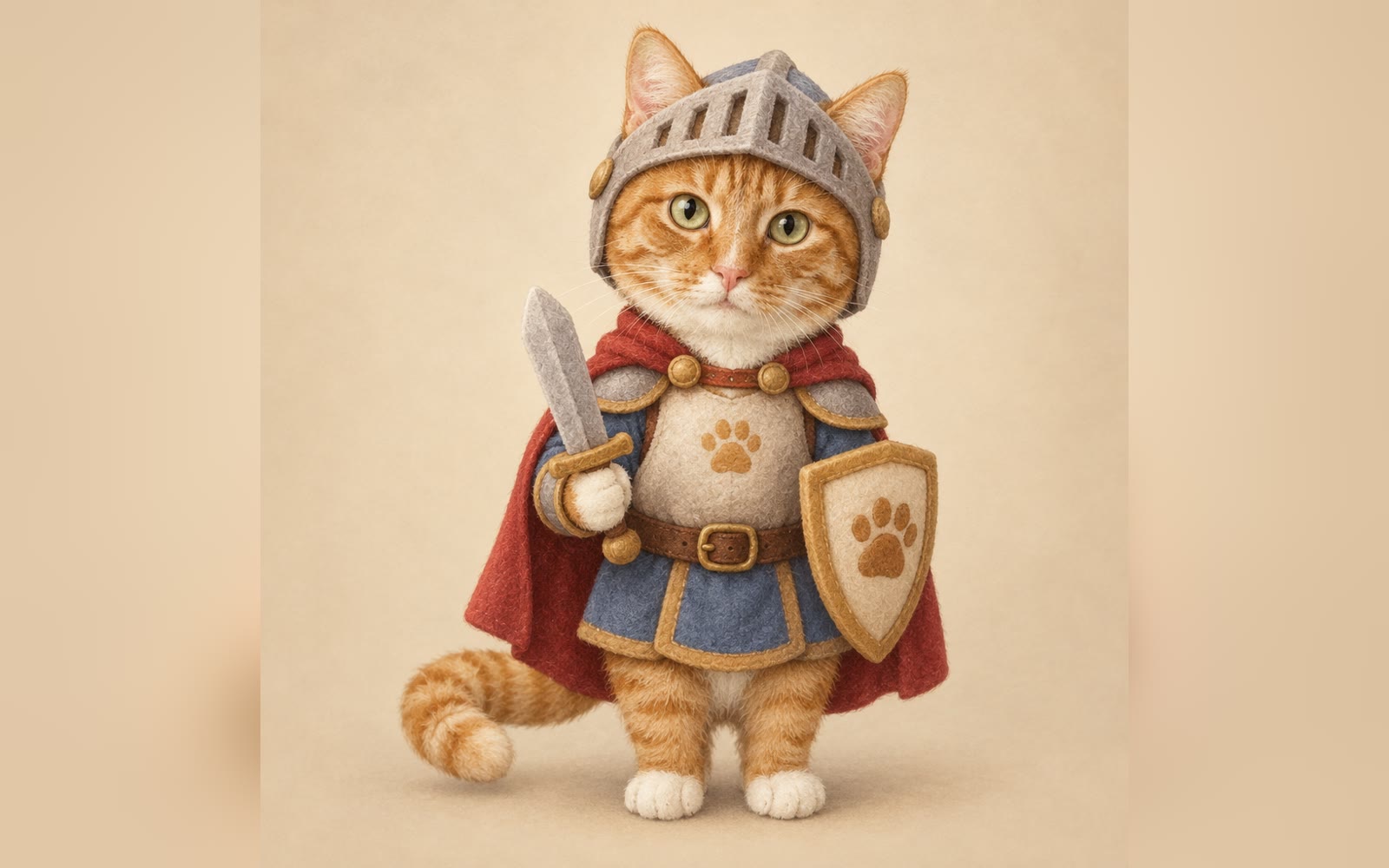
Redraw one consented pet photo as a square storybook pocket-pet character in a chosen costume (knight, wizard, explorer or baker) with one small accessory.
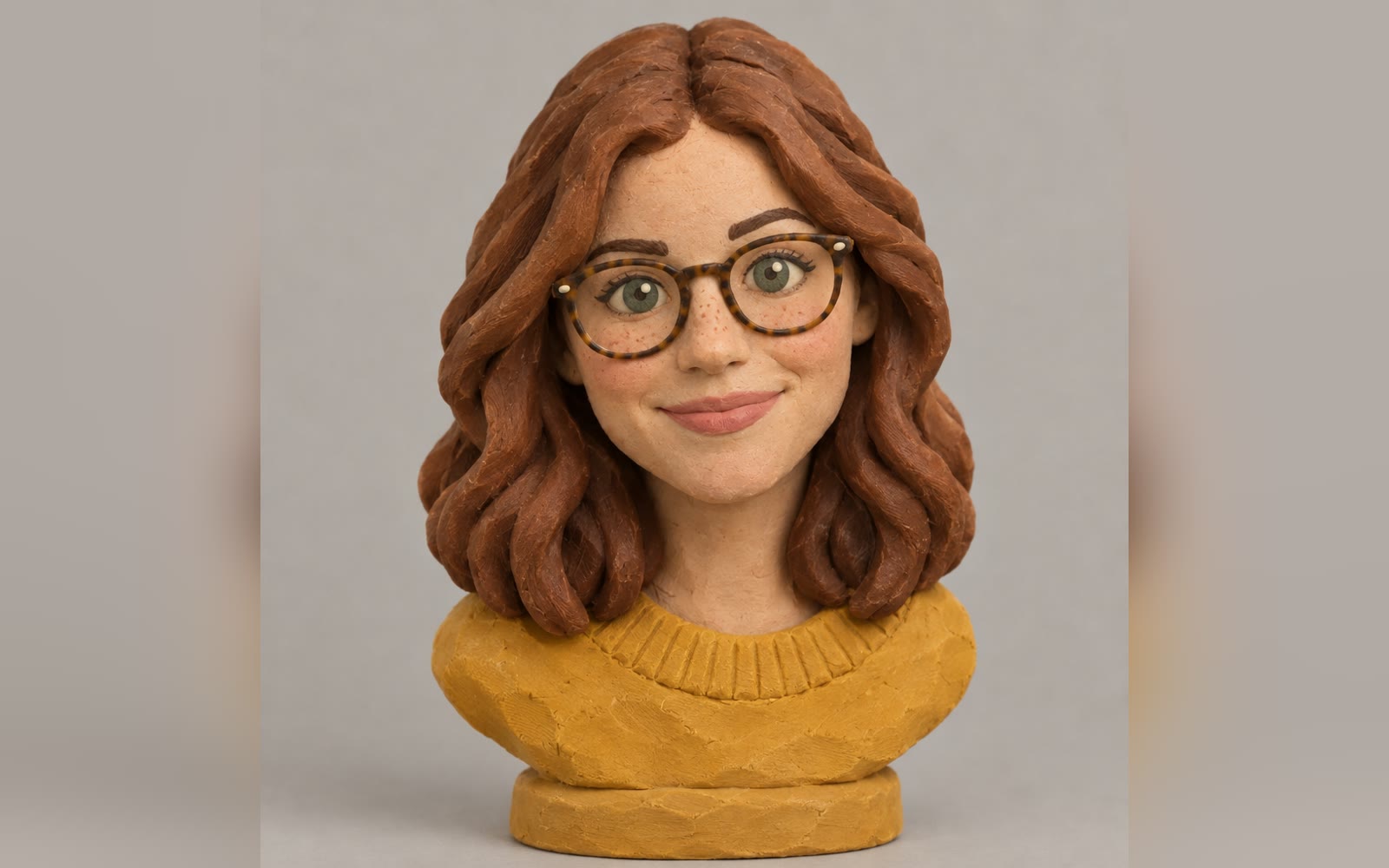
Rebuild one consented photo of a person, pet, plush or object as a square hand-modelled plasticine bust with visible fingerprints, smoothing marks and a matte clay finish.
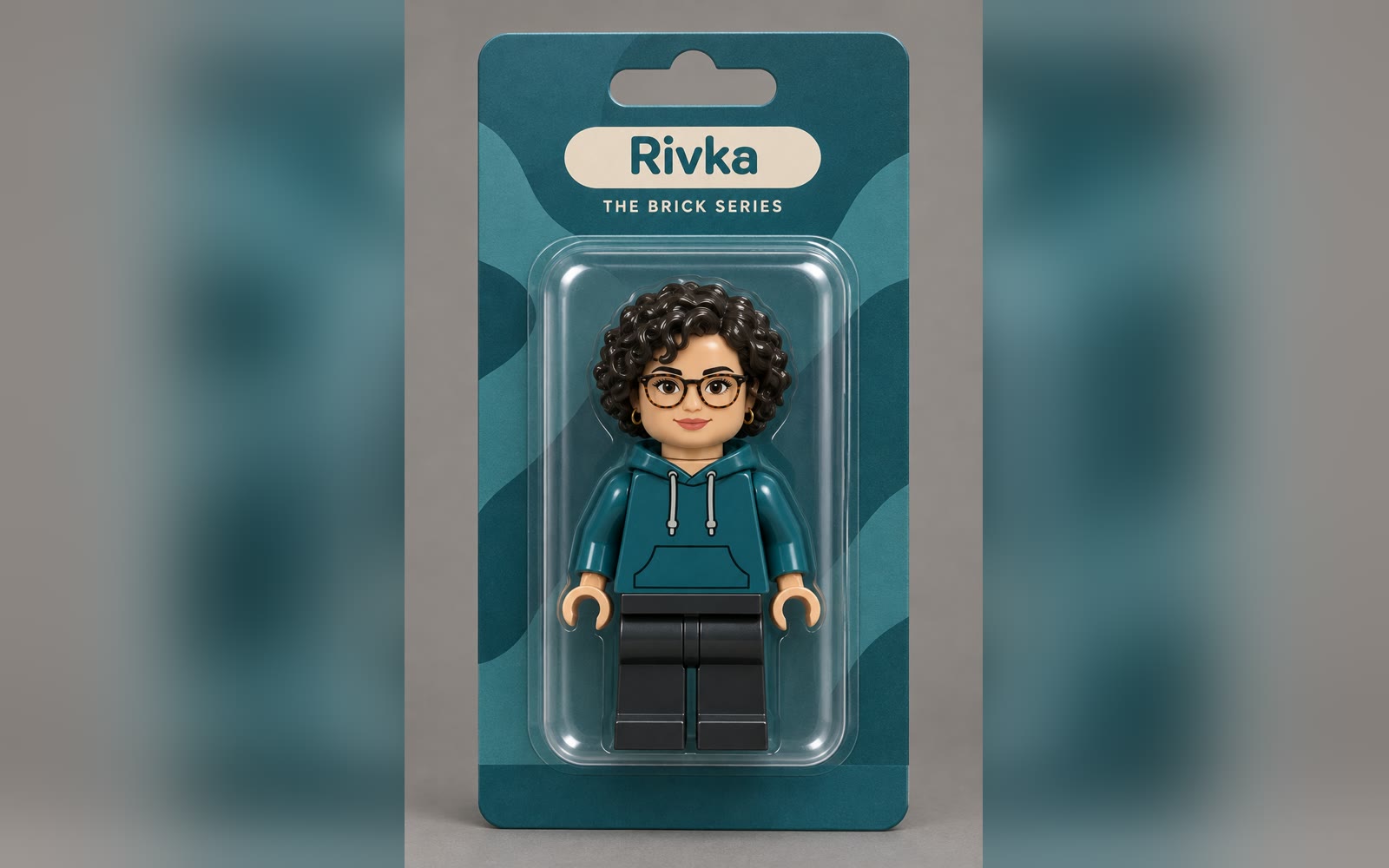
Package one consented photo of a person as a 2:3 retail photograph of a collectible brick-figure minifig — cylindrical printed head, torso print, sealed in a blister on a fictional backing card.
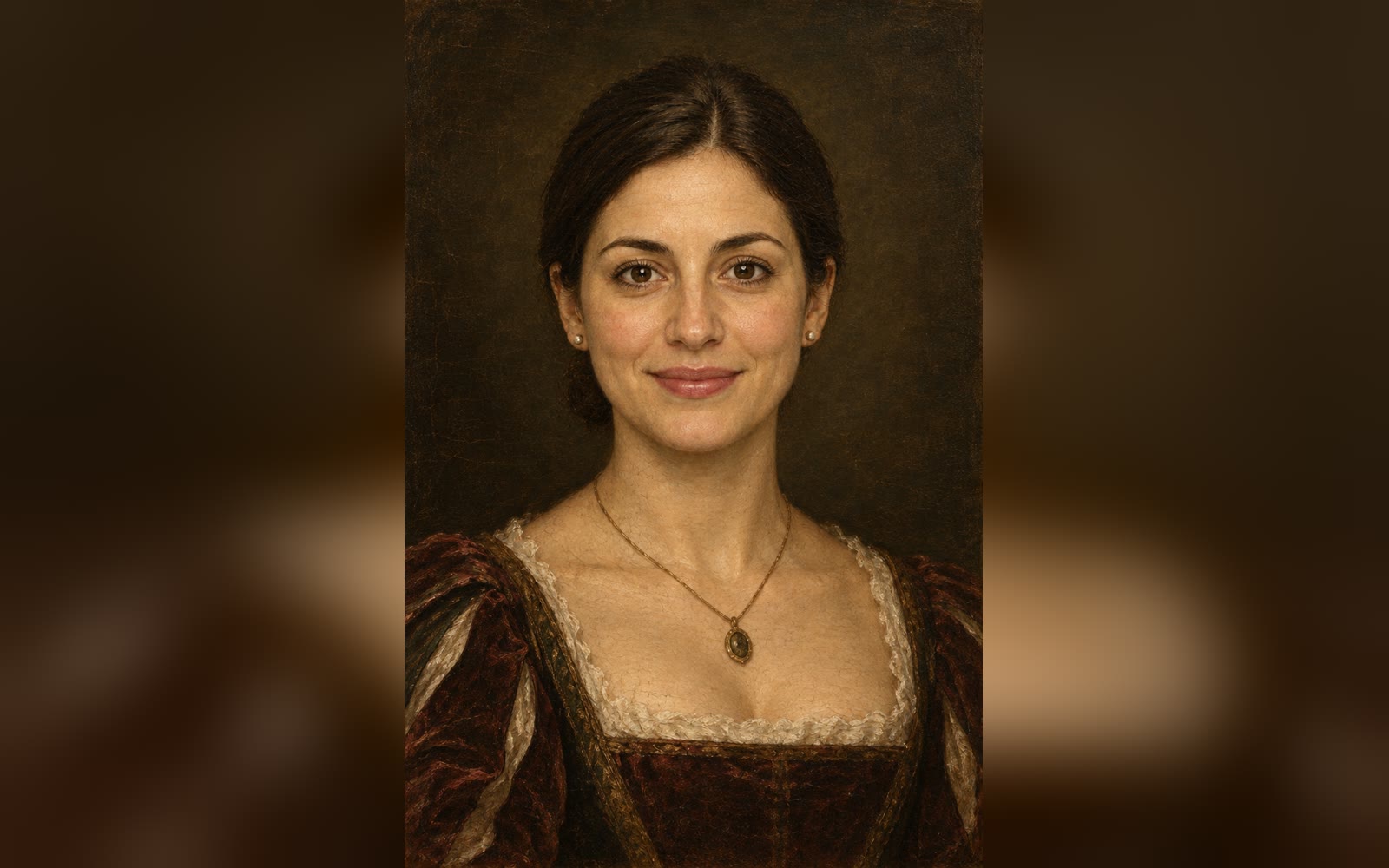
Paint one consented photo of a person as a 2:3 Renaissance oil portrait — suggested period costume, dark neutral ground, old-master chiaroscuro, canvas texture and fine craquelure.

Rebuild one consented photo of a person as a 2:3 video-game protagonist render — the same face on a stylised hero body in fantasy, sci-fi, cyberpunk or RPG gear.

Restyle one consented photo of a person as an early-nineties American yearbook portrait — mottled painted backdrop, era hair and wardrobe, direct-flash look and a warm film finish.

Draw one consented photo of a person as a square editorial caricature — enlarged head, amplified signature features, hand-inked contour and flat colour on a paper-textured ground.
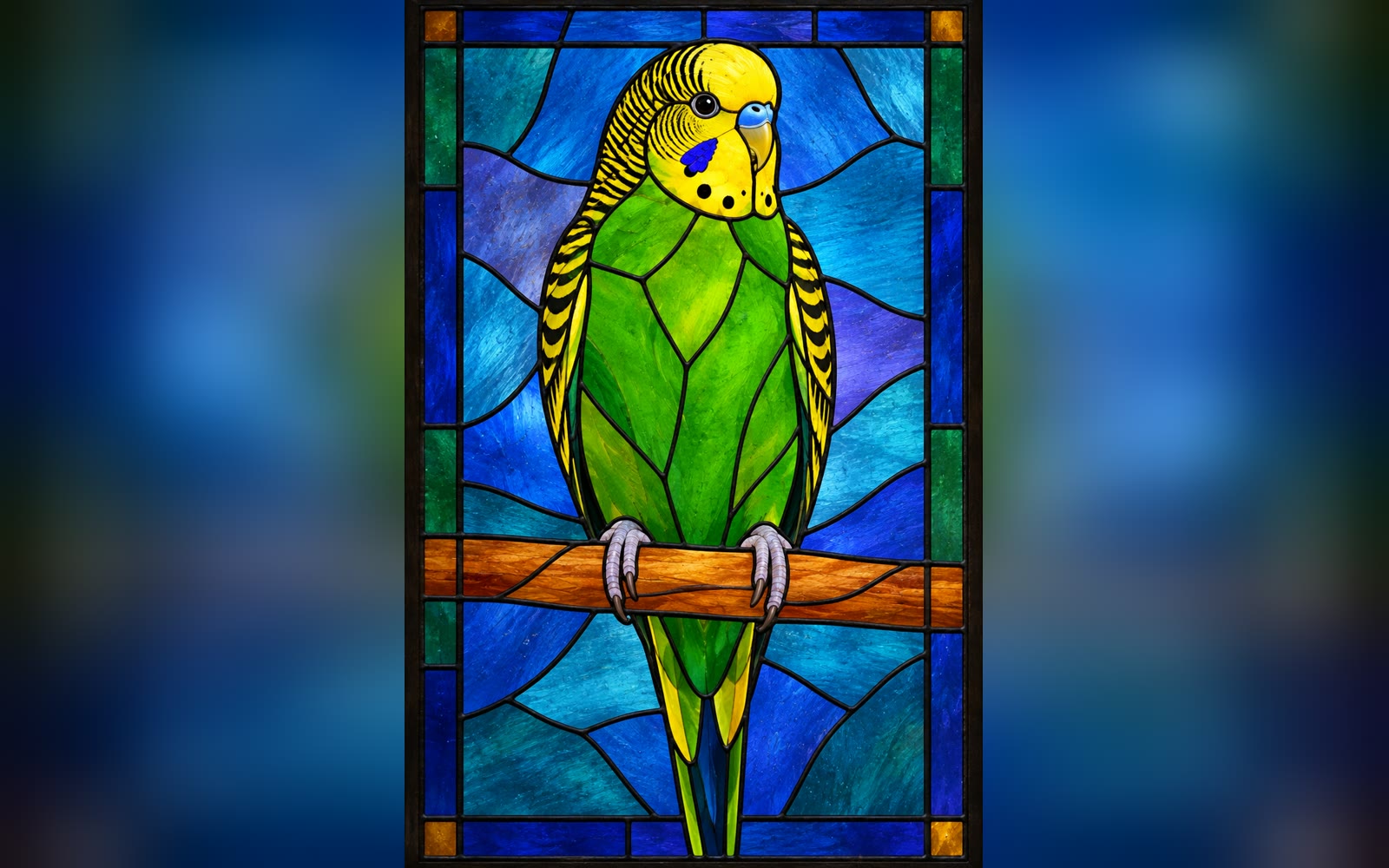
Cut one consented photo of a person, pet or object into a 2:3 stained-glass panel — jewel-toned pieces bounded by black lead cames, backlit so the panel glows.
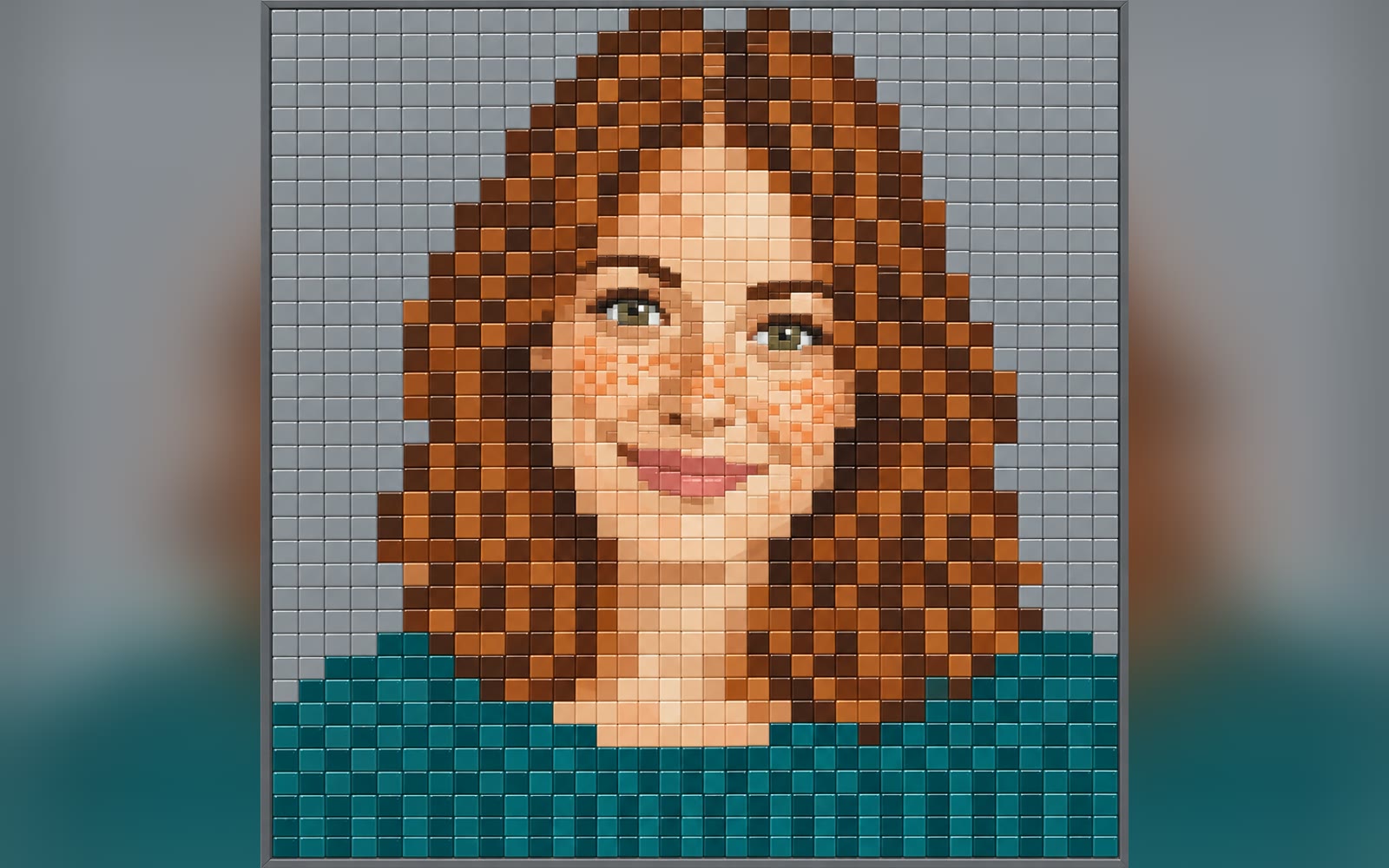
Rebuild one consented photo of a pet, plush, mascot or object as a square mosaic panel of small uniform tiles in toy-brick or glazed-ceramic style, face-on with thin grout seams.
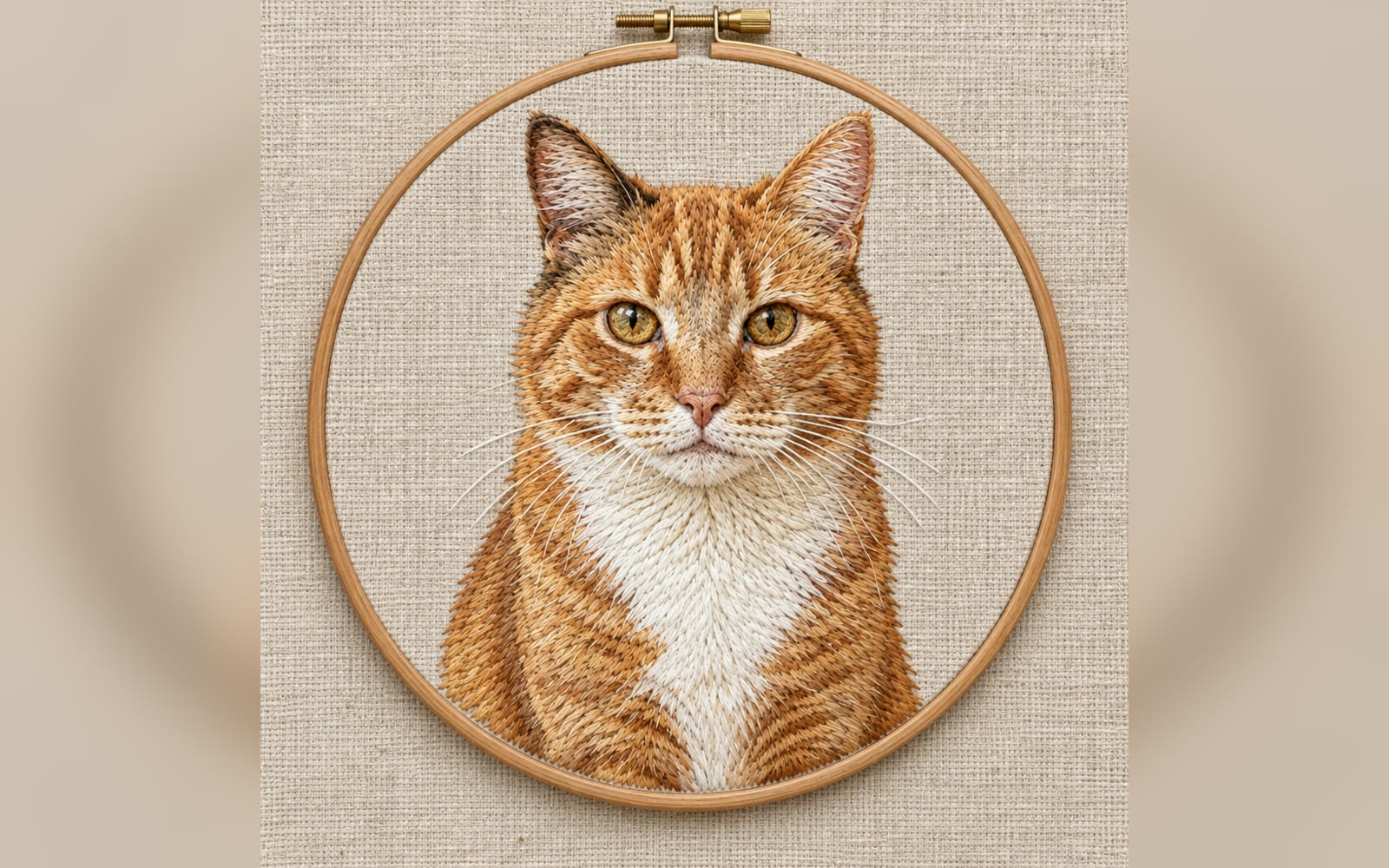
Restitch one consented photo of a person or pet as a square hand-embroidered thread portrait — satin and long-and-short stitch, silky floss sheen on woven fabric, optional wooden hoop.
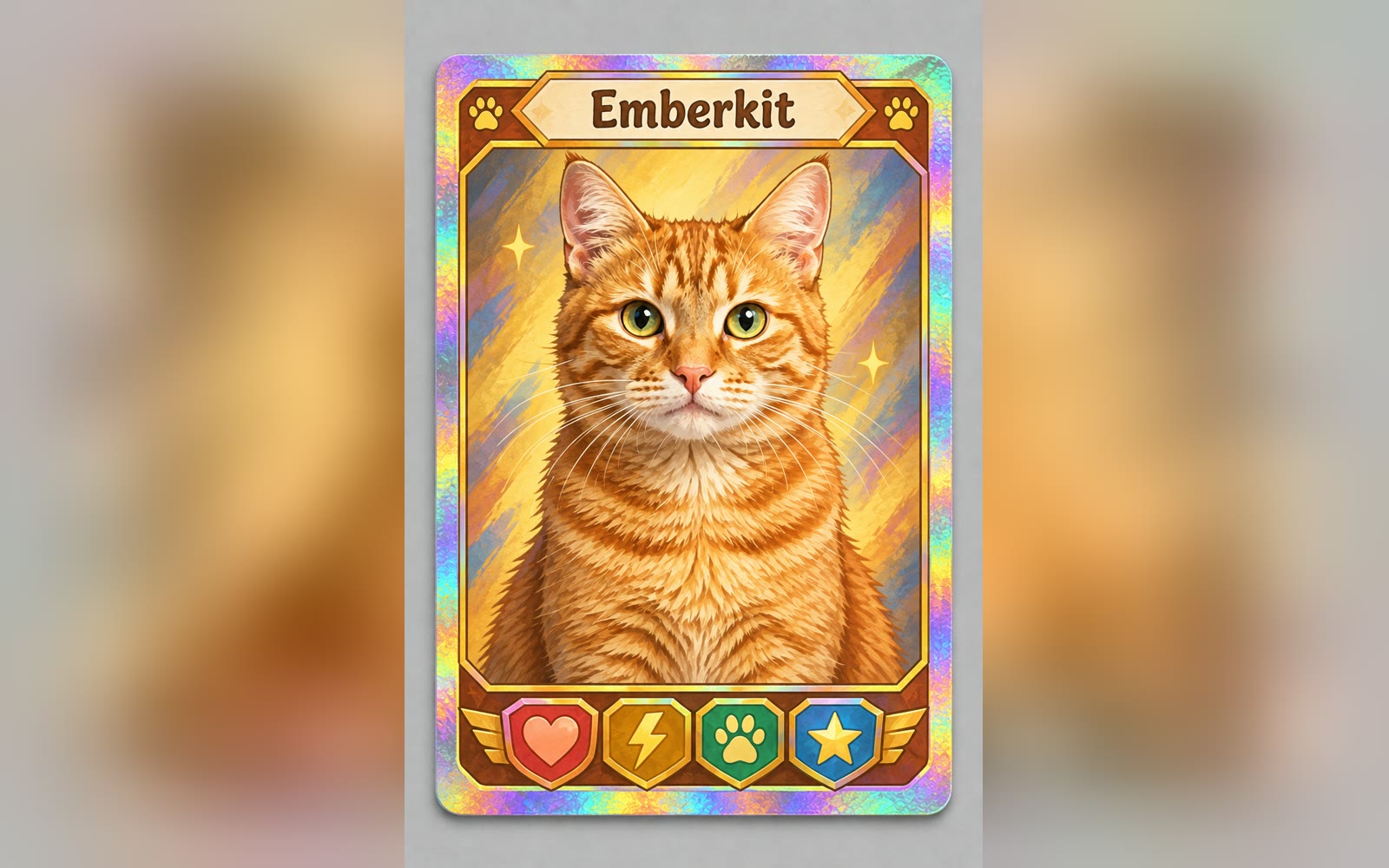
Frame one consented photo of a person, pet, plush or object as a 2:3 fictional collectible trading card — card art in a game-card frame with a holo, classic or sketch finish, invented card name and playful stat graphics.

Rebuild one consented photo of a person, pet, plush or object as a square soft-goods product shot — sewn fabric body, stitched seams, embroidered features and gentle stuffing on a studio backdrop.

Rebuild one consented photo of a person, pet, plush or object as a square needle-felted wool miniature — a palm-sized doll with a fuzzy fibre halo, bead eyes and a small wool base.
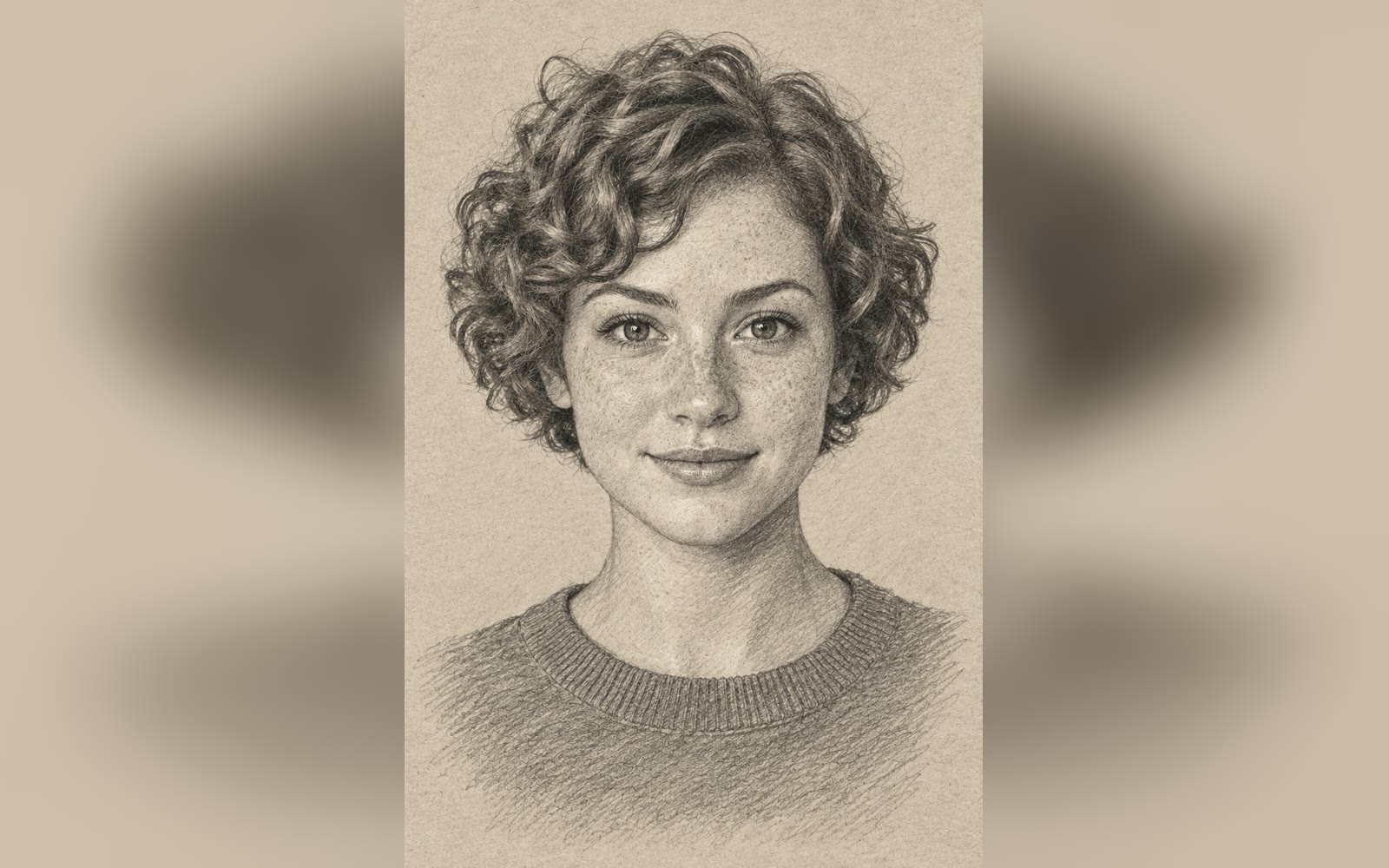
Redraw one consented photo of a person or pet as a 2:3 hand-drawn graphite or charcoal sketch on toothed paper — visible hatching, eraser-lifted highlights and paper grain.

Paint one consented photo of a person or pet as a 2:3 dreamy watercolor film still — wet-in-wet washes, soft pigment blooms, visible paper tooth and gentle filmic light.
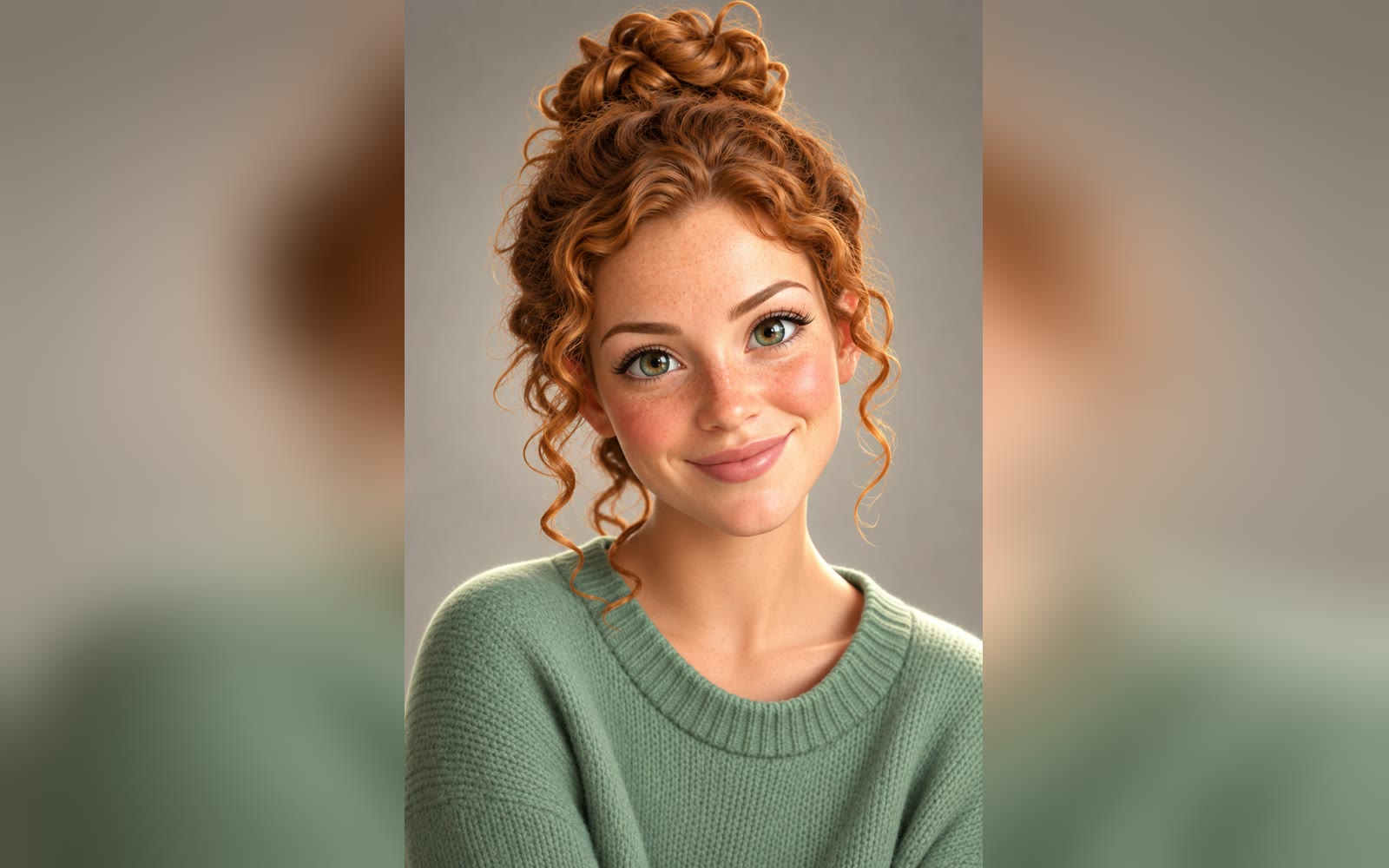
Restyle one consented photo as a polished 2:3 stylised 3D character render — subsurface scattering, soft studio lighting and a turntable-style hero presentation.
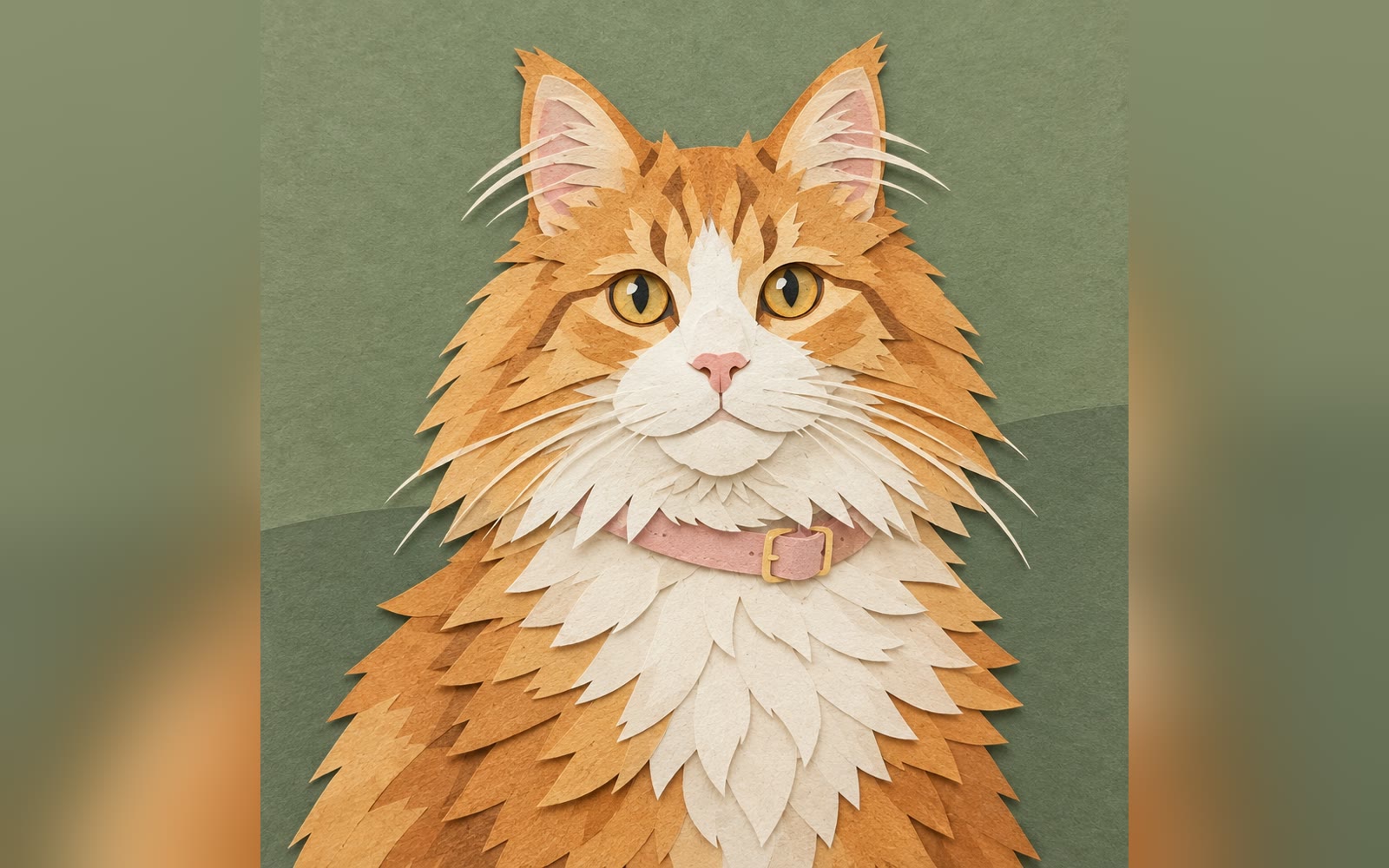
Rebuild one consented photo of a person or pet as a square layered paper-cut collage — flat coloured paper strata, crisp cut edges and soft shadows between layers.

Redraw one consented photo of a person as a 2:3 cel-shaded anime film frame — clean contour, flat two-to-three-tone shading, glossy highlights and a soft painted backdrop.

Your photo becomes the cover of a fictional glossy magazine.
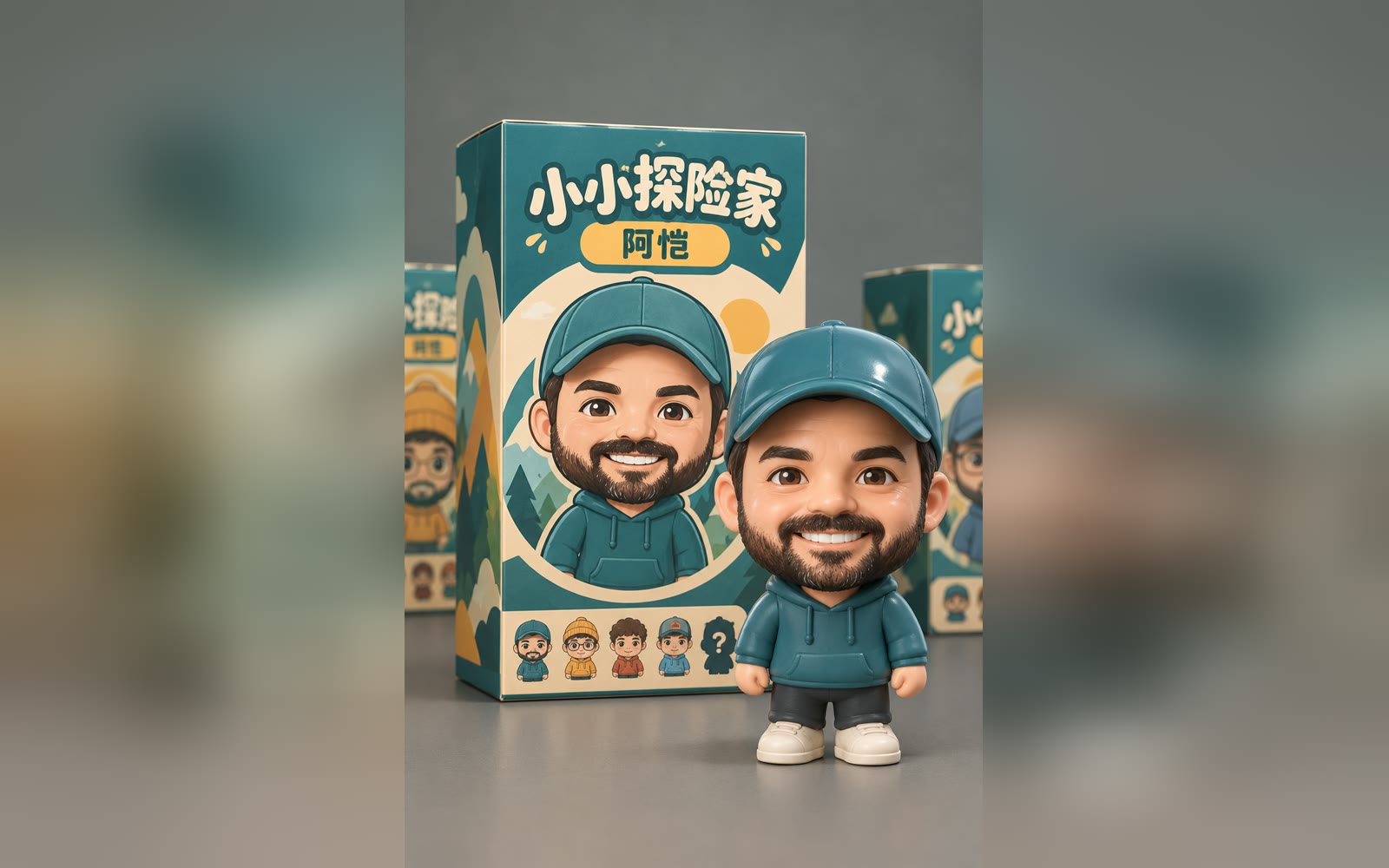
Your photo becomes a collectible blind-box figure in packaging.
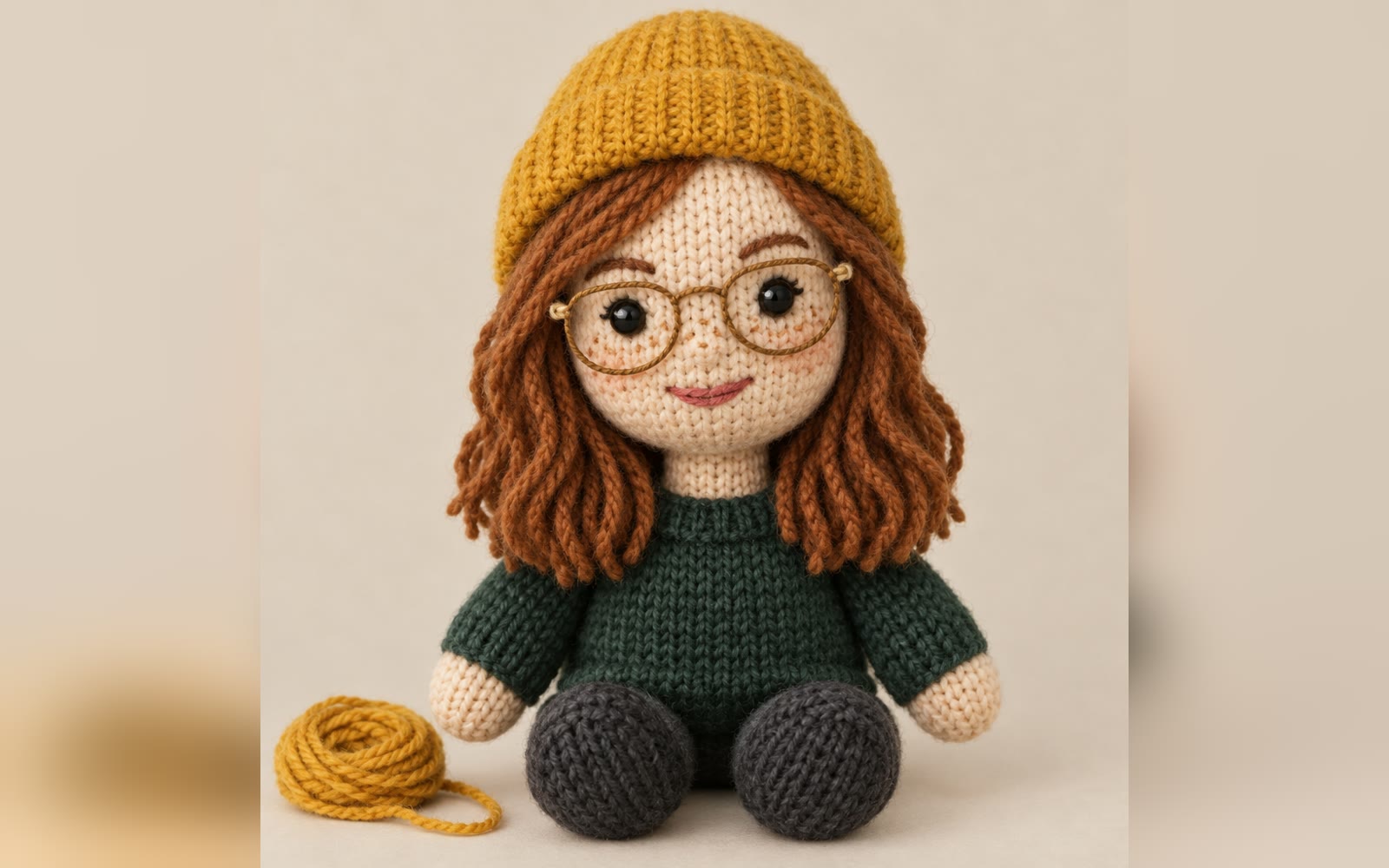
Your photo becomes a soft hand-knit or crochet doll.
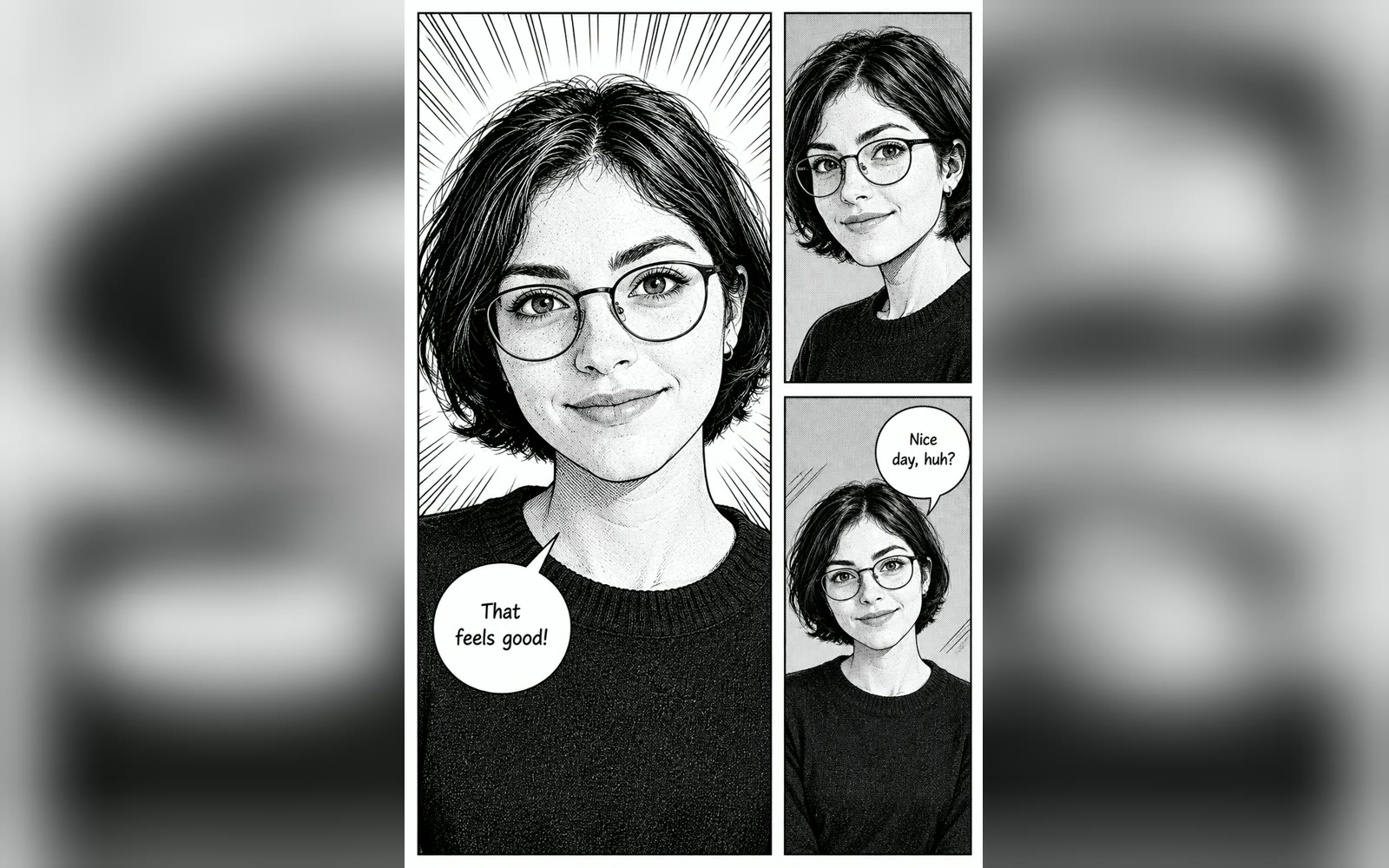
Your photo becomes a black-and-white manga panel page.
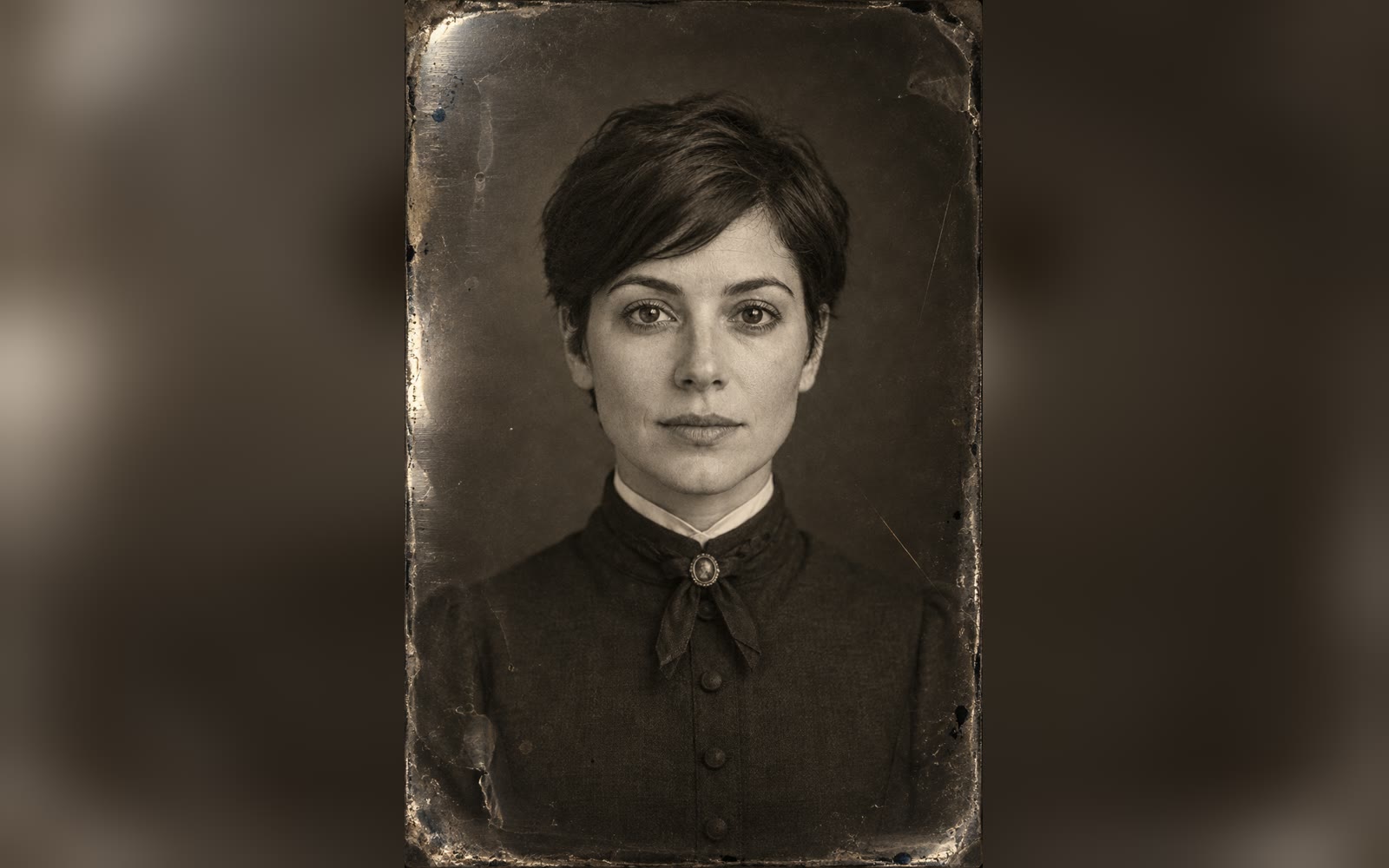
Your photo becomes an antique wet-plate collodion portrait.
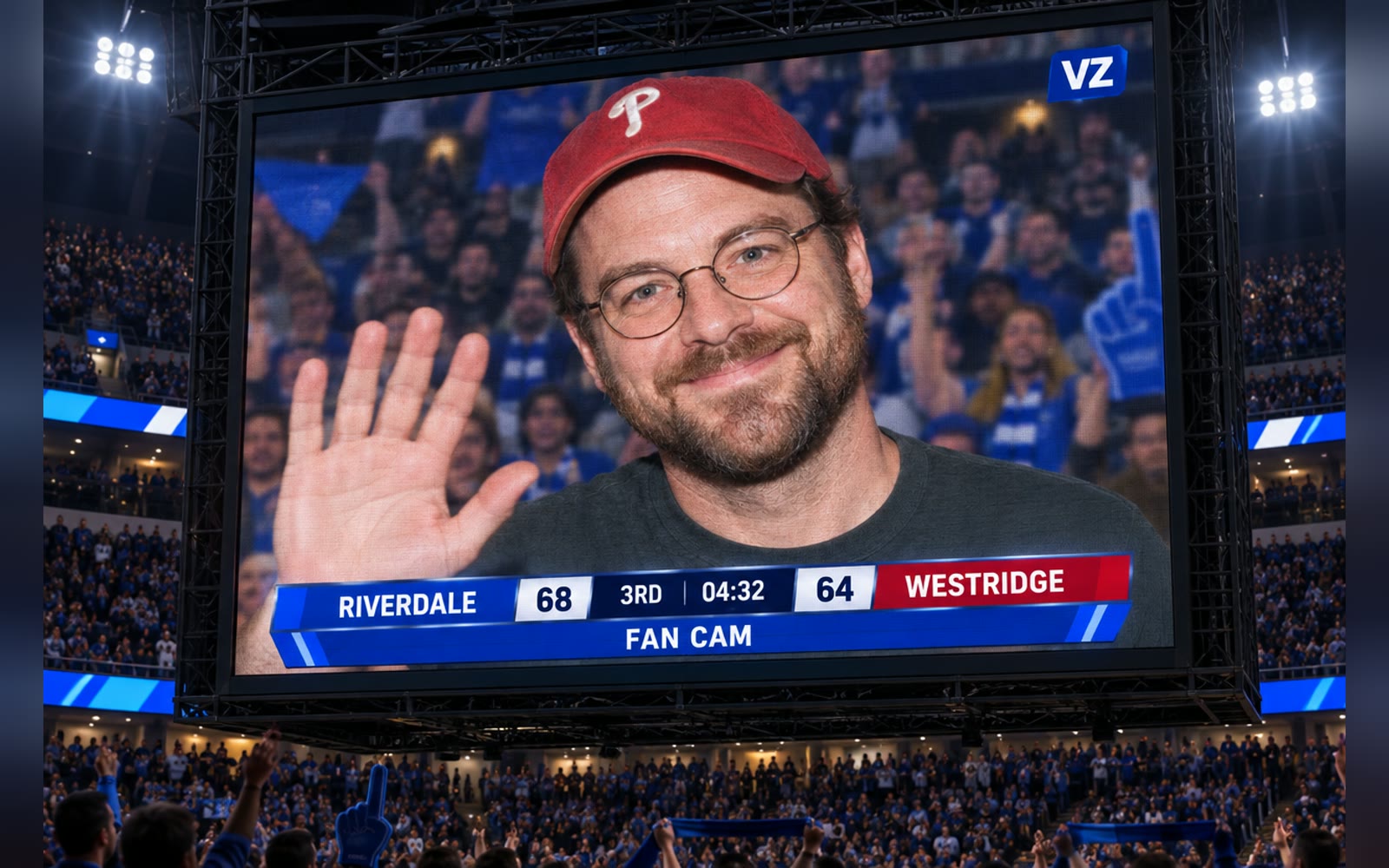
Your photo becomes the face on a stadium jumbotron.
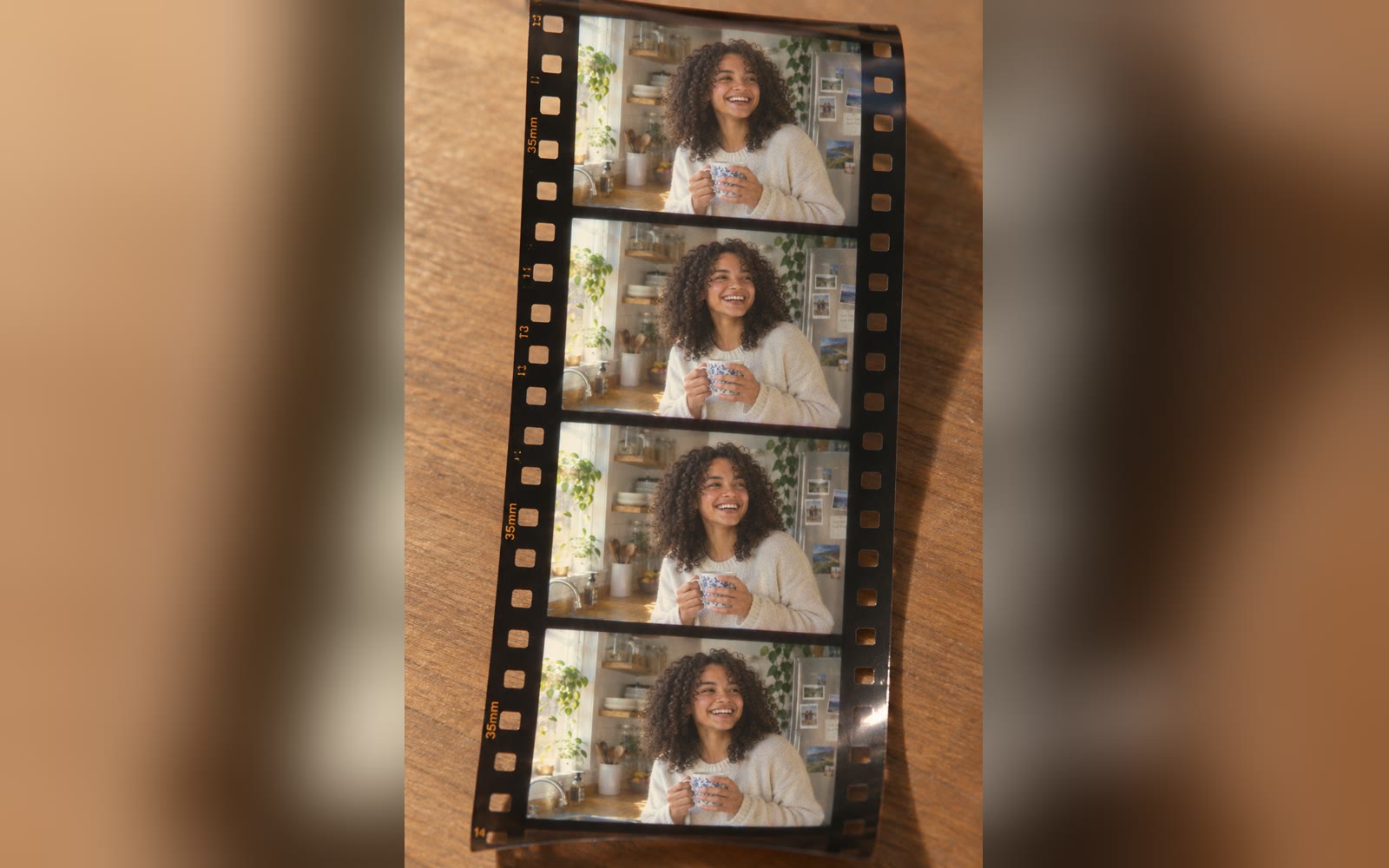
Your photo becomes a strip of 35mm film frames.

Your photo becomes a glossy fan-style idol photocard.
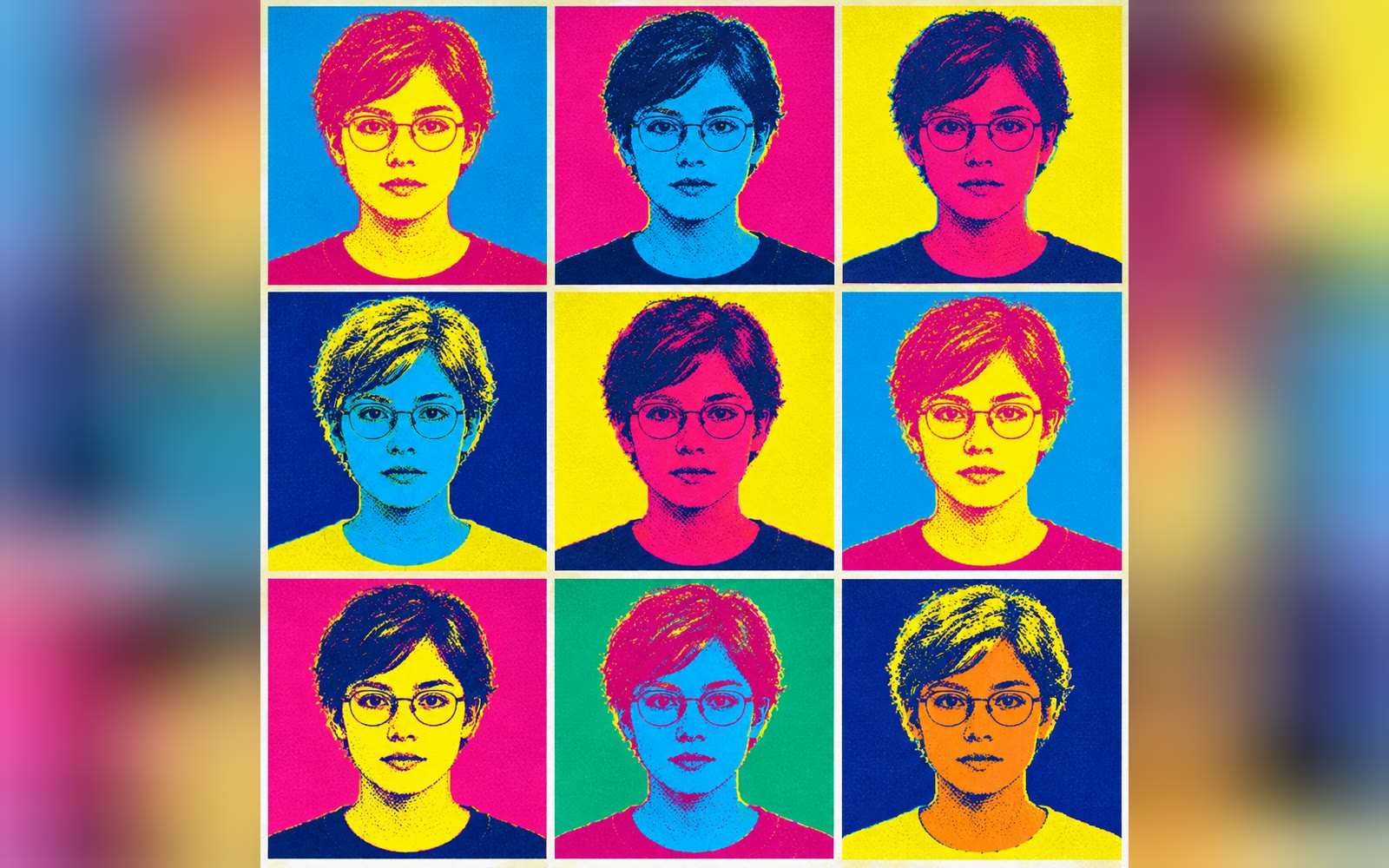
Your photo becomes a clashing silkscreen pop-art repeat grid.
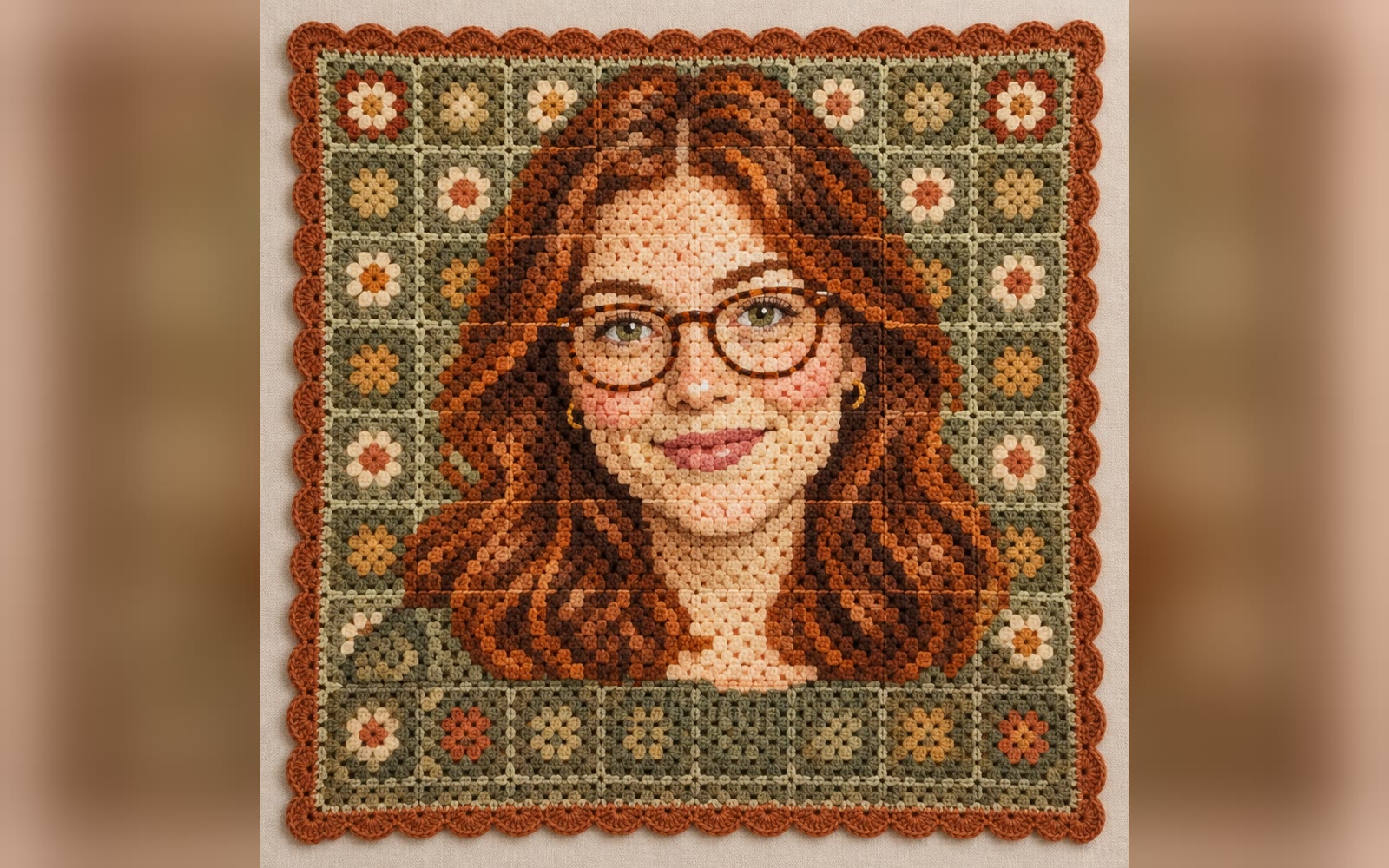
Your photo becomes a crochet granny-square blanket.
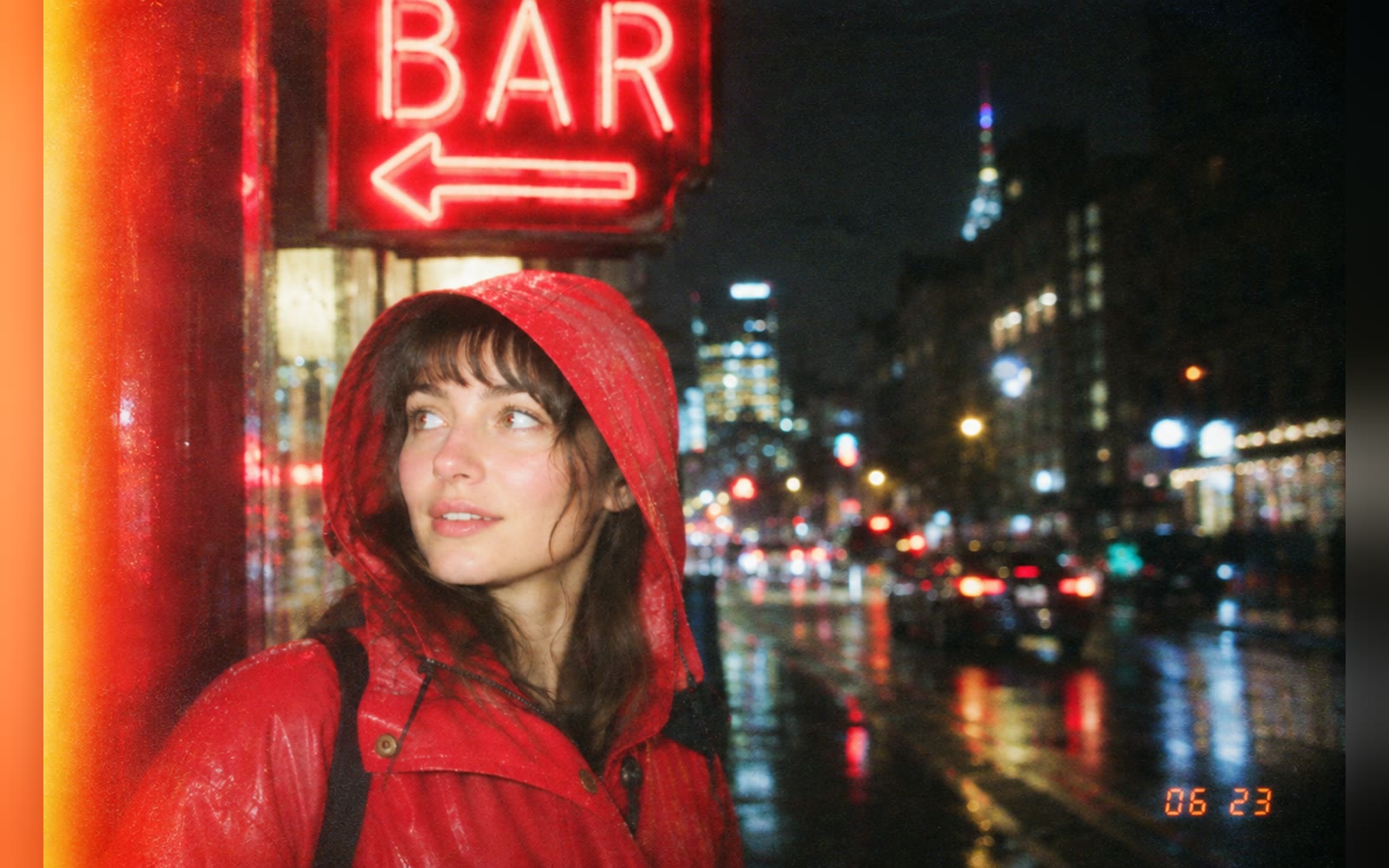
Your photo becomes a grainy disposable-camera snap.

Your photo becomes a fictional film-prop wanted poster.
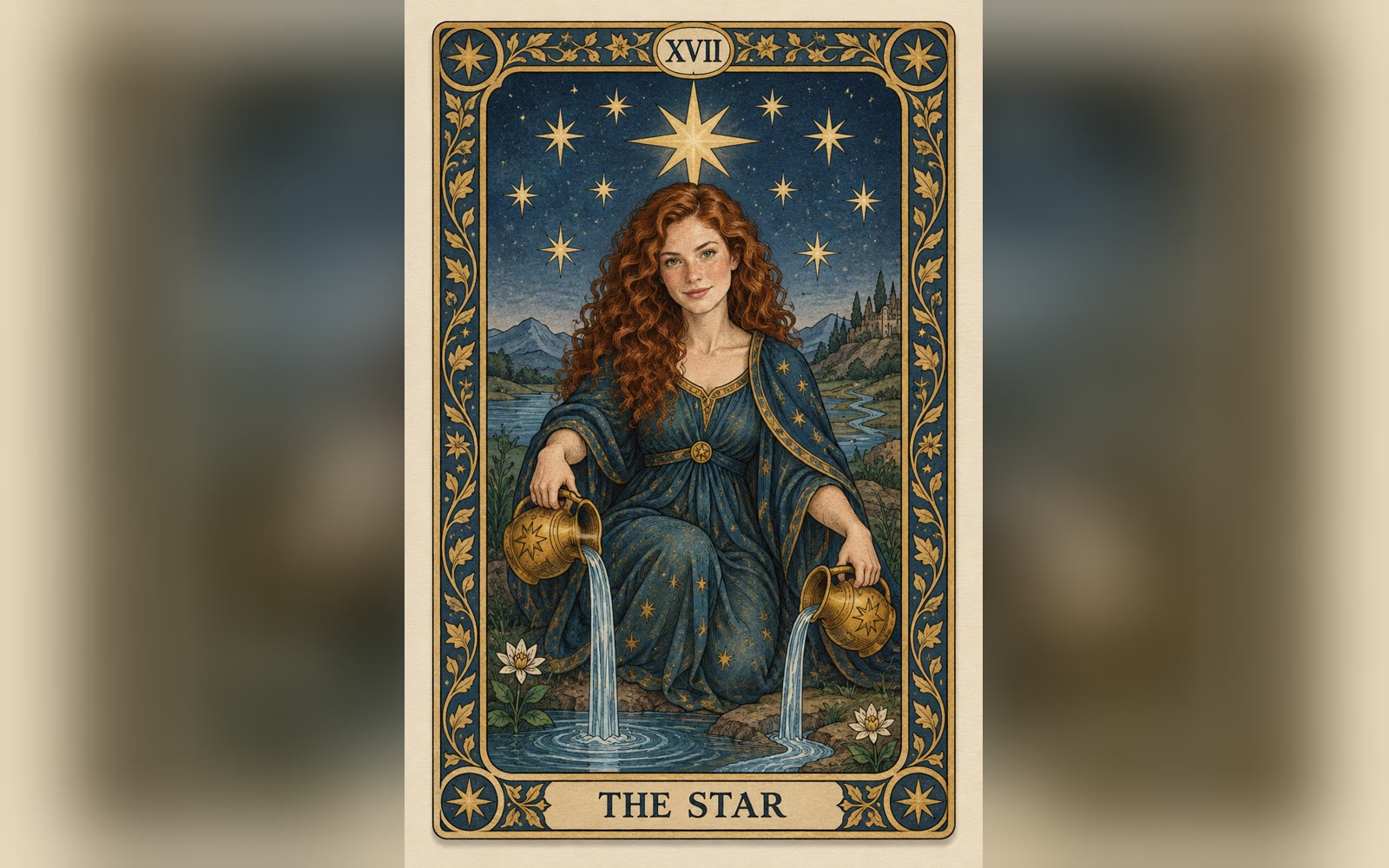
Your photo becomes the figure on an illustrated tarot card.

Several solo photos merge into one shared family portrait.
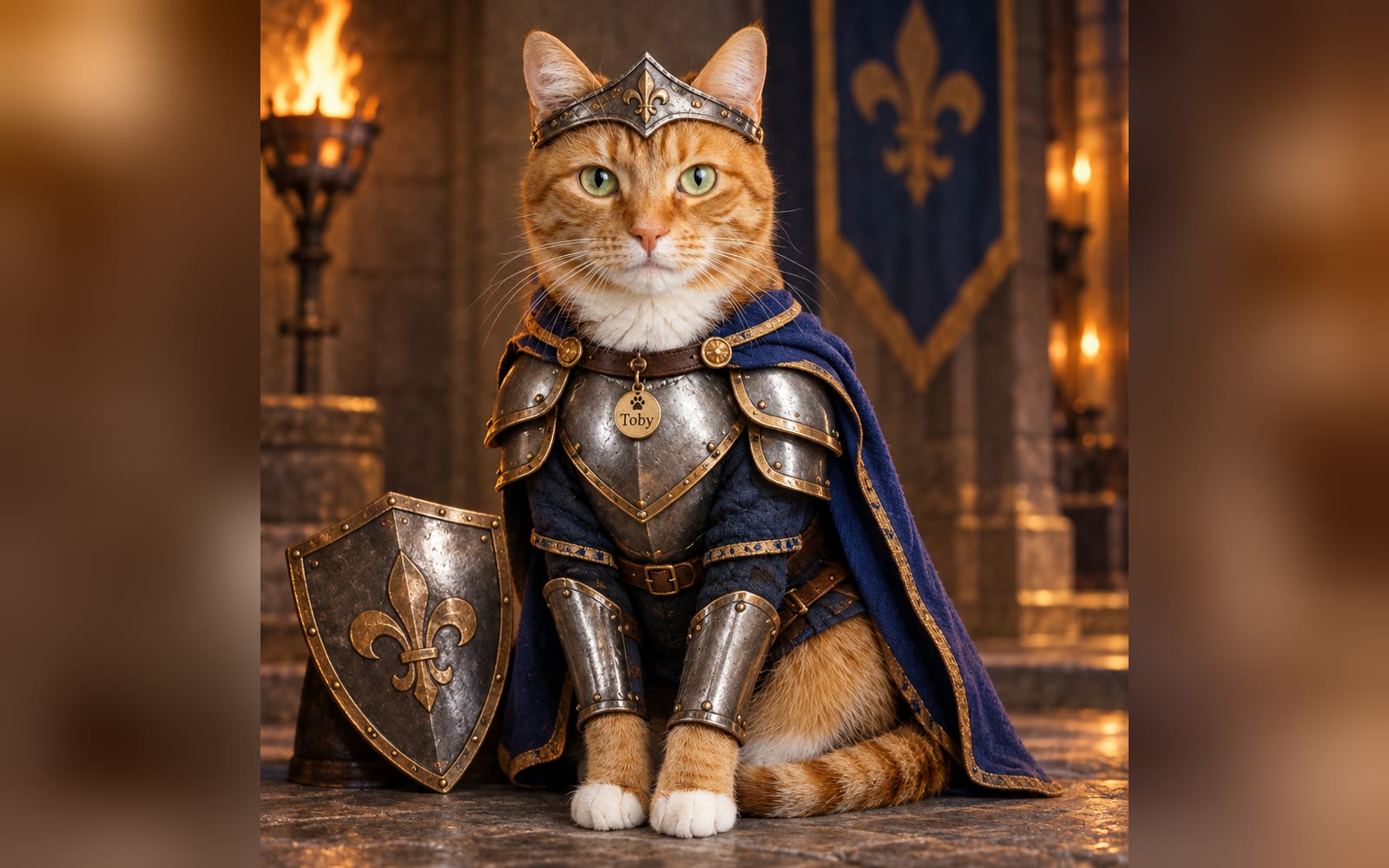
Dress your real pet in a costume — a knight in armour, a holiday sweater, a formal suit, an astronaut — while keeping its real face and markings.

Turn a photo of the two of you into one shared cartoon illustration — everyday, anniversary or wedding style — with both faces recognisable.
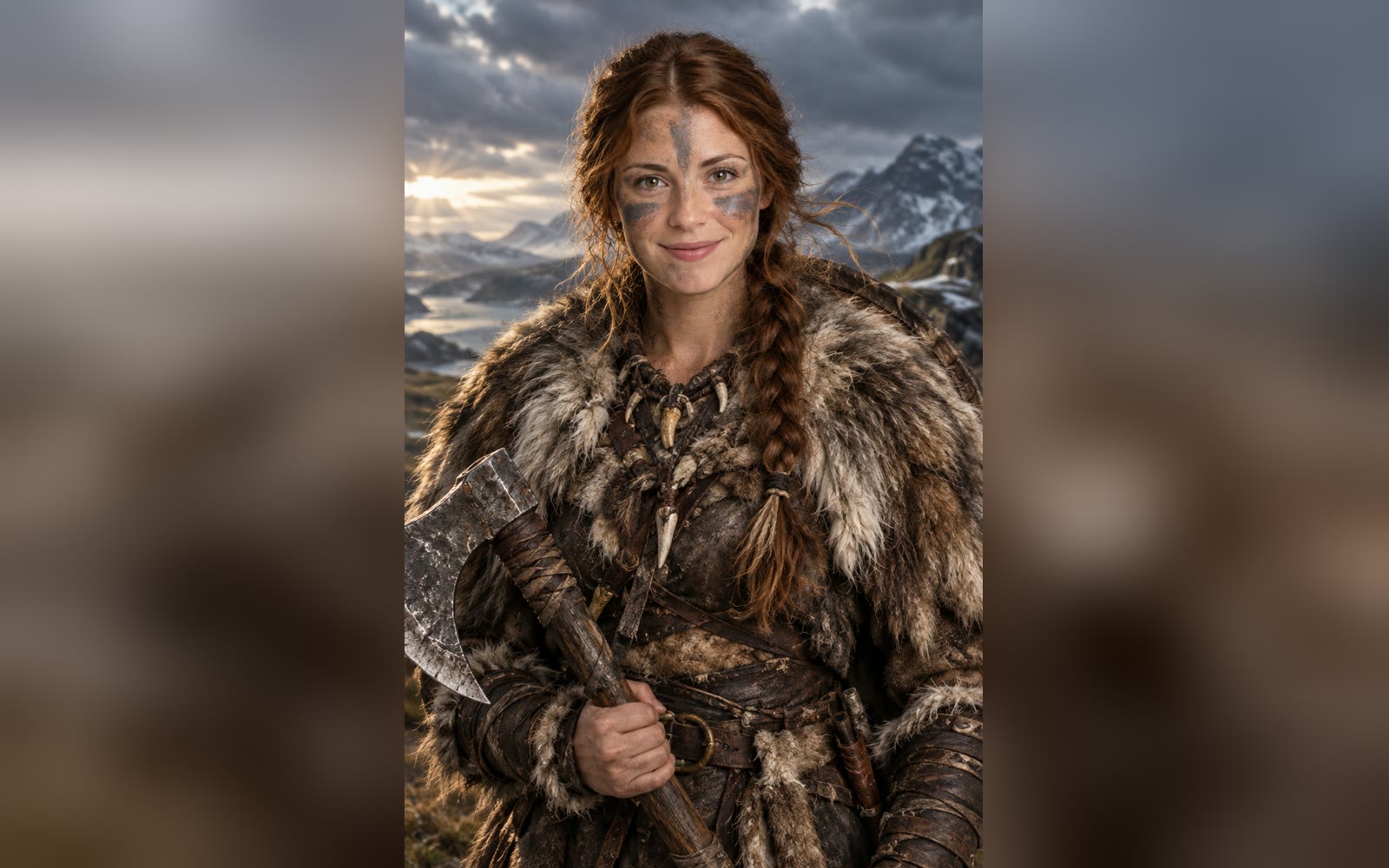
Put yourself into an epic warrior's armour — viking, knight or barbarian — fur, chainmail, war helm and war paint, against a northern wilderness.

Redraw your photo as a playful flat doodle illustration — thick outline, flat colour blocks and little hand-drawn stars, hearts and leaves around you.

Redraw your photo as a string-art picture: a square wooden board edged with nails, and dark thread lines that build up your face.

Turn your photo into a private holiday greeting card — a hand-drawn holly and gold border, festive colours and one greeting line, with your face on the card.
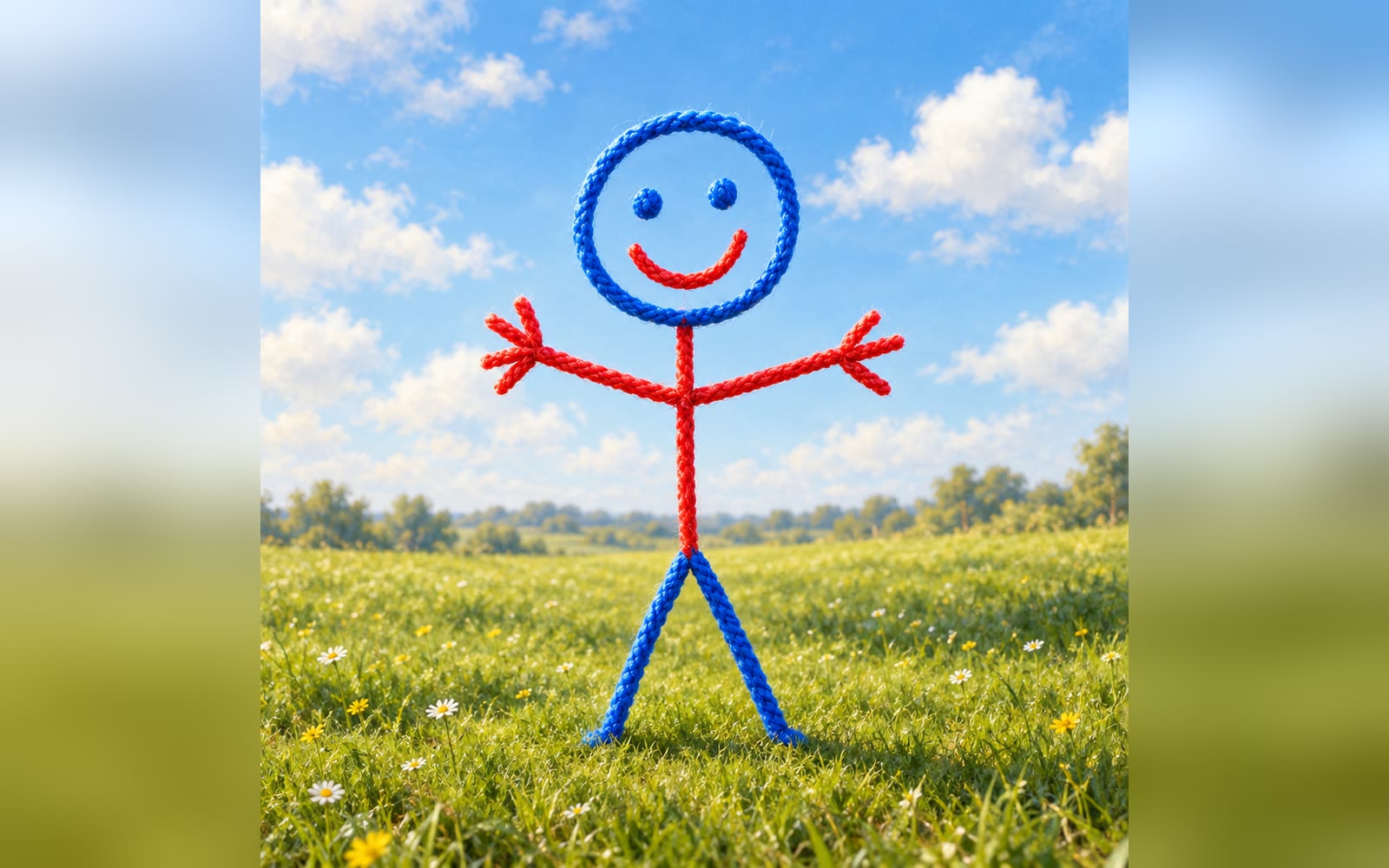
Turn a child's doodle or a quick sketch into a finished artwork — realistic, watercolour or 3D — keeping the naive composition and charm.

Have yourself painted as a formal royal portrait — a crown, ermine robe, sash and jewels, in a candlelit palace hall — in baroque or regency style.
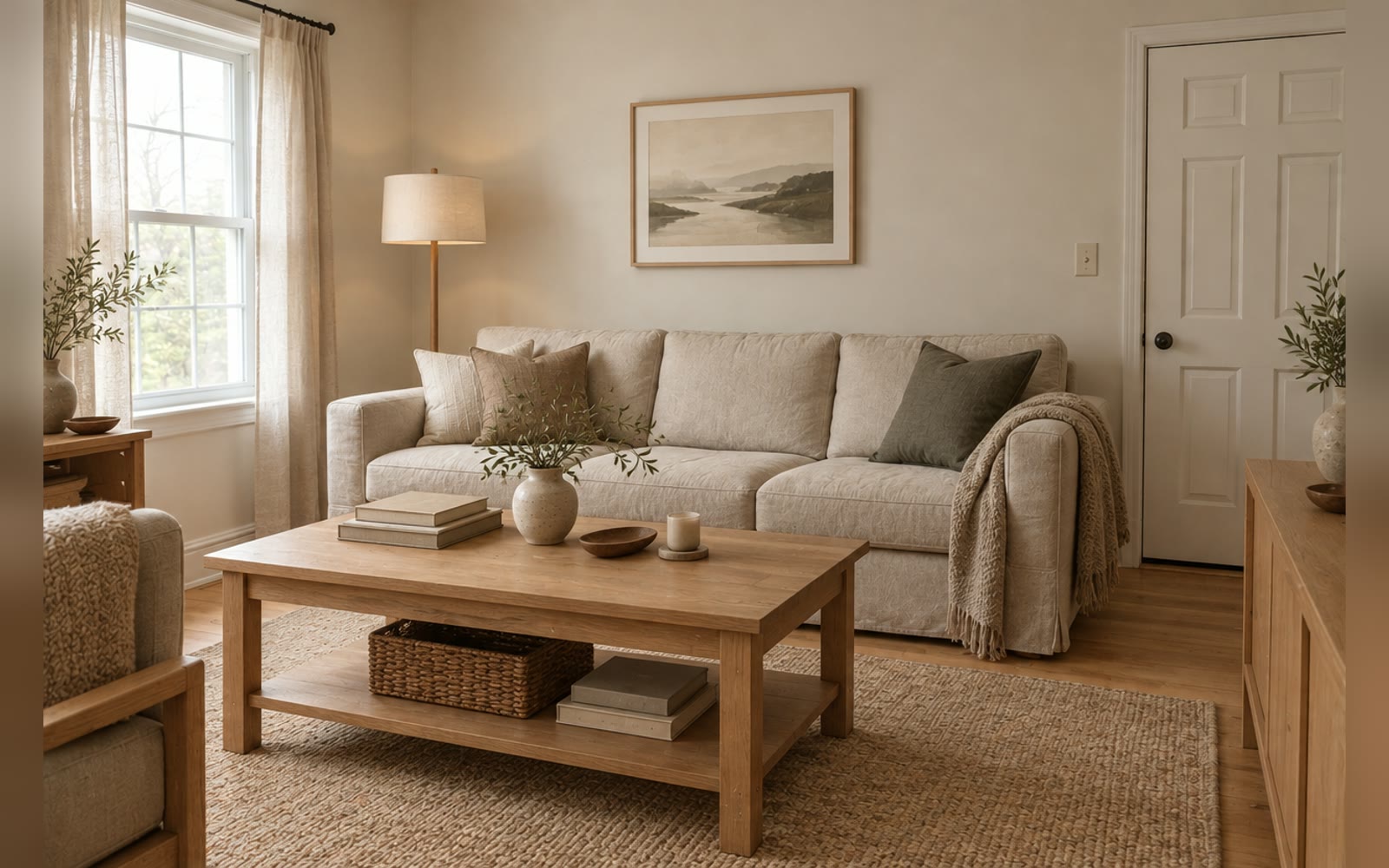
See your own room restyled — the walls, windows, doors and camera angle stay put while the furniture, textiles and palette switch to scandi, japandi, industrial or warm-maximal.
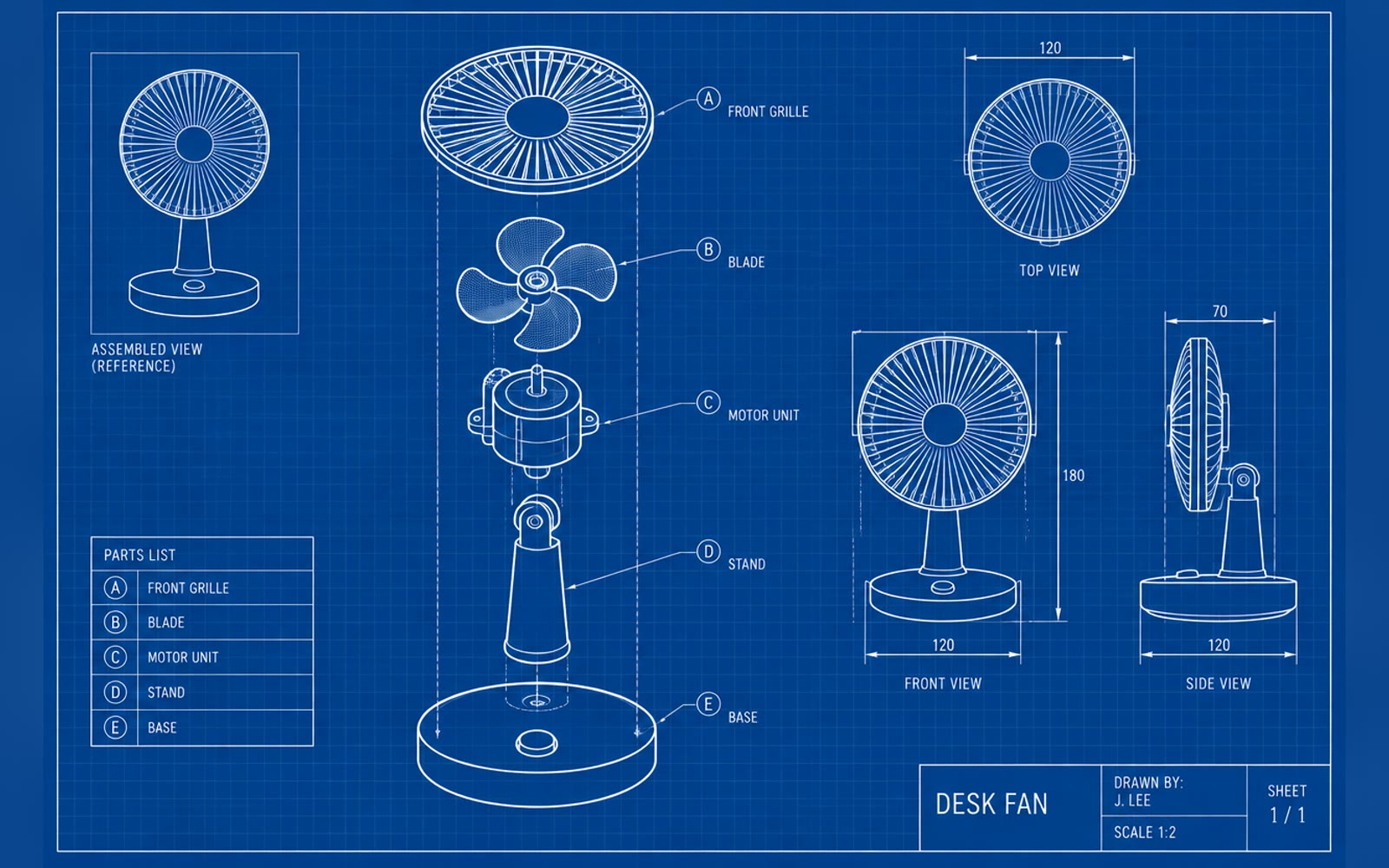
Turn a photo of any everyday object into a white-on-blue engineering blueprint — orthographic views, an exploded breakdown or a sectioned cutaway, with letter callouts, dimension lines and a title block.
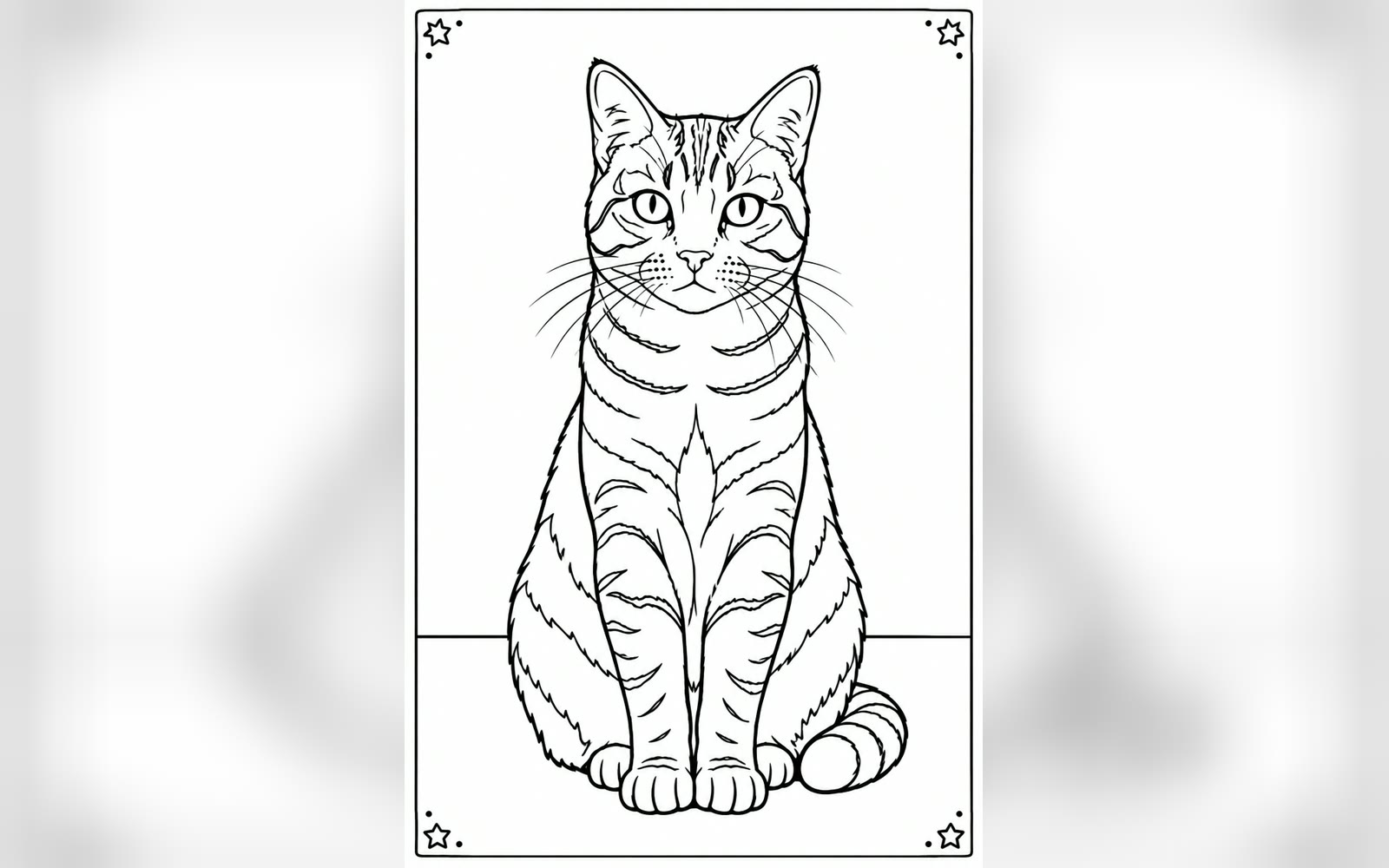
Turn any photo of your own pet, house, plant or object into a printable coloring page — pure black outlines on white, no grey, no shading, big empty regions ready to colour.
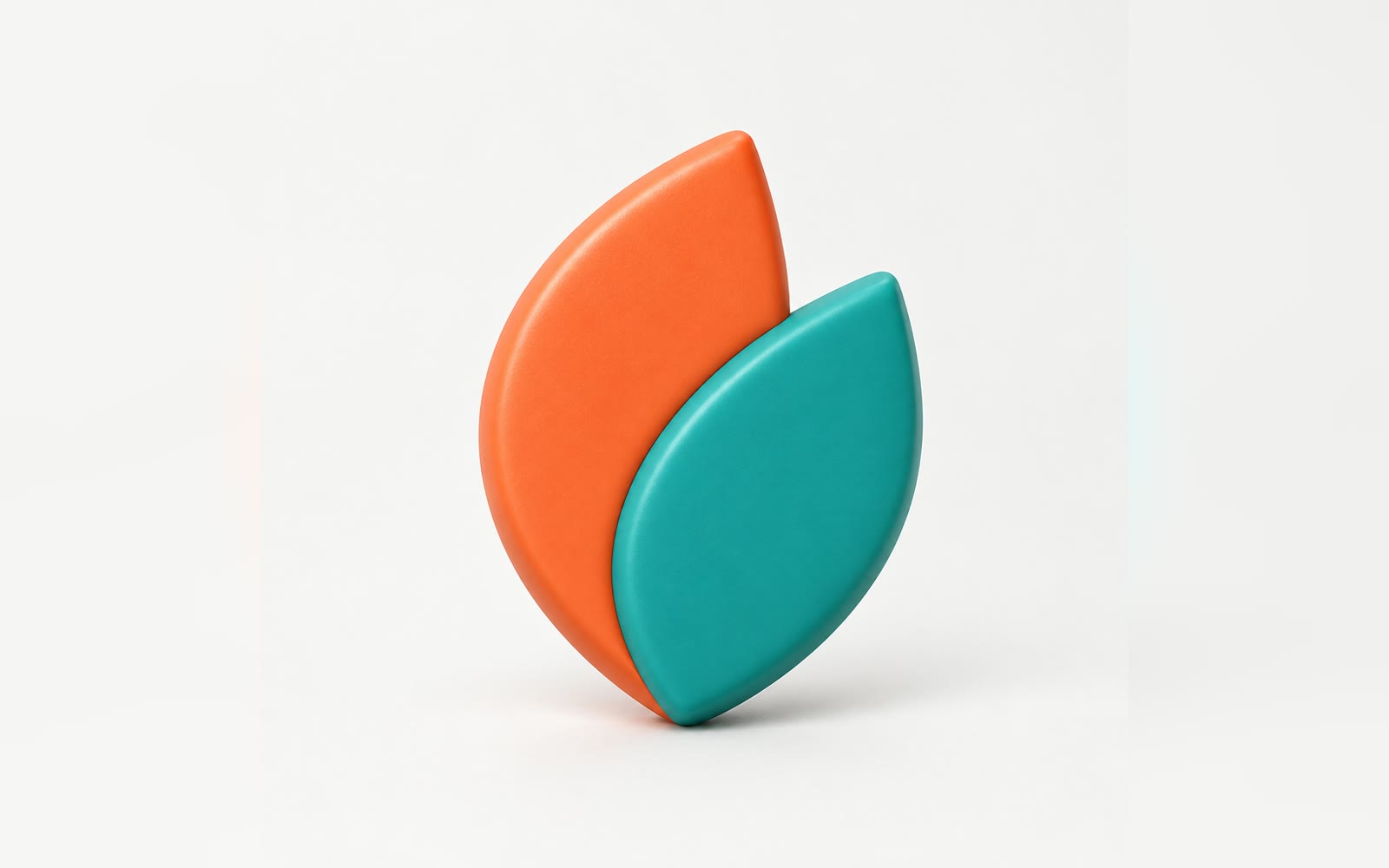
Turn your own flat icon or mark into a real material object — soft plastic, frosted glass or polished metal — lit like a studio product shot.
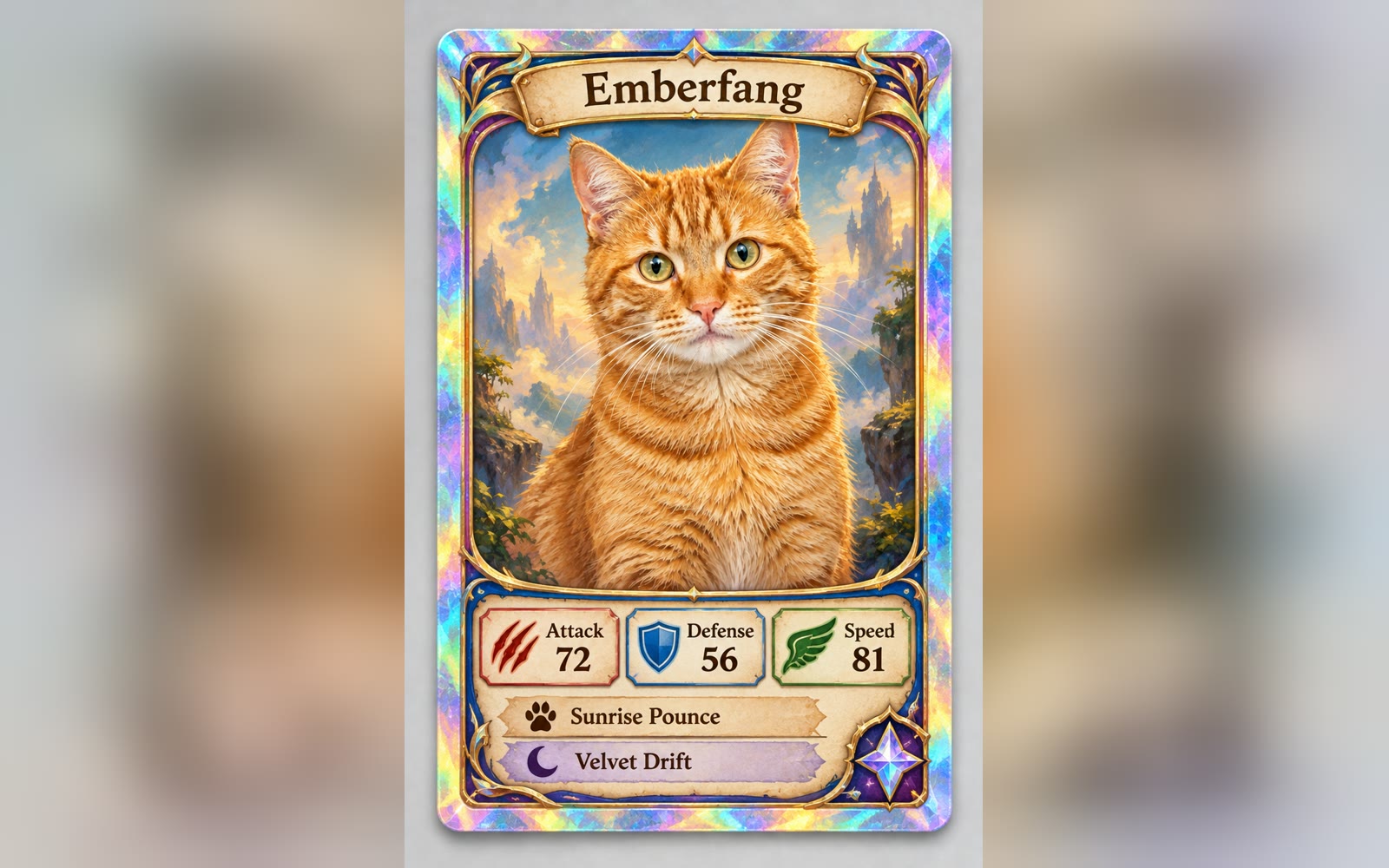
Turn your pet's photo into a fictional creature-duelling card — the animal redrawn as card art inside a printed frame, with attack/defense/speed numbers, invented moves and a rarity badge.

Put yourself in a cap-and-gown graduation portrait — plain academic regalia on a fictional campus lawn or ceremony stage — without booking a photographer.
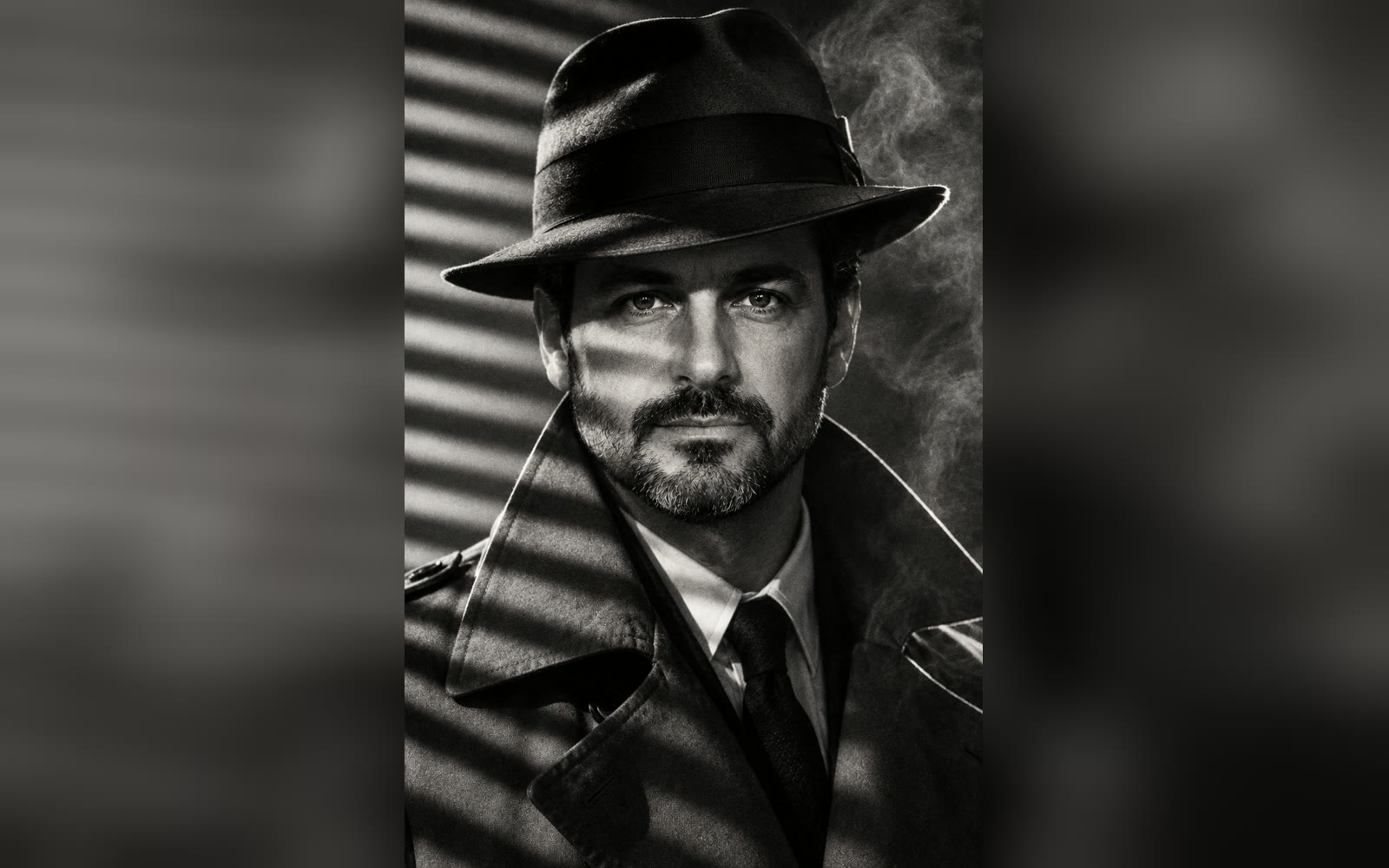
Turn a photo of yourself into a black-and-white crime-picture still — hard light, trench coat or satin gown, venetian-blind shadows, smoke or rain.
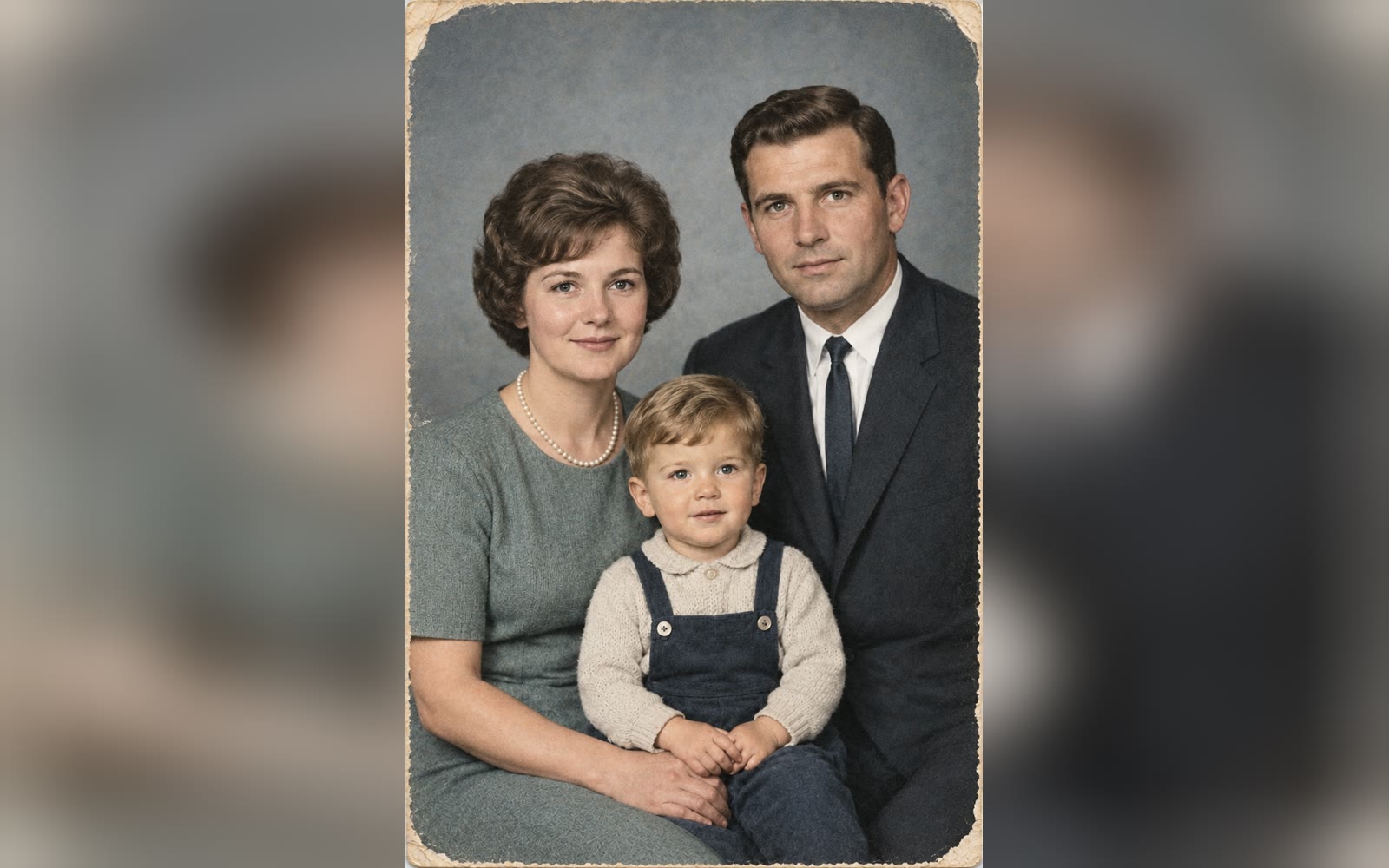
Repair a scratched, creased, faded or stained old photo — damage removed, missing patches rebuilt, and restrained period colour restored if you want it.
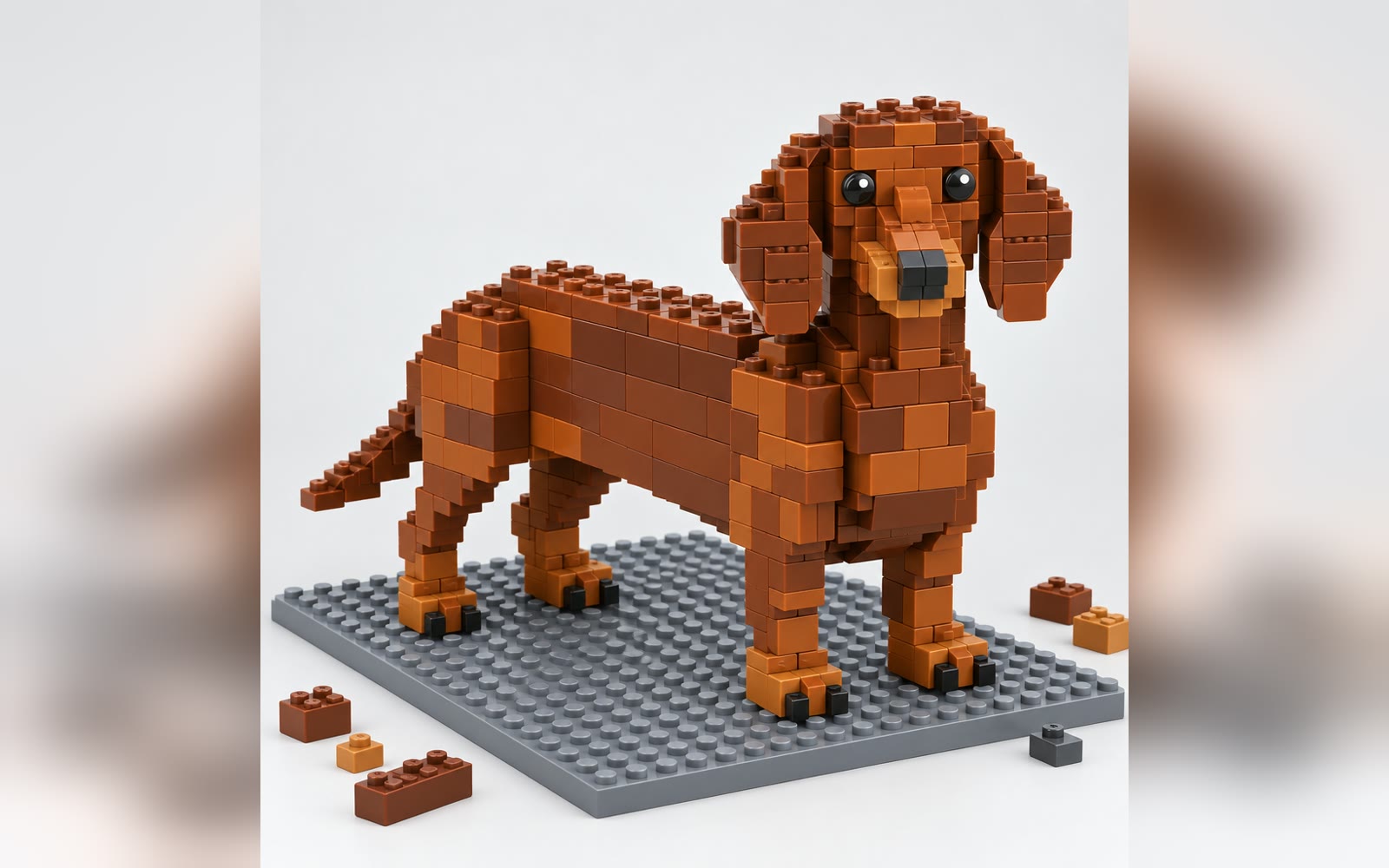
Rebuild your pet, toy or keepsake as a chunky construction-brick model on a studded base plate, shot like a tabletop build.
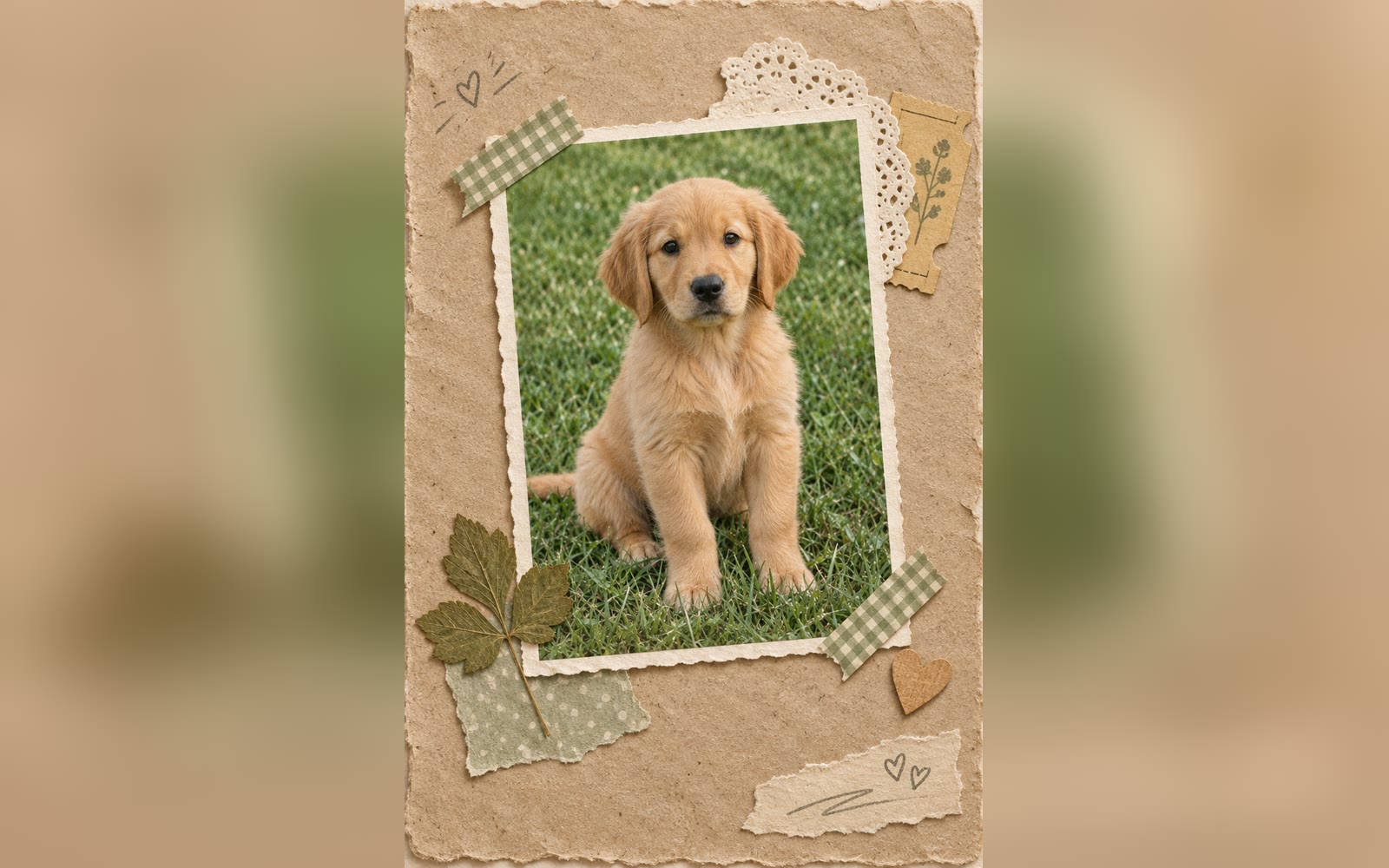
Mount a memory — a pet, a trip, a keepsake — onto a hand-assembled journal page with tape, ephemera and hand-scrawled notes.
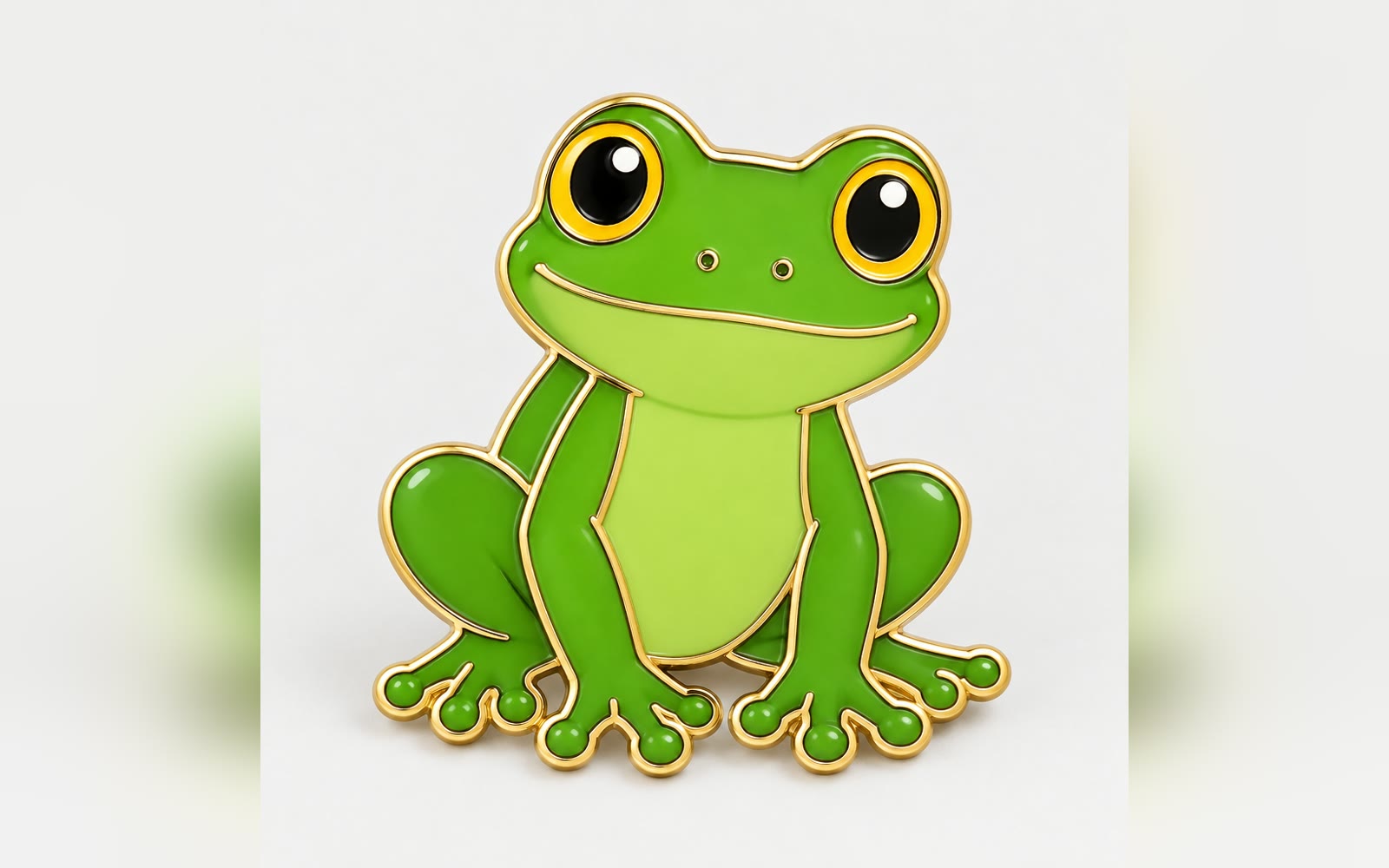
Turn your mascot, pet or motif into a hard-enamel pin — raised metal outline, glossy colour wells — shot as a shop product photo.

Seal a pet, person or scene inside a wintry snow globe — a glass dome of drifting snow on a turned base.
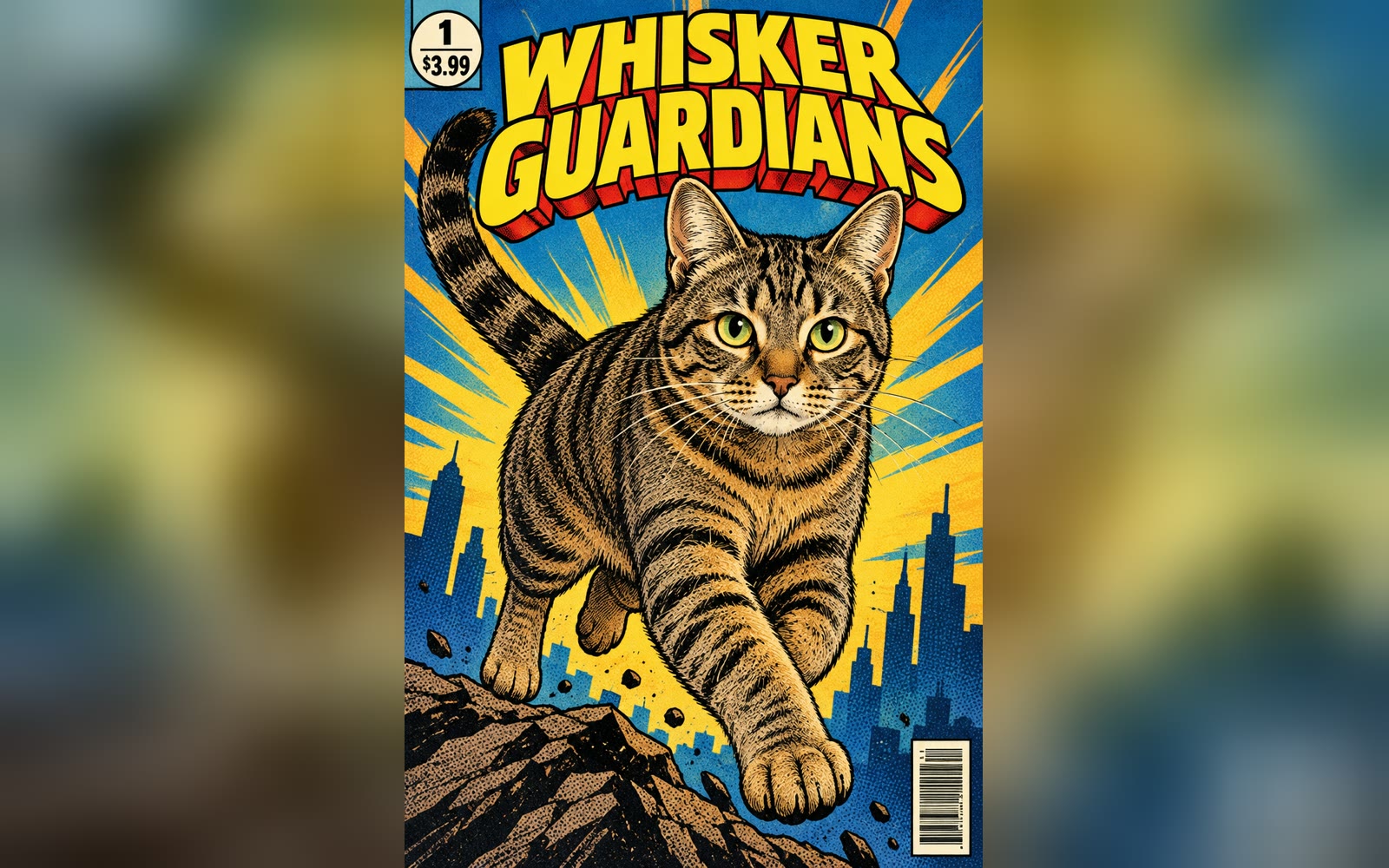
Star on your own comic-book issue — the subject inked as the hero under an invented masthead, issue number and barcode.
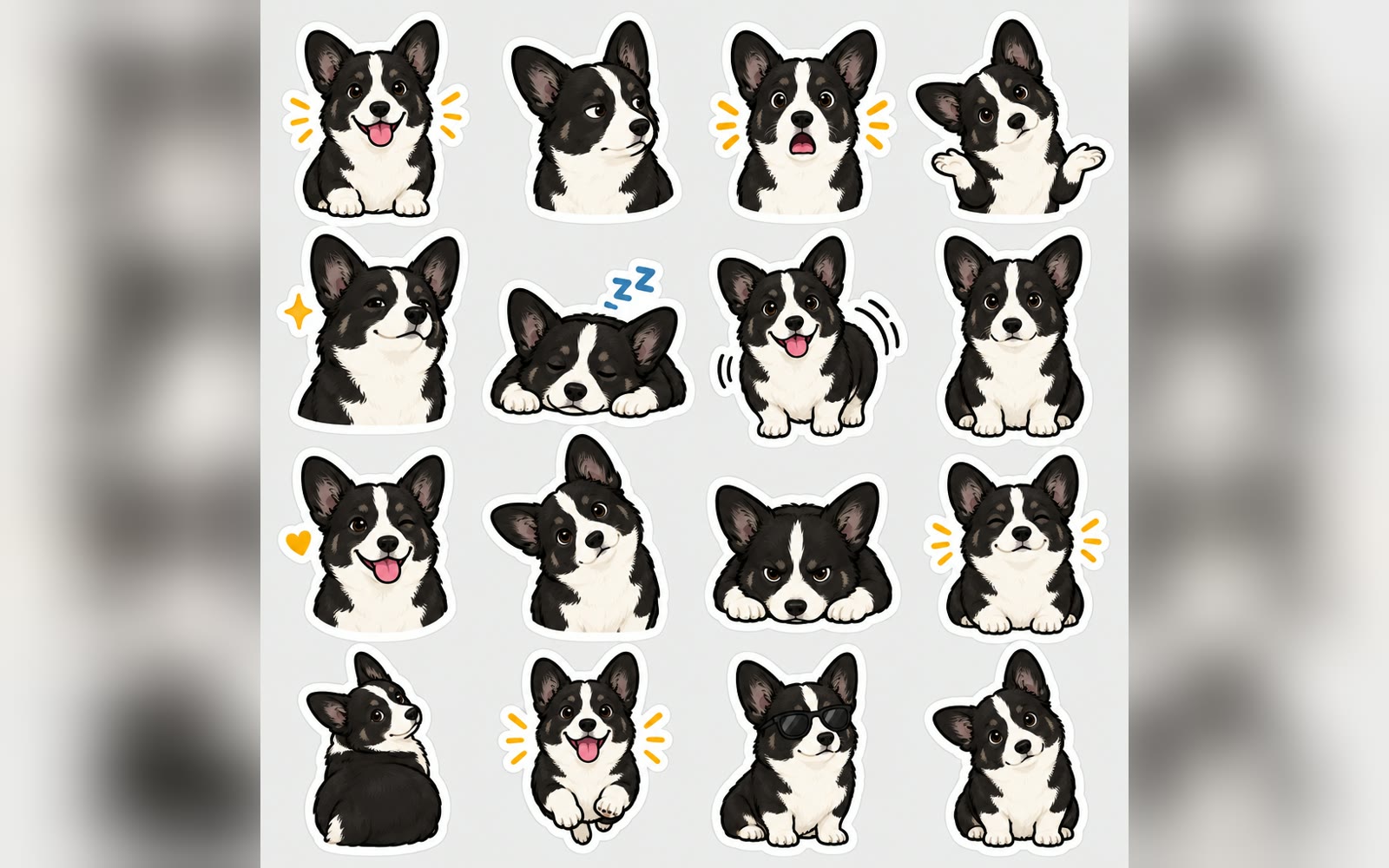
Turn your own pet into a reaction-sticker pack — the same pet across a grid of grin, side-eye, gasp and sleepy tiles.
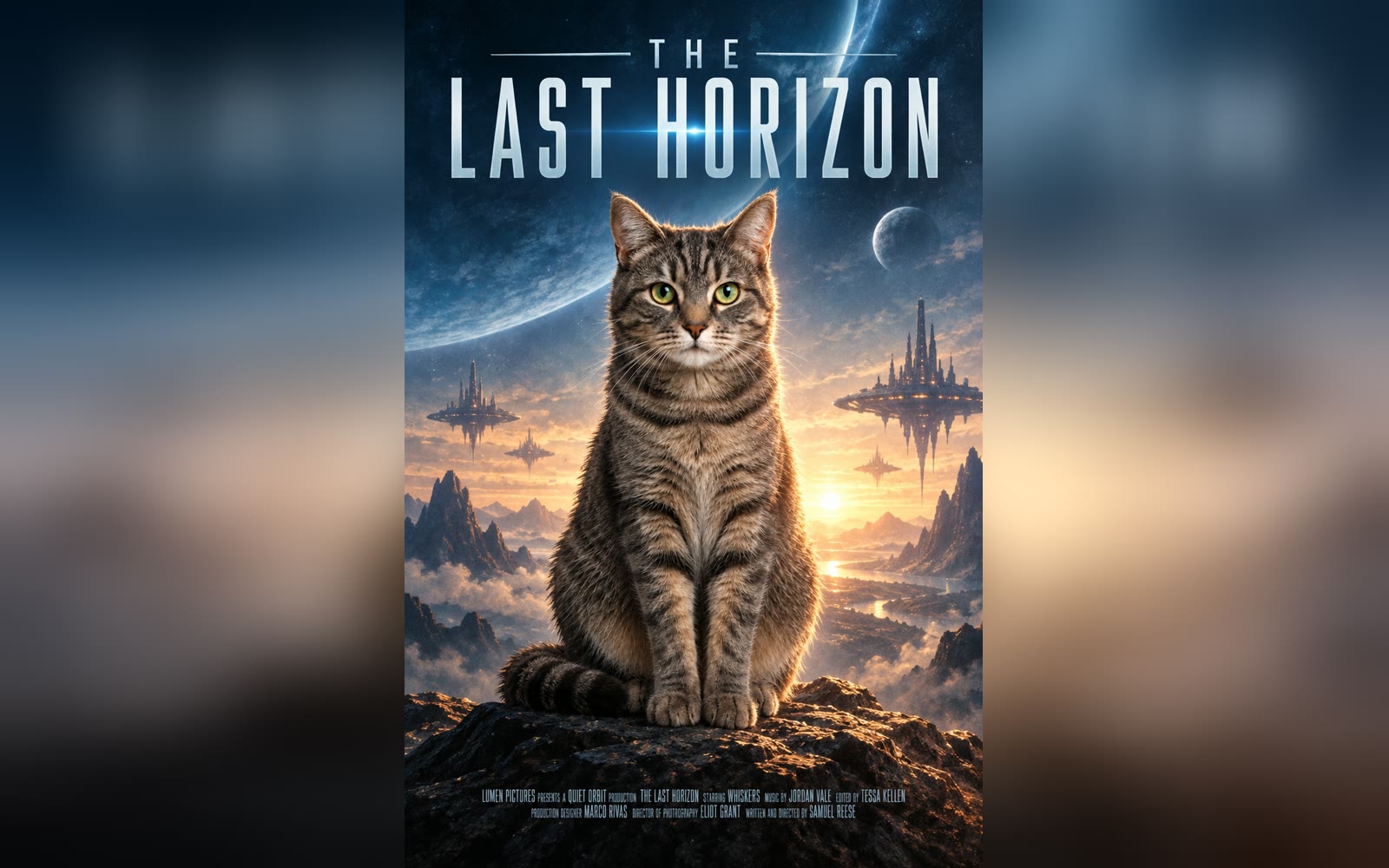
See yourself, your pet or a keepsake as the star of a film one-sheet — an invented title, a billing block and a genre mood.
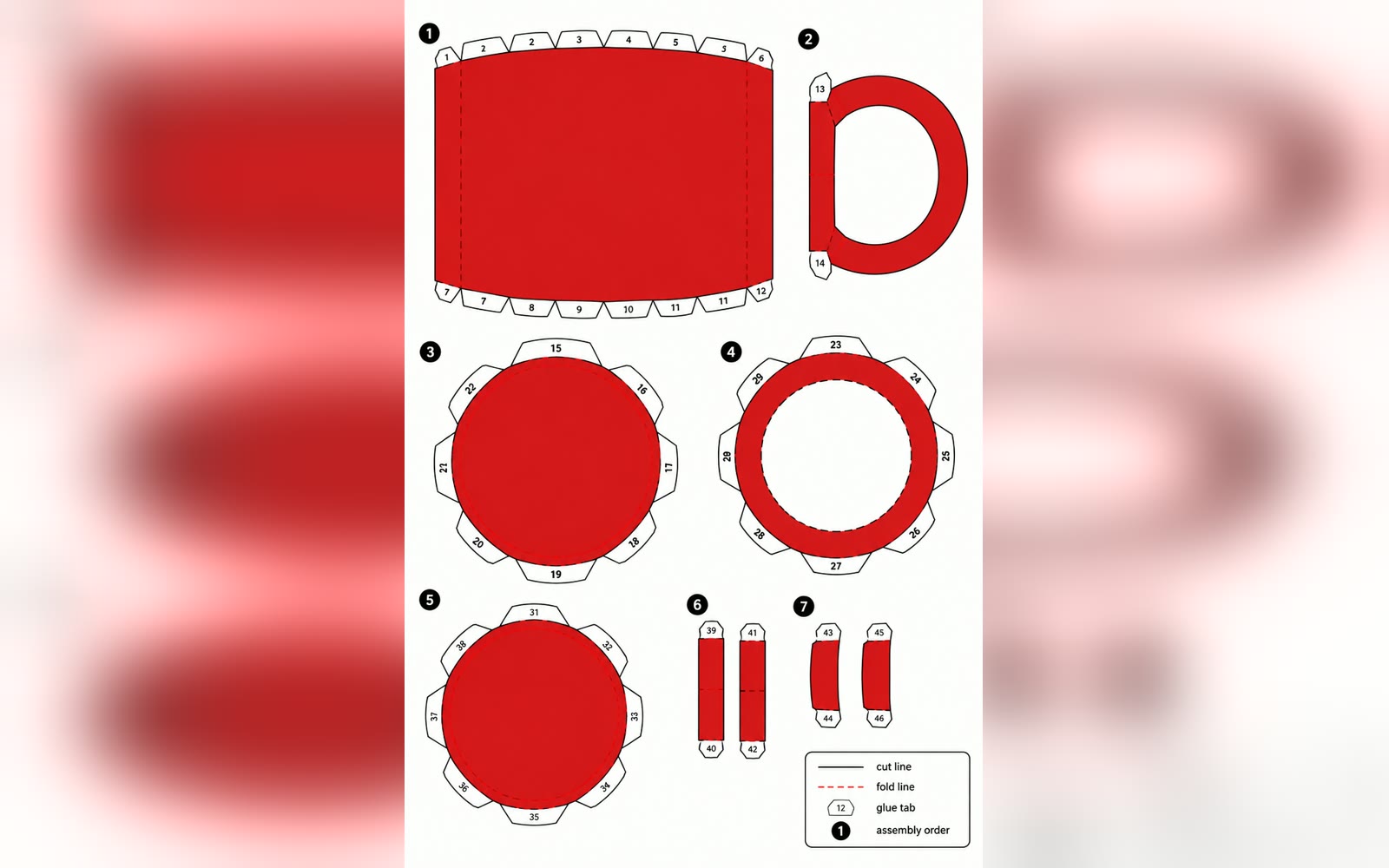
Turn a photo of any small object into a printable papercraft net — flat pieces with cut lines, fold lines, numbered glue tabs and assembly order, laid out on white card.
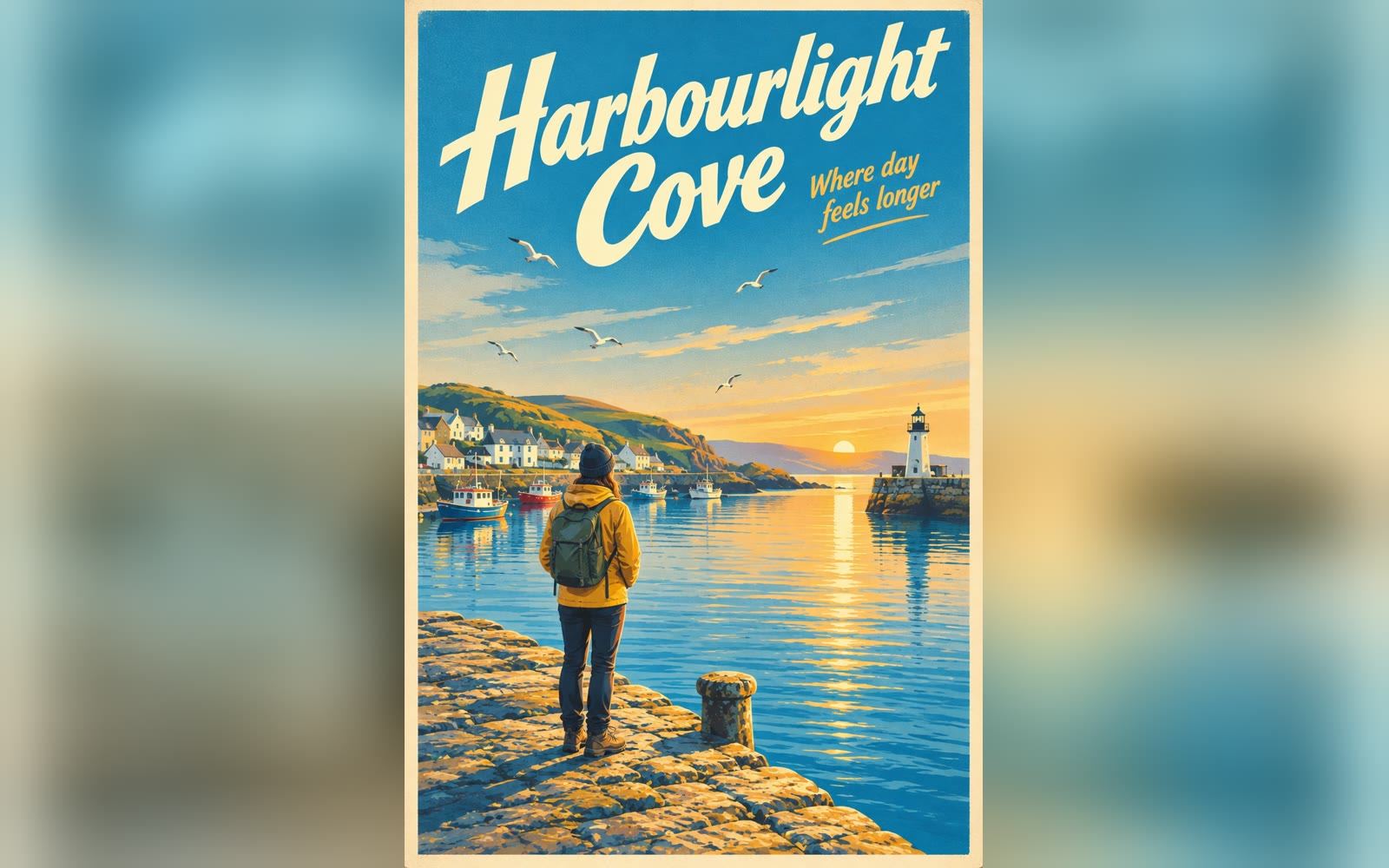
Recast a photo of your own subject — a person, pet, object or view — as a mid-century travel one-sheet for an invented destination, printed in the flat colour and grain of a chosen decade.
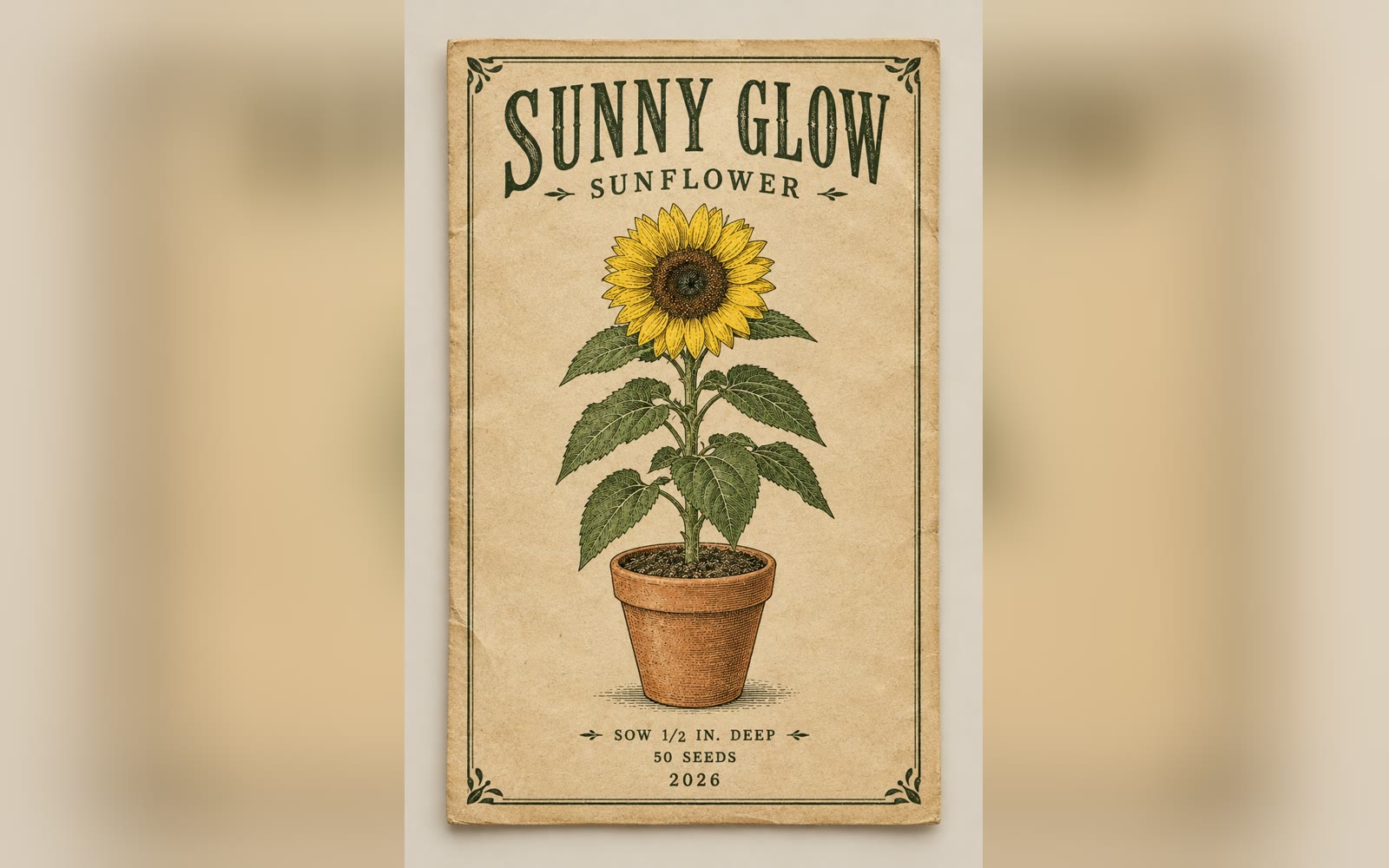
Turn a photo of your own plant or flower into a vintage seed-packet cover — a hand-drawn botanical plate on a kraft envelope with an invented variety name, sowing note and year.
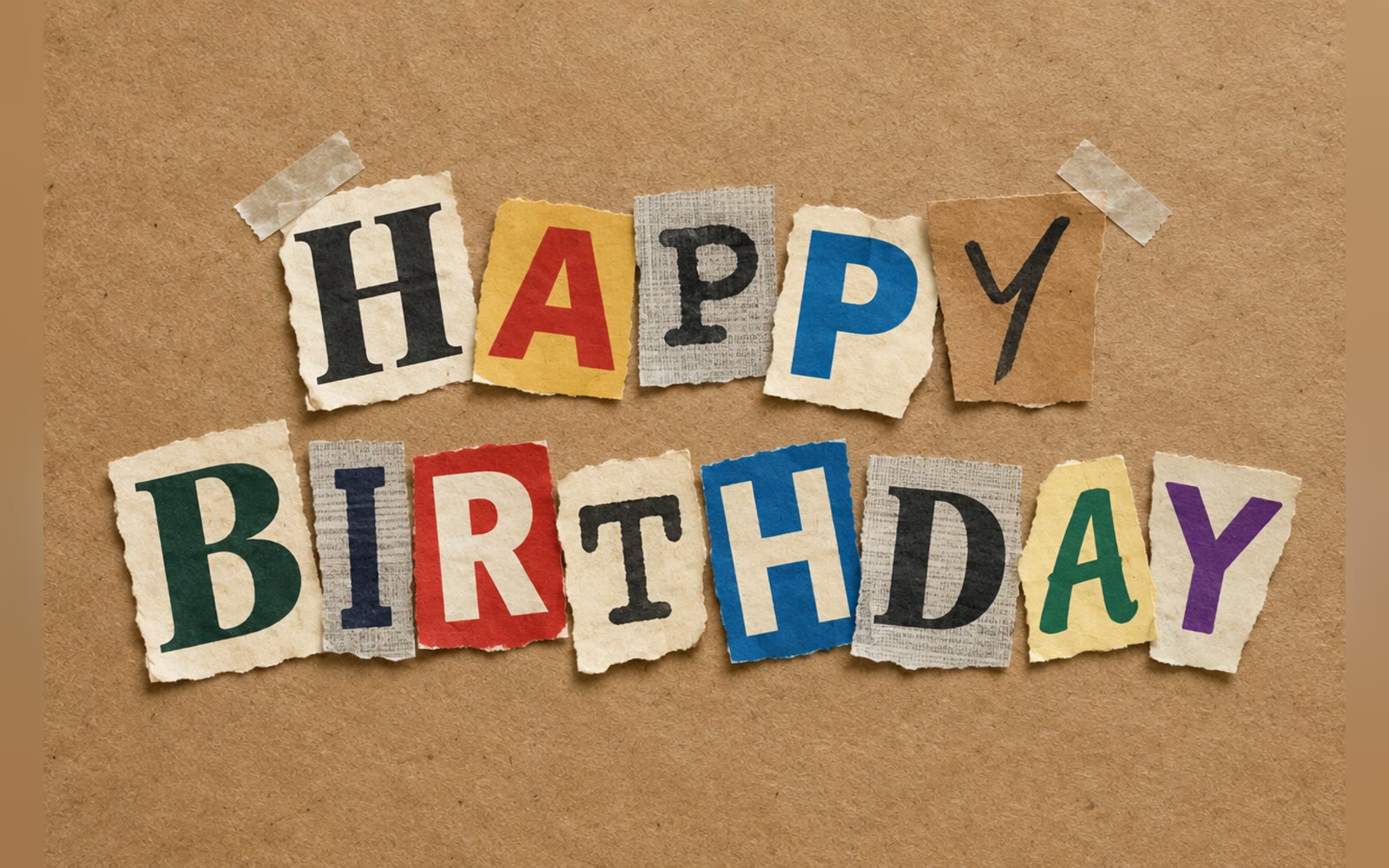
Turn a friendly message — a birthday line, a joke, a card title — into a ransom-note collage of mismatched cut-out letters pasted on kraft paper with tape.
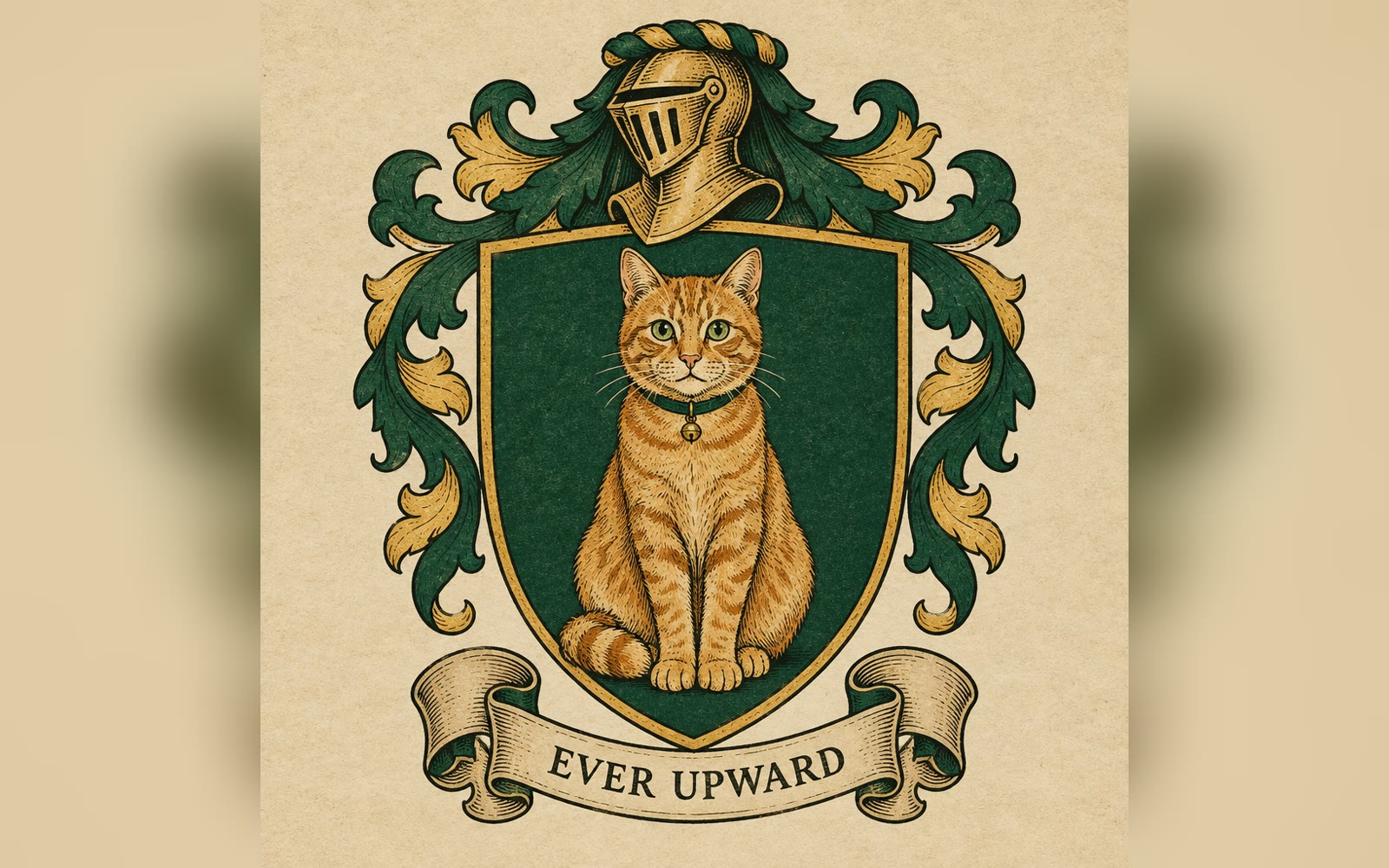
Turn any photo — a pet, a person, a mascot, a meaningful object — into a heraldic family crest: a shield, roundel or lozenge achievement with mantling and an invented motto ribbon.
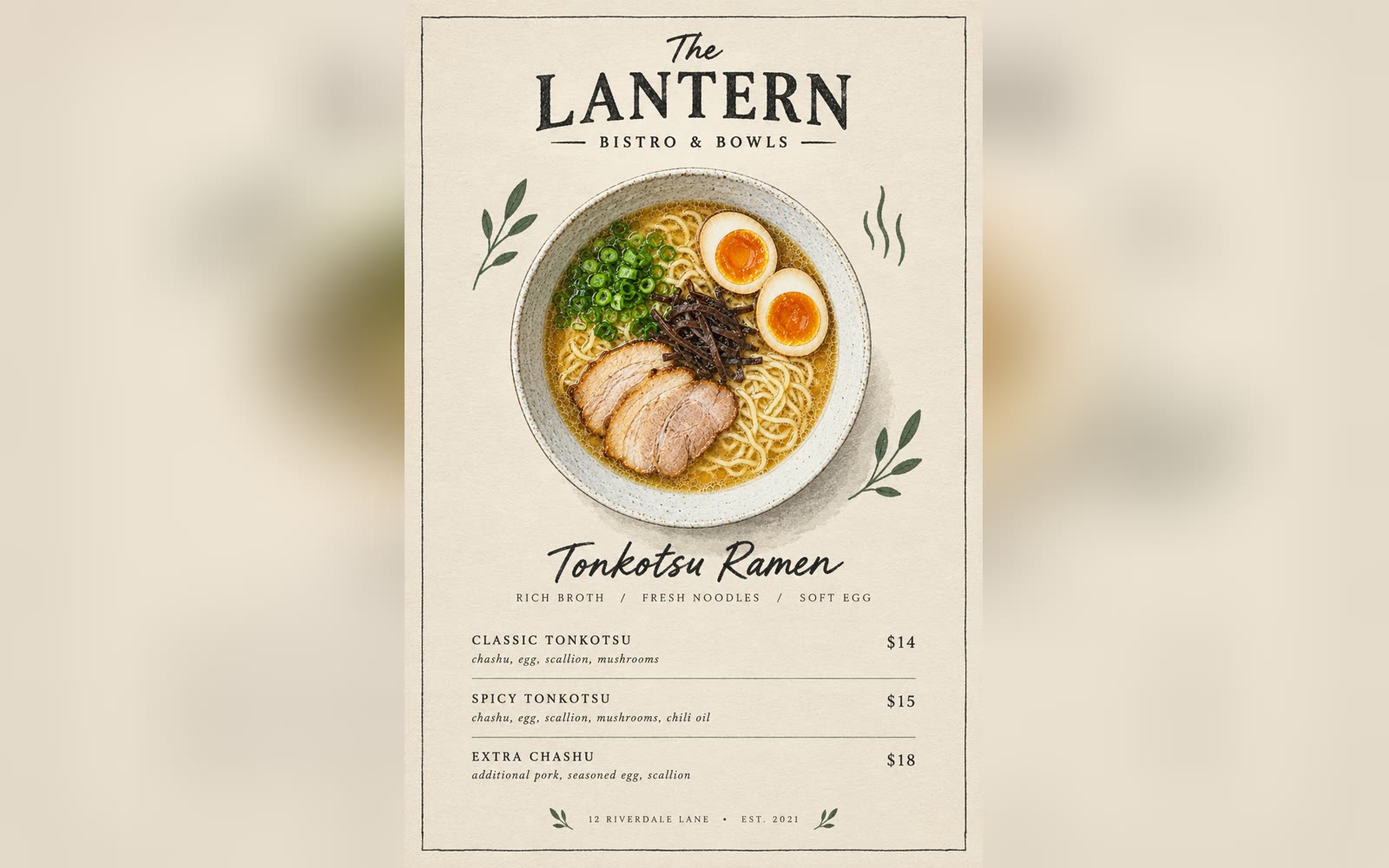
Send a photo of your own dish, dessert or table and pick a cuisine style — bistro, izakaya, cafe or fine-dining. The food stays the hero while an invented restaurant wordmark, fictional dish names and prices, hand-drawn garnish and paper texture turn it into a menu page.
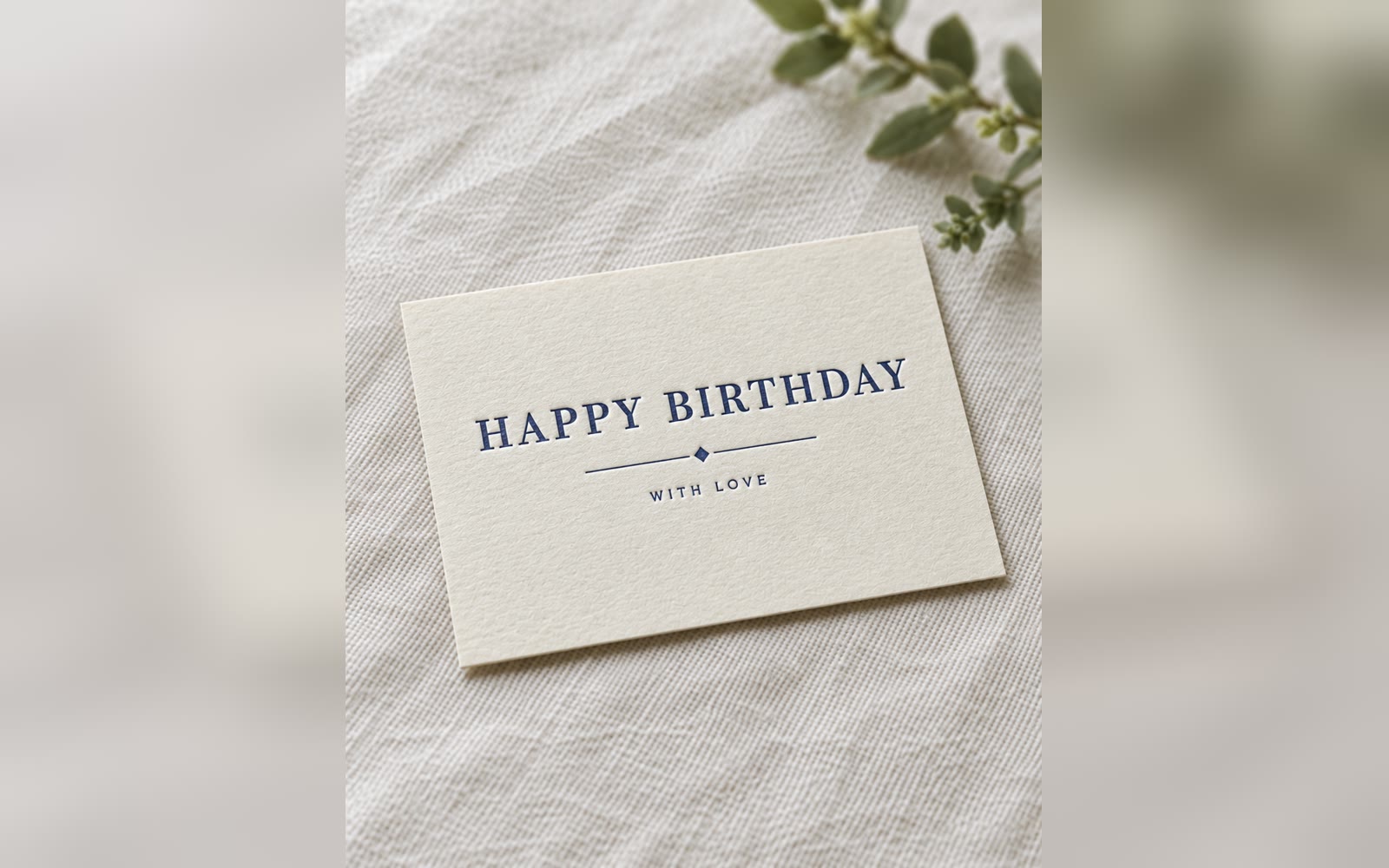
Turn a photo of a note, card or paper keepsake into a letterpress-printed greeting card — a supplied message set in one display face, pressed into thick cotton paper with a hairline rule and a soft emboss bite.
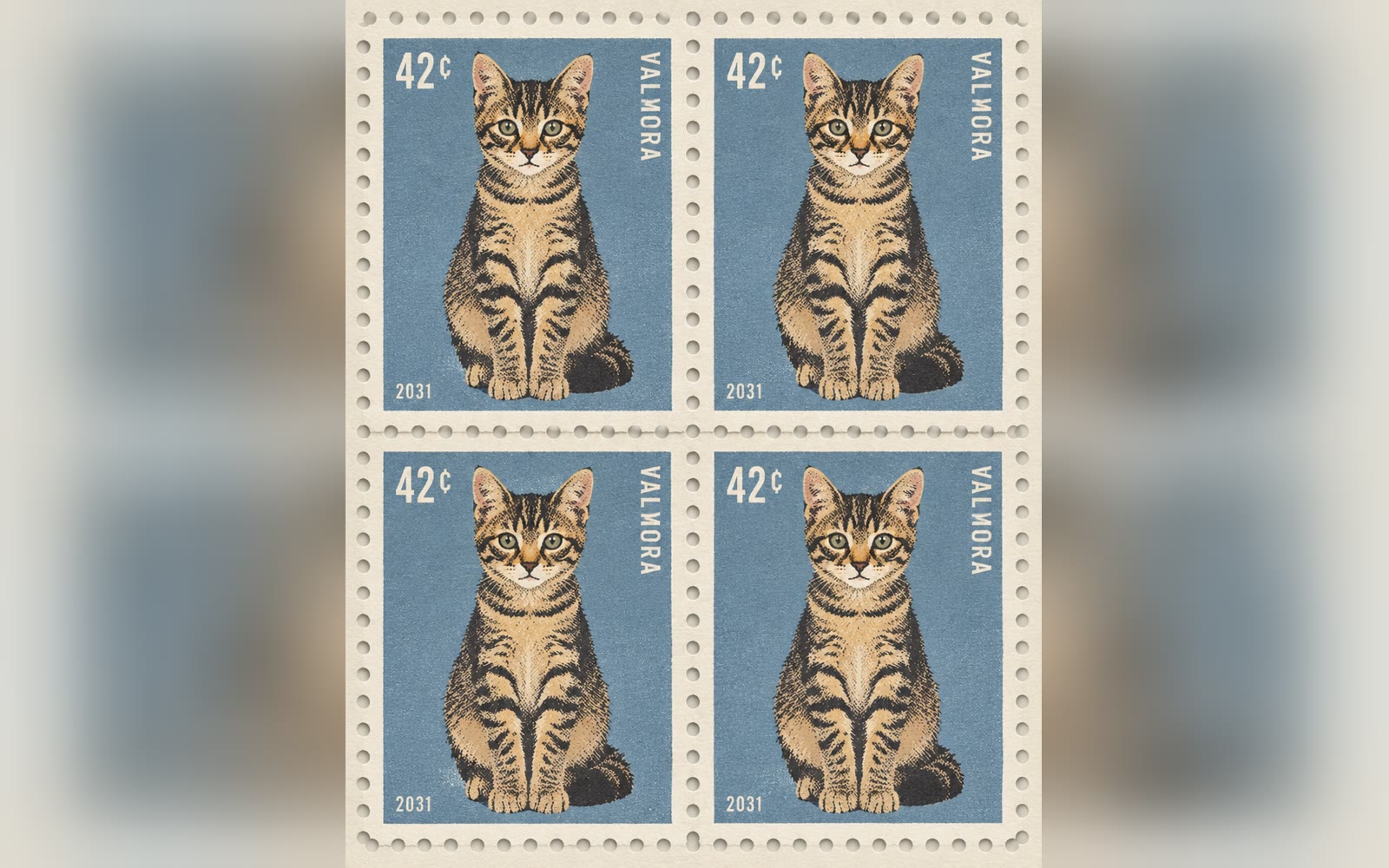
Turn any photo — a pet, a plant, a person, a place — into a printed postage stamp: perforated edge, offset-print grain and invented postal furniture, as one stamp or a 2x2 sheetlet.
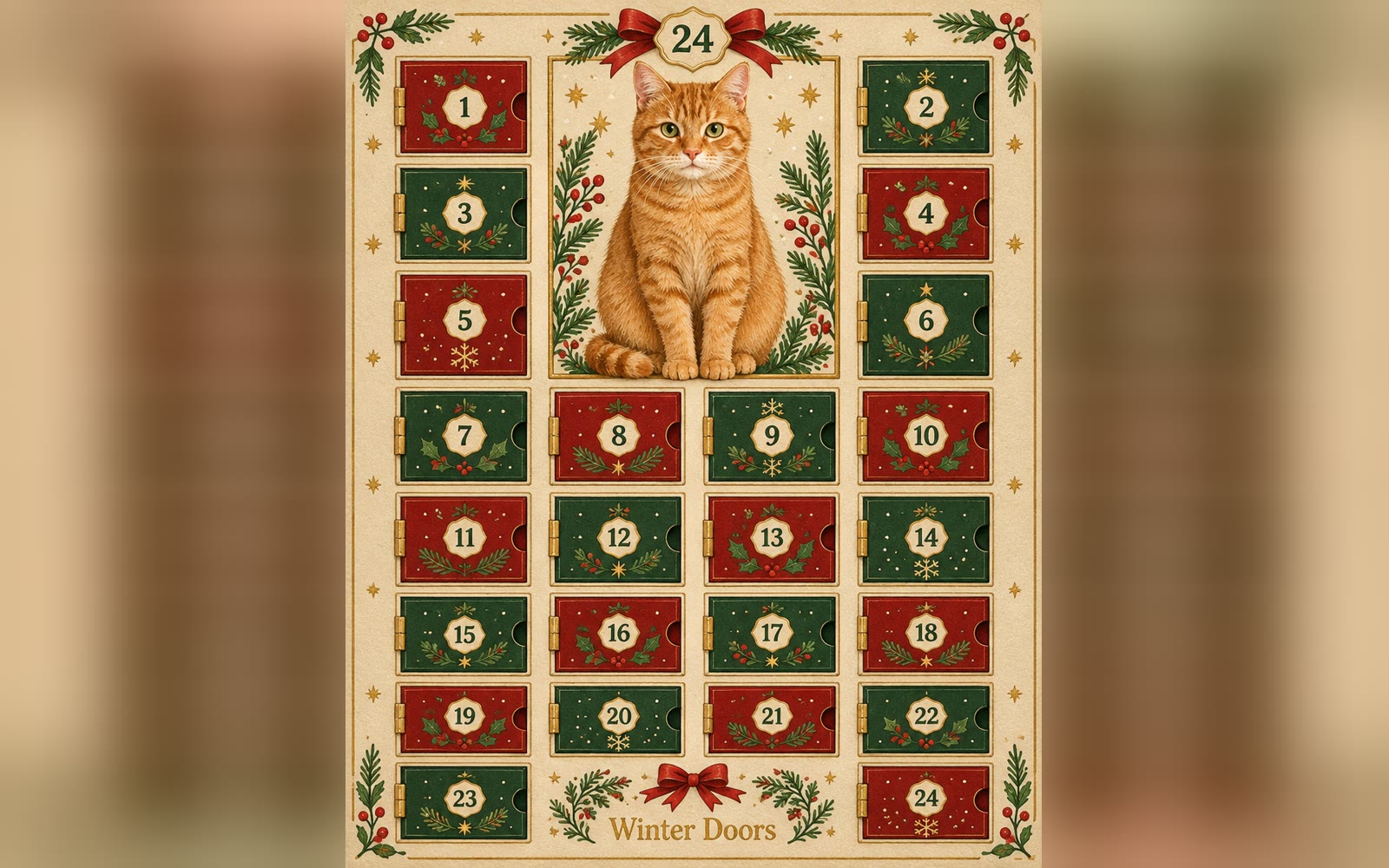
Turn one photo of your pet, plush or object into a Christmas countdown page — 24 numbered doors on festive paper with foil edging, your subject as the calendar hero.
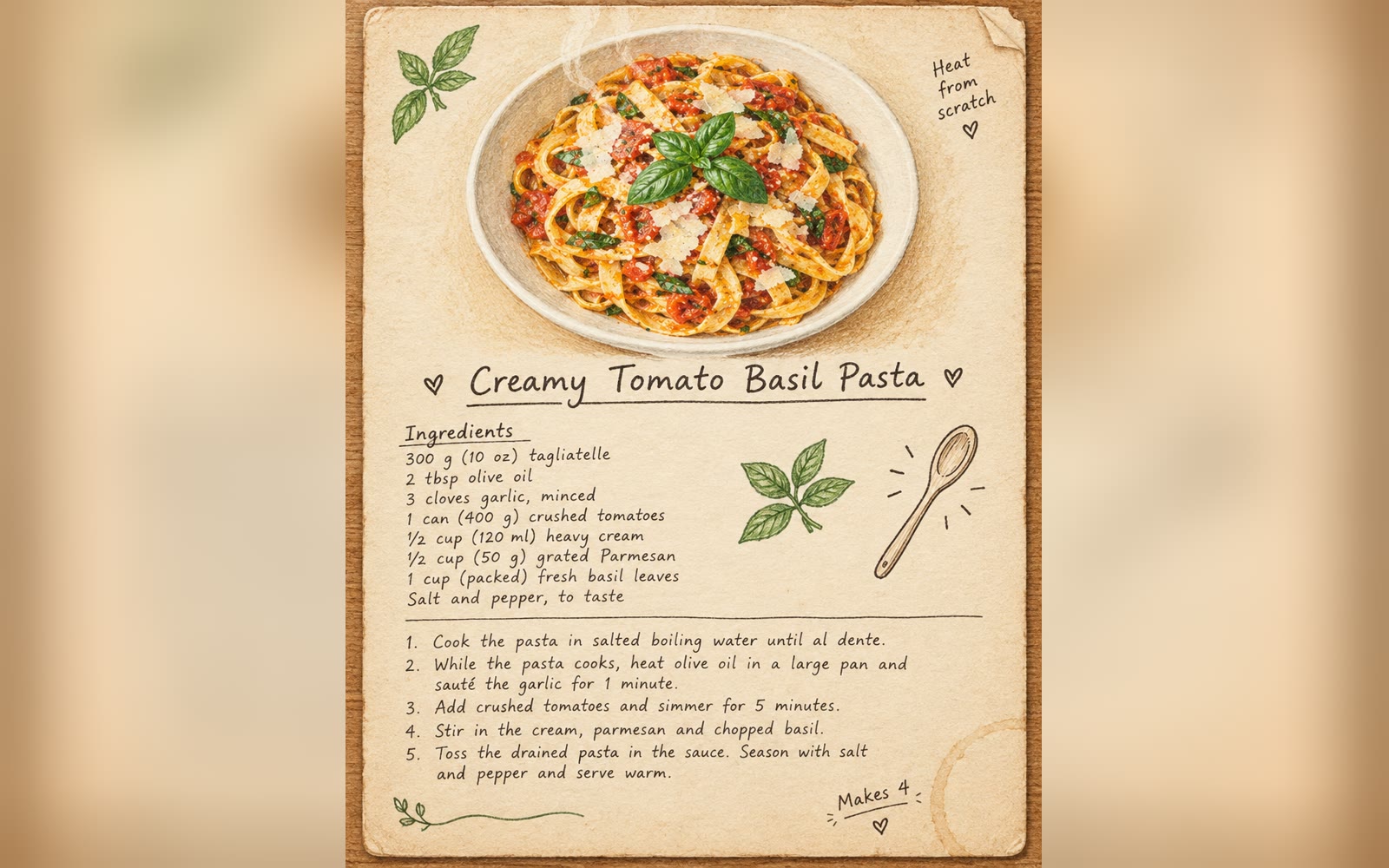
Turn a photo of your own dish into a keepsake recipe card — the dish redrawn as the card's hero picture over a working recipe of invented name, ingredient column and numbered steps.
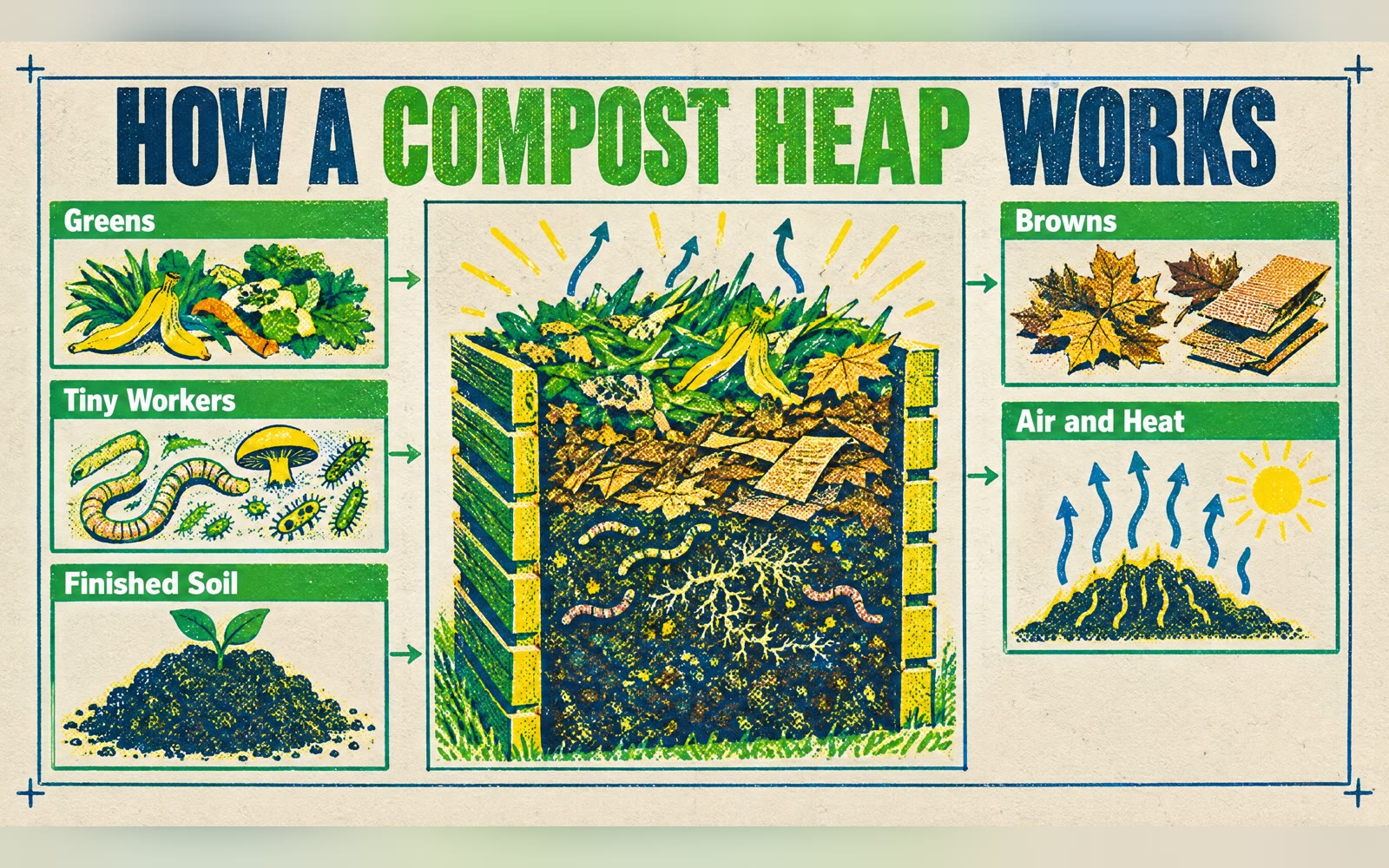
Turn one topic into a 16:9 zine-style explainer spread printed in two or three spot inks.
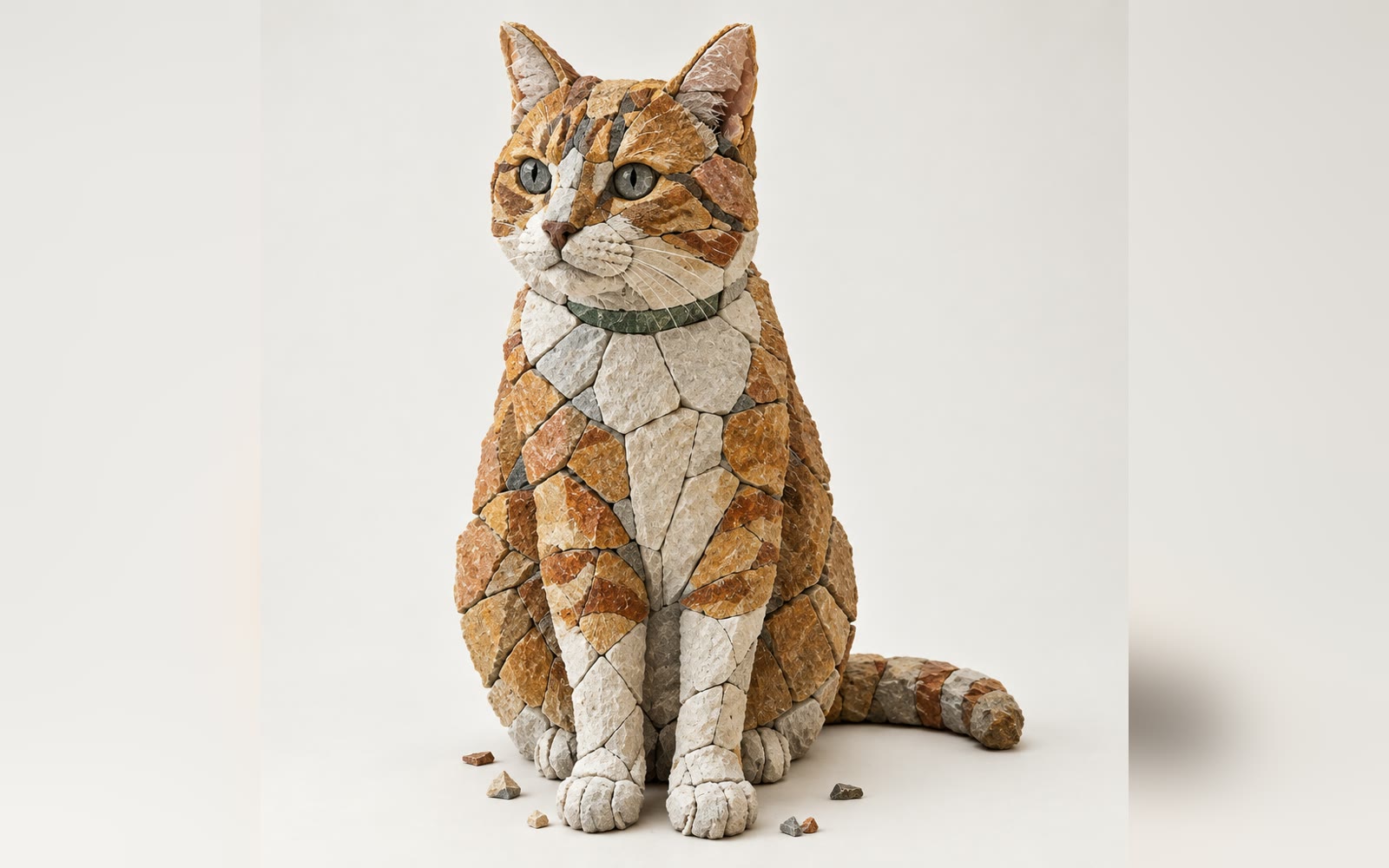
Your photo of a pet, toy or object becomes a studio shot of it rebuilt from chiselled rock shards.
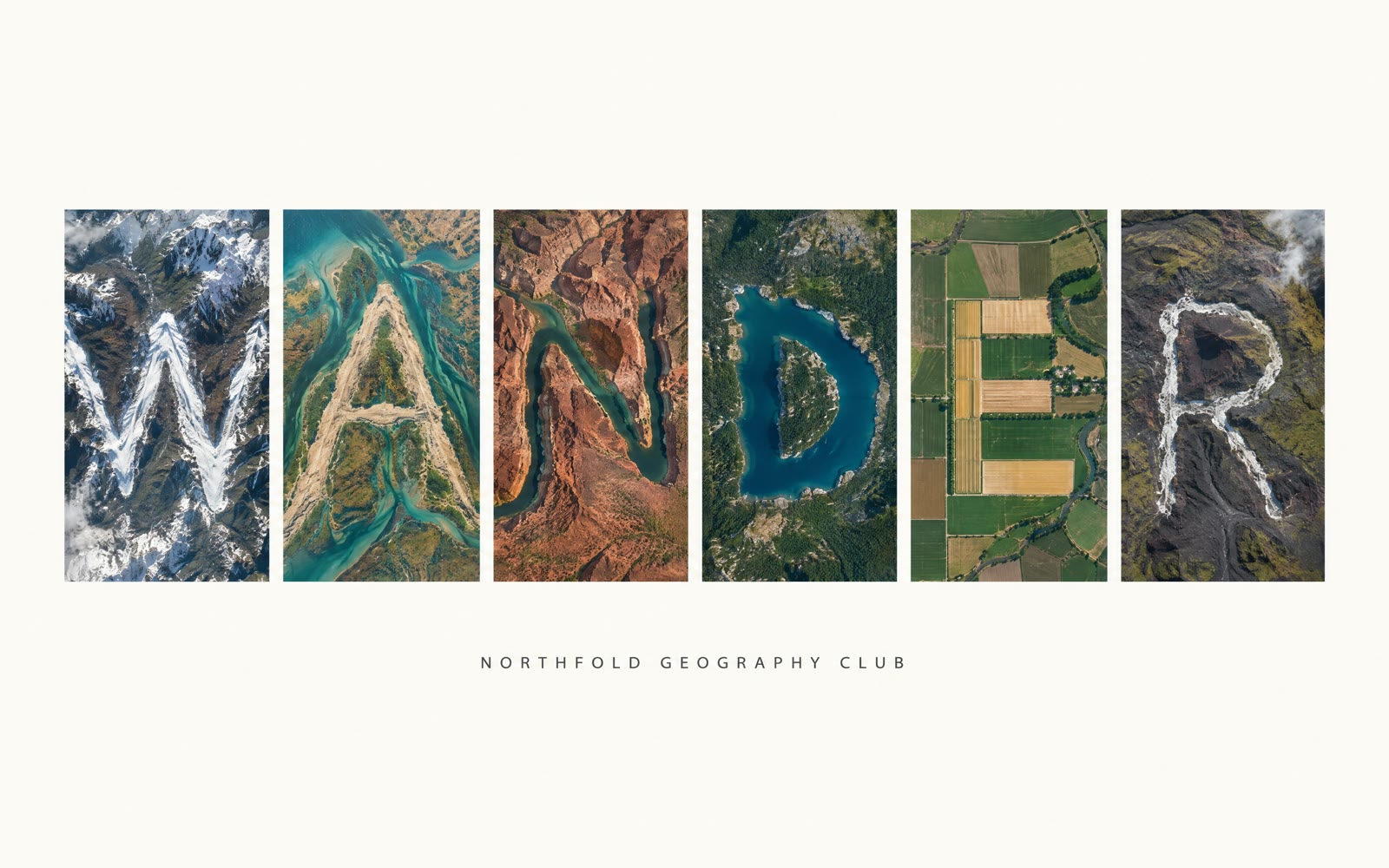
Spell a short word as a row of aerial landscape tiles, each letter formed by rivers, ridges, ice or fields.
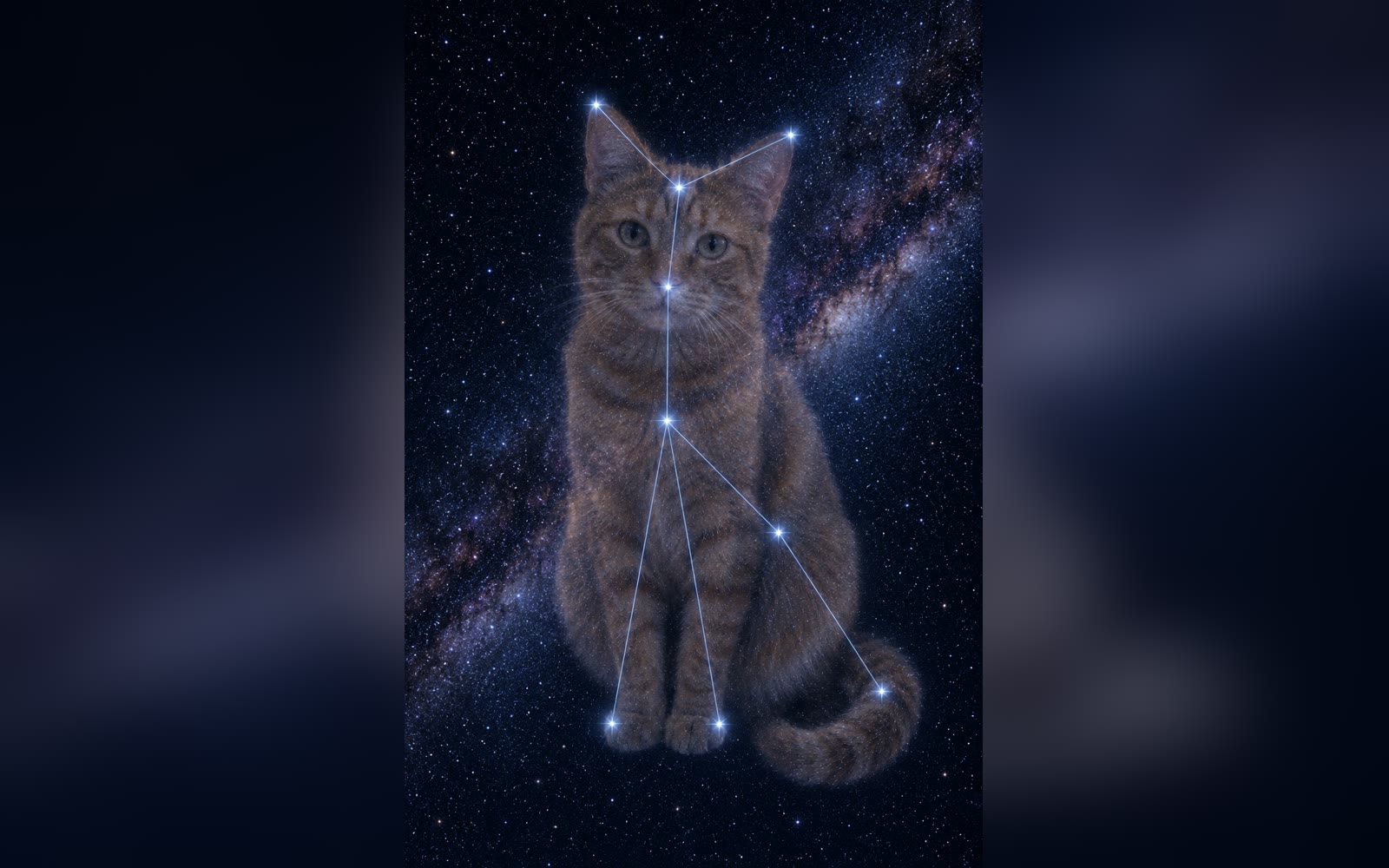
Your photo of a pet, toy or object becomes a tall night-sky picture with the same subject traced as a glowing star pattern.
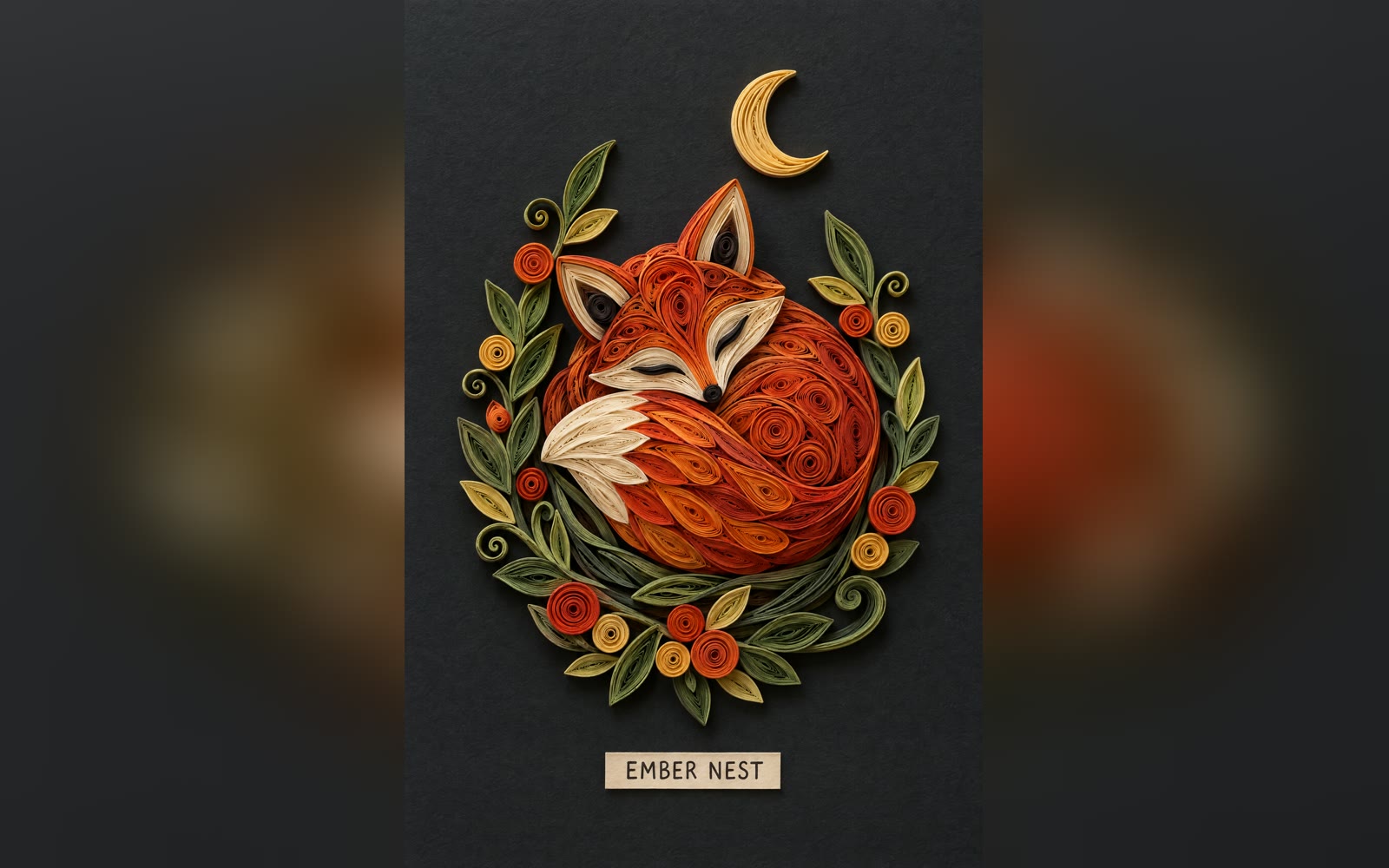
Rebuild one creature, object or small scene as an upright coiled-paper relief sculpture on dark charcoal card.
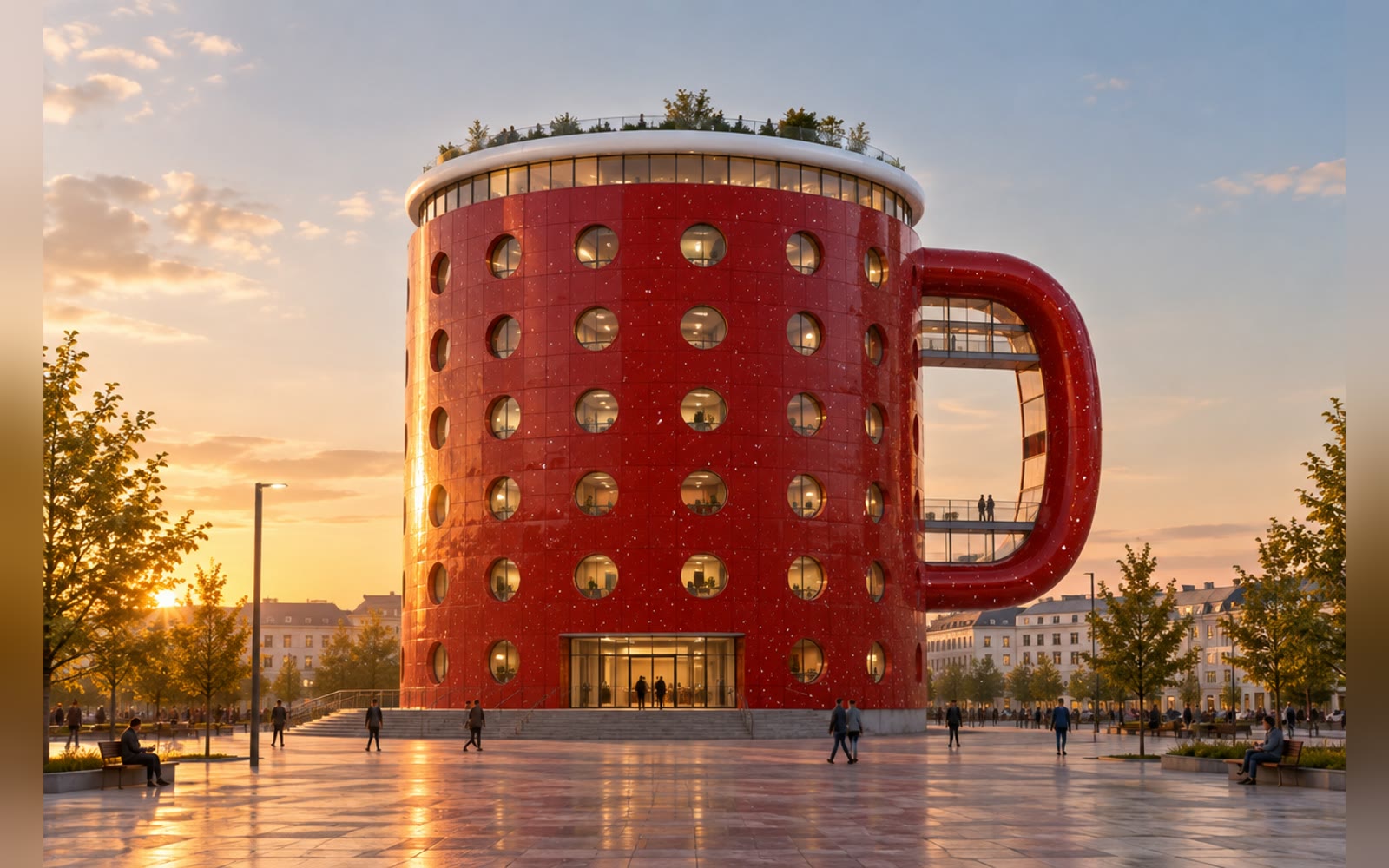
Your photo of a mug, shoe, lamp or toy becomes a wide photograph of a city square where the same object stands as a real, inhabited building.
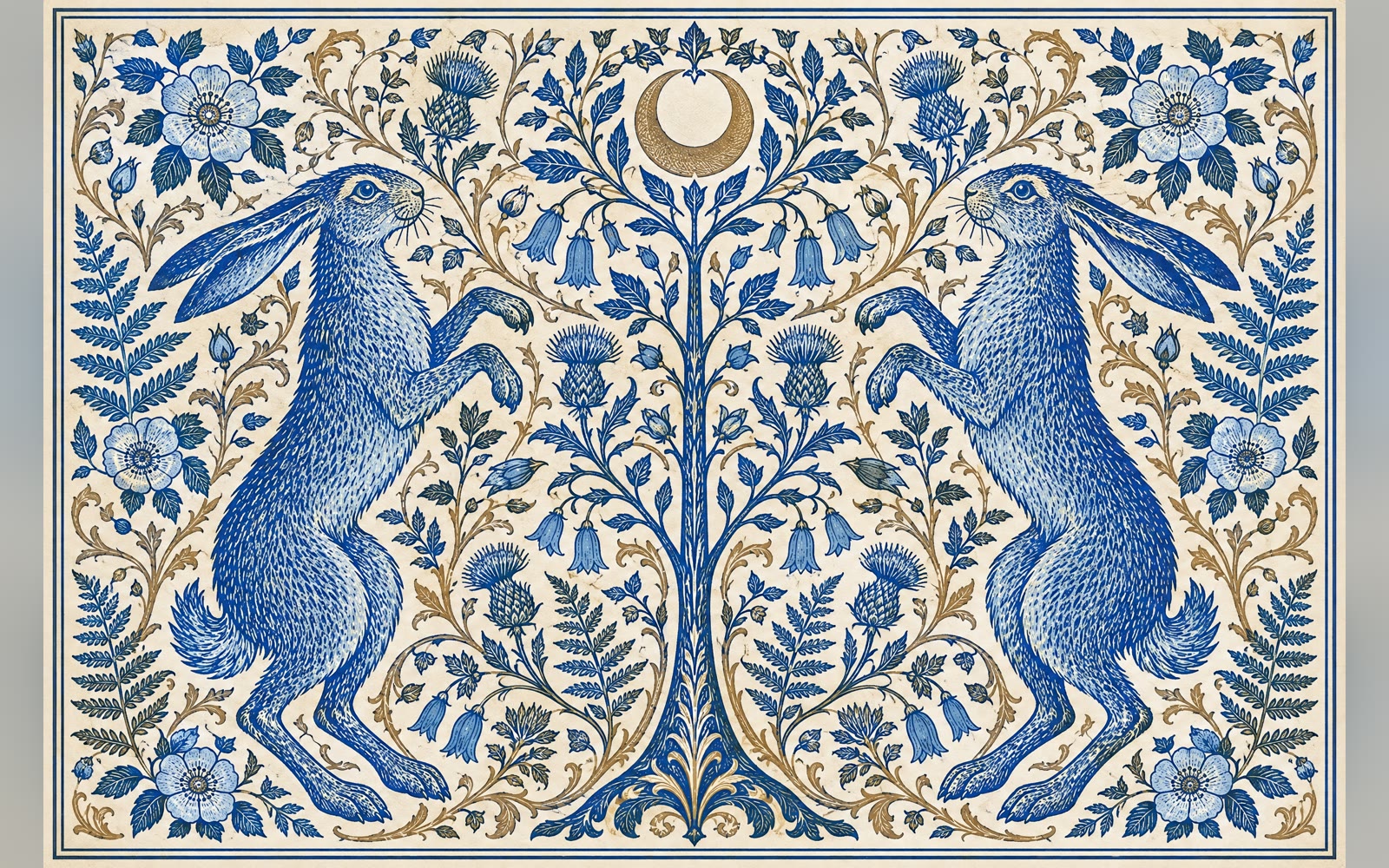
Draw two matching creatures facing a centre motif across a mirror axis, wrapped in a dense scroll field and printed in two tones of one ink.
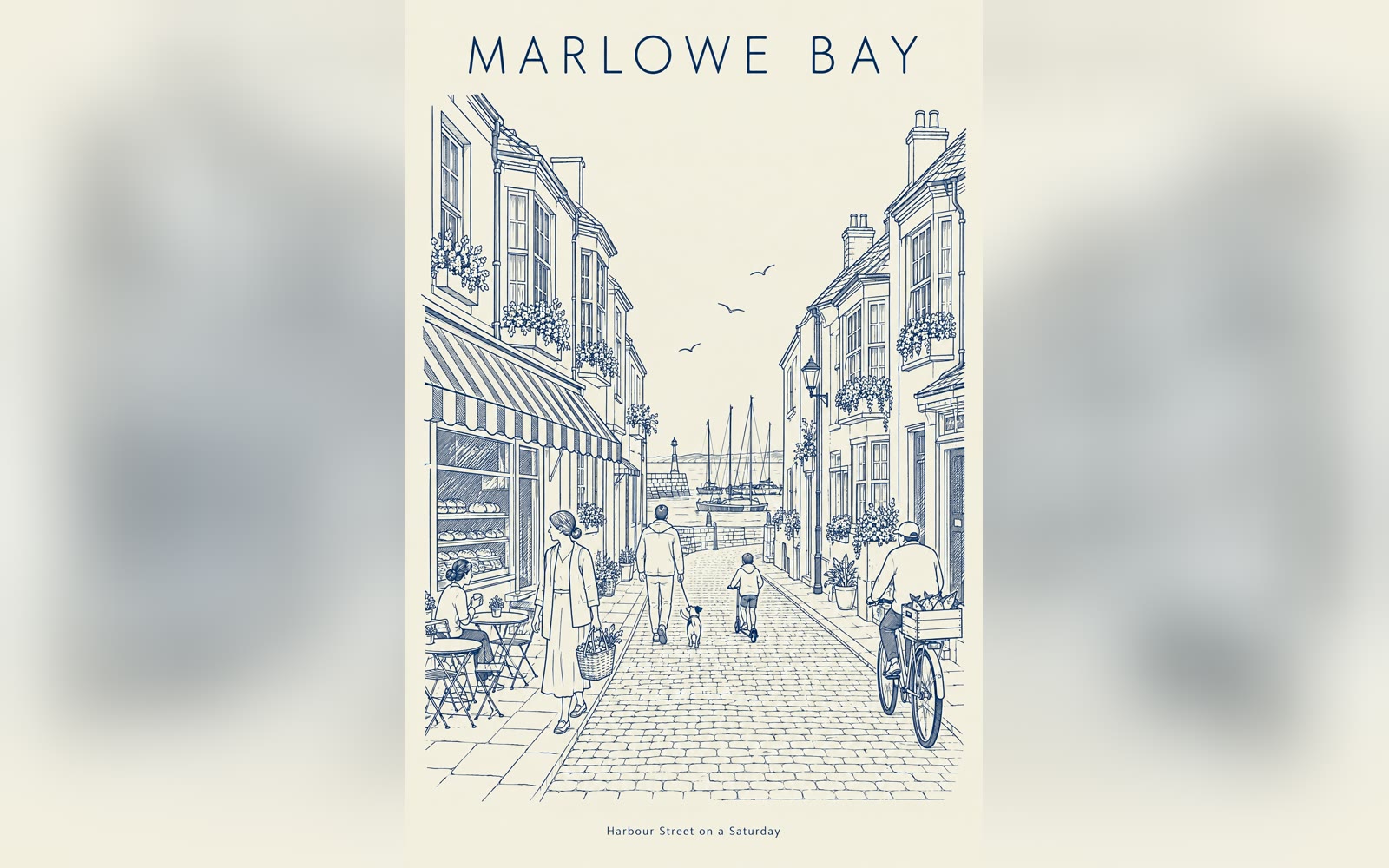
Draw one street, quay or market lane at eye level with a fine even pen line in a single ink, with the place name set large across the top.
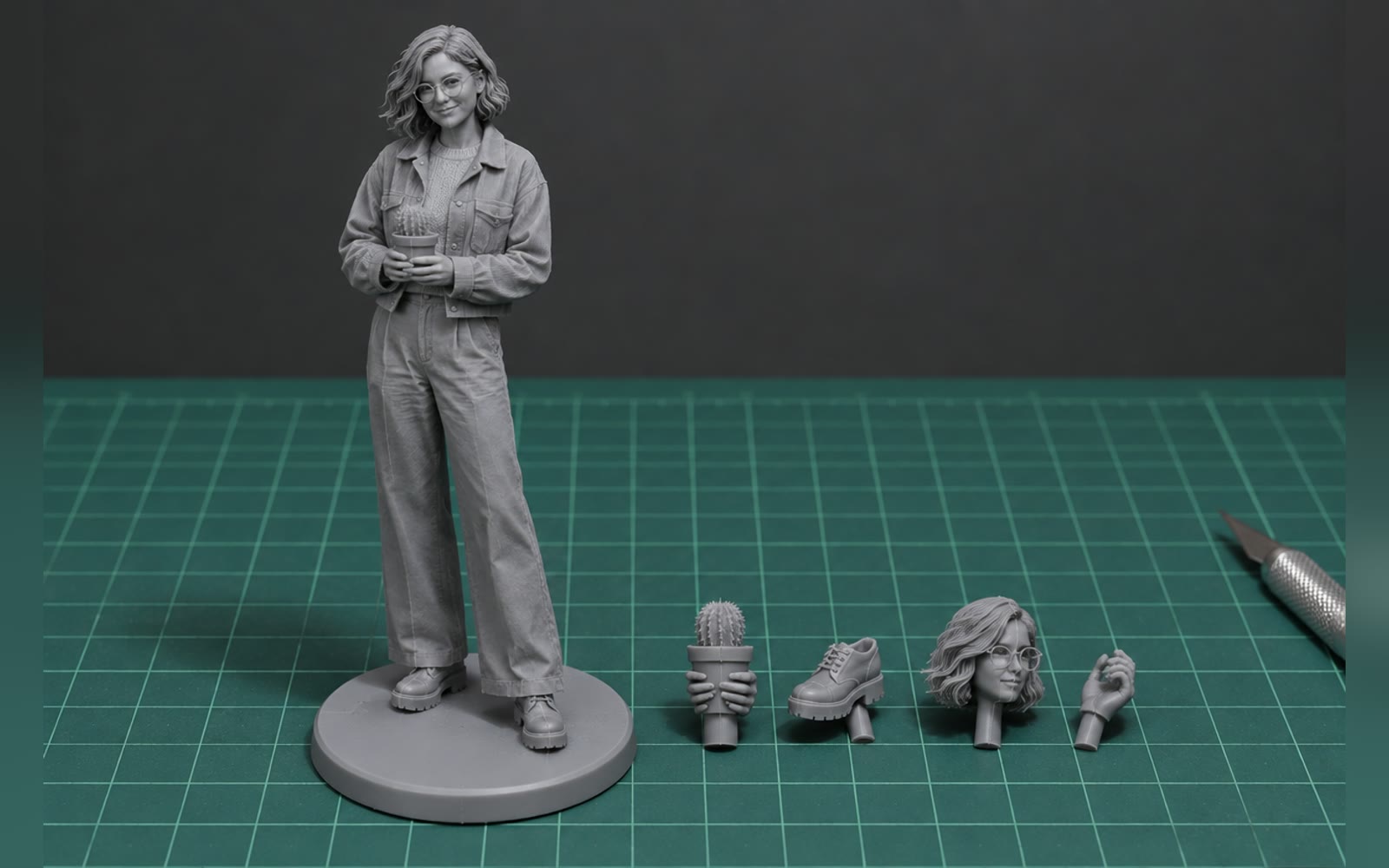
Your photo of a person, pet, plush toy or drawn character becomes a macro studio shot of an unpainted resin figure of that subject on a hobby cutting mat.
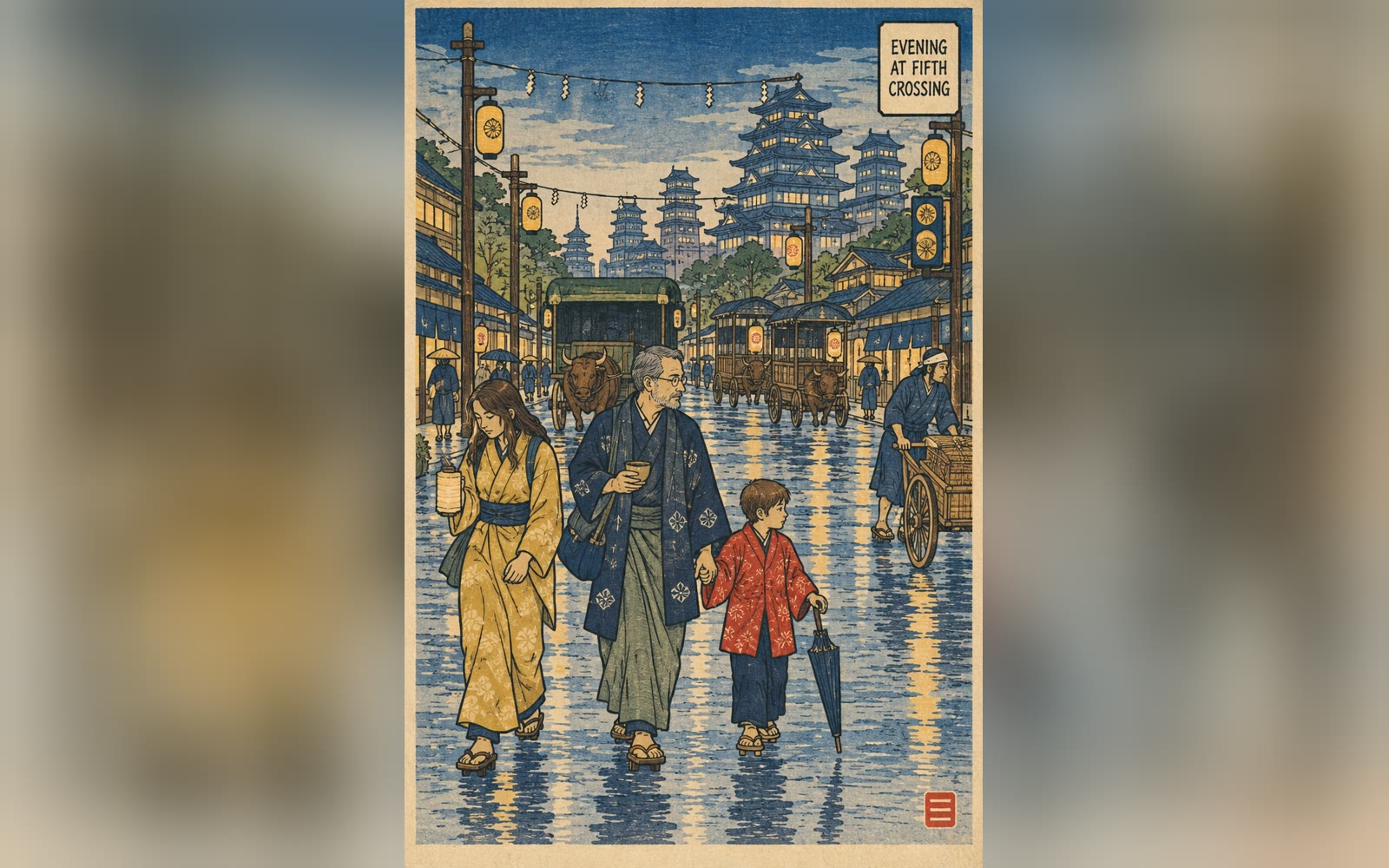
Your photo of a street, café or commute becomes a colour woodblock print from an earlier age, with the same people and layout and every modern object swapped for its period equivalent.

Turn a travel agency brief into a single-file site with journeys, experiences, trip pages and an enquiry form.
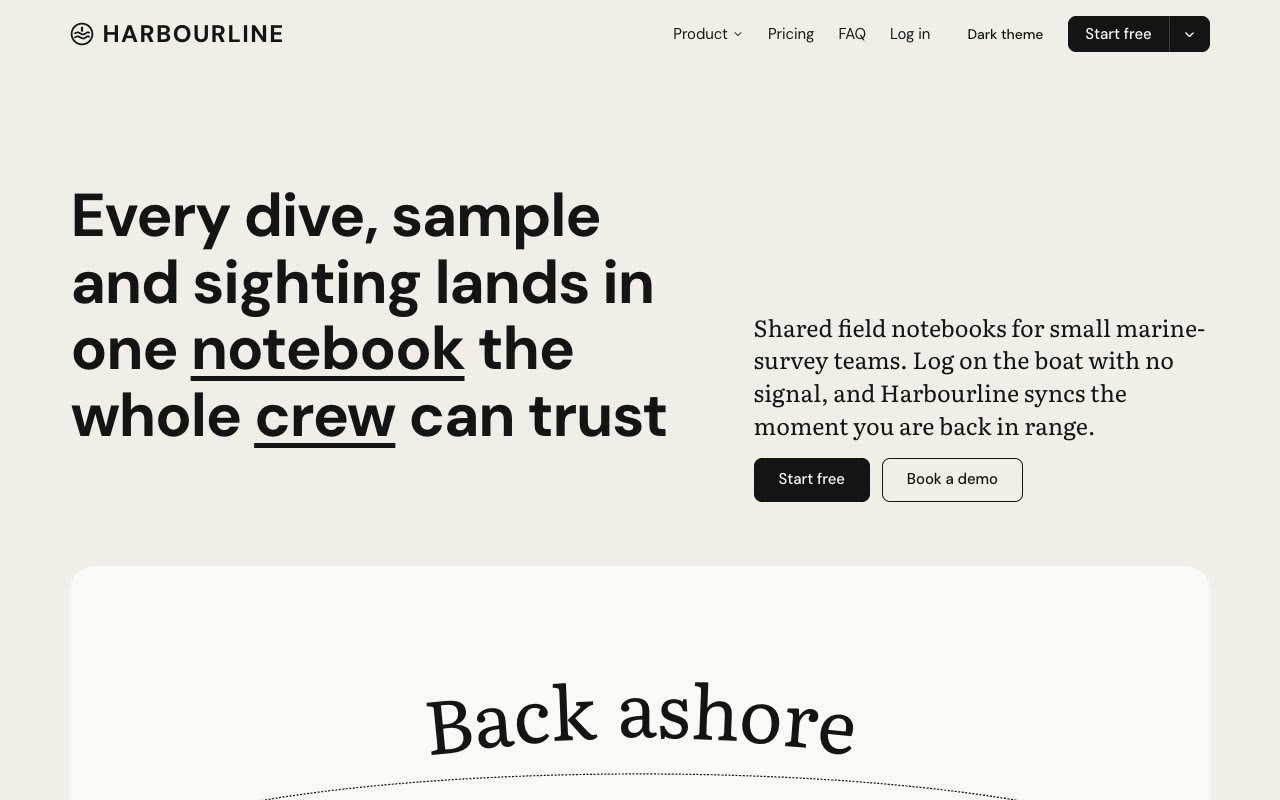
Restyle a site, or build a new one, in an oat paper style: bold sans headlines with underlined keywords, serif body text and warm cards.
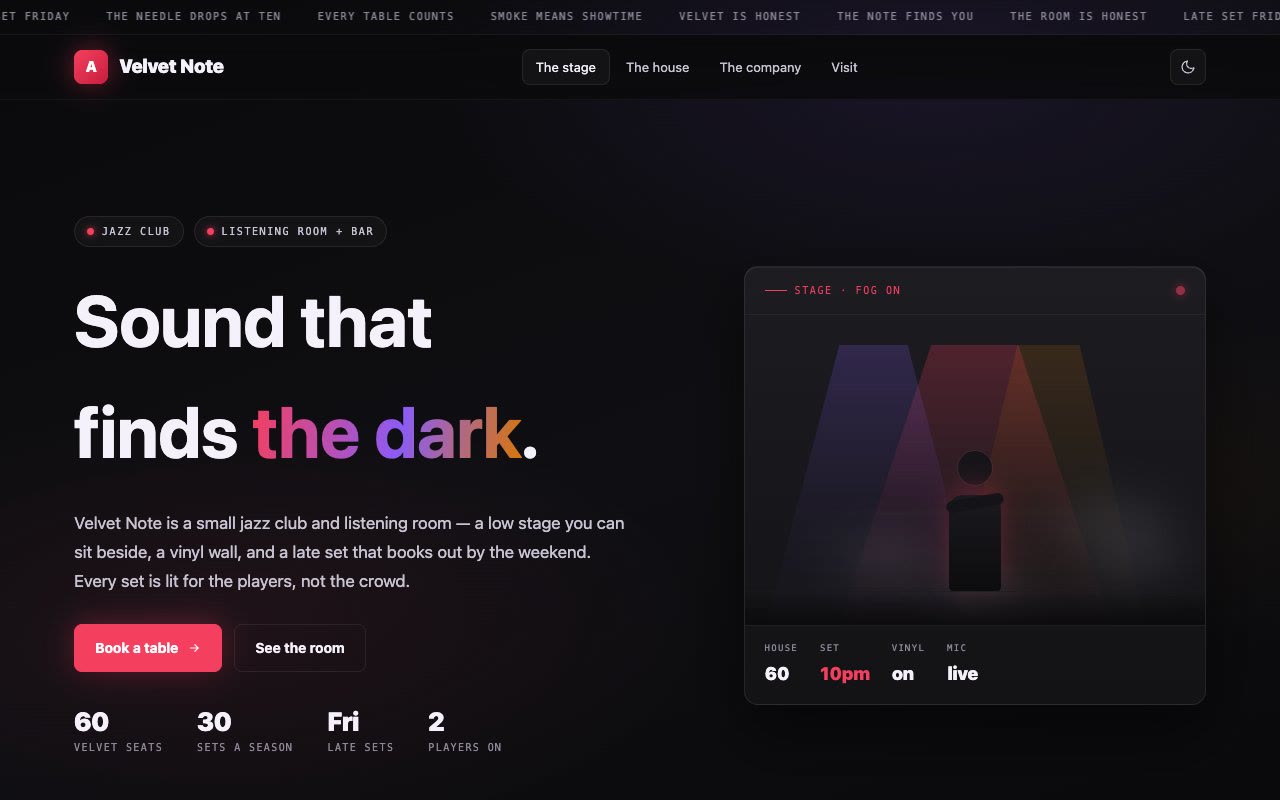
Turn a brief for a theater, performance venue or experimental arts space into a site with dramatic dark chrome, spotlight cone effects, atmospheric smoke drifts, rose accent lighting and theatrical typography.

Turn a bio and a list of projects into a complete single-file developer portfolio with case studies, writing and a contact form.
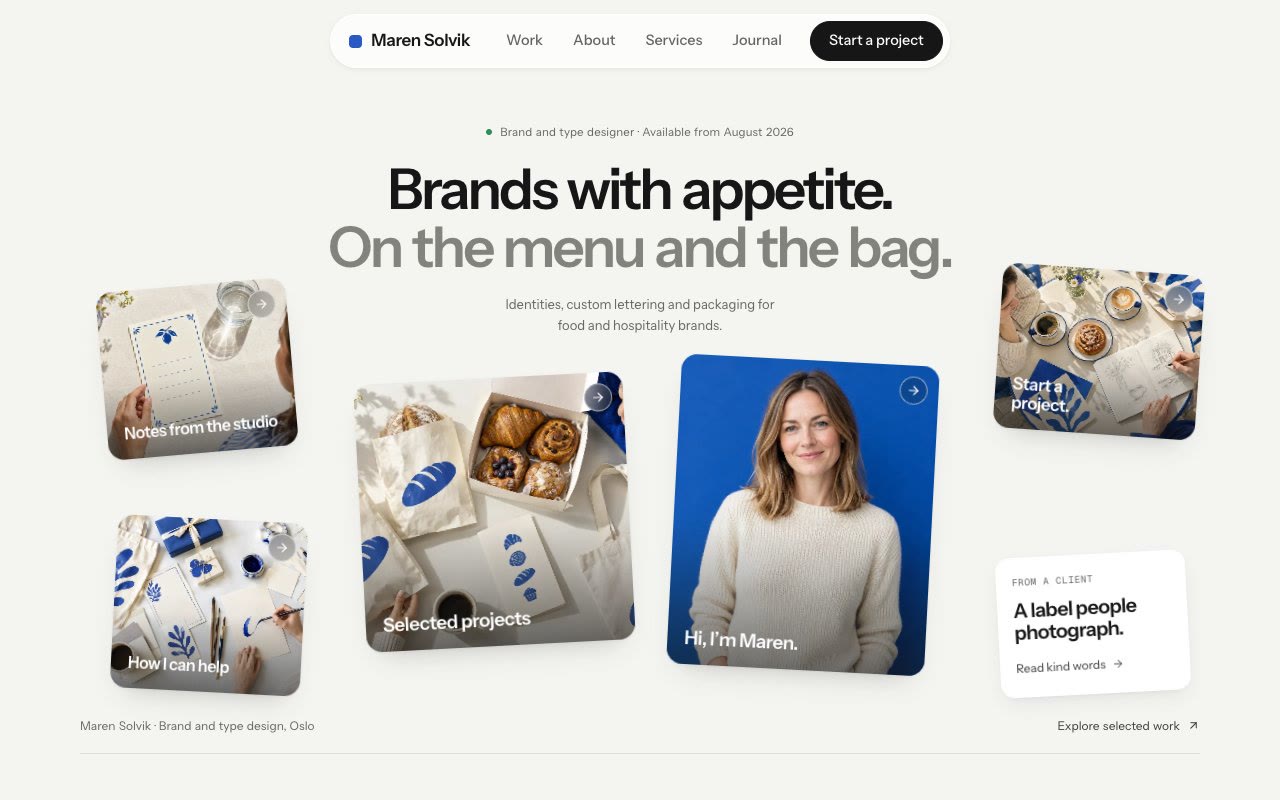
Turn a designer's bio and projects into a single-file bento-grid portfolio with a page for every case study.

Turn a show brief into a single-file podcast site with an episode list, episode pages, guests and an about page.
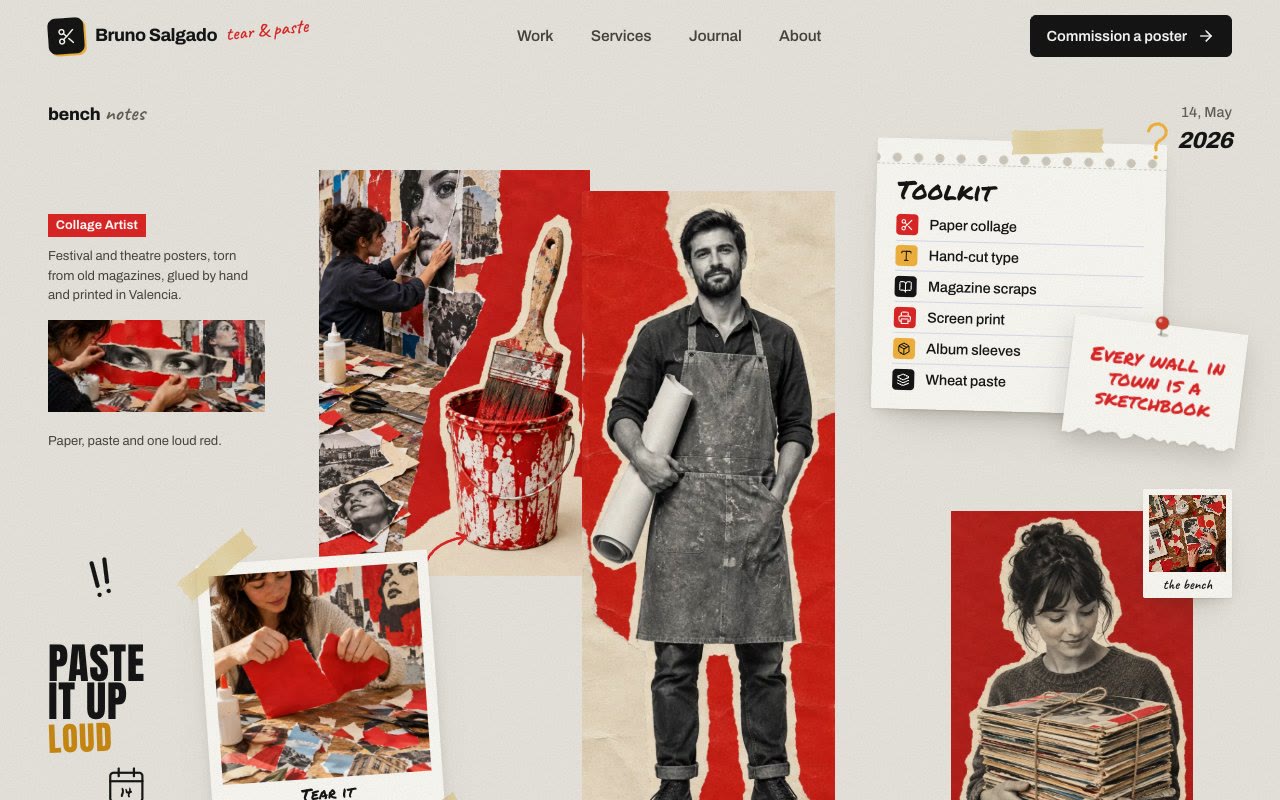
Turn a creative's projects into a single-file collage-style portfolio with a page for each piece of work.
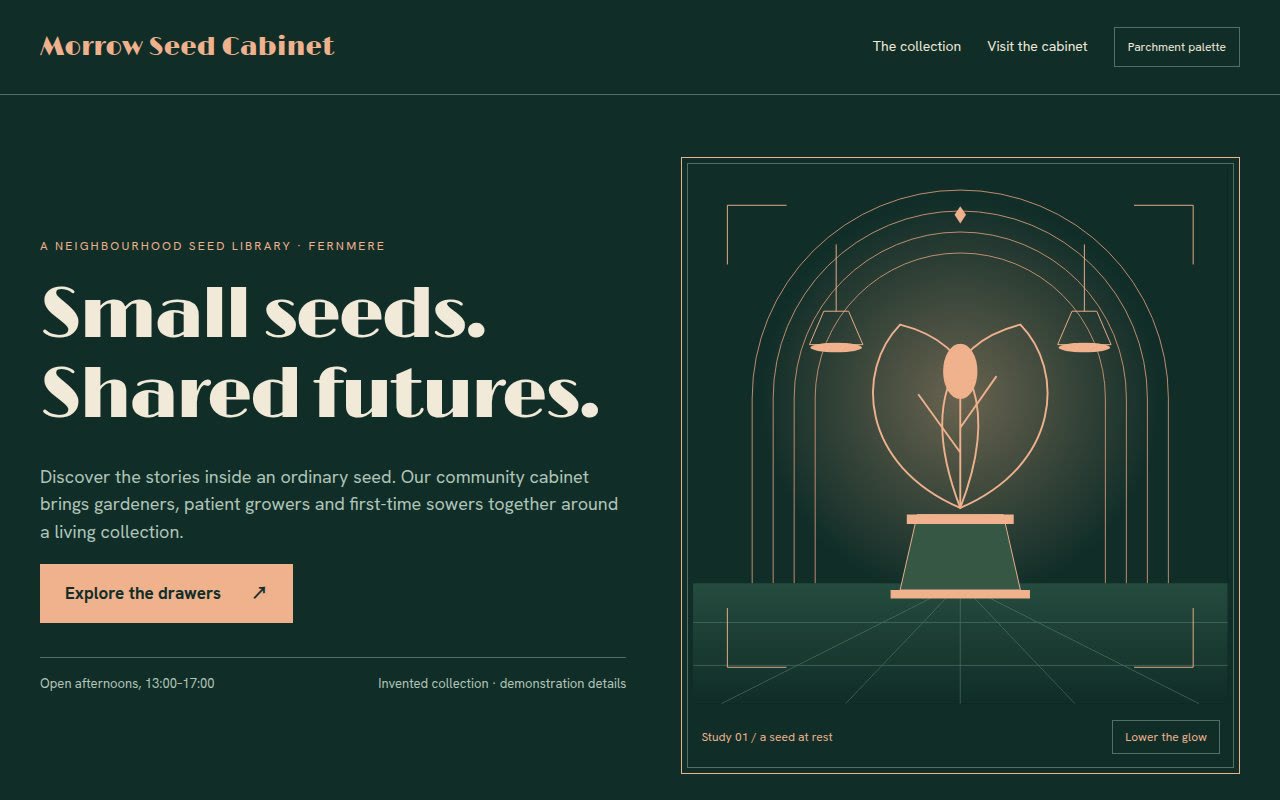
Present a cultural venue, community collection or craft programme with theatrical headings, deep pine surfaces, fine copper frames and an illustrated chamber that visitors can explore at their own pace.

Turn a brief for a listening bar, tape archive, radio community or hi-fi venue into a dark dithered-terminal site: ordered cyan grain, mono caps, terminal-panel chrome and a marquee ticker.

Turn a bio and a list of projects into a hand-drawn single-file developer portfolio with case studies, services, experience and a journal.
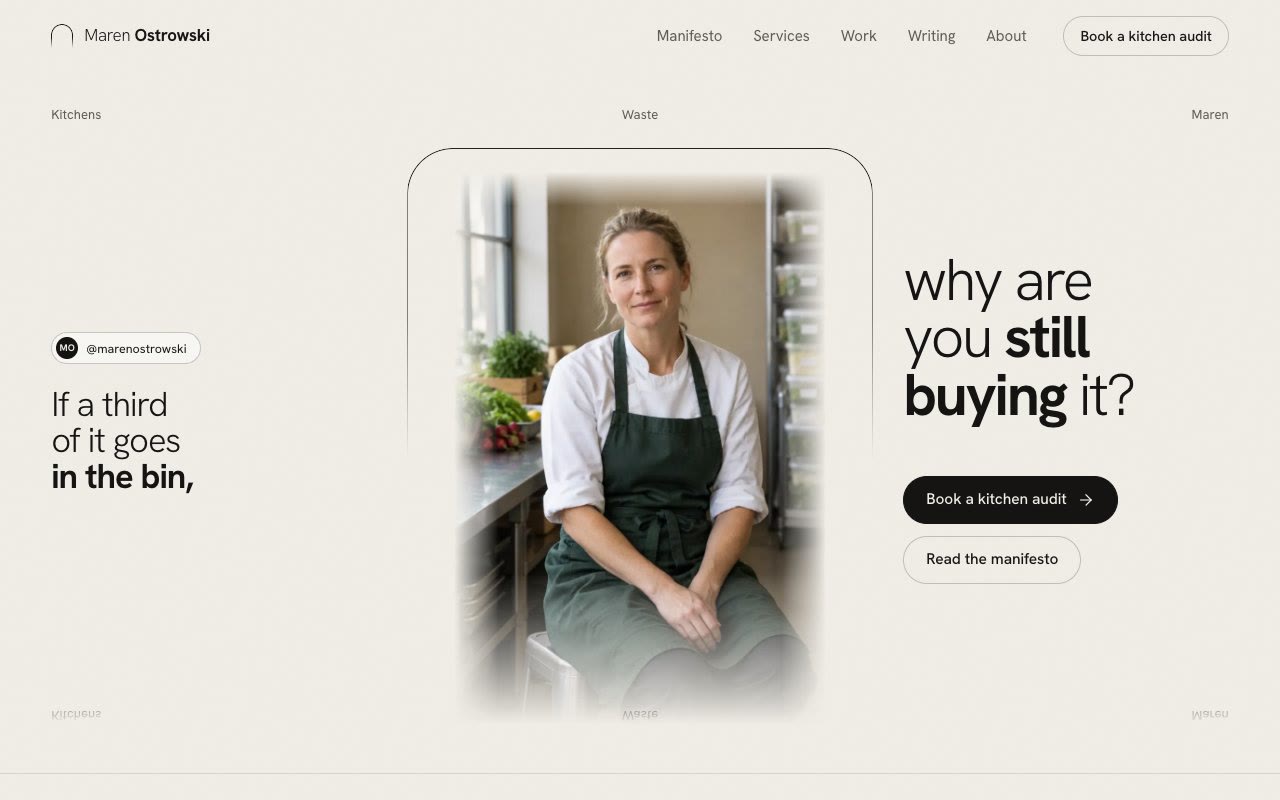
Turn a consultant's positioning into a single-file editorial personal brand site with a manifesto, services and case pages.
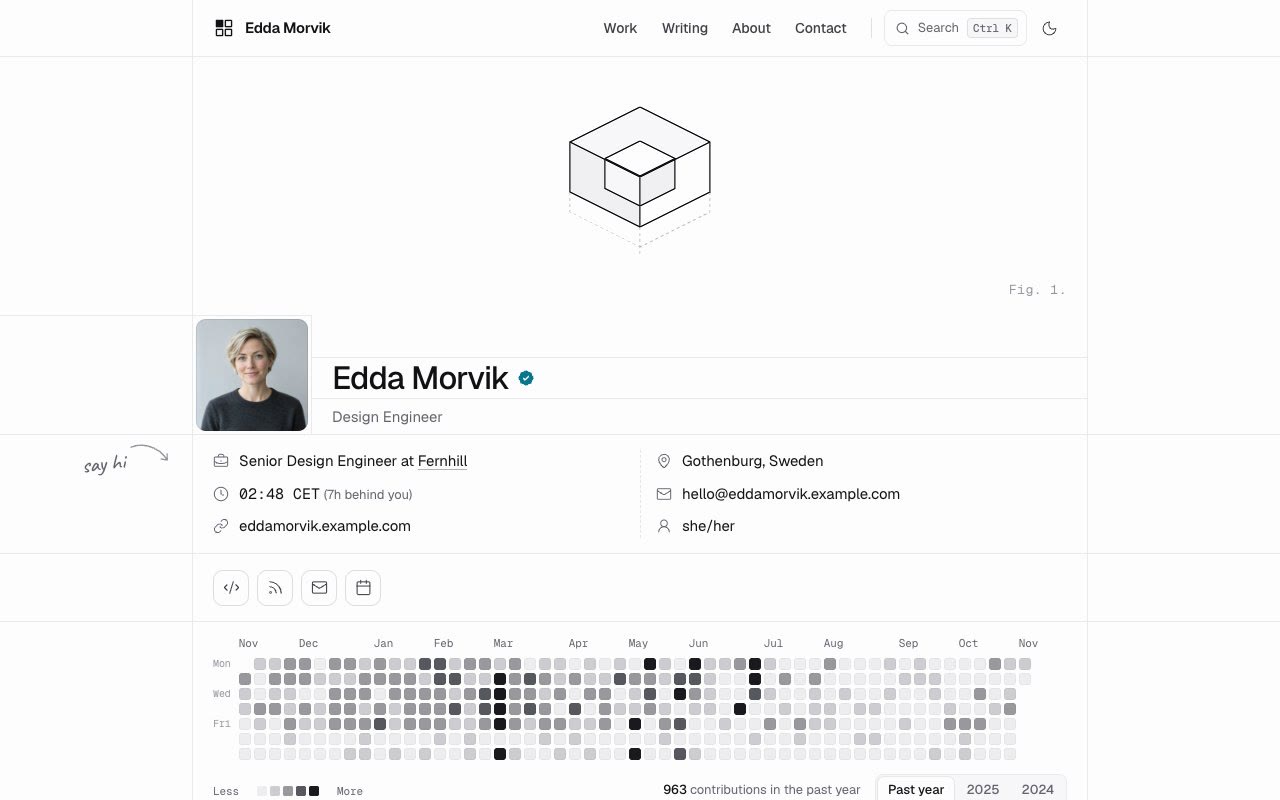
Turn a bio and a list of projects into a precise single-file portfolio for a design engineer, with work, writing, about and contact.
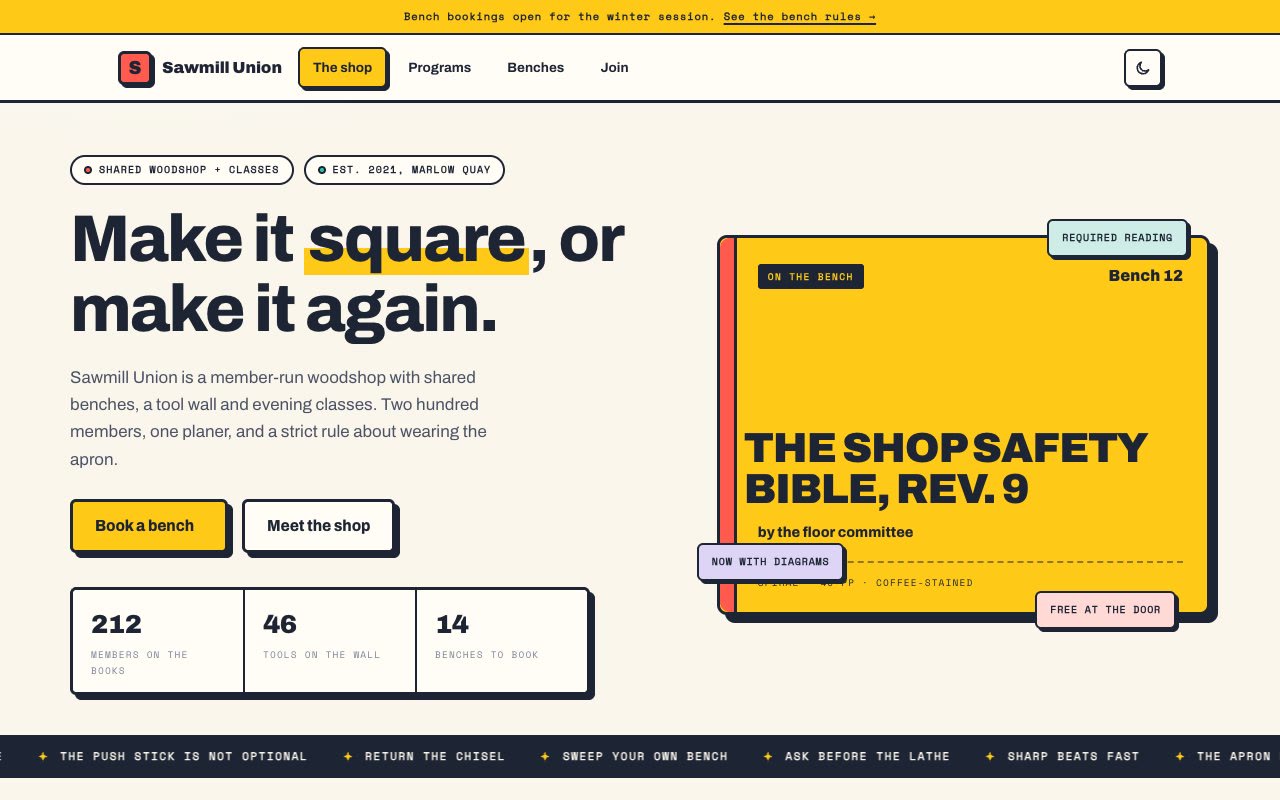
Turn a brief for a print studio, letterpress workshop or riso lab into a site with ink-bordered blocks, hard offset shadows, loud flat accent panels on cream, uppercase micro-labels and heavy grotesk display type.
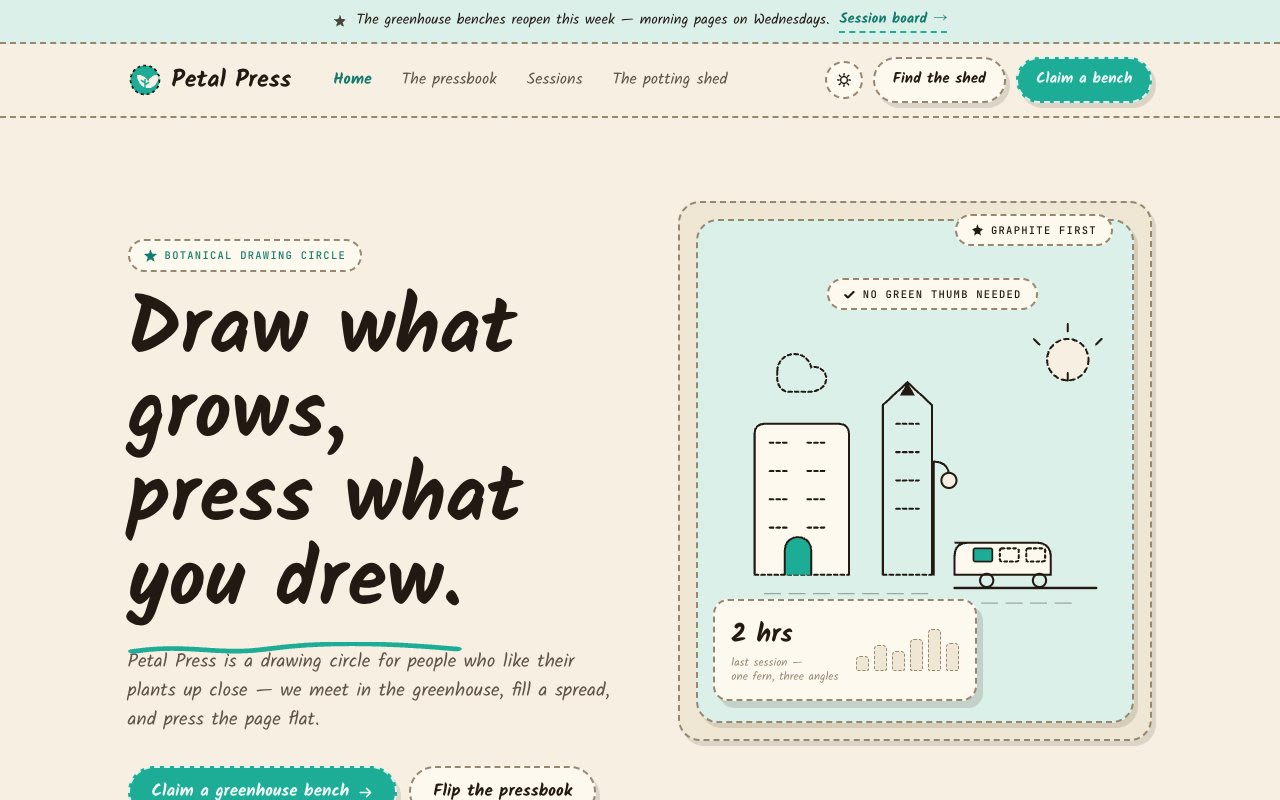
Turn a brief for a community collective — a sketching club, running crew, makers' guild, book circle or neighbourhood association — into a hand-drawn sketch site: warm paper, dashed pen outlines, offset pencil shadows and a hand-written display face.
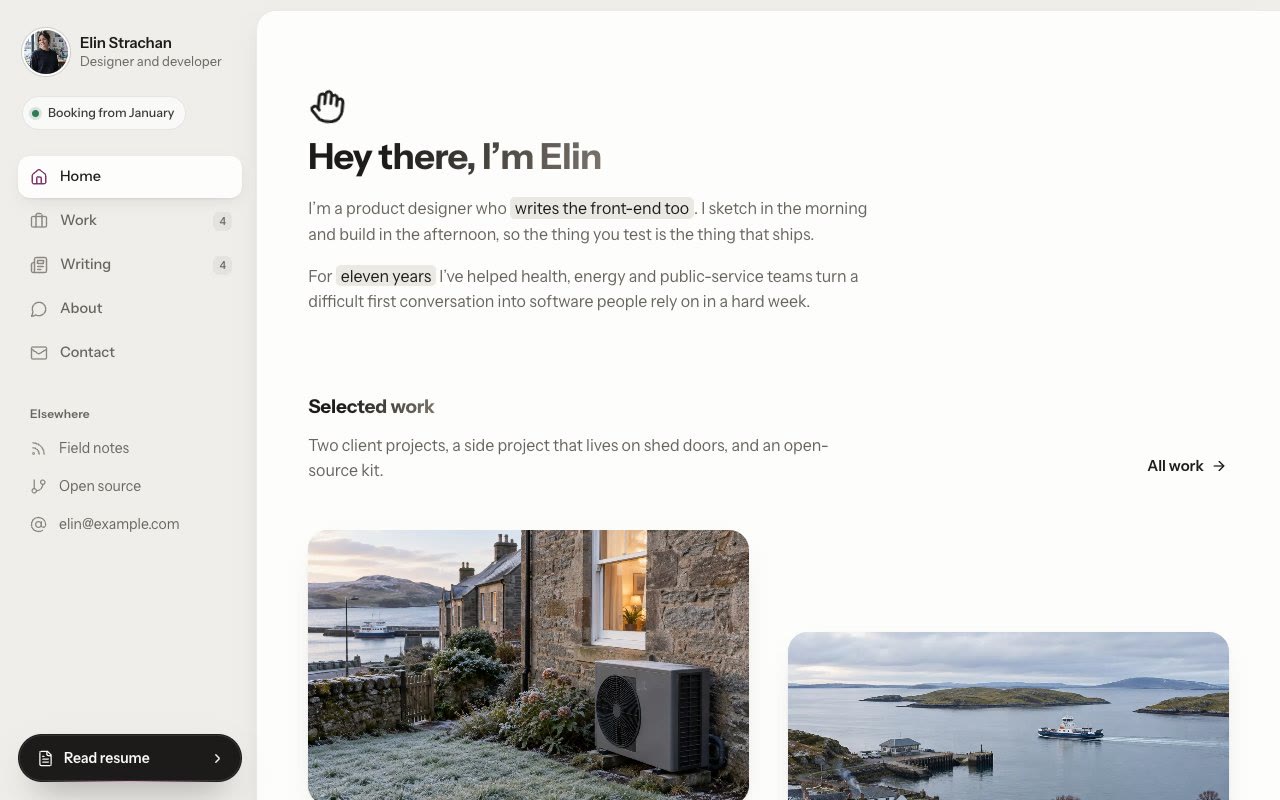
Turn a designer brief into a single-file portfolio with a sidebar, selected work, writing, about and contact.

Turn a brief for a community gazette, newsletter, small-press desk or parish bulletin into a ruled-paper site: warm off-white ground with notebook lines, hairline rules, mono uppercase micro-labels and a folio front page.

Turn a designer brief into a single-file portfolio with selected work, case studies, services, testimonials and a booking form.
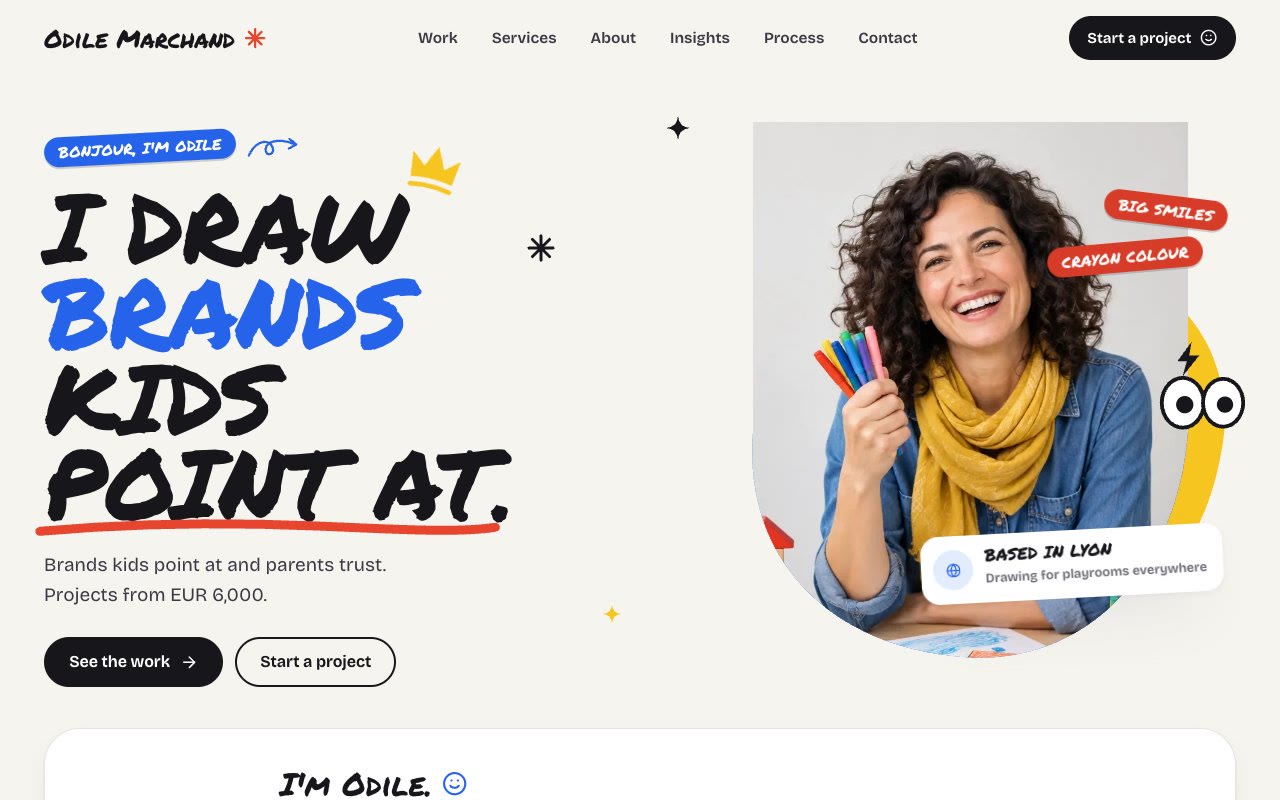
Turn a studio brief into a single-file hand-drawn brand studio site with work, services and detail pages.
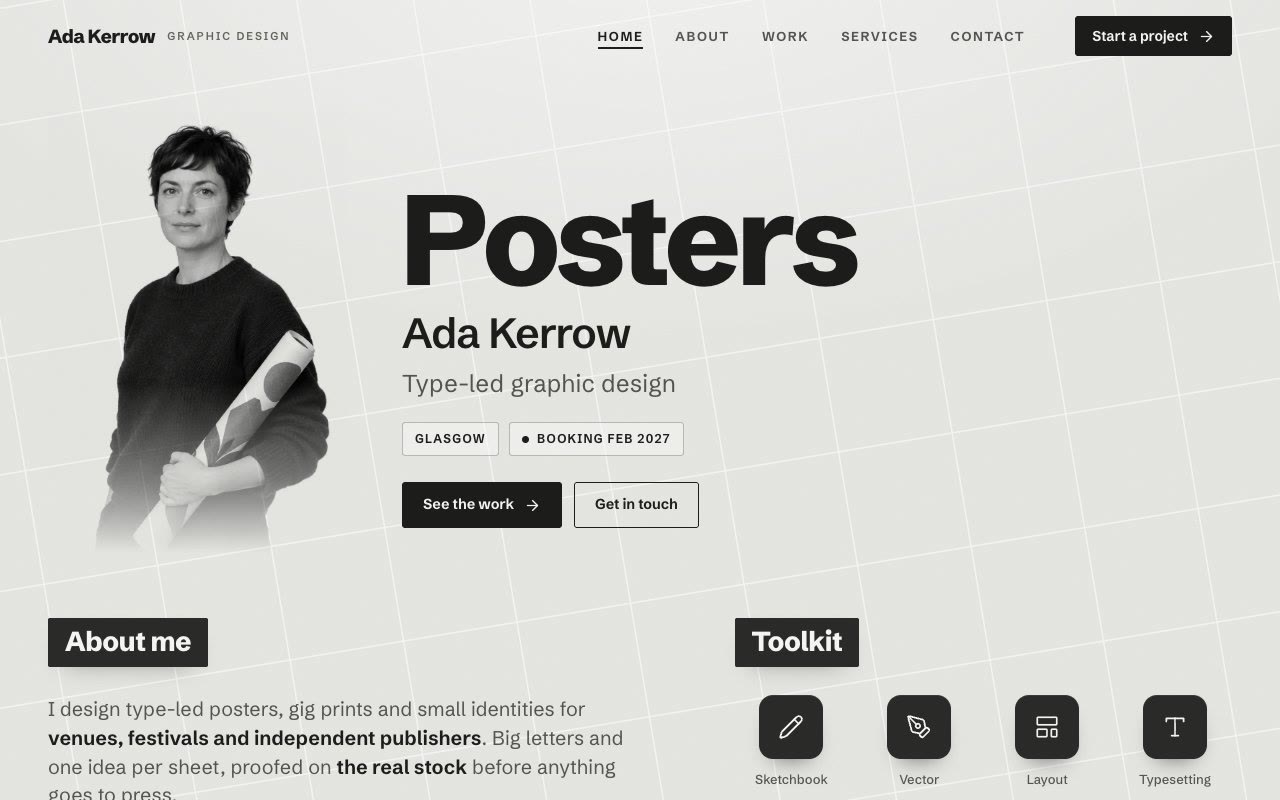
Turn a designer brief into a type-led single-file portfolio with work, project detail, about, services and contact.
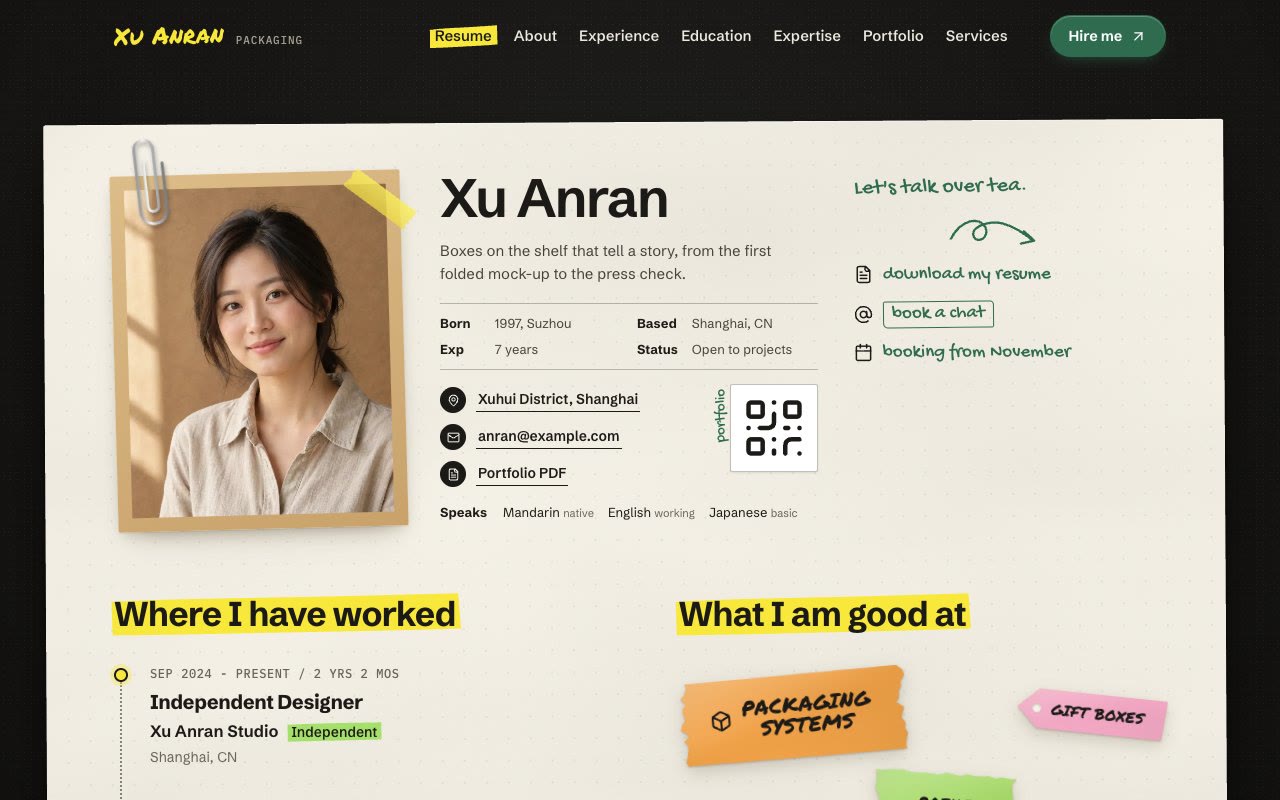
Turn a resume into a single-file designer site on a paper-texture look, with experience, skills, projects and contact.
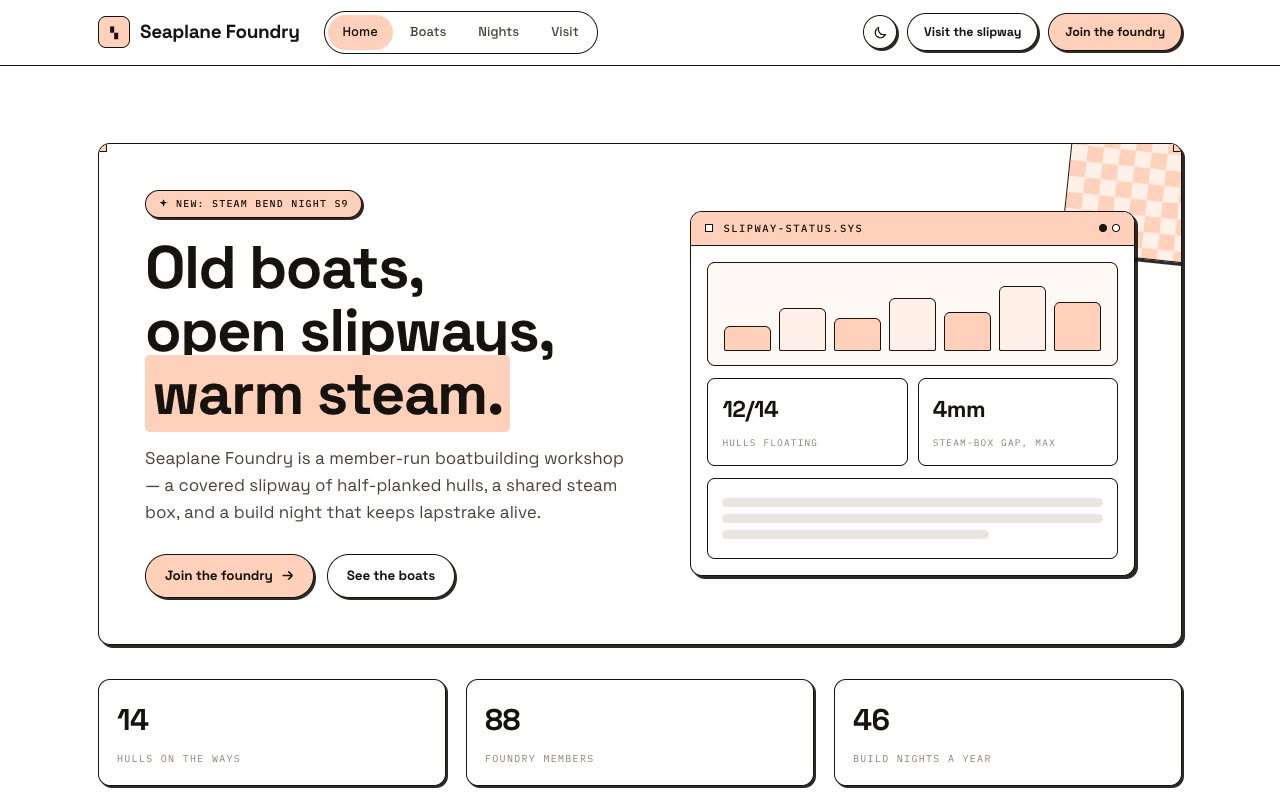
Turn a brief for a retro-computing club, repair bench, maker space or hobbyist meetup into a retro system-chrome site: thin near-black rules, a peach accent, window title bars with corner ticks and a floating checkerboard.
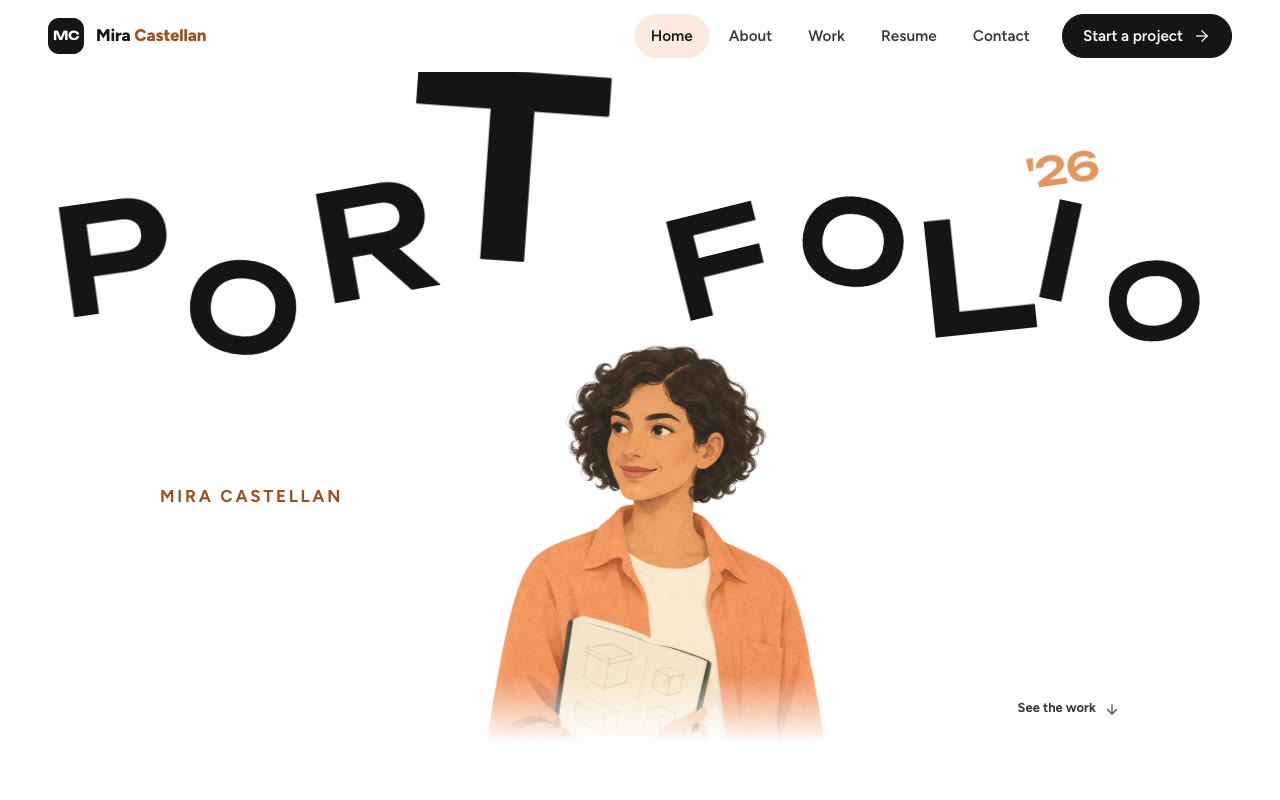
Turn a designer brief into a bold single-file portfolio with work, about, resume and contact.
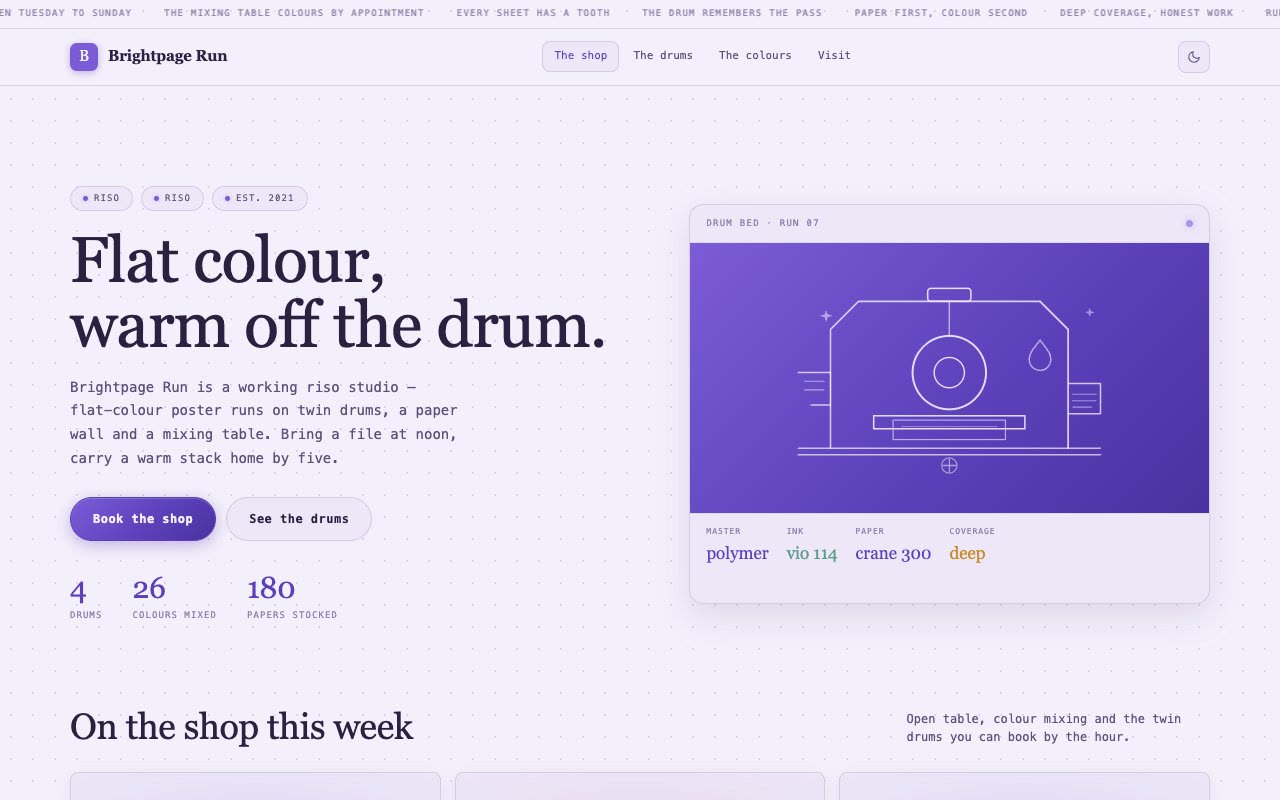
Turn a brief for a letterpress print workshop, riso lab, zine library or community print studio into a lavender dot-grid site: hollow display serif, mono ticks, purple gradient panels and code-drawn press artwork.
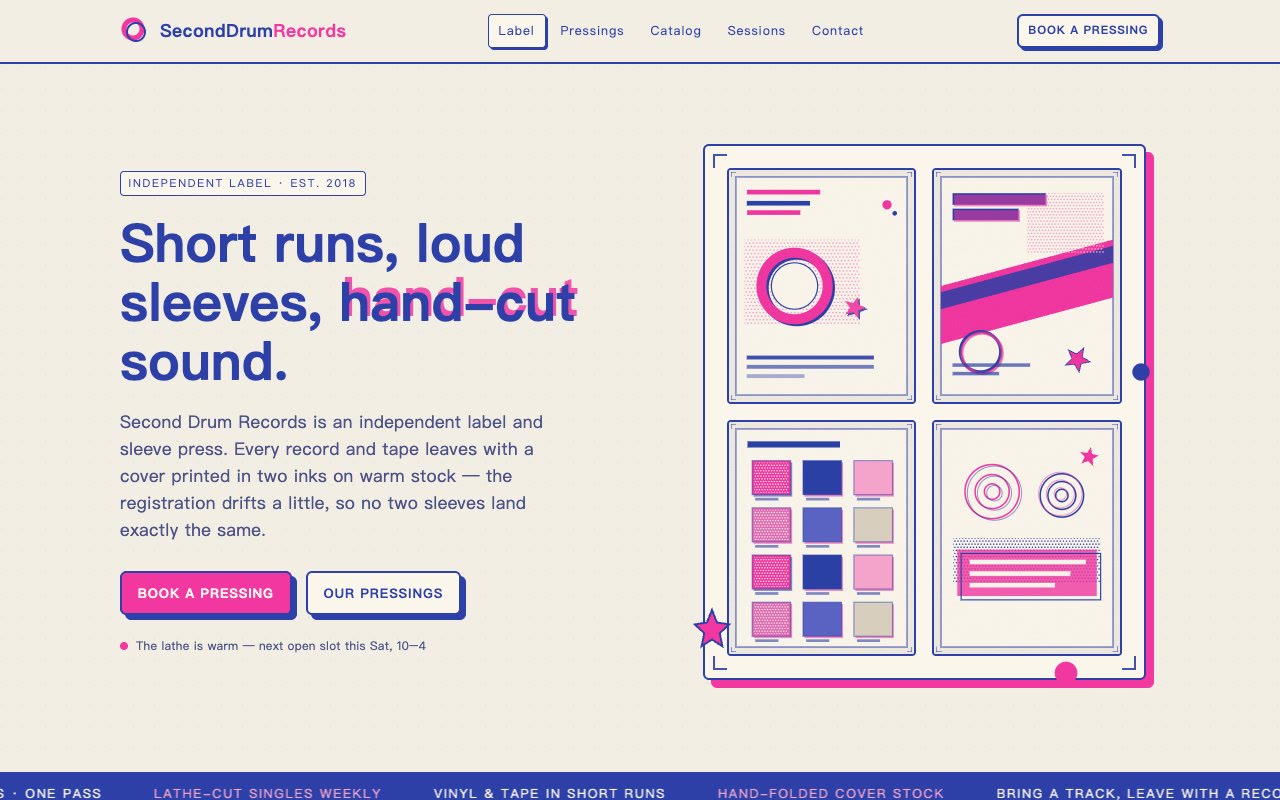
Turn a brief for a print studio, zine press, label or arts space into a two-colour risograph-style site with a shop, workshops, submissions and contact.
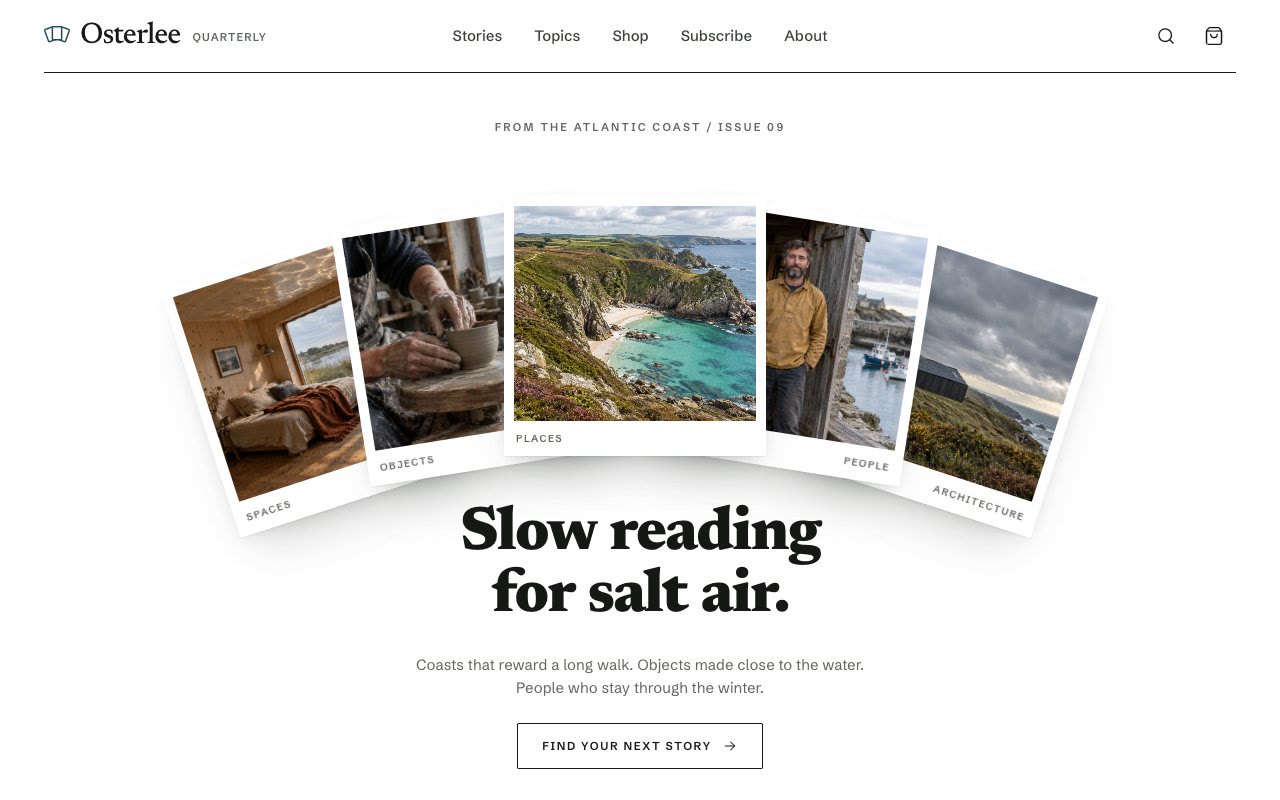
Turn an editorial brief into a single-file magazine with stories, topics, a shop and subscriptions, laid out as scattered photo cards.

Turn a resume into a playful single-file scrapbook site with experience, education, skills, projects and contact.
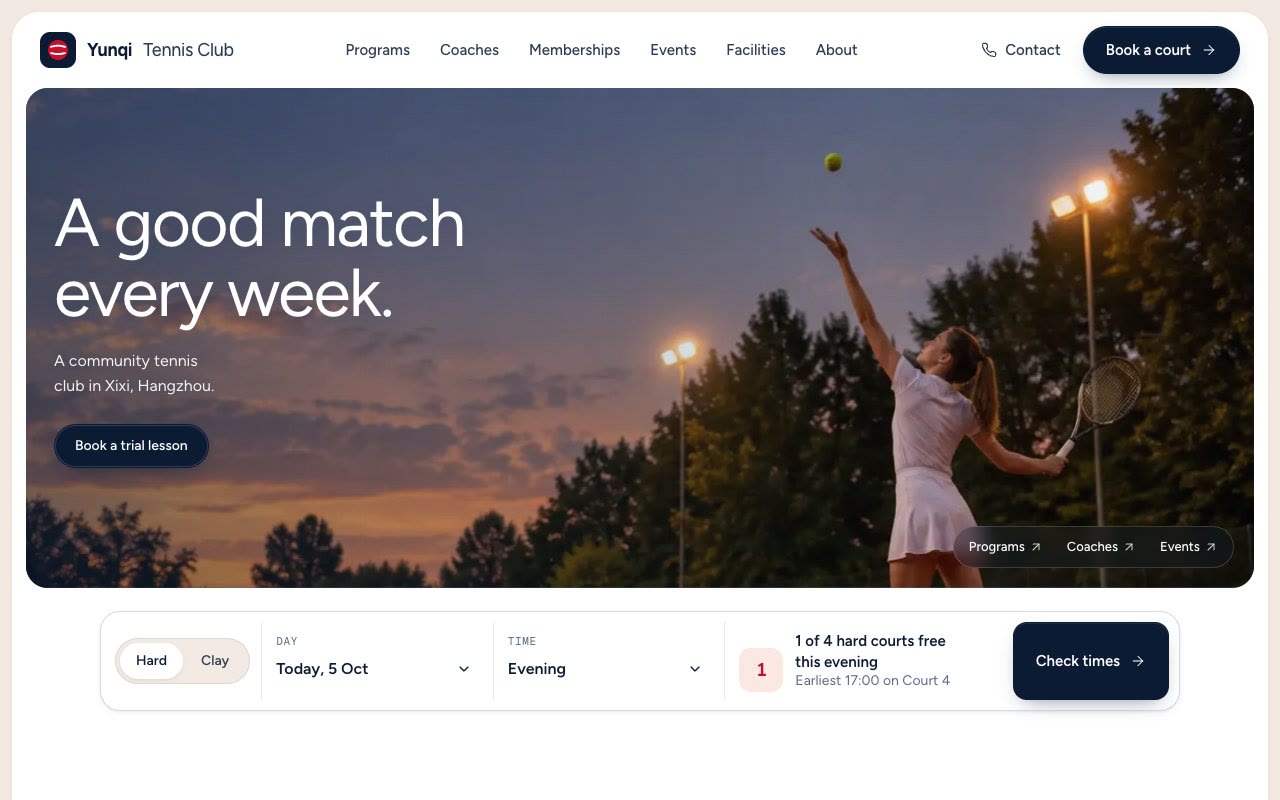
Turn a club brief into a single-file site with programs, coaches, memberships, events, facilities and court booking.
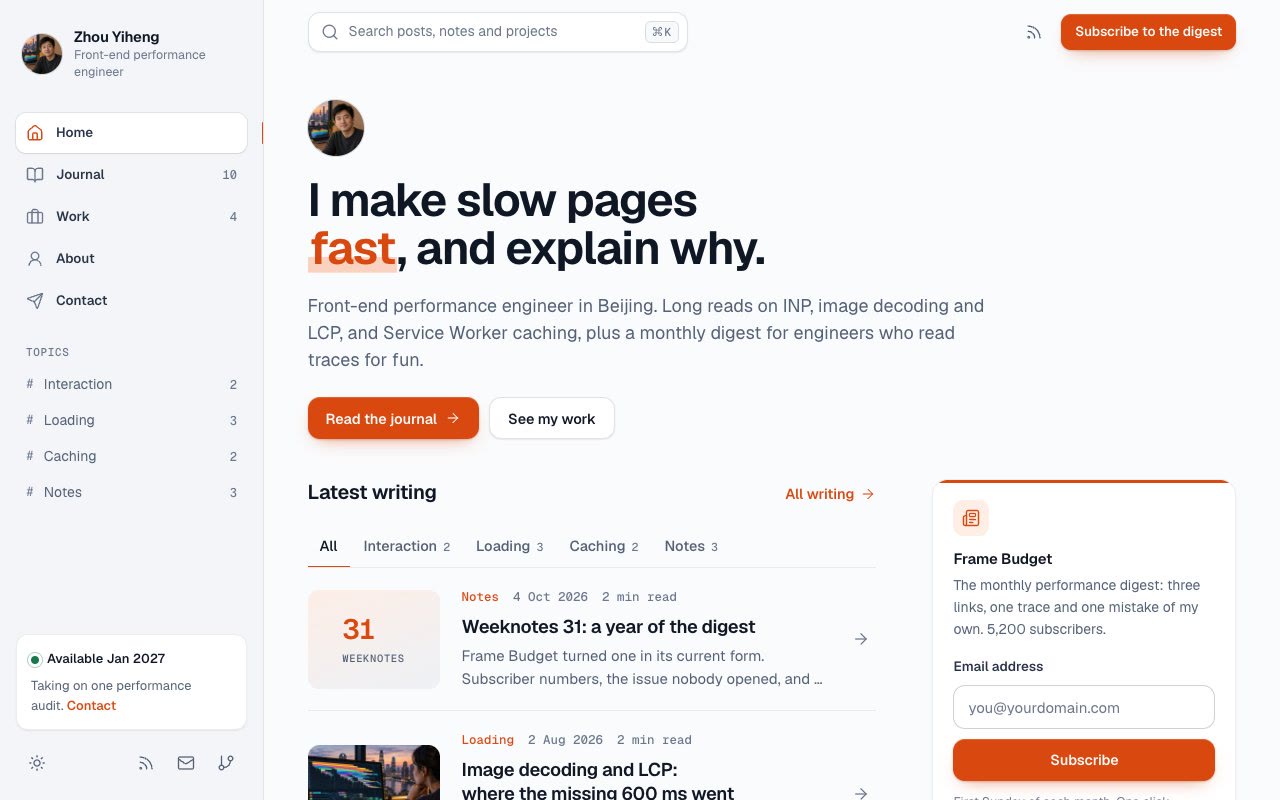
Turn your notes and posts into a single-file developer journal with an index, articles and an about section.
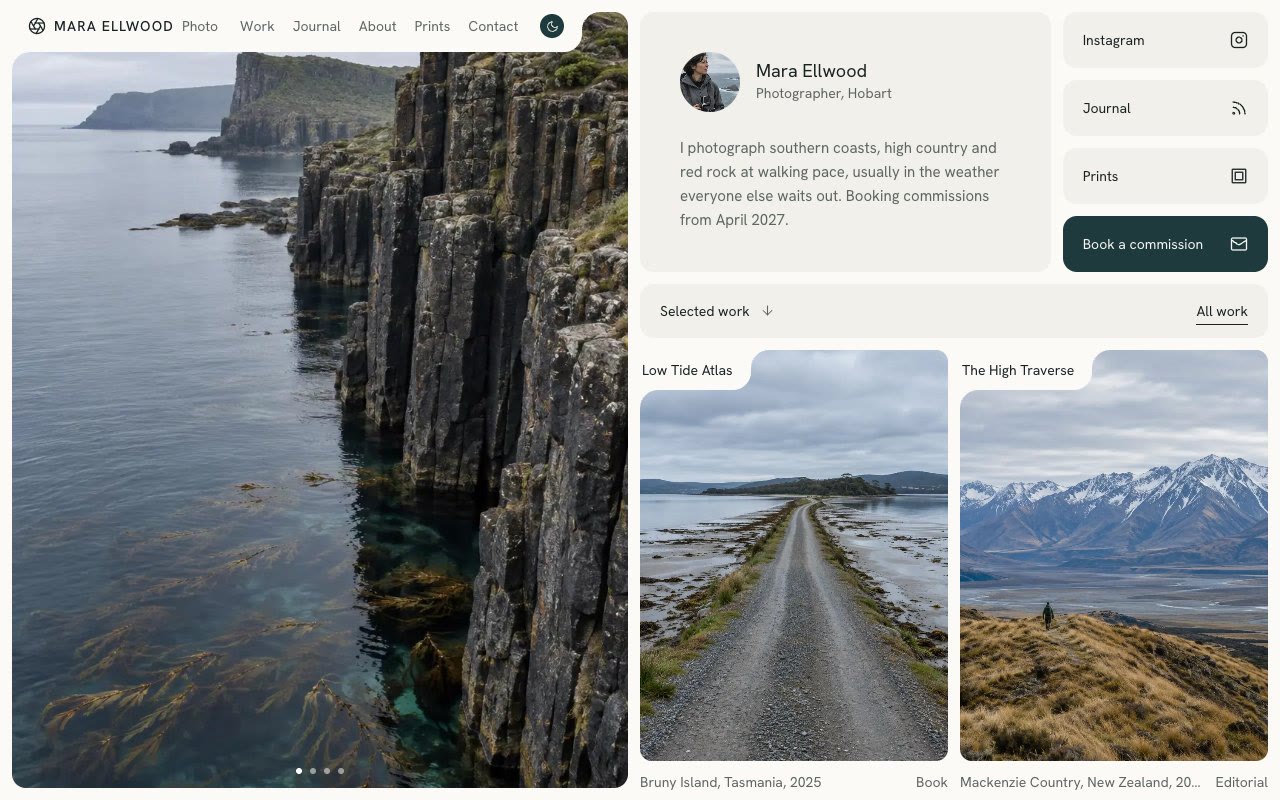
Turn a photographer brief into a single-file portfolio with a split-screen layout, selected work, journal, prints and booking.
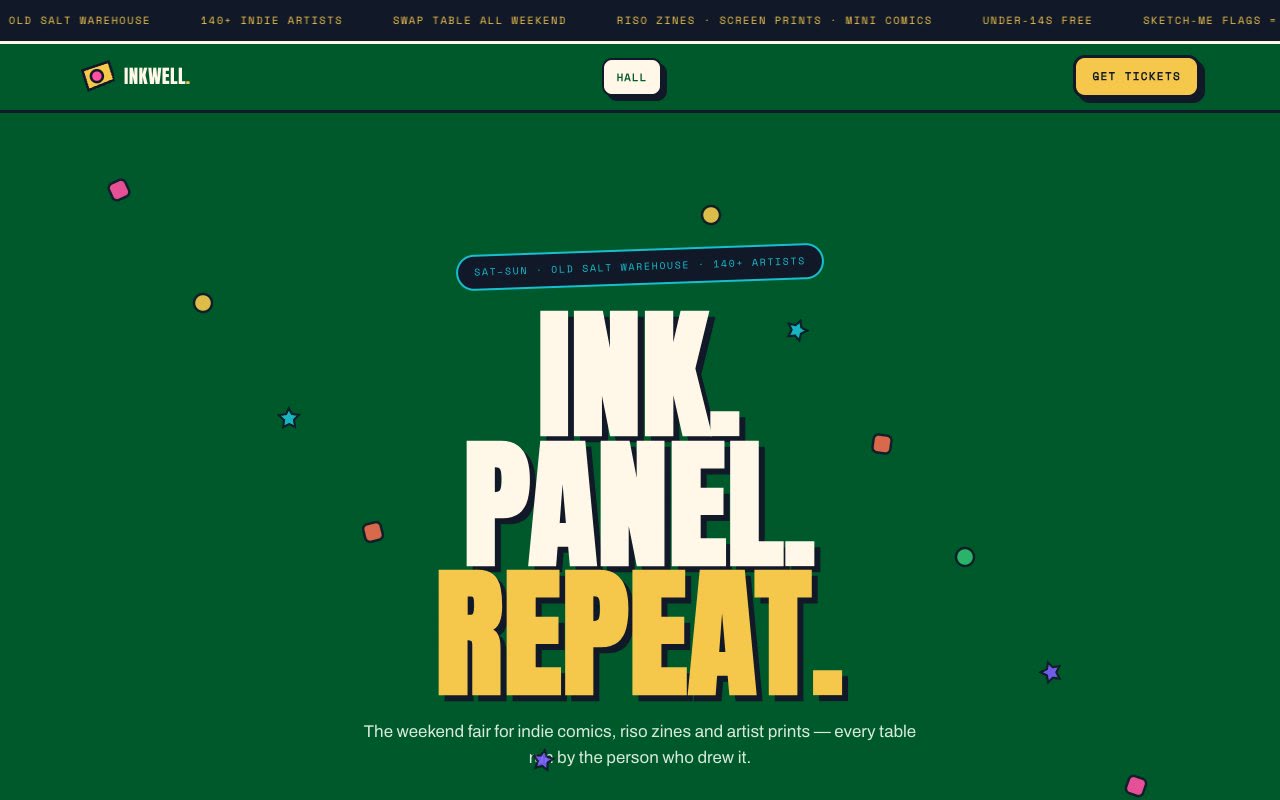
Turn a brief for a sticker fair, sticker-art expo, stationery market or paper-goods convention into a deep-green expo-floor site: candy sticker cards, inked 3px borders, hard offset shadows and code-drawn stall artwork.
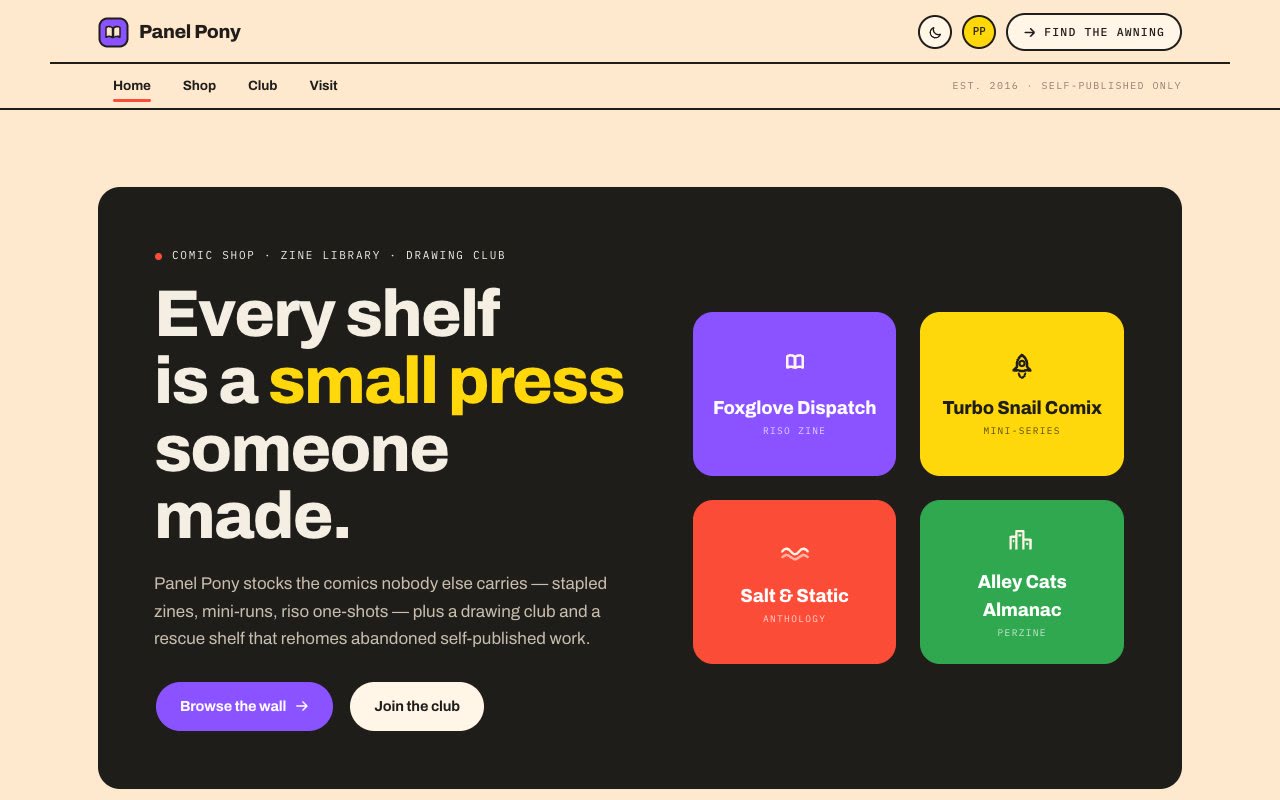
Turn a brief for a picture-book press, kids' studio, zine library or story workshop into a cream-framed site: heavy ink rules, an inset dark hero of saturated rounded tiles and pill buttons with offset shadows.

Turn a brief for an independent bookshop, ceramics gallery, small museum or curated estate into a dark editorial site: Playfair display serif, gold accent, code-drawn floor-plan artwork and hash-routed catalogue views.
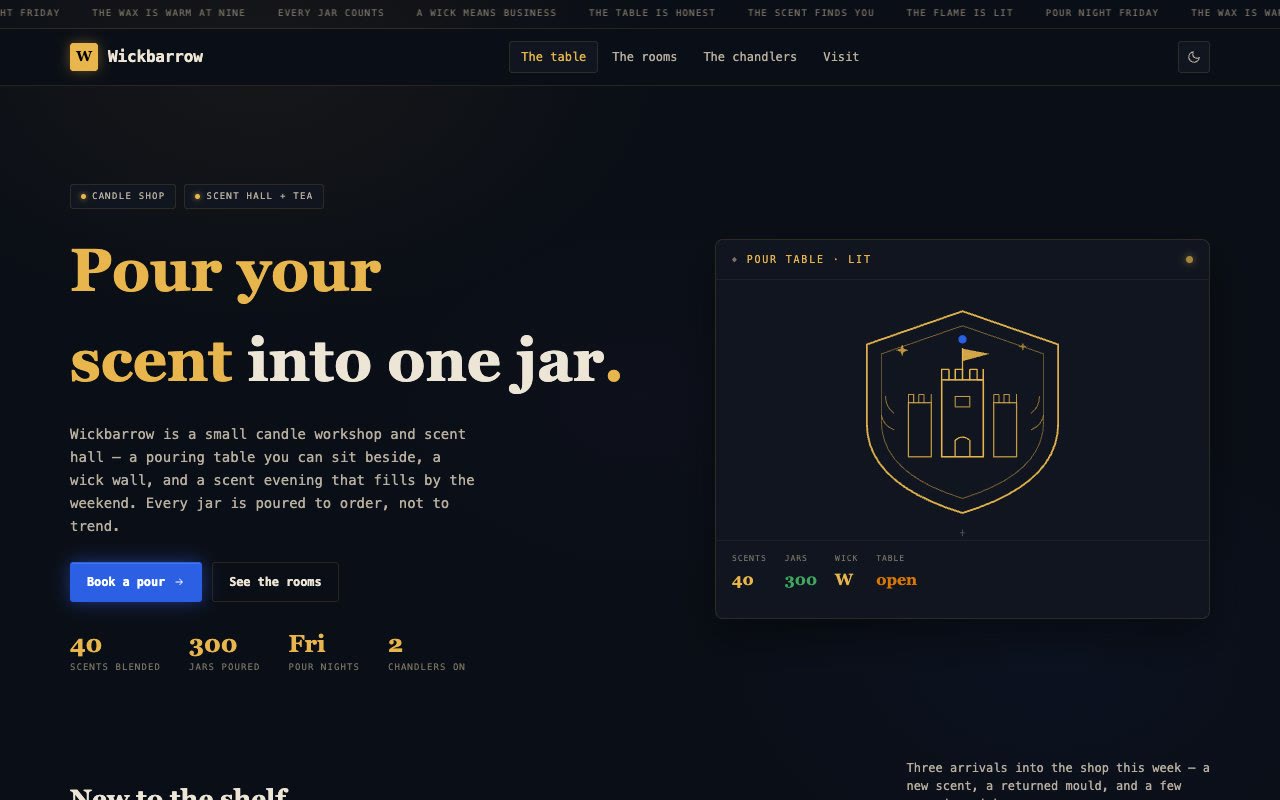
Turn a brief for a gaming studio, tabletop RPG community or fantasy brand into a site with fantasy chrome, gold serif display type, cobalt glow CTAs, shield-and-keep heraldry, and dark navy background.
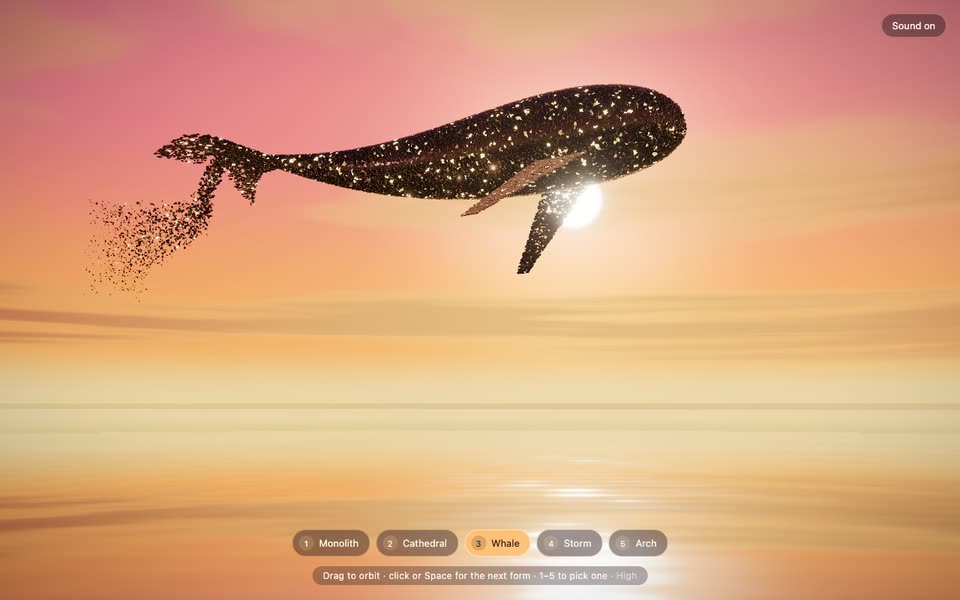
A live 3D scene in your browser: 32,000 dark glass shards crack, burst and fly into a storm, a cathedral and a whale over a sunset sea.
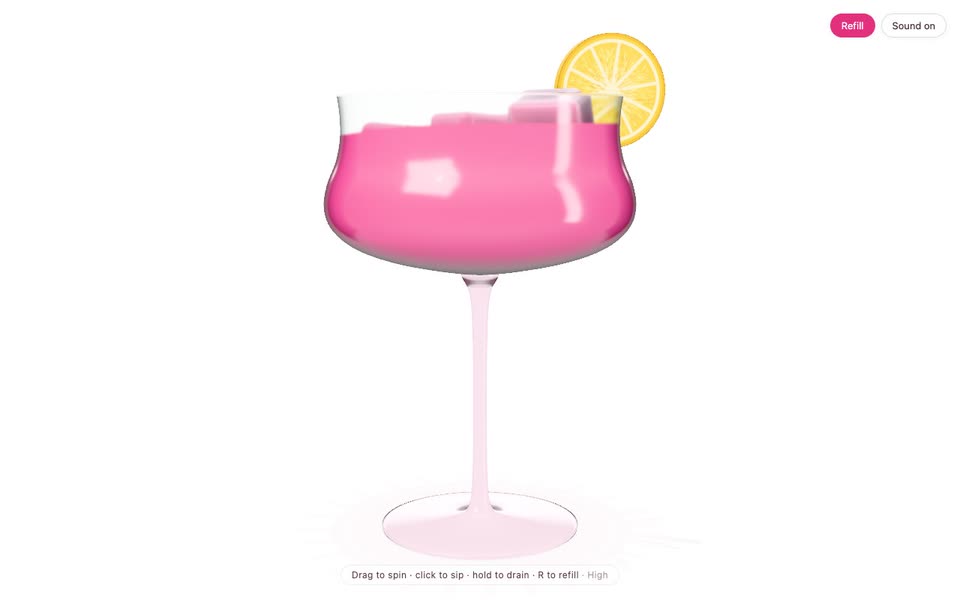
A live 3D cocktail in your browser: flick the glass to spin it, watch the drink slosh, tap to sip, hold to drain and refill it.
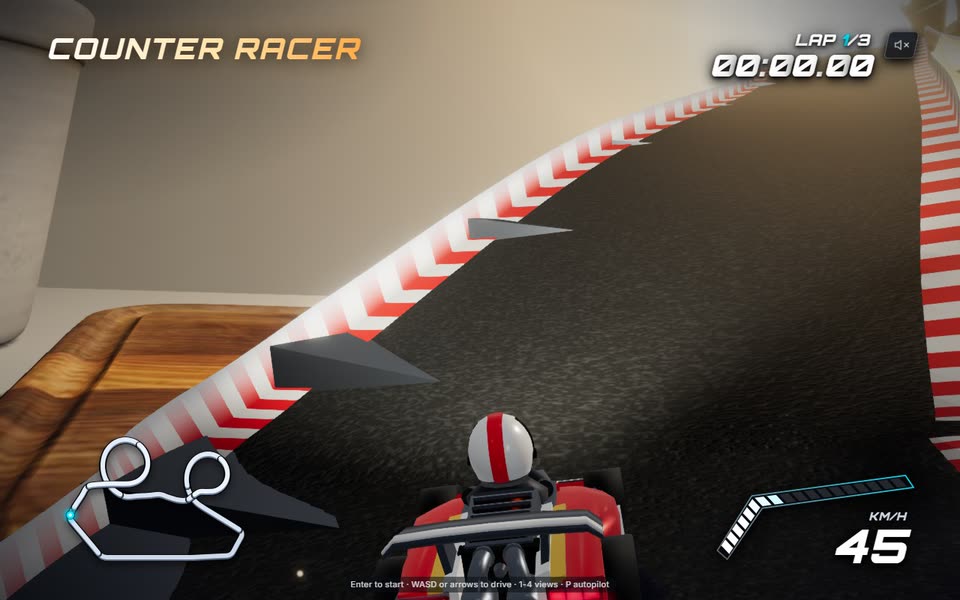
A playable micro-kart time trial in your browser on a coaster track across a real surface: a kitchen counter, a bookshelf or a bathroom sink. Three laps against the clock, a ghost of your best lap and four camera views.
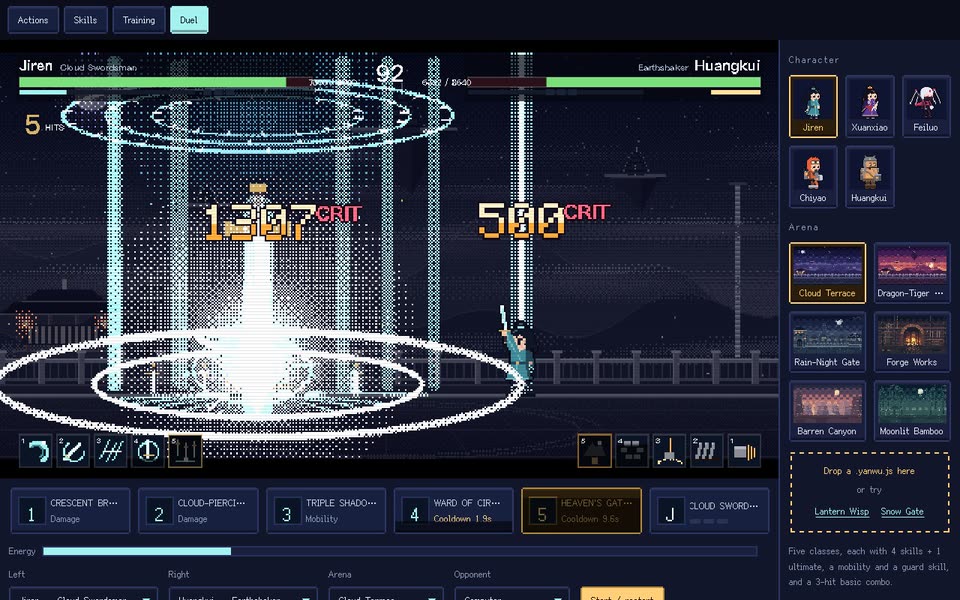
A pixel fighting game that runs in your browser: five chibi fighters with four skills and an ultimate each, six arenas, training and 1v1 duels. Three Skills let your Agent make a fighter, paint an arena or change the whole game, and you drop the file straight into the live arena.
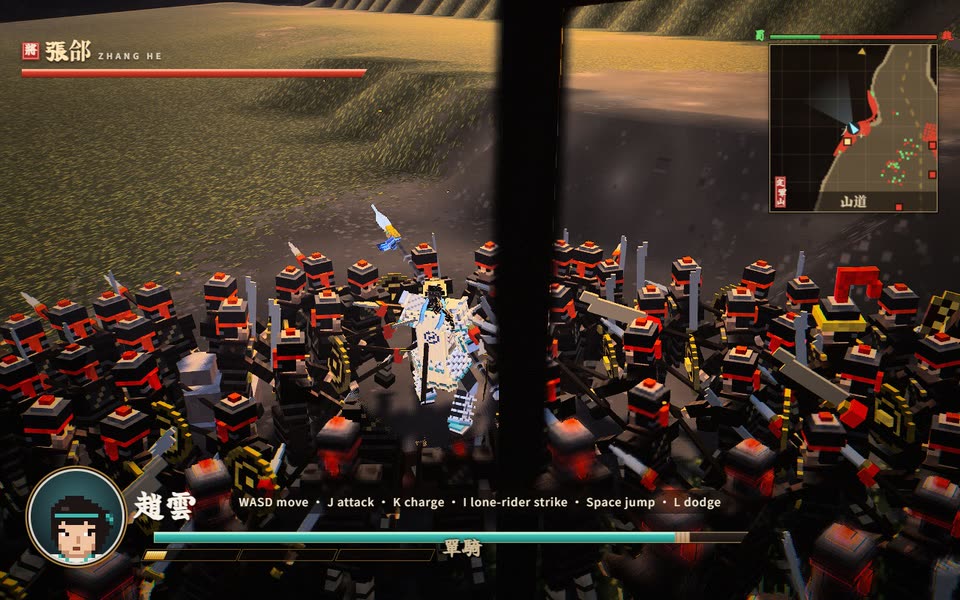
A complete voxel action game in your browser: pick one of seven officers and cut through an army of hundreds, with combos, charge attacks and a field-clearing finisher, four story chapters and three ranked trials. Re-theme every battlefield and army by editing data.
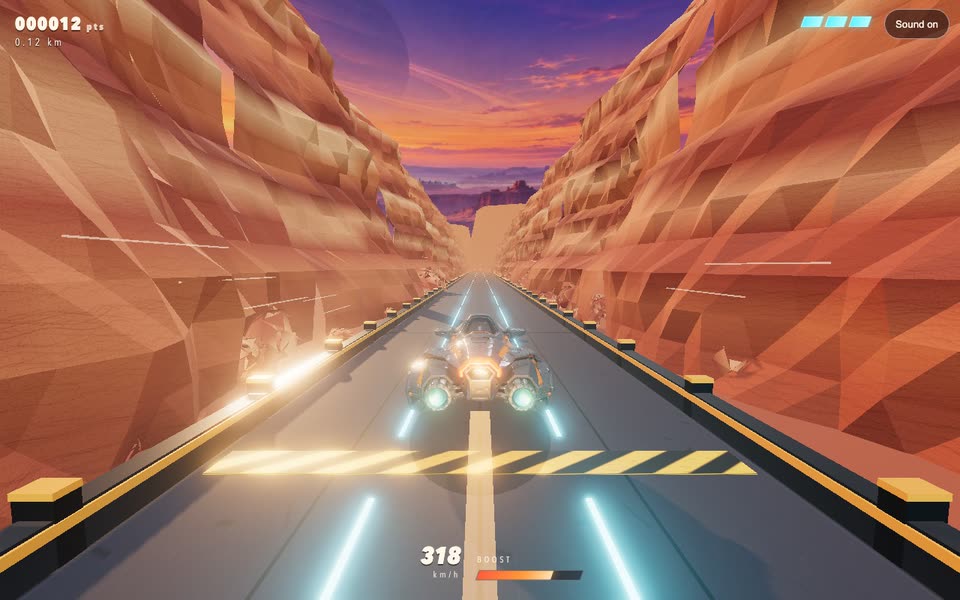
Describe a place and get a playable 3D hover racer through it, in one offline HTML file. The craft and the enemy drone are generated textured 3D models, the sky, sounds and music are generated too, all through SandBase; the canyon, track, lighting and effects are a finished engine.
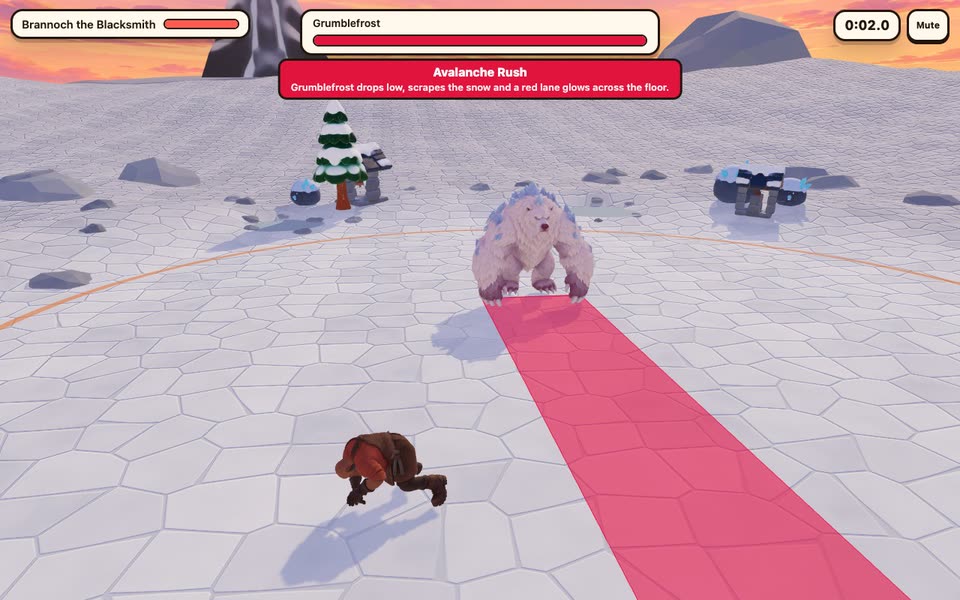
Write four lines (setting, hero, boss, mood) and get a playable 3D boss fight in one offline HTML file. The hero moves, punches, kicks and dodge-rolls through four announced boss moves; a rigged hero, the boss, minions, props, the painted sky, the voices, the sounds and the music are all generated through SandBase. The arena, the move rules, the lighting and the effects are a finished engine.
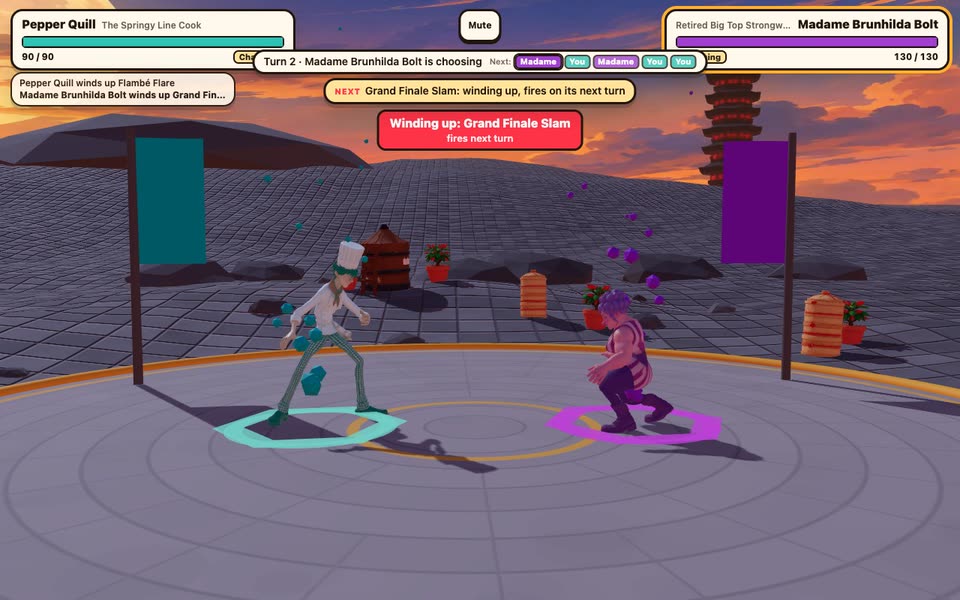
Write four lines (stage, your fighter, the opponent, mood) and get a playable turn-based 3D card duel in one offline HTML file. Each fighter is a generated rigged model with a stat card, three skills and spoken lines; you pick a skill or Guard each turn against a seeded, replayable opponent. Models, sky, voices, sounds and music are generated through SandBase; the stage, turn rules and effects are code.
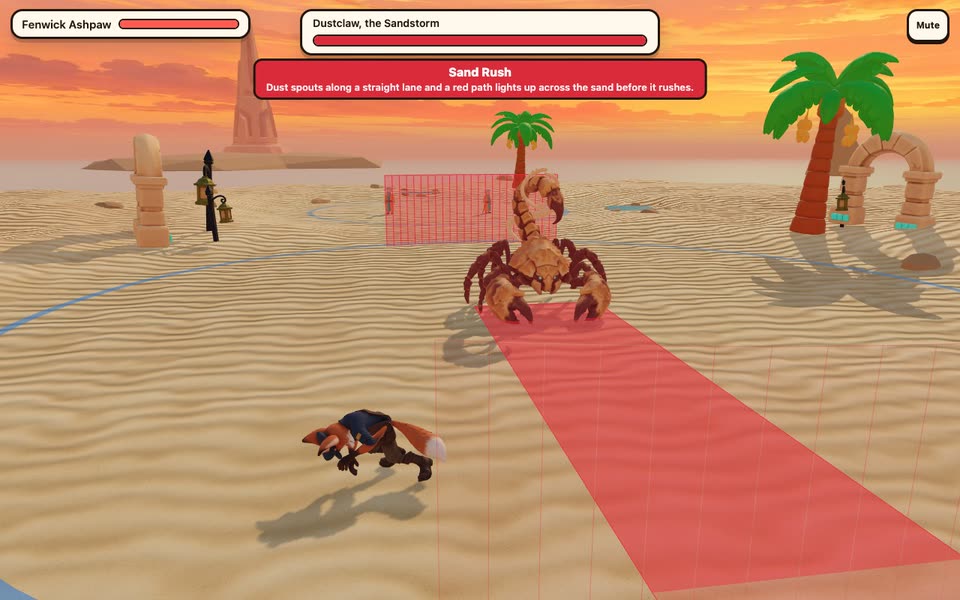
Write five lines (setting, hero, villager, errand, boss) and get a short playable 3D adventure in one offline HTML file. Find three items along side paths, open the gate, beat the boss and reach the goal; a rigged hero, the villager, items, the boss, the sky, every spoken line, the sounds and both music loops are generated through SandBase. The level, the quest beats and the effects are code.
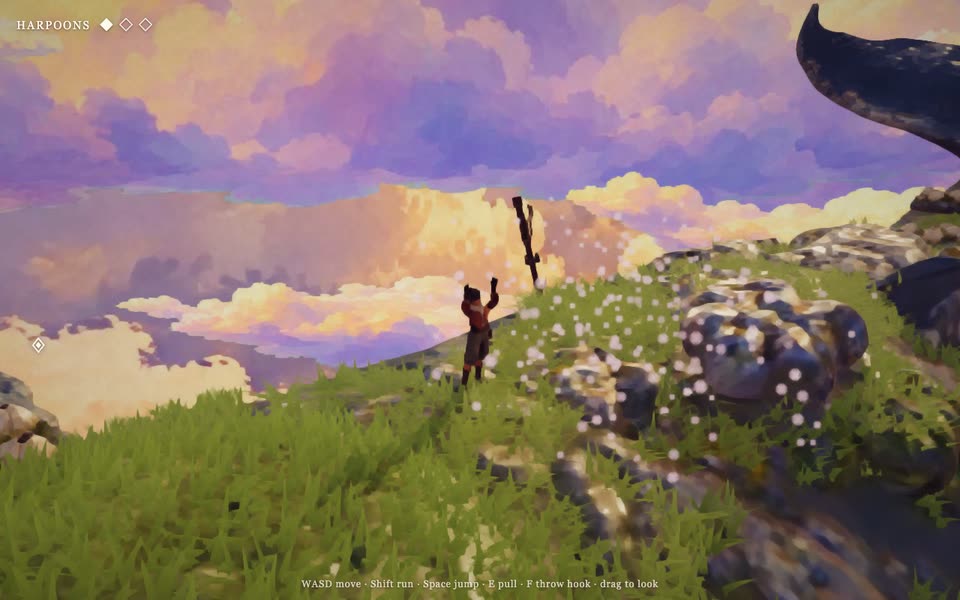
Write four lines (the world, the giant, the keeper and what binds it) and get a calm 3D game in one offline HTML file. A huge creature drifts through an open sky and its back is the level: walk over the moving body, throw a grapple hook to swing up its flanks and hold a button to pull out the three pins that hold it down. After the last one it rises and sings. The creature, the rigged keeper, the pins, the hut, the hook points, the painted sky and clouds, the music and fifteen sounds are generated through SandBase; the level plan, the body motion and the painterly look are code. No combat and no timer.
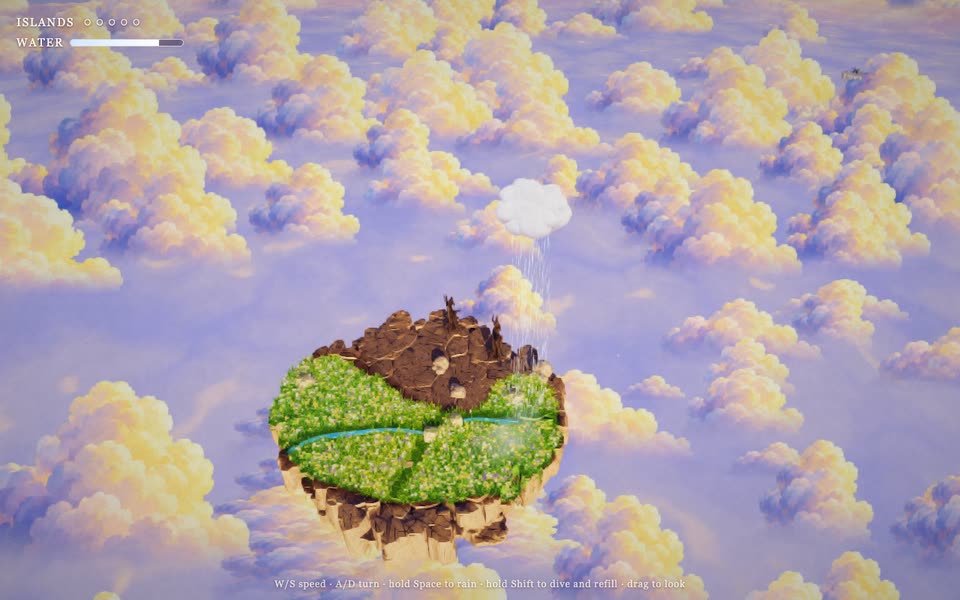
Write six lines (the sky sea, the islands, the little cloud, what brings the islands back, the threat, the finale) and get a 3D flying game in one offline HTML file. Guide a small rain cloud over a sea of clouds, rain over the grey islands until grass, trees and flowers return, and dive into the cloud sea to refill when the cloud runs dry. A storm front closes in as the day shortens; when every island is green the finale tree bursts into full canopy. The islands, trees, finale tree, painted sky, cloud cards, ground textures, both music tracks and twelve sounds are generated through SandBase; the cloud, the flocking, the level plan and the rules are code.
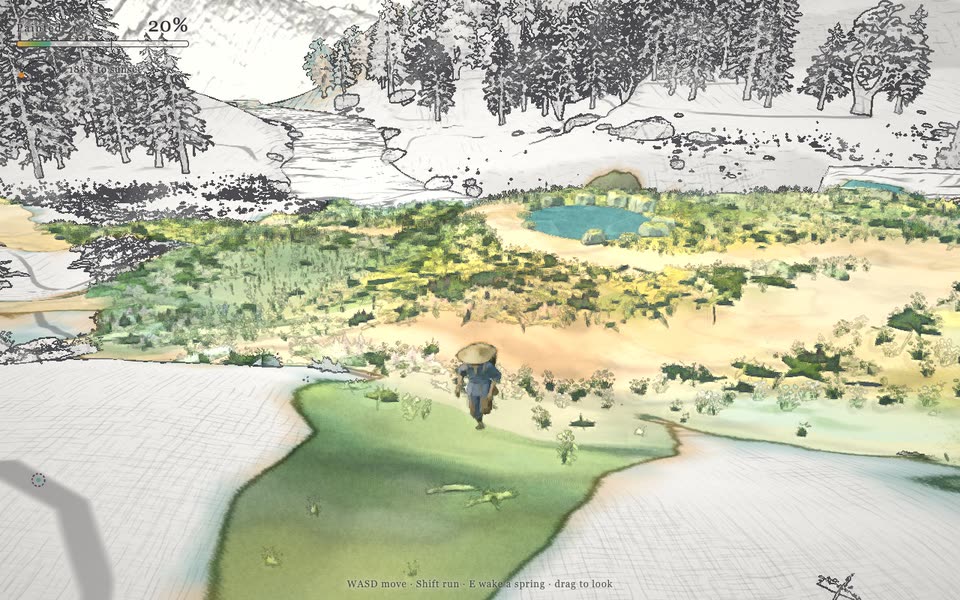
Write five lines (the valley, the walker, the springs, the look before and after) and get a calm 3D game in one offline HTML file. The world starts as a pencil drawing on paper; the ground the traveller walks over blooms into watercolour, and grass and flowers grow up through it. Kneel at five stone springs to wake a circle of colour and one more music layer; wake them all and paint the marked share of the valley before sundown, and the last spring floods everything. The rigged walker, props, both sky panoramas, the paper texture, flora sprites, seven music parts and nine sounds are generated through SandBase; the colour mask, the sketch-to-paint post process, the level plan and the rules are code.
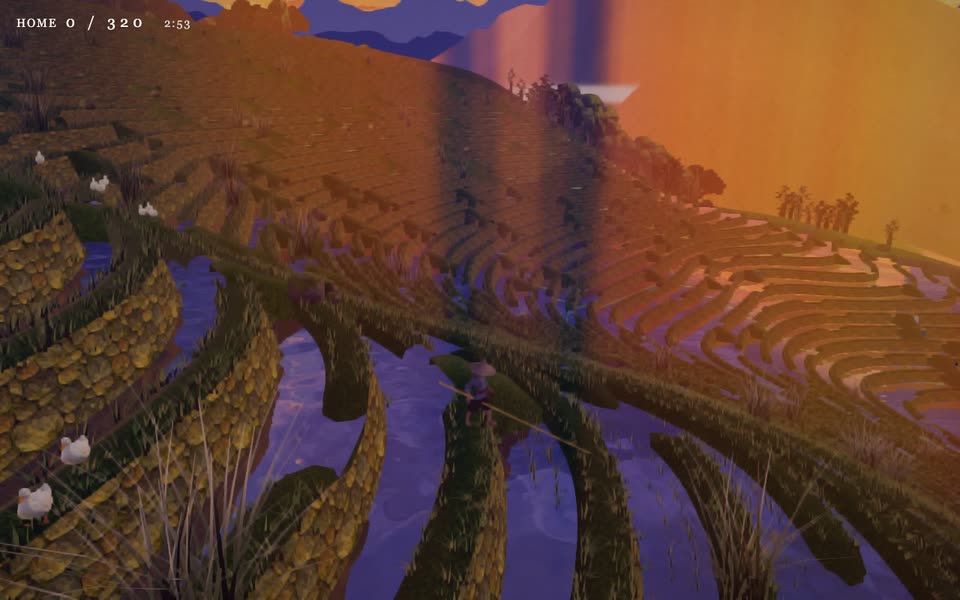
Write five lines (the terraces, the herder, the animals, the shelter, the storm) and get a 3D herding game in one offline HTML file. Walk a young herder over flooded rice terraces, swing the pole to scatter strays and whistle to bunch the flock of a few hundred ducks and turn it uphill, ramp by ramp, into the shelter before the storm breaks. The rigged herder, the duck, the shelter, the props, the painted sky, the ground textures, both music tracks and twelve sounds are generated through SandBase; the flocking simulation, the terrace plan, the storm timer and the rules are code.
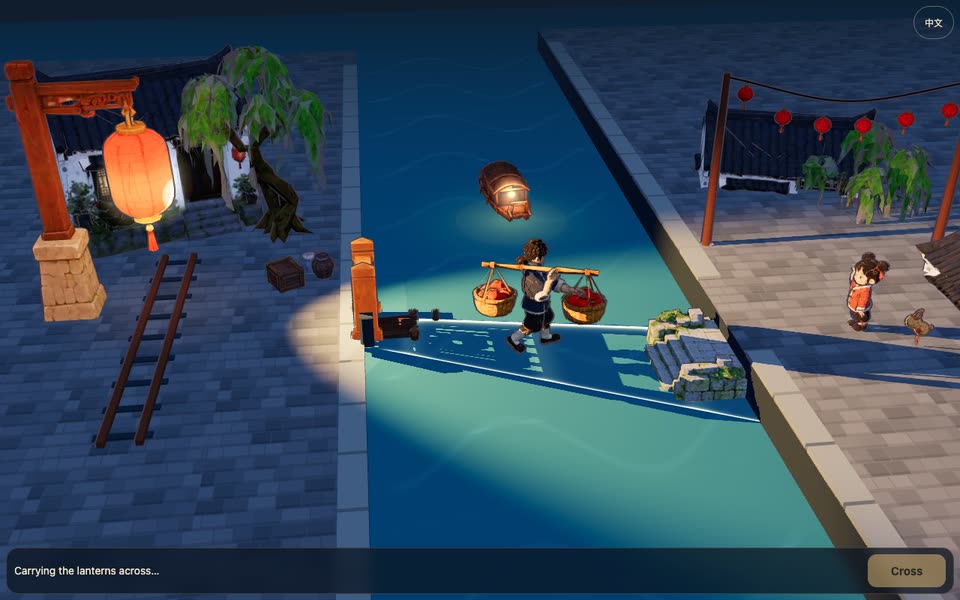
A finished short puzzle in one offline HTML file. On Lantern Festival night the wooden bridge over a canal is out: slide a paper lantern along its rail so a carved railing's real spot-light shadow reaches the far stone steps, and a porter carrying new lanterns crosses it to a waiting child as the festival lanterns light one by one. All thirteen models — the rigged porter and child plus eleven static pieces — are generated through SandBase; the water, sky, glow, the shadow bridge and the rules are code. No combat, no timer, no sound.
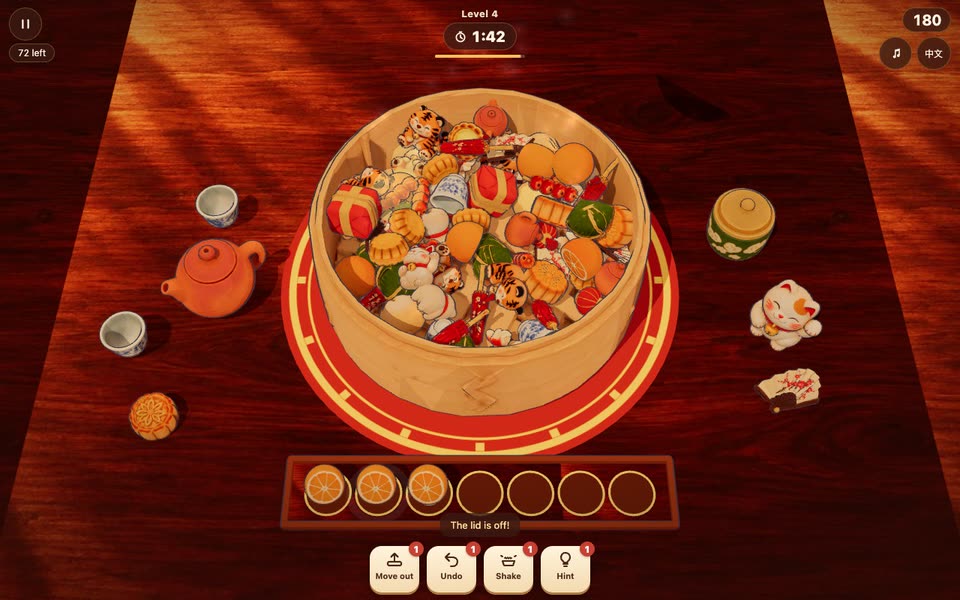
A finished casual game in one offline HTML file. A bamboo steamer on a tea-house table is heaped with 30 kinds of generated treats and toys that drop in with real physics: tap the ones you can see into a seven-slot tray, and three of a kind vanish. Twelve levels add a heavy lid, sugar glaze and gift parcels, then endless rounds keep growing until the tray or the clock wins. All 33 models are generated through SandBase; the physics, the rules and the synthesized sound are code.
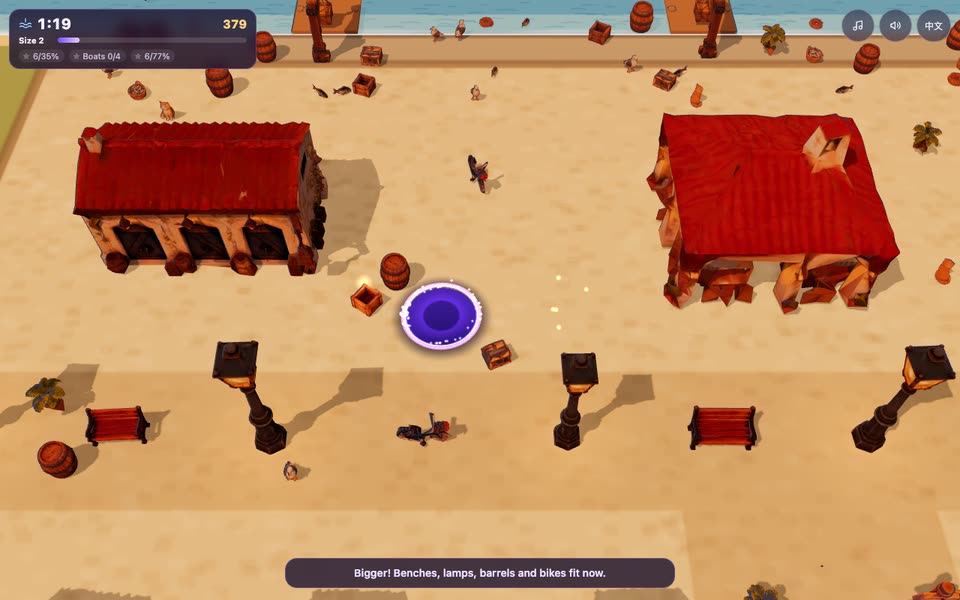
A finished casual game in one offline HTML file. Steer a starry hole through a seaside fishing town at dusk by holding where you want it to go: anything smaller than its mouth tips in, and every swallow makes it bigger, from fish and crates up to houses, the ferry and the lighthouse. Three maps with star goals plus an endless mode of denser towns. All 30 models are generated through SandBase; the town layout, the hole, the lights, the rules and the synthesized sound are code.
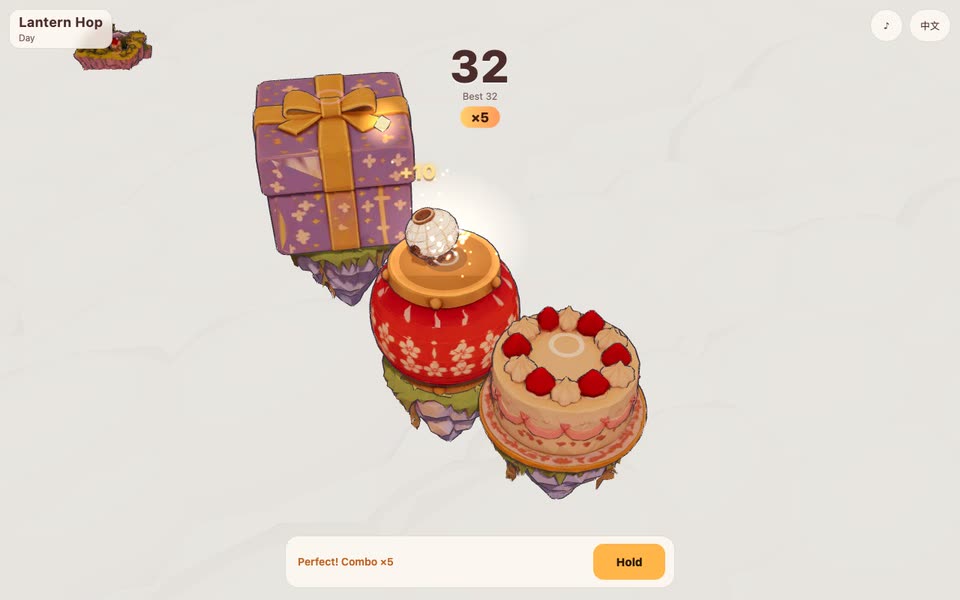
A finished casual game in one offline HTML file. A paper-lantern spirit hops between everyday objects floating on a sea of clouds: hold to charge, let go to jump, land in the centre for a combo. Gifts, drums, a music box and a ringing clock change the rhythm, the sky turns from day to night as the score climbs, and tops shrink until every run ends. The rigged spirit and 26 objects are generated through SandBase; the clouds, the rules and the synthesized sound are code.
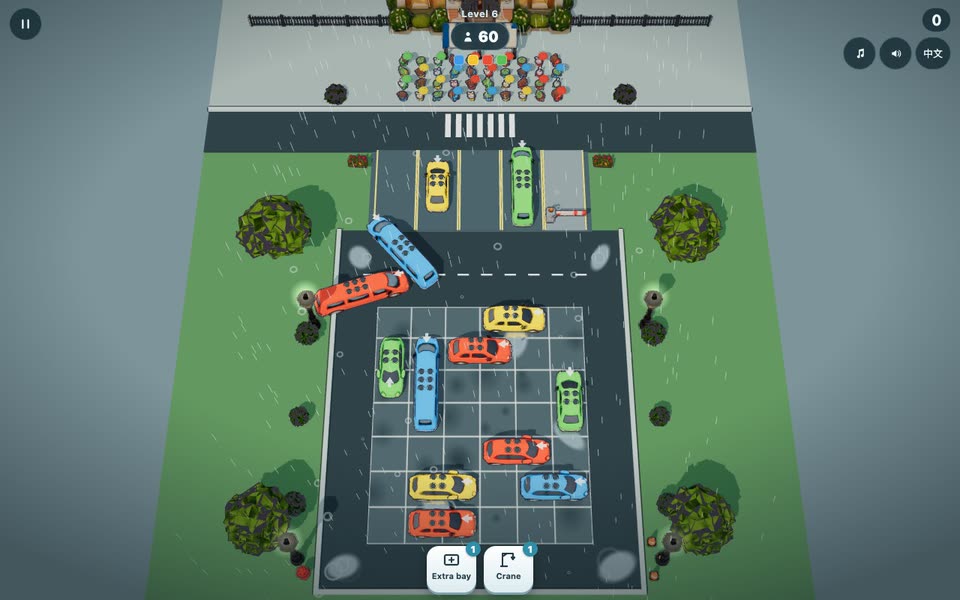
A finished casual game in one offline HTML file. A school car park in the rain is packed with toy cars facing four ways: tap one with a clear road, it drives round to a pickup bay, and kids in raincoats of its colour hop in. Fifteen solver-checked levels with stars, then endless lots that grow to 8×9 with eight colours. The cars, the school and street props and three rigged kids are generated through SandBase; the car park, the traffic, the rain, the rules and the synthesized sound are code.
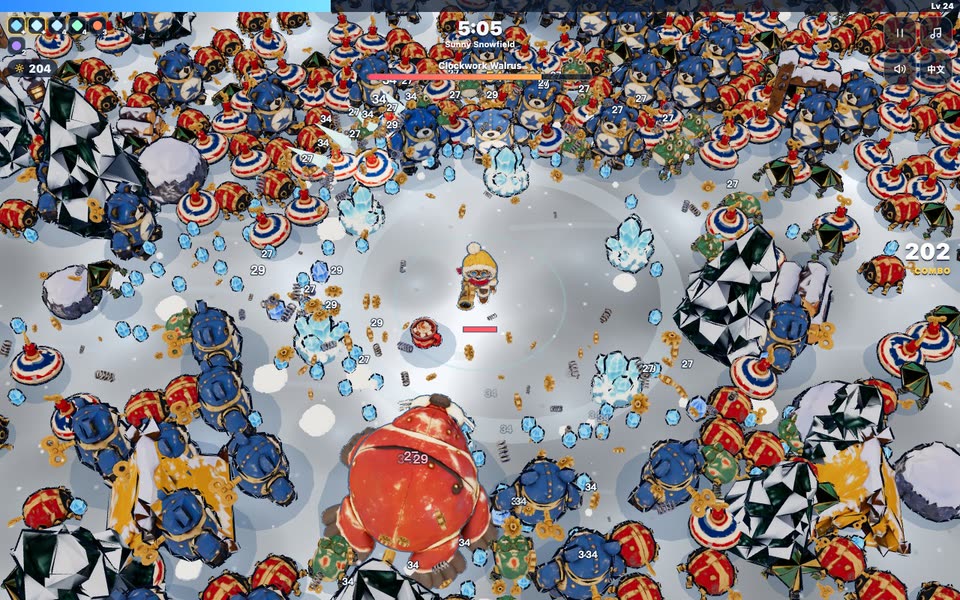
A finished casual game in one offline HTML file. A snow ranger walks where your finger holds while the gear fires by itself; wind-up tin beetles, frogs, tops and bears march in by the hundred and break into gears and springs. Level up, pick 1 of 3 cards, evolve weapons, beat three bosses by 6:00, then keep going in endless mode on three maps. The rigged ranger, the toys, bosses and props are generated through SandBase; the snowfield, the toy motion, the weapons, the rules and the synthesized sound are code.
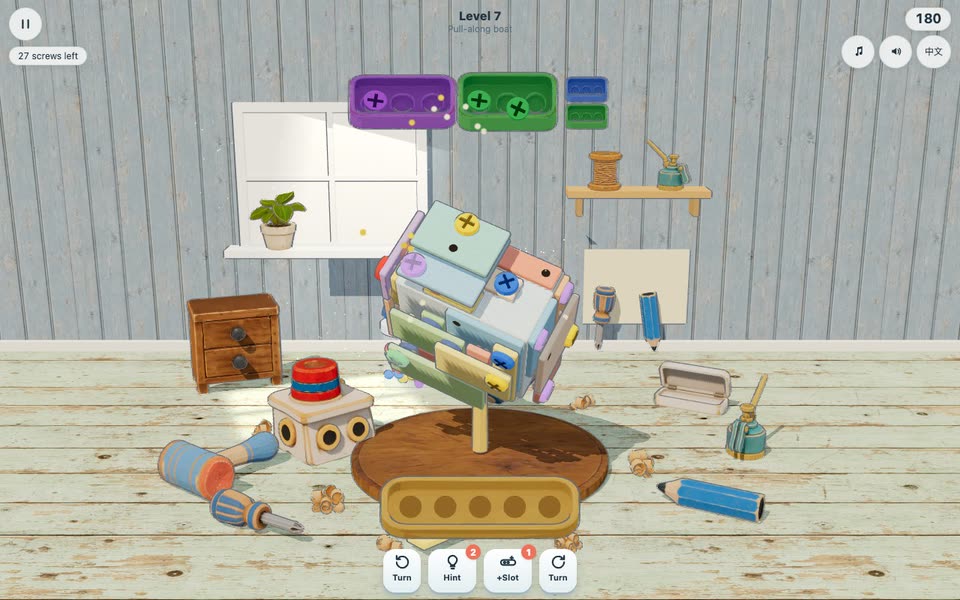
A finished casual game in one offline HTML file. A vintage wooden toy on a sunny workbench is held together by coloured screws: tap a screw no plate covers, it spins into the tin box of its colour, and a plate with no screws left drops with real physics. Fifteen levels on ten toys with stars, then endless rounds with bigger toys and more colours. All 32 models and the textures are generated through SandBase; the plates, the screws, the rules and the synthesized sound are code.
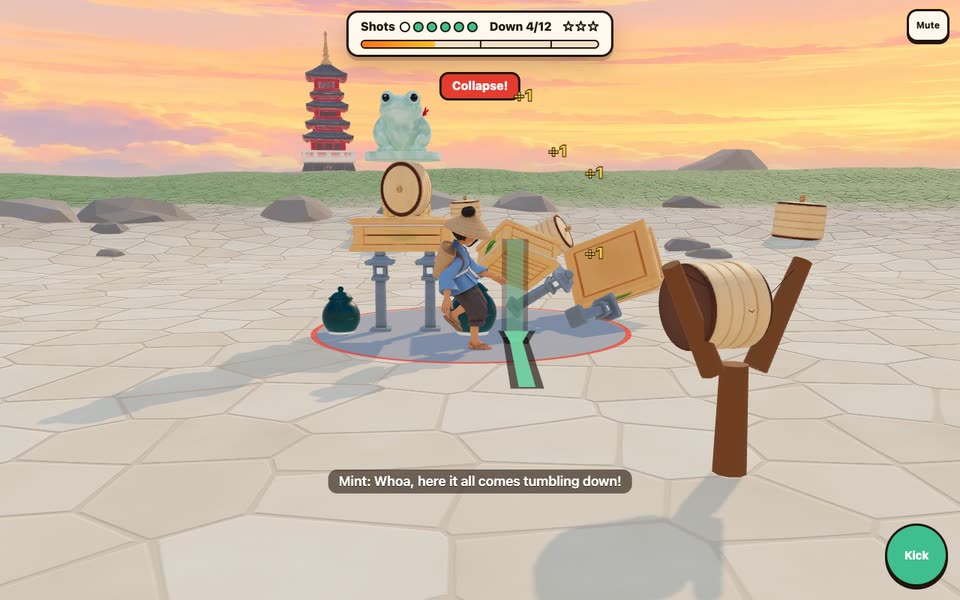
Write four lines (setting, hero, props, mood) and get a 3D physics toy with two modes in one offline HTML file: stack eight generated objects into a wobbling tower, then knock a two-stack tower down with kicks and a slingshot. The hero, six props, the sky, the voice and the music are generated through SandBase; the yard, both modes and the Rapier physics are code.
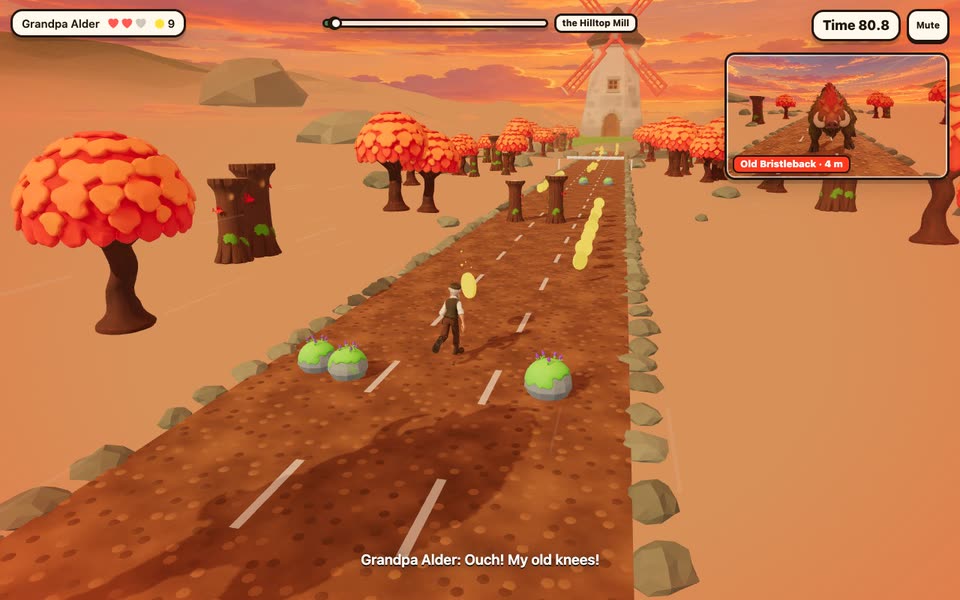
Write five lines (setting, hero, chaser, goal, mood) and get a playable 3D chase runner in one offline HTML file. Sprint three lanes toward a goal while a giant creature closes in, jumping, dodging and sliding past obstacles against the clock; a rigged hero, the chaser, obstacles, the sky, the voice and the music are generated through SandBase. The lanes, route patterns, HUD and effects are code.
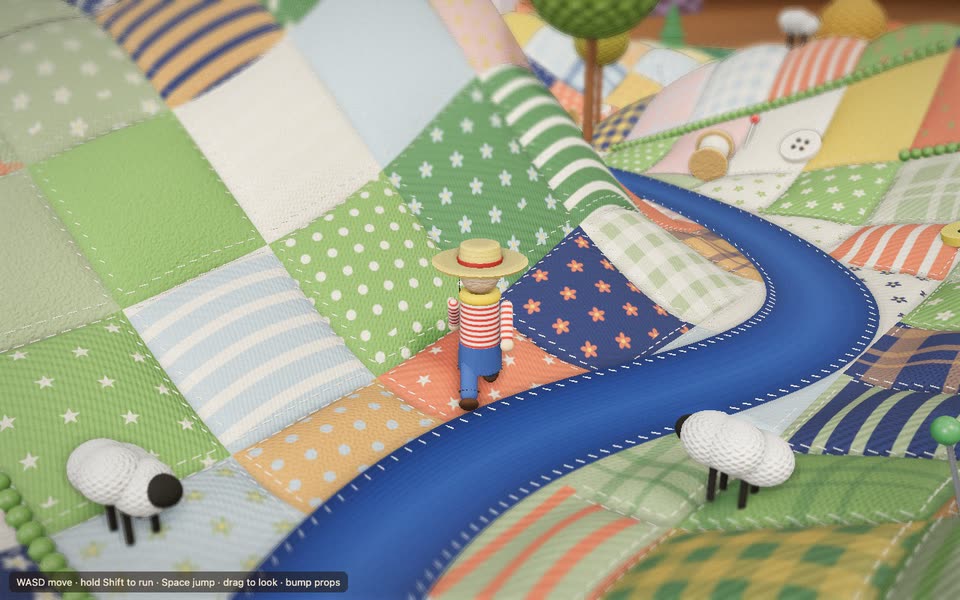
Walk, run and jump a small character across a miniature world laid out on a tabletop, in one offline HTML file. Two finished worlds come with the Skill: a stitched patchwork-quilt countryside on a cutting mat, and a 2150 neon city on a terraced circuit board. three.js renders soft shadows, reflections and a tilt-shift lens; Rapier physics lets the character climb hills and knock props over. Every shape and texture is code.
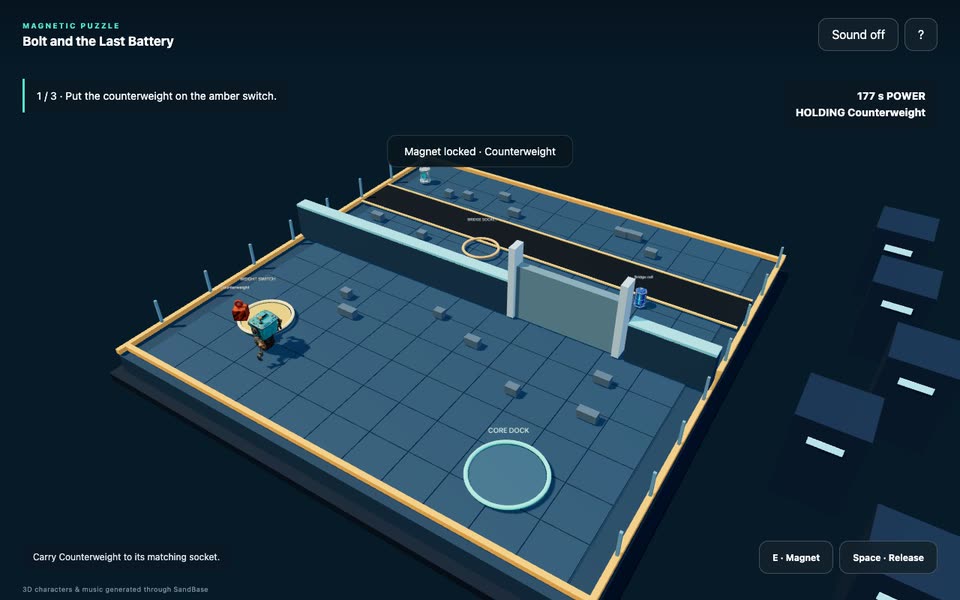
Describe a hero, a setting and a machine to restore, and your Agent builds a 3D puzzle in one offline HTML file where a small character carries metal parts with a magnet and sets each one in its socket. In the main example, Bolt the salvage robot has 180 seconds of battery to open an airlock with a counterweight, bridge a trench and dock the energy core. The hero, the parts, the music and the sound effects are generated through SandBase; the level, the rules and the lighting are code.
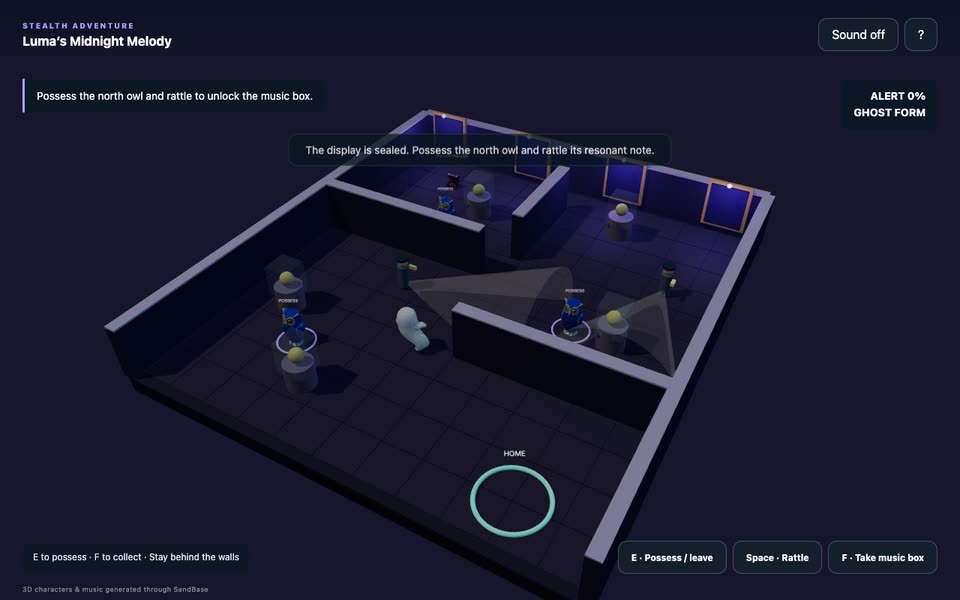
Describe a ghostly hero, a building and the thing it wants back, and your Agent builds a 3D stealth game in one offline HTML file. In the main example, Luma hides inside museum exhibits, rattles them to lure two lantern-carrying guards away, and takes the music box during the 14 seconds its display stays open. The ghost, the treasure, the exhibits, the music and the sound effects are generated through SandBase; the rooms, the patrols, the sight cones and the alert meter are code.
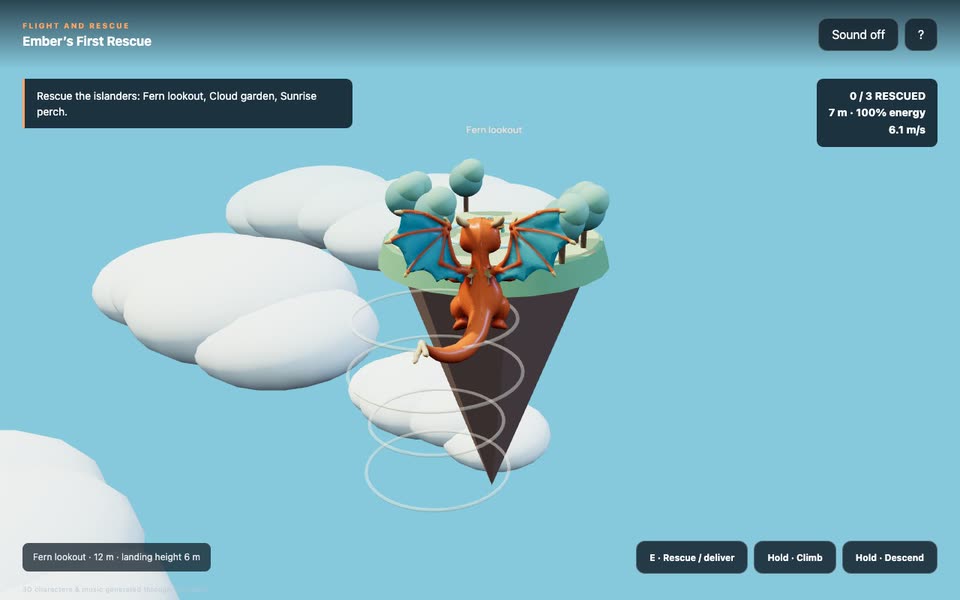
Describe a flying hero, a sky to cross and who needs saving, and your Agent builds a 3D flight-and-rescue game in one offline HTML file. In the main example, Ember the baby dragon ferries three islanders one at a time from floating islands to the rescue camp, slowing down to land and riding golden updrafts to refill energy. The dragon, the passenger, the camp, the music and the sound effects are generated through SandBase; the islands, the flight model and the lighting are code.
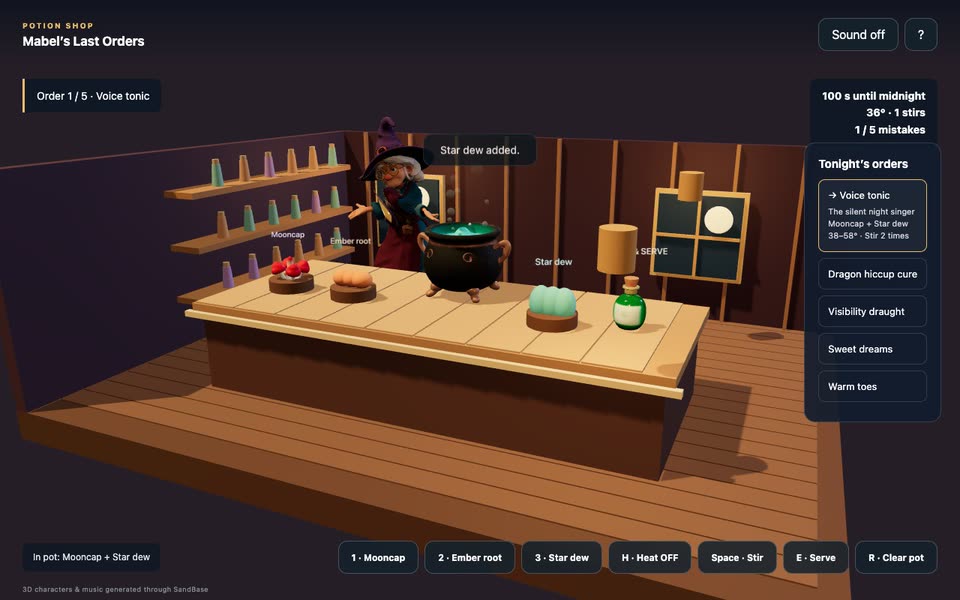
Describe a shopkeeper, a shop and the customers, and your Agent builds a 3D timed recipe game in one offline HTML file. In the main example, Mabel the witch has 115 seconds to brew five cures: add the ingredients on each order card, heat the cauldron into the marked range, stir the right number of times and serve. The rigged witch, the cauldron, the ingredient, the bottle, the music and the sound effects are generated through SandBase; the shop, the recipes and the timing are code.
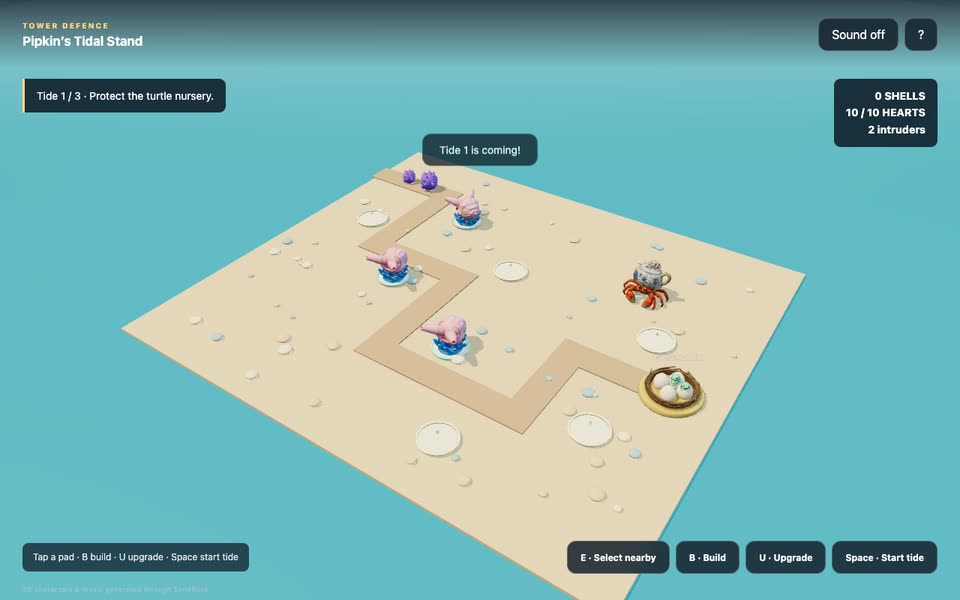
Describe a hero, a home to protect and the invaders, and your Agent builds a 3D tower defense game in one offline HTML file. In the main example, Pipkin the teacup hermit crab spends shells on conch cannons across eight pads and holds a beach nursery through three tides of sea urchins. The crab, the cannon, the urchin, the nest, the music and the sound effects are generated through SandBase; the shore, the path, the waves and the projectiles are code.
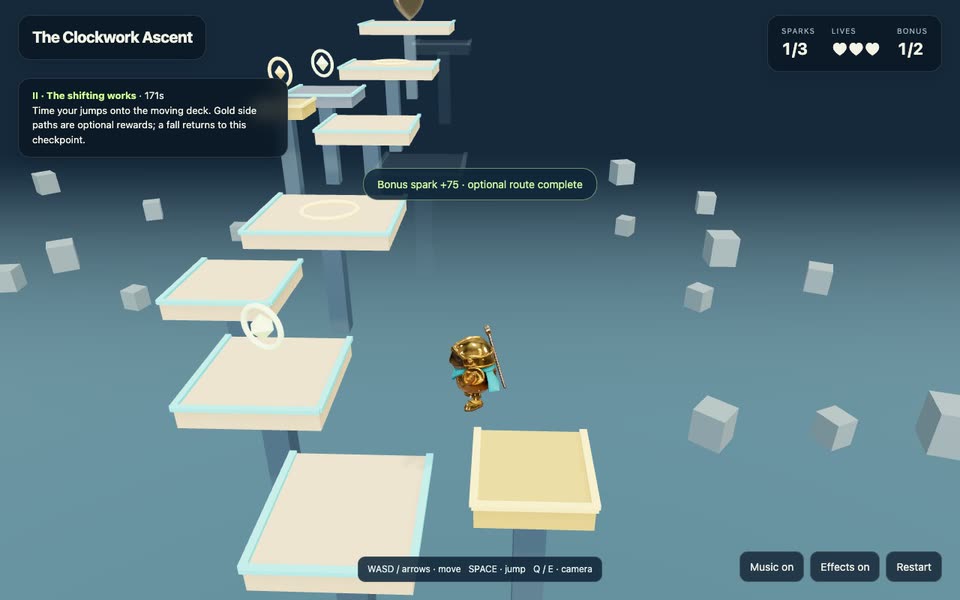
Describe a climber, a tall place and what must be recovered, and your Agent builds a third-person 3D platformer in one offline HTML file. In the main example, Pip the clockwork knight has 180 seconds and three lives to climb three districts of moving and fading decks, wind each station and return a clockwork heart to the crown. The knight, the heart, the music and the ambience are generated through SandBase; the platforms, jump physics and camera are code.
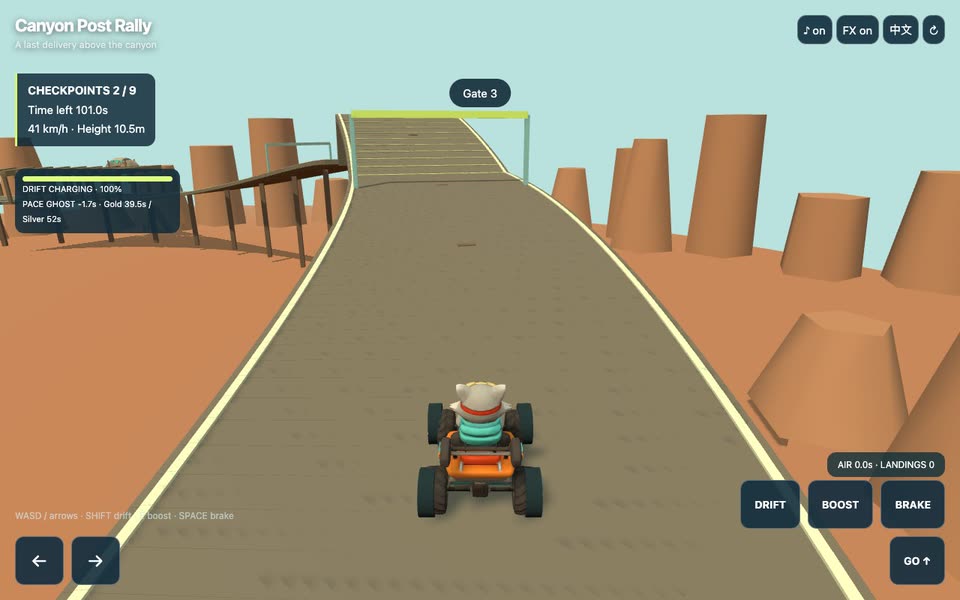
Describe a driver, a vehicle and a course, and your Agent builds a 3D kart time trial in one offline HTML file. In the main example, a raccoon postal courier races an elevated canyon lap through nine ordered gates, drifts to charge a boost, jumps a broken bridge and picks the scenic road or a narrow express bridge while chasing a 52-second pace ghost. The kart, a sandstone tunnel, the music and the ambience are generated through SandBase; the track and handling are code.
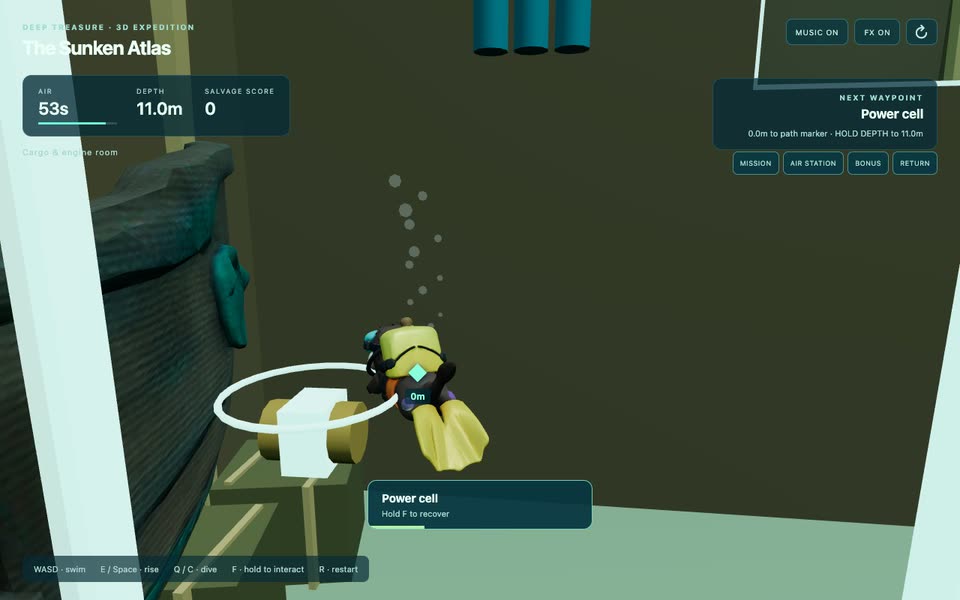
Describe an explorer, a flooded place and a treasure, and your Agent builds a 3D underwater exploration game in one offline HTML file. In the main example, an otter salvager has 62 seconds of air to restore power in a sunken wreck, open its archive, recover the navigation atlas and decide whether a deeper star compass is worth the risk before swimming home. The otter, the wreck, the music and the ambience are generated through SandBase; the rooms, the air and the guide route are code.
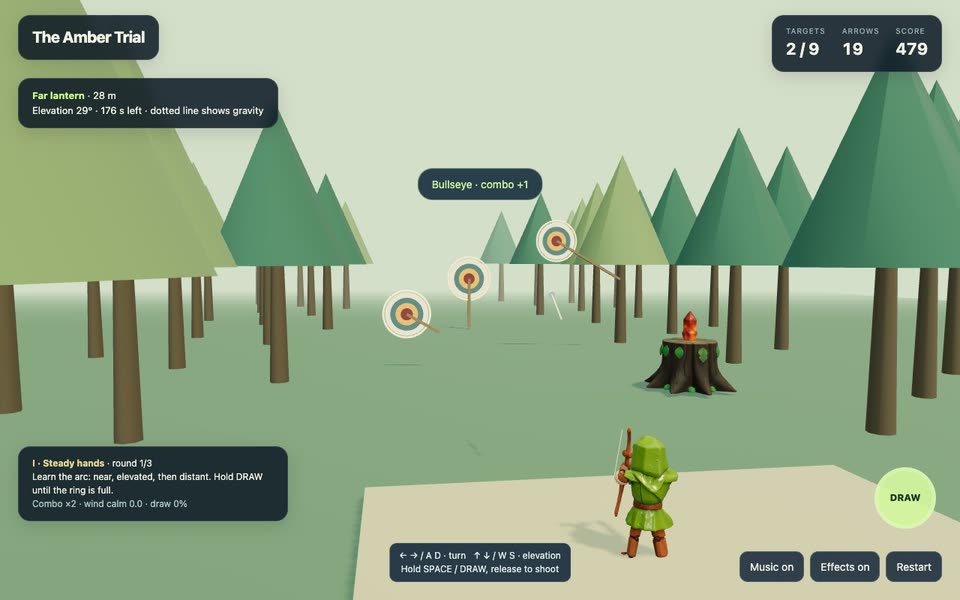
Describe an archer, a range and what to hit, and your Agent builds a 3D archery game in one offline HTML file. In the main example, a wooden forest guardian has 22 arrows to clear three rounds: fixed targets at different heights and distances, moving lanterns, then wind and a sliding timber shutter. Arrows fall under gravity along a previewed arc. The archer, a shrine prop, the music and the ambience are generated through SandBase; the bow, the targets and the flight are code.
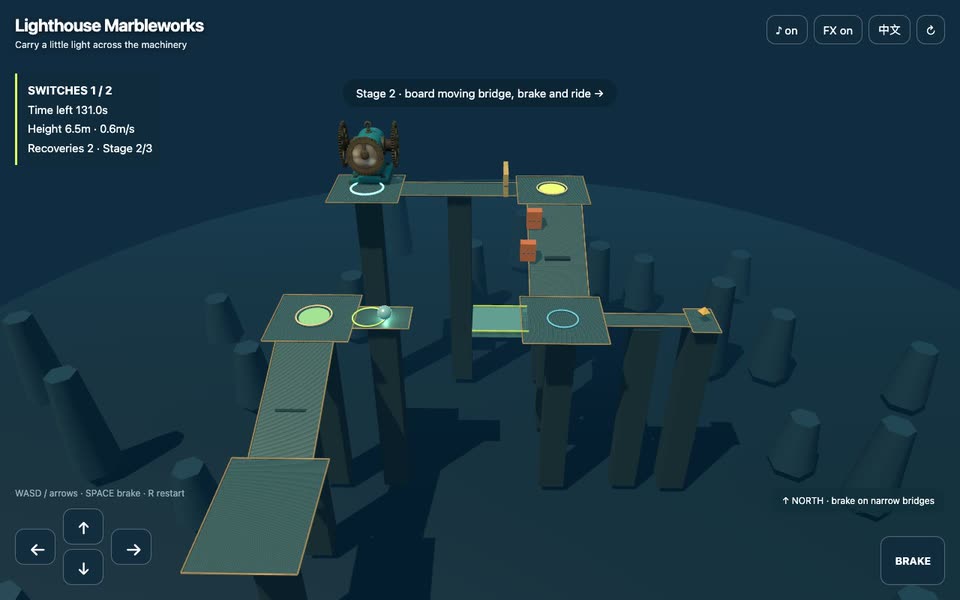
Describe a marble, a machine and its goal, and your Agent builds a 3D rolling-ball puzzle in one offline HTML file. In the main example, a glowing glass marble climbs a lighthouse mechanism in 140 seconds: it charges a copper switch, rides a moving bridge and dodges pistons to a receiver switch, then crosses to the goal once both switches open the gate. The brass generator, the music and the ambience are generated through SandBase; the platforms and the physics are code.
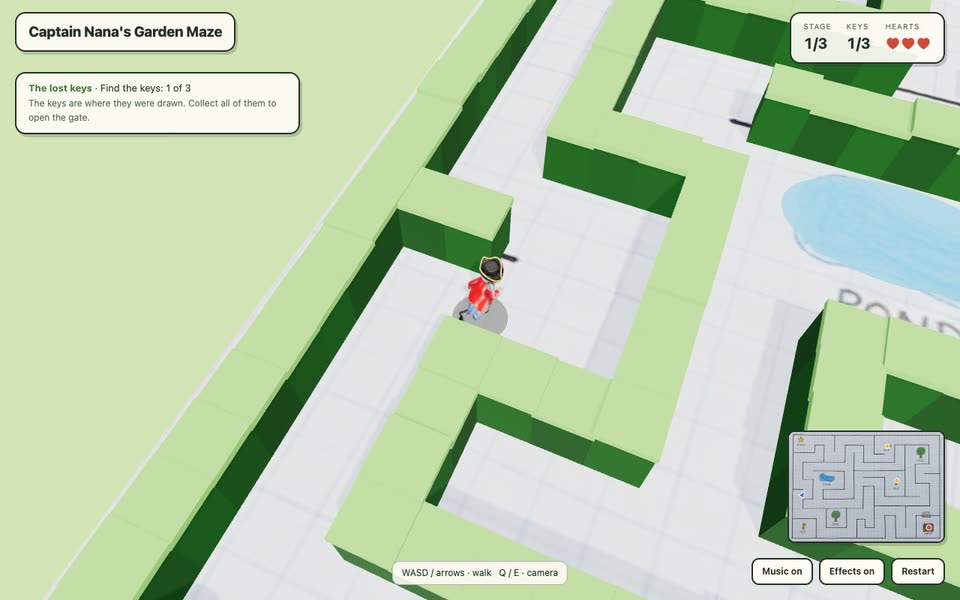
Hand a child's drawing and a grid-paper maze to your Agent and it builds a third-person 3D maze adventure in one offline HTML file. In the main example, a crayon pirate grandmother walks a hedge maze drawn on blue grid paper, collects the three brass keys, opens the garden gate and reaches her sea chest across three timed stages. The hero is rigged and animated through SandBase (Tripo + Meshy); the maze, walls, traps and patrol roamers are code.
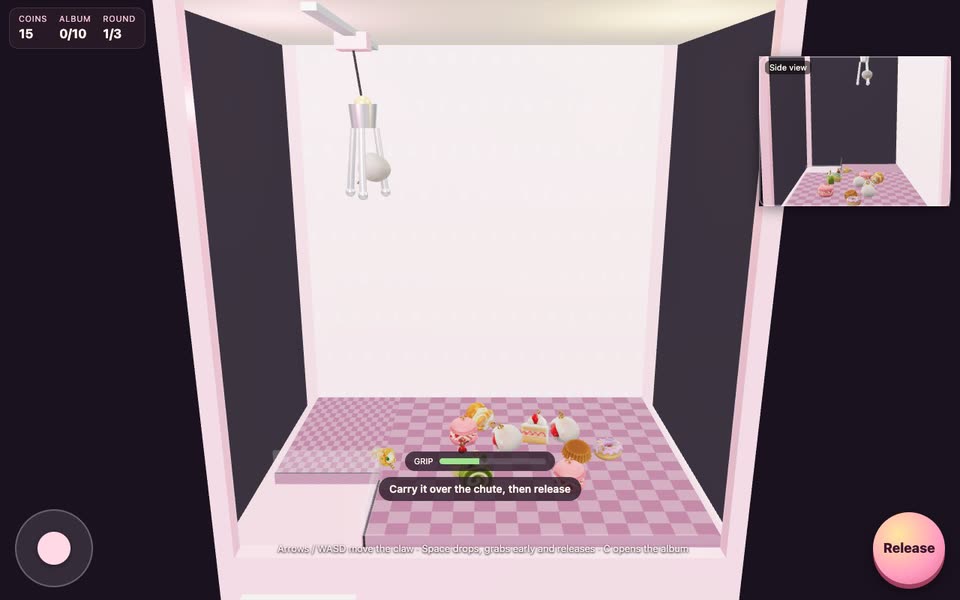
Name a prize theme and your Agent builds a 3D claw-machine collecting game in one offline HTML file, with one generated image and image-to-3D model per prize. In the main example, ten dessert keychain charms sit in a pastel cabinet; the claw moves, drops, closes and carries each prize on real Rapier convex-hull physics, and a coin budget, rarity tiers and an album turn catches into a collection. The prizes, cards, music and effects are generated through SandBase; the machine and physics are code.
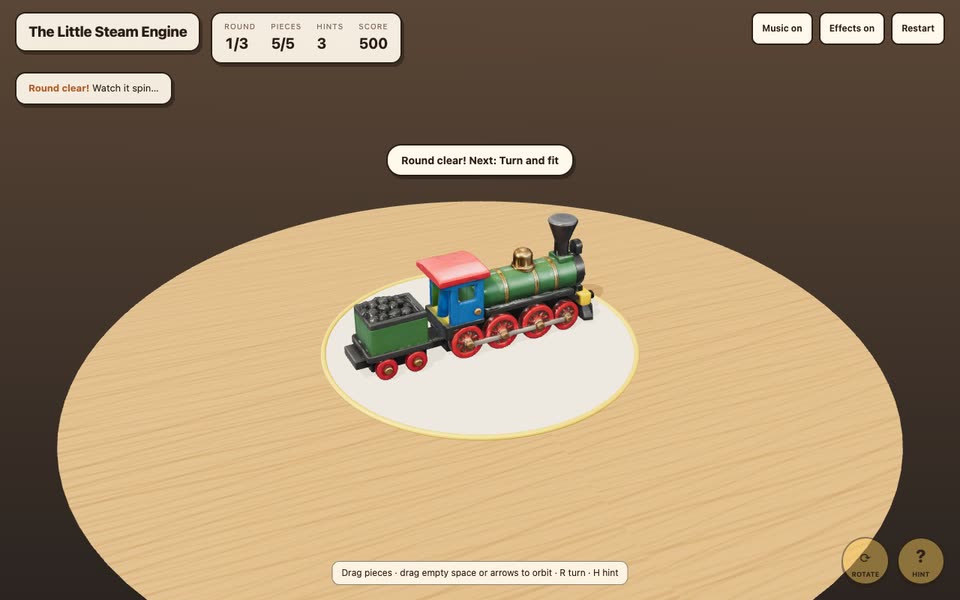
Name a toy-like object and your Agent builds a 3D reassembly puzzle in one offline HTML file. In the main example, a painted toy steam engine sits split into ten parts on a workshop turntable; you orbit the camera, drag each part to its slot, turn it right and drop it in over three rounds, with ghosts, hints and a reveal spin. The object is split with Tripo Segment and generated through SandBase; the turntable, snapping and scoring are code.
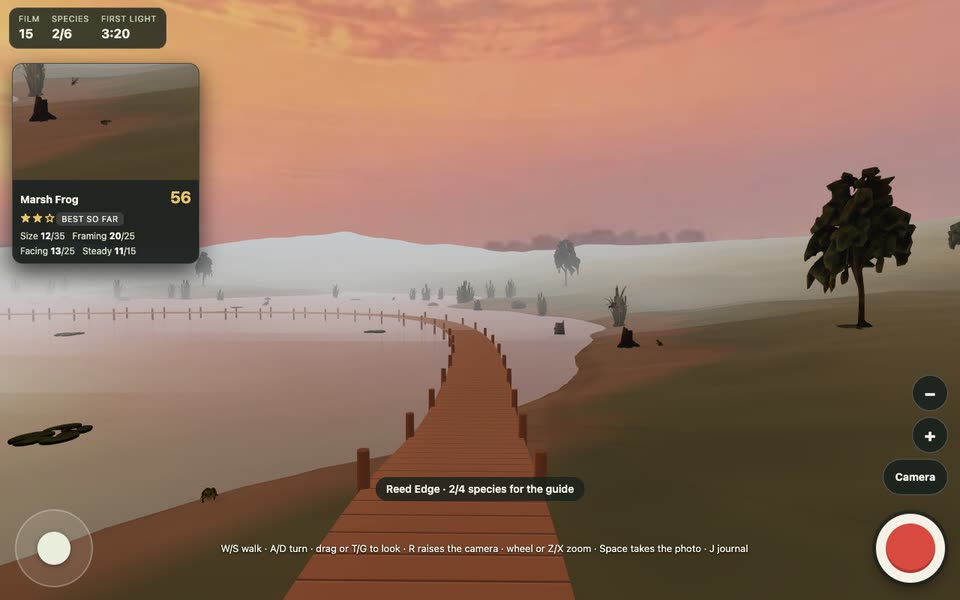
Describe a habitat and your Agent builds a 3D wildlife photo-safari in one offline HTML file. In the main example, a boardwalk crosses a misty wetland at first light, home to six residents; you walk, turn, raise the camera, zoom and shoot, and each photo is scored from real 3D visibility, framing and facing data. The animals, props and sky are generated through SandBase; the terrain, behaviours and scoring are code.
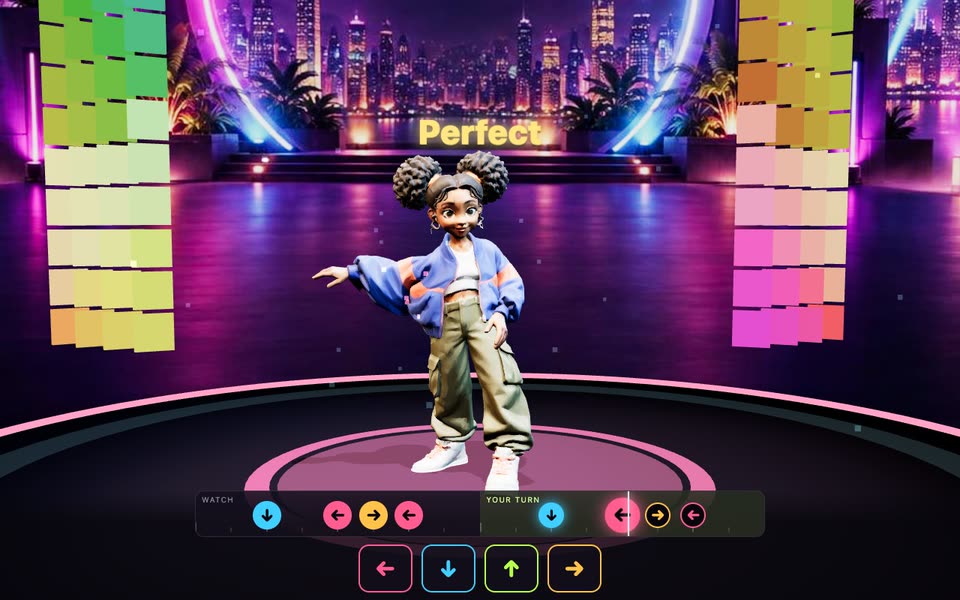
Describe a dancer, a venue and a song, and your Agent builds a 3D call-and-response rhythm game in one offline HTML file. In the main example, Mika — an invented street dancer — performs on a neon rooftop: she calls a few moves on the song's own beats, you answer them with ← ↓ ↑ → (or four touch pads), a hit makes her nail the pose and adds that move's drum to the mix, eight hits in a row start a fever, and enough accuracy earns a finale where she dances her full clips to the tempo and takes a bow. The dancer, backdrop, song and crowd cues are generated through SandBase (gpt-image, Tripo text-to-3D, Meshy rigging and clips, Lyria, ElevenLabs); the beat chart, judging, stage and controls are code.
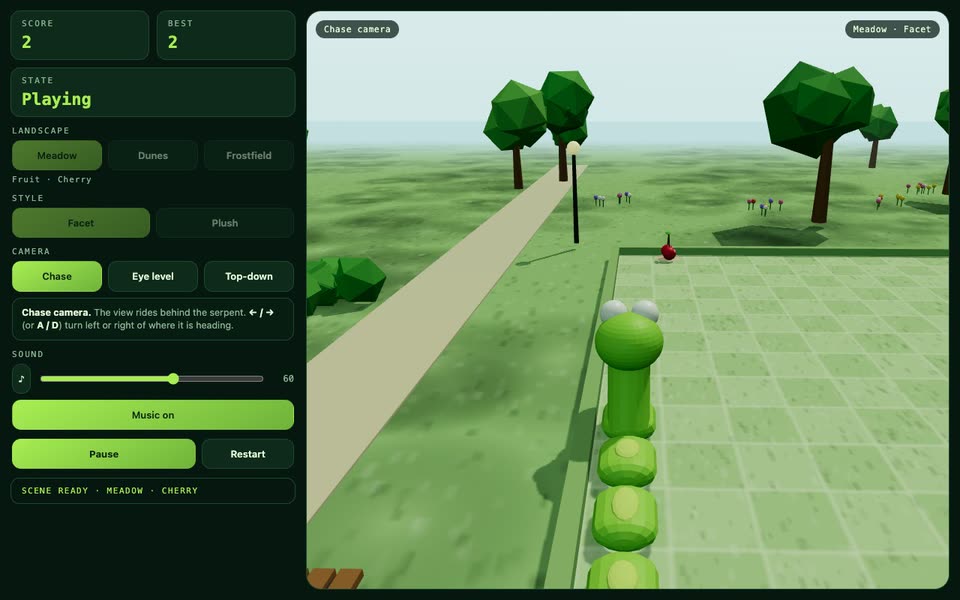
Steer a cartoon serpent round a 20×20 board in 3D, in one offline HTML file: three landscapes, two render styles, chase, eye-level and top-down cameras, a speed-up with every fruit and a win for a full board. Models, textures and sounds are all generated in code.
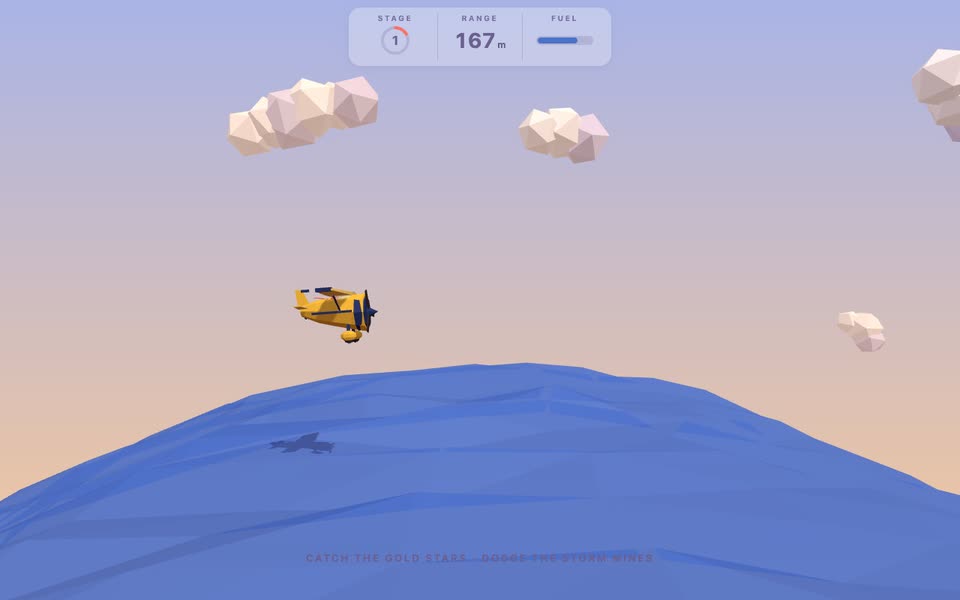
Fly a low-poly biplane over a turning ocean drum, in one offline HTML file: steer with the pointer, catch fuel stars, dodge storm mines and climb a stage every 1000 m until the tank runs dry. Every model is built in code and every sound is synthesised.
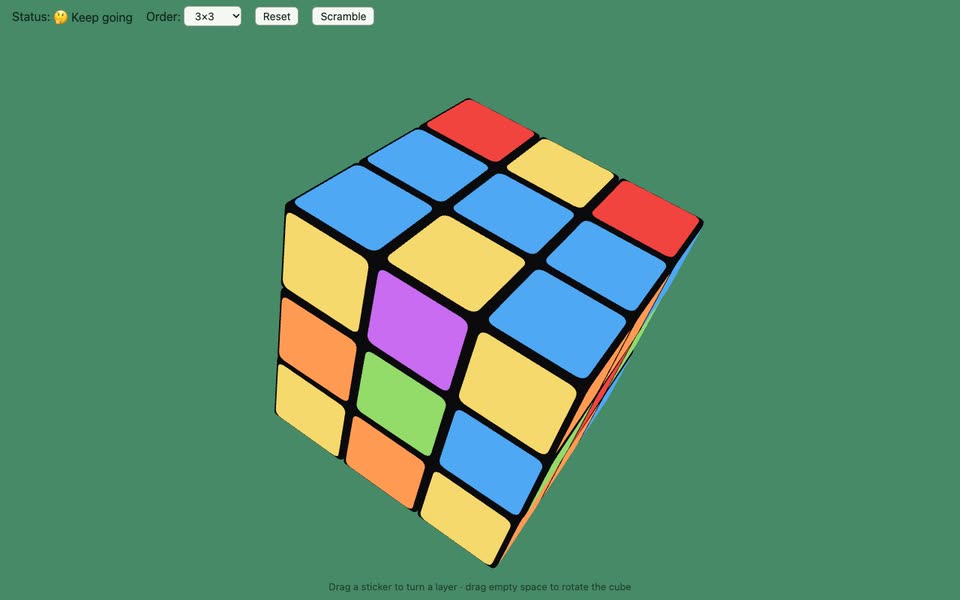
Turn layers of a twisty cube in 3D, in one offline HTML file: drag a sticker to turn its layer with a snap, drag empty space to look around, scramble with an animation and see when it is solved, at any size from 2×2 to 10×10. The cube is built in code.
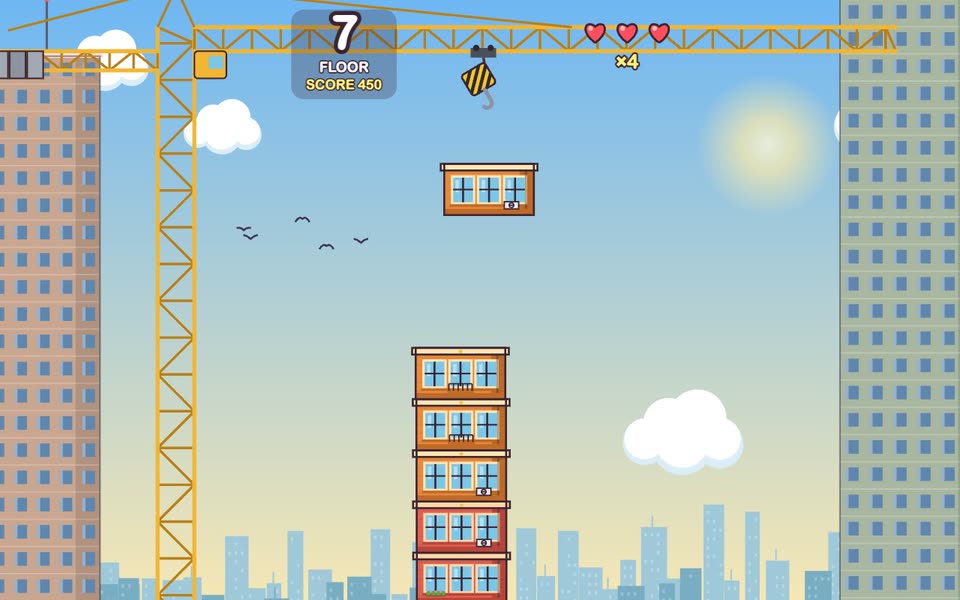
Drop swinging blocks from a tower crane to build the tallest tower, in one small offline HTML file: Perfect landings in a row pay more, three misses end the run, and the sky turns from day to night as the tower grows. All drawing is Canvas 2D and every sound is synthesised.
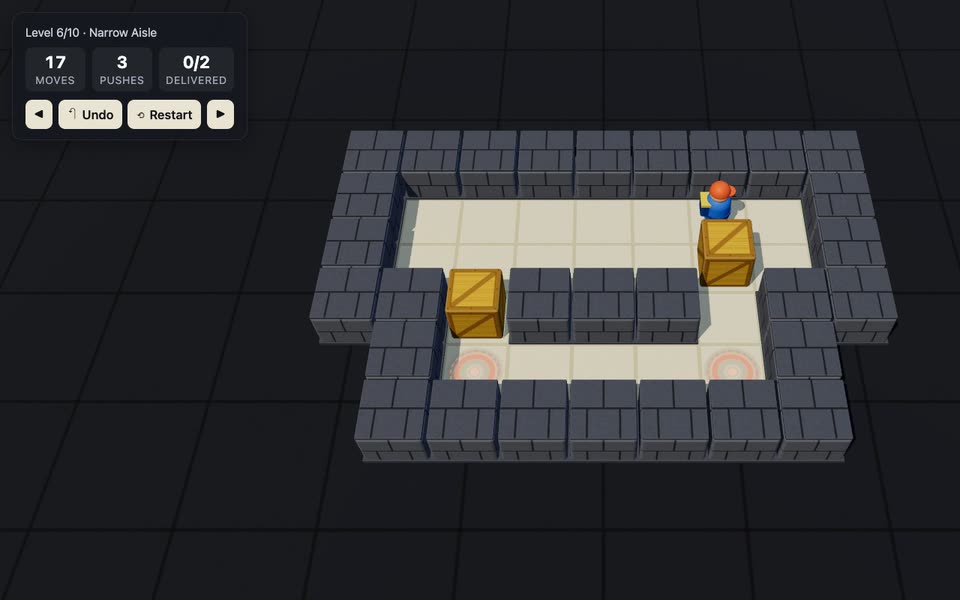
Walk a courier round a small 3D warehouse and push crates onto glowing delivery pads, in one offline HTML file: ten solvable levels from a one-crate tutorial to five-crate rooms, unlimited undo, restart, move and push counters, keyboard and swipe controls. Models, textures and sounds are all generated in code.
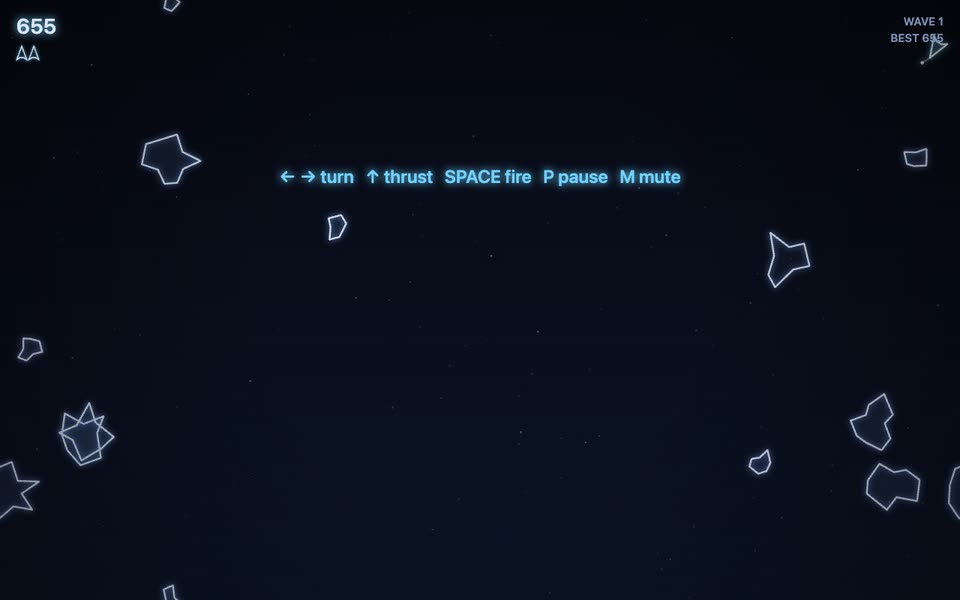
Fly an inertial skiff through a field of drifting shards, in one small offline HTML file: shots crack large shards into medium and small ones, an amber drone crosses and fires back, every cleared field brings a bigger wave, and three skiffs end the run. Glowing outlines are drawn in Canvas 2D and every sound is synthesised.
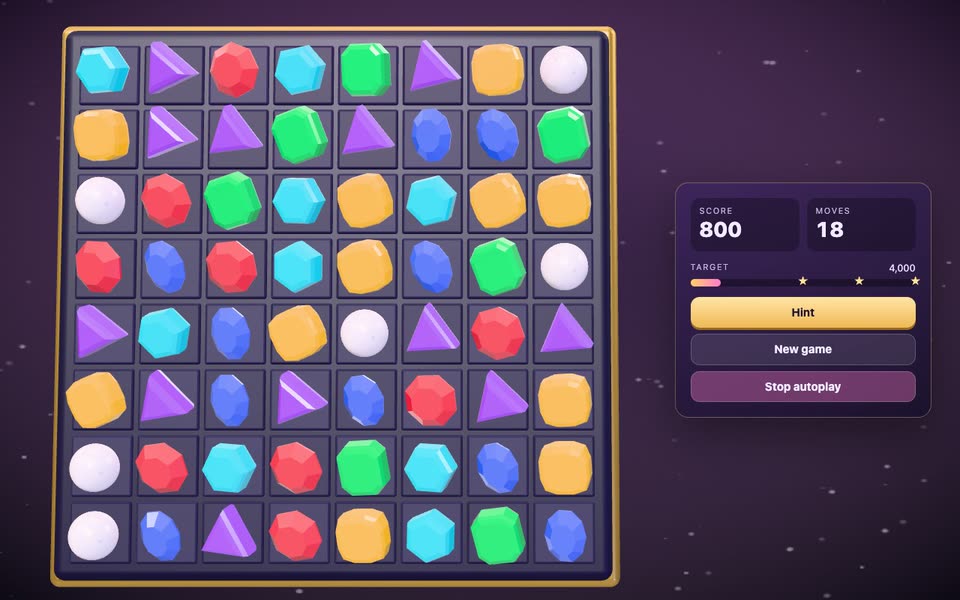
Swap cut 3D gems on an 8×8 tray to make lines of three or more, in one offline HTML file: lines pop, gems fall and chain clears score double, triple and more; each round has 20 moves and a 4,000-point target with up to three stars, plus a hint, a reshuffle when no move is left and autoplay. Gems, lighting and sounds are generated in code.
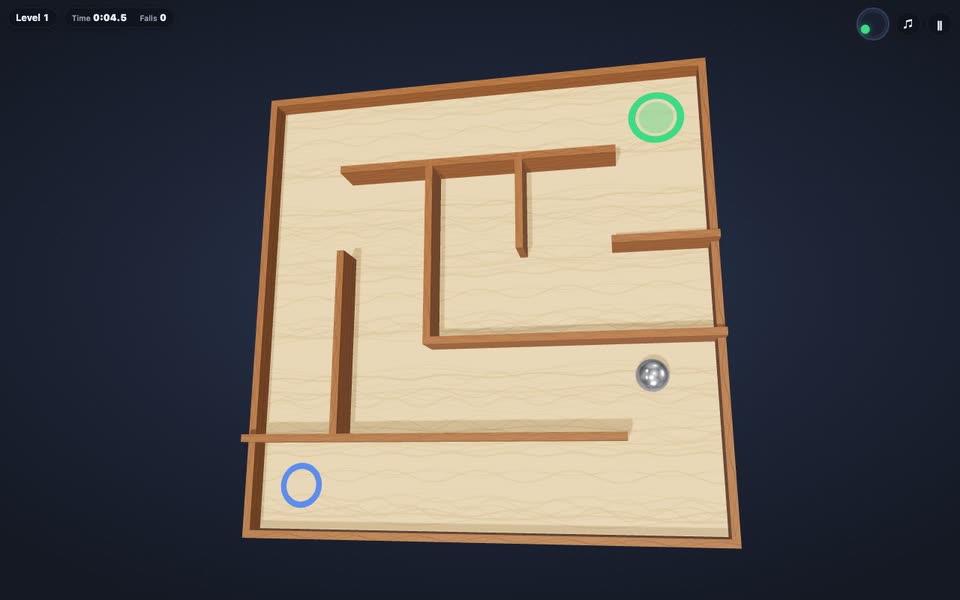
Tilt a wooden maze to roll a marble to the goal ring, in one offline HTML file: ten hand-authored boards from an open 5×5 to an 11×11 with six holes, a falling penalty, an endless mode with seed-named mazes, plus gyro, drag and keyboard tilt on phone and desktop. The board, marble and sounds are all generated in code.
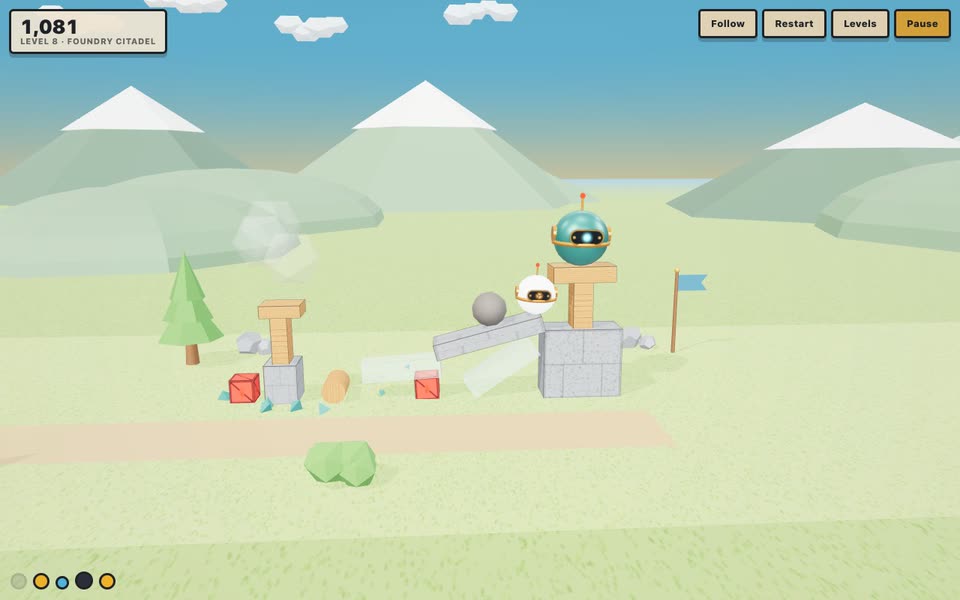
Drag the loaded round back and let go to topple towers of wood, ice and stone and knock out the clockwork sentries, in one offline HTML file: eight levels with stored solutions, four ammo kinds (stone, dash, split, bomb) and a firebox chain, plus spare-shot bonuses and star ratings. Blocks, landscape and sounds are all generated in code.
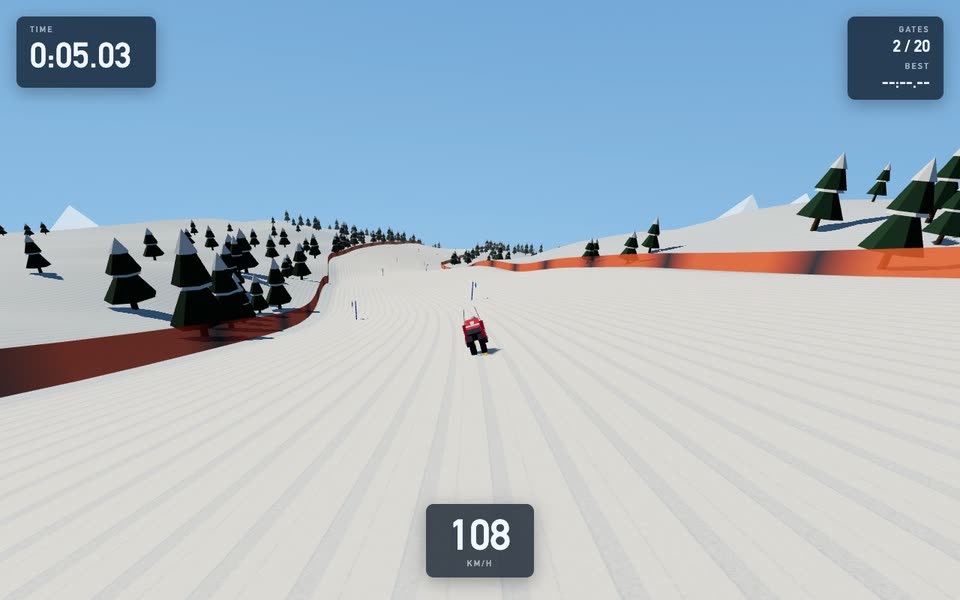
Carve a downhill course between 20 gates, in one offline HTML file: a procedurally-authored track about 1.4 km long with two splits and a best-time delta, tuck for speed, brake to recover, respawn after a crash. Trees, snow, netting and the skier are all generated in code; runs are deterministic so verification is exact.
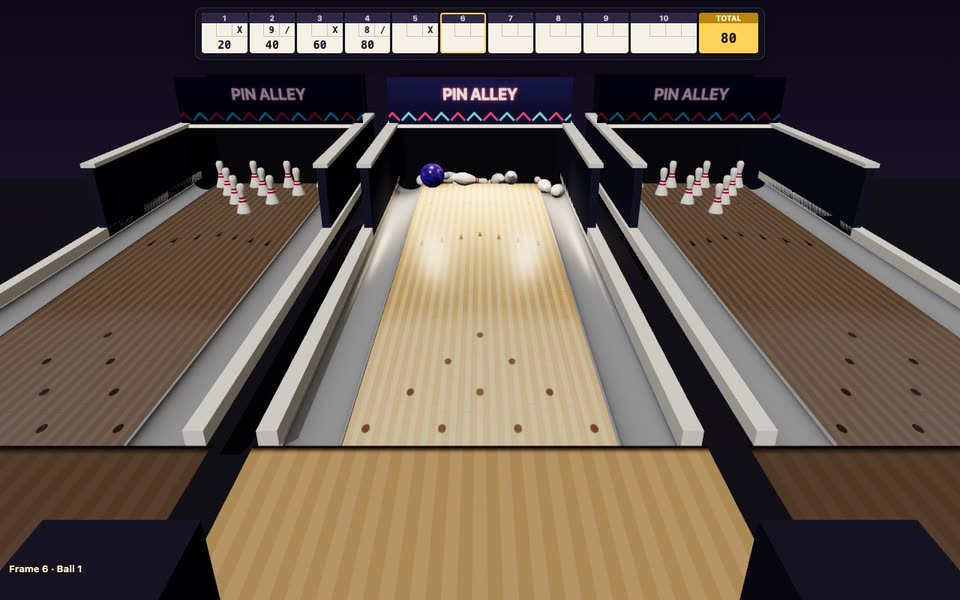
Line up and flick a bowling ball down a real alley, in one offline HTML file: ten rigid-body pins, full ten-frame scoring with strikes, spares and a 10th-frame bonus, a hook shot that bends on the lane, and a game-over scorecard. Lanes, pins, ball and sounds are all generated in code; the physics runs deterministic per throw.
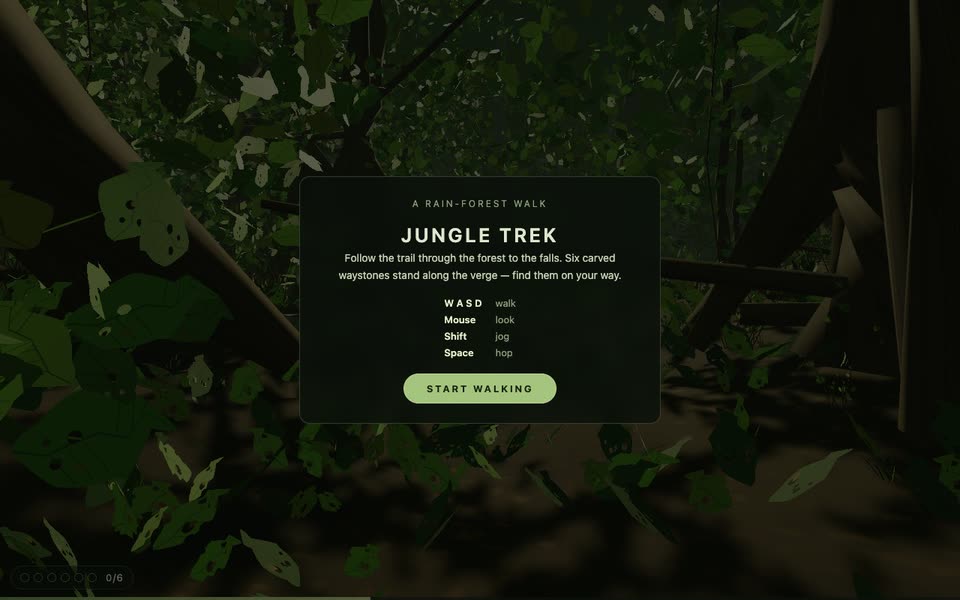
Walk a narrowing rainforest trail to a plunge-pool waterfall, in one offline HTML file: a first-person level generated procedurally at load, six carved waystones to collect along the path, stone ruins and a gate to pass, jog and jump over rougher ground, and a finish card with the walk time. Terrain, nine plant species, water, sky and ambience are all drawn in code — no imported assets.
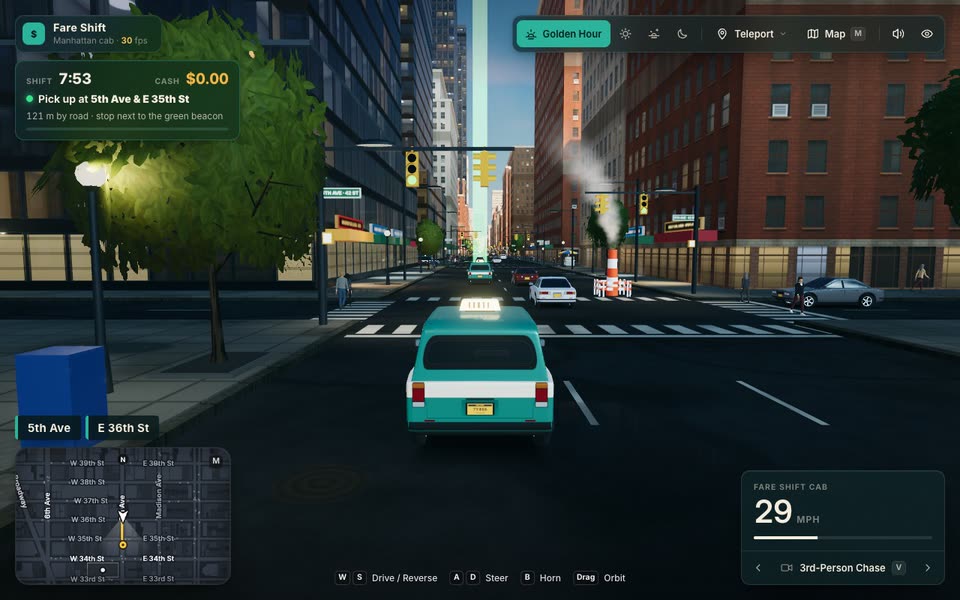
Drive an eight-minute taxi shift through Manhattan, in one offline HTML file: passengers hail at the kerb, a GPS routes you over the real street grid, the meter pays by distance, arriving on time and without bumps earns the tip, and a summary card lists every fare. Real street names and landmarks, 200 cars and 340 people in traffic, four times of day, rendered with WebGPU.
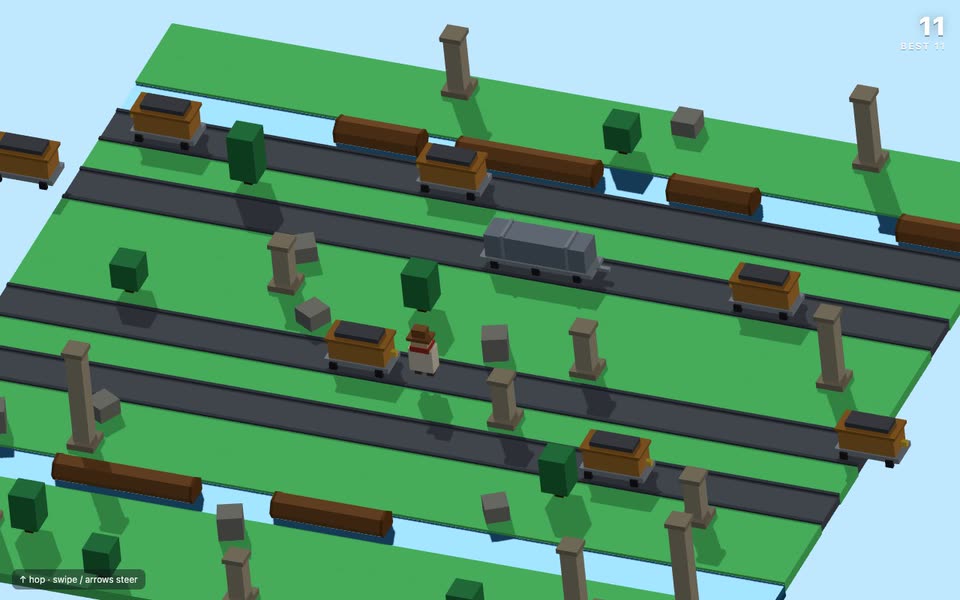
Hop an explorer row by row across a relic causeway, in one offline HTML file: grass banks with fallen pillars, paved roads where ore carts and wagons roll through, and canals you cross only by riding drifting logs. A cart, the water or the current ends the run; the HUD counts distance and best, and a death card offers another hop. The lanes are seeded, the view is a fixed diagonal 3D camera, and every mesh and sound is generated in code.
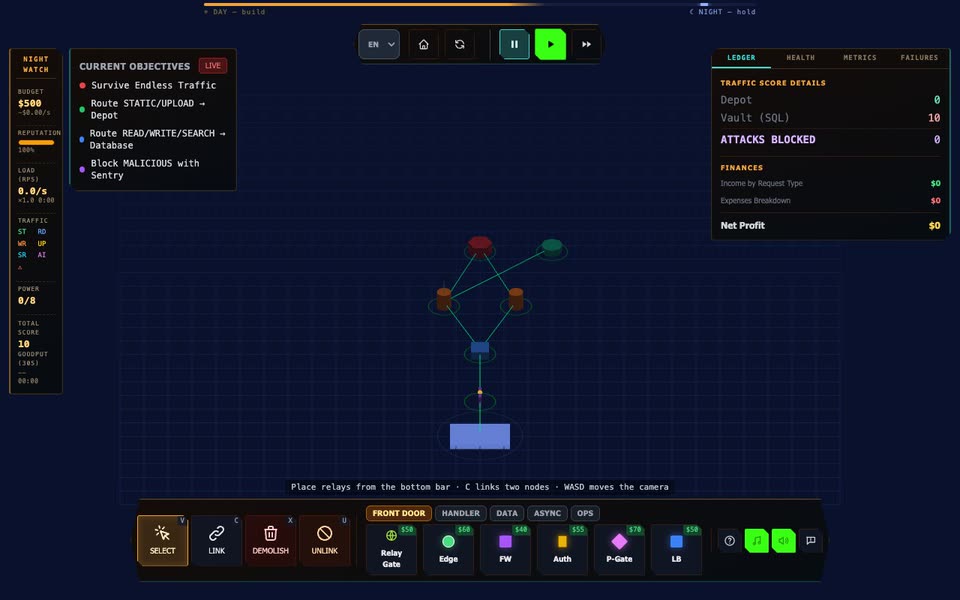
Wire relay-outpost services into pipelines and keep reputation up through the nightly traffic surge, in one offline HTML file. Place sentries, balancers, handlers and stores on a dark board, link them back to the Uplink and route each kind of request to the right store. Every 60 seconds of daylight turns into a 30-second night that dims the board and raises the request rate; at dawn a card reports what held. Upkeep drains the budget, failures cost reputation, and losing all of it ends the run.
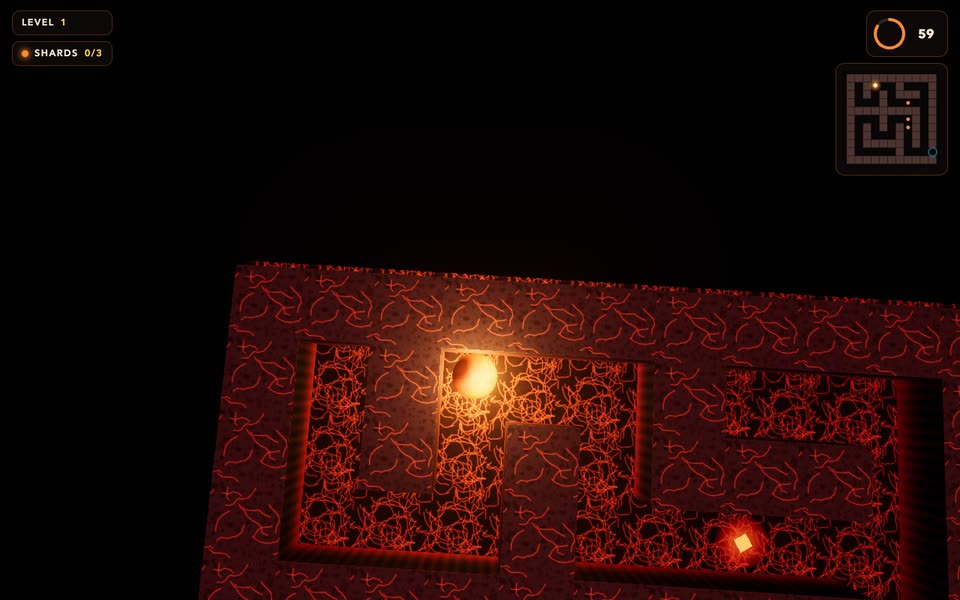
Roll a glowing ember through a seeded basalt lava-tube maze, in one offline HTML file: gather every shard to charge the exit vent, then reach it before the heat timer runs out. Finishing grades the run in one to three stars and opens a bigger maze; running out cools the ember and ends the run. A corner minimap shows the maze, the shards and the vent; keyboard and touch both play.
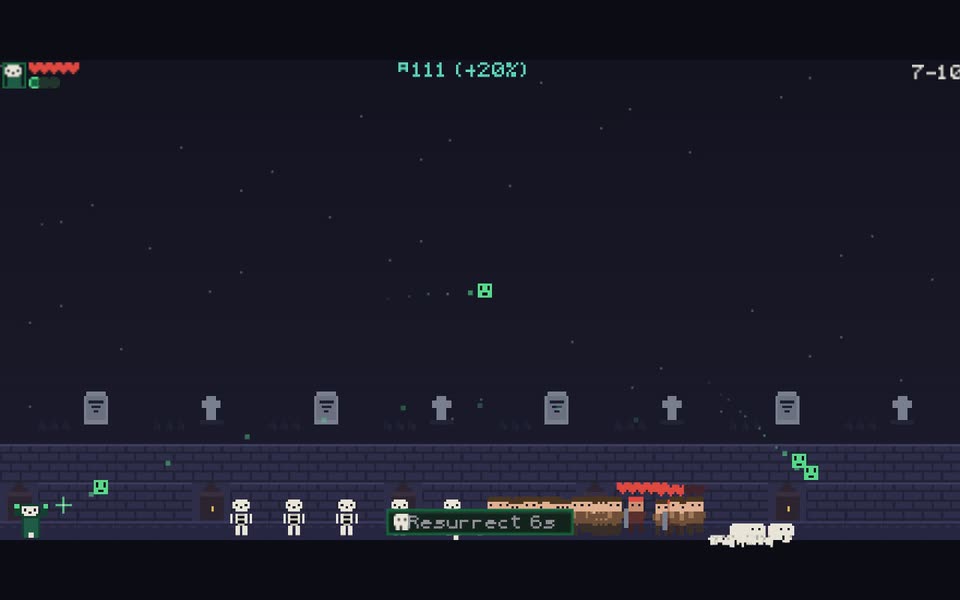
Hold a boneyard over ten levels, in one offline HTML file: drag to aim a gravity-arc soul bolt at villagers and knights, raise the fallen as skeleton allies to meet the next wave, and spend souls between levels on rites that rewrite how your spells behave, up to a crowned boss. Every sprite, the pixel font and all sound are drawn and synthesised in code.
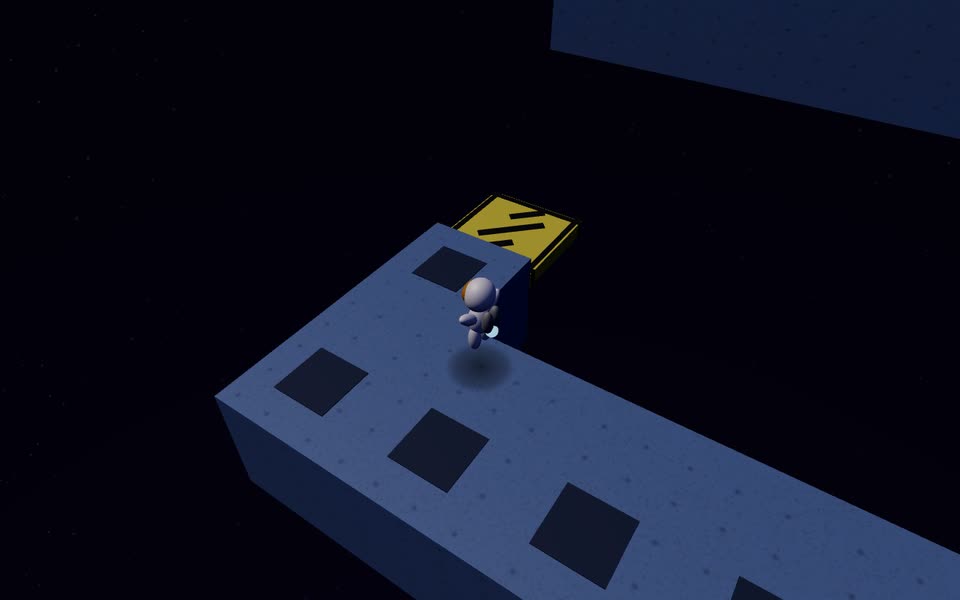
Run, jump and jetpack a scout across floating slabs over six sectors, in one offline HTML file: collect every shard, refuel from cans, stomp patrolling sentries, dodge turret bolts and ride lifts over the void, then light the sector beacon against the clock. The HUD tracks shards, fuel, time and the best clear; meshes, textures and sound are generated in code.
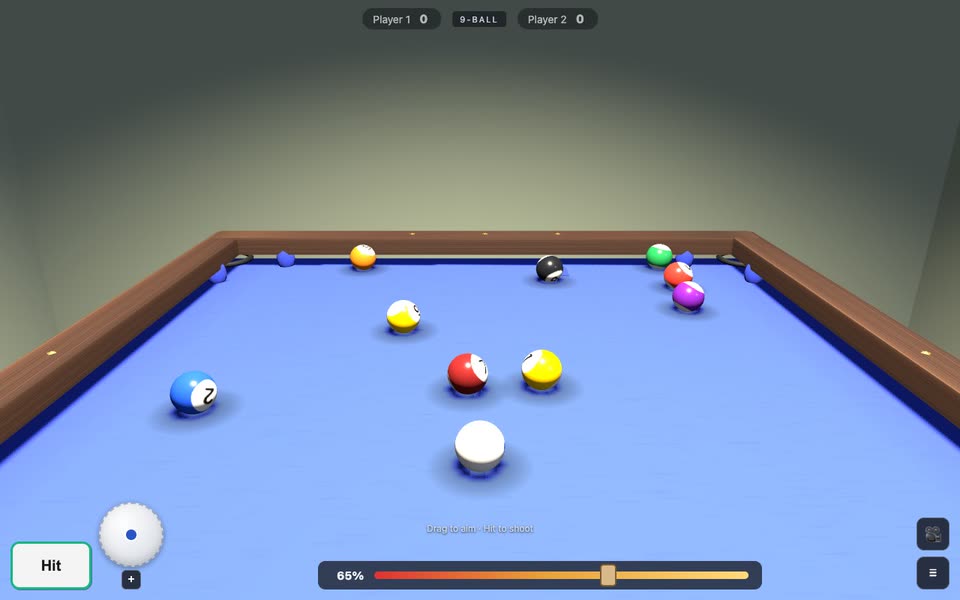
Play hotseat nine-ball on a 3D table, in one offline HTML file: place the cue ball, aim with a guide line, set power and draw, follow or side spin, and watch the cue ball slide, roll, bounce off cushions and drop into pockets. Fouls give ball in hand and a legal pot of the 9 wins the rack. The physics, table, balls and sound are all written in code.
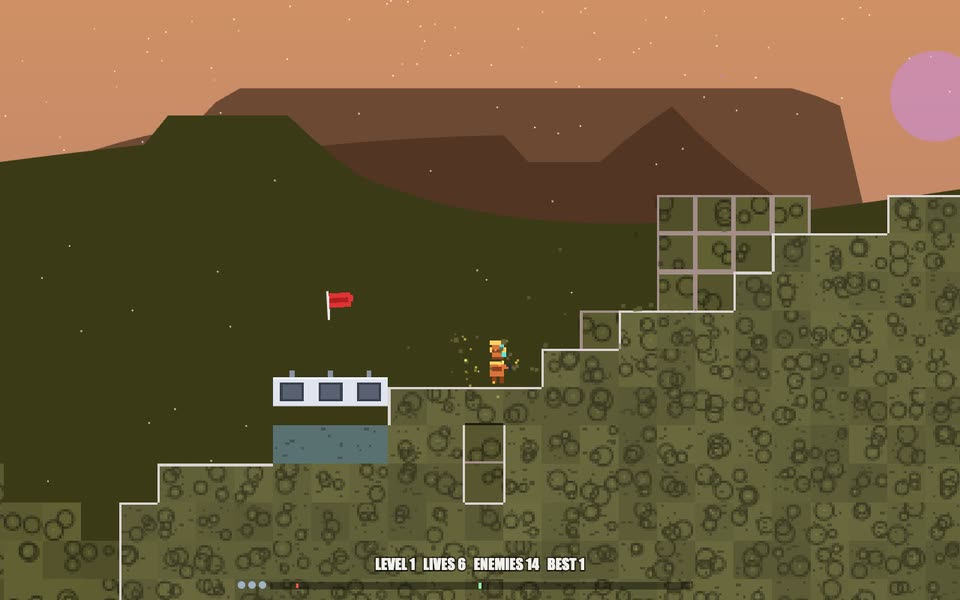
Run, shoot, roll and throw grenades across a seeded crater world where every tile can be blasted, in one offline HTML file: bullets chew dirt, grenades dig craters, fire spreads and a roll puts it out. Clear each outpost of patrols, dodgers and grenadiers; levels grow wider, lives run out and the best level is kept. Every sprite, tile and sound is drawn or synthesised in code.
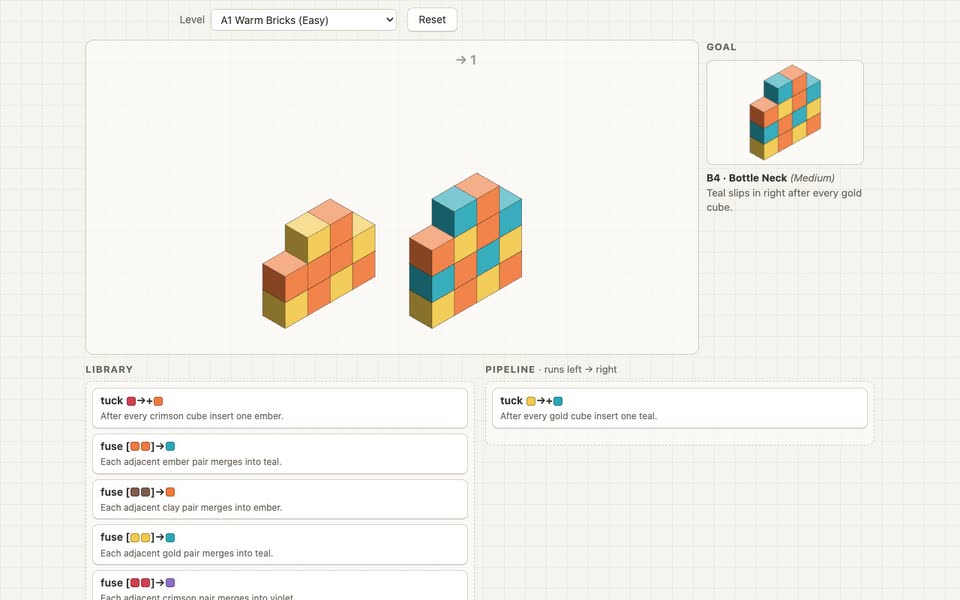
Turn a wall of isometric cubes into the goal shape by chaining rules, in one offline HTML file: paint one colour into another, cap stacks, sort, fuse pairs, tuck cubes in, flip the wall. Every rule in the pipeline draws its own wall on the board, so you see where a program goes wrong. Drag to reorder, reset to start over; 18 levels in three chapters, each with a stored solution the tests replay.
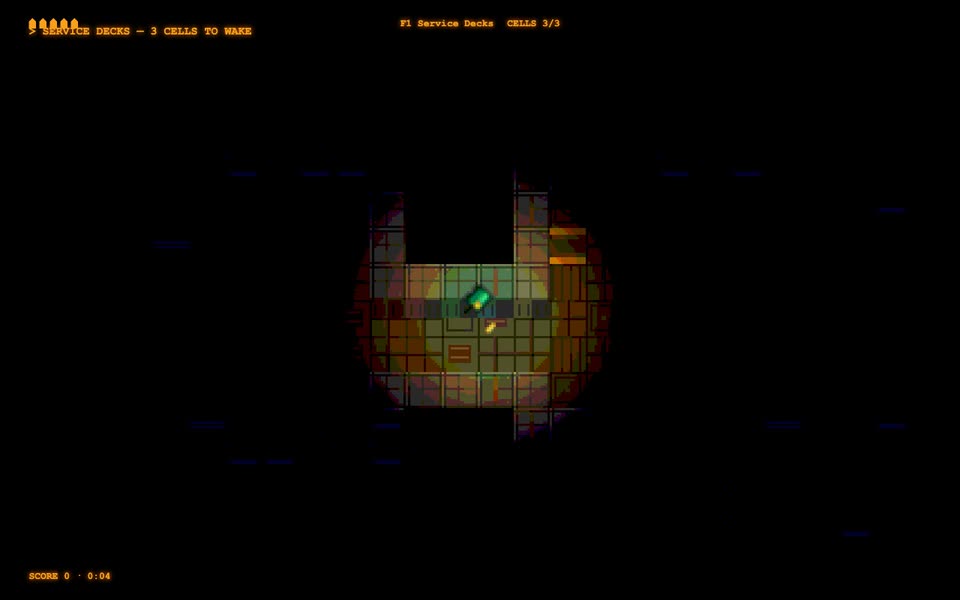
Fight through a facility with the power out, in one offline HTML file: you see only what light touches, from your lamp, your bolts, blasts and the power cells you wake. Wake every cell on a floor to call the lift; crawlers charge, gun drones hold range and fire back. Four seeded floors, health pips, score and a par-time bonus, with twin-stick touch on a phone. Every sprite and sound is drawn or synthesised in code.
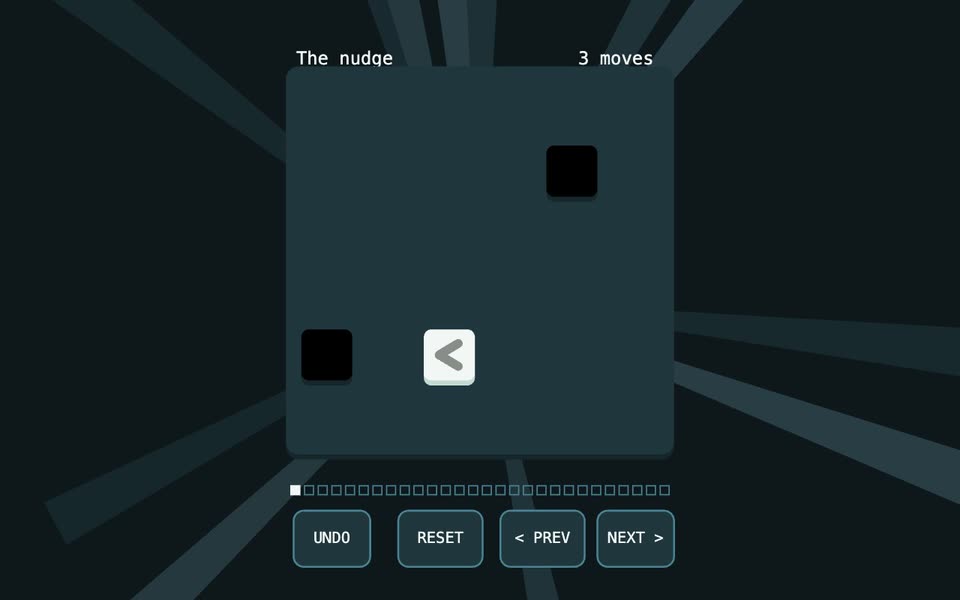
Clear a 6×6 board within a move budget, in one offline HTML file: arrows shove their whole line one step, crosses pop, stars fold into voids and voids swallow whatever slides in. 28 boards, each proven solvable by a solver the tests run, with undo, reset and a best count per board. Tiles are drawn and sounds synthesised in code.
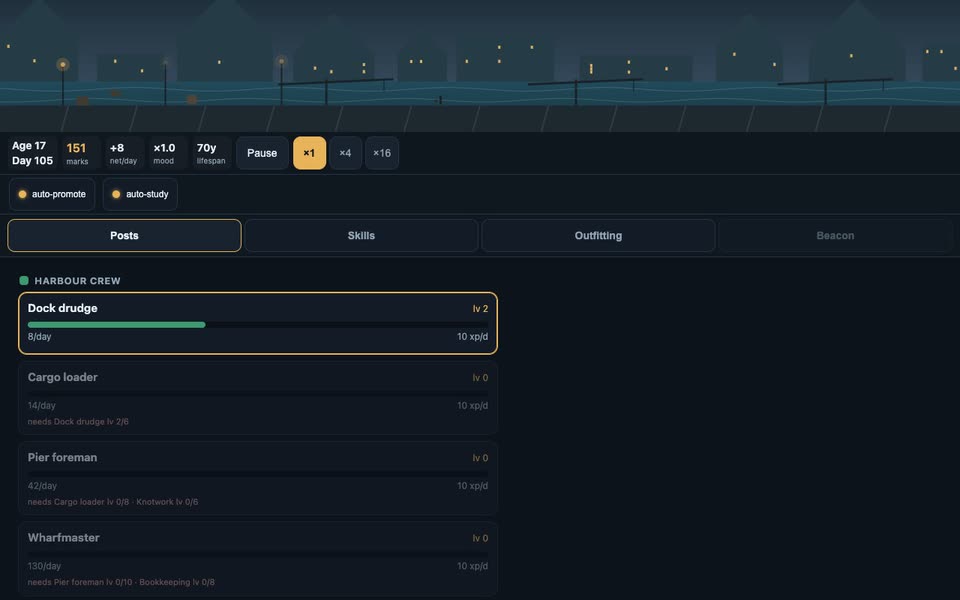
Climb from dock drudge to a seat on the harbour guild in an idle life sim, in one offline HTML file: three job lines of five posts, twelve skills that raise pay and xp, and lodgings and gear you pay for every day. Run out of marks and you are back on the stoop. From forty the beacon opens; touch it to start again with lasting xp multipliers, so each life climbs faster. A harbour scene changes with your stage of life, and time runs at ×1, ×4 or ×16.
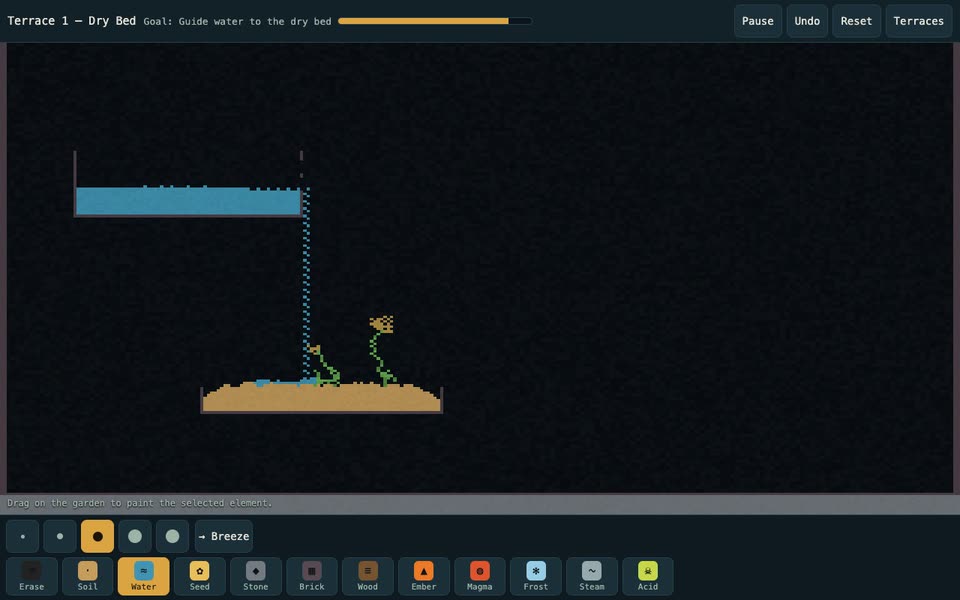
Paint soil, water, seeds, ember, magma, frost, acid and more into a live falling-sand simulation and solve six terraces, in one offline HTML file: drain a reservoir onto a dry bed, grow sprouts past a line, burn through a log gate, melt an ice plug, seal a leak and contain an acid spill, or play in a free garden. No terrace solves itself, and a gauge shows how close you are. Ported from sandspiel by Max Bittker (MIT), keeping its Rust/wasm cell simulation, with a new layout, palette, renderer and goals.
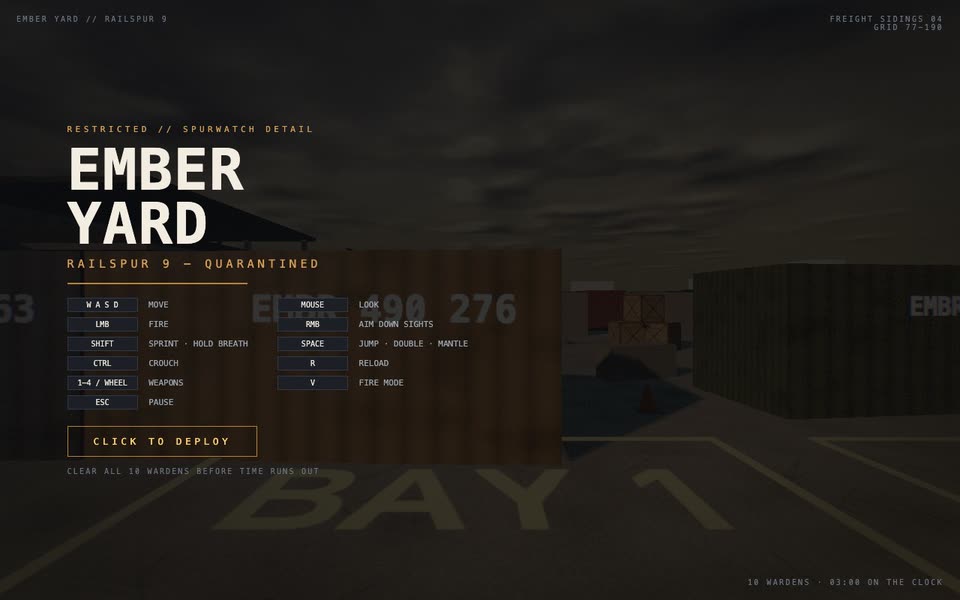
Fight ten flanking wardens in a dusk rail yard, in one offline HTML file: four procedural weapons (carbine, shotgun, pistol and a bolt sniper with scoped glass), a squad comms feed, a minimap and a three-minute round clock. WASD and mouse on desktop, drag-and-tap on a phone; all audio is synthesised.
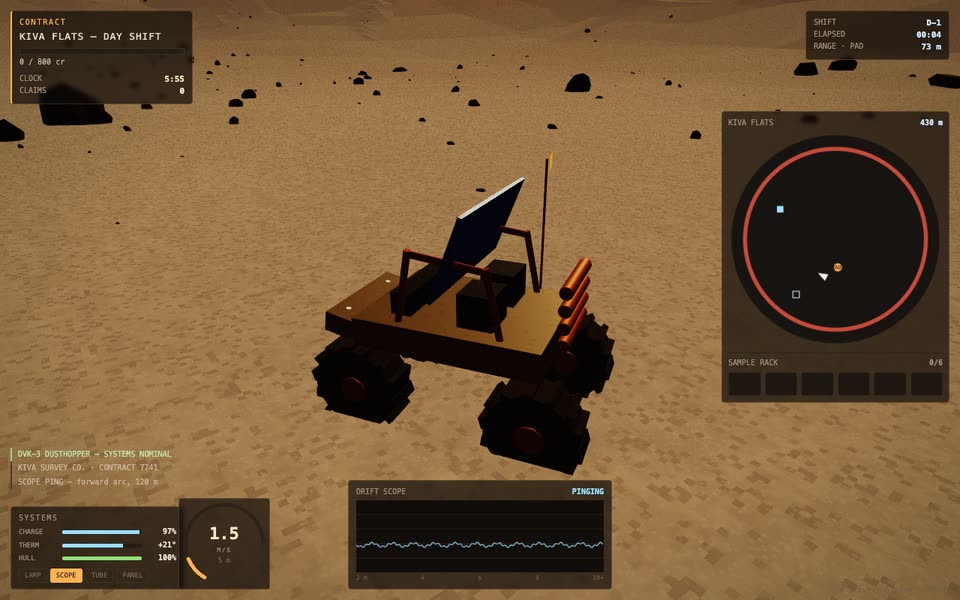
Drive a paddle-wheel buggy across a procedural moonlet and meet the shift quota, in one offline HTML file: a forward-cone ping narrows a deposit, a second sweep from a new spot triangulates it, then drop the core tube and haul the core back before the dust wall closes. English and Chinese UI, touch steering on a phone.
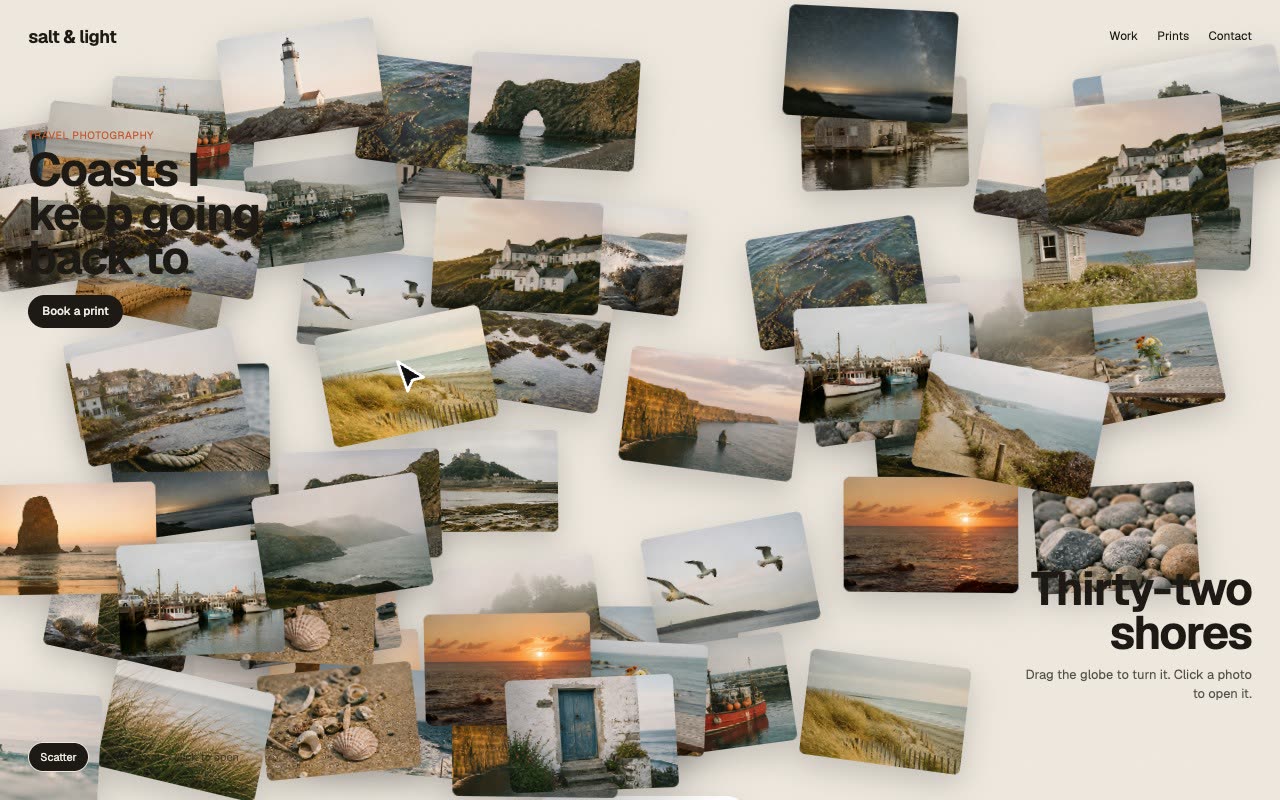
Build a portfolio hero where dozens of photos are tiled over a globe you can drag to spin. It coasts after a flick, leans toward the pointer and keeps a slow turn; one button bursts the tiles into a loose wall and back, and a click opens a photo full size. SandBase generates the photos as 4x4 contact sheets that the Skill cuts apart, or you bring your own folder. CSS 3D only, no WebGL. The hero is followed by a full landing page: chapter titles, an intro, a product console drawn in HTML, feature cards, specs, stats, a quote, a call to action and a footer, with a moving glow and a floating section pill.
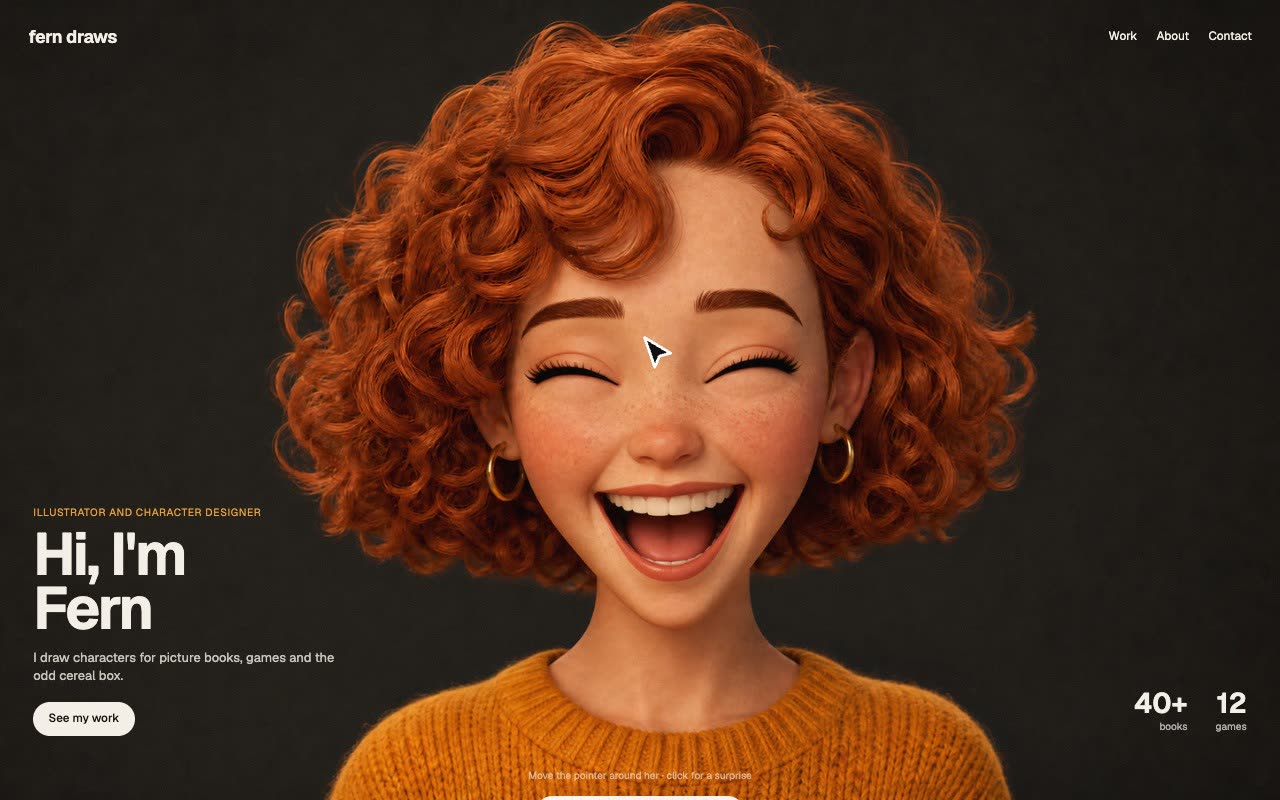
Build a hero with a stylized character portrait that reacts to the pointer: it looks wherever the pointer is with a matching expression (curious above, shy below, sly to one side) and laughs when the pointer is on its face. A click shows an alternate look such as new hair, and after a pause it returns to calm. SandBase generates the character and nine expression edits (or edits your own character picture), and the Skill lines every edit up with the original. The hero is followed by a full landing page: chapter titles, an intro, a product console drawn in HTML, feature cards, specs, stats, a quote, a call to action and a footer, with a moving glow and a floating section pill.
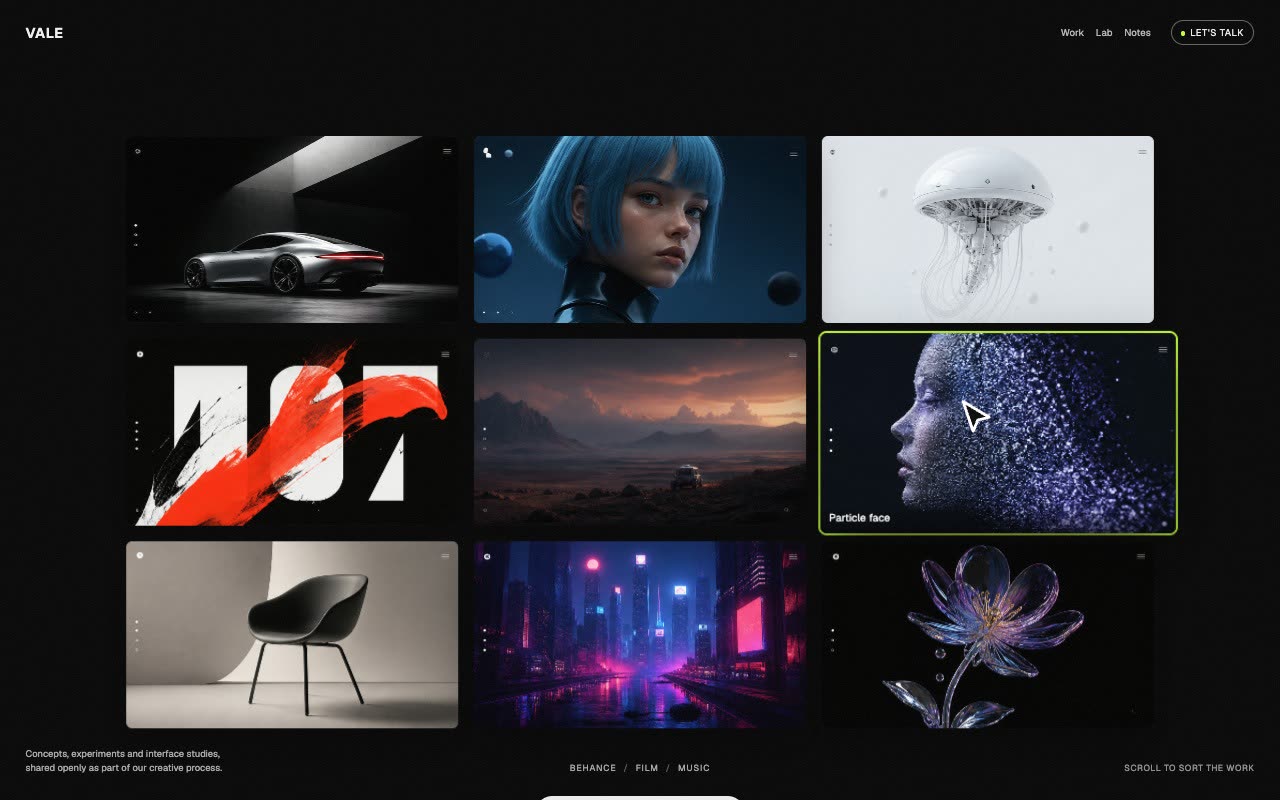
Build a portfolio hero where project cards ride a bent 3D ribbon across the screen between two giant words, drifting on their own and following the pointer, then fly into a tidy grid as the page scrolls; in the grid a card lifts under the pointer and shows its title. SandBase draws nine covers as one contact sheet that the Skill cuts apart, or you bring your own folder. CSS 3D only. The hero is followed by a full landing page: chapter titles, an intro, a product console drawn in HTML, feature cards, specs, stats, a quote, a call to action and a footer, with a moving glow and a floating section pill.
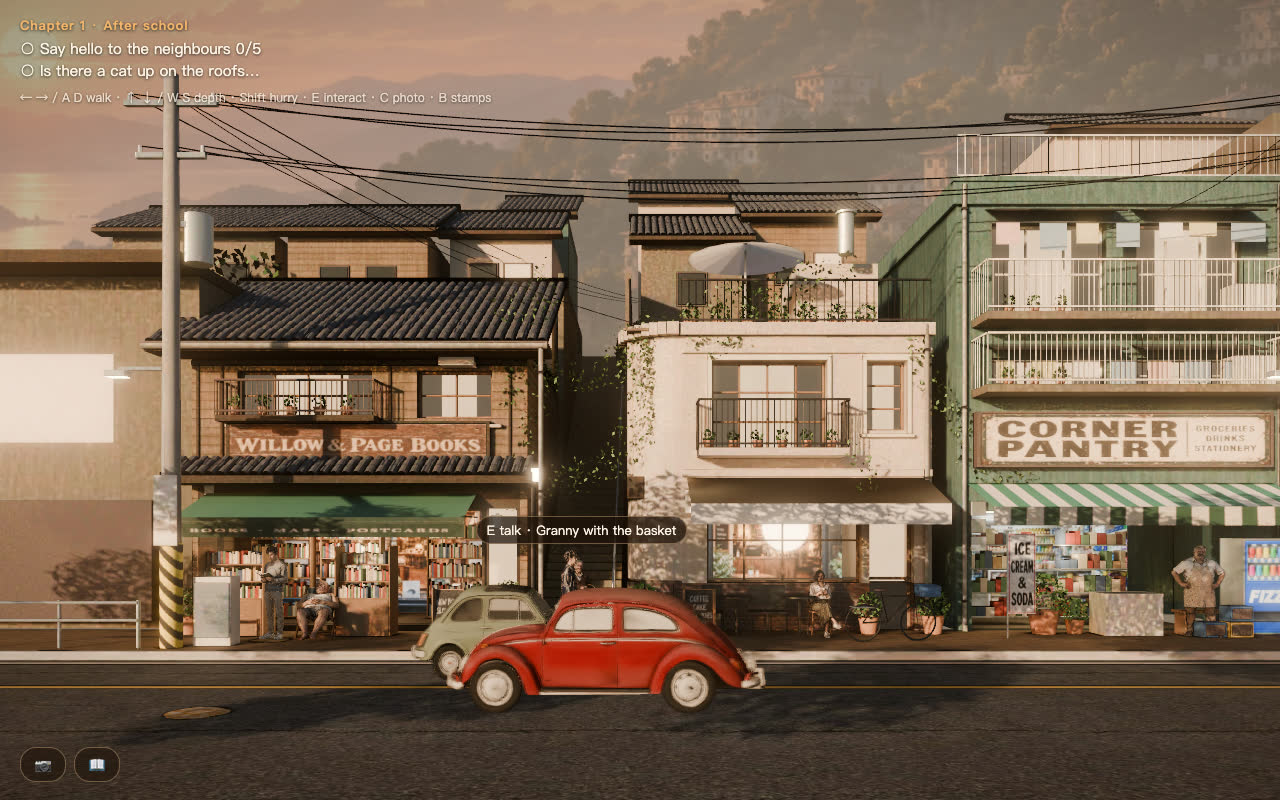
Turn a Blender street film into a game you can walk through in the browser: the film camera pans along a 2.5D street lit by baked lightmaps, with four chapters through dusk, night, storm and snow, neighbours to talk to, shops to look into, a cat on the roofs, photo check-ins with stamps and stories you can drop in as JSON. English and Chinese UI, touch on a phone.
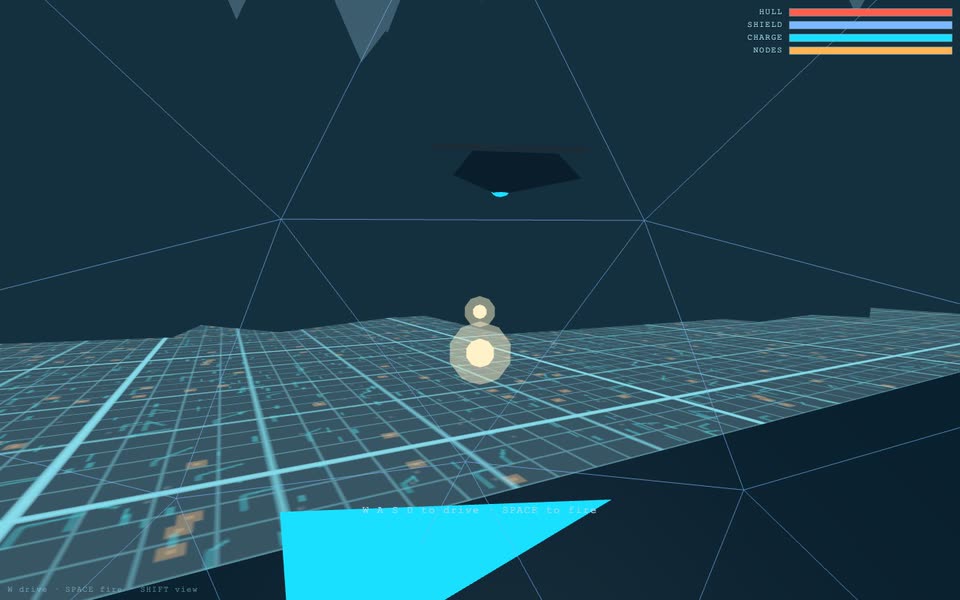
Sweep a deep-cyan neon sector from a low craft, in one offline HTML file: charge every obelisk data node to grow the sector while octahedron sentinels hunt you, a wingman drone flies overhead and Shift flips the camera relay. Cells drop as pickups, hits glitch the view and every sound is synthesised. English and Chinese UI.
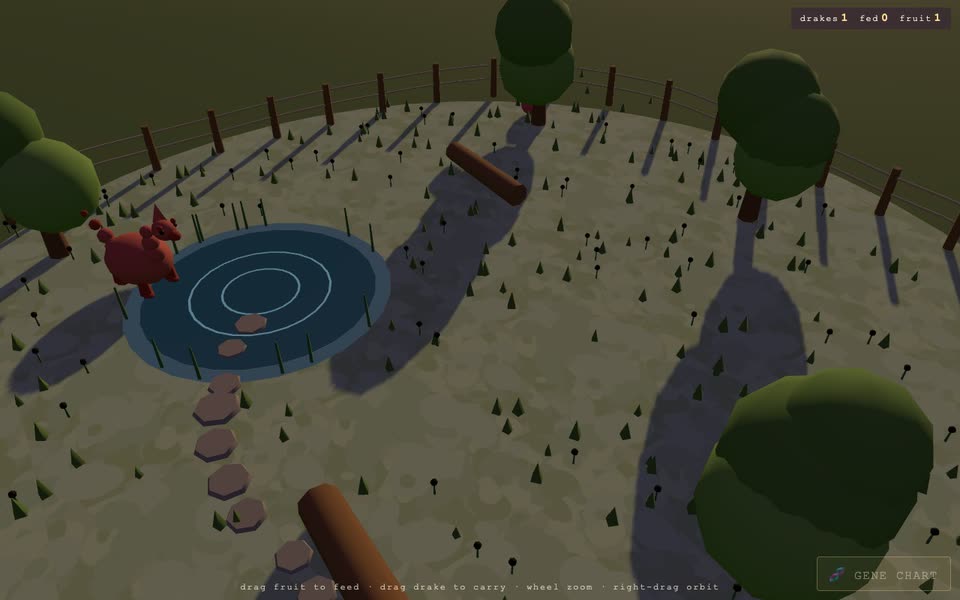
Run a sunset meadow pen of long-neck drakes, in one offline HTML file: drag fruit to feed them, carry them by hand, pair well-fed adults and hatch eggs along a twelve-colour gene chart toward the rare gold — hungry drakes wander off. Pond, rails, flower beds, stone path and perches keep the pen dense. English and Chinese UI.
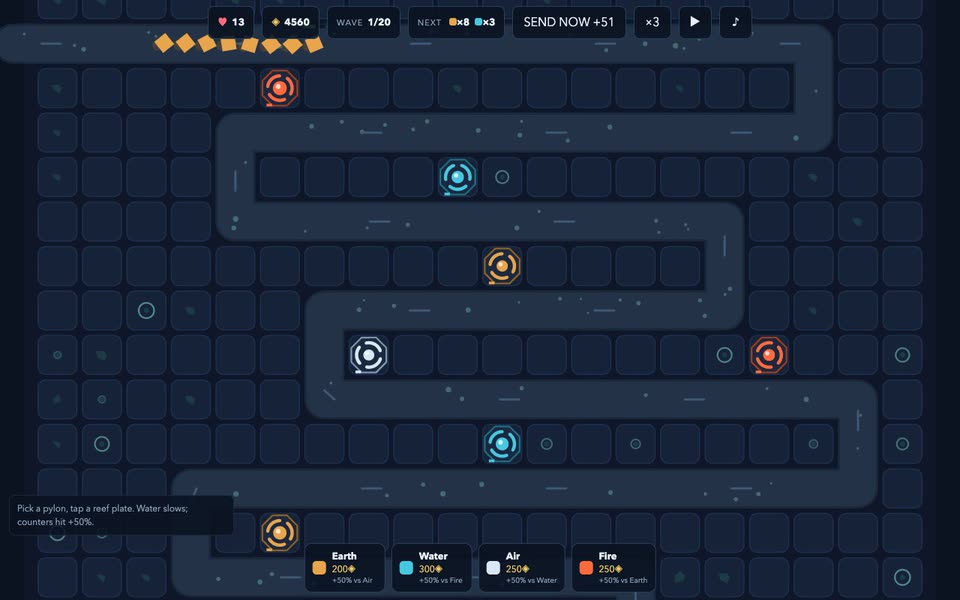
Hold a glowing fixed tideway across a deep reef, in one small offline HTML file: four elemental pylons on a counter ring (earth→wind→water→fire, +50%), water slows, twenty hand-authored waves with a behemoth every fifth, and early wave calls that pay decaying bonus shards. Pure Canvas 2D, no engine. English and Chinese UI.
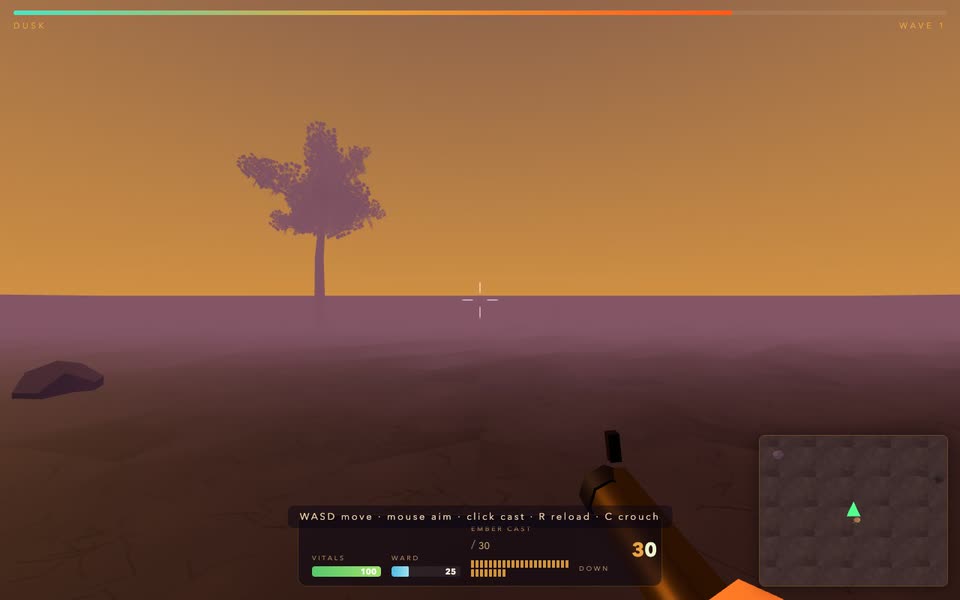
Hold a watch line as the sun drains, in one offline HTML file: a brass flare-gun casts bolts at ember-lit shades, night packs the waves and dawn brings the lull before the next. One cycle value drives the sun drain, the light and the spawn pressure together. WASD, mouse aim, cast, reload and crouch, in an amber-dusk look.
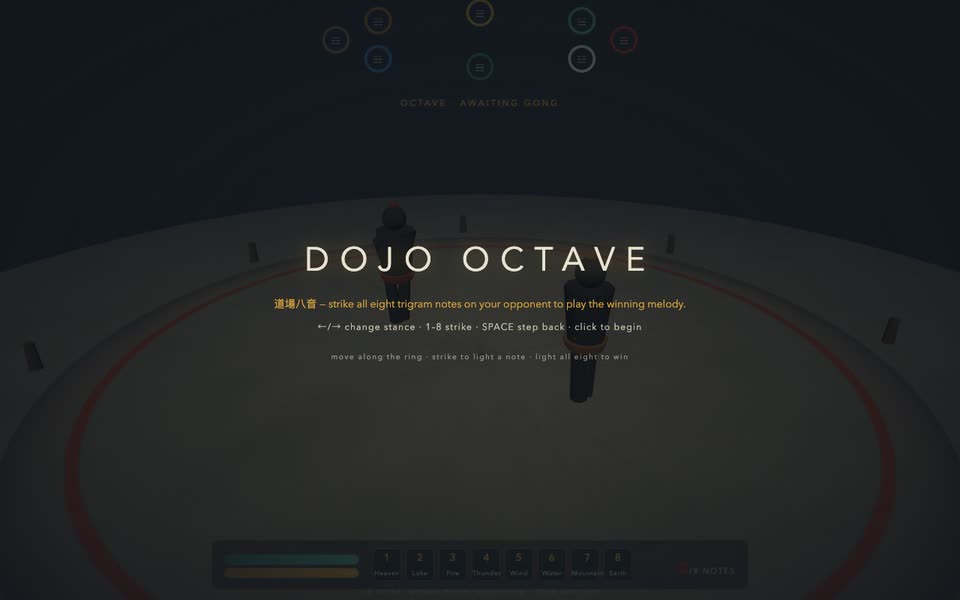
Win a martial-arts duel without draining any health bar, in one offline HTML file: two duellists on a ring of eight trigram stances, and every clean strike lights one of the eight notes on your opponent — complete the octave to play the winning melody. Paper-and-ink arena, top octave ring, bottom-centre HUD and synthesised bianzhong audio.
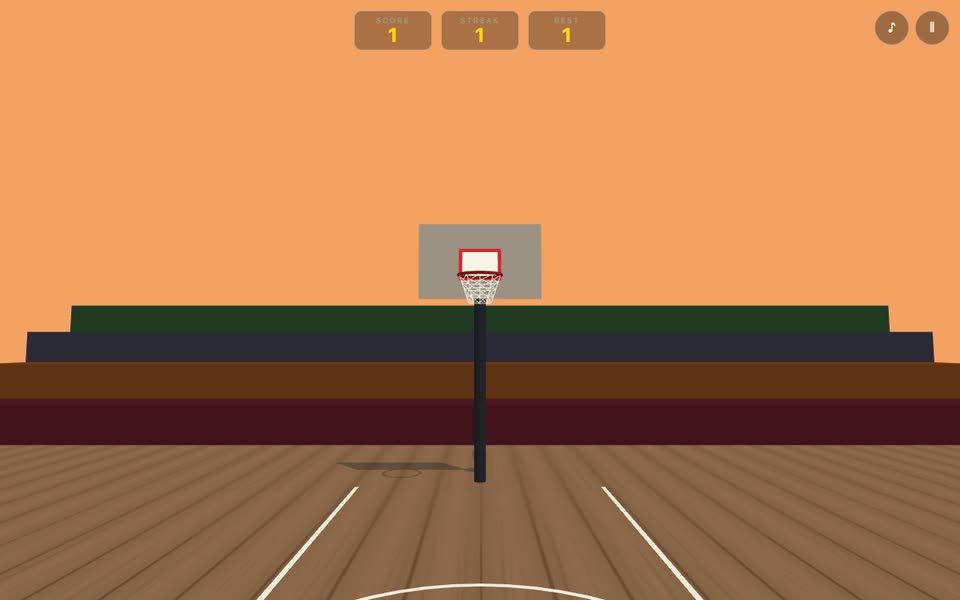
Work a night practice range of free throws, in one small offline HTML file: drag back and release to arc the ball along a dotted preview, hoops drift on rails, streaks light the score runes and a shot clock keeps every possession honest. A three.js court, crowd and synth audio, all built in code.
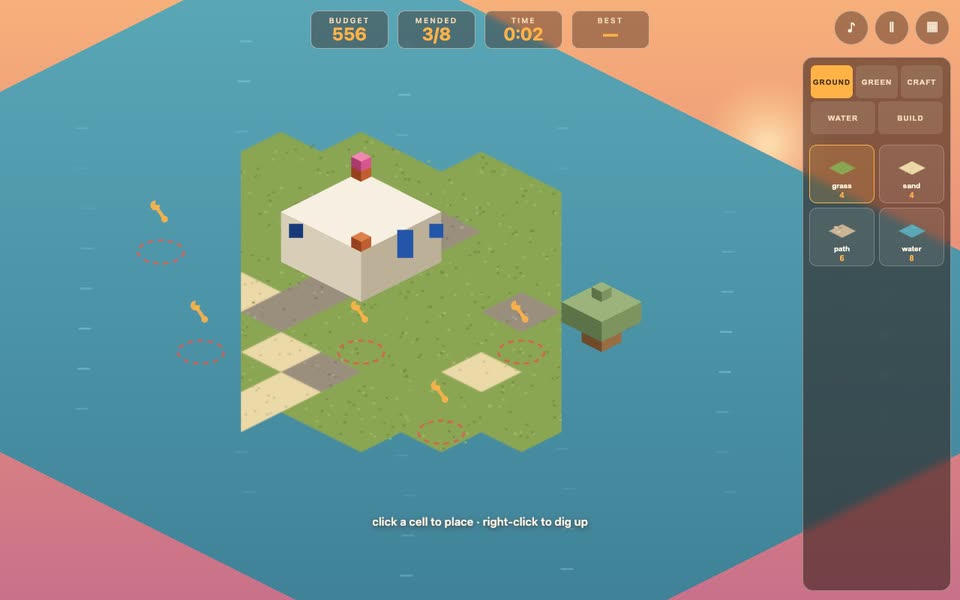
Repair a little dusk-lit isometric island, in one small offline HTML file: eight wrench-marked damage spots each want a kind of fix — cottage, garden, walkway, shrine, seawall, well — and a tight budget of shells pays for every voxel you place. Nineteen procedural assets, pop-in placement, drag-pan and pinch-zoom, synth plucks. English and Chinese UI.
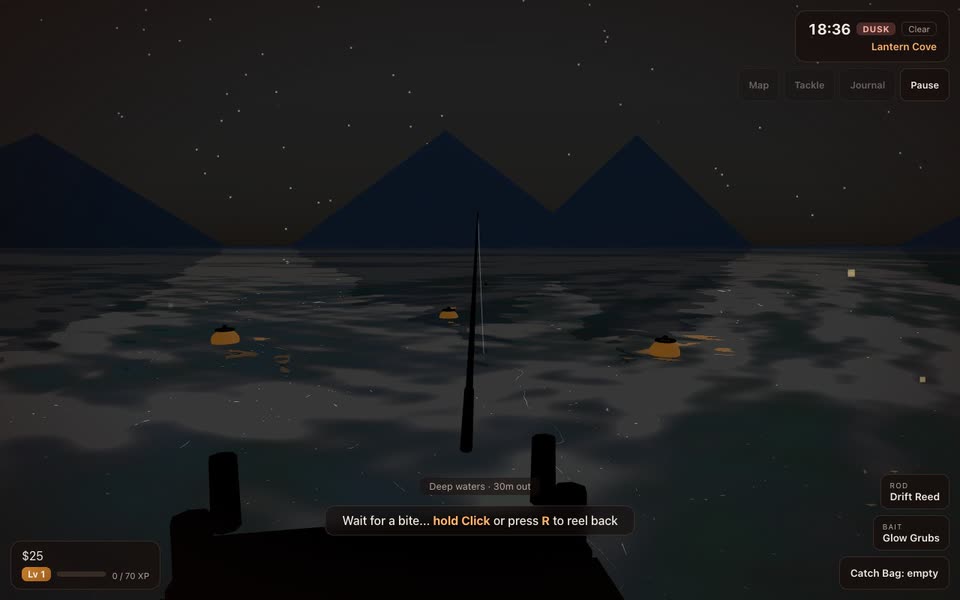
Cast into a golden-hour cove and work the line, in one small offline HTML file: aim, charge the cast onto shallow, mid or deep water, hook on the `!` and ride telegraphed surges — twenty-one species across four unlockable spots, a tackle shop, a catch journal and a day/night plus weather cycle. A three.js scene where every fish is inline SVG and every sound is synthesized.
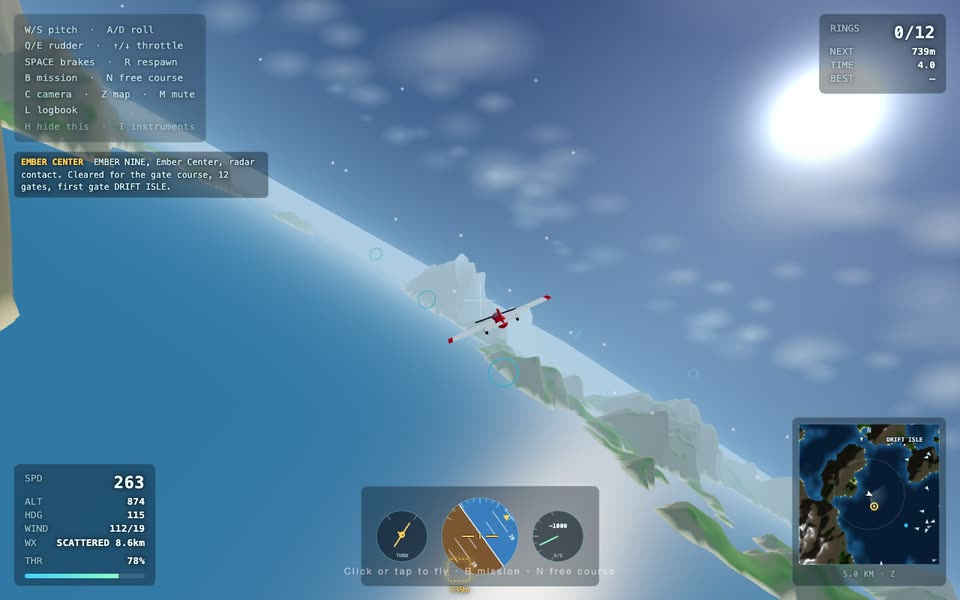
Fly a little prop plane over procedural islands, in one small offline HTML file: take off under a callsign, run a 12-gate course or a full mission, and line up the ILS cross-needles for a judged landing. Live wind and weather, real cloud immersion, moving AI traffic, three camera views and a career logbook. Procedural terrain, ocean, sky and synthesized audio.
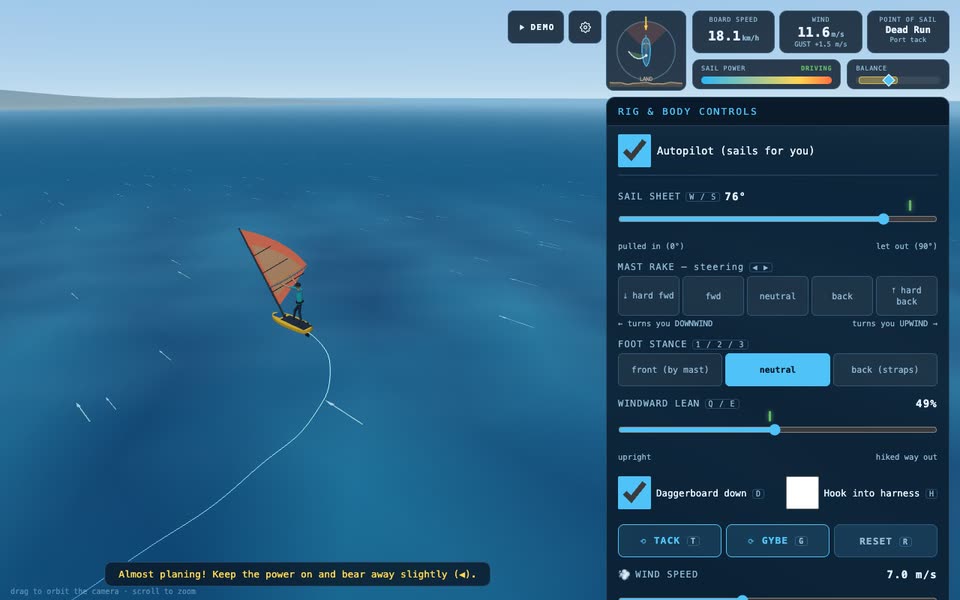
Sail a windsurfer on the points of sail, in one small offline HTML file: sheet in and out, rake the mast to steer, shift stance, hike out, drop the daggerboard and hook into the harness. Apparent wind, planing and foiling are real states, a balance meter keeps you upright, and three guided demos sail themselves. Procedural waves, rider rig, spray and synthesized audio.
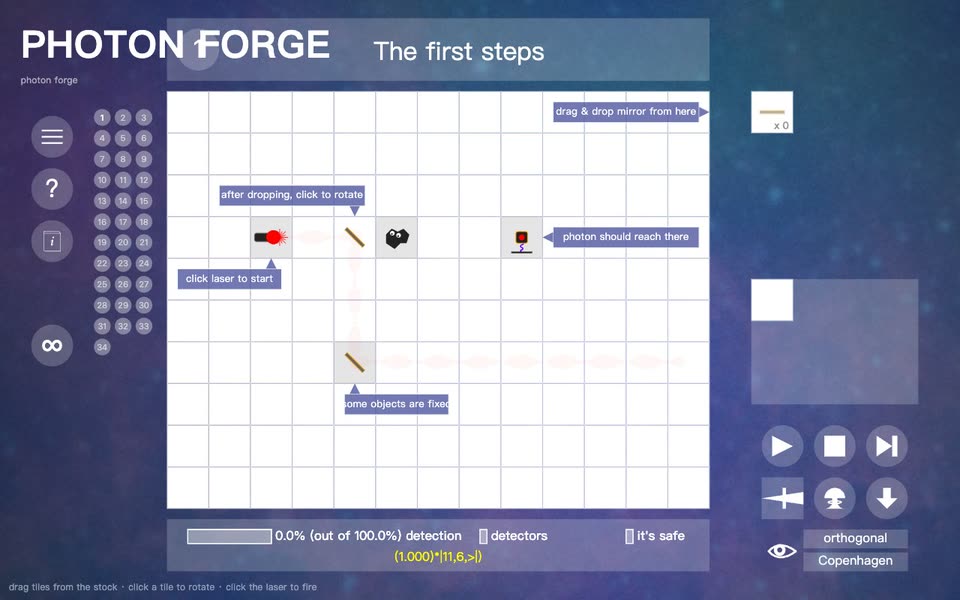
Route photons to their detectors, in one small offline HTML file: sixty-two levels across tutorials, a full arc, concept demos and a sandbox — drag twenty kinds of optical tiles onto the grid, fire the laser and read the same amplitudes the win check reads. A tensor engine over polarization × direction × position makes superposition, interference and entanglement real, not scripted.
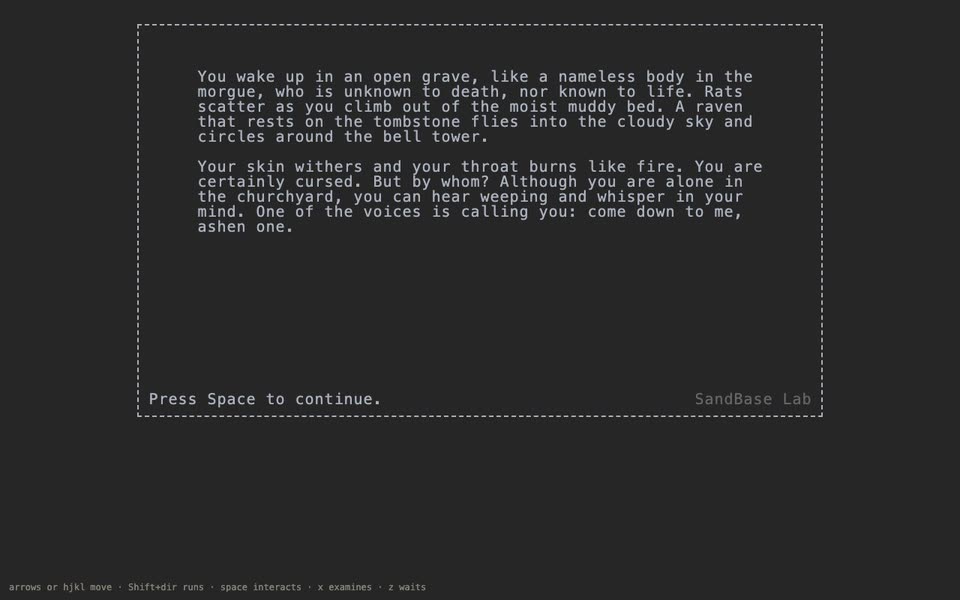
Descend three floors of a cursed church, in one small offline HTML file: a classic character-grid roguelike where every floor is procedurally generated and ends in a boss behind a summoning statue. Four orb kinds are both the loot and your hit points, eighteen monster kinds run distinct AI, and examine and aim are their own modes — nine achievements, fully keyboard-driven.
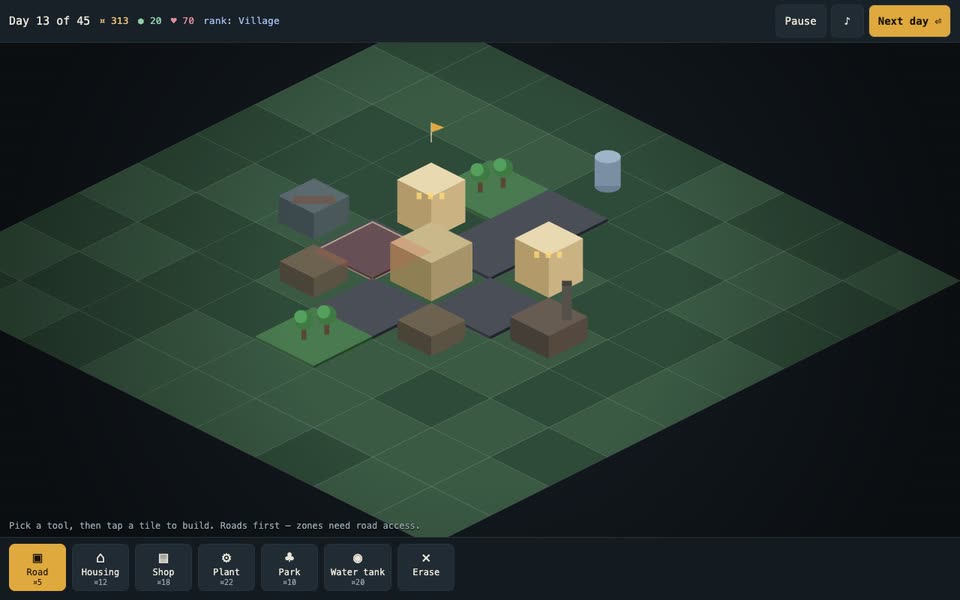
Grow a settlement into a metropolis before the charter runs out, in one small offline HTML file: lay roads, zone housing, shops and plants, keep water tanks within 3 tiles and parks within 2, and let Next Day settle growth, tax, upkeep and a five-rank ladder. Every tile is drawn in code with Canvas 2D — no sprites.
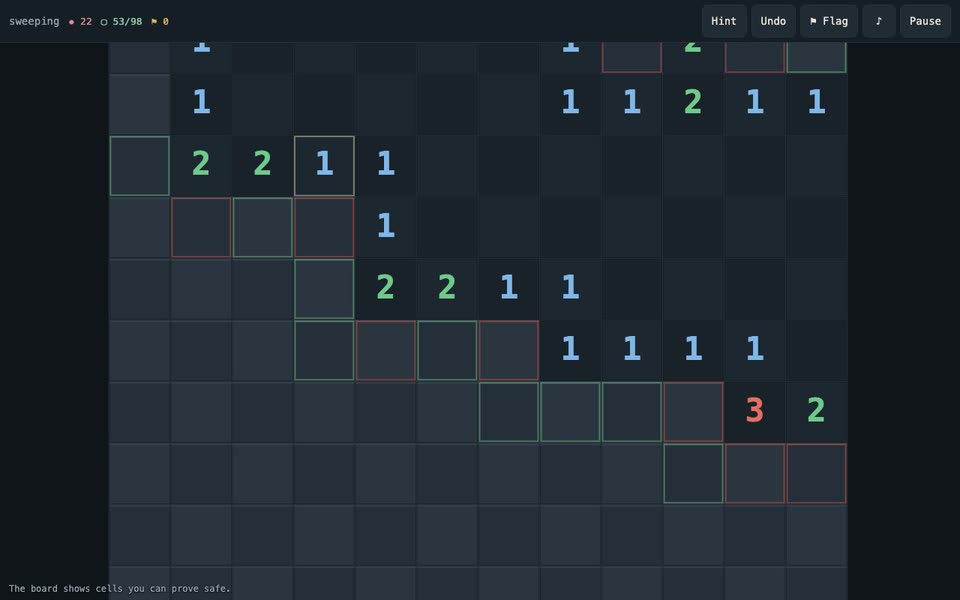
Sweep a field where the mines are not planted when the game starts, in one small offline HTML file: every reveal asks a small constraint solver which placements still fit the clues and flags, then deals one. Provably-safe cells are guaranteed empty, provably-deadly ones guaranteed mines, ambiguous ones a fair coin — so a Hint toggle genuinely glows forced cells.
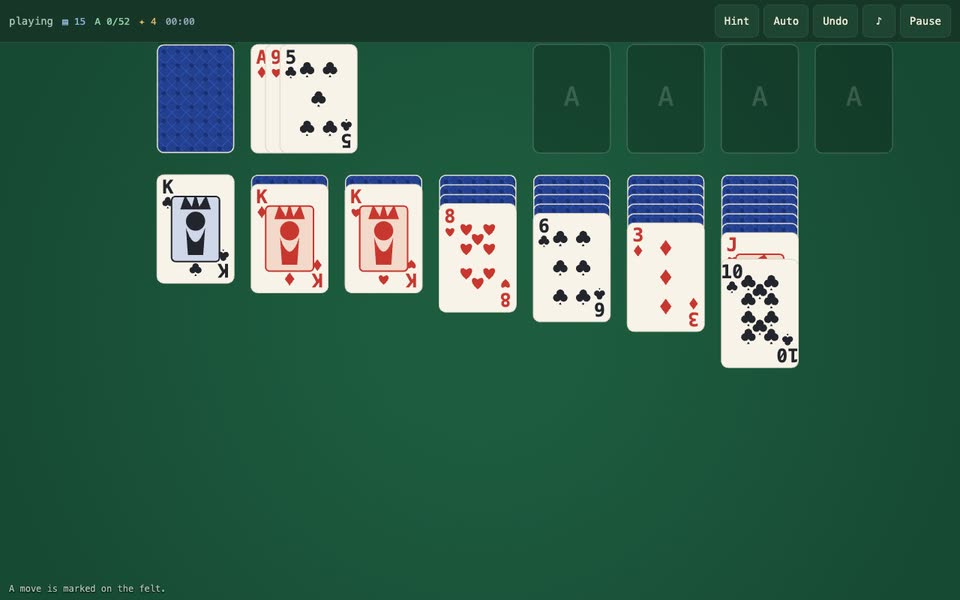
Play draw-three Klondike on a green felt, in one small offline HTML file: seven tableaux build down in alternating colours, four foundations build up from ace to king. All 52 faces are drawn in code — pip layouts, procedural court portraits, hatched backs — plus drag stacks, tap-select, double-tap to the foundations, an oracle hint, undo and an auto-finish.
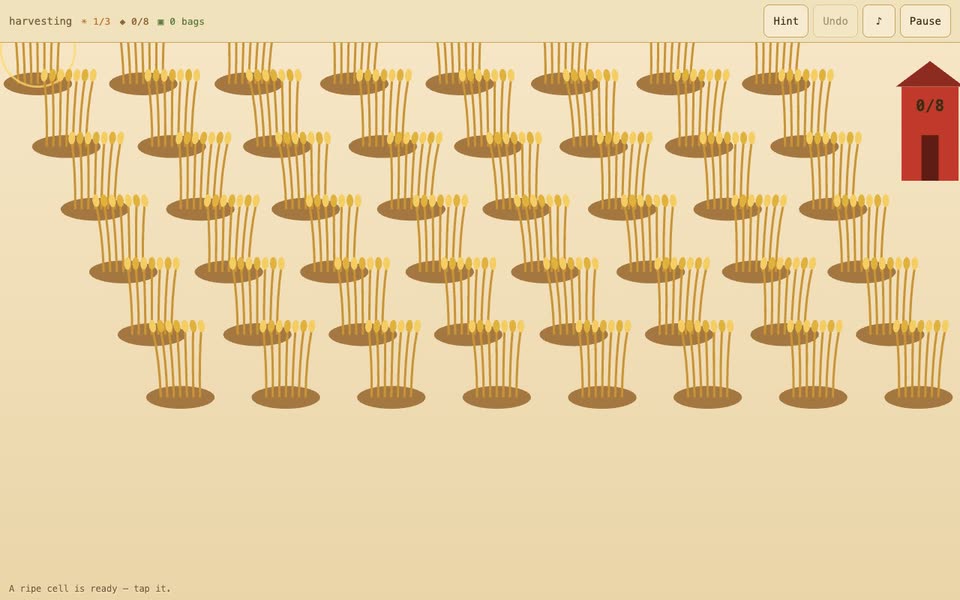
Tic a wheat field into the silo, in one small offline HTML file: every cell ripens on its own staggered clock, the eleventh tic pops a flour bag that arcs to the silo, and a three-day quota turns the toy into a run. Sky, soil, tufts, silo and flying bags are all procedural Canvas 2D — a spring accumulator gives each tic its kick.
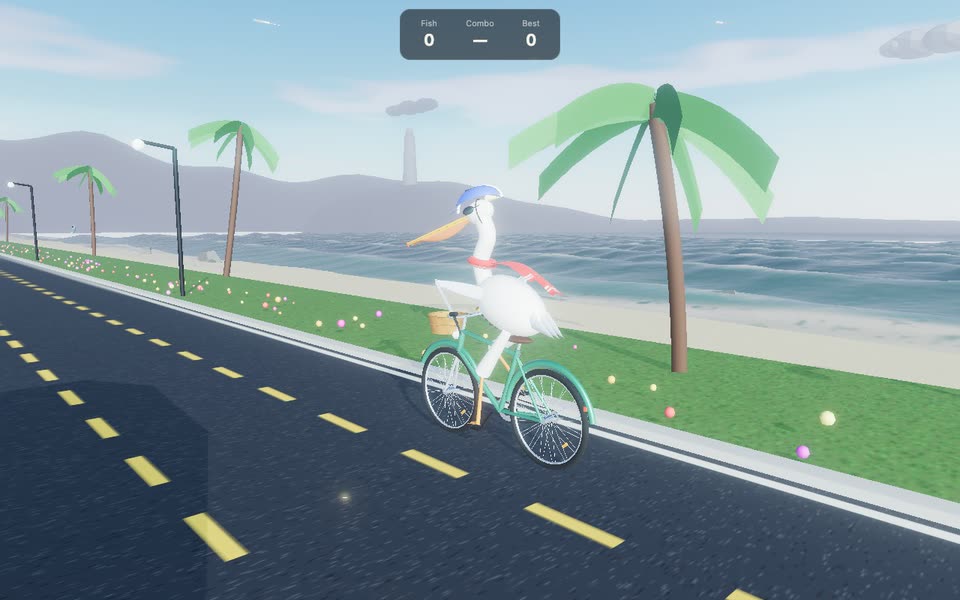
A playable 3D game in one offline HTML file: a pelican in a helmet, sunglasses and a cloth-simulated scarf rides a bicycle along a coastal road and catches fish. Change lanes, jump for golden fish, spread its wings for a wheelie, and ride on as the sky turns from golden dusk to a starry, moonlit night beside a breaking surf. One ride file turns it into a puffin, a heron or your own bird.
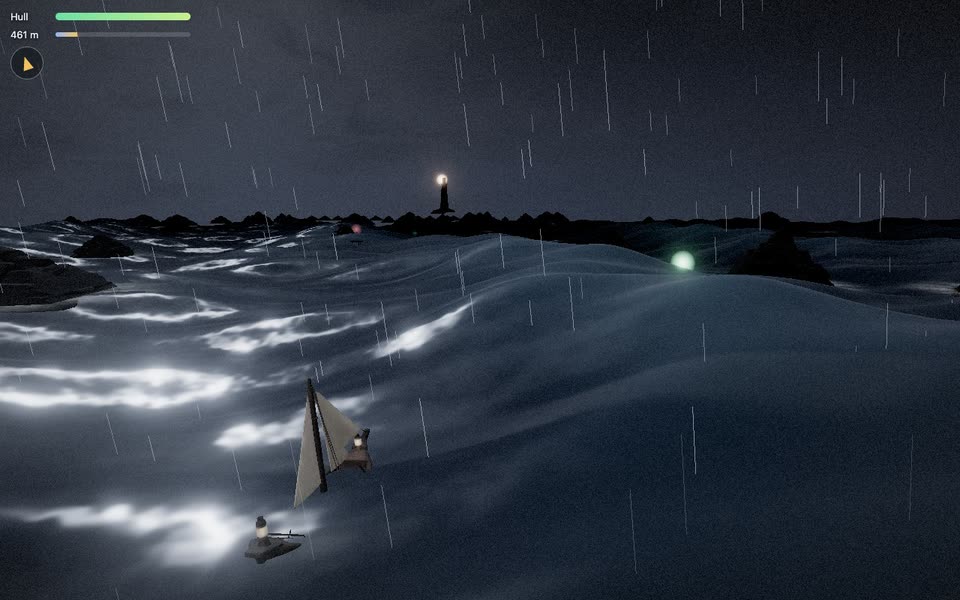
Type one sentence and get a short storm-at-sea game in one offline HTML file: steer a small boat through Gerstner waves, driving rain and lightning, between rocks marked by buoys, to a harbour light. An LLM writes the voyage and the captain’s lines, Rodin on SandBase makes the boat, rocks, lighthouse and wreckage, and the look switches between Noir, Realistic and Toon.
Type one sentence and get a playable 3D mystery in one offline HTML file: an LLM writes the world, two characters and a hidden truth, and Rodin and Meshy on SandBase make the seven 3D models. A 24.5 s intro raises the island out of the clouds and materialises every model; then you inspect clues, question a truthful local and a liar, and make your call when the arrival lands.

Found a night empire on a hex map, in one small offline HTML file: move settlers, found cities, queue builds and climb an eight-tech tree while a slowed AI expands on a staggered clock. Map, units, cities, panels and HUD are all procedural Canvas 2D — an active player wins a tech victory around turn 30–39, while turtling lets the AI out-research you.
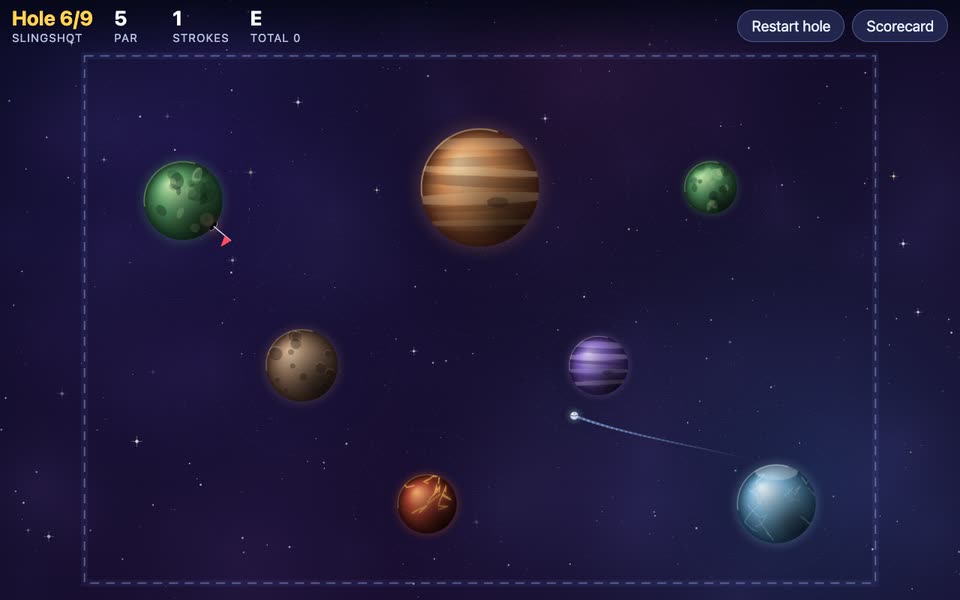
Putt a ball across small planets whose gravity bends every shot, in one small offline HTML file: nine holes with two to ten planets, par 35, hold-aim-release with a curved preview of the flight, restart hole and a scorecard. All drawing is Canvas 2D and every sound is synthesised.
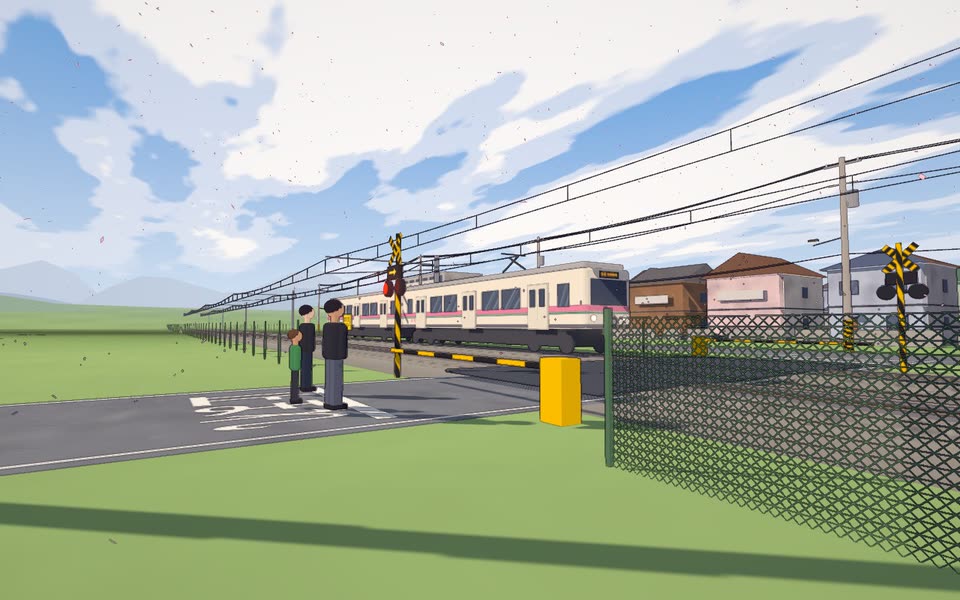
Walk, run or fly through a cel-shaded Japanese station town in cherry-blossom season, in one offline HTML file: a shopping street, a station with timed trains, a level crossing that rings and lowers its barriers, a river levee and falling petals. Geometry, textures and sounds are all generated in code.
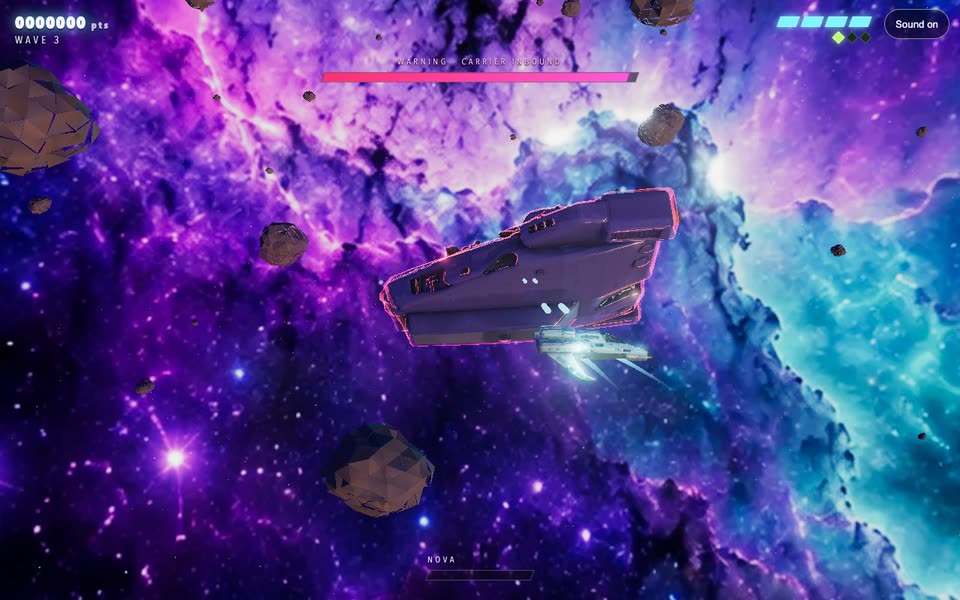
Describe a setting and get a playable 3D space shooter in it, in one offline HTML file. Your starfighter, the enemy fighters, the turret and the boss are generated textured 3D models; the 360° sky, sounds and music are generated too, all through SandBase. Waves, weapon upgrades, a nova and the boss fights are a finished engine.
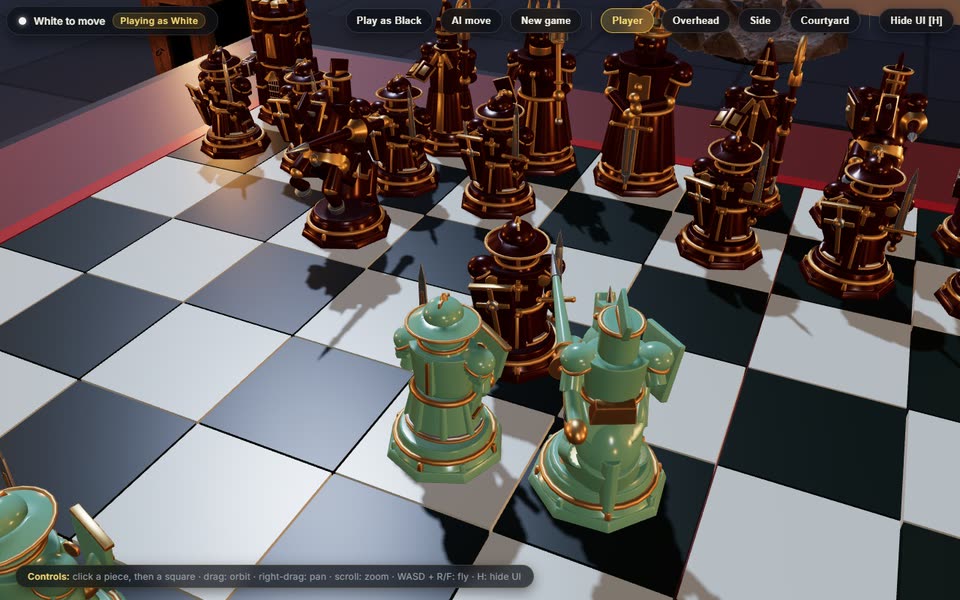
A playable 3D chess game in your browser, in a setting of your choice: a moonlit courtyard, a candle-lit hall or a frozen lake at dawn. Sculpted stone armies walk, fight and shatter; every capture cuts to a duel shot and the losing king topples.
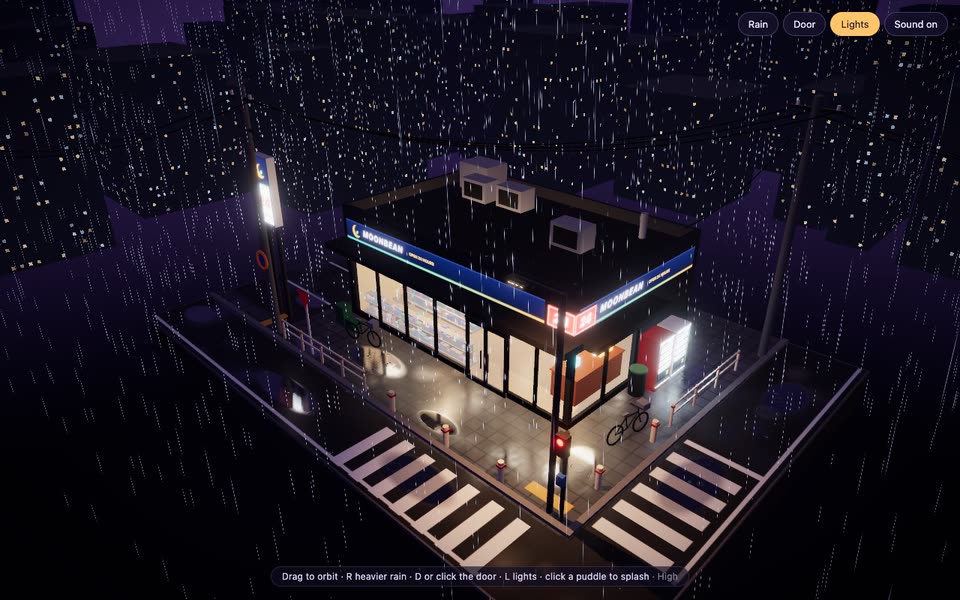
A live 3D street-corner store on a rainy night in your browser: wet reflections, puddle ripples, a warm interior, a sliding door, lights and sound.
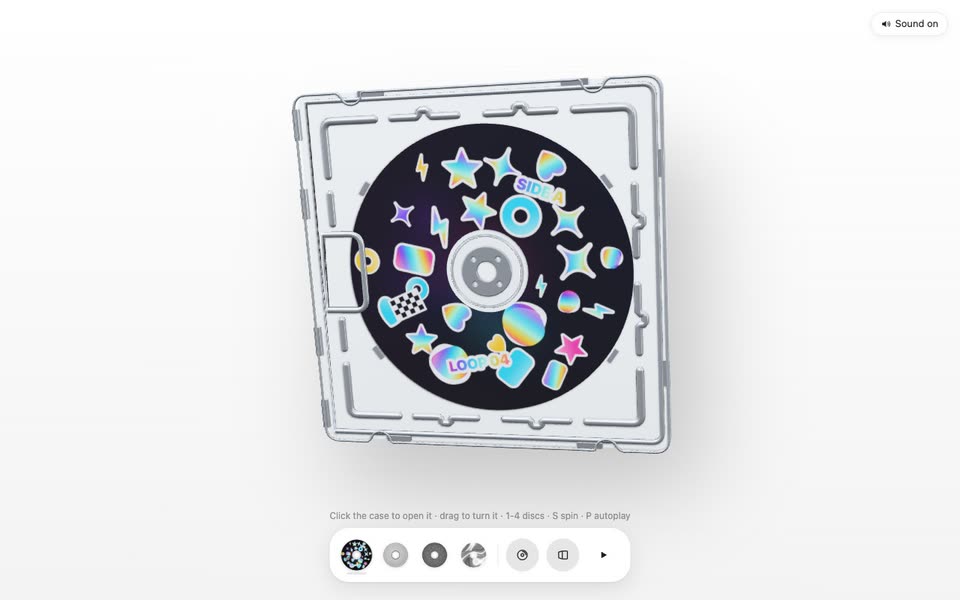
A clear plastic CD case in your browser: tap to swing the lid open, drag to turn it, spin the disc and flip through four disc designs.
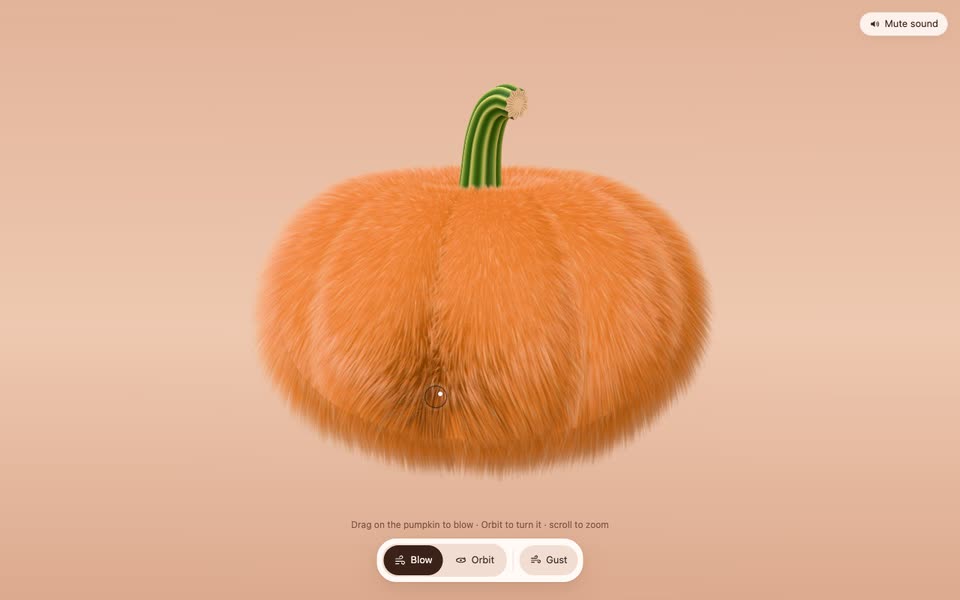
A live 3D plush pumpkin in your browser: press and drag to blow its fur around, watch it spring back, then switch to Orbit to turn it.
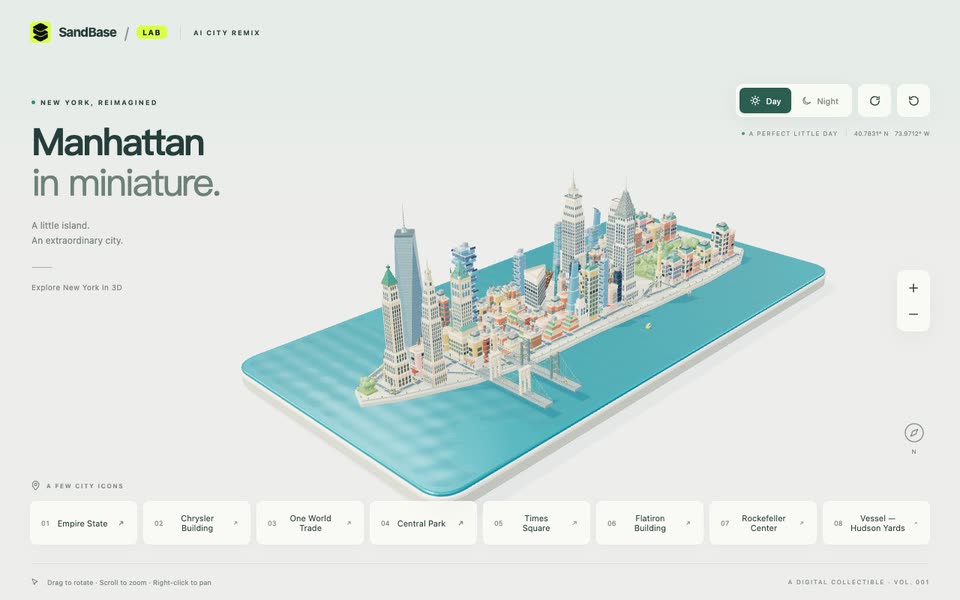
A live 3D miniature of Manhattan in your browser: fly to eight landmarks, switch day and night, and orbit over the traffic, pedestrians and boats.
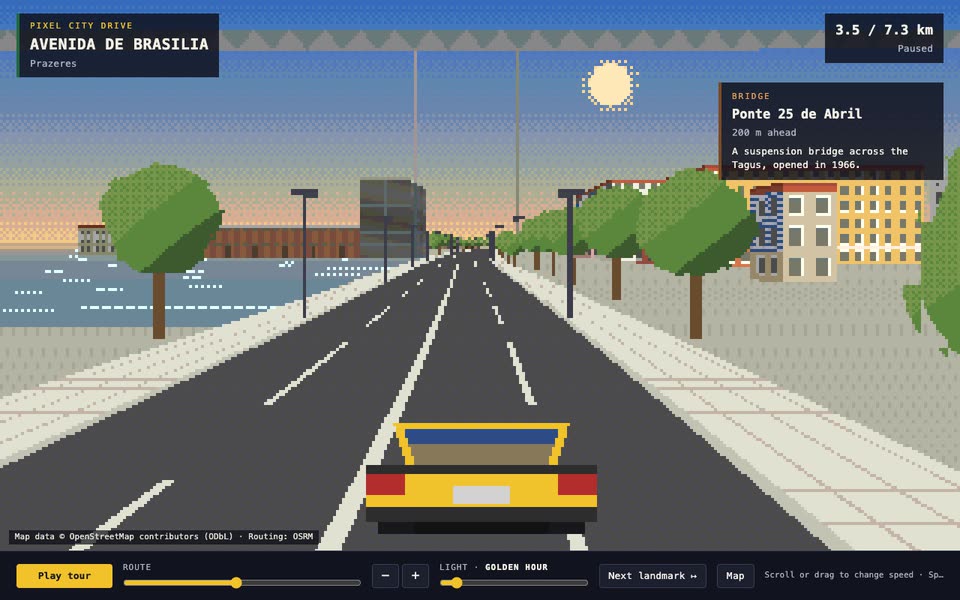
Drive a real route through your city in pixel art: OpenStreetMap buildings on their footprints, signs with the real street names, landmarks, golden hour into night.
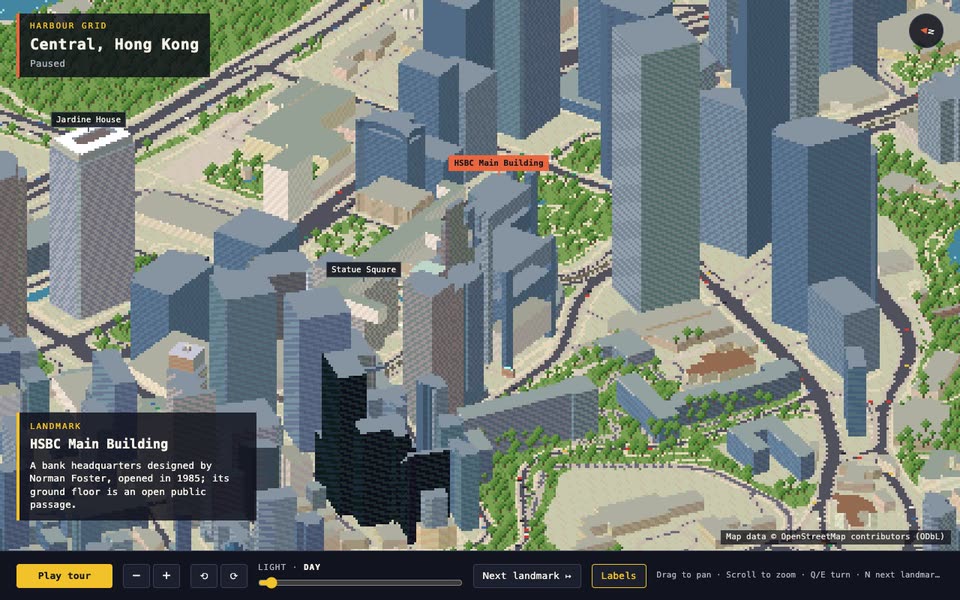
Turn a real city block into an isometric pixel-art city: OpenStreetMap buildings at their mapped heights, labelled landmarks, traffic and water, pan, zoom and turn it from day into night.
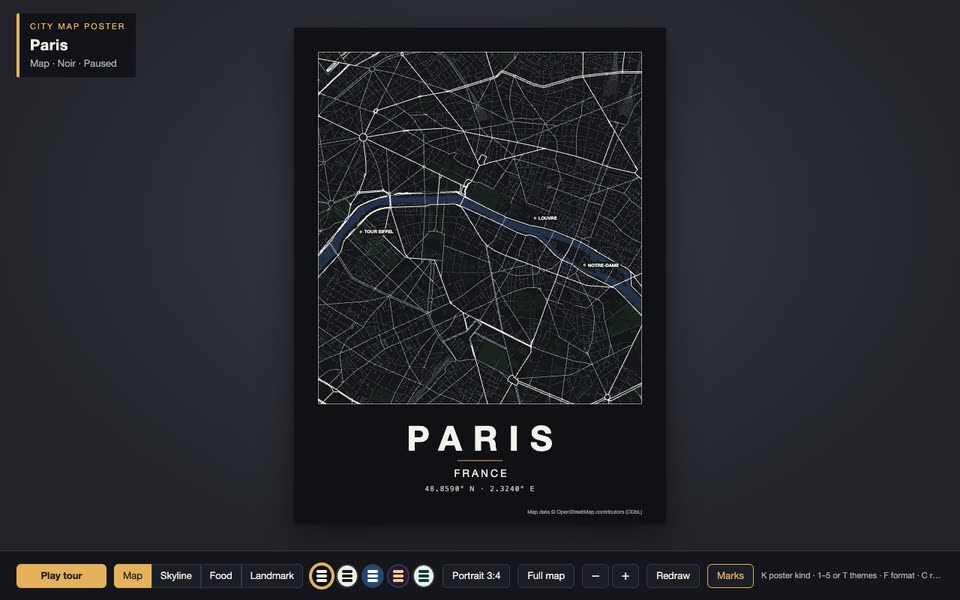
Turn your city into minimalist posters from real map data: the street map, a skyline from mapped building heights, a food map of every mapped café and restaurant, and landmark outlines, in five themes with a print-size PNG.
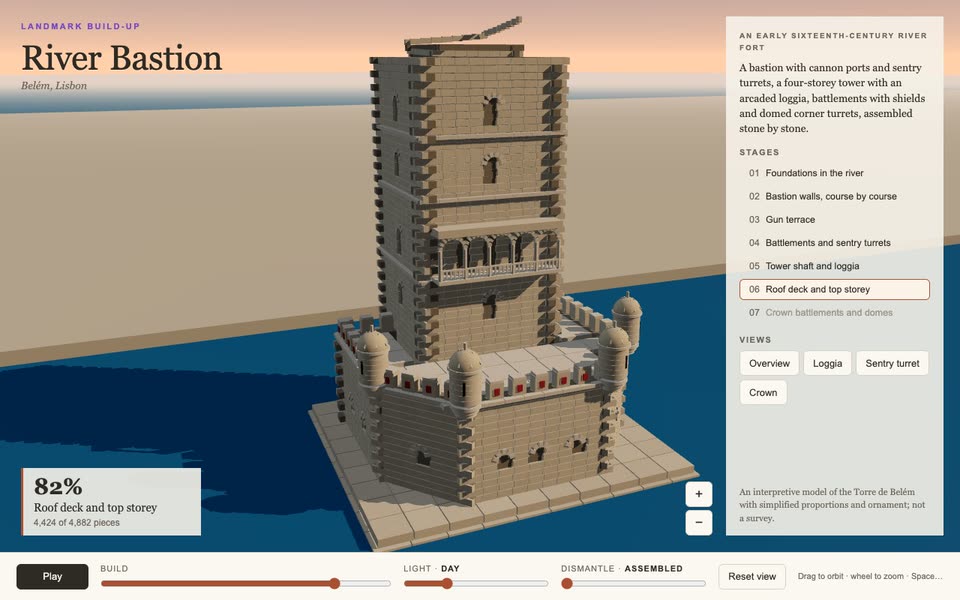
Raise a city landmark in 3D stone by stone, then dismantle it to see inside: the Belém tower course by course, or the Statue of Liberty’s copper skin on its iron frame.
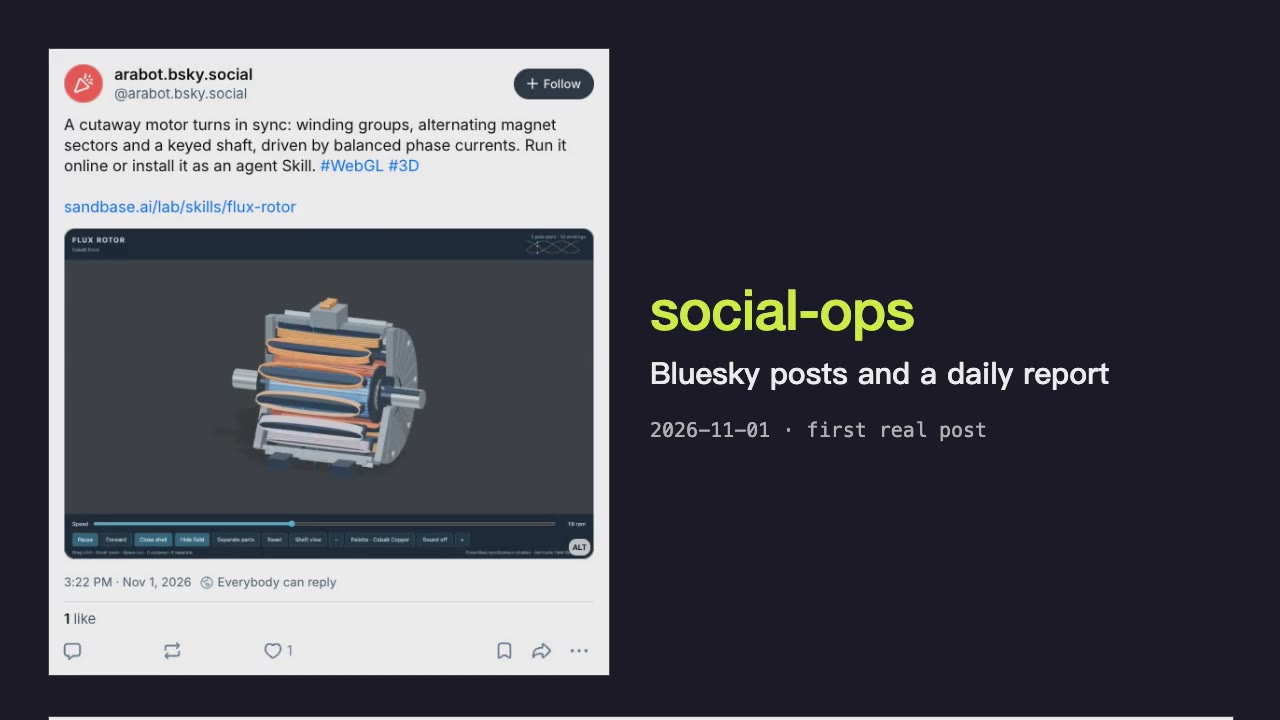
Post one SandBase Lab experiment to Bluesky per run with its cover video, never the same one twice, and get a daily metrics report.
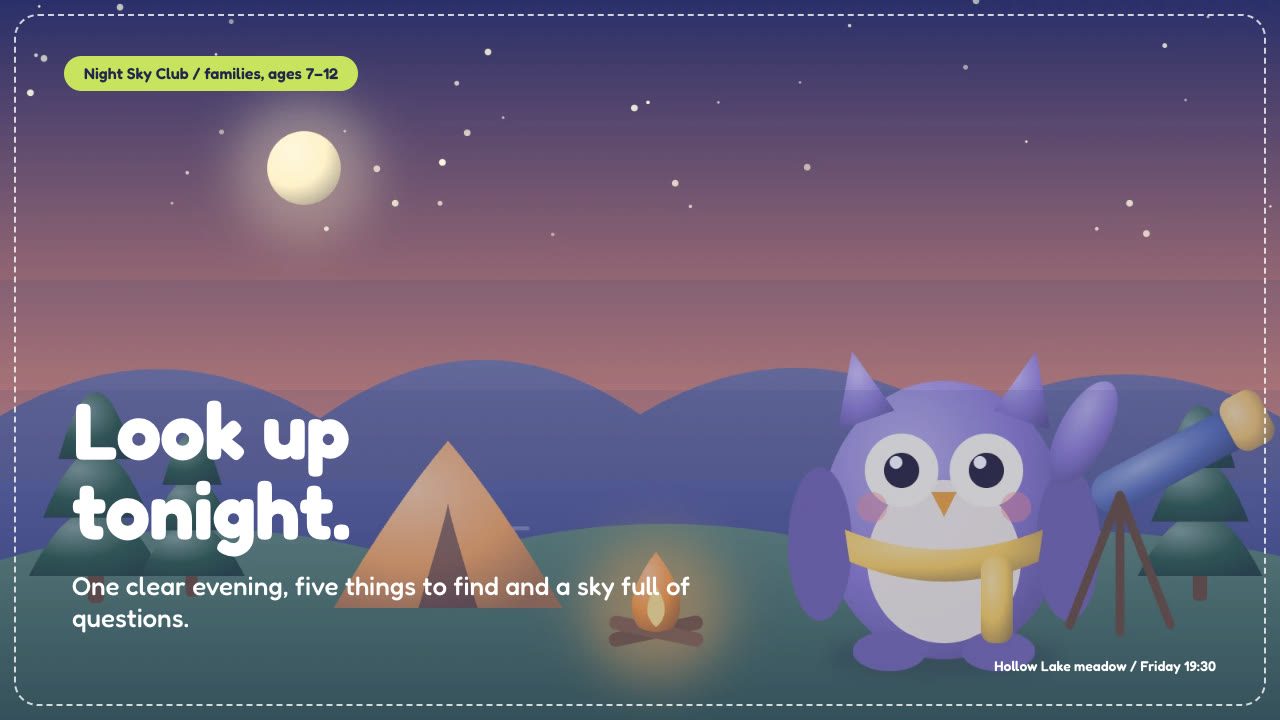
Walk a group through a place, a few habits and a small plan in a warm storybook deck: full-bleed illustrated scenes, cream cloud panels, scalloped headers, a five-disc zig-zag, a framed bar chart, a step path and a question board.
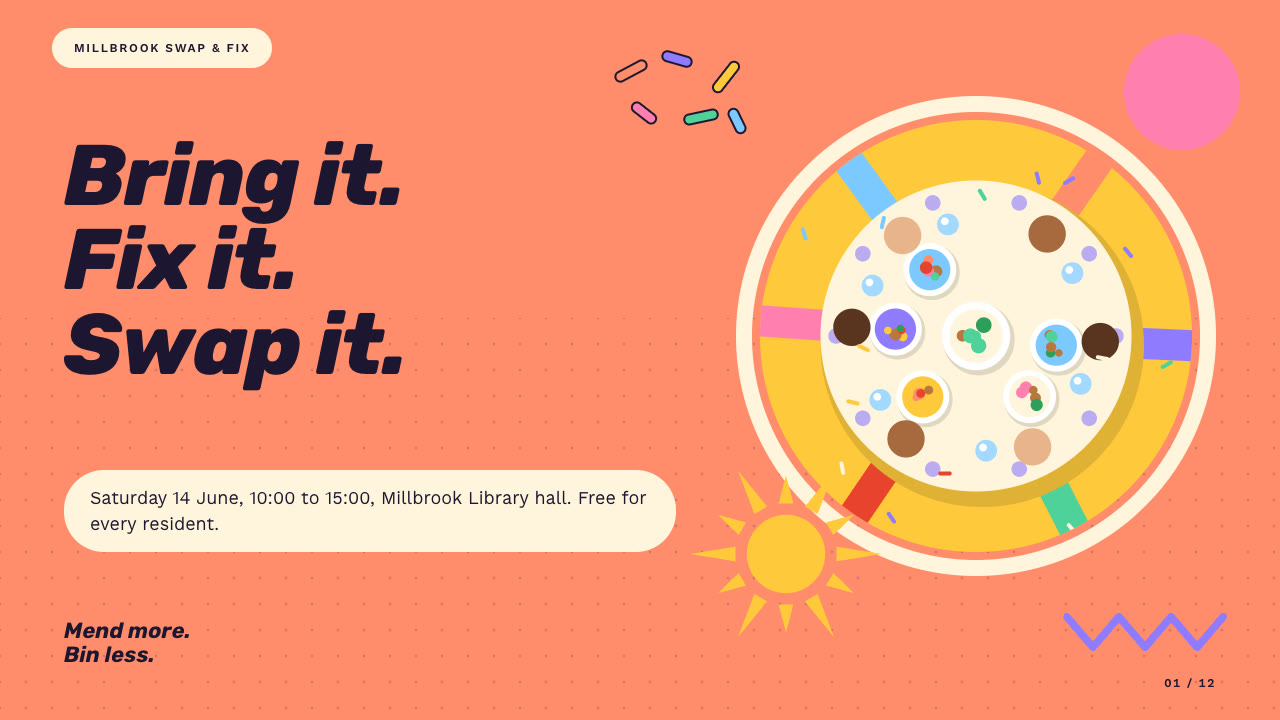
Invite people to a fair, open day or club season, or pitch one, in a bright festival deck: whole-page colour fields with a fine dot grid, heavy slanted headlines, cream cards and tickets, round pictures, and suns, rosettes, rings, bunting and sprinkles.
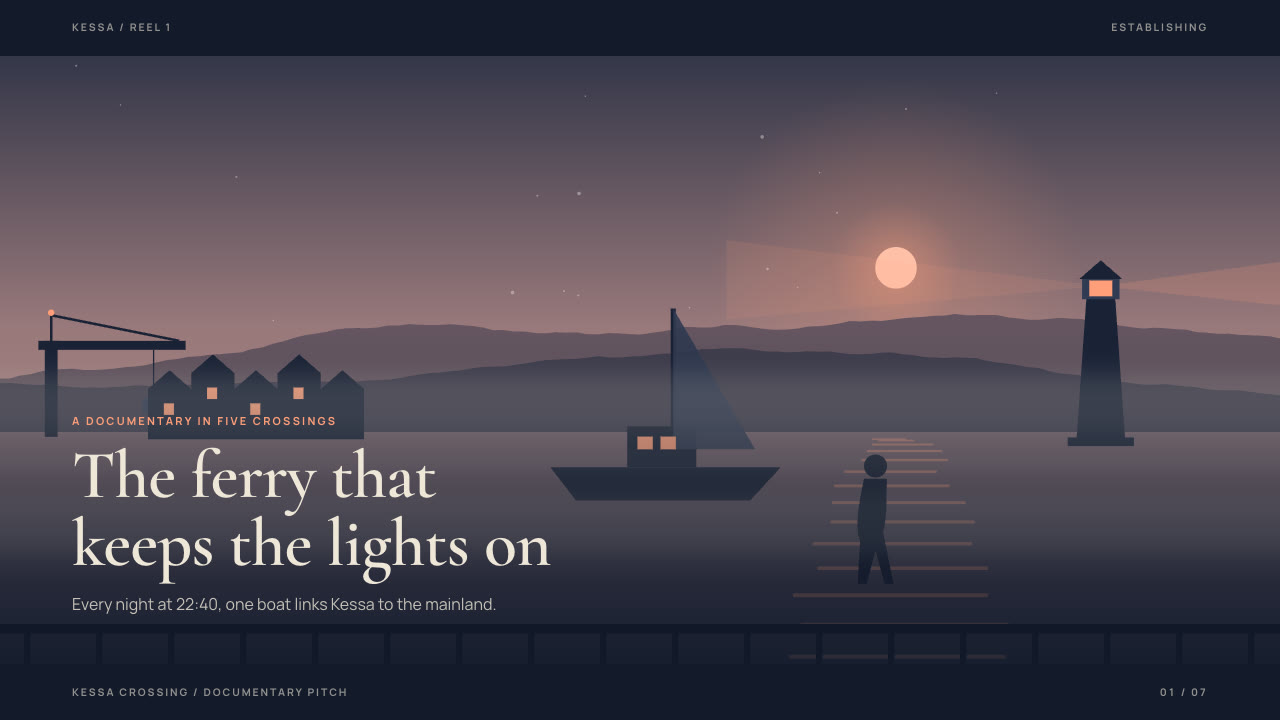
Tell a pitch, launch or place as a sequence of shots: dark letterboxed pages, one drawn cinematic frame per page (wide, close, small, split or a strip of three), tall serif captions over small spaced labels, and native markers on a contour chart.
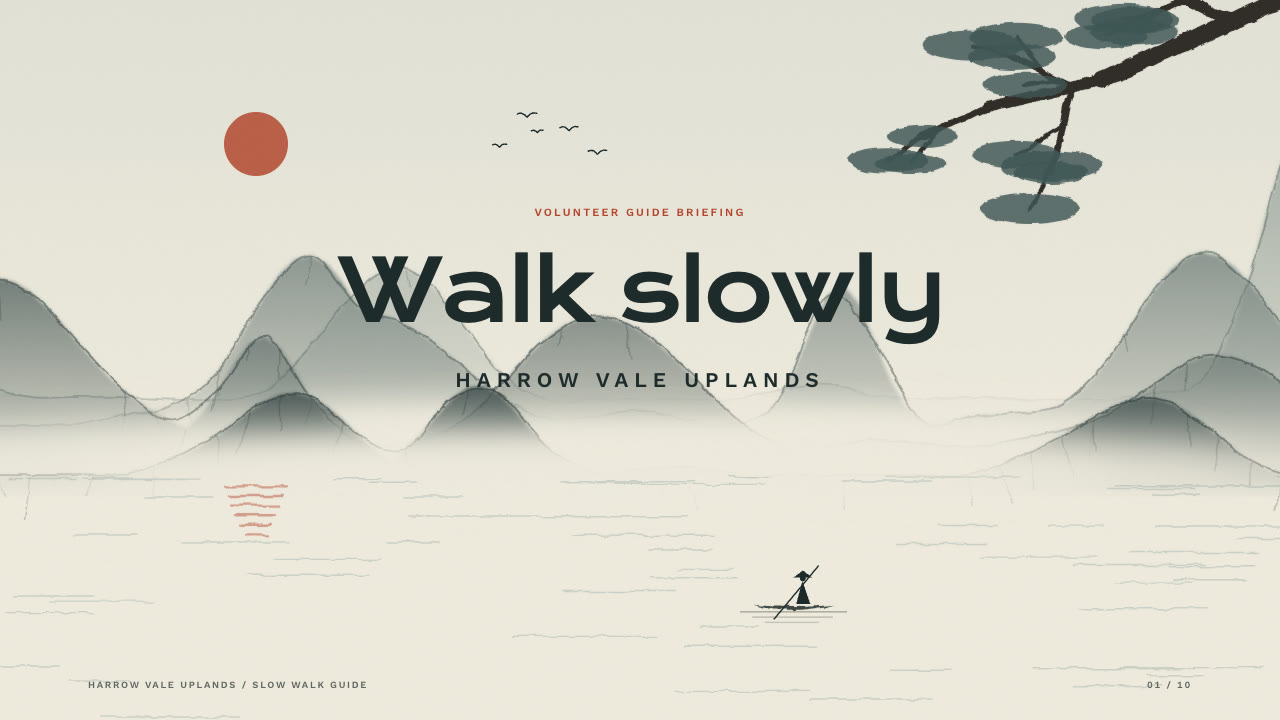
Present a place, a walk, a craft or a cultural programme in an ink-wash idiom: pale layered landscapes alternate with quiet paper pages, a hanging-scroll contents page, a seal-red map with native pins, a sparse timeline, oversized counts and fine gold linework.
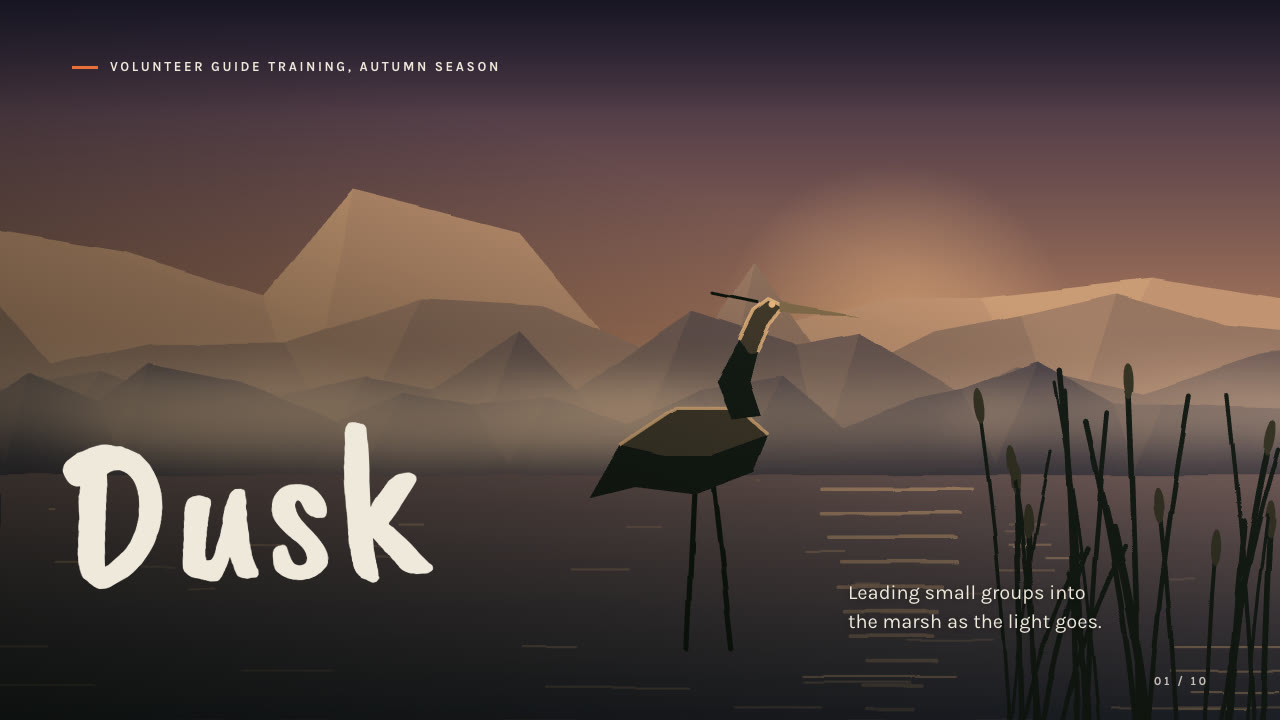
Tell a nature story the way a wildlife film would: full-bleed painted landscapes with animals at dusk, night or in snow, quiet paper pages with framed scenes, a hand-lettered brush headline face, film-strip montages and a ring of six prompts in two accents.

Make cheerful classroom decks for lessons, clubs, library sessions and family workshops: round bold headings, one handwritten accent per page, pastel outlined cards, doodle frames on cream paper and drawn children who stand on the page floor.
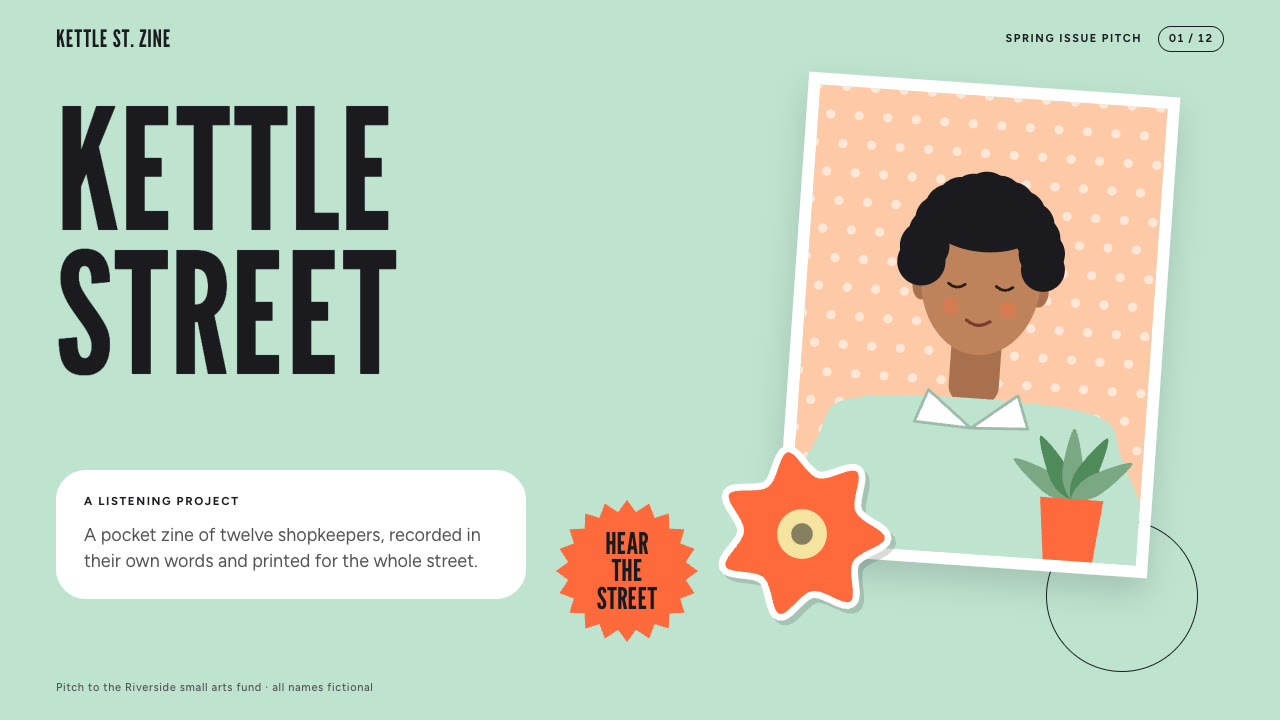
Make warm, hand-made looking decks for neighbourhood projects, small grant pitches, volunteer briefings and workshop invitations: very tall condensed headlines, pastel colour fields, white rounded cards, one deep feature panel, floating labels, tilted white-framed pictures, a serrated stamp and die-cut paper stickers.
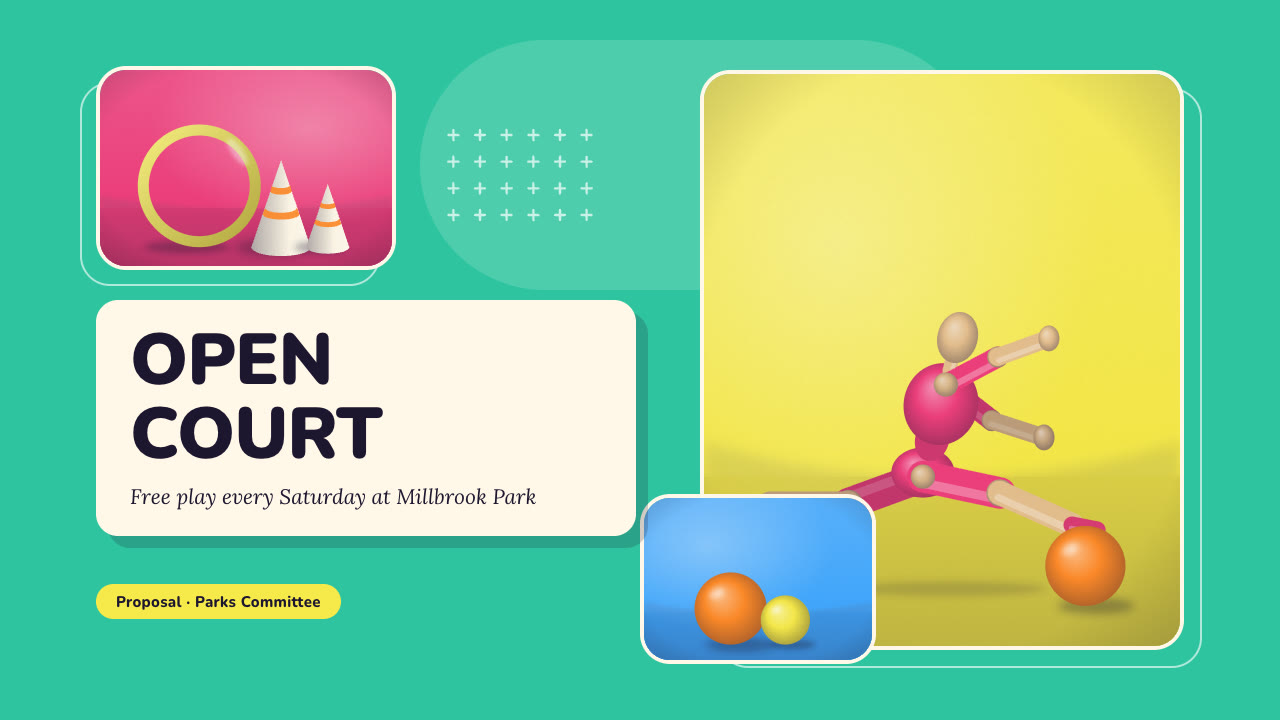
Make bright, playful decks for community programmes, events, launches and workshops: one saturated colour field per page, heavy rounded headings with small serif copy, cream-rimmed studio pictures with offset echo outlines, round object windows, staggered cards and lemon chips.
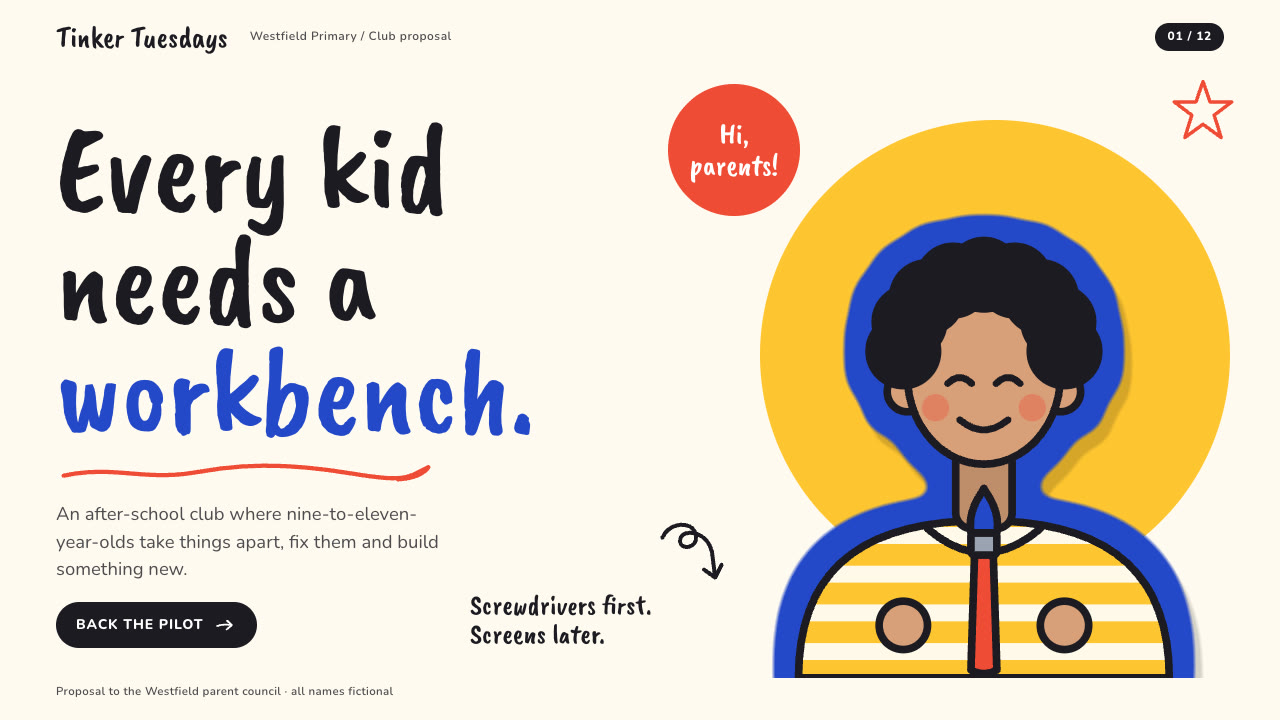
Make bright hand-drawn project decks for maker clubs, school and library programmes, workshops and community pitches: hand-lettered headlines, primary colour panels, cut-paper figures and objects, scribbled underlines, tape, sticky notes, a pinned idea board, a column chart and a native timetable.
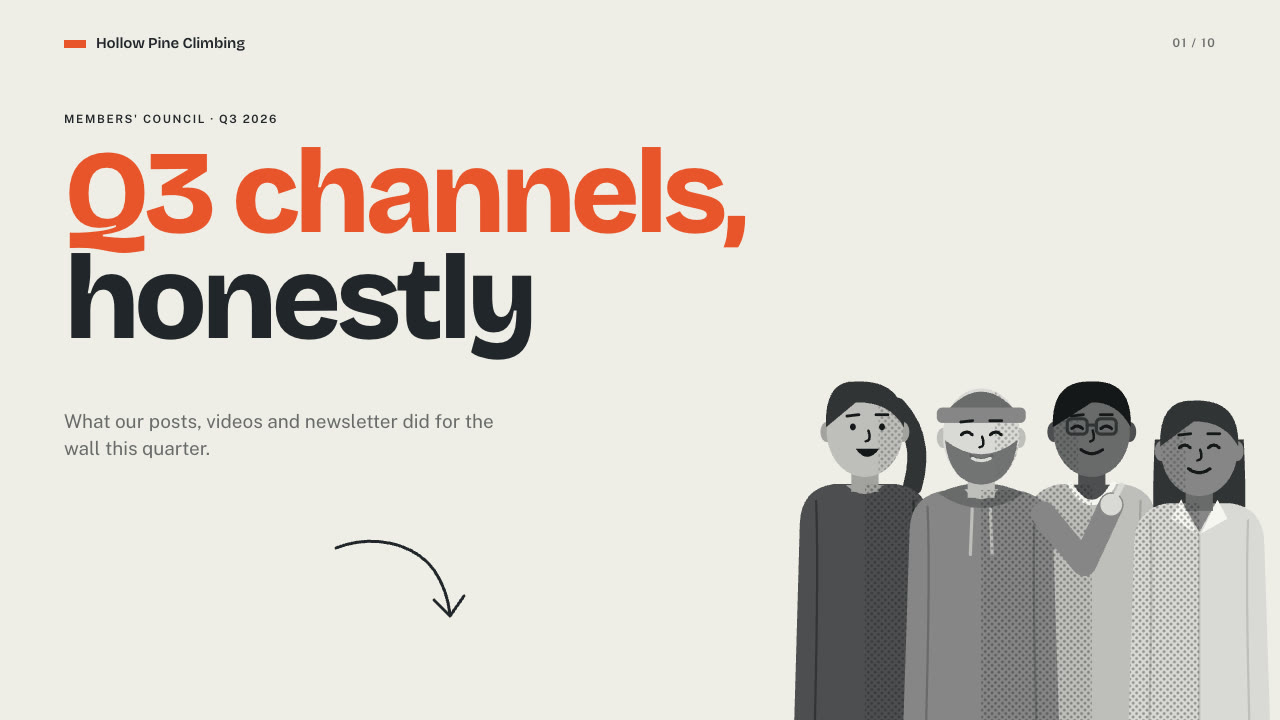
Make report decks for teams that review their channels, such as quarterly social and video reviews, newsletter or podcast seasons and community updates: heavy two-tone headlines on warm paper, screen-print groups of people at the page edge, tilted agenda tabs, stat rows, bars, an A/B/C top three, a native comparison table and a weekly column chart.
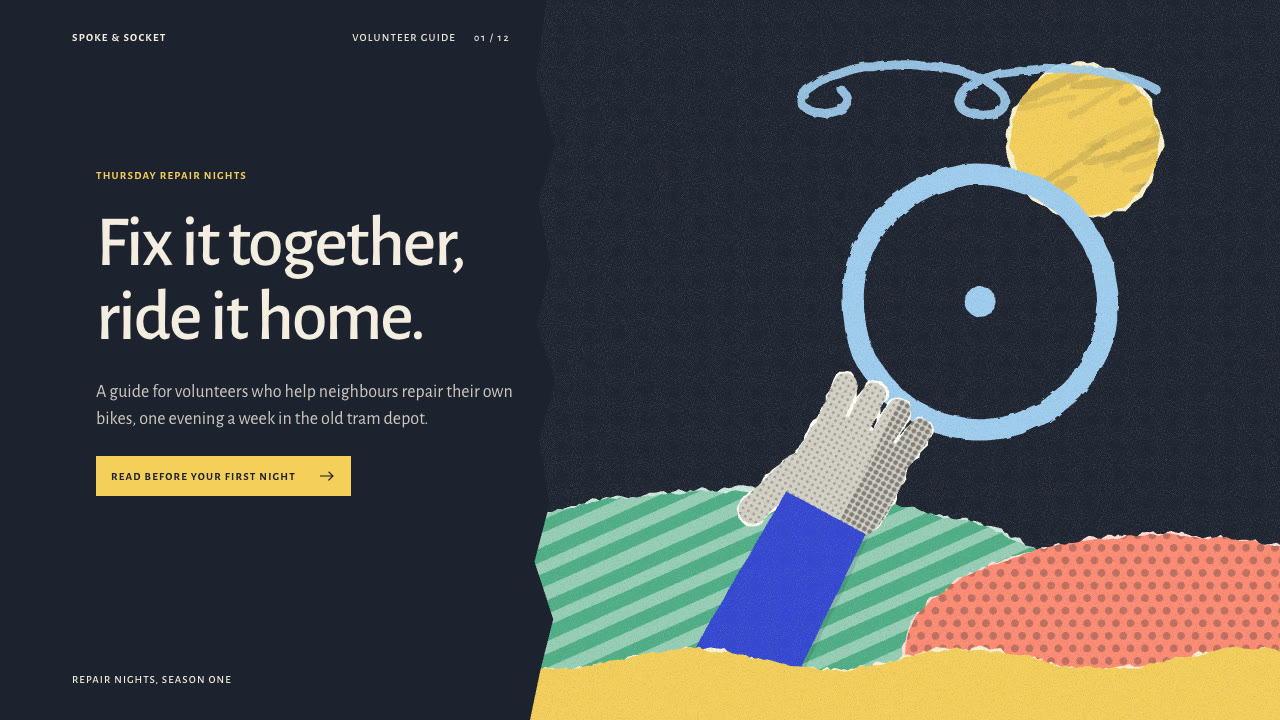
Invite people into a workshop, programme or public meeting with a warm cut-paper deck: cream pages, broad colour bands, offset paper cards and a collage picture on every image page.
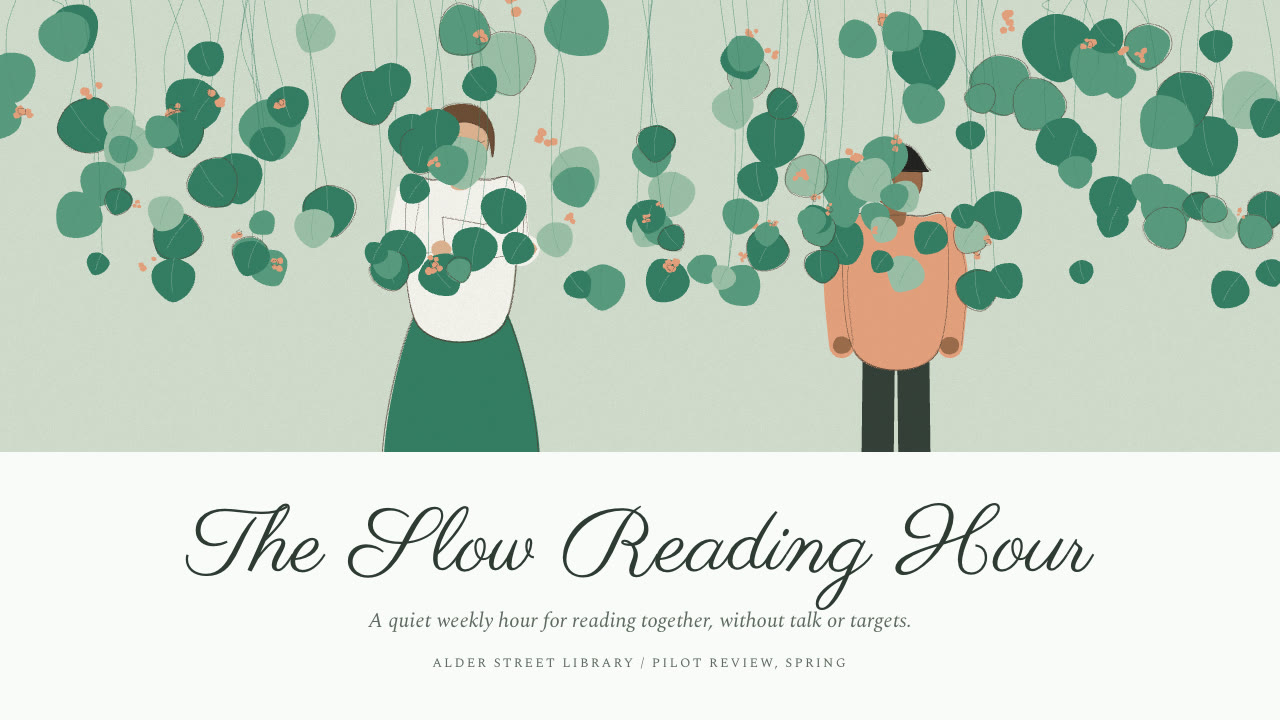
Make calm, illustrated decks for talks that ask people to slow down and look, such as library and reading programmes, garden and nature projects, community learning and seasonal reports: flat leaf-and-figure illustrations, script titles over a plain serif and one small idea per page.
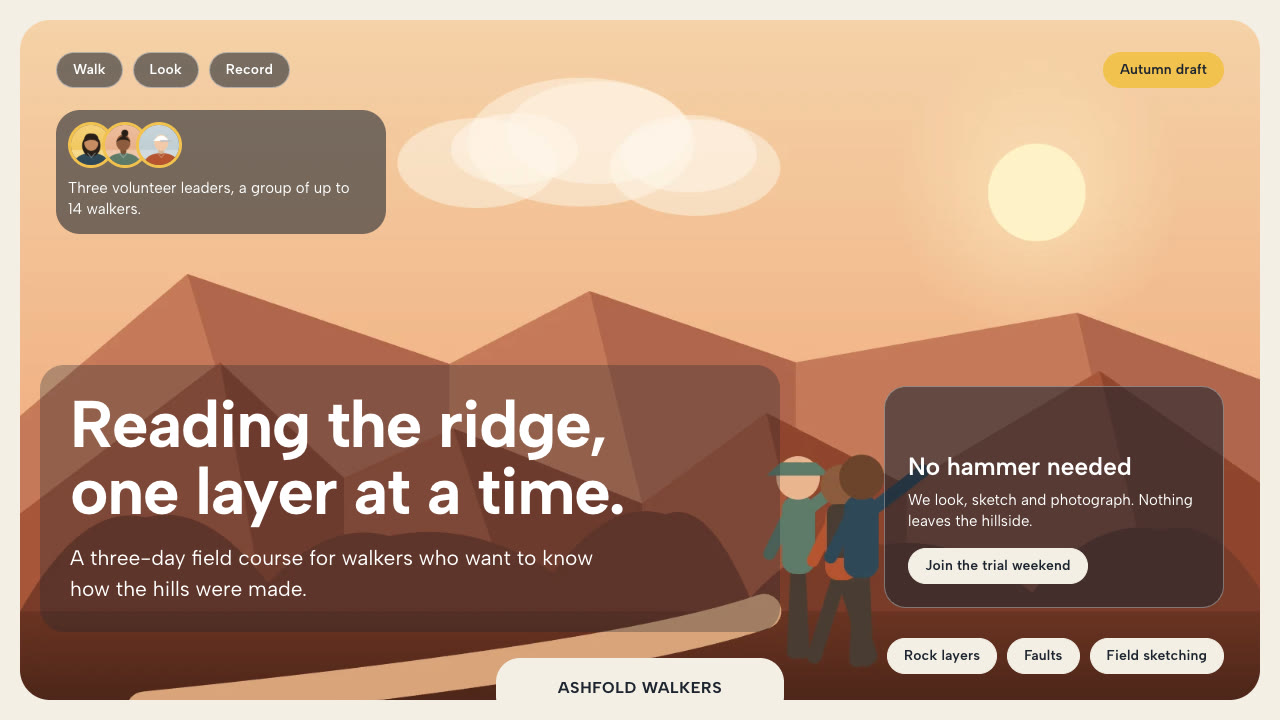
Make warm, picture-led decks for programmes that happen outdoors, such as field courses, walk series, field weekends and evening sessions: rounded picture windows, a framed cover with a ticket tab, smoked plates under captions, compact capsules, small ring portraits, asymmetric picture tiles and a three-stop timeline.
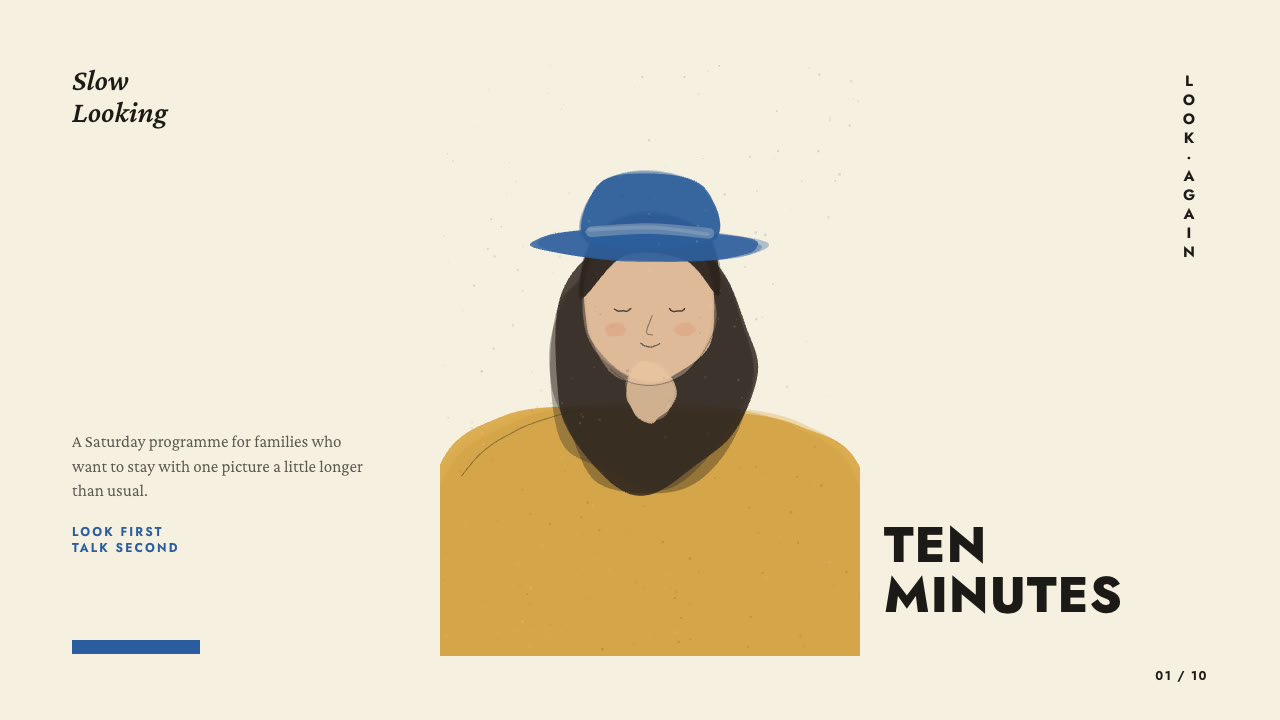
Make calm, picture-book style decks that move in chapters, for workshops, reading and family programmes, community projects and volunteer briefings: warm paper pages, painted gouache-like pictures, very large chapter numerals with a small italic tag, upright stacked spine labels and narrow islands of serif copy.
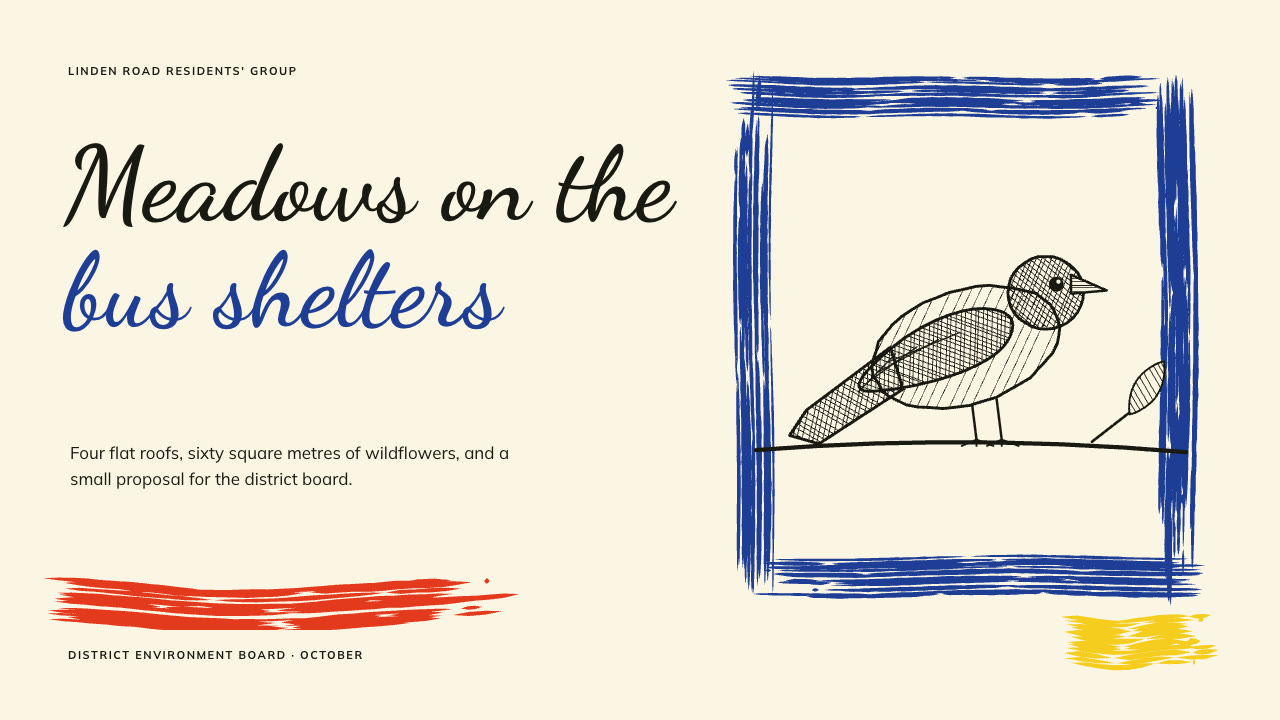
Make decks that look like pages from a naturalist's notebook, for nature, neighbourhood and community projects: warm paper, flowing script headings with one phrase in blue, small sans copy, and a pen-hatched study of birds, sprigs, nests, bird houses, water dishes or planters on a dry-brush ground for every page, with editable tags, numbered markers, connector lines and data bars.
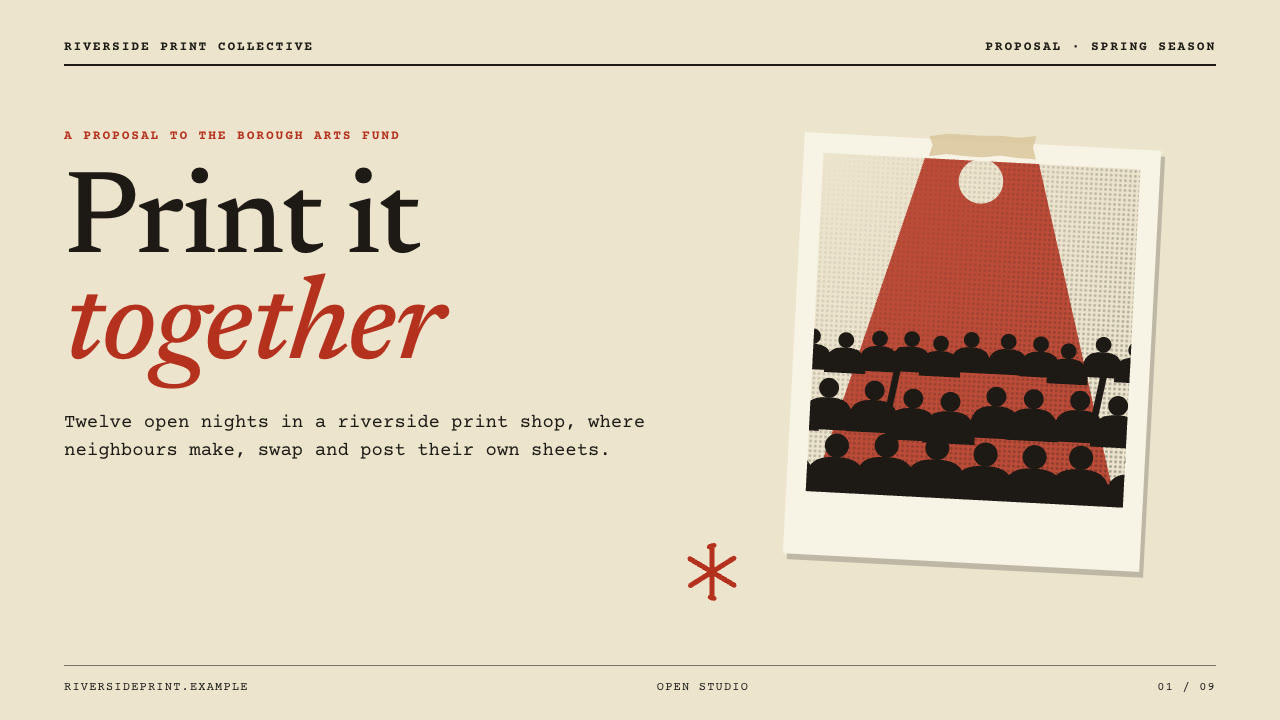
Make argument decks for small groups, such as proposals to a fund, campaign briefs, zine or radio issue launches and programme pitches, in a cut-and-paste broadsheet look: cream newsprint pages that rotate with full ink and full accent spreads, a two-voice serif headline that recolours itself per surface, typewriter body copy, numbered tabs, taped polaroids, torn clippings, grid-paper notes and a ring stamp.
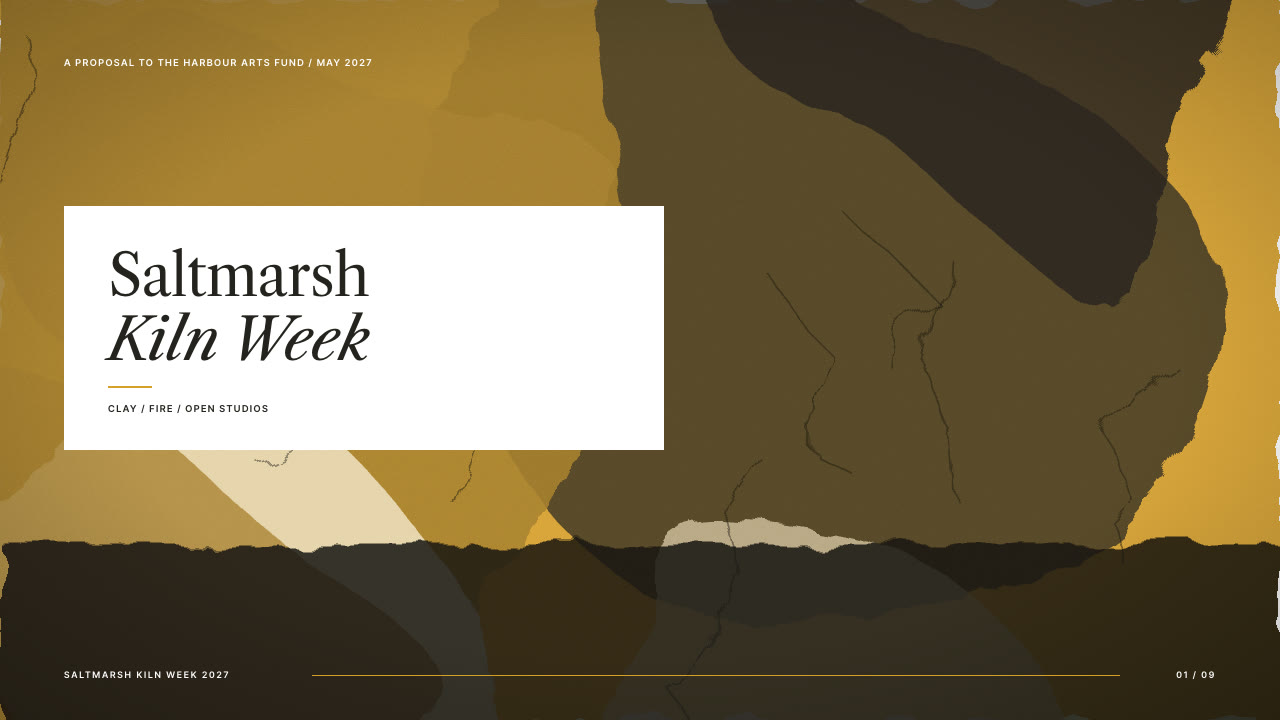
Make decks that read like a small exhibition catalogue, such as a festival asking a fund for a week, a residents' association opening its buildings or a collective presenting its makers: white or warm paper pages with wide margins, short book-serif headlines whose second line is italic, small grey sans copy, saffron eyebrow bars and foot rule, and white reading panels over strongly coloured pictures.
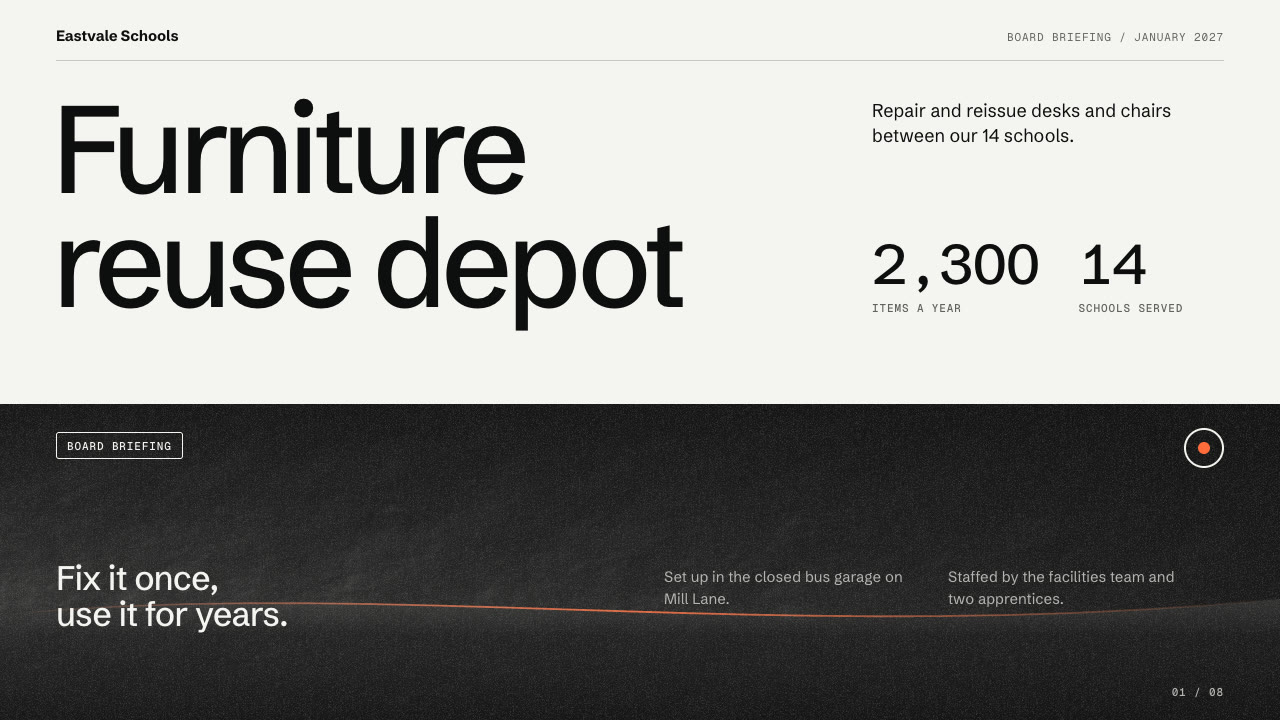
Turn a report, article or idea into a deck people can listen to, on top of a presentation style Skill you already have: the style draws the pages, this Skill writes a spoken script into every page's speaker notes, quotes the voice cost, and after you approve records one take per page and adds a listening bar with play, seek, speed, auto-advance and a script panel.
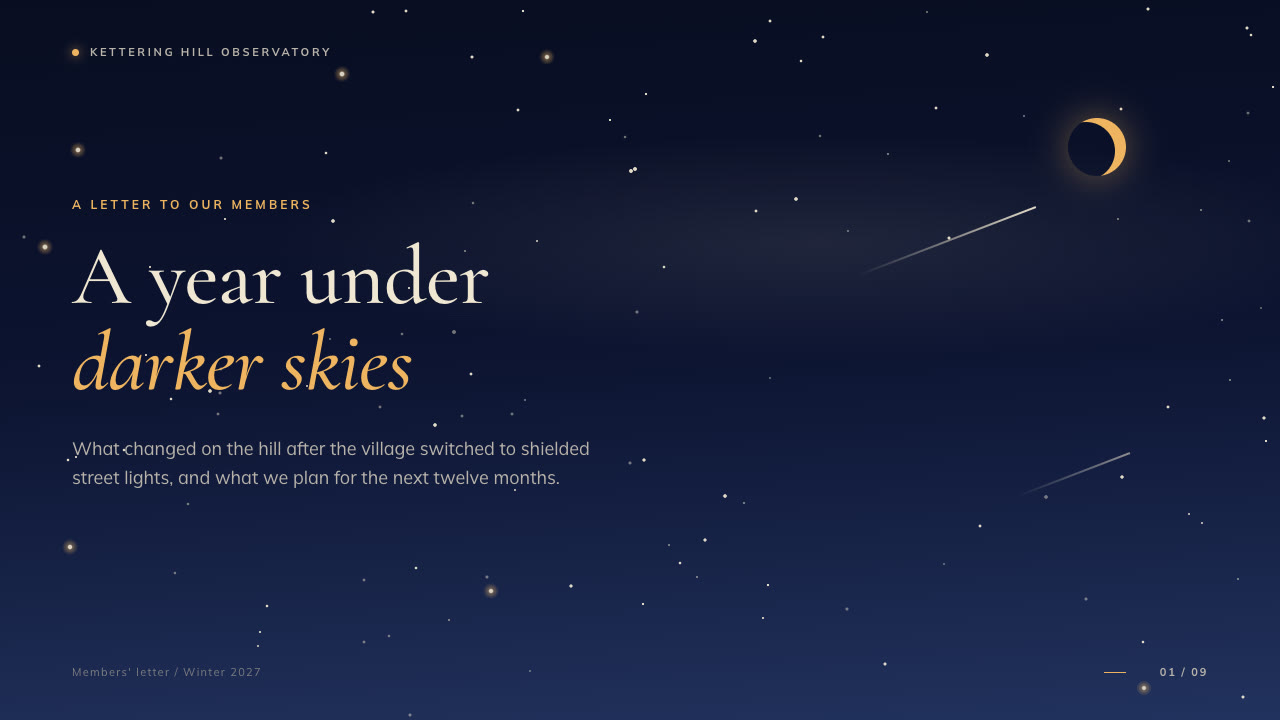
Make decks that read like a letter read aloud after dark, such as an observatory writing to its members, a founder looking back on a year or a night service reporting to its board: every page sits under one night sky with generated star layers, a lamp-coloured horizon glow, shooting-star streaks and a crescent on the cover, with large Cormorant Garamond headlines whose second line is a lamp-lit italic.
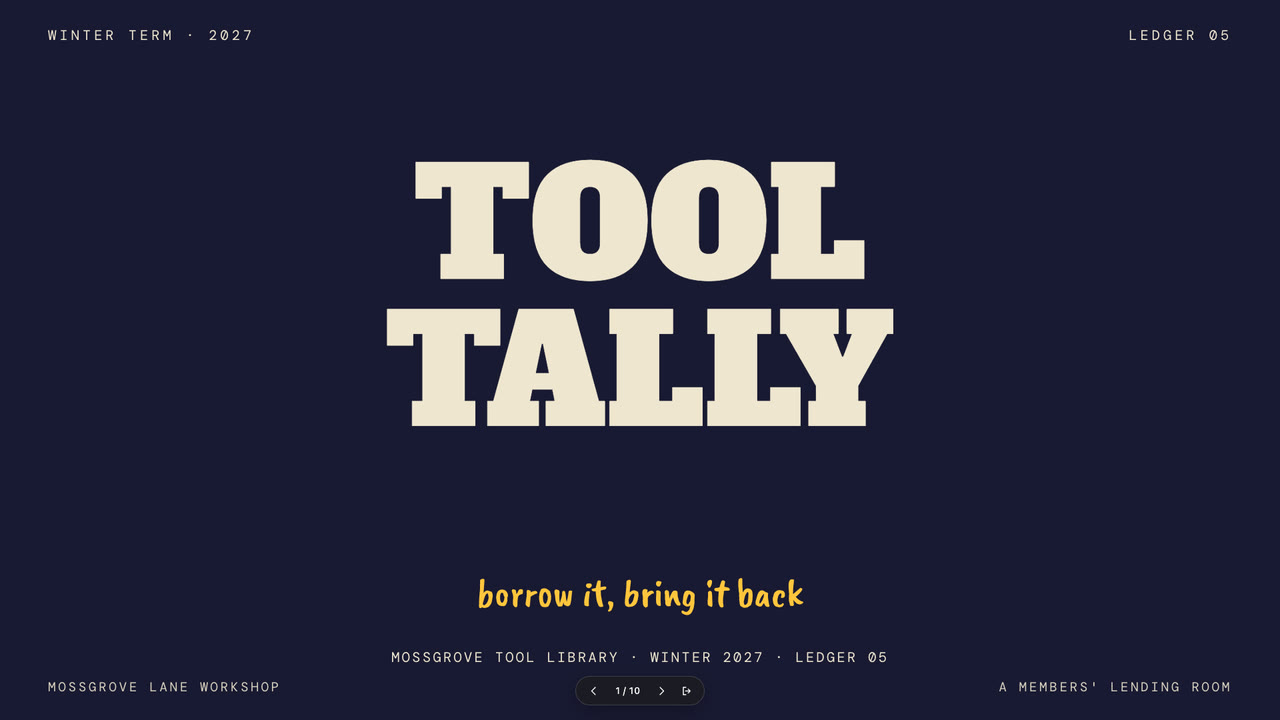
Make decks that read as protest-poster public bulletins: deep cobalt fields with cream type, cream paper pages with cobalt ink, Alfa Slab display headlines, mono capsule chrome, star and diamond ornaments and ruled contents rows.
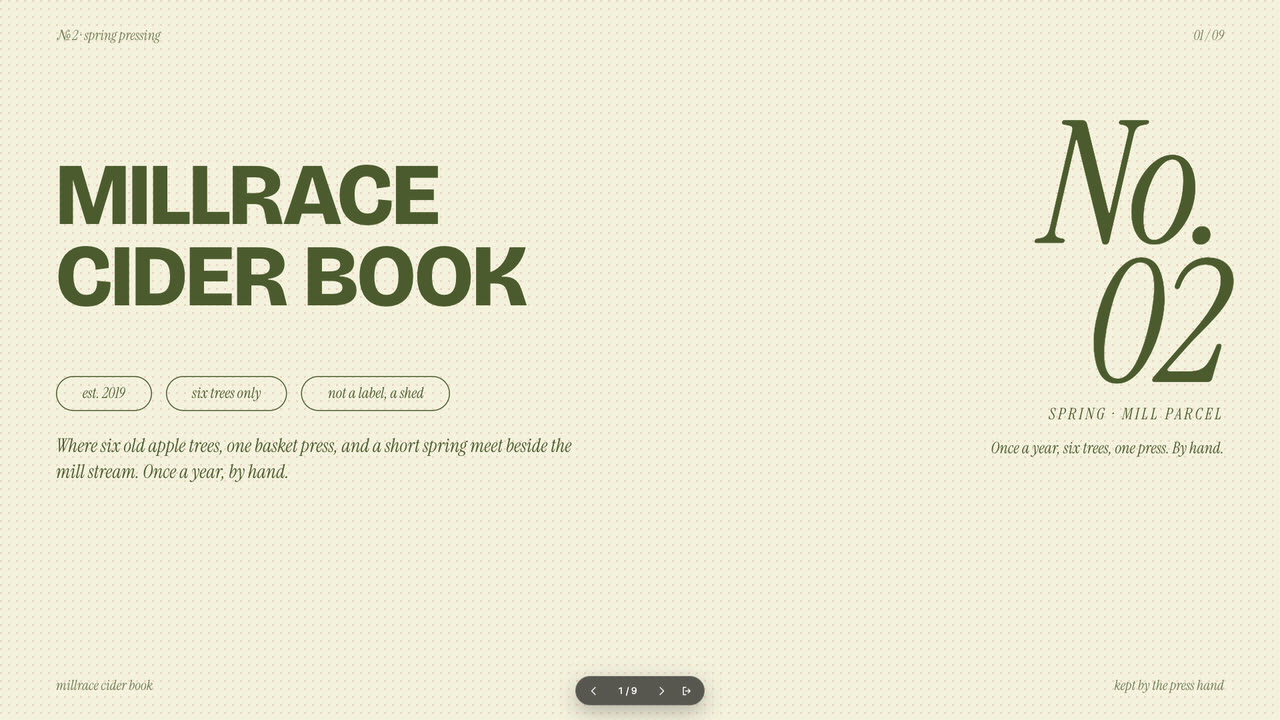
Make decks that read as cellar-book ledgers: buttery cream paper under a single rust ink, Bricolage Grotesque caps at poster size, italic Instrument Serif, outlined pill buttons, roman-numeral course rows, a giant edition numeral and ledger tables.
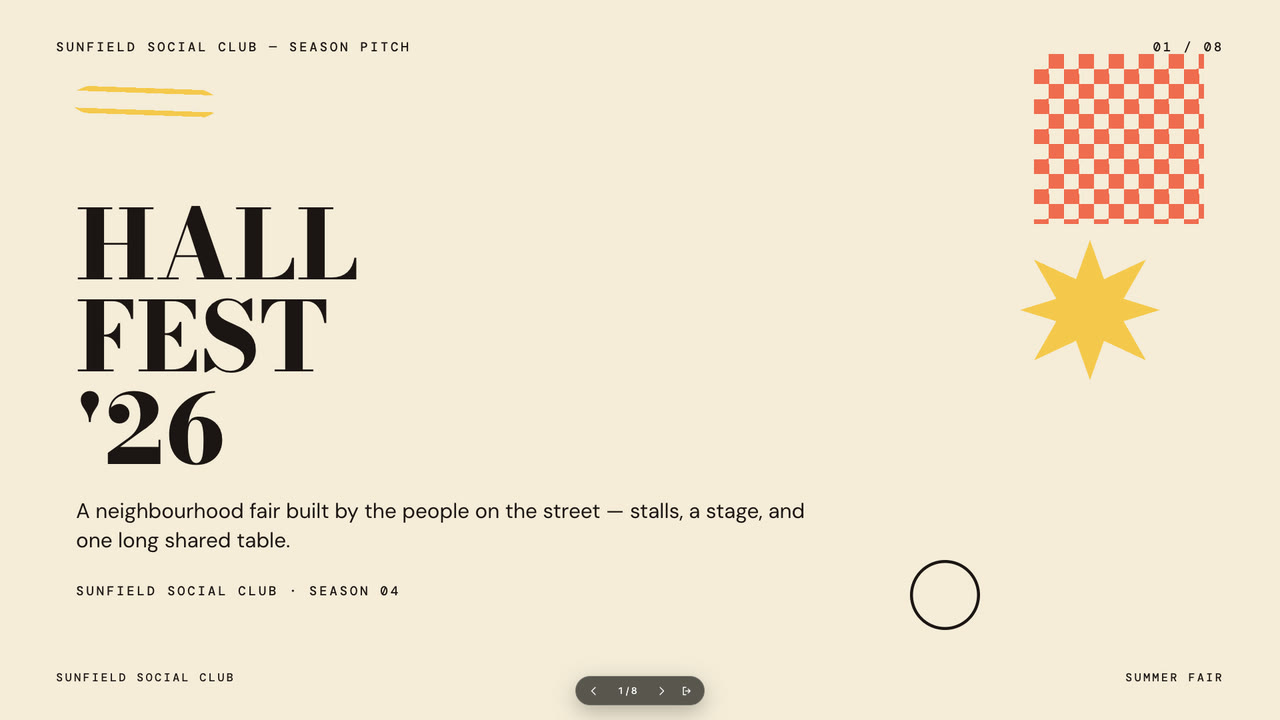
Make decks that read as 90s-candy sticker-card flyers: warm cream paper, saturated pink, teal, yellow, green and coral blocks with 3px ink borders and 8px hard offset shadows, checkerboard, wave and confetti ornaments.
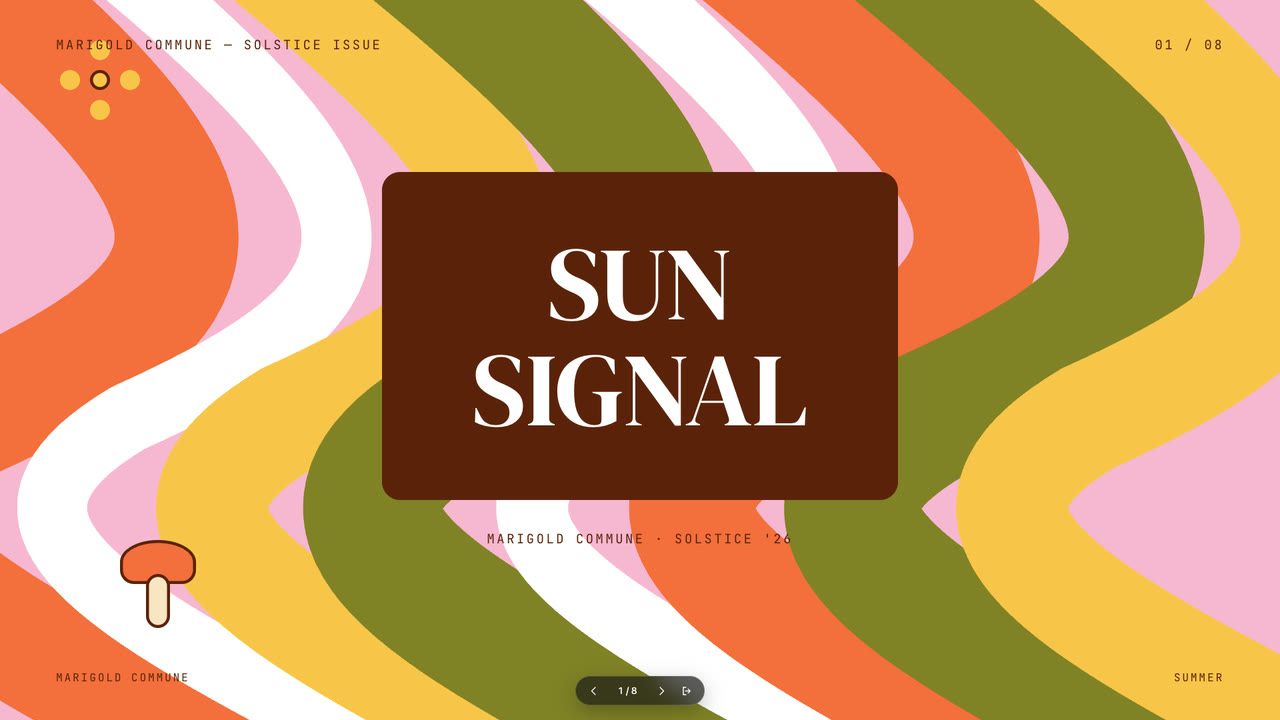
Make decks that read as 70s psychedelic wave-field posters: full-bleed S-curved vertical stripes, floating ink-plum panels, olive and candy cards, mushroom, sun-dial and scallop ornaments, DM Serif Display headlines and Instrument Serif body.
Make decks that read as quiet editorial lookbooks: warm off-white paper, huge Bodoni didone display lines, small-caps kickers, photo and swatch plates, garment-outline schematics and sparse black statement pages.
Make decks that read as cut-paper collage: torn-edge colour plates, gallery-serif display, sticker labels and paper-grain fields for programme briefs and community updates.
Make decks that read as a pinned workshop card wall: lined cream paper, forest-green serif display and flat clay forms — mustard, terracotta and sage discs, sticker labels and pinned note cards.
Make decks that read as quiet studio cards: alternating navy and sage fields, a nested-arch window and one orange dot, for workshop briefs and programme updates.
Make decks with a magazine rhythm: rotating pastel page fields, a masthead top nav, bottom folio bar and grayscale photo-card plates for indie-press and editorial briefs.
Make calm almanac-style decks: a warm parchment field, deep indigo serif titles, soft citron haze, one highlighted phrase per page and a sun dot riding the foot rule, for seasonal reports and members' meetings.
Make manifesto decks in a street-bill style: a few words set huge in a heavy rounded italic, lines tilted against each other, one poster colour, ruled ledgers and a red progress bar, for campaign launches and members' pitches.
Teach a class, workshop or club session on a chalk slate board, with hand-lettered chalk headings, a wooden frame and chalk tray, dashed chalk boxes, ringed steps, hatched chalk bars and drawn diagram plates.
Checked post/thread and optional generated image with alt text
Grounded titles, real thumbnail candidates, selected PNG/JPEG and description

Complete note copy with fact checks and an actual cover when requested.
Question-backed Reel script, narration and original assets, with an optional MP4 preview.

Tell whether a topic is heating up on Douyin, how fast and why, from the platform’s own boards and keyword index.
Take one Douyin video apart: real plays, the spoken script, how a placement was worked in, and what the comments say.
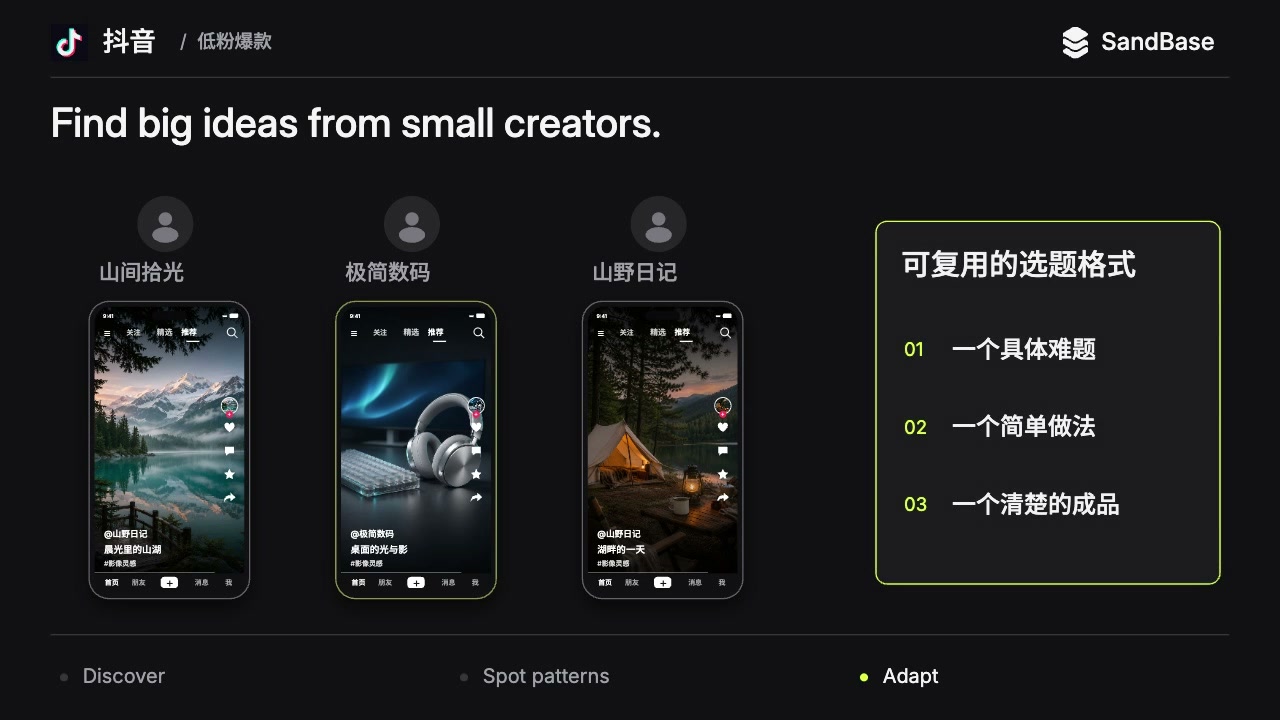
Find the Douyin videos that went viral from small accounts in your niche and turn their patterns into formats you can copy.

Map the creators Douyin considers most similar to one account, tier them by size and pick benchmarks and collaboration candidates.
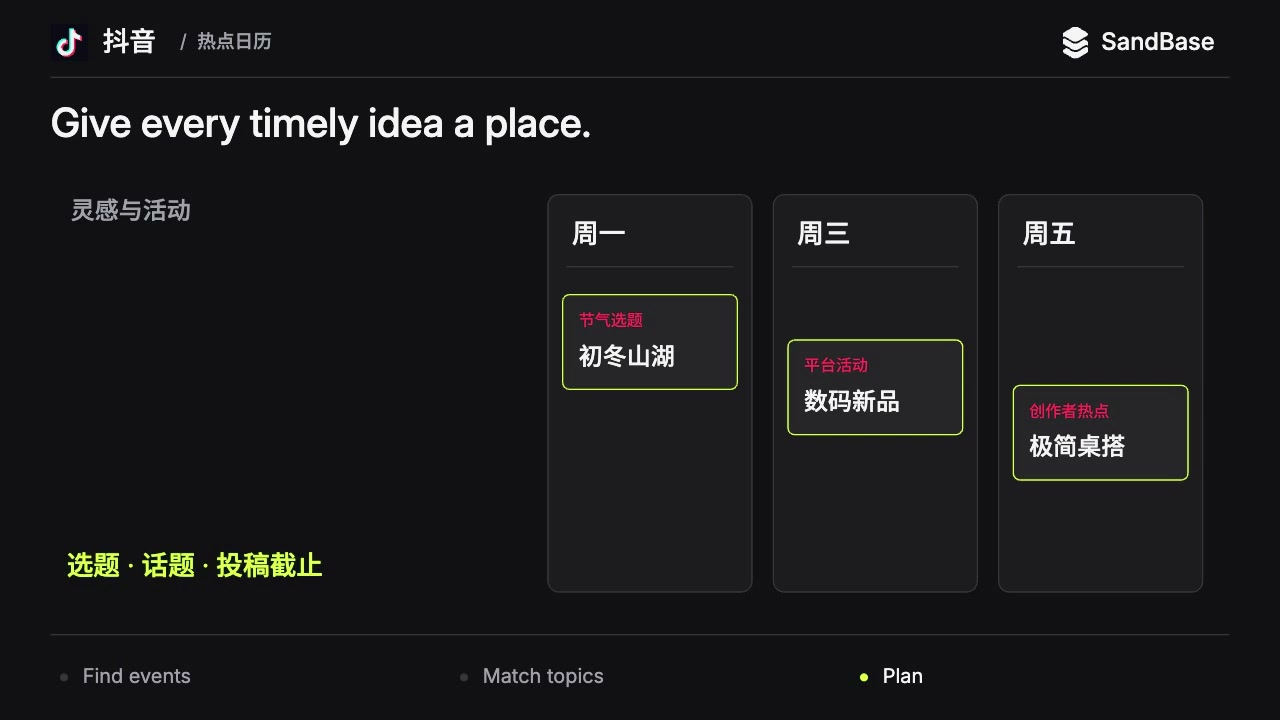
Plan Douyin posts around the platform’s own activity calendar and today’s creator hot spots.

Sort a Douyin video’s comments, decide which to answer first and draft replies in the creator’s voice.

Pick a sound for your Douyin video from the hot-music board, telling early sounds from ones millions already use.

Save a 公众号’s articles as local Markdown with their images, so they still read offline or after deletion.
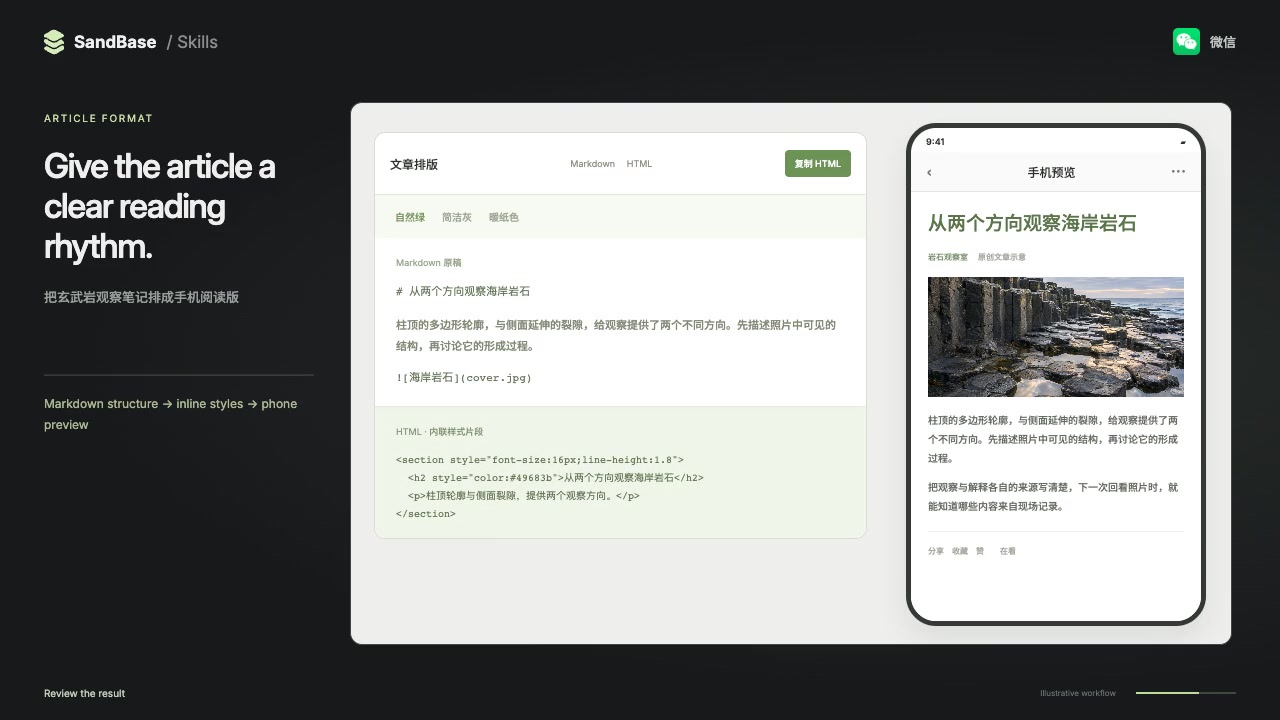
Turn Markdown into 公众号 editor HTML that keeps its layout when pasted.

Audit a TikTok account’s recent posts like a growth analyst and turn the patterns into tests for the next posts.

Tell which Weibo hot-search topics are rising, peaking or fading by comparing repeated snapshots.
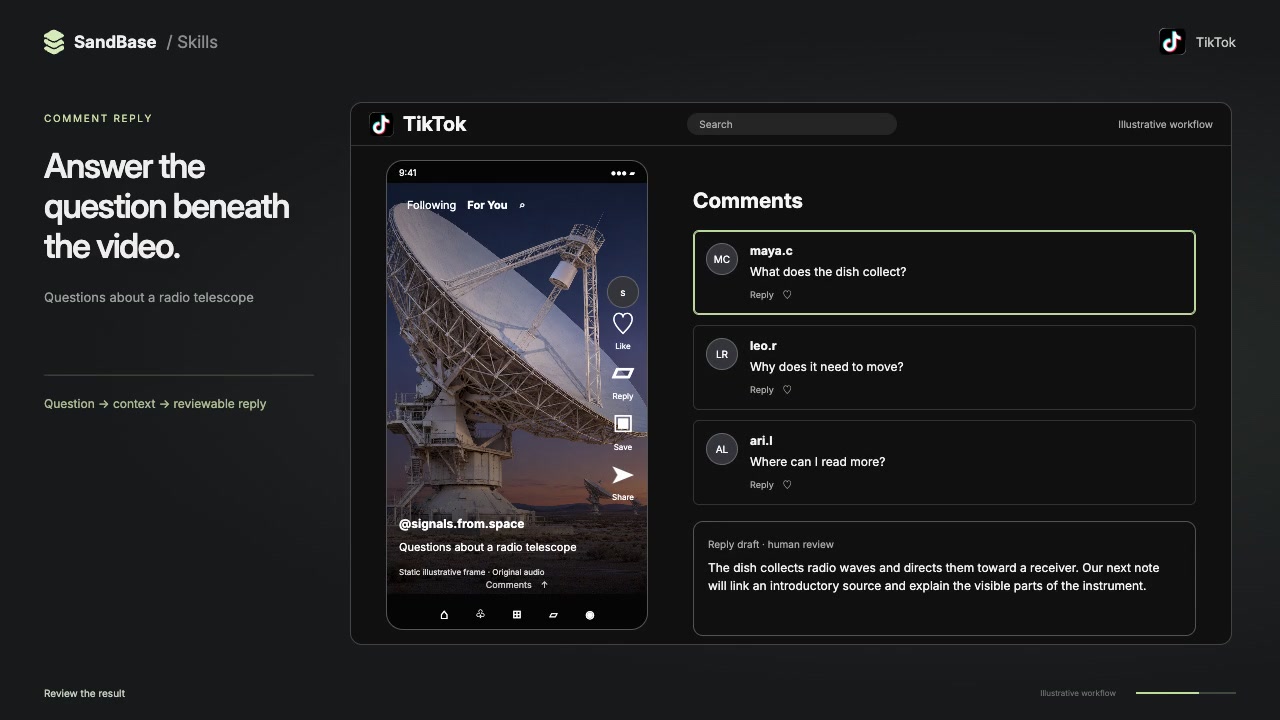
Sort a TikTok video’s comments, decide which to answer first and draft replies in the commenter’s language.
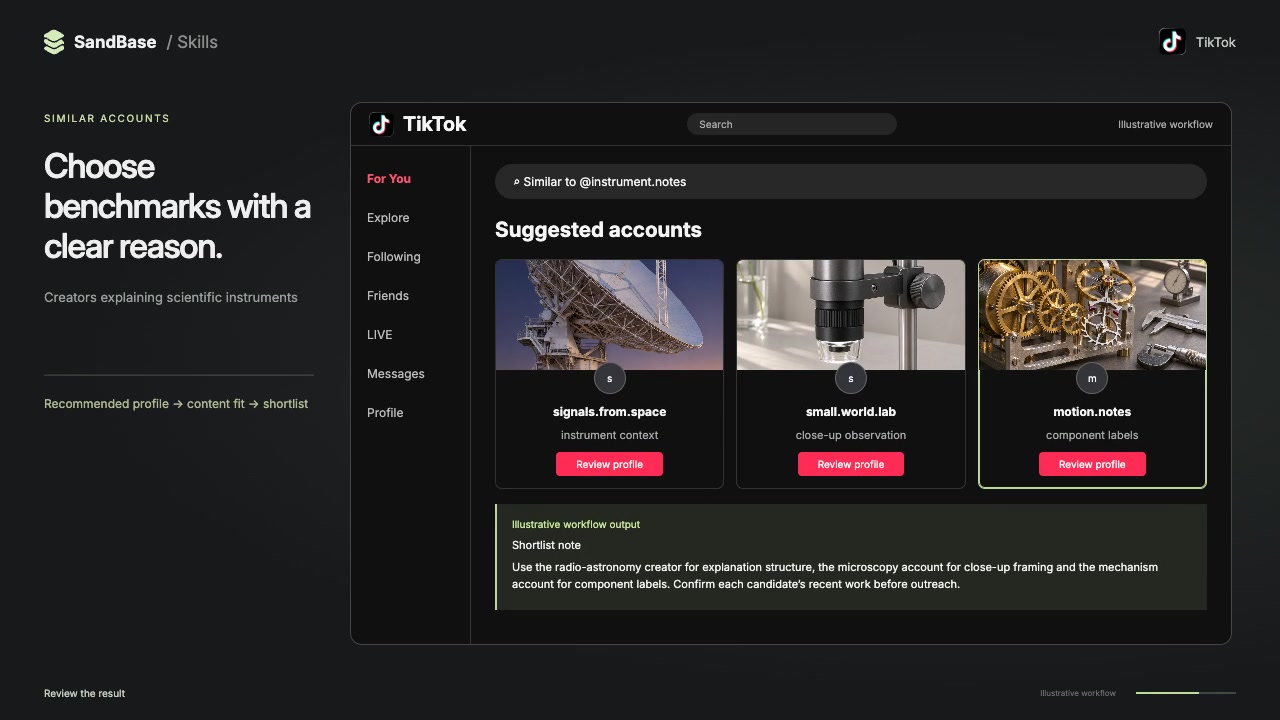
See which accounts TikTok recommends next to yours, group them by type and pick benchmarks and collaboration partners.

Find which TikTok hashtags are rising in a country this week, which are already over, and what to post.

Read Weibo’s life, entertainment and society boards together and pick the topics a brand can safely join today.

Choose which Weibo #topic# a post should use, and what it should say, from read counts and the questions people ask.

Read one Weibo post’s comments and see what people say, where they are from, and whether anything needs an answer.

See whether a topic is rising or cooling inside WeChat, and how people phrase it, before you write about it.

Review how one 公众号 article did and what readers wrote, then decide what to write next.

Review a 视频号 account’s recent videos and find which formats spread through forwarding.
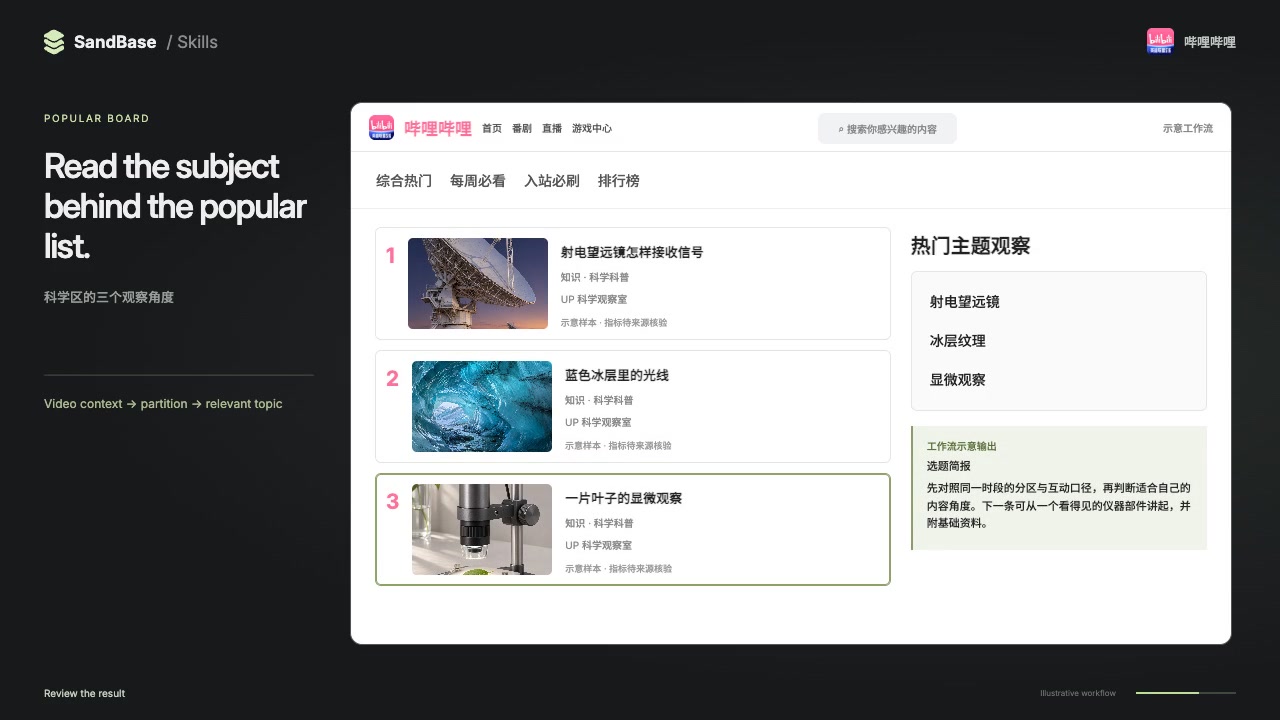
See what is on Bilibili’s popular list today, which kinds of video get the most engaged viewers, and which hot words you can join.

Find the moments in a Bilibili video where viewers react, so you know what to clip and what the audience calls the scene.
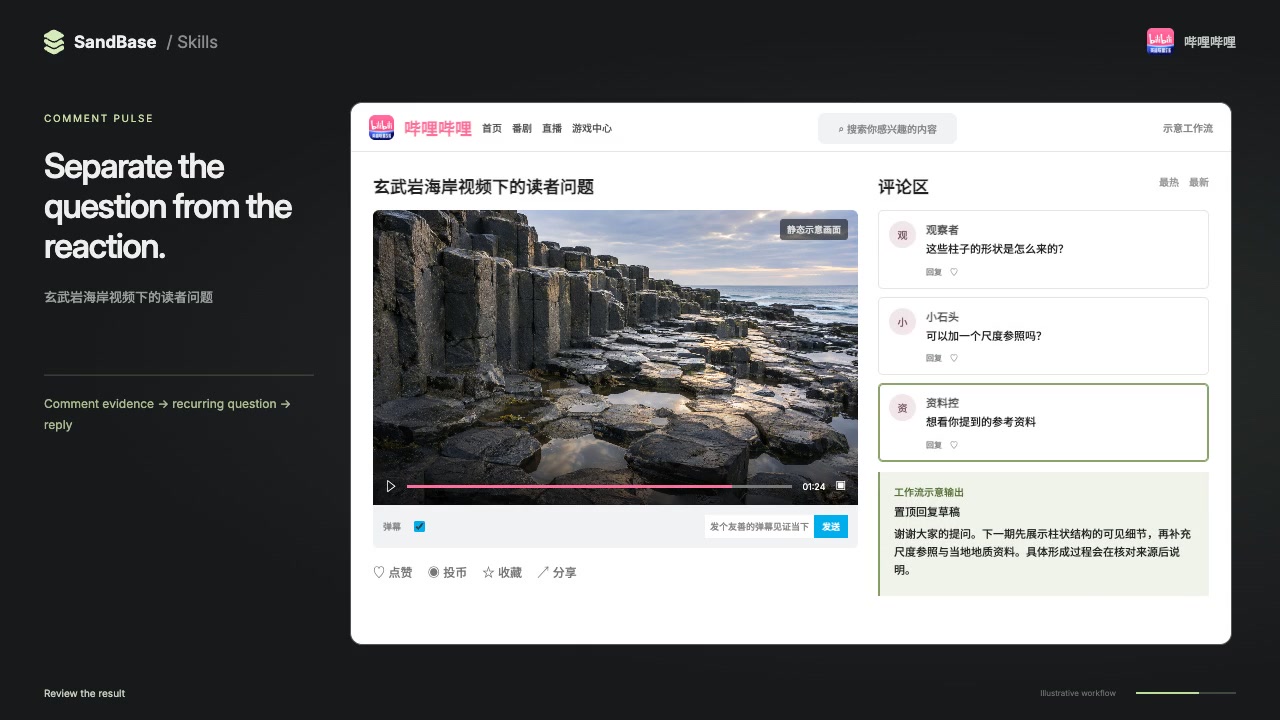
Read the comments under a Bilibili video: what people say, which comments pull replies, what could go wrong, and what to answer.

Compare a Bilibili uploader’s own recent videos to see which kind gets views and which gets comments, then decide what to make next.

See what is hot on Kuaishou today and which hot words people actually open more than their rank suggests.

Sort the comments under a Kuaishou video into what viewers want, answer the repeated question once, and reply to the comments worth it.
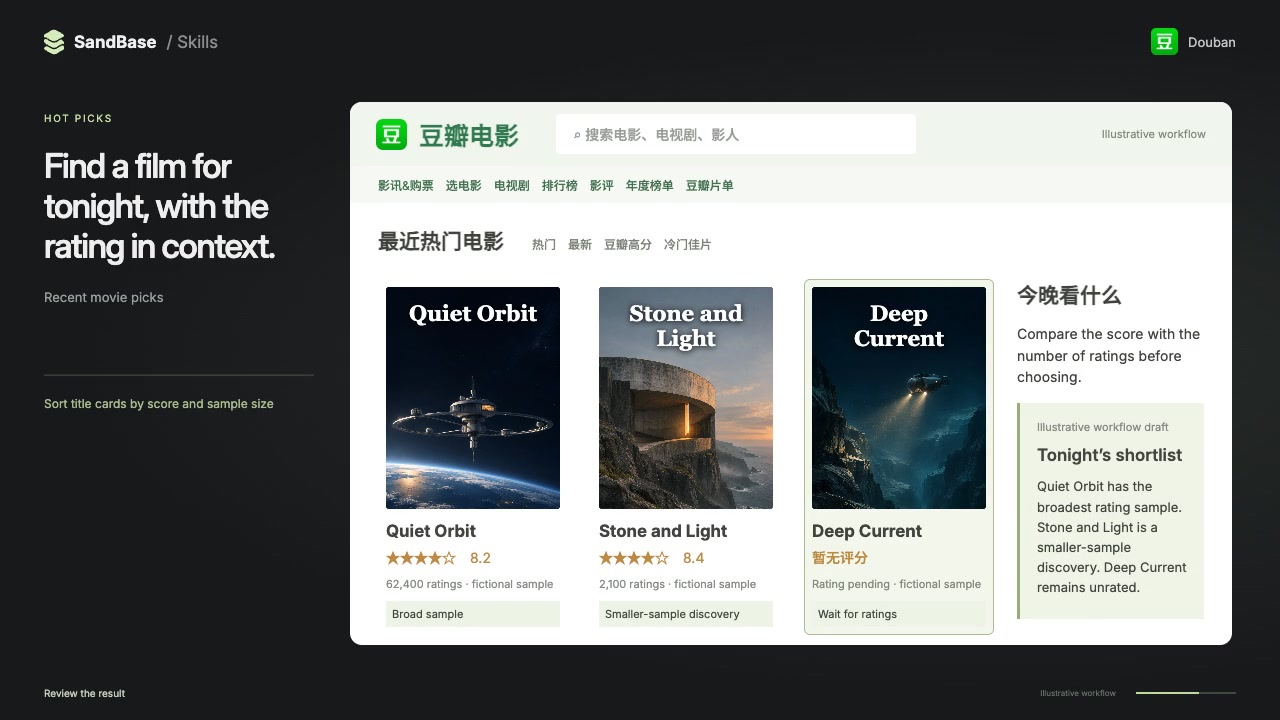
Sort Douban’s hot movies and series into what is worth watching or reviewing this week, by score and number of ratings.
Check IMDb’s streaming picks against IMDb’s own ratings before you recommend any of them.
See which kind of post on a Telegram channel gets readers to react, not just read.
Compare an account’s own Threads posts to see which kind gets likes and which starts conversations.

Compare a Xigua creator’s own recent videos to see which title style or format gets plays and comments, and what to make next.
See which kind of Lemon8 post people save for later, not just like, and which featured forum to post in.

Turn a long Bilibili video into chapters with start times, sponsor-read times and key points, so you know which part to watch or clip.
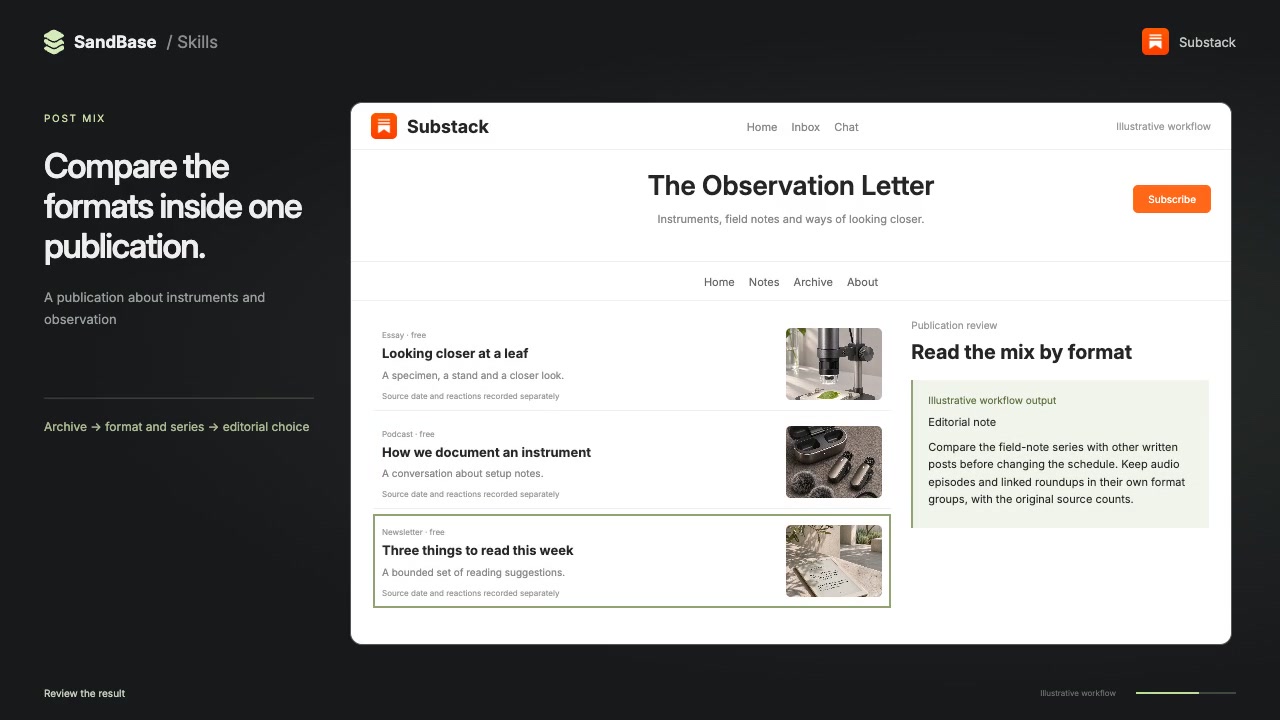
Compare a Substack publication’s own formats to see which ones readers react to and what to publish more or less of.
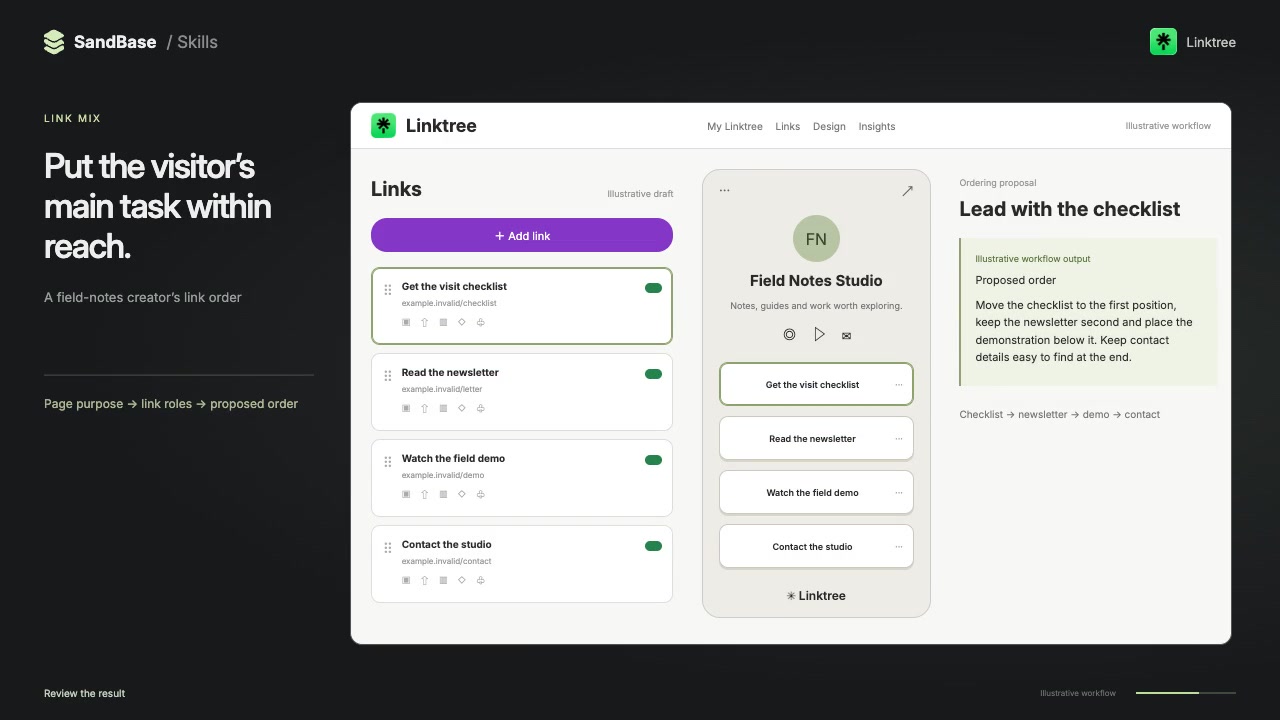
See what a link-in-bio page asks visitors to do, what it puts first, and how to reorder it.
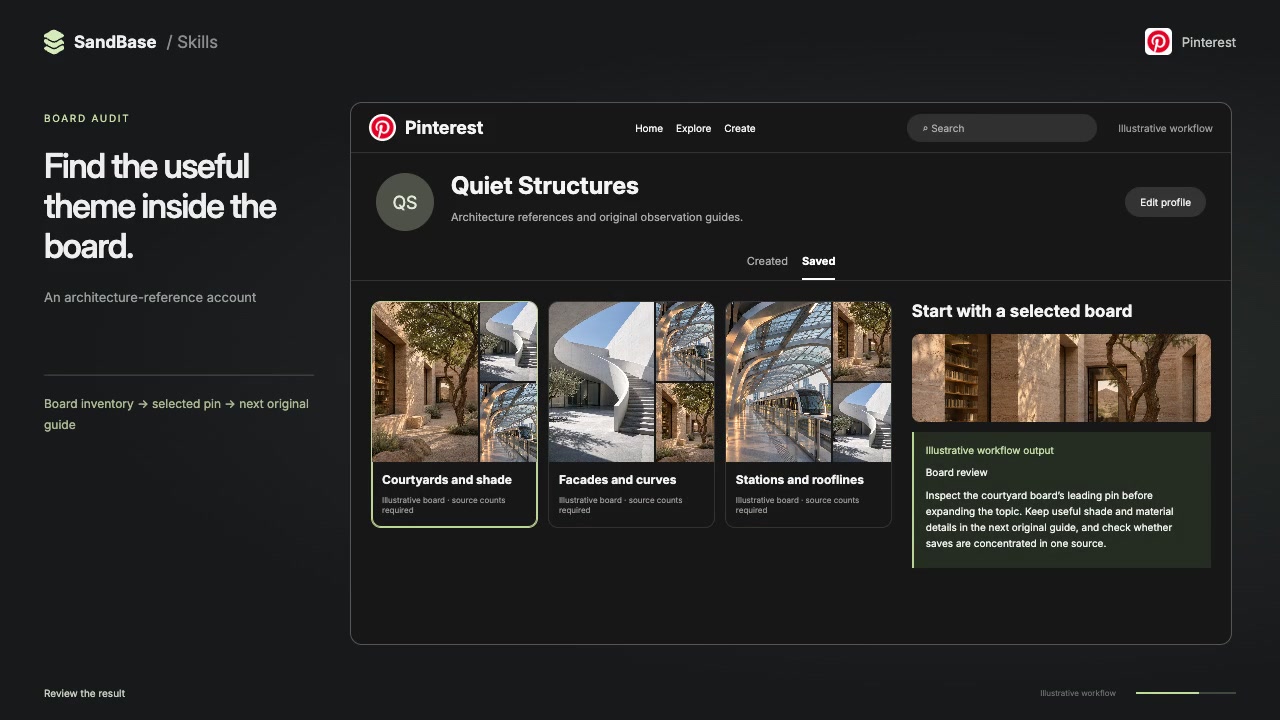
Review an account’s Pinterest boards and find which pins people save, so the next pins follow what works.
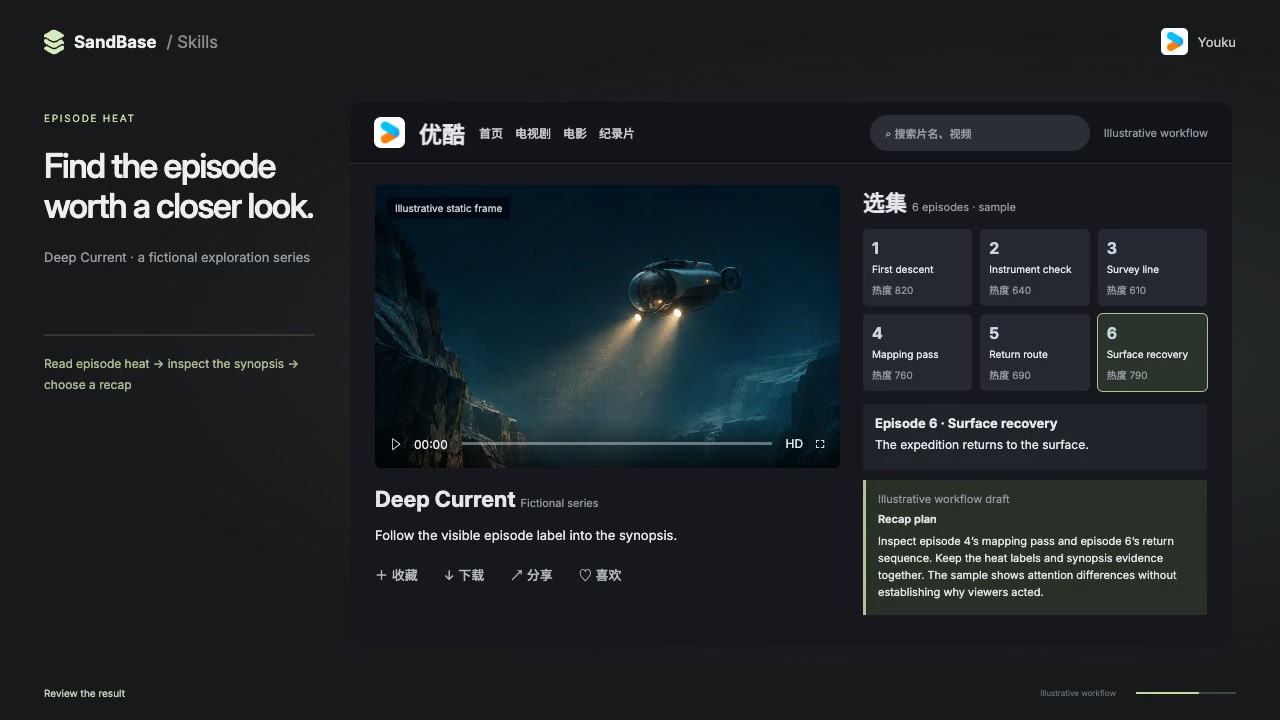
Draw a Youku series’ attention curve episode by episode to see where viewers drop, where it bumps up, and which episodes to clip or recap.
Write Threads posts in the shape an account’s audience already answers, instead of from a generic template.
Plan a realistic week of Threads posts from an account’s real rhythm and results.
Rewrite a Threads bio after seeing what similar accounts say and link to.
Write Facebook Page posts in the shape a Page’s audience already shares and comments on.
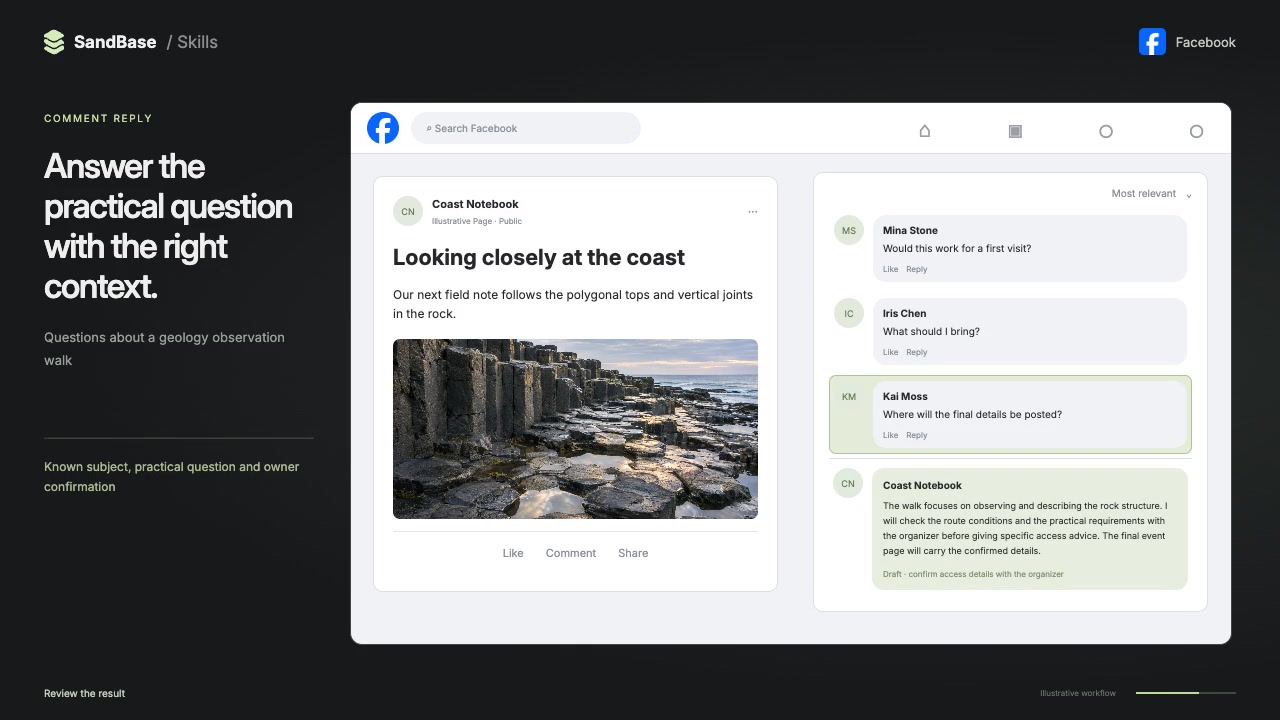
Sort the comments under a Facebook post and draft replies for the ones that need an answer.
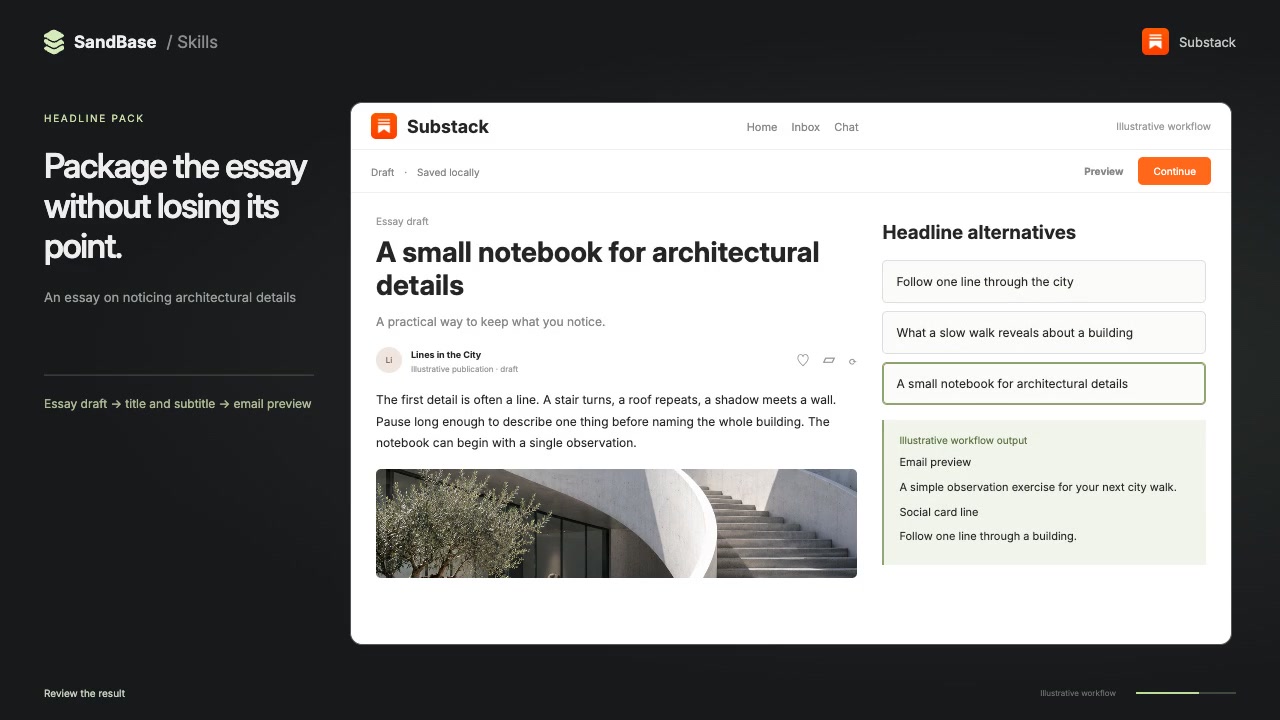
Choose a Substack title type from what a publication’s readers actually restack, then write every line a post shows before it is opened.
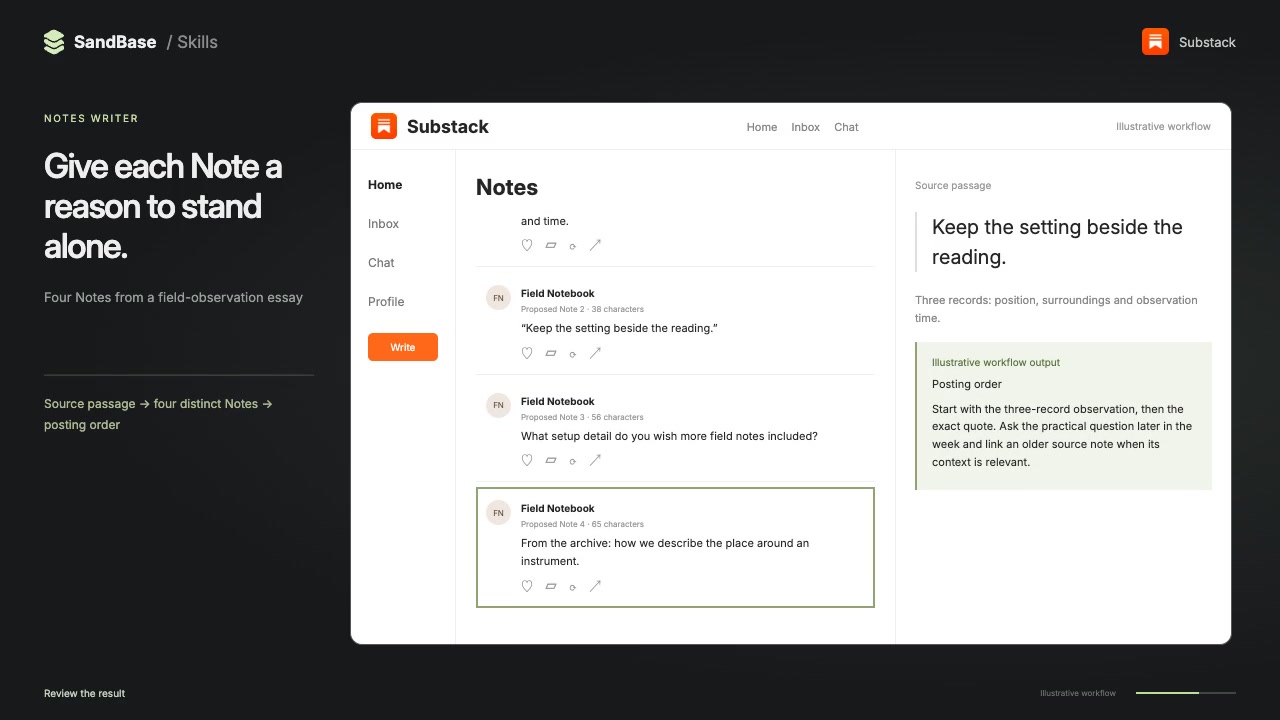
Turn a published Substack post into a week of Notes that can be restacked on their own, without inventing a single fact.
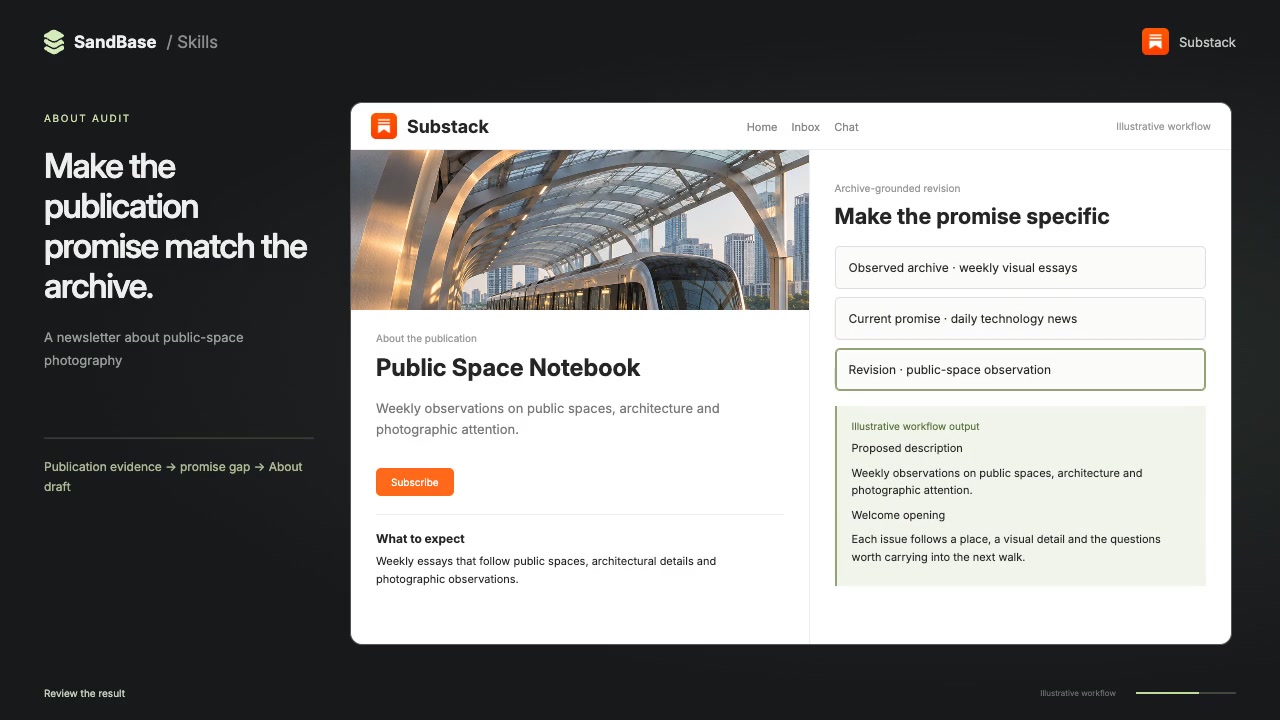
Check whether a Substack description and author bio match what the publication actually publishes, and rewrite them from the archive.
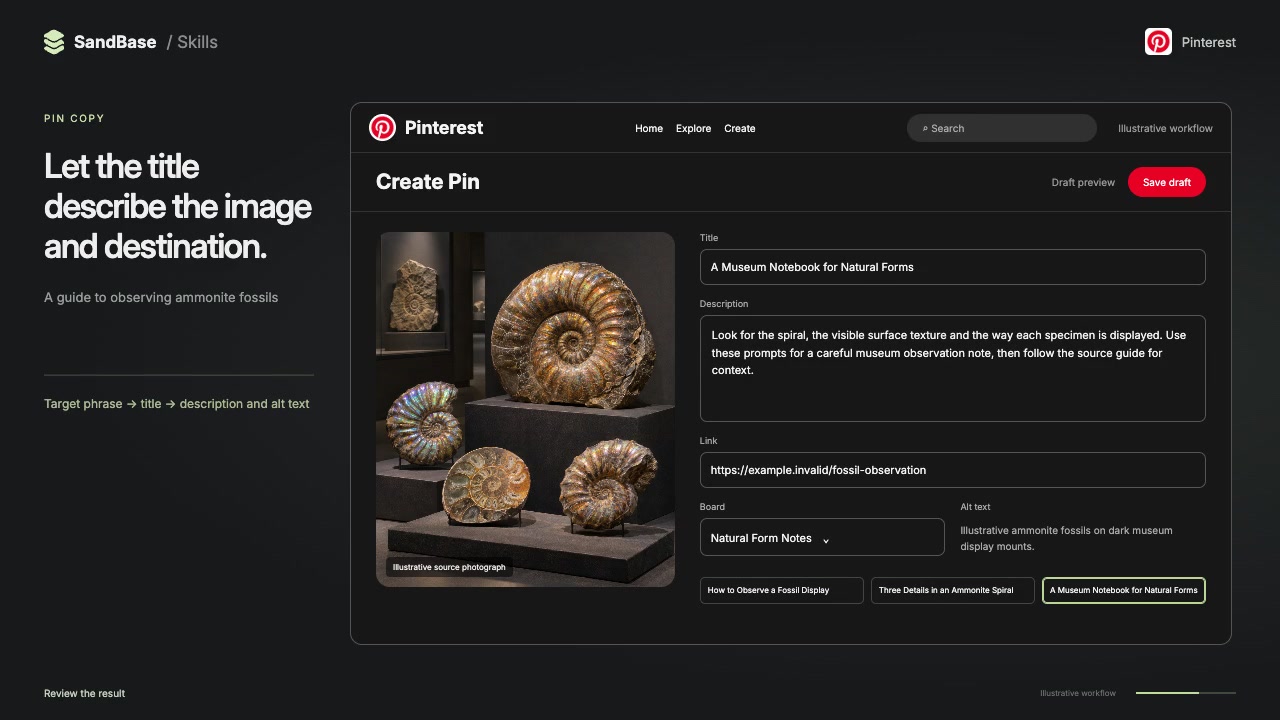
Write a pin’s title, description and alt text in the words the pins already ranking for your phrase use, about your own page.
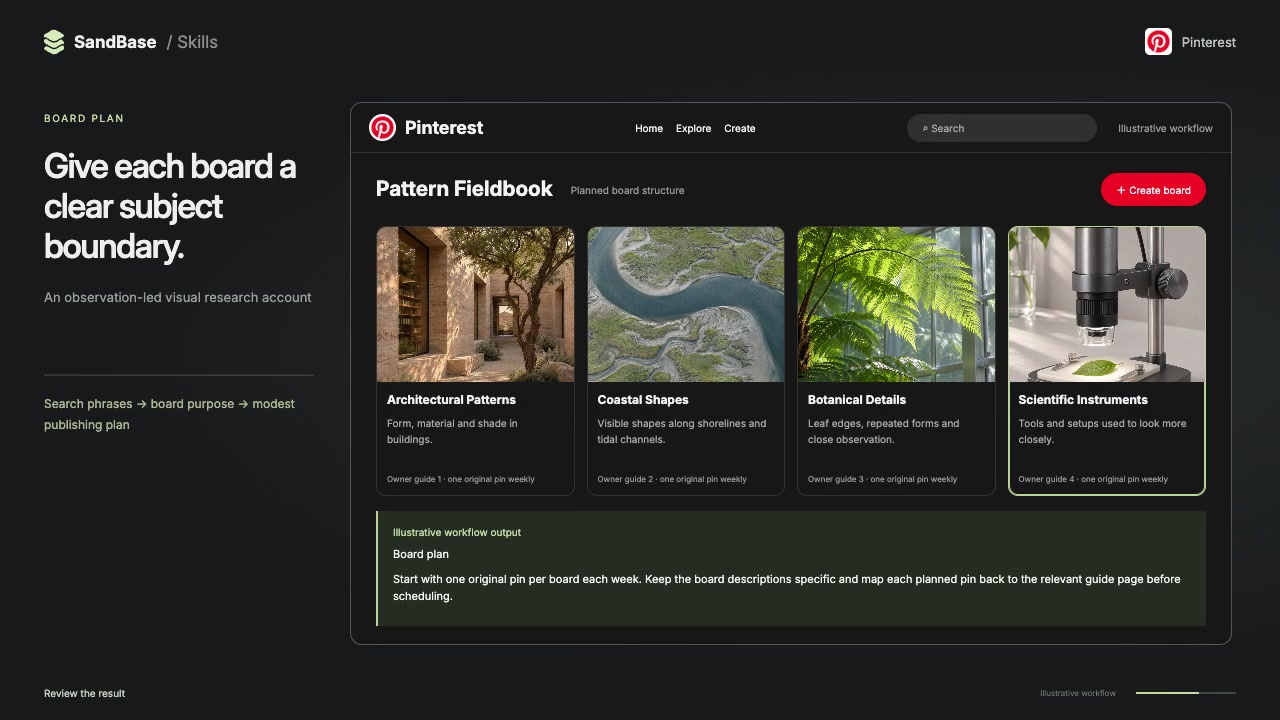
Organise an account’s boards around the phrases people search, and fill them with the account’s own pages.
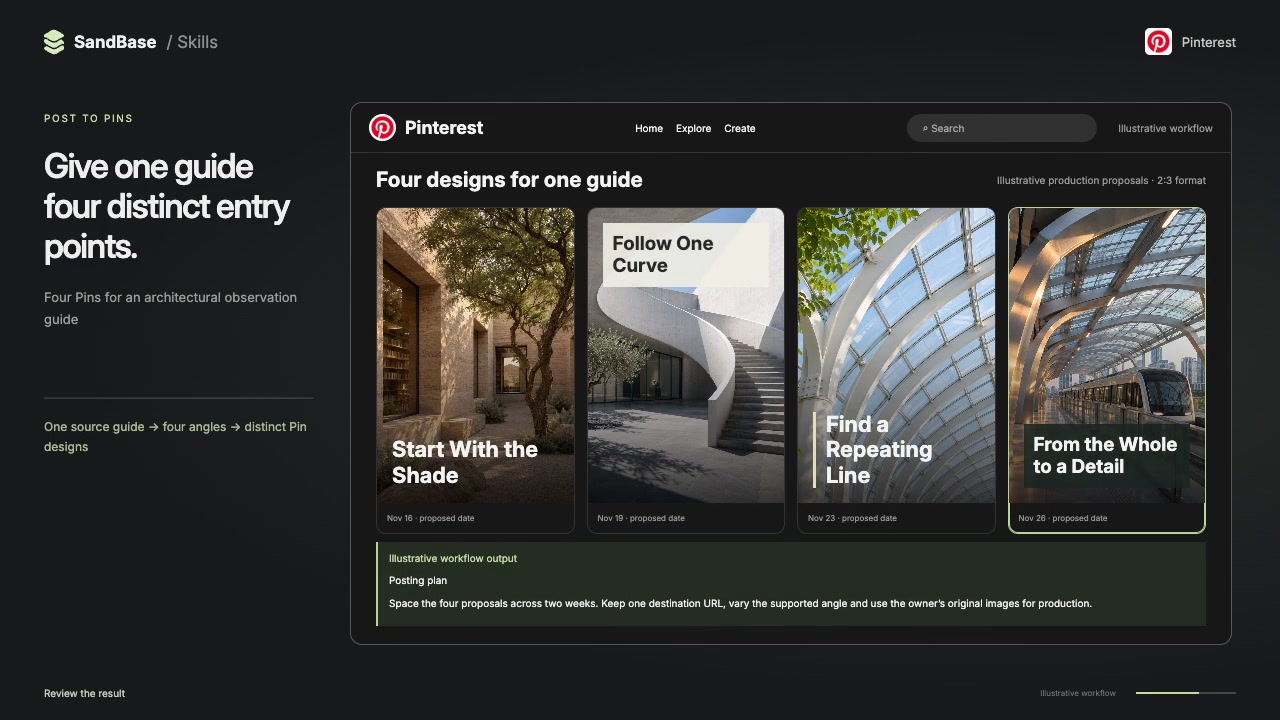
Turn one page into four distinct pin designs, each with an angle that ranks for its phrase and that the page can back.
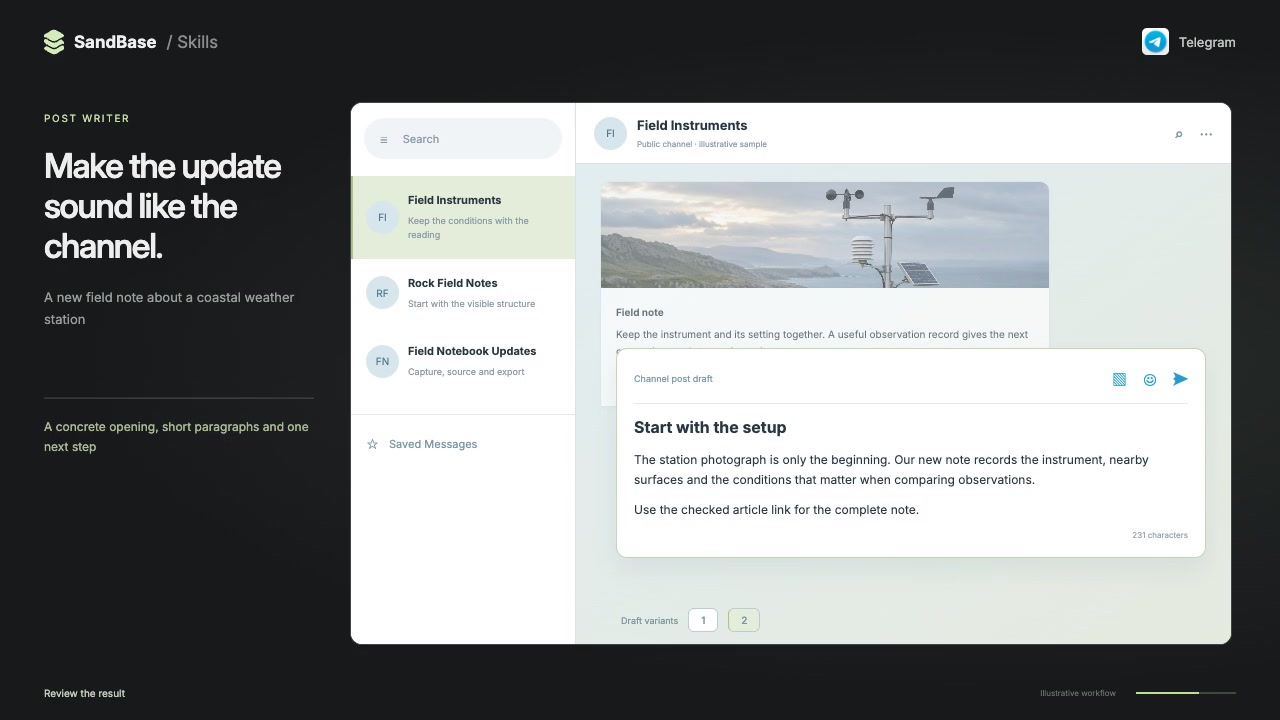
Write Telegram channel posts in a channel’s real voice, measured from its own posts instead of guessed.

See which of a Zhihu writer’s topics and series readers reward, and plan the next articles from that.
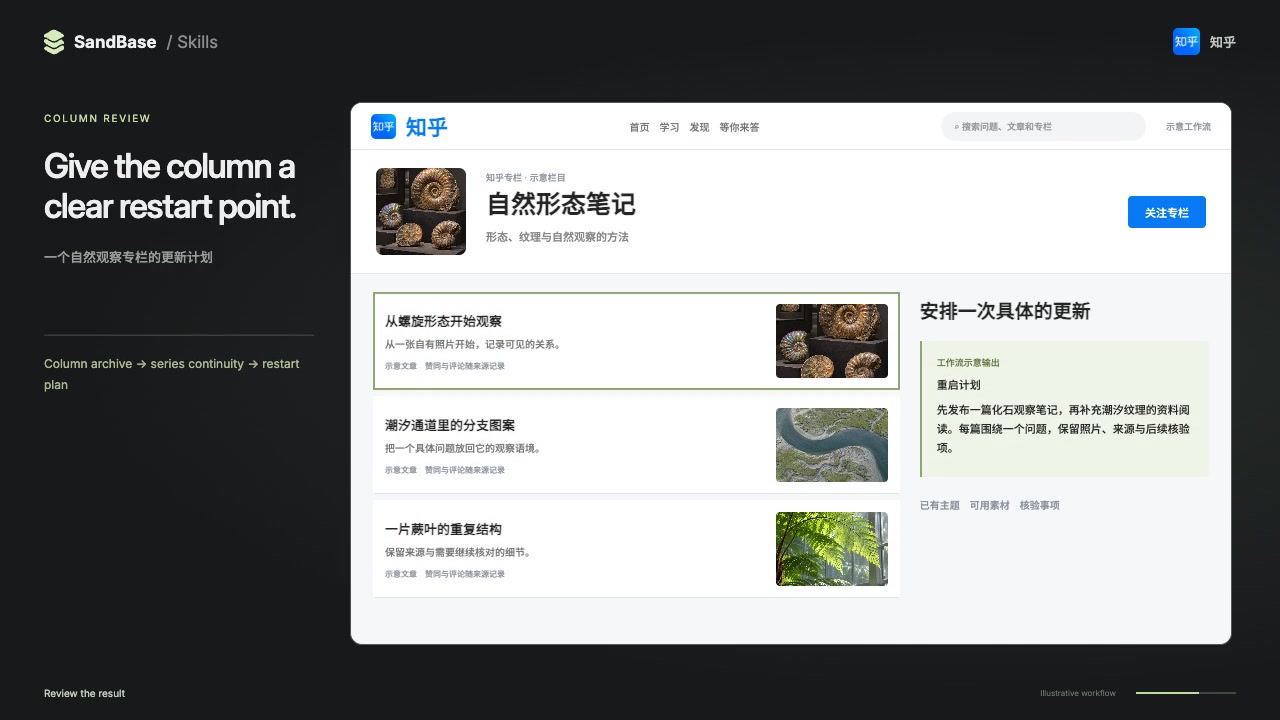
Find out why a Zhihu column stalled or which titles and series work, and plan its next pieces.
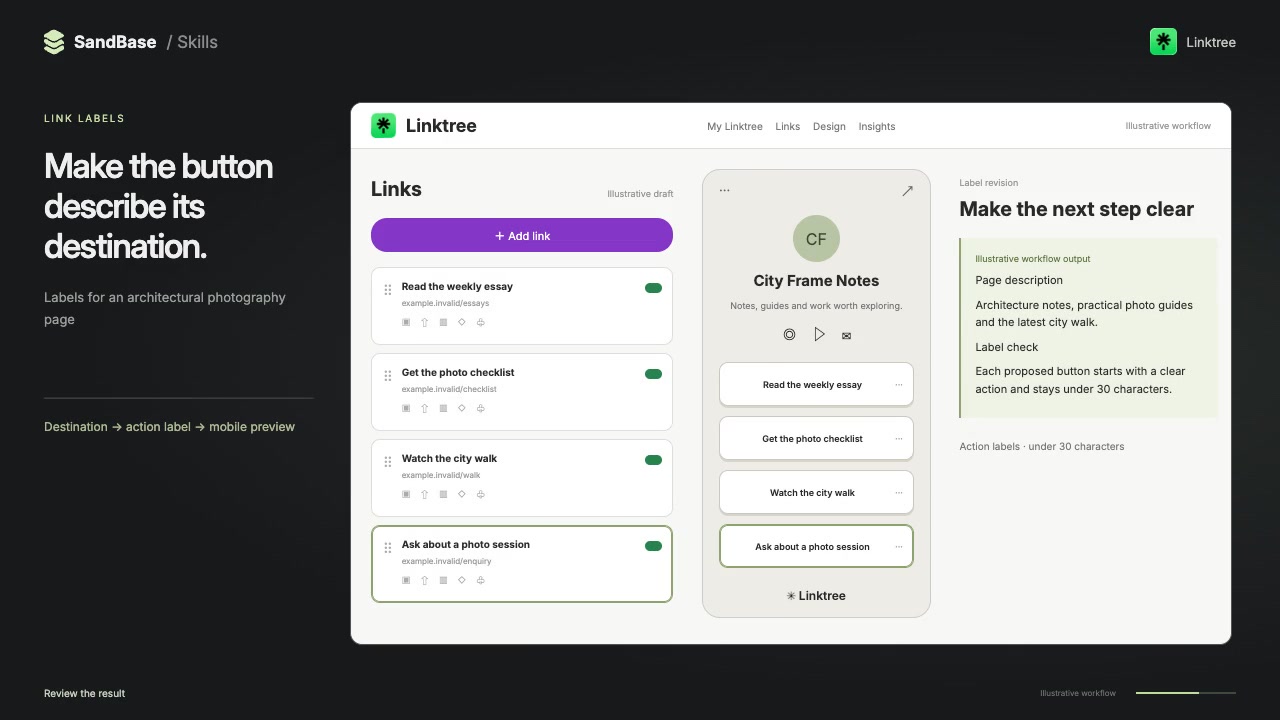
Rewrite a link-in-bio page so every button says what the visitor will do, and the link that matters now sits first.
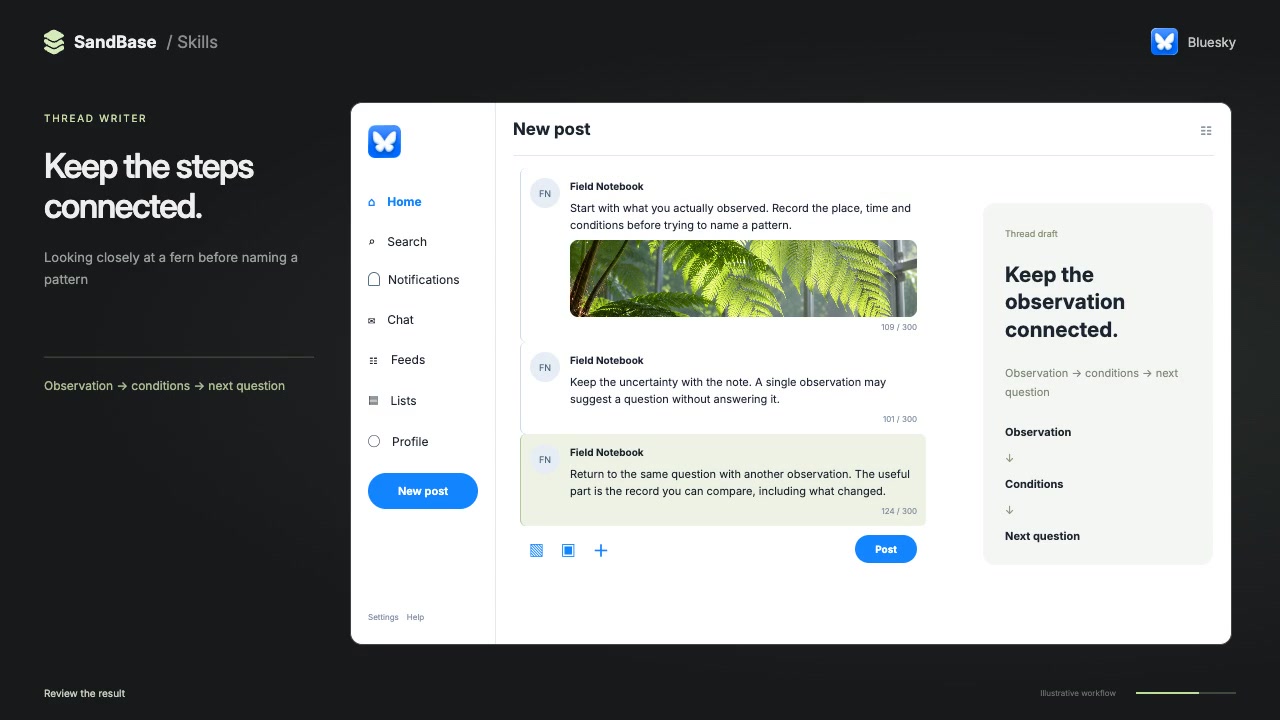
Write a Bluesky thread whose first post carries the news, because most readers never open the follow-ups.
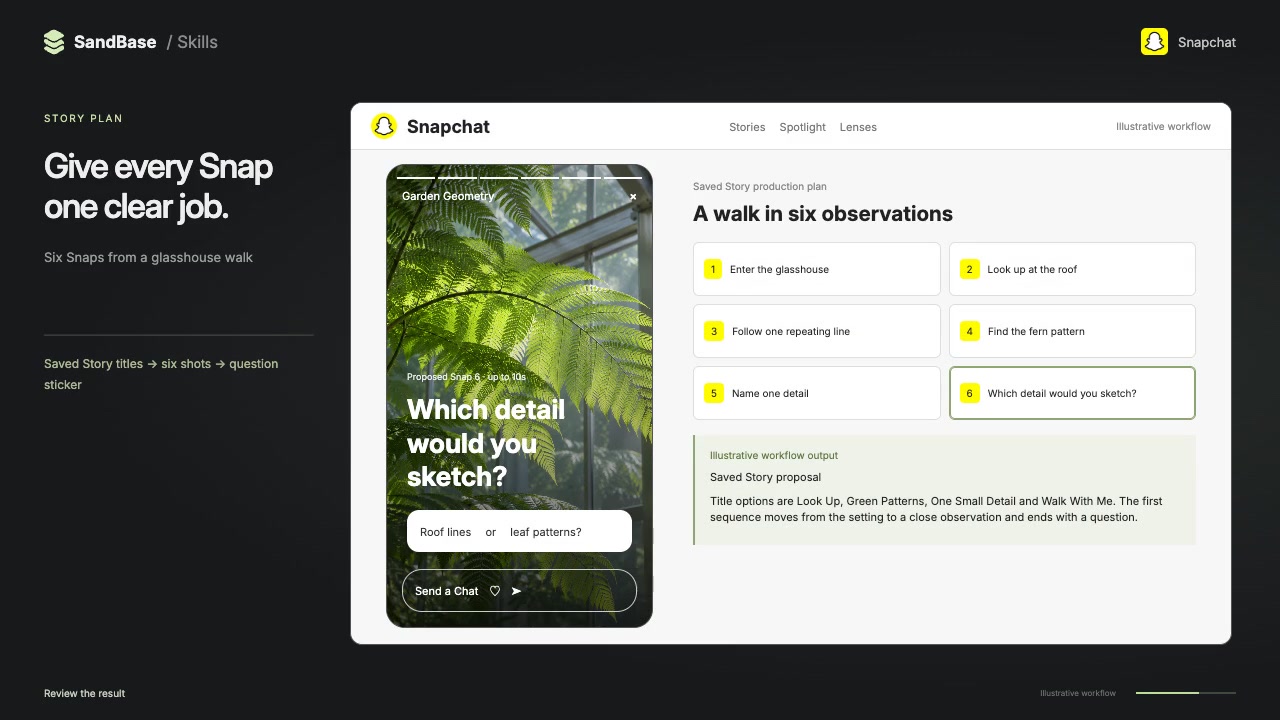
Plan a set of saved Snapchat Stories named the way a strong public profile names them, and script the first one snap by snap.
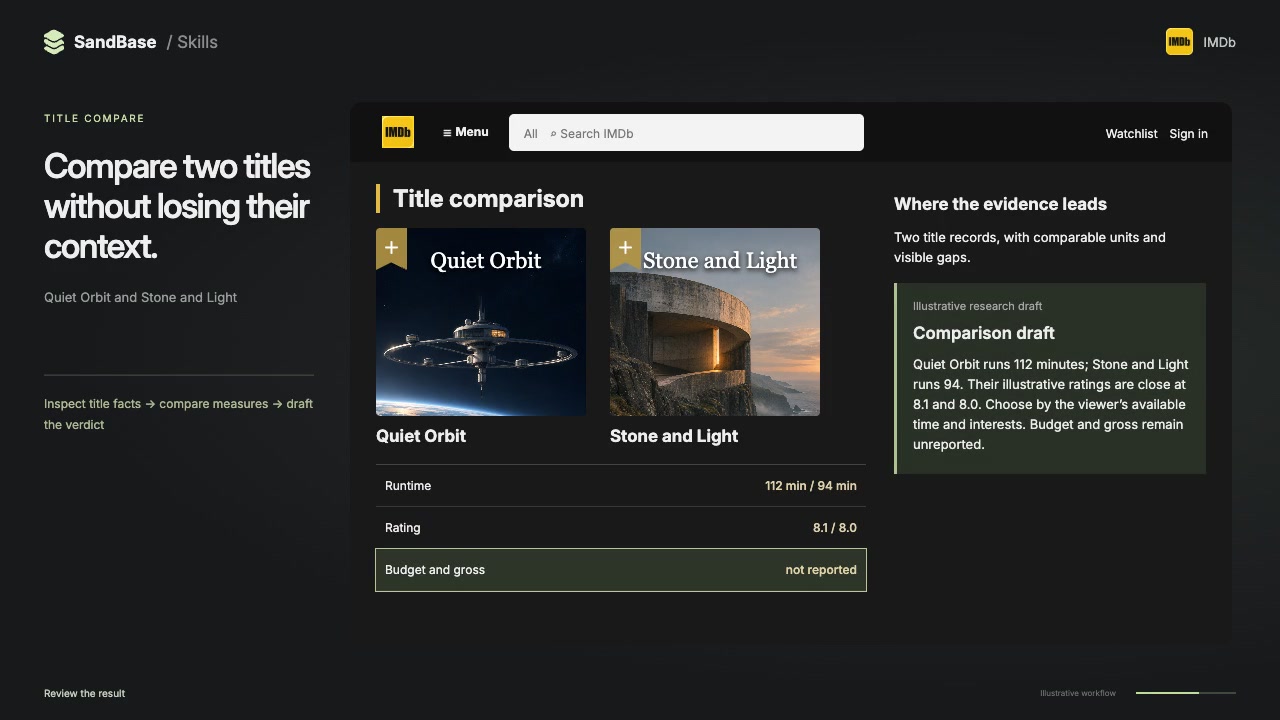
Compare two films or series from the same IMDb data on the same day, and write only what the numbers support.

Turn your own view of a film into Douban short reviews shaped like the ones readers mark as useful.
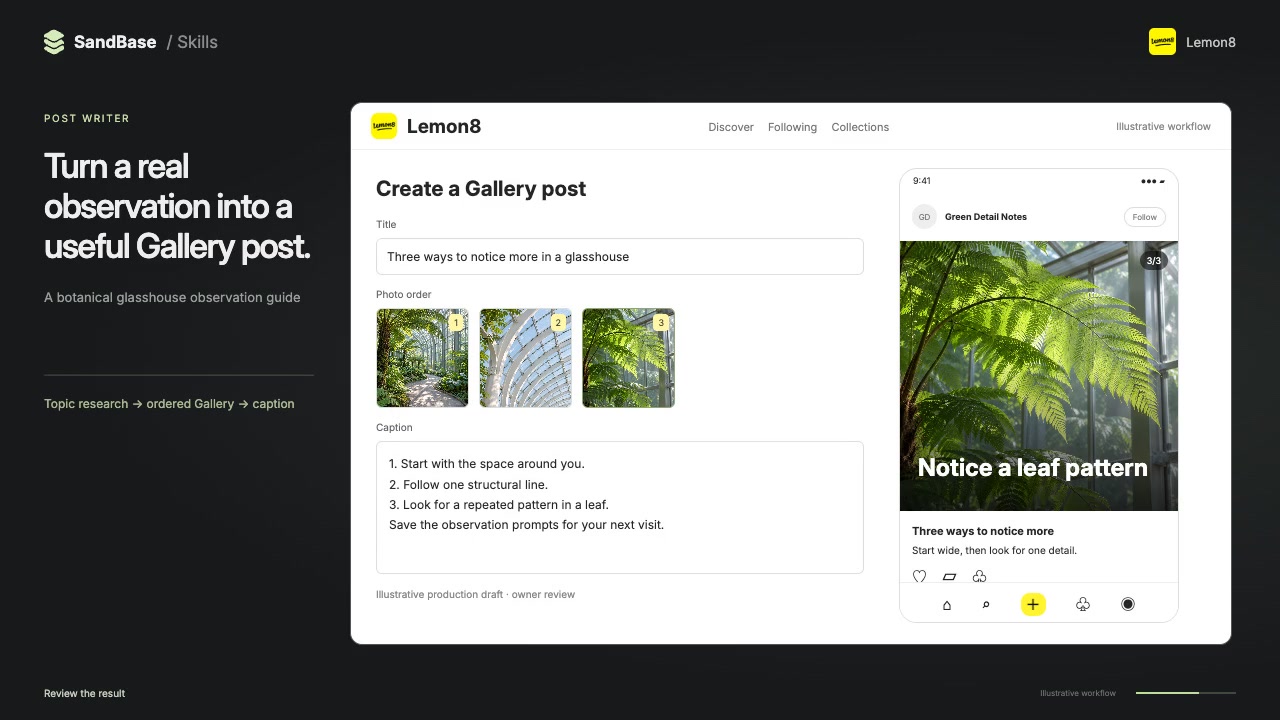
Write a Lemon8 post in the format that gets saved for your topic, from your own routine or product facts.

Turn your own experience into a Zhihu answer that gives the answer first and reads like a person, not a template.
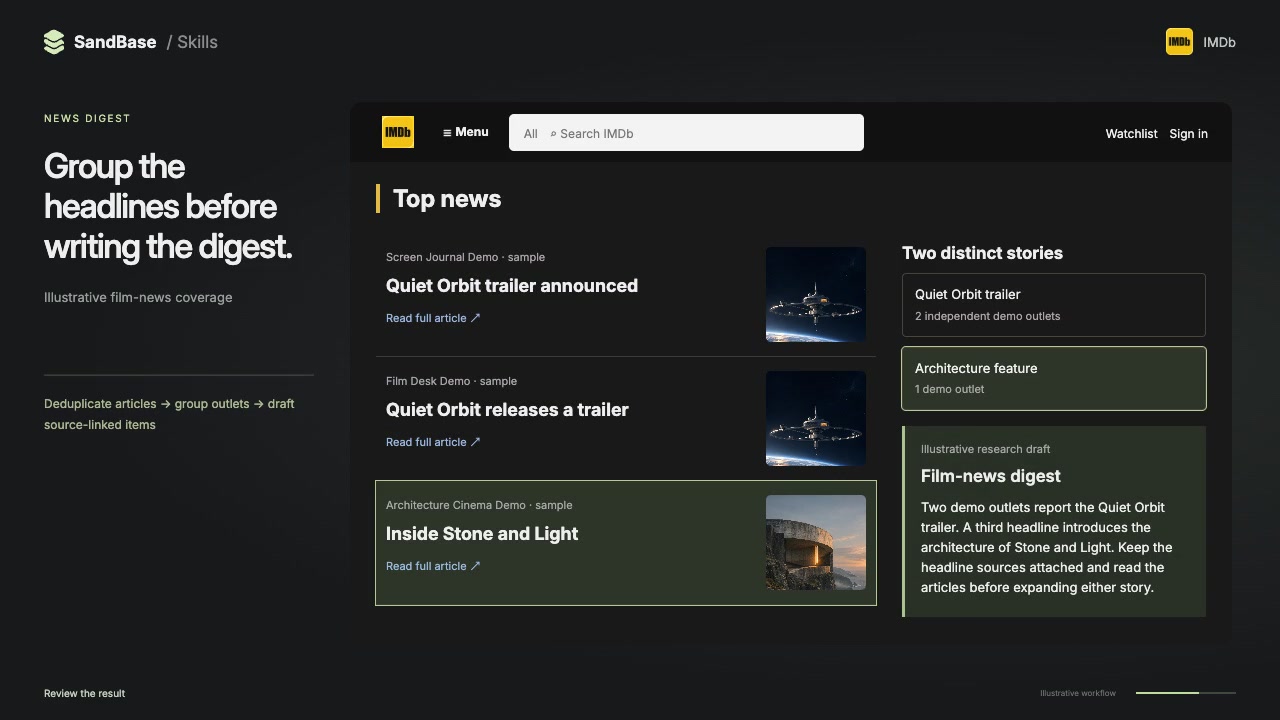
Turn IMDb’s film and TV news feeds into a short digest of the stories most outlets covered, with every number tied to its source.

Decide which Lemon8 search term is worth your next post, in which format and from which angle.
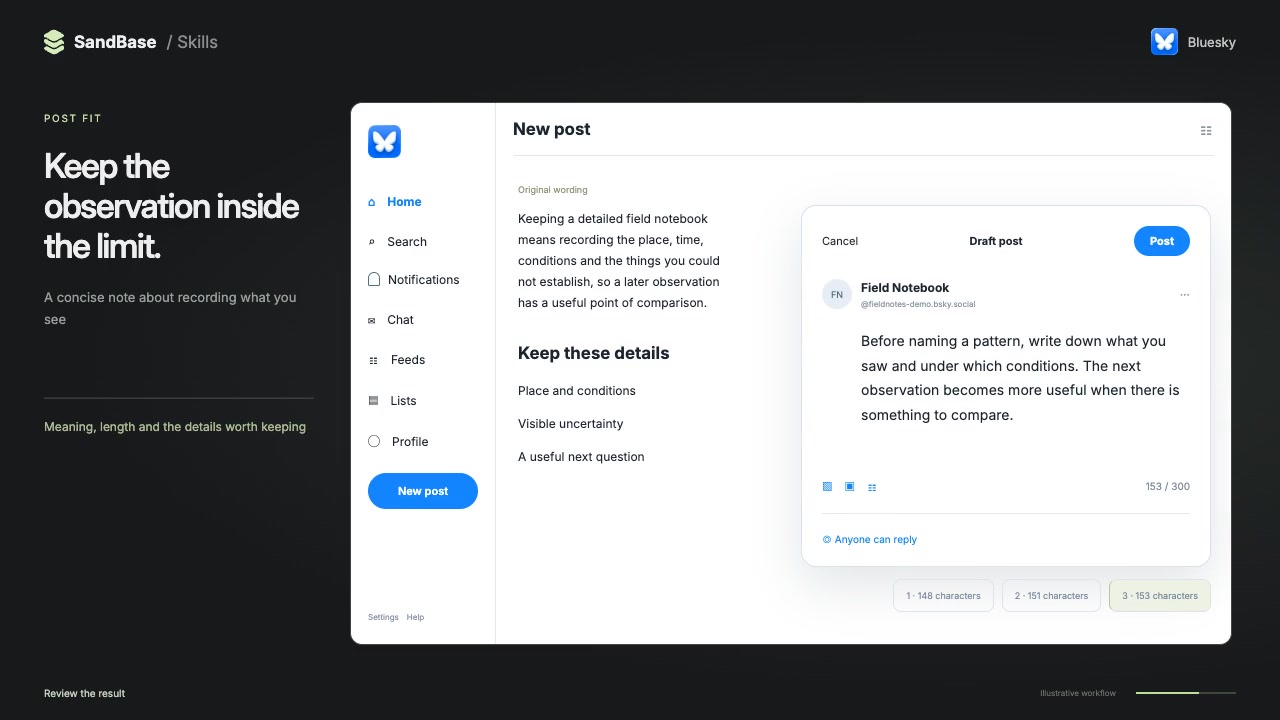
Turn a long draft written for somewhere else into one Bluesky post that fits 300 characters — and shows exactly what was cut.
Check every candidate account against its real recent activity, then get a Starter Pack list with a reason for each pick — and a draft name, description and announcement post.
Plan a week of Bluesky posts timed from your own account's record — when it posts, what performs, and a ready-to-edit draft for every slot.
See how a Lemon8 account's recent posts are really doing and get five fixes tied to the numbers.
Turn what Lemon8 posters actually wrote about a destination into a guide you can use, with every line linked to the post it came from.
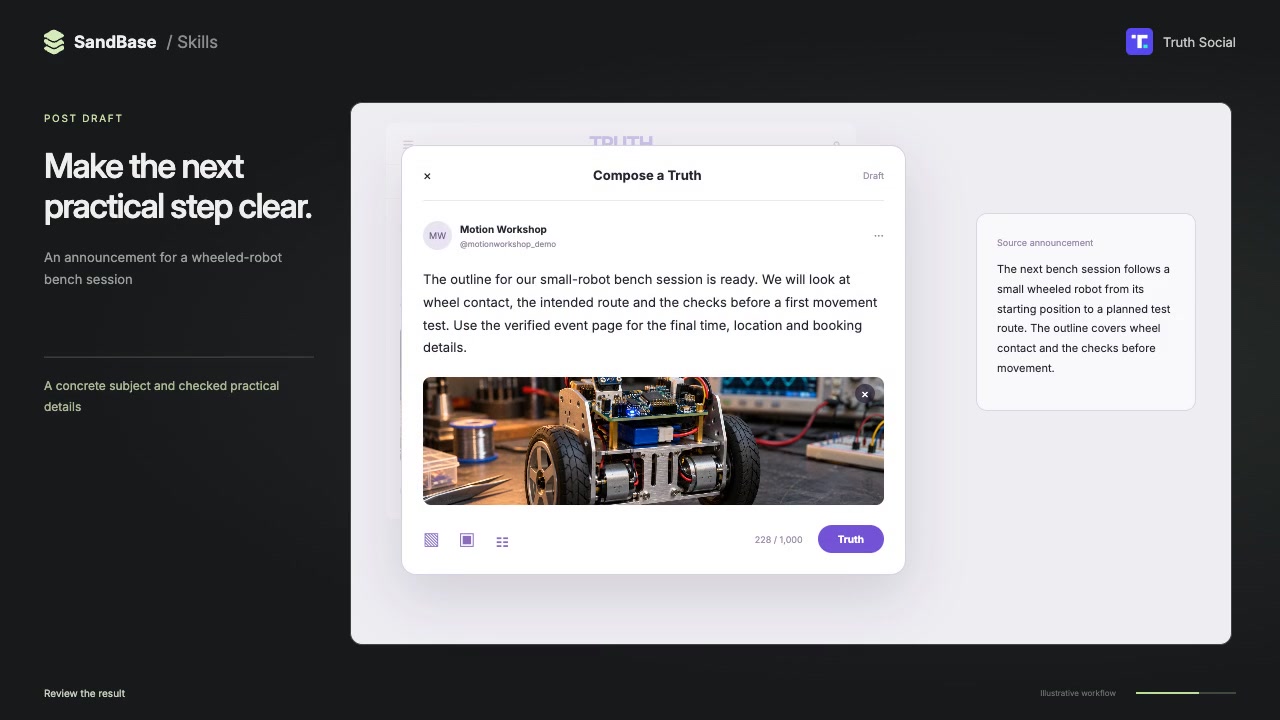
Turn a long announcement into a Truth Social post that reads like your account, under the 1,000-character limit or as a numbered thread.
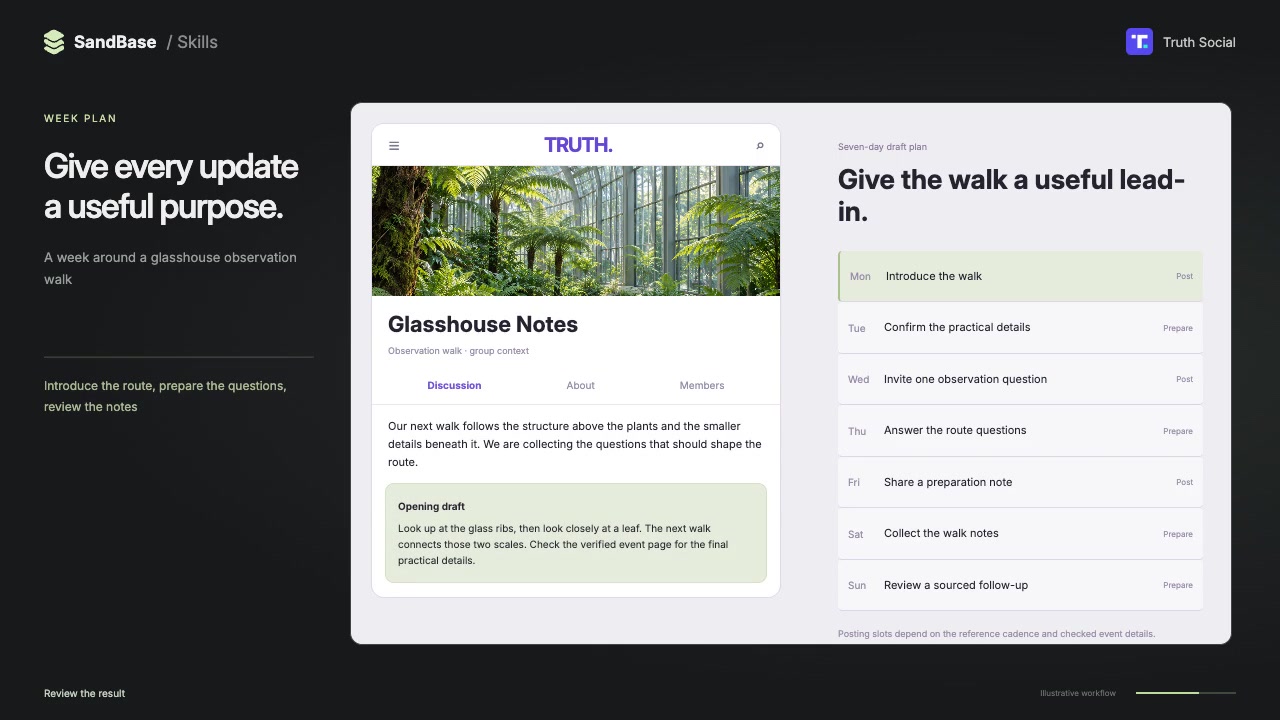
Plan a week of Truth Social posts from your account's own record — when it posts, what works, and a draft for every slot.

A quick health check of a public Toutiao account from what anyone can see — profile numbers, posting rhythm, and which posts actually worked.
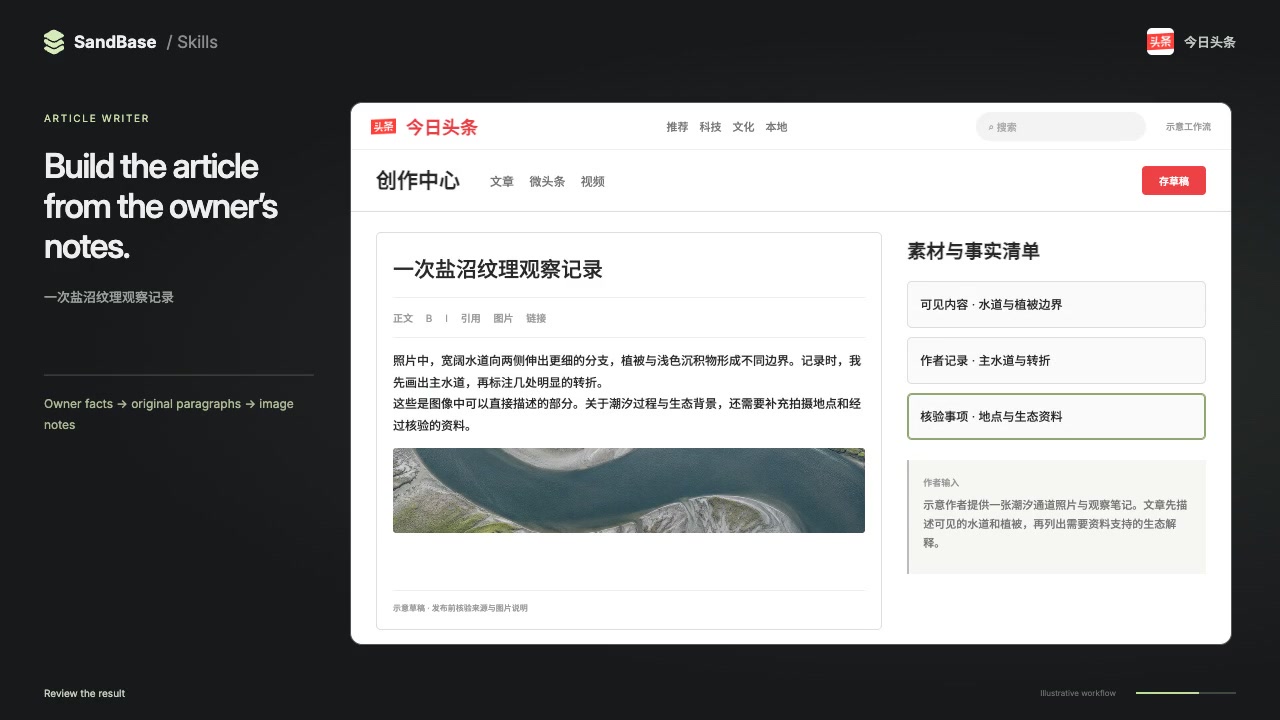
Turn your facts into a Toutiao draft shaped after the most-read articles on the topic — structure matched, every fact yours.

Write Toutiao titles grounded in what the most-read articles on the topic actually do, not a formula list.
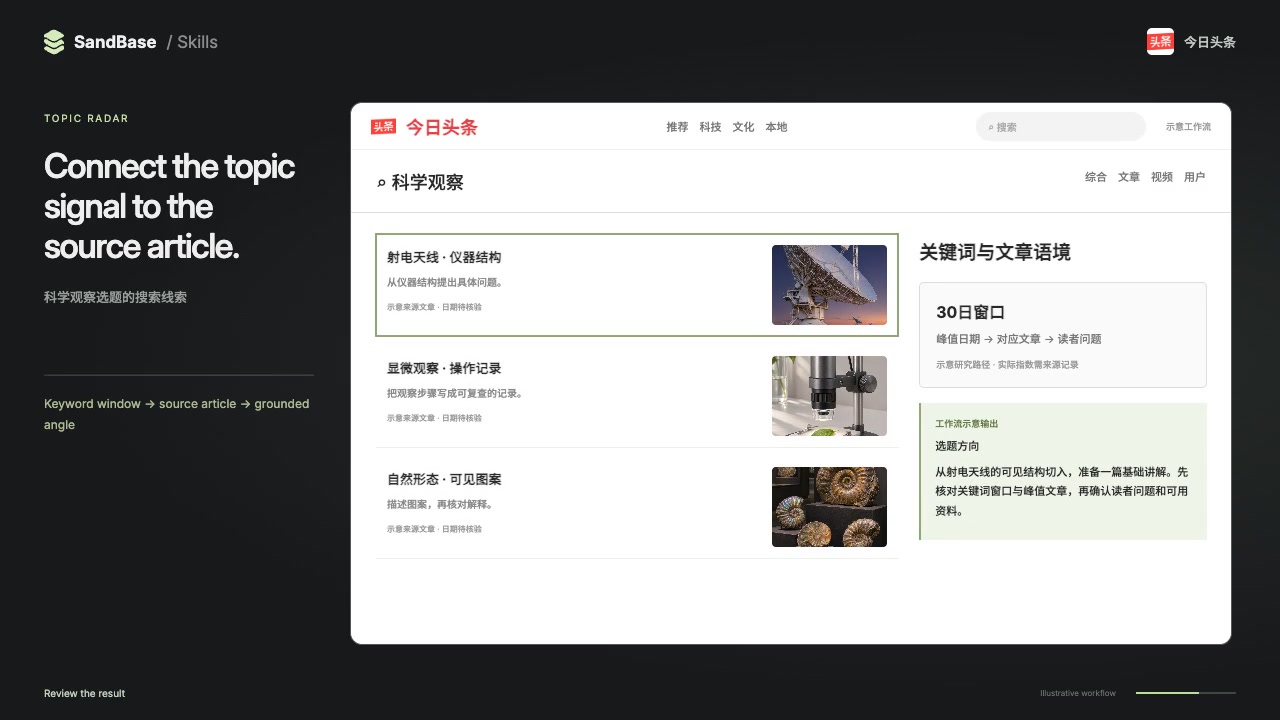
See whether your topic is rising on Toutiao, what drove its peaks, and which angles are worth writing — with the evidence for each.
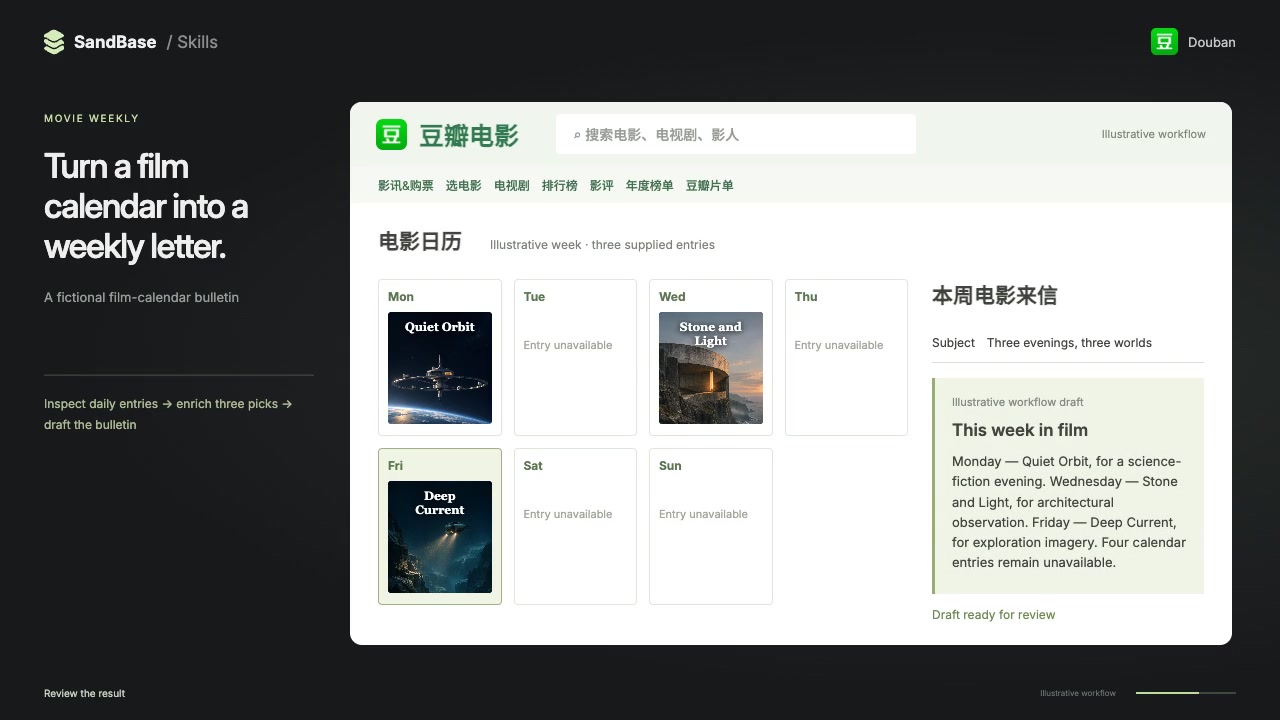
Turn the daily Douban movie calendar into a weekly bulletin with three picks, without hand-collecting every day's entry.

Recap a film year or awards season with real numbers — what each film cost, earned and won — without assembling the table by hand.
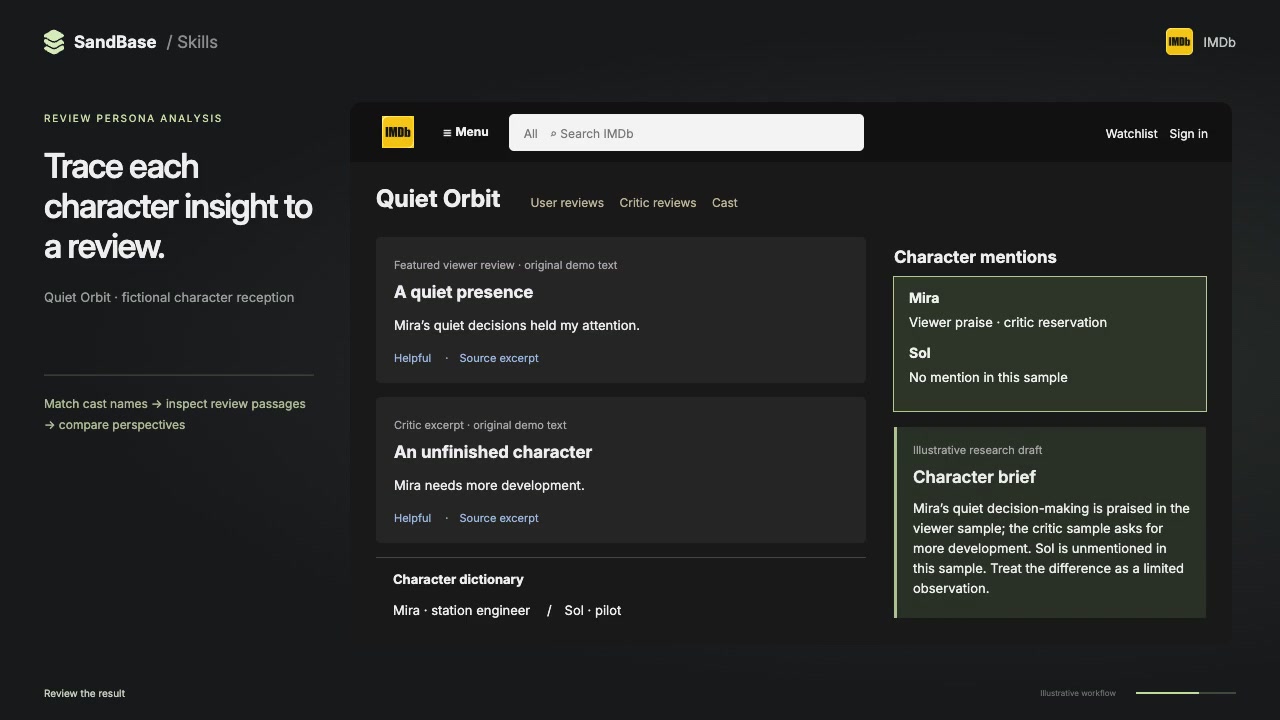
Find out which characters and actors a film's IMDb reviews actually talk about, in what tone, and where audiences and critics disagree.

Decide whether to leave Linktree and see exactly what moving involves — every link accounted for, three paths compared, a go-live checklist.
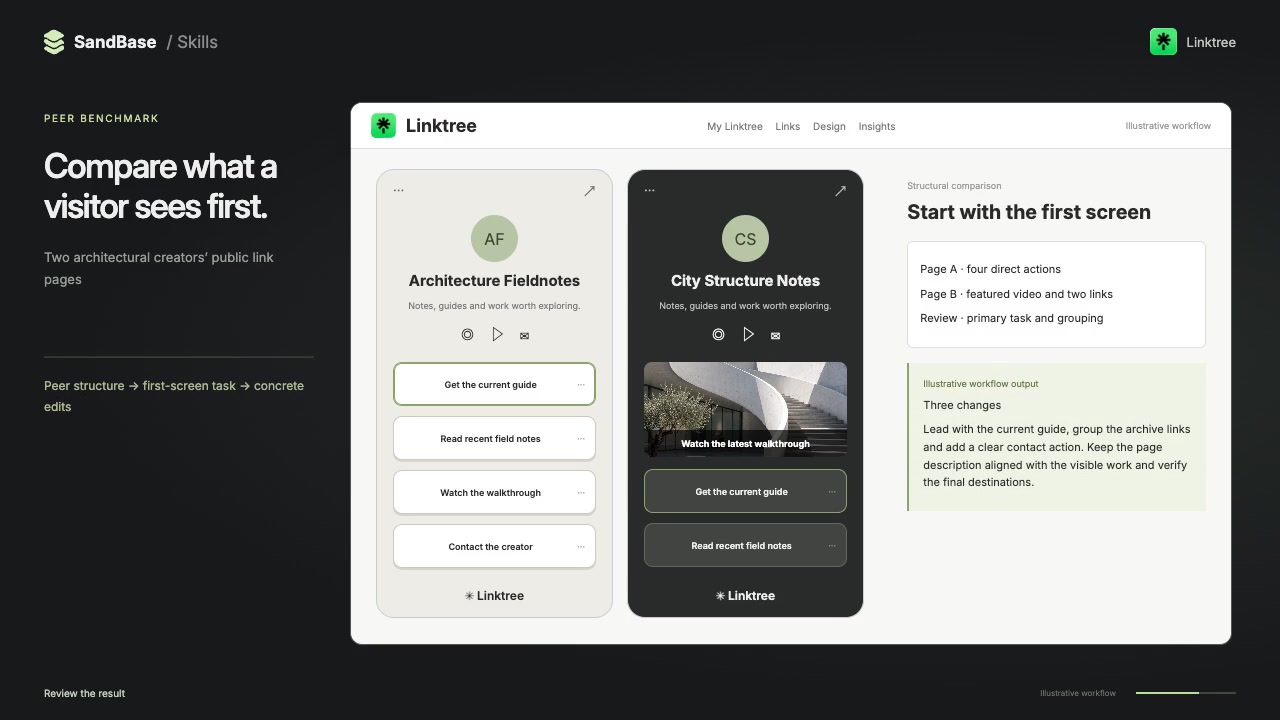
See how your link-in-bio page's structure stacks up against comparable pages — sections, embeds, social profiles, first-screen choices — without guessing.

Find the videos on Xigua that did far better than their own creator's normal level, and what those hits have in common.

Write a researched, timed voiceover script for a Xigua video, built from what already works and what its audience says in the comments.

A finished Xigua video still needs its packaging — titles, cover copy and an opening hook that match what actually wins on the platform.

Get an outside read on a public Youku channel — what it's for, how often it posts, and what to change first.
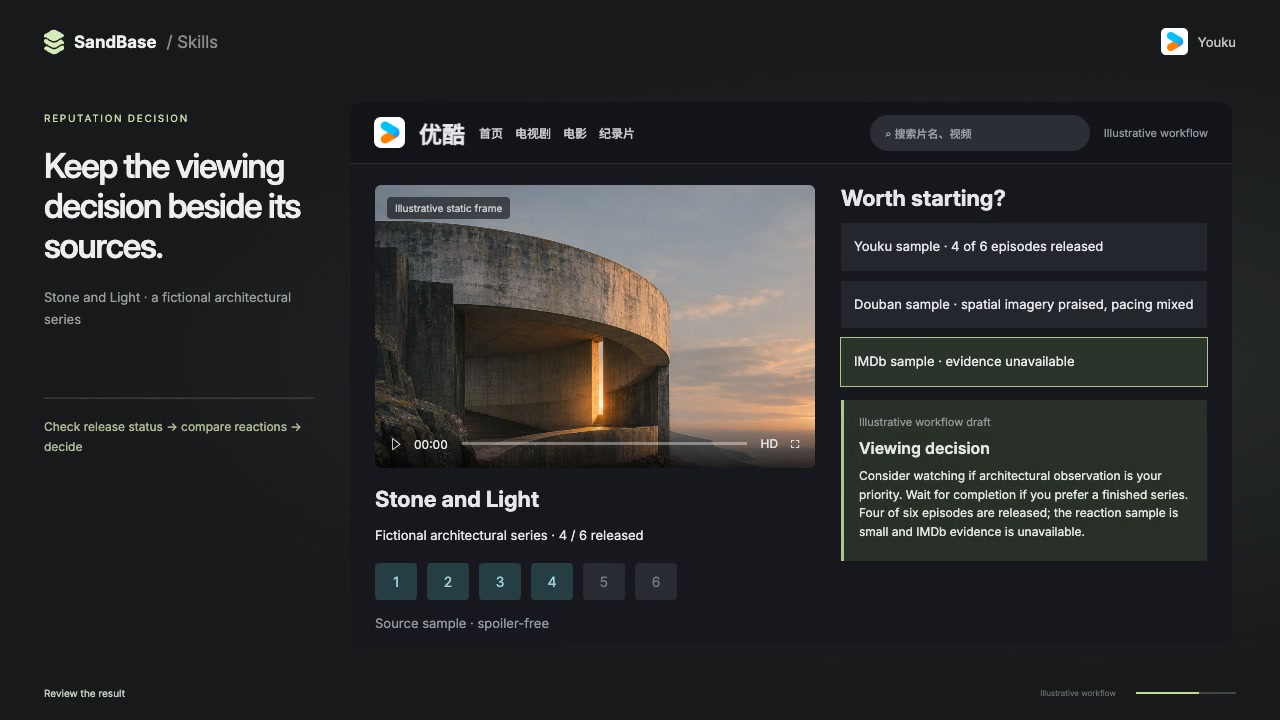
Decide whether a Youku series is worth watching, from its public ratings and spoiler-free review consensus.
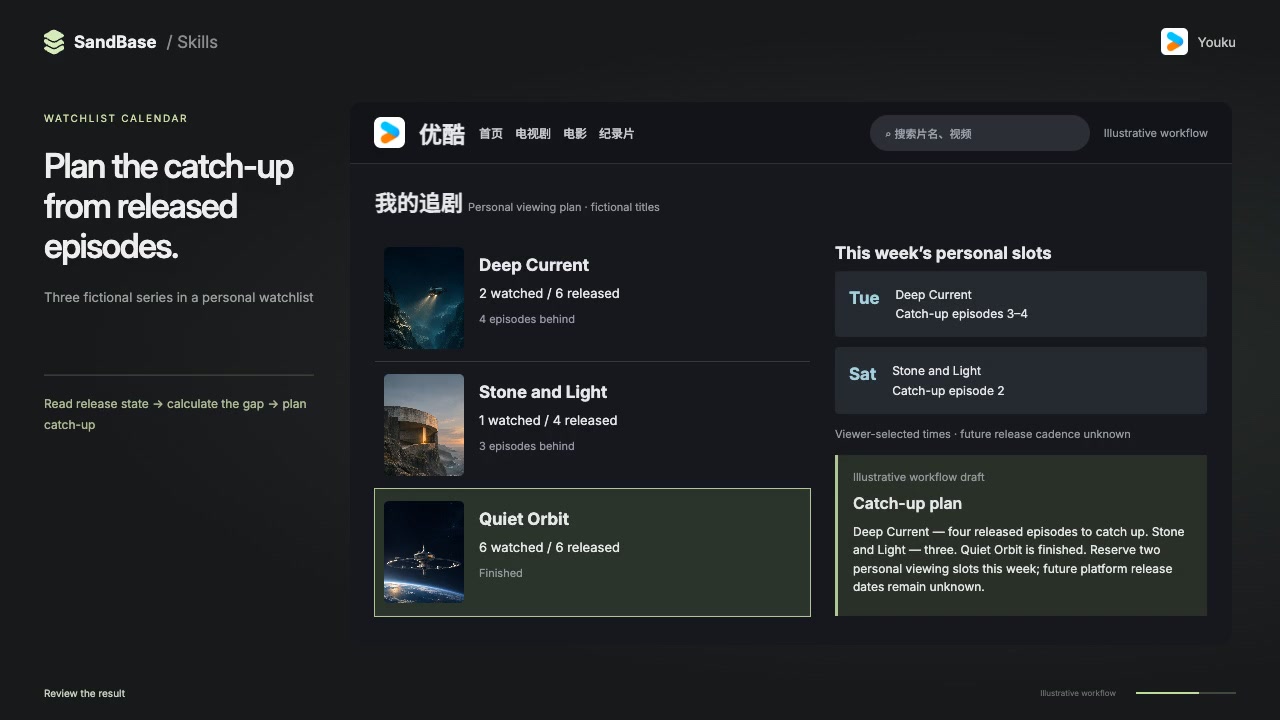
Keep several Youku series straight — which episode you're on, how many are out, and when the next ones land.

Draft a Zhihu answer that actually answers the asker's question — built on the thread's own evidence and the gap the top answers left.
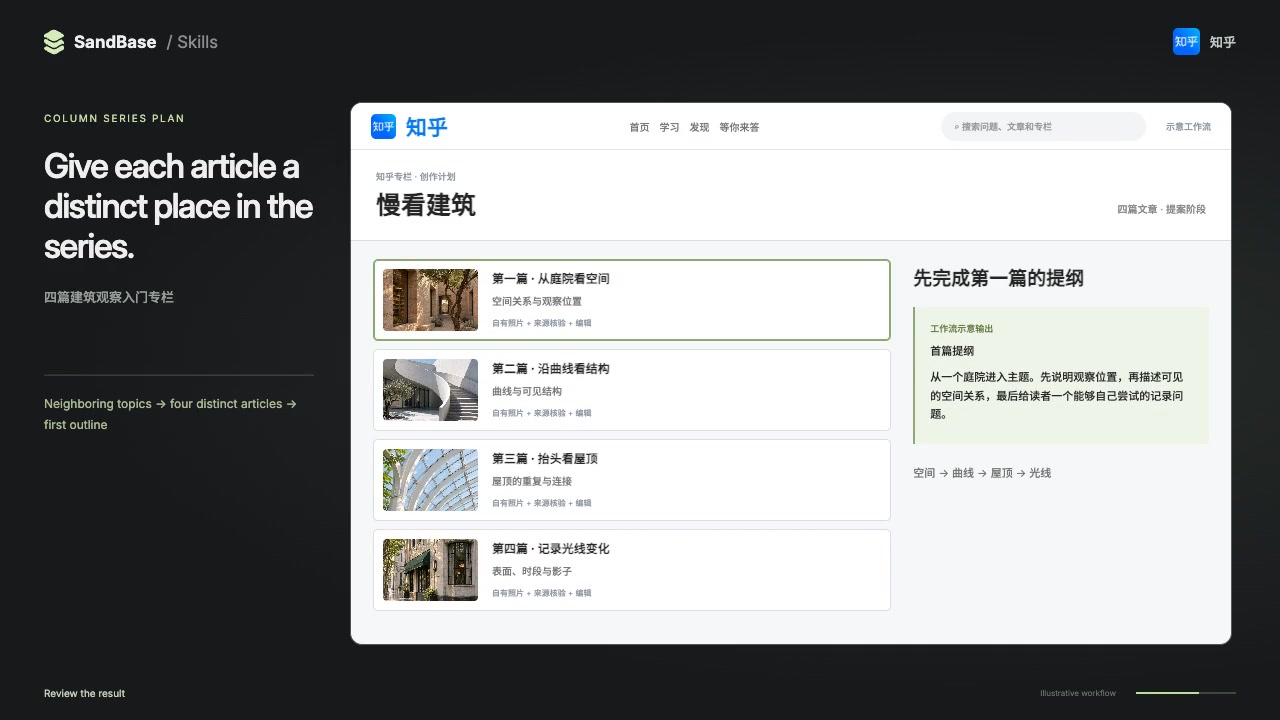
Plan a multi-piece series for your own Zhihu column — angled against the neighbouring columns that already win the niche.

Pick this week's Zhihu answers from the hot list — which questions fit your beat, are still answerable, and have an open angle.
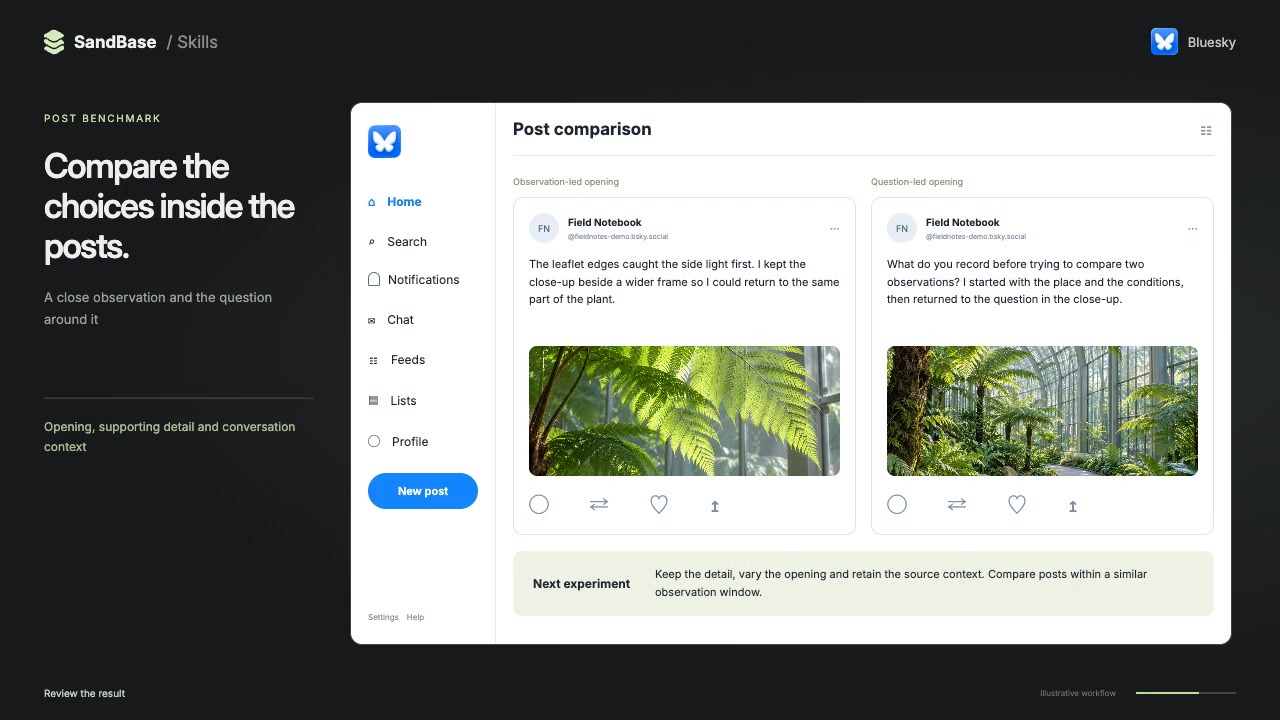
Find out whether one Bluesky post did well for its own account, compared with the account’s normal and with posts of the same kind.
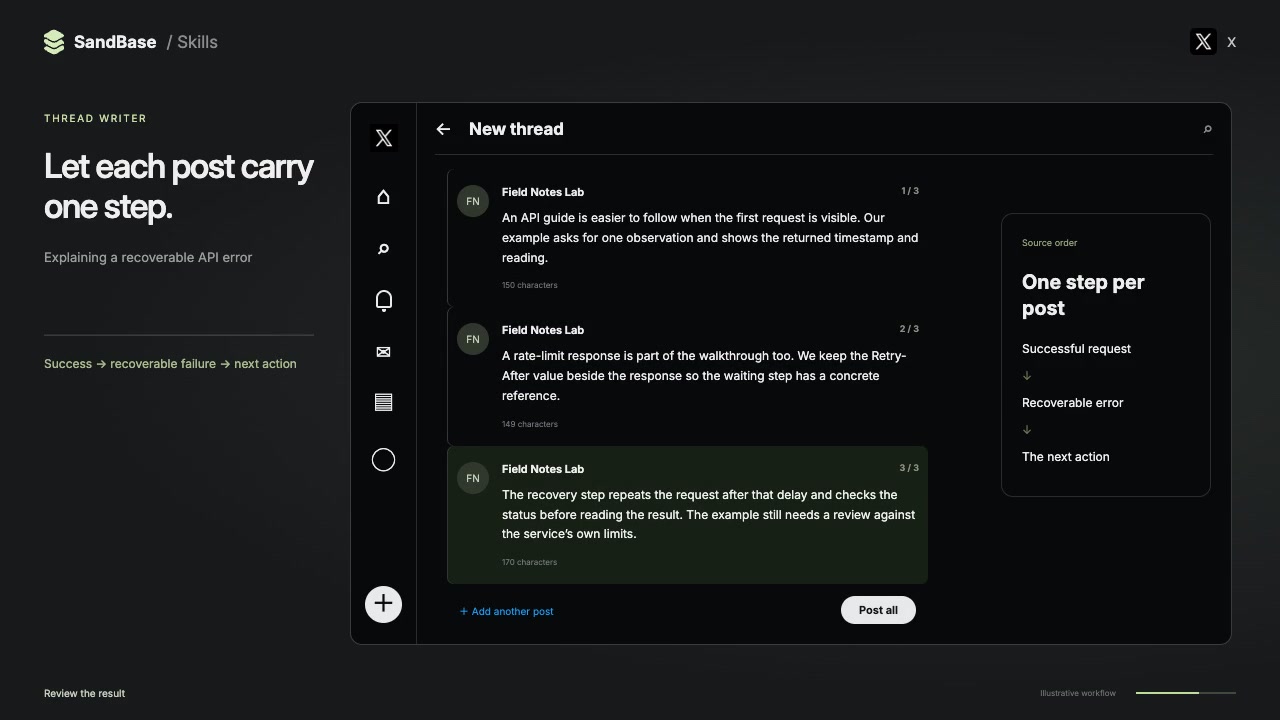
Turn your notes or a result into an X thread whose first post works on its own, because most readers never open the rest.
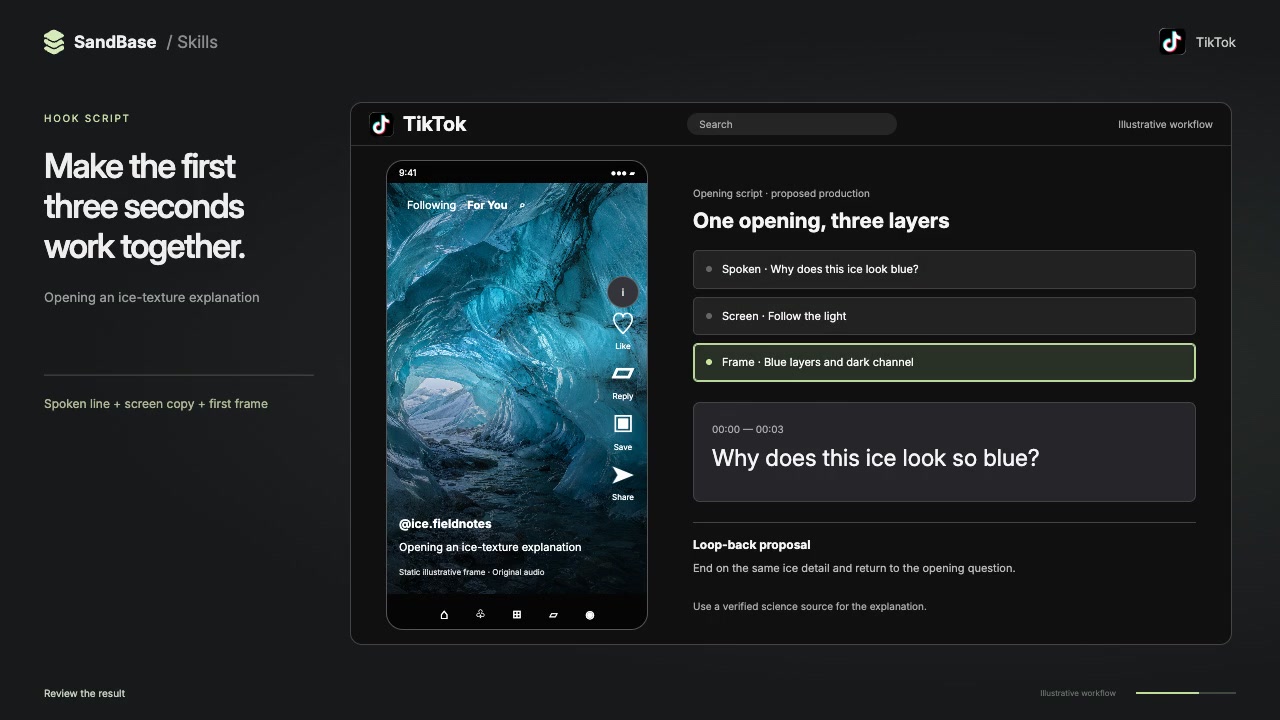
Script the first three seconds of your TikTok: what you say, what the screen says and what is in the first frame.
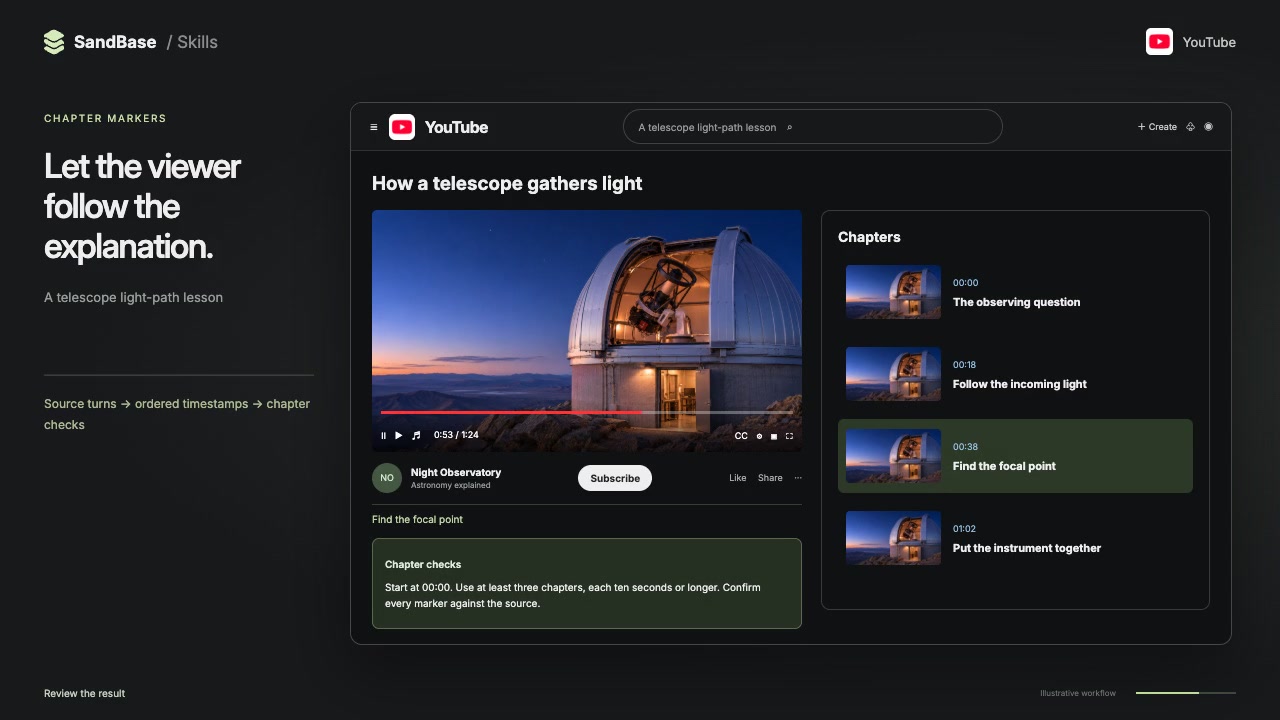
Write chapters from the video’s own transcript that follow YouTube’s rules, so they actually appear on the progress bar.

Pick your next WeChat Official Account topic by seeing which angles existing articles already crowd and which they leave open.
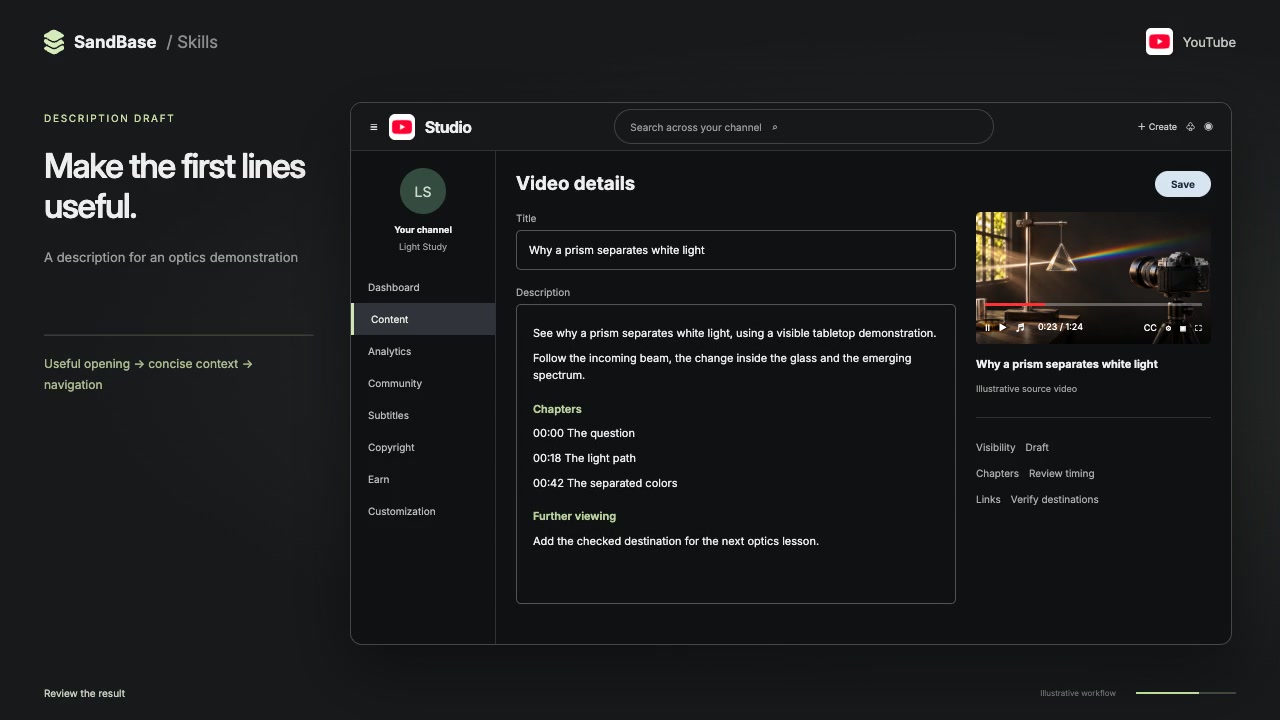
Write a YouTube description whose opening works as the search snippet, with chapters and links below.
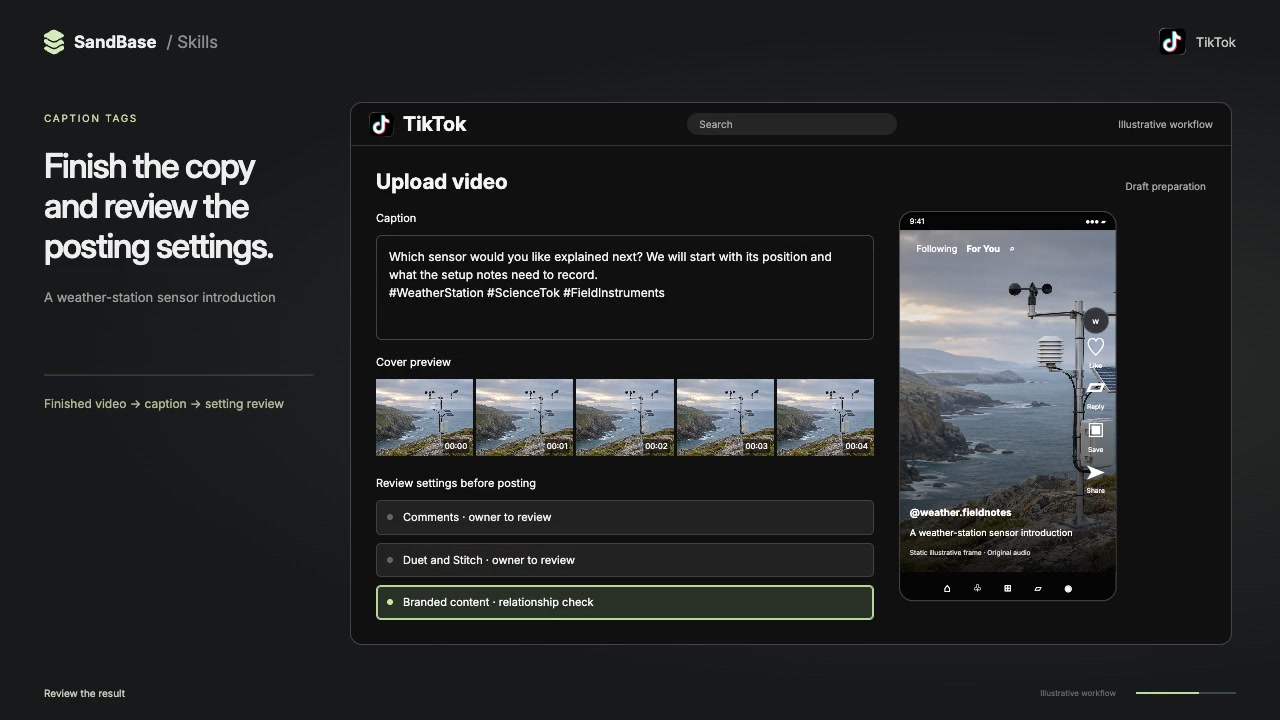
Write the caption and a mixed hashtag set for a finished TikTok, based on how real videos under each tag perform.
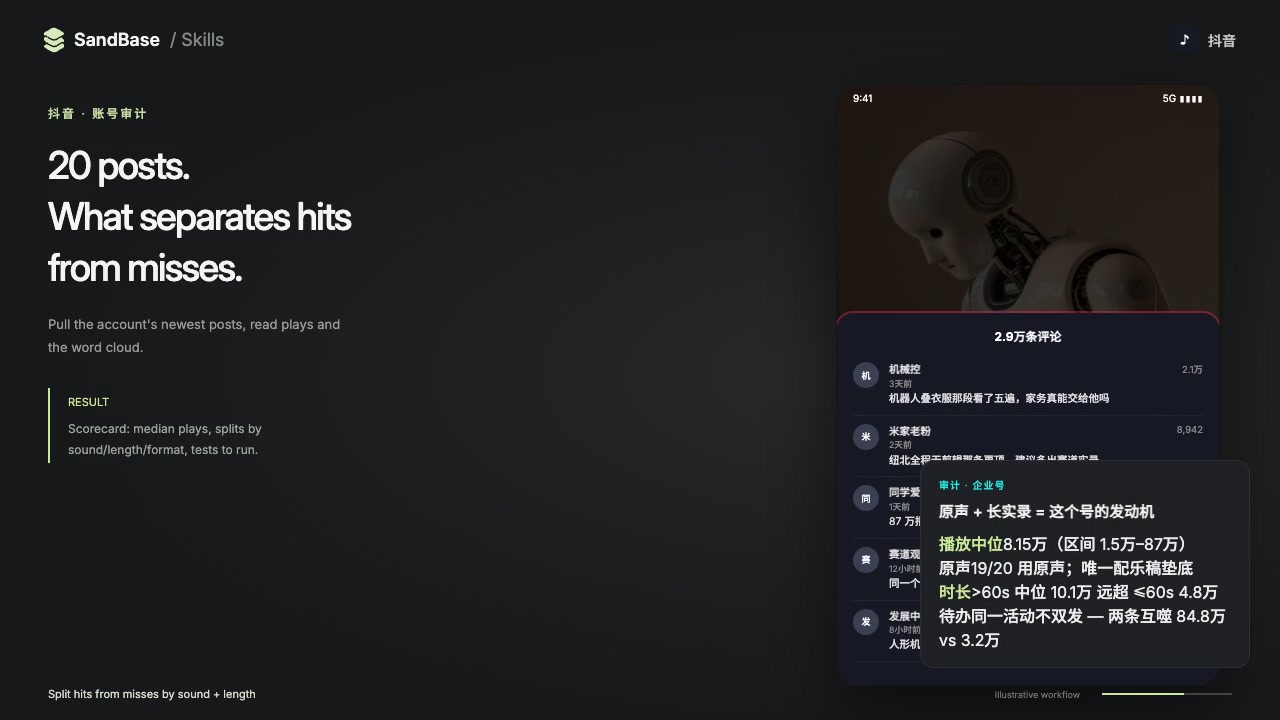
Audit a Douyin account's recent posts — real play counts, engagement splits by sound and length, and what to test next.
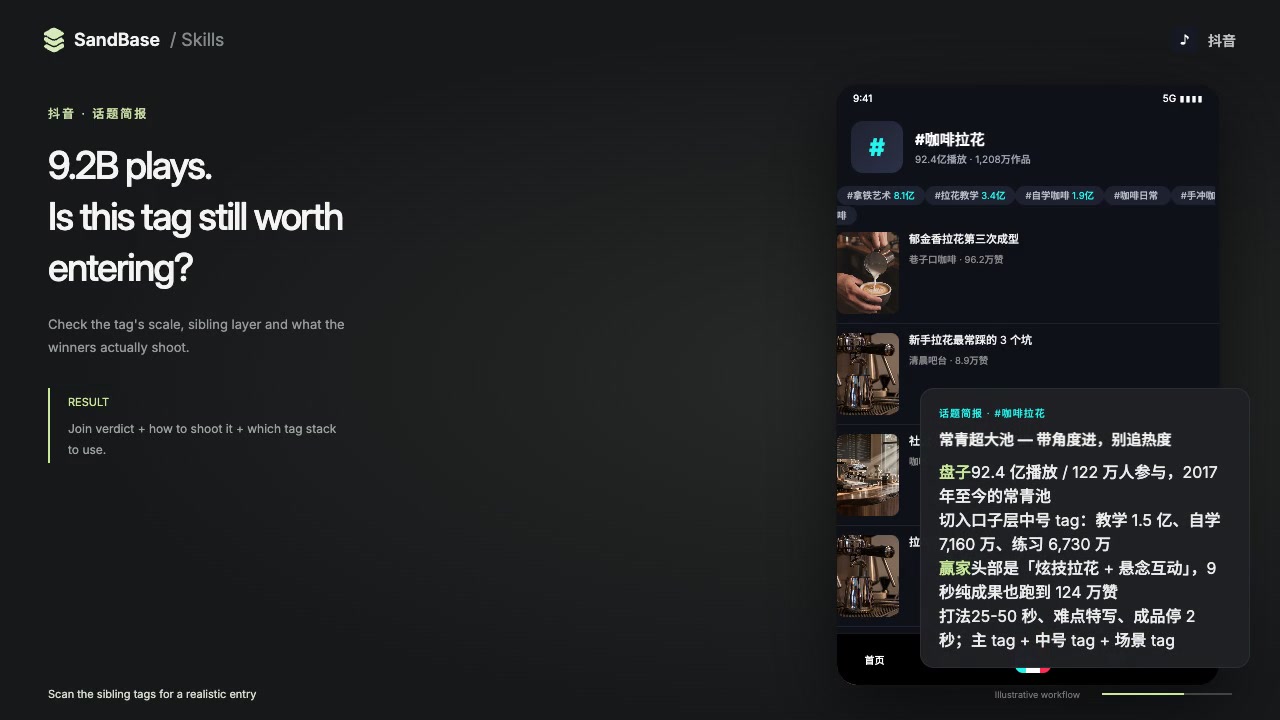
Decide whether and how to join a Douyin challenge or hashtag — its real size, what wins inside it, and how to shoot your entry.
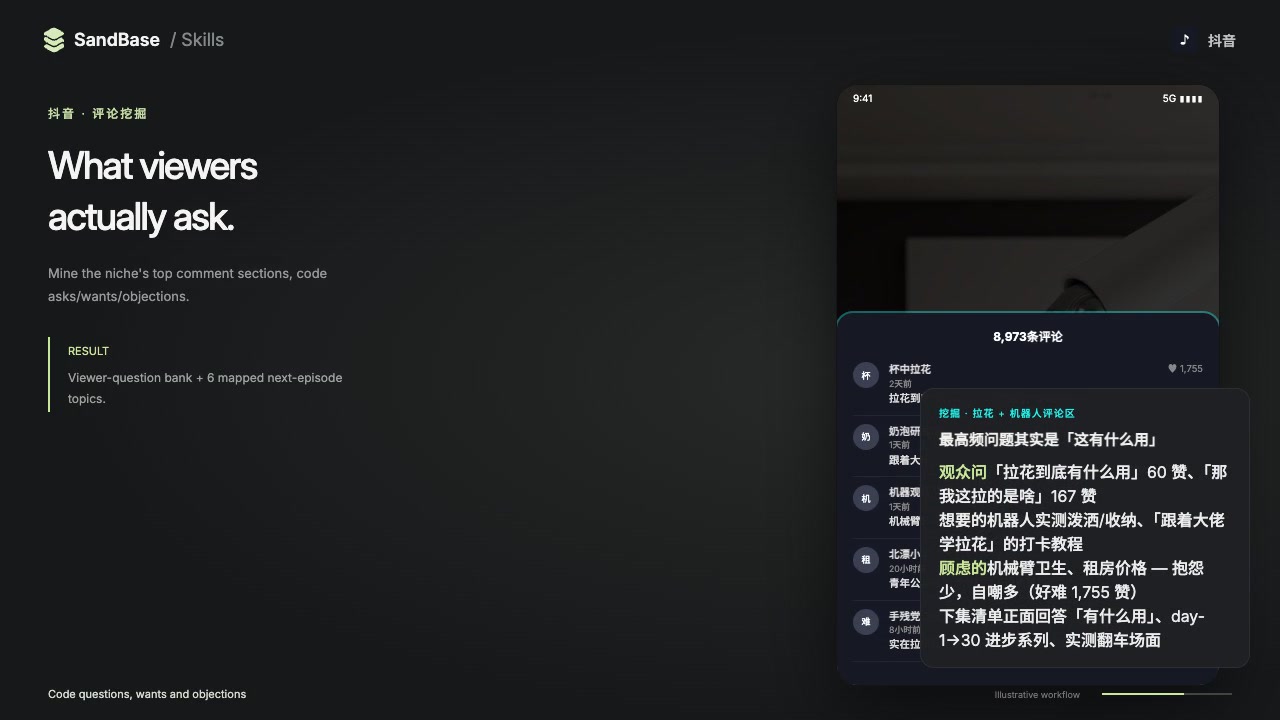
Mine a niche's comment sections for what viewers ask, want next and object to — across many videos, not one.
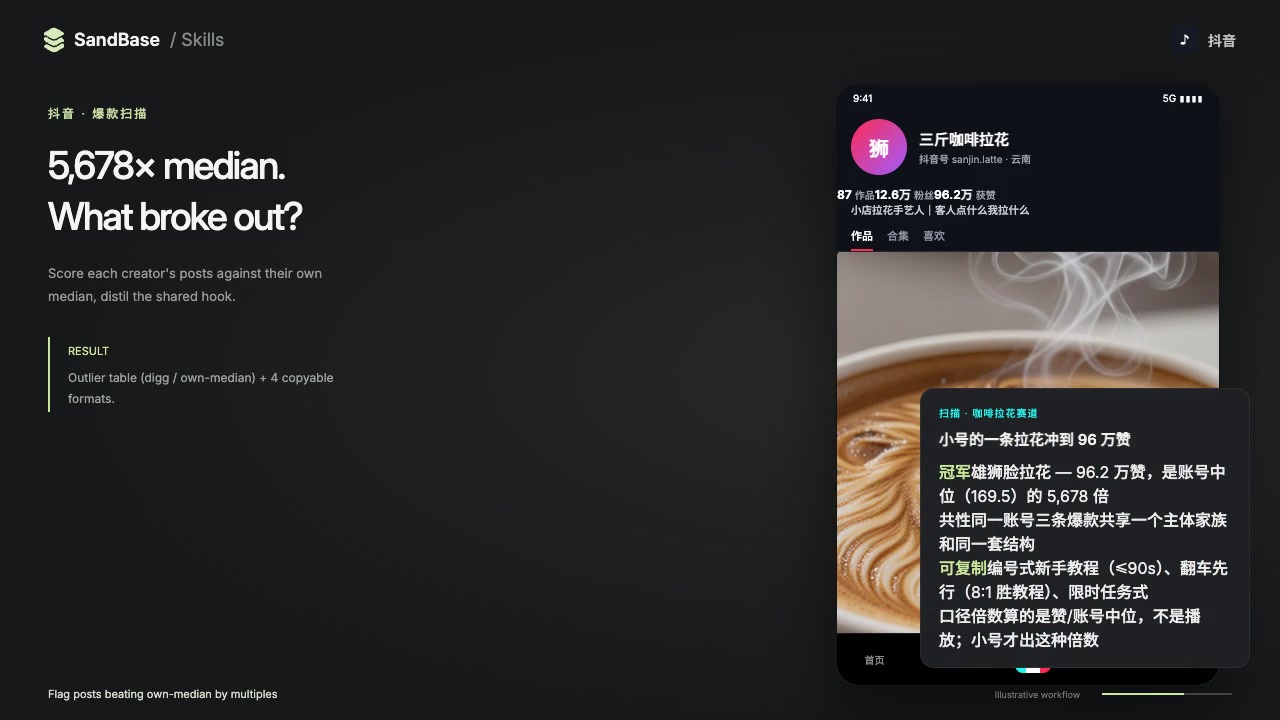
Find the videos beating their own account's baseline by a wide multiple in a Douyin niche, and the formats behind them.
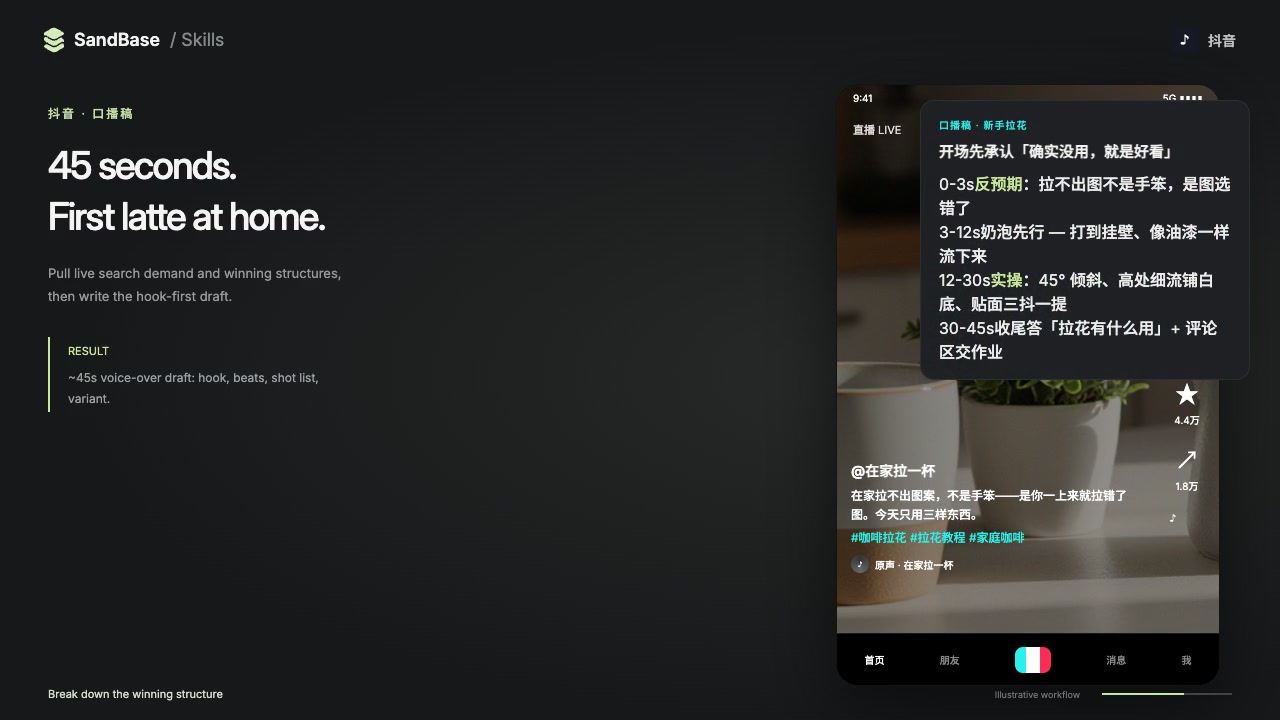
Draft a shootable Douyin script from live evidence — the words people search, how top videos open, and whether the topic is rising.
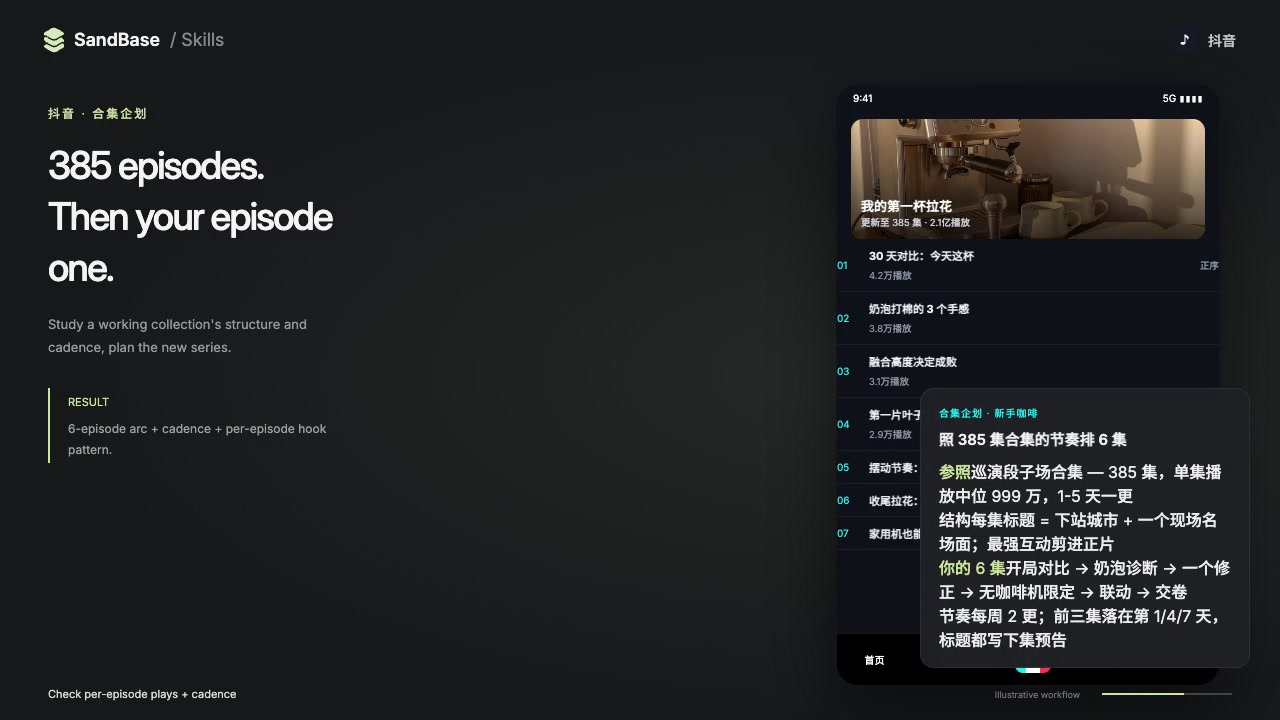
Plan a new Douyin collection (合集) by studying a reference series that already works — its structure, cadence and per-episode plays.
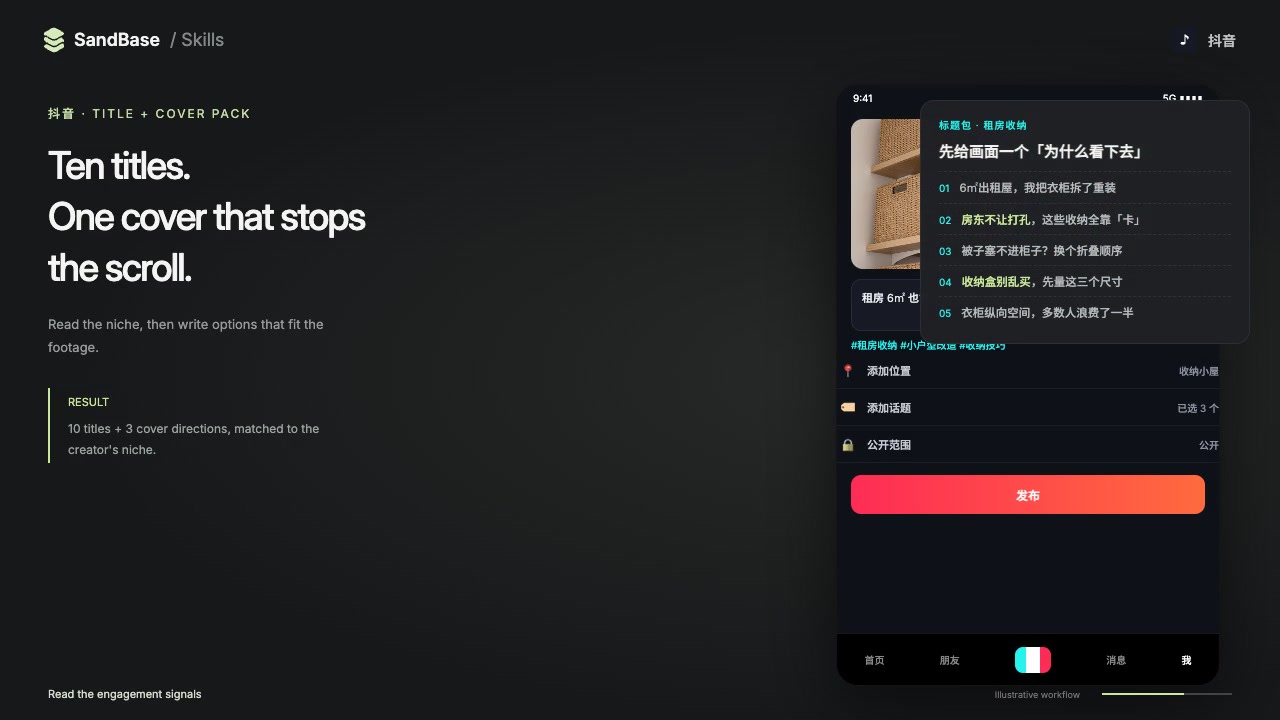
Produce ten Douyin titles with matching cover copy, calibrated on the title patterns actually winning in your niche.
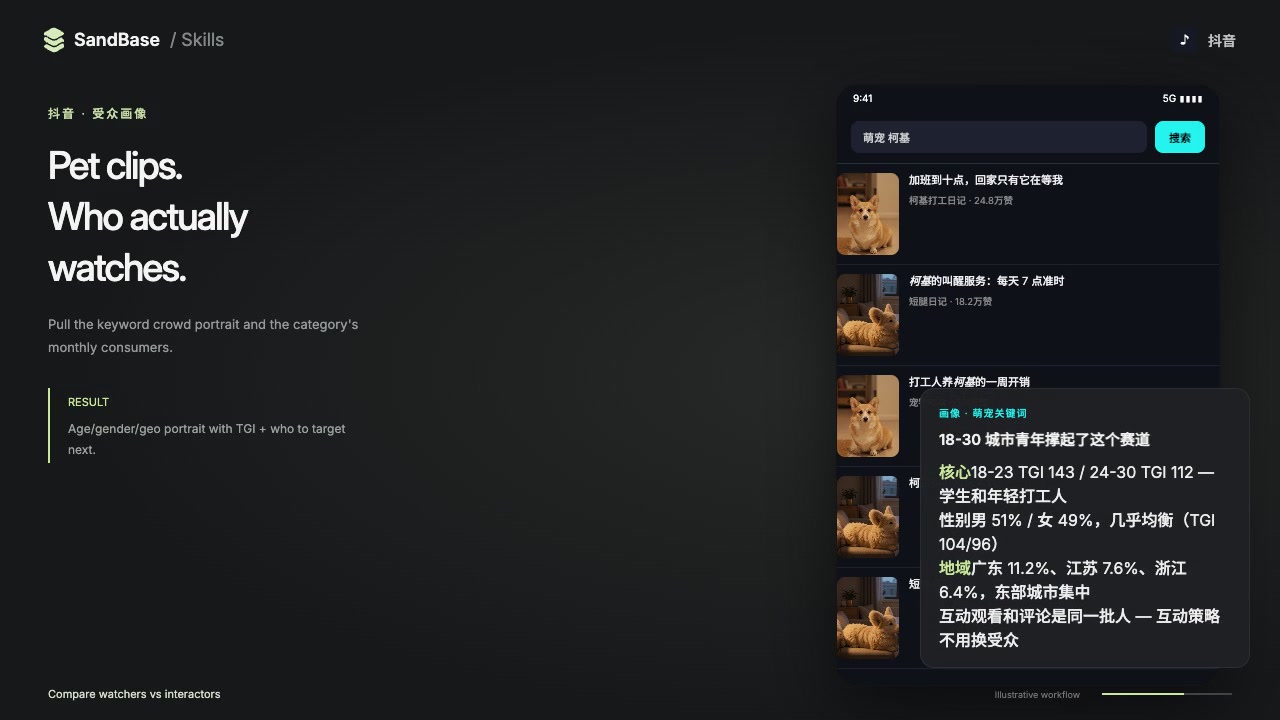
Answer "who is on the other side of the screen" for a Douyin topic, category or account — age, gender, provinces with TGI — and turn it into content guidance.
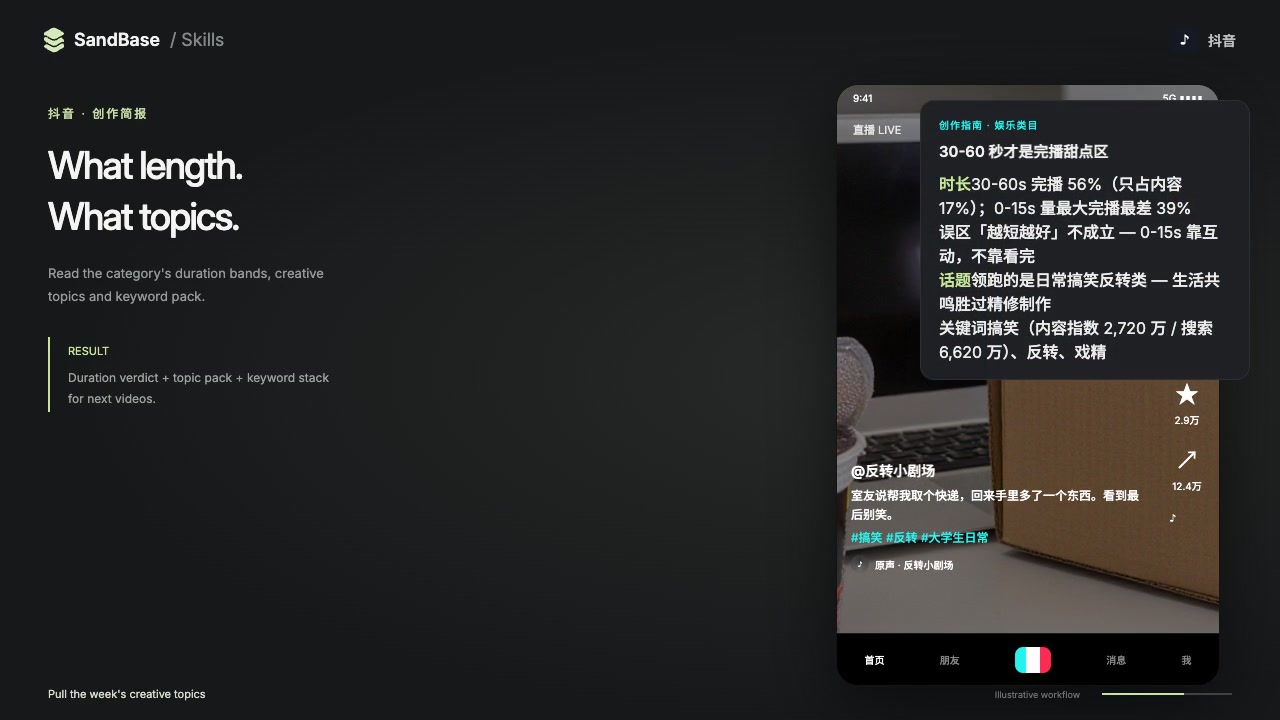
Turn a Douyin content direction into a data-backed creation guide — which lengths finish, which topics and keywords carry the category, with the real top videos as evidence.

Put 2–4 Douyin creators in one table — fans, posts, average engagement, growth deltas, fan portrait, top videos — and say who to benchmark or contact.
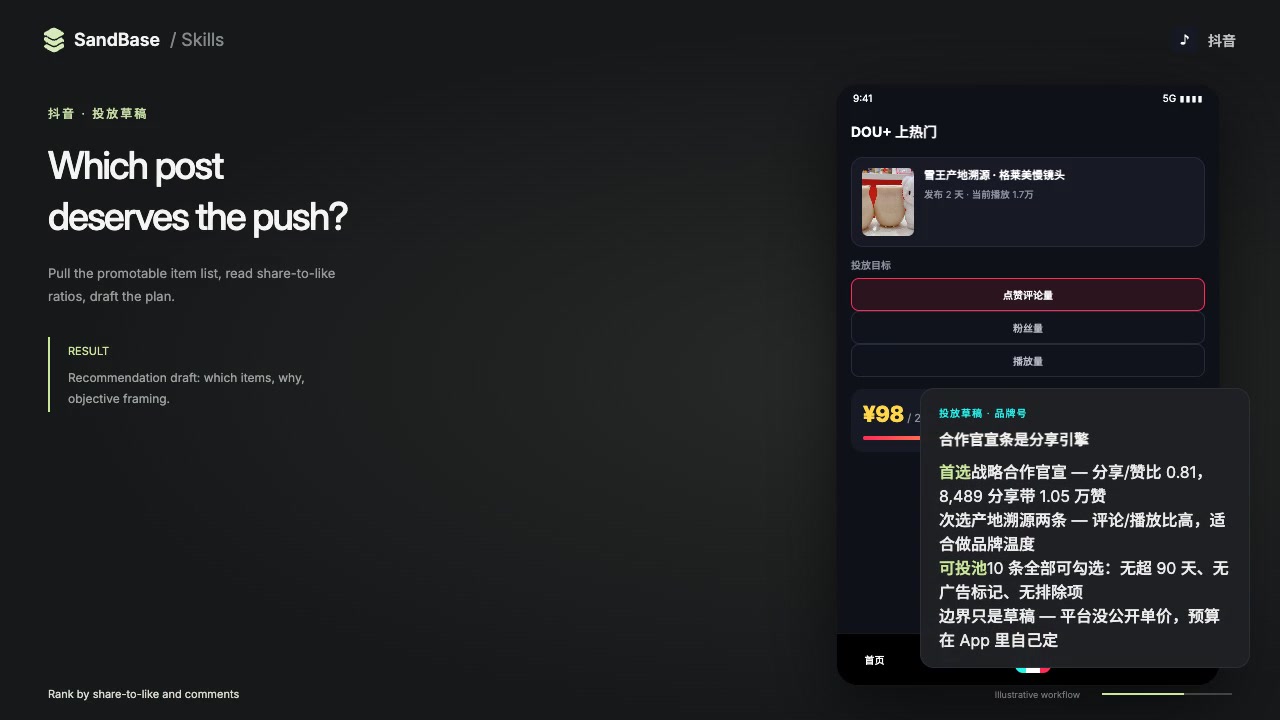
Draft which of a creator's videos deserve a DOU+ push — pull their promotable items, flag eligibility and hit-candidates, and frame the plan. Draft only: it never places an order.
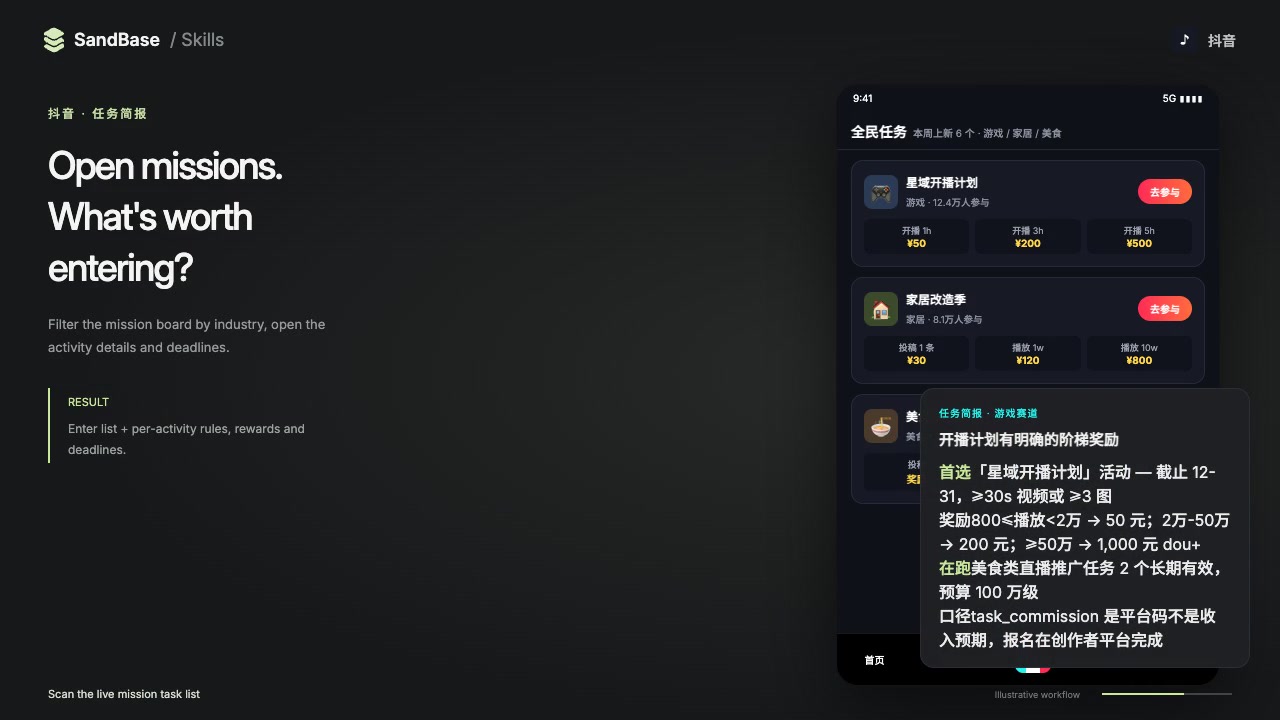
Tell a creator which open Douyin missions and platform activities are worth joining this week — open cards, real reward rules, and what fits their industry.
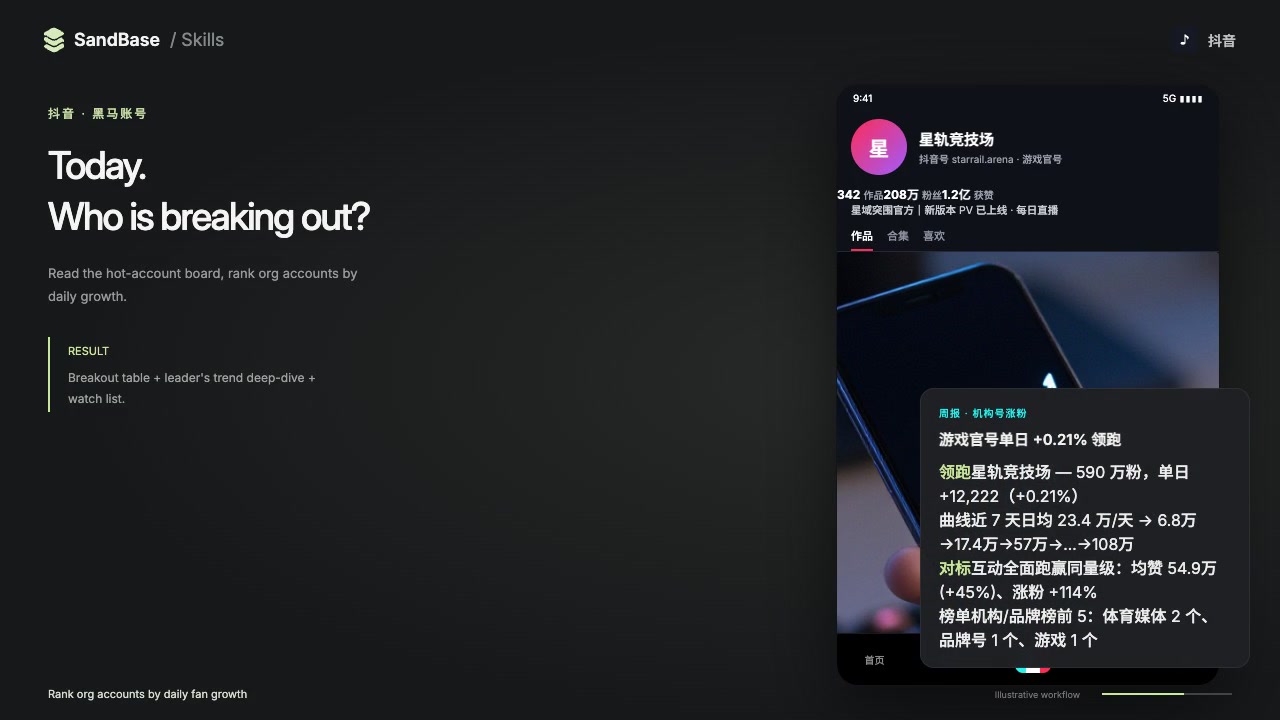
Find which Douyin accounts are gaining followers fastest right now — the breakout board plus per-account trend and peer comparison — before everyone else notices.
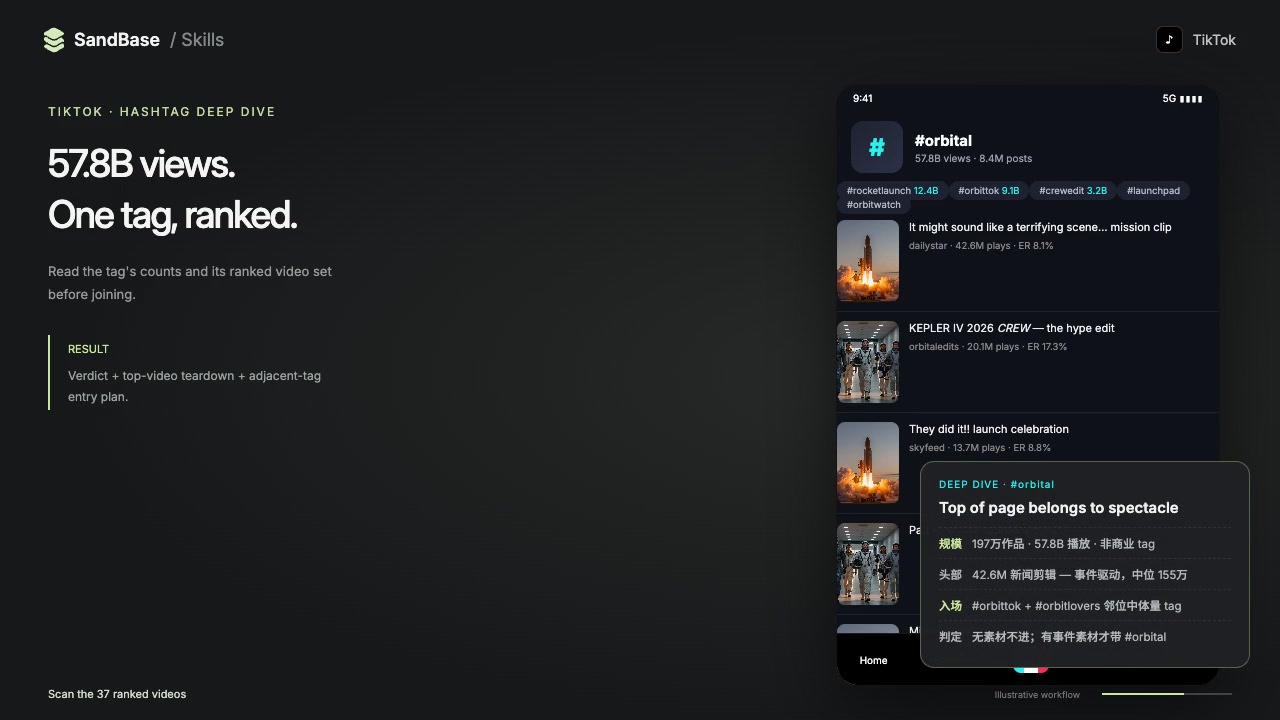
Open up one hashtag — its size, the videos winning on it, the spread between top and median — and get a plain verdict on whether to post under it.
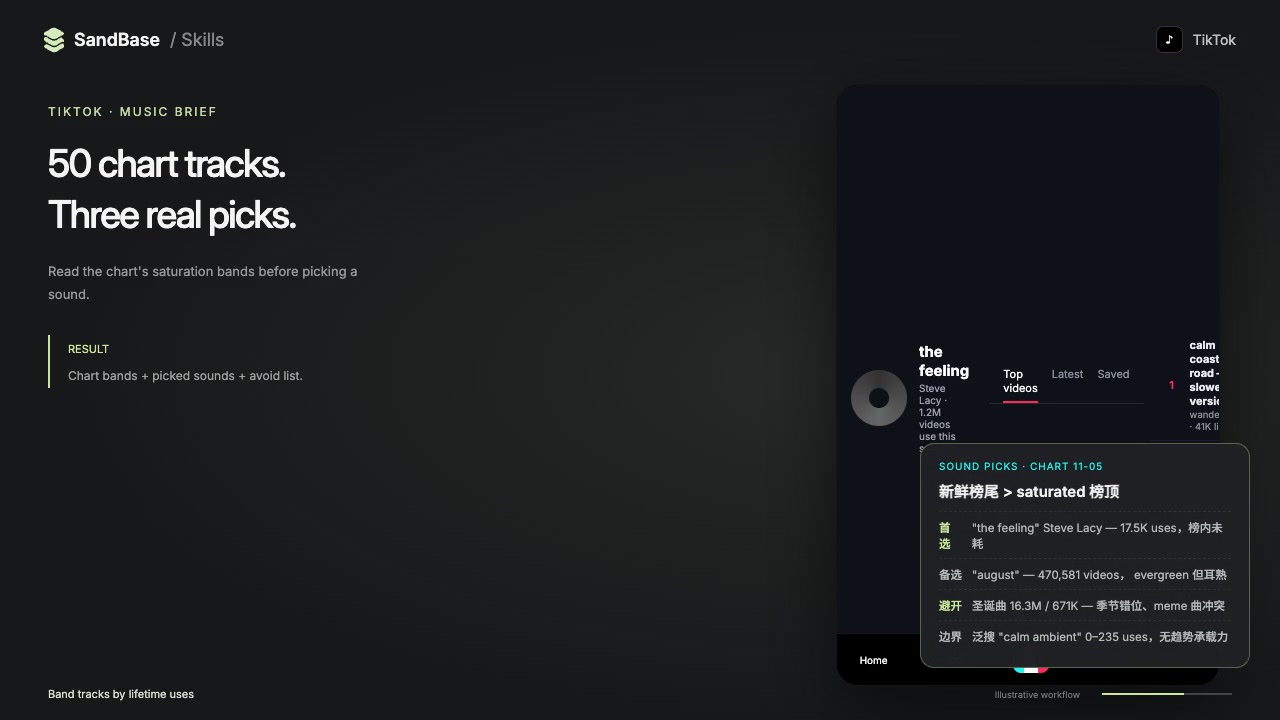
Pick a sound for a video from the real TikTok chart — fresh, rising or saturated — instead of guessing what's still usable.
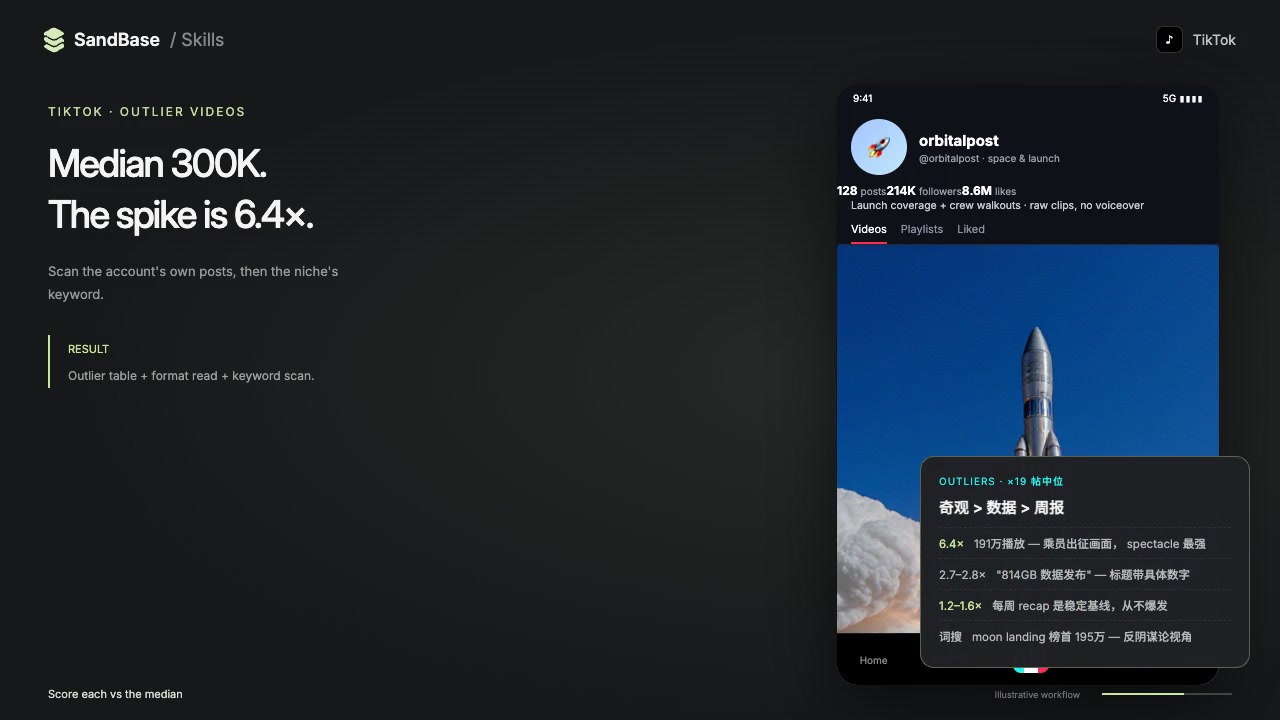
Find the videos that far out-perform their own account's median in a niche, and the formats they share.
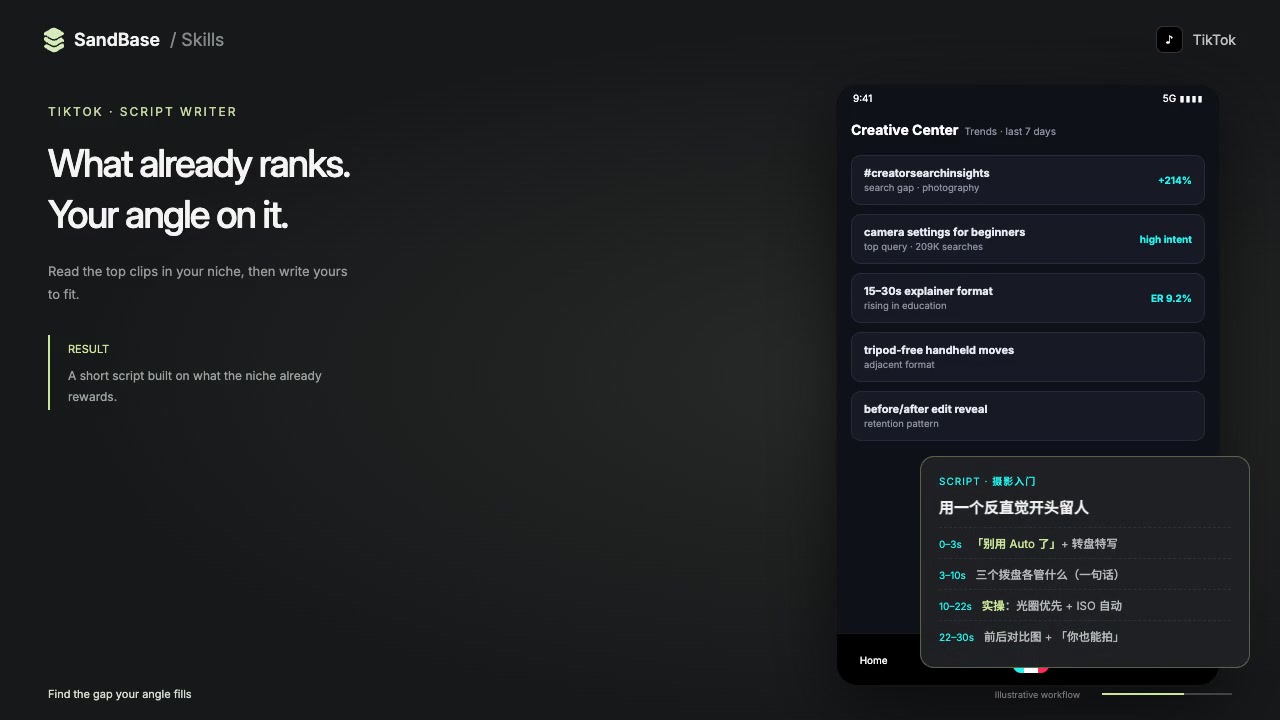
Write a shootable 30–60 second TikTok script grounded in the videos the platform already rewards for your topic.
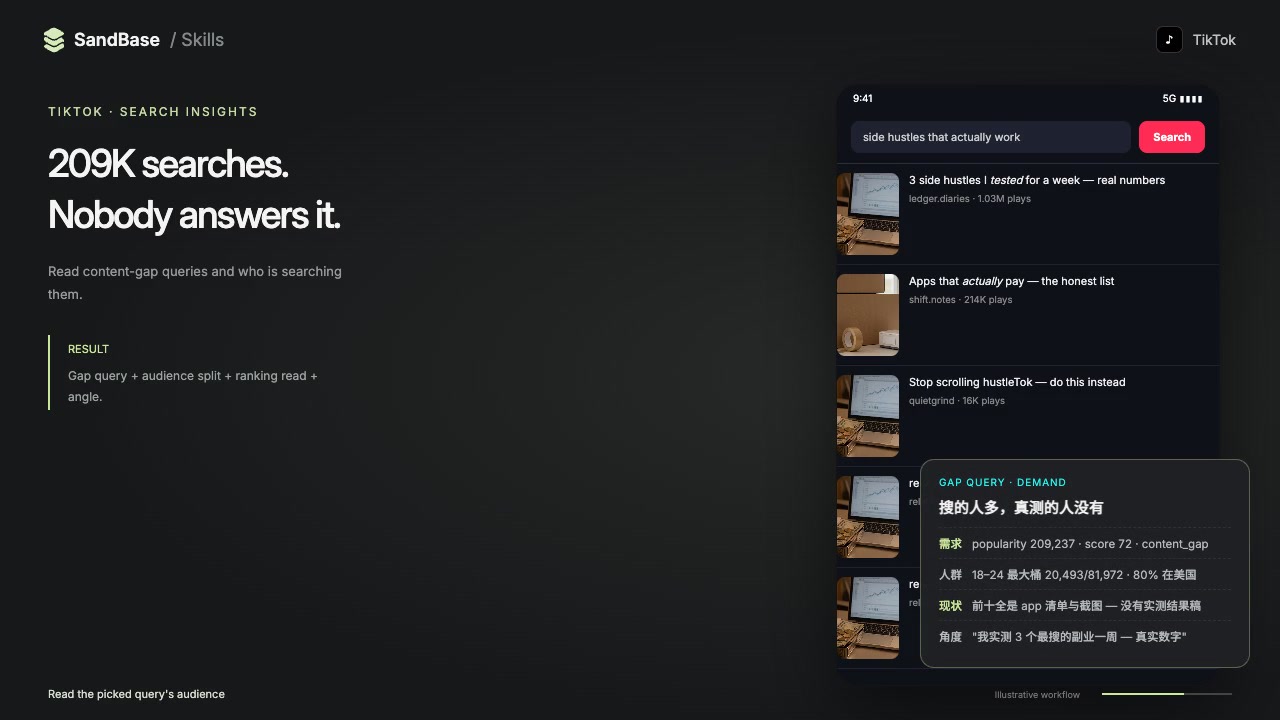
See what TikTok users actually search for — including the content-gap queries TikTok flags as under-served — before deciding what to make.
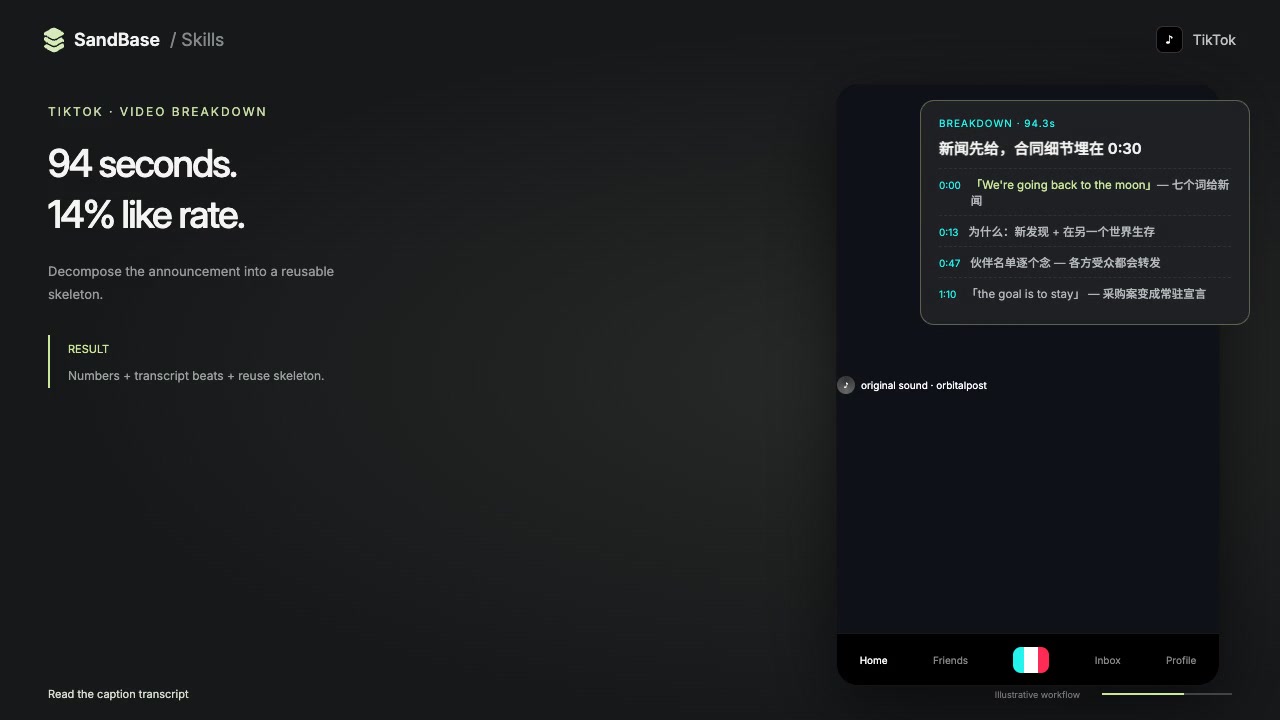
Tear down one TikTok video — numbers, transcript, script structure and comments — into a skeleton you can reuse.
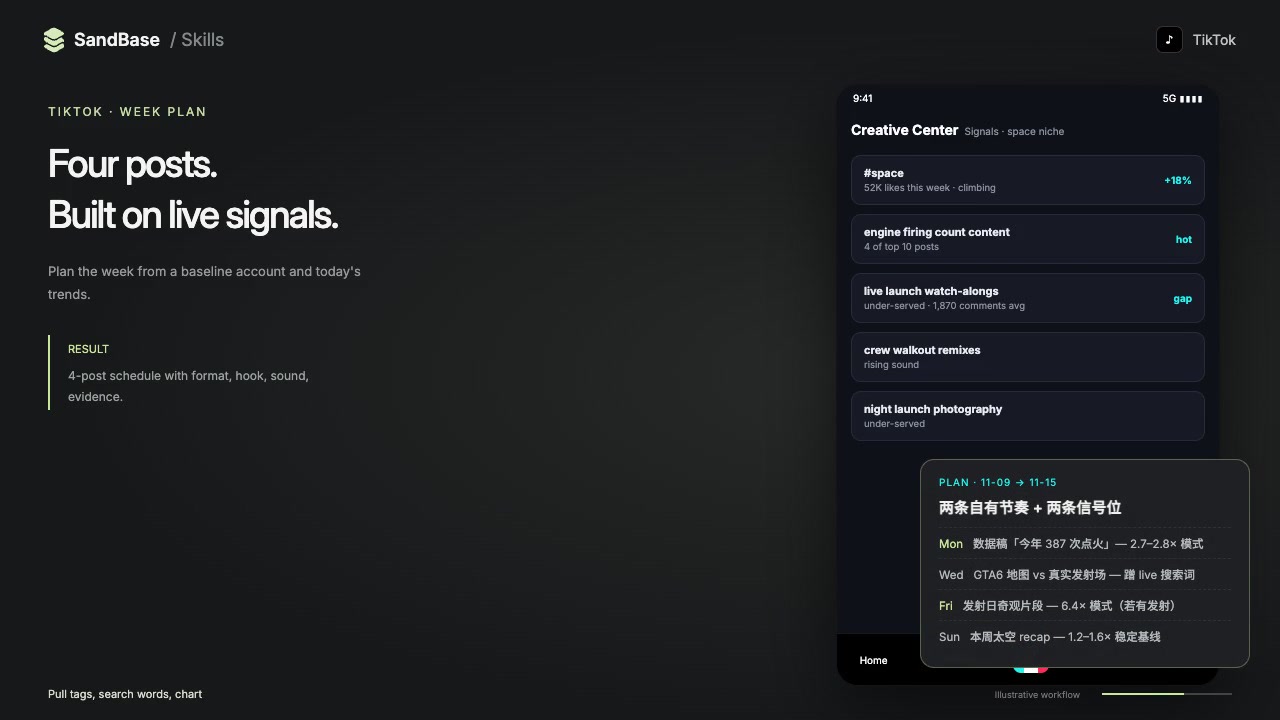
Build a dated one-week posting plan from live signals — your own numbers, this week's rising tags, live search words and the music chart — not generic advice.
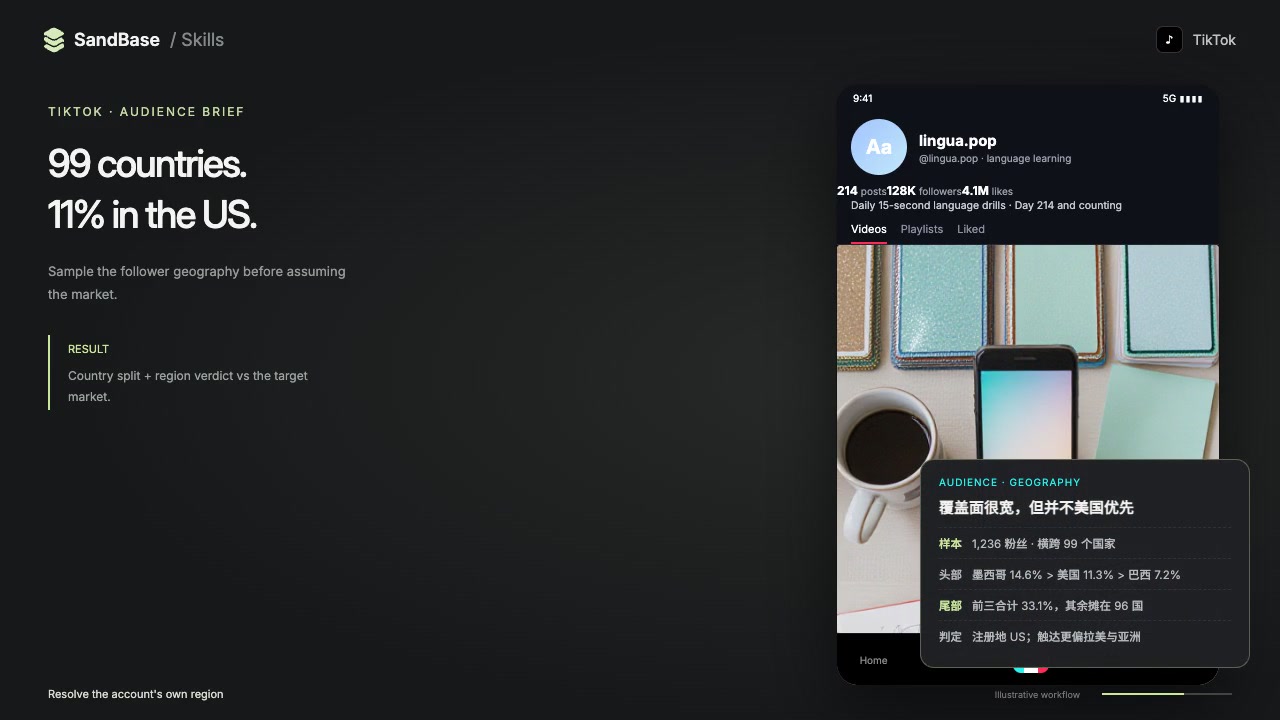
Read where a TikTok account's audience is — the follower country breakdown and the account's own region, turned into a who-and-where brief.
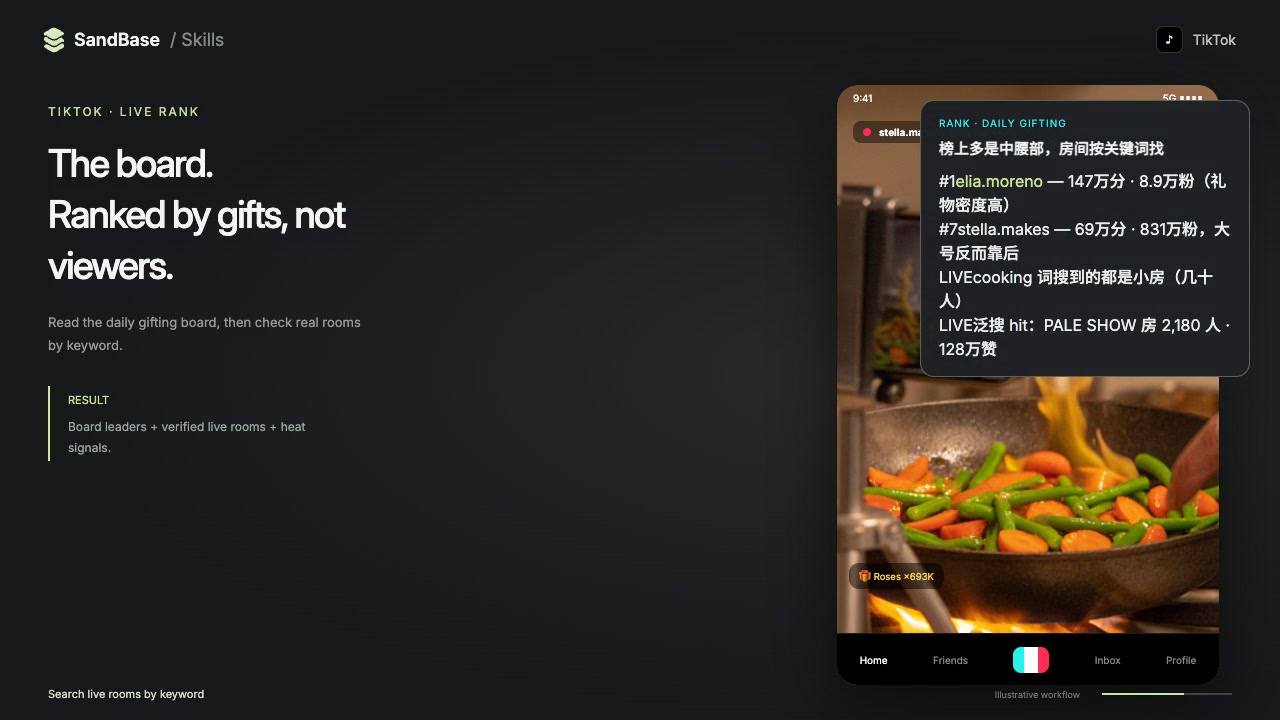
See who is live on TikTok right now and how hot they are — the LIVE leaderboards plus a per-room read of viewers, likes and host.
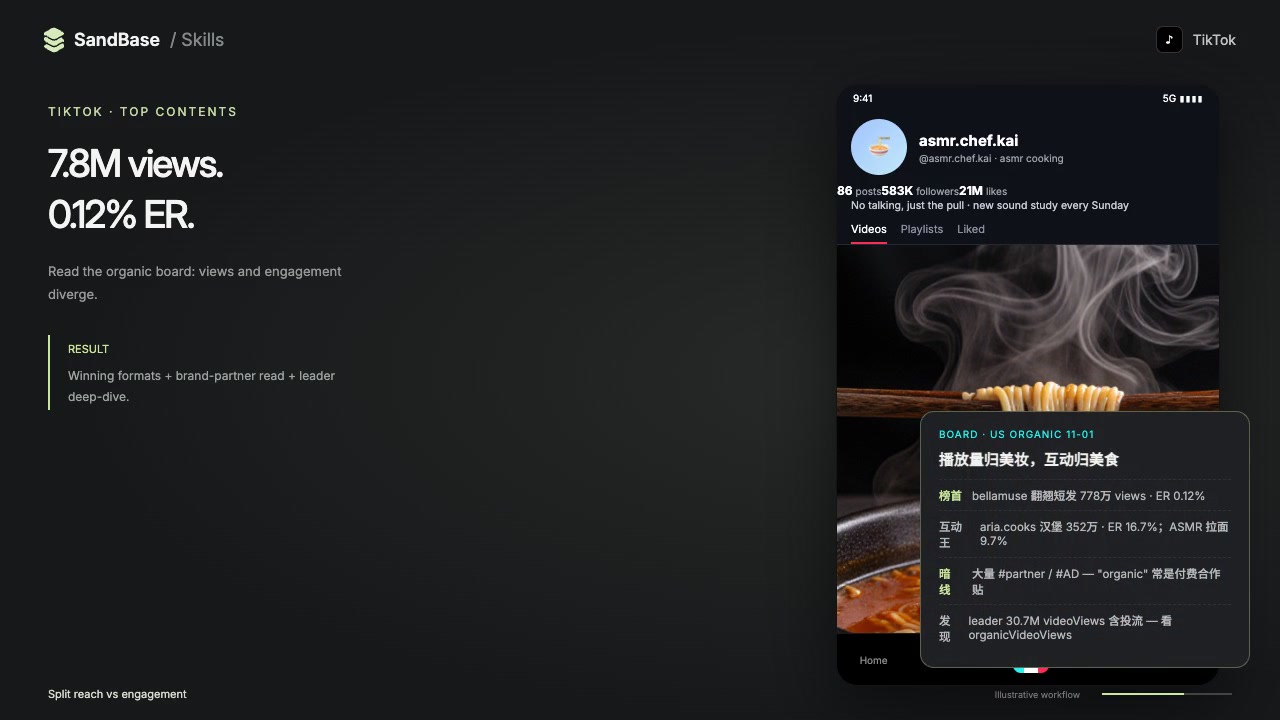
Read Creative Center's Top Contents — the organic videos winning by country and period, with organic views, engagement rate and industry, plus a leader's comments.

Audit a Weibo account's profile, posting rhythm and engagement against its own medians, and list what to keep, stop and change.
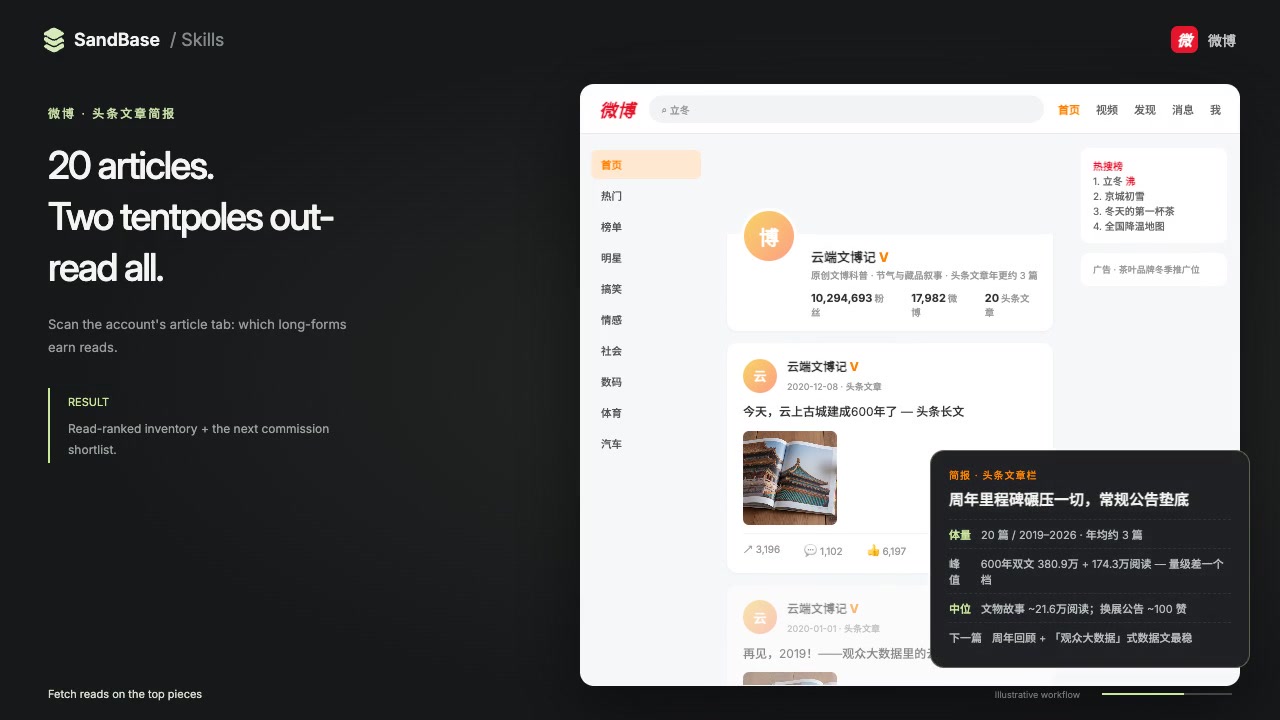
Review one account's Weibo long articles — titles, reads and engagement — and say which subjects and forms earn reads for it.

Profile one Weibo account's audience from a sampled slice of its public follower list — aggregate gender, region, verification and activity signals.

Turn a niche keyword into a vetted list of Weibo creators — verification, posting rhythm and engagement evidence for each name.

Draft a publishable Weibo post backed by the topic's real hashtag landscape, the questions people ask, and the live hot list.

Read one Weibo super topic's community surface — rank, today's interactions, featured posts, who participates — and decide whether and how to join.
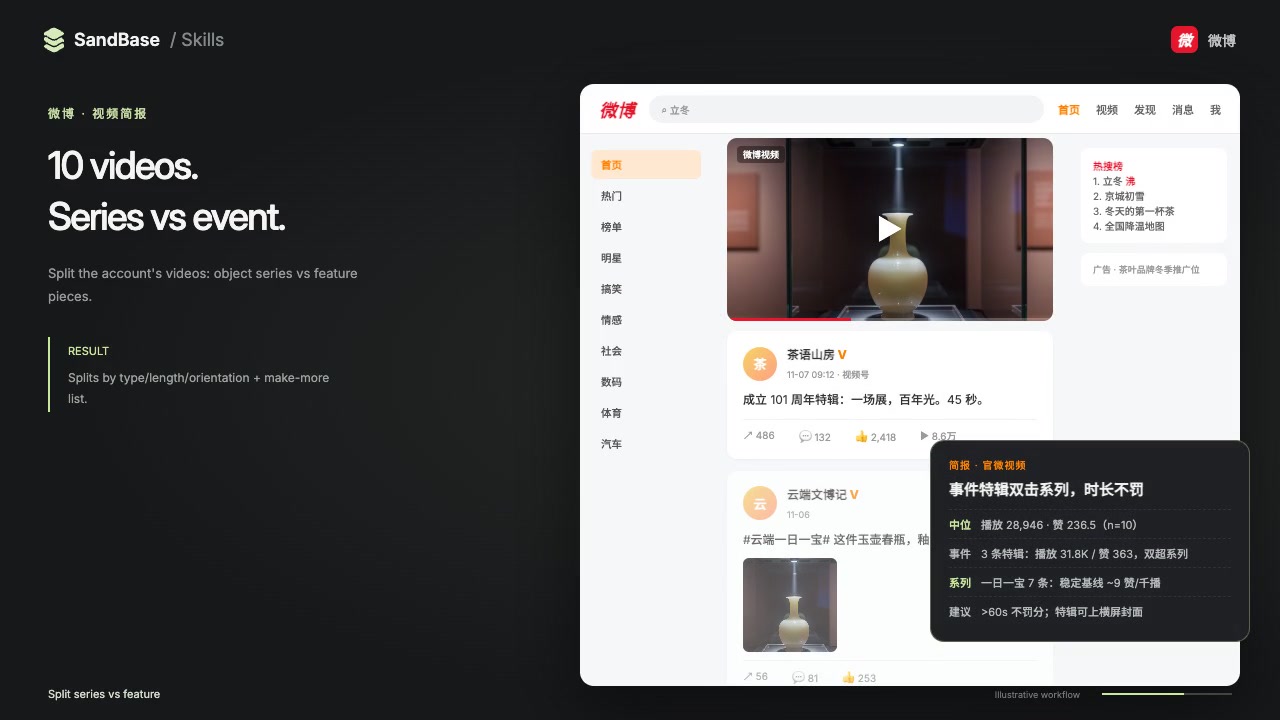
Compare a Weibo account's own videos — plays, durations, engagement — grouped by form so the brief says which video forms actually earn views for it.
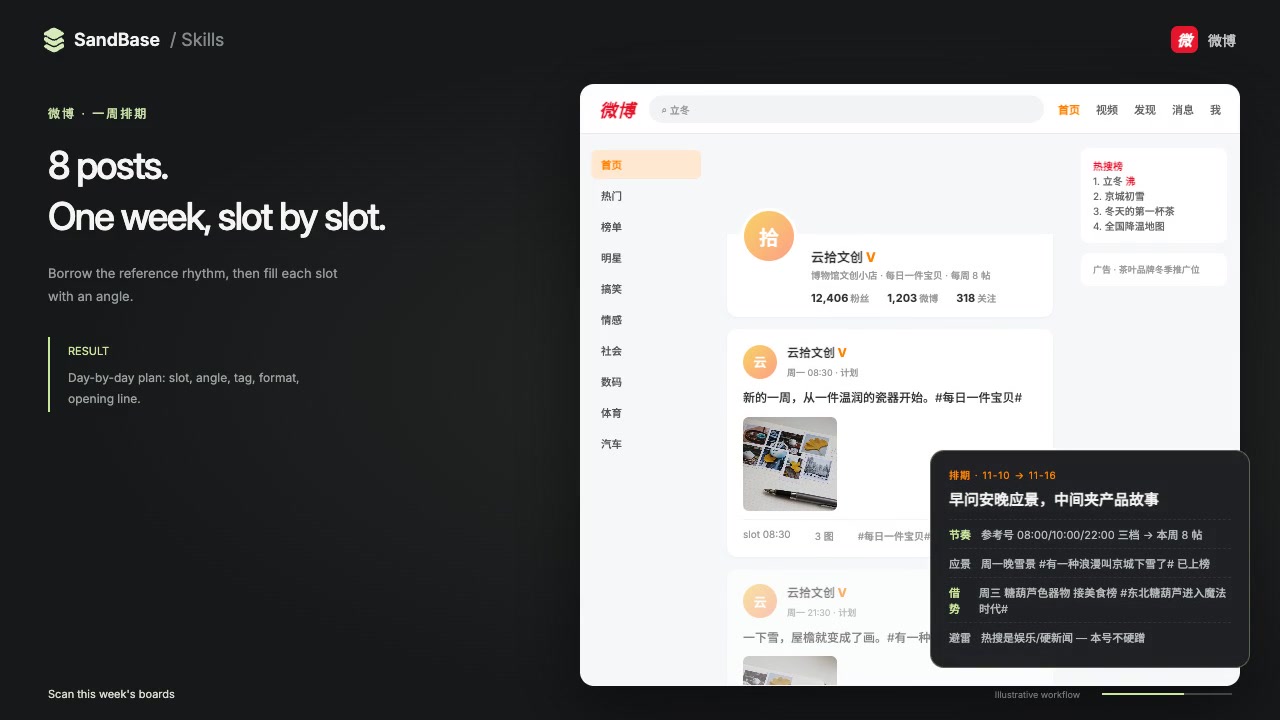
Plan a dated week of Weibo posts from the account's own rhythm plus this week's hot-search and themed boards.
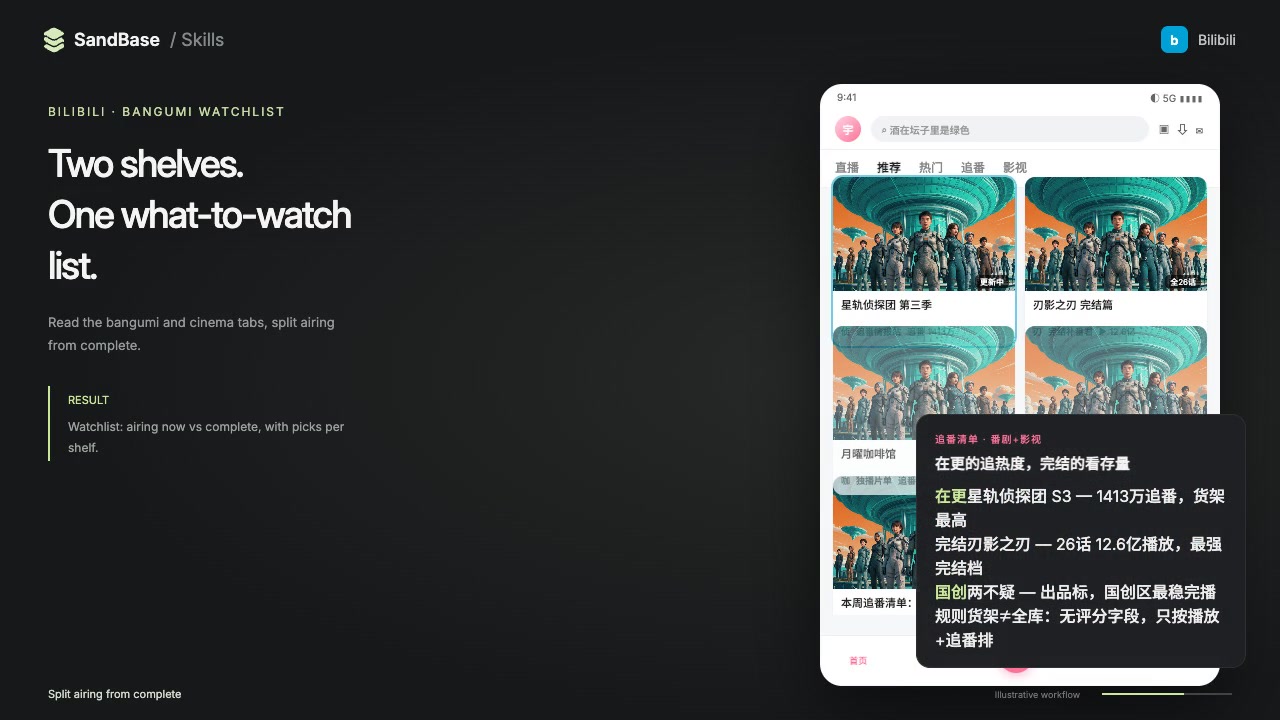
Build a what-to-watch list from Bilibili's own anime and cinema shelves — update text, views, follows, badges — split into airing vs complete.
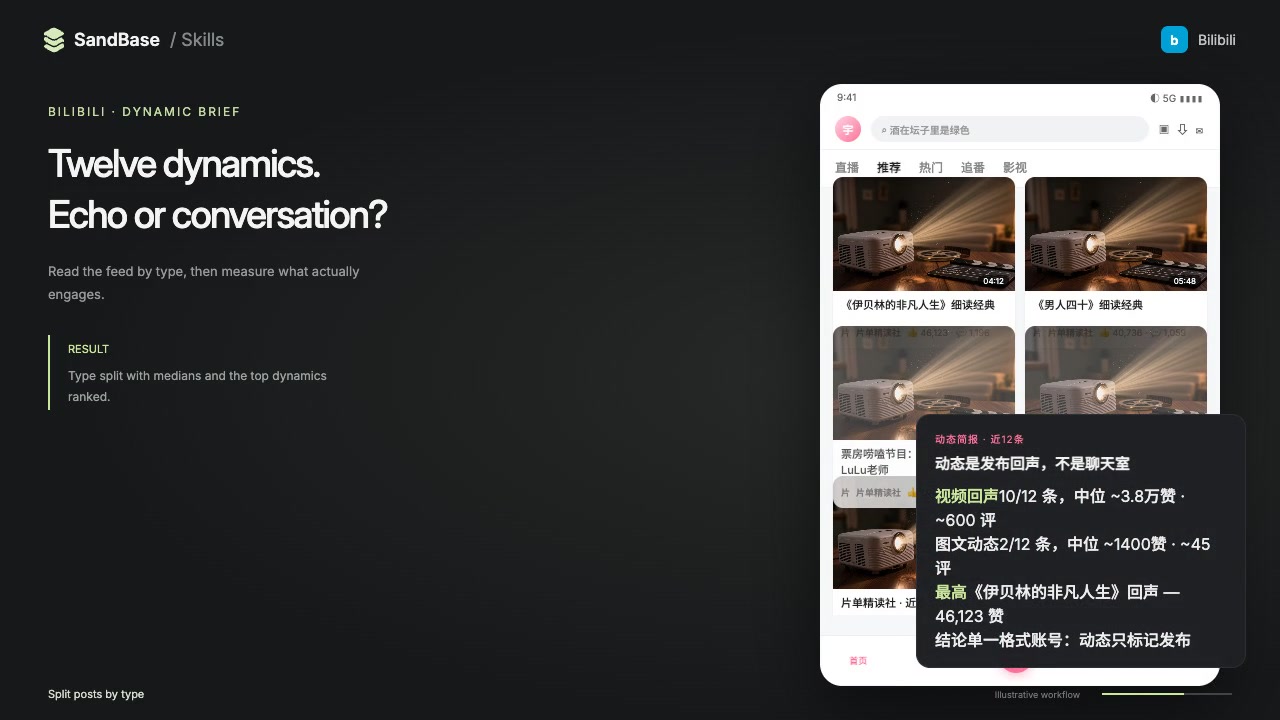
Read an UP主's dynamic feed — the posts between videos — and say which pull real conversation versus which are just release echoes.
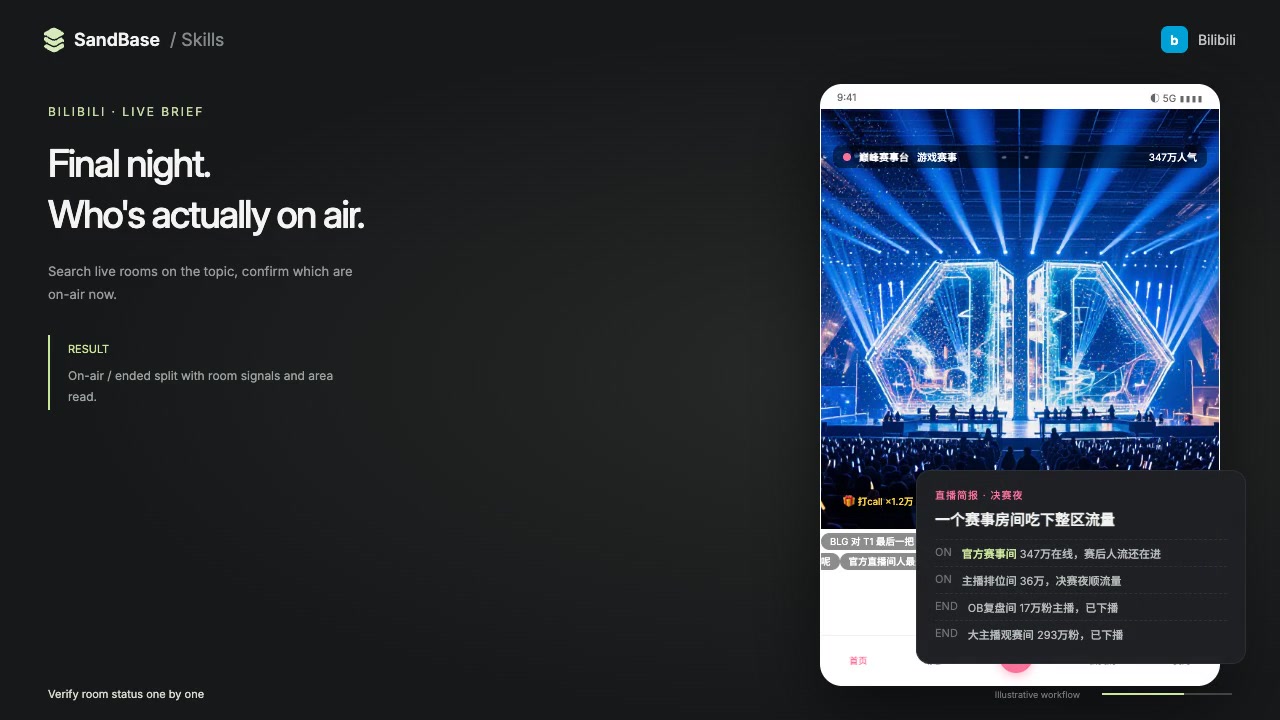
Answer which Bilibili live rooms are worth watching right now — per area, with online counts and anchor followings — not a static directory.

Find the videos that far outperformed their own channel's median — and name the hooks they share — instead of comparing raw view counts across channels.

Write a filmable Bilibili script modelled on a real video's proven mechanics — the subtitle's hook and beats, the danmaku peaks, what the comments took away — not a generic template.

Map a niche's keyword landscape — which words have real demand but weak first-page supply — instead of picking a title by feel.

Read how an uploader's public collections actually work — naming, episode counts, whether views are even or head-loaded — then plan a new one in the same grammar.
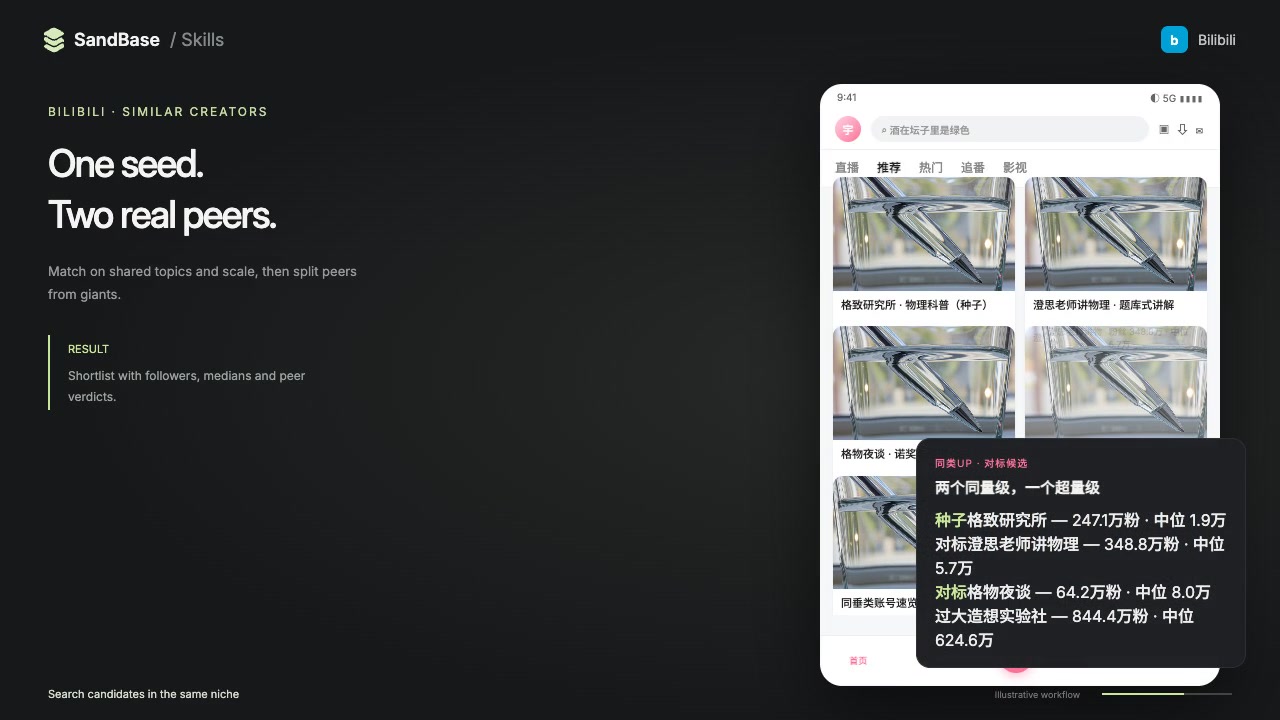
Find UP主 who make similar content at a comparable scale — scored on recent-title overlap plus follower and per-video-median distance — not just whoever shares the niche name.
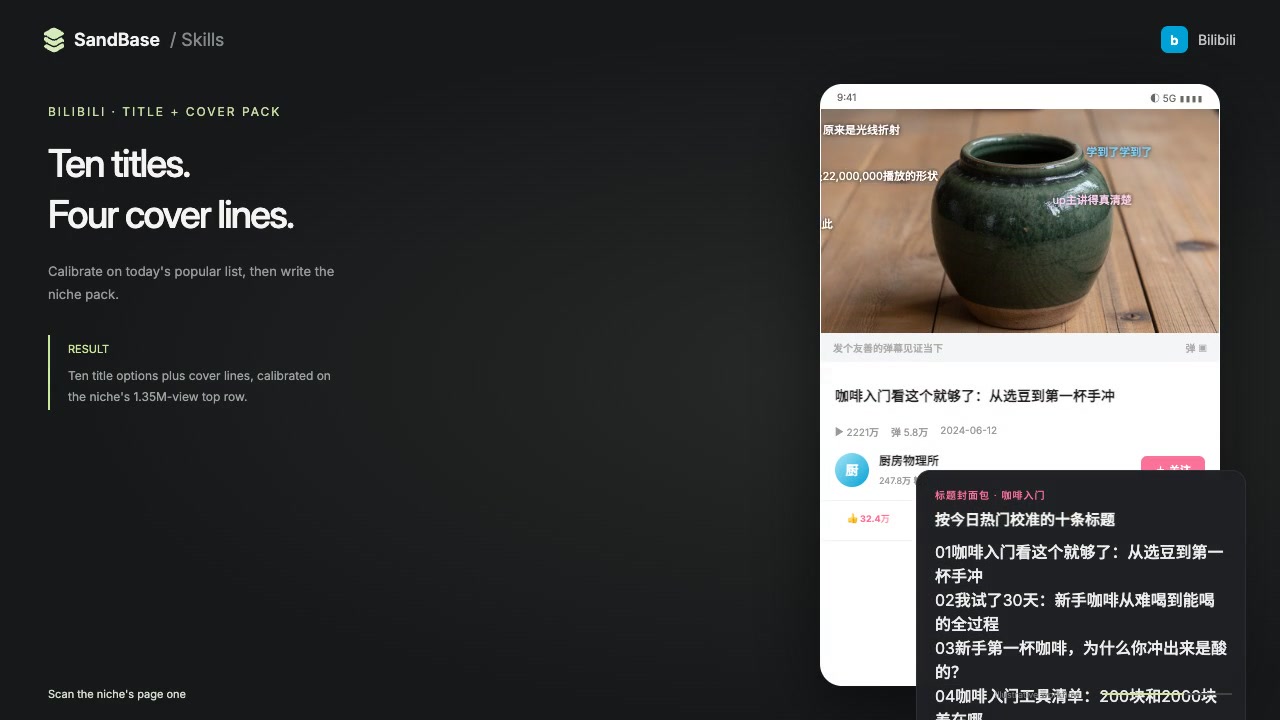
Get ten title options plus cover copy for a Bilibili video, calibrated on today's popular list and the niche's own page-one titles — not a generic formula.
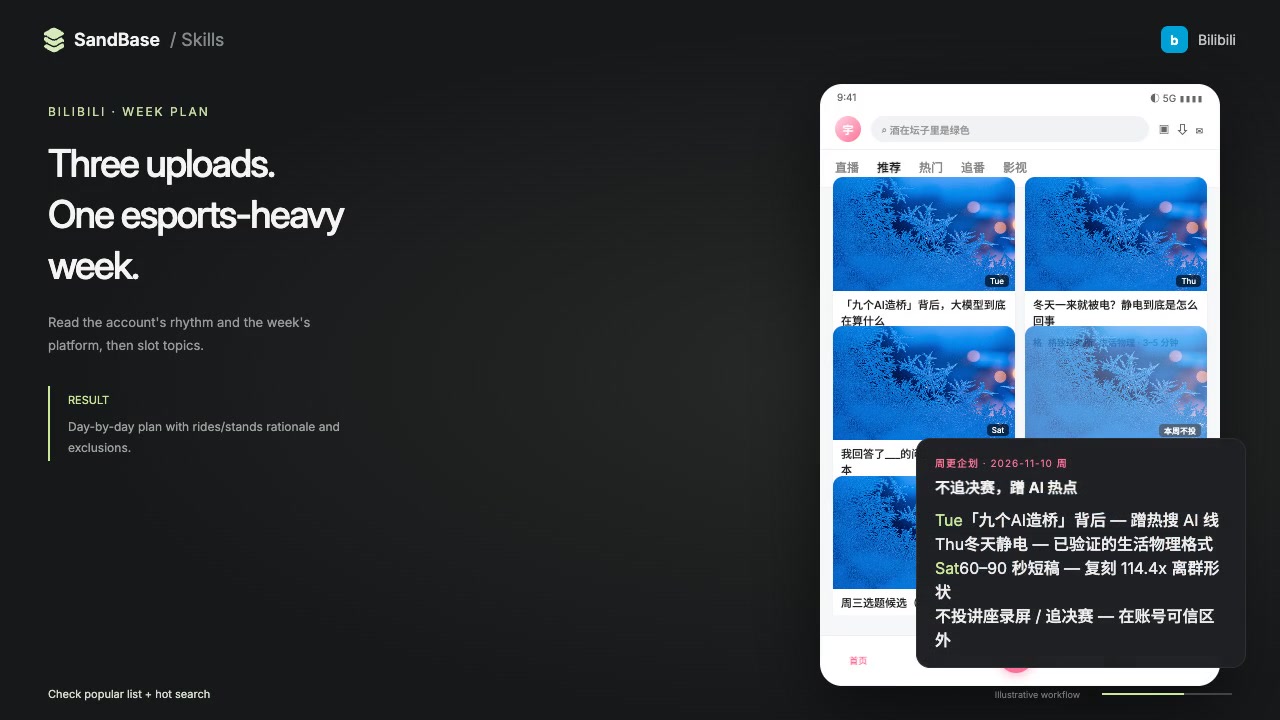
Plan one dated posting week for an uploader — their own rhythm and median, this week's popular list and hot search — instead of a generic content calendar.
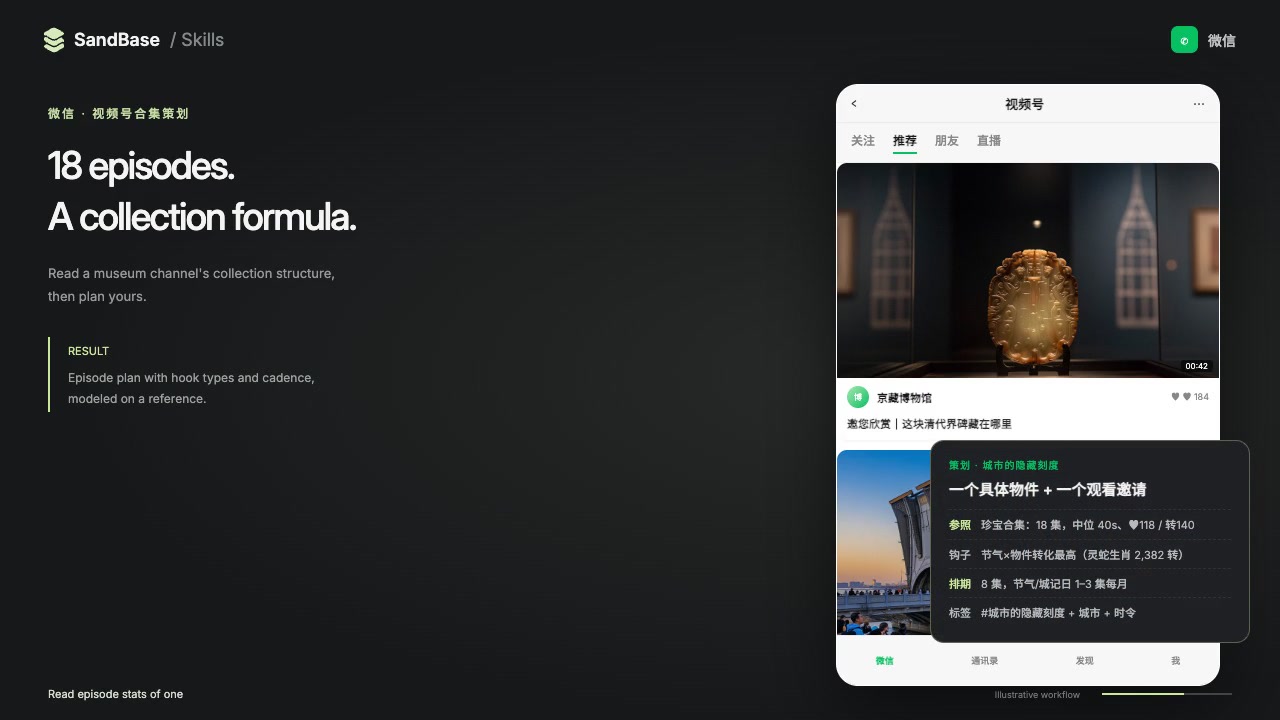
Design a 视频号 collection from how a reference account's real collections actually work.

Rank 视频号 creators in a niche by real engagement evidence, with a collaboration angle for each — research only, no outreach.
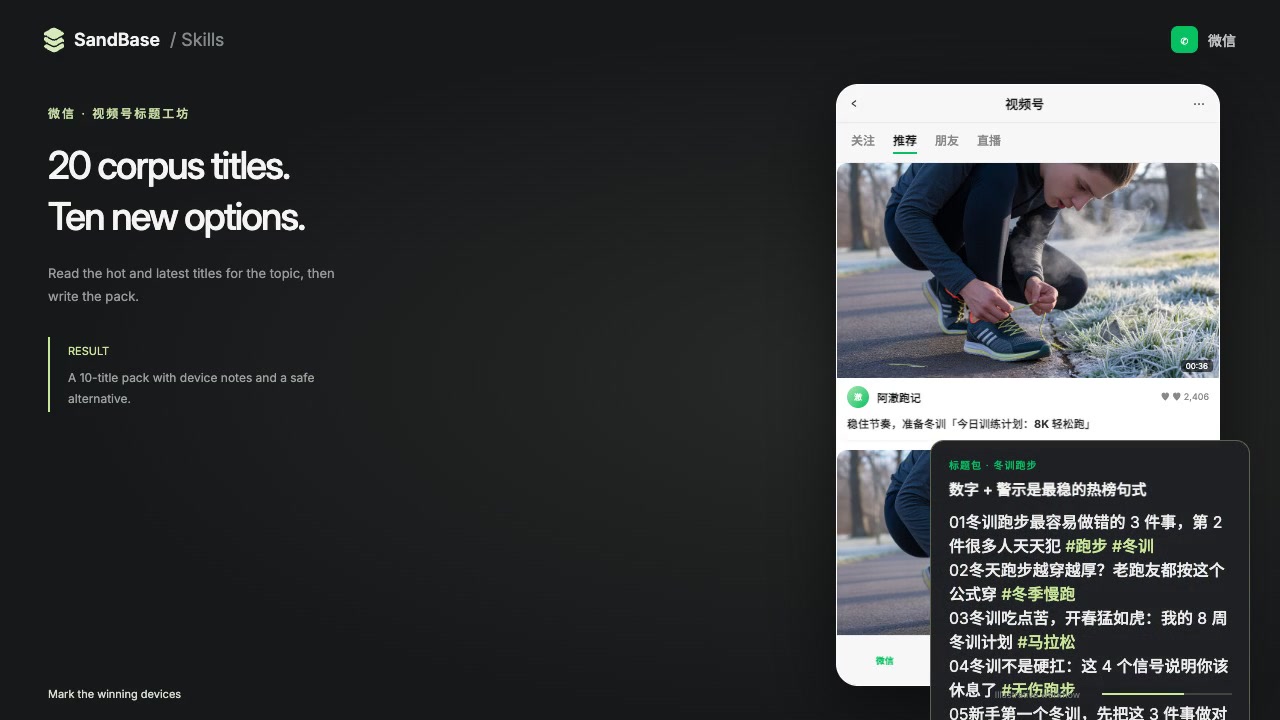
Produce 视频号 titles calibrated on the platform's real high-engagement titles for your topic.

Score a 公众号 on identity, cadence and engagement, then get a diagnosis and a concrete action list.
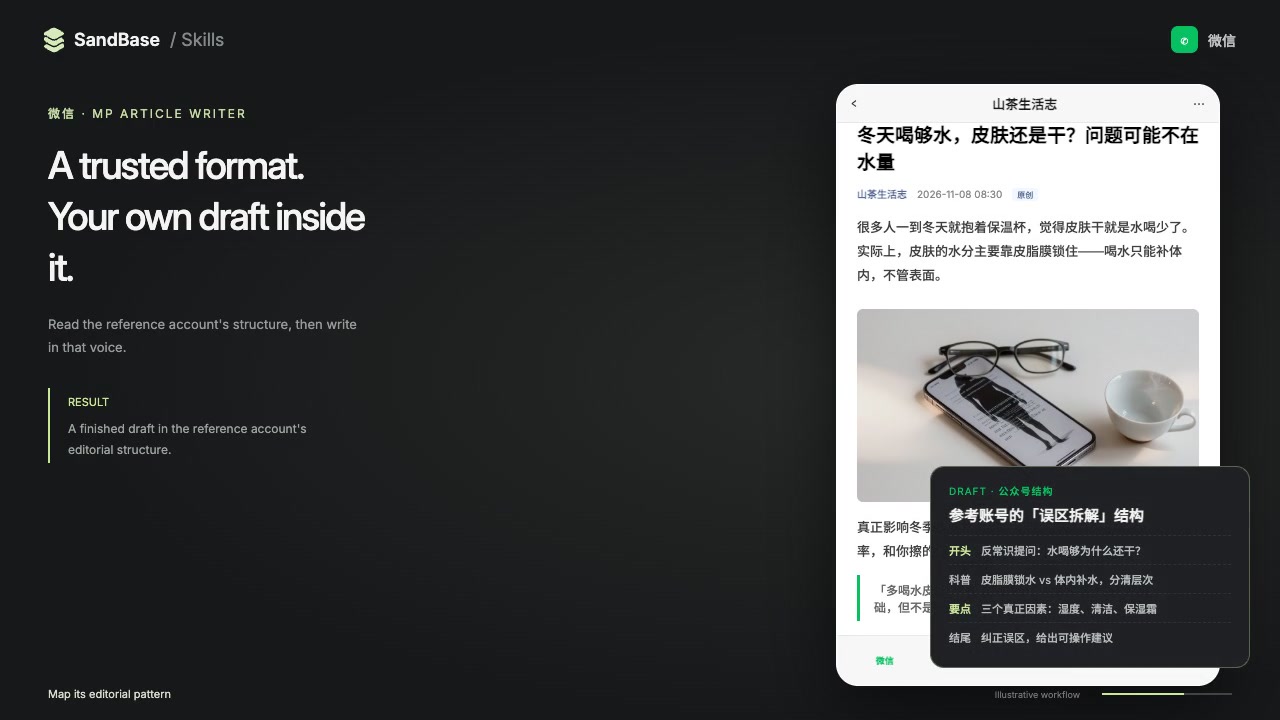
Draft a complete 公众号 article in a target account's own format, with facts checked against real WeChat coverage.
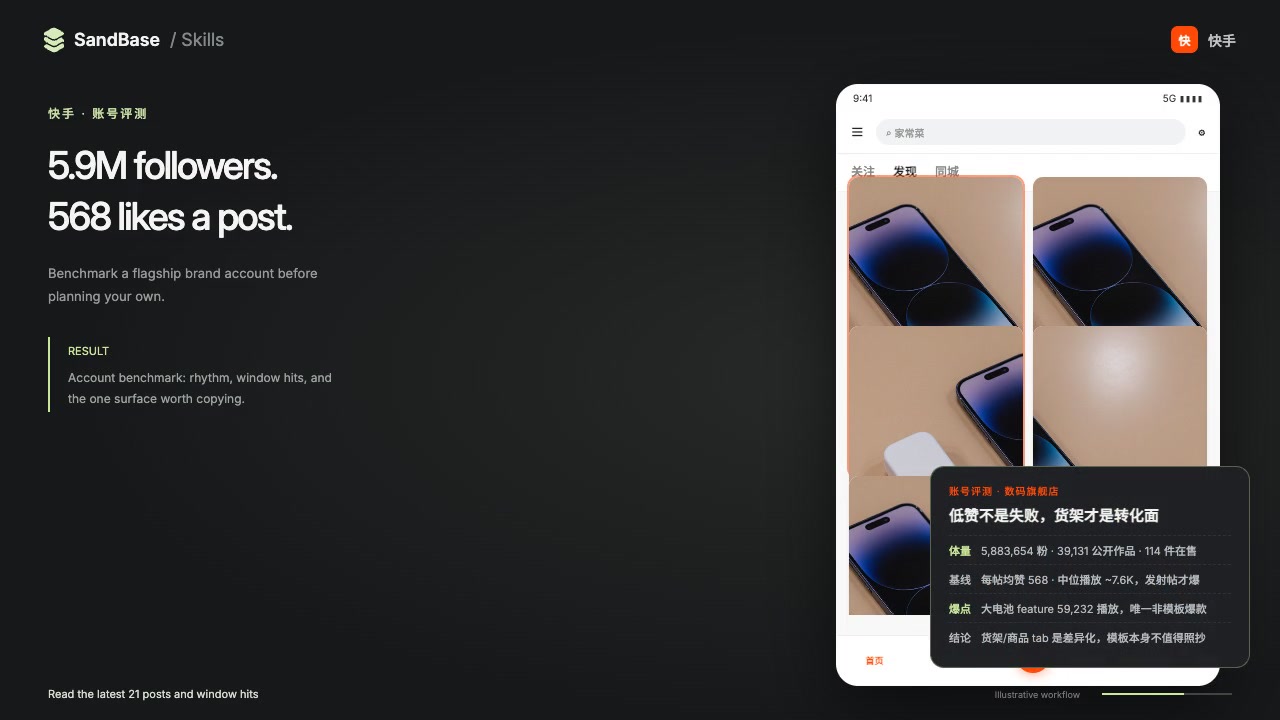
Read one Kuaishou creator's profile totals, recent window and top posts, and see what is actually worth benchmarking or partnering on.
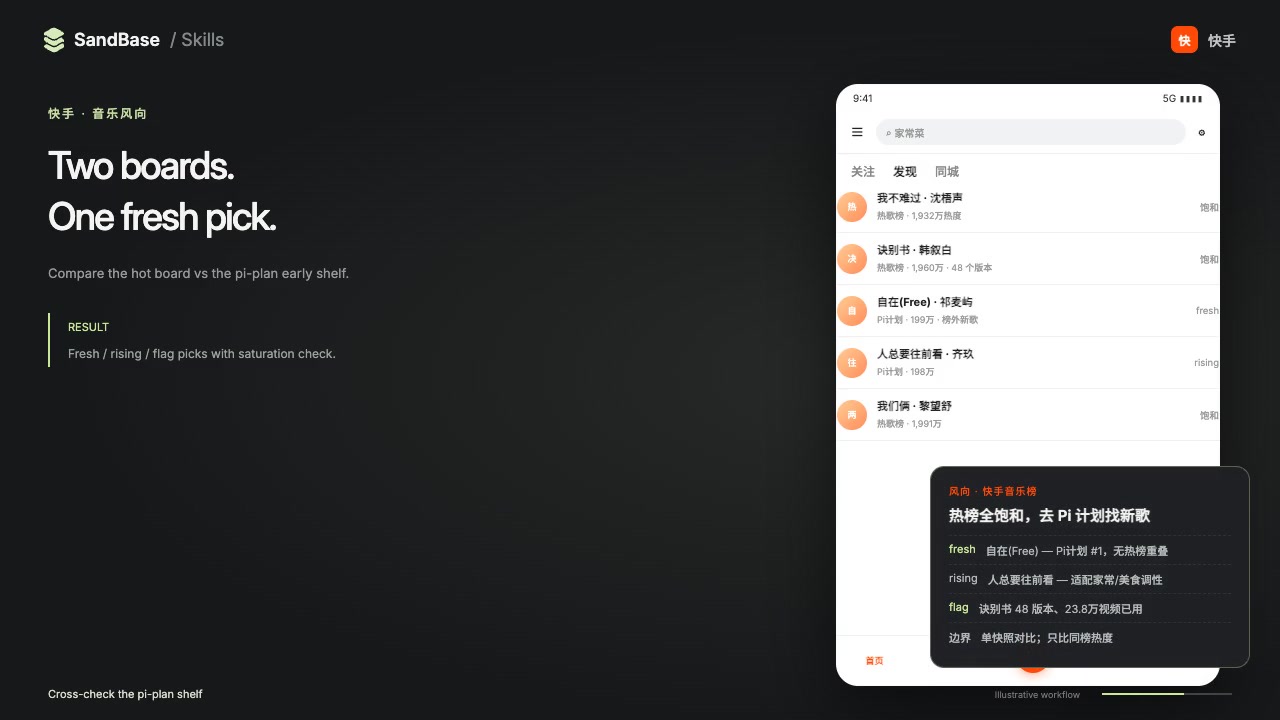
Answer which track a Kuaishou video should use by reading Kuaishou's own music charts and splitting tracks into fresh, rising and saturated.

Find the Kuaishou videos that ran far above their own account's median in a niche, and name the formats worth copying.
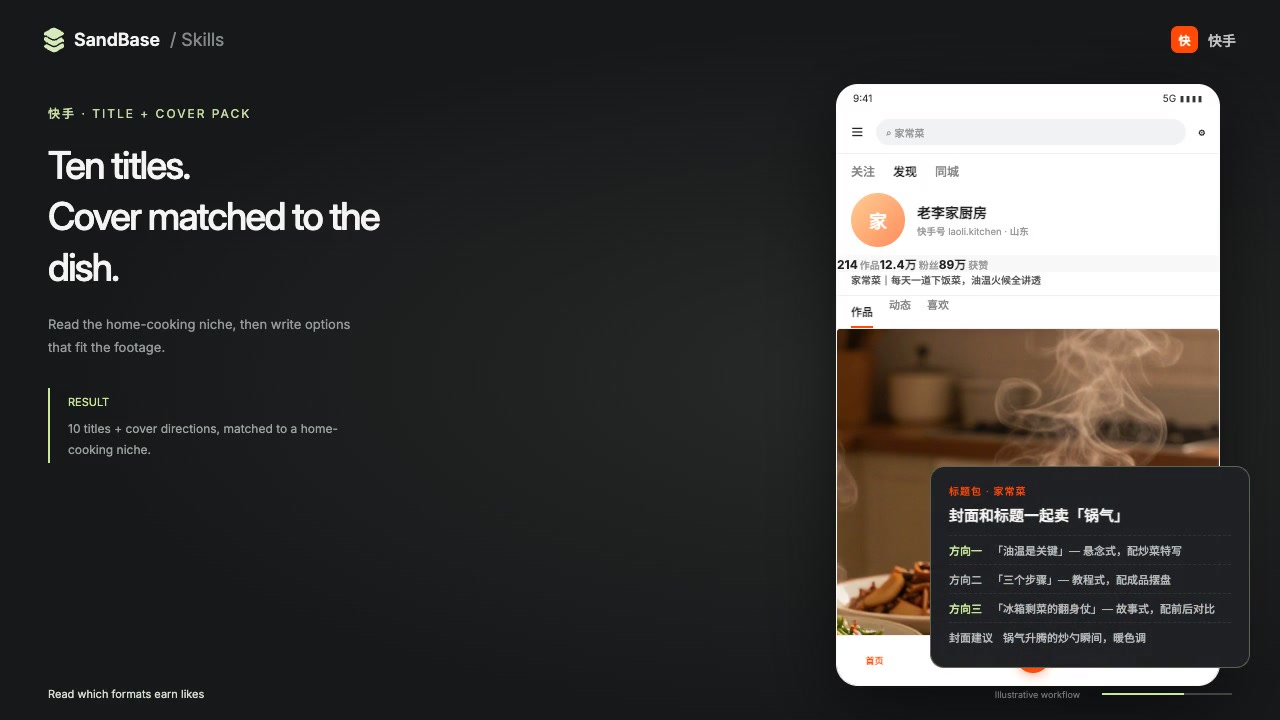
Turn a Kuaishou topic into 10 title options plus cover copy, each traced to a hook pattern that real high-play titles in the niche already use.
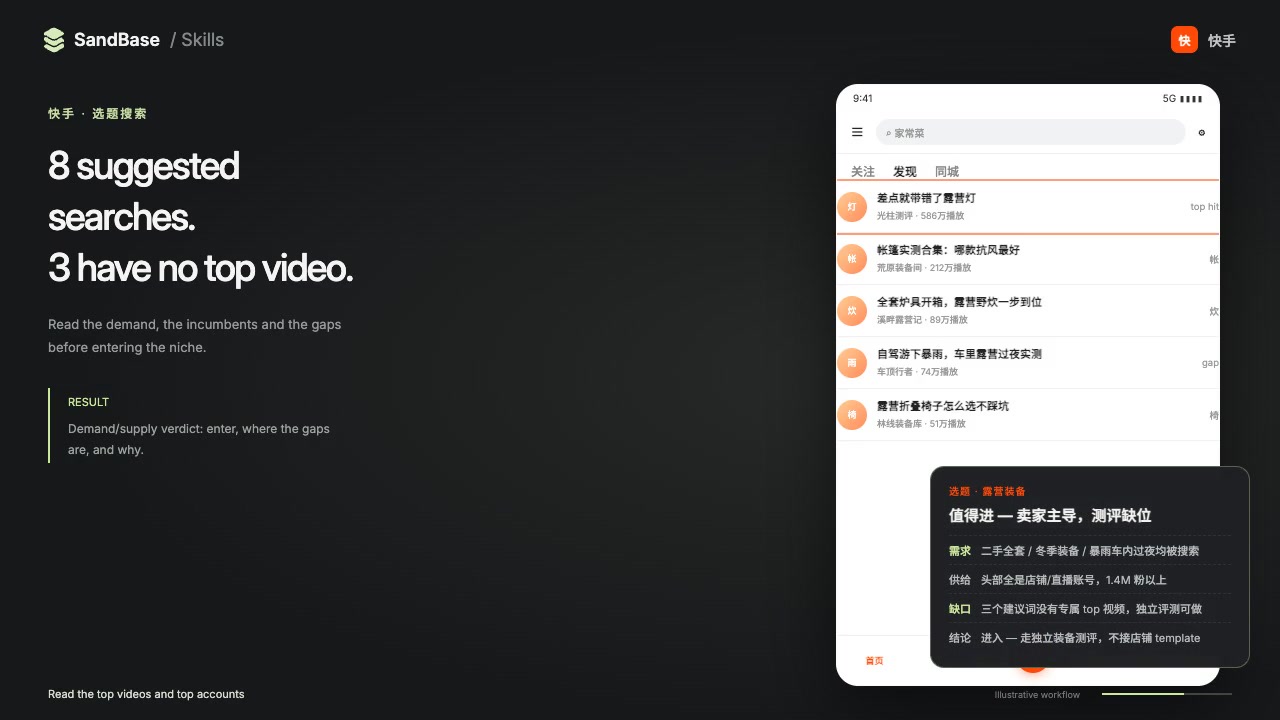
See what Kuaishou users actually search for a topic, what already ranks, and where the supply gap is before filming.
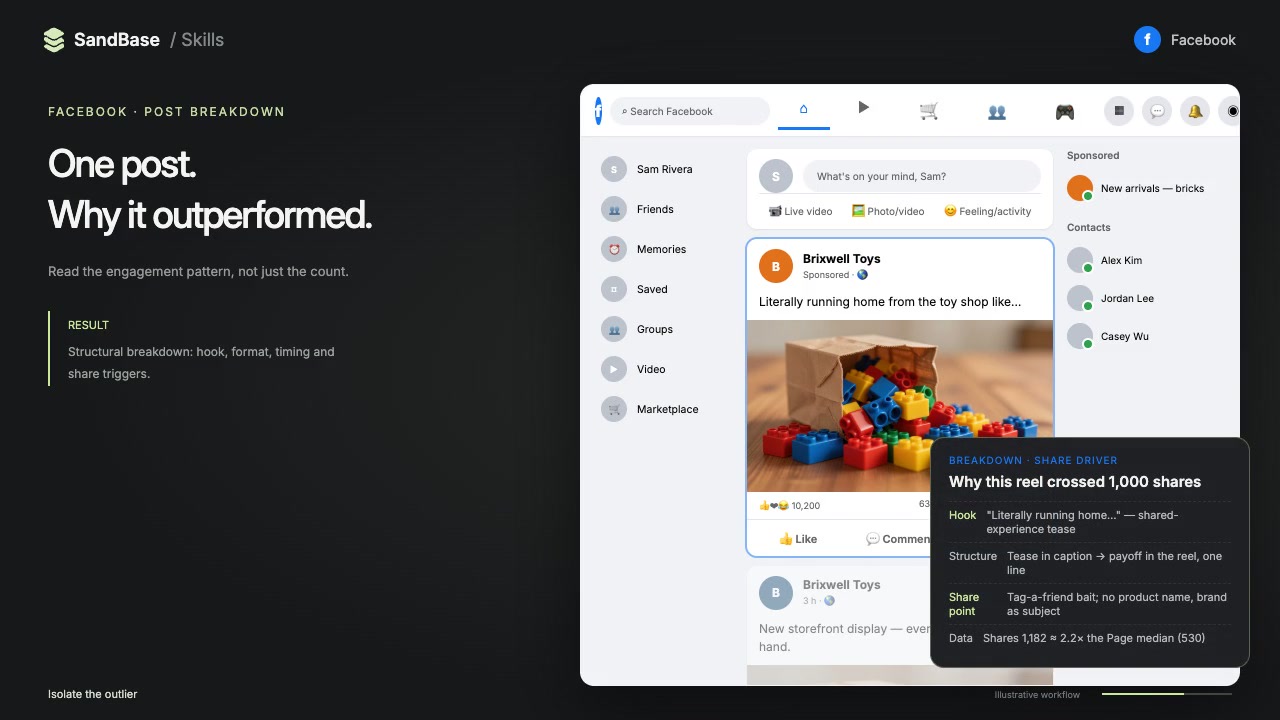
Find out exactly why one Facebook post worked — its numbers against the Page's own median, its structure, and its comment section.
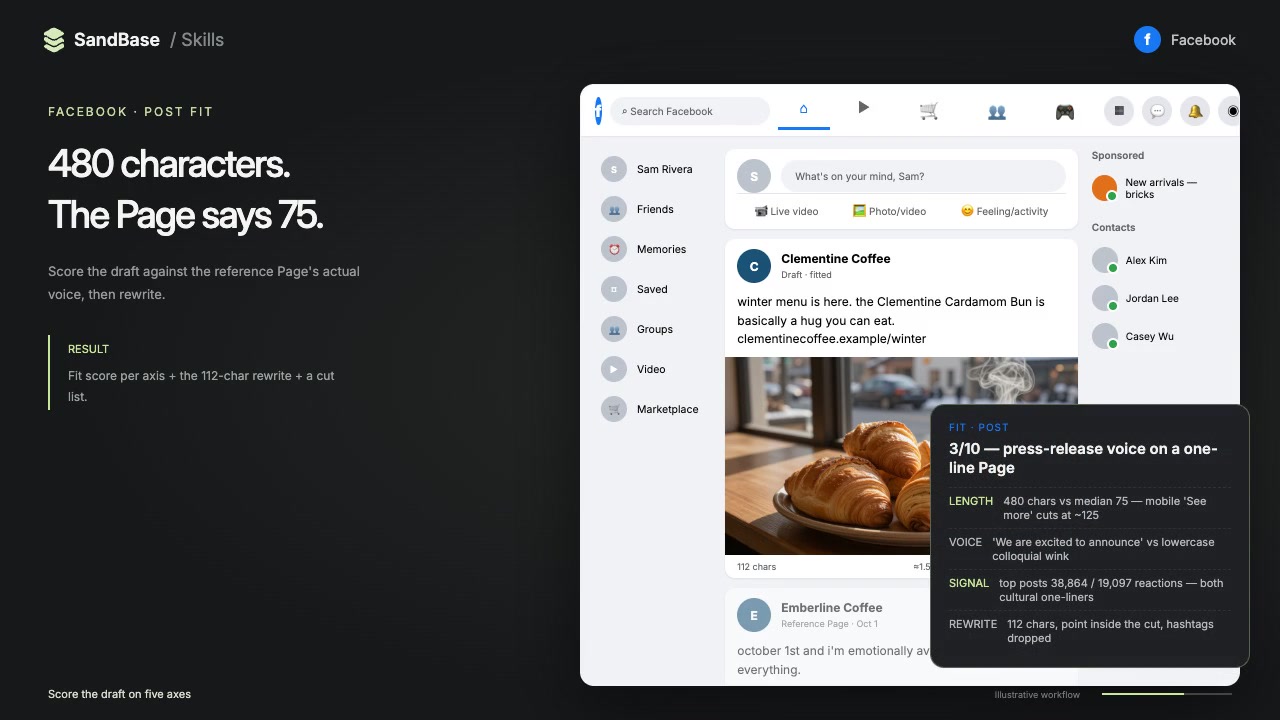
You already wrote the draft — score it against how the Page's own posts actually perform, then get a rewrite that keeps every fact.
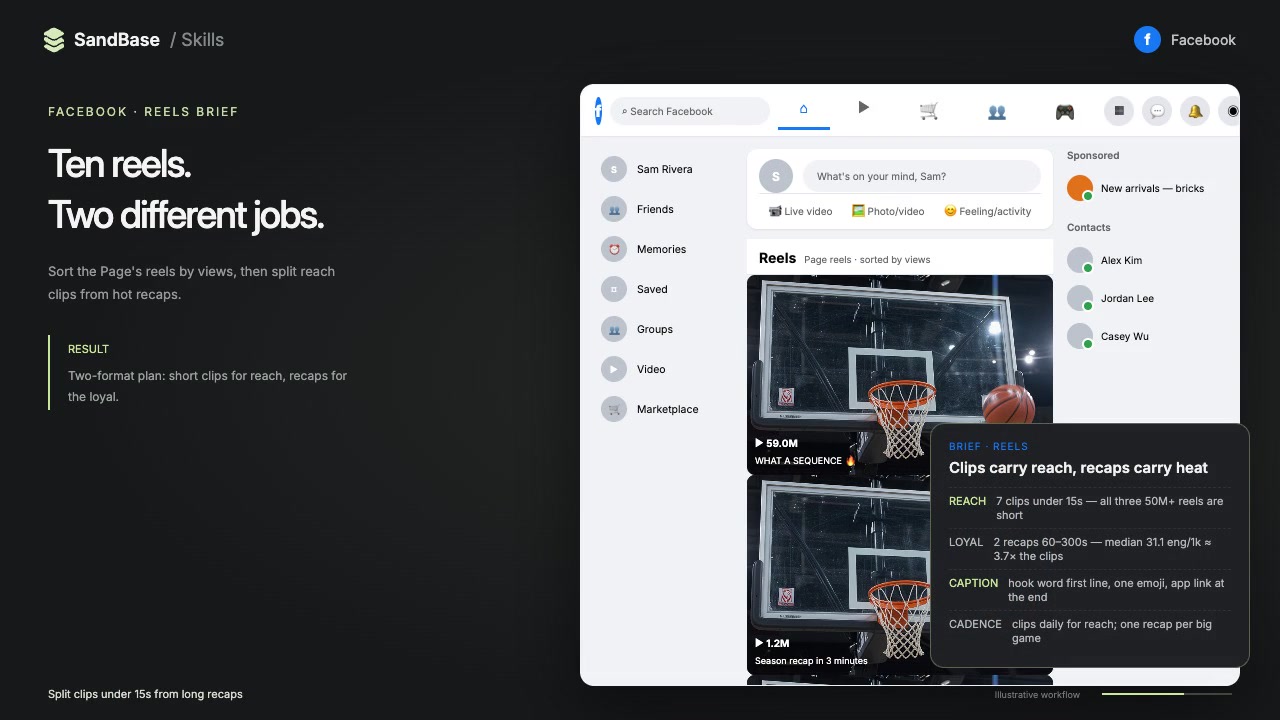
See which Reel formats actually earn views and conversation on a Page — short clips versus long recaps.
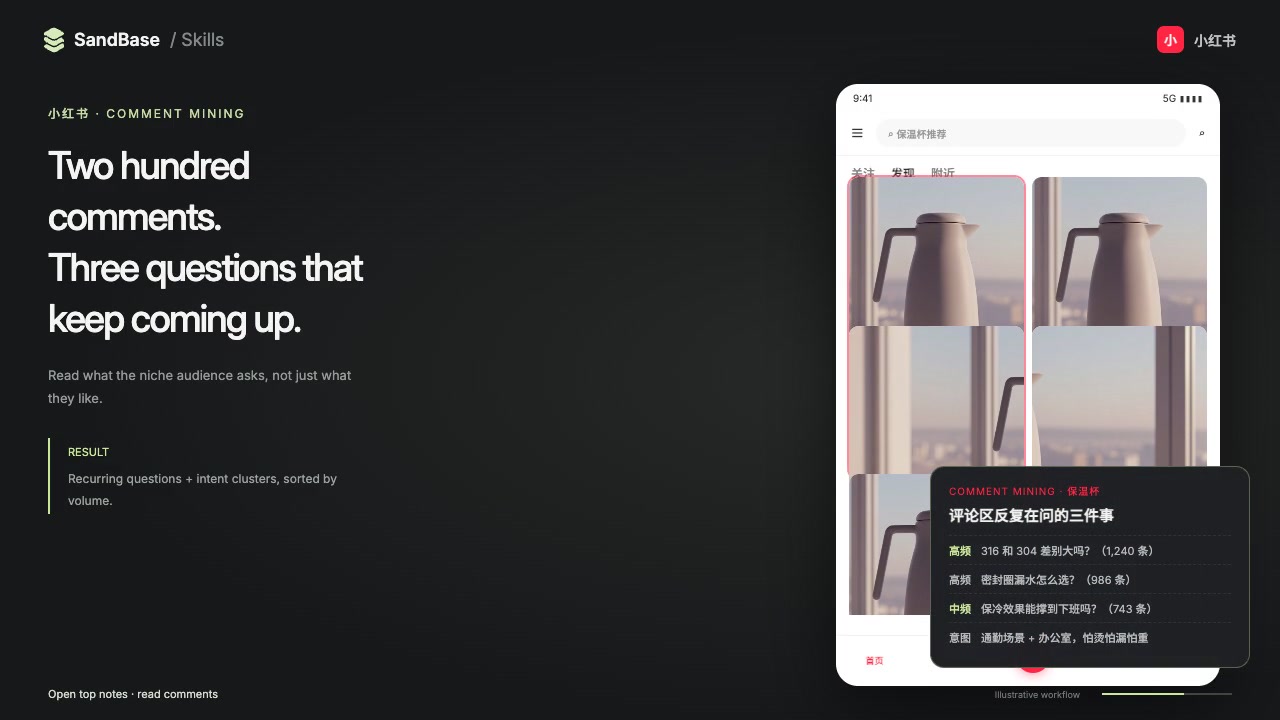
Find out what readers in your niche keep asking — and turn their questions into your next topics.
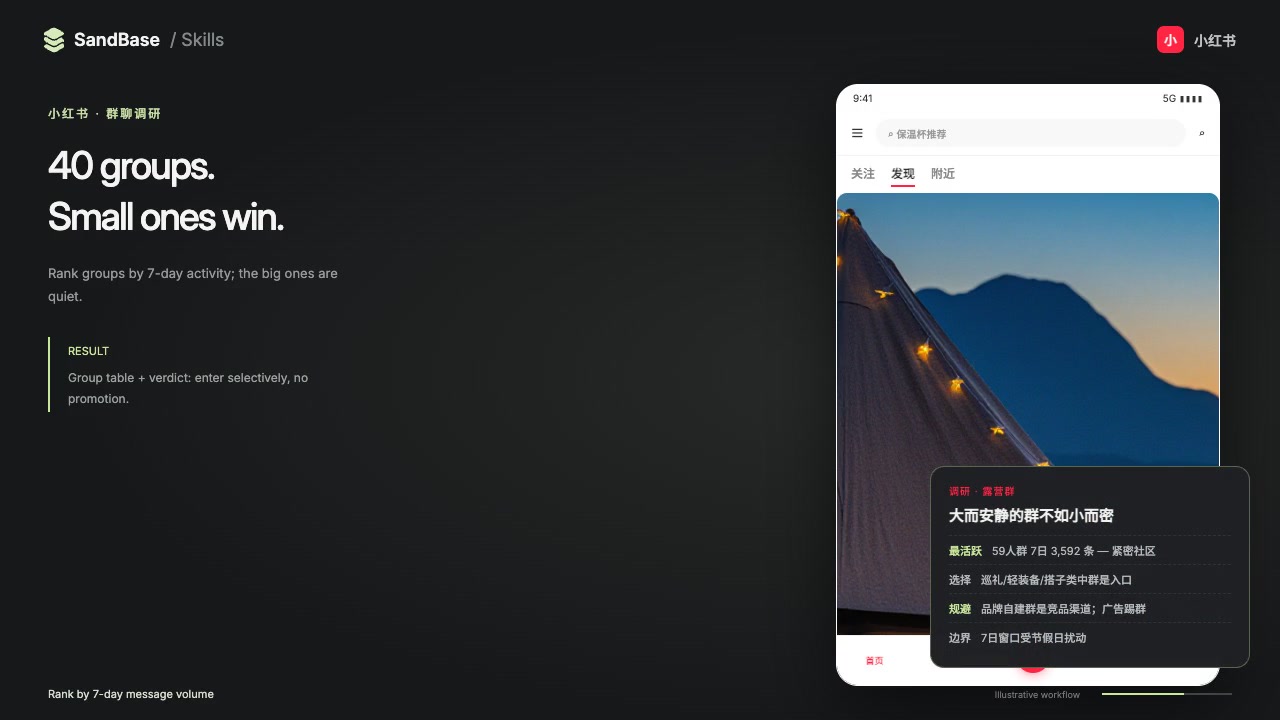
Is there a Xiaohongshu group-chat scene for your niche — how big, how alive, and how to enter it honestly.
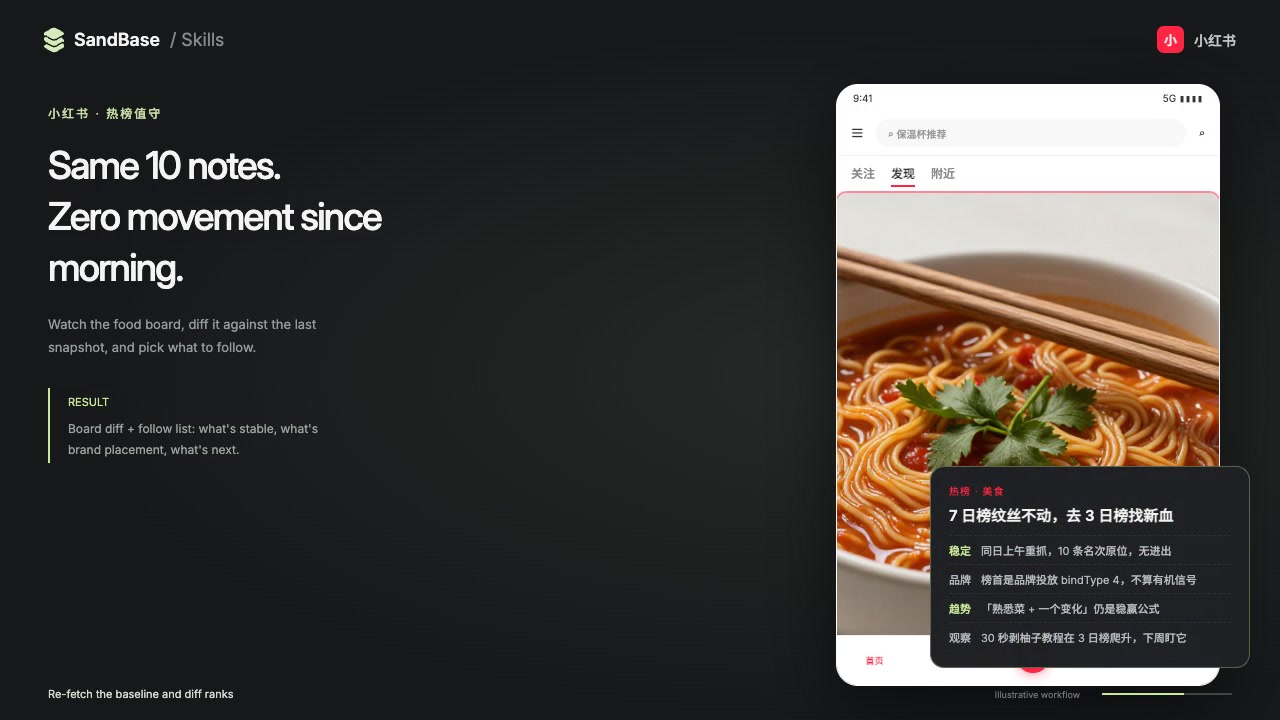
Track your niche's hot board day to day — what entered, what climbed, what dropped out.
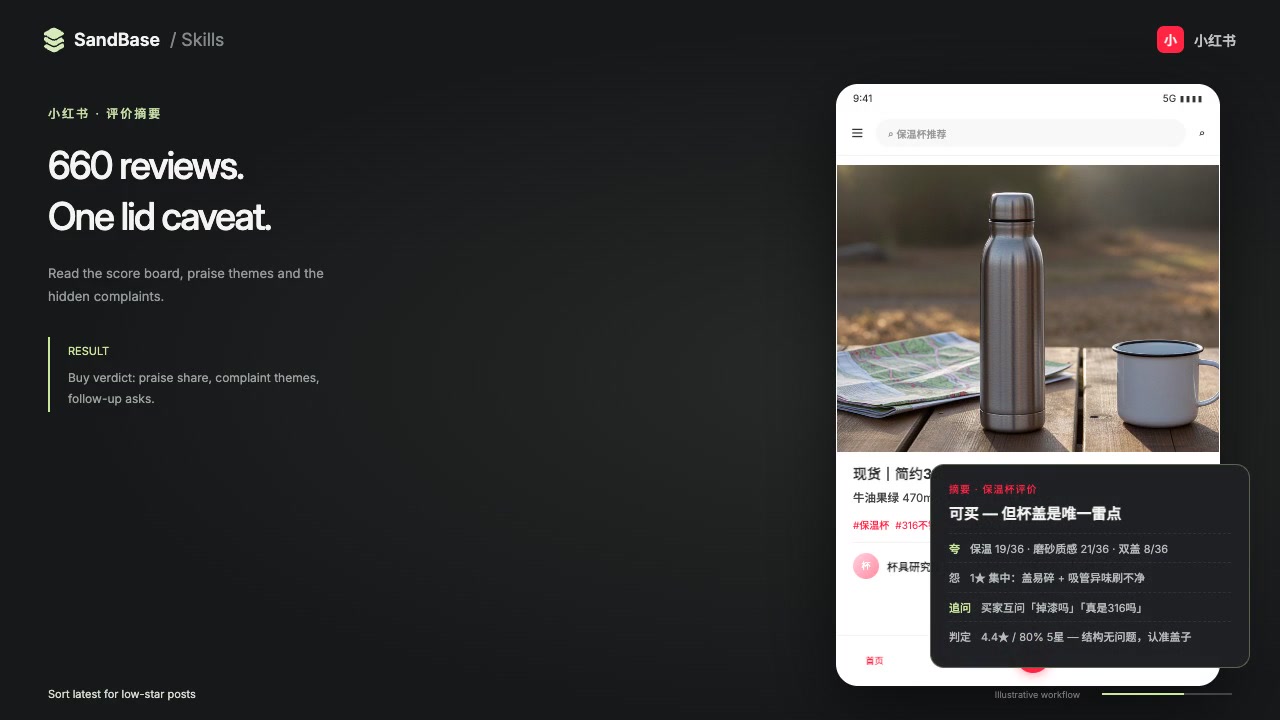
What do verified buyers really say about a product — praise, complaints and the disputed points.
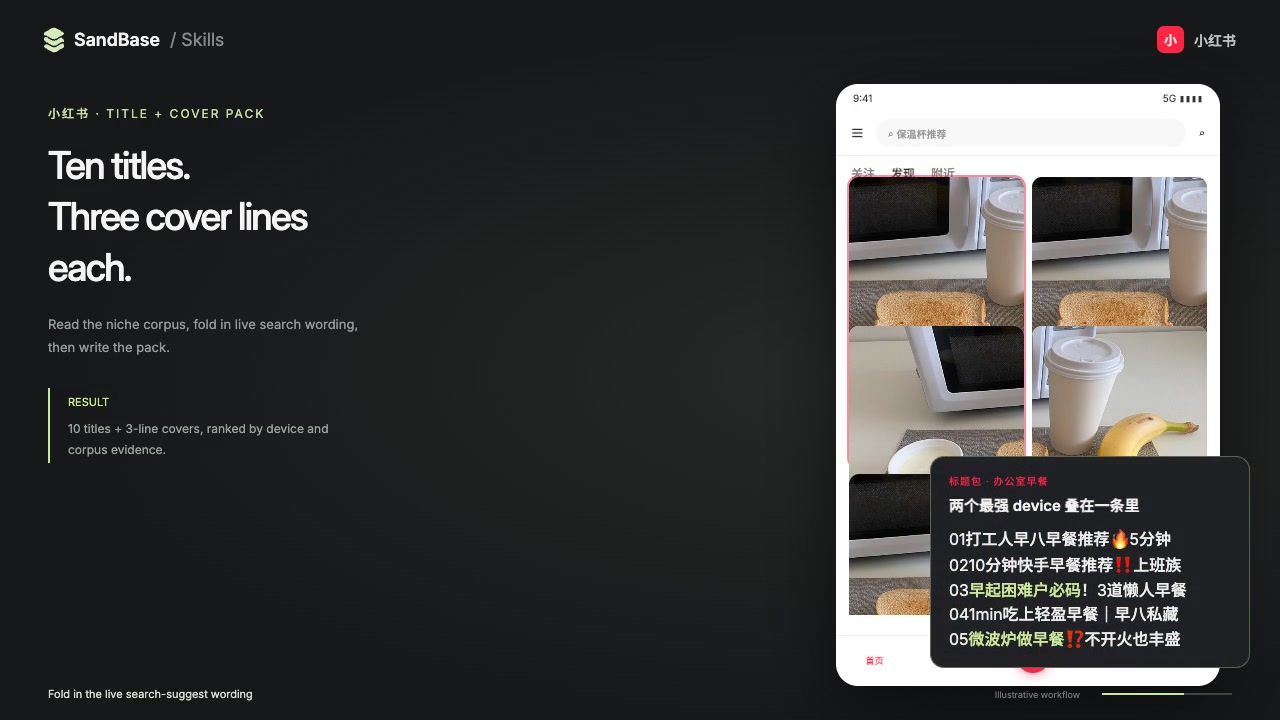
Get 10 titles and cover copy calibrated on what actually works in your niche right now.
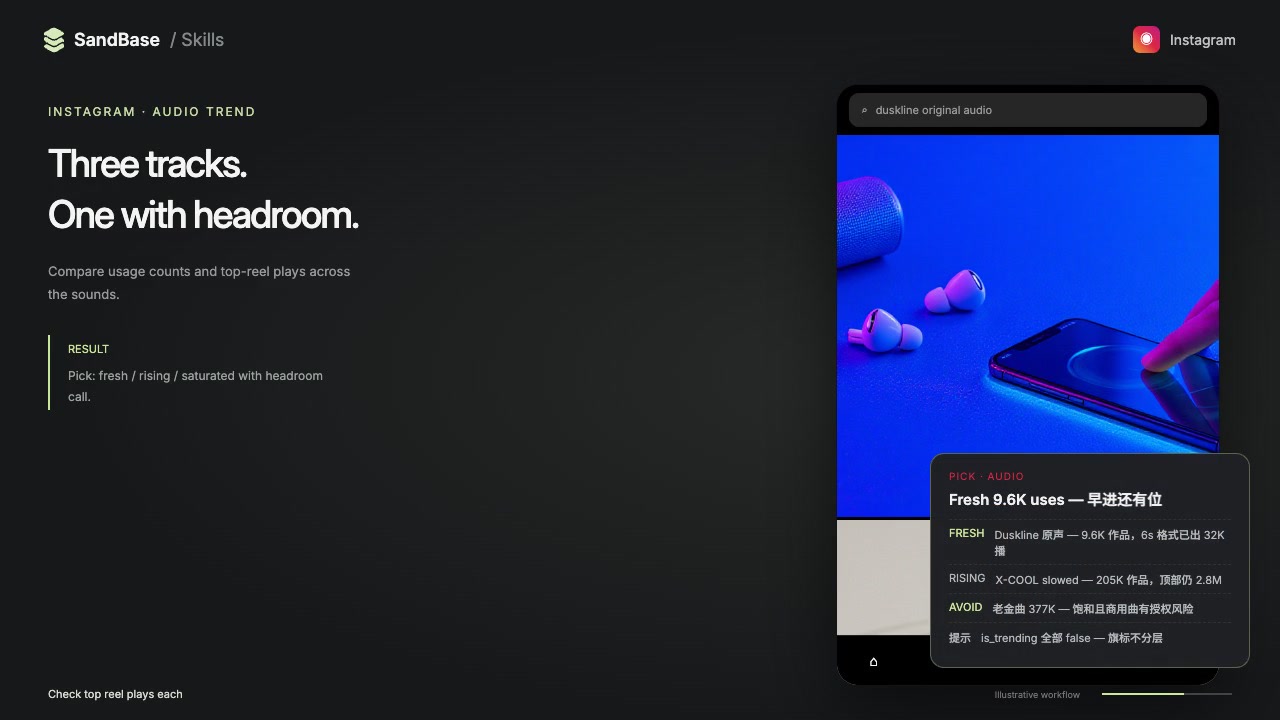
Check how Instagram audios are actually being used — how many Reels each carries, whether Instagram flags it trending and what the top Reels look like — sorted into fresh, rising and saturated.
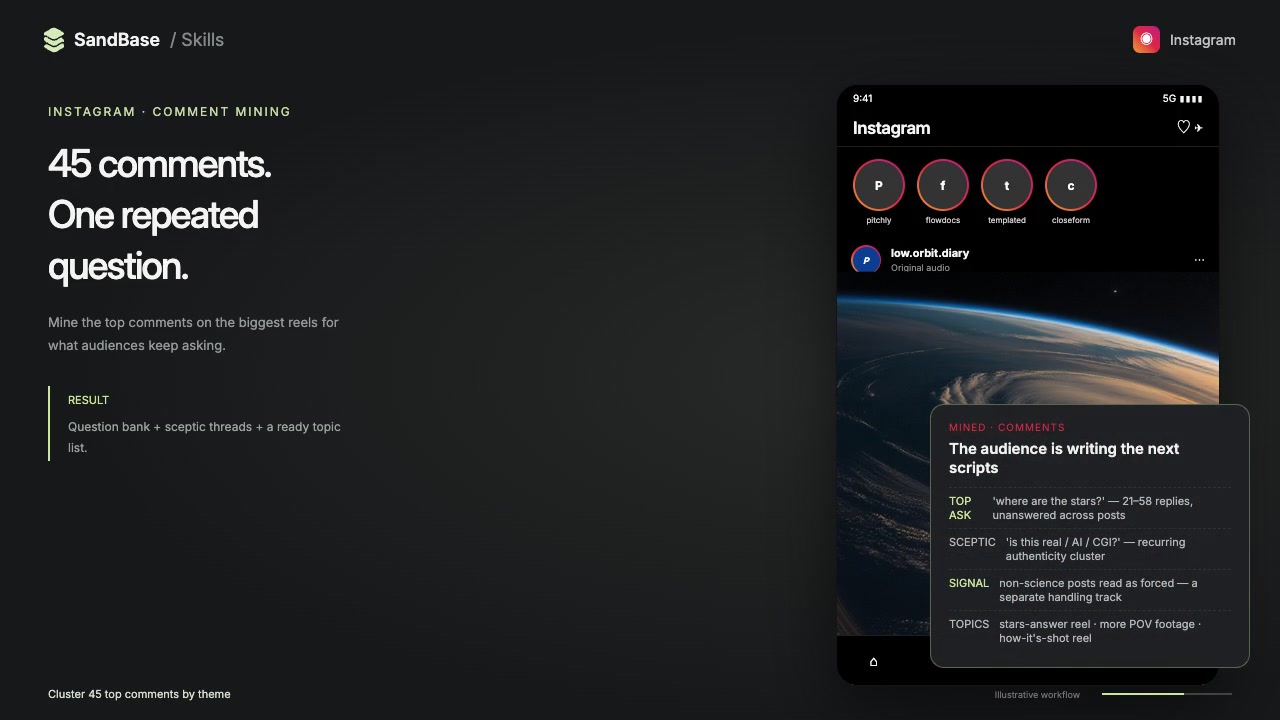
Mine the comments across a niche's top posts into a question bank, pain-point list and next-topic ideas — aggregating many posts' audiences, not replying to one comment.
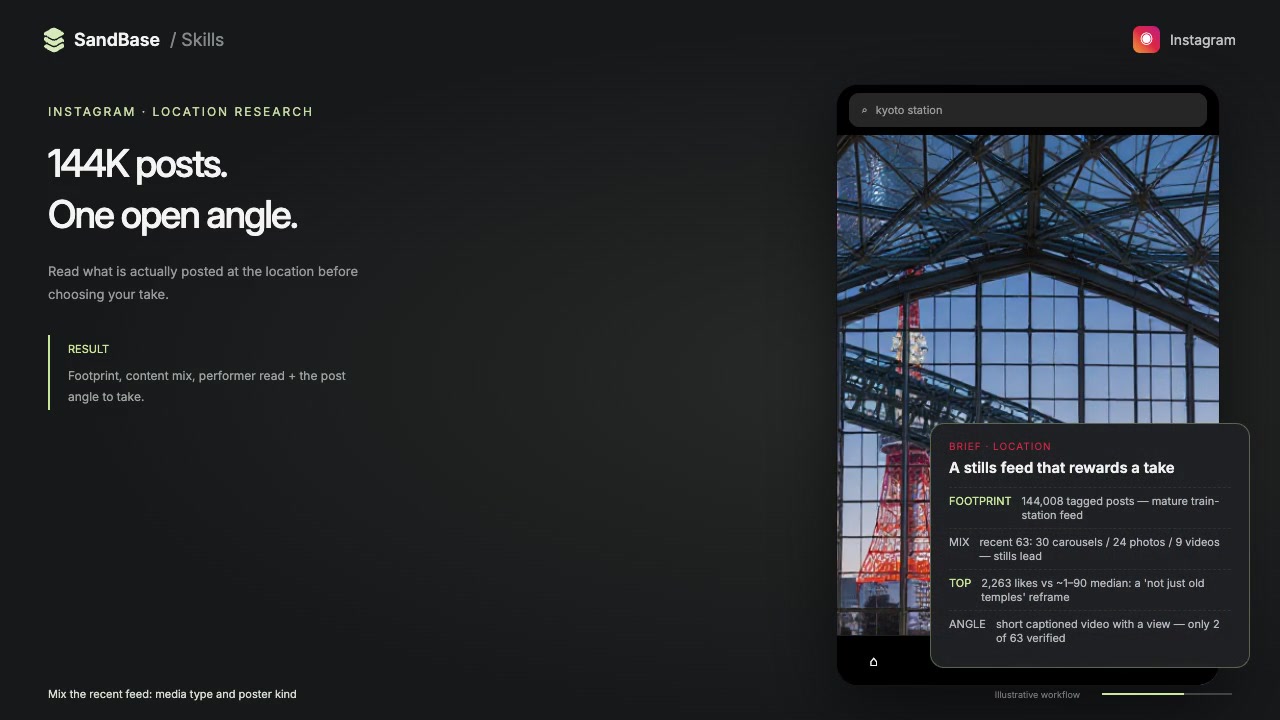
Research what people actually post at a real Instagram location — the post mix, formats, who posts and what performs — to brief a local content plan or a venue's own posts.
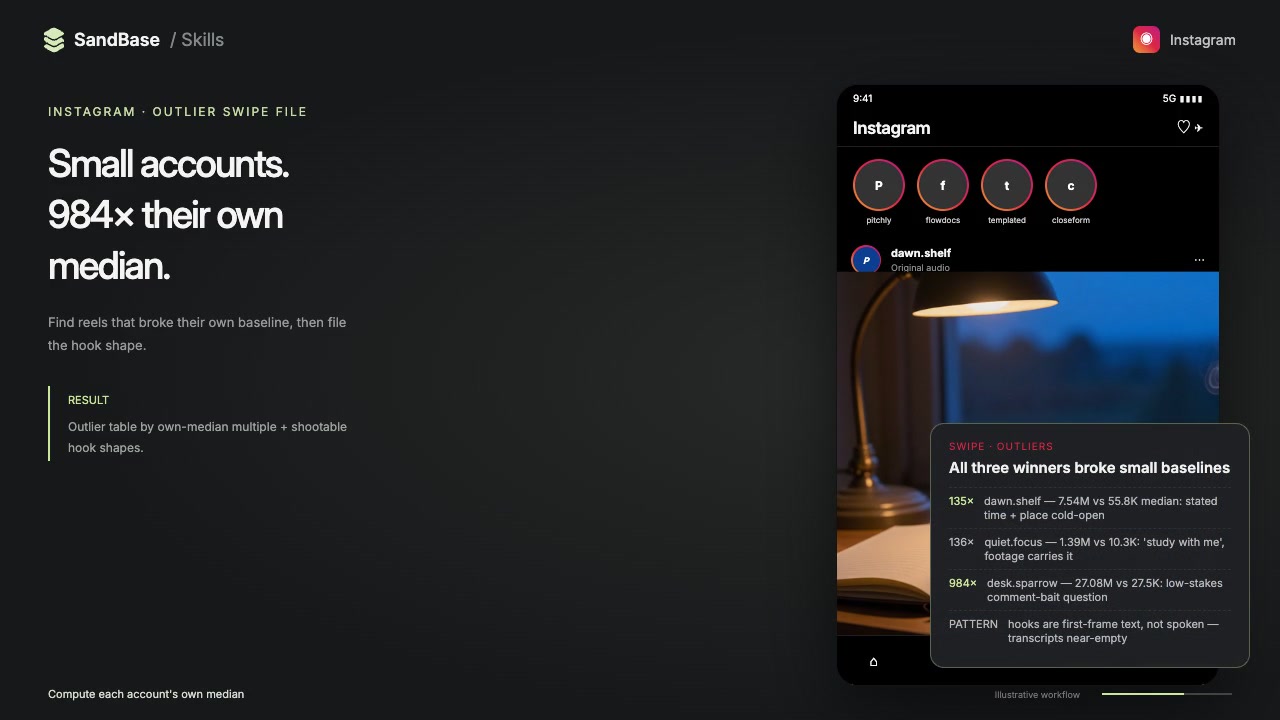
Find the Reels in a niche that far beat their own account's baseline — not the biggest raw numbers — and name each hook shape so the user can copy the format.
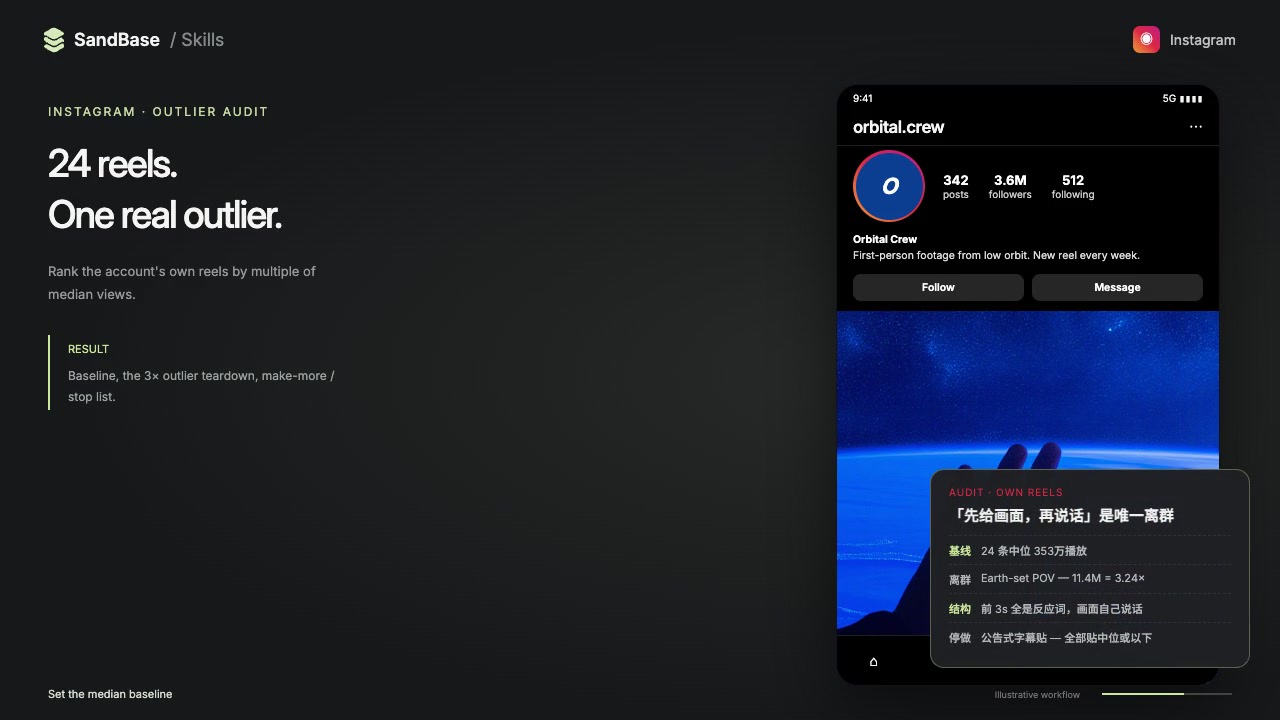
Audit one account's recent Reels against its own median views — which were real hits, why, and what to copy — with per-view engagement context. Reels only.
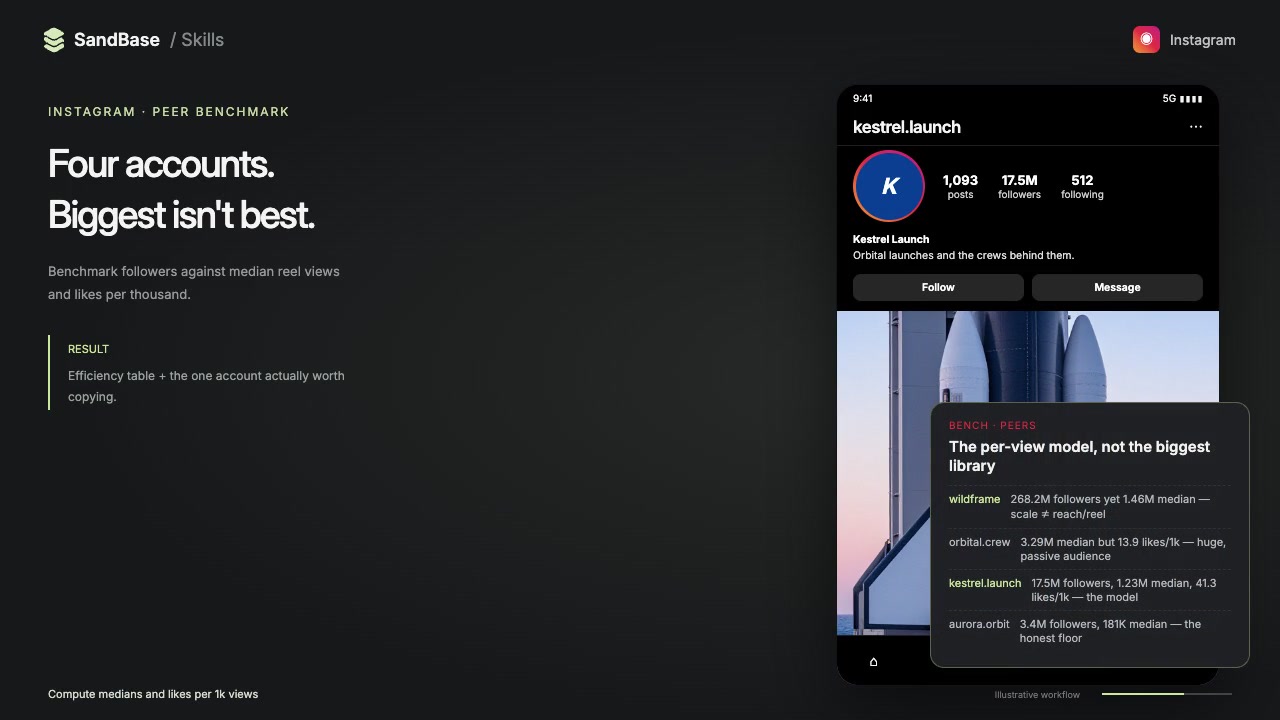
Put two to four Instagram accounts side by side in one table — followers, volume, Reel median views and per-view engagement — to see who is actually worth benchmarking.
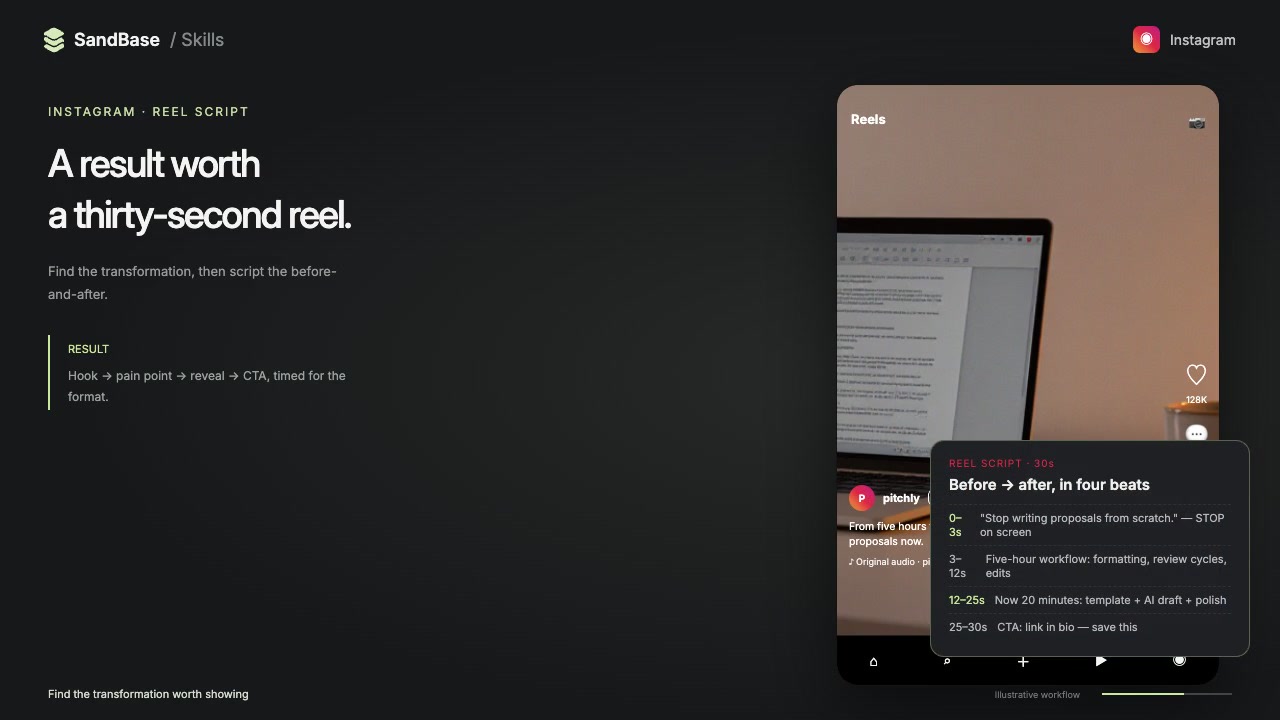
Write a complete, shootable Reel script — ranked hooks, spoken lines, on-screen text and a timed beat sheet — calibrated to what works in the niche's live Reels.
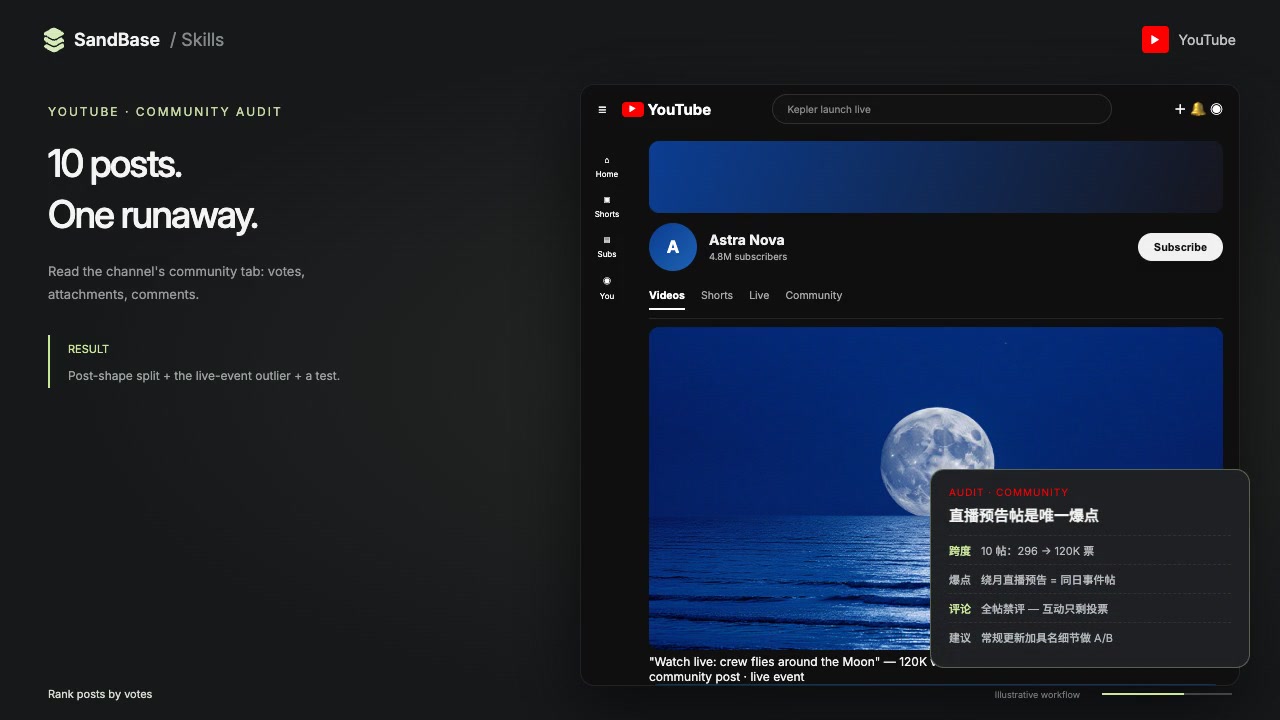
See which of your community posts actually get a reaction — and which formats and topics to repeat.
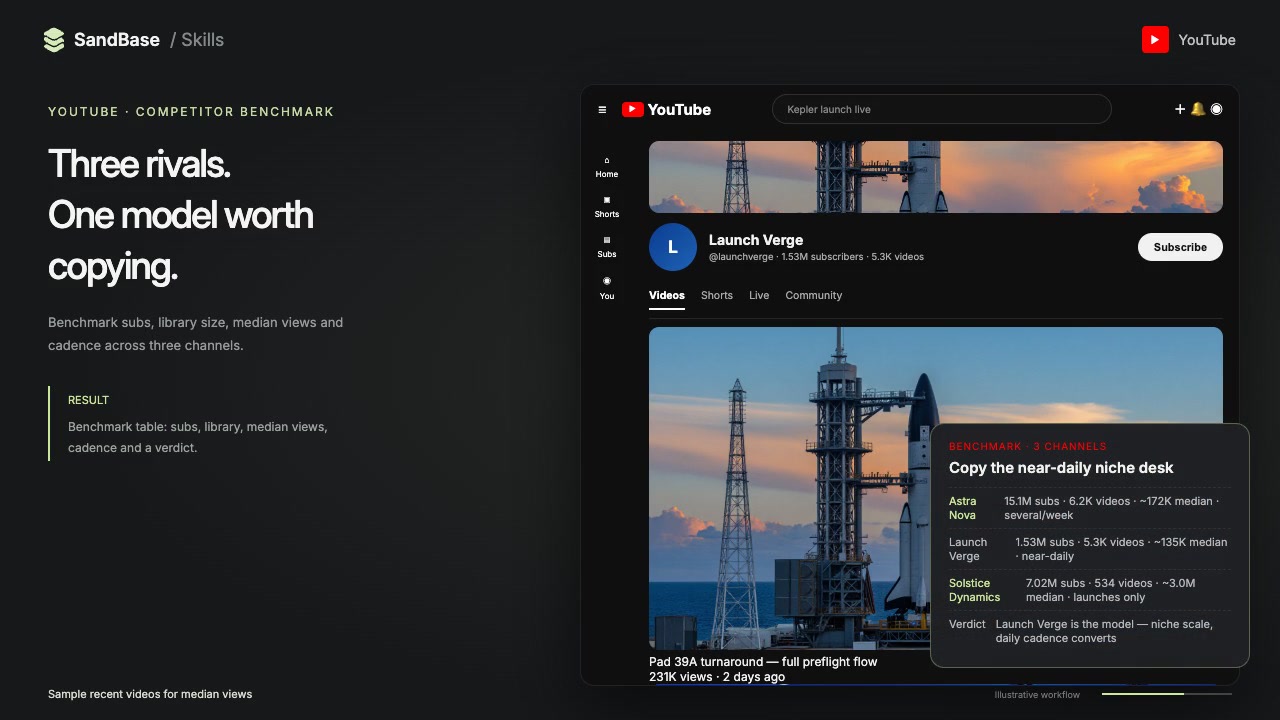
Put 2–4 channels side by side — subscribers, cadence, recent views and best formats — in one comparison table.
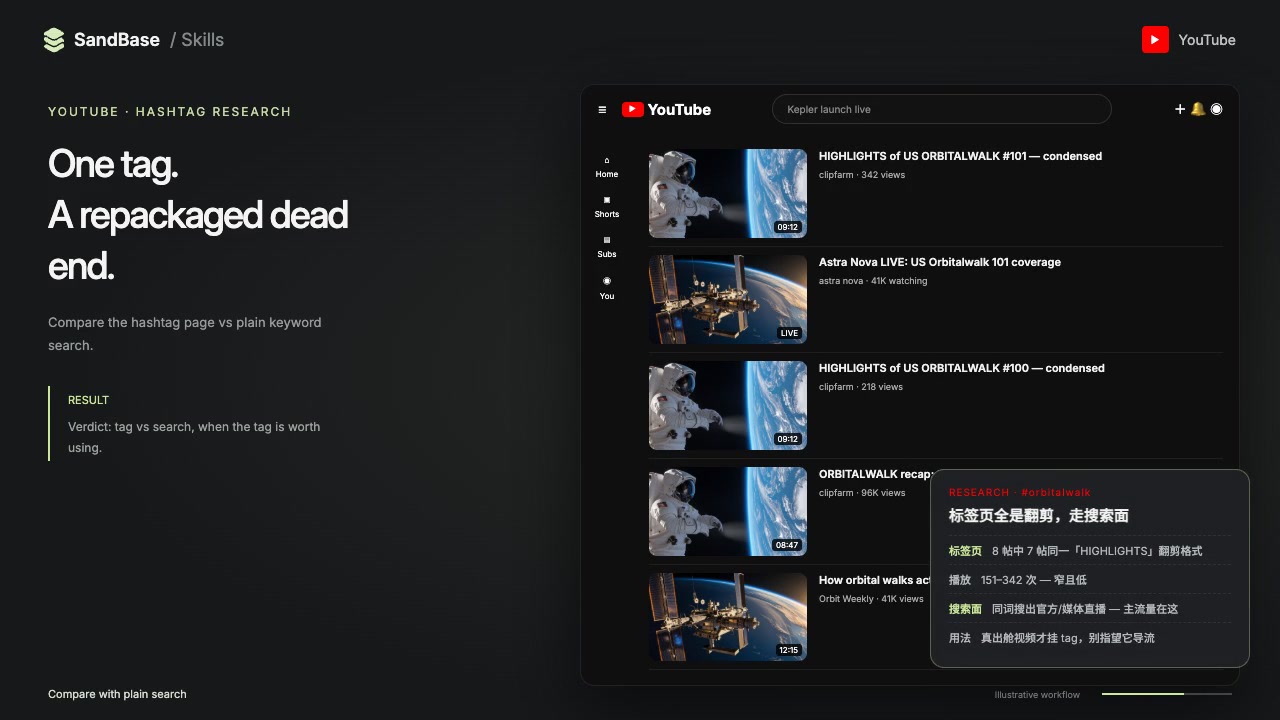
Decide whether a hashtag is worth using before you commit to it — by comparing its own page to plain search.
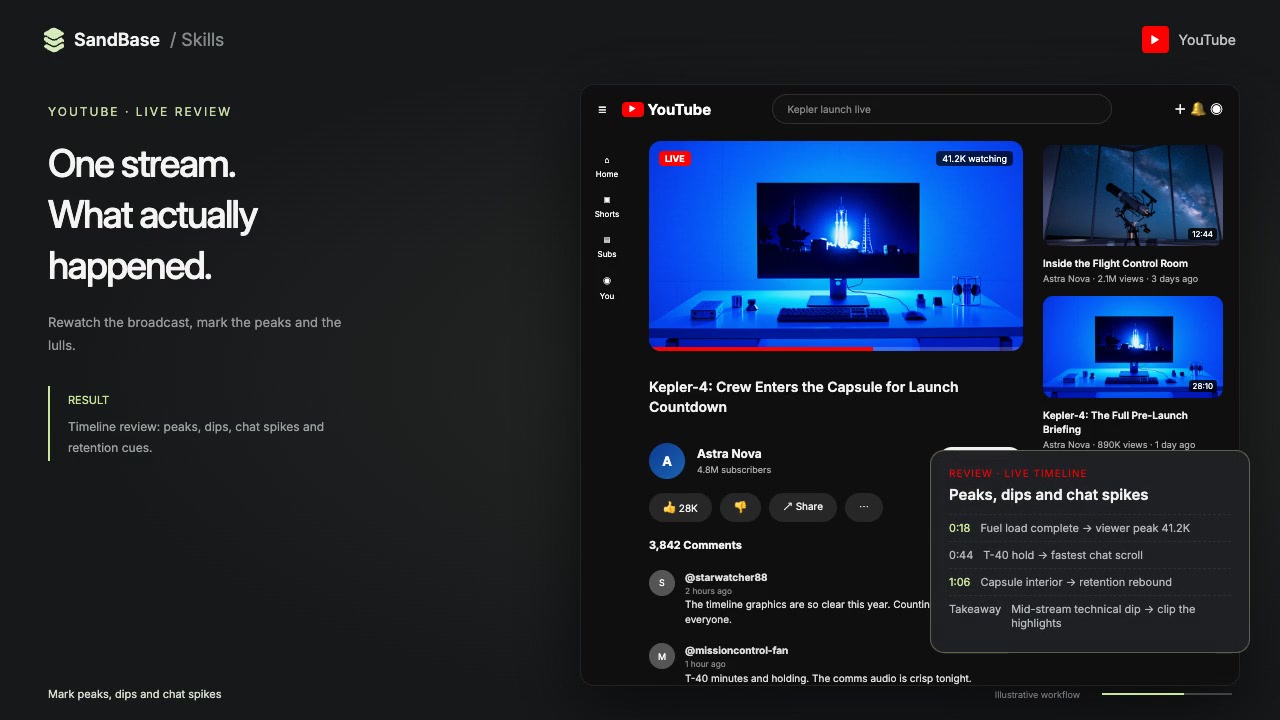
See how a channel actually streams — how often, how long and which events pull viewers — to plan the next one.
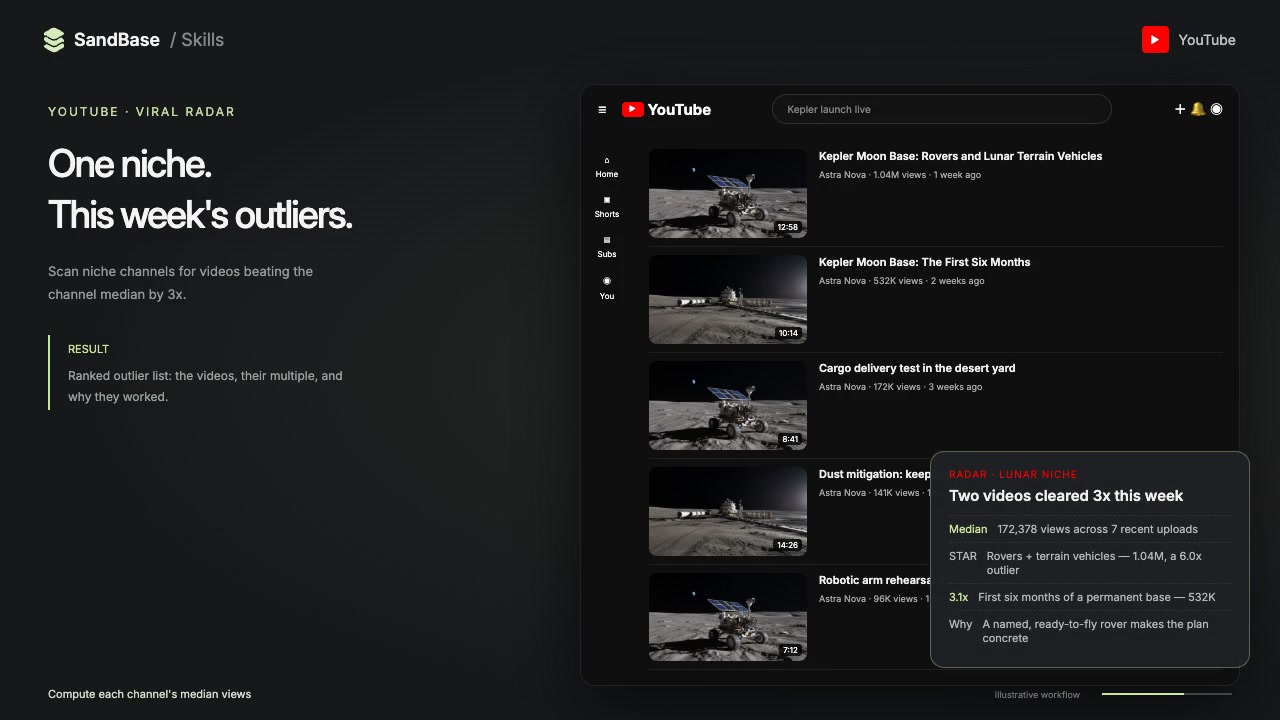
See which ideas are actually beating each channel's normal in your niche this week — not just raw view counts.
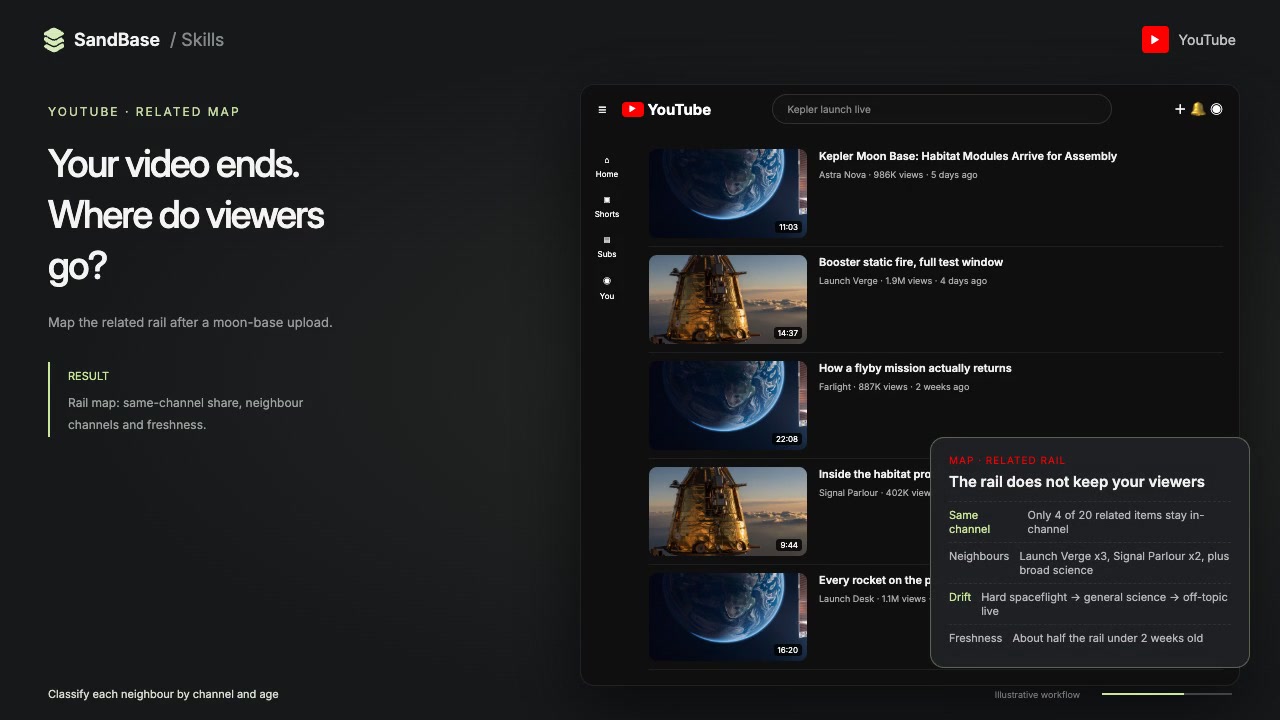
See what YouTube actually recommends next from one video — the real related-videos rail, mapped.
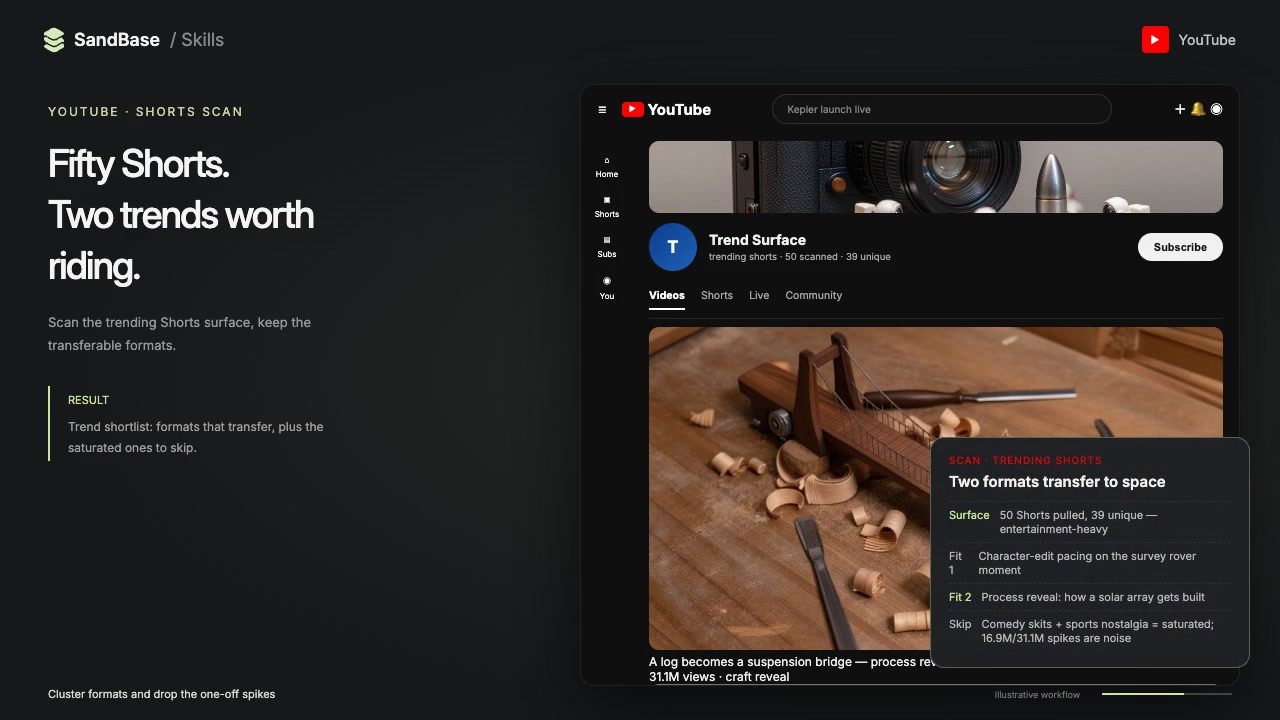
Know which Shorts trends are actually worth riding this week — and which are already saturated.
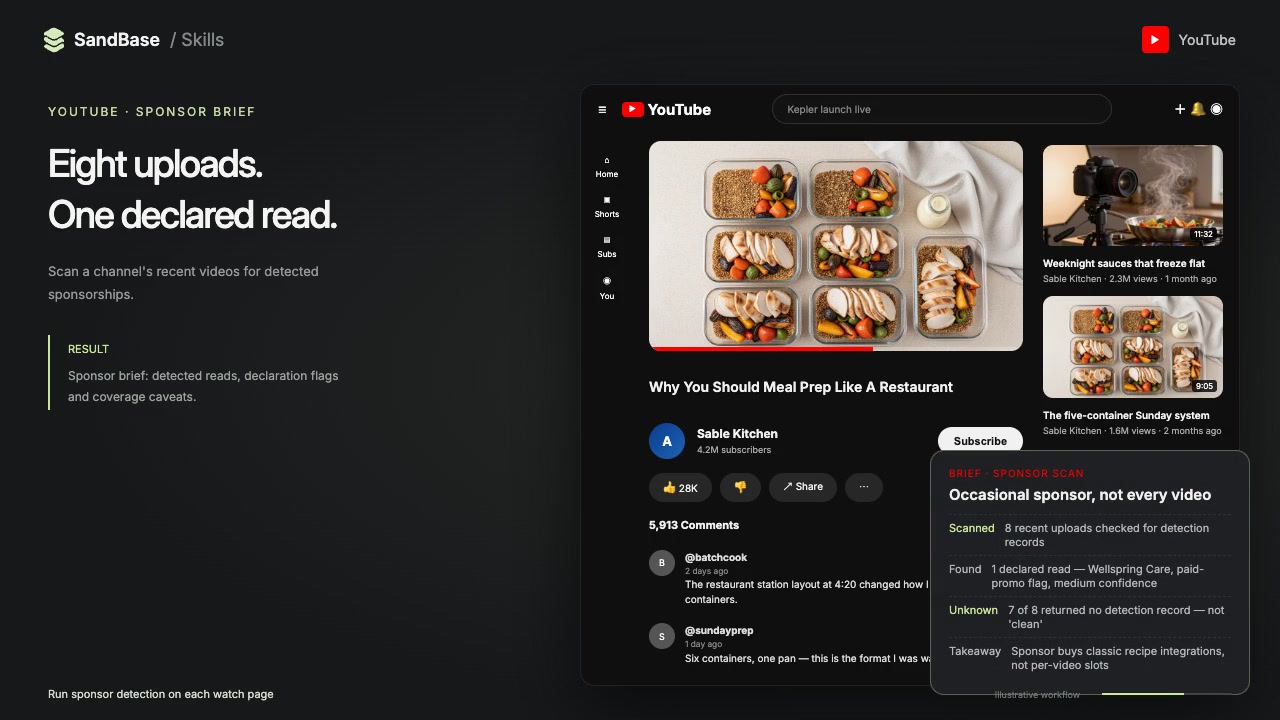
See which parts of a channel's videos are sponsored and by whom — declared promotions and detected reads alike.
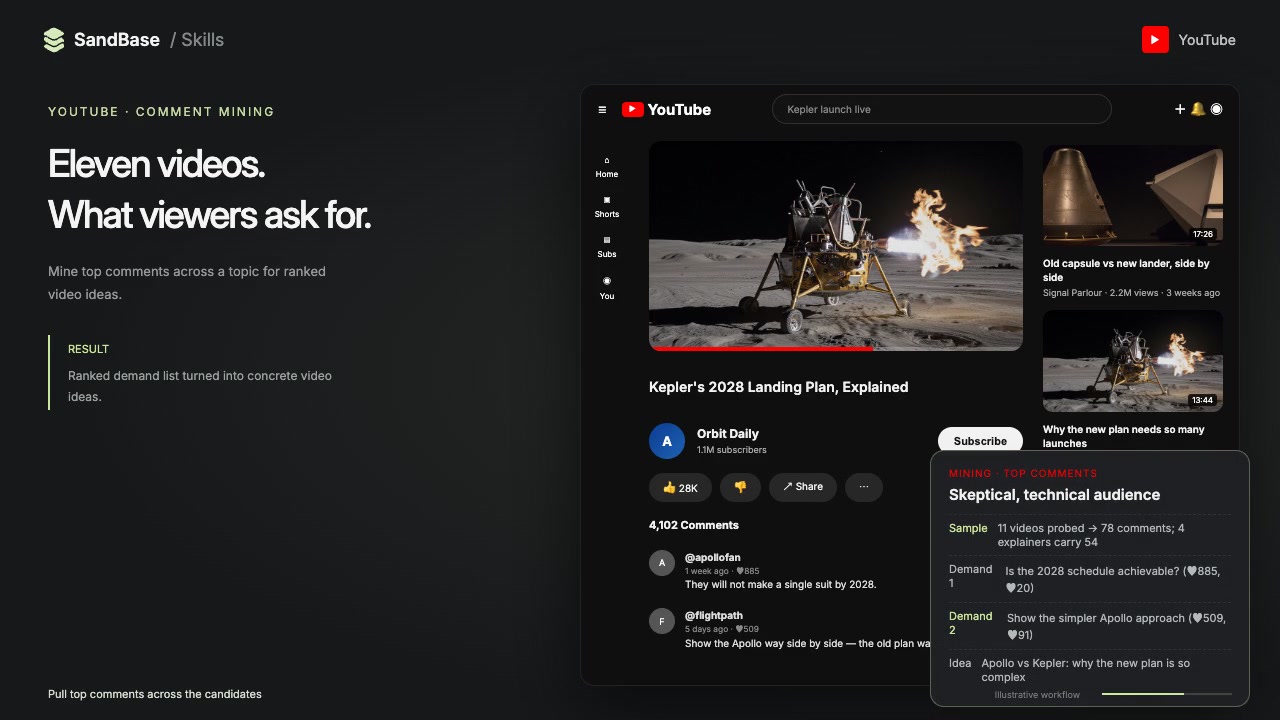
Mine a topic's top-video comment sections for what the audience is really asking, struggling with and willing to pay for.
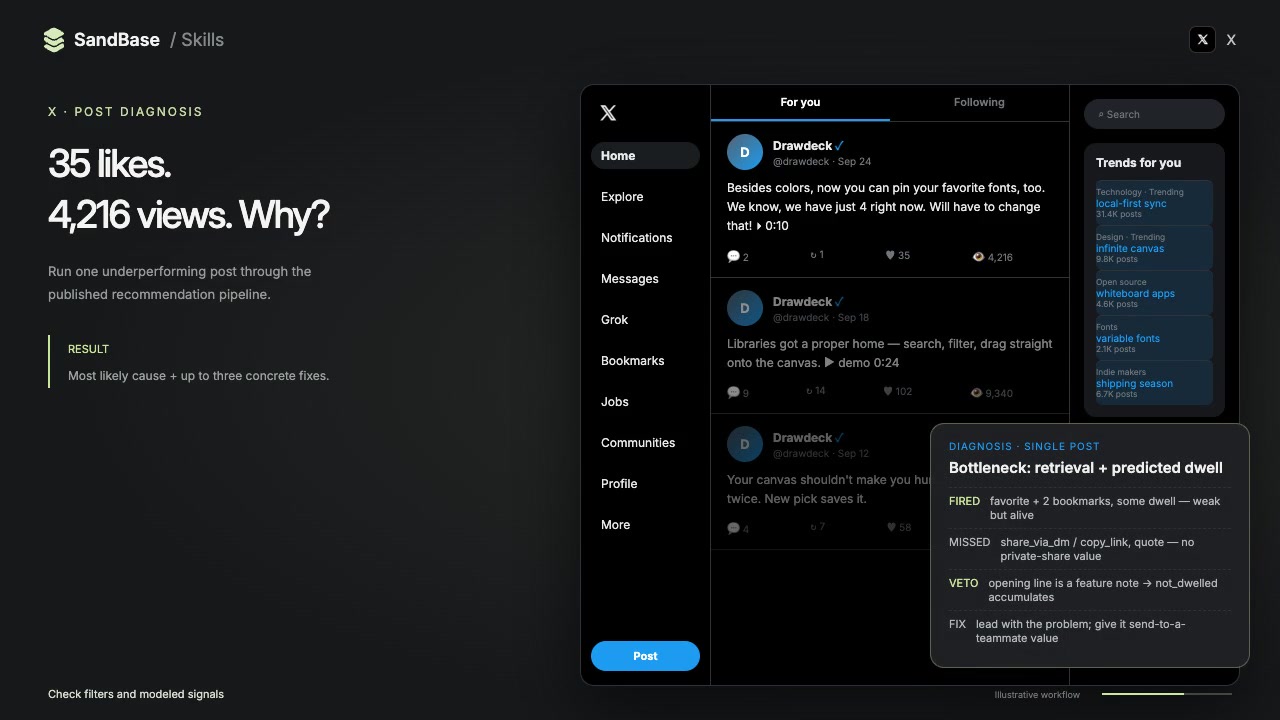
A post that didn't take off needs a structural reason, not a guess about the algorithm.
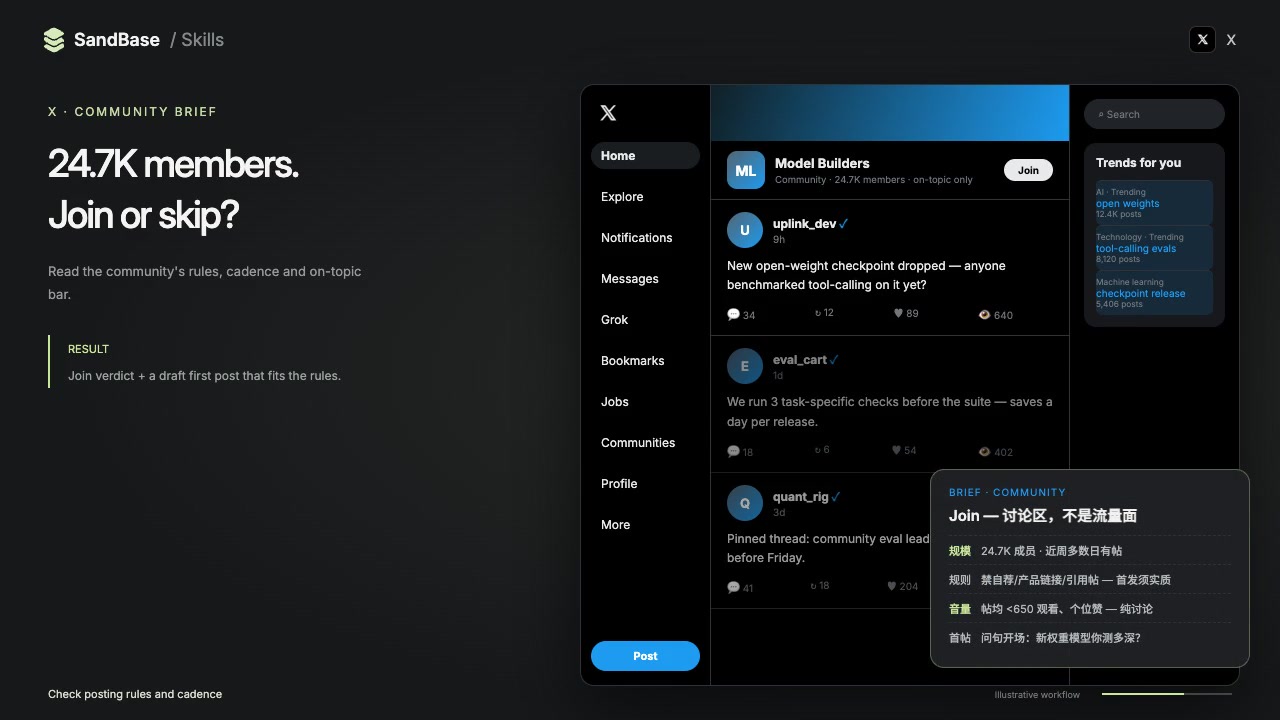
X Communities are a real channel, but you can't tell which are active or worth joining without reading them.
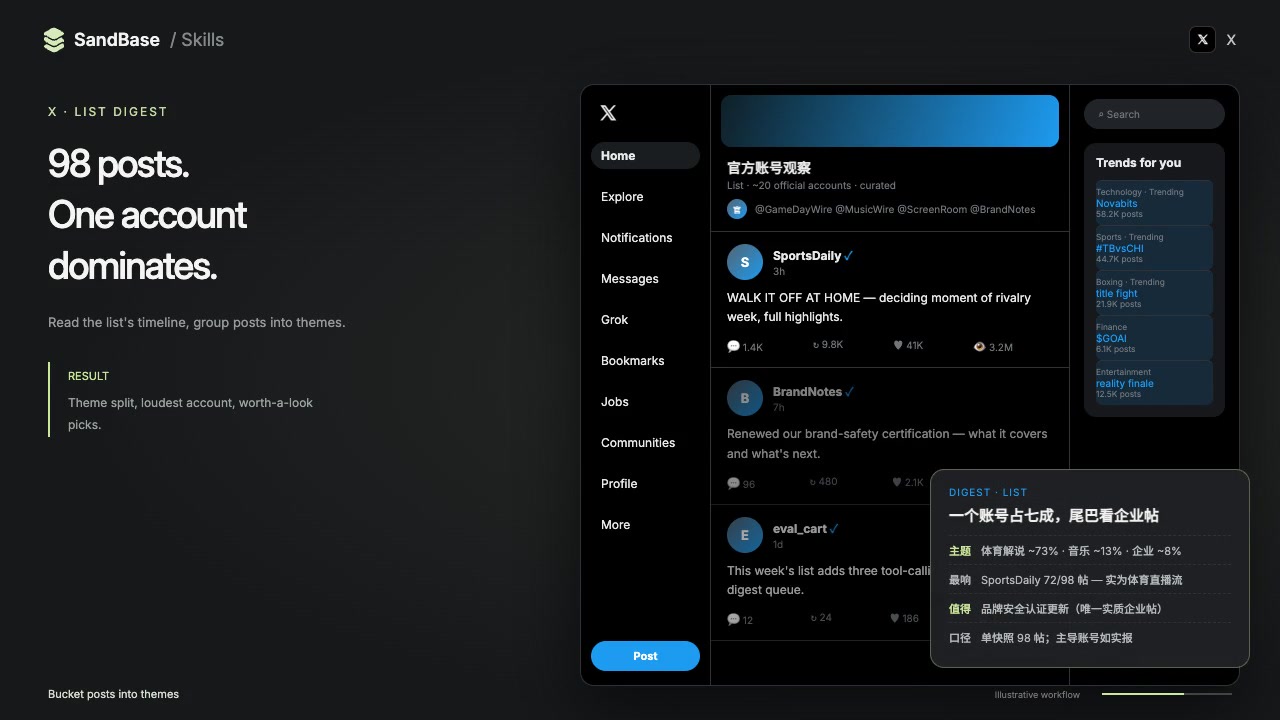
An X List is only useful if you can read what its members are actually talking about.
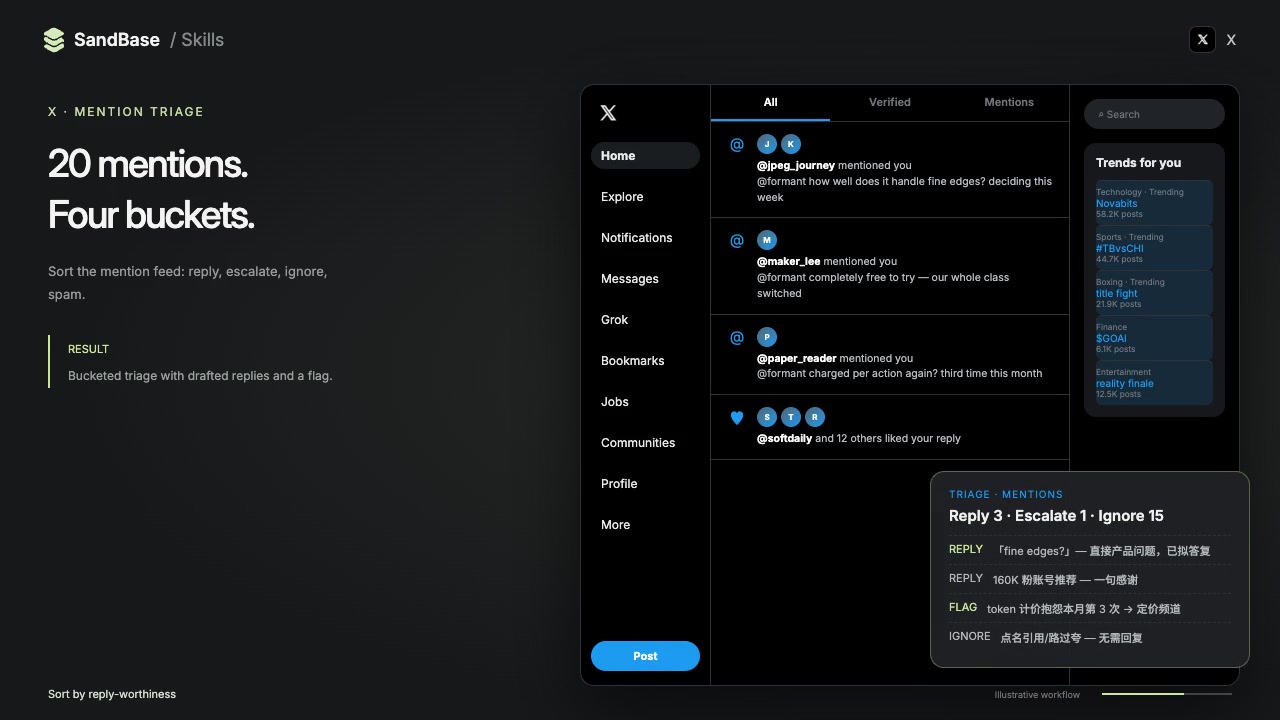
Incoming @-mentions are a mixed bag — some need a reply, most don't, a few need escalating.
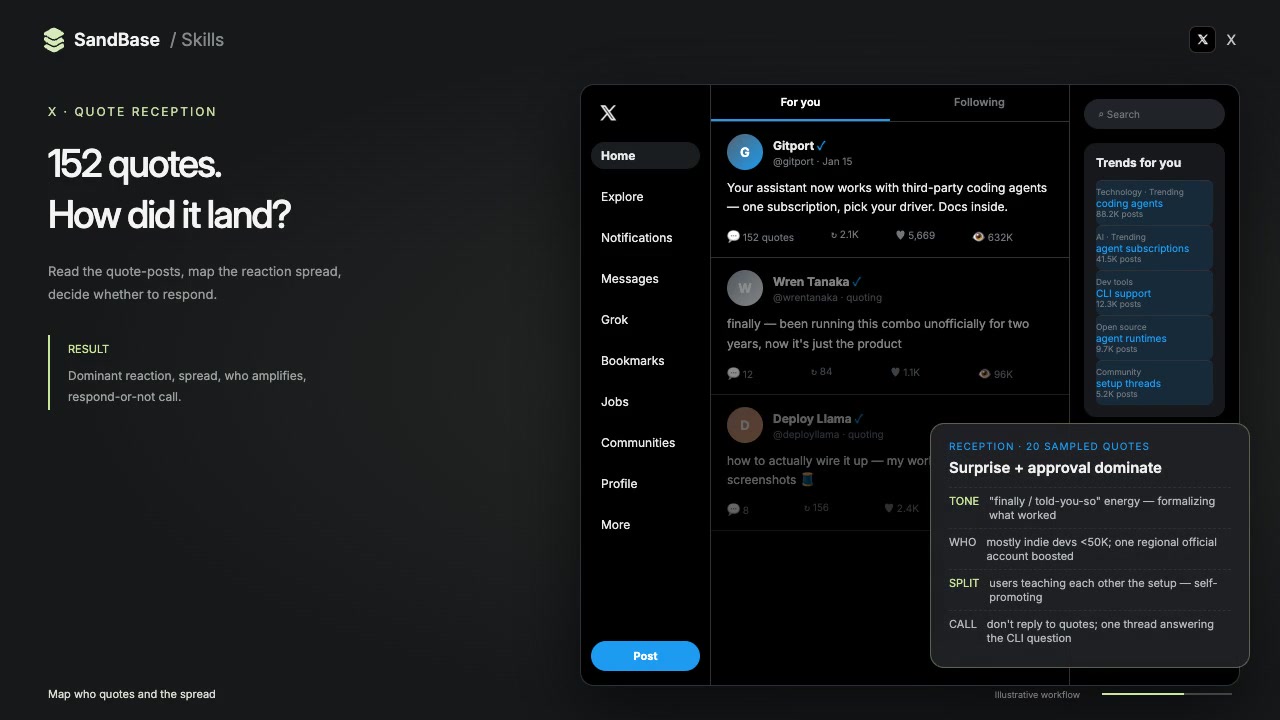
When a post gets quoted a lot you can't tell at a glance whether it's being praised or mocked.
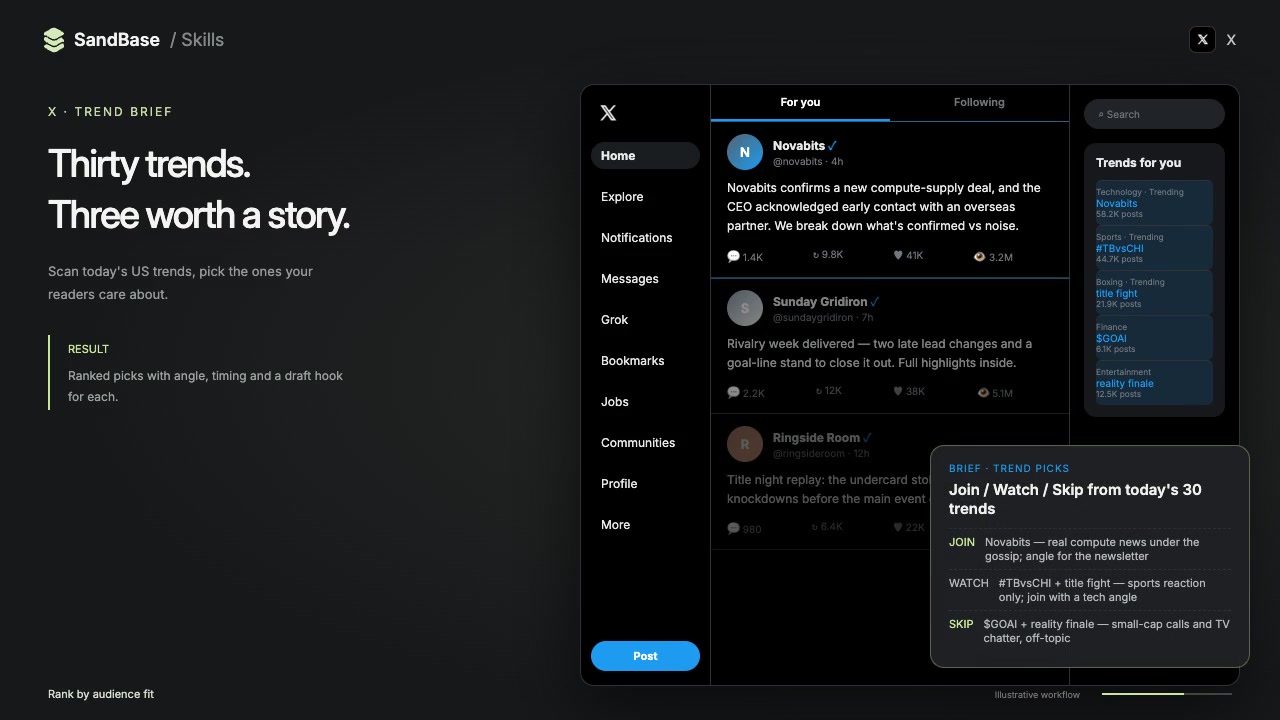
Deciding which of today's X trends is actually worth a post takes opening each one.
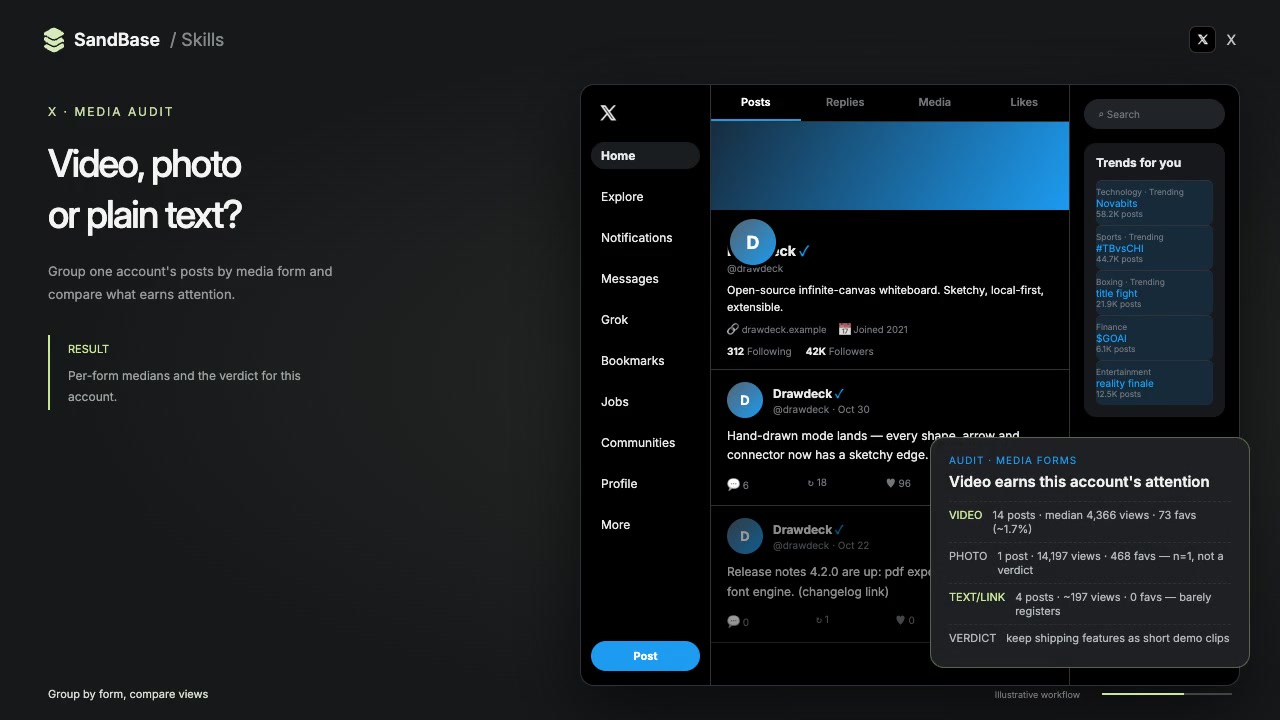
Deciding between video, images and text is a guess until you compare how each form actually performs.

Read what your LinkedIn posts actually did — which formats and topics landed, which flopped — and what to post more of.
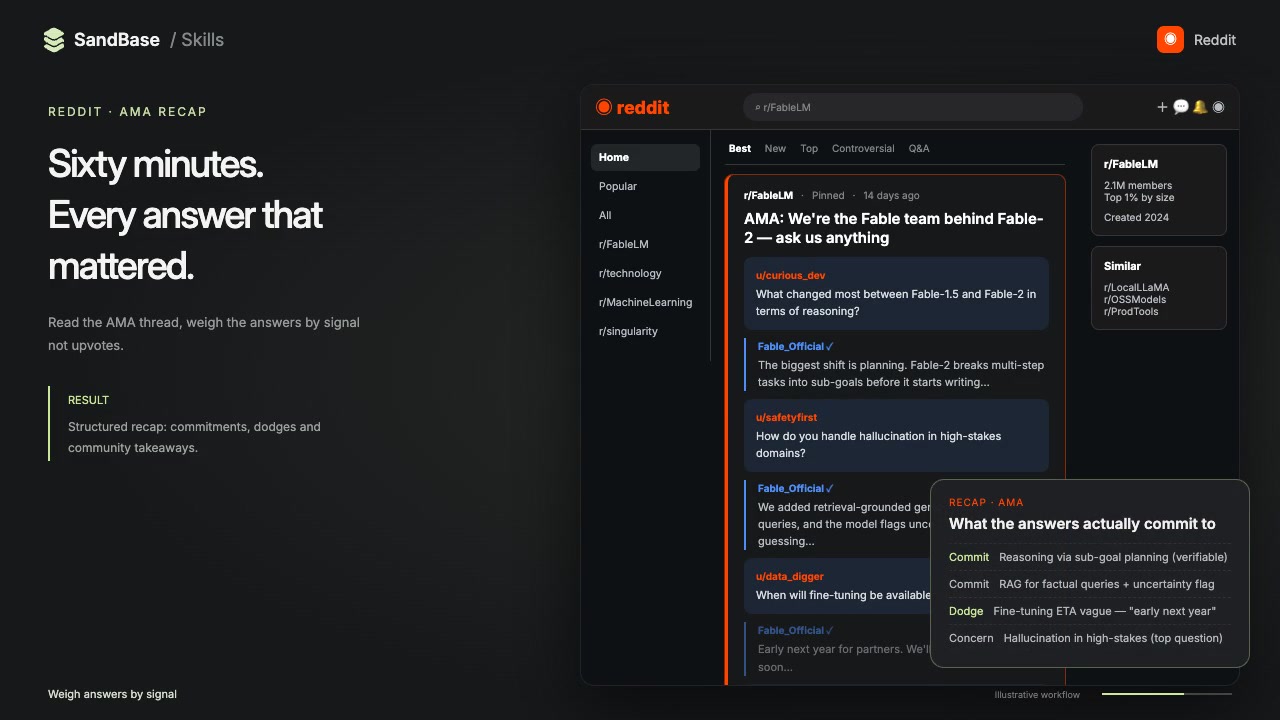
Review a finished AMA: what was asked, what got answered, and what to do differently next time.
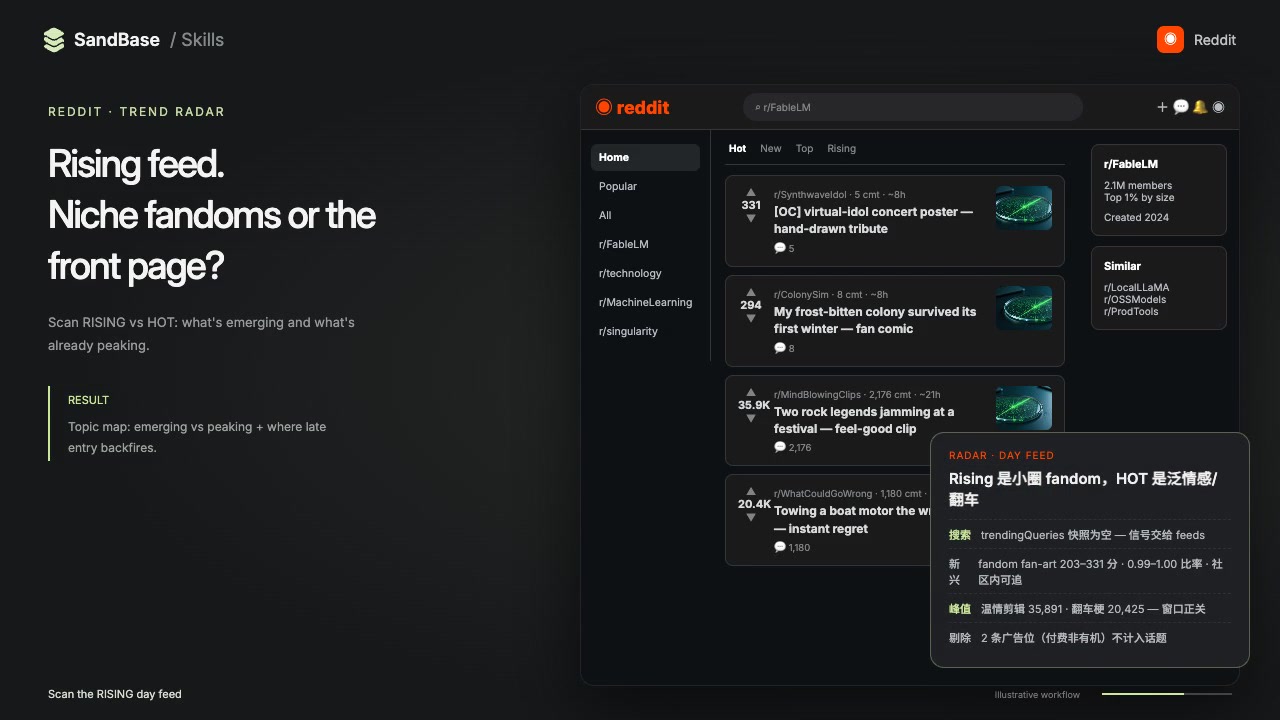
See what Reddit is talking about right now and which themes are still early enough to join.
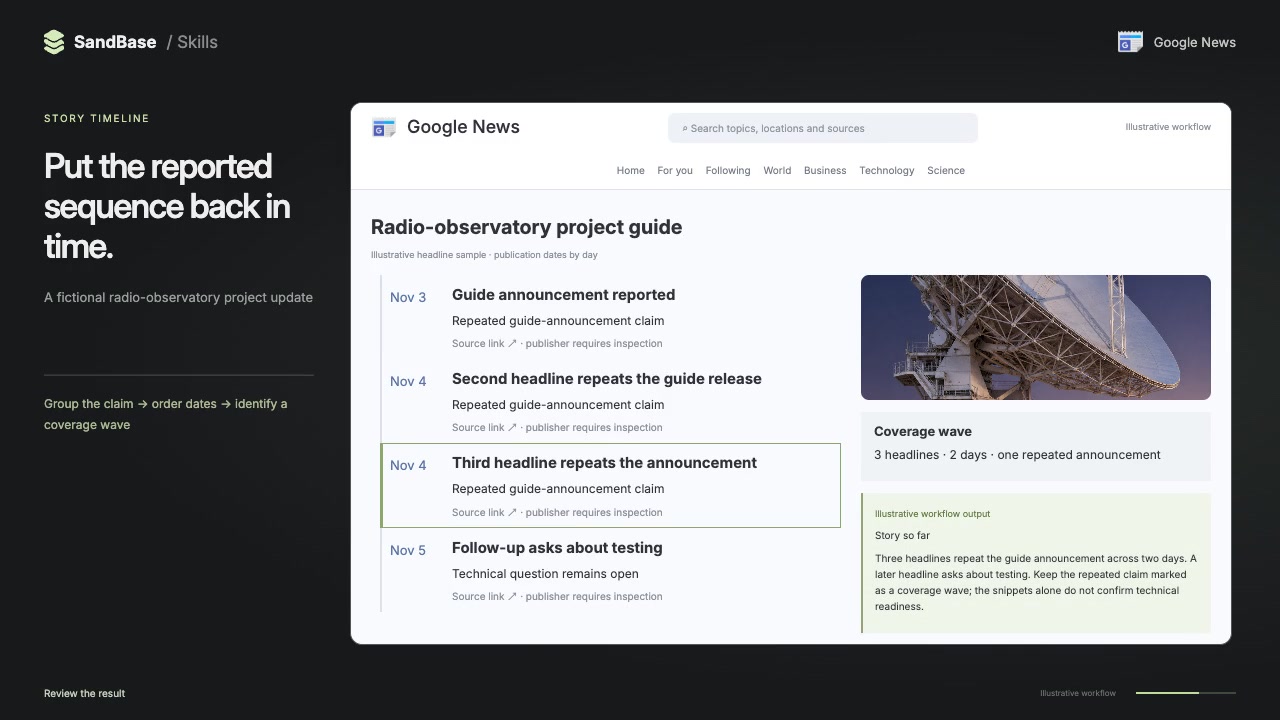
Turn a news search into a dated timeline of how a story developed, and see when many headlines repeat one claim.
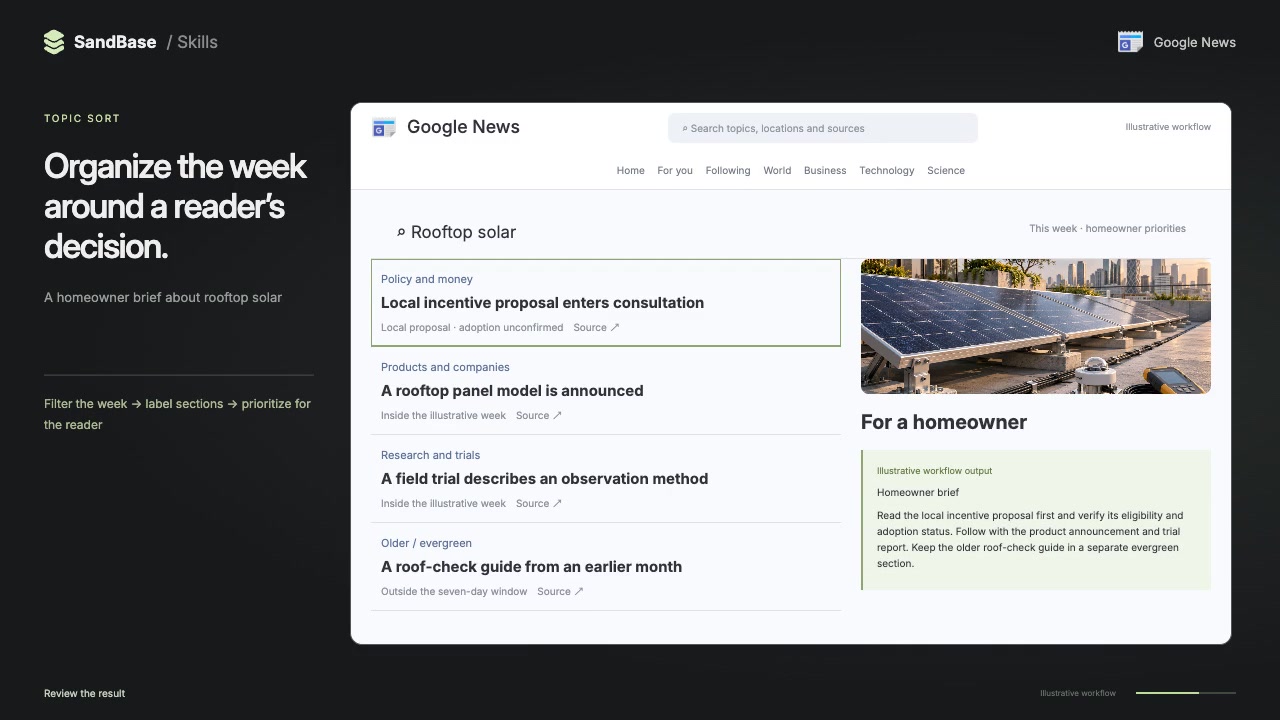
Sort this week’s news on a topic into sections a reader can use, and write the newsletter section.
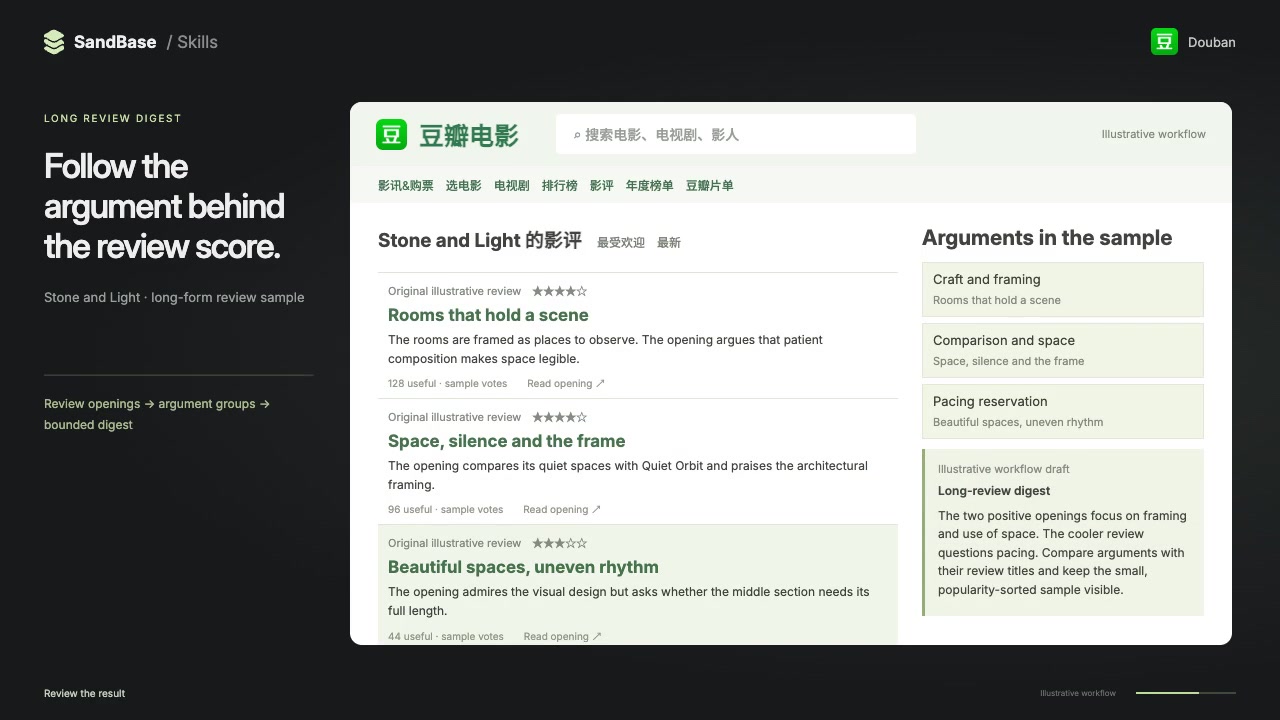
Find out what Douban’s long-form reviewers argue about a film or series, and where the cooler reviews disagree.

Find out what Zhihu actually knows about a question — check Zhihu's AI search answer against articles, answers, topics, Salt titles and papers before you write.
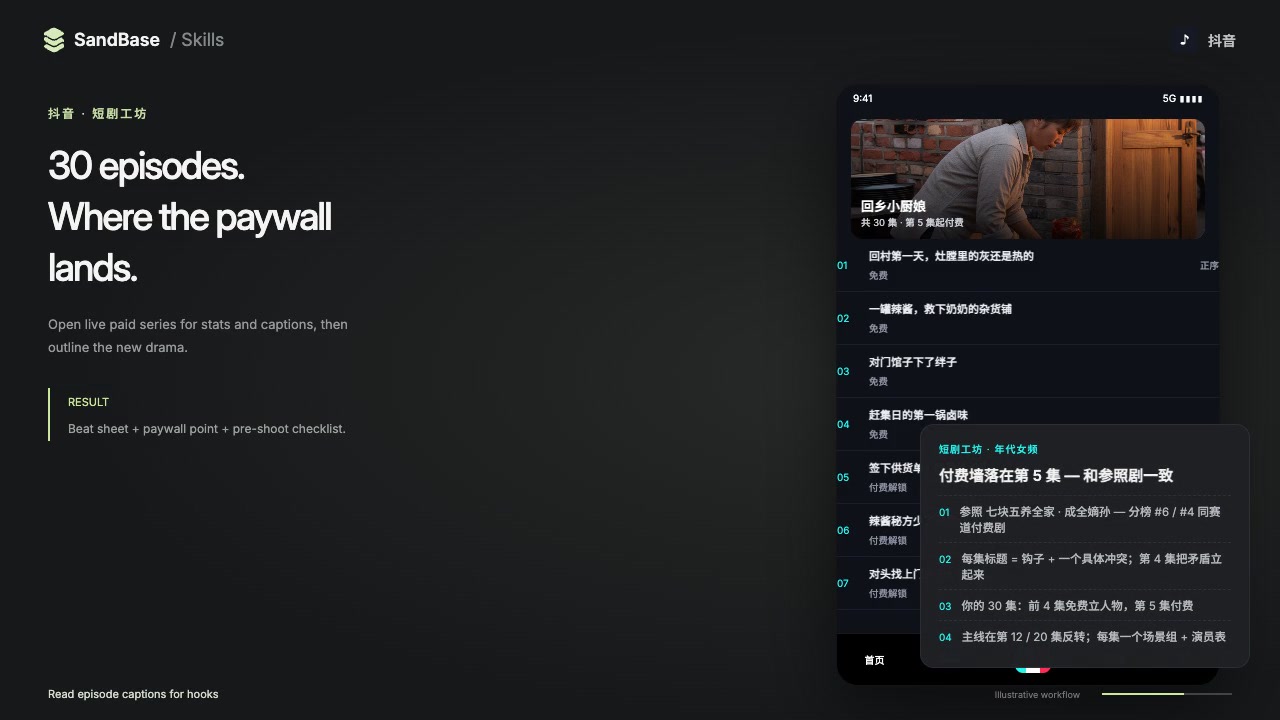
Turn a short-drama premise into an outline your team can shoot, paced like the Douyin series that already work.
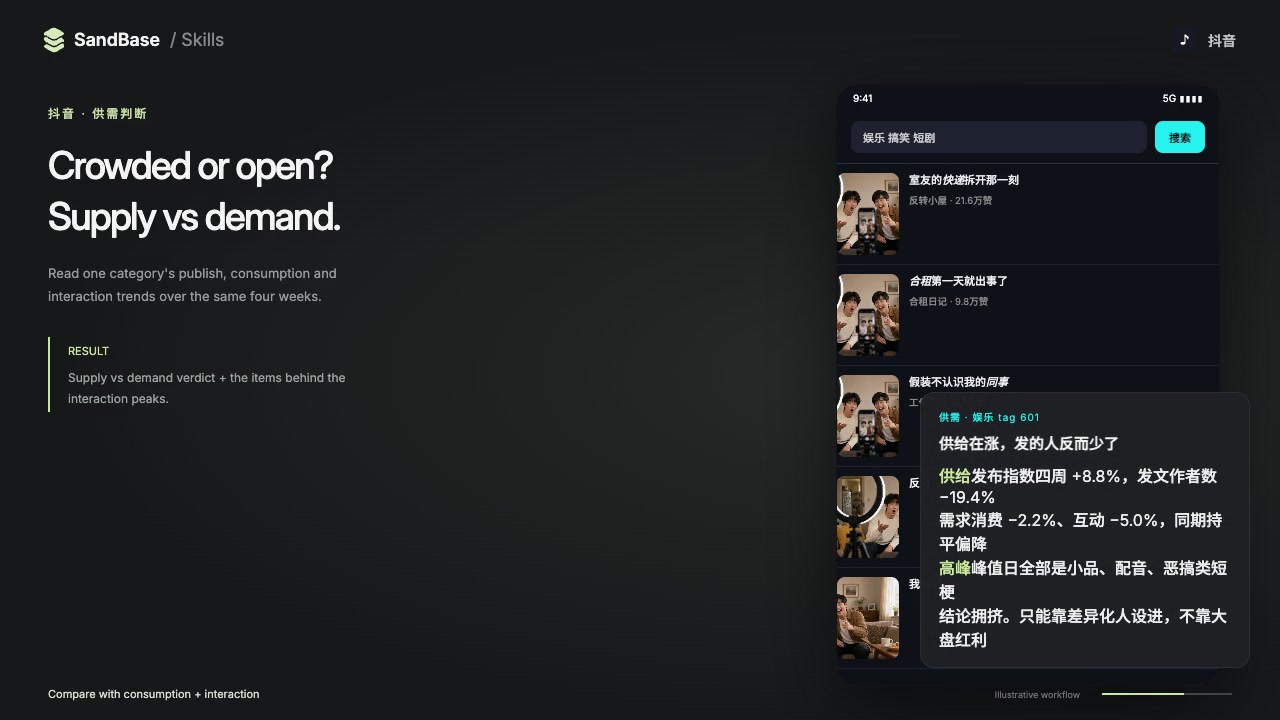
Find out whether a Douyin category is crowded or still under-supplied before you enter it.
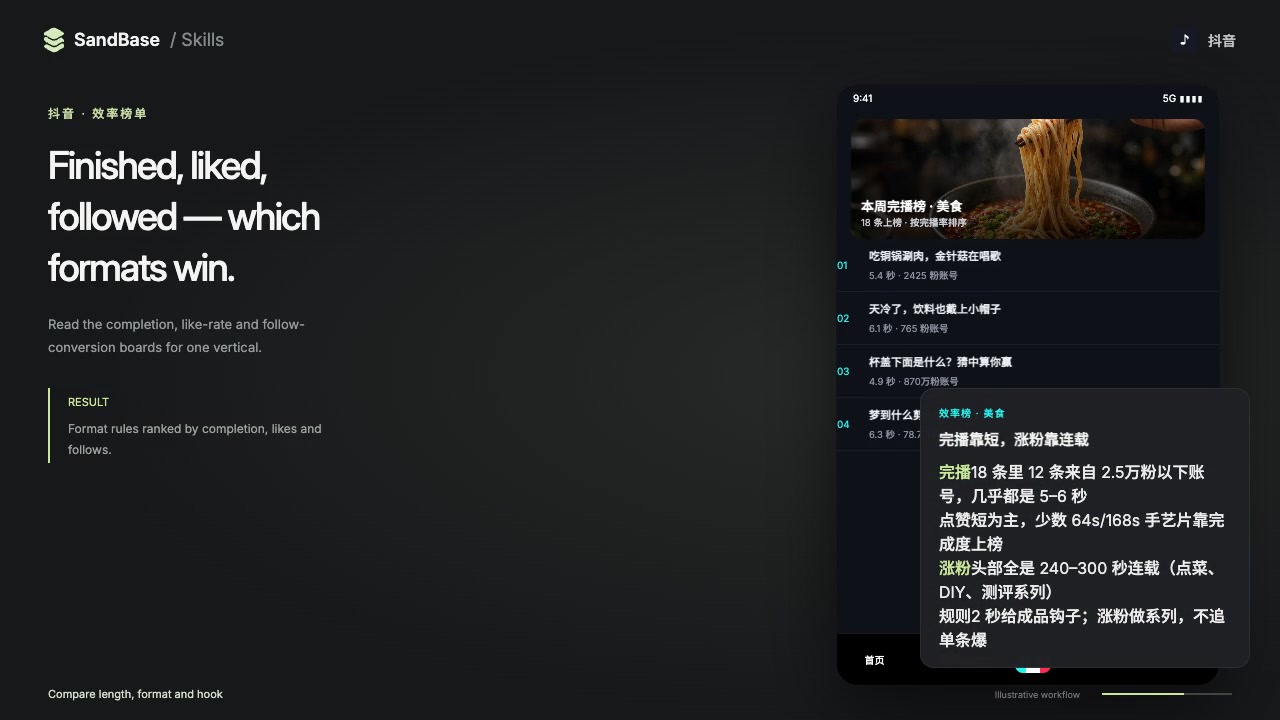
Find which Douyin formats get finished, liked and followed, not just which videos are popular.
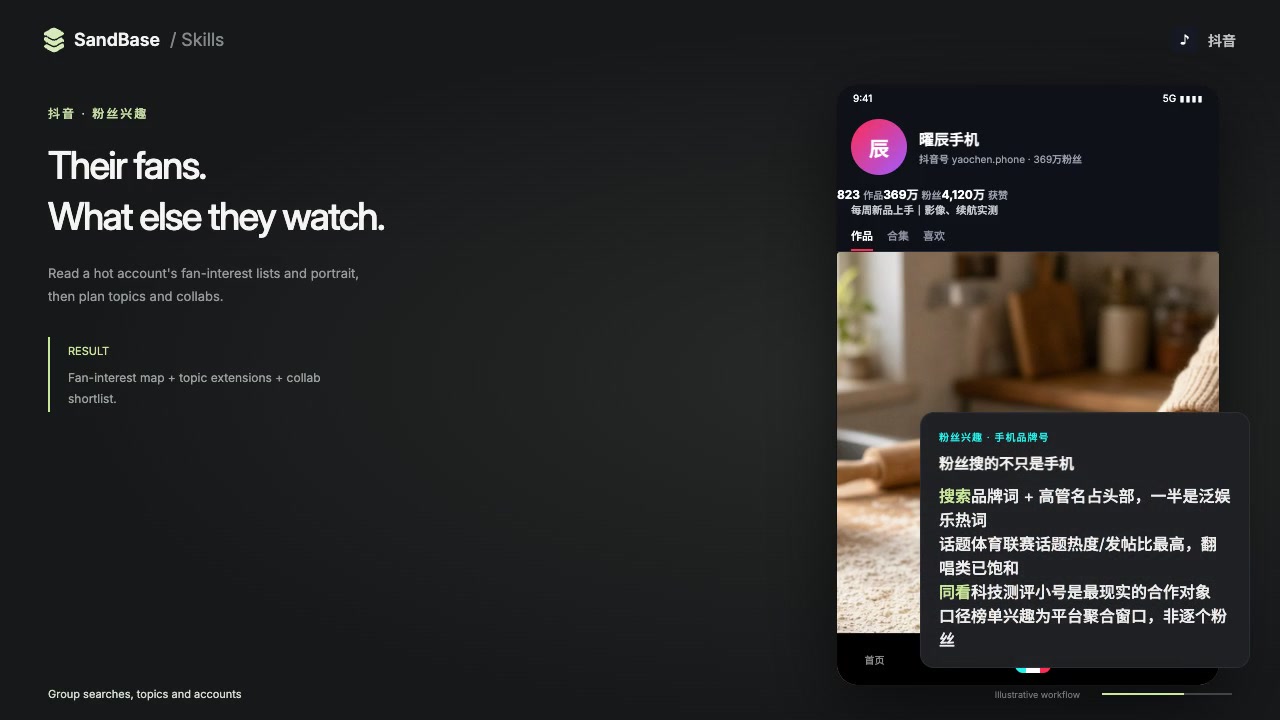
See what your Douyin fans search, which topics they follow and which other accounts they watch, and turn it into new topics and collaboration ideas.
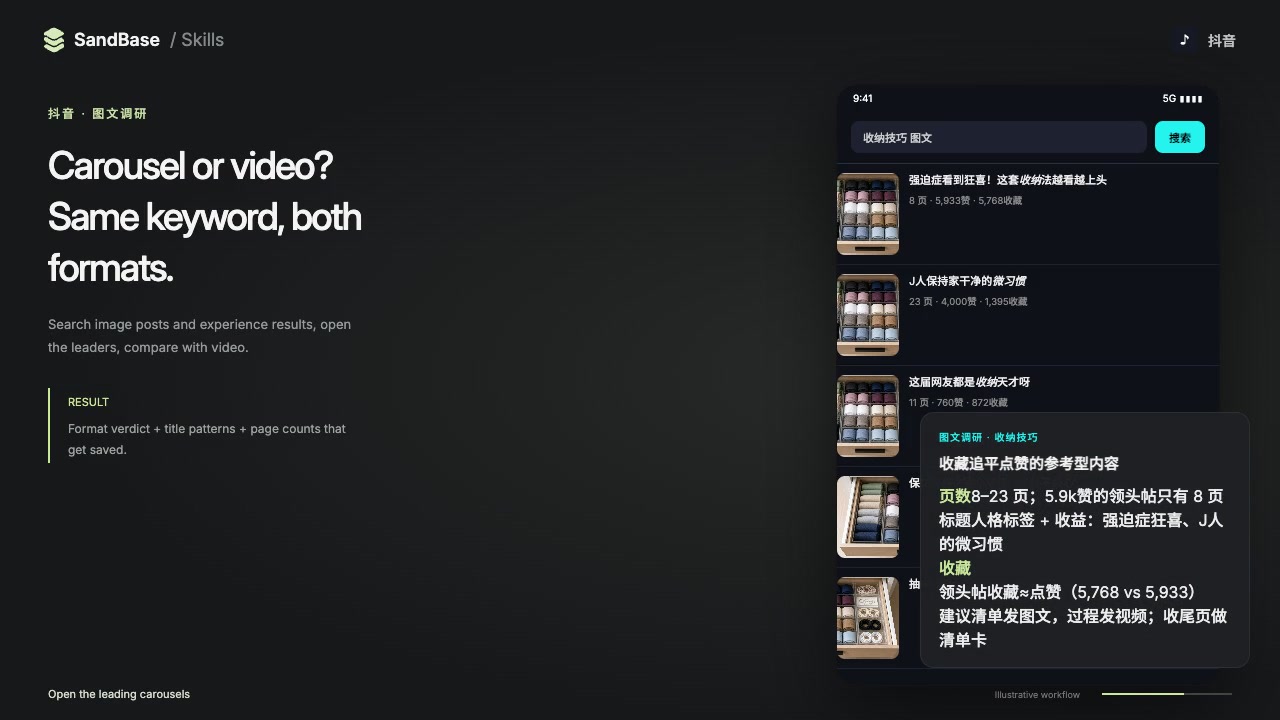
Decide whether a keyword is better as a Douyin image post or a video, and see how strong image posts are built.
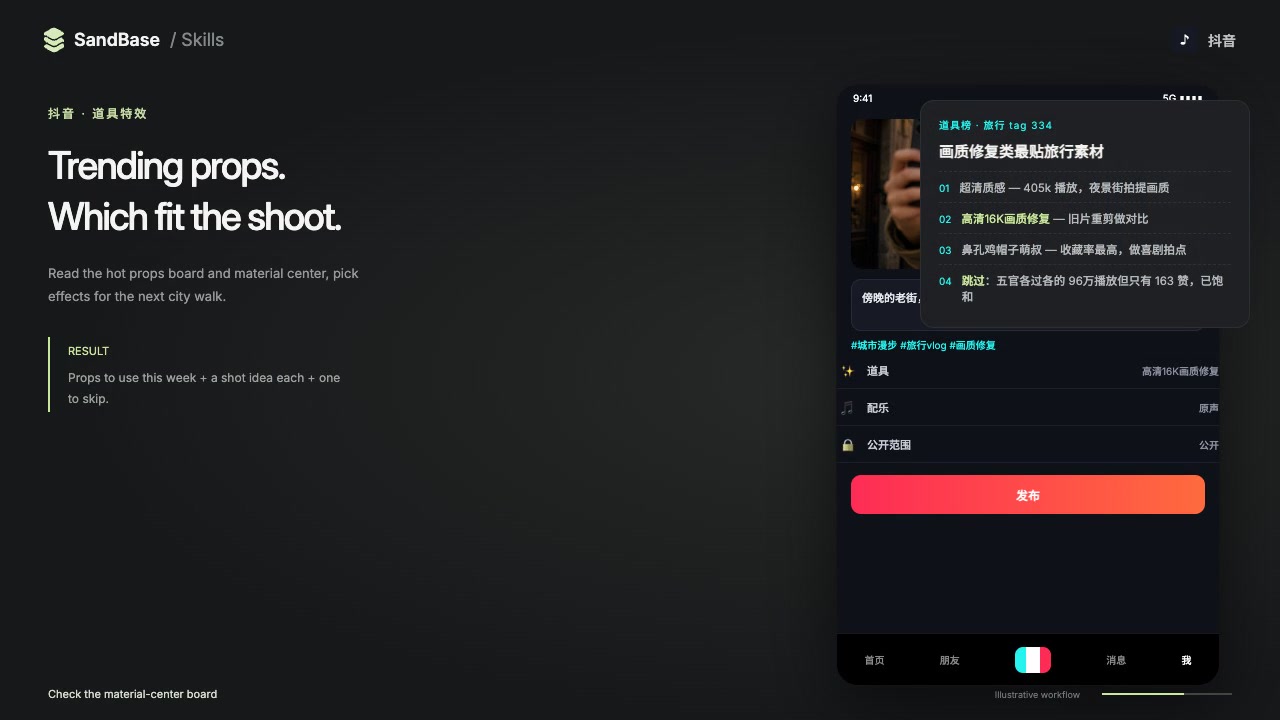
Find which Douyin props, effects and materials are trending and how creators use them.
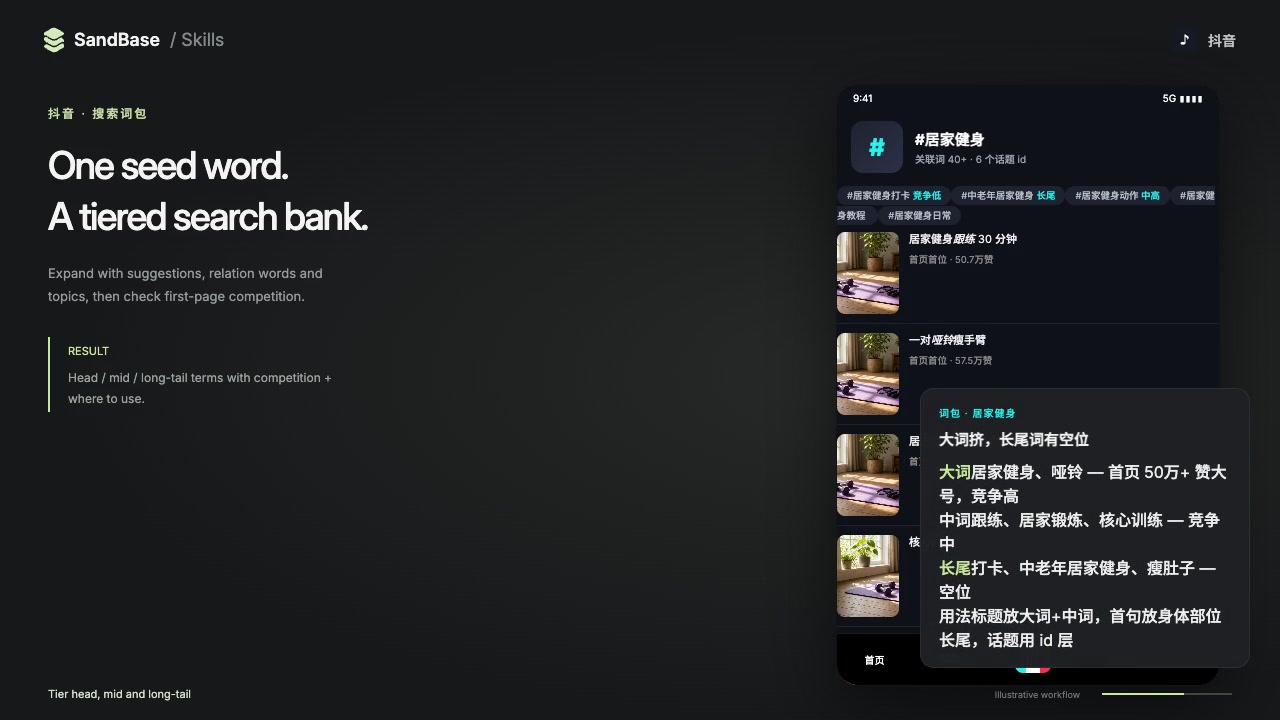
Build the Douyin search terms to target for one seed keyword, with how crowded each one is.
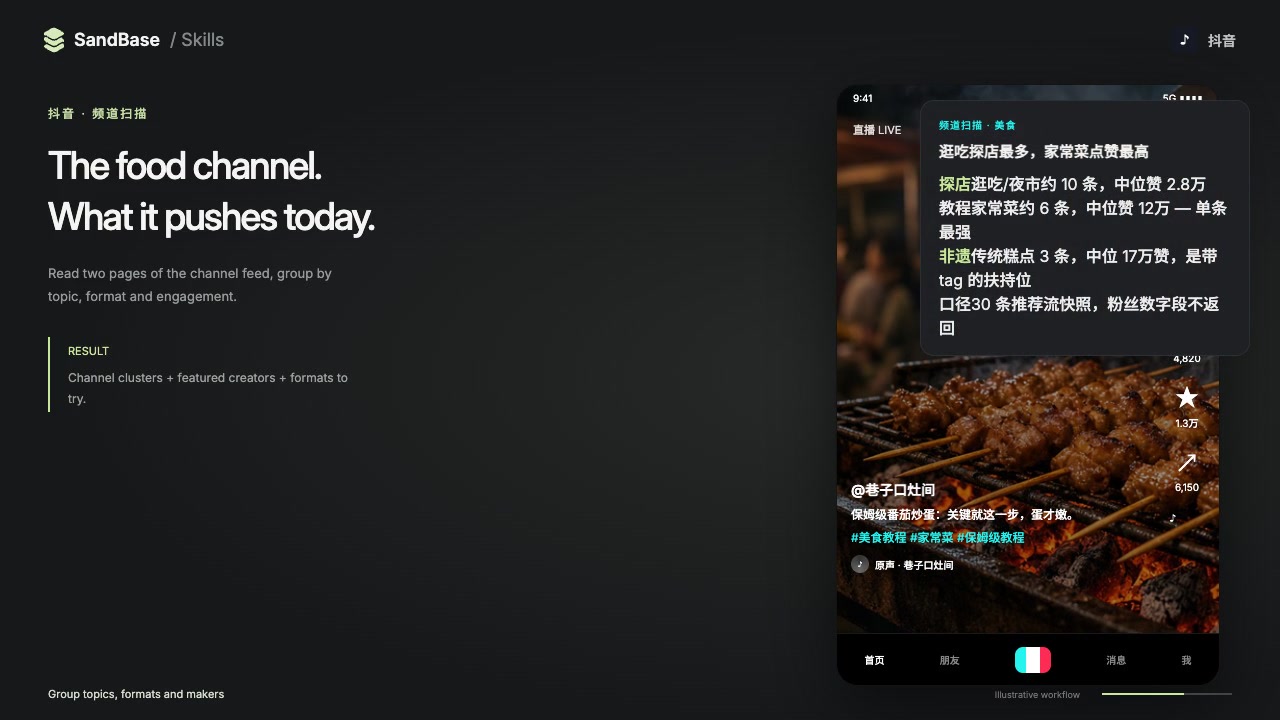
See what Douyin’s game, food, knowledge or anime channel is featuring right now.
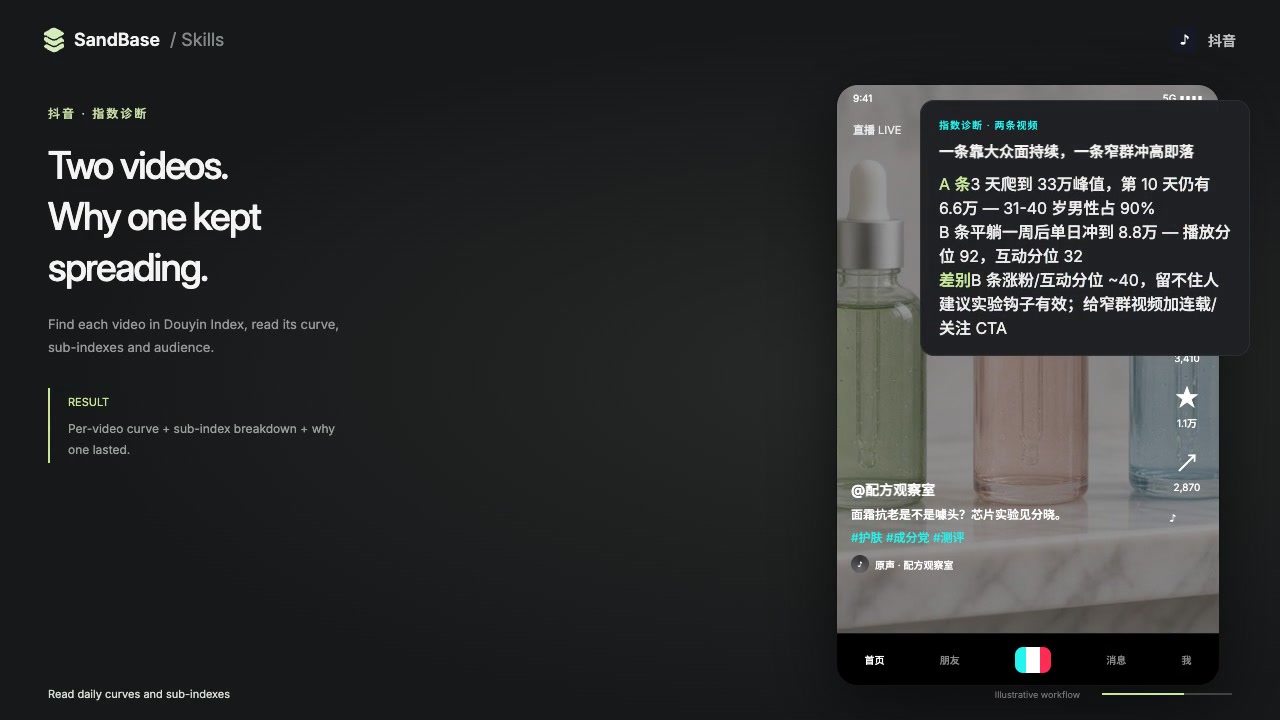
Compare one to three published Douyin videos on Douyin Index: how long each kept spreading, what drove it and who watched.
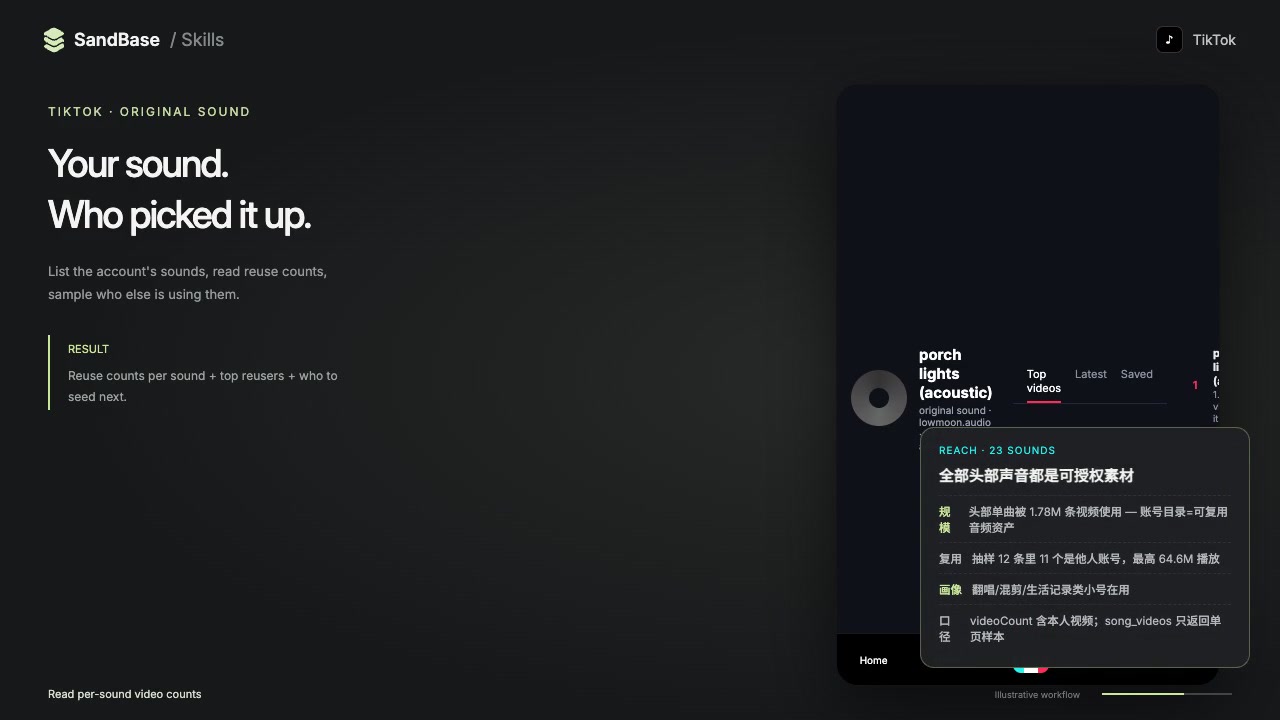
See whether your original TikTok sounds spread beyond your own videos.
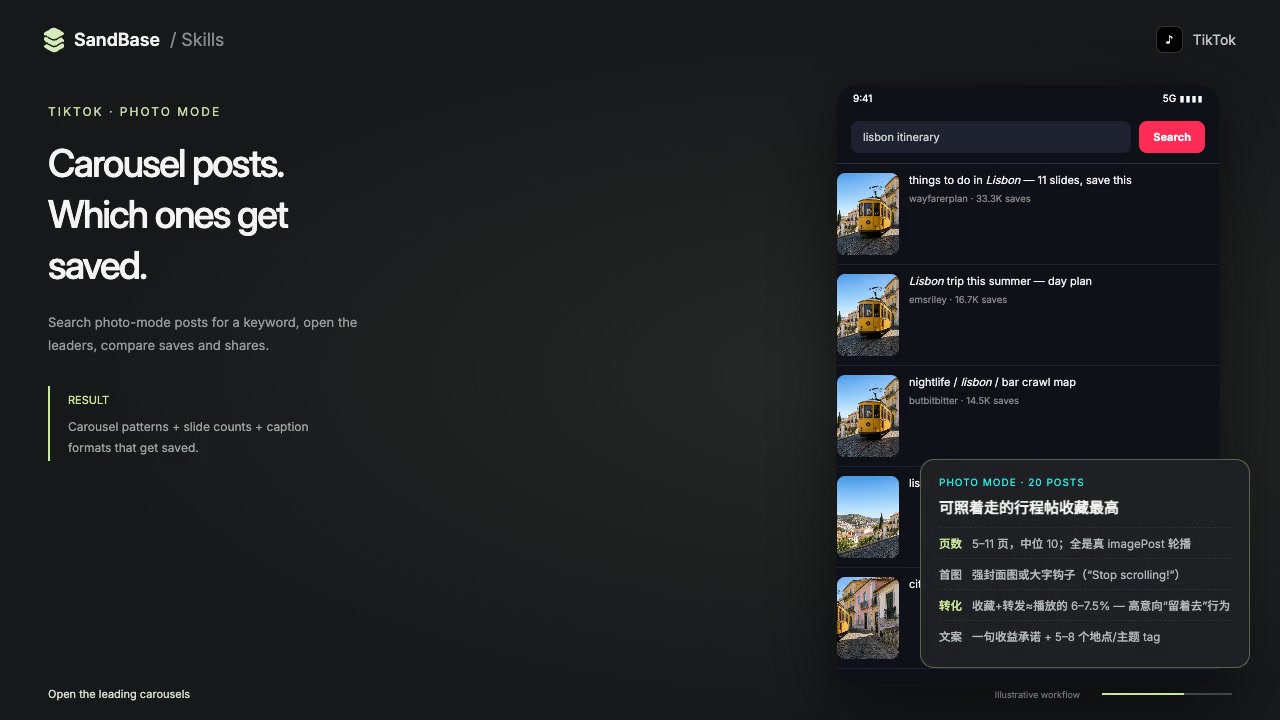
Find out how the best TikTok carousels for a topic are built.
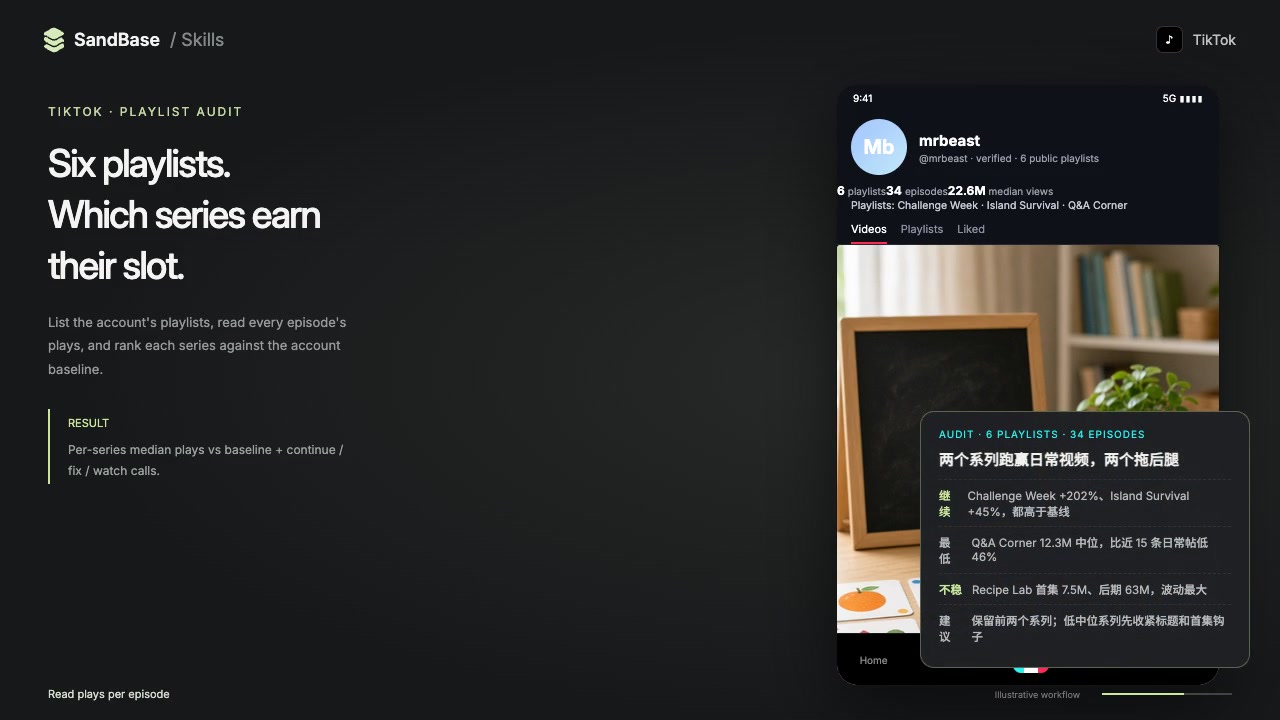
See which of your TikTok playlists are working as series.
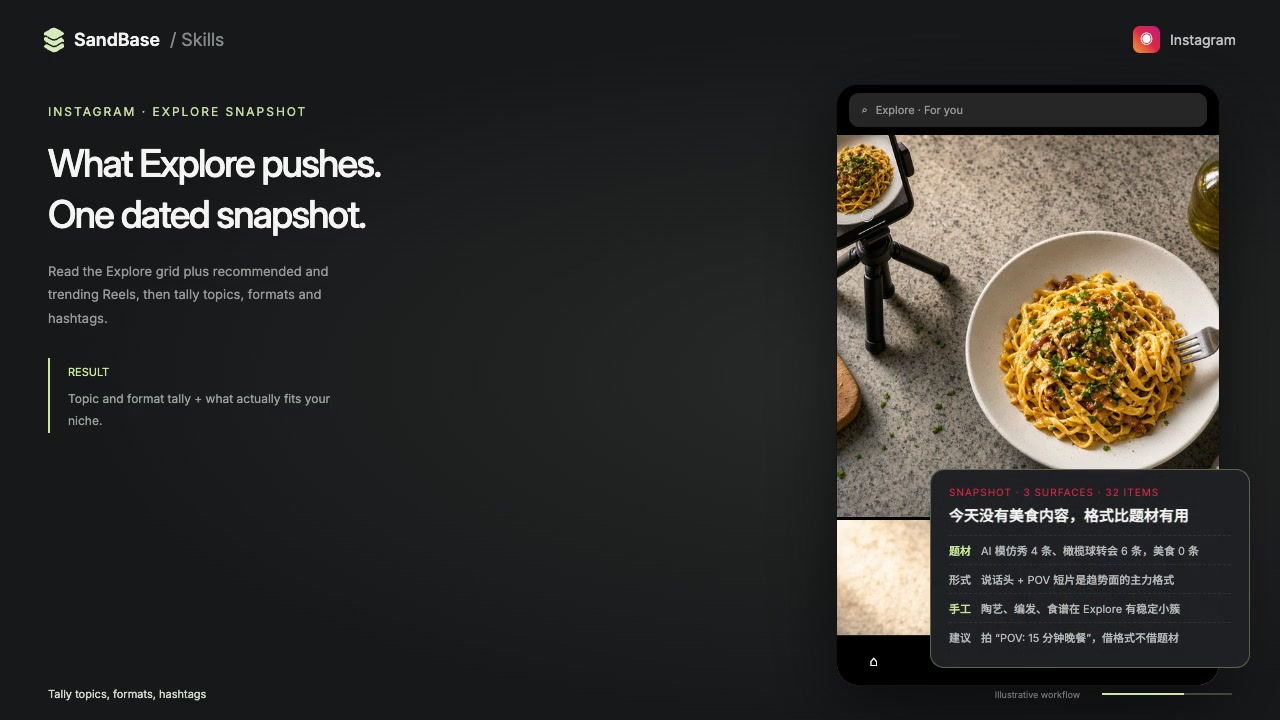
See what Instagram is pushing on Explore and in Reels this week.
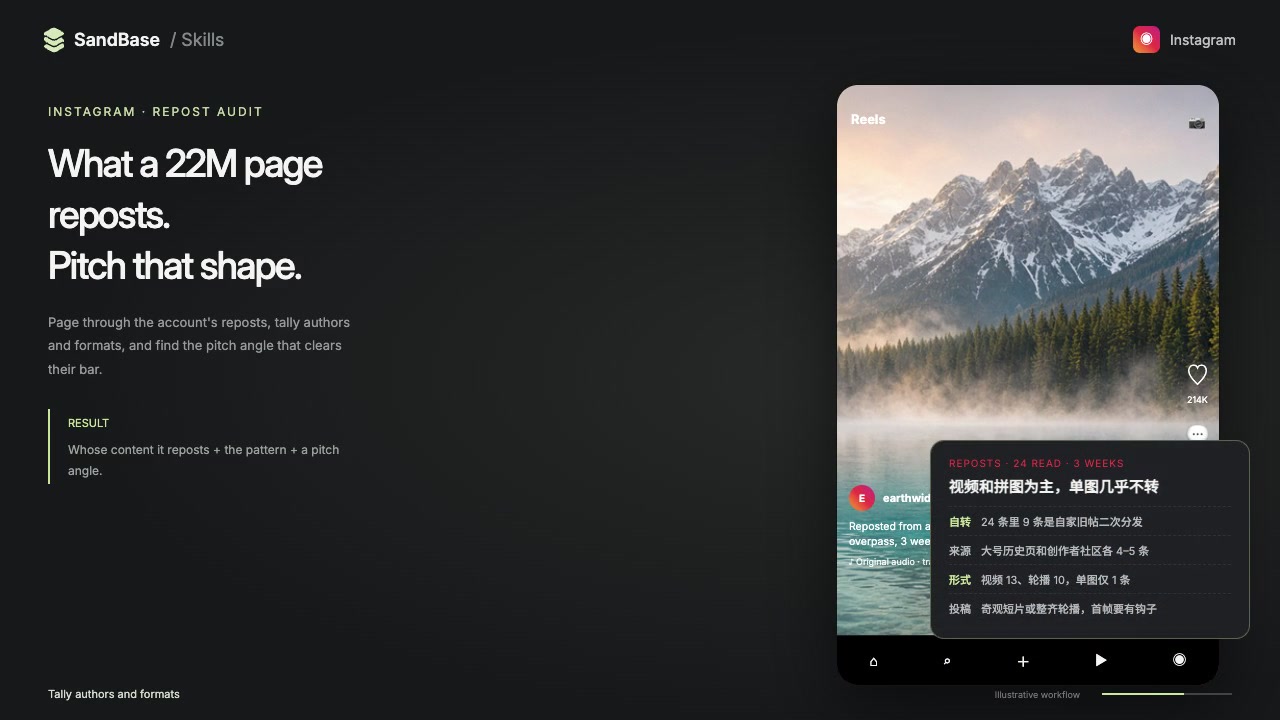
Learn what an Instagram account reposts before you pitch it.

Check whether a WeChat Channels account has already covered a topic.
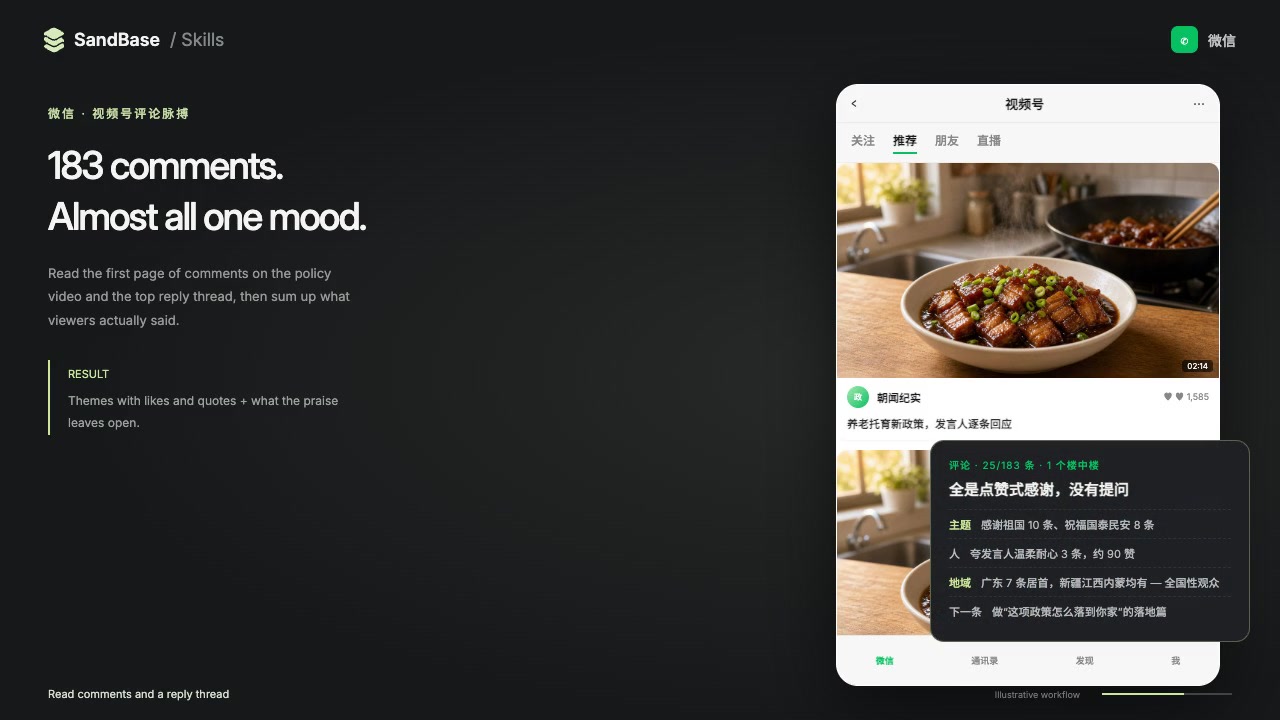
Find out what viewers say under one WeChat Channels video.
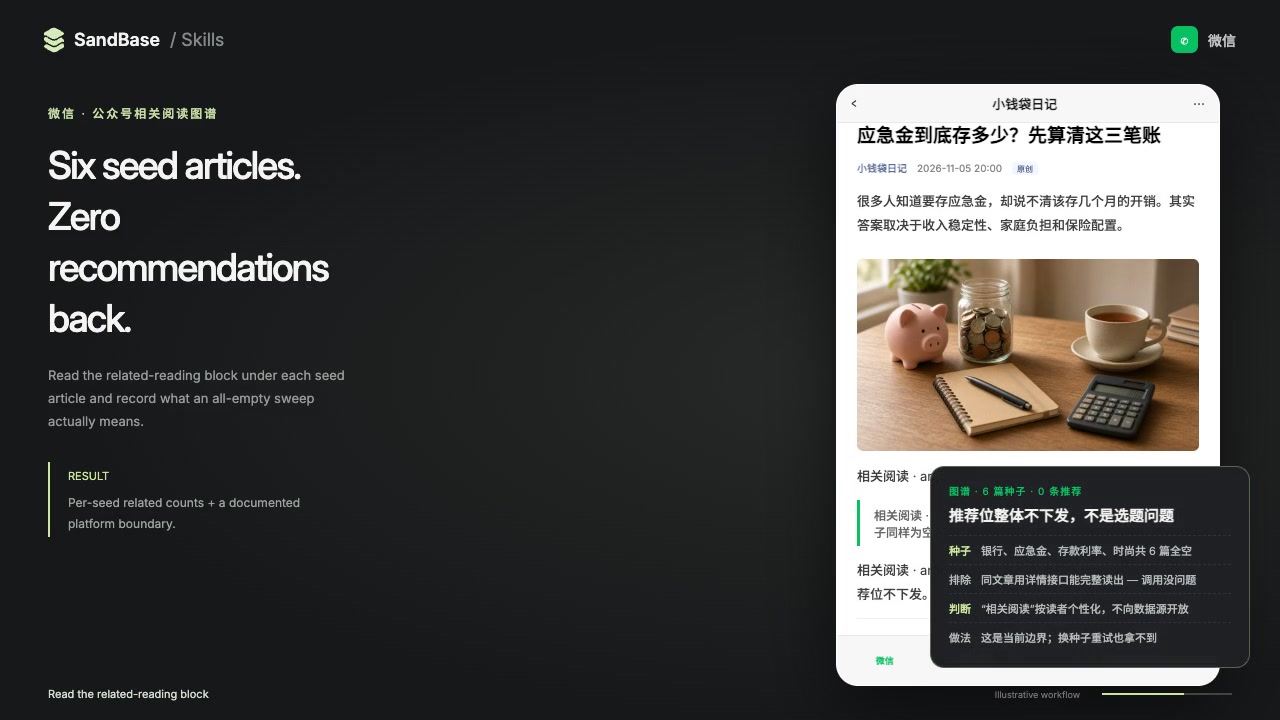
See which accounts and articles WeChat recommends next to yours.
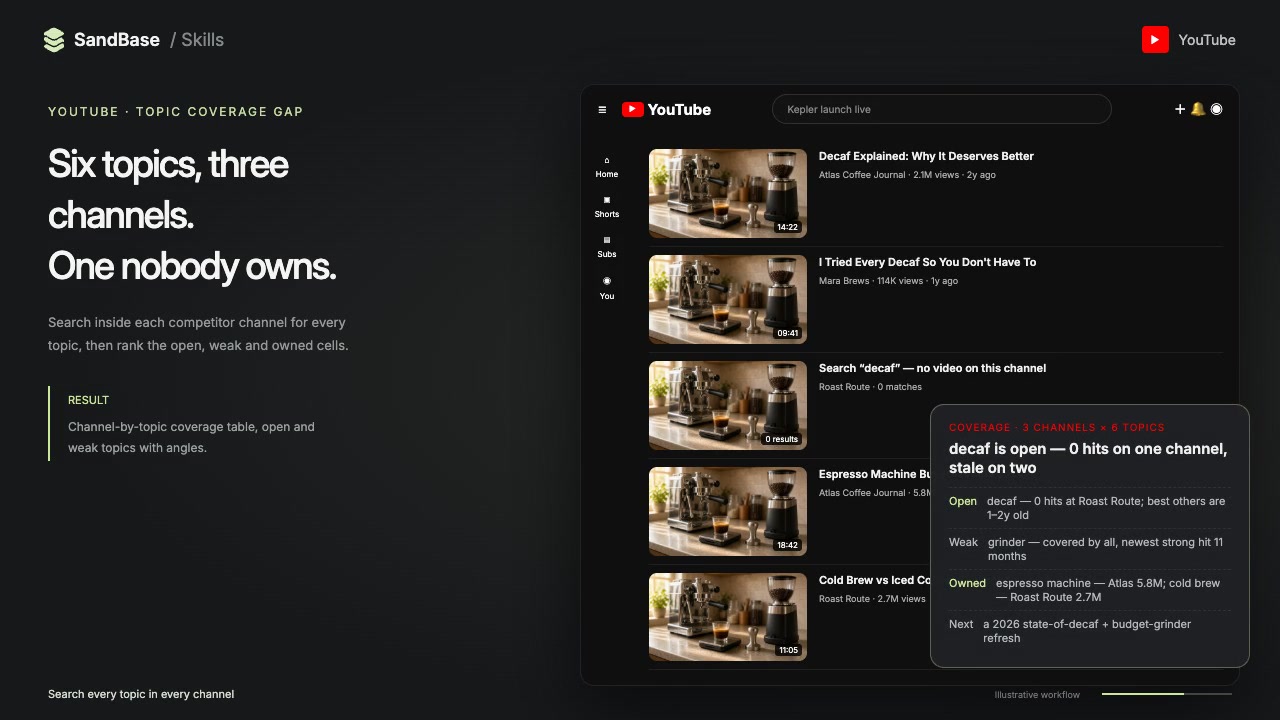
Find topics your YouTube competitors have not covered, or covered badly.
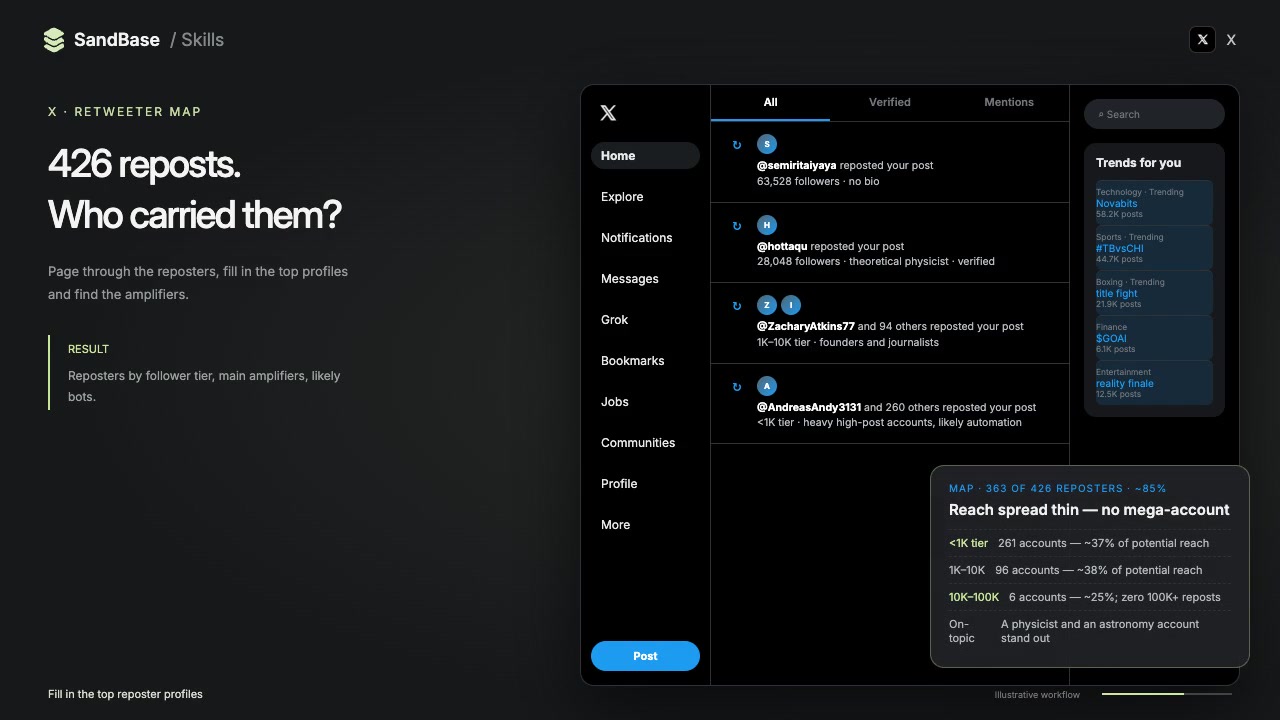
Find out which accounts spread an X post.
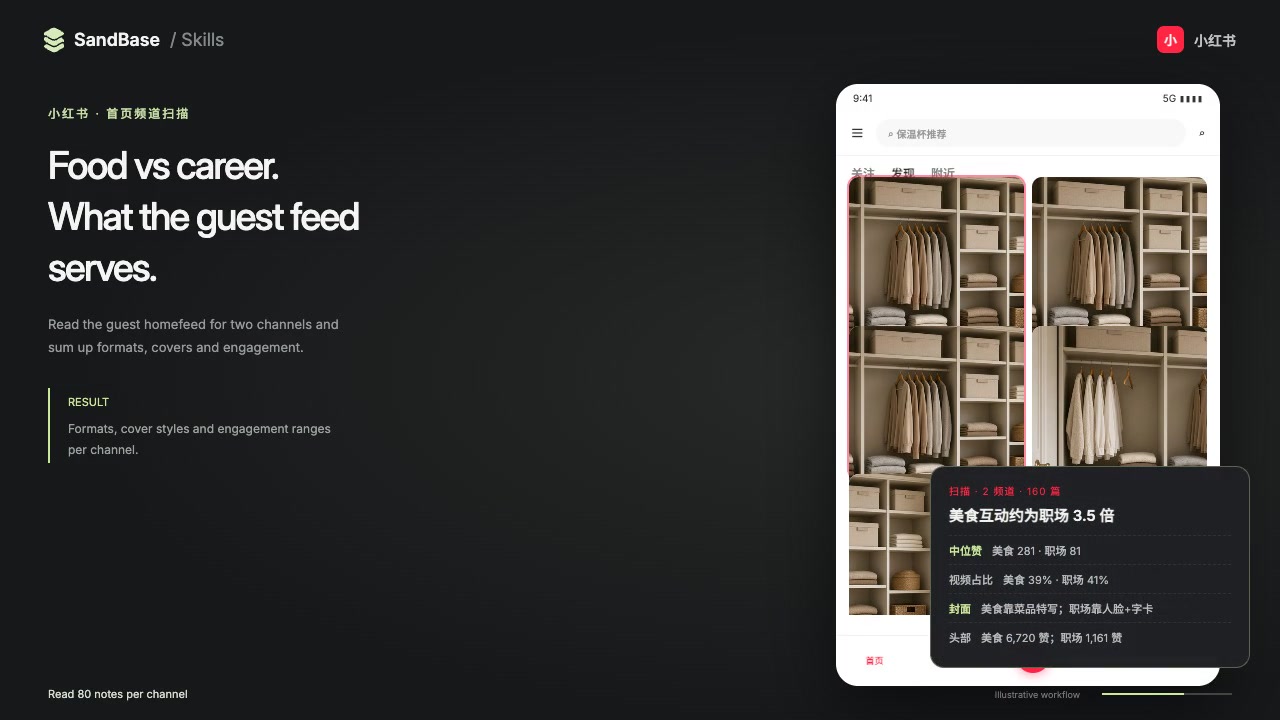
See what Xiaohongshu homepage channels are pushing this week.
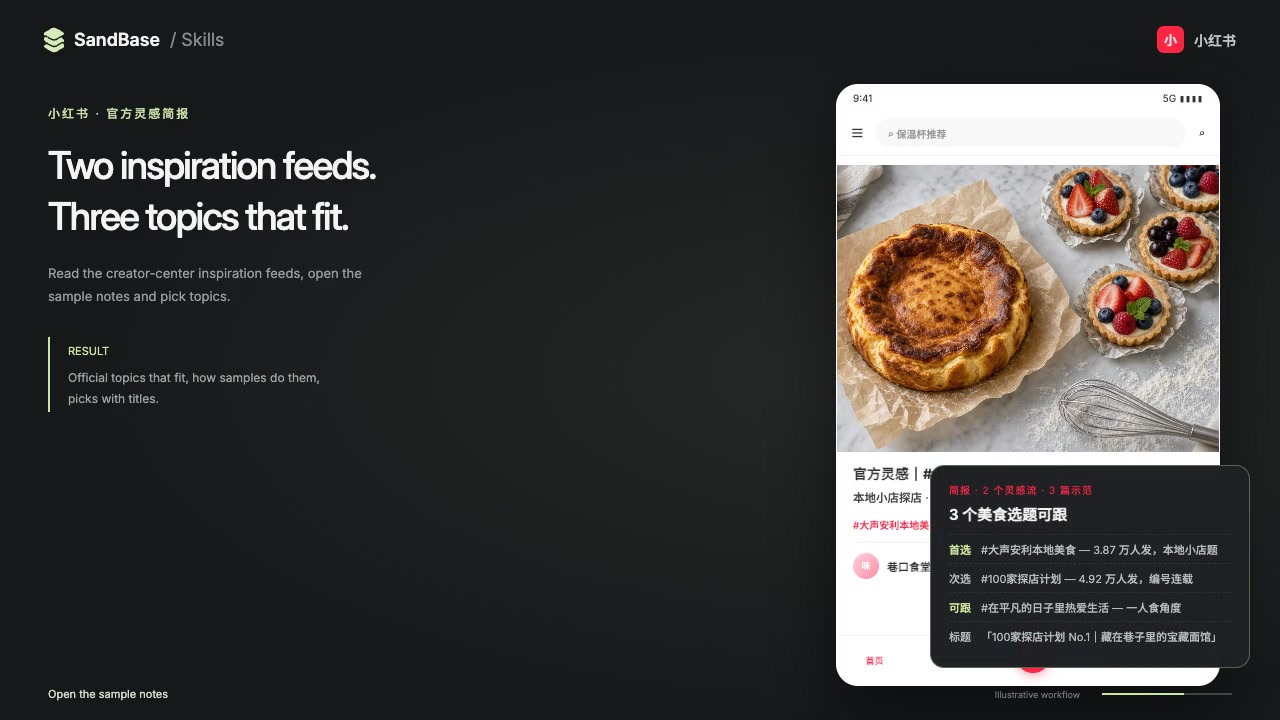
Find the topics Xiaohongshu is promoting this week that fit your account.
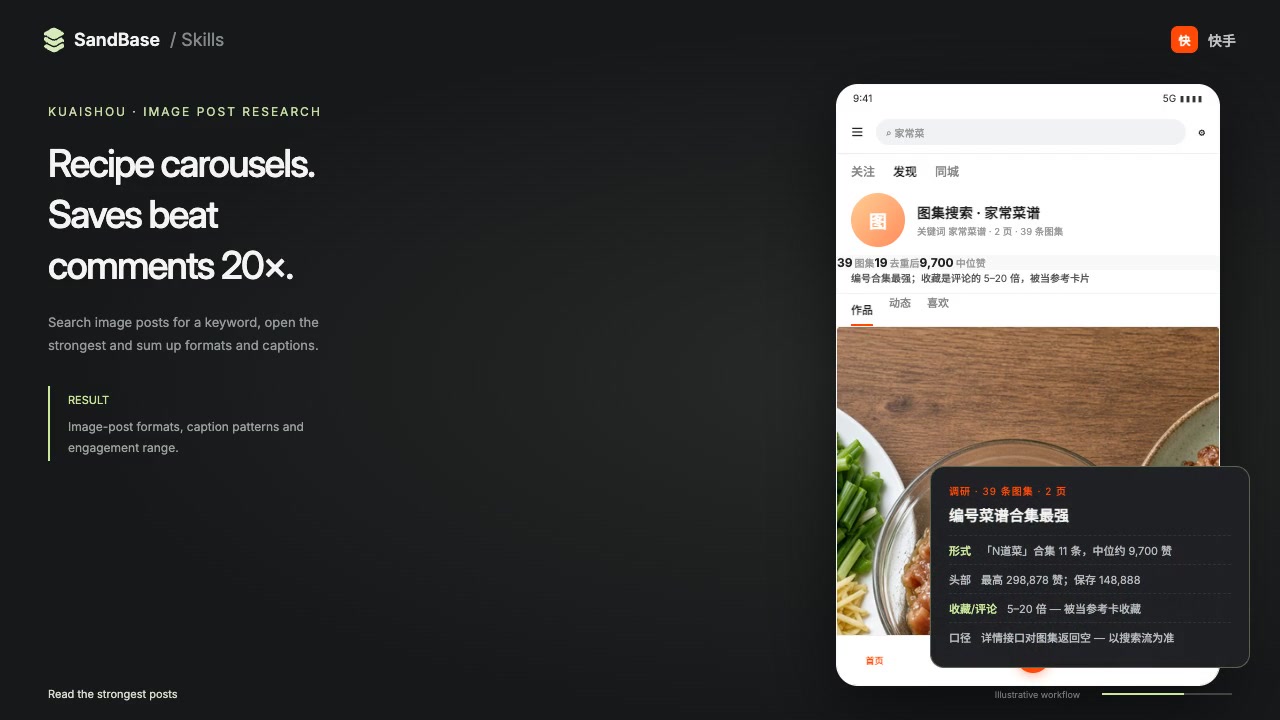
See how image posts perform on Kuaishou for a topic.

Find the campaigns Lemon8 is promoting on Discover right now.

See which titles rose, fell, entered or left an IMDb chart.
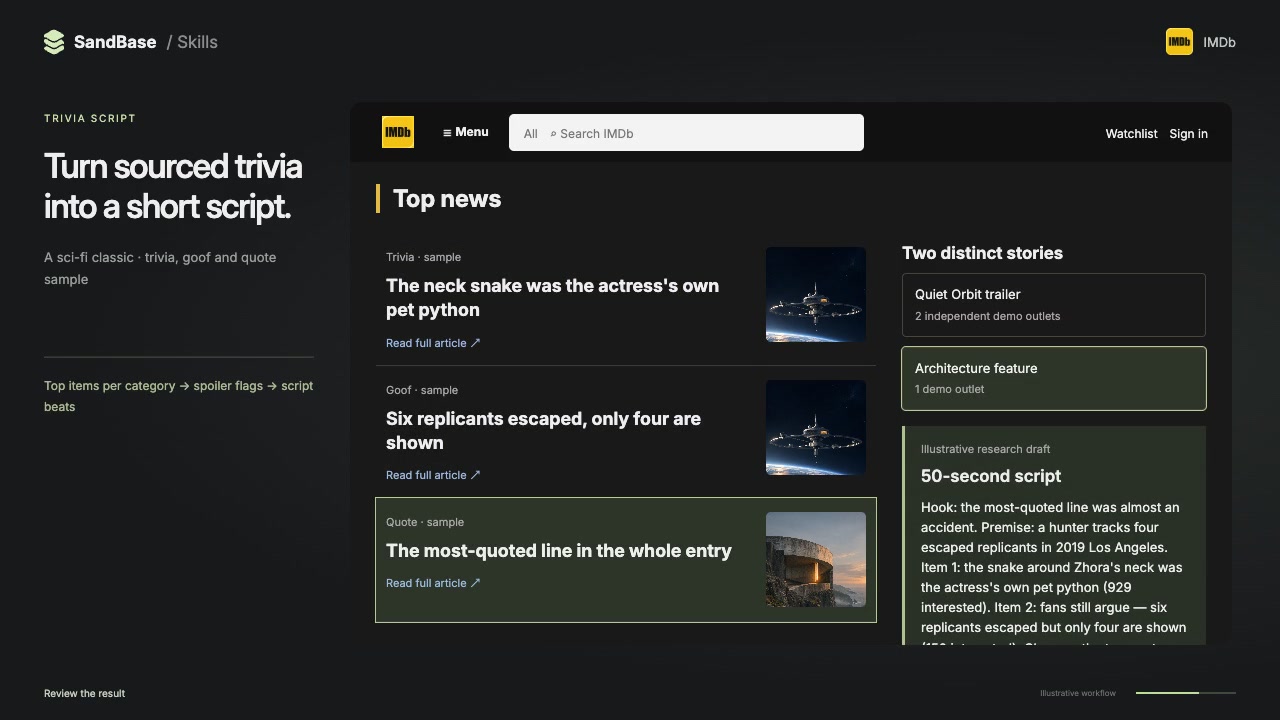
Turn a film's IMDb trivia into a short video or carousel script.

Rank upcoming titles by how anticipated they are on IMDb.
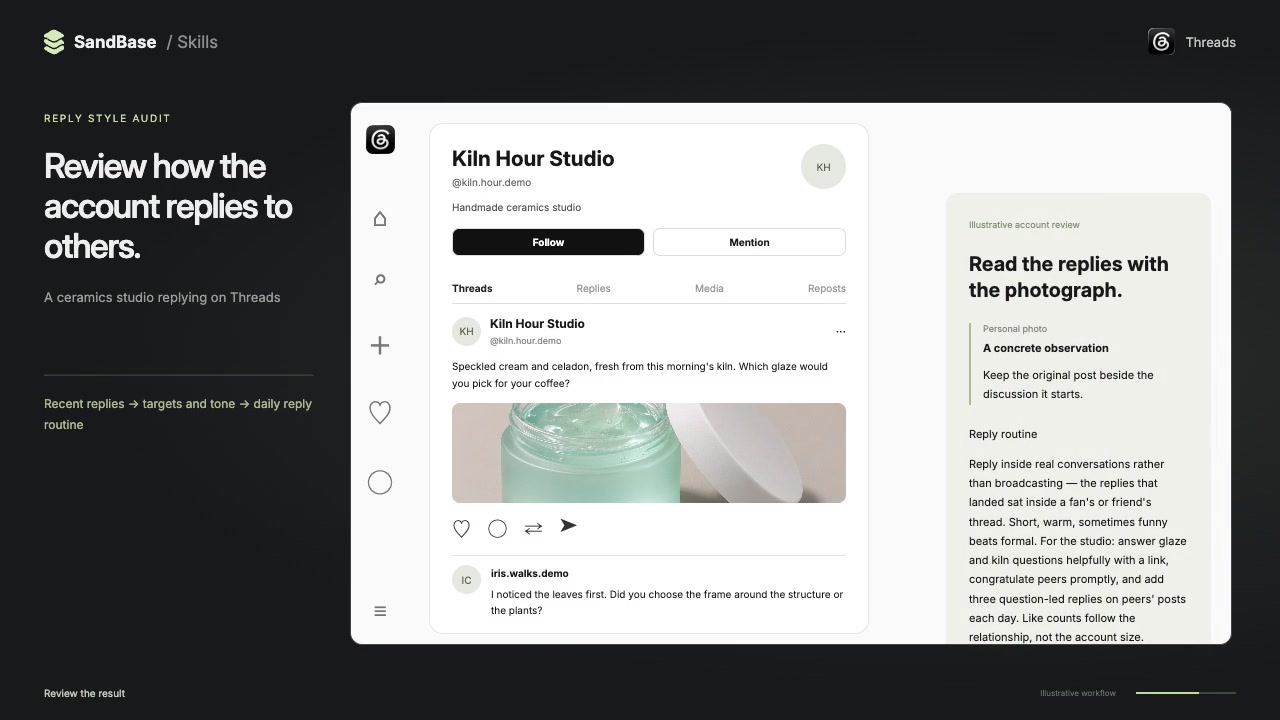
See how an account replies under other people's Threads posts.
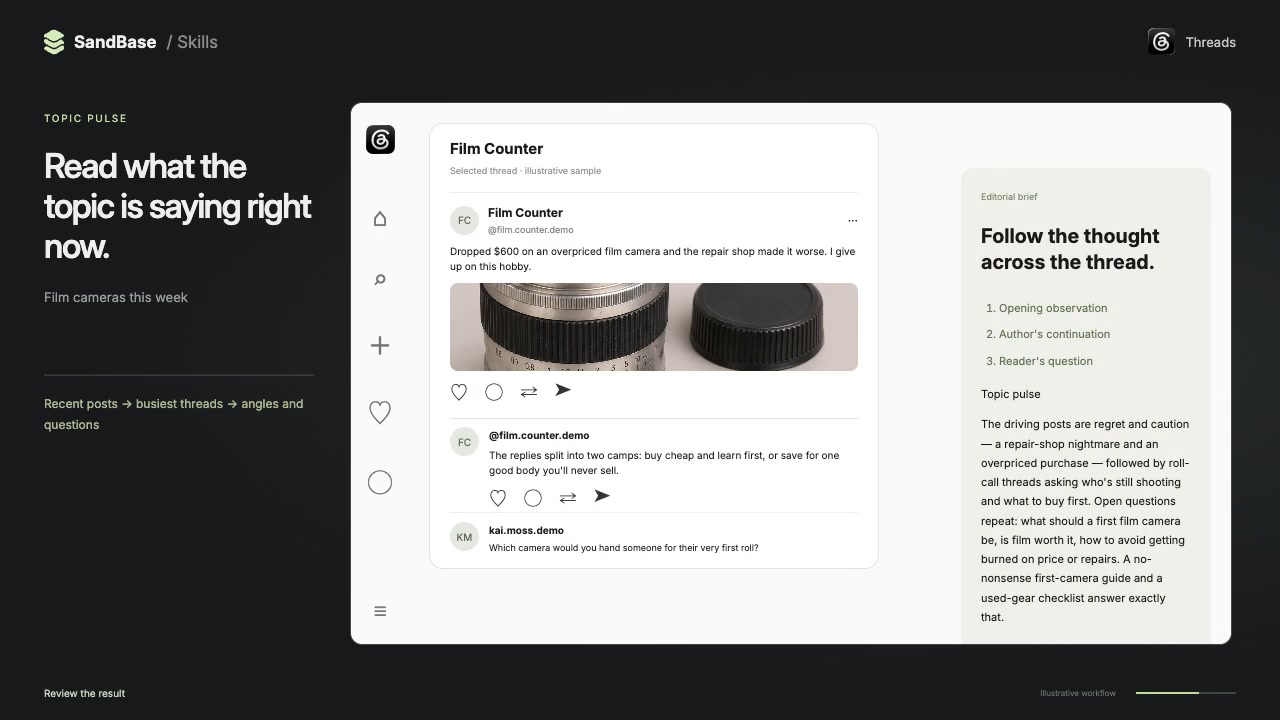
See what Threads is saying about a topic right now.

You post on X every week but cannot tell which kinds of post actually work for your account.
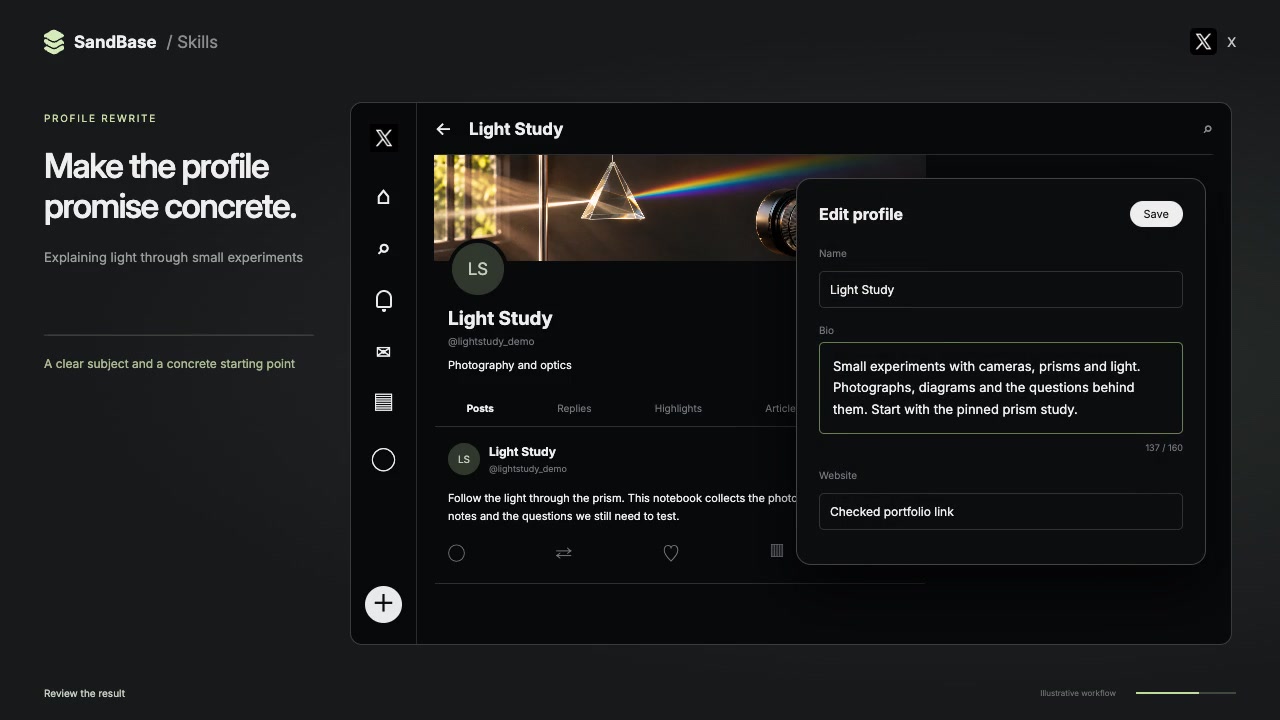
Your X bio, name and pinned post do not tell a new visitor who you help or why to follow.
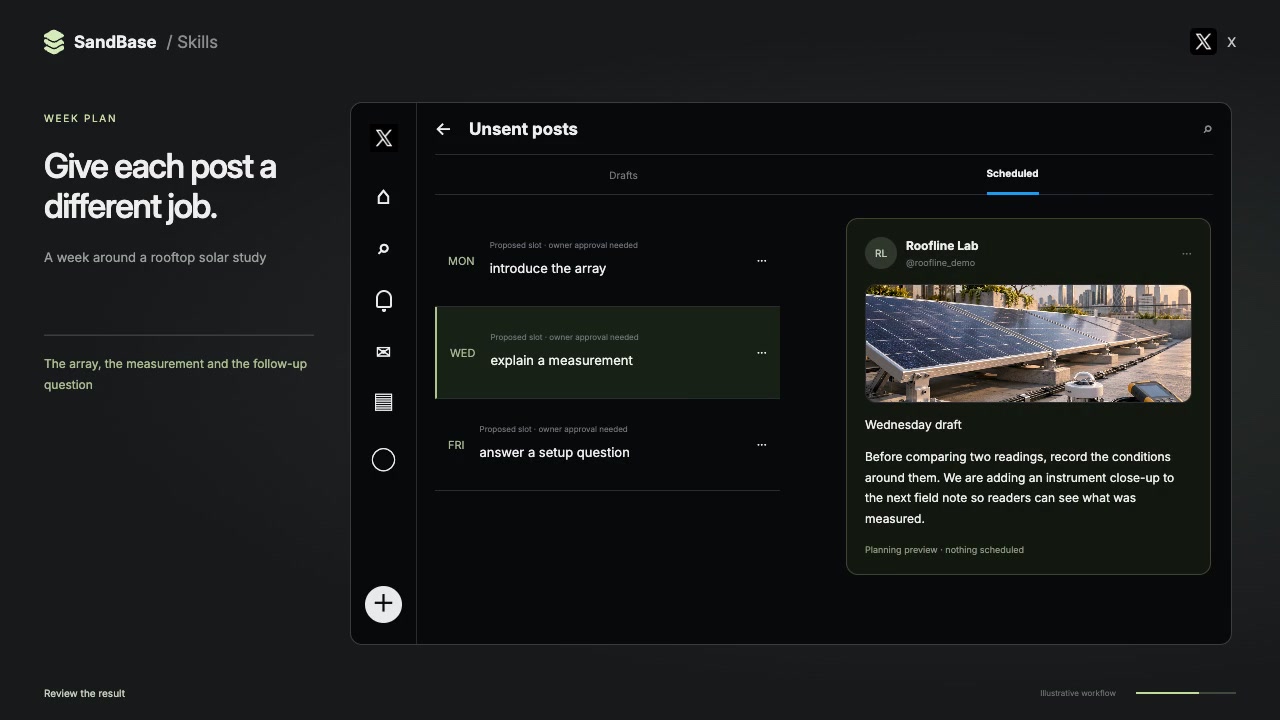
You want a week of X posts that do not repeat last week and only say things you can back up.
You wrote a long article or recorded a video and want several X posts from it that keep the facts exact.
Your X draft reads like filler or hype, and you want to know which exact words cause it.

Turn supplied facts and a point of view into a post with a fact map and counted length.
Adapt longer material into one post while keeping its numbers and qualifiers.
Find vague, stock and repetitive wording without adding facts during revision.
Identify what a supplied opening does and turn it into an honest fill-in template.
Organise interview material with source, verification and consent status.
Plan a week that fits your material, posting days and available time.

Review supplied sections while keeping future plans distinct from current work.
Turn answers you already wrote on Reddit into a blog or help article without losing sources, corrections or other people's privacy.
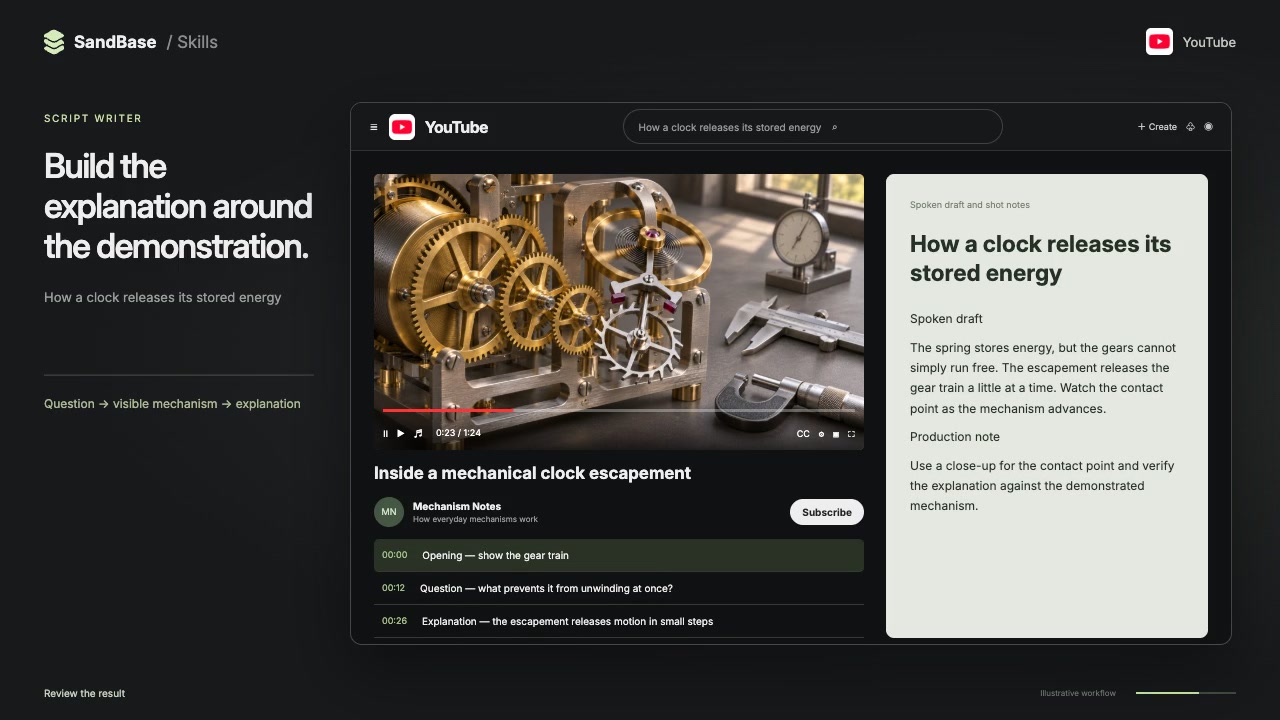
Turn supplied notes into a spoken script with a promise-to-payoff check and estimated runtime.
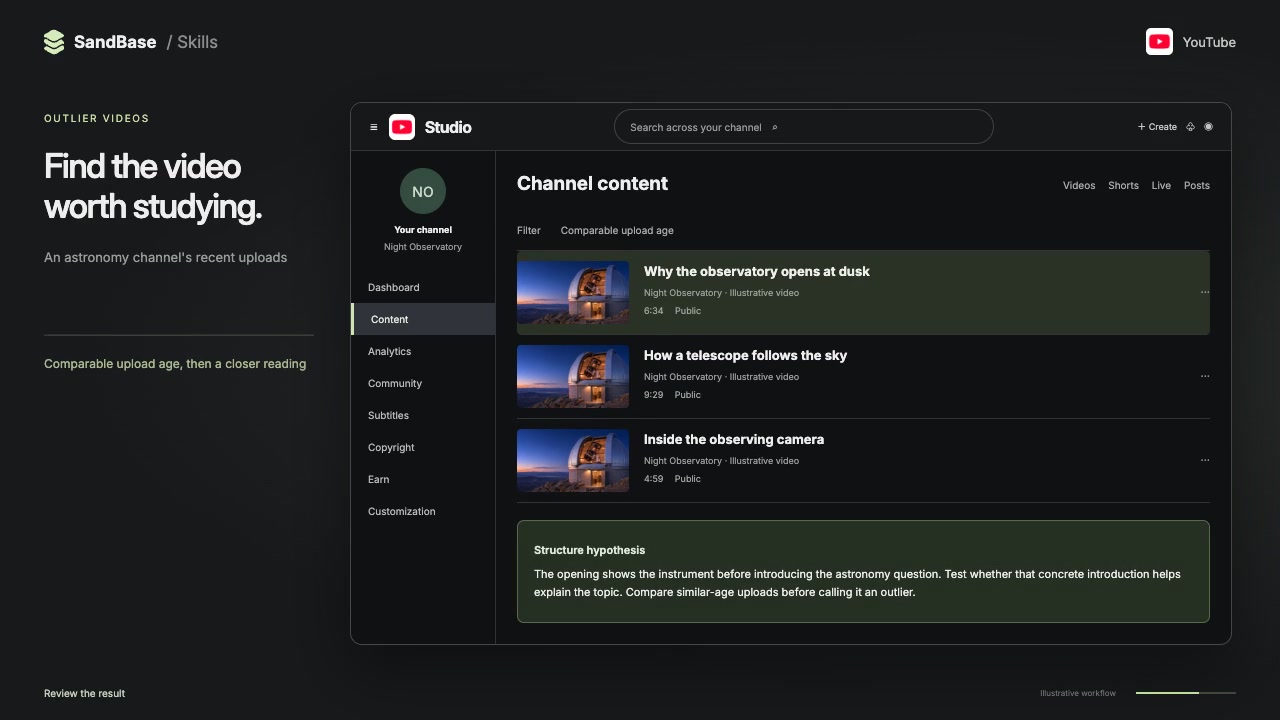
Find unusually high views per day within a comparable set from one channel.
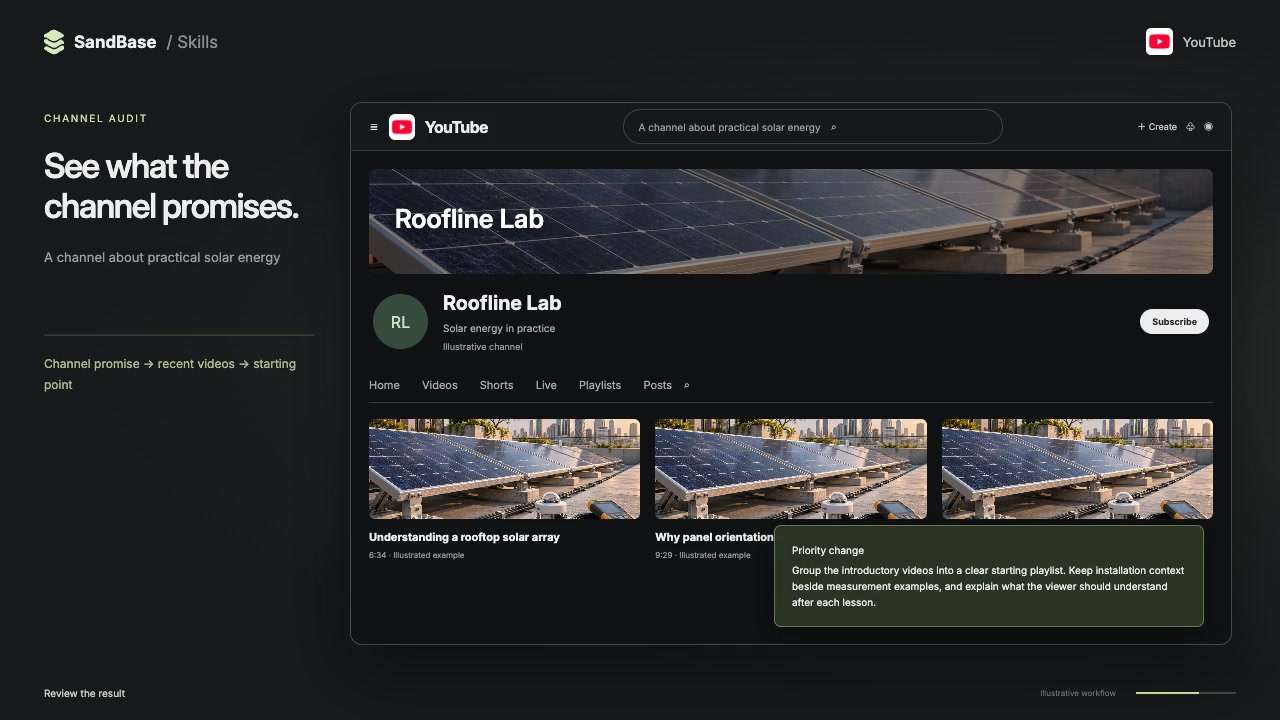
Review recent titles, upload rhythm and transcript openings to choose one main fix.

Fit unfinished work and fixed deadlines into the hours a creator actually has.
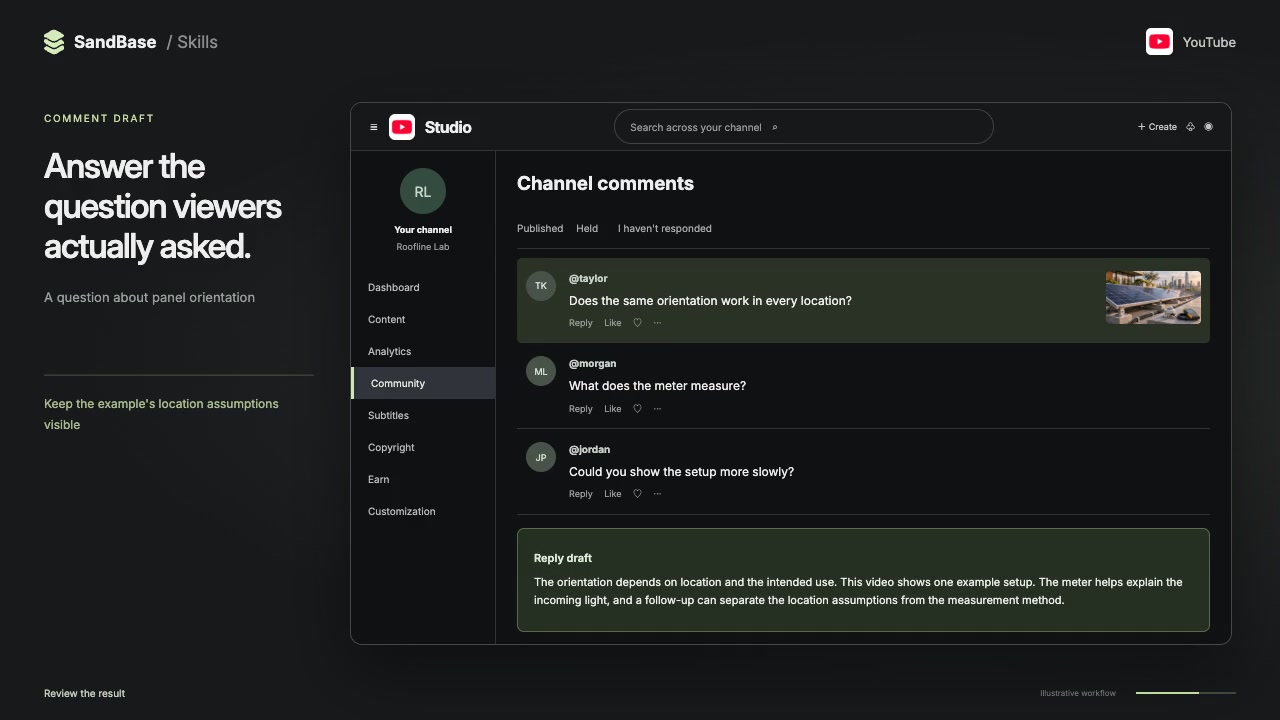
Group comments and draft supported replies plus one helpful pinned comment.
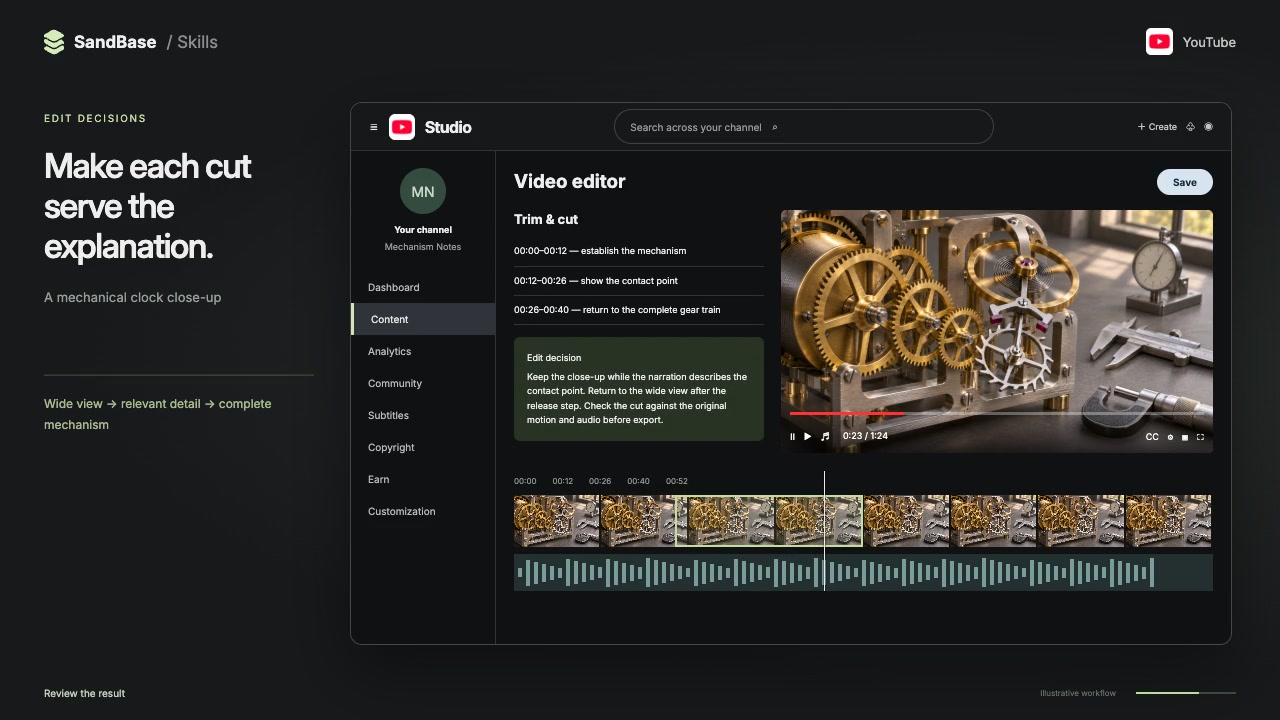
Turn timed captions into candidate cuts with the checks needed before any edit.
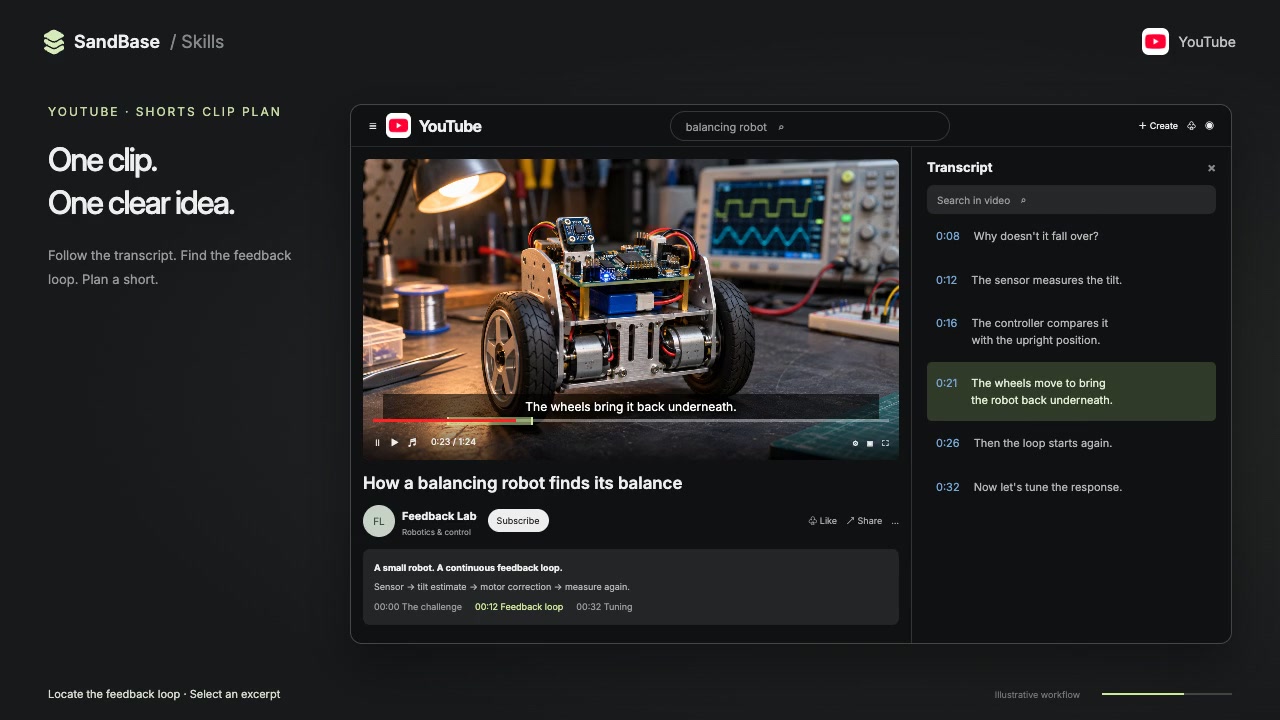
Choose self-contained moments and checked time ranges for Shorts without editing footage.
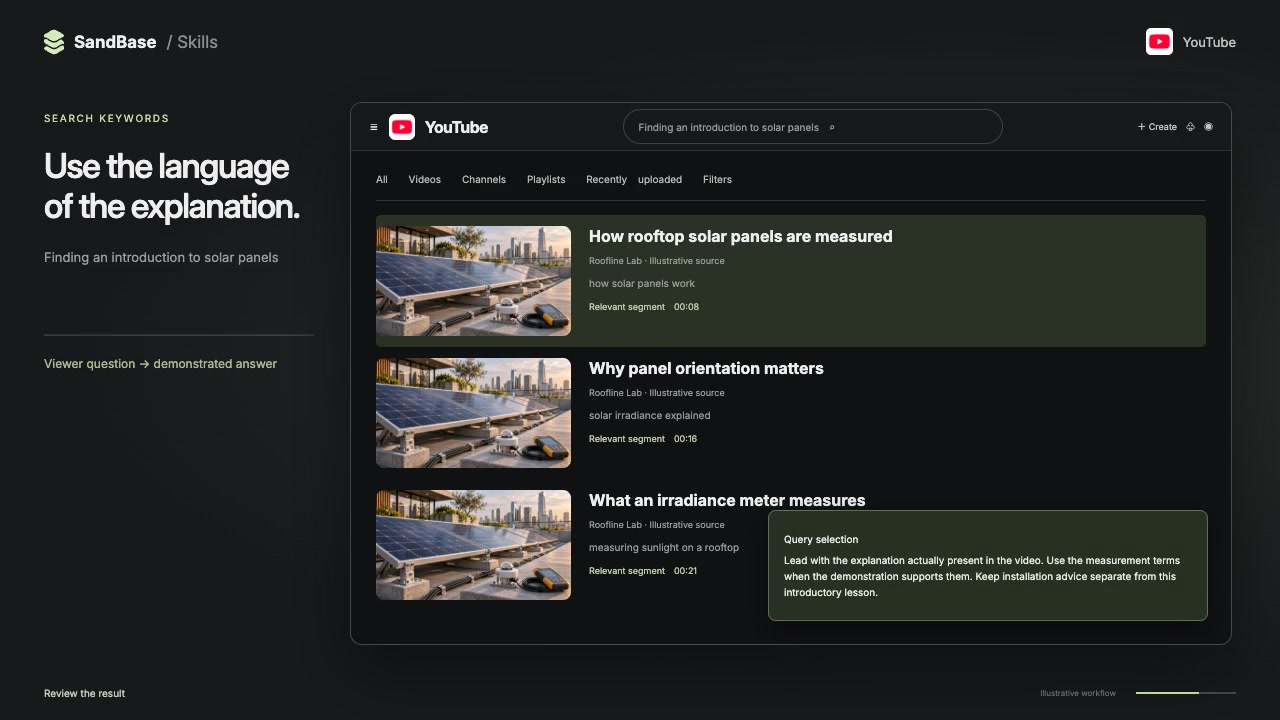
Choose search queries and disambiguation tags that the video actually covers.
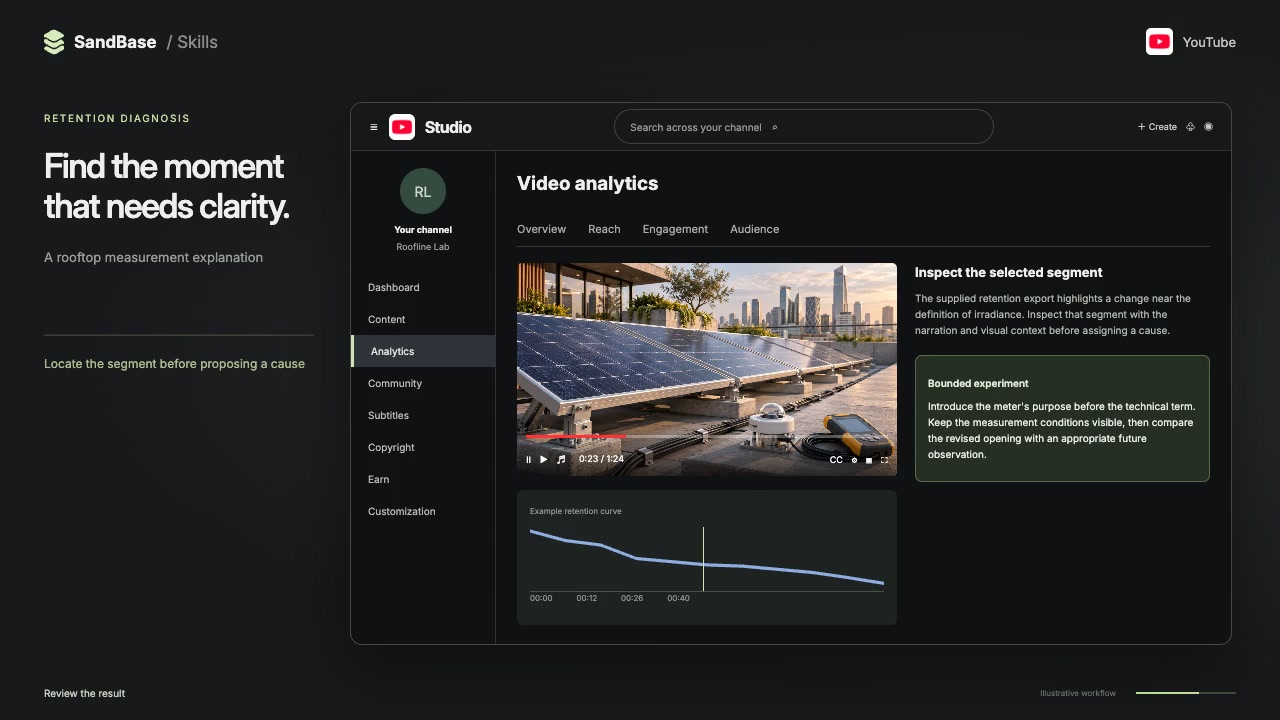
Use a supplied retention curve and transcript to choose one problem and one change to test.
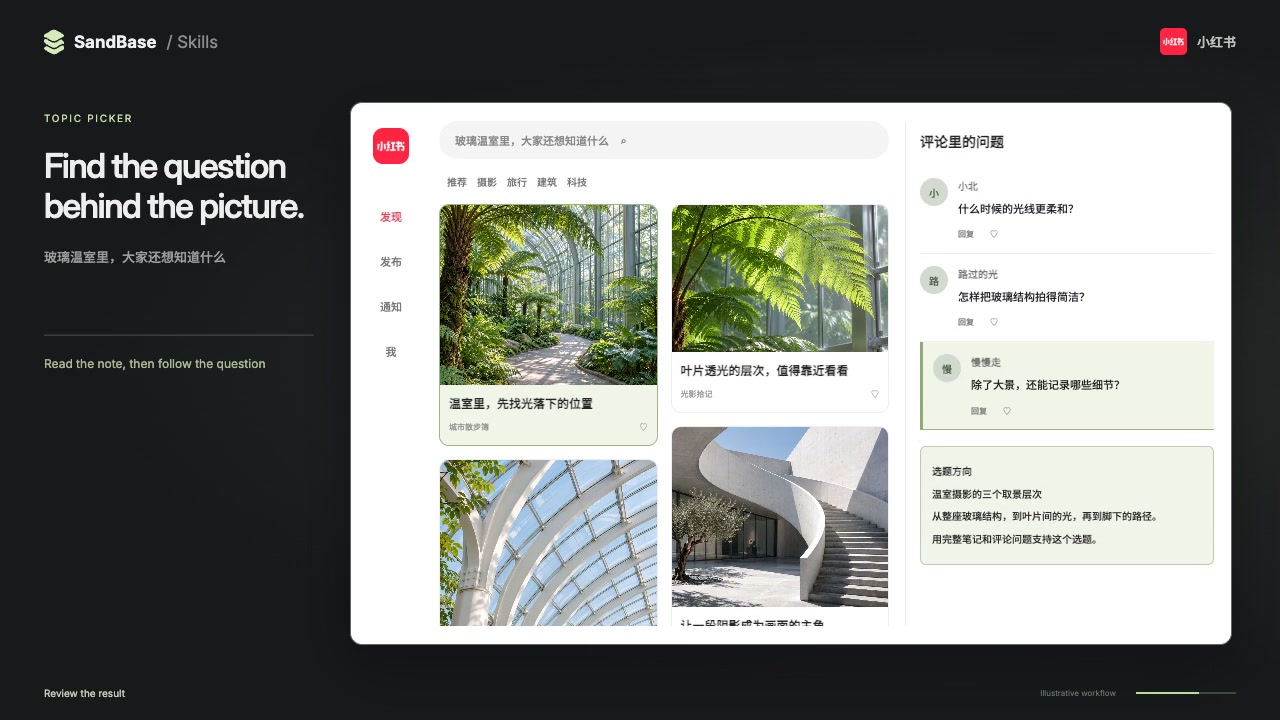
Pick note topics from what this week's search results show readers saving, limited to topics you have real material for.
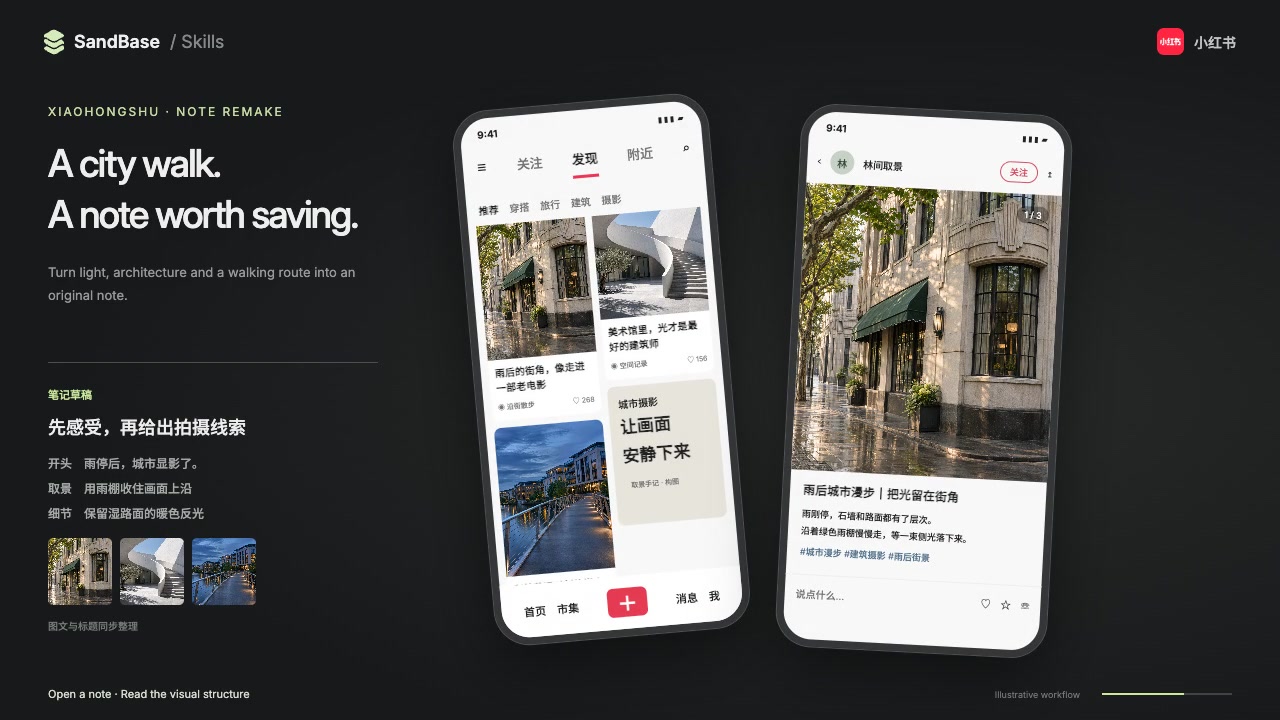
Reuse the structure of a note that did well for your own topic and facts, without copying its wording or its story.

Before posting, find claims your evidence does not support, missing ad or AI labels, and text copied from other notes.
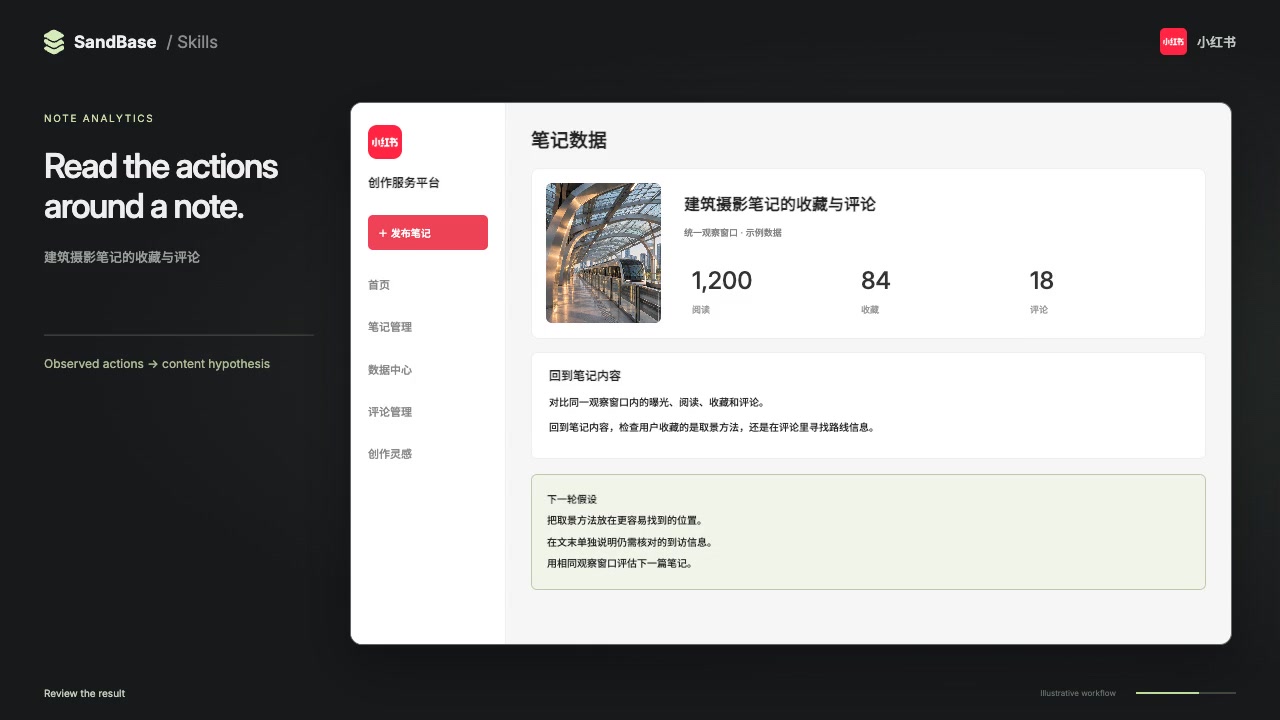
Find the funnel stage where a stalled note lost readers, compared with your own notes of the same format.
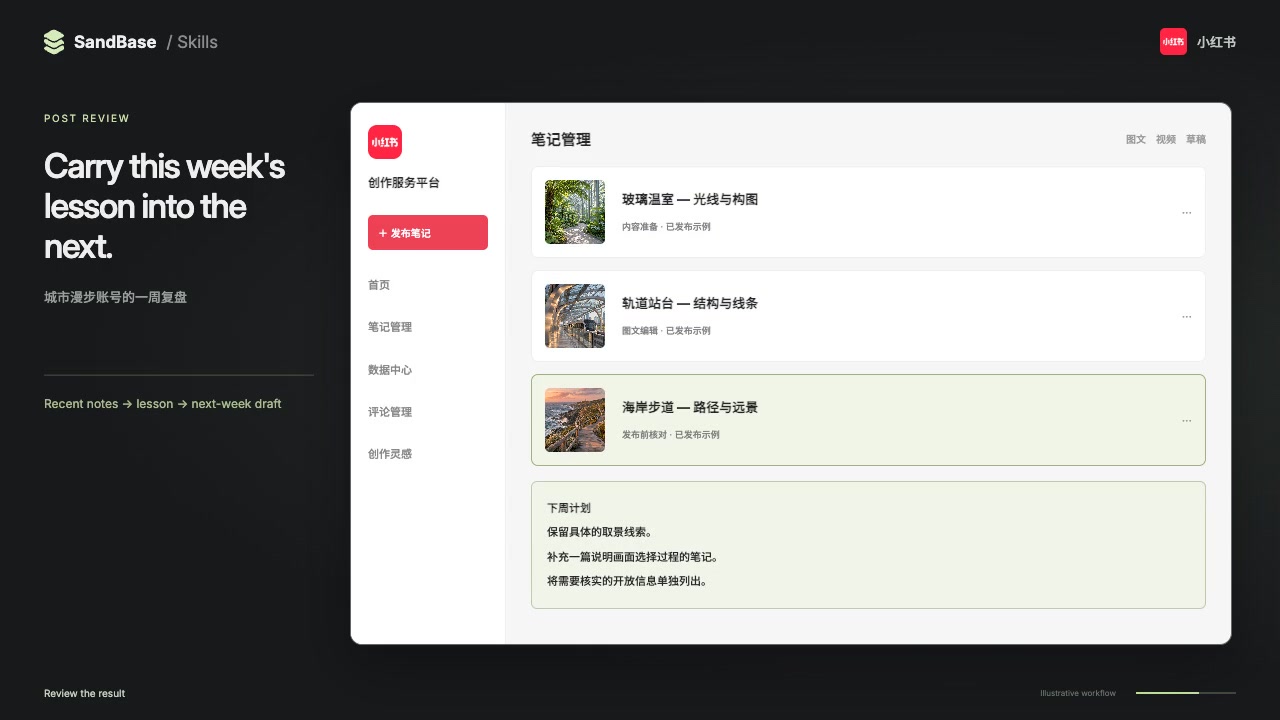
Check whether a posting period really did worse than the one before, then plan next week with one test.
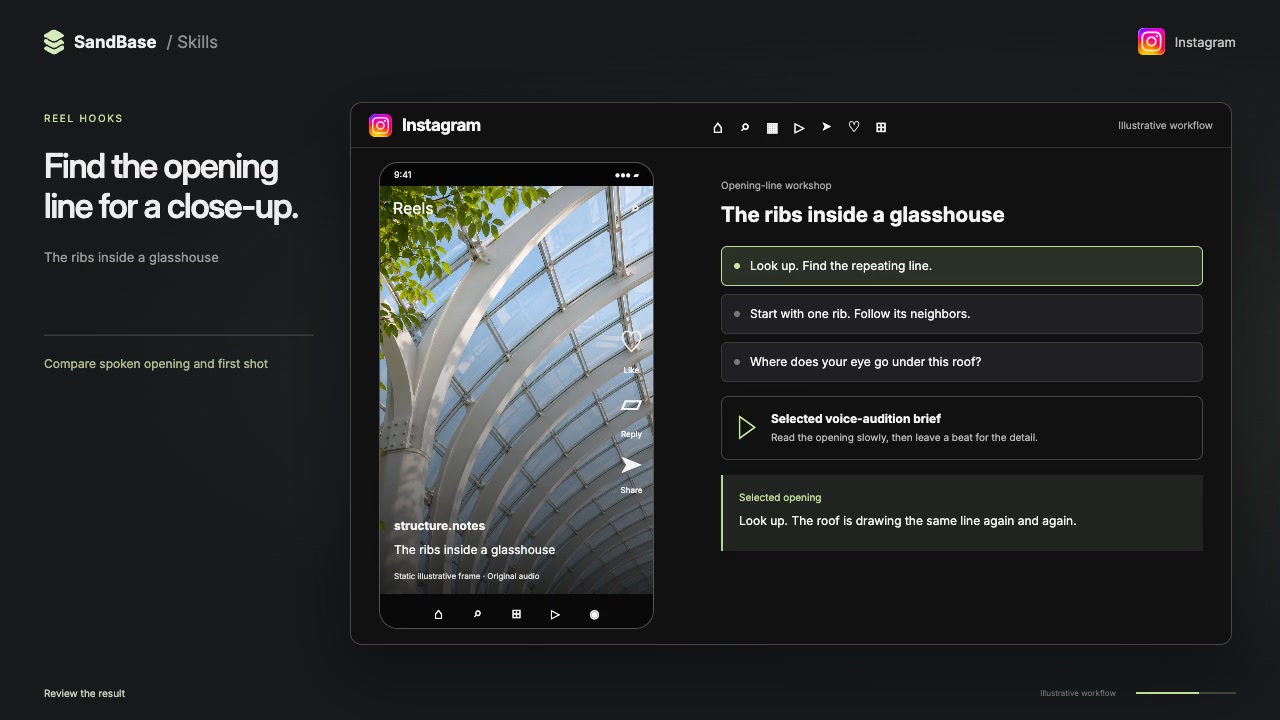
You have a Reel planned but the first line you would say is vague or promises more than the video shows.
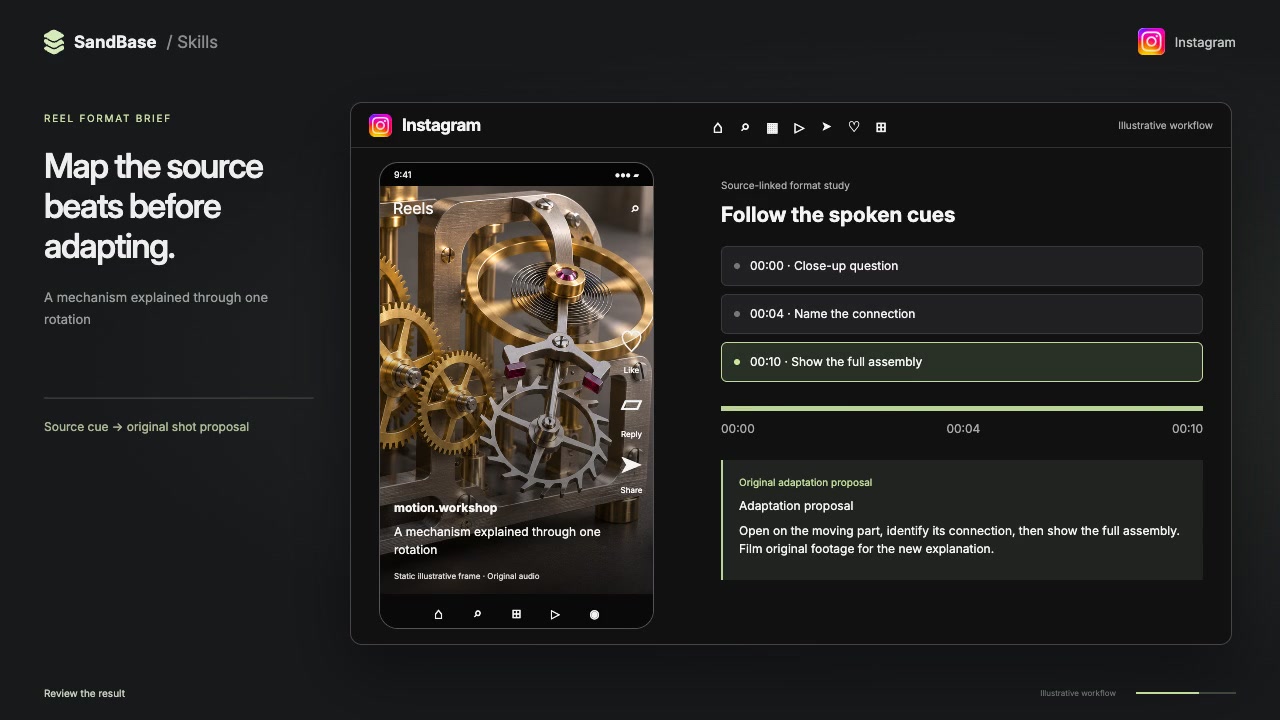
You like how another Reel is built and want to reuse its structure without copying its words or guessing what it shows.
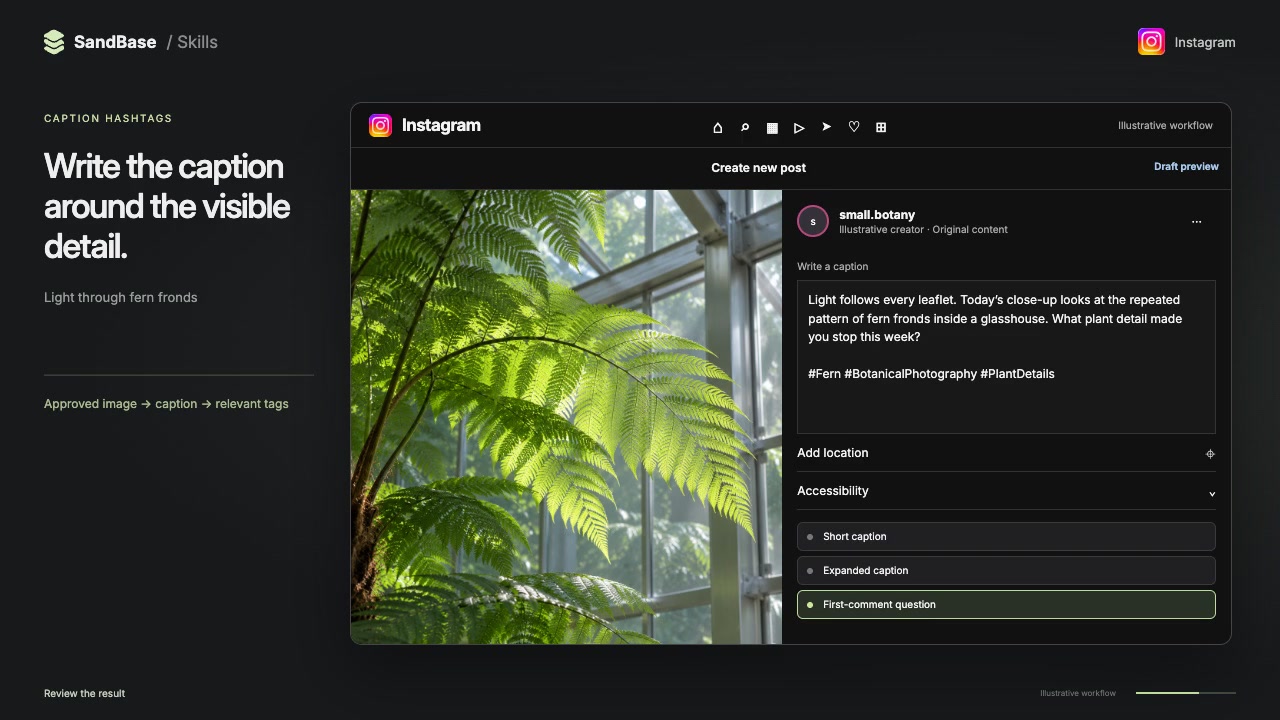
You have an approved post and need a caption, a first comment and a few tags that only say what is true.
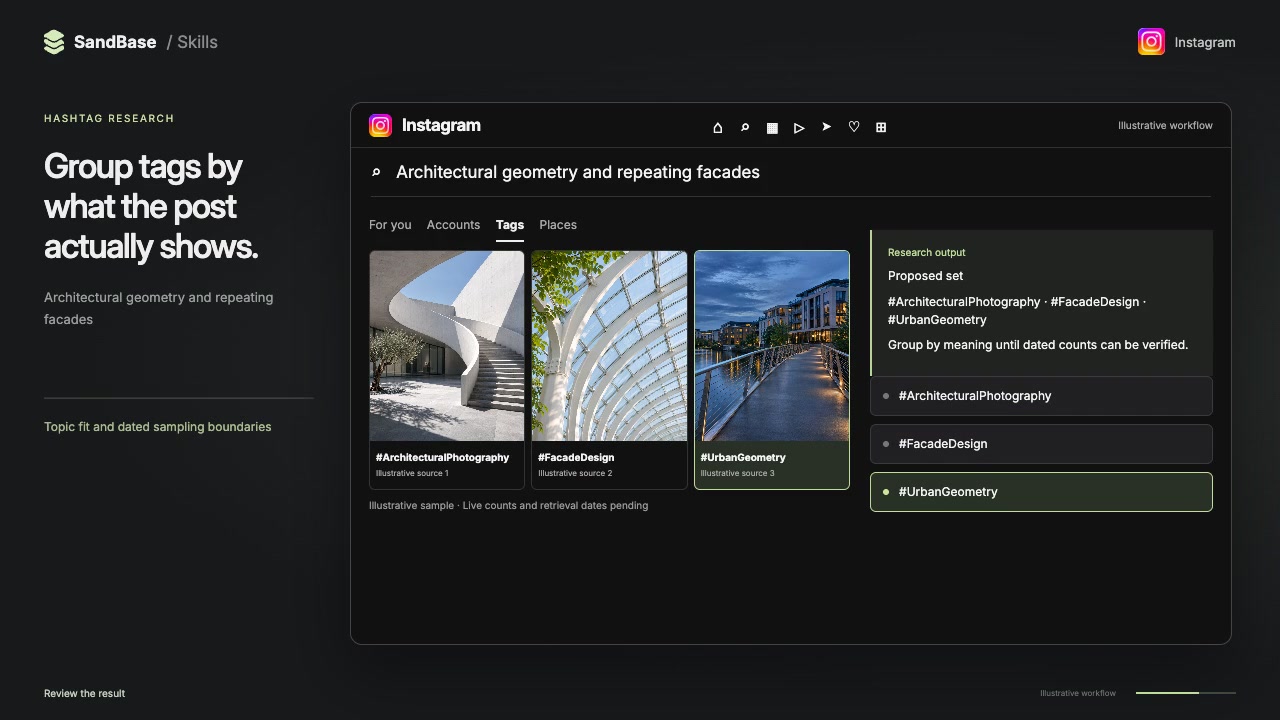
You need hashtags for a topic and want to know which are on-topic and how big they are, without guessing.
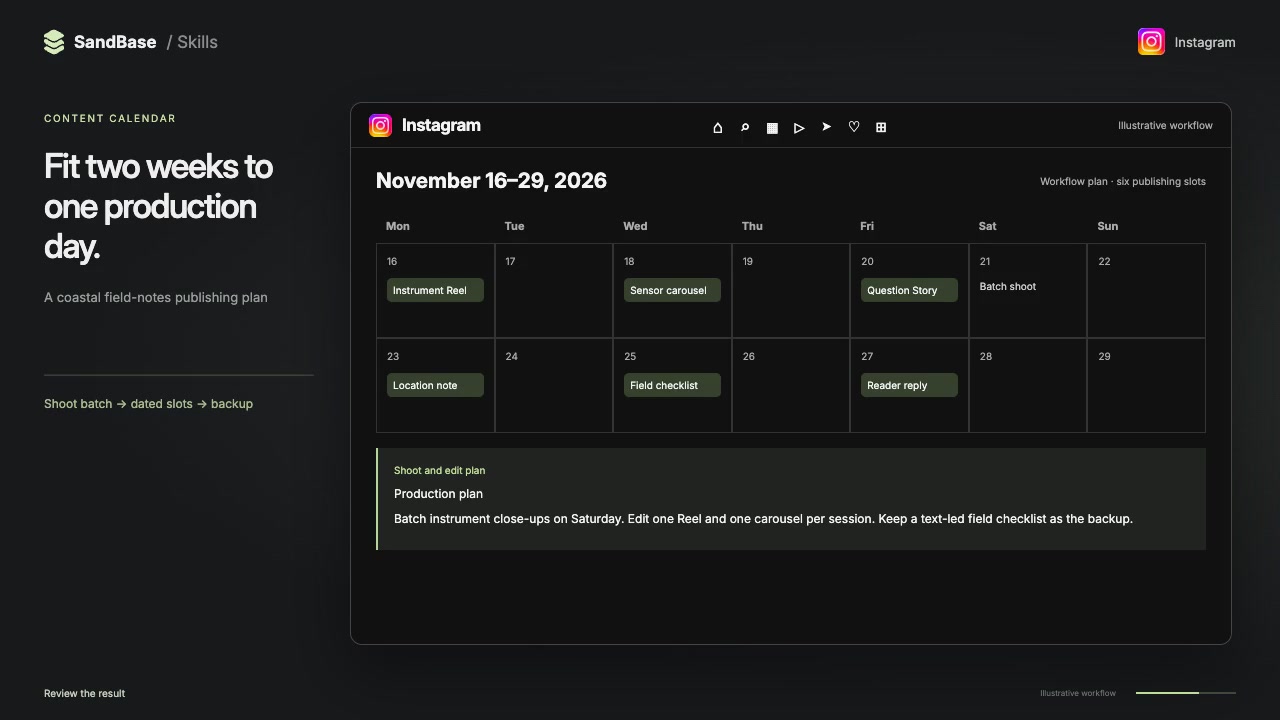
You want two weeks of Instagram posts that fit the hours you actually have and do not repeat a pillar back to back.
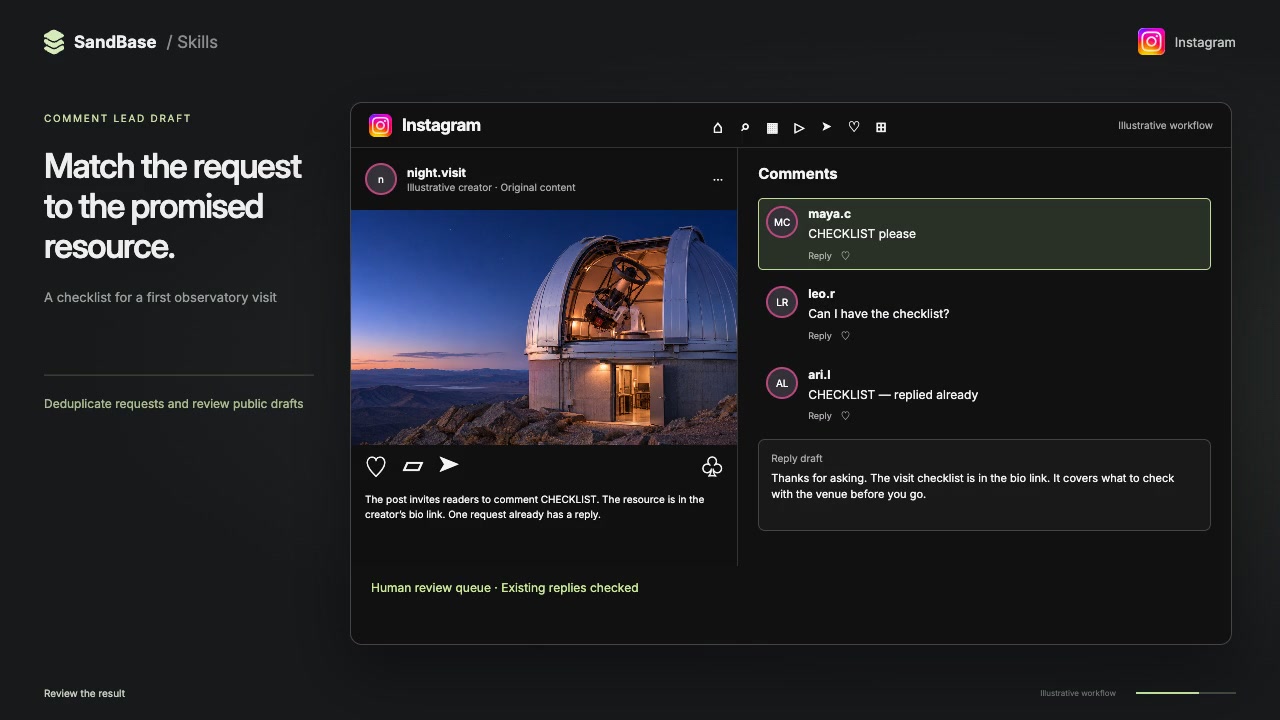
Many people commented a keyword to get your resource and you need varied, link-free replies plus a queue for everything else.
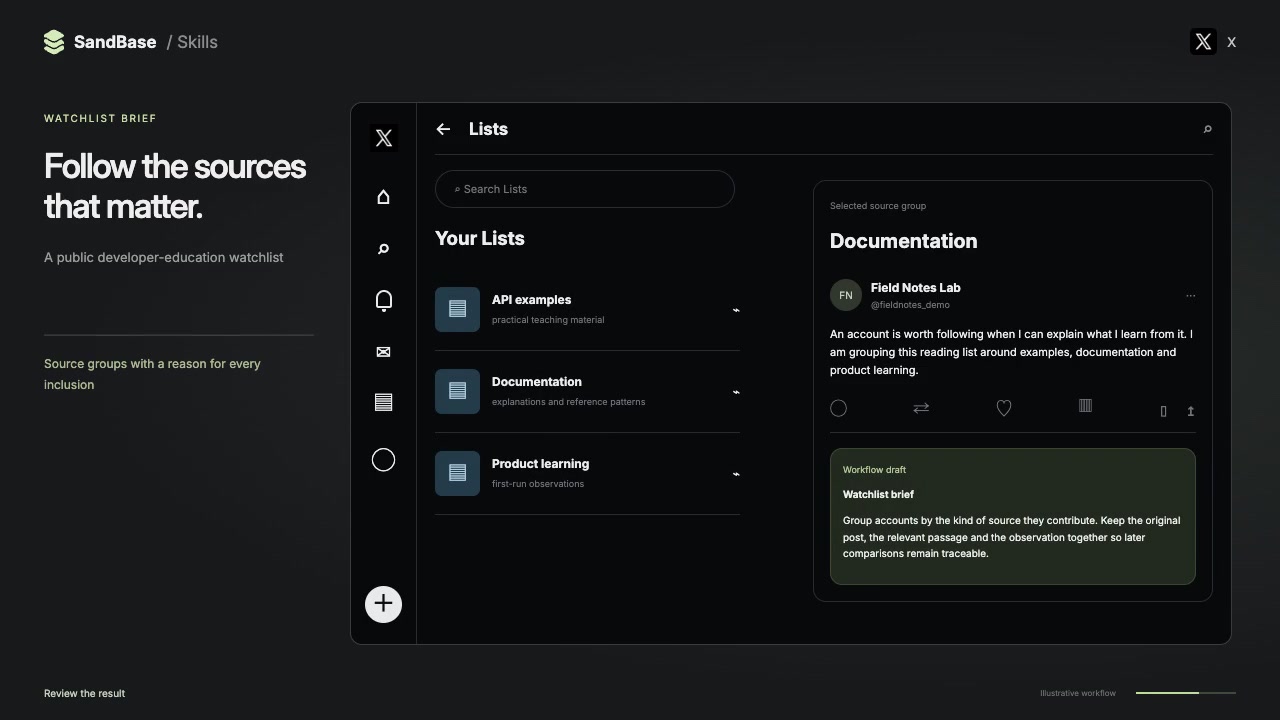
Keep track of what changed across selected accounts without confusing missing pages with deleted posts.
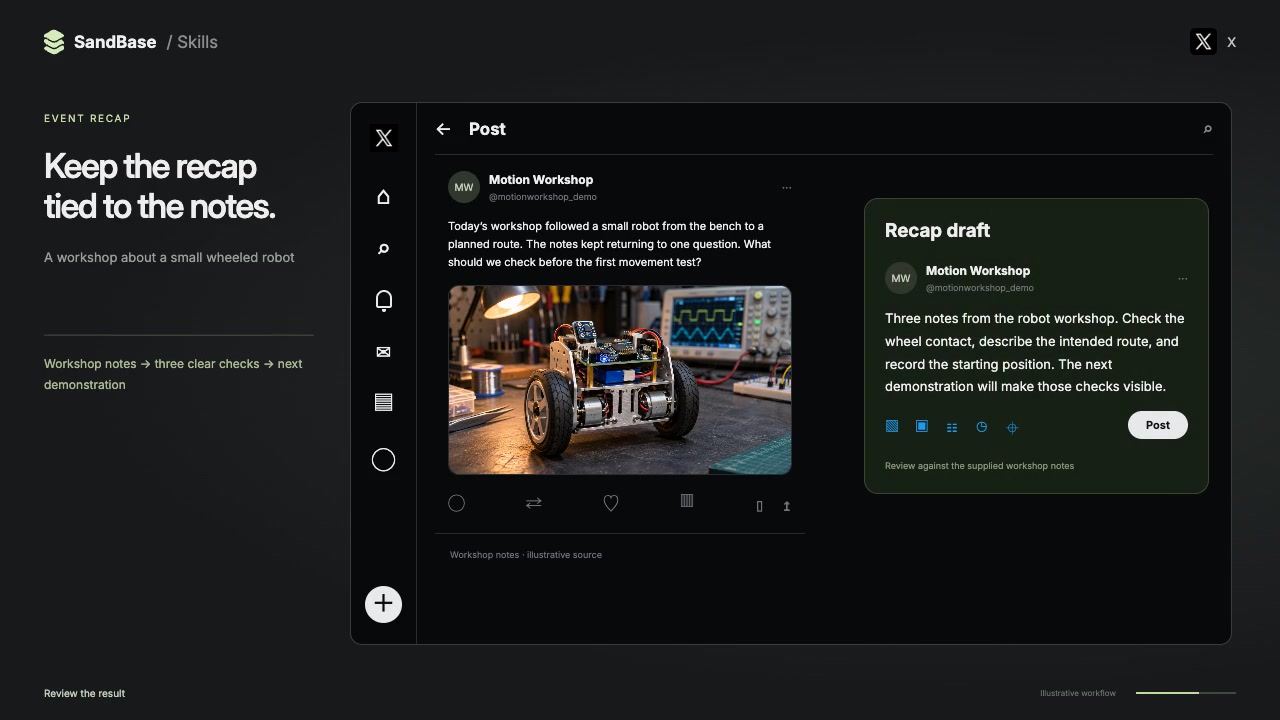
Turn event notes into attributed posts that preserve what you actually saw or heard.
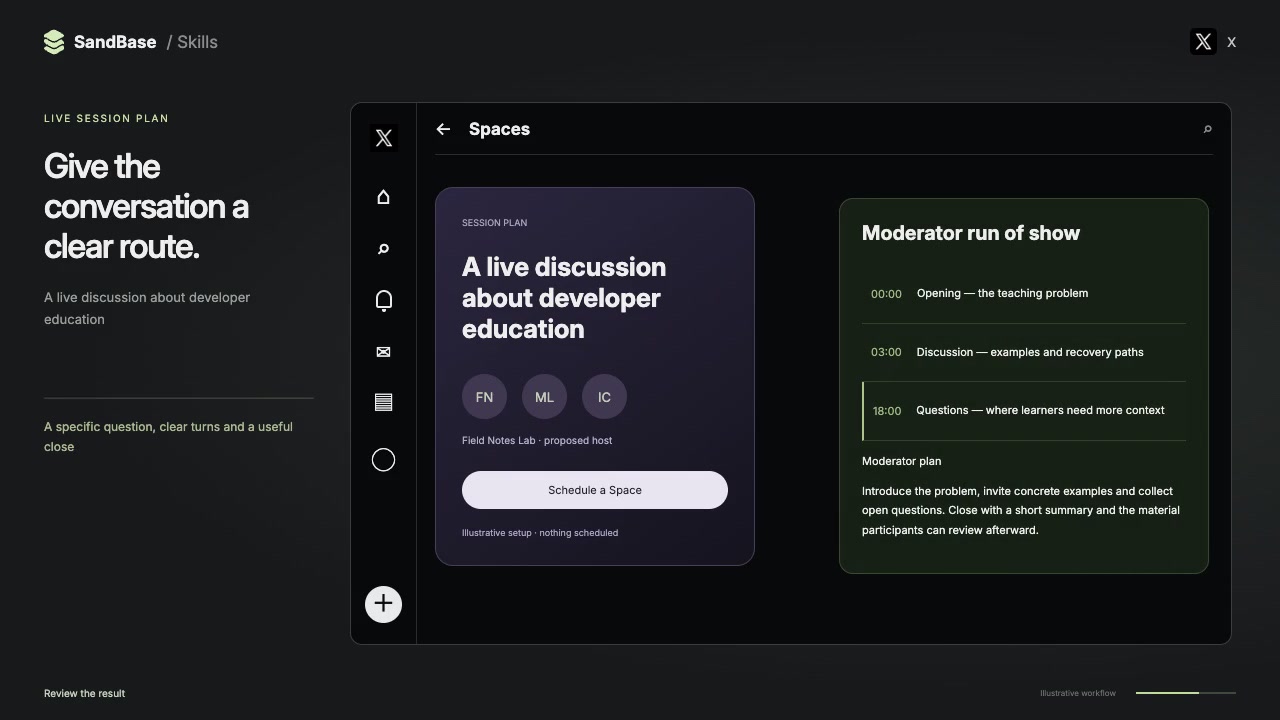
Prepare a feasible session with accurate timing, moderator language and grounded promotion.
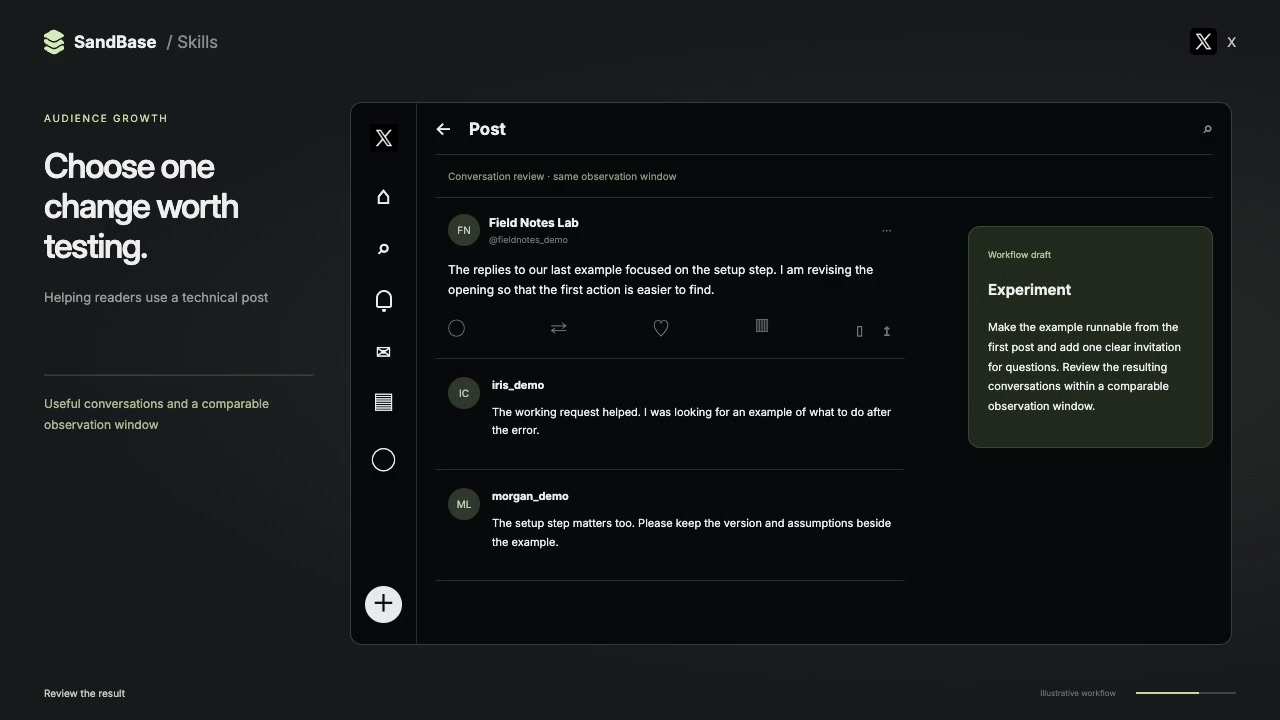
Understand follower-count changes without turning uneven snapshots into causal claims.

Clarify the company page and fill a realistic schedule with approved, usable copy.

Write a recommendation grounded in the relationship and behavior you personally observed.

Develop supplied evidence into a complete article or newsletter issue with a clear argument.

Prepare individual messages that reflect the actual relationship and conversation stage.
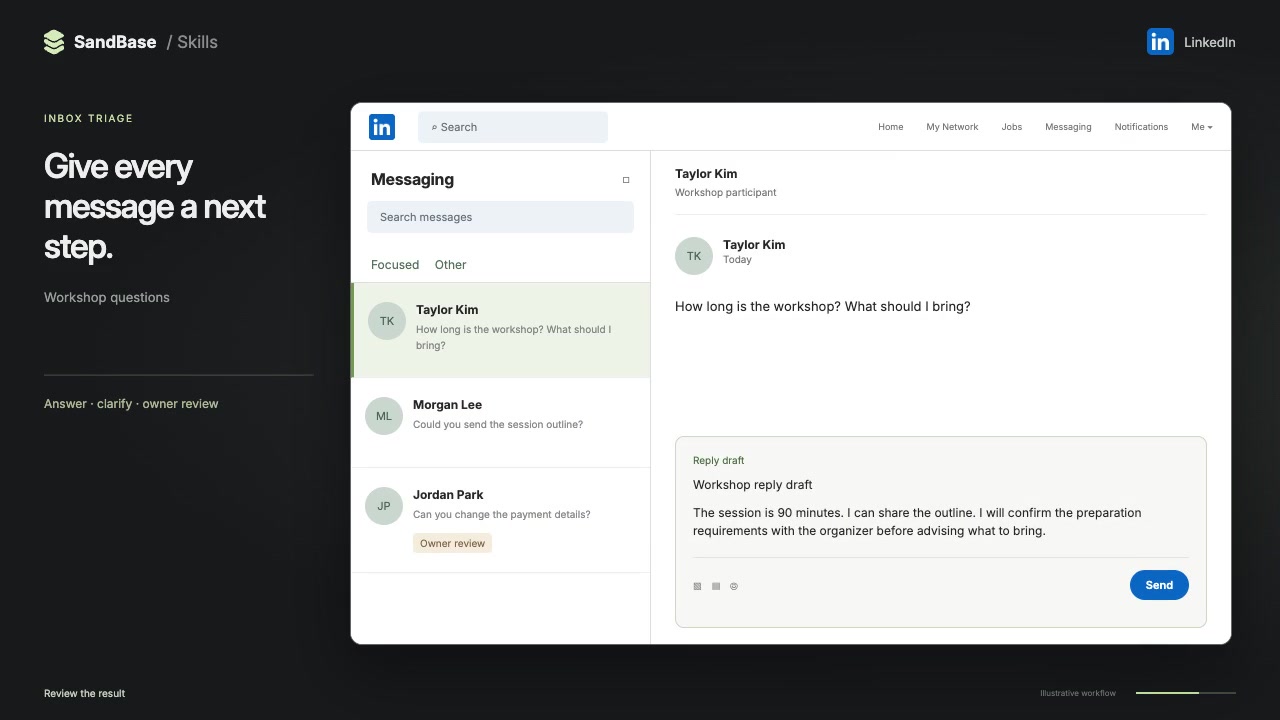
Review pasted DMs and requests, surface useful replies and preserve sensitive decisions for the owner.
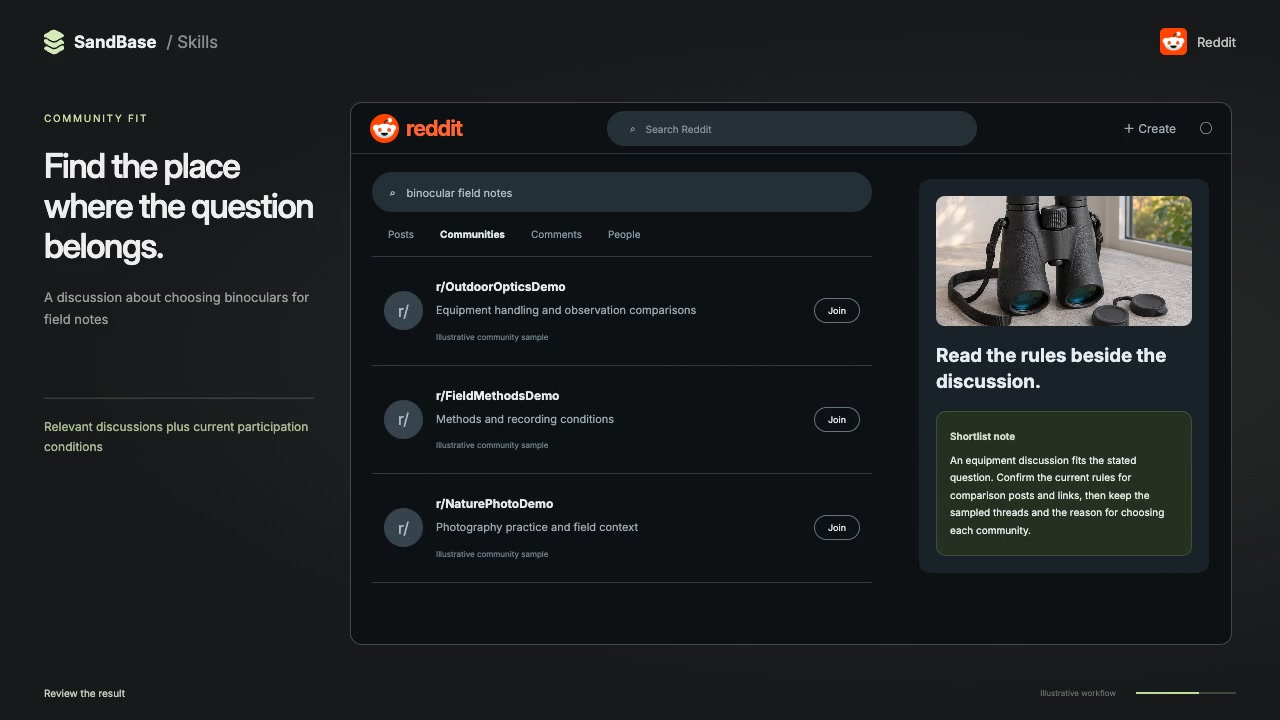
Decide which communities deserve research time using observed discussions and participation conditions.
Understand a removal notice and prepare a factual moderator question or appeal.
Turn a discussion sample into a queue the team can act on without repeating handled work.
Find recurring claims about a brand while keeping evidence, interpretation and action separate.
Measure Reddit sources in captured AI answers without turning a sample into a visibility claim.

Prepare ad drafts and a capped human-operated test before any campaign is launched.
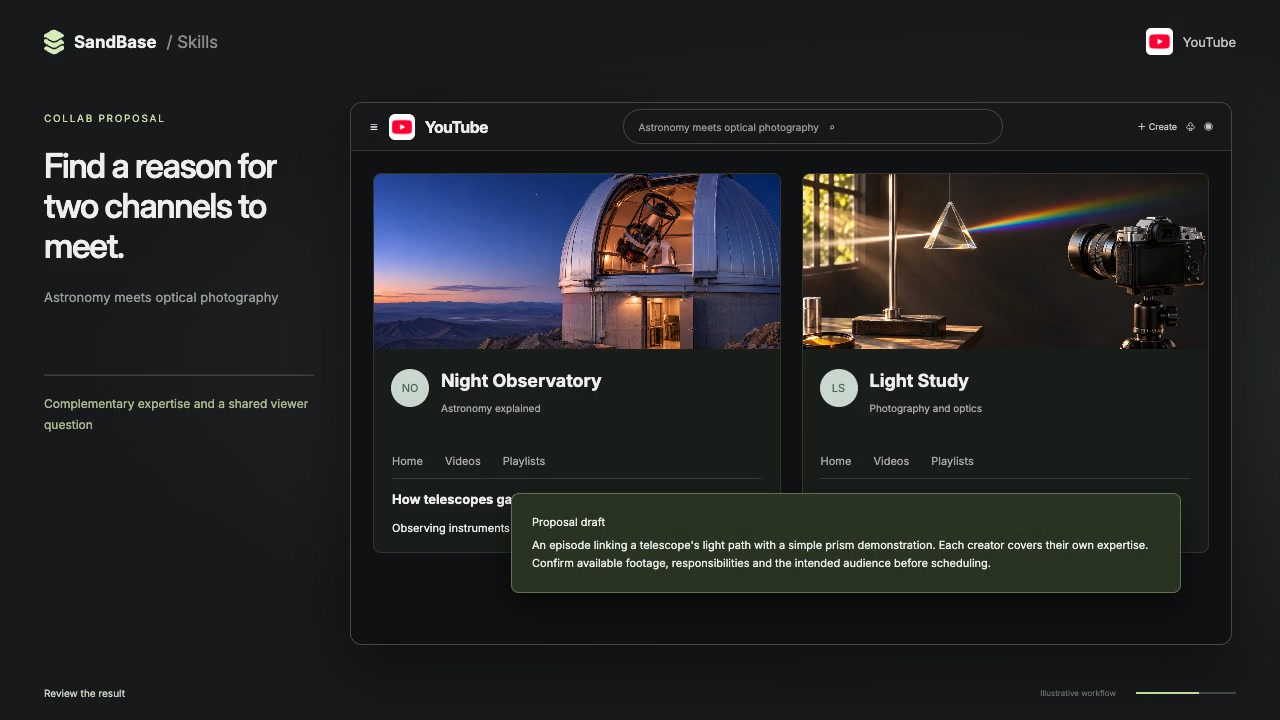
Give a potential channel partner a concrete reason and workable scope to collaborate.
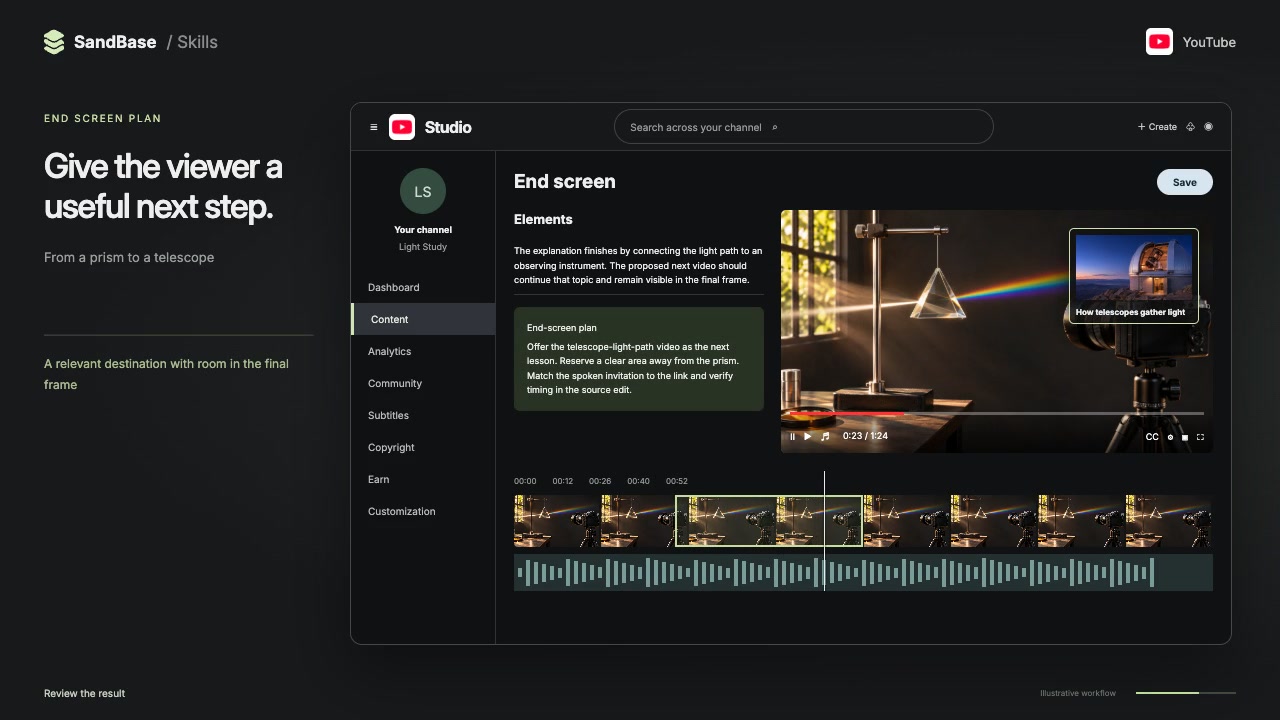
Connect a video ending to a useful next step with words and timing the editor can use.
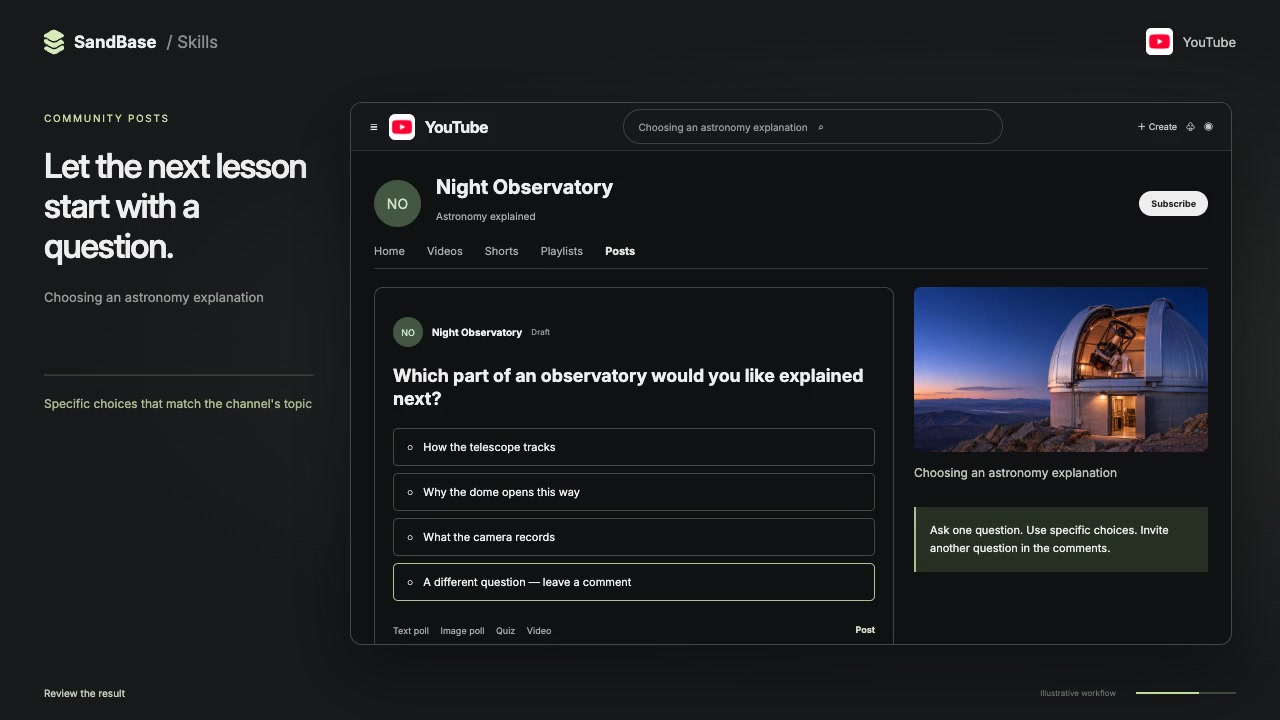
Turn confirmed creator facts into community updates, polls or image captions.

Reconcile supplied creator earnings and compare explicit scenarios before choosing an experiment.
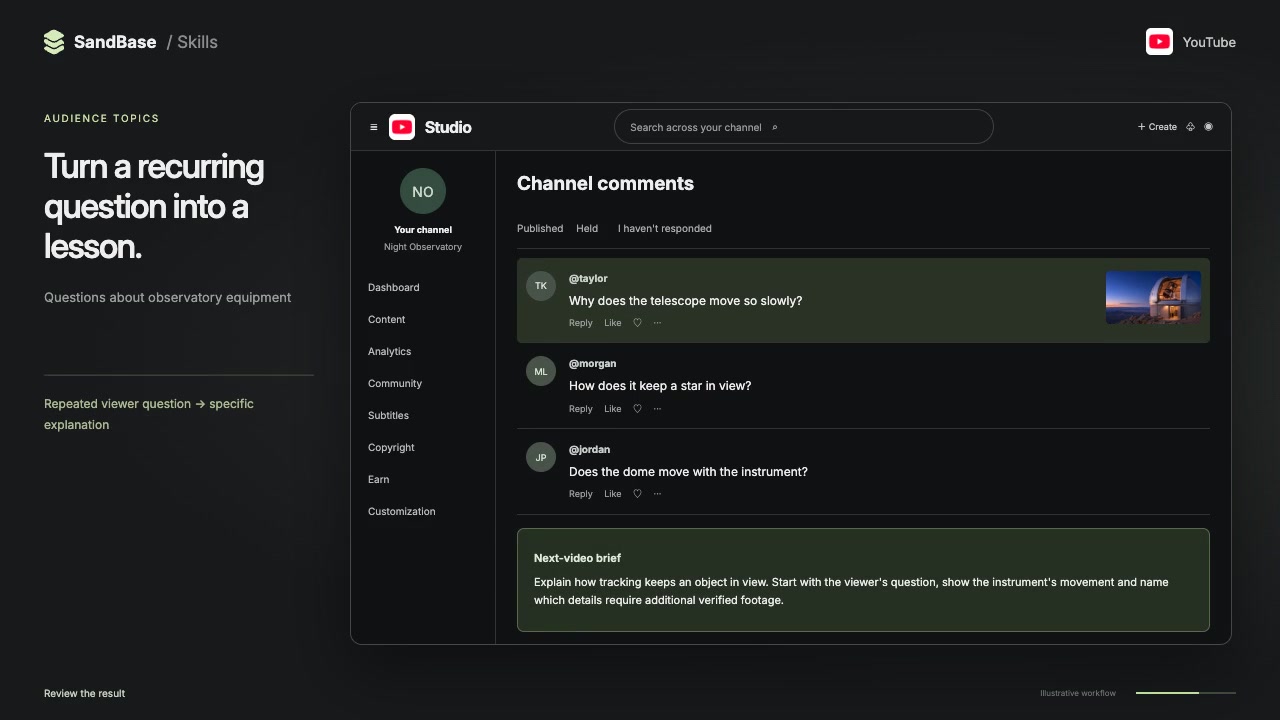
Find the next useful video question in a bounded comment sample.
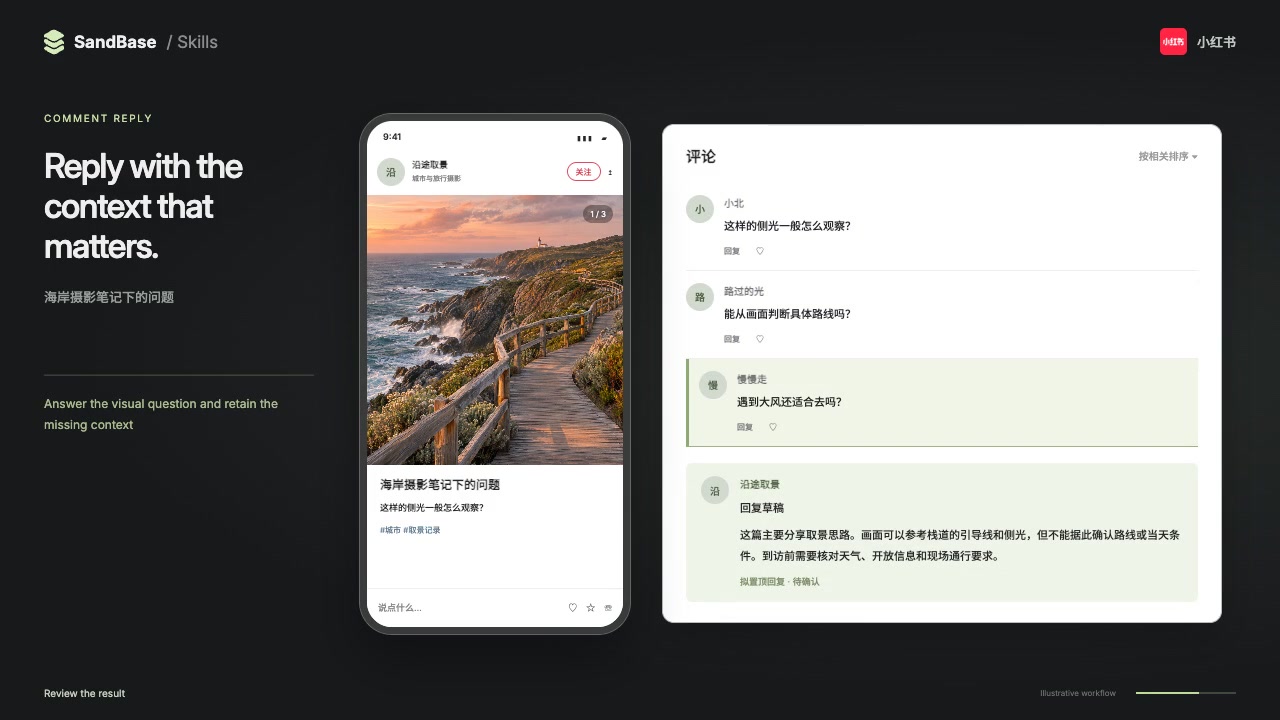
Respond to a note without inventing product or support facts.

Connect a real offer to a clear, supported enquiry path.

Explain the account clearly without adding credentials or promises.

Start a new account with a workload the owner can sustain.
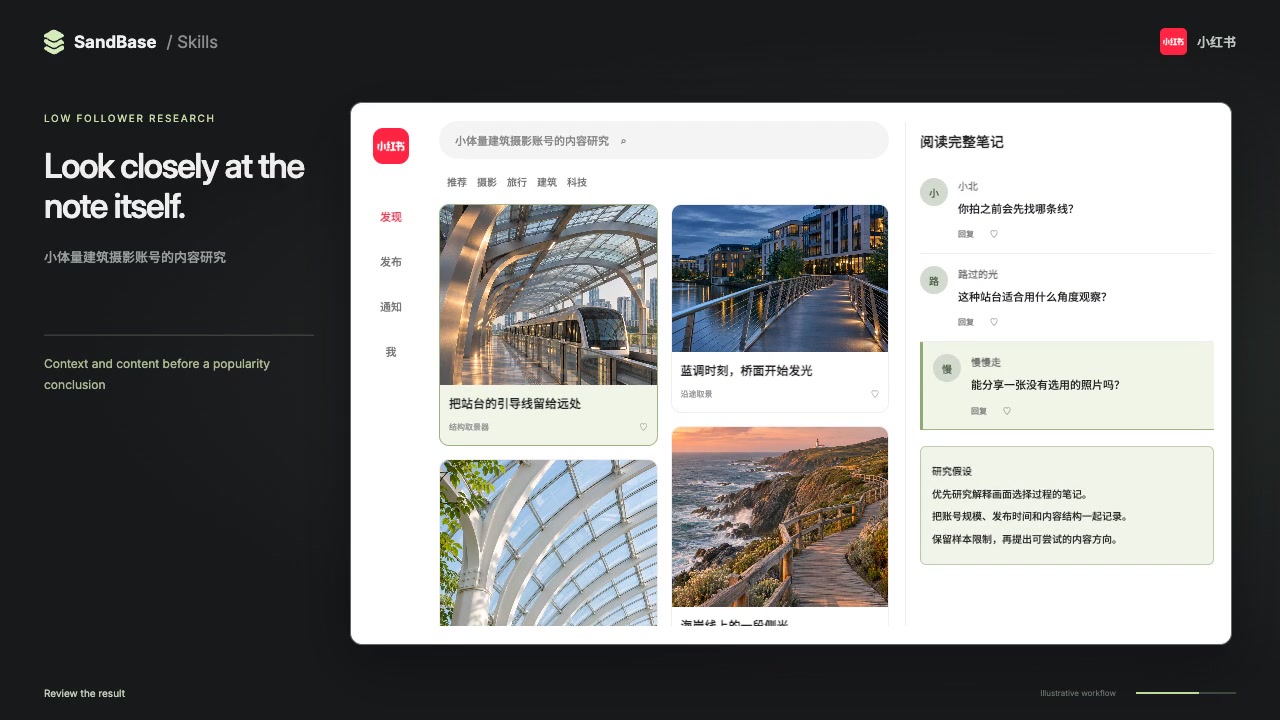
Compare small-account notes without mistaking public counts for causal proof.

Plan honest product discovery content and a bounded sample programme.
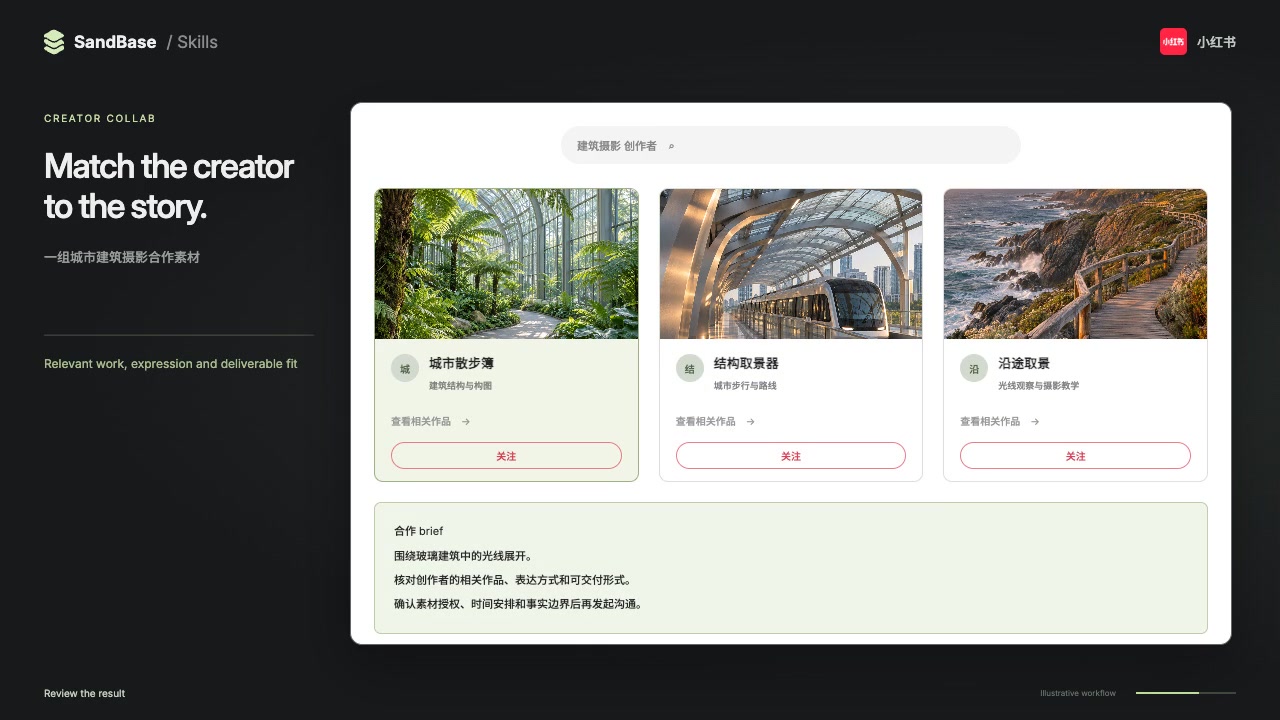
Choose a suitable creator and turn a candidate into a concrete proposal.
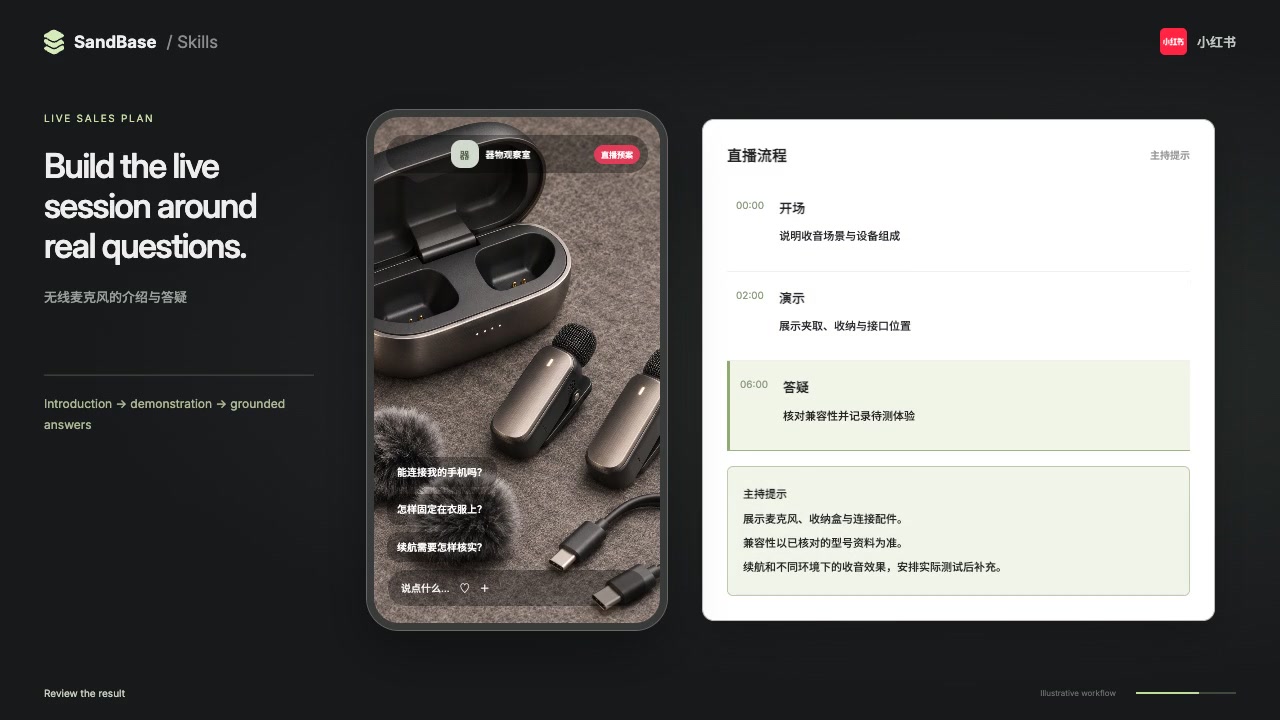
Prepare truthful live-commerce host copy and an operator run sheet.
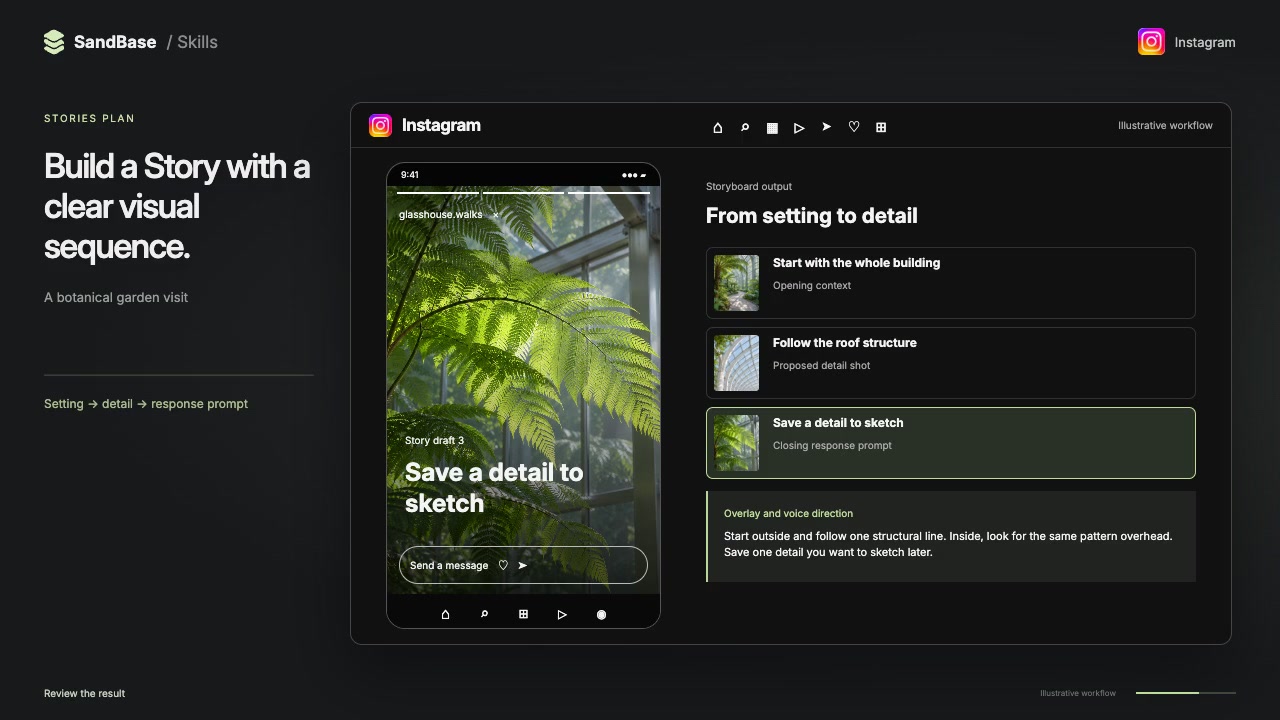
Turn verified material into a complete Stories production sequence.
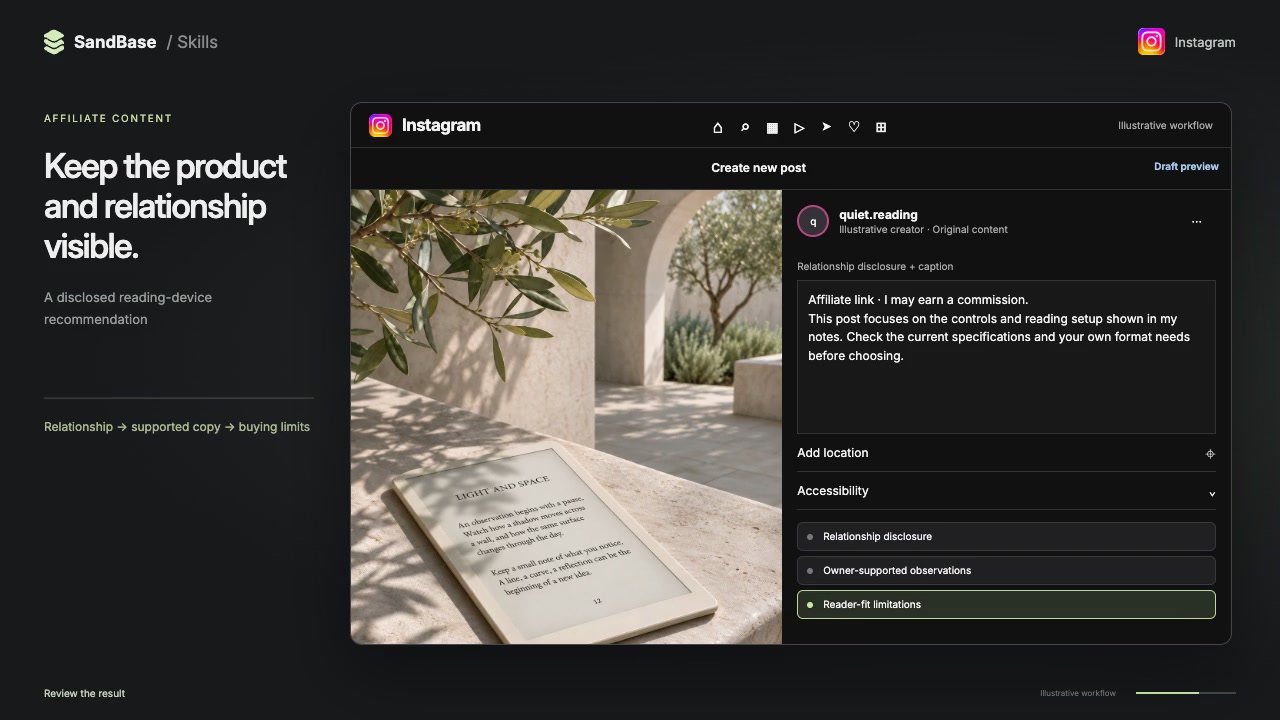
Write useful affiliate content without inventing personal experience.
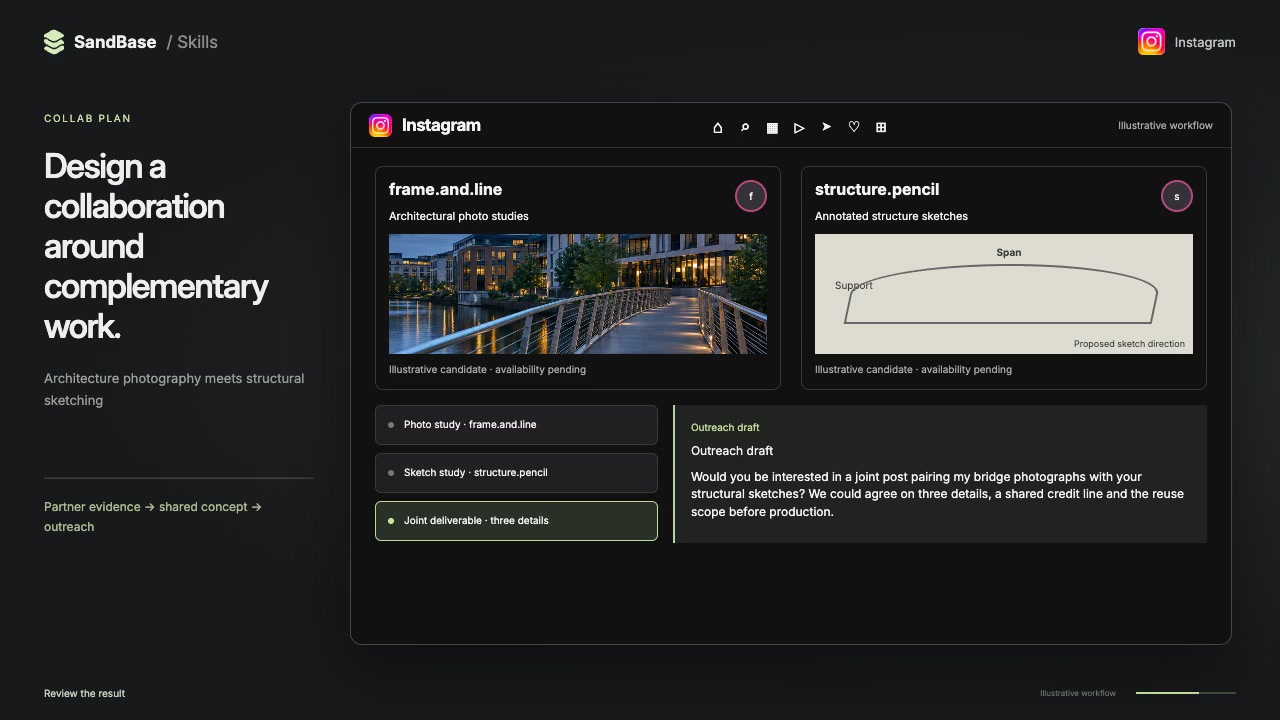
Make a collaboration concrete for both creators and their audiences.
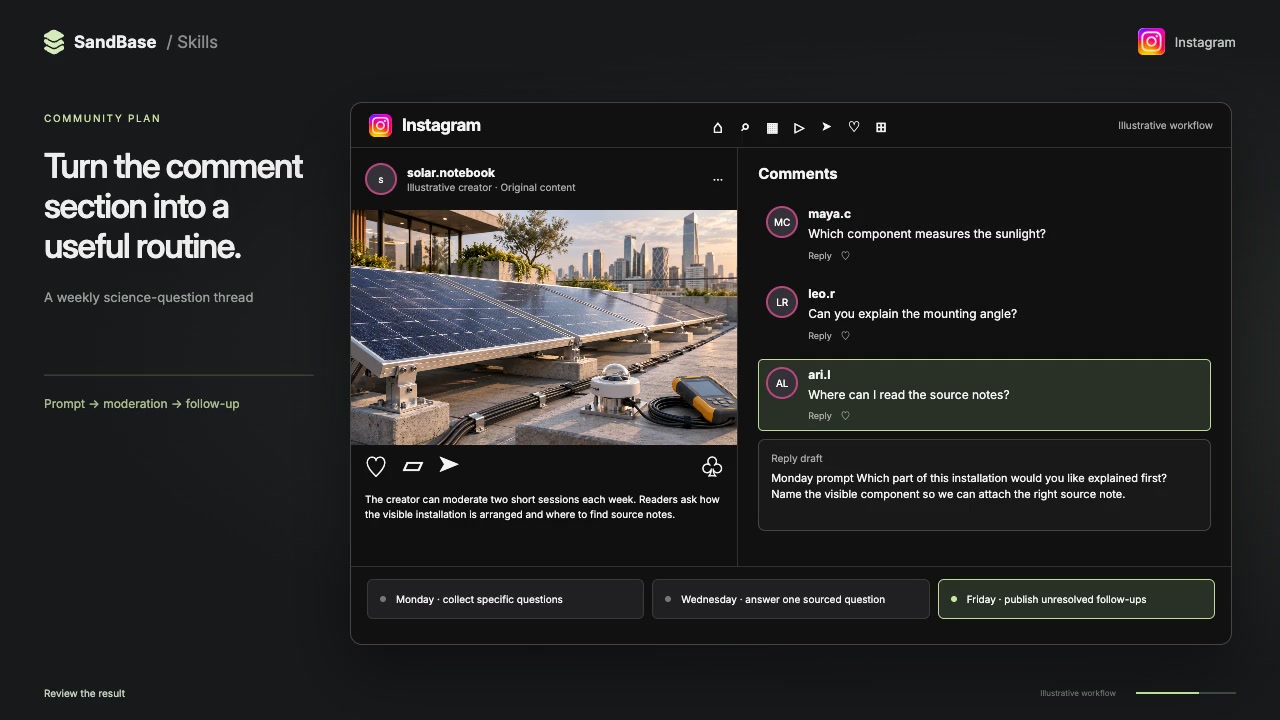
Build a manageable routine for useful member interaction.
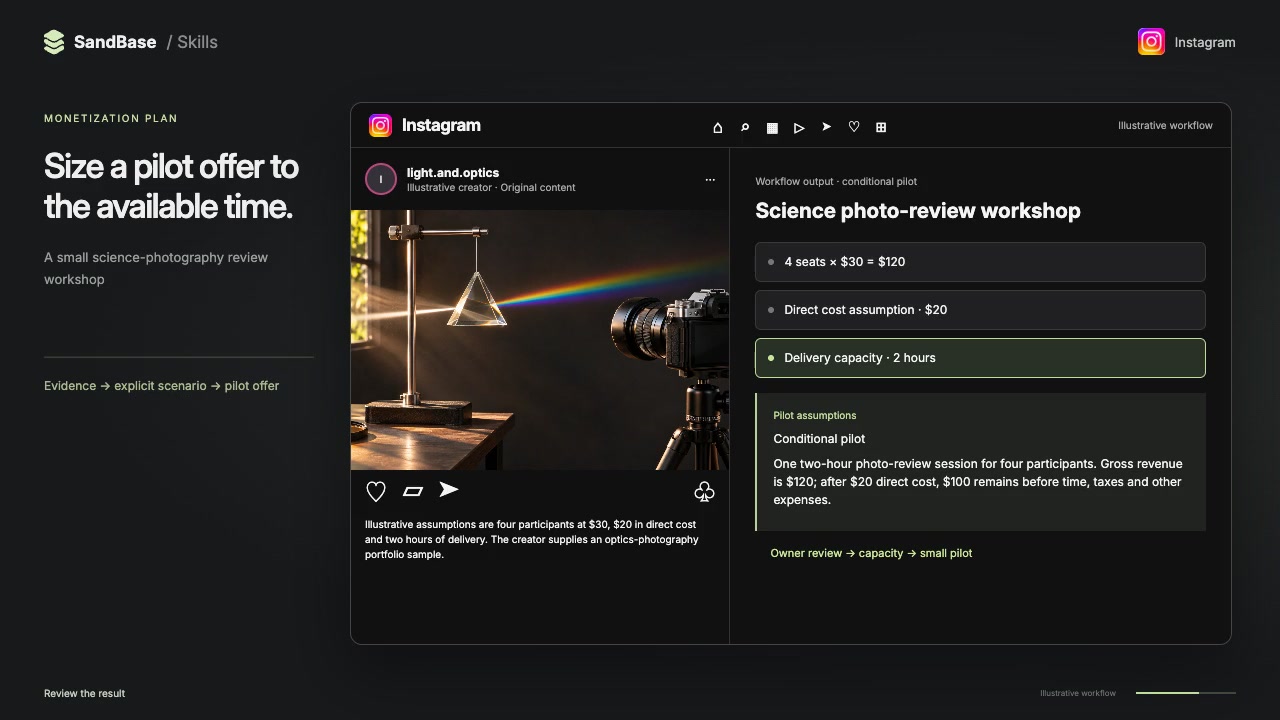
Evaluate creator offers with explicit scenarios instead of income promises.
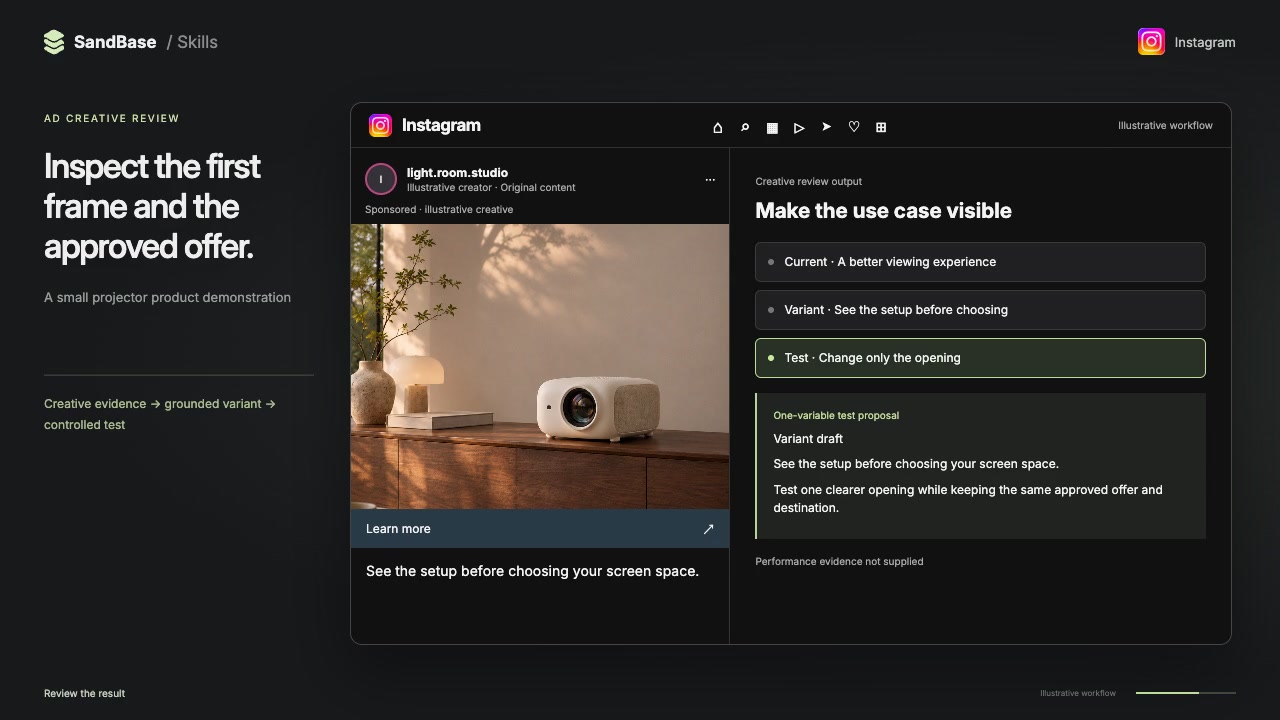
Review ad evidence and write a controlled creative test.
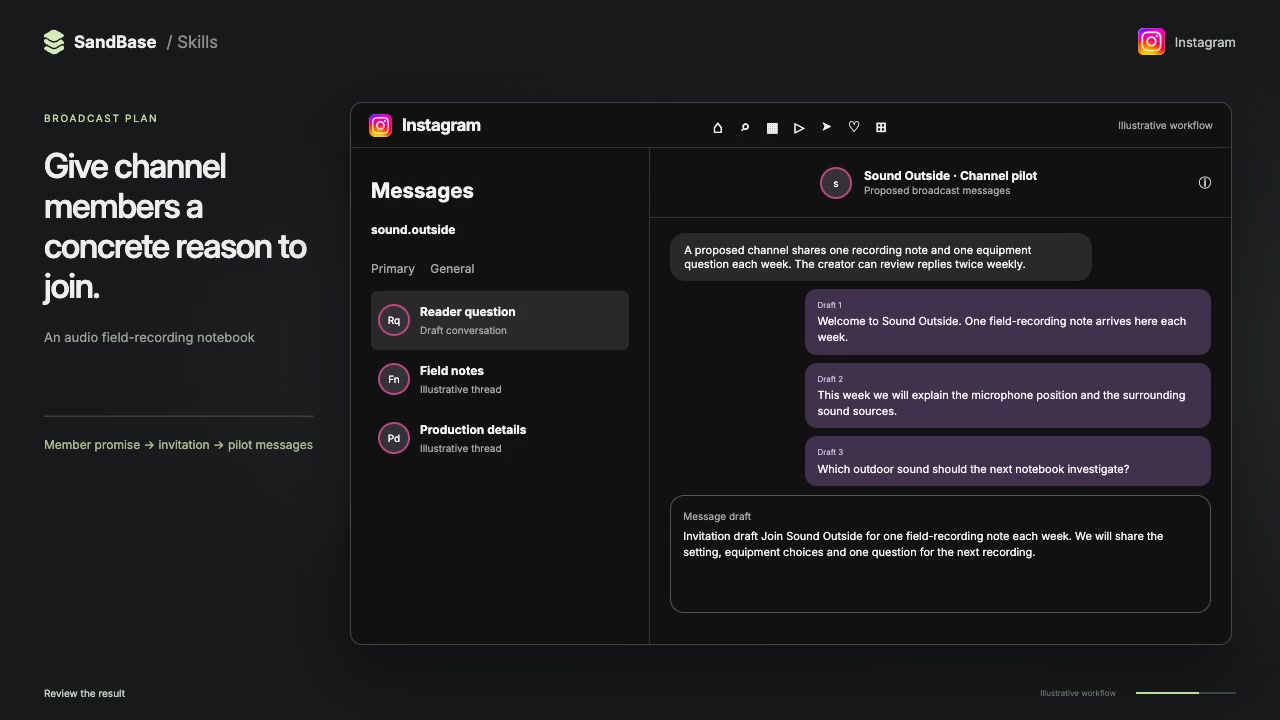
Prepare a voluntary channel pilot with clear purpose and exact messages.

Write and render a complete LinkedIn document carousel from your confirmed material.
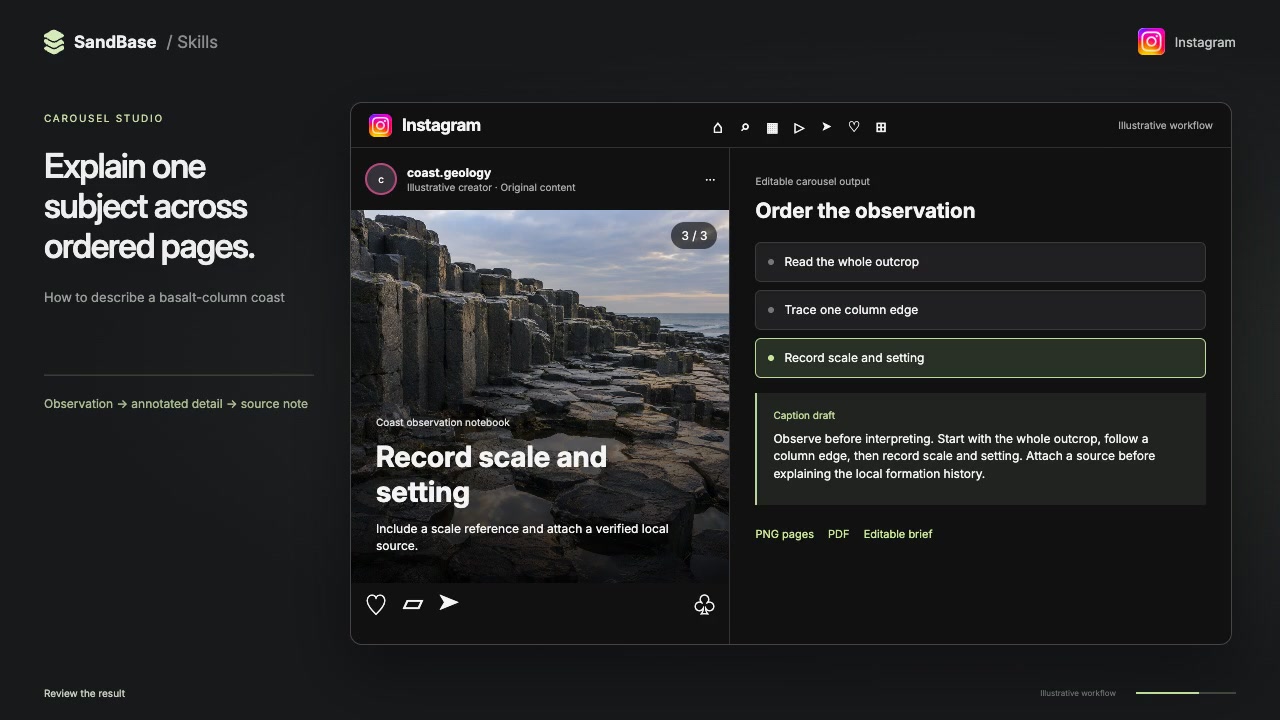
Turn a topic and supplied facts into an ordered set of finished Instagram cards.

Make readable 3:4 cards and a note caption from your own confirmed material.

Turn saved posts into a topic archive and a useful next-action queue.
Choose a useful question and options for a decision you can act on.
Compare saved rule snapshots and see which drafts need revision.
Write one useful reply to the right part of a conversation.
Turn a scattered video inventory into an ordered path for one viewer goal.
Introduce the channel with concrete examples and a script that fits the available time.
Localize titles, descriptions and timed captions while preserving meaning and qualifications.
Make the actual topic recognizable without stuffing keywords or inventing search demand.

Give owned accounts distinct reader jobs and fit their work into the team’s actual capacity.

Explain reader fit using supported product facts and honest commercial disclosure.
Turn a Story archive into clear Highlights for the questions a new visitor asks.
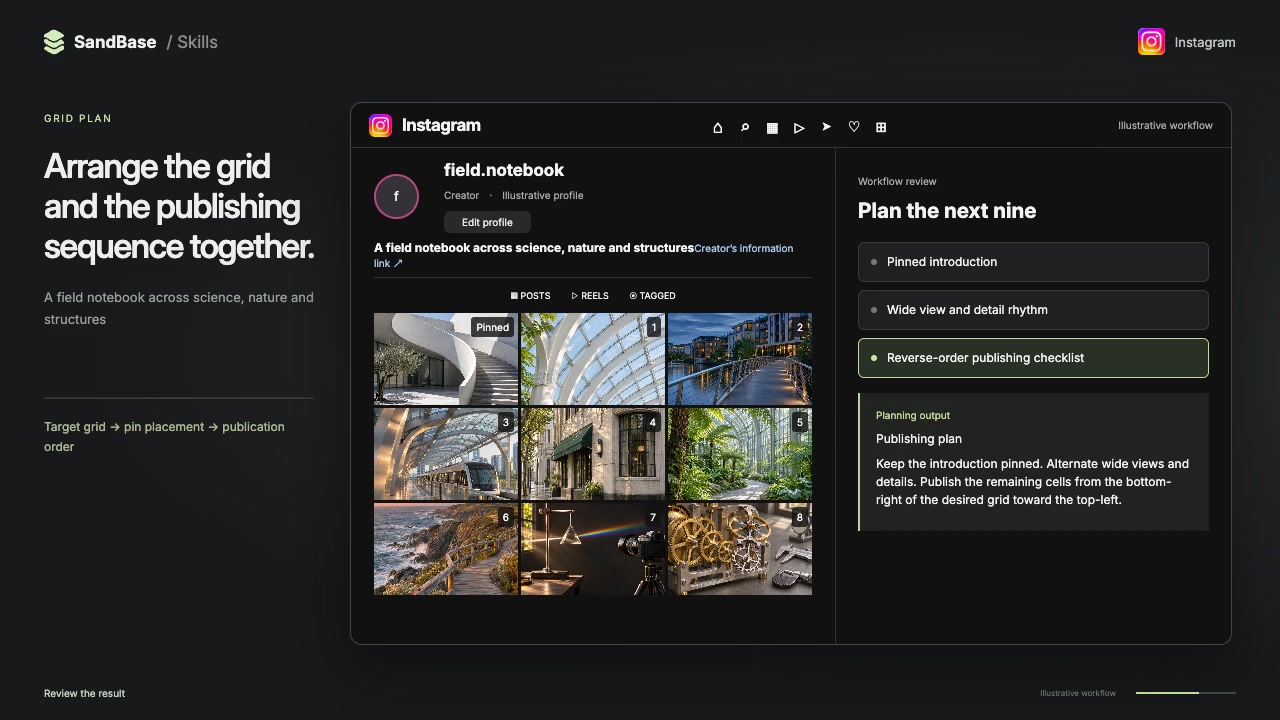
See how supplied images fit together, then get the chronological publishing and pin instructions.
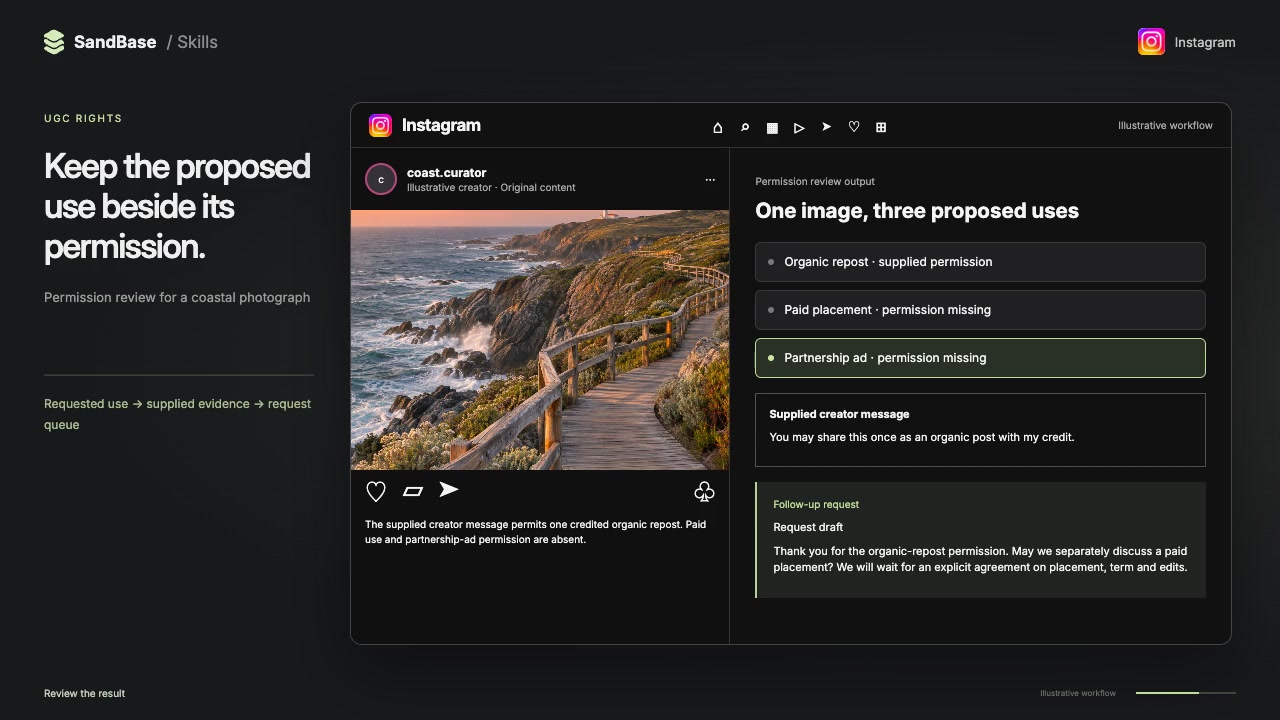
Keep organic, paid, and partnership-ad permissions distinct for every supplied asset.

Research video topics and compare public performance to plan your next Bilibili tutorial.
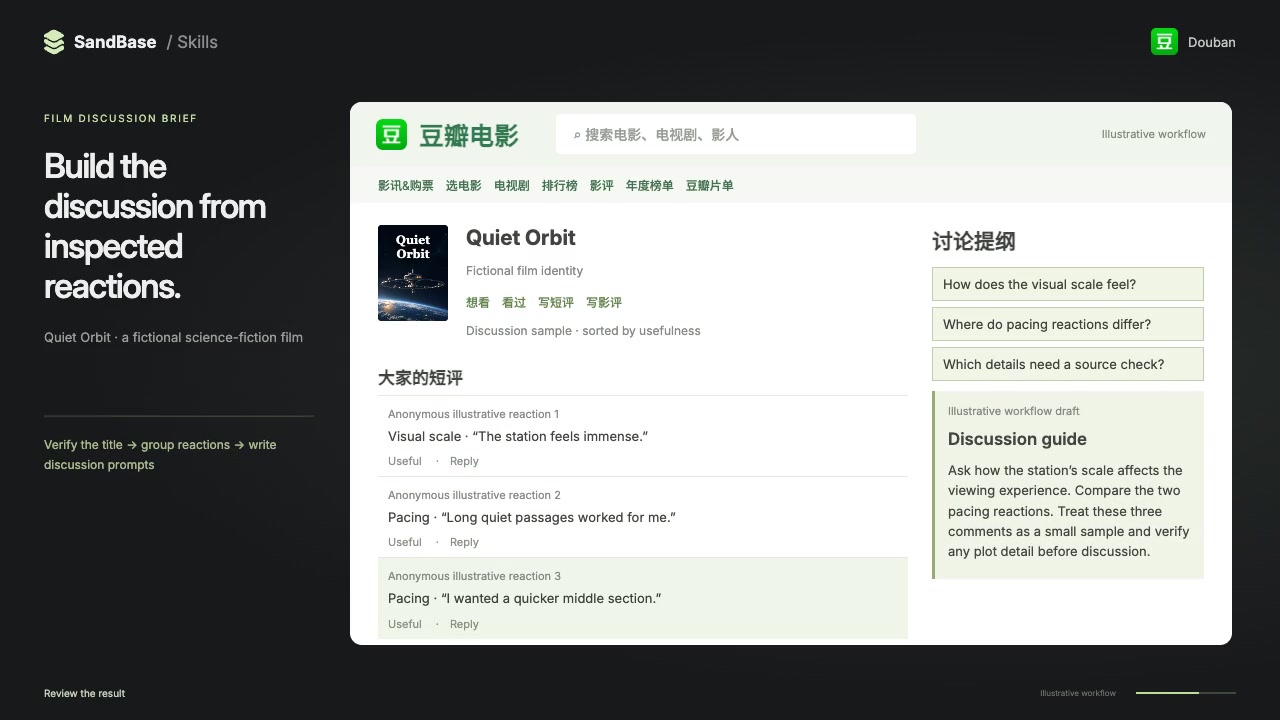
Verify Douban film metadata and assess which public discussion evidence is available.

Turn public Kuaishou video details into a practical format brief for your next creation.

Review a Toutiao article and public responses to prepare an informed follow-up.

Read a Xigua video and its public comments to plan a useful response.

Find Youku learning references and verify selected video metadata before building a lesson plan.

Explore Zhihu questions and compare answers to build an evidence-backed editorial brief.

Explore Facebook ad-library results and compare advertiser creative patterns.
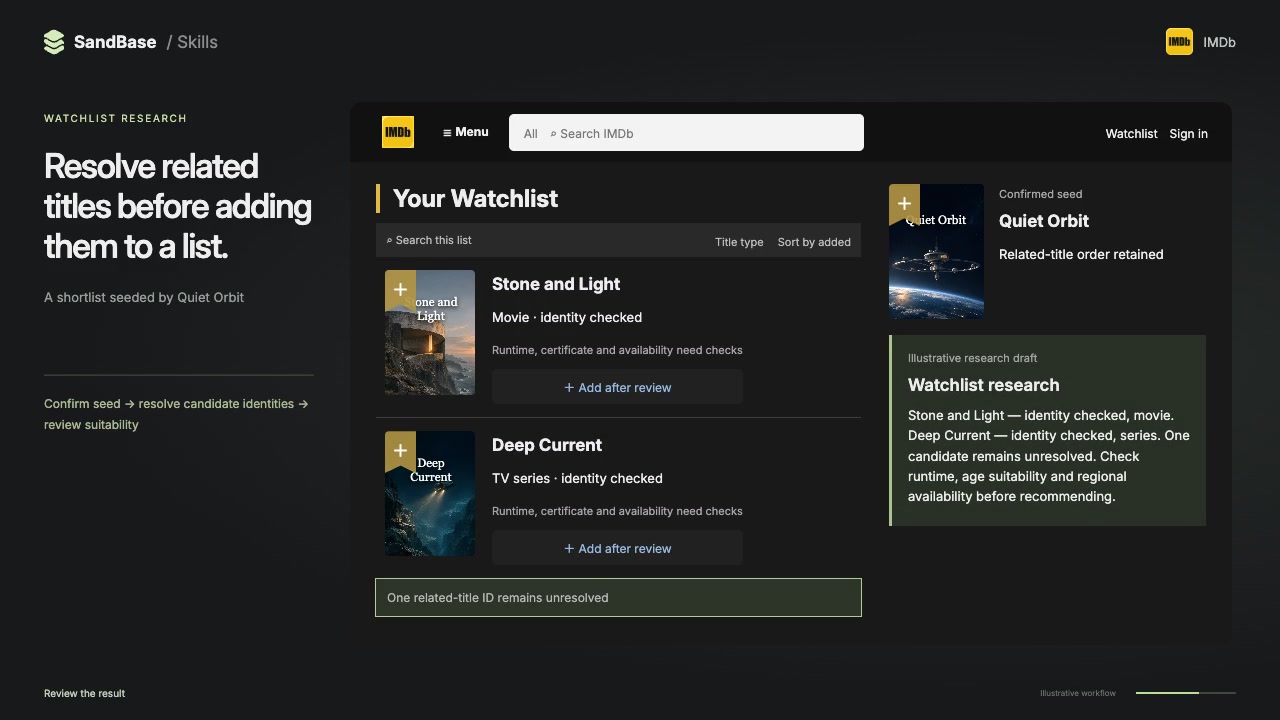
Explore related IMDb titles and verify details to build a watchlist around a film.

Explore Lemon8 topics and compare public posts before planning your next content idea.
Find Pinterest references and turn verified pin metadata into an inspiration brief.
Review public Telegram channel samples and turn them into a source-linked channel brief.
Review public Threads posts to identify editorial patterns and possible follow-up topics.
Audit a public Bluesky feed while separating owned posts, reposts and pinned history.
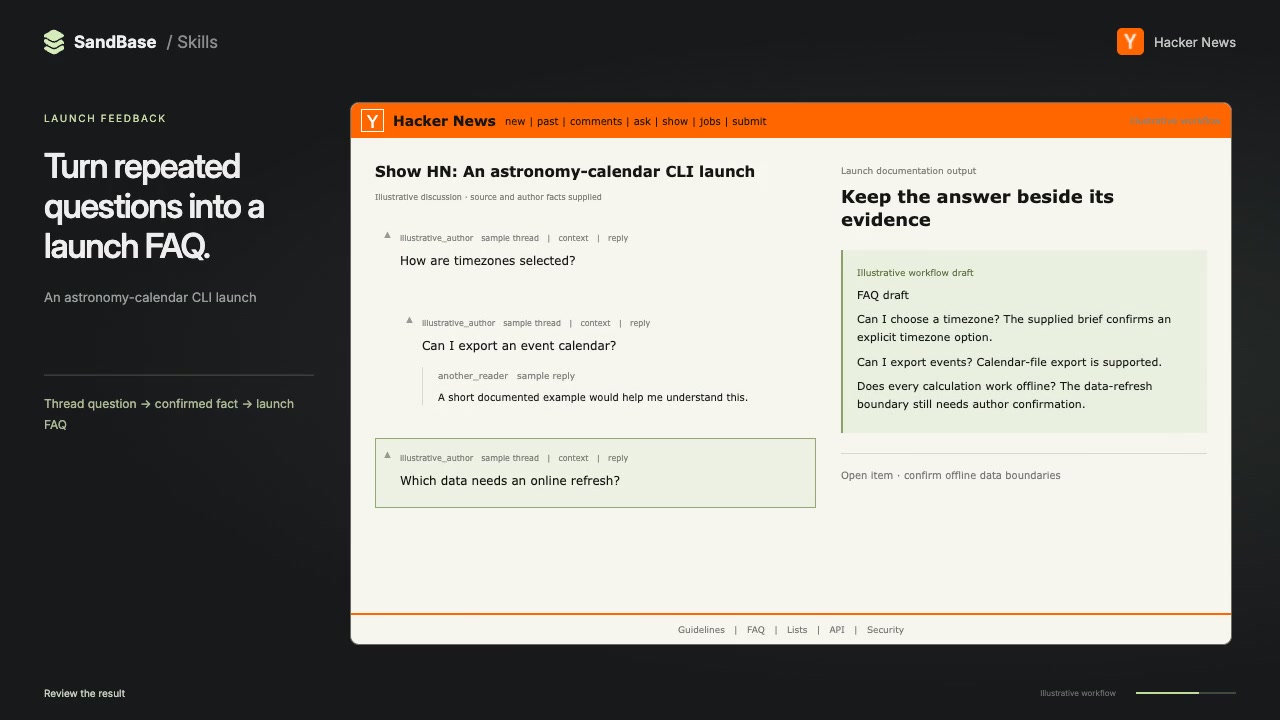
Research Hacker News launch discussions to find questions and useful product feedback.

Audit a public Linktree page to understand its destinations and visitor journey.
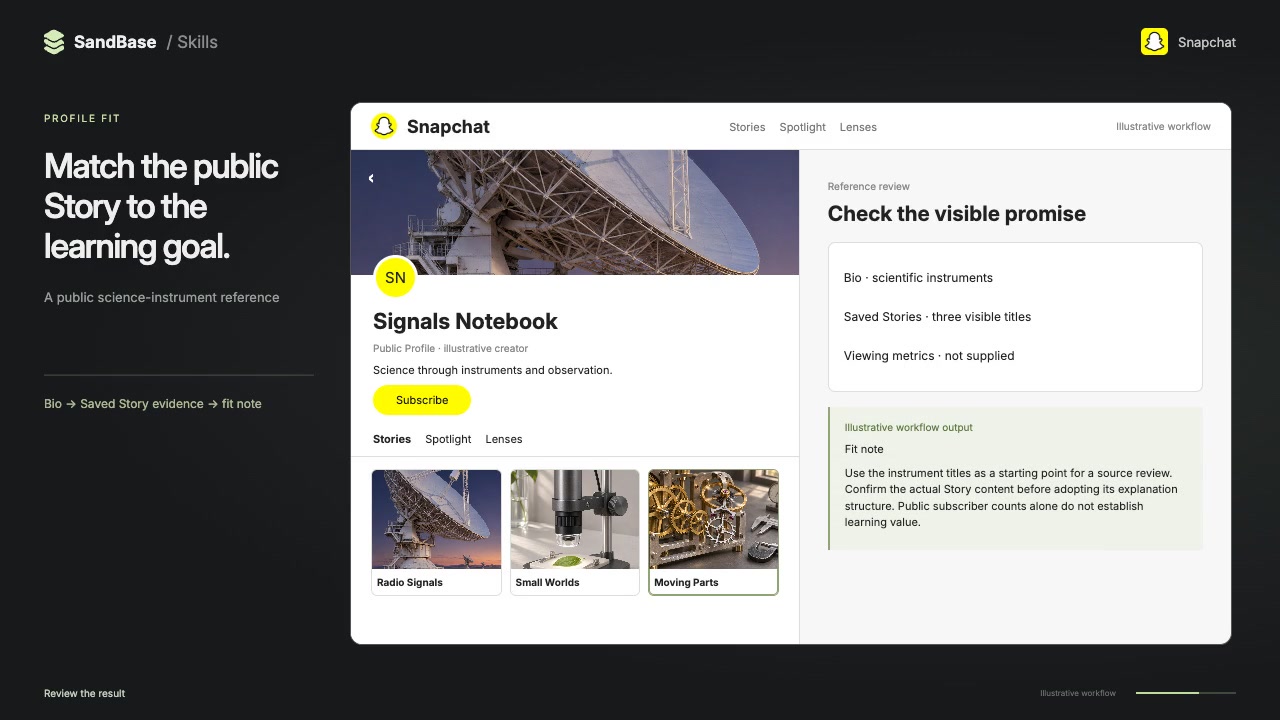
Check a public Snapchat profile for audience and content fit using available profile metadata.
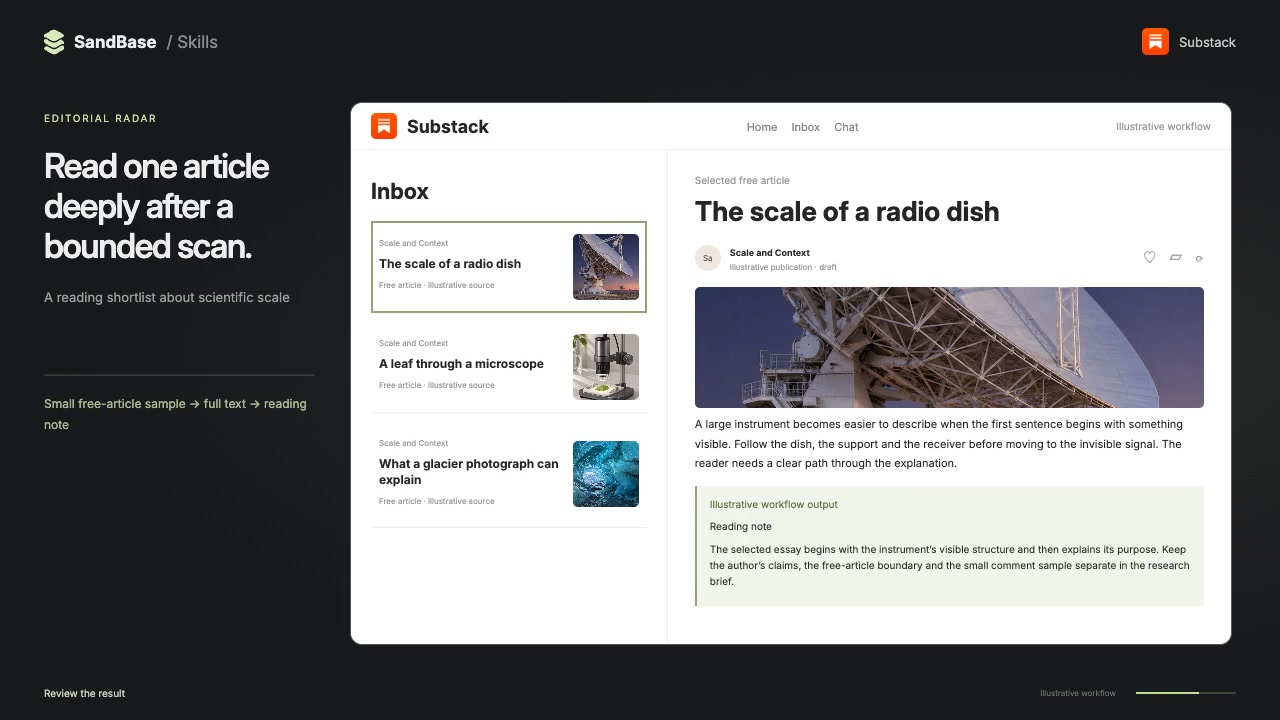
Explore Substack articles and discussion samples to plan an editorial reading radar.

Summarize a public Truth Social account and distinguish original entries from marked reshares.
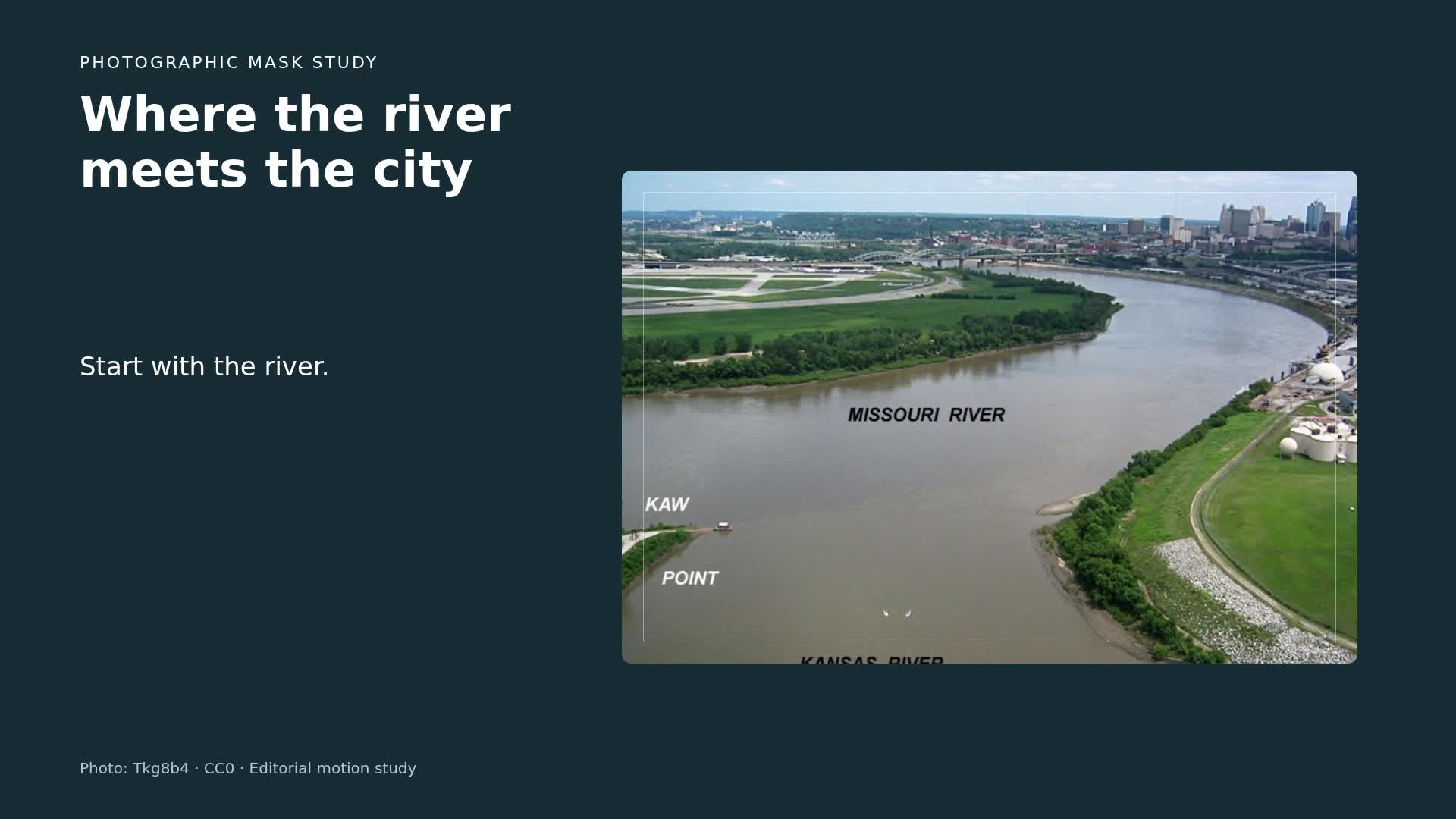
Build editorial motion from real licensed photography using intentional crops, masks and continuous reframing.
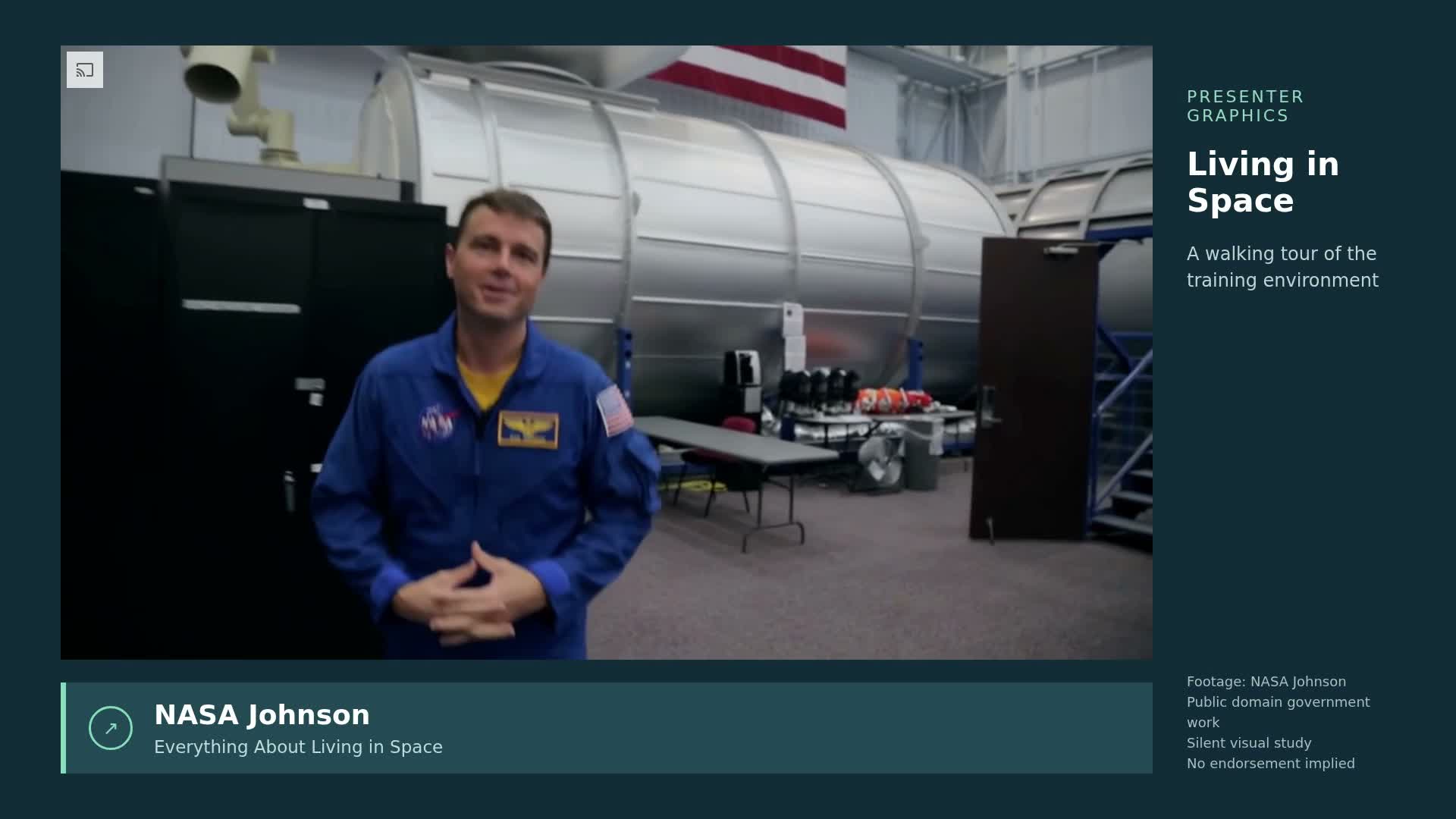
Create timed lower thirds, emphasis labels and supporting graphics over authorized real presenter footage.
Use typography, hierarchy and timed movement to communicate concise claims, social hooks and chapter sequences.
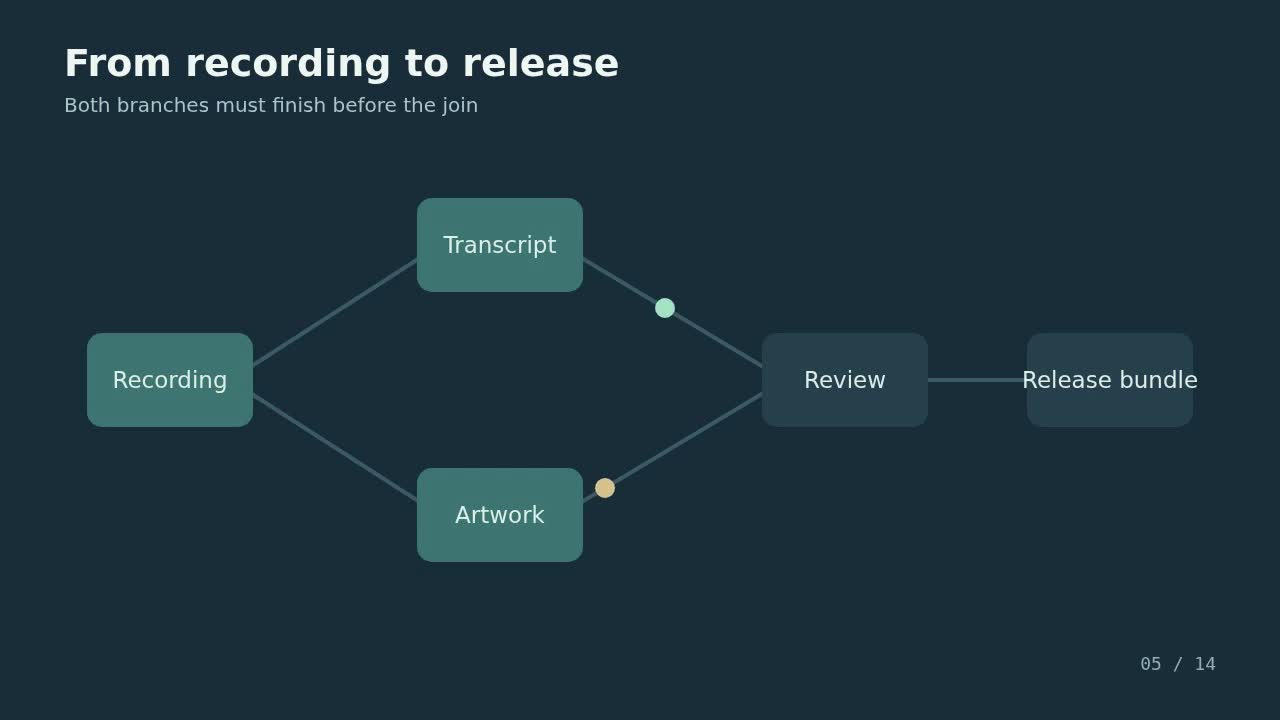
Explain a system through typed payloads traveling between stable components and triggering explicit state transitions.
Create crisp low-resolution animation, seeded pixel transitions and accurately labelled terminal sequences for digital-culture stories.
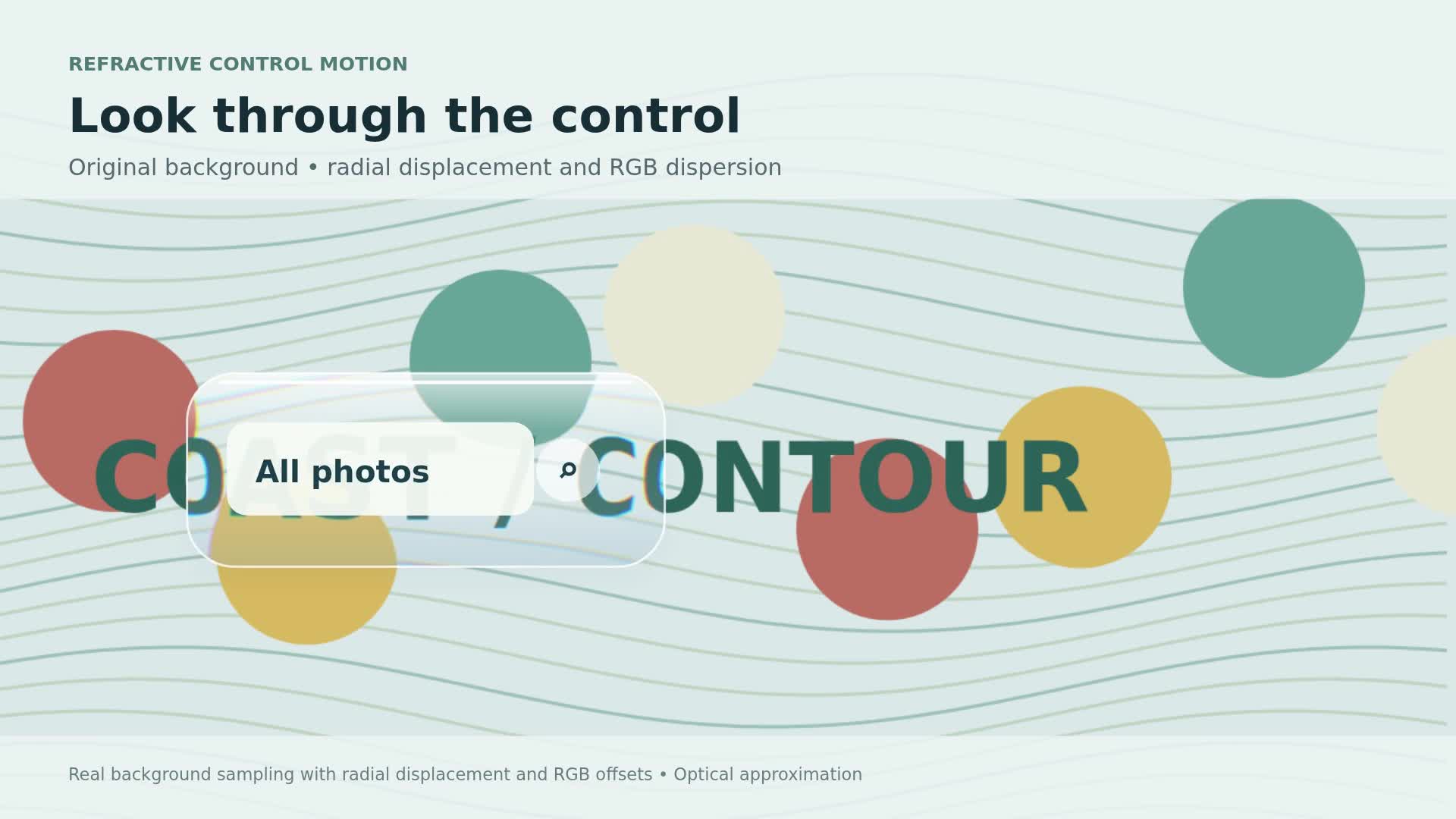
Animate glass-like controls that visibly sample and distort the background while transforming between interface states.
Animate grid cells through reproducible propagation, state changes and identity-preserving rearrangement.
Create reproducible particle fields and meaningful formations from seeded rules and time, including loops for web and brand use.
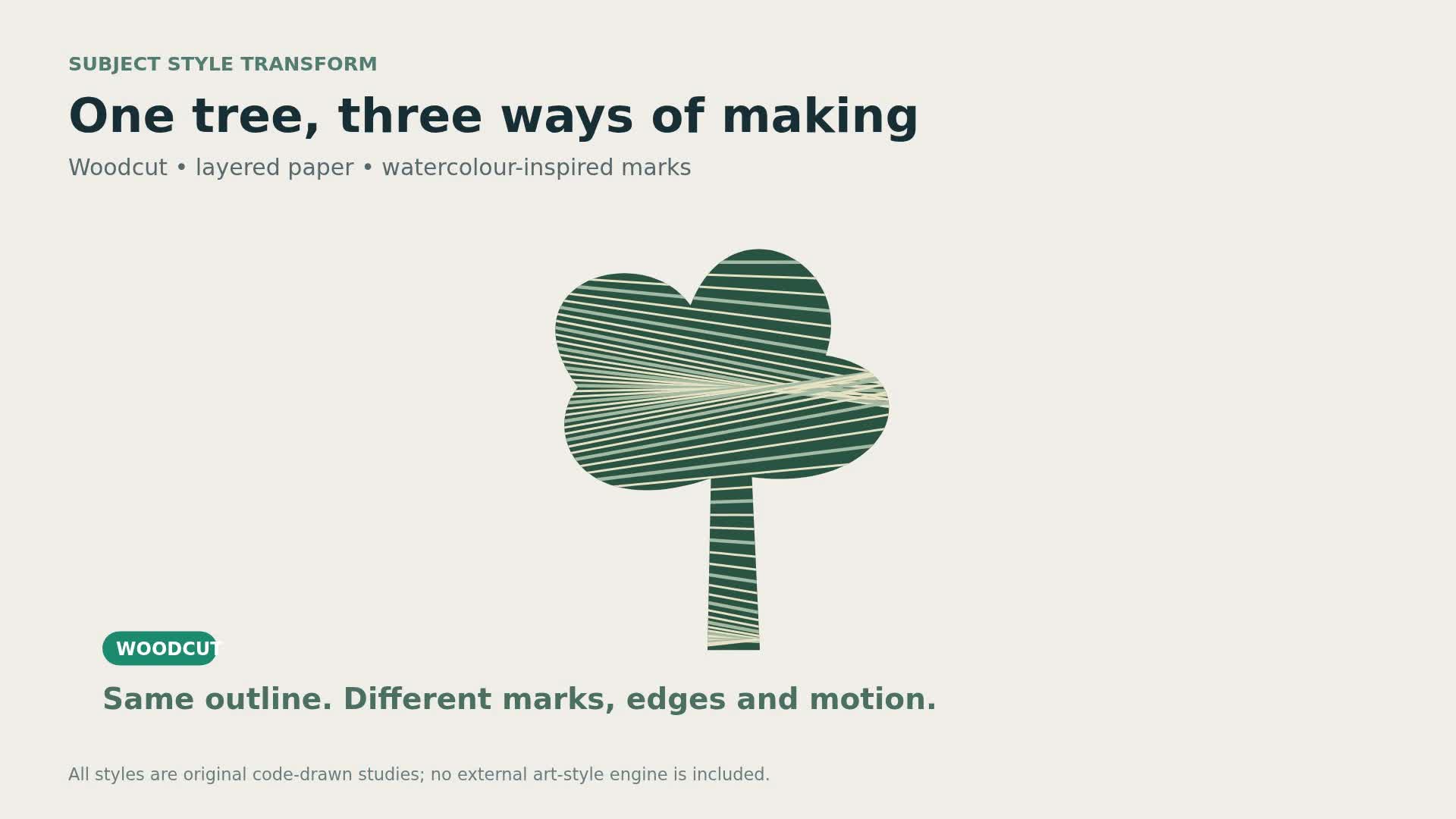
Transform one recognizable subject across distinct visual treatments while preserving its structure and identity.
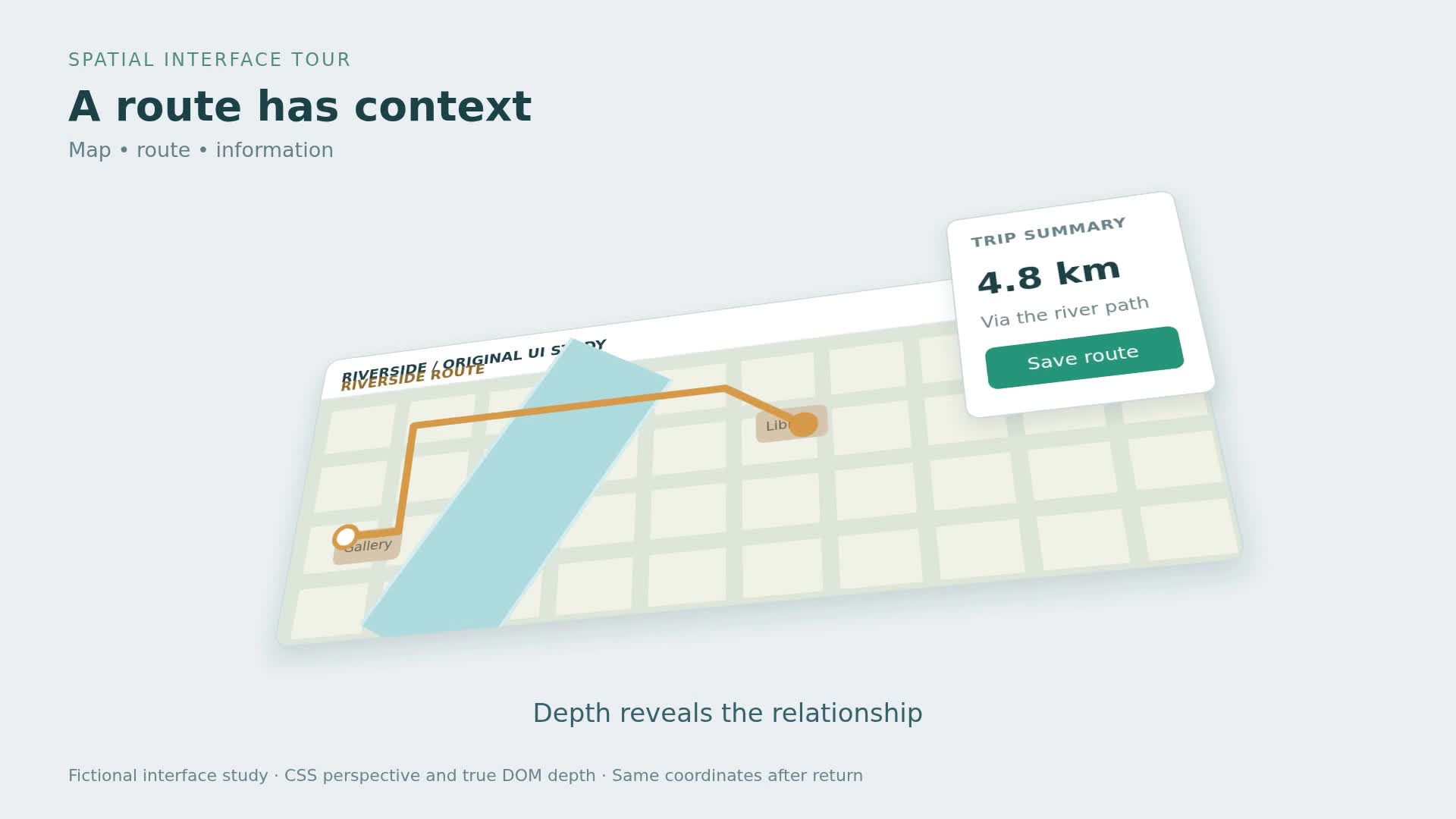
Explain interface structure by separating meaningful layers in space and returning them to their original screen positions.
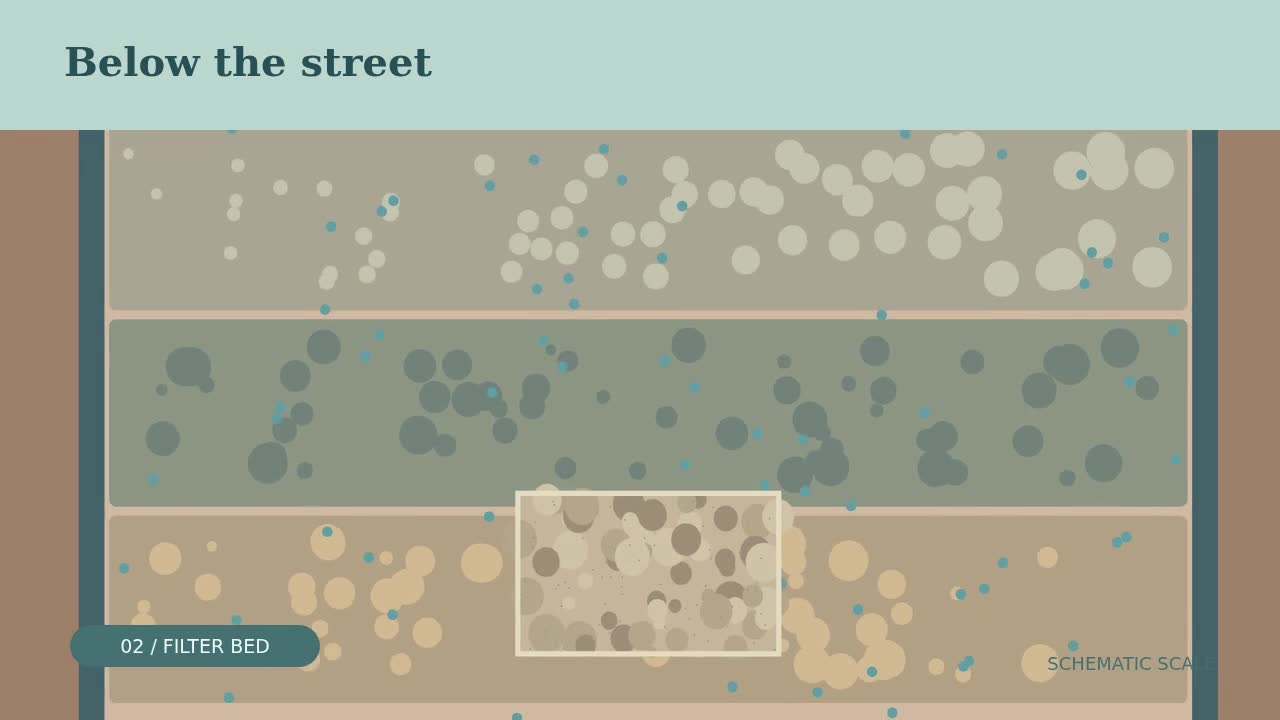
Travel through nested illustrated systems from the whole to a smaller level while preserving containment and orientation.
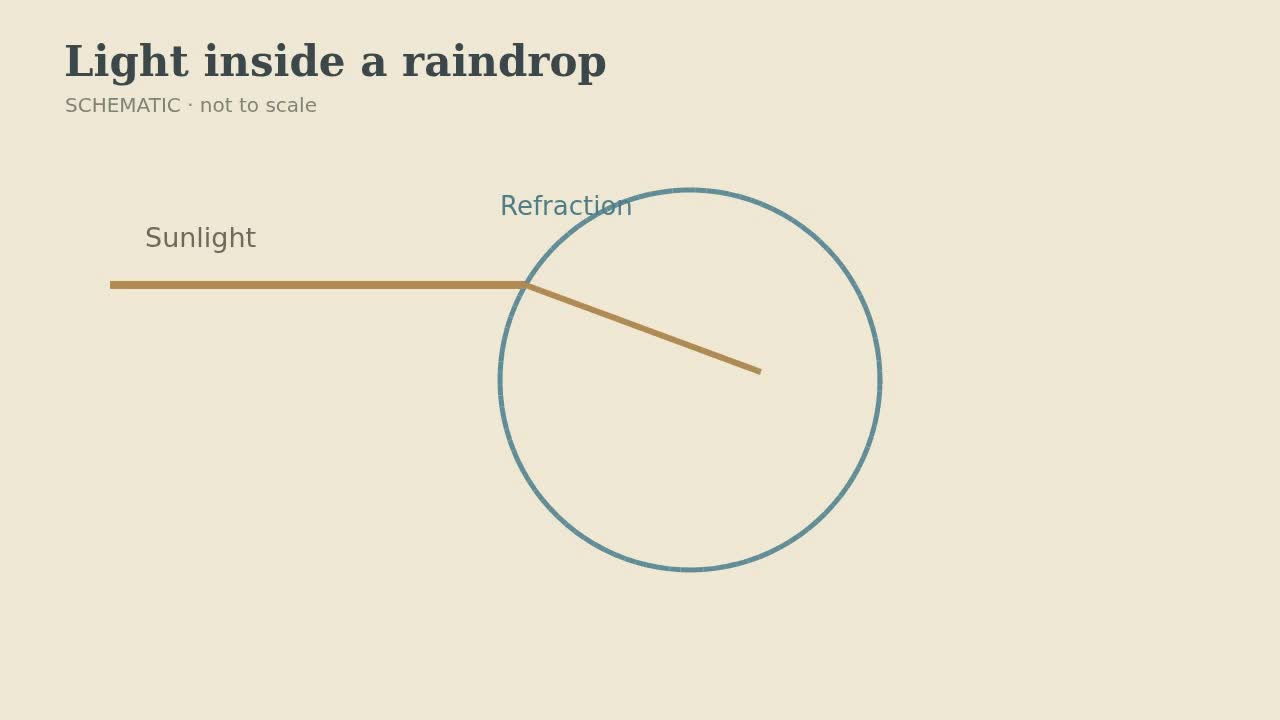
Explain a causal argument with ordered drawn paths, diagrams and annotations that accumulate into a coherent board.
Create continuous transformations in which one recognizable shape carries identity into the next state.
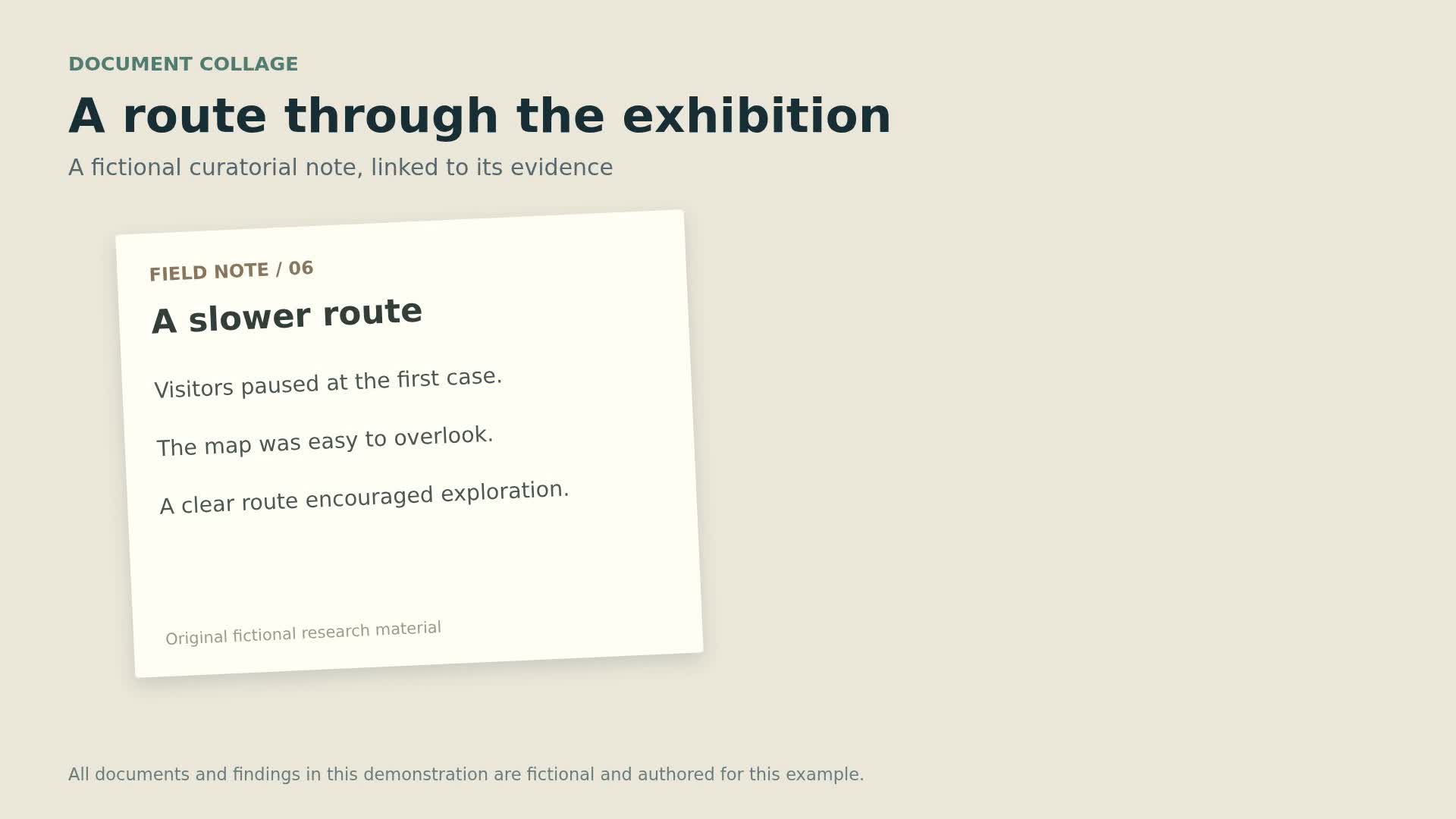
Explain an evidence-based argument using readable document excerpts, annotations and layered source material.
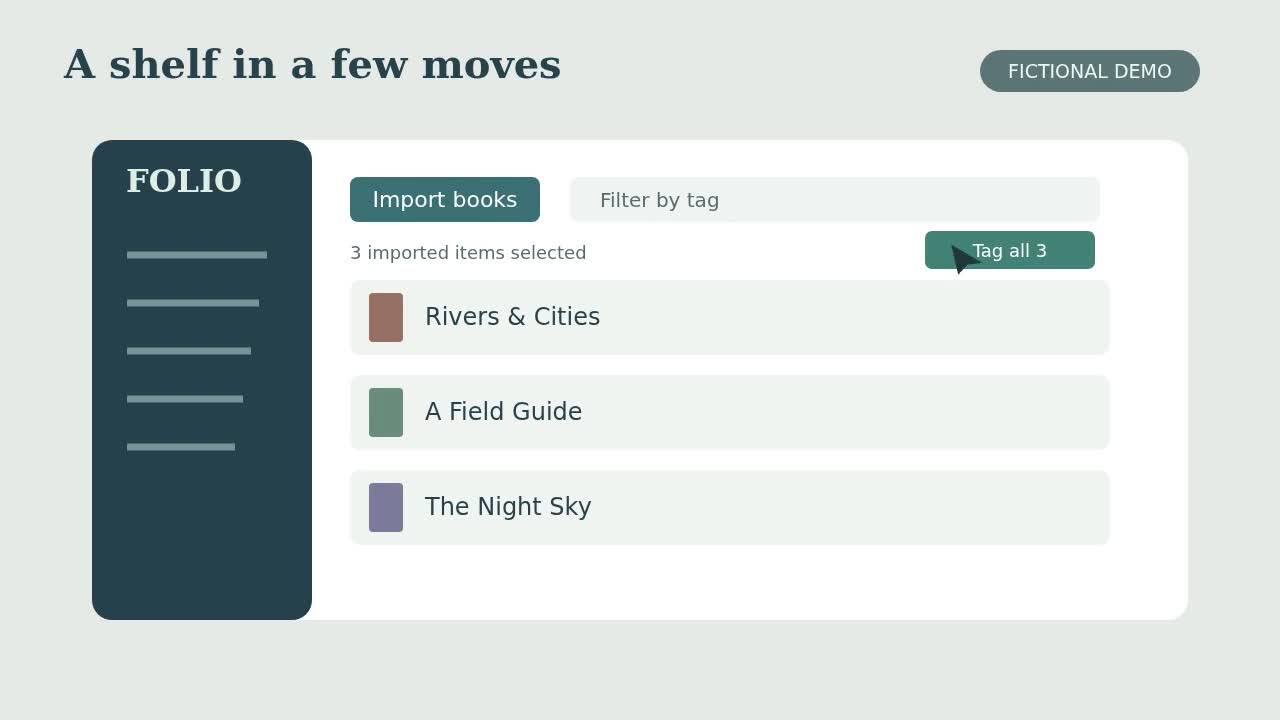
Show a product workflow through accurately targeted pointer actions, visible response states and readable results.
Build a capability reel whose genuinely different animation techniques connect through one persistent visual motif.
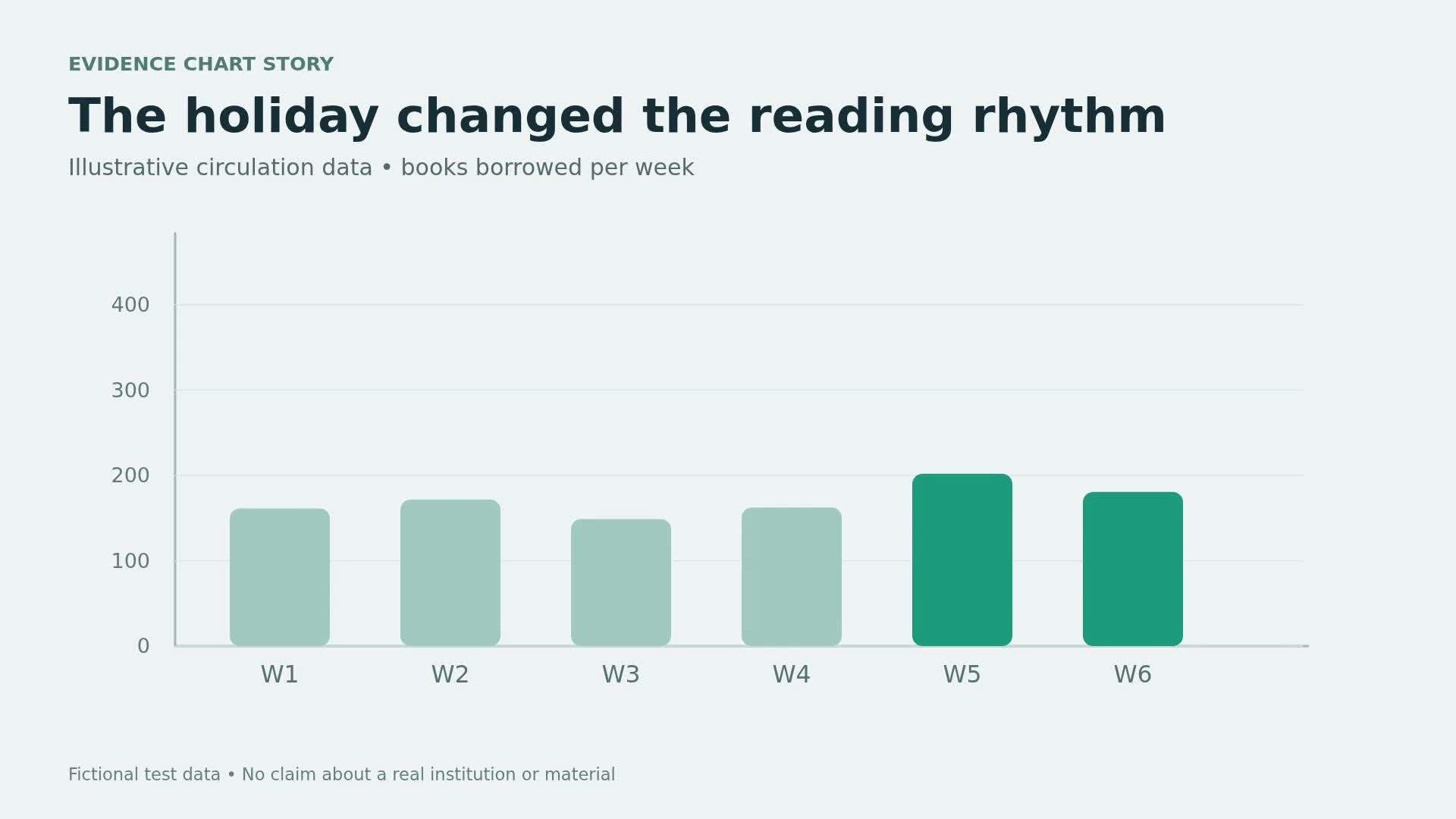
Turn verifiable data into an animated question, comparison and conclusion with consistent scales and data identity.
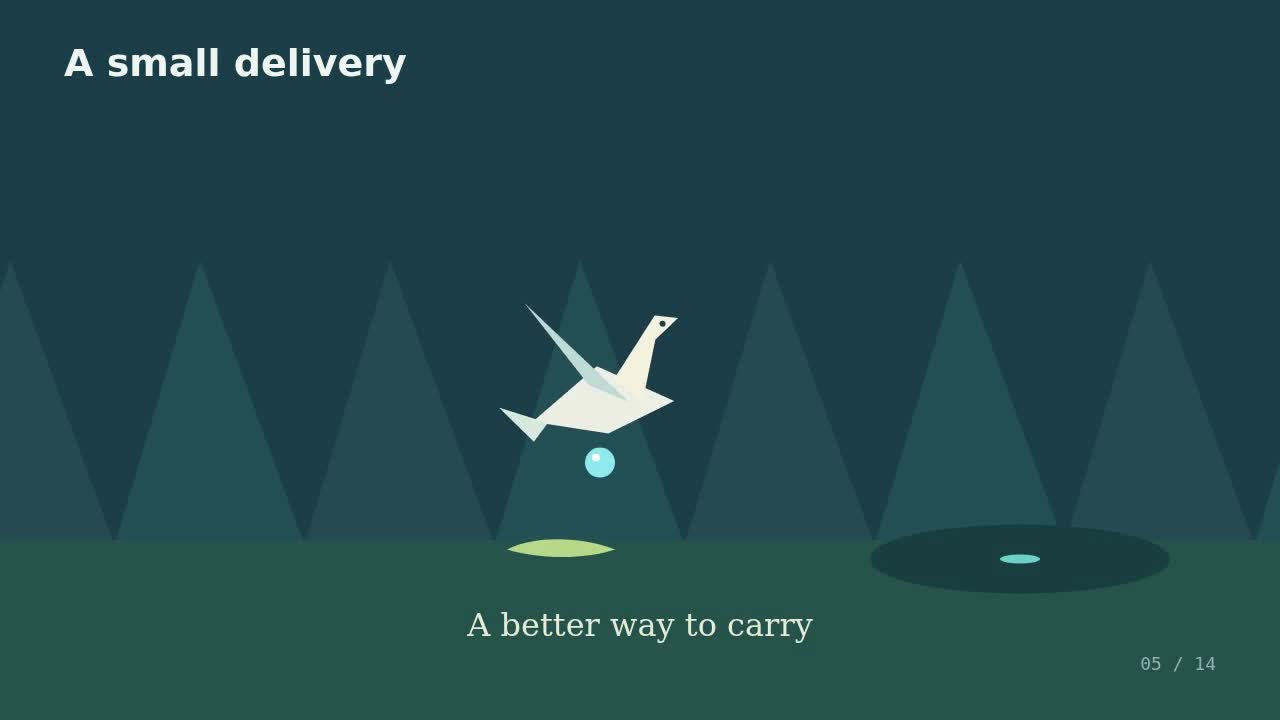
Animate an original character pursuing a goal, encountering a setback, and responding through readable acting. Use for short stories and mascot scenes, not a decorative avatar.

Show product benefits through a consistent series of cards, each containing a visible action and its result.
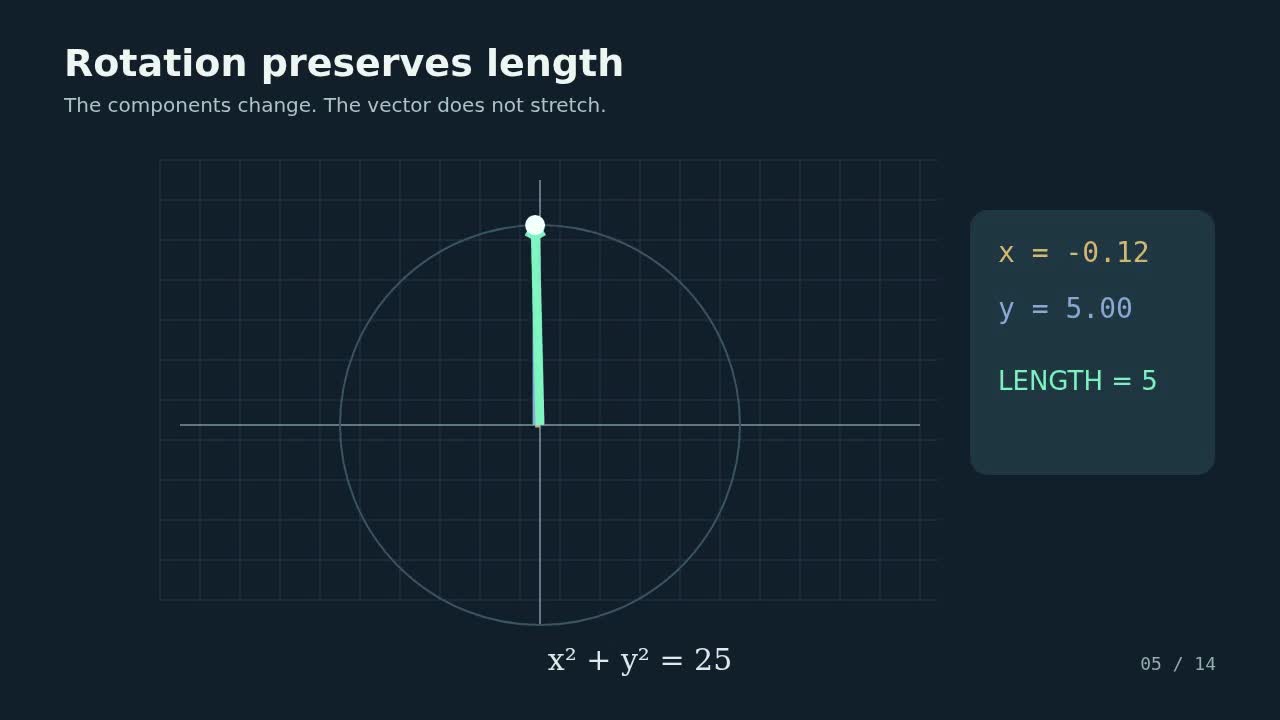
Explain a mathematical or algorithmic mechanism by transforming persistent objects with stable quantities and identities.
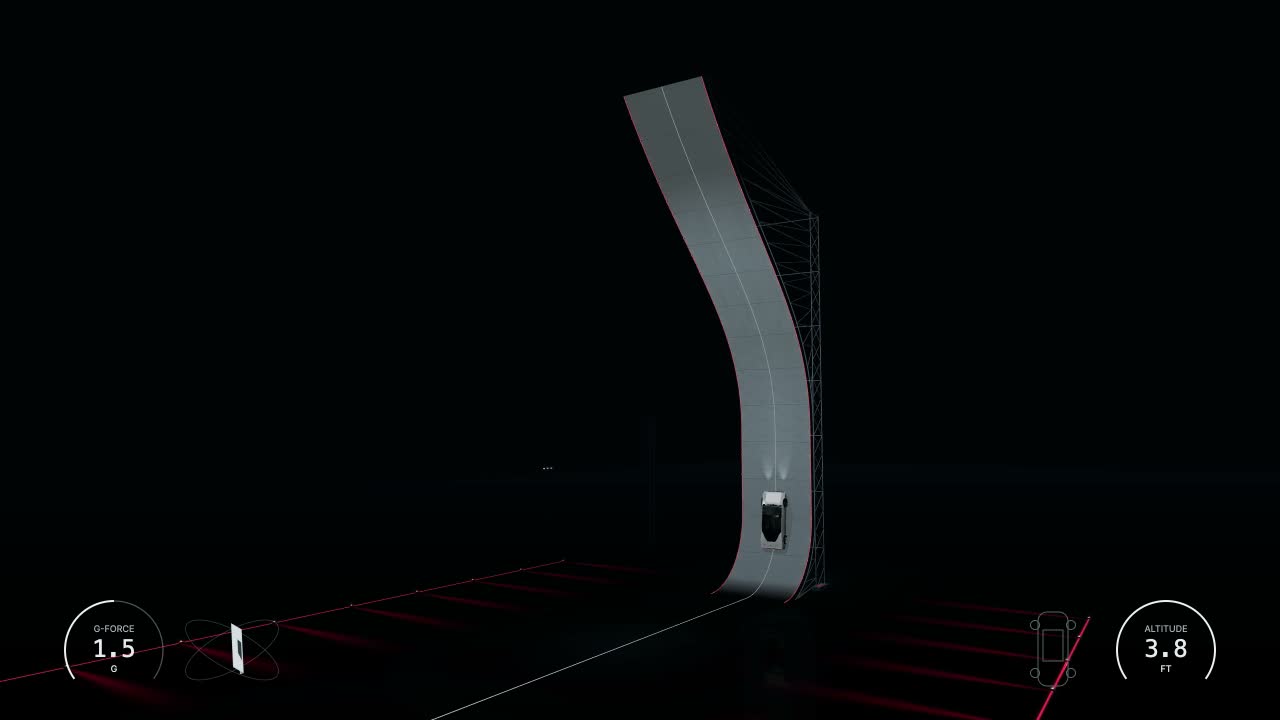
Direct a vehicle stunt with a continuous ramp, airborne momentum and timed jets.
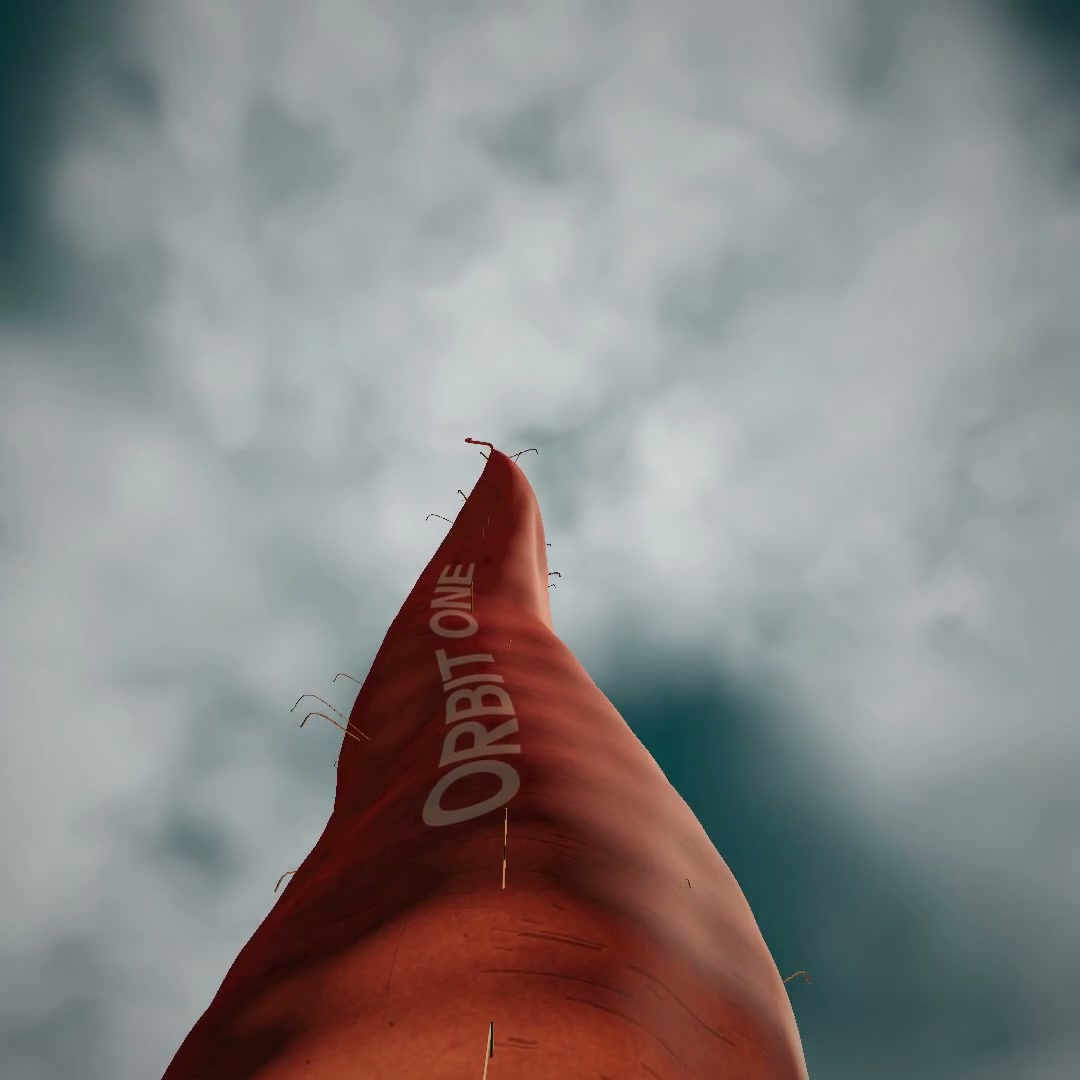
Build object films with editable subjects, materials, camera and motion.
Layer a headline behind a subject cutout while related words drift into place.
Present a message and short notes inside a handset beside a continuous subject take.
Punctuate a continuous filmed moment with a headline and an ordered sentence reveal.
Hold a chapter heading while a light completes a circuit around its panel.
Interrupt continuous footage with a mosaic message, then return to the progressing scene.
Strike out one phrase, retire its strip, and settle a clearer replacement into view.
Arrange four authored voices as a readable wall of overlapping photographic cards.
Resolve a chapter inside a browser window, then reveal a continuous local video take.
Resolve a chapter headline in reading order while each letter stays in place.
Anchor an editorial introduction with a still portrait, timed observations, context photographs and a drawn closing line.
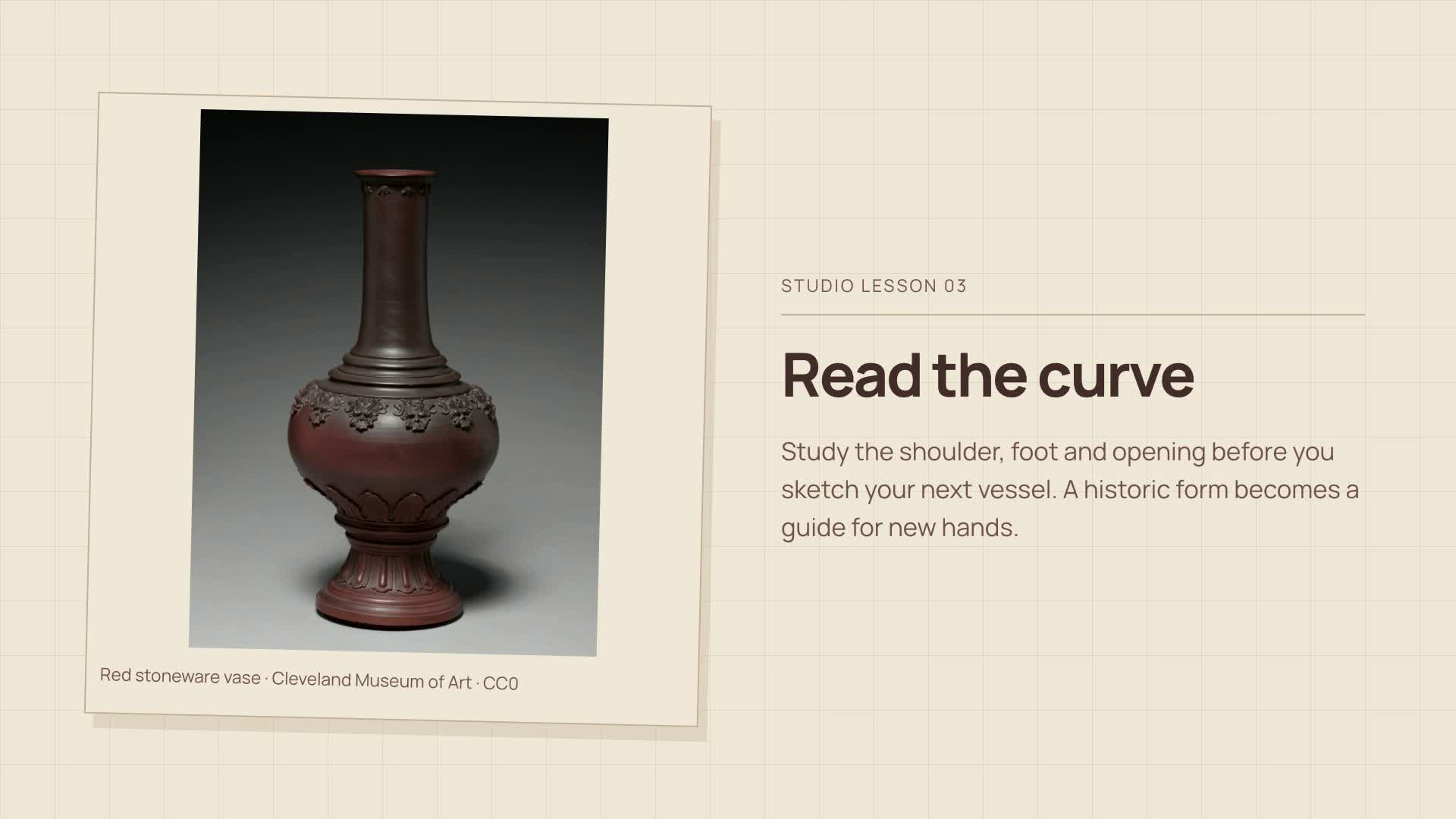
Land an angled chapter heading, then open a diagonal shutter onto a photographic reading spread.
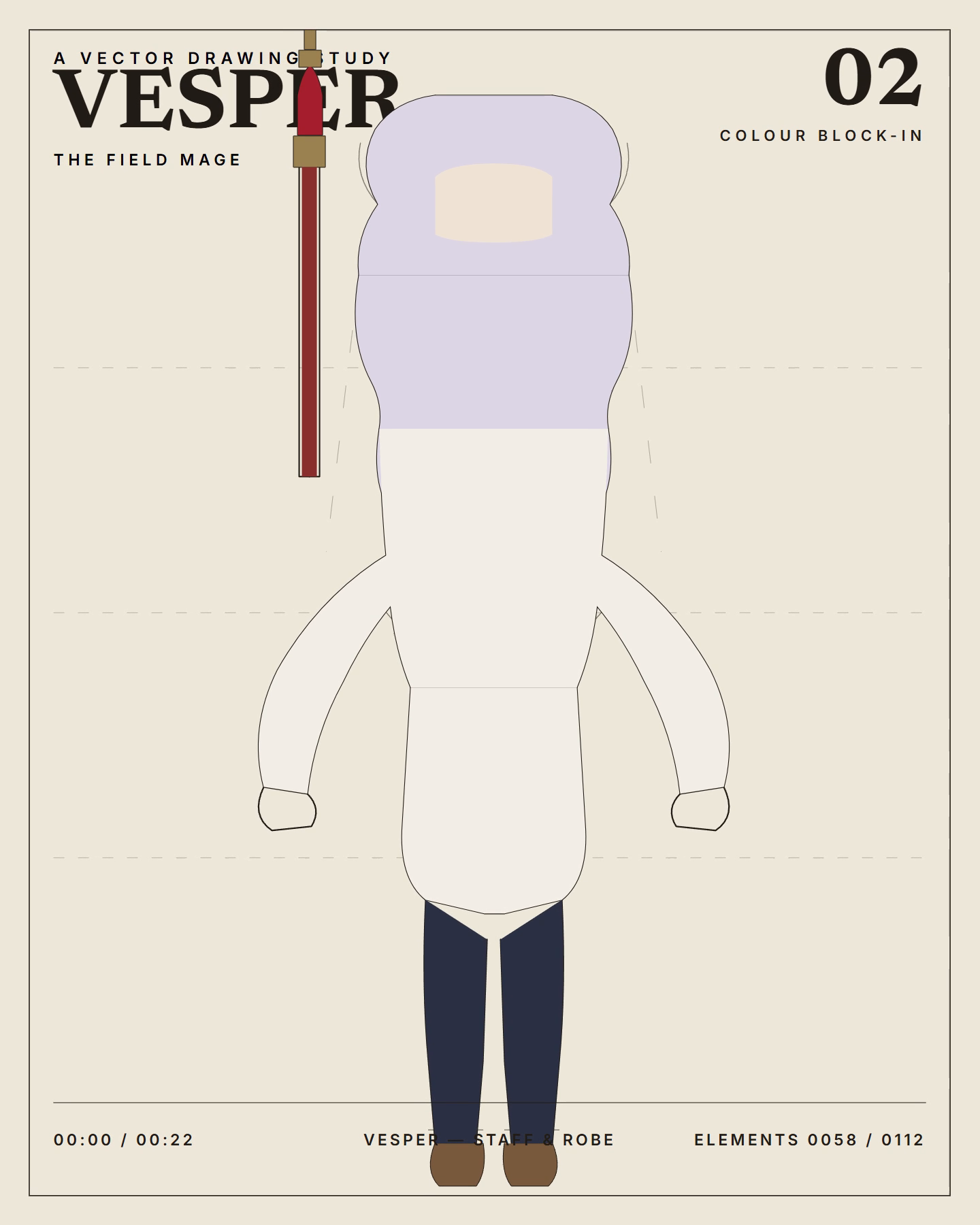
Stroke an authored vector figure on a spec sheet, then turn the page to its flat colour block-in.
Travel diagonally across a continuous atlas of symbols, then focus a heading beside the selected chapter.
Keep one central message steady while four surrounding action notes appear in order.
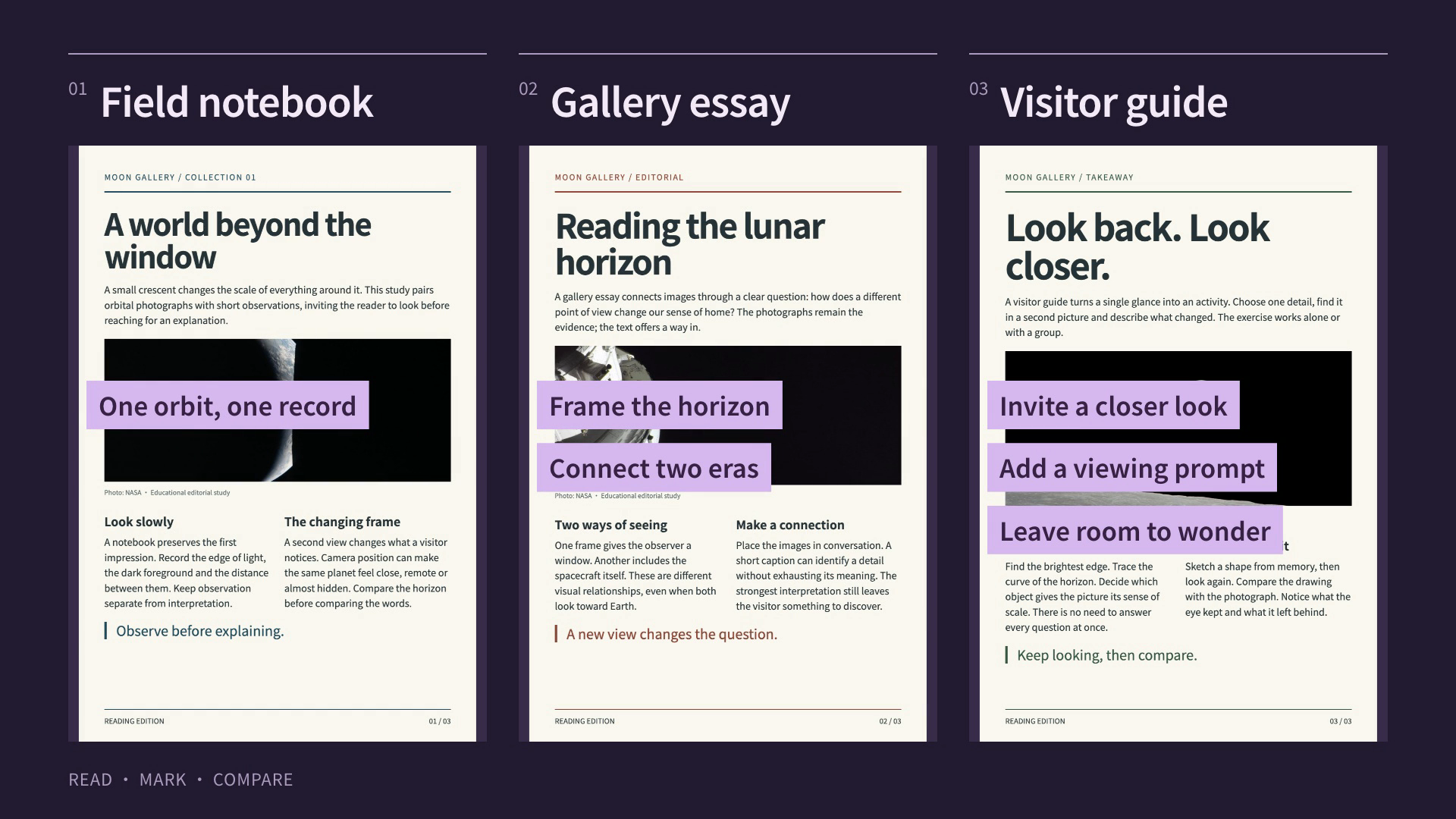
Keep three illustrated pages aligned as focus moves between them, accumulate reading marks, then restore every page for comparison.
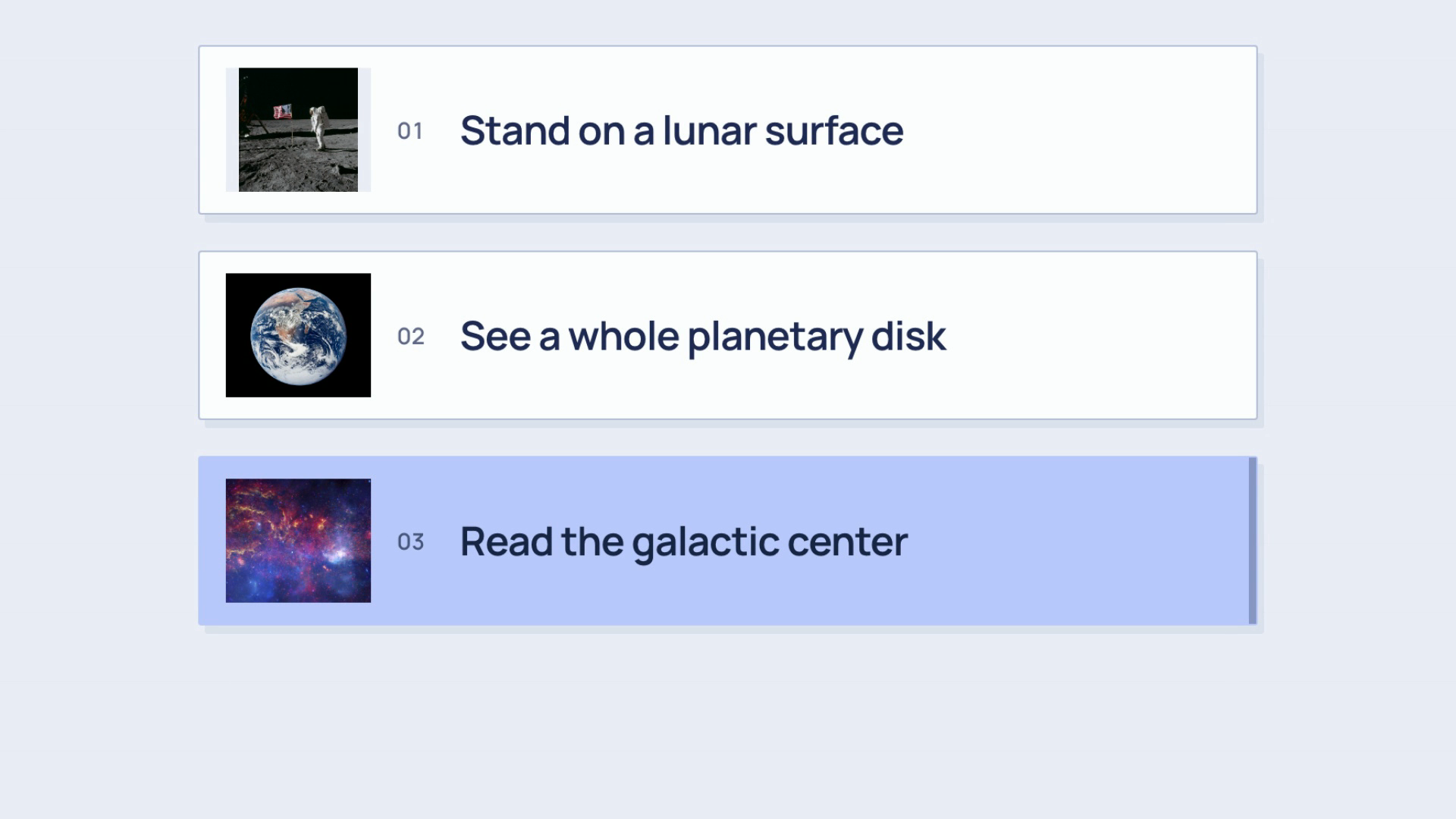
Cut from a chapter marker to three photographic reading plates, then push upward to emphasize one detail.
Introduce a chapter strip, lift the complete headline and wipe in supporting copy, then hold the three levels steady.
Reveal a concise list one thought at a time, then hold the complete sequence for reading.
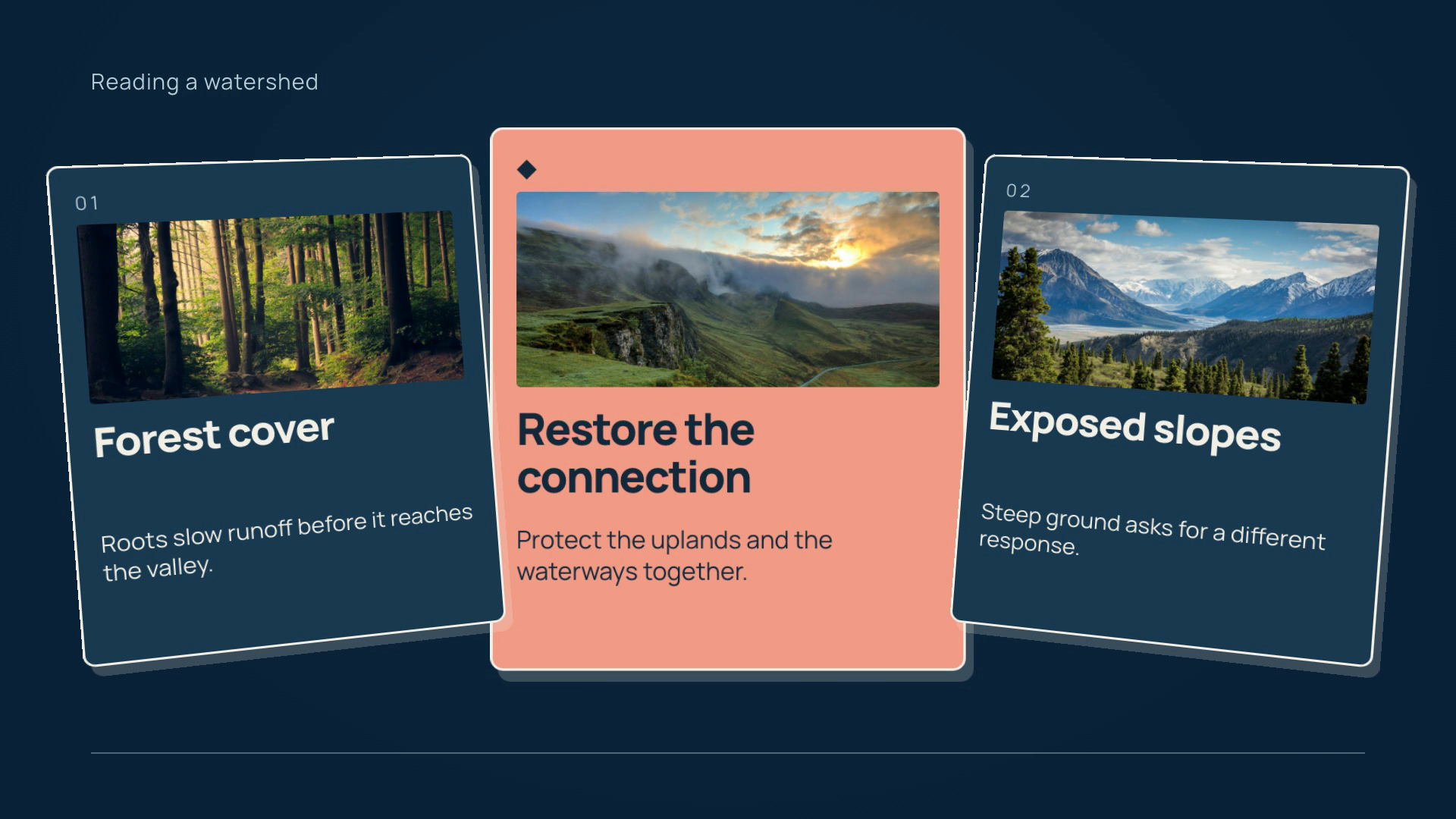
Inspect two photographic panels, split them apart, then advance a conclusion into view.
Pass emphasis through three linked action cards, then reveal a chapter numeral and headline.
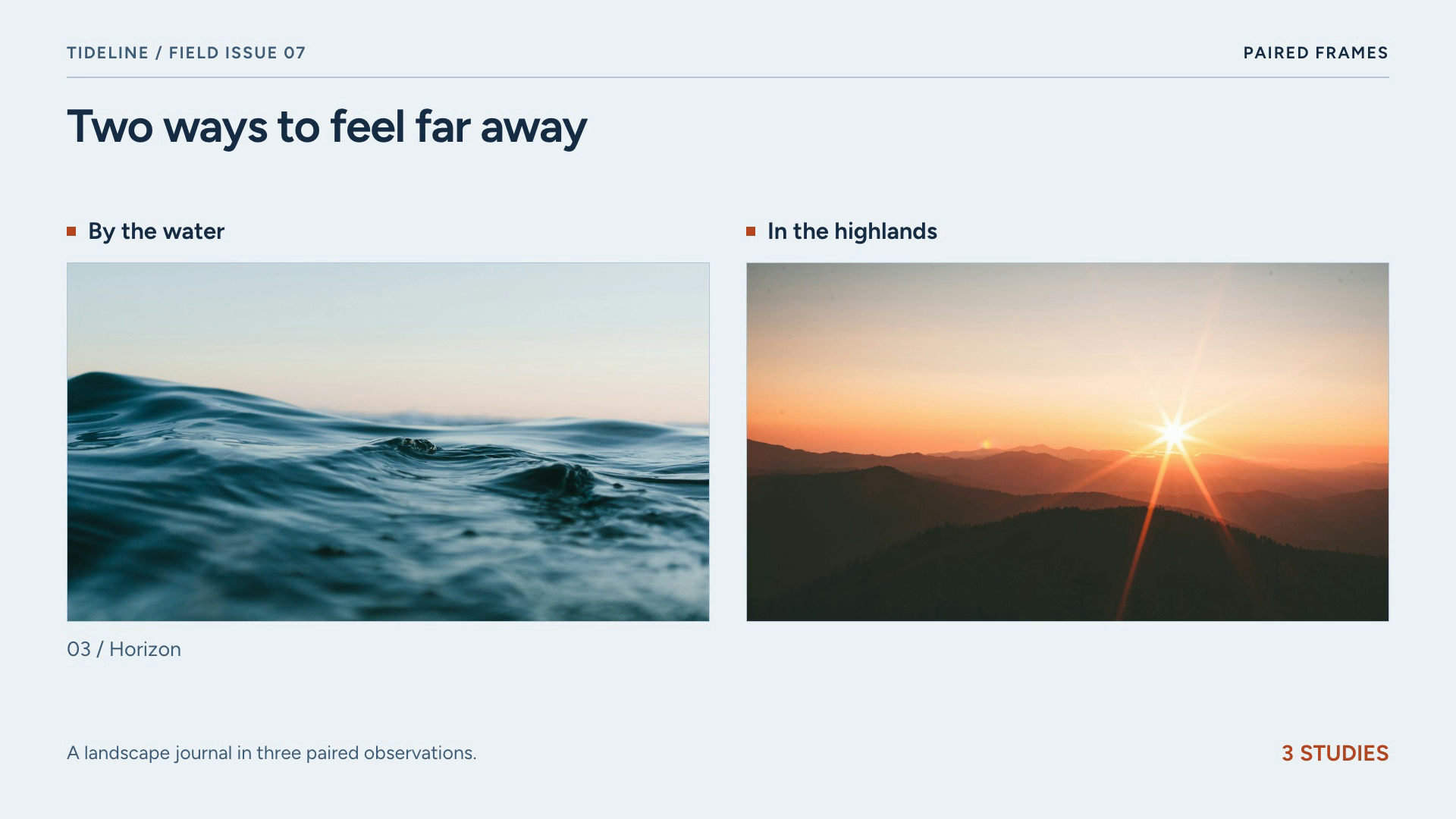
Keep two column headings anchored while paired photographs and annotations change together.
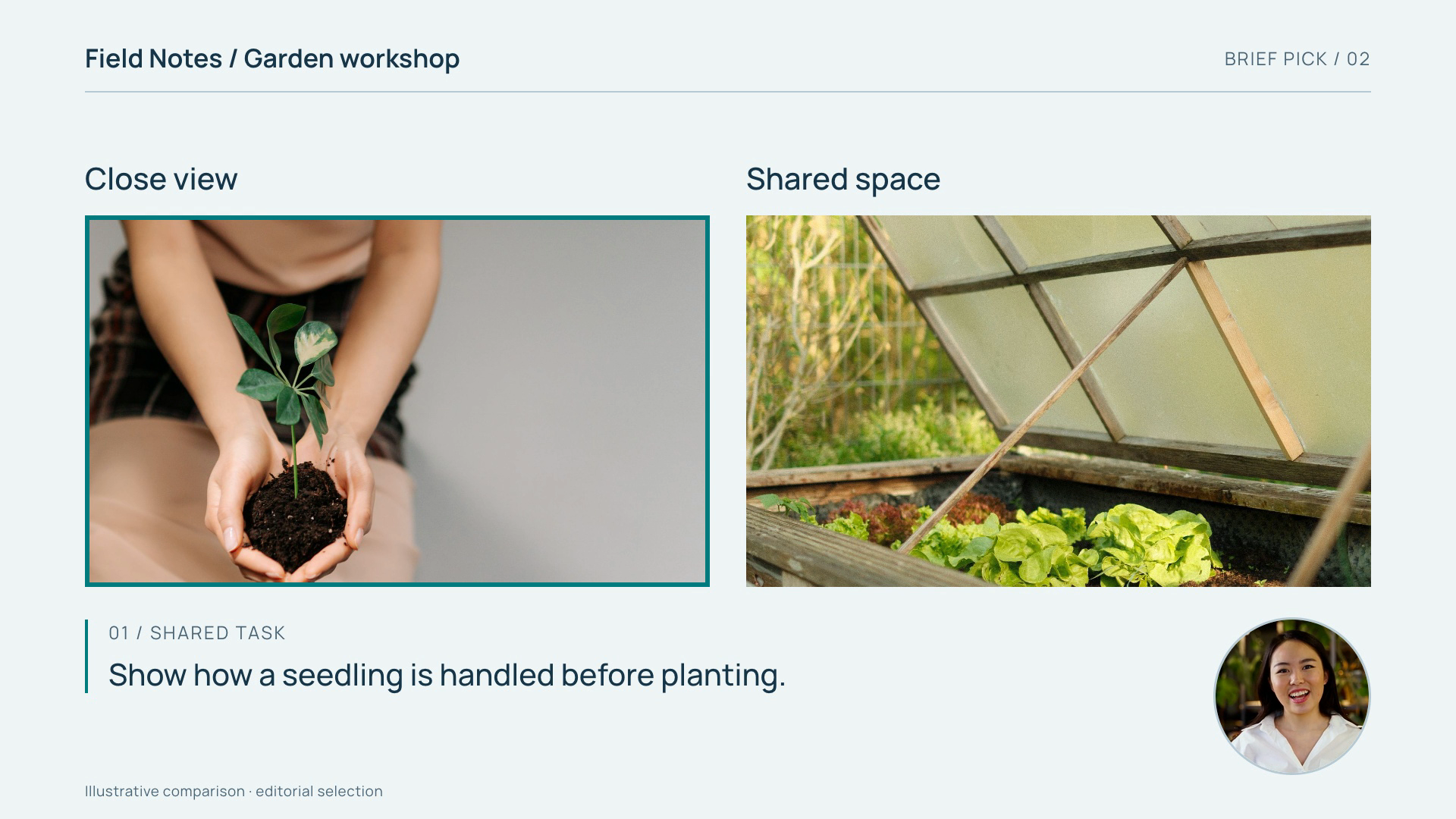
Compare two photographic candidates under a shared task,then reveal a choice while a continuous speaker take stays in a fixed circular window.
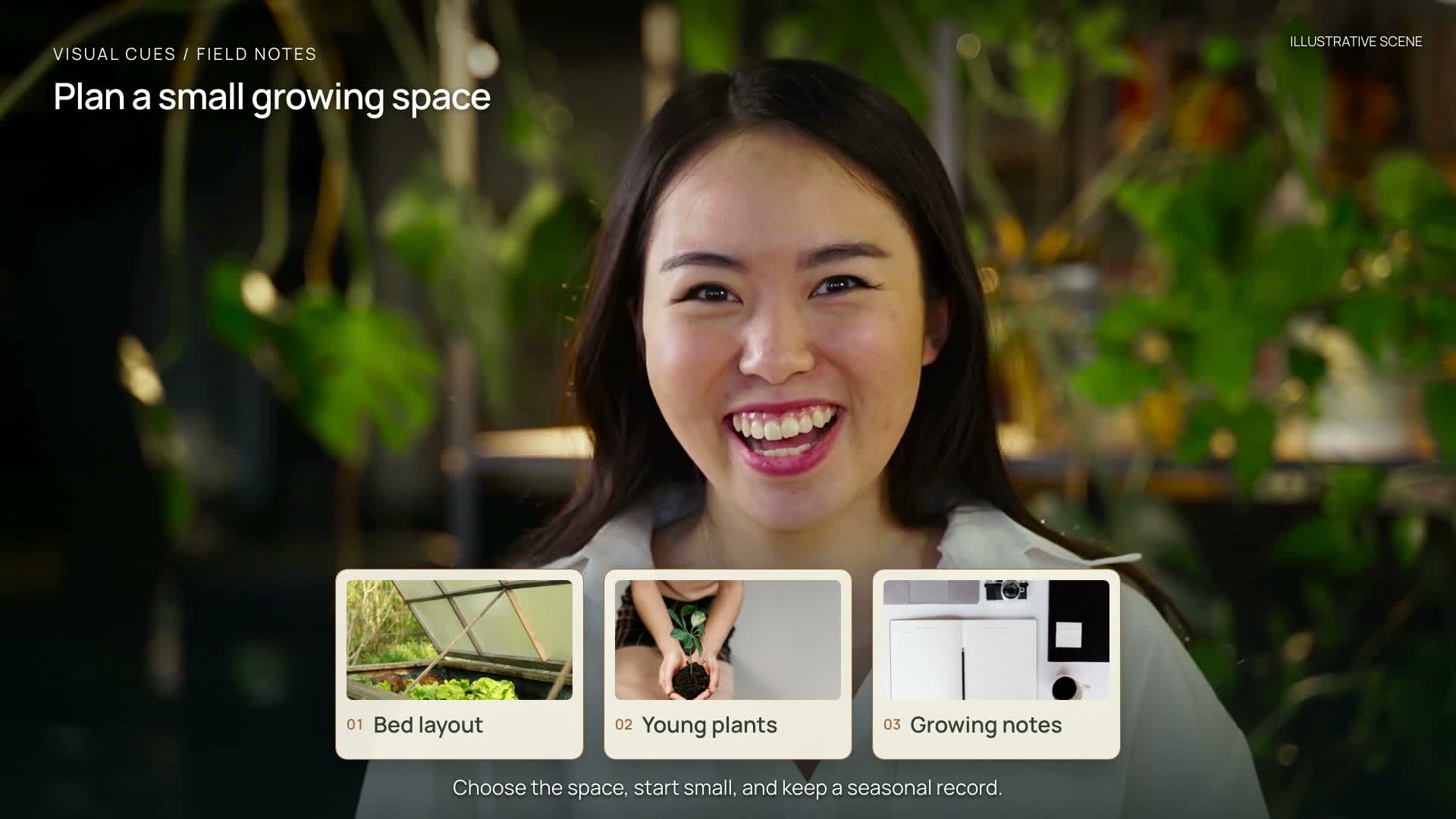
Build a short presenter composition with photographic cue cards arriving in a face-safe foreground row.
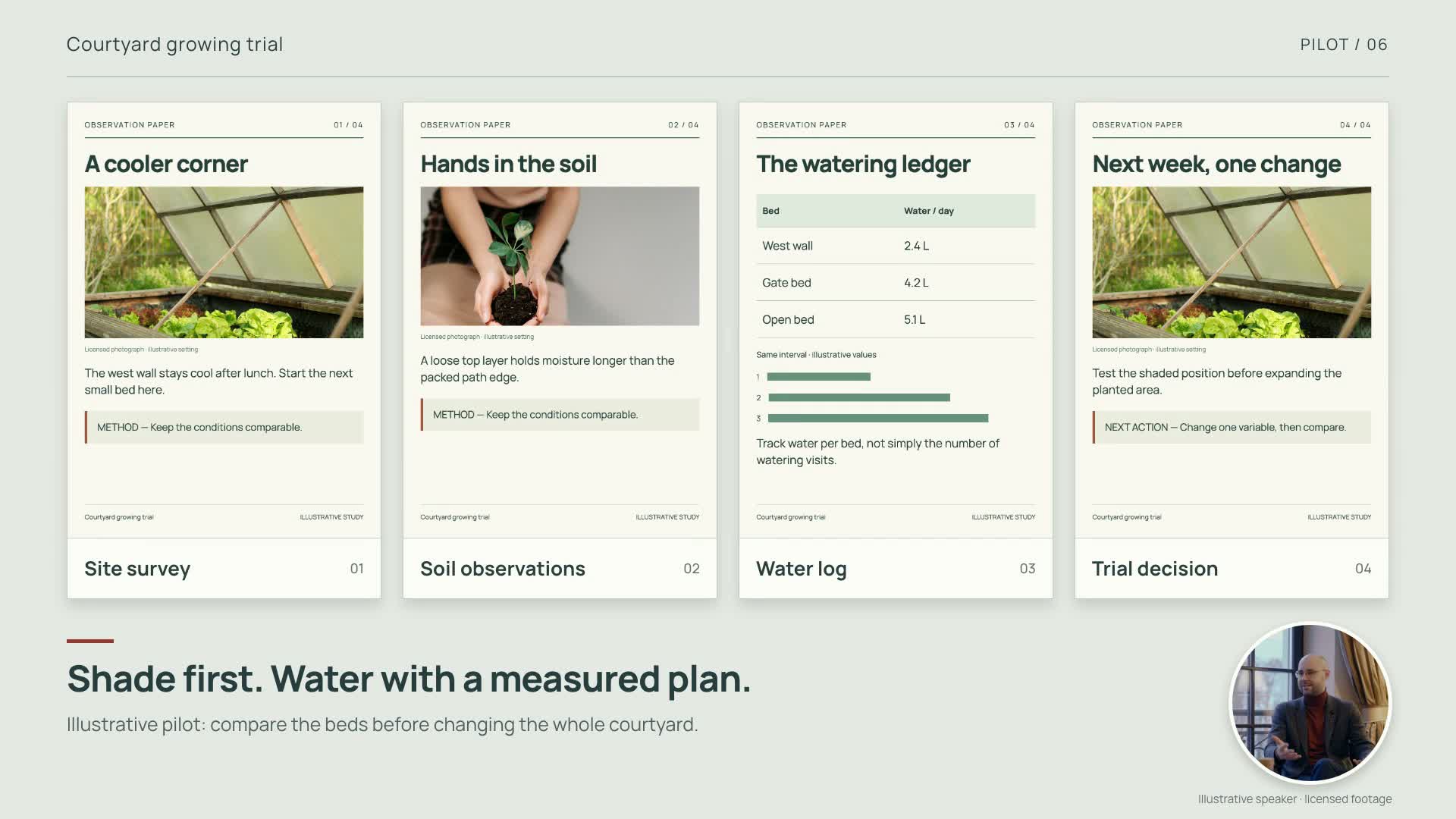
Present four documentary images before revealing a short conclusion and a late circular speaker window.
Turn four photographs into an animated collage that opens around a real presenter.
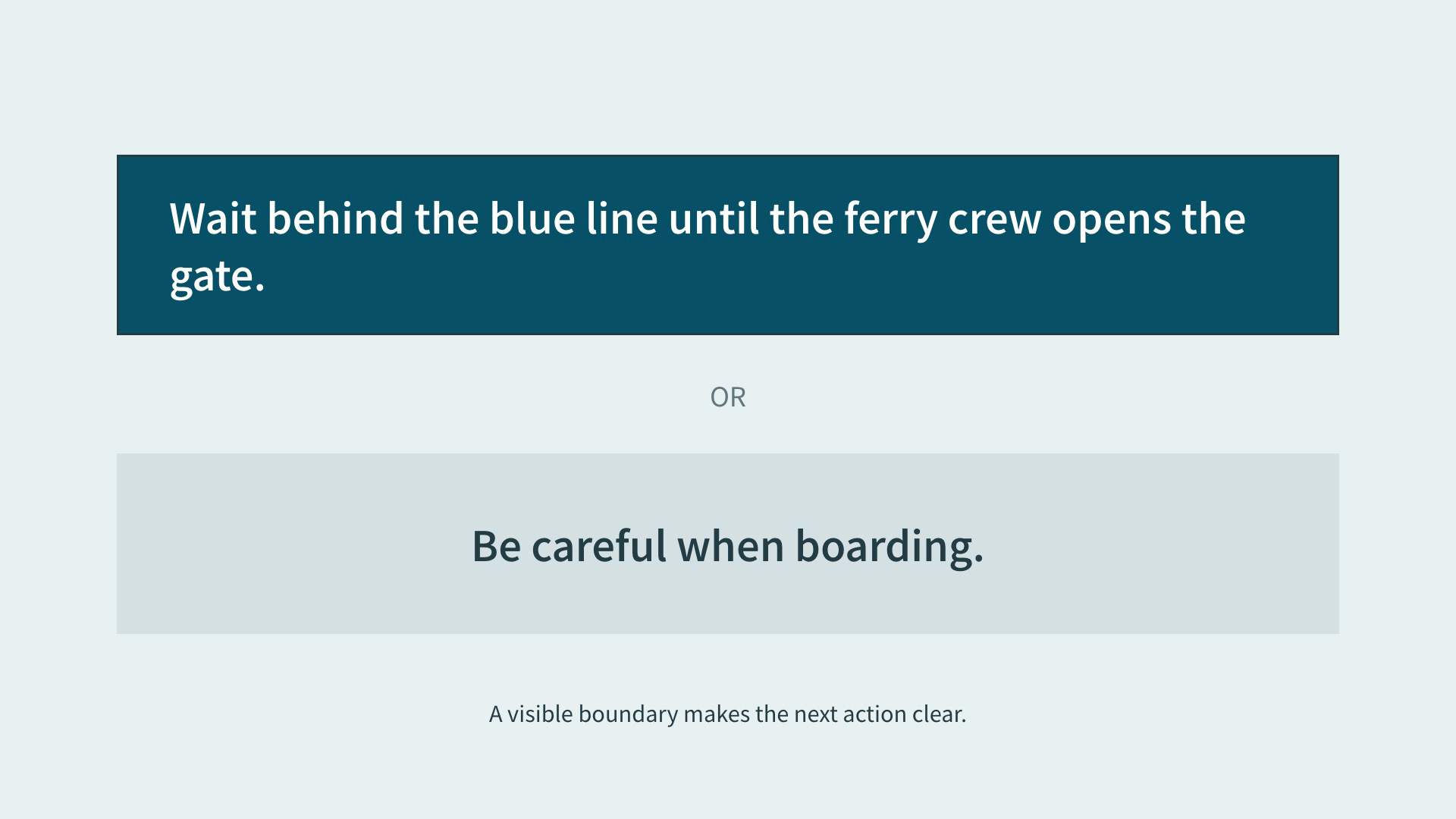
Animate two candidate phrases, then reveal a deliberate editorial choice.
Compose a photographic three-page lesson beside a continuous human presenter, then reveal the surrounding deck workspace.
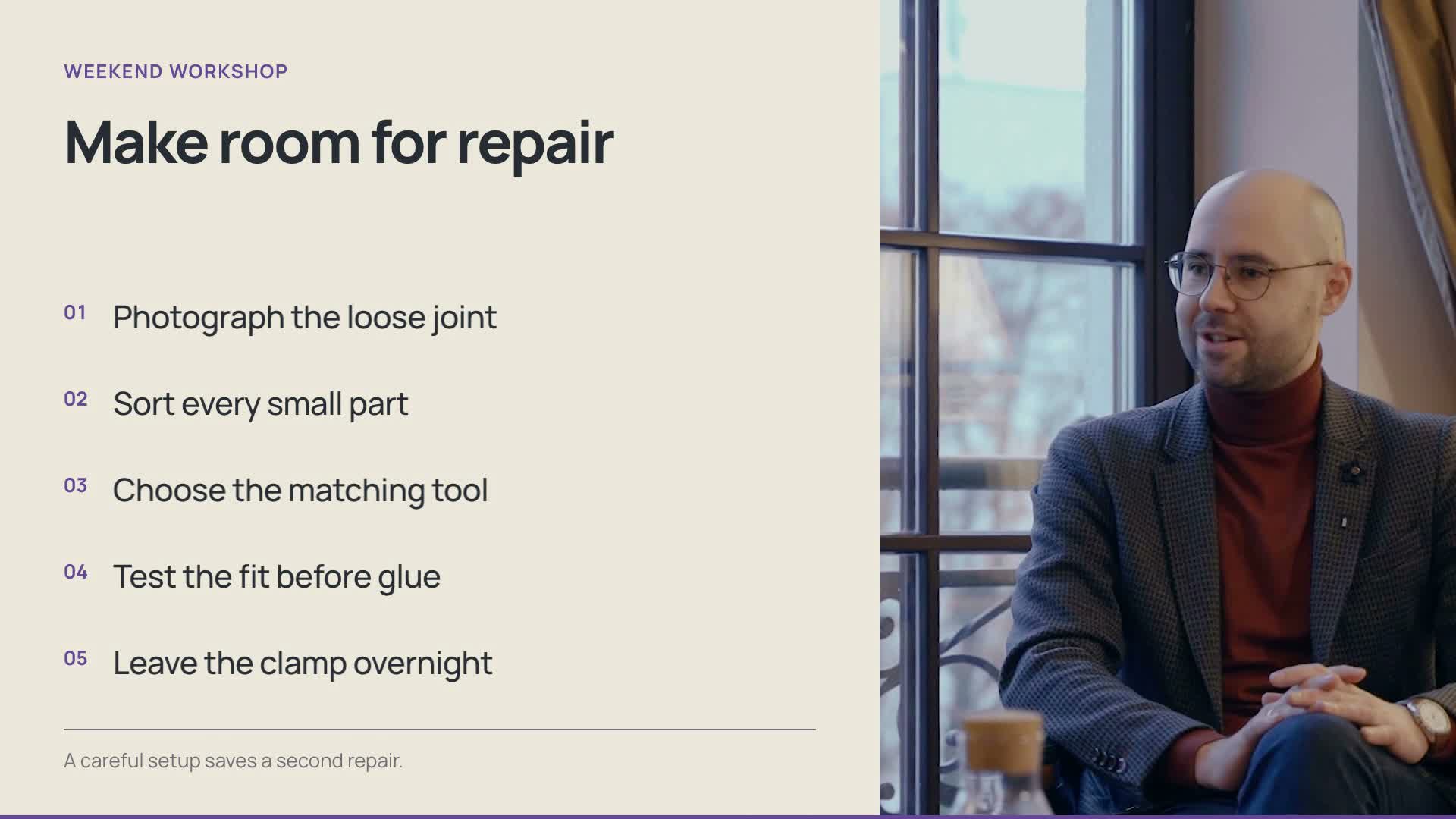
Create a short split-screen explanation with continuous presenter footage and a growing, persistent list.
Compose a continuous grayscale portrait beside an editorial passage, then trace one line with a restrained marker sweep.
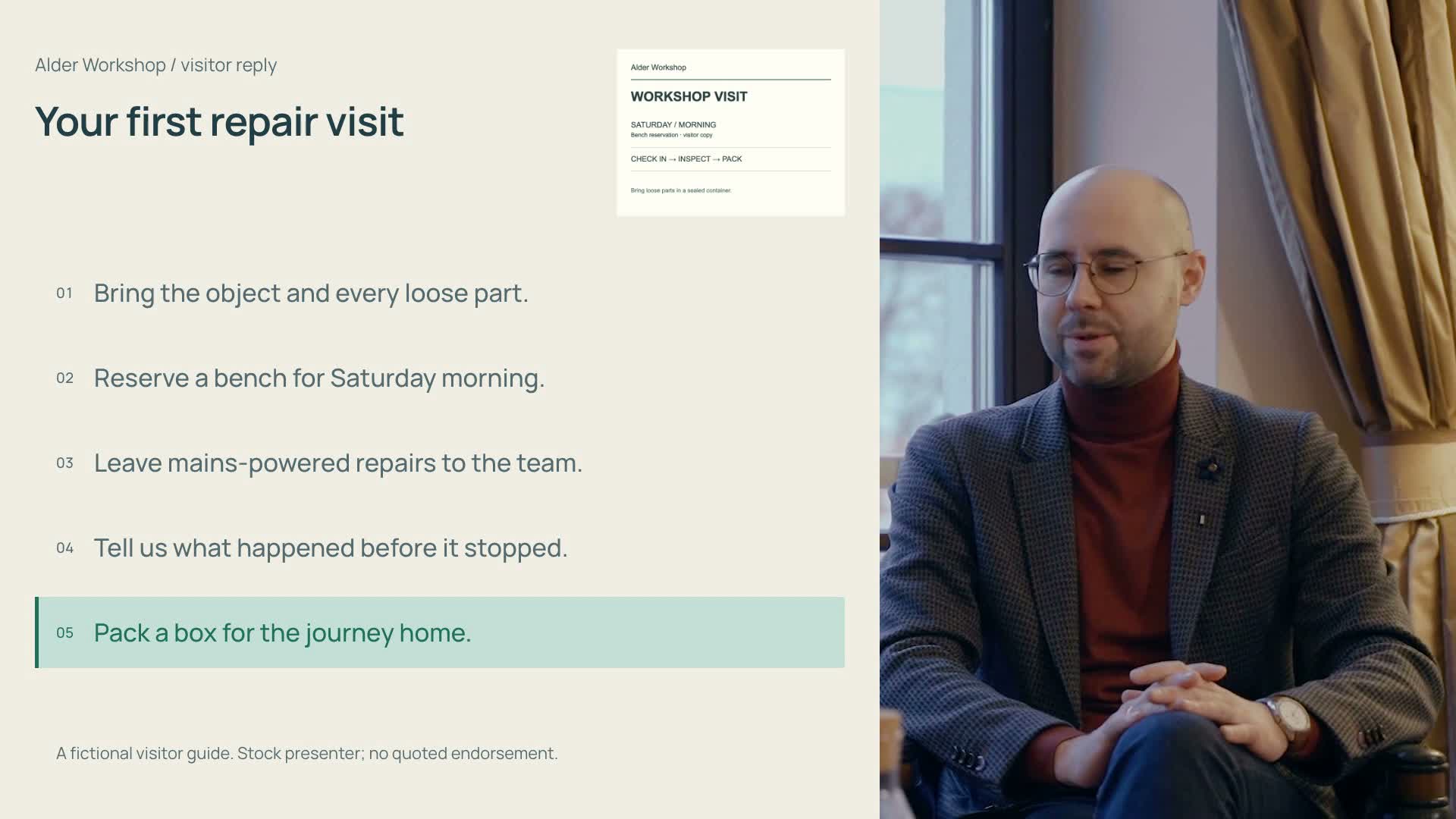
Turn a reply into a guided reading sequence beside a continuous presenter take.
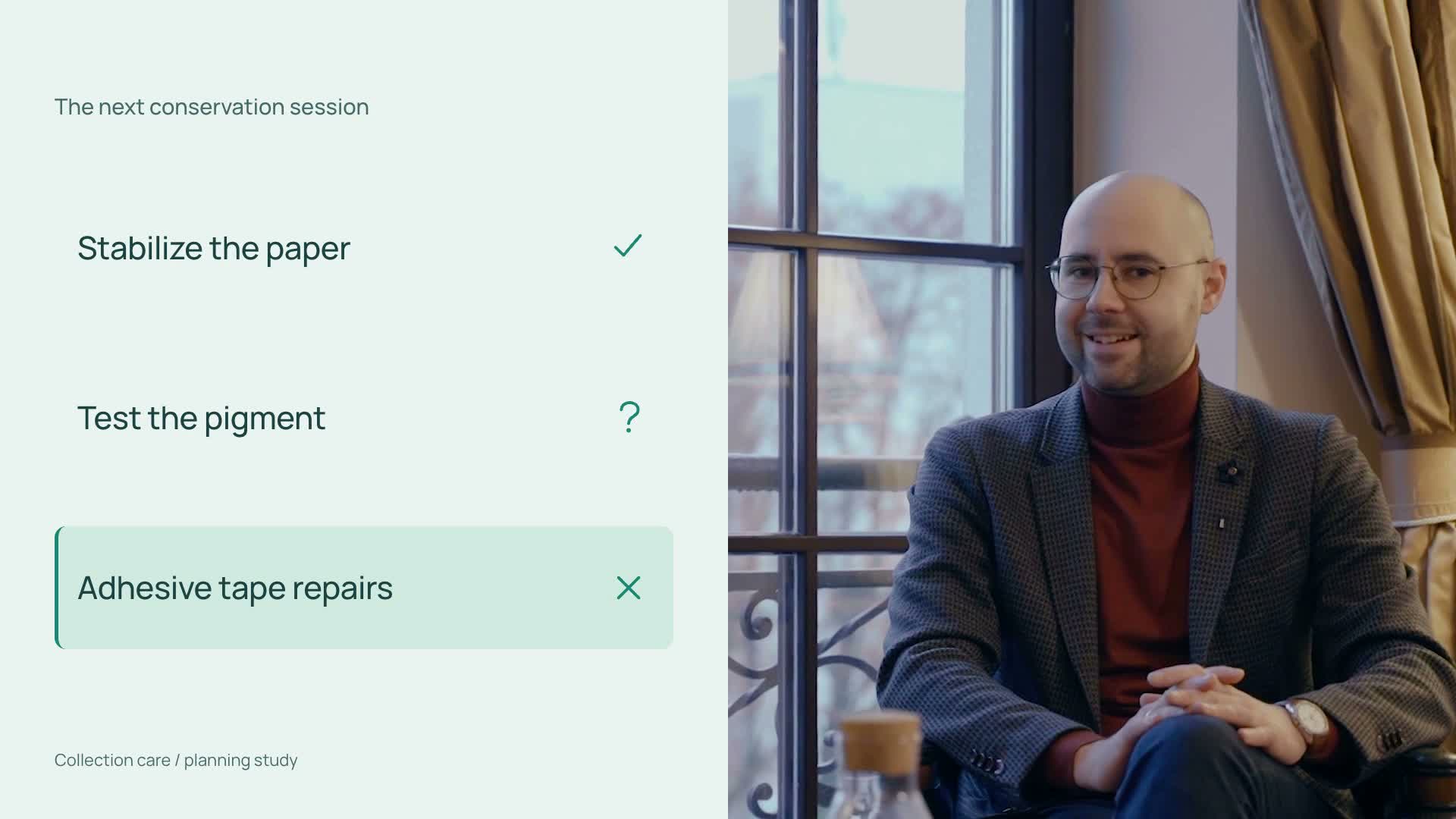
Compose an editable presenter film whose moving focus plate resolves three decisions one at a time.
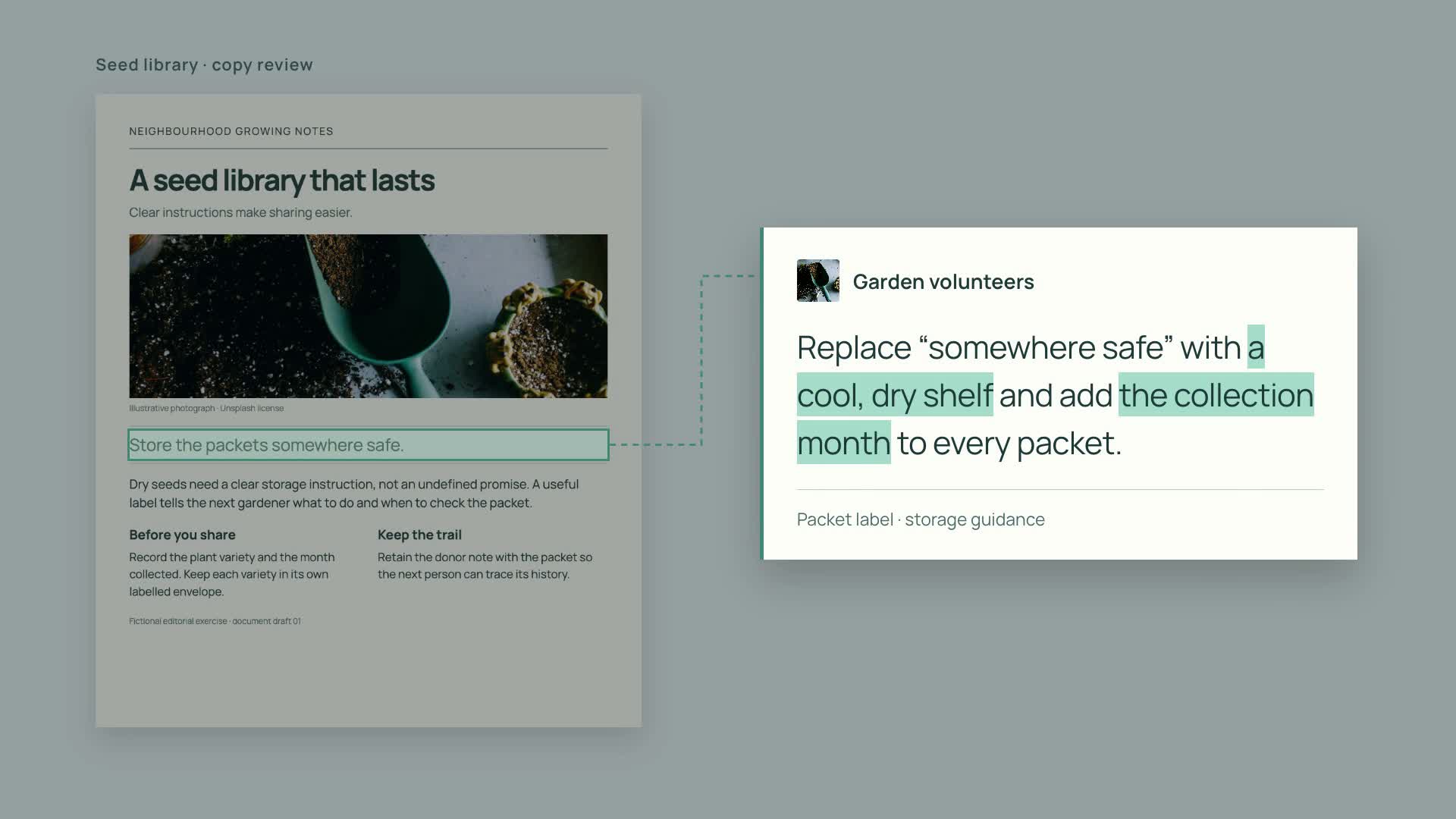
Turn a document review into a precise editorial motion clip: select the referenced passage, lift a nearby comment, and sweep two phrases in reading order.
Place an editable expanding headline behind a moving presenter, using synchronized footage and an alpha cutout.
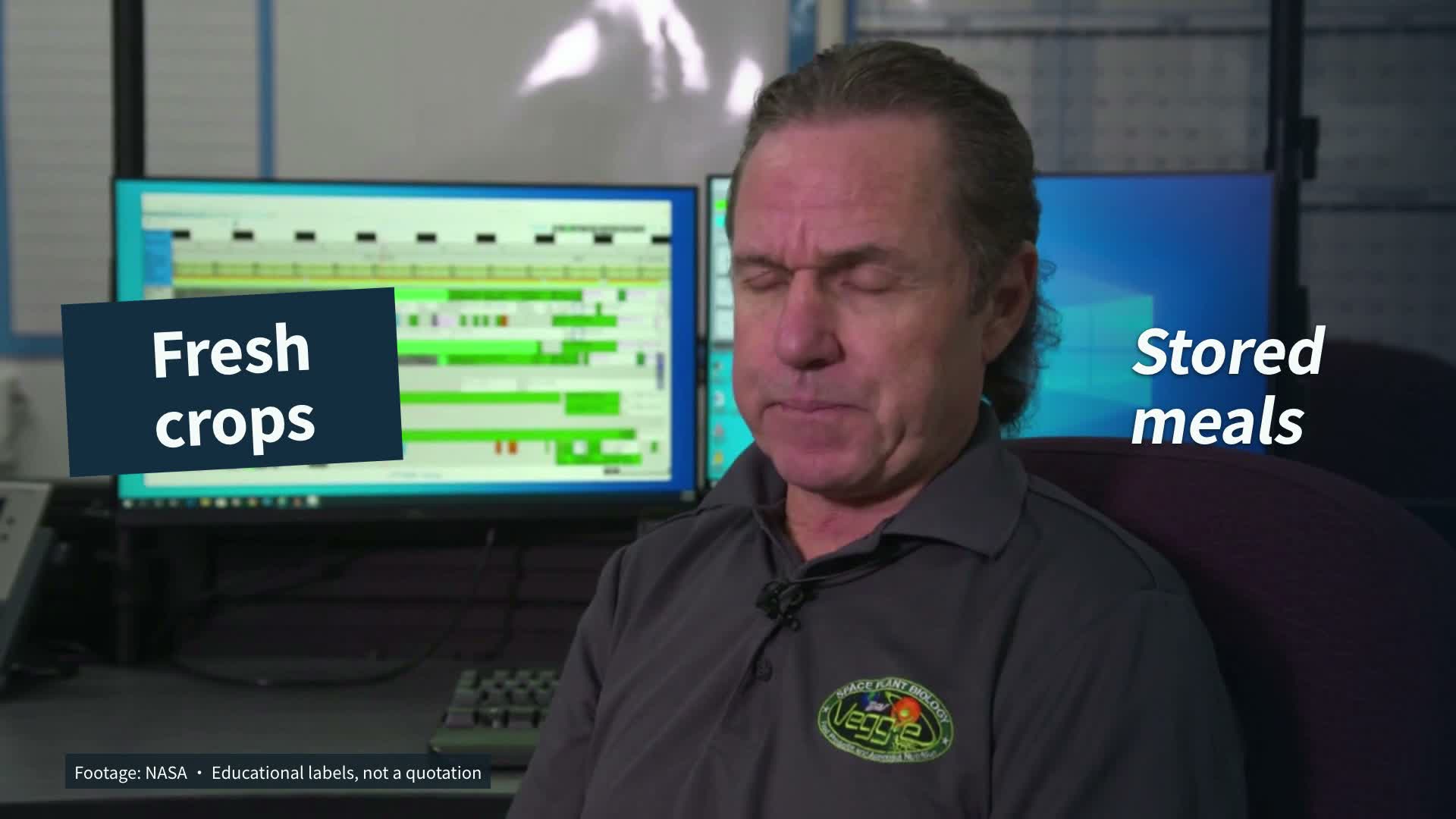
Place two contrasting thoughts around a real speaker using an editable asymmetric text reveal.
Compose a short editorial question with a unified speech silhouette and a dimensional reaction image.
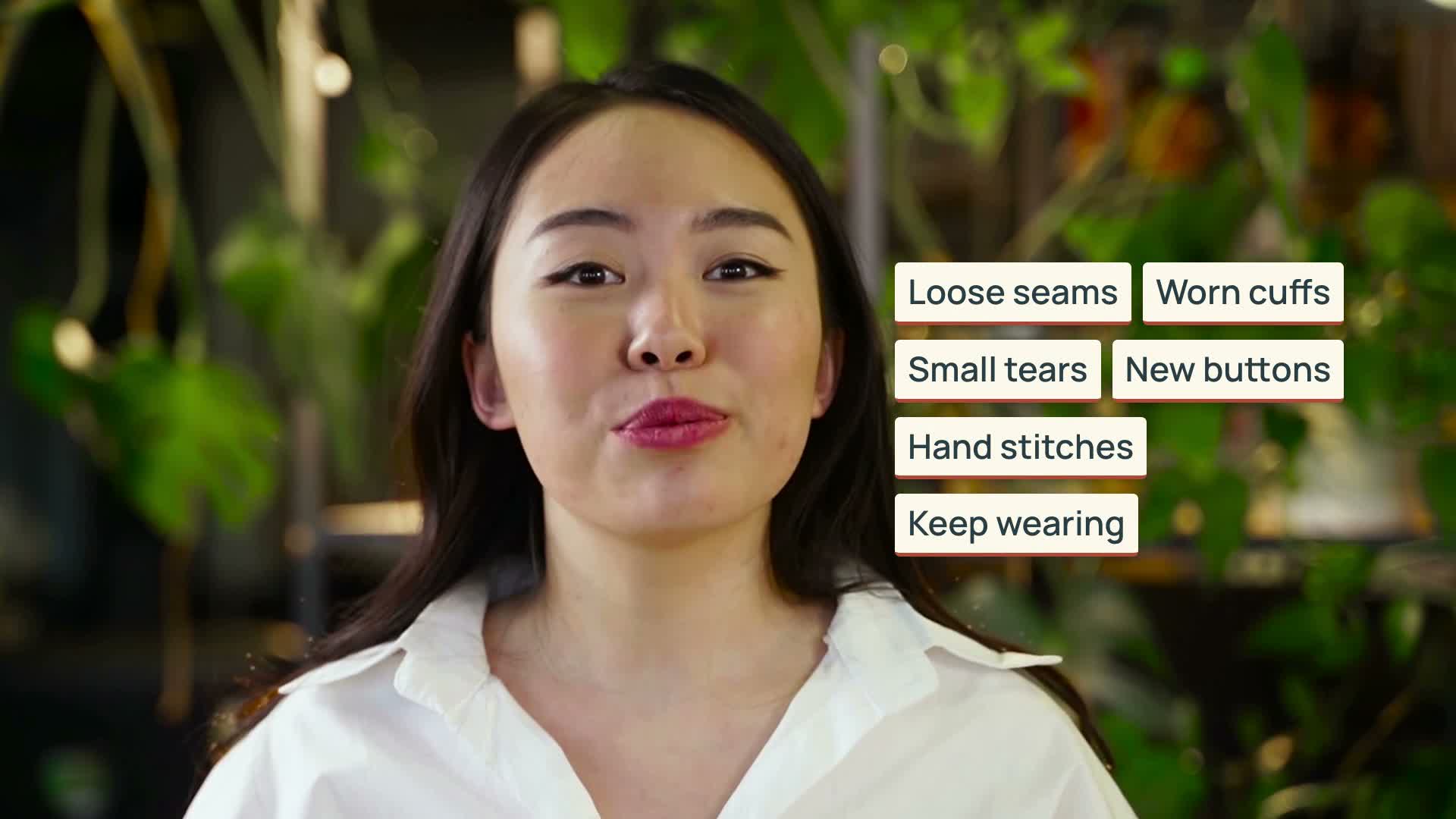
Compose a filmed speaker with short labels that collect in measured pairs and wrap into a stable reading area.
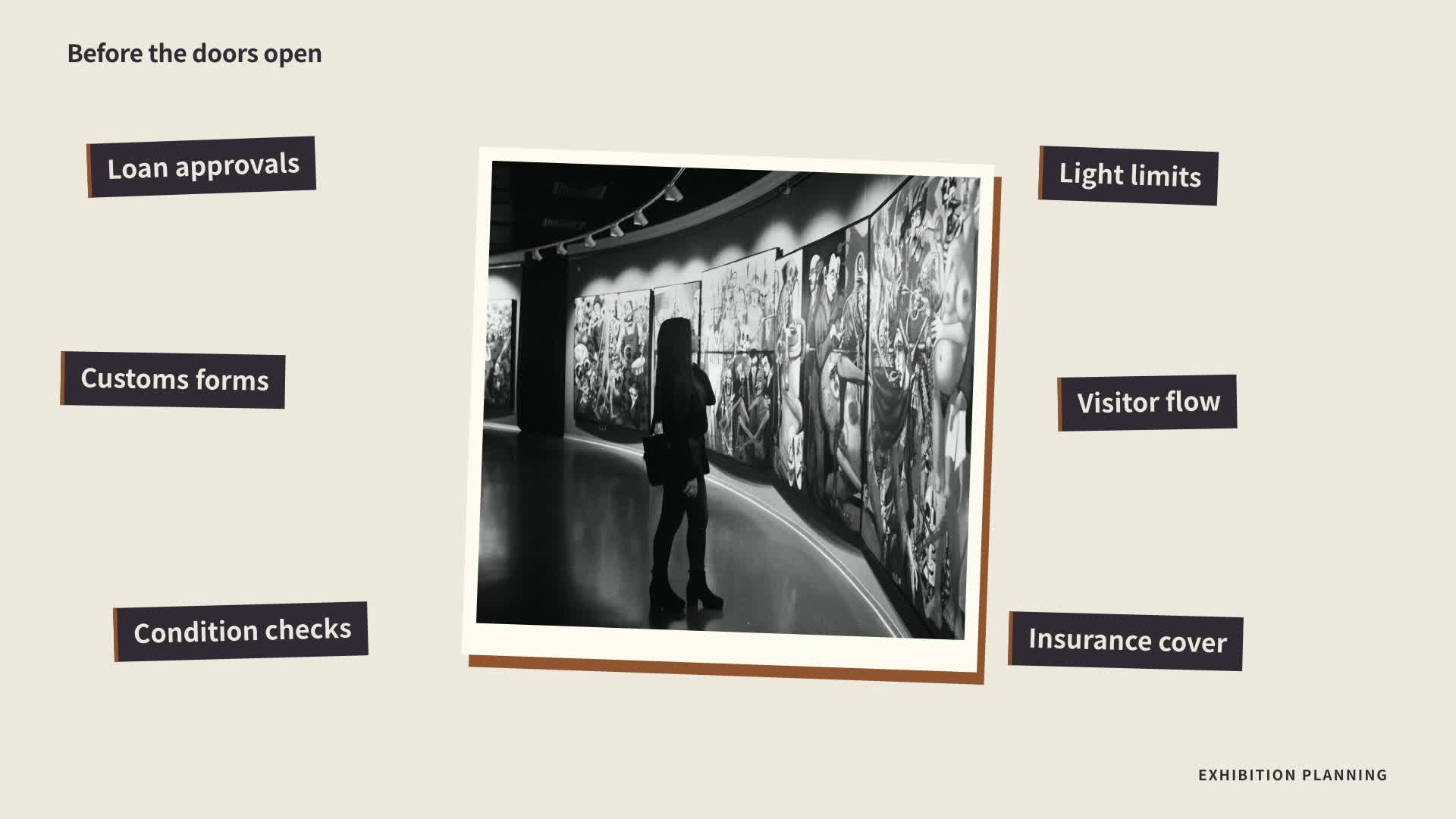
Make a short editable film where competing terms gather around a person and persist when the central scene becomes a photograph.
Create an editable short film where a headline sits behind a person and becomes the full-frame statement at a clean cut.
Stage a photographic wall checklist with a camera reframe, continuous human foreground and a gradual focus shift.
Author an editable sound comparison film with a silent object, synchronized effects, and a musical replay.
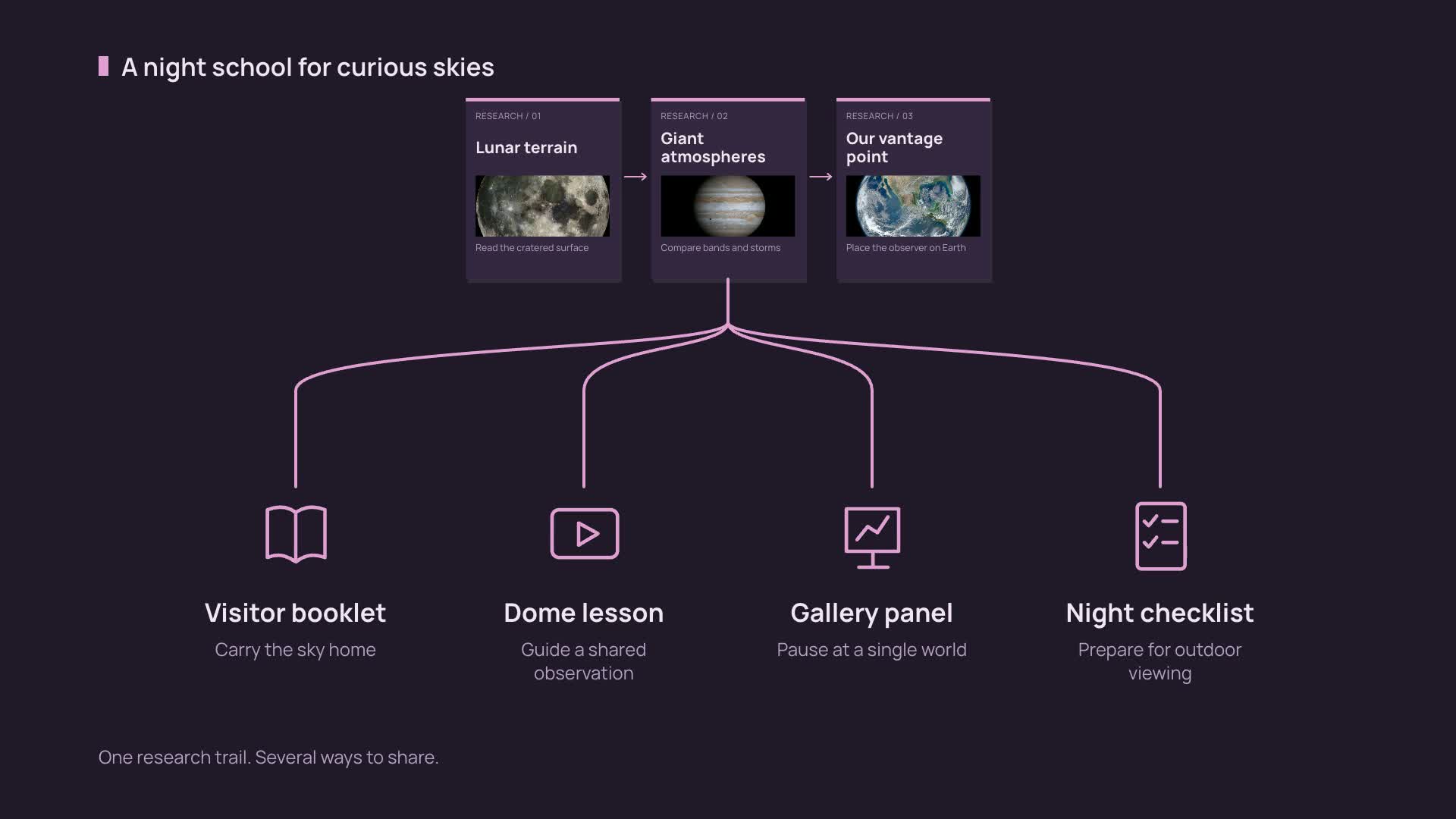
Animate a research chain that contracts into a header and distributes into several editorial formats.
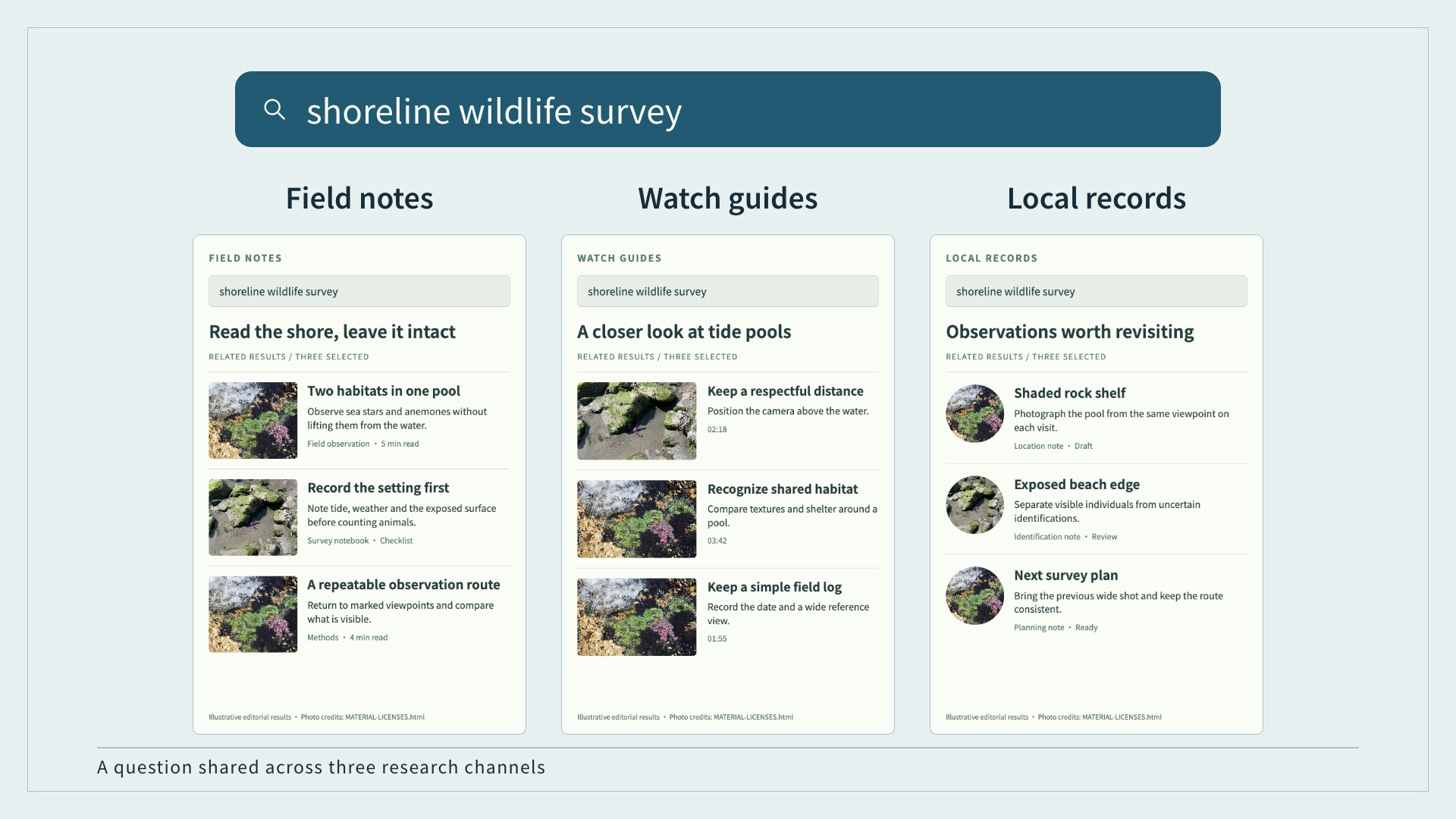
Animate one query into two to four image-rich result panels with editable HTML, SVG, GSAP and HyperFrames.
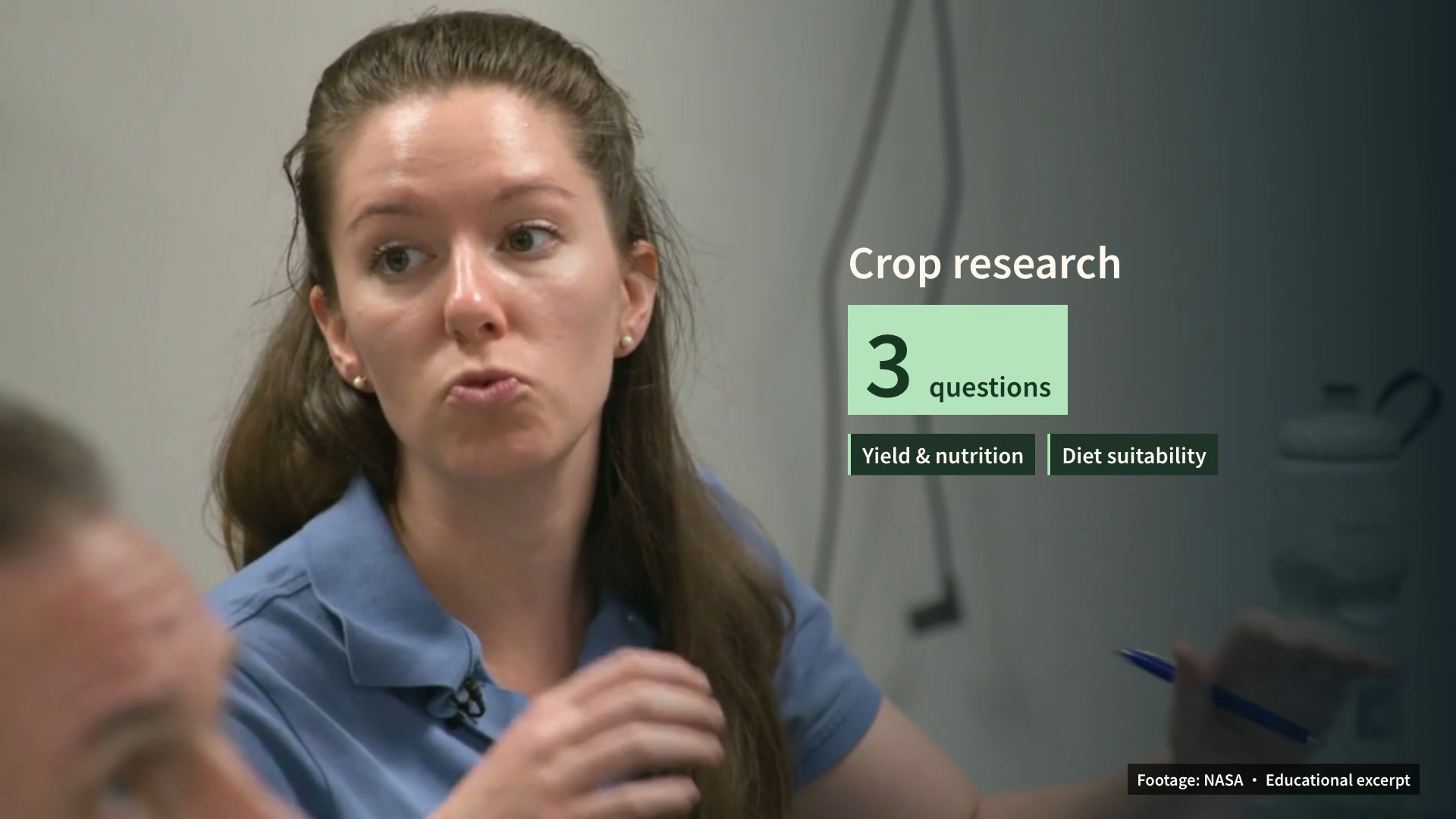
Make a short factual video annotation with a prominent quantity and two supporting conditions over a continuous real take.
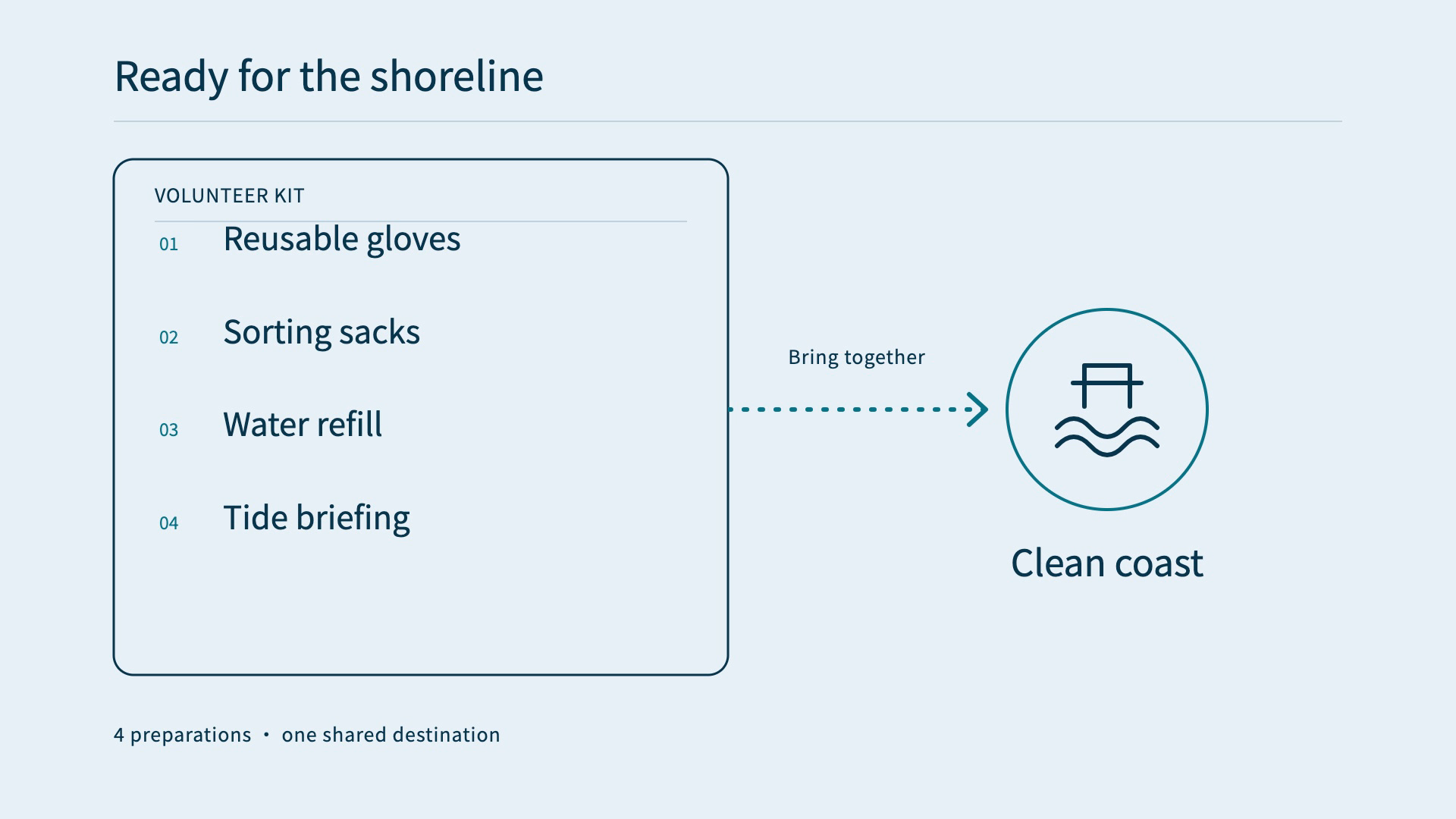
Bring a preparation list together through one bridge, then reveal a shared destination.
Flip a field of chapter tiles, locate the current section, then hand off to your local video.
Describe a scene and get a seamless loop film in which every frame is computed by one fragment shader.
Gather related terms into a clear takeaway and a supporting evidence card.
Connect two photographs through diagonal shutters and an editorial title bridge.
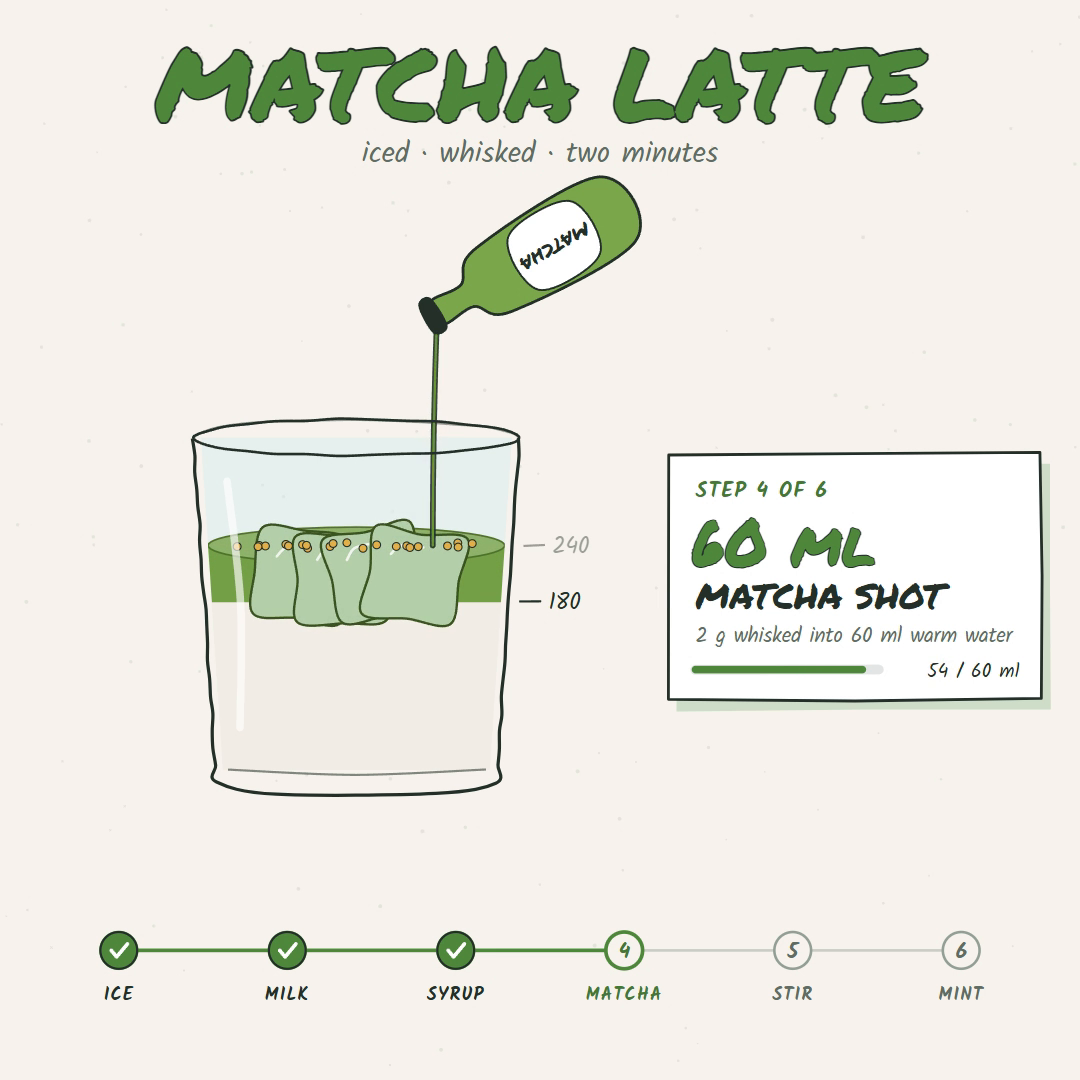
Turns an ordered recipe into a hand-drawn motion graphic where a cutaway vessel fills, layers, stirs and gets garnished step by step while a card counts each amount and a tracker ticks the steps off.
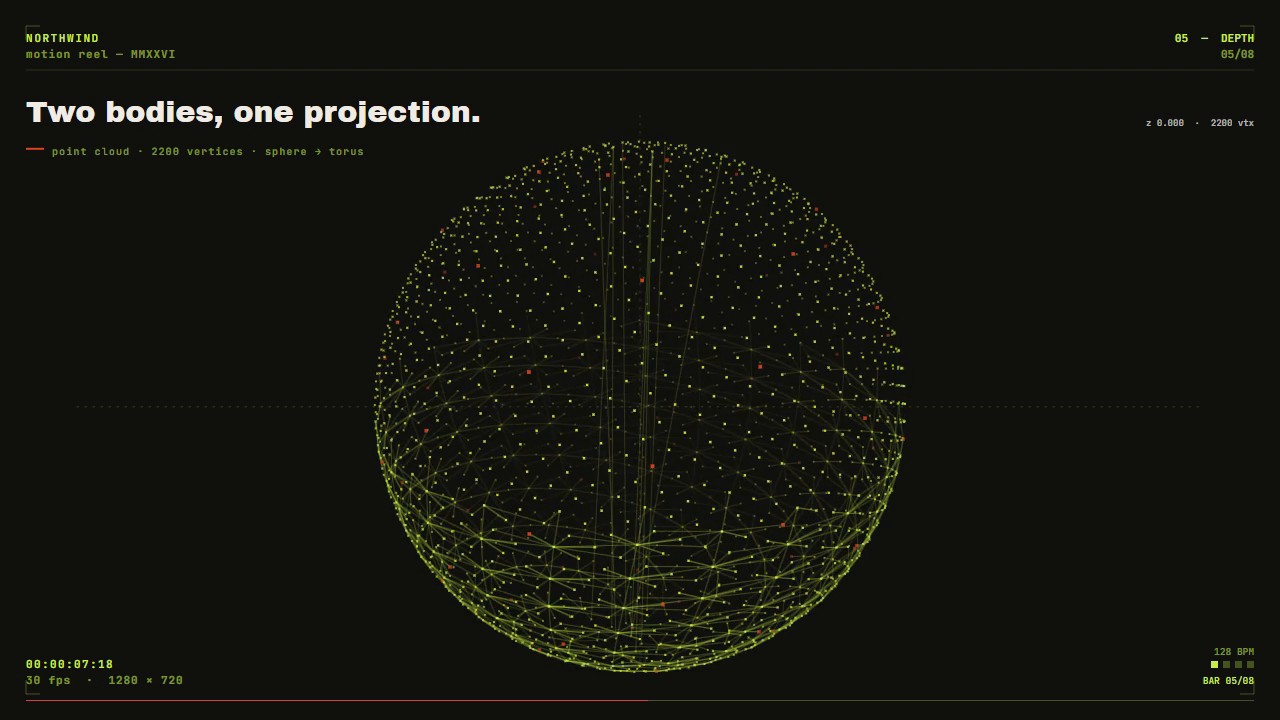
Turns one JSON sheet into a short reel cut on bar lines, where each chapter shows one motion technique inside a persistent technical HUD, with a beat-locked score.
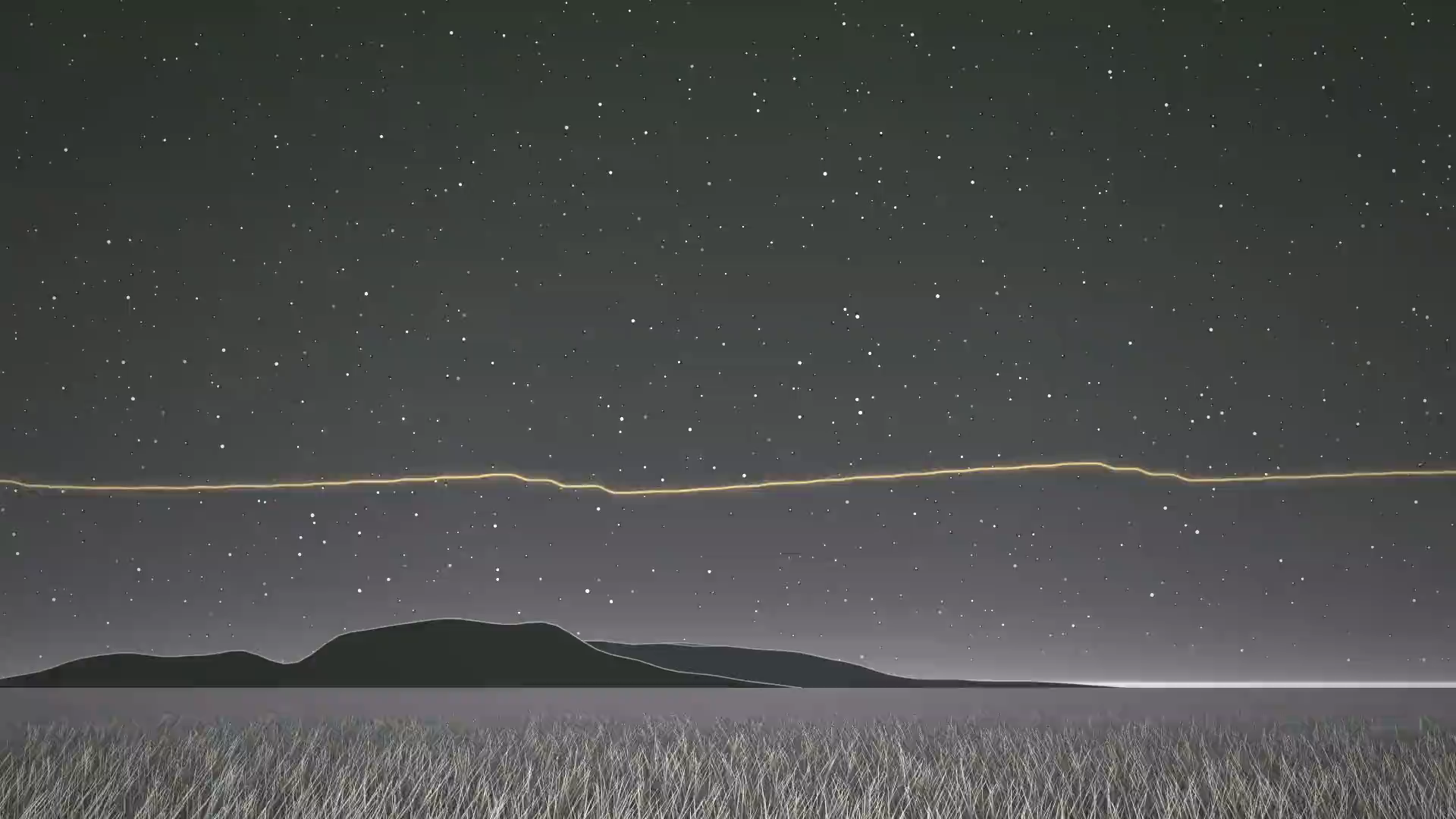
Turn a track into a music video: a procedural grass or dune landscape cuts on the bars, sways with the low end and flares on the biggest hit.
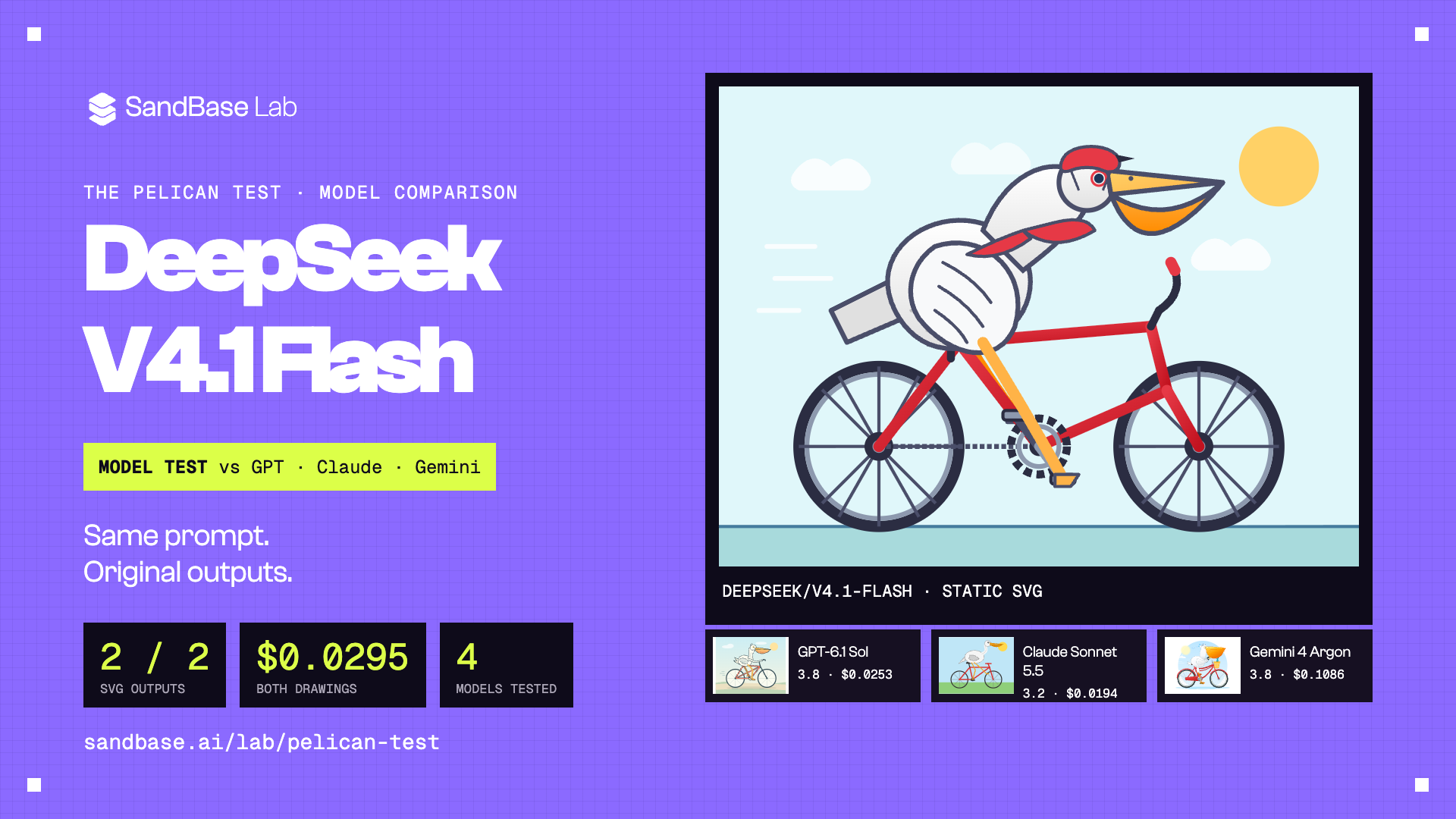
Turn a new model release into a film with original pelican SVG tests against three current models.
Repaints one seated-figure scene chapter by chapter in a different period look while a counter rolls through the years and a companion edges closer until a final gag.
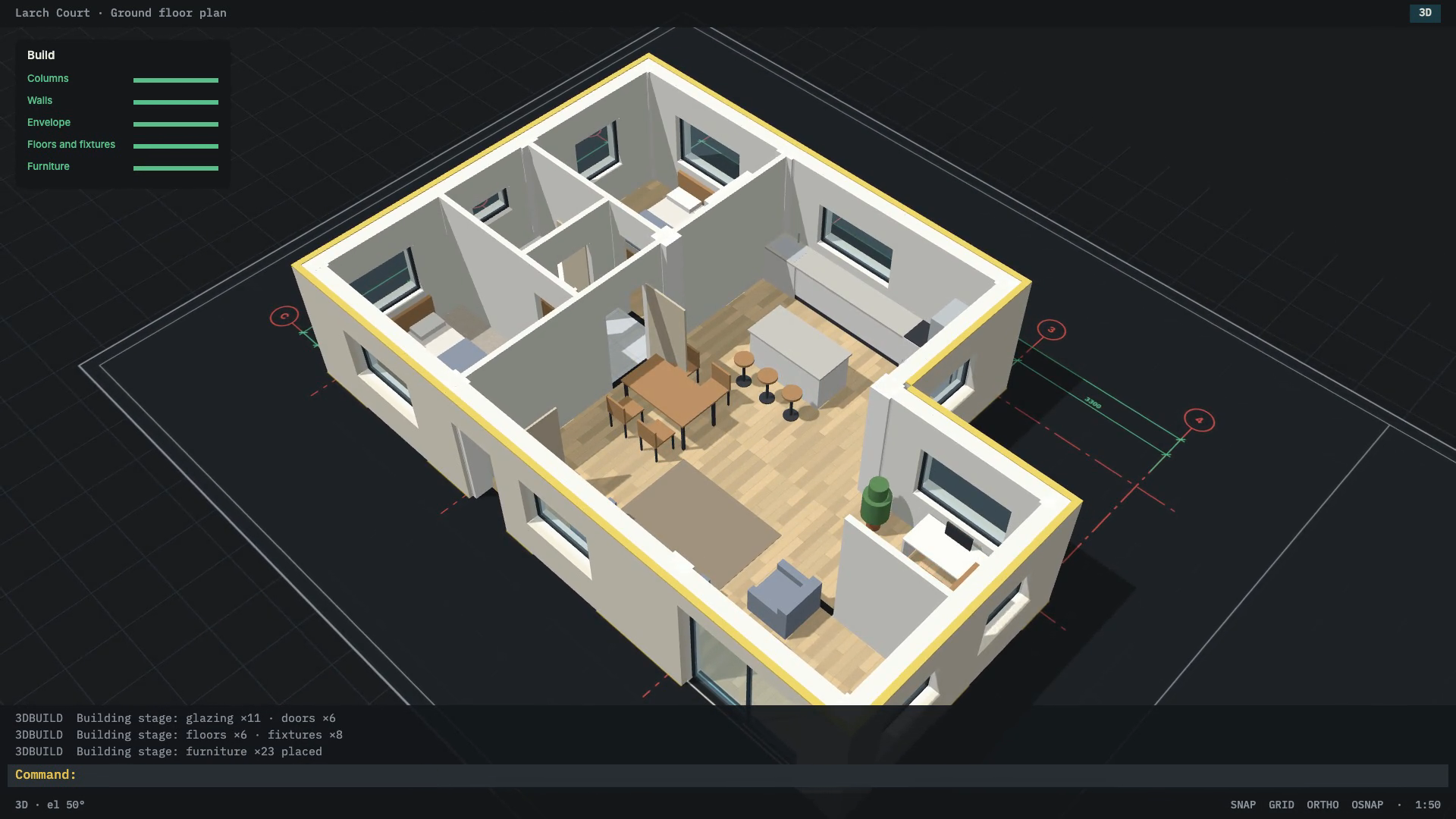
Draft one floor plan on a CAD screen, command by command, then build the same plan in 3D: walls rise, glazing, floors and furniture drop into place.
One shape morphs through a reel of interface states — button, loader, check, player, slider, toggle, tabs, chart, command palette, toast — never cutting; a cursor drives every click and drag, content swaps with a short blur, and the loop ends on its first frame.
A paper-collage storybook film — a handwritten question travels from a lit night window across a sleeping town to a garden daisy, and each answer arrives as a torn-paper vignette card with a springing icon and a hand-lettered caption, rendered deterministically by HyperFrames.
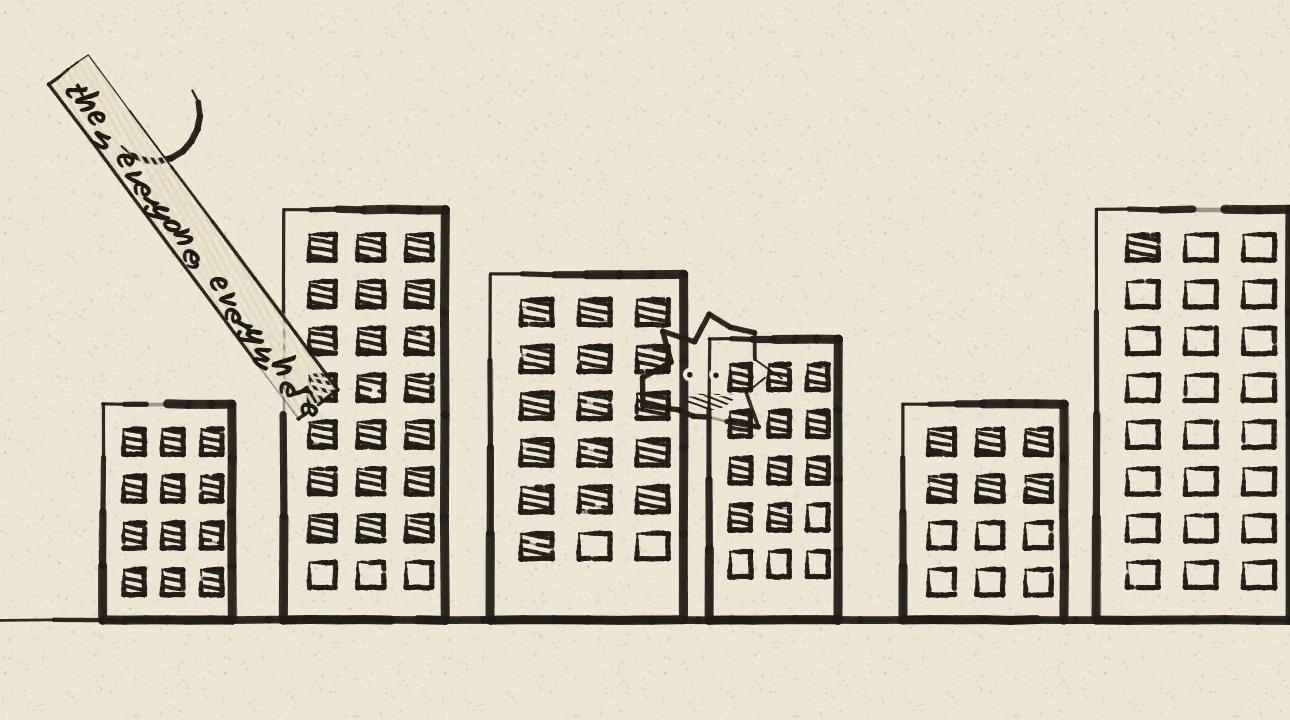
A hand-drawn ink film where every frame repaints the scene with fresh seeded jitter, so the whole picture boils like cel animation — a small ink blob lives through captioned vignettes (born from an ink pot, reading in the stacks, scribbling at a desk, a first hello on a monitor, city windows lighting up, a finale under its own rays), rendered deterministically by HyperFrames.
Zoom endlessly through nested circular worlds drawn by code: each aperture opens into the next, and the last opens back into the first.
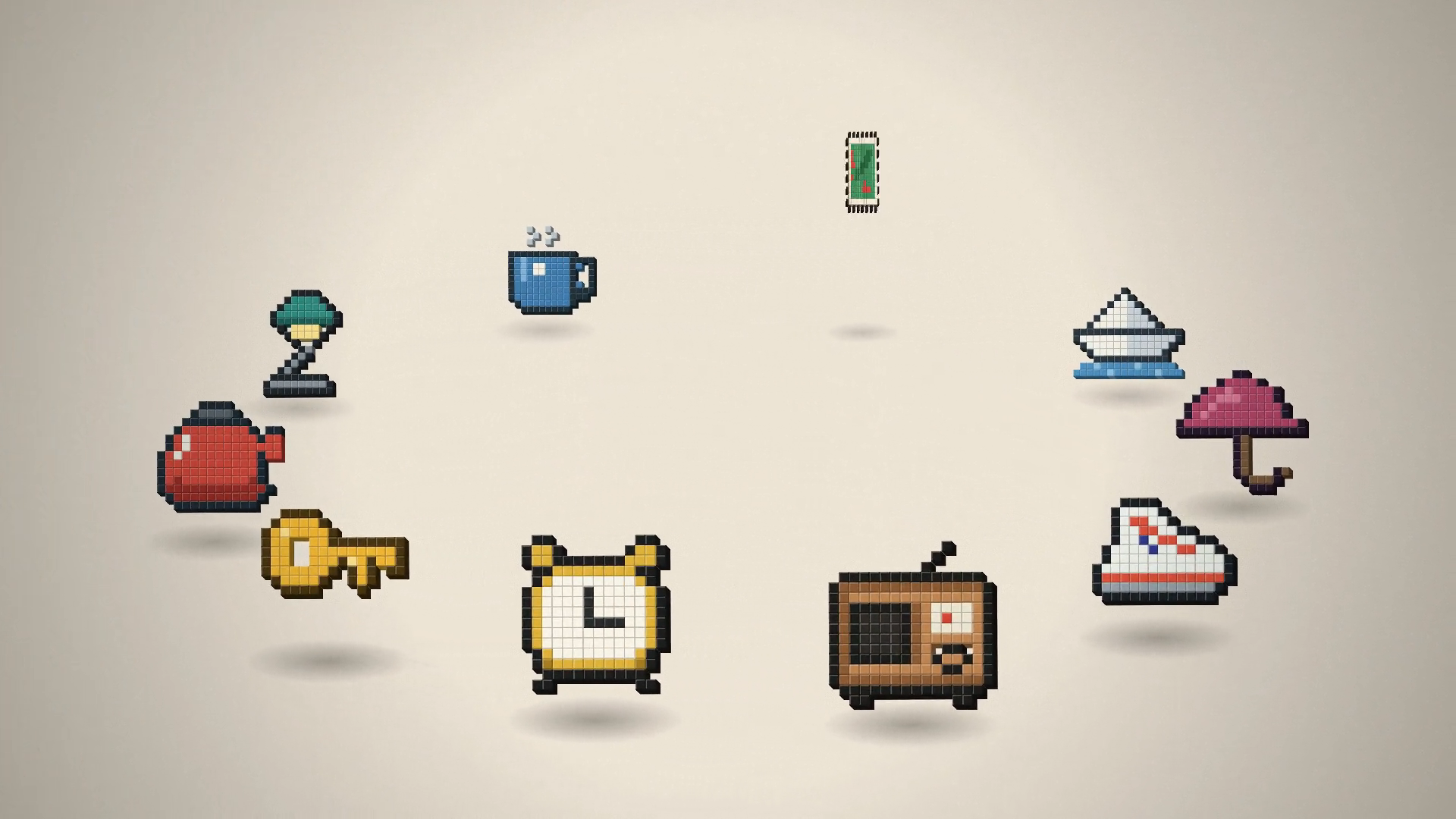
A short film about the things someone keeps: a heat-camera silhouette, hand-made pixel objects turning on a tilted ring, a fall through the head, key words that send one object flying out, and an ending word that lands letter by letter.
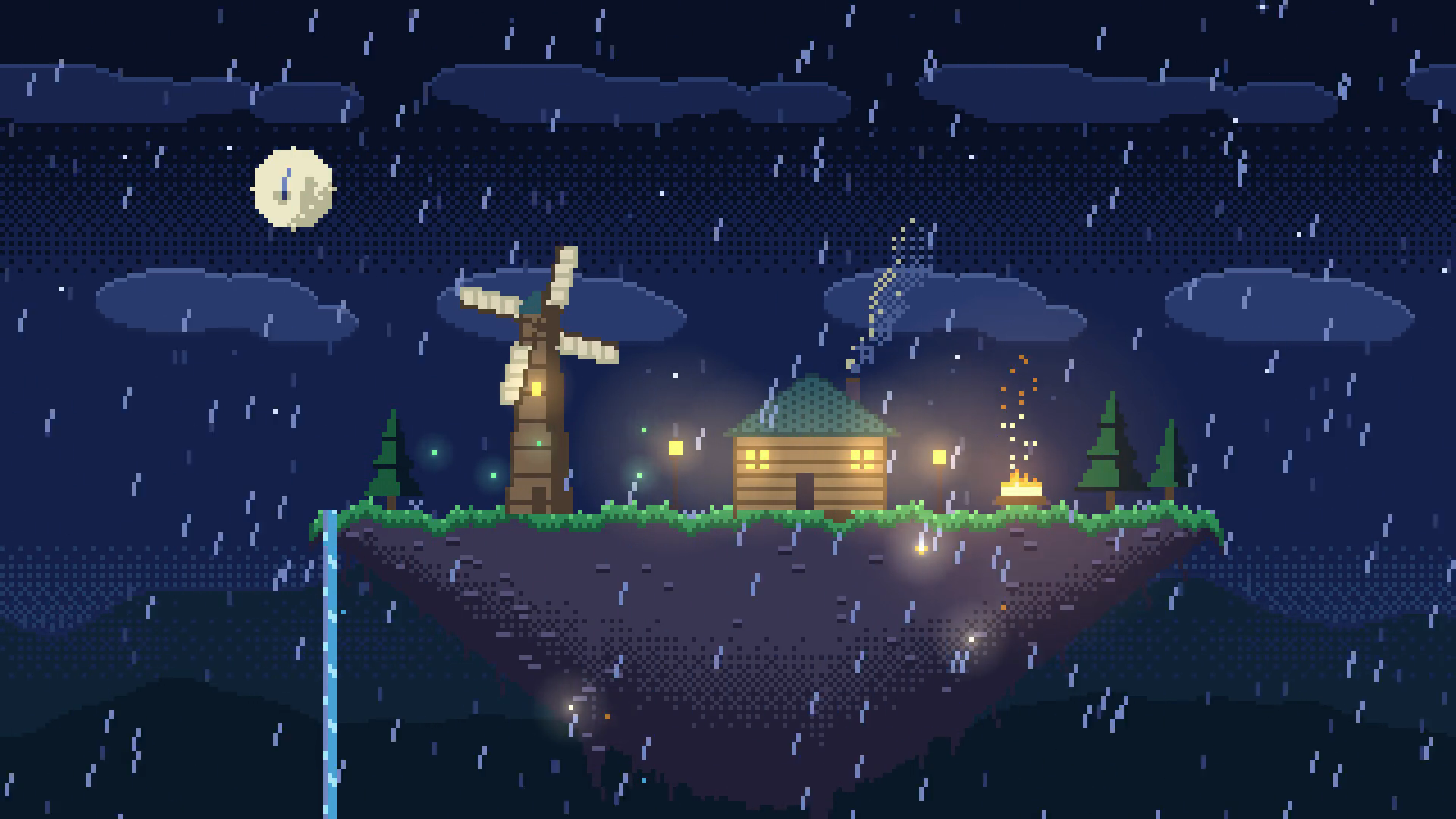
A seamless pixel-art loop of a floating island under layered rain or snow, drifting clouds and flickering warm lights, all drawn by code.
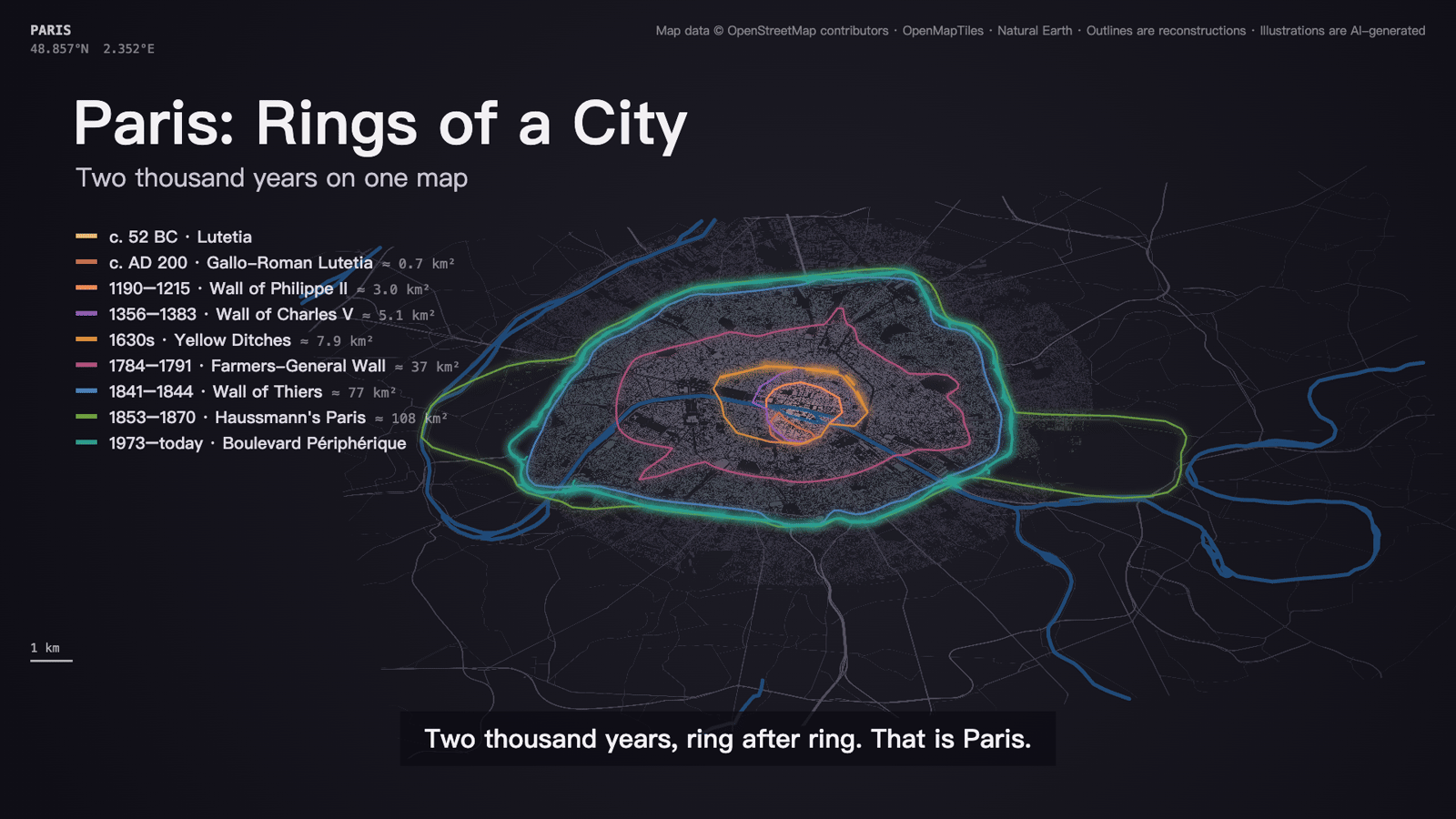
How a living city grew, era by era: its walls and extent light up across today's real streets and buildings, with English narration, subtitles and landmark illustrations.
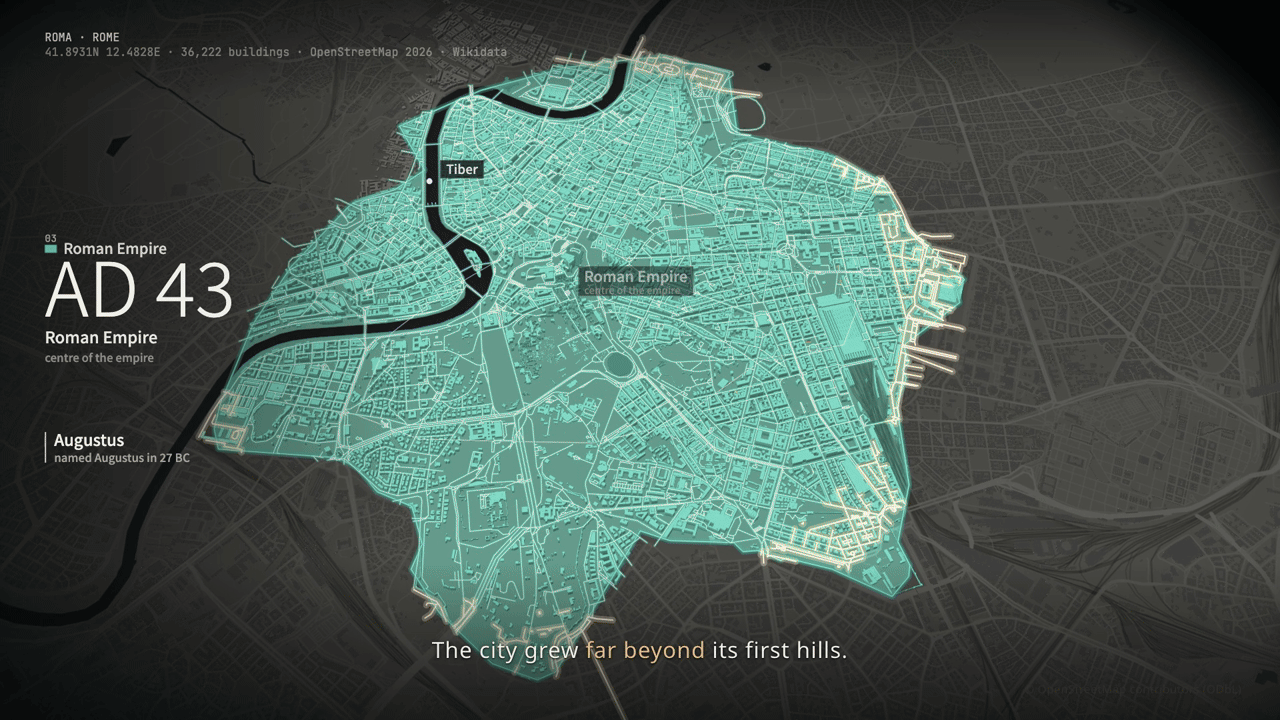
A city's life story in 3D: from the globe into its real buildings, then its history played on them as light, era by era, with every caption fact-checked.
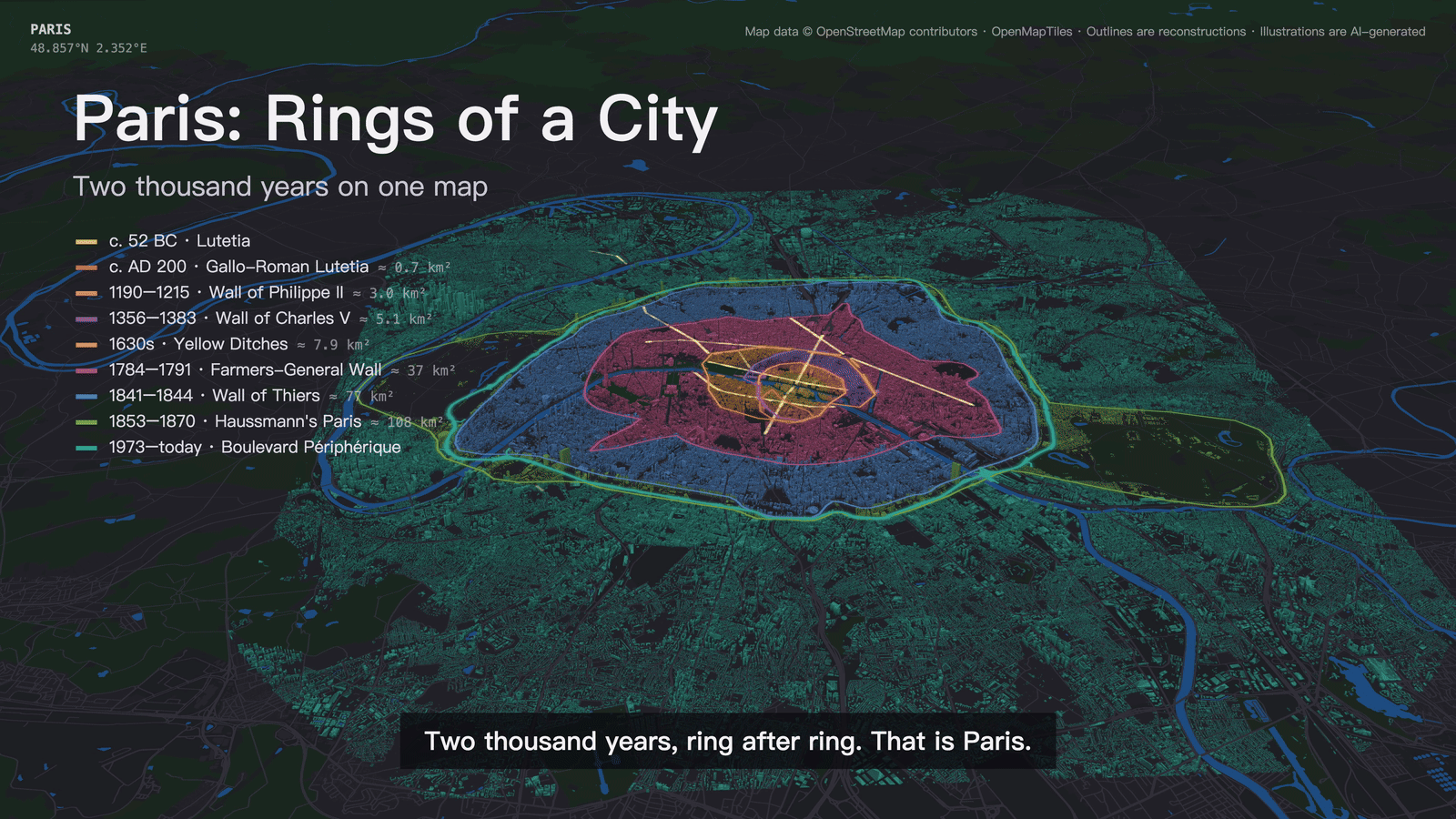
A city's real buildings rise in 3D era by era at the heights of their time, and the events that changed it play as the narrator names them.
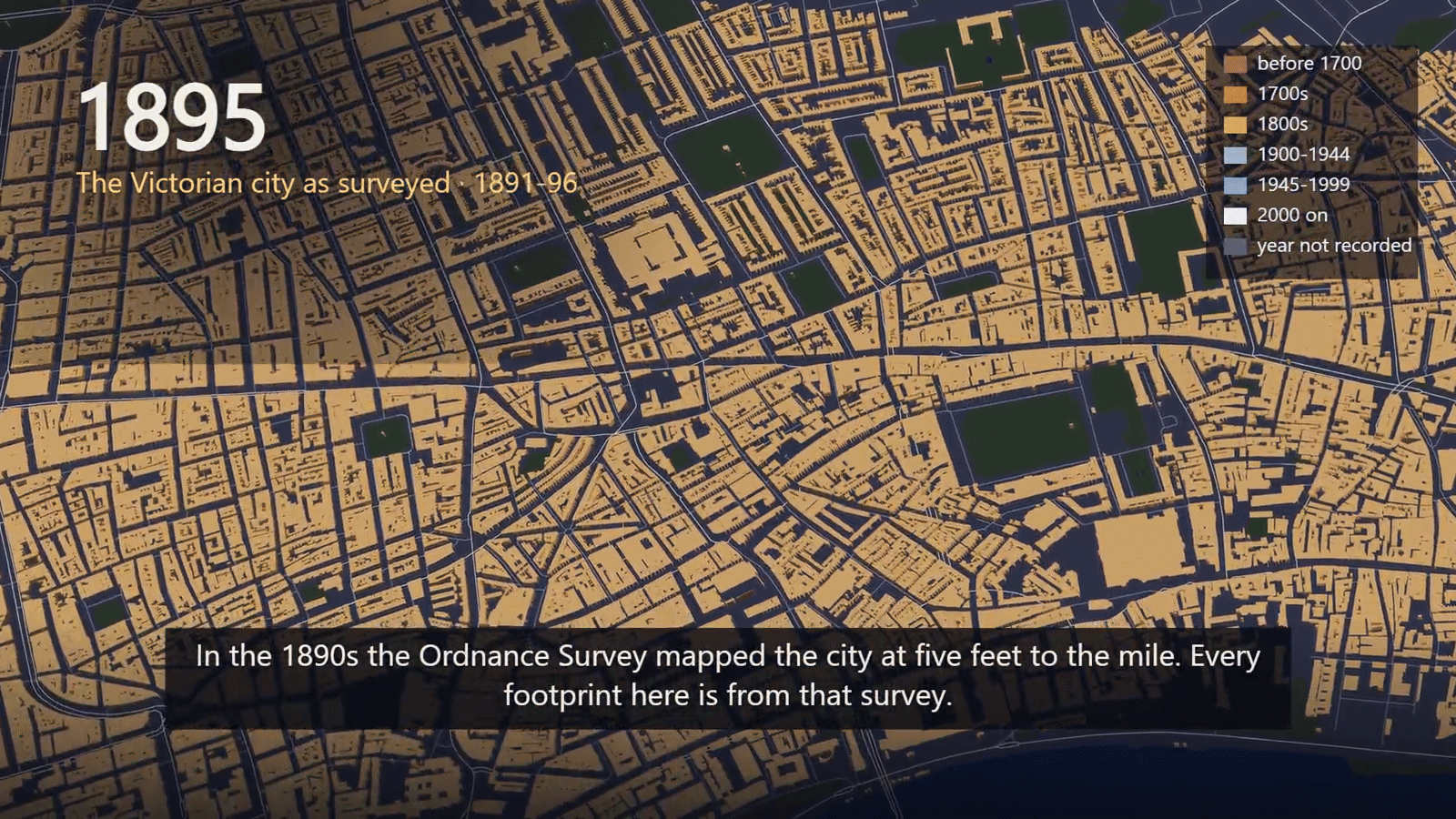
Every real building of a city rises in 3D in the year it was recorded as built, so the city fills in building by building, with narration and the fires that shaped it.
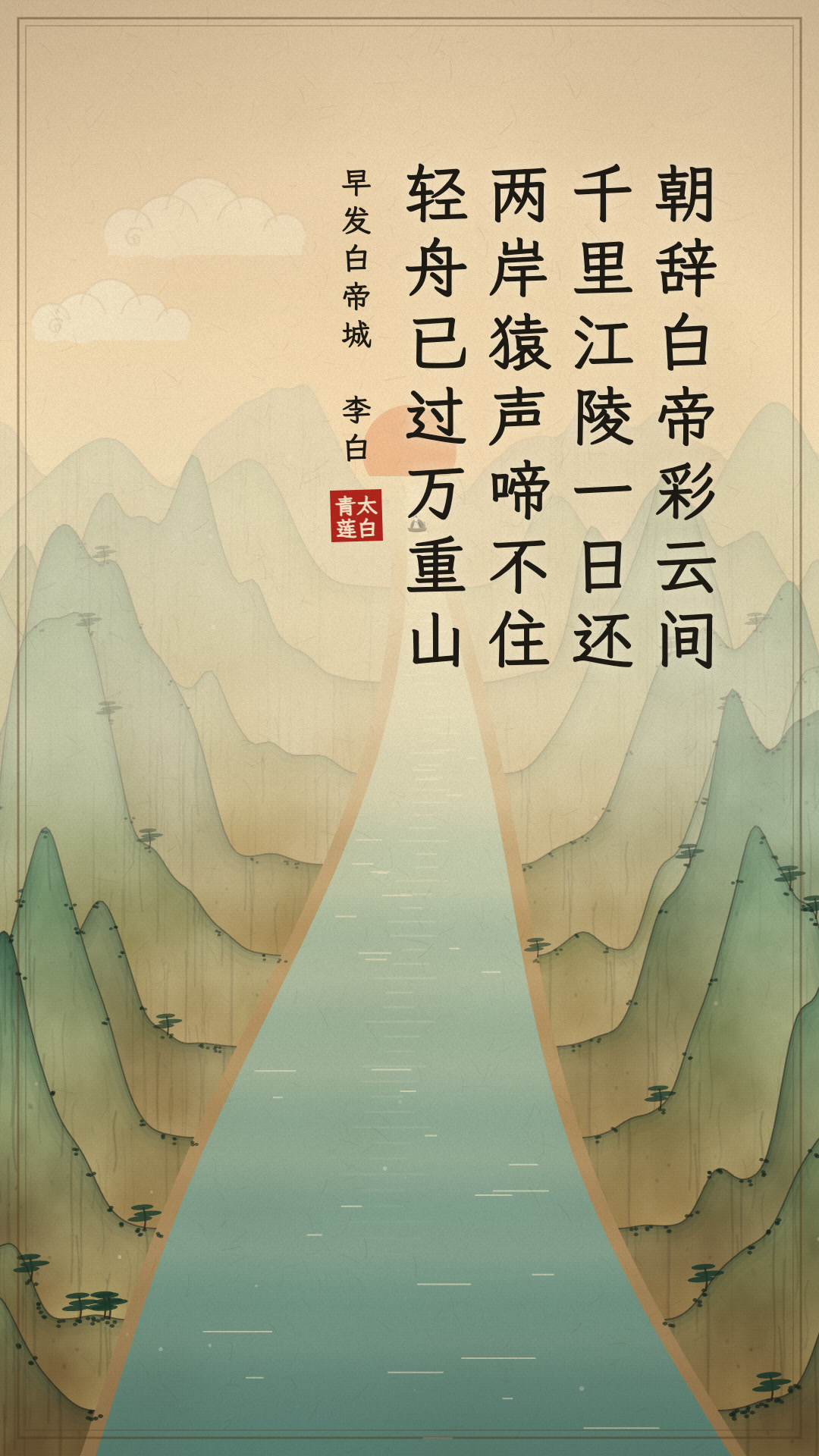
One classical Chinese poem becomes a vertical ink-painting film drawn in code: a short backstory prologue, one shot per line chosen by the poet's mood, matched transitions and the whole poem as a scroll.
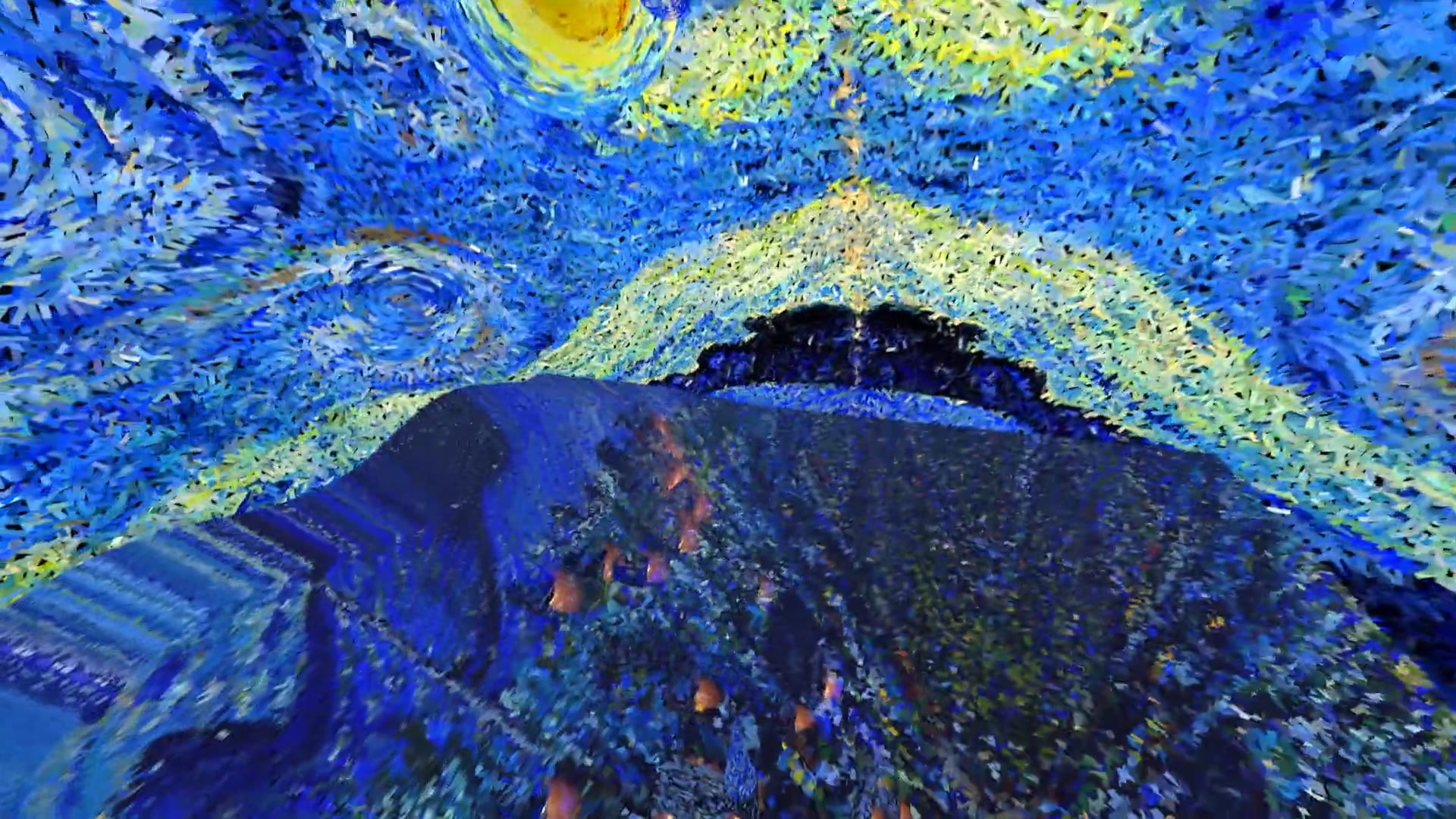
One painting becomes a single-take camera flight through a 3D world built from its own brush strokes: the picture bursts into a tunnel of strokes, the camera flies over its ground, water and hills, through the clouds and into one point, then the painting reassembles.
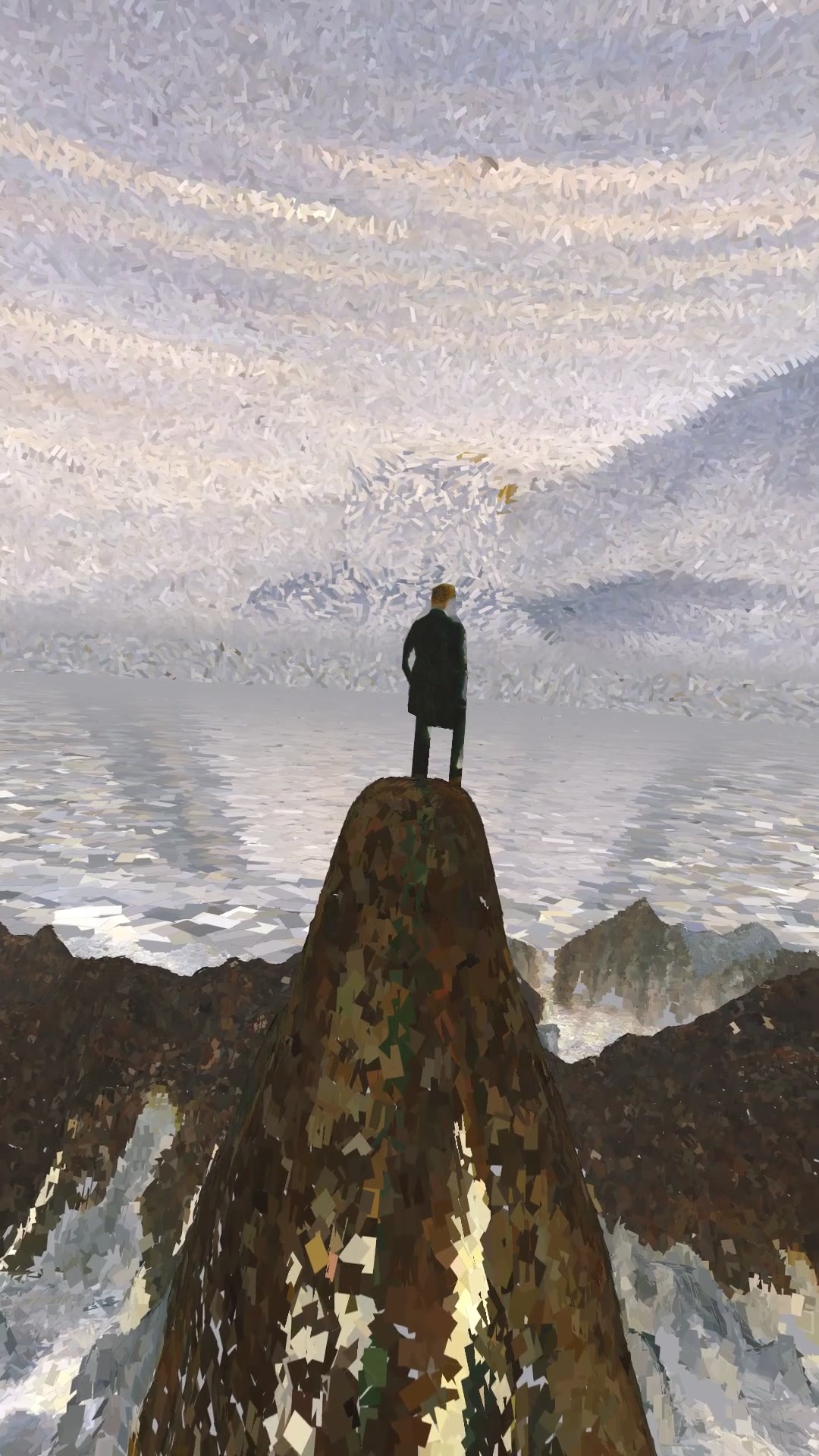
A vertical narrated short about one painting: the camera flies through a world built from its brush strokes while a voice tells what critics say it is about, one line per shot.
An editorial typographic launch film authored in one sheet.json — a prompt mock that thinks too long, giant single-word hits, a pastel token grid filling to a percent, a throughput counter, a logotype beat with a watermark glyph, a soft gradient banner, a benchmark bar race and a closing lockup — rendered deterministically by HyperFrames.
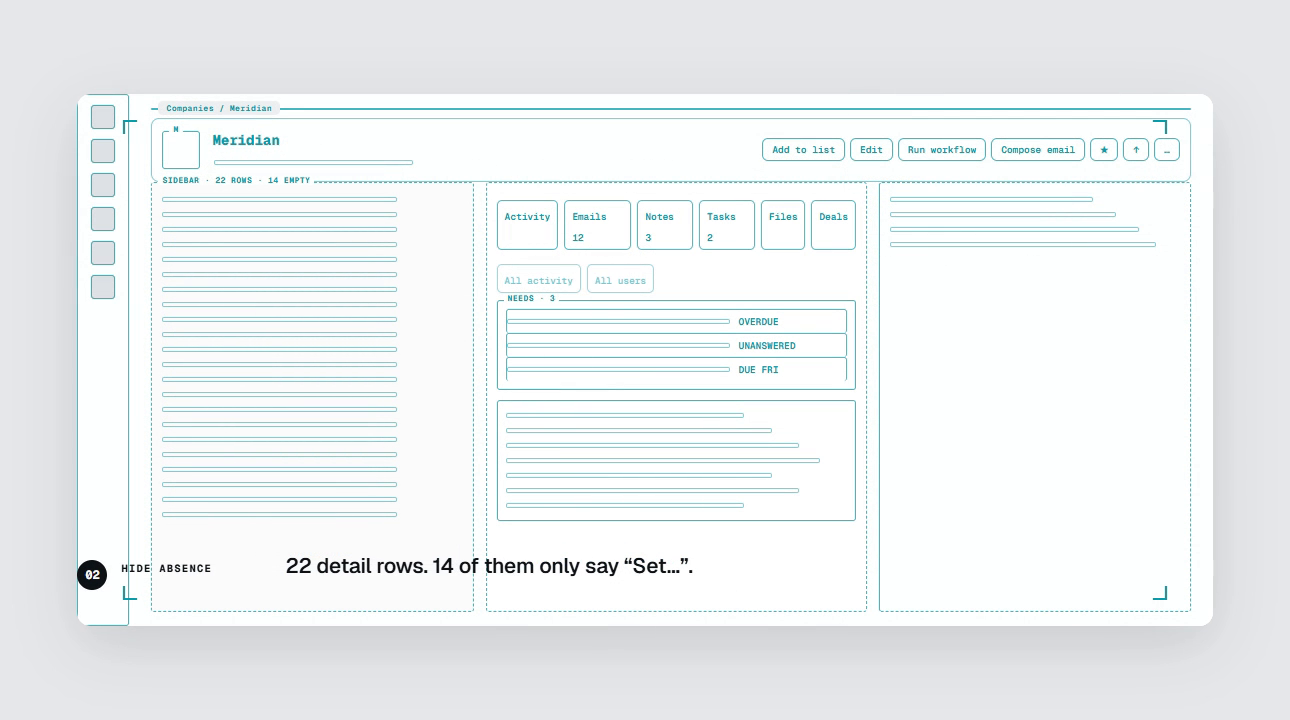
A UX-decision film authored in one sheet.json — a parameterized SaaS record page alternates between its solid render and a generated blueprint x-ray twin; a teal ring frames the region each decision is about, mono spec callouts read out counts and dimensions, and a numbered caption chip states each rationale, rendered deterministically by HyperFrames.
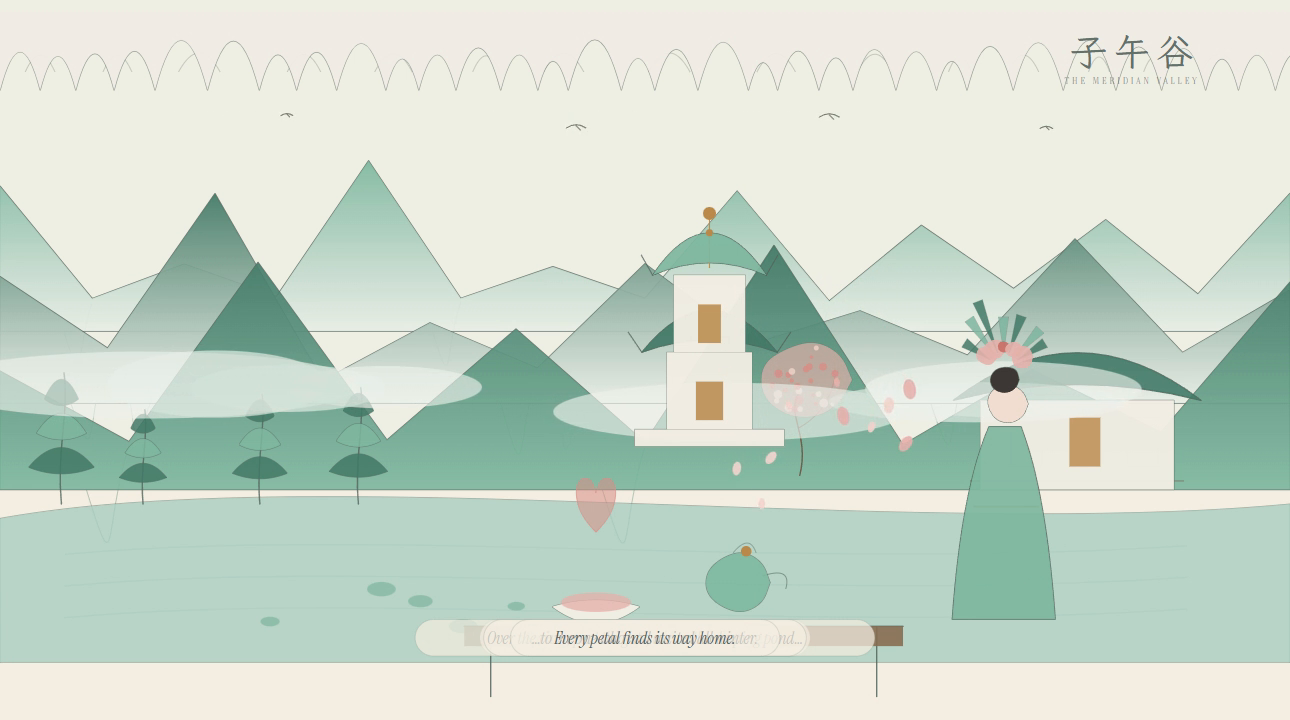
A scroll-painting film authored in one sheet.json — a layered illustrated valley (ridges, scalloped clouds, pines, a blossom tree, pagoda, water, a tea table and a kimono figure) draws itself in ink lines, fills with watercolor washes back-to-front, then keeps breathing with drifting petals, birds and mist while verse captions cycle, rendered deterministically by HyperFrames.
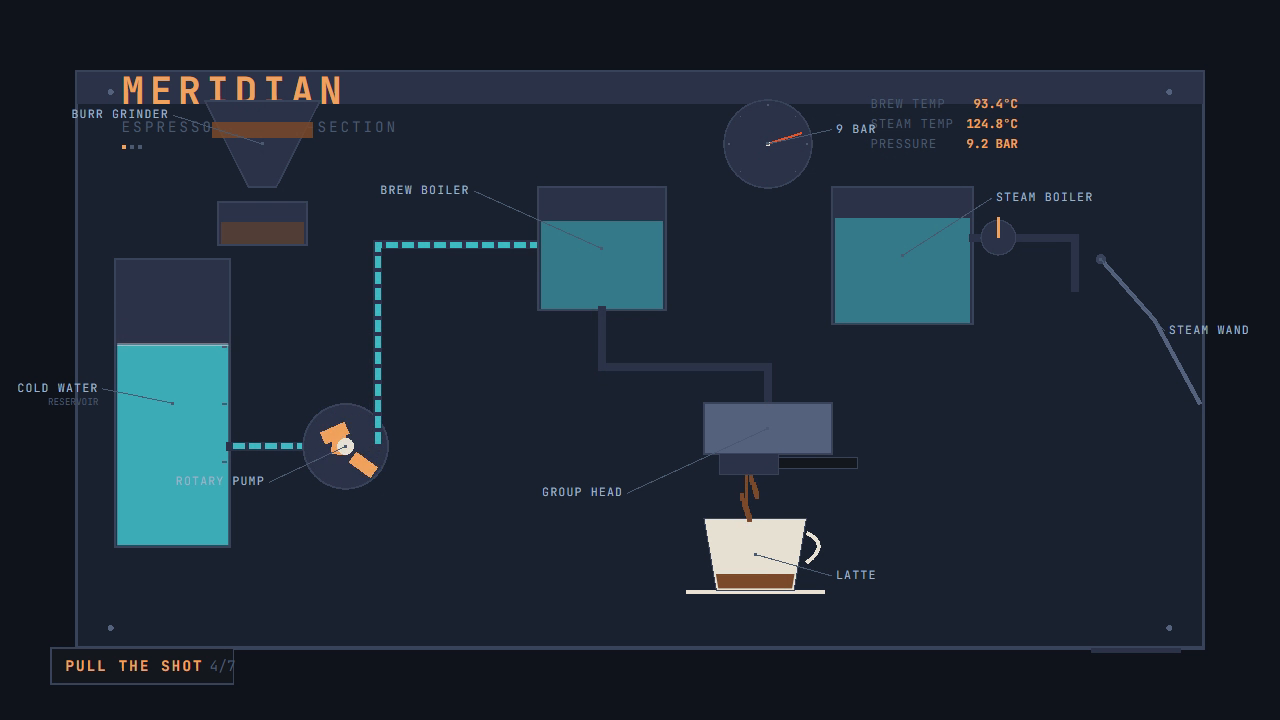
A living-schematic film authored in one sheet.json — a persistent labeled machine cross-section (casing, tanks, pipes, pump, boilers, group head, cup, wand, hopper, gauge, digital readouts and leader-line callouts) comes alive as flow pulses travel the pipe routes, the rotor spins, heaters glow, levels drain and fill, drips land in a layered cup and stage captions mark the process, rendered deterministically by HyperFrames.

Tells how a product finishes one chore for its user, one prop per step, with a headline that builds word by word, a brand glyph carried through every beat and a sound effect on every action.
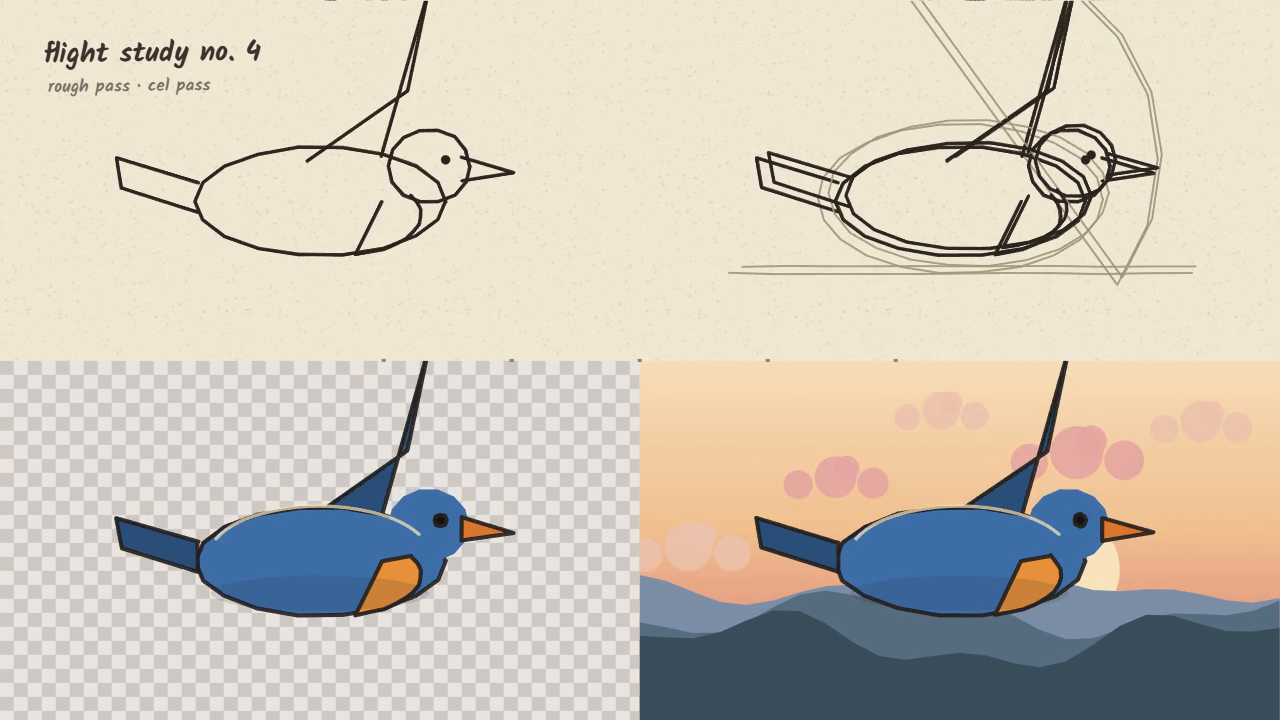
A desk-flipbook film authored in one sheet.json — a single subject (bird, fish or paper plane) rocks through its pose cycles while the film flips between two render passes of the same frame: a loose construction sketch on paper with guide lines, and a flat cel-shaded finish over a painted backdrop (sunset ridge, pond or night). Every redraw re-jitters its strokes from the seed, a tick strip marks the pages along the top edge, and the whole clip renders deterministically by HyperFrames.

A hand-drawn mini-story authored in one sheet.json — a small round hero (dot, bug or orb) wakes on cream paper, watches the world draw itself in stroke by stroke (hills, sun, clouds, trees, flowers), hops through the landscape, and then the palette dips to a night starfield where the hero glows and spirals around a bright centre star leaving a fading light trail. The film resolves on a hand-lettered wordmark that writes in glyph by glyph, with an accent underline, confetti and the hero landing beside it. Every redraw re-jitters strokes from the seed and the whole clip renders deterministically by HyperFrames.
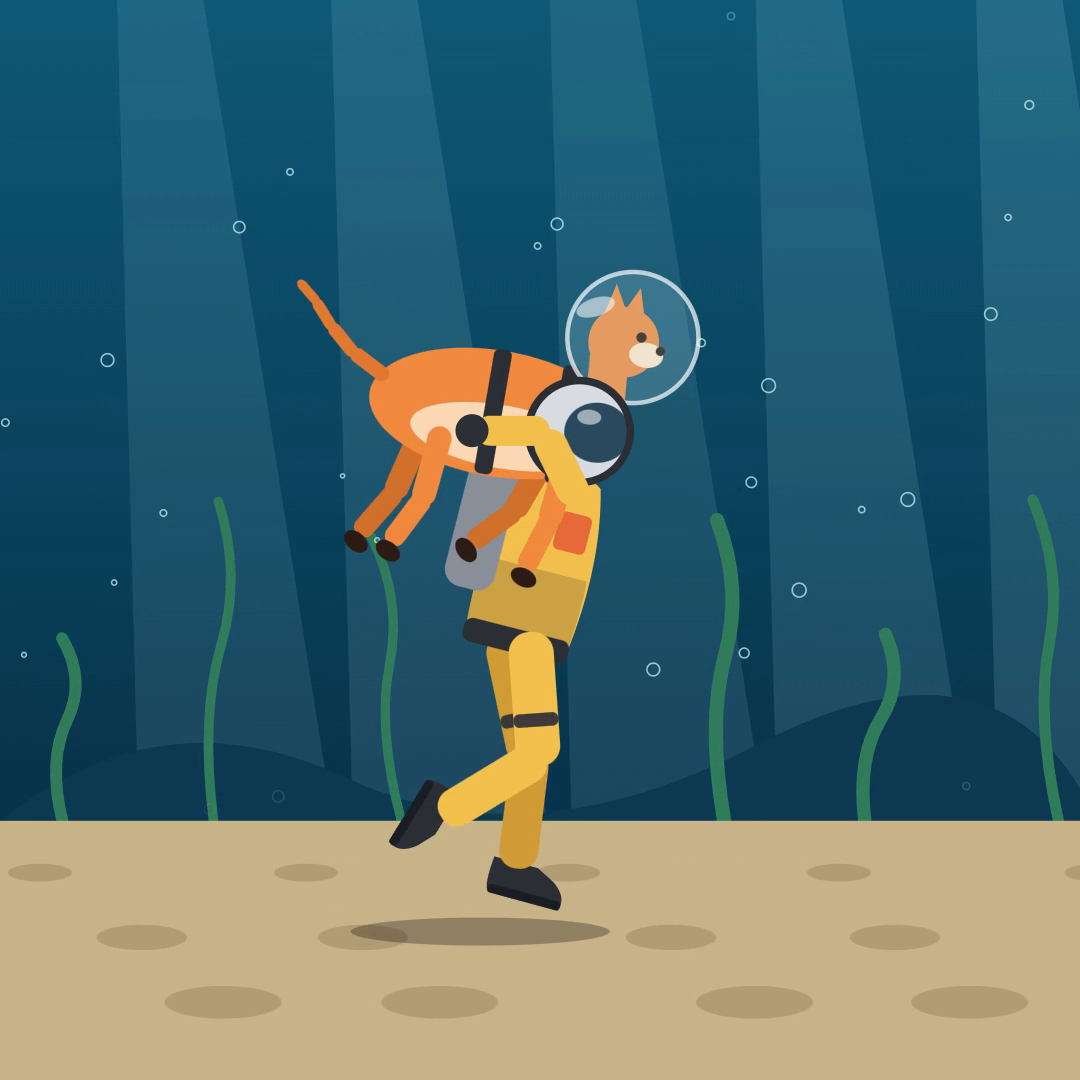
Makes a seamless loop of one character carrying another piggyback: the carrier walks in place under the load while the rider bounces a beat late, with a scrolling backdrop and a footstep on every step.
Turn a block sheet into a silent woodcut-novel plate film: every frame is a black wood block on laid paper, light exists only where the knife cut it away, one colour plate prints inside the carved areas, and hard cuts land as fresh impressions.
A leaded-glass window in a dark stone hall lives only where the sun touches it: a moving band of light wakes each lancet in turn, throws coloured light onto the flagstone floor and gilds the carved title, then dusk falls and one pane keeps its own warm glow.
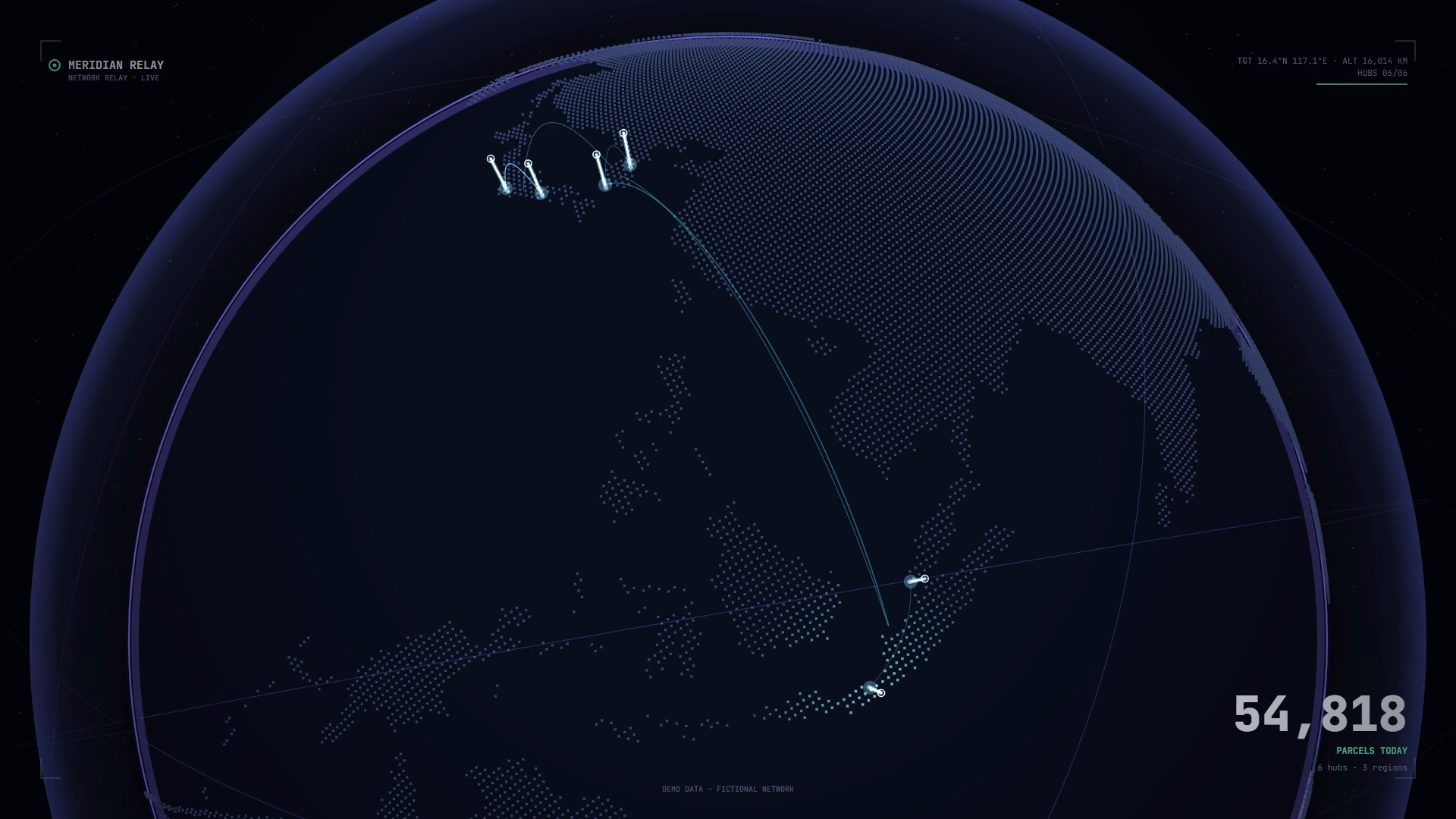
A dark sphere of land dots forms out of a star field; great-circle routes arc between the hubs you name, the camera dives, hops and flies after them, beams rise over each hub while HUD cards type and count what happens there, then the whole network pulls back into the brand lockup.
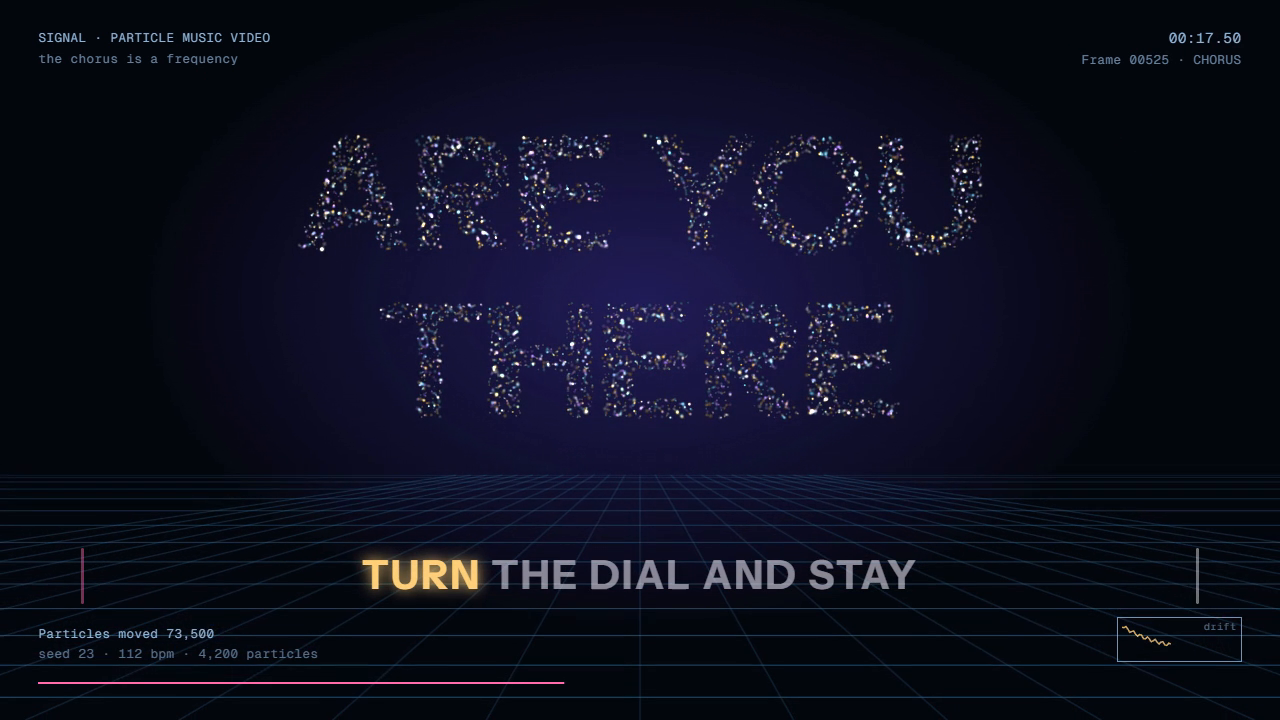
Turns a song's sections and lyrics into a particle music video: thousands of particles form the chorus words, a dancing figure and shapes, fly between them on every section change, and the lyric line lights up word by word under a running HUD.
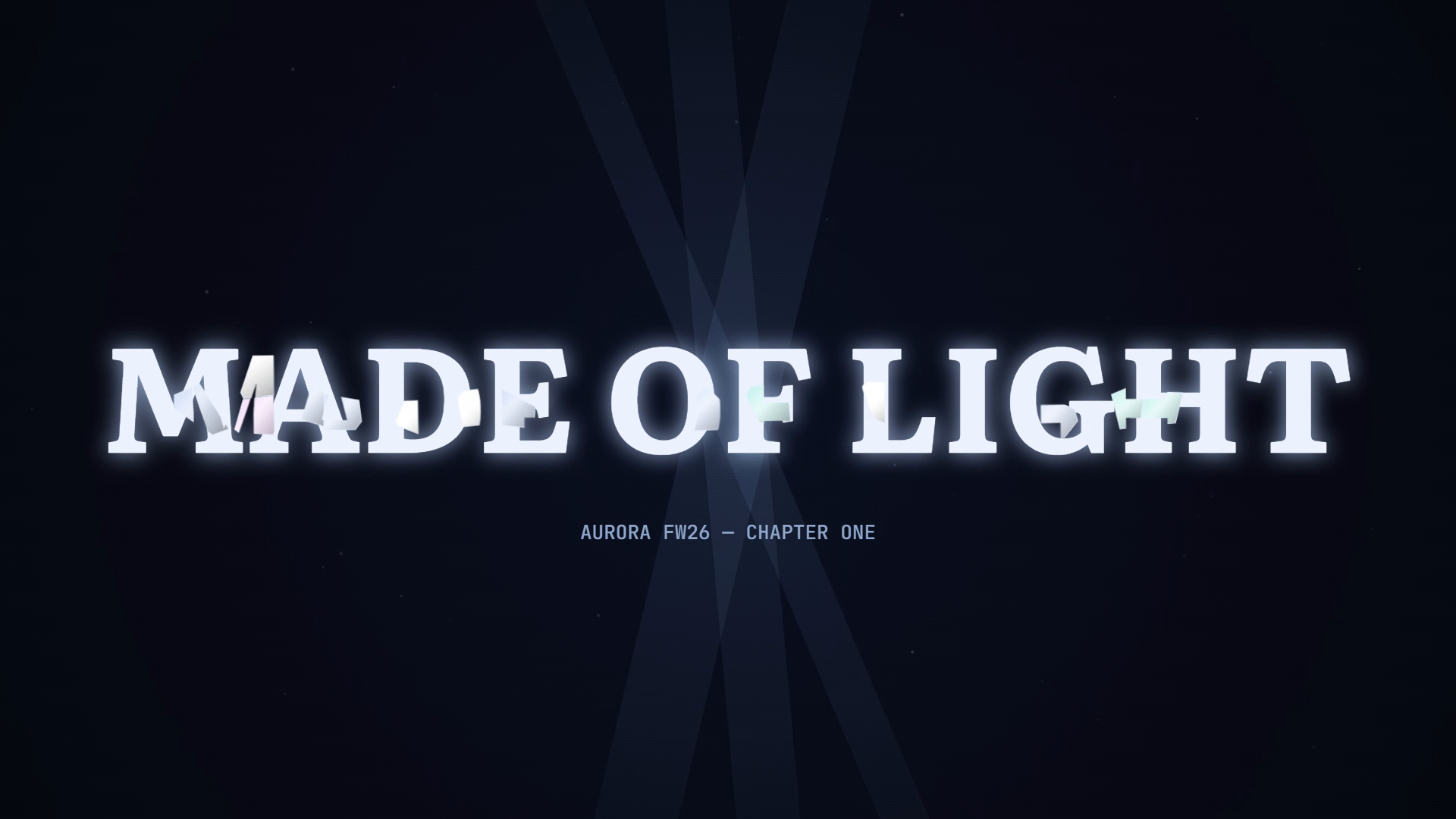
Glass shards tumble in out of the fog, seat themselves into a Voronoi mosaic of your headline, hold under light shafts, then burst back out past the camera.
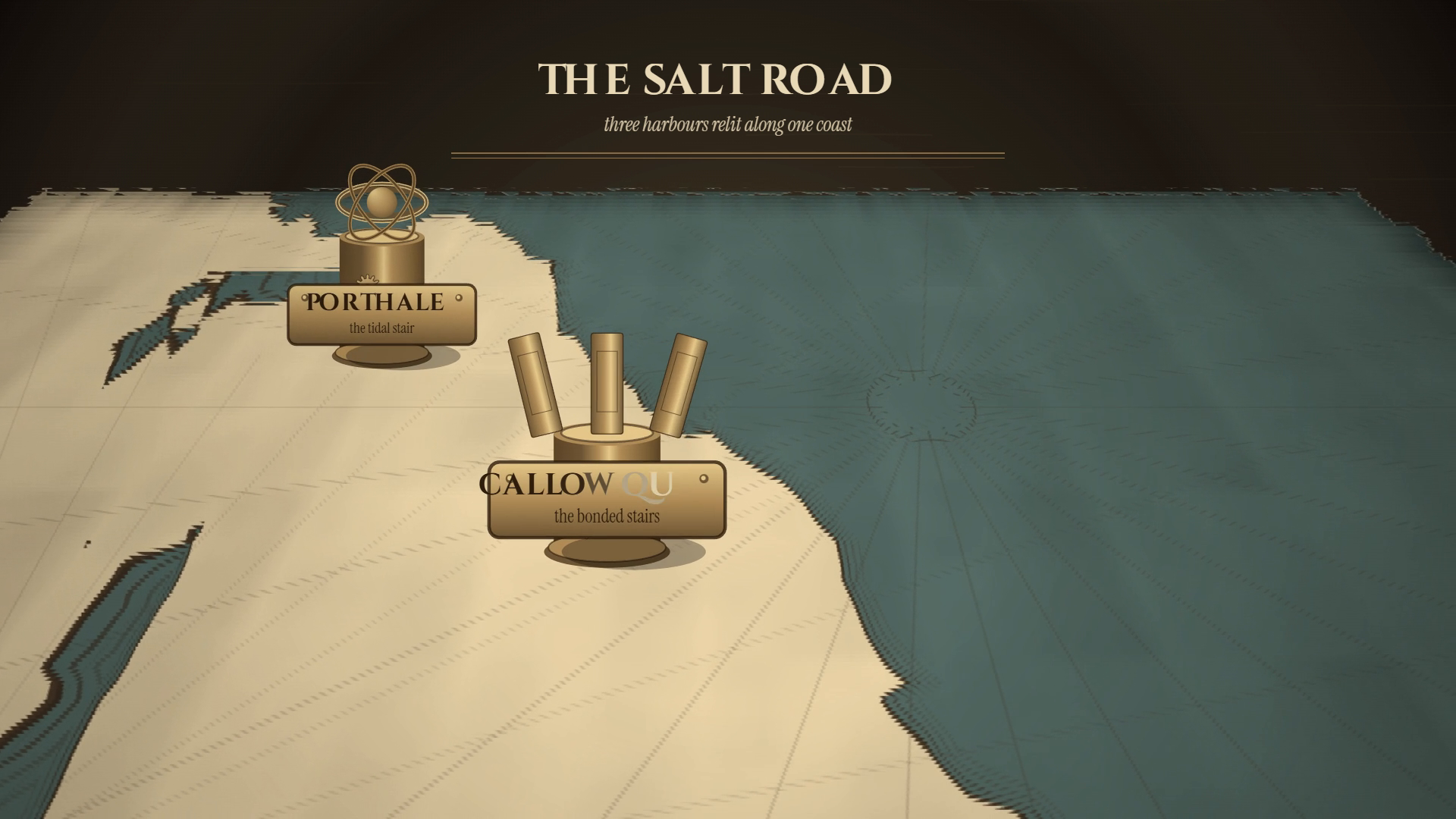
Turn a flight sheet into a silent chart film where every location is a brass machine: an iris hatch opens over escapement-stepped gears, the tower rises tooth by tooth and locks, signature parts unfold one site at a time, a vermilion route inks itself across the parchment, and the camera flies one continuous low pass before pulling back to a top-down view.
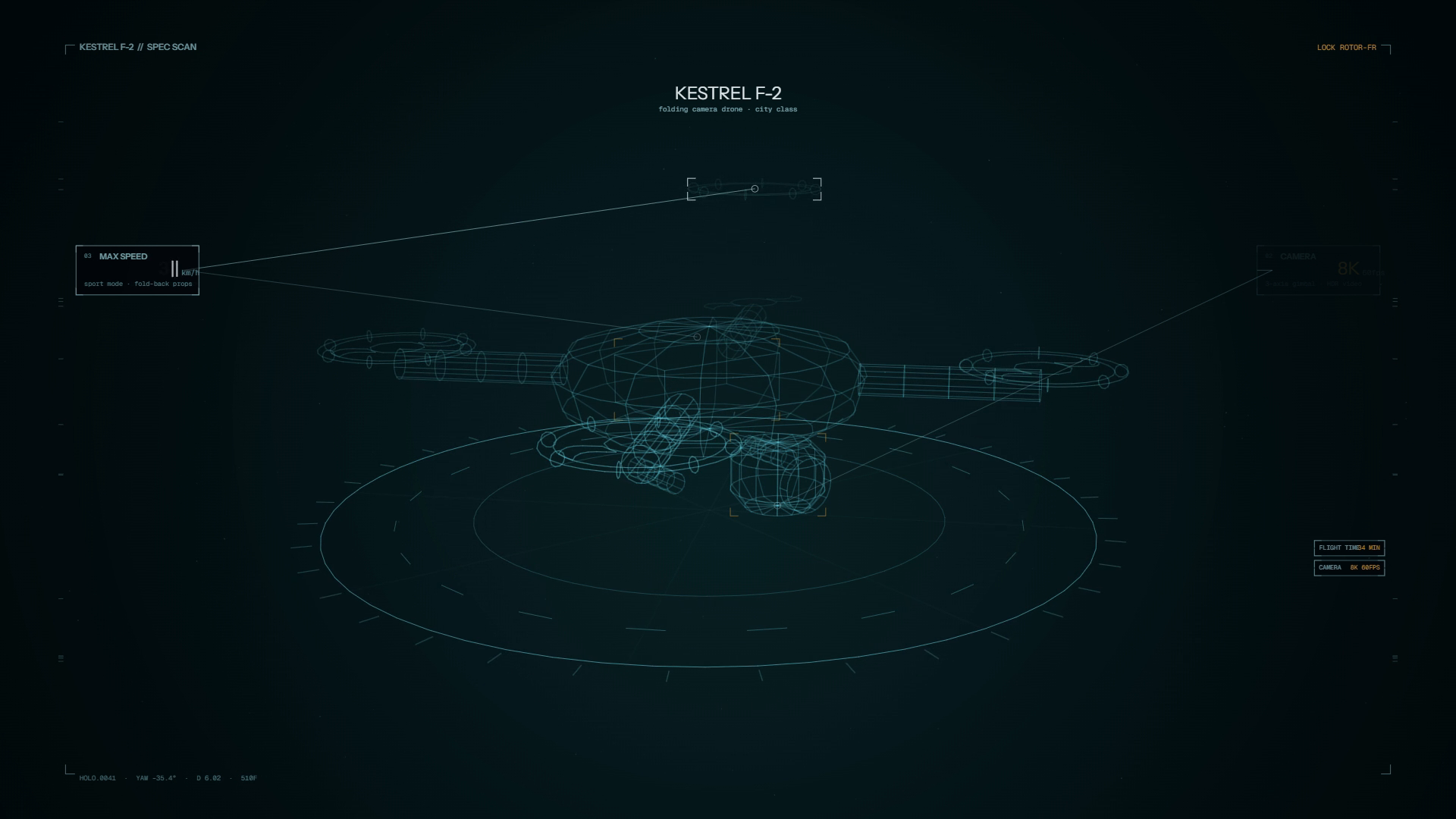
Turn any object into scanned light: a glowing wireframe grows on a projector pad, target boxes snap onto chosen parts, each part slides apart along its own assembly axis, and a spec card's reading rolls from garbage glyphs into the true value in one warm accent — sheet-driven, silent, deterministic.
A railway departures board that clatters to life: rows of flap tiles cycle through the alphabet and seat on each page's message in a left-to-right wave, status lamps blink amber/green/red, and a station clock ticks in the header.
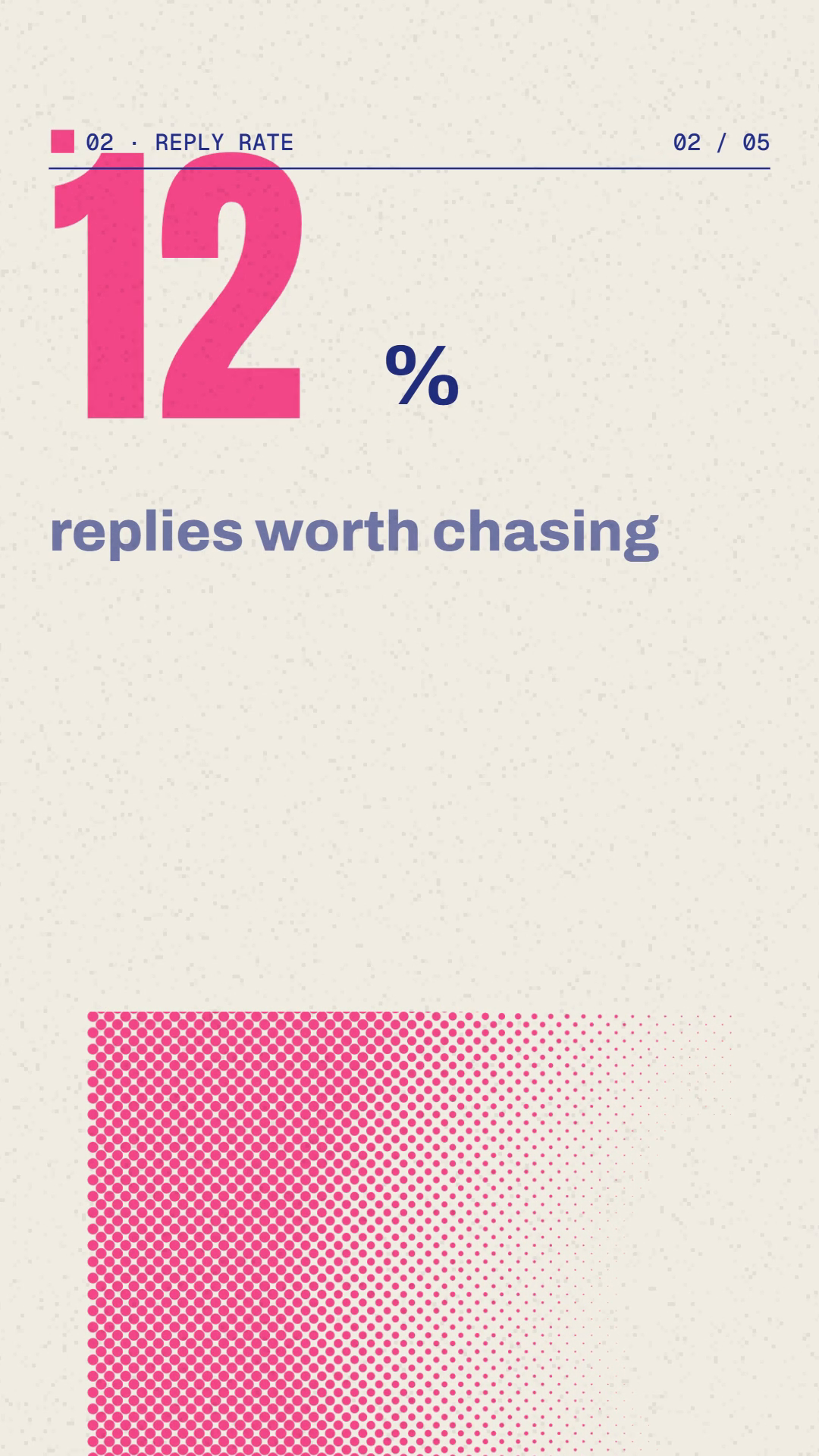
Turn information beats into a sheet being printed: one paper, a dark ink for structure, a fluorescent ink for exactly one highlight per frame, a whole-plate misregistration and dot fields instead of gradients — segments print in, register, stamp and roll, sheet-driven, silent, deterministic.
A one-take explainer: a white ball escapes a toggle's knob and rolls through a course of interface stations — slider, notification staircase, keyboard, launch key — each reacting as it passes, before the camera pulls out to reveal the whole journey and dives back as the ball re-seats.
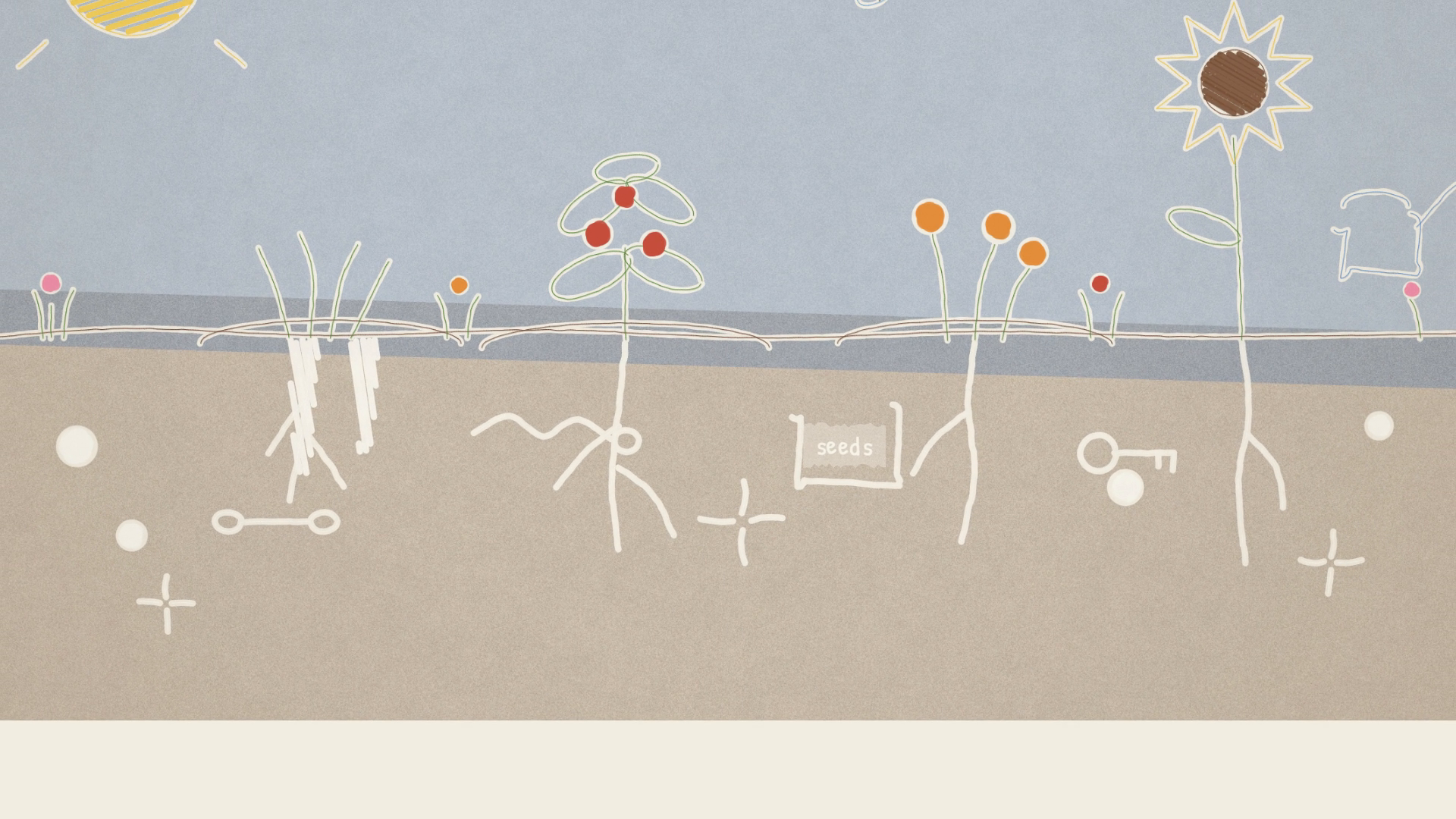
A picture-book page draws itself in wax crayon on toothy paper; when a watercolour wash sweeps over it, every crayon mark resists — and the white-wax marks nobody saw appear out of nowhere.
A dense canopy of textured leaves sweeps in, blankets the frame, then parts centre-out to reveal a headline; a second, depth-lifted batch lifts past the camera carrying the second headline, and a few leaves stay behind with a light breeze.
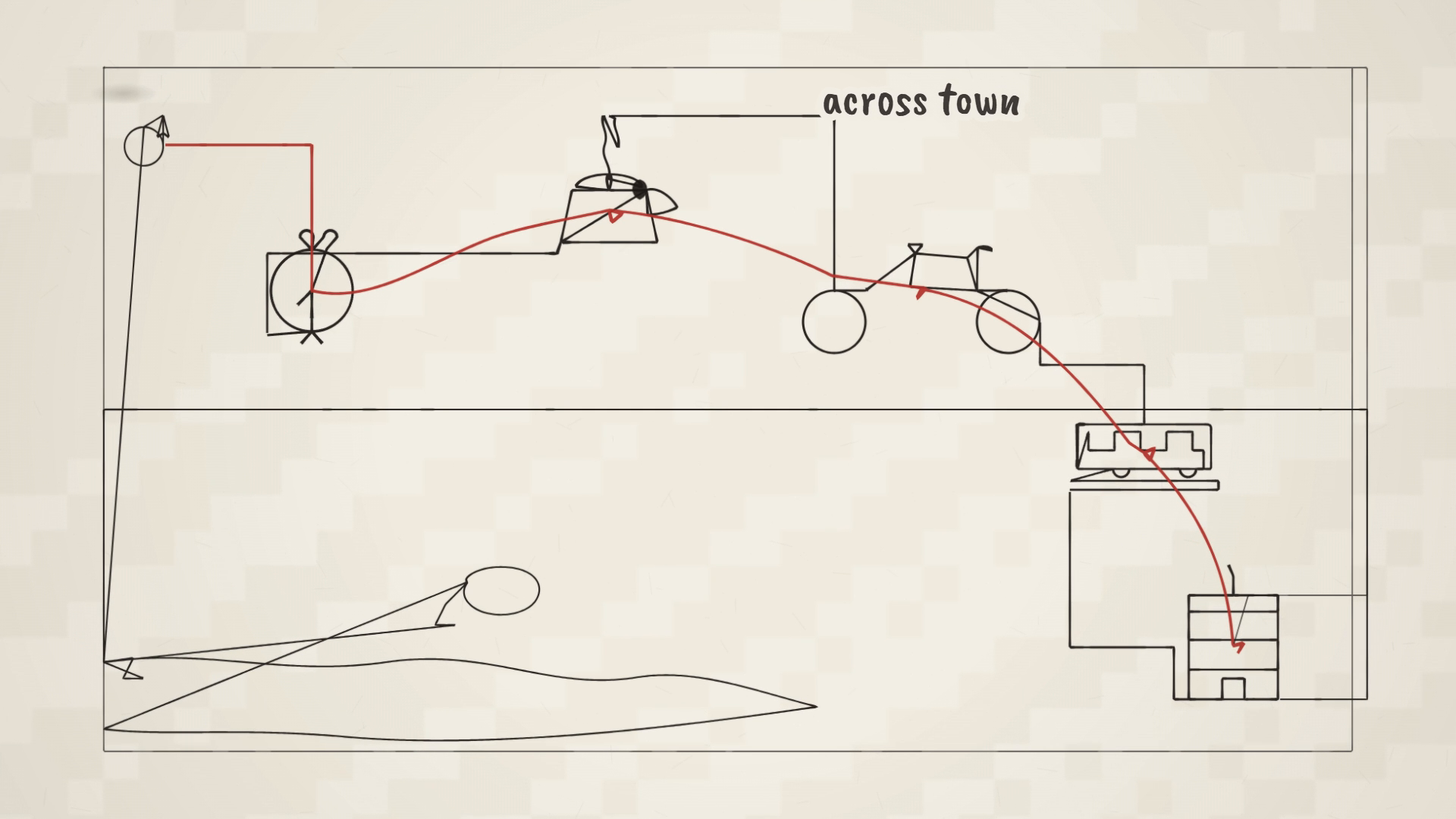
Turn a stroke sheet into a silent one-line film where everything on screen is a single ink line that never leaves the paper — the nib is tracked by a lagged camera, scenes morph instead of cutting, stops pool into teardrop blots, captions write themselves on, and the pull-back reveals what the whole line was drawing.
Turn an explainer into a hand-drawn board: a cartoon hand with a marker writes every letter, sketches every icon and arrows between ideas, the camera pans across a big world-space board instead of cutting slides, and an eraser wipes a finished chapter into a faint ghost — sheet-driven, silent, deterministic.
An animated logo intro for a brand mark given as SVG path data. The mark arrives as a lens-warped, colour-fringed close-up, settles to resting size, the wordmark pulls out of it letter by letter, a multicolour bloom grows behind and hollows into an expanding ring, a lock-in beat fires (badge pop, assemble snap, spin, or pulse), and a shimmer band sweeps the finished lockup.
A Y2K-era chrome title sting. A blob of liquid chrome drops onto an acid ground, squashes, then spits the title letter by letter — each droplet arcs up and inflates into a rounded chrome glyph on the beat — before hopping between translucent jelly and chrome props, getting swept off by a tilted chrome pipe, and popping back out as the end word.
Turn a JSON sheet into a silent printed-comic-page film — panels slam in like pasted blocks, shading is Ben-Day dots on deliberately misregistered CMYK plates, onomatopoeia bursts land letter by letter on twos with an offset yellow shadow, every hit kicks the colour plates, and beats arrive by diagonal split, halftone dot wipe or white-flash smash cut.
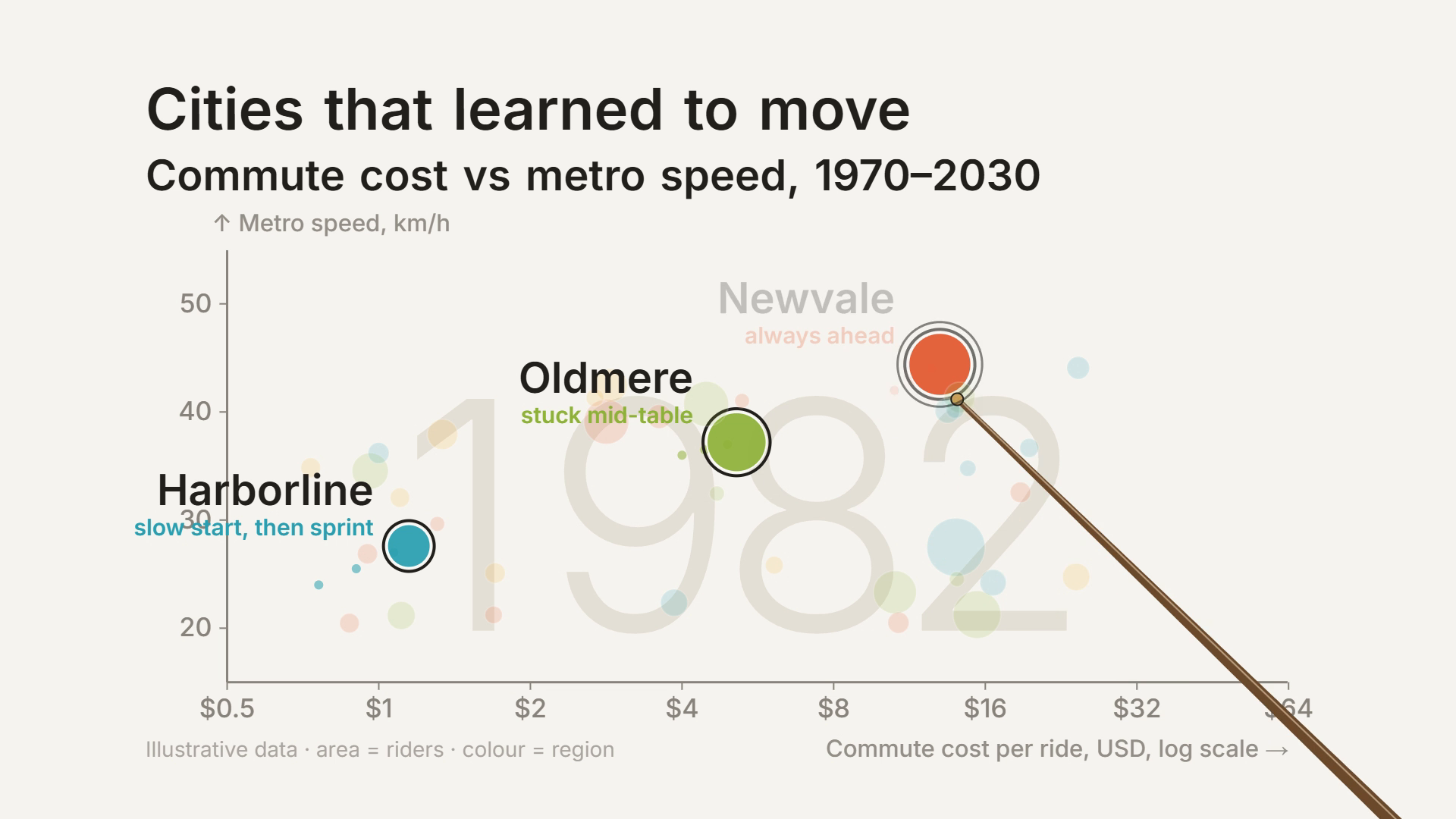
A narrated bubble-chart sting. One scatter plot is the whole stage: a giant year odometer rolls behind the bubbles while a piecewise time map races, eases into holds and rewinds. A wooden pointer stick reaches in and taps the narrated bubbles — they keep ink rings and dotted trails while everything else dims — and the ending rewinds time once more while the axes rescale into the story's range. Silent, deterministic, frame-seekable.
Make a short looping cartoon performance of a bean-bodied mascot from one JSON sheet — rubber-hose arms, an antenna or cap, a turning sunburst stage. Drawn on twos with a boiling outline, squash and stretch, anticipation and landing dust; the character notices you, reacts, hops, waves, talks in a bubble, holds up a sign, and returns to its first pose so the loop closes without a seam.
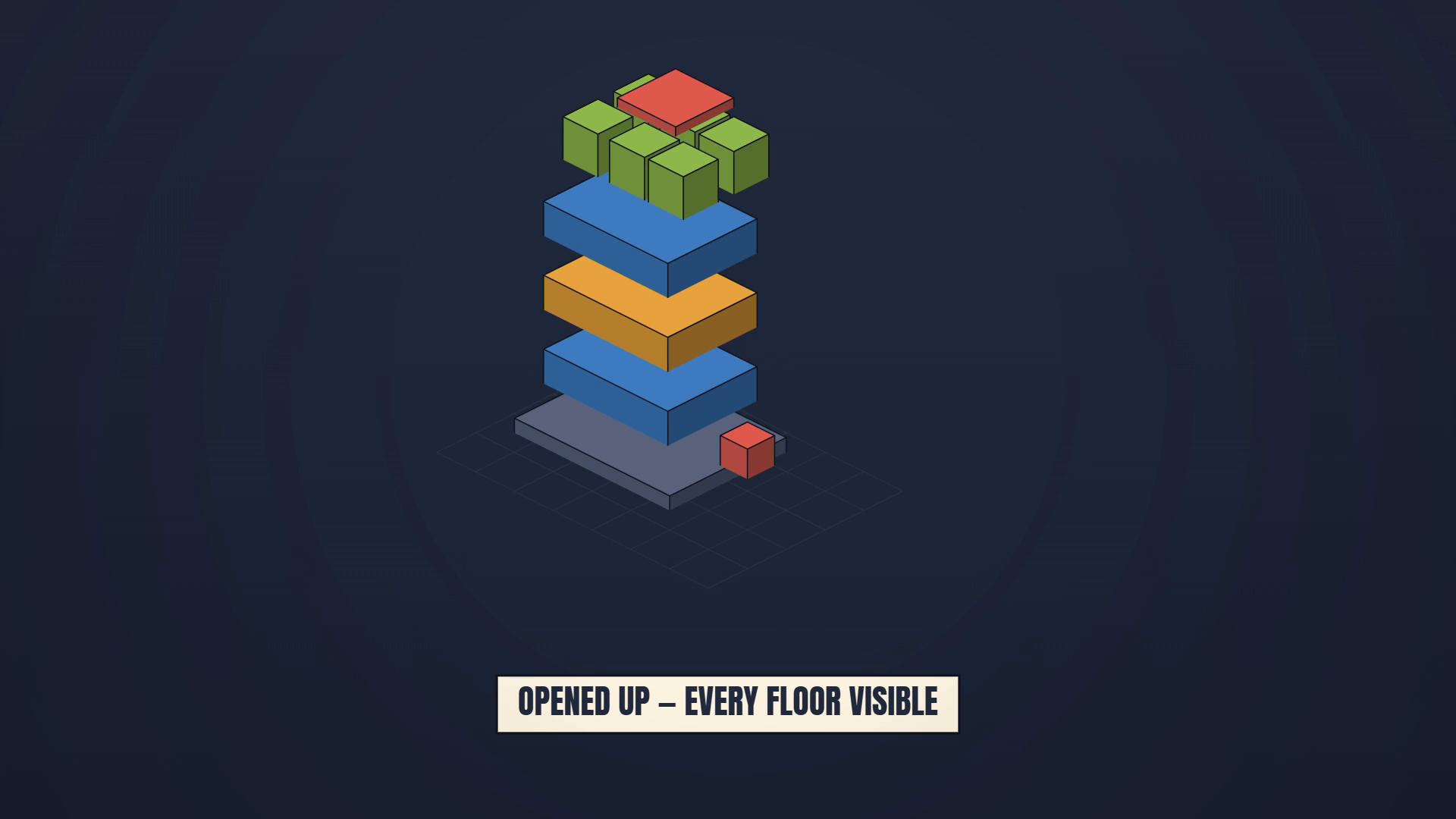
Build a short 2.5D isometric explainer from one JSON sheet — shaded boxes assemble bottom-up on a parallel-projected grid, open into an exploded view so every layer reads, then seat back. Each piece drops with overshoot, a landing squash and a dust ring; leader-line tags name the layers; the camera only drifts. Silent, deterministic, 16:9.
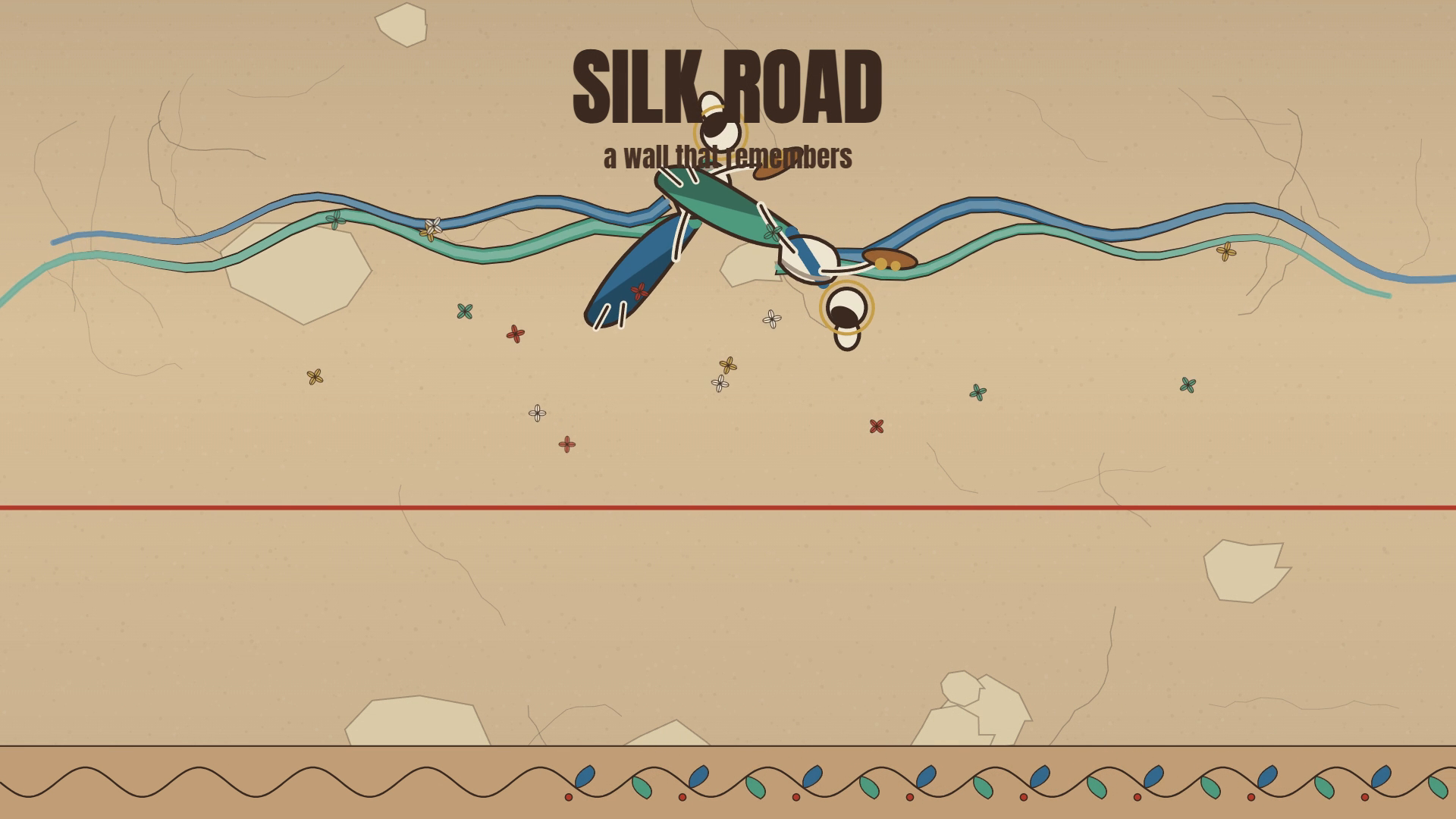
Paint a mineral-pigment mural on an earthen wall — flying figures glide in on S-arcs trailing ribbons that sample the flight path's history, everything appears in painting order (ink, flat colour, banded shading, gold), a narrative frieze scrolls right-to-left, and a caisson of nested squares opens onto the end frame. One JSON sheet; silent; deterministic; 16:9.
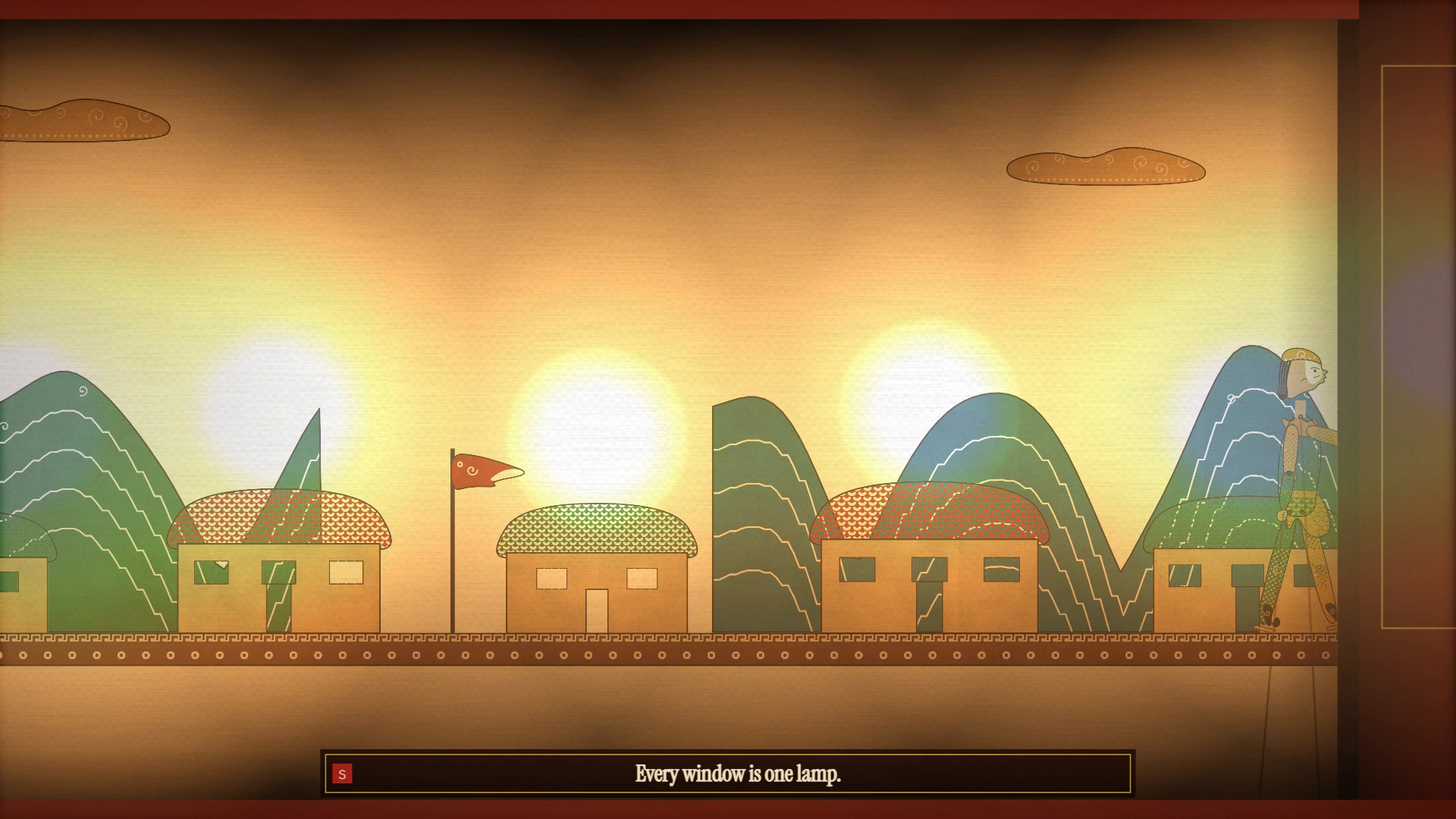
A lamp-lit shadow theatre in code: jointed hide puppets on rods against one lit cloth — carved silhouettes, lamp flares and snuffs as the story dial, press-on entrances, cut-letter plaques, and a backstage pass.
A cold-open title film: a swarm of ice shards assembles into a mark, shatters into a first headline, shatters again into a second headline, then scatters — while the camera keeps orbiting the centre and slows for a front pass on every reading beat. One JSON sheet; silent; deterministic; 16:9.
Turn a JSON sheet into a silent paper-lightbox film: a multi-layer shadowbox sits in the frame, paper sheets stack ridge over lantern over moon, a hidden warm lamp ignites layer by layer, lit paper shows its pulp fibres, and the pull-out at the end reveals the whole scene was a glowing box on a dark desk.
A desk-top toy film: glossy studded bricks fly in on arcs and snap together on twos into a first structure, the build collapses into spare parts, and the same pieces rise back up and become a different structure — under a macro-lens camera that moves on ones. One JSON sheet; silent; deterministic; 16:9.
Turn a JSON beat sheet into a silent title sequence scratched into black film emulsion: every glyph is skeletonised and redrawn as broken, wandering hairlines of light that jitter every two frames, slip for a frame, and cut to macro inserts — a letter's wound at 4×, sprocket holes sliding through the gate, a punched leader mark — for 2 to 8 frames at a time.
A macro-filmed pop-up book in code: a hardcover on a warm desk opens into a stage — flat die-cut cards fold up back to front, pull-tab tricks slide and drop props on strings, paper actors walk the page, and whole scenes change on a real curling page turn.
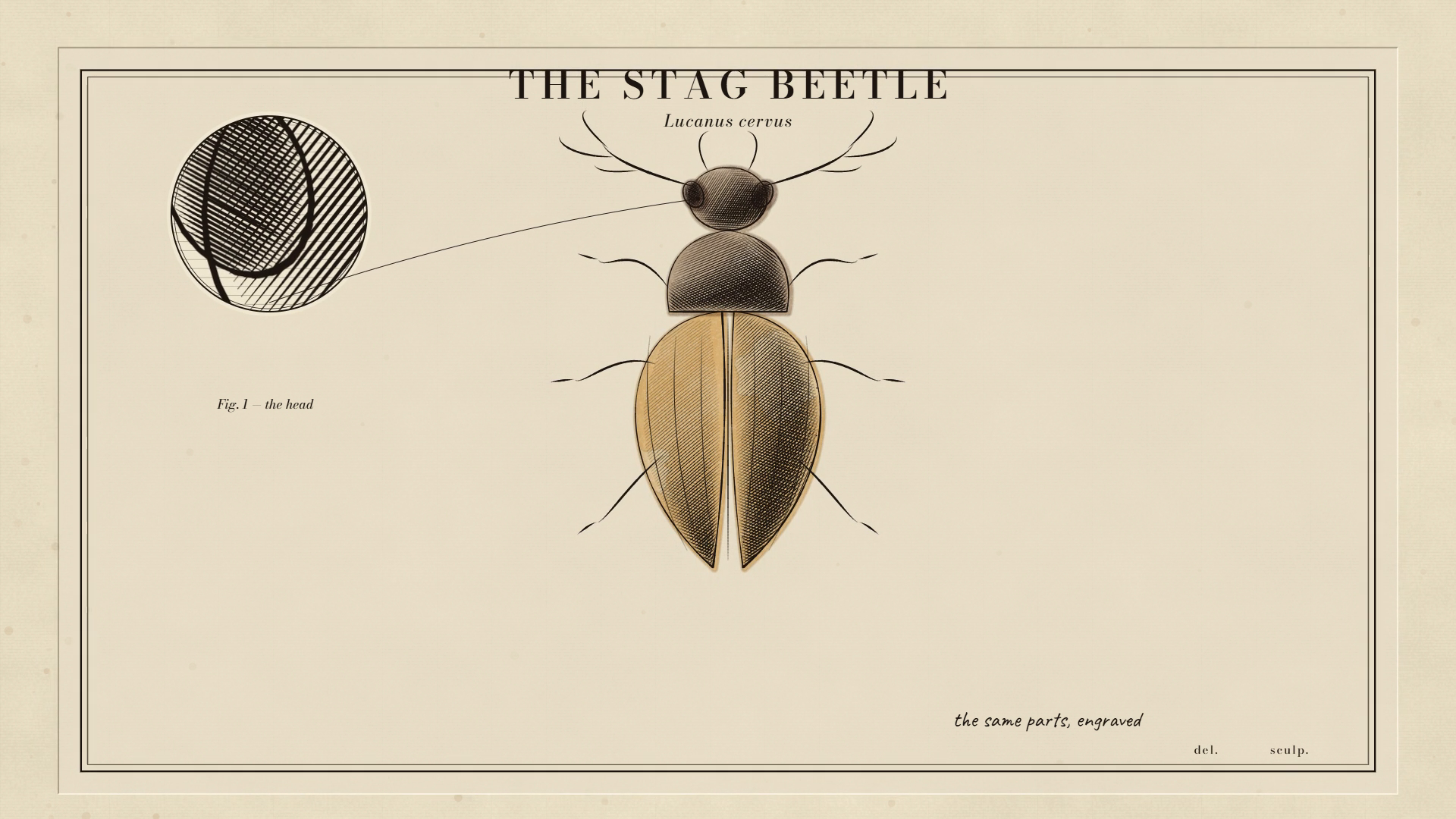
A museum plate that engraves itself: the burin cuts every swelling line in cutting order — outlines, three hatch families, the deep darks — while a loupe camera follows the tip, pulls out to the figure, rides a magnifying roundel to the margin, and a hand wash blooms over the finished black proof. One JSON sheet; silent; deterministic; 16:9.
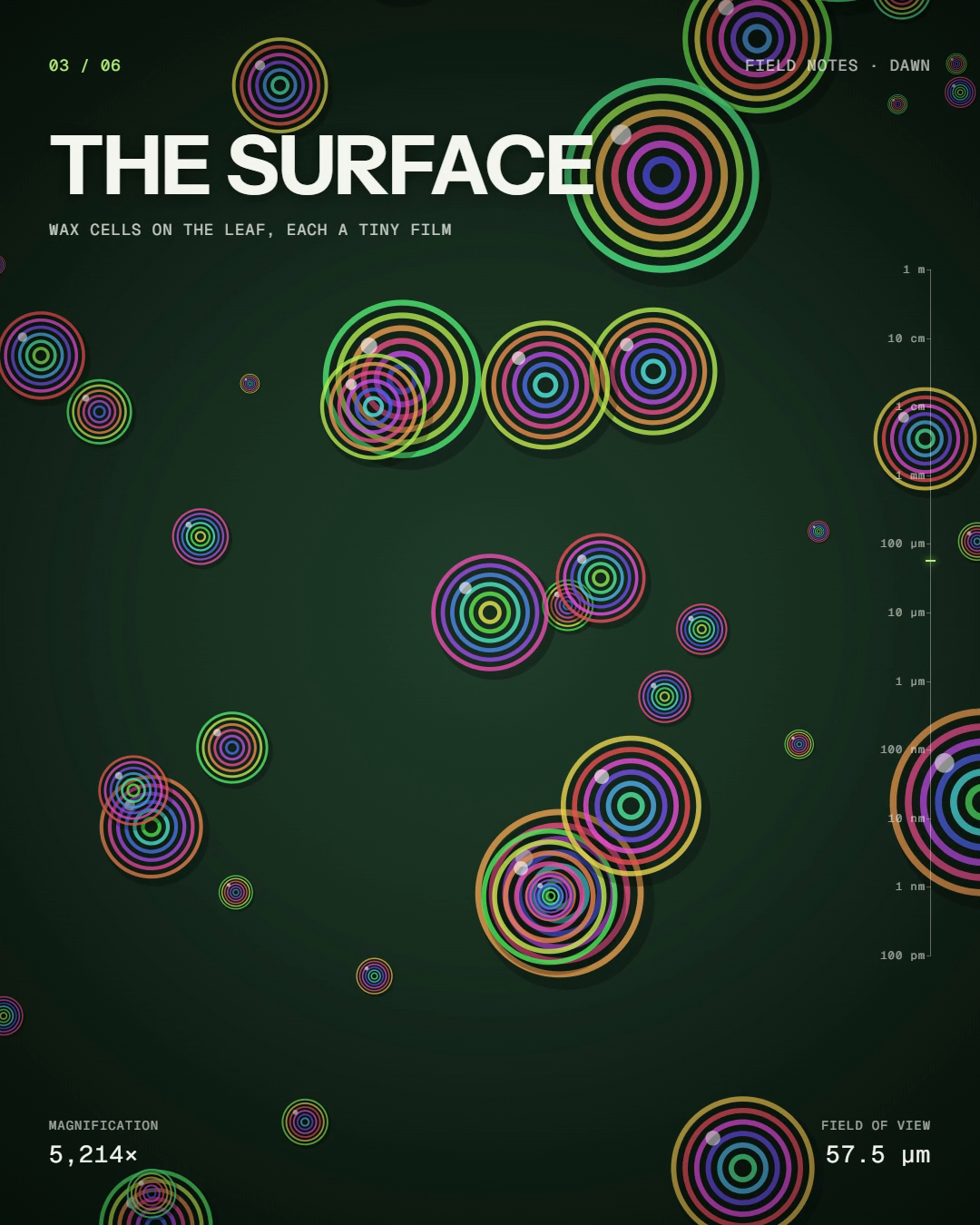
Dives from an everyday scene down through ever smaller levels with real sizes on screen, each level opening from the centre of the last, under a live magnification and field-of-view HUD, then pulls back so the film loops.
A neon night street on two clocks: a low-rate clock where every frame is a long exposure averaged from sub-samples — the crowd, rain and traffic smear into light trails while the still subject stays sharp — and a clean slow-gaze clock for contrast. Signs ignite in sequence, a flip-digit clock ticks, captions stay razor-sharp, and shots end on a whipped smear-out or a held freeze exposure.
Turn a JSON sheet into a procedural town filmed from high above through a tilted lens: only a thin horizontal band of the frame stays sharp, so cars, walkers, boats and a hillside funicular read as toys on a board — their clock steps in stutters while the camera drifts smoothly, until the speed curve drops ×40 to ×1 and real time lands on one small subject.

A woodblock-print festive plate that stamps itself together on a beat grid: a red sheet slams down over deep red, a gold meander border prints module by module down both sides, the title slams in one character per beat over offset misprint blocks, three medallions pop sketch→blocks→motif, a seal stamps — the only asymmetric mark — and the plate splits on the centre axis like double doors onto a finished reveal. One JSON sheet; silent; deterministic; 16:9.
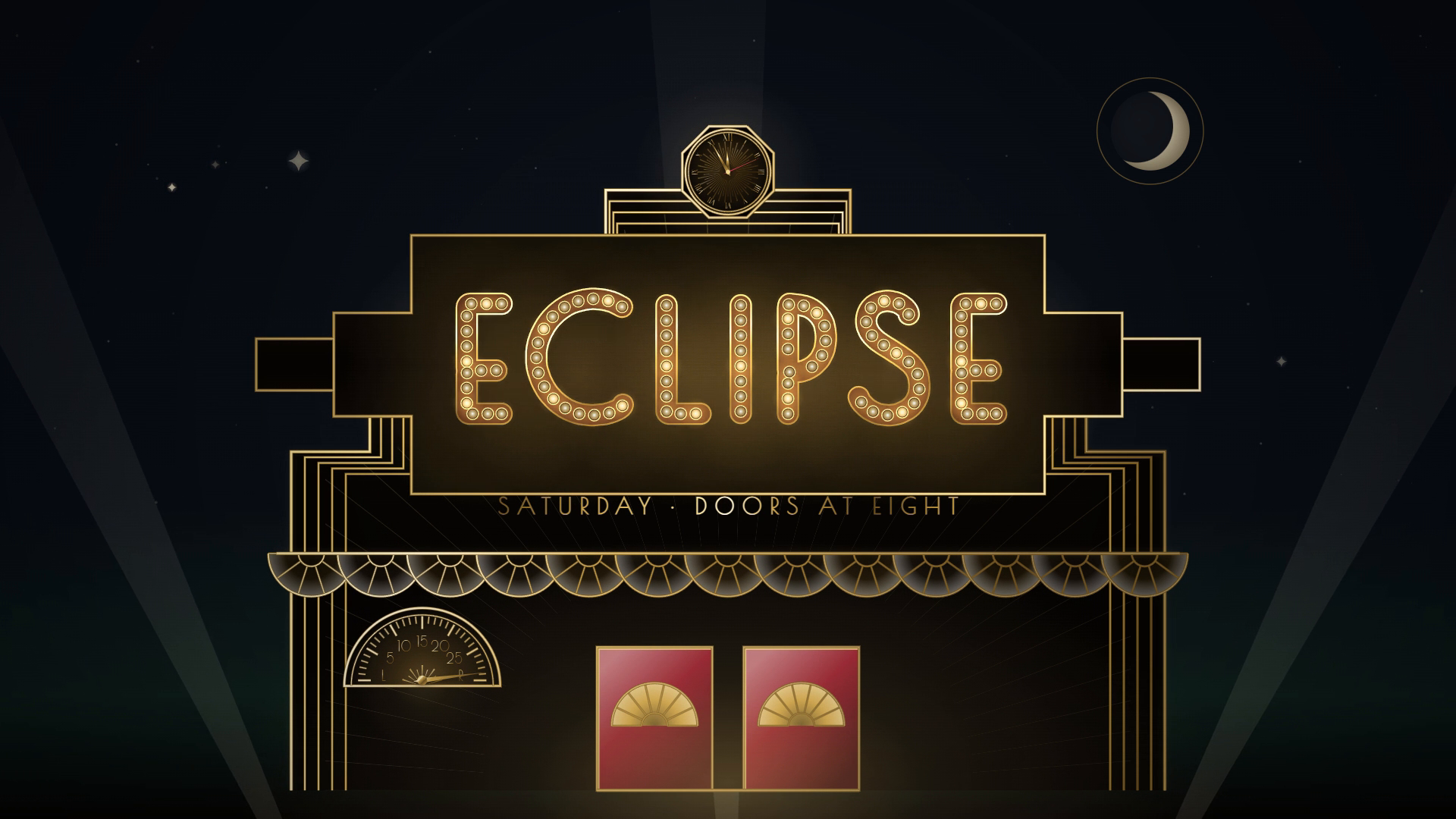
A 1930s marquee evening on one centre axis: a gold point explodes into a sunburst, a stepped arch engraves itself, the title bar unfolds — then the card splits like double doors onto a night facade where a skeleton-trace bulb sign ignites one letter per beat, flashes and settles into a chase. Clock, counting dial, scalloped canopy, accent doors, a pull-back to the skyline, and an end card on the closed leaves. One JSON sheet; silent; deterministic; 16:9.
A monumental teaser maker: forms taller than the frame stand against a single coloured light — sodium amber or pale cold day, never both — while fog drifts between depth layers, a constant-speed camera cranes and pushes, ignitions climb edges, seams and slits, a held-breath pulse walks the lit slit, and the shot exits through fog or a cut to black. Author a JSON sheet of scenes and forms; render a silent 16:9 MP4 locally.
Turn a JSON scene sheet into a cel-anime reaction clip: cel-shaded busts under painted cumulus skies trade comedic reaction beats — sweat drops, anger veins, sparkle eyes, gloom hatches and tears — while focus lines, two-frame impact bursts, snap zooms and slash-band wipes cut the scene like a TV anime. Characters step on twos; the camera stays smooth.
A chaptered miniature-world teaser maker: planimetric cutaway rooms mirrored about the centre line in three pastel triads, ivory chapter cards that cut in like turned pages, framed pictures that drop onto nails and swing to rest, sconces that click on, a stage curtain parting from the centre, one slow push per chapter, and 9-frame whip pans between chapters. Author a JSON sheet of chapters and props; render a silent 16:9 MP4 locally.
Turn a JSON scene sheet into a palette-knife oil film: seeded knife strokes — slanted lozenges with two dragged colours, a lit ridge and a lift-off lip — fill value-planned plates. Grey worlds re-lay into colour in a sweep, plates paint over each other, wet streets stack broken light dabs, and figures walk on smooth rails while the paint itself never boils.
A dark-field studio film for a fictional glass product: long strip lights sweep a clear-and-frosted glass object so only its contour and rainbow edge appear, the camera drifts in slow orbits and macro pushes, a frosted subtitle slab rides underneath, then the product spreads into a slow exploded view along its axis and snaps shut on a downbeat while the inside lights up. One JSON sheet drives it; silent; deterministic; 16:9.
A four-ink, cut-paper opening title sequence: silhouette figures chase through locations that ARE the credit lines (letters as pillars, a word as shelving, a name as the set), every brass stab is a hard cut, stop-time freezes the frame, and the chased trophy slots into a letter to complete the title. One JSON sheet drives it; silent; deterministic; 16:9.
A beat-locked flash-card catalogue film — a sliding square-grid pattern of circles and motifs, round-capped-bar pictograms with a disc head acting out one verb each, and 900-weight bilingual titles that slide up out of masks. Every cut lands on a beat. One JSON sheet drives items, chapters, palette and tempo; silent; deterministic; 16:9.
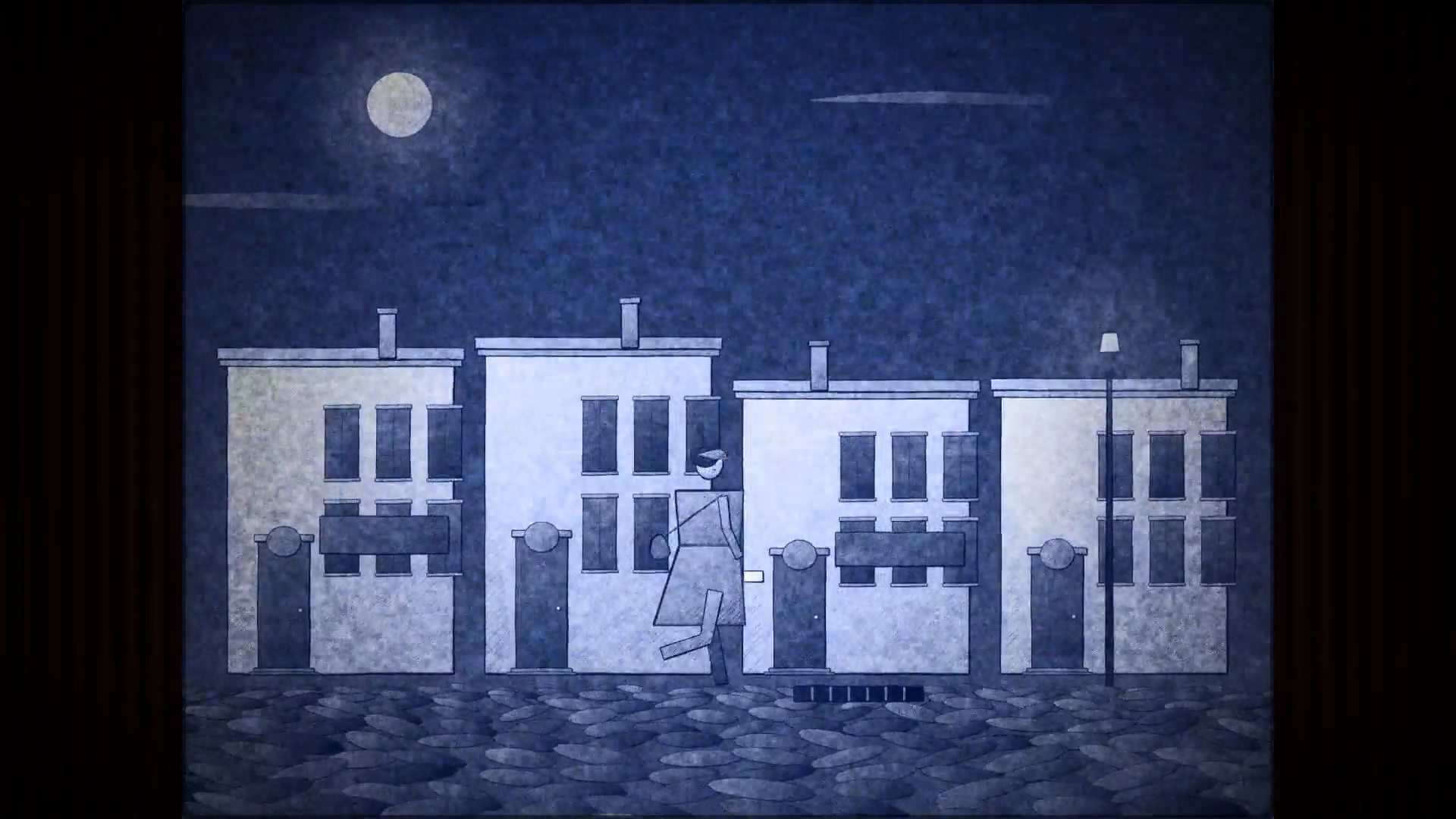
A 1920s silent film as it would look projected — a 4:3 engraved-ink print between velvet theatre curtains, intertitle cards instead of voices, gate weave and silver grain on every frame, iris in/out, hand-cranked tempo. Two complete one-reel stories ship as JSON sheets; silent; deterministic; 16:9.
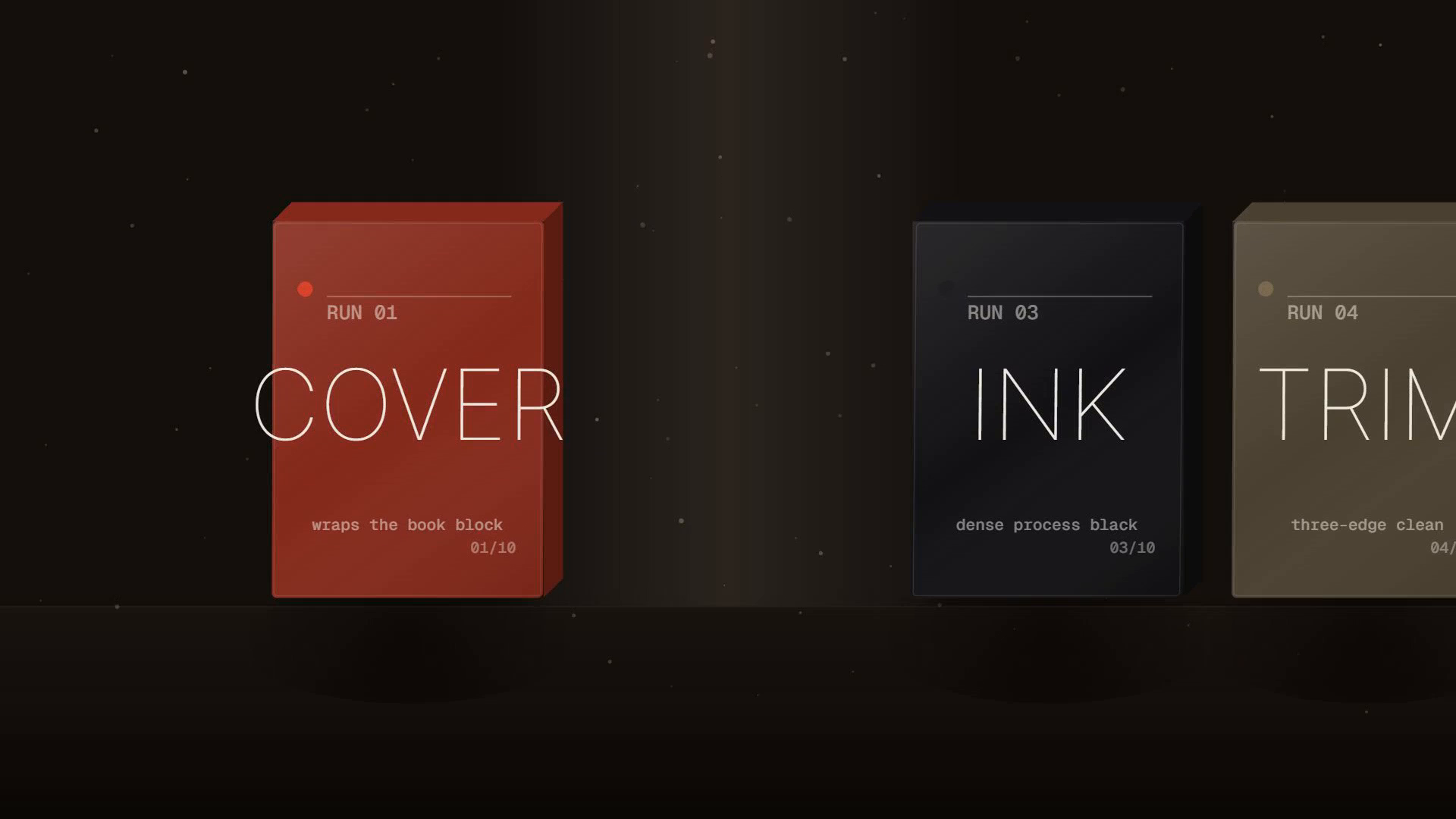
A row of bevelled cuboid tiles flies in from the right as one rigid chain, a wave of rotation rolls along it while it settles, a chosen tile detaches and holds at centre as the hero, the chain shifts to hand the role to a second tile, then the hero tumbles out and the chain slides away. Two shipped decks — a print-run ledger in English, an orbit schedule in Chinese. Silent; deterministic; 16:9.
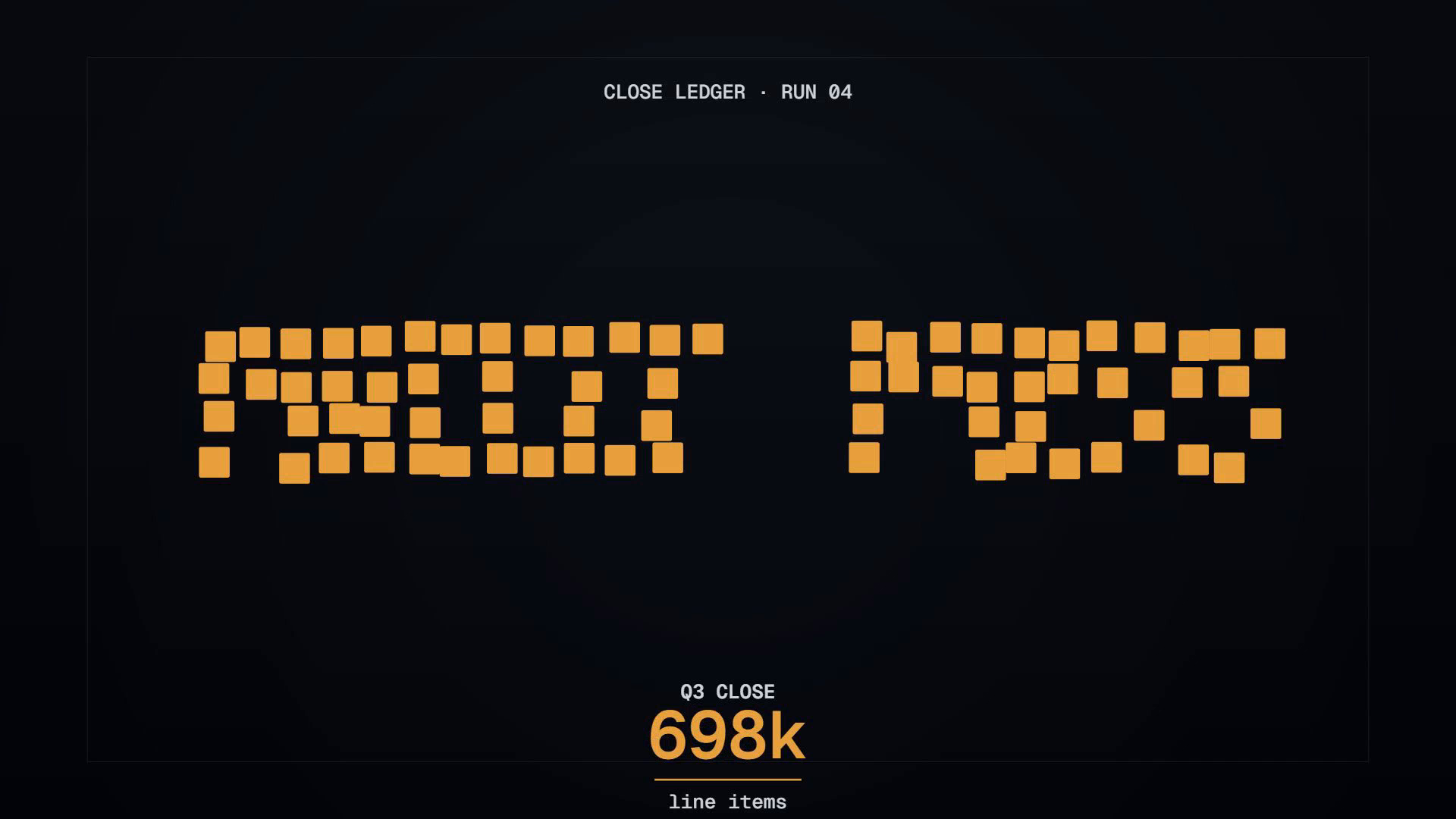
A field of rounded cells fills in a left-to-right wave (one accent column running ahead), then collapses into a dot-matrix word while a counting figure runs up beneath it, holds, and scatters. Two shipped stories — a quarterly close in English and a launch sequence in Chinese — prove the same engine. Silent; deterministic; 16:9.
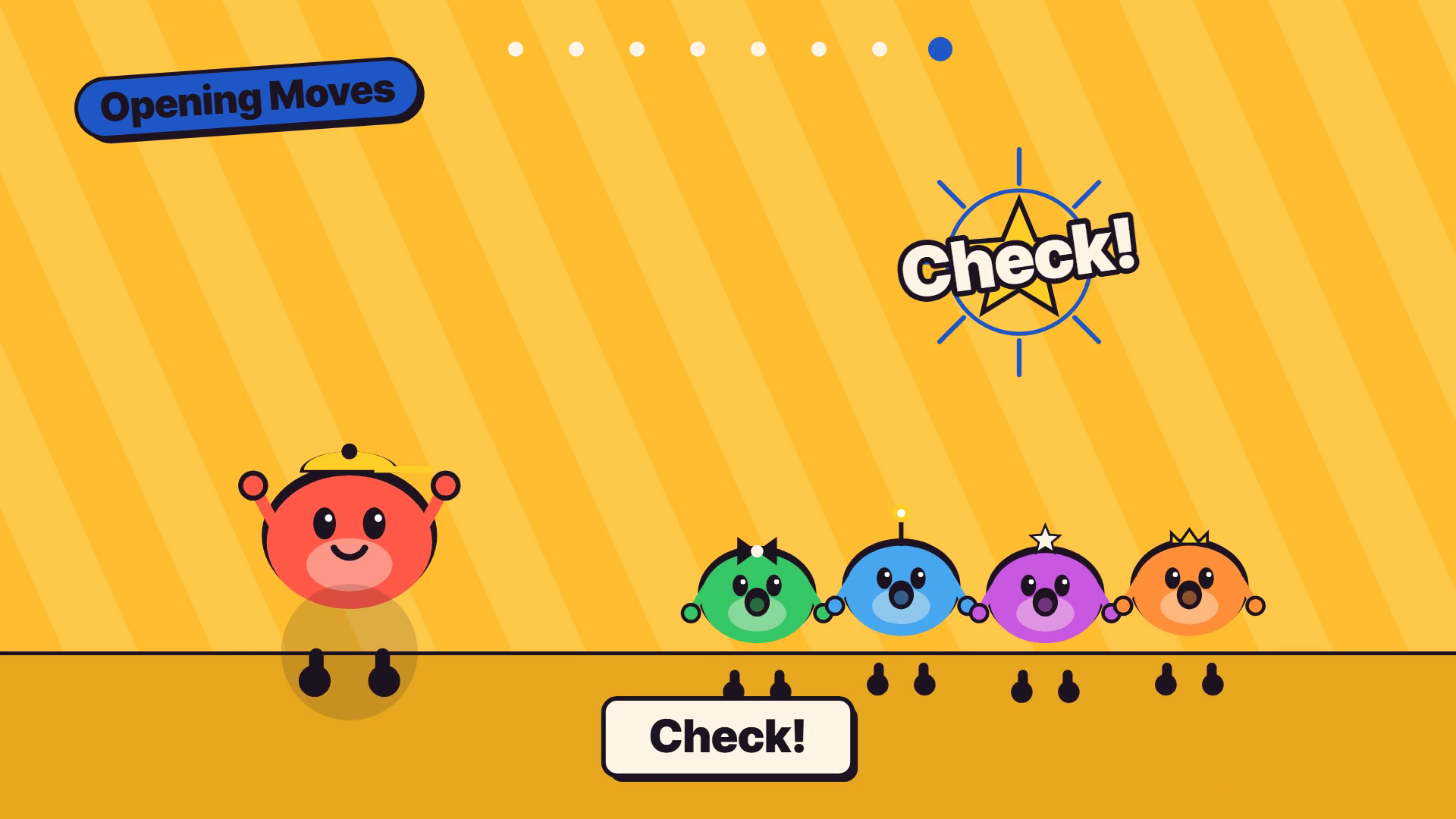
A game-show film that turns a JSON score sheet into a televised rhythm contest — bean-bodied contestants bounce on a 10-hue lane set, oversized telops flash the call and volley counts, and a judge stamps each round with a rotating grade card on the beat. One sheet drives the cast, rounds, palette and BPM; silent; deterministic; 16:9.
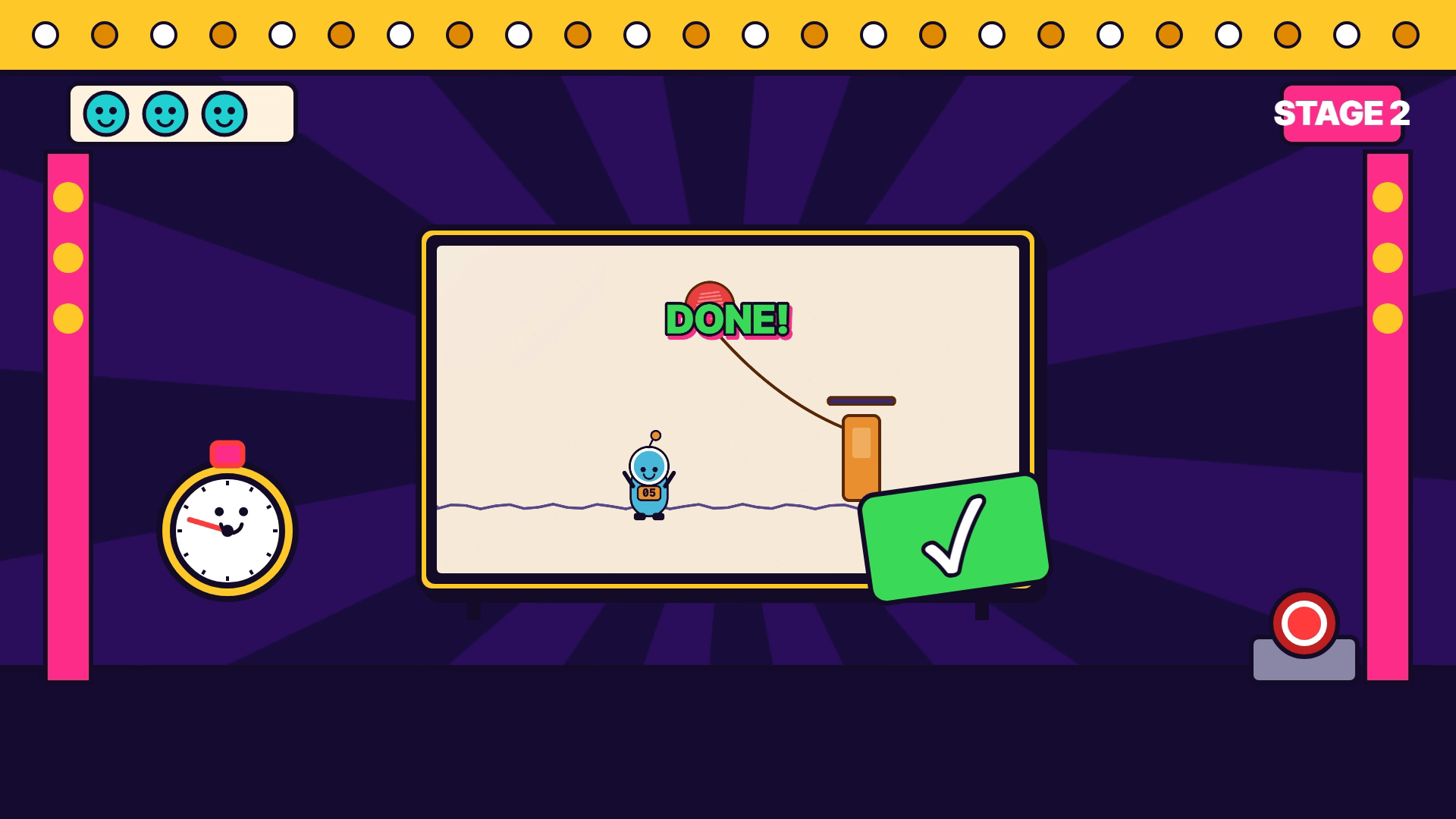
A rapid-fire party-game film that turns a JSON sheet into a televised microgame montage — each round is shouted as one command word and played in a different art medium inside a stage TV, a lives board counts down failures, and the tempo steps up through a slot-reel SPEED UP into a boss that remixes the earlier media. One sheet drives commands, media and BPM; silent; deterministic; 16:9.
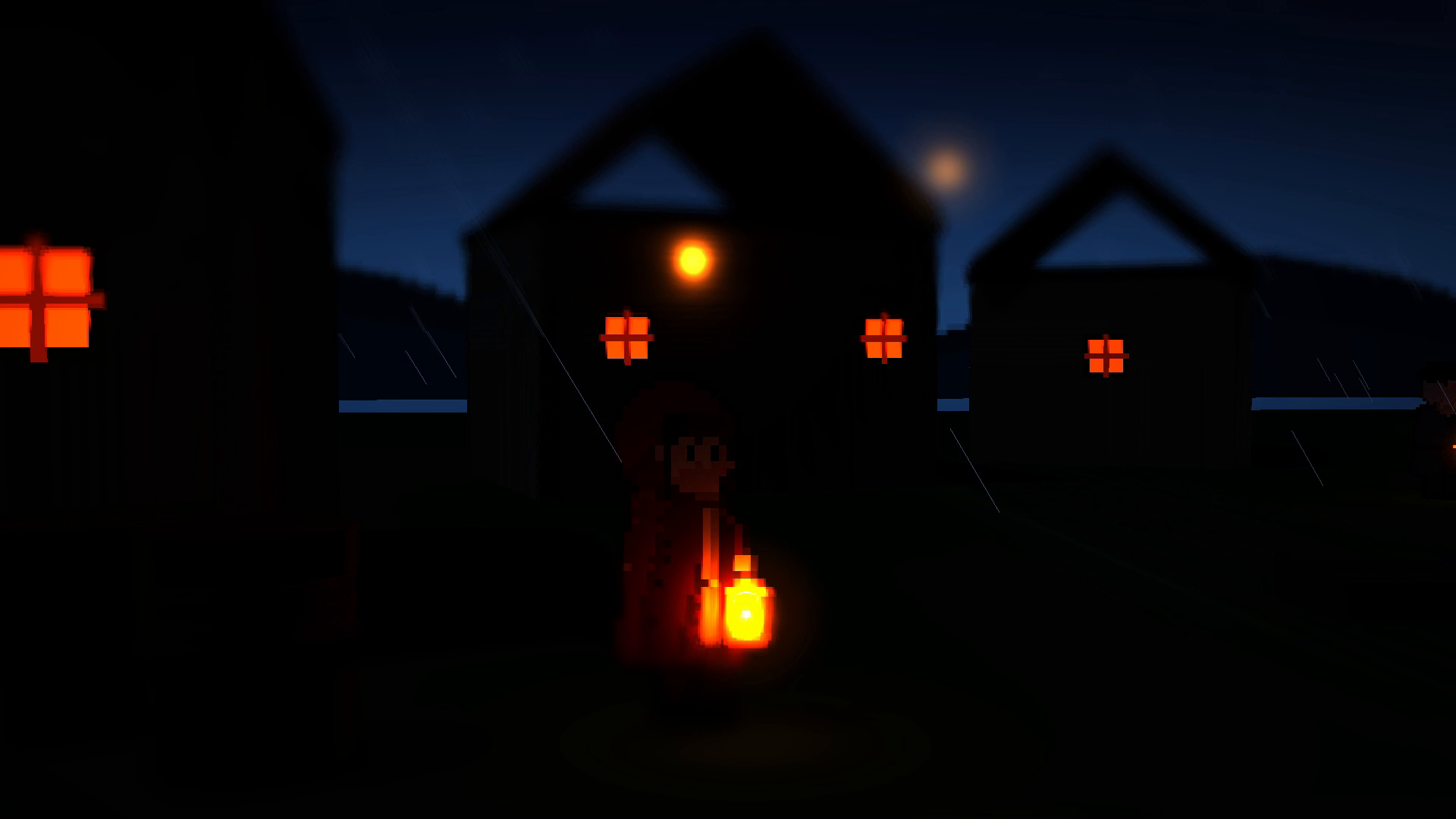
A real 3D miniature set rendered as a pixel-art diorama: billboarded pixel characters step through poses at a low frame rate while lanterns, windows and campfires cast warm light, and a physical tilt-shift focus band turns the scene into a tabletop model with RPG-style title and dialogue cards.
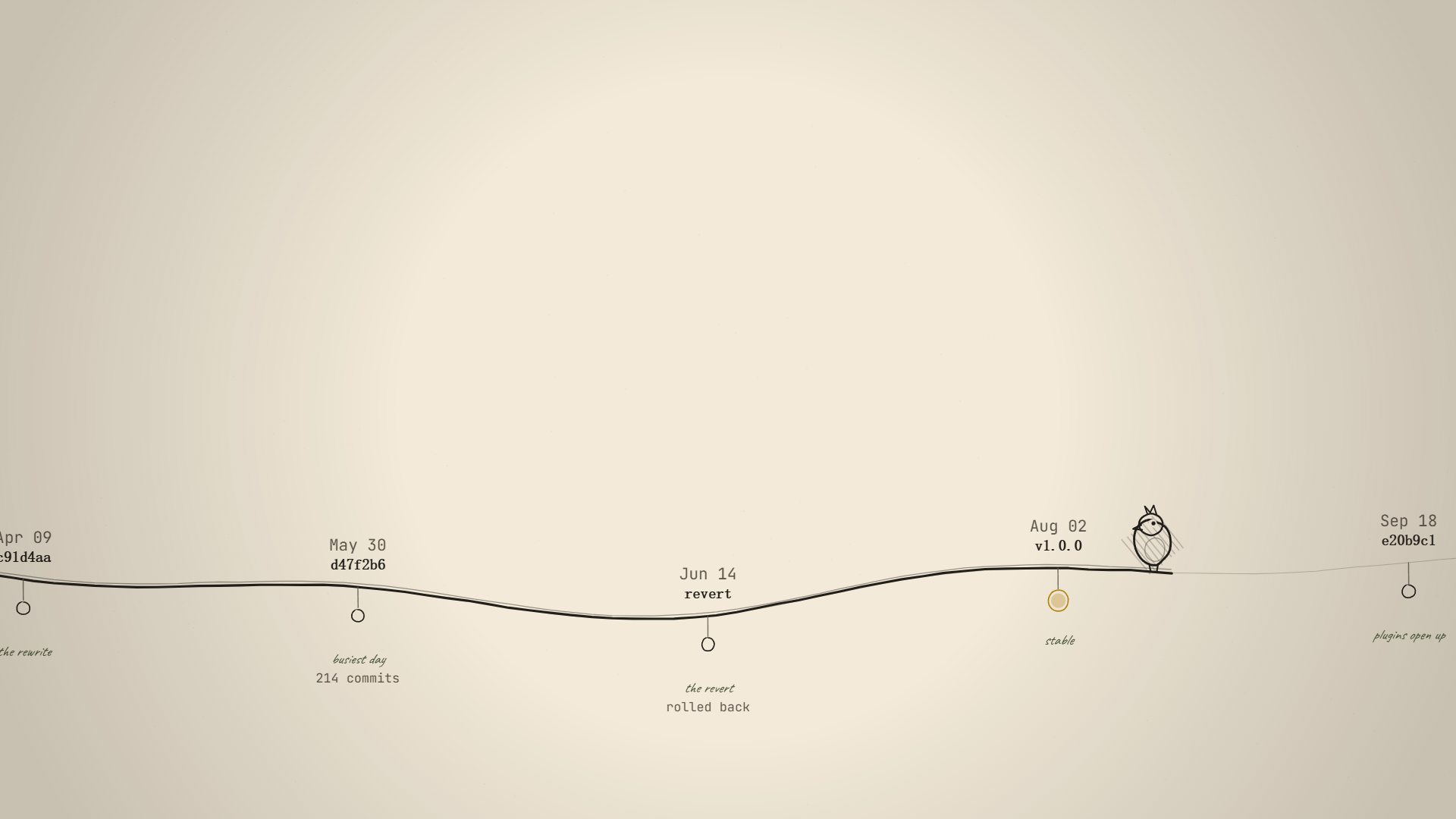
A deterministic hand-drawn film of how a repository grew up. A bird hatches from an egg on a winding branch — the timeline — and journeys left to right while the camera follows and never cuts; milestone stops hang as beads, each labeled with a real commit hash, date and a one-line note. A seam event inks the pencil-sketch page over from a chosen date on.
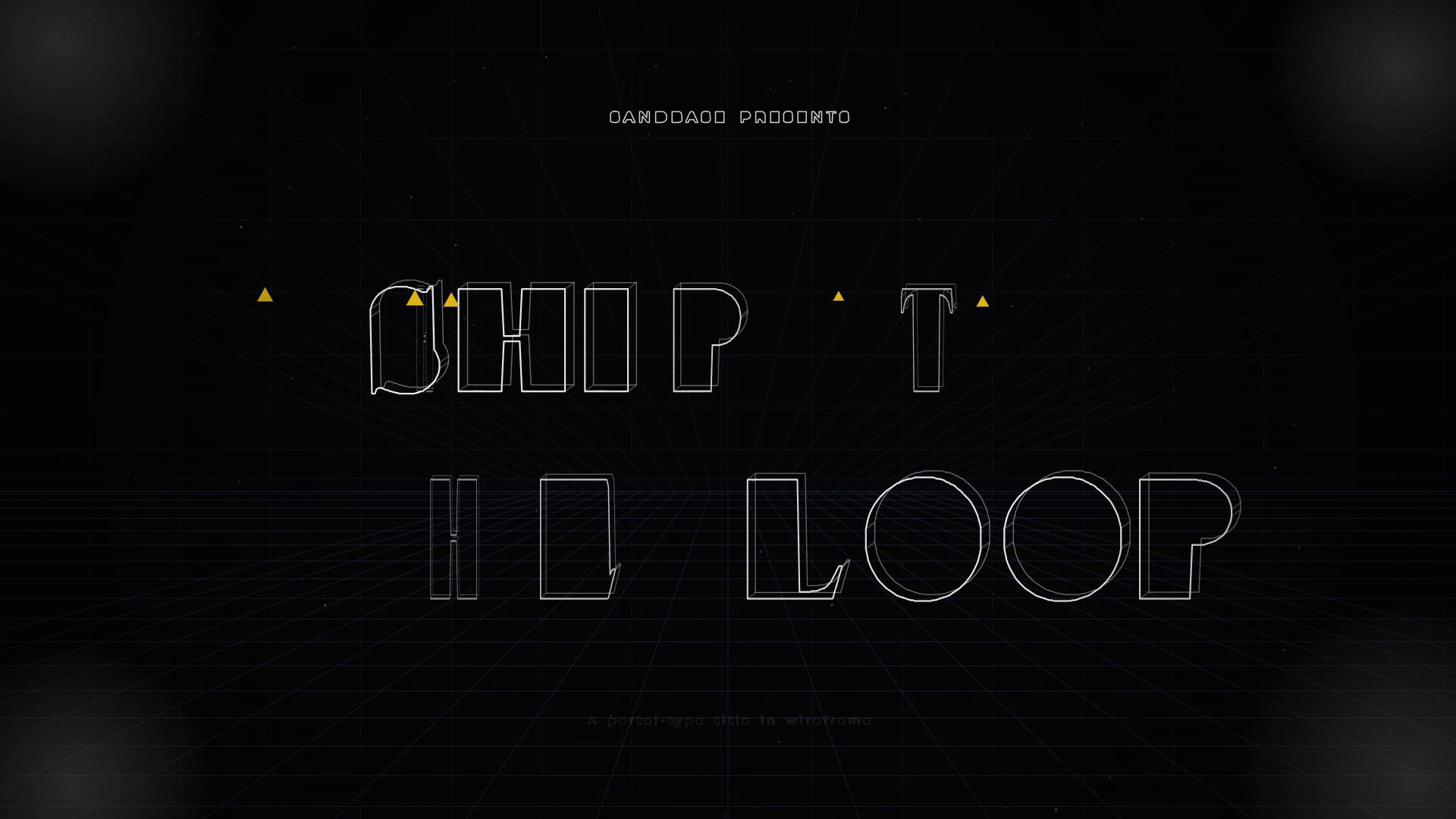
A wireframe grid space tears open in a chromatic portal burst; extruded wireframe letters land, hover, then each glyph flips on its vertical axis and lands as a different letter — phrase1 becomes phrase2 in place.
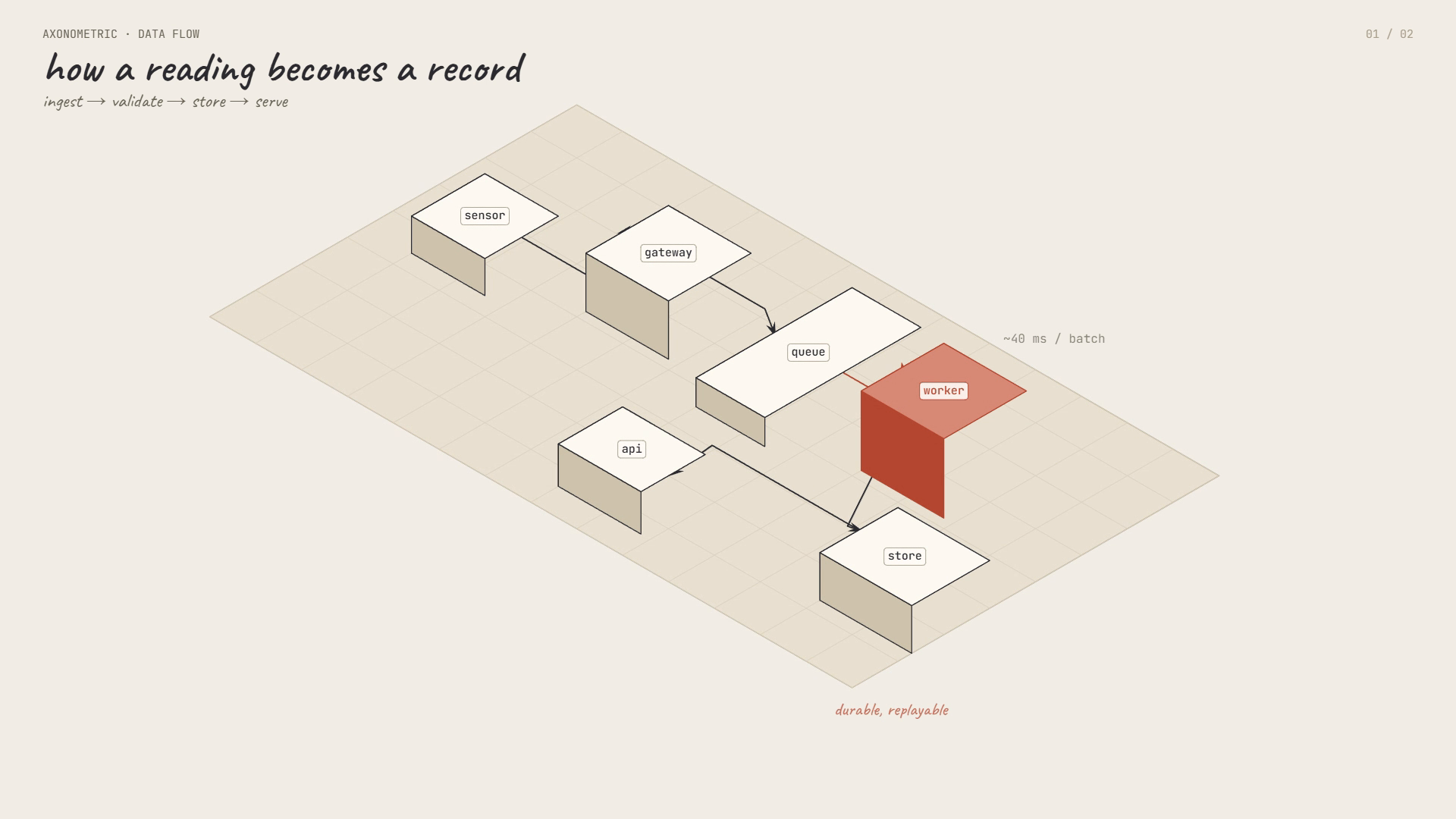
A deterministic, hand-drawn axonometric diagram that builds itself. Graph nodes drop in as extruded boxes on a parallel-projected ground grid — each face shaded from one light — then orthogonal connectors grow in work order with arrowheads, labels land on the top faces, and the camera pans the flow. Architecture, data flow, dependency and deploy topology in one readable shot.
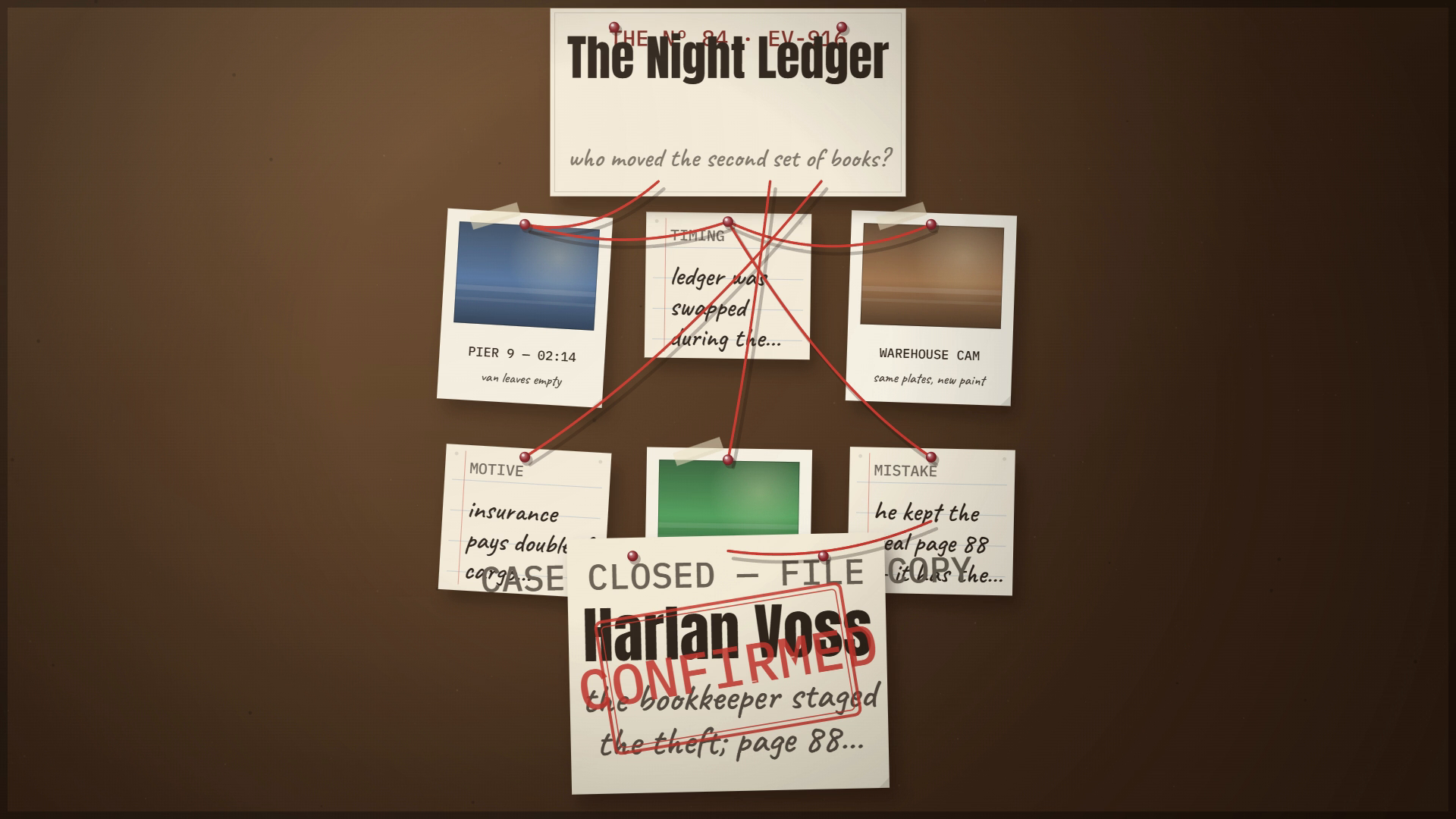
Polaroid evidence photos and index-card clues drop onto a cork board in 12fps steps, red string sags between pins as it draws on, and a rubber stamp snaps the verdict onto the resolution card.
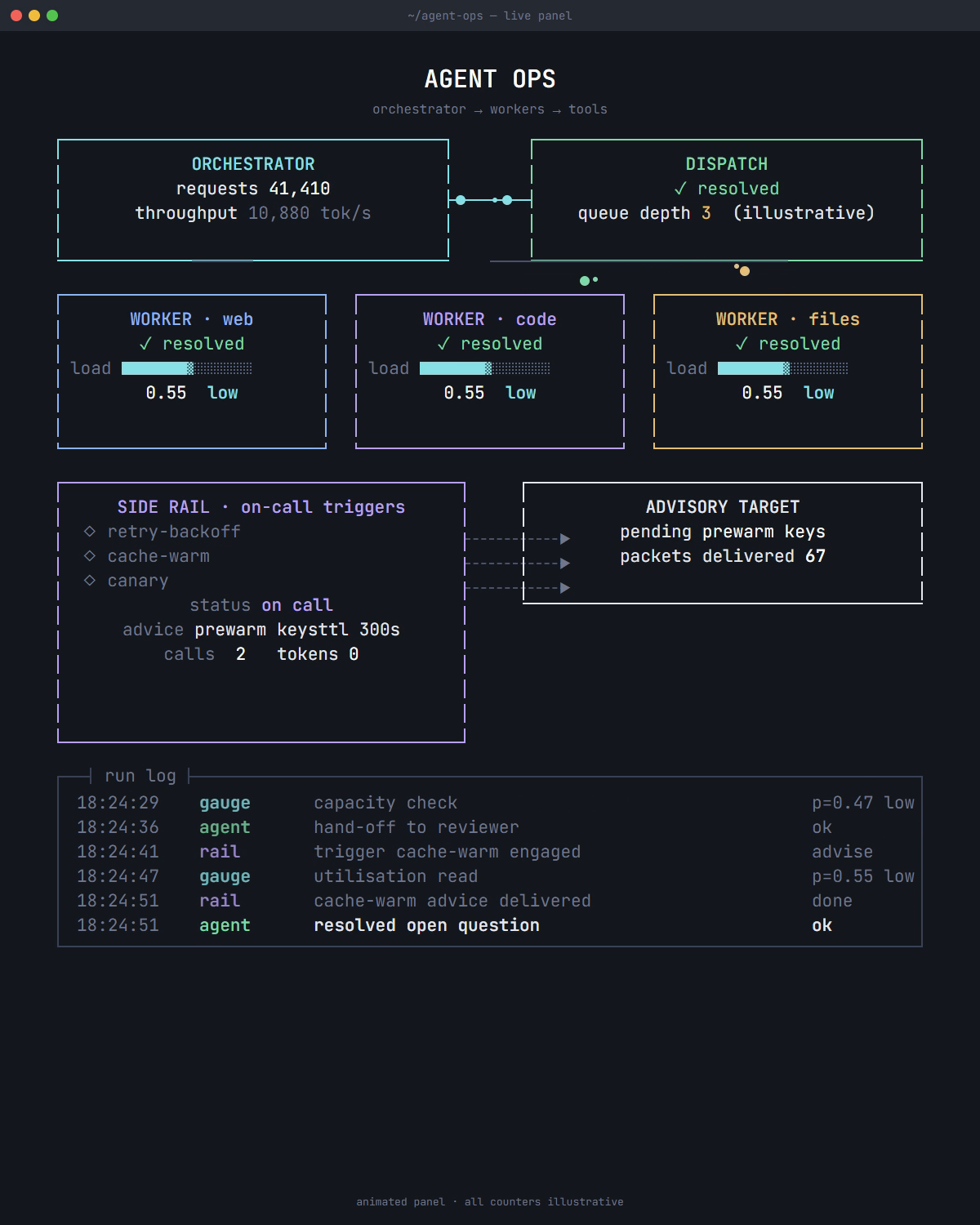
An always-running, terminal-style architecture panel rendered to video. The layout is fixed and already alive at frame 0 — packets stream along every wire with a trail, the run-log scrolls, counters tick, a lane spins working/done, gauges flip colour past a threshold, and side-rail triggers light one at a time and type out their advice. Two themes (terminal-dark, light-pastel) and three canvas presets.
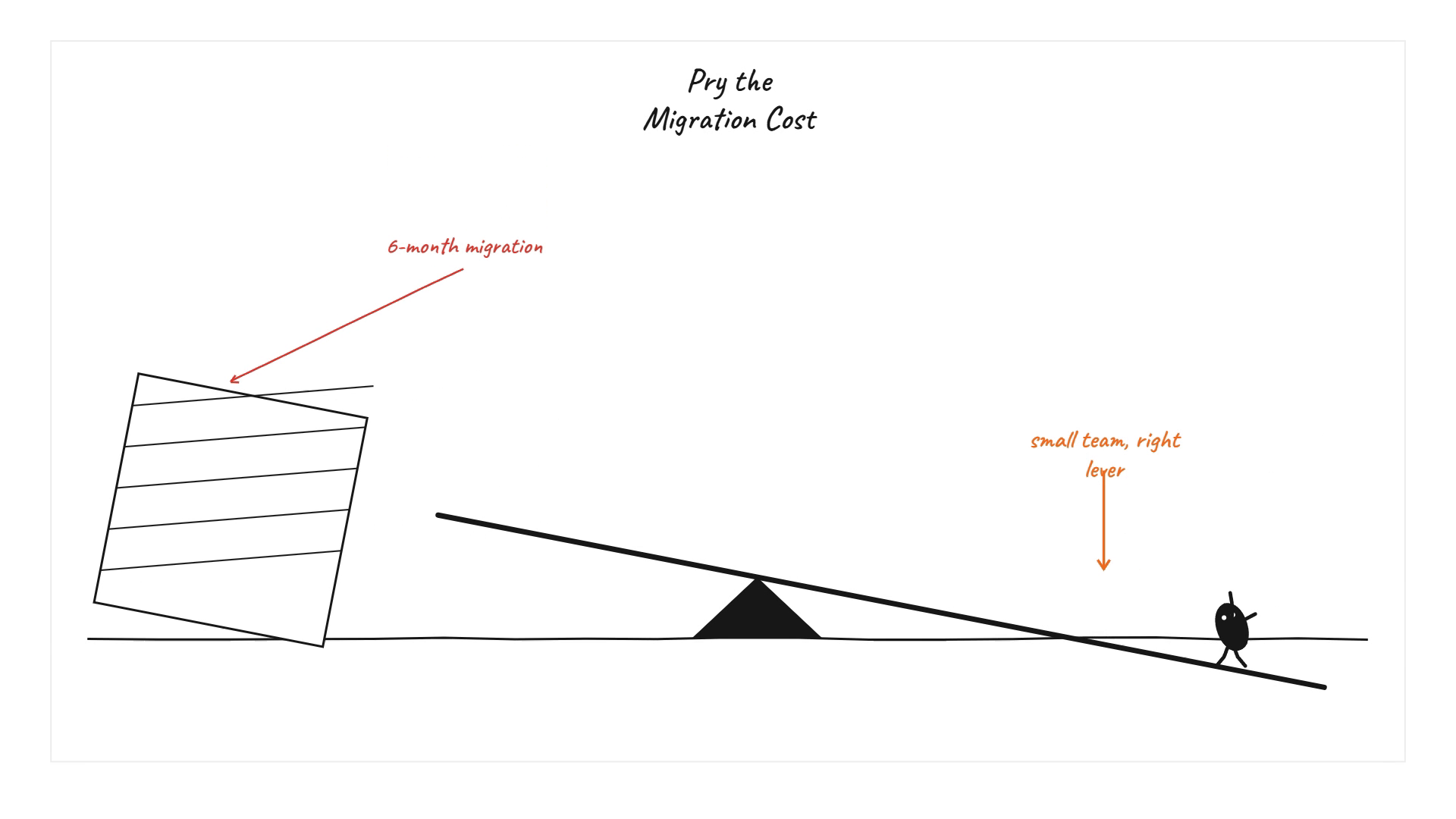
A small worker figure acts out one physical metaphor on a white stage — pries a load on a lever, or patches a leaking cargo barge — while sparse handwritten annotations land in ink, red, orange and blue. Silent, deterministic, 16:9.
A silent hand-drawn logo-reveal film. The mark is authored as SVG path data and draws itself on stroke by stroke — each pen run eased like ink, an accent glow riding the pen tip, closed shapes filling after their outlines finish, a wordmark writing itself on letter by letter in a handwriting face, and a caption fading up at the end. Warm paper or a hairline grid for the ground.
A Solari-style departure board counts down 3-2-1 with flipping glyphs, then stamps in your event's name, date, place and host — each value flipping in letter by letter — before a CTA banner lands. Silent, deterministic, 16:9.
A silent desktop-launch film. A generic desktop wallpaper drifts under a slim top bar; the centered notch pill eases open into a widget card for each scene — clock, music, weather, calendar, battery, timer, photo, search or stats — holds under a caption with tinted keywords, then folds back into the notch. A stroke-drawn HELLO opens the film and a product name with a tagline closes it. Desktop chrome is deliberately generic, no platform marks.
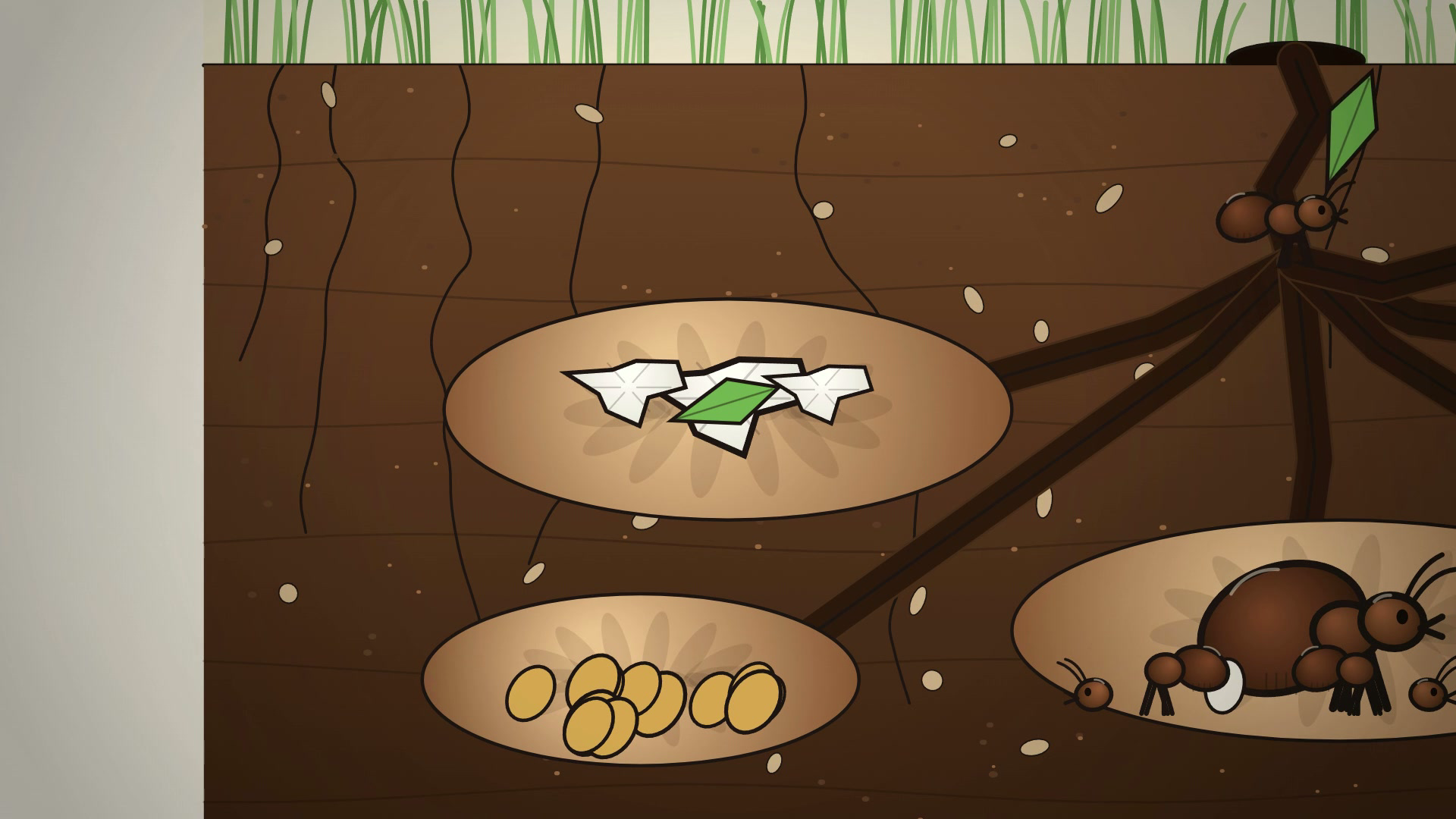
A textured-editorial cross-section of an ant colony: the camera settles on a paper-grain nest, then dives down a soil shaft as a hero ant carries a leaf past labelled chambers — fungus garden, nursery, food store, the queen, a dig site, a rest alcove. Silent, deterministic, 16:9.
A split-flap countdown timer film: every digit is a mechanical flip card that folds when its number changes, lands on exactly 00:00, then hands off to an end card. Silent 1080p.
Sand grains on a tilted plate swarm onto standing-wave nodal lines, scatter, and re-form as the mode changes — a silent, deterministic Chladni film.
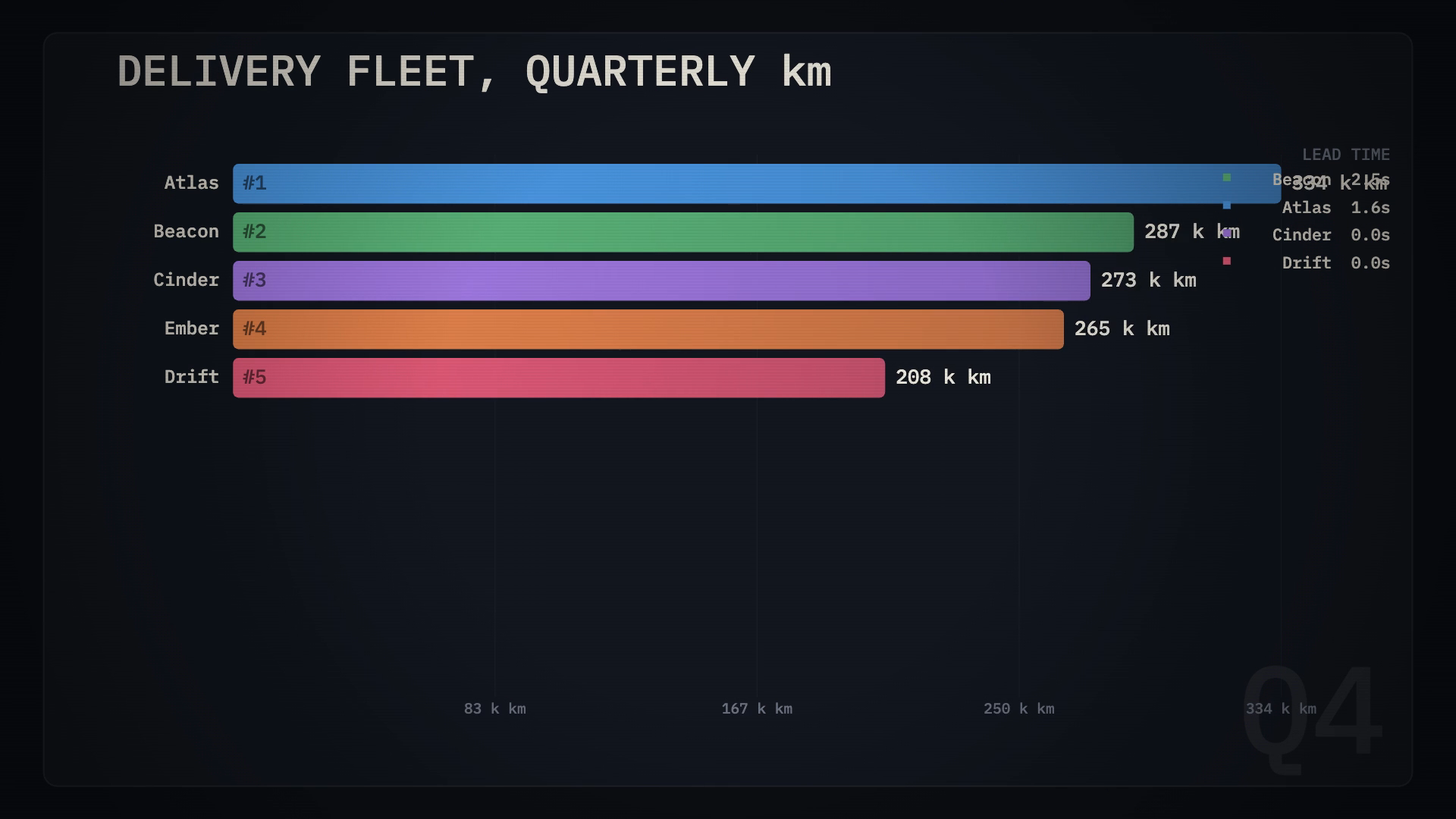
An animated bar-chart race film: sparse data rows are interpolated so values flow, bars glide past each other as ranks change, and a corner ticker tracks how long each item has led. Silent 1080p.

A tonearm drops onto a spinning vinyl record, the title scrolls past in a marquee and a progress bar fills, then the arm lifts off — a silent, deterministic turntable film.

A wall of stylized cards is tilted back like a gallery floor, columns scroll vertically at independent speeds, the centre drifting the other way — a silent, deterministic ticker film.
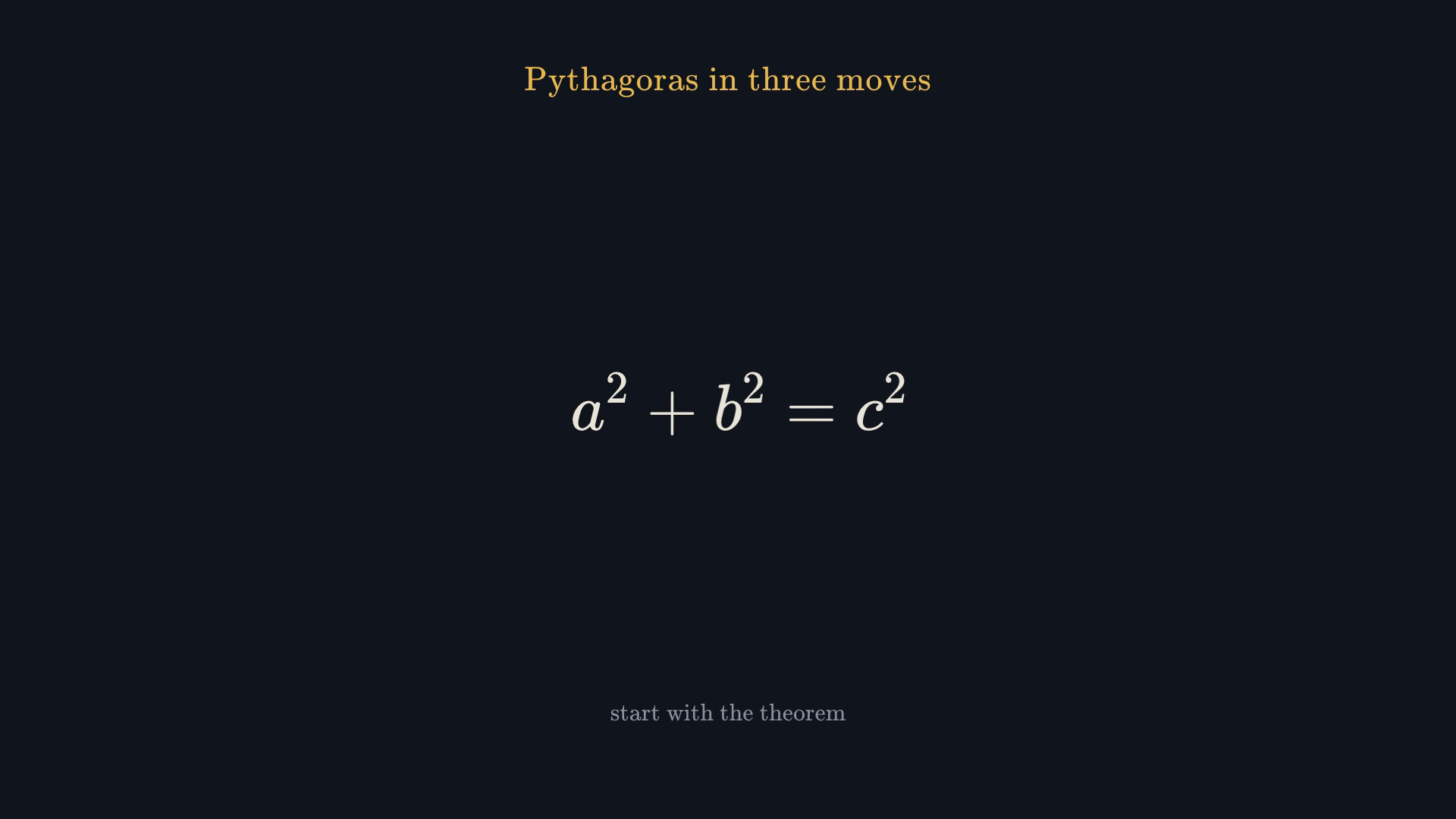
A step-by-step derivation film: LaTeX steps morph into one another — terms that persist glide to their new slot while unmatched terms fade. Silent 1080p.

A hand-painted cartoon panel that comes alive — a small creature sits in a watercolour landscape, the camera pushes in slowly, the linework boils, and one painted emote lands on the beat.
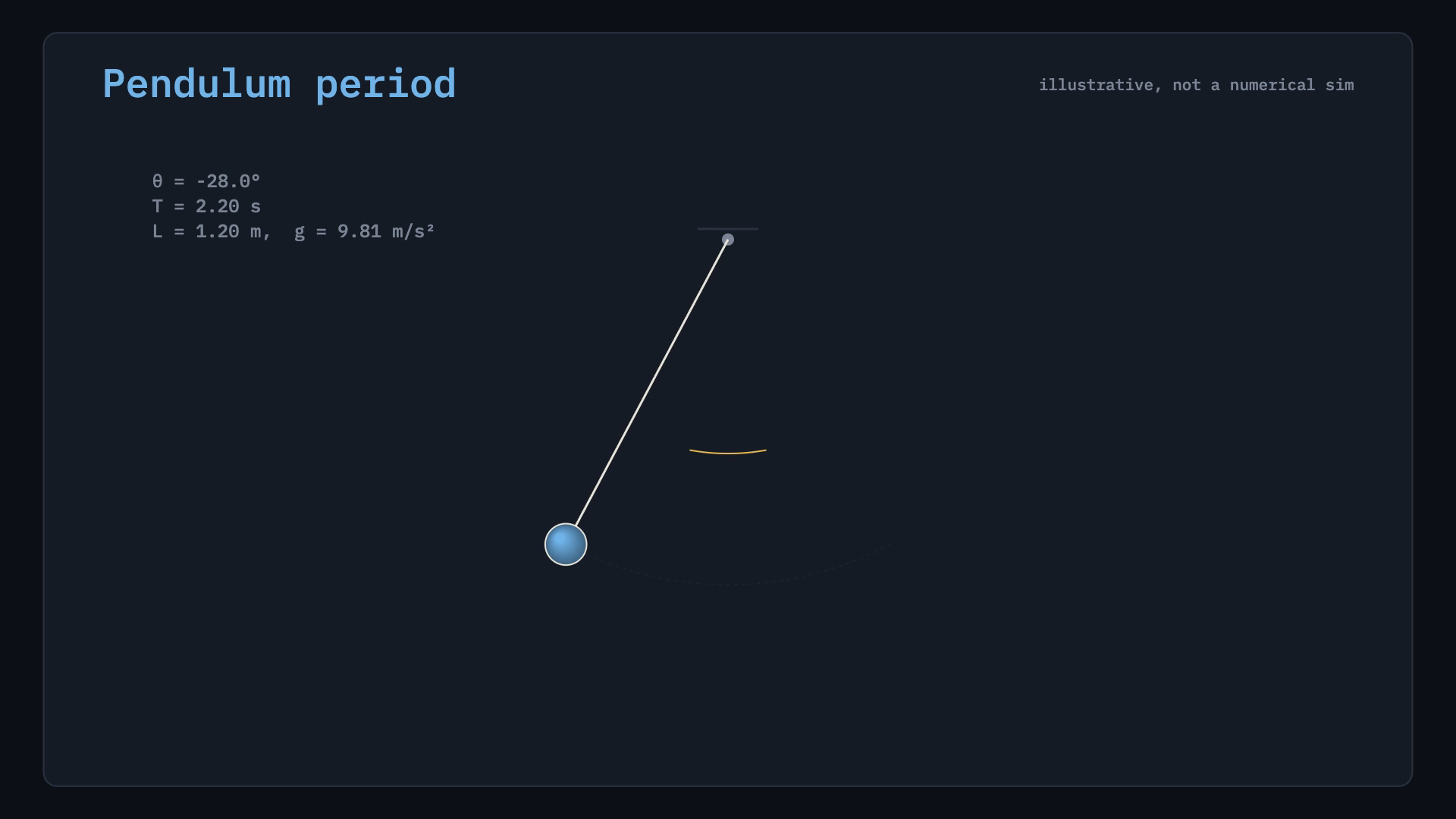
A deterministic physics diagram film: pick pendulum, projectile, travelling wave or field — each is a closed-form model evaluated at t, painted on Canvas2D with title, readouts and a qualitative disclaimer. Silent 1080p.
A silent dark editor types itself — syntax-highlighted characters appear keystroke by keystroke, the caret blinks, lines scroll, and one strike-correct beat rewrites a mistyped word.
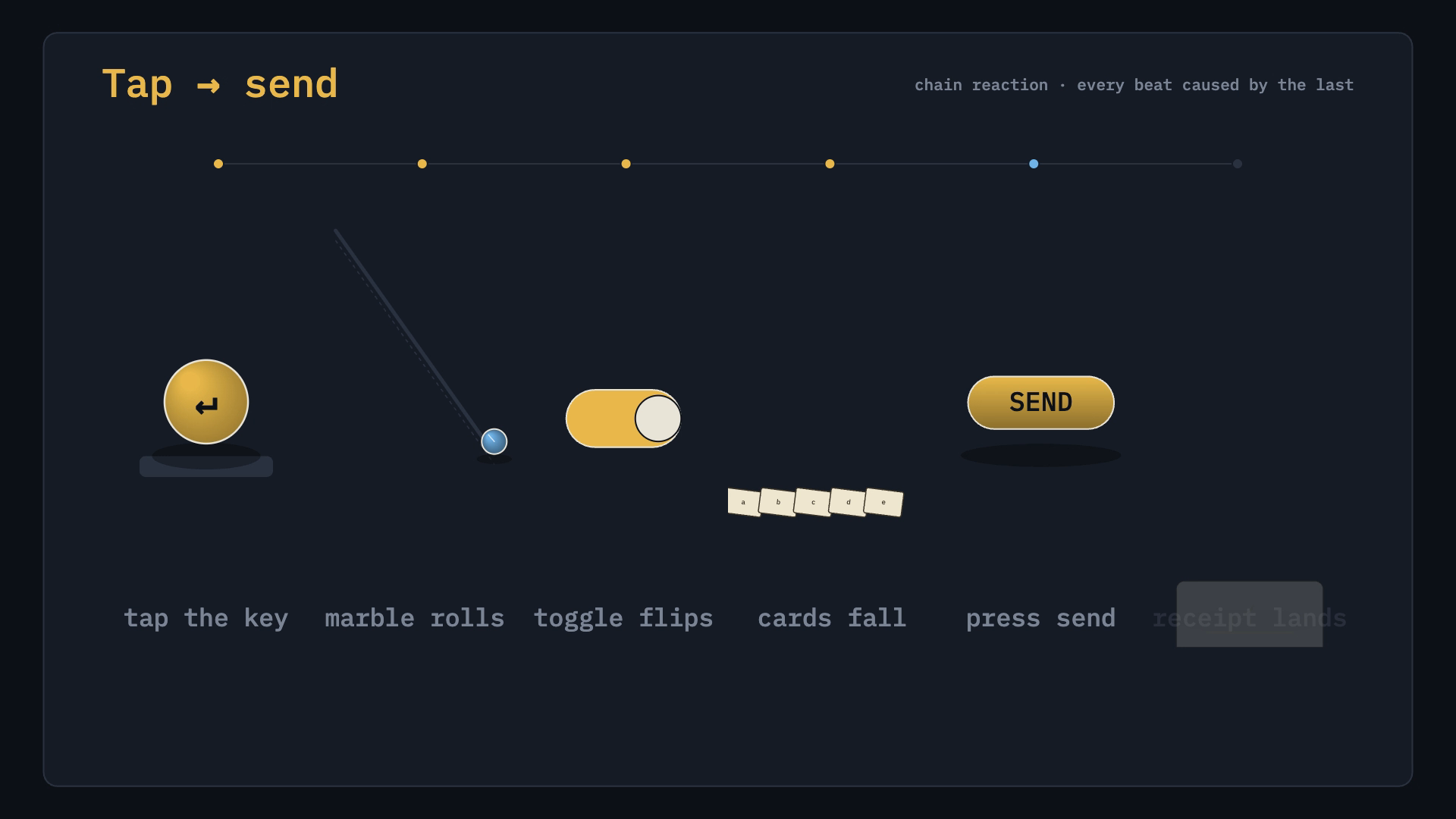
A deterministic Rube-Goldberg chain film: 3–7 stages laid left-to-right, each triggered by the previous — keypress, marble-drop, toggle, cards, send, notify. Silent 1080p.
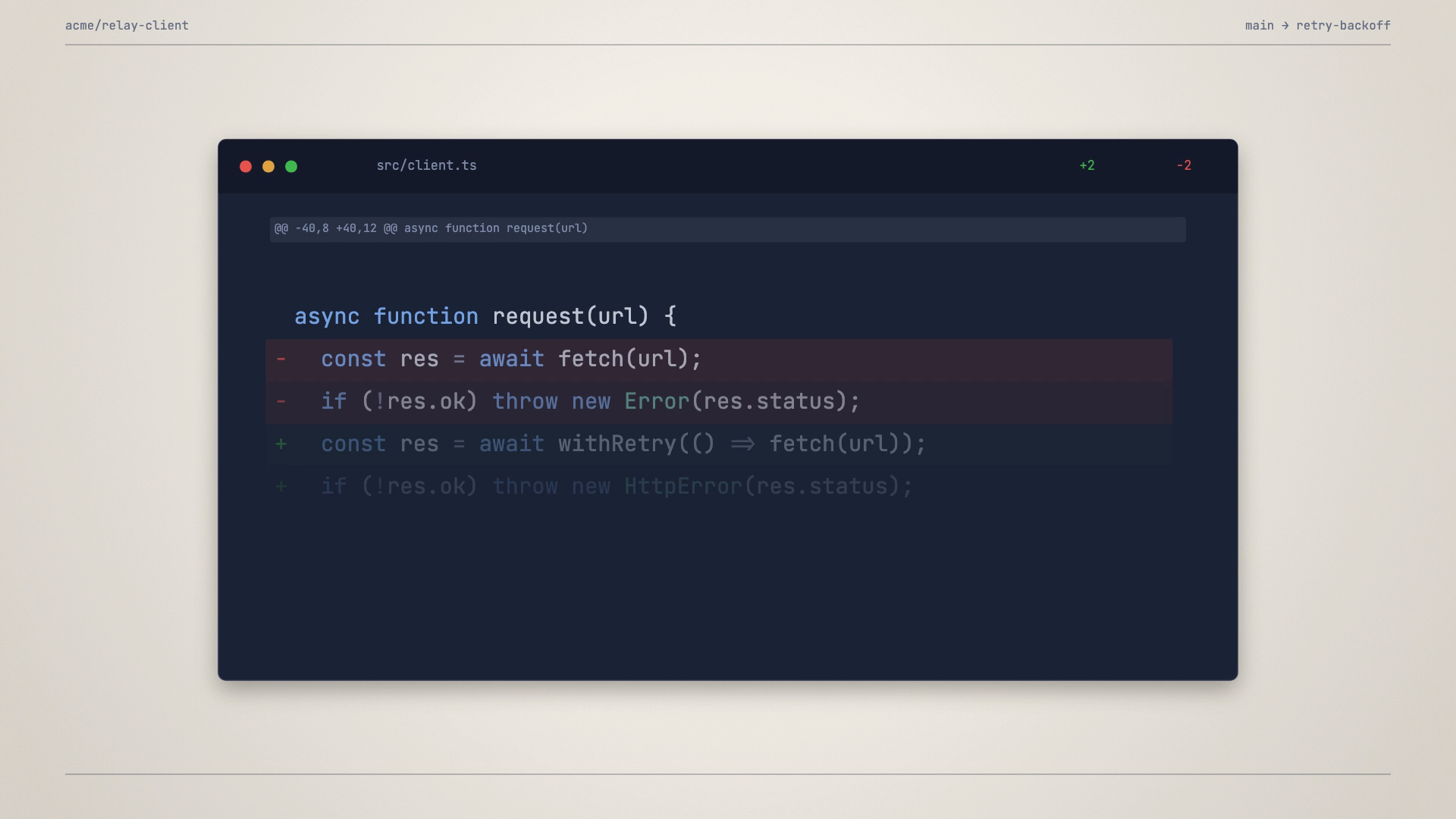
A silent code-change explainer: a diff walked beat-by-beat on an editorial page — hunks light red-removal/green-addition, tokens morph between code states, the file tree lights, a cream diagram traces the runtime, and a stat lands.
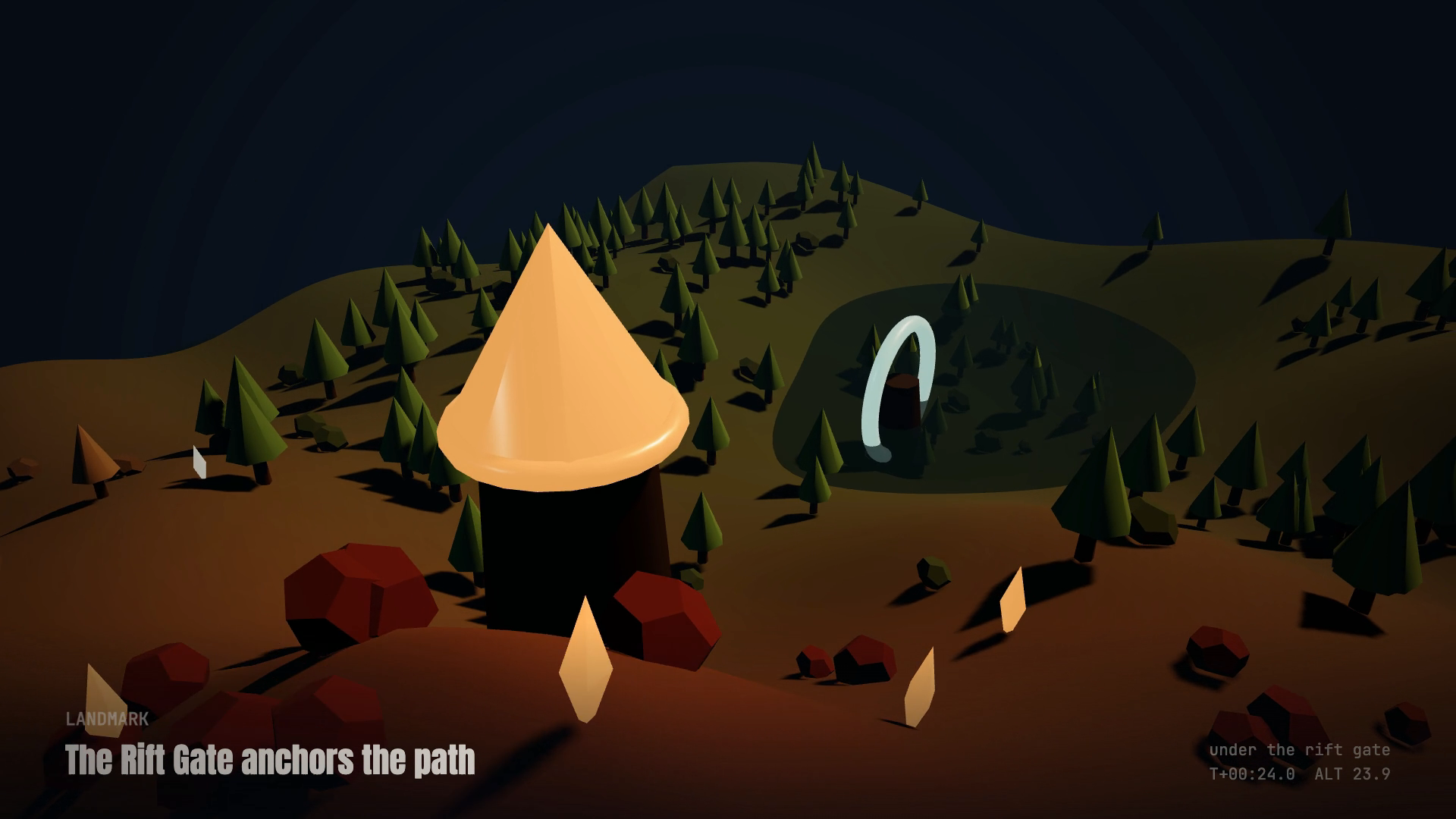
One declarative sheet generates a whole 3D world — regions blend into a single height field, vertex-coloured terrain carries rocks, forests and landmarks, and a keyframed camera flies low through it.
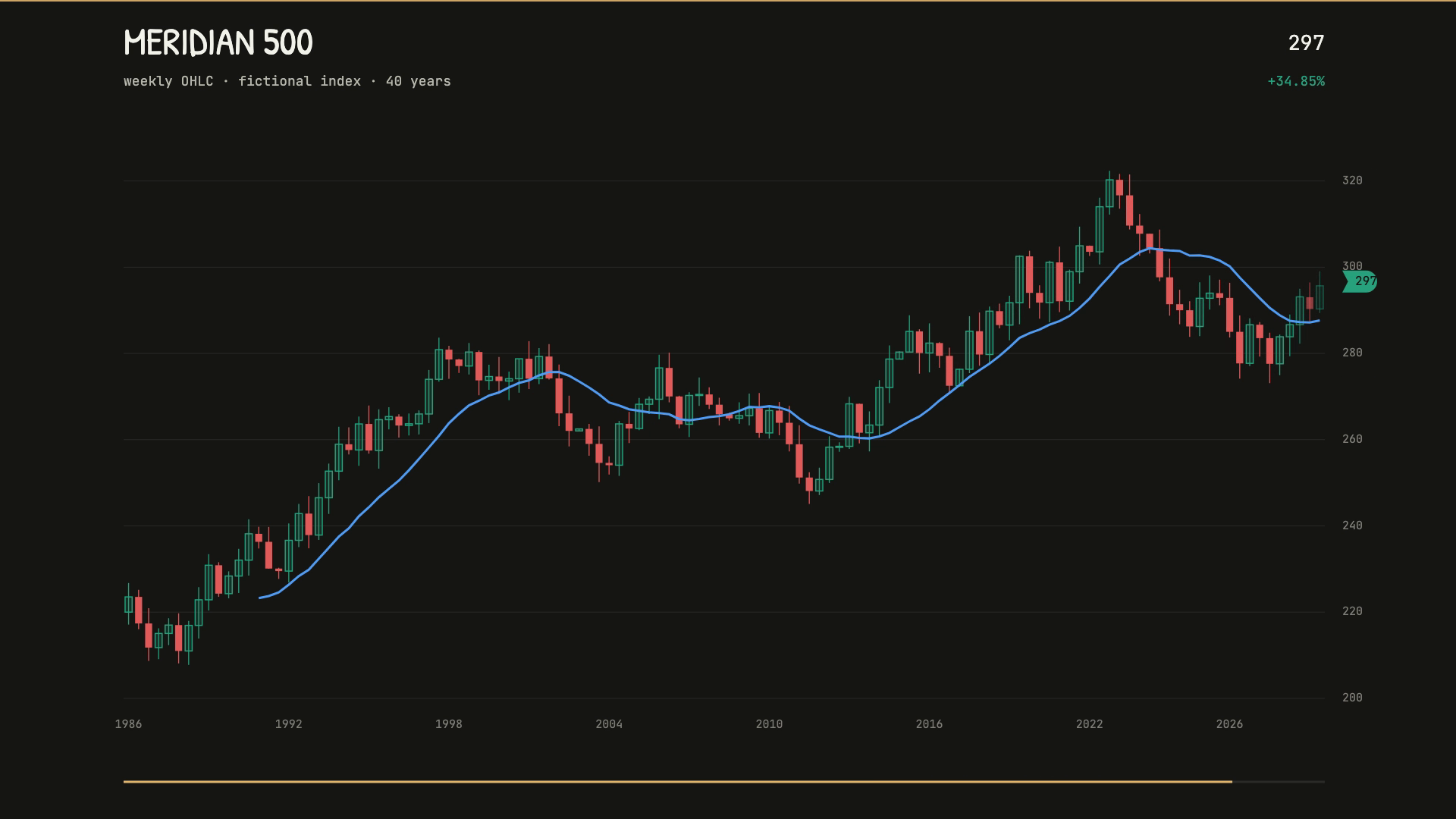
A silent candlestick film on a dark trading terminal — OHLC bars appear left to right, each fading in and growing up from its low, a moving-average line threads through, a live price tag rides the last close, and a progress rail fills along the bottom.
A silent vertical year-in-review film: on a dark field washed in the record's accent, scene slots build in crescendo — a name-and-year intro, an oversized count-up stat, a ranked top-X list, a persona card, a percentile fill bar, a peak-bin strip — resolving on a share card that locks still for the screenshot.
A silent audiogram for the muted feed: a waveform or mirrored equalizer pulses to a scripted amplitude envelope in a framed clip — cover art and title up top, captions landing one phrase at a time, a progress rail tracking the playhead.
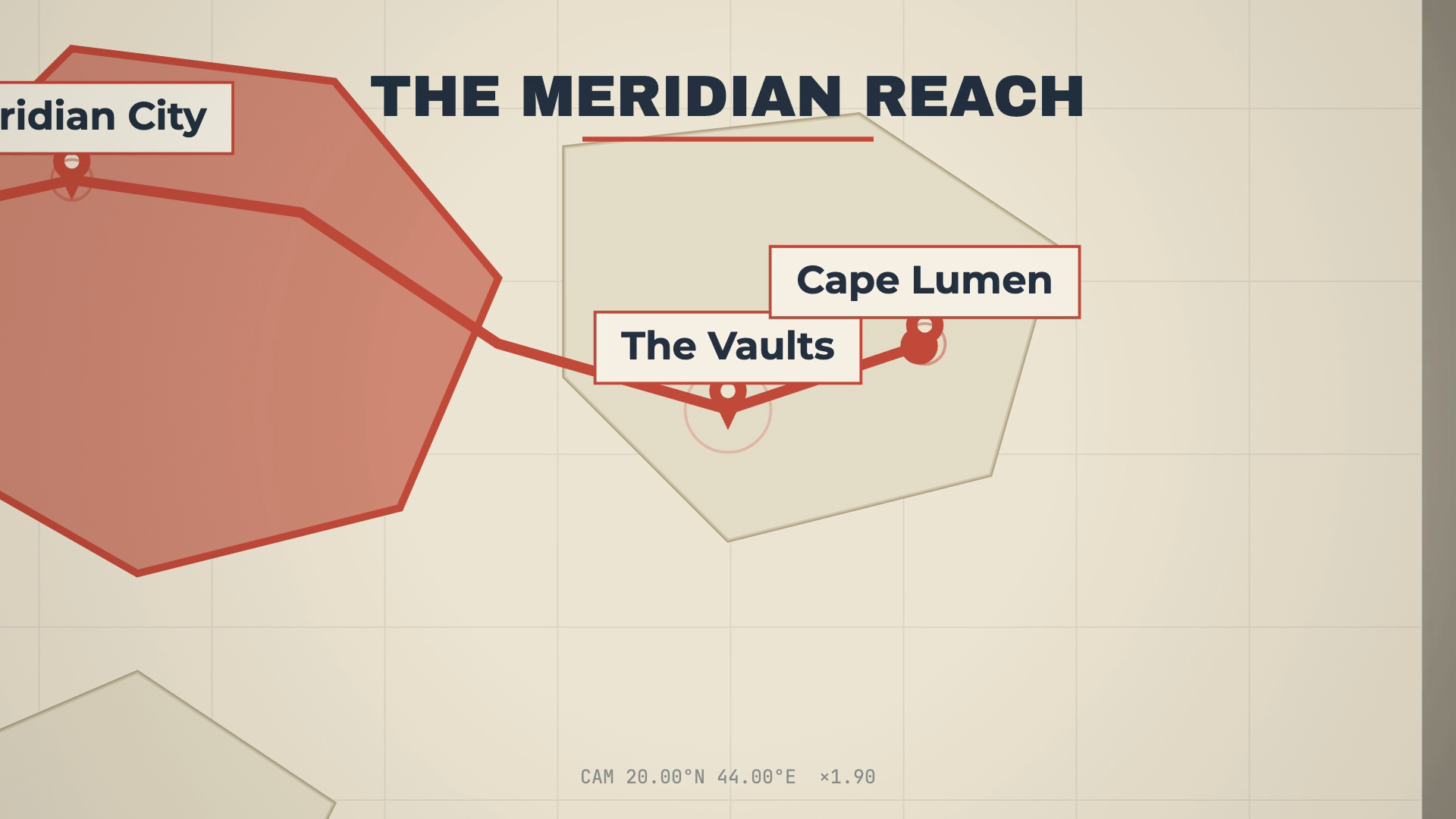
A silent editorial map film: a camera dives and pans over a self-drawn flat basemap toward each beat while pins drop, a route draws itself on with a leading dot, a region highlights (lit, the rest dimmed), and label chips track their coordinates — the graphics stepping at a stutter rate while the camera glides smooth.
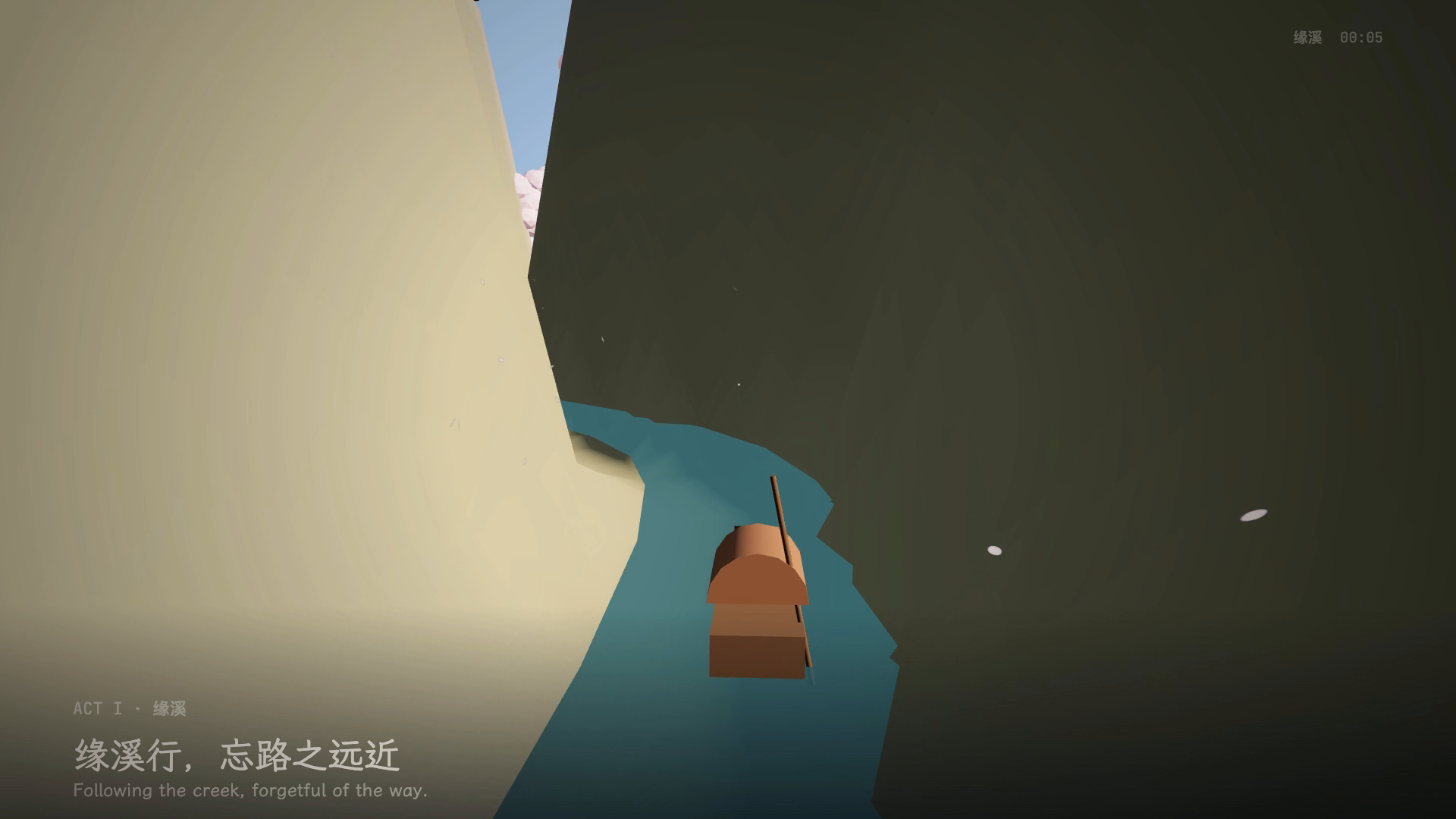
One sheet drives a whole journey film — a boat follows the creek through a blossom corridor, the camera squeezes through a dark rock passage and opens onto a hidden valley of fields and lamplit houses.
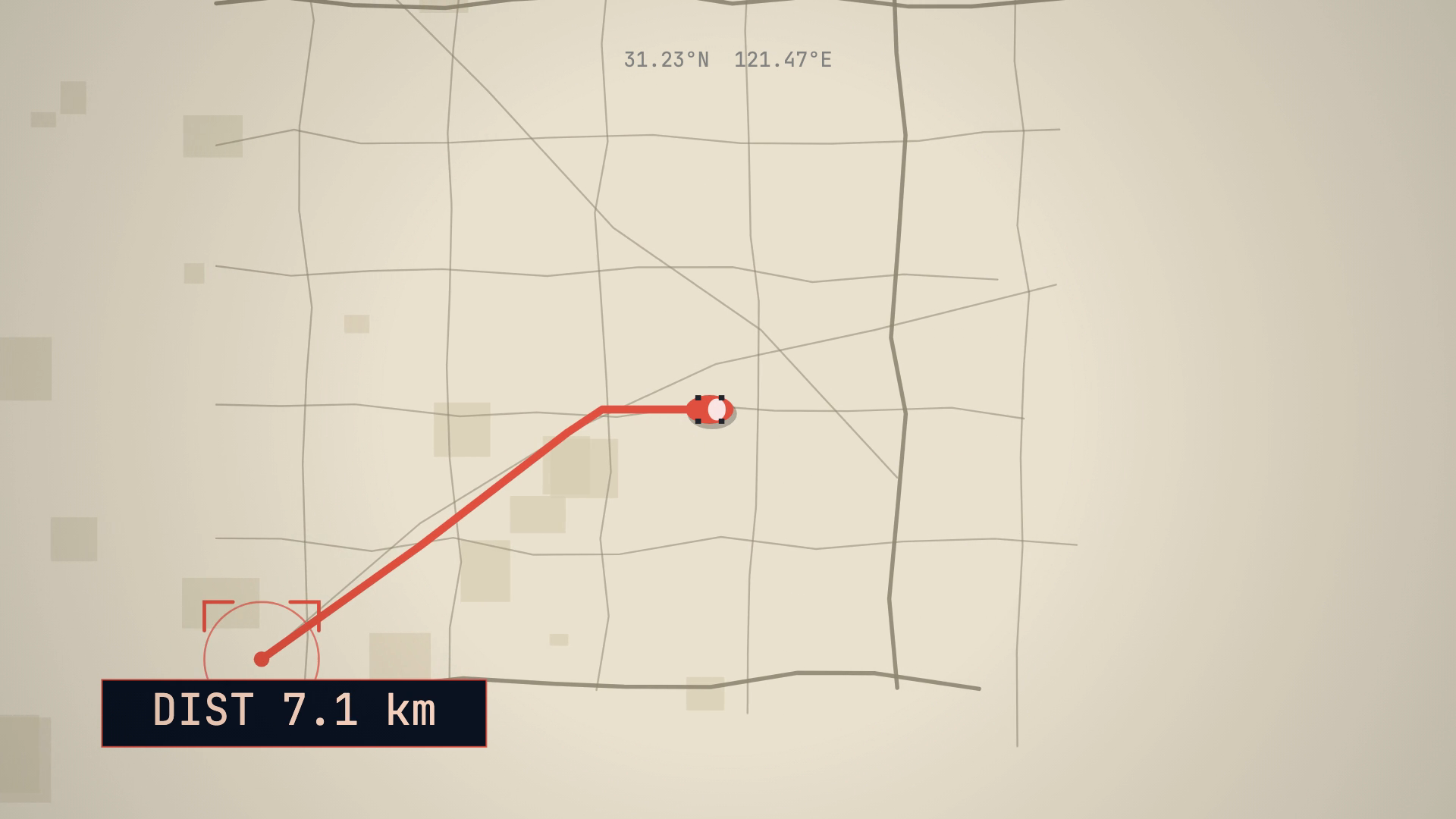
A silent delivery-replay map film: a dot-grid globe spins to face a coordinate and plunges through the atmosphere, a reticle locks onto a hand-drawn street map, then a route traces itself while a car rides the line, an odometer rolls the distance and the camera follows — ending on a pull-back delivered card.
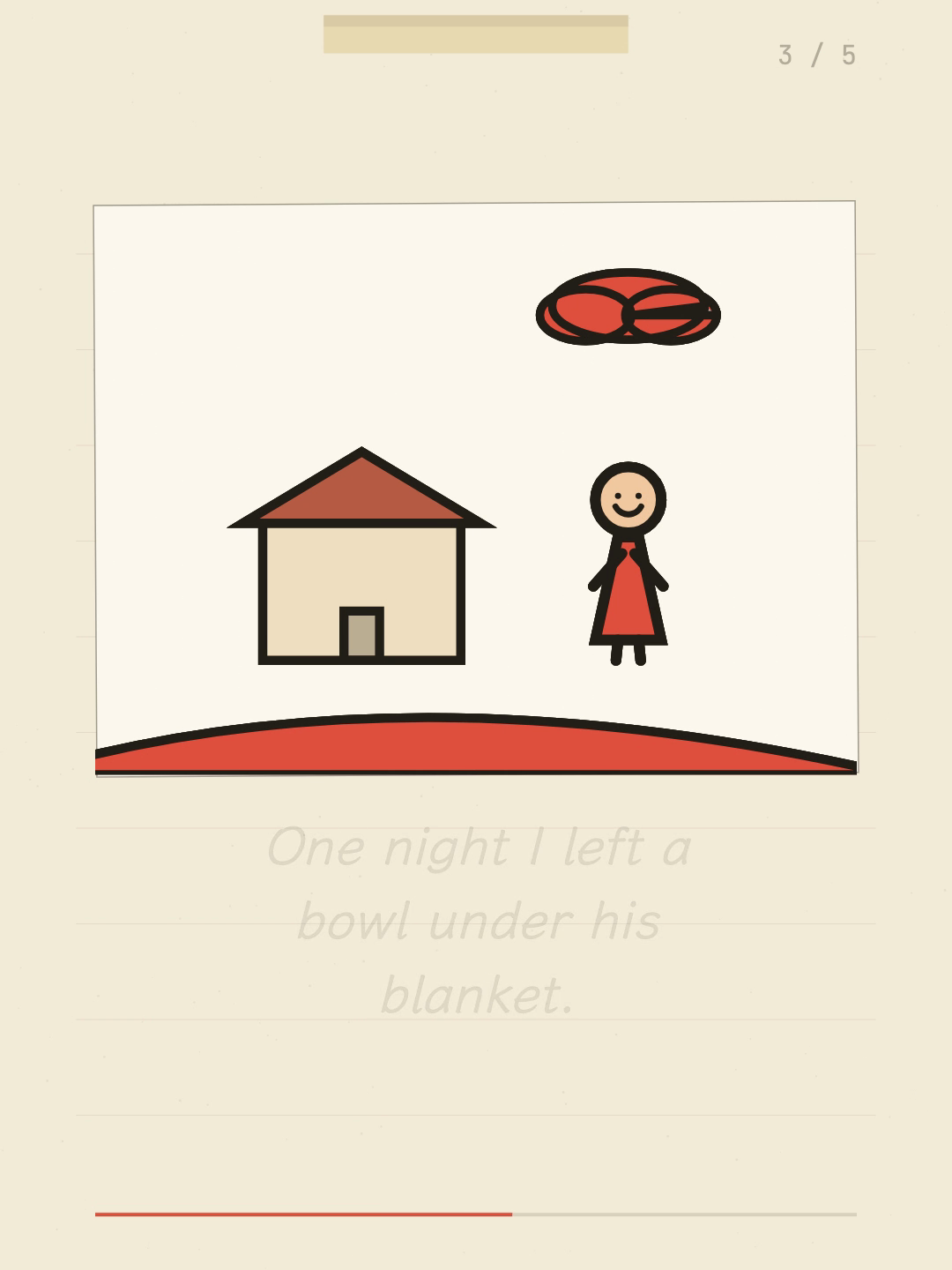
A silent hand-drawn-diary film on a 3:4 portrait page: each story beat is drawn three times in place — the sentence in handwriting, then the same scene as black-marker line art, then the same scene again in crayon colour — by horizontal wipe, and a page-curl at the bottom-right turns to the next beat like flipping a sketchbook.
White-line-on-black staged storytelling — outlined primitives build the set, a poseable little figure walks its beats, and one caption lands per shot. A silent portrait film from a single JSON sheet.
A stop-motion miniature film on a real desk — a felt puck acts on twos, light comes only from a lamp and the window, words are printed on wooden blocks and a card on threads, and a millimetre-thin focus band makes the room read as a model.
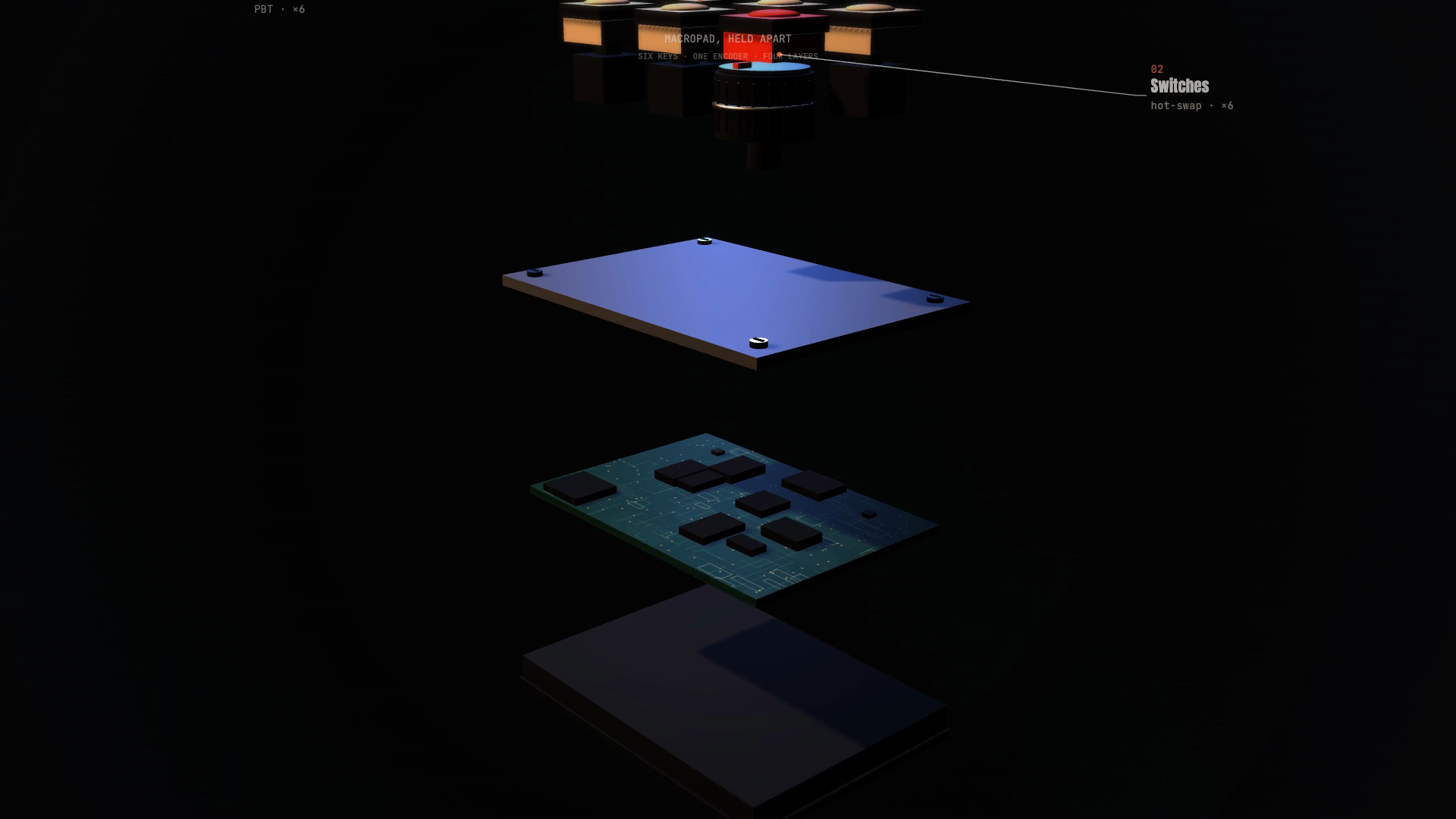
An exploded product film on a seamless graphite sweep — the stack lifts on one axis in a wave, the camera dives between layers, leader labels land on parts, and dimension lines draw in perspective after it closes.
A school of procedural fish rides a closed spline through an underwater scene — chain spines bend under per-joint angle constraints, fins and tail fan follow the total bend. Surrounding them: kelp sway, rising bubbles, drifting motes and god-ray shafts. One JSON sheet drives fish kinds, lanes, captions and palette.
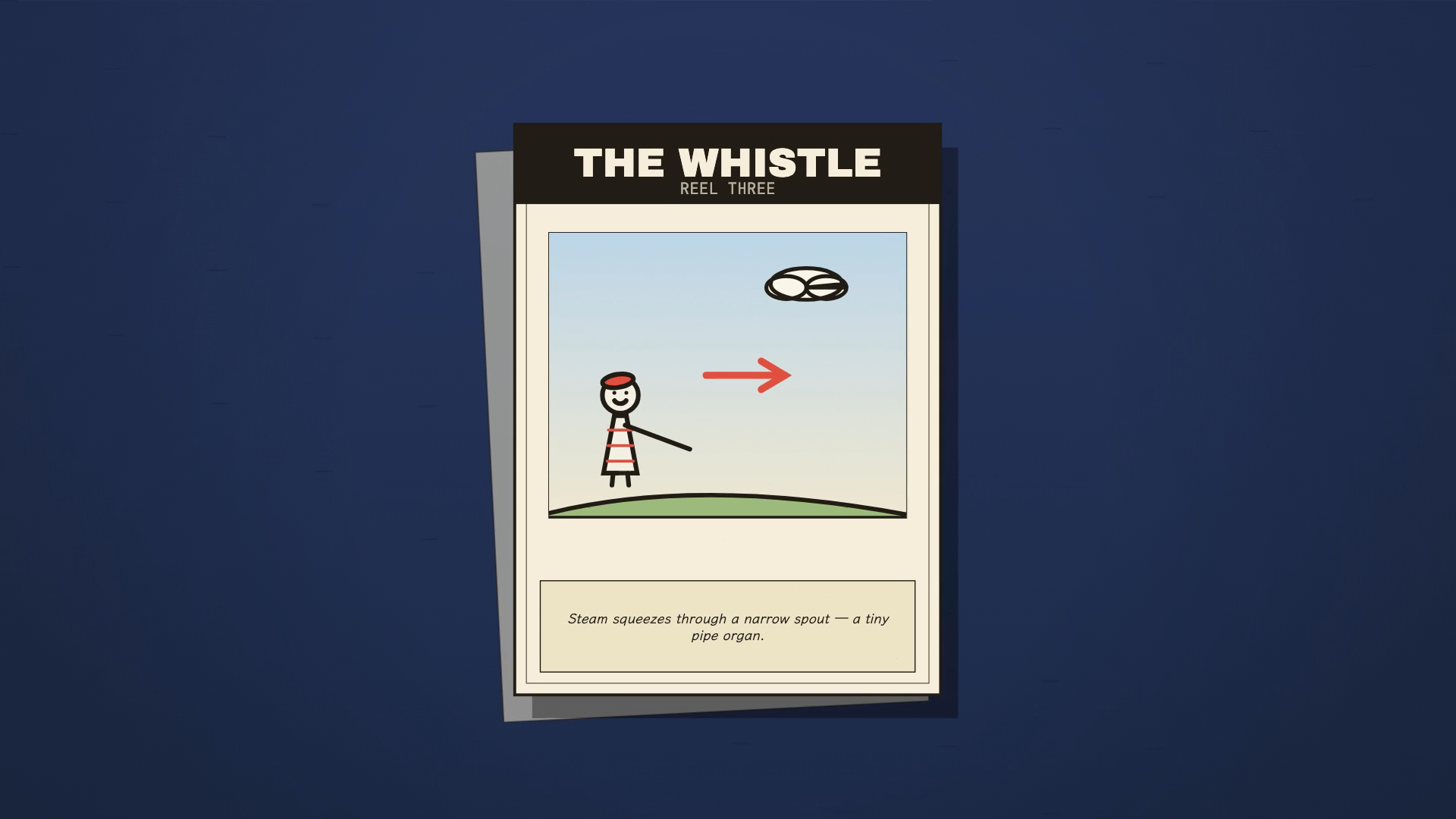
A silent explainer styled like a 1950s instructional newsreel: cream title/window/caption cards are dealt onto a navy felt table, code-drawn infographics land on authored cue times inside the picture window, a flat two-tone mime walks on and gestures, and gate weave + grain ride every frame.
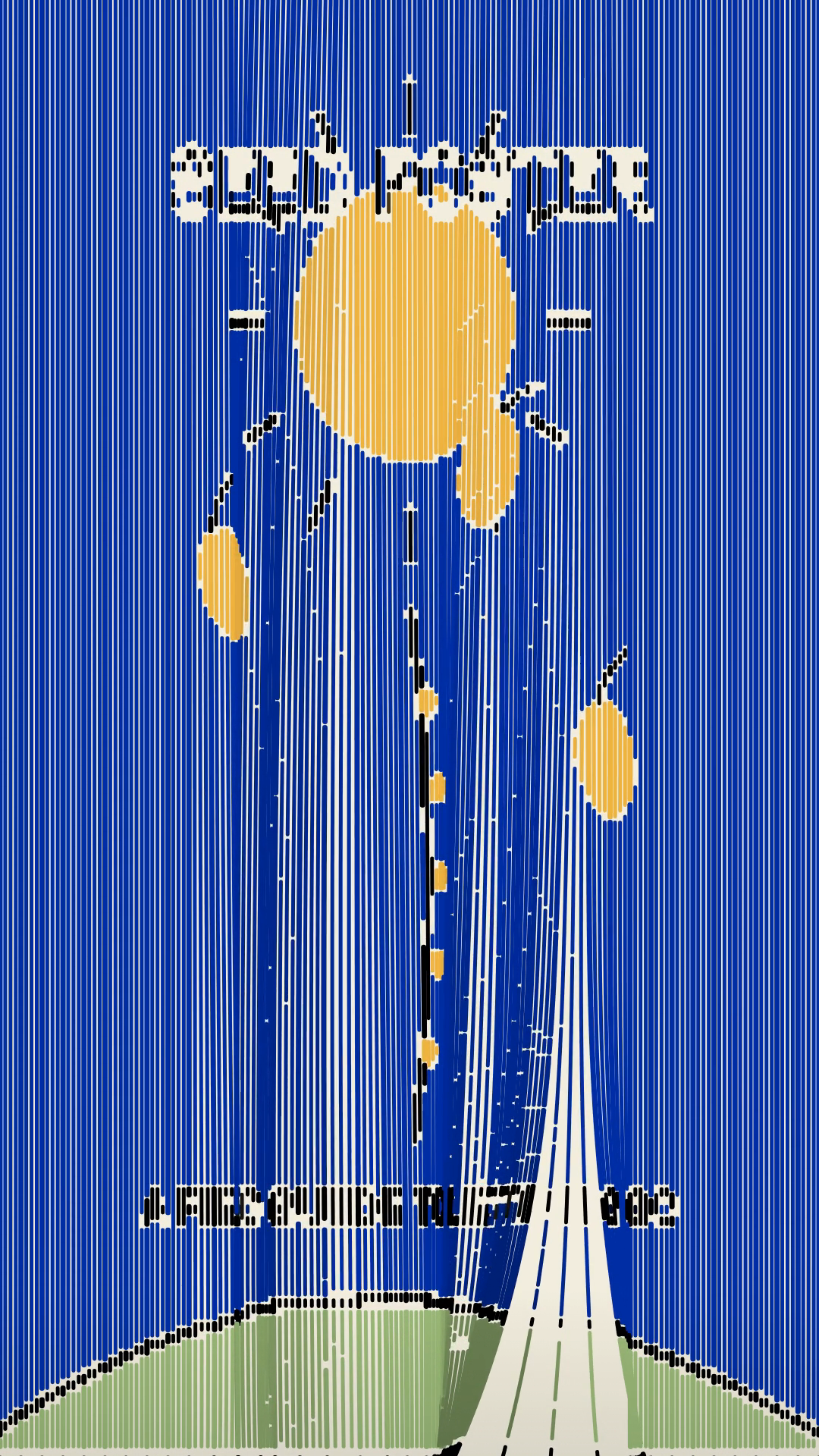
A silent film of an artwork woven into a hanging curtain: forty verlet strands resample to a fine vertical knit, the print is baked into each row at the cloth's settled rest pose, and authored pokes — a moving repulsion body — part the weave so the backdrop shows through before the strands settle back.
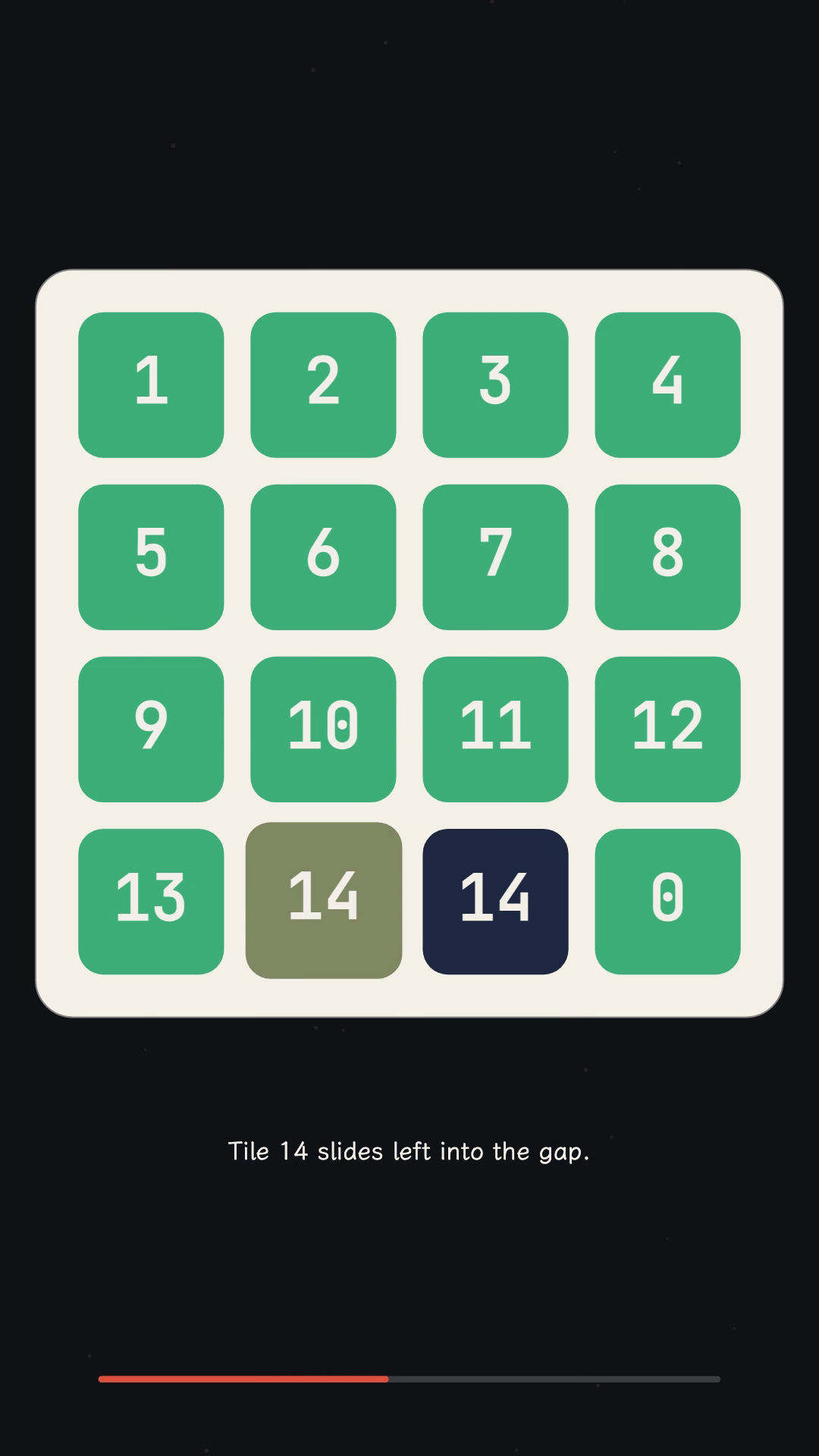
A silent vertical short on one persistent board: a tile grid whose payoff is already visible at frame 0, a quiz pause card over the middle of the board, reveal steps that fly each goal tile home synced to authored captions, a shake twist, and a closing dissolve that lands the last frame back on the opening composition so the video loops seamlessly.
Sheet-driven painterly films — a flat underpainting repainted live by tens of thousands of GPU-instanced brushstrokes that follow edges and a flow field, with an additive light layer, bloom, canvas weave and grain.
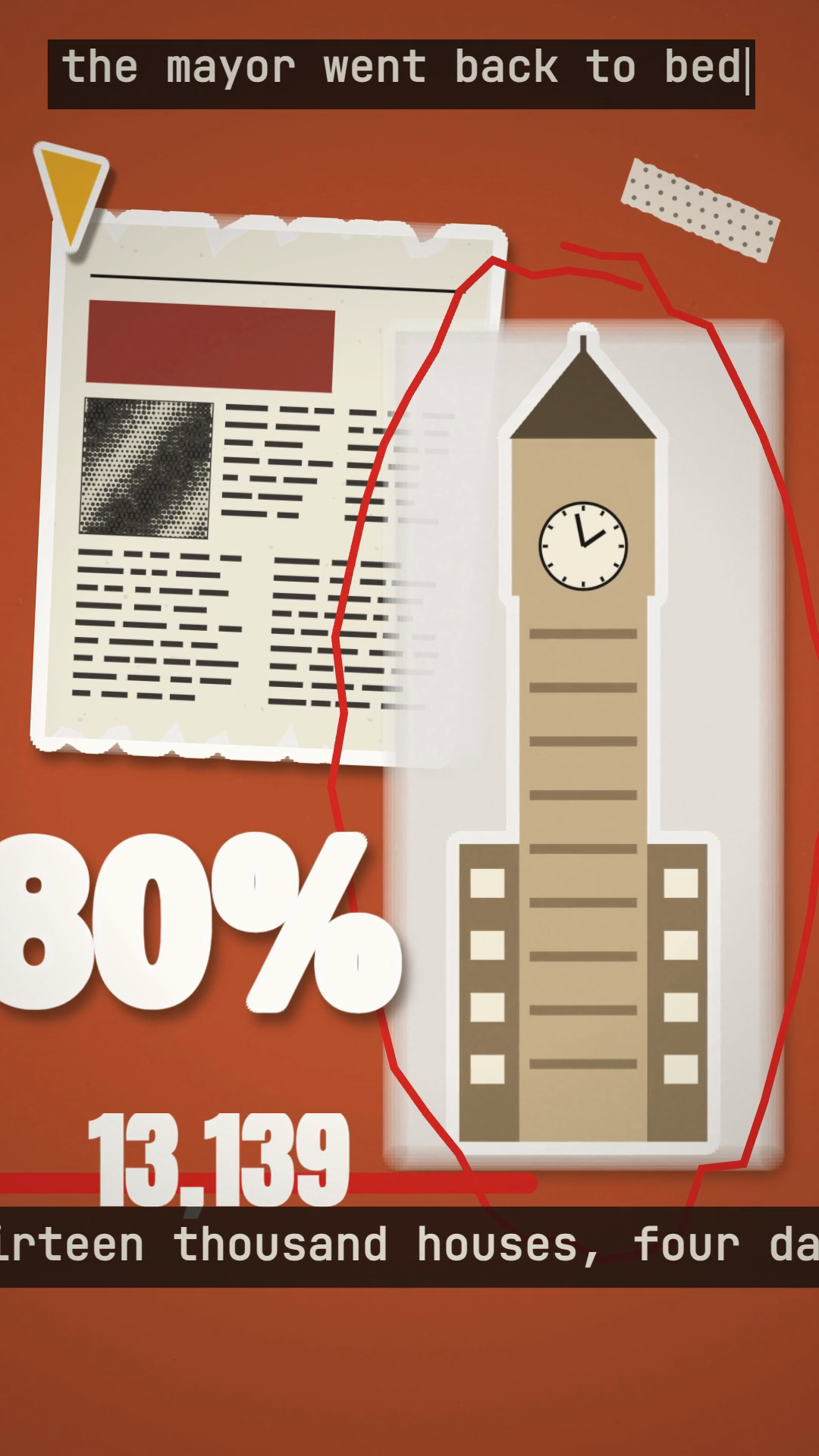
Sheet-driven cut-paper dossier films — torn grounds, halftone clippings and sticker-rimmed cutouts sliding on depth planes under a drifting camera, with red-marker circles, marker highlights, counters and typewriter beats.
Sheet-driven UV photolithography reels — a recursive die layout printed through a reticle under a 405 nm beam, a thin-film interference wafer emerging from develop fog, a probe card drawing its I-V sigmoid, then a scribe-and-split dice.
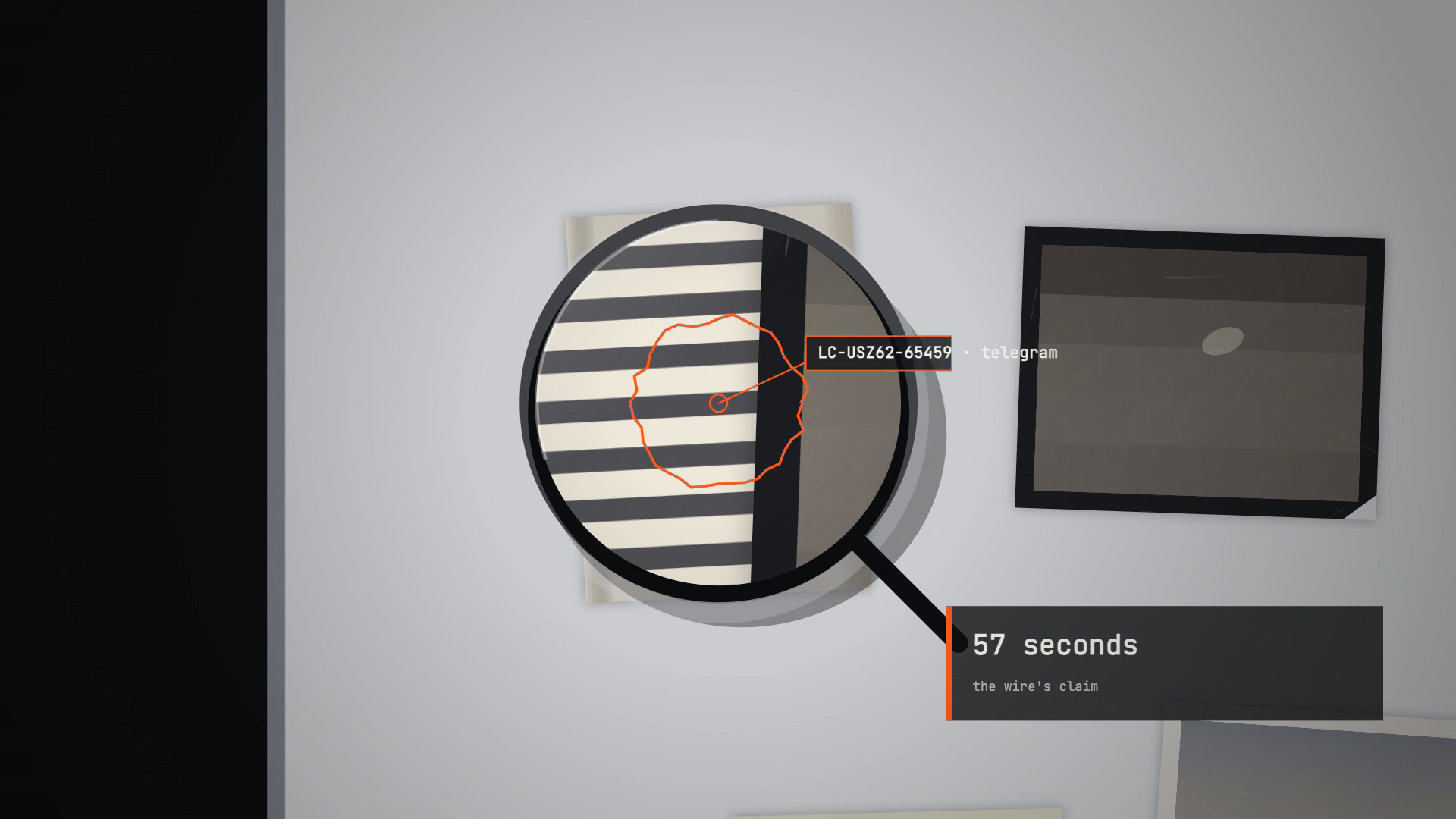
Sheet-driven archive light-table films — procedural objects on a backlit table, a loupe that lands and magnifies (developing negatives toward positive inside the lens), signal-colour marks, and a pull-back index card.
Sheet-driven lyric-PV films where the words are the picture: per-mora pops, beat-slammed words, monument glyphs, right-to-left cascades, split reveals, scramble decodes and karaoke fills under a thin HUD. Canvas2D + GSAP, silent.
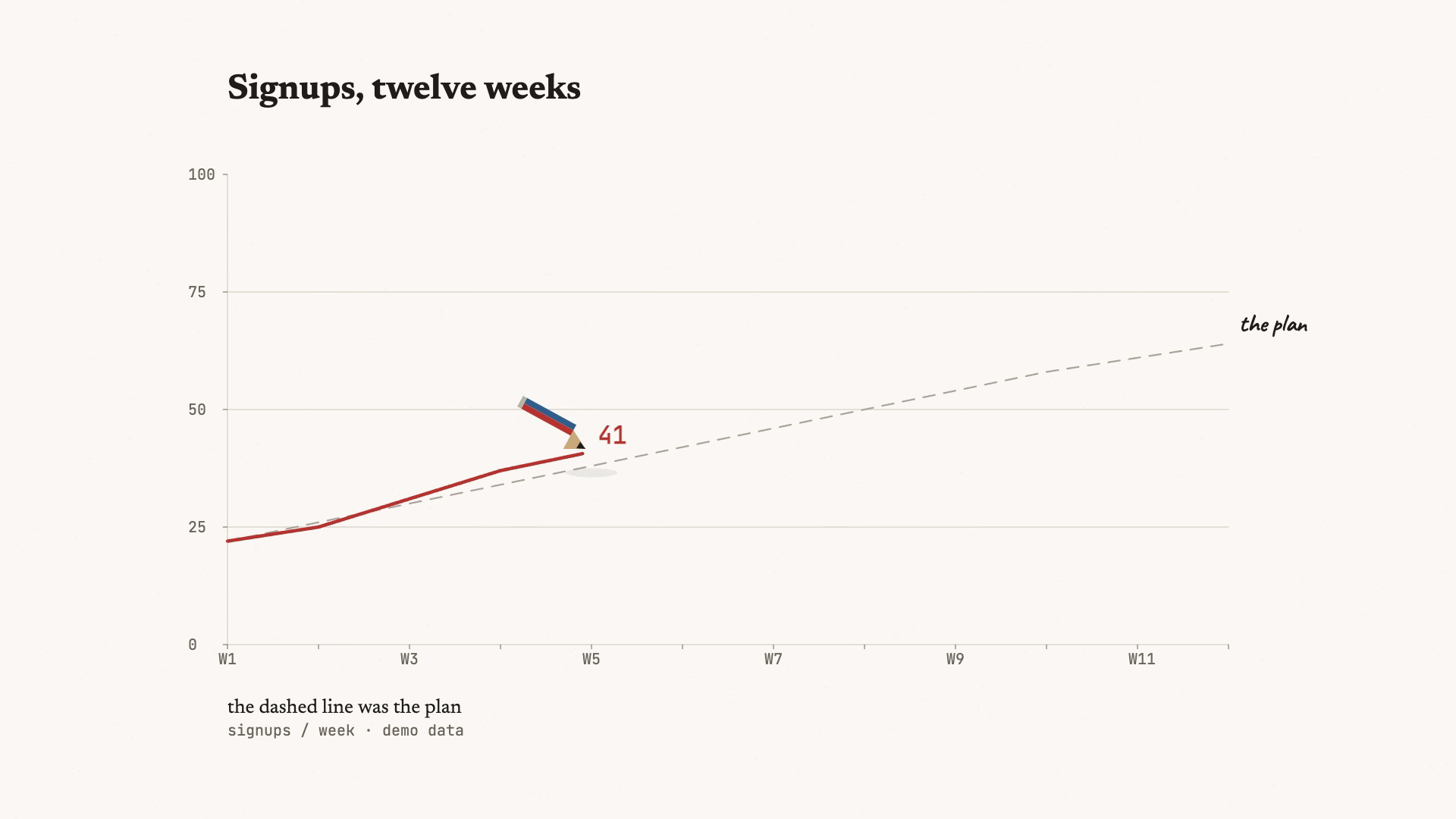
A silent editorial data-story film on cream paper: the chart first draws the guess — a grey dashed expected curve, held on screen — then lets the real line draw through it in signal colour at a linear rate, while handwritten notes pin themselves to the data points the line passes. A red-blue pencil leads the stroke, and the axis can re-range in two beats, carrying its annotations with it.
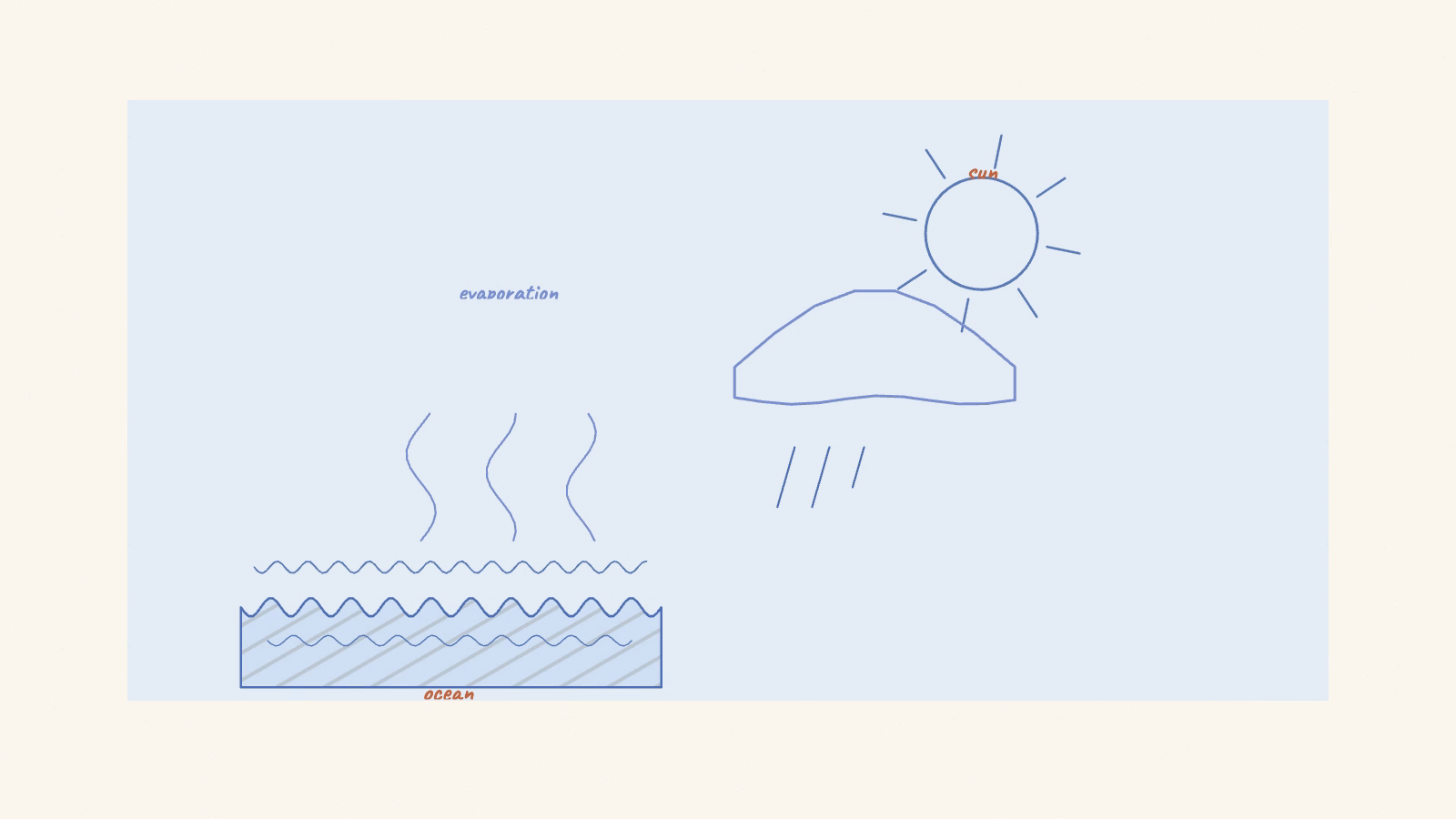
A typeset paragraph with marked words reads, greys, then every glyph spins and shrinks into the box where a hand-drawn diagram paints itself stroke by stroke — text becomes picture.
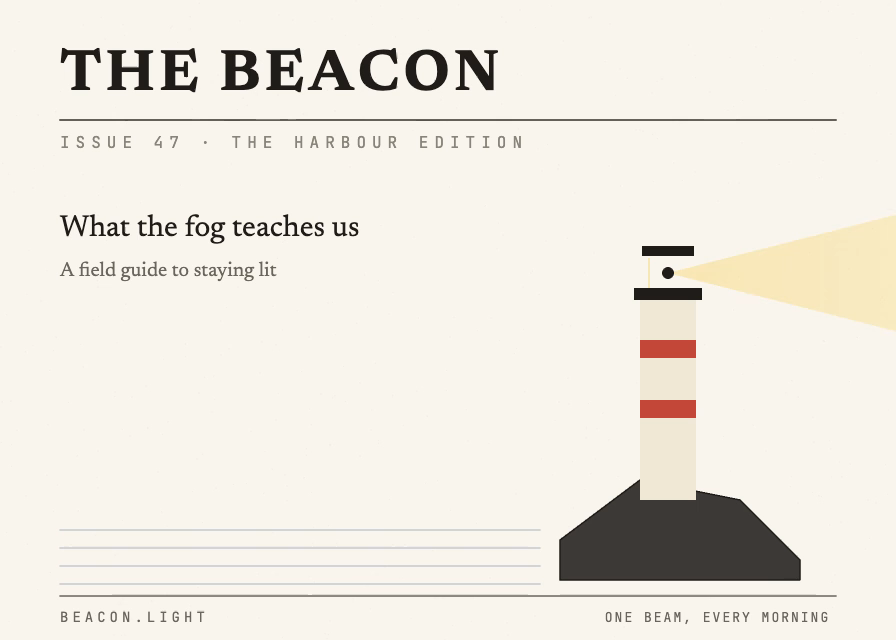
A finished newsletter or blog cover where only the one element you name moves — a beam sweeping a lighthouse lamp, a route line drawing itself on — the loop rotated so frame 1 is already the finished picture, then shipped as a silent GIF plus MP4 preview.
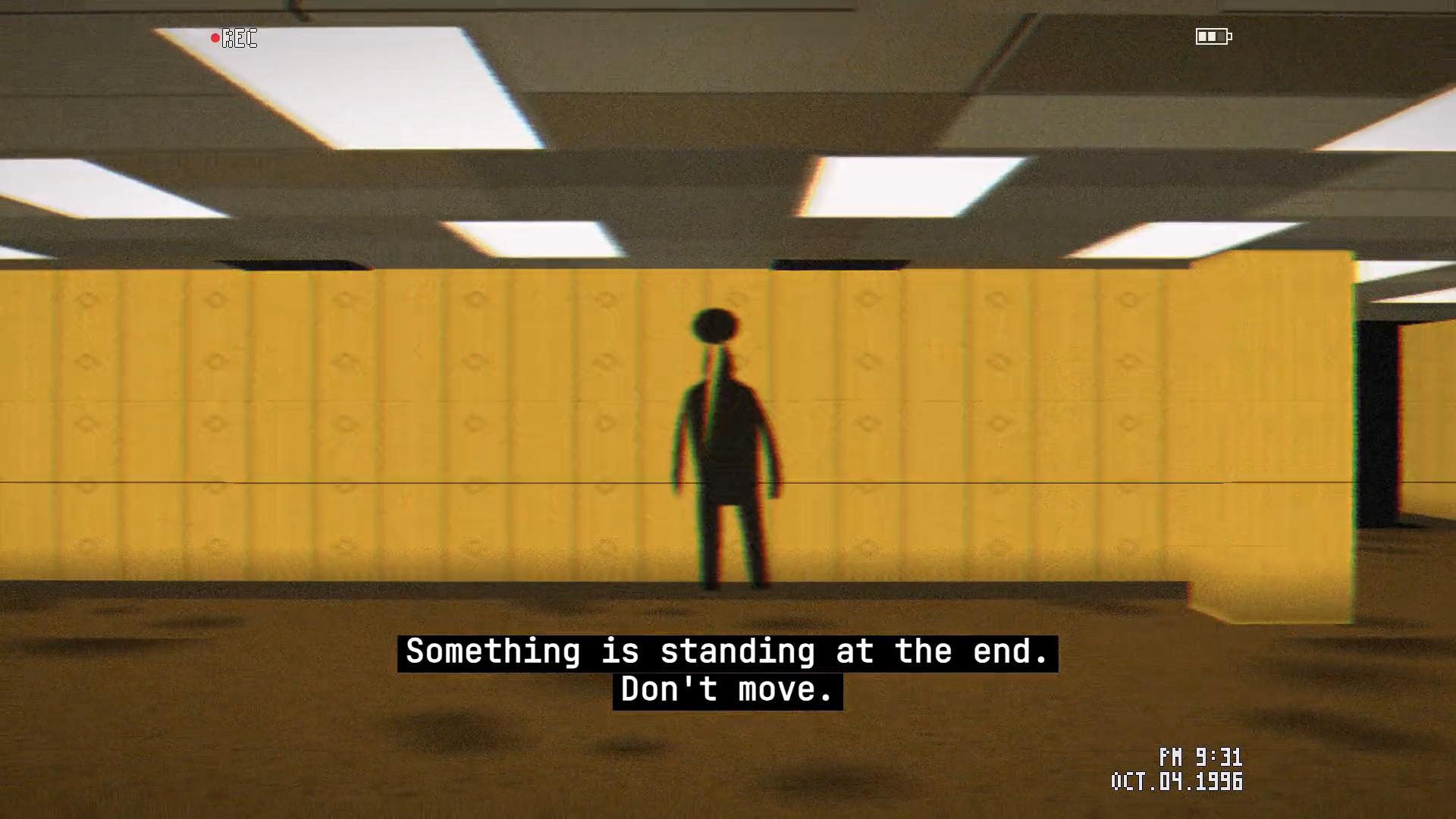
A found-footage camcorder take through an endless fluorescent partition interior — pillarboxed 4:3 VHS with OSD, tracking tears and a distant silhouette.
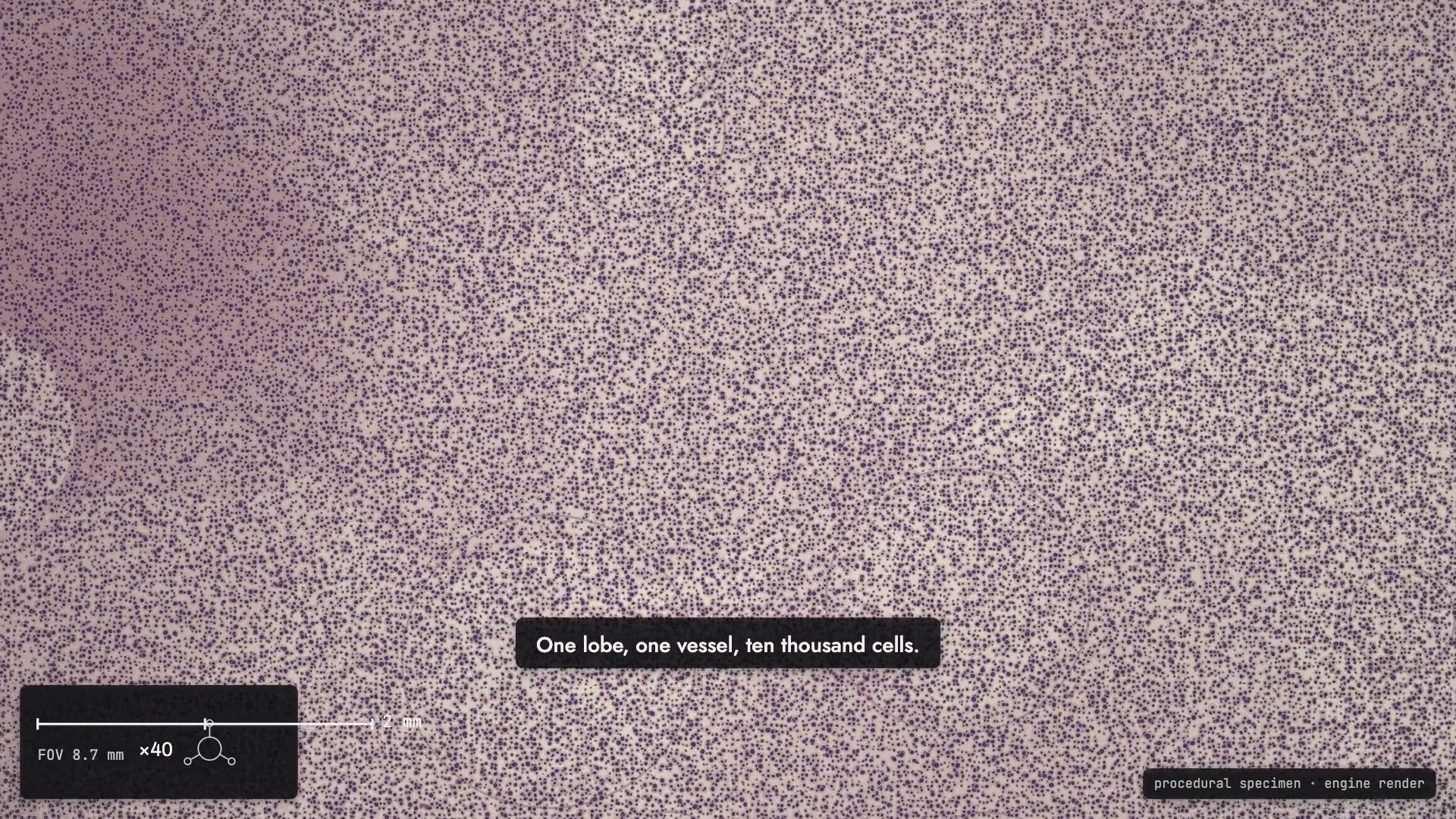
A measured log-space dive through a procedurally grown specimen — the slide on the bench down to a single cell at ×630, with a 1-2-5 scale bar, focus breaths, a focal-plane sweep and micron-anchored readings.
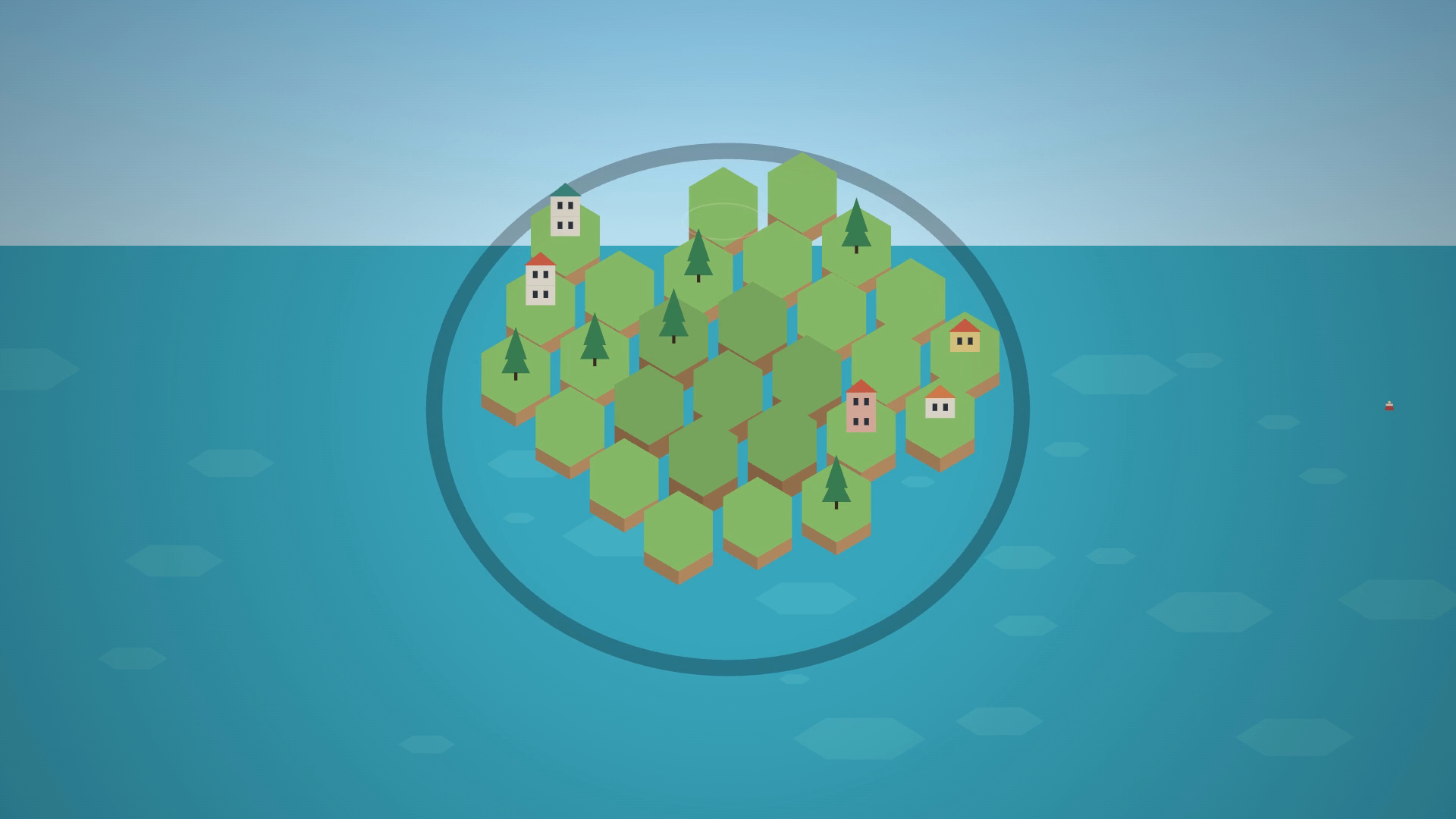
A procedurally grown low-poly island rises from an empty sea one hex tile at a time — each landed tile plays a synthesized marimba/kalimba note — cycling dawn→day→dusk→night until a ring-of-light sweep replays the whole theme in spatial order.
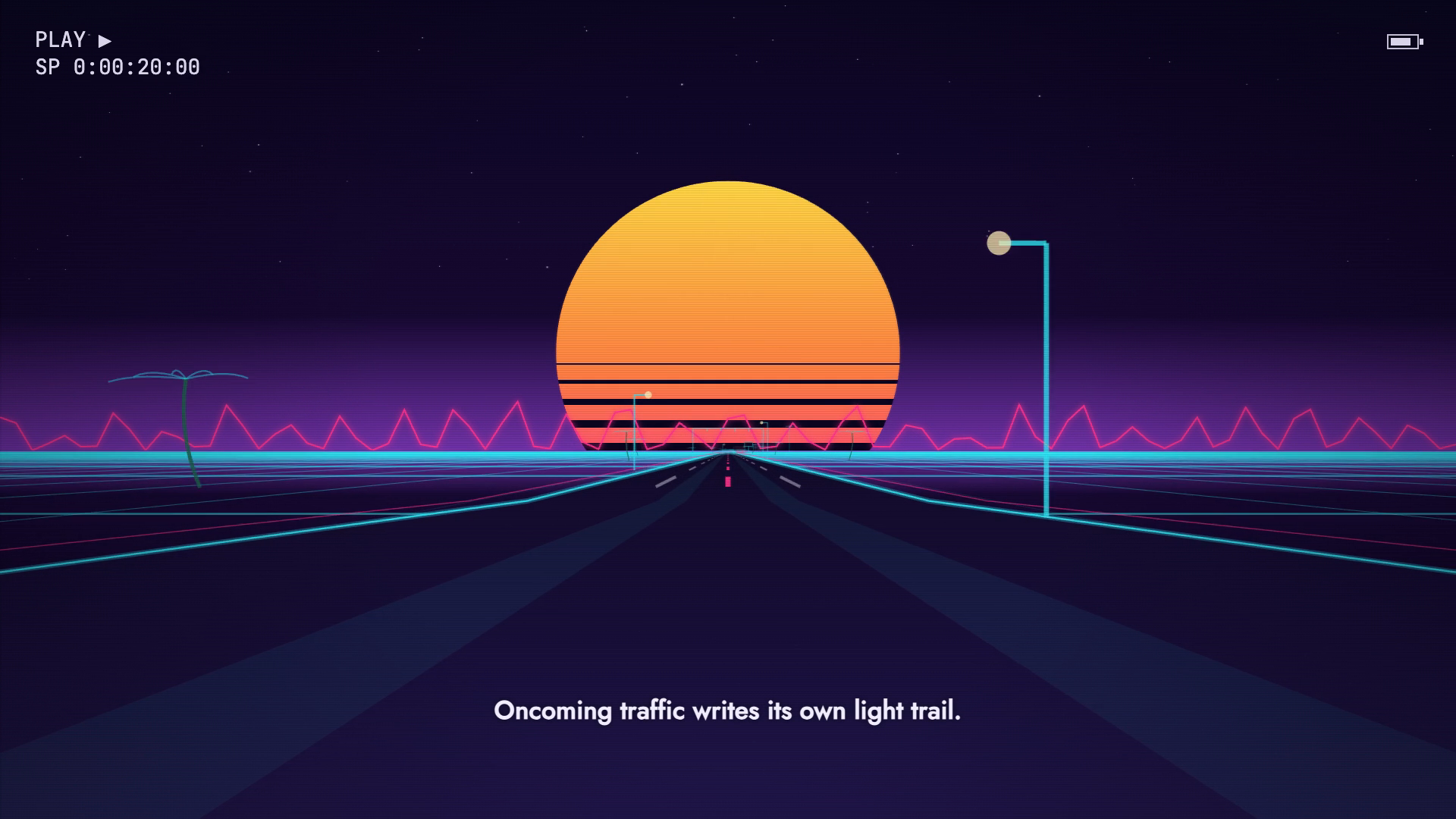
One continuous night drive through a retro-futurist world: a single-point perspective road rolls toward the camera under a striped sun, through a cyan wireframe ground grid and magenta ridge, past lamps, signs, gates and oncoming light trails — all scored by a synthesised synthwave track locked to the same beat grid as the picture.
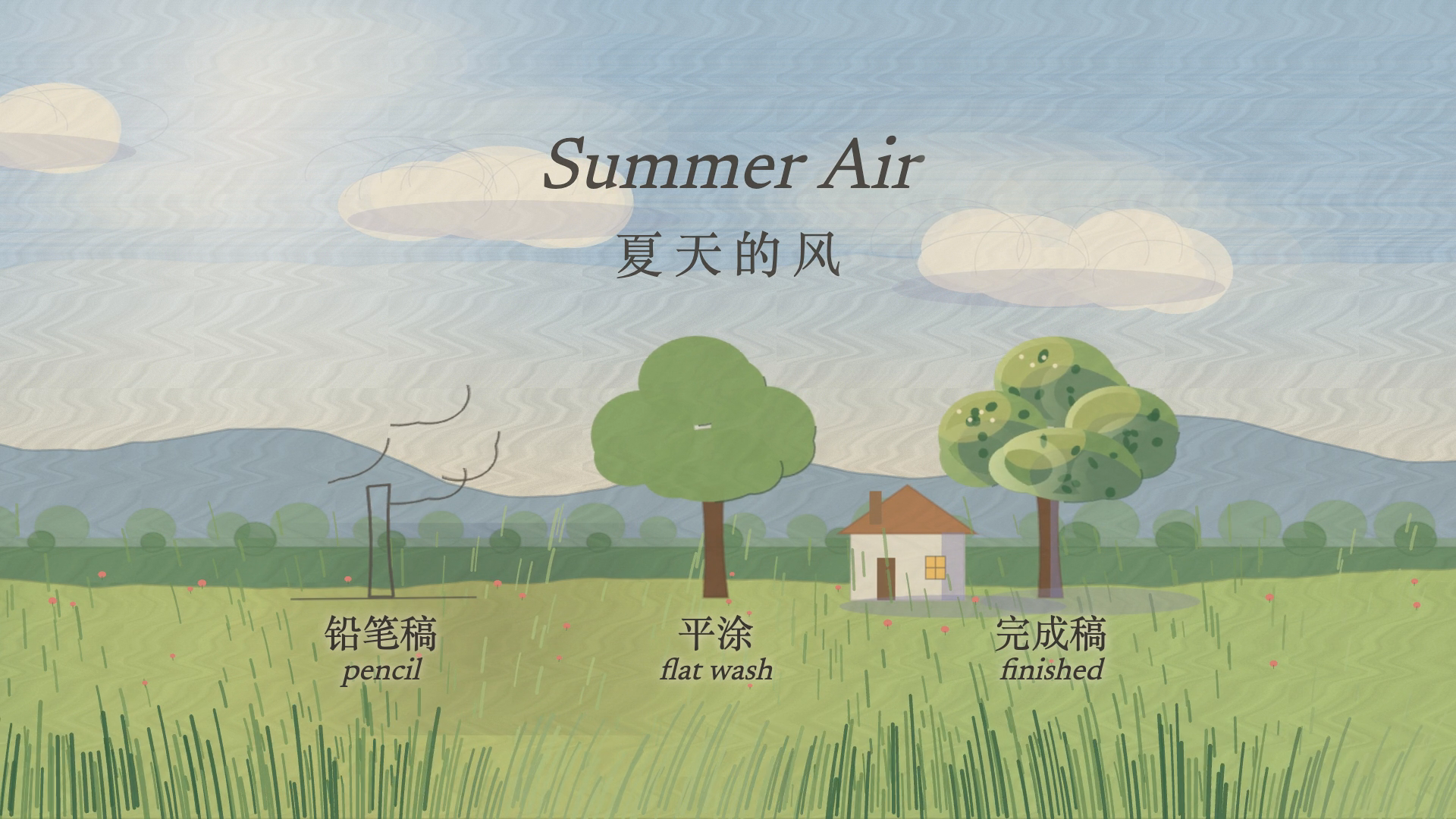
A calm pastoral watercolour film: a wet-in-wet sky washes down over four aerial-perspective layers while wind travels through the meadow as a seeded wave — grass, the tree crowns, petals and the wind voice in the score all read the same gust curve, and a synthesized F-major piano/flute/strings piece lands on phrase boundaries.
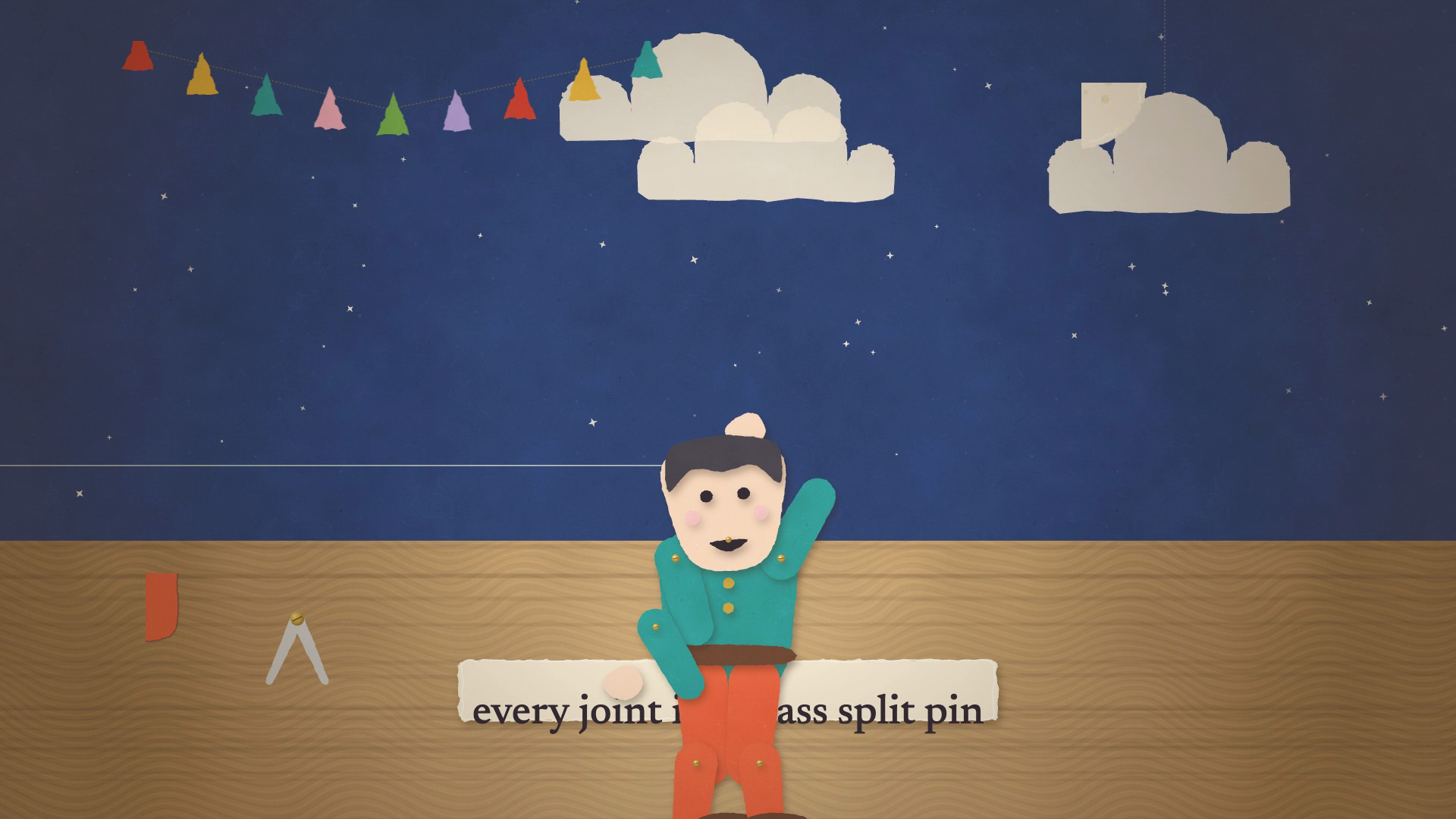
A stop-motion paper cut-out film on a warm-lit tabletop — a jointed puppet pinned at every joint by brass split pins walks, waves, leaps and bows on a torn-paper night set, poses stepping at 12 fps with per-step jitter, procedural paper grain, depth-stacked shadows and a synthesized plucked score whose foley lands on the step clock.
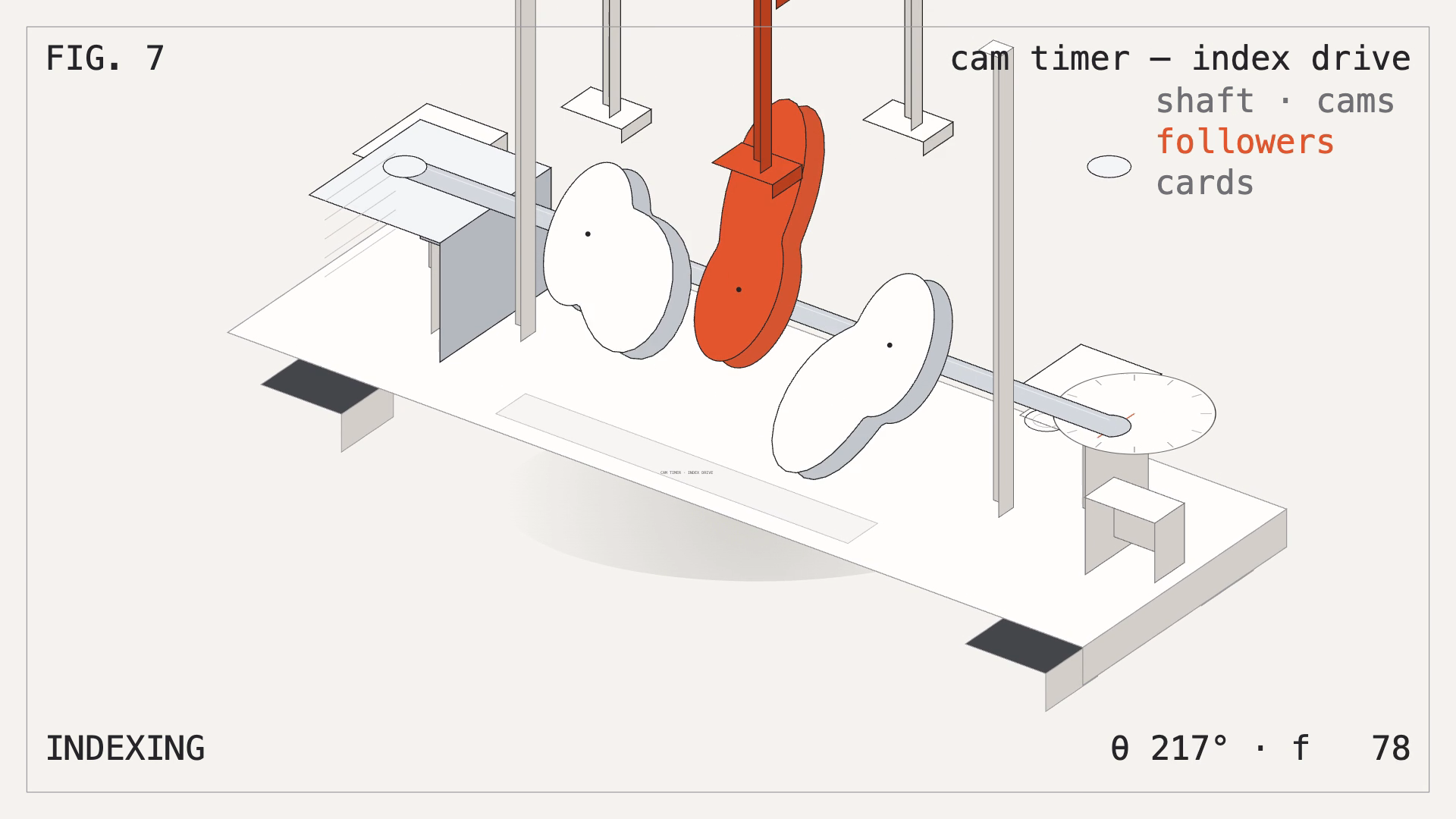
An isometric technical illustration of a small machine that explains itself — a shaft indexing three cams lifts three cards through their followers, then the whole machine explodes along its assembly directions into an exploded diagram. Real kinematics: follower lift is computed from the cam profile, four-step shade ramp picked by face normal, hairline strokes only, one causal chain lit vermilion at a time, a synthesized tabletop-instrument score.
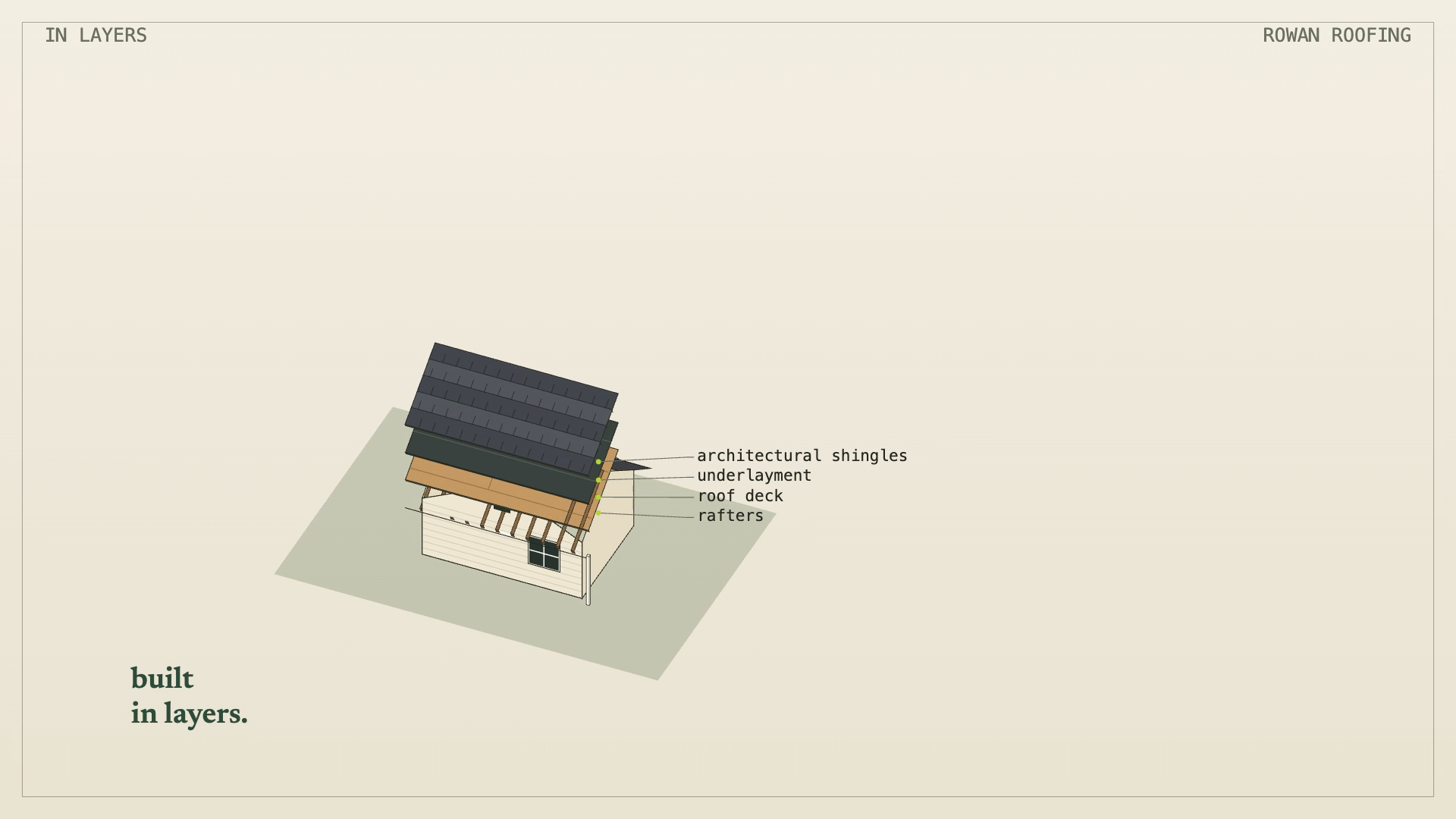
A field-note service film for a fictional roofing inspector. An orthographic painted house turns for the camera, the front roof plane lifts apart into rafters → deck → underlayment → shingles with leader callouts, three lime reticles sweep the inspection spots into a drawn thumbnail rail, the camera orbits while findings pin into context, and a report card lights row by row. Painter-sorted faces, straight-lift explode, and a fully synthesized felt-piano score with camera-shutter foley — no photographs anywhere.
An animator's field-guide film for a fictional motion studio. A bouncing ball draws live onion-skin ghosts and frame ticks to explain spacing, two headline lines drop in letter by letter, four principle words are each animated by the principle they name, an easing graph's puck deposits its own spacing ghosts on a strip below, a 16-disc chain trails its head, an anticipation loader compresses then launches, and a role/name lockup closes — all annotated in wavy-arrow margin-note hand style on a pin-marker timeline ruler, with a fully synthesized marimba score and ball-thump foley.
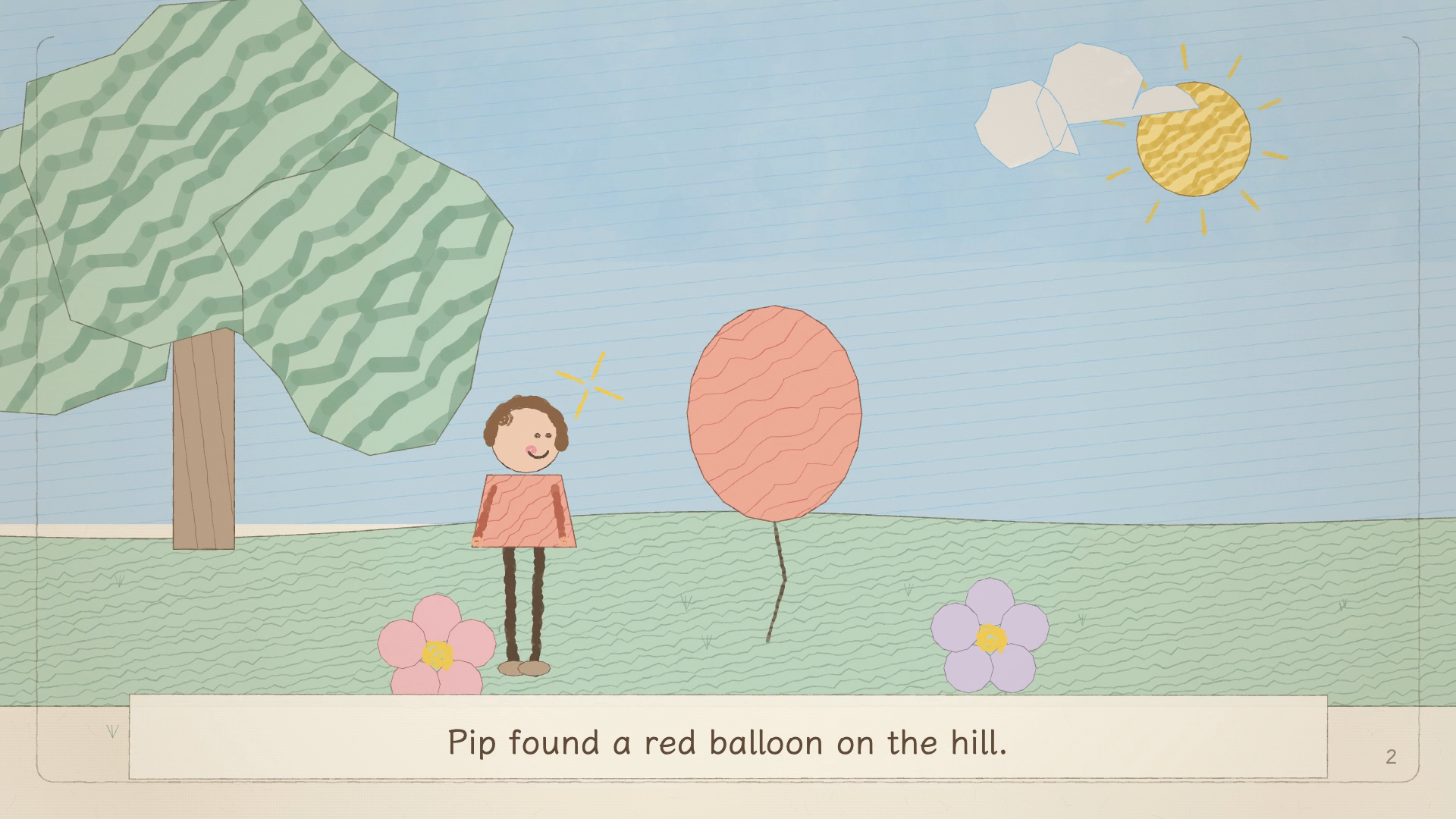
A hand-drawn picture-book film that re-draws every spread 8 times a second like a re-coloured animation cel — directional crayon scribble fills broken by paper tooth, coloured-pencil outlines, a drawn page-turn curl between spreads, hand-lettered bilingual captions, and a fully synthesized music-box score.
A scroll of ukiyo-e woodblock prints pulled through a viewing window: each bordered view is stamped in misregistered colour blocks (blue, sky, green, red, key) that slide into registration with baren rub and paper grain, then a vertical cartouche and red seal drop in while the camera holds and slides to the next print — scored by a fully synthesized pluck/xylo/piano track.
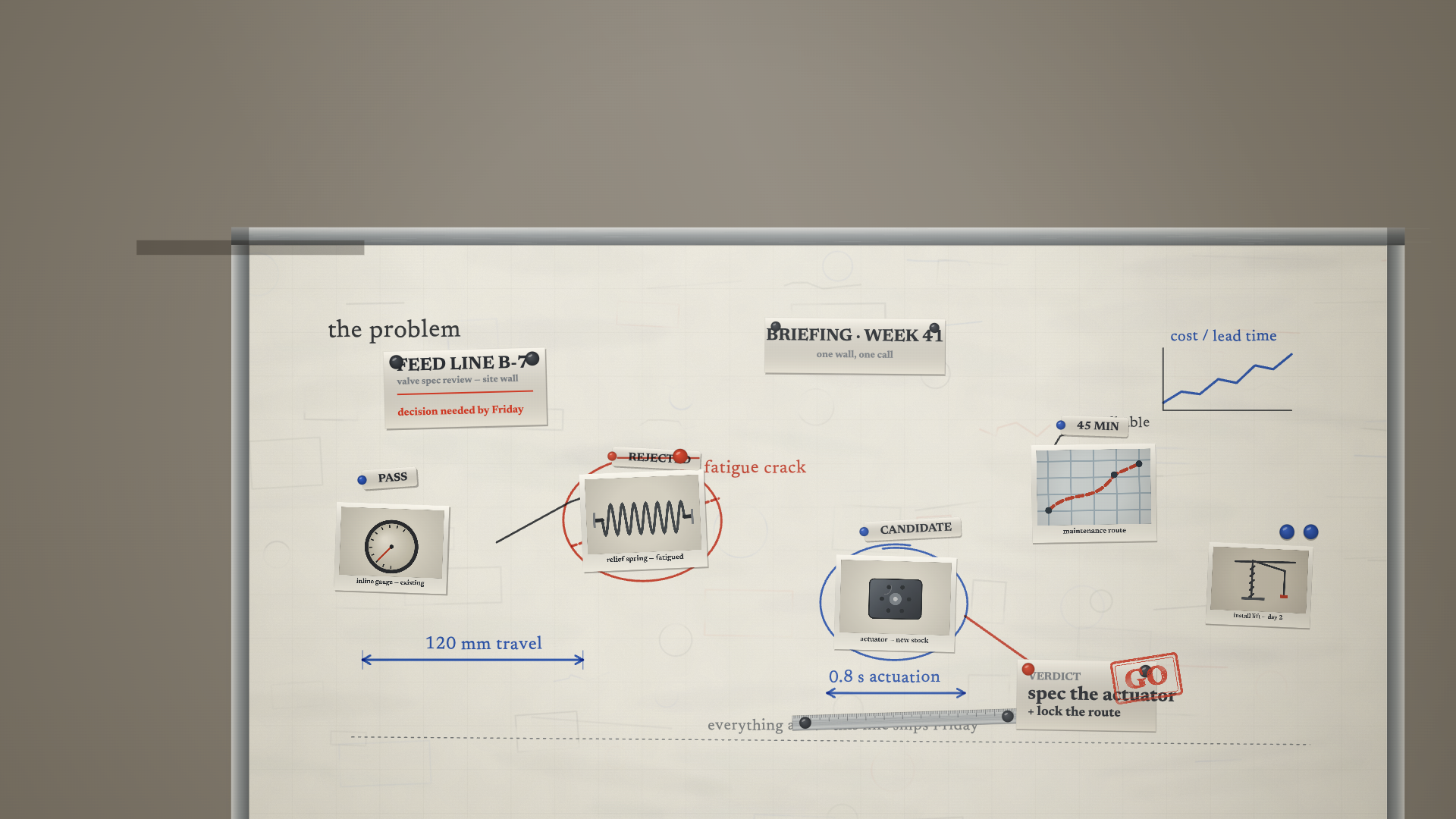
A steel briefing wall filmed in one continuous take: photo plates, pinned cards and magnetic tags drop in with real weight, marker ink writes and measures in three colours — graphite for facts, blue for measurement, red only for the verdict — and the camera rides from item to item before a long pull-back reveals the whole wall for the first time. Score and foley are fully synthesized.
An 80s cel-anime opening in one continuous take: an airbrushed painted plate pans under a hand-held camera while flat-shaded cels (hair ribbons, jacket, scarf, almond eye) step on twos. Neon signs, lit windows and the chrome title card bloom through a videotape + CRT pass — chroma bleed, scanlines, aperture grille, corner falloff, tracking noise and a dot→line→picture power-on. Score and tape foley are fully synthesized.
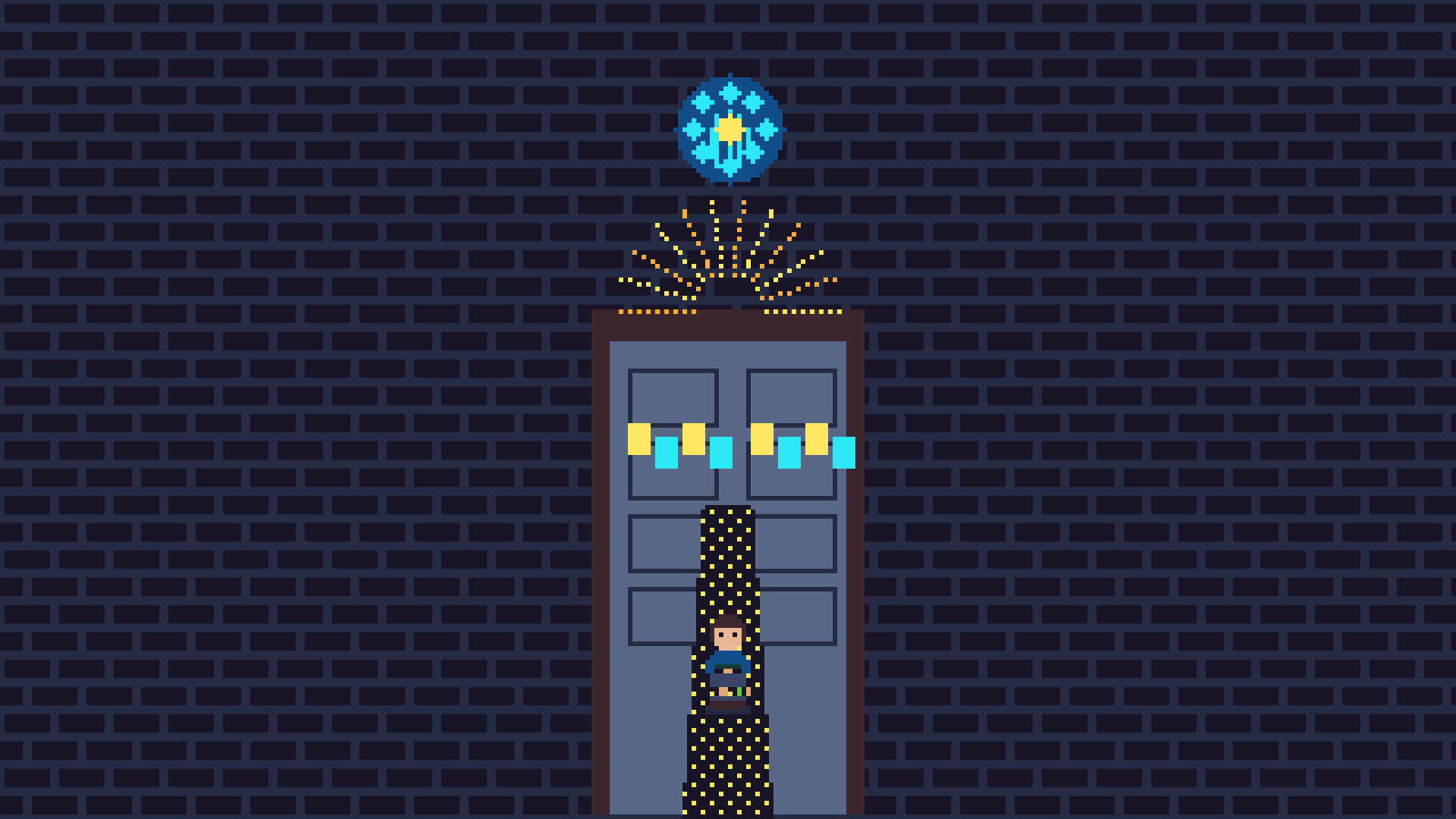
A short film that behaves like a mid-90s console RPG: a 320×180 indexed framebuffer scaled ×6 nearest-neighbour, a limited palette, dialog boxes that type, save-file lists, HP bars and an encounter swirl. Colour depth itself is the story tool — eras shift between 16-bit, 8-bit, 4-colour and faded through palette LUTs, and one protected colour threads through every reduction.
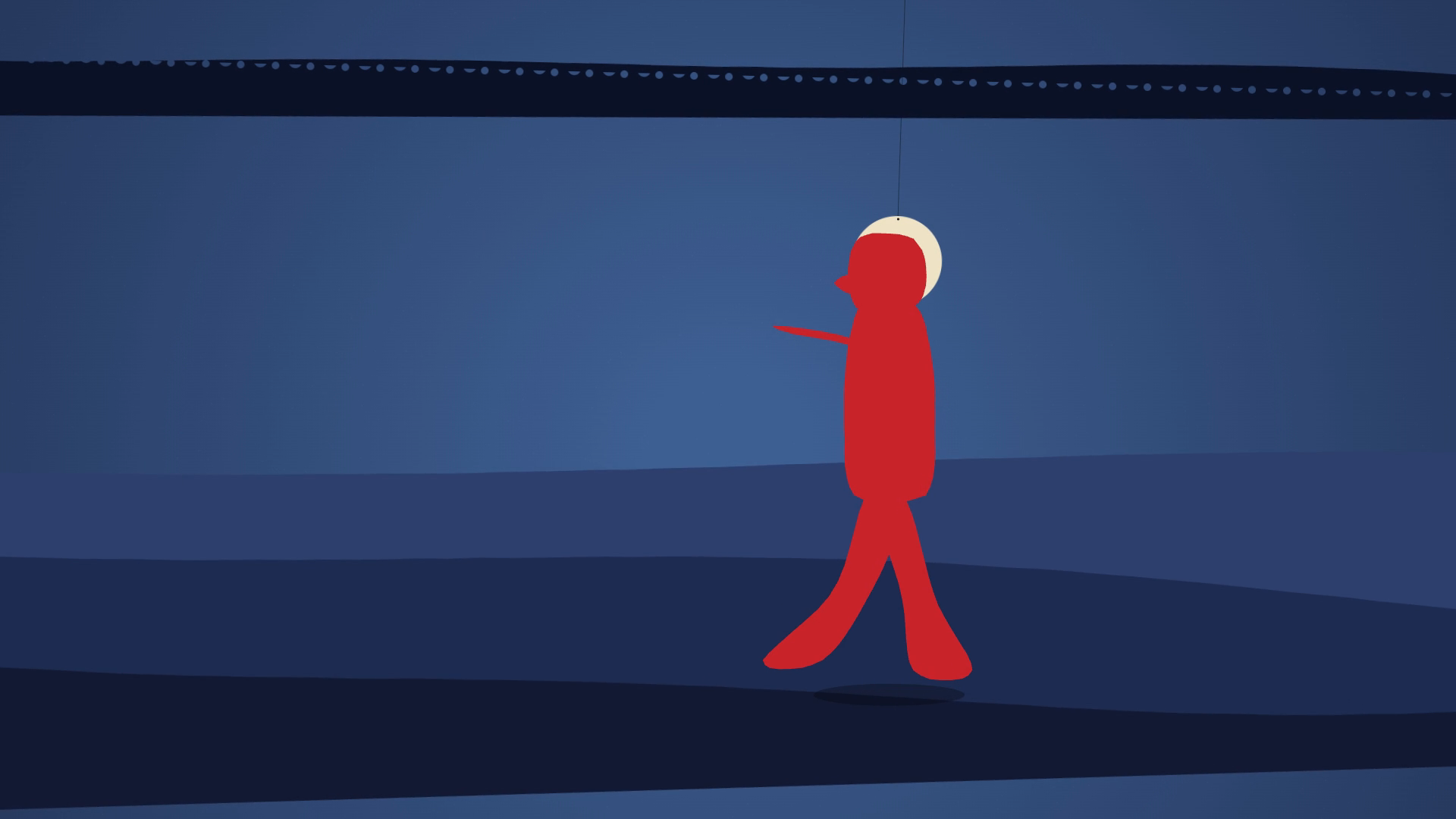
A short film in layered cut paper: flat coloured sheets with hand-cut edges and soft shadows, single-colour silhouette figures walking in a stepped 12 fps cycle, a moon on a thread, a picket-fence wipe between shots, pop-in cut-letter titles and an iris close — with a music-box score and paper foley.
A film that is one monochrome CRT terminal: real characters on a fixed grid typed at machine or human cadence, line-by-line log scrolls, a 530 ms blinking block cursor, phosphor afterglow decaying as exp(-dt/tau), scanlines, bloom, barrel curvature and a power supply that collapses the picture to a line and a dot — with a synthesized mains-hum and detuned-arp score.
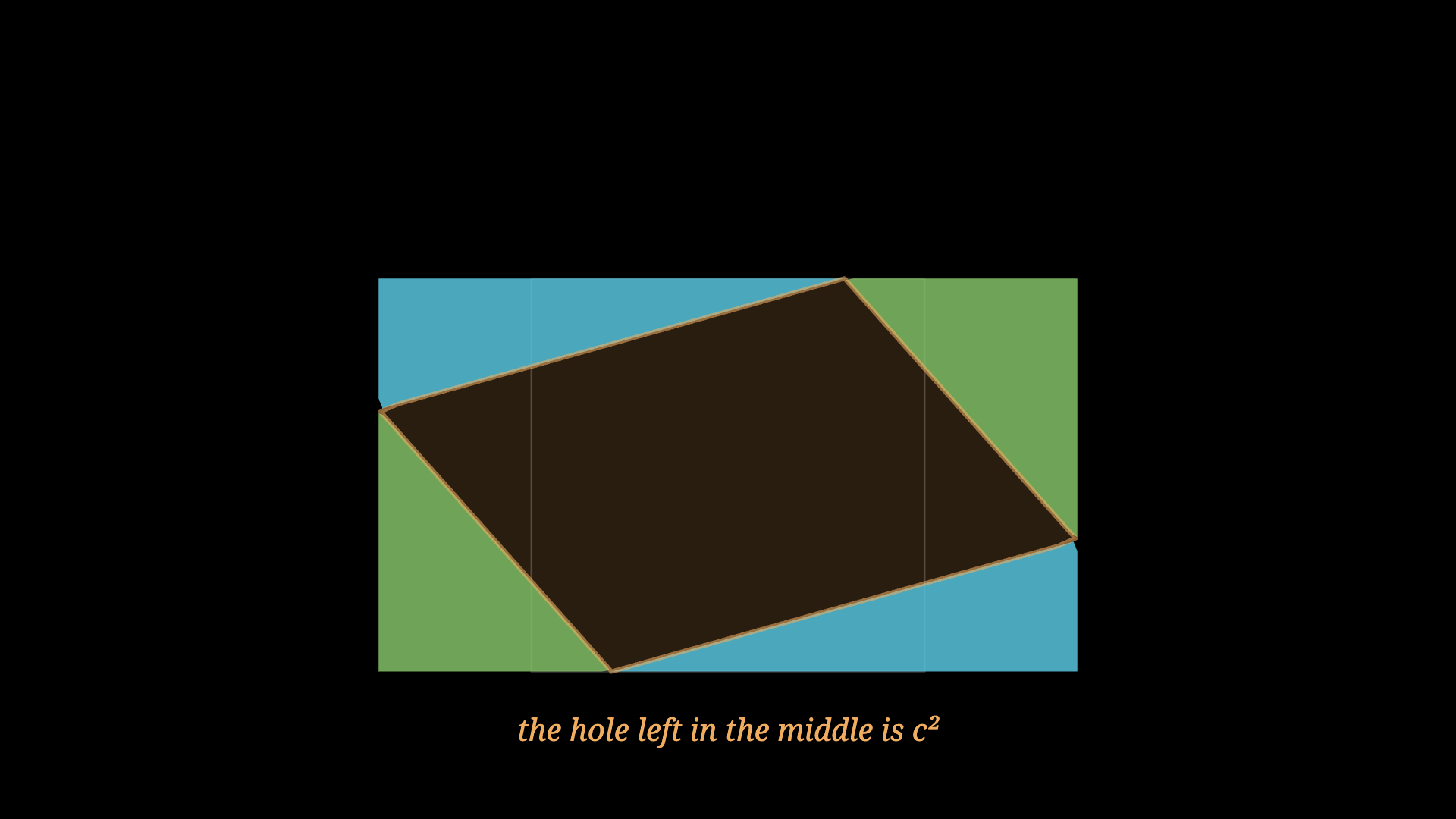
A mathematical proof film on pure black: every entity owns one colour shared by its geometry and its formula symbols, figures resample to 72 points and morph point-for-point, equations light up term by term, titles hand-write, and a tombstone square lands on QED — with a felt-piano arp, string pad and celesta score synthesized from the same cue list.
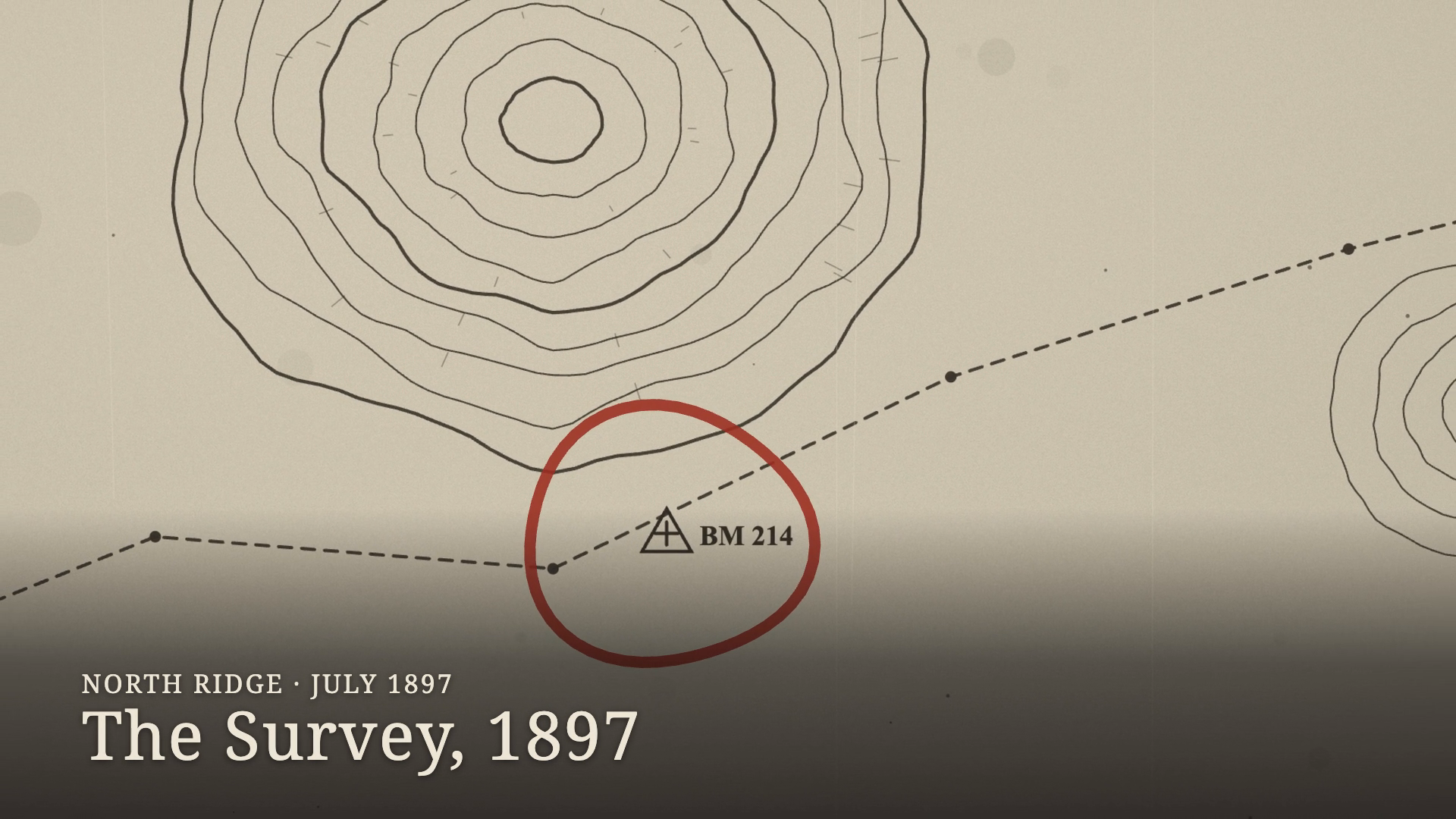
A documentary film that only ever shows still photographs, letters and maps: procedural plates graded to one warm monochrome with baked vignette, grain and scratches, a camera already moving at every cut that pushes in on a detail or pans along a route, one faded-red ring annotation, restrained serif captions, and a fiddle lead over felt-piano rolls and roomtone — synthesized from the same cue list.
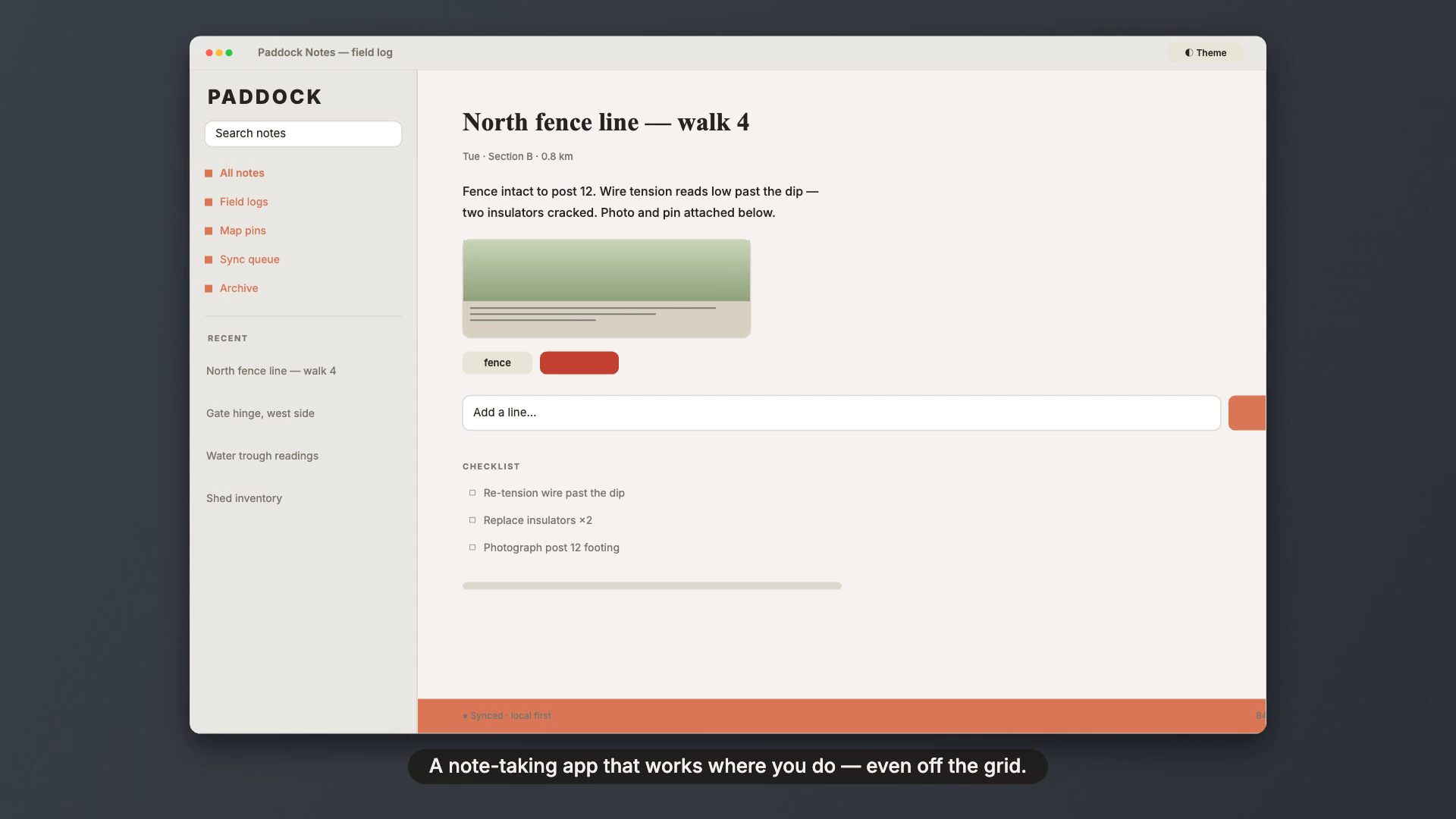
A product walkthrough that reads as a real screen recording: a hi-res fictional app redrawn in 2D, a recording-style camera that pushes in on the cursor and whip-pans between panes, and a lo-res pixel mascot that stands and jumps on the top edges of real elements with anticipation, squash and dust — typed text, row selection, progress and a mid-film dark-mode circle takeover all change state for real.
An adult-swim-era sci-fi sitcom short: a deadpan lead and a nervous sidekick chase a petty errand through dimension doors. Every contour boils — resampled to ~7 px and cycled through three 12 fps redrawings — over flat fills with one hard shadow, and each world owns a palette so a cut lands before the eye parses a prop. A lumpy doorframe portal is the only glowing thing; dialogue is styled caption cards with a text-driven pseudo-lipsync, no TTS.
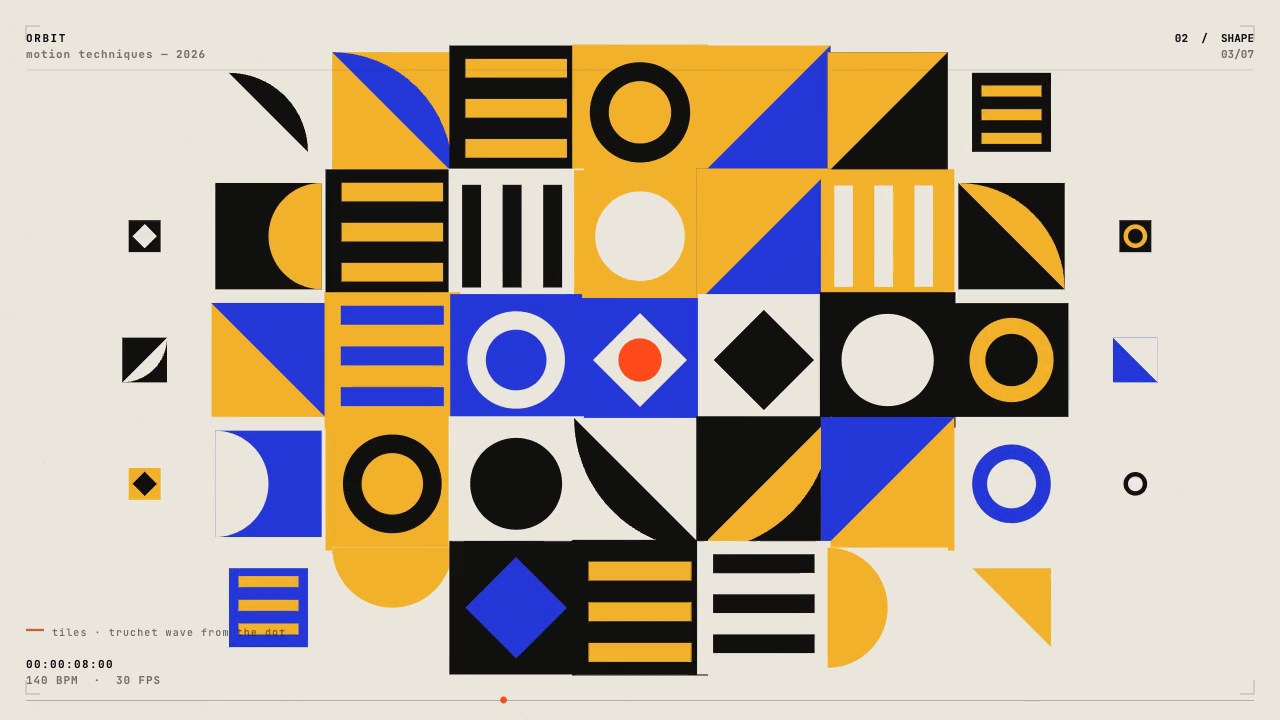
One dot travels through motion techniques — squash, rising type, a truchet tile wave, a particle torus, metaballs, a live data readout and a wordmark — as a single continuous protagonist inside a technical HUD.
A hand-drawn running critter trades the frame with loud kinetic type — an eye opens and dives, outlined marquees scroll under a dashing creature, letters drop and a trailing O wipes into an eye, a crowned pose on dot-paper, and a moon-lit hero word closes it — all on cut-paper grounds with misregistration trails.
A keynote-style parody launch for a self-drawn everyday product — a pour-over dripper on a carafe drawn only from canvas primitives — staged on white like a flagship reveal, through a name drop, two-tone feature line, rolling size counter with a ruler, dark-field macro close-up, battery drain gag, joke spec card and a closing price lockup.
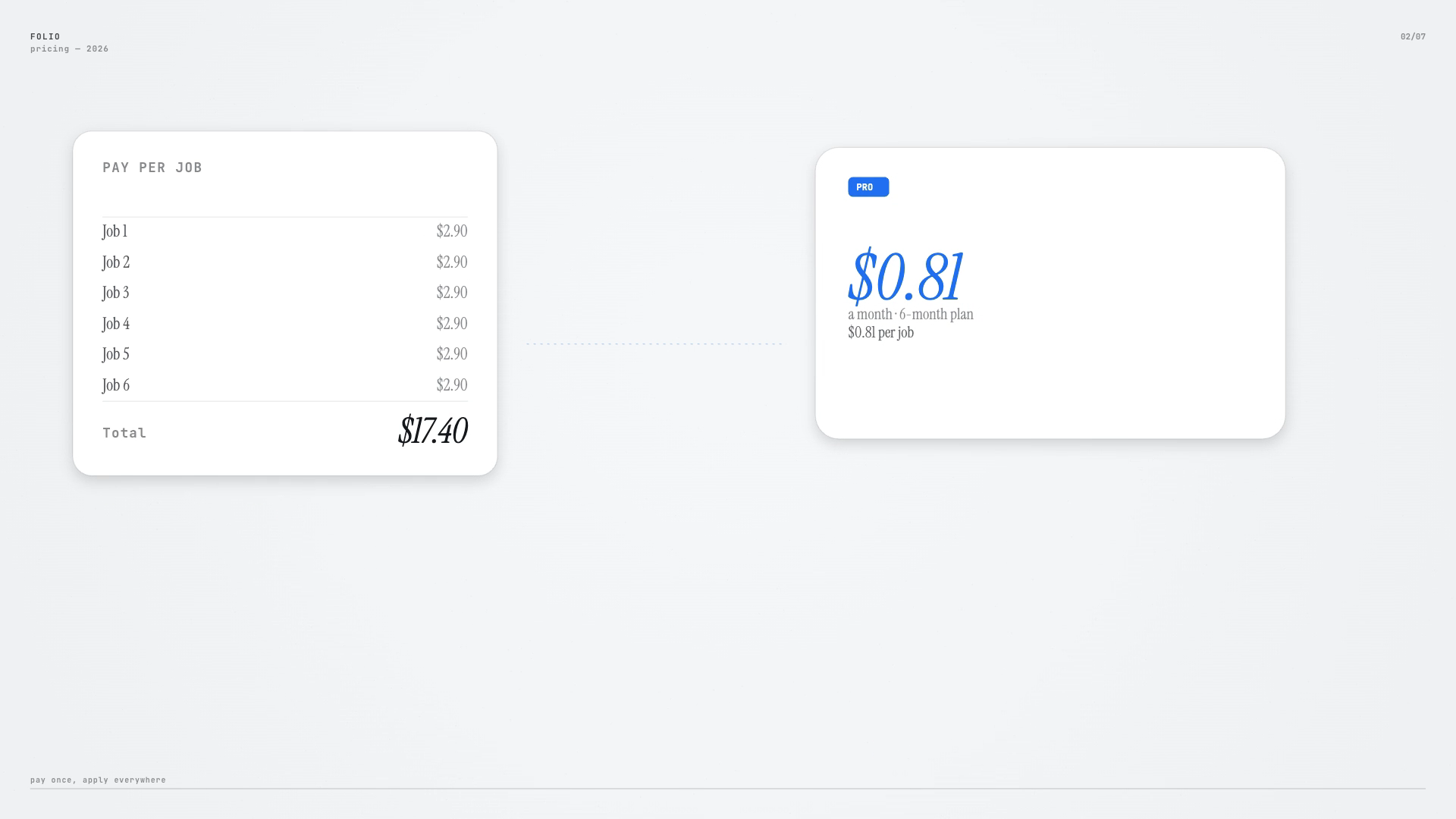
A pricing persuasion explainer — a serif hook over a fanning pile of job cards, a live receipt-vs-Pro ledger that divides the plan price by every job until a green break-even banner lands, a card flip into the blue feature tile, five illustrated feature rows, a dark cost-of-waiting slide, a checkout card whose button swallows the frame, and a blue end card.
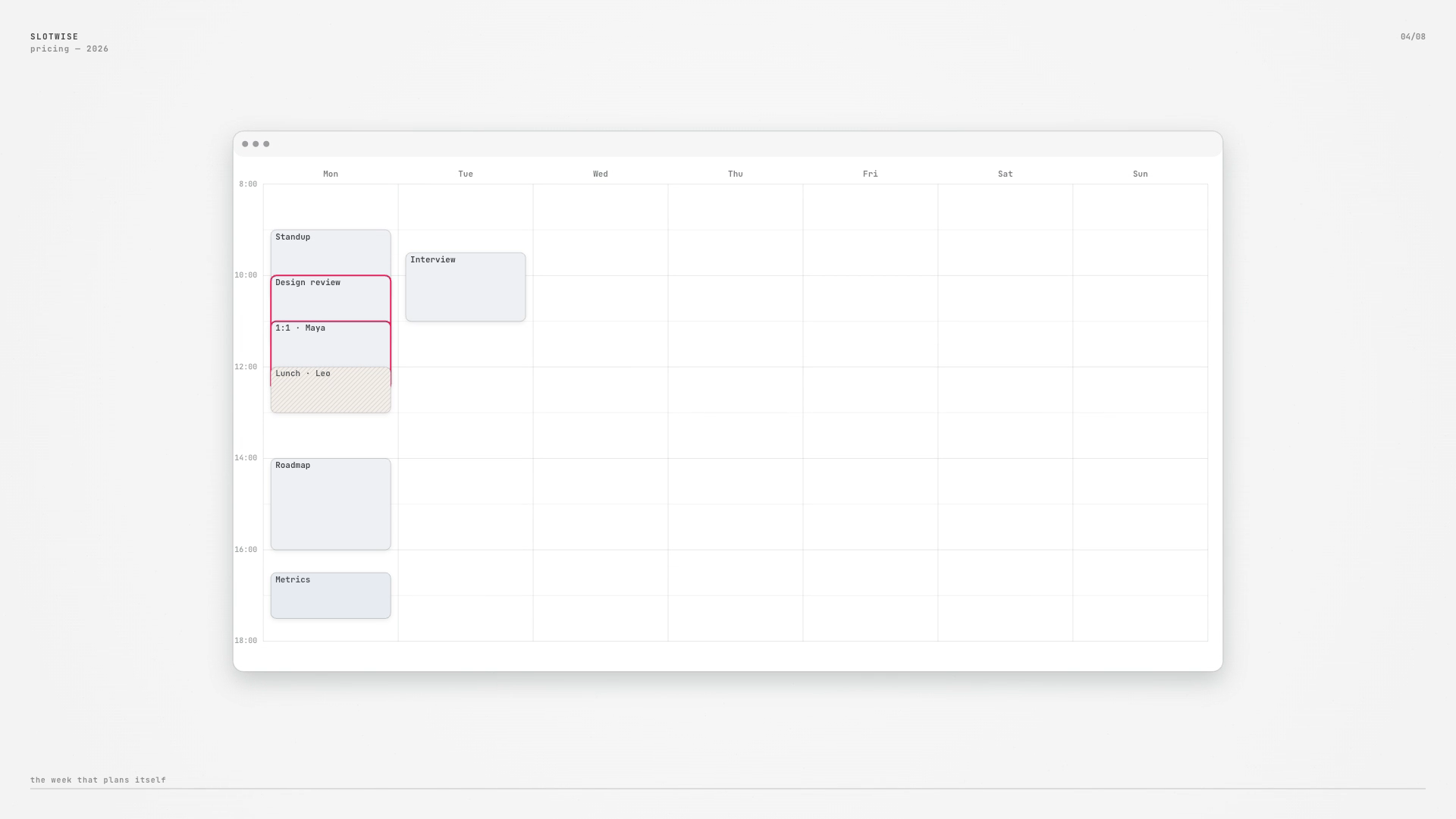
A launch film built on a self-drawn week-grid rig and a red now-line — the dot grows a calendar, meetings pile into a clashing mess, a typed prompt with live chips reshuffles the week in a 3D tilt until no clashes remain, three split close-ups show it move, then the dot lands as the period of the end line.
A bundle-launch persuasion reel from one JSON sheet: subscription cards pile up under a live monthly-spend counter, three slamming beat words on a red tint, a diamond-mark brand lockup over a perspective floor grid, four product slides dealing through the frame, a tilted wall of drawn screenshots with lighting feature chips, a deal card that strikes through every subscription price and circles the one-time price, a rolling customer counter over accent rays and stars, and an accent end card with a shining URL pill.

A create-once / cross-post promo reel from one JSON sheet: channel icons fan into an orbit around a video card, a composer types its own caption and posts, ten phones light up one by one while a counter climbs to 10/10, the channel names hard-cut on alternating fields, a chat bubble schedules onto a glowing week calendar, and the broadcast mark closes it.
An agentic-triage launch promo from one JSON sheet: a post floats over a wall of replies, an agent window connects and calls two tools with live progress, the reply grid filters down to the kept set, a kept reply earns a rubber stamp and ring, the best one takes a spotlight + red carpet with confetti, the MCP / CLI / API panels fly apart, and the flame mark lands over rising embers.
Sheet-driven wall-mosaic films — a flat motif cartoon is laid in hand-cut tesserae along every contour (andamento), with mortar grout, bevelled tile edges, a lime setting bed with sinopia underdrawing, glinting gold smalti, and a raking light pass. One JSON sheet drives the film.
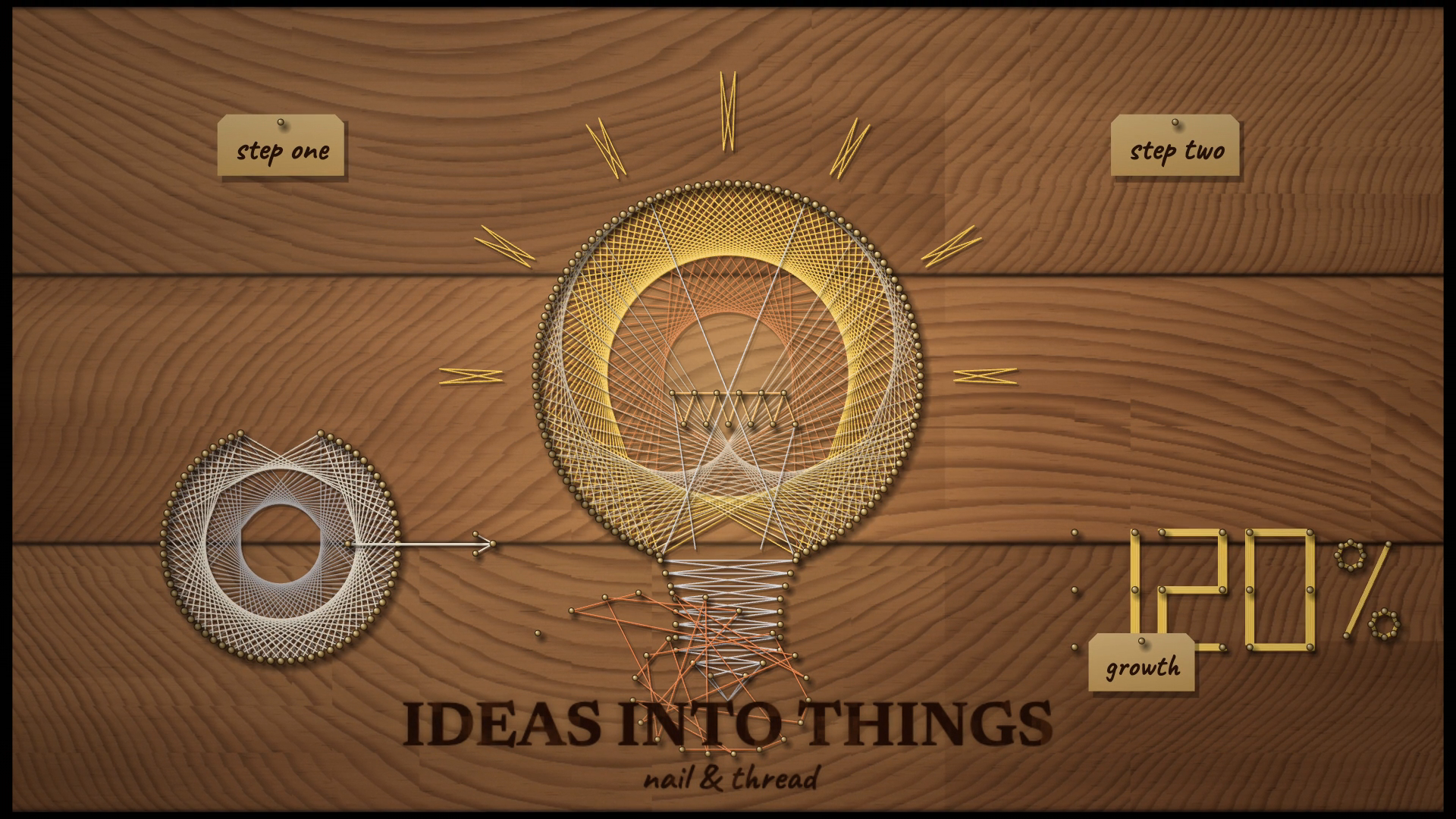
Sheet-driven string-art films — brass nails are tapped along each motif's outline on a stained walnut board, cotton thread is wound chord by chord so every curve emerges only as an envelope of straight chords, kraft tags and nail-and-thread counters are nailed on, and titles are burned in with a travelling pyrography ember. One JSON sheet drives the film.
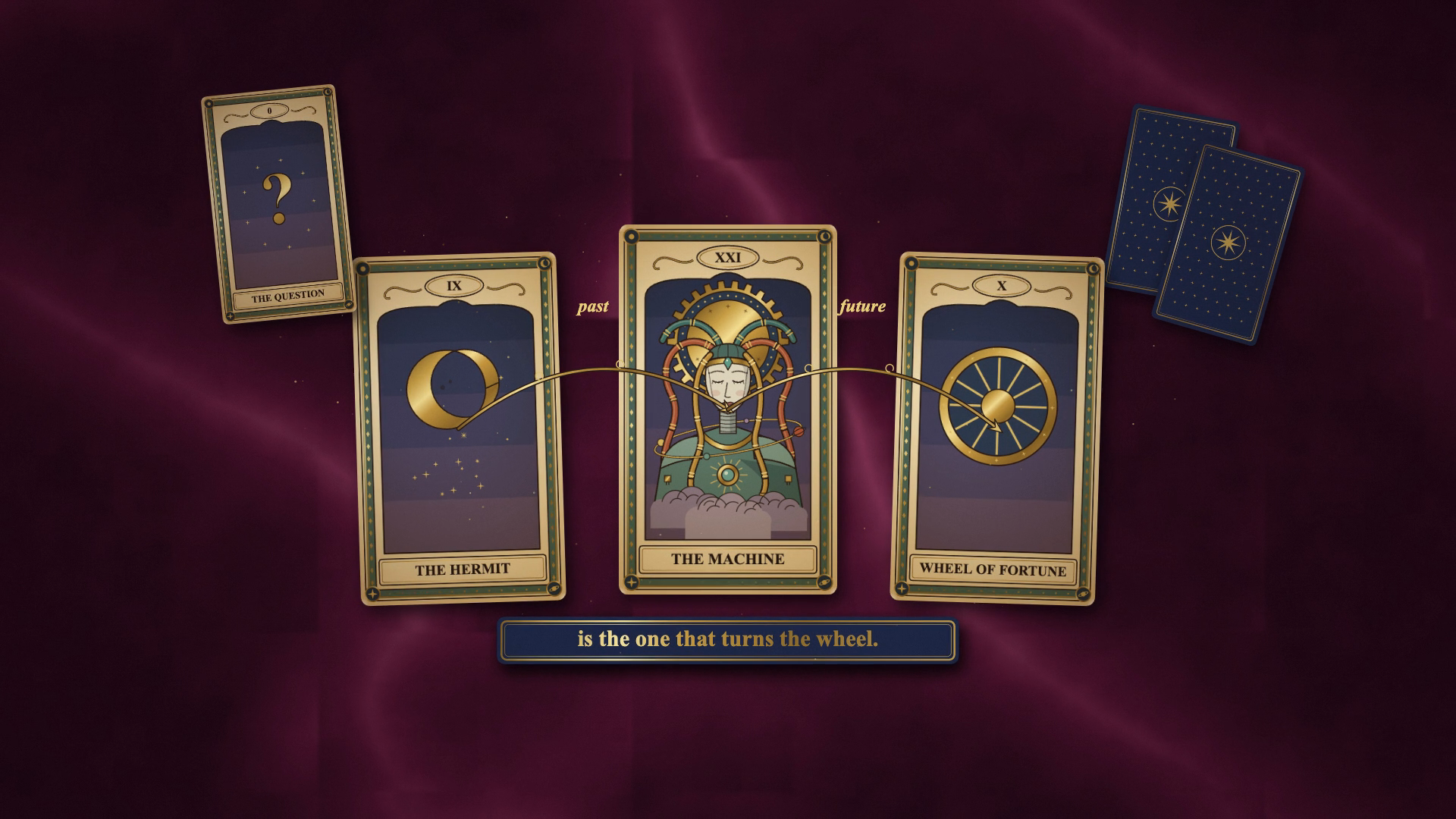
Sheet-driven tarot spread films — crushed velvet under a slow camera, a deck of star-field card backs, cards dealt one by one and flipped face-up into keyed art-nouveau trumps (arched art windows, Roman numerals, corner medallions), then filigree arrows link the positions and engraved plaques pronounce the reading. One JSON sheet drives the film.
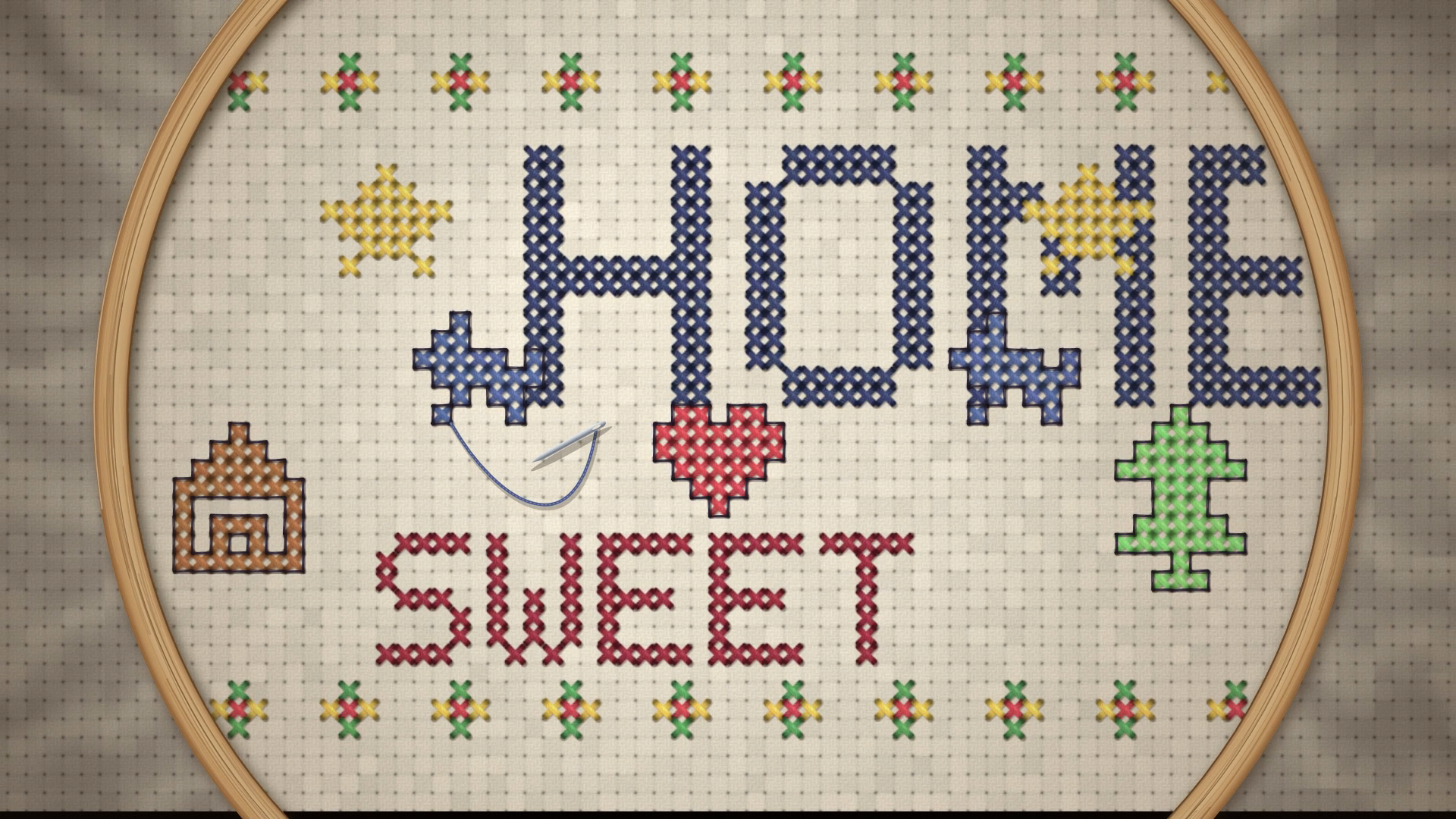
Sheet-driven counted cross-stitch films — cream aida stretched in a wooden hoop fills cell by cell, every cell an X of two-strand floss with sheen and twist ridges, stitches laid Danish-method (half pass then cross-back), backstitch outlines traced after, a parked needle trailing floss to the latest stitch. One JSON sheet drives the film.
Sheet-driven ebru marbling films — pigment drops land on the size and bloom, each shoving earlier colour into veins, a rake drags the battal stone into gel-git chevrons, concentric ring-drops are pulled by a stylus into tulips, and a wet sheen glides over the finished bath. One JSON sheet drives the film.
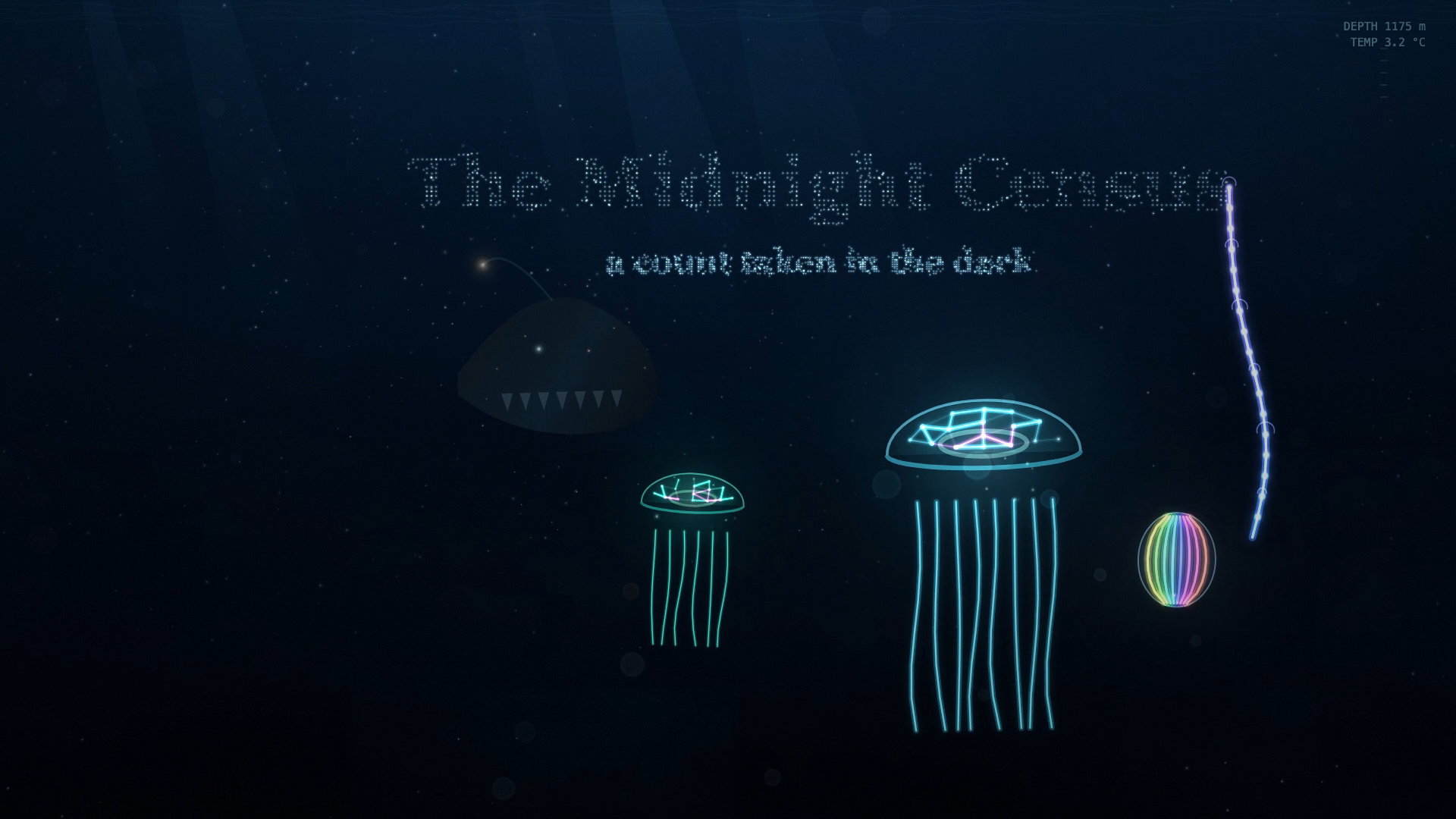
Sink through near-black water as living light switches on: a jellyfish nerve-net flickers alight, a siphonophore lights segment by segment, a comb jelly ripples rainbow, and the title gathers out of plankton.
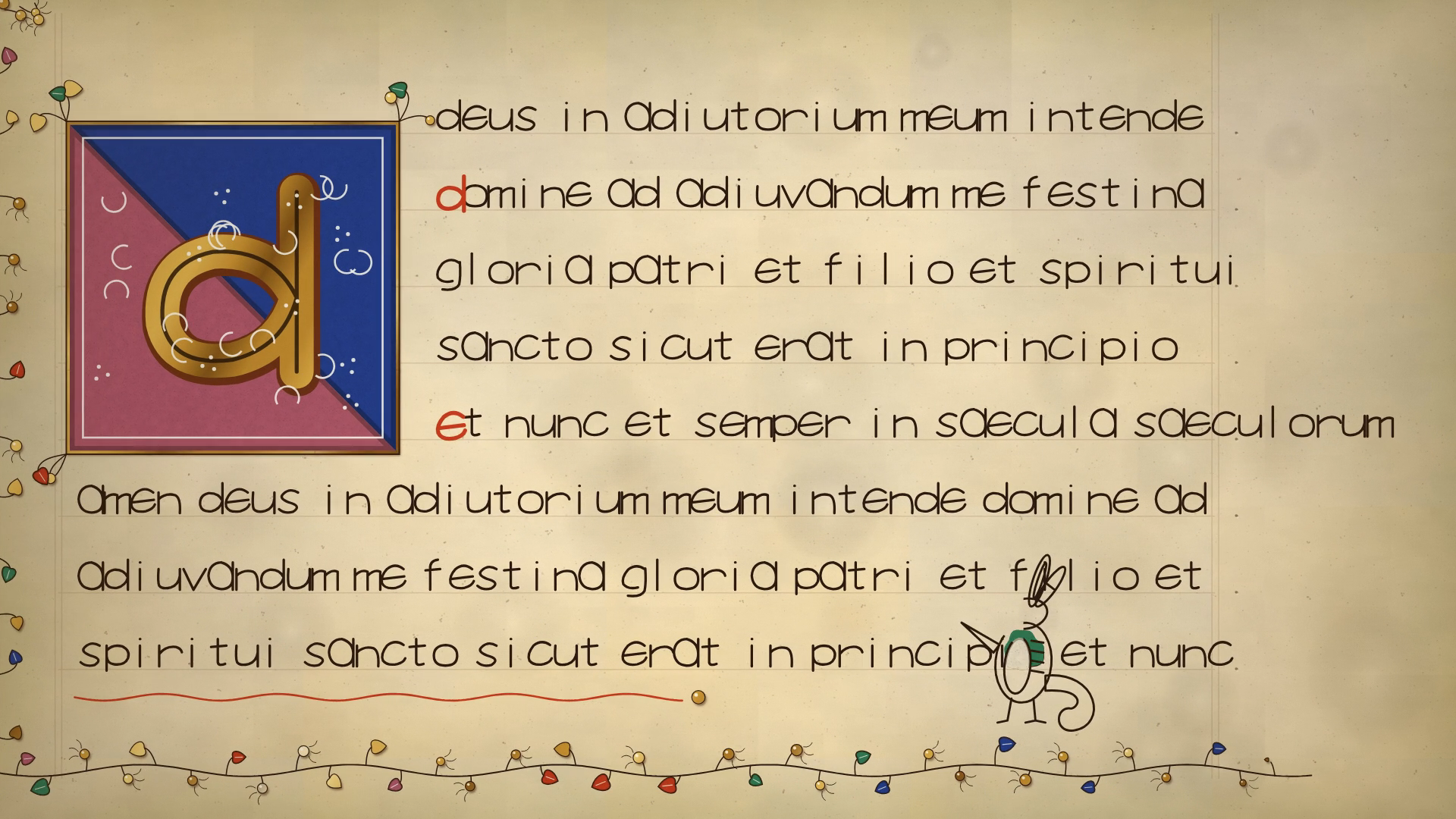
Watch a vellum page get illuminated: a champ initial gilded and flooded with lapis and rose, pen-stroked textura lines, rubrication striking red, acanthus vines growing along the margin, and a small invented marginalia creature.
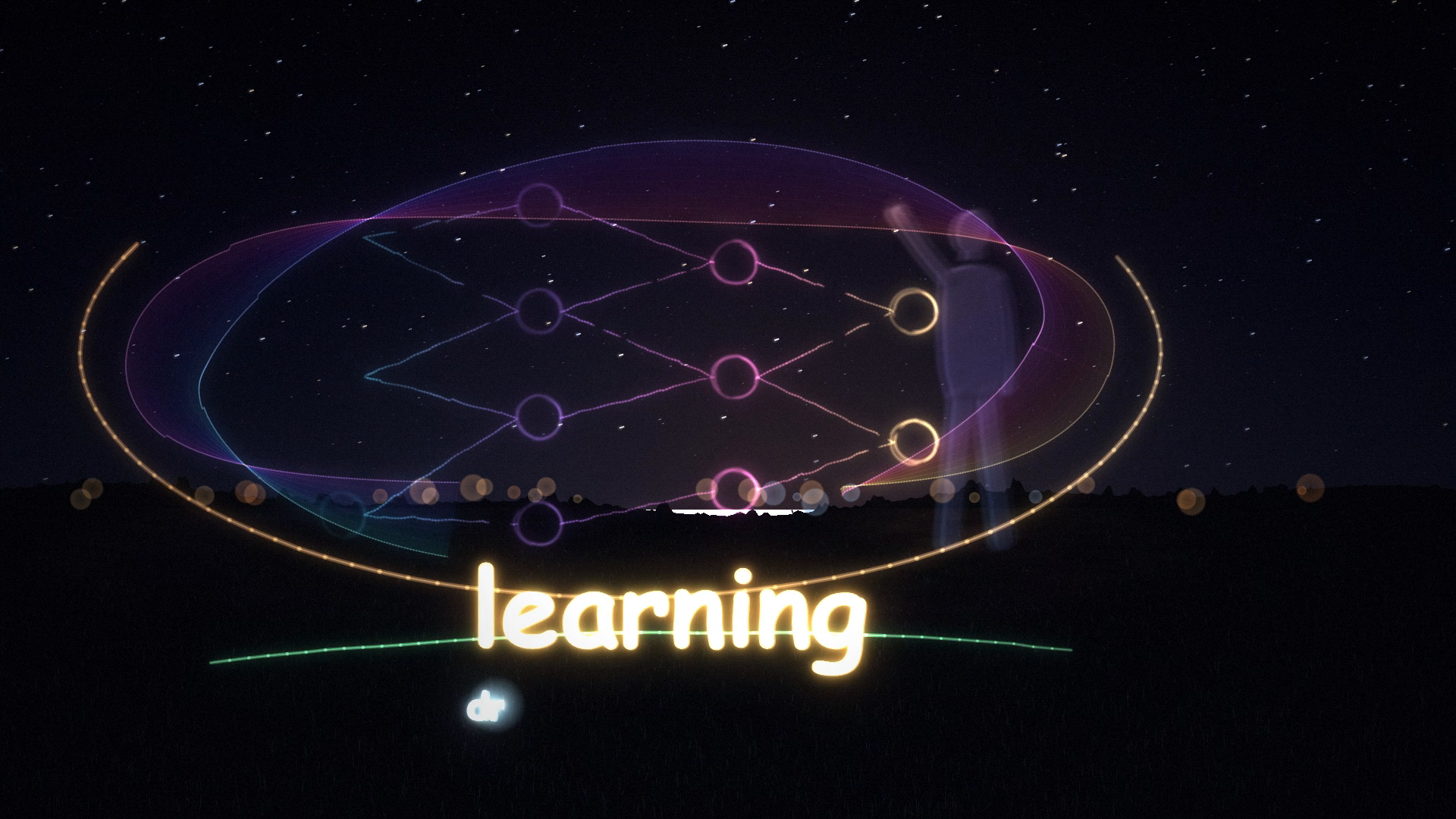
Shoot a long-exposure night scene: a translucent painter traces luminous strokes, sparkler and RGB ribbon arcs sweep the dark, words are written in light stroke by stroke, and LED digits hang in the air.
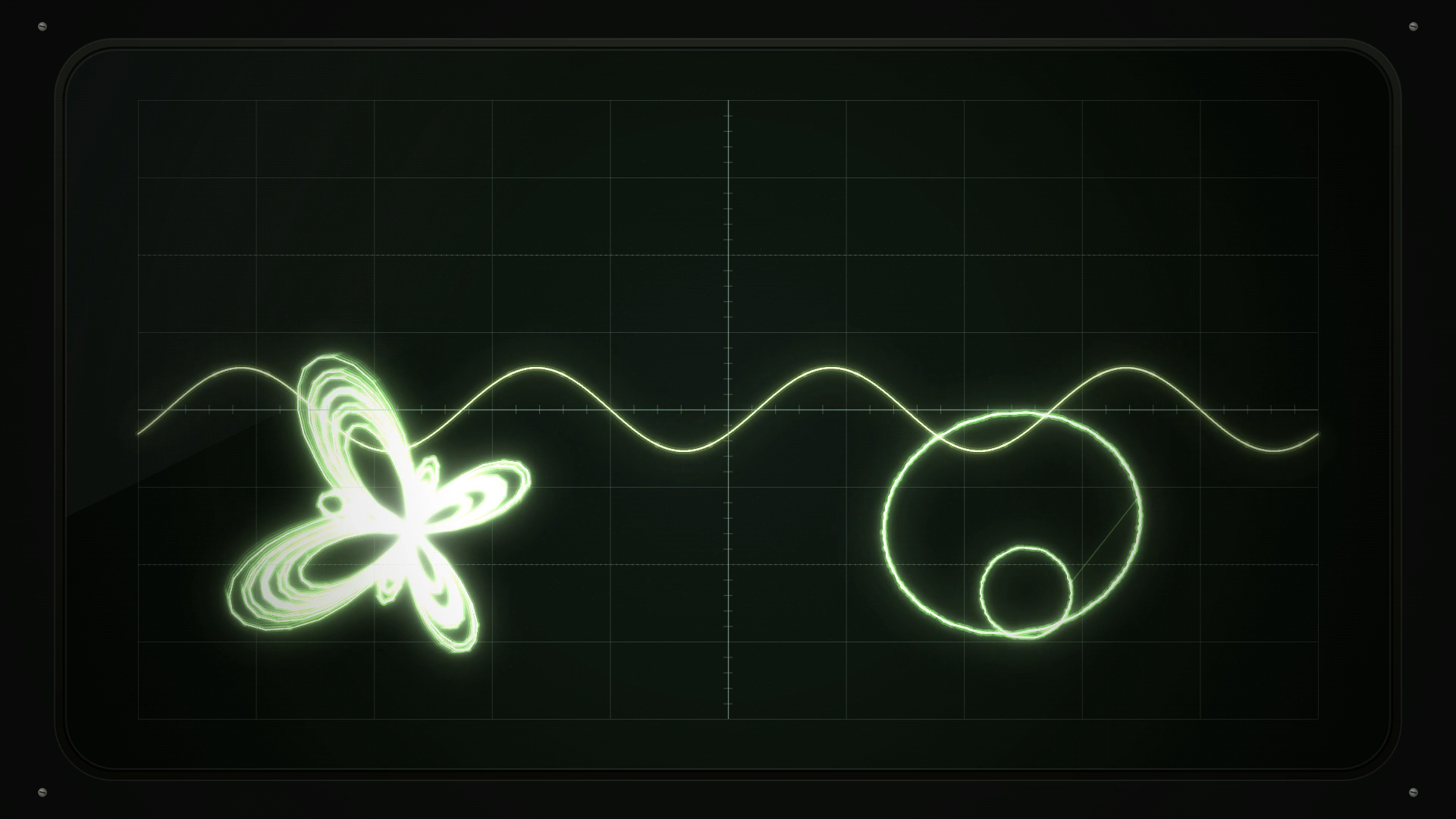
Draw figures the way a real vector scope does: one XY beam writes spirals, Lissajous figures, orbitals and stroke-glyphs across a phosphor graticule — corners flare, retrace stays dim, trails persist.
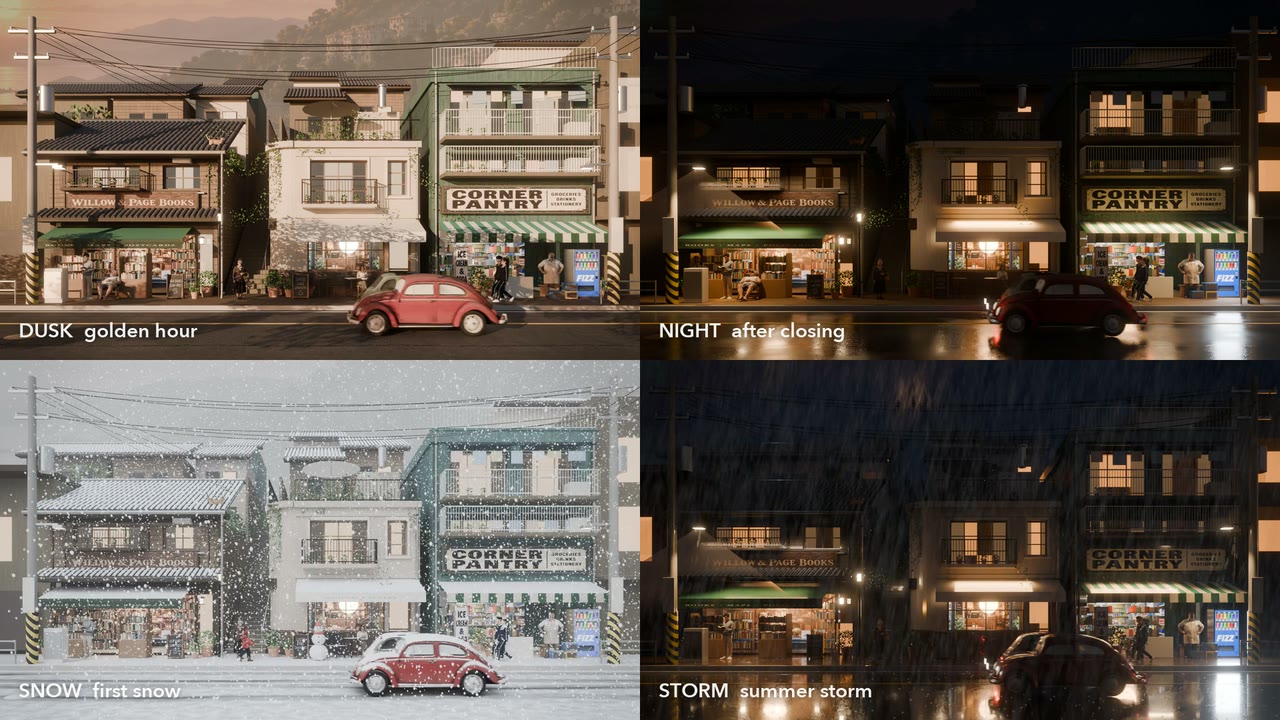
A small place built in Blender from SandBase-generated models, an old street or a seaside harbour, filmed from one camera at dusk, at night, in snow and in a storm, with motion-capture walkers, music and ambient sound. The third example, Treasure Island, is a walkable world: five game zones in six weathers. Five Skills: the whole pipeline, or one stage at a time.
Build a readable conversation with anchored avatars, layered messages and a quiet final hold.
Turn your next idea into images, films and stories with a repeatable creative workflow.
Prepare a content brief, source media and the formats needed across your channels.
Start with a task, then explore the possibilities.
Research audiences, plan content and manage social workflows.
Explore Social media ↗Create animation, transitions and visual stories.
Explore Motion ↗Explain knowledge, history and scientific mechanisms.
Explore Education ↗Explain product value through launches and demonstrations.
Explore Product marketing ↗Compare the inputs and deliverables before you begin.
| What you have | What to look for | Next step |
|---|---|---|
| A clear brief | Prepare a content brief, source media and the formats needed across your channels. | Browse this collection ↗ |
| Source material | Check the chosen Skill’s required inputs and which details it can preserve. | Read the Skills guide ↗ |
| A different output | Research audiences, plan content and manage social workflows. | Social media ↗ |
Compare the example, inputs and deliverables against your brief.
Prepare a content brief, source media and the formats needed across your channels.
Follow the Skill’s instructions and check the output in its intended context.
Turn your next idea into images, films and stories with a repeatable creative workflow. Compare the actual example and deliverables with your intended result.
Prepare a content brief, source media and the formats needed across your channels.
This depends on the Skill. Check whether it delivers source files, rendered media or an interactive artifact, and which tools are needed to edit it.
Review the Skill license, the model’s terms and the rights to your input media. A public example is not a blanket commercial license.